Article

Spatiotemporal Evolution and Stability of the International Crude Oil Trade Network, 2000–2023

1
School of Remote Sensing and Information Engineering, Wuhan University, Wuhan 430079, China
2
Economics and Management School, Wuhan University, Wuhan 430072, China
3
School of Environmental and Surveying Engineering, Suzhou University, Suzhou 234000, China
4
School of Urban Planning and Design, Peking University Shenzhen Graduate School, Shenzhen 518055, China
*
Author to whom correspondence should be addressed.
Sustainability 2026, 18(9), 4303; https://doi.org/10.3390/su18094303
Submission received: 22 February 2026 / Revised: 3 April 2026 / Accepted: 20 April 2026 / Published: 27 April 2026

Abstract

Existing research on crude oil trade networks has largely focused on their static structural characteristics. However, systematic quantitative assessments of network stability, as well as examinations of the relationship between structural characteristics and stability, remain relatively limited. Based on United Nations Commodity Trade Statistics from 2000 to 2023, this study constructs an international crude oil trade network. By integrating complex network analysis with spatiotemporal methods, the study examines the network’s evolutionary patterns, evaluates its stability from both topological and flow dimensions using Jaccard similarity and weighted similarity indicators, and applies Spearman’s rank correlation to explore the associations between structural characteristics and stability. The results indicate that the following: (1) the international crude oil trade network exhibits a hierarchical core-periphery structure, with overall trade linkages between countries becoming increasingly tight; (2) key inflection points in network stability are correlated with major international events, and these correlations manifest differently across the dimensions of trade structure and trade flows; and (3) modularity is negatively correlated with topological stability and positively correlated with flow stability, while degree assortativity shows no significant association with either topological stability or flow stability, revealing that although the core-periphery structure enhances the resilience of trade scale, it may simultaneously weaken the flexibility of partnerships.

1. Introduction

Crude oil is often described as the “industrial blood” of modern society, and the structure of international crude oil trade plays a pivotal role in shaping global energy security and macroeconomic stability [1]. The international crude oil trade system is a complex system jointly molded by resource endowments, market demand, transportation routes, and political relationships; its spatial structure and dynamic stability are directly linked to the energy security of participating nations and the operational efficiency of the international energy market [2,3]. In recent years, major disruptions have not only generated short-term shocks to global oil supply-demand conditions but have also persistently reshaped longer-term trade linkages and flow patterns, including the 2008 global financial crisis [4], the 2014 Ukraine crisis, and the 2020 COVID-19 pandemic [5]. Notably, since 2017, with the progression of the U.S. shale gas revolution, the implementation of the OPEC+ production cut agreement [6], and the ongoing escalation of U.S.–China trade friction [7], the Russia–Ukraine conflict [8], and the Iran War, these factors have jointly affected the stability of crude oil trade, making the global oil trade network more vulnerable and exerting far-reaching impacts on global energy security, international relations, and economic stability. Accordingly, elucidating the evolutionary regularities and stability mechanisms of the international crude oil trade network has become a key topic in energy geography and geopolitical research [9]. Such insights can support early warning of risks in global energy markets and provide an evidence base for national energy security strategies under heightened geopolitical uncertainty.
The structure and evolution of networks constitute a fundamental basis for shaping international crude oil trade patterns. Existing studies on international crude oil trade have primarily focused on bilateral trade relationships for specific countries or regions [10,11], or relied on econometric approaches to identify the determinants of trade flows [12]. However, such approaches generally treat trade relationships between countries as mutually independent, making it difficult to capture the interdependence and co-evolution of multilateral trade at the global scale [13]. With the advancement of computational social science and geo-computation, complex network analysis has increasingly become an important tool for examining the structure and evolution of global trade systems [14]. Compared with traditional approaches, network-based methods enable a more comprehensive understanding of the structural characteristics of trade connections and their dynamic evolution. Building on this perspective, a growing body of research has explored the structure and evolution of international crude oil trade networks. Du et al. (2017) analyzed community structures and evolutionary paths in international trade networks from a dynamic perspective [15]; Niu et al. (2023) systematically characterized the topological evolution of the global crude oil trade network at macro-, meso-, and micro-levels [1]; and Liu et al. (2024) employed social network analysis to reveal long-term changes in network topology and node centrality from 1992 to 2023 [16]. Overall, these studies provide an important descriptive foundation for understanding the structure of crude oil trade networks.
Network stability is crucial for the secure and sustainable functioning of the crude oil trade system. Existing research on network stability has been conducted from multiple methodological perspectives, with several representative studies summarized as follows. In general, network stability refers to the degree of change in trading countries, trade relationships, and trade volumes over time [17]. In recent years, studies have moved beyond static topological analysis by developing quantitative indicators to capture the temporal dynamics of network stability [18,19]. Meanwhile, traditional statistical methods, as well as deep learning and graph neural network approaches, have been applied to detect short-term structural changes induced by external shocks such as geopolitical events [20,21]. In addition, some studies have assessed network stability by combining static descriptions of topological properties with intertemporal comparisons [22]. Nevertheless, most existi ng studies focus on a single dimension of stability, and systematic investigations of the relationships between network structural characteristics and stability remain limited.
Although existing research has made some progress in revealing the structure of oil trade networks and analyzing their stability, certain limitations remain. (1) Most studies focus on stability from a single dimension, lacking a systematic distinction and comparison between topological stability and flow stability. (2) Although some studies have examined the impact of external shocks (financial crises, geopolitical conflicts, etc.) on trade networks, they often remain at the level of qualitative descriptions of individual events, lacking comparative analyses of the impact pathways of different types of events. (3) Existing analyses primarily focus on describing the heterogeneous characteristics of networks, there is insufficient exploration of the relationships between these structural characteristics and network stability.
Addressing the shortcomings of existing research in multidimensional analysis, path comparison, and association analysis, this paper proposes a comprehensive research framework that integrates complex network theory with spatiotemporal analysis methods to systematically evaluate the stability and evolutionary mechanisms of the international crude oil trade network from 2000 to 2023. The main contributions of this paper are as follows: (1) based on long-term sliced networks, this study characterizes the stability characteristics of network structure and trade flows from multiple perspectives, providing a multidimensional analytical approach for stability assessment in complex networks; (2) this study identifies major events associated with abrupt changes in network stability and reveal differentiated impact pathways through which geopolitical events and energy policy adjustments affect network stability; and (3) this study systematically examines the relationships between network structural characteristics and stability using Spearman’s rank correlation, indicating that modularity is negatively correlated with topological stability but positively correlated with flow stability, while degree assortativity shows no significant association with either dimension.
The remainder of this paper is organized as follows. Section 2 introduces the data sources and methods. Section 3 presents and discusses the empirical results on structural evolution and stability. Section 4 discusses the findings. Finally, Section 5 is the conclusion and details future directions.

2. Measurements of International Crude Oil Trade Network

2.1. Data

The bilateral crude oil trade data used in this study are obtained from the United Nations Comtrade Database (UN Comtrade). Crude oil trade corresponds to the 4-digit HS2007 code 2709, which covers “petroleum oils and oils obtained from bituminous minerals, crude”. The study period spans 2000–2023 (24 years). To ensure broader coverage and higher completeness, import data were used [23]. A small number of records with unidentified origins or missing information were removed; these exclusions do not affect the results.

2.2. Overall Topology Measurement Index

2.2.1. Construction of the International Crude Oil Trade Network

Considering the high degree of bilateral symmetry in international trade networks, as documented by Fagiolo et al. (2009) [24], this study adopts an undirected network representation to simplify the analysis of overall trade connectivity. Based on bilateral crude oil trade data, each country is treated as a node, and an edge is established between two countries if a trade relationship exists in a given year [25]. To incorporate trade intensity, edge weights are defined as the average of bilateral trade volumes. This symmetric weighting approach helps mitigate biases arising from discrepancies in reporting standards between trading partners and provides a more balanced representation of mutual trade intensity [24]. However, this treatment does not distinguish between import and export directions and may, therefore, obscure directional dependencies and asymmetries in trade relationships. Accordingly, an undirected weighted network is constructed, represented as a triplet, as shown in Equation (1):
G = V , E , W
where V denotes the set of country nodes, E denotes the set of trade links, and W is the weight matrix reflecting trade intensity.

2.2.2. Topological Measures of Network Structure

Network-level structural indicators can effectively capture the organizational characteristics and evolutionary patterns of a system [26]. Among these, graph density, degree centrality, and weighted degree centrality serve as descriptive indicators to characterize the overall evolutionary features of the network, while modularity and degree assortativity function as explanatory indicators to reveal the influence of network structural characteristics on stability. Accordingly, the following indicators are selected in this paper:
Graph density (D). Density is defined as the proportion of realized edges relative to all possible edges in the network, reflecting overall connectivity [27]. A higher density indicates that crude oil trade ties are more widespread and intensive, implying more active trade interactions among countries. Density is calculated as shown in Equation (2):
D = 2 E V V 1
Modularity (Q). Modularity is a standard measure of community structure [28]. Higher modularity indicates that the network can be more clearly partitioned into communities with dense within-community connections and relatively sparse between-community connections. In the global crude oil trade context, modularity reflects the extent to which distinct trade communities exist [29]. Modularity is computed as shown in Equation (3):
Q = 1 2 m i j A i j k i k j 2 m δ c i , c j
where A i j denotes the adjacency matrix; k i and k j are the degrees of nodes i and j; m is the total number of edges; and δ c i , c j = 1 if nodes i and j belong to the same community and 0 otherwise.
Degree assortativity coefficient (r). This coefficient captures the degree-based mixing pattern of a network. A positive assortativity coefficient indicates that high-degree nodes tend to connect with other high-degree nodes, whereas a negative value indicates that high-degree nodes preferentially connect with low-degree nodes [30]. The assortativity coefficient is calculated as shown in Equation (4):
r = x y x y e x y a x b y σ a σ b
where e x y is the joint probability distribution of the remaining degrees of the two nodes at either end of a randomly chosen edge; a x and b y are the corresponding marginal distributions; σ a and σ b is their standard deviation.
Degree centrality ( C D i ). Degree centrality measures a country’s breadth of connections in the trade network, reflecting the diversity of its trading partners. It is defined as the normalized number of neighbors of a node, as shown in Equation (5):
C D i = k i V 1
Weighted degree centrality ( s i ). Weighted degree centrality characterizes a country’s actual trade scale and thus its economic influence [31]. It is also referred to as node strength and is defined as the sum of edge weights incident to a node, as shown in Equation (6):
s i = j N i ω i j
where i denotes a country node in the network, N i is the set of neighbors of node i, and ω i j is the trade weight between countries i and j.
Combining degree centrality and node strength enables a more comprehensive assessment of countries’ structural positions and trade-scale influence in the network [32].

2.3. Stability Analysis

2.3.1. Stability Indicators

With the development of spatiotemporal big-data analytics, measuring the stability of complex systems over long time horizons has become an important avenue for understanding system evolution [33]. To evaluate the temporal dynamics of the international crude oil trade network and its structural stability, this study adopts two complementary perspectives—unweighted and weighted—and employs indicators of topological stability and trade-intensity stability to systematically characterize the stability of the international crude oil trade system [17]. Furthermore, a year-on-year comparison method is employed to enhance the indicators’ responsiveness to short-term shocks and to avoid masking critical inflection points through smoothing.
Interannual edge-set Jaccard similarity ( S t ). This unweighted stability indicator quantifies the overlap of trade links between two consecutive years, reflecting the continuity of network structure, i.e., the intertemporal stability of network topology [34]. It captures the stability of countries’ trading partnerships. A higher similarity (closer to 1) indicates that bilateral trade relationships are relatively stable with limited partner turnover, whereas a lower similarity suggests frequent restructuring of trade ties and greater changes in trading partners. The indicator is defined as shown in Equation (7):
S t = E t E t + 1 E t E t + 1
where E t and E t + 1 denote the edge sets in years t and t + 1, respectively.
Weighted edge similarity ( S w t ). This weighted stability indicator evaluates the extent to which bilateral trade intensity is maintained between consecutive years, focusing on the stability of network flow strength and thus reflecting the stability of countries’ trade positions. A higher similarity (closer to 1) indicates that bilateral crude oil trade volumes remain relatively stable with limited fluctuations, whereas a lower similarity implies substantial changes in trade volumes, potentially associated with market volatility, policy adjustments, or geopolitical factors [35]. Weighted similarity is calculated as shown in Equation (8):
S w t = i < j min ω i j t , ω i j ( t + 1 ) i < j max ω i j t , ω i j t + 1
where ω i j t and ω i j t + 1 denote the trade weights between countries i and j in years t and t + 1, respectively. The summation i < j is taken over unordered country pairs so that each pair is counted only once.

2.3.2. Association Analysis Model

Building on the stability measures, this paper examines associations between network structure and stability dynamics. Specifically, Spearman’s rank correlation is employed to evaluate the relationships between two structural indicators (modularity and degree assortativity) and two stability indicators (edge-set Jaccard similarity and weighted edge similarity). Compared with Pearson’s correlation, which assumes linear relationships and normally distributed variables, Spearman’s rank correlation does not require normality and is more suitable for detecting monotonic but potentially nonlinear associations. In addition, it is less sensitive to outliers, making it more appropriate for the network indicators used in this study, which may exhibit non-normal distributions and nonlinear relationships [36]. The calculation formula is given in Equation (9):
ρ = 1 6 d i 2 n n 2 1
where d i denotes the rank difference for observation i, and n is the sample size. The Spearman coefficient is well suited to capturing monotonic relationships between variables.
Four hypotheses are tested: (1) modularity versus topological stability, (2) modularity versus flow (weighted) stability, (3) degree assortativity versus topological stability, and (4) degree assortativity versus flow (weighted) stability. Statistical significance tests are applied to assess the reliability of the observed associations.

3. Results

3.1. Structural Evolution of the International Crude Oil Trade Network

3.1.1. Evolution of Overall Topology

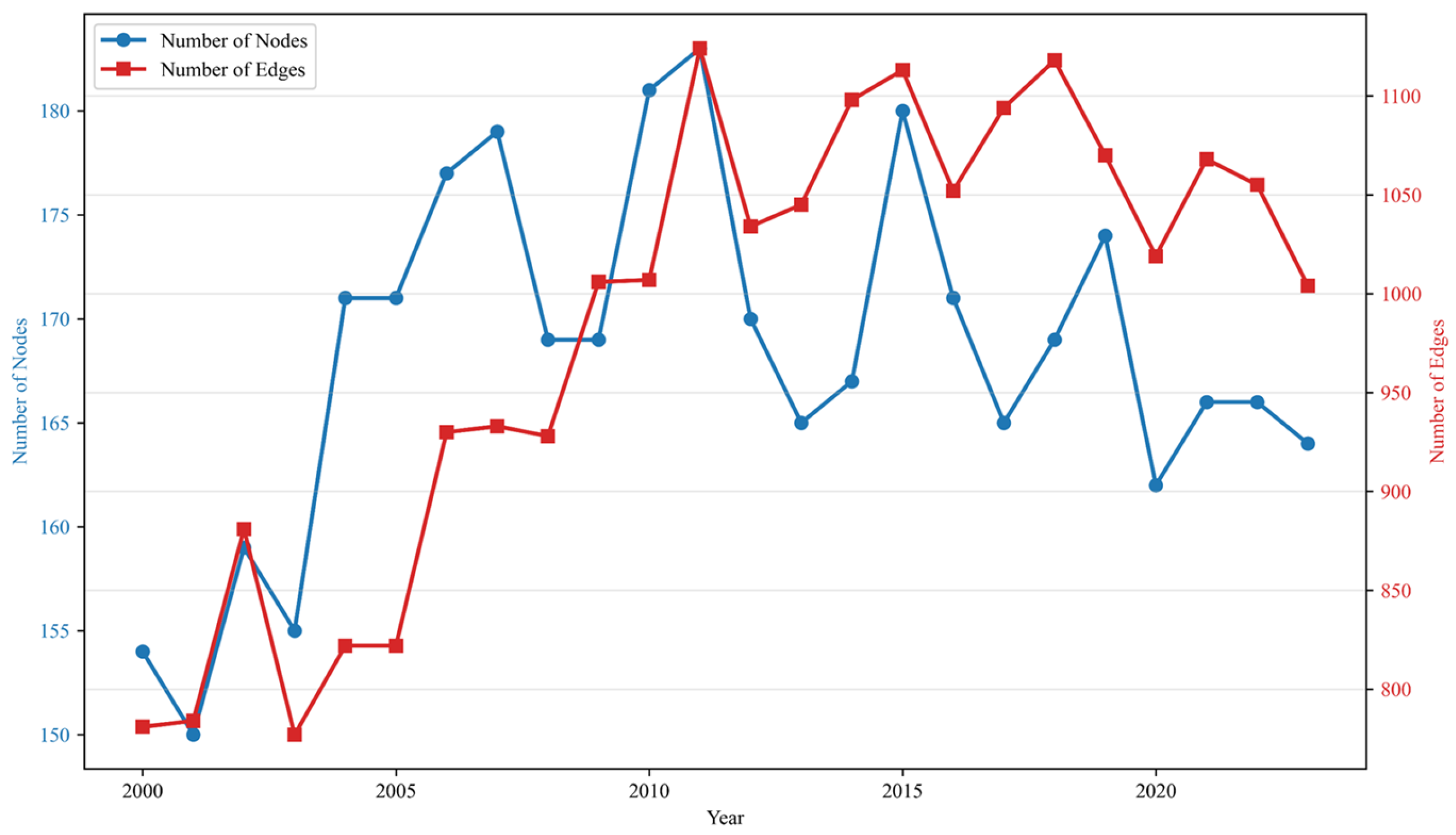
Figure 1 shows interannual changes in the numbers of nodes and edges in the international crude oil trade network during 2000–2023, indicating an overall trajectory of expansion, saturation, and contraction. During the expansion phase (2000–2006), the number of nodes increased from 154 to 177 and the number of edges rose from 781 to 930, suggesting the broader integration of emerging economies into global energy trade and increasingly diversified trade partnerships under globalization. During the subsequent saturation phase (2007–2019), the network scale fluctuated at a high level. Although events such as the 2008 financial crisis caused a short-term contraction in the network’s scale, the network still demonstrated strong dynamic equilibrium capabilities, driven by demand in the Asia–Pacific region. After 2020, however, the COVID-19 pandemic disrupted global supply chains, resulting in a short-term acute shock to the network. Meanwhile, geopolitical tensions and rising triggered a restructuring of trade flows, driving regional adjustments within the network. Given the complex interactions among these factors, it is difficult to disentangle their individual contributions to the observed changes. Under the combined influence of these factors, the network has undergone structural contraction, with the number of nodes and edges declining to 164 and 1004, respectively, by 2023. The global crude oil trade landscape is currently undergoing a profound restructuring characterized by increased regionalization.
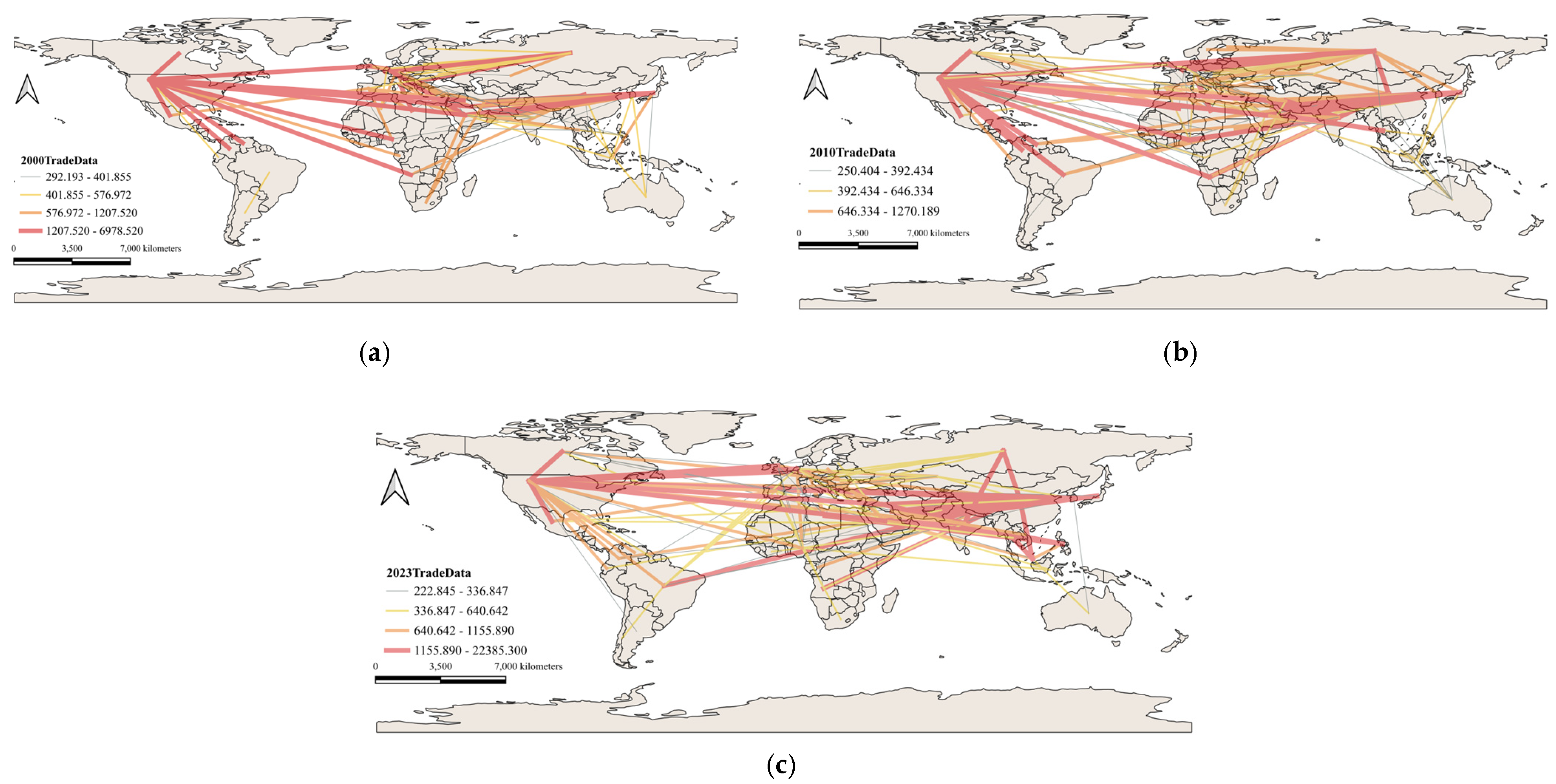
To further examine changes in the spatial configuration of the network, this study visualizes the network backbone for 2000, 2010, and 2023 using geographic maps (Figure 2). To emphasize key trade relationships and reduce the influence of weak ties, each panel retains only the top 15% of bilateral trade flows for the corresponding year. In Figure 2, edges represent bilateral crude oil trade relationships, and edge width is proportional to trade volume.
In 2000 (Figure 2a), major trade relationship were concentrated in North America, Europe, and the Middle East, forming a spatial pattern dominated by transoceanic exchanges. The strong dependence of developed countries in Europe and the United States on Middle Eastern crude oil, combined with the historical pattern of Middle Eastern oil-producing countries long relying on Europe and the United States as their primary export markets, collectively drove transatlantic trade relationships such as those between the United States and the Middle East, the United States and Europe, and Europe and the Middle East. This formed the core framework of the network, revealing a highly concentrated pattern of oil trade between traditional industrialized nations and major oil-producing regions. By 2010 (Figure 2b), the 2008 financial crisis shift in global economic gravity toward the East, combined with rapid industrialization in emerging economies, drove a surge in Asia–Pacific energy demand. This transformation extended the network’s backbone from an Atlantic-centered system toward a more multi-ocean structure. Concurrently, Middle Eastern crude oil producers pursued export diversification, while Russia expanded its presence in Asian markets. As a result, trade ties between the Middle East and East Asia, Russia and East Asia, and the Middle East and South Asia strengthened significantly, reflecting the growing importance of emerging economies in the global oil trade backbone. By 2023 (Figure 2c), driven by the United States shale gas revolution, escalating United States–China trade tensions, and the Russia–Ukraine conflict, the international crude oil network’s core trade relationships evolved toward a pattern characterized by polycentricity and regionalization. Within the top 15% of trade flows, traditional high-intensity links such as North America–Middle East and intra-North American trade persisted, while new stable connections emerged between core Asia–Pacific nations (particularly China and India) and major suppliers in the Middle East and Russia. The network thus transitioned from a structure dominated by a single set of trade relationships to one shaped by multi-regional coordination.
Across the three benchmark years, trade intensity remained concentrated in a small number of high-volume relationships. In 2000, trade was concentrated in a few core links, such as United States–Saudi Arabia, United States–Canada, and Japan–Saudi Arabia. In 2010, China–Saudi Arabia, China–Russia, and India–Saudi Arabia entered the backbone. By 2023, China–Saudi Arabia, United States–Canada, and Russia–India stood out as key hubs with the largest and most persistent trade volumes in the global crude oil trade system. These results indicate a highly concentrated spatial organization of trade ties. Such concentration may contribute to the relative stability of major trade relationships, but it may also increase systemic dependence on critical hubs.
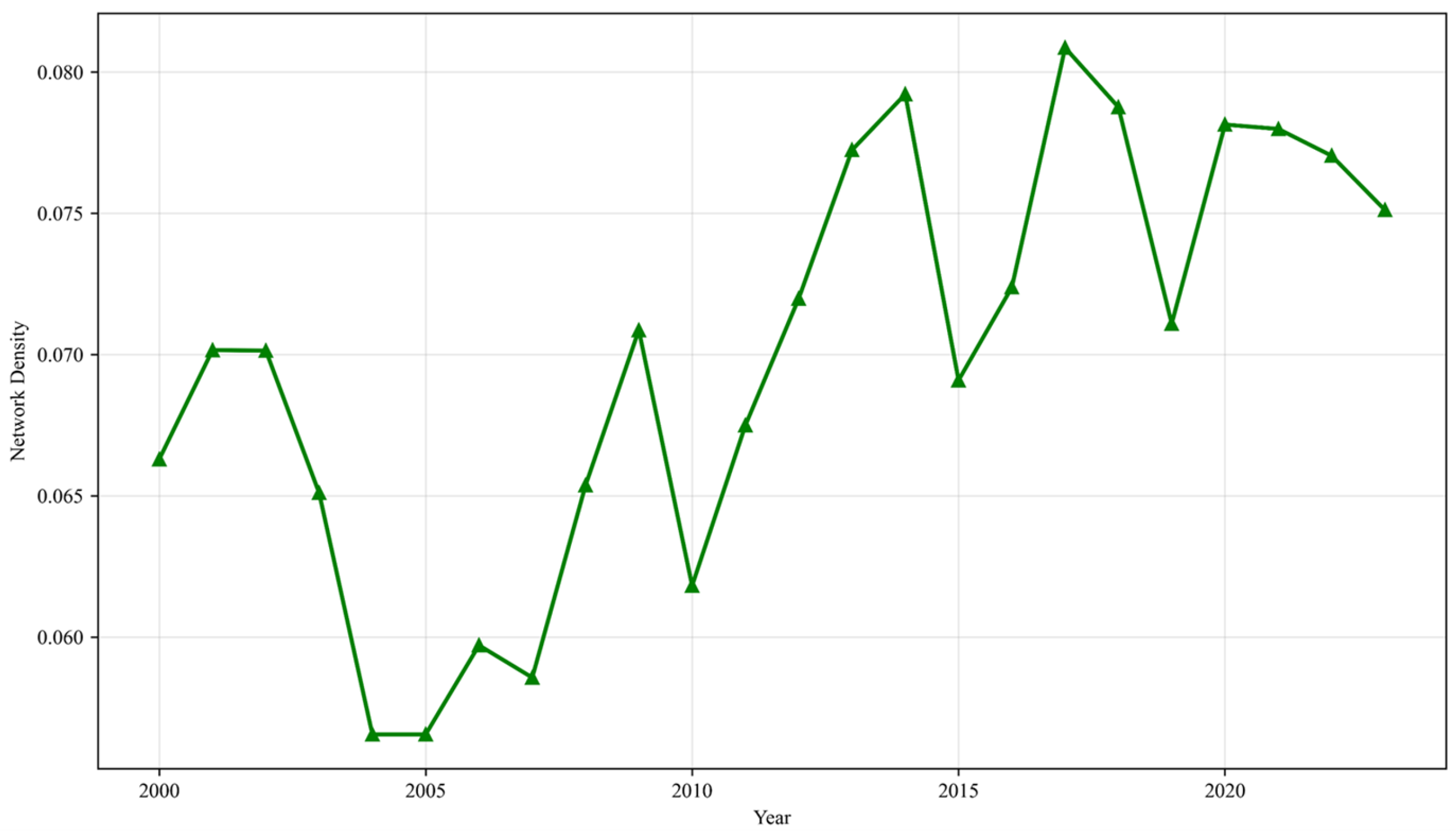
As shown in Figure 3, network density, an indicator of overall connectivity, remained low during 2000–2023 and ranged from 0.056 to 0.081. The network is a structurally sparse network. Influenced by the uneven geographical distribution of oil resources, high transportation costs, and geopolitical factors, countries tend to establish long-term, stable trade relationships with a small number of core supplying or consuming countries, while the vast majority of countries do not maintain direct trade ties with one another. Despite this sparsity, density gradually increased from 0.066 in 2000 to 0.077 in 2013, driven by accelerating globalization, and remained at a relatively high level of 0.075 in 2023. Combined with the backbone patterns described above, this trend suggests that the contraction in network size occurred primarily through the loss of low-intensity peripheral trade links, whereas high-intensity core relationships remained comparatively stable in both number and scale. Accordingly, while the overall scale of the network is sensitive to external shocks, the core trade structure appears relatively resilient, as reflected by the stable density level.

3.1.2. Changes in Key Countries

In the international crude oil trade network, node importance is used to characterize countries’ structural positions and market influence within the global crude oil trade system. A country’s relative standing is jointly determined by the breadth of its trade connections and its trade scale. Based on degree centrality and weighted degree centrality calculated for 2000, 2010, 2020, and 2023, Table 1 and Table 2 report country rankings under these two measures.
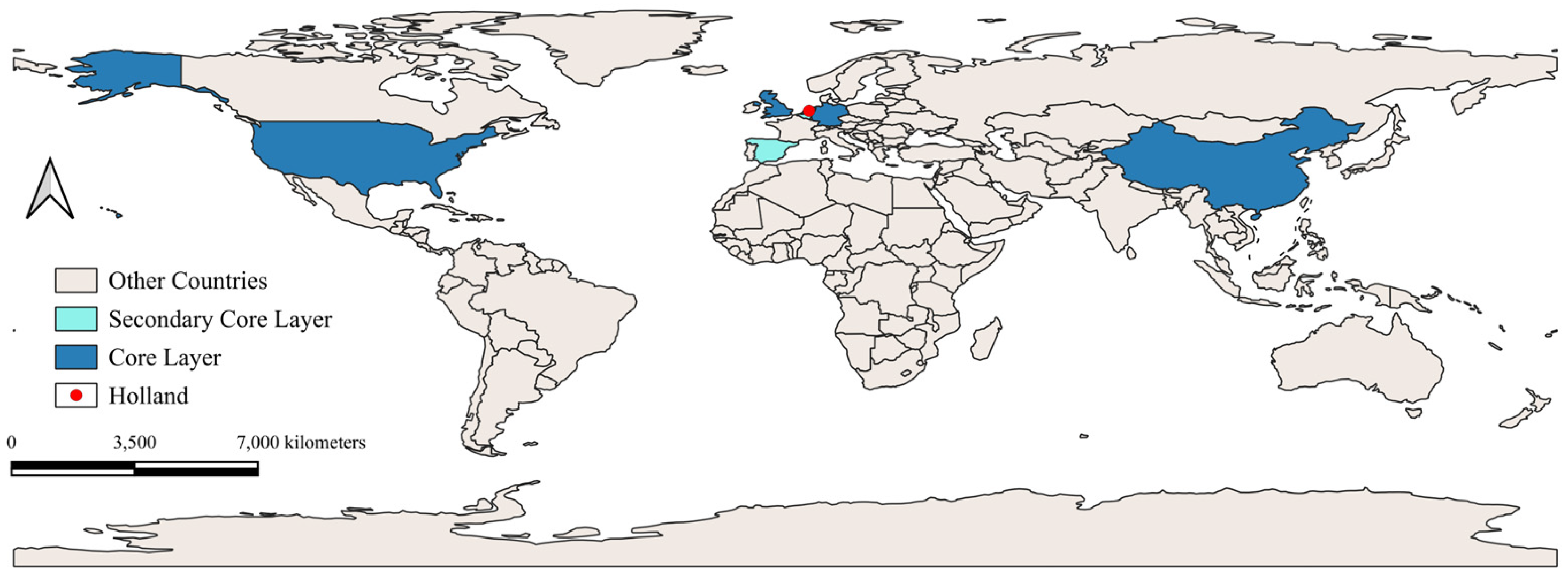
Table 1 summarizes countries’ connectivity breadth. The United States ranked first in degree centrality in 2000, 2010, and 2020. However, by 2023, driven by the shale gas revolution, the U.S. began shifting from an importer to an exporter, leading to a restructuring of its traditional trade partnerships. As a result, its degree centrality dropped to second place, surpassed by the Netherlands. Meanwhile, driven by rapid economic growth, China steadily rose from 6th place in 2000 to third in 2020, maintaining that position in 2023, reflecting its increasingly expanding partnerships in the global crude oil trade network. Notably, the Netherlands climbed from ninth in 2010 to first in 2023. This rise can be attributed to several factors: (1) its locational advantage, particularly the Port of Rotterdam, which serves as a major energy hub in Europe; (2) its well-developed storage and transportation infrastructure, facilitating large-scale oil transit and redistribution; and (3) the reconfiguration of trade flows following the outbreak of the Russia–Ukraine conflict, which enabled the Netherlands to attract more trading partners and further strengthen its role as a global oil trade hub. Traditional trading powers such as Germany and the United Kingdom maintained relatively stable positions among the top-ranked countries (Figure 4).
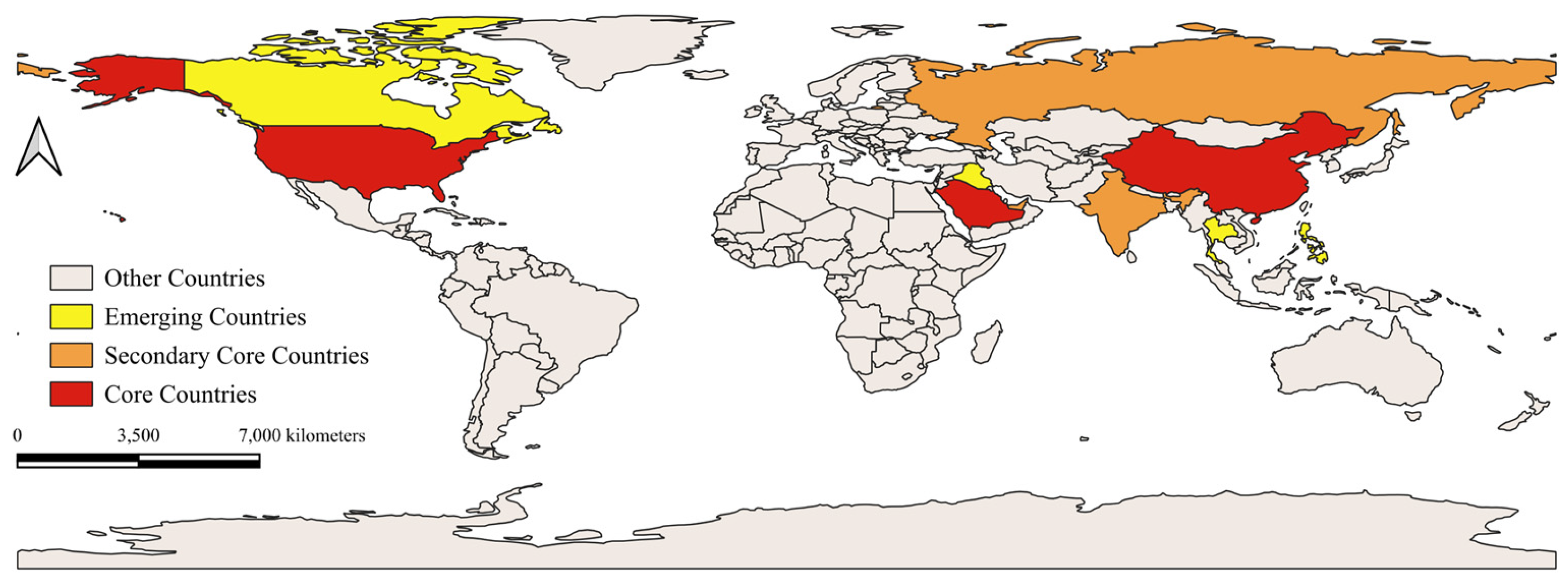
Table 2 depicts the power structure of global crude oil trade from the perspective of trade scale. The United States, Saudi Arabia, and China constitute a core triad in weighted trade volume. The United States ranked first in 2000, but was overtaken by Saudi Arabia in 2010 and further slipped to third by 2020. This trend is closely linked to long-term structural changes resulting from the acceleration of energy independence and the continued reduction in import dependence following the U.S. shale gas revolution. Driven by massive crude oil demand resulting from rapid economic growth and the deepening processes of industrialization and urbanization, China rose from outside the top ten in 2000 to the top position in 2020, and continued to hold the top spot in 2023, indicating a significant shift in the center of gravity of global crude oil trade driven by demand-side countries. A particularly noteworthy is the rise of the United Arab Emirates from 9th in 2000 to 4th in 2023, driven by the export diversification strategies of Middle Eastern oil-producing countries [38], reflecting the of the region’s hub function in global crude oil trade. Thailand and the Philippines entered the top ten in 2023, reflecting the rising prominence of Southeast Asian nations in global oil trade, driven by the combined forces of accelerating industrialization and growing energy demand (Figure 5).
Comparing degree centrality with weighted degree centrality reveals a clear differentiation between structural position and trade-scale influence. The Netherlands and the United Kingdom consistently rank high in degree centrality but relatively low in weighted degree centrality, suggesting that their roles are primarily intermediary and hub-like in connecting multiple markets and facilitating trade linkages. Resource-oriented countries such as Saudi Arabia and Russia perform strongly in weighted degree centrality, consistent with their dominant roles on the global supply side. China and the United States rank highly in both measures, indicating that their importance in global crude oil trade is associated with both demand size and broad market reach. Overall, these patterns suggest that structural position in the network is more closely related to connectivity breadth, whereas trade-scale influence is more strongly reflected in the magnitude of participation in global crude oil supply-demand configurations.
Node-level evidence further confirms that international crude oil trade is concentrated among a limited set of key countries. China, the United States, and Saudi Arabia form the core layer of the network due to their combined advantages in connectivity breadth and trade scale. Russia, India, and the United Arab Emirates constitute a secondary core with pronounced influence on the supply or demand side. The Netherlands functions as a structural hub; although its trade scale is relatively limited, its connecting role is prominent. Overall, the international crude oil trade network exhibits a clear multi-layer core-periphery structure in terms of node importance.

3.1.3. Evolution of Hierarchical Organization

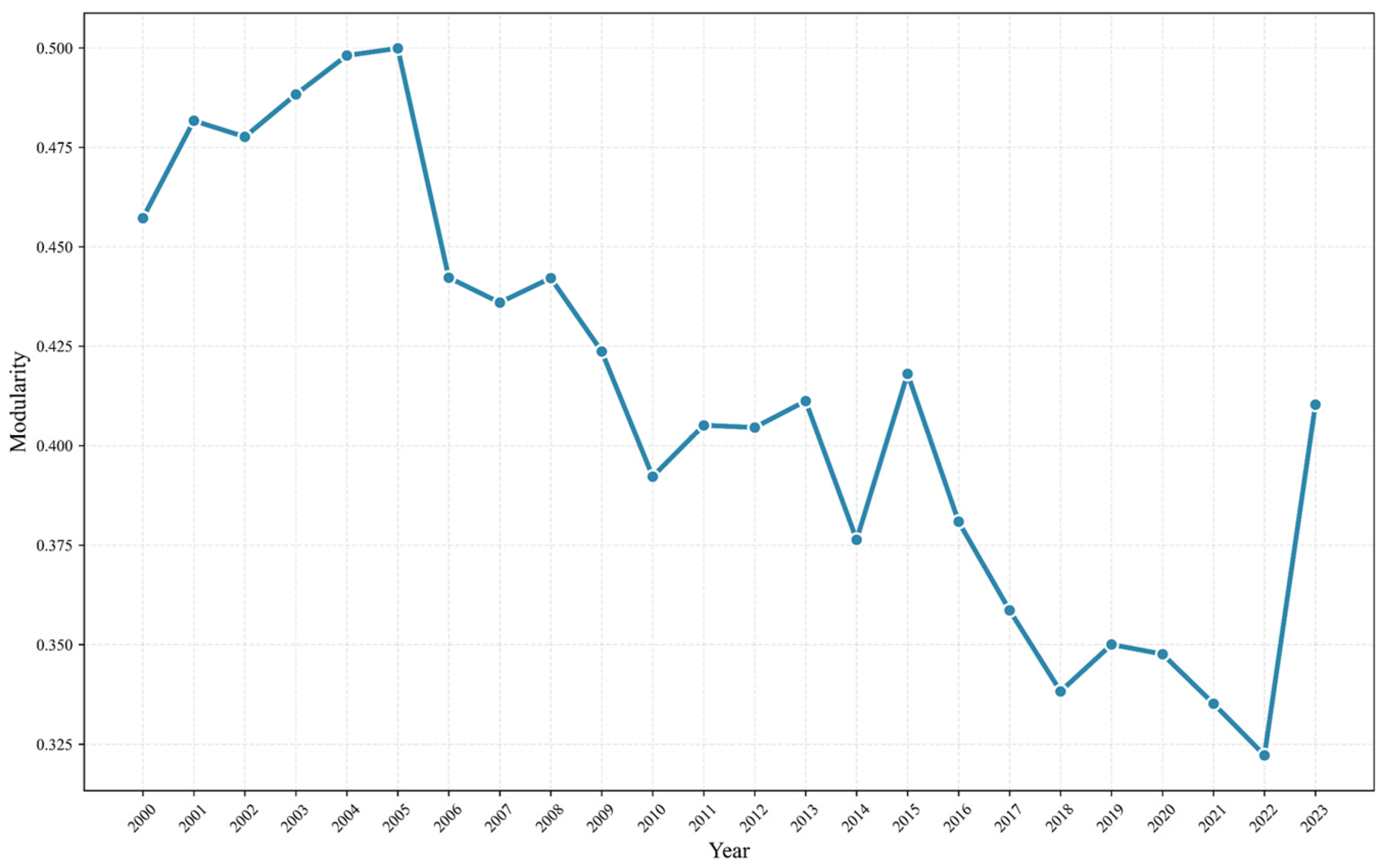
Figure 6 presents the evolution of the network modularity during 2000–2023. Overall, the global crude oil trade network experienced a long-term weakening of regional segmentation, punctuated by episodes of partial restructuring under geopolitical shocks.
During 2000–2005, the international crude oil trade network modularity remained relatively high, indicating a pronounced community structure. From 2006 to 2014, modularity declined gradually and coincided with major events such as the global financial crisis, suggesting that community boundaries became less distinct and cross-community linkages strengthened as global crude oil trade moved toward greater integration. Between 2015 and 2018, the international environment became more volatile. The OPEC+ production-cut agreement reshaped alliances among traditional oil-producing countries [39], sustained growth in U.S. shale oil output challenged the Middle East-dominated supply pattern [40], and escalating trade frictions between China and the United States disrupted established trade cooperation frameworks [2]. In combination, these factors were accompanied by a sharp drop in modularity from 0.423 to 0.330, indicating a pronounced weakening of community structure and a shift toward a more open and dispersed connectivity pattern.
During 2022–2023, geopolitical conditions shifted markedly. The Russia–Ukraine conflict and associated sanctions coincided with a reorientation of global crude oil trade routes: Europe increased imports from the Middle East and North America, while Russia expanded exports to the Asia–Pacific region. Alongside this structural realignment, modularity rebounded from 0.322 to 0.414, suggesting strengthened community structure and accelerated formation of new trade groupings. This pattern highlights the role of geopolitical factors in shaping the organization of the global crude oil trade network.
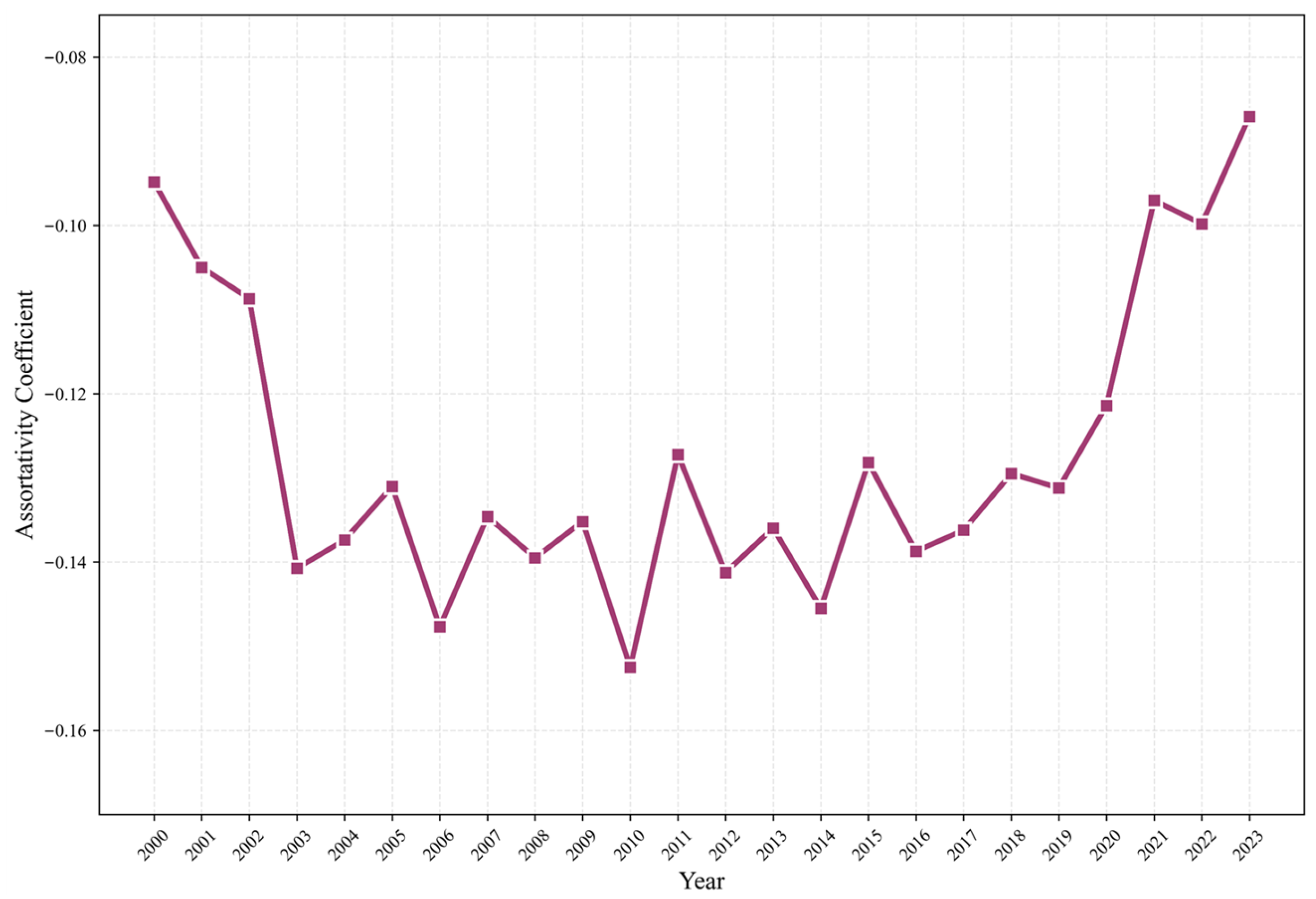
Degree assortativity is used to characterize degree-based mixing patterns among nodes. Figure 7 shows the evolution of degree assortativity in the network during 2000–2023. Throughout the study period, assortativity remained negative (−0.153 to −0.087), indicating a persistent disassortative structure in which highly connected countries tend to trade with less connected countries.
Over 2000–2023, assortativity exhibited three stages, including a decline during 2000–2003, fluctuations during 2004–2020, and a marked rebound during 2021–2023. The rebound during 2021–2023 is particularly notable. Notably, the rebound during 2021–2023 suggests that geopolitical shocks were associated with a diversification of network connection patterns and a weakening of the rigid core-periphery structure. This pattern can be explained by the reconfiguration of trade flows following the Russia–Ukraine conflict. Western sanctions against Russia led to a redirection of its oil exports toward the Asia–Pacific region, while European countries actively expanded trade ties with the Middle East, North America, and Africa to compensate for reduced Russian imports. These adjustments enabled a greater number of small and medium-sized countries to participate in trade flows previously dominated by core nations, thereby driving the assortativity coefficient upward toward zero. This shift indicates that geopolitical shocks have not only altered trade flows but also promoted the diversification of network connection patterns.

3.2. Evolution of Stability in the International Crude Oil Trade Network

3.2.1. Stability Dynamics and Their Links to Major Events

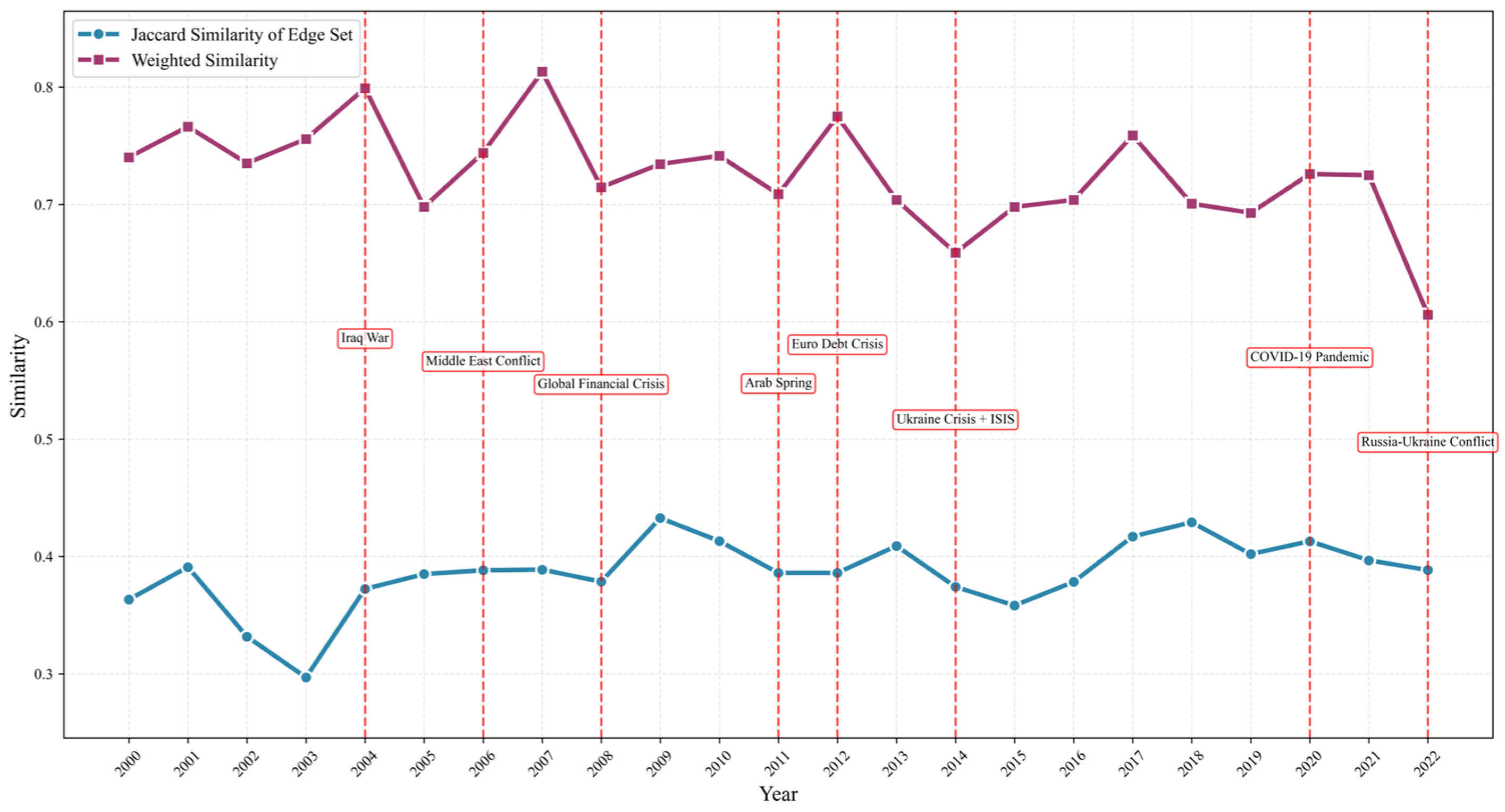
Figure 8 links three common shock types, including geopolitical conflicts, economic and financial crises, and supply-side structural changes, with variations in network stability. Overall, topological stability shows relatively low persistence. Jaccard similarity ranges from 0.296 to 0.432 with a mean of 0.388, indicating that, on average, about 38.8% of trade relationships overlap between adjacent years. In contrast, flow stability is more persistent, with weighted similarity ranging from 0.606 to 0.813 and a mean of 0.728.
Within the study period, the outbreak of the 2003 Iraq War disrupted bilateral trade relations in certain regions, causing a significant impact on the stability of the network. Topological stability dropped to 0.297 during 2003–2004, the lowest value observed, suggesting that geopolitical and military conflicts can substantially disrupt the continuity of trading partnerships. Topological stability then recovered gradually, peaked at 0.433 in 2009, and subsequently entered a relatively stable phase. After the 2008 global financial crisis, adjustments in trade scale and routes coincided with increased volatility and an overall decline in flow stability. In 2014, driven by the U.S. shale gas revolution, OPEC countries led by Saudi Arabia sought to preserve their market share by sustaining production increases to depress oil prices and squeeze out high-cost shale oil producers, which directly triggered a sharp plunge in international oil prices. The shift in the United States’ role from an oil importer to an exporter prompted a structural realignment of global trade relations. Meanwhile, the combined effects of declining export revenues among oil-producing countries and reduced procurement costs for importers further reshaped global trade flows. During 2014–2016, topological stability declined to 0.374 and weighted similarity decreased to 0.659, suggesting that supply-side structural changes can affect both the structure of trade ties and the distribution of trade flows, with effects that may persist over time. In the later period, flow stability remained relatively low after 2014 and fell to 0.606 during 2022–2023 in conjunction with the Russia–Ukraine conflict; topological stability also decreased to 0.388. The Russia–Ukraine conflict, through energy sanctions and counter-sanctions, has simultaneously struck both the direction and volume of trade between Europe and Russia, highlighting the profound impact of major geopolitical conflicts on the oil trading system.
Different shock types are associated with distinct stability responses. Geopolitical conflicts tend to generate strong short-term disturbances in both network structure and trade flows, with particularly pronounced impacts on the continuity of trade relationships. Economic and financial crises primarily affect the flow dimension through demand contraction and price volatility. Supply-side structural changes tend to exert more persistent effects. They directly reshape trade-flow distributions and may also influence topological stability indirectly by reconfiguring global supply patterns.
These results suggest that network stability is closely associated with external events, and the affected stability dimension varies across shock types. Geopolitical conflicts tend to coincide with abrupt changes in network topology, economic shocks are primarily associated with adaptive adjustments in flow distributions, and supply-side transformations are linked to deeper and more persistent structural reconfiguration. Together, these differentiated pathways provide empirical support for understanding stability responses of the global crude oil trade system to external shocks and the corresponding adjustment of network structure over time.

3.2.2. Linkages Between Network Structure and Stability

To understand how structural characteristics relate to stability responses, this study examines association patterns between structural indicators and stability measures in the network. Modularity, which captures meso-scale community structure, and degree assortativity, which reflects degree-based mixing, are selected as key explanatory variables. Their relationships with network stability are tested to clarify why certain structural configurations are more likely to sustain stability, whereas others are more prone to pronounced fluctuations.
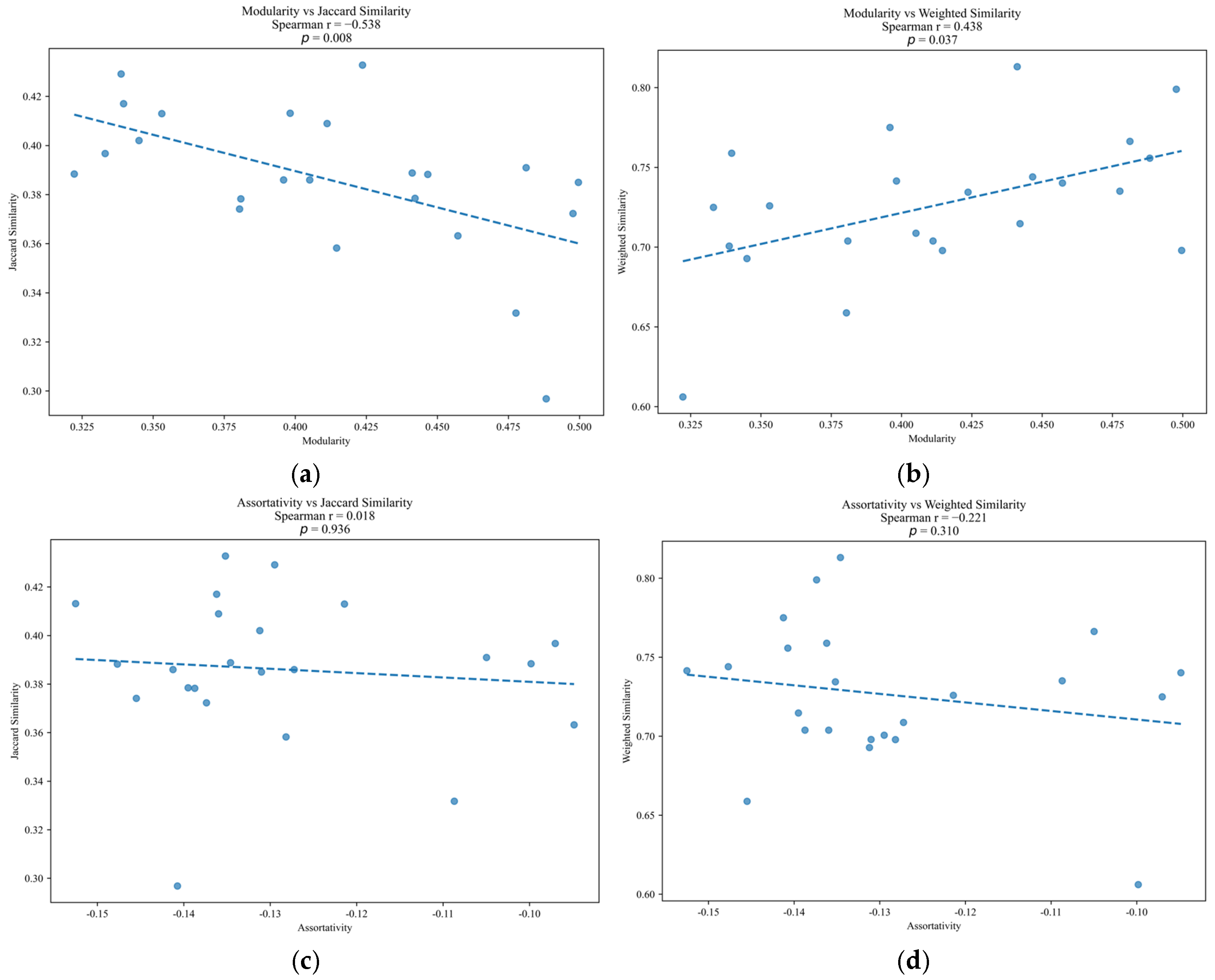
Figure 9a,b show contrasting relationships between modularity and the two stability indicators. Modularity is significantly and negatively correlated with topological stability, measured by Jaccard similarity (Spearman r = −0.538, p = 0.008), indicating that years with more pronounced community structure tend to exhibit weaker year-to-year continuity of trade relationships. This suggests that in highly modular network structures, the lock-in effect within stable trade communities acts as a barrier to network reconfiguration when external shocks occur, hindering rapid adaptation and ultimately leading to a decline in overall topological stability. In contrast, modularity is positively correlated with weighted stability (Spearman r = 0.438, p = 0.037), implying that clearer community organization is associated with more stable trade flows. This may be explained by: (1) intra-community links enable rerouting under shocks; (2) path dependence from contracts and infrastructure stabilizes trade relations; and (3) shocks are often localized, limiting their overall impact. Figure 9c,d indicate a different pattern for degree assortativity. Degree assortativity shows no significant correlation with topological stability (Spearman r = 0.018, p = 0.936), suggesting that degree-based mixing preferences have limited association with the persistence of trade relationships. Its negative association with weighted stability is also not statistically significant (Spearman r = −0.221, p = 0.310). Although assortativity remains negative, indicating persistent disassortative mixing, the correlation results provide limited support for a linkage between assortativity and lower flow stability.
Overall, selected structural features of the network are significantly associated with stability outcomes, and the directions of association differ between topological and flow stability. Higher modularity is associated with more stable trade flows but weaker continuity of trading partnerships. This pattern suggests that well-defined trade communities may help maintain aggregate trade intensity while constraining flexible reconfiguration of trading relationships under shocks. By comparison, the association between degree assortativity and stability appears relatively weak. Taken together, the network exhibits a trade-off between flow stability and partnership continuity at the annual scale.

4. Discussion

As a strategic resource, crude oil is characterized by uneven geographical distribution and continuously growing demand, which together drive profound adjustments in global trade networks, with major countries deeply involved in this competition. In parallel, external shocks such as the global financial crisis, trade policy uncertainties, and geopolitical conflicts keep the global crude oil trade landscape in a state of constant flux [2], making the stability of trade relationships and the continuity of trade volumes key variables in understanding national energy security. Accordingly, this paper systematically analyzes the structural evolution and stability characteristics of the international crude oil trade network. The findings reveal that the network has undergone a phased evolution characterized by expansion, saturation, and contraction. The network exhibits a clear core–periphery hierarchical structure, with core trade relationships remaining relatively stable while peripheral connections show notable fluctuations. Resource-based countries, major consumer nations, and trade hub countries display distinct functional differentiation. While the core–periphery structure enhances the resilience of trade volumes, it may also weaken the flexibility of trade partnerships. Against the backdrop of deepening global climate action, the ongoing shale gas revolution, and the rapid advancement of new energy technologies, the spatial patterns of traditional fossil fuel production and consumption are undergoing restructuring, and the global oil trade landscape is poised for profound transformation.
This paper systematically investigates the evolutionary characteristics and stability mechanisms of the international crude oil trade network from the dual perspectives of topological structure and trade flows, aiming to enrich and complement existing research through the integration of multidimensional analytical approaches. Building on previous studies of network topology evolution and stability [1,17], this paper introduces the Spearman rank correlation test to systematically examine the statistical associations between modularity, assortativity, and two dimensions of stability. The results show that modularity is negatively correlated with topological stability and positively correlated with flow stability, indicating that a well-defined trade community structure, while ensuring the stability of overall trade volumes, may limit the network’s flexibility to adapt to sudden disruptions. Assortativity, in contrast, shows no significant correlation with either stability dimension. To further explore the underlying drivers of network stability, we integrate major international events into the stability analysis and find that topological stability is more sensitive to geopolitical conflicts, while flow stability is more susceptible to demand-side fluctuations. In addition, we introduce degree centrality and weighted degree centrality to measure the connectivity breadth and actual trade scale of nodes, respectively, and based on these, identify the functional differentiation among resource-based countries, major consumer nations, and trade hub countries, offering a new analytical perspective for understanding the dynamic stability of the international crude oil trade network.
Based on international crude oil trade data from 2000 to 2023, this study systematically examines the structural evolution and stability characteristics of the global crude oil trade network from a long-term time-series perspective, aiming to identify general patterns of network evolution and stability. (1) This study employs an undirected weighted network, which does not distinguish between import and export directions and may therefore overlook directional dependencies and asymmetries in trade relationships. (2) The network is constructed using annual snapshots, which limits the ability to capture short-term dynamics and rapid adjustments in trade relationships. (3) While this study identifies associations between external shocks and changes in network stability, it does not quantitatively disentangle or compare the relative contributions of different factors.
Future research could address the limitations of this study in several ways. First, directed network structures could be incorporated to capture the directional dependencies and asymmetries embedded in crude oil trade relations, thus overcoming the constraints of the undirected weighted network adopted in this study. Second, higher-frequency data could be used to better reflect short-term dynamics and improve the identification of abrupt changes caused by external shocks. Third, more advanced causal inference or decomposition methods could be introduced to quantify the effects of multiple interacting factors on network evolution and stability. Furthermore, in light of increasing geopolitical uncertainty, future research should pay greater attention to the security of trade routes, especially the vulnerability and resilience of key maritime passages and pipeline corridors, as well as the capacity of the network to reroute flows under disruptions. These extensions would contribute to a more comprehensive understanding of the evolution and stability of international crude oil trade networks, while further underscoring the novelty and practical significance of this study from the perspective of global energy security.

5. Conclusions

Based on data on petroleum oils and oils obtained from bituminous minerals (HS = 2709) from the United Nations Commodity Trade Statistics Database for the period 2000–2023, this paper constructs the international crude oil trade network and proposes an integrated framework that combines complex network theory with spatiotemporal analysis methods. The study systematically examines the structural evolution and stability of the network, providing an in-depth analysis of its structural and stability characteristics.
The results indicate the following: (1) The international crude oil trade network exhibited a phased evolutionary pattern of expansion, saturation, and contraction over the study period. Core trade relationships remained relatively stable, with network contraction concentrated mainly in low-intensity peripheral connections, while high-intensity core connections remained stable in both number and scale, demonstrating strong resilience. (2) The network formed a stable core–periphery hierarchical structure during trade flows. Resource-rich countries dominated in terms of trade volume, major consumer countries held significant positions in both connectivity breadth and trade volume, and trade hub countries primarily served as intermediaries connecting multi-regional markets. (3) Different types of external shocks elicited distinct response patterns: geopolitical conflicts often exerted strong, simultaneous impacts on both topological structure and trade flows in the short term; financial crises primarily affected flow stability through demand-side transmission; and supply-side structural changes had more persistent systemic effects. (4) Analysis of the relationship between structural characteristics and stability revealed that modularity was significantly negatively correlated with topological stability and significantly positively correlated with flow stability. This implies that while a clear trade community structure helps maintain stable trade volumes, it may come at the cost of partnership flexibility. In contrast, assortativity showed no significant correlation with either stability dimension, indicating that network connection patterns have limited direct influence on stability.
These findings provide a new analytical perspective for understanding the dynamic stability of the international crude oil trade network. Based on the empirical results, the following policy implications are proposed from both global and national perspectives. (1) Global level: Given the high concentration and vulnerability of the crude oil trade network, international organizations such as the IEA and OPEC+ should promote supply diversification by strengthening cross-regional energy cooperation and supporting the development of alternative trade corridors, including maritime routes and pipeline networks. At the same time, a coordinated global monitoring framework should be established to track changes in trade network stability in real time, particularly under geopolitical shocks, and to provide early warnings for potential disruptions. In addition, multilateral platforms should be strengthened to reduce fragmentation in global energy markets and to enhance information sharing and emergency response coordination. (2) National level: In response to the concentration of trade relationships and the divergence between topological and flow stability, countries should adopt differentiated energy security strategies. On the one hand, importing countries should diversify their sources of supply by expanding procurement from multiple regions, developing strategic petroleum reserves, and supporting flexible trade arrangements such as spot markets to enhance adaptability. On the other hand, exporting countries should optimize their market structure by reducing over-reliance on a limited number of buyers and expanding access to emerging markets. Furthermore, governments should improve domestic energy infrastructure, including storage, transportation, and refining capacity, to strengthen their ability to absorb external shocks and maintain stable trade flows.
Addressing climate change has become a global consensus, and the energy transition continues to accelerate. In this context, the deepening shale gas revolution and the rapid development of new energy technologies are reshaping the production and consumption patterns of traditional fossil fuels. Countries should proactively assess the implications of the energy transition for existing trade relationships, gradually optimize their energy trade structures, and seek a balance between ensuring energy security and promoting green, low-carbon development.

Author Contributions

Conceptualization, W.X. and K.Q.; methodology, W.X., Q.W. and K.Q.; formal analysis, W.X.; data curation, W.X.; writing—original draft preparation, W.X.; writing—review and editing, W.X., K.Q., Z.Y., K.L., J.Z. and D.L.; visualization, W.X. and Z.Y.; supervision, K.Q. and Y.Z. All authors have read and agreed to the published version of the manuscript.

Funding

This research was fund by the National Natural Science Foundation of China (grant number 42171448) and the Fundamental Research Funds for the Central Universities (grant number 2042024kf0005).

Institutional Review Board Statement

Not applicable.

Informed Consent Statement

Not applicable.

Data Availability Statement

Publicly available datasets were analyzed in this study. The international crude oil trade data can be found in the United Nations Comtrade Database (UN Comtrade) at https://comtradeplus.un.org/ (HS 2709, “petroleum oils and oils obtained from bituminous minerals, crude”), accessed on 14 August 2025.

Acknowledgments

We thank all authors for their contributions and the anonymous reviewers for helpful comments and suggestions.

Conflicts of Interest

The authors declare no conflicts of interest.

References

  1. Niu, X.; Chen, W.; Wang, N. Spatiotemporal Dynamics and Topological Evolution of the Global Crude Oil Trade Network. Energies 2023, 16, 1728. [Google Scholar] [CrossRef]
  2. Yuan, X.; Ge, C.; Liu, Y.; Li, N.; Wang, Y. Evolution of Global Crude Oil Trade Network Structure and Resilience. Sustainability 2022, 14, 16059. [Google Scholar] [CrossRef]
  3. Chang, H.; Luo, A.; Zheng, Y.; Chang, R.; Liu, Y. Modeling the Systemic Trade Risk of Crude Oil from a Network Perspective, Combined with a Sentiment Proxy. Front. Energy Res. 2023, 11, 1178763. [Google Scholar] [CrossRef]
  4. Venditti, F.; Veronese, G. Global Financial Markets and Oil Price Shocks in Real Time; ECB Working Paper; European Central Bank: Frankfurt, Germany, 2020. [Google Scholar]
  5. Zhang, Y.; Tang, K. Analysis on Evolution Characteristics and Influencing Factors of Global Energy Pattern under Anti-Globalization Background. Heliyon 2023, 9, e18824. [Google Scholar] [CrossRef]
  6. Wang, Z.; Zhang, L. Implementation of OPEC Production Cut Agreement and world crude oil market outlook. Int. Pet. Econ. 2017, 25, 48–53. [Google Scholar]
  7. Chen, C.; Hussain, K.; Hussain, S. From Trade Wars to Energy Markets: An Examination of How US-China Tensions Reshape the US Energy Market Using a Wavelet Quantile-on-Quantile Approach. Energy Policy 2026, 209, 114937. [Google Scholar] [CrossRef]
  8. Zhang, Q.; Hu, Y.; Jiao, J.; Wang, S. The Impact of Russia–Ukraine War on Crude Oil Prices: An EMC Framework. Humanit. Soc. Sci. Commun. 2024, 11, 8. [Google Scholar] [CrossRef]
  9. Kuzemko, C.; Lawrence, A.; Watson, M. New Directions in the International Political Economy of Energy. Rev. Int. Political Econ. 2019, 26, 1–24. [Google Scholar] [CrossRef]
  10. Du, R.; Dong, G.; Tian, L.; Wang, M.; Fang, G.; Shao, S. Spatiotemporal Dynamics and Fitness Analysis of Global Oil Market: Based on Complex Network. PLoS ONE 2016, 11, e0162362. [Google Scholar] [CrossRef]
  11. Tovar-García, E.D.; Carrasco, C.A. Export and Import Composition as Determinants of Bilateral Trade in Goods: Evidence from Russia. Post-Communist Econ. 2019, 31, 530–546. [Google Scholar] [CrossRef]
  12. Zhang, H.-Y.; Ji, Q.; Fan, Y. What Drives the Formation of Global Oil Trade Patterns? Energy Econ. 2015, 49, 639–648. [Google Scholar] [CrossRef]
  13. Fracasso, A.; Nguyen, H.T.; Schiavo, S. The Evolution of Oil Trade: A Complex Network Approach. Netw. Sci. 2018, 6, 545–570. [Google Scholar] [CrossRef]
  14. An, H.; Zhong, W.; Chen, Y.; Li, H.; Gao, X. Features and Evolution of International Crude Oil Trade Relationships: A Trading-Based Network Analysis. Energy 2014, 74, 254–259. [Google Scholar] [CrossRef]
  15. Du, R.; Wang, Y.; Dong, G.; Tian, L.; Liu, Y.; Wang, M.; Fang, G. A Complex Network Perspective on Interrelations and Evolution Features of International Oil Trade, 2002–2013. Appl. Energy 2017, 196, 142–151. [Google Scholar] [CrossRef]
  16. Liu, Y.; Liu, H. Dynamics and Driving Factors of the International Oil Trade Network. Resour. Sci. 2024, 46, 1852–1866. [Google Scholar]
  17. Xie, W.-J.; Wei, N.; Zhou, W.-X. An Interpretable Machine-Learned Model for International Oil Trade Network. Resour. Policy 2023, 82, 103513. [Google Scholar] [CrossRef]
  18. Chen, S.; Ji, G.; Tian, K.; Ding, Y. Adaptive Strategies to Enhance Resilience in the Global Oil Trade Network. Energy Strategy Rev. 2025, 62, 101921. [Google Scholar] [CrossRef]
  19. Huang, X.; Chen, X. A Quantitative Model of International Trade Based on Deep Neural Network. Comput. Intell. Neurosci. 2022, 2022, 9811358. [Google Scholar] [CrossRef]
  20. Wei, N.; Xie, W.-J.; Zhou, W.-X. Resilience of International Oil Trade Networks under Extreme Event Shock-Recovery Simulations. Energy 2025, 314, 134174. [Google Scholar] [CrossRef]
  21. Yan, J.; Guo, Y.; Zhang, H. The Dynamic Evolution Mechanism of Structural Dependence Characteristics in the Global Oil Trade Network. Energy 2024, 303, 131914. [Google Scholar] [CrossRef]
  22. Liu, Z.; Wang, T.; Sonn, J.W.; Chen, W. The Structure and Evolution of Trade Relations between Countries along the Belt and Road. J. Geogr. Sci. 2018, 28, 1233–1248. [Google Scholar] [CrossRef]
  23. Wasserman, S. Social Network Analysis: Methods and Applications; Cambridge University Press: Cambridge, UK, 1994. [Google Scholar]
  24. Fagiolo, G.; Reyes, J.; Schiavo, S. The World-Trade Web: Topological Properties, Dynamics, and Evolution. Phys. Rev. E 2009, 79, 036115. [Google Scholar] [CrossRef] [PubMed]
  25. Qin, K.; Wang, Q.; Li, S.; Luo, P.; Xu, Y. Spatial Interactive Network Analysis for Computational Social Science and Geo-computation. J. Sociol. Stud. 2020, 64–76, 197. [Google Scholar]
  26. Hevey, D. Network Analysis: A Brief Overview and Tutorial. Health Psychol. Behav. Med. 2018, 6, 301–328. [Google Scholar] [CrossRef]
  27. Fortunato, S. Community Detection in Graphs. Phys. Rep. 2010, 486, 75–174. [Google Scholar] [CrossRef]
  28. De Benedictis, L.; Tajoli, L. The World Trade Network. World Econ. 2011, 34, 1417–1454. [Google Scholar] [CrossRef]
  29. Newman, M.E.J. Modularity and Community Structure in Networks. Proc. Natl. Acad. Sci. USA 2006, 103, 8577–8582. [Google Scholar] [CrossRef]
  30. Opsahl, T.; Agneessens, F.; Skvoretz, J. Node Centrality in Weighted Networks: Generalizing Degree and Shortest Paths. Soc. Netw. 2010, 32, 245–251. [Google Scholar] [CrossRef]
  31. Hansda, R.; Chakraborty, S. Influence of Nodes in Complex Networks. In Proceedings of the 2023 14th International Conference on Computing Communication and Networking Technologies (ICCCNT), Delhi, India, 6–8 July 2023; pp. 1–6. [Google Scholar]
  32. Qin, K.; Xu, K.; Wu, T.; Xu, M.; Huang, J.; Chen, Y.; Feng, X.; Zhao, P.; Wang, Y.; Zhang, Y.; et al. Intelligent Spatial Information Processing and Spatio-Temporal Big Data Analysis Exploration. Geospat. Inf. 2022, 20, 1–11. [Google Scholar]
  33. Leskovec, J.; Horvitz, E. Planetary-Scale Views on a Large Instant-Messaging Network. In Proceedings of the 17th International Conference on World Wide Web; ACM: Beijing, China, 2008; pp. 915–924. [Google Scholar]
  34. Barrat, A.; Barthélemy, M.; Pastor-Satorras, R.; Vespignani, A. The Architecture of Complex Weighted Networks. Proc. Natl. Acad. Sci. USA 2004, 101, 3747–3752. [Google Scholar] [CrossRef]
  35. Zhang, W.-Y.; Wei, Z.-W.; Wang, B.-H.; Han, X.-P. Measuring Mixing Patterns in Complex Networks by Spearman Rank Correlation Coefficient. Phys. A Stat. Mech. Its Appl. 2016, 451, 440–450. [Google Scholar] [CrossRef]
  36. Blankenship, B.; Lisko, C.; Overland, I.; Urpelainen, J.; Vakulchuk, R.; Yang, J. When Do Petrostates Diversify Their Exports? Urgency, Interests, and Policy Design in Egypt, Kazakhstan, and Malaysia. Dev. Policy Rev. 2024, 42, e12808. [Google Scholar] [CrossRef]
  37. ISO 3166-1:2020; Codes for the Representation of Names of Countries and Their Subdivisions—Part 1: Country Codes. International Organization for Standardization: Geneva, Switzerland, 2020.
  38. Press Releases. Available online: https://www.opec.org/pr-detail/459-30-nov-2016.html (accessed on 6 February 2026).
  39. U.S. Crude Oil Production Grew 17% in 2018, Surpassing the Previous Record in 1970—U.S. Energy Information Administration (EIA). Available online: https://www.eia.gov/todayinenergy/detail.php?id=38992 (accessed on 6 February 2026).
  40. Investigation: Technology Transfer, Intellectual Property, and Innovation. Available online: https://ustr.gov/issue-areas/enforcement/section-301-investigations/section-301-china/investigation (accessed on 6 February 2026).
Figure 1. Changes in the number of nodes and edges in the international crude oil trade network, 2000–2023.
Sustainability 18 04303 g001
Figure 2. Evolution of the spatial configuration of the international crude oil trade network (the legend shows trade flow volumes, in million kg): (a) 2000; (b) 2010; (c) 2023.
Sustainability 18 04303 g002
Figure 3. Changes in graph density of the international crude oil trade network, 2000–2023.
Sustainability 18 04303 g003
Figure 4. Spatial distribution of degree centrality.
Sustainability 18 04303 g004
Figure 5. Spatial distribution of weighted degree centrality.
Sustainability 18 04303 g005
Figure 6. Evolution of modularity in the international crude oil trade network, 2000–2023.
Sustainability 18 04303 g006
Figure 7. Evolution of the degree assortativity coefficient in the international crude oil trade network, 2000–2023.
Sustainability 18 04303 g007
Figure 8. Evolution of stability measures in the international crude oil trade network, 2000–2023.
Sustainability 18 04303 g008
Figure 9. Scatter plots of correlations between network structural indicators and stability measures: (a) modularity vs. topological stability; (b) modularity vs. weighted stability; (c) degree assortativity vs. topological stability; (d) degree assortativity vs. weighted stability.
Sustainability 18 04303 g009
Table 1. Top 10 countries by degree centrality in representative years.
2000201020202023
RankCountryValueCountryValueCountryValueCountryValue
1USA0.425USA0.417USA0.528NLD0.521
2FRA0.314CHN0.394NLD0.447USA0.472
3GBR0.275RUS0.283CHN0.348CHN0.368
4DEU0.275DEU0.283SGP0.335FRA0.301
5ITA0.268IND0.272ESP0.323ARE0.288
6CHN0.248SGP0.261IND0.304BEL0.276
7RUS0.222GBR0.250FRA0.292ESP0.270
8CAN0.216CAN0.244GBR0.292GBR0.270
9ARE0.216NLD0.239KOR0.286DEU0.264
10SAU0.203ARE0.233ARE0.280SGP0.264
Notes: Countries are ranked in descending order by degree centrality. “Value” denotes the normalized degree centrality of each country in the international crude oil trade network. Country abbreviations follow the ISO 3166-1:2020 standard [37].
Table 2. Top 10 countries by weighted degree centrality in representative years.
2000201020202023
RankCountryValueCountryValueCountryValueCountryValue
1USA4.19 × 1011SAU3.17 × 1011CHN5.40 × 1011CHN5.10 × 1011
2SAU2.92 × 1011USA3.04 × 1011SAU3.43 × 1011SAU4.16 × 1011
3JPN2.06 × 1011RUS2.51 × 1011USA3.24 × 1011USA3.74 × 1011
4RUS1.28 × 1011CHN2.29 × 1011RUS2.31 × 1011ARE3.67 × 1011
5KOR1.15 × 1011JPN1.77 × 1011IND1.86 × 1011THA2.87 × 1011
6DEU9.77 × 1010IND1.49 × 1011ARE1.68 × 1011IND2.22 × 1011
7IRN9.63 × 1010KOR1.18 × 1011IRQ1.63 × 1011RUS2.14 × 1011
8NOR9.55 × 1010IRN1.06 × 1011KOR1.32 × 1011IRQ1.72 × 1011
9ARE9.36 × 1010CAN9.32 × 1010CAN1.23 × 1011PHL1.42 × 1011
10NGA9.33 × 1010ARE9.10 × 1010JPN1.04 × 1011CAN1.41 × 1011
Note: Countries are ranked in descending order by weighted degree centrality. “Value” denotes the total trade weight associated with each country in the international crude oil trade network, measured in kilograms (kg). Country abbreviations follow the ISO 3166-1:2020 standard.
Disclaimer/Publisher’s Note: The statements, opinions and data contained in all publications are solely those of the individual author(s) and contributor(s) and not of MDPI and/or the editor(s). MDPI and/or the editor(s) disclaim responsibility for any injury to people or property resulting from any ideas, methods, instructions or products referred to in the content.