Article

Chemometric Analysis of Activated Sludge Parameters Variation Under Anaerobic Conditions as a Tool to Support Sustainable Wastewater Treatment Process


by
Krzysztof Piaskowski
,
Bartosz Walendzik
and
Tomasz Dąbrowski
*
Faculty of Civil Engineering, Environmental and Geodetic Sciences, Koszalin University of Technology, Śniadeckich 2, 75-453 Koszalin, Poland
*
Author to whom correspondence should be addressed.
Sustainability 2026, 18(9), 4300; https://doi.org/10.3390/su18094300
Submission received: 12 March 2026 / Revised: 16 April 2026 / Accepted: 23 April 2026 / Published: 27 April 2026
(This article belongs to the Section Environmental Sustainability and Applications)

Abstract

The activated sludge process, along with its modifications, is currently the most widely used wastewater treatment method to achieve desired environmental outcomes. However, it is also characterized by operational instability resulting from changing conditions, a wide range of quantitative and qualitative wastewater parameters, and technical and technological factors. Multi-parameter analysis of biological processes enables more comprehensive control through the use of chemometric techniques, modeling, artificial neural networks, and AI in the decision-making process. This article presents the results of a multivariate data analysis of parameters of activated sludge suspension held under anaerobic conditions. Several correlations were identified between parameters characterizing activated sludge and sludge liquid. PCA and HCA analyses enabled the extraction of three sets of parametric clusters. They reflect specific stages of sludge transformation under anaerobic conditions: initial high biological activity (cluster I), degradation and nutrient release (cluster II), and stabilization with minimal sludge activity (cluster III). These clusters indicate characteristic qualitative changes in sludge and sludge liquid, which can serve as effective control and optimization tools for biological wastewater treatment processes. Statistical and chemometric analyses demonstrate the potential to rapidly assess the condition of activated sludge or the stage of anaerobic transformation by correlating individual parameters. This is an example of how these tools can be used to control wastewater treatment processes more effectively, including in anaerobic conditions. Such control may improve treatment quality and the energy efficiency of the process. It will also help reduce the impact of treatment plants on the aquatic environment and enable the reuse of wastewater that is more effectively treated, which is undoubtedly an important element of sustainable development.

1. Introduction

The most prevalent wastewater treatment method is activated sludge technology. The floc matrix comprises a variety of components. These include filamentous bacteria and other microorganisms, as well as organic and inorganic fibers and particles, and other components resulting from biological processes or wastewater [1,2,3]. The operation of activated sludge is directly or indirectly influenced by a multitude of variable factors and conditions that determine the course and efficacy of the biological wastewater treatment process. The optimal performance of a wastewater treatment plant (WWTP) depends on the control and adjustment of operational parameters, including the condition of the activated sludge, as well as quantitative and qualitative analyses of wastewater [3]. On the other hand, due to the numerous and diverse parameters and potential analyses of wastewater and activated sludge performed at individual stages of wastewater treatment, a multi-parameter combination of their results is required for effective management of the entire system [4]. Predicting the direction of observed changes in wastewater treatment plant operation facilitates technological optimization [5,6,7].
This is particularly important in the context of the emerging concept of treating wastewater as a resource rather than a waste product [8,9]. Various authors have noted the potential to recover valuable resources from wastewater, including water and energy [10,11] and raw materials (e.g., nutrients) [12,13], which can be repurposed for a variety of applications [14,15]. This, in turn, contributes to sustainable development and efficient resource management [16].
An increasing number of parameters can now be analytically determined, which directly indicate the state of microbial activity in wastewater treatment processes. These include the rate of oxygen uptake by microorganisms (OUR), adenosine triphosphate (ATP), nicotinamide adenine dinucleotide (NADH), and dehydrogenase activity (DHA), which is an enzyme involved in many metabolic reactions in wastewater treatment. The enzyme activity test (TTC) is often used to assess the metabolic state of activated sludge and its biochemical activity in the decomposition of organic compounds contained in wastewater [6,17,18]. It is particularly useful for monitoring wastewater treatment when biochemical reaction inhibitors or toxic compounds reduce the activity of activated sludge dehydrogenases [19]. These parameters can also be associated with microscopic analysis. Properly functioning activated sludge is characterized by a diverse and balanced microbiological composition. Any sudden changes in the quantity of individual groups of microorganisms in the activated sludge are unfavorable from the perspective of stability in biological processes. Microscopic analysis of activated sludge and digital image analysis associated with wastewater quality enable the determination of relationships among process control, the state of the biocenosis, and process efficiency, thereby expanding the scope of control and optimizing the wastewater treatment process [20,21]. The management of such a large amount of generated data requires the use of mathematical methods and advanced multidimensional statistics.
The combination of activated sludge analysis techniques with chemometric methods [22], such as PCA, PLS, and artificial neural networks (ANNs) [23,24], enables the development of a system that optimizes and predicts the course of the wastewater treatment process [25,26]. There is growing interest in advanced control and modeling strategies, as well as in parameter prediction supported by artificial intelligence (AI), which uses algorithms, neural networks, and fuzzy logic [27,28]. The use of artificial intelligence on Internet of Things (IoT) data can enable automated control for dynamic optimization, thereby reducing the need for manual, sometimes erroneous, human intervention [29].
The application of such solutions in the wastewater treatment process control also leads to more efficient energy use [4], as biological processes account for the largest share (50–70%) of overall energy consumption in a wastewater treatment plant [30] (with aeration of the biological reactor being the most energy-intensive process). In the case of highly energy-intensive aeration processes, the use of appropriate mathematical algorithms in an adaptive-predictive system enables a reduction in energy consumption of over 40%. Predictive control can be based on models and online optimization, as well as on multi-parameter predictive control based on models (offline) [31,32,33].
The main objective of this study was to investigate the potential of using statistical tools to interpret variations in activated sludge parameters to support process control under operating conditions. The research hypothesis posits that it is possible to quickly obtain real-time information about the biological state of the sludge by correlating it with previously used measurable parameters, which require a longer analysis time. This article examines the potential of utilizing various statistical tools to gather information relevant to controlling the activated sludge process under operational conditions. They include the interpretation of the variability in activated sludge suspension parameters obtained under anaerobic conditions and their correlation with effluent quality, as well as PCA, which characterizes the trends and interdependencies of the analyzed parameters, and two-way hierarchical cluster analysis (two-way HCA). Process optimization using mathematical and statistical methods aims to enhance process efficiency and thereby improve the energy balance of wastewater treatment plants.

2. Materials and Methods

2.1. Activated Sludge

Activated sludge was collected in winter (February) from the biological aerobic reactor (the last biological reactor in the technology system), located directly before the secondary settling tank at the municipal WWTP in Koszalin, Poland. The WWTP uses the activated sludge system with effective biological nutrient removal (with nitrification, denitrification, and dephosphorization processes). The sludge sample was analyzed in the laboratory of the Faculty of Civil Engineering, Environmental and Geodetic Sciences, Koszalin University of Technology, Koszalin, Poland. The parameter values obtained during analysis are presented in Table 1.

2.2. Research Methodology

The sludge was stored in a closed canister at 20 °C, without access to fresh air and light for 70 days. Such a long sludge retention time was set to determine the full range of changes characteristic of activated sludge and the variability of sludge quality under anaerobic conditions. The contents of the canister were mixed periodically (once every 2–3 days), avoiding violent shaking and aeration. Mixing was performed in the closed canister by gently tilting it 180 degrees. Before sampling, the entire volume of the canister was mixed several times as described above. The volume of sampled sludge was 200 mL. The analyses were performed on the activated sludge (AS) and the sludge liquid (SL), which is the effluent after filtration.
The selection of parameters was based on their technological significance. SOUR and AS are direct indicators of the biochemical activity of microorganisms. DSVI and CSTM are key indicators for assessing sedimentation and sludge physical properties. Specific conductivity was selected due to its ease of online measurement and its strong correlation with the release of nutrients (N-NH4, PO4).

2.3. Analytical Methods

The following physicochemical parameters were analyzed in the activated sludge (AS): temperature, pH, specific conductivity, and redox potential using the Handylab pH11 from SCHOTT AG, Mainz, Germany, and the multifunction meter type CX-505 from Elmetron, Zabrze, Poland. The concentrations of ammonium nitrogen (using the direct Nesslerization method) and orthophosphates (using a colorimetric method with ammonium molybdate) in the sludge liquid (SL) were determined using a UV-VIS DR 5000 HACH spectrophotometer from Loveland, CO, USA. Activated sludge (AS) analysis included observation under a microscope, biomass concentration (MLSS), diluted sludge volume index (DSVI) after 30 min sedimentation, and modified capillary suction time (CSTM), which takes into account MLSS (using CSTM-meter CST-M02, Envolab, Długomiłowice, Poland). The analysis also measured the specific oxygen uptake rate (SOUR) (determined by the oxygen uptake rate (OUR) test, converted to MLSS), as well as sludge activity (As) with 2,3,5-triphenyltetrazolium chloride (TTC), based on dehydrogenase activity using the LCK318 sludge activity screening test. Sludge activity was expressed in mg of formazan per 1 g of sludge (Hach Lange GmbH, Düsseldorf, Germany). All measurements were conducted three times per sample, and the average value was calculated.

2.4. Statistical Analysis

Data reduction was performed using principal component analysis (PCA) in XLSTAT 2019. Two-way hierarchical cluster analysis (two-way HCA) was performed using Python 3 with the Seaborn, Matplotlib, and SciPy libraries. The Ward method was used to group samples. The Ward method was chosen because it minimizes the sum of squared differences within clusters [34], allowing the formation of groups of similar sizes while limiting the influence of outliers. This is particularly important when dealing with diverse units of physicochemical parameters, as it ensures a clearer data structure. It is one of the most commonly used hierarchical clustering techniques. All analyses were performed at a significance level of α = 0.05.

3. Results and Discussion

The study utilized the variability of activated sludge parameters observed under oxygen-deficient conditions, allowing for multi-parameter correlation of changes not only in the activated sludge itself but also in the surrounding sludge liquid. The activated sludge in the biological reactor chamber of a WWTP undergoes various process phases under aerobic, anoxic, and anaerobic conditions. These are required for advanced removal of biogens in dephosphatation, nitrification, and denitrification processes [35]. Extension of activated sludge retention time under specific aerobic/anaerobic conditions alters biological and biochemical reactions, affecting the biological activity and characteristics of activated sludge flocs, as well as the quality of the sludge liquid. In the event of a failure—short-term downtime, especially in situations of prolonged exposure of activated sludge to anaerobic conditions (e.g., excess sludge chambers)—the observed changes in activated sludge and sludge liquor parameters determine the stage of qualitative transformation of activated sludge. They can also be identified in the individual stages of activated sludge fermentation, determining its characteristic dynamics.
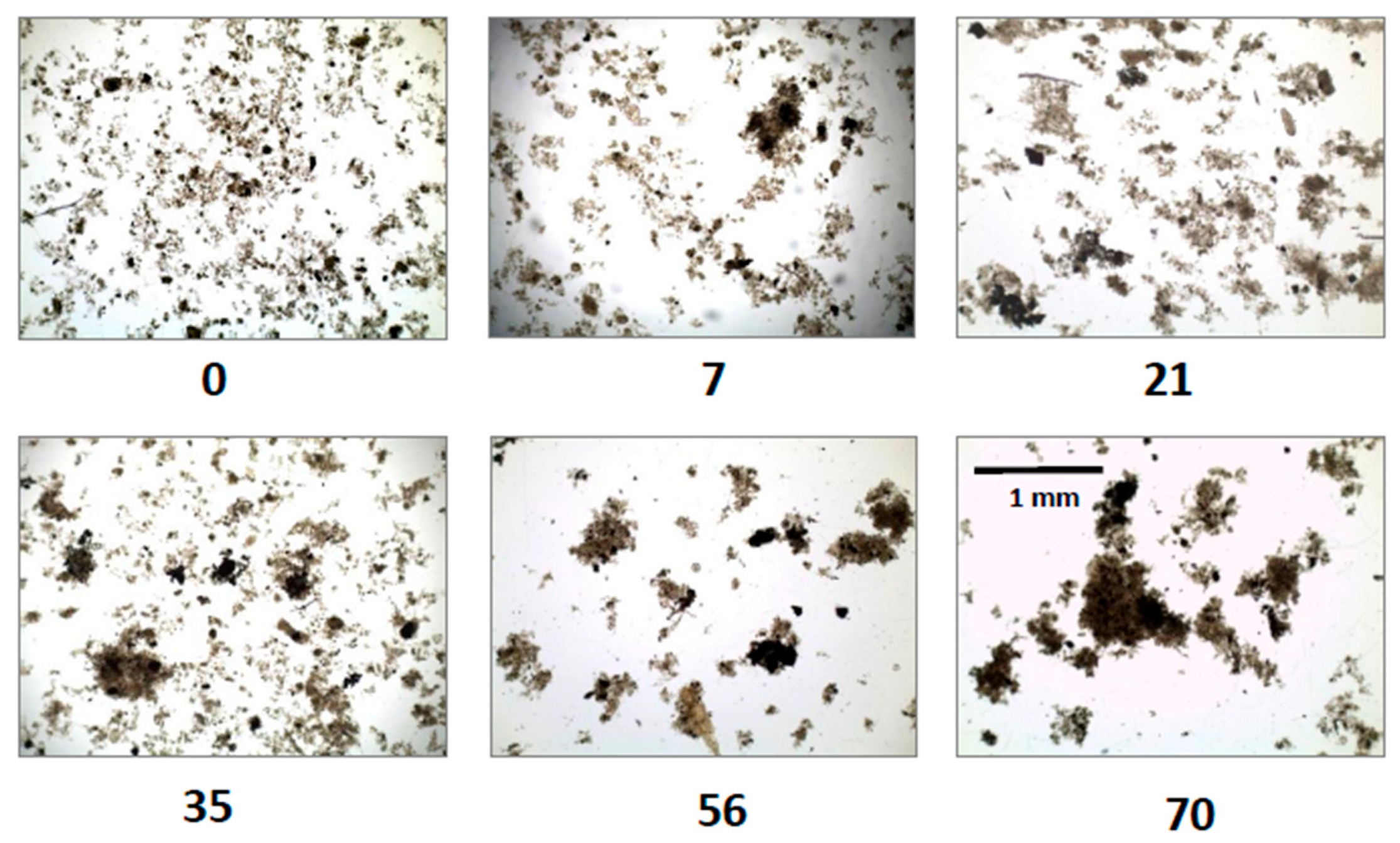
Visible changes in the sludge structure and color were among the first effects of the conditions in which the activated sludge was maintained. The initial brown color of the activated sludge flocs darkened as the anaerobic biochemical transformation of organic matter progressed, eventually turning black (Figure 1). This was the result of the activity of sulfate-reducing bacteria under anaerobic conditions and the formation of black metal sulfides, primarily iron sulfide (FeS), which imparted a dark color to the sludge [36]. Along with changes in the color of the sediment flocs, a macroscopic change in their structure was also observed, which was confirmed by microscopic examinations (Figure 2). The structure of the sediment flocs transformed into larger, more concentrated agglomerates, which influenced the change in the sedimentation characteristics of the sludge and corresponded with the trend of changes in the values of other analyzed activated sludge parameters (Figure 3, Table 2).
Table 2 and Figure 3 and Figure 4 present the results of measurements for all parameters throughout the research.
Under nutrient and dissolved oxygen deficiencies, a gradual decrease in the MLSS concentration in activated sludge was observed (Figure 3A) due to faster decomposition of organic matter. Due to a shortage of other sources of substrates, which are a source of energy, microorganisms utilized the remaining organic matter from activated sludge flocs, intracellular substances, reserves (e.g., polyhydroxyalkanoates, PHAs), or the degradation of polymeric substances (EPS) [27,37]. The structure of the sludge and its physical properties, characterized by DSVI and CSTM parameters, changed (Figure 3B,C). In particular, a dynamic decrease in DSVI values was observed during the first 21 days of the study, after which it stabilized at less than 100 mL/g. This parameter describes the sedimentation properties of the sludge. It depends, among other things, on the characteristics (e.g., the type of microorganisms present) and concentration of solids in the sludge suspension. According to the literature, its correct value is within the range 50–150 mL/g. Above this value, sludge bulking is most often observed [27]. Microorganisms, switching from exogenous to endogenous (intracellular) respiration, reduce their metabolic activity, as indicated by the change in value of SOUR (Table 2) and sludge dehydrogenase activity AS (Figure 3D, Table 2). During the first 21 days of the study, a decline in AS value from 25.7 to 15 mg/g was observed, followed by a period of stabilization (days 21–49) and then an equal decline to a final level of 5.6 mg/g (which may indicate that the possibility of obtaining any substrates, a potential source of energy for microorganisms, has already been exhausted).
During the study, changes in other physicochemical parameters of AS and SL were also observed (Table 2, Figure 4). Due to the rapid consumption of dissolved oxygen by activated sludge organisms, reductive conditions prevailed in the samples. The redox value reached −235 mV after 14 days (Table 2). Thus, the microorganisms began endogenous respiration. These conditions favored the decomposition of intracellular polyphosphates, thereby releasing orthophosphate ions into the liquid. The orthophosphate concentration exceeded 250 mgPO4/L already in the initial days of the study, and it remained at this level until the end of the period (Figure 4A, Table 2). During anaerobic decomposition, up to 60–80% of the phosphorus accumulated in PAO bacteria cells from the enhanced biological phosphorus removal (EBPR) of a WWTP can be released outside of their cells [38,39]. The decomposing cell tissues of the AS also supplied the sludge liquid with ammonium nitrogen, which is a product of the degradation of proteins, amino acids, and other organic compounds containing nitrogen [40]. The biomass of the AS itself can contain up to 70–90 g of total Kjeldahl nitrogen per kilogram of total solids [36,37]. The results showed a gradual increase in ammonium nitrogen concentration in the SL, reaching 105.01 mgN-NH4/L on day 42 (Figure 4B, Table 2).
During the first 14 days, a characteristic decrease in pH from 6.77 to 6.38 was also observed, indicating acidification processes. Then, pH slowly increased to a value close to 7 at the end of the studied period (Figure 4C, Table 2). The value of specific conductivity increased during the first 42 days from 1.144 mS/cm to 2.230 mS/cm and then decreased to 1.853 mS/cm on day 70 (Figure 4D, Table 2). The analyses of individual parameters revealed that the first week of the study was the most dynamic in terms of changes in the values of individual parameters for both the sludge liquid and the activated sludge.
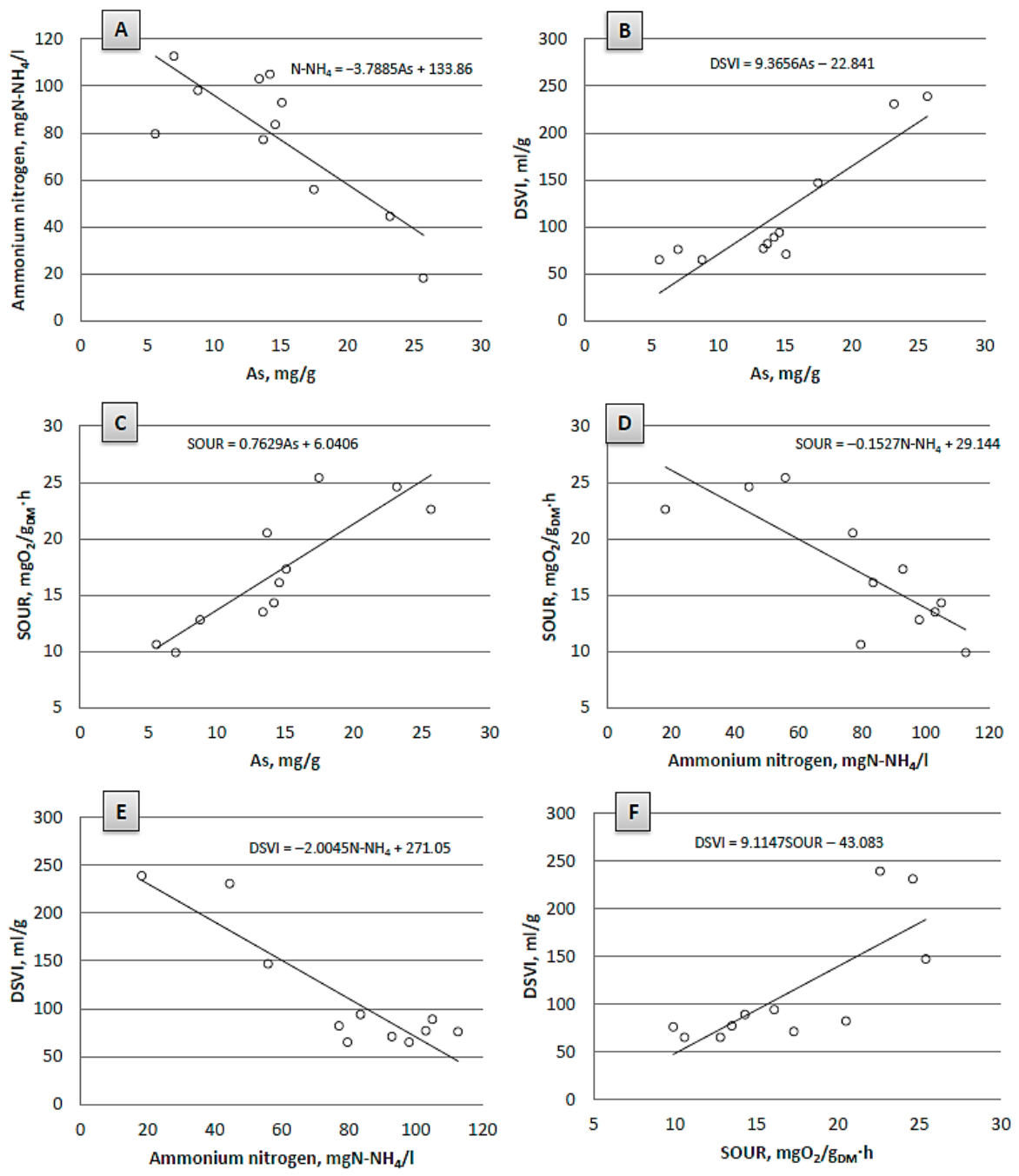
The characteristic trends in the variability of the individual parameters analyzed during the research were used to determine the correlation between the individual quality parameters of AS and SL. The aim was to determine whether it is possible to quickly obtain data on the quality of changes in AS using parameters that can be measured directly in online mode. A correlation analysis was performed using Statistica 13. The obtained correlation coefficients are presented in Table 3. A zero value means that there is no linear relationship between the variables; a negative correlation means an increase in the value of one variable causes a decrease in the value of the other; and a positive correlation means an increase in the value of one variable causes an increase in the value of the other [41]. The analysis revealed numerous significant relationships between the analyzed parameters. The focus was primarily on correlation coefficients above 0.7, indicating a strong correlation, which was further verified by analyzing the correlation graphs for the entire range of evaluated values, with the most reliable ones marked in red in Table 3. Among the parameters determining the characteristics of activated sludge were correlations between the DSVI, SOUR, and AS parameters. Their correlation with ammonium nitrogen concentration is evident in Figure 5.
Data in Table 3 and charts in Figure 5 show three positive correlations for the DSVI, As, and SOUR parameters and three negative correlations for DSVI, AS, SOUR, and ammonium nitrogen. The results demonstrated, among other things, that the DSVI value was positively correlated with sludge activity under anaerobic conditions, as measured by AS and SOUR parameters. A decrease in sludge activity, along with its progressive auto-oxidation, simultaneously improved sedimentation properties. A positive correlation was also obtained for AS and SOUR, confirming changes in sludge activity during the study. In addition, ammonium nitrogen played an important role. Its concentration was negatively correlated with DSVI, AS, and SOUR. The increase in NH4+ ion concentration was directly associated with decreases in all three AS parameters, indicating the decomposition of the organic components of microorganism cells during a shortage of substrates, resulting in decreased sludge activity.
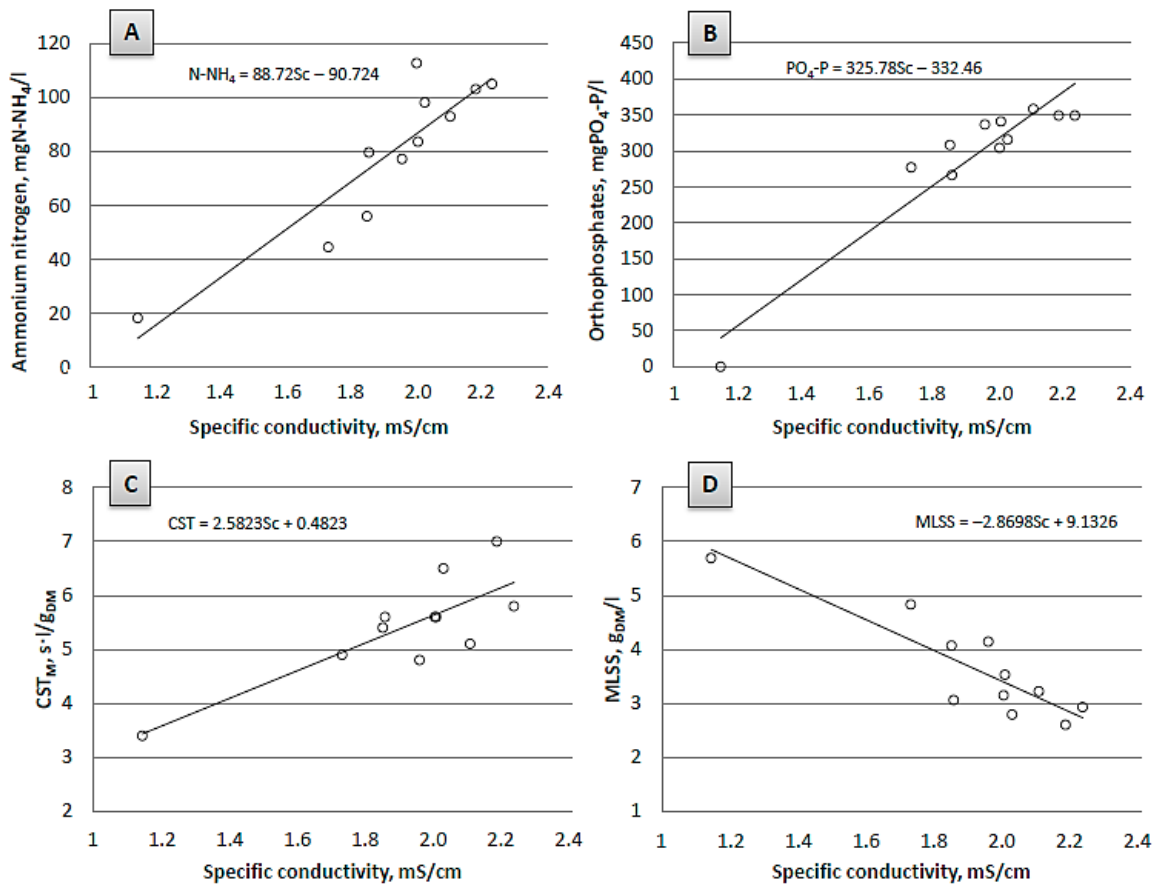
The results also showed several correlations between specific conductivity and various analyzed parameters (Figure 6). This parameter is simple and easy to determine. When calibrated adequately against historical results, it can be incorporated into the online control of ongoing processes. A positive correlation was observed for ammonium nitrogen, orthophosphates, and CSTM, whereas a negative correlation was observed for MLSS.

4. Principal Component Analysis

The obtained parametric correlations were further analyzed using principal component analysis (PCA). Statistical process control is one of the most common applications of PCA. This tool is employed to compress data and extract information, identifying combinations of variables that accurately represent the primary trends in the data. Its objective is to project multidimensional space onto a low-dimensional space, thereby identifying the system’s critical variables [42,43]. It facilitates the identification of uncontrolled conditions, the diagnosis of disturbances that affect the proper course of treatment, and the detection of disturbances in wastewater treatment systems, among other things, thereby supporting the operation of WWTPs using activated sludge [44].
By linearly transforming the original set of variables into a significantly smaller set of uncorrelated variables, PCA is a multidimensional technique that preserves data information. The analysis was conducted using a bidirectional correlation matrix, in which column vectors represented variables (physicochemical parameters measured in the activated sludge suspension) and row vectors represented objects (activated sludge samples tested after a specified time) for which the variables were measured. Using the Kaiser criterion, which stipulates that only factors with eigenvalues greater than 1 should be retained, the number of principal components describing the data set used in the analysis was ascertained. The parameters that determined the quality of AS and SL served as the distinguishing criteria during the PCA.
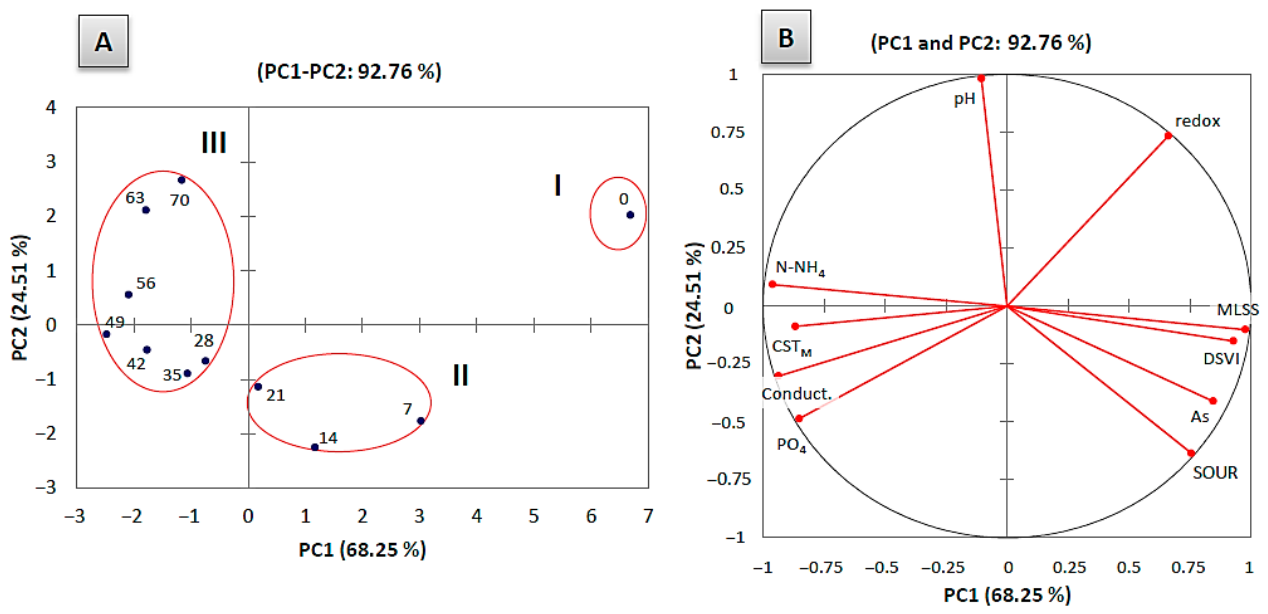
During PCA, an observation chart was generated to identify potential similarities and differences among individual samples (Figure 7). It illustrates the configuration of variables within a novel coordinate system established by the PC1 and PC2 components identified during the analysis. Specifically, 68.25% of the total variation was explained by PC1 and 24.51% by PC2. Positively correlated variables (MLSS (0.9771), DSVI (0.9280), AS (0.8446), and SOUR (0.7547)) and negatively correlated variables (N-NH4 (−0.9607), PO4 (−0.8516), specific conductivity (−0.8676) and CSTM (−0.9371)) made the most substantial contribution to the PC1 factor (r ≥ 0.75).
The application of PCA enabled the practical separation of three groups with distinct physical and chemical properties, as marked in Figure 7A as I, II, and III. They classify the activated sludge tested under anaerobic conditions in terms of its characteristics changing over time, including microbial activity, floc structure of the sludge, and quality of the sludge liquid. The most significant change dynamics in the parameters characterizing the AS were observed in the initial period of the study, up to day 7. Changes persisted until day 21 of the study, after which the system stabilized. Samples analyzed from day 22 to day 70 (group II) showed a decreasing tendency, differentiating the values of individual parameters. In turn, for the PC2 factor, the positively correlated variables—pH (0.9809) and redox (0.7539)—were the most significant.
The PC1 component reflects the overall intensity of biological processes and illustrates the transition from the active sludge phase to the decomposition stage. The PC2 component, on the other hand, may correspond to short-term fluctuations in oxygen conditions and redox potential within the reactor.
Figure 7B illustrates the position of grouping variables in relation to the PC1 and PC2 components, as well as their impact on the principal components. Variables positively correlated with PC1 (MLSS, DSVI, SOUR, and AS) characterized AS samples from 0 to 21 days. Their variability was the most significant during this period. The stabilization of biological processes is indicated by the observations after day 21 (analysis made on day 28). This was the result of a shortage of substrates required for the growth of activated sludge microorganisms, leading to the slow death of their cells. This is confirmed by the negative correlations between the N-NH4, CSTM, specific conductivity, and orthophosphate concentration and the PC1 component. The increase in these parameters’ values from day 28 may indicate progressive decomposition of activated sludge microorganisms and, consequently, increased release of the analyzed compounds into the sludge liquid. The activated sludge retained its biological activity under anaerobic conditions and during substrate starvation for the first 21 days, as confirmed by the trend in the sludge activity parameter (Figure 3D).
PCA revealed a tendency for the samples to cluster into three distinct groups. To confirm this observation, an unsupervised statistical classification was subsequently performed using two-way hierarchical cluster analysis (two-way HCA). The Ward method was used as the clustering technique in this analysis.
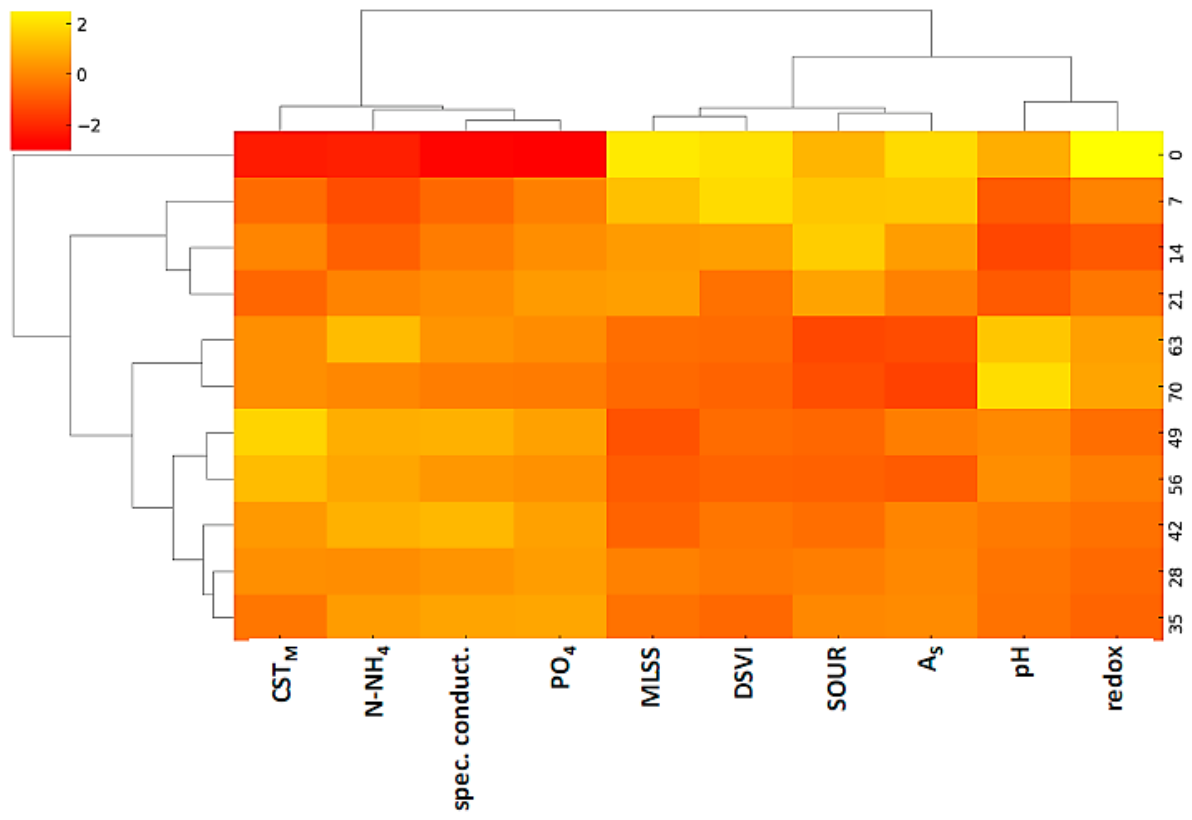
The results of the two-way HCA analysis are presented as a heatmap accompanied by dendrograms, which simultaneously illustrate the relationships between samples (Y-axis) and the variables under study (X-axis). The individual fields in the figure correspond to the values of the variables in the sample data. At the same time, their color reflects the normalized value of the given variable. Dendrograms illustrate the degree of similarity between elements—the shorter the branches, the greater the similarity between samples or analyzed parameters. Such visualization allows for easy differentiation between groups of samples with similar physicochemical profiles and facilitates a more transparent interpretation of the relationships occurring in the data set.
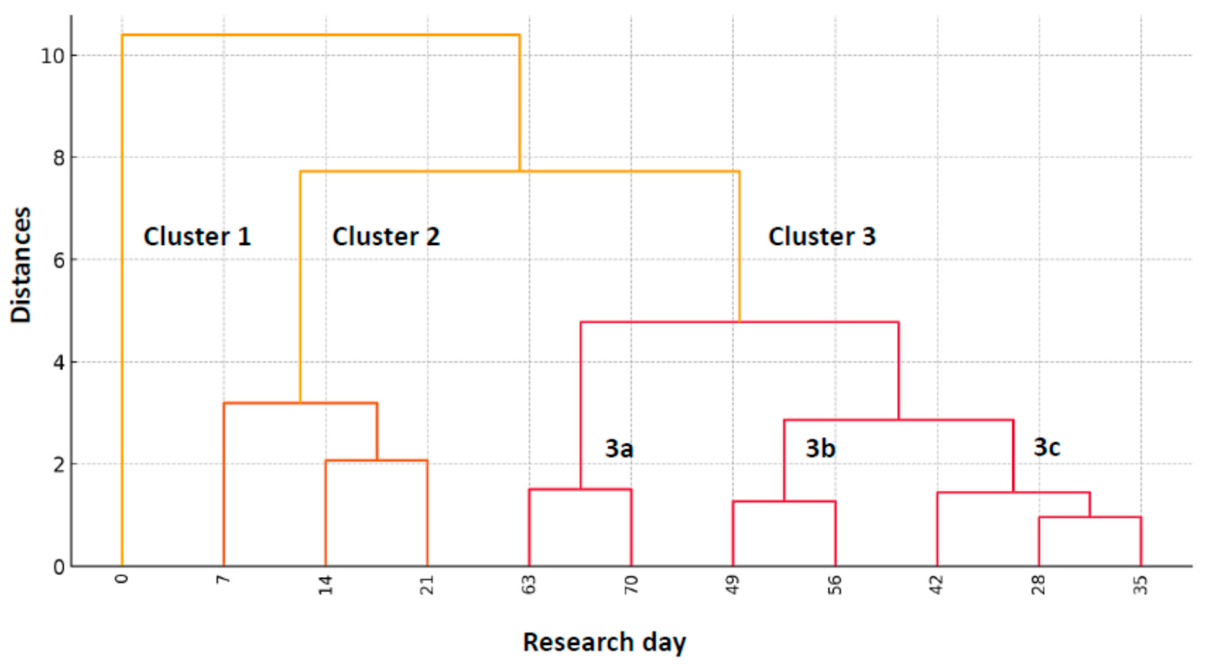
The obtained dendrograms (Figure 8 and Figure 9) confirmed the PCA results, showing a clear division of the tested samples into three main clusters. This approach enabled us to determine the data set’s structure and gain a better understanding of the nature of changes in the physicochemical parameters of activated sludge across individual anaerobic retention time ranges.
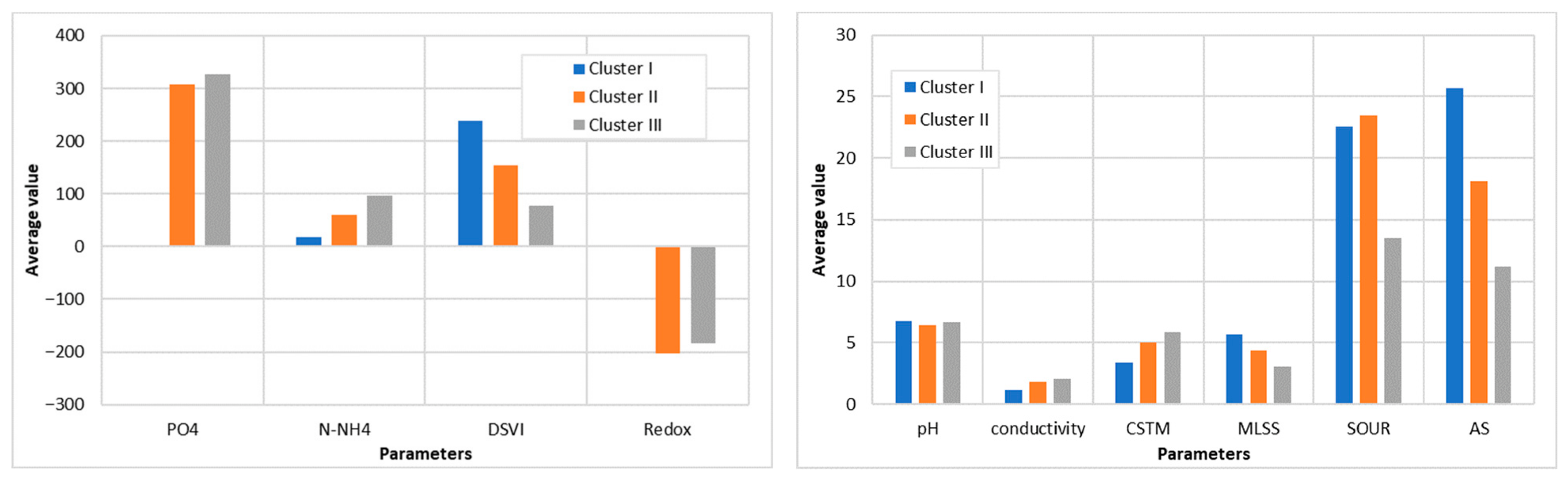
The cluster analysis revealed distinct phases of change in activated sludge functioning, from its initial high biological activity (cluster I) through a stage of degradation and nutrient release (cluster II) to a state of stabilization with minimal sludge activity (cluster III). The average values of individual parameters, along with their assignment to specific clusters, are presented in Table 4 and Figure 10.

5. Conclusions

The conducted research and obtained results indicate that multidirectional data analysis enables the presentation of dynamic changes in the activated sludge system under exemplary oxygen-free conditions, which may serve as a useful control and optimization tool in biological wastewater treatment processes. The analyses showed a strong correlation between specific conductivity and the release of ammonia (r = 0.90) and orthophosphates (r = 0.95). In practice, this means that readings from an online conductivity sensor can serve as indirect indicators of sludge decomposition and nutrient release without waiting for chemical analysis results. The correlations obtained from multi-parameter analyses of sludge and sludge liquid, as well as the assessment of changes using PCA and HCA, make it possible to select a sludge quality indicator that classifies sludge into one of three groups (clusters), determining the current state and stage of activated sludge decomposition processes under anaerobic conditions. They reflect specific stages of sludge transformation under anaerobic conditions:
  • Cluster I defines sludge with high biological activity (SOUR: 22.6; As: 25.7).
  • Cluster II represents the organic matter degradation phase and the intensive release of nutrients into the sludge supernatant.
  • Cluster III identifies the stabilization phase, characterized by minimal biological activity and improved sedimentation properties (DSVI < 100 mL/g).
These analyses also suggest the potential application of this data interpretation to other conditions, such as prolonged aeration, enabling the assessment of the degree of aerobic stabilization of sludge over time, thereby optimizing the process in terms of energy consumption and improving product quality. The statistical analysis based on PCA and HCA results could be used in the future to develop a decision-support system. Such a system would allow ongoing assessment of activated sludge conditions, respond to process disruptions, and suggest appropriate operational measures. Optimizing the duration of individual process phases, enabled by rapid identification of sludge condition (clusters I–III), may reduce the operating time of energy-intensive equipment, thereby improving energy efficiency. Its implementation could contribute to increasing the system’s stability and maintaining consistent wastewater treatment quality. It may also help reduce the environmental impact of WWTPs and enable more efficient water recovery from wastewater, which is a key element of sustainable development, especially in times of emerging water shortages for irrigation and consumption.

Author Contributions

Conceptualization, K.P.; methodology, K.P. and B.W.; validation, K.P., B.W. and T.D.; formal analysis, K.P., B.W. and T.D.; investigation, K.P.; data curation, K.P. and B.W.; writing—original draft preparation, K.P., B.W. and T.D.; writing—review and editing, K.P., B.W. and T.D.; visualization, K.P. and B.W. All authors have read and agreed to the published version of the manuscript.

Funding

This research received no external funding.

Institutional Review Board Statement

Not applicable.

Informed Consent Statement

Not applicable.

Data Availability Statement

The original contributions presented in this study are included in the article. Further inquiries can be directed to the corresponding author.

Conflicts of Interest

The authors declare no conflicts of interest.

References

  1. Koivuranta, E.; Suopajärvi, T.; Hattuniemi, J.; Stoor, T.; Illikainen, M. The Effect of Seasonal Variations on Floc Morphology in the Activated Sludge Process. Environ. Technol. 2017, 38, 3209–3215. [Google Scholar] [CrossRef]
  2. Mosaferi, M.; Shekoohiyan, S.; Behnami, A.; Aghayani, E.; Benis, K.Z.; Allaeaiea, H.; Pourakbar, M. A Comprehensive Review of Cyclic Activated Sludge Processes in Wastewater Treatment: Current Perspectives and Future Challenges. Sustain. Chem. Environ. 2025, 9, 100191. [Google Scholar] [CrossRef]
  3. Tran, H.T.; Lesage, G.; Lin, C.; Nguyen, T.B.; Bui, X.-T.; Nguyen, M.K.; Nguyen, D.H.; Hoang, H.G.; Nguyen, D.D. Activated Sludge Processes and Recent Advances. In Current Developments in Biotechnology and Bioengineering; Elsevier: Amsterdam, The Netherlands, 2022; pp. 49–79. ISBN 978-0-323-99874-1. [Google Scholar]
  4. Naşcu, I.; Naşcu, I. Modelling and Optimization of an Activated Sludge Wastewater Treatment Process. In Computer Aided Chemical Engineering; Elsevier: Amsterdam, The Netherlands, 2016; Volume 38, pp. 1159–1164. ISBN 978-0-444-63428-3. [Google Scholar]
  5. Mesquita, D.P.; Dias, O.; Amaral, A.L.; Ferreira, E.C. Monitoring of Activated Sludge Settling Ability through Image Analysis: Validation on Full-Scale Wastewater Treatment Plants. Bioprocess. Biosyst. Eng. 2009, 32, 361–367. [Google Scholar] [CrossRef]
  6. Nowobilska-Majewska, E.; Bugajski, P. The Impact of Selected Parameters on the Condition of Activated Sludge in a Biologic Reactor in the Treatment Plant in Nowy Targ, Poland. Water 2020, 12, 2657. [Google Scholar] [CrossRef]
  7. Croll, H.C.; Ikuma, K.; Ong, S.K.; Sarkar, S. Unified Control of Diverse Actions in a Wastewater Treatment Activated Sludge System Using Reinforcement Learning for Multi-Objective Optimization. Water Res. 2024, 263, 122179. [Google Scholar] [CrossRef] [PubMed]
  8. Guerra-Rodríguez, S.; Oulego, P.; Rodríguez, E.; Singh, D.N.; Rodríguez-Chueca, J. Towards the Implementation of Circular Economy in the Wastewater Sector: Challenges and Opportunities. Water 2020, 12, 1431. [Google Scholar] [CrossRef]
  9. Capodaglio, A.G. Urban Wastewater Mining for Circular Resource Recovery: Approaches and Technology Analysis. Water 2023, 15, 3967. [Google Scholar] [CrossRef]
  10. Maddaloni, M.; Marchionni, M.; Abbá, A.; Mascia, M.; Tola, V.; Carpanese, M.P.; Bertanza, G.; Artioli, N. Exploring the Viability of Utilizing Treated Wastewater as a Sustainable Water Resource for Green Hydrogen Generation Using Solid Oxide Electrolysis Cells (SOECs). Water 2023, 15, 2569. [Google Scholar] [CrossRef]
  11. Derco, J.; Guľašová, P.; Legan, M.; Zakhar, R.; Žgajnar Gotvajn, A. Sustainability Strategies in Municipal Wastewater Treatment. Sustainability 2024, 16, 9038. [Google Scholar] [CrossRef]
  12. Gusiatin, M.Z.; Kulikowska, D.; Bernat, K. Municipal Sewage Sludge as a Resource in the Circular Economy. Energies 2024, 17, 2474. [Google Scholar] [CrossRef]
  13. Zhang, X.; Liu, Y. Resource Recovery from Municipal Wastewater: A Critical Paradigm Shift in the Post Era of Activated Sludge. Bioresour. Technol. 2022, 363, 127932. [Google Scholar] [CrossRef]
  14. Conall Holohan, B.; Trego, A.; Keating, C.; Bressani-Ribeiro, T.; Chernicharo, C.L.; Daigger, G.; Galdi, S.M.; Knörle, U.; Paissoni, E.; Robles, A.; et al. Anaerobic Microbial Core for Municipal Wastewater Treatment—The Sustainable Platform for Resource Recovery. Curr. Opin. Biotechnol. 2025, 94, 103317. [Google Scholar] [CrossRef]
  15. Zongo, B.; Balogun, S.A.; Shittu, T. Wastewater as a Source of Productive Water, Biomass, and Energy at Low Cost Againstthe Respective Scarcities in the Presentand the Future in African Countries. Pol. J. Environ. Stud. 2023, 32, 4937–4952. [Google Scholar] [CrossRef]
  16. Kehrein, P.; Van Loosdrecht, M.; Osseweijer, P.; Garfí, M.; Dewulf, J.; Posada, J. A Critical Review of Resource Recovery from Municipal Wastewater Treatment Plants—Market Supply Potentials, Technologies and Bottlenecks. Environ. Sci. Water Res. Technol. 2020, 6, 877–910. [Google Scholar] [CrossRef]
  17. Pan, Y.; Yu, S.-S.; Xiao, Z.-C.; Min, Y.; Tian, T.; Zheng, Y.-M.; Zhao, Q.-B.; Yuan, Z.-H.; Yu, H.-Q. Re-Evaluation and Modification of Dehydrogenase Activity Tests in Assessing Microbial Activity for Wastewater Treatment Plant Operation. Water Res. 2023, 246, 120737. [Google Scholar] [CrossRef] [PubMed]
  18. Ioan, C.; Robescu, D.N. Dehydrogenase Activity and Quantitative Image Analysis of Morphological Characteristics of Activated Sludge at Cernavoda Wastewater Treatment Plant (Romania). UPB Sci. Bull. Ser. D 2015, 77, 241–248. [Google Scholar]
  19. Tomska, A. Influence of Selected Pharmaceuticals on Activated Sludge Dehydrogenase Activity. Inż. Ekolog. 2016, 48, 214–218. [Google Scholar] [CrossRef]
  20. Verteletsky, E.; Yulmetova, R.; Volkov, B.; Rumyantsev, D. Automation of Activated Sludge Quality Monitoring in Wastewater Treatment Using Computer Vision Technology. E3S Web Conf. 2024, 539, 01030. [Google Scholar] [CrossRef]
  21. Khan, M.B.; Lee, X.Y.; Nisar, H.; Ng, C.A.; Yeap, K.H.; Malik, A.S. Digital Image Processing and Analysis for Activated Sludge Wastewater Treatment. In Signal and Image Analysis for Biomedical and Life Sciences; Sun, C., Bednarz, T., Pham, T.D., Vallotton, P., Wang, D., Eds.; Advances in Experimental Medicine and Biology; Springer International Publishing: Cham, Switzerland, 2015; Volume 823, pp. 227–248. ISBN 978-3-319-10983-1. [Google Scholar]
  22. Mesquita, D.P.; Amaral, A.L.; Ferreira, E.C. Activated Sludge Characterization through Microscopy: A Review on Quantitative Image Analysis and Chemometric Techniques. Anal. Chim. Acta 2013, 802, 14–28. [Google Scholar] [CrossRef]
  23. Wu, Y.; Huang, D.; Zhang, L.; Zhang, R.; Yu, P.; Gao, Y.; Wu, D.; Gao, Y. An Analytic Hierarchy Process Combined with Artificial Neural Network Model to Evaluate Sustainable Sludge Treatment Scenarios. Waste Manag. 2025, 201, 114821. [Google Scholar] [CrossRef] [PubMed]
  24. Grace, N.V.A.; Aldehim, G.; Alruwais, N.; Prabakar, T.N. Novel PCA-Driven Extreme Machine Learning for Comprehensive Modelling of Metropolitan Wastewater Treatment Systems. Desalination Water Treat. 2025, 321, 101037. [Google Scholar] [CrossRef]
  25. Świderska-Dąbrowska, R.; Piaskowski, K.; Baran, M.J. Application of Multivariate Classification Protocols in Research Focusing on Food, Environmental Samples, and Wastewater Technological Processes. J. AOAC Int. 2017, 100, 365–376. [Google Scholar] [CrossRef]
  26. Sobczyk, M.; Pajdak-Stós, A.; Fiałkowska, E.; Sobczyk, Ł.; Fyda, J. Multivariate Analysis of Activated Sludge Community in Full-Scale Wastewater Treatment Plants. Environ. Sci. Pollut. Res. 2021, 28, 3579–3589. [Google Scholar] [CrossRef]
  27. Wongburi, P.; Park, J.K. Prediction of Sludge Volume Index in a Wastewater Treatment Plant Using Recurrent Neural Network. Sustainability 2022, 14, 6276. [Google Scholar] [CrossRef]
  28. Monday, C.; Zaghloul, M.S.; Krishnamurthy, D.; Achari, G. A Review of AI-Driven Control Strategies in the Activated Sludge Process with Emphasis on Aeration Control. Water 2024, 16, 305. [Google Scholar] [CrossRef]
  29. Capodaglio, A.G.; Callegari, A. Use, Potential, Needs, and Limits of AI in Wastewater Treatment Applications. Water 2025, 17, 170. [Google Scholar] [CrossRef]
  30. Capodaglio, A.; Olsson, G. Energy Issues in Sustainable Urban Wastewater Management: Use, Demand Reduction and Recovery in the Urban Water Cycle. Sustainability 2019, 12, 266. [Google Scholar] [CrossRef]
  31. Lozano Avilés, A.B.; Del Cerro Velázquez, F.; Lloréns Pascual Del Riquelme, M. Methodology for Energy Optimization in Wastewater Treatment Plants. Phase III: Implementation of an Integral Control System for the Aeration Stage in the Biological Process of Activated Sludge and the Membrane Biological Reactor. Sensors 2020, 20, 4342. [Google Scholar] [CrossRef]
  32. Oulebsir, R.; Lefkir, A.; Safri, A.; Bermad, A. Optimization of the Energy Consumption in Activated Sludge Process Using Deep Learning Selective Modeling. Biomass Bioenergy 2020, 132, 105420. [Google Scholar] [CrossRef]
  33. Campo, G.; Miggiano, A.; Panepinto, D.; Zanetti, M. Enhancing the Energy Efficiency of Wastewater Treatment Plants through the Optimization of the Aeration Systems. Energies 2023, 16, 2819. [Google Scholar] [CrossRef]
  34. Roy, K.; Kar, S.; Das, R.N. Selected Statistical Methods in QSAR. In Understanding the Basics of QSAR for Applications in Pharmaceutical Sciences and Risk Assessment; Elsevier: Amsterdam, The Netherlands, 2015; pp. 191–229. ISBN 978-0-12-801505-6. [Google Scholar]
  35. Rahimi, Z.; Zinatizadeh, A.A.; Zinadini, S.; Van Loosdrecht, M.; Batstone, D.J. Effect of Microbial Growth Types (Suspended and Attached) in Anoxic Zone of Innovative One-Stage Anaerobic/Anoxic/Oxic Bioreactor with Airlift Regime on Nitrogen Removal through Combined Mechanisms and Phosphorous Removal: A Comparative Study. J. Clean. Prod. 2025, 486, 144303. [Google Scholar] [CrossRef]
  36. Suschka, J.; Grübel, K. Nitrogen in the Process of Waste Activated Sludge Anaerobic Digestion. Arch. Environ. Prot. 2014, 40, 123–136. [Google Scholar] [CrossRef]
  37. Qin, Y.; Hu, S. Study on Release Characteristics and Recovery of Nitrogen and Phosphorus during the Anaerobic Fermentation of Excess Sludge. IOP Conf. Ser. Earth Environ. Sci. 2018, 108, 042018. [Google Scholar] [CrossRef]
  38. Yao, W.; Yang, C.-X.; Lu, Y.; Lu, Y.-Y.; Wang, S.-X.; Huang, B.-C.; Jin, R.-C. Enhancing Phosphorus Release from Sewage Sludge via Anaerobic Treatment: State-of-Art Progress and Future Challenges. Chem. Eng. J. 2024, 483, 149346. [Google Scholar] [CrossRef]
  39. Xi, Z.; Wang, W.; Ping, Q.; Wang, L.; Pu, X.; Wang, B.; Li, Y. Anaerobic Digestion of Phosphorus-Rich Sludge and Digested Sludge: Influence of Mixing Ratio and Acetic Acid. Separations 2023, 10, 539. [Google Scholar] [CrossRef]
  40. Pasciucco, F.; Pasciucco, E.; Castagnoli, A.; Iannelli, R.; Pecorini, I. Comparing the Effects of Al-Based Coagulants in Waste Activated Sludge Anaerobic Digestion: Methane Yield, Kinetics and Sludge Implications. Heliyon 2024, 10, e29282. [Google Scholar] [CrossRef]
  41. Schober, P.; Boer, C.; Schwarte, L.A. Correlation Coefficients: Appropriate Use and Interpretation. Anesth. Analg. 2018, 126, 1763–1768. [Google Scholar] [CrossRef]
  42. Mesquita, D.P.; Amaral, A.L.; Ferreira, E.C. Characterization of Activated Sludge Abnormalities by Image Analysis and Chemometric Techniques. Anal. Chim. Acta 2011, 705, 235–242. [Google Scholar] [CrossRef]
  43. Lefkir, A.; Maachou, R.; Bermad, A.; Khouider, A. Factorization of Physicochemical Parameters of Activated Sludge Process Using the Principal Component Analysis. Desalination Water Treat. 2016, 57, 20292–20297. [Google Scholar] [CrossRef]
  44. Tomita, R.K.; Park, S.W.; Sotomayor, O.A.Z. Analysis of Activated Sludge Process Using Multivariate Statistical Tools—A PCA Approach. Chem. Eng. J. 2002, 90, 283–290. [Google Scholar] [CrossRef]
Figure 1. Macroscopic photos of activated sludge in Petri dishes on subsequent selected test days of research (0–70).
Sustainability 18 04300 g001
Figure 2. Microscopic photos of activated sludge on subsequent days of research (0–70).
Sustainability 18 04300 g002
Figure 3. Changes in AS parameters during research (average value of three measurements): (A) MLSS, (B) DSVI, (C) CSTM, (D) AS.
Sustainability 18 04300 g003
Figure 4. Changes in SL and AS parameters during research (average value of three measurements): (A) orthophosphates, (B) ammonium nitrogen, (C) pH, (D) specific conductivity.
Sustainability 18 04300 g004
Figure 5. Correlation charts between parameters of AS and SL: (A) ammonium nitrogen vs. AS, (B) DSVI vs. AS, (C) SOUR vs. AS, (D) SOUR vs. ammonium nitrogen, (E) DSVI vs. ammonium nitrogen, (F) DSVI vs. SOUR.
Sustainability 18 04300 g005
Figure 6. Correlation charts between parameters of AS and SL: (A) ammonium nitrogen vs. specific conductivity, (B) orthophosphates vs. specific conductivity, (C) CSTM vs. specific conductivity, (D) MLSS vs. specific conductivity.
Sustainability 18 04300 g006
Figure 7. PCA observation charts: (A) activated sludge observations during the study period (0–70 days) for the first two components, PC1 and PC2; (B) factor coordinates of variables for the first two components (PC1 and PC2), taking into account the analyzed parameters.
Sustainability 18 04300 g007
Figure 8. Two-way HCA as a heatmap and dendrogram.
Sustainability 18 04300 g008
Figure 9. Result of two-way HCA of activated sludge samples as a dendrogram.
Sustainability 18 04300 g009
Figure 10. Average values of examined parameters of individual HCA analysis clusters.
Sustainability 18 04300 g010
Table 1. Values of the parameters obtained during analysis of the activated sludge sample.
ParametersValue
Temperature, °C12.0
pH6.77
Specific conductivity, mS/cm1.144
Redox, mV2.2
Capillary suction time, CST, s19.3
Modified capillary suction time, CSTM, s/gDM3.4
Mixed liquor suspended solids, MLSS, gDM/L5.69
Diluted sludge volume index, DSVI, ml/g239
Specific oxygen uptake rate, SOUR, mgO2/gDM∙h22.6
Sludge activity, AS, mgformazan/g25.7
Table 2. Values of parameters determined in AS and SL during the research.
ParametersDays of Measurements
07142128354249566370
activated sludge (AS)
Temperature, °C12.020.019.820.420.120.621.720.920.621.622.1
pH6.776.456.386.456.556.546.576.636.656.876.96
Specific conductivity, mS/cm1.1441.7281.8471.9542.0032.1022.2302.1802.0241.9991.853
Redox, mV2.2−177−235−194−212−220−202−205−184−136−130
CSTM, s/gDM3.44.95.44.85.65.15.87.06.55.65.6
MLSS, gDM/L5.694.834.074.143.533.222.932.602.793.153.06
DSVI, ml/g2392311478294718977657665
SOUR, mgO2/gDM∙h22.624.625.420.516.117.314.313.512.89.910.6
AS, mgformazan/g25.723.217.513.714.615.114.213.48.87.05.6
sludge liquid (SL)
Orthophosphates, mgPO4/L0.16277.06307.94336.75340.90358.28349.12349.07315.74304.07266.33
Ammonium nitrogen, mgN-NH4/L18.2444.5155.9577.1683.5692.91105.01103.0598.10112.6879.66
Table 3. Results of the correlation coefficient analysis of AS and SL parameters.
ParameterpHConductivityCSTMPO4-PN-NH4MLSSDSVISOURRedoxAS
pH1.00−0.200.03−0.370.18−0.21−0.22−0.700.64−0.49
Conductivity−0.201.000.810.950.90−0.89−0.81−0.53−0.83−0.63
CSTM0.030.811.000.730.79−0.89−0.69−0.61−0.63−0.66
PO4-P−0.370.950.731.000.77−0.76−0.72−0.33−0.93−0.55
N-NH40.180.900.790.771.00−0.94−0.90−0.81−0.54−0.81
MLSS−0.21−0.89−0.89−0.76−0.941.000.900.800.570.83
DSVI−0.22−0.81−0.69−0.72−0.900.901.000.770.510.89
SOUR−0.70−0.53−0.61−0.33−0.810.800.771.000.020.86
Redox0.64−0.83−0.63−0.93−0.540.570.510.021.000.29
AS−0.49−0.63−0.66−0.55−0.810.830.890.860.291.00
The correlation coefficients marked in red are significant with p < 0.05, N = 11.
Table 4. Average values of examined parameters of individual HCA analysis clusters.
ParameterCluster ICluster IICluster III
pH6.776.436.68
Specific conductivity, mS/cm1.141.842.06
CSTM, s/gDM3.405.035.89
Orthophosphates, mgPO4/L0.00307.25326.22
Ammonium nitrogen mgN-NH4/L18.2459.2196.42
MLSS, gDM/L5.694.353.04
DSVI, ml/g239.00153.3376.71
SOUR, mgO2/gDM∙h22.6023.5013.50
Redox, mV2.20−202.00−184.14
AS, mgformazan/g25.7018.1311.24
Disclaimer/Publisher’s Note: The statements, opinions and data contained in all publications are solely those of the individual author(s) and contributor(s) and not of MDPI and/or the editor(s). MDPI and/or the editor(s) disclaim responsibility for any injury to people or property resulting from any ideas, methods, instructions or products referred to in the content.