Systematic Review

Sustainability-Qualified IEQ Indicators for Academic Buildings: A Systematic Review (2010–2025) and SDG-Aligned Framework

by
Cyma Adoracion Natividad
1,2,* and
Joel Opon
1,2,3,*
1
Center for Structural Engineering and Informatics, MSU—Iligan Institute of Technology, Iligan City 9200, Lanao del Norte, Philippines
2
Research Institute for Engineering and Innovative Technology, MSU—Iligan Institute of Technology, Iligan City 9200, Lanao del Norte, Philippines
3
Department of Civil Engineering and Technology, MSU—Iligan Institute of Technology, Iligan City 9200, Lanao del Norte, Philippines
*
Authors to whom correspondence should be addressed.
Sustainability 2026, 18(9), 4260; https://doi.org/10.3390/su18094260
Submission received: 21 February 2026 / Revised: 26 March 2026 / Accepted: 16 April 2026 / Published: 24 April 2026

Abstract

Indoor Environmental Quality (IEQ) strongly influences health, comfort, and learning performance in academic buildings, yet assessment practices remain fragmented and rarely aligned with sustainability goals. This study conducted a PRISMA 2020-guided systematic literature review to identify, screen, and map IEQ indicators for educational facilities and to develop a sustainability-aligned framework for classroom evaluation. Searches of Google Scholar, Scopus, and Web of Science (2010–2025) yielded 365 records; after de-duplication and eligibility screening, 142 peer-reviewed studies were included. From these, 118 unique IEQ indicators were extracted and classified into six domains: thermal comfort, indoor air quality, acoustic quality, visual comfort, environmental quality, and spatial quality. Using sustainability-oriented screening criteria (measurability, relevance, reliability, data accessibility, understandability, and long-term applicability), 50 indicators (42%) were retained as methodologically robust, while 68 (58%) were excluded due to weak standardization or limited practical applicability. The retained indicators were systematically mapped to the environmental, social, and economic pillars and aligned with key SDGs (3, 4, 7, 11, and 13). The resulting Sustainability-Aligned IEQ Indicator Framework integrates quality-screened indicators with pillar/SDG alignment and a mixed-method pathway that combines objective monitoring and occupant perception, supporting context-sensitive evaluation, particularly for naturally ventilated and tropical learning environments.

1. Introduction

Indoor Environmental Quality (IEQ) is a fundamental determinant of the performance and well-being of occupants in academic buildings. Students and educators typically spend extended hours in classrooms and learning environments, rendering them particularly sensitive to indoor conditions such as temperature, air quality, lighting, acoustics, and spatial design. A substantial body of research demonstrates that adequate IEQ is associated with augmented cognitive performance, higher academic engagement, and better physical and mental health. In contrast, poor conditions cause discomfort, absenteeism, and reduced learning outcomes [1,2,3,4,5,6].

1.1. Why IEQ Matters in Schools

IEQ inside educational buildings is consistently linked to learners’ health, well-being, and academic performance, positioning IEQ as a core determinant of learning conditions and school building quality. Systematic reviews synthesize these findings by demonstrating consistent associations among classroom IEQ, respiratory health, perceived comfort, and academic performance indicators [1].
IEQ is inherently multi-dimensional, encompassing thermal comfort, indoor air quality, acoustic quality, visual comfort, environmental quality, and spatial quality [7,8]. Despite their interdependencies, IEQ parameters are frequently assessed in isolation, leading toward fragmented evaluation practices [9,10]. As highlighted in sustainability-oriented studies, improving IEQ through efficient design and management is a crucial pathway to healthy learning environments [11].
Interventions such as energy-efficient ventilation and climate-responsive design can enhance indoor conditions while reducing environmental impacts [12,13]. Consequently, IEQ is closely aligned with ecological aims [10,14]. However, integration of IEQ evidence into sustainability assessment remains limited by the absence of harmonized frameworks [5,15].

1.2. Climate Sensitivity of IEQ

IEQ conditions depend strongly on climate and building typology. Studies point to the need for context-specific benchmarks rather than the direct adoption of standards from temperate climates [9,16]. This is particularly relevant in tropical contexts, where ecological exposures differ significantly from current benchmarks.

1.3. IEQ as a Sustainability and SDG Issue

IEQ intersects with health, learning quality, and energy performance. Sustainable building strategies stress that indoor comfort and resource efficiency are interdependent objectives [10,14,17]. Yet current IEQ assessment practices rarely incorporate explicit sustainability alignment [9,13,16].

1.4. Study Rationale

Unlike previous IEQ reviews, this study advances the field by introducing a sustainability-qualified screening protocol. The study evaluates IEQ indicators using established sustainability screening criteria [11,18], systematically maps validated indicators to the environmental, social, and economic sustainability pillars and relevant SDGs [10,11,14], and emphasizes the necessity of context-specific thresholds tailored to tropical and naturally ventilated educational environments [9,13,16].

2. Literature Review

2.1. Why “Holistic IEQ” Is Needed

Because classroom comfort is multi-factorial, recent work endorses holistic IEQ approaches that integrate thermal comfort, indoor air quality, acoustics, lighting, and contextual building factors into combined assessment or index-based evaluations. Framework and model reviews emphasize that single-parameter assessments can overlook important interactions among comfort domains, thereby motivating the use of weighting, classification, and composite evaluation approaches [2,19]. Holistic field-based studies similarly demonstrate that comfort, productivity, and energy outcomes can be jointly affected by multiple IEQ dimensions [20], and integrated assessment methods have been proposed to capture these interdependencies more comprehensively [21]. Index-oriented applications additionally demonstrate how multi-domain IEQ can be synthesized into interpretable metrics for educational facilities [22], including higher education settings where thermal, acoustic, and lighting conditions jointly shape perceived comfort [23].

2.2. Objective Measurements + Subjective Perception: Why Both Are Necessary

Evidence indicates that objective measurements alone may not completely capture perceived comfort, suggesting that mixed-method IEQ protocols combining instrumentation with occupant perception surveys are warranted. Research combining measurements and pupil perception shows that reported well-being and satisfaction can differ from what would be inferred from physical parameters alone [24,25]. Teacher-focused research similarly identifies satisfaction factors that go beyond measured values, linking IEQ appraisal to wellbeing outcomes and differences across building conditions [26,27]. Methodological work also cautions that subjective responses depend on sampling and representativeness, which should be explicitly managed in study design [28]. Advances in sensor-based monitoring, coupled with perceived IEQ and psychosocial variables, further strengthen the importance of combining continuous measurements with self-reported outcomes [29], including in resource-limited contexts, where inspection, measurements, and questionnaires can be integrated into feasible school IEQ audits [30].

2.3. Ventilation and IAQ: CO2/PM as Key Indicators and the Operation Factor

Ventilation effectiveness and occupant-driven operations (e.g., windows and doors) strongly shape IAQ outcomes, making CO2 and particulate indicators, along with operational behavior, important components of classroom IEQ assessment. Monitoring-based classification approaches indicate that CO2 and particulate matter are practical indicators for identifying school environments with inadequate ventilation or elevated pollutant loads [31]. Evidence from operational studies shows that window and door use directly affects IEQ conditions, suggesting that “how buildings are used” can be as influential as their design intent [32,33]. Case studies before and during COVID further highlight the central role of ventilation strategies in maintaining acceptable indoor conditions across changing risk contexts [34,35]. Renovation and improvement programs also show that IAQ and thermal outcomes may shift after interventions, confirming the importance of post-intervention verification using targeted IAQ metrics [36], including practical guidance for K–12 ventilation and IEQ improvement initiatives [37].

2.4. Energy–IEQ Trade-Offs

School building interventions must factor in energy–IEQ trade-offs, as retrofit or efficiency measures can improve energy performance while inadvertently degrading ventilation or comfort if not carefully balanced. Early work on schools already demonstrated the importance of considering both energy performance and indoor environmental outcomes in evaluating building operations [38]. Subsequent evidence shows that energy efficiency measures do not automatically yield better IEQ and may introduce tensions among thermal comfort, ventilation adequacy, and energy use [39]. Integrated evaluation studies, therefore, recommend a coupled assessment of energy consumption and IEQ performance in schools to avoid one-sided optimization [40]. Building performance evaluation research likewise emphasizes balancing energy and IEQ targets in decision-making [41]. At the same time, retrofit-focused studies and reviews synthesize pathways and risks through which energy interventions can influence IEQ [42,43]. Stock-level modelling for retrofit scenarios further supports planning approaches that anticipate IEQ impacts while pursuing energy targets at scale [44].

2.5. Indexing, Modelling, and Advanced Analytics: Supporting an IEQ Index/MCDA

Recent IEQ research increasingly applies index-based evaluation and decision-support approaches (e.g., weighting methods, AHP/fuzzy methods, AI prediction, and MCDA) to support transparent prioritization of interventions across multiple comfort dimensions. Conceptual and review work has proposed weighting and classification schemes to standardize IEQ interpretation throughout domains [19]. At the same time, applied studies demonstrate that weighted indices can summarize multi-parameter indoor environments in buildings [22]. Decision-analytic methods such as fuzzy evaluation and AHP have been used to structure IEQ relationships and support multi-criteria judgement [45]. Predictive approaches also include data-driven models and neural networks that estimate IEQ outcomes from building and operational variables [46,47]. More recently, MCDA frameworks have been used explicitly to identify optimal combinations of energy efficiency and IAQ measures, underscoring the practical need to balance competing objectives in school environments [48]. Bibliometric mapping and model reviews also indicate an increasing diversification of IEQ modelling approaches and tools, supporting the continued development of structured IEQ evaluation systems [49,50].

3. Materials and Methods

This study employed a systematic literature review approach to identify, classify, and evaluate Indoor Environmental Quality (IEQ) indicators relevant to academic buildings. The methodological process was designed to ensure transparency, reproducibility, and rigor in accordance with the Preferred Reporting Items for Systematic Reviews and Meta-Analyses (PRISMA 2020) guidelines [51]. The review integrated a structured literature review, explicit indicator screening, sustainability mapping, and alignment with the Sustainable Development Goals (SDGs) to develop a comprehensive, sustainability-oriented IEQ indicator framework.

3.1. Databases and Search Strategy

To capture a broad, interdisciplinary body of evidence, we conducted the literature search across three primary academic databases: Google Scholar, Scopus, and Web of Science. We used Google Scholar to complement the database searches because of its broad interdisciplinary coverage and its ability to capture additional peer-reviewed sources that Scopus and Web of Science do not always index. We used Scopus and Web of Science to cross-validate the search results and to ensure the inclusion of high-quality, indexed journal articles.
ResearchGate was used only as a document retrieval platform to access full texts of already-identified peer-reviewed articles when publisher access was unavailable. It was not used as a database for searching.
The search strategy was developed using structured Boolean expressions that combined IEQ-related terms, educational building typologies, and sustainability concepts. The core search string was formulated as follows:
(“indoor environmental quality” OR IEQ OR “indoor air quality” OR thermal OR acoust* OR lighting OR daylight) AND (school OR classroom* OR universit* OR “academic building”) AND (sustainab* OR “sustainable development goals” OR SDG)**
We limited the searches to publications written in English and published between 2010 and 2025 in peer-reviewed journals or peer-reviewed conference proceedings.
The databases, search fields, timeframe, and number of records identified are summarized in Table 1.
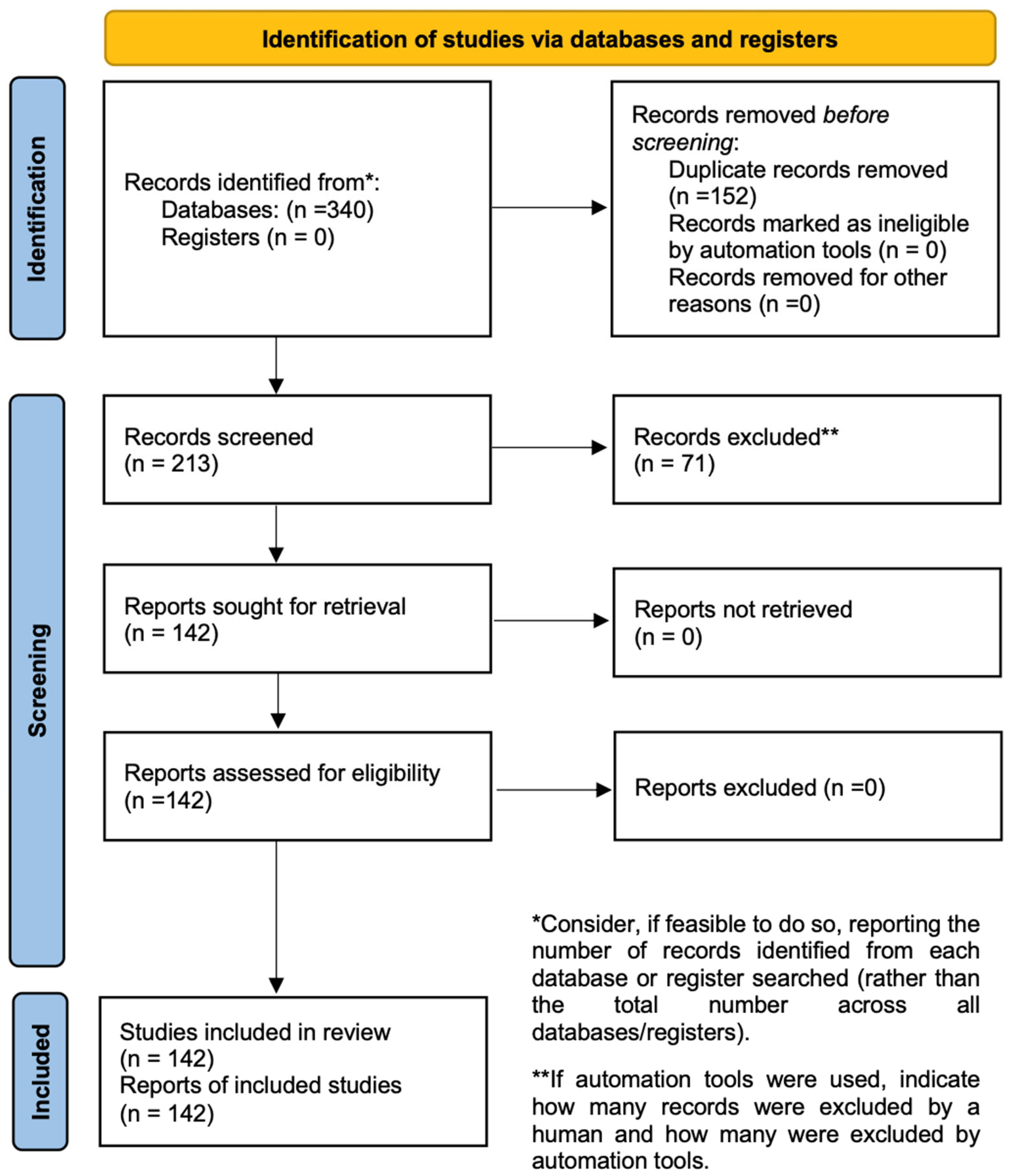
Due to overlap across databases, the total number of unique records identified at the database level was 340. Although records were retrieved from Scopus (n = 52) and Web of Science (n = 48), most were also captured in Google Scholar. After de-duplication across databases, 213 unique records remained for screening.

3.2. Study Selection and Eligibility Criteria

The study selection process followed the four stages prescribed by PRISMA: (1) identification, (2) screening, (3) eligibility, and (4) inclusion [51]. After duplicate removal (n = 152), 213 unique records remained for title and abstract screening.
Seventy-one records were excluded during the title and abstract screening stage based on predefined inclusion and exclusion criteria. The main reasons for exclusion included studies not focused on indoor environmental quality (n = 28), absence of measurable IEQ indicators (n = 17), studies conducted in non-academic buildings (n = 12), insufficient methodological detail (n = 8), and non-English or inaccessible full texts (n = 6).
The remaining 142 studies were subjected to full-text assessment and were all found to meet the eligibility criteria and were therefore included in the final review. No studies were excluded during the full-text review because all remaining articles met the predefined eligibility criteria, particularly the requirement for measurable IEQ indicators and clear methodological reporting. Explicit inclusion and exclusion criteria were established to ensure methodological consistency, as shown in Table 2.
The complete study selection process, including identification, screening, eligibility, and inclusion, is summarized in Figure 1, following the PRISMA 2020 guidelines. Only studies that reported measurable IEQ parameters or validated occupant-based assessments in academic buildings were retained.

3.3. Data Extraction and Review Matrix Development

For each of the 142 eligible studies, contextual information was systematically extracted and organized into a structured review matrix. The extracted variables included the year of publication, country, and climatic context, IEQ domains evaluated, and the assessment methods employed (objective, subjective, or mixed). A total of 142 studies were included in the final review.
A summary of representative studies, including country, building type, IEQ domains, and assessment methods, is presented in Table 3. All included studies (n = 142) are listed in the reference section and correspond directly to the final count reported in the PRISMA flow diagram.
Given the large number of included studies (n = 142), only selected representative studies are shown in the main manuscript, while the complete list and full dataset of all included studies are provided in Supplementary Materials (Supplementary File S1: Full Review Matrix of Included Studies) to ensure transparency and completeness.
This standardized, transparent data extraction process enabled consistent comparison of methodological approaches and IEQ domain use across studies conducted in diverse geographic regions, thereby supporting robust synthesis and cross-contextual analysis.
A summarized synthesis of the extracted data, including the distribution of IEQ domains and assessment methods across the included studies, is presented in Section 4 (Results).

3.4. Classification of IEQ Domains

All indicators extracted from the screened literature were systematically organized into six core Indoor Environmental Quality (IEQ) domains: Thermal Comfort (TC), Indoor Air Quality (IAQ), Acoustic Quality (AQ), Visual Comfort (VC), Environmental Quality (EQ), and Spatial Quality (SQ). This classification is consistent with widely adopted IEQ assessment frameworks that recognize the multidimensional nature of indoor environments in educational buildings [8,14,52].
Given the multidimensional nature of classroom comfort, this study adopted a holistic IEQ assessment approach that integrates indicators of thermal comfort, indoor air quality, acoustic quality, and visual comfort, consistent with the literature advocating combined, domain-inclusive evaluations rather than single-parameter assessments [2,19]. In line with best practices in IEQ research, both objective measurements and subjective perception-based assessments were considered essential, as physical parameters alone do not fully capture perceived comfort, satisfaction, and well-being outcomes [24,25]. Particular emphasis was placed on ventilation-related indicators—especially CO2 concentration and particulate matter—because ventilation effectiveness and occupant-driven behaviors strongly influence IAQ performance and overall classroom IEQ conditions [31,32]. This holistic and mixed-method orientation provided the conceptual basis for subsequent indicator screening, sustainability mapping, and framework development.
The classification of IEQ indicators into the six domains was based on their primary functional role in influencing indoor environmental conditions and occupant experience. Specifically, thermal comfort indicators describe heat balance and thermoregulation; indoor air quality indicators capture pollutant exposure and ventilation performance; acoustic quality indicators relate to auditory conditions affecting communication and concentration; visual comfort indicators address lighting adequacy and visual perception; environmental quality indicators represent broader building hygiene, moisture, and environmental conditions; and spatial quality indicators describe physical layout, ergonomics, and user–environment interaction. This functional classification ensures conceptual clarity, avoids overlap among domains, and aligns with established IEQ frameworks in the literature.

3.5. Indicator Screening and Refinement

We initially identified 118 distinct Indoor Environmental Quality (IEQ) indicators across the 142 publications reviewed. To ensure methodological rigor and consistency, these indicators were first organized into the six established IEQ domains: thermal comfort, indoor air quality, acoustic quality, visual comfort, environmental quality, and spatial quality. This domain-based classification provided a structured foundation for systematic evaluation and comparison across diverse studies and climatic contexts.
A literature-driven refinement process was then applied to evaluate the suitability of each indicator for inclusion in a sustainability-oriented IEQ framework. This process involved removing redundant or overlapping indicators, consolidating conceptually similar terms, and excluding indicators lacking clear measurement protocols or contextual relevance. Priority was given to indicators supported by multiple independent studies and internationally recognized standards. Such an iterative, criteria-based refinement approach is consistent with established practices in sustainability indicator development, which emphasize transparency, feasibility, and policy relevance [17].

3.5.1. Operational Screening Criteria and Scoring Framework

Each indicator was evaluated against six screening criteria:
  • Measurability—presence of a defined metric and unit;
  • Relevance—applicability to academic building environments;
  • Reliability—availability of standardized or validated methods;
  • Data accessibility—feasibility of data collection in typical settings;
  • Understandability—clarity and interpretability for decision makers;
  • Long-term applicability—suitability for repeated or longitudinal assessment.
A standardized three-point ordinal scoring system was applied:
0 = Not satisfied: The indicator lacks a clear definition, measurement basis, or applicability to academic IEQ assessment.
1 = Partially satisfied: The indicator is conditionally applicable, lacks consistency, or requires contextual interpretation.
2 = Fully satisfied: The indicator is clearly defined, measurable using established methods or standards, and directly applicable to academic building environments.
The total score for each indicator ranged from 0 to 12. Scores for each criterion were based on explicit definitions of measurability, relevance, reliability, feasibility, and applicability derived from established standards and the literature, ensuring consistency across all evaluated indicators.
Based on the aggregated scores, indicators were classified as follows:
  • Passed (10–12 points): Retained for inclusion in the IEQ framework.
  • Borderline (7–9 points): Subject to further evaluation and expert judgment.
  • Failed (0–6 points): Excluded due to insufficient methodological robustness or applicability.
Indicators classified as “failed” were excluded based on predefined decision rules, including lack of measurable metrics, standardized methods, or conceptual redundancy, limited applicability to academic buildings, or poor reproducibility. Borderline indicators were re-evaluated through consensus discussion, supported by relevant literature, standards, and contextual feasibility for classroom environments.
For qualitative indicators, inclusion required validated instruments with defined scales and repeatable survey protocols, consistent with established IEQ assessment practices.

3.5.2. Screening Consistency and Decision Process

To enhance methodological transparency and reduce subjectivity, the screening process followed an iterative dual-review approach. The authors independently evaluated the indicators during the initial scoring phase, followed by a joint validation stage in which discrepancies were systematically discussed and resolved through consensus, supported by relevant literature and established standards.
While formal inter-rater reliability statistics (e.g., Cohen’s kappa) were not computed during the initial screening phase, the present study ensures methodological rigor by explicitly documenting the scoring framework, classification thresholds, and decision rules. This structured approach enhances the reproducibility and transparency of the screening process.
Future applications of the proposed framework are encouraged to incorporate formal inter-rater agreement analysis to further strengthen methodological robustness. However, the structured scoring framework, explicit criteria, and consensus validation process provide methodological rigor consistent with systematic review practices.

3.5.3. Transparency and Reproducibility

A complete summary of the screening results, including individual indicator scores across all six criteria, is provided in Supplementary Material S3. This ensures full traceability of the decision-making process and allows replication or adaptation in future IEQ assessment studies. Table 4 presents representative examples illustrating how the screening criteria and scoring logic were applied to selected IEQ indicators.
This structured screening procedure ensured that only methodologically robust, standardized, and sustainability-relevant indicators were retained for subsequent analysis. The resulting refined indicator set served as the basis for sustainability pillar mapping, SDG alignment, and the development of the integrated IEQ assessment framework presented in subsequent sections.

3.6. Characterization of Indicator Types and Measurement Support

Following screening and domain classification, all retained indicators were further characterized by indicator type (objective, subjective, or mixed), measurement units, typical measurement approaches, and supporting standards. A synthesized overview of indicator types and principal measurement approaches across the six IEQ domains is presented in Table 5.
Objective indicators were measured using calibrated environmental monitoring instruments, while subjective indicators were derived from validated occupant surveys; mixed indicators combined both approaches. This classification is consistent with widely adopted IEQ methodologies that integrate measurement and perception [2,19,24,25]. The complete lists are documented in the Supplementary Material S8. The inclusion of standardized measurement references ensured that only indicators with verifiable and reproducible assessment protocols were retained for subsequent sustainability pillar mapping and SDG alignment.

3.7. Mapping of IEQ to Sustainability Pillars

To evaluate the contribution of each IEQ indicator to sustainability, a structured mapping was conducted across the three core sustainability dimensions: Environmental (ENV), Social (SOC), and Economic (ECO). In this study, sustainability is conceptualized as the integrated balance of these three dimensions, consistent with widely adopted sustainability frameworks. The Environmental dimension reflects resource efficiency and environmental impact; the Social dimension captures occupant health, comfort, and performance; and the Economic dimension represents operational efficiency and lifecycle cost considerations.
The proposed mapping approach is conceptually aligned with established building assessment and sustainability rating systems, such as LEED, BREEAM, and WELL, which similarly evaluate performance across multiple sustainability dimensions using structured scoring methods. However, unlike these certification-oriented frameworks, the present study adopts an indicator-level, literature-driven approach. The 0–2 scoring rubric was developed to represent the strength of functional relationships between IEQ indicators and sustainability outcomes, thereby ensuring transparency, comparability, and reproducibility across diverse studies.
Each indicator was assigned a score using a 0–2 ordinal scale:
  • 0 = No direct relationship
  • 1 = Indirect or secondary contribution
  • 2 = Direct and significant contribution
The scoring was based on functional relevance, causal relationships, and supporting evidence from literature and recognized standards, ensuring that assignments were grounded in objective reasoning rather than subjective interpretation.

3.7.1. Scoring Framework and Decision Criteria

The mapping framework was developed in accordance with established sustainability indicator principles that emphasize measurability, relevance, reliability, understandability, data accessibility, and long-term applicability [17,18]. Scoring decisions were guided by empirical evidence from peer-reviewed studies and by internationally recognized standards and assessment systems, including ASHRAE, ISO, WHO guidelines, WELL, LEED, and BREEAM. The mapping logic was grounded in explicit cause–effect pathways linking each IEQ indicator to measurable sustainability outcomes, ensuring that assignments were not merely conceptual but based on functional relationships supported by empirical evidence and established standards.
Each IEQ indicator was systematically evaluated against the three sustainability pillars based on documented cause-and-effect relationships:
  • Environmental (ENV):
A score of 2 was assigned when the indicator directly represented environmental performance or environmental burden, such as pollutant concentrations, indoor environmental degradation, energy use, emissions, or climate responsiveness. Examples include particulate matter (PM2.5), moisture and mold, and energy consumption.
  • Social (SOC):
A score of 2 was assigned when strong empirical evidence demonstrated direct effects on occupant health, comfort, well-being, cognitive performance, or learning outcomes, particularly in academic environments [3,5,14].
  • Economic (ECO):
A score of 2 was assigned when the indicator directly influenced operational costs, energy efficiency, system performance, or lifecycle economic sustainability, including energy demand drivers and building system efficiency [11].
A score of 1 (indirect linkage) was assigned when the relationship operated through secondary mechanisms, such as:
(i)
Productivity-related economic implications;
(ii)
Behavior-driven energy use;
(iii)
System-mediated environmental effects.
A score of 0 (no linkage) was assigned when:
(i)
No consistent or defensible relationship could be established.
(ii)
The indicator was primarily descriptive or conceptual.
(iii)
The indicator lacked a standardized measurement or operational definition.
This approach ensures that sustainability mapping is not based on conceptual association alone, but on explicit cause-and-effect relationships supported by empirical evidence and established standards.

3.7.2. Representative Mapping Examples

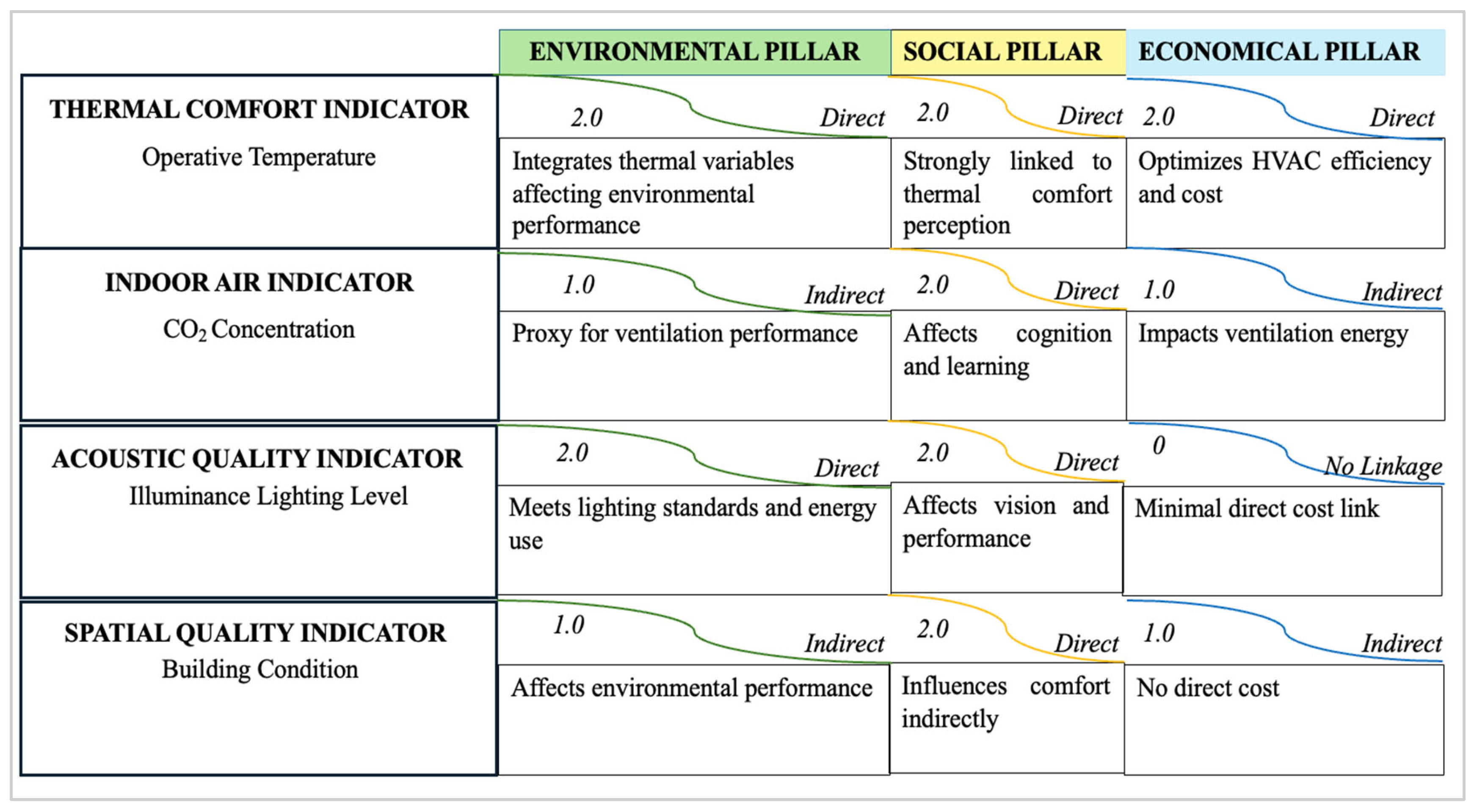
Figure 2 presents representative examples illustrating how selected IEQ indicators were mapped across the Environmental, Social, and Economic pillars using the 0–2 scoring rubric.

3.7.3. Mapping Procedure and Reproducibility

The mapping process involved systematic evaluation of all retained IEQ indicators using the defined scoring criteria across the ENV, SOC, and ECO dimensions. Each indicator was assessed independently, followed by a consistency check to ensure alignment with literature-based evidence and standard definitions. The complete mapping results are provided in Supplementary Material S4.
This structured procedure ensures transparent, consistent, and reproducible mapping of IEQ indicators across sustainability dimensions.

3.7.4. Link to Subsequent Analysis

The resulting sustainability scores formed the basis for:
(i)
Aggregation of indicators across sustainability dimensions;
(ii)
Integration with Sustainable Development Goals (SDGs);
(iii)
Development of the IEQ-based sustainability assessment framework.
These are presented in the succeeding sections.

3.8. Sustainable Development Goal (SDG) Alignment

Following the sustainability pillar classification, all screened IEQ indicators were further mapped to relevant United Nations Sustainable Development Goals (SDGs) using the same structured 0–2 scoring framework applied in the pillar mapping process. This approach ensured methodological consistency and enabled transparent evaluation of how individual IEQ indicators contribute to global sustainability objectives.
Each indicator was assigned an SDG linkage score based on the following criteria:
  • 0 = No alignment
  • 1 = Indirect contribution
  • 2 = Direct contribution to SDG targets
The mapping was guided by the official SDG framework and target descriptions, ensuring alignment with internationally recognized sustainability benchmarks and avoiding arbitrary or purely thematic associations.

3.8.1. SDG Selection and Mapping Basis

The United Nations Sustainable Development Goals (SDGs) comprise 17 global goals and 169 associated targets, which collectively define the international sustainability agenda. In this study, SDG alignment was not conducted across all goals indiscriminately. Instead, a target-driven selection approach was adopted, whereby only SDGs and targets with clear conceptual, functional, and empirical relevance to Indoor Environmental Quality (IEQ) in academic buildings were considered. The selection of SDGs was guided by a relevance-based filtering approach, in which only goals with a direct, measurable link to indoor environmental conditions in academic buildings were considered. This approach avoids broad or symbolic alignment and instead prioritizes SDGs with clearly identifiable functional pathways connecting IEQ indicators to health outcomes, educational performance, energy use, and environmental sustainability.
Specifically, SDG alignment was established by evaluating whether each IEQ indicator directly or indirectly supports measurable progress toward specific SDG targets, rather than broadly associating indicators with SDGs. This evaluation was based on identifiable functional pathways, including:
(i)
Protection of occupant health and well-being;
(ii)
Enhancement of learning environments and educational performance;
(iii)
Improvement of energy efficiency and resource use;
(iv)
Reduction in environmental impacts;
(v)
Support for climate mitigation and adaptation strategies.
Indicators with well-established relationships to occupant health and exposure conditions, such as thermal comfort, indoor air quality, and pollutant levels, were primarily aligned with SDG 3, particularly in relation to targets addressing health risks from environmental exposures.
Indicators influencing classroom functionality, cognitive performance, and learning conditions were mapped to SDG 4, reflecting their contribution to safe, inclusive, and effective learning environments [3,4]. Energy- and emissions-related indicators, including HVAC performance, ventilation efficiency, and building energy consumption, were aligned with SDG 7 and SDG 13 due to their direct relevance to energy efficiency and climate mitigation. Meanwhile, broader indicators related to building performance, environmental management, and indoor environmental conditions were associated with SDG 11, which emphasizes sustainable, safe, and resilient built environments [69,70].
This structured and selective approach ensures that SDG alignment is focused, evidence-based, and directly linked to specific SDG targets, thereby reducing subjectivity and enhancing the transparency and reproducibility of the mapping process.
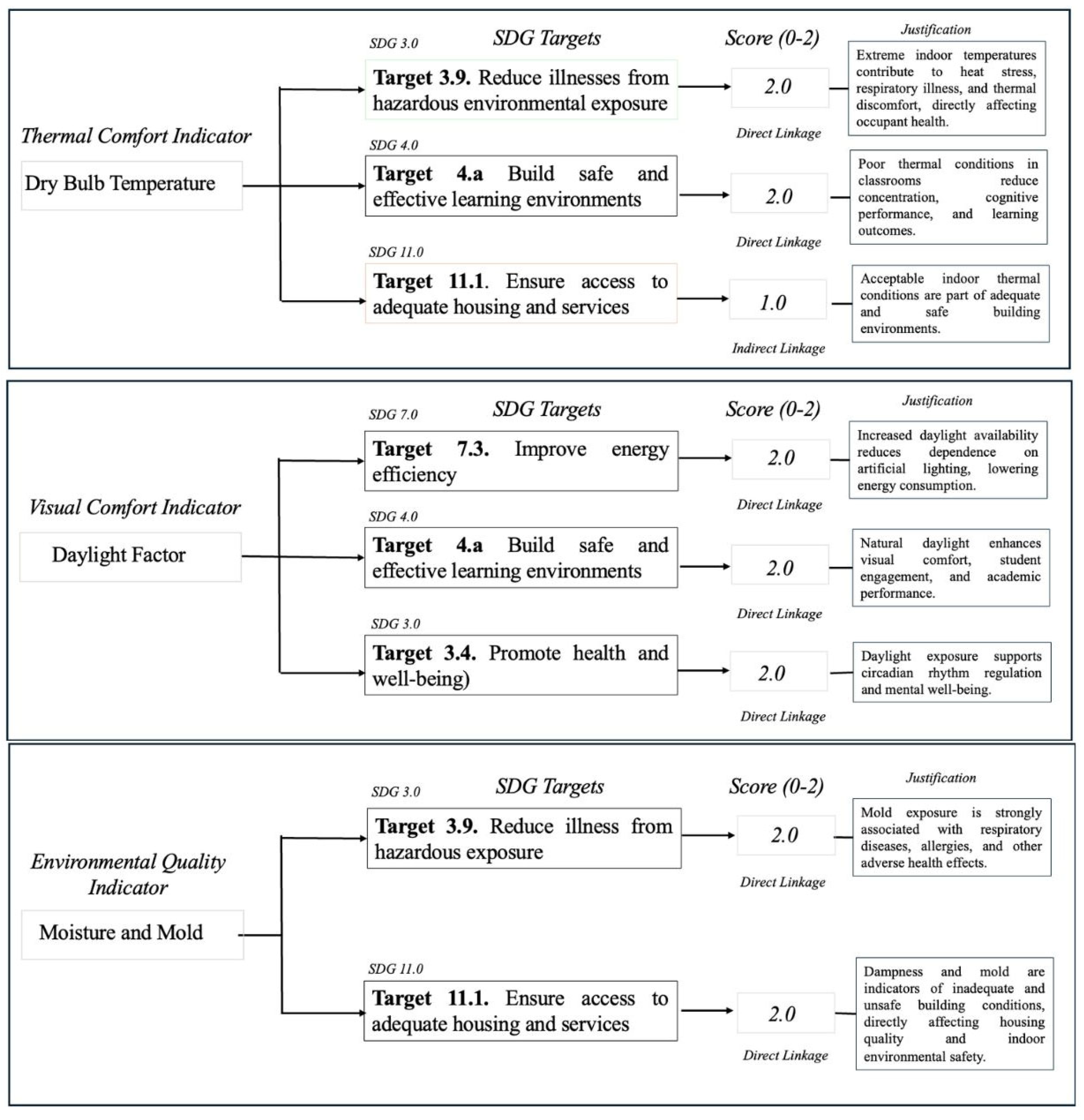
It is important to note that each Sustainable Development Goal (SDG) comprises multiple specific targets that operationalize the broader goal. In this study, alignment of IEQ indicators is conducted at the target level (e.g., Target 4.a: “Build and upgrade education facilities…”), as targets provide measurable, functionally relevant linkages. These targets are then aggregated under their corresponding SDGs (e.g., SDG 4: Quality Education). This hierarchical approach ensures consistency with the official United Nations SDG framework and enhances the precision and traceability of the mapping process.

3.8.2. Identification of SDG Targets and Linkage Procedure

To ensure SDG alignment was grounded in a transparent and reproducible process, the mapping of IEQ indicators was conducted through a target-based linkage approach rather than a general thematic association with SDGs.
Specifically, each IEQ indicator was first analyzed in terms of its functional mechanism of impact (e.g., reduced pollutant exposure, thermal comfort regulation, energy consumption, or environmental control). This mechanism was then matched to relevant SDG targets, as defined in the United Nations’ official SDG indicator framework. SDG targets were identified through a systematic review of official United Nations SDG target definitions, and each IEQ indicator was mapped based on its functional mechanism of impact, ensuring direct correspondence between indicator effects and specific SDG target objectives.
The linkage procedure followed three sequential steps:
  • Indicator–Function Identification
Each IEQ indicator was examined to determine its primary function or effect (e.g., CO2 concentration as a proxy for ventilation performance; illuminance as a determinant of visual comfort and task performance).
2.
Function–Target Matching
The identified function was then mapped to specific SDG targets with established conceptual or empirical relevance. For example:
(i)
Health-related indicators were linked to SDG 3 targets (e.g., Target 3.9: reduction in illness from hazardous exposures).
(ii)
Learning and classroom performance indicators were linked to SDG 4 targets (e.g., Target 4.a: effective learning environments).
(iii)
Energy-related indicators were aligned with SDG 7 targets (e.g., Target 7.3: energy efficiency).
(iv)
Environmental and building sustainability indicators were associated with SDG 11 and SDG 13 targets.
3.
Target–Goal Aggregation
Once the relevant SDG targets were identified, the corresponding SDG alignment was established, and a linkage score (0–2) was assigned based on the strength and directness of the relationship.
This structured approach ensures that SDG mapping is based on traceable relationships between indicators and specific SDG targets, rather than subjective interpretation at the goal level.

3.8.3. Scoring Criteria and Decision Rules

A score of 2 (direct linkage) was assigned only when established standards, empirical studies, or authoritative guidelines supported a clear causal or functional relationship between the indicator and an SDG target.
A score of 1 was assigned when the indicator contributed through secondary pathways, such as productivity-related outcomes, system-mediated environmental effects, and behavioral or operational influences.
A score of 0 was assigned when no consistent or defensible relationship could be established, the indicator was descriptive, conceptual, or non-measurable, and no SDG target could be directly or indirectly supported.
This conservative scoring approach minimizes classification bias and ensures that SDG alignment is evidence-based, transparent, and reproducible.

3.8.4. Representative SDG-Mapping Examples

Figure 3 presents representative examples of SDG target-based mapping, showing how selected IEQ indicators were linked to specific SDG targets, assigned linkage scores, and aggregated to the corresponding SDGs based on documented standards and literature. The complete SDG mapping matrix is provided in Supplementary File S4. Figure 3 illustrates this hierarchical relationship by showing how individual IEQ indicators are linked to specific SDG targets, which in turn contribute to the broader SDGs.

3.9. Risk of Bias and Quality Assurance

To minimize bias and ensure methodological rigor, multiple quality assurance measures were implemented. Literature coverage was expanded through multiple databases and manual reference checks, while predefined inclusion and exclusion criteria ensured consistent study selection.
A standardized data extraction matrix was used to ensure consistent recording of study characteristics, IEQ domains, measurement approaches, and outcomes. Indicator screening, sustainability mapping, and SDG alignment were conducted using explicit scoring rules derived from established standards and literature.
To reduce interpretive bias, the authors independently reviewed the extracted indicators and resolved discrepancies through consensus. Although formal inter-rater reliability statistics (e.g., Cohen’s kappa) were not calculated, the use of structured scoring frameworks and documented decision rules enhances the transparency, consistency, and reproducibility of the review.

3.10. Outcome of the Review Process: Framework Development

The systematic review identified 142 eligible peer-reviewed studies and 118 IEQ indicators, organized into six domains, and subjected them to structured screening, sustainability pillar mapping, and SDG alignment.
Indicators demonstrating methodological robustness and contextual relevance were retained, while redundant, weakly defined, or non-measurable indicators were excluded or consolidated. The retained indicators were then mapped across the Environmental, Social, and Economic pillars and aligned with selected SDGs and their corresponding targets, extending IEQ assessment beyond conventional classification toward sustainability-oriented evaluation.
This process resulted in the development of a Sustainability-Aligned Indoor Environmental Quality Indicator Framework for Academic Buildings. The framework integrates domain classification, indicator screening, sustainability mapping, SDG alignment, and a mixed-method assessment approach combining objective measurements and subjective evaluations.
Overall, the methodological workflow provides a transparent and replicable foundation for IEQ assessment and supports future empirical validation, application, and refinement of the proposed framework. This systematic review was not registered and no protocol was prepared.

4. Results and Discussion

This section presents and interprets the findings obtained from the 142 peer-reviewed studies included in the systematic review. Consistent with the methodological procedures described in Section 3, results are organized according to: (i) geographic trends, (ii) IEQ domain coverage, (iii) assessment method patterns, (iv) sustainability screening of indicators, and (v) alignment of IEQ indicators with sustainability pillars and Sustainable Development Goals (SDGs). Each subsection integrates descriptive results with critical interpretation to highlight methodological gaps and implications for future research and practice.

4.1. Geographic Distribution of IEQ Studies and Studied Building Typologies

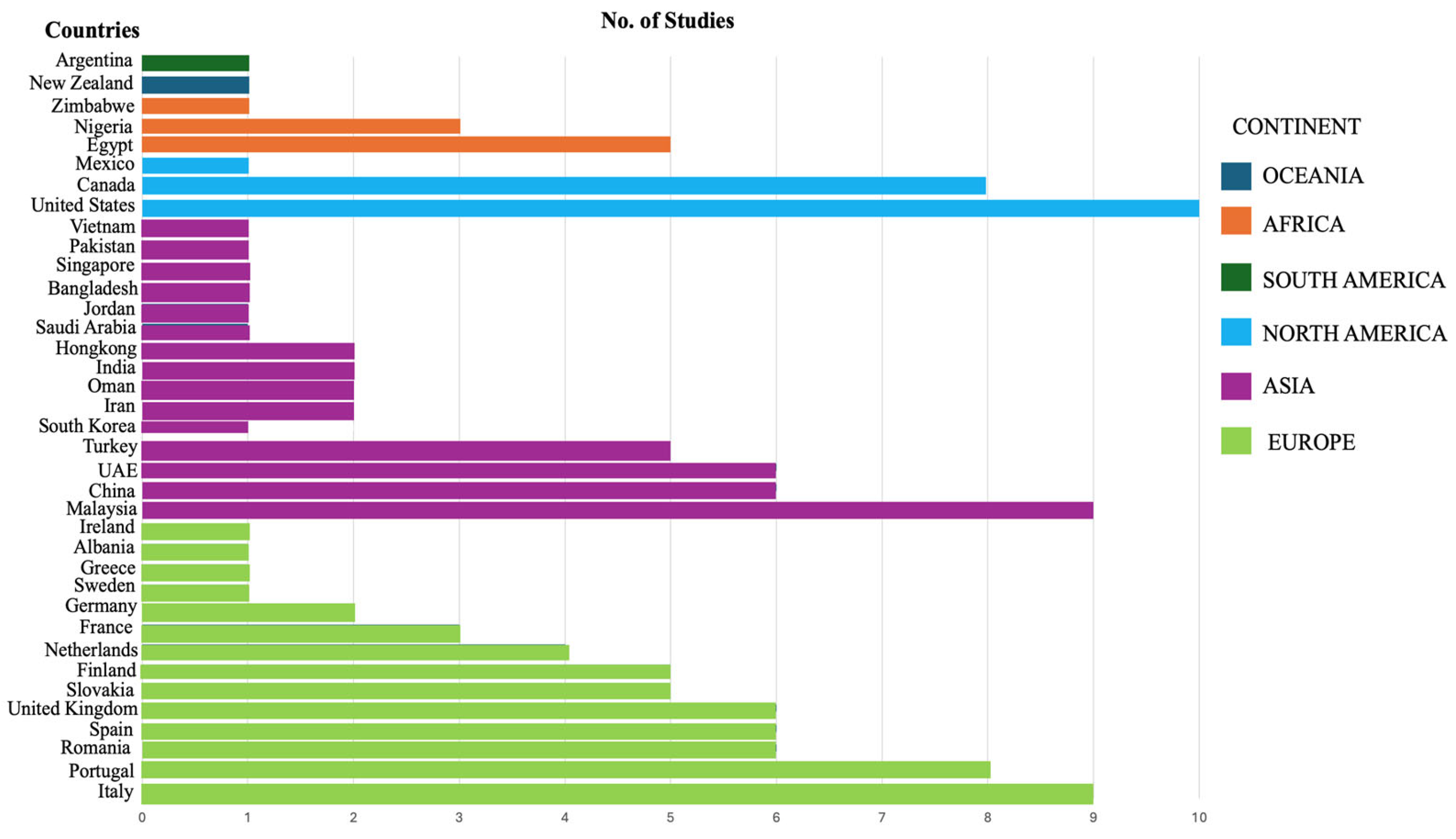
Figure 4 illustrates the global distribution of IEQ studies in academic buildings published from 2010 to 2025. The analysis reveals a pronounced geographic imbalance in the existing literature. Europe accounts for the largest proportion of empirical investigations, particularly in Romania, Italy, Portugal, and the United Kingdom, where numerous studies have examined classroom thermal comfort, ventilation adequacy, and post-occupancy performance [22,28,40,44].
North America remains a significant research hub, with a total of 18 studies conducted across the region, including the United States (10), Canada (7), and Mexico (1) [5,12,15]. Research in this region has primarily focused on the relationships among classroom IEQ, student health, and academic performance, with particular emphasis on ventilation effectiveness and indoor air quality indicators.
In Asia, IEQ research is highly concentrated, accounting for the second-largest share of studies (n = 43). Malaysia (9) leads the region, followed by China (6), the United Arab Emirates (6), and Turkey (5) [13,71,72], with additional contributions from Iran, South Korea, Oman and other countries. Investigations in these areas commonly address thermal discomfort in warm climates and the challenges of naturally ventilated classrooms in tropical and arid environments.
Europe accounts for the largest proportion of studies (n = 62), highlighting its strong research engagement in IEQ. The highest contributions come from Italy (9) and Portugal (8), followed by Romania, Spain, and the United Kingdom (each 6), as well as Slovakia and Finland (each 5) [28,29,35,40,44,73]. Other countries, including the Netherlands [74], France [36], Germany [75], and several others, contribute to a diverse and well-established body of IEQ research across the region.
In contrast, Africa, South America and Oceania remain significantly underrepresented. Only a limited number of studies were identified from Africa (n = 9), primarily in Egypt (5), Nigeria (3), and Zimbabwe (1) [30,38,76], while South America is represented by a single study from Argentina [77]. Similarly, Oceania shows minimal representation, with only one study identified from New Zealand [78].
Most notably, none of the reviewed studies explicitly examined IEQ conditions in Philippine academic buildings, despite the country’s highly vulnerable warm–humid climate and widespread reliance on naturally ventilated classrooms. This highlights a critical research gap in geographical and contextual research and underscores the need for localized IEQ assessment frameworks in Southeast Asian educational settings.

Implication on Geographic Distribution

The geographic concentration of evidence limits the generalizability of many IEQ frameworks. There is a clear need for localized, context-specific studies, particularly in Southeast Asia and other tropical regions, to support climate-responsive planning for educational infrastructure [13,45].

4.2. Distribution of IEQ Parameters and Indicators

Across the reviewed literature, IEQ assessment in academic buildings is predominantly structured around six domains: Thermal Comfort (TC), Indoor Air Quality (IAQ), Visual Comfort (VC), Acoustic Quality (AQ), Environmental Quality (EQ), and Spatial Quality (SQ). This classification is consistent with widely recognized conceptualizations of IEQ [2,8,9].
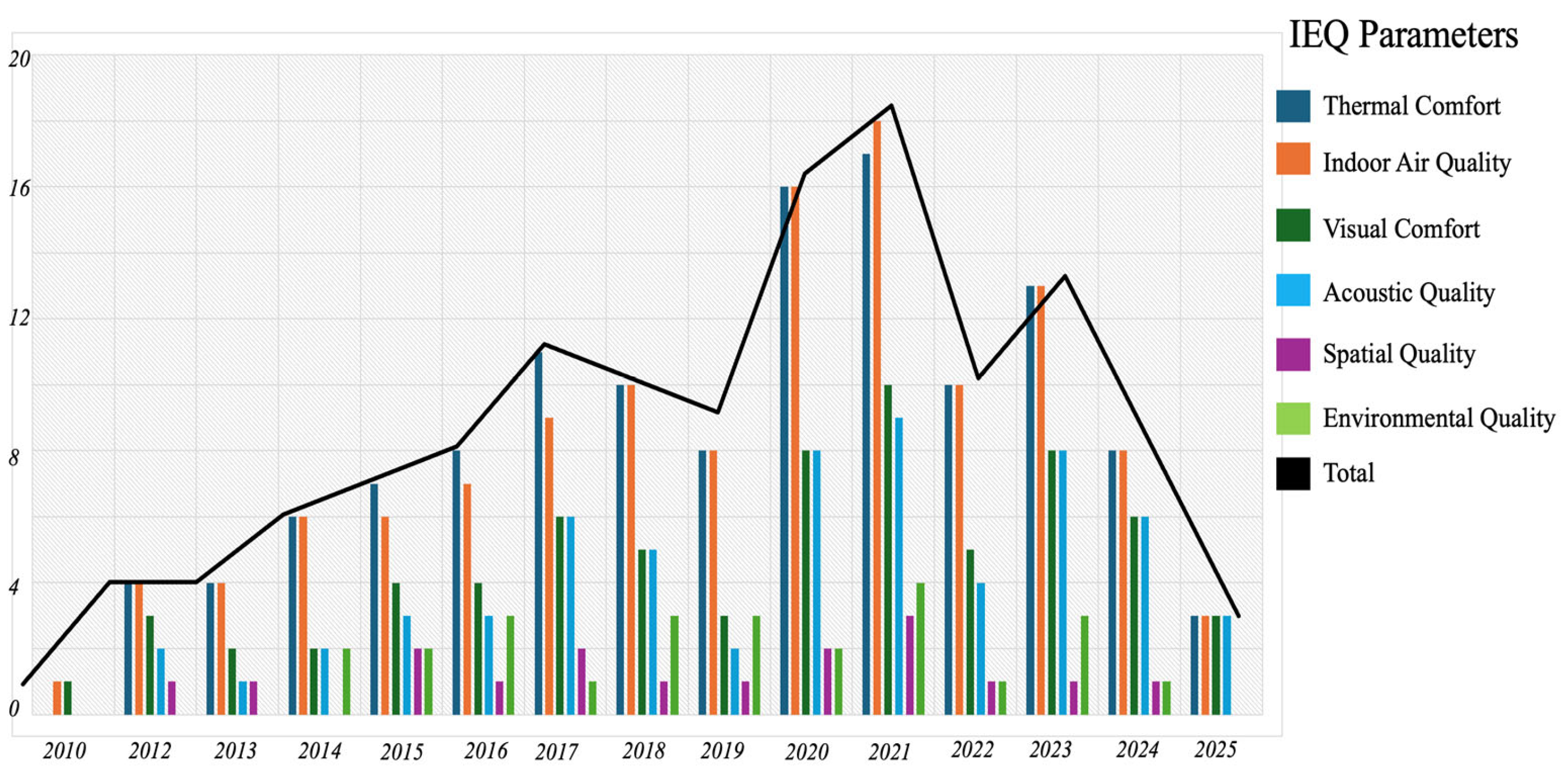
Figure 5 shows a steady increase in IEQ-related publications over the last decade, with a sharp rise after 2020. This surge corresponds with heightened global attention to ventilation and indoor environmental conditions during the COVID-19 pandemic [35,79,80].

4.2.1. Dominance of Thermal Comfort and IAQ

Thermal Comfort and Indoor Air Quality overwhelmingly dominate the literature. These domains benefit from well-established measurement protocols and standardized metrics such as temperature, relative humidity, CO2 concentration, and particulate matter [31,53,54,55,56,57,73].
Multiple studies confirm that inadequate ventilation and poor thermal conditions remain the most persistent IEQ problems in classrooms worldwide [1,3,81,82].

4.2.2. Moderate Attention to Visual and Acoustic Comfort

Visual and acoustic parameters receive moderate attention. Studies increasingly examine illuminance levels, glare, background noise, and speech intelligibility due to their recognized influence on learning outcomes [23,28,81].

4.2.3. Underrepresentation of Environmental and Spatial Quality

Environmental and Spatial Quality are the least investigated domains. These aspects are often evaluated qualitatively through post-occupancy tools rather than standardized metrics [27,81,83].

4.2.4. Implication on the Distribution of IEQ Parameters and Indicators

Current IEQ research remains heavily skewed toward easily measurable physical parameters. A more balanced, holistic assessment approach is required to better capture the ergonomic, contextual, and operational aspects of learning environments [2,9,83].

4.3. Assessment Method Trends

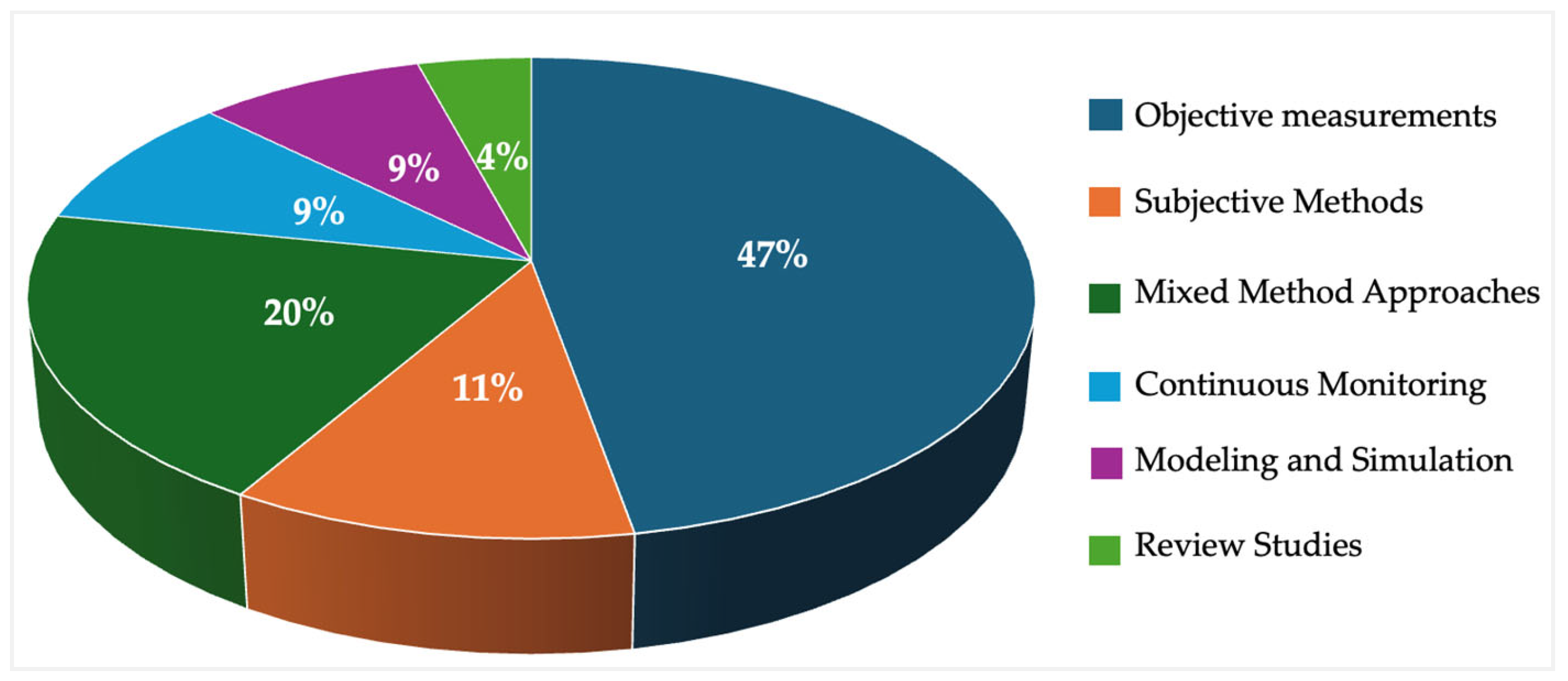
Figure 6 summarizes the methodological approaches used across the reviewed studies. Analysis of methodological approaches shows that:
Objective measurement is the dominant strategy, relying on environmental sensors and standardized instruments [21,24,31].
Subjective perception surveys are used less frequently, often as supplementary tools [26,29].
Mixed-method approaches remain relatively limited, despite strong evidence that combining measurements and perception provides more reliable insights [21,29,45].
Several studies demonstrate clear discrepancies between measured IEQ conditions and occupant perceptions, reinforcing the limitation of measurement-only evaluations [25,26,28].

Implication on the Assessment Method

Future IEQ studies should prioritize integrated assessment designs that merge environmental monitoring with structured occupant feedback to support more decision-relevant conclusions [28,29,45].

4.4. Sustainability Screening of IEQ Indicators

As summarized in Table 6, only 50 indicators (42%) satisfied all criteria, while 68 indicators (58%) were classified as methodologically weak or insufficiently standardized.
Application of the screening criteria (measurability, relevance, reliability, data accessibility, understandability, and long-term applicability) gave the following results:
  • 118 indicators identified;
  • 50 indicators passed screening (42%);
  • 68 indicators failed (58%).
Thermal Comfort and IAQ had the highest proportions of qualified indicators due to strong standardization [53,54,55,56,57].
In contrast, many Visual and Acoustic indicators lacked harmonized benchmarks, leading to inconsistent application across studies [2,9,23].
A critical recurring theme is the energy–IEQ trade-off. Numerous studies demonstrate that energy-efficiency retrofits can unintentionally degrade IEQ if ventilation and comfort are not explicitly protected [39,40,41,42,48].

Implication on Sustainability Screening

Indicator selection for sustainability-aligned IEQ assessment must be grounded in standardized, repeatable, and decision-relevant metrics [17,18].

4.5. Alignment of IEQ Indicators with Sustainability Pillars and Sustainable Development Goals

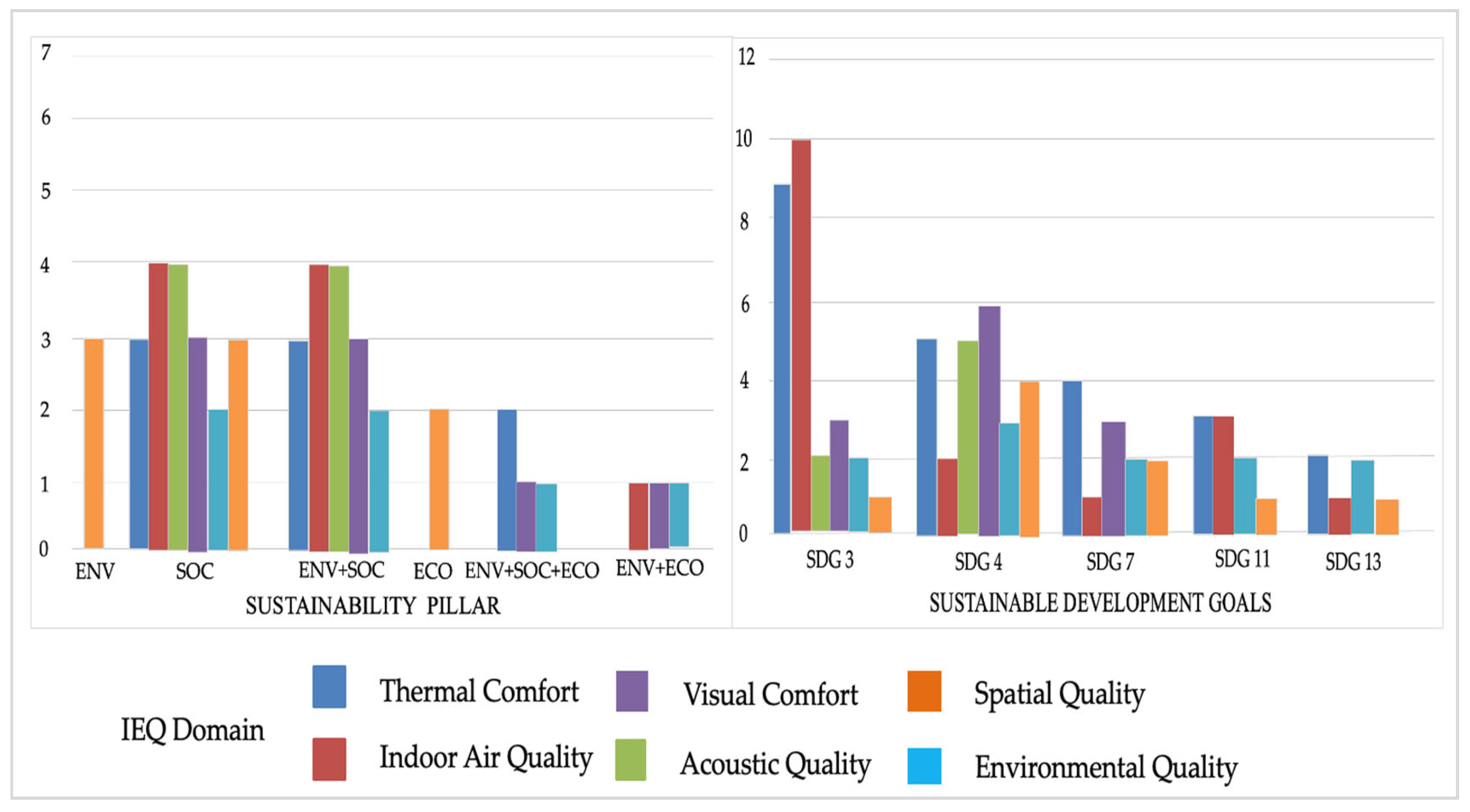
Mapping of screened indicators (Figure 7) revealed that:
(i)
The Social pillar received the strongest alignment, particularly through indicators related to health, comfort, and academic performance [1,3,5,81].
(ii)
The Environmental pillar was closely linked to IAQ and energy-related indicators [39,40,41,42].
(iii)
The Economic pillar was associated with operational efficiency and retrofit decision-making [40,41,48].
The strongest SDG linkages were observed with:
  • SDG 3—Good Health and Well-Being
  • SDG 4—Quality Education
  • SDG 7—Affordable and Clean Energy
  • SDG 11—Sustainable Cities
  • SDG 13—Climate Action

Implication on the Alignment of Pillars and Goals

IEQ indicators function as measurable contributors to global sustainability objectives, but structured alignment is necessary for consistent application in sustainability reporting [17,18].

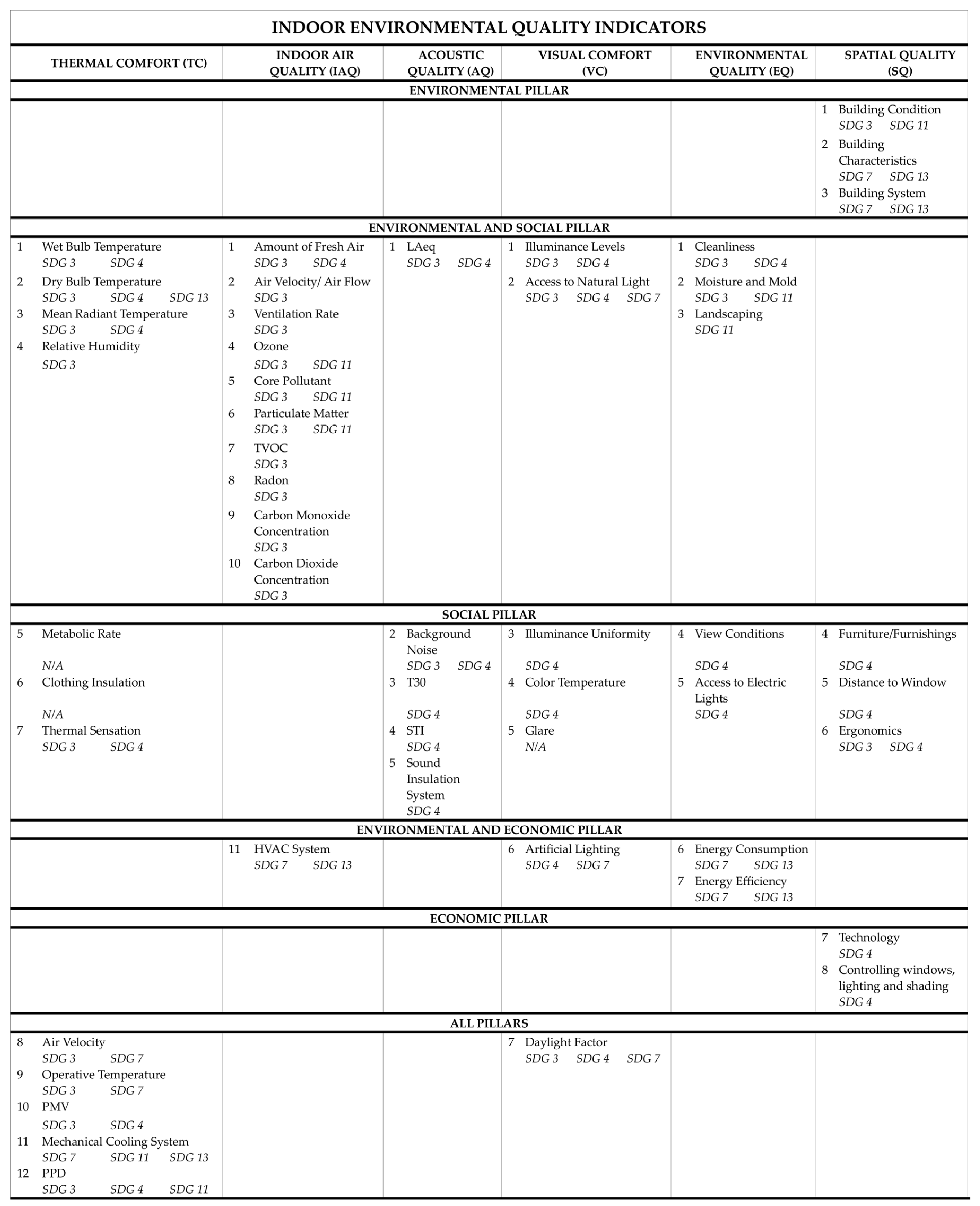
4.6. Development of the Sustainability-Aligned Indoor Environmental Quality (IEQ) Indicator Framework

The principal synthesis outcome of this review is the proposed Sustainability-Aligned Indoor Environmental Quality (IEQ) Indicator Framework for Academic Buildings, illustrated in Figure 8. The framework was developed through a structured integration of four core components: (i) a domain-based IEQ classification, (ii) systematic indicator quality screening, (iii) sustainability pillar mapping, and (iv) explicit alignment with the Sustainable Development Goals (SDGs). In addition, the framework adopts a mixed-method assessment philosophy that integrates objective environmental monitoring with subjective occupant-perception data, ensuring that IEQ evaluation captures both physical environmental performance and user experience.
The mixed-method pathway follows a structured implementation sequence consisting of: (i) objective measurement of environmental parameters using calibrated instruments (e.g., temperature, CO2, illuminance, and noise levels); (ii) collection of subjective responses through validated occupant surveys assessing comfort, satisfaction, and perceived IEQ; (iii) normalization and integration of objective and subjective data; and (iv) interpretation of combined results to support decision-making. This stepwise approach ensures systematic capture and evaluation of both environmental conditions and occupant experience.
The framework directly responds to longstanding calls in the literature for more holistic, multidimensional, and decision-oriented IEQ assessment models [8,19,46,47]. Existing approaches to IEQ evaluation are often fragmented, focusing on isolated physical parameters without adequately considering sustainability implications or user-centered outcomes. By embedding indicator screening criteria and sustainability mapping within the assessment process, the proposed framework provides a more transparent and structured pathway for translating IEQ measurements into sustainability-relevant and decision-support information.
Structurally, the framework follows a sequential and modular workflow, consisting of:
(i)
Identification and classification of IEQ indicators across six domains;
(ii)
Evaluation and refinement using standardized screening criteria;
(iii)
Mapping of validated indicators to the Environmental, Social, and Economic sustainability pillars, and;
(iv)
Alignment with SDGs through a target-based linkage approach.
This stepwise structure enhances transparency, consistency, and reproducibility, allowing the framework to be systematically applied across different academic building contexts.
Importantly, the proposed framework is intended not only as a conceptual model but also as an operational assessment tool. The retained indicators are measurable using standard environmental monitoring instruments and validated occupant survey methods commonly applied in classroom IEQ studies. However, comprehensive empirical validation—incorporating multi-site case studies, weighting approaches (e.g., multi-criteria decision analysis), aggregation procedures, and sensitivity analysis—remains beyond the scope of this study and is identified as a key priority for future research.
The framework is further designed to be context-sensitive and adaptable to diverse educational environments. It is particularly suited to:
(a)
Naturally ventilated classrooms, where environmental conditions are strongly influenced by climatic variability and occupant behavior [33,84];
(b)
Retrofit and renovation decision contexts, where IEQ improvements must be balanced against energy and cost considerations [40,41,42,43,44,45]; and
(c)
Tropical and developing-country settings, where high temperatures and humidity, limited mechanical conditioning, and resource constraints require pragmatic, climate-responsive assessment approaches [13,16].
Through these features, the framework aims to bridge the gap between theoretical IEQ assessment models and practical implementation in real-world academic buildings.
The model organizes classroom environmental assessment around six interrelated IEQ domains—Thermal Comfort (TC), Indoor Air Quality (IAQ), Acoustic Quality (AQ), Visual Comfort (VC), Environmental Quality (EQ), and Spatial Quality (SQ). Each domain is populated with indicators that have undergone systematic quality screening based on measurability, reliability, relevance, data accessibility, and long-term applicability. The validated indicators are explicitly mapped to the three sustainability pillars and aligned with selected SDGs, thereby linking indoor environmental performance to broader health, education, and environmental objectives.
The inclusion of a mixed-method assessment pathway ensures that both objective environmental conditions and subjective occupant responses are evaluated in parallel, addressing known limitations of single-method IEQ assessments. This integrated approach supports a more comprehensive interpretation of classroom conditions and enhances the reliability of decision-making.
Overall, the proposed framework represents a transparent, reproducible, and scalable IEQ assessment structure, capable of supporting:
(i)
Classroom-level IEQ diagnostics;
(ii)
Sustainability reporting and SDG integration;
(iii)
Evidence-based planning for building design, retrofit, and operation.
As such, the framework provides a critical step toward transitioning IEQ assessment from fragmented parameter-based evaluation to a sustainability-aligned and operationally applicable system, with clear pathways for future empirical validation and implementation.

4.7. Summary of Key Findings

The synthesis of evidence generated several important insights regarding the current state of IEQ research in academic buildings. First, the global distribution of studies remains geographically imbalanced, with a strong concentration of research in Europe, North America, and selected Asian countries. At the same time, tropical and developing regions are comparatively underrepresented. This imbalance highlights the need for more localized IEQ investigations, particularly in warm–humid climates where environmental challenges differ substantially from those in temperate regions.
A critical observation from the review is the limited representation of tropical and naturally ventilated educational environments, where IEQ dynamics differ substantially from mechanically conditioned buildings in temperate regions. In such contexts, thermal comfort is strongly influenced by adaptive behaviors, ventilation effectiveness depends on occupant operation of openings, and environmental conditions exhibit higher temporal variability. These differences highlight the need for climate-sensitive IEQ assessment approaches and reinforce the importance of developing localized benchmarks rather than relying on standards derived from temperate climates.
Second, the analysis confirmed that Thermal Comfort (TC) and Indoor Air Quality (IAQ) dominate existing IEQ assessments, largely due to the availability of well-established standards, instruments, and performance benchmarks [53,54,55,56,57,58,59,60,61,62,63,64,65,66,67,68]. In contrast, domains such as visual comfort, acoustic quality, environmental quality, and spatial quality receive comparatively less attention, despite their recognized influence on learning performance and occupant well-being.
Third, the review emphasized the critical importance of mixed-method evaluation strategies. Studies that rely solely on physical measurements often fail to capture occupants’ actual experiences, expectations, and adaptive behaviors. Integrating objective monitoring with structured perception surveys is therefore essential for generating a more comprehensive and reliable understanding of classroom IEQ conditions [25,29,45].
Fourth, many commonly used IEQ indicators were found to lack sufficient sustainability robustness, particularly with respect to long-term applicability, contextual relevance, and alignment with broader environmental and social objectives [2,9,18]. This underscores the need for more rigorous indicator selection processes that explicitly consider sustainability criteria alongside technical performance.
Finally, the literature consistently demonstrates the presence of energy–IEQ trade-offs, especially in building retrofit and energy efficiency interventions. Measures aimed at reducing energy consumption can inadvertently compromise ventilation, thermal comfort, or air quality if not carefully managed [39,40,41,42,43,44]. Effective IEQ improvement strategies must therefore adopt an integrated perspective that balances occupant health and comfort with energy and sustainability goals.
Collectively, these findings provide the empirical foundation for the proposed Sustainability-Aligned IEQ Indicator Framework and highlight its relevance as a structured tool for guiding future research, policy development, and performance evaluation in academic buildings.

4.8. Limitations

This study has several limitations that should be acknowledged.
First, the available body of evidence is geographically imbalanced, with a strong concentration of studies from Europe, North America, and selected regions of Asia. Tropical and developing regions—including Southeast Asia and the Philippines—remain underrepresented. This limits the generalizability of commonly reported IEQ thresholds and assessment approaches, particularly for naturally ventilated buildings operating in warm–humid climates.
Second, the review was restricted to English-language, peer-reviewed publications. While this ensures methodological rigor and quality control, it may exclude relevant regional studies, technical reports, and policy documents that could provide additional contextual insights.
Third, substantial methodological heterogeneity exists among the reviewed studies, including differences in instrumentation, monitoring duration, seasonal coverage, occupancy patterns, and data collection protocols. This variability constrains direct comparability across studies and may influence the apparent performance and consistency of specific IEQ indicators.
Fourth, the proposed framework is derived from a systematic literature review and structured screening, mapping, and alignment procedures; however, it remains a conceptual and methodological synthesis, as expected for a systematic review–based framework development study. It has not yet been fully validated through large-scale empirical application across multiple building types, climatic conditions, and operational contexts. Consequently, further field-based implementation is required to evaluate its robustness, scalability, and practical applicability.
Future work should therefore focus on large-scale application of the framework, including the development of weighting schemes (e.g., multi-criteria decision analysis), aggregation methods for composite IEQ indices, and sensitivity analysis to evaluate robustness under varying conditions. Such validation is essential to fully establish the framework’s practical applicability, reliability, and decision-support value.
Finally, the sustainability pillar and SDG alignment were based on structured, literature-informed judgment. Although conservative scoring rules and explicit linkage criteria were applied to minimize subjectivity, alternative weighting schemes or stakeholder-driven prioritization approaches may yield variations in alignment outcomes.

5. Conclusions

This study developed a sustainability-oriented framework for assessing Indoor Environmental Quality (IEQ) in academic buildings based on a systematic review of 142 peer-reviewed studies (2010–2025). A total of 118 indicators were identified and classified into six domains: Thermal Comfort, Indoor Air Quality, Acoustic Quality, Visual Comfort, Environmental Quality, and Spatial Quality. Using structured screening criteria, only 50 indicators (42%) were found to be methodologically robust, underscoring the need for more standardized, reliable IEQ metrics.
The results confirm that IEQ indicators have clear and defensible linkages to the environmental, social, and economic pillars of sustainability, with strong alignment to SDG 3 (health), SDG 4 (education), SDG 7 (energy), SDG 11 (sustainable cities), and SDG 13 (climate action). Building on these findings, the study proposed a Sustainability-Aligned IEQ Indicator Framework that integrates indicator screening, sustainability mapping, SDG alignment, and mixed-method assessment combining objective measurements and occupant perception.
The framework provides a transparent and replicable basis for evaluating classroom environments and supports more holistic, sustainability-driven decision-making. It is particularly relevant for naturally ventilated and tropical academic settings, where environmental challenges and resource constraints require context-sensitive approaches.

5.1. Implications

This study emphasizes that indicator quality is more critical than quantity in IEQ assessment. The high proportion of rejected indicators (58%) demonstrates the need for standardized, measurable, and decision-relevant metrics.
For practice, the framework offers a structured tool for classroom audits, post-occupancy evaluation, and retrofit planning by linking IEQ performance to sustainability objectives, health outcomes, and operational efficiency. It enables institutions to prioritize key indicators and to apply mixed-method approaches for more accurate, human-centered assessments.
At the policy level, the findings support integrating IEQ into educational building standards, sustainability reporting, and climate-responsive infrastructure planning. The study also highlights the need for climate-specific IEQ benchmarks, particularly for tropical and naturally ventilated environments.

5.2. Practical Recommendations

Institutions should focus on a core set of validated IEQ indicators (e.g., temperature, humidity, CO2, particulate matter, noise, and illuminance) and adopt a mixed-method assessment that combines environmental monitoring with occupant feedback. IEQ should be explicitly considered in energy retrofit projects to avoid unintended performance trade-offs. In tropical settings, priority should be given to passive and operational strategies such as natural ventilation optimization, shading, and adaptive controls.

5.3. Future Research Directions

Future research should prioritize empirical validation of the framework through field applications in diverse academic settings. The development of composite IEQ indices using MCDA approaches, integration of uncertainty analysis, and longitudinal studies linking IEQ to educational outcomes are also recommended. Further work is needed on energy–IEQ co-optimization and the role of occupant behavior in naturally ventilated buildings, alongside the establishment of standardized IEQ reporting protocols.

Supplementary Materials

The following supporting information can be downloaded at https://www.mdpi.com/article/10.3390/su18094260/s1. Supplementary File S1: Comprehensive IEQ Summary Matrix of 142 Included Studies (indicator extraction and methodological characteristics); Supplementary File S2: Full Database Search Strategies (Google Scholar, Scopus, and Web of Science); Supplementary File S3: Indicator Screening Results; Supplementary File S4: Complete Sustainability Pillar and SDG Mapping Results; Supplementary File S5: PRISMA 2020 Checklist; Supplementary File S6: PRISMA 2020 Flow Diagram; Supplementary File S7:Indicator Technical Specifications. Reference [51] is cited in the supplementary materials.

Author Contributions

Conceptualization, C.A.N.; methodology, C.A.N.; formal analysis, C.A.N.; investigation, C.A.N.; data curation, C.A.N.; project administration, C.A.N.; resources, C.A.N.; validation, J.O.; supervision, J.O.; funding acquisition, J.O.; visualization, J.O.; writing—original draft preparation, C.A.N.; writing—review and editing, J.O. All authors have read and agreed to the published version of the manuscript.

Funding

This research received no external funding.

Data Availability Statement

The original contributions presented in this study are included in the article/Supplementary material. Further inquiries can be directed to the corresponding authors.

Acknowledgments

This research was supported by the Department of Science and Technology—Engineering Research and Development for Technology (DOST–ERDT), Philippines, through a doctoral research scholarship grant. The authors also acknowledge the Department of Civil Engineering and Technology, Mindanao State University–Iligan Institute of Technology (MSU-IIT), for academic guidance, technical support, and research facilities that contributed to this study. During the preparation of this manuscript, the authors used ChatGPT (OpenAI, GPT 5.3 version) to assist with language editing, paragraph restructuring, and improvement of clarity and coherence. All outputs were critically reviewed, revised, and verified by the authors. The authors take full responsibility for the accuracy, integrity, and originality of the content.

Conflicts of Interest

The authors declare no conflicts of interest.

Abbreviations

The following abbreviations are used in this manuscript:
IEQIndoor Environmental Quality
SDG/SDGsSustainable Development Goal(s)
CC BYCreative Commons Attribution License
MSU–IITMindanao State University—Iligan Institute of Technology
PRISMA 2020Preferred Reporting Items for Systematic Reviews and Meta-Analyses (2020)
CO2Carbon Dioxide
PMParticulate Matter
COVID-19Coronavirus Disease 2019
MCDAMulti-Criteria Decision Analysis
AHPAnalytic Hierarchy Process
AIArtificial Intelligence
TCThermal Comfort
IAQIndoor Air Quality
AQAcoustic Quality
VCVisual Comfort
EQEnvironmental Quality
SQSpatial Quality
ASHRAEAmerican Society of Heating, Refrigerating and Air-Conditioning Engineers
ISOInternational Organization for Standardization
L/sLiters per Second
ACHAir Changes per Hour
PMVPredicted Mean Vote
PPDPredicted Percentage Dissatisfied
PM2.5Particulate Matter ≤ 2.5 µm
PM10Particulate Matter ≤ 10 µm
TVOCTotal Volatile Organic Compounds
COCarbon Monoxide
O3Ozone
LAeqA-Weighted Equivalent Continuous Sound Level
T30Reverberation Time (30 dB Decay Method)
STISpeech Transmission Index
ENEuropean Norm (European Standard)
CIEInternational Commission on Illumination
WHOWorld Health Organization
WELL (v2)WELL Building Standard Version 2
POEPost-Occupancy Evaluation
ENVEnvironmental (Sustainability Pillar)
SOCSocial (Sustainability Pillar)
ECOEconomic (Sustainability Pillar)
LEEDLeadership in Energy and Environmental Design
BREEAMBuilding Research Establishment Environmental Assessment Method
HVACHeating, Ventilation, and Air Conditioning
K–12Kindergarten to Grade 12
IECInternational Electrotechnical Commission
ANSIAmerican National Standards Institute

References

  1. Toyinbo, O. Indoor environmental quality, pupils’ health, and academic performance—A literature review. Buildings 2023, 13, 2172. [Google Scholar] [CrossRef]
  2. Tran, M.T.; Wei, W.; Dassonville, C.; Martinsons, C.; Ducruet, P.; Mandin, C.; Héquet, V.; Wargocki, P. Review of parameters measured to characterize classrooms’ indoor environmental quality. Buildings 2023, 13, 433. [Google Scholar] [CrossRef]
  3. Wargocki, P.; Wyon, D.P. Providing better thermal and air quality conditions in school classrooms would be cost-effective. Build. Environ. 2013, 59, 581–589. [Google Scholar] [CrossRef]
  4. Barrett, P.; Davies, F.; Zhang, Y.; Barrett, L. The impact of classroom design on pupils’ learning: Final results of a holistic, multi-level analysis. Build. Environ. 2015, 89, 118–133. [Google Scholar] [CrossRef]
  5. Nguyen, J.L.; Schwartz, J.; Dockery, D.W. The relationship between indoor and outdoor temperature, apparent temperature, relative humidity, and absolute humidity. Indoor Air 2014, 24, 103–112. [Google Scholar] [CrossRef] [PubMed]
  6. Wierzbicka, A.; Pedersen, E.; Stroh, E.; Li, Y.; Dahlblom, M.; Lundgren-Kownacki, K.; Isaxon, C.; Gudmundsson, A.; Wargocki, P.; Persson, R.; et al. Healthy indoor environments: The need for a holistic approach. Int. J. Environ. Res. Public Health 2018, 15, 1874. [Google Scholar] [CrossRef] [PubMed]
  7. Altomonte, S.; Allen, J.; Bluyssen, P.M.; Brager, G.; Heschong, L.; Loder, A.; Schiavon, S.; Veitch, J.A.; Wang, L.; Wargocki, P. Ten questions concerning well-being in the built environment. Build. Environ. 2020, 180, 106949. [Google Scholar] [CrossRef]
  8. Makram, H.R.; Dewidar, K.; Abdel-Razek, S.A.; Guirguis, M.N. Toward configuring healthier classrooms: Developing indoor environmental quality assessment indicators. HBRC J. 2024, 20, 933. [Google Scholar] [CrossRef]
  9. Diaz, M.; Moreno, M.; Attia, S. Parameters and indicators used in indoor environmental quality studies: A review. J. Phys. Conf. Ser. 2021, 2042, 012132. [Google Scholar] [CrossRef]
  10. Al Horr, Y.; Arif, M.; Kaushik, A.; Mazroei, A.; Katafygiotou, M.; Elsarrag, E. Occupant productivity and office indoor environment quality: A review of the literature. Build. Environ. 2016, 105, 369–389. [Google Scholar] [CrossRef]
  11. Zuo, J.; Zhao, Z.Y. Green building research–current status and future agenda: A review. Renew. Sustain. Energy Rev. 2014, 30, 271–281. [Google Scholar] [CrossRef]
  12. Martínez, T.B.; Duarte, M.; Romero, A.C.G. How using smart buildings technology can improve indoor environmental quality in educational buildings. SHS Web Conf. 2021, 102, 03003. [Google Scholar] [CrossRef]
  13. Norazman, N.; Husain, S.H.; Salleh, N.M.; Shukri, S.B.M. The stability performance of indoor environmental quality (ieq) parameters: Emphasize the strategies of sustainable comforts in the learning environment in a tropical climate. J. Adv. Res. Fluid Mech. Therm. Sci. 2024, 118, 160–180. [Google Scholar] [CrossRef]
  14. Frontczak, M.; Wargocki, P. Literature survey on how different factors influence human comfort in indoor environments. Build. Environ. 2012, 46, 922–937. [Google Scholar] [CrossRef]
  15. Alfalah, G.; AlSaeed, M.; Alrashed, F.; Al-Sanea, S. An integrated fuzzy-based sustainability framework for post-secondary educational buildings. Sustainability 2022, 14, 9955. [Google Scholar] [CrossRef]
  16. Bluyssen, P.M. Health, comfort and performance of children in classrooms—New directions for research. Indoor Built Environ. 2016, 25, 6–10. [Google Scholar] [CrossRef]
  17. Joung, C.B.; Carrell, J.; Sarkar, P.; Feng, S.C. Categorization of indicators for sustainable manufacturing. Ecol. Indic. 2012, 24, 148–157. [Google Scholar] [CrossRef]
  18. Opon, J.; Henry, M. An indicator framework for quantifying the sustainability of concrete materials. J. Clean. Prod. 2019, 218, 718–737. [Google Scholar] [CrossRef]
  19. Heinzerling, D.; Schiavon, S.; Webster, T.; Arens, E. Indoor environmental quality assessment models: A literature review and a proposed weighting and classification scheme. Build. Environ. 2013, 70, 210–222. [Google Scholar] [CrossRef]
  20. Dorizas, P.V.; Assimakopoulos, M.; Santamouris, M. A holistic approach for assessment of indoor environmental quality, student productivity, and energy consumption in primary schools. Environ. Monit. Assess. 2015, 187, 259. [Google Scholar] [CrossRef]
  21. Tahsildoost, M.; Zomorodian, Z.S. Indoor environment quality assessment in classrooms: An integrated approach. J. Build. Phys. 2018, 42, 336–362. [Google Scholar] [CrossRef]
  22. Mihai, T.; Iordache, V. Determining the indoor environment quality for an educational building. Energy Procedia 2016, 85, 566–574. [Google Scholar] [CrossRef]
  23. Ricciardi, P.; Buratti, C. Environmental quality of university classrooms: Subjective and objective evaluation of the thermal, acoustic, and lighting conditions. Build. Environ. 2018, 127, 23–36. [Google Scholar] [CrossRef]
  24. De Giuli, V.; Da Pos, O.; De Carli, M. Indoor environmental quality and pupil perception in Italian primary schools. Build. Environ. 2012, 56, 335–345. [Google Scholar] [CrossRef]
  25. Mečiarová, Ľ.; Vilčeková, S.; Burdová, E.K.; Kapalo, P.; Mihaľová, N. Real and subjective indoor environmental quality in schools. Int. J. Environ. Health Res. 2018, 28, 102–123. [Google Scholar] [CrossRef]
  26. Sadick, A.; Issa, M.H. Occupants’ indoor environmental quality satisfaction factors as measures of school teachers’ well-being. Build. Environ. 2017, 119, 99–109. [Google Scholar] [CrossRef]
  27. Sadick, A.; Issa, M.H. Differences in teachers’ satisfaction with indoor environmental quality and their well-being in new, renovated and non-renovated schools. Indoor Built Environ. 2018, 27, 1272–1286. [Google Scholar] [CrossRef]
  28. Pistore, L.; Pittana, I.; Cappelletti, F.; Romagnoni, P.; Gasparella, A. Analysis of subjective responses for evaluation of indoor environmental quality. Sci. Technol. Built Environ. 2019, 26, 195–209. [Google Scholar] [CrossRef]
  29. Kallio, J.; Vildjiounaite, E.; Koivusaari, J.; Räsänen, P.; Similä, H.; Kyllönen, V.; Muuraiskangas, S.; Ronkainen, J.; Rehu, J.; Vehmas, K. Assessment of perceived indoor environmental quality, stress and productivity based on environmental sensor data and personality categorization. Build. Environ. 2020, 175, 106787. [Google Scholar] [CrossRef]
  30. Toyinbo, O.; Phipatanakul, W.; Shaughnessy, R.; Haverinen-Shaughnessy, U. Building and indoor environmental quality assessment of Nigerian primary schools: A pilot study. Indoor Air 2019, 29, 510–520. [Google Scholar] [CrossRef]
  31. Schibuola, L.; Tambani, C. Indoor environmental quality classification of school environments by monitoring PM and CO2 concentration levels. Atmos. Pollut. Res. 2020, 11, 332–342. [Google Scholar] [CrossRef]
  32. Korsavi, S.S.; Jones, R.V.; Fuertes, A. Operations on windows and external doors in UK primary schools and their effects on indoor environmental quality. Build. Environ. 2022, 207, 108416. [Google Scholar] [CrossRef]
  33. Kapoor, N.R.; Kumar, A.; Meena, C.S.; Kumar, A.; Alam, T.; Balam, N.B.; Ghosh, A. A systematic review on indoor environmental quality in naturally ventilated school classrooms: A way forward. Adv. Civ. Eng. 2021, 2021, 8851685. [Google Scholar] [CrossRef]
  34. Monge-Barrio, A.; Bes-Rastrollo, M.; Dorregaray-Oyaregui, S.; González-Martínez, P.; Martin-Calvo, N.; López-Hernández, D.; Arriazu-Ramos, A.; Sánchez-Ostiz, A. Encouraging natural ventilation to improve indoor environmental conditions at schools: Case studies in the north of Spain before and during COVID. Energy Build. 2022, 254, 111567. [Google Scholar] [CrossRef]
  35. Alonso, A.; Llanos, J.; Escandón, R.; Sendra, J.J. Effects of the COVID-19 pandemic on indoor air quality and thermal comfort of primary schools in winter in a Mediterranean climate. Sustainability 2021, 13, 2699. [Google Scholar] [CrossRef]
  36. Kanama, N.; Ondarts, M.; Guyot, G.; Outin, J.; Golly, B.; Gonze, E. Effect of energy renovation on indoor air quality and thermal environment in winter of a primary school in a highly polluted French alpine valley. J. Build. Eng. 2023, 72, 106529. [Google Scholar] [CrossRef]
  37. Sanguinetti, A.; Outcault, S.; Pistochini, T.; Hoffacker, M. Understanding teachers’ experiences of ventilation in California K–12 classrooms and implications for supporting safe operation of schools. J. Build. Eng. 2023, 65, 106250. [Google Scholar] [CrossRef]
  38. Dascalaki, E.G.; Sermpetzoglou, V.G. Energy performance and indoor environmental quality in Hellenic schools. Energy Build. 2011, 43, 718–727. [Google Scholar] [CrossRef]
  39. Ghita, S.A.; Catalina, T. Energy efficiency versus indoor environmental quality in different Romanian countryside schools. Energy Build. 2015, 92, 140–154. [Google Scholar] [CrossRef]
  40. Pereira, L.D.; Neto, L.; Bernardo, H.; Da Silva, M.G. An integrated approach on energy consumption and indoor environmental quality performance in six Portuguese secondary schools. Energy Res. Soc. Sci. 2017, 32, 23–43. [Google Scholar] [CrossRef]
  41. Jain, N.; Burman, E.; Robertson, C.; Stamp, S.; Shrubsole, C.; Aletta, F.; Barrett, E.; Oberman, T.; Kang, J.; Raynham, P.; et al. Building performance evaluation: Balancing energy and indoor environmental quality in a UK school building. Build. Serv. Eng. Res. Technol. 2020, 41, 343–360. [Google Scholar] [CrossRef]
  42. Hu, M. Assessment of effective energy retrofit strategies and related impact on indoor environmental quality. J. Green Build. 2017, 12, 38–55. [Google Scholar] [CrossRef]
  43. Zhao, Y.; Li, D. Multi-domain indoor environmental quality in buildings: A review of their interaction and combined effects on occupant satisfaction. Build. Environ. 2023, 228, 109844. [Google Scholar] [CrossRef]
  44. Grassie, D.; Dong, J.; Schwartz, Y.; Karakas, F.; Milner, J.; Bagkeris, E.; Chalabi, Z.; Mavrogianni, A.; Mumovic, D. Dynamic modelling of indoor environmental conditions for future energy retrofit scenarios across the UK school building stock. J. Build. Eng. 2023, 63, 105536. [Google Scholar] [CrossRef]
  45. Yang, D.; Mak, C.M. Relationships between indoor environmental quality and environmental factors in university classrooms. Build. Environ. 2020, 186, 107331. [Google Scholar] [CrossRef]
  46. Cho, J.H.; Moon, J.W. Integrated artificial neural network prediction model of indoor environmental quality in a school building. J. Clean. Prod. 2022, 344, 131083. [Google Scholar] [CrossRef]
  47. Schwartz, Y.; Godoy-Shimizu, D.; Korolija, I.; Dong, J.; Hong, S.; Mavrogianni, A.; Mumovic, D. Developing a data-driven school building stock energy and indoor environmental quality modelling method. Energy Build. 2021, 249, 111249. [Google Scholar] [CrossRef]
  48. Karakas, F.; Grassie, D.; Schwartz, Y.; Dong, J.; Bagkeris, E.; Mumovic, D.; Milner, J.; Chalabi, Z.; Mavrogianni, A. A multi-criteria decision analysis framework to determine the optimal combination of energy efficiency and indoor air quality schemes for English school classrooms. Energy Build. 2023, 295, 113293. [Google Scholar] [CrossRef]
  49. Niza, I.L.; Gomes, G.C.C.; Broday, E.E. Indoor environmental quality models: A bibliometric, mapping and clustering review. Renew. Sustain. Energy Rev. 2024, 203, 114791. [Google Scholar] [CrossRef]
  50. Vasquez, N.G.; Bekö, G.; Wargocki, P.; Cabovska, B.; Teli, D.; Dalenbäck, J.-O.; Ekberg, L.; Psomas, T.; Langer, S. Ventilation strategies and children’s perception of the indoor environment in classrooms. Build. Environ. 2023, 236, 110450. [Google Scholar] [CrossRef]
  51. Page, M.J.; McKenzie, J.E.; Bossuyt, P.M.; Boutron, I.; Hoffmann, T.C.; Mulrow, C.D.; Shamseer, L.; Tetzlaff, J.M.; Akl, E.A.; Brennan, S.E.; et al. The PRISMA 2020 statement: An updated guideline for reporting systematic reviews. BMJ 2021, 372, n71. [Google Scholar] [CrossRef] [PubMed]
  52. Bluyssen, P.M. The Healthy Indoor Environment: How to Assess Occupants’ Wellbeing in Buildings; Routledge: London, UK, 2014. [Google Scholar] [CrossRef]
  53. ANSI/ASHRAE Standard 55; Thermal Environmental Conditions for Human Occupancy. American Society of Heating, Refrigerating and Air-Conditioning Engineers: Atlanta, GA, USA, 2020. Available online: https://webstore.ansi.org/standards/ashrae/ANSIASHRAEStandard552023 (accessed on 6 January 2026).
  54. ISO 7726; Ergonomics of the Thermal Environment—Instruments for Measuring Physical Quantities. International Organization for Standardization: Geneva, Switzerland, 1998. Available online: https://www.iso.org/standard/78238.html (accessed on 6 January 2026).
  55. ISO 7730; Ergonomics of the Thermal Environment—Analytical Determination and Interpretation of Thermal Comfort Using PMV and PPD Indices. International Organization for Standardization: Geneva, Switzerland, 2005. Available online: https://www.iso.org/standard/85803.html (accessed on 6 January 2026).
  56. ANSI/ASHRAE Standard 62.1; Ventilation for Acceptable Indoor Air Quality. American Society of Heating, Refrigerating and Air-Conditioning Engineers: Atlanta, GA, USA, 2019. Available online: https://webstore.ansi.org/standards/ashrae/ansiashraestandard622016 (accessed on 6 January 2026).
  57. World Health Organization. WHO Guidelines for Indoor Air Quality: Selected Pollutants; WHO Regional Office for Europe: Copenhagen, Denmark, 2010. Available online: https://www.who.int/publications/i/item/9789289002134 (accessed on 6 January 2026).
  58. ISO 3382 (Series); Acoustics—Measurement of Room Acoustic Parameters. International Organization for Standardization: Geneva, Switzerland, 2009. Available online: https://www.iso.org/standard/40979.html (accessed on 6 January 2026).
  59. IEC 60268-16; Sound System Equipment—Part 16: Objective Rating of Speech Intelligibility by the Speech Transmission Index. International Electrotechnical Commission: Geneva, Switzerland, 2020. Available online: https://webstore.iec.ch/en/publication/26771 (accessed on 6 January 2026).
  60. ANSI/ASA S12.60; Acoustical Performance Criteria, Design Requirements, and Guidelines for Schools. Acoustical Society of America: Melville, NY, USA, 2019. Available online: https://webstore.ansi.org/standards/asa/asaansis1260acoustical (accessed on 6 January 2026).
  61. EN 12464-1; Light and Lighting—Lighting of Work Places—Part 1: Indoor Work Places. European Committee for Standardization: Brussels, Belgium, 2021. Available online: https://standards.iteh.ai/catalog/standards/cen/53fc4ff7-e7df-4ebd-a730-0d5f0ea888e0/en-12464-1-2021 (accessed on 6 January 2026).
  62. EN 17037; Daylight in Buildings. European Committee for Standardization: Brussels, Belgium, 2018. Available online: https://standards.iteh.ai/catalog/standards/cen/1b0ef311-7fc5-4e72-9f64-f670cde0b05f/en-17037-2018a1-2021 (accessed on 6 January 2026).
  63. ISO/CIE 8995-1:2025; Light and Lighting—Lighting of Work Places—Part 1: Indoor. International Commission on Illumination (CIE) and International Organization for Standardization: Vienna, Austria; Geneva, Switzerland, 2025. Available online: https://www.iso.org/standard/76342.html (accessed on 6 January 2026).
  64. International WELL Building Institute. WELL Building Standard v2; IWBI: New York, NY, USA, 2020. Available online: https://v2.wellcertified.com/en (accessed on 6 January 2026).
  65. ISO 50001; Energy Management Systems—Requirements with Guidance for Use. International Organization for Standardization: Geneva, Switzerland, 2018. Available online: https://www.iso.org/standard/69426.html (accessed on 6 January 2026).
  66. World Health Organization. WHO Guidelines for Indoor Air Quality: Dampness and Mould; WHO Regional Office for Europe: Copenhagen, Denmark, 2009. Available online: https://www.who.int/publications/i/item/9789289041683 (accessed on 6 January 2026).
  67. ISO 9241 (Series); Ergonomics of Human-System Interaction. International Organization for Standardization: Geneva, Switzerland, 1996–2018. Available online: https://www.iso.org/standard/52075.html (accessed on 6 January 2026).
  68. Whole Building Design Guide (WBDG); Post-Occupancy Evaluations; National Institute of Building Sciences: Washington, DC, USA. Available online: https://www.wbdg.org/resources/post-occupancy-evaluations (accessed on 6 January 2026).
  69. International Energy Agency. Energy Efficiency 2022; International Energy Agency: Paris, France, 2022. Available online: https://www.iea.org/reports/energy-efficiency-2022 (accessed on 6 January 2026).
  70. United Nations. Transforming Our World: The 2030 Agenda for Sustainable Development; United Nations: New York, NY, USA, 2015. Available online: https://sdgs.un.org/2030agenda (accessed on 6 January 2026).
  71. Fan, G.; Xie, J.; Liu, J.; Yoshino, H. Investigation of indoor environmental quality in urban dwellings with schoolchildren in Beijing, China. Indoor Built Environ. 2016, 26, 694–716. [Google Scholar] [CrossRef]
  72. Ugranli, T.; Toprak, M.; Gursoy, G.; Cimrin, A.H.; Sofuoglu, S.C. Indoor environmental quality in engineering laboratories. Atmos. Pollut. Res. 2015, 6, 147–153. [Google Scholar] [CrossRef]
  73. Vilčeková, S.; Kapalo, P.; Mečiarová, Ľ.; Burdová, E.K.; Imreczeová, V. Investigation of indoor environment quality in classroom—Case study. Procedia Eng. 2017, 190, 496–503. [Google Scholar] [CrossRef]
  74. Temprano, J.; Eichholtz, P.; Willboordse, M.; Kok, N. Indoor environmental quality and learning outcomes: Protocol on large-scale sensor deployment in schools. BMJ Open 2020, 10, e031233. [Google Scholar] [CrossRef]
  75. Perez, A.O.; Bierer, B.; Scholz, L.; Wöllenstein, J.; Palzer, S. A wireless gas sensor network to monitor indoor environmental quality in schools. Sensors 2018, 18, 4345. [Google Scholar] [CrossRef]
  76. Kim, J.; Hong, T.; Jeong, J.; Lee, M.; Lee, M.; Jeong, K.; Koo, C.; Jeong, J. Optimal occupant behavior considering energy consumption and indoor environmental quality. Appl. Energy 2017, 204, 1431–1443. [Google Scholar] [CrossRef]
  77. Valderrama-Ulloa, C.; Silva-Castillo, L.; Sandoval-Grandi, C.; Robles-Calderon, C.; Rouault, F. Indoor environmental quality in Latin American buildings: A systematic literature review. Sustainability 2020, 12, 643. [Google Scholar] [CrossRef]
  78. Bennett, J.; Davy, P.; Trompetter, B.; Wang, Y.; Pierse, N.; Boulic, M.; Phipps, R.; Howden-Chapman, P. Sources of indoor air pollution at a New Zealand urban primary school: A case study. Atmos. Pollut. Res. 2019, 10, 435–444. [Google Scholar] [CrossRef]
  79. Villanueva, F.; Felgueiras, F.; Notario, A.; Cabañas, B.; Gabriel, M.F. Indoor environmental quality and effectiveness of portable air cleaners during COVID-19 school reopening. Sustainability 2024, 16, 6549. [Google Scholar] [CrossRef]
  80. De La Hoz-Torres, M.L.; Aguilar, A.J.; Costa, N.; Arezes, P.; Ruiz, D.P.; Martínez-Aires, M.D. Reopening higher education buildings post-COVID-19: Indoor environmental quality assessment. Indoor Air 2022, 32, e13040. [Google Scholar] [CrossRef]
  81. Haverinen-Shaughnessy, U.; Shaughnessy, R.J.; Cole, E.C.; Toyinbo, O.; Moschandreas, D.J. An assessment of indoor environmental quality in schools and its association with health and performance. Build. Environ. 2015, 93, 35–40. [Google Scholar] [CrossRef]
  82. Benka-Coker, W.; Young, B.; Oliver, S.; Schaeffer, J.W.; Manning, D.; Suter, J.; Cross, J.; Magzamen, S. Sociodemographic variations in the association between indoor environmental quality in school buildings and student performance. Build. Environ. 2021, 206, 108390. [Google Scholar] [CrossRef]
  83. Preiser, W.F.E.; Rabinowitz, H.Z.; White, E.T. Post-Occupancy Evaluation; Van Nostrand Reinhold: New York, NY, USA, 1988. Available online: https://www.scribd.com/document/580532688/Post-Occupancy-Evaluation-Preiser-Et-Al-2015 (accessed on 6 January 2026).
  84. Samad, M.H.A.; Aziz, Z.A.; Isa, M.H.M. Indoor environmental quality (IEQ) of school classrooms: Case study in Malaysia. AIP Conf. Proc. 2017, 1903, 080001. [Google Scholar] [CrossRef]
Figure 1. PRISMA 2020 flow diagram illustrating the identification, screening, eligibility, and inclusion process for the systematic review.
Sustainability 18 04260 g001
Figure 2. Example of IEQ indicator mapping to sustainability pillars using the 0–2 scoring rubric.
Sustainability 18 04260 g002
Figure 3. Example of IEQ indicator mapping to Sustainable Development Goals (SDGs) using the 0–2 scoring. Selected IEQ indicators (e.g., dry bulb temperature, daylight factor, and moisture and mold) are mapped to relevant SDG targets across SDG 3 (Good Health and Well-being), SDG 4 (Quality Education), SDG 7 (Affordable and Clean Energy), and SDG 11 (Sustainable Cities and Communities). Arrows represent the relationship between IEQ indicators and SDG targets. The scoring system (0–2) indicates the strength of linkage, where 2 denotes a direct linkage and 1 denotes an indirect linkage. Justifications are provided to explain the basis of each assigned score.
Sustainability 18 04260 g003
Figure 4. Publication distribution by country and continent. Source: By Authors.
Sustainability 18 04260 g004
Figure 5. Number of papers published over the years on classroom IEQ Parameters. Source: By Authors.
Sustainability 18 04260 g005
Figure 6. Distribution of assessment methods used in Indoor Environmental Quality (IEQ) studies of academic buildings.
Sustainability 18 04260 g006
Figure 7. Distribution of IEQ domains across sustainability pillars and Sustainable Development Goals (SDGs). The left panel shows the allocation of IEQ domain indicators to individual and combined sustainability pillars, while the right panel presents their alignment with selected SDGs.
Sustainability 18 04260 g007
Figure 8. Sustainability-aligned Indoor Environmental Quality (IEQ) indicator framework for academic buildings. The framework organizes IEQ indicators across six domains—Thermal Comfort (TC), Indoor Air Quality (IAQ), Acoustic Quality (AQ), Visual Comfort (VC), Environmental Quality (EQ), and Spatial Quality (SQ)—and groups them according to sustainability pillars, including environmental, social, economic, and combined pillar categories. Each indicator is mapped to relevant Sustainable Development Goals (SDGs) (e.g., SDGs 3, 4, 7, 11, and 13), demonstrating their contributions to health, education, energy efficiency, and sustainable built environments. The table structure presents the classification of indicators by domain and pillar, along with their corresponding SDG linkages.
Sustainability 18 04260 g008
Table 1. Databases and search strategy summary.
DatabaseSearch FieldsTimeframeRecords Identified
Google ScholarTitle, abstract, keywords2010–2025340
ScopusTitle, abstract, keywords2010–202552
Web of ScienceTopic search2010–202548
Total records from databases 340
Additional records from manual searchReference lists and related sources 25
Total initial records 365
Table 2. Inclusion and exclusion criteria.
Inclusion CriteriaExclusion Criteria
Empirical studies involving objective or subjective IEQ data collectionNon-English publications
Explicit measurement or assessment of IEQ parametersGrey literature (reports, theses, books)
Focus on educational or institutional buildingsStudies published before 2010
Peer-reviewed journal articles or conference papersArticles without direct IEQ indicators
Studies with clear methodological descriptionNon-building environments
Table 3. Summary of representative studies included in the review.
References YEARTCIAQVCAQSQEQSettingAssessment Method
Toyinbo[1]2023xxxx -Review
Tran et al.[2]2023xxxx -Review
Wargocki et al.[3]2013xx -Review and cost–benefit analysis
Barrett et al.[4]2015xxxxxxUKMixed-method: field measurements + student performance data + multilevel statistical modeling
Nguyen et al.[5]2020xx USAEpidemiological/statistical analysis linking environmental exposure with student performance
Wierzbicka et al.[6]2018xxxxxx-Literature review
Altomomte et al.[7]2020xxxxxx-Narrative review using question-based framework on well-being and IEQ
Makram et al.[8]2024xxxxxxEgyptIndicator development study using IEQ parameter identification and assessment framework
Diaz et al.[9]2021xxxxxx-Systematic/narrative review
Al Horr et al.[10]2016xxxxx -Literature Review
Zuo and Zhao [11]2014xx x-Review Paper
Martinez et al. [12]2021xxxx xMexicodescribes the intended IEQ improvements
N. N. Norazman et al.[13]2024xxxx MalaysiaReview, Field Work Measurements
Frontczak et al.[14]2012xxxxx -Literature review
Alfalah et al.[15]2025xxxxxxCanadaField Study; Occupant Surveys; Expert Judgment; Fuzzy ANP (MCDA)
Table 4. Sample Refinement Analysis of IEQ Indicators.
IEQ
Domain
IEQ
Indicators
MRRelDAULTATotalResultJustification
Thermal ComfortThermal
conditions
0101114FailedVague descriptor lacking defined scale and operational definition
Relative
humidity
22222212PassedStandardized parameter with clear measurement protocol defined in ASHRAE 55 [53] and ISO 7726 [54]
Indoor Air QualityVentilation rate22222212PassedQuantifiable parameter with standardized measurement methods (L/s·person or ACH)
Settled dust1101115FailedHighly variable; lacks standardized sampling and exposure thresholds
Acoustic QualityNoise
Levels/
background noise level
22222212PassedCore acoustic exposure indicator with standardized measurement procedures
Sound level/sound pressure level1111116FailedConceptually redundant with A-weighted sound pressure level and LAeq
Visual ComfortIlluminance
levels
22222212PassedCore visual comfort parameter measured in lux with standardized thresholds
Colour and Attractiveness0101114FailedSubjective aesthetic perception lacking standardized scale
Environmental QualityCleanliness22222212PassedDirectly observable environmental hygiene indicator with clear assessment criteria
Surface biocontamination1111116FailedConsolidated under moisture and mold indicators
Spatial QualityBuilding condition22222212PassedFundamental spatial adequacy indicator reflecting structural and functional integrity
Aesthetics0101114FailedSubjective visual perception lacking standardized assessment scale
Note: M—Measurability; R—Relevance; Rel—Reliability; DA—Data Accessibility; U—Understandability; LTA—Long-term Applicability; Total—Total Score. Scores were assigned using a 0–2 ordinal scale (0 = not satisfied, 1 = partially satisfied, 2 = fully satisfied), with a maximum total score of 12. Classification is based on total score: Passed (10–12), Borderline (7–9), and Failed (0–6).
Table 5. Summary of IEQ domains, indicator types, measurement approaches, and primary reference standards.
IEQ DomainCore Indicators (Examples)Dominant Indicator TypeTypical Measurement ApproachKey Reference Standards
Thermal Comfort (TC)Air temperature, relative humidity, air velocity, operative temperature, PMV/PPD, thermal sensationObjective + SubjectiveEnvironmental sensors and occupant surveysASHRAE 55 [53]; ISO 7730 [55]; ISO 7726 [54]
Indoor Air Quality (IAQ)CO2 concentration, PM2.5/PM10, ventilation rate, TVOC, CO, O3ObjectiveGas analyzers, particle counters, airflow measurementsASHRAE 62.1 [56]; WHO IAQ Guidelines [57]
Acoustic Quality (AQ)Background noise, LAeq, reverberation time (T30), Speech Transmission Index (STI)ObjectiveSound level meters and acoustic analyzersISO 3382 [58]; IEC 60268-16 [59]; ANSI S12.60 [60]
Visual Comfort (VC)Illuminance, glare indices, daylight availability, uniformityObjective + SubjectiveLux meters, luminance measurements, occupant surveysEN 12464-1 [61]; EN 17037 [62]; CIE standards [63]
Environmental Quality (EQ)Cleanliness, moisture and mold, energy consumption, access to viewsMixedBuilding audits, observation checklists, energy metersWELL v2 [64]; ISO 50001 [65]; WHO Dampness Guidelines [66]
Spatial Quality (SQ)Ergonomics, furniture adequacy, user controls, spatial layoutMixedObservation checklists and occupant surveysISO 9241 [67]; WELL v2 [64]; POE Guidelines [68]
Note: Objective indicators refer to parameters directly measured using calibrated instruments, while subjective indicators are derived from validated occupant surveys. Detailed indicator-level definitions, measurement units, instruments, and reference standards are provided in the Supplementary Materials (Tables S1–S6). All standards listed above are explicitly referenced in the reference list to maintain full citation integrity.
Table 6. Summary of IEQ Parameters and Indicator Alignment with Sustainability Criteria.
IEQ PARAMETERNo. of IndicatorsNo. of Passed IndicatorsNo. of Failed Indicators
Thermal Comfort21129
Indoor Air Quality271116
Acoustic Comfort1459
Visual Comfort1578
Environmental Quality1575
Spatial Quality1284
Other Indicators14014
TOTAL1185068
Note: Indicators were evaluated based on measurability, relevance, reliability, data accessibility, understandability, and long-term applicability.
Disclaimer/Publisher’s Note: The statements, opinions and data contained in all publications are solely those of the individual author(s) and contributor(s) and not of MDPI and/or the editor(s). MDPI and/or the editor(s) disclaim responsibility for any injury to people or property resulting from any ideas, methods, instructions or products referred to in the content.