1. Introduction
As the global community strives to meet the dual challenge of climate change and sustainable urbanization, Neighborhood-Level Energy Hubs (NLEHs) have emerged as one of the most promising frameworks for restructuring urban energy systems. NLEHs are localized, multi-carrier energy systems that facilitate the generation, storage, conversion, and distribution of various energy forms—electricity, heating, cooling, and mobility—at the scale of neighborhoods or urban districts [
1,
2]. These systems offer a technically feasible and socially responsive mechanism to decentralize energy governance while enhancing urban resilience, environmental sustainability, and energy justice [
3,
4].
In line with Sustainable Development Goal 7 (SDG7), which advocates for universal access to affordable, reliable, sustainable, and modern energy, NLEHs provide site-specific solutions that mitigate the limitations of centralized infrastructures. Centralized grids, while historically effective, struggle to accommodate distributed renewable energy, respond to climate-induced shocks, or ensure equitable energy access in rapidly growing urban areas [
2,
5,
6]. These limitations have become especially pronounced in the Global South, where over 770 million people remain without electricity access and 2.6 billion still rely on biomass-based cooking fuels [
7].
NLEHs integrate a wide range of energy technologies, from rooftop photovoltaic (PV) panels and wind turbines to bioenergy systems and thermal energy storage (TES). Recent advancements in perovskite solar cells, hydrogen fuel cells, and phase-change materials have improved the efficiency, cost-effectiveness, and scalability of such systems [
8,
9,
10,
11,
12,
13]. Coupled with smart control systems, Internet of Things (IoT) technologies, and peer-to-peer (P2P) energy trading platforms, NLEHs are capable of achieving real-time optimization and enhanced user interaction [
14,
15,
16,
17].
Importantly, NLEHs are not merely technical configurations but are embedded in complex socio-institutional contexts. The emerging literature highlights the critical role of energy justice, participatory governance, and decentralized decision-making in shaping the long-term viability of energy systems [
18,
19,
20]. Initiatives that involve communities in planning and operation—such as energy cooperatives in Germany and the Netherlands—have demonstrated improved outcomes in affordability, satisfaction, and system resilience [
21,
22].
Another strength of the NLEH model lies in its potential to facilitate sectoral integration within cities. As noted by Kiani-Moghaddam et al. (2025), NLEHs can serve as nodes of convergence between electricity, mobility, waste, and water systems, paving the way for holistic smart urban infrastructure [
2]. Through the use of Urban Cells—a modular planning unit combining spatial, functional, and socio-economic data—cities can design energy hubs that align with building morphology, land use, population density, and infrastructure capacity [
23,
24,
25].
Moreover, environmental assessment tools such as Life Cycle Assessment (LCA) and Social LCA (S-LCA) are increasingly used to ensure that NLEHs deliver sustainability across the entire value chain [
26,
27]. These tools assess not only carbon footprints and resource use but also broader indicators such as labor rights, health impacts, and community well-being [
27,
28,
29]. Studies have shown that integrating waste-to-energy systems, BIPV, and biogas facilities into neighborhood grids can lead to a significant reduction in global warming potential, eco-toxicity, and cumulative energy demand [
30,
31,
32].
Despite this promise, several critical research gaps persist. Most NLEH studies are conducted in high-income countries, and findings may not translate well to the socio-political and infrastructural realities of cities in the Global South [
33,
34,
35]. Furthermore, models often assume rational behavior and ideal governance conditions, ignoring behavioral diversity, policy misalignment, and institutional inertia [
36,
37]. The lack of standardized regulatory frameworks remains a significant barrier to scaling community-based energy hubs, particularly in jurisdictions with centralized utility monopolies.
Another underexplored dimension is the climate resilience of NLEHs. With climate-induced disasters—such as heatwaves, floods, and storms—threatening grid stability, localized hubs provide redundant and adaptive infrastructure capable of autonomous operation. They can function as “energy islands” during emergencies, supporting critical services such as hospitals, water treatment facilities, and communication networks [
2,
38,
39].
Moreover, a growing body of research has emphasized the need to contextualize the design and application of NLEHs within different geographic, socioeconomic, and climatic settings. Most studies to date have focused on high-income urban contexts, particularly in Europe and North America, while largely overlooking rapidly urbanizing regions of the Global South. For example, Sokołowski et al. (2025) argued that equitable energy transitions demand frameworks sensitive to distributional, procedural, and recognition-based justice, which are often lacking in traditional top-down models [
18].
In this context, neighborhood-scale energy infrastructure can act as an enabler of energy democracy, especially when combined with decentralized ownership and participatory planning models. Punt et al. (2022) provided evidence that community cooperatives in Germany experienced higher levels of public trust, acceptance, and operational success [
21]. Technological advancements such as peer-to-peer (P2P) energy trading and blockchain-enabled local energy markets further enhance community-level engagement by giving end-users control over energy production, pricing, and consumption [
40,
41,
42,
43].
The design of NLEHs must also account for varying energy demand profiles, climate conditions, and resource availability across different urban geographies. In dense, informal settlements, solutions such as modular renewable units, bioenergy microgrids, and mobile storage systems may prove more effective than fixed large-scale infrastructure. Recent efforts by Karunathilake et al. (2018) revealed that tailored community energy systems can reduce household energy expenses when matched with local governance models and renewable resource potential [
44]. Additionally, Castaño-Rosa (2021) examined energy poverty vulnerabilities in Japan, highlighting the significance of location, infrastructure, and household characteristics in influencing the risk of energy poverty [
45].
Ultimately, the theoretical review presented in this paper contributes to a deeper understanding of how Neighborhood-Level Energy Hubs can align technical efficiency with social equity and environmental responsibility. By synthesizing cross-cutting insights from engineering, environmental science, economics, and urban planning, this study builds a comprehensive and policy-relevant framework. The integration of energy justice principles, lifecycle sustainability assessment, and participatory governance mechanisms represents a promising avenue for the future of sustainable urban energy systems.
Beyond synthesizing the existing literature, the present review is positioned as a framework-building contribution. In contrast to prior review studies that often examine multi-energy optimization, community energy governance, digital urban systems, or energy justice as partially separate strands, this work develops an explicitly integrative Cyber–Physical–Social perspective for Neighborhood-Level Energy Hubs (NLEHs). Its added value lies not only in organizing the literature across five analytical dimensions, but also in linking techno-economic system design, socio-institutional governance, and lifecycle-oriented justice considerations within a unified conceptual structure. In particular, the review moves beyond descriptive synthesis by proposing a mathematical pathway for embedding energy justice and Social Life Cycle Assessment (S-LCA) into optimization frameworks, while also identifying methodological, geographical, and regulatory gaps that remain unresolved in the current review literature.
2. Methodology: Structured Systematic Integrative Review
To enhance transparency and analytical rigor, this study adopts a structured, systematic, integrative review approach. Given the inherently multidisciplinary nature of Neighborhood-Level Energy Hubs (NLEHs)—which intersect engineering optimization, environmental assessment, and socio-institutional governance—a purely quantitative meta-analysis would not adequately capture the diversity of methodological approaches. Therefore, an integrative design was selected to synthesize heterogeneous evidence within a unified conceptual framework.
The review process was informed by the PRISMA 2020 guidelines to minimize selection bias and enhance methodological clarity, while maintaining flexibility appropriate for interdisciplinary research.
This systematic integrative review was conducted and reported in accordance with the Preferred Reporting Items for Systematic Reviews and Meta-Analyses (PRISMA) 2020 guidelines. The review protocol was not pre-registered, as the primary objective is a theoretical and conceptual synthesis of multi-carrier energy systems rather than a clinical meta-analysis. The completed PRISMA 2020 checklist is available in the
Supplementary Materials.
2.1. Search Strategy and Data Sources
A structured literature search was conducted in January 2026 using two major academic databases: Scopus and Web of Science (WoS). These databases were selected due to their comprehensive coverage of high-impact journals in energy systems, urban sustainability, and social sciences.
The search focused on publications between 2015 and 2025, reflecting the rapid evolution of decentralized energy systems, digital energy management platforms, and energy justice frameworks.
To enhance reproducibility, the database search was implemented using structured Boolean combinations across title, abstract, and keyword-related fields. The principal search logic was based on the intersection of three dimensions: technical architecture (“energy hub”, “multi-carrier energy system”, “integrated energy system”), spatial scale (“neighborhood”, “district”, “urban”, “local energy community”), and socio-environmental integration (“optimization”, “energy justice”, “participatory governance”, “life cycle assessment”, “digital twin”, “model predictive control”). In Scopus, the search was applied to TITLE-ABS-KEY fields, whereas in Web of Science Core Collection, it was conducted through the Topic field. The search was restricted to English-language publications published between 2015 and 2025, with emphasis on peer-reviewed journal articles and selected high-impact conference proceedings.
The Boolean search logic combined three principal dimensions:
Technical system architecture (Energy Hubs/Multi-carrier systems).
Spatial scale (Neighborhood/District/Urban).
Socio-environmental dimensions (Optimization/Governance/Justice/LCA).
2.2. Eligibility Criteria
To ensure relevance and scientific rigor, the following criteria were applied:
Peer-reviewed journal articles and high-impact conference proceedings.
English-language publications.
Explicit neighborhood- or district-scale focus.
Multi-carrier integration or socio-technical analysis.
Studies focusing exclusively on single-building systems or macro-scale national energy models without neighborhood granularity were excluded.
For the purposes of this review, district-scale, urban-cell, and hybrid microgrid studies were included only when they explicitly contributed to the conceptualization, operation, or governance of neighborhood-level multi-carrier energy systems.
2.3. Screening and Synthesis Process
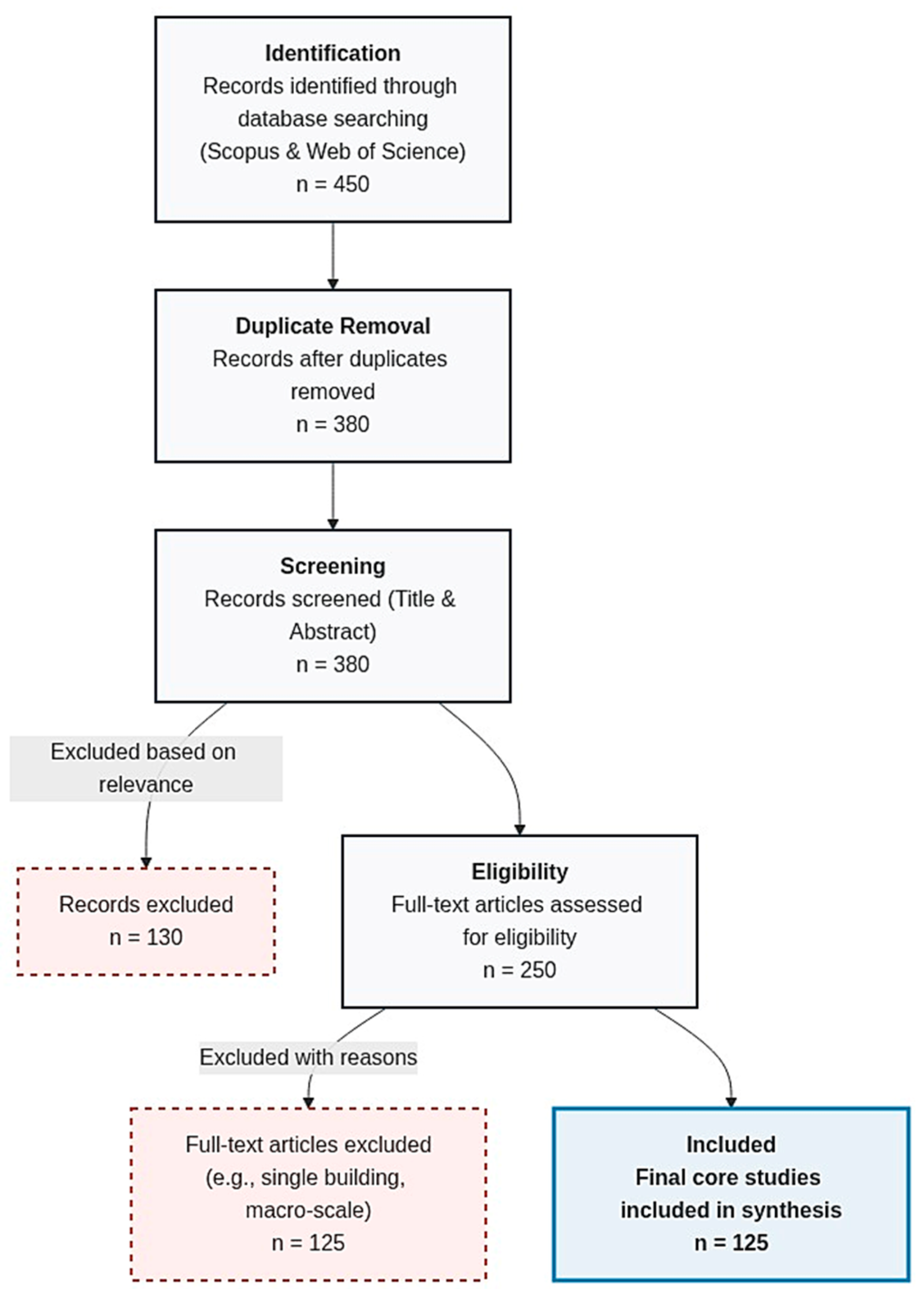
The initial structured search yielded a broad corpus of publications (
n = 450). As detailed in the PRISMA flow diagram (
Figure 1), out of the initial 450 records, 70 duplicates were removed, leaving 380 records for screening. Following relevance screening based on titles and abstracts, 130 records were excluded. The remaining 250 studies were subjected to full-text assessment. The screening and full-text eligibility assessment were conducted through iterative author review to ensure consistency with the predefined inclusion criteria. Through iterative evaluation of methodological depth, conceptual relevance, and analytical contribution, 125 articles were excluded at the full-text stage. The principal reasons for exclusion included: lack of an explicit neighborhood- or district-level focus, insufficient treatment of multi-carrier or socio-technical integration, limited methodological transparency, and thematic overlap with broader review literature already represented in the final synthesis. Ultimately, a final set of 125 core studies was selected for synthesis.
2.4. Thematic Coding and Analytical Framework
Rather than providing a descriptive aggregation of findings, the selected literature was subjected to thematic coding and analytical categorization. The studies were classified into five principal domains:
Conceptual and theoretical foundations
System typologies and core components
Optimization and digital control paradigms
Environmental and lifecycle assessment
Socio-institutional governance and energy justice
The synthesis was designed to ensure that the 125 included studies were not treated as a single undifferentiated corpus, but were systematically mapped across the five analytical dimensions according to their primary contribution, methodological orientation, and thematic relevance. Studies focusing on system architecture, component integration, and operational logic were synthesized mainly within the conceptual, typological, and energy-flow dimensions, whereas studies emphasizing control, forecasting, optimization, digitalization, or decision support were primarily mapped to the evaluation and optimization dimension. Likewise, studies centered on governance, participation, justice, and socio-environmental assessment were synthesized within the socio-institutional and lifecycle-oriented dimensions. Where individual studies spanned more than one domain, they were interpreted comparatively across sections rather than confined to a single category.
Special attention was given to maintaining interpretive balance between high-tech, optimization-oriented studies from the Global North and resilience-oriented, access-driven studies from the Global South. Rather than imposing artificial parity, the review adopted a representative synthesis approach: the evidence base was mapped according to its actual distribution in the literature, while differences in technological sophistication, governance conditions, and infrastructural constraints were explicitly preserved in the analysis. This approach allowed the review to reflect the current asymmetry of the field without obscuring the distinct socio-technical realities that shape NLEH development across different regions.
This structured categorization enabled cross-domain comparison and facilitated the identification of research gaps, particularly the disconnect between techno-economic modeling and socio-institutional realities in emerging urban contexts.
The characteristics of all 125 included studies are qualitatively synthesized across the thematic domains in
Section 3,
Section 4 and
Section 5. All included studies are explicitly cited in the final reference list of this manuscript.
2.5. Limitations
Despite efforts to ensure methodological robustness, certain limitations remain. The restriction to English-language publications may underrepresent case studies from non-English-speaking regions. Additionally, grey literature and local policy reports were not systematically included, potentially limiting insights into implementation challenges. Finally, the rapid evolution of AI-driven energy management technologies means that the most recent conference contributions may not yet be fully indexed.
3. Theoretical Framework and System Architecture of NLEHs
3.1. Conceptual Foundations of Energy Hubs
The concept of the energy hub was first introduced to address the growing complexity of modern energy systems that involve multiple energy carriers and conversion technologies. Originally developed as a modeling approach for analyzing industrial energy systems, the energy hub framework has evolved into a powerful planning and operational paradigm for urban and decentralized contexts. At its core, an energy hub is defined as a node that connects different energy carriers—such as electricity, heat, gas, and hydrogen—through a set of conversion, storage, and control components, enabling coordinated energy flows across various infrastructures [
14,
46,
47].
In recent years, this concept has been extended and adapted to the neighborhood scale, giving rise to Neighborhood-Level Energy Hubs (NLEHs), which are designed to meet local energy demands using distributed resources and modular system architectures.
In the context of this review, Neighborhood-Level Energy Hubs (NLEHs) are defined as localized, multi-carrier energy systems operating at the scale of interconnected buildings, residential clusters, or neighborhood districts, where energy generation, conversion, storage, and distribution are coordinated through shared infrastructure and management logic. This definition distinguishes NLEHs from single-building energy systems, which are limited to isolated asset optimization, and from broader district-scale energy systems, which may operate at a larger infrastructure level without necessarily incorporating decentralized governance, modularity, or user-level coordination. Likewise, concepts such as urban energy cells and hybrid microgrids are considered in this review as adjacent or partially overlapping frameworks when they contribute to the understanding of localized multi-carrier coordination, but they are not treated as direct synonyms of NLEHs.
The distinctiveness of the NLEH perspective lies in its explicit focus on neighborhood-scale socio-technical coordination rather than on isolated microgrid autonomy or collective ownership models alone. In contrast to many microgrid reviews, which primarily emphasize electrical self-sufficiency, islanding capability, and local control, the NLEH framework is inherently multi-carrier and spatially embedded, incorporating not only electricity but also heating, cooling, mobility, storage, and shared urban infrastructure. Similarly, while energy community reviews often focus on governance, ownership, and citizen participation, they do not necessarily address the integrated physical architecture, cross-vector optimization, and real-time operational coupling that characterize neighborhood-level energy hubs. What necessitates a dedicated NLEH framework is therefore the convergence of shared multi-building infrastructure, multi-carrier coordination across proximate urban assets, and the need to co-optimize technical performance, social equity, and governance at an intermediate scale between single-building systems and large district infrastructures.
Unlike centralized systems that rely on a unidirectional supply chain, NLEHs offer multi-directional, interoperable energy systems that can dynamically respond to real-time demand, grid fluctuations, and renewable generation variability [
2,
48].
From a theoretical standpoint, the energy hub model is grounded in systems theory and network flow optimization. It conceptualizes the neighborhood as an integrated subsystem within the broader urban energy landscape, where energy inputs (e.g., solar PV, district heating, wind) are processed through conversion units (e.g., heat pumps, fuel cells) and dispatched to meet diverse local demands such as residential electricity, domestic hot water, or electric vehicle (EV) charging [
49,
50,
51]. This representation facilitates holistic analysis and design by capturing interdependencies between different energy forms and optimizing the energy balance and system efficiency under various operating scenarios [
2].
What distinguishes NLEHs from other distributed energy resources (DERs) is their emphasis on cross-sectoral energy integration, real-time control, and decentralized governance. Instead of viewing buildings or microgrids as isolated units, the hub framework treats the neighborhood as a cohesive, multi-agent energy ecosystem, with shared assets and collaborative decision-making protocols [
3]. This approach opens new avenues for energy democracy, where local actors—such as municipalities, cooperatives, and residents—can co-design and co-own the infrastructure, aligning technical performance with social objectives.
The conceptual strength of energy hubs also lies in their scalability and modularity. They can be designed as independent micro-units or be nested within larger district or city-scale systems, creating a hierarchical energy network. This flexibility makes them suitable for diverse urban morphologies, from dense city centers to peri-urban residential zones, and adaptable to a wide range of policy, climate, and resource conditions [
52,
53].
Recent advancements in computational modeling have further enhanced the analytical capabilities of the energy hub framework. Tools such as MILP (Mixed-Integer Linear Programming), multi-objective optimization, and agent-based modeling allow for the simulation of complex trade-offs between cost, emissions, reliability, and user preferences [
48,
54,
55]. These tools are instrumental in the design of resilient NLEHs capable of coping with uncertain inputs (e.g., intermittent renewables), socio-economic changes (e.g., electrification of transport), and policy shifts (e.g., carbon pricing).
To summarize, the conceptual foundation of NLEHs builds upon interdisciplinary theories in energy systems, urban planning, and network science. It provides a unified framework that enables the transition from fragmented, carrier-specific infrastructures to integrated, adaptive, and people-centered energy systems, a prerequisite for achieving long-term urban sustainability.
3.2. Typologies and Configurations of NLEHs
The architectural typologies of Neighborhood-Level Energy Hubs (NLEHs) reflect the technical, spatial, and institutional diversity inherent in urban energy systems. Understanding these configurations provides insight into how such hubs can be designed, scaled, and governed effectively in varying contexts. Among the most fundamental distinctions is the categorization between single-carrier and multi-carrier energy hubs. Single-carrier configurations typically manage only one form of energy, most commonly electricity, and are often based on rooftop photovoltaic (PV) systems paired with battery storage. While these setups are relatively simple and cost-effective, they offer limited operational flexibility and do not fully capitalize on synergies between different energy vectors. By contrast, multi-carrier energy hubs (MCEHs) manage the simultaneous flow and conversion of electricity, heating, cooling, and gas [
56,
57]. These systems are capable of exploiting integration pathways, such as combined heat and power (CHP) or power-to-gas technologies, significantly enhancing both efficiency and resilience. Research has shown that multi-carrier energy hub configurations can improve primary energy efficiency relative to single-carrier designs, with reported gains in the broader integrated energy systems literature often ranging around 20–30%, depending on system boundary definitions, technology mix, operating assumptions, and spatial scale [
46,
58,
59].
In terms of structural design, NLEHs can be organized in either modular or integrated configurations. Modular hubs consist of semi-autonomous subunits, each capable of local generation, storage, and control, which may operate independently or be interconnected through digital communication layers. This modularity is particularly useful for neighborhoods undergoing phased development or exhibiting heterogeneous energy demand profiles. On the other hand, integrated hubs consolidate infrastructure and management at a district scale, facilitating centralized optimization and economies of scale but also introducing potential vulnerabilities related to system-wide disruptions or centralized governance limitations [
2]. A hybrid model, combining modular autonomy with integrated coordination, is gaining attention, especially with the emergence of peer-to-peer energy trading platforms and blockchain-based management schemes that require both local flexibility and overarching coherence [
60,
61].
Control architectures further shape NLEH configurations, spanning from centralized energy management systems (EMS) to distributed, agent-based control structures [
62]. Centralized models operate through a core EMS that optimizes energy flows across nodes using predictive algorithms and external data such as weather forecasts [
63,
64]. These systems maximize technical performance but may limit user autonomy. Conversely, decentralized control mechanisms allow for localized decision-making and self-organization, enhancing adaptability and cyber-resilience, albeit sometimes at the expense of global efficiency [
48].
Spatially, NLEHs range in scale from individual buildings to entire districts. Building-level hubs are typically confined to a single structure, often incorporating PV, battery storage, and smart inverters. These setups promote energy independence at the micro level but may lack the diversity of load and generation profiles available at larger scales. Neighborhood-scale systems aggregate energy assets across multiple buildings and infrastructures, allowing for enhanced load balancing and resource utilization. At the highest level, district-scale hubs often include infrastructure such as central heating plants, thermal energy storage, and coordinated smart grid integration. These are frequently implemented through public–private partnerships or managed by municipal utilities [
65,
66]. An emerging concept in this context is that of “Urban Energy Cells,” which aim to integrate energy, water, mobility, and communication systems into cohesive spatial units managed via digital twins and real-time feedback systems [
3,
67].
Finally, the functional categorization of energy hubs into passive and active systems offers a behavioral lens on their operation. Passive hubs function primarily as static energy consumers or buffers, responding reactively to external signals. In contrast, active hubs are embedded within adaptive ecosystems, participating in local energy markets, demand-side response, and user-driven optimization. They integrate smart metering, AI-enabled management systems, and community engagement mechanisms to enable dynamic, inclusive control paradigms. This shift from passive to active configurations aligns with broader transitions toward energy democracy and distributed prosumership, emphasizing the role of users not merely as consumers but as participants in energy governance [
68,
69,
70].
In sum, the typological diversity of NLEHs is a reflection of their adaptability. Their configuration, whether based on energy vectors, structural modularity, control models, spatial scale, or operational behavior, must be carefully aligned with the socio-technical context in which they are implemented. Such alignment ensures that NLEHs are not only technically optimized but also resilient, participatory, and socially embedded.
To synthesize the diverse literature into a critical framework,
Table 1 presents a comparative analytical matrix of NLEH typologies. Technology Readiness Levels (TRL) are estimated based on the EU Horizon standard guidelines, corroborated by deployment evidence in the reviewed literature. The reported performance values should be interpreted as context-dependent literature ranges rather than fixed engineering benchmarks, especially where evidence is drawn from district-scale or integrated energy system studies beyond strictly neighborhood-level applications. Furthermore, the matrix highlights quantitative performance gains and identifies persistent research gaps for each architectural and operational paradigm.
As observed in
Table 1, a clear trade-off emerges between technological sophistication and socio-institutional feasibility. While multi-carrier and centralized paradigms offer superior optimization potential, decentralized and modular configurations demonstrate stronger alignment with participatory governance and resilience objectives. This structural tension constitutes a core unresolved research challenge in the NLEH literature.
It should be noted that the quantitative values reported in this review, such as efficiency improvements, CHP performance, and environmental gains, should be interpreted as indicative ranges drawn from a heterogeneous body of literature rather than as universally transferable benchmarks. In several cases, the available evidence is derived not only from neighborhood-scale applications but also from district-level and broader integrated energy system studies. Their inclusion is analytically useful for framing NLEH potential, but the transferability of such results remains contingent on climate conditions, spatial scale, tariff structures, infrastructure configuration, and technology portfolios.
3.3. Core Components and Energy Flow Structure
The operational logic and structural configuration of Neighborhood-Level Energy Hubs (NLEHs) revolve around a well-integrated assembly of core components responsible for energy generation, conversion, storage, and controlled distribution. Understanding the synergistic interaction between these elements is crucial for achieving the systemic flexibility and efficiency that define modern multi-carrier energy systems.
Energy generation within NLEHs typically combines multiple distributed technologies, each selected according to the neighborhood’s spatial, climatic, and socio-economic context. Photovoltaic (PV) systems remain the most widespread due to their modular nature, declining capital costs, and suitability for both rooftop and building-integrated installations [
3,
71]. Complementing PVs are Combined Heat and Power (CHP) systems, particularly in cooler climates or high-density districts where there is simultaneous demand for electricity and thermal energy [
72,
73]. CHP systems, often based on natural gas or biomass, can enhance overall energy efficiency by utilizing waste heat, with total efficiencies exceeding 80% reported in optimized co-generation settings; however, such values remain highly dependent on local thermal demand, operating regime, fuel type, and system scale [
74,
75].
In parallel, fuel cells, especially proton exchange membrane (PEM) and solid oxide (SOFC) types, are emerging as viable options for decentralized, high-efficiency electricity generation [
76]. Their integration with hydrogen infrastructure has garnered attention as a promising decarbonization pathway, allowing for flexible operation with minimal emissions [
77,
78]. In regions with favorable wind resources, small-scale wind turbines or microturbines can complement these systems, although they remain less common in densely populated areas.
The presence of multi-energy carriers necessitates robust conversion interfaces capable of linking electrical, thermal, and chemical energy streams. Heat pumps, for instance, serve a dual function in both heating and cooling applications and are highly efficient when powered by renewable electricity. In conjunction with solar thermal collectors or geothermal loops, they allow for climate-responsive energy provision. Additionally, electrolyzers offer an essential link between electricity and gas systems, enabling surplus renewable electricity to be converted into hydrogen—a form of chemical storage that significantly extends the temporal flexibility of the energy hub [
79,
80].
Storage infrastructure plays a central role in stabilizing the internal energy dynamics of NLEHs. Short-term energy balancing is usually achieved through Battery Energy Storage Systems (BESS), which offer rapid charge–discharge capabilities and high round-trip efficiency [
81,
82]. These are instrumental in smoothing PV fluctuations, supporting load shifting, and ensuring continuity during outages. For thermal energy, storage solutions such as stratified hot water tanks or phase change materials (PCMs) provide cost-effective means of retaining heat for later use, particularly when integrated with CHP or solar thermal systems [
83,
84]. On a broader temporal scale, hydrogen storage emerges as a compelling solution for inter-seasonal balancing. Through power-to-gas systems, hydrogen can be stored in pressurized tanks and later reconverted to electricity via fuel cells, thereby completing a closed-loop energy cycle that supports long-duration flexibility [
85,
86].
The complexity of energy flow within NLEHs demands intelligent coordination, which is realized through advanced Energy Management Systems (EMS) [
87]. These systems collect real-time data from smart meters, environmental sensors, and user inputs to forecast demand, schedule generation, and control storage dispatch. EMS platforms often utilize predictive algorithms, such as Model Predictive Control (MPC) or reinforcement learning, to optimize operations in the face of fluctuating inputs and dynamic tariffs [
88,
89]. Importantly, these systems also mediate between multiple energy carriers, prioritizing efficiency and cost-effectiveness while preserving reliability.
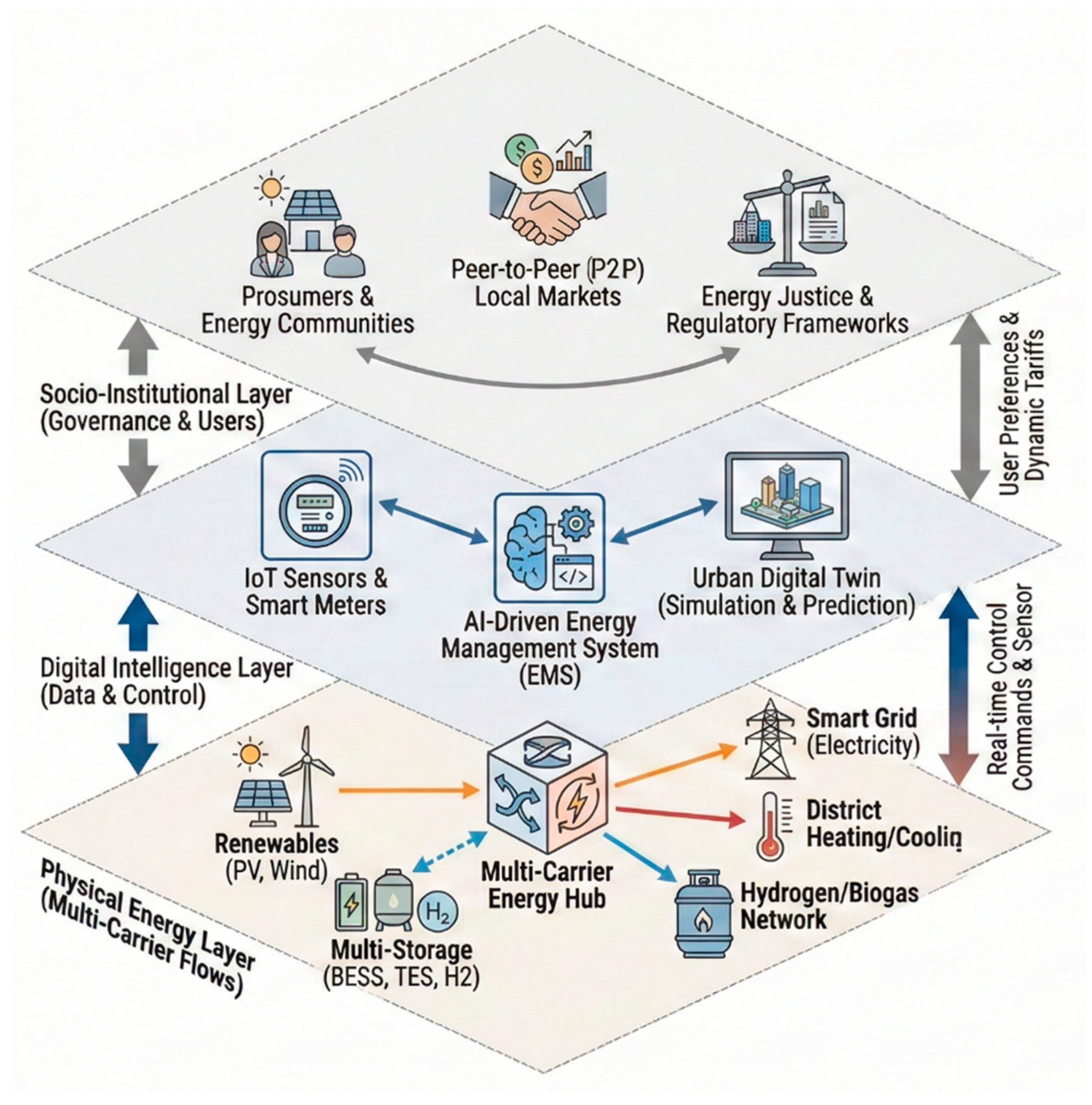
As conceptualized in
Figure 2, NLEHs operate as integrated socio-cyber-physical systems rather than as linearly layered infrastructures. Energy flows originate from distributed multi-carrier generation and storage resources, including PV, CHP, and storage systems, but their operation is continuously shaped by digital intelligence and socio-institutional signals. Within the physical domain, electricity, heat, and chemical vectors (e.g., hydrogen) are dynamically coupled through sector-integration mechanisms such as power-to-heat and power-to-gas pathways. Simultaneously, the digital intelligence domain—comprising AI-driven energy management systems, real-time sensing, and urban digital twins—translates system states into optimization commands and predictive adjustments. Crucially, the socio-institutional domain interacts bidirectionally with both the physical and digital domains through user preferences, dynamic tariffs, governance constraints, and justice-oriented policy frameworks. Rather than a hierarchical sequence, the framework emphasizes adaptive co-evolution: operational decisions emerge from the continuous interaction among infrastructure capabilities, algorithmic control, and participatory governance.
For interdisciplinary readers,
Figure 2 may be interpreted in three successive steps. First, the lower and left-side elements represent the physical energy infrastructure of the neighborhood, including generation, conversion, storage, and multi-carrier energy exchange. Second, the upper and central control-oriented elements represent the digital intelligence layer, where sensing, forecasting, EMS logic, and digital twins translate system states into coordinated operational decisions. Third, the right-side and feedback-oriented elements represent the socio-institutional domain, where user preferences, governance rules, tariff structures, and justice-oriented policy signals influence both physical dispatch and digital control priorities. The key message of the figure is therefore not a one-way flow from infrastructure to control, but a bidirectional socio-cyber-physical interaction in which technical, digital, and institutional domains continuously co-shape NLEH performance.
Distribution systems also form a crucial component in this structure. Electrical energy is delivered through smart grids equipped with bi-directional inverters and low-voltage transformers that accommodate both consumption and prosumer injection. Meanwhile, thermal distribution relies on insulated networks that deliver hot or chilled water from centralized or distributed sources to individual buildings [
90]. Where applicable, decentralized gas networks for biogas or hydrogen are integrated as part of hybrid configurations, enabling fuel flexibility and improved energy security.
What distinguishes successful NLEHs is not just their technological sophistication but the harmony of interaction between their components. The co-optimization of electricity and heat flows, the alignment of short- and long-term storage solutions, and the real-time responsiveness of control systems collectively allow for high energy autonomy, reduced emissions, and greater community engagement. Moreover, as digital tools such as urban digital twins and GIS-based modeling platforms are increasingly integrated into planning and operation, the potential to visualize and adapt system behavior in real time is significantly enhanced [
91,
92,
93].
In conclusion, the core components and energy flow architecture of NLEHs represent a paradigm shift from siloed, single-carrier utilities to highly integrated, intelligent, and adaptive energy ecosystems. This systemic design not only supports technical efficiency but also enables broader sustainability objectives at the neighborhood scale.
3.4. Urban Integration and Interoperability
As cities transition toward more sustainable and resilient energy systems, the integration of Neighborhood-Level Energy Hubs (NLEHs) into broader urban infrastructures becomes increasingly essential. NLEHs are no longer isolated technological solutions; they are evolving into foundational components of smart urban ecosystems. Their effectiveness depends on how well they are spatially and functionally integrated with other critical city systems such as transportation, water, digital communication, and waste management.
One of the key strategies enabling this transformation is sectoral coupling, where energy systems interact with other sectors to optimize overall resource efficiency and system-wide sustainability. For example, the excess heat from combined heat and power (CHP) units can be redirected into district heating networks, while surplus electricity generated by photovoltaic systems can be utilized to power electric vehicle (EV) charging stations or water treatment facilities. This multi-sectoral synergy enhances flexibility and reduces redundancy, especially when supported by integrated control platforms and coordinated urban planning [
94,
95].
Equally important is spatial coupling, which ensures that energy systems are embedded within the spatial morphology and land-use planning of the city. NLEHs should not be appended as retrofitted modules but designed as spatially responsive elements that align with neighborhood typologies, transport corridors, and population density patterns. Advanced geospatial tools, such as GIS-based planning and urban morphology analysis, allow designers to optimize the siting of distributed generation, thermal networks, and storage assets based on local topography and energy demand clusters [
3,
96].
At the heart of achieving true interoperability lies the deployment of digital twins—virtual replicas of physical urban systems that allow real-time monitoring, simulation, and optimization. These digital models are being increasingly used to integrate NLEHs with transportation, emergency services, and public health systems. Through continuous data exchange, digital twins enhance the responsiveness and coordination of urban energy systems under normal and crisis conditions [
97,
98].
The use of urban energy cells, as introduced by Perera et al. (2021) [
3], further illustrates the potential of decentralized yet interoperable planning units. These cells combine multiple infrastructures—energy, mobility, and water—into a cohesive subsystem managed locally but responsive globally. Such an approach reduces system complexity, enhances resilience, and facilitates experimentation with new technologies or business models without risking city-wide failures.
However, several challenges hinder seamless urban integration. Regulatory fragmentation often separates responsibilities for energy, water, and transportation planning among different institutions, making coordination difficult. Moreover, legacy infrastructure and outdated zoning policies can limit the ability to deploy new energy assets or build multi-purpose corridors. Interoperability also demands robust ICT infrastructures and data governance models that ensure security, privacy, and fair access to energy information and services.
Despite these hurdles, successful integration examples are emerging. Cities like Amsterdam, Singapore, and Seoul have piloted smart district projects that embed NLEHs within comprehensive urban strategies, supported by public–private partnerships and multi-sectoral coordination. These cases demonstrate that when interoperability is planned from the outset, NLEHs can act as nodes of innovation, linking technology with governance, and infrastructure with community engagement [
99].
In conclusion, urban integration and interoperability represent the next frontier in NLEH development. Moving beyond technical optimization, these hubs must function as dynamic components of a city’s metabolism, interacting with other sectors, adapting to urban rhythms, and enabling inclusive, low-carbon living. Achieving this vision requires not only technological tools but also institutional innovation, participatory planning, and a reimagining of how energy is embedded within the urban fabric.
3.5. Evaluation and Optimization Paradigms
As neighborhood-level energy hubs (NLEHs) evolve into increasingly complex, multi-carrier systems, the demand for robust evaluation and optimization frameworks becomes critical. These paradigms not only assess system performance under varying technical and socio-economic conditions but also enable real-time control, adaptive planning, and long-term sustainability. This section explores the key methodologies used to evaluate and optimize NLEHs, focusing on hierarchical modeling, predictive control, uncertainty analysis, and decision-support tools.
Hierarchical modeling has emerged as a fundamental approach for capturing the layered structure of NLEHs. At the lowest tier, component-level models simulate devices such as PV modules, heat pumps, batteries, and fuel cells. Mid-level models represent the interaction among subsystems (e.g., power, heating, gas), while high-level models incorporate neighborhood-wide energy flows and interactions with the main grid. This layered modeling structure enables researchers and planners to examine localized phenomena and system-wide dynamics simultaneously [
100,
101].
Model Predictive Control (MPC) is increasingly used for real-time energy management. MPC algorithms predict future system states over a finite time horizon and determine optimal control actions based on constraints such as load profiles, generation availability, tariff structures, and user preferences [
102,
103]. Studies show that MPC can significantly reduce energy costs and emissions, particularly in systems with high shares of renewables and storage [
104,
105]. When combined with weather forecasting and demand prediction tools, MPC becomes a powerful tool for anticipatory operation of NLEHs.
Another critical area is uncertainty modeling, which addresses the stochastic nature of renewable energy generation (e.g., solar irradiance, wind speed), fluctuating demand, and market prices. Stochastic programming, Monte Carlo simulations, and scenario-based modeling are commonly used to quantify and mitigate these uncertainties. For instance, sensitivity analyses of PV and CHP combinations have revealed significant variability in performance depending on seasonal and load profile assumptions [
106,
107]. Integrating uncertainty models within optimization frameworks ensures more resilient and adaptable energy hub operations.
More explicitly, uncertainty handling is not merely an auxiliary analytical step, but a defining component of advanced NLEH optimization paradigms. In practical terms, deterministic MILP and MPC formulations are increasingly being extended through stochastic programming, robust optimization, scenario-based receding-horizon control, and sensitivity-informed dispatch strategies to better accommodate uncertain renewable generation, demand volatility, market fluctuations, and weather-dependent operating conditions. This shift is particularly important at the neighborhood scale, where forecasting errors and local disturbances may materially alter both techno-economic performance and equity-sensitive operational outcomes. Accordingly, future NLEH optimization frameworks should be interpreted not simply in terms of solver sophistication, but also in terms of how systematically they internalize uncertainty across planning, scheduling, and real-time control layers.
To improve cross-sectional readability,
Table 2 provides a synthetic comparison of the main optimization approaches discussed in the literature together with their typical governance alignments and commonly associated evaluation methods. The table is intended as an interpretive summary of recurring patterns in the reviewed studies rather than as a one-to-one classification of individual references.
As
Table 2 shows, optimization choices in NLEHs are not purely algorithmic decisions; they are closely coupled with governance arrangements and the selection of evaluation criteria. This reinforces the need for integrated analytical frameworks capable of linking technical performance with institutional and social objectives.
A further dimension that deserves greater attention in NLEH-related literature is security-oriented dynamic modeling of tightly coupled electricity-heating systems. While many existing studies adopt steady or quasi-steady formulations for tractability, recent work on integrated electricity and heating systems has shown that hydraulic transients, together with thermal dynamics, can materially affect contingency propagation and the severity of cross-system disturbances. This insight is particularly relevant for neighborhood- and district-scale hubs that rely on thermal networks, coupled electricity-heating operation, and real-time control. In such settings, purely steady-state approximations may underrepresent the speed, interaction, and operational consequences of disturbance propagation, especially during faulted or emergency conditions. Therefore, although steady and quasi-steady models remain useful for planning and optimization, they should be interpreted with caution when resilience assessment, contingency analysis, and operational security are central objectives. This comparison highlights an important methodological gap between optimization-oriented NLEH studies and emerging dynamic-security frameworks in integrated electricity-heating research.
To facilitate a comprehensive system assessment, Multi-Criteria Decision Analysis (MCDA) is often applied. MCDA allows for the simultaneous evaluation of technical, economic, environmental, and social criteria [
108,
109]. Tools such as the Analytic Hierarchy Process (AHP), PROMETHEE, and TOPSIS have been used to rank technology configurations and policy options based on stakeholder priorities [
110]. This is especially valuable in participatory planning contexts, where trade-offs between cost, emissions, equity, and local job creation must be transparently evaluated.
Recent advancements have introduced artificial intelligence (AI) and machine learning (ML) as optimization tools. Algorithms such as reinforcement learning, genetic algorithms, and neural networks are being trained to optimize energy dispatch, forecast demand, and adapt to changing operating conditions [
111]. AI-enhanced systems demonstrate superior adaptability in dynamic environments, making them particularly suited for urban energy hubs operating under variable loads and generation [
112,
113].
Furthermore, simulation platforms such as TRNSYS, EnergyPlus, OpenDSS, and HOMER are extensively used for virtual prototyping and scenario testing. These tools allow engineers and planners to evaluate the technical feasibility, economic viability, and environmental impact of different configurations before implementation [
114]. Combined with GIS and digital twin technologies, simulation models enable spatially explicit and temporally dynamic representations of energy behavior within neighborhoods.
From a computational perspective, the integration of social Life Cycle Assessment (S-LCA) into a high-fidelity Urban Digital Twin (UDT) for real-time neighborhood co-optimization remains feasible only in a limited and selective sense at the current stage of the literature. Existing digital twin studies demonstrate growing capability for real-time monitoring, forecasting, and operational optimization of urban energy systems, while recent work on dynamic lifecycle assessment suggests that sustainability indicators can increasingly be updated through data-linked digital environments. However, the direct embedding of full-resolution S-LCA constraints into fast real-time control loops is still computationally demanding, particularly when high-fidelity physical simulation, multi-carrier optimization, and socio-environmental metrics are solved simultaneously. In practice, the most feasible near-term implementation pathway is likely to rely on simplified or surrogate social indicators, reduced-order digital twin models, and multi-timescale control structures in which social constraints are updated periodically or event-wise rather than at every operational timestep. Accordingly, the literature currently supports justice-aware digital co-optimization more convincingly at the level of supervisory decision support than fully continuous real-time control in high-fidelity neighborhood digital twins.
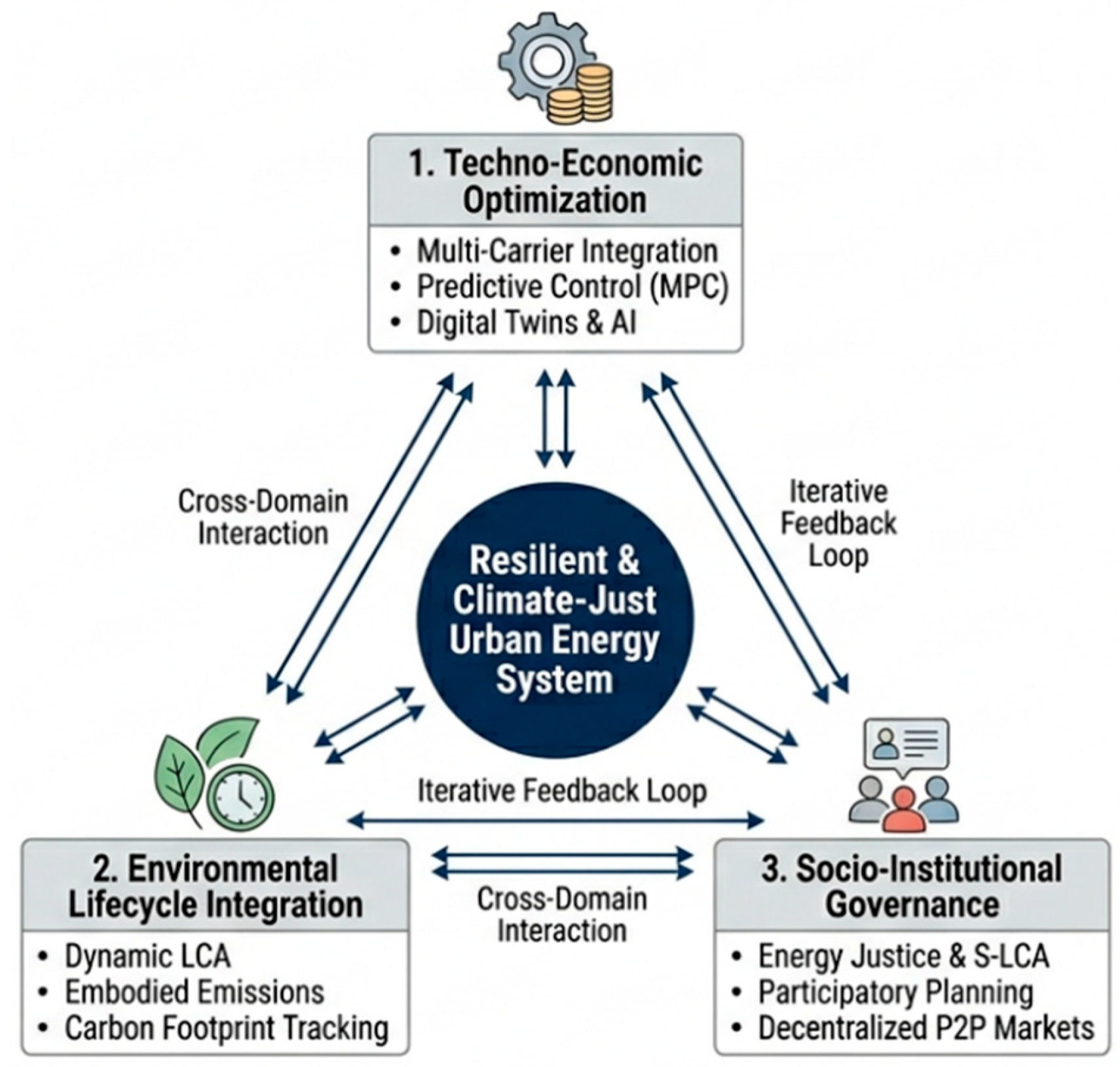
As illustrated in
Figure 3, the evolution of NLEHs follows a co-evolutionary tri-axial development model rather than a sequential roadmap. Three interdependent domains—techno-economic optimization, environmental lifecycle integration, and socio-institutional governance—converge toward the realization of a resilient and climate-just urban energy system. The techno-economic axis encompasses multi-carrier integration, predictive control strategies (e.g., MPC), and digital twin-enabled optimization. The environmental axis embeds dynamic lifecycle assessment, embodied emissions accounting, and carbon footprint tracking directly into system design and operation. Concurrently, the socio-institutional axis integrates participatory planning, decentralized P2P market mechanisms, and energy justice frameworks. Importantly, these domains do not evolve independently; instead, iterative cross-domain feedback loops continuously reshape design priorities and operational strategies. Advances in optimization must be evaluated through lifecycle metrics, while governance innovations influence both digital control logic and infrastructure deployment. The model therefore highlights systemic interdependencies and underscores that technical sophistication alone is insufficient without environmental integrity and institutional legitimacy. This tri-axial framework reframes NLEHs not merely as engineered infrastructures, but as adaptive urban systems whose long-term viability depends on the synchronized advancement of technology, environmental accountability, and democratic governance.
For step-by-step interpretation,
Figure 3 should be read as a three-axis conceptual map rather than a temporal sequence. The first axis represents techno-economic optimization, including multi-carrier integration, predictive control, and digital optimization capacity. The second axis represents environmental lifecycle integration, which incorporates embodied emissions, carbon accounting, and lifecycle-based sustainability assessment into planning and operation. The third axis represents socio-institutional governance, including participatory planning, market design, and energy justice considerations. The arrows and convergence logic indicate that progress along any one axis is incomplete unless reinforced by the other two. Accordingly, the figure should be interpreted as a coordination framework: NLEH maturity emerges not from isolated technical advancement, but from the balanced co-development of optimization capability, environmental accountability, and institutional legitimacy.
3.6. Mathematical Integration of Energy Justice into NLEH Optimization Frameworks
A persistent gap in current NLEH literature is the methodological disconnect between techno-economic modeling and socio-institutional priorities. As conceptually illustrated in
Figure 3, the co-evolutionary interaction between techno-economic optimization, environmental lifecycle integration, and socio-institutional governance provides the foundation for embedding justice-aware constraints within NLEH optimization frameworks. While algorithms such as Mixed-Integer Linear Programming (MILP) and Model Predictive Control (MPC) effectively minimize costs and carbon emissions, they traditionally treat energy justice and Social Life Cycle Assessment (S-LCA) as retrospective qualitative evaluations rather than proactive mathematical constraints.
In standard MPC or MILP formulations, the objective function typically minimizes a weighted sum of economic costs
and environmental emissions
over a time horizon
:
To bridge the techno-social gap, we propose expanding this objective function to include a dynamic social penalty term
, effectively internalizing S-LCA indicators and social costs into the algorithmic decision-making process:
To operationalize this, the social cost term
can be derived from normalized S-LCA indicators. For instance, it can be formulated as
where
represents an energy poverty index,
an equity index, and
a lack of community participation penalty.
To improve operational interpretability, the social penalty term may be expressed using normalized indicators bounded within the interval [0, 1]. A representative formulation is:
where
denote normalized values of the energy poverty indicator, equity indicator, and community participation indicator, respectively, and
.
In practice, normalization may be implemented using min–max scaling or benchmark-based normalization derived from policy thresholds, historical observations, or stakeholder-defined acceptable ranges.
To strengthen interdisciplinary integration, a standardized quantification pathway for S-LCA-informed indicators is required. In practical NLEH applications, this pathway may be structured in four sequential stages: (i) indicator definition, where social variables such as energy poverty exposure, affordability burden, participation intensity, and service continuity for vulnerable users are selected and linked to specific stakeholder groups; (ii) measurement and data assignment, where each indicator is associated with an observable proxy drawn from surveys, census data, tariff records, outage statistics, or participation logs; (iii) normalization and directional alignment, where heterogeneous indicators are transformed into dimensionless scores within a common interval and adjusted so that higher values consistently represent greater social burden or priority; and (iv) aggregation into optimization-compatible terms, where the normalized indicators are incorporated either as weighted penalty functions, threshold constraints, or fairness bounds within the MILP/MPC formulation. This staged quantification logic provides a clearer methodological bridge between engineering optimization, environmental lifecycle thinking, and social assessment, while improving the transparency and reproducibility of S-LCA integration in NLEH models.
The weighting factors can be selected using transparent multi-criteria procedures such as expert elicitation, stakeholder consultation, Analytic Hierarchy Process (AHP), or sensitivity analysis. Their role is not to impose a single universal social preference, but to allow context-specific calibration according to the regulatory, socio-economic, and governance priorities of the neighborhood under study.
For reproducibility, a practical implementation pathway is to impose the normalization condition and initialize the weights either from equal allocation () or from an AHP-derived baseline informed by stakeholder priorities. The baseline solution can then be tested through one-at-a-time or simplex-based sensitivity analysis to examine the stability of the optimal dispatch, cost, and equity outcomes under alternative weighting schemes. In this way, the weighting process remains transparent, context-sensitive, and analytically reproducible rather than arbitrarily assigned.
The required data are, in principle, obtainable from a combination of smart meter records, tariff schedules, household demand profiles, census-based socio-economic indicators, outage statistics, and locally administered participation surveys. From a computational standpoint, the proposed framework can remain compatible with MILP formulations when normalized indicators and penalty terms are represented linearly or through piecewise linear approximations. In MPC settings, the inclusion of these terms increases the dimensionality of the optimization problem, but does not fundamentally alter the tractability of the framework for small- to medium-scale neighborhood applications. Nevertheless, when such justice-aware terms are embedded within high-fidelity digital twin environments, practical implementation is currently more realistic in supervisory or periodically updated optimization layers than in fully continuous real-time control loops.
From an implementation standpoint, the proposed framework can be incorporated into real-world optimization environments using standard algebraic modeling workflows. In MILP-based applications, the economic, environmental, and social terms may be integrated within a unified objective function and solved using widely adopted platforms such as Gurobi, CPLEX, Pyomo, JuMP, or MATLAB-based optimization toolchains, provided that the social indicators are represented in linear or piecewise-linear form. In MPC settings, the same logic can be embedded within receding-horizon control architectures, where justice-aware penalties and constraints are updated at a slower supervisory timescale than the fast physical control loop. In this sense, practical implementation does not require replacing existing solvers, but rather augmenting established techno-economic formulations with additional bounded indicators, structured penalty terms, and policy-relevant constraints.
Furthermore, procedural and distributive energy justice principles must be formalized as operational constraints within the optimization matrix. We propose two foundational mathematical constraints to ensure equitable NLEH operation:
The Energy Affordability Constraint (Distributive Justice): To prevent dynamic tariffs and P2P market fluctuations from exacerbating energy poverty, the optimization model must constrain the total energy expenditure for identified vulnerable households (
) to a socially acceptable threshold (
) of their predefined income index
:
The Equitable Load Shedding Constraint (Procedural Justice): During peak demand periods or grid islanding events, traditional algorithms often shed loads based purely on the lowest value of lost load (
), which disproportionately impacts low-income or purely residential nodes. An equity constraint must be introduced to ensure that the required shed load
at any specific node
does not exceed a fairness distribution ratio (
) relative to the total neighborhood shed load
:
A simple illustrative case helps clarify the operational meaning of the proposed framework. Consider a stylized neighborhood hub with two consumer groups: one vulnerable group exposed to high tariff sensitivity and one standard group with greater flexibility and lower affordability risk. Under a purely cost-minimizing MILP/MPC formulation, the optimizer may prioritize the least-cost dispatch strategy even if this implies disproportionate load shifting, curtailment, or tariff exposure for the vulnerable group. By contrast, when the affordability and equitable load-shedding constraints are activated, the dispatch solution must satisfy both techno-economic feasibility and social acceptability. In this setting, the optimizer is forced to reallocate storage discharge, flexible thermal support, or local generation in a manner that limits energy burden and avoids concentrating curtailment on vulnerable users. Although simplified, this example illustrates how justice-aware constraints can alter dispatch priorities without replacing the core optimization logic.
While the present review does not develop a full original case-study simulation, the proposed framework is readily amenable to numerical testing in future work. A particularly relevant validation pathway would be to compare baseline techno-economic optimization against justice-aware optimization in a stylized neighborhood hub, using indicators such as operating cost, NPV, vulnerable-household energy burden, curtailed-load distribution, and service continuity under constrained operating conditions. Such numerical case studies would help quantify the trade-off between economic optimality and distributive fairness, and would provide an important next step toward empirical validation of the framework proposed here.
A related practical challenge concerns the trade-off between equity-oriented constraints and techno-economic performance, particularly when measures such as subsidized tariffs, protected affordability thresholds, or preferential service continuity for vulnerable users reduce the short-term Net Present Value (NPV) of the hub. In such cases, planners should not interpret the resulting NPV reduction as a simple efficiency loss, but rather as part of a broader socio-technical optimization problem in which financial returns, social protection, and long-term system legitimacy must be jointly considered. A realistic planning approach is therefore to treat equity constraints within a multi-objective or weighted optimization framework, where the degradation in purely financial metrics is evaluated against avoided energy poverty, improved social acceptance, enhanced resilience, and reduced downstream societal costs. In practice, this trade-off can be managed through cross-subsidy mechanisms, public support instruments, phased implementation strategies, or policy-backed compensation schemes that preserve baseline financial viability while maintaining distributive fairness.
It is important to note that the present formulation is intended as an operational conceptual framework rather than a fully validated deployment model. Nevertheless, the normalization logic, data pathways, and illustrative optimization case provided here demonstrate how justice-aware constraints can be embedded in future NLEH optimization models in a transparent and computationally tractable manner. However, by translating abstract energy justice principles into hard mathematical constraints, developers can enable AI-driven Energy Management Systems (EMS) to co-optimize for democracy, affordability, and resilience, fundamentally shifting NLEHs from purely technical assets to socially responsible ecosystems.
4. Environmental and Lifecycle Assessment of NLEHs
Neighborhood-Level Energy Hubs (NLEHs) represent a critical frontier in the sustainable transformation of urban energy systems. However, assessing their environmental performance goes beyond traditional efficiency metrics and requires a comprehensive evaluation of their life cycle impacts. This section explores the application of Life Cycle Assessment (LCA), embodied emissions analysis, dynamic environmental modeling, and social sustainability indicators within the context of NLEHs.
Life Cycle Assessment (LCA) has emerged as the most widely used methodology for quantifying the environmental impacts associated with energy systems across their entire lifespan [
115]. For NLEHs, LCA can evaluate different system configurations—such as solar PV-battery units, CHP-bioenergy hybrids, or hydrogen-powered hubs—by comparing their cradle-to-grave environmental profiles. Abubakar Jumare et al. (2019) conducted an LCA of hybrid energy systems in northern Nigeria and demonstrated that biomass-wind integrations could reduce global warming potential (GWP) by up to 96.5%, underscoring the importance of design configuration in impact mitigation [
116].
More advanced implementations now employ dynamic LCA, which considers time-variant emissions, energy flows, and resource consumption. Unlike static models, dynamic LCA is particularly suitable for NLEHs, where the temporal variability of renewable energy production (e.g., solar and wind) significantly influences system performance. Reinert et al. (2021) found that dynamic LCA could reduce environmental misestimation in energy systems by up to 18% in climate change categories compared to static approaches [
117].
Another critical aspect is the evaluation of embodied emissions—the greenhouse gases associated with material extraction, manufacturing, transportation, installation, and decommissioning. This is particularly relevant for NLEHs relying on batteries, thermal storage tanks, or complex building-integrated PV systems. Lamnatou et al. (2015) analyzed the embodied emissions of BIPV in Southern Europe and found that although operational emissions were minimal, the embodied emissions varied significantly based on location and system type [
118]. This highlights the need for site-specific LCA to guide technology selection and deployment.
Social Life Cycle Assessment (S-LCA) complements traditional LCA by evaluating the social implications of energy infrastructure across its life cycle. Padilla-Rivera et al. (2025) proposed a framework combining LCA with ESG (Environmental, Social, Governance) criteria to assess the impact of energy systems on local labor conditions, health, and equity [
28]. In NLEHs, such frameworks can ensure that community-scale transitions do not reinforce social inequalities, particularly in disadvantaged neighborhoods.
To support decision-making, Multi-Criteria Decision Analysis (MCDA) tools are increasingly integrated with LCA results. These tools allow planners to weigh environmental indicators, such as GWP, eutrophication potential (EP), abiotic depletion (ADP), and particulate matter formation, alongside economic and technical metrics. Quest et al. (2022) demonstrated that LCA-MCDA integration offers more transparent trade-offs in technology selection, especially when combined with stakeholder engagement [
119].
Various software platforms facilitate these assessments. Tools such as SimaPro, OpenLCA, and GREET enable detailed modeling of energy systems and their impacts, incorporating regional databases (e.g., ecoinvent) and sensitivity analyses. For NLEHs, these tools are increasingly coupled with urban simulation platforms (e.g., TRNSYS, CitySim) to account for spatial heterogeneity and contextual variation [
120].
Lastly, the integration of LCA in regulatory frameworks and urban energy planning remains an ongoing challenge. Few cities have institutionalized lifecycle thinking in their procurement and infrastructure decisions. However, pioneering municipalities in the Netherlands, Sweden, and Canada have begun incorporating LCA into climate action plans and building codes. These examples signal a paradigm shift toward embedding sustainability metrics at the core of energy governance. In addition, environmental and lifecycle assessments play an indispensable role in guiding the development of truly sustainable NLEHs. By moving beyond techno-economic analysis to include temporal, spatial, and social dimensions of impact, LCA-based frameworks ensure that NLEHs contribute meaningfully to long-term climate, equity, and resilience goals.
5. Socio-Institutional Dimensions and Energy Justice in NLEHs
As energy systems evolve from centralized infrastructures toward localized, community-based models, the socio-institutional context becomes increasingly vital. Neighborhood-Level Energy Hubs (NLEHs), though inherently technical, are deeply embedded in social, political, and institutional frameworks. Their success depends not only on technological efficiency but also on equitable governance, inclusivity, and the distribution of benefits and burdens. This section explores the intersection of NLEHs with energy justice, decentralized governance, community participation, and institutional adaptability.
Energy Justice provides a foundational lens through which the social implications of energy transitions can be evaluated. Rooted in principles of distributive, procedural, and recognition justice, the energy justice framework ensures that no group is disproportionately burdened or excluded in the energy transition process. Sokołowski et al. (2025) outlined seven pillars of energy justice—participation, decentralization, responsibility, solidarity, independence, education, and security—as essential to structuring fair and inclusive energy systems [
18]. When applied to NLEHs, these principles translate into localized control, transparent decision-making, and equitable access to services.
Decentralized governance models have proven especially effective in aligning NLEHs with community values and enhancing institutional resilience. Klagge and Meister (2018) examined energy cooperatives in Germany, highlighting how democratic structures, regional focus, and co-ownership enabled adaptability to regulatory changes and market volatility [
121]. Similarly, Punt et al. (2022) found that institutional proximity, such as the presence of cooperatives in related sectors, positively influenced the proliferation of renewable energy cooperatives, supporting bottom-up innovation [
21].
Community participation is perhaps the most critical factor for the long-term success and legitimacy of NLEHs. When citizens are actively engaged in the design, operation, and governance of energy systems, trust and ownership increase. Hoicka and MacArthur (2018) compared community energy initiatives in Canada and New Zealand, revealing how context-specific governance models shape outcomes in terms of both technical performance and social cohesion [
122]. These findings affirm that participatory processes should be integrated from the earliest planning phases of NLEHs.
To move from general principles to actionable governance design, more specific institutional mechanisms should be considered in NLEH implementation. For energy cooperatives, viable financial models include member-share structures, community bonds, revolving local energy funds, and blended public–community financing schemes that reduce the capital burden on households while preserving local ownership. In regulatory terms, policy sandboxes can provide protected pilot environments in which neighborhood-scale hubs are temporarily allowed to test alternative tariff rules, peer-to-peer market arrangements, data-sharing protocols, and cross-sector coordination models under monitored public oversight. Equally important are community participation mechanisms that go beyond symbolic consultation, such as citizen advisory boards, co-design workshops, participatory budgeting procedures, and multi-stakeholder steering committees with defined voting or review roles during planning and operation. These governance mechanisms help translate energy justice principles into practical institutional arrangements that improve legitimacy, accountability, and implementation feasibility.
Affordability and equity remain major concerns, particularly in urban areas facing energy poverty. Traditional pricing schemes often fail to accommodate diverse household incomes or usage patterns. Nolden et al. (2020) analyzed the role of community finance mechanisms in the UK, such as citizen-led investments and community shares, demonstrating how these models can provide low-cost, decentralized solutions, though their viability often hinges on consistent policy support [
123].
Despite growing interest, institutional barriers persist. Fragmented regulatory environments, limited municipal capacity, and policy uncertainty can inhibit the scalability of NLEHs. Furthermore, top-down planning approaches often overlook marginalized groups such as renters, migrants, and informal workers. Addressing these challenges requires governance innovations, including policy sandboxes, community-benefit agreements, and co-regulatory frameworks that promote experimentation while safeguarding equity.
The integration of social indicators into energy hub planning is also gaining traction. Metrics such as energy poverty indices, participation rates, and social return on investment (SROI) are increasingly used to evaluate the broader impacts of energy interventions. These indicators help align NLEHs with Sustainable Development Goals (SDGs), particularly SDG 7 (affordable and clean energy) and SDG 11 (sustainable cities and communities).
In conclusion, the socio-institutional success of NLEHs depends on more than technology; it relies on embedding energy hubs within the social fabric of communities. By adopting energy justice principles, fostering democratic governance, and prioritizing inclusivity, NLEHs can serve as transformative tools not just for sustainability, but for equity and empowerment in the urban energy landscape.
Bridging the Geographic Divide: Comparative Implementation Contexts
While the conceptual foundations of Neighborhood-Level Energy Hubs (NLEHs) are globally relevant, their real-world implementation is strongly shaped by regional socio-economic conditions, institutional capacities, and regulatory environments. A clear disparity exists between the Global North—where NLEH-related initiatives are often driven by decarbonization strategies, digital energy management innovations, and emerging local energy market mechanisms—and the Global South, where deployment is frequently motivated by the urgent need to address energy poverty, unreliable grid infrastructure, and limited institutional support.
In technologically advanced economies, NLEH-related systems are commonly integrated into sophisticated urban energy infrastructures supported by advanced digital energy management platforms, optimization frameworks, and peer-to-peer (P2P) energy trading models. In contrast, in many Global South contexts, NLEH-like solutions often emerge in the form of hybrid microgrids or decentralized solar energy systems designed primarily to ensure basic electricity access under institutional and infrastructural constraints.
To empirically illustrate this geographical and institutional divergence,
Table 3 presents a comparative overview of representative NLEH-related initiatives and research contexts drawn from the reviewed literature. This comparative perspective is further supported by the broader geographical and application-based synthesis provided in
Supplementary Table S1, which summarizes the characteristics of all 125 included studies and highlights the uneven geographical distribution of the current evidence base. Accordingly, the geographical discussion in this section does not seek to artificially equalize the evidence from the Global North and Global South, but rather to interpret their contrasting emphases, technological sophistication in the former and resilience-driven adaptation in the latter, within a common analytical framework. The comparison highlights differences in technological configurations, governance structures, regulatory frameworks, and the role of energy justice within each context. Such a comparison helps clarify why NLEH development pathways cannot follow a universal blueprint and must instead be adapted to local socio-technical realities.
As shown in
Table 3, NLEH development pathways differ fundamentally between the Global North and the Global South. In technologically advanced economies, stable regulatory institutions and access to capital enable the development of integrated urban energy systems incorporating digital management platforms and peer-to-peer energy trading mechanisms. Conversely, in many Global South contexts, NLEH-inspired solutions often take the form of hybrid renewable microgrids operating under institutional or infrastructural constraints. In these environments, the primary form of energy justice achieved is not decentralized market participation but rather the provision of reliable and affordable electricity services necessary for basic human development.
These findings, supported by both the comparative cases in
Table 3 and the broader geographical synthesis of the reviewed literature in
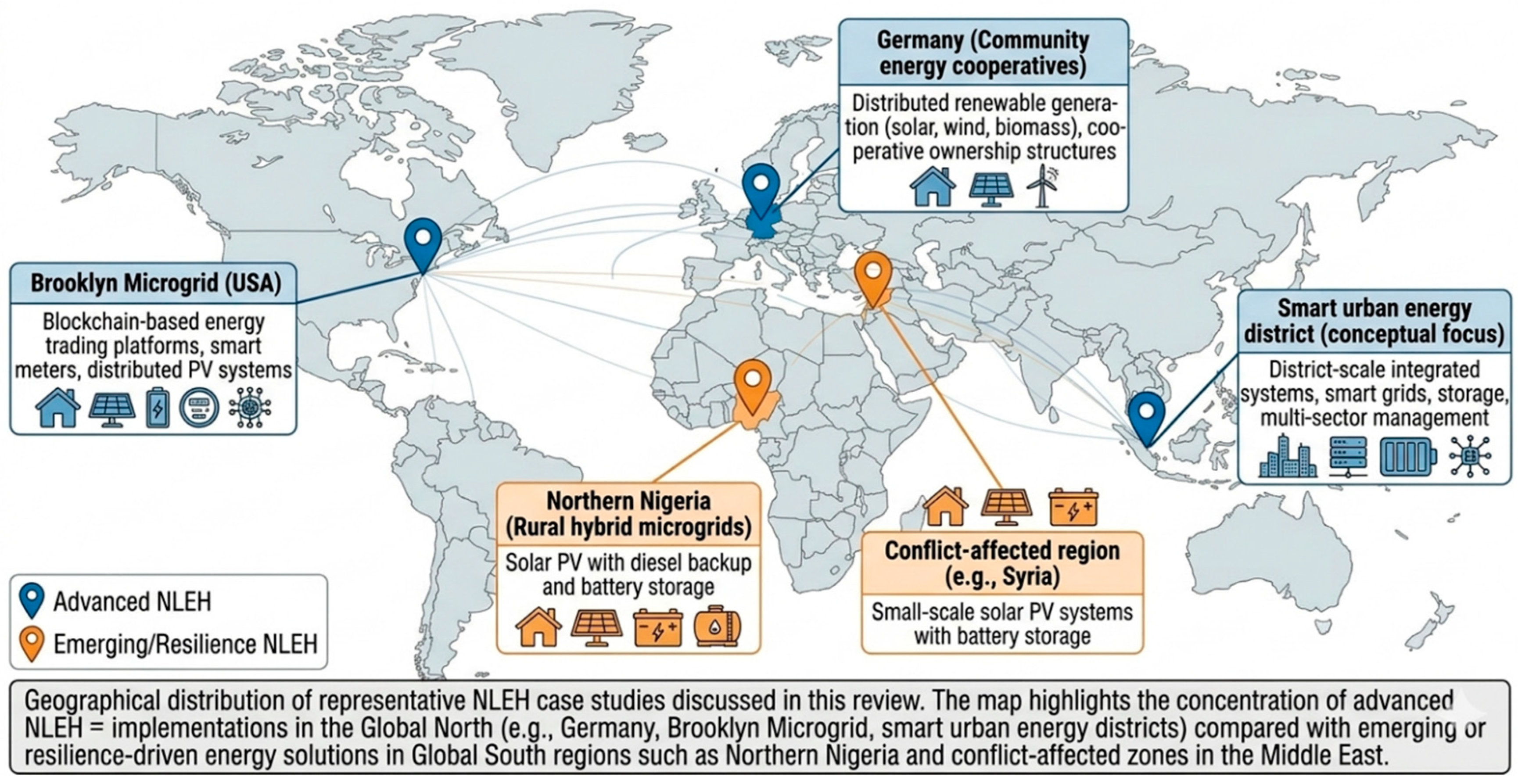
Supplementary Table S1, highlight the importance of context-sensitive NLEH frameworks and caution against universal deployment models that overlook socio-technical diversity. The geographical distribution of these representative contexts is illustrated in
Figure 4, which presents the global locations of selected case-study environments discussed in the literature.
6. Research Gaps and Future Directions
Despite the growing body of literature on Neighborhood-Level Energy Hubs (NLEHs), several critical research gaps persist, limiting the scalability and inclusivity of current models. Addressing these challenges requires not only technical advancements but also a paradigm shift toward interdisciplinary, community-centered, and policy-aligned approaches.
- (1)
Limited Integration of Socio-Technical Dimensions:
Many studies focus on the techno-economic optimization of NLEHs, often neglecting social equity, behavioral patterns, and participatory governance. While life cycle and emission assessments are well represented, their connection to justice-oriented frameworks remains underdeveloped. There is a need for hybrid methodologies that merge LCA, S-LCA, and institutional analysis within a unified evaluation framework [
28]. Future work should also prioritize standardized indicator taxonomies and quantification protocols for S-LCA variables so that social metrics can be more consistently embedded in optimization-oriented urban energy models.
- (2)
Underrepresentation of Global South Contexts:
Most empirical studies are concentrated in high-income regions, particularly in Europe and North America. Urban environments in the Global South, where infrastructure is informal or fragmented, remain largely unexamined. NLEHs designed for these regions must reflect different socio-political, climatic, and economic conditions. Future research must embrace context-sensitive design and direct engagement with marginalized communities [
122]. A particularly important future direction is the development of phased, context-specific implementation pathways for NLEHs, especially in resource-constrained regions. In many Global South and infrastructure-limited settings, direct deployment of fully integrated multi-carrier hubs may be financially or institutionally unrealistic. A more viable pathway is modular progression: beginning with basic decentralized access systems such as PV-battery units or hybrid renewable microgrids, then expanding toward shared storage, community-level control platforms, and eventually broader multi-carrier coordination as local capacity, financing, and governance maturity improve. Such phased pathways can reduce upfront risk, improve adaptability to local constraints, and allow NLEHs to evolve incrementally rather than relying on a single large-scale deployment model. This approach is particularly relevant for municipalities facing legacy infrastructure, weak institutional coordination, or limited capital availability.
- (3)
Lack of Longitudinal and Experimental Studies:
Current evaluations often rely on simulation-based models or short-term pilot projects, providing limited insights into long-term performance, behavioral dynamics, and policy evolution. Living labs, real-time monitoring, and longitudinal case studies are essential for validating assumptions, understanding systemic transitions, and informing adaptive policy-making [
21].
- (4)
Fragmented Modeling and Evaluation Tools:
Despite advances in computational modeling, there remains a disconnect between technical simulations and real-world decision-making. Tools such as LCA, energy system modeling, and urban digital twins are rarely integrated into participatory planning processes. Future tools must be accessible, transparent, and co-developed with users and policymakers to ensure broader adoption and contextual relevance [
119].
- (5)
Inadequate Policy and Institutional Support:
NLEHs often outpace existing regulatory frameworks, leading to conflicts in permitting, financing, and utility coordination. Dynamic regulatory environments, such as policy sandboxes and co-regulatory models, should be expanded to support experimentation, particularly in regions with ambitious decarbonization targets. Moreover, public procurement and planning guidelines should institutionalize lifecycle and social impact assessments [
18].
Future directions should include:
Development of adaptive governance models that accommodate diverse stakeholders and evolving policy contexts.
Integration of AI and predictive analytics for real-time system control and resilience enhancement.
Establishment of community-scale testbeds to evaluate social, technical, and environmental synergies under real conditions.
Cross-sectoral planning that incorporates water, waste, mobility, and digital systems alongside energy.
Inclusion of ethnographic and participatory research methods to capture community priorities and lived experiences.
In summary, advancing NLEHs requires an expansion of the research agenda to include systemic, inclusive, and adaptive perspectives. By bridging the gap between technical potential and social realities, future scholarship can ensure that energy hubs contribute meaningfully to equitable, resilient, and climate-aligned urban transitions.
7. Conclusions and Recommendations
Neighborhood-Level Energy Hubs (NLEHs) represent an essential innovation in the evolution of sustainable and resilient urban energy infrastructures. As decentralized systems capable of integrating diverse energy sources—including photovoltaics, wind, bioenergy, and hydrogen—NLEHs offer a viable response to the increasing complexity of modern urban energy demands. This paper has demonstrated how NLEHs can serve as functional units in smart cities, aligning with global policy goals such as Sustainable Development Goal 7 (SDG7), while simultaneously addressing social, economic, and environmental imperatives.
Through a comprehensive and multidisciplinary lens, this review has explored the theoretical foundations and architectural typologies of NLEHs, identified their technological components, and assessed their role in achieving a more just and efficient urban energy landscape. The novelty of this review lies in its integrative Cyber–Physical–Social approach. Most notably, this study bridges the persistent gap between engineering models and social sciences by proposing the mathematical integration of energy justice principles and Social Life Cycle Assessment (S-LCA) metrics directly into techno-economic optimization algorithms (e.g., MILP and MPC). The findings suggest that the successful implementation of these hubs depends not only on technical optimization but also on meaningful community engagement, adaptive policy frameworks, and robust, context-sensitive sustainability metrics.
Moreover, NLEHs offer a transformative platform to bridge the urban energy divide, particularly between the Global North and South. While developed nations have piloted advanced microgrid technologies and digital energy management, developing regions face persistent barriers related to affordability, infrastructure, and policy fragmentation. However, the modularity and scalability of NLEHs render them suitable for diverse urban contexts, making them instrumental in leapfrogging centralized fossil-based systems. Thus, a proactive international agenda that channels investment, knowledge exchange, and capacity building into localized NLEH deployments is vital.
Importantly, NLEHs are not isolated infrastructures; they are embedded in broader socio-technical ecosystems. Their performance and acceptance are mediated by local governance structures, user behaviors, and regulatory conditions. The shift toward participatory energy systems introduces opportunities to realign energy justice principles with practical deployment strategies, offering not just cleaner power, but also more democratic access to energy services. Digitalization further enables this vision through tools such as smart meters, blockchain-based governance, and AI-powered energy management systems that enhance real-time adaptability and equity-aware control.
Looking ahead, the NLEH paradigm is expected to evolve alongside advances in urban informatics, mobility electrification, and climate-adaptive infrastructure. In this context, NLEHs could become not just nodes of energy supply but anchors of resilient, multisectoral urban planning. By embedding environmental indicators, participatory decision-making, and circular economy principles into hub design, urban planners and policymakers can ensure that energy infrastructures serve both people and the planet. This study provides the theoretical foundation for such progress and calls for deeper empirical investigation to validate, scale, and institutionalize these insights.
From an implementation perspective, the transition from conceptual NLEH frameworks to deployable urban systems requires more explicit attention to practical constraints. In many cities, the main barriers are not only regulatory but also infrastructural and financial. Retrofitting existing building stocks, thermal networks, metering systems, and distribution interfaces can involve substantial upfront capital costs, particularly in dense urban areas with legacy infrastructure. In addition, effective NLEH operation depends on the availability of reliable and interoperable data streams, including demand profiles, tariff information, building characteristics, local generation patterns, and socio-economic indicators relevant to affordability and participation. For planners and policymakers, this means that NLEH deployment must be supported not only by enabling regulation, but also by phased retrofit strategies, municipal data governance frameworks, and targeted financing instruments capable of reducing the burden of early-stage infrastructure modernization.
Recommendations
To translate these theoretical insights into actionable urban transitions, this study proposes the following targeted recommendations:
For Urban Planners and Municipalities: Urban planners should systematically embed NLEHs into spatial master plans by integrating them with water systems, digital infrastructure, and mobility networks. Tools such as GIS-based modeling and urban digital twins should be utilized to co-optimize multi-sectoral energy flows [
97]. Furthermore, municipalities should be equipped with open-access decision-support systems that combine multi-criteria evaluation and stakeholder inputs, reducing reliance on centralized utilities. In resource-constrained regions, these planning efforts should favor phased modular deployment strategies, starting from essential decentralized energy access systems and gradually progressing toward more integrated neighborhood-scale hub architectures as technical and institutional capacities mature.
For Policymakers and Regulatory Bodies: Governments must establish “regulatory sandboxes” and pilot zones that allow for real-time experimentation with NLEHs under dynamic policy frameworks to reduce institutional inertia. Additionally, policymakers must foster participatory governance by supporting energy cooperatives and citizen advisory boards, ensuring contextual alignment and promoting long-term behavioral change. For example, the Amsterdam experience illustrates how smart district coordination and multi-sector integration can support advanced neighborhood-level energy planning, while the German renewable energy cooperative model demonstrates how participatory ownership and institutional trust can facilitate long-term community engagement and implementation. These precedents indicate that successful NLEH deployment depends not only on technological readiness, but also on enabling regulatory sandboxes, cooperative governance mechanisms, and context-sensitive market design [
18,
121].
For System Developers and Engineers: The design and implementation of NLEHs must transition from purely techno-economic models to holistic frameworks. Life Cycle Assessment (LCA), Social LCA (S-LCA), and carbon footprinting must be incorporated as standard operational constraints. These metrics should be transparently communicated to stakeholders to foster accountability [
28].
For International Organizations and NGOs: Deployment strategies and funding mechanisms should specifically target marginalized communities and developing urban areas (Global South). Financial support, regulatory easing, and co-design methodologies must be adapted to informal or conflict-affected contexts to ensure basic energy access and resilience [
124,
125].
For the Scientific Community and Funding Agencies: Research institutions must prioritize interdisciplinary collaboration through integrated programs that link engineering, social science, architecture, and environmental planning. This convergence is essential to co-create scalable, justice-driven, and locally relevant NLEH prototypes [
3].