Article

Structural and Relational Capabilities Moderating Social CRM’s Innovation Effects Within Mission-Driven Social Enterprise Networks Settings


1
Department of Science and Technology Policy Convergence, Dankook University, Yongin-si 16890, Republic of Korea
2
College of Business Administration, Pukyong National University, Busan 48513, Republic of Korea
*
Author to whom correspondence should be addressed.
Sustainability 2026, 18(8), 4063; https://doi.org/10.3390/su18084063
Submission received: 9 March 2026 / Revised: 8 April 2026 / Accepted: 17 April 2026 / Published: 19 April 2026

Abstract

This study investigates how a network’s structural and relational capabilities condition the influence of social CRM capabilities on innovation novelty, highlighting a deeper network paradox. Drawing on survey evidence from social enterprises, the analyses indicate that social CRM capabilities meaningfully contribute to the generation of novel innovations. Yet the two network capabilities move in opposite directions: structural capability amplifies the innovative gains derived from social CRM, whereas relational capability tends to dilute them. These divergent effects reflect the simultaneous pull of structural-hole and network-closure mechanisms within the same organizational setting. The results suggest that organizations aiming to translate social CRM investments into innovation may benefit more from structurally expansive network positions than from tightly embedded relational ties. Future work could employ longitudinal and cross-institutional designs to strengthen causal insight and broaden the study’s applicability.

1. Introduction

Innovation is a central mechanism through which social enterprises sustain their operations and deliver social impact under resource constraints [1]. Unlike traditional firms that pursue innovation primarily to enhance competitiveness or profitability, social enterprises rely on innovation to reconfigure limited resources, generate novel solutions, and differentiate themselves from established market actors [2,3]. In this context, innovation novelty, which refers to the degree to which new combinations of resources, processes, and value propositions diverge from existing industry practices, represents a key mechanism for achieving both strategic differentiation and long-term sustainability [4]. However, attaining high levels of innovation novelty is challenging given structural constraints and limited access to conventional resources that typically drive innovation [5].
To overcome these constraints, social enterprises must cultivate organizational capabilities that allow them to sense opportunities, engage stakeholders, and reconfigure resources effectively. Among these, social customer relationship management (Social CRM) capability is particularly critical because it provides a cost-effective and accessible mechanism through which social enterprises can gather stakeholder insights, strengthen relationships, and co-create value, thereby enabling innovation even under limited financial and infrastructural resources [6]. While the impact of social CRM capability on innovation has been actively examined in management research focusing on profit-oriented firms [7,8], empirical evidence in the context of social enterprises remains limited. Unlike traditional firms that can rely on substantial investments in technological or infrastructural capabilities, social enterprises often face severe financial and resource constraints, which make large-scale system development infeasible [9]. In this regard, developing social CRM capability through social media platforms provides an accessible and cost-effective avenue for social enterprises to enhance innovation. Through effective use of social media, they can gather stakeholder insights, strengthen relationships, and co-create value that contributes to innovative outcomes.
Building on this rationale, this study adopts the dynamic capability view [10] to explain how social enterprises leverage social CRM capability to achieve innovation. From this perspective, social CRM capability is not a static technological asset but a dynamic mechanism that allows social enterprises to sense stakeholder needs, seize opportunities for collaboration, and reconfigure existing relationships and information resources. Such adaptability is particularly valuable for social enterprises that operate under resource constraints and must continually adjust to changing social and market conditions. Accordingly, this study positions social CRM capability as a dynamic capability and aims to examine whether its positive effects on innovation, which have been consistently documented in profit-oriented firms, are similarly observed in the context of social enterprises.
Beyond the direct effect of social CRM capability, social enterprises operate within highly institutionalized environments, often depending on governmental and public institutions for funding, certification, and legitimacy. Korea presents a particularly compelling context for investigating these mechanisms because it hosts one of the world’s most developed social enterprise ecosystems, with over 3400 government-certified social enterprises as of 2024 [11]. The Korean government has made substantial investments in support infrastructure and networking initiatives, creating an environment where digital capabilities and network relationships play increasingly critical roles in organizational success [12]. This dependence requires compliance with administrative guidelines, legal frameworks, and policy standards, making network capabilities a critical strategic resource. Recognizing the importance of network embeddedness is essential, as a social enterprise’s ability to form, maintain, and leverage its network can determine whether digital capabilities, such as social CRM, are effectively translated into innovation outcomes. Even organizations with robust social CRM capabilities may struggle to generate innovation if their network connections are weak or poorly managed [13].
Drawing on network theory (NT) [14,15], this study conceptualizes network capabilities along two complementary dimensions. Structural network capabilities reflect the firm’s ability to occupy advantageous positions within the broader network and to orchestrate the network structure to access diverse information and resources [16]. Relational network capabilities, in contrast, emphasize the quality and strength of direct ties with key partners, highlighting trust, reciprocity, and sustained interaction [17]. Both dimensions are particularly salient for social enterprises operating under high institutional dependency, as they enhance the firm’s capacity to mobilize social CRM insights and convert them into meaningful innovation outcomes. Structural capabilities facilitate sensing opportunities and gathering critical information from the broader institutional environment [16], whereas relational capabilities enable the firm to seize and transform knowledge through cooperative, trust-based relationships with key stakeholders [17]. Accordingly, social enterprises that effectively combine structural and relational network capabilities are better positioned to leverage social CRM for innovation. By explicitly distinguishing these two dimensions, this study provides a nuanced perspective on how network capabilities interact with digital resources to strengthen innovation outcomes, highlighting both the mechanisms and contingencies through which social CRM capabilities generate value. Consequently, this research examines not only the direct effect of social CRM capability on innovation but also the conditions under which its impact is amplified by network embeddedness, offering insights into the strategic role of interorganizational networks in the social enterprise context.
Building on the preceding discussion, this study addresses two interrelated research questions. First, to what extent does social CRM capability influence innovation novelty in social enterprises? Second, how do network capabilities—both structural and relational—moderate this relationship? By addressing these questions, the study makes several contributions. Theoretically, it extends social CRM research into the social enterprise context and demonstrates how dynamic capability theory (DCT) and network theory (NT) jointly explain the conditions under which digital capabilities translate into innovation. Practically, the findings offer guidance to social enterprise managers and policymakers on how network configuration shapes the innovation returns from social CRM investment.
The remainder of this article proceeds as follows. The next section reviews the key literature and develops the hypotheses. The subsequent section details the research design. The empirical findings are then presented, followed by a discussion of their theoretical and practical implications. This article concludes with closing remarks that highlight contributions and avenues for future research.

2. Theoretical Background and Hypothesis Development

2.1. Social CRM Capabilities and Innovation Novelty

Social CRM capabilities represent a strategic organizational competency that integrates social media technologies, processes, and stakeholder engagement strategies to deliver superior value propositions [8]. Unlike traditional CRM systems focused on transactional customer relationships, social CRM enables organizations to engage with diverse stakeholders across multiple digital platforms, facilitating real-time information sharing, collaborative problem solving, and co-creation of value [18]. In the context of social enterprises, social CRM capability encompasses three interrelated dimensions. First, stakeholder sensing allows organizations to capture and interpret information on the needs, preferences, and expectations of beneficiaries, partners, and funding agencies. Second, engagement reflects the firm’s capacity to maintain meaningful interactions that foster trust, cooperation, and collaborative activities. Third, knowledge reconfiguration involves organizing, combining, and applying the information collected from stakeholders to develop novel solutions and improve organizational processes. Together, these dimensions position social CRM as a mechanism through which social enterprises can transform limited resources into innovative outcomes.
Empirical research underscores the strategic importance of social CRM capabilities in driving organizational innovation. Trainor et al. [8] demonstrated that integrating customer-facing activities with emergent social media applications enhances collaborative engagement and strengthens customer relationships, while Kim and Wang [19] showed that firms capable of effectively converting social media marketing resources into tangible outcomes achieve substantial CRM benefits and improved market performance. Industry data further highlights the growing relevance of digital engagement, with digitization efforts expanding by over 250% between 2016 and 2022 and organizations increasingly adopting digital business models in the wake of the COVID-19 pandemic [20]. Despite this evidence, most empirical research has focused on profit-oriented firms, leaving open the question of whether social CRM can similarly drive innovation in social enterprises, which face resource constraints, multi-stakeholder demands, and institutional dependencies [21].
The theoretical foundation for this relationship is grounded in the DCT [10]. From this perspective, social CRM capability is not a static technological resource but a dynamic mechanism that enables social enterprises to continuously adapt and renew their interaction routines, information processes, and stakeholder relationships in response to evolving social and market conditions. As elaborated through the sensing, seizing, and transforming mechanisms of the DCT, social CRM capability allows organizations to capture diverse stakeholder inputs, co-develop innovative offerings, and reconfigure relational assets into actionable innovation outcomes. From the sensing perspective, social CRM tools allow organizations to capture diverse stakeholder inputs and detect emerging social or market needs through real-time digital engagement. These insights enable social enterprises to identify unmet needs and potential opportunities for creating novel solutions. From the seizing perspective, social enterprises can leverage these insights to co-develop innovative offerings, mobilize partners, and allocate scarce resources more effectively toward innovation initiatives. Finally, from the transforming perspective, social CRM capability facilitates the reconfiguration of existing relational and informational assets, converting dispersed stakeholder knowledge into actionable innovation outcomes. This conceptualization demonstrates how social CRM capability helps social enterprises overcome resource constraints and navigate complex institutional environments while fostering innovation novelty. Drawing on this theoretical rationale and prior empirical evidence, this study posits that social CRM capability plays a critical role in enhancing innovation novelty in social enterprises. Accordingly, this study proposes the following hypothesis:
H1. 
Social CRM capability is positively associated with innovation novelty in social enterprises.

2.2. Network Capabilities

Social enterprises operate within complex multi-stakeholder networks involving beneficiaries, government agencies, private sector partners, and community organizations [22]. Achieving both social and economic objectives in such environments depends not only on internal resource bases but also on the ability to mobilize and leverage external resources embedded across these relationships [23,24]. Because value creation in social enterprises emerges through interactions among diverse actors rather than within organizational boundaries, the capability to effectively manage and utilize inter-organizational linkages constitutes a decisive source of competitive and social advantage [23,25]. This study refers to this organizational competence as network capability, defined as the ability to initiate, coordinate, and leverage inter-organizational relationships to access and integrate external knowledge, resources, and support [16,17,23,24]. From this perspective, organizations are not passive recipients of network benefits but active architects that design and shape their relational environment to achieve innovation and performance goals. Conceptually, this aligns with the DCT, highlighting how organizations sense external opportunities, seize valuable partnerships, and transform dispersed resources into cohesive solutions within networked environments. Consequently, network capabilities represent a central mechanism by which social enterprises navigate resource interdependencies and pursue their hybrid mission.
Drawing on the concept of network embeddedness [15], network capabilities can be categorized along two interdependent dimensions: network structural capability and network relational capability [13]. Network structural capability reflects an organization’s ability to strategically configure and manage its network position, occupying advantageous brokerage positions that bridge disconnected partners [15,26]. Firms with strong network structural capability gain access to diverse, non-redundant knowledge flows, supporting knowledge recombination and innovative resource orchestration. In contrast, network relational capability refers to the capacity to build and maintain close, trust-based relationships characterized by mutual commitment and cooperation [27,28]. Such relational depth enhances reliability, fosters shared norms, and improves coordination efficiency [29].
In this study, network capabilities are examined as an organizational-level dynamic mechanism that enables social enterprises to translate stakeholder information and digital engagement, captured through social CRM capability, into innovation outcomes. Building on the frameworks of Gulati [15] and Dyer and Singh [23], this research focuses on how structural and relational network capabilities differentially influence the conversion of social CRM capability into innovation novelty.

2.2.1. The Moderating Effect of Network Structural Capability

Network structural capability refers to an organization’s ability to configure and leverage its network structure to connect otherwise disconnected actors, thereby accessing diverse and nonredundant knowledge [15,26]. For social enterprises that operate within complex stakeholder environments involving beneficiaries, governments, private sector partners, and community organizations, this capability provides a structural foundation for information exchange and opportunity recognition [30]. It enables organizations to overcome internal constraints by bridging external resource pools and integrating knowledge from multiple sectors to advance both social and economic objectives [22,23].
From the perspective of the DCT [10], network structural capability can be viewed as a higher-order mechanism that enhances the transformation of digital stakeholder information captured through social CRM capability into innovative outcomes [10,15]. Social CRM systems allow organizations to sense and collect valuable insights from various stakeholders. However, these insights remain underutilized unless organizations possess the structural capacity to connect, interpret, and recombine them with complementary external resources [8,31]. In this sense, this study argues that network structural capability can strengthen this transformation process by facilitating brokerage across network boundaries, thereby enabling the recombination of heterogeneous knowledge and the creation of novel resource configurations that drive innovation. Empirical research also supports this interaction, showing that organizations embedded in strategically diverse networks achieve superior innovation outcomes through access to nonredundant information and coordination of resources across partners [32]. Based on this theoretical synthesis and empirical support, the following hypothesis is proposed.
H2. 
Network structural capability positively moderates the relationship between social CRM capability and innovation novelty in social enterprises, such that the relationship is stronger when network structural capability is high.

2.2.2. The Moderating Effect of Network Relational Capability

Network relational capability refers to an organization’s ability to build, maintain, and manage close, trust-based relationships with external partners characterized by mutual commitment and cooperation [27,28]. In the context of social enterprises, where long-term collaboration with stakeholders such as community organizations, local governments, and funders is often essential, this capability strengthens the reliability of resource exchange and facilitates joint problem-solving [30,33]. Through repeated interactions, organizations develop shared norms and trust that reduce transaction costs and enhance coordination efficiency [29]. While network relational capability generally supports collaboration and resource sharing, its overextension can produce unintended constraints on innovation [34].
Excessive relational embeddedness may generate cognitive homogeneity, limiting exposure to diverse information and reducing adaptive potential [35]. In social enterprises, this rigidity may hinder the transformation of novel stakeholder insights gathered through social CRM capability into innovative solutions. Social CRM systems provide diverse digital inputs from multiple external actors, but deeply embedded organizations may prioritize existing relationships over new exploratory collaborations, filtering out unconventional ideas that could drive radical innovation.
Empirical studies support this dual effect. Uzzi [36] demonstrates that while relational embeddedness enhances coordination and resource exchange, excessive embeddedness creates network overembeddedness, resulting in cognitive lock-in that constrains access to novel information and reduces innovation performance. Similarly, Lyu et al. [37] find that strong relational commitments can constrain responsiveness to new technological opportunities, particularly in contexts requiring rapid adaptation. These findings illustrate the potential limitations of strong relational embeddedness for innovation.
This dual effect of relational embeddedness is particularly pronounced in environments with strong institutional dependencies [38]. Applying this theoretical reasoning and empirical evidence to the Korean social enterprise context, many organizations remain heavily dependent on government funding and policy-driven legitimacy [39,40]. This dependence often results in transactional, short-term relationships with private sector and community partners rather than trust-based, co-evolutionary ties [40]. In such environments, strong network relational capability may paradoxically constrain the conversion of social CRM-derived insights into innovation for three main reasons. Firstly, dense relational networks reinforce cognitive homogeneity, filtering information and limiting exposure to novel ideas. Secondly, the coordination and maintenance demands of strong ties may reduce flexibility and the resources available for exploratory initiatives. Thirdly, entrenched relational norms and obligations can discourage experimentation, constraining the pursuit of unconventional business model innovations. Accordingly, the following hypothesis is proposed:
H3. 
Network relational capability negatively moderates the relationship between social CRM capability and innovation novelty in social enterprises, such that the relationship is weaker when network relational capability is high.

3. Methodology

3.1. Sample and Data Collection

Data was collected through a comprehensive survey of social enterprises officially registered with the Korea Social Enterprise Promotion Agency. To ensure methodological rigor and sample representativeness, a systematic multi-stage sampling approach was employed. From the population of approximately 3700 registered social enterprises across South Korea [11], a random sample of 600 organizations with verified operational status and contact information was initially identified. This preliminary sample size was determined based on power analysis to ensure adequate statistical power for detecting moderate effect sizes (Cohen’s f2 = 0.15) at the conventional significance level (α = 0.05) with a power of 0.80.
Prior to administering the survey, preliminary telephone screenings were conducted to identify appropriate key informants within each organization. Following the recommendations of Kumar et al. [41] and Phillips [42], senior-level respondents (CEOs, directors, and managers) with comprehensive knowledge of their organization’s strategic orientation, operational capabilities, and external network relationships were targeted.
To ensure cross-cultural validity, the questionnaire underwent a rigorous translation and adaptation process following Brislin’s [43] established back-translation protocol. Two bilingual experts independently conducted forward and backward translations, followed by reconciliation discussions to resolve semantic and conceptual discrepancies. A preliminary pilot test with 15 senior managers from Korean social enterprises was subsequently conducted to verify item clarity, cultural appropriateness, and face validity. This pilot phase resulted in minor linguistic adjustments to enhance comprehension within the Korean organizational context, particularly for technical terminology related to digital capabilities and network structures. The refined instrument was then subjected to pre-testing to assess reliability coefficients prior to full-scale implementation.
The survey was administered over a two-month period (September–October 2024) using a mixed-mode approach combining telephone interviews and online questionnaires to maximize response rate and data quality [44]. Each potential respondent received an initial invitation letter explaining the research objectives, confidentiality protocols, and academic nature of the study, followed by up to three follow-up contacts for non-respondents at two-week intervals. All participants were assured that their responses would remain confidential and would be reported only in aggregate form.
A total of 161 complete responses were obtained, representing an effective response rate of 26.8%, which compares favorably with similar studies in the field of social enterprises and digital capabilities [45,46]. The demographic characteristics of this sample reflect the diversity of the Korean social enterprise ecosystem while highlighting several important trends. In terms of client orientation, 39.8% (n = 64) primarily served business-to-government (B2G) markets, reflecting the significant role of government partnerships in the Korean social enterprise ecosystem. Business-to-business (B2B) clients comprised 29.2% (n = 47), while business-to-consumer (B2C) relationships accounted for 24.8% (n = 40). This B2G dominance underscores the government-led nature of Korea’s social enterprise development, where many organizations function as implementers of government social programs.
Regarding organizational maturity, the sample shows a distribution skewed toward more established organizations. Organizations operating for 6 years comprised the largest group (29.8%, n = 48), followed by those with 5 years of operation (9.9%, n = 16) and 7 or more years (16.1%, n = 26). This maturity distribution indicates that most respondents had moved beyond the initial startup phase and developed stable operational capabilities, making them appropriate for assessing the impact of strategic capabilities on innovation outcomes. Organizational size varied considerably, with 54.0% (n = 87) employing fewer than 10 people, 28.6% (n = 46) employing 10–30 people, and the remainder distributed across larger size categories. This size distribution is consistent with the small-scale nature of most Korean social enterprises, which typically operate with limited human resources while pursuing dual social and economic objectives.
Following data collection, rigorous preliminary analyses were conducted to evaluate data quality. This included checking for missing values, examining response patterns for inconsistencies, identifying multivariate outliers using Mahalanobis distance (p < 0.001), and testing for normality assumptions. No significant issues were identified that warranted case deletion, allowing all 161 responses to be retained for subsequent analyses. A comprehensive summary of the sample’s demographic characteristics is presented in Table 1.

3.2. Questionnaire and Measures

This study developed a comprehensive measurement instrument through a systematic and rigorous process following established protocols in high-impact management research. Initially, an extensive review of peer-reviewed literature in leading international journals was conducted to identify validated measurement scales with strong psychometric properties. Following the methodological recommendations by Netemeyer et al. (2003) [47], this study employed a multi-stage development process consisting of (1) theoretical domain specification, (2) item generation and refinement, (3) content validity assessment through expert evaluation, and (4) psychometric validation.
For measuring social CRM capabilities, the study adapted scales from Luo et al. (2024) [48], encompassing five dimensions: stakeholder dialogue establishment, product/service trial encouragement, long-term customer needs fulfillment, loyalty maintenance, and relationship quality enhancement. These dimensions comprehensively capture the organization’s ability to leverage social media platforms for meaningful stakeholder engagement and value co-creation [8,19]. Network structural capability and network relational capability constructs were measured using scales developed by Fang et al. (2014) [49], which have demonstrated robust reliability and discriminant validity in previous empirical investigations examining inter-organizational relationships in comparable contexts.
The innovation novelty construct—the dependent variable of this study—was operationalized using seven items that assess the degree to which an organization’s business model demonstrates originality in product/service combinations, incentive structures, stakeholder connections, revenue generation mechanisms, and operational processes. This multidimensional conceptualization of innovation novelty aligns with contemporary theoretical frameworks that emphasize both technological and business model innovations as critical for organizational competitiveness [4]. All measurement items employed seven-point Likert scales (1 = strongly disagree, 7 = strongly agree), which is optimal for capturing sufficient variance while maintaining respondent discrimination ability, as recommended by methodological research in quantitative survey design [50].
To account for potential confounding effects, the study incorporated theoretically relevant control variables: organizational period (years in operation), which may influence accumulated knowledge and learning capabilities; number of employees, which captures organizational size and resource availability; and sales revenue, which reflects financial capacity for innovation investments. These variables have been identified as significant predictors of innovation performance in prior empirical research [1,5]. The detailed measurement items and their theoretical foundations are presented in Table 2, establishing a robust basis for subsequent empirical analysis.

3.3. Non-Response Bias and Common Method Bias Assessment

To assess potential non-response bias arising from the 439 organizations that did not respond to the survey, early and late respondents among the 161 participating organizations were compared on key demographic variables, including organization size, years in operation, and revenue. Following the approach recommended by Armstrong and Overton [51], chi-square tests and t-tests revealed no significant differences (p > 0.05) between early and late respondents, suggesting that non-response bias is not a major concern.
Common method bias was assessed using multiple techniques. First, Harman’s single-factor test was conducted by entering all measurement items into an unrotated exploratory factor analysis to examine whether a single factor accounts for the majority of variance among the variables. The largest factor explained 34.2% of the variance, well below the 50% threshold, indicating that common method bias is not a significant concern [52].
Additionally, the marker variable technique was conducted using a theoretically unrelated variable (preference for office layout) that was selected a priori based on its expected zero correlation with the substantive constructs, as recommended by Lindell and Whitney (2001) [53]. The correlations between this marker variable and the main constructs were non-significant (r < 0.10, p > 0.05), further confirming that common method bias does not substantially affect the results [54].
Finally, procedural remedies were implemented during data collection to minimize potential sources of common method bias. This included guaranteeing respondent anonymity to reduce evaluation apprehension, reducing item ambiguity through careful questionnaire design and pre-testing, varying scale endpoints and response formats across different construct measures to minimize response pattern bias, and separating predictor and criterion variables within the questionnaire structure [55,56]. The combination of these ex-ante procedural controls and ex-post statistical assessments provides confidence that common method bias is unlikely to compromise the validity of the findings.

4. Results

4.1. Measurement Model Assessment

Confirmatory factor analysis (CFA) was conducted using AMOS 26.0 to rigorously assess the measurement model’s overall fit and construct validity. Following established analytical procedures [50,57], the model’s goodness-of-fit was evaluated through multiple indices to ensure robust assessment. The overall fit indices demonstrated acceptable model fit: χ2 = 478.252, df = 242, χ2/df = 1.976, CFI = 0.949, TLI = 0.942, IFI = 0.949, RMSEA = 0.078, SRMR = 0.062. These values meet established criteria for acceptable model fit (χ2/df < 3, CFI > 0.90, TLI > 0.90, RMSEA < 0.08), indicating that the measurement model adequately represents the underlying theoretical constructs [58,59].
The measurement model exhibited robust psychometric properties as detailed in Table 2. All standardized factor loadings were statistically significant (p < 0.001) and substantially exceeded the recommended threshold of 0.70, ranging from 0.761 to 0.977. These strong loadings provide compelling evidence of convergent validity for all measurement items and indicate proper item-to-construct relationships [50,60].
Construct reliability was systematically evaluated through multiple indices. Composite reliability (CR) values ranged from 0.932 to 0.966, while Cronbach’s alpha coefficients ranged from 0.930 to 0.965, both considerably surpassing the conservative threshold of 0.70 prescribed for establishing internal consistency [61]. Further assessment of convergent validity revealed that all Average Variance Extracted (AVE) values exceeded the critical threshold of 0.50, ranging from 0.697 to 0.852, indicating that the latent constructs account for a substantial portion of the variance in their respective indicators [62].
Discriminant validity was rigorously evaluated using the Fornell-Larcker criterion and the heterotrait-monotrait (HTMT) ratio of correlations. The Fornell-Larcker criterion was satisfied as the square root of each construct’s AVE (ranging from 0.835 to 0.923) exceeded its correlations with all other constructs. Additionally, all Maximum Shared Variance (MSV) values were confirmed to be lower than their corresponding AVE values, providing further evidence of discriminant validity [62]. The correlation matrix and comprehensive discriminant validity assessment results are presented in Table 3, establishing a solid measurement foundation for subsequent hypothesis testing.

4.2. Multicollinearity and Model Diagnostics

Prior to hypothesis testing, a thorough diagnostic assessment was conducted to ensure the statistical validity of the regression model and to verify that all underlying assumptions for multivariate analysis were satisfied. To address potential multicollinearity issues commonly associated with interaction terms, all continuous predictor variables were mean-centered prior to creating interaction terms, following recommendations by Aiken et al. [64]. This mean-centering procedure reduces non-essential multicollinearity while preserving the interpretability of the regression coefficients.
Variance inflation factor (VIF) values were subsequently calculated to rigorously assess potential multicollinearity concerns among predictor variables. The analysis revealed that all VIF values remained substantially below the conservative threshold of 5.0 suggested in methodological literature [50,65], ranging from 1.042 to 2.954 across all variables in the final model. As anticipated in moderated regression models, the highest VIF values were observed for the interaction terms (social CRM × network structural capability = 2.954; social CRM × network relational capability = 2.942), which is methodologically expected given the inherent computational relationship between interaction terms and their component variables, but were significantly improved through the mean-centering procedure. These consistently low VIF values provide robust statistical evidence that multicollinearity does not present a significant concern in the analysis and indicate that the regression coefficients are not adversely affected by interdependencies among predictor variables.
Furthermore, a comprehensive residual analysis was performed to verify the compliance with critical regression assumptions. The residual plots exhibited random patterns with consistent variance across predicted values, confirming the assumption of homoscedasticity. Normal probability plots revealed that the residuals followed a distribution sufficiently close to normality, satisfying another fundamental requirement for valid regression analysis. The Durbin-Watson statistic (d = 1.98) fell within the acceptable range (1.5 to 2.5), providing statistical confirmation of independence of errors and indicating no significant autocorrelation in the residuals [66]. Additionally, all Cook’s distance values were well below the critical threshold of 1.0, suggesting the absence of influential outliers that might potentially bias the regression estimates. These diagnostic results collectively establish a robust statistical foundation for the subsequent hypothesis testing.

4.3. Hypothesis Testing Results

Hierarchical regression analysis was conducted to systematically test the hypothesized relationships. This approach enables the sequential evaluation of incremental explanatory power as additional variables and interaction terms are introduced into the model [31]. Table 4 presents comprehensive hierarchical regression results with standardized regression coefficients, significance levels, and model fit statistics across four nested models.
The analysis commenced with Model 1, which incorporated only control variables (organizational age, size, and revenue), collectively explaining minimal variance in innovation novelty (R2 = 0.009, adjusted R2 = −0.010, F-change = 0.488, p > 0.05), with no individual control variable exhibiting statistically significant effects. This baseline model established a foundation for assessing the incremental contribution of the primary theoretical constructs in subsequent models.
Model 2 introduced social CRM capability as the focal predictor variable, resulting in a significant enhancement in explanatory power (ΔR2 = 0.113, F-change = 20.023, p < 0.001). Social CRM capability demonstrated a significant positive effect on innovation novelty (β = 0.343, p < 0.001), providing empirical support for Hypothesis 1. This finding aligns with dynamic capability theory, confirming that social CRM capability functions as a critical organizational competency that enhances innovative outcomes in social enterprises.
Model 3 incorporated the network capability moderators, further refining the explanatory framework (ΔR2 = 0.382, F-change = 59.357, p < 0.001). Both network structural capability (β = 0.447, p < 0.001) and network relational capability (β = 0.236, p < 0.01) exhibited significant positive main effects. Concurrently, the social CRM capability coefficient remained significant (β = 0.184, p < 0.01), indicating that the direct effect of social CRM capability on innovation novelty persists after accounting for network capabilities.
Model 4 extended the analysis by introducing interaction terms to test the moderation hypotheses (ΔR2 = 0.018, F-change = 2.886, p = 0.059). Although the incremental F-change for the interaction block did not reach conventional significance thresholds, the individual interaction coefficients were statistically significant, supporting examination of the hypothesized moderation effects. As hypothesized, network structural capability positively moderated the relationship between social CRM capabilities and innovation novelty (β = 0.162, p < 0.05), providing statistical support for Hypothesis 2. Figure 1 graphically illustrates this interaction effect using the procedure recommended by Aiken et al. [64], plotting regression lines at high (+1 SD) and low (−1 SD) levels of the moderator. The visualization demonstrates that the positive relationship between social CRM capabilities and innovation novelty is stronger for organizations with high network structural capability compared to those with low network structural capability, consistent with a positive moderating role of network structural capability on this relationship.
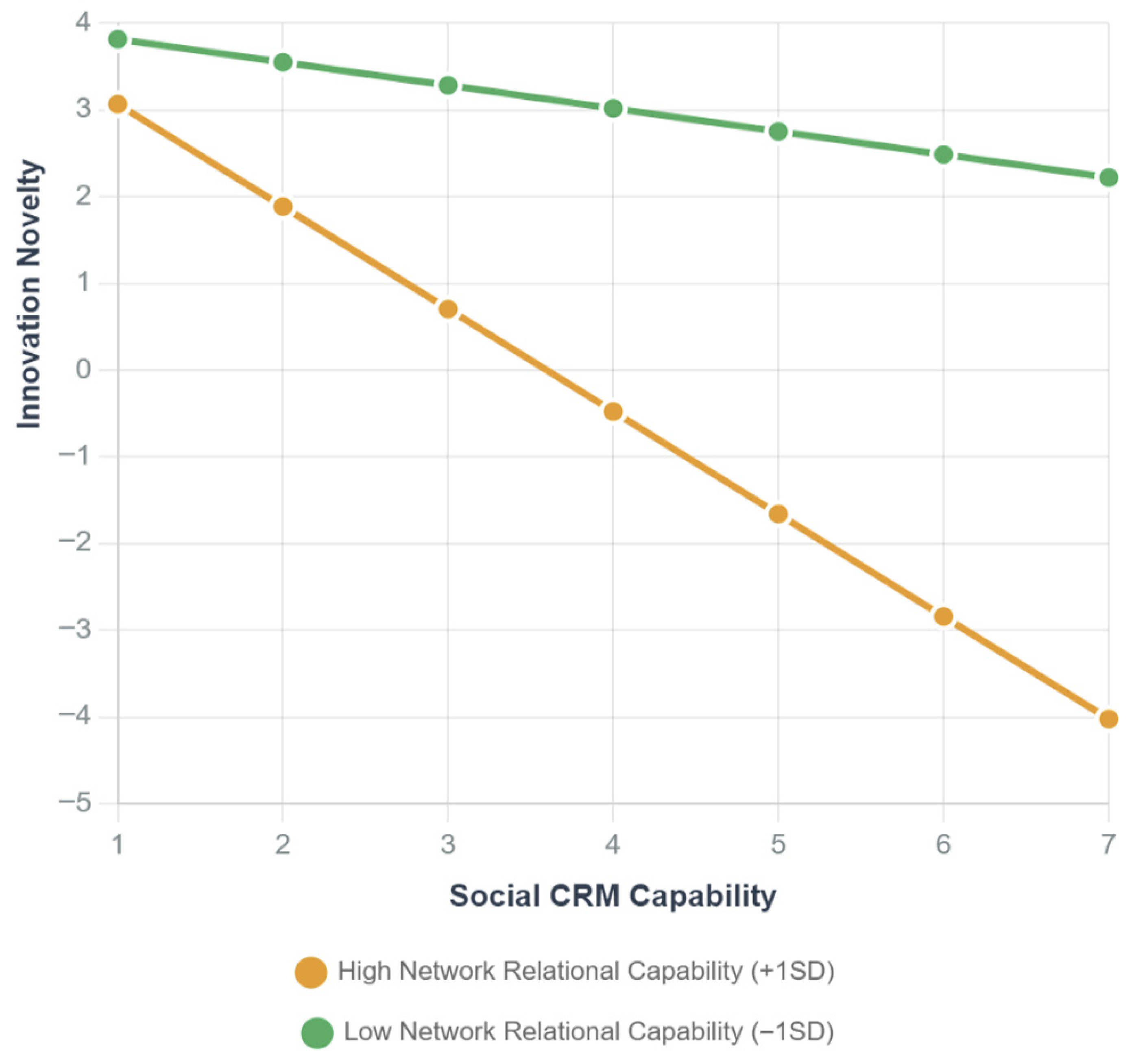
Conversely, and consistent with Hypothesis 3, network relational capability negatively moderated the social CRM-innovation relationship (β = −0.229, p < 0.01). This negative interaction effect is depicted in Figure 2, which illustrates that the positive association between social CRM capabilities and innovation novelty is significantly attenuated when network relational capability is high, while the effect remains robust when network relational capability is low. These results are consistent with the hypothesis that strong relational ties may attenuate the innovation returns from social CRM, although the cross-sectional design of this study precludes causal inference. Organizations with high network relational capability may find the innovation benefits of social CRM to be more limited, a pattern that warrants further investigation under longitudinal designs before stronger conclusions are drawn.
The final model (Model 4) accounts for 52.2% of the variance in innovation novelty (R2 = 0.522, adjusted R2 = 0.497), demonstrating meaningful predictive validity. Collectively, these empirical results provide support for the proposed theoretical framework, with all three hypotheses receiving empirical confirmation. The findings yield important insights into the contingent nature of digital capability deployment in social enterprises, particularly highlighting the paradoxical effects of different network capabilities on innovative outcomes. These results contribute to a more nuanced understanding of how network embeddedness can both enhance and constrain the innovation potential of digital capabilities in hybrid organizational contexts.

5. Discussions

5.1. Theoretical Implications

This study provides three distinctive theoretical contributions that advance understanding of how social enterprises utilize dynamic capabilities and network structures to enhance innovative outcomes in hybrid organizational contexts.
First, this research extends dynamic capability theory [10] by showing how social CRM capabilities may function as a form of dynamic capability that supports innovation in social enterprises. As conceptualized in the theoretical framework (Section 2.1), social CRM capability provides a mechanism through which social enterprises sense stakeholder needs, seize opportunities for collaboration, and reconfigure existing relationships and information resources. The significant direct effect of social CRM capability on innovation novelty (β = 0.343, p < 0.001) is consistent with this theoretical positioning and suggests that DCT may extend to hybrid organizations operating under resource constraints and institutional pressures. This finding extends Teece’s [67] sensing–seizing–transforming framework by showing how social enterprises can leverage digital engagement platforms as dynamic capabilities to overcome resource limitations and create innovative business models despite their dual-mission constraints.
Second, this study advances NT by reconceptualizing the network paradox beyond the structural holes versus network closure debate. Prior research has typically examined these two perspectives as competing theoretical positions tested in separate empirical contexts [26,35,68]. The present study, however, treats them not as rival hypotheses but as simultaneously operative boundary conditions that differentially shape whether and how digital capabilities convert into innovation. This is a conceptually distinct contribution: rather than asking which network structure is superior, we ask how each type of network capability conditions the innovation-generating process of a specific digital capability within the same organizational population. The positive moderating effect of network structural capability (β = 0.162, p < 0.05) and the negative moderating effect of network relational capability (β = −0.229, p < 0.01) are observed simultaneously in the same sample and model, providing evidence that structural holes logic and network closure logic are not mutually exclusive but operate through different mechanisms on the same outcome variable [15,26] and relational capabilities that emphasize the quality of direct ties [27]. The study’s contribution lies not in confirming that structural positions facilitate and relational embeddedness constrains innovation—this has been shown in general network contexts—but in demonstrating that these effects are conditioned on the presence of social CRM capability as the focal predictor. Prior studies examining structural holes or closure effects have predominantly treated network position as a direct antecedent of innovation. By positioning network capabilities as moderators of a digital capability’s innovation effect, this research identifies a previously underexplored interaction: the value realized from social CRM is contingent on how an organization’s network is configured, not merely on the capability itself [27]. While previous research has typically examined these capabilities in isolation, the findings reveal that they moderate the relationship between dynamic capabilities and innovation in opposing ways. The positive moderating effect of network structural capability (β = 0.162, p < 0.05) aligns with structural holes theory, demonstrating that brokerage positions enhance a firm’s ability to recombine diverse information and resources accessed through social CRM. Conversely, the negative moderating effect of network relational capability (β = −0.229, p < 0.01) supports the “overembeddedness” perspective [35,36], showing that excessive relational depth can constrain the innovative utilization of digital capabilities.
This paradoxical pattern also carries theoretical implications beyond the Korean context. The negative moderating role of relational capability is consistent with the overembeddedness perspective [35,36], yet its particular strength in this sample is likely amplified by institutional factors specific to government-dependent social enterprise ecosystems. When organizations are embedded in dense relational ties with governmental funders and certifying bodies, the social CRM-derived signals that would otherwise inform novel solutions are filtered through relational norms favoring compliance and legitimacy maintenance over exploratory recombination. This mechanism extends the overembeddedness argument by specifying an institutional boundary condition: relational capability constrains social CRM-driven innovation more strongly when those relational ties are embedded in high-dependency institutional environments. Future research in other national contexts with varying degrees of government dependency could test this boundary condition and assess the generalizability of the network paradox beyond the Korean setting [26] and network closure view [68].
This network paradox has particular theoretical significance in the context of Korea’s social enterprise ecosystem. Korea hosts one of the world’s most developed social enterprise ecosystems, with over 3400 government-certified social enterprises as of 2024 [11]. The fact that B2G (Business-to-Government) relationships account for 39.8% of the sample reflects the strong government dependency characteristic of Korean social enterprises. In this context, the positive moderating effect of network structural capability suggests that brokerage positions spanning boundaries between government, private businesses, and civil society may facilitate access to diverse information relevant for innovation. Conversely, the negative moderating effect of relational embeddedness may be partly explained by the isomorphic tendencies associated with government-dependent development paths of Korean social enterprises, as noted by Park and Wilding [40] and Bidet and Eum [39]. These patterns may offer relevant insights for other countries with similarly government-dependent social enterprise ecosystems, though their generalizability requires cross-national empirical verification.
Third, this study contributes to the integration of DCT and NT by demonstrating that the effectiveness of dynamic capabilities is not intrinsic but is shaped by the organization’s network configuration. As theorized in Section 2.2.1 and Section 2.2.2, network capabilities act as boundary conditions on the sensing–seizing–transforming process through which social CRM generates innovation. Specifically, structural capability amplifies the seizing stage by expanding access to non-redundant knowledge across network boundaries, while relational capability may constrain the transforming stage by reinforcing existing norms that limit recombination. This finding extends Teece’s [67] framework by situating dynamic capability deployment within a relational context: whether an organization can convert its sensing capacity (social CRM) into innovative outcomes depends on the structural properties of the network through which it operates. For social enterprises navigating institutionally complex environments, this integration implies that capability development and network strategy must be co-designed rather than treated as independent levers. Teece [67] a further contribution concerns the relationship between the conceptual framework and the empirical model. The conceptual model (Figure 3) presents social CRM capability, network structural capability (NSC), and network relational capability (NRC) as distinct constructs influencing innovation novelty. The empirical model extends this by incorporating interaction terms (social CRM × NSC; social CRM × NRC), which were theorized but not visually depicted in the conceptual framework. This discrepancy reflects a deliberate theoretical choice: the interaction effects are grounded in the moderation logic elaborated in Section 2.2.1 and Section 2.2.2, rather than in a misalignment between theory and measurement. The empirical results confirm that this extension is warranted, as both interaction terms yield significant coefficients in the predicted directions, suggesting that the conceptual model captures the direct structural relationships while the full empirical model reveals the conditional nature of those relationships. Future studies could incorporate these interactions explicitly into conceptual diagrams to improve transparency between theoretical framing and empirical specification.
The findings also contribute to the emerging literature on digital transformation in social enterprises by revealing the complex interplay between digital capabilities, network structure, and innovation. Unlike conventional approaches that treat digital transformation as primarily a technological endeavor, this research highlights its fundamentally relational nature. The network paradox identified suggests that digital capabilities like social CRM require careful orchestration with network strategies to maximize innovation potential. This extends recent work by Satar et al. [46], who found that digital capabilities influence innovation through entrepreneurial orientation, by demonstrating that network configuration represents another critical contingency that shapes digital capability deployment.

5.2. Practical Implications

The findings offer several practical insights for social enterprise managers and policymakers. First, social enterprise leaders may consider developing “strategic social CRM development” that systematically builds capabilities across the five key dimensions identified: stakeholder dialogue establishment, product/service trial encouragement, long-term needs fulfillment, loyalty maintenance, and relationship quality enhancement. Given recent evidence that digital capabilities influence social innovation performance through entrepreneurial orientation mediation, organizations should invest in integrating social media platforms with traditional CRM systems while developing organizational processes that support continuous stakeholder engagement and collaborative innovation. These investments should be differentiated according to organizational digital maturity. As seen in Table 1, 54% of the sample comprises small organizations with fewer than 10 employees, who should first focus on establishing basic social media engagement platforms. In contrast, larger organizations with more than 50 employees (7.5%) and revenues exceeding 500 million won (54.7%) should invest in integrated social CRM systems and data analytics capabilities to systematically leverage stakeholder insights.
Second, managers should implement “network portfolio optimization” strategies that deliberately balance structural and relational capabilities. The interaction graphs in Figure 1 and Figure 2 provide clear guidance for maximizing the innovation benefits of social CRM capabilities. Specifically, social enterprises seeking innovation novelty should prioritize network structural capability over relational capability. This means actively developing brokerage positions spanning different stakeholder groups, sectors, and institutional domains, while simultaneously maintaining core relationships with key partners without becoming overly embedded. Practically, social enterprises should track network diversity metrics (e.g., number of partner types, cross-sector connections) and particularly those currently skewed toward B2G relationships (39.8% of the sample) should diversify their portfolio to include private sector and civil society connections. However, completely abandoning strong relational ties is not advised; given that the main effect of relational capability remains positive (β = 0.195, p < 0.05) in Table 4, a balanced approach is necessary.
Third, policymakers may consider redesigning support frameworks to promote network diversity rather than traditional clustering approaches. Specific instruments could include: (1) financial incentives for cross-sector partnerships (e.g., additional funding when social enterprises collaborate with private companies or academic institutions), (2) social CRM capability development programs (including technological infrastructure, data analytics training, and digital engagement strategies), and (3) integration of network diversity assessment metrics into certification and evaluation processes. These policies are particularly important in the Korean context, where the social enterprise ecosystem is highly institutionalized. Governments should redesign support structures to promote innovation while balancing stakeholder heterogeneity and collaboration [69]. Government initiatives should facilitate connections between social enterprises and organizations from different sectors, geographic regions, and institutional domains, and explicitly reward social enterprises demonstrating diverse partnership portfolios and innovative boundary-spanning activities.

5.3. Limitations and Future Research Directions

Three methodological limitations suggest critical future research directions. First, the cross-sectional design prevents examination of causal relationships and the dynamic evolution of digital capabilities and network configurations during digital transformation cycles. Future research should employ longitudinal panel designs to track how social CRM capabilities co-evolve with network positions, particularly examining threshold effects where network benefits transition to network constraints and identifying optimal timing for network strategy adjustments.
Second, the Korean institutional context may limit generalizability to other social enterprise ecosystems. Korea’s unique characteristics—including strong government support, high digital infrastructure, and the predominance of B2G relationships—create conditions that may not exist elsewhere. Recent global research suggests significant variation in social enterprise models and digital transformation approaches across different institutional contexts [11]. Future research should examine these relationships across different institutional contexts, particularly comparing government-led versus market-driven social enterprise development models to assess boundary conditions of the theoretical framework.
Third, this study focuses on innovation novelty without examining implementation success, sustainability outcomes, or social impact effectiveness. Future research should explore moderated mediation models that investigate how network capabilities influence the mechanisms mediating the relationship between social CRM and innovation outcomes (e.g., knowledge absorption capacity, multi-stakeholder collaboration). This would provide a deeper understanding of how the network paradox operates and offer more nuanced intervention strategies for social enterprises to deploy digital capabilities more effectively.

6. Conclusions

This study provides evidence that social enterprises face trade-offs in network management when deploying digital capabilities for innovation. Testing three key hypotheses, the results indicate that social CRM capability has a direct positive effect on innovation novelty (β = 0.343, p < 0.001), network structural capability strengthens this relationship (β = 0.162, p < 0.05), while network relational capability weakens it (β = −0.229, p < 0.01). This “network paradox” provides empirical evidence that reconciles the structural holes versus network closure debate by showing both mechanisms operate simultaneously within the same organizational context.
These findings make important theoretical contributions to both network theory and digital transformation research. For network theory, the study extends existing theoretical perspectives by demonstrating that network structural and relational capabilities, while both valuable independently, play differentiated roles when interacting with digital capabilities. In the digital transformation literature, the research highlights that successful deployment of digital capabilities depends not merely on technology adoption or capability development, but on strategic alignment with the organization’s network configuration. This is clearly evident in the complex interactions depicted in the research framework (Figure 3).
Practically, the findings offer concrete strategic guidance for social enterprise managers. Organizations should systematically develop social CRM capabilities across five dimensions: stakeholder dialogue, trial encouragement, needs fulfillment, loyalty maintenance, and relationship enhancement. However, the network paradox suggests that capability development alone is insufficient. Social enterprises must strategically balance structural brokerage positions with relational investments, prioritizing diverse partnerships that span institutional boundaries while avoiding excessive embeddedness in cohesive networks that may limit innovation flexibility. For Korean social enterprises specifically, the high proportion of B2G relationships (39.8%) may create relational constraints on innovation potential. Organizations operating primarily within government networks should consider diversifying their partnership portfolios to include private sector and civil society connections, though such diversification must be balanced against the institutional support and legitimacy that government relationships provide.
These findings suggest that the network paradox need not be viewed solely as a constraint. Rather, organizations that develop awareness of how structural and relational network positions interact with their digital capabilities may be better positioned to make informed trade-offs between brokerage and embeddedness in pursuit of innovation.
In sum, this study contributes to the literature on hybrid organization management by suggesting that digital transformation outcomes may depend not only on technological capabilities but also on how organizations position themselves within their interorganizational networks. As social enterprises increasingly rely on digital technologies for stakeholder engagement, greater awareness of the conditions under which digital capabilities translate into innovation outcomes may support more informed decisions about capability development and network strategy.

Author Contributions

Conceptualization, S.H. and K.-h.U.; methodology, S.H. and K.-h.U.; validation, K.-h.U.; formal analysis, S.H.; investigation, S.H.; resources, S.H.; data curation, S.H.; writing—original draft preparation, S.H. and K.-h.U.; writing—review and editing, S.H.; visualization, S.H.; supervision, K.-h.U. All authors have read and agreed to the published version of the manuscript.

Funding

This research received no external funding.

Institutional Review Board Statement

Not applicable. This study conducted a survey targeting organizations (firms) and did not involve individual human subjects research.

Informed Consent Statement

Not applicable.

Data Availability Statement

The data presented in this study are available on request from the corresponding author.

Conflicts of Interest

The authors declare no conflicts of interest.

References

  1. Phillips, W.; Lee, H.; Ghobadian, A.; O’Regan, N.; James, P. Social innovation and social entrepreneurship: A systematic review. Group Organ. Manag. 2015, 40, 428–461. [Google Scholar] [CrossRef]
  2. Austin, J.; Stevenson, H.; Wei-Skillern, J. Social and commercial entrepreneurship: Same, different, or both? Rev. Adm. 2012, 47, 370–384. [Google Scholar] [CrossRef]
  3. World Economic Forum. The Future of Jobs Report: Employment, Skills and Workforce Strategy for the Fourth Industrial Revolution; World Economic Forum: Geneva, Switzerland, 2016. [Google Scholar]
  4. Foss, N.J.; Saebi, T. Fifteen years of research on business model innovation: How far have we come, and where should we go? J. Manag. 2017, 43, 200–227. [Google Scholar] [CrossRef]
  5. Busch, C.; Barkema, H. From necessity to opportunity: Scaling bricolage across resource-constrained environments. Strateg. Manag. J. 2021, 42, 741–773. [Google Scholar] [CrossRef]
  6. Phillips, W.; Alexander, E.A.; Lee, H. Going it alone won’t work! The relational imperative for social innovation in social enterprises. J. Bus. Ethics 2019, 156, 315–331. [Google Scholar] [CrossRef]
  7. Choudhury, M.M.; Harrigan, P. CRM to social CRM: The integration of new technologies into customer relationship management. J. Strateg. Mark. 2014, 22, 149–176. [Google Scholar] [CrossRef]
  8. Trainor, K.J.; Andzulis, J.M.; Rapp, A.; Agnihotri, R. Social media technology usage and customer relationship performance: A capabilities-based examination of social CRM. J. Bus. Res. 2014, 67, 1201–1208. [Google Scholar] [CrossRef]
  9. Jayawardhana, K.; Fernando, I.; Siyambalapitiya, J. Sustainability in social enterprise research: A systematic literature review. SAGE Open 2022, 12, 21582440221123200. [Google Scholar] [CrossRef]
  10. Teece, D.J.; Pisano, G.; Shuen, A. Dynamic capabilities and strategic management. Strateg. Manag. J. 1997, 18, 509–533. [Google Scholar] [CrossRef]
  11. Dutta, S.; Lanvin, B.; León, L.R.; Wunsch-Vincent, S. Global Innovation Index 2024: Unlocking the Promise of Social Entrepreneurship; WIPO: Geneva, Switzerland, 2024. [Google Scholar]
  12. Claassen, C.H.; Bidet, E.; Kim, J. South Korean social enterprises and their networks: On their organizational linkages at the interstice between the third, public, and corporate sectors. Ann. Public Coop. Econ. 2023, 94, 365–397. [Google Scholar] [CrossRef]
  13. Pittaway, L.; Robertson, M.; Munir, K.; Denyer, D.; Neely, A. Networking and innovation: A systematic review of the evidence. Int. J. Manag. Rev. 2004, 5–6, 137–168. [Google Scholar] [CrossRef]
  14. Borgatti, S.P.; Halgin, D.S. On network theory. Organ. Sci. 2011, 22, 1168–1181. [Google Scholar] [CrossRef]
  15. Gulati, R. Alliances and networks. Strateg. Manag. J. 1998, 19, 293–317. [Google Scholar] [CrossRef]
  16. Dhanaraj, C.; Parkhe, A. Orchestrating innovation networks. Acad. Manag. Rev. 2006, 31, 659–669. [Google Scholar] [CrossRef]
  17. Walter, A.; Auer, M.; Ritter, T. The impact of network capabilities and entrepreneurial orientation on university spin-off performance. J. Bus. Ventur. 2006, 21, 541–567. [Google Scholar] [CrossRef]
  18. Greenberg, P. The impact of CRM 2.0 on customer insight. J. Bus. Ind. Mark. 2010, 25, 410–419. [Google Scholar] [CrossRef]
  19. Kim, H.G.; Wang, Z. Defining and measuring social customer-relationship management (CRM) capabilities. J. Mark. Anal. 2019, 7, 40–50. [Google Scholar] [CrossRef]
  20. Smith, T.P.; Bottke, T.; Dost, G.; Kearns-Manolatos, D. Unleashing value from digital transformation: Paths and pitfalls. Deloitte Insights Mag. 2023, 31, 68–77. [Google Scholar]
  21. Doherty, B.; Haugh, H.; Lyon, F. Social enterprises as hybrid organizations: A review and research agenda. Int. J. Manag. Rev. 2014, 16, 417–436. [Google Scholar] [CrossRef]
  22. Battilana, J.; Lee, M. Advancing research on hybrid organizing—Insights from the study of social enterprises. Acad. Manag. Ann. 2014, 8, 397–441. [Google Scholar] [CrossRef]
  23. Dyer, J.H.; Singh, H. The relational view: Cooperative strategy and sources of interorganizational competitive advantage. Acad. Manag. Rev. 1998, 23, 660–679. [Google Scholar] [CrossRef]
  24. Gulati, R. Network location and learning: The influence of network resources and firm capabilities on alliance formation. Strateg. Manag. J. 1999, 20, 397–420. [Google Scholar] [CrossRef]
  25. Austin, J.E.; Seitanidi, M.M. Collaborative value creation: A review of partnering between nonprofits and businesses: Part I. Value creation spectrum and collaboration stages. Nonprofit Volunt. Sect. Q. 2012, 41, 726–758. [Google Scholar] [CrossRef]
  26. Burt, R.S. The social structure of competition. In Networks in the Knowledge Economy; Cross, R., Parker, A., Sasson, L., Eds.; Oxford University Press: New York, NY, USA, 2003; pp. 57–91. [Google Scholar]
  27. Lorenzoni, G.; Lipparini, A. The leveraging of interfirm relationships as a distinctive organizational capability: A longitudinal study. Strateg. Manag. J. 1999, 20, 317–338. [Google Scholar] [CrossRef]
  28. Ritter, T. The networking company: Antecedents for coping with relationships and networks effectively. Ind. Mark. Manag. 1999, 28, 467–479. [Google Scholar] [CrossRef]
  29. Gilsing, V.; Nooteboom, B. Density and strength of ties in innovation networks: An analysis of multimedia and biotechnology. Eur. Manag. Rev. 2005, 2, 179–197. [Google Scholar] [CrossRef]
  30. Di Domenico, M.; Haugh, H.; Tracey, P. Social bricolage: Theorizing social value creation in social enterprises. Entrep. Theory Pract. 2010, 34, 681–703. [Google Scholar] [CrossRef]
  31. Cohen, J.; Cohen, P.; West, S.G.; Aiken, L.S. Applied Multiple Regression/Correlation Analysis for the Behavioral Sciences, 3rd ed.; Routledge: New York, NY, USA, 2013. [Google Scholar]
  32. Ooi, S.K.; Lee, C.H.; Amran, A. Assessing the influence of social capital and innovations on environmental performance of manufacturing SMEs. Corp. Soc. Responsib. Environ. Manag. 2023, 30, 3242–3254. [Google Scholar] [CrossRef]
  33. Reagans, R.; McEvily, B. Network structure and knowledge transfer: The effects of cohesion and range. Adm. Sci. Q. 2003, 48, 240–267. [Google Scholar] [CrossRef]
  34. Uzzi, B. Social structure and competition in interfirm networks: The paradox of embeddedness. In The Sociology of Economic Life, 3rd ed.; Granovetter, M., Swedberg, R., Eds.; Routledge: New York, NY, USA, 2018; pp. 213–241. [Google Scholar]
  35. Gargiulo, M.; Benassi, M. Trapped in your own net? Network cohesion, structural holes, and the adaptation of social capital. Organ. Sci. 2000, 11, 183–196. [Google Scholar] [CrossRef]
  36. Uzzi, B. Social structure and competition in interfirm networks. Adm. Sci. Q. 1997, 42, 37–69. [Google Scholar]
  37. Lyu, T.; Guo, Y.; Chen, H.; Lin, H.; Yu, D. Network insight and entrepreneurial performance of new ventures: Understanding the roles of resource integration and dynamic management capability. Entrep. Res. J. 2024, 14, 1193–1221. [Google Scholar] [CrossRef]
  38. Pache, A.-C.; Santos, F. Inside the hybrid organization: Selective coupling as a response to competing institutional logics. Acad. Manag. J. 2013, 56, 972–1001. [Google Scholar] [CrossRef]
  39. Bidet, E.; Eum, H.S. Social enterprise in South Korea: History and diversity. Soc. Enterp. J. 2011, 7, 69–85. [Google Scholar] [CrossRef]
  40. Park, C.; Wilding, M. Social enterprise policy design: Constructing social enterprise in the UK and Korea. Int. J. Soc. Welf. 2013, 22, 236–247. [Google Scholar] [CrossRef]
  41. Kumar, N.; Stern, L.W.; Anderson, J.C. Conducting interorganizational research using key informants. Acad. Manag. J. 1993, 36, 1633–1651. [Google Scholar] [CrossRef]
  42. Phillips, L.W. Assessing measurement error in key informant reports: A methodological note on organizational analysis in marketing. J. Mark. Res. 1981, 18, 395–415. [Google Scholar] [CrossRef]
  43. Brislin, R.W. Translation and content analysis of oral and written materials. In Handbook of Cross-Cultural Psychology: Methodology; Triandis, H.C., Berry, J.W., Eds.; Allyn and Bacon: Boston, MA, USA, 1980; Volume 2, pp. 389–444. [Google Scholar]
  44. Dillman, D.A.; Smyth, J.D.; Christian, L.M. Internet, Phone, Mail, and Mixed-Mode Surveys: The Tailored Design Method, 4th ed.; John Wiley & Sons: Hoboken, NJ, USA, 2014. [Google Scholar]
  45. Nasiri, M.; Saunila, M.; Ukko, J.; Rantala, T.; Rantanen, H. Shaping digital innovation via digital-related capabilities. Inf. Syst. Front. 2023, 25, 1063–1080. [Google Scholar] [CrossRef]
  46. Satar, M.S.; Alharthi, S.; Alarifi, G.; Omeish, F. Does digital capabilities foster social innovation performance in social enterprises? Mediation by firm-level entrepreneurial orientation. Sustainability 2024, 16, 2464. [Google Scholar] [CrossRef]
  47. Netemeyer, R.G.; Bearden, W.O.; Sharma, S. Scaling Procedures: Issues and Applications; Sage Publications: Thousand Oaks, CA, USA, 2003. [Google Scholar]
  48. Luo, Z.; Guo, J.; Benitez, J.; Scaringella, L.; Lin, J. How do organizations leverage social media to enhance marketing performance? Unveiling the power of social CRM capability and guanxi. Decis. Support Syst. 2024, 178, 114123. [Google Scholar] [CrossRef]
  49. Fang, G.; Ma, X.; Ren, L.; Zhou, Q. Antecedents of network capability and their effects on innovation performance: An empirical test of hi-tech firms in China. Creat. Innov. Manag. 2014, 23, 436–452. [Google Scholar] [CrossRef]
  50. Hair, J.; Black, W.; Babin, B.; Anderson, R. Multivariate Data Analysis, 7th ed.; Pearson Education International: Upper Saddle River, NJ, USA, 2010. [Google Scholar]
  51. Armstrong, J.S.; Overton, T.S. Estimating nonresponse bias in mail surveys. J. Mark. Res. 1977, 14, 396–402. [Google Scholar] [CrossRef]
  52. Podsakoff, P.M.; MacKenzie, S.B.; Lee, J.-Y.; Podsakoff, N.P. Common method biases in behavioral research: A critical review of the literature and recommended remedies. J. Appl. Psychol. 2003, 88, 879–903. [Google Scholar] [CrossRef] [PubMed]
  53. Lindell, M.K.; Whitney, D.J. Accounting for common method variance in cross-sectional research designs. J. Appl. Psychol. 2001, 86, 114–121. [Google Scholar] [CrossRef] [PubMed]
  54. Richardson, H.A.; Simmering, M.J.; Sturman, M.C. A tale of three perspectives: Examining post hoc statistical techniques for detection and correction of common method variance. Organ. Res. Methods 2009, 12, 762–800. [Google Scholar] [CrossRef]
  55. Chang, S.-J.; Van Witteloostuijn, A.; Eden, L. Common method variance in international business research. In Research Methods in International Business; Peng, M.W., Van Witteloostuijn, A., Eds.; Springer: Cham, Switzerland, 2019; pp. 385–398. [Google Scholar]
  56. MacKenzie, S.B.; Podsakoff, P.M. Common method bias in marketing: Causes, mechanisms, and procedural remedies. J. Retail. 2012, 88, 542–555. [Google Scholar] [CrossRef]
  57. Anderson, J.C.; Gerbing, D.W. Structural equation modeling in practice: A review and recommended two-step approach. Psychol. Bull. 1988, 103, 411–423. [Google Scholar] [CrossRef]
  58. Hu, L.; Bentler, P.M. Cutoff criteria for fit indexes in covariance structure analysis: Conventional criteria versus new alternatives. Struct. Equ. Model. 1999, 6, 1–55. [Google Scholar] [CrossRef]
  59. Kline, R.B. Principles and Practice of Structural Equation Modeling, 4th ed.; Guilford Publications: New York, NY, USA, 2023. [Google Scholar]
  60. Bagozzi, R.P.; Yi, Y. On the evaluation of structural equation models. J. Acad. Mark. Sci. 1988, 16, 74–94. [Google Scholar] [CrossRef]
  61. Nunnally, J.C.; Bernstein, I.H. Psychometric Theory, 3rd ed.; McGraw-Hill: New York, NY, USA, 1994. [Google Scholar]
  62. Fornell, C.; Larcker, D.F. Evaluating structural equation models with unobservable variables and measurement error. J. Mark. Res. 1981, 18, 39–50. [Google Scholar] [CrossRef]
  63. Hancock, G.R.; Mueller, R.O. Rethinking construct reliability within latent variable systems. In Structural equation modeling: Present and future—A Festschrift in honor of Karl Joreskog; Scientific Software International: Skokie, IL, USA, 2001; pp. 195–216. [Google Scholar]
  64. Aiken, L.S.; West, S.G.; Reno, R.R. Multiple Regression: Testing and Interpreting Interactions; Sage: Newbury Park, CA, USA, 1991. [Google Scholar]
  65. O’Brien, R.M. A caution regarding rules of thumb for variance inflation factors. Qual. Quant. 2007, 41, 673–690. [Google Scholar] [CrossRef]
  66. Field, A. Discovering Statistics Using IBM SPSS Statistics, 6th ed.; Sage Publications: London, UK, 2024. [Google Scholar]
  67. Teece, D.J. Explicating dynamic capabilities: The nature and microfoundations of (sustainable) enterprise performance. Strateg. Manag. J. 2007, 28, 1319–1350. [Google Scholar] [CrossRef]
  68. Coleman, J.S. Social capital in the creation of human capital. Am. J. Sociol. 1988, 94, S95–S120. [Google Scholar] [CrossRef]
  69. Boto̧a-Avram, C.; Tiron-Tudor, A. Women on corporate boards and sustainability reporting: A proposed integrated framework of determinants and impacts. Corp. Soc. Responsib. Environ. Manag. 2025, 32, 7180–7212. [Google Scholar] [CrossRef]
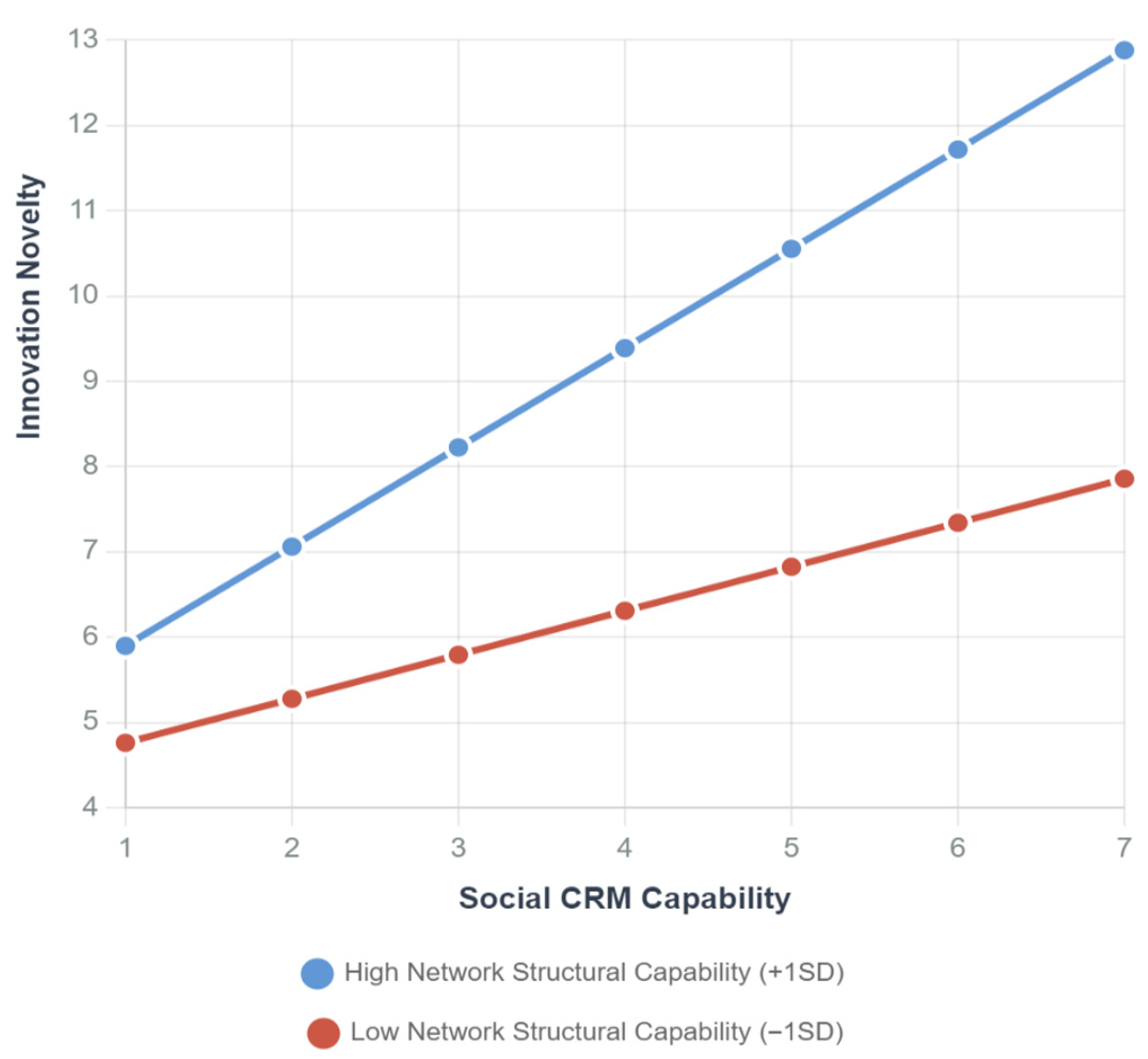
Figure 1. The moderating effect of Network Structural Capability. Source(s): Authors’ work.
Sustainability 18 04063 g001
Figure 2. The moderating effect of Network Relational Capability. Source(s): Authors’ work.
Sustainability 18 04063 g002
Figure 3. Research Framework. illustrates the conceptual model. Source(s): Authors’ work.
Sustainability 18 04063 g003
Table 1. The sample demographics (N = 161).
NPercentage (%)
Type of social economy organization161
  Social Enterprise13785.1
  Community Business42.5
  Cooperative Enterprise159.3
  Self-sufficiency Enterprise0-
  others53.1
Major client groups161
  B to C4024.8
  B to B4729.2
  B to G6439.8
  others106.2
Respondent titles161
  Chief executive officer7445
  Director3119.9
  Manager5635.1
Sector161
  Manufacturing8955.3
  Service7244.8
Working years161
  <163.7
  1–3291.8
  3–52817.4
  5–105634.8
  >104226.1
Number of employees161
  Sole proprietorship74.3
  <108754
  10–304628.6
  30–5095.6
  >50127.5
Revenue161
  <50,000,000 (won)138.1
  50,000,000–100,000,00085
  100,000,000–300,000,0002414.9
  300,000,000–500,000,0002817.4
  >500,000,0008854.7
Return on Sales (ROS)161
  <10%6641
  10–306942.9
  30–502213.7
  50–10042.5
Source(s): Authors’ work.
Table 2. Measurement Items.
Constructs and InstrumentsStandardized
Factor Loadings
Social CRM Capability [48]
1: Our company routinely uses social media to establish a “dialogue” with target customers 0.890
2: Our company gets target customers to try our products/services on a consistent basis via social media 0.936
3: Our company focuses on meeting customers’ long term needs to ensure repeat business via social media 0.896
4: Our company systematically uses social media to maintain loyalty among attractive customers 0.958
5: Our company routinely uses social media to enhance the quality of relationships with attractive customer0.977
Network Structural Capability [49]
1: We have a strong ability to find, evaluate and select appropriate partners0.761
2: We have a strong ability to maintain and possess a larger number of partners compared to our competitors0.769
3: We have a strong ability to establish diversified network partnerships (e.g., with universities, research institutes, software companies, important supplier or customers)0.833
4: We have a strong ability to create and achieve high density networks with our partners (i.e., a large number of structurally equivalent peers, e.g., dyads vs. triads)0.930
5: We have a high percentage of established partnerships for all potential partners0.912
Network Relational Capability [49]
1. We have a strong ability to develop and foster mutual trust, support, shared profits, rewards and risks with our partners0.794
2. Our interaction with main partners is able to keep deep and close relationship0.817
3. We have a strong ability to maintain a long-term partnership with our network partners0.861
4. We are able to work out constructive solutions when there are conflicts with our innovation partners0.905
5: Our collaborative relationships with our main partners are able to last for a long time0.952
6. We have a strong ability to establish common norms along with a shared value system with our main partners0.935
7: The way of interaction with our partners is easily acceptable by them0.836
Innovation(novelty)
1: The business model offers new combinations of products, services, and information.0.821
2: Incentives offered to participants in transactions are novel.0.825
3: The business model links participants to transactions in novel ways.0.816
4: The business model creates new sources of revenues.0.867
5: The business model adopts new ideas and methods to conduct business.0.923
6: The business model adopts new operational processes, routines, and norms to conduct business.0.926
7: Overall, the company’s business model is novel.0.904
Overall Fit: χ2 = 478.252; df = 242; χ2/df = 1.976; CFI = 0.949; TLI = 0.942; IFI = 0.949; RMSEA = 0.078. Note: Items with standardized factor loadings below 0.70 were removed during CFA purification (NSC item 2; NRC items 2 and 3). Retained items are renumbered sequentially.
Source(s): Authors’ work.
Table 3. Correlation Analysis, Convergent and Discriminant Validity and Construct Reliability.
ConstructsCRAVEMSVCronbach’s αMaxR (H)Social CRMNSCNRCInnovation
Novelty
Social CRM0.9660.8520.3270.9650.9680.923
NSC0.9320.6970.5980.9300.9330.247 **0.835
NRC0.9640.7740.5980.9620.9660.187 *0.773 ***0.880
Innovation novelty0.9590.7380.4330.9570.9600.327 ***0.658 ***0.589 ***0.859
Source(s): Authors’ work. Note(s): 1. Significance levels: *** p < 0.001, ** p < 0.01, * p < 0.05; 2. CR = Composite Reliability, AVE = Average Variance Extracted, MSV = Maximum Shared Variance, MaxR(H) = Maximum Reliability (Hancock & Mueller, 2001) [63]; 3. Diagonal elements (in bold) represent the square root of AVE; off-diagonal elements represent correlations between constructs; 4. All reliability criteria are satisfied: CR > 0.70, Cronbach’s α > 0.70, and MaxR(H) > CR, indicating good construct reliability; 5. Convergent validity is established: All AVE values > 0.50; 6. Discriminant validity is confirmed using the Fornell-Larcker criterion: √AVE > inter-construct correlations for all constructs, and all MSV < AVE; 7. Maximum inter-construct correlation = 0.773, below the multicollinearity threshold of 0.85.
Table 4. Hierarchical Regression Analysis.
Innovation Novelty
ConstructsModel 1Model 2Model 3Model 4
Control VariablesβVIFβVIFβVIFβVIF
Period0.0121.117−0.0521.153−0.0941.190−0.0871.193
Number of employees−0.0791.134−0.0351.151−0.0941.161−0.0901.163
Sales0.0831.1750.0801.1750.0261.1870.0291.187
Predictor
Social CRM Capability 0.343 ***1.0420.184 **1.1110.185 **1.127
Moderators
Network Structural Capability 0.447 ***2.6960.479 ***2.853
Network Relational Capability 0.236 **2.6780.195 *2.782
Interaction Effects
Social CRM Capability
×
Network Structural Capability
0.162 *3.308
Social CRM Capability
×
Network Relational Capability
−0.229 **2.984
R20.0090.1220.5040.522
Adjusted R2−0.0100.0990.4850.497
F Change0.48820.02359.3572.886
Sig. F Change0.6910.0000.0000.059
Source(s): Authors’ work. Note(s): 1. *** p < 0.001, ** p < 0.01, * p < 0.05. 2. β = Standardized Regression Coefficient, VIF = Variance Inflation Factor. 3. NSC = Network Structural Capability, NRC = Network Relational Capability. 4. Durbin-Watson statistic tests for autocorrelation (acceptable range: 1.5–2.5). 5. All VIF values < 5.0, indicating no serious multicollinearity concerns. 6. All Cook’s Distance values < 1.0, indicating no influential outliers. 7. Condition Index values < 30, indicating acceptable multicollinearity levels.
Disclaimer/Publisher’s Note: The statements, opinions and data contained in all publications are solely those of the individual author(s) and contributor(s) and not of MDPI and/or the editor(s). MDPI and/or the editor(s) disclaim responsibility for any injury to people or property resulting from any ideas, methods, instructions or products referred to in the content.