1. Introduction
There is extensive debate regarding the financial synergies and trade-offs between sustainable business models and how firms can benefit from this transition, regardless of states’ governance interests in achieving the SDGs [
1]. However, several concerns in this direction should be highlighted.
First, firms have become increasingly aware of the SDGs that are relevant to their business model and the way they choose to implement them, as this can generate different synergies and trade-off effects [
2,
3]. So far, there is no unanimous position on how a business’s transformation towards sustainability can impact corporate financial performance [
4,
5]. In these circumstances, sustainability reporting can be established as a communication channel for effective cooperation between management and the firm’s stakeholders, strengthening management commitment and stakeholder engagement, which is essential to support firm-level efforts towards business excellence, sustainable development and organizational resilience [
6].
Second, research has led to increased awareness among managers of their central role in how sustainability reports should provide relevant and reliable ESG information, based on an adequate design of the corporate reporting system and on appropriate reasoning for the chosen materiality assessment for ESG information aggregation, considering the multiple levels of demand for ESG information on a firm level [
7]. Otherwise, conflicting demands or a high volume of ESG information could lead to higher preparation and certification costs compared with the related benefits of process-making, where stakeholders’ perceived quality of sustainability reporting would deteriorate, with an impact on the trust between management and stakeholders and thus on corporate financial performance, regardless of the corporation’s sustainability performance. Therefore, sustainability reporting could act as a moderating factor when modeling the corporate sustainability performance (CSP) and corporate financial performance (CFP) nexus [
6,
8].
Third, firms have been notified of how important it is that their management team has a clear understanding of the relationship between corporate financial reporting and corporate sustainability reporting, both from a process management perspective and a theoretical framework perspective. From the theoretical perspective, there are concerns across the literature regarding the lack of a reliable and unanimously accepted theoretical framework, which leads to potential misunderstandings in concepts, relationships and statements of work that are extremely important for the design of efficient risk management systems and frameworks, as well as for an effective internal control system over sustainability reporting [
9,
10]. From a business process management perspective, it is essential that firms understand the information workflow, how it is mapped into their information systems and how it impacts corporate financial performance when a business is transforming towards sustainable development [
11].
Fourth, due to the markets’ failure to ensure that balanced ESG information is publicly available for decision-makers [
12,
13], governments should intervene via regulatory guidelines, public policies, incentive programs or effective enforcement mechanisms to ensure this information is relevant and reliable [
10,
13]. Otherwise, both shareholders and stakeholders will be subject to low-quality signals and confusion when interpreting ESG information, with indirect negative effects on overinvestment among investors, whereas states would be affected via the input into monitoring and control activities regarding the achievement of the SDGs on a national level [
14].
All of these considerations are essential to obtain a better understanding of the role of sustainability reporting (SR) in modeling the link between corporate sustainability performance (CSP) and corporate financial performance (CFP) [
8,
15]. Thus far, corporate disclosures (including ESG disclosures) are the main source of ESG information that are publicly available; these could provide answers as to whether the financial impact is positive or negative, supporting the decision-making process. Scholars have raised awareness on the need to assess the impact of corporate sustainability transformations on corporate financial performance under these circumstances, as well as assessing the role of sustainability reporting (SR) in modeling this relationship [
6,
16]. However, the conceptual and measurement issues addressed in the literature have led to potential biases in the empirical results provided by scholars [
6], which means that the positive impact of sustainability disclosure (SR) on corporate financial performance (CFP) has not yet been confirmed. Therefore, the pressure of regulatory requirements on sustainability reporting has led to a deterioration in stakeholders’ perceptions of the reliability and relevance of the ESG information disclosed by sustainability reports, mainly due to the strategies and practices of greenwashing, especially when institutional frameworks in countries are weak or in specific industries with high ESG exposure [
14,
17,
18].
Under these circumstances, the entire ESG reporting supply chain is affected via the negative impact on both the potential of value creation generated by the transition to a sustainable business model and management motivation and incentives, which ensure a commitment to adequate sustainability reporting strategies. However, the expected improvement in stakeholder involvement in strategic orientation and firms’ reputation, risk mitigation, or innovation capacity will not be achieved if stakeholders do not pay sufficient attention to sustainability reporting information [
8,
15]. Therefore,
is the sustainability reporting (SR) disclosures a relevant channel for corporate communication that could act as a determining factor for the relationship between corporate sustainability performance (CSP) and corporate financial performance (CFP)? (R1). Based on this research question, a meta-analysis is performed to assess several value propositions.
This meta-analysis primarily provides insights into whether ESG disclosures strengthen or weaken the relationship between corporate sustainability performance and corporate financial performance, which will indicate whether more attention should be paid to the evidence-based standard setting, public policy incentive programs, or the design of effective enforcement mechanisms. Second, the meta-analysis will lead to more clarity on the role of ESG disclosures as a moderating or mediating factor in the CSP–CFP nexus, which is extremely relevant for corporate governance design concerns and stakeholder engagement topics. Third, by gathering a set of high-quality published papers, this meta-analysis produces more precise and generalizable estimates of whether SR can represent real transmission channels that may strengthen or weaken the CSP–CFP relationship. We emphasize the theoretical and practical implications of using sustainability reporting as a transmission channel to strengthen the relationship between CSP and CFP, as there is a gap in the literature regarding a lack of consistency and clarity on the theoretical foundations of ESG disclosures considering the current hegemony phenomenon in standard-setting for ESG reporting.
The articles included in this analysis are limited to those published only in high-quality accounting journals, to determine if there is any bias in these journals. For this purpose, a list of high-quality accounting journals was prepared based on different ranking platforms. The main objective of this paper is to assess the impact of sustainability reporting on the relationship between corporate financial performance and corporate sustainability reporting, limited to studies that have analyzed all ESG pillars at once. This will provide a better overall picture for a cost–benefit analysis of this relationship. Overall, we found that insufficient attention has been paid to assessing the relationship between SR and CFP. Most prior similar studies have identified a positive effect [
19,
20,
21,
22,
23,
24,
25]; however, our results show a slight negative effect, which highlights the cost concerns that firms have regarding transforming their business model towards sustainability principles, at least in the short term.
This research adds value to the literature through several ways. First, compared to previous, similar published meta-analyses, the scope of our research is narrowed to articles published in high-quality accounting journals. This approach is expected to ensure a higher reliability of the results for several reasons: it presents specific relevant insights in terms of viewing the nexus between corporate sustainability performance and corporate financial performance solely from a financial perspective; it ensures a higher homogeneity of theoretical frameworks and assesses measurement reliability or the homogeneity of regulatory requirements affecting ESG disclosure practice; and it pays more attention to the potential publication biases related to research design constraints along the reviewing process. Second, we contribute to the literature by integrating recently published papers into the analysis, as the period of our review includes 2020–2024, which has not been covered in other meta-analyses. This period is extremely relevant to our research objective, as it is characterized by several key events concerning changes to the ESG reporting regulatory landscape. In this environment, in the last decade, there have been numerous changes in vision, strategy and direction provided by global, regional and national standard-setters [
9,
10]. Third, our paper presents insights into the role of ESG disclosures in modeling the relationship between CSP and CFP, as so far, scholars have paid insufficient attention to this topic, despite the importance of such insights for policymakers and standard-setters, who have shown to be increasingly open to evidence-based standard-setting and public policy design. The reluctance regarding the transformation of business processes towards sustainability principles is justified due to the insufficient empirical evidence. This evidence could bring more clarity on how such a business model transition can generate value-added for shareholders as well as stakeholders, and what their expectations should be related to the long-term and short-term benefits. Fourth, we provide evidence on whether relevant sustainability reporting in a transmission channel either strengthens or weakens the CSP-CFP nexus, either via the moderating or mediating effect of SR on CFP. The aggregation of the empirical evidence in the literature is extremely relevant for standard-setters in the context of whether ESG disclosures are only a mediating factor in the relationship between CSP and CFP or if they can be transformed into robust instruments or frameworks. The frameworks could generate positive financial effects for firms through improving their reputation and making sure there is adequate and transparent corporate risk management, which is expected to lower the cost of capital and improve investment efficiency.
2. Literature Review
In this study, the terms sustainability reporting, ESG information disclosure reporting, and corporate sustainability reporting are equivalent, referring to formal reports through which enterprises disclose information related to the environment, society, and corporate governance, consistent with existing research [
6,
8].
It is important to highlight that transforming business models and corporate communication through sustainability reports is highly affected by the status of firms’ management commitment and stakeholder engagement with the SDGs. Together with firms’ innovation and knowledge management capabilities, these two key elements affect the way sustainability information is understood and highlight how stakeholders taking a more active role is the key to more effective channels of communication of sustainability concerns in corporations [
26]. If shareholders and stakeholders do not actively participate in the operationalization of firms’ strategies, corporate financial performance can be directly affected through different moderating and mediating factors related to corporate strategic decision-making and business process value creation [
27]. Additionally, the high level of divergence in sustainability reporting standard-setting [
9], or the variable approach to materiality assessments for sustainability reporting purposes [
7], can also lead to indirect negative effects on corporate financial performance, especially in terms of a lack of comparable information, which can affect the evolution of stocks in the capital market [
18]. Studies highlight that sustainability reporting can instead generate indirect positive effects on the quality of corporate financial performance, as disclosed by annual reports, as managers seek to improve a firm’s reputation by reducing earnings management [
28]. This occurs as long as adequate sustainability corporate governance and accountability are ensured, certified through high-quality sustainability reporting assurance [
29]. Therefore, the research question of this paper is further developed into
how do sustainability reporting disclosures act as a catalyst for the effects generated by the relationship between corporate sustainability performance and corporate financial reporting? Does sustainability reporting have a moderating or mediating effect on the relationship between CSP and CFP? (R1.a)Analyzing the role of SR in the relationship between corporate sustainability performance and corporate financial performance has proven to be less important than addressing the relationship between corporate sustainability performance and corporate financial performance, at least from the perspective of generalizing literature insights via a meta-analysis.
The literature underlines that firms’ characteristics play an essential role in how sustainability reporting policies generate additional costs and affect accounting-based measures; for example, corporate accruals are affected by financial, environmental and social expenses [
17]. These mixed results are also linked partially to the relevance of the information disclosed by sustainability reports for stakeholders, which makes both the stakeholder engagement matrix and double-materiality definitions extremely relevant to provide a balance between the costs and benefits of presenting sustainability reports [
6,
8].
The literature has raised concerns about greenwashing through the channel of sustainability reporting, which leads to sustainability information losing relevance value and could generate negative effects for both firms and stakeholders, especially when ambiguity persists regarding the concept of greenwashing and when the firm’s reputation is questionable [
30,
31]. Considering the different behavioral biases among investors and stakeholders, managers use various impression management techniques (actions) when preparing sustainability disclosures, with the main intent of suggesting a positive sustainability performance for the markets to improve public trust and improve firms’ financial resilience [
18,
19]. Therefore, the quality of sustainability reports plays a central role, which can only be ensured through high-quality sustainability assurance engagements [
29,
32], high-quality standard-setting processes, efficient public policies and effective enforcement mechanisms [
13,
15,
17].
There is a clear need for a theoretical framework that combines different theories, with greater attention paid to stakeholder theory, legitimacy theory and signaling theory [
31,
33]. This combination will help researchers identify better decisions on voluntary disclosure of sustainability information for managers—as they use sustainability reports as a tool of communication with stakeholders—by defining a relevant stakeholder engagement matrix [
7] and ensuring proper filtering of the information to be disclosed. This will highlight the positive outcomes achieved through firms’ sustainability activity or reduce the sustainability risk exposure and strengthen firms’ reputation.
To the best of our knowledge, there are few research reviews of the implications of sustainability reporting on the CSP-CFP nexus.
Most of the time, sustainability reporting is perceived only as a means for amplifying the relationship between corporate financial performance and corporate sustainability performance [
8,
15], which explains why this relationship appears to be of secondary interest to scholars. Based on individual studies on Web of Science and Scopus, we identified very few meta-analyses that analyze this relationship using a more systematic but also quantitative statistical approach [
19,
20,
21,
22,
23,
24,
25]. However, some meta-analyses have only one research objectives, limited to the assessment of the relationship between SR and CFP, without reviewing the moderating/mediating effects of SR on the CSP-CFP nexus.
In
Table 1, we summarize the results of the content analysis of the identified papers. Regarding scope, most studies analyzed a relatively small number of studies. The period analyzed covers 1982–2020. The meta-analysis is mainly limited to WoS and Scopus databases, which are known to cover a major part of the literature. It is interesting to note that among these papers, none were published in a top accounting journal, which already indicates potential publication bias due to the different criteria for publication.
In
Table 2, we provide the main findings of these meta-analysis research reviews. Overall, the results are mixed regarding how corporate sustainability reporting policies influence corporate financial performance. There are both positive and negative correlations between the two constructs, depending on the research design and the definition of the econometric models estimated. As a general observation, we can observe an association between a higher presence of positive effects, reported in papers concerning the use of accounting-based proxies to reflect CFP, which could confirm the relevance of using SR to model the CSP-CFP nexus. These results show that the markets do not see these SR disclosures as relevant, as when making an investment decision, investors consider alternative sources of information, not limiting their analysis solely to these disclosures. In these circumstances, analysts’ coverage of ESG topics, firms’ classification on different ESG ranking systems, or SG controversies identified via mass-media channels of communication are just a few sources of information that can challenge the positive signaling effect of the financial dimension of more sustainable business models. This effect, which is highly linked to the level of stakeholder engagement in the preparation of SR disclosures, reduces the relevance of SR disclosures, mainly because investors perceive a high risk of greenwashing practices.
These meta-analyses use both accrual- and market-based corporate financial performance constructs (measures). This research design choice suggests that information made public by sustainability reports is relevant to both stock price evolution and corporate financial management. On the one hand, green finance capital market instruments have been proven to significantly influence corporate financial performance, as an increasing number of investors are willing to pay more for stocks issued by firms that pay to align to sustainability principles. On the other hand, managers are aware of the additional costs of sustainability reporting and assurance requirements, driven either by the stakeholders’ engagement matrix or by country regulations and industry guidelines and benchmarks, which directly affect corporate financial performance.
Most of these meta-analyses report a mainly positive impact of SR on CFP, which, however, is too weak to matter in practice [
19,
20,
21,
22,
23,
24,
25]. The root cause of these results is the significant heterogeneity among studies included in the meta-analyses. The differences are mainly the different proxies chosen by scholars to reflect sustainability reporting and the corporate financial performance [
21,
22,
23,
24,
25]. Different econometric methods for model estimation are only used in some studies [
19,
20,
21]. Some studies emphasize the positive effect generated by SR on CFP only in the case of accounting-based proxies [
23,
25], whereas others outline a positive effect only on market-driven proxies [
19,
20,
24], as accounting proxies relate to historical information, whereas market-driven proxies focus more on forward-looking information. However, it is interesting that the inconsistent results are not just related to the choice of accounting-based or market-driven proxies, but they are also observed within each proxy category [
20].
Another important finding provided by prior meta-analyses is the confirmation of the bidirectional relationship between SR and CFP, with the caveat that SR has a stronger causal effect [
19]. Therefore, firms look for benefits (incentives) from designing sustainability reporting strategies and disclosure practice, related either to the cost of financing or to firm value and market liquidity. Instead, CFP can ensure that management has adequate financial resources to implement more robust solutions for proper risk management and appropriate resources for an effective and efficient internal control system over sustainability reporting.
Most studies confirm the essential role of industry- and country-specific institutional frameworks for modeling the relationship between CSP and CFP, in association with SR, especially for countries or sectors that are far more sensitive to ESG disclosure due to regulatory and reputational pressures [
23,
24,
25], or for emerging economies that could benefit from their potential for economic convergence [
20]. However, some studies highlight the central role of firms’ characteristics, such as firm size, age, ownership structure, board diversity, and environmental policies, or the strength of stakeholder engagement [
21,
22]. Therefore, both stakeholder engagement and management commitment are essential for explaining the relationship between SR and CFP and its role in strengthening or weakening the CSP-CFP nexus. Interesting results from these meta-analyses are that not all ESG dimensions are equally important—e.g., social disclosures [
19,
23,
25], environmental disclosures [
19,
22], and governance disclosures [
23]—which explains why stakeholder engagement is even more important in modeling these relationships. Cooperation between stakeholders and management can become even stronger, as long as management adequately perceives the potential financial payoffs, when they consider their role in the business process transformation beyond the objectives of pure operational compliance with regulations [
23]. In these circumstances, only cooperation between standard-setters, enforcement agencies and firms can lead to adequate transformation of business models, ensuring sustainable value creation across the entire supply chain and in the long term, especially when financial incentives are properly perceived as beneficial by management.
As the literature on the impact of SR on the CSP-CFP nexus is still growing, in the future, meta-analyses that can control for more factors, including institutional drivers and industry-specific metrics, could be performed, therefore reducing the model misspecification and endogeneity issues.
3. Materials and Methods
In the last decade, there has been an exponential increase in research addressing the relationship between corporate sustainability performance and corporate financial performance [
34]. In parallel, researchers have demonstrated an increasing interest in the implications of corporate disclosure policies and practice on corporate transparency and corporate financial management, highlighting researchers’ focus on emerging topics, including sustainability reporting and integrated reporting [
35]. Nowadays, the relevance of sustainability reports has become a central topic for which researchers are aiming to find a consensus by investigating the various intended and unintended effects of corporate behavior concerning sustainability reporting policy and practice [
15].
However, both strands of literature provide mixed results, which has highlighted the need for an aggregate analysis of the various research results published so far to provide a more homogenous picture of the effects of sustainability reporting in terms of cost–benefit analysis [
6,
8,
15]. For this purpose, the results provided by meta-analysis are reliable, showing both a general indication of the nature of these relationships and the potential bias that affects their amplitude [
36,
37]. This quantitative research method combines both statistical research methods and systematic literature review considerations, resulting in an even broader scope and higher rigorousness. Meta-analysis is not a traditional, widely used research method in accounting or finance research. However, it appears that it is preferred by researchers these days due to the extremely high volume of papers published on this topic.
The role of sustainability reporting in modeling the CSP-CFP nexus has been analyzed using the meta-analysis method quite recently—in the last five years. The analysis of the relationship between SR and CFP could be comprehensively assessed by running a meta-analysis on already published papers, outperforming the qualitative approaches of comparative (content) analysis and traditional systematic analysis through a quantitative approach that is more structured and statistical-based [
35]. Meta-analysis is useful in bringing more clarity to inconsistencies and provides a stable, general estimate of the size of SR’s effect on the CSP-CFP nexus, which could support both policymakers and management.
Meta-analysis consists mainly of five stages: (i) identification of relevant areas of research; (ii) data collection; (iii) dataset preparation; (iv) data analysis; and (v) interpretation and discussion of the results [
37].
We will follow the above steps, as described in the following sections.
3.1. Research Question Formulation
The first step of the meta-analysis consists of formulating the research question. This step is achieved by reviewing several review articles, following either a systematic literature review or a bibliometric framework analysis approach [
10,
15,
18,
27,
38]. This helped us to understand the main concepts, the theoretical underpinnings and thus the fundamental links between the identified concepts related to sustainability reporting and corporate financial performance. Based on a review of these research articles, we constructed a conceptual framework for our analysis of the impact of sustainability reporting on corporate financial performance.
Additionally, we reviewed several more recent meta-analyses addressing the relationship between CSP and CFP to better understand the conceptual background of stakeholder theory and legitimacy and the theoretical perspective of signaling theory, in which it is believed that corporate sustainability reporting can be perceived as a moderating or mediating factor [
4,
5,
39,
40].
The final source of information for the analysis of the relationship between corporate sustainability reporting and corporate financial performance was the limited published meta-analyses addressing this causal relation [
19,
20,
21,
22,
23,
24,
25].
We emphasize that the aim of this research is to analyze not the bidirectional relationship between the two constructs, but rather the unidirectional relationship between CFP and CSP, i.e., how CSP influences CFP, including via the SR transmission channel. This approach is reflected in the research question below, which was developed to determine the nature of the effect of SR on the CSP-CFP nexus.
R1. Are sustainability reporting (SR) disclosures a relevant transmission channel for corporate communication that could act as a determining factor in the relationship between corporate sustainability performance (CSP) and corporate financial performance (CFP)?
R1.a. How do sustainability reporting disclosures act as a catalyst for the effects generated by the relationship between corporate sustainability performance and corporate financial reporting? Does sustainability reporting generate a moderating or mediating effect on the relationship between CSP and CFP?
The results of this meta-analysis are expected to provide insights into these research questions. The final outcomes of this paper are several value propositions, based on the generalization of the reviewed results validated through statistical causal inference methodology, that could be used in further research as the basis of research design and a results discussion [
41,
42].
3.2. Data Collection
The first step of the data collection stage is the definition of the strategy of the literature search [
36,
37]. In this step, we decided on the source of the data (database selection), the combination of keywords employed on the literature search protocol and the period covered by this protocol. Additionally, we extended the search protocol with a set of inclusion/exclusion criteria aimed at keeping only relevant papers that help answer the research question. Once the list of relevant papers was defined, we used predefined coding for both dummy and continuous data to ensure comparability between results from different papers that were included in the meta-analysis.
In this step, we searched the Web of Science database, as it is considered one of the oldest and most representative in terms of thematic coverage, paper quality and citation factor in the business administration and economics research field [
43,
44].
The period covered by the database search was limited to the last 10 years: 2014–2024. This period was chosen with the purpose of capturing the latest insights in the literature in the topic of sustainability disclosure considering the dynamic standard-setting context. This environment has been through numerous changes on the international, regional and country level in terms of public policies supporting SDG target achievement, corporate disclosure requirements and improvements to governmental enforcement mechanisms [
38,
45]. This provides a better picture on the economic effects of sustainability reporting, externalities [
10,
15,
18], and related (contrasting) interaction effects [
17].
3.2.1. Database Selection and Literature Search Scope
The articles included in the analysis were limited to those published in high-quality accounting journals to determine if there is any bias in these journals. For this purpose, a list of high-quality accounting journals was prepared based on different ranking platforms. Journals included in the ABDC list (category “3501” and “3502”) and accounting journals (including the AAA database journals), to which we have added two journals not included in the ADBC list, were included, resulting in a list of 70 journals. Their WoS and Scopus ranking is Q1.
3.2.2. Defining Screening and Inclusion/Exclusion Criteria
For a more structured approach to screening the papers initially identified on the WoS database based on the combination of the keywords, we used the PRISMA framework (
Supplementary Materials). Both WoS and Scopus databases are widely used in the business and economics field; however, WoS has been shown to be more rigorous in selecting listed journals, focusing on journals with a higher impact and therefore a higher quality of indexed papers [
43,
44,
45,
46].
In the search protocol, we used the below combinations of keywords, considering that “CSR”, “ESG” and “sustainability” are used in similar contexts when reviewing research concerning corporate reporting and disclosures topics [
8,
9]:
- ▪
“ESG reporting” AND “CFP”, “ESG reporting” AND “corporate financial performance”, “Environmental, social and governance reporting” AND “CFP”, “Environmental, social and governance reporting” AND “corporate financial performance”, “ESG disclosure” AND “CFP”, “ESG disclosure” AND “corporate financial performance”, “Environmental, social and governance disclosure” AND “CFP”, “Environmental, social and governance disclosure” AND “corporate financial performance”;
- ▪
“CSR reporting” AND “CFP”, “CSR reporting” AND “corporate financial performance”, “Corporate social responsibility” AND “CFP”, “Corporate social responsibility reporting” AND “corporate financial performance”, “CSR disclosure” AND “CFP”, “CSR disclosure” AND “corporate financial performance”, “Corporate social responsibility disclosure” AND “CFP”, “Corporate social responsibility” AND “corporate financial performance”;
- ▪
“Sustainability reporting” AND “CFP”, “Sustainability reporting” AND “corporate financial performance”, “sustainability disclosure” AND “CFP”, “sustainability disclosure” AND “corporate financial performance”.
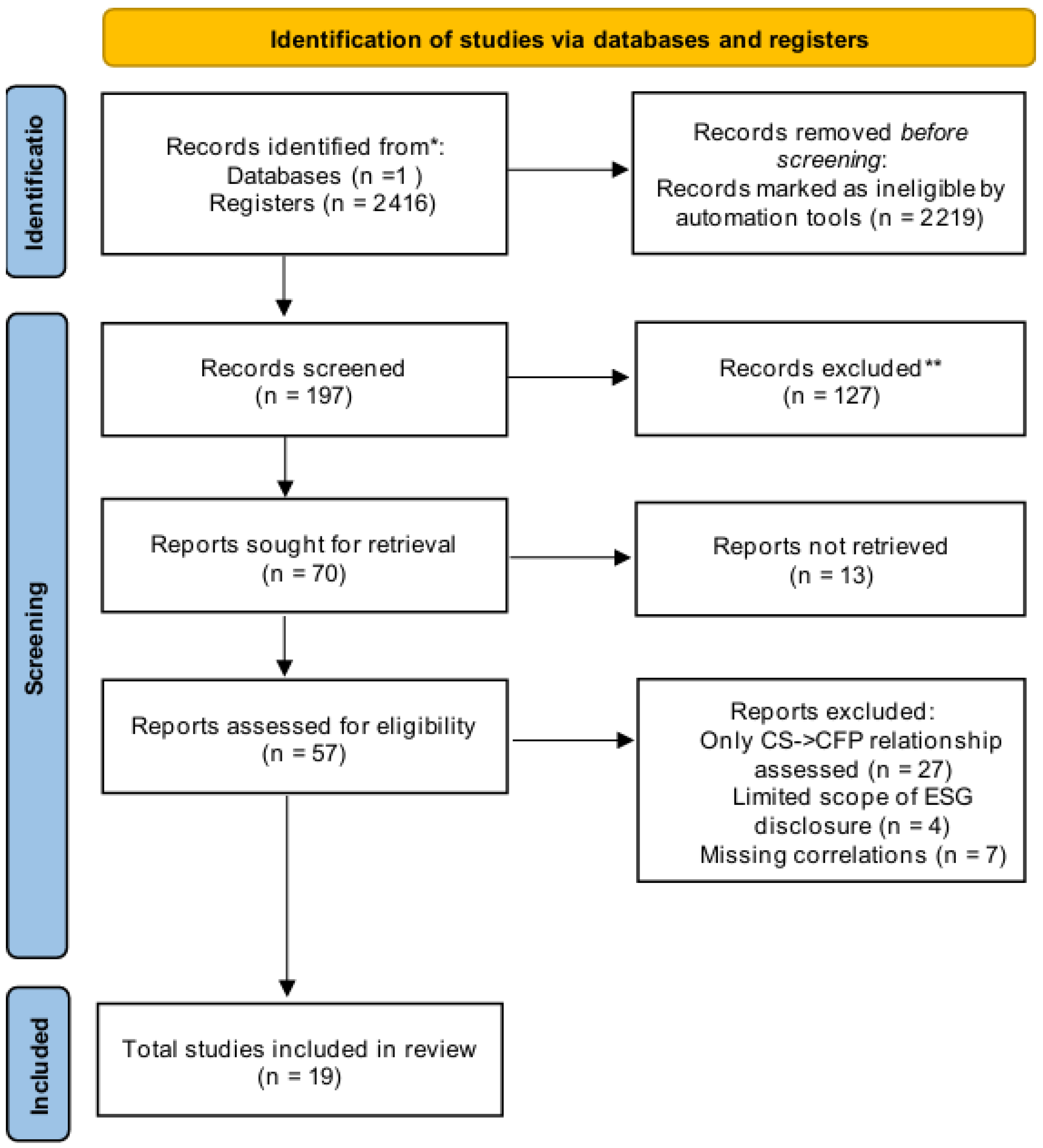
In
Figure 1, we summarize the steps of screening the research papers identified through the search protocol described above. In the first phase, after keyword combination, the search generated a list of 2416 articles. The first exclusion criterion was related to the status of the articles published in the 70 accounting journals, classified in this paper as high-quality academic journals. Based on these criteria, we excluded 2219 articles, the majority of the initial search results (91.85%). This suggests that this topic is either not quite as important for top accounting journals as for other journals or that there are significant concerns concerning the research methodology used by researchers when addressing this topic. Therefore, a call for research from these journals is needed and comprehensive prior guidelines for successful peer-review validation should be provided. The second exclusion criterion is related strictly to the title, abstract and keywords of the remaining articles, leading to the elimination of another 127 articles. Next, based on the content analysis, we excluded an additional 13 papers that were not related to the theme of the impact of sustainability/ESG/CSR disclosure on corporate financial performance. The final number of papers included in this meta-analysis is 19, as another 38 articles were eliminated due to multiple reasons described in
Figure 1. First, 27 articles were excluded as only the link between CSP and CFP was analyzed, without also addressing the impact of SR on CFP. Second, four articles were excluded as the ESG index-based proxies considered in these articles were limited to either the environmental or social dimension. This does not provide a basis for a comparative analysis with articles in which the index was related to all ESG dimensions at once (the environmental, social and governance dimensions). Additionally, seven articles were excluded from our analysis as there was missing information on beta regression coefficients, which are the basis for the transformation proposed by Peterson and Brown [
47] for meta-analysis data curation.
These papers feature an average of 99 citations. The journals include Accounting and Finance (1), Australian Accounting Review (1), British Accounting Review (2), Critical Perspectives on Accounting (1), European Accounting Review (2), European Financial Management (1), International Journal of Auditing (1), Journal of Accounting and Economics (1), Journal of Business and Accounting (2), and Sustainability Accounting Management and Policy Journal (7). All those journals are classified in the cluster group related to the Accounting field of research, as per the ABDC ranking list.
The sample size is similar to that used by Abd Hadi et al. [
21] due to the limitation of the research scope, as we aimed to capture the effects of any synergy and trade-offs between different SDG-related corporate sustainability information on stakeholders’ perceptions. Our approach to narrowing the scope of our analysis is justified for several reasons. First, we wanted to emphasize that, so far, there is reluctance among top accounting journals to address this research topic. Second, by considering the WoS ranking and ABDC ranking scores of accounting journals, we have selected only top accounting journals, ensuring the higher quality of the papers included in our analysis. Furthermore, this choice is expected to enable completeness of key information, which is relevant for us to calculate the effect sizes and assess the moderating/mediating role of ESG disclosures through, for example, the standard error of regression coefficients. Third, we believe that this limitation in scope will lead to specific relevant insights into the literature, namely the relationship between corporate sustainability performance and corporate financial performance solely from a financial perspective. The discussion on the role of sustainability disclosures in strengthening the link between corporate sustainability performance and corporate financial performance is associated with a more accounting-embedded construct, which requires a different research perspective. Accounting scholars pay more attention to reporting incentives, managerial discretion, voluntary disclosure behavior and greenwashing and greenhushing reporting practices, as per the specific aim and scope of the accounting journals. Fourth, limiting our screening to only accounting journals can ensure higher homogeneity of the theoretical framework and ensure construct measurement reliability. Across the literature, concerns have already been raised about the conceptual weaknesses of concepts such as ESG activities, ESG scores and ESG disclosure, whereas even the concept of corporate sustainability is still not defined by a unanimous definition [
6,
10,
33]. Therefore, the limitations of accounting theories of corporate sustainability could reduce heterogeneity among studies. Nonetheless, we highlight the need for such a screening approach from the perspective of referring to common regulatory requirements affecting ESG disclosures, which relate less to industry standards/norms and more to legal disclosure frameworks, e.g., EU CRSD, TCFD, and SEC rules.
3.3. Effect Size and Data Coding
The next step in this research design stage consists of choosing the effect size and coding to ensure the relevance of the research objective and comparability for reliability data analysis purposes. Similar to the other published meta-analyses addressing the impact of sustainability reporting on corporate financial performance, we have chosen the Pearson correlation as the effect size, which reflects the intensity of the association between the different constructs associated with SR and CFP [
19,
20,
21,
22,
23,
24,
25]. The Pearson coefficient ensures both comparability, compatibility, reliability and interpretability requirements [
49]. When we could not retrieve the Pearson correlation information for effect sizes because of a missing Pearson correlation matrix, we used an alternative measure proposed by Peterson and Brown [
47], which defines the effect size as a transformed measure of the OLS-estimated beta coefficients, following the relation
where
β is the beta OLS-estimated coefficient and ⅄ is an indicator variable that equals 1 when
β is nonnegative and 0 when
β is negative.
From the 19 papers, we extracted correlation data consisting of 182 effect sizes. Therefore, there are multiple effect sizes extracted from each paper, a decision driven by several considerations. First, each of the papers analyzes index-based proxies or dummy-based variables at the least to measure the effect of ESG disclosures on the nexus between corporate sustainability performance (CSP) and corporate financial performance (CFP). However, four of the papers included in our screening incorporated both index-based and textual proxies related to ESG disclosures in their analyses. Second, three papers included in the meta-analysis estimate both the moderating and mediating effect of ESG disclosure-related proxies or dummies on the relation between CSP and CFP via econometric models. Third, almost 42% of the papers included in the meta-analysis measure the marginal, moderating and mediating effect sizes of ESG disclosure proxies on CFP. Fourth, the CFP proxies vary within each same paper and are related to both accounting-based proxies, such as CFO, ROA, FCF, leverage or WACC, and capital market-based proxies, such as Tobins’ Q, abnormal returns, and analyst forecasts. All this leads to multiple effect sizes per paper. To address the potential effects of this on our results, we separated the forest plots of research design choices of different scholars to highlight if these choices somehow influence the effect size of ESG disclosure proxies on the link between CSP and CFP.
For the data transformation and meta-analysis procedure, we used JAMOVI 2.6.44 software, through which the Fischer z-transformation:
is performed based on the effect size. Additionally, the z-transformation is weighted by the factor
, where n represents the sample size of the effect size extracted from the reviewed paper.
The dependent variable is represented by different measures of corporate financial performance, which is linked to various accounting-based (e.g., ROA, CFO, FCF, Equity, CapEx, book value) and market-based (e.g., Tobi’s Q, abnormal returns, stock price liquidity, beta, and idiosyncratic risk) measures.
The independent variable is represented by the main three categories of measures: the sustainability disclosure index (mainly as per the predefined GRI checklist), the sustainability reporting dummy (publishing status), or the sustainability report content analysis score (mainly related to text mining-related techniques).
No moderator variable is considered, as this is out of the scope of this paper. The only potential moderating/mediating variable was the country- and industry-specific institutional factors, which were not integrated into most of the papers reviewed. This is why we did not consider how sustainability reporting impacts the corporate financial performance from an institutional perspective. Overall, based on the analysis of the effect sizes extracted from the papers included in the meta-analysis, we observed that only the country characteristics and industry-specific factors were not included in the regression analysis as separate variables. Instead, they were reflected through fixed-effects regression model estimation. Therefore, only 13% of the effect sizes analyzed are affected by both country- and industry-specific factors, and the industry-specific factor seems to be preferred as it was considered individually in 69% of the effect sizes, together with the firm-specific factor. These preferences show that researchers pay much more attention to voluntary behavior concerning sustainability information disclosure in an institutional context, as thus far, requirements for mandatory sustainability disclosure have not been enforced [
45,
50].
3.4. Meta-Analysis Procedure
First, we searched for any outliers in our dataset. One size effect was excluded as an outlier due to its extremely high absolute value compared with the other effects in the dataset. After excluding this outlier, four other size effects were excluded for the same reason, as they were outside the 3-sigma confidence interval . Second, a visual descriptive analysis of the nature of effect size was performed in order to support a potential unanimous reply to both the research questions regardless of whether sustainability reporting has a positive or negative impact on corporate financial performance. Furthermore, we reviewed which theoretical framework was considered by researchers when analyzing the impact of sustainability reporting on corporate financial performance.
The random-effects (traditional) univariate meta-analysis model was used in the main analysis [
49]. This model was mainly chosen due to the fact that studies could not be considered similar due to the different empirical settings and research designs chosen by researchers [
37].
For heterogeneity purposes, we used Cochran’s Q-test, along with the
index, to assess the proportion and significance of the observed variation in effect size caused by systematic cross-sample variability for all proposed relationships [
19,
23].
A funnel plot analysis was also performed to review if any publication bias exists.
As a final step, the effect size data was analyzed considering different sub-group analyses, for example, the choice of corporate financial performance and sustainability reporting variables. Additionally, we analyzed the differential effects of a moderating versus mediating impact of sustainability reporting on corporate financial performance.
4. Results
4.1. Analysis of Theoretical Framework
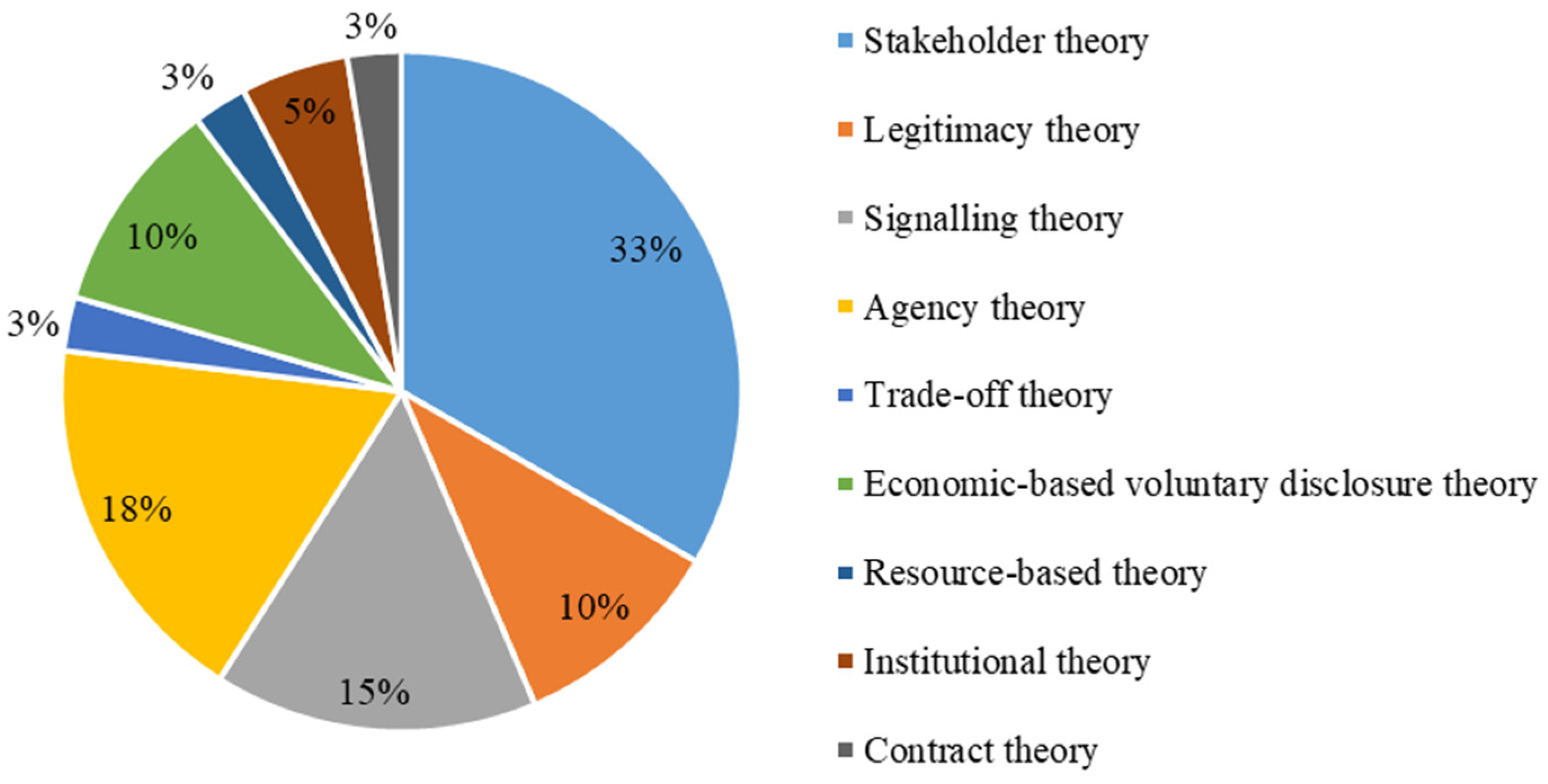
In
Figure 2, we have summarized the frequency at which each theory is used as a research framework in the papers included in the meta-analysis.
The results show authors’ preferences for stakeholder theory (33%), which suggests that currently, researchers on this topic are looking for insights into how firms should construct the stakeholder engagement matrix, which is an essential component of sustainability reporting policies [
7]. Based on a hierarchical stakeholder engagement assessment approach, firms could better define the tools used to support a reliable and relevant sustainability reporting process that is designed to disclose material information that reflects both the environment’s financial impact on business activity and the impact of the corporate business model on the environment.
Additionally, it is essential to understand that the sustainability reporting process can be perceived as a value creation process as long as stakeholders and investors consider the information disclosed by sustainability reports as relevant for capital allocation decision-making [
15,
18]. This is supported by the fact that the majority of the papers reviewed used a combination of stakeholder theory and signaling theory as a theoretical framework, which supports concerns of potential greenwashing [
29,
32]. Therefore, based on the choice of theoretical framework, we can conclude that scholars have focused more on the role of sustainability disclosures in strengthening the relation between firm management and stakeholders, both via managers committing to sustainable development and stakeholder engagement as a legitimate action to support these efforts. Additionally, via the lens of signaling theory and agency theory, scholars have raised awareness of the need for high-quality ESG information, which should be subject to assurance engagement in order to demotivate greenwashing practices when preparing ESG disclosures on the firm level. All these main theories highlight once again how important firm-related characteristics are and how SDGs can be achieved on the industry and country level only through strong cooperation between firms, governments and academia.
4.2. Analysis of the Link Between SR and CFP
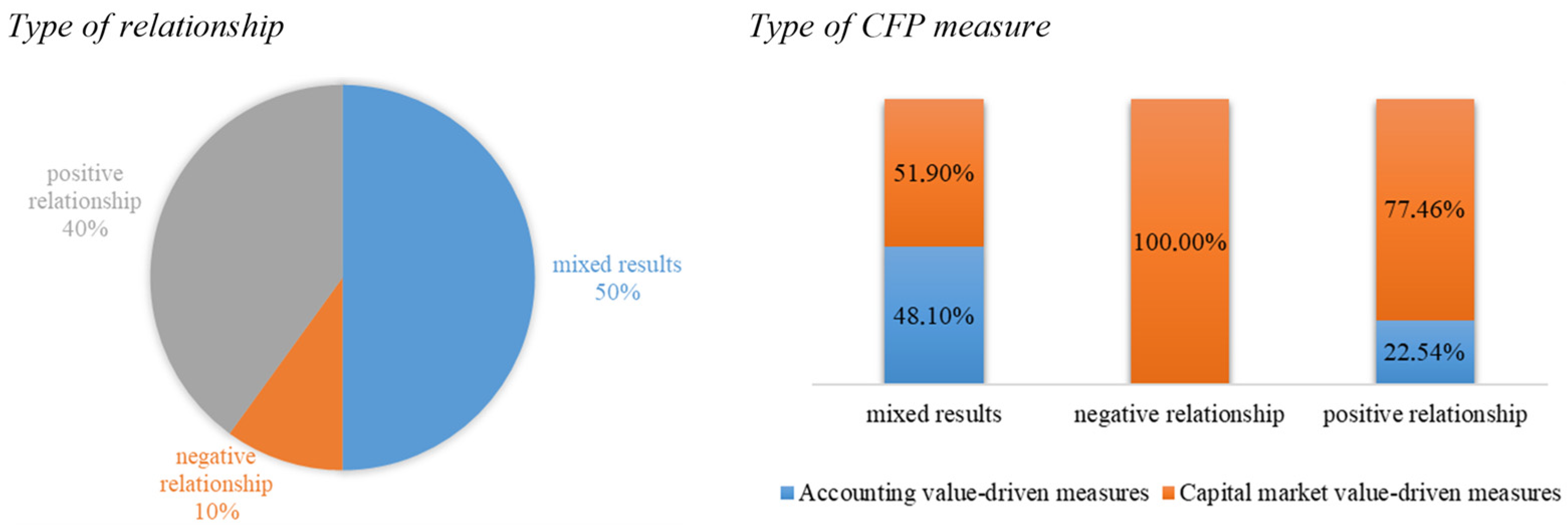
Similar to the identified prior meta-analyses, we checked if researchers reported mixed results in the papers included in this meta-analysis. In
Figure 3, we show the results split per type of CFP measurement (accounting-based versus market-based indicators).
The analysis echoes the concerns also raised in past studies, which highlights that a unanimous opinion on the economic opportunity of improved corporate sustainability reporting transparency has not been reached, mainly because of the preparation, assurance and proprietary costs related to sustainability disclosure publication [
19,
20,
21,
22,
23,
24,
25]. However, these results could be analyzed from the perspective that sustainability reporting is considered either as a moderating or mediating factor in the relationship between CSP and CFP, which also shows mixed results [
4,
5]. There are a few root causes of these mixed results. Prior meta-analyses have confirmed that both country, industry and firm contextual factors significantly influence the relation between CSP and CFP [
51,
52,
53], including the moderating or mediating role of sustainability reporting in this relationship [
5,
39].
Firms’ corporate governance, ownership structure, stakeholder engagement, and firms’ managerial commitment are examples of such particularities that can influence the impact of sustainability reporting on corporate financial performance. Similarly, the quality of national regulations, the maturity of capital markets, the effectiveness of monitoring and control mechanisms, the orientation of the national culture concerning corporate transparency, and the involvement of governmental authorities and academia in raising awareness about the need to meet the SDGs on all levels, including in the corporate private sector, represent essential influencing pillars of how disclosing relevant sustainability information can become extremely relevant in decision-making.
In
Table 3, we summarize the essential findings of our coded data analysis for the 19 papers included in the meta-analysis.
We emphasize the fact that these results indicate the higher reactivity of capital markets to the content of sustainability disclosures, especially in terms of negative information, which validates the legitimacy theory of the theoretical sustainability reporting framework [
31,
54].
Table 3.
Characteristics of papers included in the meta-analysis.
Table 3.
Characteristics of papers included in the meta-analysis.
| Authors | No. Countries | Country | No. Industries | Sample Size | Theory | Proxy for SR | Type Proxy for CFP | Effect | Nature of Relationship |
|---|
| Akisik and Gal [55] | 1 | North America | not specified | 735 | stakeholder theory, agency theory, signaling theory | assurance dummy | accounting measures
market measures | moderating
mediating | +/− |
| Ali et al. [28] | 1 | USA | 10 | 10.744 | stakeholder theory, agency theory | disclosure index | accounting measures
market measures | moderating
mediating | +/− |
| Caglio et al. [56] | 1 | South Africa | 6 | 444 | agency theory | assurance dummy
disclosure index
text mining | accounting measures
market measures | moderating | +/− |
| Huang et al. [57] | 1 | China | not specified | 1.238 | stakeholder theory
agency theory | disclosure index | market measures | moderating | + |
| Ho et al. [58] | 31 | cross-country | not specified | 18.471 | stakeholder theory
trade-off theory | disclosure index | accounting measures
market measures | mediating | + |
| Eng et al. [59] | 1 | USA | 10 | 12.075 | stakeholder theory
institutional theory | disclosure index | market measures | moderating | + |
| Li et al. [60] | 1 | UK | not specified | 2.415 | stakeholder theory | disclosure index | accounting measures
market measures | moderating
mediating | + |
| Eliwa et al. [61] | 15 | EU | 8 | 3.384 | legitimacy theory
institutional theory | disclosure index | accounting measures | moderating
mediating | +/− |
| Wong and Zhang [62] | 1 | USA | not specified | 331.517 | signaling theory
resource-based theory | disclosure index | market measures | moderating | + |
| Arayssi et al. [63] | not
specified | cross-country | not specified | 1.010 | stakeholder theory
agency theory | disclosure index | market measures | moderating
mediating | +/− |
| Xu and Liu [64] | 1 | China | 30 | 1.554 | voluntary disclosure theory | disclosure index
publish dummy | market measures | moderating
mediating | − |
| Singh and Chakraborty [65] | 1 | India | 11 | 300 | stakeholder theory | disclosure index | accounting measures
market measures | moderating | + |
| Tsang et al. [66] | 56 | cross-country | 21 | 24.293 | legitimacy theory
stakeholder theory | assurance dummy
disclosure index | market measures | moderating
mediating | +/− |
| Pizzi et al. [67] | not
specified | cross-country | 11 | 4.391 | signaling theory | disclosure index | market measures | moderating | − |
| Karaman et al. [68] | not
specified | cross-country | 3 | 1.543 | agency theory
legitimacy theory
stakeholder theory | publish dummy | market measures | moderating | + |
| Carey et al. [69] | 39 | cross-country | 9 | 3.212 | voluntary disclosure theory
agency theory | assurance dummy | accounting measures | moderating | +/− |
| Wang and Yu [70] | 1 | China | 16 | 2.502 | stakeholder theory
contract theory
signaling theory | assurance dummy
disclosure index
publish dummy | accounting measures
market measures | moderating | + |
| Lys et al. [71] | not
specified | cross-country | 10 | 4.640 | signaling theory | assurance dummy
disclosure index
publish dummy | accounting measures | moderating | +/− |
| Cook et al. [72] | not
specified | cross-country | 11 | 19.622 | stakeholder theory | ESG text mining | market measures | moderating | − |
4.3. Analysis of Effect Size
The results of the estimates of the univariate meta-analysis are summarized in
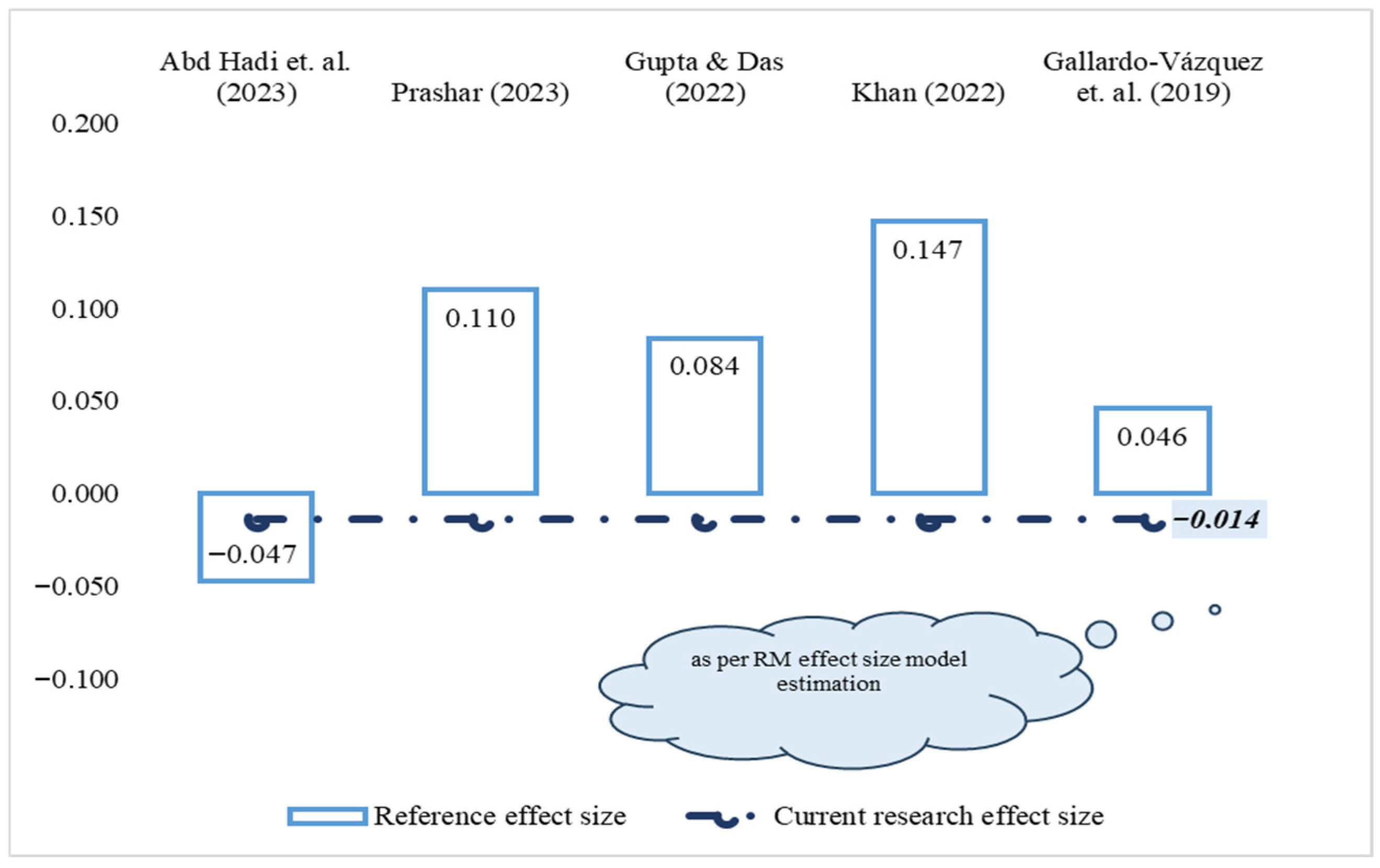
Table 4. Based on these results, we determined an average effect size of −0.014. This study finds that the average effect size between sustainability reporting and financial performance is −0.014 and not significant. This result reflects the impact of several key factors from the perspective of the theoretical framework considered in this research. As our meta-analysis did not consider either the level of sustainability reporting transparency or the quality of sustainability disclosures, we cannot separate between the signaling effect of the ESG disclosures and the information asymmetry effect on corporate financial performance. However, looking at the overall and combined effects of these theoretical perspectives, we highlight several concerns in the literature that could have generated this negative effect.
On the one hand, the signaling effect related to an increase in the transparency of sustainability information [
73] does not necessarily translate into a higher quality (value relevance) of disclosed information [
74]. A high volume of ESG information may not cover the real demand for information from investors, customers, governments and other stakeholders, resulting in multiple ineffective signals and affecting stakeholders’ engagement and, indirectly, firms’ financial resilience in the short and medium term [
16,
18]. Additionally, this higher level of transparency can, in some circumstances, hide greenwashing reporting strategies, which significantly deteriorate investors and stakeholders trust in the firm over the long term [
31]. Nonetheless, if standard-setters decide to increase the level of mandatory reporting requirements, the signaling effect would reduce, as capital markets are rather expected to reward voluntary ESG disclosure-related signals, with potentially much higher incentives than firms would receive by avoiding penalties generated by non-compliance [
12,
18,
34].
On the other hand, the potential positive signaling effect of a greater increase in sustainability reporting transparency may be exceeded by the additional costs from the preparation and assurance of ESG disclosures [
16,
18]. Despite the intensive efforts of standard-setters and governments to support corporate environments, with guidelines for aligning to different ESG reporting frameworks, the complexity of the requirements and the challenges surrounding making those requirements operational at the business process level—e.g., consulting services, internal trainings, and changes to the current information systems landscape—require significant financial resources. Additionally, in countries in which less guidance on sustainability reporting is provided to corporations, investors and stakeholders are not able to differentiate between cheap-talk strategies and credible (trustworthy) reporting strategies, which could impact stakeholders even more as they pay more for preparation and assurance of the ESG disclosures compared with the corporations [
15].
This negative result is not statistically significant (
), as explained by the heterogeneity of the size effects considered in the meta-analysis. The confidence interval shows both positive and negative possible effect sizes, which suggests a high heterogeneity on the effect sizes analyzed. As shown in
Table 5, we observed a high value for the Q test (
), and the
index suggests the presence of heterogeneity in the effect sizes analyzed, showing that
of the observed variances in effect size are real.
Considering prior meta-analyses assessing the influence of sustainability reporting on corporate financial performance, our results are in line with those of [
21], in which a negative average effect size was also observed (see
Figure 4).
4.4. Publication Bias
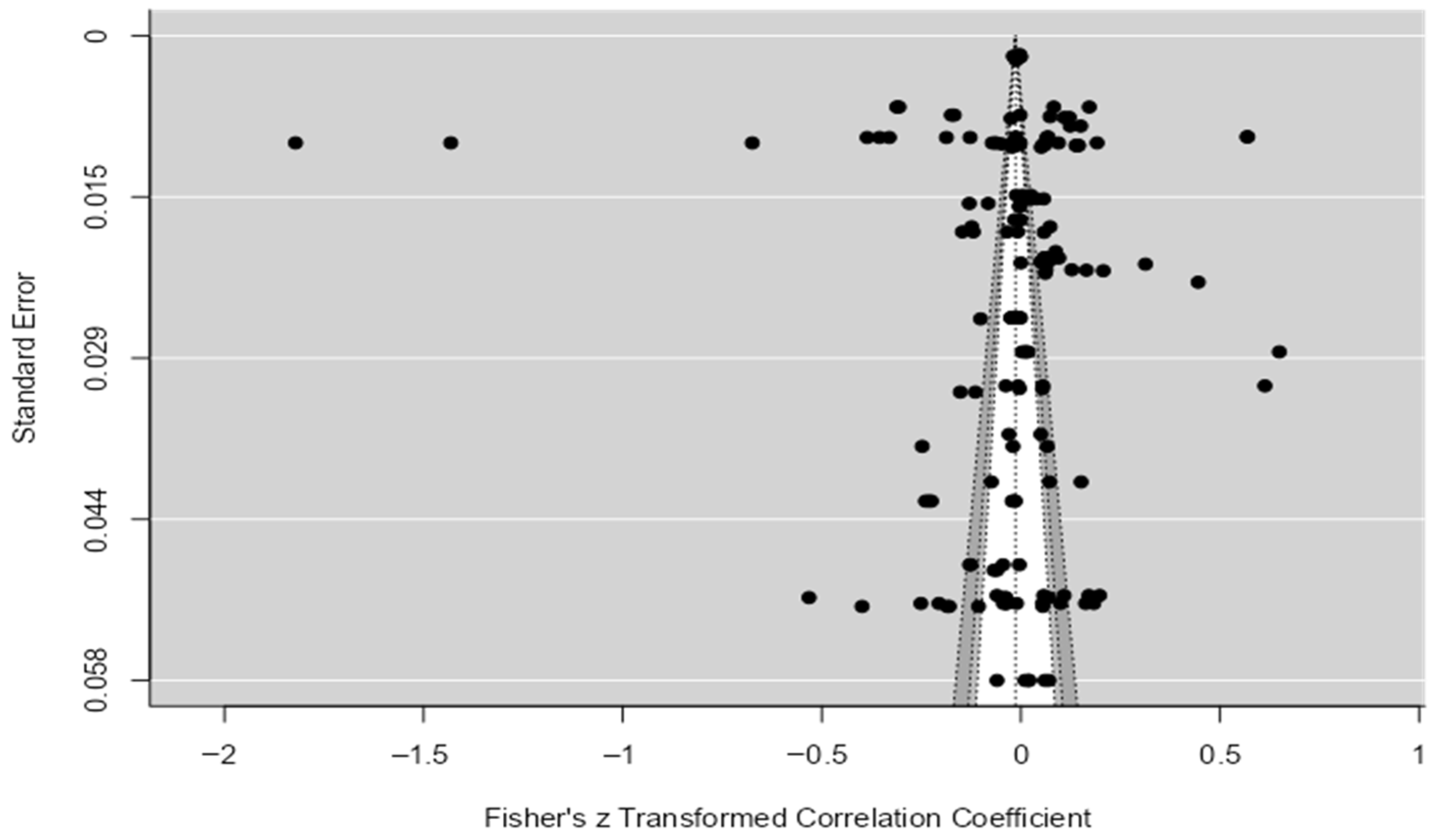
The funnel plot presented in
Figure 5 emphasizes the limited asymmetry in the overall effect sizes analyzed, determined via the average effect size calculated with the random-effects model. We observe numerous effect sizes with a high standard error, which leads to a larger confidence interval and therefore a lower accuracy in estimating the average effect size, which indicates that studies calculating these effect sizes are less likely to be published [
49].
Additionally, several analyzed effects are placed outside the funnel plot, which indicates that they are reliable at a statistical significance level of 95%. Together with the evidence of the high level of between-study heterogeneity, we confirm the existence of a small publication bias. This publication bias was indicated via different inferential testing, for which the results are summarized in
Table 6; for instance, there is a lack of statistical significance in the Egger’s regression intercept. There are several reasons behind these statistical results.
First is the heterogeneity of scholars’ choices regarding CFP and CSP proxies. In the papers included in this meta-analysis, scholars prefer measures of market-driven financial indicators as a CFP proxy (62.22% of related effect sizes), instead of accounting-based measures (37.78% of related effect sizes), whereas for CSP proxies, they prefer ESG disclosure indexes (45% of related effect sizes) or dummy variables (41.11% of related effect sizes), instead of text-related measures (13.89% of related effect sizes). As noted in
Figure 3, the negative effect sizes are observed in the case of market-driven proxies, which highlights the negative signaling effect of ESG disclosures in the short term, which is mainly associated with the higher costs perceived by investors by aligning business processes to sustainability principles. Instead, accounting-based measures do not lead to either positive or negative effect sizes, but rather mixed results, based mainly on the aggregation level of the financial indicator considered in the analysis, which can be more or less sensitive to additional costs linked to the transformation of business processes. For this reason, we continued our analysis by generating separate forests plots for each type of CFP proxy (accounting-driven, market-driven) and CSP proxy (index-level, dummy variable) chosen by scholars.
The period considered in our meta-analysis varies significantly, which could have generated a higher standard error over time, due to the numerous changes in sustainability reporting regulations.
Only 41.98% of the papers in the meta-analysis relate to a multiple-country sample, which could also lead to a higher standard error because single-country studies refer to a specific institutional framework.
We observed that 80.25% of the effect sizes analyzed relate to econometric models that also consider industry effects, which again could lead to an increase in the standard error. This is because industries with highly specific characteristics in terms of business model sustainability transformation and effective transmission channels, such as the energy, pharmaceutical and extraction industries, are highly exposed to ESG risks; therefore, higher levels of scrutiny is expected for firms operating in these areas and stakeholders have higher expectations for ESG disclosures.
4.5. Influence of Regression Design Choice
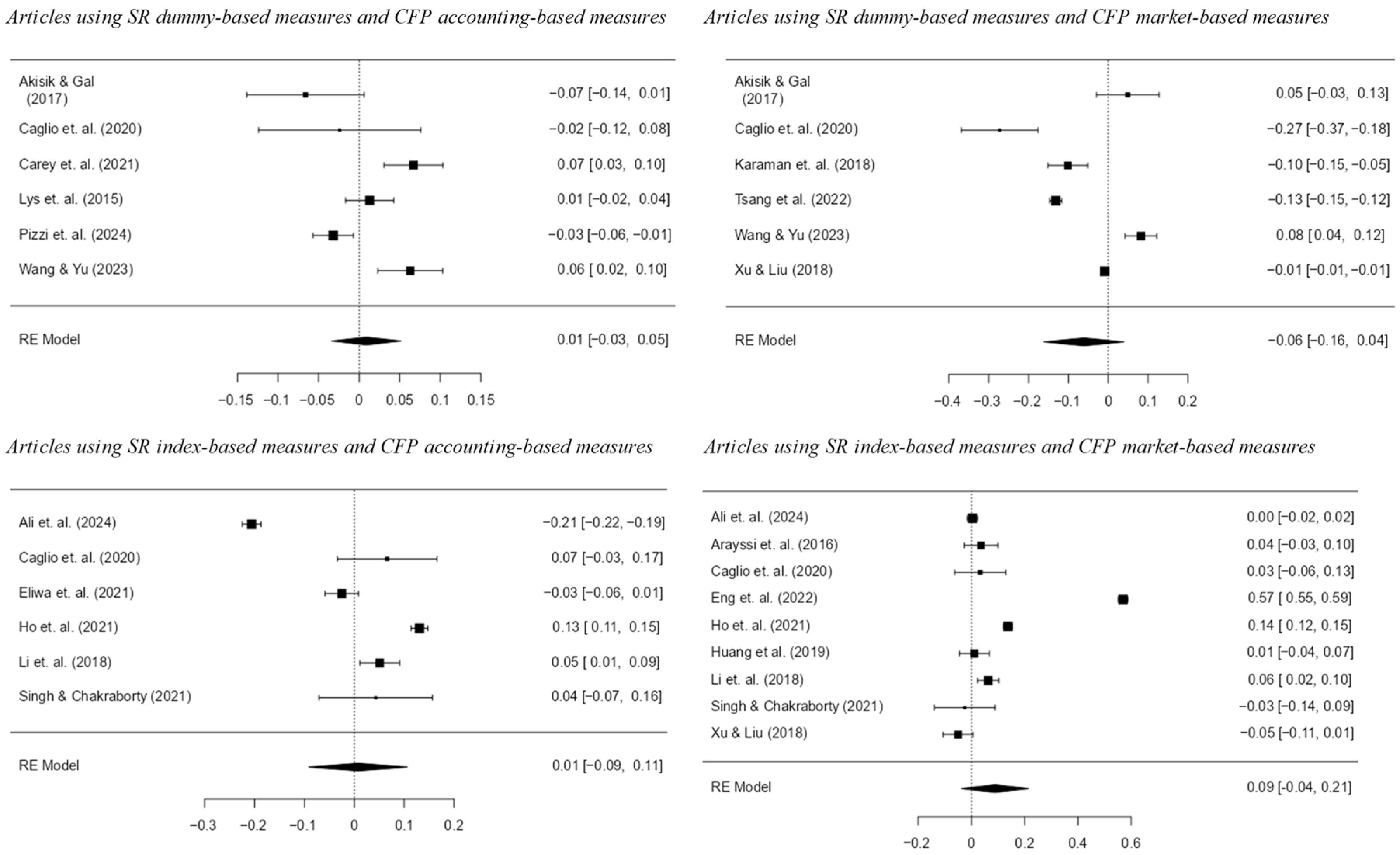
In
Figure 6, we show the forest plot for each of the sub-groups of papers included in the meta-analysis. The difference in the average effect size confirms that the research design, including the choice of an SR or CFP measure, has a significant impact on the results.
Based on these forest plots, we can observe that a negative average effect size is only calculated for papers that have used a dummy construct as a dependent variable, which indicates the firm’s decision on publishing a sustainability report. This result gives some indication that stakeholders, especially investors, do not react in the same way to analyses of sustainability report contents, but do react the same to whether this report is published. This result shows that, in the current stage of research, not publishing sustainability reports is widely accepted as the reason why the respective firm is penalized.
This does not mean that investors and stakeholders do not also focus on the content of the sustainability disclosure, as we have determined a higher average effect size for papers using market-driven CFP measures (0.09) compared with papers using accounting-based CFP measures (0.01) when considering the SR disclosure index as an independent variable. Therefore, a slight value relevance for sustainability disclosures is generated across the capital markets.
The heterogeneity of the reviewed sample could also be explained by a higher concern of investors and stakeholders, as well by the increasing practice of greenwashing through sustainability disclosure signaling, which supports consolidating the enforcement mechanisms on a country and industry level, for example, by requesting higher corporate sustainability assurance requirements [
31,
32,
75].
Overall, our results outline the relatively small difference in the size effect generated by accounting-based versus capital market-driven proxies. Behind this difference are several theoretical and practical considerations. First, accounting-driven indicators react more slowly to signals transmitted via ESG disclosures, as accounting proxies are based on financial statements that are disclosed quarterly and annually, whereas sustainability information is integrated into the stock prices from multiple sources and could be updated on a daily basis. Second, market-driven indicators are oriented towards forward-looking information, with a higher firm scrutiny for listed firms with a higher analyst coverage. Additionally, investors in capital markets operate most of the time with expectations and perceived risks, which determines higher sensitivity to ESG dummy information because of the ambiguous signals transmitted to the markets. The effect of index-based proxies, such the ESG disclosure index or the ESG score CSP measure, is similar, which again detracts attention from the quality of sustainability disclosures and shifts focus rather to the quantity (volume) of information disclosed.
Nonetheless, investors react differently to the various measures of corporate sustainability and financial performance, which also deteriorates the expected effect of sustainability reporting.
4.6. Moderating Versus Mediating Effect Analysis
This research ends with an analysis of the role of the transmission channel of sustainability reporting in the strength of the relationship between CSP and CFP. As noted by Busch and Friede [
50] and Atz et al. [
5], sustainability disclosure could be considered a proper channel of corporate communication with stakeholders and investors, which could amplify improvements in the relation between CSP and CFP, with the condition that the information disclosed is value-relevant for the decision-making process and not just used for branding purposes or for reducing ESG risk exposure.
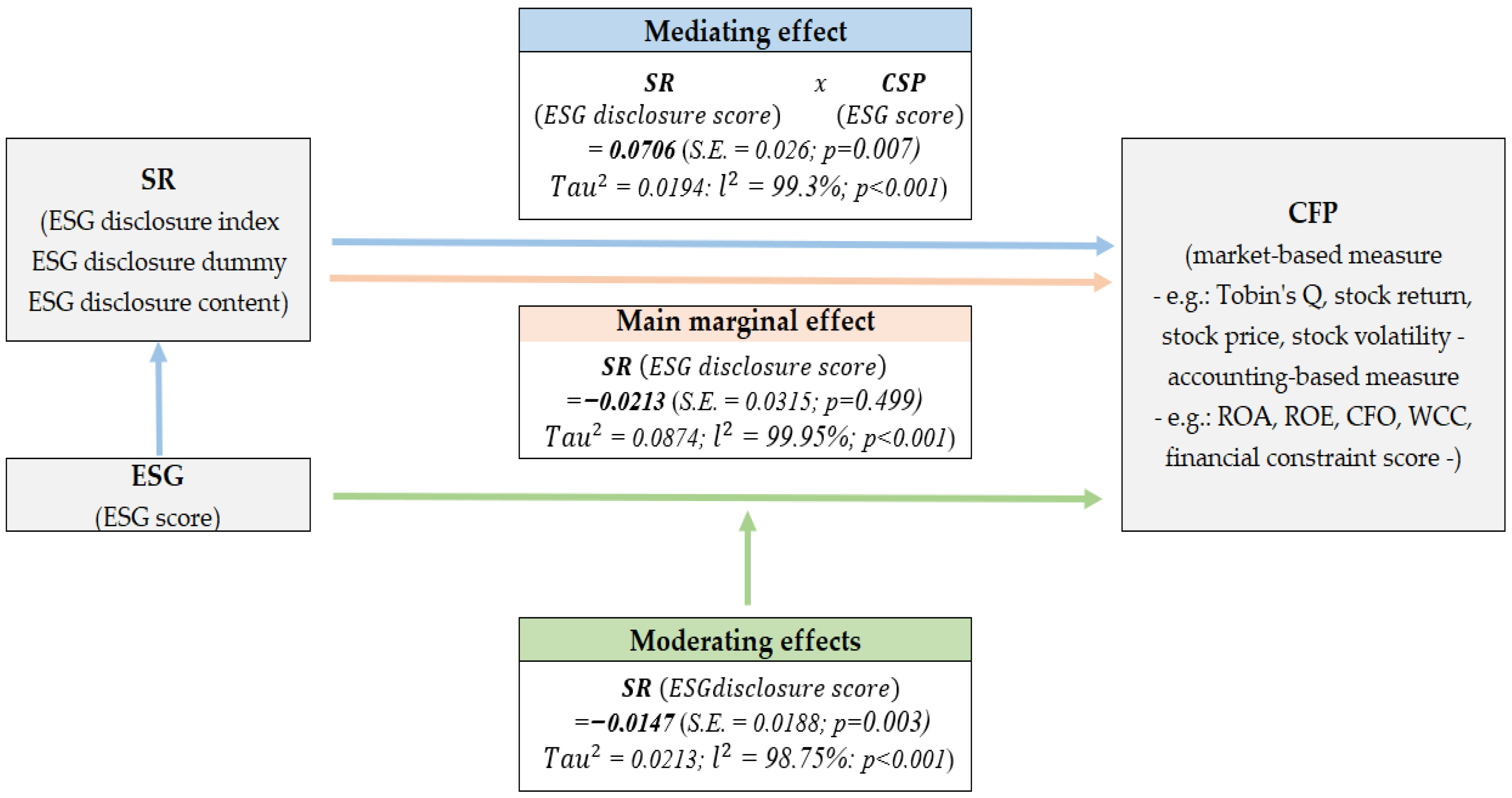
In
Figure 7, we show the main average effect size for each type of relation between SR and CFP.
In
Table 7, we synthesize several of the most frequent mechanisms used in the articles included in the meta-analysis, which reflect the outcomes of the impact of SR on the CSP-CFP nexus.
The negative average effect size (
) between SR and CFP is linked to the impact of SR as a marginal (control) factor (variable) on the relationship between CSP and CFP. A similar but statistically insignificant negative size effect is identified for the effect of SR on CFP (
), when SR is a moderating factor (when considered as the main dependent variable in the estimated econometric models). Similar to the previous section, we emphasize that this negative size effect indicates sustainability reporting deteriorates corporate financial performance, mainly driven by the quality of sustainability reports that are not subject to assurance review or that have been created following ineffective internal control systems and inefficient risk management processes and monitoring tools [
28,
55,
56]. Therefore, the lack of a corporate sustainability policy and strategic thinking regarding corporate sustainability supported by mature, robust, effective and efficient risk management and internal controls, leads to a deterioration in the expective positive signal of sustainability disclosure on corporate financial performance. This discourages firms’ management teams from making real commitments towards sustainable development and limits this exercise to a more compliance-related activity.
The positive average effect size (
) between SR and CFP is related to the impact of SR as a mediating factor on the relationship between CSP and CFP. The combined effect of SR and CSP leads to positive impact on CFP. As noted previously, the sustainability reporting transmission channel generates a negative impact on corporate financial performance, based on the trust between firms and their stakeholders, mainly because of the wide use of greenwashing strategies. Instead, when sustainability reporting is associated with a higher corporate sustainability performance, the ESG disclosures become more trustworthy and more relevant to stakeholders, reducing information asymmetry and leading to better differentiation between cheap-talk and reliable ESG disclosures. This leads to a lower cost for financing, better market liquidity, lower market risk exposure, etc. [
57,
58,
59]. In these circumstances, firms strive to properly communicate corporate sustainability results, reducing perceived risk exposure on the market and ensuring higher transparency and a lower cost of financing. Therefore, a synergetic value-creation chain is generated that neither ESG disclosures nor CSP can produce alone. Additionally, indirect effects of corporate sustainability performance are generated by the signals transmitted by firms to investors and stakeholders, related to the financial impact of business processes and operations optimization via energy efficiency, waste reduction, knowledge management, innovation technology adoption, data analytics monitoring, tool implementation, etc.
Analyzed as an assembled picture, these results show that sustainability disclosure policies and practice could play a secondary role in terms of their impact on corporate financial performance, not for signaling purposes, but rather for compliance [
6,
54]. These results are mainly rooted in the heterogeneity across the papers analyzed in the meta-analysis, which is related to the chosen research design, the proxies considered to reflect the constructs of sustainability reporting, corporate sustainability performance, and corporate financial performance, and the size and geographically widespread nature of the sample.
The international sample and lower sample size could lead to a higher standard error, which could affect the size effect determined in the meta-analysis, as industries are characterized most of the time by significant particularities that affect the processes of risk management and financial management, as well as the effects of business model transformation. For example, the energy sector, the pharmaceutical sector, and even the automotive industry have been affected differently by this transition. Second, the long-term time horizons can generate a higher standard error as the countries and industries in the analyzed sample have undergone numerous changes in their associated institutional frameworks, for example, the changes imposed because of the COVID-19 pandemic. Nonetheless, the characteristics of each country’s institutional framework play an essential role in this business model transformation. This was shown by international studies covering multiple countries with significant differences exhibiting higher standard errors because of the differences in the public policies that support the transition towards sustainability principles, the differences in national regulations concerning sustainability reporting, and significant differences between countries related to the effectiveness and maturity of the enforcement mechanisms associated with sustainability reporting monitoring and control activities.
5. Conclusions
This study has been designed to give answers on how corporate sustainability reporting influences the relationship between corporate sustainability performance and corporate financial performance. For this purpose, we have performed a meta-analysis on 19 papers published in top accounting journals in 2014–2024. Researchers have issued a call for research in this direction many times. However, so far, there is little evidence on this topic; our paper is designed to fill this significant gap in the literature.
The results of the meta-analysis show that there is no statistically significant impact of sustainability reporting on corporate financial performance, when considered as an individual instrument of analysis. However, when controlling for the mediating effect that sustainability reporting can generate on the CSP-CFP nexus, the results have confirmed that ESG disclosures can be transformed into strategic instruments of coordination and monitoring that promote business excellence and the use of innovative technologies, considering the close attention stakeholders should pay to this area in cooperation with a committed management team. These results provide relevant insights concerning the research question of this paper (R1). Though there is no statistically significant moderating effect of SR in the relationship between CSP and CFP, the mediating effect confirmed via meta-analysis reveals the importance of the signaling effect of SR. This signaling effect can increase the legitimacy of firms’ visions, missions and strategies; therefore, these firms may be more greatly accepted by society, via, for example, a supportive position of community members. However, our results show that less attention is paid to the content of the SR disclosures, which could be related to the limited positive perception that stakeholders have towards the reliability of information disclosed in this way, mainly because of greenwashing practices. Therefore, based on stakeholder theory, the value relevance of SR disclosures could be increased via more adequate and effective stakeholder engagement, supported by strong and transparent management commitment to sustainable development projects. Additionally, the implementation of effective corporate governance mechanisms, via more robust and effective monitoring, control and enforcement mechanisms on the industry and country level, could strengthen the position of more sustainable business models. Only in these circumstances can firms be convinced of the favorable business case for adopting sustainability principles, such as ethical and transparent corporate policies and practices.
These results generate several theoretical and practical implications relevant as valuable propositions for further research. First, the results again raise the concern regarding the best way to make firms accountable for sustainability reporting policy transparency. So far, the literature shows higher positive effects of sustainability reporting on corporate financial performance following voluntary compared with mandatory disclosure; the capital markets play an essential role in providing sufficient incentives in this direction. Together with the evidence presented in similar meta-analyses, our results indicate that sustainability reporting is not an effective transmission channel because of the high heterogeneity of business models, which leads to markets and government inventive programs having inconsistent effects on promoting ESG information transparency. Second, we highlight the importance of a high-quality research design. These designs are expected to generate more precise effect sizes that reflect the impact of SR on CFP, as the signal transmitted to the markets is better delimited and greenwashing practices are penalized. In these circumstances, an adequate theoretical framework and an appropriate conceptual understanding of the constructs used to reflect both the CSP-CFP nexus and SR become essential. Additionally, scholars should pay attention to the quality of papers analyzed through a meta-analysis, defining relevant inclusion/exclusion criteria (journal rankings, citations, sampling, etc.), as this has a significant impact on the reliability of the results. Otherwise, the results would indicate a higher publication bias likelihood and therefore not be able to provide a conclusive opinion on key value propositions. This demotivates management, who looks first to the financial impact that cannot be confirmed even in the long term. Third, managers should better understand the role of sustainability disclosure, which should not be used as a branding (marketing) tool, but rather focus on improving firms’ CSP, which in the long term will also generate economic and reputational benefits through major knowledge-, innovation- and excellence-driven improvements in business process management. Otherwise, the use of sustainability disclosure impression management techniques will increase firms’ exposure to future litigation and reputational costs that might exceed the initial costs of preparing disclosures or implementing sustainability projects. Fourth, the results suggest that stakeholders could have preferences for different types of sustainability information, limiting their interest in sustainability disclosures solely to environmental or social information. Therefore, no standard approach is applicable to reviews of ESG reporting project opportunities, as this assessment is highly dependent on multiple factors related to firm governance characteristics, industry characteristics and the maturity of a country’s institutional framework. The premise of our research design was that sustainability disclosure is expected to be more relevant as long as it addresses the ESG risks specific to firms’ business models following an integrated thinking approach, while searching for both synergy and trade-off interactions between the different SDG objectives. Instead, each group of stakeholders is interested in a limited scope of sustainability disclosures. Fifth, we highlight that public authorities and standard-setters have a determinant role in achieving a higher corporate sustainability reporting transparency, as long as researchers search for further insights following a neo-institutional research theoretical framework to quantitatively assess the moderating and/or mediating effect on the impact of SR on CFP. So far, such an approach is extremely rare among the studies reviewed.
Overall, we confirm the mediating effect of sustainability reporting on the amplitude of the relation between CSP and CFP, underlining that the acquisition of the relevant enablers of the SDGs on a private corporate-sector level, such as innovation and knowledge management, can be properly perceived by stakeholders and investors. This only occurs when such information is disclosed in sustainability reports or any other form of corporate communication through a relevant and up-to-date stakeholder engagement matrix and materiality criteria. Our study emphasizes the inconsistent results concerning the impact of the transformation of business models towards sustainability principles, which makes asking for firms to commit to the SDGs even more difficult. Therefore, the increase in mandatory sustainability reporting requirements is not expected to generate value-added for businesses. The only way to convince firms to commit to a sustainability transformation could be via stakeholder engagement mechanisms, as stakeholders have more power over firms’ voluntary ESG reporting behavior.
This study is affected by several limitations. First, the meta-analysis was limited to only top accounting journals. Second, we did not assess SR’s impact on the CSP-CFP nexus considering either corporate governance mechanisms (e.g., disclosure quality assurance, and level of stakeholder engagement) or country institutional factors (e.g., level of compliance with IFRS or EU sustainability reporting standards, implemented monitoring and control mechanisms, and capital market development). Third, we acknowledge that limiting our screening to WoS could exclude some articles relevant to our research objective; however, we note that the gap between WoS’s and Scopus’ coverage would not generate a high bias in our results. All these limitations will be considered in future research projects, as our plan is to deepen this research by incorporating country institutional factors into the analysis. The focus will be on a broader range of academic journals, but considering more papers addressing the topic from an emerging economy perspective.




 ,
,