


Abstract
To accurately evaluate flood susceptibility in Shenzhen and support long-term flood control planning, this study develops a GIS-based multi-model machine learning framework. Nine factors—including elevation, slope, and distance to rivers—were selected, with multicollinearity ruled out via Pearson correlation and VIF tests. A balanced sample set comprising 741 historical waterlogging points (2020–2024) and equal non-waterlogging sites was constructed. In addition to comparing five base models (Decision Tree, SVM, Logistic Regression, Naïve Bayes, LDA), the study introduces a voting ensemble for model integration and applies SHAP for both global and local interpretability. Key findings include: (1) improved predictive accuracy and robustness via ensemble learning (AUC = 0.8131), outperforming individual models; (2) flood susceptibility mapping reveals a distinct spatial pattern—higher risk in western coastal areas and lower risk in eastern mountainous zones—with 68.3% of historical waterlogging points located in high-susceptibility zones. The model is trained on waterlogging records from 2020 to 2024, which may not fully capture longer-term climatic or urban dynamics. This work directly supports sustainable urban development by providing a replicable framework for flood risk mitigation that reduces long-term economic and social vulnerabilities.
1. Introduction
Flooding is a natural hazard caused by excessive rainfall, either as brief, intense events (flash floods) or prolonged precipitation, resulting in water bodies exceeding their capacity or surface water accumulation [1]. The ensuing disaster chain includes soil erosion, structural collapse, and transportation breakdowns, posing a direct risk to life, property, and socioeconomic stability [2]. Therefore, systematically conducting flood risk assessments and developing targeted countermeasures has become an urgent need for emergency management and spatial planning [3,4].
As a highly urbanized area, Shenzhen faces severe threats from flooding triggered by short-duration intense rainfall and prolonged precipitation. Such events often result in road inundation, neighborhood-scale urban waterlogging, and secondary disasters, causing substantial economic losses [5]. For example, from September 7 to 8, 2023, Shenzhen experienced an extremely rare record-breaking rainstorm [6], with its’ intensity, duration, and affected area” all exceeding typical conditions. The event caused direct economic losses of RMB 1.26 billion citywide, along with more than 700 road waterlogging sites and 19,560 flooded vehicles; traffic on some road sections was disrupted for over 24 h due to inundation. Studies indicate that high-risk flood areas in Shenzhen are mainly located in western Bao’an District, Futian District, and western Luohu District, and that urban waterlogging exhibits a spatial pattern of “more severe in the west and lighter in the east.” In response, Shenzhen has set clear flood-control and drainage targets: by the end of 2025, the flood protection capacity in urban areas is to reach the 1-in-200-year standard; by 2035, the entire city (including the Shenzhen–Shanwei Special Cooperation Zone) is to reach the 1-in-200-year standard, while the western coastal dikes are to meet a 1-in-1000-year storm-surge protection standard. Therefore, accurately assessing flood susceptibility in Shenzhen is of great significance [7]. Achieving these targets is a critical component of the city’s sustainable infrastructure strategy, as it reduces recurrent disaster-related losses and enhances long-term resilience.
Flood susceptibility assessment is a critical component of flood disaster risk assessment modeling. Unlike flood risk, which integrates exposure and vulnerability, susceptibility focuses specifically on the likelihood of flooding occurring in a given area based on its physical and environmental conditions. Depending on whether training data are used [8], assessment methods can be broadly classified into two categories: knowledge-driven and data-driven. The former relies on expert judgment to score flood-influencing factors and assign weights (e.g., indicator-system approaches) [9], While such methods benefit from domain expertise, they can be time-consuming and may involve subjective decisions. Data-driven approaches, such as machine learning, complement this by leveraging training data to capture complex, nonlinear relationships between flood events and their drivers [10], Rather than replacing expert knowledge, these methods provide quantitative predictive capabilities that can support and inform expert decision-making. The integration of both paradigms thus enables more robust flood susceptibility modeling and offers scientific support for targeted flood prevention and mitigation efforts.
In recent years, machine learning has gained considerable traction in predicting flood susceptibility. Models including logistic regression, random forests, support vector machines, and neural networks have consistently demonstrated robust predictive capability [11,12]. Through examining sample data, machine learning develops predictive models capable of precisely capturing the underlying connections among factors related to flooding. This approach does not require a complete understanding of flood formation mechanisms; instead, it can predict flood occurrence through in-depth analysis of data on influencing factors. However, its predictive accuracy mainly depends on algorithm performance, as well as the scale and quality of the data [13].
Geographic Information Systems (GIS) offer both strong database management capabilities (enabling the construction of machine-learning training datasets) and flood-information visualization functions, allowing flood-prone areas to be displayed intuitively and facilitating flood susceptibility assessment. Integrating the two makes it possible to produce flood susceptibility maps, which are crucial for accurately identifying high-risk areas and providing professional recommendations for flood risk reduction and scientific management. However, most existing studies do not describe in detail the integration workflow between GIS and machine learning or the key information involved, which limits the wider adoption and application of this technique.
Flood-influencing factors are key inputs to machine learning models and directly affect training performance [13]. Most existing flood susceptibility studies use nine parameters—elevation, slope, aspect, curvature, distance to rivers, land use, TWI, SPI, and annual mean rainfall—but whether all of these parameters truly influence flooding has not yet been examined in previous research [14].
In summary, although machine learning has been widely applied in flood susceptibility assessment, existing studies still have three main limitations [15]. First, most research focuses on performance comparisons among single models [16], while providing insufficient discussion of how ensemble learning improves generalization ability and stability through model complementarity. Second, models are often used as “black boxes,” lacking refined mechanistic interpretations of the contribution ranking and interactions among influencing factors [17]. Third, assessment results are not sufficiently integrated with region-specific urbanization processes and underlying surface characteristics, and the policy implications remain insufficiently targeted [18]. Therefore, this study aims to develop a comprehensive flood susceptibility assessment framework integrating “multi-model coupling–ensemble optimization–mechanism interpretation,” and to validate it using Shenzhen as a representative case study [19].
While recent machine learning applications have advanced flood susceptibility modeling, most existing studies are limited to single-model comparisons, lack interpretability, and provide insufficiently detailed integration workflows between GIS and machine learning. To address these gaps, this study introduces a comprehensive framework that couples ensemble learning, interpretable AI, and spatially explicit mapping, with three distinctive innovations: (1) Ensemble voting strategy—Instead of relying on a single classifier, we integrate five heterogeneous models (Decision Tree, SVM, Logistic Regression, Naïve Bayes, and LDA) through a majority voting mechanism. This approach effectively mitigates individual model bias, enhances prediction stability, and improves generalization performance, which is rarely systematically implemented in previous flood susceptibility studies [20]. (2) Transparent and replicable GIS–ML workflow—We provide a fully articulated technical pipeline from multi-source data preprocessing (in ArcGIS10.7), sample partitioning, factor extraction, to model training and spatial interpolation. This addresses the common “black-box” criticism in GIS–machine learning integration and significantly enhances the operational reproducibility of the proposed method. (3) Policy-oriented spatial outputs—The resulting flood susceptibility maps are interpreted in direct alignment with Shenzhen’s urban flood control targets (e.g., the 1-in-200-year standard by 2025). This ensures that the research outputs are not only methodologically robust but also practically actionable for local drainage planning and disaster mitigation.
Together, these innovations establish a reproducible “integration–evaluation–interpretation” paradigm that advances both the methodological rigor and practical relevance of urban flood susceptibility assessment.
2. Study Area
2.1. Study Area Overview
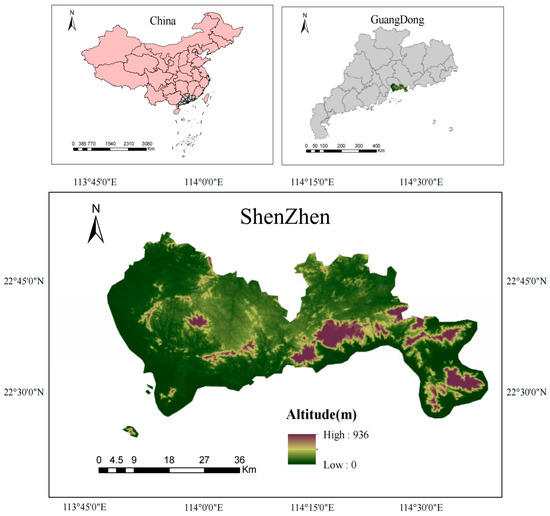
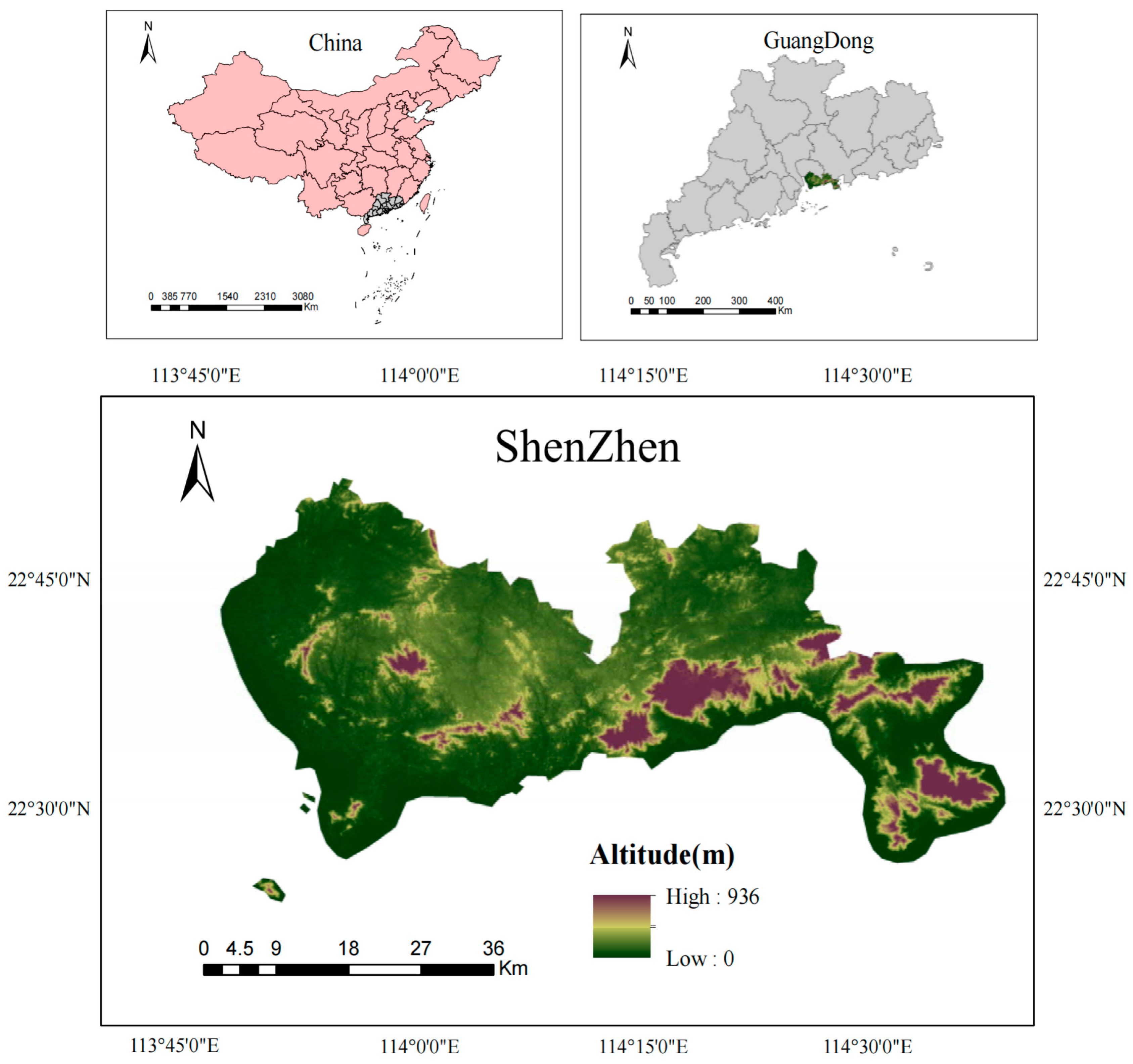
Shenzhen is located at 113°46′–114°37′ E and 22°27′–22°52′ N (excluding the Shenzhen–Shanwei area). As one of China’s most rapidly urbanized megacities, Shenzhen has a population exceeding 17 million and is characterized by extensive impervious surfaces [21], dense infrastructure, and complex drainage networks—factors that significantly influence urban flood processes. The city has a subtropical maritime climate with abundant rainfall [22]. The long-term mean annual precipitation is 1925 mm, but its spatial distribution is uneven—higher in the western coastal areas and lower in the eastern mountainous areas—showing a decreasing pattern from east to west: about 2000 mm in the eastern area, 1700–2000 mm in the central area, and about 1700 mm in the western area. Precipitation is also unevenly distributed over time, with rainfall mainly concentrated in the flood season from April to October, accounting for about 85% of the annual total. Owing to this spatiotemporal variability, droughts and floods often occur alternately. In a Geographic Information System (GIS), data on these flood events are represented in point form. Location information on historical flood disasters was obtained from public data sources such as the Shenzhen Water Resources Bureau, the Shenzhen Transport Bureau, and Shenzhen news outlets. Drawing upon location details contained within these public datasets, point features were generated via GIS software (ArcGIS 10.7)to precisely delineate the collected waterlogging sites. This resulting geospatial data forms a reliable basis for building subsequent flood susceptibility models, holding essential importance for the broader framework of flood disaster research and mitigation. The geographic location and spatial distribution of waterlogging points in Shenzhen are shown in Figure 1.The number of waterlogging points and annual rainfall in Shenzhen from 2020 to 2024 are summarized in Table 1.
Figure 1.
Research area.
Table 1.
Waterlogging points and annual rainfall in Shenzhen (2020–2024).
2.2. Research Data
Urban flood disasters result from the combined effects of climatic, topographic, and anthropogenic factors. In highly urbanized areas such as Shenzhen, land cover change, impervious surfaces, and urban drainage infrastructure play an equally important role in shaping flood susceptibility [23]. Based on a comprehensive analysis of Shenzhen’s urban underlying surface characteristics and meteorological conditions, this study ultimately selected nine influencing factors that show the strongest relevance to flood disasters. Among these factors, land use serves as a critical proxy for urbanization intensity, capturing the extent of impervious surfaces and the spatial distribution of urban infrastructure, both of which strongly influence runoff generation and drainage capacity.
2.2.1. Flood Point Data
This study utilized publicly accessible data from the Shenzhen Meteorological Bureau and the Shenzhen Water Resources Bureau to precisely map the spatial distribution of waterlogging sites across the city. Following systematic screening and georeferencing within GIS software, a final set of 741 waterlogging points recorded between 2020 and 2024 was selected as the study’s positive samples. To enable a balanced comparative analysis, an equivalent number of control samples—741 non-waterlogging points—were generated across Shenzhen via randomized spatial sampling with a minimum distance of 100 m from any waterlogging point to avoid spatial autocorrelation. Specifically, the sampling was conducted within the administrative boundaries of Shenzhen using the “Create Random Points” tool in ArcGIS. To avoid spatial overlap with positive samples, the randomly generated points were constrained to locations at least 100 m away from any known waterlogging point. No additional constraints were applied regarding land use or topography, ensuring that the control sample reflects the natural spatial distribution of the study area. This approach helps prevent sampling bias and provides a representative set of non-flood locations for model training and validation.
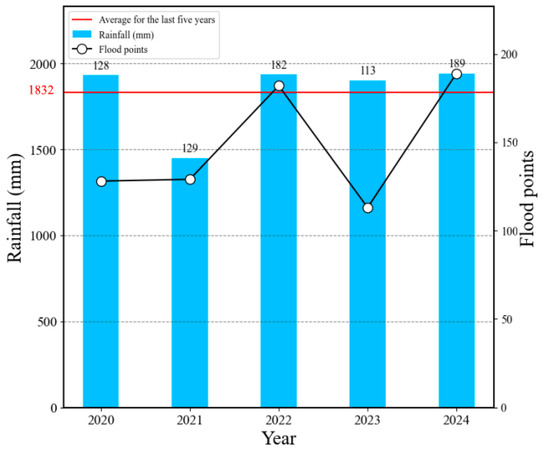
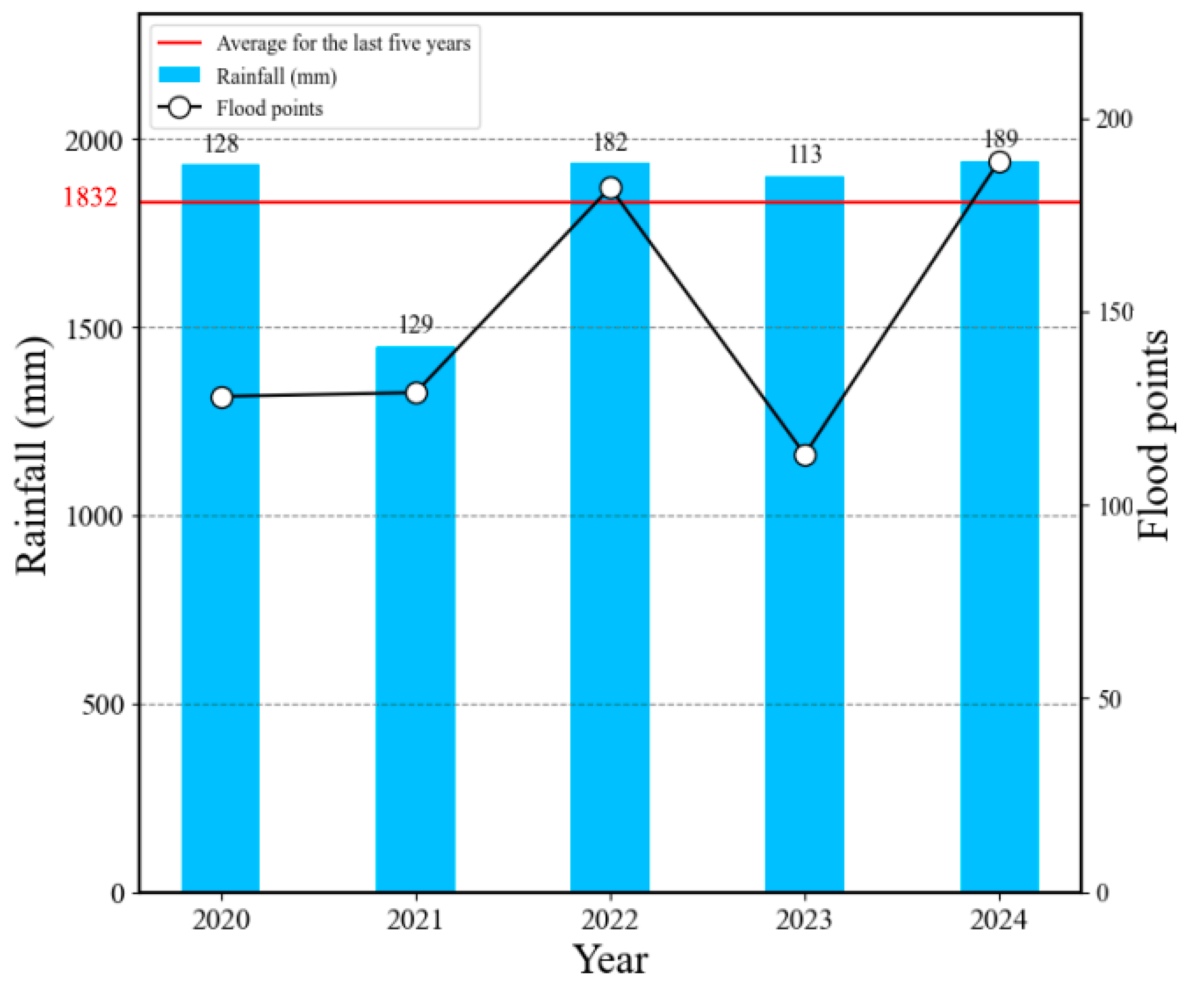
The dataset was partitioned in a 7:3 ratio for model development and evaluation. For training, 519 waterlogging points and 519 non-waterlogging points provided the foundational data for the model to discern characteristic patterns of flood and non-flood conditions. The remaining 222 points of each category were held back for validation, where real-world data assessed the model’s predictive accuracy and generalization capacity. This rigorous split ensures the model’s robustness and practical applicability, thereby supporting more precise prediction and mitigation strategies for urban flood disasters.The annual rainfall and number of waterlogging points from 2020 to 2024 are visualized in Figure 2.
Figure 2.
Average Annual Rainfall and Number of Waterlogging Points in Shenzhen from 2020 to 2024.
2.2.2. Flood Influencing Factors
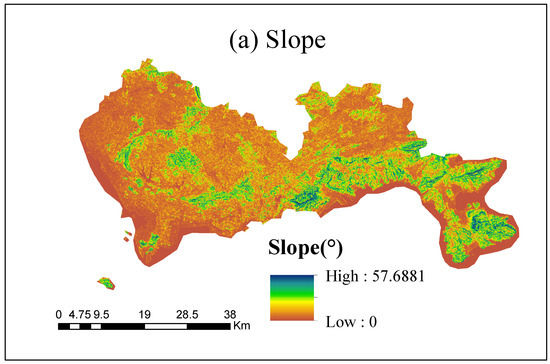
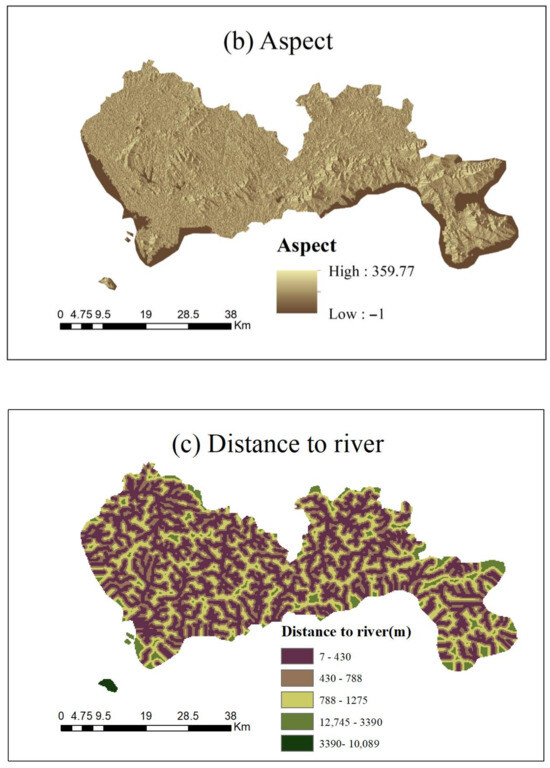
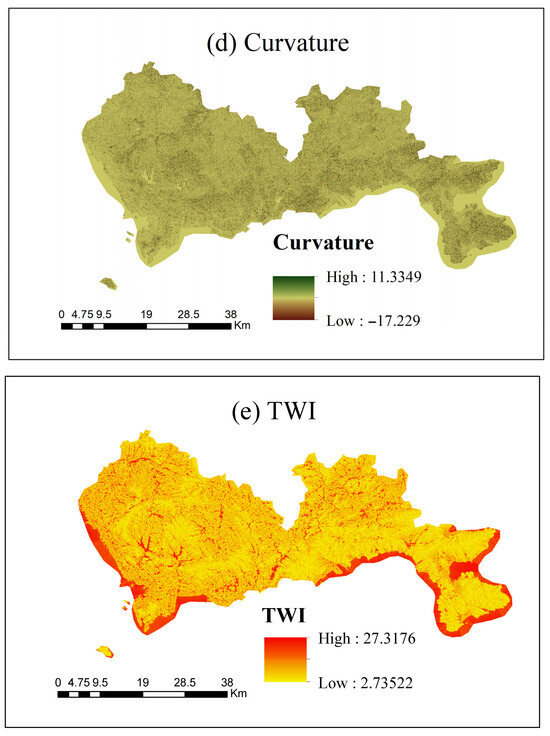
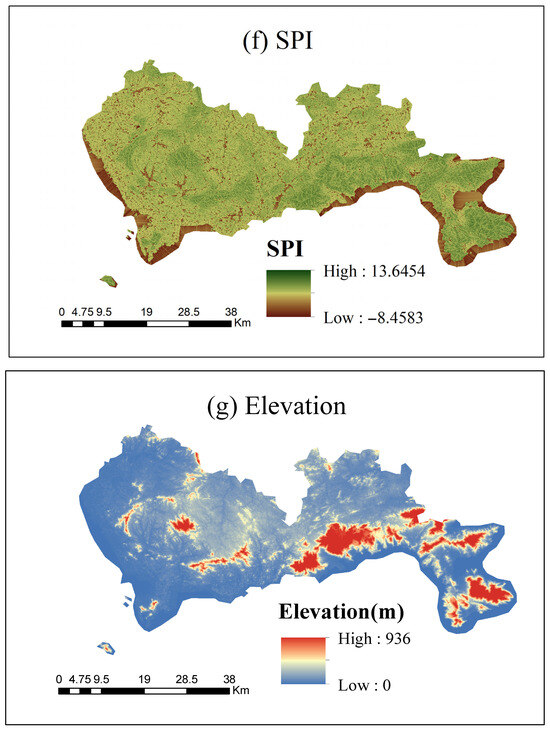
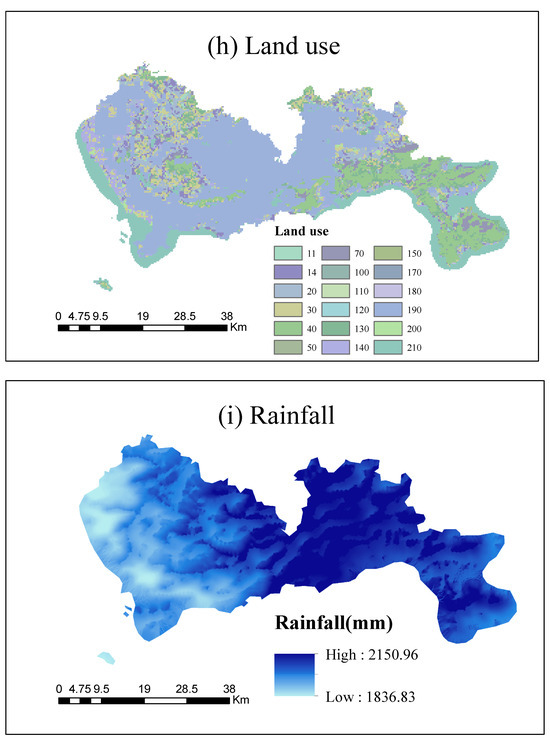
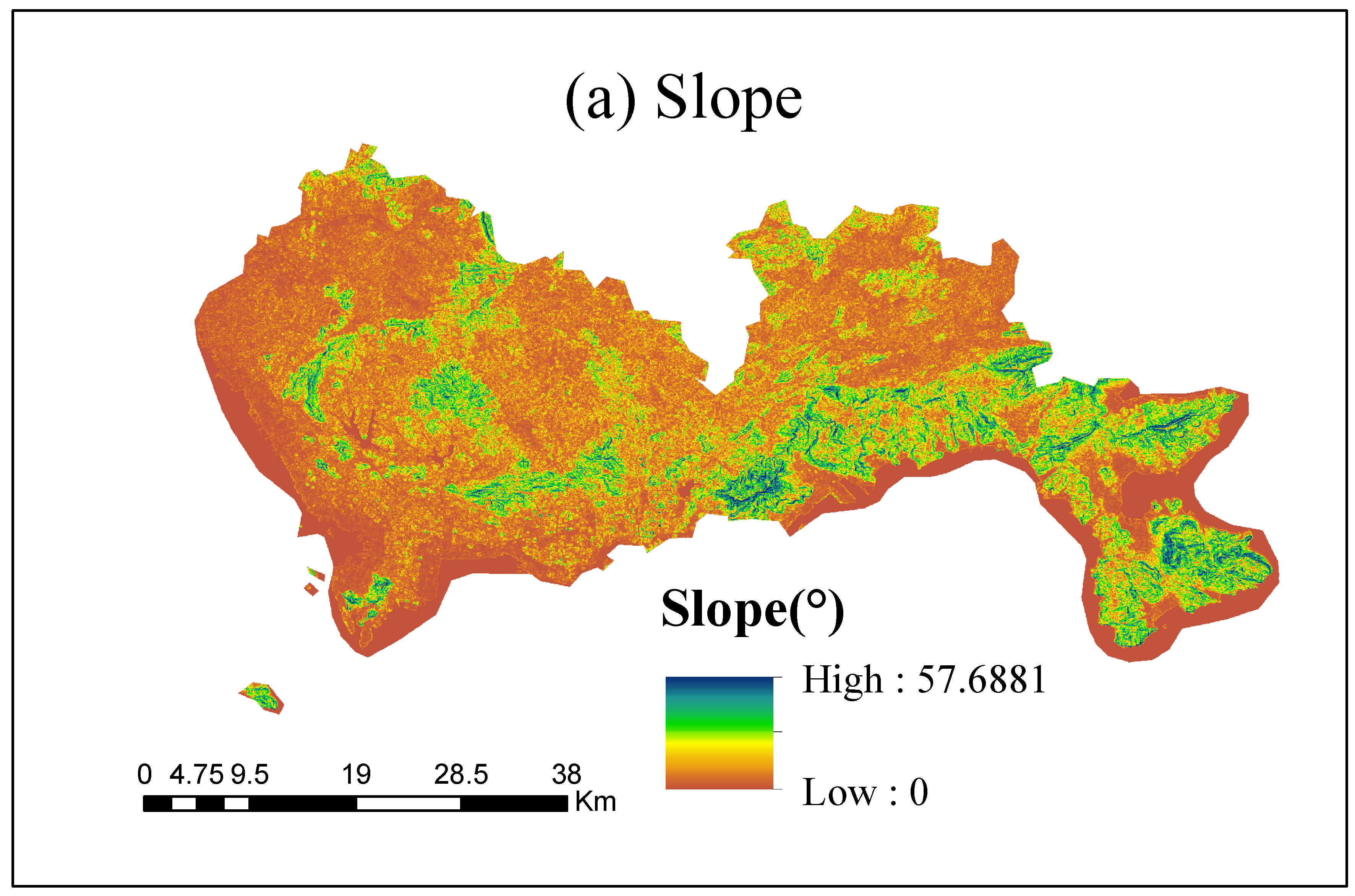
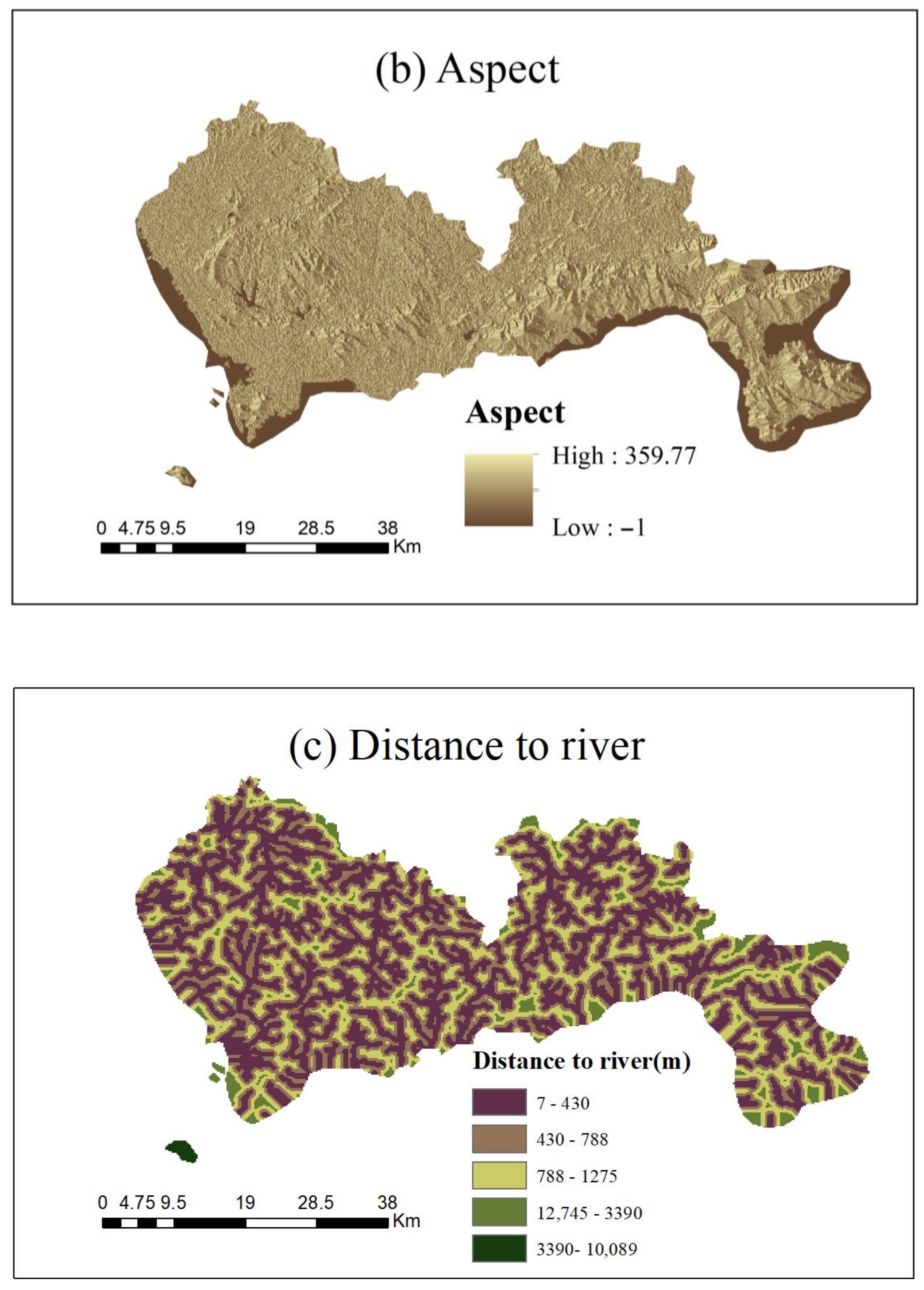
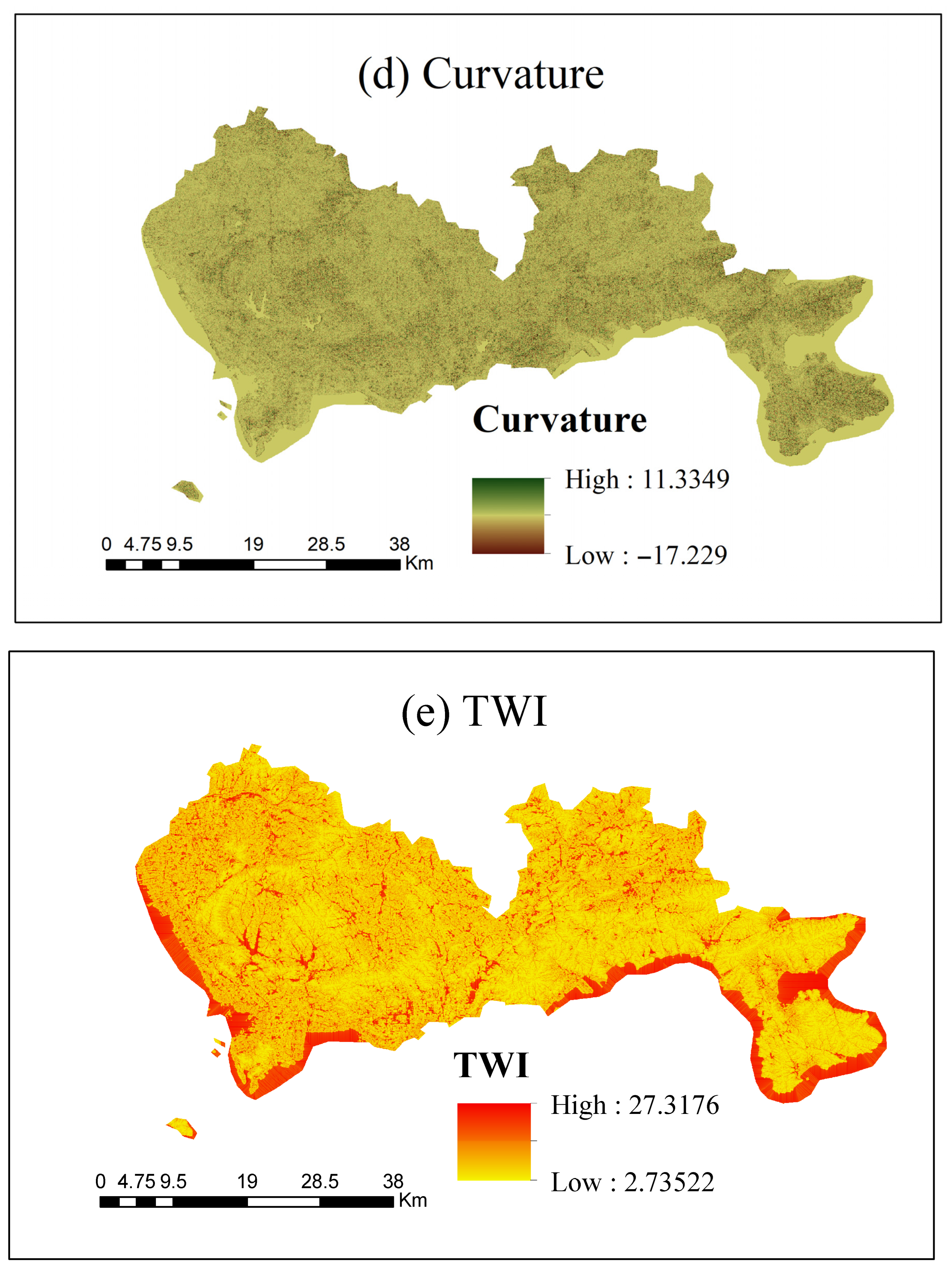
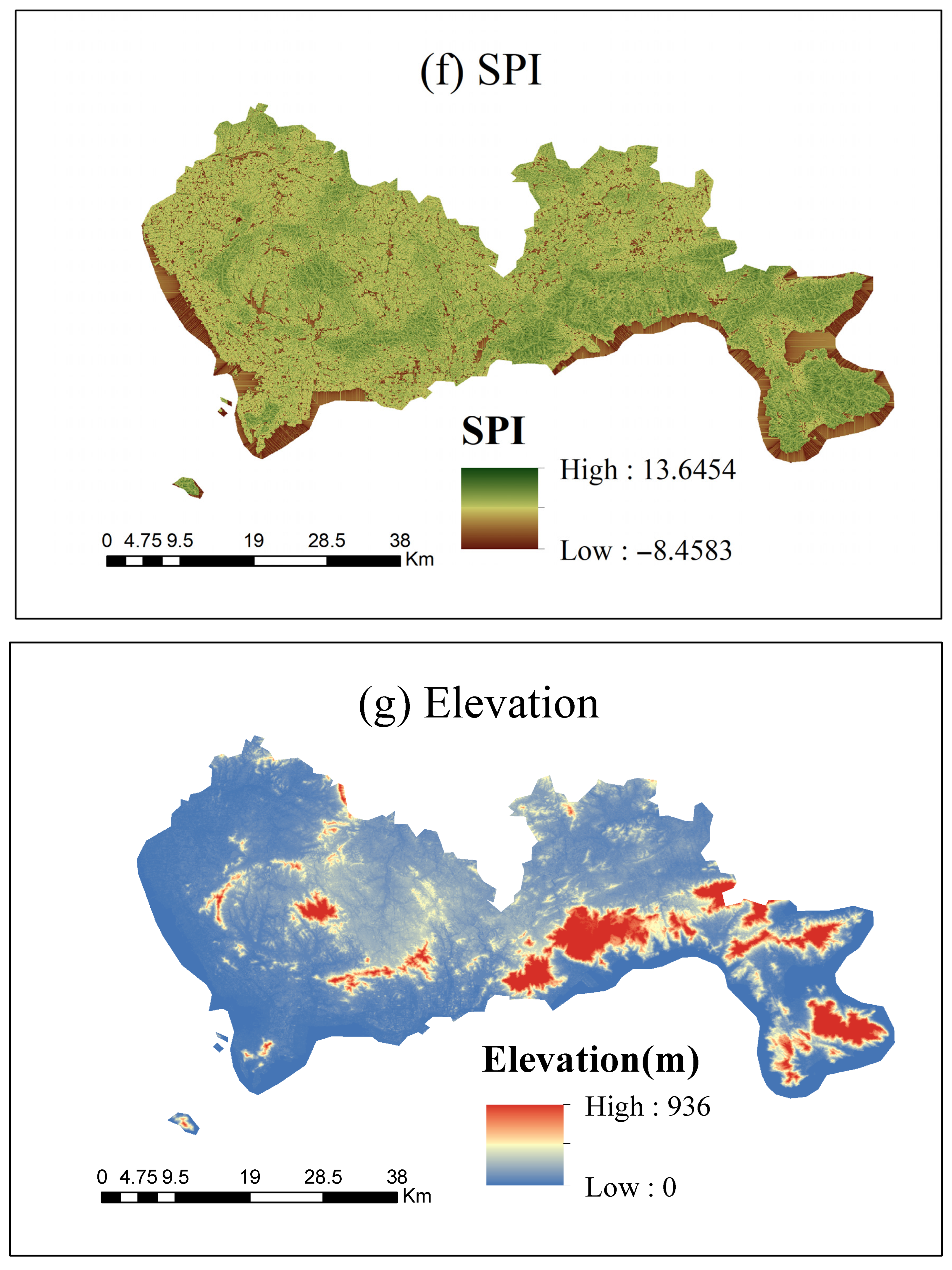
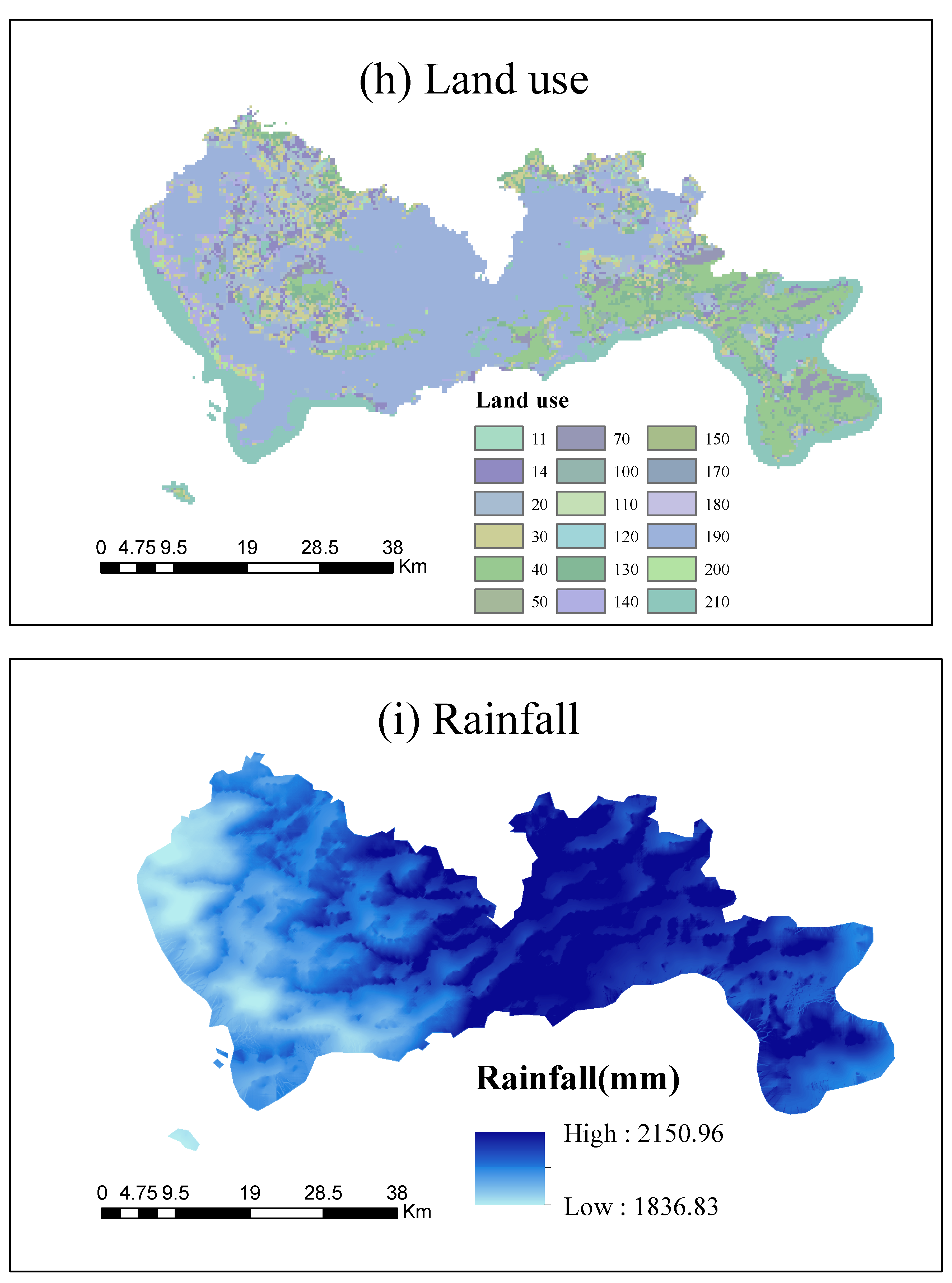
Drawing from prior research (Fu et al., 2022) [24], this investigation identified and compiled nine critical factors that influence urban flood disasters for detailed analysis. These nine factors are slope (Figure 3a), aspect (Figure 3b), distance to rivers (Figure 3c), curvature (Figure 3d), TWI (Figure 3e), SPI (Figure 3f), land use (Figure 3g), and rainfall (Figure 3h). Each of these factors carries distinct hydrological significance. Elevation influences gravitational drainage potential, with lower areas typically more prone to water accumulation. Slope reflects surface runoff velocity; steeper slopes facilitate rapid drainage, while gentle slopes or flat terrain increase the likelihood of ponding. Aspect affects solar radiation and evapotranspiration, indirectly influencing soil moisture conditions. Curvature describes surface morphology: negative values indicate concave terrain that tends to concentrate water, whereas positive values represent convex, well-draining areas. Distance to rivers captures proximity to drainage networks; areas closer to rivers face higher flood risk due to potential backwater effects or bank overflow. The Topographic Wetness Index (TWI) is a dimensionless index that quantifies potential water accumulation based on upstream contributing area and local slope; higher TWI values suggest a greater tendency for saturation and flooding, while lower values correspond to well-drained zones. The Stream Power Index (SPI) reflects erosive power and sediment transport capacity. Land use influences infiltration and runoff generation, with urban impervious surfaces increasing runoff and vegetated areas promoting infiltration. Annual mean rainfall directly represents the climatic input driving surface water accumulation. Together, these factors capture the key environmental and anthropogenic controls on flood susceptibility in Shenzhen.
Figure 3.
Factors influencing the occurrence of floods.
The data sources are shown in Table 2. Remote-sensing imagery was obtained from the China Geospatial Data Cloud (gscloud.cn). Based on the ASTER GDEM dataset with 30 m resolution provided by the platform, a digital elevation model (DEM) was generated after preprocessing the administrative boundary data of Shenzhen. As a core component of geospatial data, the DEM can effectively represent surface elevation and terrain morphology at regional scales, and it supports spatial analysis of terrain parameters such as slope and curvature. It is worth noting that the 30 m ASTER GDEM and Landsat 7 ETM+ datasets were the primary publicly available sources at the time of this study. While this resolution is sufficient for city-wide flood susceptibility modeling, it may not fully capture fine-scale urban features—such as streets, small drainage channels, and minor depressions—that can influence localized water accumulation. The use of these datasets is therefore justified by their accessibility and suitability for the regional-scale analysis, while acknowledging the inherent limitations for capturing micro-topographic details. Using the generated DEM, this study further derived elevation, slope, aspect, distance to rivers, and several terrain-related indices, including the Stream Power Index (SPI), Sediment Transport Index (STI), and Topographic Wetness Index (TWI). Land-use data were derived from Landsat 7 ETM+ satellite remote-sensing imagery, while rainfall data for Shenzhen were extracted from the Shenzhen Climate Bulletin [25]. The land use classification codes are presented in Table 3.
Table 2.
Flood impact factors and data sources in the study area.
Table 3.
Land use classification codes.
2.2.3. Data Integration and Extraction in GIS
After successfully processing the base maps of all influencing factors—such as slope, aspect, and rainfall—on the GIS platform, we focused on accurately extracting the specific values of these factors for all flood (waterlogging) points and non-waterlogging points, thereby providing a complete data foundation for subsequent machine learning model training [26]. To achieve this, we made full use of the “Extract Values to Points” tool in the GIS toolbox to efficiently convert and output the values corresponding to each influencing factor in the form of point feature files, and then further exported the values from the point files into Excel spreadsheets. This meticulously structured workflow efficiently assembled the sample data necessary for machine learning, thereby creating a robust groundwork for subsequent model development and analytical processes.
3. Research Methods
3.1. Selection of Machine Learning Algorithms
In flood susceptibility modeling, algorithm selection is a key prerequisite for prediction accuracy, yet it poses significant challenges. Machine learning includes dozens of supervised and unsupervised algorithms, each with different learning mechanisms and data suitability. There is no “absolutely best” algorithm; selection must be tailored to specific needs—such as data scale and type, research objectives, and application scenarios [27].
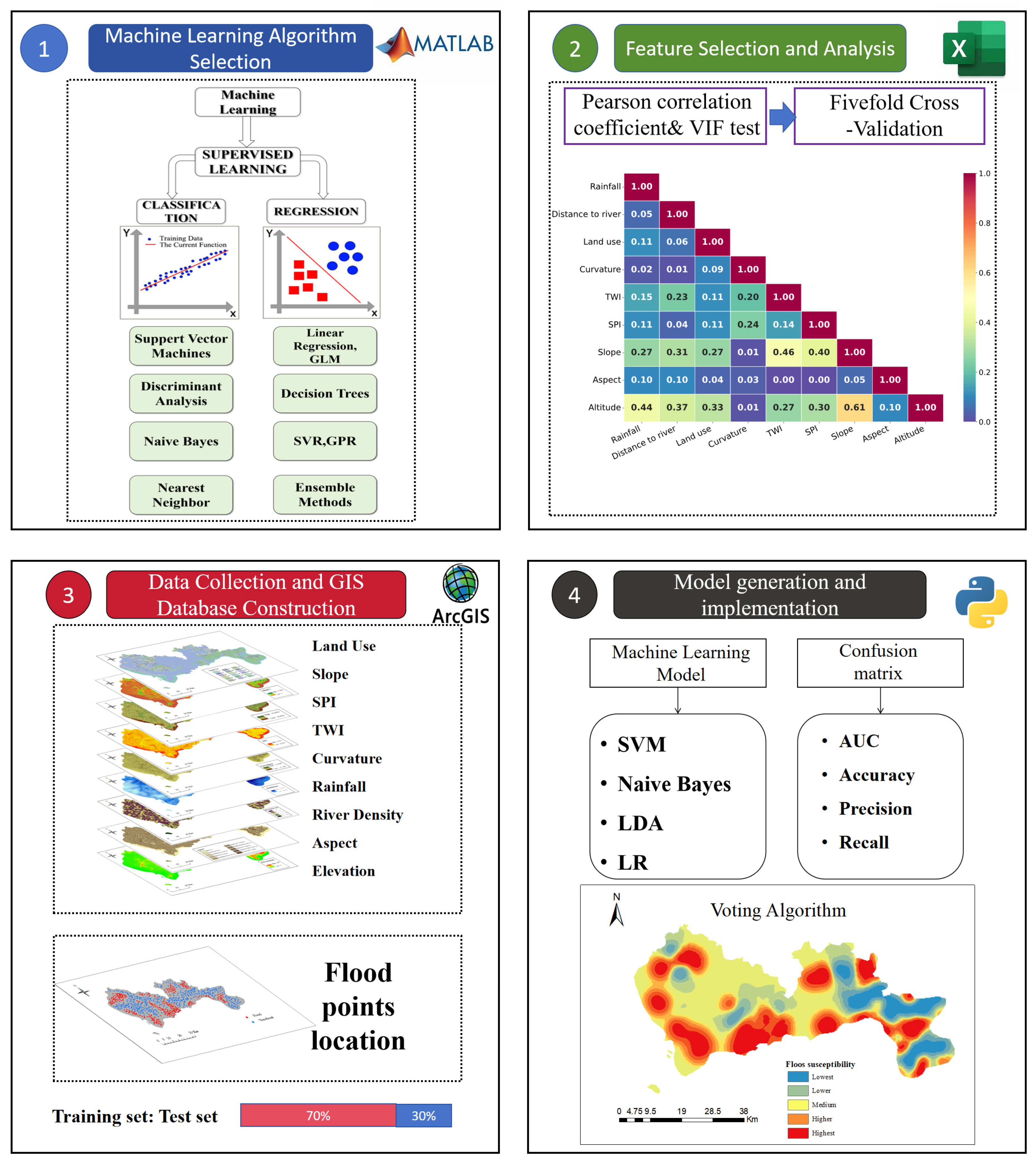
From the perspective of scenario characteristics, flood susceptibility modeling requires prediction based on a “feature–label” correspondence (e.g., terrain and rainfall features paired with historical flood labels); therefore, supervised learning has become the mainstream approach.The overall methodological framework of this study is illustrated in Figure 4. Its core logic is to construct an optimal mapping model from training data containing “input features–output labels” (such as “flood-prone/non-flood-prone”), and then convert the features of unseen data into labels to complete the prediction [28].
Figure 4.
Flowchart of Flood Susceptibility Prediction in Shenzhen Based on the Integration of Machine Learning and Voting Algorithms.
The voting ensemble algorithm in this study adopts the majority voting principle, where the final prediction is determined by the most frequent class label across the five base models. This method provides a simple and effective way to combine model outputs while reducing the bias of any single algorithm. Notably, majority voting assigns equal weight to each base model, simplifying the integration process and avoiding overfitting risks that may arise from learning ensemble weights on a limited validation set. Although weighted voting—where model contributions are weighted by individual performance metrics such as AUC or F1-score—could further enhance predictive accuracy, the equal-weight scheme was adopted for the above reasons. Future research will explore adaptive weighted ensemble strategies to better exploit the complementary advantages of individual models.
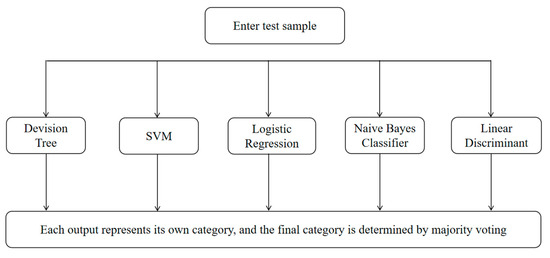
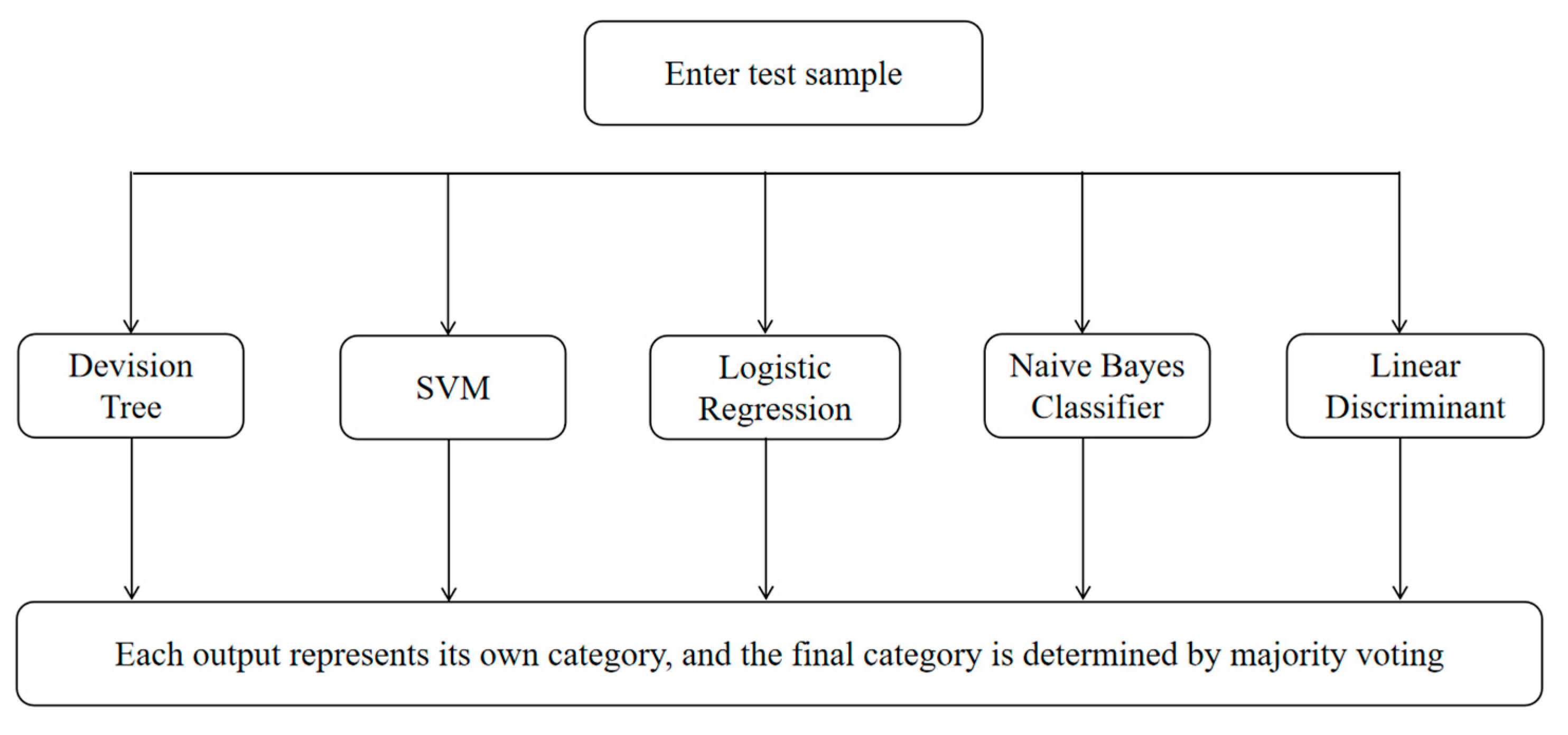
The core research design of this paper is as follows: five traditional machine learning models suitable for classification tasks [29,30,31] are selected to train and test flood susceptibility data; the modeling performance of each model (e.g., prediction accuracy and stability) is systematically analyzed, and their performance in feature fitting and susceptibility-class classification is compared. As shown in Figure 5, to improve prediction reliability (and avoid bias from any single model), a voting ensemble algorithm is introduced to fuse the predictions of the five models. Following the “majority voting” principle, class predictions are tallied to generate an ensemble dataset, which is then used for comprehensive flood susceptibility assessment.
Figure 5.
Voting Algorithm Flowchart.
3.2. Feature Selection and Analysis
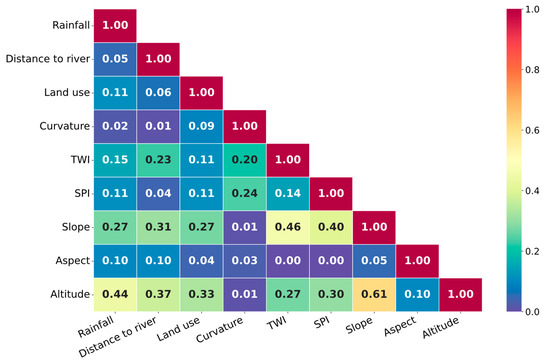
The features in the dataset reflect the characteristics of the study area, and they are crucial to model performance and to the reliability of the resulting flood susceptibility map. To avoid multicollinearity among the selected factors, multicollinearity was tested by calculating Pearson correlation coefficients [32]. Figure 6 shows the pairwise correlations among the factors controlling flood susceptibility. A Pearson coefficient close to 1 indicates a strong positive correlation between two influencing factors, whereas a value close to 0 indicates that the two factors are independent. According to previous studies, a Pearson coefficient greater than 0.7 may lead to multicollinearity problems As shown in Figure 6, the Pearson coefficients of all evaluation factors are below the 0.7 threshold. The results indicate that the nine influencing factors are independent and will not cause multicollinearity issues in the database.
Figure 6.
Pairwise correlation relationships among the controllable factors of flood susceptibility.
3.3. Data Collection and GIS Database Development
Data acquisition and GIS database development were carried out in three steps: collecting the flood inventory map and influencing factors, generating flood-related data [33], and building the GIS database. In the GIS database, all flood data were assigned a value of “1,” while all non-flood data were assigned a value of “0.” The influencing factors were reclassified using the natural breaks (Jenks) method together with expert judgment [34]. Factors were extracted using the “Extract Multi Values to Points” tool in ArcGIS to construct the original dataset.
3.4. Model Development and Implementation
3.4.1. Data Partitioning and Model Configuration
In this study, the predicted probability output by the classifier refers to the probability that a location belongs to the flood-prone class (class 1) within a flood susceptibility framework. It should not be interpreted as a hydraulic estimate of flood depth, discharge, inundation duration, or other physical flood characteristics.
GIS-derived influencing factors were integrated via a sample-based approach. For each waterlogging and non-waterlogging point, the nine influencing factors were extracted using the “Extract Values to Points” tool in ArcGIS, forming a structured dataset of feature vectors (e.g., elevation, slope, distance to rivers) and binary labels (flood or non-flood). These feature–label pairs served as model inputs, allowing the relationship between GIS factors and flood susceptibility to be learned implicitly. Subsequent kriging interpolation converted point-based predictions into continuous susceptibility surfaces, maintaining a clear separation between data extraction and predictive modeling.
A preliminary screening without hyperparameter tuning tested multiple classifiers, including decision trees, SVM, and logistic regression [35]. Based on prediction accuracy and stability, five models were selected for further analysis: decision tree, SVM, logistic regression, naïve Bayes, and linear discriminant analysis (LDA).
Model training and evaluation were conducted in Python (Python 3.12) using Scikit-Learn, with MATLAB (MATLAB 2020a)’s Deep Learning Toolbox assisting certain data processing tasks [36].
3.4.2. Cross-Validation Stability
To further assess model robustness, we conducted 5-fold cross-validation on the training dataset. For each fold, the model was trained on 80% of the training samples and validated on the remaining 20%. The voting ensemble achieved a mean AUC of 0.8156 with a standard deviation of 0.0083 across the five folds (Table 4). The low variance confirms that the model’s performance is stable and not sensitive to the specific partition of the training data.
Table 4.
Cross-validation results (5-fold) for the voting ensemble.
3.4.3. Factor Sensitivity Analysis
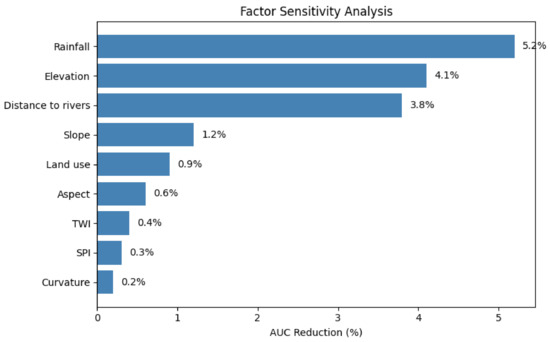
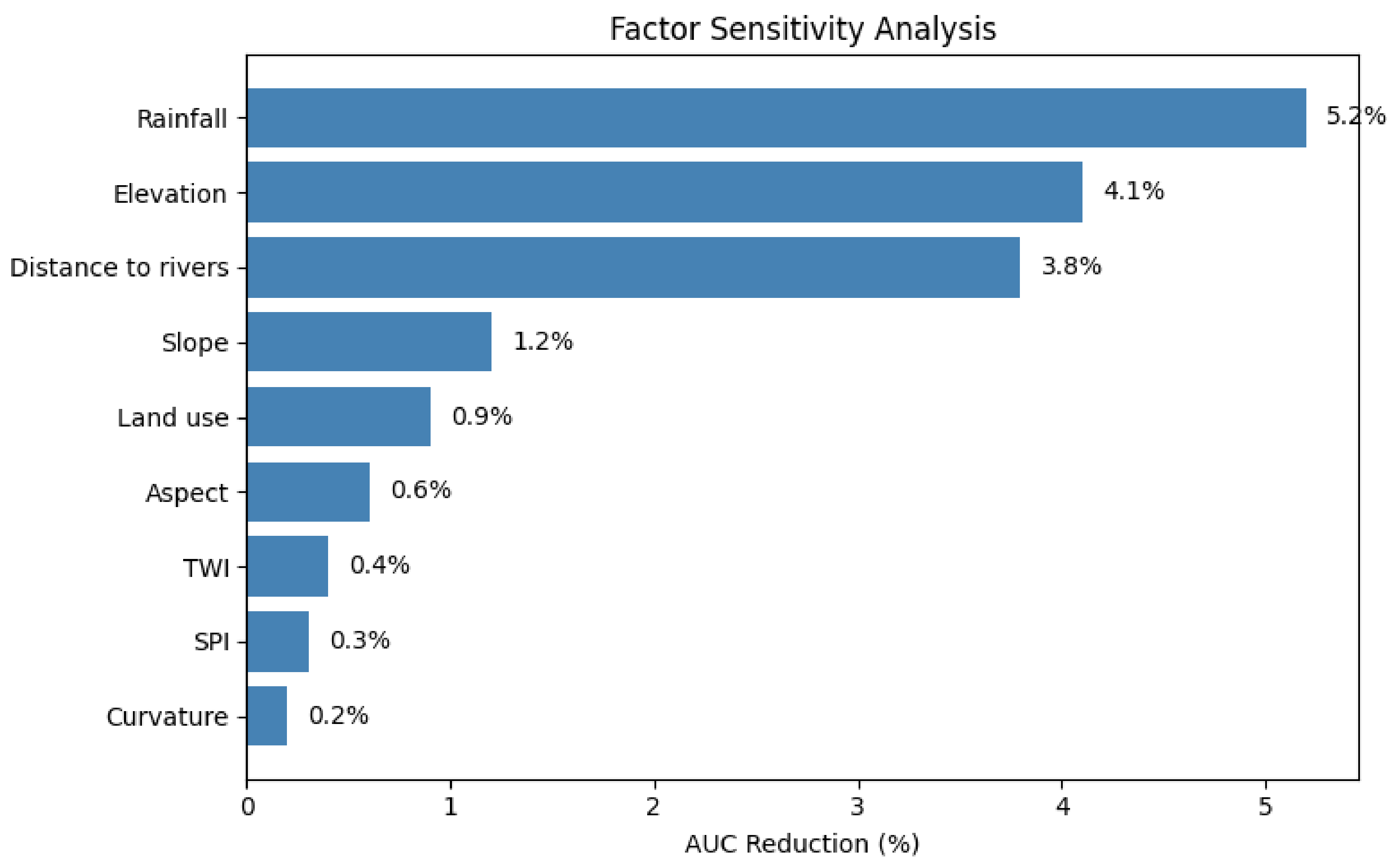
To verify the rationality of the selected flood influencing factors, we performed a sensitivity analysis by sequentially removing each factor and evaluating the change in the ensemble model’s AUC on the test set (Figure 7). The removal of rainfall led to the largest AUC reduction (5.2%), followed by elevation (4.1%) and distance to rivers (3.8%). In contrast, removing curvature, SPI, or TWI resulted in AUC reductions below 0.5%. These results quantitatively confirm that the three factors identified by SHAP analysis are indeed the most influential, supporting the appropriateness of the factor selection. Moreover, the minimal impact of removing the less influential factors suggests that the model is not overly reliant on any single variable, further demonstrating its robustness. We note that the output probability from the trained classifiers is the posterior probability of the positive class (flood-prone) under the binary classification setting. It reflects the model’s confidence in classifying a site as flood-susceptible based on the selected influencing factors, rather than a physically based flood frequency or hydraulic probability.
Figure 7.
Bar Chart of Factor Sensitivity Analysis.
4. Results and Discussion
4.1. Confusion Matrix
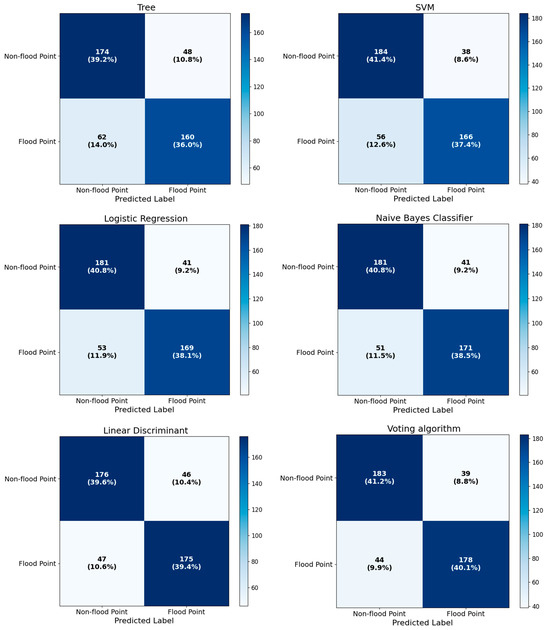
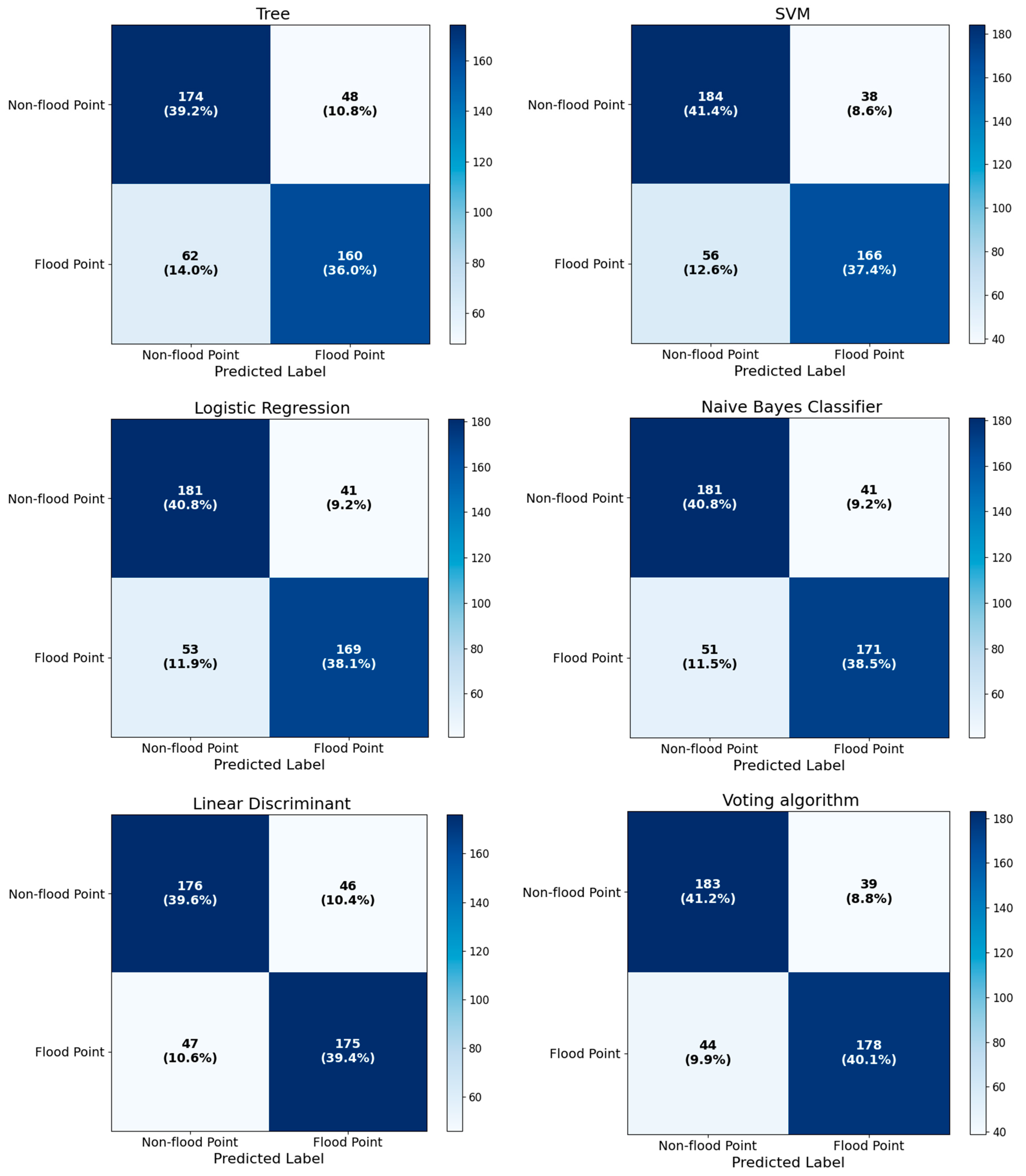
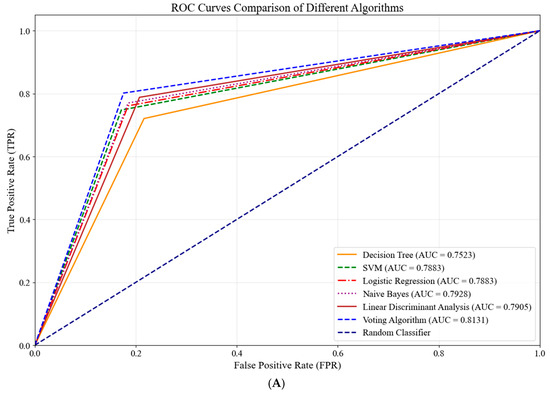
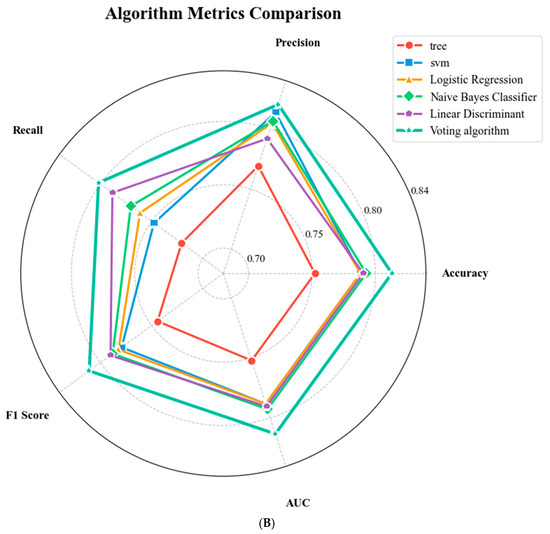
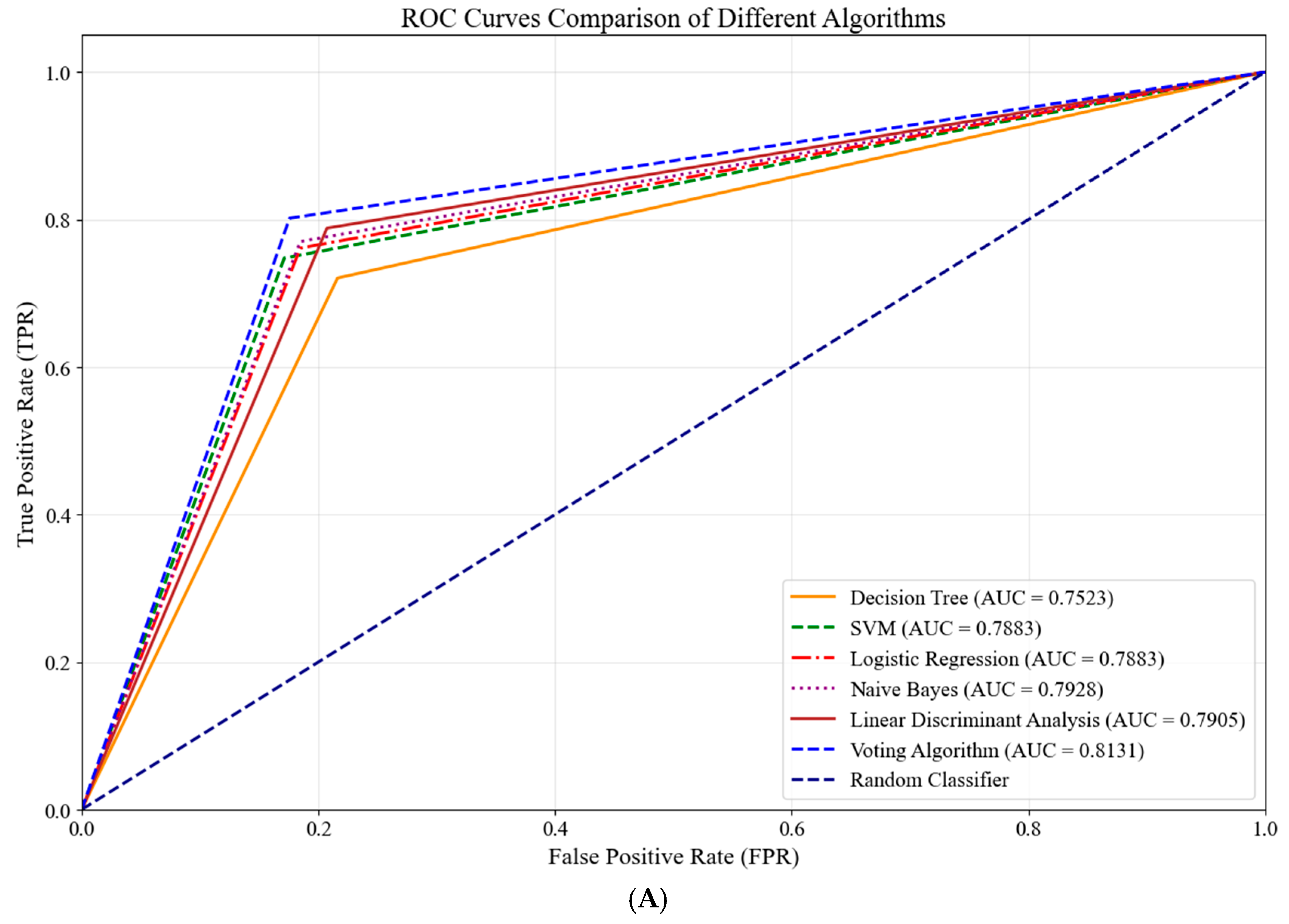
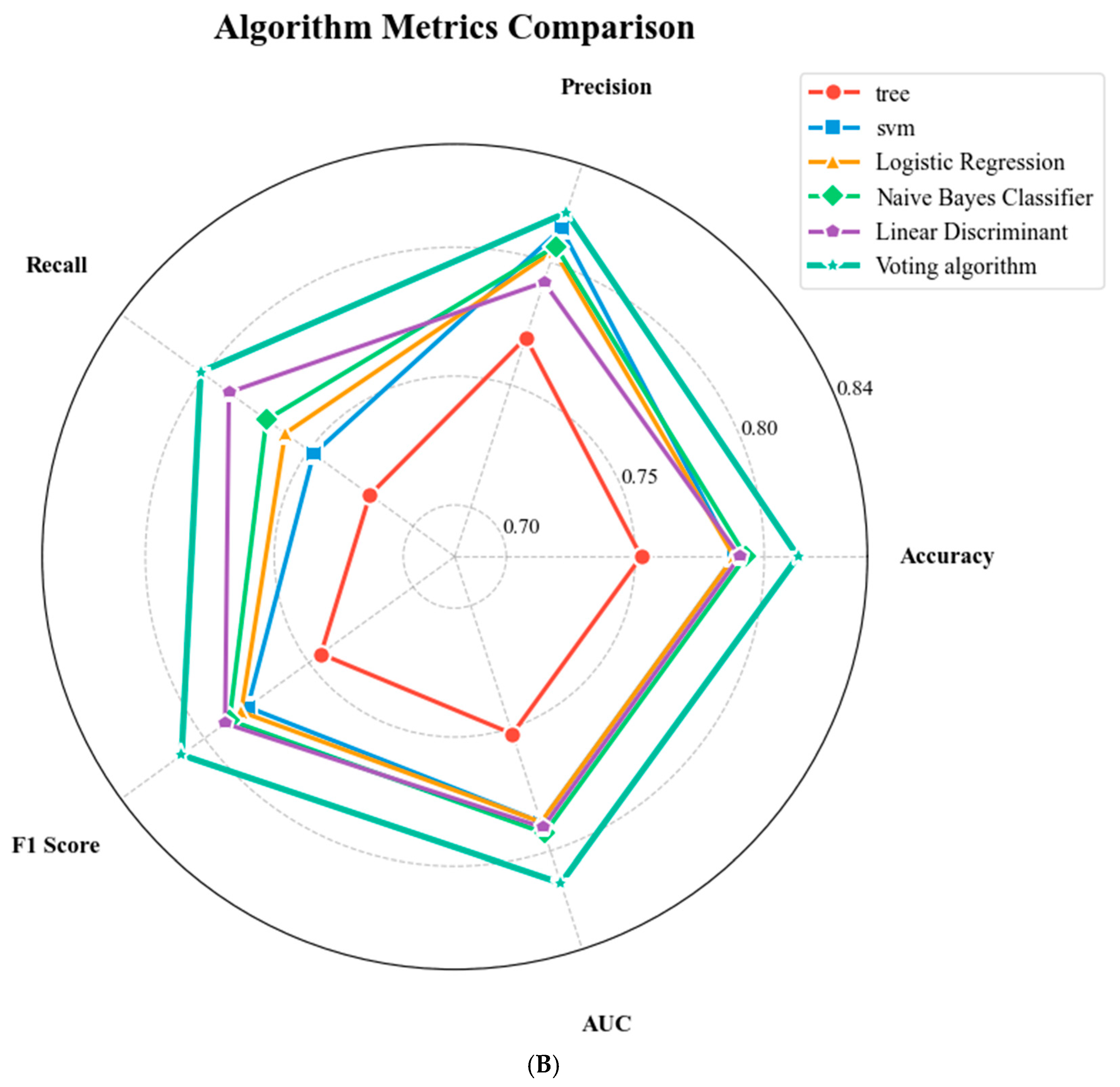
A confusion matrix serves as an essential instrument for assessing classification model performance. Figure 8 displays the confusion matrices for six machine learning models. Figure 9 presents the ROC curves and corresponding performance metrics. As evident in Figure 10, the confusion matrix for the voting ensemble algorithm is distinctly superior to those of the other models regarding classification effectiveness, demonstrated by its elevated accuracy and recall rates. These metrics signify the model’s enhanced capacity to differentiate between flood and non-flood samples [37].
Figure 8.
Confusion matrices of several machine learning algorithms.
Figure 9.
Model performance (A) ROC curve; (B) performance metrics.
Figure 10.
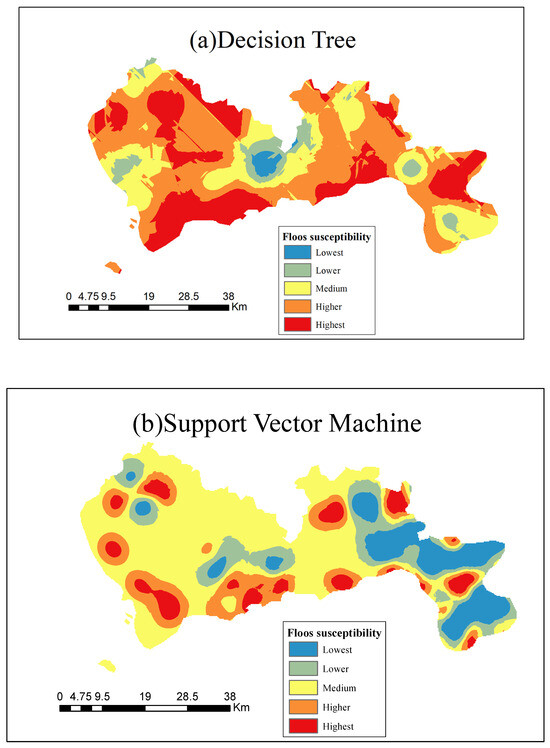
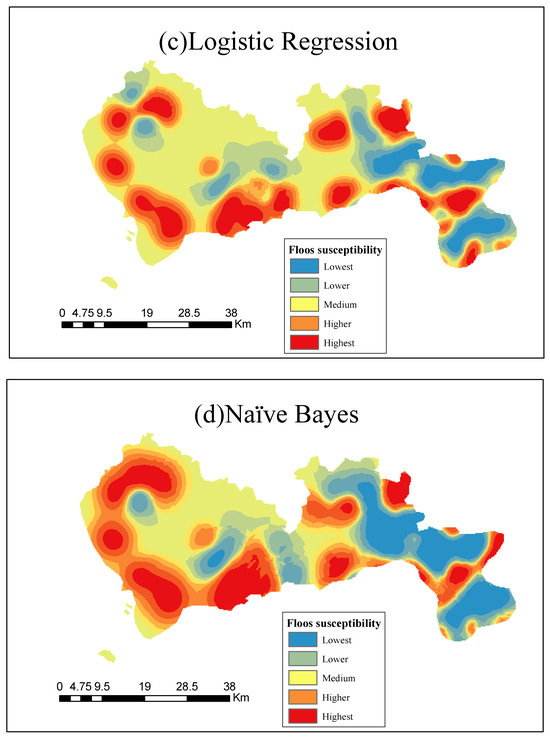
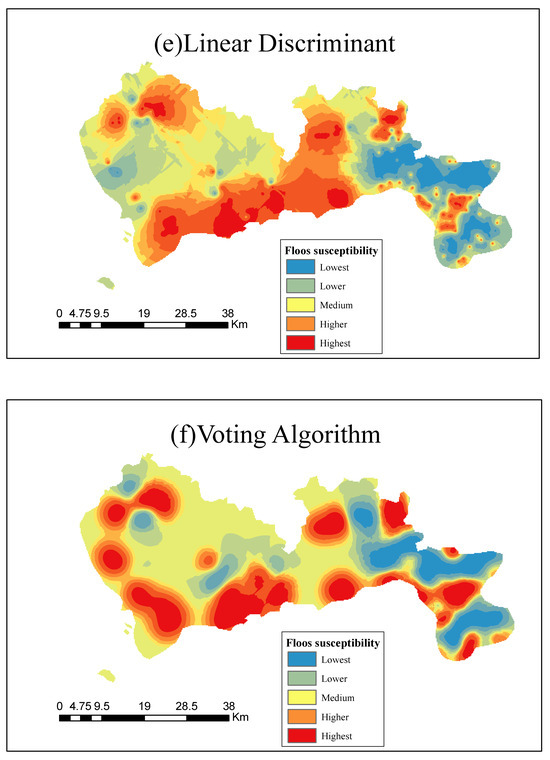
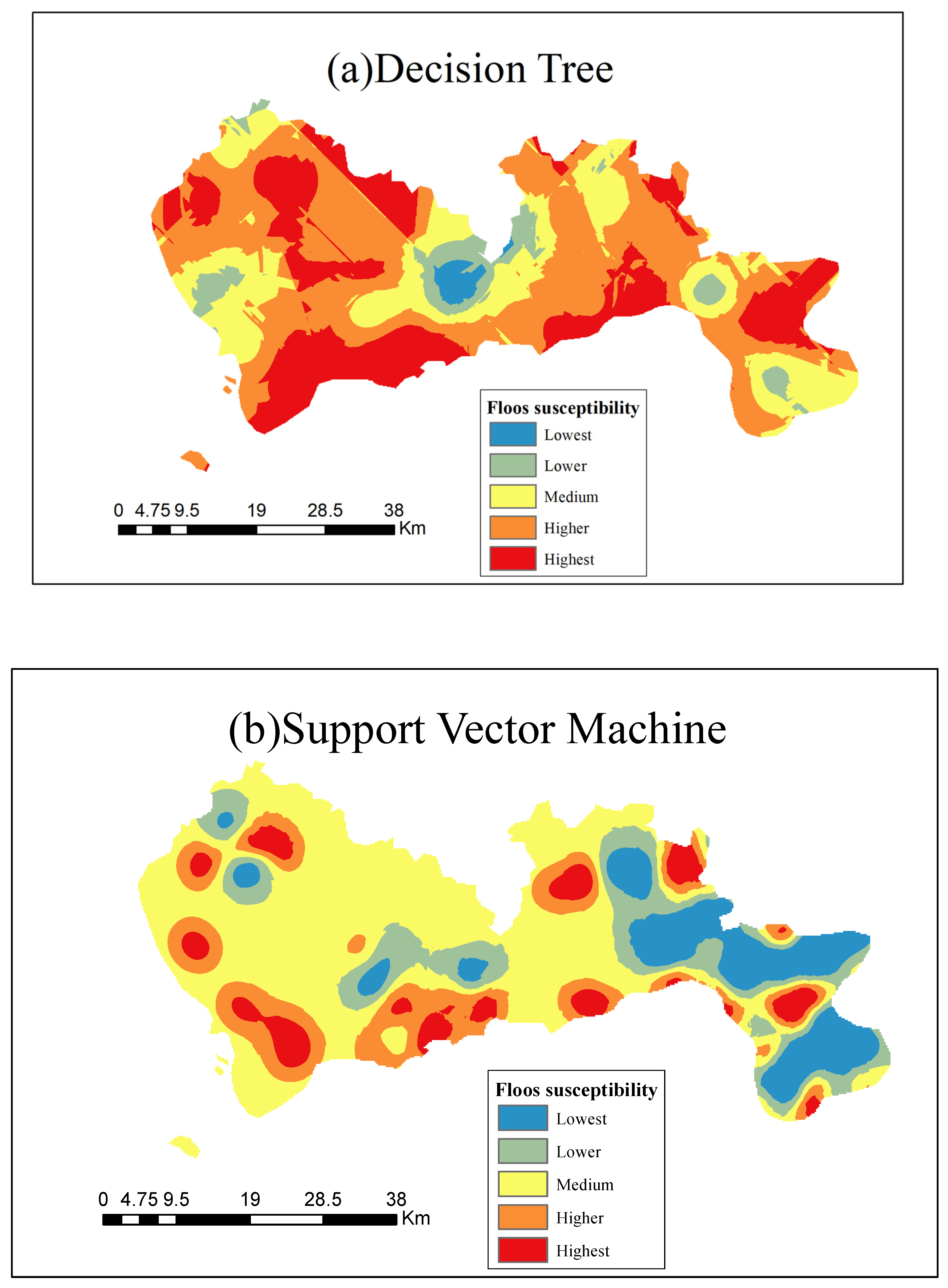
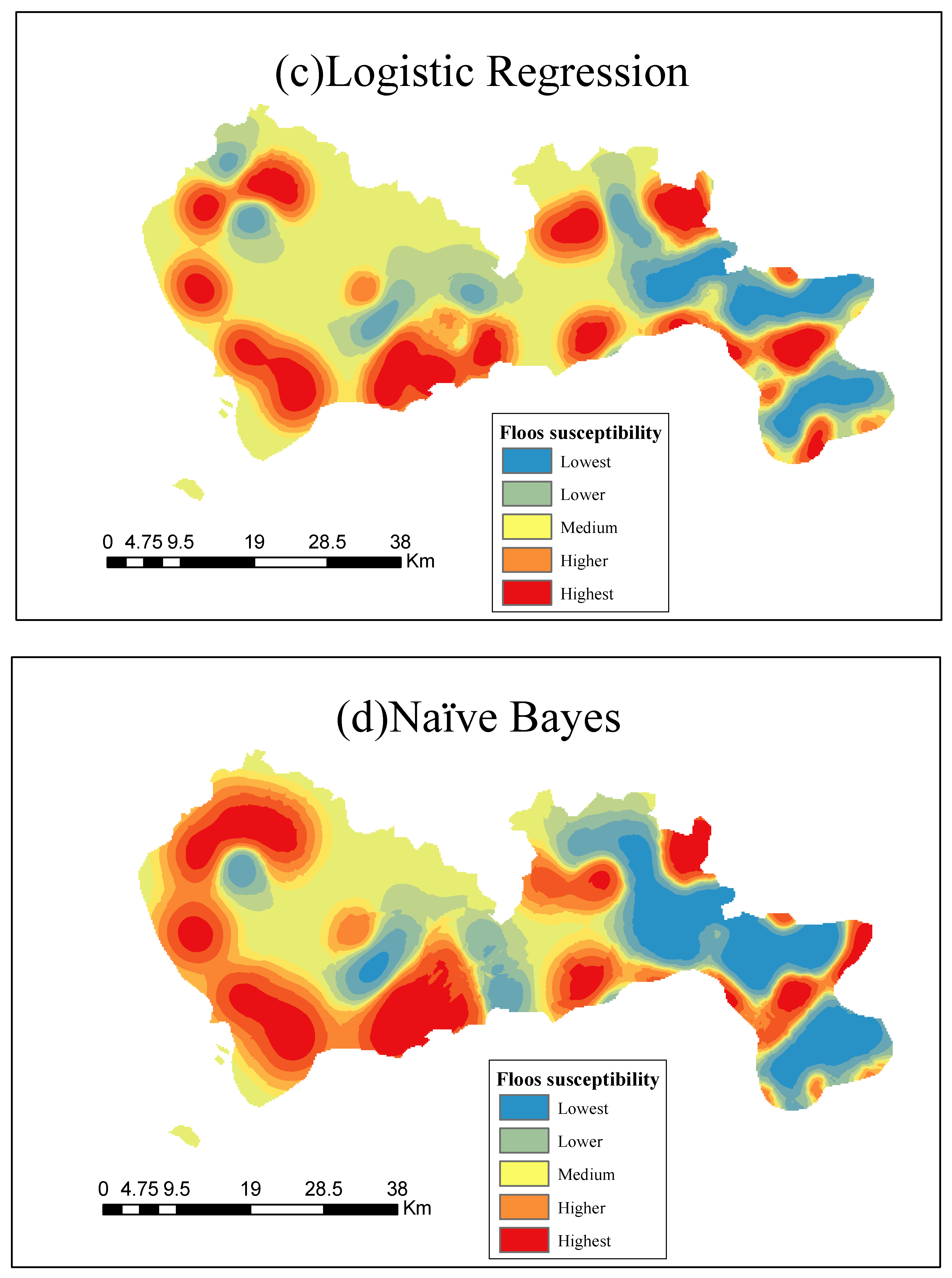
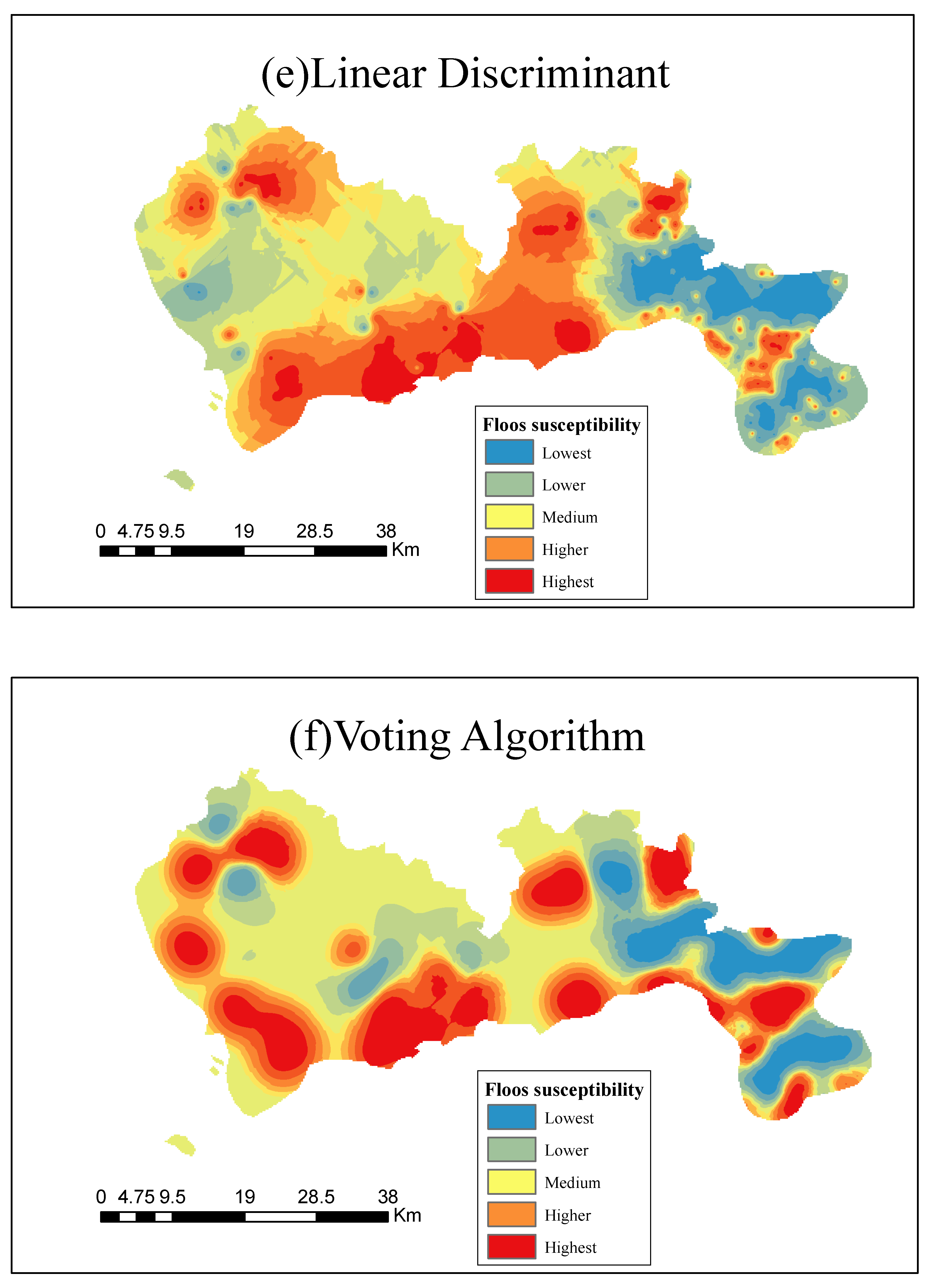
Flood susceptibility maps obtained from machine learning models. Note: The color scale in each map represents the model’s predicted probability of belonging to the flood-prone class (flood susceptibility probability). This probability does not correspond to a hydraulic probability (e.g., probability of exceeding a certain flood depth or discharge).
For a more systematic and quantitative assessment of each model’s overall effectiveness, this study subsequently examined their outcomes against essential metrics: Accuracy, Recall, Precision, the F1-score, and the Receiver Operating Characteristic (ROC) curve. These metrics characterize the robustness of model classification from different perspectives: accuracy reflects the overall rate of correct classification; recall measures the completeness of identifying positive samples (flood events); precision indicates the reliability of the predictions; the F1-score balances precision and recall; and the ROC curve and its corresponding Area Under the Curve (AUC) provide an intuitive view of a model’s generalization ability and resistance to noise under different thresholds. Through a combined multi-metric analysis, performance differences among the models can be more comprehensively revealed, providing a scientific basis for selecting the optimal model [38].
Beyond the aggregate improvements in accuracy and recall, a closer examination of the confusion matrices reveals how the voting ensemble modifies the error structure compared with individual models. The ensemble reduces both false positives (non-flood locations misclassified as flood) and false negatives (flood locations missed), but the reduction is more pronounced for false negatives. This indicates that the ensemble is particularly effective at improving the detection of actual flood events—a critical attribute for early warning and disaster response applications.
However, certain types of locations remain challenging for the ensemble. False positives tend to occur in areas characterized by moderate slopes and intermediate distances to rivers, where the interplay of topographic and hydrological factors creates ambiguous conditions that individual models interpret differently. False negatives, though fewer, are more common in the western coastal lowlands of Shenzhen (e.g., Bao’an and Nanshan districts), where rapid urbanization has introduced complex drainage infrastructure that is not fully captured by the current set of influencing factors. These persistent error patterns suggest that while ensemble voting successfully mitigates the biases of individual models, further improvements may require incorporating additional variables—such as drainage network density, soil infiltration capacity, or fine-scale urban morphology—to resolve the remaining ambiguities.
Understanding these error characteristics provides practical guidance for flood management. The ensemble’s high recall makes it well-suited for early warning applications where minimizing missed flood events is paramount. At the same time, the spatial patterns of false positives can inform targeted field investigations, helping to verify and refine model predictions in areas where the ensemble remains uncertain.
4.2. ROC Curve
The area under the curve (AUC) is a key indicator for measuring the overall performance of a classification model, and its value intuitively reflects the model’s ability to distinguish between positive and negative samples (i.e., flood and non-flood samples). In theory, an AUC of 1 indicates that the model can perfectly separate all flood samples from non-flood samples, achieving error-free prediction [39]; an AUC of 0.5 indicates that the model performs no better than random guessing and therefore has no practical predictive value [40].
Figure 9 presents the receiver operating characteristic (ROC) curves and corresponding key performance metrics of five different machine learning models. As shown in Figure 9A, on the test dataset, the ensemble voting model achieves the highest AUC value, reaching 0.813, indicating that it performs best in terms of overall classification effectiveness and has the strongest ability to distinguish between flood and non-flood samples. Further analysis shows that the remaining five machine learning models exhibit relatively similar performance in flood susceptibility prediction, with only minor differences in AUC values. Overall, the ensemble voting model demonstrates comparatively superior performance across all evaluation metrics, with greater stability and reliability in its predictions, providing more promising technical support for regional flood susceptibility forecasting.
To facilitate direct comparison of model performance, Table 5 summarizes the key evaluation metrics—Accuracy, Precision, Recall, F1-score, and AUC—for each of the five individual models and the voting ensemble. The results are consistent with the confusion matrices (Figure 8) and ROC curves (Figure 9), further confirming the superior performance of the ensemble approach.
Table 5.
Performance comparison of individual machine learning models and the voting ensemble.
The area under the ROC curve (AUC) provides a global measure of a model’s ability to discriminate between flood and non-flood samples, independent of any specific classification threshold. An AUC of 0.813 achieved by the voting ensemble indicates that for any randomly selected pair of flood and non-flood locations, the model will correctly rank the flood location as having higher susceptibility approximately 81.3% of the time. This level of discrimination is considered “good” in the context of flood susceptibility modeling, where values above 0.8 generally indicate reliable predictive performance.
Compared with the five individual models (AUC ranging from 0.752 to 0.793), the ensemble’s 2.03-percentage-point improvement is meaningful. Notably, the ensemble outperforms even the best individual model (Naïve Bayes, AUC = 0.7928) by a margin that exceeds the differences among the individual models themselves, demonstrating that the voting mechanism effectively synthesizes complementary predictive signals rather than simply averaging similar outputs.
A deeper examination of the ROC curves reveals differences in model behavior across the range of possible thresholds. The ROC curve of the decision tree model shows steeper initial increases followed by earlier flattening, reflecting its tendency to achieve high recall at the expense of specificity—a pattern consistent with overfitting to training data. In contrast, the ensemble maintains a more balanced trade-off between sensitivity (recall) and specificity across thresholds, as evidenced by its curve consistently dominating the individual models across most of the false positive rate spectrum. This balanced performance is particularly valuable for flood management applications, where both missing actual flood events (false negatives) and issuing false alarms (false positives) carry operational consequences. The ensemble’s ability to improve recall without substantially compromising specificity suggests that it better captures the underlying complexity of flood-influencing factors, making it more robust for practical deployment.
4.3. Flood Susceptibility Map
Once trained and optimized, the five distinct ML models were deployed to forecast flood susceptibility at 1482 designated sites within Shenzhen. These results subsequently underwent spatial interpolation analysis (kriging interpolation) on the GIS platform, converting the individual point estimates into a seamless, spatially continuous surface. This procedure culminated in a comprehensive, citywide flood susceptibility map for Shenzhen. By fusing the predictive power of machine learning with the spatial analytical capacity of GIS, the methodology successfully translated point-specific forecasts into area-wide spatial representations, thereby furnishing granular spatial information to bolster regional flood risk evaluation and disaster mitigation strategies.
Figure 10 presents the flood susceptibility distribution map produced by an ensemble model, synthesizing the predictive outputs from multiple algorithms—decision tree, support vector machine (SVM), logistic regression, naïve Bayes classifier, and linear discriminant analysis (LDA)—via a voting mechanism. The resulting value, which we term flood susceptibility probability, denotes the ensemble model’s predicted probability of a location being classified into the flood-prone class (class 1) based on the learned relationships between influencing factors and historical waterlogging records. It ranges from 0 to 0.99 and serves to quantify relative susceptibility. Importantly, this probability is a measure of classification confidence within the supervised binary learning framework, not a probabilistic estimate of hydraulic characteristics such as flood depth, discharge, or inundation duration. Thus, a value of 0.85 indicates that the model assigns an 85% confidence that the location shares similar environmental and topographic conditions with historically observed waterlogging points, rather than predicting an 85% chance of exceeding a specific flood depth. Applying the natural breaks (Jenks) classification method to these probability values, the map was categorized into five distinct levels: very low (below 20%), low (20–40%), moderate (40–60%), high (60–80%), and very high (80–99%).
A comparative analysis of the six flood susceptibility maps (Figure 10) reveals both consistent patterns and notable divergences across models. All six maps consistently identify the western coastal areas—particularly Bao’an, Nanshan, and parts of Futian—as high-to-very-high susceptibility zones. This spatial consistency aligns with the region’s low elevation (generally below 50 m), proximity to major rivers such as the Shenzhen River and Maozhou River, and high annual rainfall, which collectively create favorable conditions for water accumulation. In contrast, the eastern mountainous regions (e.g., Pingshan and Dapeng) are consistently classified as low-susceptibility areas across all models, reflecting their higher elevation and steeper slopes.
However, the models diverge in their classification of transitional zones, particularly in the central and western-central districts where elevation gradually increases and land use transitions from urban to suburban. The decision tree model produces a patchier susceptibility pattern with abrupt spatial transitions, indicative of its tendency to overfit to training data. The SVM and logistic regression models generate smoother but sometimes overly conservative predictions in areas lacking historical waterlogging records. The naïve Bayes classifier and LDA exhibit intermediate behavior, capturing some local variability while maintaining regional coherence.
The voting ensemble map synthesizes these divergent predictions through the majority voting mechanism, resulting in a susceptibility distribution that balances the decision tree’s sensitivity to local features with the SVM’s regional stability. Notably, the ensemble reduces the patchiness observed in individual models and yields a more continuous susceptibility gradient that better reflects the underlying topographic and hydrological gradients. This spatial smoothing effect is one of the key benefits of ensemble learning, as it mitigates the idiosyncrasies of individual algorithms while preserving the signal of high-risk areas.
The susceptibility categories in Figure 9 were derived using the natural breaks (Jenks) classification method applied to the predicted flood susceptibility probabilities. This method minimizes within-class variance while maximizing between-class variance, making it well-suited for identifying natural groupings in the continuous susceptibility values. The choice of five categories (very low, low, moderate, high, very high) provides sufficient granularity for urban planning applications while maintaining interpretability. An analysis of historical waterlogging points against the ensemble map shows that 68.3% of the 741 recorded events fall within the high and very high susceptibility zones, providing empirical validation of the classification scheme.
To facilitate practical interpretation, the high-susceptibility zones identified by the ensemble—particularly in western Bao’an, coastal Nanshan, and low-lying areas adjacent to the Shenzhen River—correspond closely to districts targeted by Shenzhen’s flood control master plan. These areas are prioritized for drainage infrastructure upgrades and coastal defense reinforcement under the city’s 2025 and 2035 protection standards. The ensemble map thus offers spatially explicit guidance for prioritizing interventions, while the areas of model disagreement (e.g., certain central districts) highlight locations where additional data collection or refined factor selection may be warranted to reduce uncertainty.
In generating the final flood susceptibility maps, the predictive outputs from the machine learning models at 1482 sample points were spatially interpolated using kriging to create continuous surfaces. While this approach effectively translates point-based predictions into spatially explicit susceptibility maps, it is important to note that the GIS layer integration underlying the interpolation does not explicitly incorporate the differential importance of each influencing factor. Instead, the spatial interpolation treats the model predictions—which inherently embed factor importance through the trained machine learning algorithms—as the basis for mapping. Thus, while the map generation itself does not apply a weighted overlay, the factor contributions are implicitly accounted for through the ensemble model’s learned decision boundaries. Nevertheless, we acknowledge that a weighted overlay approach, informed either by expert judgment or by factor importance derived from SHAP analysis (as presented in this study), could further enhance the interpretability and hydrological realism of the final susceptibility maps [7]. This represents a promising direction for future research, where GIS-based weighted overlay and machine learning outputs can be more tightly integrated.
4.4. Model Validation and Analysis
This study employed five conventional machine learning models—decision tree, SVM, logistic regression, naïve Bayes, and linear discriminant analysis—along with an ensemble voting algorithm to perform quantitative flood susceptibility prediction for Shenzhen. Model performance was evaluated using accuracy, recall, and AUC. The ensemble achieved the highest AUC (0.8131), followed by naïve Bayes (0.7928) and LDA (0.7905); logistic regression and SVM performed similarly (AUC = 0.7883), while the decision tree yielded the lowest (0.7523). These results support the premise that ensemble learning mitigates individual model bias and improves generalizability. To assess the statistical significance of the improvement, we conducted DeLong’s test comparing the ensemble with naïve Bayes; the difference was significant (p < 0.05), confirming that the gain was not due to random chance.
A closer look at prediction errors reveals that approximately 12% of the ensemble’s high-susceptibility areas correspond to locations without recorded waterlogging events (potential over-estimation), while about 8% of recorded waterlogging points fall outside high-susceptibility zones (potential under-estimation). These discrepancies point to opportunities for further model refinement through the inclusion of additional variables such as drainage infrastructure density, soil infiltration capacity, or fine-scale urban morphology.
The strength of the voting ensemble lies in its ability to integrate and complement the strengths of individual models. Decision trees effectively capture nonlinear relationships but are prone to overfitting in Shenzhen’s complex terrain. SVMs perform well in high-dimensional spaces but may overestimate susceptibility in areas with limited data. Naïve Bayes offers computational efficiency under assumptions of feature independence, while LDA enhances class separability for binary classification. By synthesizing their predictions through majority voting, the ensemble mitigates the limitations of any single model—for example, reducing overestimation in western coastal lowlands and underestimation in eastern mountainous areas. Consequently, the ensemble improves AUC by 2.03 percentage points over the best individual model.
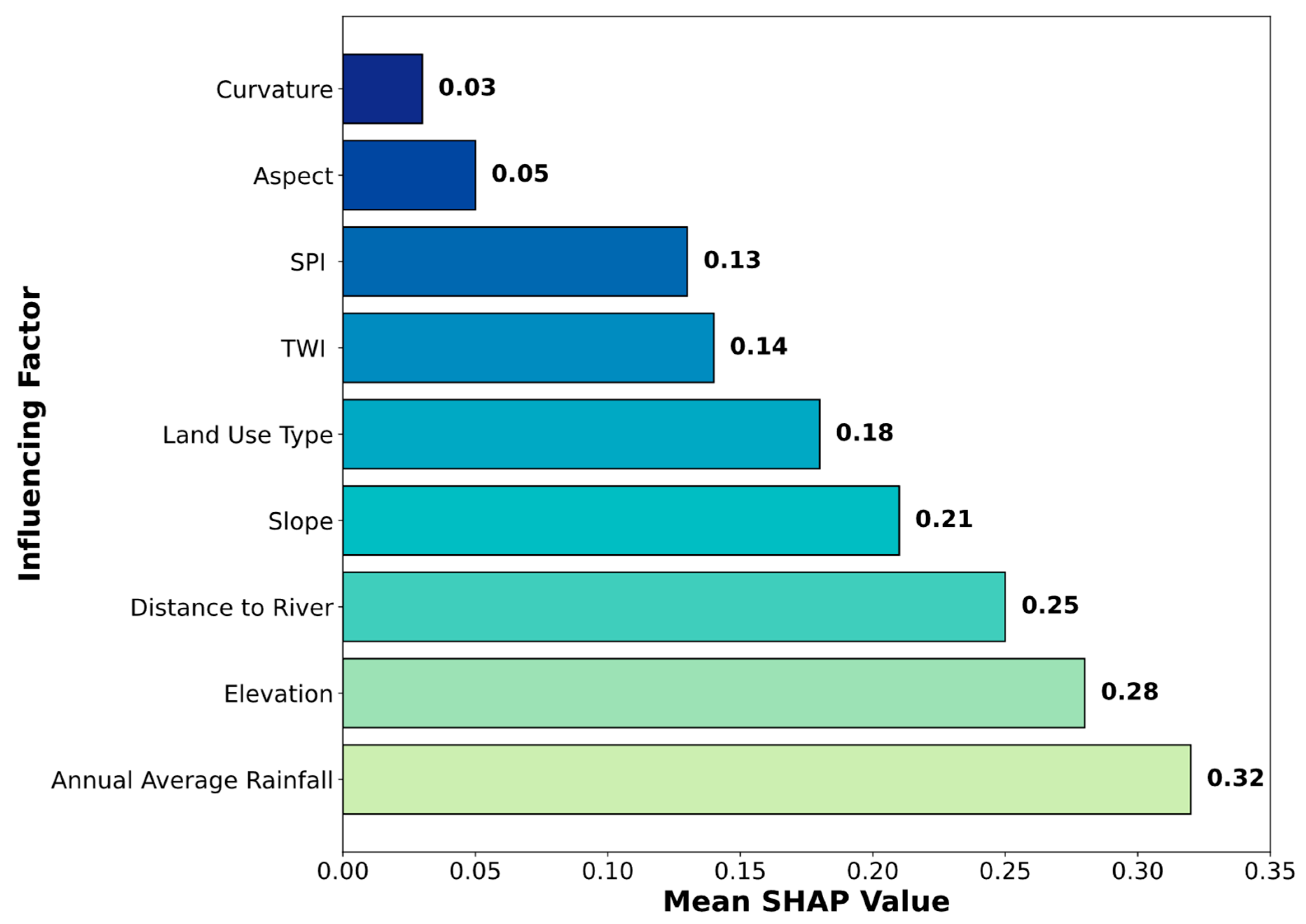
Pearson correlation analysis verified that all nine factors had |r| < 0.7, indicating no severe multicollinearity. To further quantify the relative importance of each factor, we conducted SHapley Additive exPlanations (SHAP) analysis.The SHAP contribution results are presented in Figure 11. The SHAP contribution results show that annual average rainfall, elevation, and distance to rivers are the three dominant drivers. Among them, annual average rainfall presents the highest mean SHAP value, confirming its dominant role as a climatic driver. Elevation shows a strong negative relationship with flood susceptibility, while distance to rivers exhibits a clear threshold effect, with flood susceptibility rising sharply within 1 km of river networks. The remaining factors exert moderate or weak impacts: land use type and slope contribute moderately, whereas aspect, curvature, SPI, and TWI show relatively low contributions. This importance ranking is consistent with the spatial distribution of flood susceptibility and further validates the rationality of the selected influencing factors.
Figure 11.
SHAP Value Contribution of Nine Influencing Factors on Flood Susceptibility in Shenzhen.
This study also details a comprehensive GIS–machine learning workflow (data preprocessing → factor extraction → sample partitioning → model training → susceptibility visualization), addressing a gap in practical implementation guidance. Using the “Extract Values to Points” tool in ArcGIS, multi-source data were standardized and integrated. Kriging interpolation was then applied to convert point-based predictions into a continuous susceptibility surface, higher risk in western coastal areas and lower risk in eastern mountainous areas” pattern consistent with Shenzhen’s rainfall distribution and providing a spatially explicit reference for flood mitigation planning.
Two limitations merit attention. First, the model was trained on waterlogging records from a five-year period (2020–2024). While this dataset reflects recent flood patterns under current conditions, it may not fully capture longer-term trends such as changes in rainfall intensity, urban expansion, or climate impacts. The resulting susceptibility map should therefore be interpreted as representing the current spatial pattern of flood susceptibility under the available data conditions, rather than event-based hydraulic flood intensity or other physical flood characteristics. Second, while kriging interpolation provides unbiased estimates with minimized variance, it may introduce smoothing errors in areas with sparse sample coverage—such as the eastern mountainous regions of Pingshan and Dapeng, where fewer waterlogging points are available. This smoothing effect can obscure localized variability in flood susceptibility, potentially masking small-scale features that influence flood risk. Future studies could explore alternative interpolation methods (e.g., geographically weighted regression) or incorporate additional sampling points to reduce uncertainty in underrepresented areas.
5. Conclusions
This study developed a GIS-based ensemble machine learning framework for flood susceptibility assessment in Shenzhen, integrating five base models (Decision Tree, SVM, Logistic Regression, Naïve Bayes, and LDA) through a majority voting mechanism. The main conclusions are summarized as follows:
- (a)
- Methodological effectiveness. The voting ensemble model achieved superior predictive performance (AUC = 0.8131) compared to individual models (AUC range: 0.7523–0.7928). Five-fold cross-validation confirmed robust generalization (mean AUC = 0.8156 ± 0.0083), demonstrating that ensemble learning effectively mitigates individual model bias and enhances prediction stability.
- (b)
- Key influencing factors. SHAP analysis and factor sensitivity tests identified rainfall, elevation, and distance to rivers as the three most influential drivers of flood susceptibility. The resulting flood susceptibility map reveals a clear spatial pattern—higher risk in western coastal areas and lower risk in eastern mountainous areas—with 68.3% of historical waterlogging points located in high-susceptibility zones.
- (c)
- Practical implications. The high-susceptibility zones identified (e.g., western Bao’an and coastal Nanshan) align with Shenzhen’s priority areas for flood control investments under the 2025 and 2035 protection standards. The proposed GIS–ML integration workflow offers a replicable “integration–evaluation–interpretation” paradigm that can be extended to other urban regions facing similar flood challenges. By reducing recurrent flood losses and supporting adaptive infrastructure planning, this framework directly contributes to the sustainability of fast-growing coastal megacities.
Author Contributions
Conceptualization, D.Y. and Y.K.; methodology, D.Y. and Y.L.; software, Y.L.; validation, D.Y., Y.L. and C.Y.; formal analysis, Y.L. and Y.K.; investigation, Y.L. and C.Y.; resources, D.Y. and Y.K.; data curation, C.Y. and Y.L.; writing—original draft preparation, Y.L. and C.Y.; writing—review and editing, D.Y. and Y.K.; visualization, Y.L.; supervision, Y.K.; project administration, D.Y.; funding acquisition, not applicable. All authors have read and agreed to the published version of the manuscript.
Funding
This research was funded by the National Natural Science Foundation of China (grant nos. 52470101 and 52170097) and the High-level Scientific Research Innovation Team Construction Support Program of Beijing Municipal Universities (grant no. BPHR20220108).
Institutional Review Board Statement
Not applicable.
Informed Consent Statement
Not applicable.
Data Availability Statement
The ASTER GDEM and Landsat 7 ETM data are publicly available from the China Geospatial Data Cloud (gscloud.cn). Rainfall data were obtained from the Shenzhen Meteorological Bureau. The waterlogging point data used in this study are available on request from the corresponding author.
Conflicts of Interest
Author Yan Chenling was employed by the company of Beijing Key Laboratory of Municipal Solid Waste Detection Analysis and Evaluation, Beijing Municipal Institute of City Management. The remaining authors declare that the research was conducted in the absence of any commercial or financial relationships that could be construed as a potential conflict of interest.
References
- Akay, H. Flood Susceptibility Mapping Using Information Fusion Paradigm Integrated with Decision Trees. Water Resour. Manag. 2024, 38, 5365–5383. [Google Scholar] [CrossRef] [Scilit]
- Liu, J.; Zhao, X.Q.; Chen, Y.B.; Sun, H.Z.; Gu, Y.; Xu, S.C. A novel flood conditioning factor based on topography for flood susceptibility modeling. Geosci. Front. 2025, 16, 101960. [Google Scholar] [CrossRef] [Scilit]
- Al-Abadi, A.M.; Pradhan, B. In flood susceptibility assessment, is it scientifically correct to represent flood events as a point vector format and create flood inventory map? J. Hydrol. 2020, 590, 125475. [Google Scholar] [CrossRef] [Scilit]
- Zhao, G.; Pang, B.; Xu, Z.X.; Yue, J.J.; Tu, T.B. Mapping flood susceptibility in mountainous areas on a national scale in China. Sci. Total Environ. 2018, 615, 1133–1142. [Google Scholar] [CrossRef] [Scilit] [PubMed]
- Santos, D.; Abreu, T.; Bernardes, C.; Baptista, P. Coastal flood susceptibility assessment along the Northern coast of Portugal. Int. J. Disaster Risk Reduct. 2024, 108, 104556. [Google Scholar] [CrossRef] [Scilit]
- Santos, P.P.; Reis, E. Assessment of stream flood susceptibility: A cross-analysis between model results and flood losses. J. Flood Risk Manag. 2018, 11, S1038–S1050. [Google Scholar] [CrossRef] [Scilit]
- Zhao, J.C.; Zhang, C.B.; Wang, J.; Abbas, Z.; Zhao, Y.L. Machine learning and SHAP-based susceptibility assessment of storm flood in rapidly urbanizing areas: A case study of Shenzhen, China. Geomat. Nat. Hazards Risk 2024, 15, 2311889. [Google Scholar] [CrossRef] [Scilit]
- Sturzenegger, M.; Holm, K.; Lau, C.A.; Jakob, M. Debris-Flow and Debris-Flood Susceptibility Mapping for Geohazard Risk Prioritization. Environ. Eng. Geosci. 2021, 27, 179–194. [Google Scholar] [CrossRef] [Scilit]
- Cao, Y.F.; Jia, H.L.; Xiong, J.N.; Cheng, W.M.; Li, K.; Pang, Q.; Yong, Z.W. Flash Flood Susceptibility Assessment Based on Geodetector, Certainty Factor, and Logistic Regression Analyses in Fujian Province, China. ISPRS Int. J. Geo-Inf. 2020, 9, 748. [Google Scholar] [CrossRef] [Scilit]
- Nedala, S.; Puja, S.; Kempango, L.; Ikendi, S. Assessing flood susceptibility and effectiveness of structural flood mitigation measures applied within Mubuku catchment in Rwenzori Region, Uganda. Nat. Hazards 2024, 121, 1375–1397. [Google Scholar] [CrossRef] [Scilit]
- Chithra, K.; Binoy, B.V.; Bimal, P. Modeling flood susceptibility on the onset of the Kerala floods of 2018. Environ. Earth Sci. 2024, 83, 123. [Google Scholar] [CrossRef] [Scilit]
- Ebrahimi, E.; Araujo, M.B.; Naimi, B. Flood susceptibility mapping to improve models of species distributions. Ecol. Indic. 2023, 157, 111250. [Google Scholar] [CrossRef] [Scilit]
- Eslaminezhad, S.A.; Eftekhari, M.; Azma, A.; Kiyanfar, R.; Akbari, M. Assessment of flood susceptibility prediction based on optimized tree-based machine learning models. J. Water Clim. Change 2022, 13, 2353–2385. [Google Scholar] [CrossRef] [Scilit]
- Tella, A.; Balogun, A.L. Ensemble fuzzy MCDM for spatial assessment of flood susceptibility in Ibadan, Nigeria. Nat. Hazards 2020, 104, 2277–2306. [Google Scholar] [CrossRef] [Scilit]
- Huang, X.Y.; Wang, D.W. Urban Flood Resilience in a Megacity Context: Multidimensional Assessment and Spatial Differentiation in Shenzhen. Sustainability 2025, 17, 7852. [Google Scholar] [CrossRef] [Scilit]
- Tiryaki, M.; Karaca, O. Flood susceptibility mapping using GIS and multicriteria decision analysis: Saricay-Canakkale (Turkey). Arab. J. Geosci. 2018, 11, 364. [Google Scholar] [CrossRef] [Scilit]
- Traoré, K.; Fowe, T.; Ouédraogo, M.; Zorom, M.; Traoré, M.B.; Toé, P.; Karambiri, H. Mapping urban flood susceptibility in Ouagadougou, Burkina Faso. Environ. Earth Sci. 2024, 83, 561. [Google Scholar] [CrossRef] [Scilit]
- Wang, Y.; Fang, Z.C.; Hong, H.Y.; Peng, L. Flood susceptibility mapping using convolutional neural network frameworks. J. Hydrol. 2020, 582, 124482. [Google Scholar] [CrossRef] [Scilit]
- Wang, Z.; Lyu, H.; Zhang, C. Pluvial flood susceptibility mapping for data-scarce urban areas using graph attention network and basic flood influencing factors. Geocarto Int. 2023, 38, 2275692. [Google Scholar] [CrossRef] [Scilit]
- Wilkho, R.S.; Gharaibeh, N.G.; Chang, S. A GIS-based tool for dynamic assessment of community susceptibility to flash flooding. J. Flood Risk Manag. 2025, 18, e13049. [Google Scholar] [CrossRef] [Scilit]
- Chen, S.K.; Zheng, W.L. RRMSE-enhanced weighted voting regressor for improved ensemble regression. PLoS ONE 2025, 20, e0319515. [Google Scholar] [CrossRef] [Scilit]
- Fang, L.; Huang, J.L.; Cai, J.T.; Nitivattananon, V. Hybrid approach for flood susceptibility assessment in a flood-prone mountainous catchment in China. J. Hydrol. 2022, 612, 128091. [Google Scholar] [CrossRef] [Scilit]
- Fang, Z.C.; Wang, Y.; Peng, L.; Hong, H.Y. Predicting flood susceptibility using LSTM neural networks. J. Hydrol. 2021, 594, 125734. [Google Scholar] [CrossRef] [Scilit]
- Fu, S.N.; Lyu, H.; Wang, Z.; Hao, X.; Zhang, C. Extracting historical flood locations from news media data by the named entity recognition (NER) model to assess urban flood susceptibility. J. Hydrol. 2022, 612, 128312. [Google Scholar] [CrossRef] [Scilit]
- Gupta, L.; Dixit, J. Assessment of urban flood susceptibility and role of urban green space (UGS) on flooding susceptibility using GIS-based probabilistic models. Environ. Monit. Assess. 2023, 195, 1518. [Google Scholar] [CrossRef] [Scilit] [PubMed]
- Kurugama, K.M.; Kazama, S.; Hiraga, Y.; Samarasuriya, C. A comparative spatial analysis of flood susceptibility mapping using boosting machine learning algorithms in Rathnapura, Sri Lanka. J. Flood Risk Manag. 2024, 17, 12980. [Google Scholar] [CrossRef] [Scilit]
- Lahiri, N.; Arjun, B.M.; Nongkynrih, J.M. Flood susceptibility mapping using Sentinel 1 and frequency ratio technique in Jinjiram River watershed, India. Environ. Monit. Assess. 2024, 196, 103. [Google Scholar] [CrossRef] [Scilit]
- Razavi-Termeh, S.V.; Sadeghi-Niaraki, A.; Seo, M.; Choi, S.M. Application of genetic algorithm in optimization parallel ensemble-based machine learning algorithms to flood susceptibility mapping using radar satellite imagery. Sci. Total Environ. 2023, 873, 162285. [Google Scholar] [CrossRef] [Scilit] [PubMed]
- Liuzzo, L.; Sammartano, V.; Freni, G. Comparison between Different Distributed Methods for Flood Susceptibility Mapping. Water Resour. Manag. 2019, 33, 3155–3173. [Google Scholar] [CrossRef] [Scilit]
- Lyu, H.M.; Yin, Z.Y. Flood susceptibility prediction using tree-based machine learning models in the GBA. Sustain. Cities Soc. 2023, 97, 104744. [Google Scholar] [CrossRef] [Scilit]
- Mahmoud, S.H.; Gan, T.Y. Multi-criteria approach to develop flood susceptibility maps in arid regions of Middle East. J. Clean. Prod. 2018, 196, 216–229. [Google Scholar] [CrossRef] [Scilit]
- Masoumi, Z. Flood susceptibility assessment for ungauged sites in urban areas using spatial modeling. J. Flood Risk Manag. 2022, 15, 12767. [Google Scholar] [CrossRef] [Scilit]
- Wang, C.X.; Du, S.Q.; Wen, J.H.; Zhang, M.; Gu, H.H.; Shi, Y.; Xu, H. Analyzing explanatory factors of urban pluvial floods in Shanghai using geographically weighted regression. Stoch. Environ. Res. Risk Assess. 2017, 31, 1777–1790. [Google Scholar] [CrossRef] [Scilit]
- Muthu, K.; Ramamoorthy, S. Evaluation of urban flood susceptibility through integrated Bivariate statistics and Geospatial technology. Environ. Monit. Assess. 2024, 196, 526. [Google Scholar] [CrossRef] [Scilit]
- Nachappa, T.G.; Meena, S.R. A novel per pixel and object-based ensemble approach for flood susceptibility mapping. Geomat. Nat. Hazards Risk 2020, 11, 2147–2175. [Google Scholar] [CrossRef] [Scilit]
- Natarajan, L.; Usha, T.; Gowrappan, M.; Kasthuri, B.P.; Moorthy, P.; Chokkalingam, L. Flood Susceptibility Analysis in Chennai Corporation Using Frequency Ratio Model. J. Indian Soc. Remote Sens. 2021, 49, 1533–1543. [Google Scholar] [CrossRef] [Scilit]
- Yao, J.; Zhang, X.X.; Luo, W.C.; Liu, C.J.; Ren, L.L. Applications of Stacking/Blending ensemble learning approaches for evaluating flash flood susceptibility. Int. J. Appl. Earth Obs. Geoinf. 2022, 112, 102932. [Google Scholar] [CrossRef] [Scilit]
- Sachdeva, S.; Kumar, B. Flood susceptibility mapping using extremely randomized trees for Assam 2020 floods. Ecol. Inform. 2022, 67, 101498. [Google Scholar] [CrossRef] [Scilit]
- Saleh, A.; Yuzir, A.; Sabtu, N.; Abujayyab, S.K.M.; Bunmi, M.R.; Pham, Q.B. Flash flood susceptibility mapping in urban area using genetic algorithm and ensemble method. Geocarto Int. 2022, 37, 10199–10228. [Google Scholar] [CrossRef] [Scilit]
- Özay, B.; Orhan, O. Flood susceptibility mapping by best-worst and logistic regression methods in Mersin, Turkey. Environ. Sci. Pollut. Res. 2023, 30, 45151–45170. [Google Scholar] [CrossRef] [Scilit] [PubMed]

Disclaimer/Publisher’s Note: The statements, opinions and data contained in all publications are solely those of the individual author(s) and contributor(s) and not of MDPI and/or the editor(s). MDPI and/or the editor(s) disclaim responsibility for any injury to people or property resulting from any ideas, methods, instructions or products referred to in the content. |
© 2026 by the authors. Licensee MDPI, Basel, Switzerland. This article is an open access article distributed under the terms and conditions of the Creative Commons Attribution (CC BY) license.