Article

Evaluation of Microalgae and Aromatic Plant Extract Biostimulants on the Performance of the H-1015 Processing Tomato Variety

by
María Álvarez-Gil
1,2,
Mario Blanco-Vieites
3,4,
Lorena Zajara-Serrano
5,
Fidel Delgado
1,2 and
Eduardo Rodríguez
2,*
1
Neoalgae Micro Seaweed Products, Calle Carmen Leal Mata, 191, 33211 Gijon, Spain
2
Department of Construction and Manufacturing Engineering, University of Oviedo, Pedro Puig Adam, s/n, 33203 Gijon, Spain
3
Group of Environmental Studies Applied to Natural and Cultural Heritage, GEMAP (GI-1243), Departament of Edafology and Chemical Agronomy, Pharmacy Faculty, Santiago de Compostela University, 15782 Santiago de Compostela, Spain
4
CRETUS, Santiago de Compostela University, 15782 Santiago de Compostela, Spain
5
Centro Tecnológico Nacional Agroalimentario (CTAEX), Ctra. Villafranco-Balboa Km. 1,2, 06195 Badajoz, Spain
*
Author to whom correspondence should be addressed.
Sustainability 2026, 18(8), 3958; https://doi.org/10.3390/su18083958
Submission received: 23 February 2026 / Revised: 27 March 2026 / Accepted: 9 April 2026 / Published: 16 April 2026
(This article belongs to the Special Issue Agriculture Bioresource Utilization Technology)

Abstract

The extensive utilisation of chemical fertilisers and pesticides in agricultural contexts has precipitated substantial environmental degradation, thereby amplifying the repercussions of climate change. Furthermore, this overuse poses a threat to the sustainability and resilience of global food production systems. The utilisation of microalgae-based biostimulants is a novel and sustainable approach that has the potential to enhance crop productivity and resilience, while reducing dependence on chemical pesticides and their negative effects. The present study evaluated the effectiveness of two novel microalgae-based formulations on the performance of processing tomato (Solanum lycopersicum) crops under field conditions in Spain and Portugal. The formulation comprised enzymatically hydrolysed biomass from L. platensis, N. gaditana and A. obliquus, in combination with olive mill wastewater (alpechin) and aromatic plant extracts. The mixture was applied through drip irrigation and foliar spraying. The application of combined foliar and drip treatments resulted in a substantial enhancement in gross yield up to 51.9%. Concurrently, the acceptable raw material yield demonstrated a notable increase up to 44.9%. Furthermore, an increase in average fruit weight by 2–9 g was recorded. A subsequent foliar nutrient analysis revealed elevated concentrations of N, P, K, Ca, Mg, Fe, and Cu in the plants treated with biostimulants, achieving 3.61, 52.94, 5.96, 36.53, 22.28, 60.41 and 71.32% respectively in the plot L4 with foliar treatment. Although the efficacy of pest control measures was slightly lower than that of conventional pesticides, no significant increase in the incidence of diseased was observed. These findings indicated that microalgae-based biostimulants have the potential to function as sustainable agricultural inputs capable of enhancing crop yields and quality while reducing dependence on chemical fertilisers and pesticides. The outcomes of the study demonstrate the efficacy of microalgae-based formulations in enhancing the yield and quality of tomato crops. This is achieved while maintaining optimal plant health and reducing the reliance on synthetic fertilisers and pesticides.

1. Introduction

In order to produce sufficient sustainable food for a growing population amidst unpredictable climate change, it is imperative to increase crop yields and resilience while concomitantly reducing resource use and environmental impacts. This can be achieved through methods such as climate-smart agriculture and advanced technologies [1]. In this context, the European Commission initiated the European Green Deal (EGD) in 2019. The EGD constitutes a series of policy initiatives with the objective of rendering the EU climate neutral by 2050. A fundamental pillar of this initiative is the Farm to Fork strategy, which aims to address the challenges posed by sustainable food systems. The following targets have been established: a 50% reduction in the overall use and risk of chemical pesticides, at least 25% of the EU’s agricultural land to be farmed organically, and a substantial increase in organic aquaculture by 2030, along with a 20% reduction in the use of fertilisers by the same date [2].
The utilisation of biostimulants in agriculture constitutes a recently developed agricultural strategy that has emerged as a promising solution to enhance crop yields by mitigating negative impacts from climate change [3], such as stress from drought and salinity. The utilisation of these products has been demonstrated to stimulate plant growth and resilience through molecular and physiological pathways, thus offering a more sustainable approach when compared with traditional methods [4]. The European Union’s Regulation (EU) 2019/1009, which came into effect on 16 July 2022, defines a plant biostimulant as a product designed to stimulate plant nutrition processes, with the result that characteristics such as nutrient use efficiency, tolerance to abiotic stress, quality traits and the availability of immobilised nutrients in the soil and rhizosphere are improved [5].
As is evident in the extensive body of research the potential of seaweed-based biofertilizers is well documented [6,7]. However, microalgae are emerging as a sustainable source of biofertilizers and biostimulants in agriculture. Their abundance of micro- and macronutrients, phytohormones, and bioactive compounds contributed to the stimulation of soil ecosystems, resulting in favourable biochemical changes through their beneficial interactions with both crops and the soil microbiome [8]. In contrast to terrestrial crops, microalgae offer significantly higher areal productivity, enhanced photosynthetic efficiency, and carbon fixation rates ranging from 1.0 to 3.7 g CO2/L/day under optimised conditions—exceeding those of conventional forest biomass by more than ten times [9]. Furthermore, they can be cultivated on non-arable land and do not compete with food crops for resources such as arable land, freshwater, or fertile soil. These organisms are capable of thriving in a variety of water types, including wastewater, which serves as a nutrient-rich medium for their growth while concurrently effecting water treatment. A study reported that native microalgal populations—including Chlorella sp., Coelastrella cogersae, and Limnospira platensis (Spirulina)—demonstrated high efficiency as bioremediation agents and biomass producers when cultivated in 15% livestock wastewater at pilot scale [10]. The utilisation of microalgae has been demonstrated to have the capacity to enhance crop productivity and resilience. The biostimulants derived from microalgae offer a sustainable methodology for the enhancement of crop production and protection [11]. A number of microalgae strains (e.g., Chlamydomonas, Chlorella vulgaris, and Spirulina) have been identified as the most prevalent in research related to biofertiliser and biostimulant formulation [12,13]. However, other studies have also highlighted the biostimulant effect of other strains. Spirulina liquid extracts have demonstrated potential for utilisation in agriculture as biostimulants to enhance plant growth [14]. Indeed, in recent years, Spirulina has attracted considerable attention from researchers and agro-industries as a sustainable source of agricultural input. In addition to its natural fertilising properties, Spirulina has been shown to release a wide range of biologically active compounds, including polysaccharides, amino acids, and phytohormones. These compounds have been found to support plant growth and enhance resistance to both biotic and abiotic stresses. Depending on the crop and intended outcomes, the application of Spirulina-based biostimulants can be conducted through various methods [15], including seed priming, foliar spraying, and soil drenching/dripping. Each of these methods has been observed to elicit distinct physiological effects. The process of seed priming has been shown to promote the early activation of metabolic processes, thereby enhancing various aspects of plant development, including germination, seedling vigour, and resilience to stress. This process has been observed to frequently result in the enhancement of reproductive traits and the final yield of the plant. Foliar spraying facilitates rapid uptake through the leaf surface, thereby effectively enhancing photosynthetic activity, nutrient status, and stress tolerance during vegetative growth. The application of water to the soil, either through drenching or drip irrigation, is a method of targeting the rhizosphere, with the objective of improving nutrient availability, root development, and soil–plant interactions. It is evident that each method has its own particular advantages, such as the rapid foliar response, the early vigour resulting from priming, and the enhanced root-zone effects. However, it is also important to note the potential limitations associated with environmental dependency, timing, and soil interactions. This highlights the necessity for the selection of the most appropriate strategy, which should be made according to the specific stage of the crop and the desired objective. Extracts from Spirulina have been demonstrated to effectively suppress the growth of certain pathogens, whilst concomitantly promoting the early development of wheat and increasing yields of both wheat and rapeseed [16]. In vivo experiments confirmed that treatment with Scenedesmus almeriensis extracts led to significant increases in plant height, leaf and flower count, and dry biomass of various organs, reflecting an overall enhancement in plant structure and biomass accumulation [17]. Nannochloropsis is also considered a promising biofertiliser candidate, providing a renewable substitute for phosphate-derived fertilisers [18]. An investigation was conducted into the potential of protein extraction residues from Nannochloropsis gaditana for utilisation as plant biostimulants. The findings of this investigation revealed that these residues were capable of promoting root growth, enhancing biomass, and supporting chlorophyll retention [19]. In a separate study, the growth of Desmodesmus sp., Chlorella vulgaris, and Scenedesmus obliquus was examined using a hydroponic drainage solution. The resulting biomass exhibited biostimulant properties [20].
Furthermore, bioactive compounds extracted from plants can also be utilised as an eco-friendly alternative to synthetic plant protection products. Aromatic plants have been found to synthesise a range of aromatic secondary metabolites, including coumarins, flavones, flavonoids, flavonols, phenolic acids, phenols, tannins, and quinones [21]. There is ample evidence to support the efficacy of the substance, which is characterised by its multifaceted mode of action and minimal toxicity towards non-target organisms [22]. The following list comprises the aromatic plants for which reported effects have been documented: Geranium [23,24], or oregano (genus Origanum) essential oils have demonstrated antibacterial, antifungal and antioxidant properties [25].
Finally, tomato production is being constrained by a number of factors. These include soil degradation, nutrient imbalances, salinization processes and the decline of beneficial microbial communities. These conditions are largely driven by intensive cultivation practices. The aforementioned factors have a detrimental effect on the stability of yield and the quality of fruit, thereby posing a significant challenge to the long-term sustainability of tomato-growing systems. In order to address the aforementioned limitations, there is a necessity for the implementation of integrated nutrient management strategies. The implementation of such strategies has been shown to enhance the resilience and productivity of tomato crops [26].
The objective of this study was to evaluate the efficacy of two novel biostimulant formulations on the performance of processing tomato crops. The novel formulations that were put to test consisted of a liquid enzymatic hydrolysate of three microalgae (Limnospira platensis; Nannochloropsis gaditana and Acutodesmus obliquus, formerly known as Scenedesmus obliquus) and also contained a side stream from an olive production process (alpechin) and mixture of aromatic plant extracts. The incorporation of aromatic plant extracts within the formulations is hypothesised to provide an additional bioprotective effect in addition to the biostimulant activity. Consequently, their presence may contribute to a partial biocidal activity or enhanced protection against pests and certain pathogens. Two field experiments were conducted at large scale in two different locations: Spain and Portugal (with 2520 m2 and 1 ha of surface, respectively). The biostimulant formulations were applied during the evolution and growth of the crop by means of drip irrigation and foliar spraying. These applications coincided with four stages of the plant’s phenological cycle: plant development, first flowering and fruit set, full flowering, and fruit development. The investigation sought to evaluate the improvement of qualitative parameters of tomato crops using the developed formulations and the positive effect against plant pests and diseases that could lead to a decrease in the further use of chemical fertilisers and pesticides.
The novelty of this research lies in the integration of microalgae-derived biostimulants with aromatic plant extracts. This combination has not yet been examined in sustainable tomato production systems. It is increasingly evident that microalgae-based inputs possess the capacity to augment nutrient availability, stress tolerance, and overall plant performance. However, the synergistic interaction between these microalgae and bioactive compounds derived from aromatic plants remains to be extensively investigated. The integration of these complementary natural resources is a significant advancement in current knowledge, as it proposes a multifunctional and environmentally aligned biostimulant strategy. This strategy has the potential to enhance crop productivity and resilience, while concurrently reducing reliance on synthetic agrochemical inputs. This integrated approach serves to reinforce extant sustainability frameworks by demonstrating the capacity of biologically enriched formulations to contribute to the enhancement of yield, quality, and the overall ecological performance of tomato-growing systems.

2. Materials and Methods

2.1. Biostimulant Formulations

The present study investigates the efficacy of two novel formulations in tomato crops. These formulations consisted of microalgae-based biostimulants developed by Neoalgae Micro Seaweeds Products (Neoalgae) at its facility in Gijón, Spain. The production method comprised a hydrolytic process [27] utilising non-GMO enzymes with mixed activity (alkaline, serine and cysteine proteases) called EnzMix complex which had been previously developed by Neoalgae [28]. The microalgae biomass utilised in both formulations was a combination of three distinct strains—33% of Limnospira platensis; 33% of Nannochloropsis gaditana; and 33% of Acutodesmus obliquus (expressed as percentages on the total microalgae biomass used)—with the initial concentration of each biomass being 0.08 kg/L. During the hydrolytic process, liquid vegetable residue from the olive production process (referred to as alpechin) was incorporated (assumed to be 5% by weight of the total of each formulation) with the objective of enhancing the sustainability of the biostimulant formulations, utilising a by-product from other processes. The process of enzymatic hydrolysis of the biomass proteins was conducted in accordance with the established protocols previously developed for this purpose [29,30]. The reaction was adjusted to a pH of 4.5, after which it was subjected to heating in a water bath at 95 °C for a period of 15 min. This was done to ensure complete denaturation of the enzyme and termination of its activity.
Finally, a mixture of aromatic plant extracts, developed by Neoalgae, was added to the biostimulant formulations to provide a biocidal effect. The biostimulant formulation designated BF-5 contains 5% of the aromatic plant extract mix, while the biostimulant formulation designated BF-10 contains 10%.

2.2. Crops Establishment Phase

Heinz H-1015 Tomato (Solanum lycopersicum) was selected for this study because it is the industrial variety most widely used in the region, primarily due to its high yield, combined with its resistance to diseases and the good sugar content of the fruits [30,31,32]. The crops were cultivated at the facilities of the National Agri-Food Technology Centre of Extremadura (CTAEX) Badajoz, Extremadura, Spain. Moreover, the experiments were reproduced in a secondary location at Nossa Senhora da Expectação (Campo Maior, Portugal). The duration of the trials during the cultivation phase was four months, from April to August, from transplantation to the conclusion of the sampling of tomato fruits.
Firstly, soil sampling was carried out to adjust base fertiliser application to the needs of the tomato crops related to the average nitrogen, phosphorus, and potassium required for the expected yield in kilograms per hectare. Soil samples were composed of different subsamples taken from different locations in the tested area. Following a thorough physicochemical analysis of the sample, fertiliser requirements of CTAEX were calculated for an estimated production of 90,000 kg tomato per hectare.
The results of the physicochemical analysis of the initial soil samples showed the following fertiliser requirements: 139 fertiliser units (FU) of nitrogen, 90 FU of phosphorus, 150 FU of potassium, and 35.4 FU of CaO. The fertiliser unit (FU) is a unit of measurement used to quantify the quantity of nutrients contained within a fertiliser.
The fertilisation regime specifically designed for tomato crops is delineated in Table 1.
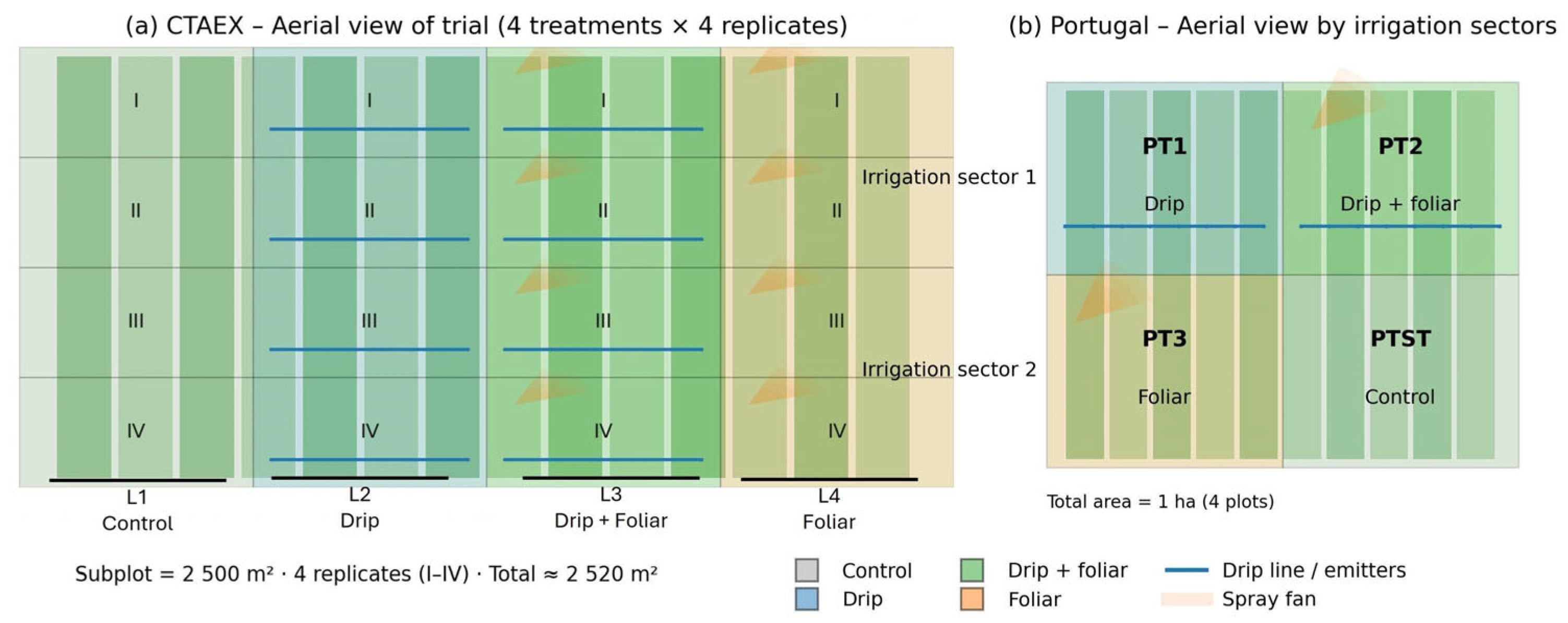
In CTAEX, the total experimental trial surface measured 2520 m2 and was subdivided into a total of 16 subplots of 210 m2 each and 10 m long formed by 14 seedbeds (see Figure 1). The experimental trial comprised four plots (designated as L1, L2, L3 and L4) which were arranged in accordance with a random block design across in four defined replicates (or subplots). These were separated by a narrow corridor (designated with codification I, II, III, IV). In Portugal, the total experimental trial surface measured 1 ha and was subdivided into 4 plots of 2500 m2. In this case, each plot (designated as PT1, PT2, PT3 and PT4) was not subdivided in subplots, due to the random selection of four replicates (see Figure 1). This configuration was necessitated by the physical requirements for the drip irrigation system and the foliar application system that required the use of a tractor.
The soil in the designated plots has a sandy loam texture, which is characterised by optimal drainage properties and the capacity to effectively retain water and nutrients. Furthermore, the pH level of the water sample ranges from 5.5 to 6.0, a range that is conducive to the assimilation of nutrients by most organisms. Additionally, the electrical conductivity of the water sample falls within the range of 1.6 to 2.2 dS/m, a range that is not conducive to salinity problems. The analysis revealed that the nitrogen and organic matter contents were found to be low, while the phosphorus oxide (P2O5) content was found to be high, which is consistent with the typical characteristics of this geographical region. The carbon/nitrogen ratio is medium, indicating normal nitrogen release.
Subsequent to the delineation of the trial and the application of the base fertilisers (see Table 1) to the soil, the beds were formed, and herbicides were administered to prevent the growth of weeds. The transplant procedure was then executed using a three-body FIALHO TEX DRIVER transplanter.

2.3. Application of Formulations

In each corresponding plot, four drip treatments were applied with the biostimulant formulation BF-5 (containing 5% of the aromatic plant extract mix) and four foliar treatments with the biostimulant formulation BF-10 (containing 10% of the aromatic plant extract mix). Consequently, in the plots that incorporated a combination of treatments (drip + foliar), both the BF-5 and BF-10 formulations were administered on four occasions. The precise dosage for each type of formulation is indicated in Table 2.
The treatments were administered concurrently with four distinct phases of the plant’s phenological cycle: plant development, first flowering and fruit set, full flowering, and fruit development (see Table 3 for details).
The timing of foliar applications in L3, L4, PT2 and PT3 plots coincided with the emergence of pests and diseases. Chemical control treatments were also applied in parallel to the corresponding plots (Table 1). Consequently, foliar application with the biostimulant known as BF-10 was used as a means of pest management.
Chemical controls are also applied in the two control plots (L1 and TST) and in L2 and PT1 plots. At the beginning of June, the presence of dry or drying plants was first observed, attributed to the substantial rainfall recorded at the start of the month. This necessitated an initial treatment with a chemical curative fungicide in the controls (L1 and TST) and in L2/PT1 treatments (see Table 2). However, the damage was confined to isolated plants and did not reach the threshold of economic damage, although it was decided to carry out the treatments. This was due to the fact that once the damage is appreciable in plants with symptoms of decay and flaccid leaves, the plant inevitably dies, which can cause significant losses.
As the middle of June and the beginning of July approached, signs of impairment to the leaves and stems of the subject began to become apparent. These signs were attributable to the presence of the pathogen Pseudomonas syringae. The initial symptoms were isolated, water-soaked, well-defined, angular, brown spots surrounded by a yellowish halo. The conditions conducive to their development included mild temperatures and high humidity levels, resulting in the eventual coverage of more of the leaves and stems. The decision was taken to retreat with chemical treatment in controls (L1 and TST) and in L2/PT1 treatments (see Table 2).
The prevailing weather conditions have not been conducive to the widespread development of Tuta absoluta and Helicoverpa armigera, and the population has been managed throughout the majority of the crop cycle. As the second half of July approached, an increase in the number of fruits attacked by Helicoverpa and aphid colonies began to be observed, especially in Portugal. A foliar fungus, Phytophthora infestans (airborne downy mildew), was also detected. It was decided to apply chemical treatment in controls (L1 and TST) and in L2/PT1 treatments (Table 2). The damage caused by the fungus consisted of irregular, oily looking spots at first, which led to necrotization of a large part of the leaflet. The stem is characterised by the emergence of brown spots that gradually enlarge and typically envelop it. The presence of the condition is characterised by the manifestation of conspicuous, opaque, brown lesions on the surface of the fruit. These lesions exhibit irregularities in both their surface texture and their overall form.
In mid-August, colonies of Tetranichus urticae, a pest known as red spider, began to be detected. This pest has been demonstrated to cause a decrease in photosynthesis by destroying plant cells. The foliage exhibits a yellowing tendency when it is imbibing the sap. At high population densities, they form cobwebs, and the affected parts dry out, which can lead to total plant necrosis. Meanwhile, mildew continued to dry out the plants, so the final treatment was carried out with the foliar formulation in plots 3 and 4, and with Azoxystrobin 25% and Abamectin 1.8% in plots 2 (CTAEX) and controls.
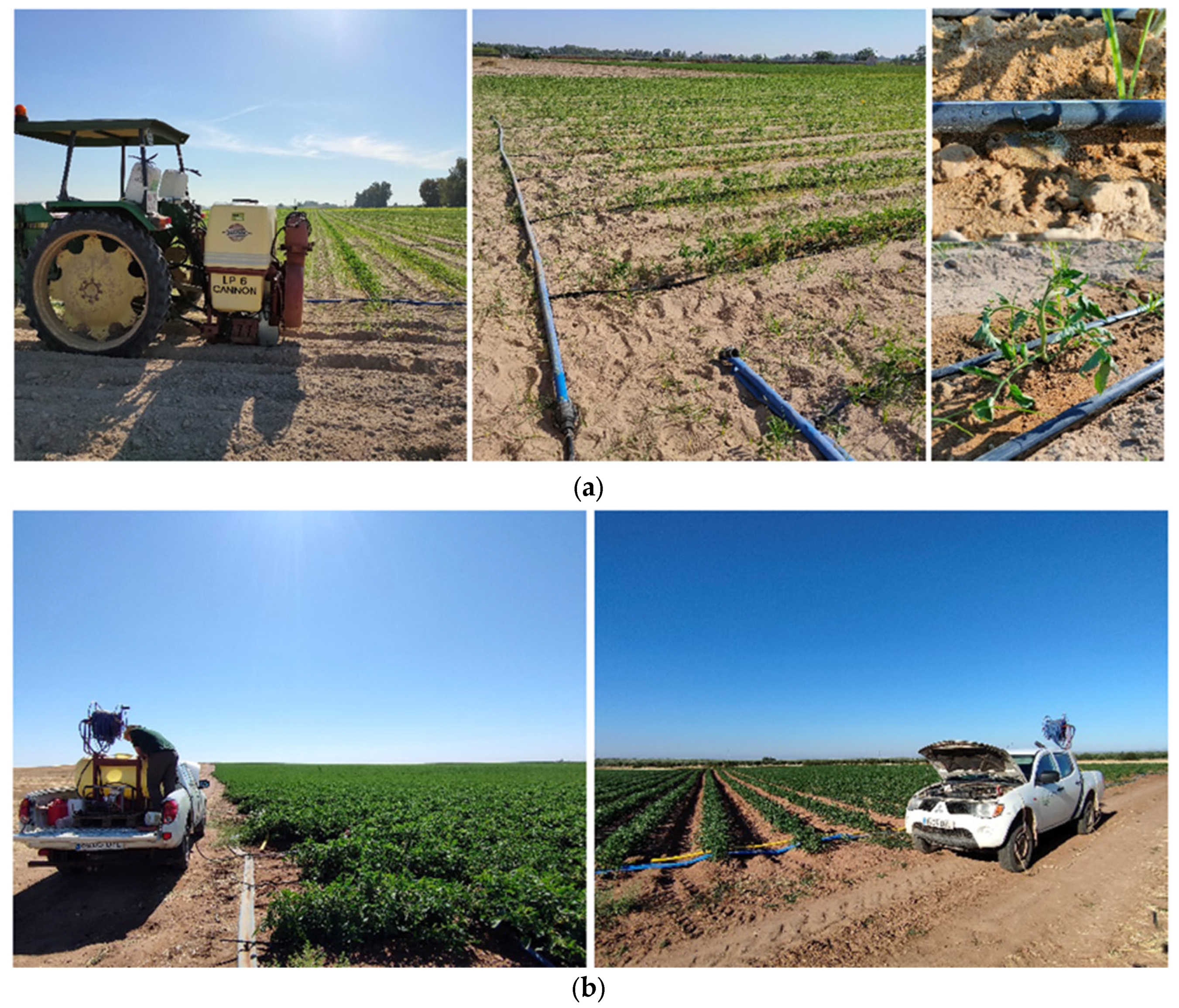
The most efficient irrigation system is drip irrigation; therefore, PE drip lines were utilised with a distance of 0.3 m between drippers and a flow rate of 1.324 L/h per dripper. Utilising the aforementioned data in conjunction with the ETo (reference evapotranspiration) and KC (crop coefficient) of the crop [33], the irrigation dose to be administered on a daily basis, as well as the duration of the irrigation system, was calculated (not exceeding 3–4 h daily at times of peak demand). In the implementation of drip treatments, it was imperative to install a double drip tape affixed to a pipe into which it was injected in CTAEX from the tractor barrel and in Portugal from a tank installed in the pick up using pumping (see Figure 2).
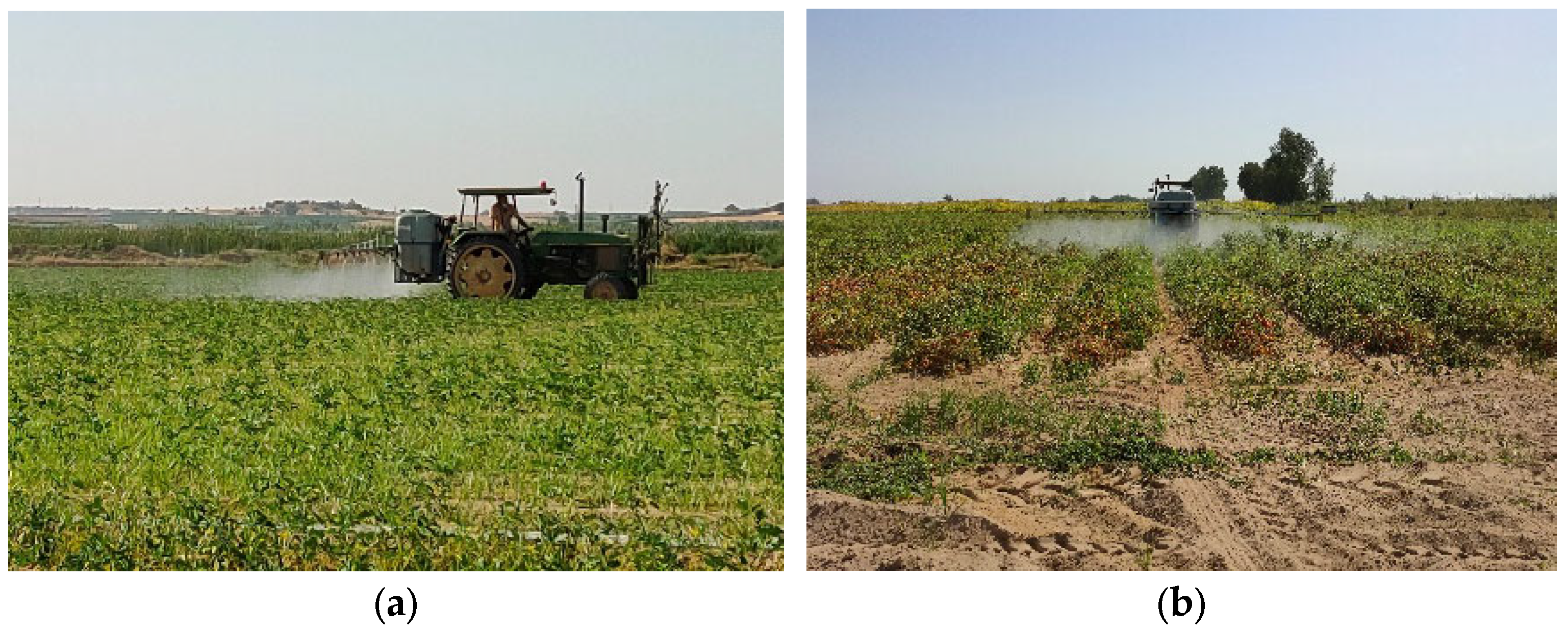
Foliar applications were administered in a uniform manner at both locations using a hydraulic-arm sprayer (see Figure 3), ensuring complete saturation of the plants and fruit. The timing of the applications coincided with the emergence of pests and diseases, and the applications were carried out after rainfall in the first three treatments at CTAEX and the first two treatments in Portugal. Concurrently with the formulation applications, chemical treatments were administered to the controls.

2.4. Cultivation Controls

The defined replicates in each plot were monitored at regular intervals throughout the study by recording the following indicators:
CLIMATE DATA
Indicator descriptionConstitutes a fundamental source of information because they condition the development of the crop, influencing, depending on the species, the phenological state and the incidence of pests and diseases by favouring or harming the increase in the population.
MethodologyCollection from the network of meteorological stations distributed throughout the region, from the Bercial Meteorological Station (downloaded from the website of the Regional Government of Extremadura).
PLANT DEVELOPMENT AND PHENOLOGY
MethodologyUpon the appearance of the first flower buds, the phenology was documented through a meticulous enumeration of the buds, flowers, and fruits present on the primary branch of the plant. This specific branch, which originates from the cross, is notable for its early fruit production.
PLANT HEALTH
Indicator descriptionThe timing of both foliar and neck chemical treatments was monitored, as illustrated in Figure 3.
MethodologyTwo types of sampling:
(a) Damage percentage per repetition (number of affected plants out of 10, 50, or 100 consecutive plants, depending on the incidence). In the case of low incidence, sampling was carried out on 100 plants.
(b) A scale of 1 to 5 was established to assess the level of damage, from 1 with no damage to 5 with maximum damage.
CROP PARAMETERS EVALUATED
Subsequent to the harvesting of samples from each replicate, the fruits were selected, calibrated and weighed. In the selection line, the different types of fruit were separated according to their state of ripeness and presence of diseases. The fruit was categorised as follows: green, overripe, sun-ripened, and with apical necrosis. The classification of acceptable fruit was also undertaken on the basis of size, with the fruit divided into three categories: >60 mm, 40/60 mm, and <40 mm. Subsequently, the weights were measured and documented. Following this, 50 fruits were separated from those classified as 40/60 mm in size and weighed to determine the average fruit weight. The attainment of an average result that is representative is facilitated by the performance of four replicates per plot.
Parameters analysed after selection:
Gross yieldThe yield obtained before crop selection, measured in kilos per hectare.
Acceptable raw material (ARM)Yield in kilos per hectare, including only ripe and healthy fruit.
Average fruit weightThe average fruit weight is determined by weighing 50 representative suitable fruits from the sample. The average fruit weight is the arithmetic mean of the weight of the 50 fruits, expressed in grams.
Diseased fruitsThis group includes all fruits that have been attacked by pests and/or diseases, with pitting, spots on the skin, etc.
Fruits with necrosis or blossom-end rot (%):blossom-end rot can be due to water stress, imbalances in the moisture regime, calcium deficiencies (according to some authors, it is also related to humidity), and even genetic factors, as there are certain varieties prone to suffering from it. It manifests as greyish colours that gradually turn black and a leathery texture at the apical area of the fruit. Fruits with this disorder remain small, ripen, and eventually rot.
Foliar analysis (in CTAEX plots)A foliar analysis of following nutrients—N, P, K, Ca, Mg and Na—were carried out.

2.5. Statistical Analysis

The experiments were conducted in quadruplicate, and the results are shown as the mean average. The analysis of the data was conducted utilising the statistical software package SPSS 24.0 (SPSS, IBM Statistics, Armonk, NY, USA). A descriptive analysis was performed to calculate the mean and the standard error of the mean for each measured parameter. A one-way analysis of variance (ANOVA) was conducted using the General Linear Model (GLM) procedure. The statistical significance was set at p < 0.05. In instances where the effect of any independent variable was deemed to be significant, mean comparisons were conducted utilising Tukey’s test (p < 0.05).

3. Results

In this section, an analysis will be conducted of the results pertaining to the evaluation of the efficiency of formulations in tomato crops.

3.1. Climate Data

The data pertaining to maximum, average and minimum temperatures, as well as daily precipitation is displayed in Table 4. The temperatures recorded refer to maximum temperatures (both absolute, which refers to the highest temperature of the month, and monthly averages), average temperatures, and minimum temperatures (both absolute, which refers to the lowest temperature of the month, and monthly averages). Daily precipitation data is defined as the total precipitation that has fallen during a given month. The data collected indicates that the results of the tests have not been affected by meteorological conditions, as there have been no exceptional events that could affect the results.

3.2. Plant Health (Pest Control)

Pest control with the foliar formulation has not been as effective as chemical treatments. Despite the absence of significant variations during the course of crop development, as shown in Table 5, observations revealed that the percentage of fruit pecked by Lepidoptera (Tuta absoluta and Helicoverpa armigera) increased at the conclusion of the crop. For a production analogous to that obtained in the control plot, this figure rose from 1362 kg/ha of pecked fruit to 1804 kg/ha with the foliar treatment plus drip and to 2092 kg/ha with the foliar treatment with the formulation. Dead larvae were detected after foliar treatments with the formulation. On the other hand, in the control of Tetranichus urticae in the final stage of the crop, while chemical treatment accounted for 98.63% of deaths, foliar treatment accounted for 62.54%.
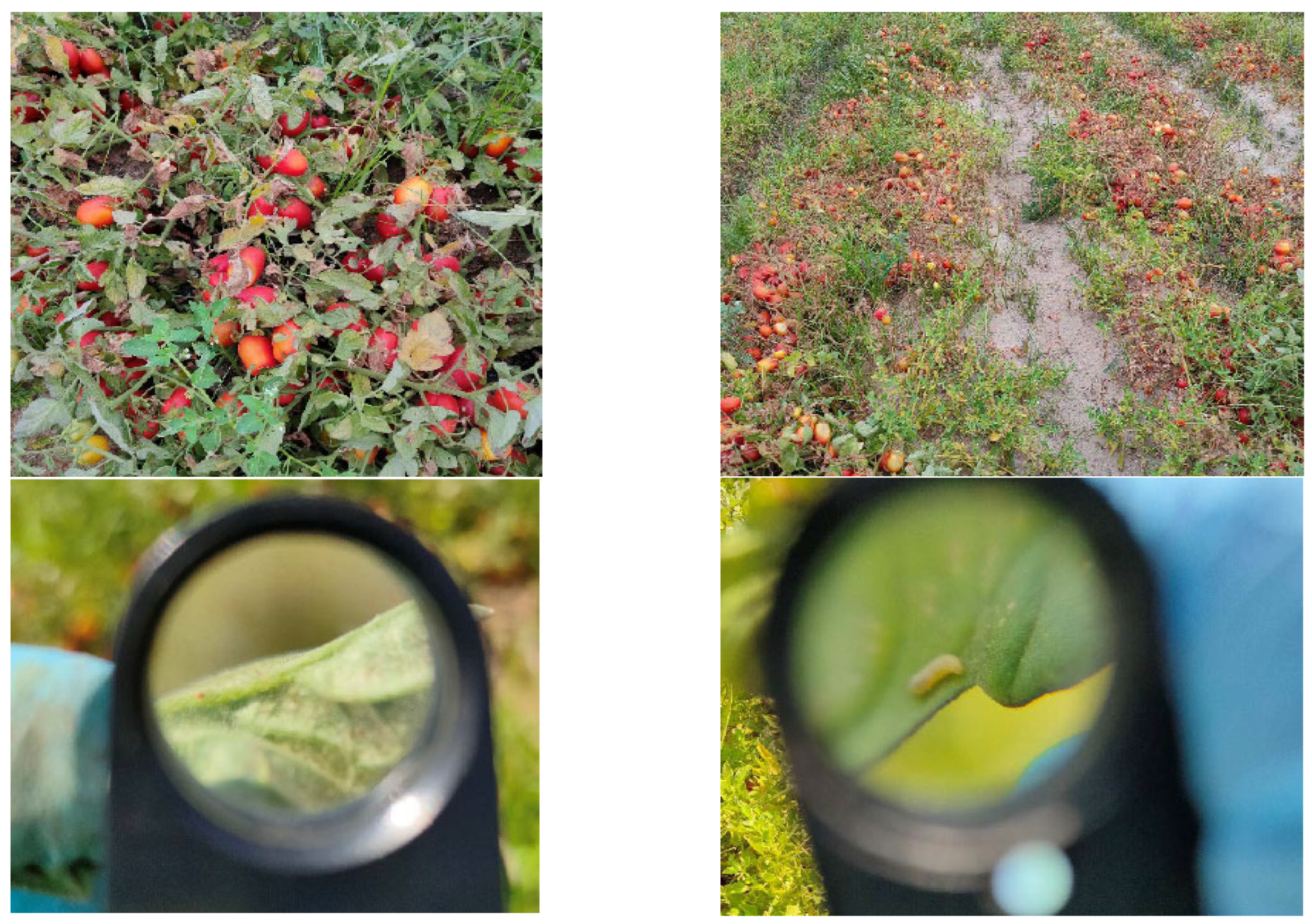
Damage from neck fungi, foliar fungi, and bacterioris has not increased in the plots where foliar formulations were applied compared to the plots where chemical treatments were applied for disease control. Figure 4 shows some of the symptons observed.
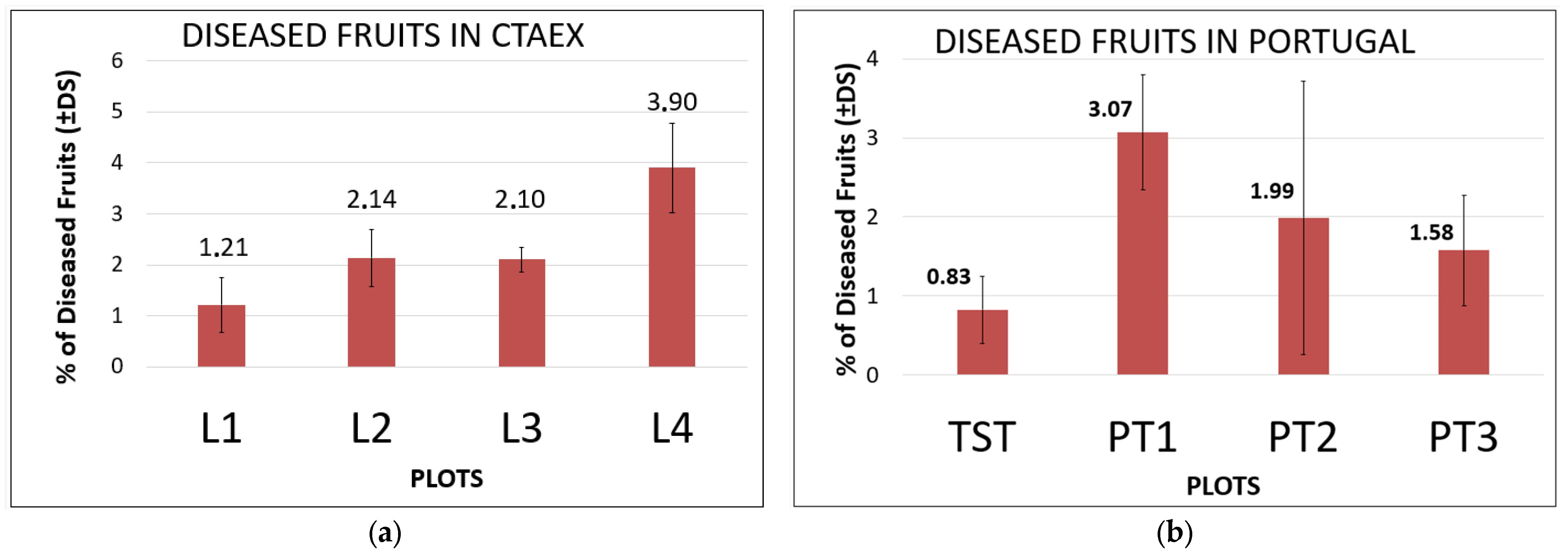
In Portugal, when controlling pests such as aphids (Myzus persicae), the population has been higher in plots where no chemical treatments were carried out, increasing from an average of 1.42 individuals per leaf in the control plants to 4.75 individuals per leaf in plants treated with the drip and foliar formulations; 6.81 individuals per leaf in the drip treatments and 13.19 individuals per leaf in plants treated solely via foliar with the formulation. However, although the differences were not significant compared to the plots treated with the foliar formulation, the percentages of chopped fruit increased from 0.83% in the control plot to 1.58–1.99% in the plots treated with the foliar formulation and with foliar and drip applications.

3.3. Gross Yield and ARM (Acceptable Raw Material)

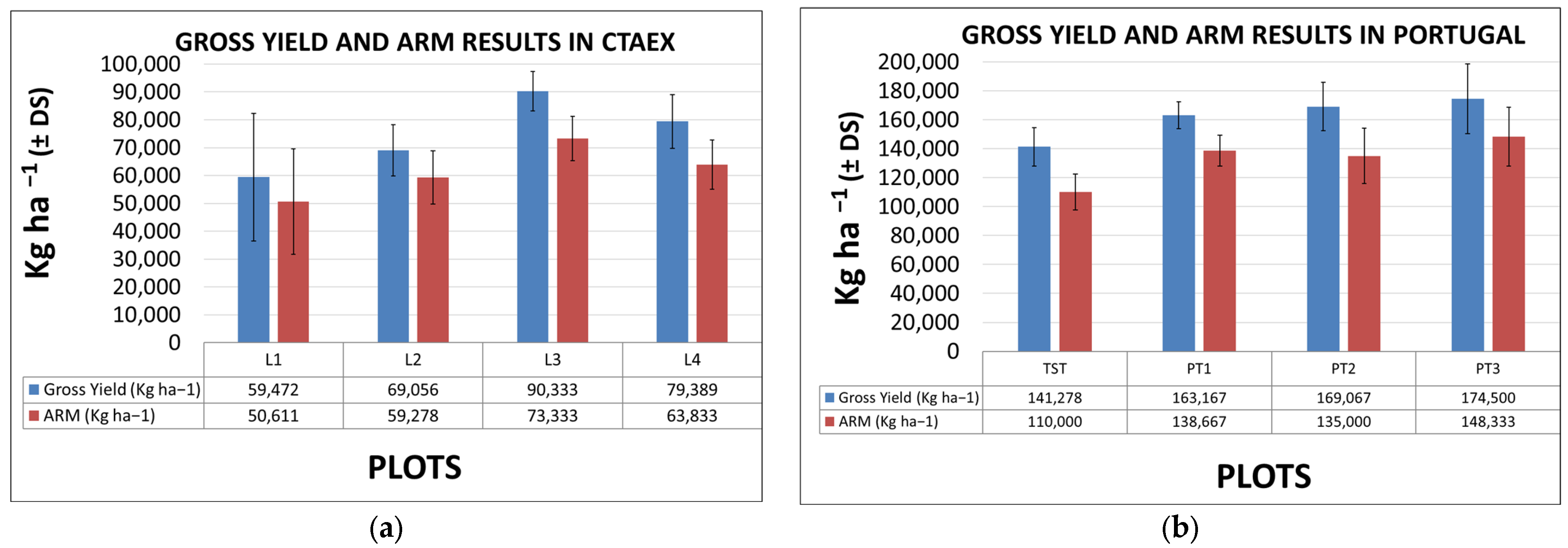
Drip combined with foliar treatments (L3 and PT2), and foliar treatments (L4 and PT3) achieved higher gross yields and higher ARM in tomato crops in both locations (Figure 5). In these treatments no additional chemical control was applied, resulting in the most successful outcomes.
As illustrated in Table 6, the data demonstrate the percentage increases for each treatment of these two key parameters in comparison with the results obtained in control treatments.
Gross yield in a crop refers to the total quantity of a crop harvested from a specific area, including any damaged or otherwise unusable portions, before any selection or processing. It is important to note that this index provides a comprehensive representation of the entire production process, offering a complete picture of the crop’s total output prior to any value-added steps. This feature of the index provides a more expansive perspective on the overall performance of a crop across a specific area of land. ARM refers to the crop harvested without those fruits not suitable for their intended destination or market. In the context of tomato, processing facilities penalise tomato batches that arrive at their facilities in suboptimal fruit quality, such as unripe or green fruit, sun-dried fruit, overripe fruit, etc. The processing plants prioritise fruit that meets their stringent quality standards. Consequently, gross yield and ARM are key parameters of crop performance, and must show consistency, like the results obtained in the tests. The highest increases were observed in CTAEX L3, with 51.89% for gross yield and 33.49% for ARM, and PT3 with 23.52% and 34.85%, respectively.

3.4. Average Fruit Weight

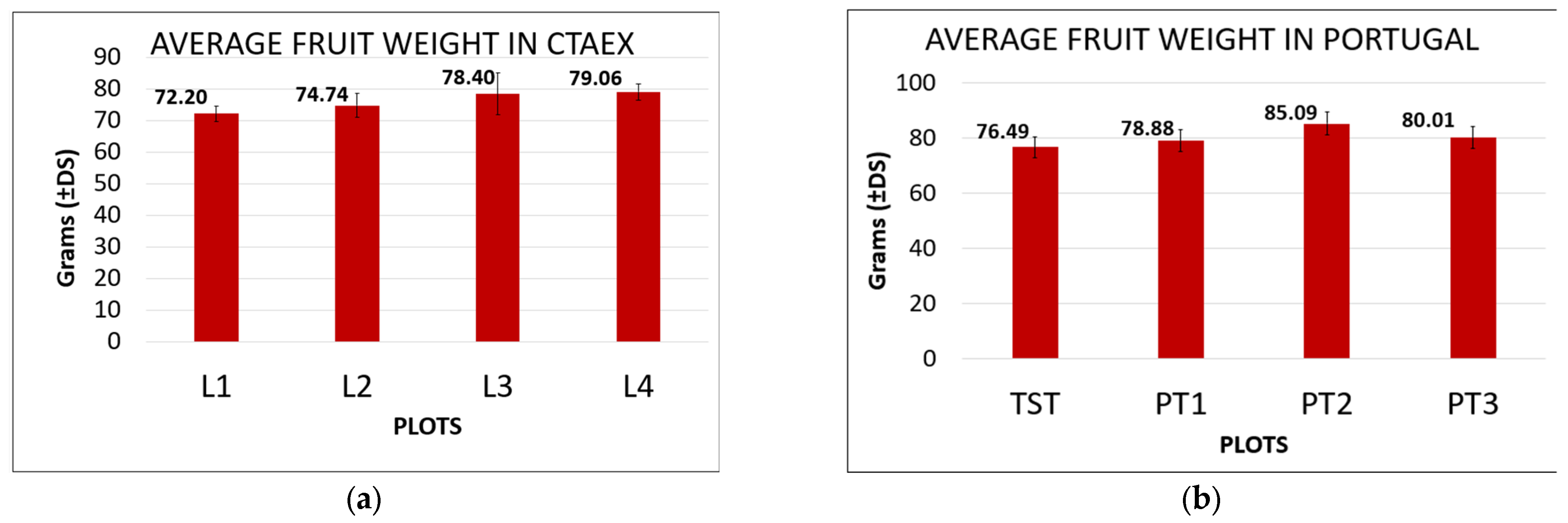
Average fruit weight is also a valuable parameter for crop monitoring, indicating overall plant health, potential yield, and the effectiveness of management practices. According to Figure 6, once again, the best results for average fruit weight resulted from drip combined with foliar treatments (L3 and PT2), and foliar treatments (L4 and PT3). Average fruit weight increased by 2 to 9 g, especially in the plot treated with the formulation applied via foliar and drip irrigation. A larger increase was shown in the CTAEX experiment, while the results in the Portugal experiment were more similar, but both experiments indicated an increase in average fruit weight using biostimulant formulations.

3.5. Diseased Fruits

In this instance, it is evident that the results obtained in both cases are not homogeneous. As demonstrated in Figure 7, both experiments exhibited minimal diseased fruit in the designated plots (L1 and TST), with values of 1.21% and 0.83% respectively (see Figure 7). This can be expected because it was the plot with chemical control. The other experimental plots (L2 and PT1) showed different results in each location: in CTAEX the % of diseased fruits was lower than in Portugal (2.14% compared to 3.07%). Finally, the biostimulant treatment with similar results in both locations were drip-applied BF-5 formulation combined with foliar-applied BF-10 formulation (2.10% and 1.99%). This combination was found to yield more consistent results. It should be noted that these experimental plots (L3 and PT2) did not receive any additional chemical treatment against pests and results can be considered significantly similar to those of the control plot.

3.6. Fruits with Necrosis or Blossom-End Rot (BER)

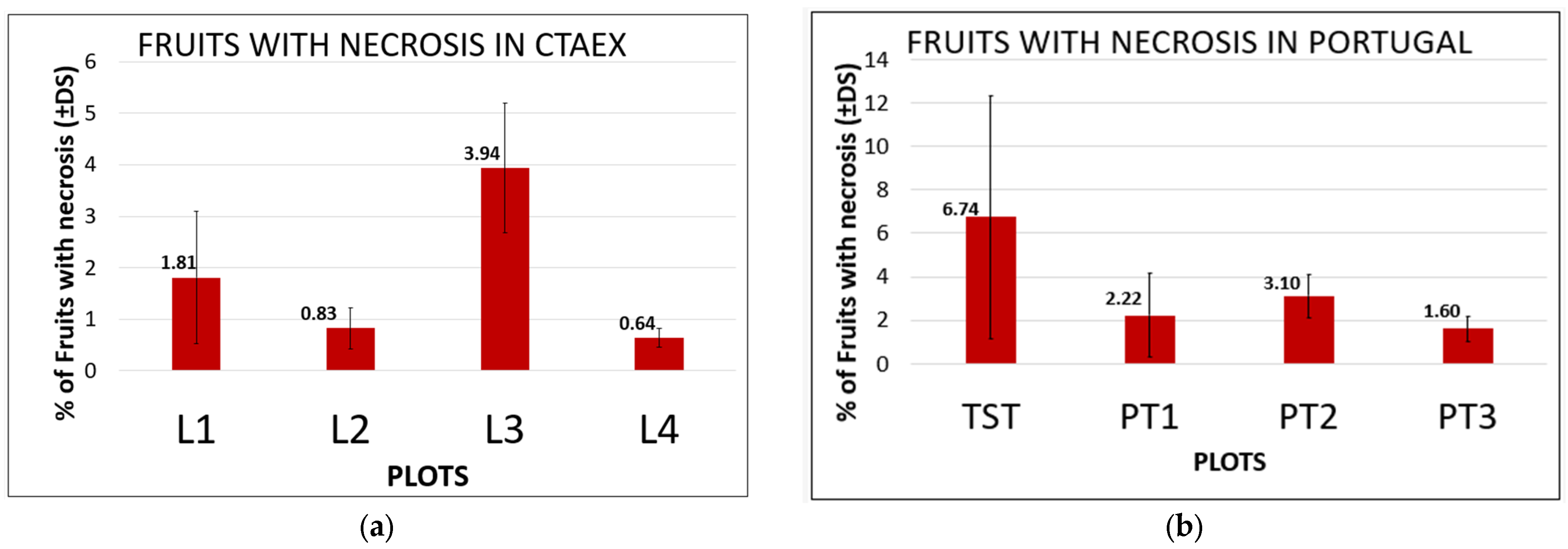
The determination of the fruit necrosis percentage is a good indicator for crop monitoring because it directly shows damage, disease, or stress, which impacts yield and quality. Figure 8 shows how the treatments applied with biostimulant formulations decrease the number of fruits with necrosis or blossom-end rot (BER) in both locations.

3.7. Foliar Analysis

The foliar analysis measures a plant’s nutrient content and physiological state by testing its leaves. It helps determine nutritional needs, identify deficiencies or toxicities, and monitor nutrient levels during the growing season. The analysis, carried out in CTAEX plots (Table 7), showed that the treatment with the best results was foliar treatment carried out in plot L4, with increases in N, P, K, Ca, Mg, Fe and Cu content of 3.61, 52.94, 5.96, 36.53, 22.28, 60.41 and 71.32% respectively. However, in terms of Na and Mn content, the best results were shown in the L3 plot, with increases of 35.39 and 40.61% respectively. Finally, Zn content was the same in all plots.

4. Discussion

Based on the findings obtained in the present study, drip irrigation and foliar application of microalgae-based biostimulant to tomato plants were shown to improve crop performance by increasing gross yields and ARM, enhancing average fruit weight and reducing the incidence of necrotic fruits and blossom-end rot. They also showed a pest control effect and decreased the percentage of diseased fruit, which is crucial for assessing the quality and yield of a crop, as it impacts health, safety, commercial value, and future planning. It indicates the hygienic quality of the final product (ensuring it is safe for consumption), helps determine the severity of the problem for management decisions, and impacts profitability by predicting post-harvest losses. A high percentage may indicate the need to implement control measures or change agricultural practices [34,35]. This research compared different microalgae-based biostimulant treatments, including some treatments without additional chemical control against pests and diseases. The data suggests that the best results were achieved with a combination of treatments: the drip-applied BF-5 formulation (with 5% of aromatic plant extract) combined with the foliar-applied BF-10 formulation (with 10% of aromatic plant extract).
The results of this investigation are in line with those of previous studies, despite the fact that some research focused on different microalgae species or other biostimulant origins (living cells or cell extracts). The literature indicates that the application of other Chlorophyta microalgae to tomato plants stimulated growth, as evidenced by earlier and more abundant flowering, increased fruit weight and size, enhanced leaf pigmentation, improved reproductive potential, and notable effects on photosynthesis, particularly through increased leaf thickness. A study evaluated the biostimulant effects of Chlamydomonas reinhardtii and Chlorella sp. on Solanum lycopersicum [36], resulting in an increase in pigment content, fruit weight and fruit diameter of tomato, as was observed in the present study. It was found that C. reinhardtii and Chlorella produced bioactive compounds, auxins and exopolysaccharides, which could be the main contributors to plant biostimulation. However, the main difference was that algae treatment did not affect yield per plant (measured in g/plant). This may be because the strains studied differ from those used in the present study and also were applied as living cells and cell extracts. Another study about the biostimulant effect of Chlorella vulgaris in tomato revealed that the best results were achieved using a mixed treatment of spraying C. vulgaris extracts via foliar spraying while using cow dung as soil fertiliser, leading to increased growth, such as plant height, number of stem branches, number of leaves, leaf length and root length [37].
The improved agronomic performance observed in the biostimulant-treated plants during the current study is consistent with the known effects of enzymatic hydrolysis on microalgal biomass. Enzymatic disruption of the cell walls of L. platensis, N. gaditana and A. obliquus enhances the release and solubility of intracellular metabolites with plant growth-promoting activity, including amino acids, peptides, phytohormone-like molecules, and sulfated/exopolysaccharides. Several studies indicate that hydrolysed microalgal extracts present higher concentrations of readily available bioactive compounds that stimulate nutrient uptake, root development and physiological performance. For example, a recent review in plants highlights that enzymatically hydrolysed microalgae deliver more accessible amino acids and hormones, improving P, N, Ca and Fe acquisition and enhancing crop yield [38]. In our case, the hydrolysis step likely increased the bioavailability of these compounds, facilitating their foliar and root uptake and contributing to the higher nutrient accumulation and yield increases recorded across treatments.
The present study is consistent with other research that has focused on microalgae hydrolysates as the primary process for developing and testing biostimulants. In the study on the biostimulant effects of different microalgae hydrolysates on Solanum lycopersicum [39], it was found that N. gaditana increased root length by 90.38% (applied to tomato seedlings), increased tomato carotenoid content by 124.75% and increased chlorophyll b concentration in tomato leaves by 83.95%. In contrast, S. obliquus increased shoot growth by 35.8%. The study also examined the NPK concentrations in roots, confirming that improved P and K levels were closely associated with enhanced root length. The present study demonstrated an increase in nutrient content in foliage, which was predominantly attributable to foliar treatments. This effect was also tested in other agronomic crops, such Phaseolus vulgaris (common bean), where the application of Nannochloropsis and Spirulina extracts at concentrations up to 1.0% significantly improved various growth parameters (root and shoot length, number of leaves and flowers per plant, leaf area, total fresh and dry weight per plant) and yield attributes (number and fresh weight of pods per plant, seed index and seed yield per plant) [40].
The biostimulant effect of other species of Acutodesmus (A. dimorphus) was also evaluated in tomato plants in previous studies, achieving comparable findings. Increased plant height and greater numbers of flowers and branches per plant was observed when cell extracts were applied via foliar spraying [41]. Nevertheless, it was also observed that greater extract concentrations of 75% and 100% led to a decrease in growth compared to the 50% spray. Foliar fertilisation ensures faster nutrient uptake and deficiency correction than soil applications, though determining the proper rate without inducing foliar burn remains a major challenge.
Recent research [42] evaluated the biostimulant effect of Spirulina protein hydrolysate on tomato plant metabolism and growth. The study utilised chitosan nanoparticles as carrier. The results demonstrated that both Spirulina hydrolysate and their nanoderivative forms were effective in stimulating tomato growth, with an increase in plant height of up to 49.5% in the vegetative phase. It has been hypothesised that the hydrolysed form of formulations may also contribute to an acceleration in the intake of nutrients and bioactive compound intake [43]. Indeed, Spirulina biomass is a well-known source of protein, and its enzymatic hydrolysate contains compounds such as polyamines that have the potential to enhance plant growth, with a growth-promoting effect similar to that of cytokines. An increase of 64% in the spermine content of lettuce leaves was observed when Spirulina hydrolysates were applied to lettuce seedlings by foliar spray. Spermine, a polyamine, has been shown to regulate growth, improve cell division and differentiation, and increase resistance to stress [44]. Similar outcomes were also reported from the foliar application of Spirulina and Scenedesmus hydrolysates [45] on Petunia × hybrida growth increasing root dry weight (35% and 49% respectively), flower dry weight (19% and 20%), the fresh weight of the flower (21% and 22%) and flowers numbers (66 and 18%) in comparison to the control. In this sense, amino acid-based materials (even from other origins) appear to possess analogous potential for biostimulation applications and are aligned with the concept of a circular economy. An evaluation of hydrolysates from mealworms larvae was conducted using a germination test, which revealed an enhancement in plant growth in terms of steam length (41%) and root length (31%) [46]. It has been demonstrated that microalgae hydrolysates can have a beneficial effect on stressed cultivation plants. Similar Nannochloris hydrolysates were also developed using defatted biomass with the aim of producing a microalgae-based biostimulant while maintaining the lipid extraction process [47]. The biostimulant was tested on both water-stressed and non-water-stressed tomato plants, with the results demonstrating enhanced root length development, augmented number of leaves and an increased leaf area. These results are also a reliable indicator of crop performance, comparable to the average fruit weight or the diseased fruit. Nevertheless, no enhancement in average plant production was found, probably due to the experiments being shorter than those carried out in the current research. The negative influences on water-stressed plants were reduced by almost 50%.
The reduction in blossom-end rot observed in the biostimulant-treated plants can be mechanistically explained by an increase in foliar calcium levels, as calcium homeostasis is a key determinant of BER susceptibility. Calcium plays an essential structural and signalling role in maintaining plasma membrane stability and apoplastic integrity. The onset of BER is primarily triggered by insufficient calcium transport to the distal fruit tissues. Recent research demonstrated that treatments enhancing calcium uptake and redistribution significantly reduced BER incidence by increasing calcium availability in leaves and improving calcium allocation to developing fruits [48]. In the present study, the biostimulant-induced increase in foliar calcium suggests an enhancement in root-to-shoot Ca flux, which likely augmented the calcium pool available for fruit partitioning. This mechanistic connection between enhanced calcium uptake, strengthened membrane integrity, and the observed reduction in distal fruit necrosis supports the hypothesis that the biostimulant promotes a more efficient calcium transport pathway, which ultimately contributes to improved physiological resilience against blossom-end rot.
Finally, as was previously demonstrated, the incorporation of aromatic plant extracts in the formulations under investigation sought to provide an additional bioprotective effect to the biostimulant activity. However, 69 days post-transplant (in July), a preventative treatment against Aculops lycopersici (tomato russet mite), Spirotetramat (Movento), was administered across all experimental plots at CTAEX. This was due to the detection of the plague in other nearby crops. The tomato russet mite (Aonidiella aurantii) is a highly destructive pest, and by the time its presence is detected, treatments are often rendered ineffectual. In this line, the antifungal effectiveness of plant extracts and essential oils against phytopathogenic fungi has previously been documented, as reported in earlier studies. In a study, extracts derived from Cassia alata inhibited the mycelial growth of Phytophthora species in vitro and effectively suppressed tomato late blight (TLB) by 57.1% at 150 μg/mL and 87.9% at 300 μg/mL on the tomato seedlings in vivo, as well as exhibiting in vitro inhibition of the bacterial growth of Acidovorax avenae subsp. cattlvae with an IC50 of 2.5 μg/mL [49]. The efficacy against the fungal plant pathogens, Botrytis cinerea and Penicillium expansum, of plant essential oils have also been studied. It was reported that O. vulgare and T. vulgaris at 800 μL·L−1 inhibited spore germination of this fungus between 51.73 and 98.34%, suppressing germination at 1000 μL·L−1. Fungus dry weight was also decreased by 100% at this concentration [50].
According to established knowledge, there is evidence about the effect of several aromatic plants against Phytophthora infestans, (causal agent of late blight disease of tomato), detected also during the present study. Ethanolic extracts of Asclepias sinaica, Farsetia aegyptia, Hypericum sinaicum, Phagnalon sinaicum and Salvia aegyptiaca were found to reduce the disease severity between 80.2, 75.3, 70.2, 65.1 and 55.2% respectively. Particularly, A. sinaica extract showed reduction in mycelial growth and inhibition of germination of pathogen spores [51]. Previous research found also that lemon grass leaves (Cymbopogon citratus) extracts reduced mycelial growth and inhibited spore germination of Late blight (Phytophthora infestans) and early blight (Alternaria solani) in potato, reducing the disease severity by 77.2 [52]. The treatment of other plants was also found to be effective against tomato late blight, such as horsetail macerate, which showed a disease incidence below 20% and also positive effects on overall yield [53].

5. Conclusions

The findings of this study demonstrate that the implementation of microalgae-based biostimulant formulations (implementation of enzymatically hydrolysed biomass from L. platensis, N. gaditana and A. obliquus, in conjunction with aromatic plant extracts and the olive mill wastewater alpechin) resulted in a substantial enhancement in the agronomic performance of processing tomato crops under field conditions in Spain and Portugal. In comparison with the other applied treatments, those involving both foliar and drip applications achieved the highest increases in gross yield (up to +51.9%) and acceptable raw material (+44.9%), as well as notable improvements in average fruit weight (2–9 g). The yield improvements observed in this study are consistent in direction with those reported in previous studies employing microalgae-based biostimulants. These earlier studies reported enhanced fruit weight, plant vigour and productivity in various tomato systems. However, the magnitude of the response may vary depending on species, formulation and agronomic conditions. This is also reflected in the site-specific factors described in our trials. These results indicate that the combination of application methods enhances the bioavailability and efficiency of the active compounds contained in the formulations.
Despite the fact that the pest control achieved by the foliar biostimulant treatment was slightly lower than that obtained with conventional chemical pesticides (62.5% vs. 98.6% mortality for Tetranychus urticae), no significant increase in the incidence of fungal or bacterial diseases was observed. Moreover, the foliar analyses revealed higher concentrations of key macronutrients and micronutrients (mainly N, P, K, Ca, Mg, Fe and Cu) in plants treated with biostimulants. This finding suggests that there has been an enhancement in nutrient uptake and metabolic activity. The decline in fruits affected by necrosis or blossom-end rot further suggests that treated plants have enhanced physiological stability and stress tolerance.
The findings demonstrate the efficacy of microalgae-based formulations in enhancing the yield and quality of tomato crops while ensuring plant health and reducing the reliance on synthetic fertilisers and pesticides. The incorporation of alpechin as a secondary raw material further emphasises the potential of this approach for a circular bioeconomy, promoting waste valorisation and enhancing resource efficiency. This integrated biostimulant strategy therefore represents a sustainable and environmentally friendly alternative to conventional agricultural practices. It aligns with the objectives of the European Green Deal and the Farm to Fork strategy by fostering productivity, resilience and ecological sustainability in modern agriculture.
It is evident that microalgae provide a diverse array of bioactive compounds, including amino acids, phytohormones, polysaccharides, phenolics, fatty acids, vitamins and antioxidants. These bioactive compounds may act synergistically to enhance plant growth, nutrient uptake and stress tolerance. The molecular mechanisms underlying the observed effects include the stimulation of root development, the enhancement of nutrient assimilation, the activation of defence responses, and the mitigation of oxidative damage. These effects are consistent with the improvements observed in the treated tomato crops. Nevertheless, despite the encouraging results obtained under field conditions, the specific biochemical and molecular pathways underlying these effects remain to be fully elucidated. Further research integrating metabolomic, transcriptomic, and physiological approaches will be essential to elucidate the mechanisms of action involved and to optimise the use of microalgae-based biostimulants in sustainable agriculture.

Author Contributions

Conceptualization, M.Á.-G.; methodology, M.Á.-G.; validation, L.Z.-S.; formal analysis, M.B.-V.; investigation, M.Á.-G. and L.Z.-S.; resources, F.D.; data curation, F.D.; writing—original draft preparation, M.Á.-G. and M.B.-V.; writing—review and editing, M.B.-V. and E.R.; visualisation, E.R.; supervision, M.Á.-G. and F.D.; funding acquisition, F.D. All authors have read and agreed to the published version of the manuscript.

Funding

This research was funded by the European Union’s LIFE programme in the frame of the ALGAR-BBE (microalgae with Aromatic plants as Biostimulants with Biocide Effect) project, grant number LIFE18 ENV/ES/000518.

Institutional Review Board Statement

Not applicable.

Informed Consent Statement

Not applicable.

Data Availability Statement

The original contributions presented in this study are included in the article. Further inquiries can be directed to the corresponding author.

Conflicts of Interest

Authors Maria Álvarez-Gil and Fidel Delgado are employed by the company Neoalgae. Author Mario Blanco-Vieites was previously employed by the company Neoalgae. The remaining authors declare that the research was conducted in the absence of any commercial or financial relationships that could be construed as a potential conflict of interest.

References

  1. Naithani, S. Plants and global climate change: A need for sustainable agriculture. Curr. Plant Biol. 2016, 6, 1. [Google Scholar] [CrossRef]
  2. European Commission: Joint Research Centre; Marelli, L.; Trane, M.; Barbero Vignola, G.; Gastaldi, C.; Guerreiro Miguel, M.; Delgado Callicó, L.; Borchardt, S.; Mancini, L.; Sanye Mengual, E.; et al. Delivering the EU Green Deal—Progress Towards Targets; Publications Office of the European Union: Luxembourg, 2025. [Google Scholar]
  3. Huang, S.; Zheng, X.; Luo, L.; Ni, Y.; Yao, L.; Ni, W. Biostimulants in bioconversion compost of organic waste: A novel booster in sustainable agriculture. J. Clean. Prod. 2021, 319, 128704. [Google Scholar] [CrossRef]
  4. Zulfiqar, F.; Moosa, A.; Ali, H.M.; Bermejo, N.F.; Munné-Bosch, S. Biostimulants: A sufficiently effective tool for sustainable agriculture in the era of climate change? Plant Physiol. Biochem. 2024, 211, 108699. [Google Scholar] [CrossRef] [PubMed]
  5. Regulation (EU) 2019/1009 of the European Parliament and of the Council of 5 June 2019 Laying Down Rules on the Making Available on the Market of EU Fertilising Products and Amending Regulations (EC) No 1069/2009 and (EC) No 1107/2009 and Repealing Regulation (EC) No 2003/2003 (Text with EEA Relevance). 2019, Volume 170. Available online: https://eur-lex.europa.eu/eli/reg/2019/1009/oj/eng (accessed on 8 April 2026).
  6. Sharma, L.; Banerjee, M.; Malik, G.C.; Gopalakrishnan, V.A.K.; Zodape, S.T.; Ghosh, A. Sustainable agro-technology for enhancement of rice production in the red and lateritic soils using seaweed based biostimulants. J. Clean. Prod. 2017, 149, 968–975. [Google Scholar] [CrossRef]
  7. Pereira, I.M.C.; Higor Rocha Mariano, P.; Maia, L.V.; Paula-Marinho, S.D.O.; Mesquita, R.O.; Gomes Filho, E.; Holanda Araújo, M.L.; Carvalho, H.H.D. Exploring the biofertilizer potential of Gracilaria birdiae aqueous extract for sustainable agriculture. J. Clean. Prod. 2025, 514, 145770. [Google Scholar] [CrossRef]
  8. Gonçalves, J.; Freitas, J.; Fernandes, I.; Silva, P. Microalgae as Biofertilizers: A Sustainable Way to Improve Soil Fertility and Plant Growth. Sustainability 2023, 15, 12413. [Google Scholar] [CrossRef]
  9. Goswami, R.K.; Agrawal, K.; Upadhyaya, H.M.; Gupta, V.K.; Verma, P. Microalgae Conversion to Alternative Energy, Operating Environment and Economic Footprint: An Influential Approach towards Energy Conversion, and Management. Energy Convers. Manag. 2022, 269, 116118. [Google Scholar] [CrossRef]
  10. Blanco-Vieites, M.; Álvarez-Gil, M.; Delgado, F.; García-Ruesgas, L.; Rodríguez, E. Livestock wastewater bioremediation through indigenous microalgae culturing as a circular bioeconomy approach as cattle feed. Algal Res. 2024, 78, 103424. [Google Scholar] [CrossRef]
  11. Alvarez, A.L. Microalgae, soil and plants: A critical review of microalgae as renewable resources for agriculture. Algal Res. 2021, 54, 102200. [Google Scholar] [CrossRef]
  12. Miranda, A.M.; Hernandez-Tenorio, F.; Villalta, F.; Vargas, G.J.; Sáez, A.A. Advances in the Development of Biofertilizers and Biostimulants from Microalgae. Biology 2024, 13, 199. [Google Scholar] [CrossRef]
  13. Feng, Y.; Zhang, H.; Song, X.; Ge, T.; Zhu, J.; Zhou, C.; Cobb, K.; Yan, X.; Ruan, R.; Cheng, P. Microalgae as a potential conditioner for continuous cropping obstacles for taro (Colocasia esculenta L. Schott) production. J. Clean. Prod. 2022, 369, 133356. [Google Scholar] [CrossRef]
  14. Godlewska, K.; Michalak, I.; Pacyga, P.; Baśladyńska, S.; Chojnacka, K. Potential applications of cyanobacteria: Spirulina platensis filtrates and homogenates in agriculture. World J. Microbiol. Biotechnol. 2019, 35, 80. [Google Scholar] [CrossRef] [PubMed]
  15. Arahou, F.; Lijassi, I.; Wahby, A.; Rhazi, L.; Arahou, M.; Wahby, I. Spirulina-Based Biostimulants for Sustainable Agriculture: Yield Improvement and Market Trends. BioEnergy Res. 2023, 16, 1401–1416. [Google Scholar] [CrossRef]
  16. Dmytryk, A.; Samoraj, M.; Moustakas, K.; Witek-Krowiak, A.; Chojnacka, K. Bioactive fatty acids and compounds from Spirulina (Arthrospira) platensis: Potential as biostimulants for plant growth. Sustain. Chem. Pharm. 2022, 30, 100899. [Google Scholar] [CrossRef]
  17. Rivera-Sánchez, E.; Villaró-Cos, S.; Jiménez-Becker, S.; Rapalo-Cruz, A.; Lafarga, T. Biostimulant Effect of a Novel Seawater-Adapted Strain of Scenedesmus almeriensis on Garden Geranium. Algal Res. 2025, 86, 103918. [Google Scholar] [CrossRef]
  18. Brooke, F.J.; Ma, Q.; Rahimi, M.; Silkina, A.; Constantin, C.; Bădulescu, L.; La Terza, A.; Turkmen, B.A.; Bajoub, A.; Ajal, E.A.; et al. Nannochloropsis for the bioremediation of brewery side streams and co-production of aquaculture feed and bio-Fertiliser: A comprehensive review. Algal Res. 2025, 89, 104079. [Google Scholar] [CrossRef]
  19. Valero-Vizcaino, A.; Villaró-Cos, S.; Morillas-España, A.; Cerdá-Moreno, C.; Lafarga, T. Production of techno-functional proteins and plant biostimulants from Nannochloropsis gaditana. Food Biosci. 2024, 59, 104000. [Google Scholar] [CrossRef]
  20. Álvarez-Gil, M.; Blanco-Vieites, M.; Suárez-Montes, D.; Casado-Bañares, V.; Delgado-Ramallo, J.F.; Rodríguez, E. Revolutionizing Agriculture: Leveraging Hydroponic Greenhouse Wastewater for Sustainable Microalgae-Based Biostimulant Production. Sustainability 2023, 15, 14398. [Google Scholar] [CrossRef]
  21. Gurjar, M.S.; Ali, S.; Akhtar, M.; Singh, K.S. Efficacy of plant extracts in plant disease management. Agric. Sci. 2012, 3, 425–433. [Google Scholar] [CrossRef]
  22. Suteu, D.; Rusu, L.; Zaharia, C.; Badeanu, M.; Daraban, G. Challenge of Utilization Vegetal Extracts as Natural Plant Protection Products. Appl. Sci. 2020, 10, 8913. [Google Scholar] [CrossRef]
  23. Ibrahium, S.M.; Wahba, A.A.; Farghali, A.A.; Abdel-Baki, A.-A.S.; Mohamed, S.A.A.; Al-Quraishy, S.; Hassan, A.O.; Aboelhadid, S.M. Acaricidal Activity of Tea Tree and Lemon Oil Nanoemulsions against Rhipicephalus annulatus. Pathogens 2022, 11, 1506. [Google Scholar] [CrossRef]
  24. Pirali-Kheirabadi, K.; Razzaghi-Abyaneh, M.; Halajian, A. Acaricidal Effect of Pelargonium Roseum and Eucalyptus Globulus Essential Oils against Adult Stage of Rhipicephalus (Boophilus) Annulatus in Vitro. Vet. Parasitol. 2009, 162, 346–349. [Google Scholar] [CrossRef] [PubMed]
  25. Faleiro, L.; Miguel, G.; Gomes, S.; Costa, L.; Venâncio, F.; Teixeira, A.; Figueiredo, A.C.; Barroso, J.G.; Pedro, L.G. Antibacterial and Antioxidant Activities of Essential Oils Isolated from Thymbra capitata L. (Cav.) and Origanum vulgare L. J. Agric. Food Chem. 2005, 53, 8162–8168. [Google Scholar] [CrossRef] [PubMed]
  26. Li, Y.; Zhang, R.; Zhang, C.; Li, Q.; Nie, L.; Wang, C.; Wang, X.-X. Integrative approaches to nutrient management in tomato cultivation for improved sustainability and productivity. Front. Plant Sci. 2025, 16, 1626136. [Google Scholar] [CrossRef] [PubMed]
  27. Colla, G.; Nardi, S.; Cardarelli, M.; Ertani, A.; Lucini, L.; Canaguier, R.; Rouphael, Y. Protein Hydrolysates as Biostimulants in Horticulture. Sci. Hortic. 2015, 196, 28–38. [Google Scholar] [CrossRef]
  28. Faliagka, S.; Kountrias, G.; Dimitriou, E.; Álvarez-Gil, M.; Blanco-Vieites, M.; Magrassi, F.; Notari, M.; Pechlivani, E.M.; Katsoulas, N. Development of a Greenhouse Wastewater Stream Utilization System for On-Site Microalgae-Based Biostimulant Production. AgriEngineering 2024, 6, 1898–1923. [Google Scholar] [CrossRef]
  29. Akbarbaglu, Z.; Ayaseh, A.; Ghanbarzadeh, B.; Sarabandi, K. Techno-functional, biological and structural properties of Spirulina platensis peptides from different proteases. Algal Res. 2022, 66, 102755. [Google Scholar] [CrossRef]
  30. Agunbiade, H.O.; Kadam, D.; Kadam, A.; Koksel, F.; Aluko, R.E. Incorporation of Pea and Hemp Seed Protein Hydrolysates into Soybean Protein-Based Meat Analogues for Enhanced Bioactive and Instrumental Sensory Attributes. Future Foods 2026, 13, 100985. [Google Scholar] [CrossRef]
  31. Égei, M.; Takács, S.; Palotás, G.; Palotás, G.; Szuvandzsiev, P.; Daood, H.G.; Helyes, L.; Pék, Z. Prediction of Soluble Solids and Lycopene Content of Processing Tomato Cultivars by Vis-NIR Spectroscopy. Front. Nutr. 2022, 9, 845317. [Google Scholar] [CrossRef]
  32. Bulgan, A. Effect of Water Supply on Phytochemicals of Processing Tomato (Lycopersicon esculentum Mill.). Ph.D. Thesis, Magyar Agrár- és Élettudományi Egyetem, Gödöllő, Hungary, 2021. [Google Scholar] [CrossRef]
  33. Prieto, M.H.; López, J.; Ballesteros, R.; Junta de Extremadura, S.I.A. Influence of irrigation system and strategy on the agronomic and quality parameters of the processing tomato in Extremadura. Acta Hortic. 1999, 487, 575–579. [Google Scholar] [CrossRef]
  34. Romanazzi, G.; Sanzani, S.M.; Bi, Y.; Tian, S.; Gutiérrez Martínez, P.; Alkan, N. Induced resistance to control postharvest decay of fruit and vegetables. Postharvest Biol. Technol. 2016, 122, 82–94. [Google Scholar] [CrossRef]
  35. Oerke, E.-C.; Dehne, H.-W. Safeguarding Production—Losses in Major Crops and the Role of Crop Protection. Crop Prot. 2004, 23, 275–285. [Google Scholar] [CrossRef]
  36. Gitau, M.M.; Farkas, A.; Ördög, V.; Maróti, G. Evaluation of the biostimulant effects of two Chlorophyta microalgae on tomato (Solanum lycopersicum). J. Clean. Prod. 2022, 364, 132689. [Google Scholar] [CrossRef]
  37. Suchithra, M.R.; Muniswami, D.M.; Sri, M.S.; Usha, R.; Rasheeq, A.A.; Preethi, B.A.; Dineshkumar, R. Effectiveness of green microalgae as biostimulants and biofertilizer through foliar spray and soil drench method for tomato cultivation. S. Afr. J. Bot. 2022, 146, 740–750. [Google Scholar] [CrossRef]
  38. Arenas Colarte, C.; Balic, I.; Díaz, Ó.; Cortes, I.; Moreno, A.A.; Amenabar, M.J.; Retamal, M.C.; Fuentes, N.C. Microalgae-Based Biostimulants: Effects on Growth and Stress Resistance in Agricultural Crops. Plants 2025, 14, 3488. [Google Scholar] [CrossRef]
  39. Mutale-Joan, C.; Redouane, B.; Najib, E.; Yassine, K.; Lyamlouli, K.; Laila, S.; Zeroual, Y.; Hicham, E.A. Screening of microalgae liquid extracts for their bio stimulant properties on plant growth, nutrient uptake and metabolite profile of Solanum lycopersicum L. Sci. Rep. 2020, 10, 2820. [Google Scholar] [CrossRef]
  40. Gharib, F.A.E.L.; Osama, K.; Sattar, A.M.A.E.; Ahmed, E.Z. Impact of Chlorella vulgaris, Nannochloropsis salina, and Arthrospira platensis as bio-stimulants on common bean plant growth, yield and antioxidant capacity. Sci. Rep. 2024, 14, 1398. [Google Scholar] [CrossRef]
  41. Garcia-Gonzalez, J.; Sommerfeld, M. Biofertilizer and biostimulant properties of the microalga Acutodesmus dimorphus. J. Appl. Phycol. 2016, 28, 1051–1061. [Google Scholar] [CrossRef]
  42. Munaro, D.; Mazo, C.H.; Bauer, C.M.; da Silva Gomes, L.; Teodoro, E.B.; Mazzarino, L.; da Rocha Veleirinho, M.B.; e Silva, S.M.; Maraschin, M. A novel biostimulant from chitosan nanoparticles and microalgae-based protein hydrolysate: Improving crop performance in tomato. Sci. Hortic. 2024, 323, 112491. [Google Scholar] [CrossRef]
  43. Nayak, M.; Swain, D.K.; Sen, R. Strategic valorization of de-oiled microalgal biomass waste as biofertilizer for sustainable and improved agriculture of rice (Oryza sativa L.) crop. Sci. Total Environ. 2019, 682, 475–484. [Google Scholar] [CrossRef]
  44. Mógor, Á.F.; Ördög, V.; Lima, G.P.P.; Molnár, Z.; Mógor, G. Biostimulant properties of cyanobacterial hydrolysate related to polyamines. J. Appl. Phycol. 2018, 30, 453–460. [Google Scholar] [CrossRef]
  45. Plaza, B.M.; Gómez-Serrano, C.; Acién-Fernández, F.G.; Jimenez-Becker, S. Effect of microalgae hydrolysate foliar application (Arthrospira platensis and Scenedesmus sp.) on Petunia × hybrida growth. J. Appl. Phycol. 2018, 30, 2359–2365. [Google Scholar] [CrossRef]
  46. Szopa, D.; Skrzypczak, D.; Izydorczyk, G.; Chojnacka, K.; Korczyński, M.; Witek-Krowiak, A. Evaluation of Tenebrio molitor protein hydrolysates as biostimulants improving plants growth and root architecture. J. Clean. Prod. 2023, 401, 136812. [Google Scholar] [CrossRef]
  47. Oancea, F.; Velea, S.; Fãtu, V.; Mincea, C.; Ilie, L. Micro-algae based plant biostimulant and its effect on water stressed tomato plants. Rom. J. Plant Prot. 2013, 6, 104–117. [Google Scholar]
  48. Wang, D.; Fan, X.; Dong, L.; Li, Y.; Xue, Y.; Li, H.; Zhang, Q.; Qi, L.; Li, Y. Brassinolide Application Mitigates Blossom-End Rot in Tomato by Enhancing Calcium Homeostasis and Antioxidant Defense Under Calcium Deficiency. Plants 2026, 15, 427. [Google Scholar] [CrossRef]
  49. Pham, D.Q.; Pham, H.T.; Han, J.W.; Nguyen, T.H.; Nguyen, H.T.; Nguyen, T.D.; Nguyen, T.T.T.; Ho, C.T.; Pham, H.M.; Vu, H.D.; et al. Extracts and Metabolites Derived from the Leaves of Cassia alata L. Exhibit in Vitro and in Vivo Antimicrobial Activities against Fungal and Bacterial Plant Pathogens. Ind. Crops Prod. 2021, 166, 113465. [Google Scholar] [CrossRef]
  50. Fincheira, P.; Jofré, I.; Espinoza, J.; Levío-Raimán, M.; Tortella, G.; Oliveira, H.C.; Diez, M.C.; Quiroz, A.; Rubilar, O. The efficient activity of plant essential oils for inhibiting Botrytis cinerea and Penicillium expansum: Mechanistic insights into antifungal activity. Microbiol. Res. 2023, 277, 127486. [Google Scholar] [CrossRef]
  51. Baka, Z.A.M. Antifungal activity of extracts from five Egyptian wild medicinal plants against late blight disease of tomato. Arch. Phytopathol. Plant Prot. 2014, 47, 1988–2002. [Google Scholar] [CrossRef]
  52. Abd-El-Khair, H.; Haggag, W.M. Application of some Egyptian medicinal plant extracts against potato late and early blights. Res. J. Agric. Biol. Sci. 2007, 3, 166–175. [Google Scholar]
  53. Trebbi, G.; Negri, L.; Bosi, S.; Dinelli, G.; Cozzo, R.; Marotti, I. Evaluation of Equisetum arvense (Horsetail Macerate) as a Copper Substitute for Pathogen Management in Field-Grown Organic Tomato and Durum Wheat Cultivations. Agriculture 2020, 11, 5. [Google Scholar] [CrossRef]
Figure 1. The distribution of the assay surfaces is illustrated below, with the following definitions: ‘drip’ refers to drip irrigation, and ‘foliar’ to foliar spraying.
Sustainability 18 03958 g001
Figure 2. (a) Drip applications in CTAEX; (b) drip applications in Portugal.
Sustainability 18 03958 g002
Figure 3. Hydraulic-arm sprayer system used for foliar applications: (a) front view; (b) back view.
Sustainability 18 03958 g003
Figure 4. Examples of the symptoms mentioned of the tomato crops. At the top: damage to the vegetative mass caused by Phytophthora infestans. At the bottom, from left to right: damage caused by Tetranychus urticae and Tuta absoluta larvae.
Sustainability 18 03958 g004
Figure 5. Results of the evaluation of gross yield and ARM in the treatments tested (n = 4; p-value < 0.05): (a) in CTAEX and (b) in Portugal. (Plots L1/TST = control, plots L2/PT1 = drip-applied BF-5 formulations, plots L3/PT2 = drip-applied and foliar-applied BF-5 and BF-10 formulations, plots L4/PT3 = foliar-applied BF-10 formulation.) DS in CTAEX plots are L1 = ±22,901 ab; L2 = ±9147 ab; L3 = ±7075 a; L4 = ±9702 ab. DS in Portugal plots are TST = ±18,918; PT1 = ±9567 ab; PT2 = ±7075 a; PT3 = ±8851. Letters ‘a’ and ‘c’ represent the lowest and highest ranges, respectively, while shared letters (e.g., ‘ab’ or ‘bc’) indicate overlapping groups with no significant differences between them.
Sustainability 18 03958 g005
Figure 6. Average fruit weight results in each treatment tested in both locations: (a) in CTAEX and (b) in Portugal (n = 4; p-value < 0.05). (Plots L1/TST = control, plots L2/PT1 = drip-applied BF-5 formulations, plots L3/PT2 = drip-applied and foliar-applied BF-5 and BF-10 formulations, plots L4/PT3 = foliar-applied BF-10 formulation.) DS in CTAEX plots are L1 = ±2.44; L2 = ±3.74; L3 = ±6.55; L4 = ±2.64. DS in Portugal plots are TST = ±6.90; PT1 = ±3.10; PT2 = ±0.92; PT3 = ±1.95.
Sustainability 18 03958 g006
Figure 7. Percentage (%) of diseased fruits in both locations: (a) in CTAEX and (b) in Portugal (n = 4; p-value < 0.05). (Plots L1/TST = control, plots L2/PT1 = drip-applied BF-5 formulations, plots L3/PT2 = drip-applied and foliar-applied BF-5 and BF-10 formulations, plots L4/PT3 = foliar-applied BF-10 formulation.) DS in CTAEX plots are L1 = ±0.53 a; L2 = ±0.56 abc; L3 = ±0.24 abc; L4 = ±0.88 c. DS in Portugal plots are TST = ±0.43; PT1 = ±0.73; PT2 = ±1.73; PT3 = ±0.70. Letters ‘a’ and ‘c’ represent the lowest and highest ranges, respectively, while shared letters (e.g., ‘ab’ or ‘bc’) indicate overlapping groups with no significant differences between them.
Sustainability 18 03958 g007
Figure 8. Percentage (%) of fruits with necrosis in both locations: (a) in CTAEX and (b) in Portugal (n = 4; p-value < 0.05). (Plots L1/TST = control, plots L2/PT1 = drip-applied BF-5 formulations, plots L3/PT2 = drip-applied and foliar-applied BF-5 and BF-10 formulations, plots L4/PT3 = foliar-applied BF-10 formulation.) DS in CTAEX plots are L1 = ±1.28 ab; L2 = ±0.40 ab; L3 = ±1.26 c; L4 = ±0.18 ab. DS in Portugal plots are TST = ±5.62; PT1 = ±1.94; PT2 = ±0.99; PT3 = ±0.55. Letters ‘a’ and ‘c’ represent the lowest and highest ranges, respectively, while shared letters (e.g., ‘ab’ or ‘bc’) indicate overlapping groups with no significant differences between them.
Sustainability 18 03958 g008
Table 1. Designed fertilisation for tomato crops.
Base fertiliser (N-P-K complex fertiliser)
Timingbefore transplanting
Compositioncomposite fertiliser 8-15-15
Doses600 kg/ha
Fertiliser units appliedN: 48 fertiliser units/P, K: 90 fertiliser units
Base fertiliser (N-P-K complex fertiliser)
Timingweekly (according to the phenological state)
Compositionnitrogen fertiliser N20, calcium nitrate (8% N and 16% Ca) and a 15% potassium solution
Dosesaccording to the phenological state
Fertiliser units appliedN: 91.2 fertiliser units/K: 60.19 fertiliser units/Ca: 35.4 fertiliser units
Table 2. Application of formulations in each plot. Plots L1/TST = control, plots L2/PT1 = drip-applied, plots L3/PT2 = drip-applied and foliar-applied, plots L4/PT3 = foliar-applied.
CTAEX
Plots
Portugal PlotsDrip-Applied BF-5 FormulationFoliar-Applied BF-10
Formulation
Doses (L/Ha)Chemical Control
L1TSTNONO0YESCONTROL
L2PT1YES
(4 applications)
NO5YESdrip-applied
L3PT2YES
(4 applications)
YES
(4 applications)
5 (drip)
3 (foliar)
NOdrip-applied + foliar-applied
L4PT3NOYES
(4 applications)
3NOfoliar-applied
Table 3. Phenological moments in which the formulations have been applied.
Phenological StagePests and Diseases DetectedCTAEX Application DatePortugal Application DateDoses (L/Ha)Chemical Control Option
DevelopmentCrown rot (fungus)10 June 202122 June 2021Phosphite 31% + Propamocarb 53%Development
First floweringBacterial disease23 June 202123 June 2021Cymoxanil 8.0% + Mancozeb 64%First flowering
Full bloom–fruit developmentFungal leaf diseases, Helicoverpa, aphids27 July 202116 July 2021Azoxystrobin 25%, Deltamethrin 10%Full bloom–fruit development
MaturationFungal leaf diseases, spider mites23 August 20216 September 2021Azoxystrobin 25%, Abamectin 1.8%Maturation
Table 4. Summary of climate data collected in CTAEX.
MonthMaximum Temp. (°C)Average Temp. (°C)Minimum Temp. (°C)Daily Precipitation (mm)
AbsoluteAverageAbsoluteAverage
May32.5625.4618.154.2810.1914.46
June33.9629.1921.247.6213.2442.77
July38.6932.5423.7411.4914.590
August42.334.6525.3710.8915.950
Table 5. Data recovered from CTAEX regarding pest control, including mean and SD and p-value for each measurement taken (n = 4). Letters ‘a’ and ‘c’ represent the lowest and highest ranges, respectively, while shared letters (e.g., ‘ab’ or ‘bc’) indicate overlapping groups with no significant differences between them.
CTAEXPLOTS% of Fruit Affected by Tuta% of Plants with Foliar Fungus% of Plants with Crown Fungus (June 9th)% of Plants with Crown Fungus
(June 16th)
L11.21 ± 0.53 a8.73 ± 4.67 ab0.75 ± 0.750.00 ± 0.00
L22.14 ± 0.56 abc19.19 ± 7.74 c3.00 ± 5.350.00 ± 0.00
L32.1 ± 0.24 abc13.20 ± 4.08 bc3.25 ± 2.501.00 ± 1.01
L43.9 ± 0.88 c4.21 ± 0.92 a0.00 ± 0.000.00 ± 0.00
p-valuep < 0.001p < 0.001p > 0.06p > 0.05
Table 6. Percentage increases in gross yield and ARM in comparison to control treatments (bolded numbers represent the highest recorded values).
Gross Yield IncreaseARM Increase
L2L3L4PT1PT2PT3L2L3L4PT1PT2PT3
%16.1151.8933.4915.4919.6723.5217.1244.9026.1326.622.7334.85
Table 7. Results of foliar analysis in the CTAEX plots (bolded numbers represent the highest recorded values). Legend: (plots L1 = control, plots L2 = drip-applied BF-5 formulations, plots L3 = drip-applied and foliar-applied BF-5 and BF-10 formulations, plots L4 = foliar-applied BF-10 formulation).
% N% P% K% Ca% Mg% Na% Fe% Mn% Cu% Zn
L12.530.390.664.440.950.220.090.010.00090.0024
L22.090.450.685.221.080.220.080.010.00080.0024
L32.460.370.525.061.010.300.130.020.00120.0021
L42.620.600.706.061.160.110.150.010.00150.0024
Disclaimer/Publisher’s Note: The statements, opinions and data contained in all publications are solely those of the individual author(s) and contributor(s) and not of MDPI and/or the editor(s). MDPI and/or the editor(s) disclaim responsibility for any injury to people or property resulting from any ideas, methods, instructions or products referred to in the content.