1. Introduction
The relationship between environmental conditions and quality of life has gained increasing relevance in debates on urban sustainability, particularly in contexts where urbanization processes have occurred rapidly and with limited institutional capacity to address their externalities [
1,
2]. In such settings, the quality of life cannot be understood solely through objective indicators such as income levels or access to services; it also depends on how individuals perceive their immediate environment and the environmental problems that affect their daily lives [
3,
4]. From this perspective, citizens’ perceptions provide valuable empirical evidence for analyzing urban well-being, especially in cities in developing countries [
5].
Several studies have documented that in urban contexts characterized by pollution, environmental degradation, and pressure on public services, the perceived severity of environmental problems is associated with less favorable evaluations of quality of life [
6,
7]. The evidence from Chinese cities indicates that the perceptions of environmental crises—such as air and water pollution—significantly influence life satisfaction and concerns about future well-being, even in settings of sustained economic growth [
8,
9]. These findings suggest that perceived environmental deterioration plays a meaningful role in everyday urban experience.
Environmental perception is not limited to the evaluation of physical conditions or ecological degradation; it also reflects the way residents interpret and experience the landscape that surrounds them in everyday life. From this perspective, the environment can be understood not only as a natural setting but also as a cultural and social space shaped through local interactions, meanings, and lived experience [
10]. The recent studies on urban landscape perception show that residents’ evaluations of environmental quality are influenced not only by observable environmental problems, but also by the cognitive and social interpretation of urban space [
11,
12].
The recent advances in geospatial analysis have also demonstrated that residents’ perceptions of urban environments can be systematically assessed through street-level imagery and spatial configuration indicators, providing new opportunities to quantify how everyday landscapes influence well-being and environmental evaluation at the neighborhood scale [
13].
Despite this growing body of research, limited attention has been given to intermediate cities in developing countries, where environmental pressures, climate vulnerability, and institutional capacity interact differently than in large metropolitan areas. The existing studies highlight that improvements in economic conditions do not necessarily offset the negative effects of environmental degradation on well-being [
6]. Moreover, perceptions of environmental problems are often linked to trust in authorities and evaluations of government performance, introducing an institutional dimension into assessments of the urban quality of life [
9].
The intermediate cities represent a distinct urban scale within national urban systems. According to the urban hierarchy classification proposed by UN-Habitat for the Mexican context, intermediate cities generally correspond to urban settlements with populations between 500,000 and one million inhabitants, occupying an intermediate position between large metropolitan areas and medium-sized or small urban centers [
14]. These cities concentrate significant shares of the regional population and economic activity while frequently facing infrastructure constraints, environmental pressures, and institutional coordination challenges that differ from those observed in major metropolitan regions. Within this classification framework, the city of Culiacán corresponds to the category of intermediate cities, which makes it a relevant case for examining how environmental perception interacts with quality-of-life evaluations under conditions of climate vulnerability and institutional constraints that are characteristic of this urban scale.
In this sense, the relationship between environmental perception and quality of life can be better understood within a broader landscape perspective that connects ecological conditions with their social and cultural significance. The recent research has shown that urban environments provide not only ecological functions, but also social and cultural benefits that contribute directly to human well-being and the perceived quality of life in cities [
11,
12,
15]. Incorporating this perspective helps situate environmental problems within a multidimensional urban landscape and strengthens the use of perception-based indicators for analyzing everyday environmental experience in intermediate cities such as Culiacán.
The recent studies using large-scale street-view imagery datasets further confirm that the visual characteristics of urban environments—such as buildings, greenery, and sky visibility—can be reliably extracted and compared across cities, supporting the use of spatially explicit visual information as a complementary source for analyzing environmental perception in urban contexts [
16].
From this perspective, environmental conditions are not only interpreted as physical constraints but also as socially perceived components of everyday experiences that shape how residents evaluate their well-being. A perception-based approach aligned with landscape-oriented interpretations was therefore adopted. This perspective makes it possible to examine how residents incorporate environmental issues into their quality-of-life assessments.
Empirical evidence from Latin America points in a similar direction. The survey-based studies show that urban life satisfaction is closely associated with environmental conditions and the provision of basic services, particularly in contexts marked by territorial inequality [
17,
18]. The recent research emphasizes that the perceptions of urban sustainability and environmental quality constitute central components of the perceived quality of life, with particular relevance in intermediate cities [
19,
20]. These cities represent a critical but underexplored scale of analysis, as they concentrate a growing share of the urban population while often lacking sufficient infrastructure and institutional capacity to effectively address environmental challenges.
Conceptually, quality of life is understood as a multidimensional construct integrating material, social, and environmental aspects, alongside the subjective evaluations of individual and collective well-being [
1,
3,
21]. This framework allows objective urban conditions to be articulated with the residents’ lived experiences, which is particularly relevant in contexts that are characterized by inequality, environmental stress, and institutional fragility [
4,
22]. Perception-based surveys have, therefore, become a relevant methodological tool for examining the relationship between the environment and the quality of life in urban settings [
23,
24].
Water-related challenges have acquired global significance. The recent reports warn of increasing pressure and risk of “water bankruptcy” that are associated with overexploitation, climate change, and institutional weaknesses in water governance [
25]. This context reinforces the importance of examining how perceptions of water availability and quality influence urban well-being, particularly in intermediate cities facing climate vulnerability.
Within this framework, this study analyzes the relationship between the perceived severity of environmental problems and the perceived quality of life in Culiacán, Mexico, and surrounding localities. By focusing on an intermediate city in a developing country context, the study contributes to the urban sustainability literature by highlighting the role of perceived environmental problems—particularly drought and water-related stress, but also air pollution, deforestation, and wildfire occurrence—and institutional performance in shaping urban well-being. The findings provide evidence that is relevant to the sustainability policies aimed at improving the quality of life under conditions of increasing climate stress.
2. Materials and Methods
2.1. Study Design
The study followed a non-experimental, cross-sectional design with a quantitative explanatory approach. This framework enabled the examination, at a specific point in time, of the relationship between the perception of environmental problems and the perceived quality of life based on data collected directly in the field.
The use of perception scales was considered appropriate for addressing complex phenomena such as urban well-being and environmental evaluations in a local context. The analysis focused on identifying the patterns in respondents’ assessments and exploring their association with the perceived quality of life, without aiming to establish strict causal relationships.
2.2. Study Area
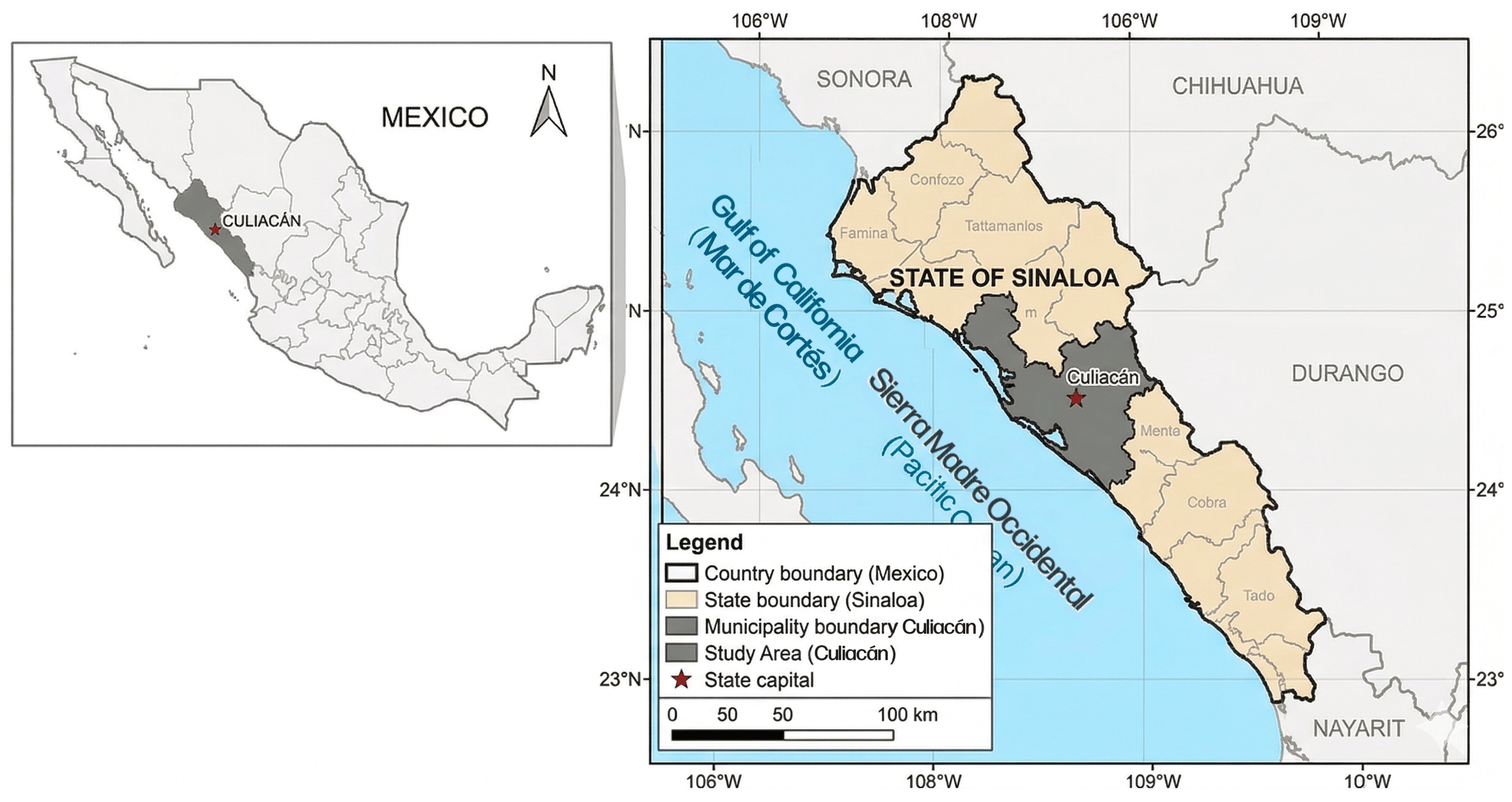
The study area comprises the city of Culiacán, capital of the state of Sinaloa, Mexico, as well as the surrounding localities that form part of its urban sphere of influence. Culiacán is considered an intermediate city that is characterized by sustained urban growth, a diversified economic structure, and the coexistence of environmental, social, and governance-related challenges that affect everyday life.
Figure 1 shows the geographic location of the study area within Mexico and the state of Sinaloa.
The inclusion of peripheral and nearby localities allowed the analysis to extend to urban and peri-urban contexts sharing similar environmental and social dynamics. This territorial delimitation responds to the objective of capturing citizen perceptions in a space where environmental problems are not restricted to administrative boundaries.
2.3. Sample and Data Collection
The target population consisted of individuals aged 18 to 75 residing in the municipality of Culiacán. According to the 2020 Population and Housing Census conducted by the National Institute of Statistics and Geography (INEGI), this group totaled 680,334 inhabitants [
26].
Based on this population, a minimum sample size of 384 observations was estimated, considering a 95% confidence level, a 5% margin of error as a methodological reference, and maximum variability (p = 0.5). The data collection resulted in 552 valid surveys, exceeding the theoretical minimum reference size. This calculation is presented as a magnitude reference, given the non-probabilistic sampling design, since the data were collected through non-probabilistic convenience sampling. Therefore, results should be interpreted in analytical terms rather than as formal population estimates.
The data were collected through face-to-face surveys conducted between 17 September 2025 and 3 December 2025. This approach enabled direct interaction with participants and facilitated complete responses across the questionnaire sections. Convenience sampling allowed access to different urban and peri-urban areas, prioritizing territorial diversity over statistical representativeness. Given the analytical nature of the study and the focus on examining associations between the perceptual variables, this approach provides context-specific empirical evidence.
The sample included residents from Culiacán and the surrounding localities, with balanced participation by sex and a predominance of young and adult individuals. Although the sampling design does not allow formal population inference, the sample size and territorial diversity provide relevant elements for analyzing environmental and quality-of-life perceptions in the study context.
All the participants were informed about the general objectives of the study, and participation was voluntary. Anonymity and confidentiality of the information were guaranteed. The study complied with the ethical principles applicable to social research involving no intervention and no risk to participants.
2.4. Instrument
The data were collected using a structured questionnaire designed to capture citizen perceptions of environmental problems and the perceived quality of life in the local context. The questionnaire consisted primarily of closed-ended items measured using five-point Likert scales with ordered response categories, allowing for a systematic evaluation of perception intensity and facilitating comparability across items and statistical processing.
The instrument was organized into thematic blocks. The first block included questions related to the perceived severity of environmental problems and the associated deterioration factors. The second block captured the perceived quality of life, incorporating items related to general well-being, the perceived impact of economic and social issues, and the evaluation of services relevant to daily life.
The environmental perception block consisted of five items: deforestation, forest fires, air pollution, water pollution, and drought. The perceived quality-of-life block also included five items associated with factors affecting well-being: unemployment, low wages, violence, limited entrepreneurship opportunities, and lack of government support.
The structure of the questionnaire enabled the subsequent construction of synthetic indicators and a comparison across perception dimensions.
Prior to the final data collection, the questionnaire underwent expert review. Three academic collaborators from the Academic Body of Environmental Economics, Bioenergy, and Sustainability assessed content validity, conceptual relevance, and internal coherence between the dimensions, suggesting adjustments in wording and block organization. Subsequently, a pilot test was conducted with 30 participants, which allowed the identification of minor ambiguities and improvements in question clarity. The observations derived from this phase were incorporated into the final version of the instrument.
2.5. Data Analysis
Based on the items included in each thematic block, two synthetic indicators were constructed: an index of perceived environmental problems and an index of the perceived quality-of-life deterioration. It is important to clarify that this index does not measure quality of life directly, but rather the perceived intensity of factors negatively affecting well-being. Thus, higher values indicate a greater perceived deterioration in quality of life.
Since the items represent differentiated environmental and social dimensions, no latent unidimensional construct was assumed. Accordingly, both indicators were calculated as simple arithmetic means of individual responses to synthesize the information and facilitate the analysis of the associations between the perceptual dimensions.
The decision to construct the indices as simple arithmetic averages was supported by the observed low-to-moderate correlations among the individual components. The inter-item correlations confirmed that the selected variables represent complementary dimensions rather than reflective indicators of a single latent construct. Therefore, the indices were treated as formative composite measures summarizing the perceived environmental severity and the perceived quality-of-life deterioration.
Likert scales were coded on a 1–5 range, maintaining a homogeneous direction across items. The indicators preserved the original response scale, and no differential weighting was applied.
To examine the relationship between environmental perception and the perceived quality of life, a linear regression model was estimated using ordinary least squares (OLS). The dependent variable was the perceived quality-of-life deterioration index, and the main explanatory variable was the environmental perception index. The functional specification and the absence of severe multicollinearity among the explanatory variables were evaluated.
Additional models, including age and sex as control variables, were estimated; however, these variables were not statistically significant and did not substantially modify the association between the environmental perception index and the perceived quality of life. Therefore, the final specification focuses on the direct bivariate relationship between both indices.
These variables were retained only for robustness verification purposes and were not included in the final specification because they did not alter the estimated association between the composite indices. Given the perception-based nature of the analytical framework, the study prioritizes the direct relationship between environmental perception and the perceived quality-of-life deterioration rather than modeling structural socioeconomic determinants.
The residual diagnostics indicated deviations from normality, which is expected given the ordinal nature and concentration patterns of Likert scale responses. Considering the sample size (N = 546), the OLS estimator remains consistent under the Gauss–Markov assumption. The Breusch–Pagan test indicated heteroscedasticity; therefore, robust standard errors (HC3) were estimated. The results remained statistically significant and substantively unchanged. As an additional robustness assessment, correlation matrices were examined for each set of index components to verify the contribution of individual items to the composite indicators. The results supported the treatment of both indices as formative composite measures summarizing complementary perception-based dimensions rather than reflective latent constructs.
Of the 552 valid surveys collected, 546 contained complete information for the construction of both indices and were included in the regression model. The statistical analysis was conducted using Python 3.10, specifically the pandas and statsmodels libraries for the model estimation and the statistical output.
3. Results
3.1. Sample Characteristics
The analyzed sample consisted of 552 valid surveys collected in Culiacán and surrounding localities. The participation was balanced by sex, with a slight predominance of female respondents. The majority of participants were young and middle-aged adults, reflecting the demographic composition of the urban population within the selected age range.
The questionnaire primarily focused on the perception-based environmental and well-being dimensions; therefore, detailed socioeconomic characteristics, such as educational attainment, household income, occupation, or residential location, were not incorporated into the analytical specification. The objective of the survey instrument was to construct composite perception indices capturing multidimensional environmental and social concerns rather than to model structural socioeconomic determinants of quality of life. Consequently, the analysis emphasizes the perception-based associations within the study context rather than a population-level socioeconomic inference.
While these variables were omitted from our model, future studies should consider socioeconomic stratification to identify how perceptions vary across different social groups in Culiacán.
In terms of socioeconomic perception, a significant proportion of respondents identified unemployment, low wages, and limited government support as factors that negatively affect their quality of life. These elements provide the contextual background for interpreting the relationship between environmental perception and perceived well-being, as shown in
Table 1.
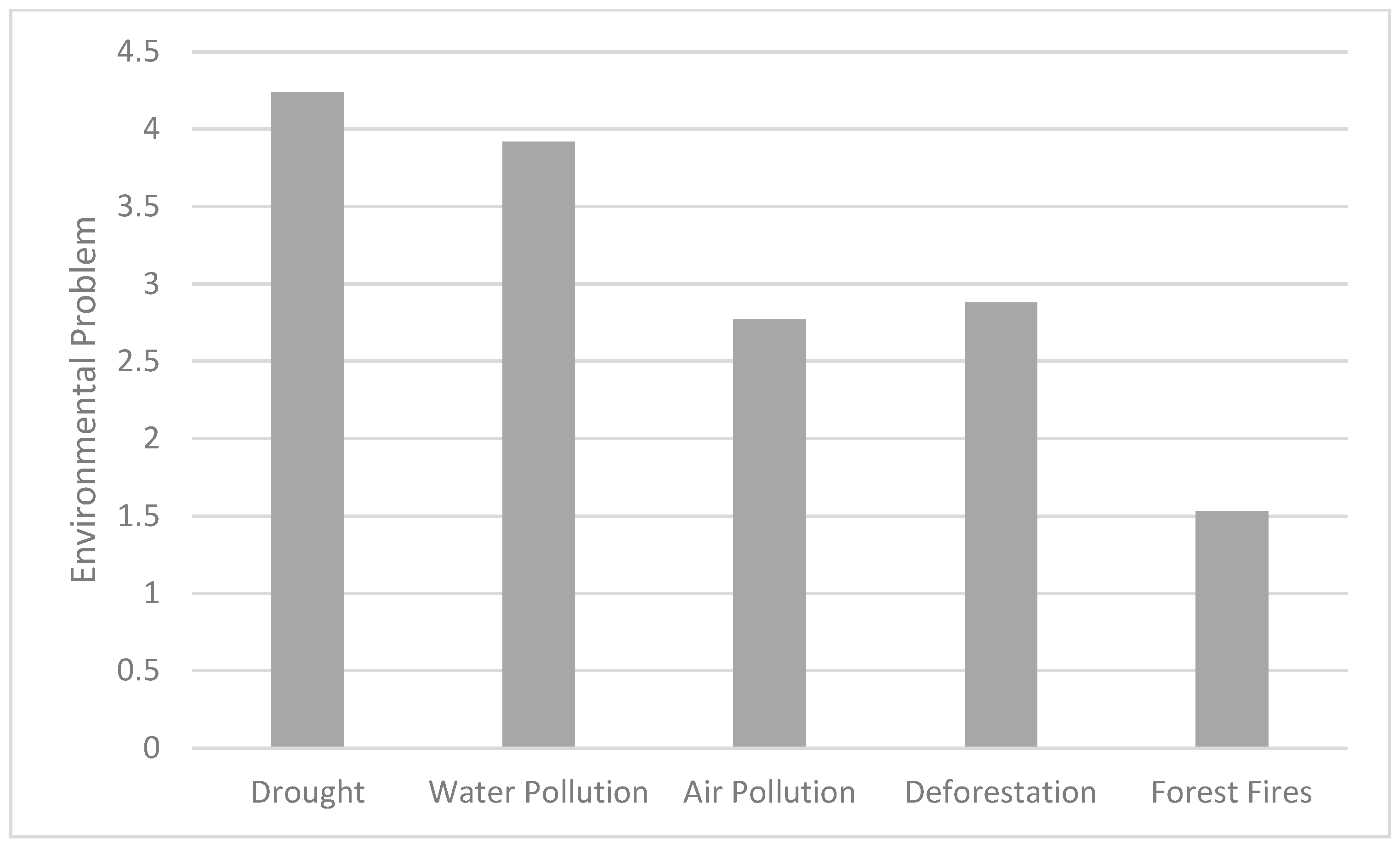
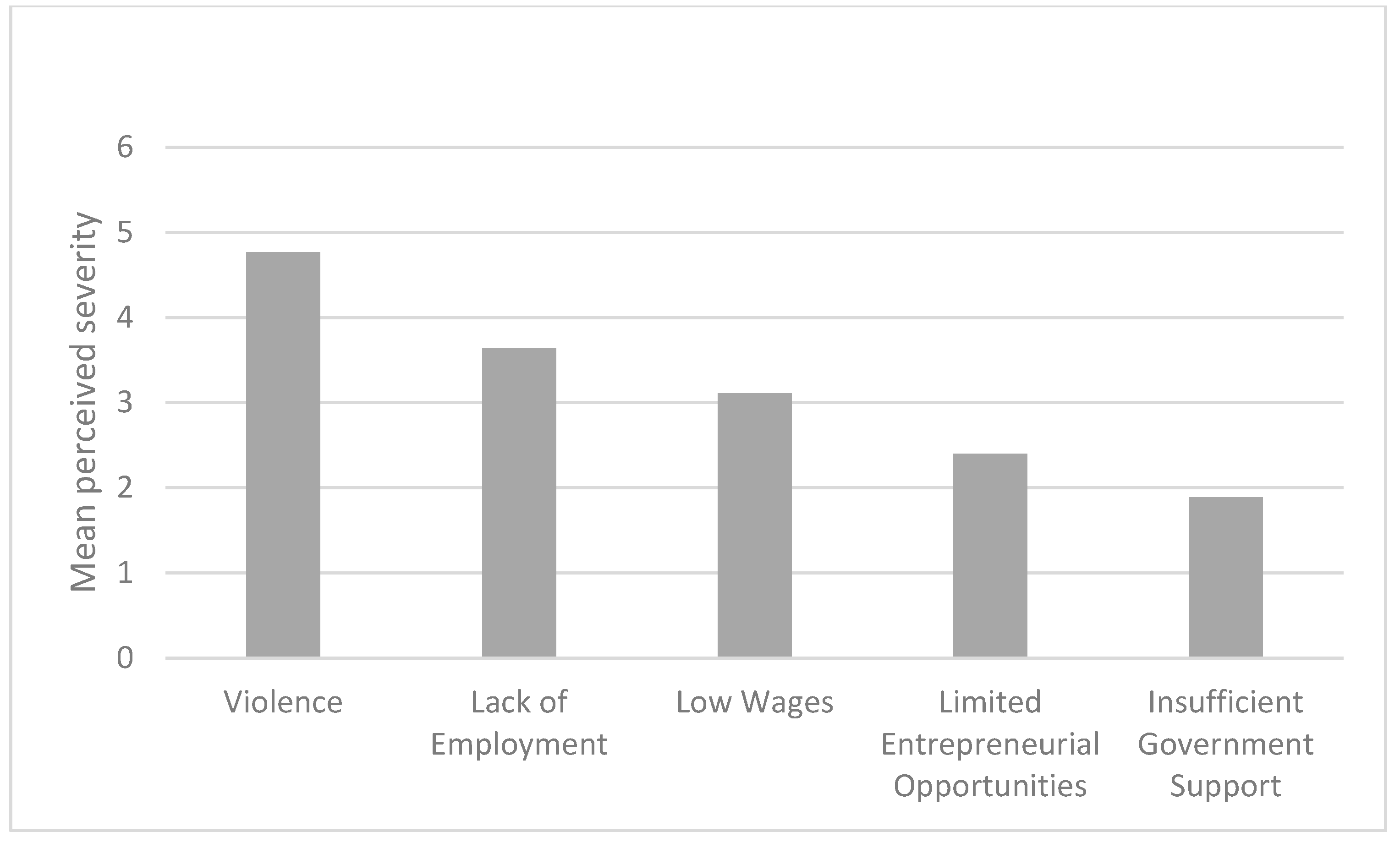
Table 2 reports the descriptive statistics for both composite indices and their components. The environmental perception index shows a mean value of 3.062, indicating a moderate-to-high perceived severity of environmental problems among the respondents. The perceived quality-of-life deterioration index presents a mean of 3.171, suggesting that the respondents reported a moderate level of perceived deterioration in well-being conditions. Among the individual environmental items, drought and water pollution show the highest perceived severity levels, whereas forest fires present a comparatively lower concern. Regarding the deterioration components, violence emerges as the most critical perceived factor affecting well-being.
The correlation matrices among the components of both composite indices showed low-to-moderate associations between individual items, supporting their interpretation as multidimensional perception-based indicators rather than reflective latent constructs.
Table 3 presents the inter-item correlations for the components of both composite indices. The results show low-to-moderate associations between the individual variables, supporting their interpretation as complementary perception-based dimensions rather than reflective indicators of a single latent construct.
3.2. Environmental Perception and Quality-of-Life
The descriptive analysis indicates that water-related issues—particularly drought and water contamination—are perceived as the most severe environmental problems. In contrast, deforestation and air pollution were evaluated as moderately severe, suggesting differentiated patterns of environmental concern.
Regarding the perceived quality of life, violence emerged as the factor most strongly affecting well-being, followed by unemployment and low wages. These findings illustrate the coexistence of environmental and social concerns within the evaluation of urban well-being (see
Figure 2 and
Figure 3).
3.3. Relationship Between Environmental Perception and Quality of Life
To examine the association between the perceived environmental problems and the perceived quality of life, an ordinary least squares (OLS) regression model was estimated using 546 observations with complete information for both indices. as presented in
Table 2.
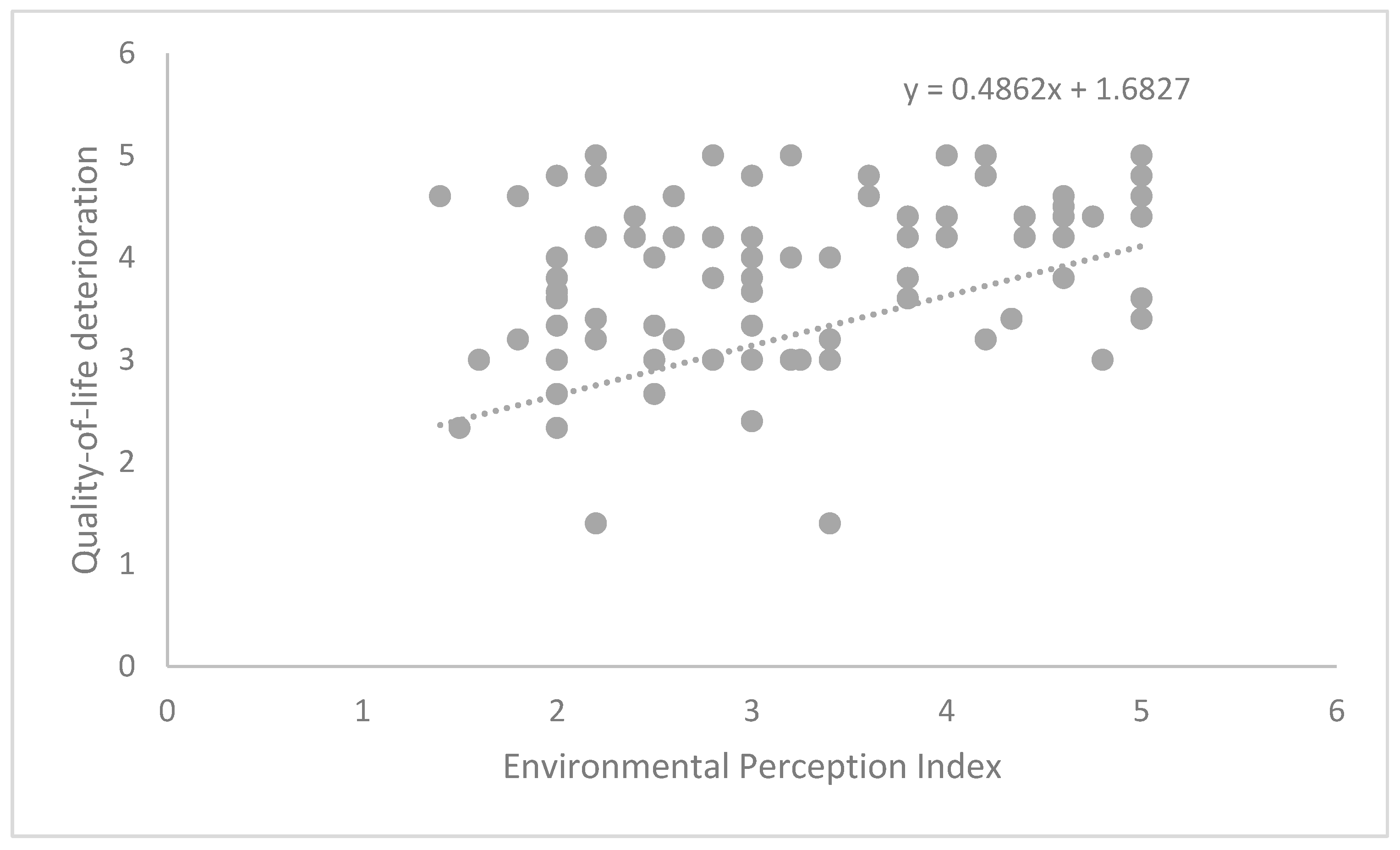
The results indicate a positive and statistically significant association between the environmental perception index and the perceived quality-of-life deterioration index (β = 0.468, p < 0.001), suggesting that a higher environmental problem severity is associated with poorer well-being evaluations.
The model explains 22% of the variance in the perceived quality of life (R2 = 0.220), indicating a moderate explanatory capacity that is consistent with the multidimensional nature of well-being.
The standardized coefficient (β = 0.468) indicates a moderate positive association between the perceived environmental severity and the perceived quality-of-life deterioration. as shown in
Table 4.
The linear trend between both indices is illustrated in
Figure 4, which displays the fitted regression line.
4. Discussion
The findings indicate that the perceived environmental problems constitute a relevant dimension in the evaluation of quality-of-life deterioration in intermediate cities. In the case of Culiacán and surrounding localities, the positive and statistically significant association between the environmental perception index and the quality-of-life deterioration index suggests that higher perceived environmental severity is associated with a less favorable evaluation of everyday well-being [
6,
7,
17]. It is important to note that the perceived quality-of-life deterioration index synthesizes the perceived factors of affectation; therefore, higher values reflect a less favorable assessment of well-being.
Water-related issues, particularly drought and water contamination, emerged as the most critical environmental concerns. This pattern is consistent with recent evidence highlighting the centrality of water availability and quality in shaping urban well-being, especially in contexts that are characterized by climate vulnerability and institutional constraints [
25]. In intermediate cities, environmental concerns appear to concentrate on the problems that generate tangible and immediate effects on daily life.
The intermediate perception of deforestation and air pollution suggests that although these problems are recognized, their influence on the perceived quality of life may be mediated by the proximity between environmental phenomena and lived experience. Previous studies have documented that subjective environmental evaluations depend not only on objective environmental conditions but also on their perceived immediacy and impact on everyday practices [
13].
Regarding the quality of life, violence emerged as the factor most strongly affecting well-being. This finding aligns with the research conducted in Latin American urban contexts, where insecurity consistently appears as a central determinant of the subjective quality of life [
4,
27,
28,
29]. The coexistence of the environmental and social concerns reinforces the idea that urban well-being is shaped by multiple interacting dimensions, including environmental conditions, institutional trust, and governance capacity [
30,
31,
32,
33].
Although the model explains a moderate proportion of the variance in perceived quality-of-life deterioration (R
2 = 0.220), this result is consistent with the multidimensional nature of well-being. The perception-based models capture only part of the phenomenon, as individual trajectories, health conditions, social networks, and expectations also influence subjective evaluations [
18,
20]. The explanatory capacity observed does not exhaust the complexity of urban well-being but highlights the relevance of environmental perception as a meaningful component within a broader set of determinants.
From a policy perspective, the findings suggest that strategies aimed at improving the perceived quality-of-life deterioration in intermediate cities cannot be detached from everyday environmental management. The importance attributed by respondents to drought and water contamination underscores the need for strengthened water governance, infrastructure planning, and institutional coordination. Furthermore, the interaction between environmental and social concerns indicates that isolated sectoral interventions may be insufficient to improve urban well-being in contexts characterized by climate stress and governance challenges.
These findings also highlight the institutional dimension underlying environmental perception in intermediate cities such as Culiacán. In urban contexts characterized by rapid territorial expansion, climate vulnerability, and infrastructure pressures, the effectiveness of local governance plays a central role in shaping how environmental conditions are experienced and evaluated by residents. The limitations in water management capacity, environmental monitoring systems, and coordination between municipal and state authorities may reinforce the perception of environmental deterioration as part of everyday urban experience. In this sense, the observed association between environmental perception and the perceived quality-of-life deterioration reflects not only exposure to environmental stressors but also the citizens’ evaluations of institutional capacity to respond to them.
In intermediate cities, environmental problems tend to be experienced through everyday service provision conditions rather than through large-scale metropolitan environmental crises. This proximity between environmental stressors and daily urban practices may intensify their influence on subjective well-being evaluations. As a result, perception-based indicators capture not only environmental exposure itself but also the interaction between infrastructure availability, institutional response capacity, and citizens’ expectations regarding urban services.
This interaction between environmental perception and institutional capacity reinforces the relevance of perception-based indicators for understanding the urban well-being dynamics in intermediate cities facing climate stress and governance constraints.
Limitations
This study presents several limitations that should be considered when interpreting the results. First, the cross-sectional design does not allow strict causal inference between the perceived environmental problems and the perceived quality-of-life deterioration. The analysis is limited to associations observed at a specific point in time.
Second, the use of non-probabilistic convenience sampling restricts the possibility of formal population inference. Although the sample size exceeds the theoretical minimum reference and captures territorial diversity, the results should be interpreted as context-specific rather than representative estimates.
Third, the indicators are based on subjective perceptions, which may be influenced by personal experiences, expectations, or unobserved contextual factors. Future research could complement perception-based measures with objective environmental and socioeconomic indicators, as well as longitudinal designs to explore temporal dynamics.
Additionally, although robust standard errors were applied to address heteroscedasticity, the cross-sectional structure of the dataset does not allow for controlling for all potential sources of endogeneity. Future research could incorporate longitudinal survey designs or multilevel modeling strategies to further explore the causal pathways between environmental perception and quality-of-life evaluations.
5. Conclusions
This study examined the relationship between the perceived severity of environmental problems and the perceived quality-of-life deterioration in Culiacán, Mexico, an intermediate city characterized by climate vulnerability and institutional constraints. Based on the survey data, the results indicate a positive and statistically significant association between environmental perception and the perceived quality of life, suggesting that a higher perceived environmental severity is linked to a less favorable evaluation of well-being.
Water-related concerns—particularly drought and water contamination—emerged as the most critical environmental issues. This finding underscores the central role of water governance in shaping urban well-being in intermediate cities facing increasing climate stress. In parallel, social factors such as violence and unemployment were identified as major determinants of the perceived quality-of-life deterioration, highlighting the multidimensional nature of urban well-being.
Although the explanatory power of the regression model is moderate, the results demonstrate that environmental perception constitutes a meaningful component within the broader evaluations of the quality of life. The findings contribute empirical evidence from an intermediate Latin American city, a scale that remains underrepresented in urban sustainability research.
The study supports the relevance of incorporating citizen perceptions into sustainability and urban policy frameworks, particularly in contexts where environmental stress and institutional capacity interact in ways that shape everyday well-being.