1. Introduction
ESG performance has emerged as a pivotal measure for assessing the comprehensive effectiveness and sustainable development capabilities of enterprises [
1]. A high ESG rating not only enhances a company’s social standing and bolsters investor and consumer trust but also translates to lower financing costs, higher market valuations, and amplified business growth opportunities. As a result, many companies are making concerted efforts to elevate their ESG ratings, creating a symbiotic relationship between ESG performance and corporate performance. However, while some enterprises witness an ongoing ascend in their ESG ratings, they often fixate on superficial ESG metrics and incur substantial expenses, neglecting the fundamental elements that underpin long-term enterprise development, such as technological innovation, product quality, and strategic market positioning. This approach ultimately leads to a decline in enterprise performance and undermines its enduring competitiveness and sustainable development potential [
2]. Therefore, this study selects the petrochemical industry, a sector notorious for high pollution and energy consumption, yet highly responsible for environmental and social matters, as a focal point for in-depth exploration [
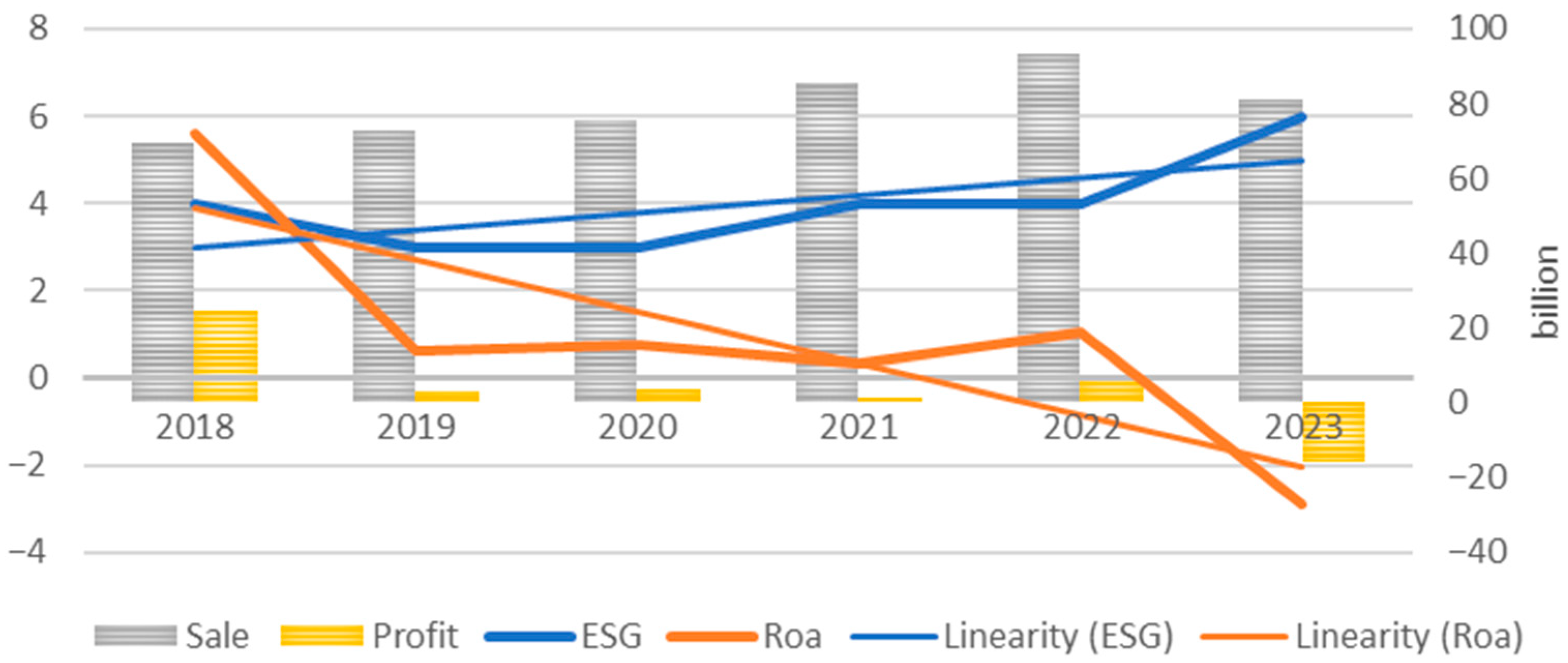
3]. With the 10th company in the attached data package (a collection of ESG ratings for listed companies in the petrochemical industry) as a case study illustrating the “ESG trap” (as shown in
Figure 1), the company’s ESG ratings and sales have climbed steadily, while corporate performance and profitability have waned. Consequently, this paper defines this counterintuitive phenomenon as the “ESG trap”.
The ESG trap refers to the predicament where an enterprise’s performance deviates from its ESG standards. That is, the ESG performance of the enterprise steadily improves, but the enterprise’s performance keeps declining. Some enterprises, in the process of striving for an increase in their ESG ratings, focus on making superficial efforts in ESG and invest a large amount of costs, such as large-scale charitable donations, formal environmental protection publicity, creating fictitious ESG positions to meet the rating requirements, and allocating a lot of resources to formal information disclosure. Instead, they neglect the core elements for the long-term development of the enterprise, such as technological innovation, product quality, and market strategy. These investments are difficult to be effectively transformed into core competitiveness. This kind of “throwing the baby out with the bathwater” approach occupies the space for the allocation of key resources, making the product and service quality unable to meet the increasingly growing demands of consumers. The enterprise gradually loses its technological leading edge in the market competition and ultimately leads to a decline in its performance and undermines its sustainable development ability. The predicament of the deviation between enterprise performance and ESG not only reflects the trade-off and conflict between economic interests and social responsibility of the enterprise, but also reveals the structural imbalance in the strategic layout of the enterprise. The ESG trap is conceptually distinct from related ideas. It differs from greenwashing, which involves misrepresentation or exaggeration of ESG efforts, in that the ESG trap concerns the misalignment between actual ESG investments and the firm’s core performance outcomes rather than deceptive disclosure. It also differs from ESG–performance trade-offs or ESG overinvestment, as these concepts focus on general resource allocation conflicts, while the ESG trap emphasizes situations where ESG improvements absorb resources without producing proportional performance gains. Furthermore, it is distinct from ESG rating divergence, which highlights discrepancies between ratings from different agencies; the ESG trap specifically addresses the internal disconnect between rising ESG ratings and declining corporate performance. The petrochemical industry, as a typical industry with high pollution and high energy consumption, faces strict environmental compliance requirements. Enterprises must invest a large amount of rigid capital in upgrading environmental protection equipment, reducing pollutants, and other hard expenditures. However, some petrochemical enterprises fail to formulate differentiated ESG strategies based on industry characteristics and instead fall into the shortsighted behavior of “emphasizing ratings but neglecting effectiveness”, making the predicament of the deviation between enterprise performance and ESG more prominent within the industry.
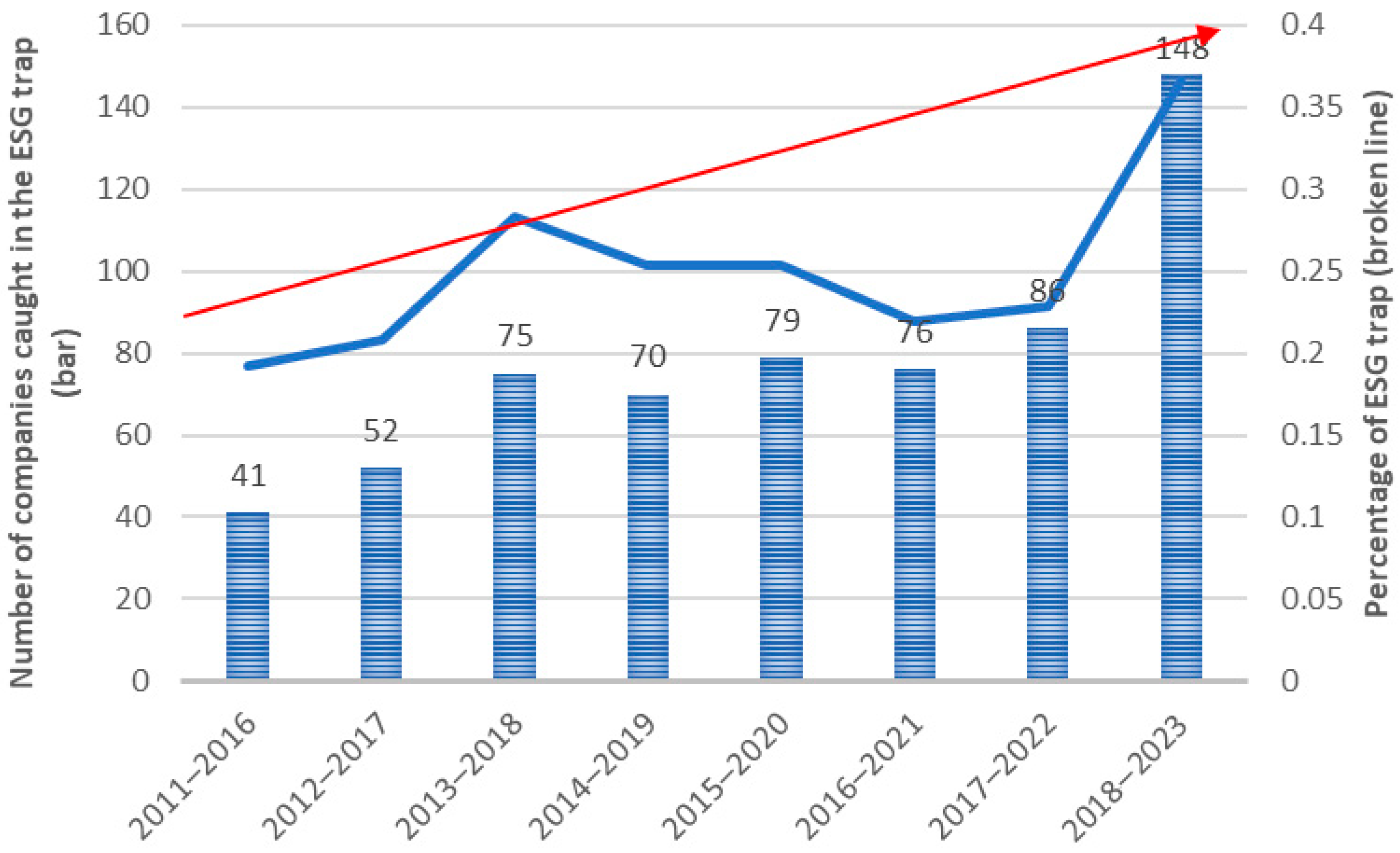
Based on this definition, the paper explores two key inquiries: “Does the concept of the ESG trap truly exist?” and “How is the ESG trap formed?” By analyzing medium and long-term statistics on ESG ratings and financial performance of listed companies in the petrochemical sector, it is observed that an increasing number of enterprises are experiencing a rise in their ESG ratings concurrent with a decline in their performance over time. As depicted in
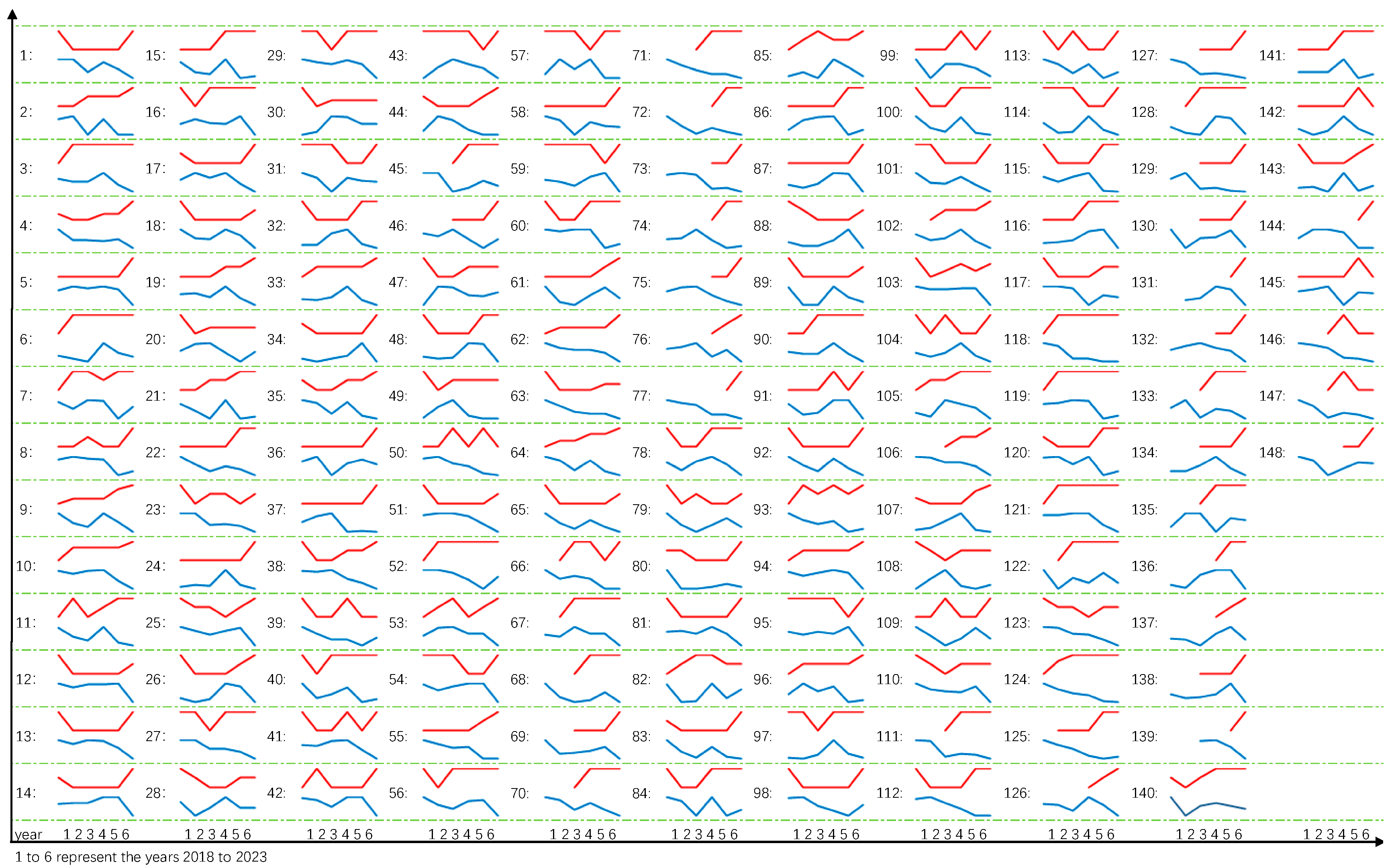
Figure 2, the phenomenon of the ESG trap within the petrochemical industry has witnessed a significant increase in recent years. From 2018 to 2023, the deviation between enterprise performance and ESG performance in the petrochemical industry is relatively common, and the proportion of enterprises falling into the ESG trap is as high as 34.41%, which is significantly higher than that of other industries in the same period. Consequently, this study concentrates on the petrochemical industry examining the ESG trap. Given the broad and diverse scope of activities within the petrochemical industry, to clarify the statistical categories, the paper strictly adheres to the “Guidelines on Industry Classification of Listed Companies” revised by the China Securities Regulatory Commission in 2012, covering sectors such as petroleum processing, coking, and nuclear fuel processing (C25), chemical raw materials and chemical products manufacturing (C26), and chemical fiber manufacturing (C28). The petrochemical industry, as an important sector of energy consumption and greenhouse gas emissions, has a profound impact on the environment. Despite the trend of the ESG trap phenomenon being highlighted in
Figure 2 (where the data can be found in the
Supplementary Materials, namely a excel tale:
Table S1: Data on corporate performance and ESG from 2011 to 2023), the subsequent data analysis reveals a negative correlation between ESG ratings and enterprise performance, shedding light on the mechanisms that give rise to this phenomenon.
The structure of this paper is as follows:
Section 2 reviews the literature on factors influencing ESG performance and their economic consequences;
Section 3 proposes a hypothesis regarding the pathways through which ESG trap form;
Section 4 quantifies and attributes ESG trap; and
Section 5 establishes the formation pathways of ESG and their sub-pathways through empirical testing.
Section 4 and
Section 5 collectively address two critical scientific questions: ‘Does the defined ESG trap exist?’ and ‘How is the ESG trap formed?’
Section 6 proposes targeted solutions to resolve the dilemma of diverging corporate performance and ESG outcomes.
The main innovations of this paper are twofold. First, the research perspective is novel because it focuses on the phenomenon of ESG deviation from enterprise performance, capturing the distribution and trends of the ESG trap in the high-pollution, high-energy petrochemical sector and revealing cases where firms over-rate ESG achievements while neglecting effectiveness. This approach fills a gap in the literature and highlights the trade-offs enterprises face between economic performance and social responsibility. Second, the research approach is innovative by establishing the core mechanism linking ESG improvement to performance decline, exploring sub-pathways, and systematically analyzing the mediating effects of research and development intensity and financing constraints as well as the moderating effects of risk-taking and competitive position, providing a comprehensive framework for understanding ESG–performance deviation.
2. Literature Review
The literature pertinent to this study is primarily bifurcated into two domains: the first explores the factors influencing the ESG performance of corporations, while the second delves into the economic outcomes stemming from ESG performance. At the macroenvironmental level, factors such as the robustness of the legal framework, the extent of corruption, and the strength of the labor protection system have been found to significantly impact the ESG performance of corporations [
4]. Yu’s work highlights the issue of “greenwashing” in ESG disclosures, underscoring the critical importance of transparent and accurate reporting practices [
5]. A nation’s broader governance context can exert influence over a firm’s ESG practices, as Moone Eapen’s study demonstrates that companies in countries with lower levels of democracy and political stability tend to exhibit better ESG performance, suggesting that a country’s governance framework can shape firms’ ESG behaviors [
6]. His research reveals that the implementation of the Environmental Protection Tax Law has a positive effect on corporate ESG performance by encouraging businesses to increase labor and employment [
7]. At the corporate governance level, the size of the enterprise emerges as the pivotal internal driving force affecting ESG performance. Large enterprises typically possess more resources to obtain ESG data, thereby facilitating the enhancement of corporate ESG performance [
8,
9,
10]. Institutional investors can effectively mitigate potential agency conflicts by compelling enterprises to enhance the transparency of ESG information [
11,
12]. Furthermore, positive public sentiment can elevate the valuation premium of firms with commendable sustainability performance, indicating that investor perceptions and sentiment play a crucial role in propelling firms’ financial performance based on ESG practices [
13]. Wang and Lu’s findings suggest that digital transformation can significantly improve the ESG performance of corporations [
14,
15].
At the same time, research into the economic consequences of firm ESG performance has made significant progress. At the level of corporate performance, most studies suggest that robust ESG performance can curb short-term opportunistic behavior within firms, thereby bolstering overall corporate performance [
16]. Zhang’s analysis of the impact of ESG performance on the financialization of Chinese enterprises points to the necessity of implementing stringent regulations on ESG activities and investments in financial assets to ensure sustainable economic development [
17]. Ahmad’s study reveals that enterprises with commendable ESG performance report higher excess returns and lower volatility [
18]. Izek’s investigation into the link between ESG performance and economic growth in East Asia, the Pacific, and South Asia underscores the potential synergy between ESG performance and economic development objectives [
19]. However, from the lens of agency cost theory, some scholars advocate the opposite viewpoint, asserting that ESG performance may engender agency cost issues, with executives compromising shareholder interests in pursuit of personal reputation, thereby adversely affecting corporate performance [
20,
21]. Chen’s examination of the relationship between ESG responsibility fulfillment and enterprise performance uncovers a “substitution effect” in the short term and a “promotion effect” in the long term [
22]. At the enterprise risk level, Atif’s research demonstrates that strong ESG performance can markedly decrease default risk [
23]. During the COVID-19 pandemic, companies with high ESG performance not only realized higher earnings growth but also effectively mitigated the downside risk of stock prices [
24] and fund downside risk [
25]. Luo’s study found that commendable ESG performance aids in reducing the stock price crash risk of Chinese listed companies [
26].
The existing literature on ESG research is relatively abundant, with scholars having explored this topic in depth from multiple perspectives and drawn numerous valuable conclusions. However, despite the growing prominence of ESG issues, research into the pathways leading to the formation of an ESG trap remains scarce. Against this backdrop, this paper endeavors to investigate the pathways of ESG trap formation, thereby revealing the potential obstacles and pitfalls enterprises may encounter when advancing ESG strategies. Compared to existing research, this paper’s principal contribution lies in the following: Firstly, it provides an in-depth analysis of the pathways leading to ESG pitfalls, offering a novel analytical perspective for future research. This fills a gap in the field of ESG trap studies and provides significant insights for subsequent ESG research and corporate practice. Second, through empirical analysis, this paper proposes strategies and methodologies for navigating ESG pitfalls, offering robust support for enterprises to formulate sound strategies within complex and volatile environments. This not only deepens corporate understanding of risks and challenges in ESG implementation but also effectively assists enterprises in avoiding ESG pitfalls, thereby achieving sustainable development.
6. Solutions to ESG Trap
The primary pathway through which ESG trap form manifests as a significant increase in costs incurred to enhance ESG ratings. Based on prior research findings, excessive ESG cost investments can lead to declining corporate performance. Consequently, reducing ESG costs becomes crucial for improving corporate performance. Achieving this objective requires ensuring that reduced ESG costs enhance corporate performance while avoiding excessive deterioration in ESG outcomes. To quantitatively analyze this process, this study systematically examines the differential impacts of varying cost-reduction intensities on corporate performance and ESG outcomes. Five gradient levels—15%, 12%, 10%, 8%, and 5%—were selected as the extent of ESG cost reduction. Calculations were performed using the regression equation model established earlier:
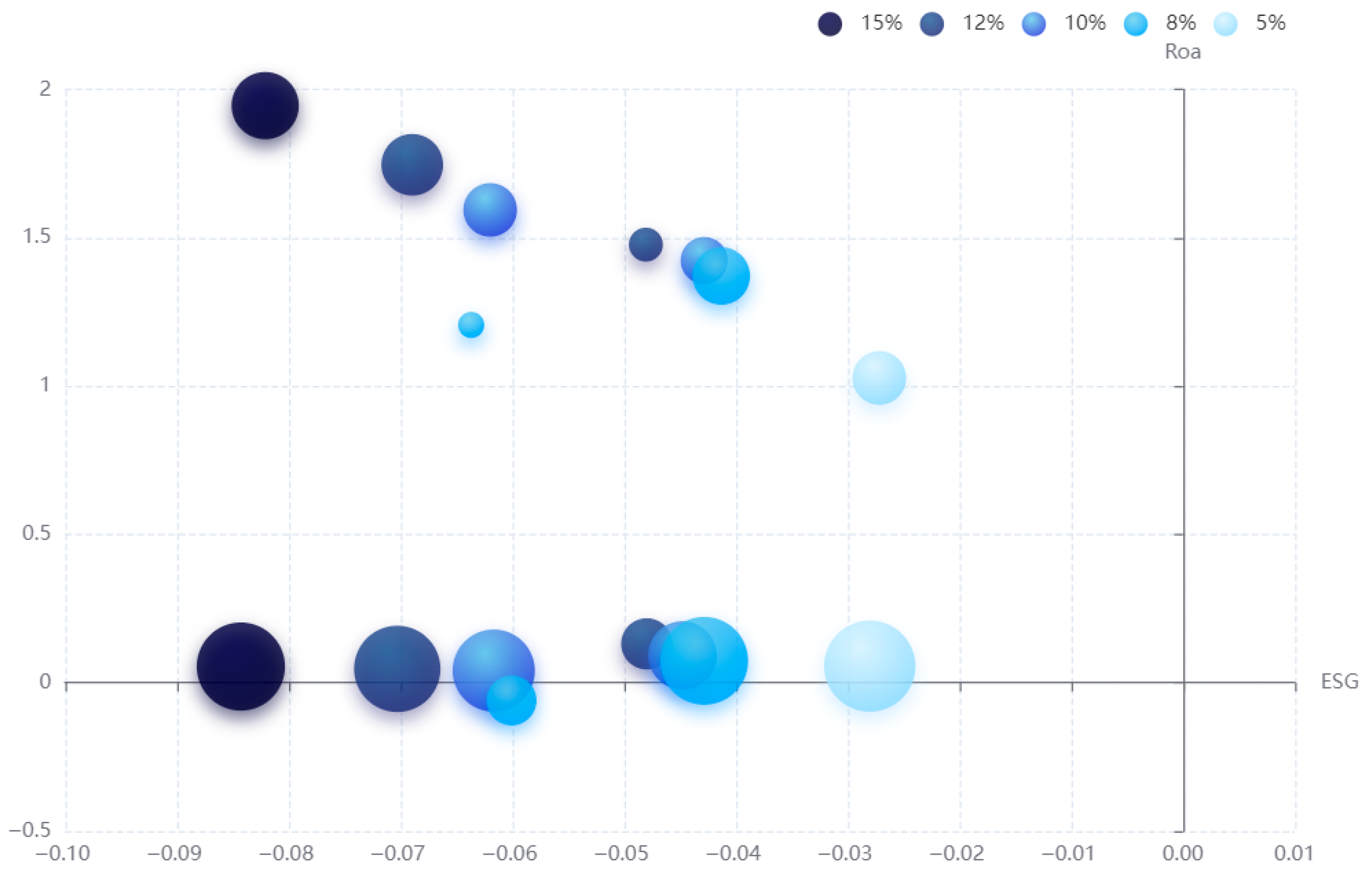
By substituting values adjusted for ESG cost reductions, we calculated revised corporate performance and ESG metrics, comparing these with original data to determine the extent of performance growth and ESG decline. Based on the actual distribution characteristics of sample companies’ performance and ESG metrics, this study employs a 50% increase in ROA and a 5% decrease in ESG as classification criteria, dividing sample companies into four zones: Zone One comprises companies with an ROA increase ≥ 50% and an ESG decrease < 5%; Zone Two includes companies with an ROA increase ≥ 50% and an ESG decrease ≥ 5%; Zone 3 comprises firms with ROA growth below 50% and ESG decline ≥ 5%; Zone 4 comprises firms with ROA growth below 50% and ESG decline < 5%. Within each zone, points are plotted with firm count as radius and the average of ESG decline and ROA growth as center.
Significant divergences emerge between corporate performance and ESG outcomes across different ESG cost-cutting strategies. As illustrated in
Figure 5, when ESG cost reductions reached 15%, companies in Zone 2 achieved an average performance increase of 194.6%—far exceeding other strategies—yet their ESG performance declined by 8.2%. This short-sighted strategy resulted in 24.5% of firms facing the dilemma of high performance coupled with low ESG standards. While delivering the most pronounced performance gains, this approach carries substantial costs, potentially exposing companies to long-term regulatory risks or reputational damage. When ESG cost reductions narrowed to 12%, Zone 2 enterprises accounted for 18% of the sample, achieving an average performance increase of 174.7%. However, this outcome was marginally less effective than the 15% reduction strategy, with an average decline in ESG performance of 6.9%. Although this strategy substantially enhances corporate performance, it struggles to stem the decline in ESG performance. Consequently, it is not recommended and represents an irrational choice for enterprises prioritizing sustainable development and social responsibility. When ESG cost reductions were maintained at 10%, companies in both Region 1 and Region 2 achieved an average performance increase exceeding 142.4%, with ESG performance declining below 6.2%, accounting for 19.4% of firms. Although performance growth was substantial, it could not prevent significant ESG performance deterioration. Excessive ESG cost cuts lack sustainability, rendering this strategy unsuitable as a priority option for enterprises. Further reducing ESG cost cuts to 8% enabled Zone 1 enterprises to achieve 137.2% performance growth. This substantial improvement in corporate performance was accompanied by a mere 4.1% decline in ESG performance, demonstrating favorable balance. 14.4% of enterprises successfully established themselves as dual-excellence benchmarks. This approach suits enterprises pursuing high performance while maintaining ESG standards, enabling substantial performance gains without unduly compromising sustainability. In contrast, the 5% ESG cost reduction strategy proves more robust. 11.5% of enterprises concentrated in Zone One achieved an average performance increase of 102.8%—a considerable growth rate—with ESG performance declining by only 2.7%. 88.5% of enterprises fell within Quadrant IV, where corporate performance saw a modest 5.6% increase and ESG performance experienced only a slight 2.8% decline, exhibiting relatively stable overall fluctuations. This strategy suits risk-averse enterprises prioritizing ESG performance and accepting the risk of slower growth, particularly in ESG-sensitive sectors like new energy where its stability proves more appealing.
Therefore, this paper recommends that enterprises adopt strategies with an ESG cost reduction of either 8% or 5%. Compared to the 5% reduction strategy, while the 8% reduction strategy faces certain pressures in terms of ESG scoring, it delivers a significant improvement in performance returns. Industry leaders, leveraging robust resource reserves and mature technological systems, may prioritize the 8% ESG cost reduction strategy to further expand their competitive edge. Conversely, start-ups or ESG-sensitive enterprises, constrained by limited resource endowments and insufficient risk resilience, should adopt the 5% ESG cost reduction strategy to steadily fortify the foundations of sustainable development. Aggressive strategies exceeding 10% ESG cost reduction may yield rapid short-term performance gains but risk precipitating a cliff-edge decline in ESG performance. This creates severe imbalance between ESG metrics and corporate performance, rendering such development models ultimately unsustainable under prevailing ESG investment trends.
To reduce ESG costs, enterprises may implement a series of optimization measures: Regarding environmental equipment technology investment, companies can reduce initial capital expenditure and subsequent operational costs through technological innovation and process optimization. Introducing energy-efficient, consumption-reducing environmental equipment, deploying intelligent management systems, and employing digital monitoring technologies for dynamic regulation can enhance equipment utilization efficiency. Regarding charitable donations, enterprises should proactively establish long-term partnerships with local governments, social organizations, and non-profit institutions. By implementing public welfare projects, they can optimize the allocation of donation resources. This approach not only leverages economies of scale to reduce per-unit donation costs but also strengthens the brand impact of fulfilling social responsibilities, steadily enhancing the enterprise’s societal influence. Regarding environmental education and training expenses, enterprises may innovate training models by conducting large-scale training through digital tools such as online learning platforms and virtual simulation systems. They should actively establish cooperative relationships with professional environmental organizations and higher education institutions to jointly develop standardized training courses. This approach reduces training costs and project implementation expenses while enhancing employees’ environmental awareness and participation. Regarding costs associated with creating new ESG-related positions, enterprises should abandon extensive management approaches. Instead, they should consolidate existing role resources, eliminate redundant positions, and implement cross-functional, multi-skilled training programs to systematically enhance employees’ comprehensive competencies. By promoting flexible staffing models that enable ‘multiple competencies per role,’ they can effectively control labor costs for new positions while improving organizational operational efficiency. Regarding costs associated with dedicated environmental initiatives, enterprises should strengthen full-lifecycle cost control, optimize project implementation plans, eliminate redundant procedures and unnecessary expenditures, develop scientifically grounded cost budgeting schemes, and establish dynamic monitoring and real-time accounting mechanisms. This ensures the precise allocation and efficient utilization of dedicated funds.
Beyond reducing total ESG expenditure, optimizing the internal allocation structure of ESG spending across cost components constitutes a complementary and potentially more sustainable strategy for alleviating the ESG trap. The regression analyses in
Section 4.2 (
Table 4 and
Table 5) reveal that the five ESG cost components exhibit markedly heterogeneous “dual-effect profiles”—that is, their respective contributions to ESG performance enhancement and their impacts on corporate performance differ substantially. To systematically evaluate the relative efficiency of each component,
Table 19 synthesizes the estimated coefficients and classifies each component into one of three efficiency tiers. Environmental education and training expenses (Education) emerge as the most efficient component, generating the strongest statistically significant ESG improvement (β = 0.274,
p < 0.05) with no significant adverse effect on corporate performance. Environmental equipment and technology investment (Investment) and social donations (Donation) occupy a moderate efficiency tier: both produce significant ESG gains, albeit smaller in magnitude, while imposing statistically significant but limited performance costs. Environmental protection special action costs (Protection) and costs of adding ESG positions (Offerings) constitute the lowest efficiency tier, as neither produces a statistically significant ESG improvement in the current period, yet both exert highly significant negative effects on corporate performance. This classification implies that a considerable share of the performance penalty attributed to ESG spending in the petrochemical industry originates from structurally inefficient allocation rather than from the absolute level of ESG commitment.
Based on these efficiency profiles, this study constructs four illustrative allocation scenarios to examine how the redistribution of ESG resources—holding total expenditure constant—affects the aggregate ESG–performance trade-off. Two summary indices are computed for each scenario: a weighted ESG contribution index, defined as the sum of each component’s allocation weight multiplied by its statistically significant ESG coefficient (Education, Donation, and Investment), and a weighted performance drag index, defined as the sum of each component’s allocation weight multiplied by the absolute value of its statistically significant Roa coefficient (Offerings, Protection, Donation, and Investment). The baseline scenario (Scenario A) approximates the current average allocation structure observed in the petrochemical industry sample: Investment (35%), Protection (25%), Donation (15%), Offerings (15%), and Education (10%). Scenario B (Efficiency-Oriented) shifts resources from the two low-efficiency components by reducing Protection to 15% and Offerings to 7%, and redistributes the freed resources to Education (22%) and Investment (41%). Scenario C (ESG-Maximizing) concentrates resources on the three components with significant ESG effects, raising Education to 25% and Donation to 25%, while compressing Protection to 10% and Offerings to 5%, with Investment held at 35%. Scenario D (Balanced Optimization) moderately adjusts the structure, reducing Protection to 17% and Offerings to 10%, while increasing Education to 18%, Investment to 38%, and Donation to 17%. As presented in
Table 20, Scenario B achieves an 89.5% increase in the weighted ESG contribution index relative to the baseline while reducing the performance drag index by 23.8%, demonstrating that substantive resource reallocation can simultaneously strengthen ESG outcomes and attenuate the performance penalty without reducing total ESG spending. Scenario C maximizes ESG contributions (117.2% increase) with an equivalent drag reduction, though its heavy concentration on Education and Donation may limit diversification across ESG dimensions. Scenario D offers a more conservative adjustment, yielding a 61.0% ESG contribution improvement and a 15.7% performance drag reduction, suitable for enterprises seeking incremental optimization with minimal structural disruption. Across all three reallocation scenarios, the common pattern is clear: redirecting resources from Protection and Offerings—where current-period ESG returns are statistically unverifiable—toward Education, the component with the highest ESG return per unit of performance cost, constitutes the most effective lever for alleviating the ESG trap.
Combining the total cost reduction analysis above with the allocation optimization analysis, this paper recommends a two-pronged approach to resolving the ESG trap: enterprises should pursue moderate total ESG cost reductions (5–8%) to relieve immediate financial pressure, while simultaneously restructuring their ESG spending portfolio to prioritize high-efficiency components. Regarding environmental education and training—the highest-efficiency component identified in this study—enterprises should expand their investment share and innovate training delivery through digital tools such as online learning platforms and virtual simulation systems. They should actively establish cooperative relationships with professional environmental organizations and higher education institutions to jointly develop standardized training courses, thereby maximizing ESG returns per unit of expenditure while enhancing employees’ environmental awareness and participation. Regarding environmental equipment and technology investment, companies should focus on technological innovation and process optimization by introducing energy-efficient, low-consumption environmental equipment, deploying intelligent management systems, and employing digital monitoring technologies for dynamic regulation, thereby enhancing equipment utilization efficiency and reducing both initial capital expenditure and subsequent operational costs. Regarding charitable donations, enterprises should proactively establish long-term partnerships with local governments, social organizations, and non-profit institutions, implementing targeted public welfare projects that leverage economies of scale to reduce per-unit donation costs while strengthening the brand impact of fulfilling social responsibilities. Regarding the costs of creating new ESG-related positions—a low-efficiency component—enterprises should abandon extensive management approaches, consolidate existing role resources, eliminate redundant positions, and implement cross-functional, multi-skilled training programs that enable “multiple competencies per role,” effectively controlling labor costs for new positions while improving organizational operational efficiency. Regarding dedicated environmental initiative costs—likewise classified as low efficiency—enterprises should strengthen full-lifecycle cost control, optimize project implementation plans, eliminate redundant procedures and unnecessary expenditures, develop scientifically grounded cost budgeting schemes, and establish dynamic monitoring and real-time accounting mechanisms, ensuring the precise allocation and efficient utilization of dedicated funds. In sum, the path out of the ESG trap lies not in retreating from ESG commitment but in spending more wisely: reducing wasteful, formalistic expenditures that inflate ratings without generating substantive value, and channeling resources toward investments that embed ESG principles into core organizational capabilities and long-term competitive advantage.
7. Conclusions and Implications
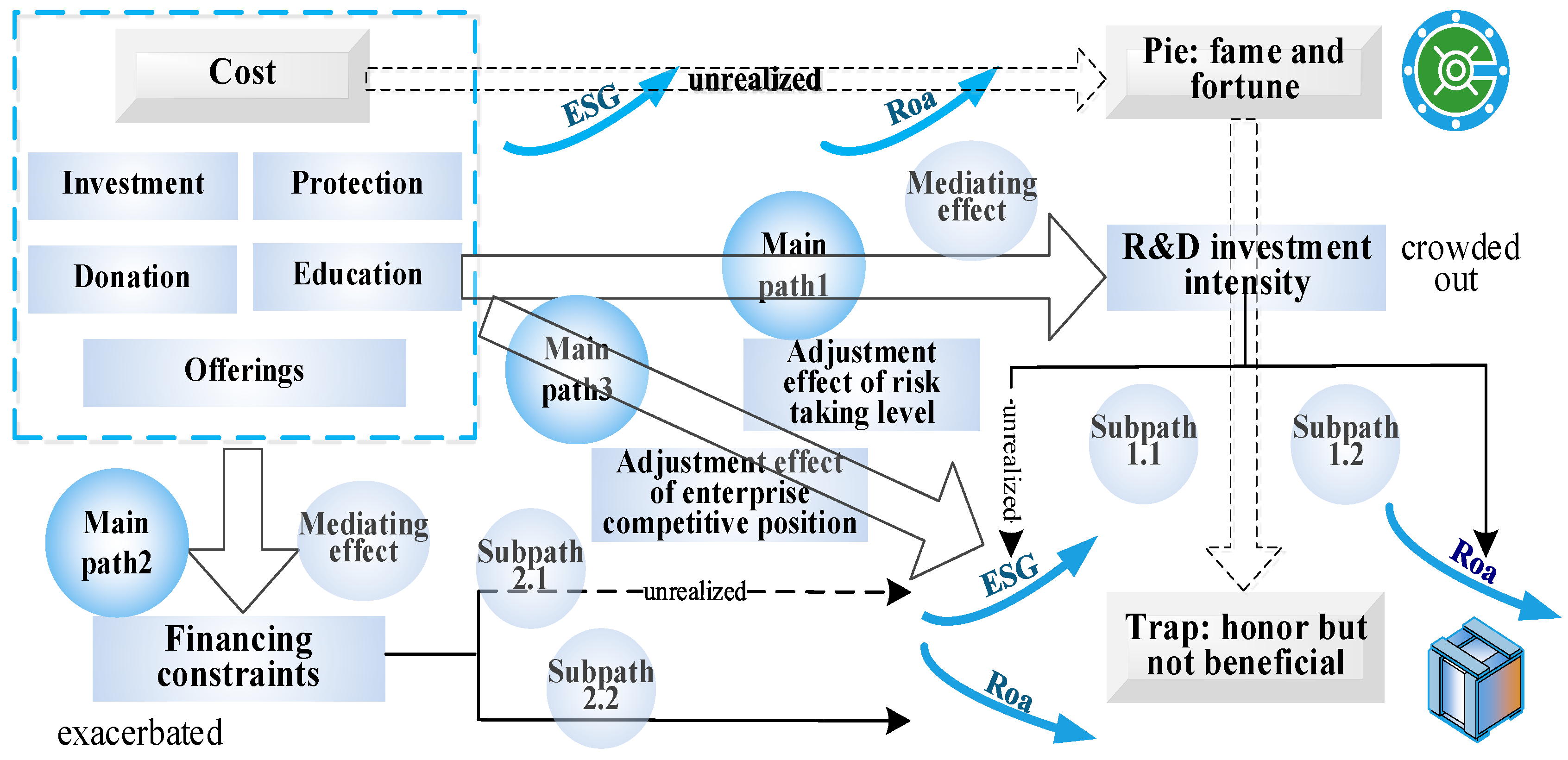
This study examines 148 listed companies in the Shanghai and Shenzhen A-share petrochemical industry from 2018 to 2023, focusing on the formation pathways of the ESG trap. It empirically tests these pathways and further explores the moderating effects of risk-taking levels and competitive positioning, as well as the mediating effects of R&D investment intensity and financing constraints. The findings are as follows: (1) Environmental education and training expenses, charitable donations, and investments in environmental equipment and technology all exert a positive influence on corporate ESG performance. Conversely, costs associated with special environmental initiatives, expenses incurred from creating new ESG-related positions, charitable donations, and investments in environmental equipment and technology exert a negative influence on corporate performance, constituting the causes of the divergence dilemma between corporate performance and ESG. (2) Primary pathway 1 for this divergence arises when increased ESG costs displace R&D expenditure, thereby diminishing corporate performance (as shown in
Figure 6 below). (3) Primary pathway 2 for this divergence occurs when heightened ESG costs exacerbate financing constraints, consequently reducing corporate performance. (4) Primary pathway 3: Cost investments targeting ESG ratings significantly enhance ESG performance. (5) Risk-taking levels markedly amplify the negative impact of ESG costs on corporate performance. (6) Competitive position significantly mitigates the negative impact of ESG costs on corporate performance.
Considering the research findings detailed above, this study proposes the following countermeasures and recommendations. Firstly, for companies actively engaging in clean energy initiatives and environmental protection technologies, it is essential to develop targeted incentive policies, such as tax breaks and subsidies. This strategy will help alleviate the barriers imposed by high ESG-related costs, guiding businesses towards a path of high-quality and sustainable ESG development. Secondly, the government should encourage financial institutions to innovate in ESG financing products, offering more favorable financing conditions to enterprises demonstrating robust ESG performance. This could involve reducing loan interest rates and extending loan terms, thereby lowering the financing costs for these enterprises. The cycle of “ESG costs–financing constraints–ESG trap” is thus transformed into a cycle of “ESG improvement–financing cost reduction–enterprise performance enhancement”. Thirdly, enterprises should formulate a scientific resource allocation plan, integrating ESG costs with other critical business indicators to ensure the balance and harmony of resource allocation. When determining the cost of ESG investment, the financial condition and market environment of the company must be taken into account, ensuring that the cost of ESG investment does not erode profit margins but effectively fosters the sustainable development of the business. Fourthly, companies should minimize the implementation costs of ESG projects through technological innovation and management optimization, thereby enhancing the return on investment. The adoption of advanced production processes and equipment can help improve the efficiency of resource utilization, reducing energy consumption and waste emissions. Lastly, it is imperative to refine ESG rating metrics to make it unviable for companies to boost their ratings through inflated ESG costs. In the context of corporate governance (G) ratings, there should be no additional points for the creation of specific positions, preventing the inefficient management trend of establishing vacancies and overstaffing [
62], and emphasizing the scoring of management effectiveness.
Finally, a higher ESG rating does not necessarily indicate a proportional improvement in substantive environmental performance. In practice, ESG scores may also rise because of better disclosure quality, more visible governance arrangements, and stronger external communication. This suggests that the gap identified in this study between ESG improvement and economic pressure may partly reflect a short-run divergence between reporting-based ESG enhancement and actual environmental performance improvement.