Evolutionary Game Analysis of Power Battery Recycling in the Context of a Carbon Cap and Patent Licensing


Abstract
1. Introduction
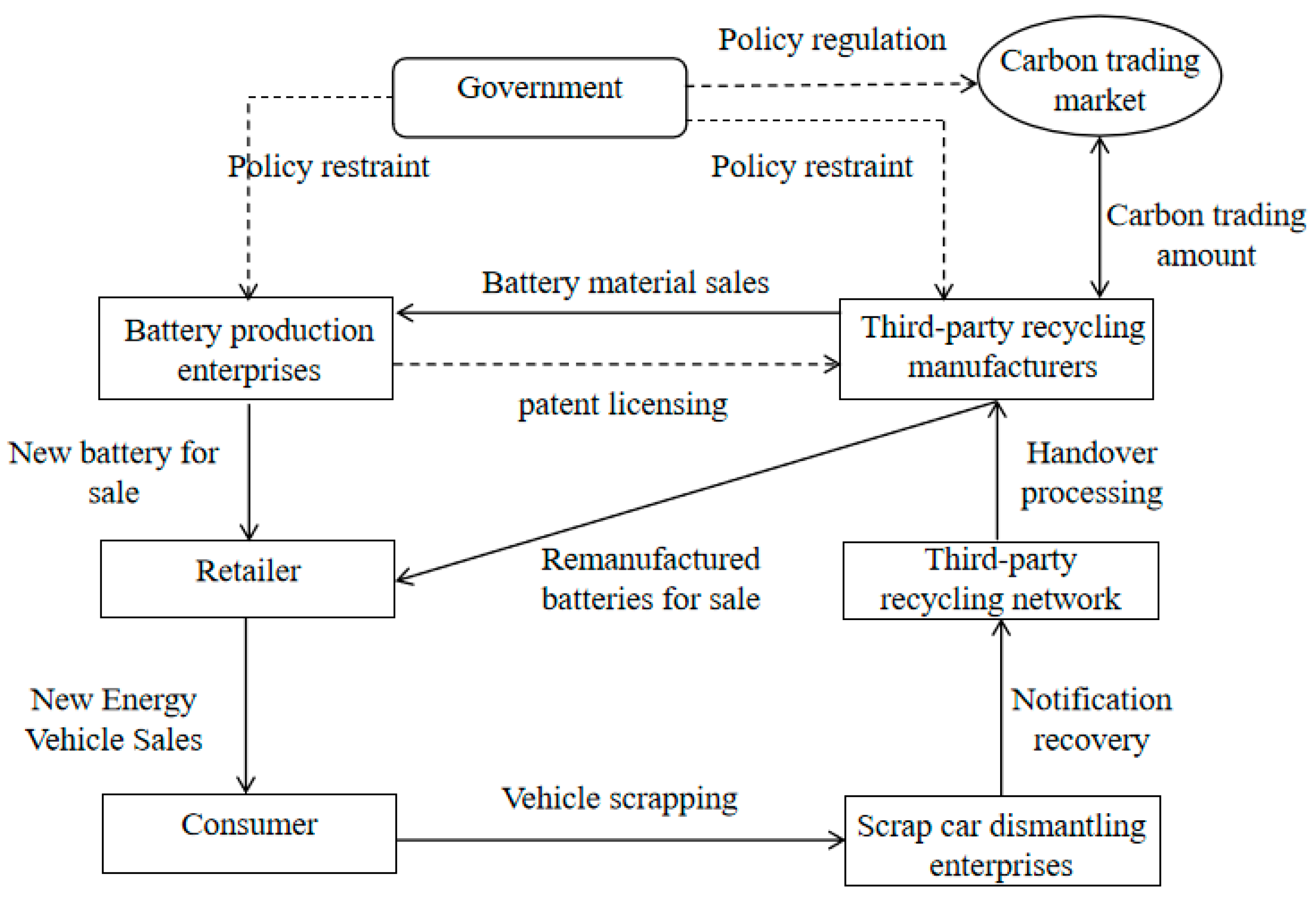
2. Model Hypothesis and Construction
2.1. Model Hypothesis and Interpretation
2.2. Model Construction
2.3. Model Solving
3. Equilibrium Point and Evolution Path Analysis
3.1. Equilibrium Point Analysis
3.2. Path Evolution Analysis
- (1)
- Analysis of the Evolution Trend of the Third-Party Recycling Manufacturer’s Strategy Space: For third-party recycling manufacturers, as long as the amount of unlicensed remanufacturing fines or patent licensing fees is greater than the sum of the remanufacturing lead revenue and the carbon emission difference, and (initial state ① ②). Under this condition, the expected cost and risk of the third party’s choice of remanufacturing will exceed the revenue. Even if the resources and carbon benefits of remanufacturing are greater, disassembly remains a rational choice from the perspective of maximizing corporate profits. Therefore, no matter what strategy the battery production enterprise adopts, the third party will converge on the disassembly strategy.
- (2)
- Analysis of the Evolution Trend of the Battery Production Enterprise Strategy Space: For battery manufacturers, only the amount of fines for unlicensed battery remanufacturing is greater than the sum of patent licensing fees, regulatory costs, and brand reputation losses, that is, (initial state ⑤ ⑦). The evolution results converge on the cooperation strategy in which battery manufacturers choose not to license patents. In this case, the battery production enterprise chooses to use unauthorized patent monopoly income to cover its maintenance costs and potential brand loss, and unauthorized becomes the rational choice for the enterprise. If the patent licensing revenue can cover the above costs and losses, the licensing strategy can not only enable enterprises to obtain stable patent revenue but also avoid the brand reputation risk caused by unauthorized remanufacturing and promote the coordinated development of the industrial chain. Enterprises will tend to choose the licensing strategy.
- (3)
- The disassembly only realizes the primary recycling of battery raw materials, and the resource utilization efficiency is much lower than the high-value-added conversion of remanufacturing. The overall profit is at the lowest level of the industrial chain, and the carbon emission intensity of the disassembly process is significantly higher than that of remanufacturing, which cannot give full play to the low-carbon advantage of power battery recycling, so E2(0,1) is the worst equilibrium. Third-party recycling manufacturers choose remanufacturing to realize the high-value-added resource utilization of waste batteries. However, due to the unauthorized option of battery manufacturers, third-party remanufacturing lacks compliance with technical support, which can easily lead to patent infringement, insufficient product quality control, and other problems. Moreover, there is no interest coordination among enterprises, and the profit of the industrial chain is not maximized. Therefore, E3(1,0) is a sub-optimal equilibrium. The third party mitigates the risk of infringement and improves product quality through compliance remanufacturing, and the battery production enterprise obtains stable income through patent authorization, avoiding the loss of brand reputation. The two achieve win–win benefits and maximize the overall profit of the industrial chain. Therefore, E4(1,1) is the optimal equilibrium.
- (4)
- Analysis of the Evolution Trend of the Strategy Combination of the Two Sides of the Game: According to the above analysis, the evolution path of the whole evolution system is from E2(0,1) to E3(1,0) and then to E4(1,1) and the evolution of the three is progressive. It is derived from the continuous cost–benefit trade-off, strategy trial and error, and interactive adjustment of the game subject under the bounded rationality. This gradually transitions from the low-efficiency, low-synergy strategy combination to the high-yield, high-synergy optimal combination convergence, and, due to the industry shift from primary disassembly to compliance remanufacturing, the evolution from disorderly competition to the coordinated development of the reality of the law is highly consistent. Only when the leading revenue of remanufacturing is large enough, and the supervision cost of battery manufacturing enterprises and the loss of brand reputation are large enough, can the ‘lock’ of the optimal equilibrium state be achieved in the game evolution process of the whole system.
4. Sensitivity Analysis of Initial State and Key Factors of Game System
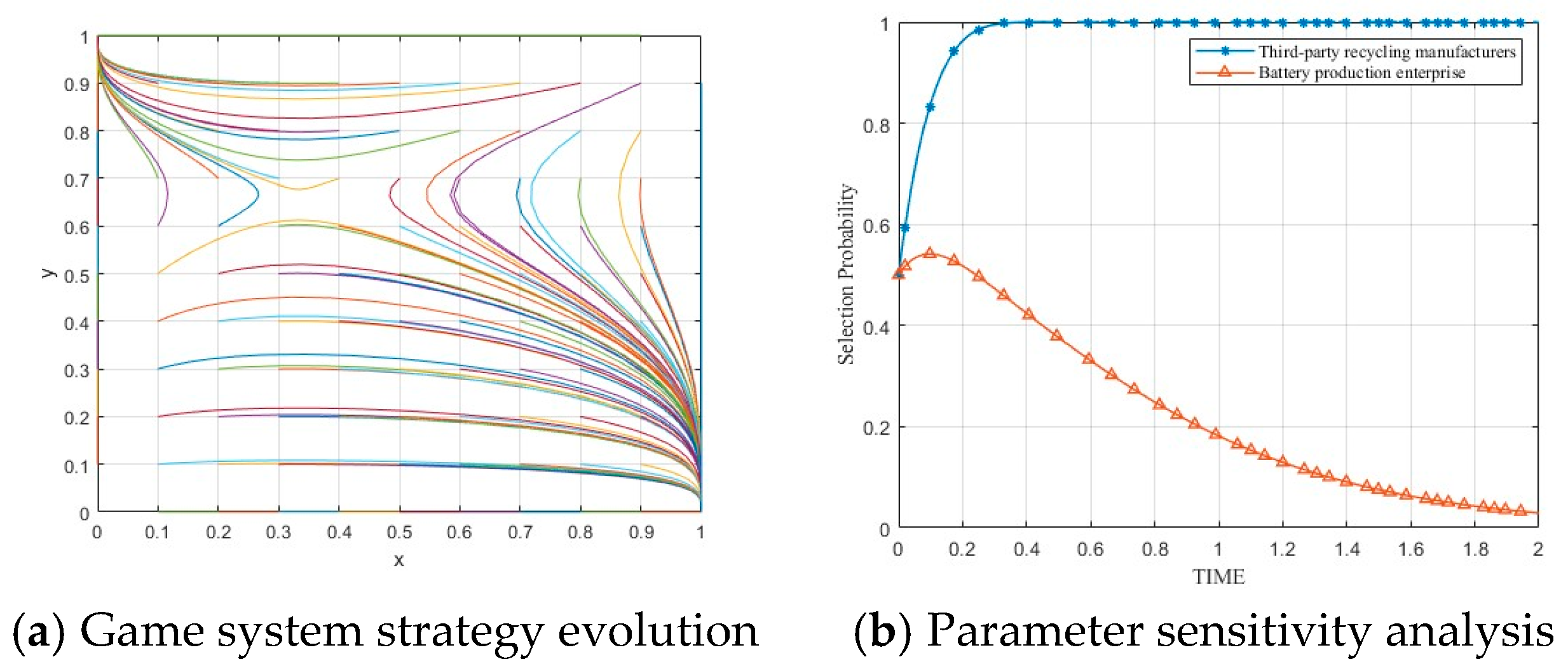
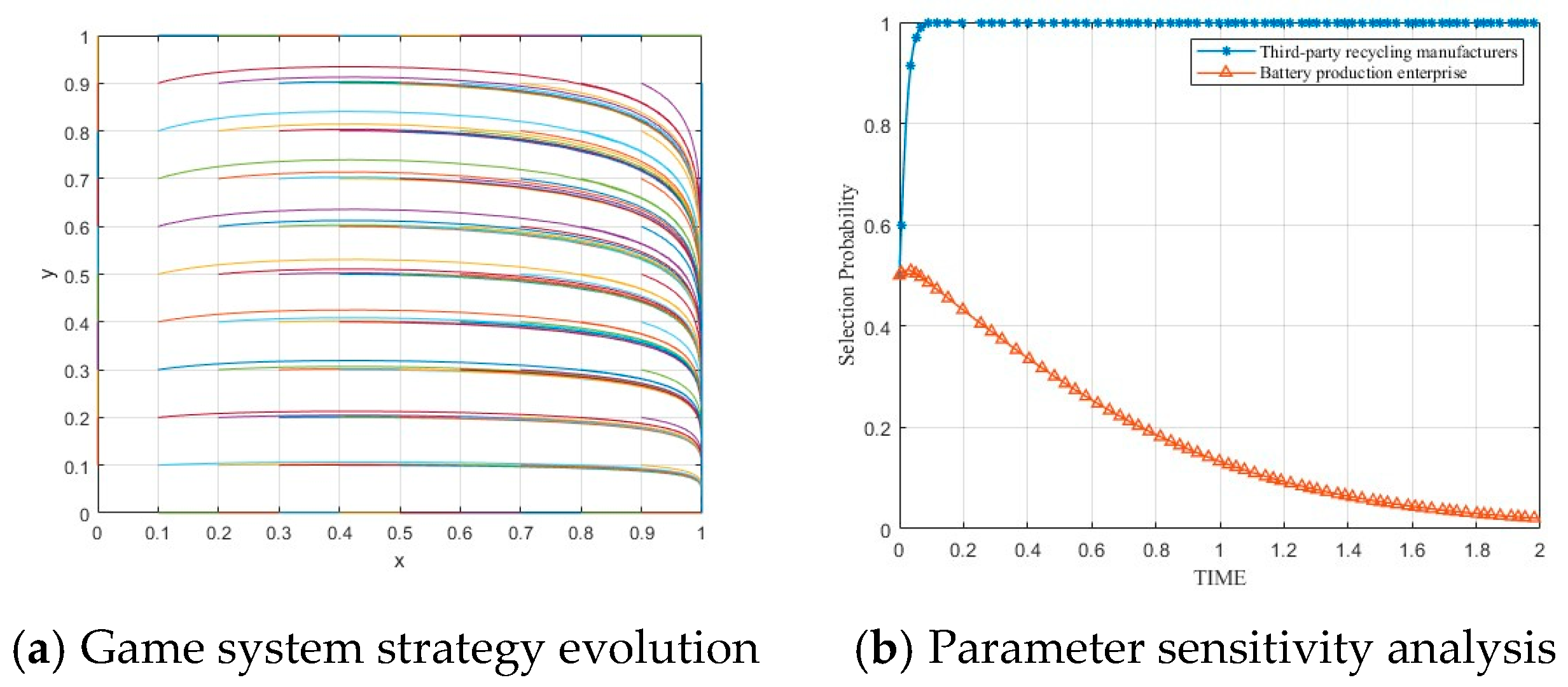
4.1. Initial Simulation of Evolutionary Game System
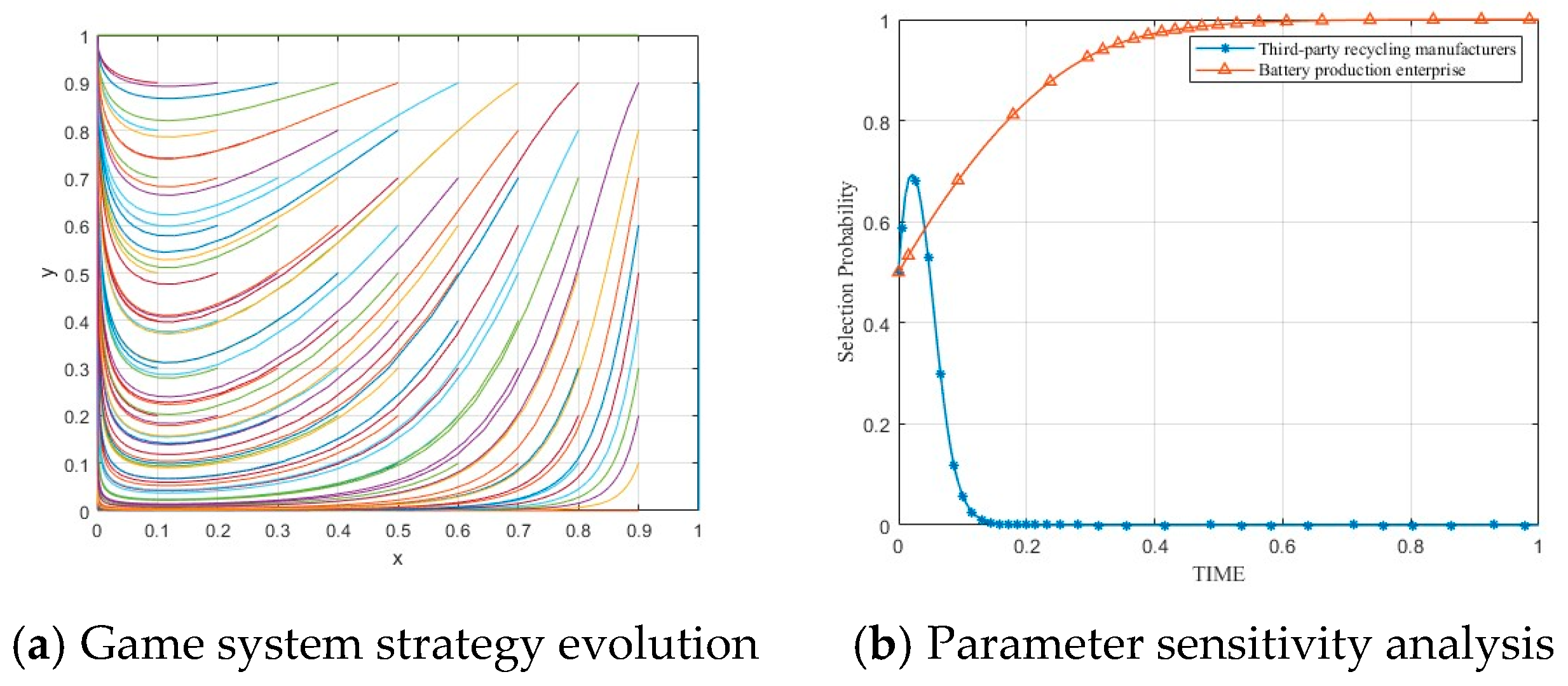
4.2. The Influence of Waste Battery Recovery on System Evolution
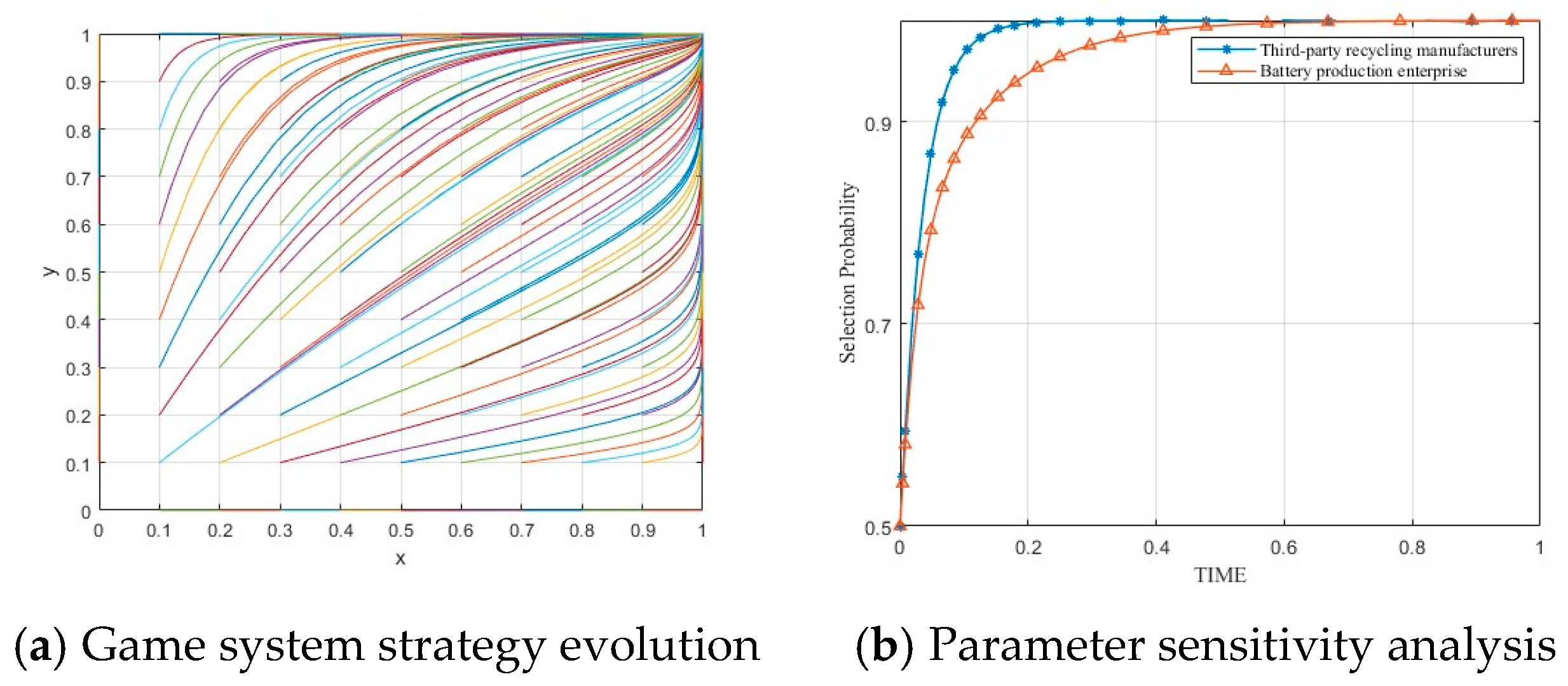
4.3. The Influence of Carbon Price on System Evolution
4.4. The Impact of Patent Fees and Maintenance Costs on System Evolution
5. Conclusions
- (1)
- The amount of waste battery recycling is the core material factor affecting the strategic choice of both parties. When the amount of recycling is too high, the third-party recycling manufacturer tends to adopt the battery disassembly strategy due to diseconomies of scale, and the system converges on the worst equilibrium. A reasonable reduction in recycling quantity promotes the evolution of the system toward a remanufacturing-related sub-optimal equilibrium, and the battery production enterprise’s strategic response sensitivity to changes in recycling quantity is significantly higher than that of the third party.
- (2)
- The carbon price has a significantly low-carbon incentive-oriented effect on the evolution of the game system. The high carbon price in the carbon market will encourage third-party recycling manufacturers to adopt the remanufacturing strategy through carbon cost transmission and carbon asset income realization, and the system will converge on a sub-optimal equilibrium. The decrease in the carbon price will weaken the low-carbon incentive effect and lead the system to revert to the worst equilibrium of disassembly.
- (3)
- When the patent licensing fee is at a reasonably low level, and the patent licensing income of the battery manufacturer can cover the sum of patent maintenance cost and brand reputation loss, the two parties will form the optimal strategy combination of remanufacturing and licensing, and promote the system to converge to the optimal equilibrium state.
- (1)
- Led by the government, a dynamic monitoring platform for the whole life cycle of waste power batteries could be built by combining battery manufacturers, third-party recycling manufacturers, and new energy vehicle enterprises. Based on the terminal data, the stock, flow, and flow direction of retired batteries in the region could be tracked in real time, and the recycling scale threshold of remanufacturing adaptation in each region could be accurately measured. Based on the threshold, the third-party recycling manufacturers could be guided to differentiate the layout of recycling outlets to avoid excessive concentration of recycling in local areas. At the same time, the battery production enterprises and the third party could be promoted to establish a collaborative adjustment mechanism for recycling volume, so as to realize the accurate matching of waste battery recycling scale and remanufacturing process, and avoid the system evolving to the worst equilibrium caused by the imbalance in recycling volume from the source.
- (2)
- It is recommended to further improve the connection mechanism between the carbon trading market and the power battery recycling industry, establish carbon emission accounting standards for power battery recycling processes, clarify carbon emission measurement rules for remanufacturing and disassembly processes, and improve the stability and transparency of carbon price formation. Third-party recycling manufacturers can accurately measure the carbon asset income generated by remanufacturing and establish stable, low-carbon income expectations. At the same time, this would raise the threshold for obtaining carbon quotas for high-carbon emission processes such as disassembly, moderately increase the punishment of ultra-emission carbon prices, amplify the carbon costs of disassembly and the carbon benefits of remanufacturing through carbon price leverage, strengthen the economic incentives for third parties to choose remanufacturing strategies, and promote the system to evolve to a remanufacturing-related equilibrium.
- (3)
- The battery manufacturing enterprises could build a step-by-step patent licensing fee mechanism linked to the scale of remanufacturing and the stage of industrial development. During the cultivation period of the remanufacturing industry, the unit patent licensing fee could be moderately reduced, so that the patent licensing fee is lower than the sum of the leading revenue of remanufacturing and the cost of carbon emission difference, and the system cost threshold of third-party compliance remanufacturing would be reduced. At the same time, the power battery industry association could build a platform for patent rights protection and brand reputation co-governance, clarify the joint and several liability of battery production enterprises for unauthorized remanufacturing of inferior products, link the quality problems caused by unauthorized remanufacturing with the brand rating and industry qualification of the original production enterprises, improve the patent maintenance and infringement supervision costs of battery production enterprises, ensure that their patent licensing benefits are higher than the sum of infringement fines, maintenance costs, and reputation losses, and force enterprises to actively choose patent licensing strategies—ultimately promoting both parties to form an optimal combination of remanufacturing and licensing strategies to achieve win–win benefits and low-carbon development of the industrial chain.
Author Contributions
Funding
Institutional Review Board Statement
Informed Consent Statement
Data Availability Statement
Conflicts of Interest
References
- Gu, X.; Zhou, L.; Huang, H.; Shi, X.; Ieromonachou, P. Electric vehicle battery secondary use under government subsidy: A closed-loop supply chain perspective. Int. J. Prod. Econ. 2021, 234, 108035. [Google Scholar] [CrossRef]
- Li, K.; Wang, L. Optimal electric vehicle subsidy and pricing decisions with consideration of EV anxiety and EV preference in green and non-green consumers. Transp. Res. Part E Logist. Transp. Rev. 2023, 170, 103010. [Google Scholar] [CrossRef]
- Feng, Z.; Luo, N.; Shalpegin, T.; Cui, H. The influence of carbon emission reduction instruments on blockchain technology adoption in recycling batteries of the new energy vehicles. Int. J. Prod. Res. 2024, 62, 891–908. [Google Scholar] [CrossRef]
- Lai, X.; Huang, Y.; Gu, H.; Deng, C.; Han, X.; Feng, X.; Zheng, Y. Turning waste into wealth: A systematic review on echelon utilization and material recycling of retired lithium-ion batteries. Energy Storage Mater. 2021, 40, 96–123. [Google Scholar] [CrossRef]
- Wu, W.; Zhang, M.; Jin, D.; Ma, P.; Wu, W.; Zhang, X. Decision-making analysis of electric vehicle battery recycling under different recycling models and deposit-refund scheme. Comput. Ind. Eng. 2024, 191, 110109. [Google Scholar] [CrossRef]
- Zhou, Q.; Meng, C.; Yuen, K.F. The impact of secondary market competition on refurbishing authorization strategies. Int. J. Prod. Econ. 2020, 228, 107728. [Google Scholar] [CrossRef]
- Xia, X.; Zhu, Q. Comparative study of three remanufacturing models under game perspective. J. Syst. Eng. 2020, 35, 689–699. (In Chinese) [Google Scholar]
- Cao, X.; Xiao, B.; Wen, H. Closed-loop supply chain decision making considering product design strategy under patent protection. RAIRO-Oper. Res. 2025, 59, 279–310. [Google Scholar] [CrossRef]
- Zhao, X.; Meng, X.; Zhu, H. Game decision-making between OEMs and remanufacturers under patent licensing model: A green innovation perspective based on OEMs. Manag. Rev. 2020, 32, 132–145. (In Chinese) [Google Scholar]
- Zhao, J.; Wang, C.; Xu, L. Decision for pricing, service, and recycling of closed-loop supply chains considering different remanufacturing roles and technology authorizations. Comput. Ind. Eng. 2019, 132, 59–73. [Google Scholar] [CrossRef]
- Cao, X.; Wang, X.; Wen, H. Managing new and remanufactured products with remanufacturing degree under patent protection. Kybernetes 2020, 49, 707–731. [Google Scholar] [CrossRef]
- Xia, Y.; Wang, K.; Huang, Y.; Lin, T.; Shi, L.; Wu, F. Bounded rational decision-making modeling and analysis in local energy markets: A state-of-the-art review. Renew. Sustain. Energy Rev. 2026, 226, 116310. [Google Scholar] [CrossRef]
- Liu, Z.; Li, B.; Wang, L.; Tang, J. Closed-loop supply chain production decision making considering remanufacturing patent licensing under differentiated competition. Oper. Res. Manag. Sci. 2018, 27, 66–74. [Google Scholar]
- Chai, Q.; Xiao, Z.; Lai, K.; Zhou, G. Can carbon cap and trade mechanism be beneficial for remanufacturing? Int. J. Prod. Econ. 2018, 203, 311–321. [Google Scholar] [CrossRef]
- Wang, X.; Lu, C.; Wang, Q. A Mechanism of Financial Subsidy to Promote Cascade Utilization of Power Batteries in the Context of Patent Licensing and Carbon Cap-and-Trade. J. Syst. Manag. 2025, 34, 1268. (In Chinese) [Google Scholar]
- Wang, X.; Sethi, S.P.; Chang, S. Pollution abatement using cap-and-trade in a dynamic supply chain and its coordination. Transp. Res. Part E Logist. Transp. Rev. 2022, 158, 102592. [Google Scholar] [CrossRef]
- Mao, H.; Wang, W.; Liu, C.; Xu, Y.; Zhao, S. Effects of the carbon emission quota policy on the quality and sales of manufactured and remanufactured products. Int. J. Prod. Econ. 2023, 266, 109058. [Google Scholar] [CrossRef]
- Cai, J.; Jiang, F. Decision models of pricing and carbon emission reduction for low-carbon supply chain under cap-and-trade regulation. Int. J. Prod. Econ. 2023, 264, 108964. [Google Scholar] [CrossRef]
- Yang, L.; Gao, M.; Feng, L. Competition versus cooperation? Which is better in a remanufacturing supply chain considering blockchain. Transp. Res. Part E Logist. Transp. Rev. 2022, 165, 102855. [Google Scholar] [CrossRef]
- Wang, W.; Liu, Y.; Zhong, L. Research on recycling decision of used power battery under subsidy-penalty polic. Chin. J. Manag. Sci. 2023, 31, 90–102. (In Chinese) [Google Scholar]
- Friedman, D. Evolutionary games in economic. Econometrica 1991, 59, 637–666. [Google Scholar] [CrossRef]
- Wang, G.; Zhu, S. Ordinary Differential Equations; Higher Education Press: Beijing, China, 2020; pp. 262–263. [Google Scholar]




| Parameter | Implication | Range |
|---|---|---|
| Third-party recycling manufacturer’s remanufacturing probability | ||
| Patent authorization probability of the battery production enterprises | ||
| Third-party recycling manufacturer’s waste battery recycling volume | ||
| Third-party recycling manufacturer’s unit battery remanufacturing revenue | ||
| Third-party recycling manufacturer’s disassembly revenue per unit battery without patent authorization | ||
| Third-party recycling manufacturer’s disassembly income under the unit battery patent authorization | ||
| Unit battery remanufacturing patent licensing fees | ||
| Amount of penalty for third-party recycling manufacturer’s unauthorized remanufacturing | ||
| Risk factors of remanufacturing without patent authorization | ||
| Third-party recycling manufacturer’s carbon limit | ||
| Carbon emissions per unit battery remanufactured | ||
| Carbon emissions per unit battery disassembled | ||
| Carbon price of carbon trading market | ||
| Battery production enterprise patent maintenance cost | ||
| Brand reputation loss caused by inferior unit products | ||
| Battery production enterprises save raw material processing costs |
| Game Players | Third-Party Recycling Manufacturers | |
|---|---|---|
| Remanufacturing | Disassembly | |
| authorized | ||
| unauthorized | ||
| Equilibrium Point | Det(J) | Tr(J) |
|---|---|---|
| Equilibrium point | Initial state ① | Initial state ② | ||||
| Stability | Stability | |||||
| Saddle point | Saddle point | |||||
| Saddle point | Unstable | |||||
| Unstable | Saddle point | |||||
| Non-existence | Non-existence | |||||
| Evolutionary phase diagram |  | 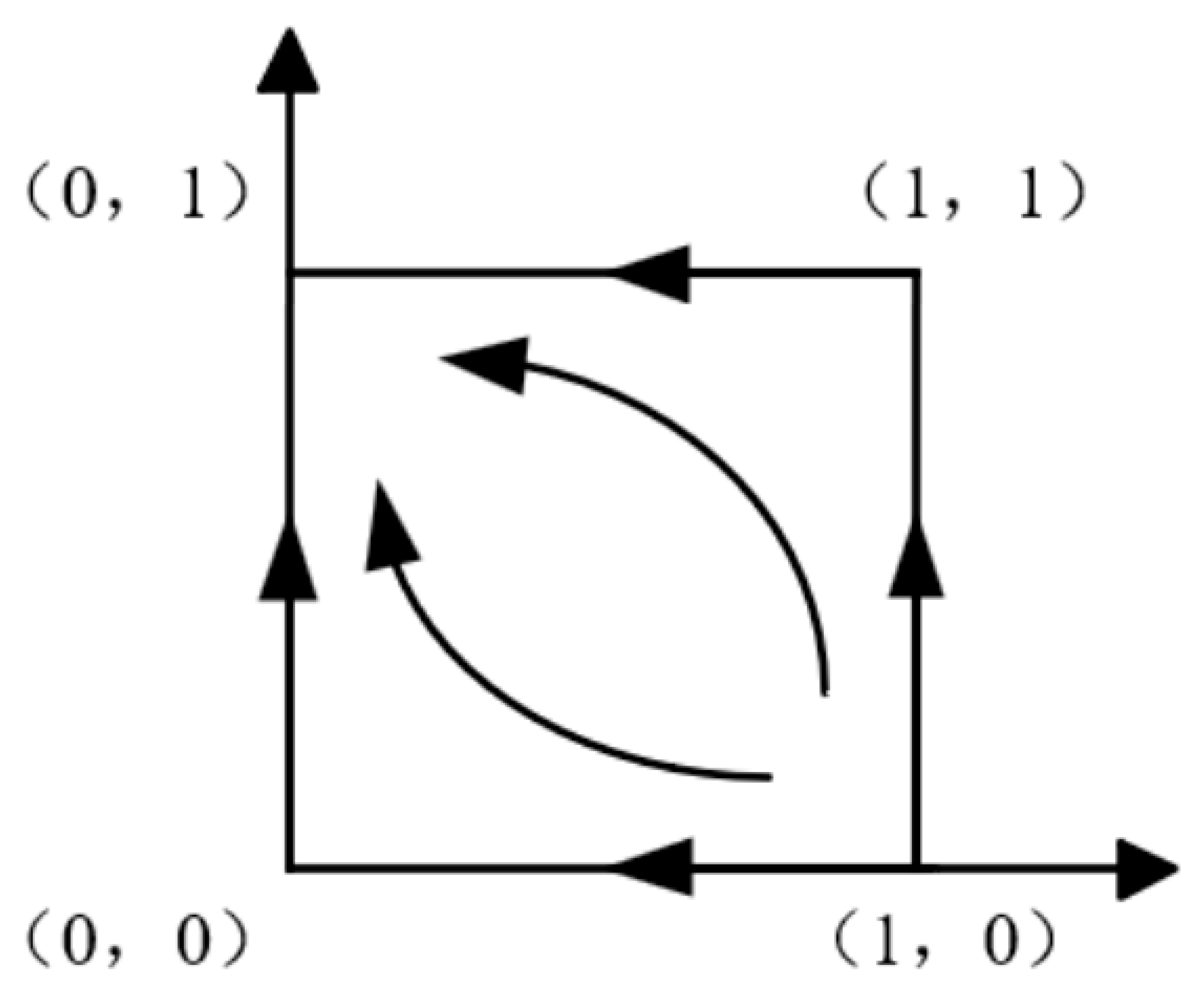 | ||||
| Equilibrium point | Initial state ③ | Initial state ④ | ||||
| Stability | Stability | |||||
| Saddle point | Saddle point | |||||
| Saddle point | Saddle point | |||||
| Saddle point | Unstable | |||||
| Saddle point | ||||||
| Non-existence | Non-existence | |||||
| Evolutionary phase diagram | 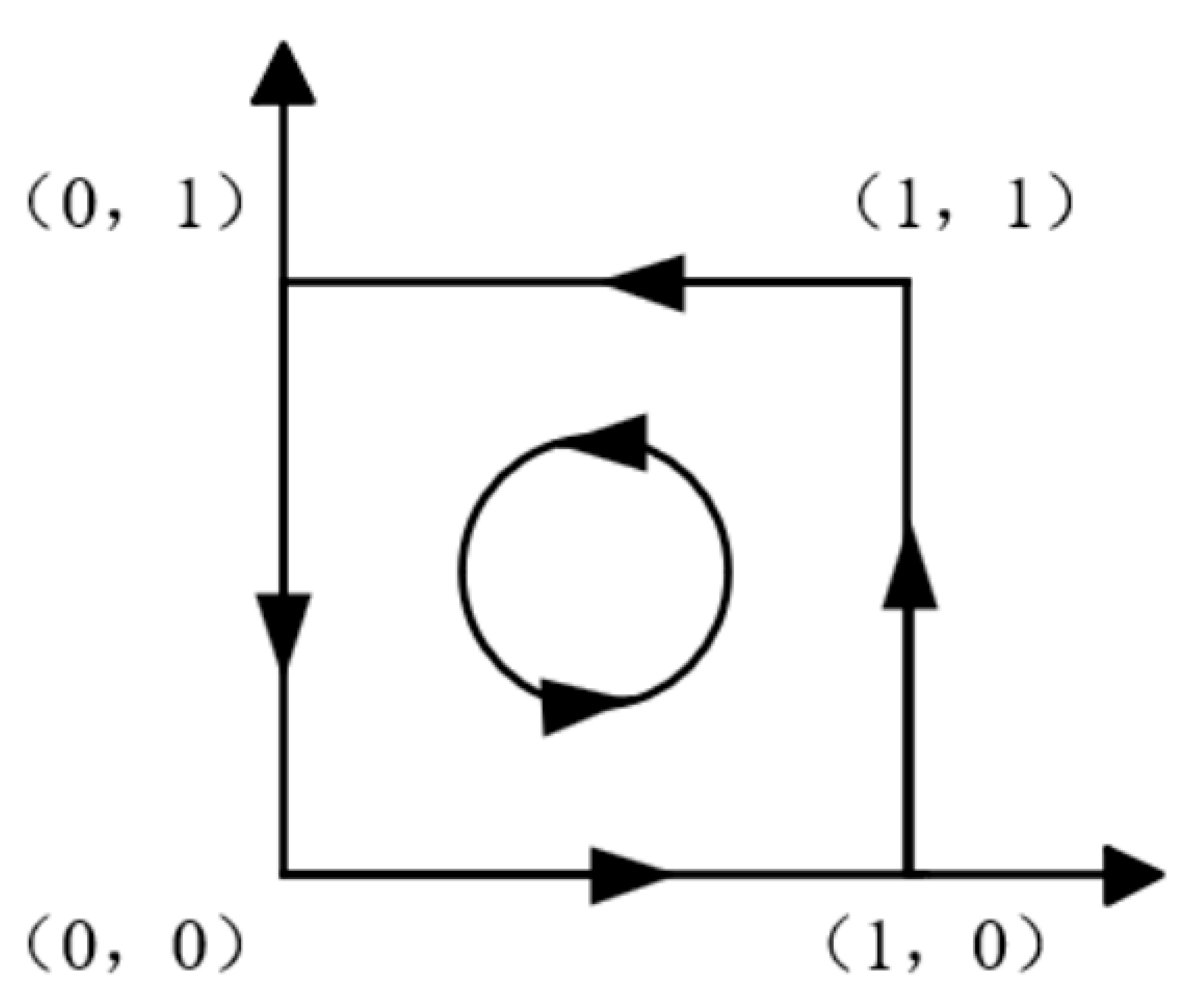 |  | ||||
| Equilibrium point | Initial state ⑤ | Initial state ⑥ | ||||
| Stability | Stability | |||||
| Unstable | Unstable | |||||
| Saddle point | ||||||
| Unstable | Saddle point | |||||
| Center point | Non-existence | |||||
| Evolutionary phase diagram |  |  | ||||
| Equilibrium point | Initial state ⑦ | Initial state ⑧ | ||||
| Stability | Stability | |||||
| Unstable | Unstable | |||||
| Saddle point | Saddle point | |||||
| Saddle point | ||||||
| Saddle point | ||||||
| Non-existence | Non-existence | |||||
| Evolutionary phase diagram |  |  | ||||
| Parameter | Assignment | Parameter | Assignment | Parameter | Assignment |
|---|---|---|---|---|---|
| 20 | 350 | 1000 | |||
| 27 | 14 | 8 | |||
| 17 | 18 | 10 | |||
| 25 | 7.2 | 1.4 | |||
| 1 | 0.2 |
Disclaimer/Publisher’s Note: The statements, opinions and data contained in all publications are solely those of the individual author(s) and contributor(s) and not of MDPI and/or the editor(s). MDPI and/or the editor(s) disclaim responsibility for any injury to people or property resulting from any ideas, methods, instructions or products referred to in the content. |
© 2026 by the authors. Licensee MDPI, Basel, Switzerland. This article is an open access article distributed under the terms and conditions of the Creative Commons Attribution (CC BY) license.
Share and Cite
Gao, Z.; Wan, C.; Zhu, M. Evolutionary Game Analysis of Power Battery Recycling in the Context of a Carbon Cap and Patent Licensing. Sustainability 2026, 18, 3867. https://doi.org/10.3390/su18083867
Gao Z, Wan C, Zhu M. Evolutionary Game Analysis of Power Battery Recycling in the Context of a Carbon Cap and Patent Licensing. Sustainability. 2026; 18(8):3867. https://doi.org/10.3390/su18083867
Chicago/Turabian StyleGao, Zhenhua, Chao Wan, and Mengmeng Zhu. 2026. "Evolutionary Game Analysis of Power Battery Recycling in the Context of a Carbon Cap and Patent Licensing" Sustainability 18, no. 8: 3867. https://doi.org/10.3390/su18083867
APA StyleGao, Z., Wan, C., & Zhu, M. (2026). Evolutionary Game Analysis of Power Battery Recycling in the Context of a Carbon Cap and Patent Licensing. Sustainability, 18(8), 3867. https://doi.org/10.3390/su18083867