Article

Determinants of Green Purchase Intention Among Young Turkish Adults: An Empirical Assessment of Social, Cognitive, and Individual Factors


1
Department of Business Administration, Cyprus International University, 99010 Nicosia, Turkey
2
Department of Accounting and Finance, Cyprus International University, 99010 Nicosia, Turkey
3
Arucad Research Center, Arkin University of Creative Arts and Design, Girne 99300, Northern Cyprus, Turkey
*
Author to whom correspondence should be addressed.
Sustainability 2026, 18(8), 3846; https://doi.org/10.3390/su18083846
Submission received: 23 February 2026 / Revised: 6 April 2026 / Accepted: 7 April 2026 / Published: 13 April 2026
(This article belongs to the Special Issue Consumption Innovation and Consumer Behavior in Sustainable Marketing)

Abstract

Consumer decisions play an important role in shaping sustainable consumption outcomes. This study focuses on green purchase intention among young adult consumers in Turkey and examines how cognitive factors, social factors, and consumer individual characteristics are related to intention formation, with green loyalty considered as a moderating element. The data was obtained from 200 young adults via online surveys and though social networks commonly used in Turkey, and analyzed using partial least squares structural equation modeling (PLS-SEM). The analysis shows that green purchase intention varies in relation to these factor groups, and that green loyalty influences the way several relationships operate within the model. The study contributes to ongoing discussions in consumer behavior and sustainable marketing by providing context-specific evidence relevant to organizations aiming to encourage eco-friendly product choices and more responsible consumption among younger consumers. This study is grounded in consumer behavior theory and uses selected elements of the theory of planned behavior and the attitude–behavior–context framework to organize the analytical framework. The findings offer insights that are relevant for both academic research and marketing practice within a sustainable consumption context.

1. Introduction

Environmental problems such as climate change, pollution, and the depletion of natural resources have become increasingly associated with prevailing patterns of consumption. Economic growth and technological development have expanded convenience and access to products, while also contributing to rising levels of production and consumption, accompanied by adverse environmental consequences [1]. These developments pose challenges for economic, environmental, and social sustainability and have gained attention from both firms and consumers. Research indicates that higher awareness of environmental issues is linked to changes in consumers’ attitudes and their approach to everyday consumption decisions [2].
Within this context, eco-friendly consumption has gained prominence as a key element supporting sustainable development, reflecting growing attention to how consumers evaluate and respond to environmentally oriented product offerings [3,4,5]. Other studies address the consumer side and report that awareness of the environmental implications of purchasing decisions is related to interest in green products and environmentally oriented purchasing behavior [6,7,8]. Prior studies describe green products as products with attributes such as recyclability or reduced environmental impact and discuss these attributes in relation to ecological risk and social considerations [9,10]. In this respect, sustainable consumption has developed into a notable area of business activity, encompassing both firms’ strategic responses and consumers’ decision-making processes.
Many organizations (e.g., fast-moving consumer goods, food and beverage, and apparel industries) have adopted green marketing strategies in combination with environmentally oriented production practices in response to environmental concerns and evolving consumer preferences. These strategies are examined in relation to waste generation, pollution, and resource use, as well as to market demand for sustainable product alternatives [11,12]. In marketing research, understanding consumer purchase behavior is considered essential for evaluating the effectiveness of these initiatives. Green product markets depend not only on innovation at the production level, but also on how consumers evaluate and respond to green offerings, which makes the examination of green purchase intention relevant for sustainable marketing strategy development [1].
Previous studies examine factors related to green purchase intention, including cognitive evaluations such as value perceptions and trust [1,13], social influences grounded in norms and cultural orientations [14,15], and individual consumer characteristics, including environmental concern and perceived consumer effectiveness [16,17]. Research addressing cognitive aspects commonly focuses on value-related perceptions, trust, and attitudes in connection with environmentally oriented purchasing decisions [13,18]. Other studies examine social influences, such as subjective norms and cultural orientations, in relation to green purchase intention across different empirical settings [15,19]. Empirical results, however, do not converge. While some studies report positive relationships between perceived green value, attitudes, and purchase intention, others report weak or statistically insignificant relationships for comparable constructs [20,21]. Similar variation is reported for environmental knowledge and perceived risk, indicating that their effects differ across markets and consumer segments [12,22,23].
Green purchase intention does not appear to function uniformly across contexts and may vary according to cultural, market-related, and demographic conditions. Emerging markets remain comparatively underexamined in this respect [24], despite their growing relevance in sustainability-oriented consumption research. In the Turkish young adult consumer context, individuals are often discussed because of their active participation in consumption activities and their regular exposure to sustainability-related messages through digital and social media channels [25,26,27]. This study, therefore, aligns with national sustainability priorities in Turkey. At the same time, loyalty toward green products may affect how evaluations and social influences are translated into purchase intentions, although its function as a moderating factor has attracted comparatively limited empirical attention.
Although green purchase intention has been widely examined, prior studies often consider cognitive evaluations, social influences, and individual consumer characteristics separately or in limited combinations, resulting in fragmented empirical findings [1,12,20]. Integrated examinations that simultaneously account for these determinant categories remain limited, particularly in emerging market contexts. Moreover, while loyalty has been widely studied as an outcome of green consumption, its role as a boundary condition shaping how cognitive, social, and individual drivers translate into purchase intention has received comparatively little empirical attention [28,29,30]. This gap is especially salient in the Turkish context, where environmental awareness has increased, but sustainable consumption practices continue to evolve unevenly across consumer segments. Addressing these gaps, the present study investigates green purchase intention among young adult consumers in Turkey by jointly examining cognitive factors, social factors, and consumer individual characteristics, while explicitly considering green loyalty as a moderating mechanism within a sustainable marketing framework. The moderation effect on green purchase intention is underexamined especially when it comes to influences on cognitive factors (e.g., perceived value, quality, risk, and environmental knowledge) along with social and individual factors [29]. Additionally, limited evidence exists regarding how this moderating influence operates among young adult segments within emerging markets (e.g., Turkey), which further encourages the current contextual operationalization.
As noted above, green purchasing behavior has been addressed in studies from environmental, attitudinal, and behavioral aspects, while remaining fragmented in three ways addressed in this research, which are that (a) the focus is commonly on isolated factors rather than combined cognitive, social and individual factors in an integrated manner; (b) the moderating influence of green loyalty in terms of boosting the linkage between these antecedents and green purchase intention remains underexamined; and (c) emerging markets such as Turkey and particularly the young adult segment are relatively less examined despite their growing relevance for green-related subjects. By developing and testing this integrated model, the current research aims to contribute to the understanding of key explanatory variables in this context.
In light of the above, the study addresses three research questions: (1) to what extent cognitive factors, social factors, and consumer characteristics influence green purchase intention among young Turkish adults; (2) whether the link between these antecedent factors and green purchase intention is moderated by green loyalty; and (3) which group of factors demonstrates the highest level of explanatory power for understanding green purchase intention in this consumer segment. These questions address the aims of the study and its intended contribution to the existing consumer behavior literature.
Contemporary studies frequently apply the Theory of Planned Behavior to explain intention formation through attitudes, subjective norms, and perceived behavioral control [14,31]. This research also emphasizes the role of contextual constraints and situational conditions using the Attitude–Behavior–Context perspective [32]. Consumer behavior research highlights that sustainable purchase intentions are shaped by the interaction between individual evaluations, social embeddedness, and market conditions, particularly in settings characterized by informational uncertainty and institutional variation [1,17]. However, empirical studies that explicitly integrate behavioral and contextual perspectives within a unified consumer-level framework remain relatively limited, particularly in emerging market contexts [33]. This reflects an ongoing fragmentation in sustainability-oriented consumer research regarding how internal motivations and contextual conditions jointly shape intention formation. Accordingly, this study adopts an integrated behavioral and contextual approach to examine green purchase intention within the broader sustainable consumption and consumer behavior literature.

2. Hypothesis Development

The theoretical framework of the study is grounded in the perspective that green purchase intentions are shaped by a mixture of evaluative, normative, and personal influences. In this sense, cognitive factors describe the manner in which individuals evaluate the value, quality, risk, efficiency, and knowledge pertaining to green products. Social factors entail the influence of social norms, orientations, and environmentally responsible consumption tendencies. Consumer characteristics show the internalized concerns, trust, and attitudes towards green decision-making. The combined premises of the Theory of Planned Behavior and Attitude–Behavior–Context theory provide a framework for this study that assumes the emergence of green purchase intentions from multifaceted sources (i.e., cognitive, social, and individual). This assumption is tested through a multi-dimensional model, in which intention formation is explained along with the moderating influence of green loyalty in this context. The relevance and applicability of these theories are further explained with regard to each hypothesis in the following sections.
The current theoretical framework draws selectively from the complementary perspectives of TPB and ABV rather than interchangeable theories. TPB is used to inform the role of perceived behavioral control and socially structured intention formation. TPB emphasizes the influence of control perceptions and normative pressures on behavioral intentions. ABC provides a broader lens for explaining judgments, perceptions, and individual orientations that shape green behaviors. This pertains to the dimensions of higher-order constructs used in the current research in conceptual terms. Therefore, these theories provide a complementary premise and do not overlap in this logic. This is further explained with regard to each hypothesis in the following sections.

2.1. Cognitive Factors

Cognitive factors encompass the evaluative and belief-based processes that underlie how consumers interpret and assess green products in purchase decision-making contexts. Within green consumption, these factors pertain to the ways individuals consider environmental attributes, perceived benefits, potential costs, and their own capacity to behave in environmentally responsible ways [1]. Studies in sustainable consumption have reported that these forms of cognitive evaluation are related to whether eco-friendly products are viewed as valuable, credible, and viable alternatives to conventional offerings, and to how such perceptions relate to intention formation [34,35]. In this study, cognitive factors are conceptualized as a multidimensional construct encompassing green perceived value, green perceived quality, perceived behavioral control, perceived risk, perceived consumer effectiveness, and environmental knowledge. These dimensions reflect consumers’ value-based judgments, quality assessments, feasibility perceptions, uncertainty evaluations, beliefs about personal impact, and understanding of environmental issues, all of which have been shown to play a central role in explaining variation in green purchase intention across sustainability-oriented consumption contexts [1,36,37,38].
The construct operationalization in this research is not intended to imply that all dimensions are purely cognitive through a narrowed psychological lens, but the cognitive factors are an umbrella term for a higher-order set of consumers’ evaluative and judgmental mechanisms, which shape green purchase intentions. This specification groups the following orders, as each reflects how consumers assess green products, the consequences of using them, and their capacity to act in a pro-environmental way. While these dimensions are conceptually different, a joint model allows the current research to capture a broader evaluative context under the intention formation domain.
Green perceived value (GPV) refers to a customer’s overall assessment of what they give and receive in exchange for a product or service based on their sustainability expectations, environmental desires, and green needs [39,40,41]. A higher perceived value of green products is associated with stronger consumer purchase intentions [42].
Green perceived quality (GPQ) refers to consumers’ assessment of a brand’s environmental performance [43]. Green perceived quality (GPQ) is a significant factor influencing consumers’ intentions to purchase environmentally oriented products, with higher perceptions of environmental performance and quality linked to stronger green purchase intention [44,45]. Perceived quality is a precondition for both satisfaction and behavioral intent since it reflects customers’ perceptions of a service’s or product’s comparative advantage. Perceived quality is the consumer’s overall view of a product’s superiority over competing alternatives [46]. Following this understanding, GPQ concerns how customers assess the environmental performance of a brand [44]. A positive association has been observed between consumers’ evaluations of the environmental quality and performance of green products and their intentions to purchase them [47]. Perceived quality has also been noted as an important influence on consumer choice [48].
Perceived behavioral control (PBC) relates to a person’s estimation of their ability to execute a particular behavior [14]. PBC refers to how difficult an individual believes a behavior is to perform. Moreover, the degree to which they feel the decision to engage in the set action is within their control [1]. Previous research has demonstrated that consumers are more inclined to purchase green products when they perceive greater control over external factors associated with the purchasing process, indicating that perceived behavioral control plays a significant role in shaping green purchase intention [15,25,49]. PBC occupies a unique position in TPB theory as it is treated as a core determinant of intention rather than a mere cognitive attribute, which is acknowledged in current research. However, for model parsimony and to capture the noted broader evaluative assessment structure among young consumers, PBC is incorporated within the higher-order framework of cognitive-evaluative factors. This operationalization is thus interpreted as an analytical parsimony and not a rejection of independent theoretical vitality.
Perceived Risk can be understood as consumers’ anticipation of potential loss, and prior research suggests that individuals tend to seek ways to reduce this perceived risk. In the context of green consumption, green perceived risk (GPR) can be described as concerns regarding negative environmental outcomes associated with consumers’ actions [50]. The perception of risk has a diverse impact on the purchasing decisions of consumers and may influence their behavior. Consequently, as the perceived green risk decreases, consumers’ intention to purchase green products tends to increase [33,51].
Perceived consumer effectiveness (PCE) describes consumers’ beliefs about how much their individual actions can contribute to addressing problems. This is an individual’s subjective perception of the role that their own efforts contribute to the resolution of issues [52,53]. Perceived customer effectiveness influences green purchase intention positively [17]. This factor is determined to be directly associated with consumers’ attitudes toward green products and to serve as a significant predictor of purchase intention [10].
Environmental knowledge (EK) denotes an individual’s understanding of the environment, the fundamental relationships that give rise to environmental impacts, and the personal sense of environmental responsibility that advances sustainable development [54,55]. In this study, environmental knowledge is defined as an individual’s perceived understanding of broad environmental issues. Previous research indicates that when customers acquire more environmental knowledge, their interest in purchasing green products rises [56,57]. As the current study benefits from the combined premises of TPB and ABC, the role of cognitive beliefs in shaping behavioral intentions, especially in the context of young Turkish adults, and the importance of internal cognitive evaluations in sustainable consumption decisions are highlighted [14,17,31,32]. The following hypothesis is proposed based on the mentioned interpretation:
Hypothesis 1.
There is a positive link between cognitive factors and green purchase intentions among Turkish young adults.

2.2. Social Factors

The social environment, including interactions with others, may be associated with consumers’ green purchase intentions. Aspects of the social context, such as perceived pressure from others (e.g., family, friends, etc.) and collectivist values, may shape individual decision-making processes [1]. The present study examines how subjective norms and collectivist orientation shape consumers’ intentions to purchase green products.
Subjective norms (SN) pertain to the perceived social pressure experienced by individuals to engage in or abstain from a particular action [14,27,58]. During the decision-making process, individuals are often influenced by others in their social environment. This perspective points to the role of social settings, that is, how their reference group perceives their engagement in particular behaviors. Literature suggests that individuals tend to align with subjective norms in response to perceived social pressure or guidance from key referents regarding acceptable or beneficial behavior [59,60]. Customers are more likely to adopt green purchasing habits if they know their important others approve of or support such behavior [1].
Collectivism (COL) is often viewed as a cultural value associated with individual decision-making and consumption behavior [61,62]. Collectivist orientations are characterized by interdependence and in-group harmony, alongside a focus on family security, collective goals, and cooperation. Individuals with higher levels of collectivism may prioritize collective interests over individual preferences [63]. It has been found that collectivism influences a variety of social behaviors. Collectivist consumers tend to become more environmentally conscious, as they are generally more concerned with how their actions affect society; therefore, they are more likely to choose green products when making purchasing decisions [1]. Collectivism is associated with Chinese consumers’ intentions to purchase sustainable products. Consequently, collectivism may play a role in shaping consumers’ green purchase intentions [64,65]. TPB confirms subjective norms as a meaningful social pathway to green intention formation [14,31,66], while reinforcing consumer behavior theory by showing that green consumption decisions among young adults remain socially embedded rather than purely individualistic [60,61,67]. In this sense, social influence operates as a normative mechanism through which sustainability-related expectations are translated into green purchase intention [8,15]. Collectivism is a socially relevant value dimension, shaping green consumption decisions especially in contextual settings related to family expectations, peer evaluation, and group belonging. In the Turkish young adult context, purchasing choices are often embedded within social relations and collective references, which makes this orientation a meaningful predictor [62]. This perspective suggests that consumers with collectivist tendencies can be more likely to interpret green purchases as a socially responsible action aligning with shared values and norms [63]. Based on the above interpretation, the following hypothesis is proposed:
Hypothesis 2.
There is a positive link between social factors and green purchase intentions among Turkish young adults.

2.3. Consumer Individual Characteristics

As a result of heterogeneity among consumers, intentions to purchase green products vary across individuals. Prior studies have examined the connection between personality-related characteristics and environmentally conscious behavior [1,61]. Consumer individual characteristics refer to internal dispositions that shape how individuals perceive and respond to environmentally responsible consumption choices [67]. In this paper, these characteristics are captured through three dimensions—environmental concern, green trust, and attitude toward green products—which reflect consumers’ concern for environmental issues, confidence in green product claims, and overall evaluative orientation toward eco-friendly purchasing.
Environmental concern (EC) refers to the extent of concern regarding environmental problems and is evident in attempts to resolve these concerns [68]. When examining individual-level factors in green marketing, EC is an essential element for understanding environmental factors. Consumers with higher levels of EC tend to report more favorable attitudes toward green products [8]. Both direct and indirect relationships between environmental concern and consumers’ attitudes toward intentions to purchase green energy products have been reported [69,70,71].
Trust mitigates perception of transaction risks as it increases the probability of positive results and the predictability of how trustees will behave [1]. The concept of Green trust (GT) is the readiness to rely on an item based on beliefs or expectations emerging from its credibility, compassion, and environmental performance [38]. Purchase intention is significantly influenced by consumers’ trust. Green trust has been shown to strongly influence the intention to purchase green products, both in consumer green marketing contexts that examine trust in green products and brands [72] and in emerging-market consumer contexts where green purchasing occurs under conditions of environmental claim credibility and greenwashing concerns [38].
The term attitude (ATT) refers to a person’s positive or negative evaluation of a particular object [14]. Consumer attitudes may reflect how products are perceived during the decision-making process. The linkage between attitude and behavioral intention suggests that attitude operates as a significant predictor of purchase intention [5,25]. Meanwhile, more recent studies show that favorable attitudes are often associated with stronger behavioral intentions [73,74]. Positive attitude is associated with a higher intention to purchase green products [66,75]. From the perspective of TPB, the role of individual attitudes in shaping green purchase intention is explained [14,66], while consumer behavior theory further explains how environmental concern and green trust operate as internal psychological anchors in green decision-making [17,72]. In the Turkish emerging-market context, these individual orientations appear particularly relevant in translating pro-environmental dispositions into purchase intention, where confidence in environmental information and green claims may vary [38,43,76]. Based on the preceding discussion, the following hypothesis is proposed:
Hypothesis 3.
There is a positive link between consumer individual characteristics and green purchase intentions among Turkish young adults.

2.4. Green Loyalty

Customer loyalty is a firmly held commitment to rebuy or patronize a preferred product or service consistently in the future, resulting in repeated same-brand or same brand-set purchases, irrespective of potential situational effects and marketing attempts to promote switching behavior [77]. The concept of green loyalty (GL) refers to the degree of repurchase intention prompted by a positive attitude and commitment toward a product or service and a company’s sustainable environmental practices [30]. GL is assessed by the degree of customer repurchase intention that takes a company’s attitude and commitment to a sustainable environment into account. GL is positively associated with consumers’ green purchasing intentions [29,30]. GL is an enduring commitment towards eco-friendly products and/or brands that is expressed via consistency in preferences, repurchase, and resistance towards switching away from green purchases [77]. In this sense, this research treats GL as a conditioning boundary mechanism that can moderate the translation of other determinants into purchasing intentions rather than a direct antecedent to attitude or intention. Consumers with GL are more likely to translate favorable assessments, social influences, and their individual orientations into tangible intentions.
In the present study, GL is conceptualized as a moderating variable in the relationships among cognitive factors, social factors, consumer individual characteristics, and green purchase intention. In the context of green marketing, loyalty is described as a factor related to engagement and antecedents such as satisfaction and perceived value with links to behavioral intentions [5,78]. Low or lack of loyalty, and factors such as satisfaction, perceived value, and perceived risk are more directly associated with commitment and intention. However, when loyalty is high, customers may maintain their commitment to a specific product or service even in situations of dissatisfaction or lower perceived value, which can also be reflected in their purchase intentions [79,80]. From a behavioral perspective, green loyalty can be conceptualized as a relational condition that shapes how cognitive evaluations, social influences, and individual predispositions are translated into purchase intention. Consumer behavior theory emphasizes that stable, loyalty-based relationships enhance consistency between consumers’ beliefs and their intended behavior by reinforcing commitment within ongoing consumption patterns [77]. Within the Attitude–Behavior–Context framework, such relational continuity can be understood as a contextual condition that strengthens the behavioral relevance of internal cognitive assessments and socially embedded expectations, particularly in sustainable consumption settings [15,32,74]. From the perspective of the Theory of Planned Behavior, this implies that the influence of attitudes, subjective norms, and internal predispositions on green purchase intention may not operate uniformly across individuals but may instead depend on the extent to which consumers maintain an ongoing commitment to eco-friendly products or brands [14,60,66]. Consistent with consumer behavior theory, green loyalty is therefore expected to strengthen the translation of socially embedded expectations and individual-level orientations such as environmental concern and green trust into intended purchasing behavior by reinforcing continuity and commitment within consumer brand relationships [29,30]. In this sense, green loyalty can be theoretically positioned as a boundary condition for when cognitive, social, and individual drivers become behaviorally consequential in sustainable consumption contexts, particularly within emerging markets. The following hypotheses are developed based on the aforementioned interpretation:
Hypothesis 4.
Green loyalty moderates the effect of cognitive factors on green purchase intention as an enhancing mechanism.
Hypothesis 5.
Green loyalty is a boosting moderator for the social factors–green purchase intention link.
Hypothesis 6.
Green loyalty is a positive moderator for the link between consumer individual characteristics and green purchase intention.
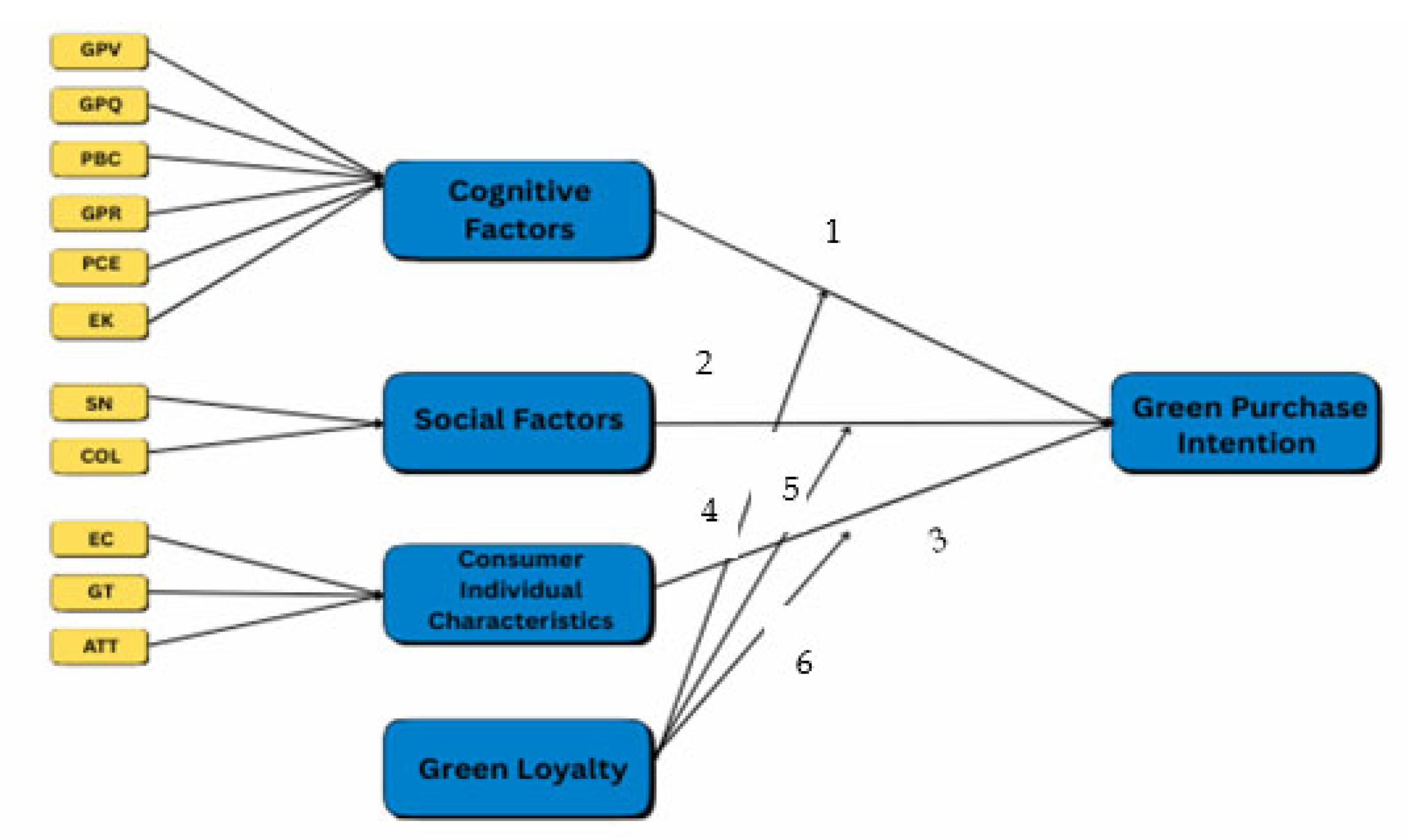
A model is developed and evaluated using a set of sampling and analytical criteria that are determined by the research’s hypotheses, objectives, and purposes. While Figure 1 below shows the model, the subsequent sections explain the procedures and techniques that were employed in the study:

3. Research Design

This study employs a quantitative, cross-sectional design to examine the determinants of green purchase intention among young adult consumers in Turkey. The target population consisted of individuals aged 18 to 40 years, a demographic group frequently examined in sustainability and consumer behavior research due to its active engagement with environmentally oriented consumption and responsiveness to green marketing initiatives [26,27].
A purposive sampling strategy is used with predefined and observable inclusion criteria as follows: Participants were included if they resided in Turkey, were within the defined age range, and reported prior experience with eco-friendly products. Prior experience was defined as having purchased or having seriously considered purchasing an eco-friendly product within the previous six months. The inclusion criteria ensured that the participants fit within the current context and the factors under examination. This setting was used prior to the actual survey being shared with the participants; the individuals were only selected as respondents if they met the specific inclusion criteria.
Data was collected through online consumer communities (i.e., Discord) and social networking platforms (i.e., Instagram), an approach frequently adopted in green consumption research to access young adult consumer segments. This approach facilitated access to respondents who are engaged in environmentally oriented consumption contexts. Convenience sampling was employed for data collection parsimony among eligible respondents based on availability and willingness to participate. Referring to the inclusion criteria, the combined sampling techniques (purposive and convenience) enabled the researcher to establish an adequate connection with potential respondents with an appropriate filter that led to the final selection based on their tendency to participate. The non-probability convenience sampling approach enabled the recruitment of respondents through platforms commonly used by the young adult segment and made it possible to access individuals, who are familiar with digital consumption and green product discourses. Only completed responses that met the inclusion criteria were retained for final analysis.
A pilot test was conducted prior to the final data collection, in which 15 respondents participated to ensure the readability, understandability, validity, and reliability of the survey items. The pilot test sample was excluded from the final dataset. A total of 250 questionnaires were distributed among participants, from which incomplete or invalid responses were excluded prior to analysis, and the remaining observations were retained for empirical testing (total = 200). Sample adequacy was assessed using GPower version 3.1, following the recommendations in the literature [81]. Assuming a significance level of α = 0.05, an effect size of 0.15, and statistical power of 90%, the required sample size ranged between 76 and 235 observations, indicating that the final sample size was sufficient for subsequent PLS-SEM analysis. Participation was entirely voluntary. All respondents were informed about the confidentiality and anonymity of their responses, they were free to withdraw from the study at any stage without consequence, and each participant was given information regarding the purpose and context of the study and was given the option to receive the results of the research as well as its link upon publication. Sample adequacy is considered in light of the PLS-SEM model pertaining to higher-order constructs and moderation effects. The sample size was considered satisfactory and adequate for estimating the proposed model as this analytical technique is suitable for relatively small sample sizes. This sample should be regarded as adequate and not generous, and thus, the results should be interpreted with caution as the study’s emphasis is on explanation and association rather than strong generalizability.

4. Measurements

The study’s constructs were assessed using prior validated scales adapted to the context of eco-friendly products. The questionnaire items were modified to ensure contextual relevance while preserving their original meanings. All constructs were assessed using existing validated scales adapted from the extant literature. The items are structured to capture the key latent variables in the conceptual model with slight contextualization to fit the current research while preserving the original conceptual meaning. The questions were translated into Turkish by a professional and translated back into English via a second translator for accuracy [82].
Cognitive factors include green perceived value (five items) (e.g., This green product has more environmental benefits than other products) [32,40], green perceived quality (three items) (e.g., This green product is of high quality) [44,45], perceived behavioral control (four items) (e.g., I have the resources, knowledge, and ability to use green products) [31,49], green perceived risk (three items) (e.g., Because of the limited availability of eco-friendly goods, it is harder to purchase products that fully meet my needs) [22,23], perceived consumer effectiveness (three items) (e.g., I can protect the environment by buying products that are friendly to the environment) [16,17], and environmental knowledge (four items) (e.g., I am aware that trying to dominate the environment can cause environmental problems) [55,56].
Social factors were measured using subjective norm (three items) (e.g., Most people who are important to me would approve of my purchasing green products rather than conventional products) [15,31] and collectivism (three items) (e.g., Groups make better decisions than individuals) [61,62].
Individual consumer characteristics comprised environmental concern (four items) (e.g., I would be willing to reduce my consumption to help protect the environment) [17,67], green trust (four items) (e.g., Green products and services are honest and eco-friendly) [37,44], and attitude toward green products (four items) (e.g., Purchasing green products is pleasant to me) [31,66].
Green loyalty, used as a moderating variable, was measured using three items (e.g., I will repurchase environmentally friendly products) [29,30].
Green purchase intention, treated as the dependent variable, was assessed through six items (e.g., I will consider switching to environmentally friendly products for ecological reasons) [3,31,49].
Responses to all items were recorded using a five-point Likert scale, ranging from 1 (strongly disagree) to 5 (strongly agree). The use of established scales provides content validity for the measurements and opens a path of comparability of the obtained results with existing studies in green consumer behavior literature.
Demographic variables (i.e., age, gender, and education) are used as control variables, consistent with purchase intention and sustainable consumption behavior research [82,83]. These measures are commonly used across various domains in the extant literature. However, to confirm the reliability and validity of the included items in the current research, the measurement model is assessed rigorously (see Table 1, Table 2 and Table 3).

5. Analysis and Results

PLS-SEM was applied (with Smart-PLS software version 4) to assess the research model, which is appropriate for models involving multiple latent constructs and does not require normally distributed data [81]. In Table 1, the results of the measurement model assessment indicate that the model meets commonly accepted reliability and validity criteria. According to Table 1, outer loadings across indicators exceed the recommended threshold of 0.70, which is consistent with acceptable levels of indicator reliability [81,84].
Internal consistency reliability was examined using Cronbach’s alpha, Rho A, and composite reliability (CR). Cronbach’s alpha values were greater than 0.70, and composite reliability values ranged between 0.72 and 0.80, similar to composite reliability, consistent with benchmarks reported in earlier studies [81,85]. Given the complexity of the model and the presence of higher-order constructs, the calculated values support acceptable measurement quality. However, it is important to interpret the result conservatively versus a strong psychometric performance. Convergent validity was examined using the average variance extracted (AVE). AVE values shown in Table 1 exceed the 0.50 threshold proposed in prior research, suggesting that each construct explains more than half of the variance of its indicators [81]. These results provide support for acceptable convergent validity. The measurement model has adequate indicator reliability, internal consistency reliability, and convergent validity, signifying that the constructs are appropriately evaluated and can be reliably used for further structural model analysis.
Discriminant validity was assessed using the heterotrait–monotrait ratio (HTMT), as recommended in prior methodological research [86]. The HTMT criterion has been employed in variance-based structural equation modeling to assess discriminant validity. As reported in Table 2, all HTMT values remain below the threshold of 0.85, which is consistent with adequate empirical differentiation among the constructs. For robustness check and confirmation, the Fornell–Larcker criterion is also applied (see Appendix A).
The higher-order constructs in this study were assessed using a reflective–formative specification, based on the methodological framework outlined [81,86,87]. This specification was adopted in line with a modeling structure in which the lower-order dimensions are modeled as contributing to the higher-order constructs and are treated as distinct, non-interchangeable components. The results in Table 3, convergent validity for the formative constructs, were examined through redundancy analysis. The path coefficients linking the formative constructs to their corresponding global single-item measures are above the commonly referenced threshold of 0.70 for cognitive factors (0.703), social factors (0.707), and consumer individual characteristics (0.709), which is consistent with acceptable convergent validity. The significance and relevance of the formative indicators were assessed based on their outer weights and corresponding t-statistics. The results indicate that GPV, GPQ, PBC, GPR, PCE, and EK significantly contribute to the cognitive factors construct, while subjective norm and collectivism define social factors, and environmental concern, green trust, and attitude specify consumer individual characteristics. Collinearity among formative indicators was examined using variance inflation factor (VIF) values. As reported in Table 3, all VIF values fall below the threshold of 3.0, suggesting no notable multicollinearity issues and remaining consistent with stable estimation of the indicator weights [87].
Partial least squares structural equation modeling (PLS-SEM) was employed to assess the structural model, with reference to reporting guidelines proposed by Hair et al. [81,87]. The analysis examined the significance of the path coefficients, effect sizes (f2), explanatory power (R2), predictive relevance (Q2), and global model fit measures, namely the standardized root mean square residual (SRMR), the normed fit index (NFI), and the comparative fit index (CFI). In terms of predictive power, the model accounts for a proportion of variance in green purchase intention (R2 = 0.36). The model also shows evidence of predictive relevance, as reflected by a positive Q2 value (0.16). In addition, the reported model fit indices are within commonly referenced threshold values (SRMR = 0.023). Additional indices generated by the software are reported descriptively (NFI = 0.920; CFI = 0.982), indicating consistency between the proposed structural model and the observed data [81,85].
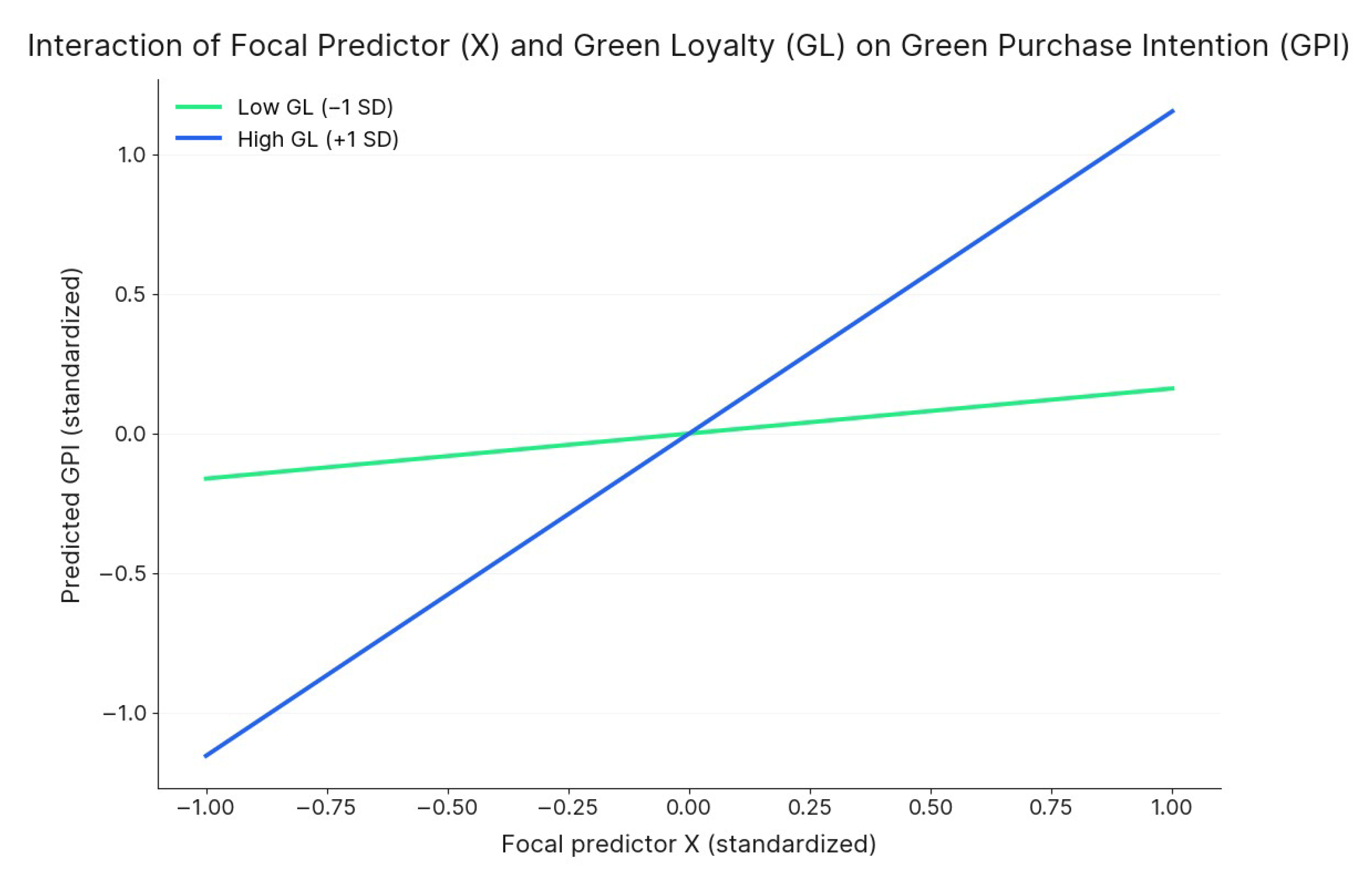
The interaction shown in Figure 2 suggests that high levels of green loyalty can have a positive impact on green purchasing intentions, as they enhance the effectiveness of green marketing. In contrast, when green loyalty is minimized, it weakens this relationship, resulting in a substantially lower increase in green purchasing intentions even when green marketing effectiveness improves.

6. Discussion

6.1. General Discussion

As presented in Table 4, cognitive factors (CF) have a positive and statistically significant relationship with GPI (β = 0.341, t = 4.214), providing support for H1.
The positive association between cognitive factors and green purchase intention is associated with consumers’ evaluations and beliefs in relation to environmentally oriented purchase decisions among young adults in Turkey. This result suggests that younger consumers who perceive higher value and quality in eco-friendly products, who believe their consumption choices can contribute to environmental outcomes, and who report higher levels of environmental knowledge are more likely to express an intention to purchase such products. This finding is consistent with earlier studies emphasizing the role of cognitive assessments in sustainable consumption [1,37], while also underlining their relevance in an emerging market context where access to green product information and perceived credibility may differ across consumer groups. From a sustainable marketing perspective, green purchase intention among young adults appears closely related to how environmental information is interpreted and internalized, rather than being driven solely by situational incentives or external pressure [32,75]. In line with emerging discourse on the context of consumer behavior in sustainable marketing, this result highlights the role of consumption-related cognition in connecting sustainability-oriented marketing efforts and innovation-related cues to intention formation within younger consumer segments [3].
When interpreted through the behavioral frameworks employed in this study, the observed role of cognitive factors clarifies how intention formation mechanisms function in practice within an emerging market setting [17,73]. The findings indicate that cognitive evaluations act as the primary channel through which sustainability-related information becomes behaviorally operative, suggesting that theoretical links between evaluation and intention are activated when consumers can internally validate environmental claims [5,31]. Application of TPB reveals that behavioral theories do not operate as uniform predictive models across contexts rather, their explanatory power is conditioned by the degree to which consumers can cognitively structure value perceptions, quality judgments, and perceived effectiveness under conditions of informational asymmetry [14,31]. In the Turkish context, where institutional guarantees and standardized green signals are less consolidated, cognition assumes a central filtering role that stabilizes intention formation [43,76]. Consequently, the results contribute to the theoretical understanding of green purchase behavior by showing that cognitive mechanisms function not merely as antecedents, but also as context-sensitive enablers that determine whether sustainability-oriented cues translate into actionable intentions among young consumers [17,76].
Social factors (SF) also exhibit a significant positive relationship with green purchase intention (β = 0.340, t = 4.118), supporting H2. The positive relationship between social factors and green purchase intention is linked to environmentally oriented purchase intentions among young adult consumers in Turkey [76] and comparable Middle Eastern contexts [88]. This relationship is consistent with the view that subjective norms and collectivist tendencies are involved in how young consumers evaluate eco-friendly purchasing. Particularly, in social settings, shared values and group expectations influence decision-making. In the Turkish context, where consumption practices are often embedded within family, peer, and community networks, social influence is observed in connection with green purchase intention together with individual evaluations [27,76]. These social considerations do not operate in isolation but are linked to consumers’ perceptions of social approval and collective responsibility in relation to environmental behavior. Within sustainable marketing, this relationship reflects the influence of social context and normative pressures in shaping green consumption intentions among younger consumers.
The observed influence of social factors reveals how normative mechanisms translate into intention under socially embedded consumption conditions [1,60]. The results indicate that social influence operates not as a direct substitute for individual evaluation, but as an enabling context that legitimizes and amplifies intention formation where environmental choices are socially recognized [29,31]. Applying the Theory of Planned Behavior and the Attitude–Behavior–Context framework to this relationship shows that subjective norms and collectivist orientations become behaviorally consequential, when green consumption is framed as socially endorsed rather than individually exceptional [16,63]. In the Turkish context, where purchasing decisions are closely intertwined with family, peer, and community reference groups, social factors function as a validation mechanism that reduces perceived social risk associated with green choices [38,76]. This expands theoretical assumptions by demonstrating that normative pressure is highly effective, when embedded in relational networks that reinforce shared responsibility. This suggests that social mechanisms within behavioral theories are activated through social embeddedness rather than through abstract norm awareness alone [1,2,60].
Consumer individual characteristics (CIC) exhibit a statistically significant association with green purchase intention (β = 0.338, t = 4.109, f2 = 0.104), providing support for H3. The statistically significant association between consumer individual characteristics and green purchase intention indicates that personal orientations toward environmental issues are related to eco-friendly purchase intentions among young adult consumers in Turkey, consistent with prior evidence [50,76]. This result suggests that environmental concern, green trust, and favorable attitudes toward eco-friendly products are linked to a greater likelihood of intending to purchase green products [17,72,73]. Within this context, individual-level predispositions appear to function as internal reference points that shape how young consumers interpret environmental claims and evaluate green product options. In an emerging market setting such as Turkey, where confidence in environmental information and product credibility may vary, these individual characteristics are particularly relevant in supporting intention formation. From a sustainable marketing perspective [32,69,73], the finding points to the role of consumers’ internal orientations toward sustainability in complementing cognitive evaluations and social influences, rather than operating independently of them.
Viewed through the behavioral frameworks employed in this study, the significant role of consumer individual characteristics highlights how internal predispositions become behaviorally operative in emerging market settings [17,73]. The findings show that environmental concern, trust, and attitudinal orientation do not act as isolated motivational forces, but function as internal anchoring mechanisms that stabilize intention formation when external market signals are uncertain. From the perspective of the Theory of Planned Behavior, consumer behavior theory, and the Attitude–Behavior–Context framework, the result reveals that individual-level orientations provide a reference structure through which environmental information is filtered and evaluated. Thereby, it reduces ambiguity surrounding green products [31,50,53]. In the Turkish context, confidence in environmental claims and product standards is uneven. These predispositions condition whether sustainability-related cues are interpreted as credible and personally relevant [38,76]. This contributes to existing theoretical understanding by demonstrating that individual characteristics primarily serve a contextualizing role while shaping the consistency and reliability with which cognitive and social inputs are translated into green purchase intention. This varies from directly driving intention in isolation [1,2].
The moderating effect of green loyalty (GL) was analyzed through interaction effects. The interaction between cognitive factors and green loyalty demonstrates a positive interaction effect that reaches statistical significance (β = 0.321, t = 2.629), as anticipated by H4. The significant interaction between cognitive factors and green loyalty indicates that green loyalty is related to differences in how cognitive evaluations are associated with green purchase intention among young adult consumers in the context of consumer behavior [29,30]. This result suggests that when consumers report higher levels of green loyalty, the relationship between cognitive factors, such as perceived value, perceived quality, perceived behavioral control, perceived consumer effectiveness, environmental knowledge, and perceived risk, and green purchase intention becomes more pronounced. In this context, green loyalty appears to be linked to the consistency with which cognitive evaluations are translated into purchase intentions rather than acting as an independent driver of intention [44,79]. Within an emerging market setting (e.g., Turkey, China, and Indonesia), where information asymmetry and trust in environmental claims may vary, loyalty toward eco-friendly products may provide a stabilizing reference that reinforces the influence of cognitive assessments [22,38,71,76]. Consumption-related innovation indicates that the effectiveness of sustainability-oriented information and innovation cues depends, in part, on the presence of ongoing consumer–brand relationships reflected in green loyalty. The moderation influence of GL states that the effect of antecedent factors on purchasing intentions partially relies on the degree to which individuals have already established commitment to green products. This indicates that favorable assessments and green tendencies can be more readily translated into intention outcomes. Thus, GL acts as a boundary condition for intensifying and reinforcing selected intention-forming processes, which varies from its traditional independent operational role.
The significant interaction between cognitive factors and green loyalty reveals that cognitive mechanisms do not operate in a vacuum but are conditionally activated by relational stability in consumption. Applying consumer behavior theory and the Theory of Planned Behavior to this result clarifies that evaluative beliefs such as value, quality, perceived effectiveness, and control become more behaviorally decisive, when consumers possess a sustained commitment to eco-friendly products [30,31]. This is relevant in emerging market contexts characterized by information asymmetry and variable credibility of environmental claims [38,43]. The findings show that green loyalty functions as a contextual stabilizer that enables cognitive evaluations integrated into intention rather than uncertainty. This builds upon the theoretical understanding by demonstrating that cognitive antecedents of intention are not uniformly effective. Their explanatory power depends on whether consumers have accumulated sufficient relational experience to trust and validate environmental information [30,79]. The results, therefore, extend existing behavioral assumptions by indicating that under conditions of market ambiguity, loyalty operates as a boundary condition. This becomes more apparent when cognitive processing translates into green purchase intention, positioning relational continuity as a critical contextual enabler of cognition-driven behavior [1,4].
Green loyalty is associated with a moderating effect on the relationship between social factors and green purchase intention (β = 0.320, t = 2.549), in accordance with H5. The moderating effect of green loyalty on the relationship between social factors and green purchase intention indicates that social influences operate differently depending on consumers’ level of loyalty toward eco-friendly products. Subjective norms and collectivist orientations appear more closely linked to green purchase intention when individuals report higher levels of green loyalty among young adult consumers in Turkey. This suggests that social expectations and group-based influences are more likely to translate into purchase intention in cases where consumers already maintain an ongoing commitment to environmentally friendly products or brands [8,27]. In this context, green loyalty may reinforce the relevance of social approval and shared environmental values, allowing social cues to exert a stronger influence on intention formation. Socially oriented sustainability messages may depend on the presence of loyalty-based relationships, particularly within younger consumer segments embedded in socially interconnected consumption environments.
Interpreting this moderating effect through the behavioral frameworks applied in the study highlights how social influence mechanisms become conditionally effective [60]. The findings indicate that social norms and collectivist pressures acquire behavioral relevance, when embedded within stable, loyalty-based consumption relationships [29,63]. Applying the Theory of Planned Behavior and consumer behavior theory to this interaction suggests that social influence does not automatically translate into intention; instead, it requires a relational anchor that validates and reinforces normative expectations over time [31,32]. In the context of young adult consumers in Turkey, green loyalty functions as a conditioning mechanism that determines whether social approval and group-based signals are internalized as actionable motives [76]. This furthers existing theoretical assumptions by demonstrating that social drivers of green behavior are contingent upon relational continuity. This suggests that normative influence operates most effectively when supported by prior commitment to eco-friendly products, compared to acting as a standalone determinant of intention [1,2].
In addition, the interaction between consumer individual characteristics and green loyalty is positive and statistically significant (β = 0.322, t = 2.587), in line with H6. Collectively, these results suggest that green loyalty is associated with stronger effects of cognitive, social, and individual characteristics on consumers’ green purchase intentions. The significant interaction between consumer individual characteristics and green loyalty indicates the association between individual-level predispositions [28,79]. Green purchase intention varies according to consumers’ level of loyalty toward eco-friendly products. Among young adult consumers in Turkey, environmental concern, green trust, and favorable attitudes toward eco-friendly products are more closely related to green purchase intention when green loyalty is higher [28,76]. This pattern suggests that individual pro-environmental orientations are more likely to translate into purchase intention in the presence of an established commitment to environmentally friendly products or brands. Rather than functioning as a direct antecedent of intention, green loyalty appears to condition the extent to which individual dispositions are expressed in intended purchasing behavior. In consumption environments marked by uncertainty surrounding environmental claims and product standardization, loyalty can provide continuity and confidence, thereby strengthening the extent to which individual characteristics are translated into intention-relevant decision criteria [38,50,83]. Individual-level motivations are more effectively activated when supported by stable, loyalty-based consumer–brand relationships [5,80].
Interpreted through the behavioral frameworks applied in this study, the significant interaction between consumer individual characteristics and green loyalty indicates that individual predispositions toward sustainability do not automatically translate into purchase intention, but may require a relational condition to become behaviorally effective [1,30]. Through the lens of consumer behavior theory and the Theory of Planned Behavior, this result shows that internal orientations such as environmental concern, green trust, and favorable attitudes gain explanatory power when consumers possess a stable commitment to eco-friendly products [31,53]. In the current context, the findings suggest that green loyalty operates as a contextual anchor that allows individual motivations to be expressed with greater behavioral confidence [30,79]. This expands existing theoretical application by demonstrating that individual-level drivers of green intention are conditionally activated rather than uniformly influential. Loyalty does not replace individual dispositions, but governs the extent to which these dispositions are mobilized into intention under uncertainty, revealing a boundary condition in which relational continuity enhances the behavioral relevance of internal motivations in sustainable consumption contexts [1,2].
With respect to the control variables, Table 4 shows that gender (β = 0.114, t = 2.242), age (β = 0.107, t = 2.233), and education (β = 0.111, t = 2.244) show positive associations with green purchase intention that reach statistical significance. The findings suggest that demographic characteristics play a role in shaping green purchase intention, in line with previous studies [20,31,82,83].
The findings provide a broader perspective rather than merely confirming the importance of green-oriented factors. In this respect, the findings indicate that green purchase intentions among young Turkish adults are not solely driven by their awareness of green issues, but through an interaction among personal beliefs, social expectations and norms, and internalized pro-green dispositions. This interpretation is essential as it highlights that green product strategies can be more effective by going beyond only addressing product attributes, to social reinforcement, and long-term relational commitments of green consumptions. This combined and conditional nature of green consumer decision-making contributes to the literature, especially in the emerging market context.

6.2. Theoretical Implications

This study contributes to the theoretical understanding of green purchase intention by examining how established behavioral frameworks operate within emerging market conditions, particularly among young adult consumers. Rather than introducing additional constructs to extend these theories, the findings offer further clarification regarding the conditions under which their core mechanisms are reflected in behavior. Concerning the Theory of Planned Behavior (TPB) [14], this research builds on prior applications in sustainable consumption research [31,66,76] by indicating that the effects of attitudes, subjective norms, and perceived behavioral control may vary across contextual settings rather than operating in a structurally uniform manner. Although TPB is frequently treated as a stable model of intention formation, the present findings suggest that its motivational antecedents are more likely to translate into green purchase intention when consumers demonstrate continuity in their engagement with eco-friendly products. This suggests a boundary condition for TPB in emerging markets, where intention formation may depend not only on motivational strength but also on relational stability in consumption behavior.
Second, the study contributes to the Attitude–Behavior–Context (ABC) framework by indicating that relational continuity may function as a relevant contextual condition. Previous applications of the ABC framework have emphasized situational and structural constraints in shaping sustainable behavior [32]. Prior applications of the ABC framework have primarily emphasized situational and structural constraints in shaping sustainable behavior [32]. The present findings extend this perspective by showing that green loyalty functions as a relational context that conditions whether internal cognitive evaluations and individual orientations become behaviorally relevant. This suggests that contextual effects in the ABC framework are not limited to external conditions but may also arise from repeated consumer–product interaction, particularly in markets characterized by variable institutional trust and information quality.
Third, the study contributes to consumer behavior theory by examining how social influence mechanisms function in sustainable consumption contexts. Prior research has documented the role of subjective norms, collectivism, and social approval in relation to green purchase intention [15,61,67]. The present findings suggest that these social influences are more likely to be reflected in intention when situated within loyalty-based consumption relationships. In this respect, normative pressures may not be sufficient in emerging markets in the absence of continuity and commitment in consumer behavior. Taken together, these observations imply that future research applying TPB, ABC, and related behavioral frameworks in sustainable consumption may benefit from considering relational boundary conditions, particularly within emerging market settings.

6.3. Practical Implications

For managers and organizational decision-makers aiming to increase eco-friendly purchasing among young adult consumers in Turkey, the findings provide several practical implications. First, cognitive clarity may be treated as a strategic component of sustainability communication rather than as an additional promotional element. Environmental claims can be framed in ways that allow for clearer interpretation, verification, and comparison across products. This may involve the use of standardized eco-labels, third-party certifications, and concise descriptions of environmental benefits integrated into packaging, websites, and social media channels. Sustainability messaging that is highly technical or overtly promotional may limit clarity, particularly in a market where credibility and evaluative ease are associated with intention formation.
Second, marketing strategies may reflect the socially embedded character of consumption among young adults. Approaches such as peer endorsements, user-generated content, community-based initiatives, and messages emphasizing collective environmental responsibility may be relevant in this context. Campaign formats that enhance the visibility of sustainable choices within peer groups, for instance by referring to shared participation or peer adoption, may facilitate the movement from awareness toward purchase intention.
Third, green loyalty may be regarded as a longer-term relational dimension rather than solely as the result of short-term promotional activities. Maintaining consistency between environmental claims and actual product practices, facilitating post-purchase engagement through feedback or sustainability-linked initiatives, and avoiding frequent changes in sustainability positioning may contribute to reducing perceived uncertainty and maintaining alignment between consumers’ sustainability orientations and their purchasing decisions.

7. Conclusions

Green purchase intention among young adult consumers in Turkey is empirically shown to emerge as a conditional outcome shaped by the combined influence of cognitive evaluations, social embeddedness, and individual predispositions, rather than by any single dominant determinant. The findings suggest that intention formation depends on how evaluative judgments, social expectations, and personal orientations toward sustainability are translated into behavioral readiness under conditions characterized by information asymmetry and uneven credibility of environmental claims. Within this setting, green loyalty operates as a stabilizing mechanism that strengthens the consistency between consumers’ internal orientations and their intended purchasing behavior, without acting as an independent motivational driver. By demonstrating that green loyalty functions as a conditioning factor in the intention-formation process, the study provides empirical support for viewing loyalty as a boundary mechanism that governs when sustainability-related beliefs, norms, and attitudes become behaviorally consequential. This interpretation suggests that sustainable consumption intentions among Turkish young adults are more likely to consolidate when cognitive and social signals are reinforced through continuity in consumer–product relationships. Accordingly, the conclusion of this study is that the effectiveness of sustainability-oriented marketing and consumption-related innovation in emerging green markets depends not only on informational or normative cues, but also on loyalty-based structures that reduce ambiguity and promote behavioral coherence among younger consumers. To summarize, the findings suggest that green purchasing intentions among young Turkish adults are associated with a combination of cognitive–evaluative, social, and individual factors, and GL can strengthen these linkages. This evidence-based insight should be interpreted with caution due to the limitations posed by the research design.
This study has several limitations that need to be acknowledged and may be considered in future research. First, the analysis is based on cross-sectional survey data, which captures green purchase intention at a single point in time and does not allow observation of how cognitive, social, and individual factors as well as green loyalty may evolve across different stages of the decision-making process. The usage of quantitative, convenience and purposive sampling techniques in a cross-sectional manner causes concerns regarding the generalizability and representativeness of the obtained results while introducing biases (i.e., self-selection, digital profile, and thematic affinity) that limit external validity, which can be addressed by expansion of the sample size as well as the employment of other tactics. Longitudinal designs may offer insight into whether these relationships remain stable or shift as consumers accumulate experience with eco-friendly products. Second, reliance on purposive and convenience sampling restricts the generalizability of the findings to other age groups or to consumers with lower levels of environmental awareness. Future research may expand the model to encompass more diverse demographic segments or undertake comparisons between young adults and older consumer cohorts. Third, the examination of green purchase intention at an aggregate level, without distinguishing among specific product categories, constitutes an additional limitation. Subsequent studies may explore whether the observed relationships vary across industries or across types of eco-friendly products associated with different levels of involvement and perceived risk. In addition, subsequent work may incorporate contextual or institutional factors, such as regulatory environments or digital platform influences, to further develop understanding of sustainable consumption behavior in emerging market settings. Further studies may also assess whether comparable conditioning mechanisms operate across demographic groups, product categories, or stages of consumer experience, drawing on the same theoretical frameworks employed in this study.

Author Contributions

Conceptualization, K.C.; Methodology, S.M.; Software, P.Z.; Validation, P.Z.; Formal analysis, P.Z.; Investigation, S.M.; Resources, S.M.; Data curation, S.M.; Writing—original draft, S.M.; Writing—review & editing, S.M.; Supervision, K.C.; Project administration, K.C. All authors have read and agreed to the published version of the manuscript.

Funding

This research received no external funding.

Institutional Review Board Statement

The study was conducted in accordance with the Declaration of Helsinki, and approved by the Scientific Research and Publication Ethics Committee of Cyprus International University (protocol code EKK25-26/13/10 and date of 11 February 2026).

Informed Consent Statement

Informed consent was obtained from all subjects involved in the study.

Data Availability Statement

The data presented in this study are available on request from the corresponding author due to confidentiality reasons.

Conflicts of Interest

The authors declare no conflict of interest.

Appendix A

Table A1. Fornell–Larcker.
ConstructGPVGPQPBCGPRPCEEKSNCOLECGTATTGIGPI
GPV0.7820.6130.3810.6490.5590.5460.5440.4690.5410.5820.550.5050.509
GPQ0.6130.7790.4690.5440.580.5520.530.4710.5560.560.5530.5170.52
PBC0.3810.4690.7760.6510.5530.5770.5580.4990.550.5120.4750.5060.467
GPR0.6490.5440.6510.7770.5860.5910.5430.5090.5010.5390.490.4750.541
PCE0.5590.580.5530.5860.7820.6340.5510.5070.5190.5610.520.4830.475
EK0.5460.5520.5770.5910.6340.7790.580.5590.5430.550.5370.4940.493
SN0.5440.530.5580.5430.5510.580.7820.640.5590.5890.4780.5130.524
COL0.4690.4710.4990.5090.5070.5590.640.7880.580.5550.5340.4960.553
EC0.5410.5560.550.5010.5190.5430.5590.580.8020.6130.5390.5090.568
GT0.5820.560.5120.5390.5610.550.5890.5550.6130.8250.5510.520.542
ATT0.550.5530.4750.490.520.5370.4780.5340.5390.5510.7820.5320.55
GI0.5050.5170.5060.4750.4830.4940.5130.4960.5090.520.5320.8050.583
GPI0.5090.520.4670.5410.4750.4930.5240.5530.5680.5420.550.5830.794

References

  1. Zhuang, W.; Luo, X.; Riaz, M.U. On the factors influencing green purchase intention: A meta-analysis approach. Front. Psychol. 2021, 12, 644020. [Google Scholar] [CrossRef]
  2. Žabkar, V.; Hosta, M. Antecedents of environmentally and socially responsible sustainable consumer behavior. J. Bus. Ethics 2021, 172, 273–290. [Google Scholar] [CrossRef]
  3. Filip, A.; Stancu, A.; Onișor, L.F.; Mogoș, O.C.; Catană, Ș.A.; Goldbach, D. Drivers of purchase intentions of Generation Z on eco-products. Sustainability 2025, 17, 629. [Google Scholar] [CrossRef]
  4. Dabija, D.C.; Bejan, B. Behavioral antecedents for enhancing green customer loyalty in retail. In BASIQ International Conference: New Trends in Sustainable Business and Consumption; Editura ASE: Graz, Austria, 2017; Volume 1, pp. 183–191. [Google Scholar]
  5. Costa, C.S.R.; da Costa, M.F.; Maciel, R.G.; Aguiar, E.C.; Wanderley, L.O. Consumer antecedents towards green product purchase intentions. J. Clean. Prod. 2021, 313, 127964. [Google Scholar] [CrossRef]
  6. Saari, U.A.; Damberg, S.; Frömbling, L.; Ringle, C.M. Sustainable consumption behavior of Europeans: The influence of environmental knowledge and risk perception on environmental concern and behavioral intention. Ecol. Econ. 2021, 189, 107155. [Google Scholar] [CrossRef]
  7. Patiño-Toro, O.N.; Valencia-Arias, A.; Palacios-Moya, L.; Uribe-Bedoya, H.; Valencia, J.; Londoño, W.; Gallegos, A. Green purchase intention factors: A systematic review and research agenda. Sustain. Environ. 2024, 10, 2356392. [Google Scholar] [CrossRef]
  8. Simanjuntak, M.; Nafila, N.L.; Yuliati, L.N.; Johan, I.R.; Najib, M.; Sabri, M.F. Environmental care attitudes and intention to purchase green products: Impact of environmental knowledge, word of mouth, and green marketing. Sustainability 2023, 15, 5445. [Google Scholar] [CrossRef]
  9. Sdrolia, E.; Zarotiadis, G. A comprehensive review for green product term: From definition to evaluation. J. Econ. Surv. 2019, 33, 150–178. [Google Scholar] [CrossRef]
  10. Sharma, A.; Foropon, C. Green product attributes and green purchase behavior: A theory of planned behavior perspective with implications for circular economy. Manag. Decis. 2019, 57, 1018–1042. [Google Scholar] [CrossRef]
  11. Dangelico, R.M.; Vocalelli, D. “Green marketing”: An analysis of definitions, strategy steps, and tools through a systematic review of the literature. J. Clean. Prod. 2017, 165, 1263–1279. [Google Scholar] [CrossRef]
  12. Jaiswal, D.; Kant, R. Green purchasing behaviour: A conceptual framework and empirical investigation of Indian consumers. J. Retail. Consum. Serv. 2018, 41, 60–69. [Google Scholar] [CrossRef]
  13. Uikey, A.A.; Baber, R. Exploring the factors that foster green brand loyalty: The role of green transparency, green perceived value, green brand trust and self-brand connection. J. Content Community Commun. 2023, 18, 155–170. Available online: https://hal.science/hal-04803874/ (accessed on 5 April 2026).
  14. Ajzen, I. The theory of planned behavior. Organ. Behav. Hum. Decis. Process. 1991, 50, 179–211. [Google Scholar] [CrossRef]
  15. Shang, W.; Zhu, R.; Liu, W.; Liu, Q. Understanding the influences on green purchase intention with moderation by sustainability awareness. Sustainability 2024, 16, 4688. [Google Scholar] [CrossRef]
  16. Hussain, S.; Huang, J. The impact of cultural values on green purchase intentions through ecological awareness and perceived consumer effectiveness: An empirical investigation. Front. Environ. Sci. 2022, 10, 985200. [Google Scholar] [CrossRef]
  17. Joshi, Y.; Rahman, Z. Consumers’ sustainable purchase behaviour: Modeling the impact of psychological factors. Ecol. Econ. 2019, 159, 235–243. [Google Scholar] [CrossRef]
  18. Jaini, A.; Quoquab, F.; Mohammad, J.; Hussin, N. “I buy green products, do you…?” The moderating effect of eWOM on green purchase behavior in Malaysian cosmetics industry. Int. J. Pharm. Healthc. Mark. 2020, 14, 89–112. [Google Scholar] [CrossRef]
  19. Bong Ko, S.; Jin, B. Predictors of purchase intention toward green apparel products: A cross-cultural investigation in the USA and China. J. Fash. Mark. Manag. Int. J. 2017, 21, 70–87. [Google Scholar] [CrossRef]
  20. Sreen, N.; Purbey, S.; Sadarangani, P. Impact of culture, behavior and gender on green purchase intention. J. Retail. Consum. Serv. 2018, 41, 177–189. [Google Scholar] [CrossRef]
  21. Juliana, J.; Djakasaputra, A.; Pramono, R. Green perceived risk, green viral communication, green perceived value against green purchase intention through green satisfaction. J. Ind. Eng. Manag. Res. 2020, 1, 124–139. Available online: https://jiemar.org/index.php/jiemar/article/view/46 (accessed on 5 April 2026).
  22. Ghouse, S.M.; Shekhar, R.; Ali Sulaiman, M.A.B.; Azam, A. Green purchase behaviour of Arab millennials towards eco-friendly products: The moderating role of eco-labelling. Bottom Line 2025, 38, 286–308. [Google Scholar] [CrossRef]
  23. Zameer, H.; Yasmeen, H. Green innovation and environmental awareness driven green purchase intentions. Mark. Intell. Plan. 2022, 40, 624–638. [Google Scholar] [CrossRef]
  24. Yahya, A.A.; Zargar, P. Achieving corporate sustainability through green human resource management: The role of CSR in the banking industry of a developing country. Sustainability 2023, 15, 10834. [Google Scholar] [CrossRef]
  25. Nekmahmud, M.; Naz, F.; Ramkissoon, H.; Fekete-Farkas, M. Transforming consumers’ intention to purchase green products: Role of social media. Technol. Forecast. Soc. Change 2022, 185, 122067. [Google Scholar] [CrossRef]
  26. Kautish, P.; Paul, J.; Sharma, R. The moderating influence of environmental consciousness and recycling intentions on green purchase behavior. J. Clean. Prod. 2019, 228, 1425–1436. [Google Scholar] [CrossRef]
  27. Hu, T.-L.; Chao, C.-M.; Lin, C.-H. The Role of Social Media Marketing in Green Product Repurchase Intention. Sustainability 2024, 16, 5916. [Google Scholar] [CrossRef]
  28. Dabija, D.C.; Bejan, B.M.; Grant, D.B. The impact of consumer green behaviour on green loyalty among retail formats: A Romanian case study. Morav. Geogr. Rep. 2018, 26, 173–185. [Google Scholar] [CrossRef]
  29. Panda, T.K.; Kumar, A.; Jakhar, S.; Luthra, S.; Garza-Reyes, J.A.; Kazancoglu, I.; Nayak, S.S. Social and environmental sustainability model on consumers’ altruism, green purchase intention, green brand loyalty and evangelism. J. Clean. Prod. 2020, 243, 118575. [Google Scholar] [CrossRef]
  30. Pahlevi, M.R.; Suhartanto, D. The integrated model of green loyalty: Evidence from eco-friendly plastic products. J. Clean. Prod. 2020, 257, 120844. [Google Scholar] [CrossRef]
  31. Ruangkanjanases, A.; You, J.J.; Chien, S.W.; Ma, Y.; Chen, S.C.; Chao, L.C. Elucidating the effect of antecedents on consumers’ green purchase intention: An extension of the theory of planned behavior. Front. Psychol. 2020, 11, 1433. [Google Scholar] [CrossRef]
  32. Qin, B.; Song, G. Internal motivations, external contexts, and sustainable consumption behavior in China—Based on the TPB-ABC integration model. Sustainability 2022, 14, 7677. [Google Scholar] [CrossRef]
  33. Sharma, K.; Aswal, C.; Paul, J. Factors affecting green purchase behavior: A systematic literature review. Bus. Strategy Environ. 2023, 32, 2078–2092. [Google Scholar] [CrossRef]
  34. Ahmed, R.R.; Streimikiene, D.; Qadir, H.; Streimikis, J. Effect of green marketing mix, green customer value, and attitude on green purchase intention: Evidence from the USA. Environ. Sci. Pollut. Res. 2023, 30, 11473–11495. [Google Scholar] [CrossRef] [PubMed]
  35. Andreica Mihuț, I.S.; Sterie, L.G.; Mican, D. The green dilemma: What drives consumers to green purchase intention in an emerging EU economy? J. Appl. Econ. 2025, 28, 2536323. [Google Scholar] [CrossRef]
  36. Sharma, N.; Lal, M.; Goel, P.; Sharma, A.; Rana, N.P. Being socially responsible: How green self-identity and locus of control impact green purchasing intentions? J. Clean. Prod. 2022, 357, 131895. [Google Scholar] [CrossRef]
  37. Roh, T.; Seok, J.; Kim, Y. Unveiling ways to reach organic purchase: Green perceived value, perceived knowledge, attitude, subjective norm, and trust. J. Retail. Consum. Serv. 2022, 67, 102988. [Google Scholar] [CrossRef]
  38. Nguyen, T.T.H.; Yang, Z.; Nguyen, N.; Johnson, L.W.; Cao, T.K. Greenwash and green purchase intention: The mediating role of green skepticism. Sustainability 2019, 11, 2653. [Google Scholar] [CrossRef]
  39. Saragi, E.Y. Indonesia’s young consumers’ green purchase intention: Understanding the effect of price sensitivity and knowledge. BISMA Bisnis Dan Manaj. 2025, 18, 1–34. [Google Scholar] [CrossRef]
  40. Liu, X.; Kim, T.H.; Lee, M.J. The impact of green perceived value through green new products on purchase intention: Brand attitudes, brand trust, and digital customer engagement. Sustainability 2025, 17, 4106. [Google Scholar] [CrossRef]
  41. Konuk, F.A. The role of store image, perceived quality, trust and perceived value in predicting consumers’ purchase intentions towards organic private label food. J. Retail. Consum. Serv. 2018, 43, 304–310. [Google Scholar] [CrossRef]
  42. Tan, W.L.; Goh, Y.N. The role of psychological factors in influencing consumer purchase intention towards green residential building. Int. J. Hous. Mark. Anal. 2018, 11, 788–807. [Google Scholar] [CrossRef]
  43. Nekmahmud, M.; Fekete-Farkas, M. Why not green marketing? Determinants of consumers’ intention to green purchase decision in a new developing nation. Sustainability 2020, 12, 7880. [Google Scholar] [CrossRef]
  44. Wasaya, A.; Saleem, M.A.; Ahmad, J.; Nazam, M.; Khan, M.M.A.; Ishfaq, M. Impact of green trust and green perceived quality on green purchase intentions: A moderation study. Environ. Dev. Sustain. 2021, 23, 13418–13435. [Google Scholar] [CrossRef]
  45. Priyanidewi, P.A.; Hadi, E.D. Green perceived quality impact on purchase intention: Roles of awareness and value. Manag. Anal. J. 2025, 14, 188–202. [Google Scholar] [CrossRef]
  46. Zeithaml, V.A. Consumer perceptions of price, quality, and value: A means-end model and synthesis of evidence. J. Mark. 1988, 52, 2–22. [Google Scholar] [CrossRef]
  47. Moslehpour, M.; Yin Chau, K.; Du, L.; Qiu, R.; Lin, C.Y.; Batbayar, B. Predictors of green purchase intention toward eco-innovation and green products: Evidence from Taiwan. Econ. Res.-Ekon. Istraživanja 2023, 36, 2149025. [Google Scholar] [CrossRef]
  48. Zhao, J.; Butt, R.S.; Murad, M.; Mirza, F.; Saleh Al-Faryan, M.A. Untying the influence of advertisements on consumers buying behavior and brand loyalty through brand awareness: The moderating role of perceived quality. Front. Psychol. 2022, 12, 803348. [Google Scholar] [CrossRef]
  49. Joshi, Y.; Uniyal, D.P.; Sangroya, D. Investigating consumers’ green purchase intention: Examining the role of economic value, emotional value and perceived marketplace influence. J. Clean. Prod. 2021, 328, 129638. [Google Scholar] [CrossRef]
  50. Tarabieh, S.M. The impact of greenwash practices over green purchase intention: The mediating effects of green confusion, Green perceived risk, and green trust. Manag. Sci. Lett. 2021, 11, 451–464. [Google Scholar] [CrossRef]
  51. Wang, J.; Wang, S.; Xue, H.; Wang, Y.; Li, J. Green image and consumers’ word-of-mouth intention in the green hotel industry: The moderating effect of Millennials. J. Clean. Prod. 2018, 181, 426–436. [Google Scholar] [CrossRef]
  52. Ellen, P.S.; Wiener, J.L.; Cobb-Walgren, C. The role of perceived consumer effectiveness in motivating environmentally conscious behaviors. J. Public Policy Mark. 1991, 10, 102–117. [Google Scholar] [CrossRef]
  53. Li, G.; Yang, L.; Zhang, B.; Li, X.; Chen, F. How do environmental values impact green product purchase intention? The moderating role of green trust. Environ. Sci. Pollut. Res. 2021, 28, 46020–46034. [Google Scholar] [CrossRef] [PubMed]
  54. Su, S.; Li, Y. Exploring the impact of the green marketing mix on environmental attitudes and purchase intentions: Moderating role of environmental knowledge in China’s emerging markets. Sustainability 2024, 16, 10934. [Google Scholar] [CrossRef]
  55. Hossain, I.; Nekmahmud, M.; Fekete-Farkas, M. How do environmental knowledge, eco-label knowledge, and green trust impact consumers’ pro-environmental behaviour for energy-efficient household appliances? Sustainability 2022, 14, 6513. [Google Scholar] [CrossRef]
  56. Cui, M.; Li, Y.; Wang, S. Environmental knowledge and green purchase intention and behavior in China: The mediating role of moral obligation. Sustainability 2024, 16, 6007. [Google Scholar] [CrossRef]
  57. de Silva, M.J.; de Lima, M.I.; dos Santos, M.D.; da Silva Santos, A.K.; da Costa, M.F.; Melo, F.V.; de Farias, S.A. Exploring the interplay among environmental knowledge, green purchase intention, and pro-environmental behavior in greenfluencing scenarios: The mediating effect of self-congruity. Sustain. Dev. 2025, 33, 4112–4127. [Google Scholar] [CrossRef]
  58. Bogdan, A.; Dospinescu, N.; Dospinescu, O. Beyond credibility: Understanding the mediators between electronic word-of-mouth and purchase intention. arXiv 2025, arXiv:2504.05359. [Google Scholar] [CrossRef]
  59. Li, X.; Dai, J.; Zhu, X.; Li, J.; He, J.; Huang, Y.; Liu, X.; Shen, Q. Mechanism of attitude, subjective norms, and perceived behavioral control influence the green development behavior of construction enterprises. Humanit. Soc. Sci. Commun. 2023, 10, 266. [Google Scholar] [CrossRef]
  60. Van Tonder, E.; Fullerton, S.; De Beer, L.T.; Saunders, S.G. Social and personal factors influencing green customer citizenship behaviours: The role of subjective norm, internal values and attitudes. J. Retail. Consum. Serv. 2023, 71, 103190. [Google Scholar] [CrossRef]
  61. Cho, S.Y.; Jung, J. Effects of individualism, collectivism, materialism, and willingness to pay for environmental protection on environmental consciousness and pro-environmental consumption behavior in Korea. Sustainability 2023, 15, 7596. [Google Scholar] [CrossRef]
  62. Duong, C.D.; Le, T.L.; Lee, E.M.; Gadomska-Lila, K. How cultural values integrate with each other to trigger sustainable consumption: A cross-culture study. Asia Pac. J. Mark. Logist. 2024, 36, 814–836. [Google Scholar] [CrossRef]
  63. Ogiemwonyi, O.; Jan, M.T. The influence of collectivism on consumer responses to green behavior. Bus. Strategy Dev. 2023, 6, 542–556. [Google Scholar] [CrossRef]
  64. Nguyen, T.N.; Lobo, A.; Greenland, S. The influence of cultural values on green purchase behaviour. Mark. Intell. Plan. 2017, 35, 377–396. [Google Scholar] [CrossRef]
  65. Lee, Y.K. A comparative study of green purchase intention between Korean and Chinese consumers: The moderating role of collectivism. Sustainability 2017, 9, 1930. [Google Scholar] [CrossRef]
  66. Kamalanon, P.; Chen, J.S.; Le, T.T. “Why do we buy green products?” An extended theory of the planned behavior model for green product purchase behavior. Sustainability 2022, 14, 689. [Google Scholar] [CrossRef]
  67. Čapienė, A.; Rūtelionė, A.; Krukowski, K. Engaging in sustainable consumption: Exploring the influence of environmental attitudes, values, personal norms, and perceived responsibility. Sustainability 2022, 14, 10290. [Google Scholar] [CrossRef]
  68. Duong, C.D.; Doan, X.H.; Vu, D.M.; Ha, N.T.; Dam, K.V. The role of perceived environmental responsibility and environmental concern on shaping green purchase intention. Vision 2026, 30, 63–77. Available online: https://journals.sagepub.com/doi/abs/10.1177/09722629221092117 (accessed on 5 April 2026).
  69. Hong, Y.; Hu, J.; Chen, M.; Tang, S. Motives and antecedents affecting green purchase intention: Implications for green economic recovery. Econ. Anal. Policy 2023, 77, 523–538. [Google Scholar] [CrossRef]
  70. Ogiemwonyi, O.; Alam, M.N.; Alshareef, R.; Alsolamy, M.; Azizan, N.A.; Mat, N. Environmental factors affecting green purchase behaviors of the consumers: Mediating role of environmental attitude. Clean. Environ. Syst. 2023, 10, 100130. [Google Scholar] [CrossRef]
  71. Riyanto, R.R.; Pangaribuan, C.H. The effect of environmental concern on green purchase intention mediated by attitude towards green product and subjective norm in Gen Z cosmetic users in Indonesia. J. Manag. Econ. Financ. 2025, 3, 1–10. Available online: https://jmef.polteksci.ac.id/index.php/jmef/article/view/141 (accessed on 5 April 2026). [CrossRef]
  72. Amin, S.; Tarun, M.T. Effect of consumption values on customers’ green purchase intention: A mediating role of green trust. Soc. Responsib. J. 2021, 17, 1320–1336. [Google Scholar] [CrossRef]
  73. Lavuri, R.; Jindal, A.; Akram, U.; Naik, B.K.; Halibas, A.S. Exploring the antecedents of sustainable consumers’ purchase intentions: Evidence from emerging countries. Sustain. Dev. 2023, 31, 280–291. [Google Scholar] [CrossRef]
  74. Shehawy, Y.M.; Khan, S.M. Consumer readiness for green consumption: The role of green awareness as a moderator of the relationship between green attitudes and purchase intentions. J. Retail. Consum. Serv. 2024, 78, 103739. [Google Scholar] [CrossRef]
  75. Chaihanchanchai, P.; Anantachart, S. Encouraging green product purchase: Green value and environmental knowledge as moderators of attitude and behavior relationship. Bus. Strategy Environ. 2023, 32, 289–303. [Google Scholar] [CrossRef]
  76. Yarimoglu, E.; Gunay, T. The extended theory of planned behavior in Turkish customers’ intentions to visit green hotels. Bus. Strategy Environ. 2020, 29, 1097–1108. [Google Scholar] [CrossRef]
  77. Oliver, R.L. Whence consumer loyalty? J. Mark. 1999, 63, 33–44. [Google Scholar] [CrossRef]
  78. Testa, F.; Sarti, S.; Frey, M. Are green consumers really green? Exploring the factors behind the actual consumption of organic food products. Bus. Strategy Environ. 2019, 28, 327–338. [Google Scholar] [CrossRef]
  79. Byun, K.A.; Duhan, D.F.; Dass, M. The preservation of loyalty halo effects: An investigation of the post-product-recall behavior of loyal customers. J. Bus. Res. 2020, 116, 163–175. [Google Scholar] [CrossRef]
  80. Hussain, S.; Seet, P.S.; Qazi, A.; Salam, A.; Sadeque, S.; Shar, S. Brand loyalty and repurchase intention in the face of opportunistic recalls: The moderating role of perceived dialogical CSR communication. J. Retail. Consum. Serv. 2025, 84, 104226. [Google Scholar] [CrossRef]
  81. Hair, J.F.; Risher, J.J.; Sarstedt, M.; Ringle, C.M. When to use and how to report the results of PLS-SEM. Eur. Bus. Rev. 2019, 31, 2–4. [Google Scholar] [CrossRef]
  82. Podsakoff, P.M.; MacKenzie, S.B.; Podsakoff, N.P. Sources of method bias in social science research and recommendations on how to control it. Annu. Rev. Psychol. 2012, 63, 539–569. [Google Scholar] [CrossRef]
  83. Hlaba, Z.; Shava, H. Consumer Attention, Green Attitude, and Climate Change Awareness in Green Purchase Behaviour: Insights from an Emerging Economy. Sustainability 2025, 17, 10859. [Google Scholar] [CrossRef]
  84. Jöreskog, K.G. Statistical analysis of sets of congeneric tests. Psychometrika 1971, 36, 109–133. [Google Scholar] [CrossRef]
  85. Henseler, J.; Dijkstra, T.K.; Sarstedt, M.; Ringle, C.M.; Diamantopoulos, A.; Straub, D.W.; Ketchen, D.J., Jr.; Hair, J.F.; Hult, G.T.; Calantone, R.J. Common beliefs and reality about PLS: Comments on Rönkkö and Evermann (2013). Organ. Res. Methods 2014, 17, 182–209. [Google Scholar] [CrossRef]
  86. Henseler, J.; Ringle, C.M.; Sinkovics, R.R. The use of partial least squares path modeling in international marketing. Adv. Int. Mark. 2009, 20, 277–319. [Google Scholar] [CrossRef]
  87. Sarstedt, M.; Ringle, C.M.; Hair, J.F. Partial least squares structural equation modeling. In Handbook of Market Research; Springer International Publishing: Cham, Switzerland, 2021; pp. 587–632. [Google Scholar] [CrossRef]
  88. Hoang, D.V.; Tung, L.T.; Hoa, N.D. Exploring Factors Influencing Green Purchase Intention in Emerging Markets: An Integration of Social Cognitive Theory and Theory of Planned Behavior. Sage Open 2026, 16, 21582440251411603. [Google Scholar] [CrossRef]
Figure 1. Research Model. Cognitive Factors: Green Perceived Value (GPV), Green Perceived Quality (GPQ), Perceived Behavioral Control (PBC), Green Perceived Risk (GPR), Perceived Consumer Effectiveness (PCE), Environmental Knowledge (EK). Social Factors: Subjective Norm (SN), Collectivism (COL). Consumer Individual Characteristics: Environmental Concern (EC), Green Trust (GT), Attitude (ATT).
Sustainability 18 03846 g001
Figure 2. Interaction Plot—Green Loyalty as a moderator (Mean of GL = 0.988, SD of GL = 1.547).
Sustainability 18 03846 g002
Table 1. Measurement Model Assessment.
FactorsDimensionsIndicatorsOuter LoadingsAlphaRho ACRAVE
Cognitive FactorsGPVGPV10.7210.7610.7890.7840.612
GPV20.714
GPV30.732
GPQGPQ10.7220.7730.7870.7820.607
GPQ20.714
GPQ30.711
PBCPBC10.7130.7530.7320.7620.602
PBC20.731
PBC30.722
GPRGPR10.7160.7410.7310.7290.604
GPR20.721
GPR30.731
PCEPCE10.7320.7220.7690.7220.605
PCE20.757
PCE30.765
EKEK10.7610.7290.7350.7310.609
EK20.753
EK30.785
Social FactorsSNSN10.8010.7310.7420.7830.591
SN20.754
SN30.731
COLCOL10.7470.7670.7740.7930.592
COL20.768
COL30.721
Consumer Individual CharacteristicsECEC10.8010.7380.7270.7740.598
EC20.789
EC30.781
GTGT10.7420.7440.7360.7690.625
GT20.811
GT30.772
ATTATT10.8320.7540.7430.7310.647
ATT20.851
ATT30.744
GL-GL10.7690.7660.8200.7890.677
GL20.748
GL30.786
GPI-GPI10.8110.8010.8150.7960.702
GPI20.807
GPI30.804
GPI40.819
GPI50.821
Table 2. Heterotrait–Monotrait (HTMT).
GPVGPQPBCGPRPCEEKSNCOLECGTATTGI
GPV-
GPQ0.681-
PBC0.4230.521-
GPR0.7210.6040.723-
PCE0.6210.6440.6140.651-
EK0.6070.6130.6410.6570.705-
SN0.6050.5890.6200.6030.6120.644-
COL0.5210.5230.5540.5660.5630.6210.711-
EC0.6010.6180.6110.5570.5770.6030.6210.644-
GT0.6470.6220.5690.5990.6230.6110.6540.6170.681-
ATT0.6110.6140.5280.5440.5780.5970.5310.5930.5990.612-
GI0.5610.5740.5620.5280.5370.5490.5700.5510.5660.5780.591-
GPI0.5660.5780.5190.6010.5280.5480.5820.6150.6310.6020.6110.648
Table 3. Reflective–Formative Assessment.
ConstructItemsConvergent ValidityWeightsVIFt-Statistics
Cognitive FactorsGPV0.7030.3411.8094.011
GPQ0.3451.7134.031
PBC0.3501.7153.864
GPR0.3381.7763.921
PCE0.3411.7013.977
EK0.3461.7564.033
Social FactorsSN0.7070.3121.7444.017
COL0.3081.7033.911
Consumer Individual CharacteristicsEC0.7090.3371.6274.022
GT0.3321.6223.712
ATT0.3251.6493.813
Table 4. Structural Model Assessment. CF = Cognitive Factors; SF = Social Factors; CIC = Consumer Individual Characteristics; GL = Green Loyalty; GPI = Green Purchasing Intentions.
EffectsRelationsβt-StatisticsƑ2Decision
Direct
H1CF → GPI0.3414.214 **0.101Supported
H2SF → GPI0.3404.118 **0.103Supported
H3CIC → GPI0.3384.109 **0.104Supported
Moderation
H4CF * GL → GPI0.3212.629 *0.110Supported
H5SF * GL → GPI0.3202.549 *0.115Supported
H6CIC * GL → GPI0.3222.587 *0.117Supported
Control Variables
Gender → GPI0.1142.242 *
Age → GPI0.1072.233 *
Education → GPI0.1112.244 *
R2GPI = 0.36/Q2GPI = 0.16/RMSE = 0.661/MAE = 0.510
SRMR: 0.023; NFI: 0.920; CFI: 0.982
* p < 0.05, ** p < 0.01.
Disclaimer/Publisher’s Note: The statements, opinions and data contained in all publications are solely those of the individual author(s) and contributor(s) and not of MDPI and/or the editor(s). MDPI and/or the editor(s) disclaim responsibility for any injury to people or property resulting from any ideas, methods, instructions or products referred to in the content.