Article

Research on Efficient Dewatering Mechanism of Water-Rich Shield Tunnel Muck Toward Sustainable Disposal


1
College of Pipeline and Civil Engineering, China University of Petroleum (East China), Qingdao 266580, China
2
School of Architectural Engineering, Zhumadian Vocational and Technical College, Zhumadian 463000, China
*
Author to whom correspondence should be addressed.
Sustainability 2026, 18(8), 3829; https://doi.org/10.3390/su18083829
Submission received: 6 March 2026 / Revised: 1 April 2026 / Accepted: 10 April 2026 / Published: 13 April 2026

Abstract

As solid waste generated from shield tunnel construction, shield muck is characterized by its massive volume, high water content, and poor engineering properties. Large-scale stockpiling not only occupies precious land resources but also poses potential environmental risks. This has become one of the key bottlenecks hindering the green, low-carbon, and sustainable development of rail transit construction. Efficient dewatering is a key prerequisite for its subsequent disposal or reutilization. Lime, cement, phosphogypsum, nano-SiO2, and ground granulated blast furnace slag were employed in this research as composite conditioning agents to dewater shield tunnel muck. A range of water content, pH, and total organic carbon analyses tests were conducted to explore the roles of lime, cement, phosphogypsum, nano-SiO2, and ground granulated blast furnace slag on the dewatering effect of shield tunnel muck. Furthermore, microstructures and elemental distribution of typical mixes were analyzed by scanning electron microscopy and energy-dispersive X-ray spectroscopy tests. Results indicate that a composite agent consisting of 3.5% lime, 4% cement, 1% phosphogypsum, 0.2% nano-SiO2, and 4% ground granulated blast furnace slag exhibits optimal performance, reducing water content from 50% to 29.8% within 24 h. Phosphogypsum significantly decreased pH and reduced TOC to below 1 g/kg after 15 days, effectively mitigating the environmental hazards associated with muck disposal. The formation of cementitious products, including calcium aluminate hydrate, calcium aluminosilicate hydrate gels, and calcium silicate hydrate, effectively bonds soil particles. Additionally, ettringite crystals produced by the reaction between phosphogypsum and calcium aluminate phases filled interparticle voids. These processes were identified as the primary mechanisms for water reduction. Although nano-SiO2 exerted a limited direct influence on water content, it acted as a pozzolanic catalyst that accelerated hydration reactions of lime and cement, rapidly reducing muck fluidity. The synergistic effect of the composite dewatering agent components establishes a multi-mechanism dewatering system characterized by “hydration gel + AFt filling + nano-catalysis.” The dewatering system developed in this study achieves both high efficiency and environmental friendliness for shield tunnel muck. This provides technical support for subsequent resource utilization, such as subgrade filling, while promoting the recycling of industrial solid wastes like phosphogypsum and blast furnace slag, ultimately contributing to green, low-carbon, and sustainable development.

1. Introduction

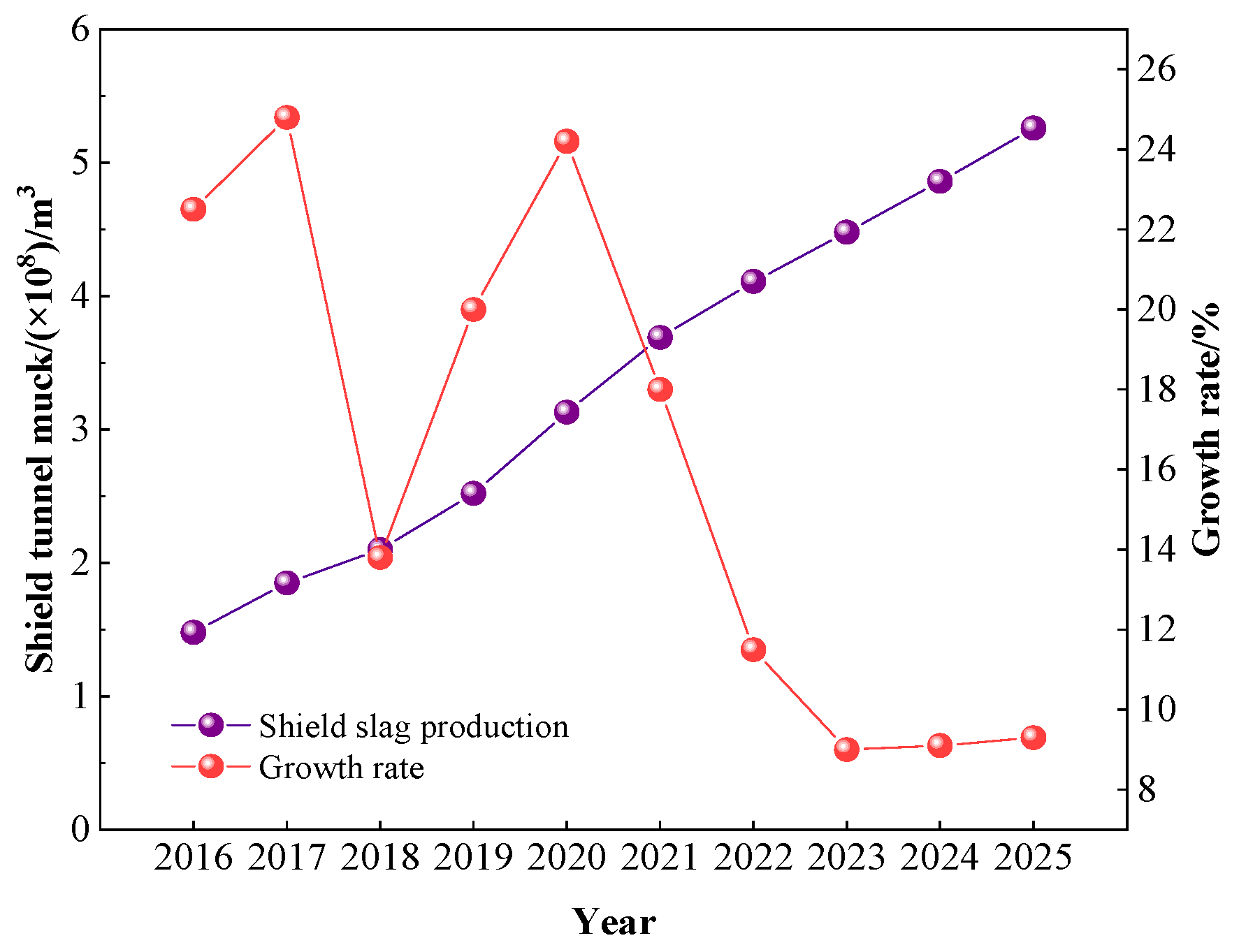
Shield tunneling technology, characterized by its high safety, efficiency, and level of mechanization, has been widely adopted in modern tunnel construction [1]. When shield tunneling projects are conducted on large scales, however, there exist large volumes of shield tunnel muck (hereafter referred to as shield muck) generated (Figure 1) [2,3]. In actual tunnel boring machine (TBM) construction, geological and hydrological conditions significantly impact excavation progress and construction safety. In favorable geological formations, excavation speeds can reach 8–12 m/d (conventional earth pressure balance (EPB) TBMs), and over 20 m/d in hard rock TBMs. However, in ordinary water-rich formations, the excavation speed is only 3–6 m/d (conventional EPB TBMs), and even less than 2 m/d in water-rich sand and gravel formations. High water content significantly reduces soil strength and self-stabilizing capacity, and problems such as jetting, collapse, and cutterhead mud cake formation are prone to occur during excavation, significantly increasing safety risks. To ease the process of shield excavation, several conditioning agents can be added into the process, including water, foaming agents, dispersants, flocculants, among others. This has led to the habitual association of shield muck that is characterized by a huge quantity, abundant in water, fluid and has low engineering features. Moreover, the presence of chemical additives may pose potential risks to the surrounding ecological environment, rendering the direct transportation and reuse of shield muck extremely challenging [4,5]. Thus, the creation of effective dewatering and volume-reduction technologies is of paramount importance towards the further disposal and resource-oriented use of shield muck.
Currently, dewatering methods in the field of dewatering of shield muck identify mainly the natural method of air-drying, the many-purpose method of mechanical dewatering, and dewatering methods based on chemicals [5,6,7,8,9,10]. As an illustration, Miura et al. [11] used the superabsorbent resin to treat slurry shield muck, making water contents and fluidity decrease considerably. In their experiment, Yamana et al. [12] used phosphogypsum to control the pH of shield muck so that it meets the pH requirements in the reclamation fill taking place. Zhang et al. [13] explored the application of a composite flocculant system, which is cationic polyacrylamide (CP-02), grafted starch (GS-501), and a flocculation–sedimentation accelerator, and found that the highest dewatering rate with the mass ratio is 1:0.5:0.75. Zhou et al. [14] identified how liquid dimethyl ether (DME) phase change behavior, treatment time, and dosage influenced dewatering efficiency, confirming that a ratio of DME to muck mass of two is able to decrease the content of water in shield muck or filter cakes significantly. Shi [15] discovered that a dosage of polyaluminum chloride and polyferric sulfate of 0.4% and 0.5% respectively gave the maximum dewatering performance of waste shield slurry. Zhang et al. [16] have used superabsorbent polymer and polyacrylamide to protect muck and examined their impact on the rheological characteristics and concluded that superabsorbent polymer can absorb free water and inhibit consistency and flowability of the muck, whereas polyacrylamide can lower the zeta potential, consistency and flowability of the muck significantly. Zhang et al. [17] examined the dewatering process of shield muck using a composite material of liquid dimethyl ether and trimethyl phosphate at different doses and reaction times. The additions of 12.5% attapulgite, 10% montmorillonite, and 12.5% water-washed kaolin as dewatering agents were used by Huang et al. [18], who considered that including such agents decreased the water content of shield muck to 48.3, 48.2, and 49.6, respectively. It was concluded that the hydration products generated during the process reconstructed the microscopic, layered structure of the waste slurry, squeezing interlaminar gaps and expelling interlaminar water, thereby effectively reducing the water content of the muck. Sun et al. [19] added the geopolymeric flocculation–solidification agent to shield the slurry and discovered that besides facilitating dewatering the agent boosted the intensity of the solidified clay sediments within a short period of time. Wang et al. [20] revealed that waste sand had the same capability of water reduction and porosity as lime in addition to decreasing pH, and suggested the replacement of lime by waste sand produced in slurry shield tunneling as a dewatering treatment filtration media. Fang et al. [21] presented a magnetic flocculation dewatering process, described the dewatering process, and determined the best process conditions of applying magnetic flocculation in shielding muck.
Generally, there has been a massive development both in the dewatering of shield muck at the domestic and international level. Natural air-drying mostly utilizes evaporation as the main theme to remove water content and is marked by a simplicity of operation and cost cheapness but suffers from the long treatment time and occupations of large areas of land. Mechanical dewatering tends to need the support of chemical agents and has a high level of efficiency and low processing times; however, equipment cost and operations are relatively expensive. The benefits of the chemical dewatering include high efficiency, concomitant changes in effects, flexibility of the reagent systems and synergistic compatibility with the mechanical dewatering. However, this is limited by the high reagent costs, possible secondary environmental contamination by the residual chemicals (e.g., chlorides and polymer monomers), and strong reliance on the reagent type, dosage, mixing ratio, and native muck properties hence limiting their applicability in the general sense. As a result, the production of efficient, low-cost, eco-friendly dewatering agents has proven to be an issue of research interest.
High-water-content shield muck collected at Qingdao Metro Line 8 was selected as the research object in this study. The composite dewatering agents were lime, cement, phosphogypsum, nano-SiO2(NS) and ground granulated blast furnace slag (GGBFS). Water content was accepted as the main indicator of dewatering performance, and pH value and total organic carbon (TOC) content were proposed as supplementary indicators bearing in mind that pH is used to indicate the possible ecological effects of conditioning agents and TOC is used to reveal the encapsulation level of organic contaminants like foaming agents in the soil matrix. The best composition of the composite dewatering agent was established through the water content testing, pH measurement, and analysis of TOC. The study deeply analyzed the synergistic effects of the composite dewatering agent under optimal mixing ratios, its influence on pH values, and its immobilization effects on foaming agents. Also, microstructural properties of shield muck prior to and following dewatering were analyzed using scanning electron microscopy (SEM) and energy-dispersive X-ray spectroscopy (EDS), therefore explaining the mechanism of dewatering. It is hoped that the results of this research will offer technical justification for the minimization, harmless treatment, and resource-focused exploitation of high-water-density shield muck.

2. Materials and Methods

2.1. Materials

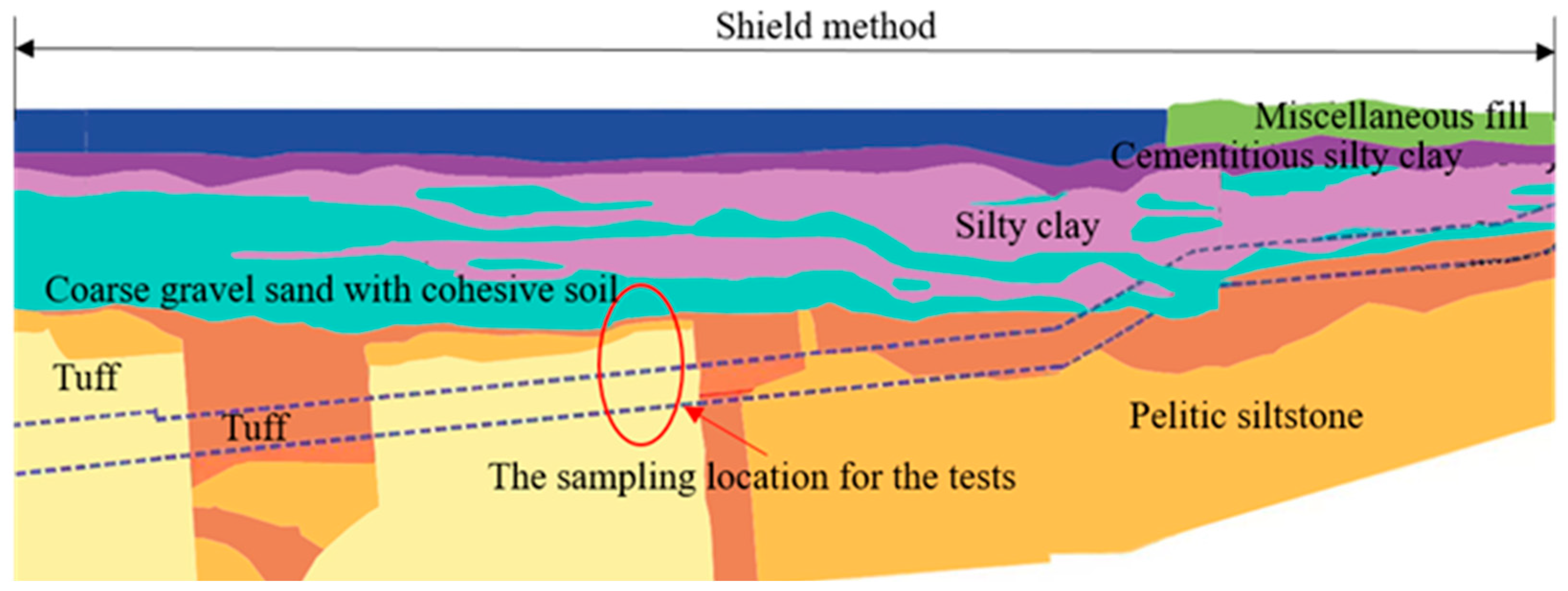
The shield muck used in this study was collected from a shield section of Qingdao Metro Line 8, see Figure 2. According to the Test Methods of Soils for Highway Engineering (JTG 3430–2020) [22], the basic physical properties of the shield muck were determined and are summarized in Table 1. The tested material was classified as clayey sand.
The dewatering materials included lime, cement, GGBFS, NS, and phosphogypsum. The lime, supplied by a Henan materials company, was classified as calcic quicklime powder (CL85-QP) with a CaO + MgO content not less than 85%. The GGBFS used was S95-grade slag powder produced by Shijiazhuang Materials Company, Shijiazhuang, Hebei, China.The cement was a 42.5 MPa ordinary Portland cement and was produced by Shandong Materials Company. The phosphogypsum, obtained from Gongyi Materials Company, Gongyi, Henan, Chinain Henan Province, was a solid byproduct of the wet process phosphoric acid industry, appearing gray–black in color with particle sizes ranging from 0.05 to 0.5 mm and a pH value of 3.5–4.0. The NS was supplied by Shanghai Yuanjiang Chemical Plant, Shanghai, China and exhibited hydrophilic properties; it was odorless, non-toxic, white, and fluffy in appearance, with an average particle size of 20 nm, a SiO2 purity of 99.8%, a specific surface area of 200 m2/g, and a bulk density of 50 kg/m3. The main chemical compositions and relevant properties of the dewatering materials are listed in Table 2.

2.2. Preparation of Shield Tunnel Muck and Test Procedures

The in situ shield muck exhibited an initial water content of approximately 50%. To ensure comparability among different test groups, the water content of all test samples was controlled at 50%. During dewatering treatment, lime, cement, phosphogypsum, NS, and GGBFS were sequentially added to the muck according to the prescribed mass percentages and thoroughly mixed to achieve homogeneity.
Water content tests were conducted in accordance with Test Methods of Soils for Highway Engineering (JTG 3430–2020) using the oven-drying method. During the testing, parallel tests were conducted in duplicate for each group, and the arithmetic mean was taken as the final result with a precision of 0.1%. The allowable discrepancy between parallel results was strictly controlled: it must not exceed 2.0% when the water content is above 40% and must remain within 1.0% when the water content is below 40%; otherwise, the experiment was repeated.
pH measurements were performed using a Leici pH meter manufactured by Shanghai INESA Scientific Instrument Co., Ltd, Shanghai City, China. Each group was tested in parallel twice, and the arithmetic mean was taken, accurate to 0.01, with a maximum allowable difference of ±0.1.
SEM observations were performed using a ZEISS Merlin Compact thermal field emission scanning electron microscope, Oberkochen (Germany), which is equipped with an EDS detector enabling point, line, and area elemental analyses. Representative fracture surfaces of shield muck before dewatering and after 24 h of dewatering were selected and processed into standard SEM specimens with an approximate cross-sectional area of 1 cm2. Prior to observation, the samples were dehydrated to remove internal moisture and subsequently coated with a thin conductive metal layer. As point-based EDS analysis provides the highest spatial resolution and relatively high quantitative accuracy for low-concentration elements in soil matrices, point elemental analysis was adopted to identify the elemental composition and content of micro-regions in the shield muck before and after dewatering.
TOC content was measured using a SHIMADZU TOC-L analyzer equipped with a solid sample module (SSM-5000A) (Shimadzu Corporation, Kyoto City, Japan), following the Determination of Soil Organic Carbon by Combustion Oxidation Non-dispersive Infrared Method (HJ 695-2014) [24]. For TOC testing, each group was tested in three parallel tests, and the average value was taken. When the organic carbon content was greater than 1%, the maximum allowable relative deviation of the parallel samples was 0.1, and otherwise the relative deviation was ±0.1%.
Based on the existing literature [25] and relevant subgrade engineering specifications [26], the dewatering material dosage schemes adopted in this study are presented in Table 3.

3. Results and Discussion

3.1. Effect of Dehydrating Agent Ratio on the Moisture Content

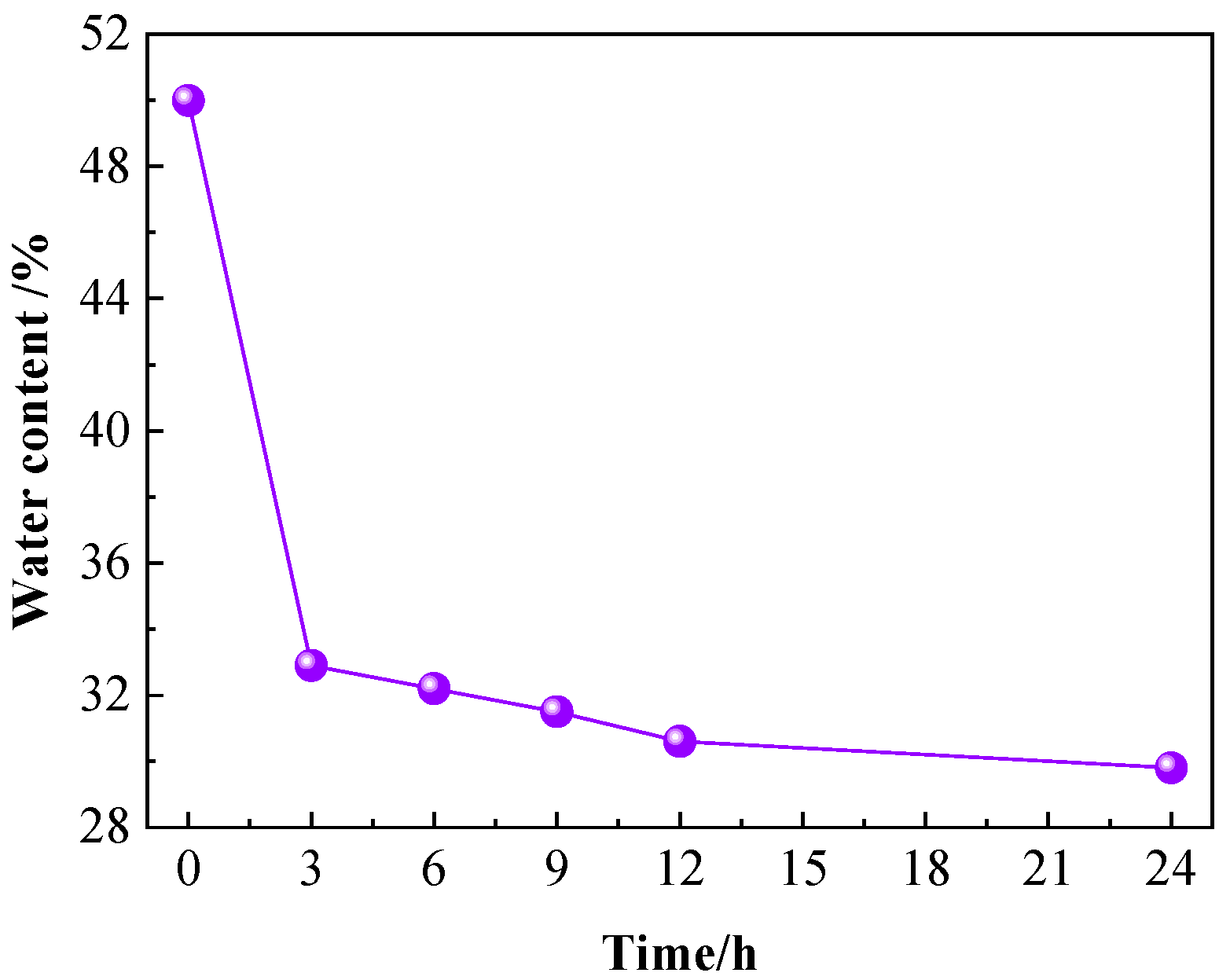
Table 4 presents the water content of shield muck under different dehydration agent ratios. After the addition of dehydration agents with various proportions, the water content of the muck decreased from the initial 50% to 32.9–40.1% after 3 h. By comparing Groups T1–T7 with Groups T8-T14, it can be observed that the incorporation of GGBFS and NS significantly promotes rapid dehydration of the shield muck. Among all mixtures, Group T11 exhibited the most pronounced dehydration performance: the water content decreased sharply from 50% to 32.9% after 3 h, and further reduced to 29.8% after 24 h. It should be noted that the optimal ratio in this group is based on an initial moisture content of 50%. For working conditions with higher or lower moisture contents, the optimal dosage may deviate. In actual engineering applications, it should be finely adjusted according to the on-site moisture content.
Figure 3 illustrates the variation in water content of T11-treated shield muck with time. It is evident that dehydration is most effective during the first 3 h, during which the water content decreases substantially by 17.1%. After 3 h, the dehydration rate decreases markedly, and the water content gradually stabilizes.
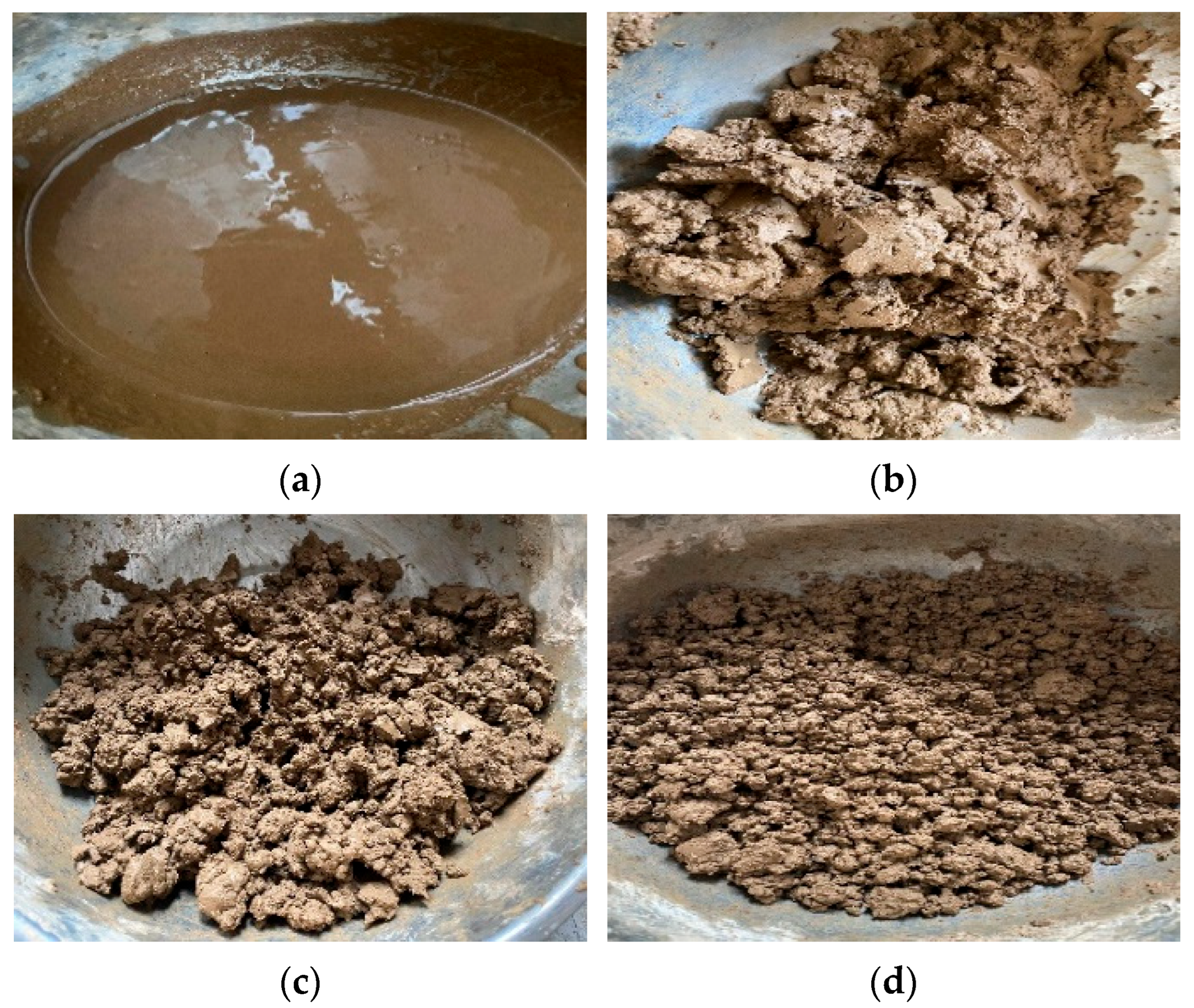
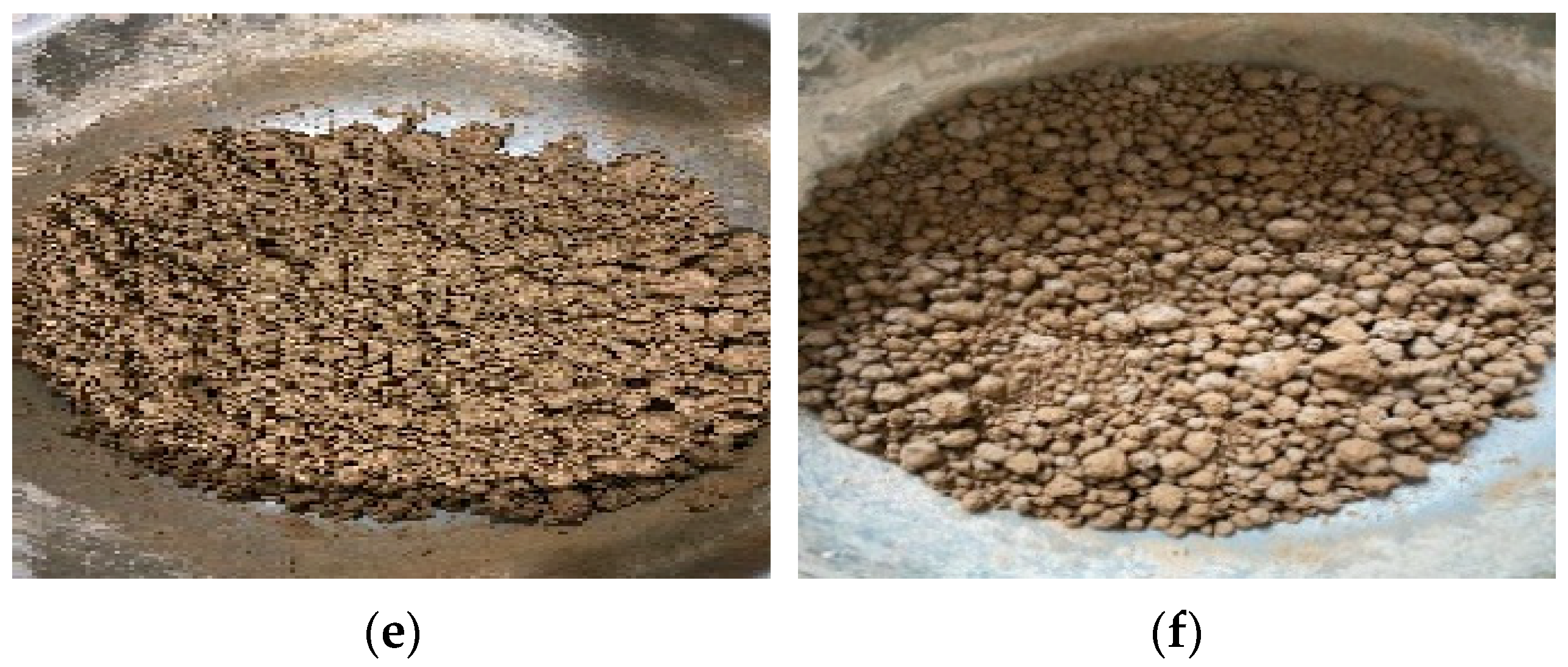
Figure 4 demonstrates the change in the physical condition of T11-treated shield muck over time. Before dehydration, the muck has a very high fluidity level of a slurry-type character. The muck, once dehydrated, then quickly develops into dissimilar block-like aggregates, with a low level of fluidity. As the muck continues to be dehydrated at 6 h, 9 h, 12 h, and 24 h, it is gradually transformed into hard granular muck and there is a strong decrease in total volume. These observations reveal that the T11 dehydration agent has shown excellent results in the reduction in both the shield muck fluidity and volume, thus making it easy to transport and significantly helping to overcome the land occupation and volume diminishing problems that occur in the normal air-drying of shielded muck.

3.2. pH

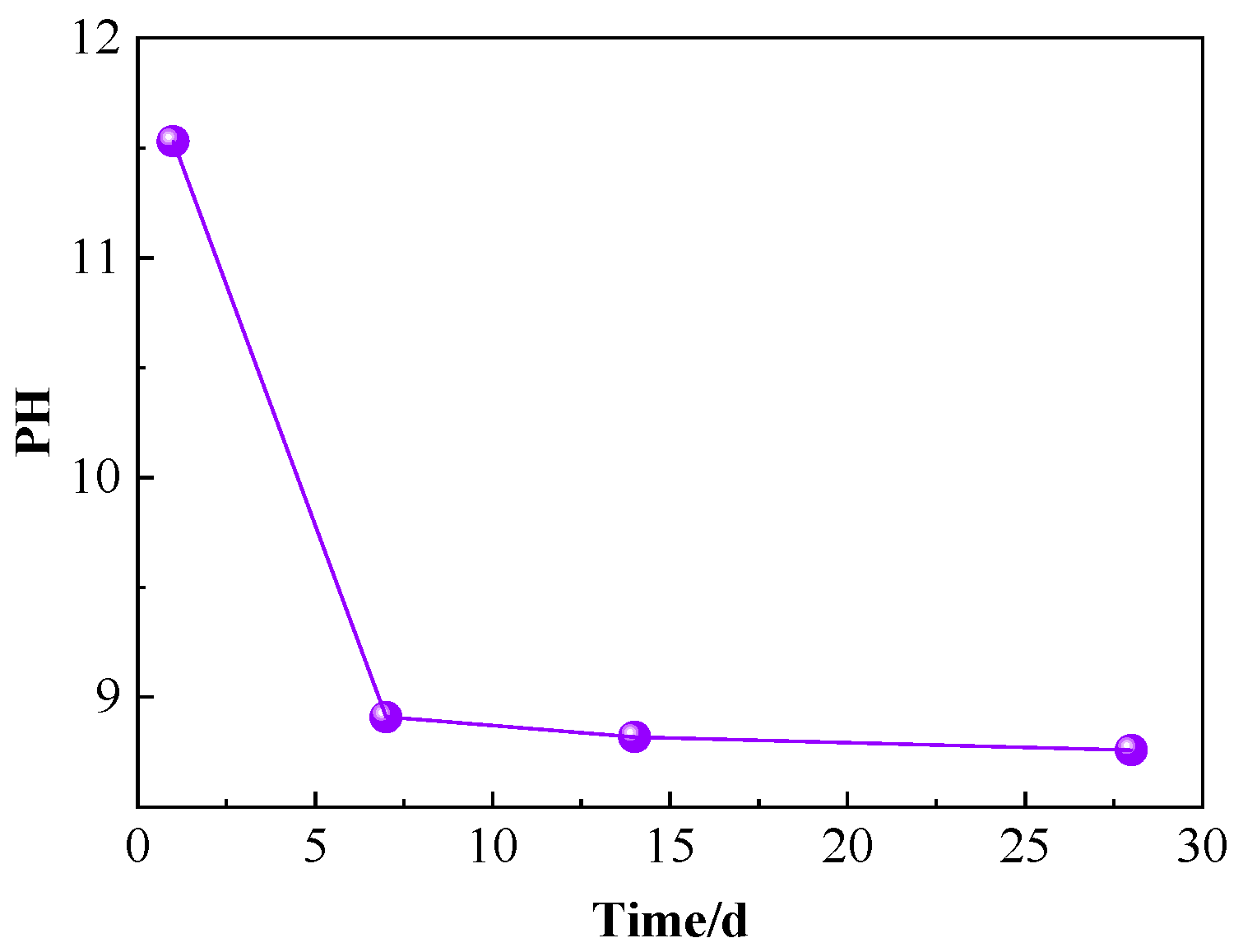
Figure 5 shows how the pH of T11-treated shield muck changes with time. The level of dehydration treatment results in an increase in the value of pH after 1 day to 11.53, implying a highly alkaline atmosphere. The latter has been largely ascribed to the fact that the hydration reactions involve the lime and cement, which produce a huge volume of OH ions, which in turn cause a sudden rise in pH. In the subsequent 1–7 days, the pH value significantly decreased to 8.91 by the 7th day and stabilized at 8.76 after 28 days. The primary reason for this significant pH reduction is that the main component of phosphogypsum in the dewatering agent is CaSO4·2H2O, which is acidic with a pH between 1 and 4.5. Upon addition, phosphogypsum dissolves rapidly and releases acidic components, undergoing a vigorous acid–base neutralization reaction with the OH produced by the hydration of cement and lime in the muck. Secondly, the abundant Ca2+ in phosphogypsum undergoes an ion exchange reaction with Na+ in the muck; simultaneously, CaSO4 reacts with NaHCO3 to generate CaCO3 and Na2SO4, jointly promoting the rapid reduction in pH. It should be noted that under laboratory conditions, the contact between muck samples and air inevitably leads to natural carbonation, which contributes to the pH drop. However, the neutralization by phosphogypsum remains the dominant factor for the pH reduction: on one hand, the pH dropped from 11.53 to 8.91 within 7 days; such a large magnitude and rapid rate of change are difficult to achieve solely through the slow diffusion of atmospheric CO2 in such a short time. On the other hand, in actual large-scale disposal sites, the air permeability inside the muck body is much lower than in a laboratory environment, significantly inhibiting natural carbonation. Therefore, the acid–base neutralization and ion exchange of phosphogypsum are the primary reasons for the pH reduction in the muck.

3.3. TOC

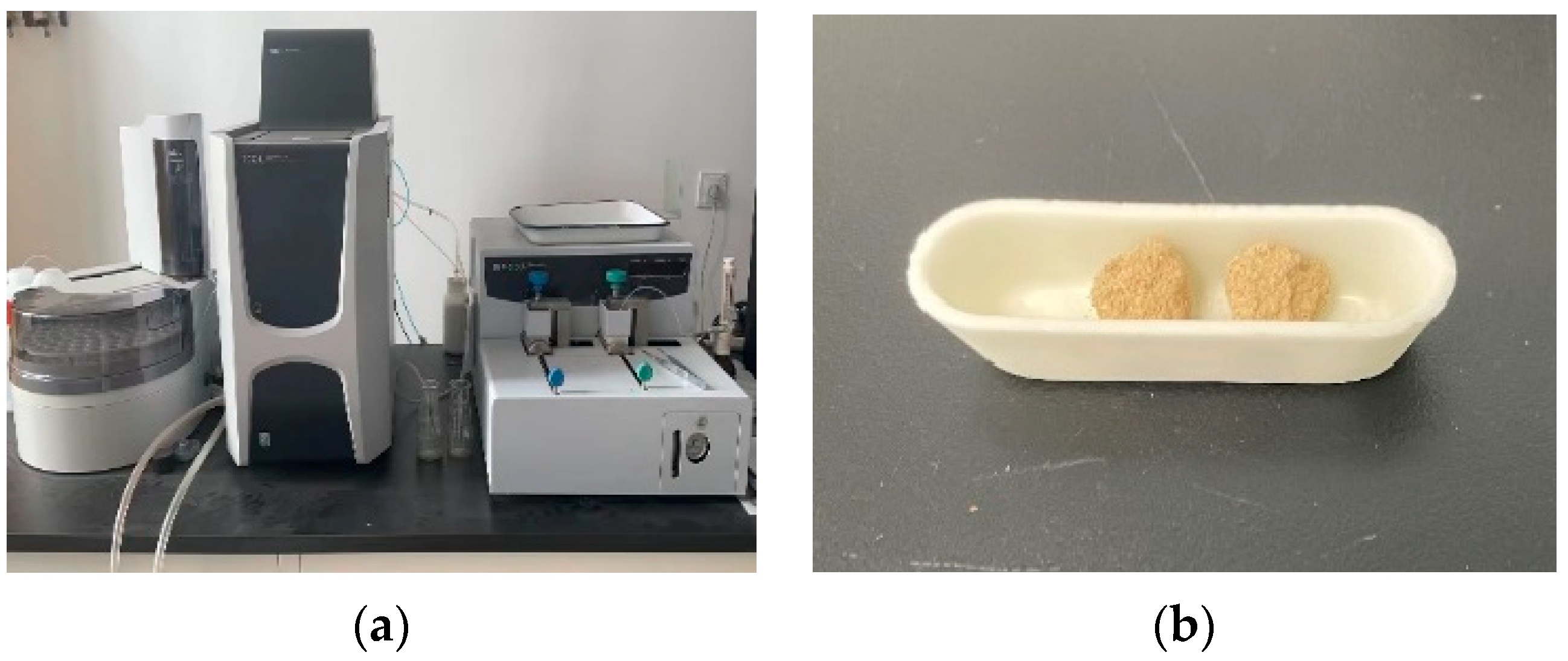
Chemical additives that are widely used in shield tunneling construction are foaming agents as they are very dispersible in nature which greatly improves the efficiency of muck discharge. Therefore, foaming agents are actively used in city transit rail works. Nevertheless, the toxicity of traditional foaming agents and their breakdown products is rather high, which does not satisfy the conditions of protecting the environment [27]. In order to further measure the content of the residual foaming agent, in dehydrated shield muck, TOC was performed, as the components of foaming agents are organic compounds in the first place. The dehydrated samples of the mucks were put under an oxygen-rich carrier gas and heated to a temperature above 680 °C in order to make organic carbon fully oxidized to CO2. A non-dispersive infrared detector was then used to detect the generated CO2. Under an acceptable concentration satisfaction, the intensity of infrared absorption directly relates to the CO2 content that can be utilized to determine the amount of CO2 generated, as a result of which the foaming agent content can be indirectly determined and monitored. Before TOC testing, the sample needs to be dried to constant weight at 105 °C. Since anionic surfactants have a high boiling point (boiling point > 200 °C), the volatilization loss at this temperature is negligible. The muck samples were gathered at the screw conveyor outlet to reduce the effect of non-foaming organic matter; there was no sampling of the equipment lubrication points.
The preparation and analysis of samples are on the TOC analysis in Figure 6. Before testing, the samples that were in various durations of dehydration were acidized and oven dried to generate a standardized TOC specimen (Figure 6b).
Table 5 displays the summary of the TOC content of shield muck of T11-treated at various dehydration times. A significant decrease in TOC content will be determined in the first 3 days as the content drops at a rate of 5.75 g/kg to 1.56 g/kg (a decrease of 72.9%). In 15 days, the content of TOC decreases below the detection restriction of 1 g/kg. The significant reduction in the content of organic matter, such as foaming agents, in the shield muck is due to two factors: on the one hand, the gels and ettringite crystals generated by hydration possess high specific surface areas and adsorption capacities, enabling them to adsorb and encapsulate the organic molecules of the foaming agent within the hydration products; on the other hand, in a high-alkaline environment, the surfactant molecules in the foaming agent may undergo chemical modification or partial degradation, converting into low-molecular-weight organic compounds or inorganic substances. Therefore, the reduction in TOC is the result of the synergistic effect of both processes. This shows that the T11 formulation can be used to treat dehydration conditions effectively because it immobilizes and transforms toxic substances like foaming agents into chemically inert states and entraps them in the soil so their diffusion and easy movements into the immediate environment can be prevented. The effect of organic pollutants on the environment is therefore rendered minimal. It should be noted that TOC testing is only used as an auxiliary indicator to determine the removal of foaming agents. Changes in TOC content only reflect the total amount of foaming agent remaining in the slag and cannot directly prove that it is permanently fixed or the long-term stability of the fixed products.

3.4. Dehydration Mechanism of Shield Tunnel Muck

3.4.1. Role of Lime on Dewatering of Shield Tunnel Muck

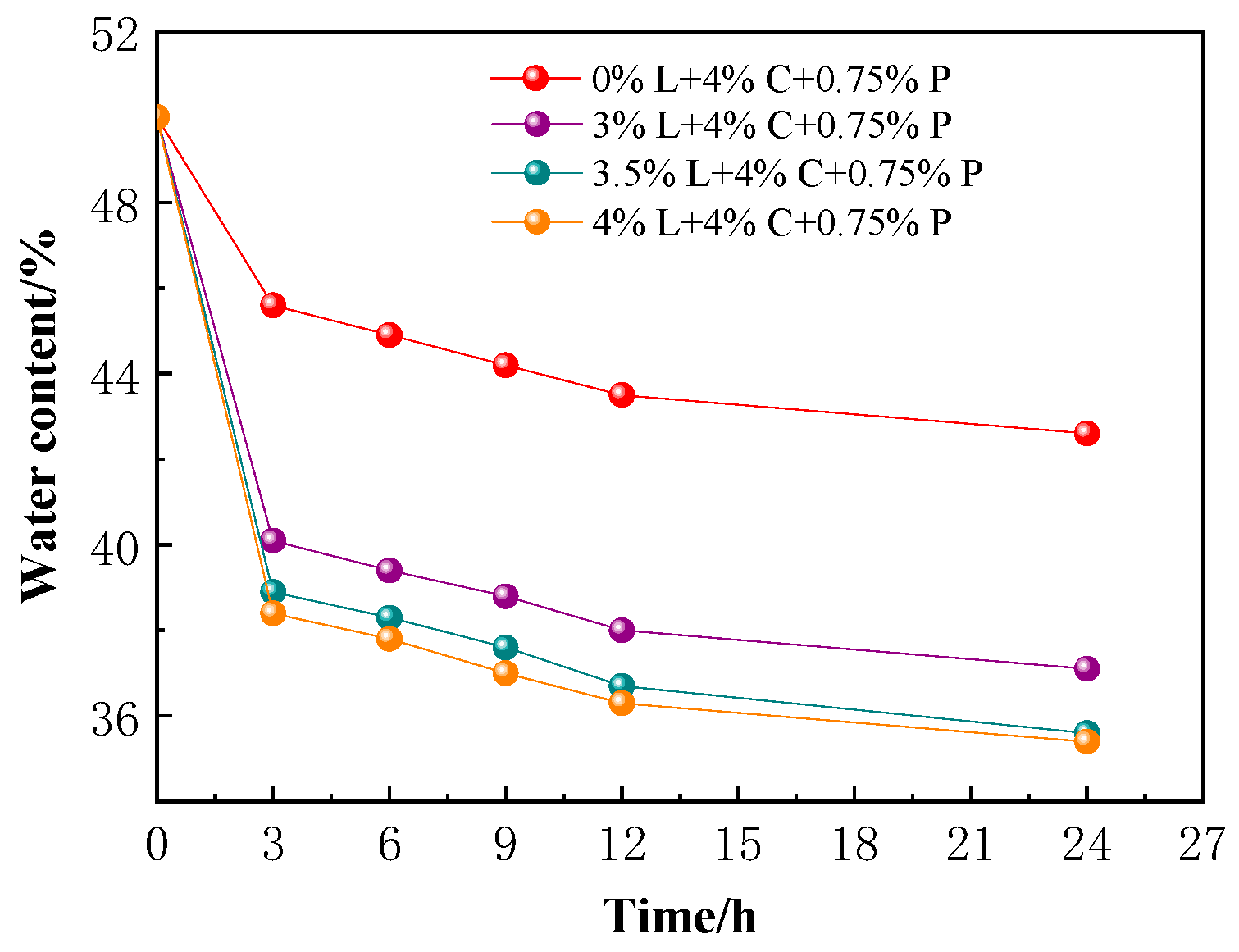
Figure 7 shows how shield muck water content changes in response to the dosage of lime. Holding cement and phosphogypsum contents constant, a rise in the concentration of the lime content with 0% to 4% leads to a 24 h decrease in the water content of the final product in the range of 42.6% to 35.4, or about 7.2. In addition, the water amounts with lime dosage of 3.5% and 4% are comparable. The effect of the dosage of lime on water content mainly occurs due to its effect on both the hydration and the crystallization reactions. After being incorporated into the muck, lime passes through a succession of chemical reactions, such as the hydration of quicklime (CaO), cementation and crystallization reactions of the hydrate of lime (Ca(OH)2). The gel products obtained are mainly calcium silicate hydrate (C-S-H), calcium aluminate hydrate (C-A-H) and calcium aluminosilicate hydrate (C-A-S-H). These exothermic reactions happen at the time of consuming part of the pore water and also release a significant amount of heat, thus encouraging the process of moisture evaporation and thus contributing to the process of shield muck dehydration significantly.

3.4.2. Role of Cement on Dewatering of Shield Tunnel Muck

After cement is added to shield muck, setting and hardening processes occur as the clinker minerals undergo hydration reactions, producing gel phases such as C-S-H and C-A-H.
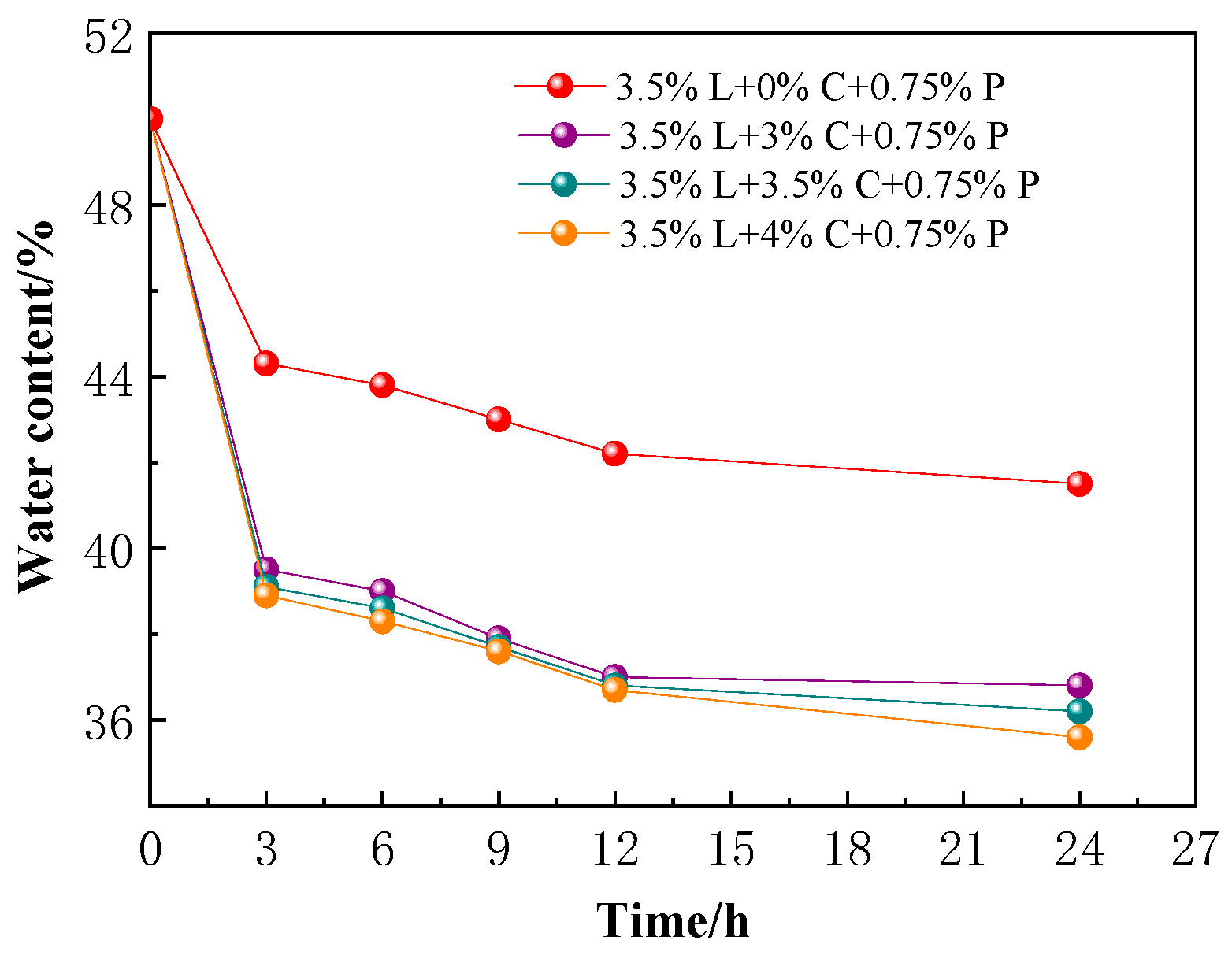
Figure 8 illustrates the effect of cement content on the water content of shield muck. With lime and phosphogypsum contents held constant, a cement dosage of 4% results in a 24 h water content of 35.6%, representing a reduction of 5.9% compared with the mixture without cement. When the cement content exceeds 3%, its incremental effect on dehydration efficiency becomes marginal. The reduction in water content with increasing cement dosage is mainly attributed to the increased formation of hydration products such as C-S-H and C-A-H. These gel phases fill soil pores, expel free water and weakly bound water between particles, and consume part of the pore water during hydration reactions.

3.4.3. Role of Phosphogypsum on Dewatering of Shield Tunnel Muck

The incorporation of phosphogypsum not only contributes to pH reduction in shield muck but also promotes the formation of ettringite (AFt) through reactions with calcium aluminate phases in cement.
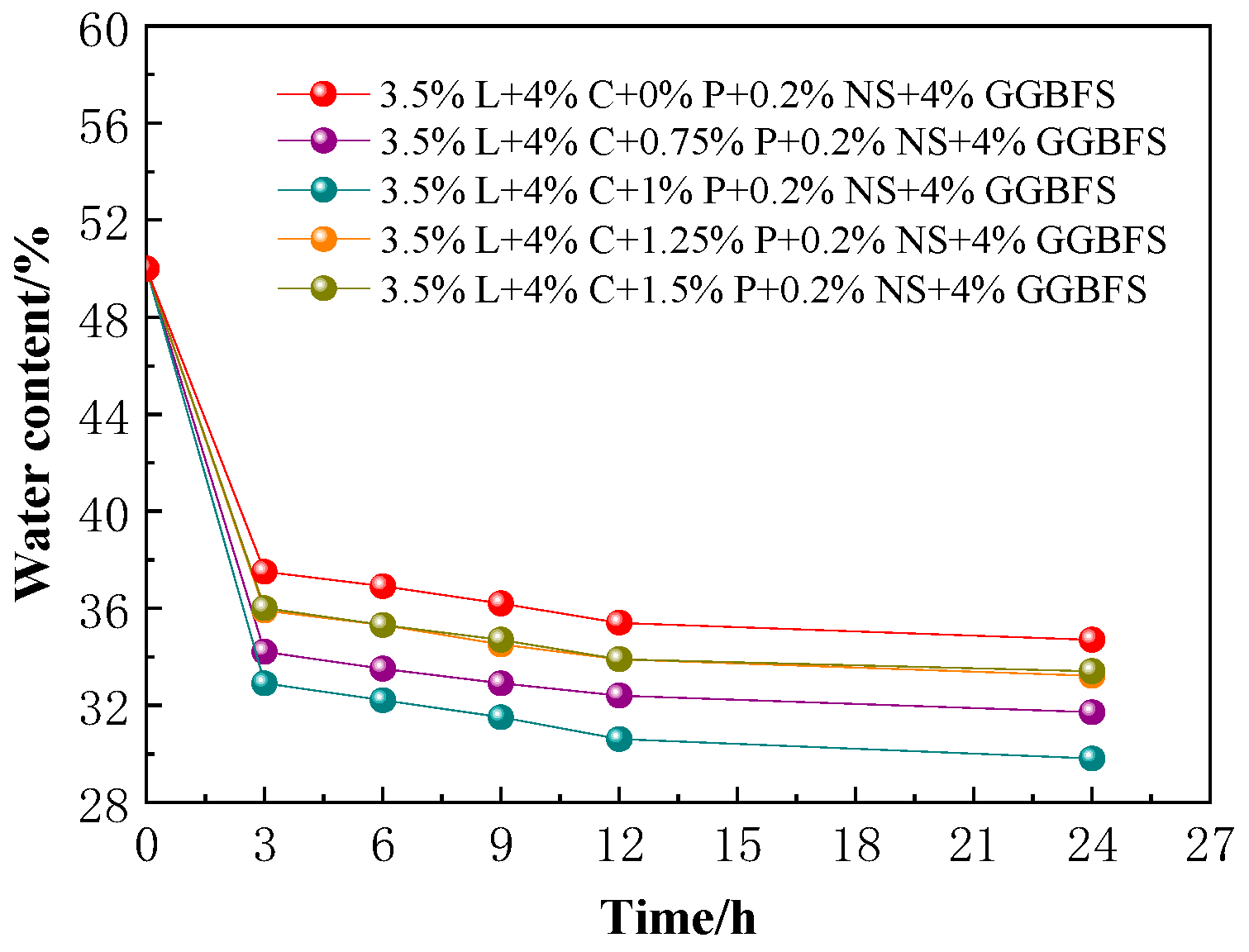
Figure 9 shows the variation in water content of shield muck with phosphogypsum dosage. With lime, cement, NS, and GGBFS contents held constant, the water content after 24 h of dehydration initially decreases and then increases as phosphogypsum dosage increases. The minimum water content of 29.8% is achieved at a phosphogypsum content of 1%. When the dosage increases to 1.5%, the water content rises to 33.4%.
This tendency can be attributed to the development of AFt crystals, which raises the volume of the solid phase in the soil matrix, decreases interparticle pores, and makes the solidified muck more compact. Such effects assist in expelling water and enhancing mechanical prowess. However, when the phosphogypsum dosage increases from 1.0% to 1.5%, phosphogypsum continues to react with calcium aluminate, generating excessive ettringite (AFt) crystals. Since the formation of ettringite is accompanied by volume expansion, this excessive expansion exerts physical pressure on the already formed C-S-H and C-A-H gels, leading to localized destruction of their spatial network structure [28]. This destruction is not a chemical degradation of the gels themselves, but rather a physical disintegration triggered by expansion stress, which causes the originally dense, solidified structure to loosen. Furthermore, when the ettringite expansion exceeds the limit that the soil matrix can withstand, micro-cracks are generated within the solidified body. These micro-cracks not only provide storage space for moisture but also disrupt the existing drainage channels, preventing the effective expulsion of water. Therefore, at a 1.5% phosphogypsum dosage, although some water is consumed by the chemical reaction, the formation of micro-cracks causes the total water content of the muck to be higher than that at the 1.0% dosage. It should be noted that the dehydrating agent in this study contains phosphogypsum, an industrial waste. Phosphogypsum may pose potential environmental risks. Therefore, before large-scale application of this dehydrating agent, it is recommended to conduct standardized leaching tests in conjunction with actual engineering projects to ensure that the resource utilization or disposal process of the waste meets relevant environmental protection requirements.

3.4.4. Role of GGBFS on Dewatering of Shield Tunnel Muck

Once GGBFS has been incorporated into shield muck, the CaO that exists in lime and cement is hydrated to produce Ca(OH)2. As a result, lime and cement serve as alkaline activators where they dissolve in the muck and give rise to a vastly alkaline environment. In these circumstances, the SiO and the Al-O bonds in the glassy state of GGBFS are broken, and due to this, the [SiO4] and [AlO4] tetrahedra dissolve. These species diffuse and adsorb on the muck particle surfaces and polycondense with CaO hydration to give C-S-H, C-A-H and C-A-S-H gels.
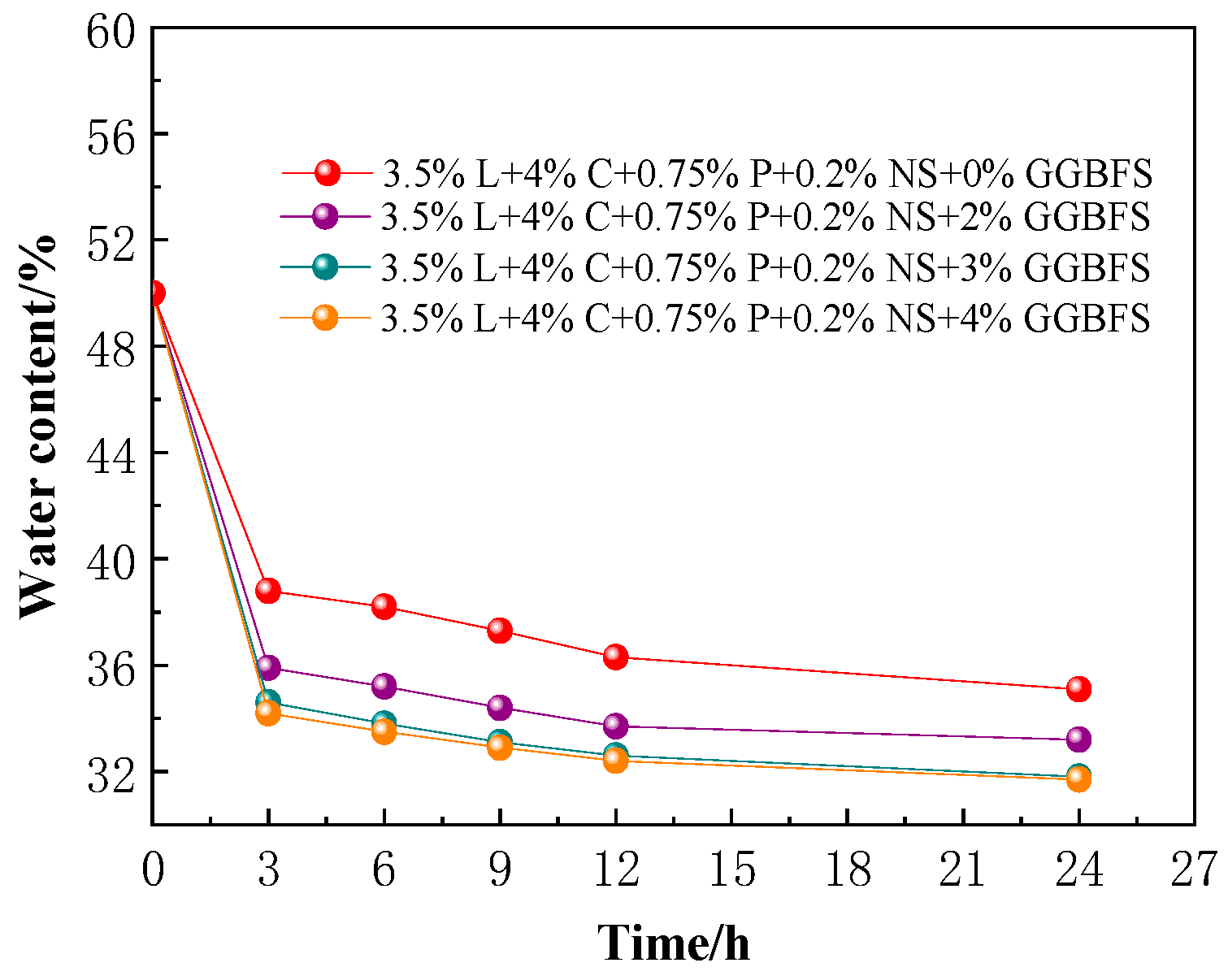
Figure 10 illustrates the variation in water content of the muck with increasing GGBFS content. It can be observed that, with the dosages of lime, cement, phosphogypsum, and NS kept constant, increasing the GGBFS content to 4% reduces the water content of the muck after 24 h of dewatering from 35.1% to 31.7%. The decrease in water content with increasing GGBFS content is mainly attributed to the increased generation of C-S-H, C-A-H, and C-A-S-H gels under strongly alkaline conditions. These gel products effectively bind the surrounding muck particles, thereby expelling free water and part of the weakly bound water from the interparticle pores and contributing to the filling and densification of the shield muck. In addition, GGBFS particles are fine and irregular in shape, which enhances their physical interlocking and contact with muck particles. Therefore, the GGBFS content plays a crucial role in the dewatering treatment of water-rich shield muck.

3.4.5. Role of NS on Dewatering of Shield Tunnel Muck

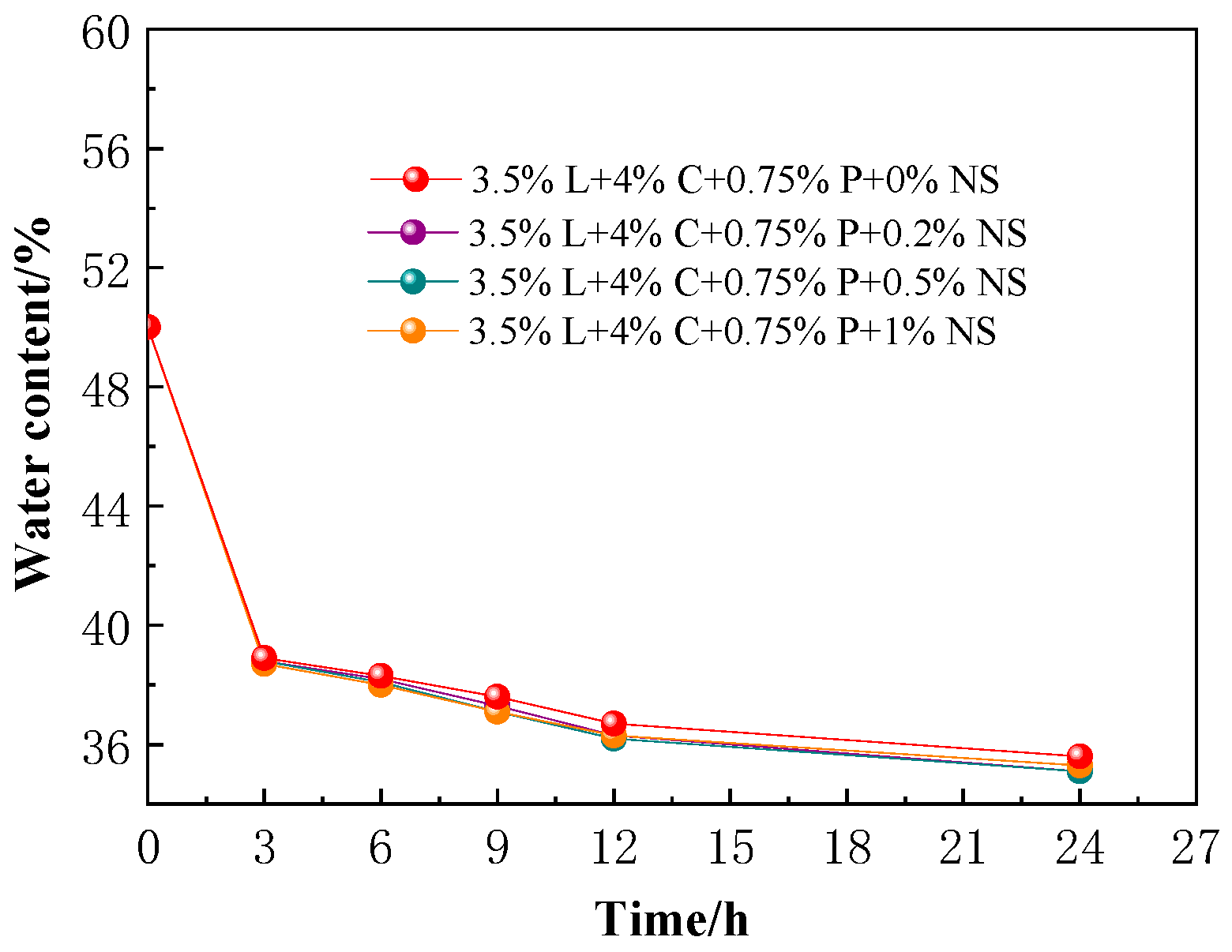
Figure 11 presents the variation in water content of shield muck with different dosages of NS. It can be observed that, with the dosages of lime, cement, and phosphogypsum kept constant, the effect of NS content on the water content of the muck is relatively limited. Considering the economic cost of the dewatering agent, a NS dosage of 0.2% was therefore selected.
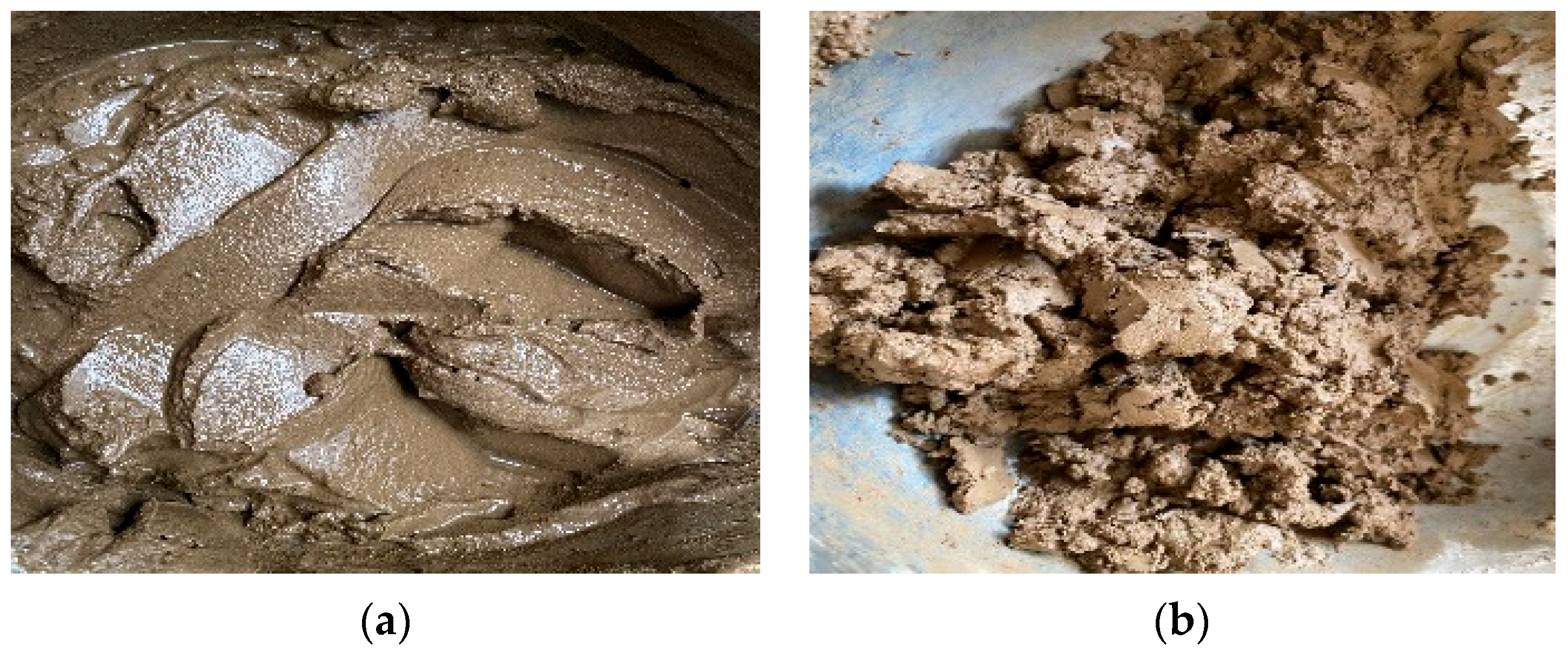
Figure 12 compares the dewatering states of the muck after 3 h with and without the addition of NS. Evidently, the muck incorporating NS exhibits lower fluidity, enabling it to better meet the requirements for transportation and storage within a short time period. The effectiveness of NS as a dewatering agent can be mainly attributed to the following mechanisms. As a nanomaterial with an extremely small particle size and high specific surface area, NS not only acts as a pozzolanic catalyst to accelerate the hydration reactions of lime and cement, but also provides abundant surface functional groups, such as hydroxyl groups, which can interact with water molecules. As a result, the water expelled from the interparticle pores of the muck can be rapidly adsorbed, effectively reducing the fluidity of the shield muck within a short period and thereby enhancing its dewatering efficiency.
To quantitatively evaluate the contribution and significance of different additives to the dewatering effect of tunnel boring machine slag, this study conducted a linear regression analysis on the dosage of each component and the final moisture content after 24 h. By extracting the regression equation, correlation coefficient (R2, F-test value, and p-value, the aim was to reveal the statistical influence of each factor on the dewatering performance. The results are shown in Table 6.
As presented in Table 6, lime (L), cement (C), and GGBS demonstrate high linear correlation and statistical significance (p < 0.05) regarding water content reduction. This aligns with the mechanism where hydration products such as C-S-H and C-A-H bond the soil particles together.
Notably, phosphogypsum (P) exhibits a distinct non-linear influence on dewatering. Although its overall linear R2 is low, the experimental data reveals that at an optimal dosage of 1.0%, the water content reaches the absolute minimum of 29.8%, indicating the most significant peak dewatering efficiency. This is primarily attributed to the formation of AFt crystals from the reaction between PG and calcium aluminate in cement, which effectively fills the interparticle pores. In contrast, NS shows the lowest significance level (P = 0.38 > 0.05), with a marginal direct impact on the final water content. However, consistent with its role as a pozzolanic catalyst, NS significantly accelerates the hydration of lime and cement, thereby rapidly reducing the fluidity of the muck despite its limited contribution to the absolute value of water reduction.

3.5. SEM Analysis

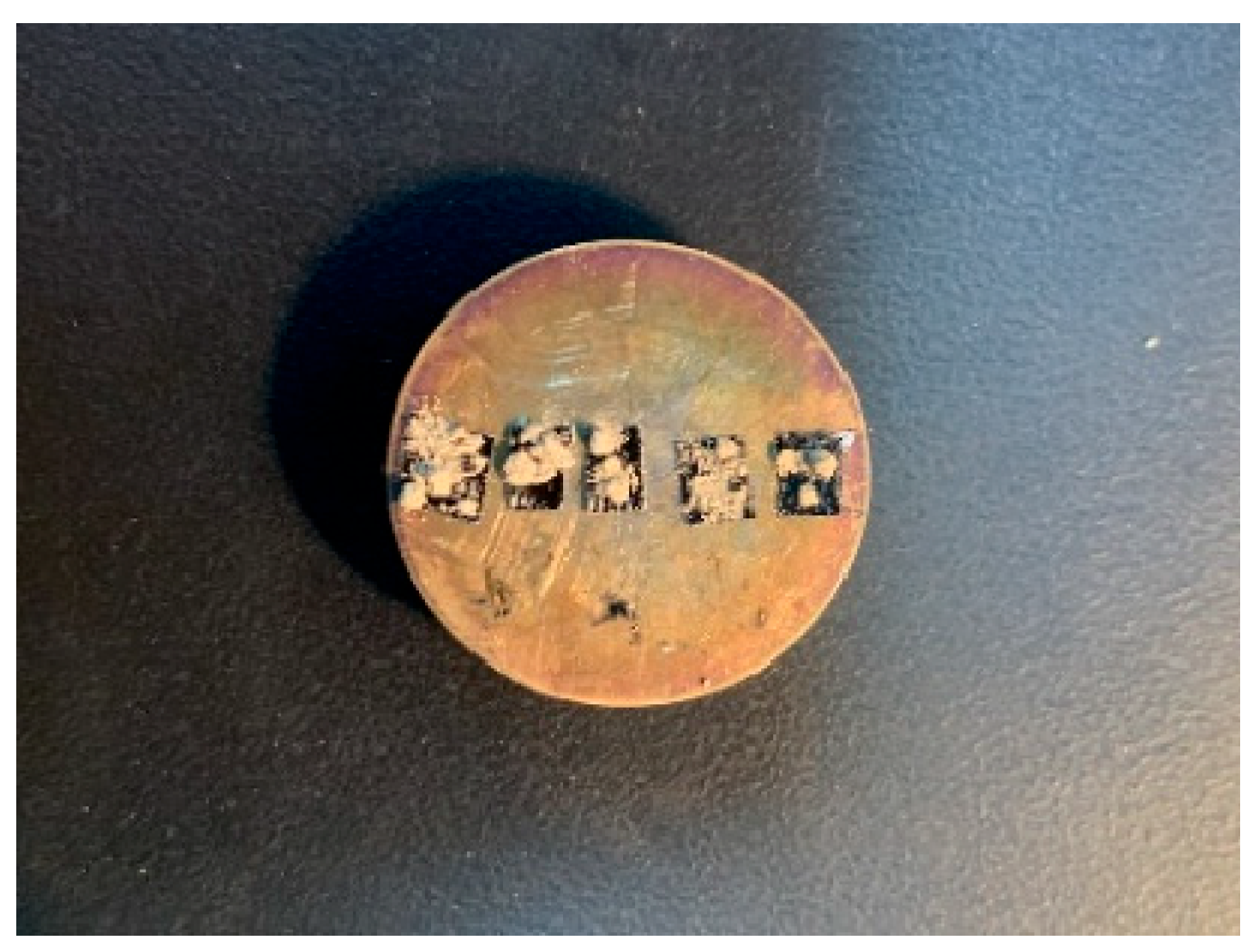
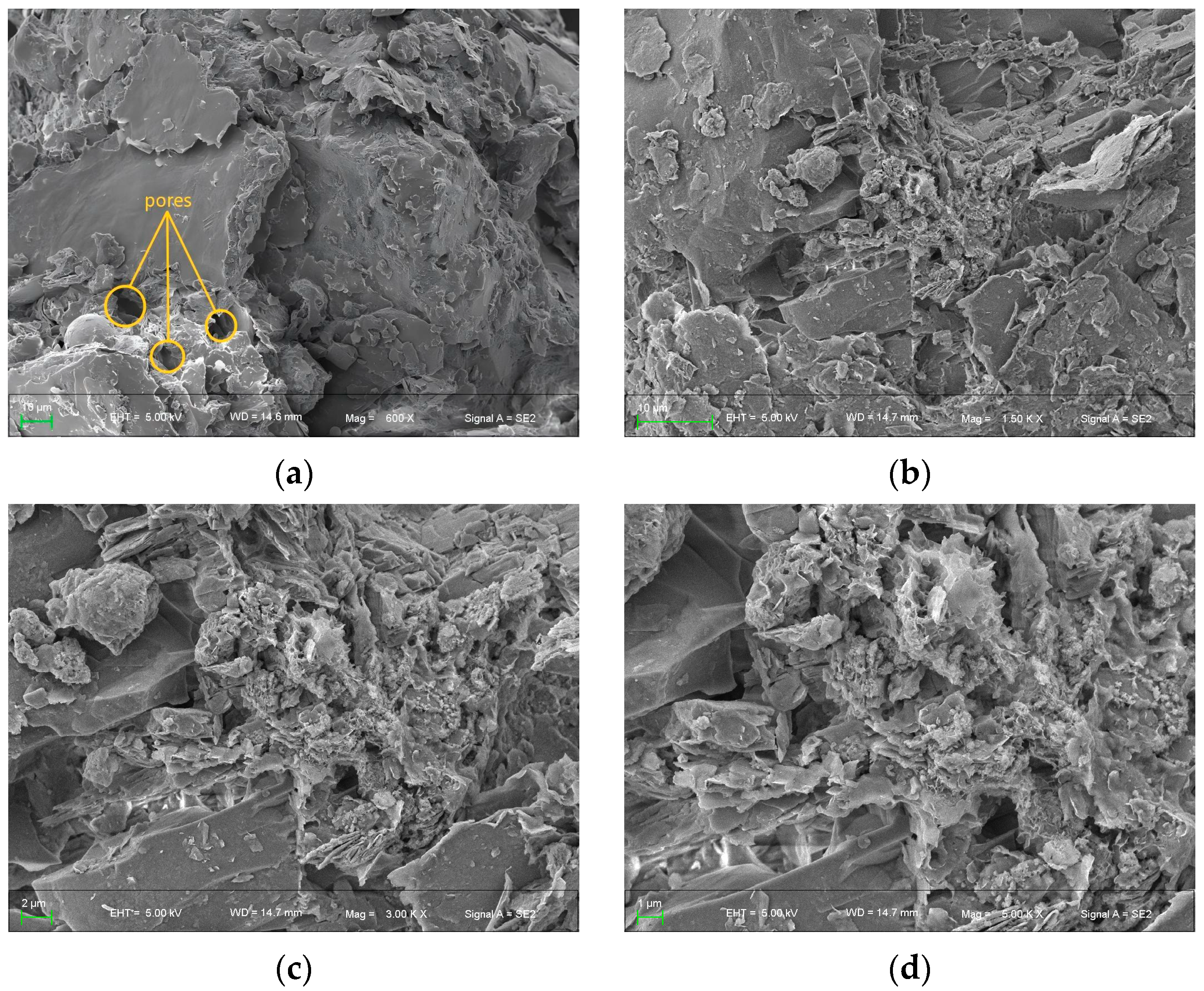
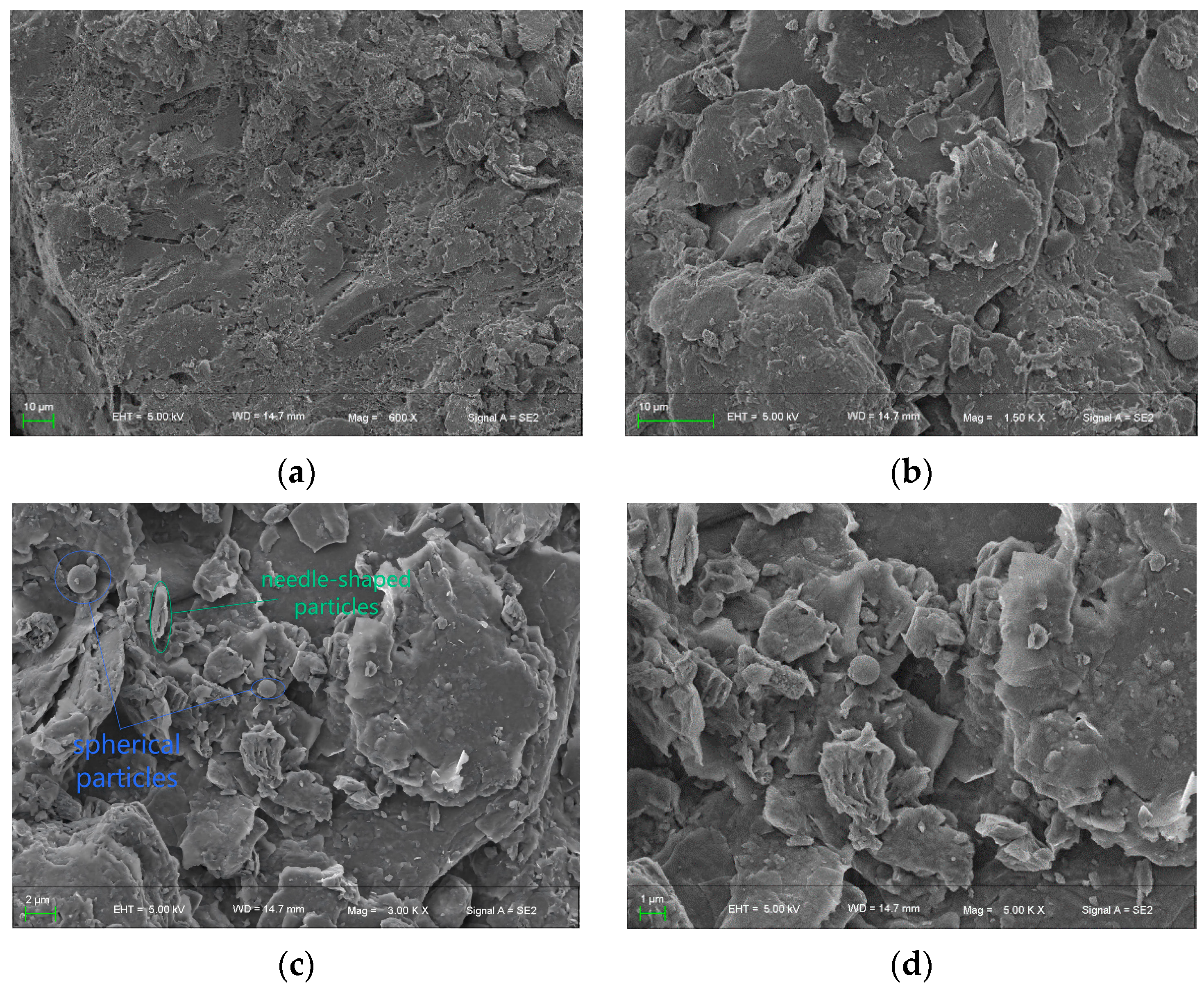
The standard SEM specimen is shown in Figure 13. SEM images of the shield muck before and after dewatering, obtained at magnifications of 600×, 1500×, 3000×, and 5000×, are presented in Figure 14 and Figure 15.
As can be clearly observed from Figure 14, the muck particles before dewatering exhibit irregular shapes with pronounced angular edges and relatively rough surfaces. The particle size is highly heterogeneous, and the particles are mainly arranged in point–point and point–surface contacts. As a result, the overall internal structure of the muck is relatively loose, with a large number of fine pores. The presence of these pores allows a considerable amount of free water and part of the weakly bound water to be retained within the soil matrix, thereby leading to a high water content of the shield muck.
Figure 15 shows the SEM images of the muck after dewatering. At a magnification of 600×, it can be clearly observed that the particles are closely bonded, and most of the surface pores are effectively filled, resulting in smaller pore sizes and a reduced number of pores. The majority of soil particles are in face–face contact, and the fracture surfaces appear relatively smooth without the presence of large gaps. At a magnification of 3000×, spherical particles and needle- or rod-like particles can be observed adhering to the surfaces of the soil particles. The spherical particles correspond to C-S-H, C-A-H, and C-A-S-H gels, which can bind the surrounding muck particles and effectively fill the interparticle voids. In contrast, the needle- or rod-like particles are AFt crystals. The slender, needle-shaped AFt crystals not only compress the loose interparticle voids through their expansive growth but also form a special three-dimensional network structure together with the gel products, thereby supporting and filling the soil pores. These observations indicate that the C-S-H, C-A-H, C-A-S-H gels and AFt crystals formed in the dewatered shield muck jointly expel free water and part of the weakly bound water from the interparticle spaces, leading to an effective reduction in water content and achieving a favorable dewatering performance; these findings are in good agreement with those in existing literature [29,30]. Moreover, the hardened, solidified body of the treated shield muck exhibits enhanced compressive strength and crack resistance at the macroscopic scale, thereby providing a foundation for the resource utilization of dewatered shield muck.

3.6. EDS Analysis

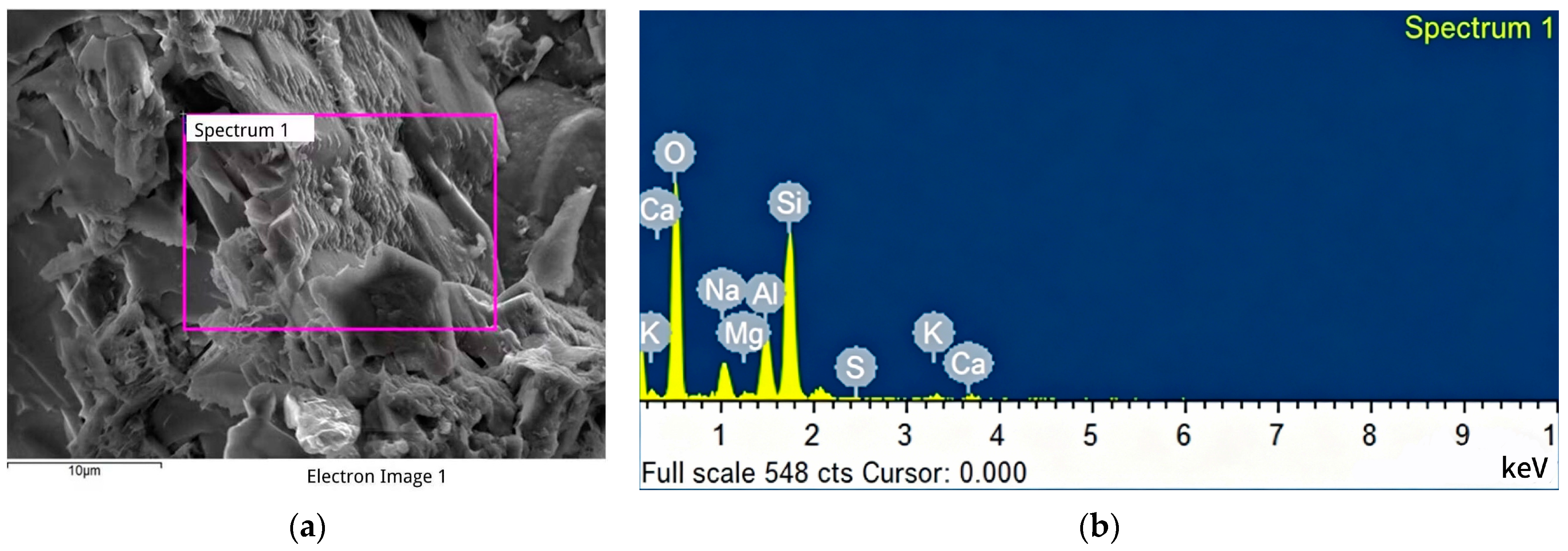
An EDS point analysis was conducted on the surface of the muck before dewatering. The specific detection area and the corresponding EDS spectrum are shown in Figure 16a and Figure 16b, respectively. The results indicate that the analyzed region mainly contains Si, Al, Na, and O, along with small amounts of Ca, K, Mg, and S. The elemental abundance in the muck follows the order O > Si > Al > Na > Ca > K > Mg > S. As the shield muck is primarily composed of quartz (SiO2) and plagioclase (Na[AlSi3O8]-Ca[Al2Si2O8]), relatively high contents of O, Si, Al, and Na are observed.
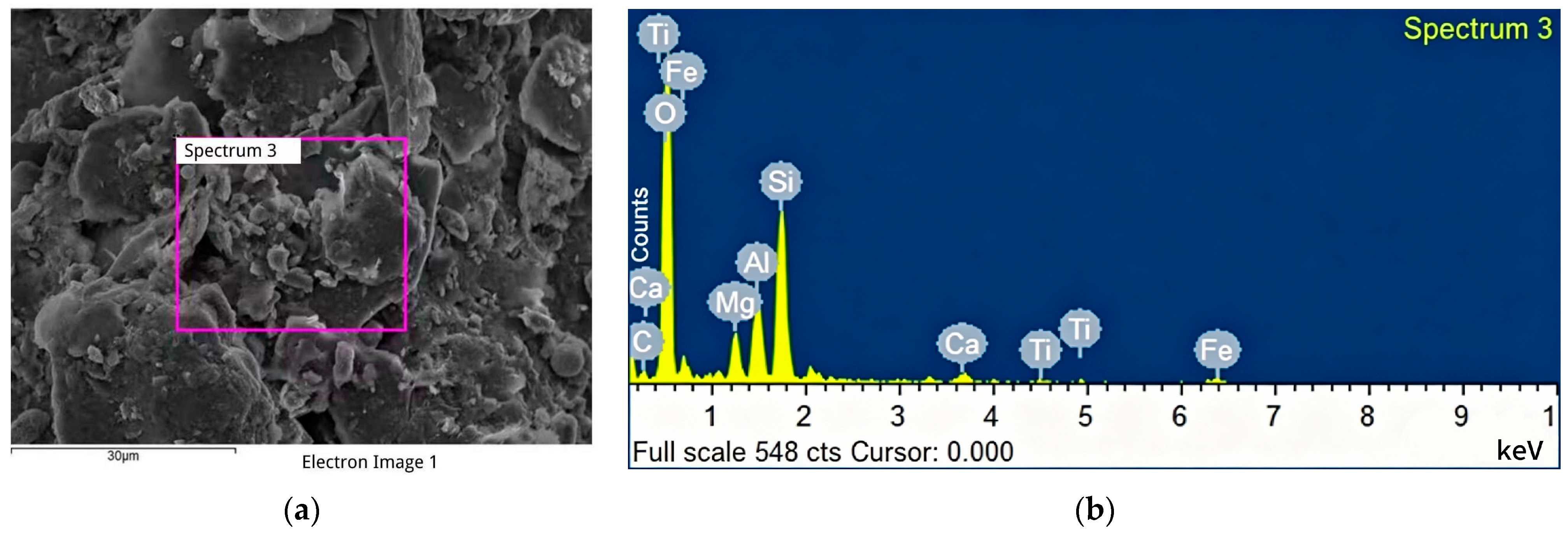
The detection area and EDS energy spectrum of the dehydrated slag are shown in Figure 17a,b. It should be noted that EDS point analysis only reflects local micro-area information, and the composition may differ at the millimeter scale on the sample surface. The results show that the element content in the detection area is ordered as O > C > Si > Al > Fe > Mg > Ca > Ti, where Ca/Si = 0.1. In contrast, the Ca/Si of typical C-S-H gel is generally between 0.8 and 1.5 [31], so the material in this micro-area is not a C-S-H gel in the traditional sense. At the same time, a lot of Al element was detected in this area, so it can be considered that some Si element on its molecular chain was replaced by some Al element in the system, producing C-A-H and C-S-A-H. It should be noted that C-S-A-H gel itself has good gelling properties and structural strength, and its three-dimensional network structure is relatively dense, which can provide long-term structural stability, while ettringite mainly fills the pores. Therefore, even though the content of traditional C-S-H gel in this micro-region is relatively low, the long-term strength of the overall cured body can still be guaranteed.
Comparing the EDS results of the shield muck before and after dewatering, more C and Fe contents are found alongside the traces of Ti. This is explained by the fact that the acidic CO2 in the air surrounding it is captured by the alkaline activators in the course of the alkali-activation process and the carbon content of the soil matrix is increased as a result [32]. The presence of Fe and Ti is mainly due to the chemical constituents Fe2O3 and TiO2 contained in cement and GGBFS, respectively.

4. Conclusions

According to the water content tests, pH levels, and the TOC, to attain the necessary dewatering effect, the best composition of the dewatering agent was identified, which is also able to lower the pH value. Moreover, SEM observations were conducted as well as analyses of EDS to study the dewatering mechanism of the water-rich shield muck tunnel. The key points of conclusion can be summarized in the following:
(1)
Under the condition of an initial moisture content of 50%, the ideal content of the dewatering agent is 3.5 percent lime, 4 percent cement, 1 percent phosphogypsum, 0.2 percent nano-SiO2, and 4 percent ground granulated blast furnace slag. The water content of the water loaded shield tunnel muck quickly changed from 50 percent to 32.9 percent after 3 h of dewatering. Meanwhile, the pH value of shield tunnel muck decreased from 11.53 to 8.91 after 7 d of dewatering, and the organic carbon content of the muck after 15 d of dewatering was below the detection limit of 1 g/kg. It should be noted that the change in TOC content only reflects the total amount of foaming agent remaining in the slag and cannot directly prove that it is permanently fixed. Its leaching risk under long-term service or different environmental conditions still needs further verification. In addition, this mix ratio is based on an initial moisture content of 50%. For shield tunnel slag with other initial moisture contents or different mineral compositions, further verification is required in actual engineering applications.
(2)
The dewatering effect of water-rich shield tunnel slag with the addition of a dewatering agent is significant, mainly attributed to the synergistic effect of multiple components. Among the hydration products generated by the hydration of lime, cement, and blast furnace slag, C-A-S-H (calcium aluminosilicate hydrate) and C-A-H (hydrated calcium aluminate) gels are dominant, which can effectively bind the slag particles. At the same time, AFt crystals generated by the reaction of phosphogypsum and calcium aluminate in cement fill the gaps between soil particles. Together, they expel free water and some weakly bound water between slag particles, thereby effectively reducing the moisture content of the shield tunnel slag. Although the content of traditional C-S-H gel in this micro-region is relatively low, C-A-S-H gel itself has good cementing properties and a dense three-dimensional network structure, which can ensure the long-term structural stability of the solidified body.
(3)
Although the nano-SiO2 content has a limited influence on the water content of the muck, nano-SiO2 acts as a pozzolanic catalyst that accelerates the hydration reactions of lime and cement. Moreover, nano-SiO2 can interact with water molecules and rapidly adsorb the water expelled from the interparticle pores, leading to a rapid reduction in the fluidity of the shield tunnel muck.
(4)
The composite dewatering agent fully exerts the synergistic effects of its components, constructing a multi-mechanism dewatering system of “hydration gel + AFt filling + nano-catalysis.” While significantly reducing the moisture content, the system effectively mitigates environmental risks during muck disposal by lowering pH values and stabilizing organic matter (fixing foaming agents). This provides robust support for the subsequent disposal and resource utilization of shield tunnel muck.

Author Contributions

Conceptualization, Y.X.; methodology, Q.Y.; software, Y.Z. and Y.T.; validation, F.W.; formal analysis, Y.T.; investigation, Y.Z.; resources, Y.Z.; writing—original draft preparation, Y.Z. and Y.X.; writing—review and editing, Y.Z.; supervision, Y.X.; project administration, Y.X. All authors have read and agreed to the published version of the manuscript.

Funding

This research received no external funding.

Institutional Review Board Statement

Not applicable.

Informed Consent Statement

Not applicable.

Data Availability Statement

The original contributions presented in this study are included in the article. Further inquiries can be directed to the corresponding author.

Acknowledgments

The authors would like to express their sincere gratitude to all authors whose work was cited in this study.

Conflicts of Interest

The authors declare no conflicts of interest.

Abbreviations

The following abbreviations are used in this manuscript:
TBMTunnel boring machine
EPBEarth pressure balance
CPCationic polyacrylamide
GSGrafted starch
DMELiquid dimethyl ether
NSNano-SiO2
GGBFSGround granulated blast furnace slag
TOCTotal organic carbon
SEMScanning electron microscopy
EDSEnergy-dispersive X-ray spectroscopy

References

  1. Jiao, N.; Wan, X.; Ding, J.; Zhang, X.; Xue, C. Mechanical properties and microstructure of lime-treated shield tunnel muck improved with carbide slag and soda residue. Constr. Build. Mater. 2024, 428, 136419. [Google Scholar] [CrossRef]
  2. Zhang, J.; Li, H.; Yang, H.; Wang, H.; Han, S. An overview on the “reuse potential” for managing shield tunnel spoils as resources. J. China Foreign Highw. 2022, 42, 1–11. [Google Scholar] [CrossRef]
  3. Jiang, D.; Luo, Z.; Kang, C.; Sun, Y.; Yang, H. Research progress on dewatering treatment and resource utilization of shield tunneling slurry. Environ. Chem. 2025, 44, 2617–2638. [Google Scholar]
  4. Oggeri, C.; Fenoglio, T.M.; Vinai, R. Tunnelling muck classification: Definition and application. In Proceedings of the ITA-AITES World Tunnel Congress 2017, Bergen, Norway, 9–15 June 2017. [Google Scholar]
  5. Riviera, P.P.; Bellopede, R.; Marini, P.; Bassani, M. Performance-based re-use of tunnel muck as granular material for subgrade and sub-base formation in road construction. Tunn. Undergr. Space Technol. 2014, 40, 160–173. [Google Scholar] [CrossRef]
  6. Cui, W.; Liu, D.; Song, H.-F.; Pu, G.-J. Development and experimental study on environmental slurry for slurry shield tunneling. Constr. Build. Mater. 2019, 216, 416–423. [Google Scholar] [CrossRef]
  7. Kalumba, D.; Glendinning, S.; Rogers, C.D.F.; Tyrer, M.; Boardman, D.I. Dewatering of tunneling slurry waste using electrokinetic geosynthetics. J. Environ. Eng. 2009, 135, 1227–1236. [Google Scholar] [CrossRef]
  8. Khazaie, A.; Mazarji, M.; Samali, B.; Osborne, D.; Minkina, T.; Sushkova, S.; Mandzhieva, S.; Soldatov, A. A review on coagulation/flocculation in dewatering of coal slurry. Water 2022, 14, 918. [Google Scholar] [CrossRef]
  9. Wang, S.Y.; Guan, S.X.; Ni, Z.L.; Yang, Z.B. Review on dehydration technology of shield tunnel spoil. Tunn. Constr. 2024, 44, 35–52. [Google Scholar]
  10. Li, S.; Huang, C.; Zheng, H.; Gan, H.; Li, S.; Jiang, Y.; Yang, Z. Study on the intensive-efficient separation method and recycling utilization technology of waste shield slurry. Arab. J. Sci. Eng. 2025, 50, 16917–16932. [Google Scholar] [CrossRef]
  11. Tauer, A.; Posch, H.; Kager, M.; Schubel, D. Recycling or landfill-experience based on the example of Koralm Tunnel, Contract Kat2 from design to construction. Geomech. Tunn. 2017, 10, 700–710. [Google Scholar] [CrossRef]
  12. Yamana, M.; Tomizawa, Y.; Fujiwara, T.; Mizuta, K.; Mizuno, K.; Inui, T.; Katsumi, T.; Kamon, M. Management of the soils discharged from shield tunnel excavation. In Proceedings of the 8th International Congress on Environmental Geotechnics, Singapore, 28 October–1 November 2018; Springer: Singapore, 2019; Volume 1, pp. 374–381. [Google Scholar] [CrossRef]
  13. Zhang, F.; Kong, C.; Sun, S.; Li, X.; Liu, J.; Chen, Q. Study on preparation and properties of novel ternary flocculant for rapid separation of underground continuous wall waste mud. Pigment. Resin Technol. 2020, 49, 421–429. [Google Scholar] [CrossRef]
  14. Zhou, X.; Sun, X.; Li, Y.; Liu, H.; Liang, S. Research on high-efficiency dewatering and reduction treatment of shield waste residue based on DME phase transition. Mod. Tunn. Technol. 2021, 58, 46–50. [Google Scholar] [CrossRef]
  15. Shi, Z.; Wu, Q.; Zhao, X.; Yang, X.; Zhang, Y.; Huang, X. Flocculation-pressure filtration and dewatering performance of waste shield mud based on orthogonal experiment. J. China Three Gorges Univ. (Nat. Sci.) 2022, 44, 21–26. [Google Scholar] [CrossRef]
  16. Zhang, S.; Yang, D.; Li, S.S.; Hou, Y.K.; Li, H. Effects of chemical water absorption and flocculation on rheological properties of shield muck. Constr. Technol. 2022, 51, 110–113. [Google Scholar] [CrossRef]
  17. Zhang, Q.; Zhao, Y.; Zhang, D.; Chen, J.; Lu, J.; Zhang, Y. Research on green and efficient dewatering of shield tunneling slag using liquid DME-TTFP. Tunn. Constr. 2023, 43, 178–185. [Google Scholar]
  18. Huang, X.; Xie, X.; Liu, Z.; Huang, A.; Wang, Z.; Wang, R.; Zhao, X. Fabrication and analysis of an effective composite desiccant for the rapid dehydration of shield waste slurry. KSCE J. Civ. Eng. 2023, 27, 3230–3239. [Google Scholar] [CrossRef]
  19. Sun, X.; Chen, Z.; Guo, K.; Fei, J.; Dong, Z.; Xiong, H. Geopolymeric flocculation-solidification of tail slurry of shield tunneling spoil after sand separation. Constr. Build. Mater. 2023, 374, 130954. [Google Scholar] [CrossRef]
  20. Wang, D.; Min, F.; Lyu, H.; Chen, J.; Wang, B.; Zhang, J. Recycling waste sand from slurry shield tunneling: A sustainable filter aid for waste slurry dehydration. J. Clean. Prod. 2023, 383, 135387. [Google Scholar] [CrossRef]
  21. Fang, Y.; Yao, Y.; Wang, J.; Li, B.; Dou, L.; Wei, L.; Zhuo, B.; Zhang, W.; Hu, X. Effective dewatering and resourceful utilization of high-viscosity waste slurry through magnetic flocculation. Constr. Build. Mater. 2024, 425, 136014. [Google Scholar] [CrossRef]
  22. JTG 3430-2020; Test Methods of Soils for Highway Engineering. People’s Communications Press: Beijing, China, 2020.
  23. He, W.; Liu, P. The Undersea Tunnel on Qingdao Metro Line 8. Engineering 2018, 4, 167–169. [Google Scholar] [CrossRef]
  24. HJ 695-2014; Soil Determination of Organic Carbon Combustion Oxidation Nondispersive Infrared Absorption Method. China Standards Press: Beijing, China, 2014.
  25. Zhang, Y.; Zhang, J.; Yuan, Y.; Sun, W. Experimental study of coastal petroleum-contaminated soil using nano-SiO2 and lime as additives. Rock Soil Mech. 2023, 44, 259–267. [Google Scholar] [CrossRef]
  26. JTG D30-2015; Specifications for Design of Highway Subgrade. People’s Communications Press: Beijing, China, 2015.
  27. Dong, Z.; Lv, G.; Sun, S.; Chen, Z.; Liu, G. Environmental impact and green treatment technology of chemical additives in shield muck. J. Munic. Technol. 2023, 41, 1–7. [Google Scholar] [CrossRef]
  28. Wang, Q.; Cui, J. Study on strength characteristics of solidified contaminated soil under freeze-thaw cycle conditions. Adv. Civ. Eng. 2018, 2018, 8654368. [Google Scholar] [CrossRef]
  29. Sun, X.; Chen, Z.; Sun, Z.; Wu, S.; Guo, K.; Dong, Z.; Peng, Y. High-efficiency utilization of waste shield slurry: A geopolymeric flocculation-filtration-solidification method. Constr. Build. Mater. 2023, 387, 131569. [Google Scholar] [CrossRef]
  30. Sun, X.; Zhang, H.; Han, Z.; Huang, S.; Wu, S.; Tian, Z.; Chen, X.; Wang, C.; Dong, Z. Mechanism of geopolymeric solidification in shield-tunnelling slurry from diverse sources: The role of bentonite adsorption in influencing the reaction process. Constr. Build. Mater. 2024, 431, 136627. [Google Scholar] [CrossRef]
  31. Zhang, S. Study on Performance and Microstructure of Shield Muck Solidified by Alkali-Activated Blast Furnace Slag. Master’s Thesis, Xiangtan University, Xiangtan, China, 2020. [Google Scholar] [CrossRef]
  32. Lv, Z.; Li, Y.; Yang, J.; Cao, X.; Zhang, J.; Liu, H.; Wang, G. Preparation of solid waste-based porous materials by physical foaming to capture and store CO2. Environ. Eng. 2023, 41, 38–46. [Google Scholar] [CrossRef]
Figure 1. China’s production of shield tunnel muck in recent years.
Sustainability 18 03829 g001
Figure 2. Shield tunnel section profile [23].
Sustainability 18 03829 g002
Figure 3. The change in water content of T11-shield tunnel muck with time.
Sustainability 18 03829 g003
Figure 4. The state change in T11-shield tunnel muck with time. (a) Before dehydration; (b) After 3 h of dehydration; (c) After 6 h of dehydration; (d) After 9 h of dehydration; (e) After 12 h of dehydration; (f) After 24 h of dehydration.
Sustainability 18 03829 g004aSustainability 18 03829 g004b
Figure 5. The change in PH of T11-shield tunnel muck.
Sustainability 18 03829 g005
Figure 6. TOC instrument and sample. (a) TOC analysis instrument; (b) TOC reference sample.
Sustainability 18 03829 g006
Figure 7. Effects of lime content on water content of shield tunnel muck.
Sustainability 18 03829 g007
Figure 8. Effects of cement content on water content of shield tunnel muck.
Sustainability 18 03829 g008
Figure 9. Effects of phosphogypsum content on water content of shield tunnel muck.
Sustainability 18 03829 g009
Figure 10. Effects of GGBFS content on water content of shield tunnel muck.
Sustainability 18 03829 g010
Figure 11. The change in water content of shield tunnel muck with the content of nano-SiO2.
Sustainability 18 03829 g011
Figure 12. Comparison of the state of shield tunnel muck before and after incorporation of nano-SiO2. (a) Muck after 3 h of dewatering without nano-SiO2; (b) Muck incorporating 0.2% nano-SiO2.
Sustainability 18 03829 g012
Figure 13. SEM standard sample.
Sustainability 18 03829 g013
Figure 14. SEM images of shield tunnel muck before dehydration. (a) Magnification of 600×; (b) Magnification of 1500×; (c) Magnification of 3000×; (d) Magnification of 5000×.
Sustainability 18 03829 g014
Figure 15. SEM images of dehydrated shield tunnel muck. (a) Magnification of 600×; (b) Magnification of 1500×; (c) Magnification of 3000×; (d) Magnification of 5000×.
Sustainability 18 03829 g015
Figure 16. EDS images of shield tunnel muck before dehydration. (a) Detection area; (b) EDS spectrum.
Sustainability 18 03829 g016
Figure 17. EDS images of dehydrated shield tunnel muck. (a) Detection area; (b) EDS spectrum.
Sustainability 18 03829 g017
Table 1. Physical indicators of tested soil.
Relative Density
of Soil Particles
Soil Particle Content/%Liquid
Limit
/%
Plastic
Limit
/%
Plasticity
Index
MDD 1
/(g·cm−3)
OMC 1
/%
Moisture
Content
/%
Sand
(2–0.075 mm)
Silt
(0.075–0.002 mm)
Clay
(<0.002 mm)
2.7166.828.44.836.517.219.31.848.1750
1 MDD—Maximum dry density, OMC—Optimum moisture content.
Table 2. Chemical composition of dehydrating materials.
Chemical CompositionGGBFS/%Cement/%Lime/%Phosphogypsum/%
SiO234.524.991.819.68
Al2O317.78.261.36.44
CaO34.051.4288.037.71
MgO6.013.712.35-
SO31.642.51-28.93
Fe2O31.034.03--
TiO21.9---
Other3.225.086.557.24
Table 3. Incorporation plan of dehydrating materials.
Experimental
Group Number
GGBFS Content
/%
Cement Content
/%
Lime Content
/%
Phosphogypsum Content
/%
NS Content
/%
T10430.750
T2043.50.750
T30440.750
T403.53.50.750
T5043.50.751
T6043.50.750.5
T7043.50.750.2
T8243.50.750.2
T9343.50.750.2
T10443.50.750.2
T11443.510.2
T12443.51.250.2
T13443.51.50.2
T14443.510.1
Table 4. Water content of shield tunnel muck under different dehydration agent ratios.
Experimental
Group Number
Water Content/%
3 h6 h9 h12 h24 h
T140.139.438.838.037.1
T238.938.337.636.735.6
T338.437.837.036.335.4
T439.138.637.736.836.2
T538.738.037.136.335.3
T638.838.137.136.235.1
T738.838.237.336.335.1
T835.935.234.433.733.2
T934.633.833.132.631.8
T1034.233.532.932.431.7
T1132.932.231.530.629.8
T1235.935.334.533.933.2
T1336.035.334.733.933.4
T1433.432.932.131.330.6
Table 5. TOC content of dehydrated shield tunnel muck.
Sample NameTOC Content/(g/kg)
1 d3 d7 d15 d
Dehydrated Shield Muck5.751.561.1≤1.0 (Limit of detection)
Table 6. Statistical significance of various additives on the 24 h water content reduction.
AdditivesRegression EquationR2F-Valuep-ValueSignificance Level
L y = 1.84 x + 42.48 0.986224.6<0.001Significant (*)
C y = 1.5 x + 41.44 0.994503.3<0.001Significant (*)
P y = 1.02 x + 33.47 0.0920.32<0.001Significant (*)
GGBS y = 0.91 x + 34.99 0.93141.650.002Moderate (ns)
NS y = 0.17 x + 35.34 −0.3490.2240.38Insignificant (ns)
Note: * indicates significant (p < 0.05); ns indicates non-significant (p ≥ 0.05).
Disclaimer/Publisher’s Note: The statements, opinions and data contained in all publications are solely those of the individual author(s) and contributor(s) and not of MDPI and/or the editor(s). MDPI and/or the editor(s) disclaim responsibility for any injury to people or property resulting from any ideas, methods, instructions or products referred to in the content.