Multidimensional Spatial–Cultural Clustering of Traditional Villages in Northwestern Yunnan Based on a Four-Dimensional Analytical Framework for Sustainable Conservation

 , and
, and 
Abstract
1. Introduction
1.1. Background
1.2. Literature Review
2. Materials and Methods
2.1. Study Area
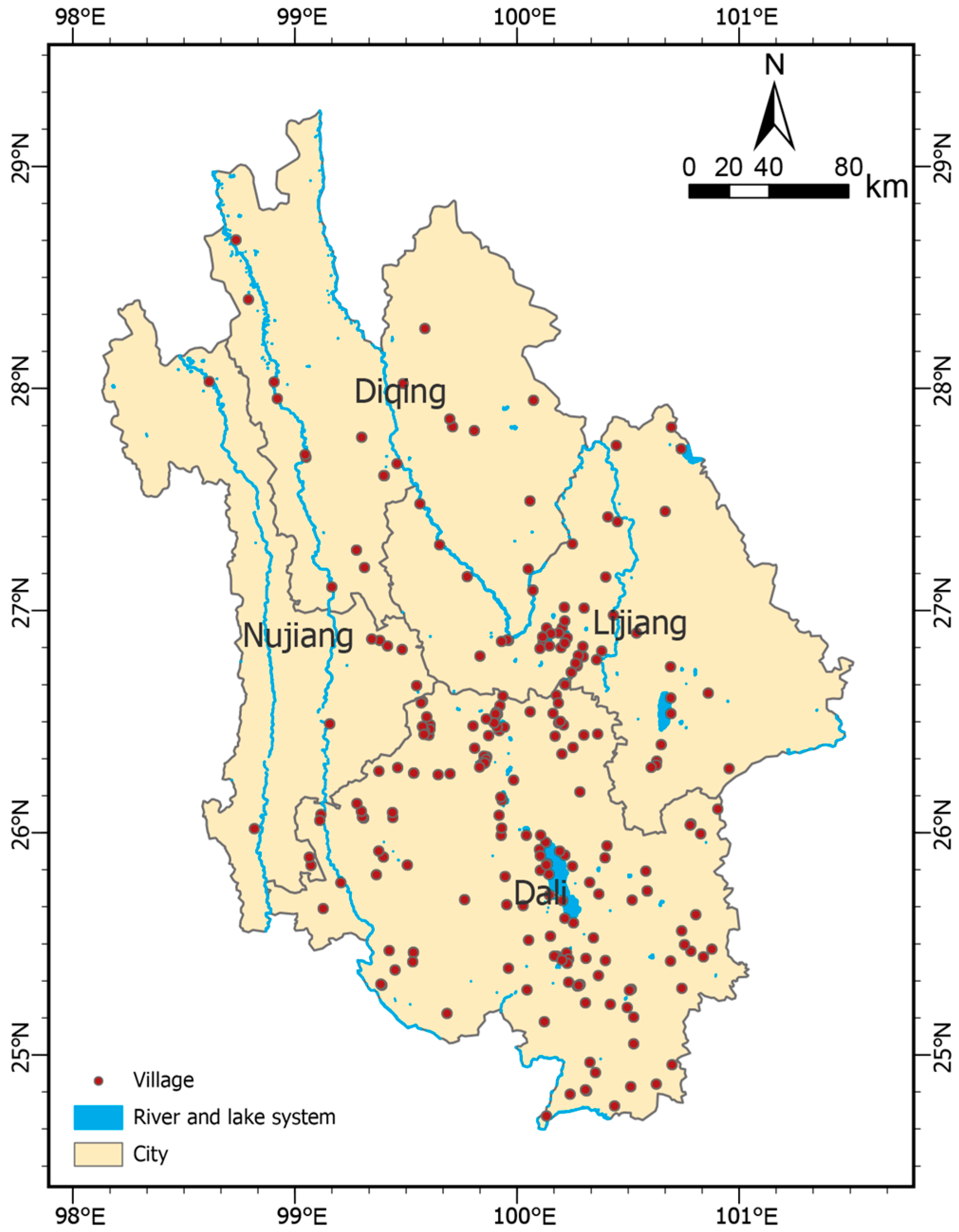
2.2. Data Sources
2.3. Research Methods
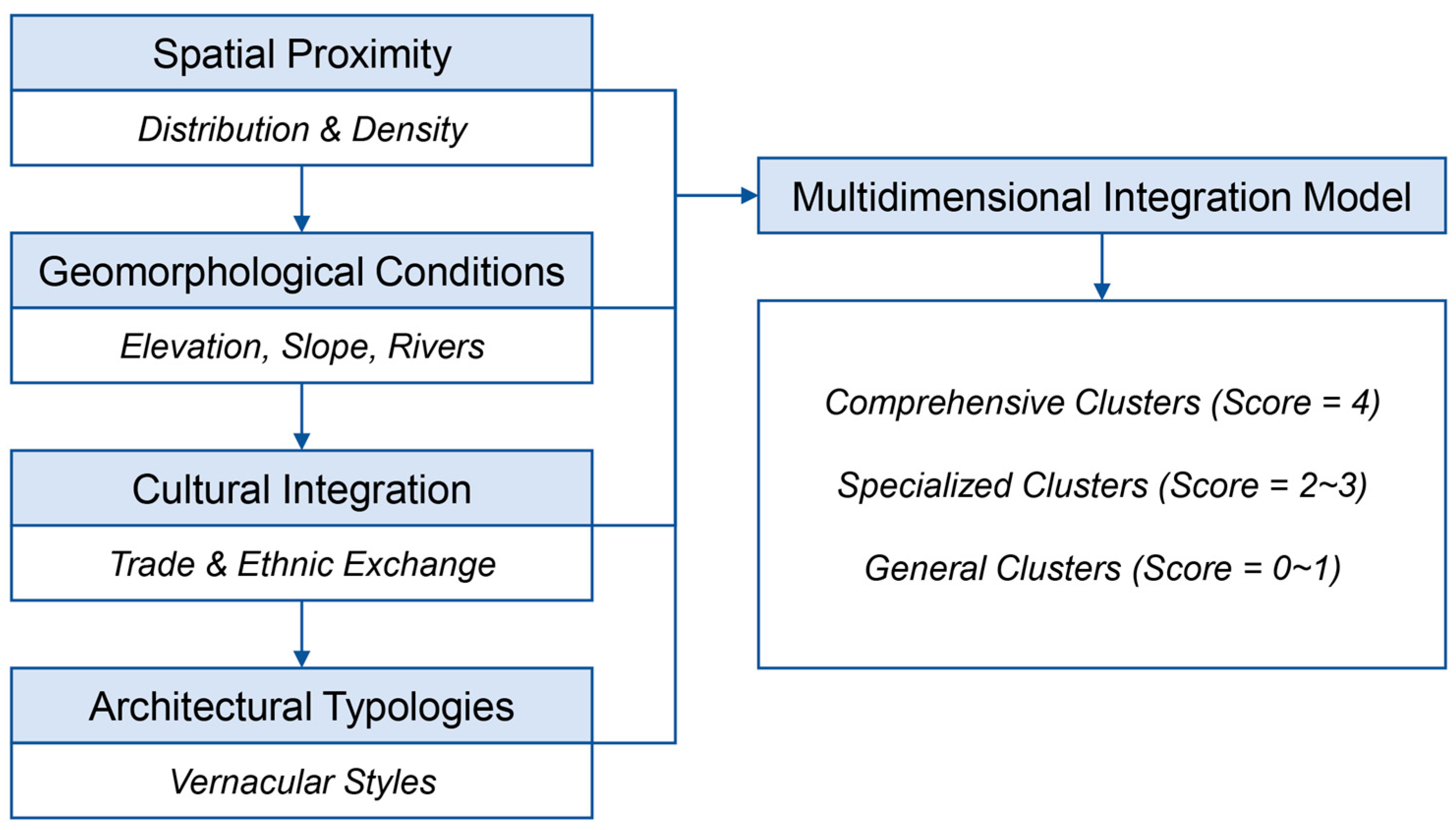
2.3.1. Research Framework
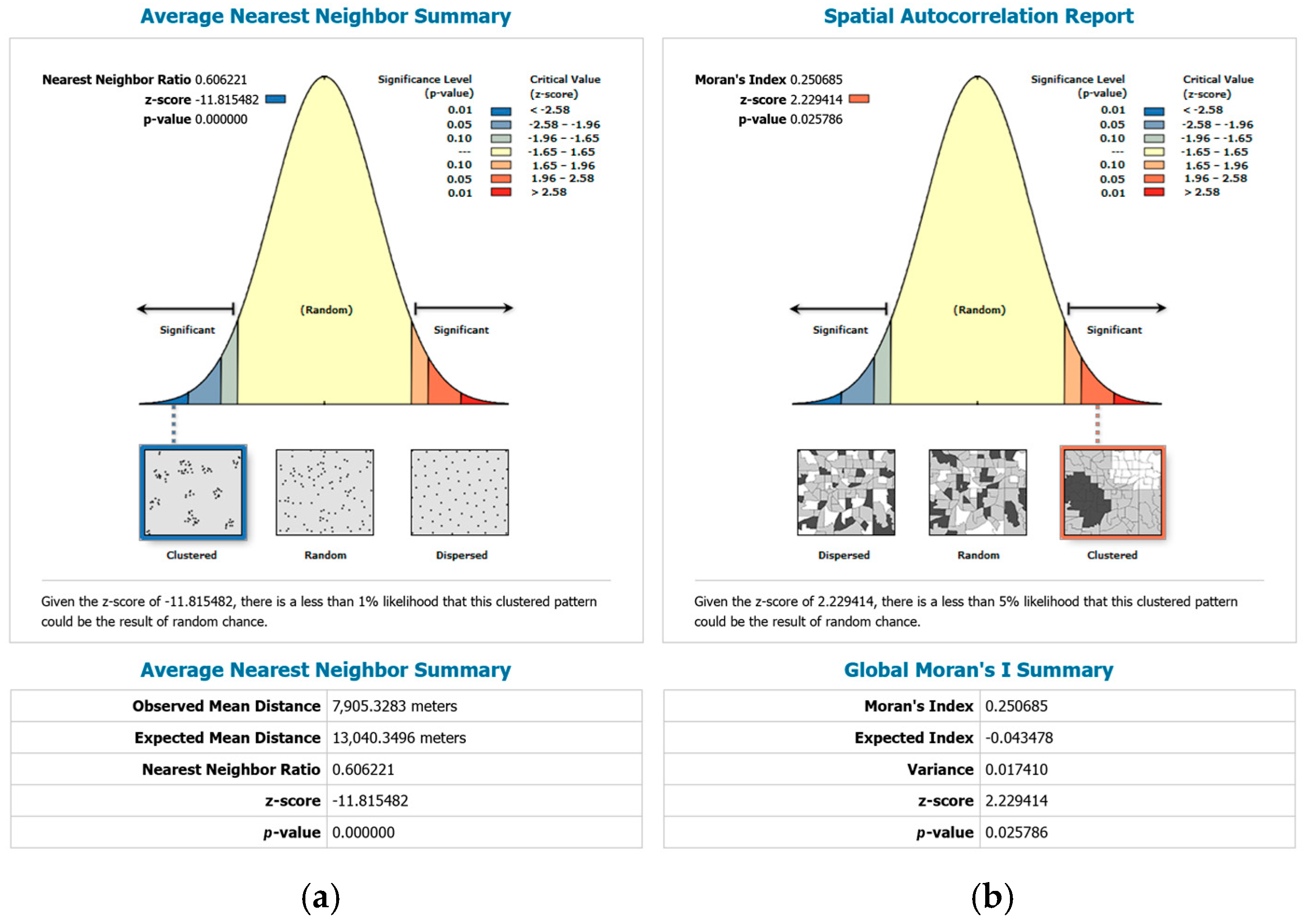
- A clustered pattern is identified when the Average Nearest Neighbor Index () is less than 1 and statistically significant (p < 0.05);
- A positive and statistically significant Global Moran’s (p < 0.05) indicates spatial clustering;
- In kernel density analysis, areas within the top 50% of density values are defined as high-density cluster zones.
2.3.2. Methods for Analyzing Spatial Distribution Characteristics
- (1)
- Spatial Distribution Equity Analysis
- (2)
- Spatial Clustering Analysis
- (3)
- Spatial Distribution and Natural Environmental Influences Analysis
2.3.3. Methods for Analyzing Clustering and Differentiation Characteristics
- (1)
- Spatial Proximity Clustering Analysis Method
- (2)
- Geomorphological Similarity Clustering Analysis Method
- (3)
- Cultural Integration Clustering Analysis Method
- (4)
- Architectural Form Clustering Analysis Method
- (5)
- Integrated Multifactor Clustering Analysis Method
2.3.4. Definition of “Cluster”
- (1)
- Spatial proximity clustering
- (2)
- Spatial statistical clustering
- (3)
- Geomorphological clustering
- (4)
- Cultural clustering
- (5)
- Architectural clustering
- (6)
- Integrated clustering
3. Results
3.1. Spatial Distribution Analysis
3.1.1. Spatial Distribution Equity
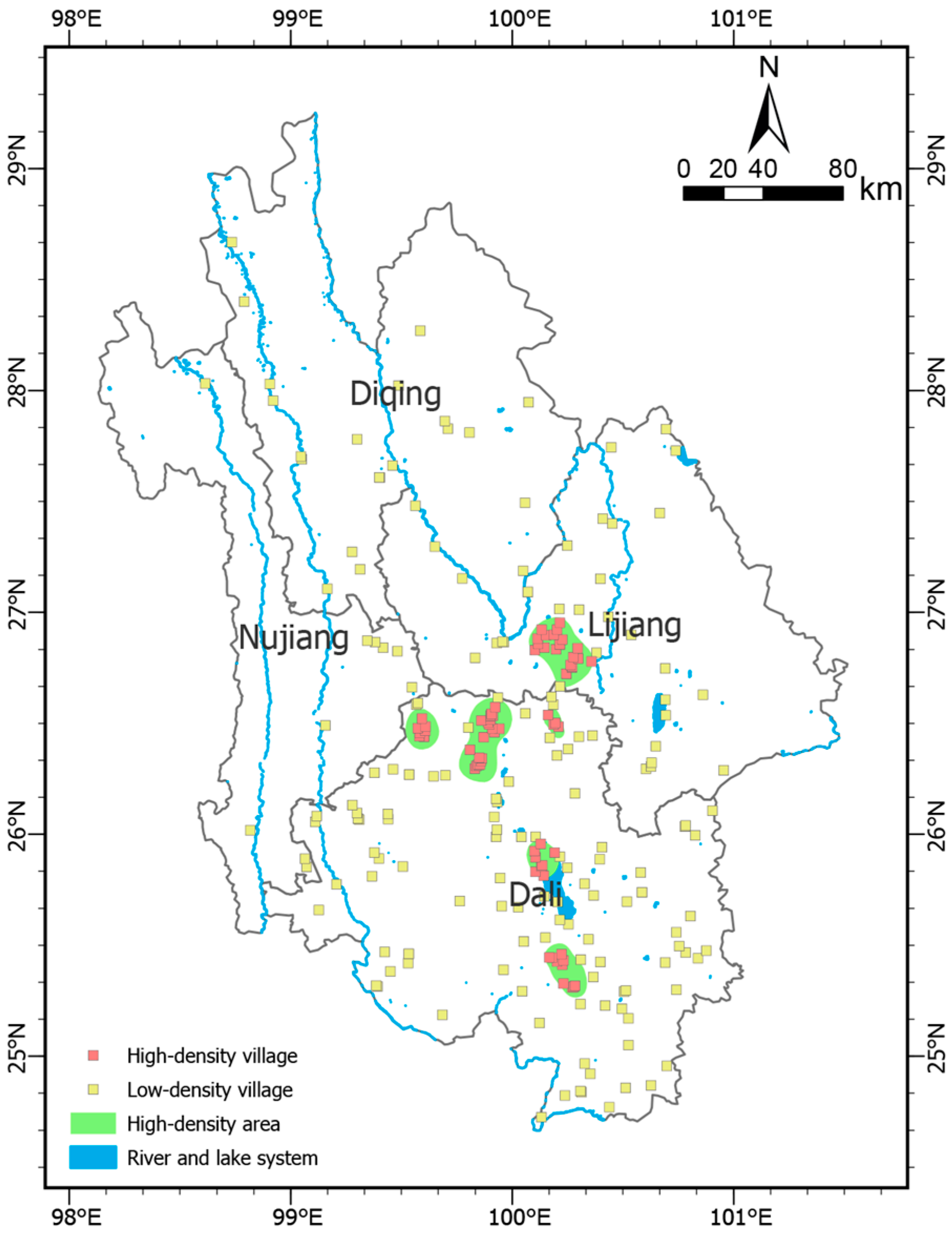
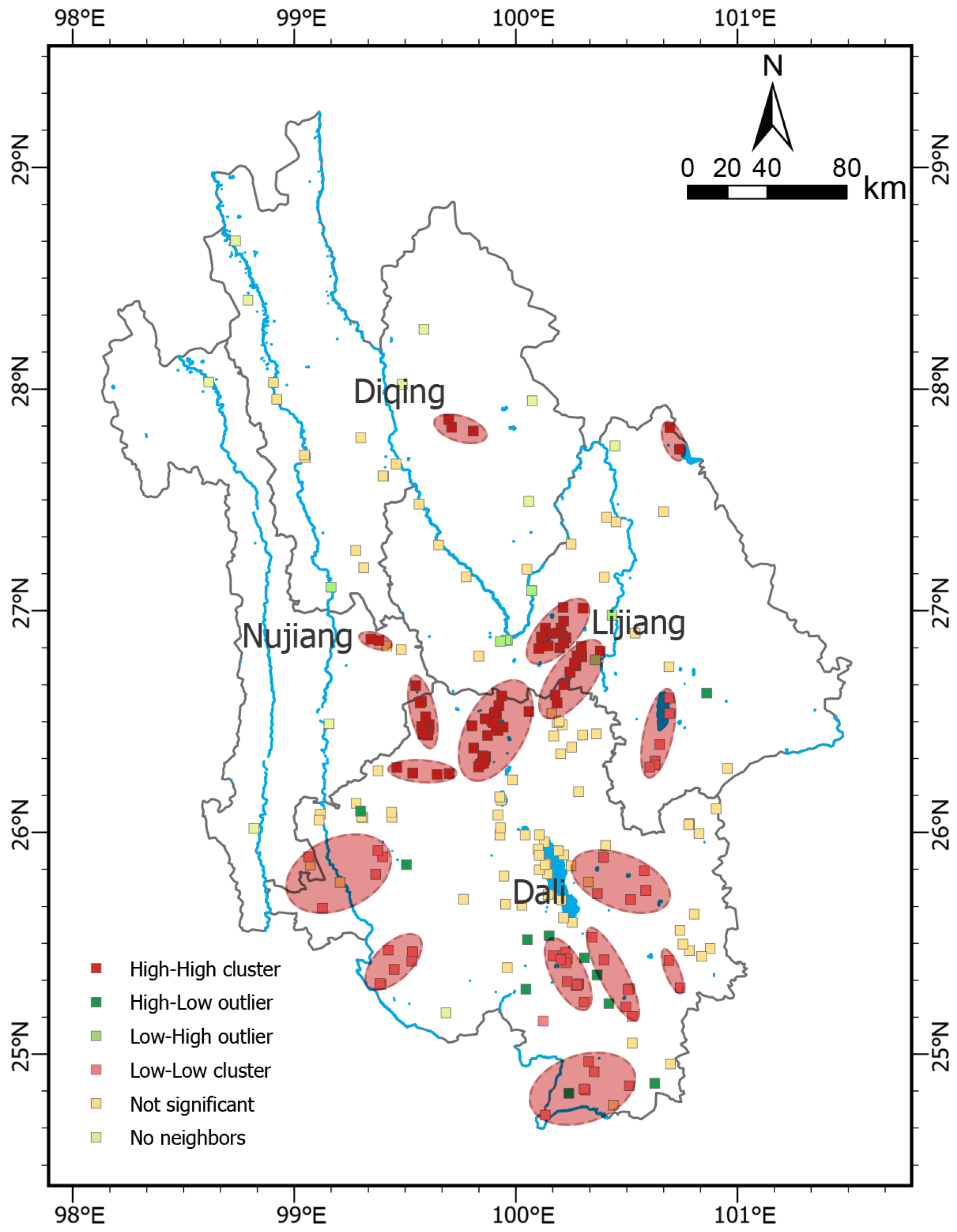
3.1.2. Spatial Clustering Analysis
3.1.3. Spatial Distribution and Environmental Influencing Factors Analysis
- (1)
- Relationship between Traditional Villages and Elevation
- (2)
- Relationship between Traditional Villages and Slope
- (3)
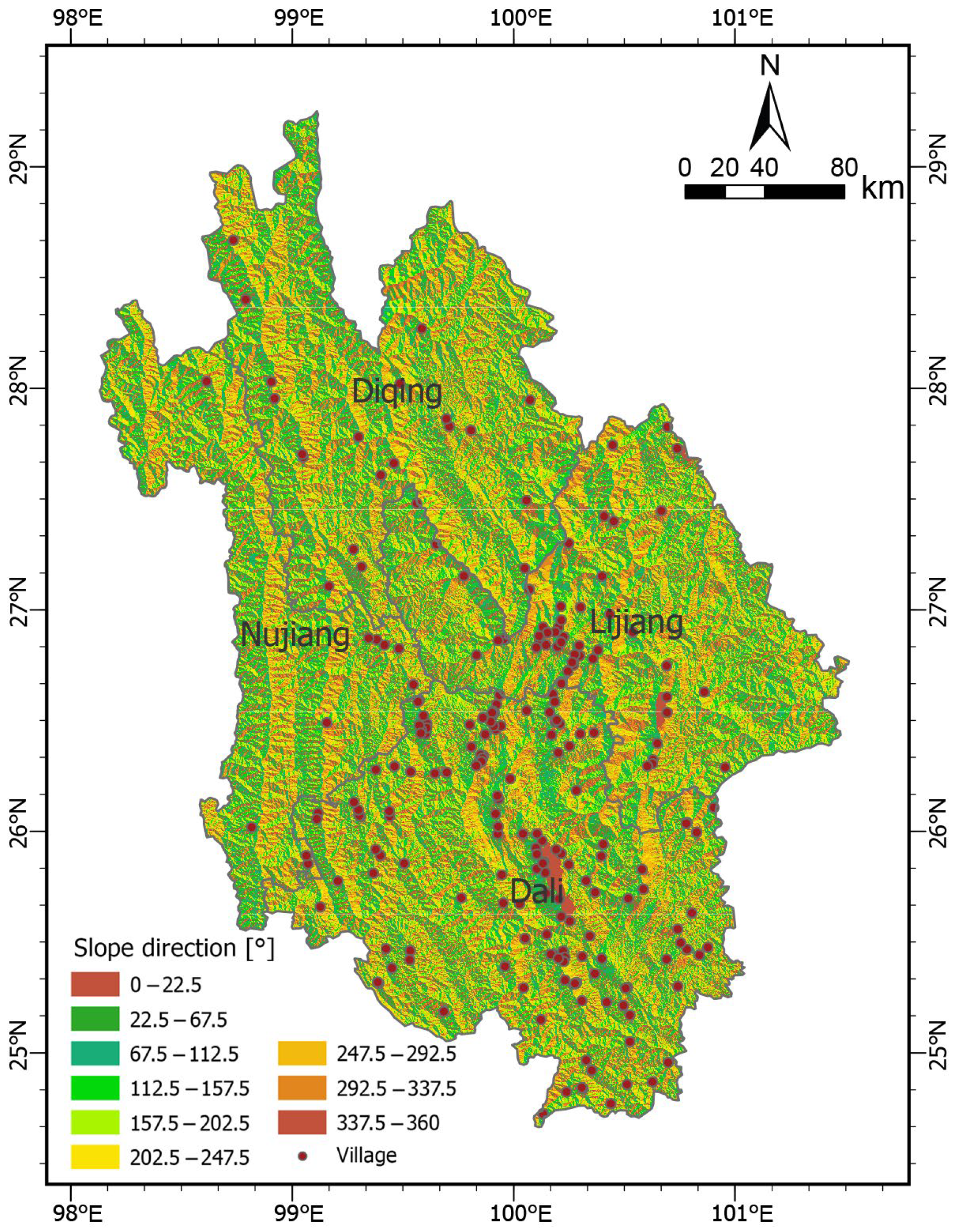
- Relationship between Traditional Villages and Aspect
- (4)
- Relationship between Traditional Villages and Major Water Systems
3.2. Identification Results of Traditional Village Clusters
3.2.1. Single Factor Clustering Characteristics
- (1)
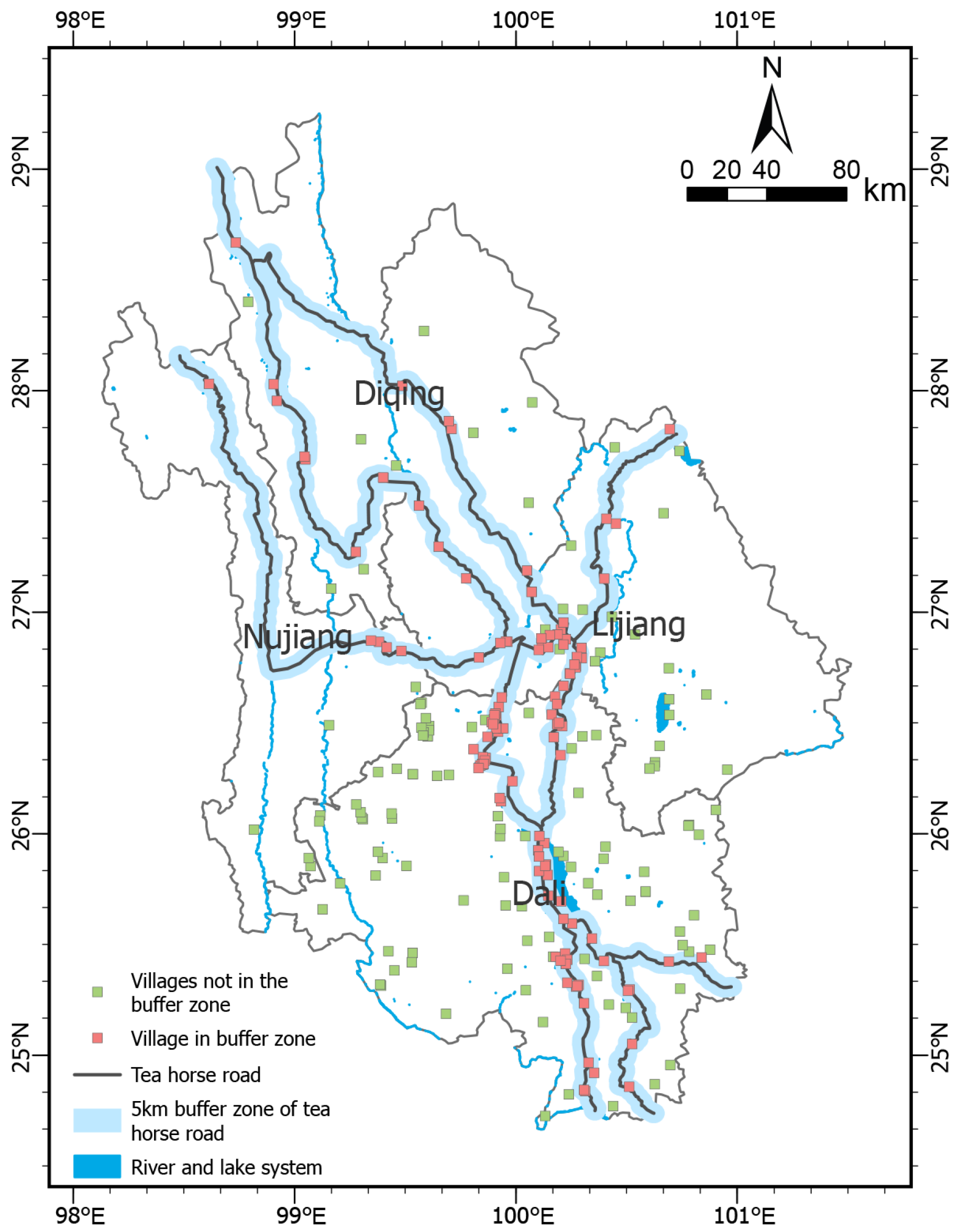
- Spatial Proximity Clustering Analysis
- (2)
- Geomorphological Similarity Clustering Analysis
- (3)
- Cultural Integration Clustering analysis
- (4)
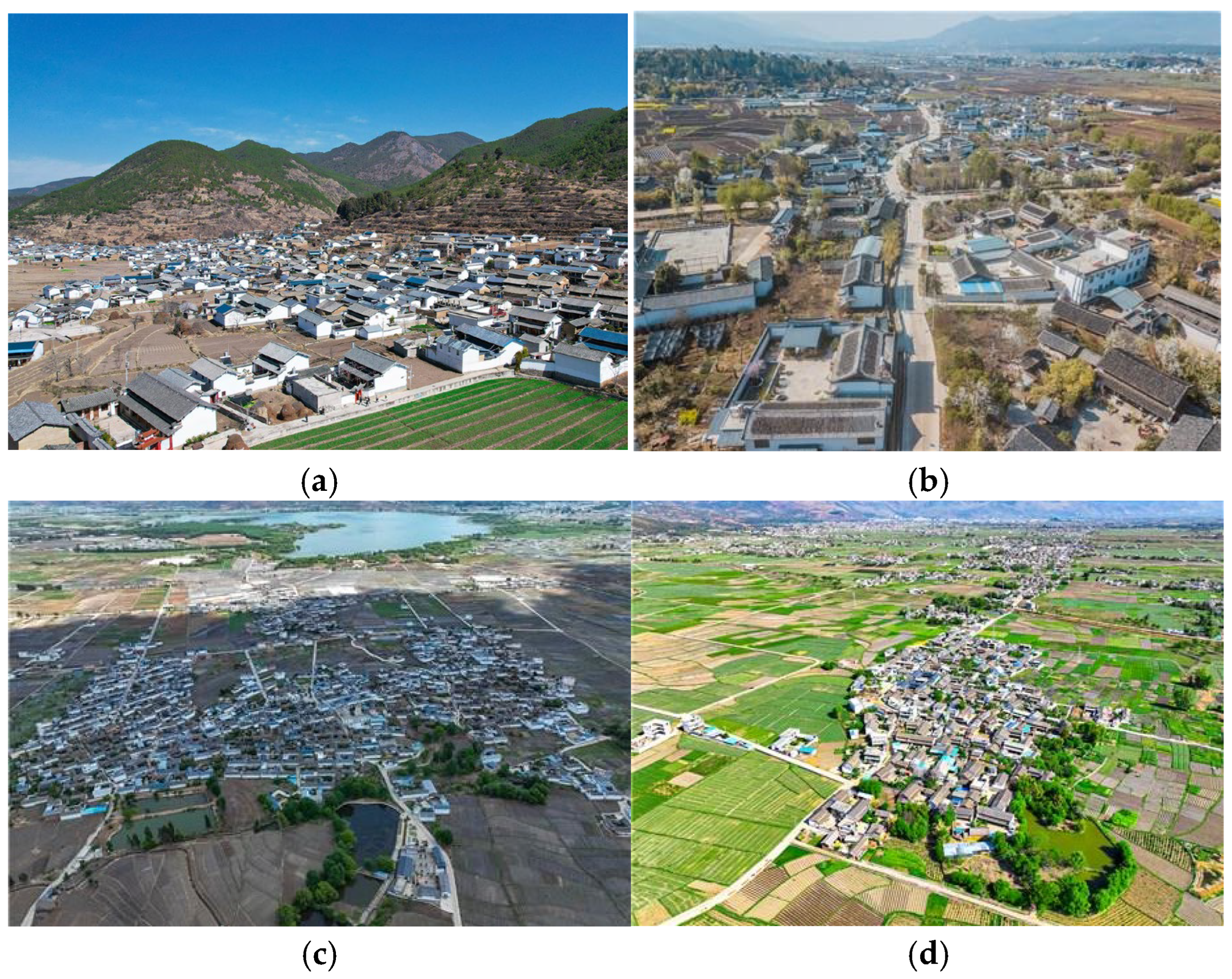
- Architectural clustering analysis
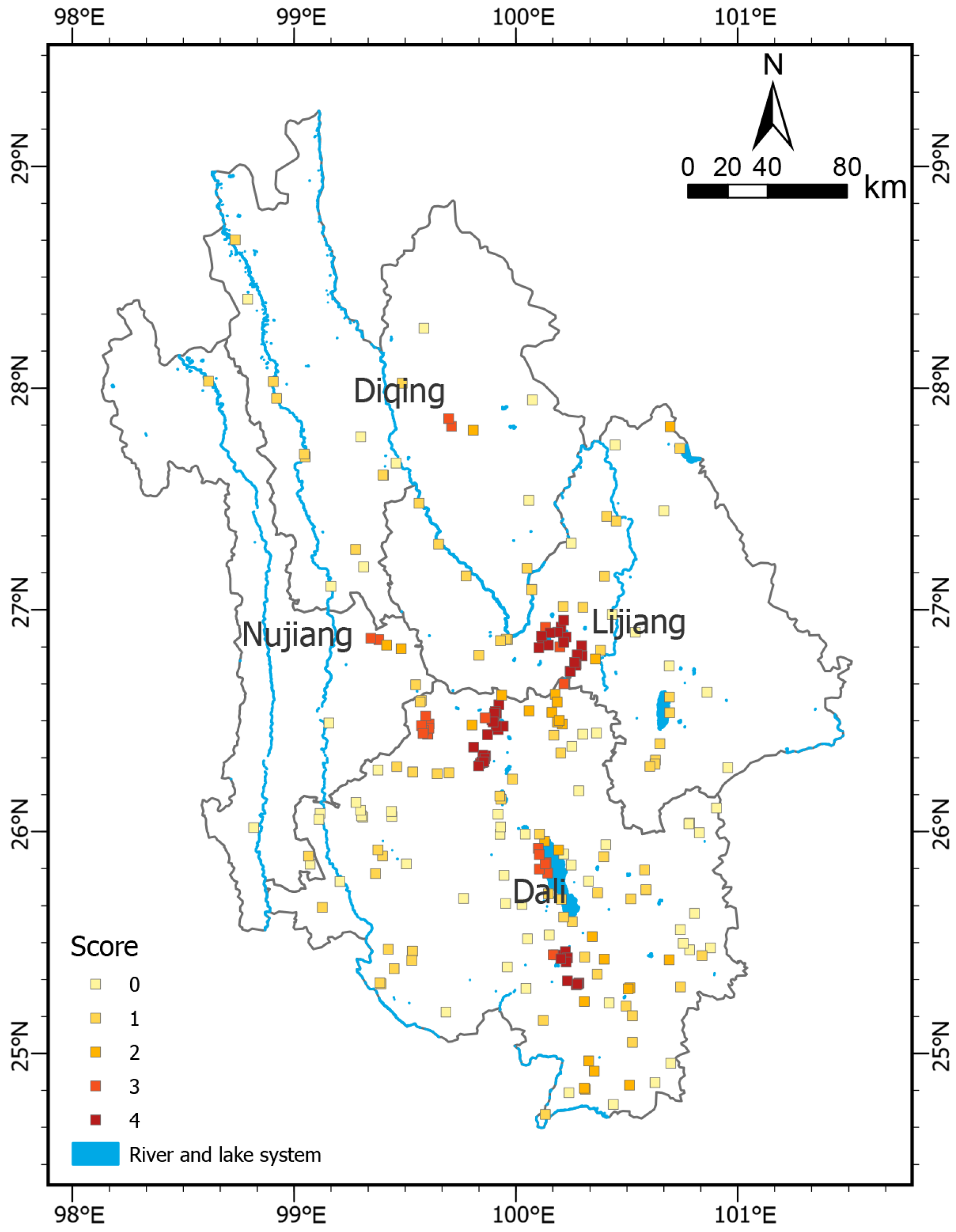
3.2.2. Integrated Multifactor Clustering Analysis
4. Discussion
5. Conclusions
Author Contributions
Funding
Institutional Review Board Statement
Informed Consent Statement
Data Availability Statement
Conflicts of Interest
References
- Petković, J.S. Traditional values and modernization challenges in forming urban and rural culture. Philos. Sociol. Psychol. Hist. 2007, 6, 23–39. [Google Scholar]
- Shih, Y.-C. Ecosystem Integration of Marine Conservation and Coastal Development in Taiwan. Front. Environ. Sci. 2026, 14, 1764841. [Google Scholar] [CrossRef]
- Chen, X.; Xie, W.; Li, H. The spatial evolution process, characteristics and driving factors of traditional villages from the perspective of the cultural ecosystem: A case study of Chengkan Village. Habitat Int. 2020, 104, 102250. [Google Scholar] [CrossRef]
- Zhou, M.; Chu, S.; Du, X. Safeguarding traditional villages in China: The role and challenges of Rural Heritage preservation. Built Herit. 2019, 3, 81–93. [Google Scholar] [CrossRef]
- Chen, W.; Yang, L.; Wu, J.; Wu, J.; Wang, G.; Bian, J.; Zeng, J.; Liu, Z. Spatio-temporal characteristics and influencing factors of traditional villages in the Yangtze River Basin: A Geodetector model. Herit. Sci. 2023, 11, 111. [Google Scholar] [CrossRef]
- Gao, W.; Zhuo, X.; Xiao, D. Spatial patterns, factors, and ethnic differences: A study on ethnic minority villages in Yunnan, China. Heliyon 2024, 10, e27677. [Google Scholar] [CrossRef] [PubMed]
- Wang, Y.; Xie, H.; Zhu, T. Evaluation system for Yunnan cultural tourism routes based on a five component model: Case study of the ancient tea-horse road in the south of Yunnan. J. Resour. Ecol. 2019, 10, 553–558. [Google Scholar] [CrossRef]
- Wang, L.; Yang, Z. The ecological concept in Yunnan vernacular architecture and settlement. In Proceedings of the 2011 International Conference on Multimedia Technology, Hangzhou, China, 26–28 July 2011; pp. 1804–1807. [Google Scholar]
- Watanabe, T.; Sumiyoshi, D. China: Houses for Ethnic Minorities in Yunnan Province. In Sustainable Houses and Living in the Hot-Humid Climates of Asia; Springer: Singapore, 2018; pp. 67–76. [Google Scholar]
- Zhang, J.; Zhang, R.; Li, Q.; Zhang, X.; He, X. Spatial sifferentiation and differentiated development paths of traditional villages in Yunnan province. Land 2023, 12, 1663. [Google Scholar] [CrossRef]
- Zhang, D.; Zhang, X.; Teng, L.; Ma, W.; Tan, L.; Li, H. Distribution Characteristics and Influencing Factors of Traditional Villages in the Lingnan Region of China. Buildings 2025, 15, 978. [Google Scholar] [CrossRef]
- Li, T.; Li, C.; Zhang, R.; Cong, Z.; Mao, Y. Spatial heterogeneity and influence factors of traditional villages in the Wuling Mountain area, Hunan Province, China based on Multiscale Geographically Weighted Regression. Buildings 2023, 13, 294. [Google Scholar] [CrossRef]
- Li, C.; Wu, Y.; Gao, B.; Wu, Y.; Zheng, K.; Li, C. Spatial differentiation and driving factors of rural settlement in plateau lake: A case study of the area around the Erhai. Econ. Geogr. 2022, 42, 220–229. [Google Scholar]
- Zheng, X.; Wu, J.; Deng, H. Spatial distribution and land use of traditional villages in southwest China. Sustainability 2021, 13, 6326. [Google Scholar] [CrossRef]
- Yuan, X.; Li, Y.; Song, Y.; Lu, H.; Wang, Y.; Ge, B.; Wang, J. Spatial distribution characteristics and driving factors of 777 traditional villages in Yunnan Province: A study based on GWR model and geodetector. Land 2024, 13, 2004. [Google Scholar] [CrossRef]
- Chen, T.; Zhang, S.; Chen, J.; Duan, J.; Zhang, Y.; Yang, Y. Spatial distribution characteristics and cluster differentiation of traditional villages in the Central Yunnan Region. Land 2025, 14, 1565. [Google Scholar] [CrossRef]
- Hua, Z.Z.; Jamaludin, O.; Ing, D.S. A review on traditional villages protection and development in China. Construction 2024, 4, 140–149. [Google Scholar] [CrossRef]
- Wu, C.; Chen, M.; Zhou, L.; Liang, X.; Wang, W. Identifying the spatiotemporal patterns of traditional villages in China: A multiscale perspective. Land 2020, 9, 449. [Google Scholar] [CrossRef]
- Jing, F.; Ramele Ramli, R.; Nasrudin, N. Protection of traditional villages in China: A review on the development process and policy evolution. J. Cult. Herit. Manag. Sustain. Dev. 2024; ahead-of-print. [CrossRef]
- Gao, J.; Wu, B. Revitalizing traditional villages through rural tourism: A case study of Yuanjia Village, Shaanxi Province, China. Tour. Manag. 2017, 63, 223–233. [Google Scholar] [CrossRef]
- Katapidi, I. Heritage policy meets community praxis: Widening conservation approaches in the traditional villages of central Greece. J. Rural Stud. 2021, 81, 47–58. [Google Scholar] [CrossRef]
- Wang, P.; Zhang, J.; Sun, F.; Cao, S.; Kan, Y.; Wang, C.; Xu, D. Spatial distribution and the impact mechanism of traditional villages in southwest China. Econ. Geogr. 2021, 41, 204–213. [Google Scholar]
- Bi, S.; Du, J.; Tian, Z.; Zhang, Y. Investigating the spatial distribution mechanisms of traditional villages from the human geography region: A case study of Jiangnan, China. Ecol. Inform. 2024, 81, 102649. [Google Scholar] [CrossRef]
- Yang, Y.; Zhang, D.; Dang, A.; Xie, H. A study on spatial and time characteristics of forming mechanism of village cultural landscape illustrated by the example of Nuodeng Village. Chin. Landsc. Archit. 2013, 29, 60–65. [Google Scholar]
- Jin, L.; Wang, Z.; Chen, X. Spatial distribution characteristics and influencing factors of traditional villages on the Tibetan Plateau in China. Int. J. Environ. Res. Public Health 2022, 19, 13170. [Google Scholar] [CrossRef]
- Li, M.; Ouyang, W.; Zhang, D. Spatial distribution characteristics and influencing factors of traditional villages in Guangxi Zhuang Autonomous Region. Sustainability 2022, 15, 632. [Google Scholar] [CrossRef]
- Li, B.; Yin, S.; Liu, P.; Dou, Y. Spatial Distribution of Traditional Villages and Influence Factors in Hunan Province. J. Landsc. Res. 2016, 8, 63–67. [Google Scholar]
- Bian, J.; Chen, W.; Zeng, J. Spatial distribution characteristics and influencing factors of traditional villages in China. Int. J. Environ. Res. Public Health 2022, 19, 4627. [Google Scholar] [CrossRef] [PubMed]
- Chen, Y.; Li, R. Spatial distribution and type division of traditional villages in Zhejiang Province. Sustainability 2024, 16, 5262. [Google Scholar] [CrossRef]
- Su, H.; Wang, Y.; Zhang, Z.; Dong, W. Characteristics and influencing factors of traditional village distribution in China. Land 2022, 11, 1631. [Google Scholar] [CrossRef]
- Liu, J.; Ren, Y.; Glauben, T.; Sun, Z. Climate change mitigation policy and human health: Evidence from the forest farm carbon sink projects in China. Environ. Impact Assess. Rev. 2026, 120, 108424. [Google Scholar] [CrossRef]
- Guo, Y.; He, P.; Huang, J. Spatial and temporal interpretation of traditional village distribution in Anhui Province of China and its conservation significance. Environ. Dev. Sustain. 2025. [Google Scholar] [CrossRef]
- Chen, W.; Yang, Z.; Yang, L.; Wu, J.; Bian, J.; Zeng, J.; Liu, Z. Identifying the spatial differentiation factors of traditional villages in China. Herit. Sci. 2023, 11, 149. [Google Scholar] [CrossRef]
- Li, B.; Wang, J.; Jin, Y. Spatial distribution characteristics of traditional villages and influence factors thereof in hilly and gully areas of northern Shaanxi. Sustainability 2022, 14, 15327. [Google Scholar] [CrossRef]
- Xue, M.; Wang, C.; Dou, W.; Wang, Z. Spatial distribution characteristics of traditional villages in the Yellow River basin and influencing factors. J. Arid. Land Resour. Environ. 2020, 34, 94–99. [Google Scholar]
- Zhang, C.; Zhang, H.; Qiao, J.; Li, Z.; Alouini, M.-S. TIDES: Traffic Intelligence with DeepSeek Enhanced Spatial Temporal Prediction. IEEE J. Sel. Areas Commun. 2026, 44, 2544–2558. [Google Scholar] [CrossRef]
- Danese, M.; Lazzari, M.; Murgante, B. Kernel density estimation methods for a geostatistical approach in seismic risk analysis: The case study of Potenza Hilltop Town (Southern Italy). In Proceedings of the International Conference on Computational Science and Its Applications, Perugia, Italy, 30 June–3 July 2008; pp. 415–429. [Google Scholar]
- Tong, Y.; Long, H. The spatial differentiation factors of ethnic traditional villages in Guizhou. Econ. Geogr. 2015, 35, 133–137. [Google Scholar]
- Bohua, L.; Zhen, L.; Peilin, L.; Yindi, D. Activation path of human settlement environment of traditional villages from the perspective of “double repair”: A case study of Zhang-Guying village in Hunan province. Geogr. Res. 2020, 39, 1794–1806. [Google Scholar]
- Guo, Y.; He, P.; Huang, J. Exploring the spatial and temporal distribution mechanism and multidimensional influencing factors of traditional villages in the Huaihe River Basin of China based on geographic grids. Humanit. Soc. Sci. Commun. 2025, 12, 1393. [Google Scholar] [CrossRef]
- Zhang, W.; Yang, H. Quantitative research of traditional village morphology based on spatial genes: A case study of Shaanxi Province, China. Sustainability 2024, 16, 9003. [Google Scholar] [CrossRef]
- Li, P.; Liu, S.; Wu, P.; Liu, Y. A Methodological Approach to Revealing the Landscape Morphology of Heijing Village Using Fractal Theory. Buildings 2025, 15, 2037. [Google Scholar] [CrossRef]
- An, Y.; Wu, X.; Liu, R.; Liu, L.; Liu, P. Quantitative analysis village spatial morphology using “SPSS + GIS” approach: A case study of Linxia Hui autonomous prefecture. Sustainability 2023, 15, 16828. [Google Scholar] [CrossRef]
- Wang, H.; Wang, Y.; Li, Y.; Wang, X.; Chen, X.; Yu, S.; Wang, X. Spatial Risk Prediction and Serological Validation of Emerging Wild Boar-Borne Diseases in Eastern Heilongjiang, China. Pak. Vet. J. 2025, 45, 1721–1732. [Google Scholar]
- Ma, B.; Yang, S.; Tang, Y.; Zhi, G.; Zhong, K.; Liu, Z. Attention-Guided Reinforcement Learning for Visual Servoing Control of Multirotor UAVs. IEEE Trans. Aerosp. Electron. Syst. 2026, 62, 4156–4167. [Google Scholar] [CrossRef]
- He, Y.; Hao, Y.; Qian, M.; Deng, B.; Zhang, L.; Cheng, L.; Wang, Y. SCMF-Net: Sparse Self-Attention Driven Cross-Modal Fusion for Robust Detection in Complex Road Scenes. IEEE Sens. J. 2026, 26, 10721–10730. [Google Scholar] [CrossRef]
- Chen, J.; Wang, Y.; Zhang, Y.; Lu, Y.; Shu, Q.; Hu, Y.; Zhou, Y. Pointer Network-Based Reinforcement Learning for UAV-Assisted Mobile Edge Computing. IEEE Trans. Veh. Technol. 2025, 1–13. [Google Scholar] [CrossRef]
- Liu, D.; Hu, J.; Chen, J.; Xu, X. The study of spatial distribution pattern of traditional villages in China. China Popul. Resour. Environ. 2014, 24, 157–162. [Google Scholar]
- Danese, M.; Lazzari, M.; Murgante, B. Geostatistics in historical macroseismic data analysis. In Transactions on Computational Science VI; Springer: Berlin/Heidelberg, Germany, 2009; pp. 324–341. [Google Scholar]
- Marriott, D.; Pampanin, S.; Bull, D.; Palermo, A. Dynamic testing of precast, post-tensioned rocking wall systems with alternative dissipating solutions. Bull. N. Z. Soc. Earthq. Eng. 2008, 41, 90–103. [Google Scholar] [CrossRef]
- Xue, M.; Wang, C.; Zhao, J.; Li, M. Spatial differentiation pattern and influencing factors of tourism economy in the Yellow River Basin. Econ. Geogr. 2020, 40, 19–27. [Google Scholar]
- Huang, X.; Zeng, L.; Wang, Y.; Liang, H.; Xu, X.; White, M. From neighborhoods to streetscapes: Pandemic-era shifts in built-environment effects on pedestrian mobility. Cities 2026, 170, 106685. [Google Scholar] [CrossRef]
- Meng, L.; Yang, R.; Sun, M.; Zhang, L.; Li, X. Regional sustainable strategy based on the coordination of ecological security and economic development in Yunnan Province, China. Sustainability 2023, 15, 7540. [Google Scholar] [CrossRef]
- Fang, Q.; Li, Z. Cultural ecology cognition and heritage value of huizhou traditional villages. Heliyon 2022, 8, e12627. [Google Scholar] [CrossRef]
- Hillman, B. Paradise under construction: Minorities, myths and modernity in northwest Yunnan. Asian Ethn. 2003, 4, 175–188. [Google Scholar] [CrossRef]
- Li, H.; Jing, J.; Fan, H.; Li, Y.; Liu, Y.; Ren, J. Identifying cultural heritage corridors for preservation through multidimensional network connectivity analysis—A case study of the ancient Tea-Horse Road in Simao, China. Landsc. Res. 2021, 46, 96–115. [Google Scholar] [CrossRef]
- Mukhametzyanov, I. Specific character of objective methods for determining weights of criteria in MCDM problems: Entropy, CRITIC and SD. Decis. Mak. Appl. Manag. Eng. 2021, 4, 76–105. [Google Scholar] [CrossRef]









| Altitude h [m] | Number | Percentage |
|---|---|---|
| 1000 < h ≤ 1500 | 12 | 4.88% |
| 1500 < h ≤ 2000 | 95 | 38.62% |
| 2000 < h ≤ 2500 | 117 | 47.56% |
| 2500 < h ≤ 3000 | 17 | 6.91% |
| 3000 < h ≤ 3500 | 5 | 2.03% |
| Slope S [°] | Number | Percentage |
|---|---|---|
| 0 ≤ S ≤ 2 | 68 | 27.64% |
| 2 < S ≤ 5 | 66 | 26.83% |
| 5 < S ≤ 15 | 73 | 29.67% |
| 15 < S ≤ 25 | 30 | 12.20% |
| 25 < S ≤ 35 | 9 | 3.66% |
| Slope Aspect θ [°] | Number | Percentage |
|---|---|---|
| North (0 ≤ θ ≤ 22.5/337.5 < θ ≤ 360) | 7 | 2.85% |
| Northeast (22.5 < θ ≤ 67.5) | 30 | 12.20% |
| East (67.5 < θ ≤ 112.5) | 49 | 19.92% |
| Southeast (112.5 < θ ≤ 157.5) | 38 | 15.45% |
| South (157.5 < θ ≤ 202.5) | 44 | 17.89% |
| Southwest (202.5 < θ ≤ 247.5) | 41 | 16.67% |
| West (247.5 < θ ≤ 292.5) | 28 | 11.38% |
| Northwest (292.5 < θ ≤ 337.5) | 9 | 3.66% |
| Distance to River x [km] | Number | Percentage |
|---|---|---|
| 0 ≤ x ≤ 2 | 54 | 21.95% |
| 2 < x ≤ 5 | 62 | 25.20% |
| 5 < x ≤ 10 | 47 | 19.11% |
| 10 < x ≤ 20 | 73 | 29.67% |
| 20 < x ≤ 35 | 10 | 4.07% |
| No. | Name |
|---|---|
| 1 | Shangri-la basin region |
| 2 | Lugu lake region |
| 3 | Tongdian river valley |
| 4 | Baishi river valley |
| 5 | Yunling mountain region |
| 6 | Jian lake region |
| 7 | Lijiang basin region |
| 8 | Heqing basin region |
| 9 | Chenghai lake region |
| 10 | Lancang river yunlong section |
| 11 | Bonan mountain region |
| 12 | Jizu mountain region |
| 13 | Yuan river valley |
| 14 | Midu basin region |
| 15 | Shuimu mountain region |
| 16 | Wuliang mountain region |
| Type | Score | Quantity | Proportion | Proportion |
|---|---|---|---|---|
| General | 0 | 65 | 26.42% | 58.13% |
| 1 | 78 | 31.71% | ||
| Specialized | 2 | 27 | 10.98% | 20.73% |
| 3 | 24 | 9.76% | ||
| Comprehensive | 4 | 52 | 21.14% | 21.14% |
Disclaimer/Publisher’s Note: The statements, opinions and data contained in all publications are solely those of the individual author(s) and contributor(s) and not of MDPI and/or the editor(s). MDPI and/or the editor(s) disclaim responsibility for any injury to people or property resulting from any ideas, methods, instructions or products referred to in the content. |
© 2026 by the authors. Licensee MDPI, Basel, Switzerland. This article is an open access article distributed under the terms and conditions of the Creative Commons Attribution (CC BY) license.
Share and Cite
Zeng, J.; Guan, X.; Zhang, X.; Li, Y.; Wei, S.; Chen, Y.; Yin, J.; Yang, Y. Multidimensional Spatial–Cultural Clustering of Traditional Villages in Northwestern Yunnan Based on a Four-Dimensional Analytical Framework for Sustainable Conservation. Sustainability 2026, 18, 3818. https://doi.org/10.3390/su18083818
Zeng J, Guan X, Zhang X, Li Y, Wei S, Chen Y, Yin J, Yang Y. Multidimensional Spatial–Cultural Clustering of Traditional Villages in Northwestern Yunnan Based on a Four-Dimensional Analytical Framework for Sustainable Conservation. Sustainability. 2026; 18(8):3818. https://doi.org/10.3390/su18083818
Chicago/Turabian StyleZeng, Juncheng, Xueguo Guan, Xiaoya Zhang, Yuanxi Li, Shiyu Wei, Yaqi Chen, Junfeng Yin, and Yaoning Yang. 2026. "Multidimensional Spatial–Cultural Clustering of Traditional Villages in Northwestern Yunnan Based on a Four-Dimensional Analytical Framework for Sustainable Conservation" Sustainability 18, no. 8: 3818. https://doi.org/10.3390/su18083818
APA StyleZeng, J., Guan, X., Zhang, X., Li, Y., Wei, S., Chen, Y., Yin, J., & Yang, Y. (2026). Multidimensional Spatial–Cultural Clustering of Traditional Villages in Northwestern Yunnan Based on a Four-Dimensional Analytical Framework for Sustainable Conservation. Sustainability, 18(8), 3818. https://doi.org/10.3390/su18083818