Article

Regional Innovation Ecosystems, Farm Digital Readiness, and Accounting Performance: Evidence from EU NUTS2 Regions


by
Ionela Munteanu
1,*,
Diane Paula Corina Vancea
1,
Elena Condrea
2,
Bogdan-Stefan Negreanu-Pirjol
3 and
Ticuta Negreanu-Pirjol
3,4
1
Department of Finance and Accounting, Faculty of Economic Sciences, Ovidius University of Constanta, 900470 Constanta, Romania
2
Faculty of Economic Sciences, Ovidius University of Constanta, Aleea Universitatii No. 1, 900470 Constanta, Romania
3
Faculty of Pharmacy, Ovidius University of Constanta, 6, Capitan Aviator Al. Serbanescu Street, Campus, Building C, 900470 Constanta, Romania
4
Academy of Romanian Scientists, 3, Ilfov Street, 050044 Bucharest, Romania
*
Author to whom correspondence should be addressed.
Sustainability 2026, 18(8), 3816; https://doi.org/10.3390/su18083816
Submission received: 16 March 2026 / Revised: 7 April 2026 / Accepted: 8 April 2026 / Published: 12 April 2026
(This article belongs to the Special Issue Green Transition and Technology for Sustainable Management)

Abstract

Digital transformation is frequently argued to improve how agricultural businesses compete, coordinate, and capture value in markets, yet evidence remains limited of how regional innovation ecosystems shape farms’ digital readiness and how this readiness translates into accounting-relevant outcomes. This study addresses that gap by linking regional innovation capacity, observed farm digital readiness, and accounting performance within a single regional analytical framework. Using cross-sectional data for 180 EU NUTS2 regions (2023), we estimate a moderated mediation model with formative constructs based on harmonized secondary indicators. This study is original in shifting the analysis from the farm or firm level to the regional scale and in operationalizing digital readiness through observable uptake of precision technologies, robotics, livestock-management machinery, internet access, and management information systems. Regional innovation capacity is positively associated with farmers’ digital readiness, and digital readiness is positively associated with accounting performance in the baseline specification. The indirect pathway from innovation capacity to accounting performance via digital readiness is significant, consistent with digital readiness acting as a transmission channel through which ecosystems relate to measurable economic outcomes. Managerial composition conditions these relationships: the share of managers under 40 weakens both the ecosystem-to-digital link and the digital-to-performance link, while female managerial share shows only marginal moderation of the first stage and no significant moderation of the second. The findings provide a basis for future multilevel research and place-based policies and advisory actions aimed at strengthening digital uptake where regional innovation capacity is weaker.

1. Introduction

The adoption of innovative solutions and, more specifically, digital transformation are increasingly embedded in how agricultural products are produced, coordinated, and commercialized, with implications for operational execution and for value capture and accounting-relevant outcomes. Recent syntheses of agricultural supply-chain digital transformation emphasize that innovative technologies such as Internet of Things (IoT), blockchain, and artificial intelligence are being deployed to improve efficiency, transparency, and resilience capabilities that can plausibly translate into productivity, cost, and value-added effects when adopted and integrated into operating agriculture routines [1]. These technologies also reshape how farmers interface with markets and digitalization perceptions in terms of connectivity, information management, and platform-mediated coordination.
Within this context, “digital readiness” in agriculture transcends the meaning of sporadic technology use. It reflects a farm business’s orientation toward adopting and embedding digital innovative solutions in day-to-day operations. Because these digital capabilities influence planning, monitoring, and resource allocation, they are relevant to accounting performance facets such as labor productivity, cost efficiency, and value added, and contribute to creating new capabilities in achieving sustainable performance in farming.
Empirically, smart-farming and agricultural digitalization literature investigates adoption as a largely firm- or individual-level phenomenon, frequently using survey data and Partial Least Squares Structural Equation Modeling (PLS-SEM) to explain intentions or adoption decisions. For example, Dixit et al. analyze drivers of smart-farming adoption intention using PLS-SEM on a large respondent sample, framing adoption as a function of technological and psychological antecedents [2]. Similarly, Bahari et al. apply a PLS-SEM model based on technology-organization-environment (TOE) organizational data and highlight the roles of governmental support and technological compatibility for IoT adoption in agricultural organizations [3]. Complementing these studies, evidence using PLS-SEM methods links technology adoption-related factors to farming performance, indicating that adoption can be associated with performance outcomes [4], but typically within localized settings and with explanatory variables centered on farmer attributes and micro-level conditions [5].
In parallel, a distinct stream examines regional innovation ecosystems and digital readiness at the territorial level, including the measurement of regional innovation capacity and digital accessibility. The European Commission’s Ninth Cohesion Report, chapter on regional innovation and the digital transition, documents persistent inter-regional differences in education, research and development (R&D), patenting, and digital accessibility factors that can shape innovation diffusion and the capacity to benefit from the digital transition [6]. Methodological work also uses the Regional Innovation Scoreboard framework to assess innovation performance across European regions and highlights challenges in capturing smart-technology dimensions with regional data [7]. More broadly, regional digitalization research has operationalized digitalization through composite indices like PCA-based regional digitalization indices and identified clusters of “leaders” and “laggards,” reinforcing the existence of systematic territorial disparities in digital infrastructure and related outcomes [8].
However, previous research streams are partially interconnected. Adoption studies often do not explicitly model ecosystem-level innovation capacity as a driver of digital readiness to achieve sustainable development, while regional digitalization studies frequently rely on descriptive, clustering, or index-based approaches rather than specifying and testing a mechanism linking ecosystem conditions to digital-solution orientation in agriculture and onward to accounting-relevant performance, including potential boundary conditions.
To address this gap, the present study examines a mechanism in which regional innovation ecosystem capacity shapes farmers’ digital solution orientation and translates digital readiness into accounting performance in the agricultural sector while considering compositional managerial characteristics as boundary conditions. This study is guided by four research questions:
RQ1: How is regional innovation capacity associated with observed farm digital readiness?
RQ2: Does digital readiness translate into accounting performance?
RQ3: Do managerial demographics condition these relationships?
RQ4: Is there an indirect (mediated) pathway from ecosystem to accounting outcomes?
Building on prior agricultural digitalization studies that have predominantly examined adoption intentions or organizational uptake at the farm or firm level using survey-based PLS-SEM designs [7,9], this study shifts the analytical focus to the regional scale and examines how territorial innovation conditions are associated with observed farm digital readiness and, in turn, with accounting-related outcomes. This paper makes three specific contributions that clarify its originality and impact.
First, it integrates regional innovation capacity, observed farm digital readiness, and accounting performance within a single mechanism-oriented framework. In doing so, it moves beyond studies that treat digital adoption mainly as a farm- or firm-level decision and beyond regional studies that remain primarily descriptive or index-based.
Secondly, it contributes empirically by using harmonized secondary data for 180 European Union NUTS2 regions (Nomenclature of Territorial Units for Statistics, level 2) and by operationalizing digital readiness through observable uptake indicators rather than self-reported intentions. This regional, indicator-based design extends existing evidence [2] with a place-based perspective on how innovation ecosystems are associated with agricultural digitalization and economic outcomes.
Third, it offers policy relevance and contributes to impact-oriented debate by showing that the ecosystem–digitalization–performance relationship is not uniform, but conditioned by managerial composition and supported by a significant mediated pathway through digital readiness. In terms of boundary conditions and mechanism evidence, this study tests whether managerial composition conditions (reflected in age and female participation shares) shape (i) ecosystem-to-readiness responsiveness and (ii) the readiness-to-performance translation while also evaluating the mediated pathway from regional ecosystem capacity to accounting outcomes through digital readiness, thereby offering mechanism-oriented perspective on how digital transformation can support the economic pillar of sustainability in agriculture [8]. The results provide a basis for future multilevel research linking territorial conditions to farm-level behavior, for place-based policy design aimed at reducing regional disparities in digital uptake, and for practical benchmarking by advisory bodies and development programs seeking to target support where ecosystem capacity is weaker. The originality of this study lies not in claiming a new universal effect, but in specifying and testing this relationship at the regional level with observable indicators in a comparatively underexplored setting.
This paper is structured as follows: Section 2 develops the theoretical background and hypotheses. Section 3 describes the data, variables, and estimation approach. Section 4 reports the empirical results, including mediation and moderation tests and robustness analyses. Section 5 discusses the findings in relation to prior literature and outlines implications and limitations. This paper concludes with directions for future research.

2. Theoretical Background and Hypotheses

This study draws on regional innovation systems and information-systems value perspectives to analyze how region-based innovation capacity shapes farmers’ digital-solution orientation, and how that orientation relates to accounting-relevant performance (productivity, cost efficiency, and value retention), thus creating the premised for sustainable digital development. The model additionally treats managerial demographic composition as a boundary condition that may influence (i) the conversion of ecosystem capacity into digital readiness and (ii) the translation of digital readiness into accounting outcomes.

2.1. Regional Innovation Ecosystems and Digital Readiness

2.1.1. Regional Innovation Capacity as an Enabling Ecosystem

Regional innovation systems research emphasizes that innovation and diffusion are not solely firm-internal processes but are embedded in territorially bounded configurations of organizations, institutional support, and interactive learning. In this view, a region’s innovation capacity reflects the availability of knowledge-generation and diffusion infrastructures (universities, R&D actors, intermediaries), institutionalized learning and support, and the governance arrangements that shape how knowledge circulates and becomes economically useful [10].
A core mechanism connecting a regional ecosystem to farmer-level digital readiness is the density and accessibility of localized knowledge spillovers and interactive learning channels. Empirical work on spatially bounded spillovers shows that knowledge transmission is often geographically localized, implying that firms and producers located in stronger innovation environments may access relevant knowledge and practices at lower search and coordination cost [11,12,13]. This is consistent with the broader regional-economics argument that proximity supports knowledge exchange, although proximity is multi-dimensional and requires complementary conditions (organizational, institutional, cognitive) to translate into innovation [14,15].
This study also connects to the development of economics and technology diffusion literature on agricultural transformation. Recent work shows that the adoption and diffusion of agricultural technologies are highly heterogeneous across contexts and depend not only on farm-level characteristics [16], but also on technology traits, innovative environments, access to services, and wider institutional and infrastructural conditions [17]. In the digital agriculture domain, this is especially relevant because many observed effects relate first to knowledge, practice change, and coordination improvements, while broader economic outcomes remain contingent on the surrounding ecosystem and the capacity to embed technologies in production and decision-making processes [18,19]. From this perspective, the regional focus adopted here is consistent with a diffusion-oriented view of agricultural digitalization, in which territorial innovation capacity can shape both the prevalence of digital uptake and the extent to which such uptake is associated with development-relevant performance outcomes.

2.1.2. Absorptive Capacity and Diffusion of Digital Solutions

Even when knowledge and support are available, adoption depends on the ability to recognize, assimilate, and apply external knowledge. Absorptive capacity theory positions learning and innovation as cumulative capabilities that condition the uptake of new technologies [20,21]. In agriculture, “digital solutions” increasingly include data-centric and cyber-physical technologies like sensors, IoT, cloud services, analytics, robotics, and farm management information systems, that require complementary knowledge, data practices, and service support. Reviews of smart farming describe digitalization as a farm-management cycle reliant on ICT infrastructures and data-processing capacity [22], often extending beyond primary production into wider supply-chain interfaces [23,24].
Taken together, the innovation ecosystem (referred to in this study as the Regional Innovation Index, RIS) can be conceptualized as a regional configuration of knowledge and infrastructure capacity, diffusion channels, and an absorptive environment that reduces the cost and uncertainty of experimentation and adoption. Regions characterized by stronger innovation ecosystems should expose farm businesses to more digital and provide greater access to complementary services (training, advisory capacity, and standards), making a positive association between regional innovation capacity and farmer digital readiness plausible.
H1: 
Higher regional innovation capacity increases farmers’ digital readiness.

2.2. Digital Readiness and Accounting Performance

2.2.1. Digital Readiness as a Capability for Information and Process Control

Digital readiness (FDR) is conceptualized as an orientation toward adopting and embedding digital solutions (precision technologies, robotics, connectivity, and management information systems). Digitalization in agriculture is commonly discussed as enabling richer and timelier information, improved monitoring, and more granular decision support, capabilities that can affect operational efficiency and the quality of managerial control [24]. In the broader information-systems literature, the “business value of IT” is often framed as arising from IT-enabled changes in processes and decision-making, with outcomes contingent on complementary organizational resources and integration into routines [25,26].

2.2.2. Why Digital Solutions Can Map into Accounting-Relevant Outcomes

For agriculture, three accounting-relevant channels are particularly salient:
  • Productivity: Precision and digital decision-support tools may improve the efficiency with which labor and other inputs are converted into output, especially when technologies are adopted in complementary “bundles” and integrated into operations. Evidence from farm-level studies links precision-agriculture technology adoption to higher technical efficiency, consistent with productivity improvements when digital tools are effectively embedded [27,28,29].
  • Cost control: Digital monitoring, guidance systems, and variable-rate practices are frequently argued to reduce overlaps, improve targeting of inputs, and support more efficient resource use. Farm-level evidence also frames precision-agriculture adoption as supporting decision-making and improving efficiency in input use, mechanisms that plausibly relate to cost efficiency [28,30].
  • Value retention: Digital solutions may support improved planning, traceability, quality control, and coordination across supply-chain interfaces; smart-farming reviews highlight the extension of data-driven approaches beyond the farm gate toward the supply chain, suggesting pathways by which value-added retention could be affected [31].
At the same time, the empirical literature cautions against assuming uniform gains: profitability and performance effects of precision/digital technologies can be heterogeneous and sensitive to context, implementation, and time horizon [32,33]. This motivates treating the performance link as theoretically grounded but ultimately empirical.
If farmers’ digital readiness (FDR) reflects a systematic orientation toward adopting and using digital solutions that enhance information quality, process control, and coordination, it should be associated with better accounting performance through higher labor productivity, improved cost control, and stronger value retention [34]. This expectation is consistent with general IT-value arguments and with agricultural evidence connecting digital/precision technology adoption to efficiency-related outcomes [28,35].
H2: 
Higher digital readiness in agriculture improves accounting performance.

2.3. Managerial Demographics as Boundary Conditions

Digital readiness and its payoffs depend not only on technology availability but also on the human and organizational capacity to evaluate, adopt, and integrate technologies into routines. Technology-acceptance research explicitly treats age and gender as moderating factors that can condition how determinants translate into technology use [34]. In agricultural settings, adoption decisions have similarly been linked to farmer and manager characteristics, including demographic and human-capital factors, in reviews of precision-agriculture adoption [36].
At the regional level, however, a higher share of younger managers should not be interpreted as implying a stronger marginal effect of ecosystem resources on digital uptake. A higher prevalence of younger managers may plausibly be associated with greater digital familiarity, openness to experimentation, and receptivity to new technologies, but that argument concerns baseline adoption propensity rather than moderation of the ecosystem-to-adoption slope. Recent SME research similarly shows that digital transformation depends on exposure to technological opportunities but also on managerial attributes, digital literacy, and professional leadership that shape how external conditions are converted into effective digitalization processes [37,38]. For this reason, the share of younger managers is more appropriately conceptualized here as a boundary condition whose net moderating effect remains theoretically open in a regional setting rather than as a uniformly strengthening influence.
H3: 
The share of managers under 40 moderates the association between regional innovation capacity and farmers’ digital readiness.

2.4. Gender Insights into Agriculture

Gendered constraints and differences in access to productive assets, services, and networks have been documented as relevant to technology adoption and productivity outcomes in agriculture. Evidence indicates that female-managed plots can face structural disadvantages affecting both technology uptake patterns and productivity, suggesting that regional gender composition may influence diffusion pathways and the degree to which ecosystem supports translate into adoption [39]. In stronger innovation ecosystems where training, advisory, and institutional supports are more available, such supports may alter diffusion channels and reduce some barriers, motivating a moderating role for female managerial representation [40].
Studies in agricultural development economics show persistent gender gaps in access to extension and in the adoption of climate-smart and technology-intensive practices [41] while also emphasizing that such gaps are strongly conditioned by the surrounding support environment rather than by gender alone. From a regional perspective, this implies that a higher share of female managers may alter how innovation ecosystem resources are translated into digital uptake by influencing diffusion pathways and the inclusiveness of local support structures. At the same time, recent reviews stress that gender effects in agricultural transformation are context-dependent and mediated by broader structural conditions [42]. For this reason, female managerial representation is more appropriately theorized here as a regional boundary condition on the innovation-capacity–digital-readiness relationship than as a uniformly strengthening factor.
H4: 
A higher share of female managers moderates the association between innovation-capacity effect and digital readiness.

2.5. Moderation of the Digital Readiness on Performance Relationship

The IT business value literature repeatedly emphasizes that performance gains depend on complementary assets and managerial/organizational integration involving process redesign, data interpretation, and alignment with decision routines [25]. In agriculture, farm management information systems and digital tools are explicitly positioned as decision infrastructures for farm managers, reinforcing the managerial-integration mechanism [30,43]. This implies that managerial composition may condition whether digital readiness translates into observable accounting outcomes.
A similar distinction is required at the second stage of the model. Even if younger managers are, on average, more willing to experiment with digital tools, the performance consequences of digital readiness depend on whether such tools are embedded in complementary assets and organizational routines. Recent research in the SME and digital transformation literature shows that digitalization contributes to performance through mediating and enabling mechanisms such as dynamic capabilities, digital leadership, digital culture, and business model innovation [44,45]. Previous studies also indicate that the performance effects of digital transformation may be heterogeneous, delayed, or initially costly because firms must absorb organizational adjustment, coordination, and integration demands before gains are realized [46]. Accordingly, a higher regional share of younger managers cannot be assumed a priori to strengthen the FDR–performance relationship; in a regional setting, the direction of moderation remains an empirical question:
H5: 
The share of managers under 40 moderates the association between farmers’ digital readiness and accounting performance.

2.6. Gender Influenced Digital Readiness Oriented Towards Accounting Performance

Performance payoffs from digital tools may also depend on governance and administrative practices like record keeping, planning discipline, and coordination routines. Given evidence that structural factors shape gender differences in productivity and technology outcomes, female managerial representation could condition how digital tools translate into accounting performance, though the direction is ultimately empirical [39].
The performance implications of digital readiness may also vary with managerial gender composition, but the direction of this effect is not theoretically unambiguous. Recent studies show that digital technologies can improve agricultural yields and farm profit under gender-inclusive conditions [47], while broader management research indicates that gender composition may shape how digitalization is interpreted, governed, and converted into organizational outcomes [48]. At the same time, literature also suggests that digital payoffs depend on complementary capabilities, organizational routines, and the surrounding opportunity structure [49]; so, gender should not be assumed to affect value realization in a uniform way. In a regional agricultural setting, a higher share of female managers may therefore condition how digital readiness is translated into accounting outcomes by influencing managerial diversity, coordination practices, and access to enabling resources, but whether this results in stronger or weaker returns needs to be researched.
H6: 
A higher share of female managers moderates the association between digital readiness and accounting performance.

2.7. Mediation Mechanism and Conceptual Model

Regional innovation ecosystems are commonly theorized to affect economic outcomes partly through diffusion and learning mechanisms rather than solely through direct effects [10,50,51]. If RIS increases farmers’ digital readiness, and digital readiness is associated with accounting performance, then FDR constitutes a plausible mediating pathway linking ecosystem capacity to accounting outcomes.
H7: 
Farmers’ digital readiness mediates the positive association between innovation capacity and accounting performance.
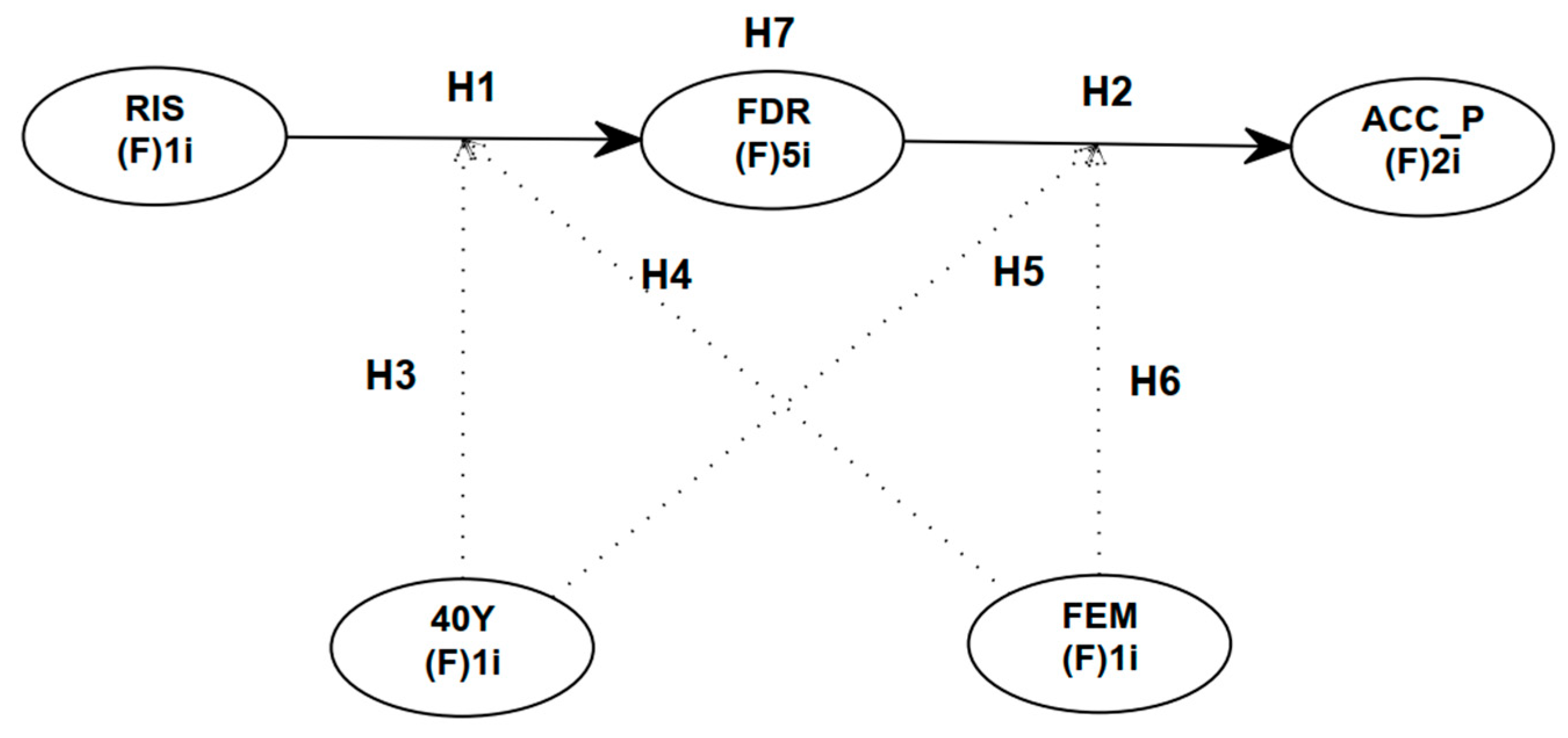
Figure 1 depicts the mediated core structure (RIS → FDR → ACC_P) with two interaction terms on each stage: 40Y × RIS and FEM × RIS moderating the first-stage relationship (RIS → FDR), and 40Y × FDR and FEM × FDR moderating the second-stage relationship (FDR → ACC_P), where 40Y denotes the share of farm managers younger than 40 years and FEM denotes the share of female managers. This specification aligns the theory with a moderated-mediation structure (ecosystem → readiness → outcomes).

3. Materials and Methods

3.1. Research Design and Unit of Analysis

This study employs a cross-sectional design using EU NUTS2 regions as the unit of analysis for year 2023. The regional unit is appropriate for the research question because the focal antecedent, regional innovation capacity, is defined and reported at the territorial level, and the dependent and mediating constructs (farm digitalization indicators and agricultural accounts/labor input) are also available in harmonized regional form. The regional framing supports policy-relevant inference on how place-based innovation capacity relates to digital readiness and economic outcomes. Building on previous research, the analysis enhances the perspective of resilience of ecological efficiency [52]: estimated associations describe regional co-variation and do not, by themselves, imply that the same relationships hold at the level of individual farms or firms.

3.2. Data Sources and Sample

All variables were compiled from harmonized official European sources for the 2023 reference year and matched at the NUTS2 regional level using consistent territorial identifiers. Regional innovation index (RIS) was obtained from the European Commission’s Regional Innovation Scoreboard composite index [6]. Farm digitalization was captured through Eurostat regional indicators reporting the shares of farms using key digital technologies (precision tools, robotics, internet access, livestock-management machinery, and management information systems). Managerial composition was operationalized using Eurostat regional statistics on farm managers by age and sex to derive the shares of managers younger than 40 and female. Accounting performance metrics were derived from Eurostat’s regional agricultural accounts (EAA) and labor-input statistics to compute gross value-added margin and output per annual work unit. Regions were retained only when complete information was available for all variables included in the estimated model, to preserve comparability across specifications. After harmonizing regional identifiers and retaining regions with complete data on the model variables, the final sample comprised 180 NUTS2 regions.

3.3. Constructs and Operationalization

Consistent with the conceptualization of regional “readiness” and “performance” as composites formed by distinct facets, all multi-indicator latent variables were specified as formative. Table 1 summarizes construct roles, indicators, computations, and sources.
In this study, Farm Digital Readiness (FDR) is interpreted as the extent to which agricultural holdings are positioned to adopt and embed digital technologies in operational practice. Because harmonized regional statistics do not provide direct measures of latent digital capability, the construct is operationalized in the analysis through an uptake-based formative proxy derived from observed regional adoption indicators, including internet access, management information systems, precision technologies, robotics, and livestock-management machinery. Accordingly, the measure should be interpreted as an observable regional profile of digital uptake and integration potential.

3.4. Estimation Approach

The research model was estimated using Partial Least Squares Structural Equation Modeling (PLS-SEM). This approach is well aligned with this study’s research questions for three reasons. First, the central constructs (farmer digital readiness and accounting performance) are conceptualized as formative composites assembled from distinct facets (technology uptake components and accounting-relevant indicators, respectively). PLS-SEM is widely used in such settings because it accommodates formative measurement without requiring the restrictive assumptions associated with common factor models. Second, this study is explicitly mechanism-oriented, examining a mediated pathway (RIS → FDR → performance) and boundary conditions via interaction effects. PLS-SEM enables the simultaneous estimation of direct, indirect, and moderating effects within a unified structural system. Third, the analysis is designed to be prediction-oriented in a setting where explanatory relationships are theorized but may be heterogeneous across regions. PLS-SEM is particularly suitable when the objective includes explaining variance in endogenous constructs and assessing the stability of relationships under alternative operationalization [53]. In this cross-sectional regional setting, PLS-SEM is used as a prediction-oriented approach for estimating complex associative relationships among formative constructs, including mediation and moderation.
Methodologically, this study’s originality lies also in applying a single, integrative structural model to harmonized regional data to connect innovation ecosystem capacity to digital-solution orientation and then to accounting-relevant performance while explicitly testing compositional managerial moderators, an empirical combination that remains less common than firm-level, survey-based adoption models.

3.5. Model Evaluation Criteria

Because key constructs were specified as formative, measurement evaluation focused on two criteria. First, indicator weights were examined for magnitude and statistical significance using resampling-based inference, as weights indicate the relative contribution of each indicator to the composite. Second, multicollinearity among formative indicators was assessed using variance inflation factors (VIFs) to ensure that weights were interpretable and not distorted by redundant indicators.
The structural model was evaluated using complementary explanatory and predictive diagnostics. Structural relationships were assessed through standardized path coefficients and their significance, alongside effect sizes to gauge substantive importance. The explanatory power of the model was assessed via R2 (and adjusted R2) for endogenous constructs, while predictive relevance (Q2) was used to assess out-of-sample–oriented predictive capability in a cross-validated manner. Moderation was evaluated through the significance of interaction effects (40Y × RIS → FDR; 40Y × FDR → performance), and where relevant, interpretation can be supported with simple-slope comparisons at representative moderator levels. Mediation was assessed by testing the significance of indirect effects (RIS → FDR → performance) using resampling-based inference. Finally, to strengthen construct and result credibility without expanding the baseline specification, this study reports robustness checks that re-estimate the performance equation using alternative single-indicator outcomes (CEI and OPAWU), allowing for a transparent assessment of whether the central mechanism holds across distinct accounting-performance facets.

4. Results

4.1. The Assessment of the Formative Measurement Model

Given the formative specification of the key composites, measurement model assessment focused on indicator weight significance and collinearity (VIF). All indicators forming Farmer Digital readiness (FDR) have statistically significant weights (p < 0.001), supporting their contribution to the composite. Indicator VIFs were found below conservative thresholds, with the highest value for robotics (VIF = 3.402) slightly above the “ideal” 3.3 benchmark but still below the more permissive threshold of 5, suggesting that multicollinearity is not prohibitive for interpretation.
For the baseline Accounting Performance (ACC_P) composite, both indicators (GVA margin and output per AWU) load symmetrically with significant weights (0.749; p < 0.001) and very low collinearity (VIF = 1.012), indicating that the composite is not dominated by a single component. Regional innovation capacity (RIS) is modelled as a single-item construct as shown in Table 2.

4.2. Structural Model Results

The baseline structural model showed acceptable overall fit and quality according to the reported indices (e.g., APC = 0.227, ARS = 0.291, AARS = 0.279; all p < 0.001) and collinearity diagnostics (AVIF = 1.134; AFVIF = 2.010). The model explains a substantial share of variance in digital readiness (R2(FDR) = 0.446; Q2(FDR) = 0.454) and a more modest share of variance in accounting performance (R2(ACC_P) = 0.137; Q2(ACC_P) = 0.135), according to Table 3. The results are consistent with the expectation that performance is affected by additional regional factors not explicitly modelled.
Table 4 reports standardized path coefficients and effect sizes. Regional innovation capacity is positively associated with farmer digital readiness (RIS → FDR: β = 0.538, p < 0.001), supporting H1. Farmer digital readiness is positively associated with accounting performance in the baseline specification (FDR → ACC_P: β = 0.298, p < 0.001), supporting H2.
Regarding moderation, the share of younger managers (<40) is associated with a significant weakening of both focal relationships in the baseline model. Specifically, 40Y negatively moderates the ecosystem–readiness link (40Y × RIS → FDR: β = −0.155, p = 0.016) and the readiness–performance link (40Y × FDR → ACC_P: β = −0.203, p = 0.003). These coefficients indicate that younger managerial composition operates as a boundary condition affecting the strength of the associations rather than as evidence that younger managers are uniformly more or less digital. This distinction is important because a greater propensity toward digital uptake at the regional level is conceptually different from a stronger conversion of ecosystem resources or digital uptake into accounting outcomes. Recent work on digital transformation and SME performance likewise suggests that value realization depends on complementary managerial and organizational conditions, not only on digital orientation [45,46]. Female-manager share shows marginal evidence of moderation on the first stage (FEM × RIS → FDR: β = 0.120, p = 0.051) and is not significant on the second stage (FEM × FDR → ACC_P: β = −0.046, p = 0.268).

4.3. Mediation Results

Consistent with the proposed mechanism, digital readiness in agriculture carries a significant indirect association between regional innovation capacity and accounting performance. The indirect effect RIS → FDR → ACC_P is positive and statistically significant (β = 0.160, p < 0.001). This provides evidence consistent with H7 in the baseline specification.
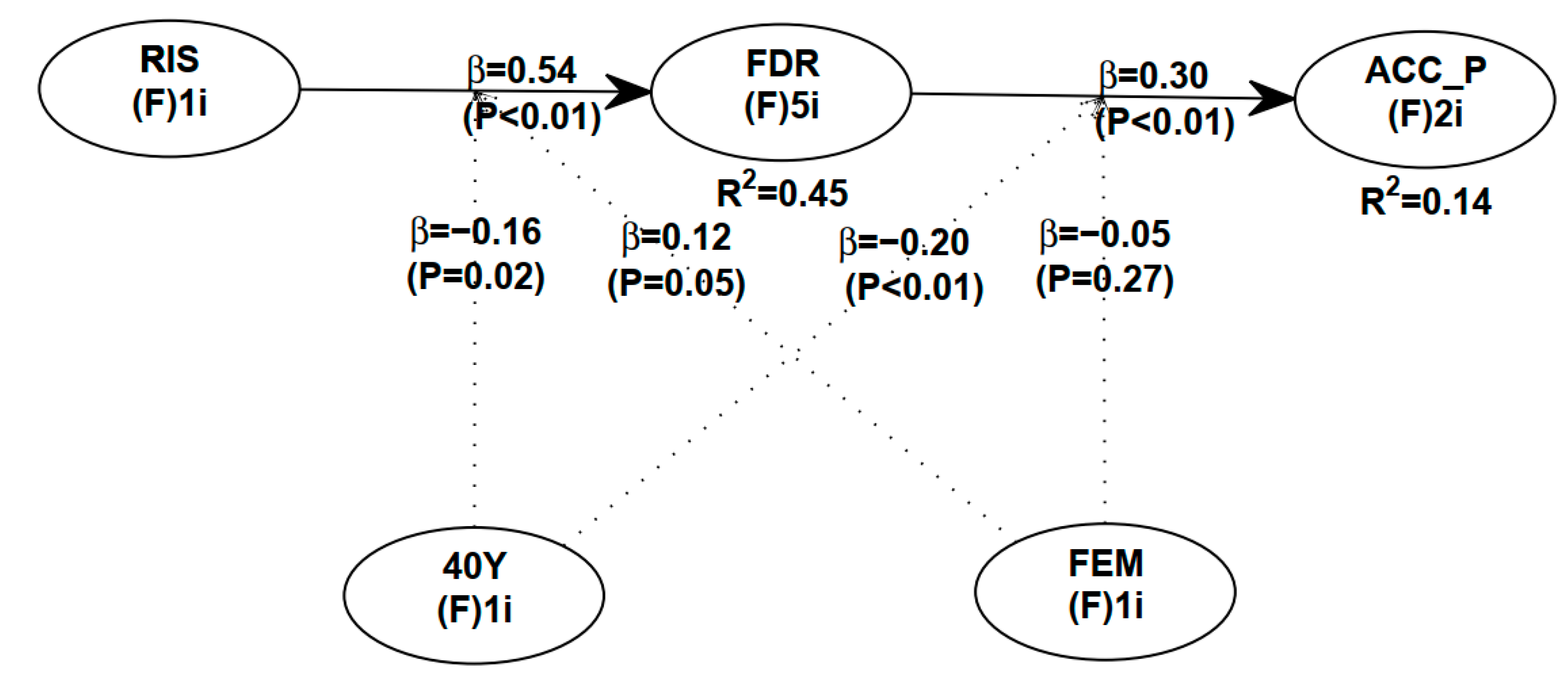
Figure 2 summarizes the estimated moderated-mediation model linking regional innovation capacity to agricultural accounting performance through digital readiness. Regional innovation capacity (RIS) is positively associated with Farmer Digital readiness (FDR) (β = 0.54, p < 0.01), and FDR is in turn positively associated with Accounting Performance (ACC_P) (β = 0.30, p < 0.01). The model explains 45% of the variance in FDR (R2 = 0.45) and 14% of the variance in ACC_P (R2 = 0.14). Two compositional moderators are included: the share of managers under 40 (40Y) weakens both the RIS → FDR relationship (β = −0.16, p = 0.02) and the FDR → ACC_P relationship (β = −0.20, p < 0.01). The share of female managers (FEM) shows a marginal positive moderation on RIS → FDR (β = 0.12, p = 0.05) but does not significantly moderate FDR → ACC_P (β = −0.05, p = 0.27).

4.4. Robustness Checks

To assess the sensitivity of the results to the operationalization of accounting performance, two alternative single-indicator specifications were estimated by replacing the baseline accounting-performance construct (composite of GVA margin and output per AWU) with (i) the cost efficiency index (CEI) and (ii) output per annual work unit (OPAWU). The results are summarized in Table 5.
Across all specifications (N = 180), the regional innovation ecosystem effect on farmers’ digital readiness remained unchanged (RIS → FDR: β = 0.538, p < 0.001), supporting the stability of the ecosystem-to-digital-readiness mechanism. The robustness checks show that the estimated association between farmers’ digital readiness and performance depends on how performance is operationalized. While the baseline ACC_P construct captures a broader accounting-performance profile through gross value added margin and output per annual work unit, the alternative models isolate cost efficiency (CEI) and labor productivity (OPAWU) as distinct facets. The results therefore indicate that the model does not explain a single undifferentiated notion of accounting performance. Instead, digital readiness is positively associated with the baseline composite and strongly associated with labor productivity, but negatively associated with cost efficiency, suggesting that digitalization relates differently to different economic dimensions.
When accounting performance was proxied by CEI, digital readiness was negatively associated with CEI (β = −0.290, p < 0.001), and the indirect effect RIS → FDR → CEI also remained negative and significant (β = −0.156, p = 0.001). Because CEI is coded so that higher values indicate better cost efficiency, this result suggests that the cost-side facet behaves differently from labor productivity and from the baseline composite outcome in the present cross-sectional setting.
When accounting performance was proxied by OPAWU, digital readiness strongly predicted labor productivity (β = 0.684, p < 0.001), with a significant indirect effect (β = 0.368, p < 0.001).
These results indicate that the mediated pathway from regional innovation capacity to economic outcomes via digital readiness is robust, supporting FDR as the transmission channel between regional innovation capacity and economic outcomes. However, the FDR → performance relationship is facet-dependent: it is positive when performance is proxied by labor productivity (OPAWU) and negative when proxied by CEI. The results indicate that digitalization is not uniformly linked to all accounting dimensions in the same way. In this sense, this study suggests that productivity-related benefits may coexist with weaker short-run cost efficiency in a regional cross-section, or that CEI captures a distinct aspect of performance that is less tightly aligned with the baseline composite. This heterogeneity is not unexpected, as digitalization may be associated more readily with some performance dimensions, particularly productivity-related outcomes, than with others, such as cost-efficiency measures that may reflect different operational dynamics. Finally, moderation by the share of managers under 40 is stable and negative for the adoption stage (40Y × RIS → FDR) but outcome-specific for the payoff stage (40Y × FDR → performance), which flips sign when performance is operationalized purely as OPAWU.

5. Discussion

5.1. Main Mechanism: RIS Ecosystems → Digital Readiness

The baseline results indicate a strong positive association between regional innovation capacity and farmer digital readiness (RIS → FDR: β = 0.538, p < 0.001; R2(FDR) = 0.446). This pattern is consistent with the regional innovation systems view that innovation and diffusion depend on territorially embedded infrastructures, institutions, and interaction channels that reduce the costs of search, experimentation, and capability formation [10]. From a diffusion perspective, the result is also compatible with evidence that knowledge spillovers are geographically localized [12], while proximity and supportive institutional arrangements shape whether such spillovers translate into adoption [14].
In the agriculture context, where digital solutions combine hardware, software, and data services, stronger regional ecosystems may provide complementary inputs like advisory capacity, connectivity, and skilled labor, that help producers operationalize digital technologies, resonating with the emphasis on absorptive capacity in learning and innovation [54] and its organizational and network foundations in agricultural advisory systems [51].
Compared with much of the smart-farming adoption literature, frequently estimated at the farm or organizational level using survey-based technology acceptance or TOE-style models [2,3], this study offers complementary evidence using harmonized regional indicators. The contribution is not to replace micro-level explanations, but to show that place-based innovation capacity is empirically linked to the regional prevalence of digital-solution uptake, consistent with recent methodological efforts to assess smart technologies within regional innovation systems [7].

5.2. Digital Readiness → Accounting Performance

Digital readiness is positively related to accounting performance in the baseline model (FDR → ACC_P: β = 0.298, p < 0.001), although the explained variance in the composite performance construct is modest (R2(ACC_P) = 0.137; Q2 = 0.135). This combination statistically robust but limited by explained variance aligns with a core insight from IT business value research: IT effects often materialize through complementary assets and organizational integration, and are therefore meaningful but partial determinants of performance [25,35]. This suggests that digital readiness yields weaker accounting returns where complementary value-realization capabilities are less developed. These capabilities may include managerial experience, coordination routines, and the ability to embed digital tools in everyday planning and decision-making. Under this perspective, the negative interaction terms do not contradict the greater openness of younger managers to digitalization; instead, they suggest that openness to adoption and effective conversion into accounting gains are distinct processes. In agricultural settings, these complementary capabilities are likely to include experiential knowledge of farm operations, the coordination of interdependent decisions across production cycles, and the practical integration of digital information into routine planning, input allocation, and monitoring activities.
Substantively, the direction of the baseline effect is plausible given what digital agricultural technologies are designed to do. Reviews of smart farming emphasize that digitalization supports data-driven monitoring and decision-making across the production cycle [23] and that farm management information systems can strengthen planning and control [30]. Evidence at farm level also links precision-agriculture adoption to technical efficiency, suggesting pathways to higher productivity and improved resource allocation [27,28]. At the same time, recent work cautions that profitability and timing of precision agriculture investments can be contingent and heterogeneous [32]), which is consistent with this study’s more moderate performance R2 at the regional level.
The robustness checks refine this interpretation by showing that the FDR–performance relationship is facet-dependent. When labor productivity is used as the outcome (OPAWU), the association is considerably stronger (FDR → OPAWU: β = 0.684, p < 0.001; R2 = 0.511). When CEI is used as the sole outcome, the association is negative (FDR → CEI: β = −0.290, p < 0.001). Because cost-efficiency indices can be coded such that higher values indicate either higher efficiency or higher cost intensity, the substantive interpretation of the negative sign depends on the index orientation used in the dataset; accordingly, this result is best discussed as evidence that the cost-related facet behaves differently from productivity under the same digital-readiness composite.

5.3. Why “Young Manager Share” Weakens Effects

A notable and theoretically informative result is that the share of managers under 40 weakens both stages of the baseline mechanism: it negatively moderates RIS → FDR (β = −0.155, p = 0.016) and FDR → ACC_P (β = −0.203, p = 0.003). This is counter to a common expectation supported in parts of the technology acceptance literature that younger cohorts may realize stronger technology-use responses [34].
One interpretation is to distinguish receptivity to digitalization from the realization of value from digitalization. A higher regional prevalence of younger managers may be compatible with greater openness to experimentation and a more favorable orientation toward digital tools. Yet, this does not imply that regional innovation advantages or observed digital uptake will automatically be translated into superior accounting outcomes. Recent research in the SME and IT business value literature consistently shows that digital transformation contributes to performance through complementary mechanisms such as digital leadership, dynamic capabilities, organizational integration, and business model adaptation [45,46,55]. From this perspective, the present result is not inconsistent with the idea that younger managers may support digital transition. The results suggest that digital transition and value realization are analytically distinct processes.
Seen from this perspective, the negative interaction terms for 40Y point to evidence of a complementarity gap. In regions with a higher share of younger managers, digital uptake may be less fully converted into accounting gains when managerial experience, organizational routines, and integration capabilities are less developed or less standardized. The result may therefore be interpreted as a regional boundary condition on the conversion of digital readiness into performance. This aligns with recent findings that managerial capabilities and CEO-level attributes shape how digital transformation affects organizational outcomes, and that age can condition those effects in non-uniform ways [38,46].
The robustness models reinforce the interpretation that the “payoff-stage” moderation is outcome-specific. The negative moderation remains visible when performance is proxied by cost efficiency (40Y × FDR → CEI: β = −0.168, p = 0.010), but the sign becomes positive when performance is proxied by labor productivity (40Y × FDR → OPAWU: β = 0.147, p = 0.022). This suggests that a higher share of younger managers may be more favorable to productivity-related channels of digitalization than to broader accounting outcomes that depend more strongly on cost discipline, organizational alignment, and integration into managerial control routines. Recent SME research points in a similar direction by showing that the performance effects of digital transformation can be mediated, nonlinear, and temporally uneven, with benefits emerging differently across outcome dimensions and stages of transformation [44,55]. Accordingly, the moderating role of younger managers in the present study appears to be outcome-specific and contingent rather than uniformly positive or negative.
This pattern suggests that younger-manager prevalence may condition which performance channels materialize (productivity versus cost-related outcomes), rather than uniformly strengthening returns to digitalization. In this sense, the contribution of this study is to surface a compositional boundary condition that appears materially relevant in regional digital transition dynamics, complementing work that links knowledge spillovers and digital capabilities to performance via mediated and moderated mechanisms in other contexts [12].

5.4. Gender Composition Results

Gender composition shows weaker and more mixed evidence. Female-manager share marginally moderates the ecosystem-to-digital relationship (FEM × RIS → FDR: β = 0.120, p = 0.051) but does not significantly moderate the digital-to-performance link in the baseline model (FEM × FDR → ACC_P: p = 0.268). A cautious interpretation is that gender composition may matter more for diffusion and access than for returns conditional on adoption. This is consistent with evidence that gender differences in agricultural technology adoption and productivity are shaped by structural constraints like access to resources, services, and opportunities, rather than by adoption propensity alone [39].
At the regional level, a higher share of female managers may interact with ecosystem supports (training, advisory services, institutional access) to marginally influence diffusion pathways, but once digital solutions are in place, returns may be more strongly governed by broader structural and market conditions not captured by the moderator. Future work could test this interpretation using micro-level data linking managerial gender to specific technology bundles, complementary asset endowments, and accounting practices, thereby clarifying whether the weaker second-stage moderation arises from aggregation, measurement scope, or genuinely limited heterogeneity in returns.

5.5. Synthesis: When Ecosystem Strength Converts into Accounting Outcomes and When It Does Not

The results support a mediated mechanism in which regional innovation capacity is associated with accounting performance primarily through farmer digital readiness (indirect effect RIS → FDR → ACC_P: β = 0.160, p < 0.001). The robustness tests indicate that this mechanism persists across alternative performance operationalization while also showing that the strength (and in one case the sign) of the digital-to-performance association depends on the performance facet under consideration (OPAWU versus CEI). The moderation results add an important nuance: compositional managerial characteristics, particularly the prevalence of younger managers, shape both the ecosystem-to-adoption translation and the adoption-to-performance translation, and may do so differently across performance channels. Taken together, these findings suggest that regional innovation ecosystems can be associated with improved accounting outcomes to the extent that they foster digital readiness and that this readiness is embedded in complementary organizational routines and structural conditions. More specifically, the findings suggest that regional innovation capacity is more likely to be associated with stronger accounting outcomes when digital readiness is accompanied by the complementary managerial and organizational conditions required for value realization [45,46].
This study’s main contribution is therefore to integrate regional innovation capacity, observable digital-solution uptake, and accounting-relevant outcomes in a single moderated-mediation framework using harmonized regional data providing a policy-relevant complement to predominantly firm-level, survey-based adoption research [2,3,56].

6. Implications

6.1. Theoretical Implications

This study contributes to the literature on sustainable management, digital transformation, and agricultural innovation by linking regional innovation ecosystem capacity to farm digital readiness and, subsequently, to economic performance at the regional level. In conceptual terms, the findings are consistent with the view that innovation systems influence digital transition processes through localized infrastructures, institutional support, and knowledge diffusion channels. The results therefore extend prior research by showing that regional ecosystem quality is meaningfully associated with the prevalence of digital-solution uptake in agriculture and, through this pathway, with the economic dimension of sustainability.
This study also advances theory by identifying farm digital readiness as an important mechanism through which regional innovation capacity is translated into performance outcomes. This is particularly relevant for sustainable management research, as it indicates that regional innovation assets do not generate benefits automatically, but rather through their conversion into operational digital capabilities within farm businesses. At the same time, the observed variation across performance dimensions suggests that the effects of digitalization are not uniform, thereby supporting a more differentiated understanding of how digital transformation contributes to resilience, efficiency, and managerial performance in agriculture.
From a methodological perspective, this study illustrates the usefulness of formative measurement for capturing regional capability bundles that are not naturally reflective. Modeling farm digital readiness as a composite of distinct adoption indicators, and performance as a composite of complementary economic facets, offers closer alignment between theory and measurement when capabilities are understood as configurations rather than singular attributes. Combined with a moderated-mediation design, this approach provides a structured framework for examining how regional innovation conditions support digitally enabled sustainable management using harmonized secondary data.

6.2. Managerial and Practical Implications

From a managerial perspective, the findings suggest that digital technologies are more likely to contribute to improved economic outcomes when they are implemented as part of an integrated management approach. In the context of sustainable management, the practical value of digitalization lies in the ability to embed digital tools into planning, monitoring, coordination, and decision-making routines across farm operations.
Accordingly, farm businesses may benefit from prioritizing three areas. First, they should strengthen connectivity and data-capture foundations, as these form the basis for effective digital integration. Second, they should invest in management information systems and ensure interoperability with operational technologies such as precision agriculture and livestock-management systems. Third, they should align technology use with routine management practices, including planning, performance monitoring, and record-keeping, so that digital information can be translated into stronger managerial control and measurable economic gains.
The outcome-specific findings further indicate that the benefits of digitalization may emerge through different channels, including labor productivity, value creation, and cost-related improvements, depending on how technologies are embedded in workflows and decision processes. Overall, the results suggest that digital transformation in agriculture should be treated as an organizational and strategic process, rather than merely a technical upgrade, if it is to support more resilient and sustainable farm management.

6.3. Policy Implications

From a policy standpoint, the findings support the proposition that stronger regional innovation capacity is associated with higher levels of farm digital readiness, thereby reinforcing the relevance of place-based policy frameworks for sustainable agricultural transformation. The results suggest that digital transition in agriculture is more likely to advance where regional ecosystems provide not only technological infrastructure, but also advisory support, institutional coordination, and effective knowledge-diffusion mechanisms.
At the same time, the moderation results indicate that the benefits of regional innovation capacity are unlikely to be distributed uniformly across farming contexts. Differences in workforce and managerial composition appear to shape how ecosystem advantages are translated into digital uptake and performance outcomes. This implies that standardized digitalization policies may generate uneven returns across regions and that more effective interventions should combine infrastructure and innovation support with targeted training, extension services, and managerial capability-building.
Within the broader sustainable management agenda, these findings imply that policy could usefully focus on encouraging the adoption of digital technologies, as well as on facilitating their effective integration into farm management and operational routines. Such an approach can strengthen the economic pillar of sustainability in agriculture while creating enabling conditions for broader green-transition objectives, even though direct environmental outcomes are not examined in this study.

7. Conclusions

This study examined how regional innovation ecosystems shape farm digital readiness and how such readiness relates to the economic dimension of sustainable management in agriculture, using cross-sectional data for 180 EU NUTS2 regions in 2023. The results indicate a strong positive association between regional innovation capacity and digital readiness, and a positive association between digital readiness and accounting performance in the baseline specification. Evidence also supports an indirect pathway in which digital readiness mediates the association between innovation capacity and performance. The moderation results add nuance: a higher share of younger managers is associated with weaker relationships in the baseline model, while gender composition shows limited and mixed moderating evidence. Taken together, the findings suggest that ecosystem strength may translate into accounting outcomes primarily through digital readiness, but that the effectiveness of this translation can vary across regions and performance dimensions.
However, this study is not without its limitations, and the findings should be interpreted accordingly. Because this study is based on cross-sectional data at the NUTS 2 regional level, the estimated coefficients should be interpreted as contemporary associations rather than causal effects. Consequently, reverse causality, omitted regional characteristics, and broader concerns regarding endogeneity cannot be ruled out. The regional unit of analysis implies ecological inference limits; so, the reported patterns should not be read as direct farm-level or manager-level behavioral effects. The final sample is restricted to regions with complete data on the modeled variables, which may introduce some selection toward areas with stronger statistical coverage. Moreover, Farmer Digital readiness is an uptake-based proxy for digital readiness rather than a direct measure of latent digital capability. Finally, the mixed findings across the baseline accounting-performance construct and the alternative outcome indicators indicate that economic performance is multidimensional and that digitalization may be associated differently with distinct performance facets. By identifying digital readiness as a measurable regional transmission channel, this study also offers a reference point for multilevel research designs, regionally differentiated digitalization policies, and advisory or development programs that need to align ecosystem support with observable farm-level uptake patterns.
Future research could extend this work by validating the mechanism with farm- or firm-level data and testing multilevel models that explicitly connect regional ecosystem indicators to micro-level adoption and performance. Additional outcome measures that directly capture digital commerce and administrative digitalization such as platform participation, e-invoicing, e-payments, traceability compliance, and digitally mediated market access would also help align agricultural digital readiness with the broader electronic commerce domain and deepen insight into how digital transformation affects value creation and capture along agricultural supply chains.

Author Contributions

Conceptualization, I.M., D.P.C.V., E.C., B.-S.N.-P., and T.N.-P.; methodology, I.M., D.P.C.V., E.C., B.-S.N.-P., and T.N.-P.; validation, I.M., D.P.C.V., E.C., B.-S.N.-P., and T.N.-P.; formal analysis, I.M., D.P.C.V., E.C., B.-S.N.-P., and T.N.-P.; investigation, I.M., D.P.C.V., E.C., B.-S.N.-P., and T.N.-P.; resources, I.M., D.P.C.V., E.C., B.-S.N.-P., and T.N.-P.; data curation, I.M., D.P.C.V., E.C., B.-S.N.-P., and T.N.-P.; writing—original draft preparation, I.M., D.P.C.V., E.C., B.-S.N.-P., and T.N.-P.; writing—review and editing, I.M., D.P.C.V., E.C., B.-S.N.-P., and T.N.-P.; visualization, I.M., D.P.C.V., E.C., B.-S.N.-P., and T.N.-P.; supervision, I.M., D.P.C.V., E.C., B.-S.N.-P., and T.N.-P.; project administration, I.M., D.P.C.V., E.C., B.-S.N.-P., and T.N.-P. All authors have read and agreed to the published version of the manuscript.

Funding

This research received no external funding.

Institutional Review Board Statement

Not applicable.

Informed Consent Statement

Not applicable.

Data Availability Statement

The original data presented in this study are openly available in https://ec.europa.eu (accessed on 6 January 2026).

Conflicts of Interest

The authors declare no conflicts of interest.

References

  1. Wang, W.; Li, Z.; Meng, Q. Digital Transformation Drivers, Technologies, and Pathways in Agricultural Product Supply Chains: A Comprehensive Literature Review. Appl. Sci. 2025, 15, 10487. [Google Scholar] [CrossRef]
  2. Dixit, K.; Aashish, K.; Kumar Dwivedi, A. Antecedents of smart farming adoption to mitigate the digital divide—Extended innovation diffusion model. Technol. Soc. 2023, 75, 102348. [Google Scholar] [CrossRef]
  3. Bahari, M.; Arpaci, I.; Der, O.; Akkoyun, F.; Ercetin, A. Driving Agricultural Transformation: Unraveling Key Factors Shaping IoT Adoption in Smart Farming with Empirical Insights. Sustainability 2024, 16, 2129. [Google Scholar] [CrossRef]
  4. Pirtea, M.G.; Noja, G.G.; Cristea, M.; Panait, M. Interplay between environmental, social and governance coordinates and the financial performance of agricultural companies. Agric. Econ. Zemědělská Ekon. 2021, 67, 479–490. [Google Scholar] [CrossRef]
  5. Muttaqien Zuhri, N.; Khamdi, A.; Imam Santoso, W.; Maulida Suci Ayomi, N.; Puspita, N.; Suharti, S.; Purwanto, E.; Linu Ibrahim, A.; Dimitha, N.; Danil Furqansyah, M. Farmers’ Strategic of the Sustainability of Corporate-Based Cassava Farming: A Study of Technology Adoption on Farming Performance. E3S Web Conf. 2024, 595, 01001. [Google Scholar] [CrossRef]
  6. European Commission. Ninth Report on Economic, Social and Territorial Cohesion; Publications Office of the European Union: Luxembourg, 2024. [Google Scholar] [CrossRef]
  7. Samara, E.; Kilintzis, P.; Komninos, N.; Anastasiou, A.; Martinidis, G. Assessment of Smart Technologies in Regional Innovation Systems: A Novel Methodological Approach to the Regionalisation of National Indicators. Systems 2024, 12, 12. [Google Scholar] [CrossRef]
  8. Pita, R.; Pilar, M. Digital or Sustainable: A Comparative Analysis of Digitalization Levels and Sustainable Development in European Regions. In 33rd European Regional ITS Conference, Edinburgh, 2025: Digital Innovation and Transformation in Uncertain Times; International Telecommunications Society (ITS): Edinburgh, Scotland, 2025; Available online: https://ideas.repec.org//p/zbw/itse25/331300.html (accessed on 6 March 2026).
  9. Mironiuc, M.; Robu, I.-B.; Carp, M. Empirical Study on the Identification and Analysis of a Profile of the Agricultural Companies. Lucr. Ştiinţ. USAMV-Iaşi Ser. Agron. 2011, 54, 247–252. [Google Scholar]
  10. Cooke, P.; Gomez Uranga, M.; Etxebarria, G. Regional innovation systems: Institutional and organisational dimensions. Res. Policy 1997, 26, 475–491. [Google Scholar] [CrossRef]
  11. Jaffe, A.B.; Trajtenberg, M.; Henderson, R. Geographic Localization of Knowledge Spillovers as Evidenced by Patent Citations. Q. J. Econ. 1993, 108, 577–598. [Google Scholar] [CrossRef]
  12. Ferreira, J.J.M.; Fernandes, C.I.; Veiga, P.M. The effects of knowledge spillovers, digital capabilities, and innovation on firm performance: A moderated mediation model. Technol. Forecast. Soc. Change 2024, 200, 123086. [Google Scholar] [CrossRef]
  13. Stan, M.-I.; Banghiore, G.; Moise, O.; Vintilă, D.-F.; Țenea, D.-D.; Jula, D.; Condrea, E.; Aivaz, K.-A. Drivers of Sustainable Infrastructure Investment in the Wastewater Sector: Dynamic Panel Data Evidence from Romania. Sustainability 2025, 17, 11355. [Google Scholar] [CrossRef]
  14. Boschma, R. Proximity and Innovation: A Critical Assessment. Reg. Stud. 2005, 39, 61–74. [Google Scholar] [CrossRef]
  15. Sánchez-García, E.; Martínez-Falcó, J.; Marco-Lajara, B.; Pizoń, J. Cognitive proximity for innovation: Why matters? an applied analysis. PLoS ONE 2023, 18, e0283557. [Google Scholar] [CrossRef]
  16. Schulz, D.; Börner, J. Innovation context and technology traits explain heterogeneity across studies of agricultural technology adoption: A meta-analysis. J. Agric. Econ. 2023, 74, 570–590. [Google Scholar] [CrossRef]
  17. Shang, L.; Heckelei, T.; Gerullis, M.K.; Börner, J.; Rasch, S. Adoption and diffusion of digital farming technologies—Integrating farm-level evidence and system interaction. Agric. Syst. 2021, 190, 103074. [Google Scholar] [CrossRef]
  18. Porciello, J.; Coggins, S.; Mabaya, E.; Otunba-Payne, G. Digital agriculture services in low- and middle-income countries: A systematic scoping review. Glob. Food Secur. 2022, 34, 100640. [Google Scholar] [CrossRef]
  19. Rijswijk, K.; Klerkx, L.; Bacco, M.; Bartolini, F.; Bulten, E.; Debruyne, L.; Dessein, J.; Scotti, I.; Brunori, G. Digital transformation of agriculture and rural areas: A socio-cyber-physical system framework to support responsibilisation. J. Rural Stud. 2021, 85, 79–90. [Google Scholar] [CrossRef]
  20. Cohen, W.M.; Levinthal, D.A. Absorptive Capacity: A New Perspective on Learning and Innovation. Adm. Sci. Q. 1990, 35, 128–152. [Google Scholar] [CrossRef]
  21. Muscio, A.; Maghssudipour, A.; Wang, Y. Digital Transformation for Eco-Innovation: Evidence From Agriculture 4.0 Adoption in Wine Firms. Bus. Strategy Environ. 2025; in press. [CrossRef]
  22. Panait, M.; Ionescu, R.; Apostu, S.A.; Vasić, M. Innovation through Industry 4.0—Driving Economic Growth and Building Skills for Better Jobs. Econ. Insights–Trends Chall. 2022, 2022, 109–117. [Google Scholar] [CrossRef]
  23. Wolfert, S.; Ge, L.; Verdouw, C.; Bogaardt, M.-J. Big Data in Smart Farming—A review. Agric. Syst. 2017, 153, 69–80. [Google Scholar] [CrossRef]
  24. Iaksch, J.; Fernandes, E.; Borsato, M. Digitalization and Big data in smart farming—A review. J. Manag. Anal. 2021, 8, 333–349. [Google Scholar] [CrossRef]
  25. Bharadwaj, A. A Resource-Based Perspective on Information Technology Capability and Firm Performance: An Empirical Investigation. Manag. Inf. Syst. Q. 2000, 24, 169–196. [Google Scholar] [CrossRef]
  26. Du, R.; Grigorescu, A.; Aivaz, K.-A. Higher Educational Institutions’ Digital Transformation and the Roles of Digital Platform Capability and Psychology in Innovation Performance after COVID-19. Sustainability 2023, 15, 12646. [Google Scholar] [CrossRef]
  27. DeLay, N.D.; Thompson, N.M.; Mintert, J.R. Precision agriculture technology adoption and technical efficiency. J. Agric. Econ. 2022, 73, 195–219. [Google Scholar] [CrossRef]
  28. Carrer, M.J.; Filho, H.M.d.S.; Vinholis, M.d.M.B.; Mozambani, C.I. Precision agriculture adoption and technical efficiency: An analysis of sugarcane farms in Brazil. Technol. Forecast. Soc. Change 2022, 177, 121510. [Google Scholar] [CrossRef]
  29. Jula, D.; Jula, N.-M.; Aivaz, K.-A. Quantitative Modeling of Investment–Output Dynamics: A Panel NARDL and GMM-Arellano–Bond Approach with Evidence from the Circular Economy. Mathematics 2026, 14, 463. [Google Scholar] [CrossRef]
  30. Fountas, S.; Carli, G.; Sørensen, C.G.; Tsiropoulos, Z.; Cavalaris, C.; Vatsanidou, A.; Liakos, B.; Canavari, M.; Wiebensohn, J.; Tisserye, B. Farm management information systems. Comput. Electron. Agric. 2015, 115, 40–50. [Google Scholar] [CrossRef]
  31. Kołodziejczak, W. Employment and Gross Value Added in Agriculture Versus Other Sectors of the European Union Economy. Sustainability 2020, 12, 5518. [Google Scholar] [CrossRef]
  32. Munz, J. What if precision agriculture is not profitable?: A comprehensive analysis of the right timing for exiting, taking into account different entry options. Precis. Agric. 2024, 25, 1284–1323. [Google Scholar] [CrossRef]
  33. Dhoubhadel, S.P. Precision Agriculture Technologies and Farm Profitability. J. Agric. Resour. Econ. 2020, 46, 256–268. [Google Scholar] [CrossRef]
  34. Venkatesh, V.; Thong, J.Y.L.; Xu, X. Consumer Acceptance and Use of Information Technology: Extending the Unified Theory of Acceptance and Use of Technology1. MIS Q. 2012, 36, 157–178. [Google Scholar] [CrossRef]
  35. Melville, N.; Kraemer, K.; Gurbaxani, V. Review: Information Technology and Organizational Performance: An Integrative Model of IT Business Value. Manag. Inf. Syst. Q. 2003, 28, 283–322. [Google Scholar] [CrossRef]
  36. Rizzo, G.; Migliore, G.; Schifani, G.; Vecchio, R. Key factors influencing farmers’ adoption of sustainable innovations: A systematic literature review and research agenda. Org. Agric. 2024, 14, 57–84. [Google Scholar] [CrossRef]
  37. Malodia, S.; Mishra, M.; Fait, M.; Papa, A.; Dezi, L. To digit or to head? Designing digital transformation journey of SMEs among digital self-efficacy and professional leadership. J. Bus. Res. 2023, 157, 113547. [Google Scholar] [CrossRef]
  38. Zahoor, N.; Zopiatis, A.; Adomako, S.; Lamprinakos, G. The micro-foundations of digitally transforming SMEs: How digital literacy and technology interact with managerial attributes. J. Bus. Res. 2023, 159, 113755. [Google Scholar] [CrossRef]
  39. Hirpa Tufa, A.; Alene, A.D.; Cole, S.M.; Manda, J.; Feleke, S.; Abdoulaye, T.; Chikoye, D.; Manyong, V. Gender differences in technology adoption and agricultural productivity: Evidence from Malawi. World Dev. 2022, 159, 106027. [Google Scholar] [CrossRef]
  40. Wurth, B.; Stam, E.; Spigel, B. Toward an Entrepreneurial Ecosystem Research Program. Entrep. Theory Pract. 2022, 46, 729–778. [Google Scholar] [CrossRef]
  41. Hailemariam, A.; Kalsi, J.; Mavisakalyan, A. Gender gaps in the adoption of climate-smart agricultural practices: Evidence from sub-Saharan Africa. J. Agric. Econ. 2024, 75, 764–793. [Google Scholar] [CrossRef]
  42. Huyer, S.; Loboguerrero, A.M.; Chanana, N.; Spellman, O. From gender gaps to gender-transformative climate-smart agriculture. Curr. Opin. Environ. Sustain. 2024, 67, 101415. [Google Scholar] [CrossRef]
  43. Papadopoulos, G.; Arduini, S.; Uyar, H.; Psiroukis, V.; Kasimati, A.; Fountas, S. Economic and environmental benefits of digital agricultural technologies in crop production: A review. Smart Agric. Technol. 2024, 8, 100441. [Google Scholar] [CrossRef]
  44. Escoz Barragan, K.; Becker, F.S.R. Keeping pace with the digital transformation—Exploring the digital orientation of SMEs. Small Bus. Econ. 2025, 64, 1361–1385. [Google Scholar] [CrossRef]
  45. Held, P.; Heubeck, T.; Meckl, R. Boosting SMEs’ digital transformation: The role of dynamic capabilities in cultivating digital leadership and digital culture. Rev. Manag. Sci. 2025, 20, 1687–1715. [Google Scholar] [CrossRef]
  46. Merín-Rodrigáñez, J.; Dasí, À.; Alegre, J. Digital transformation and firm performance in innovative SMEs: The mediating role of business model innovation. Technovation 2024, 134, 103027. [Google Scholar] [CrossRef]
  47. Kandulu, J.M.; Wheeler, S.A.; Zuo, A.; Connor, J.D. Mobile Technology and Gender: A Pathway to Increased Yield and Farm Profit for Smallholder Farmers in Bangladesh. Aust. J. Agric. Resour. Econ. 2025, 69, 674–686. [Google Scholar] [CrossRef]
  48. Belas, J.; Kliestik, T.; Dvorsky, J.; Streimikiene, D. Exploring gender-based disparities in the digital transformation and sustainable development of SMEs in V4 countries. J. Innov. Knowl. 2025, 10, 100681. [Google Scholar] [CrossRef]
  49. Zhang, M.-C.; Wang, G. Female CEOs, digital transformation and green innovation of small and medium-sized enterprises. Finance Res. Lett. 2025, 86, 108606. [Google Scholar] [CrossRef]
  50. Aivaz, K.-A.; Tofan, I. The Synergy Between Digitalization and the Level of Research and Business Development Allocations at EU Level. Stud. Bus. Econ. 2023, 17, 5–17. [Google Scholar] [CrossRef]
  51. Stræte, E.P.; Hansen, B.G.; Ystad, E.; Kvam, G.-T. Social integration mechanisms to strengthen absorptive capacity in agricultural advisory service organisations. J. Agric. Educ. Ext. 2023, 29, 395–416. [Google Scholar] [CrossRef]
  52. Apostu, S.-A.; Vasile, V.; Panait, M.; Sava, V. Exploring the ecological efficiency as the path to resilience. Econ. Res.-Ekon. Istraživanja 2023, 36, 2108476. [Google Scholar] [CrossRef]
  53. Kock, N.; Haddoud, M.Y.; Onjewu, A.-K.; Yang, S. Unveiling workplace dynamics: Insights from voluntary disclosures on business outlook and CEO approval. Pers. Rev. 2025, 54, 474–497. [Google Scholar] [CrossRef]
  54. Usman, M.; Hameed, G.; Saboor, A.; Almas, L.K.; Hanif, M. R&D Innovation Adoption, Climatic Sensitivity, and Absorptive Ability Contribution for Agriculture TFP Growth in Pakistan. Agriculture 2021, 11, 1206. [Google Scholar] [CrossRef]
  55. Kallmuenzer, A.; Mikhaylov, A.; Chelaru, M.; Czakon, W. Adoption and performance outcome of digitalization in small and medium-sized enterprises. Rev. Manag. Sci. 2025, 19, 2011–2038. [Google Scholar] [CrossRef]
  56. Teodorescu, D.; Petre, I.C.; Aivaz, K.-A. Labor Market Integration of Ukrainian Refugees in Romania. Soc. Sci. 2025, 14, 607. [Google Scholar] [CrossRef]
Figure 1. Conceptual model definition with hypotheses. RIS = Regional Innovation Index; FDR = Farmers’ Digital Readiness; ACC_P = Accounting Performance; 40Y = Share of managers younger than 40; FEM = Share of female managers.
Sustainability 18 03816 g001
Figure 2. Structural Model with Standardized Path Coefficients. Note: Figure 2 presents the standardized path coefficients for the baseline moderated-mediation model. The indirect pathway from regional innovation capacity to accounting performance through farm digital readiness is also statistically significant (RIS → FDR → ACC_P: β = 0.160, p < 0.001), supporting H7. The model explains a substantially larger share of variance in FDR (R2 = 0.45) than in ACC_P (R2 = 0.14), indicating stronger explanatory power for digital readiness than for accounting performance.
Sustainability 18 03816 g002
Table 1. Variable presentation, measurement, and data sources (EU NUTS2 regions, 2023).
Construct/Role in ModelIndicator (Acronym)Definition/ComputationScale/UnitExpected Direction (w.r.t. ACC_P)
Accounting Performance (ACC_P) (formative; endogenous)GVA_MGross Value Added margin = GVA/OutputRatio+
OPAWUOutput per labor input = Output/AWURatio+
CEICost Efficiency Index
= 1 i n t e r m e d i a t e   c o n s u m p t i o n O u t p u t
Ratio+
Innovation ecosystem (RIS) (single-item; exogenous)RISRegional Innovation Index (composite score)Index+ (direct and/or via FDR)
Farmers’ Digital Readiness (FDR) (formative; mediator/endogenous)PREC_FARMFarms using precision farming technologies% of farms+
ROBFarms using robotics% of farms+
LMMFarms using machinery for livestock management% of farms+
INTFarms with access to the internet/internet facilities% of farms+
MISFarms using management information systems% of farms+
Manager demographics (controls/moderators)40YShare of managers younger than 40 = Managers <40/Total managers% of managersuncertain
FEMShare of female managers = Female managers/Total managers% of managersuncertain
Note for baseline vs. robustness alignment: The baseline model operationalizes ACC_P as a formative composite of GVA_M and OPAWU. CEI is treated as an alternative single-indicator performance outcome in robustness tests (reported separately).
Table 2. Formative measurement model assessment.
PanelConstructIndicatorWeightSEp-ValueVIFIndicator ES
AFarmer Digital readiness (FDR)PREC_FARM0.2270.071<0.0011.8350.173
ROB0.2640.071<0.0013.4020.234
LMM0.2280.071<0.0012.3690.174
INT0.2530.071<0.0012.4930.214
MIS0.2470.071<0.0012.5620.205
BAccounting Performance (ACC_P)GVA_M0.7490.064<0.0011.0120.5
OPAWU0.7490.064<0.0011.0120.5
CRegional Innovation Index RIS10.061<0.00101
Notes: VIF = indicator variance inflation factor; ES = indicator effect size (WarpPLS output). For formative blocks, weight significance and VIF are the primary diagnostics.
Table 3. Model fit and predictive quality.
Endogenous ConstructR2Adj. R2Q2
FDR0.4460.4360.454
ACC_P0.1370.1230.135
Table 4. Structural model results.
Hypothesis/PathβSEp-ValueEffect Size (f2/ES)Result
H1: RIS → FDR0.5380.067< 0.0010.345Supported
H2: FDR → ACC_P0.2980.07< 0.0010.09Supported
H3: (Y40 × RIS) → FDR−0.1550.0720.0160.061Supported
H4: (FEM × RIS) → FDR0.1200.0730.0510.04Marginal (10% level)
H5: (Y40 × FDR) → ACC_P−0.2030.0720.0030.041Supported
H6: (FEM × FDR) → ACC_P−0.0460.0740.2680.006Not supported
Table 5. Robustness of structural relations to alternative operationalizations of accounting performance (N = 180).
Structural Relation/Model StatisticBaseline: PERF = ACC_P (GVA_M + OPAWU)RC1: PERF = CEIRC2: PERF = OPAWU
Panel A: Structural paths (standardized β; p-value)
RIS → FDR0.538; p < 0.0010.538; p < 0.0010.538; p < 0.001
40Y × RIS → FDR−0.155; p = 0.016−0.155; p = 0.016−0.155; p = 0.016
FEM × RIS → FDR0.120; p = 0.0510.120; p = 0.0510.120; p = 0.051
FDR → PERF0.298; p < 0.001−0.290; p < 0.0010.684; p < 0.001
40Y × FDR → PERF−0.203; p = 0.003−0.168; p = 0.0100.147; p = 0.022
FEM × FDR → PERF−0.046; p = 0.268−0.120; p = 0.051−0.031; p = 0.336
Panel B: Mediation (indirect effect via FDR)
RIS → FDR → PERF (indirect β; p-value)0.160; p < 0.001−0.156; p = 0.0010.368; p < 0.001
Panel C: Explanatory and predictive power
R2 (FDR)0.4460.4460.446
R2 (PERF)0.1370.1750.511
Q2 (FDR)0.4540.4540.454
Q2 (PERF)0.1350.1910.529
Panel D: Model fit/quality (WarpPLS indices)
APC; p-value0.227; p < 0.0010.232; p < 0.0010.279; p < 0.001
ARS; p-value0.291; p < 0.0010.310; p < 0.0010.478; p < 0.001
AARS; p-value0.279; p < 0.0010.298; p < 0.0010.470; p < 0.001
AVIF/AFVIF1.134/2.0101.250/2.0231.163/2.332
GoF0.5130.5470.679
Notes: PERF denotes the performance outcome: baseline ACC_P is the composite (GVA_M + OPAWU); RC1 uses CEI only; RC2 uses OPAWU only.
Disclaimer/Publisher’s Note: The statements, opinions and data contained in all publications are solely those of the individual author(s) and contributor(s) and not of MDPI and/or the editor(s). MDPI and/or the editor(s) disclaim responsibility for any injury to people or property resulting from any ideas, methods, instructions or products referred to in the content.