1. Introduction
Soil erosion in mountain environments results from the interaction of climatic drivers, surface conditions, and geomorphic connectivity that regulate the detachment and movement of sediment across hillslopes and catchments [
1,
2]. In steep landscapes, erosion rates are commonly controlled by the balance between sediment supply—the availability of erodible material—and the transport capacity of surface processes such as rainfall impact, overland flow, and gravity-driven sediment movement [
3].
In cold and high-elevation regions, freeze–thaw processes are widely recognized as important drivers of soil destabilization [
4,
5]. Repeated freezing and thawing can disrupt soil aggregates, modify pore structure, and reduce soil strength, thereby increasing the availability of detachable particles [
4,
6]. Consequently, freeze–thaw activity is often considered a preparatory mechanism that weakens soil structure and increases sediment erodibility prior to rainfall-driven transport events in cold and high-elevation environments [
7]. Rainfall events occurring after freeze–thaw cycles can therefore mobilize newly destabilized surface materials, linking sediment preparation processes to subsequent transport.
Rainfall, particularly short-duration high-intensity storms, provides the primary transport capacity required to detach and mobilize surface materials [
8,
9]. Raindrop impact can disaggregate soil particles, while overland flow transports detached sediment downslope through hillslope flow paths. Numerous studies have therefore identified rainfall intensity as a key predictor of hillslope sediment flux [
8,
9].
However, climatic drivers alone do not fully explain sediment dynamics in many mountain systems. Sediment export depends strongly on sediment availability, and hillslopes may shift between supply-limited conditions, where sediment availability constrains erosion, and transport-limited conditions, where abundant sediment is available but transport processes control sediment flux [
1,
3,
10]. Disturbances that alter vegetation cover or soil structure can therefore strongly influence sediment supply on hillslopes.
Surface disturbance by large herbivores has emerged as a potentially important, yet still under-quantified, geomorphic factor. Trampling by ungulates can compact soil, disturb surface structure, alter vegetation cover, and thereby increase soil erodibility and modify runoff pathways [
11,
12].
In Japan, soil erosion in mountainous regions is strongly influenced by steep topography and high precipitation associated with typhoons and seasonal rainfall. Under forested conditions, erosion rates are generally low due to the protective effects of vegetation cover and forest floor materials. For example, sediment transport rates on steep forested slopes have often been expressed as unit-width sediment flux per unit rainfall (g m
−1 mm
−1), representing the amount of sediment transported downslope per unit width and per millimeter of rainfall, based on measurements without the use of bounded erosion plots, and have been reported to range from approximately 0.0065 to 1.7 g m
−1 mm
−1 depending on vegetation type and surface conditions [
13,
14]. Long-term estimates based on radionuclide techniques suggest that annual soil erosion rates in Japanese forest plantations are on the order of 2–3 t ha
−1 yr
−1 under undisturbed conditions [
15].
In contrast, substantially higher sediment production has been reported in bare or disturbed slopes, particularly in environments affected by freeze–thaw processes. For instance, sediment yields associated with freeze–thaw-induced slope processes have been reported to reach approximately 42,100 m
3 km
−2 yr
−1 in central Japan [
16], while values of 5000–10,000 m
3 km
−2 yr
−1 have been observed in degraded granitic terrains [
17]. These observations highlight the strong dependence of sediment production on surface conditions and disturbance processes.
In Japan, populations of sika deer (
Cervus nippon) have increased markedly in recent decades and expanded their geographic range [
18,
19]. This expansion has been associated with both climatic and socio-economic drivers, including changes in snow-cover duration related to climatic warming and land abandonment in rural landscapes [
19]. High deer densities have been associated with widespread degradation of forest understory vegetation and changes in soil conditions in forest ecosystems [
20].
Recent field studies suggest that deer-driven understory degradation can promote soil erosion and forest decline in Japanese mountain forests [
21,
22]. By reducing vegetation cover and disturbing the soil surface, deer activity may increase the availability of erodible sediment on hillslopes, thereby enhancing sediment supply to rainfall-driven transport processes. Nevertheless, quantitative field-based evidence linking deer activity directly to hillslope sediment flux remains limited.
Although freeze–thaw processes and ungulate disturbance have each been studied as drivers of soil erosion, their combined influence on sediment production remains poorly understood. Few studies have evaluated how biotic disturbance interacts with climatic drivers to regulate sediment transport in mountain forest environments.
The objective of this study was therefore to quantify the relative influence of climatic drivers and deer disturbance on hillslope soil erosion in a high-elevation forested catchment in central Japan. Using a six-year dataset of synchronous observations of rainfall intensity, freeze–thaw frequency, deer detections from camera traps, seasonal dynamics of understory vegetation cover, and sediment flux, we examined whether disturbance by large herbivores can act as a primary driver of hillslope sediment flux.
2. Materials and Methods
2.1. Study Area
The study was conducted in the Zatosawa catchment, a forested headwater basin located in the northern part of the Southern Alps, central Japan (Nagano Prefecture) (
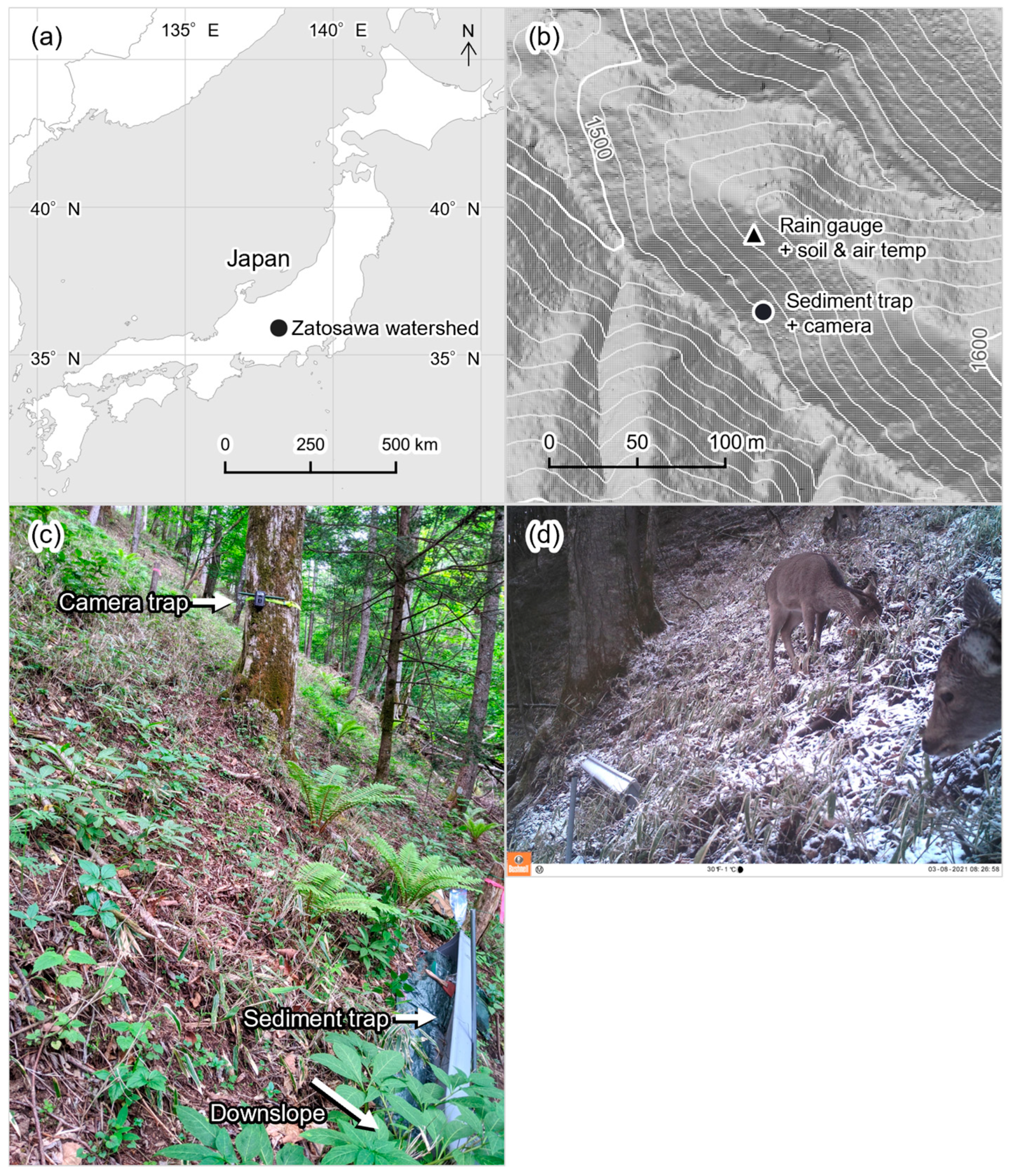
Figure 1a). Zatosawa is a tributary of the Yamamuro River in the Tenryu River basin and is situated in Takato Town, Ina City. The catchment occupies the northwestern slope of Mount Nyukasa and ranges in elevation from approximately 1230 to 1870 m a.s.l., spanning the montane and subalpine zones. The total catchment area is 2.88 km
2.
The regional climate is cool temperate, with a mean annual precipitation of 1525 mm and a mean annual air temperature of 7.4 °C, based on on-site measurements conducted during the study period. Snowfall occurs during winter; however, snow depth was not monitored during the study period.
Sediment flux observations were conducted on a southwest-facing hillslope within the Zatosawa catchment (
Figure 1b). The total hillslope length from the channel to the ridge was approximately 72 m. The monitoring point was located on the midslope, with a slope length of approximately 51 m between the monitoring point and the ridge. The topographic upslope area contributing to the monitoring point was estimated to be approximately 200 m
2 based on a digital elevation model.
Geologically, the Zatosawa catchment lies east of the Median Tectonic Line within the Outer Zone of Southwest Japan. Lithology is heterogeneous and includes basaltic volcanic rocks, Holocene sedimentary deposits, and chert associated with the Sanbagawa Metamorphic Belt. Bedrock materials include crystalline schist and chert. The dominant soil type is brown forest soil, which corresponds to Cambisols according to the World Reference Base for Soil Resources (WRB). Soil types in the study area were identified using the Japan Soil Inventory database [
23]. Geological information was obtained from the Seamless Digital Geological Map of Japan [
24].
Surface soil texture was classified according to the Japanese Industrial Standard for grain-size analysis (JIS A 1204) [
25]. The upper soil layer (0–10 cm) is classified as gravelly fine-grained soil with sand (GF-S), indicating a matrix-supported soil containing a substantial gravel fraction. The subsurface layer (10–20 cm) is classified as sandy gravelly fine-grained soil (FG-S), suggesting increasing gravel content with depth. In international soil texture terminology, these soils can be described as gravelly sandy soils with a fine-grained matrix. These classifications indicate that the hillslope soil contains abundant coarse fragments embedded in a fine-grained matrix.
Vegetation in the catchment is largely composed of forest plantations established between 1951 and 1954, dominated by Japanese larch (
Larix kaempferi). Many stands underwent row thinning between 1990 and 1991 [
26]. Broadleaf species such as beech (
Fagus crenata) occur locally along stream corridors. The understory is dominated by dwarf bamboo (
Sasa spp.) and shrubs of the family Rosaceae. In September 2019, the mean understory vegetation height was approximately 28 cm. Browsing pressure is high, and woody saplings are scarce.
The monitored hillslope consists of a Japanese larch plantation in the upper- to midslope area, while the lower slope along the channel is dominated by deciduous broadleaf forest. Tree height ranges 12.2–29.7 m, with an average of 19.6 m, and stand density is approximately 650 trees ha
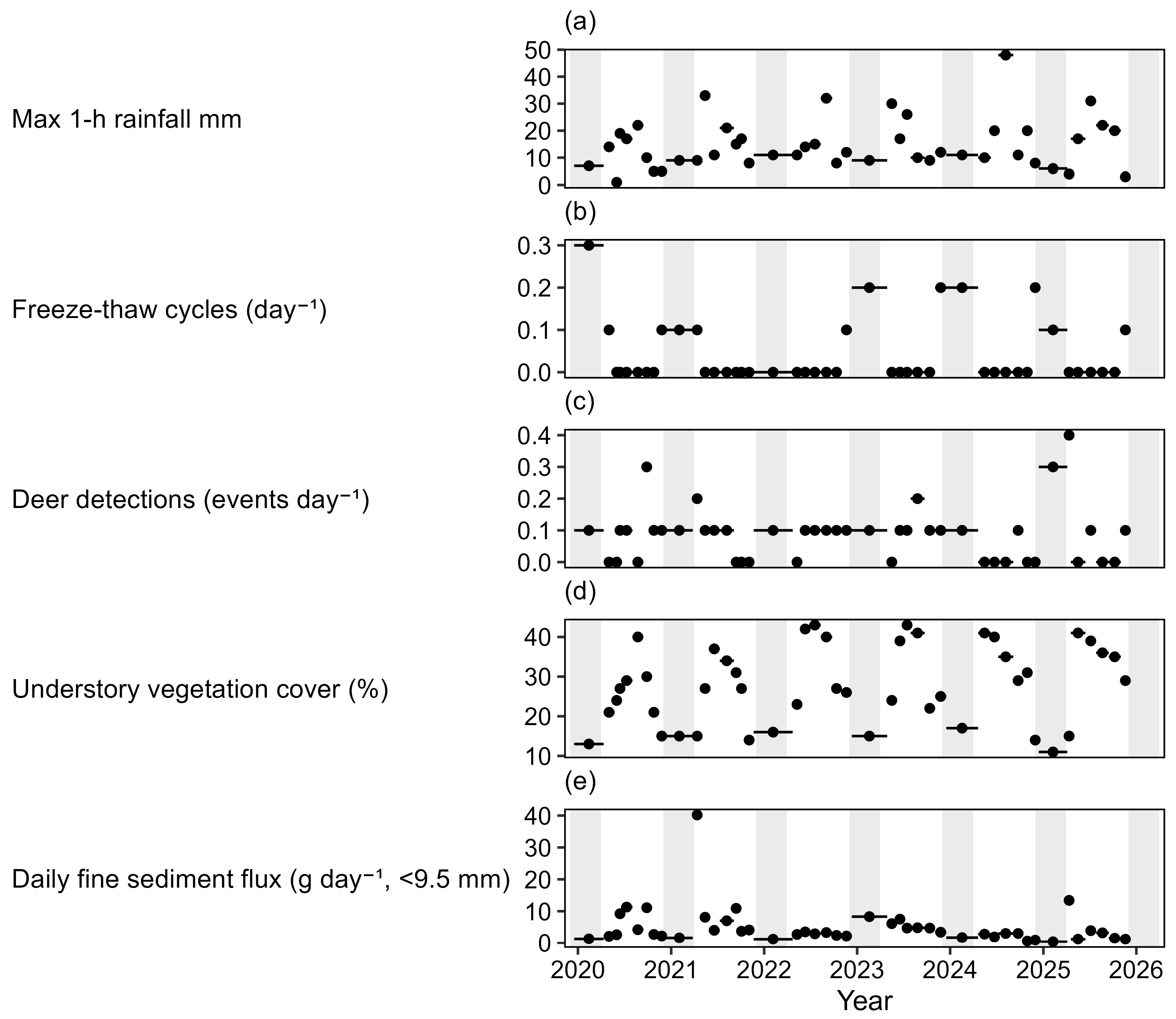
−1. These values were estimated from canopy height model (DCHM)-derived tree-top data provided by the Nagano Prefecture Forestry Department in 2023. Understory vegetation cover ranged from 11% to 43% during the observation period, with a mean value of 28% (
Figure 2), indicating substantial temporal variability in ground surface protection.
The study area is located within a region of high sika deer (
Cervus nippon) density in the Southern Alps of Japan. Camera trap data within the Zatosawa catchment indicate an estimated density of approximately 21 individuals km
−2 based on detection records. The catchment is designated as a no-hunting zone. Despite population control efforts, including culling programs implemented by Nagano Prefecture since 2002, deer densities in the region remain high. Independent estimates based on fecal pellet surveys at Mt. Nyukasa, located approximately 1.5 km from the study site, have reported densities exceeding 100 individuals km
−2 in recent years [
27], indicating that the study area is situated within a high-density deer population region.
2.2. Field Monitoring Design
Field monitoring was conducted over a six-year period from 17 December 2019 to 7 December 2025. A total of 45 observation periods were defined based on sediment retrieval intervals. The first observation period was defined as the duration from installation of the sediment traps (17 December 2019) to the first sediment collection, and each subsequent observation period corresponded to the interval between two consecutive sediment retrieval dates. For example, the observation period labeled “11 April 2020” represents the cumulative sediment flux from 17 December 2019 to 11 April 2020. Thus, observation periods represent variable-length accumulation intervals rather than fixed calendar units.
Observation periods ranged from 8 to 154 days, with a mean duration of 48 days. During the snow-covered season (late December to early April), sediment retrieval was not conducted due to field inaccessibility. Field observations indicate that significant surface erosion is unlikely to occur under continuous snow cover at the site; therefore, winter erosion processes were not included in the present analysis.
Sediment monitoring was conducted on a southwest-facing hillslope within the Zatosawa catchment (
Figure 1b). The monitoring site is located in the mid-to-lower portion of the slope at an elevation of 1533 m a.s.l., 51 m downslope from the ridge crest and 21 m upslope from the nearest channel.
Surface material was collected using two gutter-type sediment traps installed parallel to the contour line at the same elevation. Each trap measured 2.0 m in width, 0.25 m in upslope–downslope length, and 0.18 m in height. The two traps were separated by approximately 1 m but were treated analytically as a combined 4 m effective collection width across the slope.
The upstream edge of each trap was placed in direct contact with the ground surface to minimize underflow beneath the structure, and no lateral sidewalls were installed upslope of the traps. This design was adopted to avoid artificial concentration of surface flow along plot boundaries and to maintain near-natural surface flow conditions.
The traps intercepted both mineral sediment and leaf litter transported downslope. The maximum particle size observed in the collected material was approximately 20 cm, indicating that both fine sediment and coarse fragments were captured.
Sediment flux was defined as the total mass of material passing through the 4 m effective collection width during each observation period. Daily sediment flux (g day−1) was calculated by dividing the total collected mass by the duration of the observation period.
Sediment flux was not normalized by contributing area because the sediment source area upslope of the traps could not be explicitly delineated under natural hillslope conditions. The traps were installed without artificial plot boundaries, and lateral flow convergence was not constrained. Consequently, the spatial extent of contributing sediment sources likely varied temporally depending on rainfall intensity, surface conditions, freeze–thaw activity, and deer disturbance. The measurements therefore represent variations in hillslope sediment flux across a defined contour width rather than area-specific erosion rates.
2.3. Environmental Measurements
Rainfall was measured within a Japanese larch stand located upslope of the sediment monitoring site at an elevation of 1554 m a.s.l. A tipping-bucket rain gauge (Nakaasa-Sokki Co., Ltd., Tokyo, Japan, Model B-011; 0.5 mm per tip) was installed to record throughfall beneath the forest canopy, and rainfall events were logged using an event data logger (Onset Computer Corporation, Bourne, MA, USA, HOBO Pendant Event Data Logger UA-003-64). The maximum 1 h rainfall intensity was calculated from the tipping-bucket event record using a moving 60 min window and was used as the rainfall predictor in the statistical analysis.
Air and ground temperatures were measured at the same monitoring site using a temperature data logger (T&D Corporation, Matsumoto, Japan, TR-71nw) at 10 min intervals throughout the monitoring period. Air temperature sensors were installed at a height of 1.5 m above the ground surface, while ground temperature sensors were installed at a depth of 2 cm below the soil surface to capture near-surface freeze–thaw dynamics. Ground temperature data were used to derive freeze–thaw frequency metrics.
To ensure data reliability, rainfall and temperature measurements were independently conducted at a secondary monitoring site located on the left bank of the Yamamuro No. 2 Sabo Dam (elevation 1270 m a.s.l.), approximately 1.8 km downstream of the study site. Meteorological data from the two sites were compared to detect anomalies associated with sensor malfunction or battery failure. When missing values occurred at the primary monitoring site, rainfall and temperature data were gap-filled using linear regression relationships established between the two monitoring locations. Gap filling was applied only to short periods of missing data and did not substantially affect calculated rainfall intensity or freeze–thaw frequency metrics.
Freeze–thaw frequency was calculated from continuous ground temperature data measured at 2 cm depth. The threshold for freezing and thawing was set at 0 °C, where temperatures below 0 °C were defined as frozen conditions and temperatures above 0 °C as thawed conditions. A freeze–thaw cycle was defined as a transition from frozen to thawed conditions, and each transition was counted as one cycle. Freeze–thaw cycles were identified solely based on threshold crossings without additional filtering based on duration or amplitude.
Periods of snow cover were not explicitly identified due to the absence of direct snow depth measurements. However, camera-trap images indicate that snow depth during winter typically ranged from a few centimeters to approximately 60 cm, suggesting relatively shallow and intermittent snow cover. Although ground temperature fluctuations were sometimes dampened during winter, likely due to thermal insulation by snow, freeze–thaw cycles were extracted consistently based on temperature fluctuations. Therefore, the calculated freeze–thaw frequency represents temperature-defined cycles at 2 cm depth rather than mechanically effective frost action events.
The total number of freeze–thaw cycles was summed for each sediment observation period and normalized by the duration of the observation period (8–154 days) to obtain mean daily freeze–thaw frequency (cycles day−1). Rainfall data were aggregated into hourly totals using HOBOware (Onset Computer Corporation), and the maximum 1 h rainfall intensity (mm h−1) was extracted for each observation period.
2.4. Sediment Collection and Analysis
Sediment and litter accumulated in the traps were collected at the end of each observation period. All material retained within each trap was carefully removed using brushes and rubber spatulas to ensure complete recovery and transported to the laboratory for processing. Collected samples were oven-dried at 75 °C for 48 h to obtain constant dry mass, after which leaf litter and mineral sediment were manually separated using forceps and by hand. The dry mass of litter and mineral sediment was measured separately.
Each sediment trap was equipped with a drainage outlet to prevent overflow during rainfall events. The outlet was covered with a plankton net (mesh size: 10 μm), allowing water to drain while retaining nearly all mineral particles larger than 10 μm. Although particles smaller than 10 μm could potentially pass through the outlet, sediment larger than this threshold was effectively captured.
The total dry mass of mineral sediment collected during each observation period was recorded, and daily sediment flux (g day−1) was calculated by dividing the total mass by the duration of the observation period.
Although all particle sizes were measured, the primary response variable used in statistical analyses was the mass of sediment smaller than 9.5 mm. This threshold was adopted to represent the fraction considered mobile under rainfall-driven surface processes and near-surface mechanical disturbance.
The upper size limit of 9.5 mm was defined based on both experimental evidence and field observations. Previous studies have shown that particle mobility in interrill flow decreases sharply with increasing grain size, particularly above several millimeters [
28]. At the study site, sediment transport is likely governed by a combination of rainfall-driven processes and gravity-driven processes such as dry ravel, which may be enhanced by deer trampling and freeze–thaw activity. To capture particles that are marginally transportable under these conditions, sediment up to 9.5 mm in diameter was included in the analysis. Larger particles (>9.5 mm), although frequently observed (occasionally exceeding 10 cm), were excluded because their transport is episodic and would obscure the dominant relationships between environmental drivers and sediment flux.
Particle-size distribution was determined in accordance with JIS A 1204 [
25]. Each dried sample was dry-sieved using mesh sizes of 38, 19, 9.5, 4.75, 2, 0.85, 0.425, 0.25, 0.106, and 0.075 mm, and the mass retained on each sieve was measured to the nearest 0.1 g. The mass of material passing through the 0.075 mm sieve was also recorded.
The 2 mm threshold was used to distinguish gravel (>2 mm) from sand and finer fractions (<2 mm), and 0.075 mm corresponds to the conventional boundary between sand and silt. For statistical analysis, only the fraction <9.5 mm was used.
2.5. Deer Monitoring
Deer activity was monitored using an automatic camera trap (HykeCam SP2, Kyowa Techno Co., Ltd., Suzaka, Japan), which operated year-round. Image data were retrieved and batteries replaced during each field visit.
The camera captured still images with a trigger speed of 0.65 s and a resolution of 12 megapixels. It was installed at 1.2 m above ground level, above the understory vegetation, and oriented toward the sediment trap and the upslope area (
Figure 1c), with a horizontal field of view of 52°. The sensor detection distance was 25 m, and nighttime images were obtained using a 940 nm infrared flash with an effective illumination distance of 20 m.
Deer activity was quantified using independent detection events rather than the total number of images or individuals. Consecutive photographs were considered part of the same event if taken within 10 min, whereas those separated by more than 10 min were treated as independent events. This threshold is consistent with commonly used criteria in camera-trap studies [
29], while allowing sensitivity to repeated site use. A longer interval may underestimate disturbance intensity, whereas counting all detections would lead to overestimation.
Only deer entering the upslope area of the sediment trap were included in the analysis, and detections downslope were excluded. Other species were occasionally recorded but were not analyzed.
For each observation period, the number of independent events was summed and divided by the number of monitoring days to obtain the deer activity index (events day−1).
Sika deer (
Cervus nippon) typically weigh approximately 40–100 kg depending on sex and age [
30]. Although sex and age were sometimes identifiable, they were not included in the analysis, and no tracking data were available. The deer activity index therefore represents an indirect measure of presence and disturbance intensity.
2.6. Understory Vegetation Assessment
Seasonal variation in understory vegetation cover was assessed within a 1 m × 4 m plot located immediately upslope of the sediment trap. This plot corresponded to the effective trap width and represents the vegetation directly influencing sediment delivery. A single plot was repeatedly monitored to evaluate temporal changes.
Vegetation cover was recorded at each sediment sampling event using photographs of the plot. Images were taken with a digital camera positioned parallel to the slope surface to minimize geometric distortion.
Image processing was conducted as follows: (1) the plot was cropped using GIMP (version 2.10.36); (2) perspective distortion was corrected; (3) the image was imported into ImageJ (version 1.53k; National Institutes of Health, USA); (4) green vegetation was extracted using color thresholding and converted into a binary image; and (5) the result was visually checked and adjusted when necessary. Vegetation cover was calculated as the proportion of green pixels relative to the total plot area.
To avoid disturbing sediment monitoring conditions, measurements of vegetation height and biomass were conducted separately in September 2019 at a nearby location (~15 m from the monitoring plot) with similar slope position and vegetation characteristics. Vegetation height was measured within a 1 m × 1 m quadrat at five points, and the mean height was calculated. For biomass estimation, all vegetation within a 1 m × 1 m quadrat was clipped, oven-dried, and weighed.
All image acquisition and processing were conducted by the same author to ensure methodological consistency.
2.7. Data Processing and Statistical Analysis
All variables were aggregated to the sediment observation period to ensure temporal consistency between response and explanatory variables. Sediment flux, freeze–thaw frequency, deer activity, and maximum 1 h rainfall intensity were expressed as period-based metrics for each observation period.
Daily sediment flux (g day−1) was calculated by dividing the total collected sediment mass by the number of days in each observation period. Freeze–thaw frequency was calculated as the total number of cycles within each period divided by the number of monitoring days (cycles day−1), and deer activity was expressed as the number of independent detection events per day (events day−1). Maximum 1 h rainfall intensity (mm h−1) was defined as the highest hourly rainfall recorded within each observation period.
To improve the interpretability of regression coefficients and reduce potential multicollinearity, the maximum 1 h rainfall intensity, daily freeze–thaw frequency, and daily deer activity were mean-centered by subtracting their overall means.
Daily sediment flux ranged from 19 to 5400 g day−1 and exhibited positive skewness; therefore, it was log-transformed prior to analysis to improve normality and stabilize variance. No zero values or missing data were observed during the study period, and thus no offset correction or imputation was required. The response variable was expressed as ln(S_flux), where S_flux denotes daily sediment flux.
A multiple linear regression model was fitted to examine the effects of rainfall intensity, freeze–thaw activity, and deer activity on daily sediment flux. The explanatory variables included maximum 1 h rainfall intensity (Rain1h), daily freeze–thaw frequency (FT_day), and daily deer detections (Deer_day), all of which were mean-centered prior to analysis.
The model structure was:
where Rain1h_c, FT_day_c, and Deer_day_c represent mean-centered predictors.
Variance inflation factors (VIF) were calculated to assess multicollinearity among predictors, and all values were below 1.3, indicating no evidence of collinearity.
Model assumptions were evaluated using residual diagnostics. Q–Q plots indicated approximate normality of residuals with minor deviations at the tails, and residual-versus-fitted and scale–location plots did not reveal strong heteroscedasticity. No influential observations exceeding Cook’s distance threshold were detected.
Model performance was evaluated using the coefficient of determination (R2), adjusted R2, root mean square error (RMSE; in log units), and the overall F-test.
All statistical analyses were conducted using R version 4.5.2 (R Core Team) in RStudio (version 2026.01.1+403, “Apple Blossom”; RStudio, Inc., Boston, MA, USA).
3. Results
3.1. Temporal Patterns of Environmental Factors and Sediment Flux
Temporal variations in environmental factors and daily fine sediment flux during the monitoring period are shown in
Figure 2.
Maximum 1 h rainfall during the monitoring periods ranged from 1 to 48 mm (mean: 15 mm). Air temperature varied between −18.1 °C and 35.0 °C, while ground surface temperature ranged from −6.7 °C to 30.6 °C. Freeze–thaw cycles were most frequent between December and April each year.
Daily deer detections ranged from 0 to 0.43 individuals per day (mean: 0.08 day
−1). Deer were recorded throughout the year, although several periods with zero detections occurred during summer and autumn. Camera-trap images frequently captured deer feeding on understory vegetation such as dwarf bamboo near the sediment trap (
Figure 1d).
Vegetation cover varied from 10.9% to 43.2% (mean: 27.9%). Cover began to increase in late April, peaked around August, and declined during winter (December–April).
Daily fine sediment flux (<9.5 mm) ranged from 0.4 to 40.2 g day−1 (mean: 4.9 g day−1), showing intermittent peaks during the monitoring period.
3.2. Particle-Size Characteristics of Eroded Sediment
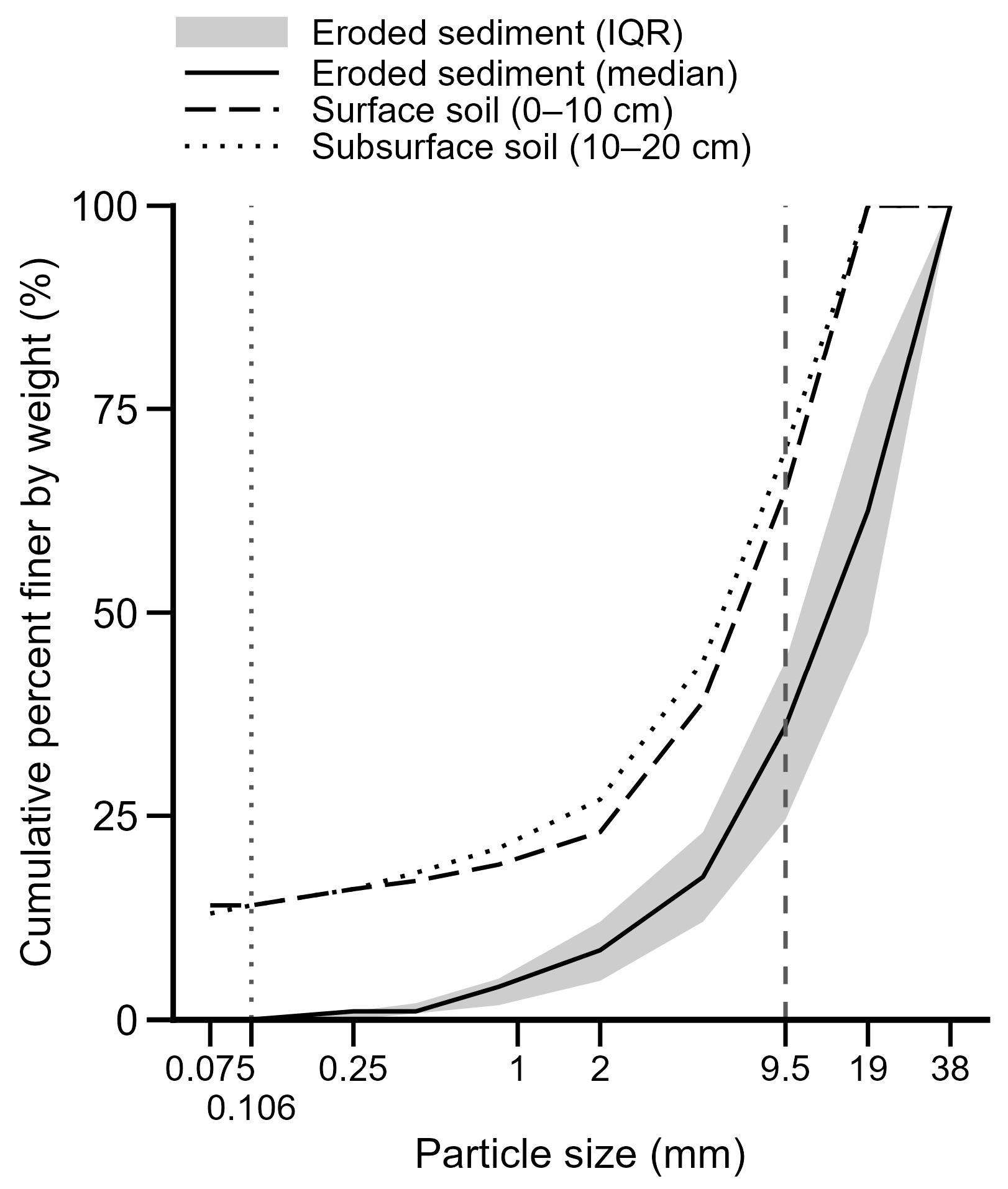
Particle-size distributions expressed as cumulative percent finer by weight for surface soil (upper and lower layers) and eroded sediment are shown in
Figure 3. Compared with the surface soil, the eroded sediment exhibited a clear shift toward coarser particle sizes.
The median particle size (D50) was 6.0 mm for the upper surface soil layer and 5.5 mm for the lower layer, whereas the eroded sediment showed a substantially larger D50 of 11.1 mm. In addition, particles finer than 0.106 mm accounted for 14% of the surface soil but only 0.15% of the eroded sediment.
Overall, the eroded sediment was markedly enriched in coarse particles relative to the source soil.
3.3. Multiple Regression Analysis
A multiple linear regression model was fitted to examine the effects of rainfall intensity, freeze–thaw activity, and deer activity on daily fine sediment flux. The response variable was ln(daily fine sediment flux), and the explanatory variables were centered maximum 1 h rainfall (Rain1h_c), centered daily freeze–thaw frequency (FT_day_c), and centered daily deer detections (Deer_day_c).
The model was based on 45 observations and was statistically significant overall (F(3, 41) = 3.38, p = 0.027). The model explained 19.8% of the variance in ln(daily sediment flux) (R2 = 0.198; adjusted R2 = 0.140).
Maximum 1 h rainfall (Rain1h_c) showed a positive but non-significant effect (β1 = 0.0208, p = 0.159). Daily freeze–thaw frequency (FT_day_c) showed a negative and marginally significant effect (β2 = −3.352, p = 0.095). In contrast, daily deer detections (Deer_day_c) had a positive and statistically significant effect (β3 = 3.592, p = 0.013).
Additional simple regression analyses (
Figure S1) showed that deer detections exhibited a clearer positive relationship with sediment flux, whereas rainfall intensity and freeze–thaw frequency showed weaker or less consistent relationships. These results are consistent with the multiple regression analysis.
Variance inflation factors were all below 1.3, indicating no multicollinearity among explanatory variables.
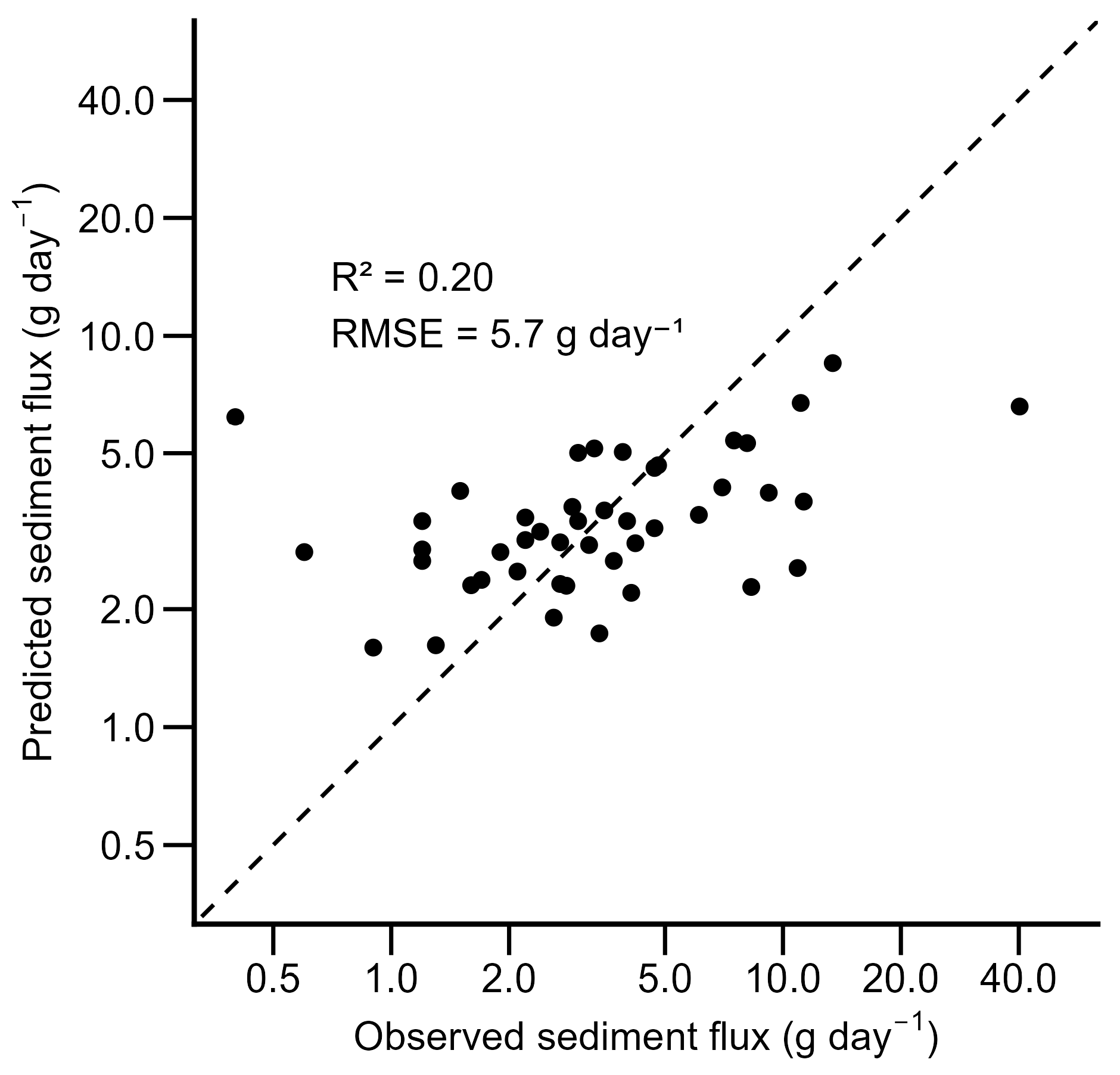
Model performance is shown in
Figure 4. Predicted values tended to underestimate sediment flux at higher observed values (>10 g day
−1), indicating that high-magnitude sediment export events were not fully captured by the linear model.
3.4. Partial Effects
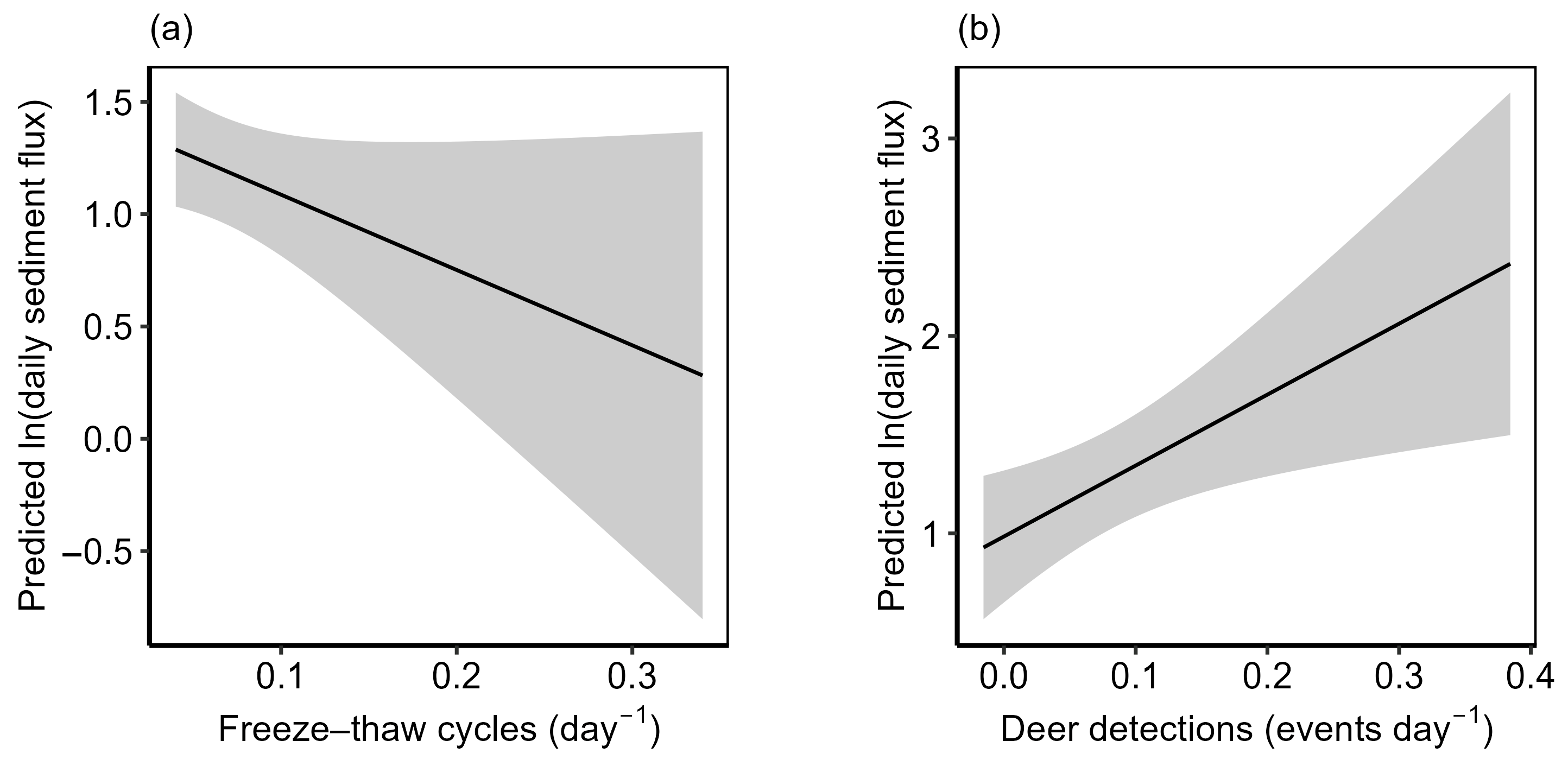
Partial regression plots illustrating the partial effect of each predictor while holding other variables at their mean values are shown in
Figure 5.
Figure 5a shows the partial effect of daily freeze–thaw frequency. Predicted ln(daily sediment flux) decreased with increasing freeze–thaw frequency, although uncertainty increased toward higher values, reflecting the marginal statistical significance of the coefficient.
Figure 5b shows the partial effect of daily deer detections. Predicted ln(daily sediment flux) increased with increasing deer detections per day, consistent with the statistically significant positive regression coefficient.
4. Discussion
4.1. Relative Importance of Climatic and Biotic Drivers of Soil Erosion
This study evaluated the relative importance of climatic drivers and deer disturbance in controlling hillslope sediment flux in a high-elevation forest environment. The regression analysis showed that deer detections had a significant positive relationship with hillslope sediment flux, whereas rainfall intensity and freeze–thaw frequency did not exhibit strong independent effects. Because the camera trap was positioned to monitor deer entering the immediate upslope area of the sediment trap, detection events likely represent disturbance activity occurring directly on the monitored hillslope. Rainfall impact and freeze–thaw processes are widely recognized as key drivers of soil erosion in mountain environments because they influence both the transport capacity of surface processes and the production of detachable soil material [
31,
32]. However, the present results suggest that short-term climatic variability alone did not fully explain the observed sediment flux on the monitored hillslope.
Snowmelt-driven runoff is another potential driver of sediment transport in cold mountain environments. In the present study catchment, seasonal increases in stream discharge during the snowmelt period indicate that snowmelt runoff does occur. Nevertheless, sediment flux did not consistently increase during the snowmelt season across years (
Figure 2). This suggests that snowmelt-driven surface erosion was not a dominant process on the monitored hillslope. The dense forest cover and relatively high infiltration capacity likely limit the generation of overland flow during snowmelt, thereby reducing its contribution to sediment transport compared to other drivers.
The influence of different drivers on sediment flux varies seasonally [
4]. During winter, the hillslope is largely covered by snow, which insulates the ground surface and suppresses freeze–thaw cycles [
33]. Although sediment flux was not directly measured during periods of continuous snow cover, sediment traps remained in place, and sediment yields immediately after snowmelt were not consistently elevated (
Figure 2). These observations suggest that sediment transport during continuous snow cover was likely limited under the conditions of this study site.
During the snowmelt and early growing season, freeze–thaw cycles may still occur intermittently, while understory vegetation other than dwarf bamboo remains undeveloped. Because dwarf bamboo (Sasa spp.) retains its leaves, it attracts deer activity, leading to trampling and disturbance of the surface soil. These conditions likely enhance the availability of erodible material and increase the susceptibility of the hillslope to sediment mobilization.
During the summer growing season, many understory plants leaf out, increasing aboveground biomass and ground cover. This seasonal development of vegetation reduces soil exposure and limits sediment availability. In addition, vegetation reduces raindrop impact and increases surface roughness, thereby decreasing the efficiency of overland flow in transporting sediment [
14]. As a result, both the availability and mobility of unstable surface materials are reduced.
These seasonal dynamics indicate that freeze–thaw processes primarily contribute to the preparation of erodible material, whereas deer disturbance regulates sediment supply, and rainfall controls transport processes at shorter timescales [
4,
14].
One possible explanation is that the hillslope operated under supply-limited conditions during the observation period. Under supply-limited conditions, sediment export is constrained primarily by the availability of erodible material rather than by the transport capacity of surface runoff or rainfall impact [
34]. Consequently, disturbances that expose or mobilize surface soil can exert a stronger influence on sediment flux than climatic drivers alone. The significant relationship between deer detections and sediment flux therefore suggests that biotic disturbance associated with deer activity played an important role in regulating sediment supply on the hillslope.
This interpretation is consistent with geomorphic frameworks in which hillslope erosion is governed by the interaction between sediment supply and transport capacity. The relatively modest coefficient of determination (R2 = 0.198) likely reflects the inherently stochastic nature of hillslope erosion processes and the influence of additional unmeasured factors such as microtopography, localized disturbance events, and spatial variability in soil properties.
Compared with previous studies in forested mountain environments, where sediment flux is often primarily controlled by rainfall intensity and freeze–thaw processes [
4,
31,
32], the present results highlight a relatively stronger influence of biotic disturbance. Climatic drivers such as rainfall and freeze–thaw are widely recognized as key controls on soil erosion because they govern both sediment detachment and transport processes [
4,
35]. However, recent studies have demonstrated that large herbivores can significantly alter soil properties, vegetation cover, and erosion processes through trampling and browsing [
20,
21,
36].
Our findings suggest that under conditions where sediment supply is limited, disturbance by large herbivores can become a primary factor regulating sediment flux. This contrasts with less disturbed forest systems, where sediment availability is maintained by natural processes and climatic forcing plays a more direct role in controlling sediment transport.
4.2. Mechanisms of Deer-Induced Soil Disturbance and Sediment Mobilization
Deer activity has been shown to promote soil erosion through several interacting mechanisms. Previous studies have demonstrated that intensive browsing by sika deer can degrade understory vegetation, expose the soil surface, and accelerate soil erosion in forest ecosystems [
21,
22]. Browsing and trampling reduce understory vegetation cover, exposing the soil surface and decreasing surface roughness. Reduced roughness lowers resistance to both overland flow and sediment movement, thereby facilitating the downslope transport of detached particles. Vegetation removal is widely recognized as a major factor increasing soil erosion because plant cover protects the soil surface from raindrop impact and helps stabilize soil structure [
37]. In addition, the removal of vegetation can increase the amplitude of near-surface temperature fluctuations, potentially enhancing freeze–thaw activity in exposed soils [
38].
Repeated trampling by large herbivores may further disturb soil structure by breaking soil aggregates, compacting the soil surface, and exposing mineral soil [
39]. Such disturbances increase the availability of detachable soil particles and may enhance the susceptibility of hillslope soils to erosion. Previous studies have shown that trampling by ungulates can substantially alter soil physical properties and promote surface disturbance in forest and grassland ecosystems [
20].
These processes together may increase sediment availability and connectivity on hillslopes. In particular, trampling and vegetation disturbance can expose coarse soil particles that are otherwise protected by understory vegetation and the litter layer. As a result, deer disturbance may amplify hillslope sediment flux by increasing the amount of erodible material available for transport, even when climatic drivers alone are insufficient to generate substantial erosion. If deer disturbance increases sediment availability in this manner, such effects should also be reflected in the characteristics of the exported sediment.
4.3. Evidence of Sediment Supply Limitation from Particle-Size Characteristics
The particle-size distributions of eroded sediment were markedly coarser than those of the source soil (
Figure 3). While the surface soil contained a substantial fraction of fine particles, the exported sediment was depleted in fine material and enriched in coarse fractions. This pattern contrasts with many soil erosion studies in which transported sediment tends to be finer than the source soil because fine particles are preferentially detached and transported [
40].
Several mechanisms could potentially explain this coarse particle-size distribution. One possible explanation is the selective transport of exposed coarse particles. Once coarse particles are exposed at the soil surface, they can be mobilized downslope through short-distance rolling, saltation, or gravity-assisted movement. In addition, cohesive forces among fine particles may increase resistance to detachment, whereas non-cohesive sand- and gravel-sized particles may be mobilized more readily once exposed at the surface [
41]. Under such conditions, sediment transport may become dominated by coarse particles even when the runoff transport capacity is limited.
A second possible explanation is that fine sediment was eroded but not efficiently retained by the sediment traps. However, this mechanism is unlikely to explain the observed particle-size contrast. The sediment traps were equipped with drainage outlets covered by plankton nets with a mesh size of 10 μm (
Section 2.4), allowing water to drain while retaining nearly all mineral particles larger than this threshold. Consequently, loss of fine sediment from the traps would be limited primarily to particles smaller than 10 μm and is unlikely to account for the observed depletion of fine particles in the exported sediment.
A third possible explanation is progressive surface coarsening or armoring, in which previous rainfall events selectively remove fine particles and leave a coarse surface layer. Such armoring has been reported to alter sediment-size distributions during repeated rainfall erosion [
42]. However, the present observations do not support this interpretation. During the six-year monitoring period, there was no clear temporal trend indicating progressive enrichment of coarse particles in the exported sediment, nor was there field evidence that the hillslope surface became increasingly covered by coarse fragments.
Taken together, these observations suggest that the coarse particle-size distribution of exported sediment is best explained by selective mobilization of exposed coarse particles under supply-limited conditions rather than by sampling bias or progressive hillslope armoring. This interpretation is consistent with a hillslope system in which deer disturbance increases the exposure and availability of erodible material, while climatic drivers primarily govern the timing of sediment transport. This pattern contrasts with fine-particle-dominated erosion commonly observed in other environments and further supports the interpretation that sediment export in the present study was governed primarily by sediment availability rather than selective transport of finer particles.
4.4. Implications for Forest Ecosystem Degradation
Overabundant ungulate populations have been widely reported to exert strong impacts on forest ecosystems through both browsing and trampling. Intensive herbivory can significantly reduce the biomass of understory vegetation [
43], alter species composition by selectively removing palatable species while promoting unpalatable ones [
44], and negatively affect tree recruitment by increasing sapling mortality [
45]. These changes may lead to long-term degradation of forest structure and regeneration processes.
Furthermore, the decline of understory vegetation reduces ground cover that protects the soil surface, thereby increasing susceptibility to soil erosion and contributing to the deterioration of mature trees [
22]. In this context, deer disturbance in the present study can be interpreted as a key driver that modifies sediment availability by disrupting vegetation cover and exposing soil surfaces.
These findings suggest that the observed relationship between deer activity and sediment flux reflects not only short-term physical disturbance but also longer-term ecological degradation processes that regulate sediment supply. Increasing deer populations may compromise ecosystem stability and enhance land degradation risks in mountain forests, highlighting the importance of sustainable forest and watershed management. Therefore, effective management of ungulate populations should be considered an important component of sustainable forest and watershed management in high-elevation environments. These ecological impacts collectively reinforce the geomorphic processes observed in this study, linking biotic disturbance to sediment production through vegetation degradation and soil exposure.
4.5. Limitations and Broader Implications
Building on the broader ecological implications discussed above, several limitations should be considered when interpreting the results of this study. Deer activity was quantified using camera-trap detections, which represent an index of animal presence rather than a direct measure of trampling intensity. However, the camera was positioned to monitor deer entering the area immediately upslope of the sediment trap, thereby recording individuals most likely to contribute directly to soil disturbance on the monitored hillslope. Repeated photographs of the same individual within a 10 min interval were counted as a single detection to reduce bias caused by prolonged animal presence. Although this metric does not directly measure trampling intensity, it provides a reasonable proxy for local deer activity and associated disturbance pressure on the soil surface.
In addition, the observations were conducted on a single hillslope, and therefore, caution is required when generalizing the results. Nevertheless, similar interactions between herbivore disturbance and soil erosion may occur in other mountain environments where high ungulate densities coincide with cold-climate geomorphic processes. Furthermore, the relative contribution of snowmelt-driven erosion was not explicitly separated from rainfall-driven processes, which may introduce uncertainty in interpreting seasonal sediment dynamics.
In addition, the potential effects of soil compaction induced by deer trampling were not directly measured in this study. Trampling by large herbivores can alter soil physical properties, including penetration resistance and hydraulic conductivity, which may influence runoff generation and erosion processes. However, previous studies suggest that, under moderate population densities typical of natural forest ecosystems, the overall impact of deer on soil compaction may be limited [
46]. Field observations at the study site are consistent with this interpretation: while localized compaction and soil exposure were observed along deer trails, such effects were spatially restricted and did not appear to dominate hillslope-scale sediment dynamics. Therefore, deer disturbance in this study is interpreted primarily as a factor influencing sediment supply through surface disturbance rather than through systematic alteration of soil physical properties.
Large herbivores are increasingly recognized as geomorphic agents capable of modifying soil structure, vegetation cover, and sediment connectivity on hillslopes [
15,
26]. Understanding the interactions between wildlife disturbance and geomorphic processes may therefore be important for predicting erosion dynamics in mountain landscapes experiencing high herbivore densities [
47]. These findings have direct implications for sustainable mountain forest management under increasing ungulate pressure.