Review

Bringing Food Back to the City: A Critical Review of Green Infrastructure Concepts for Integrating Agriculture


by
Heloisa Amaral Antunes
1,2,3,*,
Isabel Martinho da Silva
1,2,3 and
Sandra Costa
4,*
1
InBIO Laboratório Associado, CIBIO Centro de Investigação em Biodiversidade e Recursos Genéticos, University of Porto, Campus de Vairão, 4485-661 Vairão, Portugal
2
BIOPOLIS Program in Genomics, Biodiversity and Land Planning, CIBIO, Campus de Vairão, 4485-661 Vairão, Portugal
3
Department of Geosciences, Environment, and Spatial Planning, Faculty of Sciences, University of Porto, Rua do Campo Alegre, N° 687, 4169-007 Porto, Portugal
4
School of Architecture and Design, Birmingham City University, The Parkside Building, 5 Cardigan Street, Birmingham B4 7BD, UK
*
Authors to whom correspondence should be addressed.
Sustainability 2026, 18(8), 3781; https://doi.org/10.3390/su18083781
Submission received: 16 January 2026 / Revised: 2 April 2026 / Accepted: 3 April 2026 / Published: 10 April 2026

Abstract

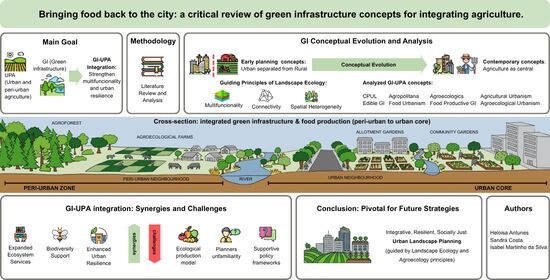
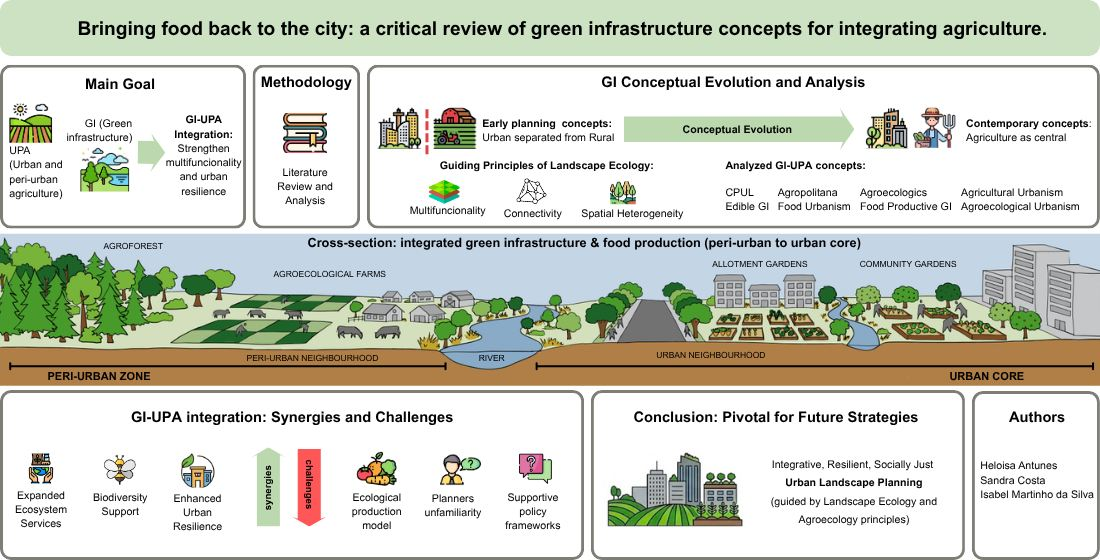
This article critically examines the evolving integration of urban and peri-urban agriculture (UPA) into green infrastructure (GI) concepts, a discussion gaining relevance amid geopolitical instability and global disruptions, such as the COVID-19 pandemic and the war in Ukraine. These events have exposed food systems’ vulnerability and reinforced the importance of preserving fertile urban and peri-urban land to enhance food security and sovereignty. UPA’s capacity to deliver several ecosystem services further reinforces its significance for socio-environmental policies. Based on a cross-disciplinary literature review, the study traces the conceptual evolution of GI from early models that separated agricultural and urban landscapes to contemporary frameworks that position agriculture as a central dimension of urban systems. It then analyses concepts such as Continuous Productive Urban Landscapes (CPUL), Edible GI, and Agroecological Urbanism, evaluating how they intersect with the core landscape ecology principles underpinning GI: multifunctionality, connectivity and spatial heterogeneity. Focusing on the European context, the discussion highlights key factors influencing GI-UPA integration: the definition of production model, the planning approaches guiding its development, and the policy frameworks required to support it. The paper concludes that embedding UPA within GI planning is pivotal to advancing integrative, resilient, and socially just urban greening strategies.

Graphical Abstract

1. Introduction

1.1. Agriculture and the City

Until the Industrial era, the survival of the city was dependent on a local supply of food both located inside the city and its immediate surroundings, organized concentrically. The complexity of this territorial organization varied with cultural development and with political stability [1]. Political stability led to agricultural landscape intensification, with an increase in regular cultivation areas and productivity, while political unrest led to extensification due to a decrease in regular cultivation areas, and/or decrease in productivity [1].
The Transportation Revolution started to part food production from the city, pushing it to the far outskirts or even further away [2]. But as in ancient times, the political unrest brought by the two World Wars (WWs) and the Great Depression pushed again agriculture back into the city. One of the most famous campaigns, the Victory Gardens in the United States (US), promoted urban gardening as an act of patriotism, pride and resilience. By 1944, more than 40% of the fresh vegetables consumed in the US came from the 20 million Victory Gardens established across the country [3]. Similar initiatives emerged across Europe to address urban food shortages during the two WWs. In Slovenia, the lawns of Congress Square in Ljubljana were ploughed in 1942 and converted into a ‘city field’ for potato cultivation to supply the local population [4]. In countries such as England, Germany, and Sweden, allotment gardens supplied up to 10% of national food needs [5].
The widespread food shortages and the threat of global hunger triggered a global effort to intensify agricultural production after WWII. The Green Revolution adapted wartime scientific and technological advances (synthetic fertilizers, pesticides, and mechanization) for agricultural use [3], and in Europe the Common Agricultural Policy (CAP) prioritized food self-sufficiency through rural intensification [6]. This intensification depleted soil fertility, disrupted traditional agroecosystems, simplified agricultural landscapes, and proved unsustainable for small-scale farmers due to its high input demands [3]. Agricultural landscapes near cities were gradually enclosed by urban expansion and sprawl, while many abandoned farmlands were converted into housing developments, industrial areas, and transport infrastructure [7,8].
These pressures worsened rural inequalities and contributed to widespread rural exodus, particularly between the 1970s and 1980s. In post-socialist countries, a widespread institutionalization of allotment gardens occurred between 1965 and 1975, led by a socialist development policy, intended to provide social stability [5]. Recently, the COVID 19 pan-demic led to the resurgence of community gardens and allotment gardens in many cities [9], affording evidence for the pivotal role that urban and peri-urban agriculture (UPA) plays in ensuring food security, providing wellbeing, and fostering community resilience in times of crisis.

1.2. Urban Greening and Quality of Life

The reshape of urban landscapes resulted in drastic reduction of agricultural areas in and close to cities. This scenario not only increased urban populations’ dependence on external food supply, but also diminished their quality of life, since food production landscapes had long served as spaces of leisure and contact with nature. To compensate for this loss, several urban greening concepts emerged throughout the 19th and 20th centuries.
The earlier urban greening concepts largely failed to integrate food production typologies [10]. This omission has had lasting repercussions for public health, urban sustainability and resilience, environmental quality and food security [11,12]. In recent decades, rising environmental and social pressures have posed new challenges to green urban planning, expected to provide ecosystem services in both urban and peri-urban contexts. This is particularly relevant for cities and regions seeking strategies to repurpose underutilized open spaces and abandoned agricultural lands, a phenomenon commonly observed across Europe [13]. These areas are not only ecological assets but also carry significant cultural and productive value, with the potential to contribute to food security, territorial cohesion and resilience.
Despite the growing recognition of UPA’s potential, its integration into Green Infrastructure (GI) planning remains inconsistent [14]. Agriculture is often framed as a secondary or peripheral function to GI rather than a core element. UPA is often implemented on residual or available spaces, such as vacant lots, urban fringes, infrastructure corridors, and roof-tops, without fundamentally questioning the prevailing land-use dynamics that continue to drive soil degradation, aquifer contamination, nutrient cycle disruption, and ecosystem fragmentation [15]. This gap underscores the need for planning frameworks that embrace UPA as an essential component of multifunctional and resilient urban landscapes.
Moreover, the role of landscape architecture in operationalizing these values through spatial design remains largely underexplored in the literature [16]. GI planning, rooted in the principles of landscape ecology—namely multifunctionality, connectivity and spatial het-erogeneity—and enriched by agroecological principles, offers a promising theoretical foundation and creates a compelling opportunity to reimagine agriculture as a central element of comprehensive landscape planning, while supporting other ecosystem services [10].
Seeking to advance the spatial integration of UPA into GI, this paper addresses the following research questions: (1) How have GI–related concepts evolved in terms of their guiding principles and how has food production been incorporated within this evolution? (2) How well do GI-UPA concepts perform? (3) What synergies, opportunities, and challenges arise for integrating UPA into multifunctional GI?

2. Materials and Methods

The methodology used in this study was designed to understand how GI-UPA integration can function as a sustainable landscape planning strategy, aiming to provide both historical depth and analytical clarity. It recognizes the cross-disciplinary nature of the field and seeks to inform planning strategies that are adaptable to different urban contexts.

2.1. Literature Review Approach and Selection Criteria

A comprehensive search was conducted on the Web of Science and Scopus databases between November 2024 and February 2026, based on titles, abstracts, and keywords, using the terms “green infrastructure”, “greenway”, “green corridor”, “ecological corridor”, “green belt”, combined with “agriculture” and “food production”. The search targeted peer-reviewed studies addressing the integration of GI and UPA within spatial and landscape planning contexts. The selection included only English-language publications developed in the Global North, particularly in North America, Southern, Western and Eastern Europe, where GI has been widely institutionalised; studies developed within urban and peri-urban areas; and research addressing conceptual frameworks, planning policies or case studies related to the spatial integration of UPA into GI. Publications centred on technological or building-based production systems (e.g., vertical farming or rooftop agriculture) were excluded, as the scope of this research focuses on spatial strategies that reclaim, structure, and enhance underused open land. This screening resulted in 59 documents full-text reviewed, of which 37 were included in the final analysis.
During the full-text review of the selected articles, the need to consult primary sources became evident to accurately capture the original conceptual formulations and policy foundations of key frameworks. Accordingly, additional materials were incorporated, including other peer-reviewed articles, academic books, institutional reports, particularly European policy documents, and other relevant grey literature. The resulting corpus reflects a cross-disciplinary body of literature, with emphasis on approaches relevant to European planning contexts, where underused land presents opportunities for multifunctional and resilient urban landscapes.

2.2. Analytical Stages

Based on the literature review, an analysis of GI-related concepts was conducted seeking to answer the research questions. The literature revealed key planning concepts, from early park systems, parkways, and greenbelts to greenways, ecological networks, and contemporary European GI frameworks. These concepts were analysed in terms of its guiding planning principles, the integration of food production, and the identification of key ecological principles.
The literature also disclosed contemporary concepts that explicitly address the integration of UPA into GI, namely CPUL, Agricultural Urbanism, Food Urbanism, Agroecological Urbanism, Agropolitana, Edible GI, Agroecologics, and Food-productive GI. These were recognized for their explicit engagement with the spatial planning of urban food production and their conceptual alignment with GI strategies.
The identified GI-UPA concepts were evaluated using key landscape ecology principles—multifunctionality, connectivity, and spatial heterogeneity—as an analytical framework. As these principles were foundational for the GI concept, this approach allows assessment of whether GI-UPA concepts represent an extension or refinement of GI through the incorporation of food production functions, as well as their contribution to urban resilience and ecosystem service provision.

3. Results

3.1. The Evolution of GI-Related Concepts: Addressing Agriculture over Time

The growing acknowledgement of the importance of public open spaces for the urban population has led to a paradigm shift in urban planning in the 19th century. Cities such as Paris, London, and Barcelona developed planning guidelines promoting the design of wide tree-lined streets and avenues and the construction of the first public parks [17,18]. Inspired by European developments and driven by public health agendas, Frederick Law Olmsted developed, in the US, his theories on the benefits of contact with nature, fresh air and sunlight.
In 1870, Olmsted introduced the concept of Parkways, advocating that parks should be designed at the neighbourhood level and interconnected by pathways of a similar class, facilitating pedestrian access and democratizing the experience of connecting with nature [17,19]. Throughout the 19th century, Olmsted developed several influential projects across the US, including the Riverside, a neighbourhood near Chicago, and the Emerald Necklace, a comprehensive park system for Boston, using rivers as the backbone of park system. Olmsted initiated later the “City Beautiful Movement”, which embodied much of his ideology [17].
Olmsted’s ideas about the social and health benefits of nature in cities set important precedents for bringing greenery into urban environments, having laid the foundations for the modern public health agendas and understanding of GI. Building on his pioneering ideas, various utopian city models emerged, including Patrick Geddes’ Valley Section, Frank Lloyd Wright’s Broadacre City, and Le Corbusier’s Contemporary City, among other significant contributions to urban planning literature [10,20]. However, the aesthetic ideology of this movement largely overlooked the potential of UPA spaces to advance these same benefits while providing food. As a result, greening plans often led to the replacement of farms at the expanding edges of cities [10], thereby reinforcing the separation be-tween urban and rural spheres.
Despite this strong tendency towards spatial segregation, in 1875 von Thünen pro-posed a circular spatial model based on economic geography and the dynamics of land rent, which establishes that distance to the market determines the type of agriculture practiced in a specific location. In this context, the main decision-making factors include the perishability of the product and transport costs [21].
Similarly, Ebenezer Howard developed in the late 19th century in England one of the most influential planning models, The Garden City [22], a “town-country” model that combined the benefits of urban and rural life, proposing the reintroduction of agriculture as a structuring element of urban fabric. Howard envisioned small and decentralized cities with diverse land uses that provide all essential functions, including an abundant distribution of green spaces and a wide provision of vegetable gardens and orchards. The model was a pioneer in proposing a Green Belt, dimensioned with sufficient agricultural land around the cities to supply them, thereby making them largely self-sufficient and consequently more resilient in terms of food provision.
The Green Belt concept was adopted internationally in several cities after WWII, primarily designed to contain urban expansion. In the United Kingdom (UK), the main criterion for designating green belt land was the preservation of landscape openness, which led to the protection of various green spaces that met this visual requirement—including areas of peri-urban agriculture. Paradoxically, suburban gardens, despite offering greater ecological, social, and productive benefits, were excluded from protection because their spatial structure diminished the perceived sense of openness [23]. A similar interpretation emerged in Paris in the 1970s, where green belts were designed to control urbanization process and provide recreational areas for residents [24]. In the Netherlands, agricultural land was to be preserved “as far as possible” from cities, as part of green belts that serve as buffers between urban and industrial areas [25]. Other cities followed this pattern [23], adopting green belts to safeguard landscapes surrounding cities while overlooking their primary role of food provisioning. This tendency was also reflected in the US in 1928, where Benton MacKaye’s reinterpretation promoted green belts to control sprawl, preserve naturalness, and offer recreation [26], without any reference to food supply.
During the 1980s, the concept of Greenline was discussed in several US government publications, introducing guidelines for its consolidation. A Greenline was defined as an extensive scenic landscape safeguarded by legal and regulatory measures against un-planned development, preserving natural or historic character, while often remaining in productive use. Again, this planning concept drew particular attention for peri-urban areas that “were either going to be very expensive to acquire or were inappropriate for public ownership but still merited some form of public protection” [26] (p. 19). The protection and management of these landscapes were typically conducted through collaborative arrangements among federal, state and local stakeholders [26].
Building on this groundwork, the Greenway movement emerged in 1987, shaped by the President’s Commission on Americans Outdoors. It revived William White’s term Greenway from 1959 [27] and advocated for interconnected networks of green areas de-signed to enhance community ties and improve access to recreation and open space near people’s homes, particularly in suburban areas [28]. Later, Fábos [29] (p. 5) defined greenways as “corridors of various widths, linked together in a network in much the same way as our networks of highways and railroads have been linked”, classifying them in three overlapping categories: (1) ecological greenways, primarily following rivers and coastal areas to support biodiversity; (2) recreational greenways, including trails and scenic routes in both urban and rural settings; and (3) greenways with historical and cultural value, designed to attract tourism, enhance housing quality, support flood prevention and water management, and integrate sustainable infrastructure such as bike paths and recycling facilities [29]. Building on this, Ahern [30] (p. 134) provided an integrative definition of greenways as “networks of land containing linear elements that are planned, designed and managed for multiple purposes including ecological, recreational, cultural, aesthetic, or other purposes compatible with the concept of sustainable land use”. In this sense, planning strategies should create spatially structured landscapes through the application of the “patch and corridor” concept, connecting isolated patches and mitigating the effects of landscape fragmentation [30].
The importance of landscape connectivity for wildlife preservation, rooted in ecological principles, was paramount in this concept [30], which ultimately directed its focus primarily toward the preservation of more naturalized, less urbanized landscapes. Greenway planners were oriented toward strategically reclaiming and integrating fertile peri-urban lands into a cohesive network [29]. However, achieving this integration proved difficult, as conflicting interpretations of planning objectives, the dominance of contemporary agricultural models, and restrictive land-use regulations hindered consensus [30].
While the Greenway concept was well established in the US, terminology varied significantly across other regions, with Europe often using alternative expressions such as Ecological Networks, Ecological Infrastructure, and Green Corridor [29,30]. In Portugal, Gonçalo Ribeiro Telles played a key role in introducing and adapting these ideas, with a particular focus on connecting urban and rural environments. In his 1997 Green Plan for Lisbon [31], Telles articulated the following concepts: (1) the “Continuum Naturale,” a continuous system of natural elements that enable ecosystem functioning and development, supporting biodiversity preservation; (2) the “Continuum Culturale,” a continuous system of built environments and their associated open spaces. Building on these ideas, he proposed the Ecological Structure concept, composed of three continuous systems: the wet system, the dry system, and the green corridors. The wet system is structured by watercourses and their adjacent areas; the dry system encompasses pathways and (peri)urban green spaces (including agricultural areas, a common feature in Lisbon’s urban landscape); and the green corridors linked the wet and dry systems. In Telles’ vision, the eco-logical structure contributes to the city’s physical stability and ecological sustainability, providing not only recreational opportunities but also food production and environmental protection, while maintaining a balanced spatial relationship between urban and rural spheres [31].
In 2005, the Green Structure concept is presented by a group of researchers from several countries around Europe, led to the necessity to exchange knowledge and experience about green structure and urban planning, sparked by the Rio conference, and to clarify and consolidate the term within the framework of UN research activities [32]. Here, the Green Structure concept aims to enhance urban environmental quality while creating di-verse spaces that respond to the needs of city residents. This concept is greatly aligned with the Ecological Structure, since both consider most of the urban green spaces as part of their composition.
Green Structure presents a greenway differently from earlier interpretations, simplifying it as an urban linear typology that promotes spatial connections, with trails serving as routes for soft daily mobility and facilitating the flow of fresh air into the city. In contrast, green corridors (or ecological corridors) are defined as typologies intentionally de-signed to support biodiversity by maintaining habitat connectivity between urban and peri-urban natural areas. Although many participants identified agricultural fields as among the most threatened green areas in their cities [32], the study did not recognize them as a green structure typology, thus failing to guide their inclusion in future European urban greenery policies.
Building upon this, Naumann et al. in their 2011 final report to the European Com-mission [33] (p. 14), defined GI as “the network of natural and semi-natural areas, features, and green spaces in rural and urban terrestrial, freshwater, coastal, and marine areas, which together enhance ecosystem health and resilience, contribute to biodiversity conservation, and benefit human populations through the maintenance and enhancement of ecosystem services”. Although the report expanded the concept beyond urban environments and highlighted its link to ecosystem services, it fell short of fully integrating food provision. Sustainable agriculture was only briefly mentioned as a means of preventing soil contamination, without exploring its broader relevance to urban GI.
Taking this approach further, the European Environment Agency framed GI as a strategy to secure ecosystem connectivity, resilience, and ecosystem service provision, while also addressing climate change mitigation and adaptation. Allotments and agricultural fields were presented as potential GI assets when assuming multifunctional roles through ‘agro-environmental schemes’ and ‘environmentally sensitive’ farming. Food production and security were cited as possible benefits, alongside soil protection, nutrient cycling, and erosion control. By distinguishing urban from landscape-scale GI, the report positioned agriculture as a conditional yet meaningful contributor to multifunctionality, opening space for its integration into spatial planning while underscoring the need to move beyond intensive production models [34].
In 2013 the European Commission GI communication [35] (p. 3) defined GI as “a strategically planned network of natural and semi-natural areas with other environmental features designed and managed to deliver a wide range of ecosystem services”, applicable to both rural and urban contexts. It recommended strengthening GI’s role in ecosystem service provision, implicitly including food, and highlighted community and allotment gardens as spaces for social cohesion and education. However, its guidance on integrating these spaces remained broad, limiting practical application. The document also acknowledged the importance of (peri)urban agriculture for food provisioning, while assigning the CAP as the main framework for preventing fragmentation and supporting agri-environmental measures [35]. Notably, this definition remains the prevailing reference in European spatial planning policies, while agricultural areas remain largely un-protected under current environmental policies (Table 1).

3.2. Contemporary Concepts That Integrate Agriculture into Green Infrastructure Across the Urban–Peri-Urban Continuum

In recent decades, growing attention has been given to the absence of food systems in urban planning practice and discourse, driven by increasing concerns about food security and the disconnection between urban populations and food production [36,37]. The American Planning Association formally recognized this gap, affirming in its Policy Guide on Community and Regional Food Planning [38] (p. 1) that “among the basic essentials for life—air, water, shelter, and food—only food has been absent over the years as a focus of serious professional planning interest”. This long-standing neglect of food planning throughout much of the 20th century has likely contributed to weaknesses in regional food systems [11,39]. Nevertheless, many of the remaining productive lands, although not initially planned as green spaces, have gradually become important elements of the urban landscape [8], despite the limited understanding of the wide range of definitions, models, and scenarios related to food planning [14].
Although studies acknowledge spatial factors such as accessibility, visibility, and openness, these aspects are rarely examined within structured design methodologies [16]. Notably, there are current attempts to integrate agriculture in urban planning that have found fertile ground in the GI conceptual and operational framework, widely applied in Europe in alignment with European Commission guidelines [35,40]. Integrating UPA typologies in GI can significantly enhance nature-based solutions, as it provides both a spatial framework and a functional platform for embedding agroecological processes into peri(urban) landscapes. This integration fosters sustainable food systems and addresses a range of environmental and societal challenges [10], such as the need to protect productive land in metropolitan contexts, and preserving rural traditions within cities. In addition, this approach encourages new landscape models as alternatives to conventional practices [14].
Studies assessing the multifunctionality of UPA highlight its broad capacity to deliver diverse ecosystem services and benefits [41,42], including provisioning services (food and medicinal plants); regulating services (air purification, climate regulation at local and global scales, soil fertility maintenance, and pollination); supporting services (biodiversity enhancement); and cultural services (social cohesion, placemaking, political engagement, biophilia, food quality, aesthetic experiences, spiritual connection to nature, stress relief, leisure, physical activity, education, and the preservation of cultural heritage) [41,42]. Also, studies on UPA’s impact emphasize its role in mitigating the negative effects of global food systems and its ability to close water and nutrient cycles [43]. This wide range of ecosystem services and other benefits provided by UPA aligns closely with the goals of GI strategies, enhancing their effectiveness. However, in the spatial planning of GI-UPA integration, it is crucial to also consider potential ecosystem disservices [44].
Advancing the spatial planning of UPA requires a clear and operational definition that can effectively guide its implementation. Since there is no universally agreed definition of UPA [45], this study draws on the definition of urban agriculture proposed by Butler and Maronek [46] (p. 14), who describe it as “a complex system encompassing a spectrum of interests, from a traditional core of activities associated with the production, processing, marketing, distribution, and consumption, to a multiplicity of other benefits and services that are less widely acknowledged and documented. These include recreation and leisure; economic vitality and business entrepreneurship, individual health and well-being; community health and well-being; landscape beautification; and environmental restoration and remediation”. This definition is particularly relevant because it acknowledges the multifunctional role of urban agriculture, not only in strengthening urban food systems, but also for its potential to generate social, economic, and environmental benefits, that are equally essential in peri(urban) contexts. Building on this understanding, several contemporary spatial planning concepts have advanced strategies to integrate food production across multiple urban scales (Table 2).
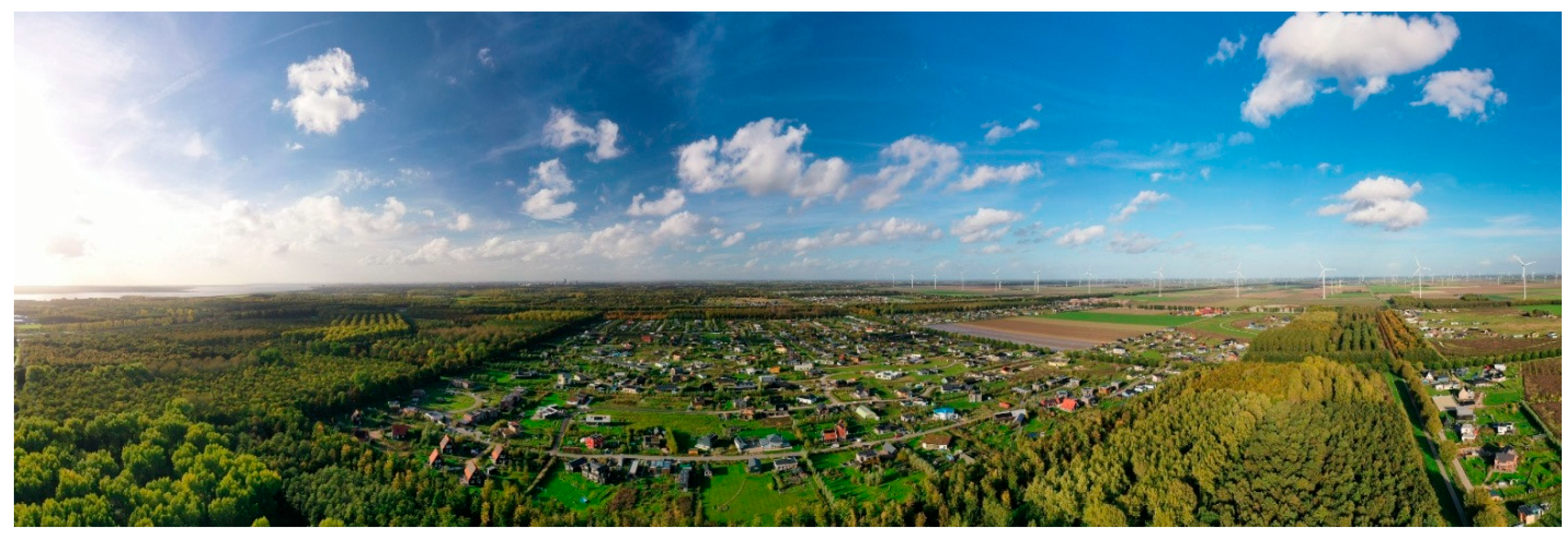
The first concept developed to guide the planning and design of GI with a food production function was the Continuous Productive Urban Landscape (CPUL) [47,48]. Emerging in the United Kingdom, this approach seeks to integrate the food system into the urban fabric on spatial, social, and ecological levels, framing UPA not only as part of the broader food system but also as a key element in green space planning and design. CPUL advocates for the physical continuity of peri(urban) green spaces—both productive and non-productive—through a connected network, preserving or introducing food production wherever possible [48]. The core principles of the CPUL concept can be seen as a contemporary reinterpretation of Howard’s Garden Cities and Telles’ Green Structure, by providing food production integrated to outdoor recreational spaces immersed in natural habitats, structured by green corridors with routes for pedestrians and cyclists. In CPUL, connectivity and multifunctionality are emphasized as pivotal principles, enhancing the GI concept by fostering synergies between urban and rural spheres while systematically distributing food production spaces throughout the landscape. UPA spaces are proposed at multiple scales, ranging from commercial agricultural fields and urban farms to container gardens, each tailored to the specific demands and opportunities of their context. They may be permanent or temporary in nature, thereby offering a broad spectrum of benefits to the community [48]. The authors cite Almere, in the Netherlands, as a practical illustration of a CPUL [48], since the city features a new peri-urban settlement, Oosterwold (Figure 1), designed with a strong focus on food production. Its planning has been entirely self-organized by the residents, with guidance and support from municipal planners [49].
The concept of Agricultural Urbanism [39] emerged in Canada and asserts that economic development and community identity should prioritize the food and agricultural system, positioning these elements as foundational to urban planning and design processes. A comprehensive planning, policy, and design framework is advanced for embedding sustainable food and agriculture systems across multiple community scales. The approach advocates for accessible, proximate food production spaces for all residents, framing these as critical to advancing sustainability, democracy, and resilience. Aligned with CPUL, Agricultural Urbanism advocates the strategy of making the most of the territory for food production and supply, proposing a design framework for integrating these systems across multiple levels—from urban to wild areas—where the GI structure serves as a facilitator [39,47].
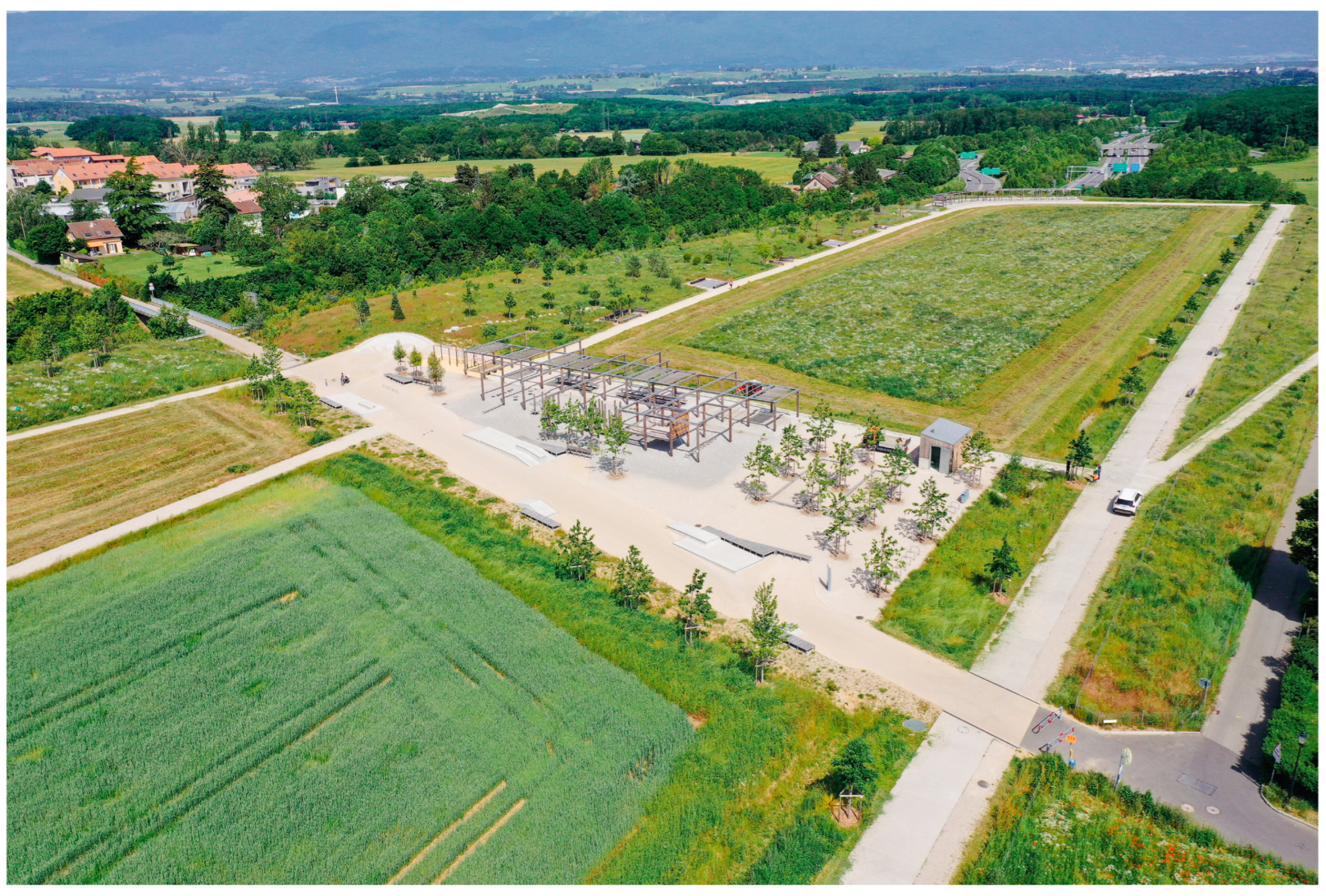
In a manifesto-like tone, the Food Urbanism Initiative [50] challenges conventional urban planning paradigms by arguing that food—perhaps more than any other factor—has the transformative potential to shape and enrich urban life. The concept was developed in Switzerland as the result of a study exploring how food constitutes a fundamental aspect of urban life. It advocates for the integration of UPA as a programmatic element in landscape and urban planning, with a particular focus on reactivating the existing urban fabric and promoting a renewed sense of urban quality. The concept is grounded in principles of urban performance, sustainable development, governance and management, applied to evaluate the impact of UPA projects. The architects behind the Food Urbanism Initiative have developed several projects in Switzerland, among which the Bernex Agropark (now Parc des Molliers) (Geneva, Switzerland) is already implemented (Figure 2) [16,50].
The typology of parks integrating food production remains insufficiently consolidated, as diverse configurations with varying assets and functions are frequently grouped under the same designation. For instance, the Agropark is referred to as a park that integrates agricultural production, based on ecological farming models, with functions such as environmental education, recreation, and conservation, where socio-ecological objectives prevail over commercial ones [16], facing significant implementation challenges due to the complexity of combining functions often perceived as incompatible [51]. By contrast, the term Agricultural Park, more consolidated in the literature, typically refers to peri-urban areas composed of privately owned agricultural fields that are designated as parks due to their productivity, economic, historical, ecological, or recreational significance, being particularly common in Mediterranean countries, such as Italy [52,53], France [54], Spain [40,55], and recently Portugal [56,57]. These areas generally maintain commercial agricultural activity, often producing high-value local products. Within this typology, paths between fields are commonly accessible to the public, supporting activities such as walking and cycling, as well as more contemplative forms of engagement with the rural landscape.
The Agropolitana concept [58] explores the Agricultural Park concept through the idea of peri-urban agricultural land as a vital public asset and cultural landscape, bringing together productive and societal values. Using the Veneto region in Italy as a case study, the concept challenges the view of farmland as merely economic or residual space, instead emphasizing its multifunctionality. Peri-urban landscapes are presented not only as spaces for production, but also as areas for social use, as illustrated by the informal weekend use by the population in the Veneto region. Agropolitana highlights the potential of designing Agricultural Parks that provide recreational opportunities, strengthen connections between rural and urban spheres, and act as buffers for emergency flooding in climate change strategies [58]. Therefore, when integrated into ecological networks, Agricultural Parks help safeguard fertile land from urban expansion to serve as strategic reserves for local food supply in times of disruption [58].
In a completely different approach, the Agroecological Urbanism [15] concept reframes land as a common good, challenging anthropocentric, charity-based models of food provision, while emphasizing the potential of urban soils for food production. Deeply rooted on political agroecology, new urbanism and social reproduction ideas, it applies these theoretical resources to build dialogue between two interdependent but yet dissociated worlds: the agroecological and food sovereignty movements (representing the farmers that struggle with commercial trades and the lack of support to ecological food production models), and the urban food policy communities (representing the urban dwellers interested in food access and consumption). It conceives food systems as metabolically interconnected socio-ecological processes across the rural–urban continuum, foregrounding interdependence between human and non-human actors and valuing smallholder livelihoods. The concept advocates a totally renewed urban planning approach to fully embrace the production of food as an ‘urban question’, as important as transportation or housing. Some proposed strategies rely on land use, suggesting proactive policies to enhance land protection in urban and peri-urban areas, programs for the use of existing public lands and reconversion of lands to agricultural use, and legal protection and regeneration of soils [15].
Similarly, the Agroecologics concept [59] is based on the central idea of restricting urbanization by reserving fertile land for agroecological production by proposing a multidimensional mapping process. The aim is to explore alternative strategies for urban densification through what is termed agri-urban design. The strategy relies on a soil suitability index, a tool that places soil suitable for agriculture at the core of planning decisions, where urban development is designed according to it, reserving the most fertile soils for agroecological production. The concept outlines several design strategies, including the creation of agroecological corridors, intended to follow rivers or infrastructure lines, and incorporate small-scale food production areas, as well as recreational and leisure spaces, urban gardens, and food-productive public lands. It also proposes a system of agri-urban zoning that designates plots of various sizes for protection, housing, and food production, requiring a minimum quota of land to be allocated for cultivation. The author emphasizes the importance of adapting the model to the specific dynamics of each urban context [59]. Supporting this vision, in 2019 the Luxembourg government launched a national strategy for UPA, which aims to increase the share of organic agricultural production to 100 percent by 2050 [60]. The Agroecologics concept therefore aligns closely with national policy objectives to expand sustainable food production and strengthen local food systems.
Urban settings have also inspired the Edible Green Infrastructure concept, defined as “a sustainably planned network of edible food components and structures within the urban ecosystem which are managed and designed to provide primarily provisioning ecosystem service” [44] (p. 54). To achieve this, Edible GI incorporates only those productive typologies that employ sustainable production, such as edible urban forests, allotments and community gardens, among others. Moreover, the authors emphasize that this approach excludes intensive agricultural practices, such as commercial farming, biomass feedstock, aquaculture, and livestock, due to their high environmental impact [44].
The Food-productive GI, proposed by Bohn and Chu [10] in 2021, builds on the CPUL framework and presents a hybrid infrastructure designed to actively support agroecological transitions in cities by embedding urban food system activities into the mosaic of green spaces, aiming for the spatial integration of agriculture, ecology, and landscape planning. Their approach specifically leverages landscape ecology principles, highlighting how spatial heterogeneity and connectivity can improve ecosystem services, biodiversity, and urban sustainability. Food-productive GI is theorized as a multifunctional network, that physically connects food-growing sites, enhances nature-based solutions, and acts as a spatial enabler of agroecological processes, making cities more resilient, healthy, and economically vibrant. The model stands out for its explicit alignment with the theoretical and practical foundations of GI planning, using landscape ecology as a framework for evaluating ecological, social, and economic benefits, while advocating cross-disciplinary codesign for successful implementation [10].
Table 2. Analysis of GI-UPA concepts, their strategies, and the authors’ stated objectives.
GIUPA ConceptsSourcesScaleGeneral StrategyAuthors’ Stated Goals
CPUL[47,48]Urban–peri-urban continuum.Food-productive and
non-productive green spaces, connected as a network.
Multifunctionality,
connectivity and food provisioning.
Agricultural
Urbanism
[39]Urban–peri-urban continuum.Food as a foundational element of urban planning and design processes.Food provisioning and food security.
Agropolitana[58]Peri urban.Peri-urban agricultural
landscapes are used as public parks.
Food provisioning,
recreation and
multifunctionality.
Food Urbanism
Initiative
[50]Urban.Integration of food spaces as a programmatic element in
landscape and urban planning.
Urban quality,
multifunctionality and food provisioning.
Agroecological
Urbanism
[15]Urban–peri-urban continuum.Food system as a crucial ‘urban question’ supported by planners and public policies.Agroecological transition, land as a common good, sustainable urban food systems.
Edible Green
Infrastructure
[44]Urban.Incorporates only UPA
typologies that employ
sustainable production models.
Food provisioning and food safety.
Food Productive Green
Infrastructure
[10]Urban–peri-urban continuum.Hybrid infrastructure is
designed to integrate food
system activities into urban green spaces.
Multifunctionality,
connectivity and food provisioning.
Agroecologics[59]Urban–peri-urban continuum.Preserving fertile soils for food production through agri-urban typologies (including agroecological corridors).Food provisioning, fertile soil preservation and multifunctionality.

4. Discussion

4.1. Analysis of GI-UPA Concepts Based on Principles of Landscape Ecology (Multifunctionality, Connectivity, and Spatial Heterogeneity)

Since its emergence, landscape ecology has contributed to the development of transdisciplinary approaches aimed at understanding spatial and temporal patterns and their relationship with ecological processes [10,61]. Drawing on landscape ecology as a theoretical framework, urban designers and planners can shape landscapes that simultaneously provide ecological services, create economic opportunities, and foster social benefits. Moreover, landscape ecology methods enable practitioners to anticipate and manage the implications of their proposals through visualization and analytical tools, thereby supporting the evaluation of long-term planning scenarios and facilitating more informed decision-making [10].
Building upon this, we present a focused analysis of how the GI-UPA concepts described above engage with three key principles of landscape ecology: multifunctionality, connectivity and spatial heterogeneity (Table 3). The motivation for adopting this analytical lens lies in the fact that landscape ecology provided the scientific foundation for the emergence of GI as a planning paradigm [30]. By applying its principles to the assessment of GI-UPA concepts, it becomes possible to understand whether, and to what extent, these models represent an evolution—or at least a complementary refinement—of the GI framework through the explicit incorporation of food production functions. Such integration is particularly relevant in contemporary peri(urban) contexts, where reinforcing resilience requires not only ecological integrity but also the greater provision of ecosystem services. Therefore, analysing GI-UPA concepts through the lens of landscape ecology is a way to test their conceptual robustness, assess their alignment with the foundations of GI planning, and advocate for their potential to strengthen urban resilience and sustainability.

4.1.1. Multifunctionality

Multifunctionality is widely recognized as a core principle in the planning and design of GI, reflecting its holistic and integrative character. As Hansen and Pauleit [62] (2014) point out, multifunctionality—along with connectivity—constitutes a foundational element of GI planning. Rather than leaving synergies to occur by chance, multifunctionality seeks to optimize land use by deliberately intertwining functions that deliver simultaneous benefits to both humans and nature [62]. In Europe, multifunctionality has been increasingly adopted as a strategic principle in (peri)urban planning and agricultural policy. The CAP, for instance, places multifunctionality at its core, aiming to tackle challenges such as biodiversity loss, farmland abandonment, and socio-economic vulnerability by supporting agricultural practices that provide public goods beyond commodity production [63].
From a food-productive landscape perspective, this multifunctional approach is a key challenge and opportunity. As Altieri and Nicholls [64] argue, the agroecological model offers multifunctionality, as it has the potential to be integrated with a range of activities, strengthening rural-urban linkages and broadening the scope of functions delivered by productive landscapes. This reconceptualization moves agriculture beyond its conventional productive role, positioning it as a dynamic actor in the sustainable transformation of peri(urban) territories. In the context of GI-UPA integration, these principles are central to redefining UPA spaces. All the GI-UPA concepts analysed share the premise that food production can coexist with—and in many cases enhance—other (peri)urban functions. While the level of ambition and integration differs across concepts, productive spaces are consistently framed not as isolated elements but as components of broader green systems capable of delivering multiple benefits, to humans and non-humans. The extent to which these functions are combined, however, reflects distinct conceptual emphases and methodological approaches.

4.1.2. Connectivity

Connectivity refers not only to the physical linkages between green spaces but also to their functional relationships, which determine the distribution and performance of ecological and social benefits across the (peri)urban landscape. In landscape ecology, connectivity is considered essential for species persistence, as it depends on a mosaic of habitat patches and the corridors that link them [65]. In urban settings, the spatial arrangement of GI elements also influences critical functions such as heat island mitigation, ventilation, and equitable access to green areas [62]. Thus, connected green spaces (physically or functionally) can enhance biodiversity, strengthen ecological flows, and reinforce the resilience of the entire GI system.
When integrating UPA into GI systems, connectivity ensures that UPA spaces operate not as isolated patches but as components of a broader ecological and social network, a condition that is crucial for maximizing the benefits of food-productive landscapes. The CPUL and Food-productive GI concepts focus on creating multifunctional green corridors, associated with water courses and non-vehicular routes, to link all peri(urban) green spaces, supporting food production, biodiversity and soft mobility. Similarly, Agroecologics highlights the opportunity for agroecological corridors along rivers and small roads, that link green areas, small-scale farms and food-productive urban gardens, allowing ecological processes and social activities to flow across the city. The Agropolitana concept emphasizes the protection of agricultural fields within an “ecological network”, maintaining connections that prevent fragmentation between agricultural patches and preserve heterogeneity in peri-urban landscapes, while simultaneously fostering the creation of recreational corridors that connect these areas to the city. The Agroecological Urbanism highlights the potential of residual patches of agricultural land within the complex land mosaic of the peri-urban fringe into building a network of agroecological farms.
Agricultural Urbanism and Food Urbanism advocate that, to optimize territorial use, the distribution of UPA spaces can take different urban forms beyond GI, such as a productive core, where food production is concentrated in a specific area, or a more dispersed arrangement of smaller-scale productive spaces functioning as medium patches or stepping stones. Edible GI similarly recognizes the potential of GI to strengthen UPA systems. However, it emphasizes that UPA spaces do not necessarily need to be physically connected to deliver multiple benefits, as these can also emerge through functional relationships.

4.1.3. Spatial Heterogeneity

Heterogeneity refers to spatial patterns and interactions among different ecosystems and their influence on ecological processes across multiple scales. It encompasses two main aspects: composition, which includes the diversity, quality, and extent (surface area) of habitat types within a landscape; and configuration, meaning the spatial arrangement or distribution of these habitats. This dual perspective on heterogeneity helps to understand how landscape structure affects ecological functions such as species movement, nutrient cycling, and energy flows, highlighting the complexity and dynamic nature of landscapes [61,65]. Ahern [66] stated that a heterogeneous matrix of landscape elements contributes to the stability of landscape mosaics, highlighting the ecological importance of varied land uses and land covers in supporting landscape resilience. Complementarily, Jeanneret et al. [61] (p. 2238), highlighted that “the heterogeneity of the entire mosaic, not only of semi-natural habitats, is a major driver of species diversity and ecological processes in agricultural landscapes”. Therefore, understanding and leveraging the importance of integrating UPA areas in the GI planning and design processes offers a valuable pathway to promote heterogeneity and foster resilient urban landscapes.
From the perspective of UPA spaces, heterogeneity contributes to resilience, as each typology serves different populations and fulfils distinct needs. A wide range of UPA typologies can complement one another in meeting the varied demands of (peri)urban communities [44,67]. Moreover, the diverse functions associated with these typologies are closely linked to maximizing ecosystem service provision [41]. Several GI-UPA concepts emphasize the potential of recognizing and working with the heterogeneous productive landscape patterns. The Agropolitana concept emphasizes the importance of preserving the existing heterogeneity of traditional agricultural landscapes, enhancing their multifunctionality and resilience through targeted planning and design strategies, with a primary focus on peri-urban agricultural fields. In contrast, CPULs, Agricultural Urbanism, Food Urbanism, Food-productive GI, Agroecological Urbanism, and Edible GI adopt a broader perspective. These approaches advocate for a mosaic of green spaces distributed throughout the urban fabric, where food production is integrated, whenever possible, with housing, mobility networks, and public spaces through mixed-use land-use strategies. Expanding this perspective, Agroecological Urbanism advocates for a fundamentally renewed approach that conceives collaborative infrastructures, such as community kitchens, shared composting systems, and water harvesting structures, as integral components of a blue-green infrastructure.

4.2. Opportunities and Challenges in GI-UPA Integration

In examining the opportunities and challenges of GI-UPA integration, three key factors emerge as critical to its success or failure: the definition of appropriate agricultural production model for GI-UPA integration, the planning approaches guiding its development and implementation, and the policy frameworks required to support and enable its realization.

4.2.1. Agricultural Models

One of the primary objectives in GI planning is the provision of ecosystem services [35]. Accordingly, it is essential that agricultural practices within GI-UPA areas are compatible with this objective, prioritizing ecosystem service provision over commercial goals, while still ensuring food supply for urban populations. In this context, agroecological models represent a promising pathway, as they are grounded in ecological principles and biodiversity enhancement, viewing nature not only as a resource but also as a model for production. These systems promote high-diversity farming, drawing on traditional knowledge and natural fertility processes [68]. Furthermore, Altieri et al. [69] highlight that the biodiversity of agroecological systems increases their resilience to climate change. Agroecological approaches also support the revitalization of degraded or abandoned areas, foster diversification of food production, empower urban producers, and promote citizen re-engagement with food systems through educational and cultural initiatives, while delivering other multiple ecosystem services [70].
This production model can be adapted to various UPA scales, from farms to small urban gardens, when aligned with local contexts. Its labour-intensive nature also supports the creation of green jobs, contributing to the European Commission’s 2030 goals [71]. Reflecting this large potential, the Food and Agriculture Organization of the United Nations (FAO) formally adopted agroecology in 2014 as a holistic pathway for transforming food systems, and it has since played a pivotal role in both global and national agricultural development strategies [72].
One of the main challenges in adopting the agroecological model in (peri)urban agricultural areas is the pressure on farmers to maintain or adhere to high-input production systems. The agribusiness sector continues to promote the notion that agricultural productivity depends on chemical inputs to achieve high yields. However, recent studies argue that alternative production models based on nature-based solutions (aligned with agroecological principles) can optimize agricultural output while simultaneously enhancing ecosystem service provision [73,74].

4.2.2. Planning Approaches

A key challenge to advancing GI-UPA integration lies in the limited recognition of food production within the scope of urban planning. In this regard, the theoretical synergies between agroecology and landscape ecology become particularly relevant, as both disciplines address the spatial and temporal organization of ecological systems and can provide valuable frameworks for planners unfamiliar with UPA [10,61]. Such convergence encourages a shift from rigid zoning practices toward dynamic, mosaic-like territories that respond to multiple urban and ecological needs simultaneously.
Since not all objectives can be achieved simultaneously, planning must establish clear priorities and negotiate trade-offs between functions such as food production, recreation, and biodiversity protection, while reflecting ecological, cultural, and social values. Furthermore, most of the GI-UPA concepts (CPUL, Agricultural Urbanism, Food Urbanism Initiative, Agroecological Urbanism, Food Productive GI) emphasize that GI-UPA planning should be developed through interdisciplinary collaboration among producers, gardeners, urban planners, landscape architects, agroecologists, ecologists, and policy makers, to ensure feasibility and multifunctionality through compatible uses. In this way, participatory planning processes are essential to ensure that diverse stakeholders are effectively represented.

4.2.3. Policy Frameworks

As discussed earlier, urban expansion has been increasingly damaging environmental quality and fragmenting the remaining agricultural landscapes at city fringes. This is pronounced in many European cities, where weak land use regulations lead to rapid changes [13]. Therefore, despite arguments that preserving productive areas within urban environments is unnecessary due to the availability of agricultural land elsewhere, prime farmland, classified as high-quality agricultural soil, is commonly situated in the urban and peri-urban zones [75], since soil fertility often influenced the establishment of cities [1]. Cardoso and Domingos’s [76] study of the Lisbon Metropolitan Area demonstrates that, when the peri-urban agricultural lands are planned as part of a GI, it is possible to supply more than 80% of the local population’s food demand. Thus, safeguarding these lands by zoning policies, particularly including it into GI plans, is crucial for a sustainable future [39,58].
Beyond the ecological benefits and food provision associated with GI-UPA integration identified in this study, it is essential to highlight its potential to drive social transformation and strengthen urban resilience. Notably, most concepts reviewed (except for Agropolitana) advocate for the provision of public productive spaces as part of GI, such as agroparks, agroforests, community and allotment gardens, edible gardens, among other typologies, aiming to empower communities, enhance food security, revitalize urban areas, and increase cities’ capacity to respond to socio-environmental challenges. Although UPA is currently far from having a significant role on GI planning policies of European cities, it is starting to gain space in the urban agenda [76,77]. The GI plan of Vitoria-Gasteiz, for instance, proposed several UPA spaces as its core elements, including both municipally owned agricultural land and privately vacant urban areas. Despite the often temporary nature of some of these UPA spaces, their integration into GI is justified by the range of ecosystem services they provide, and particularly their contribution to enhancing food sovereignty [40].
At the European level, the European Green Deal, through its cross-cutting objectives in climate action, biodiversity, and sustainable food systems, plays a key role in guiding development and regional policies [78]. Consequently, regions emerge as crucial actors in sectors where they hold central political and management responsibilities. Moreover, the CAP could play a decisive role in supporting agroecological practices in (peri)urban areas, particularly where significant green spaces and agricultural lands persist [79,80]. Therefore, payments for ecosystem services provided demonstrate strong potential to support agroecology, which could be further enabled through improvements in the CAP framework and increased financial allocations [81]. However, recent studies have identified important limitations within the CAP framework and the European Green Deal in effectively supporting the agroecological transition of family farms in Portugal [81]. A similar situation is observed in non-EU countries, such as Bosnia and Herzegovina, Montenegro, Serbia, and North Macedonia, where legal frameworks and regulations remain less developed and insufficient to support agroecological transitions [82].
Current European policy frameworks continue to favour large-scale, high-input agricultural models, often at the expense of smallholders, despite their substantial contribution to ecosystem service provision. Existing studies emphasize that farmers adopting agroecological practices require targeted, typology-sensitive public policies that adequately recognize and support their tangible benefits [81]. In this context, municipalities can play a pivotal role as initiators of bottom-up approaches, acting as experimental laboratories for innovative planning practices. By doing so, they can inspire and inform regional and national decision-makers, ultimately contributing to the broader integration of GI-UPA strategies [79].

5. Conclusions

Our findings show that agriculture has progressively been marginalized since the early days of urban planning, leading to food production being separated from cities. The reintegration of agriculture into the city emerges as an urgent measure, particularly in times of crises such as wars and pandemics, during which food systems heavily dependent on external inputs are highly vulnerable to disruption. Integrating UPA within GI offers opportunities to relocalize food systems, enhance urban resilience, and strengthen connections between producers and consumers, contributing to improved food safety. The provision of publicly accessible productive spaces further supports food sovereignty and food security. In addition, such approaches generate broader co-benefits, including food education, social inclusion, and community well-being.
Moreover, the analysed GI-UPA concepts reveal a strong alignment with the core principles of landscape ecology (multifunctionality, connectivity and spatial heterogeneity), reinforcing UPA compatibility within GI planning frameworks. However, for GI-UPA integration to be implemented effectively, agricultural models must prioritize socio-ecological functions over purely commercial outputs, particularly through agroecological model of production. Multidisciplinary and participatory planning approaches that engage diverse stakeholders are also required. Furthermore, stronger policy support is required at municipal, regional and European levels to enable and scale these practices.
Rather than representing competing paradigms, the conservation-oriented logic of GI and the production-oriented focus of UPA should be understood as complementary. When combined strategically, they can foster integrated landscape systems in which ecological integrity and food production reinforce each other. Ultimately, integrating UPA into GI planning offers a transformative approach to redefining agriculture as a key element in the structuring of (peri)urban landscapes.

Author Contributions

Conceptualization, H.A.A., I.M.d.S. and S.C.; methodology, H.A.A., I.M.d.S. and S.C.; validation, H.A.A., I.M.d.S. and S.C.; formal analysis, H.A.A.; investigation, H.A.A. and I.M.d.S.; resources, H.A.A., I.M.d.S. and S.C.; data curation, H.A.A. and I.M.d.S.; writing—original draft preparation, H.A.A.; writing—review and editing, H.A.A., I.M.d.S. and S.C.; visualization, H.A.A.; supervision, I.M.d.S. and S.C.; project administration, H.A.A. and I.M.d.S.; funding acquisition, H.A.A. All authors have read and agreed to the published version of the manuscript.

Funding

This article was supported by the doctoral Grant PRT/BD/154294/2022 financed by the Portuguese Foundation for Science and Technology (FCT), originating from the Portuguese State Budget and the community budget through the European Social Fund (ESF), under MIT Portugal Program.

Institutional Review Board Statement

Not applicable.

Informed Consent Statement

Not applicable.

Data Availability Statement

No new data were created or analyzed in this study. Data sharing is therefore not applicable to this article.

Acknowledgments

The authors gratefully acknowledge Daniel Münderlein and Craig Verzone for their support to this article, particularly for providing images of Almere Oosterwold and Parc des Molliers, respectively, and for granting permission to use them.

Conflicts of Interest

The authors declare no conflicts of interest.

Abbreviations

The following abbreviations are used in this manuscript:
UPAUrban and peri-urban agriculture
GIGreen infrastructure
CPULContinuous Productive Urban Landscapes
CAPCommon Agricultural Policy
FAOFood and Agriculture Organization of the United Nations (FAO)
USUnited States
EUEuropean Union
UKUnited Kingdom
WWWorld War

References

  1. Martinho da Silva, I. Historic Anthropogenic Factors Shaping the Rural Landscape of Portugal’s Interior Alentejo. Ph.D. Dissertation, University of Arizona, Tucson, AZ, USA, 2001. Available online: https://repository.arizona.edu/bitstream/handle/10150/289759/azu_td_3040148_sip1_m.pdf?sequence=1&isAllowed=y (accessed on 10 January 2026).
  2. Nilsen, M. The Working Man’s Green Space, 1st ed.; University of Virginia Pinia Press: Charlottesviille, VI, USA; London, UK, 2014; ISBN 978-0-8139-3508-9. [Google Scholar]
  3. Bassett, T.J. Reaping on the Margins: A Century of Community Gardening in America. Landscape 1981, 25, 1–8. [Google Scholar]
  4. Kamnik, R. Assessing the Potential of Urban Orchards, Berry Bushes, and Apiaries for Local Food Production and Carbon Mitigation in a Small European City. Chall. Sustain. 2025, 13, 266–280. [Google Scholar] [CrossRef]
  5. Babicová, D.; Kozelová, I.; Štefunková, D.; Palaj, A.; Hladká, A. Allotments in Bratislava, Slovakia—Historical Development and Land Cover Changes Analysis. Reg. Environ. Change 2025, 25, 149. [Google Scholar] [CrossRef]
  6. Briggs, J. Green Revolution. Int. Encycl. Hum. Geogr. 2009, 634–638. [Google Scholar] [CrossRef]
  7. Jurgens, C.R. Strategic Planning for Sustainable Rural Development. Landsc. Urban Plan. 1993, 27, 253–258. [Google Scholar] [CrossRef]
  8. Paradis, S.; Cieszewska, A.; Tóth, A.; Šuklje-Erjavec, I. Agriculture in Urban Space. In Urban Agriculture Europe; Lohrberg, F., Lička, L., Timpe, A., Scazzosi, L., Eds.; Jovis: Berlin, Germany, 2016; pp. 120–125. ISBN 978-3-86859-371-6. [Google Scholar]
  9. Antunes, H.A.; Martinho da Silva, I. Urban Allotment Gardens and Community Gardens: A Strategy to Build Urban Resilience During the Covid 19 Pandemic in Global North; Atlantis Press International BV: Dordrecht, The Netherlands, 2024; ISBN 9789464634693. [Google Scholar]
  10. Bohn, K.; Chu, D. Food-Productive Green Infrastructure: Enabling Agroecological Transitions from an Urban Design Perspective. Urban Agric. Reg. Food Syst. 2021, 6, e20017. [Google Scholar] [CrossRef]
  11. Nasr, J.; Potteiger, M. Spaces, Systems and Infrastructures: From Founding Visions to Emerging Approaches for the Productive Urban Landscape. Land 2023, 12, 410. [Google Scholar] [CrossRef]
  12. Morgan, K.; Sonnino, R. The Urban Foodscape: World Cities and the New Food Equation. Camb. J. Reg. Econ. Soc. 2010, 3, 209–224. [Google Scholar] [CrossRef]
  13. Ivits, E.; Toth, G.; Gregor, M.; Milego Agras, R.; Fons Esteve, J.; Marin, A.I.; Schröder, C.; Mancosu, E. Land Take and Land Degradation in Functional Urban Areas; European Environment Agency (EEA): Copenhagen, Denmark; Publications Office of the European Union: Luxembourg, 2022. [Google Scholar] [CrossRef]
  14. Coles, R.; Costa, S. Food Growing in the City: Exploring the Productive Urban Landscape as a New Paradigm for Inclusive Approaches to the Design and Planning of Future Urban Open Spaces. Landsc. Urban Plan. 2018, 170, 1–5. [Google Scholar] [CrossRef]
  15. Tornaghi, E.C.; Dehaene, M. Resourcing an Agroecological Urbanism: Political, Transformational and Territorial Dimensions; Routledge: London, UK; New York, NY, USA, 2021. [Google Scholar]
  16. Khalilnezhad, M.R.; Ugolini, F.; Russo, A. A Perspective on Urban Agriculture at the Scale of the Urban Park: Landscape Architectural Strategies for Degrowth Transitions. Urban Sci. 2025, 9, 487. [Google Scholar] [CrossRef]
  17. Jorgensen, K. The History of Urban Green Structures. In COST Action C11—Green Structure and Urban—Final Report; Werquin, A.C., Duhem, B., Lindholm, G., Oppermann, B., Pauleit, S., Tjallingii, S., Eds.; COST: Brussels, Belgium, 2005; pp. 223–231. ISBN 9289800143. [Google Scholar]
  18. Jones, K.R. Green Lungs and Green Liberty: The Modern City Park and Public Health in an Urban Metabolic Landscape. Soc. Hist. Med. 2022, 35, 1200–1222. [Google Scholar] [CrossRef]
  19. Olmsted, F.L. Public Parks and the Enlargement of Towns; American Social Science Association, Riverside Press: Cambridge, MA, USA, 1870; Available online: https://babel.hathitrust.org/cgi/pt?id=yale.39002030236468&view=1up&seq=8 (accessed on 10 January 2026).
  20. Drilling, M.; Giedych, R.; Poniży, L. The Idea of Allotment Gardens and the Role of Spatial and Urban Planning. In Urban Allotment Gardens in Europe; Bell, S., Fox-Kämper, R., Keshavarz, N., Benson, M., Caputo, S., Noori, S., Voigt, A., Eds.; Routledge: New York, NY, USA, 2016; pp. 35–61. ISBN 978-1-315-68660-8. [Google Scholar]
  21. Von Thunen, J.H. The Isolated State; Wartenberg, C.M., Translator; Pergamon: Oxford, UK, 1966. [Google Scholar]
  22. Howard, E. To-Morrow: A Peaceful Path to Real Reform; Hall, P., Hardy, D., Ward, C., Eds.; Routledge: London, UK, 1898; ISBN 0-203-33786-7. [Google Scholar]
  23. Amati, M.; Taylor, L. From Green Belts to Green Infrastructure. Plan. Pract. Res. 2010, 25, 143–155. [Google Scholar] [CrossRef]
  24. Bryant, C. Farmland Conservation and Farming Landscapes in Urban-Centred Regions: The Case of the Ile-de-France Region. Landsc. Urban Plan. 1986, 13, 251–276. [Google Scholar] [CrossRef]
  25. Westerveld, G.J.W.; Van Den Hurk, J.A. Application of Soil and Interpretive Maps to Non-Agri-Cultural Land Use in the Netherlands. Dev. Soil Sci. 1974, 4, 47–65. [Google Scholar] [CrossRef]
  26. Zube, E.H. Greenways and the US National Park System. Landsc. Urban Plan. 1995, 33, 17–25. [Google Scholar] [CrossRef]
  27. Fábos, J.G. Greenway Planning in the United States: Its Origins and Recent Case Studies. Landsc. Urban Plan. 2004, 68, 321–342. [Google Scholar] [CrossRef]
  28. President’s Commission of American Outdoors. Report and Recommendation. In American Outdoors: The Legacy, the Challenge; US Government Printing Office: Washington, DC, USA, 1987. [Google Scholar]
  29. Fabos, J.G. Introduction and Overview: The Greenway Movement, Uses and Potentials of Greenways. Landsc. Urban Plan. 1995, 33, 1–13. [Google Scholar] [CrossRef]
  30. Ahern, J. Greenways as a Planning Strategy. Landsc. Urban Plan. 1995, 33, 131–155. [Google Scholar] [CrossRef]
  31. Telles, G.R. Plano Verde de Lisboa; Magalhães, M.R., Alfaiate, M.T., Eds.; Edições Colibri: Lisboa, Portugal, 1997; ISBN 972-8288-74-3. [Google Scholar]
  32. Attwell, K.; Beer, A.; Bendl, J.; Bjornberg, K.; Buizer, M.; Chapa, J.M.; Costanzi, C.; Duhem, B.; Ellefsen, U.; Erhart, E.; et al. COST Action C11—Green Structure and Urban Planning—Final Report; Werquin, A.C., Duhem, B., Lindholm, G., Oppermann, B., Pauleit, S., Tjallingii, S., Eds.; COST: Brussels, Belgium, 2005; ISBN 9289800143. [Google Scholar]
  33. Naumann, S.; Davis, M.; Kaphengst, T.; Pieterse, M.; Rayment, M. Design, Implementation and Cost Elements of Green Infrastructure Projects; Final Report to the European Commission, DG Environment, Contract No. 070307/2010/577182/ETU/F.1; Ecologic Institute and GHK Consulting: Berlin, Germany, 2011. [Google Scholar]
  34. European Environment Agency, Green Infrastructure and Territorial Cohesion: The Concept of Green Infrastructure and Its Integration into Policies Using Monitoring Systems, Publications Office. 2011. Available online: https://data.europa.eu/doi/10.2800/88266 (accessed on 10 January 2026).
  35. European Commission, Green Infrastructure (GI)—Enhancing Europe’s Natural Capital. 2013. Available online: https://eur-lex.europa.eu/resource.html?uri=cellar:d41348f2-01d5-4abe-b817-4c73e6f1b2df.0014.03/DOC_1&format=PDF (accessed on 10 January 2026).
  36. Pothukuchi, K.; Kaufman, J.L. Placing the Food System on the Urban Agenda: The Role of Municipal Institutions in Food Systems Planning. Agric. Hum. Values 1999, 16, 213–224. [Google Scholar] [CrossRef]
  37. Steel, C. Hungry City; Vintage Books: London, UK, 2008. [Google Scholar]
  38. American Planning Association. Policy Guide on Community and Regional Food Planning; Final Policy Guide; American Planning Association: Chicago, IL, USA, 2007. [Google Scholar]
  39. De la Salle, J.; Holland, M. (Eds.) Agricultural Urbanism: Handbook for Building Sustainable Food & Agriculture Systems in 21st Century Cities; Green Frigate Books: Winnipeg, MB, Canada, 2010. [Google Scholar]
  40. Vitoria-Gasteiz City Council. The Urban Green Infrastructure of Vitoria-Gasteiz; Vitoria-Gasteiz City Council: Vitoria-Gasteiz, Spain, 2014. [Google Scholar]
  41. Camps-Calvet, M.; Langemeyer, J.; Calvet-Mir, L.; Gómez-Baggethun, E. Ecosystem Services Provided by Urban Gardens in Barcelona, Spain: Insights for Policy and Planning. Environ. Sci. Policy 2016, 62, 14–23. [Google Scholar] [CrossRef]
  42. Evans, N.M.; Stewart, W.P.; van Riper, C. A Place Meaning Scale for Rural Communities Undergoing Landscape Change. Soc. Nat. Resour. 2022, 35, 1206–1225. [Google Scholar] [CrossRef]
  43. Langemeyer, J.; Madrid-Lopez, C.; Beltran, A.M.; Mendez, G. V Urban Agriculture—A Necessary Pathway towards Urban Resilience and Global Sustainability? Landsc. Urban Plan. 2021, 210, 104055. [Google Scholar] [CrossRef]
  44. Russo, A.; Escobedo, F.J.; Cirella, G.T.; Zerbe, S. Edible Green Infrastructure: An Approach and Review of Provisioning Ecosystem Services and Disservices in Urban Environments. Agric. Ecosyst. Environ. 2017, 242, 53–66. [Google Scholar] [CrossRef]
  45. FAO, Rikolto and RUAF. Urban and Peri-Urban Agriculture Sourcebook—From Production to Food Systems; FAO and Rikolto: Rome, Italy, 2022. [Google Scholar] [CrossRef]
  46. Butler, L.M.; Maronek, D.M. Urban and Agricultural Communities: Opportunities for Common Ground; Iowa State University Press: Ames, IA, USA, 2002. [Google Scholar]
  47. Viljoen, A. (Ed.) Continuous Productive Urban Landscapes: Designing Urban Agriculture for Sustainable Cities; Architectural Press: London, UK; Elsevier: New York, NY, USA, 2005. [Google Scholar]
  48. Viljoen, A.; Bohn, K. Second Nature Urban Agriculture—Designing Productive Cities; Routledge: London, UK; New York, NY, USA, 2014. [Google Scholar]
  49. Jansma, J.E.; Wertheim-Heck, S.C.O. Thoughts for Urban Food: A Social Practice Perspective on Urban Planning for Agriculture in Almere, the Netherlands. Landsc. Urban Plan. 2021, 206, 103976. [Google Scholar] [CrossRef]
  50. Verzone, C.; Woods, C. Food Urbanism: Typologies, Strategies, Case Studies; Birkhäuser: Basel, Switzerland, 2020. [Google Scholar]
  51. Metze, T.A.P.; Van Zuydam, S. Pigs in the City: Reflective Deliberations on the Boundary Concept of Agroparks in The Netherlands. J. Environ. Policy Plan. 2013, 20, 675–688. [Google Scholar] [CrossRef]
  52. Quaglia, S.; Geissler, J.B. Greater Milan’s foodscape—A neo-rural metropolis. In Integrating Food into Urban Planning; Cabannes, Y., Marocchino, C., Eds.; UCL Press: London, UK; FAO: Rome, Italy, 2018. [Google Scholar] [CrossRef]
  53. Fanfani, D.; Battisti, F.; Agosta, B. Assessing the Public Peri-Urban Agricultural Park as a Tool for the Sustainable Planning of Peri-Urban Areas: The Case Study of Prato. Sustainability 2024, 16, 7946. [Google Scholar] [CrossRef]
  54. Perrin, C.; Nougarèdes, B.; Sini, L.; Branduini, P.; Salvati, L. Governance changes in peri-urban farmland protection following decentralisation: A comparison between Montpellier (France) and Rome (Italy). Land Use Policy 2018, 70, 535–546. [Google Scholar] [CrossRef]
  55. Dorda, J.M.; Berenguer, S.C. The Baix Llobregat Agricultural Park (Barcelona): Na Instrument for Preserving, Developing and Managing a Periurban Agricultural Area. Rural Near the City. 2008. Available online: www.ruralitynearthecity.com (accessed on 10 March 2026).
  56. Oliveira, R.; Távora, G.S.G. Mapping the Potential to Establish Multifunctional Agrofood Parks to Foster the Food Transition at a Regional Level. Land 2025, 14, 772. [Google Scholar] [CrossRef]
  57. Matosinhos’ City Council. Lano Diretor Municipal do Concelho de Matosinhos; Matosinhos’ City Council: Matosinhos, Portugal, 2023. [Google Scholar]
  58. Ferrario, V. Agropolitana: Countryside and Urban Sprawl in the Veneto Region (Italy). J. Geogr. 2009, 4, 129–142. [Google Scholar] [CrossRef]
  59. Weichold, I. Agroecologics: Reimagining an Agri-Urban Design for Luxembourg. In Urban Food Mapping. Making Visible the Edible City; Bohn, K., Tomkins, M., Eds.; Taylor and Francis: Abingdon, UK, 2024; pp. 30–41. ISBN 9781032402802. [Google Scholar]
  60. Weichold, I. Managing Land: Protecting, Integrating, and Allocating Agriculture in Urban Design and Planning—The Case of Luxembourg. In New Forms of Urban Agriculture: An Urban Ecology Perspective; Diehl, J.A., Kaur, H., Eds.; Springer Nature: Berlin/Heidelberg, Germany, 2021; pp. 11–38. ISBN 9789811637384. [Google Scholar]
  61. Jeanneret, P.; Aviron, S.; Alignier, A.; Lavigne, C.; Helfenstein, J.; Herzog, F.; Kay, S.; Petit, S. Agroecology Landscapes. Landsc. Ecol. 2021, 36, 2235–2257. [Google Scholar] [CrossRef]
  62. Hansen, R.; Pauleit, S. From Multifunctionality to Multiple Ecosystem Services? A Conceptual Framework for Multifunctionality in Green Infrastructure Planning for Urban Areas. Ambio 2014, 43, 516–529. [Google Scholar] [CrossRef] [PubMed]
  63. Otte, A.; Simmering, D.; Wolters, V. Biodiversity at the Landscape Level: Recent Concepts and Perspectives for Multifunctional Land Use. Landsc. Ecol. 2007, 22, 639–642. [Google Scholar] [CrossRef]
  64. Altieri, M.A.; Nicholls, C.I. Agroecology: Challenges and Opportunities for Farming in the Anthropocene. Int. J. Agric. Nat. Resour. 2020, 47, 204–215. [Google Scholar] [CrossRef]
  65. Turner, M.G. Landscape Ecology: The Effect of Pattern on Process. Annu. Rev. Ecol. Syst. 1989, 20, 171–197. [Google Scholar] [CrossRef]
  66. Ahern, J. Spatial Concepts, Planning Strategies, and Future Scenarios: A Framework Method for Integrating Landscape Ecology and Landscape Planning. In Landscape Ecological Analysis; Klopatek, J.M., Gardner, R.H., Eds.; Springer: New York, NY, USA, 1999; pp. 175–201. ISBN 978-1-4612-6804-8. [Google Scholar]
  67. Cilliers, E.J.; Lategan, L.; Cilliers, S.S.; Stander, K. Reflecting on the Potential and Limitations of Urban Agriculture as an Urban Greening Tool in South Africa. Front. Sustain. Cities 2020, 2, 43. [Google Scholar] [CrossRef]
  68. Altieri, M. Agroecologia. A Dinâmica Produtiva da Agricultura Sustentável, 5th ed.; UFRGS Editora: Rio Branco, Brazil, 1998; ISBN 8570255381. [Google Scholar]
  69. Altieri, M.A.; Nicholls, C.I.; Henao, A.; Lana, M.A. Agroecology and the Design of Climate Change-Resilient Farming Systems. Agron. Sustain. Dev. 2015, 35, 869–890. [Google Scholar] [CrossRef]
  70. Simon-Rojo, M. The Role of Ecosystem Services in the Design of Agroecological Transitions in Spain. Ecosyst. Serv. 2023, 61, 101531. [Google Scholar] [CrossRef]
  71. European Comission. Stepping Up Europe’s 2030 Climate Ambition—Investing in a Climate-Neutral Future for the Benefit of Our People; European Comission: Brussels, Belgium, 2020.
  72. FAO. FAO’s Work on Agroecology; FAO: Rome, Italy, 2018. [Google Scholar]
  73. Sok, J.; Kisters, T.; Kanellopoulos, A. Quantifying the opportunity costs of nature-inclusive agriculture in the Netherlands. Agric. Syst. 2026, 233, 104633. [Google Scholar] [CrossRef]
  74. Faure, J.; Hansson, H.; Dietrich, A.S.; Devilliers, E. Are we overestimating the benefits of agricultural intensification by overlooking nature-based alternatives? Ecol. Econ. 2026, 243, 108940. [Google Scholar] [CrossRef]
  75. Nelson, A.C. Preserving Prime Farmland in the Face of Urbanization: Lessons from Oregon. J. Am. Plan. Assoc. 1992, 58, 467–488. [Google Scholar] [CrossRef]
  76. Cardoso, A.S.; Domingos, T. Integrating Food Provisioning Ecosystem Services and Foodshed Relocalisation Targets with Edible Green Infrastructure Planning. A Case Study from Lisbon City Region. Sustain. Cities Soc. 2023, 96, 104643. [Google Scholar] [CrossRef]
  77. Yacamán Ochoa, C.; Jiménez, D.F.; Olmo, R.M. Green Infrastructure Planning in Metropolitan Regions to Improve the Connectivity of Agricultural Landscapes and Food Security. Land 2020, 9, 414. [Google Scholar] [CrossRef]
  78. Sandri, S.; Hussein, H.; Alshyab, N.; Sagatowski, J. The European Green Deal: Challenges and opportunities for the Southern Mediterranean. Mediterr. Politics 2025, 30, 196–207. [Google Scholar] [CrossRef]
  79. Focacci, M.; De Meo, I.; Paletto, A.; Salbitano, F. Agroforestry systems in Italian urban planning. Agrofor. Syst. 2025, 99, 186. [Google Scholar] [CrossRef]
  80. Jurečka, M.; Čermák, P.; Vomáčka, V. Agroforestry as a beneficial multifunctional element of green infrastructure in the Czech landscape and requirements for legislative improvements. Agrofor. Syst. 2026, 100, 38. [Google Scholar] [CrossRef]
  81. Costa-Pereira, I.; Aguiar, A.A.R.M.; Delgado, F.; Costa, C.A. Recognizing diversity to enable an agroecological transition: Understanding the potential of family farmers in Portugal. Front. Sustain. Food Syst. 2025, 9, 1604961. [Google Scholar] [CrossRef]
  82. Seremesic, S.; Jovović, Z.; Jug, D.; Djikic, M.; Dolijanović, Z.; Bavec, F.; Jordanovska, S.; Bavec, M.; Đurđević, B.; Jug, I. Agroecology in the West Balkans: Pathway of development and future perspectives. Agroecol. Sustain. Food Syst. 2021, 45, 1213–1245. [Google Scholar] [CrossRef]
Figure 1. Continuum of green and productive spaces in Oosterwold, illustrating the integration of the settlement with diverse food-producing typologies, including agricultural fields, productive forest and small-scale farms. (Source: Daniel Münderlein).
Sustainability 18 03781 g001
Figure 2. Bernex Agropark (now Parc des Molliers). Geneva, Switzerland. (Source: Verzone and Woods Architectes).
Sustainability 18 03781 g002
Table 1. Analysis of GI-related concepts and the conditional role of UPA integration.
GI-Related ConceptsSourcesScaleIntegration of UPA
Typologies
UPA Typologies’ Function
Parkway[19]Urban–peri-urban continuum.Not applicable.Not applicable.
Green Belt[22,23,24,25,26]Peri urban.Agricultural fields
around city.
Food provisioning (only Howard) and urban sprawl control.
GreenlineUS reports (in ref. [26])Peri urban.Agricultural fields
around city.
Preservation of natural,
scenic, or historic
character.
Greenway[26,27,28,29,30]Peri urban (US) and urban (EU).Not applicable.Not applicable.
Green
Corridor
[31,32]Urban.Not applicable.Not applicable.
Ecological Structure[31]Urban–peri-urban continuum.Agricultural fields around city and urban food
production areas.
Food provisioning and
cultural preservation.
Ecological Corridor[32]Urban.Not applicable.Not applicable.
Green
Structure
[32]Urban–peri-urban continuum.Allotment gardensRecreation.
Green
Infrastructure
[33,34,35]Urban–peri-urban continuum.Agricultural fields around city and allotment
gardens.
Food provisioning and
fertile soil preservation (conditional on ‘environmentally sensitive’ models).
Table 3. Degree of application of landscape ecology principles in each GI-UPA concept (low, medium, high), as interpreted from the reviewed literature.
GI-UPA ConceptsMultifunctionalityConnectivitySpatial Heterogeneity
CPULHighHighHigh
Agricultural UrbanismHighHighHigh
AgropolitanaHighHighMedium
Food Urbanism InitiativeHighHighHigh
Agroecological UrbanismHighHighHigh
Edible Green InfrastructureMediumMediumHigh
Food Productive Green
Infrastructure
HighHighHigh
AgroecologicsHighHighHigh
Disclaimer/Publisher’s Note: The statements, opinions and data contained in all publications are solely those of the individual author(s) and contributor(s) and not of MDPI and/or the editor(s). MDPI and/or the editor(s) disclaim responsibility for any injury to people or property resulting from any ideas, methods, instructions or products referred to in the content.