Article

Digital Village Construction and Its Impact on Agriculture–Culture–Tourism Integration: Empirical Evidence from 30 Provinces in China

1
College of Rural Revitalization, Fujian Agriculture and Forestry University, Fuzhou 350002, China
2
Multifunctional Agricultural Application Research Institute, Fujian Agriculture and Forestry University, Fuzhou 350002, China
3
Anxi Tea College, Fujian Agriculture and Forestry University, Quanzhou 362406, China
*
Author to whom correspondence should be addressed.
Sustainability 2026, 18(8), 3680; https://doi.org/10.3390/su18083680
Submission received: 8 March 2026 / Revised: 3 April 2026 / Accepted: 4 April 2026 / Published: 8 April 2026

Abstract

Examining the effect of digital village construction (DVC) on agriculture–culture–tourism integration (ACTI) is important for understanding sustainable rural development. Using panel data from 30 Chinese provinces from 2012 to 2022, this study employs a two-way fixed-effects model to examine the impact of DVC on ACTI, along with its mediating mechanisms and heterogeneous effects. Results show a significant inverted-U-shaped relationship between DVC and ACTI. This finding remains robust across a series of tests. Mechanism analysis reveals that industrial structure upgrading and urbanization play partially mediating roles with the same inverted-U-shaped characteristics. Heterogeneity analysis indicates that DVC presents a linear positive effect in central and western regions and in areas with low DVC levels, while an inverted-U-shaped pattern is observed in eastern regions and in areas with high DVC levels. These findings suggest that DVC strategies should account for both regional differences and development stages.

1. Introduction

Agriculture–culture–tourism integration (ACTI) has become an important pathway for rural transformation in China. The systems of agricultural production, cultural values, and tourism consumption are all reconfigured in a synergistic way when agriculture, culture, and tourism are integrated [1]. By linking agricultural production, cultural value creation, and tourism consumption, ACTI not only supports rural industrial upgrading and revitalization, but also contributes to sustainable rural development by promoting livelihood diversification, preserving local cultural heritage, and improving the efficiency of resource use [2]. However, information barriers, stakeholder capacity issues, and factor misallocation continue to be obstacles to the integration of agriculture, culture, and tourism at the provincial level, leading to notable regional differences in the degree of integrated development [3]. The ability of digital village construction (DVC) to foster industrial transformation and integrate digital resources is closely aligned with the resource integration, experiential innovation, and value enhancement necessary for ACTI [4]. DVC refers to the systematic process of modernizing rural areas and agriculture through the deployment of digital infrastructure, the application of digital technologies in agricultural production and rural governance, and the digitalization of rural-life services. DVC can improve public-service accessibility, reduce matching and transaction costs, and create new opportunities for coordinated development among agriculture, culture, and tourism [5]. However, whether DVC continuously promotes ACTI, or whether its effect changes across development stages, remains insufficiently understood. Therefore, it is necessary to examine how DVC affects ACTI at the provincial level.
Based on the development of research views, current ACTI research can be broadly divided into two phases. Early studies mainly focused on single-sector linkages, such as agriculture–tourism or culture–tourism, and examined how the digital economy promoted the upgrading of cultural and tourism industries [6] or reshaped traditional tourism supply chains [7]. With the advancement of the rural revitalization strategy, subsequent studies gradually moved toward more-integrated frameworks and paid greater attention to the coupling coordination of agriculture, culture, and tourism [3]; the evaluation of integration performance [8]; and the role of integration in rural revitalization [9]. However, this line of research remains largely descriptive. Most existing studies still focus on measuring integration outcomes and evaluating coordination performance, while paying relatively limited attention to the external drivers that shape the formation, quality, and sustainability of ACTI. One important reason is the limited endogenous capacity of rural areas [10]. Here, insufficient endogenous rural dynamics refer to the limited ability of local actors to mobilize rural resources, develop new business models, improve digital skills, and sustain stable cross-sector collaboration without continued external support [11]. Therefore, external interventions, including policy guidance, market resource injection, and digital support systems, remain important for the sustained advancement of ACTI [12]. In this context, DVC can be understood as a critical external enabling factor. Existing research on digital villages primarily focuses on digital infrastructure development [13], digital governance capabilities [14], and narrowing the urban–rural digital divide [15]. While some studies suggest digitalization promotes industrial integration [16], most adopt a linear perspective. However, according to resource dependence theory, a dynamic and complex relationship exists in the bidirectional interaction between DVC and ACTI.
In addition to offering external digital resources for ACTI [17], the growing scope of DVC may also lead to nonlinear issues, because uneven benefit distribution among agriculture–culture–tourism actors and platforms, homogenized innovation models, and insufficient digital training for rural participants may weaken the positive effects of digital expansion. Therefore, it is crucial to examine how DVC affects ACTI, especially whether its effect follows a nonlinear pattern and what mechanisms may help explain this relationship.
Against this background, three major gaps remain in the existing literature. First, although prior studies acknowledge the enabling role of digitalization in rural development, they have not sufficiently examined DVC as a distinct external driver of ACTI. Second, the existing literature largely assumes a linear relationship and therefore pays insufficient attention to whether the effect of DVC on ACTI may weaken, saturate, or even reverse as digital development deepens. Third, previous studies rarely test whether this relationship differs across regions and across areas with different levels of DVC development, despite substantial variation in digital infrastructure, economic foundations, and resource endowments across provinces in China.
To address these gaps, this study uses provincial-level panel data from 30 Chinese provinces from 2012 to 2022 to examine the impact of DVC on ACTI. The contribution of this study can be summarized in three points. First, unlike previous studies that mainly adopt a linear perspective on rural digitalization and rural industrial integration, this study identifies and tests an inverted-U-shaped relationship between DVC and ACTI, thereby showing that the effects of digital transformation on integrated rural development may be conditional and stage-dependent rather than uniformly positive. Second, this study goes beyond identifying the overall relationship by examining the mediating roles of industrial structure upgrading and urbanization, which helps clarify the transmission pathways through which DVC influences ACTI. Third, this study further explores regional heterogeneity and DVC-level heterogeneity, thereby specifying the boundary conditions under which DVC promotes or constrains sustainable rural integration. Overall, this study contributes to the literature by offering a more nuanced understanding of how, through what channels, and under what conditions DVC affects ACTI.

2. Theoretical Analysis and Research Hypotheses

2.1. The Relationship Between DVC and ACTI: An Analysis Based on Resource Dependence Theory

According to resource dependence theory, organizations are unable to independently meet all of the resource needs necessary for their growth. To accomplish resource extraction, capability expansion, and value synergy, they must build interaction relationships with the external environment [18]. The degree of reliance on outside influences is determined by the scarcity, irreplaceability, and significance of resources to organizational goals [19]. Similarly, in the context of ACTI, the lack of endogenous capacity of rural organizations can be reflected in at least three aspects: insufficient digital technology for preserving and presenting local cultural authenticity, weak organizational capacity for cross-industry data integration and coordination, and limited market capability for branding and value conversion [20]. Because these constraints are difficult to overcome through local resources alone, ACTI actors tend to rely on external digital resources such as digital infrastructure, information platforms, and digital governance support [21].
Resource dependence theory also suggests that excessive reliance on external support may weaken organizational autonomy and adaptive capacity [22]. As DVC expands, ACTI actors may become overly dependent on external platforms, standardized traffic logic, and imported digital models. Once this dependence exceeds local actors’ ability to absorb and adapt, imitation may crowd out innovation, short-term traffic-oriented activities may displace deeper value creation, and resources may be diverted away from culturally distinctive and service-intensive integration paths [23,24,25,26]. In this case, the positive effect of DVC is likely to weaken and may even turn negative. Therefore, the relationship between DVC and ACTI is more likely to be inverted-U-shaped than linearly positive.
The above reasoning also implies that the effect of DVC on ACTI may vary across regions and across areas with different levels of DVC development. Because digital infrastructure, market maturity, factor endowments, and local absorptive capacity differ across regions, the position of each region or area on the inverted-U-shaped curve may also differ. Regions with stronger digital foundations and more advanced development may approach the turning point earlier, whereas regions with weaker digital conditions or lower DVC levels may still remain on the ascending side of the curve. Therefore, heterogeneity in the empirical results should be understood as a stage- and context-dependent manifestation of the same underlying nonlinear relationship, rather than as a contradiction to the main effect. This leads to the proposal of Hypothesis H1.
H1. 
DVC has an inverted-U-shaped effect on ACTI. Specifically, DVC is expected to promote ACTI at lower levels, but to inhibit ACTI once it exceeds a certain threshold.

2.2. Mechanism of DVC’s Impact on ACTI: An Analysis Based on Digital Empowerment Theory

Through data sharing, information connectivity, and intelligent applications, digital infrastructure, digital technology applications, and the flow of digital factors can improve organizational productivity, collaborative capabilities, and value creation models, according to digital empowerment theory [27]. The following two mechanisms are the main ways that digital villages affect integrated development in the context of ACTI.

2.2.1. Upgrading the Industrial Structure

Throughout the ACTI process, industrial structure upgrading seeks to guarantee resource flexibility, service quality improvement, innovation-driven development, and sustainability [28]. The degree of ACTI is directly influenced by the industrial structure, which serves as the fundamental framework of regional economic development. By optimizing resource allocation and industrial coordination mechanisms, orderly industrial structure upgrading helps ACTI entities steer clear of homogenized competition traps and inefficient resource inputs [29]. This maximizes labor efficiency by facilitating the gradual shift of agricultural workers to non-agricultural sectors. As a result, it raises the value of the visitor experience, improves the quality and effectiveness of agriculture–culture–tourism services, and offers sustainable factor support and value-added foundations for deep integration.
DVC may influence ACTI through industrial structure upgrading. At relatively low or moderate levels, DVC can improve factor allocation, reduce information frictions, and support the digital upgrading of the agricultural value chain, cultural value transformation, and tourism services [30]. In turn, a more advanced industrial structure may provide stronger organizational support and higher value-added capacity for ACTI. However, if DVC expansion becomes overly dependent on standardized platform models or short-term traffic-oriented activities, it may encourage homogenized competition and weaken deeper industrial upgrading [31]. Therefore, industrial structure upgrading is expected to mediate the effect of DVC on ACTI. This study presents Hypothesis H2 in light of this.
H2. 
Industrial structure upgrading mediates the effect of DVC on ACTI.

2.2.2. Urbanization

Returning business owners and urban consumer populations are produced by population urbanization, which successfully fills the market gaps and factor demands of ACTI. Returning entrepreneurs propel the local adoption and spread of digital technologies by bringing their creative ideas and digital expertise back to their hometowns [32]. Urban consumer populations drive service providers in ACTI to improve service quality and innovate forms by expanding the market space through diverse consuming demands. The degree of ACTI is greatly increased by the combined influence of these two elements.
Urbanization may also mediate the effect of DVC on ACTI. On the one hand, DVC may facilitate factor mobility, reduce information and transaction costs, and strengthen urban–rural linkages, thereby attracting returning entrepreneurs, expanding consumer demand, and improving the circulation of talent, capital, and information between rural and urban areas [33]. These changes may create a more favorable environment for ACTI by enlarging markets and strengthening service innovation. On the other hand, if DVC develops beyond a certain scale, its urbanization-supporting role may weaken. Excessive dependence on externally controlled digital systems, skill mismatches, or local labor lock-in may reduce the positive role of urbanization in supporting ACTI [34,35]. Therefore, urbanization is expected to mediate the effect of DVC on ACTI. This leads to the proposal of Hypothesis H3.
H3. 
Urbanization mediates the effect of DVC on ACTI.
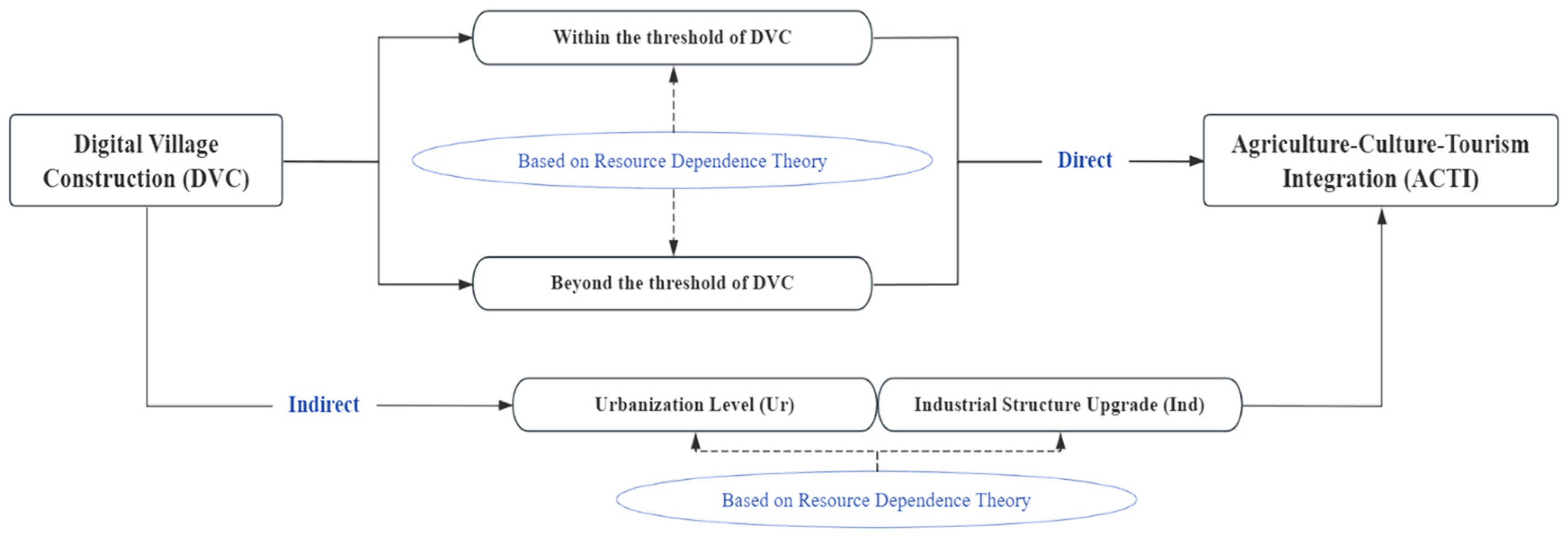
Based on the above theoretical discussion, Figure 1 summarizes the analytical framework of this study. Specifically, it shows that DVC affects ACTI through a direct inverted-U-shaped pathway (H1) and two indirect pathways, namely industrial structure upgrading (H2) and urbanization (H3).

3. Materials and Methods

3.1. Data Sources

To ensure temporal data integrity and comprehensively reflect the development of ACTI, this paper utilizes panel data from 30 provinces, municipalities, and autonomous regions in China (data for Hong Kong, Macao, Taiwan, and Tibet are currently unavailable), covering the period from 2012 to 2022. The foundational data for all indicators are sourced from authoritative channels, including the official websites of the National Bureau of Statistics and the National Cultural Heritage Administration, the China Statistical Yearbook, China Rural Statistical Yearbook, China Cultural Heritage and Tourism Statistical Yearbook, provincial/regional statistical yearbooks, statistical bulletins, official government documents, and authoritative lists released by relevant ministries and commissions. To maintain the continuity of the provincial panel, a small number of missing observations were supplemented using linear interpolation. This method was applied only to a limited number of indicators in the DVC index system, where missing values were infrequent and accounted for only a negligible proportion of the province–year observations. This approach helps preserve sample continuity while reducing the risk of distorting the original data structure. All indicators involving monetary amounts underwent deflation to ensure uniformity and comparability of data standards.

3.2. Data Explanation

3.2.1. Dependent Variable: Agricultural–Cultural–Tourism Integration Level (ACTI)

The entropy-weighted TOPSIS approach was used to determine its level. The term “agricultural–cultural–tourism integration” describes the coming together of the agricultural, cultural, and tourism sectors under the direction of rural and agricultural modernization, as well as the demands of the cultural tourism market, overcoming sectoral boundaries to promote rural rejuvenation [3]. This paper builds upon the indicators created by Huang, G [24], and Fang, S [36], to provide a thorough evaluation system for ACTI across three dimensions: local culture, tourism leisure, and agricultural industry. These three dimensions correspond to the core components of ACTI. Specifically, the agricultural-industry dimension captures the production and industrial foundation of integration, the folk-culture dimension reflects the local cultural resources and symbolic content that support value creation, and the tourism-and-leisure dimension represents the market-oriented realization of integrated products and services. Taken together, these dimensions reflect the production base, cultural content, and consumption interface of ACTI.
The indicator weights are generated objectively using the entropy-weighted TOPSIS method, and Table 1 reports the specific indicators and their weights.

3.2.2. Core Explanatory Variable: Digital Village Construction (DVC)

The main goal of DVC is to fully enable the modernization of rural areas and agriculture through networking, digitalization, and clever methods backed by contemporary information technology. Following prior studies [37,38], this paper constructs the DVC index from three dimensions: digital infrastructure, rural agricultural digitalization, and digitalization of rural life. These dimensions are selected because they capture the main channels through which digital transformation reshapes rural development. Specifically, digital infrastructure reflects the material foundation of connectivity and access; rural agricultural digitalization captures the application of digital tools and platforms in production, circulation, and agricultural services; and digitalization of rural life reflects the penetration of digital services, information access, and digital capability into everyday rural life. Together, these dimensions describe DVC as a multidimensional process rather than a single technological or commercial indicator. To mitigate the potential multicollinearity issue between DVC and its squared term in the nonlinear model, this paper centers the original DVC variable before constructing the quadratic term. Specifically, the original DVC value is subtracted from its sample mean to generate the centered DVC variable. In addition, variance inflation factor (VIF) tests were conducted for the explanatory variables in the benchmark model. The maximum VIF value is 5.09, all VIF values are below 10, and the mean VIF is below 5, indicating that no serious multicollinearity exists in the regression model. For clarity, the detailed construction process and/or indicator framework is further illustrated in Appendix A.1 Table A1.
As with ACTI, the indicator weights are generated through the entropy-weighted TOPSIS method and reflect the relative information content of each indicator in the sample. Table 2 presents the specific indicators and their corresponding weights.
The entropy-based weights reflect the relative information contribution and dispersion of each indicator in the sample, rather than the authors’ subjective judgment about theoretical importance.

3.2.3. Mediating Variables

Industrial structure upgrading (Ind) and urbanization level (Ur) are introduced as mediating variables in this study [39,40]. This paper uses industrial structure upgrading and urbanization level as mediating variables to investigate how DVC affects the integration of agriculture, culture, and tourism. Urbanization level is determined by the percentage of the region’s population living in cities, whereas industrial structure upgrading is determined by the tertiary sector’s GDP share in each province.

3.2.4. Control Variables

Based on prior studies [41], this paper controls for economic development level (GDP), urban–rural disparity level (IL), social consumption capacity (SCL), innovation level (Inn), and industrial agglomeration level (Emp). Examples of these include per capita GDP (10,000 yuan), the Theil index, the ratio of social commodity sales to GDP, the number of domestic invention patent applications that are accepted (units), and the ratio of employed people (10,000 individuals) to administrative area (square kilometers).
To provide a clearer overview of the characteristics of the variables, descriptive statistical analysis is conducted, and the results are reported in Table 3.

3.3. Model Construction

Given the province–year panel structure of the data, this study adopts a two-way fixed-effects model. Province-fixed effects are used to control for time-invariant regional heterogeneity, while year-fixed effects capture common macro shocks and policy changes over time.
To test Hypothesis H1, this paper constructs a model to examine the nonlinear relationship between DVC and the level of ACTI. The model is expressed as follows:
A C T I i t = α 0 + α 1 D V C i t + α 2 D V C i t 2 + α 3 X i t + μ i + λ t + ε i t
In Equation (1), ACTIit denotes the level of agriculture–culture–tourism integration in province i in year t; DVCit denotes digital village construction; DVCit2 is its quadratic term; Xit represents the vector of control variables; μi and λt denote province- and year-fixed effects, respectively; and εit is the error term.
To test Hypotheses H2 and H3, this paper examines the mechanism through which DVC influences ACTI by constructing the following model:
M i t = β 0 + β 1 D V C i t + β 2 D V C i t 2 + β 3 X i t + μ i + λ t + ε i t
A C T I i t = γ 0 + γ 1 D V C i t + γ 2 D V C i t 2 + γ 3 M i t + γ 4 X i t + μ i + λ t + ε i t
In Equations (2) and (3), Mit denotes the mediating variable, namely industrial structure upgrading or urbanization, and the remaining variables are defined as in Equation (1).

4. Results

4.1. Benchmark Regression

Based on Equation (1), this paper confirms the effect of DVC on the degree of ACTI. Table 4 presents specific regression results. With the core explanatory variable, its squared term, and control variables included, the regression results are displayed in column (1). Based on column (1), column (2) also adjusts for the fixed effect of year. The fixed effect of province is further controlled for in column (3). Using the U test and the approach suggested by Haans et al. [42], this paper confirms a significant inverted-U-shaped relationship between DVC and ACTI. In column (3) of Table 4, the coefficient on DVC is 1.082 and the coefficient on DVC2 is −1.527, both significant at the 1% level. The U test further shows that the slope of the curve changes from positive to negative within the observed range of DVC, and the estimated inflection point (0.354) lies within the sample range of the DVC index [−0.109, 0.530]. This indicates that the marginal effect of DVC on ACTI is positive at relatively low and moderate levels, but weakens and may turn negative as DVC deepens further. In this sense, 0.354 should be understood as an empirical turning point within the sample-based DVC index rather than as a universal policy threshold. Possible explanations for this pattern should be understood cautiously. At relatively low levels, DVC may improve information accessibility, reduce transaction costs, and support the initial digital matching of agricultural, cultural, and tourism resources, thereby facilitating ACTI. As DVC continues to expand, however, its marginal contribution may weaken if digital investment becomes less well aligned with local absorptive capacity, differentiated cultural resources, and the deeper needs of integrated rural development. A possible explanation is that rural digitalization may initially improve connectivity and coordination, but its effect may weaken when digital expansion outpaces local institutional and organizational capacity.

4.2. Endogeneity Treatment

Although DVC is expected to influence ACTI, reverse causality may also arise because regions with stronger ACTI demand may have greater incentives to invest in digital village construction. To address this concern, following prior research [43], this paper uses two instrumental variables constructed from the interaction between the lagged DVC terms and the number of post offices in 1984. The relevance of these instruments lies in the fact that historical postal infrastructure reflects the long-term communication foundation that later supported digital connectivity and is therefore closely related to contemporary DVC.
The exclusion restriction is supported by the argument that the number of post offices in 1984 is a historical communication variable whose direct effect on current ACTI is unlikely to persist after controlling for province-fixed effects, year-fixed effects, and contemporary economic and structural covariates. In this setting, its role is to provide exogenous historical variation in digital connectivity rather than to capture current drivers of ACTI.
The Kleibergen–Paap rk LM statistic is 9.258, rejecting the null of underidentification, while the Kleibergen–Paap rk Wald F statistic is 12.503, indicating that weak-instrument concerns are limited. Overall, the second-stage estimates remain consistent with the benchmark results and continue to support H1, as shown in Table 5.

4.3. Robustness Test

Several techniques were used in this paper to evaluate robustness. According to the findings, there is a strong correlation between DVC and the degree of ACTI, forming an inverted U. The results are shown in Table 6.

4.3.1. Sample Truncation

Both the DVC variable and its squared term were subjected to a two-tailed 1% percentile cutoff since extreme values could result in an inverted-U-shaped connection in the regression. The results are shown in Table 6’s column (1). Following truncation, DVC is still significant with a positive coefficient, while its squared term is significant with a negative coefficient. Additionally, the U-test shows that at both the lowest and highest DVC values, the slope direction of the relationship curve between DVC and ACTI reverses. A value in the DVC range is associated with the inflection point. Thus, Hypothesis H1 is still true following sample cutting.

4.3.2. Sample Modification

Municipalities that are directly under the central government were not included in the analysis since they receive a larger share of fiscal and policy support than other provinces and autonomous regions because of direct federal oversight. After excluding these areas, the regression findings were still significant, supporting Hypothesis H1. Furthermore, in order to prevent external shocks from influencing the results, we removed the 2019–2022 sample due to the substantial macroeconomic impact of the COVID-19 outbreak after 2019. Even after excluding these years, the regression findings show that Hypothesis H1 is still true.

4.3.3. Lagged Control Variables

In accordance with Chen Aizhen [44], this analysis lags all control variables (except for year- and region-fixed effects) by one period prior to regression in order to account for any reverse effects between control variables and ACTI levels. The findings support the validity of Hypothesis H1.

4.4. Mechanism Testing

This paper builds on the previous theoretical analysis by using a three-step technique to examine whether DVC affects urbanization levels and industrial structure upgrading, which in turn affect the integration of agriculture, culture, and tourism.

4.4.1. Industrial Structure Upgrading

In order to investigate whether DVC affects the degree of ACTI through industrial structure upgrading, this paper uses a three-step methodology. Table 7 displays the regression findings. According to the results, the DVC variable and its squared term in column (1) of Table 7 are both statistically significant at the 5% level. An inverted-U-shaped link between DVC and industrial structure upgrading is suggested by the coefficient for DVC being 0.374 and the coefficient for its squared term being −0.561. DVC, its squared term, and upgrading of the industrial structure are all significant in Table 7 column (2). This demonstrates that DVC influences industrial structure upgrading, which modifies the degree of ACTI. Additionally, the bootstrap test shows that zero is not included in the confidence interval. The second hypothesis is validated. A plausible interpretation is that, at relatively low and moderate levels, DVC may improve industrial structure upgrading by reducing information frictions and facilitating coordination across agricultural production, cultural value creation, and tourism services. However, when DVC expands further, this positive effect may weaken if digital upgrading becomes uneven, overly standardized, or insufficiently matched with deeper industrial transformation needs.

4.4.2. Urbanization Level

In order to investigate whether DVC affects ACTI through urbanization levels, this paper uses a three-step methodology. Table 7 displays the results of the regression. The results show that both DVC and its squared term are statistically significant at the 5% level in column (3) of Table 7. DVC has a coefficient of 18.18, whereas its squared term has a coefficient of −28.56. This suggests that DVC and urbanization levels have an inverse-U-shaped relationship. Table 7’s column (4) demonstrates that DVC, its squared term, and urbanization level are all significant, indicating that DVC modifies ACTI via affecting urbanization levels. Hypothesis H3 is validated via bootstrap testing, which verifies that the confidence interval excludes zero. One possible explanation is that, within a certain range, DVC may support urbanization by reducing information and transaction costs and by strengthening the circulation of labor, capital, and information between rural and urban areas. Beyond that range, however, the positive contribution of this channel may weaken if digital expansion is accompanied by skill mismatches, labor lock-in, or insufficient local absorptive capacity.
In addition, the bootstrap results provide further support for the mediating roles of both industrial structure upgrading and urbanization. As the corresponding confidence intervals do not include zero, the indirect effects of both mediators are statistically significant. The detailed bootstrap test results are reported in Appendix A.2 Table A2.

4.5. Heterogeneity Analysis

This paper further investigates the disparate effects of various DVC programs on ACTI across various areas and DVC levels in order to better understand the inherent relationship between DVC and the degree of ACTI.

4.5.1. Regional Heterogeneity

There are notable inter-regional differences in factors like the degree of urbanization, openness to the outside world, and human capital [45]. At the same time, the objective phenomena of uneven development across China’s regions have become even more complex due to the intricate interactions of several causes, such as changes in global industrial chains and industrial digital transformation. For the sake of grouped regression analysis, this paper separates regions into eastern and central–western areas. Table 8 displays the results. For the eastern region, the quadratic coefficient is smaller than the national one, and both the DVC and its squared term are significant at the 5% level. The inflection point is bigger than the national value. DVC is significant at the 5% level for the central–western area, while its squared term is not. These regional differences are more likely to reflect variation in development stage, factor endowments, and absorptive capacity. In the eastern region, where digital development and integrated rural industries are already more advanced, the nonlinear relationship becomes more visible. In the central and western regions, the positive linear effect is more consistent with an earlier-stage position on the ascending side of the inverted-U-shaped curve, suggesting that these areas may not yet have reached the point at which diminishing marginal returns emerge. This interpretation is also broadly consistent with international research showing that the effects of rural digitalization vary substantially across regions with different levels of infrastructure, market maturity, and institutional capacity [46,47].

4.5.2. Level Heterogeneity

Since DVC may have significantly diverse effects on ACTI at different levels, this paper further examines heterogeneous effects by separating high-level development from low-level development using a 50% DVC threshold. The DVC effect and its squared term are both significant and have opposite signs at high DVC levels, as indicated by the data in Table 8, suggesting a nonlinear relationship with ACTI. On the other hand, DVC is important, and its squared term is minor at low DVC levels. This pattern is more consistent with the view that low-DVC areas are still located on the ascending side of the inverted-U-shaped curve. In such areas, the direct enabling effect of DVC remains more salient, while the nonlinear suppression effect has not yet become dominant.

5. Conclusions and Policy Implications

5.1. Research Conclusion

Using provincial panel data from China for 2012–2022, this study shows that the impact of digital village construction (DVC) on agriculture–culture–tourism integration (ACTI) is conditional rather than uniformly positive. Instead, the relationship is conditional and stage-dependent: DVC can promote ACTI when digital development helps rural areas overcome information, coordination, and market-access constraints. However, its effect may weaken and even become constraining when digital expansion exceeds local absorptive capacity or becomes insufficiently matched with differentiated rural development needs. In this sense, the main contribution of the paper is not only the identification of an inverted-U-shaped relationship but also the clarification of the boundary conditions under which digitalization promotes or constrains rural industrial integration.
The mechanism analysis further suggests that this relationship operates partly through industrial structure upgrading and urbanization. This indicates that the role of DVC in ACTI is not limited to the direct provision of digital inputs, but is also linked to broader structural changes in rural development. At the same time, the heterogeneity results imply that different regions and areas with different levels of DVC may occupy different positions along the same nonlinear relationship. The stronger nonlinear pattern observed in the eastern region and in relatively high-DVC areas suggests that these areas are closer to the stage at which the marginal benefits of digital expansion begin to decline, whereas the positive linear effect observed in the central and western regions and in relatively low-DVC areas is more consistent with an earlier-stage position on the ascending side of the curve.

5.2. Policy Implications

Based on the findings of this study, the following policy implications are proposed. First, policy design should pay attention not only to the expansion of digital village construction (DVC), but also to its quality, local adaptability, and differentiated effects across regions and development stages. Since the results indicate an inverted-U-shaped relationship between DVC and agriculture–culture–tourism integration (ACTI), simply increasing digital inputs is unlikely to generate continuously increasing integration benefits. In areas where DVC remains at a relatively low level, especially in the central and western regions, strengthening basic digital infrastructure, service accessibility, and digital participation may still yield positive integration effects. In contrast, in areas where DVC is already relatively advanced, especially in the eastern region, policy attention should shift from scale expansion toward improving the efficiency, differentiation, and local embeddedness of digital applications in order to avoid homogenized development.
Second, because industrial structure upgrading and urbanization are identified as important mediating channels, policies that improve rural factor allocation, support coordinated industrial upgrading, and strengthen urban–rural linkages are more likely to enhance the integrative effect of DVC. In this sense, the policy focus should not remain limited to digital investment itself, but should also consider how digitalization interacts with broader structural transformation in rural areas.
On this basis, some more specific measures may be considered as broader strategic suggestions for implementation. For example, local governments may explore dynamic monitoring and evaluation mechanisms for DVC, strengthen digital-skills training for rural actors, promote differentiated digital-application scenarios, and encourage platform or industrial arrangements that improve local value creation. Similarly, measures such as digital creativity bases, digital industrial parks, supply chain traceability systems, digital farmer workshops, or urban–rural exchange platforms may serve as possible implementation pathways for enhancing the quality of ACTI. However, these measures should be understood as strategic options derived from the broader developmental logic of the findings, rather than as policy prescriptions directly identified by the present empirical analysis.

6. Limitations

This study has several limitations. First, the analysis is conducted at the provincial level, which is useful for identifying broad regional patterns but may obscure substantial variation within provinces. Second, the regional subsamples are not fully balanced. As shown in the heterogeneity analysis, the number of observations in the central–western group is substantially larger than that in the eastern group, which may affect the precision and comparability of subgroup estimates and, therefore, calls for caution in interpreting the regional-heterogeneity results. Third, both ACTI and DVC are measured using composite indices constructed through the entropy-weighted TOPSIS approach. Although this method helps capture multidimensional characteristics, the results may still be sensitive to indicator selection and weight distribution, and some indicators may reflect specific dimensions of digitalization more strongly than others. Fourth, a small number of missing observations were supplemented through interpolation for a few indicators in the DVC system; while this helps preserve panel continuity, it may still introduce limited measurement error. Finally, although the instrumental-variable strategy helps mitigate endogeneity concerns, the model is exactly identified because it includes two endogenous regressors and two excluded instruments, which means that overidentification testing is not available. Moreover, the exclusion restriction and the full causal mechanisms cannot be verified completely. Future research could therefore use more disaggregated data, alternative indicator constructions, and richer identification strategies to further test the robustness of these findings.

Author Contributions

Conceptualization, W.Y. and B.S.; Methodology, W.Y.; Software, W.Y.; Validation, W.Y.; Formal analysis, W.Y.; Investigation, Y.L.; Resources, B.S.; Data curation, Y.L.; Writing—original draft, W.Y.; Writing—review and editing, W.Y.; Visualization, W.Y. and Y.L.; Supervision, W.Y., Y.L. and B.S.; Funding acquisition, B.S. All authors have read and agreed to the published version of the manuscript.

Funding

This research received no external funding.

Institutional Review Board Statement

Not applicable.

Informed Consent Statement

Not applicable.

Data Availability Statement

The raw data supporting the conclusions of this article will be made available by the authors on request.

Conflicts of Interest

The authors declare no conflicts of interest.

Appendix A

Appendix A.1

To further examine whether multicollinearity may affect the stability of the benchmark estimates, this study reports the variance inflation factor (VIF) test results in Table A1. The table presents the VIF values of the main explanatory and control variables used in the benchmark model, thereby providing supplementary evidence that multicollinearity is not a serious concern in the regression analysis.
Table A1. Variance inflation factor (VIF) test for multicollinearity.
VariableVIF1/VIF (Tolerance)
zc5.090.1964
GDP3.240.3089
zs3.010.3327
Inn2.410.4154
IL2.320.4307
Emp1.850.5408
SCL1.370.7292
Mean VIF2.75

Appendix A.2

To provide additional evidence for the mediation analysis, this study further reports the bootstrap test results in Table A2. By repeatedly resampling the data, the bootstrap procedure estimates the indirect, direct, and total effects more robustly and helps assess whether the mediating effects are statistically significant on the basis of the confidence intervals.
Table A2. Bootstrap mediation effect results.
MediatorEffectCoefficientBootstrap S.E.z-Valuep-Value95% BC CI
UrIndirect effect0.10190.03233.150.002[0.0410, 0.1685]
Direct effect0.59450.10825.490.000[0.4084, 0.8388]
Total effect0.69640.12765.460.000[0.4714, 0.9611]
IndIndirect effect0.05310.02312.300.022[0.0150, 0.1089]
Direct effect0.64330.11705.500.000[0.4542, 0.9214]
Total effect0.69640.11935.840.000[0.5015, 0.9815]

References

  1. Luo, W.; Liu, J. From tradition to innovation: The role of culture tourism in transforming Chinese agriculture. Agriculture 2024, 14, 2042. [Google Scholar] [CrossRef]
  2. Lei, M.; Wang, Y.Q. Integration and symbiosis: Operation mechanisms and models of rural agriculture–culture–tourism integration—A field study of three typical villages in China. J. China Agric. Univ. (Soc. Sci.) 2022, 39, 20–36. [Google Scholar] [CrossRef]
  3. Yu, Y.; Appiah, D.; Zulu, B.; Adu-Poku, K.A. Integrating Rural Development, Education, and Management: Challenges and Strategies. Sustainability 2024, 16, 6474. [Google Scholar] [CrossRef]
  4. Zhang, J.; Zhang, W. Harnessing digital technologies for rural industrial integration: A pathway to sustainable growth. Systems 2024, 12, 564. [Google Scholar] [CrossRef]
  5. Made, S.I.; Kurniawan, S.K.A. Easy access to public services through digital village. Russ. J. Agric. Socio-Econ. Sci. 2021, 119, 109–118. [Google Scholar] [CrossRef]
  6. Xia, L.; Baghaie, S.; Sajadi, S.M. The digital economy: Challenges and opportunities in the new era of technology and electronic communications. Ain Shams Eng. J. 2024, 15, 102411. [Google Scholar] [CrossRef]
  7. Sarfraz, M.; Khawaja, K.F.; Han, H.; Ariza-Montes, A.; Arjona-Fuentes, J.M. Sustainable supply chains, digital transformation, and blockchain technology adoption in the tourism sector. Humanit. Soc. Sci. Commun. 2023, 10, 557. [Google Scholar] [CrossRef]
  8. Shi, L.; Liao, X. From poverty to common prosperity: An evaluation of agricultural-cultural-tourism integration and its impact on economic growth. Front. Sustain. Food Syst. 2025, 9, 1600264. [Google Scholar] [CrossRef]
  9. Luo, X. Promoting Rural Revitalization in Ethnic Areas through Deep Integration of Agriculture, Culture, Tourism, and Healthcare: Mechanisms and Strategies. Price Theory Pract. 2022, 2, 188–191+203. [Google Scholar] [CrossRef]
  10. Margarian, A. A constructive critique of the endogenous development approach in the European support of rural areas. Growth Change 2013, 44, 1–29. [Google Scholar] [CrossRef]
  11. Georgios, C.; Nikolaos, N.; Michalis, P. Neo-endogenous rural development: A path toward reviving rural Europe. Rural Sociol. 2021, 86, 911–937. [Google Scholar] [CrossRef]
  12. Che, W.; Fu, J.; Jiao, X. Digital villages, green finance, and high-quality agricultural development. Int. Rev. Econ. Financ. 2025, 102, 104256. [Google Scholar] [CrossRef]
  13. Liu, J.; Li, F. Rural revitalization driven by digital infrastructure: Mechanisms and empirical verification. J. Digit. Econ. 2024, 3, 103–116. [Google Scholar] [CrossRef]
  14. Yin, S.; Li, Y.; Chen, X.; Yamaka, W.; Liu, J. Collaborative digital governance for sustainable rural development in China: An evolutionary game approach. Agriculture 2024, 14, 1535. [Google Scholar] [CrossRef]
  15. Wang, W.; Li, X.; Cheng, M.; Zhang, W.; Zhang, B. Digital rural development and the alleviation of the urban–rural digital divide: An analysis based on the theory of co-production. Environ. Sustain. Indic. 2025, 29, 101066. [Google Scholar] [CrossRef]
  16. Ye, S.; Jiang, H. Digitalization of industrial chains: Innovative pathways for rural industry integration and rural revitalization. J. Econ. Manag. Sci. 2025, 8, 92. [Google Scholar] [CrossRef]
  17. Zhao, W.; Liang, Z.; Li, B. Realizing sustainable rural development through digital village construction: Experiences from China. Sustainability 2022, 14, 14199. [Google Scholar] [CrossRef]
  18. Hillman, A.J.; Withers, M.C.; Collins, B.J. Resource dependence theory: A review. J. Manag. 2009, 35, 1404–1427. [Google Scholar] [CrossRef]
  19. Tashman, P. A natural resource dependence perspective of the firm: How and why firms manage natural resource scarcity. Bus. Soc. 2021, 60, 1279–1311. [Google Scholar] [CrossRef]
  20. Jenkins, T.N. Putting postmodernity into practice: Endogenous development and the role of traditional cultures in the rural development of marginal regions. Ecol. Econ. 2000, 34, 301–313. [Google Scholar] [CrossRef]
  21. Xu, X.; Dai, M. Evaluation of local government digital governance ability and sustainable development: A case study of Hunan Province. Sustainability 2024, 16, 6084. [Google Scholar] [CrossRef]
  22. Drees, J.M.; Heugens, P.P. Synthesizing and extending resource dependence theory: A meta-analysis. J. Manag. 2013, 39, 1666–1698. [Google Scholar] [CrossRef]
  23. Del Soldato, E.; Massari, S. Creativity and digital strategies to support food cultural heritage in Mediterranean rural areas. EuroMed J. Bus. 2024, 19, 113–137. [Google Scholar] [CrossRef]
  24. Huang, G.; Yang, Q.; Zhang, H.; Wang, L.; Li, X. Research on the driving effect of digital inclusive finance on the integration of agriculture, culture, and tourism. Int. Rev. Financ. Anal. 2025, 106, 104531. [Google Scholar] [CrossRef]
  25. Zhu, Q.; Wu, Y.; Hu, Y. Unlocking rural innovation through cultural decoding and creative transformation: Evidence from Jiande, China. Sustainability 2026, 18, 1647. [Google Scholar] [CrossRef]
  26. Kordalska, A.; Olczyk, M. Upgrading low value-added activities in global value chains: A functional specialization approach. Econ. Syst. Res. 2023, 35, 265–291. [Google Scholar] [CrossRef]
  27. Leong, C.; Pan, S.L.; Newell, S.; Cui, L. The emergence of self-organizing e-commerce ecosystems in remote villages of China: A tale of digital empowerment for rural development. MIS Q. 2016, 40, 475–484. [Google Scholar] [CrossRef]
  28. Deevi, D.P.; Allur, N.S.; Dondapati, K.; Chetlapalli, H.; Kodadi, S.; Perumal, T. The impact of the digital economy on industrial structure upgrading and sustainable entrepreneurial growth. Electron. Commer. Res. 2026, 26, 863–887. [Google Scholar] [CrossRef]
  29. Matsuo, T.; Malhotra, A.; Schmidt, T.S. Catching up in green industries: The role of product architecture. Innov. Dev. 2024, 14, 135–164. [Google Scholar] [CrossRef]
  30. King, L.; Stark, J.F.; Cooke, P. Experiencing the digital world: The cultural value of digital engagement with heritage. Herit. Soc. 2016, 9, 76–101. [Google Scholar] [CrossRef]
  31. Li, L.; Zeng, Y.; He, Y.; Qin, Q.; Wang, J.; Fu, C. Developing a village-based green economy in an endogenous way: A case study from China. Int. J. Environ. Res. Public Health 2022, 19, 7580. [Google Scholar] [CrossRef] [PubMed]
  32. Huang, L.; Huang, Y.; Huang, R.; Xie, G.; Cai, W. Factors influencing returning migrants’ entrepreneurial intentions for rural e-commerce: An empirical investigation in China. Sustainability 2022, 14, 3682. [Google Scholar] [CrossRef]
  33. Fu, H.; Guan, J.; Wang, R.; Kong, L.; Dai, Q. How does digitalization affect the urban–rural disparity at different disparity levels? A Bayesian quantile regression approach. Technol. Soc. 2024, 78, 102633. [Google Scholar] [CrossRef]
  34. Wang, X.; Huang, Y.; Zhao, Y.; Feng, J. Digital revolution and employment choice of the rural labor force: Evidence from the perspective of digital skills. Agriculture 2023, 13, 1260. [Google Scholar] [CrossRef]
  35. Xiao, A.; Xu, Z.; Skare, M.; Qin, Y.; Wang, X. Bridging the digital divide: The impact of technological innovation on income inequality and human interactions. Humanit. Soc. Sci. Commun. 2024, 11, 809. [Google Scholar] [CrossRef]
  36. Fang, S.; Jiang, W.; Bu, X.; Ma, H. Impact of agriculture–culture–tourism integration on comprehensive rural revitalization in border areas. Res. Agric. Mod. 2025, 46, 916–929. [Google Scholar] [CrossRef]
  37. Xu, J.; Wang, N.; Guo, F. Construction and empirical analysis of an evaluation index system for digital rural development. Stat. Decis. 2023, 39, 73–77. [Google Scholar] [CrossRef]
  38. Wang, J. Digital rural development and high-quality agricultural development. J. Manag. 2024, 37, 146–158. [Google Scholar] [CrossRef]
  39. Li, Z.; Hu, K.; Shi, Q. The influence of digital village construction on agricultural green development: Based on the mediating role of industrial structure upgrading. Front. Sustain. Food Syst. 2025, 8, 1538845. [Google Scholar] [CrossRef]
  40. Liu, M.; Liu, H. The influence and mechanism of digital village construction on the urban–rural income gap under the goal of common prosperity. Agriculture 2024, 14, 775. [Google Scholar] [CrossRef]
  41. Duan, K. Digital Villages Construction and Subjective Well-being of the Elderly: Evidence from China Longitudinal Aging Social Survey. Appl. Res. Qual. Life 2026, 21, 225–244. [Google Scholar] [CrossRef]
  42. Haans, R.F.J.; Pieters, C.; He, Z.L. Thinking about U: Theorizing and testing U- and inverted U-shaped relationships in strategy research. Strateg. Manag. J. 2016, 37, 1177–1195. [Google Scholar] [CrossRef]
  43. Liu, Y.B.; Deng, W.F.; Li, S.S.; Wei, G.; Li, R. The impact of digital industry agglomeration on synergistic pollution reduction and carbon emission reduction: Evidence from the Yangtze River Economic Belt. Resour. Sci. 2024, 46, 744–760. [Google Scholar] [CrossRef]
  44. Chen, A.Z.; Chen, F.L.; He, C. Industrial chain correlation and enterprise innovation. China Ind. Econ. 2021, 9, 80–98. [Google Scholar] [CrossRef]
  45. Lyu, C.; Suo, Q.; Yang, H. North–South or East–West: Which regional economic gap is larger? A comparative study of China’s regional economic gaps and their influencing factors. J. Quant. Tech. Econ. 2021, 38, 80–97. [Google Scholar] [CrossRef]
  46. Omweri, F.S. A systematic literature review of e-government implementation in developing countries: Examining urban–rural disparities, institutional capacity, and socio-cultural factors in the context of local governance and progress towards SDG 16.6. Int. J. Res. Innov. Soc. Sci. 2024, 8, 1173–1199. [Google Scholar] [CrossRef]
  47. Ferrari, A.; Bacco, M.; Gaber, K.; Jedlitschka, A.; Hess, S.; Kaipainen, J.; Koltsida, P.; Toli, E.; Brunori, G. Drivers, barriers, and impacts of digitalisation in rural areas from the viewpoint of experts. Inf. Softw. Technol. 2022, 145, 106816. [Google Scholar] [CrossRef]
Figure 1. Analytical framework linking DVC and ACTI.
Sustainability 18 03680 g001
Table 1. Evaluation index system for ACTI.
Primary IndicatorsSecond-Level IndicatorsIndicator DefinitionUnitDirectionWeight
Agricultural IndustryAgricultural economic scaleGross output value of farming, forestry, animal husbandry, and fishery108 CNY+0.0581
Scale of agricultural productionSown area of crops103 ha+0.0547
Geographical indications of agricultural productsChina’s agricultural product geographical indicationsitem+0.0603
Folk CultureHistorical and cultural heritageFamous historical and cultural villages and townsitem+0.0895
Traditional settlementsNational-level traditional villagesitem+0.1361
Inheritance of folk cultureNational intangible cultural heritageitem+0.0429
Cultural relic resourcesMajor national cultural relic protection unitsitem+0.0556
Rural farming skillsChina’s important agricultural cultural heritageitem+0.0920
Tourism and LeisureTourism production scalePassenger turnover104 persons+0.0651
Tourism economic benefitsTotal tourism revenue104 CNY+0.0588
Tourist attractionsTotal number of A-level tourist attractionsitem+0.0491
Rural tourism demonstration sitesNational demonstration counties of leisure agriculture and rural tourismitem+0.0267
Development scale of farm innsFarm innsitem+0.0130
Beautiful countryside constructionChina’s beautiful leisure villagesitem+0.0810
Table 2. Evaluation index system for DVC.
Primary IndicatorsSecond-Level IndicatorsIndicator DefinitionUnitDirectionWeight
Digital InfrastructurePopularity of rural mobile phonesMobile phones owned per 100 rural households at year-endsets+0.0067
Popularity of rural computersComputers owned per 100 rural households at year-endsets+0.0147
Rural internet accessRural broadband access users (10,000 households)104 households+0.0549
Rural power supplyRural electricity consumption (billion kWh)GWh+0.1089
Rural distribution facilitiesRural delivery routeskm+0.0223
Agrometeorological stationsNumber of agrometeorological observation stationsunits+0.0163
Rural agricultural digitalizationE-commerce salesDirect data108 CNY+0.0799
E-commerce purchasesDirect data108 CNY+0.0839
Effective irrigated areaDirect data103 ha+0.0367
Large & medium agricultural tractorsDirect datasets+0.0626
Express delivery volumeDirect data104 pieces+0.1287
Taobao villagesDirect dataunits+0.2055
Administrative villages with postal serviceDirect data%+0.0012
Digitalization of rural lifeTV coveragePopulation coverage rate of rural TV programs%+0.0032
Radio coveragePopulation coverage rate of rural radio programs%+0.0028
Digital technical personnelUrban employment in IT, software, and information services104 pieces+0.0601
Digital innovation environmentAuthorized domestic patent applicationsitems+0.0806
Rural residents’ transport & communication expenditurePer capita rural expenditure on transport and communicationCNY+0.0219
Average weekly rural delivery frequencyDirect datatimes+0.0091
Table 3. Descriptive statistical analysis.
Variable CategoryVariable NameVariable SymbolSample SizeMeanStandard ErrorMinimumMaximum
Dependent VariableAgriculture–Culture–Tourism IntegrationACTI3300.2180.1250.0140.562
Core Explanatory VariableDigital Village ConstructionDVC3300.3140.0960.1440.586
Control VariablesSocial Consumption CapacitySCL3300.3800.0700.1830.538
Urban–Rural Gap LevelIL3300.0830.0370.0170.197
Innovation LevelInn3309.6541.5394.39412.399
Level of Economic DevelopmentGDP3306.2683.0621.97119.031
Industrial AgglomerationEmp3300.0260.0390.0010.217
Mediating VariablesUrbanization LevelUr3300.6070.1170.3630.896
Industrial Structure UpgradingInd3300.5030.0870.3450.838
Table 4. Benchmark regression results on the impact of DVC on ACTI.
VariableACTI
(1)(2)(3)
DVC1.232 ***
(11.88)
1.020 ***
(11.88)
1.082 ***
(9.90)
DVC2−1.773 ***
(−8.95)
−1.497 ***
(−7.76)
−1.527 ***
(−4.32)
SCL0.104 *
(2.11)
0.137 **
(2.74)
0.0662
(0.91)
IL−2.334 ***
(−13.02)
−1.151 ***
(−4.66)
−2.272 ***
(−3.76)
Inn0.009
(1.66)
0.005
(0.80)
0.004
(0.35)
GDP0.001
(0.57)
−0.004
(−2.18)
−0.001
(−0.10)
Emp−3.153 ***
(−9.95)
−2.046 ***
(−6.01)
−3.606 ***
(−4.12)
_cons0.372 ***
(6.10)
0.265 ***
(4.20)
0.438 ***
(3.36)
Year fixedNoYesYes
Region fixedNoNoYes
N330330330
R20.8800.8810.889
Note: Robust standard errors are reported in parentheses. *, **, and *** indicate significance at the 10%, 5%, and 1% levels, respectively.
Table 5. Regression results for endogeneity test.
VariableStage 1Stage 2
(1)(2)(3)
DVCDVC2ACTI
DVC 1.602 ***
(4.43)
DVC2 −2.214 ***
(−3.93)
L. DVC × Post_19840.266 ***
(4.40)
0.023 *
(1.94)
L. DVC2 × Post_19840.118
(0.94)
0.358 ***
(17.43)
Control variablesControlledControlledControlled
N300300300
R20.9880.9840.957
Year fixedYesYesYes
Region fixedYesYesYes
Kleibergen–Paap rk LM value9.258
Cragg–Donald Wald F value268.059
Kleibergen–Paap rk Wald F value12.503
Stock–Yogo weak ID test critical values (10%)7.03
Note: Robust standard errors are reported in parentheses. *, and *** indicate significance at the 10%, and 1% levels, respectively.
Table 6. Robustness test regression results.
Variable(1)(2)(3)(4)
1% Two-Tailed TruncationExcluding MunicipalitiesExcluding Exceptional YearsLagged Control Variables
DVC1.175 ***
(4.82)
0.894 ***
(2.87)
1.207 ***
(3.71)
1.047 ***
(4.52)
DVC2−1.816 ***
(−3.82)
−1.349 ***
(−3.17)
−3.085 ***
(−3.81)
−1.472 ***
(−4.73)
_cons0.448 **
(3.49)
0.355 **
(2.39)
0.356 ***
(3.59)
0.354 ***
(2.86)
Control VariablesControlledControlledControlledControlled
Year fixedYesYesYesYes
Region fixedYesYesYesYes
N330286210300
R20.8900.9120.9080.888
Note: Robust standard errors are reported in parentheses. **, and *** indicate significance at the 5%, and 1% levels, respectively.
Table 7. Mechanism test regression results.
Variable(1)(2)(3)(4)
IndACTIUrACTI
DVC0.374 **
(2.52)
0.951 **
(3.65)
18.18 **
(2.24)
0.865 **
(3.24)
DVC2−0.561 **
(−2.41)
−1.330 ***
(−4.32)
−28.56 **
(−2.30)
−1.186 ***
(−3.26)
Ind 0.352 **
(2.09)
Ur 0.012 ***
(3.39)
_cons0.419 ***
(4.87)
0.291 *
(1.92)
66.91 ***
(13.21)
−0.361
(−1.28)
Control VariablesControlledControlledControlledControlled
Year fixedYesYesYesYes
Region fixedYesYesYesYes
N330330330330
R20.8940.9580.9050.958
Note: Robust standard errors are reported in parentheses. *, **, and *** indicate significance at the 10%, 5%, and 1% levels, respectively.
Table 8. Grouped regression results.
Variable(1)(2)
Eastern RegionCentral and Western RegionsLow DVC LevelHigh DVC Level
DVC1.014 **
(2.95)
1.637 ***
(3.47)
1.105 **
(2.40)
0.885 **
(2.22)
DVC2−1.251 ***
(−3.26)
−3.728
(−1.54)
−2.520
(−0.40)
−1.207 **
(−2.63)
_cons0.307
(1.48)
0.428 ***
(3.88)
0.737 ***
(3.05)
0.184
(0.95)
Control VariablesControlledControlledControlledControlled
Year fixedYesYesYesYes
Region fixedYesYesYesYes
N121209165165
R20.8930.9230.8620.88
Note: Robust standard errors are reported in parentheses. **, and *** indicate significance at the 5%, and 1% levels, respectively.
Disclaimer/Publisher’s Note: The statements, opinions and data contained in all publications are solely those of the individual author(s) and contributor(s) and not of MDPI and/or the editor(s). MDPI and/or the editor(s) disclaim responsibility for any injury to people or property resulting from any ideas, methods, instructions or products referred to in the content.