Review

Sustainable Poultry Production Through Novel Nutrition and Circular Resource Management

by
Abigail Osei-Akoto
1,
Ahmed A. A. Abdel-Wareth
1,2,
Md Salahuddin
1,
Prantic K. Goswami
1 and
Jayant Lohakare
1,*
1
Poultry Center, College of Agriculture, Food and Natural Resources, Prairie View A&M University, Prairie View, TX 77446, USA
2
Department of Animal and Poultry Production, Faculty of Agriculture, Qena University, Qena 83523, Egypt
*
Author to whom correspondence should be addressed.
Sustainability 2026, 18(8), 3673; https://doi.org/10.3390/su18083673
Submission received: 25 February 2026 / Revised: 23 March 2026 / Accepted: 31 March 2026 / Published: 8 April 2026

Abstract

Global poultry production continues to expand rapidly to meet the growing demand for affordable and high-quality animal protein. However, this growth raises pressing concerns about environmental sustainability, natural resource use, and public health. Although current initiatives, such as improved housing systems, optimized feeding practices, and partial soybean meal substitution, have helped mitigate some impacts, comprehensive integrated solutions remain underexplored. This review synthesizes emerging nutritional and management innovations that enhance the sustainability of poultry production while maintaining profitability. It addresses three central research questions: (1) Which alternative feed ingredients most effectively preserve animal performance while minimizing environmental burdens? (2) How can environmental management practices enhance resource efficiency and waste valorization? (3) What roles do life cycle assessment methodologies and policy frameworks play in advancing sustainable poultry systems? Evidence from 100 peer-reviewed studies, industrial data, and field analyses reveals that incorporating insect meals, algae, and agro-industrial by-products can reduce dependence on soybean meal by 20–40% and improve feed efficiency by 5–12% across various poultry production systems. Furthermore, integrating environmental management strategies, such as manure valorization, efficient water and energy use, and the adoption of renewable energy, substantially reduces greenhouse gas emissions and promotes circular economic principles. Life cycle assessment studies confirm that combined dietary and management interventions yield greater reductions in carbon footprint than isolated measures. Future research should focus on optimizing interactions among feed strategies, environmental management, and policy frameworks through digital technologies, nanomaterial-based feed additives, and region-specific sustainability plans to accelerate the transition toward resilient, climate-smart poultry production systems.

1. Introduction

The poultry sector, one of the fastest growing in animal agriculture, provides affordable meat and eggs worldwide, supporting both global protein needs and smallholder livelihoods [1,2]. Poultry farming, providing a major source of income for small-scale farmers in developing countries, plays an important role in meeting human protein requirements through meat and egg consumption. Short production cycles, great feed conversion efficiency, and strong consumer demand for lean animal protein continue to drive the poultry sector’s growth [1]. The growing human population, rising incomes, and shifting dietary preferences are expected to significantly increase the demand for meat and eggs. The United Nations projects that the global population will reach 9.7 billion by 2050, with much of this growth occurring in developing countries. According to the Food and Agriculture Organization, poultry meat production reached approximately 137 million tons in 2020, with chickens accounting for over 90% of this total output [2]. A large proportion of this production occurs in developing regions, particularly Asia, Latin America, and Africa, where poultry farming plays a critical role in smallholder livelihoods, income generation, and food security. In contrast, production in developed countries such as the United States and many European nations is dominated by intensive commercial systems using fast-growing, white-feathered broiler breeds, while several Asian markets continue to raise yellow-feathered indigenous chickens, which are often preferred for traditional consumption and are commonly produced in smallholder systems [1,3]. Despite these benefits to food security and economic growth, intensive poultry expansion has drawn increasing criticism for its environmental impact. The rapid expansion of global poultry production has significantly increased the demand for feed resources, energy, and water, which in turn intensifies environmental pressures such as greenhouse gas emissions, land use change, and nutrient pollution. Consequently, improving the sustainability of poultry production systems has become a critical priority for researchers and policymakers. The widespread reliance on conventional feed ingredients creates distinct ecological pressures. Soybean cultivation is primarily linked to deforestation and land-use change, while fishmeal production contributes to the depletion of marine stocks and overfishing. Life cycle assessments indicate that soybean meal production can generate approximately 0.25–6.5 kg CO2-equivalent per kg of product, depending on geographic origin and production practices. Similarly, the production of fishmeal is associated with energy-intensive fishing and processing activities, with studies reporting emissions of approximately 320 kg CO2-equivalent per ton of fishmeal produced [4]. These environmental impacts highlight the need to explore alternative and more sustainable feed resources for poultry production. Furthermore, both feed sources involve high resource intensity and greenhouse gas emissions throughout their global supply chains [5]. Beyond feed production, the industry generates substantial nitrogen- and phosphorus-rich waste streams. These effluents can degrade air and water quality through nutrient runoff and gaseous emissions, such as ammonia and nitrous oxide, if inadequately managed [6].
The sustainability challenges confronting the poultry industry are multifaceted. To minimize environmental impact, emerging feed alternatives such as insect meal, algae, and by-product feeds are being investigated as substitutes for conventional protein sources [7,8,9]. Renewable energy systems, efficient water utilization, and manure valorization are becoming more popular in management because they can lower emissions and enhance efficiency [10,11]. Scalability, cost-effectiveness, and consumer acceptance of these developments continue to be major challenges, emphasizing the need for thorough assessment.
To evaluate sustainability outcomes across feed, housing, and waste management stages, life cycle assessment (LCA) has emerged as a crucial tool [12,13]. However, its application in the poultry sector is not fully leveraged; specifically, few LCA studies examine the environmental trade-offs of novel feed additives or integrated farm interventions, indicating a need for more comprehensive, system-based analysis [14]. LCA results can vary depending on methodological choices, including system boundary definitions, allocation methods, and data variability in feed production datasets. These limitations highlight the need for more comprehensive, system-based analyses that integrate environmental, economic, and management factors when assessing sustainable poultry production strategies [12,15]. While ecological metrics are foundational to assessing the industry’s footprint, true sustainability is multifaceted. It requires a holistic framework that integrates these environmental findings with socio-economic dimensions, such as economic profitability for producers and social acceptance regarding animal welfare and food security, to ensure a truly viable poultry production system. These developments underscore the importance of implementing integrated management and nutrition strategies that can mitigate the environmental impact of poultry production while still facilitating industry growth. Therefore, this review synthesizes current knowledge on emerging nutritional and management strategies aimed at improving the sustainability and environmental performance of poultry production. It examines the efficacy of novel feed ingredients and explores innovative environmental and waste management interventions. Furthermore, the review evaluates the role of LCA and policy frameworks in shaping poultry systems, while addressing economic feasibility and identifying critical gaps for future research. By providing an integrative perspective, this review aims to support the development of resilient, circular, and environmentally responsible poultry production models aligned with global sustainability goals.

2. Alternative Feed Ingredients for Sustainability

Poultry farming is widely regarded as one of the more environmentally sustainable livestock production systems due to its comparatively lower greenhouse gas emissions, reduced land use, and higher feed conversion efficiency relative to ruminant species [13,14]. However, despite these advantages, poultry production still contributes to important environmental challenges, including global warming, eutrophication, and acidification [13,15]. These impacts are primarily associated with manure handling and storage, feed cultivation and processing, and transportation within the production chain. Therefore, the adoption of innovative feed strategies and integrated sustainability approaches is essential to mitigate environmental burdens and ensure the long-term resilience and sustainable development of the poultry sector [15,16]. These challenges relate specifically to manure management, transportation, and feed production, highlighting the growing need for innovative feed strategies and integrated sustainability approaches to support the long-term development of the poultry sector [15,16]. To address these issues, poultry farmers are increasingly interested in sustainable and innovative alternative feed sources. Feed formulation has the largest impact on the environmental footprint of chicken production, accounting for significant percentages of overall greenhouse gas emissions, land use, and water use [13,16]. Traditional protein sources, particularly soybean meal and fishmeal, are nutritionally effective but are increasingly scrutinized for their ecological impacts. Soybean cultivation is strongly associated with deforestation, biodiversity loss, and high-water usage, while fishmeal production places pressure on marine ecosystems [5]. The need for feed resources that are both ecologically friendly and nutritionally sufficient has become critical as the demand for poultry products continues to rise globally. As a result, research into alternative feed ingredients that can maintain or enhance avian performance while reducing environmental impact and advancing the ideas of the circular bioeconomy has intensified.
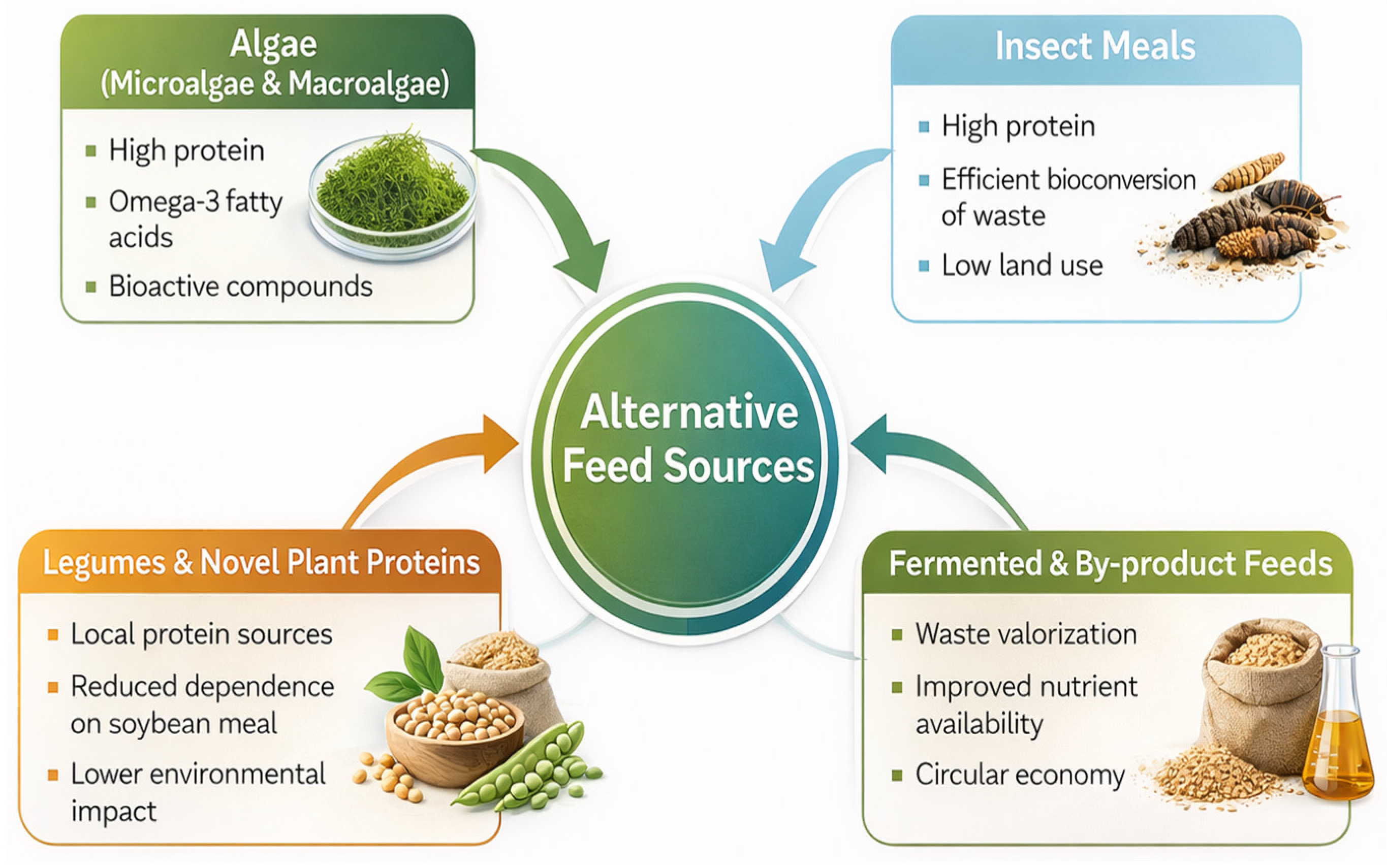
Insect meals, microalgae, fermented byproducts, and novel plant proteins are examples of emerging solutions that have the potential to enhance nutritional efficiency, recycle resources, and mitigate environmental impacts. Figure 1 illustrates the main categories of alternative feed sources in the poultry industry, highlighting emerging options such as algae, insect meals, fermented feeds, and novel plant-based proteins. Insect meals such as black soldier fly larvae have been shown to replace 5–15% of soybean meal in broiler diets without negatively affecting growth performance or feed conversion ratio. For instance, insect meals can be made from organic waste streams and have been shown to improve feed conversion and gastrointestinal health [9,17]. Microalgae, including Chlorella and Spirulina, have also demonstrated potential as alternative protein sources, with studies reporting improvements in immune response and comparable growth performance when included at 5–10% of the diet [18,19,20]. In addition to nutritional benefits, alternative feed ingredients may contribute to environmental sustainability. Compared to terrestrial crops, microalgae have a substantially smaller land footprint while producing high-quality protein and beneficial substances [21]. By keeping waste out of landfills and improving nutrient availability, fermented agricultural wastes promote cyclic resource flows [22].
Lupin, faba bean, and moringa are examples of novel legumes and oilseeds that provide locally adaptable substitutes, thereby reducing dependence on imported soybean meal [23]. These alternatives are excellent options for improving the nutritional profile of poultry products and performances, in addition to attempting to lessen the environmental impact of chicken production. Using a variety of unique and alternative feed ingredients in poultry diets, such as oilseed meals, legume waste, fruit waste, leaves, plants, and other agricultural by-products, offers viable solutions to the challenges facing the poultry industry today [24]. These substitutes offer several advantages, including reduced reliance on conventional components like fishmeal and soybean, a lower environmental impact, and potential cost savings as summarized in Table 1. Life cycle assessments suggest that insect-based feeds can reduce land use by up to 50% and greenhouse gas emissions by approximately 30–60% compared with conventional soybean-based feeds [25,26]. However, data on large-scale production performance and environmental impacts remain limited, highlighting the need for further research to fully evaluate their long-term sustainability [25].
Overall, the key strategy for reducing the environmental impact of chicken systems is to transition toward more diversified and sustainable feed ingredients. These approaches have the potential to lower carbon emissions, increase resource efficiency, and strengthen resilience in global poultry supply chains when combined with better feed processing and precision nutrition [16,31]. A multidisciplinary approach is required to evaluate long-term performance, scalability, consumer acceptance, and economic viability of these strategies under commercial production conditions.

2.1. Insect Meals

The use of insects in poultry feed is a potential solution for improving the sustainability of poultry diets. Insect-derived proteins have emerged as one of the most promising substitutes for conventional poultry feed ingredients. Because insects offer high protein content, favorable amino acid profiles, and potential for sustainable large-scale production, a wide variety of species (e.g., crickets Acheta domesticus, yellow mealworms Tenebrio molitor, black soldier fly larvae Hermetia illucens) can be used in poultry diets [8,9]. Additionally, beneficial fats from insects, such as lauric acid, can strengthen the immune function and improve the gut health of poultry.
Digestibility studies indicate that insect meals can achieve growth performance and feed conversion ratios comparable to those obtained with soybean meal and fishmeal, establishing these meals as nutritionally suitable alternatives [32]. Insect meals can improve feed palatability for chickens, and some evidence suggests that consumers may prefer meat from insect-fed poultry. Insect meals are increasingly recognized as sustainable, high-quality protein sources in poultry nutrition, providing essential amino acids, beneficial lipids, and bioactive compounds that can enhance bird health. Their chitin and antimicrobial peptides stimulate the innate immune system and improve gut integrity, thereby reducing pathogen load and lowering the need for antibiotics [33,34].
Some studies have reported improvements in meat juiciness, tenderness, or overall sensory quality in chickens fed insect-based diets, possibly due to altered fatty-acid composition and enhanced nutrient absorption [35,36]. However, sensory findings remain inconsistent, with several trials showing no significant differences in flavor or consumer acceptability compared with conventional diets [34,36]. Consumer preference also varies: acceptance increases when consumers are informed about the sustainability and nutritional benefits of insect-fed poultry, but hesitancy may occur when the insect origin of the feed is disclosed [37]. Beyond meeting basic nutritional requirements, insect-derived feeds have been linked to enhanced meat quality traits, including improved fatty acid profiles in broiler muscle [7]. Insect-based feed ingredients have received increasing attention as sustainable protein sources for poultry diets. Species such as black soldier fly (Hermetia illucens) larvae and mealworms (Tenebrio molitor) provide high-quality protein, essential amino acids, and beneficial bioactive compounds such as antimicrobial peptides and chitin [8]. Several studies have reported that moderate inclusion levels of insect meal can maintain or improve broiler growth performance and feed conversion efficiency while supporting gut health and immune function [8,9]. In addition to nutritional benefits, insect production systems offer environmental advantages, including efficient bioconversion of organic waste streams, reduced land requirements, and potentially lower greenhouse gas emissions compared with conventional protein sources such as soybean meal. These characteristics make insect meals promising alternatives for improving the sustainability of poultry production systems [38]. Although black soldier flies and mealworms have been studied more extensively than housefly larvae and silkworms, research shows that including housefly larvae in broiler diets can increase carcass yield, while silkworm supplementation also affects production performance. Insect-derived proteins such as housefly larvae meal (Musca domestica) and silkworm pupae meal (Bombyx mori) have gained attention as alternative feed ingredients in poultry nutrition. Housefly larvae meal contains high crude protein levels (>45%) and a favorable amino acid profile, making it suitable for inclusion in broiler diets [39]. Similarly, silkworm pupae meal, a by-product of the silk industry, contains approximately 50–80% crude protein and significant levels of essential amino acids such as lysine and methionine, highlighting its potential as a sustainable protein source in poultry feed formulations [40]. Overall, insect meals enhance poultry health and can positively influence meat quality, although their effects on flavor and consumer acceptance depend on insect species, inclusion level, and consumer perception [41]. As summarized in Table 2, insect meals such as black soldier fly larvae, mealworms, housefly larvae, crickets, and lepidopteran larvae are characterized by high crude protein content and favorable lipid levels. Insect meals offer several notable benefits from both economic and environmental standpoints. They can be raised on organic byproducts like food waste and agricultural residues, thereby reducing the environmental impact of waste disposal and supporting circular economy principles [42]. Because insects are rich in protein, fat, vitamins, and minerals, achieve better feed conversion efficiency than conventional livestock, require minimal space, and are readily consumed by fish, poultry, and other omnivores, they have garnered considerable attention as potential poultry feed ingredients. Additionally, by converting bio-wastes into high-quality feed, insects provide a sustainable poultry feed source that places minimal strain on land, water, and energy resources [43]. According to life cycle assessment studies, producing insects uses less water and land and produces fewer greenhouse gas emissions than producing fishmeal and soybeans [44]. However, there are still major obstacles to widespread adoption in the poultry industry, including issues with scalability, production costs, and consumer acceptance [12].
Overall, insect meals are a sustainable feed substitute that can help lessen the negative environmental impacts of poultry production. Growing populations, rising meat consumption, shrinking arable land, and increasing grain prices are limiting the use of fishmeal and soybean meal as primary protein sources in feed. Consequently, insects are emerging as an important new protein source for poultry. Insects offer excellent nutritional value, low production costs, require no arable land, and even have non-food uses such as biowaste treatment. However, despite these advantages, the current production cost of insect meal remains higher than conventional protein sources such as soybean meal due to limited large-scale production and technological constraints in some regions. In addition, the current market price of insect meal is significantly higher than conventional protein sources, with insect meal often exceeding $1500–$3000 per ton, compared with approximately $300–$500 per ton for soybean meal [32,46]. These economic and technological constraints currently limit the large-scale adoption of insect-based feeds in commercial poultry production. Nevertheless, with advances in mass-rearing technologies, automation, and improved production efficiency, insect-based feeds may become more economically competitive in the future. Therefore, insect meals represent a promising sustainable protein source for poultry nutrition [31].

2.2. Algae (Microalgae and Macroalgae)

In poultry production, algae are gaining popularity as sustainable alternatives to traditional feed ingredients. Algae have been investigated as dietary supplements for humans and as feed ingredients for livestock production. Algae’s nutritional profile includes carbohydrates, essential fatty acids and amino acids, carotenoids, and vitamins A, B1, B12, C, D, and E. Algae are broadly classified into macroalgae and microalgae. Both types of macroalgae (e.g., Laminaria, Gracilaria, Ulva, Padina, Pavonica) and microalgae (e.g., Chlorella, Tetraselmis, Spirulina, Nannochloropsis, Nitzschia, Navicula, Chaetoceros, Scenedesmus, Haematococcus, Crypthecodinium) can be used as alternative feed ingredients in animal nutrition due to their rich nutritional composition, including proteins, essential amino acids, vitamins, and bioactive compounds [49]. Microalgae are photosynthetic microorganisms that utilize atmospheric carbon dioxide (CO2) and sunlight energy to produce a variety of proteins, carbohydrates, lipids, minerals, vitamins, polyphenols, flavonoids, and carotenoids. Seaweed such as Ascophyllum nodosum and other macroalgae, as well as microalgae like Spirulina platensis and Chlorella vulgaris, are prized for their rich nutrient composition and environmental benefits [26,50].
The use of algae as animal feed can improve animal health, performance, and product quality. Studies have demonstrated that supplementing traditional diets with microalgae (e.g., Chlorella, Scenedesmus, Arthrospira) benefits animal growth, health status, and physiological processes, while also improving the quantity and quality of meat and eggs [18,50,51]. The beneficial effects were lower cholesterol and improved immunity, animal growth, and improved meat quality, increased reproductive performance, antiviral and antibacterial action offering strong resistance to diseases, improved gut function and the colonization of probiotics in the intestinal tract, and an enhancement in feed conversion efficiency [18]. Many algal species contain substantial levels of protein, essential amino acids, vitamins, minerals, and bioactive compounds, which can contribute to improved growth performance and overall health in poultry. Additionally, algae are rich in polyunsaturated fatty acids, including omega-3 fatty acids and carotenoids, which may enhance meat and egg quality [18,49]. Several studies have reported that the inclusion of microalgae in poultry diets can improve feed efficiency, immune response, and product nutritional quality, highlighting their potential as a sustainable feed resource [27,50]. Carotenoids and chlorophylls are examples of algae pigments that can enhance the antioxidant status and pigmentation of egg yolks, improving their consumer appeal and health benefits [26]. Currently, approximately 30% of global microalgal biomass production is used for animal nutrition [52]. The use of microalgae as a feed supplement is currently being practiced mainly in the United States and the United Kingdom [50]. Production is expanding to many Asian countries, including Japan, the Philippines, China, and Korea [53]. However, producing microalgal biomass for feed in a sustainable, cost-effective manner remains challenging. Algae are primarily used as feed supplements due to their rich content in macro- and micro-elements, as well as their potential to enhance growth performance, feed efficiency, and meat quality in broilers. These benefits are largely attributed to bioactive polysaccharides that boost chicken health and productivity. Additionally, algae supplementation has been associated with improved gut health and immune responses in poultry, which further enhances production outcomes [18].
Algae farming can utilize non-potable water, such as saline or wastewater, for production and requires significantly less arable land than traditional crops from a sustainability standpoint. In addition to providing nutrition, algae also aid in wastewater bioremediation and carbon sequestration. Life cycle assessments indicate that algae-derived feeds could reduce the environmental impact of poultry farming, especially in land and water use, although the energy demands of large-scale algae cultivation pose a challenge [12,26].
According to research, numerous feeding experiments have been conducted to assess the potential of various microalgal species as an alternative feed protein. Algae are recommended as a feed addition due to their high levels of macro- and micro-elements, as well as their ability to boost broiler growth performance and feed efficiency, owing to the features of seaweed polysaccharides that can increase chicken health and productivity. Incorporating algae in laying hens and broilers opens an avenue in the creation of functional foods such as chicken eggs and meat. Because of their chemical composition, both microalgae and macroalgae can be effectively used in poultry nutrition to improve pigmentation and nutritional value of meat and eggs, as well as to partially replace conventional sources of dietary protein. Broiler chickens have been fed microalgae from various sources and in different forms. This approach may be particularly valuable in organic poultry production, providing opportunities to enrich eggs and meat in those systems [18]. Low doses of Spirulina platensis and Chlorella vulgaris effectively improve body weight gain (BWG) and feed conversion ratio (FCR), often by enhancing gut health and nutrient absorption. Crucially, these microalgae act as natural antioxidants, significantly enhancing the oxidative stability of the meat, thereby extending its shelf life. Furthermore, species like Schizochytrium are strategically used to enrich the meat with beneficial Omega-3 fatty acids (DHA), thereby improving the nutritional value of the final product for consumers [19]. Supplementing broiler diets with low to moderate levels of algae (especially Spirulina, Chlorella, and Schizochytrium) generally enhances growth performance, conversion efficiency, carcass yield, oxidative stability, and meat fatty acid composition. However, higher inclusion levels may have neutral effects on overall performance while improving specific parameters such as amino acid digestibility or meat pigmentation. Recent research from 2020–2025 indicates that even at modest inclusion levels (0.1–1.0%), these algae can dramatically increase antioxidant enzyme activities, such as superoxide dismutase, while decreasing malondialdehyde levels in breast muscle [20,54]. Moreover, high inclusion of Spirulina has been demonstrated to promote growth while specifically enhancing the digestible methionine levels in the diet, providing a possible approach to lessen dependence on synthetic amino acids [55]. Table 3 displays the results of various feeding studies on growth performance and meat yield when different microalgae were added to broiler diets. In laying hens, algae supplementation aims to maximize egg output and enhance the eggs’ commercial and nutritional appeal. Chlorella vulgaris, with its high carotenoid content, is particularly effective at enhancing yolk color and improving albumen quality (Haugh units). Meanwhile, Spirulina platensis consistently reduces yolk cholesterol and triglycerides, providing a clear functional food benefit. Together, these algae enhance the rate of egg production while delivering a more vibrant, structurally sound (shell thickness), and heart-healthy egg to the market. As summarized in Table 4, supplementing laying-hen diets with low to moderate levels of algae (especially Chlorella, Spirulina, and Schizochytrium) improves egg production, egg weight, and multiple egg quality traits (yolk pigmentation, Haugh units, shell quality, and oxidative stability). In addition, algae sources reduce egg cholesterol and positively modulate lipid metabolism.
Integrating microalgae and macroalgae into poultry feed offers a huge step forward in enhancing poultry nutrition [68]. In broilers, algae are primarily used as growth promoters and to enhance meat quality (e.g., oxidative stability, PUFA content). In layers, algae are mainly added to increase egg output and improve egg quality, enhancing yolk color and lowering cholesterol for a better nutritional profile [69]. Table 5 provides a comparison of the primary effects of algae supplementation in broilers and laying hens. In broilers, algae mainly target growth performance and meat quality, improving body weight gain, feed conversion ratio, antioxidant capacity, oxidative stability of meat lipids, and omega-3 fatty acid content. In layers, the focus is on enhancing egg production and egg quality traits, including yolk color, Haugh units, and reductions in cholesterol and triglycerides. Both poultry types also benefit from improved gut health and immune function, highlighting the multifunctional role of algae-based feed additives in poultry nutrition. Algae promote microbial diversity and the growth of beneficial bacteria, which helps improve chickens’ digestive health and nutrient absorption. High production costs and technological barriers in algal biomass processing currently prevent its widespread adoption in commercial poultry systems, despite its potential. Life cycle assessment studies suggest that microalgae production can require significantly less arable land than soybean cultivation, and in some systems may reduce land use by up to 70–90% per unit of protein produced [70,71,72]. Algae cultivation can also utilize non-arable land and saline or wastewater resources, thereby reducing competition with conventional crop production for freshwater and agricultural land. In addition, certain production systems have reported lower greenhouse gas emissions compared with fishmeal production, depending on cultivation technology and energy sources [70,71]. However, several constraints remain, including high energy requirements for biomass drying, relatively high production costs, challenges associated with large-scale cultivation, and variability in biomass composition across species and production conditions. Addressing these limitations will be critical for improving the environmental and economic feasibility of algae-based feed ingredients [12]. To successfully integrate algae-fed poultry products into the feed supply chain, more research is needed to determine consumer acceptance. However, algae remain a viable component of sustainable feeding approaches, with ongoing research aimed at enhancing cultivation efficiency and minimizing costs [72].

2.3. Fermented and By-Product Feeds

Another sustainable way to reduce the environmental impact of chicken production while lowering feed costs is to utilize agricultural and industrial byproducts. Fermented agro-industrial by-products have gained attention as alternative feed ingredients due to their improved digestibility, reduced anti-nutritional factors, and enhanced nutrient availability [74]. Fruit and vegetable leftovers, dried distillers’ grains with soluble fiber (DDGS), oilseed meals (such as sunflower, rapeseed, and canola), and bakery waste are typical examples. These substances are frequently high in protein, energy, or fiber, rendering them suitable alternatives to traditional feed components such as soybean meal and corn [29].
In terms of nutrition, by-product feeds have shown the ability to sustain or improve poultry growth performance when used at appropriate levels. For instance, oilseed meals offer beneficial fatty acids and essential amino acids, while DDGS offer an affordable source of protein and energy [74]. The antioxidant compounds found in fruit and vegetable residues are especially valuable because they can enhance the quality of meat and the health of poultry [7]. However, cautious formulation and processing methods are required due to nutritional variability, the presence of anti-nutritional factors, and limited digestibility in certain by-products [74]. Fermented feed encourages “good” bacteria in the chicken’s gut, helping keep their digestive system healthy. The fermentation process makes the feed more acidic, which prevents dangerous bacteria (such as Salmonella and E. coli) from growing. As a result, chickens are healthier, and the meat and eggs they produce are safer for people to eat.
The optimal inclusion level depends on the ingredient type and production stage. Fermented soybean meal, for example, is commonly added at 5–10% to broiler diets to support growth and feed efficiency, while fermented DDGS may be incorporated at levels of up to 10–15% without negatively affecting growth performance or feed conversion ratio [74,75]. A meta-analysis reported that fermented soybean meal generally improves broiler performance [75]. Similarly, replacing soybean meal with fermented rapeseed meal (up to 10%) can enhance nutrient digestibility and gut health without harming growth [76]. Environmentally, adding by-products to poultry feed supports the circular economy by repurposing waste streams that would otherwise end up in landfills or emit emissions [7]. Using agricultural byproducts as animal feeds may assist in reducing pollution caused by GHG released during the decomposition of organic waste. By reducing the need for traditional feed ingredients, this approach lowers greenhouse gas emissions associated with fishmeal and soybean production, as well as the amount of land and water required [12]. According to life cycle assessment studies, feed by-products have substantial potential to reduce the carbon footprint of poultry systems, especially when sourced locally [14].
Notwithstanding their potential, there are obstacles to the widespread use of by-product feeds, including supply chain constraints, uneven supply, and consumer concerns about product quality and food safety. If fermentation is not properly controlled, especially when pH does not drop to around 4.5, the moist conditions can encourage mold growth and mycotoxin production. Mycotoxins produced by molds are often not visible or detectable by smell but can harm poultry even at low levels, affecting feed safety, nutrient quality, and bird performance. Maintaining a low pH is essential because it inhibits harmful bacteria, stabilizes fermentation, and prevents spoilage microorganisms. Effective monitoring strategies may include regular pH measurements using portable pH meters or indicator strips, as well as basic microbial quality checks where possible. In low-resource settings, simple fermentation systems using controlled moisture levels and periodic pH monitoring can help ensure stable fermentation while minimizing the risk of microbial contamination [77,78].
To overcome these obstacles and ensure a safe and successful incorporation into poultry diets, advancements in feed processing technology, standardization, and regulatory support are necessary. The use of fermented by-products in poultry feed greatly affects nutrient bioavailability and gut health. Several processing technologies are used to improve the nutritional value and safety of alternative feed ingredients. For example, fermentation is typically conducted at temperatures of 30–37 °C for 24–72 h under controlled pH conditions (approximately 4.0–5.0) to enhance microbial activity and nutrient availability [77]. Drying processes are generally performed at temperatures between 50–70 °C to reduce moisture content and prevent microbial spoilage. In addition, anaerobic digestion systems operate under mesophilic (35–40 °C) or thermophilic (50–55 °C) conditions with retention times of 15–30 days, enabling the conversion of organic waste into biogas and nutrient-rich residues [79].
Table 6 summarizes the effects of fermented feed ingredients in poultry diets. The inclusion of 5–15% fermented plant fractions, wheat bran, corn DDGS, or other by-products generally improved nutrient digestibility, reduced anti-nutritional factors and mycotoxins, and enhanced gut health. These benefits were associated with maintained or increased growth performance, improved feed efficiency, and, in some cases, better meat quality, indicating that fermented feed is a promising strategy for sustainable poultry production. Fermentation greatly improves the nutritional profile of high-fiber or low-quality byproducts. These improvements in nutrient utilization are consistently linked to physiological effects, such as enhanced gut structure and immune function. Recent studies (2022–2024) show that solid-state fermentation of wheat bran and DDGS can lower non-starch polysaccharides (NSP) and mycotoxin levels, resulting in better amino acid digestibility than their unprocessed forms [3,48]. These advancements improve gut structure and a more beneficial microbial ecosystem, essential for sustaining growth efficiency when substituting traditional, expensive protein sources.

2.4. Legumes, Oilseeds & Novel Plant Proteins

Regionally accessible plant proteins from leguminous crops like lupin, faba beans, and moringa lessen reliance on imported soybean meal [84]. Nevertheless, anti-nutritional substances such as lectins and tannins can hinder the absorption of nutrients. Methods like heat treatment, dehulling, and enzymatic enhancements can lessen these limitations, enabling their use in greater dietary amounts without negatively affecting bird performance [30]. In addition to diversifying agricultural systems, the use of locally sourced plant proteins enhances feed self-sufficiency, a crucial element of sustainable food chains. By incorporating them into precision-feeding initiatives, nitrogen excretion can be reduced, and nutrient use efficiency can be maximized. The inclusion of legumes and oilseeds into poultry diets is a feasible technique for sustainable production, as long as their chemical profiles are correctly balanced. Table 7 summarizes key chemical characteristics, inclusion levels, and performance effects of legumes, oilseeds, and novel plant protein sources in poultry diets. Ingredients such as field peas, lupins, faba beans, rapeseed meal, and sunflower meal provide alternative protein sources to soybean meal, with variable crude protein, fiber, and anti-nutritional factors. Processing methods, such as fermentation or dehulling, can reduce antinutritional factors (ANFs) and improve digestibility, enhancing growth performance, feed efficiency, and gut health. Novel ingredients, including camelina meal and hempseed cake, offer additional benefits such as improved n-3 fatty acid deposition and immune support when included at moderate levels. Overall, these plant protein sources can partially replace conventional soybean meal without compromising productivity, provided diets are balanced for amino acids and anti-nutritional factors are managed. The performance effects presented demonstrate that, while some novel proteins may marginally improve the feed conversion ratio (FCR) at high inclusion levels, moderate substitution often results in performance parity with corn-soybean control diets. This demonstrates the potential of these chemicals as strong alternatives in modern poultry formulas. Legumes such as field peas and faba beans can sustain growth performance at moderate levels (up to 12%), but processing methods like dehulling or fermentation enhance their usefulness [81,85].

2.5. Comparative Sustainability Benefits

Alternative poultry feed ingredients improve sustainability through multiple mechanisms that address the environmental, nutritional, and economic limitations of conventional soybean meal. Traditional SBM production is associated with extensive land use, high water demand, and significant greenhouse gas (GHG) emissions resulting from land-use changes and fertilizer inputs. In contrast, emerging ingredients such as insect meals, microalgae, single-cell proteins (SCP), fermented yeasts, duckweed, and agro-industrial by-products contribute to resource efficiency and nutrient circularity by either upcycling waste streams or reducing dependence on arable land, while also diversifying poultry diets to improve resilience and reduce environmental burden [43,59,93]. Table 8 presents the economic comparison of sustainable feed ingredients relative to soybean meal. The table summarizes the cost-effectiveness, price differences, and overall economic viability of alternative feed ingredients when compared to soybean meal as the conventional protein source. The feasibility of adopting alternative feed ingredients also depends on regional resource availability and production systems. For example, insect-based feeds are particularly suitable in regions with abundant organic waste streams and warm climates that support insect farming, such as many parts of Asia and Africa [42,94]. Microalgae production may be more feasible in regions with strong solar radiation and access to water resources, including coastal areas and arid regions with high sunlight exposure [18,70]. Agro-industrial by-products, such as DDGS and oilseed cakes, are more readily available in areas with developed biofuel and food processing industries, particularly in North America and Europe [1,74]. Meanwhile, legumes and alternative plant proteins may be better suited to regions with established pulse and oilseed production systems, such as South America and parts of Asia. Considering these regional differences is essential for developing context-specific strategies to improve the sustainability of poultry feed systems [25,95,96].
Insects such as black soldier fly (BSF) larvae convert organic waste into high-quality protein with low land occupation and reduced water use relative to soybean cultivation; studies report insect meal contents of 60–70% crude protein on a dry matter basis, with balanced essential amino acids suitable for poultry diets [43]. Moreover, life cycle assessments (LCAs) suggest that insect meals can offer environmental benefits under specific production conditions, though results vary widely depending on rearing substrate, energy use, and processing technologies, and no single feed source is optimal across all impact categories without careful system design [21,25].
Microalgae (Chlorella, Spirulina, etc.) are abundant in protein, essential fatty acids, minerals, and bioactive compounds, and can be cultivated on non-arable land or wastewater, reducing freshwater and fertilizer demand while improving nutrient density and animal health outcomes [59]. Similar sustainability potential is reported for single-cell protein (SCP) and fermented yeasts, which employ controlled fermentation on agro-industrial side streams; these processes can substantially reduce land use, but the high energy demand for fermentation and downstream processing remains a key trade-off that must be optimized with renewable energy inputs and efficient heat integration [71]. By-product feeds such as dried distiller’s grains with soluble (DDGS), wheat bran, and oilseed cakes advance circular economy principles by repurposing processing residues, lowering overall environmental burden and input costs, though nutrient profiles and digestibility vary and require formulation strategies to ensure balanced rations [97].
Nutrient variability is a significant factor when using alternative ingredients, as insect and algae meals can exhibit fluctuations in amino acid profiles, mineral content, and lipid fractions depending on species, culture substrate, and processing conditions; precision formulation tools are therefore essential to achieve consistent performance and avoid unintended nutritional deficiencies. Economically, by-product feeds often remain the most affordable and accessible alternative, whereas insect, algae, and SCP proteins may incur higher costs associated with production scale, energy demand, and immature supply chains, with prices typically exceeding those of SBM unless co-products or integrated systems offset these costs. Through integrated circular systems: for instance, poultry manure or food waste can be diverted to insect rearing facilities, where larvae generate protein feed and frass fertilizer; wastewater algae cultivation can synergize with anaerobic digestion to produce biogas that powers feed drying or fermentation, reducing reliance on fossil fuels while closing nutrient loops and capturing value from wastes. These integrated approaches combining waste valorization, renewable energy, and alternative feed production can significantly reduce carbon, land, and water footprints in poultry systems when designed holistically. Table 9 presents the environmental performance of various feedstocks, as measured by life cycle assessment (LCA) metrics. Although soybean meal is considered the global standard, it has a larger land and water footprint than other protein sources. New sources, such as insect meals and microalgae, present the possibility of reducing land use by 90%, although their carbon footprint is highly dependent on the energy intensity of the production method [98]. Moreover, incorporating DDGS and other by-products emphasizes a circular economy model, lowering the total eutrophication potential of the diet by repurposing agricultural waste [88,99].

3. Management Practices for Sustainability

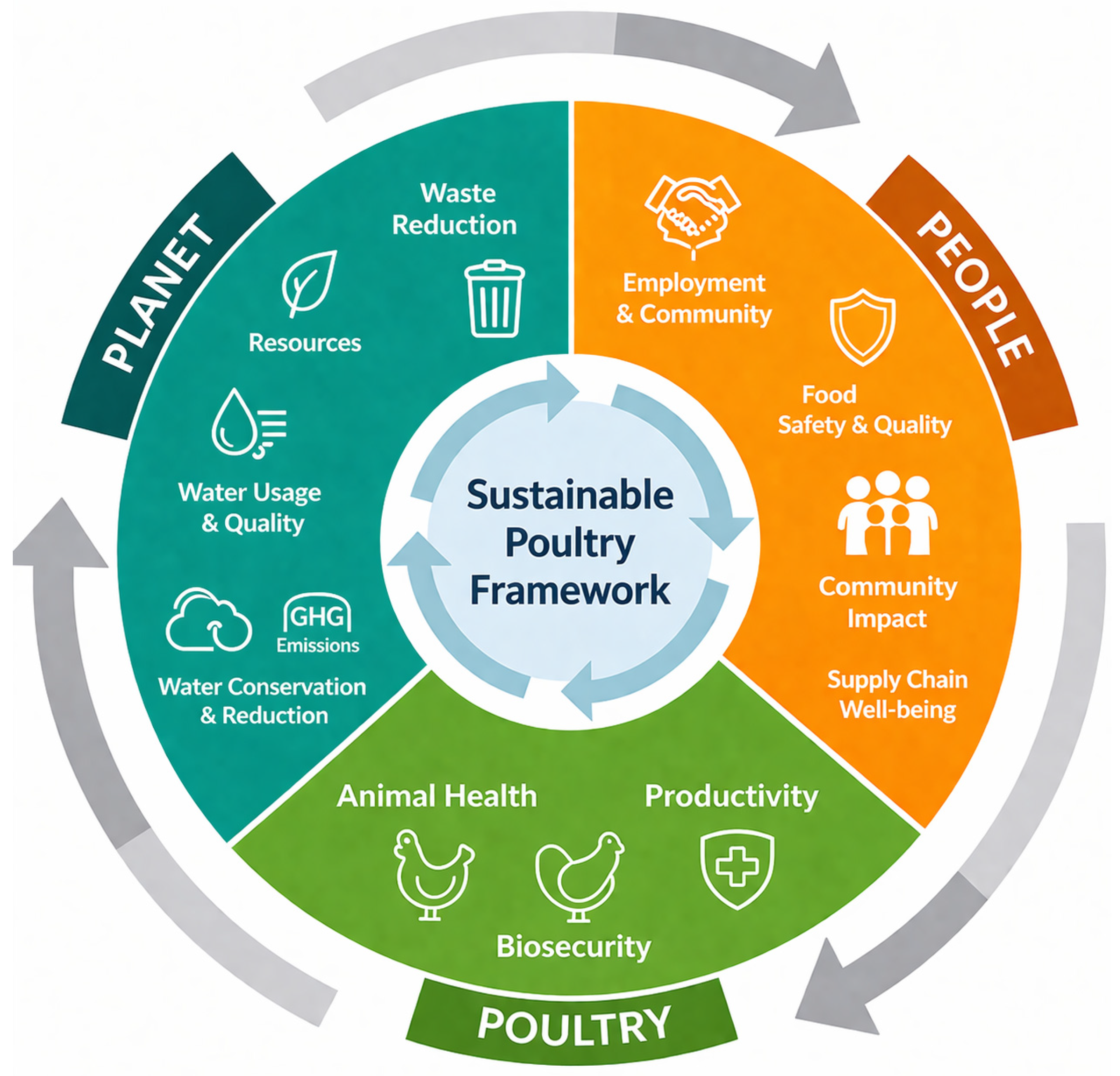
Environmental management is a key element of sustainable poultry production, complementing dietary strategies. The ecological impact of poultry operations is significantly influenced by factors beyond feed efficiency, including energy consumption, water management, and waste disposal. Integrating waste valorization, precision resource management, and renewable energy technologies not only reduces greenhouse gas emissions but also improves farm resilience and long-term profitability [100]. Figure 2 presents a comprehensive framework for sustainable poultry production, integrating environmental, social, and poultry-specific dimensions. The Planet component emphasizes efficient resource use, water conservation, waste reduction, and minimizing greenhouse gas emissions. The People dimension focuses on employment, community well-being, food safety, and supply chain integrity. The Poultry component addresses animal health and welfare, productivity, and biosecurity measures. This framework highlights the interdependence of these factors, illustrating how improvements in environmental management, social responsibility, and poultry health collectively contribute to a resilient and sustainable poultry production system.

3.1. Renewable Energy and Integration

Energy consumption in poultry housing systems, particularly for heating, cooling, and ventilation, significantly contributes to the industry’s carbon footprint. Facilities that house poultry require a significant amount of energy due to the need for constant lighting, ventilation, and heating. There is significant potential for cost and emission reductions from the switch to renewable energy sources, especially solar and biogas. For instance, installing solar photovoltaic (PV) systems on chicken houses can reduce operating costs by 20–30% while meeting up to 60% of energy demand [101]. The installation of photovoltaic (PV) systems requires relatively high initial capital investment, typically ranging from $1000 to $1500 per kW of installed capacity, depending on system scale, technology, and regional market conditions [101,102]. However, the payback period for PV installations generally ranges from approximately 5 to 10 years, depending on factors such as local electricity prices, system efficiency, and solar irradiation levels [101,102]. Producing biogas from chicken litter captures methane and generates renewable energy for heating or power [103].
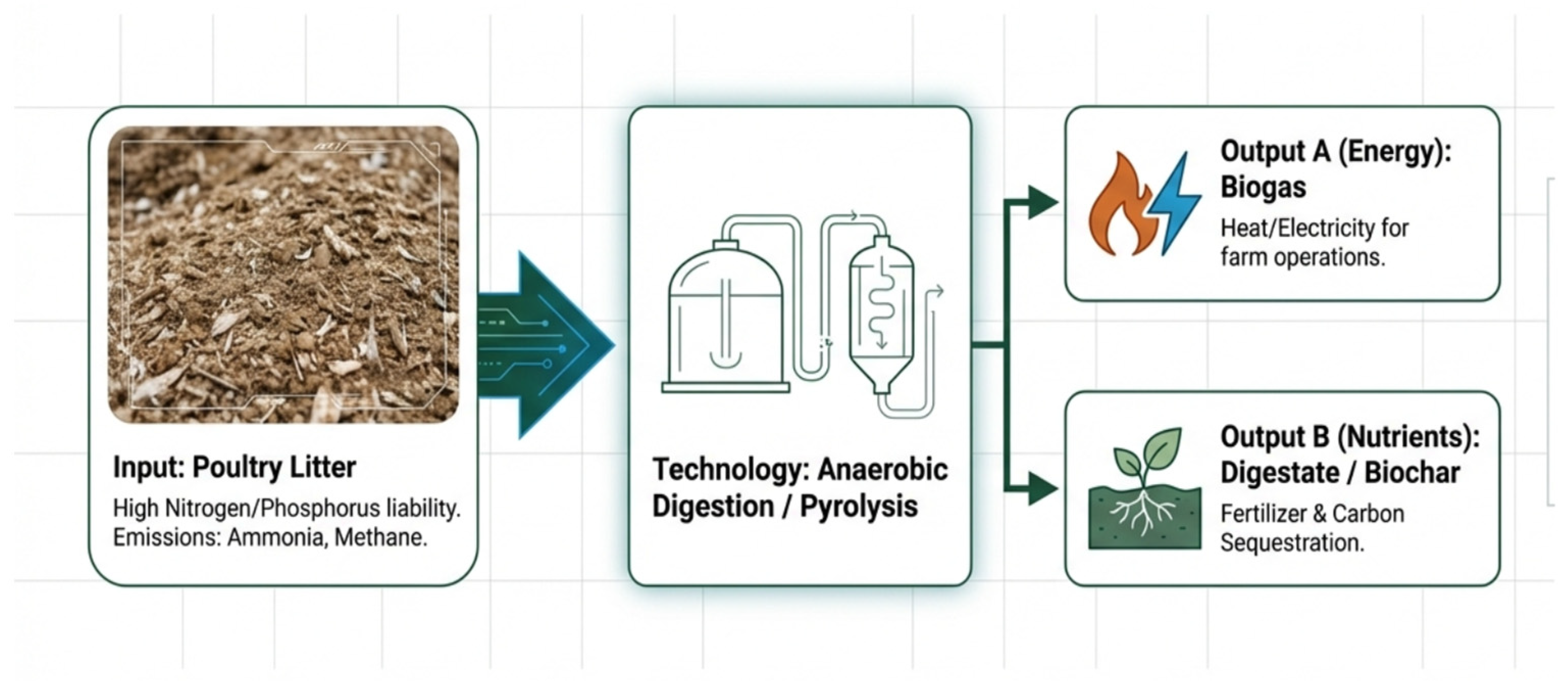
The use of renewable energy technologies such as wind turbines, solar panels, and biogas systems can significantly reduce GHG emissions while also lowering production costs by approximately 20–30% and supplying up to 50–60% of on-farm energy requirements, depending on farm size, solar irradiation levels, and regional electricity prices [101,102]. For example, medium-scale poultry farms in regions with high solar radiation, such as parts of Asia and Africa, have demonstrated significant energy savings through rooftop PV systems. Similarly, biogas systems using poultry manure can generate renewable energy while reducing methane emissions and waste management challenges [104]. Despite the high upfront costs, solar energy is increasingly used in broiler facilities to power ventilation and lighting, resulting in long-term savings. Utilizing poultry litter and other agricultural by-products for biogas offers a dual advantage by minimizing waste while generating energy for on-farm uses [105]. However, the adoption of these technologies may be constrained by initial infrastructure costs, technical expertise requirements, and the need for appropriate manure collection and digester systems, particularly in smallholder or resource-limited production settings. Incentives, financial aid, and favorable regulations are crucial for increasing access to renewable energy systems for poultry producers, particularly in developing regions [106]. Anaerobic digestion is widely used to convert poultry manure into renewable energy in the form of biogas. The process commonly operates under mesophilic temperatures around 35–37 °C, with hydraulic retention times typically ranging from 15–30 days, depending on substrate composition and reactor configuration [70,104]. Under optimal conditions, poultry manure digestion can produce biogas yields of approximately 0.28–0.60 m3 kg−1 volatile solids, demonstrating its potential for renewable energy production and sustainable waste management [107,108]. Figure 3 illustrates the integration of waste poultry products into a circular bioeconomy through anaerobic digestion (AD). The process begins with the collection of nitrogen-rich poultry litter and processing by-products, which serve as feedstock for the anaerobic digester. Through methanogenesis, these waste streams are converted into biogas (primarily methane and carbon dioxide), providing a renewable source of electricity and heat for farm operations or grid injection. By returning nutrients to the soil and lowering dependency on fossil fuel-based energy and synthetic fertilizers, this approach not only closes the resource loop but also alleviates environmental hazards linked to waste buildup [99].

3.2. Precision Water Use and Smart Farming

Water management is another vital aspect of sustainable poultry systems. Water is a critical but often overlooked resource in poultry operations. One widely adopted strategy is the use of nipple drinker systems, which deliver water directly to birds through small valve-operated nipples that release water only when pecked. Nipple drinker systems, automated leak detection, and real-time monitoring are examples of precision water use techniques that help cut down on water waste while enhancing bird welfare and hygiene [109]. In addition to improved drinking systems, smart farming technologies are increasingly being integrated into water management strategies. Improved water management technologies can significantly reduce water waste in poultry production systems. For example, the adoption of nipple drinker systems and automated water monitoring technologies can reduce water wastage by approximately 20–40% compared with traditional open drinker systems, while also improving litter quality and reducing the risk of microbial contamination [109,110]. These improvements contribute to more efficient resource utilization and enhanced environmental sustainability in poultry production [109,110,111]. In arid and hot climates, recirculating water systems combined with evaporative cooling significantly reduce total water use without compromising bird welfare. Additionally, effective water management reduces the energy required for pumping and heating, which indirectly lowers greenhouse gas emissions.
The emerging concept of smart farming, which integrates Internet of Things (IoT) devices, artificial intelligence (AI), and real-time environmental monitoring, further supports the efficient use of resources. Sensors that monitor humidity, litter moisture, and ammonia levels enable producers to optimize ventilation, thereby reducing both water consumption and emissions [110]. These digital tools not only improve sustainability but also align with precision nutrition and production modeling approaches. Technologies for water recycling are being tested in integrated systems, which treat wastewater and repurpose it for irrigation or cooling [112]. However, the adoption of these technologies may be limited by initial investment costs, infrastructure requirements, and limited technical expertise, particularly in small-scale farms. Although infrastructure costs, regulatory obstacles, and biosecurity concerns limit the adoption of these practices, they are consistent with the principles of the circular economy. Cost–benefit analyses suggest that while digital monitoring systems can improve resource efficiency, their economic feasibility depends on farm size, production scale, and regional technology availability.

3.3. Manure Valorization

Poultry litter, composed of manure, bedding, and spilled feed, represents both an environmental liability and an untapped resource. If improperly managed, it contributes to nutrient leaching, odor, and GHG emissions [113]. Poultry waste is a significant resource and a considerable environmental concern due to its high nitrogen and phosphorus content. However, when processed through composting, biochar production, or anaerobic digestion, litter can be transformed into valuable products. Most greenhouse gas emissions in the poultry industry stem from feed production, energy use, and manure management. Previous studies have shown that feed production is typically the largest contributor to the overall carbon footprint of poultry systems, accounting for a substantial proportion of emissions in life cycle assessments. However, the relative contributions of different production systems can vary across geographic regions, production scales, and the methodological assumptions used in the analysis. For example, broiler production systems often account for the majority of poultry-related greenhouse gas emissions due to their high global production volume, while layer systems may contribute a smaller share of total emissions when evaluated on a sector-wide basis. In addition to feed-related emissions, manure management also plays an important role in environmental impacts. Technologies such as anaerobic digestion and thermochemical processes can reduce emissions while recovering energy from poultry waste.
Conventional waste disposal techniques pollute the air and water, but valorization techniques can turn manure into useful products like soil amendments, biofertilizers, and bioenergy [10]. Gasification and anaerobic digestion have significant potential to reduce greenhouse gas emissions while simultaneously producing renewable energy [105,114]. Biochar derived from poultry litter serves as a soil amendment that improves soil fertility and carbon sequestration while reducing ammonia volatilization and methane emissions [115]. Similarly, composting stabilizes nutrients and pathogens, allowing safe land application and reducing dependence on chemical fertilizers. Applying compost on croplands promotes a closed-loop system, aligning with circular economic goals. Composting also reduces manure volume and costs associated with storage, transportation, and waste disposal. Composting can minimize odorous emissions like ammonia and methane [116].
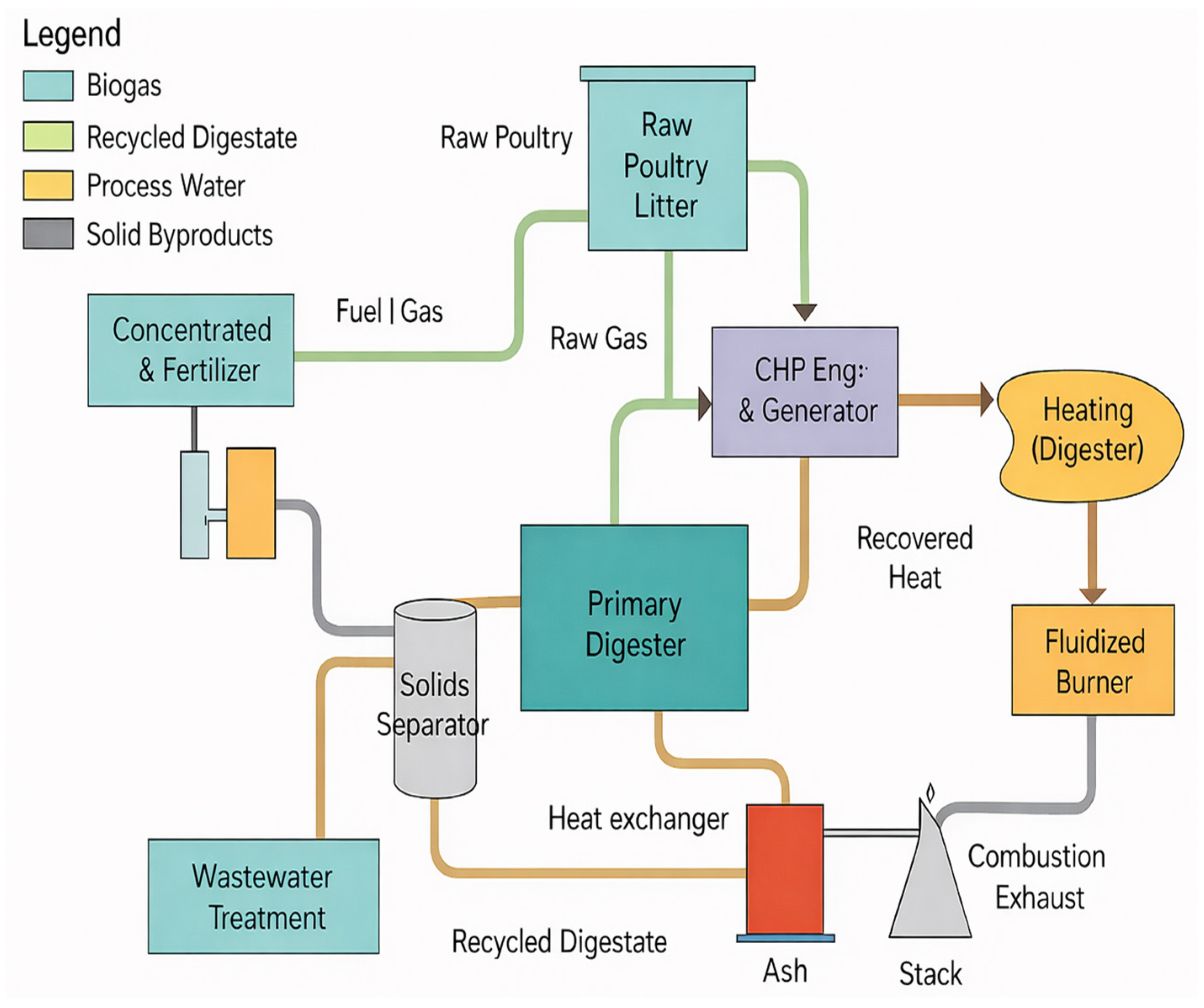
Nutrient recovery technologies, such as struvite precipitation and composting, enable phosphorus recycling and enhance soil health [117]. For example, manure processing technologies such as composting and nutrient recovery systems can achieve phosphorus recovery rates of approximately 60–80%, depending on processing methods and management practices. The resulting compost products typically contain valuable plant nutrients, with approximate N:P:K ratios ranging from 3:2:2 to 4:2:3, making them suitable for use as organic fertilizers in crop production [116,118]. Even though these innovations are in line with sustainability objectives, obstacles like exorbitant installation costs, uneven nutrient recovery effectiveness, and low farmer awareness still prevent widespread adoption [11]. Figure 4 shows the technical process for converting poultry litter into renewable energy and agricultural materials via a circular economy framework. The process begins with Raw Material and Pre-treatment, where litter is treated through alkaline hydrolysis and ultrasonic disruption to improve bioavailability. During the Biogas Production phase, this feedstock experiences anaerobic digestion to produce raw biogas, which is later purified into clean methane or transformed into electricity and heat through Combined Heat and Power (CHP) systems. Alongside energy extraction, the Digestate Valorization phase divides the leftover material into nutrient-dense solid fertilizers and liquid fertilizer concentrates. This cohesive system completes the resource cycle by realizing considerable waste minimization, water reuse, and a decline in greenhouse gas emissions.

4. Life Cycle Assessment (LCA) and Carbon Footprint

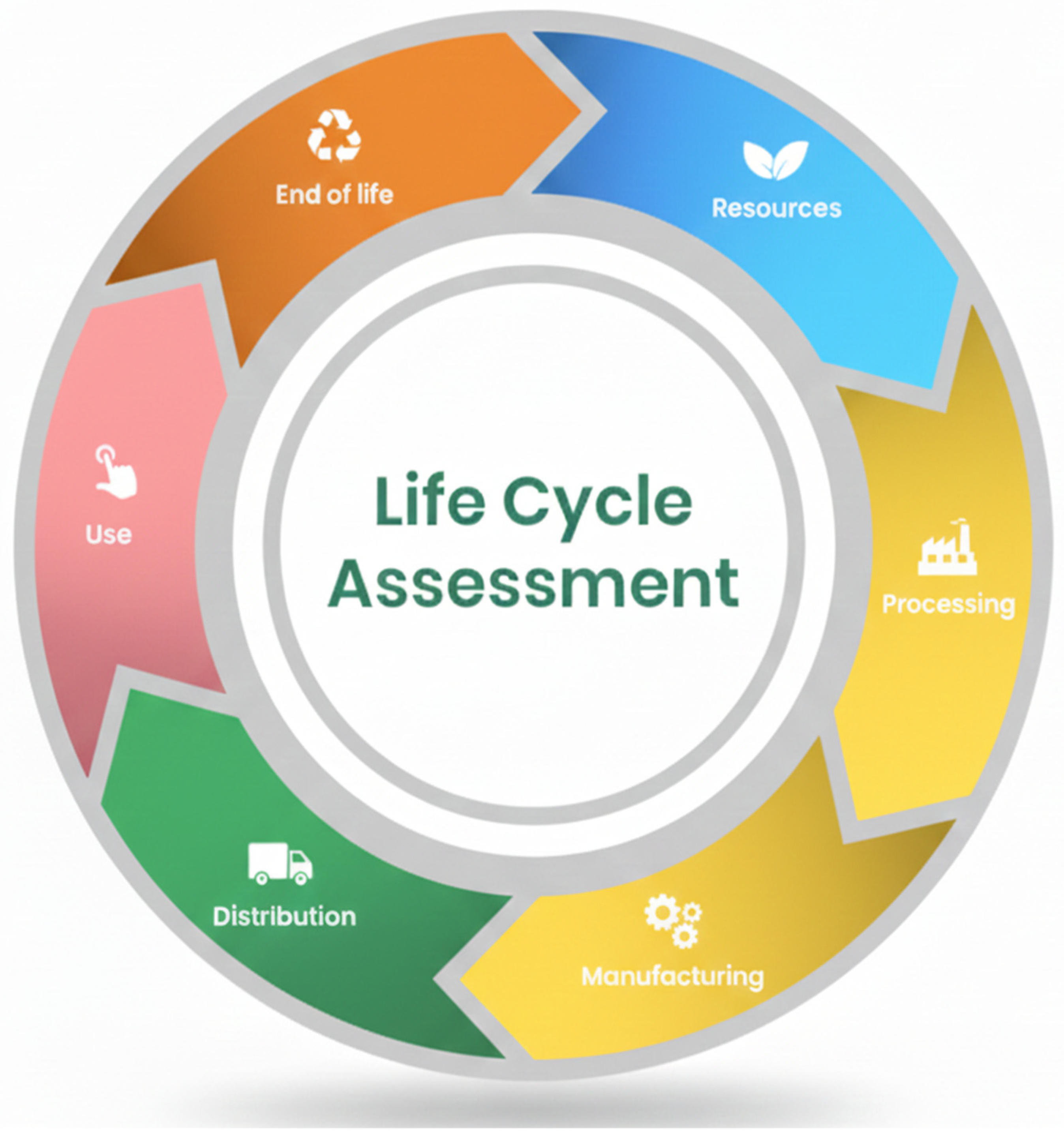
The environmental sustainability of poultry production cannot be fully evaluated through isolated metrics such as feed efficiency or waste management alone. Instead, a comprehensive systems-level framework is required to capture the cumulative environmental impacts across the production chain. Life Cycle Assessment (LCA) has emerged as a standardized and science-based tool to quantify these impacts and guide sustainability improvements [119]. Figure 5 outlines the progressive phases of a Life Cycle Assessment (LCA), which acts as a structured approach to assessing the environmental effects of poultry production. The process consists of six interconnected phases: Resources, representing the input of raw materials; Processing, which involves the refinement of these materials; and Manufacturing, encompassing the primary production activities. The process continues with distribution to the market, the consumer usage phase, and ultimately, the end-of-life stage, where items are discarded or recycled. This integrated model facilitates the detection of environmental “hotspots” throughout the complete supply chain to guarantee thorough sustainability management. In poultry production, LCA enables the assessment of greenhouse gas (GHG) emissions, energy use, land occupation, acidification, and eutrophication across various production stages from feed cultivation to on-farm operations and processing [13].

4.1. Principles of LCA in Poultry

An LCA typically includes four stages: goal and scope definition, inventory analysis, impact assessment, and interpretation. The estimated carbon footprint of poultry production can vary significantly depending on the system boundaries defined in life cycle assessment (LCA) studies. For poultry production, system boundaries may extend from cradle (feed production) to farm gate (live birds) or through processing and distribution (cradle-to-retail). The feed phase generally represents 60–80% of the total carbon footprint [120], highlighting the interdependence between nutritional strategies and environmental outcomes. Farm activities such as energy use, housing, and manure management contribute about 20–30%. When broader cradle-to-grave boundaries are considered, additional emissions from processing, transportation, and product distribution may account for an additional 10–20% of total emissions [13,14]. These variations highlight the importance of clearly defining system boundaries when evaluating the environmental impacts of poultry production systems [15].
According to the Food and Agriculture Organization of the United Nations (2020, inputs such as feed ingredients, energy use, and manure management are recorded and converted into environmental impact categories using standardized characterization factors [2,121]. In poultry systems, the Life Cycle Inventory (LCI) stage quantifies all material and energy inputs, including feed ingredients, fertilizers, land occupation, water use, electricity, heating, bedding materials, and manure emissions, while also accounting for transport and processing steps when applicable [121]. These data feed into the Life Cycle Impact Assessment (LCIA), where emissions and resource flows are translated into environmental impact categories such as global warming potential (GWP), cumulative energy demand (CED), eutrophication, acidification, and land-use impacts through characterization factors aligned with IPCC and regional databases [15]. Interpretation involves identifying emission hotspots and evaluating intervention scenarios, allowing researchers and producers to compare conventional vs. alternative feed ingredients, energy sources, or manure treatments under consistent methodological assumptions.

4.2. LCA Findings in Poultry Production Systems

LCA studies consistently show that feed production is the dominant driver of poultry’s environmental footprint, contributing 60–80% of total greenhouse gas emissions as a result of fertilizer application, land-use change from soybean expansion, irrigation requirements, and the embedded energy in crop cultivation and processing [13,122]. Broiler production typically shows carbon footprint values ranging from 3.3–4.6 kg CO2-eq per kg live weight, influenced by energy-intensive heating and ventilation requirements, feed conversion efficiency, and litter management systems [16]. In contrast, layers demonstrate lower energy intensity per protein unit but exhibit higher cumulative land occupation due to longer production cycles. The higher land occupation associated with layer chicken production is primarily related to the longer production cycle and sustained feed demand throughout the laying period. Unlike broiler chickens, which are typically raised for only 5–7 weeks, laying hens are maintained for approximately 70–80 weeks, resulting in significantly greater cumulative feed consumption [13,16]. Because the majority of land used in poultry production is associated with the cultivation of feed crops such as corn and soybean meal, the extended feeding period of laying hens leads to a larger land footprint. In addition, the infrastructure required for housing, egg production, and manure management over longer production cycles can further contribute to higher overall land occupation [4]. Production systems also vary widely: free-range and organic systems tend to increase land occupation and energy use per unit product due to lower stocking density, more extensive housing, and slower-growing genotypes, despite perceived welfare advantages [95]. Regional variability further amplifies these differences, with carbon footprint outcomes shifting by 30–50% depending on climate-driven heating needs, feed ingredient availability, grid electricity carbon intensity, and reliance on imported soybean meal [123,124]. Importantly, replacing conventional protein sources with insect meal, algae products, fermented feeds, or agro-industrial by-products can reduce feed-related emissions by 15–35%, mainly through reduced land occupation, lower fertilizer use, and improved nutrient digestibility [47,72]. These findings underscore the need for regionally tailored LCA models and context-specific mitigation strategies.

4.3. Carbon Footprint Reduction Strategies

Feed reformulation remains one of the most effective levers for reducing poultry’s carbon footprint. Strategies such as protein optimization, amino acid supplementation, and local ingredient sourcing improve nutrient efficiency and lower emissions linked to soybean imports. Mitigation of the poultry sector’s carbon footprint requires a multi-dimensional approach linking nutrition, energy systems, water use, and manure management. From a nutritional perspective, feed reformulation through amino acid supplementation, improved digestibility, and phase feeding can reduce crude protein levels while maintaining performance, thereby lowering nitrogen excretion and nitrous oxide (N2O) emissions, a major GHG contributor at the manure stage [16]. Precision feeding technologies, including sensor-based feeders, automated weighing platforms, and AI-driven nutrient models, enable real-time adjustments that reduce overfeeding inefficiencies and can reduce nitrogen losses by up to 20–30% [125,126]. Beyond nutrition, renewable energy integration, such as solar photovoltaic panels, heat pumps, and biogas digesters, significantly reduces reliance on fossil fuels, with solar energy alone able to offset 40–60% of poultry farm electricity demand [127]. Water-use efficiency also contributes to emissions reduction: precision waterers, automated leak detection, and optimized cooling systems decrease water pumping and treatment requirements, which lowers the energy footprint associated with farm operations [111]. Manure valorization strategies, including anaerobic digestion, composting, biochar production, and nutrient recovery technologies, further reduce methane emissions, stabilize carbon, and close nutrient loops, transforming waste streams into renewable energy and soil amendments [116].
The implementation of multiple sustainability strategies can generate synergistic emission reduction effects when applied simultaneously. The use of alternative feed ingredients combined with precision feeding technologies can improve nutrient utilization and reduce nitrogen excretion, thereby lowering both feed-related emissions and manure-associated greenhouse gas emissions. Similarly, integrating manure management practices with anaerobic digestion systems can reduce methane emissions while simultaneously generating renewable energy for farm operations. In addition, the adoption of renewable energy sources such as solar photovoltaic systems, together with improved feed efficiency and resource management practices, can further decrease the overall carbon footprint of poultry production. Together, these interventions demonstrate that carbon footprint reductions rely on synergistic improvements spanning feed, water, energy, and waste systems.

4.4. Policy and Certification Schemes

Policy frameworks and sustainability certification programs increasingly require or recommend the integration of LCA metrics to enhance transparency and accountability in poultry production. International standards such as ISO 14040/44 set methodological foundations, while livestock-specific tools like the FAO’s Global Livestock Environmental Assessment Model (GLEAM) standardize emission factors and modeling approaches across regions and production types [2,121]. The European Union’s Product Environmental Footprint (PEF) initiative promotes harmonized LCA guidelines for agri-food products, enabling comparability across supply chains and supporting environmental labeling for consumer markets. Market-driven certifications, including Carbon Trust labeling, Global GAP, and regenerative agriculture standards, encourage producers to adopt low-carbon practices by offering market premiums or improved market access. National and regional governments increasingly support emission reduction through renewable energy incentives, manure-to-energy grants, carbon credits, and cost-sharing programs for precision agriculture technologies [118]. However, successful implementation requires reliable data collection, producer training in environmental accounting, digital monitoring tools, and harmonized system-boundary definitions to ensure consistent reporting across farms and regions. These policies effectively bridge scientific LCA findings with practical adoption at the farm level.

4.5. Integration and Outlook

Integrating LCA into poultry nutrition and farm management provides a holistic decision-support platform that aligns productivity goals with environmental stewardship. By linking alternative feed ingredients, renewable energy use and manure valorization, and emerging digital precision technologies, LCA enables producers to identify the most effective combination of interventions to reduce emissions without compromising performance or profitability. The future of LCA in poultry is moving toward dynamic, real-time modeling using IoT sensors, farm management software, and AI-driven prediction tools that update environmental impacts continuously rather than relying on static annual inventories. In addition, future LCA frameworks are expected to incorporate broader sustainability indicators, including biodiversity, soil health, antimicrobial resistance, and animal welfare, to ensure that environmental improvements do not create trade-offs across other ethical or ecological dimensions [128]. Regionalized LCA databases, scenario modeling tools, and integration of climate-resilient feed ingredients will further improve the accuracy and applicability of LCA results across diverse production systems. Ultimately, the evolution of LCA provides poultry producers with actionable insights that help reduce carbon footprint, enhance resource efficiency, and navigate emerging regulations and consumer expectations centered on sustainability. Table 10 presents the carbon footprints of poultry production systems, examines the effects of sustainable interventions and compares greenhouse gas emissions across different production systems.

5. Economic and Social Perspectives

Sustainability in poultry production extends beyond nutritional and environmental improvement; it also requires economic feasibility and social acceptance. Sustainable poultry farming aims to mitigate environmental impacts and enhance long-term economic resilience, yet significant financial barriers remain. For instance, several sustainability interventions described earlier, such as alternative protein sources (algae, insects, and by-products), precision feeding systems, and improved manure management technologies, carry higher upfront or operational costs. Algae meals, for example, often cost 2–4 times more per kilogram than soybean meal, largely due to cultivation and processing expenses, despite their strong environmental benefits and high micronutrient content. Similarly, insect meals provide a promising low-carbon protein source but remain more expensive and limited in commercial-scale availability compared to conventional feeds. Infrastructure investments also add economic pressure. Renewable energy systems, enhanced ventilation, enrichment materials, or upgraded welfare housing can significantly increase initial capital requirements [100]. While these investments improve bird health, reduce emissions, and enhance productivity in the long term, many farmers struggle to manage cash flow during the transition period. The economic considerations, therefore, directly shape whether nutritional and environmental strategies, such as reducing reliance on high-impact protein sources, can realistically be implemented across different production systems.
Social and market factors further influence adoption. Farmers’ willingness to adopt sustainable feed ingredients depends not only on cost but also on perceived reliability, nutrient consistency, and access to training. Consumers increasingly express interest in environmentally responsible and welfare-friendly poultry, yet their willingness to pay premium prices varies widely across regions. These consumer behaviors influence producers’ decisions to adopt low-carbon feed ingredients, precision nutrition, or welfare improvements, thereby linking market demand with the environmental and nutritional interventions outlined earlier [130]. Ultimately, achieving meaningful progress requires aligning economic viability, environmental efficiency, and social acceptance so that the sustainability strategies can be effectively scaled and adopted within real-world poultry production systems [1].

5.1. Economic Feasibility of Sustainable Feed Ingredients

While alternative feed ingredients such as insect meals, algae, and fermented by-products offer environmental benefits, their economic competitiveness remains a major challenge [31]. Similarly, microalgae production requires substantial capital investment in cultivation, drying, and extraction systems [21]. Nevertheless, by-product and fermented feeds have demonstrated strong potential for cost savings, particularly in regions with well-developed agro-industrial sectors [131]. When integrated into local circular economies, these feeds can reduce input costs and dependency on imported raw materials, thereby improving farm profitability. Moreover, LCA-based economic modeling has shown that including 10–20% insect or algae meal in broiler diets can yield net environmental and financial gains once large-scale production reduces unit costs [47].
The overall cost of producing alternative feed ingredients is influenced by both cultivation and processing stages. In many production systems, cultivation or biomass production accounts for approximately 40–60% of total production costs, including expenses related to substrates, facility operation, and labor [32,46]. Processing costs such as drying, grinding, extraction, and stabilization can represent approximately 30–50% of total costs, largely due to the energy requirements of these operations. The remaining costs are typically associated with transportation, storage, and distribution. Identifying cost-intensive stages within these processes is therefore essential for improving economic feasibility, with particular attention to optimizing processing efficiency and energy consumption [71].

5.2. Farmer Adoption and Barriers

Farmer adoption of sustainable practices is shaped by multiple factors, including input cost, technical knowledge, market incentives, and policy support [132]. Small- and medium-scale poultry producers often operate on narrow profit margins, making them cautious about adopting novel feeds or renewable technologies without guaranteed returns. Smallholder farmers often face difficulties accessing the financial resources needed to adopt sustainable poultry production technologies. Limited access to formal banking services, lack of collateral for loans, high interest rates, and insufficient credit history restrict their ability to secure funding for infrastructure improvements or alternative feed systems [132,133]. To address these challenges, solutions such as microfinance programs, government-supported agricultural credit schemes, cooperative financing, and digital financial services for rural producers have been proposed. These initiatives can improve financial inclusion and support smallholder farmers in adopting more sustainable poultry production practices. Programs that provide training, financial incentives, and technical support, for example, government subsidies for solar energy or grants for waste recycling, can also improve adoption rates. Peer influence and demonstration farms have also proven effective in accelerating behavioral change among farmers [102].

5.3. Consumer Perceptions and Market Trends

As consumers become more aware of the environmental and ethical impacts of their food choices, preferences for sustainably and ethically produced poultry products are growing, influencing market demand and pricing dynamics. Consumers are becoming more aware of the environmental and ethical impact of their food choices, leading to this convergence. Studies have shown that many consumers demonstrate a willingness to pay a price premium for poultry products associated with improved environmental performance, animal welfare, or sustainable feed ingredients. However, willingness to pay can vary depending on factors such as consumer awareness, regional economic conditions, and product labeling transparency. Improving communication regarding sustainability benefits and production practices may therefore help enhance consumer confidence and market acceptance of these innovations [134].
Global demand for poultry products is projected to surge, with egg consumption expected to increase by 64% and meat (all livestock) by 73% by 2050 [135]. Consumer perception plays a critical role in the market success of sustainable poultry products. Surveys across Europe and North America indicate that consumers increasingly associate sustainability with environmental friendliness, animal welfare, and health benefits [136]. Consumer willingness to pay for sustainably produced poultry products varies considerably across regions. Recent studies indicate that consumers in Europe and North America generally demonstrate a higher willingness to pay for products associated with improved environmental sustainability and animal welfare standards, often accepting noticeable price premiums compared with conventional poultry products. Discrete-choice and survey studies show that consumers are willing to pay additional premiums for poultry products carrying animal welfare or sustainability labels, although the magnitude varies across consumer segments and labeling schemes [137]. In contrast, in many Asian markets, willingness to pay for sustainability attributes tends to be more heterogeneous and often lower, as purchasing decisions are more strongly influenced by factors such as food safety, freshness, and price sensitivity rather than environmental attributes [134]. These regional differences highlight the importance of tailoring sustainability strategies and marketing approaches to local consumer preferences, socioeconomic conditions, and market structures. Studies further show that providing consumers with information about environmental or welfare benefits can improve acceptance of sustainably produced poultry products, although awareness and familiarity remain important determinants of purchasing behavior [138].
However, the acceptance of certain innovations, such as insect-fed poultry, remains mixed. While environmentally conscious consumers may view such products positively, others express hesitation due to cultural norms or perceived “unnaturalness” [139]. Consumers want transparency in the production process, particularly emphasizing topics like pollution, greenhouse gas emissions, resource conservation, animal welfare, and health hazards associated with chicken farming. Consumers also favor organic and locally sourced poultry products, perceiving them as fresher, healthier, tastier, and better for the environment and animal welfare. Many are willing to pay a premium for such products due to the benefits for local farmers, communities, and sustainability [100]. Willingness-to-pay studies suggest that consumers are prepared to pay a 10–20% price premium for poultry products certified as environmentally sustainable or produced under renewable energy systems [140,141]. This finding highlights the importance of transparent eco-labeling and certification schemes in effectively communicating sustainability attributes to consumers. Poultry producers are increasingly adapting their practices to meet the growing demand for ethically and sustainably sourced products, positioning themselves for success in a socially conscious market.

5.4. Social Implications for Rural Development

Sustainable poultry systems can also contribute to rural economic development by creating value-added opportunities through waste valorization and decentralized renewable energy generation. Small-scale insect and algae farms can provide alternative livelihoods and diversify income sources for rural communities [142]. Insect farming systems require relatively low capital investment and can be integrated into smallholder agricultural systems, thereby providing new livelihood opportunities and improving household incomes in rural areas [143]. Similarly, microalgae cultivation has been identified as a promising component of the emerging bioeconomy, offering opportunities for job creation and economic diversification in rural communities through biomass production, processing, and value-added product development [70]. When integrated into circular agricultural systems that utilize organic waste streams, these alternative feed production models can strengthen local feed supply chains while supporting socioeconomic development in farming communities. Additionally, the circular use of local by-products reduces dependence on imported feeds, improving national food system resilience. This approach significantly reduces feed waste, enhances feed efficiency, and minimizes the environmental footprint linked to excessive feed production and waste disposal. This approach benefits poultry operations and broadens sustainability goals by reducing resource use and environmental impact.

5.5. Integrating Economic and Social Dimensions into Sustainability Assessment

Incorporating economic and social indicators into LCA and sustainability frameworks provides a more holistic understanding of system-level trade-offs. Future sustainability assessments of poultry production systems should integrate animal welfare, environmental, and economic indicators within a unified evaluation framework. Welfare indicators may include metrics such as mortality rates, behavioral observations, stocking density, and disease incidence, while environmental indicators typically measure greenhouse gas emissions, land and water use, and nutrient losses from manure management. Economic indicators, including feed conversion efficiency, production costs, and farm profitability, are also essential for assessing the feasibility of sustainable production systems. Integrating these dimensions through multi-criteria sustainability assessment frameworks or life cycle assessment (LCA)-based approaches allows researchers and producers to identify management strategies that simultaneously improve animal welfare, reduce environmental impacts, and maintain economic viability. Approaches such as Life Cycle Costing (LCC) and Social Life Cycle Assessment (S-LCA) allow for quantification of not only environmental impacts but also cost structures, labor dynamics, and social well-being [144]. These multidimensional assessments are increasingly being used to guide policy decisions, identify knowledge gaps, and prioritize interventions that yield both environmental and socioeconomic benefits.

6. Prospect and Research Gaps

As the global poultry sector seeks to align with sustainability goals, emerging innovations in nutrition, environmental management, and digital technologies offer new opportunities to minimize ecological impact while maintaining productivity. However, realizing a fully sustainable poultry system requires overcoming current technological, economic, and policy barriers. This section identifies key research priorities and future directions that can bridge the gap between theory and large-scale application.

6.1. Scaling up Alternative Protein Sources

Although promising, many alternative feed ingredients discussed in Section 2, including insect meals, microalgae, and plant-based proteins, remain limited to pilot-scale use. Future research should prioritize large-scale feeding trials under commercial conditions to assess long-term effects on growth performance, product quality, and animal health [31]. Large-scale trials may involve multi-farm experiments or commercial production units involving several thousand birds over multiple production cycles, allowing researchers to capture realistic production conditions. Evaluation indicators should include production performance metrics (e.g., body weight gain, feed conversion ratio, egg production rate), animal health parameters, environmental indicators such as greenhouse gas emissions and nutrient excretion, and economic outcomes including production costs and profitability. Such comprehensive evaluation frameworks are essential for assessing the long-term viability of sustainable poultry production strategies. Life cycle assessments indicate that replacing soybean meal with insect-derived protein can reduce environmental impacts related to land use and nutrient pollution, although results vary depending on production methods and feedstock sources [145]. In addition, emerging advanced omics-based techniques (e.g., metabolomics, transcriptomics) could elucidate how novel feed ingredients influence nutrient metabolism, gut microbiota, and immune responses [17]. Moreover, techno-economic modeling is needed to evaluate the cost structures and market potential of these ingredients once scaled. In commercial settings, these tools may support the identification of microbial strains for more efficient fermentation processes, improve nutrient utilization through precision nutrition, and assist in breeding programs for feed ingredient production systems. Economic feasibility remains a key challenge for scaling these technologies. Cost–benefit analyses suggest that production costs for novel feed ingredients are often higher than conventional soybean-based feeds due to processing requirements, energy consumption, and infrastructure investment. However, improvements in production efficiency and waste-stream utilization may improve economic viability in the future. Partnerships between academia, industry, and policy institutions can accelerate commercialization through shared infrastructure and investment incentives.

6.2. Integration of Artificial Intelligence and Precision Nutrition

Digitalization represents the next frontier in poultry sustainability. Artificial intelligence (AI), machine learning (ML), and precision feeding systems can optimize nutrient delivery in real time, adjusting rations based on behavior, body weight, and environmental conditions [126].
Artificial intelligence (AI) and machine learning (ML) technologies are increasingly being applied in poultry production to improve efficiency and sustainability. For example, computer vision systems combined with machine learning algorithms can be used to monitor bird behavior and detect early signs of disease or stress in poultry flocks [83,126]. In addition, sensor-based environmental monitoring systems can collect real-time data on temperature, humidity, ammonia concentration, and ventilation conditions, which can then be analyzed using predictive machine learning models to optimize housing conditions and reduce resource waste. AI-driven systems are also being explored for precision feeding strategies, where algorithms analyze growth performance and feed intake data to optimize feed formulations and reduce nutrient losses. These technologies have the potential to improve production efficiency while minimizing environmental impacts in modern poultry production systems [83,110]. Big data analytics combined with LCA can support predictive modeling, identify sustainability hotspots and guide evidence-based management decisions [125]. However, challenges such as data standardization, sensor calibration, and the adoption of technology among smallholders remain pressing issues requiring interdisciplinary collaboration.

6.3. Linking Sustainability Metrics with Animal and Ethics

Traditional LCA approaches focus on environmental parameters such as GHG emissions and resource use but often overlook animal welfare and ethical dimensions. Future frameworks should incorporate welfare indicators, such as housing conditions, mobility, and health status, into sustainability assessments [146]. The concept of “One Welfare” emphasizes the interconnected relationships between animal welfare, environmental sustainability, and socio-economic outcomes in livestock production systems. To operationalize this framework, multi-criteria sustainability assessment tools can be applied to simultaneously evaluate welfare, environmental, and economic indicators [14,122]. For example, standardized welfare assessment frameworks such as the Animal Welfare Indicators (AWIN) protocol provide quantitative measures including behavioral indicators, feather condition scores, mortality rates, and stocking density thresholds [95]. This integrated “One Welfare” approach ensures that environmental gains do not come at the expense of animal well-being, aligning with societal expectations and ethical production standards. These welfare indicators can be integrated with environmental metrics such as greenhouse gas emissions, land use, and nutrient losses within multi-criteria decision analysis or life cycle assessment frameworks. Developing multi-criteria assessment tools that merge environmental, social, and welfare indicators would provide a more holistic evaluation of poultry production systems [144]. Empirical studies have shown that trade-offs may occur between environmental efficiency and animal welfare outcomes. For example, highly intensive housing systems may improve feed efficiency and reduce emissions per unit of production, while alternative systems designed to improve animal welfare may require greater land or resource input. Recognizing and quantifying these trade-offs is essential for designing poultry production systems that balance environmental sustainability with animal welfare and economic viability [100].

6.4. Policy Innovation and Incentivization

Strong policy support is essential to translate sustainability research into actionable outcomes. Governments and industry regulators can play a key role by implementing carbon pricing, renewable energy subsidies, and sustainability certification programs that reward producers for reducing emissions and adopting eco-friendly practices [2]. Additionally, public–private partnerships and knowledge-transfer networks should be established to promote capacity building, particularly in developing regions where resource limitations hinder adoption [132]. Achieving sustainable poultry production will require coordinated policy frameworks and interdisciplinary collaboration among researchers, industry stakeholders, and policymakers. For example, recent policy initiatives in the European Union, including carbon reduction targets and environmental regulations within the European Green Deal, have encouraged improvements in feed efficiency, manure management, and renewable energy adoption in livestock production systems. Harmonization of LCA methodologies and reporting standards across regions will further improve the comparability and transparency of sustainability claims. These policy mechanisms can create economic incentives for adopting more sustainable technologies while supporting long-term environmental goals.

6.5. Interdisciplinary Collaboration and Systems Thinking

Achieving carbon-neutral poultry production will depend on the integration of diverse disciplines: nutrition science, environmental engineering, economics, data science, and social behavior research. Systems thinking approaches are increasingly recognized as essential for addressing the complex interactions within poultry production systems. System thinking involves evaluating the interconnected relationships between feed production, animal health and welfare, environmental impacts, and economic outcomes rather than addressing these factors in isolation. For instance, a systems-based framework may simultaneously assess feed resource efficiency, greenhouse gas emissions, water use, and animal welfare indicators to identify management strategies that optimize overall system sustainability [100]. Systems-thinking approaches that consider feedback loops among feed formulation, farm management, economics, and consumer behavior will be vital for designing resilient and adaptive poultry systems [147]. Interdisciplinary collaboration among nutritionists, environmental scientists, economists, and policymakers will therefore be critical for implementing these integrated approaches in practice. Future sustainability studies should adopt transdisciplinary frameworks that connect research with policy and industry practice, ensuring that innovation addresses both scientific and societal needs.

7. Conclusions

Sustainability in poultry production represents an inherently multidimensional challenge that necessitates coordinated advances across nutritional science, farm management, environmental assessment, and socio-economic frameworks. This review demonstrates that the environmental footprint of the sector, principally driven by feed production and energy use, can be substantially mitigated through the adoption of alternative protein sources, improved resource-efficiency technologies, and circular production strategies. Evidence indicates that insect meals, algae, and fermented by-products provide viable avenues for reducing greenhouse gas emissions and enhancing nutrient utilization when integrated into well-formulated diets supported by consistent quality and supply. Complementary management interventions, including renewable energy systems, precision water-use technologies, and effective waste valorization, contribute to reducing resource consumption and production-level emissions. The application of Life Cycle Assessment remains essential for quantifying these benefits and identifying critical leverage points across the supply chain. However, the successful implementation of these sustainability strategies is contingent on economic feasibility and social acceptance. Cost structures, market incentives, and consumer trust collectively shape producer adoption. Policy mechanisms that offset transition costs, robust sustainability certification schemes, and targeted knowledge-transfer initiatives can meaningfully accelerate uptake across diverse production systems.
Future research priorities should include the refinement of precision nutrition tools, the integration of artificial intelligence for real-time decision support, and the development of dynamic LCA frameworks capable of capturing temporal and system-level variability. Moreover, aligning environmental objectives with animal welfare and ethical considerations will be essential to maintaining societal legitimacy and securing long-term sectoral resilience. Ultimately, progress toward carbon-neutral poultry production will depend on an interdisciplinary, systems-oriented approach that links innovations in nutrition, environmental science, data analytics, and socio-economic policy. Coordinated engagement among researchers, industry stakeholders, and policymakers is imperative to advancing resilient, resource-efficient, and socially responsible poultry systems capable of meeting growing global protein demands while safeguarding environmental integrity.

Author Contributions

Conceptualization, A.O.-A., A.A.A.A.-W. and J.L.; Methodology, A.O.-A. and A.A.A.A.-W.; Validation, A.O.-A., A.A.A.A.-W., M.S. and J.L.; Formal analysis, A.O.-A., A.A.A.A.-W., M.S. and J.L.; Investigation, A.O.-A., A.A.A.A.-W. and J.L.; Resources, J.L. and A.A.A.A.-W.; Data curation, A.O.-A., A.A.A.A.-W., M.S. and J.L.; Writing—original draft preparation, A.O.-A., A.A.A.A.-W. and J.L.; Writing—review and editing, A.O.-A., A.A.A.A.-W., M.S., P.K.G. and J.L.; Visualization, A.O.-A., A.A.A.A.-W. and J.L.; Supervision, A.A.A.A.-W., M.S. and J.L.; Project administration, J.L.; Funding acquisition, J.L. All authors have read and agreed to the published version of the manuscript.

Funding

This review was funded by the U.S. Department of Agriculture, National Institute of Food and Agriculture (USDA-NIFA), Capacity Building Grant (CBG), grant number 2023-38821-39977, USDA-NIFA-SAS grant number 2019-67021-29945, and USDA-NIFA-Evans Allen grant with Accession Number #7004964.

Institutional Review Board Statement

Not applicable.

Informed Consent Statement

Not applicable.

Data Availability Statement

The data sets generated during the current study are available from the corresponding author upon reasonable request.

Acknowledgments

The authors express sincere appreciation to the staff of the Poultry Center, College of Agriculture, Food and Natural Resources at Prairie View A&M University for their technical and administrative support.

Conflicts of Interest

The authors declare no conflicts of interest.

Abbreviations

The following abbreviations are used in this manuscript:
AAAmino Acids
ADGAverage Daily Gain
ANFsAnti-Nutritional Factors
APCAnimal Protein Concentrate
BSFBlack Soldier Fly
BWGBody Weight Gain
CPCrude Protein
DDGSDistillers Dried Grains with Solubles
DHADocosahexaenoic Acid
DMDry Matter
FCRFeed Conversion Ratio
FPFFFermented Plant Fraction of Feed
GHGGreenhouse Gas
GLEAMGlobal Livestock Environmental Assessment Model
GWPGlobal Warming Potential
HDEPHen-Day Egg Production
LCALife Cycle Assessment
MUFAMonounsaturated Fatty Acids
NSPNon-Starch Polysaccharides
PUFAPolyunsaturated Fatty Acids
SBMSoybean Meal
SODSuperoxide Dismutase

References

  1. Mottet, A.; Tempio, G. Global Poultry Production: Current State and Future Outlook and Challenges. Worlds Poult. Sci. J. 2017, 73, 245–256. [Google Scholar] [CrossRef]
  2. FAO. Background Information on Feed Additives. In Environmental Performance of Feed Additives in Livestock Supply Chains; Guidelines for Assessment; FAO: Rome, Italy, 2020; pp. 26–28. [Google Scholar]
  3. Zhang, F.; Chen, Z.; Shi, J.; Han, C.; Zhan, Q.; Ren, Z.; Yang, X. Invited Review—Challenges and Constraints to the Sustainability of Poultry Farming in China. Anim. Biosci. 2025, 38, 789–801. [Google Scholar] [CrossRef] [PubMed]
  4. Poore, J.; Nemecek, T. Reducing Food’s Environmental Impacts through Producers and Consumers. Science 2018, 360, 987–992. [Google Scholar] [CrossRef] [PubMed]
  5. Gerber, P.J.; Steinfeld, H.; Henderson, B.; Mottet, A.; Opio, C.; Dijkman, J.; Falcucci, A.; Tempio, G. Tackling Climate Change Through Livestock. A Global Assessment of Emissions and Mitigation Opportunities; FAO: Rome, Italy, 2013. [Google Scholar]
  6. Galloway, J.N.; Winiwarter, W.; Leip, A.; Leach, A.M.; Bleeker, A.; Erisman, J.W. Nitrogen Footprints: Past, Present and Future. Environ. Res. Lett. 2014, 9, 115003. [Google Scholar] [CrossRef]
  7. Vlaicu, P.A.; Untea, A.E.; Oancea, A.G. Sustainable Poultry Feeding Strategies for Achieving Zero Hunger and Enhancing Food Quality. Agriculture 2024, 14, 1811. [Google Scholar] [CrossRef]
  8. Belhadj Slimen, I.; Yerou, H.; Ben Larbi, M.; M’Hamdi, N.; Najar, T. Insects as an Alternative Protein Source for Poultry Nutrition: A Review. Front. Vet. Sci. 2023, 10, 1200031. [Google Scholar] [CrossRef]
  9. Elahi, U.; Xu, C.C.; Wang, J.; Lin, J.; Wu, S.G.; Zhang, H.J.; Qi, G.H. Insect Meal as a Feed Ingredient for Poultry. Anim. Biosci. 2022, 35, 332–346. [Google Scholar] [CrossRef]
  10. Bolan, N.S.; Szogi, A.A.; Chuasavathi, T.; Seshadri, B.; Rothrock, M.J.; Panneerselvam, P. Uses and Management of Poultry Litter. Worlds Poult. Sci. J. 2010, 66, 673–698. [Google Scholar] [CrossRef]
  11. Rout, P.R.; Pandey, D.S.; Haynes-Parry, M.; Briggs, C.; Manuel, H.L.C.; Umapathi, R.; Mukherjee, S.; Panigrahi, S.; Goel, M. Sustainable Valorisation of Animal Manures via Thermochemical Conversion Technologies: An Inclusive Review on Recent Trends. Waste Biomass Valorization 2022, 14, 553–582. [Google Scholar] [CrossRef]
  12. Lucas, K.R.G.; Kebreab, E. Mapping Life Cycle Assessment (LCA) Scientific Research in Poultry and Feed Production. Discov. Sustain. 2025, 6, 458. [Google Scholar] [CrossRef]
  13. Pelletier, N. Changes in the Life Cycle Environmental Footprint of Egg Production in Canada from 1962 to 2012. J. Clean. Prod. 2018, 176, 1144–1153. [Google Scholar] [CrossRef]
  14. Costantini, M.; Ferrante, V.; Guarino, M.; Bacenetti, J. Journal Pre-Proof Environmental Sustainability Assessment of Poultry Productions through Life Cycle Approaches: A Critical Review. Trends Food Sci. Technol. 2021, 110, 201–212. [Google Scholar] [CrossRef]
  15. Guinée, J.B.; Heijungs, R.; Huppes, G.; Zamagni, A.; Masoni, P.; Buonamici, R.; Ekvall, T.; Rydberg, T. Life Cycle Assessment: Past, Present, and Future. Environ. Sci. Technol. 2011, 45, 90–96. [Google Scholar] [CrossRef] [PubMed]
  16. Leinonen, I.; Kyriazakis, I. How Can We Improve the Environmental Sustainability of Poultry Production? Proc. Nutr. Soc. 2016, 75, 265–273. [Google Scholar] [CrossRef]
  17. Biasato, I.; Ferrocino, I.; Grego, E.; Dabbou, S.; Gai, F.; Gasco, L.; Cocolin, L.; Capucchio, M.T.; Schiavone, A. Gut Microbiota and Mucin Composition in Female Broiler Chickens Fed Diets Including Yellow Mealworm (Tenebrio molitor, L.). Animals 2019, 9, 213. [Google Scholar] [CrossRef]
  18. Abdel-Wareth, A.A.A.; Williams, A.N.; Salahuddin, M.; Gadekar, S.; Lohakare, J. Algae as an Alternative Source of Protein in Poultry Diets for Sustainable Production and Disease Resistance: Present Status and Future Considerations. Front. Vet. Sci. 2024, 11, 1382163. [Google Scholar] [CrossRef]
  19. Kalia, S.; Lei, X.G. Dietary Microalgae on Poultry Meat and Eggs: Explained versus Unexplained Effects. Curr. Opin. Biotechnol. 2022, 75, 102689. [Google Scholar] [CrossRef]
  20. El-Shall, N.A.; Jiang, S.; Farag, M.R.; Azzam, M.; Al-Abdullatif, A.A.; Alhotan, R.; Dhama, K.; Hassan, F.U.; Alagawany, M. Potential of Spirulina Platensis as a Feed Supplement for Poultry to Enhance Growth Performance and Immune Modulation. Front. Immunol. 2023, 14, 1072787. [Google Scholar] [CrossRef]
  21. Lum, K.K.; Kim, J.; Lei, X.G. Dual Potential of Microalgae as a Sustainable Biofuel Feedstock and Animal Feed. J. Anim. Sci. Biotechnol. 2013, 4, 53. [Google Scholar] [CrossRef]
  22. Abd El-Hack, M.E.; El-Saadony, M.T.; Salem, H.M.; El-Tahan, A.M.; Soliman, M.M.; Youssef, G.B.A.; Taha, A.E.; Soliman, S.M.; Ahmed, A.E.; El-kott, A.F.; et al. Alternatives to Antibiotics for Organic Poultry Production: Types, Modes of Action and Impacts on Bird’s Health and Production. Poult. Sci. 2022, 101, 101696. [Google Scholar] [CrossRef]
  23. El-Adawy, T.A.; Taha, K.M. Characteristics and Composition of Different Seed Oils and Flours. Food Chem. 2001, 74, 47–54. [Google Scholar] [CrossRef]
  24. Vlaicu, P.A.; Untea, A.E. Feeding Strategies and Quality Assessments of Animal-Derived Products. Agriculture 2024, 14, 1949. [Google Scholar] [CrossRef]
  25. Vatsanidou, A.; Konstantinidi, S.; Bonos, E.; Skoufos, I. Comparative Life Cycle Assessment of Animal Feed Formulations Containing Conventional and Insect-Based Protein Sources. AgriEngineering 2025, 7, 275. [Google Scholar] [CrossRef]
  26. Madeira, M.S.; Cardoso, C.; Lopes, P.A.; Coelho, D.; Afonso, C.; Bandarra, N.M.; Prates, J.A.M. Microalgae as Feed Ingredients for Livestock Production and Meat Quality: A Review. Livest. Sci. 2017, 205, 111–121. [Google Scholar] [CrossRef]
  27. Al-Khalaifah, H.S.; Al-Nasser, A.Y. Evaluating the Potential of Marine Algae as Sustainable Ingredients in Poultry Feed. Agriculture 2024, 14, 1889. [Google Scholar] [CrossRef]
  28. Sugiharto, S. Feeding Fermented Agricultural Byproducts as a Potential Approach to Reduce Carbon Footprint from Broiler Production–A Brief Overview. Rev. Agric. Sci. 2022, 10, 90–100. [Google Scholar] [CrossRef]
  29. Ababor, S.; Tamiru, M.; Alkhtib, A.; Wamatu, J.; Kuyu, C.G.; Teka, T.A.; Terefe, L.A.; Burton, E. The Use of Biologically Converted Agricultural Byproducts in Chicken Nutrition. Sustainability 2023, 15, 14562. [Google Scholar] [CrossRef]
  30. Itani, K.; Apajalahti, J.; Smith, A.; Ghimire, S.; Svihus, B. The Effect of Increasing the Level of Oat Hulls, Extent of Grinding and Their Interaction on the Performance, Gizzard Characteristics and Gut Health of Broiler Chickens Fed Oat-Based Pelleted Diets. Anim. Feed Sci. Technol. 2024, 308, 115858. [Google Scholar] [CrossRef]
  31. van Huis, A. Insects as Food and Feed, a New Emerging Agricultural Sector: A Review. J. Insects Food Feed 2020, 6, 27–44. [Google Scholar] [CrossRef]
  32. Sajid, Q.U.A.; Asghar, M.U.; Tariq, H.; Wilk, M.; Płatek, A. Insect Meal as an Alternative to Protein Concentrates in Poultry Nutrition with Future Perspectives (An Updated Review). Agriculture 2023, 13, 1239. [Google Scholar] [CrossRef]
  33. Borrelli, L.; Coretti, L.; Dipineto, L.; Bovera, F.; Menna, F.; Chiariotti, L.; Nizza, A.; Lembo, F.; Fioretti, A. Insect-Based Diet, a Promising Nutritional Source, Modulates Gut Microbiota Composition and SCFAs Production in Laying Hens. Sci. Rep. 2017, 7, 16269. [Google Scholar] [CrossRef] [PubMed]
  34. Gasco, L.; Biasato, I.; Dabbou, S.; Schiavone, A.; Gai, F. Animals Fed Insect-Based Diets: State-of-the-Art on Digestibility, Performance and Product Quality. Animals 2019, 9, 170. [Google Scholar] [CrossRef] [PubMed]
  35. Murawska, D.; Daszkiewicz, T.; Sobotka, W.; Gesek, M.; Witkowska, D.; Matusevičius, P.; Bakuła, T. Partial and Total Replacement of Soybean Meal with Full-Fat Black Soldier Fly (Hermetia illucens L.) Larvae Meal in Broiler Chicken Diets: Impact on Growth Performance, Carcass Quality and Meat Quality. Animals 2021, 11, 2715. [Google Scholar] [CrossRef] [PubMed]
  36. Shaviklo, A.R. The Influence of Insect-Derived and Marine-Based Diets on Sensory Quality of Poultry Meat and Egg: A Systematic Review. J. Food Sci. Technol. 2022, 60, 1903–1922. [Google Scholar] [CrossRef]
  37. Sogari, G.; Menozzi, D.; Mora, C.; Gariglio, M.; Gasco, L.; Schiavone, A. How Information Affects Consumers’ Purchase Intention and Willingness to Pay for Poultry Farmed with Insect-Based Meal and Live Insects. J. Insects Food Feed 2022, 8, 197–206. [Google Scholar] [CrossRef]
  38. Lee, H.N.; Yeom, G.L.; Kim, Y.B.; Yum, K.H.; Park, J.Y.; Lee, W.T.; Seo, H.S.; Lee, S.Y.; Kim, J.H. Prospects of Using Insects as Alternative Protein Sources in Broiler Diets. J. Insects Food Feed 2024, 10, 2107–2141. [Google Scholar] [CrossRef]
  39. Hall, H.N.; O’Neill, H.V.M.; Scholey, D.; Burton, E.; Dickinson, M.; Fitches, E.C. Amino Acid Digestibility of Larval Meal (Musca domestica) for Broiler Chickens. Poult. Sci. 2018, 97, 1290–1297. [Google Scholar] [CrossRef]
  40. Banday, M.T.; Adil, S.; Sheikh, I.U.; Hamadani, H.; Qadri, F.I.; Sahfi, M.E.; Sait, H.S.A.W.; Abd El-Mageed, T.A.; Salem, H.M.; Taha, A.E.; et al. The Use of Silkworm Pupae (Bombyx mori) Meal as an Alternative Protein Source for Poultry. Worlds Poult. Sci. J. 2023, 79, 119–134. [Google Scholar] [CrossRef]
  41. Lu, S.; Taethaisong, N.; Meethip, W.; Surakhunthod, J.; Sinpru, B.; Sroichak, T.; Archa, P.; Thongpea, S.; Paengkoum, S.; Purba, R.A.P.; et al. Nutritional Composition of Black Soldier Fly Larvae (Hermetia illucens L.) and Its Potential Uses as Alternative Protein Sources in Animal Diets: A Review. Insects 2022, 13, 831. [Google Scholar] [CrossRef]
  42. Hancz, C.; Sultana, S.; Nagy, Z.; Biró, J. The Role of Insects in Sustainable Animal Feed Production for Environmentally Friendly Agriculture: A Review. Animals 2024, 14, 1009. [Google Scholar] [CrossRef]
  43. Sajjad, M.; Sajjad, A.; Chishti, G.A.; Khan, E.U.; Mozūraitis, R.; Binyameen, M. Insect Larvae as an Alternate Protein Source in Poultry Feed Improve the Performance and Meat Quality of Broilers. Animals 2024, 14, 2053. [Google Scholar] [CrossRef]
  44. Kichamu, N.; Astuti, P.K.; Kusza, S. The Role of Insect-Based Feed in Mitigating Climate Change: Sustainable Solutions for Ruminant Farming. Insects 2025, 16, 516. [Google Scholar] [CrossRef]
  45. Cullere, M.; Tasoniero, G.; Giaccone, V.; Acuti, G.; Marangon, A.; Dalle Zotte, A. Black Soldier Fly as Dietary Protein Source for Broiler Quails: Meat Proximate Composition, Fatty Acid and Amino Acid Profile, Oxidative Status and Sensory Traits. Animal 2018, 12, 640–647. [Google Scholar] [CrossRef] [PubMed]
  46. DiGiacomo, K. Black Soldier Fly Larvae Protein Production in Australia. Anim. Front. 2023, 13, 8–15. [Google Scholar] [CrossRef] [PubMed]
  47. Dreyer, M.; Hörtenhuber, S.; Zollitsch, W.; Jäger, H.; Schaden, L.M.; Gronauer, A.; Kral, I. Environmental Life Cycle Assessment of Yellow Mealworm (Tenebrio Molitor) Production for Human Consumption in Austria—A Comparison of Mealworm and Broiler as Protein Source. Int. J. Life Cycle Assess. 2021, 26, 2232–2247. [Google Scholar] [CrossRef]
  48. Li, M.; Mao, C.; Li, X.; Jiang, L.; Zhang, W.; Li, M.; Liu, H.; Fang, Y.; Liu, S.; Yang, G.; et al. Edible Insects: A New Sustainable Nutritional Resource Worth Promoting. Foods 2023, 12, 4073. [Google Scholar] [CrossRef]
  49. Uguz, S.; Sozcu, A. Nutritional Value of Microalgae and Cyanobacteria Produced with Batch and Continuous Cultivation: Potential Use as Feed Material in Poultry Nutrition. Animals 2023, 13, 3431. [Google Scholar] [CrossRef]
  50. Thapa, P. Application of Micro Algae in Poultry Nutrition; a Review. J. Agric. Nat. Resour. 2020, 3, 241–256. [Google Scholar] [CrossRef]
  51. Alemu, S.B.; Abrar, B. Utilization of Algae Based-Meal as an Alternative Protein Source in Poultry Nutrition: A Review. Am. J. Zool. 2025, 8, 50–59. [Google Scholar] [CrossRef]
  52. Dineshbabu, G.; Goswami, G.; Kumar, R.; Sinha, A.; Das, D. Microalgae–Nutritious, Sustainable Aqua- and Animal Feed Source. J. Funct. Foods 2019, 62, 103545. [Google Scholar] [CrossRef]
  53. Camacho, F.; Macedo, A.; Malcata, F. Potential Industrial Applications and Commercialization of Microalgae in the Functional Food and Feed Industries: A Short Review. Mar. Drugs 2019, 17, 312. [Google Scholar] [CrossRef] [PubMed]
  54. Varzaru, I.; Untea, A.E.; Panaite, T.D.; Turcu, R.; Saracila, M.; Vlaicu, P.A.; Oancea, A.G. Chlorella Vulgaris as a Nutraceutical Source for Broilers: Improving Meat Quality and Storage Oxidative Status. Foods 2024, 13, 2373. [Google Scholar] [CrossRef] [PubMed]
  55. Bošković Cabrol, M.; Huerta, A.; Bordignon, F.; Pravato, M.; Birolo, M.; Petracci, M.; Xiccato, G.; Trocino, A. Dietary Supplementation with Chlorella Vulgaris in Broiler Chickens Submitted to Heat-Stress: Effects on Growth Performance and Meat Quality. Poult. Sci. 2024, 103, 103828. [Google Scholar] [CrossRef] [PubMed]
  56. Sharmin, F.; Sarker, N.R.; Sarker, M.d.S.K. Effect of Using Moringa Oleifera and Spirulina Platensis as Feed Additives on Performance, Meat Composition and Oxidative Stability and Fatty Acid Profiles in Broiler Chicken. J. Nutr. Food Sci. 2020, 10, 134–154. [Google Scholar] [CrossRef]
  57. Swati; Waidha, K.; Negam, S.; Parveen, N.; Chuskit, D.; Mayarngam, K.; Chaurasia, O.P. Effect of Dietary Supplementation of Microalgae Spirulina and Chlorella on Growth Performance and Blood Profile of Broiler Chicken at High Altitude. Indian J. Anim. Sci. 2022, 92, 995–998. [Google Scholar] [CrossRef]
  58. Evans, A.M.; Smith, D.L.; Moritz, J.S. Effects of Algae Incorporation into Broiler Starter Diet Formulations on Nutrient Digestibility and 3 to 21 d Bird Performance. J. Appl. Poult. Res. 2015, 24, 206–214. [Google Scholar] [CrossRef]
  59. El-Bahr, S.; Shousha, S.; Shehab, A.; Khattab, W.; Ahmed-Farid, O.; Sabike, I.; El-Garhy, O.; Albokhadaim, I.; Albosadah, K. Effect of Dietary Microalgae on Growth Performance, Profiles of Amino and Fatty Acids, Antioxidant Status, and Meat Quality of Broiler Chickens. Animals 2020, 10, 761. [Google Scholar] [CrossRef]
  60. Martins, C.F.; Ribeiro, D.M.; Costa, M.; Coelho, D.; Alfaia, C.M.; Lordelo, M.; Almeida, A.M.; Freire, J.P.B.; Prates, J.A.M. Using Microalgae as a Sustainable Feed Resource to Enhance Quality and Nutritional Value of Pork and Poultry Meat. Foods 2021, 10, 2933. [Google Scholar] [CrossRef]
  61. Michalak, I.; Mahrose, K. Seaweeds, Intact and Processed, as a Valuable Component of Poultry Feeds. J. Mar. Sci. Eng. 2020, 8, 620. [Google Scholar] [CrossRef]
  62. Gatrell, S.K.; Derksen, T.J.; O’Neil, E.V.; Lei, X.G. A New Type of Defatted Green Microalgae Exerts Dose-Dependent Nutritional, Metabolic, and Environmental Impacts in Broiler Chicks. J. Appl. Poult. Res. 2017, 26, 358–366. [Google Scholar] [CrossRef]
  63. Toyomizu, M.; Sato, K.; Taroda, H.; Kato, T.; Akiba, Y. Effects of Dietary Spirulina on Meat Colour in Muscle of Broiler Chickens. Br. Poult. Sci. 2001, 42, 197–202. [Google Scholar] [CrossRef]
  64. Englmaierová, M.; Skřivan, M. Effect of Synthetic Carotenoids, Lutein, and Mustard on the Performance and Egg Quality. Sci. Agric. Bohem. 2013, 2013, 138–143. [Google Scholar] [CrossRef]
  65. Zheng, L.; Oh, S.T.; Jeon, J.Y.; Moon, B.H.; Kwon, H.S.; Lim, S.U.; An, B.K.; Kang, C.W. The Dietary Effects of Fermented Chlorella Vulgaris (CBT(®)) on Production Performance, Liver Lipids and Intestinal Microflora in Laying Hens. Asian Australas. J. Anim. Sci. 2012, 25, 261–266. [Google Scholar] [CrossRef] [PubMed]
  66. Peipei, L.; Sumin, Z. Effect of Spirulina-Chinese Herbal Medicine on Quality of Eggs and Serum Biochemical Indexes of Egg-Laying Hens. Indian J. Anim. Res. 2018, 52, 373–377. [Google Scholar] [CrossRef][Green Version]
  67. Salahuddin, M.; Abdel-Wareth, A.A.A.; Hiramatsu, K.; Tomberlin, J.K.; Luza, D.; Lohakare, J. Flight toward Sustainability in Poultry Nutrition with Black Soldier Fly Larvae. Animals 2024, 14, 510. [Google Scholar] [CrossRef]
  68. Salahuddin, M.; Balan, V.; Stamps, K.G.; Abdel-Wareth, A.A.A.; Mohammadi, M.; Kim, W.K.; Zhu, W.; Lohakare, J. Harnessing Mushrooms for Poultry Nutrition: Boosting Health, Immunity, and Productivity. Poult. Sci. 2025, 104, 105223. [Google Scholar] [CrossRef]
  69. Salahuddin, M.; Abdel-Wareth, A.A.A.; Stamps, K.G.; Gray, C.D.; Aviña, A.M.W.; Fulzele, S.; Lohakare, J. Enhancing Laying Hens’ Performance, Egg Quality, Shelf Life during Storage, and Blood Biochemistry with Spirulina Platensis Supplementation. Vet. Sci. 2024, 11, 383. [Google Scholar] [CrossRef]
  70. Kaparaju, P.K.; Trireksani, T.; Hassan, K.; Shafiullah, G.M.; Sarker, N.K.; Kaparaju, P. Microalgal Bioeconomy: A Green Economy Approach Towards Achieving Sustainable Development Goals. Sustainability 2024, 16, 11218. [Google Scholar] [CrossRef]
  71. Fernández-López, L.; González-García, P.; Fernández-Ríos, A.; Aldaco, R.; Laso, J.; Martínez-Ibáñez, E.; Gutiérrez-Fernández, D.; Pérez-Martínez, M.M.; Marchisio, V.; Figueroa, M.; et al. Life Cycle Assessment of Single Cell Protein Production-A Review of Current Technologies and Emerging Challenges. Clean. Circ. Bioecon. 2024, 8, 100079. [Google Scholar] [CrossRef]
  72. Smetana, S.; Mathys, A.; Knoch, A.; Heinz, V. Meat Alternatives: Life Cycle Assessment of Most Known Meat Substitutes. Int. J. Life Cycle Assess. 2015, 20, 1254–1267. [Google Scholar] [CrossRef]
  73. An, B.K.; Jeon, J.Y.; Kang, C.W.; Kim, J.M.; Hwang, J.K. The Tissue Distribution of Lutein in Laying Hens Fed Lutein Fortified Chlorella and Production of Chicken Eggs Enriched with Lutein. Korean J. Food Sci. Anim. Resour. 2014, 34, 172. [Google Scholar] [CrossRef] [PubMed]
  74. Świa̧tkiewicz, S.; Koreleski, J. The Use of Distillers Dried Grains with Solubles (DDGS) in Poultry Nutrition. Worlds Poult. Sci. J. 2008, 64, 257–265. [Google Scholar] [CrossRef]
  75. Irawan, A.; Ratriyanto, A.; Respati, A.N.; Ningsih, N.; Fitriastuti, R.; Suprayogi, W.P.S.; Hadi, R.F.; Setyono, W.; Akhirini, N.; Jayanegara, A. Effect of Feeding Fermented Soybean Meal on Broiler Chickens’ Performance: A Meta-Analysis. Anim. Biosci. 2022, 35, 1881–1891. [Google Scholar] [CrossRef] [PubMed]
  76. Dastar, B.; Ashayerizadeh, A.; Sharifi, F.; Jazi, V. Replacement of Soybean Meal with Fermented Rapeseed Meal in Broiler Diets: Impacts on Growth Performance, Gut Health, and Nutrient Digestibility. Poult. Sci. 2025, 104, 105616. [Google Scholar] [CrossRef]
  77. Supriya, R.; Sravathi, V.; Deepa, P.; Vasavi, K.; Divya, K.; Tripathi, P. Application of Fermentation Technology in Poultry Feed for the Sustainable Poultry Industry: A Review. Int. J. Vet. Sci. Anim. Husb. 2023, 8, 7–14. [Google Scholar] [CrossRef]
  78. Sugiharto, S.; Yudiarti, T.; Isroli, I.; Widiastuti, E.; Kusumanti, E. Dietary Supplementation of Probiotics in Poultry Exposed to Heat Stress—A Review. Ann. Anim. Sci. 2017, 17, 591–604. [Google Scholar] [CrossRef]
  79. Al-Zoubi, A.I.; Alkhamis, T.M.; Alzoubi, H.A. Optimized Biogas Production from Poultry Manure with Respect to PH, C/N, and Temperature. Results Eng. 2024, 22, 102040. [Google Scholar] [CrossRef]
  80. Lv, J.; Guo, L.; Chen, B.; Hao, K.; Ma, H.; Liu, Y.; Min, Y. Effects of Different Probiotic Fermented Feeds on Production Performance and Intestinal Health of Laying Hens. Poult. Sci. 2021, 101, 101570. [Google Scholar] [CrossRef]
  81. Feng, Y.; Li, M.; Lu, Y.; Tian, C.; Zhao, Y.; Li, J.; Wen, Z.; Zhu, Y. Dietary Fermented Rapeseed Meal During the Grower Period Affects Growth Performance, Intestinal Health, and Antioxidant Status in Sansui Ducks. Animals 2025, 15, 2078. [Google Scholar] [CrossRef]
  82. Alade, A.A.; Bamgbose, A.M.; Olanloye, S.A.; Oso, A.O.; Oke, O.E.; Fafiolu, A.O.; Sobayo, R.A.; Adewumi, B.A.; Anigbogu, N.M.; Oluwatosin, O.O. Impact of zymomonas mobilis treated corn cobs on growth performance, apparent nutrient digestibility, ileal digesta viscosity and cost benefits of broiler chickens. Slovak J. Anim. Sci. 2023, 56, 3–16. [Google Scholar] [CrossRef]
  83. Neethirajan, S.; Scott, S.; Mancini, C.; Boivin, X.; Strand, E. Human-Computer Interactions with Farm Animals—Enhancing Welfare through Precision Livestock Farming and Artificial Intelligence. Front. Vet. Sci. 2024, 11, 1490851. [Google Scholar] [CrossRef] [PubMed]
  84. Vouraki, S.; Papanikolopoulou, V.; Irakli, M.; Parissi, Z.; Abraham, E.M.; Arsenos, G. Legume Grains as an Alternative to Soybean Meal in the Diet of Intensively Reared Dairy Ewes. Sustainability 2023, 15, 1028. [Google Scholar] [CrossRef]
  85. Biesek, J.; Kuźniacka, J.; Banaszak, M.; Kaczmarek, S.; Adamski, M.; Rutkowski, A.; Zmudzińska, A.; Perz, K.; Hejdysz, M. Growth Performance and Carcass Quality in Broiler Chickens Fed on Legume Seeds and Rapeseed Meal. Animals 2020, 10, 846. [Google Scholar] [CrossRef] [PubMed]
  86. Kandel, M.; Toghyani, M.; Macelline, S.P.; Selle, P.H.; Zadoks, R.N.; Liu, S.Y. The Impact of Soybean Meal and Field Peas Inclusion on Growth Performance, Carcass Traits and Nutrient Digestibilities in Broiler Chickens Offered Wheat-Based Diets. Anim. Nutr. 2025, 22, 113–126. [Google Scholar] [CrossRef]
  87. National Research Council. Nutrient Requirements of Poultry; The National Academies Press: Washington, DC, USA, 1994. [Google Scholar] [CrossRef]
  88. Mthana, M.S.; Mthiyane, D.M.N. High Dietary Mucuna Pruriens Utilis Seed Meal Compromises Growth Performance, Carcass Traits, Haemato-Biochemistry, and Meat Quality of Broilers. Trop. Anim. Health Prod. 2024, 56, 310. [Google Scholar] [CrossRef]
  89. Gül, E.T.; Golzar Adabi, S.; Cufadar, Y.; Mızrak, C. Dose-Dependent Effects of Dietary Sunflower Meal in Diets Supplemented with Commercial Enzymes on Aged Laying Hens. Ital. J. Anim. Sci. 2025, 24, 233–247. [Google Scholar] [CrossRef]
  90. Saleh, A.A.; Elkhaiat, I.A.; Mansour, M.; Genedy, S.; Alhotan, R.A.; Hussein, E.O.S.; Galik, B.; Hakami, H.; Sami, A.S.; Kamal, M.A.; et al. Effect of Feeding Cottonseed Meal with or Without NSP Enzymes on Growth Performance, Blood Biochemistry, Growth-Related Gene Expression, Intestinal Health and Economic Efficiency in Broilers. Vet. Med. Sci. 2025, 12, e70723. [Google Scholar] [CrossRef]
  91. Delver, J.J.; Smith, Z.K. Opportunities for Camelina Meal as a Livestock Feed Ingredient. Agriculture 2024, 14, 116. [Google Scholar] [CrossRef]
  92. Tufarelli, V.; Losacco, C.; Tedone, L.; Passantino, L.; Tarricone, S.; Laudadio, V.; Colonna, M.A. Hemp Seed (Cannabis sativa L.) Cake as Sustainable Dietary Additive in Slow-Growing Broilers: Effects on Performance, Meat Quality, Oxidative Stability and Gut Health. Vet. Q. 2023, 43, 1–12. [Google Scholar] [CrossRef]
  93. Islam, R.; Bhakta, S.; Khatun, A.; Feroz, T.; Siddique, M.P. Microalgal Diversity, Nutritional Profiles, and Applications in Poultry Nutrition: A Comprehensive Review. Anim. Nutr. 2025, 22, 426–441. [Google Scholar] [CrossRef]
  94. Dzepe, D.; Kuietche, H.M.; Magatsing, O.; Meutchieye, F.; Nana, P.; Tchuinkam, T.; Djouaka, R. From Agricultural Waste to Chicken Feed Using Insect-Based Technology. J. Basic Appl. Zool. 2023, 84, 18. [Google Scholar] [CrossRef]
  95. Van Wagenberg, C.P.A.; De Haas, Y.; Hogeveen, H.; Van Krimpen, M.M.; Meuwissen, M.P.M.; Van Middelaar, C.E.; Rodenburg, T.B. Animal Board Invited Review: Comparing Conventional and Organic Livestock Production Systems on Different Aspects of Sustainability. Animal 2017, 11, 1839. [Google Scholar] [CrossRef]
  96. Leinonen, I.; Williams, A.G.; Waller, A.H.; Kyriazakis, I. Comparing the Environmental Impacts of Alternative Protein Crops in Poultry Diets: The Consequences of Uncertainty. Agric. Syst. 2013, 121, 33–42. [Google Scholar] [CrossRef]
  97. El-Deek, A.A.; Abdel-Wareth, A.A.A.; Osman, M.; El-Shafey, M.; Khalifah, A.M.; Elkomy, A.E.; Lohakare, J. Alternative Feed Ingredients in the Finisher Diets for Sustainable Broiler Production. Sci. Rep. 2020, 10, 17743. [Google Scholar] [CrossRef] [PubMed]
  98. Smetana, S.; Bhatia, A.; Batta, U.; Mouhrim, N.; Tonda, A. Environmental Impact Potential of Insect Production Chains for Food and Feed in Europe. Anim. Front. 2023, 13, 112. [Google Scholar] [CrossRef] [PubMed]
  99. Kyriazakis, I.; Dokou, S.; Taylor, J.; Giannenas, I.; Murphy, E. A Meta-Analysis of the Sources of Variation in the Environmental Impacts of Different Broiler Production Systems. Br. Poult. Sci. 2025, 66, 193–205. [Google Scholar] [CrossRef]
  100. Bist, R.B.; Bist, K.; Poudel, S.; Subedi, D.; Yang, X.; Paneru, B.; Mani, S.; Wang, D.; Chai, L. Sustainable Poultry Farming Practices: A Critical Review of Current Strategies and Future Prospects. Poult. Sci. 2024, 103, 104295. [Google Scholar] [CrossRef]
  101. Jalali, M.; Banakar, A.; Farzaneh, B.; Montazeri, M. Reducing Energy Consumption in a Poultry Farm by Designing and Optimizing the Solar Heating/Photovoltaic System. Sustainability 2023, 15, 6059. [Google Scholar] [CrossRef]
  102. Karanjikar, P.N.; Patange, M.J.; Belagalla, N.; Negi, V.; Ks, S.; Bisht, P. Integration of Renewable Energy Solutions in Agricultural Operations. J. Geogr. Environ. Earth Sci. Int. 2024, 28, 23–34. [Google Scholar] [CrossRef]
  103. Miah, M.R.; Rahman, A.K.M.L.; Akanda, M.R.; Pulak, A.; Rouf, M.A. Production of Biogas from Poultry Litter Mixed with the Co-Substrate Cow Dung. J. Taibah Univ. Sci. 2016, 10, 497–504. [Google Scholar] [CrossRef]
  104. Al-Zoubi, A.I.; Alkhamis, T.M.; Alzoubi, H.A. Biogas Generation from Poultry Manure as an Indicator of Reduction in Environmental Pollution and Biomass Potential Contribution to the Energy Grid in Jordan. Green Energy Environ. Technol. 2024, 3, 1–20. [Google Scholar] [CrossRef]
  105. Esposito, G.; Abbassi, B.; Roy, P.; Armah Boakye-Yiadom, K.; Ilari, A.; Bisinella, V.; Duca, D. Environmental Impact of Poultry Manure Gasification Technology for Energy and Ash Valorization. Sustainability 2024, 16, 9941. [Google Scholar] [CrossRef]
  106. Attia, Y.A.; Aldhalmi, A.K.; Youssef, I.M.; Bovera, F.; Tufarelli, V.; El-Hack, M.E.A.; El-Kholy, K.H.; Shukry, M. Climate Change and Its Effects on Poultry Industry and Sustainability. Discov. Sustain. 2024, 5, 397. [Google Scholar] [CrossRef]
  107. Ayantokun, A.S.; Matambo, T.S.; Rashama, C.; Van der Merwe, I.; Van Niekerk, J.A. A Critical Review of Food Waste and Poultry Manure Anaerobic Co-Digestion: An Eco-Friendly Valorization for Sustainable Waste Management and Biogas Production. Front. Sustain. Food Syst. 2025, 9, 1695945. [Google Scholar] [CrossRef]
  108. Ma, G.; Ndegwa, P.; Harrison, J.H.; Chen, Y. Methane Yields during Anaerobic Co-Digestion of Animal Manure with Other Feedstocks: A Meta-Analysis. Sci. Total Environ. 2020, 728, 138224. [Google Scholar] [CrossRef]
  109. Matsumura, E.M.; Mierzwa, J.C. Water Conservation and Reuse in Poultry Processing Plant—A Case Study. Resour. Conserv. Recycl. 2008, 52, 835–842. [Google Scholar] [CrossRef]
  110. Orakwue, S.I.; Al-Khafaji, H.M.R.; Chabuk, M.Z. IoT Based Smart Monitoring System for Efficient Poultry Farming. Webology 2022, 19, 4105–4112. [Google Scholar] [CrossRef]
  111. Ebrahimi, N.A.; Nobakht, A.; İnci, H.; Palangi, V.; Suplata, M.; Lackner, M. Drinking Water Quality Management for Broiler Performance and Carcass Characteristics. World 2024, 5, 952–961. [Google Scholar] [CrossRef]
  112. Micciche, A.C.; Feye, K.M.; Rubinelli, P.M.; Wages, J.A.; Knueven, C.J.; Ricke, S.C. The Implementation and Food Safety Issues Associated With Poultry Processing Reuse Water for Conventional Poultry Production Systems in the United States. Front. Sustain. Food Syst. 2018, 2, 420720. [Google Scholar] [CrossRef]
  113. Pasolini, V.H.; Costa, A.B.S.; Perazzini, M.T.B.; Cipriano, D.F.; Freitas, J.C.C.; Perazzini, H.; Sousa, R.C. Valorization of Pure Poultry Manure for Biomass Applications: Drying and Energy Potential Characteristics. Renew. Energy 2024, 220, 119609. [Google Scholar] [CrossRef]
  114. Beausang, C.; McDonnell, K.; Murphy, F. Anaerobic Digestion of Poultry Litter—A Consequential Life Cycle Assessment. Sci. Total Environ. 2020, 735, 139494. [Google Scholar] [CrossRef]
  115. Song, W.; Guo, M. Quality Variations of Poultry Litter Biochar Generated at Different Pyrolysis Temperatures. J. Anal. Appl. Pyrolysis 2012, 94, 138–145. [Google Scholar] [CrossRef]
  116. Arsic, M.; Abdalla, A.L.; Dong, H.; Loyon, L.; Packer, A.P.C.; Saha, C.K.; Si, B.; Meo Zilio, D.; Amon, B.R. Circular Bioeconomy Approaches for Livestock Manure and Post-Consumer Wastes: Opportunities for Biofertilizers and Bioenergy. Anim. Front. 2025, 15, 54. [Google Scholar] [CrossRef] [PubMed]
  117. Waldroup, P.W. Nutritional Approaches to Reducing Phosphorus Excretion by Poultry. Poult. Sci. 1999, 78, 683–691. [Google Scholar] [CrossRef] [PubMed]
  118. Sadeghpour, A.; Afshar, R.K. Livestock Manure: From Waste to Resource in a Circular Economy. J. Agric. Food Res. 2024, 17, 101255. [Google Scholar] [CrossRef]
  119. ISO 14040:2006; Environmental Management—Life Cycle Assessment—Principles and Framework. International Organization for Standardization: Geneva, Switzerland, 2006. Available online: https://www.iso.org/standard/37456.html (accessed on 23 January 2026).
  120. Boggia, A.; Paolotti, L.; Castellini, C. Environmental Impact Evaluation of Conventional, Organic and Organic-plus Poultry Production Systems Using Life Cycle Assessment. Worlds Poult. Sci. J. 2010, 66, 95–114. [Google Scholar] [CrossRef]
  121. MacLeod, M.J.; Vellinga, T.; Opio, C.; Falcucci, A.; Tempio, G.; Henderson, B.; Makkar, H.; Mottet, A.; Robinson, T.; Steinfeld, H.; et al. Invited Review: A Position on the Global Livestock Environmental Assessment Model (GLEAM). Animal 2018, 12, 383–397. [Google Scholar] [CrossRef]
  122. Rocchi, L.; Paolotti, L.; Rosati, A.; Boggia, A.; Castellini, C. Assessing the Sustainability of Different Poultry Production Systems: A Multicriteria Approach. J. Clean. Prod. 2019, 211, 103–114. [Google Scholar] [CrossRef]
  123. Weiss, F.; Leip, A. Greenhouse Gas Emissions from the EU Livestock Sector: A Life Cycle Assessment Carried out with the CAPRI Model. Agric. Ecosyst. Environ. 2012, 149, 124–134. [Google Scholar] [CrossRef]
  124. Opio, C.; Gerber, P.; Mottet, A.; Falcucci, A.; Tempio, G.; MacLeod, M.; Vellinga, T.; Henderson, B.; Steinfeld Animal Production and Health Division. Greenhouse Gas Emissions from Ruminant Supply Chains: A Global Life Cycle Assessment; FAO: Rome, Italy, 2013. [Google Scholar]
  125. Hauschild, M.Z.; Rosenbaum, R.K.; Olsen, S.I. Life Cycle Assessment: Theory and Practice; Springer: Berlin/Heidelberg, Germany, 2017; 1216p. [Google Scholar] [CrossRef]
  126. Neethirajan, S. The Use of Artificial Intelligence in Assessing Affective States in Livestock. Front. Vet. Sci. 2021, 8, 715261. [Google Scholar] [CrossRef]
  127. Lee, T.H.; Liou, Y.Y.; Chang, H.H. Is Solar Panel Adoption a Win–Win Strategy for Chicken Farms? Evidence from Agriculture Census Data. Agriculture 2025, 15, 2124. [Google Scholar] [CrossRef]
  128. McClelland, S.C.; Haddix, J.D.; Azad, S.; Boughton, E.H.; Boughton, R.K.; Miller, R.S.; Swain, H.M.; Dillon, J.A. Quantifying Biodiversity Impacts of Livestock Using Life-Cycle Perspectives. Front. Ecol. Environ. 2023, 21, 275–281. [Google Scholar] [CrossRef]
  129. Leinonen, I.; Williams, A.G.; Wiseman, J.; Guy, J.; Kyriazakis, I. Predicting the Environmental Impacts of Chicken Systems in the United Kingdom through a Life Cycle Assessment: Egg Production Systems. Poult. Sci. 2012, 91, 26–40. [Google Scholar] [CrossRef] [PubMed]
  130. Šrédl, K.; Prášilová, M.; Severová, L.; Svoboda, R.; Štěbeták, M. Social and Economic Aspects of Sustainable Development of Livestock Production and Meat Consumption in the Czech Republic. Agriculture 2021, 11, 102. [Google Scholar] [CrossRef]
  131. Wang, Q.; Zhang, Y.; Tian, S.; Yuan, X.; Ma, Q.; Liu, M.; Li, Y.; Liu, J. Evaluation and Optimization of a Circular Economy Model Integrating Planting and Breeding Based on the Coupling of Emergy Analysis and Life Cycle Assessment. Environ. Sci. Pollut. Res. 2021, 28, 62407–62420. [Google Scholar] [CrossRef]
  132. Varyvoda, Y.; Thomson, A.; Bruno, J. Factors Influencing the Adoption of Sustainable Agricultural Practices in the U.S.: A Social Science Literature Review. Sustainability 2025, 17, 6925. [Google Scholar] [CrossRef]
  133. Llanos, H.R.; Zartha Sossa, G.A.; Mendoza, O.; Palacio, G.L.; Boggia, A.; Campuzano, L.R.; Adolfo, G.; Llanos, H.; Wilder, J.; Sossa, Z.; et al. Barriers to the Adoption of Innovations for Sustainabl Development in the Agricultural Sector—Systematic Literature Review (SLR). Sustainability 2023, 15, 4374. [Google Scholar] [CrossRef]
  134. Hu, T.; Al Mamun, A.; Reza, M.N.H.; Wu, M.; Yang, Q. Examining Consumers’ Willingness to Pay Premium Price for Organic Food. Humanit. Soc. Sci. Commun. 2024, 11, 1249. [Google Scholar] [CrossRef]
  135. Alexandratos, N.; Bruinsma, J. World Agriculture Towards 203/2050: The 2012 Revision; PROOF COPY; FAO: Rome, Italy, 2012. [Google Scholar]
  136. Grunert, K.G.; Hieke, S.; Wills, J. Sustainability Labels on Food Products: Consumer Motivation, Understanding and Use. Food Policy 2014, 44, 177–189. [Google Scholar] [CrossRef]
  137. Gorton, M.; Yeh, C.H.; Chatzopoulou, E.; White, J.; Tocco, B.; Hubbard, C.; Hallam, F. Consumers’ Willingness to Pay for an Animal Welfare Food Label. Ecol. Econ. 2023, 209, 107852. [Google Scholar] [CrossRef]
  138. Roccatello, R.; Cerroni, S.; Dabbou, S. Sustainability of Insect-Based Feed and Consumer Willingness to Pay for Novel Food: A Stated Preference Study. Future Foods 2024, 9, 100336. [Google Scholar] [CrossRef]
  139. Verbeke, W.; Spranghers, T.; De Clercq, P.; De Smet, S.; Sas, B.; Eeckhout, M. Insects in Animal Feed: Acceptance and Its Determinants among Farmers, Agriculture Sector Stakeholders and Citizens. Anim. Feed Sci. Technol. 2015, 204, 72–87. [Google Scholar] [CrossRef]
  140. Li, S.; Kallas, Z. Meta-Analysis of Consumers’ Willingness to Pay for Sustainable Food Products. Appetite 2021, 163, 105239. [Google Scholar] [CrossRef]
  141. Van Loo, E.J.; Caputo, V.; Nayga, R.M.; Meullenet, J.F.; Ricke, S.C. Consumers’ Willingness to Pay for Organic Chicken Breast: Evidence from Choice Experiment. Food Qual. Prefer. 2011, 22, 603–613. [Google Scholar] [CrossRef]
  142. Sokame, B.M.; Runyu, J.C.; Tonnang, H.E.Z. Integrating Edible Insect into Circular Agriculture for Sustainable Production. Sustain. Prod. Consum. 2024, 52, 80–94. [Google Scholar] [CrossRef]
  143. Nascimento, A.M.; Arruda, A.; Sarinho, A.; Lima, J.; Batista, L.; Dantas, M.F.; Andrade, R.; Lisboa, H.M.; Nascimento, A.; Arruda, A.; et al. Unlocking the Potential of Insect-Based Proteins: Sustainable Solutions for Global Food Security and Nutrition. Foods 2024, 13, 1846. [Google Scholar] [CrossRef]
  144. Parent, J.; Cucuzzella, C.; Revéret, J.-P.; Parent, J.; Cucuzzella, C.; Revéret, J.-P. Revisiting the Role of LCA and SLCA in the Transition towards Sustainable Production and Consumption. Int. J. Life Cycle Assess. 2013, 18, 1642–1652. [Google Scholar] [CrossRef]
  145. Siddiqui, S.A.; Elsheikh, W.; Ucak, İ.; Hasan, M.; Perlita, Z.C.; Yudhistira, B. Replacement of Soy by Mealworms for Livestock Feed—A Comparative Review between Soy and Mealworms Considering Environmental Aspects. Environ. Dev. Sustain. 2025, 27, 29105–29148. [Google Scholar] [CrossRef]
  146. Cornish, A.; Raubenheimer, D.; McGreevy, P. What We Know about the Public’s Level of Concern for Farm Animal Welfare in Food Production in Developed Countries. Animals 2016, 6, 74. [Google Scholar] [CrossRef]
  147. van Middelaar, C.E.; Berentsen, P.B.M.; Dijkstra, J.; de Boer, I.J.M. Integrated Modeling of Feeding and Breeding Strategies to Reduce Greenhouse Gas Emissions along the Production Chain of Milk. In Proceedings of the Life Cycle Assessment Food Conference (LCA Food 2014); VITO: Brussels, Belgium, 2014; pp. 1445–1454. [Google Scholar]
Figure 1. Schematic representation of key alternative feed sources in the poultry industry, including algae, insect meals, fermented by-products, and novel plant protein sources and their potential contribution to feed sustainability and poultry production.
Sustainability 18 03673 g001
Figure 2. Illustration of Sustainable Poultry Production: Integrating Environmental (Planet), Social (People), and production (Poultry) pillars, highlighting interactions among resource efficiency, environmental impact, animal health and welfare, biosecurity, productivity, and food system resilience.
Sustainability 18 03673 g002
Figure 3. Overview of the utilization of poultry waste products for biogas production and renewable energy generation, illustrating pathways for waste valorization and contributions to environmental sustainability within poultry production systems.
Sustainability 18 03673 g003
Figure 4. Schematic diagram of biogas production from poultry litter showing pre-treatment, anaerobic digestion, biogas recovery, and digestate utilization as fertilizer and energy.
Sustainability 18 03673 g004
Figure 5. A diagram of the life cycle assessment (LCA) framework applied to poultry production systems, depicting system boundaries and major stages from feed production and on-farm activities to processing, distribution, and waste management.
Sustainability 18 03673 g005
Table 1. Nutritional Characteristics and Advantages of Sustainable Alternative Feed Ingredients Used in Poultry Production.
Feed IngredientsProtein (%)Key Nutritional FeaturesBenefits in PoultryLimitationsReferences
Insect meal (e.g., BSF, mealworm)40–60High-quality protein; lauric acid; chitinImproved gut health, immune function, and reduced antibioticsHigh cost; acceptance issues[8,9]
Microalgae & macroalgae40–70Omega-3s; pigments; antioxidantsBetter egg color, antioxidant status, and immunityDrying cost; scalability[26,27]
By-products (DDGS, oilseed meals, fruit residues)25–35Source of protein, energy, and fiber; supports waste valorization and cost-effective feed formulationCircular economy; feed savingsNutrient variability[28,29]
Legumes & novel plant proteins25–32Fiber; amino acidsLocal protein source; reduces soybean useProcessing needed[30]
Table 2. Nutrient Composition, Inclusion Levels, and Performance Effects of Insect Meals in Poultry Diets.
Insect MealCrude Protein (CP)FatTypical Inclusion in DietMain Effects on Poultry PerformanceReferences
Black Soldier Fly Larvae (BSFL)40–58%12–30%10–12% of the dietMaintains or improves growth, feed efficiency, and meat protein content; reduces fat deposition in meat[35,45,46]
Mealworm (Tenebrio molitor)49–54%28%0.5–2% (low) or up to 10%Supports growth, improves meat protein; may enhance immune response at low levels[17,47]
Housefly (Musca domestica)40–64%10–20%10–30% replacement of soybean No negative effects on weight gain, feed intake, FCR, or carcass yield[8,42,48]
Cricket (Gryllus spp.)53%17–20%5–10% of the dietMaintains growth and FCR; improves protein content in meat[31,38]
Spodoptera frugiperda (Lepidopteran larvae)48–52%15–25%12% of the dietImproves weight gain, FCR, gut health, and meat quality traits[32,45]
CP = crude protein; FCR = feed conversion ratio. Replacement of soybean protein rather than total diet inclusion. Nutrient values are expressed on a dry matter (DM) basis and may vary significantly based on the rearing substrate used for the insect.
Table 3. Effects of Algae on Growth Performance and Meat Quality (Broilers).
Algae Species/ProductLevels (%)Primary Effects on Performance & Meat QualityReferences
Spirulina platensis0.25–1.0Enhanced growth performance (BWG, FCR), carcass yields, oxidative stability, and fatty acids modulation in meat.[56,57]
Spirulina platensis6, 11, 16, 21Similar performance to control up to 16% but improved digestible methionine content.[55,58]
Spirulina platensis0.5–1.5Positive effect on BWG, FCR, and villus height (gut health) [51]
Chlorella vulgaris0.1Enhanced growth performance, decreased microbial growth, decreased malondialdehyde/protein carbonyl (oxidative damage), and boosted superoxide dismutase activities in breast muscle.[20,54,59]
Schizochytrium3.7Increased body weight gain, FCR, and the fatty acid content of meat.[60]
Seaweed (U. Lactuca)3–6Improvement in feed intake and body weight gain.[61]
Amphora coffeaeformis0.1Enhanced growth performance, improved oxidative stability, and boosted superoxide dismutase activities in breast muscle.[59]
Nannochloropsis oceanica2No effect on growth performance.[62]
Spirulina platensis4 or 8No effect on performance; increased pigmentation (yellowness) of muscles and skin.[63]
BWG = body weight gain; FCR = feed conversion ratio.
Table 4. Effects of Algae on Egg Production and Egg Quality in Laying Hens.
Algae SpeciesLevels (%)Primary Effects on Egg Production & QualityReferences
Chlorella vulgaris1.2Improved egg weight, yolk color (lutein/zeaxanthin), and oxidative stability of yolk lipids.[64]
Chlorella vulgaris2.5 & 7.7Improved egg production, yolk color, Haugh units, and positively affected cecal microflora.[19]
Chlorella vulgaris0.1 or 0.2Improved egg production, performance, egg yolk color, Haugh units and microflora profile including intestinal acid bacteria and cecal population biomass[65]
Spirulina platensis1.5–3.0Improved egg quality (Haugh unit, deep egg yolk color)[66]
Spirulina platensis2.5, 5 & 10Enhanced egg weight and mass, darker yolk color, and higher quality albumen (freshness).[67]
Schizochytrium0.5 and 1.0Increased egg weight, eggshell weight, and eggshell thickness.[64]
Table 5. Comparative Effects of Algae Supplementation on Broilers (Meat Quality) and Layers (Egg Quality).
FeatureBroilers (Meat Quality)Layers (Egg Quality)References
Primary GoalMaximizing Growth Rate and improving Meat Quality (shelf life, fat content).Maximizing Egg Production and improving Egg Quality (color, internal structure, consumer health).General Literature
Key Performance Metric ImprovedBody Weight Gain (BWG) and Feed Conversion Ratio (FCR).Egg Production Rate (HDEP%) and Egg Mass.[18,65,73]
Main Quality BenefitsAntioxidant capacity (e.g., superoxide dismutase) and oxidative stability of meat lipids. Fatty Acid Modulation (e.g., DHA).Enhanced Yolk Color (Lutein/Zeaxanthin) and improved Haugh Units (albumen quality).[59,63,64]
Lipid Profile EffectPrimarily focused on improving the omega-3 fatty acid content of the meat.Strong evidence of reduced cholesterol and triglycerides in the egg yolk, making the egg healthier.[19,51]
Gut Health & Immune FunctionImproved gut structure (e.g., villus height) and general immune function are often linked to enhanced growth.Positive effect on cecal microflora and overall intestinal health.[65,73]
DHA = docosahexaenoic acid; HDEP% = hen-day egg production percentage.
Table 6. Fermented By-products and Fermented Feed in Poultry Diets: Inclusion Levels, Nutrient Utilization, Performance, and Health Outcomes.
Ingredients/By-productInclusion LevelDigestibility/Nutrient ValueGrowth PerformanceHealth EffectsMeat/Egg QualityReference
Fermented plant fraction of complete feed (FPFF)—in broilers5–15%Improved DM and nutrient utilizationSignificant increase in ADG at 5–10%Better gut microbial environmentReduced cholesterol; increased MUFA at 15%[80]
Solid-state fermented wheat bran—in broilersPartial replacement of SBMIncreased CP, decreased fiber/NSP, better AA digestibilityMaintained or slightly improvedBetter digestibility & gut healthNot reported[48,81]
Fermented corn DDGS + by-products—in broilers10–15%Significant reduction in mycotoxins; improved digestibilityBWG significantly higher vs. raw DDGS; FCR significantly improvedMitigates DDGS negative effectsCarcass quality maintained[3]
Fermented agro-industrial by-products—in broilersPartial replacement of SBMReduction in Fiber/ANFs; significant increase in protein & AA digestibilityMaintained or improved BWG & FCRImproved gut morphology & microbiotaNo adverse effects[82]
Fermented feed additive (FFA)—in broilers0.1–0.5% Improve gut microbial balanceMaintained growth; reduced mortalityBetter gut microbiota & immune responseNot always reported[83]
AA = amino acids; ADG = average daily gain; ANFs = anti-nutritional factors; BWG = body weight gain; CP = crude protein; DDGS = distiller’s dried grains with solubles; DM = dry matter; FCR = feed conversion ratio; NSP = non-starch polysaccharides.
Table 7. Chemical Composition, Inclusion Levels, and Performance Effects of Legumes, Oilseeds, and Novel Plant Proteins in Poultry Diets.
IngredientKey Chemical Composition (% DM)Inclusion Levels in Poultry DietsImpact on Productive PerformanceReference
Field PeasCP 22–25%; EE 1–2%; CF 6–8%; Starch 40–45%; Low ANFs5–12% replacing soybean mealMaintains BWG; improves FCR in starter phase; no carcass differences[86]
Lupin (Dehulled/Toasted)CP 28–34%; EE 5–7%; CF 10–14%; High NSP; ANFs reduced by processing5–15% in broiler dietsImproved performance when AA digestibility is accounted for; safe up to 10–12%[85]
Faba BeansCP 24–30%; EE 1–2%; CF 6–9%; Vicine/Convicine variable5–10%Slight reduction in BWG at high levels; moderate inclusion acceptable[85]
Rapeseed Meal (RSM)CP 34–38%; EE 2–4%; CF 10–14%; High glucosinolates5–10%Slightly lower growth vs. SBM; acceptable in low-glucosinolate varieties[85]
Fermented Rapeseed Meal (FRSM)CP 38–41%; CF reduced 20–30%; Glucosinolates ↓ 40–70%; Phytate ↓5–15%Improved FCR, BWG, and gut health; better than raw RSM; close to SBM[81]
Soybean Meal (reference)CP 44–48%; EE 1–2%; CF 3–6%; Lysine 2.8–3.0%Up to 25–30%Benchmark for growth, feed intake, and carcass traits[87]
Mucuna pruriens Seed Meal (MSM)CP 25–28%; EE 6–8%; CF 5–7%; Contains L-DOPA (toxic at high levels)5–20%Levels ≤ 10% are acceptable; levels > 15% significantly reduce BWG, carcass yield, and health[88]
Sunflower Meal (SFM)CP 30–34% (hulled); EE 1–2%; CF 18–22%5–12%Maintains growth if diets are balanced for amino acids[89]
Cottonseed Meal (CSM)CP 32–36%; EE 3–6%; CF 10–14%; Free gossypol5–10%Acceptable at low gossypol; high levels reduce FI and weight gain[90]
Camelina Meal (Novel Oilseed)CP 36–40%; EE 8–12%; CF 10–15%; Glucosinolates5–10%Moderate inclusion, maintained performance; improved n-3 deposition in meat[91]
Hempseed CakeCP 32–36%; EE 8–12%; CF 18–22%; Highly digestible5–10%Stable performance; improved immune status in some studies[92]
AA = amino acids; BWG = body weight gain; CF = crude fiber; CP = crude protein; DM = dry matter; EE = ether extract; FCR = feed conversion ratio; FI = feed intake; NSP = non-starch polysaccharides; SBM = soybean meal.
Table 8. Economic Comparison of Sustainable Feed Ingredients Relative to Soybean Meal.
Feed IngredientRelative CostEconomic BenefitsMain LimitationReferences
Insect meal1.5–3× higherImproved feed efficiency; contributes to circular bio-economy and sustainabilityCurrently expensive due to limited production scale[21,25,43]
Microalgae2–5× higherProvides functional compounds (e.g., omega-3 fatty acids); potential for high-value co-productsHigh production and processing costs[27,50,59]
By-productsLowerLocally available; reduces feed cost; valorizes waste streamsHigh variability in quality and nutrient consistency[24,28,29]
Table 9. Environmental Impacts of Conventional and Alternative Poultry Feed Ingredients Based on Life Cycle Assessment Metrics.
IngredientLand Use (m2·yr/kg)Water Use (L/kg)Energy Use (MJ/kg)GHG Emissions (kg CO2-eq/kg)Eutrophication (g PO4-eq/kg)Feed Conversion Effect (FCR)Economic EffectsEnvironmental EffectsRefs
Soybean meal6–124000–600012–184–620–40BaselineLow cost; globally availableDeforestation, N-pollution[4]
Insect meal (BSF)0.1–3 ‡~50–500 ‡10–30 ‡2–30 ‡5–20 ‡Neutral to +Moderate to high costBenefits depend on substrate & energy; best with waste feedstock[98]
Microalgae0.2–1.5100–80030–703–105–25Improves omega-3Higher production costsHigh energy for drying; nutrient-rich[27,50]
SCP/Yeast0.2–1150–60020–402–53–12NeutralModerate costControlled fermentation; energy-intensive[89,90]
Duckweed/Aquatic plants0.5–2200–60010–201–42–10NeutralLow cost, seasonalCan use wastewater; variable nutrition[81]
DDGS/By-products0.3–1.5200–5008–151–38–15NeutralCost-effectiveVariable nutrient profile; supports waste valorization[88]
Other by-product meals0.2–2100–4006–141–44–12NeutralWidely available regionallyCircular economic benefits[99]
BSF = Black Soldier Fly; DDGS = Distiller’s Dried Grains with Solubles; GHG = greenhouse gas; SCP = single-cell protein. ‡ Values for insect meal are highly dependent on the type of rearing substrate (waste vs. grain) and the energy mix used during processing.
Table 10. Carbon Footprints and Greenhouse Gas Emissions of Poultry Production Systems under Conventional and Alternative Feeding Strategies.
Production SystemCarbon FootprintInterpretationReferences
Broiler production3.3–4.6 kg CO2-eq/kg live weightHighest overall footprint due to feed production[16,121]
Egg production2.0–2.5 kg CO2-eq/dozenLower land use, but still significant emissions[129]
Insect-fed broilers15–35% lower emissionsImproved nutrient efficiency and reduced land use[94,98]
By-product–based diets10–25% lower emissionsReduces reliance on soybean imports[28,29]
Disclaimer/Publisher’s Note: The statements, opinions and data contained in all publications are solely those of the individual author(s) and contributor(s) and not of MDPI and/or the editor(s). MDPI and/or the editor(s) disclaim responsibility for any injury to people or property resulting from any ideas, methods, instructions or products referred to in the content.