1. Introduction
The increasing global imperative to transition to sustainable energy systems has brought hydrogen to the forefront as a versatile and clean energy carrier. This review paper explores the various classifications of hydrogen, specifically differentiating between types based on their production methods and associated carbon footprints, and subsequently analyses their potential for exploitation within the Sub-Saharan African context [
1]. The region possesses significant renewable energy potential and critical mineral resources, positioning it favorably for the development of a hydrogen-based economy [
2]. The categorization of hydrogen by “color” (e.g., grey, blue, green, turquoise) serves as a critical framework for assessing its environmental impact and guiding the development of sustainable production pathways [
3]. While hydrogen itself is inherently colorless, these designations, such as “green,” “blue,” and “grey,” provide a simplified yet effective means of communicating the environmental implications of different production routes.
Beyond its low-carbon credentials, green hydrogen plays a critical systems-level role in the global energy transition by addressing the inherent intermittency and variability of renewable energy sources such as solar and wind. As renewable penetration increases, temporal mismatches between electricity generation and demand become more pronounced, limiting grid stability and large-scale deployment. Hydrogen produced via electrolysis provides a means of converting surplus renewable electricity into a storable energy carrier, enabling long-duration energy storage, sector coupling, and grid balancing [
4,
5]. In this context, green hydrogen is not merely an alternative fuel but a strategic enabler for the large-scale integration of variable renewable energy, particularly relevant for Sub-Saharan Africa where grid flexibility and storage capacity remain limited. Green hydrogen, produced through electrolysis powered by renewable energy sources, represents the most environmentally benign option and holds substantial promise for Sub-Saharan Africa due to the region’s abundant solar and wind resources [
4]. This method of production, which uses water and generates only pure oxygen as a byproduct, is crucial for achieving a low-carbon economy and strategic net-zero emission planning in both developed and developing nations [
5]. In Sub-Saharan Africa, where renewable energy expansion is accelerating but grid infrastructure remains weak or fragmented, electrolysis-based hydrogen production offers an opportunity to decouple renewable generation from immediate electricity consumption. By absorbing excess generation during peak solar or wind availability and supplying energy during periods of low output, green hydrogen systems can enhance renewable utilization rates and improve overall system resilience. This dual role of energy carrier and flexibility resource strengthens the long-term strategic value of green hydrogen beyond its emissions profile. Conversely, grey hydrogen, derived from fossil fuels without carbon capture, is the most prevalent and carbon-intensive form, contributing significantly to greenhouse gas emissions [
6]. Blue hydrogen, while also originating from fossil fuels, incorporates carbon capture and storage technologies to mitigate its environmental impact, making it a transitional option towards a fully decarbonized hydrogen economy [
7,
8]. Other classifications, such as brown or black, turquoise, and pink hydrogen, further delineate production methodologies and their respective environmental implications, highlighting the complexity and diversity of the hydrogen landscape [
9].
Globally, the demand for hydrogen as a clean energy vector is escalating, driven by its potential applications in various sectors including transportation, industrial processes, and power generation [
10]. This paper will critically examine the technical and economic aspects of green, blue, and grey hydrogen production, assessing their applicability and scalability within the unique socio-economic and environmental landscape of Sub-Saharan Africa. It will further delve into the challenges and opportunities associated with hydrogen storage and transportation, which are critical for its effective integration into the energy mix [
11,
12]. Furthermore, the paper will highlight existing initiatives and policy frameworks aimed at fostering a hydrogen economy in the region, alongside the identification of key areas for future research and investment to unlock the full potential of hydrogen as a sustainable energy solution for Sub-Saharan Africa [
13]. This includes evaluating the region’s capacity for renewable energy generation, which is pivotal for cost-effective green hydrogen production, and analyzing the economic implications of transitioning away from conventional fossil-fuel-based hydrogen production methods [
14]. Additionally, the paper will explore how policy frameworks, technological innovations, and market forces can accelerate green hydrogen adoption across the continent, addressing the challenges of high production costs and inadequate infrastructure [
1]. The economic viability of green hydrogen is heavily dependent on decreasing renewable electricity costs, with targets often cited at under
$20–
$30/MWh to achieve cost parity with fossil-based hydrogen [
14]. This cost reduction, alongside advancements in electrolyzer technology, is crucial for making green hydrogen competitive and fostering its widespread adoption in Sub-Saharan Africa [
13].
However, despite significant progress in reducing the levelized cost of electricity from renewables, the current cost of producing green hydrogen in Sub-Saharan Africa remains comparatively high, estimated at approximately 13 €·kg
−1, underscoring the need for further technological advancements and policy support to enhance economic competitiveness [
13]. Nevertheless, projections indicate that the levelized cost of green hydrogen could significantly decrease to €1.0–1.5/kg by 2050 in high-resource regions, presenting a compelling case for its long-term economic feasibility [
15]. This projected cost reduction is vital for Sub-Saharan Africa to leverage its vast renewable energy potential, particularly solar and wind, to become a global hub for green hydrogen production and export [
4].
For blue hydrogen, its feasibility hinges on the effective deployment of carbon capture, utilization, and storage technologies, which, despite offering a lower-carbon alternative to grey hydrogen, still face significant cost and infrastructure hurdles in Sub-Saharan Africa [
14]. The average production cost for blue hydrogen in 2023 was approximately 3.10 US dollars per kilogram, which is higher than grey hydrogen but significantly lower than green hydrogen at around 6.40 US dollars per kilogram [
5]. While this cost differential currently favors blue hydrogen as a transitional option, the declining costs of renewable energy and advancements in electrolysis technology are rapidly narrowing this gap, positioning green hydrogen as the ultimate sustainable solution for the future [
5].
In light of the above, gray hydrogen exploitation in the SSA region, while currently prevalent due to established infrastructure and lower initial costs, presents significant environmental drawbacks that necessitate a rapid transition towards cleaner alternatives. This transition is critical given that current hydrogen production, primarily from fossil fuels, accounts for approximately 2% of global CO
2 emissions [
11]. Moreover, 99% of the hydrogen produced globally in 2022 relied on fossil fuels, predominantly serving industrial and refining sectors [
16]. While gray hydrogen is economically attractive today, it faces increasing regulatory pressure and potential carbon taxation that could shift its cost advantage in the coming years [
14]. This economic vulnerability, combined with the escalating global imperative for decarbonization, underscores the urgency for Sub-Saharan Africa to pivot towards sustainable hydrogen production methods, particularly green hydrogen, despite its current higher production costs [
17]. The region’s substantial untapped renewable energy capacity, estimated at over 31 PWh/a, offers a significant opportunity for green hydrogen production, not only to meet local energy demands but also to establish an export market, as exemplified by Namibia’s ambitious plans to produce up to 12 million tons of hydrogen annually by 2050 [
18].
In light of the above, the main problem is that despite the abundant renewable energy resources in Sub-Saharan Africa and the projected long-term economic viability of green hydrogen, several immediate challenges impede its widespread adoption, including high upfront investment costs, technological limitations, and nascent policy frameworks [
19,
20]. Addressing these barriers necessitates strategic investments in research and development to enhance the efficiency and reduce the capital cost of electrolysers, alongside the implementation of robust green finance mechanisms to attract crucial capital for scaling renewable energy projects [
19,
21,
22]. This includes leveraging innovative financial instruments such as green fintech and social impact bonds, which have shown promise in mitigating financial risks and attracting private investment in sustainable infrastructure in developing nations [
19]. Furthermore, overcoming operational efficiency and durability challenges in hydrogen energy systems, particularly fuel cells, is crucial to achieving desired electrical efficiencies of 67–74% and ensuring long-term reliability and cost-effectiveness [
11].
Hence, this review is aimed at synthesising the current landscape of hydrogen production technologies applicable to Sub-Saharan Africa, with a particular focus on the economic and environmental implications of green hydrogen. It will delineate the specific types of hydrogen most relevant to the region’s unique resource endowments and socio-economic contexts, while also examining the existing policy gaps and infrastructure deficiencies that must be addressed to unlock hydrogen’s full potential as a cornerstone of a sustainable energy future.
While several recent studies have reviewed hydrogen production pathways and policy developments in Africa, most existing reviews remain largely descriptive, focusing on technology classification, global cost trends, or isolated national case studies. This review advances the literature by adopting a region-specific analytical perspective that integrates techno-economic performance, infrastructure compatibility, environmental trade-offs, and policy readiness within the Sub-Saharan African (SSA) context.
Specifically, this study contributes by: (i) systematically comparing grey, blue, and green hydrogen through a unified framework that links cost trajectories with carbon lock-in risks and infrastructure irreversibility; (ii) distinguishing short-, medium-, and long-term hydrogen deployment pathways based on SSA-specific constraints such as grid fragility, limited carbon capture infrastructure, water stress, and capital market depth; and (iii) synthesizing policy, financial, and institutional factors to assess practical implementation feasibility rather than technological potential alone. By embedding regional resource endowments and development challenges directly into the comparative analysis, this review provides decision-relevant insights that extend beyond prior regional hydrogen reviews.
2. Methodology
This section outlines the systematic approach undertaken to compile, analyse, and synthesise existing literature on hydrogen production, its classification, and its potential for exploitation within the Sub-Saharan African context. The PRISMA methodology was utilized to ensure a comprehensive and transparent review process, focusing on studies published in peer-reviewed journals, conference proceedings, and reputable reports from international organizations to gather relevant data [
23,
24]. The search strategy encompassed keywords related to “green hydrogen,” “blue hydrogen,” “grey hydrogen,” “hydrogen production,” “electrolysis,” “Sub-Saharan Africa,” “renewable energy,” “energy policy,” and “sustainable development” to ensure broad coverage of the subject matter. These keywords were applied to several scientific databases, including Scopus, Web of Science, and Google Scholar, to identify pertinent research that addresses the technical, economic, and regulatory dimensions of hydrogen deployment in emerging economies [
23].
The subsequent analysis involved a rigorous screening process to select studies that specifically address hydrogen types, production methods, costs, and policy implications within the Sub-Saharan African context, ensuring direct relevance to the review’s objectives [
4]. This meticulous approach allowed for the identification of critical trends, technological advancements, and socio-economic factors influencing hydrogen’s role in the region’s energy transition, thereby providing a robust foundation for subsequent discussions on exploitation prospects and policy recommendations [
1,
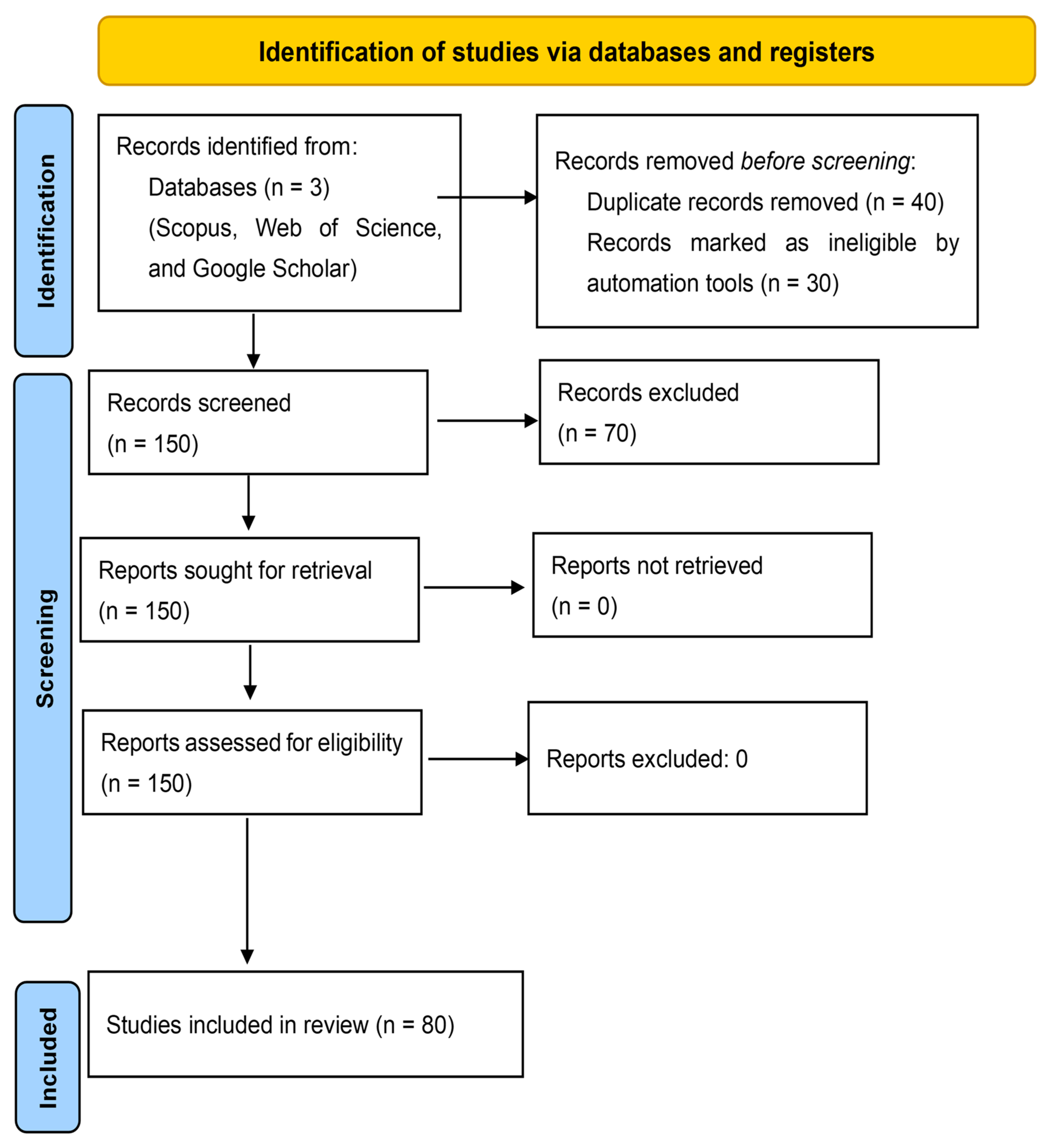
18]. Inclusion criteria comprised (i) studies addressing hydrogen production technologies, costs, environmental impacts, or policy frameworks; (ii) explicit relevance to Sub-Saharan Africa or applicability to emerging and developing energy systems; and (iii) publication in peer-reviewed outlets or reputable institutional reports. Exclusion criteria included studies lacking technical or economic relevance, purely conceptual opinion pieces, or works focused exclusively on high-income regions without transferable insights. The initial search yielded 150 records, which were screened based on title and abstract. After removing duplicates and non-relevant studies, 80 articles were retained for full-text analysis [
25].
Figure 1 presents the PRISMA flow diagram summarizing the literature identification, screening, eligibility, and inclusion stages.
The broad scope of this review reflects the inherently systemic nature of hydrogen deployment, which spans technological performance, economic viability, infrastructure development, environmental sustainability, and policy governance. Limiting the analysis to a single dimension would obscure critical trade-offs and interdependencies, particularly in Sub-Saharan Africa, where energy system constraints are deeply interconnected. The review is sectioned as follows under
Section 3, based on a thematic analysis approach, wherein key domains like production technologies, economic viability, environmental impacts, and policy frameworks are systematically explored across different hydrogen types [
26,
27].
3. Discussion
3.1. Production Technologies
Hydrogen production methods are diverse, broadly categorized by their energy sources and carbon emission profiles, ranging from mature fossil-fuel-based processes to nascent renewable energy-driven pathways [
15,
28]. Each production pathway presents distinct advantages and disadvantages concerning scalability, cost-effectiveness, and environmental sustainability, which are critical considerations for their deployment in the diverse energy landscape of Sub-Saharan Africa. A thorough examination of these technologies is essential to determine their suitability for the region’s specific needs and resource availability [
29]. This section delves into the technical intricacies, efficiency metrics, and associated environmental footprints of grey, blue, and green hydrogen production, providing a comparative analysis crucial for strategic decision-making in Sub-Saharan Africa’s energy transition. Specifically, understanding the nuances of these production methods, from steam methane reforming to advanced electrolysis, is paramount for identifying the most promising avenues for sustainable hydrogen development in the region [
30].
This analysis will explore the classification of hydrogen based on its production method and associated carbon intensity, emphasizing how these distinctions inform policy and investment decisions toward a green hydrogen economy [
30,
31]. The subsequent subsections will detail each hydrogen type, beginning with grey hydrogen, followed by blue and then green, offering a granular perspective on their respective production processes and implications [
29]. This categorization is crucial for distinguishing between hydrogen types based on their carbon footprint and production technologies, particularly green hydrogen produced via water electrolysis using renewable or low-carbon electricity [
32].
3.2. Green Hydrogen
Green hydrogen represents a pivotal pathway toward decarbonization and energy independence for Sub-Saharan Africa [
33]. This method, utilizing water electrolysis to split water into hydrogen and oxygen, is particularly attractive for the region given its abundant solar, wind, and hydropower resources, offering a sustainable alternative to fossil-fuel-derived hydrogen [
11,
34]. However, the significant electricity demand of electrolysis, particularly the substantial energy input (approximately 50 kWh per kilogram of hydrogen) required to produce hydrogen with an energy content of 33.33 kWh, presents a considerable challenge, indicating an efficiency of around 67% for most electrolysers [
5]. Recent studies on flexible electricity–hydrogen coupling demonstrate that intelligent operational control of electrolysers can significantly enhance renewable energy utilization in weak-grid and off-grid systems. By dynamically adjusting hydrogen production in response to electricity availability, price signals, and renewable forecasts, such systems can reduce electrolyser start-up losses, improve capacity factors, and stabilize hydrogen output. These approaches are particularly relevant for remote and underserved regions of Sub-Saharan Africa, where decentralized renewable-hydrogen microgrids may provide a viable pathway for reliable energy access and sustainable hydrogen production.
Electrolyser performance has improved substantially in recent years, with contemporary proton exchange membrane (PEM) and anion exchange membrane (AEM) electrolysers achieving electrical efficiencies exceeding 75% under optimized operating conditions, compared to earlier industry averages of approximately 65–67%. These advancements are particularly relevant for Sub-Saharan Africa, where high ambient temperatures may influence electrolyser performance and cooling requirements. Differentiating between electrolyser technologies is therefore essential when assessing the future efficiency, durability, and cost trajectories of green hydrogen systems in the region. This efficiency can vary, with some studies indicating an energy efficiency of 67% and an exergy efficiency of 55% in optimized systems, while other configurations incorporating gas turbines and Rankine cycles can achieve even higher overall efficiencies in polygeneration systems [
35]. Despite these advancements, the energy consumption for electrolysis remains a critical factor influencing the economic viability and widespread adoption of green hydrogen, particularly in regions where renewable energy infrastructure is still developing [
7,
35]. Nonetheless, the inherently high energy content of hydrogen (120 MJ kg
−1 lower heating value) compared to conventional fuels like gasoline (44 MJ kg
−1 lower heating value) underscores its potential as a high-density energy carrier, making the pursuit of efficient production methods a worthwhile endeavor despite current limitations [
11].
Water availability represents an important, though often underestimated, constraint on green hydrogen deployment. Electrolysis typically requires approximately 9 L of deionized water per kilogram of hydrogen, excluding additional water for cooling and purification. In water-stressed regions of Sub-Saharan Africa, large-scale hydrogen production may therefore compete with agricultural, domestic, and industrial water demands.
Mitigation strategies include the use of seawater desalination for coastal projects, wastewater reuse, and integration with non-potable water sources. However, these solutions introduce additional energy and cost requirements, underscoring the importance of spatial planning and resource co-optimization when siting green hydrogen facilities.
3.3. Blue Hydrogen
Blue hydrogen, while not entirely carbon-free, serves as an important transitional fuel, produced primarily from natural gas or coal gasification with the integration of carbon capture, utilization, and storage technologies to mitigate greenhouse gas emissions [
36]. This approach involves splitting natural gas into hydrogen and CO
2, with the latter being captured and stored, thereby distinguishing it from grey hydrogen where CO
2 is released into the atmosphere [
21,
37]. While blue hydrogen offers a lower-carbon alternative to grey hydrogen, its environmental benefit is directly dependent on the efficiency and permanence of the carbon capture and storage technologies employed, which can vary significantly and present long-term storage challenges. Furthermore, the production of blue hydrogen still relies on fossil fuel feedstocks, which presents concerns regarding methane leakage during natural gas extraction and transportation, thus impacting its overall life-cycle greenhouse gas emissions profile [
38,
39]. Economically, blue hydrogen production, while viable, often entails higher costs compared to grey hydrogen due to the additional capital and operational expenses associated with Carbon Capture and Storage (CCS) infrastructure [
40]. However, blue hydrogen can be more economically competitive than grey hydrogen in regions with stringent carbon pricing policies, where carbon taxes exceed
$100/ton CO
2, making its LCOH nearly
$3/kg at
$200/ton CO
2 [
14].
The feasibility of blue hydrogen in Sub-Saharan Africa is further constrained by limited geological characterization and infrastructure for large-scale CO2 storage. While certain basins, such as sedimentary formations in Southern Africa, exhibit potential storage capacity, the development of dedicated CO2 transport and injection infrastructure entails substantial capital investment and long lead times. In the absence of integrated carbon transport networks and regulatory frameworks governing long-term liability, carbon capture deployment remains economically and institutionally challenging, limiting the scalability of blue hydrogen in most SSA contexts.
In addition to carbon capture performance, the climate benefit of blue hydrogen is highly sensitive to methane leakage along the upstream natural gas supply chain. Leakage rates as low as 1–3% can substantially erode the emission advantage of blue hydrogen relative to grey hydrogen when assessed on a life-cycle basis. In Sub-Saharan Africa, aging gas infrastructure, limited monitoring capacity, and weak regulatory enforcement increase the risk of fugitive methane emissions during extraction, processing, and transport. Consequently, without stringent methane management and verification frameworks, blue hydrogen deployment in the region may deliver significantly lower climate benefits than anticipated, reinforcing its characterization as a transitional and context-dependent option rather than a long-term decarbonization solution.
3.4. Gray Hydrogen
Gray hydrogen, currently the most prevalent and cost-effective method of hydrogen production, is primarily derived from steam methane reforming of natural gas without any carbon capture [
17]. This process releases significant amounts of carbon dioxide and other greenhouse gases directly into the atmosphere, making it the least environmentally friendly option among hydrogen production methods [
14]. Consequently, it carries the highest carbon footprint, releasing approximately 6.87 kg of CO
2 per kilogram of hydrogen produced [
17,
41]. Similarly, black hydrogen, derived from black coal via gasification, also results in substantial carbon emissions, positioning both grey and black hydrogen as unsustainable options for a net-zero future due to their significant environmental impact [
42].
The distinction between these hydrogen types is therefore crucial for policymakers in Sub-Saharan Africa as they consider sustainable energy pathways, balancing economic viability with environmental responsibility [
43].
3.5. Economic Viability
A thorough examination of the economic viability of different hydrogen production methods is essential, considering the unique socio-economic landscape and energy infrastructure of Sub-Saharan African nations. A critical factor influencing the economic feasibility of hydrogen projects is the Levelized Cost of Hydrogen, which must be below the market price for financial viability [
14].
Table 1 below compares the three hydrogen classes being reviewed; this comparative analysis will underscore the differing cost structures, technological maturities, and market readiness of green, blue, and grey hydrogen, thereby guiding strategic investment and policy formulation in the region.
3.6. Cost Assumptions and Harmonization Framework
Reported hydrogen production costs in this review are harmonized to 2023 constant prices to enhance comparability across studies. The frequently cited green hydrogen cost of approximately €13 kg−1 represents an upper-bound estimate for early-stage Sub-Saharan African projects characterized by high capital costs, limited electrolyser deployment, and relatively high electricity prices. Typical assumptions underlying these estimates include renewable electricity costs of $40–60/MWh, electrolyser capital expenditure exceeding $1200/kW, and discount rates in the range of 8–12%, reflecting elevated financing risks in emerging markets.
Future cost projections of €1.0–1.5 kg−1 by 2050 are derived from scenarios assuming substantial declines in renewable electricity costs, large-scale electrolyser deployment, learning-by-doing effects, and improved financing conditions. These projections should therefore be interpreted as long-term potential outcomes rather than near-term expectations.
3.7. Scenario-Based Cost Sensitivity Analysis
While
Table 1 presents a static comparison of current hydrogen production costs, future competitiveness is highly sensitive to key techno-economic drivers. Scenario analysis indicates that the introduction of carbon pricing above USD 50 tCO
2−1 significantly erodes the cost advantage of grey hydrogen, while simultaneously improving the relative competitiveness of blue hydrogen in regions with viable carbon capture infrastructure.
Similarly, a 40% reduction in electrolyser capital expenditure, consistent with learning-curve projections for large-scale deployment, substantially lowers the levelized cost of green hydrogen, particularly in renewable-rich Sub-Saharan African regions. Under such conditions, green hydrogen is projected to approach cost parity with fossil-based alternatives by the mid-2030s [
1,
6,
15]. These scenarios highlight that hydrogen cost trajectories are dynamic and policy-dependent, reinforcing the importance of coordinated climate policy, technology investment, and infrastructure planning.
3.8. Infrastructure and Deployment Challenges
Hydrogen transport and storage pose significant challenges in Sub-Saharan Africa due to limited pipeline infrastructure, underdeveloped port facilities, and high capital costs associated with compression, liquefaction, or conversion to hydrogen carriers such as ammonia. While pipeline transport offers cost advantages at scale, its feasibility is constrained by upfront investment requirements and long project lead times.
As a result, early-stage hydrogen deployment in the region is more likely to rely on localized production–consumption clusters or conversion to exportable derivatives, reinforcing the need for integrated infrastructure planning aligned with national development priorities.
Hydrogen strategies in Sub-Saharan Africa must carefully balance export-oriented ambitions with domestic energy and industrial needs. While international demand for green hydrogen and derivatives presents significant economic opportunities, prioritizing export markets without parallel investment in domestic energy systems risks reinforcing existing energy access inequities. Strategic hydrogen planning should therefore emphasize dual-use development models that support domestic industrial decarbonization, energy storage, and grid stabilization alongside export-oriented projects, ensuring broader socioeconomic benefits.
3.9. Strategic Implications for Sub-Saharan Africa
The comparative assessment in
Table 1 highlights that while grey hydrogen offers short-term cost advantages, it poses significant carbon lock-in risks and is increasingly misaligned with long-term climate commitments. Blue hydrogen reduces emissions relative to grey hydrogen but remains constrained by limited carbon capture infrastructure, methane leakage risks, and high capital requirements in Sub-Saharan Africa. In contrast, green hydrogen demonstrates strong alignment with net-zero objectives and long-term energy security, particularly in renewable-rich SSA regions, despite higher upfront costs. These deductions indicate that strategic hydrogen planning in Sub-Saharan Africa should prioritize green hydrogen as the dominant long-term pathway, while carefully limiting transitional investments in blue hydrogen to contexts where infrastructure and regulatory capacity can ensure meaningful emission reductions.
Furthermore, the SPECO method, which integrates exergy rates with economic indicators, provides a robust framework for assessing the economic performance of these varied hydrogen production systems, enabling a comprehensive cost–benefit analysis [
44]. SPECO stands for “Specific Exergy Costing,” and its application facilitates the identification of cost-intensive components and processes, thereby highlighting areas for potential optimization and efficiency improvement in hydrogen production pathways [
45]. This analytical approach considers not only the capital and operational expenditures but also the exergy destruction within each system, providing a more accurate representation of the true cost of energy conversion and resource utilization [
14,
46].
In terms of cost structures, green hydrogen production is predominantly influenced by the cost of renewable electricity and the capital expenditure of electrolysers, whereas blue hydrogen’s economics are heavily tied to natural gas prices and the additional investment in carbon capture technologies [
14]. In contrast, gray hydrogen remains the most inexpensive option due to its reliance on established fossil fuel infrastructure and lack of carbon abatement costs [
14]. On the other hand, blue hydrogen’s competitiveness is significantly enhanced by carbon pricing mechanisms, as rising carbon costs penalize high-emission technologies, making blue hydrogen a more attractive alternative to grey hydrogen despite its reliance on fossil fuels [
14]. However, the future economic landscape is projected to shift significantly as technological advancements continue to drive down the cost of renewable energy and electrolysers, potentially making green hydrogen more competitive [
47].
Regarding cost per Kg of production, green hydrogen’s Levelized Cost of Hydrogen is expected to decrease to
$2.0–
$2.5/kg by 2035 in favorable markets, primarily due to reductions in the Levelized Cost of Electricity and declining capital expenditure on electrolysers [
48]. Blue hydrogen production costs are largely influenced by natural gas prices and the efficiency of carbon capture technologies, with projections indicating a cost range of
$1.5–
$2.5/kg by 2030, particularly under scenarios with substantial carbon pricing [
17,
49]. Gray hydrogen production, conversely, maintains a relatively stable cost structure around
$1.0–
$1.5/kg, reflecting its mature technology and direct reliance on fossil fuel economics [
48].
Secondly, pertaining to technological maturities, while grey hydrogen benefits from mature and established infrastructure, green hydrogen technologies, particularly electrolysers, are rapidly advancing, with ongoing research focused on improving efficiency, reducing material costs, and extending operational lifespans [
17]. Blue hydrogen, while also benefiting from mature steam methane reforming technology, faces ongoing development in carbon capture, utilization, and storage technologies to enhance capture rates and reduce the energy penalty associated with CO
2 separation and sequestration [
45]. These advancements are crucial for both environmental efficacy and economic competitiveness, particularly as global carbon reduction mandates become more stringent [
17]. For green hydrogen, advancements in electrolyzer technology, such as solid oxide and anion exchange membrane electrolysers, promise higher efficiencies and lower capital costs, further enhancing its economic attractiveness. Moreover, improvements in renewable energy integration and grid management systems are pivotal for optimizing the capacity factor of electrolysers, thereby reducing the overall cost of green hydrogen production [
50].
Finally, talking about market readiness, grey hydrogen, with its established supply chains and infrastructure, is currently the most market-ready, serving various industrial applications without significant technological hurdles. In contrast, blue hydrogen’s market readiness is contingent on the broader adoption and economic viability of Carbon Capture, Utilization, and Storage infrastructure, which is still developing in many regions. Green hydrogen, while demonstrating rapid technological progress, requires significant scaling of renewable energy generation and the expansion of dedicated hydrogen infrastructure to achieve widespread market penetration and cost parity with fossil-based alternatives [
14,
17]. However, overcoming these challenges is critical for green hydrogen to fulfill its potential as a cornerstone of future sustainable energy systems, especially within the context of Sub-Saharan Africa’s abundant renewable energy resources and developmental needs [
21]. Furthermore, the development of smart energy management systems and the integration of blockchain technologies are poised to optimize the operational dynamics of green hydrogen generation, facilitating decentralized trading and enhancing market agility [
42].
In a nutshell, to facilitate decision-making, the comparative assessment of hydrogen pathways can be interpreted through a multi-criteria framework encompassing four dimensions: (i) economic viability, (ii) emissions performance, (iii) infrastructure compatibility, and (iv) institutional and policy readiness. While grey hydrogen performs favorably on short-term cost metrics, it scores poorly across environmental and policy dimensions. Blue hydrogen occupies an intermediate position, with moderate emissions reductions but significant infrastructure and governance requirements. Green hydrogen, despite higher current costs, demonstrates strong performance across environmental alignment, long-term economic potential, and compatibility with renewable-rich energy systems, reinforcing its strategic suitability for Sub-Saharan Africa.
3.10. Environmental Impacts
The environmental implications of hydrogen production vary significantly across these types, directly influencing their sustainability credentials and their potential to contribute to decarbonization efforts. Specifically, while grey hydrogen production is associated with substantial greenhouse gas emissions due to its reliance on fossil fuels without carbon capture [
17,
51,
52], blue hydrogen aims to mitigate these impacts through the integration of carbon capture, utilization, and storage technologies [
53,
54]. Conversely, green hydrogen, produced through electrolysis powered by renewable energy, offers a near-zero emission pathway, making it a critical component for achieving deep decarbonization across various sectors [
15]. This distinction is crucial for assessing the true environmental footprint of hydrogen production, particularly in regions like Sub-Saharan Africa where sustainable development is paramount.
The adoption of green hydrogen is particularly salient for Sub-Saharan Africa, given its potential to address existing energy access deficits and reduce reliance on volatile fossil fuel markets, thereby enhancing energy security and promoting sustainable industrial development [
4,
23,
55,
56]. However, the successful deployment of green hydrogen initiatives in this region necessitates robust policy frameworks, significant infrastructural investments, and concerted efforts to overcome technological and financial barriers [
1,
24,
57]. These efforts include fostering an enabling regulatory environment, mobilizing green finance, and promoting technology transfer and capacity building to ensure that the benefits of a hydrogen economy are equitably distributed [
56].
Some of the environmental impacts include air pollution from criteria pollutants like nitrogen oxides and carbon monoxide during production and combustion, water usage for electrolysis and cooling in both blue and green hydrogen production, and land use changes for renewable energy installations and associated infrastructure development [
23,
58]. Furthermore, the lifecycle assessment of hydrogen production must account for the upstream emissions associated with renewable energy component manufacturing and the downstream impacts of hydrogen storage and distribution [
58]. This comprehensive evaluation is essential to accurately gauge the environmental footprint and ensure that the transition to a hydrogen economy genuinely supports sustainability goals rather than merely shifting environmental burdens.
In Namibia, for example, HyPhen Hydrogen Energy, a joint venture between Hyphen Technical and NamiGreen, is spearheading efforts to develop large-scale green hydrogen projects, aiming to produce an estimated one million tonnes of green ammonia annually by 2027 [
18]. This ambitious undertaking exemplifies the potential for Sub-Saharan African nations to leverage their abundant renewable resources for significant contributions to the global hydrogen economy, though careful consideration of the environmental impacts of such large-scale industrial endeavors is still crucial [
24]. These projects, while promising for economic development and decarbonization, necessitate thorough environmental impact assessments to ensure sustainable water management, land use, and biodiversity protection in sensitive ecosystems [
4].
3.11. Policy Frameworks
Effective policy frameworks are therefore indispensable for navigating these complexities, encompassing regulatory incentives, carbon pricing mechanisms, and international collaborations to accelerate the adoption of green hydrogen and mitigate the environmental consequences of other hydrogen types. Such frameworks are crucial for fostering investor confidence and facilitating the necessary financial and institutional developments required to establish a robust hydrogen economy, particularly within the nascent markets of Sub-Saharan Africa [
59]. A comprehensive approach integrating environmental impact assessments, strategic resource planning, and robust governance will be essential to realize the full potential of hydrogen as a sustainable energy vector in the region [
19,
60]. The strategic development of such frameworks should prioritize research and development, streamline regulatory processes, and foster public–private partnerships to de-risk investments and encourage innovation in hydrogen production and supply chain networks [
7,
61].
Furthermore, existing frameworks such as the Sustainable Development Goals, particularly SDG 7 and SDG 13, provide a foundational context for the development and implementation of green hydrogen policies in Sub-Saharan Africa [
19]. The SDG 7 for example necessitates that nations ensure access to affordable, reliable, sustainable, and modern energy for all, while SDG 13 calls for urgent action to combat climate change and its impacts [
56]. Recent national initiatives illustrate divergent stages of hydrogen policy development across Sub-Saharan Africa [
1]. For example, South Africa’s Hydrogen Society Roadmap emphasizes industrial decarbonization and export-oriented hydrogen corridors, while Namibia’s large-scale green hydrogen initiatives focus on export markets and green ammonia production [
7,
59]. These cases highlight both opportunities and challenges, including policy coordination, infrastructure readiness, and domestic value retention, underscoring the need for context-specific policy design rather than one-size-fits-all hydrogen strategies. These adaptations should consider the unique socio-economic, techno-economic, and ecological aspects of each country, along with stakeholder engagement, to ensure the successful integration of hydrogen into their national energy mixes [
18]. Moreover, it is critical for governments to actively encourage the establishment of clean hydrogen supply chains, handling protocols, and demand creation through the development of new infrastructure, repurposing natural gas pipelines, and fostering new markets for hydrogen [
34].
Recently, Nigeria has emerged as a significant participant in the African renewable hydrogen landscape, with the German Federal Ministry for Economic Affairs and Climate Action organizing specialized symposia and establishing a Hydrogen Office in Abuja to foster German-Nigerian partnerships in this sector [
62]. This collaboration aims to leverage Germany’s technological expertise and Nigeria’s vast renewable energy potential to advance green hydrogen production and utilization within the region. Also, countries in Northern Africa, such as Egypt and Morocco, have been making substantial strides in green hydrogen development, which can serve as valuable precedents and collaborative opportunities for Sub-Saharan African nations [
36].
3.12. Fiscal and Strategic Implications for Policy and Investment in SSA
The economic ramifications of green hydrogen initiatives in Sub-Saharan Africa extend beyond direct production revenues, encompassing job creation, industrial development, and energy independence [
18]. These initiatives can significantly enhance economic diversification by establishing new value chains and attracting foreign direct investment, thereby fostering sustainable economic growth across the continent. However, realizing this potential requires substantial capital investment, robust policy support, and the development of local expertise to ensure equitable distribution of benefits and long-term sustainability [
59]. Furthermore, domestic financial mechanisms, potentially including targeted tax incentives and streamlined regulatory processes, are crucial for mobilizing the necessary capital and fostering an environment conducive to renewable energy investment and infrastructure development in the region [
19,
63].
These efforts should be underpinned by supportive financial mechanisms, such as those proposed for green building adoption and sustainable project management, to translate theoretical and empirical insights into actionable, scalable policies [
64]. This includes targeted financial incentives, grants, and tax benefits to stimulate investment in hydrogen technologies and infrastructure, mirroring successful strategies in other sustainable development initiatives [
64,
65]. The implementation of green bonds, for instance, could provide a viable financing mechanism for such projects, extending affordable access to green products for a wider range of income households, thereby fostering circular economic growth within the region [
60]. Furthermore, aligning these financial strategies with broader sustainability goals necessitates robust regulatory frameworks and international cooperation, particularly within the Global South, to maximize the impact of green finance on development objectives [
19]. The European Union, recognizing the critical role of green hydrogen in global decarbonization, has specifically emphasized cooperation with Sub-Saharan African countries in its hydrogen strategy, viewing this collaboration as a bridge between European and African energy transitions and a means to achieve both climate and development goals.
Strategically, governments in Sub-Saharan Africa must establish clear national hydrogen policies that prioritize investment in renewable energy infrastructure, such as solar and wind power, which are essential for green hydrogen production [
20]. Grey hydrogen offers short-term affordability but poses high carbon lock-in risks due to its reliance on unabated fossil fuels, making it unsuitable for long-term climate strategies aligned with SDGs 7 and 13 [
56]. Blue hydrogen can serve as a transitional option in gas-rich regions like Nigeria, but its viability in SSA is constrained by limited CCS infrastructure, regulatory uncertainty, methane leakage concerns from natural gas extraction, and the need for substantial policy reforms [
62,
63]. Green hydrogen aligns best with SSA’s abundant renewable endowment, particularly solar and wind resources, international certification schemes, and export-oriented strategies to Europe, despite higher current costs that are projected to decline with scaled infrastructure and supportive policies [
1,
7,
20].
3.13. Pathway Prioritization and Uncertainties Under Sub-Saharan African Constraints
When assessed against realistic Sub-Saharan African constraints, including limited grid reliability, capital scarcity, weak carbon governance, and infrastructure deficits, green hydrogen emerges as the most viable long-term pathway despite higher initial costs. Its alignment with abundant renewable resources, declining technology costs, and net-zero objectives positions it as the dominant strategic option beyond 2035. Blue hydrogen may serve a limited transitional role in gas-producing countries with existing natural gas infrastructure; however, its deployment should remain tightly constrained due to methane leakage risks, carbon storage uncertainties, and high capital requirements. Grey hydrogen, while currently cost-competitive, offers no credible pathway toward decarbonization and presents significant carbon lock-in risks, making it unsuitable for long-term strategic investment.
This temporal prioritization framework underscores the need for differentiated policy and investment strategies rather than uniform hydrogen deployment across the region. Furthermore, future hydrogen deployment in Sub-Saharan Africa will be shaped by uncertain and interdependent factors, including global energy prices, climate policy ambition, technology learning rates, and financing conditions. As such, hydrogen pathway outcomes should be interpreted as scenario-dependent rather than deterministic. Policymakers and investors should therefore adopt adaptive strategies that allow for learning, flexibility, and course correction as technologies and market conditions evolve.
3.14. Limitations of the Review
This review is subject to several limitations. First, cost and performance estimates are derived from heterogeneous sources with varying assumptions, which may limit direct comparability despite harmonization efforts. Second, data availability for Sub-Saharan Africa remains uneven, necessitating partial reliance on global or proxy studies. Finally, the review emphasizes qualitative synthesis rather than quantitative modeling, which constrains the precision of future cost and deployment projections. These limitations highlight the need for region-specific empirical studies and detailed system modeling in future research.