Multi-Objective Optimization of Façade and Roof Opening Configurations for Sustainable Industrial Heritage Retrofit: Enhancing Daylight Availability, Non-Visual Potential, and Energy Performance


Abstract
1. Introduction
2. Methodology
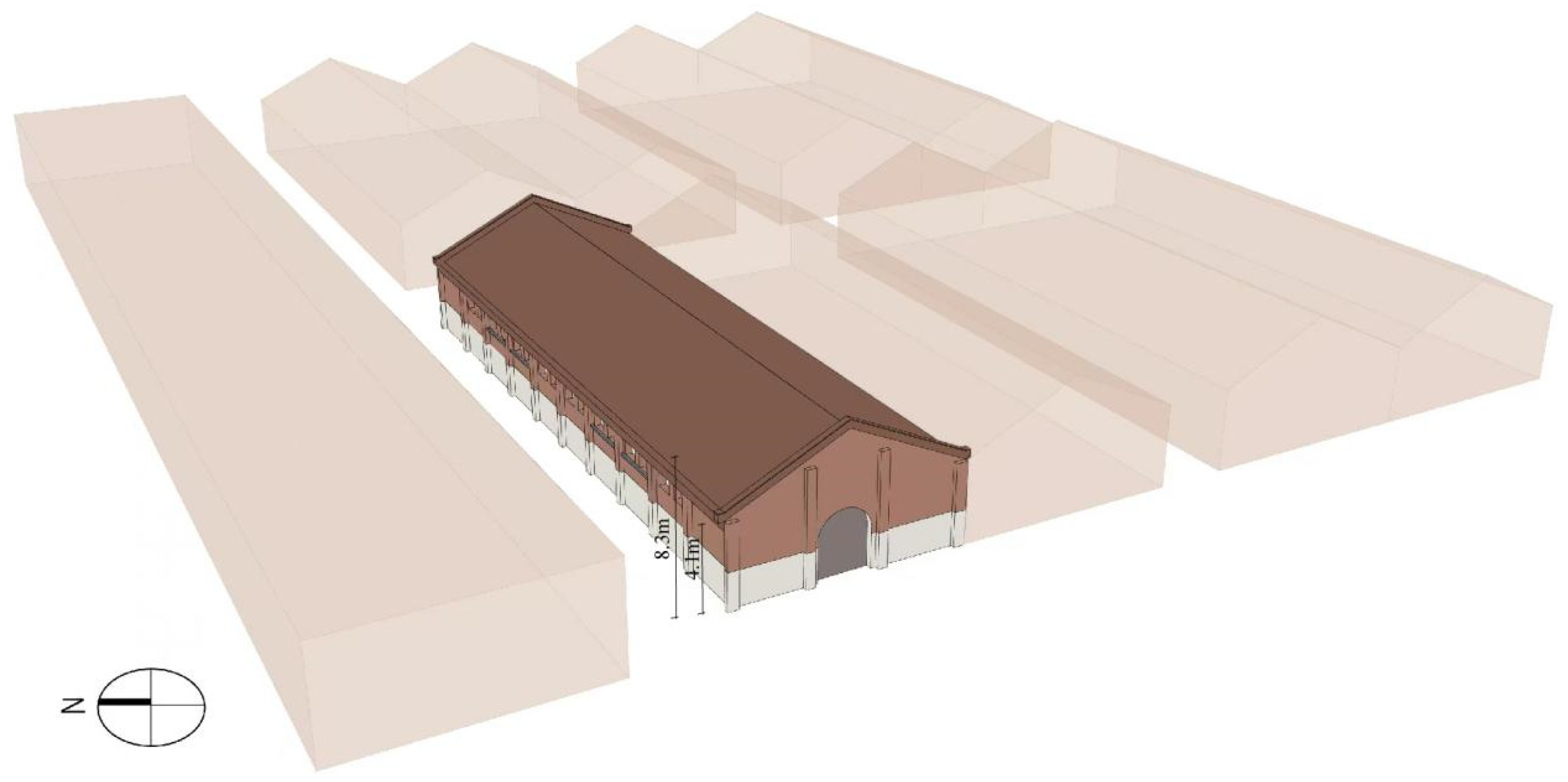
2.1. Case Study Description
2.2. Evaluation Metrics
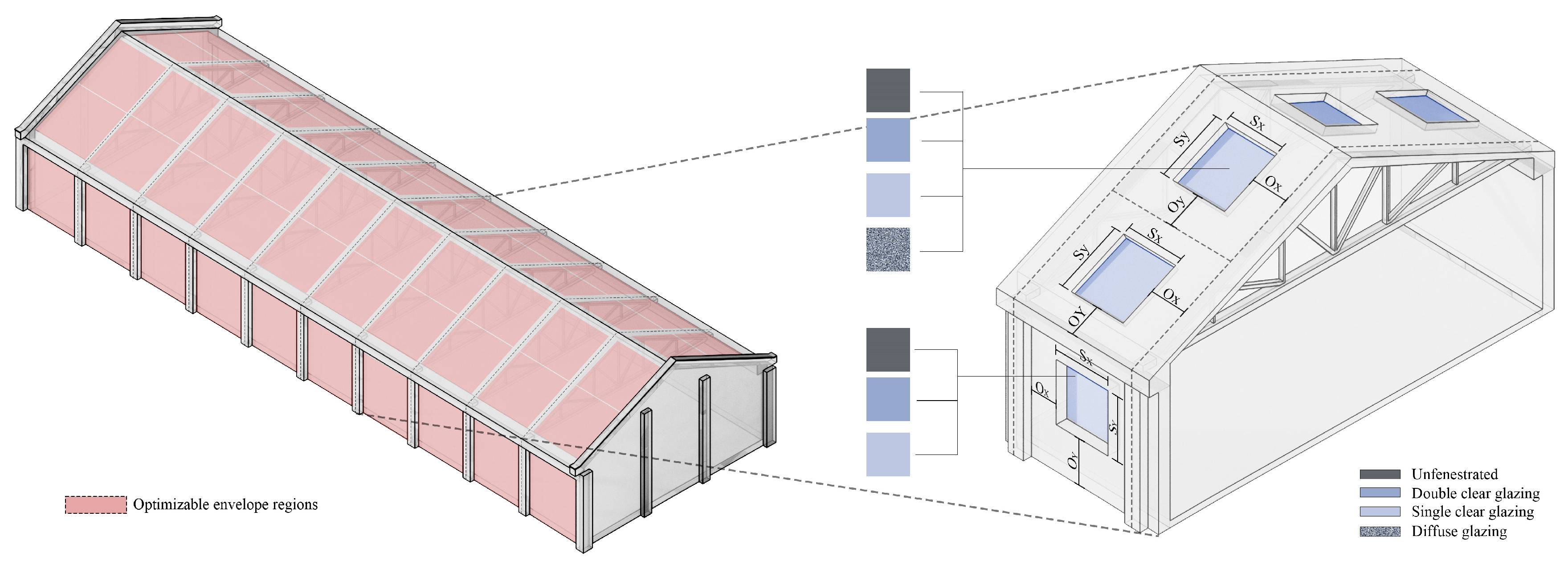
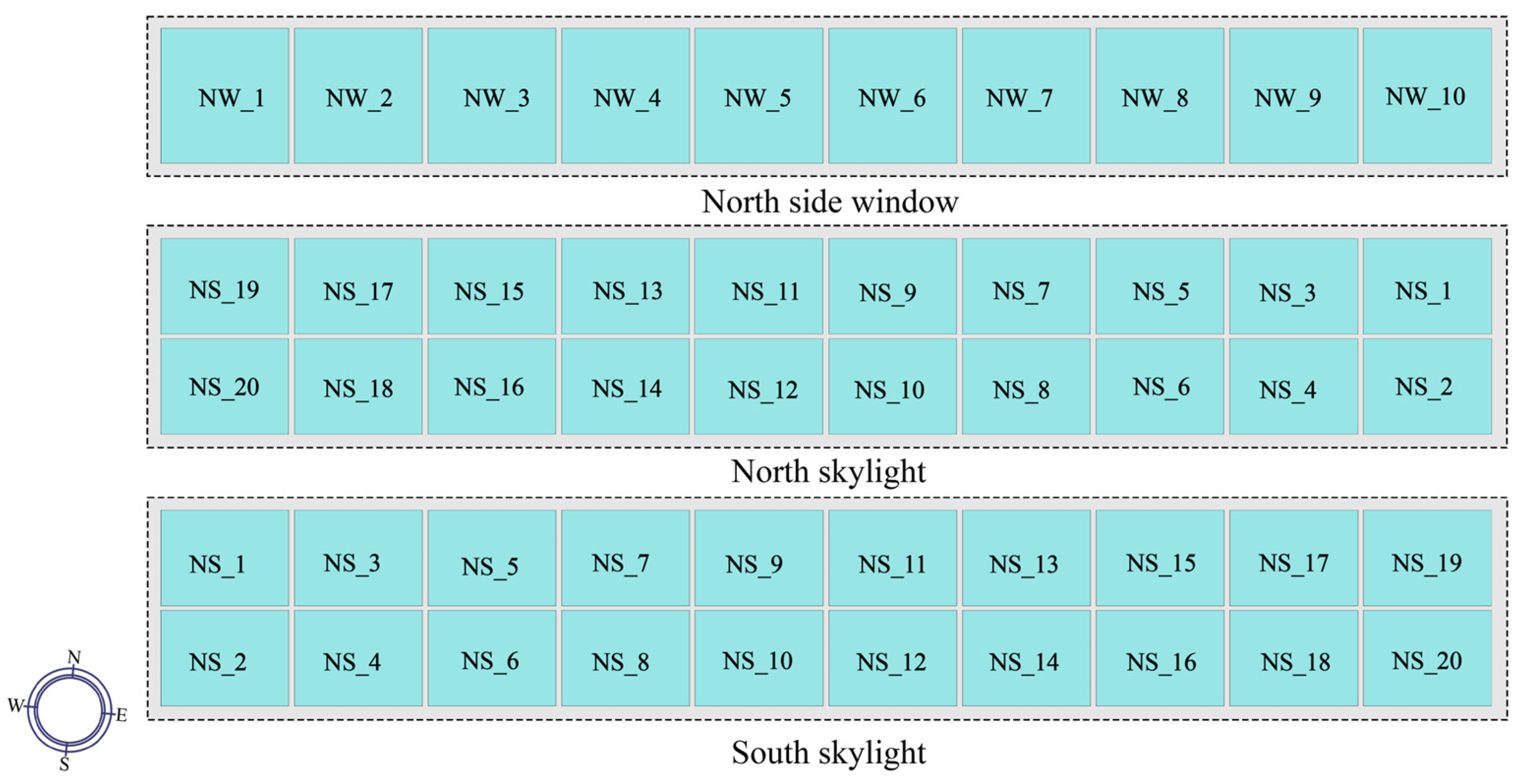
2.3. Model Parameters and Simulation Settings
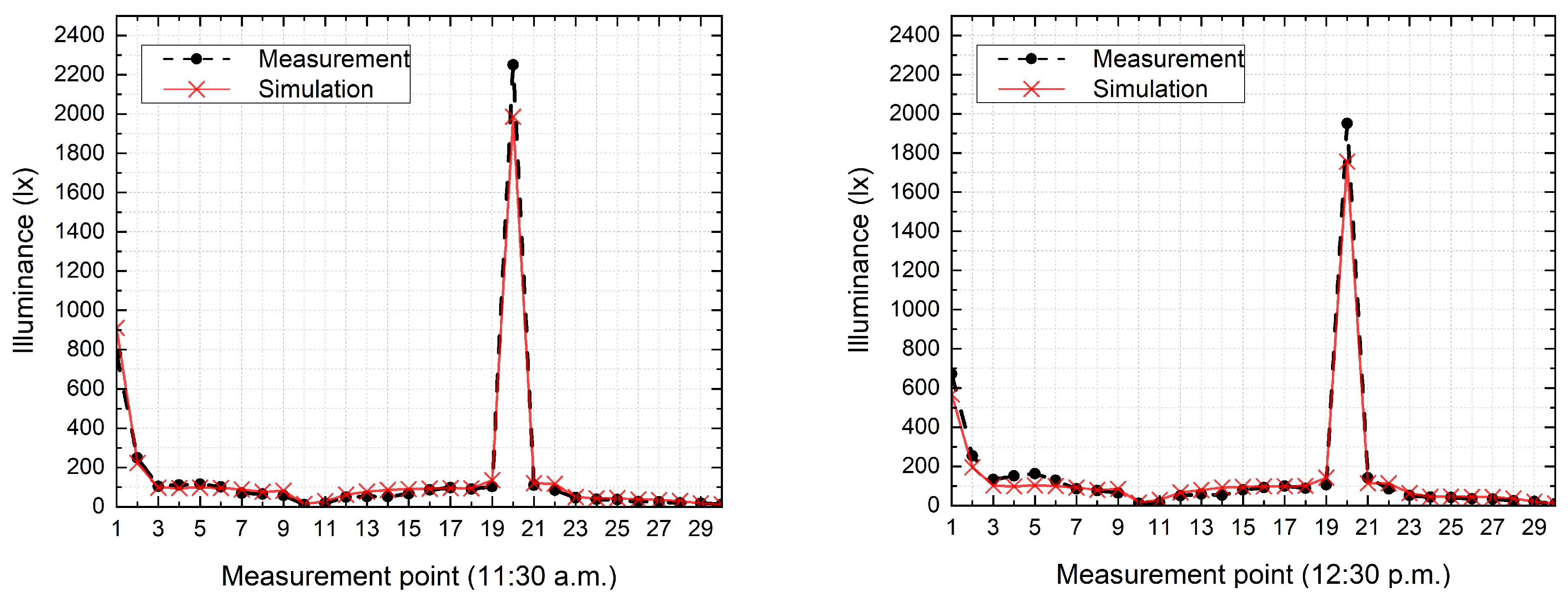
2.4. On-Site Measurement and Validation
3. Results and Discussion
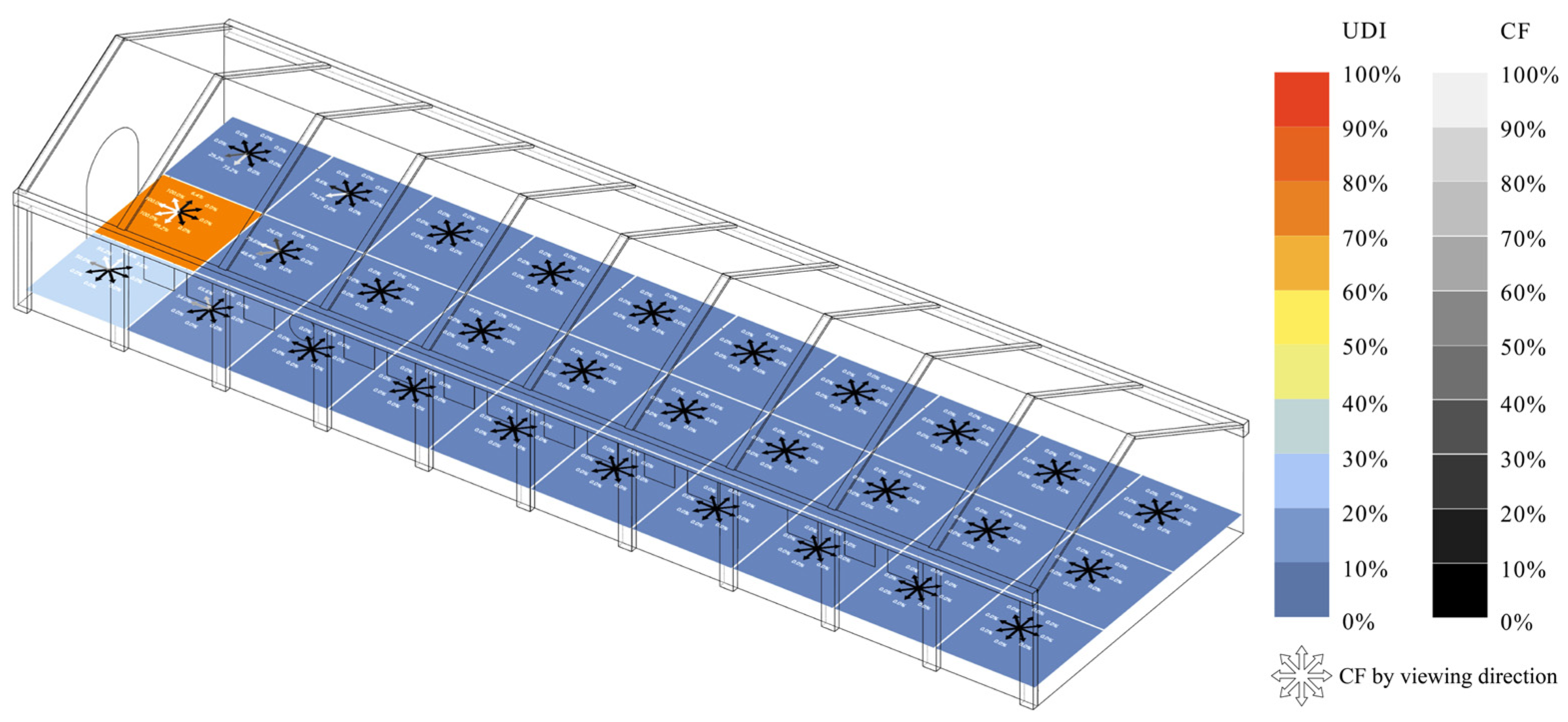
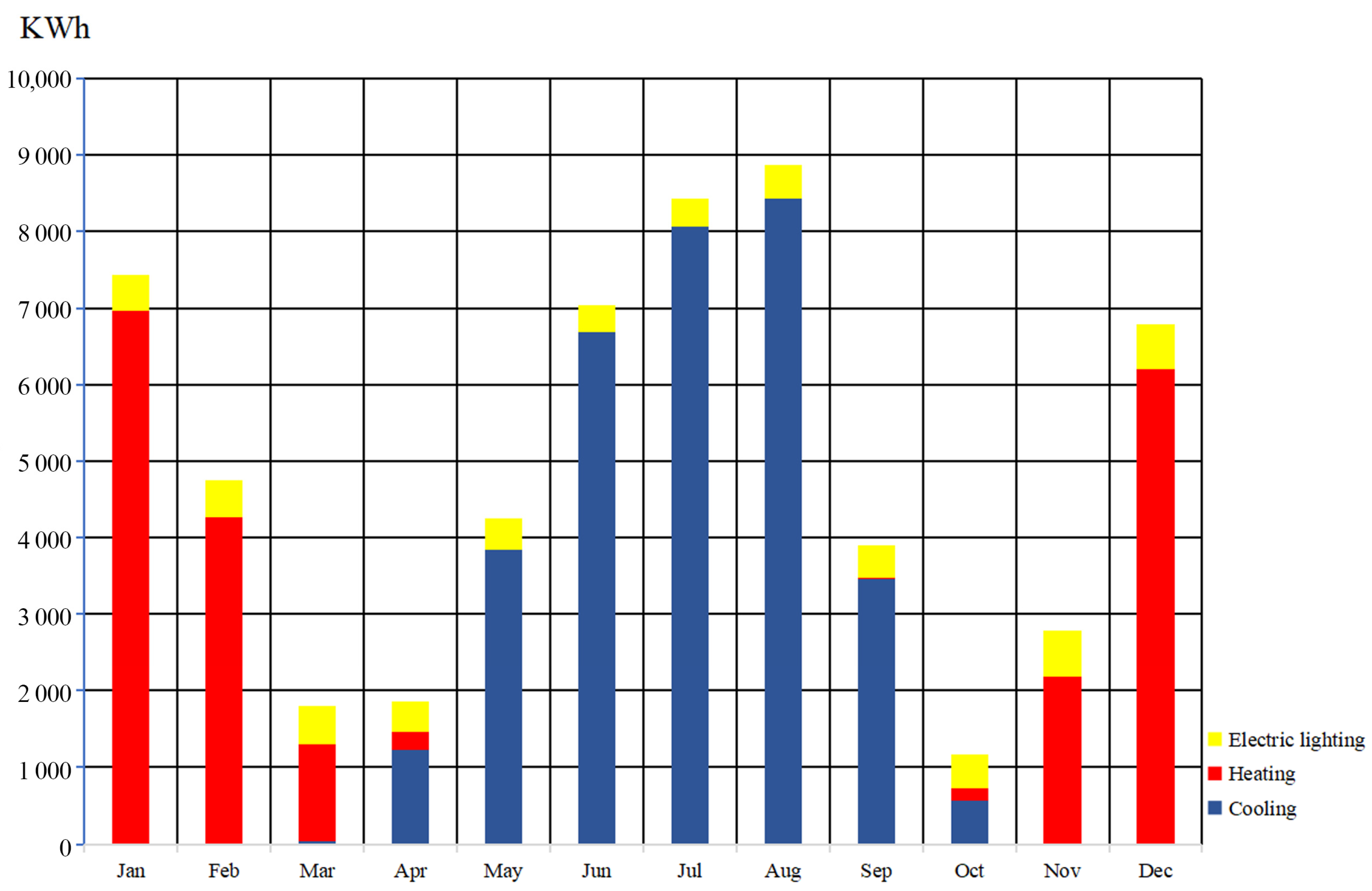
3.1. Baseline Model Analysis
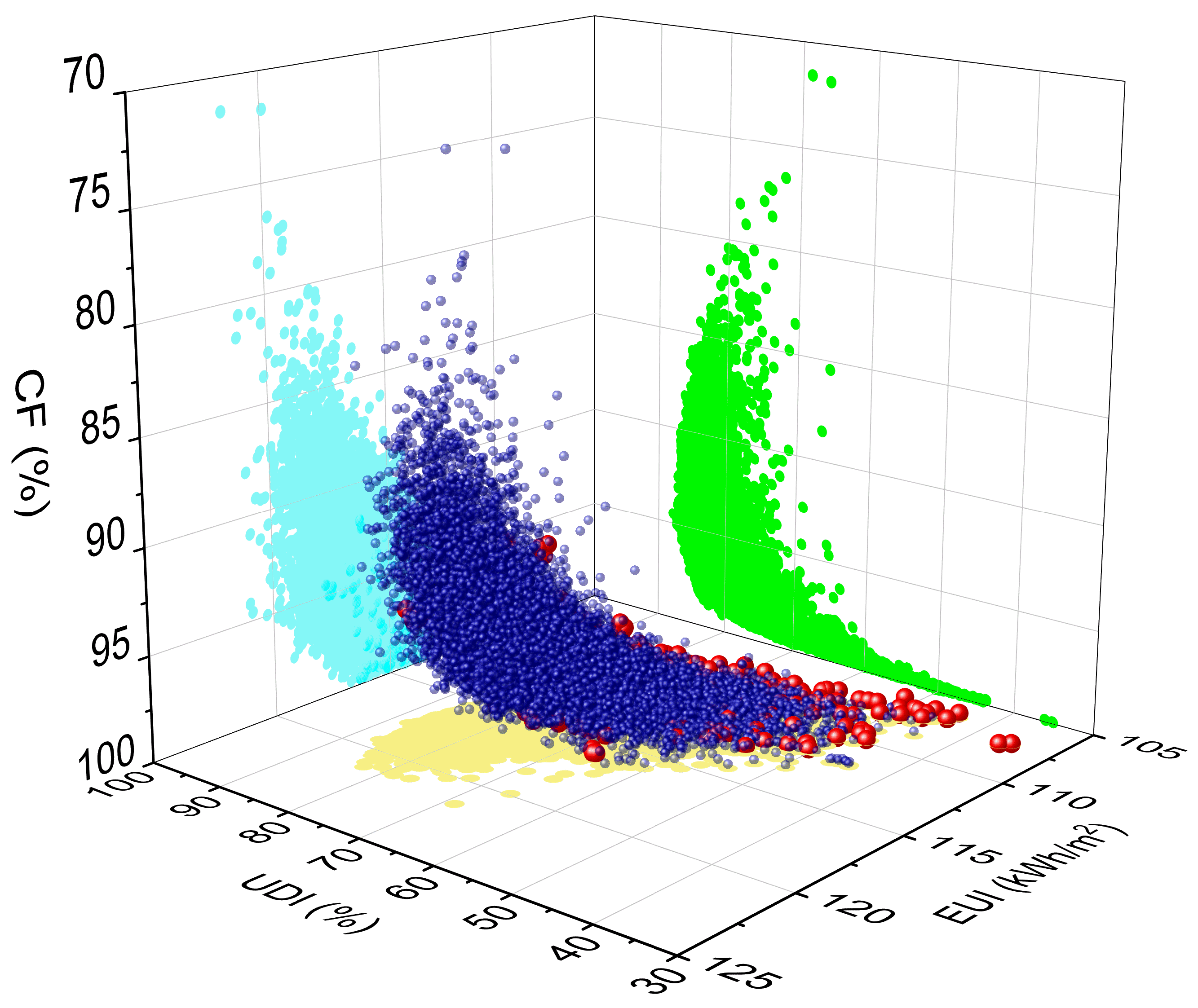
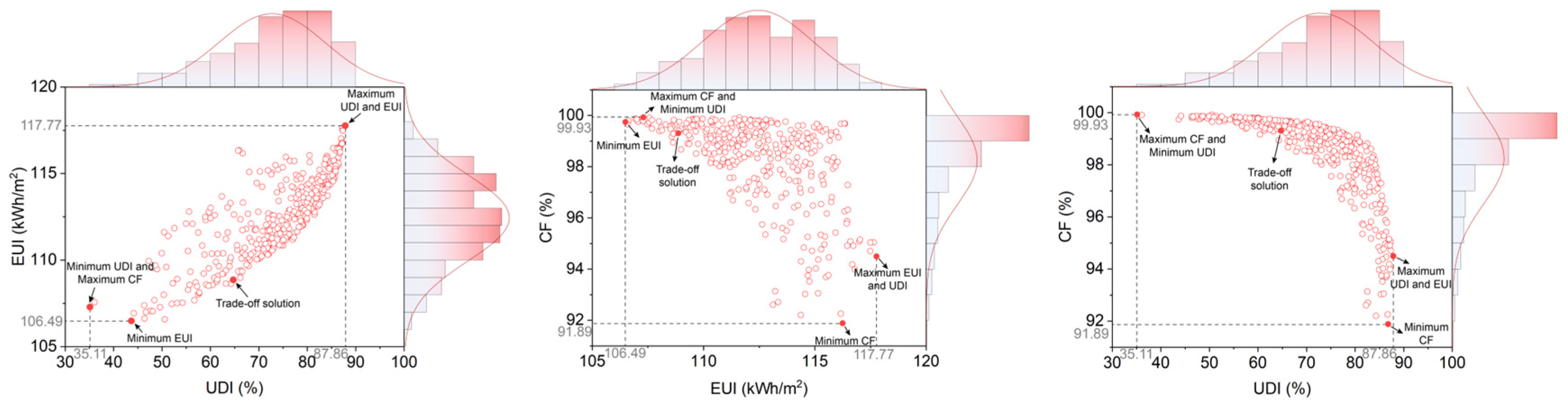
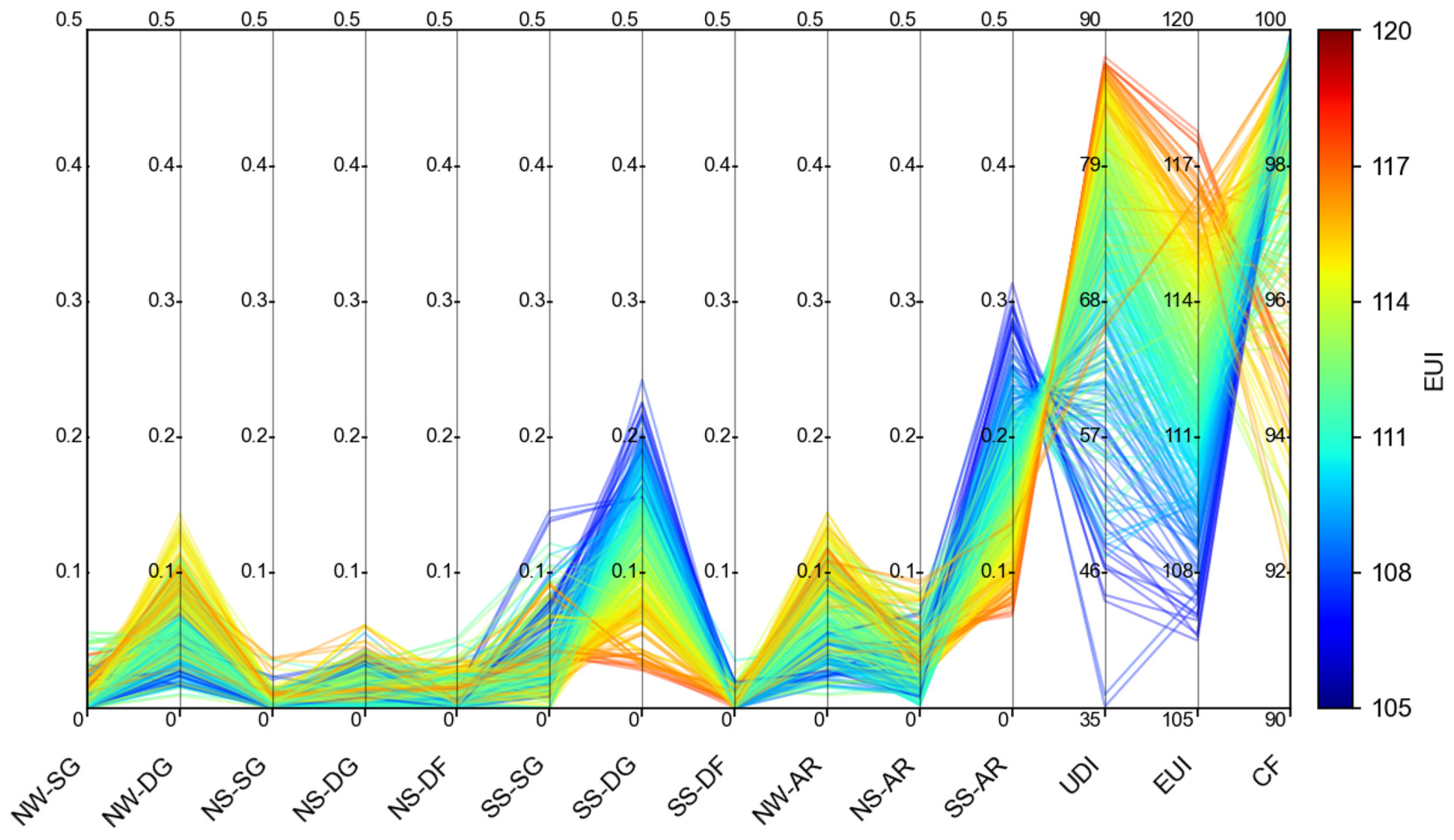
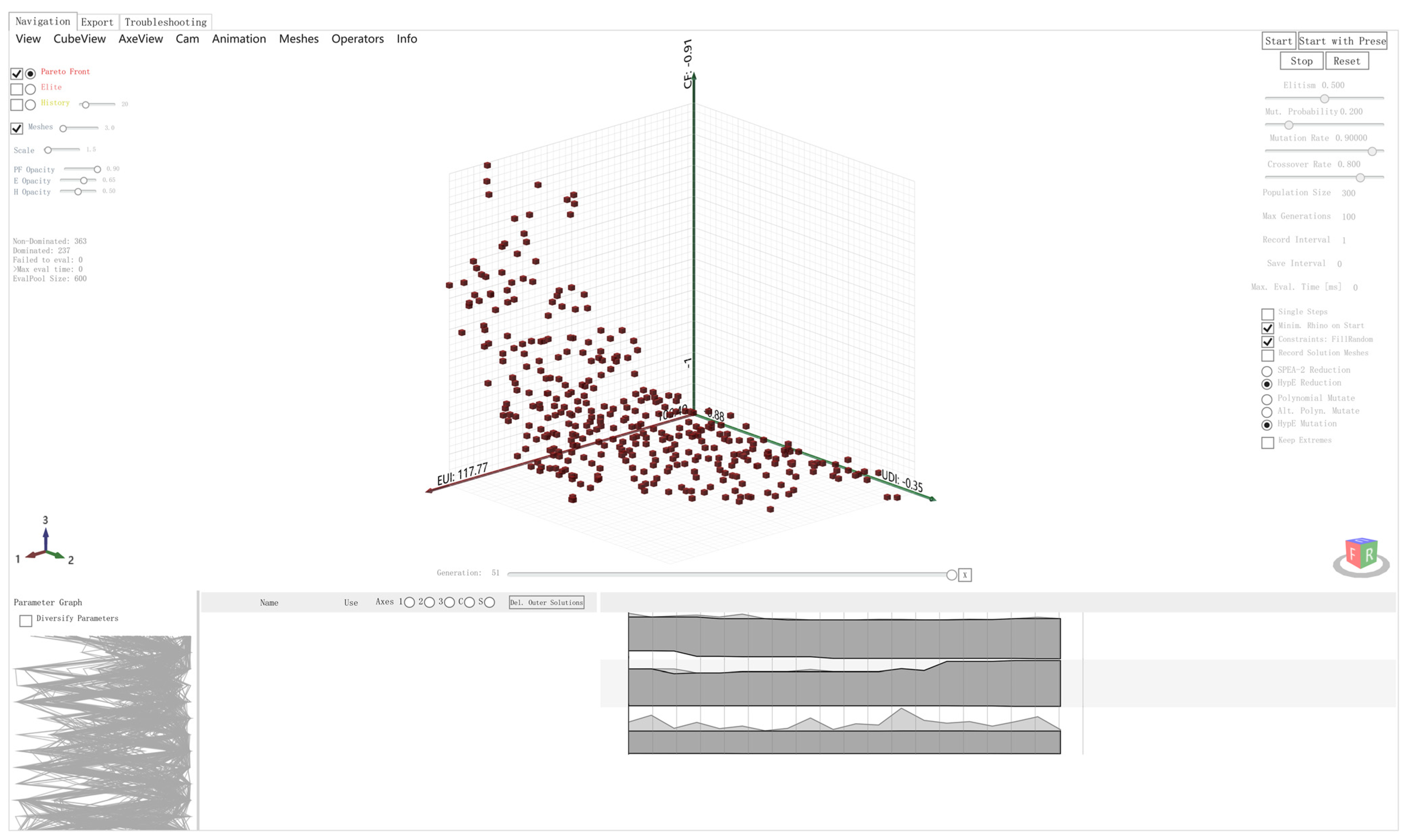
3.2. Pareto Front Analysis
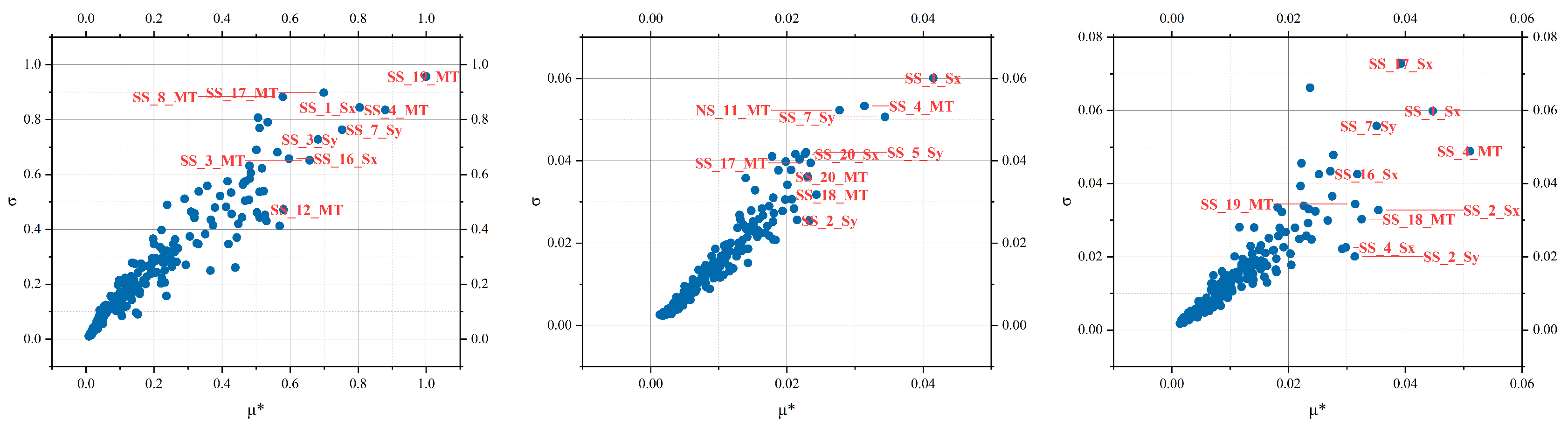
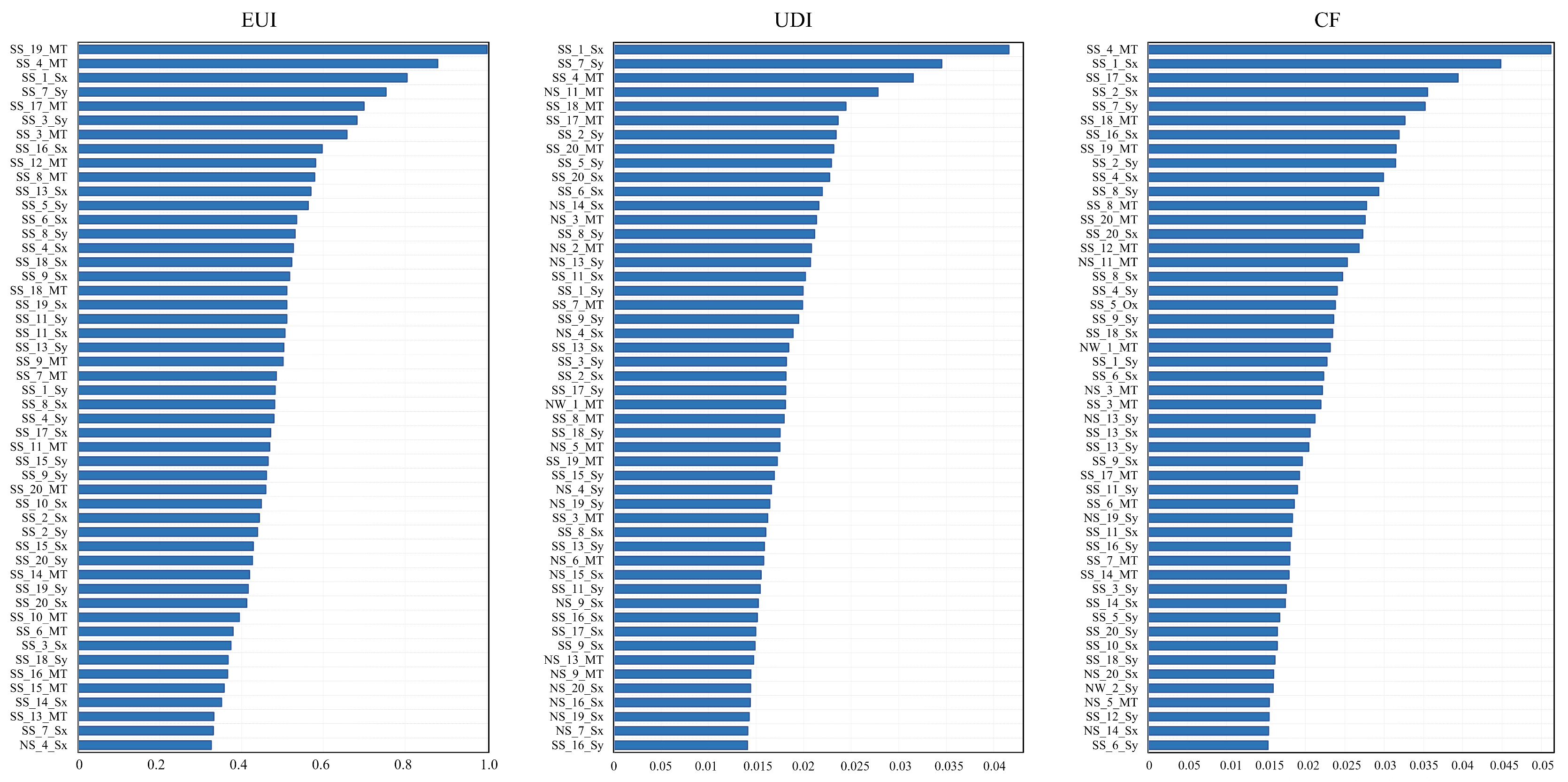
3.3. Sensitivity Analysis and Characteristics of Design Variables
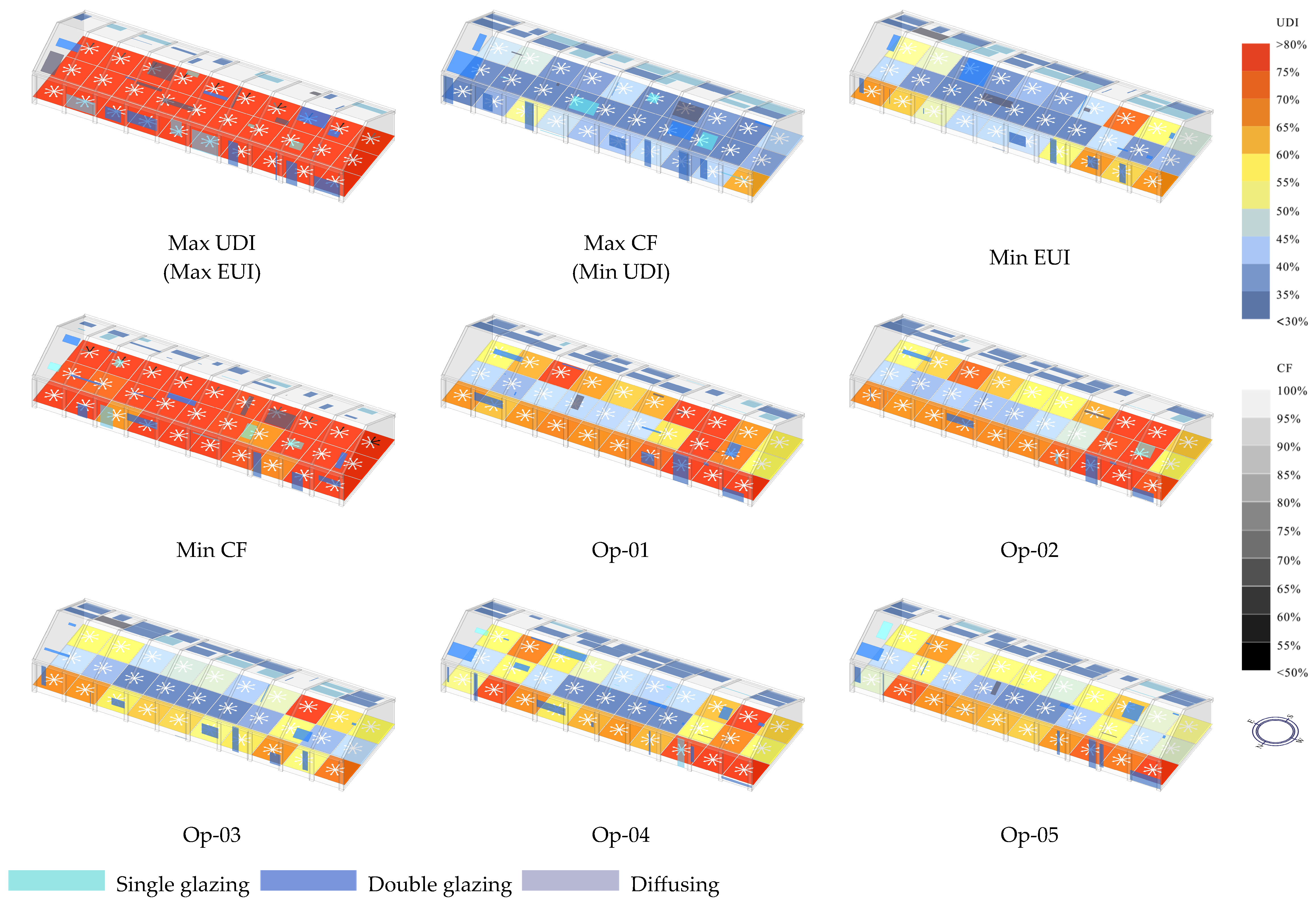
3.4. Analysis of Optimal Solutions
- South skylight area ratio: Recommended to be controlled within 0.20–0.30, as it enables a balanced performance among daylight availability (UDI), circadian potential (CF), and energy use (EUI);
- North skylight area ratio: Recommended to be limited to 0.00–0.10 to introduce stable diffuse daylight while minimizing heat loss;
- North side window area ratio: Suggested to range between 0.07–0.24, mainly serving to supplement daylight and improve illuminance distribution in deeper spaces, while excessive values should be avoided to prevent increased energy use;
- Material type: Double-glazed transparent glass is recommended as the primary option, balancing solar transmission and thermal insulation and supporting high CF and low EUI, while diffuse glass is used as a local supplement.
- Spatial layout strategy: For balanced performance, continuous south-facing skylight bands are recommended in the central zone; ridge openings can be increased on the east side to enhance morning daylight and circadian effects, while reduced on the west side to mitigate overheating and excessive illumination. North-side high windows and limited skylights serve to supplement daylight in deeper areas and stabilize the indoor environment.
4. Conclusions
Author Contributions
Funding
Institutional Review Board Statement
Informed Consent Statement
Data Availability Statement
Conflicts of Interest
References
- Liu, F.; Zhao, Q.; Yang, Y. An approach to assess the value of industrial heritage based on Dempster–Shafer theory. J. Cult. Herit. 2018, 32, 210–220. [Google Scholar] [CrossRef]
- Zhong, D.; Huang, P.; Xiong, G.; Li, H. Renewal strategies of industrial heritage based on placeness theory: The case of Guangzhou, China. Cities 2024, 155, 105407. [Google Scholar] [CrossRef]
- Samadzadehyazdi, S.; Ansari, M.; Mahdavinejad, M.; Bemaninan, M. Significance of authenticity: Learning from best practice of adaptive reuse in the industrial heritage of Iran. Int. J. Archit. Herit. 2018, 14, 329–344. [Google Scholar] [CrossRef]
- Bottero, M.; D’Alpaos, C.; Oppio, A. Ranking of adaptive reuse strategies for abandoned industrial heritage in vulnerable contexts: A multiple criteria decision aiding approach. Sustainability 2019, 11, 785. [Google Scholar] [CrossRef]
- Jiang, Z.; Qi, Z.; Chen, L.; Xu, L.; Wan, D.; Burak-Gajewski, P.; Zawisza, R.; Liu, L. External spatial morphology of creative industries parks in the industrial heritage category based on spatial syntax: Taking Tianjin as an example. Buildings 2024, 14, 559. [Google Scholar] [CrossRef]
- Çakır, H.Y.; Edis, E. A database approach to examine the relation between function and interventions in the adaptive reuse of industrial heritage. J. Cult. Herit. 2022, 58, 74–90. [Google Scholar] [CrossRef]
- Jia, C.; Zhang, Z.; Wang, M.; Han, S.; Cao, J.; Rong, Y.; Du, C. Investigation on indoor thermal environment of industrial heritage during the cooling season and its impacts on thermal comfort. Case Stud. Therm. Eng. 2023, 52, 103769. [Google Scholar] [CrossRef]
- Nair, G.; Verde, L.; Olofsson, T. A review on technical challenges and possibilities on energy efficient retrofit measures in heritage buildings. Energies 2022, 15, 7472. [Google Scholar] [CrossRef]
- Marzouk, M.; ElSharkawy, M.; Mahmoud, A. Optimizing daylight utilization of flat skylights in heritage buildings. J. Adv. Res. 2022, 37, 133–145. [Google Scholar] [CrossRef] [PubMed]
- Jiang, Y.; Qi, Z.; Ran, S.; Ma, Q.; Dewancker, B.J.; Gao, W. A study on the daylighting, energy consumption, and climate adaptability of curved mesh shading based on the parametric performance design method. Sustainability 2024, 16, 5549. [Google Scholar] [CrossRef]
- Marzouk, M.; ElSharkawy, M.; Eissa, A. Optimizing thermal and visual efficiency using parametric configuration of skylights in heritage buildings. J. Build. Eng. 2020, 31, 101385. [Google Scholar] [CrossRef]
- Vanhoutteghem, L.; Jensen Skarning, G.C.; Hviid, C.A.; Svendsen, S. Impact of façade window design on energy, daylighting and thermal comfort in nearly zero-energy houses. Energy Build. 2015, 102, 149–156. [Google Scholar] [CrossRef]
- Andersen, M.; Gochenour, S.J.; Lockley, S.W. Modelling non-visual effects of daylighting in a residential environment. Build. Environ. 2013, 70, 138–149. [Google Scholar] [CrossRef]
- Zeng, Y.; Sun, H.; Lin, B.; Zhang, Q. Non-visual effects of office light environment: Field evaluation, model comparison, and spectral analysis. Build. Environ. 2021, 197, 107859. [Google Scholar] [CrossRef]
- Wong, I.L. A review of daylighting design and implementation in buildings. Renew. Sustain. Energy Rev. 2017, 74, 959–968. [Google Scholar] [CrossRef]
- Ma, J.; Inoue, T.; Fang, Q.; Li, K.; Li, M. A study on optimal opening configuration for art museum exhibition space considering daylight performance, indoor thermal comfort, and energy consumption. Sustainability 2023, 15, 16431. [Google Scholar] [CrossRef]
- Aries, M.B.C.; Aarts, M.P.J.; van Hoof, J. Daylight and health: A review of the evidence and consequences for the built environment. Light. Res. Technol. 2013, 47, 6–27. [Google Scholar] [CrossRef]
- Al-Sallal, K.A.; AbouElhamd, A.R.; Bin Dalmouk, M. UAE heritage buildings converted into museums: Evaluation of daylighting effectiveness and potential risks on artifacts and visual comfort. Energy Build. 2018, 176, 333–359. [Google Scholar] [CrossRef]
- Piraei, F.; Matusiak, B.; Lo Verso, V.R.M. Evaluation and optimization of daylighting in heritage buildings: A case-study at high latitudes. Buildings 2022, 12, 2045. [Google Scholar] [CrossRef]
- Sönmez, N.; Cılasun Kunduracı, A.; Çubukçuoğlu, C. Daylight enhancement strategies through roof for heritage buildings. J. Daylighting 2024, 11, 234–246. [Google Scholar] [CrossRef]
- Nocera, F.; Lo Faro, A.; Costanzo, V.; Raciti, C. Daylight performance of classrooms in a Mediterranean school heritage building. Sustainability 2018, 10, 3705. [Google Scholar] [CrossRef]
- Wu, J.; Li, Z.; Yang, T.; Xie, L.; Liu, J. Daylighting enhancement in traditional military settlement dwellings of Xiangxi, China: A study on cost-effective and heritage-consistent renovation approaches. Energy Build. 2024, 316, 114356. [Google Scholar] [CrossRef]
- Shirzadnia, Z.; Goharian, A.; Mahdavinejad, M. Designerly approach to skylight configuration based on daylight performance: Toward a novel optimization process. Energy Build. 2023, 286, 112970. [Google Scholar] [CrossRef]
- Konis, K. A novel circadian daylight metric for building design and evaluation. Build. Environ. 2017, 113, 22–38. [Google Scholar] [CrossRef]
- Anaraki, M.; Fani, M.; Shahverdi, A.F.; Zomorodian, Z.S. Evaluation of the effects of partition design on circadian daylighting in open-plan offices. Sol. Energy 2023, 264, 112067. [Google Scholar] [CrossRef]
- Potočnik, J.; Košir, M. The necessity for multi-spectral simulations of the indoor non-visual luminous environment: A simplified annual approach. Buildings 2023, 13, 1357. [Google Scholar] [CrossRef]
- Jin, L.; Xue, P.; Zhang, L.; Wang, J.; Shi, J.; Liang, Q.; Liao, J. Visual and non-visual effects of integrated lighting based on spectral information. Build. Environ. 2023, 242, 110617. [Google Scholar] [CrossRef]
- Konis, K. A circadian design assist tool to evaluate daylight access in buildings for human biological lighting needs. Sol. Energy 2019, 191, 449–458. [Google Scholar] [CrossRef]
- Xu, J.; Gao, Y.; Wu, Y. The visual and non-visual effects of annual daylighting performance on middle school students: A longitudinal field survey of classrooms in Eastern China. Energy Build. 2025, 331, 115364. [Google Scholar] [CrossRef]
- Hao, H.; Xu, J.; Schlangen, L.J. Evaluation and optimization of annual light variations for visual and non-visual effects within a ground-floor middle school classroom. J. Build. Eng. 2024, 98, 111293. [Google Scholar] [CrossRef]
- Fathy, F.; Mansour, Y.; Sabry, H.; Refat, M.; Wagdy, A. Conceptual framework for daylighting and facade design in museums and exhibition spaces. Sol. Energy 2020, 204, 673–682. [Google Scholar] [CrossRef]
- GB 50176-2016; Code for Thermal Design of Civil Building. Ministry of Housing and Urban-Rural Development of the People’s Republic of China: Beijing, China, 2016.
- Reinhart, C.F.; Mardaljevic, J.; Rogers, Z. Dynamic daylight performance metrics for sustainable building design. Leukos 2006, 3, 7–31. [Google Scholar] [CrossRef]
- Reinhart, C.F.; Walkenhorst, O. Validation of dynamic RADIANCE-based daylight simulations for a test office with external blinds. Energy Build. 2001, 33, 683–697. [Google Scholar] [CrossRef]
- Nabil, A.; Mardaljevic, J. Useful daylight illuminance: A new paradigm for assessing daylight in buildings. Light. Res. Technol. 2005, 37, 41–57. [Google Scholar] [CrossRef]
- Chi, D.A.; Moreno, D.; Navarro, J. Correlating daylight availability metric with lighting, heating and cooling energy consumptions. Build. Environ. 2018, 132, 170–180. [Google Scholar] [CrossRef]
- Mardaljevic, J. Climate-based daylight modelling and its discontents. Presented at the CIBSE Technical Symposium, London, UK, 6–17 April 2015; pp. 1–12. [Google Scholar]
- Lakhdari, K.; Sriti, L.; Painter, B. Parametric optimization of daylight, thermal and energy performance of middle school classrooms: Case of hot and dry regions. Build. Environ. 2021, 204, 108173. [Google Scholar] [CrossRef]
- Brembilla, E.; Mardaljevic, J. Climate-based daylight modelling for compliance verification: Baselineing multiple state-of-the-art methods. Build. Environ. 2019, 158, 151–164. [Google Scholar] [CrossRef]
- Berson, D.M.; Dunn, F.A.; Takao, M. Phototransduction by retinal ganglion cells that set the circadian clock. Science 2002, 295, 1070–1073. [Google Scholar] [CrossRef]
- Hattar, S.; Liao, H.W.; Takao, M.; Berson, D.M.; Yau, K.W. Melanopsin-containing retinal ganglion cells: Architecture, projections, and intrinsic photosensitivity. Science 2002, 295, 1065–1070. [Google Scholar] [CrossRef]
- Webb, A.R. Considerations for lighting in the built environment: Non-visual effects of light. Energy Build. 2006, 38, 721–727. [Google Scholar] [CrossRef]
- van Bommel, W.J.M. Non-visual biological effect of lighting and the practical meaning for lighting for work. Appl. Ergon. 2006, 37, 461–466. [Google Scholar] [CrossRef]
- He, S.; Zhang, W.; Guan, Y. The impact of building windows on occupant well-being: A review integrating visual and non-visual pathways with multi-objective optimization. Buildings 2025, 15, 2577. [Google Scholar] [CrossRef]
- Tran, K.Q.; Trinh, V.Q.; Nguyen, D.T.; Klir, S.; Zandi, B.; Herzog, A. Measuring visual and non-visual lighting metrics in building environments with RGB sensors. Build. Environ. 2023, 245, 110858. [Google Scholar] [CrossRef]
- Enezi, J.; Revell, V.L.; Brown, T.M.; Wynne, J.; Schlangen, L.J.M.; Lucas, R.J. A melanopic spectral efficiency function predicts the sensitivity of melanopsin photoreceptors to polychromatic lights. J. Biol. Rhythm. 2011, 26, 314–323. [Google Scholar] [CrossRef] [PubMed]
- CIE S 026/E:2018; CIE System for Metrology of Optical Radiation for ipRGC-Influenced Responses to Light. CIE: Vienna, Austria, 2018.
- Rea, M.S.; Figueiro, M.G.; Bullough, J.D.; Bierman, A. A model of phototransduction by the human circadian system. Brain Res. Rev. 2005, 50, 213–228. [Google Scholar] [CrossRef] [PubMed]
- International WELL Building Institute. WELL Building Standard Version 2; International WELL Building Institute: New York, NY, USA, 2023. [Google Scholar]
- GB/T 46119-2025; Non-Visual Biological Effects Action Dose of Light via Eyes. State Administration for Market Regulation: Beijing, China, 2025.
- Ardabili, N.G.; Wang, J.; Wang, N. A systematic literature review: Building window’s influence on indoor circadian health. Renew. Sustain. Energy Rev. 2023, 188, 113796. [Google Scholar] [CrossRef]
- Houser, K.W.; Esposito, T. Human-Centric Lighting: Foundational Considerations and a Five-Step Design Process. Front. Neurol. 2021, 12, 630553. [Google Scholar] [CrossRef]
- Bellia, L.; Pedace, A.; Barbato, G. Lighting in Educational Environments: An Example of a Complete Analysis of the Effects of Daylight and Electric Light on Occupants. Build. Environ. 2013, 68, 50–65. [Google Scholar] [CrossRef]
- Escobar, I.; Orduna-Hospital, E.; Aporta, J.; Sanchez-Cano, A. Efficient Daylighting: The Importance of Glazing Transmittance and Room Surface Reflectance. Buildings 2024, 14, 3108. [Google Scholar] [CrossRef]
- Zeng, Y.; Sun, H.; Lin, B. Optimized lighting energy consumption for non-visual effects: A case study in office spaces based on field test and simulation. Build. Environ. 2021, 205, 108238. [Google Scholar] [CrossRef]
- Bellia, L.; Pedace, A.; Barbato, G. Daylighting offices: A first step toward an analysis of photobiological effects for design practice purposes. Build. Environ. 2014, 74, 54–64. [Google Scholar] [CrossRef]
- Kharvari, F. An empirical validation of daylighting tools: Assessing radiance parameters and simulation settings in Ladybug and Honeybee against field measurements. Sol. Energy 2020, 207, 1021–1036. [Google Scholar] [CrossRef]
- GB 55015-2021; General Code for Energy Efficiency and Renewable Energy Application in Buildings. Ministry of Housing and Urban-Rural Development of the People’s Republic of China: Beijing, China, 2021.
- Zhang, A.; Bokel, R.; van den Dobbelsteen, A.; Sun, Y.; Huang, Q.; Zhang, Q. Optimization of thermal and daylight performance of school buildings based on a multi-objective genetic algorithm in the cold climate of China. Energy Build. 2017, 139, 371–384. [Google Scholar] [CrossRef]
- Konis, K.; Gamas, A.; Kensek, K. Passive performance and building form: An optimization framework for early-stage design support. Sol. Energy 2016, 125, 161–179. [Google Scholar] [CrossRef]
- Wu, H.; Zhang, T. Multi-objective optimization of energy, visual, and thermal performance for building envelopes in China’s hot summer and cold winter climate zone. J. Build. Eng. 2022, 59, 105034. [Google Scholar] [CrossRef]
- GB/T 5699-2017; Method of Daylighting Measurements. General Administration of Quality Supervision, Inspection and Quarantine of the People’s Republic of China: Beijing, China, 2017.
- McNeil, A.; Lee, E.S. A validation of the Radiance three-phase simulation method for modelling annual daylight performance of optically complex fenestration systems. J. Build. Perform. Simul. 2013, 6, 24–37. [Google Scholar] [CrossRef]
- Reinhart, C.; Breton, P.F. Experimental validation of Autodesk 3ds Max Design 2009 and DAYSIM 3.0. Leukos 2009, 6, 7–35. [Google Scholar] [CrossRef]
- Saraiva, N.B.; Rodrigues, E.; Gaspar, A.R.; Costa, J.J. Daylighting simulation of a heritage building by comparing matrix methods and solar models. Sol. Energy 2021, 224, 685–696. [Google Scholar] [CrossRef]
- Heiselberg, P.; Brohus, H.; Hesselholt, A.; Rasmussen, H.; Seinre, E.; Thomas, S. Application of sensitivity analysis in design of sustainable buildings. Renew. Energy 2009, 34, 2030–2036. [Google Scholar] [CrossRef]
- Yu, C.R.; Liu, X.; Wang, Q.C.; Yang, D. Solving the Comfort-Retrofit Conundrum through Post-Occupancy Evaluation and Multi-Objective Optimisation. Build. Serv. Eng. Res. Technol. 2023, 44, 381–403. [Google Scholar] [CrossRef]





| Attributes | Construction/Materials | U-Value (W/m2·K) | Visible Reflectance |
|---|---|---|---|
| Wall | 390 mm brick | 1.67 | 0.60 |
| Floor | 200 mm concrete + 50 mm cement mortar | 3.10 | 0.30 |
| Roof | 15 mm tile + waterproofing membrane + 30 mm concrete screed + 30 mm timber deck | 2.30 | 0.20 |
| Door | metal surface + insulation layer | 0.55 | 0.50 |
| Window | existing glazing (SHGC: 0.54 Transmittance: 0.5) | 5.15 | 0.20 |
| Radiance Parameters | Ambient bounces: 6 |
| Ambient division: 1500 | |
| Ambient sampling: 100 | |
| Direct thresholding: 0.15 | |
| Direct certainty: 0.75 | |
| Optimization Parameters | Elitism: 0.5 |
| Mutation probability: 0.2 | |
| Mutation rate: 0.9 | |
| Crossover rate: 0.8 | |
| Population size: 300 | |
| Maximum number of Generations: 100 | |
| Energy Simulation Parameters | Floor space per capita: 10 m2 |
| Lighting power density: 8 W/m2 | |
| Equipment power density: 15 W/m2 | |
| Ventilation: 30 m3/(h·person) | |
| Air-conditioning schedule (weekdays): 07:00–18:00 | |
| Cooling setpoint: 26 °C | |
| Heating setpoint: 20 °C |
| Glazing | U-Value (W/m2·K) | Visible Transmittance | Solar Heat Gain Coefficient |
|---|---|---|---|
| Transparent Glass (single glazing) | 5.15 | 0.90 | 0.85 |
| Transparent Glass (double glazing) | 2.59 | 0.81 | 0.75 |
| Translucent Glass | 3.30 | 0.36 | 0.39 |
| Solution | Y | Parameters | Objectives | ||||||||||||
|---|---|---|---|---|---|---|---|---|---|---|---|---|---|---|---|
| NW-SG | NW-DG | NS-SG | NS-DG | NS-DF | SS-SG | SS-DG | SS-DF | NW-AR | NS-AR | SS-AR | UDI /% | EUI /(kwh/m2) | CF /% | ||
| Baseline model | - | 0.04 | - | - | - | - | - | - | - | 0.04 | - | - | 4.06 | 131.86 | 5.14 |
| Max UDI (Max EUI) | 32.48 | 0.10 | 0.14 | 0.00 | 0.02 | 0.03 | 0.04 | 0.03 | 0.00 | 0.24 | 0.06 | 0.07 | 87.86 | 117.77 | 94.50 |
| Max CF (Min UDI) | 92.85 | 0.00 | 0.14 | 0.02 | 0.03 | 0.01 | 0.15 | 0.16 | 0.00 | 0.15 | 0.07 | 0.30 | 35.11 | 107.30 | 99.93 |
| Min EUI | 113.97 | 0.00 | 0.06 | 0.00 | 0.02 | 0.01 | 0.14 | 0.16 | 0.02 | 0.06 | 0.03 | 0.31 | 43.68 | 106.49 | 99.75 |
| Min CF | 11.48 | 0.03 | 0.08 | 0.01 | 0.01 | 0.02 | 0.03 | 0.05 | 0.00 | 0.11 | 0.04 | 0.08 | 86.78 | 116.25 | 91.89 |
| Op-01 | 127.39 | 0.00 | 0.10 | 0.00 | 0.01 | 0.00 | 0.02 | 0.20 | 0.00 | 0.10 | 0.02 | 0.22 | 64.72 | 108.87 | 99.31 |
| Op-02 | 126.17 | 0.00 | 0.07 | 0.01 | 0.00 | 0.00 | 0.01 | 0.21 | 0.00 | 0.08 | 0.01 | 0.23 | 63.19 | 108.64 | 99.29 |
| Op-03 | 125.04 | 0.00 | 0.07 | 0.00 | 0.01 | 0.00 | 0.07 | 0.20 | 0.02 | 0.07 | 0.01 | 0.30 | 50.56 | 106.59 | 99.66 |
| Op-04 | 124.89 | 0.02 | 0.05 | 0.00 | 0.03 | 0.00 | 0.01 | 0.24 | 0.00 | 0.07 | 0.03 | 0.25 | 56.67 | 107.68 | 99.50 |
| Op-05 | 124.47 | 0.00 | 0.07 | 0.01 | 0.02 | 0.00 | 0.03 | 0.22 | 0.00 | 0.07 | 0.03 | 0.25 | 54.21 | 107.55 | 99.74 |
Disclaimer/Publisher’s Note: The statements, opinions and data contained in all publications are solely those of the individual author(s) and contributor(s) and not of MDPI and/or the editor(s). MDPI and/or the editor(s) disclaim responsibility for any injury to people or property resulting from any ideas, methods, instructions or products referred to in the content. |
© 2026 by the authors. Licensee MDPI, Basel, Switzerland. This article is an open access article distributed under the terms and conditions of the Creative Commons Attribution (CC BY) license.
Share and Cite
Ma, J.; Cao, Z.; Jian, J.; Li, K.; Wu, J. Multi-Objective Optimization of Façade and Roof Opening Configurations for Sustainable Industrial Heritage Retrofit: Enhancing Daylight Availability, Non-Visual Potential, and Energy Performance. Sustainability 2026, 18, 3644. https://doi.org/10.3390/su18073644
Ma J, Cao Z, Jian J, Li K, Wu J. Multi-Objective Optimization of Façade and Roof Opening Configurations for Sustainable Industrial Heritage Retrofit: Enhancing Daylight Availability, Non-Visual Potential, and Energy Performance. Sustainability. 2026; 18(7):3644. https://doi.org/10.3390/su18073644
Chicago/Turabian StyleMa, Jian, Zhenxiang Cao, Jie Jian, Kunming Li, and Jinyue Wu. 2026. "Multi-Objective Optimization of Façade and Roof Opening Configurations for Sustainable Industrial Heritage Retrofit: Enhancing Daylight Availability, Non-Visual Potential, and Energy Performance" Sustainability 18, no. 7: 3644. https://doi.org/10.3390/su18073644
APA StyleMa, J., Cao, Z., Jian, J., Li, K., & Wu, J. (2026). Multi-Objective Optimization of Façade and Roof Opening Configurations for Sustainable Industrial Heritage Retrofit: Enhancing Daylight Availability, Non-Visual Potential, and Energy Performance. Sustainability, 18(7), 3644. https://doi.org/10.3390/su18073644