1. Introduction
The interior construction industry is undergoing a transformative shift driven by rapid urbanization, increased disposable income, and evolving consumer lifestyles [
1]. According to Mordor Intelligence [
2], India’s interior design market size reached US
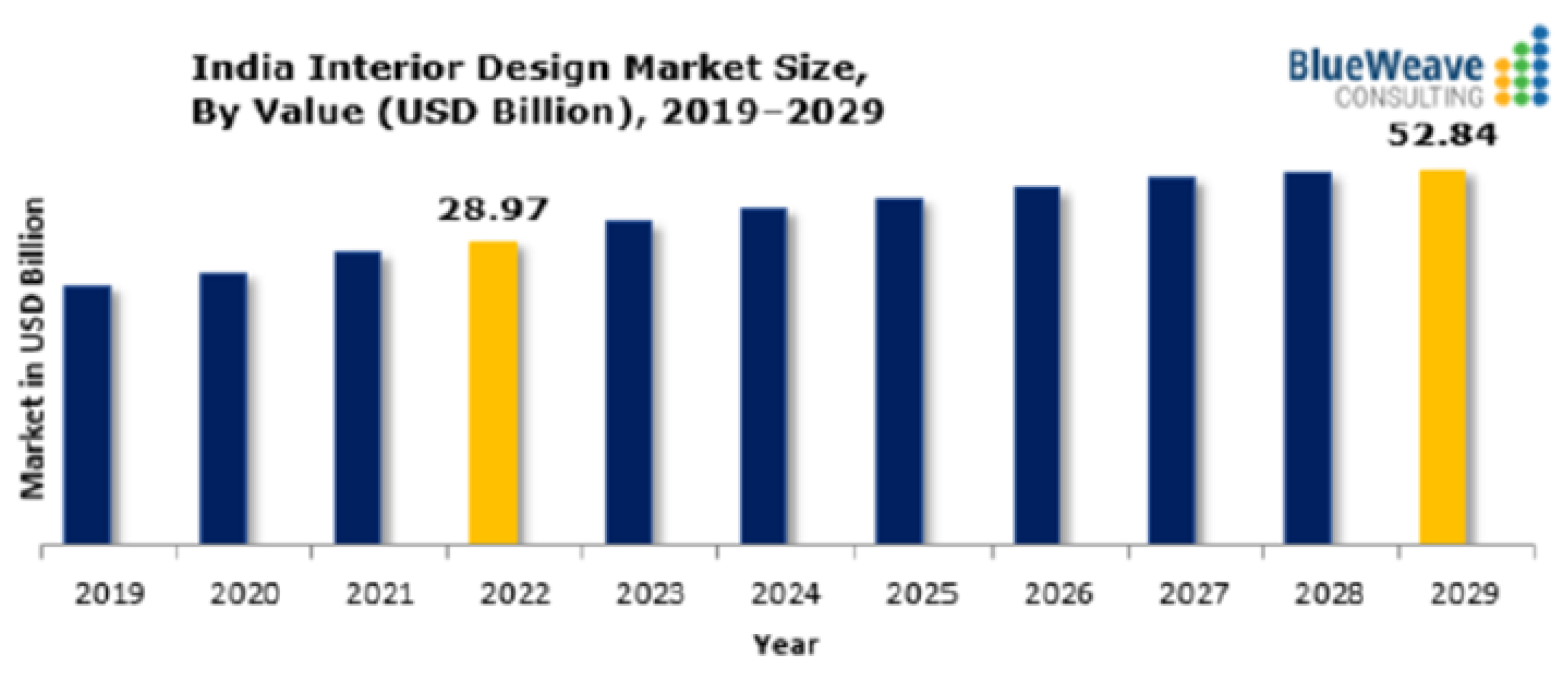
$31.5 billion in 2023 and is expected to grow to US
$67.4 billion by 2032, with a CAGR (Compound Annual Growth Rate) of 8.81% from 2024 to 2032 (
Figure 1). This progress is driven by the expanding demand for designs that optimize space, the expanding real estate industry, and rapid urbanization. Historically reliant on conventional consultation and design practices, the companies are now adopting online platforms with a view to addressing mounting demands from homeowners. As more individuals turn to online avenues for their interior design requirements with growing emphasis on affordability and sustainability, the demand for creative, budget-friendly, and customized solutions has significantly increased [
3]. Yet there remains a considerable gap in meeting demands by price-conscious homeowners who require top-notch design services at non-premium prices. Conventional methods tend to require extensive manual labor and high expenses, thus rendering them less attainable for the expanding middle-class segment keen on adopting digital innovations. This paper proposes an AI-driven recommendation system to address these issues, which would enable a platform that integrates machine learning algorithms to offer personalized, budget-friendly interior design solutions. By considering in tandem key factors such as types of services, space requirements, and budget limitations, the proposed system offers a significant advantage over conventional practices, which are time-consuming and expensive. The proposed solution aims to allow homeowners to access and assist professional interior design service packages that improve their living spaces using digital technologies.
The study begins by analyzing the pain points of homeowners in finding affordable and customizable solutions on existing platforms. Many existing systems lack adaptability and fail to cater to diverse customer preferences. Leveraging predictive models, the proposed approach uses machine learning models to analyze customer data and provide personalized recommendations. The proposed approach will form the foundation of an interior design prototype platform that ensures ease of use and accurate recommendations. The system’s effectiveness has been evaluated by assessing its ability to reduce costs, time, and effort, while enhancing customer satisfaction and accessibility.
Machine learning-based recommendation systems are widely used in online platforms to enhance user experiences through personalized suggestions, but their application in service-based industries such as interior design remains underexplored. Unlike product-focused recommendations, service-based systems must integrate multiple services while addressing budgetary constraints and varied user preferences. Existing research highlights certain limitations. Afoudi Y. et al. [
5] showed that combining collaborative filtering, content-based methods, and self-organizing map neural networks can improve recommendation accuracy. However, their model does not address the cold-start issue and requires considerable computational resources. Their evaluation was also limited to movie datasets, which makes it harder to apply the approach to new users, products, or services, especially when budget constraints come into play. On the other hand, Han et al. [
6] explored how users, product bundles, individual items, and pricing information interact to better capture the purchasing behavior of budget-minded consumers. Their method used a graph neural network to identify suitable bundle recommendations and was evaluated across three datasets. However, the usefulness of such budget-aware recommendation systems may be limited when users are reluctant to share their financial constraints. The authors in [
7,
8] introduced explainable NLP (Natural Language Processing) methods for transparency in recommendations, but these approaches were limited to single-product contexts and failed to account for dependencies between multiple services. Singh et al. (2020) [
9] investigated reinforcement learning architectures with adaptability according to user feedback, but they are too resource-demanding to be realistic on constrained-budget platforms.
This paper aims to address these gaps by presenting a hybrid recommendation model that integrates explainable artificial intelligence and emphasizes the fusion of multiple service bundles. Machine learning algorithms form the core of recommendation systems, enabling the analysis of user behaviors and preferences. Deep learning and hybrid models are capable of handling complex data, yet their use within the interior design industry remains under-explored. Khanal et al. (2019) [
10] mentioned the usage of these models for e-learning but did not consider their extension to service-based contexts. Likewise, refs. [
11,
12,
13] explored the use of generative AI and explainable NLP for user-specific recommendations, but these approaches still struggle with scalability and bias, especially when dealing with high-dimensional service data and diverse user groups.
The TF–IDF algorithm, commonly employed in feature extraction [
14], does not support evolving user preferences effectively because of its fixed weighting method. Category-based filtering, investigated in [
15], alleviates computational complexity in recommendation systems; however, it encounters difficulty supporting cross-category recommendation, an important functionality for the interior design industry where merchandise embraces various categories such as furniture, design, and installation. To address this limitation, the proposed method extends category-based filtering with cross-category relevance scores, to more effectively recommend sets of multiservice packages.
Neural networks, especially convolutional neural networks (CNNs) and recurrent neural networks (RNNs) have exhibited excellent potential in the field of recommendation systems. Alamdari et al. (2022) [
16] demonstrated the effectiveness of CNNs for visually centric recommendations; however, their research confined the application to scenarios involving individual products. The current research endeavors to expand the usage of CNNs in the area of interior design to enable the combination of visual and textual data for end-to-end recommendations.
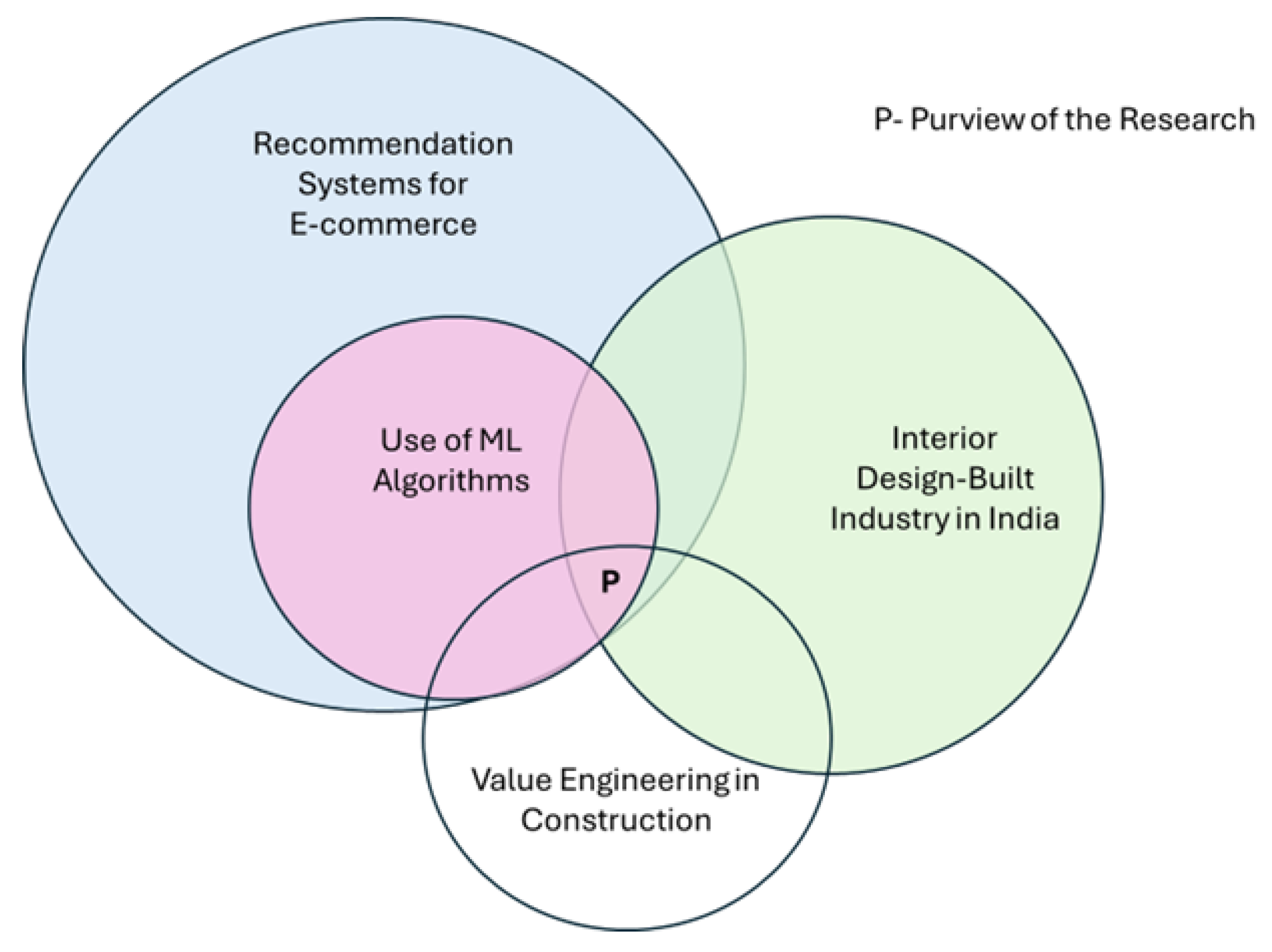
This study provides an end-to-end system of interior design personalized recommendations based on hybrid machine learning algorithms like TF–IDF, cosine similarity, and cross-category filtering. The proposed approach aims to fill the gap between affordability and user-centric solutions, thereby allowing homeowners to avail themselves of professional-quality services as per their personal requirements within their budget. The proposed system will also prioritize scalability so that homeowners with modest budgets can also use the system while being flexible across various categories of services.
This approach presents a novel perspective to the growing field of recommendation systems, here applied to the Indian interior design market. While previous works have been more focused on product-based domains and single-service recommendations, this research emphasizes the importance of integrating multiple services with a focus on accessibility and affordability. In addressing these shortcomings, the study hopes to transform the experience of interior design for homeowners, and by extension, make high-quality services more accessible and affordable. The incorporation of high-end algorithms and hybrid models into the platform is a giant leap towards addressing the digital divide in the interior construction sector, specifically concerning the expanding middle-class demography in India. Furthermore, the key contributions of this paper are summarized below:
A research gap is identified in existing interior design recommendation systems, which fail to provide customization and streamline service package selection for budget-conscious homeowners.
The study introduces a primary dataset derived from invoices collected from small and medium-sized interior design firms.
A hybrid recommendation approach is proposed that combines content-based filtering and collaborative filtering with lightweight methods like TF–IDF, logistic regression.
The proposed approach is empirically validated using several machine-learning methods including KNN, Random Forest, and XGBoost, along with standard performance metrics such as accuracy, precision, recall and ROC-AUC on a dataset collected from Indian interior design organizations.
The rest of the paper is structured as follows.
Section 2 reviews related work on AI-enabled interior design recommendation systems.
Section 3 outlines the research questions and hypotheses.
Section 4 presents the proposed hybrid recommendation framework.
Section 5 details the system implementation, along with the evaluation methodology and results.
Section 6 discusses findings and future work, and
Section 7 concludes the paper.
4. Proposed System Approach
This paper uses a hybrid approach that blends positivism and pragmatism to address gaps in the interior design industry by using machine learning (ML) for personalized, budget friendly recommendations. The dataset was sourced through interviews, questionnaires, and invoices from interior design companies in Kolkata, focusing on property sizes, service types, specifications, costs, and products. The data were then preprocessed to ensure data quality through cleaning, imputation, and normalization.
A hybrid recommendation model integrates TF–IDF-based content filtering for textual features and collaborative filtering for price and category alignment. Logistic Regression, combined with training and testing splits, evaluates the proposed approach’s performance via accuracy, precision, recall, and ROC-AUC. Class imbalances in the dataset are handled through up-sampling to ensure fairer predictions.
User feedback refines relevance scores generated from logistic regression probabilities, ensuring personalized suggestions. Additional ablation studies and stress tests are carried out to understand how well the model performs under different conditions and heavier workloads. This approach combines historical data with real-time user inputs collected through the developed web interface, enabling accurate, adaptable, and user-centric recommendations while also addressing accessibility gaps in India’s interior design landscape.
4.1. System Architecture
The Interior Design-Built services application has been developed to provide a user-friendly platform for integrating the recommendation system and its associated web services. This application streamlines the process of planning and budgeting interior design projects. It achieves this by seamlessly combining a dynamic frontend, robust backend, and advanced recommendation algorithms, offering users an efficient and personalized experience.
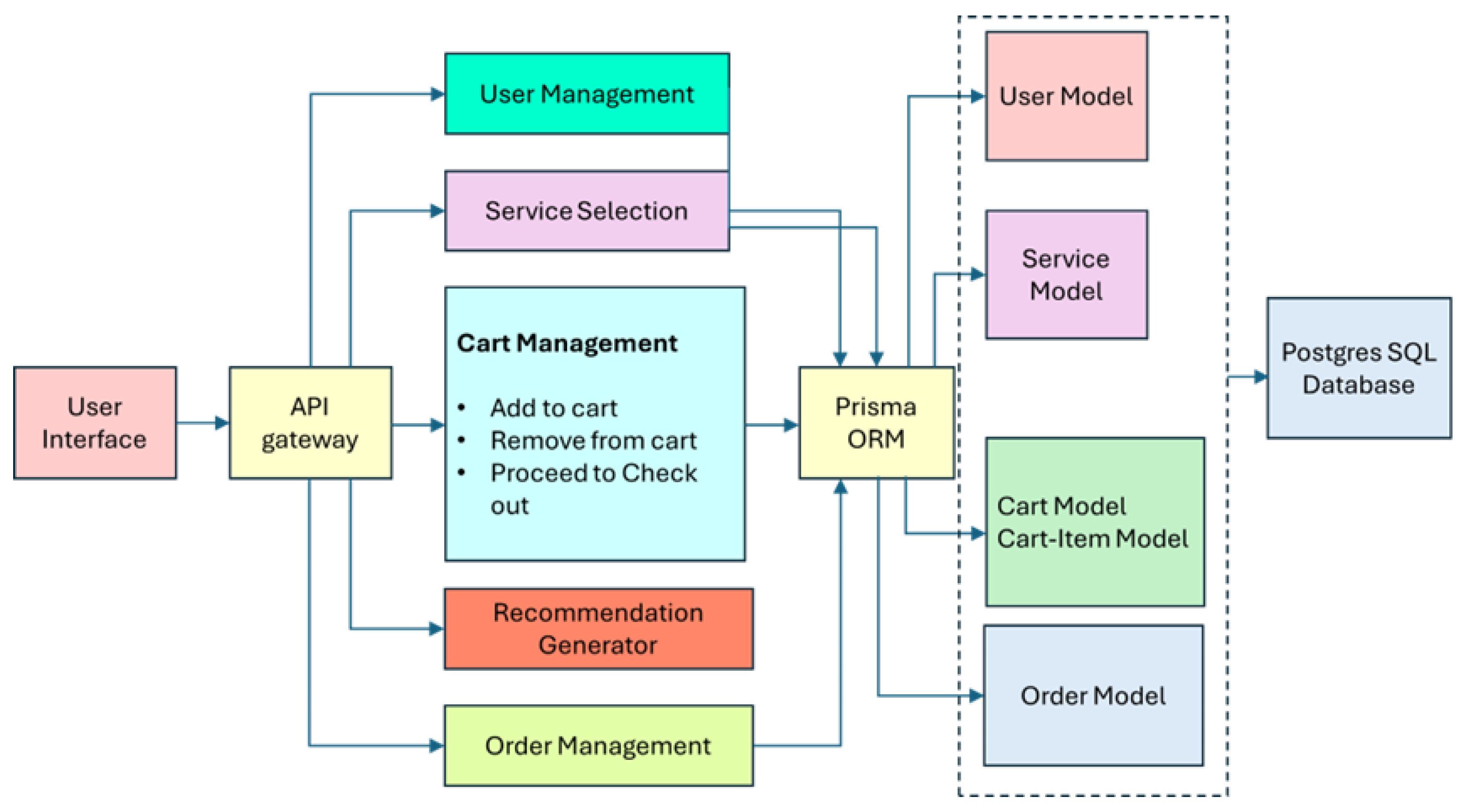
The system architecture (
Figure 3) consists of three layers: the frontend, backend, and recommendation system. The frontend, built with ReactJS and styled using Tailwind CSS, serves as the user interface, enabling service browsing, cart management, and the display of recommendations. It manages user interactions with state-handling tools like useState and useEffect. The backend, developed using Express.js, acts as a middleware, handling user authentication, cart management, and interactions with the database. A PostgreSQL database, accessed via Prisma ORM, stores user, service, and cart data. The web part of recommendation system, implemented in Flask, leverages content-based and collaborative filtering using TF–IDF vectorization to generate tailored service recommendations.
The system’s data flow begins with users browsing and selecting services, which are added to the cart and sent to the backend via API requests. The backend updates the cart in the database and communicates with the recommendation system, which processes selected services to generate and return five sets of recommendations. These are displayed on the frontend for user exploration. The proposed system architecture ensures a seamless and engaging user experience, combining efficient data handling with accurate and personalized recommendations. The app’s user interface is designed to be intuitive, facilitating user inputs, displaying recommendations, and providing transparent explanations to build trust. The machine learning-based recommendation module processes user preferences using natural language processing (NLP) to structure inputs and a recommendation engine to generate initial suggestions. The database stores all relevant information, including user profiles, service details, and interaction history, guaranteeing scalability and security while supporting the recommendation system.
4.2. System Preliminary—TF–IDF (Term Frequency Inverse Document Frequency)
TF–IDF is a statistical measure technique which is used to evaluate the significance of a word in a document relative to a collection of corpus (documents). TF–IDF is a popular approach in natural language processing (NLP) and information retrieval tasks, including content filtering. In the experiments, TF–IDF is chosen due to several reasons. For instance, it provides recommendations based on intrinsic content, effective for detailed service specifications like material types and finishes, independent of extensive user interaction history. Equation (
1) was used to calculate the frequency and relevance of terms that appear in each invoice.
Here,
t is an item in the invoice,
d refers to the invoice itself,
denotes the number of times item
t appears in invoice
d, and
is the total number of items listed in that invoice. It is also checked how frequently each item or specification appears across all invoices by applying the inverse document frequency, as shown in Equation (
2).
where
N is the total number of invoices and quotations used to create the dataset, and
is the number of invoices and quotations that contain the same item. Finally, we used the weighted TF–IDF (Equation (
3)) to transform invoice documents into vectorized form.
The weighting scheme of TF–IDF ensures that items appearing frequently in a single invoice but rarely across other quotations receive higher weight, while items appearing in many quotations receive lower weight.
4.3. System Preliminary Overview—Hybrid Model
The recommendation module uses a hybrid model that integrates content-based and collaborative filtering. Content-based filtering uses TF–IDF vectorization to transform textual features into numerical representations, enabling the system to analyze detailed service specifications. Collaborative filtering incorporates price ranges and categories, ensuring that recommendations align with user budgets and service preferences. This hybrid approach balances nuanced content analysis with practical considerations, generating personalized and budget-friendly suggestions.
4.3.1. Content-Based Component
Content-based filtering uses text information taken from service titles and specifications. These are combined into a single feature representation, as shown in Equation (
4).
TF–IDF vectorization is then applied to
for all services, producing a numerical representation that captures term importance based on Equations (1)–(3). This enables the system to identify services with similar descriptions, materials, finishes, and functional properties. The similarity between any two services
i and
j is determined using cosine similarity by using Equation (
5).
where
is the cosine similarity score between service
i and service
j;
and
are the TF–IDF feature vectors for the respective services;
denotes the dot product representing the overlap of terms; and
,
are the Euclidean norms used for length normalization.
4.3.2. Collaborative Component
The collaborative filtering component focuses on latent preference patterns derived from service prices, categories, user–item interactions, and user similarity. These factors reflect typical homeowner constraints and selection behaviors. Each service acquired through the collaboration component is represented as shown in Equation (
6).
where
c denotes the service, which includes price and category. These attributes enable the model to learn approximate neighborhoods of financially and thematically similar services. This component ensures that recommendations align with user budgets and comparable service groups.
4.3.3. Hybrid Integration
The hybrid model combines the output of the TF–IDF-based relevance classifier (content-based) with price–category alignment (collaborative filtering). For each service, a final hybrid score is computed through a weighted fusion of the content relevance probability
and a collaborative similarity score
, as shown in Equation (
7).
The collaborative score
reflects similarity based on price ranges and service categories, while
captures textual relevance. Only services within the user’s acceptable budget range
are considered, enforced using a budget constraint (Equation (
8)).
The top-ranked services according to form the recommended set. This integration leverages the strengths of both filtering approaches’ descriptiveness and budget-aware similarity, resulting in personalized, contextually aligned, and financially appropriate service recommendations.
Next, TF–IDF vectorization is applied on
to transform textual features into vector representations. As the collected dataset was not labelled, a set of random services was selected for labelling. Let
be the list of randomly selected service IDs. We assign labels as shown in Equation (
9).
Therefore, the resulting labelled dataset is represented as
. To address the class imbalance, we applied SMOTE to upsample the training dataset (see
Section 4.4).
The Logistic Regression classifier serves as the core machine learning algorithm for relevance prediction in the recommendation system. It leverages features transformed by the TF–IDF (Term Frequency-Inverse Document Frequency) method to determine the likelihood that a service matches a user’s preferences. TF–IDF is used to convert textual data such as service titles and specifications into numerical vectors that represent the importance of each term relative to the entire dataset. These transformed features serve as inputs to the Logistic Regression model, which then predicts the probability of each service being relevant to the user. Logistic Regression is particularly suited for this task due to its light weight and its ability to handle binary classification problems, such as predicting whether a service is relevant (1) or not relevant (0). By training the model on a labelled dataset of services with known relevance, the algorithm learns to associate patterns in the feature data with the corresponding relevance labels. Once trained, the model can accurately predict the relevance of new, unseen services based on the learned relationships between the features and the target variable. To train the logistic regression classifier with balanced weights, Equation (
10) has been used.
where
is a non-linear activation function; in this case, the sigmoid has been used, which is
In this context,
w and
b are the regression model parameters. In the proposed hybrid model, the binary cross-entropy loss function is applied, also known as log loss. It is defined in Equation (
11).
where
N is the number of services in the dataset used to compute the loss,
is the true label for services, and
is the predicted probability.
This combination of logistic regression and TF–IDF for classification and feature extraction, respectively, allows the system to provide accurate and personalized service recommendation output, which could be tailored to each user’s specific preferences. The application of these methods helps the system stay efficient, scalable and interpretable all at the same time, which keeps the model’s complexity at a minimum.
While neural network models could have been alternatives to the current approach, the proposed approach prioritizes simplicity and interpretability. The rationale to utilize TF–IDF was driven by its efficiency in analyzing textual data and compatibility with developer-friendly libraries like scikit-learn. While complicated models may have higher predictive accuracy, TF–IDF provides a balance between performance and resource consumption, which made it the most pragmatic solution for this recommendation system. Additionally, TF–IDF and logistic regression are computationally lightweight compared to BERT (Bidirectional Encoder Representations from Transformers)/LLMs (Large Language Models). They require significantly less memory and processing power, making them suitable for environments with limited computational resources. TF–IDF + logistic regression can perform well on small to medium-sized datasets where deep learning models like BERT may overfit due to their large number of parameters. As the primary collected dataset is very small, BERT/LLMs typically require large amounts of labelled data to generalize well, whereas TF–IDF + logistic regression can work effectively with smaller datasets.
The second part of the architecture (as shown in
Figure 3) utilizes the previously trained logistic regression classifier to predict the relevance of interior design services based on user-selected features. This part is implemented on the Interior Design-Built Services Calculator application, which is integrated into a web-based interface. Users can select different service characteristics, such as the type of service (e.g., painting, woodwork), specifications (e.g., material type, number of layers), and budget constraints. Then, the Logistic Regression model, trained with TF–IDF-transformed features, processes these inputs to determine whether the selected services are relevant to the user’s preferences.
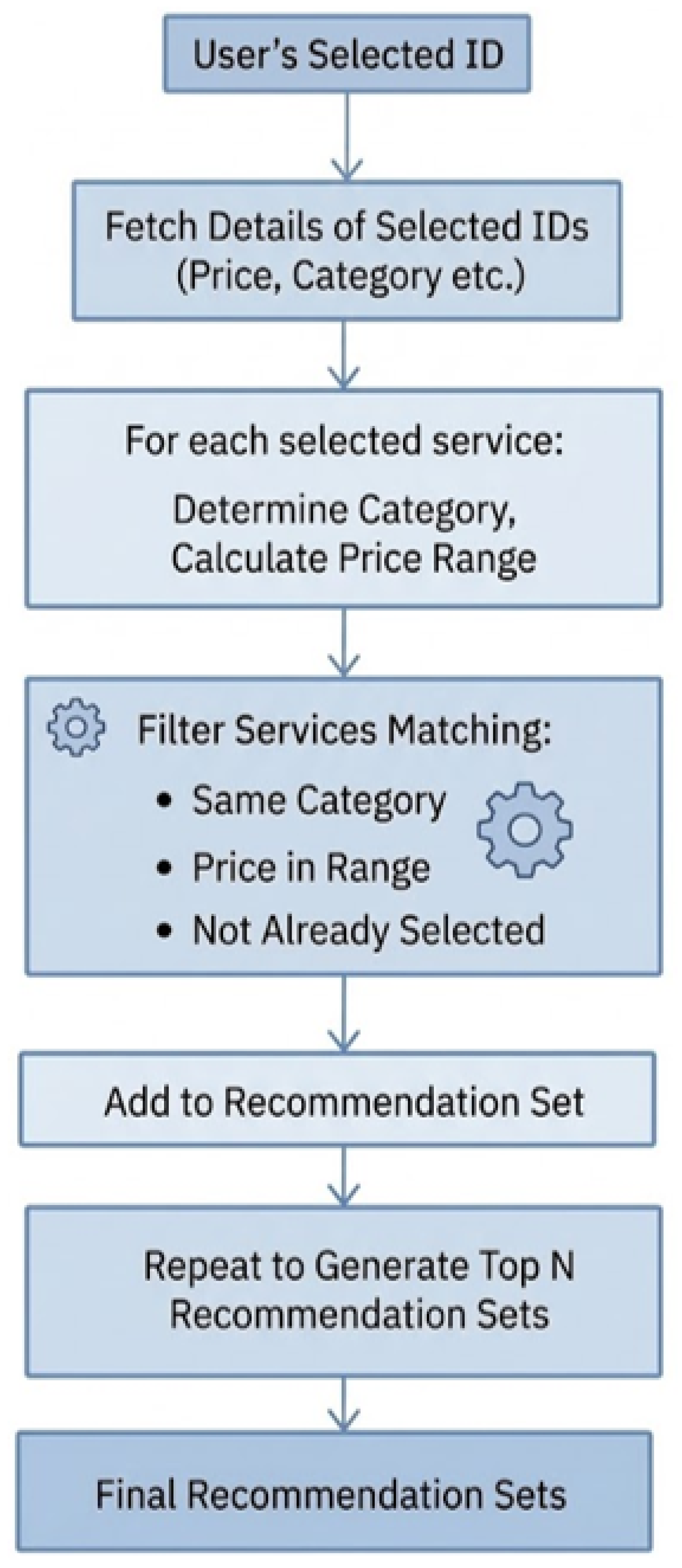
A loop is executed to iterate through the selected services and predict relevance scores for all services within the specified budget range and category. The model continuously processes the input features, calculating the probability of each service being relevant, until it identifies a set of services with high relevance scores (class “YES” or 1). Once a suitable set of services is found, the system presents these recommendations to the user, enabling them to explore budget-friendly service packages. The workflow of the proposed hybrid model is shown in
Figure 4.
4.4. Dataset Description and Preprocessing
The primary dataset was derived from invoices and quotations provided by homeowners and interior design firms in Kolkata. All instances were anonymized to maintain privacy (
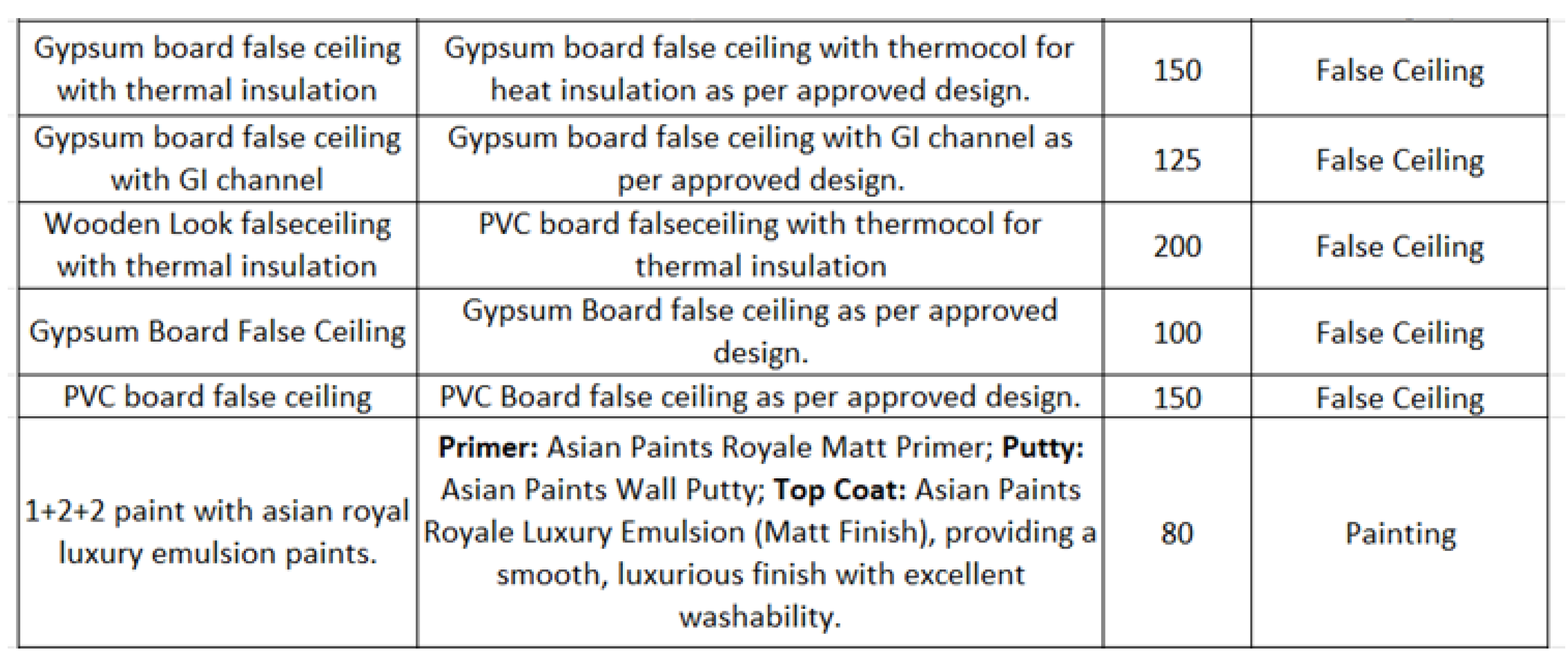
Figure 5 shows a sample of raw data). After careful evaluation, key features were selected, and the data was organized into a tabular format in an Excel file (
Figure 6). The characteristics of the dataset include identifiers for services, titles, specifications, prices, and categories, and these form basic information for the services offered. The structured dataset enables proper preprocessing, feature engineering, and the subsequent utilization of machine learning and recommendation algorithms (
Figure 4). The text entries were normalized for uniformity, and missing values were also handled through the utilization of imputation techniques such as K-Nearest Neighbors (KNN) imputation. A combined feature column was created by merging service titles and specifications, enabling content-based similarity analysis.
The initial primary dataset consisted of 235 instances representing interior design services and their associated attributes. From this dataset, 9 samples were manually labelled by two authors with the help of domain experts as either relevant (is_relevant = 1) or non-relevant (is_relevant = 0), based on users’ budget constraints and preferences. Inter-rater reliability between the two experts was assessed using Cohen’s Kappa, which produced a value of kappa = 0.82, indicating a strong level of agreement. Because the dataset was relatively small, additional training samples were generated using the SMOTE (Synthetic Minority Over-sampling Technique) to address class imbalance and support more reliable training of the model. SMOTE uses existing data instances and generates new synthetic minority samples. In this paper, the Python library imblearn was used for SMOTE with the parameters k_neighbors = 5, sampling_strategy = ’auto’, and random_state = 42. The algorithm works by selecting a minority class sample and forming a new synthetic example by interpolating between that sample and one of its nearest neighbors in the feature space. This method helps address class imbalance and reduces the risk of the model becoming biased toward the majority class.
Although the dataset represents real market conditions, its small size is still a limitation. Even so, the combination of expert labelling, synthetic data generation, and feature engineering allows the model to be evaluated realistically and supports its ability to generalize to similar service-recommendation tasks.
5. System Implementation, Results and Evaluations
The proposed interior service package recommendation system has been evaluated by using well-known machine learning evaluation metrics such as accuracy, precision, recall, and ROC-AUC. Precision measures the percentage of correctly predicted relevant services, while recall assesses the proportion of actual relevant services identified. The ROC–AUC further quantifies the model’s capability to discriminate between relevant and non-relevant services. The proposed system also calculates average relevance ratings on collections of recommendations, which reflect the general quality of the suggestions. User feedback further strengthens the system by gathering data on recommendation accuracy and relevance to enable continuous improvement.
5.1. Integration of the Recommendation System with the Estimation Application
The proposed developed system connects to a PostgreSQL database managed via Prisma ORM, thus ensuring efficient data storage and retrieval. This relational design supports both content-based and collaborative filtering approaches, hence ensuring scalability for potential expansion. Machine learning libraries like Scikit-learn ensure that there are no complex algorithms except TF–IDF vectorization and supervised machine learning approaches. These tools ensure that implementation and optimization processes are simplified, allowing the system to adapt to modified user needs. The developed recommendation system solves some key interior design dilemmas, including an overwhelming choice overload, constrained budgets, and decision fatigue. The developed system provides the functionality to create personalized service packages on the fly enabled through machine learning, thus simplifying decision making and untangling complexity. It provides valuable market insight into user needs, enabling businesses to optimize inventory and services. The budget-based recommendation model is innovative, offering a simplified, effective, and enriching experience for users and service providers alike.
Briefly, the Interior Design-Built Services Application uses lightweight machine learning algorithms and processes data efficiently. The human-centered design principles were followed to create an innovative application for homeowners. By focusing budget limitations and simplifying the service selection process, the proposed application breaks through traditional boundaries in the interior design field; it allows users to achieve their desired living spaces more efficiently and affordably. The runtime recommendation’s ability of the system and its integrative support ensure its compatibility with future needs, thus making it a change catalyst in digital interior design.
5.2. System Configuration and Results
The recommendation system was developed and executed on a Windows 11 machine with the following specifications: processor: 12th Gen Intel
® Core™ i7-12650H; installed RAM: 16.0 GB (15.6 GB usable); 64-bit operating system, x64-based processor. The experimental setup consists of the computational environment, collected dataset, and preprocessing pipeline. This environment provides a significantly sufficient computational capability, as the proposed machine learning approach is lightweight and sustainable. From experiments, we established that the chosen system configuration has ample processing power and memory to handle moderately complex machine learning models and data preprocessing tasks efficiently. Still, given these specifications, optimization was essential to support seamless operation in intensive data operations. Several methods were implemented to optimize the preprocessing of data and model training to allow for resource-conservative computations without loss of the system’s accuracy and reliability. Pre-processed datasets were maintained in a PostgreSQL database (run in a Docker container) for effective querying and access to data. PostgreSQL was adopted due to its scalability and reliability features, thus being appropriate for managing large volumes of data as well as catering to complex queries. The solution employs Prisma ORM for managing database operations, thereby integrating conveniently with the Node.js backend. This environment strikes a balance between performance and data access in catering to both the recommendation engine and ecommerce site. The complete code along with the dataset can be accessed from the GitHub page [
40].
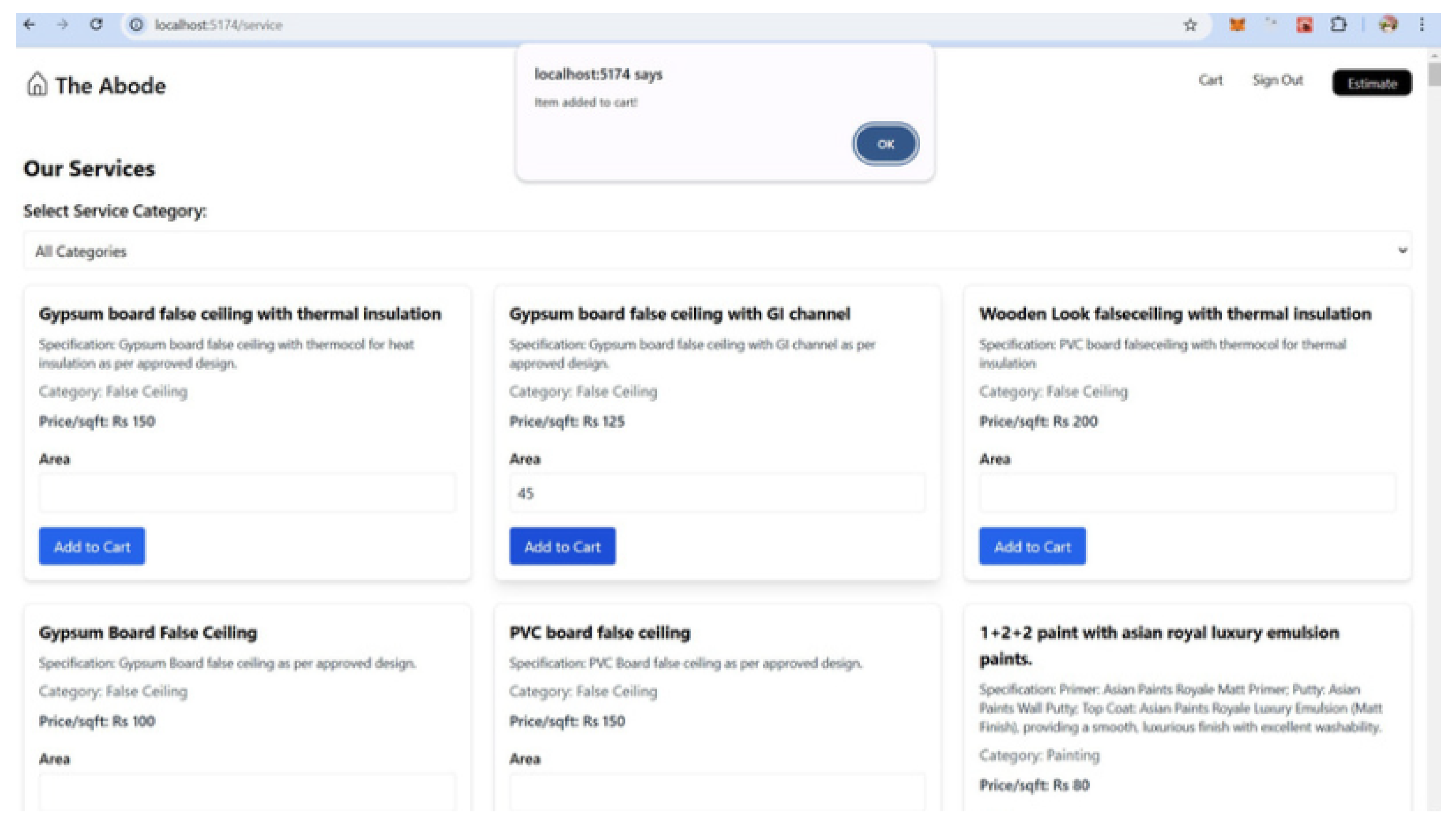
The Interior Design-Built Service Package Recommendation System (IDBspRS) performed well in initial trials; it effectively generates relevant recommendations based on user input (
Figure 7). The IDBspRS used content-based and collaborative filtering methods to successfully identify appropriate suggestions and to provide contextually fitting options. The combination of these techniques yielded moderate success, with potential for future refinement.
In
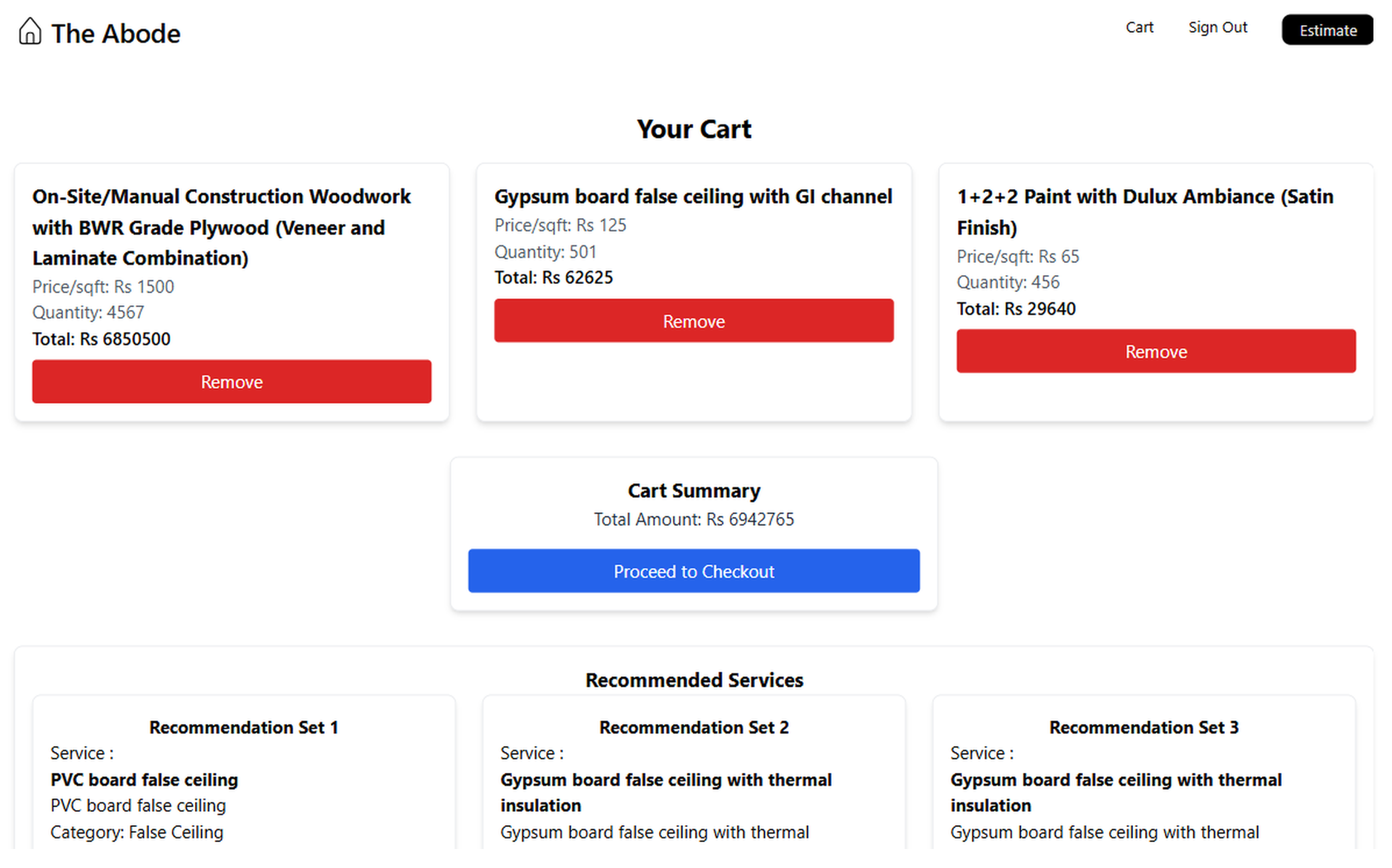
Figure 8, the cart webpage presents the items selected by the user. This section provides an overview of the services and products added to the cart, allowing users to review their selections before proceeding to checkout. The interface provides options to users to modify their choices by adding or removing items as needed. Furthermore, to display the cart items, the cart page also presents the first three recommendation sets based on the user’s selected interior design services as shown in
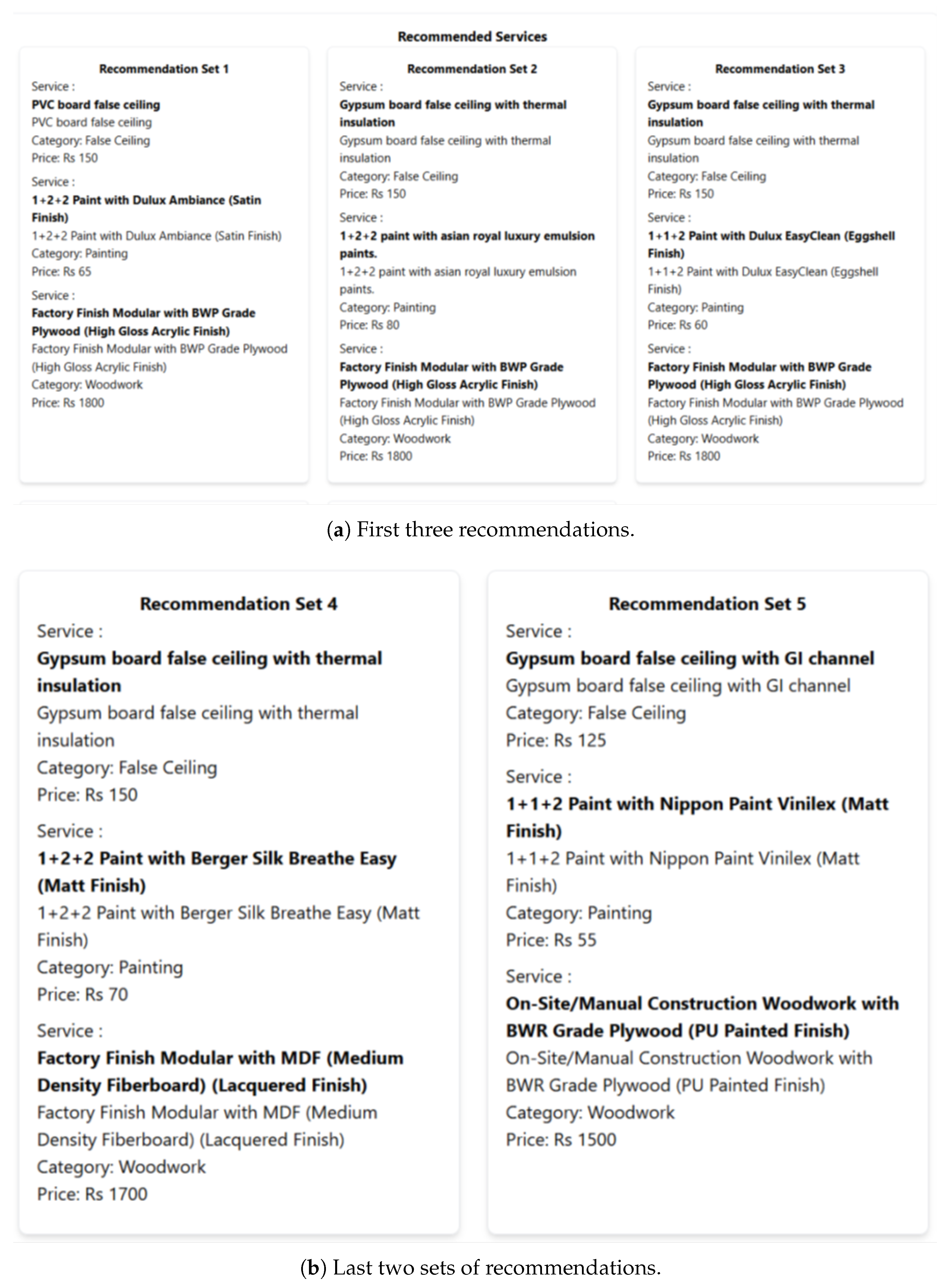
Figure 9a. The proposed model generates these recommendations by using a hybrid recommendation approach that considers pricing alignment, relevance and diversity. The recommendations help users to explore additional services or products that complement their current selections. The cart webpage further extends the recommendations by displaying the last two recommendation sets tailored to the user’s selections as shown in
Figure 9b. These additional recommendations allow users to have a comprehensive view of available service bundles, which potentially assist in their purchasing decisions by providing more personalized suggestions.
The interior design recommendations generated by the proposed model were evaluated based on pricing alignment, relevance, diversity and accuracy. For example, an extensive examination of how to evaluate recommendation systems focuses on relevance, diversity, and accuracy but does not clearly address price alignment [
41]. But that has been incorporated into the system, as the application is a budget-driven recommendation system. Relevance measures how closely the recommended packages match user preferences. The relevance score for each recommendation is derived from the predicted probabilities generated by the trained Logistic Regression classifier. Specifically, the classifier assigns a probability to each service, representing the likelihood of its relevance based on the input features, which are constructed using a TF–IDF vectorizer with combined content and collaborative features. A higher relevance score indicates a greater likelihood that the service aligns with the user’s preferences or requirements. The relevance scores ranged from 0.6 to 0.85, indicating that the system consistently provided relevant suggestions. For example, selecting “gypsum board false ceiling with GI channel” resulted in similar but appropriate recommendations like “Gypsum board ceiling with thermal insulation.” Diversity ensured that users were presented with a variety of options rather than repetitive suggestions. The price alignment was in proper shape as the system suggested services that were within ±50% of the chosen service price. Briefly, while the system excelled in these areas, enhancements in metadata, diversification strategies, and price sensitivity would be able to render it even more effective and easier to use in general. While the system offered some variety, it occasionally suggested similar packages due to limited metadata, highlighting the need for an advanced diversification dataset and techniques. Accuracy was obtained indirectly by using precision and recall, due to class imbalance. Given the disproportionate distribution of class labels (e.g., a high prevalence of non-relevant items), a model could achieve high accuracy by predominantly predicting the majority class (non-relevant) while failing to effectively identify relevant services [
42].
The proposed hybrid model, built on logistic regression with Stratified K-Fold cross-validation, achieved an accuracy of 83.62%, recall of 86.24%, and precision of 76.52%. These results show that integrating budget-related features enhances the model’s ability to identify financially appropriate services, directly supporting H1and answering RQ1 by showing that price and category information improve the accuracy of budget-aware recommendations. Although these results show better predictive capability, particularly in identifying all relevant cases, the relatively lower precision indicates a tendency toward false positives, suggesting that additional refinement is needed to improve classification performance. In order to do the ablation experiments, the TF–IDF was excluded, and the logistic regression model was trained without specification and price features; performance declined, with an accuracy of 81.23%. This supports H2 and answers RQ2, showing that hybrid filtering produces richer and more design-aligned recommendations than content-only approaches. For comparison, the proposed approach was compared with the KNN, Random Forest, and XGBoost models, where XGBoost perform better, achieving an accuracy of 80.50%, a precision of 72.32%, and a recall of 82.80%. Moreover, a summary of these results is presented in
Table 1.
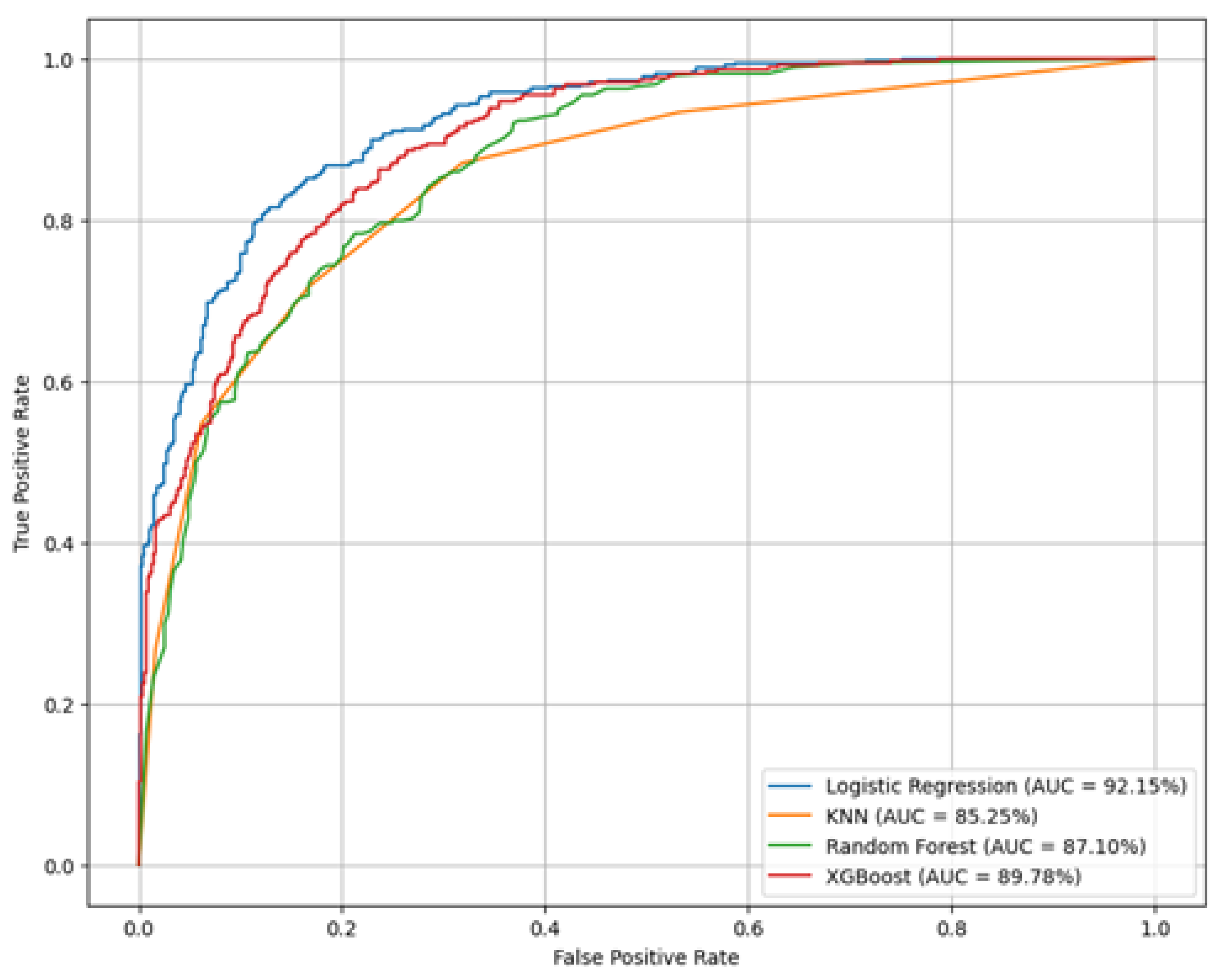
For comparison the ROC–AUC results are also shown in
Figure 10. The Receiver Operating Characteristic (ROC) analysis indicates strong performance across all models, with Logistic Regression achieving the highest AUC score of 92.15%, showing excellent ability to distinguish between relevant and non-relevant services. XGBoost (AUC = 89.78%) and Random Forest (AUC = 87.10%) also perform well, showing their strength in capturing non-linear patterns in the hybrid feature space. KNN achieves a lower AUC of 85.25%.
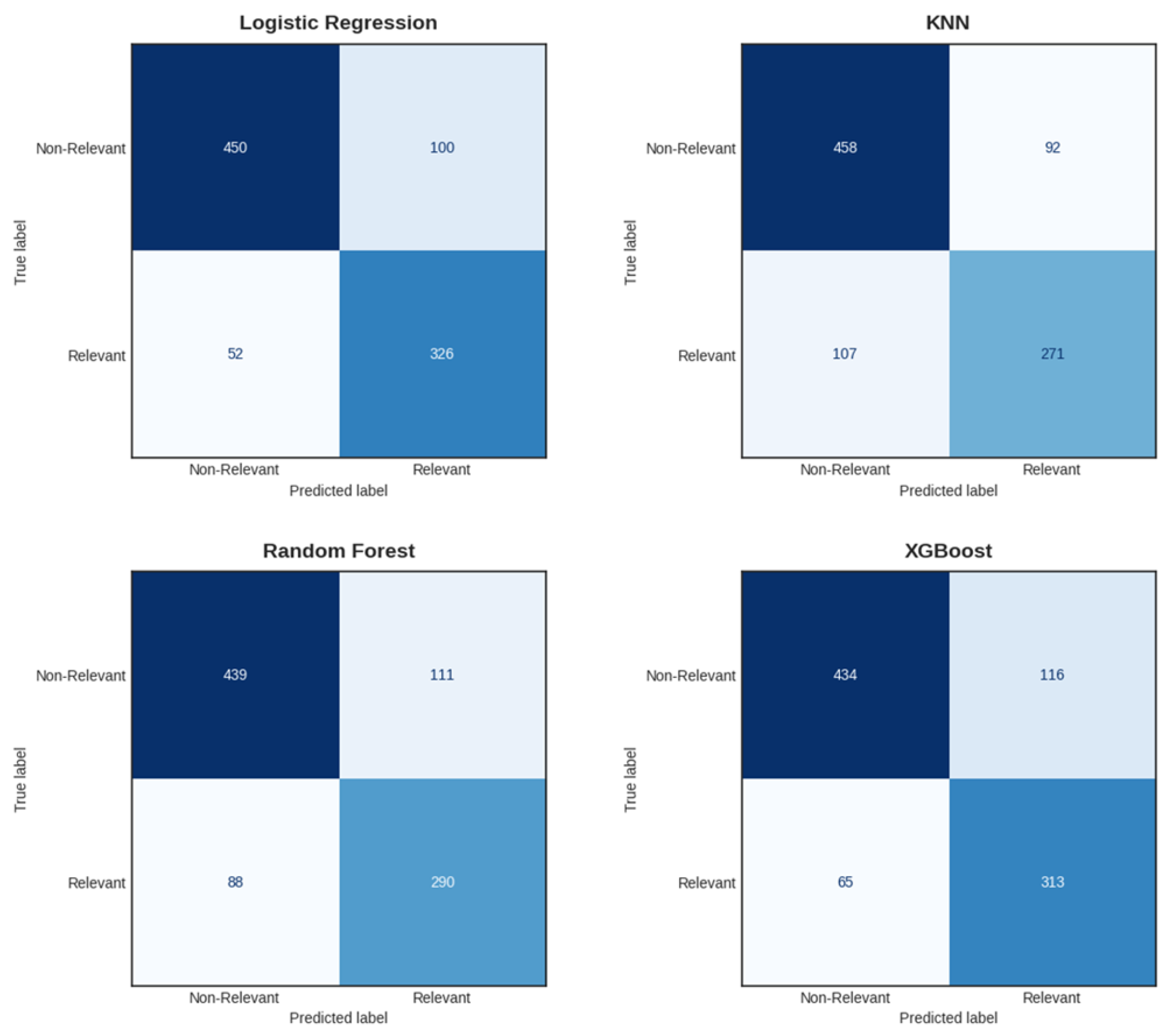
In machine learning, a confusion matrix is a primary metric used to measure the performance of a model in comparing the actual labels of a test dataset to the predicted labels. For the implementation in this research of the proposed hybrid model, the confusion matrix is an important metric for ascertaining whether the proposed approach could classify relevant and non-relevant services accurately or not. The confusion matrix for a binary classification problem contains four elements: true positive (TP), false positive (FP), true negative (TN), and false negative (FN). The true positive (TP) cell contains the number of instances that are correctly identified as relevant services. The false positive (FP) cell, on the other hand, contains instances that are wrongly marked as relevant services but are actually non-relevant. Similarly, the true negative (TN) cell represents the number of services correctly labelled as not relevant, and the false negative (FN) cell is for the cases incorrectly labelled as non-relevant but actually were relevant.
Figure 11 shows a comparative confusion matrix analysis of logistic regression, KNN, Random Forest, and XGBoost models. The confusion matrix for logistic regression shows that the model correctly predicted (true positive) relevant services, i.e., 326, and 450 instances were correctly predicted as non-relevant services (true negative). Similarly, the model wrongly predicted (false positive) relevant services, where the actual services were non-relevant. This occurred 100 times. The model wrongly predicted (false negative) non-relevant services, where the actual services were relevant. This occurred 52 times.
Overall, the logistic regression hybrid model performed best, showing a strong balance between detecting relevant and non-relevant cases. KNN was most effective at recognizing non-relevant items and produced the fewest false positives, although it missed many relevant cases. Random Forest showed balanced but moderate performance, with more false positives than the other models. XGBoost detected the most relevant items by producing the fewest false negatives, but this also resulted in the highest number of false positives.
6. Discussion and Future Work
6.1. Discussion on Results
The IDBspRS proved to be highly effective in presenting personalized and relevant recommendations to users, solving key problems of budget suitability while offering varied design options. Through the use of a synergistic methodology that combines content-based filtering with collaborative filtering methods, the system is able to effectively map users to services that are highly compatible with individual preferences. With content-based filtering, the system filtered metadata like service names and specifications to ensure that recommended services were extremely relevant. Collaborative filtering, however, detected user behavior patterns to recommend services most frequently chosen by users with the same tastes. The blending of the two methods enabled the system to provide an integrated and individualized recommendation experience, which benefited niche need users, where traditional systems tend to fail.
As for the quality of the recommendations, the system performed well and the relevance in the recommendations varied from 60% to 85% for individual services, which established that the system consistently suggested a good set of recommendations. Additionally, the system’s diversity was moderate; it offers users a variety of options within their preferred service categories. Yet, in a few cases, some redundancy occurred where limited metadata was available, evidencing the need for more data expansion and diverse service descriptions.
Precision and recall measures of the system represented another significant strength. By having 86.24% recall (Regression-Hybrid, with TF–IDF), the model accurately labelled most services of interest, which is vital in recommendation systems when the aim is not to miss any service that might have been helpful. Nonetheless, precision being 76.52% means that certain recommendations did not meet the expectations of the user to some extent, but in many cases, such a compromise is taken for achieving maximum recall. In general, the IDBspRS has been a practical solution for homeowners who seek affordable and pertinent interior design recommendations. The analysis also identifies some possibilities for future improvement, i.e., enriching the metadata to a larger degree and refining price recommendations to come up with more accurate recommendations.
6.2. Future Work
Although the IDBspRS, as developed, has demonstrated applicability, several areas need further development to better meet the needs of a broader user base and reflect real-world application scenarios. One of the primary suggestions for future research is the diversification and enlargement of the dataset. At present, the system is developed using a limited range of service types and user profiles. Expanding the dataset to include more user types and service categories would make the recommendations more robust and widely applicable. With a more diverse range of users included, the system will be in a better position to accommodate differences in preferences, thereby rendering the recommendations more meaningful for an extended spectrum of users.
Another critical area for improvement regards the incorporation of more sophisticated feedback mechanisms. Presently, the system depends on basic feedback mechanisms, i.e., affirmations and negations; however, incorporating more complex feedback alternatives, e.g., determining the accuracy of recommendations or making elaborate explanations of service categories, would render the predictability of output generated by the system more achievable.
The enhancement would enable the recommendation engine to refine its quality over time based on the analysis of actual user context, thereby making more accurate and personalized recommendations. Control and customization by the user are valuable in developing a more personalized experience. The users should have options to modify the weight given to different categories, change their priority in terms of design alternatives, or state their budget constraints. With increased control over the recommendation process, the users will be shown proposals that more closely match their individual project needs, leading to increased user satisfaction. Furthermore, the system’s adaptive nature can be augmented through the integration of a more advanced recommendation generator that builds on both instantaneous feedback and an ongoing history of user behavior. This would make the system stay relevant to the user as their needs evolve with time. This approach would cultivate enhanced trust within the system and users would be in a position to make more informed decisions, consequently enhancing engagement and user satisfaction. With these future developments implemented, the IDBspRS can be even more powerful, more user-friendly, and more flexible, further advancing its role as a means for transforming homeowners’ interior design and home remodelling activities.
7. Conclusions
In conclusion, the results show that the proposed approach, the Interior Design-Built Service Package Recommendation System (IDBspRS), is a lightweight and effective solution for meeting the challenges of homeowners when selecting and managing interior design services under budget constraint situations. The proposed hybrid approach combines both collaborative and content-based filtering techniques. With an accuracy of 83.62% and an ROC–AUC of 92.15%, the system delivers personalized, relevant, and contextually appropriate recommendations that align with users’ preferences. The integration of machine learning with real-time user feedback, captured through the developed web-based tool, enables the system to continually refine its outputs, allowing users to receive tailored service packages that meet their design requirements and budget.
Although IDBspRS is effective, there are several aspects that need to be improved upon, ranging from the diversification of the dataset to the offering of personalized services and increased autonomy for the user. The system’s capacity to provide good recommendations, combined with openness and inclusiveness of user contribution, provides a good platform for further improvement. Incorporating a larger dataset, along with other advanced feedback mechanisms and customized features for particular users, would make it more adaptable and viable to a larger number of users.
In summary, the IDBspRS is a significant step forward in the interior design recommendation system area, enabled with lightweight logistic regression and TF–IDF approaches. It provides a user-oriented and scalable approach to interior design and home renovation projects and demonstrates great potential for further development and extended application.