Article

Decarbonizing Residential Heating in Southeast Romania by Using Hybrid Solar–Ground Energy

1
Department of Materials and Environmental Engineering, “Dunarea de Jos” University of Galati, 111 Domneasca St., 800008 Galati, Romania
2
Department of Mechanical Engineering, “Dunarea de Jos” University of Galati, 111 Domneasca St., 800008 Galati, Romania
3
Naval Architecture Department, “Dunarea de Jos” University of Galati, 111 Domneasca St., 800008 Galati, Romania
*
Authors to whom correspondence should be addressed.
Sustainability 2026, 18(7), 3557; https://doi.org/10.3390/su18073557
Submission received: 10 March 2026 / Revised: 31 March 2026 / Accepted: 2 April 2026 / Published: 4 April 2026

Abstract

This study analyzes the feasibility of increasing the energy and economic efficiency of a residential heating and domestic hot water (DHW) preparation system with a solar-assisted air-to-water heat pump (AWHP), implemented in southeast Romania. The following options are evaluated from the sustainability point of view (energy, economic and CO2 emissions): renovation of the building and modernization of the system by integrating an electric accumulator, increasing the capacity of photovoltaic panels (PV) and solar thermal collectors (STCs), and the option of replacing the AWHP with a ground-source heat pump (GSHP) with a vertical loop (GSHP-VL) and a GSHP with a horizontal loop (GSHP-HL). The energy performance of heating systems was simulated using GeoT*SOL software. The results show that by renovating a home, the energy requirement for heating decreased by about 58%; therefore, following the current financial rules applied to prosumers, the GSHP-VL system has the best energy performance (electricity consumption and solar coverage rate of this consumption), economic performance (investment recovery period and annual operating cost) and environmental performance (lowest CO2 emissions) and that through a government program that promotes energy efficiency and the use of renewable energy sources in homes, capital costs can be reduced by (43–57)% in the case of systems with HP, PV and electric storage. This study shows that a 5 kW PV system combined with 5 kWh battery cannot cover the full heat demand of a medium-to-large house during the winter, and for full energy independence, a larger PV array paired with a higher-capacity battery is necessary. Generous government subsidies amounting to 50% can reduce the payback period for such investments from (11.26–14.68) years to (5.86–7.26) years.

1. Introduction

The European Union’s strategy for decarbonizing energy systems, as outlined in the Green Deal, mandates a reduction in fossil fuel use and a cut in greenhouse gas emissions by at least 55% by 2030 compared to 1990 levels [1]. Romania has committed to this goal through its Integrated National Energy and Climate Plan for 2025–2030 [2]. The integration of renewable sources such as solar, wind, hydro, biomass, and geothermal energy into the energy mix aims primarily to replace fossil fuels and support the decarbonization of the energy sector [3,4,5].
Heat pumps could play a key role in decarbonizing the building of stock in the EU, increasing the use of renewable heating solutions, and reducing reliance on fossil fuel imports for heating.
Strong growth in heat pump adoption was largely driven by increased policy support and incentives, prompted by high natural gas prices and initiatives to cut greenhouse gas emissions. In Europe, heat pumps experienced a record-breaking year, with sales rising by nearly 40%. Notably, sales of air-to-water heat pumps, well-suited for standard radiators and underfloor heating systems, surged by almost 50% across the continent [6].
The limitations of renewable energy systems, such as intermittency and unreliability due to weather dependence, have led to the development of hybrid renewable energy (HRE) systems created by combining multiple energy sources. Thus, hybrid solar-assisted heat pump systems have been developed. These systems also offer increased system performance and efficiency [7,8,9,10,11]. By using electricity, heat pumps can supply thermal energy by capturing available energy from air, water, or the ground. When this electricity is sourced from low-carbon alternatives, the thermal energy produced by heat pumps can be classified as low- or zero-carbon energy [12].
The performance of heat pumps, particularly of AWHPs, is significantly influenced by the climatic conditions of the region in which they operate [13]. Accordingly, the potential application of hybrid solar–heat pump systems has been studied in countries with cold climates [14,15].
A major advantage of heat pumps compared to conventional heating systems (such as gas-, liquid- or solid-fuel boilers) lies in their multifunctionality: heat pumps can be used not only for space heating and domestic hot water (DHW) production but also for cooling during the warm season [16,17,18,19,20].
In EU residential buildings, energy consumption for DHW production represents a substantial amount (14.8%) of the total energy demand. Therefore, the use of hybrid systems combining heat pumps and solar collectors for DHW preparation can lead to a significant reduction in energy consumption [21,22].
The implementation of GSHP systems requires specific installation conditions due to the spatial requirements of vertical or horizontal ground loops. In densely populated urban areas or cities with historic buildings, particular attention must be paid to the environmental impact of such installations on the urban landscape [23].
Among the various types of heat pumps, GSHPs are seen as the most efficient technologies and are continuously evolving through innovation aimed at enhancing overall performance. Studies have shown that integrating auxiliary components, such as solar panels, heating boilers, cooling towers, and, more recently, dry coolers, not only improves system efficiency but also helps maintain the thermal balance of the ground storage [24,25,26].
In [27], Sakellariou et al. conducted an energy and economic assessment of a PVT (Photovoltaic and Thermal Collector)-based solar-assisted ground-source heat pump (SAGSHP) system designed for a dwelling located in Thessaloniki (Northern Greece). The analysis revealed that the SAGSHP system, equipped with 16 PVT panels, was able to cover 73% of the heating demand and to generate 1.22 times more electricity than it consumed. From an economic perspective, the SAGSHP system was compared to a conventional natural gas boiler, and the findings show that the net present value of the SAGSHP system depends to the greatest extent on the cost of capital and the price of natural gas.
GeoT*SOL software is widely used in many studies for the economic and energy simulation of various systems that combine solar panels with heat pumps.
Mârza et al. utilized GeoT*SOL software to simulate both an air-source heat pump (ASHP) and a ground-source heat pump (GSHP) in their study [28]. The study’s objective was to enhance the overall energy efficiency of a Romanian residential building through thermal retrofitting, integration of solar energy via PV systems, and the coupling of the heating system with either an air- or a ground-source heat pump. Their findings showed that the proposed hybrid system could reduce the heating demand by approximately 52%, achieving a total energy consumption index of 58.34 kWh/m2/year and qualifying the building as a low-energy house.
Mihail-Bogdan Caruțasiu et al. [29] used GeoT*SOL software to simulate the potential of heat pumps to achieve maximum energy efficiency during the renovation of a residential building in Romania. To evaluate the contribution of an ASHP in further reducing fossil fuel dependence, the authors modeled a complex system that also included solar thermal and photovoltaic panels. The simulation showed that up to 75% of the building’s total heating demand could be met by the system. The solar contribution to electricity generation was just under 20%, while the solar fraction for thermal energy reached approximately 92%, resulting in a total annual solar energy output of 2424 kWh.
In their study, Malik Alamayreh et al. [30] used GeoT*SOL software to evaluate the energy, economic and environmental performance of a hybrid solar–geothermal heat pump system in various locations across Jordan. In Amman, AWHPs demonstrated a lower coefficient of performance (COP) of 3.5, while vertical and horizontal GSHPs showed higher efficiencies, with a COP of 4 and 4.2, respectively. In terms of CO2 emissions, the Amman Airport Station achieved the highest CO2 emission reduction, avoiding 2120.29 kg of CO2 per year using a diesel auxiliary boiler, whereas Ghor El-Safi recorded the lowest CO2 emission reduction of 1302.75 kg of CO2 per year. The average annual CO2 emission avoidance was 1822.96 kg, amounting to a total of 10.94 tons of CO2 avoided annually across all sites. From an economic standpoint, the vertical heat pump system presents challenges due to its negative net present value (NPV). Nevertheless, integrating geothermal energy into Jordan’s energy strategy can enhance energy security, reduce dependence on fossil fuels, and deliver significant environmental benefits.
In the paper [31], the importance of the energy management strategy for a system combining an AWHP with PV panels, STCs and electrical and thermal energy storage systems was underscored. The first strategy is used to manage air conditioning systems, and the second is designed to maximize the use of renewable solar sources by storing thermal energy in a tank. The use of the second strategy led to a reduction in dependence on the national grid in both cold and warm climate areas and to a significant reduction in CO2 emissions in the warm area. Hot water production in the cold area was predominantly achieved by using HPs, unlike in the warm area where hot water was predominantly produced by using STCs.
The study [32] analyzed thermodynamically, economically, and environmentally three HP configurations: a classic ASHP, an air-source ejector–compression HP (AS-ECHP), and a solar-assisted ejector–compression HP (SA-ECHP) combined with PVT collectors. The results highlighted that the SA-ECHP improves the classic ASHP performance significantly.
The paper [33] demonstrates that through the optimization of a solar-assisted GSHP system, by optimizing the mutual relationship between the solar field, the geothermal field and the heat storage, a 34% reduction in global cost compared to the initial design can be achieved. This system configuration can reach high performance even in extreme environmental conditions (in mountain areas).
In recent years, phase change materials have been increasingly researched for their potential to store solar thermal energy in the form of latent heat and physical heat. The stored energy can be easily used for space heating/cooling and water heating. Studies have shown that the combined use of PCMs with nanoparticles can increase the performance of a heat storage system in terms of the energy storage capacity and charging and discharging efficiencies of the system. These depend on the particle size, concentration ratio and particle shape [34,35].
There are many studies on solar-assisted HP systems, but only a few have analyzed the energy, economic and environmental performance of the main HP systems (AWHP, GSHP-VL and GSHP-HL) integrating heat and electricity storage. A summary of the key findings and challenges of the reviewed literature is shown in Table 1.
Solar-assisted and hybrid HP systems have been widely studied as sustainable solutions for building heating and cooling. Previous studies show that integrating solar energy with air-source or ground-source HPs improves system efficiency, reduces electricity consumption, and lowers CO2 emissions. Experimental and simulation studies demonstrate that hybrid systems with thermal storage and optimized control strategies can further enhance performance and reduce operating costs. Although the initial investment cost remains a major limitation, long-term economic and environmental benefits make these systems suitable for residential, commercial, and retrofitted building applications. Therefore, solar-assisted and hybrid heat pump systems are considered a key technology for reducing building energy consumption and supporting the transition to low-carbon energy systems.
Adopting a solar-assisted HP system requires a comprehensive approach in which a technical (energy), market, and regulatory/financial framework should be analyzed.
In this study, an energy and economic evaluation of the options for modernizing a residential heating and hot water preparation system with a solar-assisted AWHP, implemented in southeast Romania, is carried out. The system consists of an HP, PV panels, inverter, STC and heat storage tank. The following options are evaluated: renovation of the building and modernization of the system by integrating an electric accumulator, increasing the capacity of the PV and STC, and replacing the AWHP with a GSHP-VL and GSHP-HL. The analysis uses the weekly profile for heat, DHW and electricity demand, the weekly profile of PV-generated electricity and STC-generated heat (simulated using GeoT*SOL software), and the current financial rules applied to prosumers (costs of electricity provided by the grid and the rates paid for electricity delivered into the grid) and takes into account the government program promoting energy efficiency and the use of renewable energy sources in homes. The capital costs, annual operating costs and payback period of the investment, as well as the reduction of CO2 emissions of each system, were calculated.
This paper, unlike others, presents a complete technical, economic and environmental assessment of solar-assisted heat pump heating systems used in residential buildings in a specific geographical region.

2. Investigating System

2.1. Building Characteristics

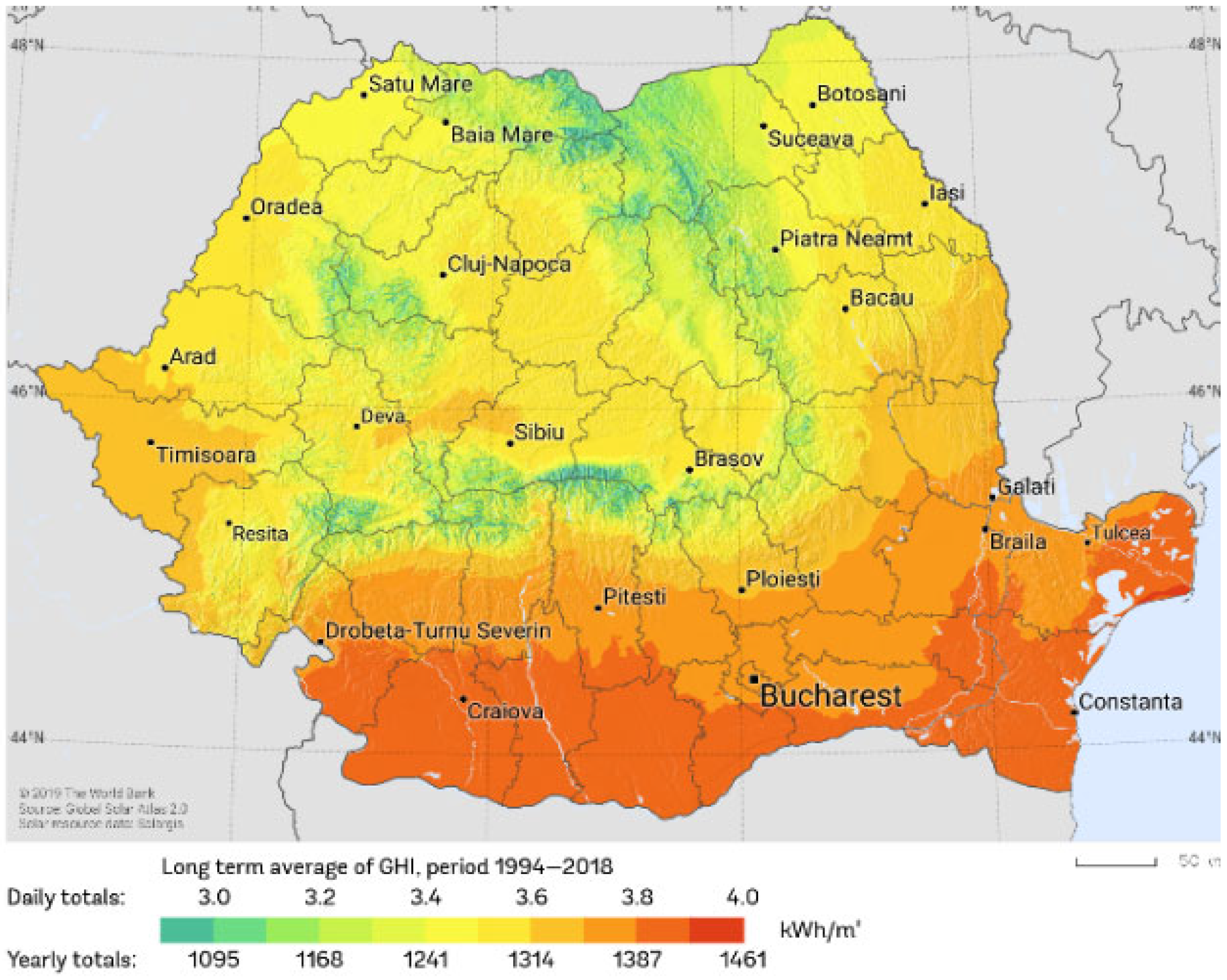
The building under analysis is a single-family house located in the southeastern part of Romania, a zone with an average winter temperature of −15 °C. According to the ASHRAE standards, this area falls within thermal climate zone 4A [36]. The area enjoys high solar potential, with solar radiation of 1400 kWh/m2 (Figure 1) and around 210 sunny days per year.
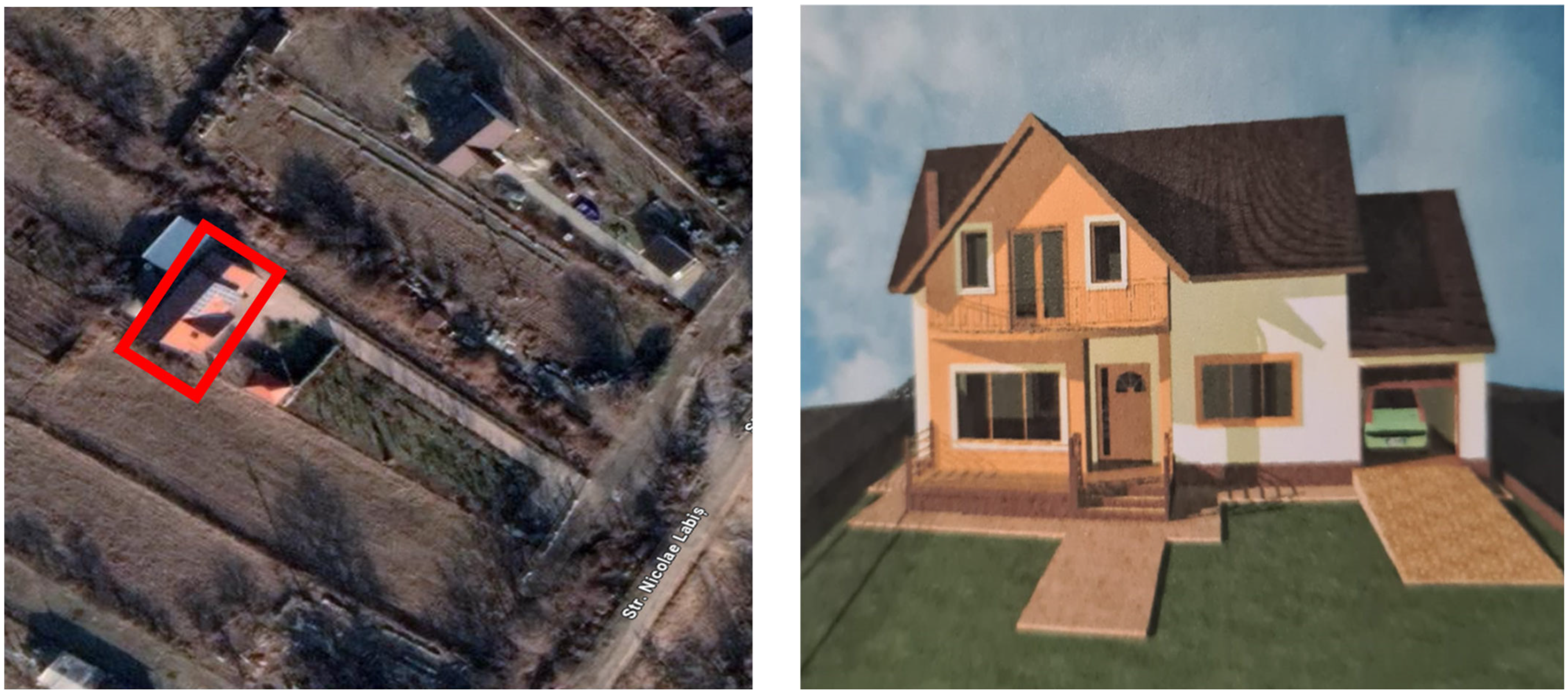
The building consists of a ground floor and one upper level, with a usable floor area of 140 m2, a total built-up area of 200 m2, and an interior volume of 343.86 m3 (Figure 2).
The main characteristics of the building are given in Table 2.
From a structural perspective, the building has reinforced concrete beams and columns, while both the exterior and interior walls are made of autoclaved aerated concrete (AAC) blocks. The windows and exterior doors feature PVC frames with four air chambers and double-glazed insulating glass panels. The exterior walls are insulated with 100 mm thick expanded polystyrene, and the attic roof is insulated with 250 mm thick mineral wool and equipped with a vapor barrier. The building’s foundation is thermally insulated with 100 mm thick extruded polystyrene and protected against moisture with a waterproof membrane. The thermal properties of the building’s main structural elements are detailed in Table 3.
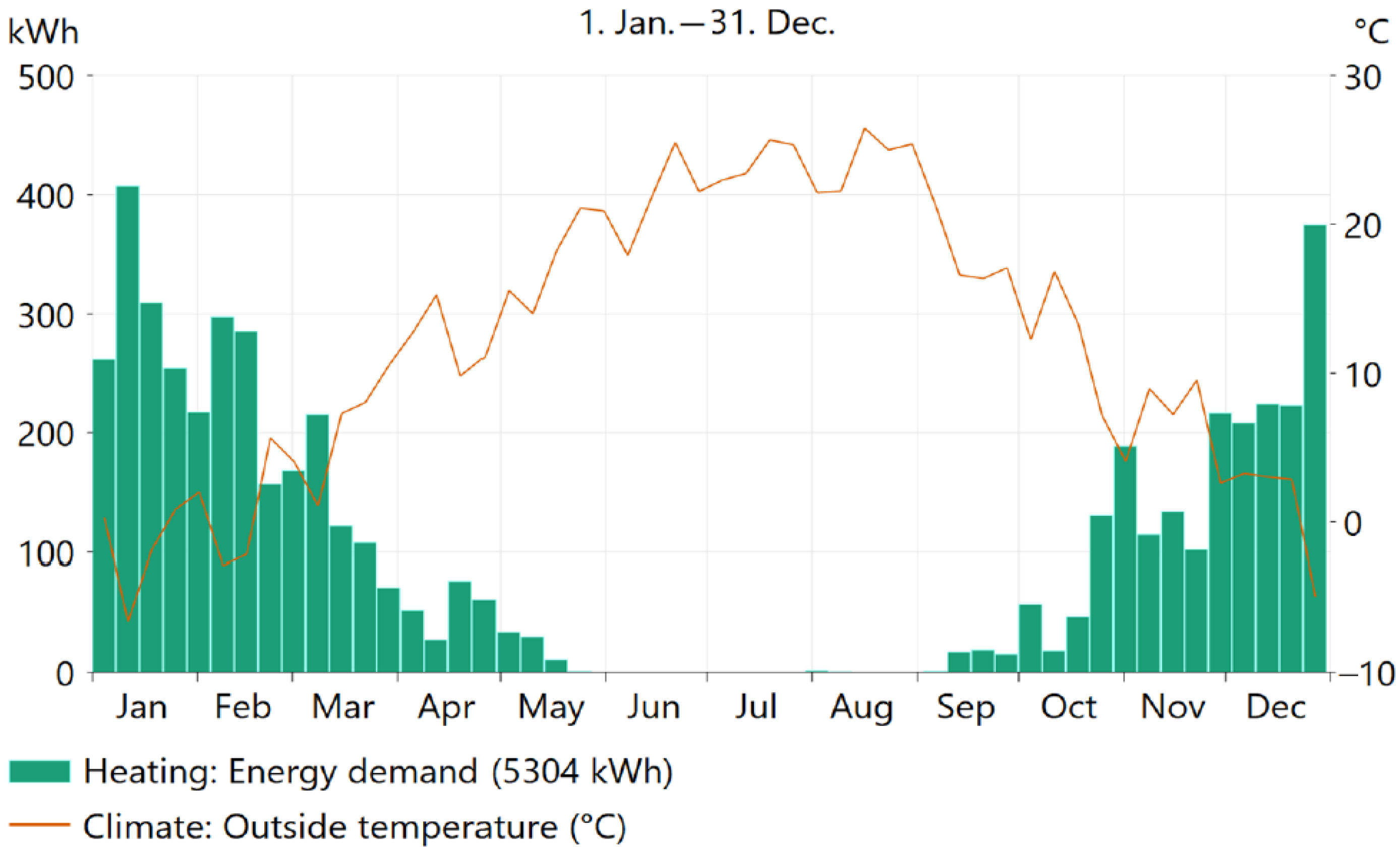
The building energy demand in 2024 for heating was 13,860 kWh (which means 5304 kWh of electricity consumed by the AWHP) (Figure 3), for hot water preparation 4900 kWh and for lighting and other consumers 5000 kWh. The building was occupied by four people, the indoor temperature during the heating season was set at 21 °C, and the DHW with a temperature of 50 °C had a daily consumption of 40 L/person.

2.2. Existing Building Heating and DHW Generation System

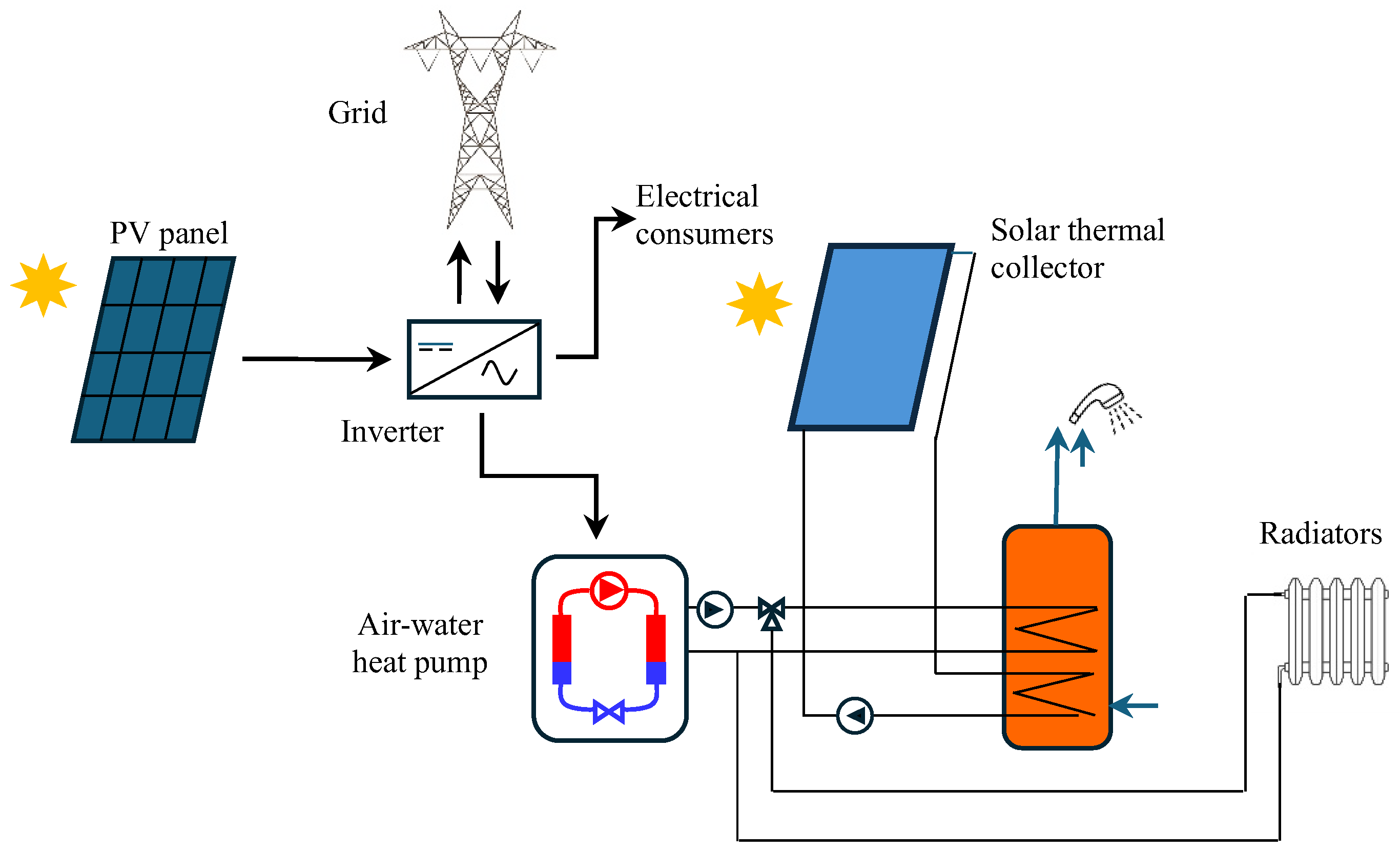
The building is equipped with a PV system of 3 kW capacity. The system includes 12 monocrystalline panels, and it is connected to the power grid via a bidirectional Fronius inverter. This setup allows the surplus energy generated by the PV panels to be fed into the grid. When the building energy demand exceeds production, the additional electricity is drawn from the grid. The general system configuration is shown in Figure 4.
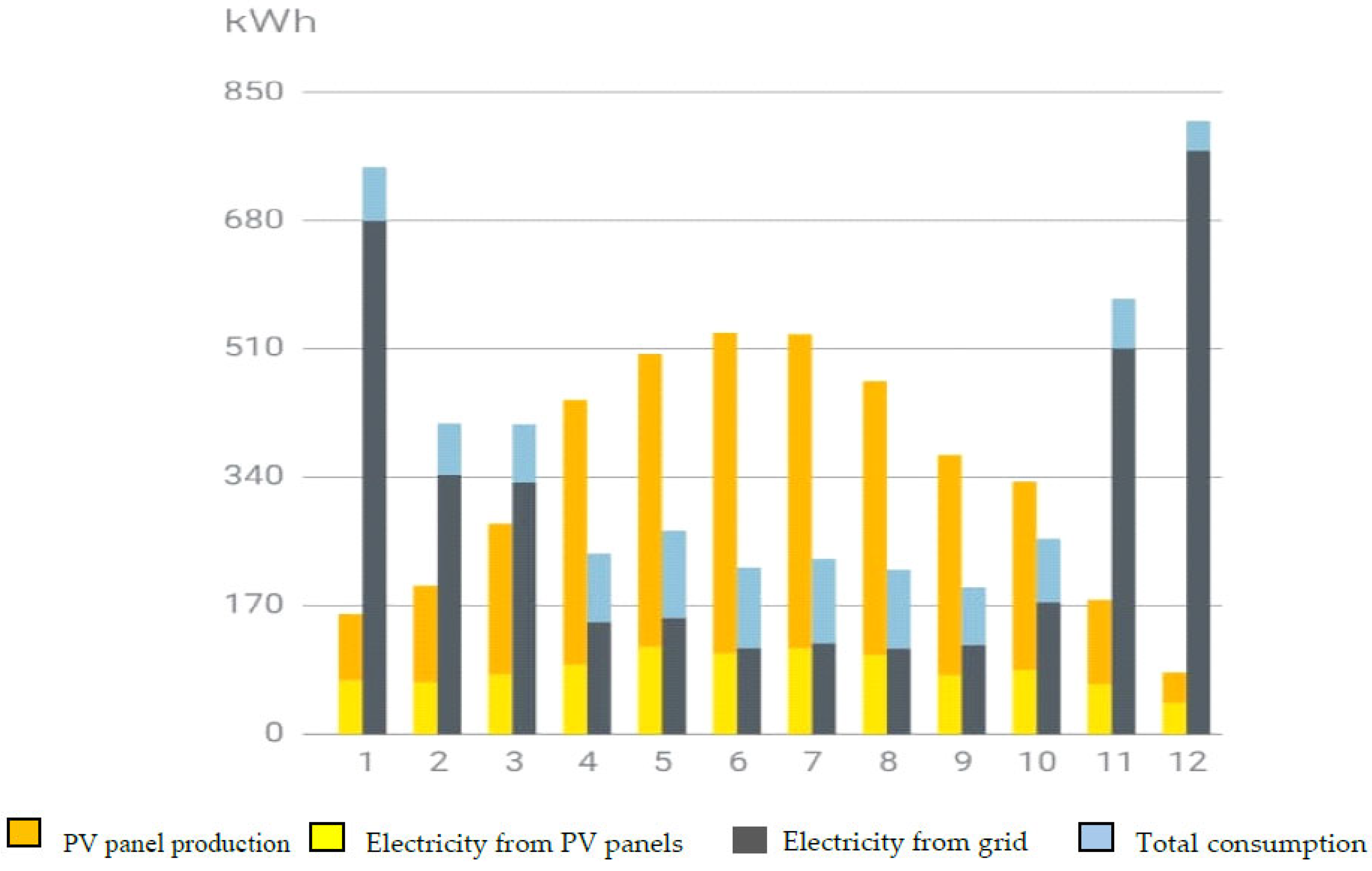
Figure 5 presents the recorded monthly electricity production and consumption of the building in 2024. The PV system generated a total of 3951 kWh, of which only 4.76 kWh (12%) was used for on-site consumption, while the remaining 3475 kWh (88%) was fed into the grid. Although the PV system produced enough energy to cover consumption, the building imported electricity from the grid because the peak energy consumption is in the morning, when the PV system does not produce or produces little. As a result, the system’s reliance on electricity from the grid increases substantially, leading to higher heating costs.

2.2.1. AWHP System

The building’s space heating and domestic hot water supply are provided by a Mitsubishi Zubadan AWHP (Table 4) of 14 kW thermal output equipped with a 300-liter storage tank. The AWHP delivers 45 °C hot water to the DHW tank and to the aluminum radiators.
The heat output of an AWHP is given by the following equation:
Q H P = S P H · E
where SPF is the seasonal performance factor and E (kWh) is the electricity used by the heat pump.

2.2.2. PV System

The PV system consists of 12 Canadian Solar monocrystalline panels, each with a rated output of 250 W, resulting in a total installed capacity of 3 kW.
The PV energy output is:
E P V = η P V · H · A P V
where η P V is the PV system efficiency, H (kWh/m2) is the solar radiation incident on the PV array, and APV (m2) is the total area of PV panels.
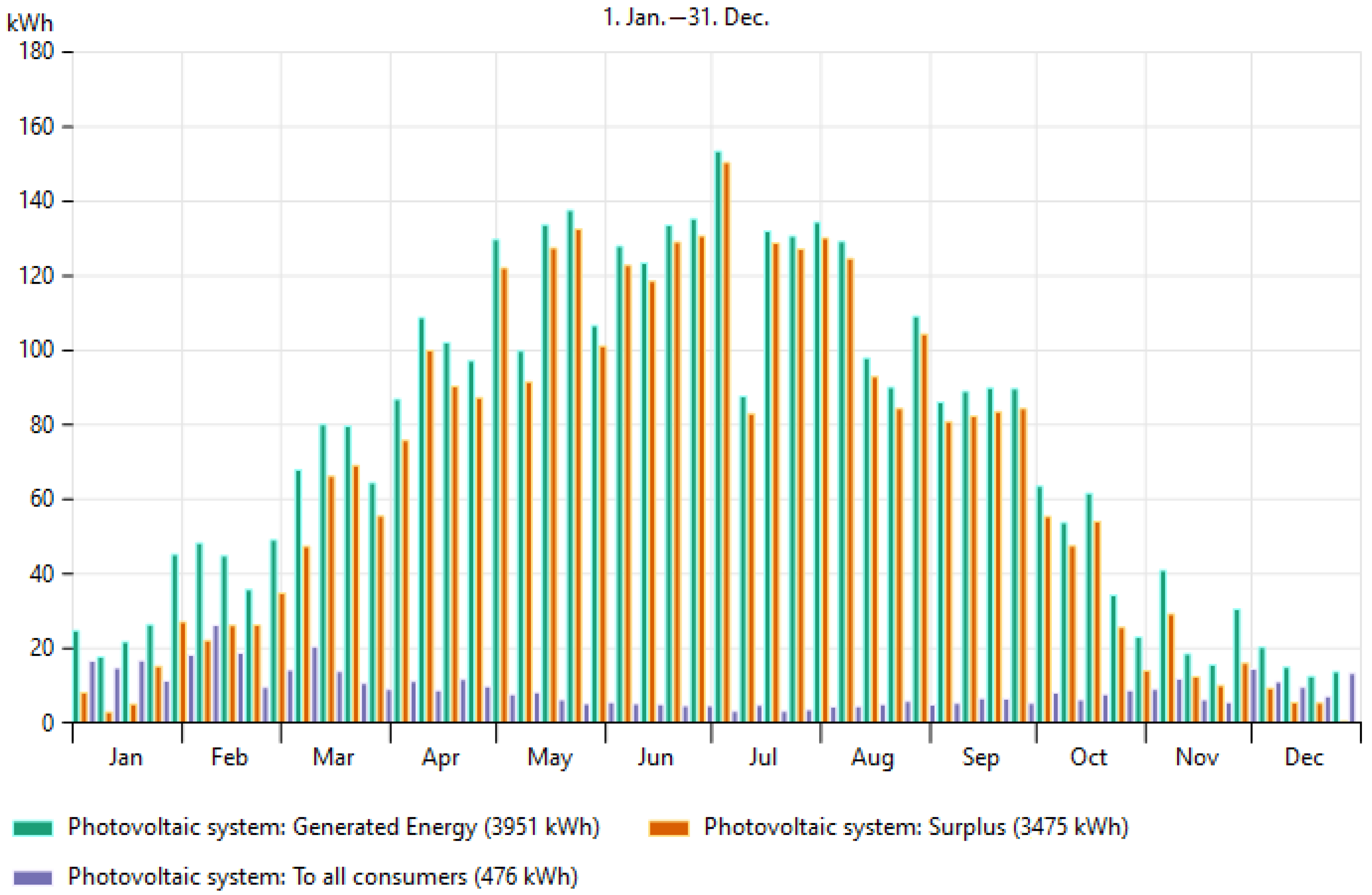
The weekly energy output of the PV system is shown in Figure 6. In the cold season, all or almost all the energy produced by the PV system was used for on-site consumption.

2.2.3. Solar Thermal System

The water inside the storage tank is heated by the STC with heat pipe evacuated tube with a capacity of 1 kW (12 tubes and absorber surface area of 1.96 m2). The maximum operating temperature of the collector is 200 °C.
The heat output of solar thermal collectors can be expressed as follows:
E S C = η S C · H · A S C
where ηASC (m2) is the efficiency of the STC and AASC (m2) is the area of the solar thermal collectors.
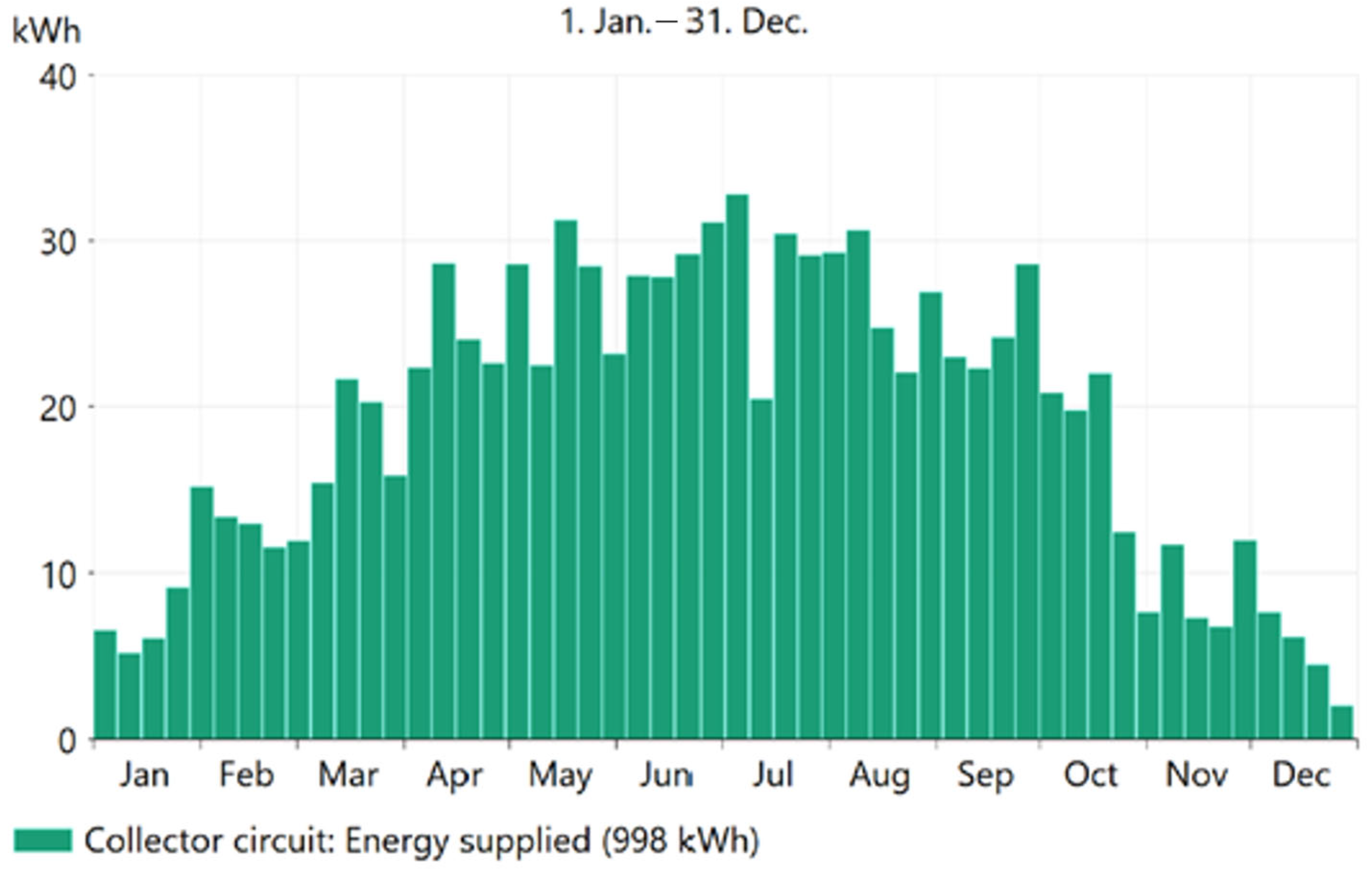
In Figure 7, the weekly heat output of the STC system in 2024 is shown.

2.3. Building Renovation and Alternative Heating and DHW Generation System Configurations

To improve the building thermal performance, a set of targeted interventions were proposed. These include increasing the level of insulation in both the external walls and the window systems. Specifically, the proposal involves enhancing the thickness of the thermal insulation layer and replacing the existing material with eco-friendly alternatives, such as sheep wool insulation [38]. This approach is expected to significantly reduce heat losses through the building envelope and contribute to a lower overall energy demand for space heating.
In addition, the replacement of existing windows with high-performance glazing systems is recommended. The proposed windows would incorporate triple glazing with solar-protective coatings and frames exhibiting high thermal resistance. These measures aim to minimize heat transfer through the glazing units and thereby reduce the building’s heating energy requirement [39].
Concerning the existing heating infrastructure, which currently utilizes high-temperature radiators (operating at a supply/return temperature of 50/35 °C), the implementation of a low-temperature radiant floor heating system was proposed. This system would operate at a significantly lower supply/return temperature regime (35/28 °C), which enables a more efficient operation of the heat pump. Lowering the temperature of the thermal fluid improves the coefficient of performance (COP) of the heat pump, thus increasing overall system efficiency [40].
For the PV system, the following points were proposed: replacing the existing low-efficiency panels with high-efficiency photovoltaic modules (N-type TOPCon technology) and increasing the installed capacity from 3 kW to 5 kW (maximum power that can be installed on the available surface); replacing the current bidirectional inverter with a hybrid inverter; installing a battery storage system with a capacity of 5 kWh; and replacing the current STC with flat-plate collectors with a surface area of 5.28 m2 (maximum available surface area).
The implementation of energy efficiency measures at the building’s envelope level, which includes the increase in insulation layer thickness, the replacement of windows and doors, and the substitution of the radiator-based heating system with a low-temperature underfloor heating system, will result in a reduction of the building’s specific annual energy consumption. The specific annual energy demands for both the existing building and the renovated/upgraded building were calculated in accordance with the Romanian energy performance assessment methodology [41], and the results are presented in Table 5.
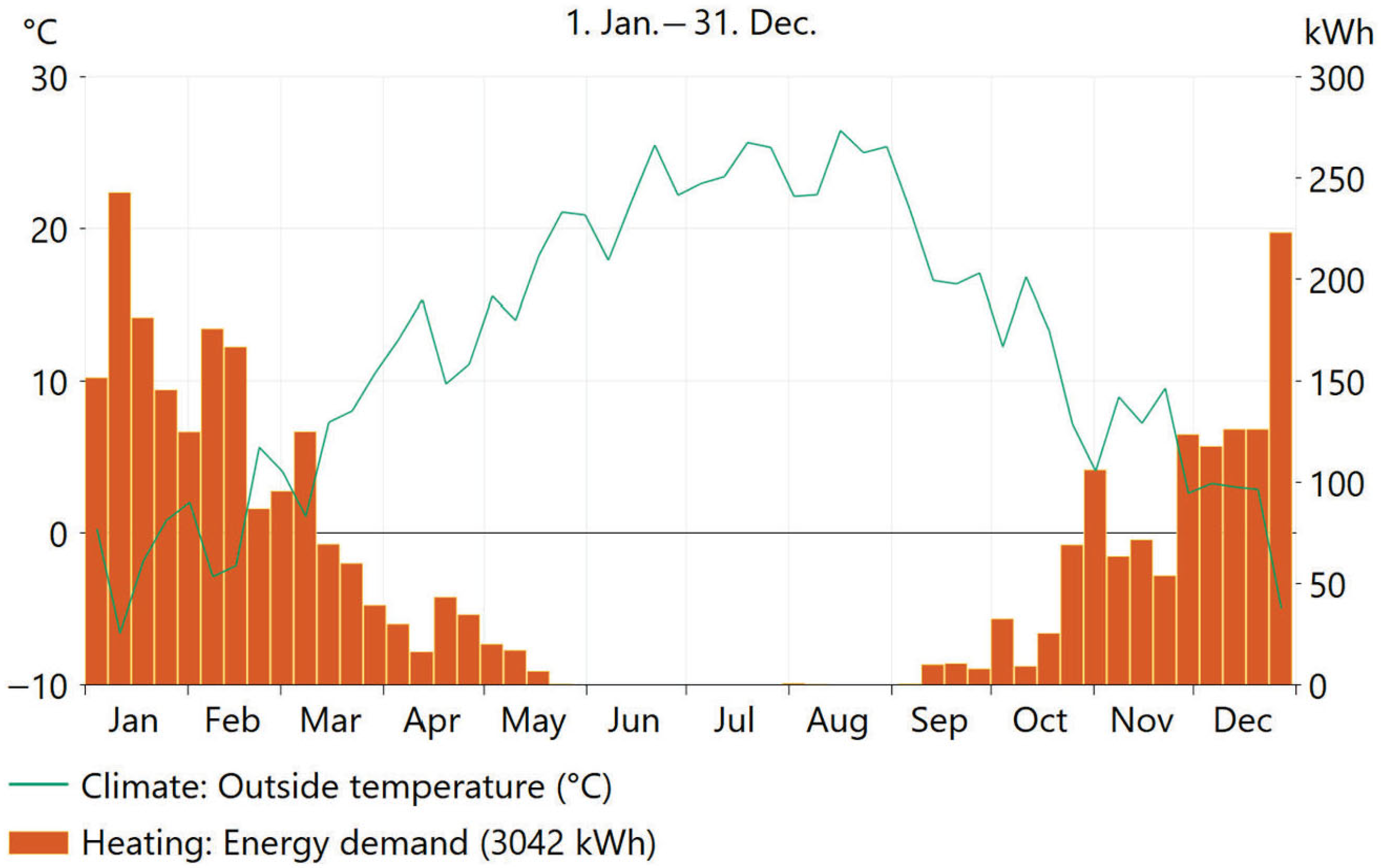
The electricity consumption of an AWHP necessary to cover the heat demand for renovated buildings is 3042 kWh (Figure 8).
To maximize the solar coverage rate of heat pump electricity consumption, three changes to the system were proposed, namely, the integration of an electric accumulator with a capacity of 5 kWh, an increase in PV system power capacity to 5 kW, and the replacement of the AWHP pump with a GSHP (with a vertical loop or horizontal loop). The advantages and disadvantages of the GSHP-VL and GSHP-HL are given in Table 6.

2.3.1. GSHP-VL System

To increase the efficiency of the heating system, it is recommended to replace the existing radiators with low-temperature underfloor pipes. In this configuration, the inlet water temperature, which is approximately 50 °C for radiator systems, can be reduced to a maximum of 35 °C in the case of underfloor heating. The indoor comfort temperature is maintained at 21 °C, while the heating system operates up to a maximum outdoor temperature of 15 °C.
Domestic hot water consumption is estimated for four occupants, with an average daily usage of 40 L per person at a supply temperature of 50 °C.
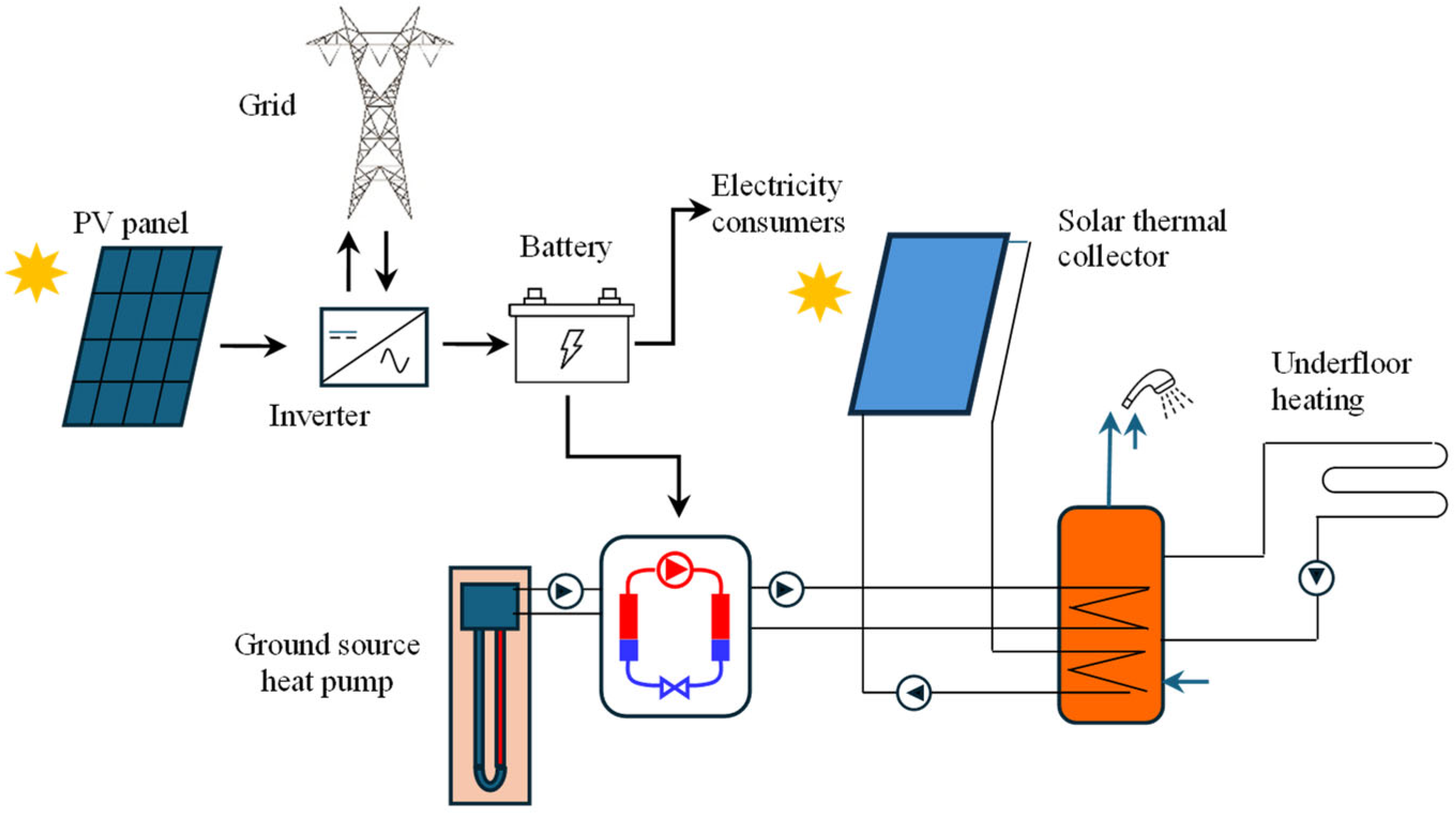
The characteristics of the system with the GSHP-VL are given in Table 7 and the scheme is shown in Figure 9.

2.3.2. GSHP-HL System

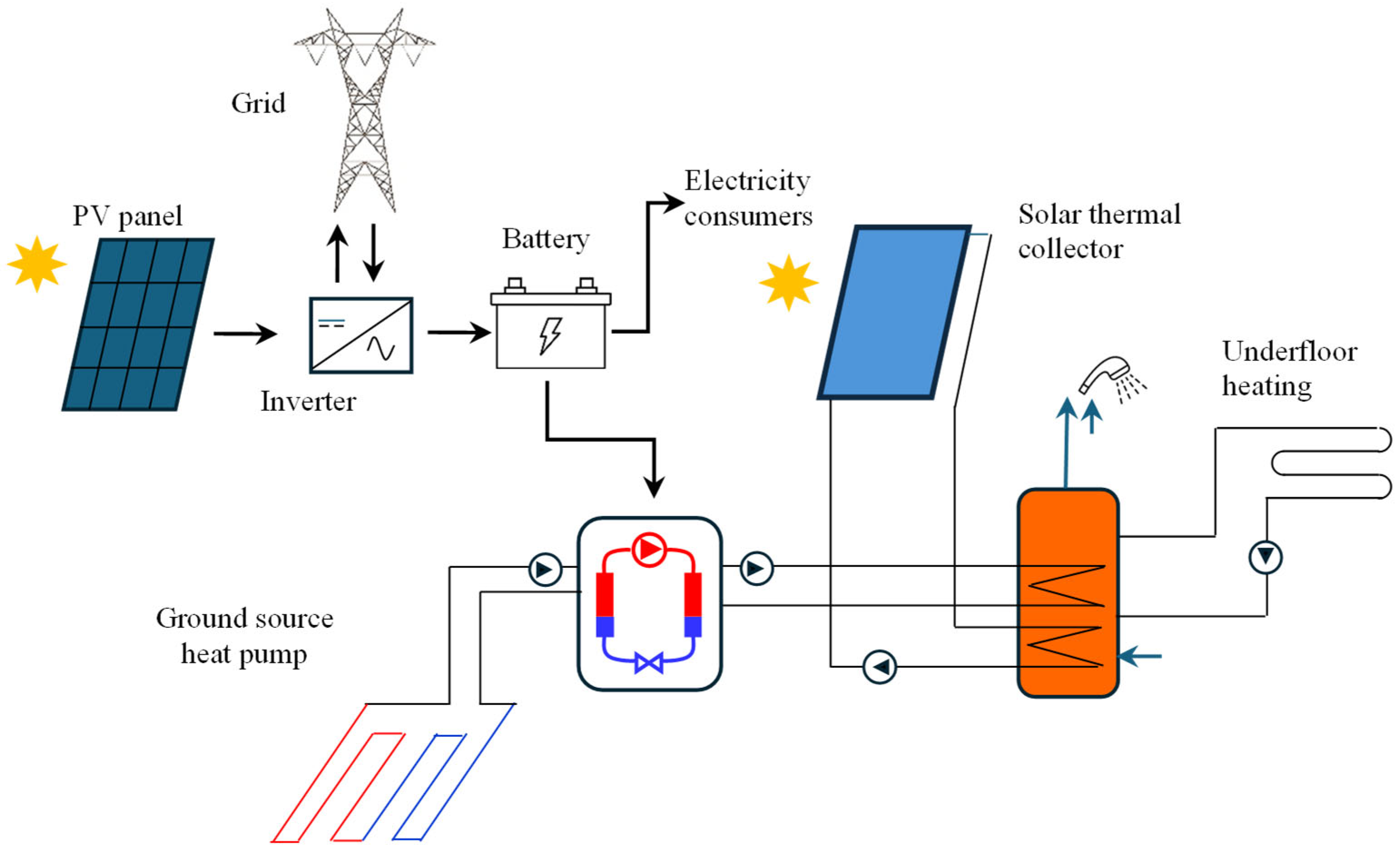
For this configuration, a GSHP with a horizontal ground collector was employed (Figure 10). The other construction characteristics and DHW consumption parameters remain identical to those of the previous configuration. The GSHP-HL characteristics are given in Table 8.

3. Energy Simulation

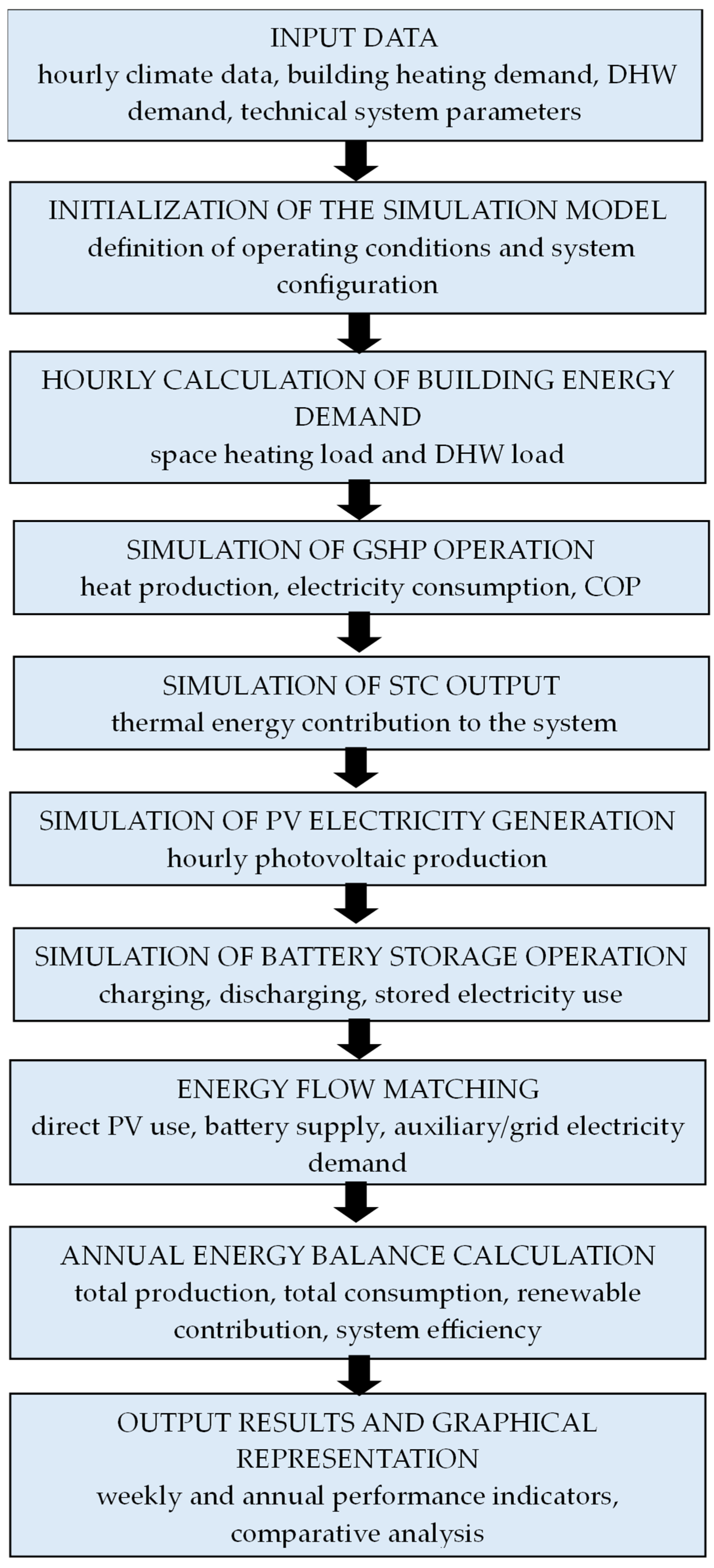
The energy simulation of the building heating and DHW preparation system was conducted using GeoT*SOL software [41]. The simulation begins with the definition of fundamental project parameters, including the geographic location and a detailed project description (Figure 11). Climate data are subsequently imported from a file generated via Meteonorm software (https://meteonorm.com/, accessed on 5 April 2025). This file comprises hourly meteorological data over the course of a year, including ambient temperature, solar irradiance, wind speed, and air relative humidity.
Following the import of climate data, the user selects the heat source for the system, typically comprising a GSHP supplemented by an auxiliary boiler and solar thermal collector. Key parameters related to the geothermal source, such as ground temperature, borehole diameter, and depth, are then specified. Based on the calculated heating demand, the software estimates the required total borehole length.
A suitable GSHP unit is subsequently selected from the integrated GeoT*SOL database. This selection depends on multiple parameters, including DHW demand, target flow temperatures, and system efficiency. Detailed specifications of the chosen GSHP, such as heating and cooling capacities, COP, and electrical power consumption, are then defined.
Finally, the building heating and hot water demand is characterized using a predefined energy usage profile. This profile incorporates key input data, such as the monthly space heating requirements (in kWh) and the annual volume of domestic hot water consumption (in liters), allowing for accurate system dimensioning and performance evaluation.
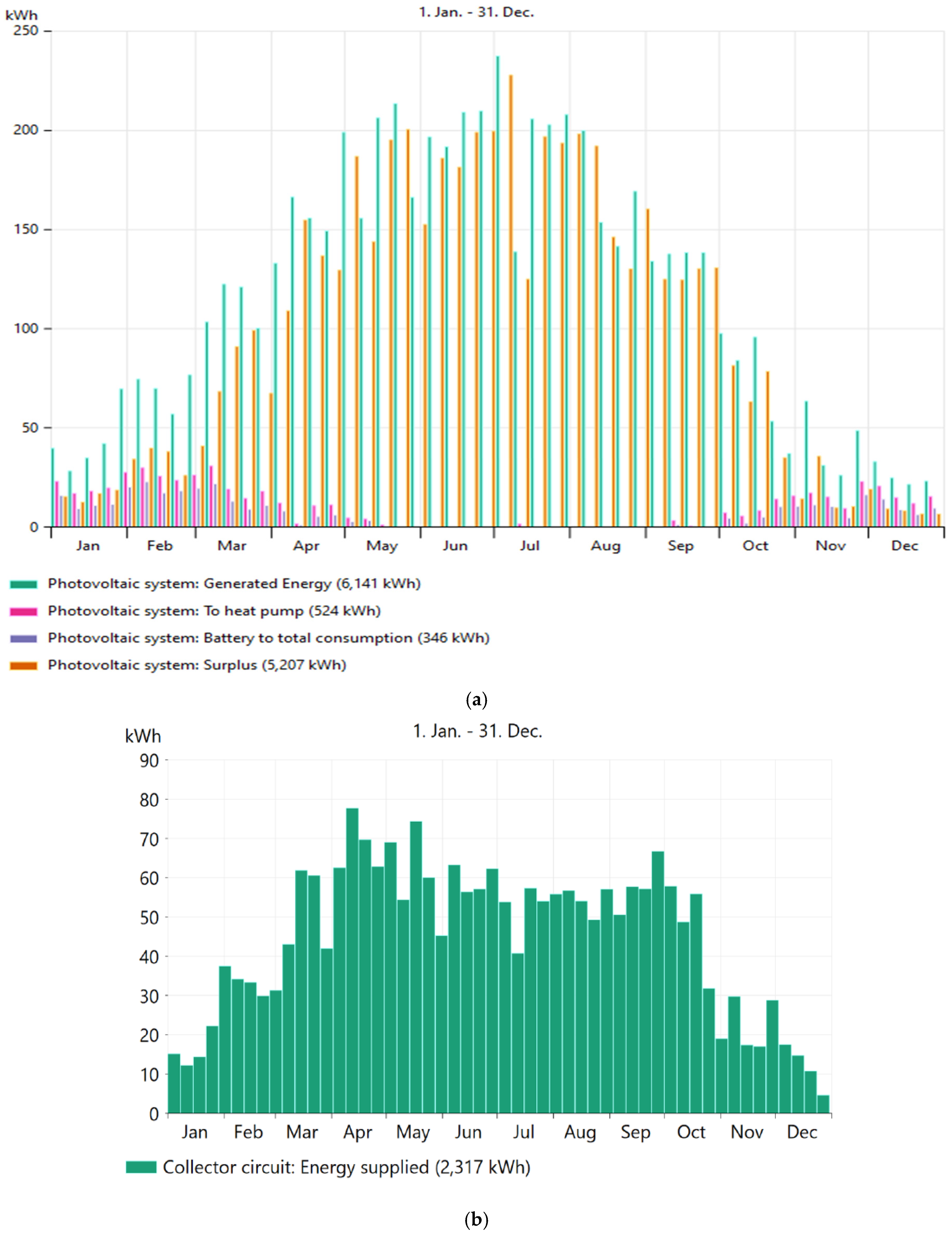
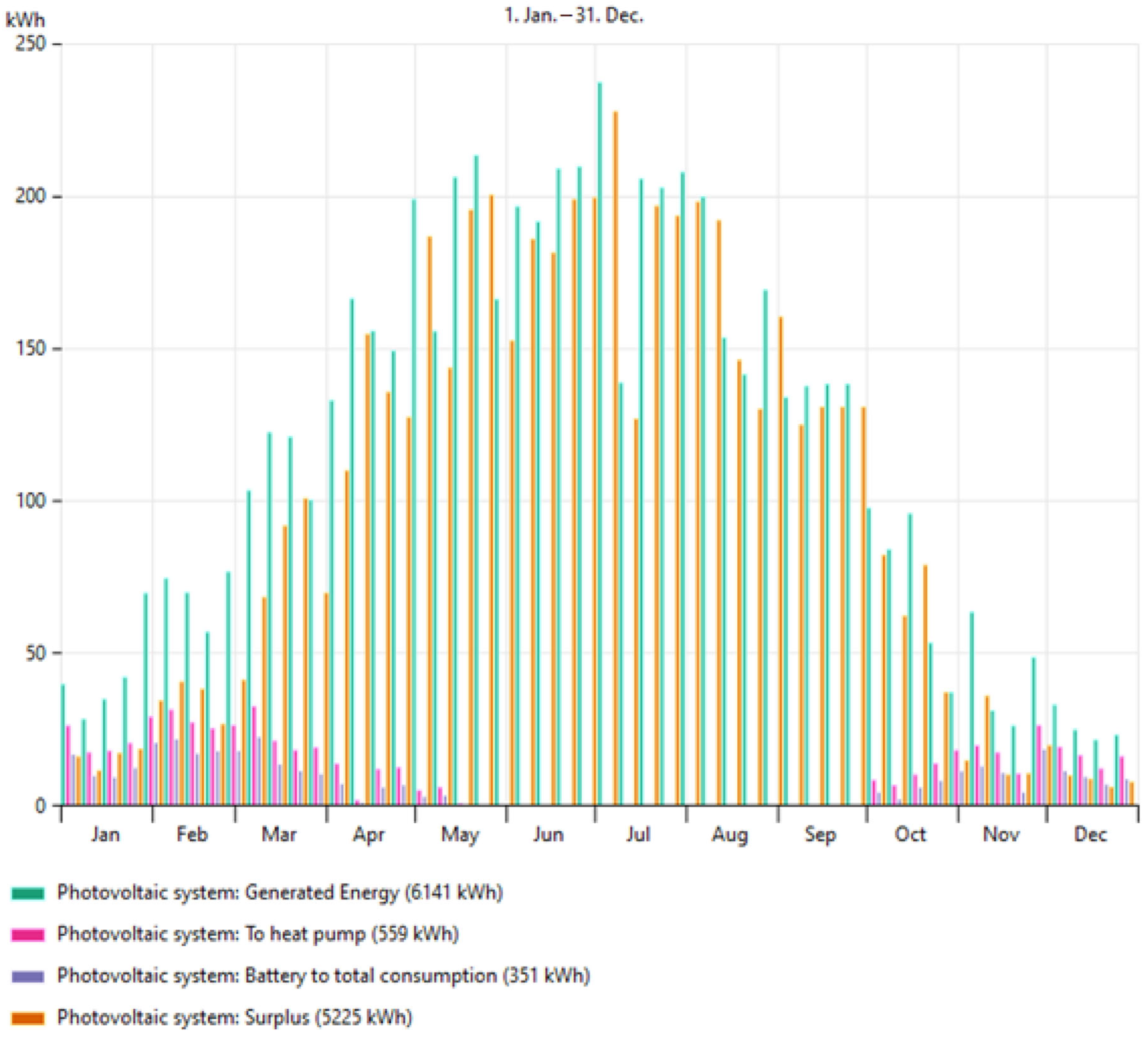
Simulations of the energy production of the upgraded solar system combined with battery storage and of the GSHP-VL and GSHP-HL systems for 2024 are presented in Figure 12 and Figure 13, respectively.
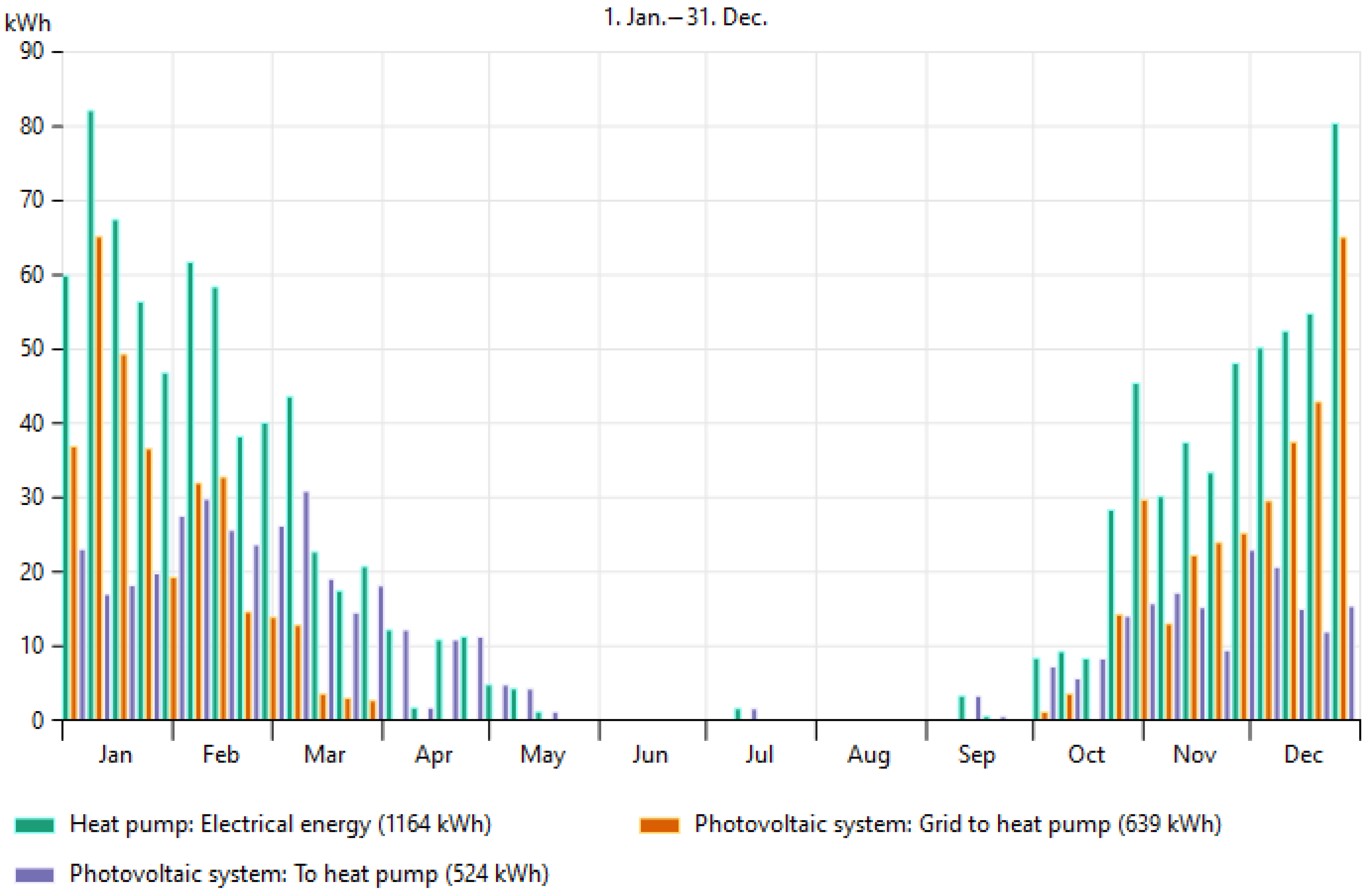
For the solar system coupled with the GSHP-VL, 524 kWh of the heat pump energy consumption is directly supplied by the PV panels, and 346 kWh is stored in the battery. This storage allows for continued use of PV-generated electricity during nighttime, when generation ceases. Consequently, approximately 45% of the GSHP-VL system’s annual energy consumption of 1164 kWh is covered by the photovoltaic system.
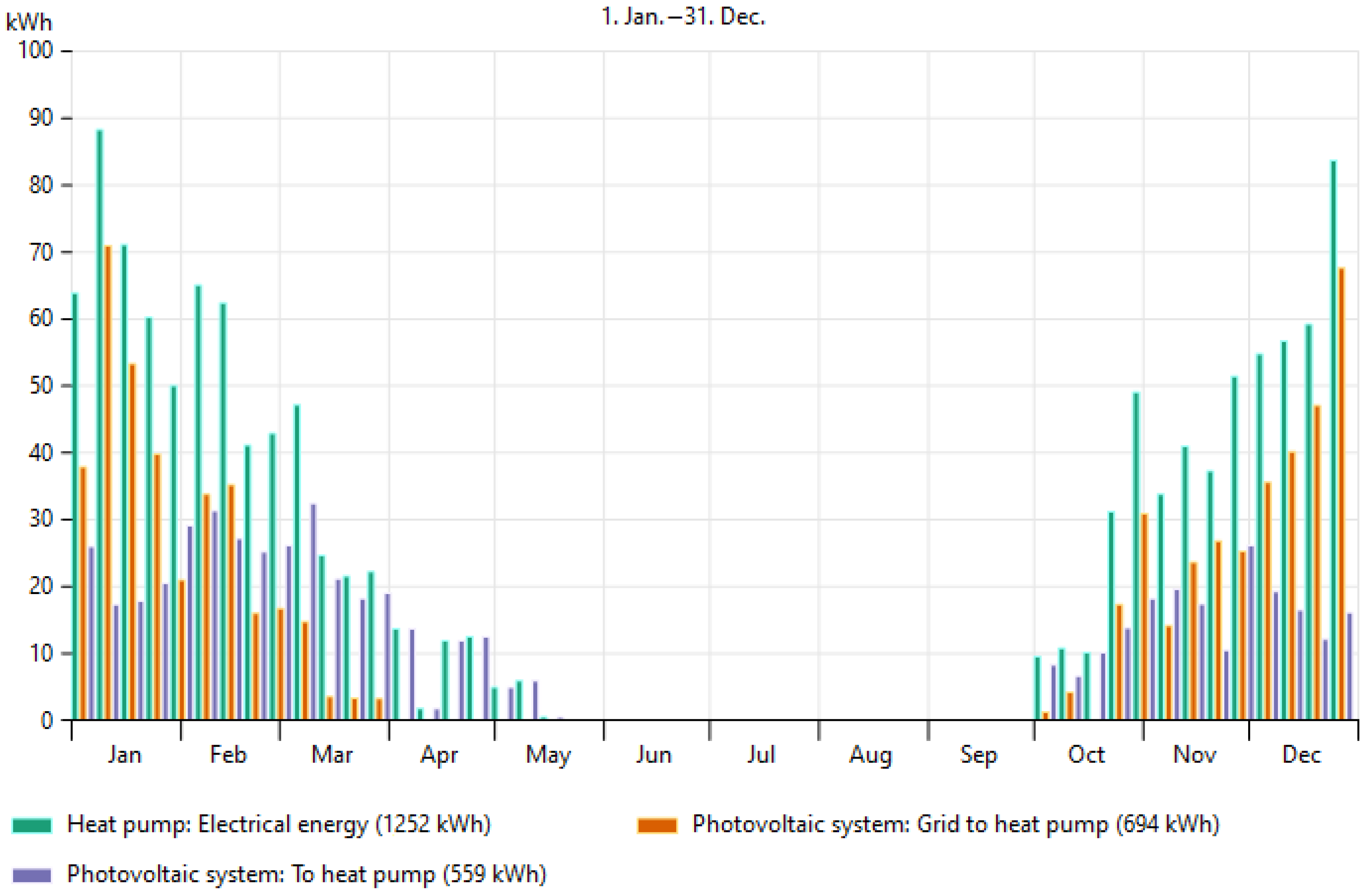
In the case of the PV system coupled with the GSHP-HL, the analysis shows that 559 kWh of the total annual energy consumption of 1252 kWh, representing 44.5%, is supplied by the PV panels.

4. Economic Model

The annual operation cost (Ctot) of an energy system is given by the following equation [42]:
C t o t = C e l + Z C I + Z M
where Cel is the cost associated with electricity imported from and exported to the grid:
C e l = c e l , f g E f g c e l , t g E t g
cel,fg and cel,tg are the unitary costs of electricity imported from and exported to the grid, respectively, in €/kWh. The cost of electricity exported to the grid is usually fixed and is equal to the cost of active electricity, and the cost of electricity imported from the grid depends on the supplying company and is usually identical to the purchase cost to which the regulated transmission tariff and all regulated taxes and tariffs are added (Table 9).
Efg and Etg are the amounts of electricity imported from and exported to the grid, respectively, in kWh;
Z C I is the cost associated with capital investment:
Z C I = CRF · i ( Z p i G )
CRF is the annual capital recovery factor:
C R F = i ( i + 1 ) n ( i + 1 ) n 1
i is the annual interest rate and n is the system lifetime (Table 9);
Z p i is the purchase cost of system i (PV system, AWHP or GSHP, STC) (Table 9);
G is the government grant/incentive offered to citizens through programs promoting the use of renewable energy. Grants cover (50–90)% of eligible costs for the installation of a PV system (including storage system) through the Green House Photovoltaics program and for the installation of an HP and STC (excluding air-to-air heat pumps) through the Green House classic program;
Z M is the maintenance cost of system i (Table 10). The PV system needs panel cleaning, annual inspection and inverter replacement every 10 years of operation. The HP systems need replacement of the compressor every 11 years of operation.
The payback period for a new investment project is given by the following equation:
PP = (Initial investment cost minus grant)/(Annual Cash Savings)
P P = i ( Z p i G ) C n e w C r e f
where Cnew and Cref are the annual operation costs of the new system and the reference system, respectively, in €/year.

5. Results and Discussion

5.1. Energy Consumption of the Heat Pump

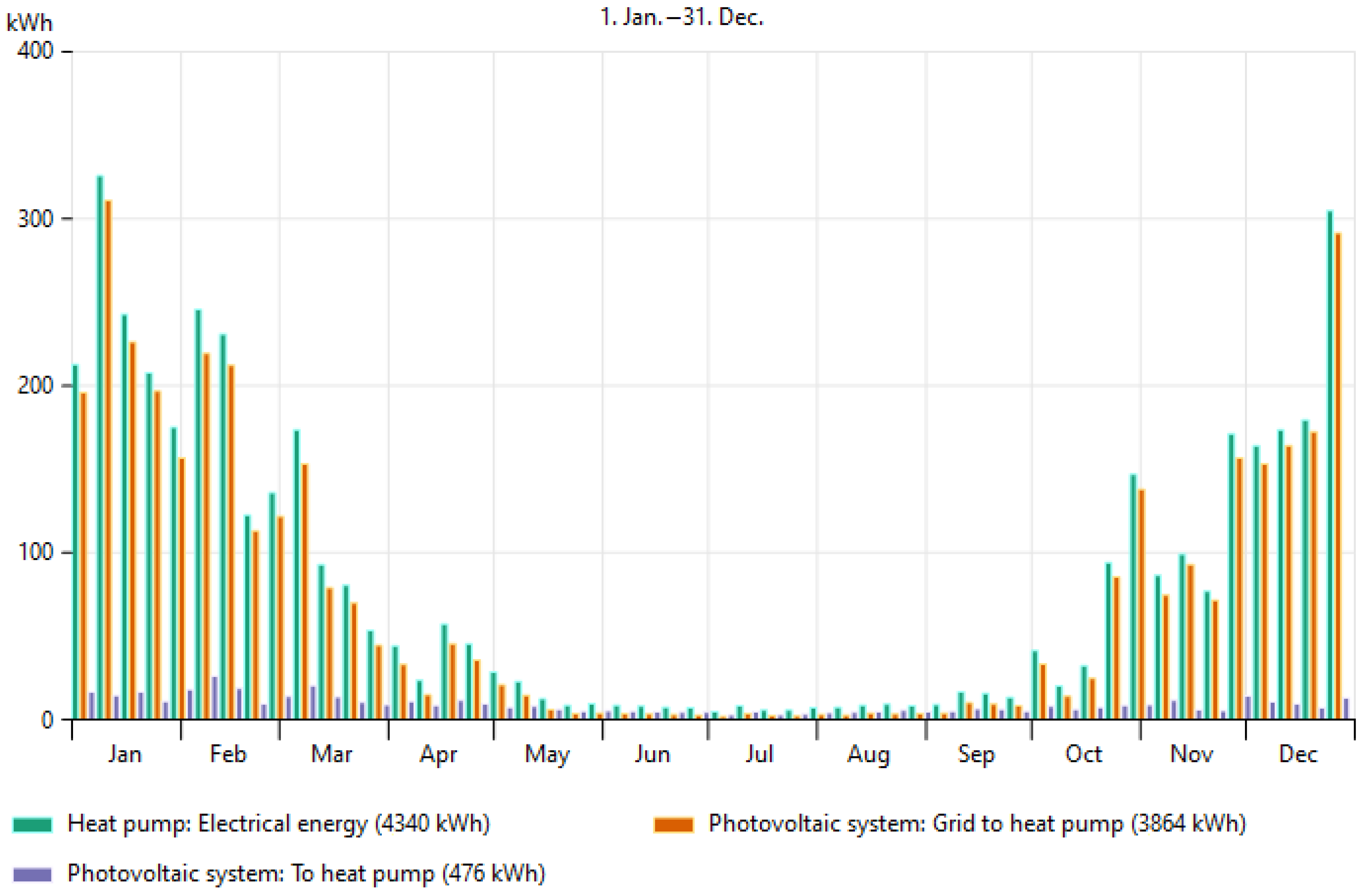
The energy consumption values of the AWHP and the two proposed ground-source heat pump systems, GSHP-VL and GSHP-HL, are presented in Figure 14, Figure 15 and Figure 16.
The energy consumption of heat pumps includes both the electricity drawn from the grid and the energy supplied by the photovoltaic system.
An analysis of the annual energy consumption reveals that in the current scenario, using the air-to-water heat pump, the total energy consumption amounts to 4340 kWh. In comparison, the heat pumps equipped with vertical and horizontal ground collectors exhibit significantly lower total energy consumption, at 1164 kWh and 1252 kWh, respectively.
With respect to electricity drawn from the grid, the AWHP consumes 3864 kWh annually, while the systems with vertical and horizontal ground collectors require only 639 kWh and 694 kWh, respectively.

5.2. Energy Production of the Heat Pump

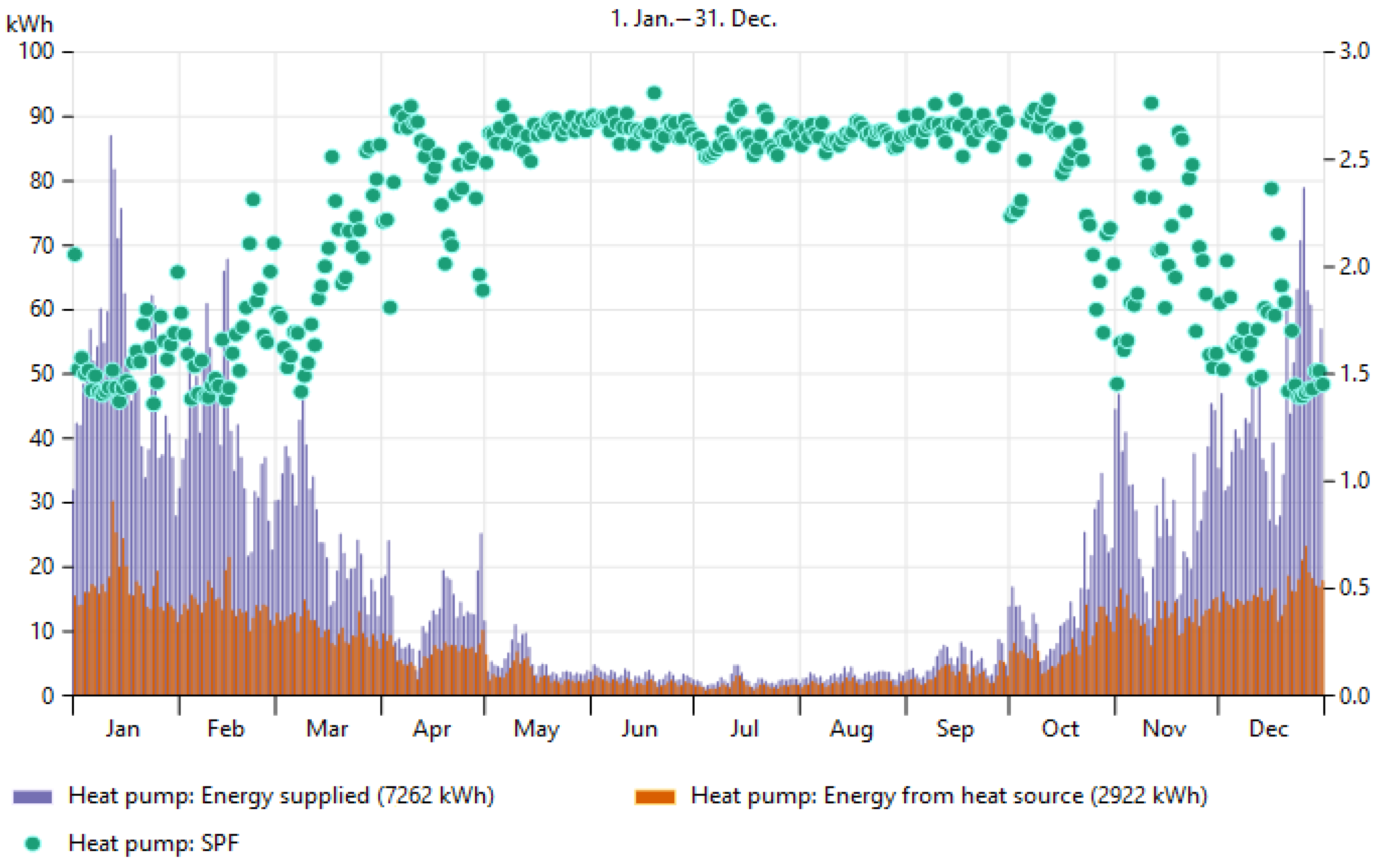
The hourly heat output of the AWHP system is analyzed in Figure 17. The total energy generated by the AWHP amounts to 7262 kWh/year. During the cold season, when the outdoor temperature falls below zero and the heat pump electricity consumption increases, the SPF of the AWHP decreases to a value between 1.5 and 2. In contrast, during the warm season, when the heat pump is used exclusively for domestic hot water production, the SPF increases to a value between 2.5 and 3.
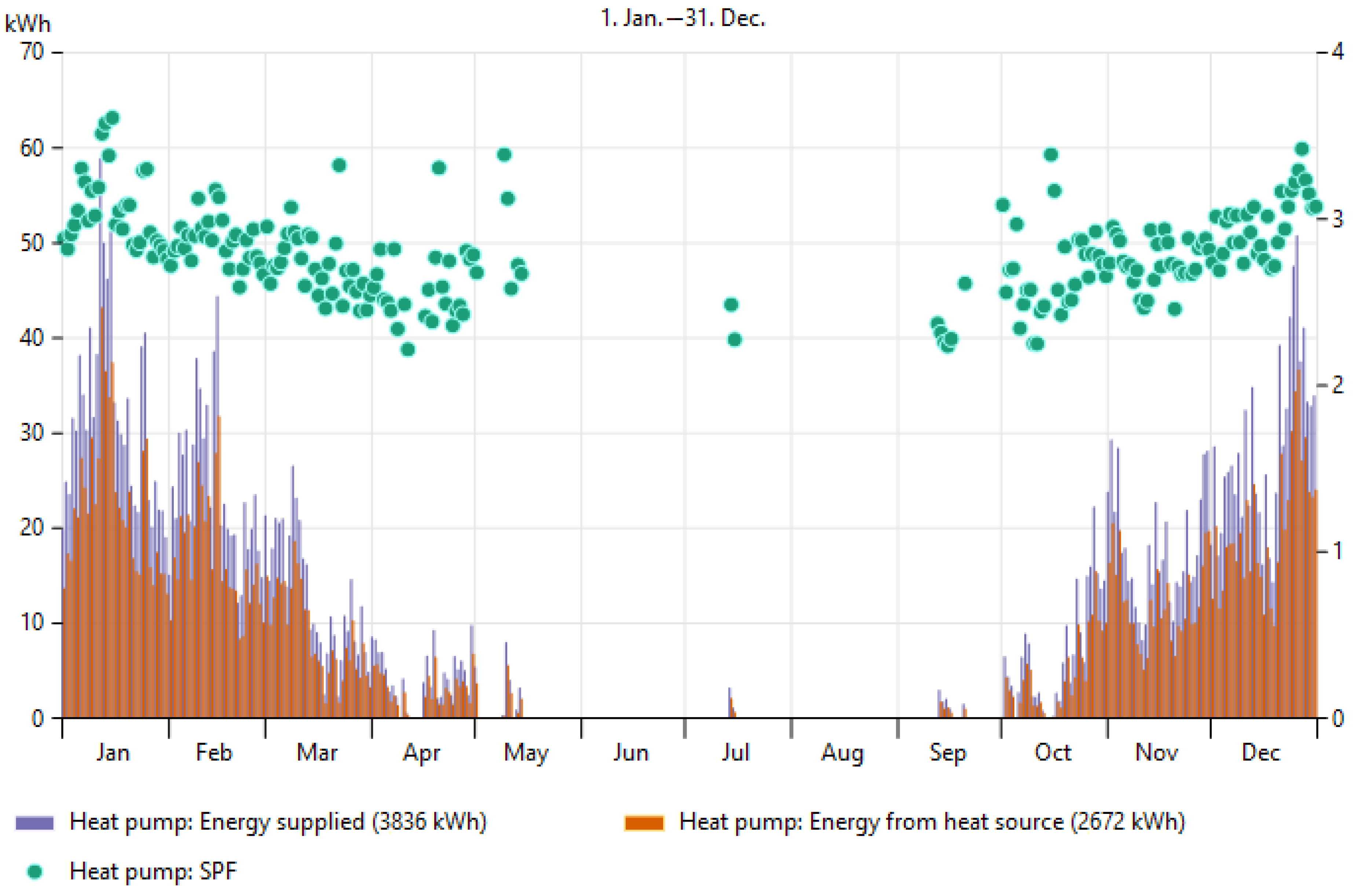
For the GSHP-VL system (Figure 18), the total heat output is 3836 kWh/year, approximately 70% of which is extracted from the ground. Compared to the AWHP system, the GSHP-VL exhibits improved performance during the cold season, with SPF values ranging between 2.5 and 3.5.
During the hot season, the heat pump remains inactive, as DHW production is fully covered by the solar thermal system.
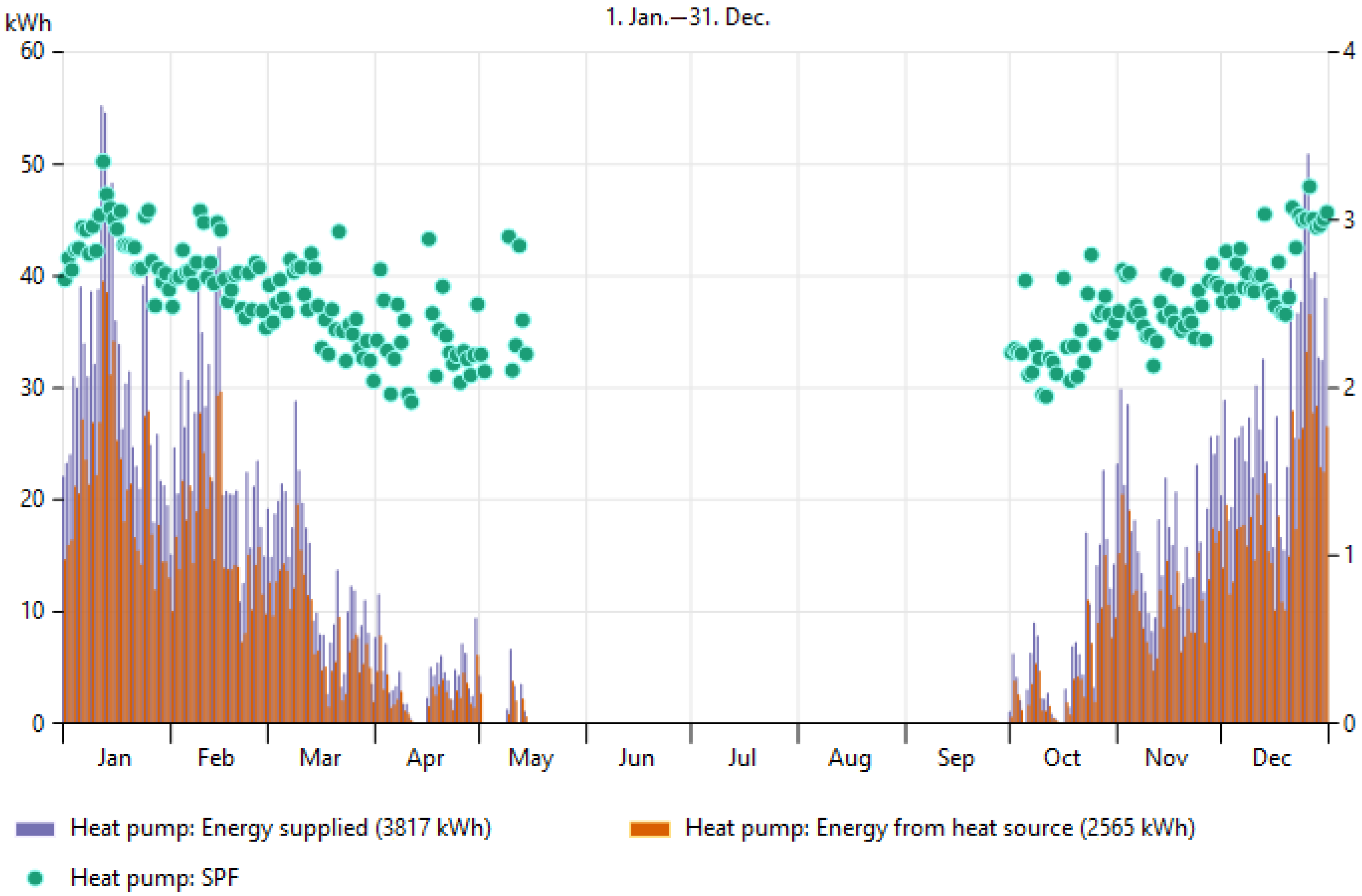
In the case of the GSHP-HL system (Figure 19), the energy output is comparable to that of the GSHP-VL, totaling 3817 kWh/year. During the cold season, the SPF ranges between 2 and 3.3, lower values than in the case of the GSHP-VL system.
It can be observed that the GSHP-VL system has the lowest electricity consumption (1164 kWh/year), followed by the GSHP-HL system (1252 kWh/year), the improved AWHP system (4340 kWh/year) and the actual AWHP system (5304 kWh/year).
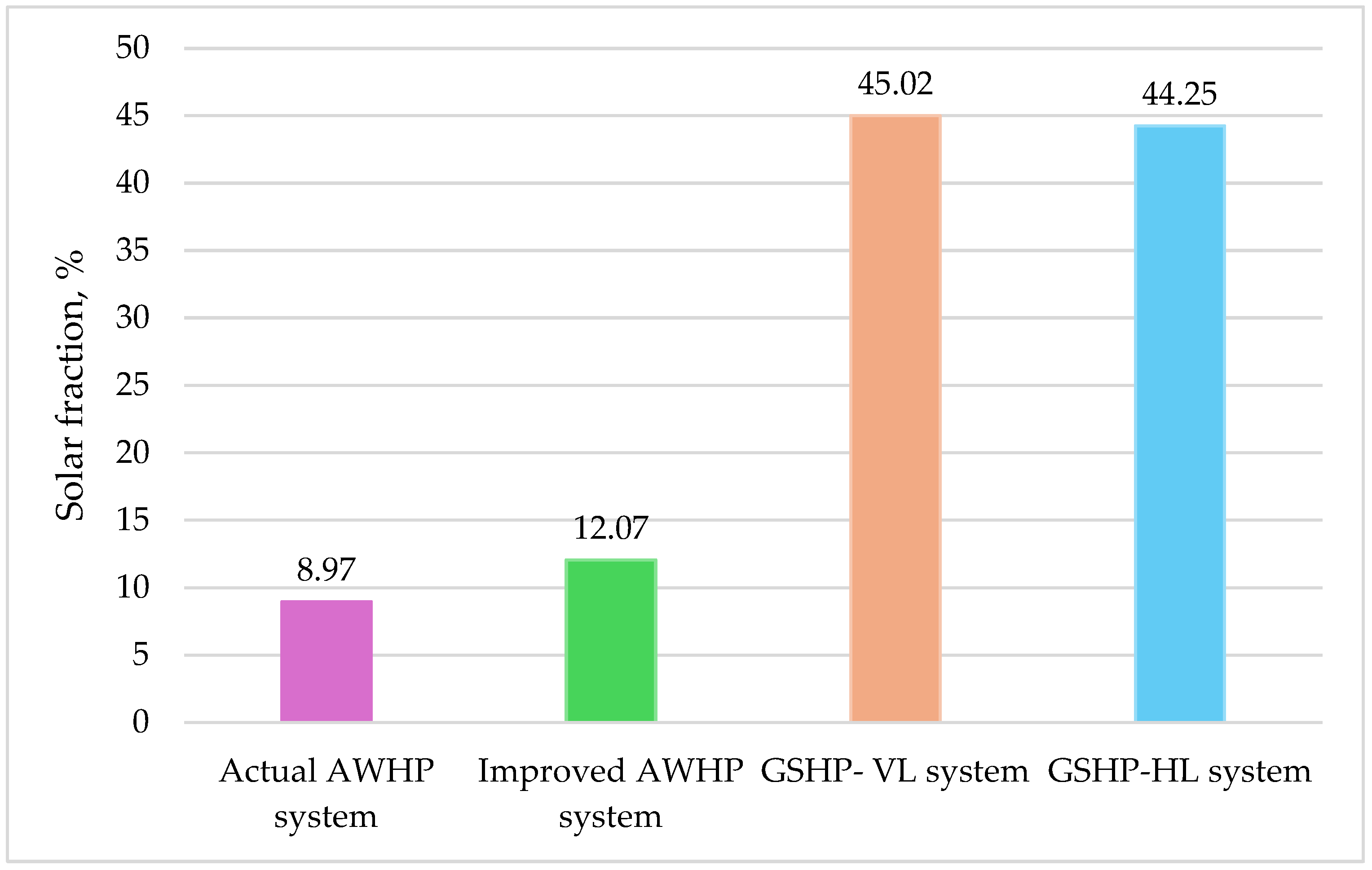
In Figure 20, the percentage of the HP energy demand met by the PV panels for each system is shown. The highest degree of solar coverage of HP electricity consumption corresponds to the GSHP-VL system (45.02%), followed by the GSHP-HL system (44.25%), the improved AWHP system (12.07%) and the current AWHP system (8.97%).
The GSHP-VL system has a slightly better performance and higher solar coverage rate compared to the GSHP-HL system, primarily due to its superior ability to maintain stable ground temperatures at greater depths, which aids in soil heat regeneration. The key energy indicators for all three studied systems are summarized in Table 11.

5.3. Economic Results

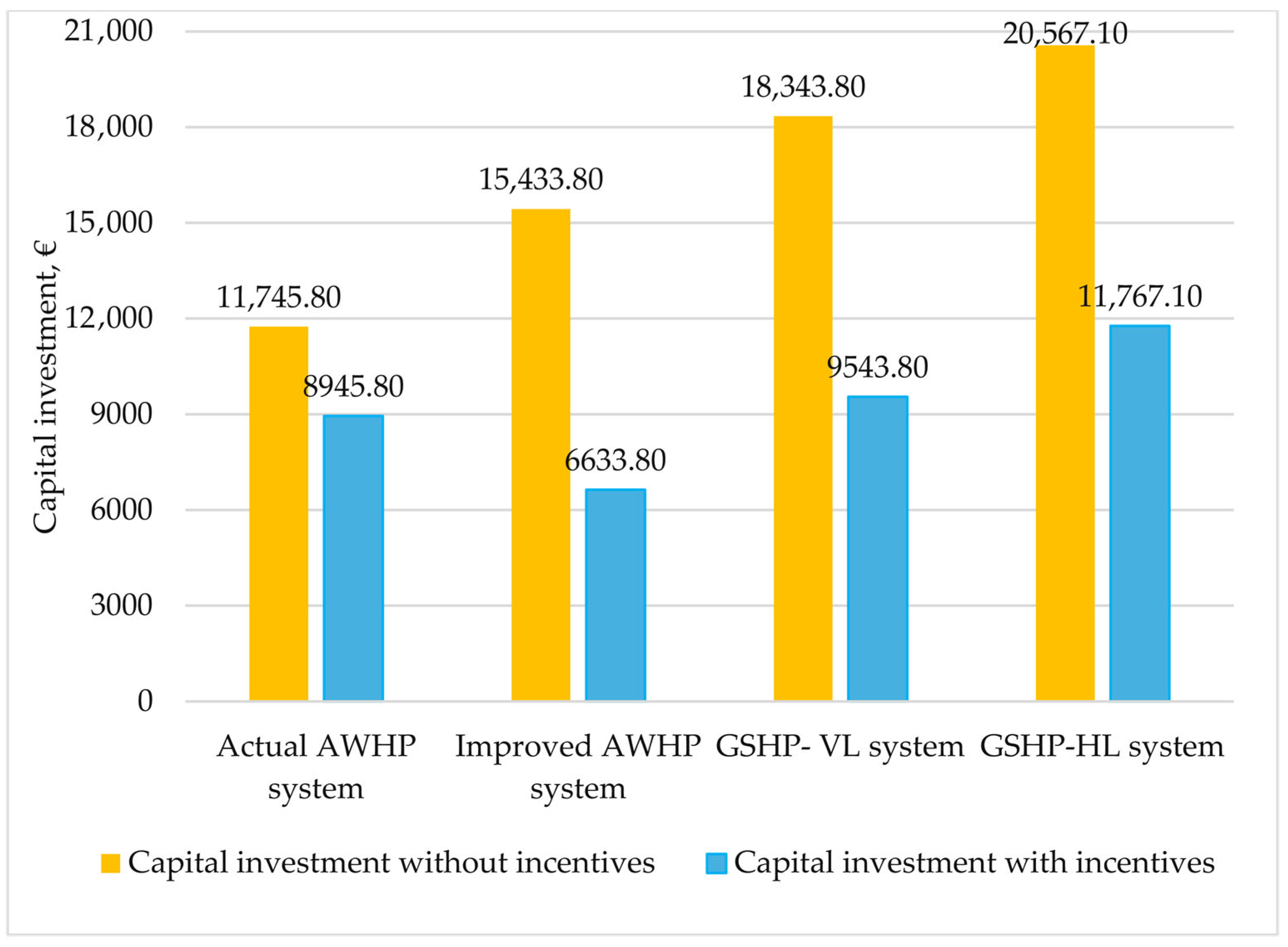
The actual AWHP system has the lowest capital cost (11,745.80 €), followed by the improved AWHP system (15,433.80 €), the GSHP-VL system (18,343.80 €) and the GSHP-HL system (20,567.10 €) (Figure 21). The government program promoting energy efficiency and the use of renewable energy sources in homes can reduce capital investments by (43–57)% in the case of systems with HP and PV with storage (Figure 21).
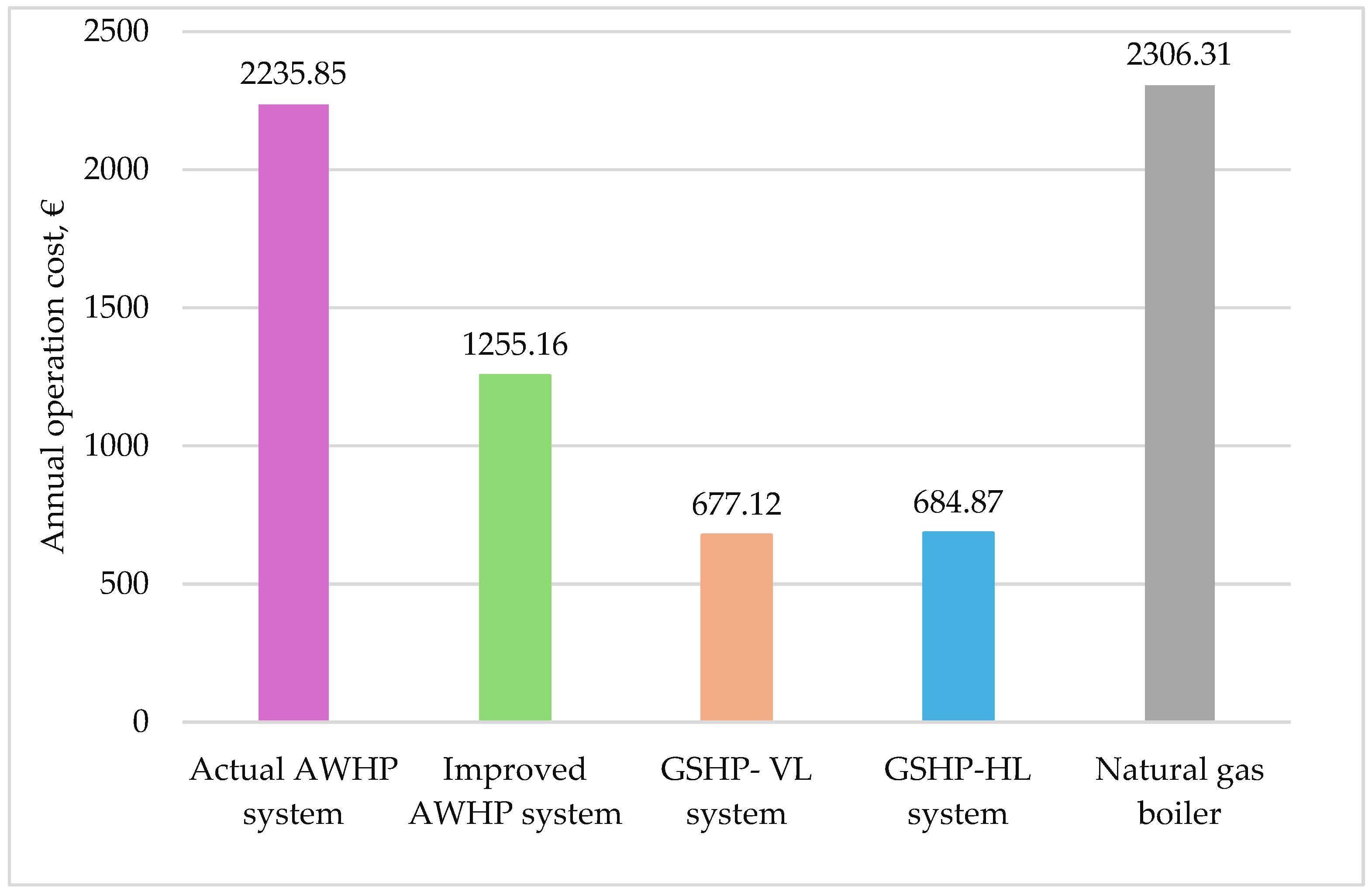
In Figure 22, the annual operating costs for each analyzed system are represented, including the classic heating system with a natural gas boiler. The GSHP-VL system has the lowest annual operating cost (677.12 €/year), followed by the GSHP-HL system (684.87 €/year), the current improved system (2235.85 €/year) and the system with a natural gas boiler (2307.60 €/year).
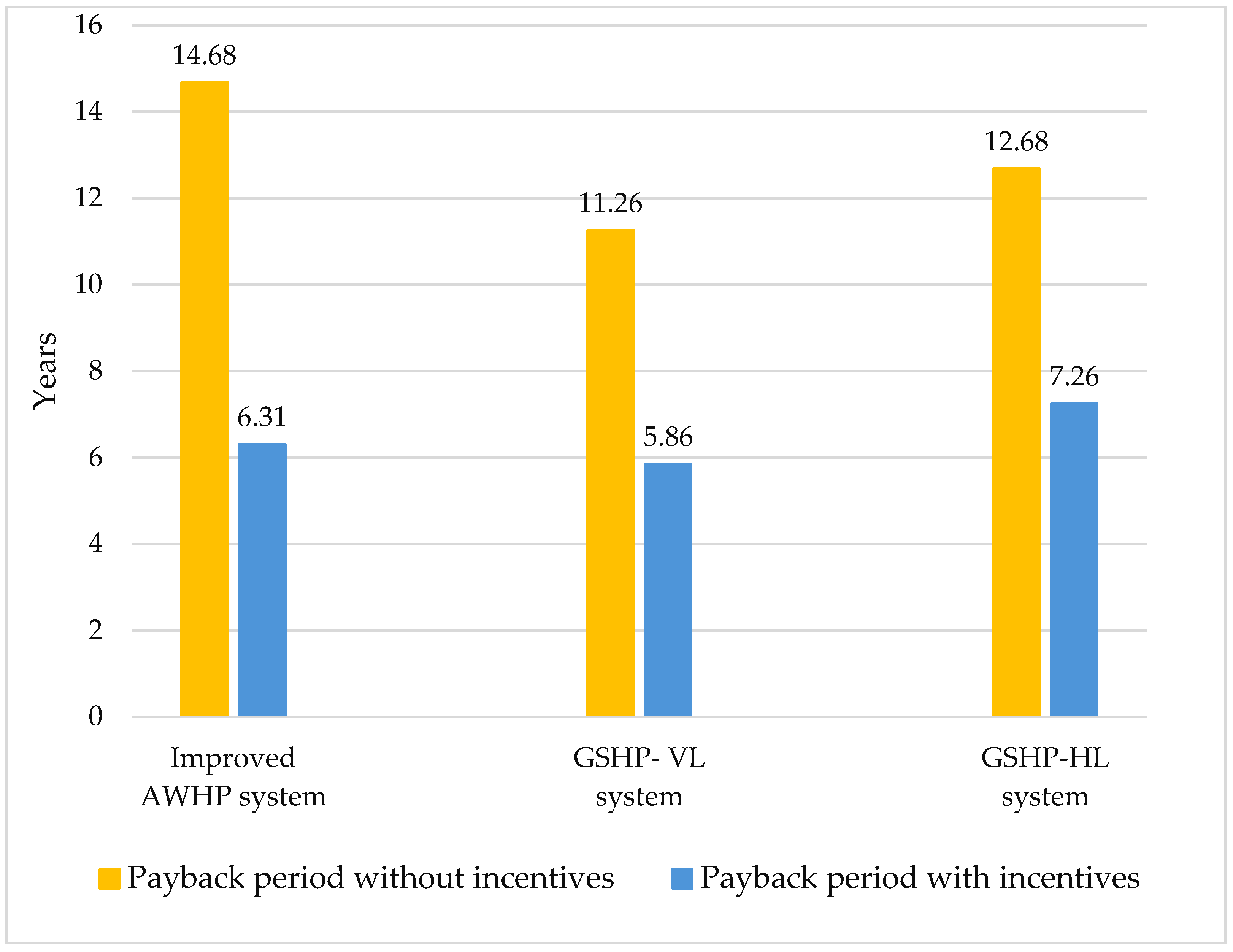
Considering the actual AWHP system as the base case, the payback period was calculated (Figure 23). It can be observed that the government program promoting energy efficiency and the use of renewable energy sources in homes can reduce the payback period to the same extent as capital investments (43–57)%.
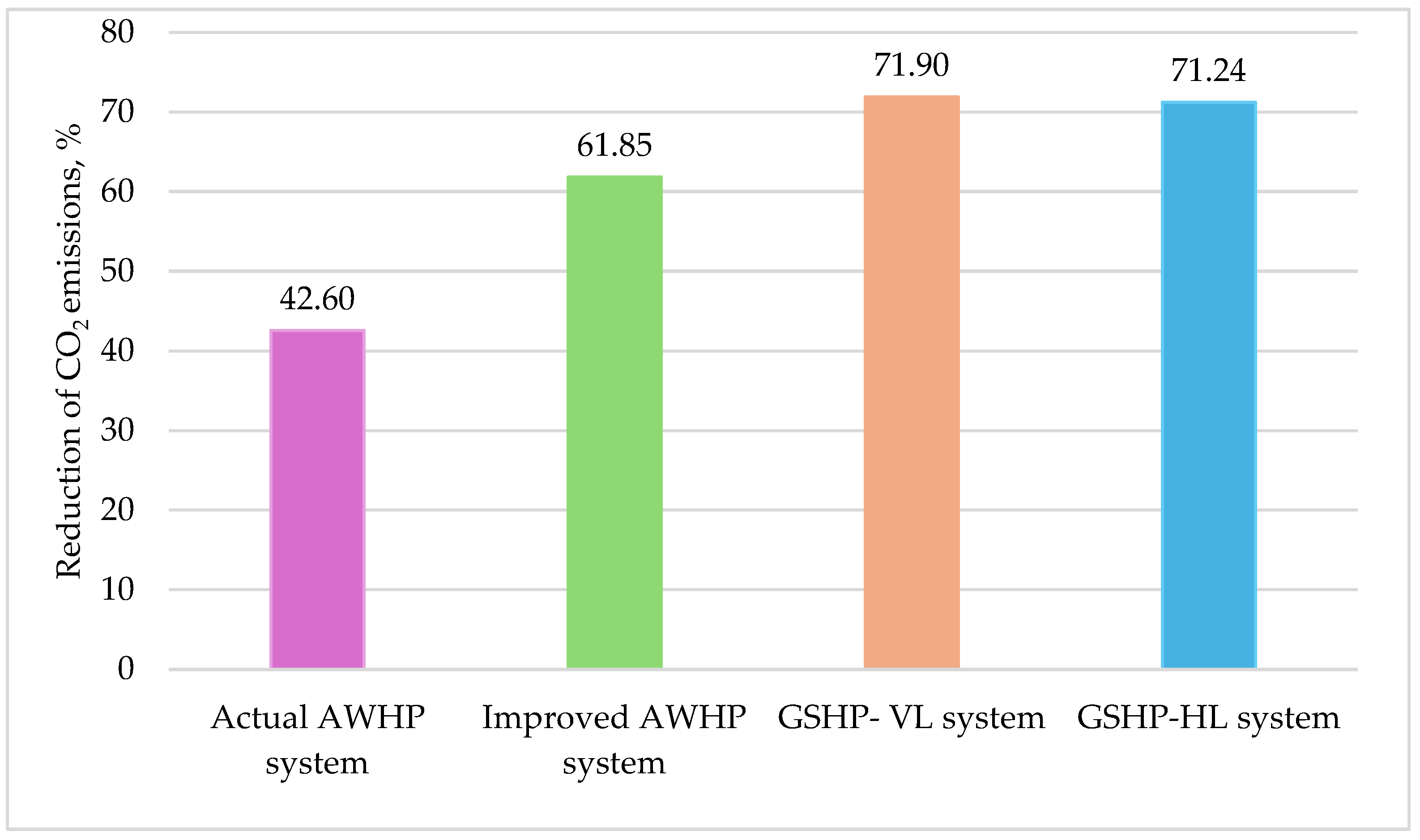
The GSHP-VL system has the highest annual CO2 emission reduction compared to the use of the classic system with a natural gas boiler (71.90%), followed by the GSHP-HL (71.24%), the improved AWHP system (61.85%) and the current AWHP system (42.60%) (Figure 24).

6. Conclusions

Residential heating systems based on heat pumps are becoming increasingly used in Romania, especially due to the government program promoting energy efficiency and the use of renewable energy sources in homes (residential spaces/buildings). The capital costs of these systems are decreasing, driven by innovation and policy support, which results in the system configuration and financial rules applied to prosumers having great influence on the energy and economic performance of the system.
This study presents the possibility of improving the energy and economic performance of a solar-assisted heat pump (AWHP) heating system installed in a residential building in southeastern Romania. The improvement of the building’s energy characteristics, the modernization of the system by integrating the electric battery and increasing the capacity of the PV panels and the STC, as well as the replacement of the AWHP with a GSHP-VL and GSHP-HL were investigated.
The energy consumption of both GSHP and AWHP systems was simulated, accounting for electricity drawn from the grid as well as energy produced by the PV panels. The results highlight a significant reduction in energy consumption when using GSHP-VL and GSHP-HL systems compared to AWHP systems. Furthermore, the analysis emphasizes the extent to which the energy demands of the HP can be met through the energy storage integrated into the PV system. Specifically, the energy consumption of the GSHP systems with vertical and horizontal ground loops (GSHP-VL and GSHP-HL) is reduced to 73% and 71%, respectively, compared to that of the AWHP system. In addition, the use of PV systems with storage coupled with the GSHP leads to a substantial decrease in annual electricity imported from the grid: by 83.46% for the GSHP-VL system and by 82% for the GSHP-HL system relative to the ASHP system.
Southeastern Romania presents one of the most promising environments in the country for solar-assisted HP systems. The area has a temperate–continental climate with high average annual temperatures, which makes air–water and ground–water heat pumps highly efficient for most of the heating season. This study shows that a 5 kW PV system combined with 5 kWh battery cannot cover the full heat demand of a medium-to-large house during the winter, and for full energy independence, a larger PV array paired with a higher-capacity battery is necessary.
Generous government subsidies of up to 50% can reduce the payback period for such investments from (11.26–14.68) years to (5.86–7.26) years.
The study provides information that may be useful to engineers and designers in the optimal configuration of systems to reduce energy consumption expenses in a residential building in a specific geographical area. It can serve as a basis for future development of control strategies to maximize the fraction of solar energy.
This study did not consider the use of HPs for cooling during the summer, nor the change in GSHP performance during long-term use due to increasing soil temperature. Although the accurate simulation capability of GeoT*SOL software was verified by comparing the results with those obtained from a solar-assisted AWSHP system in operation, combining the theoretical study with the experimental one in the case of solar-assisted GSHP systems is essential for adjusting the mathematical modeling.

Author Contributions

Conceptualization, G.C. and I.V.I.; methodology, C.I.; software, G.C.; validation, G.C., I.V.I. and C.U.; formal analysis, C.I.; investigation, G.C. and C.I.; data curation, C.U.; writing—original draft preparation, G.C.; writing—review and editing, I.V.I.; visualization, G.C.; supervision, I.V.I. All authors have read and agreed to the published version of the manuscript.

Funding

This research received no external funding.

Institutional Review Board Statement

Not applicable.

Informed Consent Statement

Not applicable.

Data Availability Statement

The original contributions presented in this study are included in the article. Further inquiries can be directed to the corresponding author.

Conflicts of Interest

The authors declare no conflicts of interest.

Abbreviations

The following abbreviations are used in this manuscript:
AASCTotal area of thermal solar collectors, m2
APV Total area of PV panels, m2
ASHPAir-source heat pump
AWHP Air-to-water heat pump
CelCost associated with electricity imported from and exported to the electricity grid, €/year
c e l , f g Unitary cost of electricity imported from the grid, €/kWh
c e l , t g Unitary cost of electricity imported exported to the grid, €/kWh
COPCoefficient of performance
CRF Annual capital recovery factor
CtotAnnual operation cost, €/year
Ctot,newAnnual operation costs of the new system, €/year
Ctot,refAnnual operation costs of the reference system, €/year
DHWDomestic hot water
EElectricity used by the heat pump, kWh
E f g Electricity amount imported from the grid, kWh/year
E t g Electricity amount exported to the grid, kWh/year;
GSHPGround-source heat pump
GSHP-HLGround-source heat pump with horizontal loop
GSHP-VLGround-source heat pump with vertical loop
HSolar radiation incident on the PV array, kWh/m2
iAnnual interest rate
nSystem lifetime, years
NPVNet present value
PPPayback period, years
PVPhotovoltaic
PVTsPhotovoltaic thermal collectors
SAGSHPSolar-assisted ground-source heat pump
SPFSeasonal performance factor
STCsSolar thermal collectors
ηASCEfficiency of solar collectors
Z C I Cost associated with capital investment, €
Z M Maintenance cost of system, €/year
Z p i Purchase cost of system i (PV system, ASHP or GSHP, STC), €
η P V Efficiency of PV panels

References

  1. The European Green Deal. Striving to Be the First Climate-Neutral Continent. Available online: https://ec.europa.eu/info/strategy/priorities-2019-2024/european-green-deal_en (accessed on 2 April 2025).
  2. Romanian Ministry of Energy. Available online: https://energie.gov.ro/wp-content/uploads/2024/10/PLANUL-NATIONAL-INTEGRAT-IN-DOMENIUL-ENERGIEI-SI-SCHIMBARILOR-CLIMATICE-2021-2030-Actualizare-Octombrie-2024.pdf (accessed on 5 April 2025).
  3. Paraschiv, L.S.; Paraschiv, S. Contribution of Renewable Energy (Hydro, Wind, Solar and Biomass) to Decarbonization and Transformation of the Electricity Generation Sector for Sustainable Development. Energy Rep. 2023, 9, 535–544. [Google Scholar] [CrossRef]
  4. Nsafon, B.E.K.; Owolabi, A.B.; Butu, H.M.; Roh, J.W.; Suh, D.; Huh, J.-S. Optimization and sustainability analysis of PV/wind/diesel hybrid energy system for decentralized energy generation. Energy Strategy Rev. 2020, 32, 100570. [Google Scholar] [CrossRef]
  5. Brodny, J.; Tutak, M. Assessing sustainable energy development in the central and eastern European countries and analyzing its diversity. Sci. Total Environ. 2021, 801, 149745. [Google Scholar] [CrossRef]
  6. International Energy Agency. Available online: https://www.iea.org/commentaries/global-heat-pump-sales-continue-double-digit-growth (accessed on 9 April 2025).
  7. Hassan, Q.; Algburi, S.; Sameen, A.Z.; Salman, H.M.; Jaszczur, M. A review of hybrid renewable energy systems: Solar and wind-powered solutions: Challenges, opportunities, and policy implications. Results Eng. 2023, 20, 101621. [Google Scholar] [CrossRef]
  8. Yao, J.; Liu, W.; Zhang, L.; Tian, B.; Dai, Y.; Huang, M. Performance analysis of a residential heating system using borehole heat exchanger coupled with solar-assisted PV/T heat pump. Renew. Energy 2020, 160, 160–175. [Google Scholar] [CrossRef]
  9. Badiei, A.; Akhlaghi, Y.G.; Zhao, X.; Shittu, S.; Xiao, X.; Li, J.; Fan, Y.; Li, G. A chronological review of advances in solar-assisted heat pump technology in 21st century. Renew. Sustain. Energy Rev. 2020, 132, 110132. [Google Scholar] [CrossRef]
  10. Sezen, K.; Gungor, A. Comparison of solar-assisted heat pump systems for heating residences: A review. Sol. Energy 2023, 249, 424–445. [Google Scholar] [CrossRef]
  11. Verma, V.; Meena, C.S.; Thangavel, S.; Kumar, A.; Choudhary, T.; Dwivedi, G. Ground and solar-assisted heat pump systems for space heating and cooling applications in the northern region of India—A study on energy and CO2 saving potential. Sustain. Energy Technol. Assess. 2023, 59, 103405. [Google Scholar] [CrossRef]
  12. Rosenow, J.; Gibb, D.; Nowak, T.; Lowes, R. Heating up the global heat pump market. Nat. Energy 2022, 7, 901–904. [Google Scholar] [CrossRef]
  13. Bălan, M.; Damian, M.; Jantschi, L.; Ion, V.I. Study concerning the influence of some working conditions on the heat pumps performances. In Proceedings of the 36th International Symposium Actual Tasks on Agricultural Engineering, Opatija, Croatia, 11–15 February 2008; pp. 535–544. [Google Scholar]
  14. Reda, F.; Paiho, S.; Pasonen, R.; Helm, M.; Menhart, F.; Schex, R.; Laitinen, A. Comparison of solar-assisted heat pump solutions for office building applications in Northern climate. Renew. Energy 2020, 147, 1392–1417. [Google Scholar] [CrossRef]
  15. Emmi, G.; Zarrella, A.; Carli, M.; Galgaro, A. An analysis of solar-assisted ground source heat pumps in cold climates. Energy Convers. Manag. 2015, 106, 660–675. [Google Scholar] [CrossRef]
  16. Brands, M.; Fung, A.S. Solar-assisted air-source heat pumps: A review with a focus on cold-climate applications. In Proceedings of the 5th International Conference on Building Energy and Environment (COBEE 2022), Montreal, QB, Canada, 25–29 July 2022; Environmental Science and Engineering; Springer: Singapore, 2022. [Google Scholar] [CrossRef]
  17. Herrando, M.; Coca-Ortegón, A.; Guedea, I.; Fueyo, N. Experimental validation of a solar system based on hybrid photovoltaic-thermal collectors and a reversible heat pump for the energy provision in non-residential buildings. Renew. Sustain. Energy Rev. 2023, 178, 113233. [Google Scholar] [CrossRef]
  18. Pinamonti, M.; Baggio, P. Energy and economic optimization of solar-assisted heat pump systems with storage technologies for heating and cooling in residential buildings. Renew. Energy 2020, 157, 90–99. [Google Scholar] [CrossRef]
  19. Sezen, K.; Tuncer, A.D.; Akyuz, A.O.; Gungor, A. Effects of ambient conditions on solar-assisted heat pump systems: A review. Sci. Total Environ. 2021, 778, 146362. [Google Scholar] [CrossRef]
  20. Popa, V.; Ion, V.I.; Popa, C.L. Thermo-economic analysis of an air-to-water heat pump. Energy Procedia 2016, 85, 408–415. [Google Scholar] [CrossRef]
  21. Kim, T.; Choi, B.-I.; Han, Y.-S.; Do, K.H. A comparative investigation of solar-assisted heat pumps with solar thermal collectors for a hot water supply system. Energy Convers. Manag. 2018, 172, 472–484. [Google Scholar] [CrossRef]
  22. Ahleme, B.; Mounir, A.; Zeroual, A. Performance study of a hybrid solar-assisted ground-source heat pump system used for building heating and hot water demands. Jordan J. Mech. Ind. Eng. 2023, 17, 581–594. [Google Scholar] [CrossRef]
  23. Carnieletto, L.; Di Bella, A.; Quaggiotoo, D.; Emmi, G.; Bernardi, A.; De Carli, M. Potential of GSHP coupled with PV systems for retrofitting urban areas in different European climates based on archetypes definition. Energy Built Environ. 2024, 5, 374–392. [Google Scholar] [CrossRef]
  24. Hou, G.; Taherian, H. Performance analysis of a hybrid ground source heat pump system integrated with liquid dry cooler. Appl. Therm. Eng. 2019, 159, 113830. [Google Scholar] [CrossRef]
  25. Hou, G.; Taherian, H.; Li, L.; Fuse, J.; Moradi, L. System performance analysis of a hybrid ground source heat pump with optimal control strategies based on numerical simulations. Geothermics 2020, 86, 101849. [Google Scholar] [CrossRef]
  26. Hou, G.; Taherian, H.; Li, L. A predictive TRNSYS model for long-term operation of a hybrid ground source heat pump system with innovative horizontal buried pipe type. Renew. Energy 2020, 151, 1046–1054. [Google Scholar] [CrossRef]
  27. Sakellariou, E.I.; Axaopoulos, P.J.; Wright, A.J. Energy and economic evaluation of a solar-assisted ground source heat pump system for a north Mediterranean city. Energy Build. 2021, 231, 110640. [Google Scholar] [CrossRef]
  28. Mârza, C.; Moldovan, R.; Corsiuc, G.; Chisălită, G. Improving the energy performance of a household using solar energy: A case study. Energies 2023, 16, 6423. [Google Scholar] [CrossRef]
  29. Carutasiu, M.B.; Necula, H. Assessing the impact of air-source heat pumps in a residential building’s retrofit process. Buildings 2024, 14, 3708. [Google Scholar] [CrossRef]
  30. Alamayreh, M.; Altork, Y. Evaluating the economic and environmental viability of hybrid solar-geothermal heat pump systems in Jordan using multi-criteria decision analysis. Discov. Sustain. 2024, 5, 377. [Google Scholar] [CrossRef]
  31. Perrella, S.; Bisegna, F.; Bevilacqua, P.; Cirone, D.; Bruno, R. Solar-Assisted Heat Pump with Electric and Thermal Storage: The Role of Appropriate Control Strategies for the Exploitation of the Solar Source. Buildings 2024, 14, 296. [Google Scholar] [CrossRef]
  32. Alsarraf, J.; Alnaqi, A.A.; Al-Rashed, A.A.A. Comparative thermo-environ-economic analysis of solar-assisted and conventional ejector-compression heat pump systems for space heating. Energy Build. 2026, 354, 116952. [Google Scholar] [CrossRef]
  33. Ferrara, M.; Fabrizio, E. Optimized design and integration of energy storage in Solar-Assisted Ground-Source Heat Pump systems. Build. Simul. 2023, 16, 1933–1948. [Google Scholar] [CrossRef]
  34. Kumar, R.; Thakur, A.K.; Gupta, L.R.; Gehlot, A.; Sikarwar, V.S. Advances in phase change materials and nanomaterials for applications in thermal energy storage. Environ. Sci. Pollut. Res. 2024, 31, 6649–6677. [Google Scholar] [CrossRef]
  35. Tawalbeh, M.; Khan, H.A.; Al-Othman, A.; Almomani, F.; Ajith, S. A comprehensive review on the recent advances in materials for thermal energy storage applications. Int. J. Thermofluids 2023, 18, 100326. [Google Scholar] [CrossRef]
  36. ANSI/ASHRAE Standard 169-2021; Climatic Data for Building Design Standards. American Society of Heating. Refrigerating and Air-Conditioning Engineers: Atlanta, GA, USA, 2021.
  37. Solar Resource Maps and GIS Data for 200+ Countries Solargis. Available online: https://solargis.com/maps-and-gis-data/download/romania (accessed on 11 November 2025).
  38. Parlato, M.C.M.; Porto, S.M.C. Organized framework of main possible applications of sheep wool fibers in building components. Sustainability 2020, 12, 761. [Google Scholar] [CrossRef]
  39. Memon, S. Analysing the Potential of retrofitting ultra-low heat loss triple vacuum glazed windows to an existing UK solid wall dwelling. Int. J. Renew. Energy Dev. 2014, 3, 161–174. [Google Scholar] [CrossRef]
  40. Ordin Pentru Aprobarea Reglementării Tehnice. Metodologie de Calcul al Performanței Energetice a Clădirilor, Indicativ Mc 001-2022; Monitorul Oficial al României: Bucuresti, Romania, 2023; Partea I, Nr. 46. [Google Scholar]
  41. The Design and Simulation Software for Heat Pump Systems. Available online: https://valentin-software.com/en/products/geotsol/ (accessed on 23 December 2024).
  42. Călin, C.; Ion, V.I.; Rusu, E.; Frătiţa, M. Performance analysis of a RDF gasification and solar thermal energy based CCHP system. Energy Rep. 2021, 7, 186–192. [Google Scholar] [CrossRef]
  43. Electricity Offer. Hydro Prosumer—Prosumer Household Customer. 2025. Available online: https://www.hidroelectrica.ro/ (accessed on 24 December 2025). (In Romanian)
  44. McWilliams, B.S.T.; Trasi, C. Smarter European Union Industrial Policy for Solar Panels. Available online: https://www.bruegel.org/policy-brief/smarter-european-union-industrial-policy-solar-panels (accessed on 11 January 2026).
  45. IRENA. Renewable Power Generation Costs in 2024; International Renewable Energy Agency: Abu Dhabi, United Arab Emirates, 2025. [Google Scholar]
  46. Solar Pricing Trends and Future Predictions in the PV Industry. Available online: https://sun.store/blog/pv-index-october-2025/ (accessed on 11 January 2026).
  47. Watson, S.; Bian, D.; Sahraei, N.; Winter, A.G.; Buonassisi, V.T.; Peters, I.M. Advantages of operation flexibility and load sizing for PV-powered system design. Sol. Energy 2018, 162, 132–139. [Google Scholar] [CrossRef]
  48. Fonseca, S. How Much Does a Heat Pump Cost in 2025? Available online: https://www.autarc.energy/ (accessed on 13 January 2026).
  49. Heat Pump Service and Repair Cost. Available online: https://www.checkatrade.com/blog/cost-guides/heat-pump-servicing-and-repair-cost/ (accessed on 17 January 2026).
  50. Available online: https://solarheateurope.eu/market/our-market-segments/residential-buildings/ (accessed on 17 January 2026).
  51. Northcott, A. Solar Panel Cleaning and Maintenance Explained. 2025. Available online: https://energysavingtrust.org.uk/solar-panel-cleaning-maintenance/ (accessed on 12 December 2025).
Figure 1. Global horizontal solar irradiation for Romania (solar resource map © 2021 Solargis) [37].
Sustainability 18 03557 g001
Figure 2. Schematic of case study building.
Sustainability 18 03557 g002
Figure 3. Building electricity consumption for heating by using AWHP.
Sustainability 18 03557 g003
Figure 4. Scheme of the existing solar-assisted AWHP system.
Sustainability 18 03557 g004
Figure 5. Monthly electricity production and consumption (2024).
Sustainability 18 03557 g005
Figure 6. Electricity output of the 3 kW PV system.
Sustainability 18 03557 g006
Figure 7. Weekly heat output of heat pipe evacuated tube STC.
Sustainability 18 03557 g007
Figure 8. The electricity demand for heating of renovated building.
Sustainability 18 03557 g008
Figure 9. Solar-assisted GSHP-VL heating system combined with electric battery.
Sustainability 18 03557 g009
Figure 10. Solar-assisted GSHP-HL heating system combined with electric battery.
Sustainability 18 03557 g010
Figure 11. Logic flowchart of GeoTSOL simulation process.
Sustainability 18 03557 g011
Figure 12. Energy output of solar-assisted GSHP-VL system. (a) Weekly energy output of the 5 kW PV system. (b) Weekly heat generation of flat-plate STC.
Sustainability 18 03557 g012
Figure 13. Energy output of solar-assisted GSHP-HL system.
Sustainability 18 03557 g013
Figure 14. AWHP electricity consumption.
Sustainability 18 03557 g014
Figure 15. GSHP-VL electricity consumption.
Sustainability 18 03557 g015
Figure 16. GSHP-HL electricity consumption.
Sustainability 18 03557 g016
Figure 17. Delivered and extracted heat by AWHP system (plus SPF).
Sustainability 18 03557 g017
Figure 18. Delivered and extracted heat by GSHP-VL system (plus SPF).
Sustainability 18 03557 g018
Figure 19. Delivered and extracted heat by GSHP-HL system (plus SPF).
Sustainability 18 03557 g019
Figure 20. Solar coverage rate of HP consumption.
Sustainability 18 03557 g020
Figure 21. Capital investment of systems.
Sustainability 18 03557 g021
Figure 22. Annual operation cost of systems.
Sustainability 18 03557 g022
Figure 23. Payback period of investment.
Sustainability 18 03557 g023
Figure 24. Reduction of CO2 emissions.
Sustainability 18 03557 g024
Table 1. Summary of key findings and challenges in the reviewed literature.
Ref.Method UsedResultsLimitationsPractical ImplicationsConclusions
[7]Review of hybrid renewable energy systems combining solar and wind energy; analysis of technical, economic, and policy aspects
  • Hybrid solar–wind systems improve energy reliability and reduce fossil fuel dependency
  • Economic feasibility depends on location and policy support
  • High initial investment costs and intermittency issues
  • Policy barriers in some regions
Hybrid renewable systems can support sustainable heating and electricity production in residential and industrial sectorsHybrid solar–wind systems are viable for sustainable energy transition but require supportive policies and cost reductions
[8]Experimental analysis of residential heating system using borehole heat exchanger coupled with solar-assisted PV/T heat pumpImproved system efficiency and reduced electricity consumption compared to conventional systemsSystem performance depends on solar radiation and ground temperature conditionsSuitable for residential heating in cold climates; reduces operational energy consumptionSolar-assisted PV/T heat pump systems enhance residential heating efficiency and reduce energy consumption
[9]Chronological review of solar-assisted heat pump technologies developed in the 21st centurySignificant technological improvements in COP, system integration, and control strategiesHigh installation cost and system complexity remain challengesSolar-assisted heat pumps can significantly reduce building energy consumptionSolar-assisted heat pump technology has evolved significantly and is suitable for sustainable building applications
[10]Comparative review of different solar-assisted heat pump systems for residential heatingSolar-assisted heat pumps provide higher efficiency than conventional heat pumpsPerformance strongly influenced by climate and system configurationUseful for residential heating applications, especially in moderate and cold climatesSolar-assisted heat pumps are more efficient than conventional heating systems in residential applications
[11]Energy and CO2 saving analysis of ground and solar-assisted heat pump systems in Northern IndiaSignificant reduction in CO2 emissions and primary energy consumptionHigh initial system cost and installation complexitySuitable for regions with high heating and cooling demandGround and solar-assisted heat pump systems offer substantial energy and environmental benefits
[12]Global market analysis of heat pump technologiesHeat pump adoption is increasing globally due to decarbonization policiesMarket growth depends on policy incentives and electricity pricesHeat pumps play a key role in decarbonizing heating sectorHeat pumps are essential for global energy transition and emissions reduction
[13]Comparison of solar-assisted heat pump solutions for office buildings in northern climatesSolar-assisted systems improved energy efficiency and reduced operating costsPerformance depends on building load and climate conditionsSuitable for office buildings in cold climatesSolar-assisted heat pumps are effective for commercial buildings in cold regions
[14]Analysis of solar-assisted ground-source heat pumps in cold climatesImproved system performance and reduced electricity consumptionInstallation cost and ground drilling requirementsEffective for cold climate applicationsSolar-assisted GSHP systems improve performance in cold regions
[15]Review of solar-assisted air-source heat pumps for cold climatesSolar integration improves air-source heat pump efficiency in low temperaturesSystem efficiency depends on solar collector performanceSuitable for cold climate heating applicationsSolar-assisted ASHPs are effective in cold climates
[16]Experimental validation of hybrid PV/T collectors with reversible heat pump in non-residential buildingsHigh system efficiency and reduced primary energy consumptionHigh system complexity and investment costSuitable for commercial and non-residential buildingsHybrid PV/T heat pump systems are efficient for building energy supply
[17]Energy and economic optimization of solar-assisted heat pump systems with storageEnergy savings and reduced operational costs achieved with optimized storage integrationRequires advanced control strategiesStorage integration improves system performance and economic viabilitySolar-assisted heat pump systems with storage are energy and cost efficient
[18]Review of ambient condition effects on solar-assisted heat pump systemsAmbient temperature and solar radiation significantly affect system performancePerformance variability due to climate conditionsSystem design must consider environmental conditionsAmbient conditions are critical for system performance optimization
[19]Thermo-economic analysis of air-to-water heat pumpHeat pumps are economically viable in long-term operationHigh initial investment costSuitable for residential heating systemsAir-to-water heat pumps are economically and energetically efficient
[20]Experimental study on working conditions affecting heat pump performanceHeat pump performance strongly influenced by operating conditionsLimited to specific experimental conditionsOptimization of operating parameters improves efficiencyHeat pump performance depends on working conditions
[21]Comparative investigation of solar-assisted heat pumps with solar thermal collectors for hot water systemsSolar-assisted systems improve hot water production efficiencyPerformance depends on collector efficiency and climateSuitable for domestic hot water systemsSolar-assisted heat pumps improve hot water system efficiency
[22]Performance study of hybrid solar-assisted GSHP for heating and hot waterReduced energy consumption and improved system performanceHigh installation and maintenance costsSuitable for building heating and hot water supplyHybrid GSHP systems improve building energy performance
[23]Analysis of GSHP coupled with PV systems for urban retrofit applicationsSignificant energy savings in retrofitted buildingsHigh initial retrofit costSuitable for urban building retrofitsGSHP + PV systems are effective for urban energy retrofits
[24]Performance analysis of hybrid GSHP integrated with liquid dry coolerImproved system efficiency and reduced cooling loadSystem complexity increases installation costSuitable for hybrid heating and cooling applicationsHybrid GSHP systems improve overall system performance
[25]Numerical simulation of hybrid GSHP with optimal control strategiesOptimal control improves system efficiency and reduces energy consumptionRequires advanced control systemsControl optimization is essential for hybrid GSHP systemsOptimal control significantly improves hybrid GSHP performance
[26]TRNSYS simulation model for long-term operation of hybrid GSHPLong-term operation improves system energy efficiencySimulation-based study requires experimental validationUseful for system design and long-term performance predictionHybrid GSHP systems are efficient for long-term operation
[27]Energy and economic evaluation of solar-assisted GSHP in Mediterranean climateEnergy savings and economic feasibility demonstratedClimate-dependent performanceSuitable for Mediterranean climatesSolar-assisted GSHP systems are economically viable in warm climates
[28]Case study on improving household energy performance using solar energySolar systems significantly improve household energy efficiencyCase study specific limitationsSolar systems suitable for residential buildingsSolar energy improves residential energy performance
[29]Study on ASHP in residential retrofit processRetrofit with heat pumps reduces energy consumption and emissionsRetrofit cost may be highSuitable for building retrofit projectsASHP systems are effective in building retrofits
[30]Multi-criteria analysis of hybrid solar–geothermal heat pump systemsHybrid systems are economically and environmentally viableSystem complexity and high investment costSuitable for sustainable building energy systemsHybrid solar–geothermal heat pump systems are viable sustainable solutions
Table 2. Main characteristics of the building.
ParameterData
Type of buildingsingle-family
Number of people4
Total built-up area200 m2
Usable area140 m2
Volume343.86 m3
VentilationGravity-type
Table 3. Thermal properties of structural elements.
Construction ElementArea m2Overall Heat Transfer Coefficient W/m2·K
Exterior walls1610.55
Windows16.31.29
Floor1400.2
Attic walls310.2
Attic ceiling390.2
Doors5.441.29
Table 4. AWHP characteristics.
ParameterValue
Heating thermal power A7/W3514 kW
Heating thermal power A2/W3514 kW
Coefficient of performance A7/W354.22
Coefficient of performance A2/W352.96
Cooling thermal power A35/W7 max12.5 kW
Energy Efficiency Ratio A35/W72.17
Source temperature−28 … +46 °C
Maximum DHW temperature60 °C
Minimum temperature of cooling fluid5 °C
RefrigerantR410
Table 5. Building annual specific energy demand.
Building TypeHeating
kWh/m2/Year
DHW
kWh/m2/Year
Electricity
kWh/m2/Year
Existing building98.6542.535.19
Renovated building40.8939.133.57
Table 6. Advantages and disadvantages of GSHPs.
System TypeAdvantagesDisadvantages
GSHP with vertical loop (GSHP-VL)
  • requires small surface for the wells;
  • ideal for small plots or urban settings with limited surface;
  • more stable underground temperatures;
  • minimal impact on existing landscaping once installed.
  • high drilling cost;
  • complex installation—requires careful planning and skilled labour;
  • less accessible—repairs can be more difficult due to depth.
GSHP with a horizontal loop (GSHP-HL)
  • generally cheaper to install than vertical systems due to simpler drilling and excavation;
  • easier to install—especially in rural or suburban areas with plenty of land;
  • the pipes are more accessible for inspection or repairs.
  • requires a large surface for the coils/geothermal collector;
  • more affected by surface temperature fluctuations;
  • less efficient in extremely cold climates.
  • significant excavation can disturb landscaping and topsoil.
Table 7. Characteristics of solar-assisted GSHP-VL system combined with electric battery.
ParametersValue
Nominal heating power6.2 kW
Mode of operationmonovalent
Mediumbrine/water
Nominal output of brine pump150 W
Flow rate of brine pump1136 L/h
Ground temperature10 °C
Borehole diameter150 mm
Construction type of boreholedouble U-pipe
Specific extraction rate of borehole heat exchanger20 W/m
Maximum drilling depth99 m
Solar thermal collector typeflat-plate collector
Total gross surface area of solar thermal collectors5.28 m2
Tilt angle30°
Azimuth angle180°
PV module typehigh-efficiency
Power of PV system5 kW
Total area of PV system22.8 m2
Battery system capacity5 kWh
Table 8. Characteristics of solar-assisted GSHP-HL system combined with electric battery.
ParametersValue
Nominal heating power6.1 kW
Mode of operationmonovalent
Thermal fluidbrine/water
Type of soilclaystone
Gross area of geothermal collector200 m2
Laying depth1.2 m
Groundwater depth10 m
Nominal output of brine pump150 W
Flow rate of brine pump1373 L/h
Groundwater temperature10 °C
Specific extraction rate of geothermal collector23.7 W/m2
Solar thermal collector typeflat-plate collector
Total surface area of solar thermal collectors5.28 m2
Tilt angle302°
Azimuth angle180°
Photovoltaic modulehigh-efficiency
Power of PV system5 kW
Total area of PV panels22.8 m2
Battery system capacity5 kWh
Table 9. Economic constants.
Annual rate of return, i10%
Equipment life, n25
Cost of electricity exported to grid, c e l , t g 0.055 €/kWh [43]
Cost of electricity imported from grid, c e l , f g 0.182 €/kWh [43]
Cost of natural gas0.061 €/kWh
Incentive for non-pressurized STC installation600 €
Incentive for pressurized STC installation1200 €
Incentive for PV system (>3 kW) with battery (>5 kW) installation6000 €
Incentive for HP installation1600 €
CO2 emission intensity of electricity230 g/kWh
CO2 emission of natural gas combustion190 g/kWh
Table 10. Purchase and maintenance costs of equipment.
EquipmentPurchase Cost (Average)Maintenance Costs
PV panels(230–340) €/kW [44]25 €/kW/year [45]
Inverter(200–250) €/kW [46]
Battery711 €/kWh [47]
AWHP550 €/kW [48]150 €/year [49]
GSHP-VL1700 €/kW [48]200 €/year [49]
GSHP-HL2070 €/kW [48]200 €/year [49]
STC (including pipework, storage unit, control system and system design)(765–1710) €/kW [50](0.5–1)% of installation cost [51]
Table 11. Energy key indicators.
SystemEnergy Supplied kWhAnnual SPFSolar Coverage Rate %
AWHP72621.5–3.012.07
GSHP-VL38362.5–3.545.02
GSHP-HL38172.0–3.544.25
Disclaimer/Publisher’s Note: The statements, opinions and data contained in all publications are solely those of the individual author(s) and contributor(s) and not of MDPI and/or the editor(s). MDPI and/or the editor(s) disclaim responsibility for any injury to people or property resulting from any ideas, methods, instructions or products referred to in the content.