Article

Key Challenges to Stakeholder Engagement in Sustainability Contexts: Insights from Researchers and Practitioners


1
Department of Forestry and Environmental Resources, North Carolina State University, Raleigh, NC 27695, USA
2
Science and Technologies for Phosphorus Sustainability (STEPS) Center, North Carolina State University, Raleigh, NC 27606, USA
3
Genetic Engineering and Society (GES) Center, North Carolina State University, Raleigh, NC 27695, USA
4
Department of Civil, Construction, and Environmental Engineering, North Carolina State University, Raleigh, NC 27695, USA
5
Department of Applied Ecology, North Carolina State University, Raleigh, NC 27695, USA
6
North Carolina Plant Science Initiative, Raleigh, NC 27606, USA
*
Author to whom correspondence should be addressed.
Sustainability 2026, 18(7), 3549; https://doi.org/10.3390/su18073549
Submission received: 4 March 2026 / Revised: 28 March 2026 / Accepted: 2 April 2026 / Published: 4 April 2026

Abstract

Stakeholder engagement is increasingly recognized as vital to developing interdisciplinary solutions to complex sustainability problems, such as phosphorus management. At the same time, several challenges and barriers may arise when engaging stakeholders in practice. This study identifies key challenges in engagement and explores how they may be addressed. Using an online survey of 121 researchers and practitioners engaged in sustainability work in the U.S., along with 10 interviewees, data were analyzed using an explanatory sequential mixed-methods design. Key results from this study identify two main sets of challenges and needs, as well as the relationships between them. First, participants identified “top down” challenges to engagement, including limited funding, resources, organizational support, and time, alongside “bottom up” challenges related to recruitment and retention, inclusive representation, trust-building, facilitation skills, and balancing stakeholder expectations. While prior studies have noted important factors and case-specific challenges, this study is the first to systematically document these challenges and needs across a range of fields and highlight interconnections between structural resource limitations and practitioners’ ability to build and sustain meaningful stakeholder relationships. Future research can build on these findings to enhance the field of engagement by advocating for more resources to conduct engagement and developing methods to better assess success of engagement practices.

1. Introduction

Sustainability is an interdisciplinary field concerned with the long-term viability of coupled human-environment systems. Commonly defined as “meeting the needs of the present without compromising the ability of future generations to meet their own needs” [1], sustainability inherently bridges scientific understanding with societal values that shape both the present and future. Today’s sustainability challenges (e.g., food and water security, biodiversity loss, nutrient management) are complex, value-laden, and embedded in specific social, cultural, and institutional contexts [2,3,4,5,6,7], and therefore cannot be solved by technical expertise alone.
Addressing sustainability challenges depends on integrating scientific evidence with perspectives from a range of stakeholders, including those with local knowledge and practical experience [8]. This is the rationale for “stakeholder engagement”—a field of research and practice that focuses on identifying, involving, and collaborating with individuals, groups, or organizations that have an interest in (or may be affected by) a particular decision, policy, project, or research activity. It is both a theoretical and practical field that draws from public policy, organizational management, environmental governance, and participatory research, among other disciplines. Scholars in sustainability fields increasingly recognize that effective and meaningful stakeholder engagement improves the quality and legitimacy of decisions, and can lead to the desired social and environmental change necessary to address complex sustainability issues [4,9,10,11,12,13,14,15,16,17].
Stakeholder engagement is considered to be critical for moving towards sustainability, including managing phosphorus in our society [18,19], among other sustainability challenges. Here, we emphasize two central dimensions that illustrate the importance of stakeholder engagement in sustainability-oriented initiatives: (1) its role in enabling collaboration for innovation and (2) its function in fostering trust and shared commitment to sustainability goals [20,21,22,23]. As supported by numerous studies, sustainability challenges are inherently complex, spanning multiple sectors, areas of expertise, governance levels, and stakeholder interests. Reorienting entire systems toward sustainability therefore requires meaningful cross-sector collaboration, which in turn depends on effective stakeholder engagement [18,21,24,25,26,27,28]. Within such complex systems, innovation is rarely achieved through technical expertise alone; rather, successful sustainability initiatives often require a nuanced understanding of local social, economic, and ecological contexts. Thoughtful stakeholder engagement can help integrate local and traditional knowledge, offering a more comprehensive understanding of the issues at hand and providing insight into how proposed interventions are likely to be received and implemented in practice [17,29,30,31]. Beyond supporting innovation, stakeholder engagement is also essential for cultivating trust and shared ownership. Sustainability initiatives frequently involve trade-offs, behavioral changes, or perceived risks, making public trust a critical factor in long-term success. Open and inclusive dialogue can surface concerns, identify potential sources of resistance, and clarify misunderstandings before they undermine implementation [17]. Engaging stakeholders in this way not only enhances buy-in but can also empower participants by fostering a sense of agency and environmental stewardship. Such shared ownership increases the likelihood that sustainability initiatives will be durable and effective over time. In essence, meaningful stakeholder engagement is not peripheral but foundational to effective sustainability efforts.
Phosphorus management is an effective case study to demonstrate the importance and challenges of engaging diverse stakeholders in complex, wicked problems in order to produce sustainability outcomes. For instance, numerous studies and reports have called for a greater engagement of different stakeholders across sectors and groups to achieve sustainable solutions [18,19,32]. This is because phosphorus plays a critical role in our food and agricultural systems, largely as input into fertilizers for crops, although our current management of phosphorus is inefficient, and in some cases can lead to excess nutrient runoff which can cause eutrophication and degrade ecological systems [6]. Therefore, there is a wide range of different stakeholder sectors that need to be engaged through coordinated practices to more manage phosphorus sustainably [33]. However, there are also a number of challenges experienced by researchers and practitioners to engage these stakeholders [17], and stakeholders themselves also describe a number of challenges and needs they have to achieve sustainable outcomes [16].
More broadly, even as stakeholder engagement gains increasing attention and expands within sustainability fields, some studies have identified challenges and barriers. Among other challenges, there are differing definitions of stakeholder engagement in the literature, varying processes and methods [34,35], and uncertainty about which approaches are most effective in specific situations [2,36]. Further, there is a gap in the literature related to the theoretical frameworks of engagement and the realities of implementing engagement in practice, including within sustainability contexts [37,38,39]. To date, there have been a few studies that have documented the challenges experienced by researchers and practitioners to carry out engagement work, but these have been limited. For example, Mease et al. [12] interviewed practitioners of stakeholder engagement in natural resources to better understand the frameworks they were using for engagement, and documented some challenges (e.g., insufficient resources, lack of representation of all stakeholders) but within the broader context of frameworks used for engagement. Other studies have highlighted stakeholder engagement within specific case studies or to identify key lessons learned from engagement, such as studies by Agyekum et al. [40]; Bouamrane et al. [41]; Huzzard [42]; Kaur et al. [43]; and Masefield et al. [44]. More recently, Grieger et al. [17] synthesize the literature on engaging stakeholders in phosphorus sustainability and describe their own experience and challenges within phosphorus sustainability engagement. While there are individual cases, no published study has yet comprehensively investigated key challenges to engagement within sustainability contexts more broadly and as experienced by researchers or practitioners. This gap in the literature is problematic because addressing wicked problems in sustainability contexts depends on effective stakeholder engagement, and hence, it is essential to clearly identify the key challenges and experiences of researchers and practitioners involved in engagement. Doing so will improve understanding of existing barriers and inform strategies to overcome them.
This study addresses this gap by identifying key challenges faced by researchers and practitioners engaged in stakeholder engagement in sustainability contexts. Based on previously published studies, as well as the authors’ own experiences (e.g., [17]), we hypothesize that certain categories of challenges, such as resource constraints, are perceived as more significant or more limiting than other barriers, such as a lack of adequate engagement tools. We note that sustainability contexts here refer to governance and management systems that help maintain or restore the long-term integrity, resilience, and functioning of ecological systems while meeting human needs. To achieve the study aims, an explanatory sequential mixed-methods design was used and consisted of conducting an online survey with researchers and practitioners of engagement within sustainability contexts within the U.S. The survey was followed by ten in-depth interviews with selected survey respondents. The survey sought to characterize both the frequency and perceived severity of common barriers to engagement, drawing on insights from a wide range of domains of sustainability practice, while the interviews provided contextual insights into these challenges and explored how practitioners navigated them in practice. The findings from this study intend to serve as a first step to illuminate the key challenges experienced by those conducting engagement in sustainability fields, including phosphorus management, which can be further built on in subsequent research that aims to overcome these barriers in future engagement efforts.

2. Materials and Methods

A mixed-method research approach [45,46,47] was used to investigate the key challenges and barriers to conduct stakeholder engagement according to researchers and practitioners working in sustainability contexts in the U.S. Mixed-methods approaches are well suited to sustainability research and stakeholder engagement because they allow us to understand the breadth of these issues via quantitative methods and the depth of these issues via qualitative analysis [48,49]. An explanatory sequential design was chosen in order to collect quantitative data to identify patterns across a respondent population, followed by targeted qualitative inquiry to support a more nuanced understanding of the quantitative data by drawing on lived experiences, contextual factors, and meaning-making processes [50,51].
In this study an online survey was first developed and deployed, using a mix of question types. Survey findings were then used to design a semi-structured interview protocol, and interviews were conducted with a subset of survey respondents to further explore the key themes and reported barriers they faced to engage stakeholders. Detailed procedures for conducting the survey and interviews (design, protocols, participant selection, and data analysis) are described below. In this paper, we reviewed preliminary survey results and decided to explore some responses in greater detail, thus expanding our research methodology to include interviews.

2.1. Participant Identification and Outreach

To achieve the study’s objectives, a range of stakeholder engagement researchers and practitioners working in sustainability-related sectors in the U.S. were identified. Potential participants were identified through the peer-reviewed literature, conference and seminar programs, organizational websites, and through professional networks focused on stakeholder engagement. Participants also represented a range of sectors, including government, academia, extension services, NGOs, advocacy organizations, consulting, and industry groups. In total 526 potential participants were identified in this effort. Before contacting potential participants to partake in the online survey or interview, IRB approval was obtained through NC State University and was determined to be exempt (IRB protocol #27444).
Participants were contacted via email to participate in an online survey focused on identifying potential barriers and challenges to engaging stakeholders in sustainability contexts. The outreach email contained a brief overview of the project, estimated time to complete the survey, and the survey response window. Within the survey, participants had an option to voluntarily provide their contact information if they were interested in participating in a follow-up interview to further explore the challenges they face conducting engagement. Interview participants were therefore identified solely through these responses, and a total of ten individuals were selected, with the aim of providing a range of discipline, expertise, and sectors across the ten interviewees. In other words, all interviewees also participated in the survey. Prior to conducting the interviews, selected interviewees were sent an email that contained a link to schedule their interview, brief information about the interview process, and a consent form that they were required to sign before participating. The interviews were conducted online using the zoom platform. All interviews were recorded and transcribed for further analysis.

2.2. Survey Development

The survey was developed using the online survey platform Qualtrics (Qualtrics, Provo, UT, USA). The survey was conducted anonymously, with the exception of having an option for participants to provide their contact information if they would like to participate in a follow-up interview. The survey consisted of multiple-choice, Likert scale, and open-ended question types aimed to assess the participants’ familiarity and confidence with engaging stakeholders alongside challenges they experienced to engage stakeholders in sustainability contexts. Participants were also able to provide information on their sectors and areas of expertise. The survey consisted of a total of 20 questions, listed in Table S1 in the Supplementary Materials [52]. Questions 1–6 aimed to assess participants’ familiarity and experience with stakeholder engagement. Questions 7–8 aimed to assess participants’ confidence in planning and conducting engagement. Questions 9–15 addressed challenges and barriers to engagement using a matrix-style Likert scale question type, while Questions 16–19 related to participants’ affiliated sectors and areas of expertise. Question 20 asked participants to participate in a follow-up interview. Prior to sending the survey to study participants, the survey instrument was piloted and tested with 10 individuals at NC State University who are familiar with sustainability and qualitative research.
Study participants received a direct survey link through the outreach email. The survey was open from 1–21 October 2024, with three reminder emails sent. After the survey period ended, access to the survey was closed. Participants were required to provide informed consent prior to starting the survey. The survey was distributed to all 526 potential participants identified. Out of the 526 who received the initial email to participate in the survey, 27 were removed due to undeliverable emails. In total, 149 individuals completed the survey. After removing 28 incomplete or invalid responses, also identified through ReCAPTCHA bot detection, 121 valid and complete responses remained, and hence the sample size for the online survey was 121, equivalent to a 24% response rate after data cleaning.

2.3. Survey Respondents

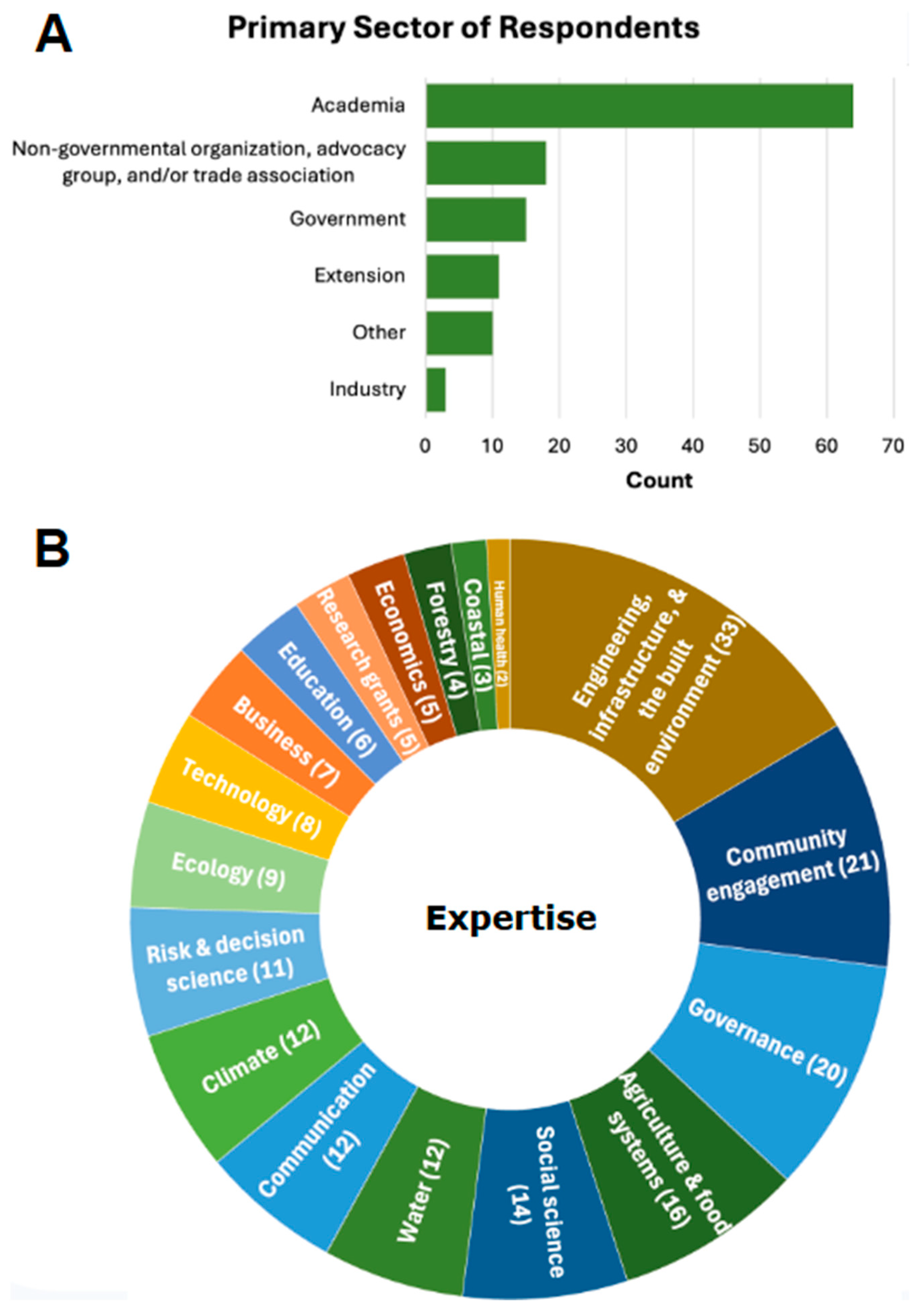
The sample of 121 participants who completed all questions in the survey represented, over half identified their primary affiliation as academia, followed by NGOs/advocacy groups and/or trade associations, government, extension, industry, and ‘other’ (Figure 1A). Respondents indicated that their primary affiliation with ‘other’ sectors is related to educators, private and non-profit researchers, and consultants. Participants separately reported more than 180 unique disciplines of expertise in their open-ended responses, many of which were interdisciplinary in nature, with the most commonly reported areas of expertise relating to agriculture, climate, communication, environmental science and engineering, natural resources, policy, social science, and sustainability (Figure 1B, Table S2 in Supplementary Materials).
Responses to Questions 1–8 indicated that survey respondents were highly familiar with, experienced, and confident in conducting stakeholder engagement activities, suggesting that they are well positioned to reflect on both its value and its challenges. For instance, over 99% of respondents answered that they have engaged or plan to engage stakeholders (N = 120), with the remaining survey participant responding “maybe.” Further, all respondents (N = 121) defined the field of stakeholder engagement in line with the current definitions of stakeholder engagement as presented in the peer-reviewed literature. In addition, most survey participants indicated that they had a high level of familiarity ( x ¯ = 4.62) and confidence in both their own ability to conduct stakeholder engagement ( x ¯ = 3.77) and their organization’s ability to conduct stakeholder engagement ( x ¯ = 4.00) (Figure S1 in the Supplementary Materials). Further, respondents indicated that they use a variety of engagement methods (Figure S2A in the Supplementary Materials) and they experience engaging a broad range of stakeholders (Figure S2B in the Supplementary Materials). In addition, respondents indicated that they were moderately satisfied with the engagement activities they planned and implemented (Figure S2C in the Supplementary Materials). Together, these results indicate that the survey captured perspectives from individuals who are highly experienced and capable in this area, lending credibility to their reflections on the barriers and opportunities for effective stakeholder engagement.

2.4. Interview Protocol

Interview participants were identified from responses to the final survey question, “If you would be interested in participating in a follow-up interview, please include your email address here.” A total of 43 survey respondents provided their contact information, from which ten were ultimately selected using a purposive sampling strategy to ensure representation across stakeholder sectors and a diversity of expertise. Specifically, selection criteria prioritized variation in sectorial affiliation, professional background, and years of experience. Follow-up outreach emails were sent to these ten interview participants to schedule interviews. Four of the ten originally selected interviewees declined to participate or did not respond to requests, and replacements with comparable backgrounds and experiences were subsequently invited. The authors reached data saturation after ten interviews and therefore did not interview additional participants due to this saturation.
The distribution of the 10 interviewees across sectors is as follows: 3 were from academia, 2 from government, 2 from NGO/advocacy groups, 2 from private sectors, and 1 was from extension. The areas of expertise of interviewees included climate change adaptation, coastal resilience, environmental economics, environmental health, communications, non-profit management, policy and regulatory development, science communication, and urban planning. Interviewees reported to have approximately 10 to 40 years of experience in fields of stakeholder engagement.
Participant interviews followed a semi-structured guide that consisted of six main questions specifically designed to expand on insights from the online survey, including the most frequently cited barriers to engagement, perceived gaps in current practices, etc. The interviews explored interviewees’ experiences in planning and conducting engagement, key challenges they face, steps taken to address those challenges, and approaches to measuring the success of engagement practices. Interviewees were also encouraged to discuss additional topics of interest. The interview questions are shown in Table S3 in the Supplementary Materials. Participant interviews were conducted in December 2024 and January 2025, and were typically 30–60 min in length.

2.5. Data Analysis

A range of software tools was used to analyze both quantitative and qualitative data from the survey. First, survey results were de-identified and exported from Qualtrics to MS Excel for visualization and basic statistical analysis. Multiple-choice and Likert-scale questions were evaluated for distribution and percentage trends, with corresponding visualizations developed to illustrate these patterns. Open-ended survey responses were qualitatively coded and grouped into categories or recurring themes identified in the data.
Interviews were conducted online via zoom, and transcripts were reviewed and edited for accuracy before being uploaded to NVivo (Lumivero, Denver, CO, USA) for qualitative analysis. Coding was performed collaboratively by two coders to ensure intercoder reliability. The analysis combined deductive and inductive thematic approaches, drawing on existing literature and survey findings to establish an initial coding framework while allowing new themes to emerge during review. Coding was performed collaboratively by two coders to ensure intercoder reliability. The first coder conducted the initial coding and identified 125 unique codes across three parent categories (engagement processes, challenges and barriers, and solutions to challenges). A second coder then reviewed the coding structure and thematic groupings, and both researchers iteratively refined, merged, and consolidated the codes through discussion and consensus, resulting in 9 overarching challenge areas. Because this analysis followed an iterative, consensus-based thematic approach rather than a formal independent double-coding procedure, a statistical intercoder reliability metric such as Cohen’s kappa was not calculated. To understand the interplay between different challenges and potential solutions, node maps were created iteratively in NVivo (see Figures S3 and S4 in the Supplementary Materials) and then simplified to draw out three major themes.
In accordance with an explanatory sequential mixed-methods approach, aggregate survey data and qualitative interview findings were analyzed together, allowing for both a general overview and deeper contextual understanding of the challenges to effective engagement generated in the results. In our analysis, survey data was used to capture broad patterns in how a large number (N = 121) of participants approach engagement and perceive common barriers across different contexts. Integrating subsequent interview data allowed us to gain a more detailed understanding of these experiences, allowing for richer insights into the nuances and reasoning that survey responses alone could not capture.

3. Results

3.1. Key Challenges and Needs for Engagement

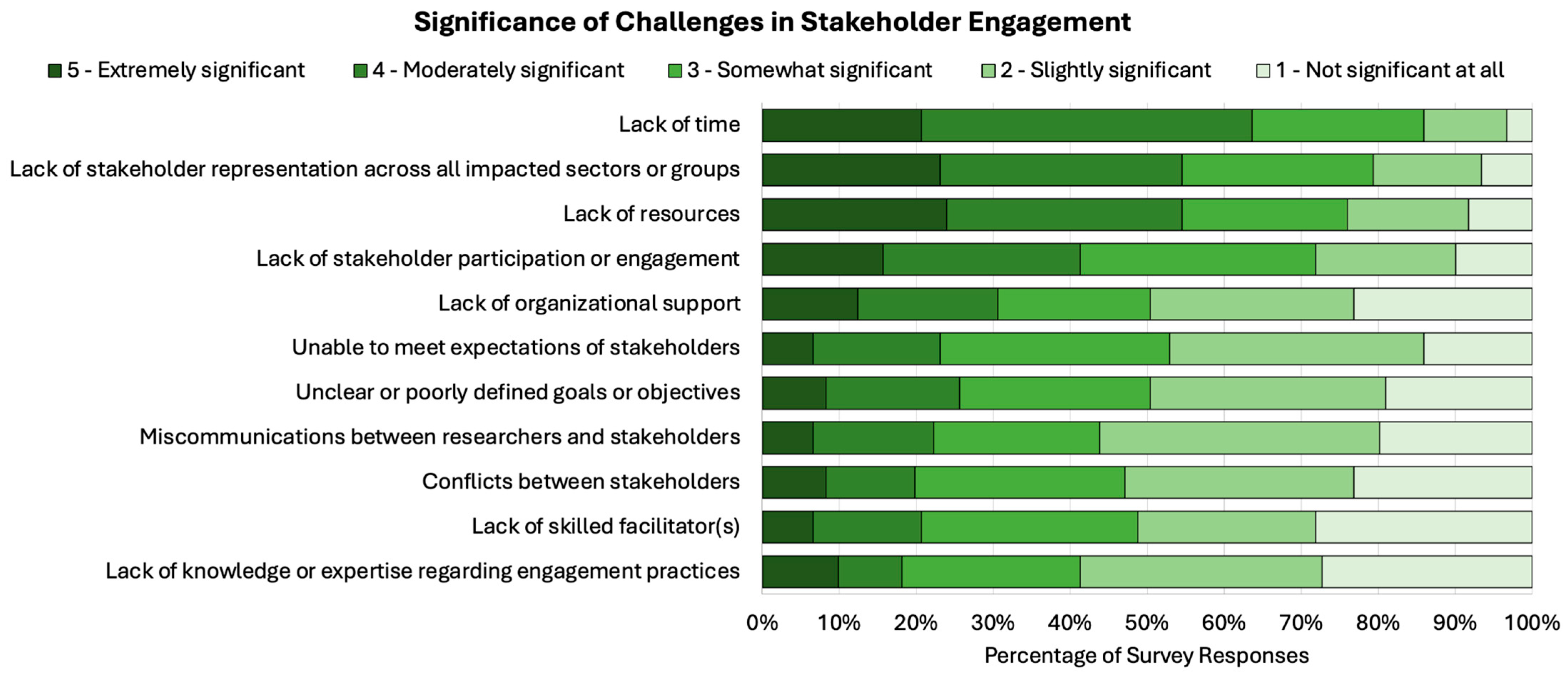
Survey results show key challenges and obstacles faced by respondents when conducting stakeholder engagement in sustainability contexts. Respondents identified that having insufficient time (average significance ( x ¯ ) = 3.67), limited stakeholder representation ( x ¯ = 3.50), lack of resources ( x ¯ = 3.46), and lack of stakeholder participation ( x ¯ = 3.19) as the most significant obstacles (Figure 2). Participants also reported challenges related to organizational support ( x ¯ = 2.70), meeting stakeholder expectations ( x ¯ = 2.69), and having unclear or poorly defined goals or objectives for the engagement activities ( x ¯ = 2.65). At the same time, issues such as miscommunications between researchers and stakeholders ( x ¯ = 2.53), conflicts between stakeholders ( x ¯ = 2.52), lack of skilled facilitators ( x ¯ = 2.48), and lack of knowledge regarding engagement practices ( x ¯ = 2.42) were viewed as less critical (Figure 2). Participants were also given the opportunity to identify additional challenges that were not addressed in the closed response options. Responses to this question included those regarding inclusive engagement practices, lack of stakeholder participation, identifying and reaching stakeholders, lack of trust, difficulties explaining technical subjects to non-technical stakeholders, polarizing views or subjects, measuring success, and cultural differences.
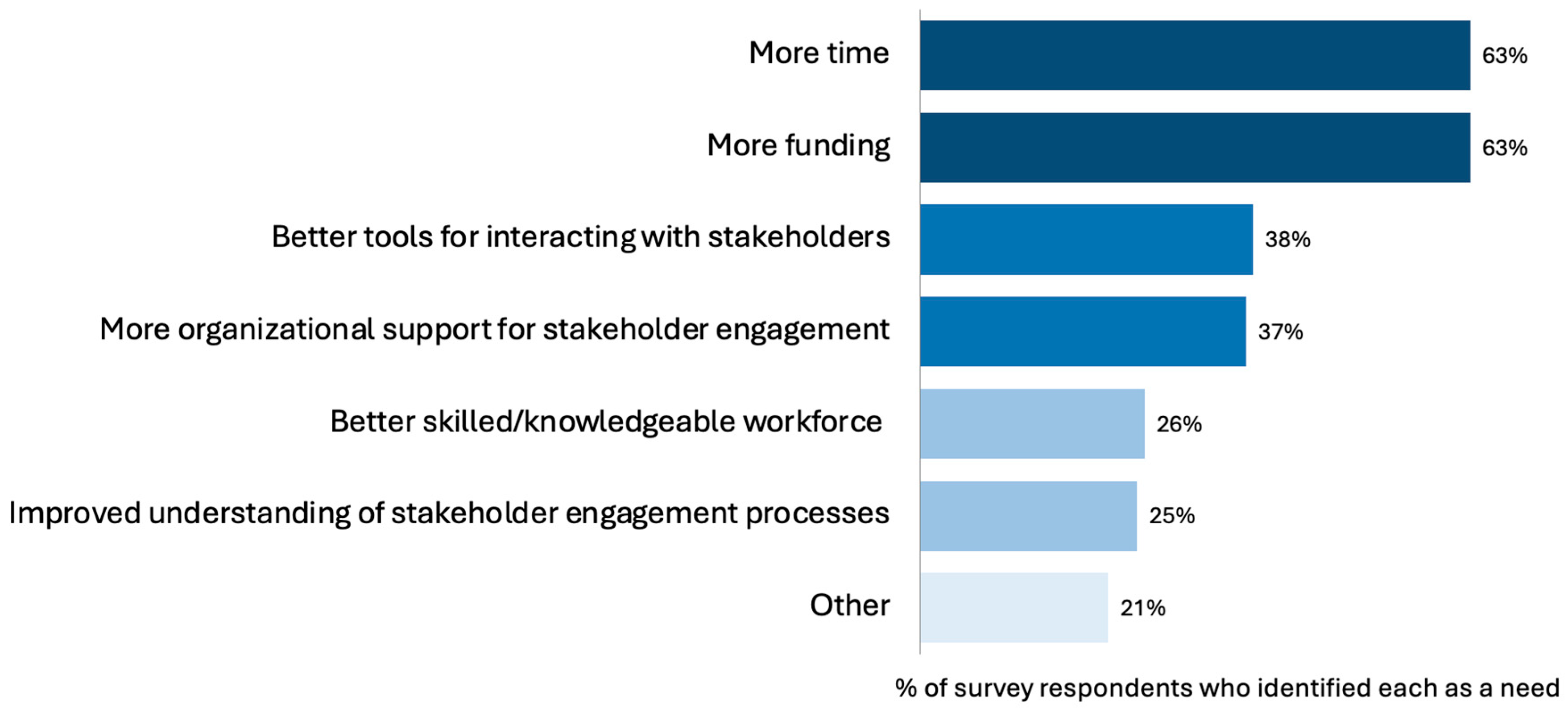
In addition to identifying major challenges with engaging stakeholders, survey respondents also indicated their needs for strengthening stakeholder engagement. Corresponding to the identified challenges, respondents indicated that their most important needs for improving stakeholder engagement were more time (N = 76, 63%) and more funding (N = 76, 63%) (Figure 3). Respondents also indicated that they need better tools for interacting with stakeholders (N = 46, 38%) and more organizational support (N = 45, 37%), followed by better skilled or knowledgeable workforce (N = 31, 26%) and an improved understanding of stakeholder engagement processes (N = 30, 25%). Respondents were also able to select an option to describe additional needs for improved engagement by selecting option “other”. Responses entered as open-ended text when “other” (N = 26, 21%) was selected included more transparency, more desire to participate from stakeholders, more understanding of how stakeholders benefit from engagement, more flexibility, more decision-making power, a better understanding of stakeholder needs, and more stakeholders to engage with.

3.2. Challenges and Opportunities for Strengthening Engagement

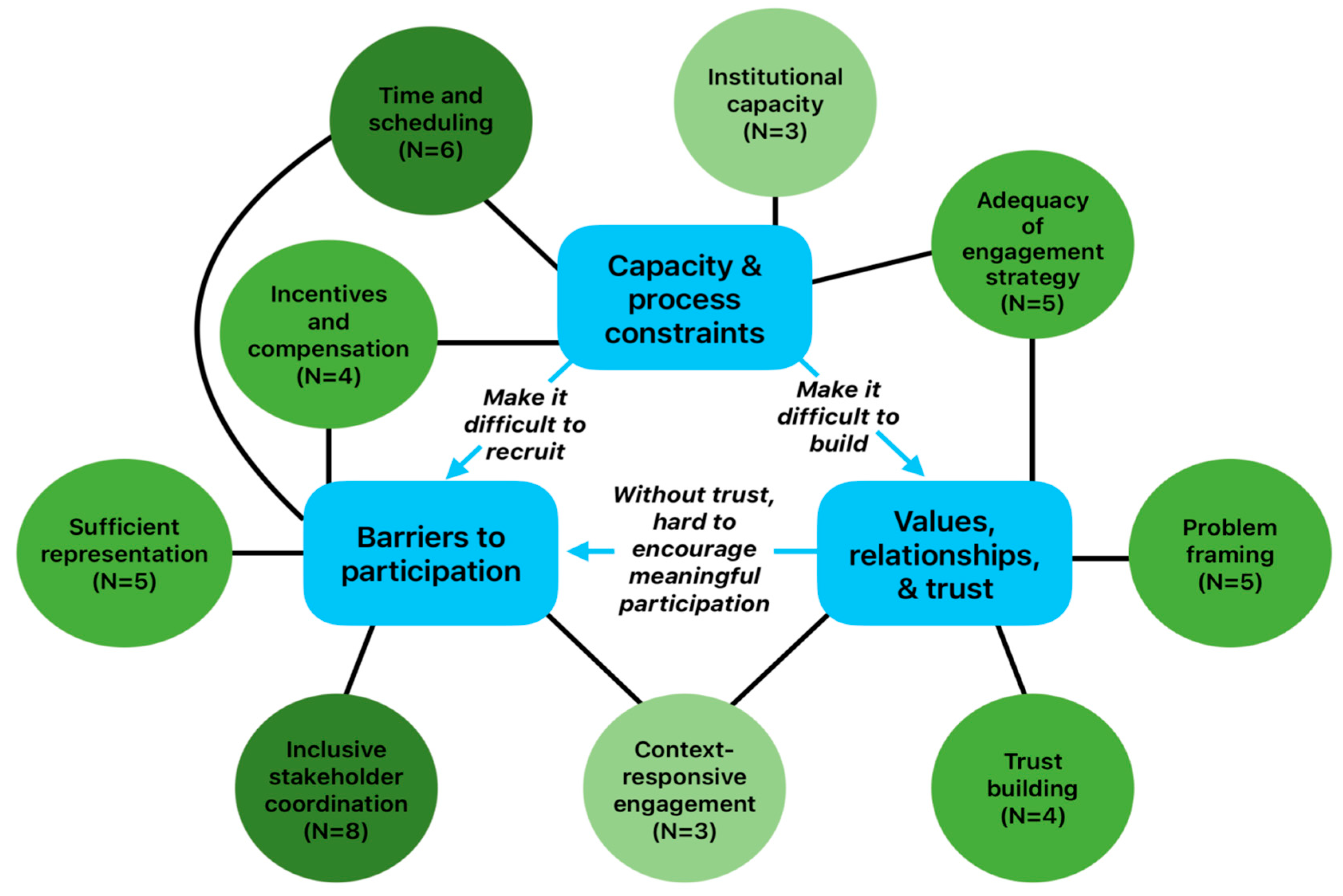
While the survey results revealed key challenges experienced by researchers and practitioners and their significance to conducting stakeholder engagement, the results from the interviews provided a deeper understanding of the connections and interplays between these challenges and potential needs and solutions for overcoming them. Based on participants’ responses to the interview question about the most significant challenges they experience when planning and conducting stakeholder engagement (top two to three per participant), the green circles in Figure 4 indicate the nine most frequently mentioned challenge areas: inclusive stakeholder coordination (N = 8), time and scheduling (N = 6), sufficient representation (N = 5), adequacy of engagement strategy (N = 5), problem framing (N = 5), trust building (N = 4), incentives and compensation (N = 4), institutional capacity (N = 3), and context-responsive engagement (N = 3). Table 1 includes definitions and exemplary quotes of each challenge area.

3.3. Limiting Factors for Engagement in Sustainability

Examining the survey results alongside the major challenges identified in the conducted interviews reveals three key and interconnected themes that need to be addressed to improve stakeholder engagement in sustainability contexts, including (i) barriers to participation, (ii) capacity and process constraints in engagement, and (iii) values, relationships, and trust (blue boxes in Figure 4). The interviews provided richer examples of each of those themes, as noted in green circles, which we discuss below.

3.3.1. Barriers to Participation

“You’ve got some stakeholders who are going to have a much easier time being identified, being contacted, having the opportunity to participate, etc.
(Interviewee 3)
Similar to survey respondents, the vast majority (90%) of interview participants reported challenges of recruiting and actively involving participants in engagement processes, citing a number of constraints and challenges. For instance, interviewees noted that stakeholders and community members may not be able to attend engagement activities scheduled within the regular 9 a.m.–5 p.m. schedule due to preexisting commitments (e.g., work). In addition, the physical location of engagement activities may also hamper participation, although it is noted that relationship building is often easier when the engagement is in person rather than, e.g., online. In addition, some interviewees also mentioned challenges to participation due to a lack of interest by some stakeholders or a lack of knowledge as other barriers to participation in engagement activities within sustainability contexts.
Interviewees also reported that barriers to getting stakeholders to robustly participate in engagement may be able to be addressed with different incentives, such as compensation or financial honoraria. Interviewees pointed out that incentives are not just about financial motivators. They emphasized the importance of showing respect and giving something back to the participants improves participation: “Even simple acknowledgement is great compensation… sometimes it’s better to compensate in other ways, decision-making power, hosting in their space, or helping them with a grant” (Interviewee 8). Further, even when stakeholders are “at the table,” there are concerns among interviewees about whose voice is really being heard and whether their input has sufficient weight. Some interviewees also raised concerns over the representativeness of chosen stakeholders: “Is what they’re saying really the voice of the people?… I almost just have to hope they represent the people well” (Interviewee 10).
Furthermore, interviewees noted that decision-making remained centralized despite stakeholders’ best efforts to steer decision-making: “You could get everybody together and say, let’s all talk. But at the end of the day… this one entity is just going to go away and decide” (Interviewee 3). Others criticized externally imposed frameworks that ignored community priorities: “The grant requirement says you need to do a planning process… and the community is like, that’s not even really the problem… that’s number six on our list” (Interviewee 3). These discussions illustrate the gaps between symbolic inclusion of stakeholders and structural or procedural influence, emphasizing the importance of inclusive engagement practices that work to ensure all voices are heard. Interviewees also discussed the importance of transparent communication and expectation-setting between practitioners and stakeholders. For instance, 60% of the interviewees (N = 6) emphasized the importance of clarifying the roles and limitations of both practitioners and stakeholders, especially in decision-making contexts. As one interviewee explained: “So being really clear about who the decision maker is and what power people actually have to affect that decision is part of what might help us decide where to bring people together” (Interviewee 3). Interviewees also stressed that the public should not be viewed as a homogenous group but rather should be recognized as having diverse perspectives and voices, especially for decision-making contexts.

3.3.2. Capacity and Process Constraints

“Another barrier is bandwidth. There aren’t enough people. There aren’t enough hours. There isn’t enough time. There isn’t enough money. To really engage the full range of stakeholders when they need to be engaged.”
(Interviewee 4)
Time and resource constraints were cited as common challenges by the majority of study participants. Eight interviewees (i.e., 80%) expressed resource and time constraints as significant barriers, and lack of time and resources ranked in the top three survey responses as the most significant challenges, as highlighted in Section 3.1. Interviewee participants further described struggling with institutional support and processes to secure funding and resources for engagement work, and some mentioned how small teams were often left to manage engagement efforts with few resources. At the same time, interviewees noted that explaining the importance of engagement to funders, organizations, or clients can help secure support as well as improve the robustness of the engagement processes: “Sometimes I have the opportunity to build in the time. Other times I don’t. But it does really show in the final result how good a job we’re able to do based on how much context we have” (Interviewee 3). Further, interviewees emphasized the need to budget specifically for trained facilitators as part of the engagement process, connecting to broader solutions around building in time and resources to support effective engagement. In particular, three interviewees identified the use of trained facilitators as a key strategy for addressing stakeholder conflict and mitigating power imbalances. In some cases, practitioners themselves were trained in facilitation, while in others, external facilitators were brought in when planned discussions were contentious in order to increase the chances of successful engagement. As one interviewee explained: “if everyone’s agreed that this is a neutral, impartial observer then they can more easily point out that perhaps certain groups are being disadvantaged or certain groups are trying to control the process” (Interviewee 2).
Another, perhaps less obvious solution to the time and resource strain, as told by interviewees, relates to the importance of discerning when stakeholder engagement is truly necessary and when it may be counterproductive. They stressed that understanding both the purpose of engagement and the needs of stakeholders are essential to ensuring that engagement efforts are meaningful and effective. One interviewee reflected on this, noting that “stakeholder engagement isn’t always worth doing. Like you can do it wrong. You can do it in a way that actually makes things worse for stakeholders. There are times where I need to just say, no, I can’t be part of that or I’m not the right person to do this. Maybe I can help you find someone who is.” (Interviewee 3). Others echoed this sentiment, suggesting that while long-term engagement can be valuable, there are moments when the original purpose has been fulfilled and continued engagement may no longer serve stakeholders. These reflections underscore the need for intentional, purpose-driven engagement that prioritizes stakeholder well-being over process for its own sake.
Though mentioned less frequently than limited time and resources, interviewees pointed out that disorganized institutions and overcomplicated processes made it difficult to engage effectively particularly within sustainability contexts: “One barrier is the regulatory system… based on what we’ve learned since then, it’s insufficient” (Interviewee 4). Fragmentation across multiple levels of governance can create confusion and inefficiency: “There’s county people, state people, federal lands people, and then a whole set of residents… they don’t have a place where they regularly talk to each other” (Interviewee 3). Interviewees discussed that without systemic reforms, engagement within sustainability risks being piecemeal and reactive, dependent more on individuals’ creativity or resourcefulness than on sustainable institutional support.

3.3.3. Values, Relationships, and Trust

“I’m much better positioned to help a community achieve their goals around sustainability if we have an ongoing relationship.”
(Interviewee 3)
Study participants noted that trust was essential to the effective relationship-building that is key to engagement, but difficult to achieve in practice. When reflecting on time and logistical constraints, interviewees noted that engagement can be difficult to navigate due to the slower pace of human relationship and trust building and the fast pace of organizational demands. Additionally, interviewees discussed the pressure of managing relationships and maintaining trust across different groups of stakeholders that may have conflicting values. Interviewees also spoke about the impact that misinformation has on trust building in engagement, with one interviewee discussing the vast amount of information on genetically modified organisms (GMOs) and the misconceptions many people have about them, stating “trust is about consistency, transparency, and the company you keep… but it takes many years” (Interviewee 7).
Understanding and centering stakeholder needs was both a common challenge and a frequently cited need for building the level of trust that facilitates meaningful engagement (N = 8 responses, 80%) among interviewees. Several methods were identified to better understand these needs, including formal needs assessments, audience segmentation, and contextual analysis. Interviewees described conducting surveys, interviews, focus groups, or listening sessions to track how stakeholder concerns evolve over time. As one interviewee described, “Listening is a key part of it. Start with listening and really listening to what the person is concerned about, what they care about, what they know, what they don’t know, what they want to know, and what they don’t want to know” (Interviewee 7). This kind of deep listening was seen as essential to designing more targeted and responsive engagement strategies.
In addition to centering stakeholder challenges, interview data shows that fostering trust requires ongoing patience, adaptation, and intentionality. Four interviewees highlighted ongoing relationship-building as key to effective engagement. They described informal conversations, shared values, and patience as central to forming strong connections. Building networks also helped practitioners link stakeholders to resources beyond their own expertise, making engagement more responsive and resilient. One of the most frequently mentioned approaches in interviews was identifying trusted community leaders (N = 3 responses). Interviewees described elevating local expertise to help explain issues to peers, embedding trusted figures in the community to share information, and selecting representatives who accurately reflect community needs. According to interviewees, building trust also means showing stakeholders that their input mattered. As one interviewee explained: “They’re seeing how their input influenced our proposal. Regulations say it and they realize they may not like everything they’re saying, but there’s been trust built. And they can see that we listened and took action on a lot of the input that they provided” (Interviewee 9). These reflections highlight that trust is not just built through process, but through transparency, responsiveness, and shared ownership of decisions.

4. Discussion

This study aims to identify key challenges faced by researchers and practitioners engaged in stakeholder engagement within sustainability contexts and to explore potential solutions to address these challenges. Drawing on responses from an online survey with 121 researchers and practitioners engaged in sustainability work in the U.S., along with 10 interview participants, this study identifies two main sets of challenges and needs, as well as the relationships between them.
First, study participants overwhelmingly described the “top down” challenges and needs for planning and implementing stakeholder engagement, primarily in the form of resources, funding, organization support, time, and tools to carry out meaningful engagement work. Similar to what other studies have found [12,17,53,54], study participants expressed that it is extremely difficult to carry out engagement work without adequate funding, resources, support, and tools to conduct stakeholder engagement. Second, study participants also described the “bottom up” challenges and needs for carrying out and executing stakeholder engagement in practice, including challenges to recruit and maintain active stakeholder participants [55,56], ensuring adequate representation across all impacted groups [57], challenges and needs for developing relationships and trust between engagement practitioners and participants [58,59], the need for skilled facilitators [60], and balancing needs and expectations of stakeholders given the capacity and process constraints faced by those carrying out the engagement work. This second set of “bottom up” challenges and needs relate to the skills of the individuals carrying out the engagement work as well as the inherent challenges of working with stakeholders in complex contexts.
While other studies have highlighted critical factors needed for stakeholder engagement [34,36], as well as noted challenges in specific case studies [12,44] very few published studies have systematically identified and documented these challenges and needs according to engagement researchers and practitioners working across diverse sustainability fields. Therefore, this study provides a first step towards illuminating the key challenges to carrying out engagement work within sustainability contexts, which (as noted in the introduction) is often seen as a critical component of developing sustainable solutions that are successfully adopted or implemented. Further, to the best of the authors’ knowledge, this study is also the first to describe some of the interplays and connections between the “top down” and “bottom up” needs for carrying out engagement, including the connections between lack of funding, resources, organizational support, and time and their connections to building and maintaining relationships and trust between researchers and stakeholders.
These findings can be situated within some theoretical frameworks that help explain why these dual challenges emerge. From the perspective of Resource Dependence Theory [61], stakeholder engagement efforts are shaped by organizational access to critical resources such as funding, time, and institutional support. The “top down” constraints identified in this study reflect structural dependencies that limit an organization’s ability to meaningfully engage external actors. At the same time, the “bottom up” challenges align with theories of Collaborative Governance [62], which emphasize that effective engagement depends on facilitative leadership, trust-building, and sustained interaction among stakeholders. Together, these frameworks suggest that engagement outcomes are co-produced by structural conditions and relational dynamics.
To further expand on the implications of this study’s findings, it is clear that there are numerous factors that are important in carrying out stakeholder engagement in sustainability contexts [63,64,65,66,67,68]. These include “top down” factors identified in this study, particularly resources and funding, that allow for the engagement practices to be conducted and without them, stakeholder engagement is unlikely to get off the ground in any meaningful way. However, resources and funding are clearly not enough, and they need to be coupled with skilled researchers and practitioners to plan, implement, conduct, and executive stakeholder engagement that require a myriad of social science and facilitation skills and require the balancing of other factors. By developing solutions to sustainability issues that align with stakeholder perspectives and needs, this further enhances trust and relationships between practitioners and stakeholders, and also in some cases between the stakeholders themselves that have been engaged. This is because when stakeholders see their input meaningfully adopted in a decision-making system, they are much more likely to accept and support decisions over time. This is particularly important in sustainability contexts, in which stakeholder buy-in and acceptance from a wide range of disciplines is critical to advancing decision-making and solution implementation.
The central role of trust and relationship-building identified by participants is also consistent with Social Capital Theory [69,70], which posits that networks, norms, and trust facilitate coordination and cooperation for mutual benefit. Our findings suggest that insufficient “top down” support constrains the development of social capital, thereby limiting the effectiveness of engagement processes. In this way, structural resource constraints and relational trust-building are not independent, but mutually reinforcing dimensions of stakeholder engagement.
To put these challenges and their implications into a more concrete case, phosphorus management and sustainability is one case study where the engagement of a wide range of stakeholders is essential, as briefly mentioned in the introduction. This is because, as mentioned above, phosphorus is a critical mineral that underpins our global food and agricultural systems, and yet due to inefficiencies and mismanagement it can also lead to environmental degradation and be subject to geopolitical and economic forces [66,71]. Due to a large number of sectors being involved in phosphorus management at national and international scales, various reports and studies have called for a better approach to engaging stakeholders in order to better manage our phosphorus supplies [32]. There have been several efforts developed over the past two decades to engage stakeholders in phosphorus management, although there continue to be significant challenges to engage a diverse range of actors and to coordinate these engagement efforts [18]. Grieger et al. [17] discuss various initiatives to engage stakeholders in phosphorus management at national and international scales, and highlight key challenges experienced by the authors involved in a large, U.S. National Science Foundation (NSF)-funded research center dedicated to phosphorus sustainability (STEPS Center). In their work, the authors describe three key challenges and lessons learned from engaging stakeholders in phosphorus management in the Center.
The first challenge the authors identify is the tension of engaging stakeholders at both “broad” and “deep” levels, which refers to the trade-off of being able to engage a large number of different stakeholders versus a smaller number or type of stakeholder but in deeper, more meaningful ways that are more intensive in nature. This challenge relates to the key barrier of having limited resources, funding, and time for such engagement, which were identified as top challenges in this current study. The challenge of engaging “broad” and “deep” stakeholders is particularly exacerbated by the fact that coordinating and engaging stakeholders in phosphorus management inherently involves a vast array of different stakeholders that are spread across sectors and groups. The tension between engaging stakeholders “broadly” versus “deeply” also reflects trade-offs identified in Collaborative Governance theory, which suggests that inclusiveness enhances legitimacy but may reduce efficiency and depth of deliberation. This trade-off underscores the importance of institutional design choices and resource allocation in shaping engagement quality.
Next, the authors also describe the challenges of measuring the collective impact of engaging stakeholders in phosphorus sectors, which relates to the capacity and process related constraints identified in this study, including the ability of being able to, e.g., follow up with participants pre- and post-engagement events to measure success or satisfaction with the engagement activities. Further the authors also mention challenges in building sufficient capacity to conduct stakeholder engagement across the research center, which relates to having limited resources and funding as well as challenges due to capacity and process related constraints identified in this work. For instance, most faculty and graduate students are operating in academic systems that rely on traditional reward systems (e.g., peer-reviewed scientific papers, grants) and time spent engaging stakeholders is usually viewed as time taken away from these traditional metrics that are used in evaluations. In sum, the key challenges of engaging stakeholders in phosphorus management overlap substantially with the top challenges identified by a broader range of researchers and practitioners involved in sustainability contexts more broadly. This current study therefore helps provide greater weight to the challenges identified by Grieger et al. [17] and may help with advocating for “top down needs” including funding, resources, and institutional support, while also building up and advocating for “bottom up needs” in the form of knowledgeable and skillful individuals to carry out the engagement work in phosphorus management while also building relationships and trust with stakeholder communities.
Beyond the two categories of “top down” and “bottom up” challenges, however, we also acknowledge the scope and scale of addressing sustainability challenges. Most sustainability issues span geographic and temporal scales. Even if we were to focus on a specific sustainability example such as phosphorus management, we must consider the geographic scales and the challenges of identifying, engaging, and sustaining relationships with key stakeholders at the watershed scale and with issues that are as diffuse as non-point source pollution. Building on that complexity is the fact that many sustainability issues not only span scales and sectors, but they also need longitudinal focus. With the myriad challenges identified above in both the “top down” and “bottom up” contexts, we need to acknowledge that these are not one time-challenges, but rather require ongoing maintenance at different scales, within nested and overlapping jurisdictions, and requiring different stakeholders depending on the specific dimension of a given issue being focused on at a particular moment. This multi-scalar complexity aligns with Polycentric Governance Theory [72], which emphasizes that sustainability challenges are governed across multiple, overlapping centers of decision-making authority. In such systems, stakeholder engagement is not a one-time event but an ongoing adaptive process requiring coordination across jurisdictions and levels. Our findings suggest that both structural resources and relational capacity are essential to sustaining engagement within polycentric systems.
Returning to phosphorus as our example, we may first consider immediate mitigation efforts downstream, which would have its own stakeholders to engage, those who are impacted by downstream effects and require remediation. We may then consider upstream point and non-point sources, which would mean engaging stakeholders for which we may consider phosphorus mitigation and management strategies. Phosphorus management is also embedded in watershed governance, which must address any number of interacting factors and the stakeholders associated with them. Moreover, working at a watershed scale as our example, we would need to identify the variety of nested and overlapping governmental jurisdictions that manage phosphorus. It may also be particularly challenging to sustain engagement in issues that are not always immediately impactful or visible to stakeholders yet still require early input to allow for efficient intervention before larger problems arise. Even though this is a considerable oversimplification of a phosphorus management system, we can see that the engagement network is complex and evolving and that the challenges are far more complicated than focusing on bidirectional improvements through the “top down” and “bottom up” framework, however useful this framework is for understanding ways to overcome barriers to effective engagement in sustainability efforts.
It should be mentioned here that alongside many of the key results obtained in this work, this study also has several study limitations. First, more than half of respondents reported being primarily affiliated with academic institutions, while substantially smaller proportions were affiliated with other sectors such as government and industry. This imbalance may bias the findings toward the experiences of researchers and practitioners in academic settings, rather than reflecting a more balanced perspective across stakeholder groups, including industry, government, and NGOs. Second, the survey and interview participants were identified using publicly available literature, resources, and professional networks and were limited to the U.S. Potential study participants that were residing in other geographic regions or who were experts in stakeholder engagement in sustainability contexts and not available online were excluded from this study. Second, this study was conducted using an online survey and through online zoom interviews. Therefore, this approach may have excluded individuals that do not have internet access. Third, the survey period was open during the aftermath of Hurricane Helene and could have excluded researchers or practitioners without internet access during that time. Fourth, future work could extend the analysis beyond descriptive statistics (means and percentages) by conducting inferential tests, including comparisons of responses across respondent groups (e.g., academia vs. NGOs).
Moving forward, future research can build on these findings in a number of ways. For example, future studies could investigate the potential challenges and needs of researchers and practitioners conducting stakeholder engagement across different sustainability contexts (e.g., land use management, water quality management, biodiversity) or between geographic regions including different countries and regulatory jurisdictions. In addition, other studies could investigate key challenges and needs of stakeholder participants themselves and compare and contrast those responses with what are the needs of researchers and practitioners of engagement practices. Finally, future work can leverage these findings to advocate for both “top down needs,” including funding, resources, institutional support, and engagement tools, as well as “bottom up needs” including skilled facilitators and engagement practitioners, trust- and relationship building among engagement experts and stakeholders.

5. Conclusions

Alongside the growing interest in stakeholder engagement to improve sustainability outcomes, including phosphorus management, key challenges to carrying out engagement can hamper efforts by researchers and practitioners. This study identifies key challenges experienced by researchers and practitioners engaged in stakeholder engagement within sustainability contexts more broadly and explores potential needs to overcome these barriers. Using a mixed-methods approach, the study draws on an online survey of 121 U.S.-based researchers and practitioners involved in sustainability engagement, followed by 10 in-depth interviews with selected respondents.
The main findings from this work reveal two interconnected sets of challenges and needs. First, participants emphasized “top-down” challenges related to planning and supporting engagement, including insufficient funding, limited organizational support, time constraints, and a lack of tools and resources for meaningful engagement. Second, participants described “bottom-up” challenges associated with implementing engagement in practice. These included difficulties recruiting and retaining stakeholders, ensuring inclusive representation, building and maintaining trust and relationships, securing skilled facilitation, and balancing stakeholder expectations within practical capacity and process constraints. In particular, the nine challenge areas identified through interviews cluster into three overarching themes: barriers to participation, capacity and process constraints, and values, relationships, and trust. Importantly, these themes are not independent–top-down structural deficits (e.g., limited funding, time, and institutional support) directly constrain practitioners’ ability to address bottom-up challenges such as building trust, ensuring inclusive representation, and sustaining meaningful relationships with stakeholders.
Overall, this work provides an initial step toward clarifying the structural and practical challenges faced by those conducting stakeholder engagement in sustainability fields. These findings offer a foundation for future research aimed at developing strategies to overcome barriers and strengthen engagement efforts.

Supplementary Materials

The following supporting information can be downloaded at: https://www.mdpi.com/article/10.3390/su18073549/s1, Figure S1: Distributions of Likert-scale ratings for familiarity with stakeholder engagement and confidence in personal and organizational ability (boxplots; × = mean; points = outlier responses); Figure S2: Summary of reported stakeholder engagement practices and perceived effectiveness across survey respondents: (A) stakeholder engagement activities employed, (B) stakeholder groups engaged, and (C) respondents’ satisfaction with the activities they planned and implemented. For all three plots, N is the number of survey participants who selected each choice; Figure S3: NVivo node map created in the process of understanding connections between challenges (i.e., interviewee responses to Question 3), used to help create Figure 3 map; Figure S4: NVivo node map created in the process of understanding interviewee responses to Questions 4 and 5, used to help understand potential solutions; Table S1: Survey questions posed to study participants; Table S2: Areas of expertise for survey participants; Table S3: Interview questions posed to study participants.

Author Contributions

Conceptualization, C.G. and K.G.; Methodology, C.G., N.B., M.D.H., S.K.B. and K.G.; Software, C.G., M.D.H. and N.B.; Validation, M.D.H. and N.B.; Formal Analysis, C.G., N.B. and M.D.H.; Investigation, M.D.H., N.B. and K.G.; Resources, C.G. and M.D.H.; Data Curation, C.G., N.B. and M.D.H.; Writing—Original Draft Preparation, C.G., M.D.H., N.B., S.K.B., A.D. and K.G.; Writing—Review & Editing, M.D.H., N.B., S.K.B., A.D., J.B. and K.G.; Visualization, M.D.H.; Supervision, K.G.; Project Administration, K.G.; Funding Acquisition, K.G. All authors have read and agreed to the published version of the manuscript.

Funding

This work was supported by the U.S. National Science Foundation (NSF)-funded Science and Technologies for Phosphorus Sustainability (STEPS) Center (Grant No. CBET-2019435; PI = Jones). This work was also partially supported by the Genetic Engineering and Society (GES) Center at NC State.

Institutional Review Board Statement

Institutional Review Board (IRB) approval was obtained through NC State University, and was determined to be exempt (IRB protocol #27444, 2 December 2024).

Informed Consent Statement

Informed consent was obtained from all subjects involved in the study.

Data Availability Statement

All data supporting reported results are available in the Supplementary Information.

Acknowledgments

The authors would like to thank Gail Jones for her support in the design and conduction of this study.

Conflicts of Interest

The authors declare no conflicts of interest.

References

  1. United Nations. The 17 Goals: Sustainable Development. Available online: https://sdgs.un.org/goals (accessed on 2 March 2026).
  2. Sterling, E.J.; Betley, E.; Sigouin, A.; Gomez, A.; Toomey, A.; Cullman, G.; Malone, C.; Pekor, A.; Arengo, F.; Blair, M.; et al. Assessing the Evidence for Stakeholder Engagement in Biodiversity Conservation. Biol. Conserv. 2017, 209, 159–171. [Google Scholar] [CrossRef]
  3. Medina, G.; Isley, C.; Arbuckle, J. Promoting Sustainable Agriculture: Iowa Stakeholders’ Perspectives on the US Farm Bill Conservation Programs. Environ. Dev. Sustain. 2021, 23, 173–194. [Google Scholar] [CrossRef]
  4. Eaton, W.M.; Brasier, K.J.; Burbach, M.E.; Whitmer, W.; Engle, E.W.; Burnham, M.; Quimby, B.; Kumar Chaudhary, A.; Whitley, H.; Delozier, J.; et al. A Conceptual Framework for Social, Behavioral, and Environmental Change through Stakeholder Engagement in Water Resource Management. Soc. Nat. Resour. 2021, 34, 1111–1132. [Google Scholar] [CrossRef]
  5. Ciccarino, I.D.M.; Fernandes, M.E.d.S.T. A Bibliometric Review of Stakeholders’ Participation in Sustainable Forest Management. Can. J. For. Res. 2024, 54, 252–267. [Google Scholar] [CrossRef]
  6. Elser, J.J.; Baker, J.J.; Boyer, T.H.; Grieger, K.D.; Liu, T.; Muenich, R.L.; Rittmann, B.E.; Saha, A. Creating an Alternative Future for Earth’s Phosphorus Cycle in the Anthropocene via Eco-Prospecting, Eco-Mining, and Eco-Refining. In Treatise on Geochemistry, Third Edition, 8 Volume Set; Elsevier: Amsterdam, The Netherlands, 2024; Volume 6, pp. V6:263–V6:280. ISBN 978-0-323-99762-1. [Google Scholar]
  7. Ahmad, R.; Kyratsis, Y.; Holmes, A. When the User Is Not the Chooser: Learning from Stakeholder Involvement in Technology Adoption Decisions in Infection Control. J. Hosp. Infect. 2012, 81, 163–168. [Google Scholar] [CrossRef] [PubMed]
  8. Arora, K. Indigenous Forest Management in the Andaman and Nicobar Islands, India; Springer: Berlin/Heidelberg, Germany, 2018; ISBN 3-030-00033-8. [Google Scholar]
  9. Talley, J.L.; Schneider, J.; Lindquist, E. A Simplified Approach to Stakeholder Engagement in Natural Resource Management: The Five-Feature Framework. Ecol. Soc. 2016, 21, 38. [Google Scholar] [CrossRef]
  10. Wells, E.C.; Lehigh, G.R.; Vidmar, A.M. Stakeholder Engagement for Sustainable Communities. In The Palgrave Handbook of Global Sustainability; Palgrave Macmillan: Cham, Switzerland, 2021; pp. 1–13. ISBN 978-3-030-38948-2. [Google Scholar]
  11. Reed, M.S.; Vella, S.; Challies, E.; de Vente, J.; Frewer, L.; Hohenwallner-Ries, D.; Huber, T.; Neumann, R.K.; Oughton, E.A.; Sidoli del Ceno, J.; et al. A Theory of Participation: What Makes Stakeholder and Public Engagement in Environmental Management Work? Restor. Ecol. 2018, 26, S7–S17. [Google Scholar] [CrossRef]
  12. Mease, L.A.; Erickson, A.; Hicks, C. Engagement Takes a (Fishing) Village to Manage a Resource: Principles and Practice of Effective Stakeholder Engagement. J. Environ. Manag. 2018, 212, 248–257. [Google Scholar] [CrossRef] [PubMed]
  13. Kliskey, A.; Williams, P.; Griffith, D.L.; Dale, V.H.; Schelly, C.; Marshall, A.-M.; Gagnon, V.S.; Eaton, W.M.; Floress, K. Thinking Big and Thinking Small: A Conceptual Framework for Best Practices in Community and Stakeholder Engagement in Food, Energy, and Water Systems. Sustainability 2021, 13, 2160. [Google Scholar] [CrossRef]
  14. Gerlak, A.K.; Guido, Z.; Owen, G.; McGoffin, M.S.R.; Louder, E.; Davies, J.; Smith, K.J.; Zimmer, A.; Murveit, A.M.; Meadow, A.; et al. Stakeholder Engagement in the Co-Production of Knowledge for Environmental Decision-Making. World Dev. 2023, 170, 106336. [Google Scholar] [CrossRef]
  15. Grieger, K.; Horgan, M.; Merck, A. Let’s Work Together in Addressing Environmental and Societal Issues: A Guide to Engaging Stakeholders and Communities; NC State Extension, College of Agriculture and Life Sciences: Raleigh, NC, USA, 2022. [Google Scholar]
  16. Grieger, K.; Merck, A.; Deviney, A.; Marshall, A. What Are Stakeholder Views and Needs for Achieving Phosphorus Sustainability? Environ. Syst. Decis. 2023, 44, 114–125. [Google Scholar] [CrossRef]
  17. Grieger, K.; Barry, N.; Bourne, K.; Deviney, A.; Elser, J.J.; Scholz, M.; Jones, J.L. Engaging Stakeholders in Phosphorus Sustainability: Challenges, Lessons Learned, and Implications for Addressing Other Wicked Problems. Elem. Sci. Anthr. 2025, 13, 00060. [Google Scholar] [CrossRef]
  18. Deviney, A.; Grieger, K.; Merck, A.; Classen, J.; Marshall, A.-M. Phosphorus Sustainability through Coordinated Stakeholder Engagement: A Perspective. Environ. Syst. Decis. 2023, 43, 371–378. [Google Scholar] [CrossRef]
  19. Lyon, C.; Cordell, D.; Jacobs, B.; Martin-Ortega, J.; Marshall, R.; Camargo-Valero, M.A.; Sherry, E. Five Pillars for Stakeholder Analyses in Sustainability Transformations: The Global Case of Phosphorus. Environ. Sci. Policy 2020, 107, 80–89. [Google Scholar] [CrossRef] [PubMed]
  20. Vangen, S.; Huxham, C. Nurturing Collaborative Relations: Building Trust in Interorganizational Collaboration. J. Appl. Behav. Sci. 2003, 39, 5–31. [Google Scholar] [CrossRef]
  21. Klein, J.T. Sustainability and Collaboration: Crossdisciplinary and Cross-Sector Horizons. Sustainability 2020, 12, 1515. [Google Scholar] [CrossRef]
  22. Fleming, A.; Ogier, E.; Hobday, A.J.; Thomas, L.; Hartog, J.R.; Haas, B. Stakeholder Trust and Holistic Fishery Sustainability Assessments. Mar. Policy 2020, 111, 103719. [Google Scholar] [CrossRef]
  23. Stupak, I.; Mansoor, M.; Smith, C.T. Conceptual Framework for Increasing Legitimacy and Trust of Sustainability Governance. Energ. Sustain. Soc. 2021, 11, 5. [Google Scholar] [CrossRef] [PubMed]
  24. Gray, B. Enhancing Transdisciplinary Research Through Collaborative Leadership. Am. J. Prev. Med. 2008, 35, S124–S132. [Google Scholar] [CrossRef]
  25. Clarke, A.; MacDonald, A. Outcomes to Partners in Multi-Stakeholder Cross-Sector Partnerships: A Resource-Based View. Bus. Soc. 2019, 58, 298–332. [Google Scholar] [CrossRef]
  26. Deviney, A.V.; Classen, J.J.; Bruce, J.A. A Methodology for Using a Multilevel Perspective Framework to Analyze Complex Systems. Methodol. Innov. 2023, 16, 123–137. [Google Scholar] [CrossRef]
  27. Gray, B.; Stites, J.P. Sustainability through Partnerships: Capitalizing on Collaboration. Netw. Bus. Sustain. Case Study 2013, 24, 1–110. [Google Scholar]
  28. Bäckstrand, K. Multi-stakeholder Partnerships for Sustainable Development: Rethinking Legitimacy, Accountability and Effectiveness. Eur. Environ. 2006, 16, 290–306. [Google Scholar] [CrossRef]
  29. Mach, K.J.; Lemos, M.C.; Meadow, A.M.; Wyborn, C.; Klenk, N.; Arnott, J.C.; Ardoin, N.M.; Fieseler, C.; Moss, R.H.; Nichols, L.; et al. Actionable Knowledge and the Art of Engagement. Curr. Opin. Environ. Sustain. 2020, 42, 30–37. [Google Scholar] [CrossRef]
  30. Miller, C.A.; Wyborn, C. Co-Production in Global Sustainability: Histories and Theories. Environ. Sci. Policy 2020, 113, 88–95. [Google Scholar] [CrossRef]
  31. Johnson, N.; Behe, C.; Danielsen, F.; Krümmel, E.-M.; Nickels, S.; Pulsifer, P.L. Community-Based Monitoring and Indigenous Knowledge in a Changing Arctic: A Review for the Sustaining Arctic Observing Networks. Sustain. Arct. Obs. Netw. Task 2016, 9, 1–62. [Google Scholar]
  32. Brownlie, W.; Sutton, M.; Heal, K.; Reay, D.; Spears, B. (Eds.) Our Phosphorus Future; UK Centre for Ecology & Hydrology: Edinburgh, UK, 2022. [Google Scholar]
  33. Merck, A.W.; Grieger, K.D.; Deviney, A.; Marshall, A.-M. Using a Phosphorus Flow Diagram as a Boundary Object to Inform Stakeholder Engagement. Sustainability 2023, 15, 11496. [Google Scholar] [CrossRef]
  34. Franklin, A.L. Stakeholder Engagement, 1st ed.; Springer Nature: Cham, Switzerland, 2020; ISBN 978-3-030-47519-2. [Google Scholar]
  35. Kujala, J.; Sachs, S.; Leinonen, H.; Heikkinen, A.; Laude, D. Stakeholder Engagement: Past, Present, and Future. Bus. Soc. 2022, 61, 1136–1196. [Google Scholar] [CrossRef]
  36. Rowe, G.; Frewer, L.J. Public Participation Methods: A Framework for Evaluation. Sci. Technol. Hum. Values 2000, 25, 3–29. [Google Scholar] [CrossRef]
  37. Arteaga, E.; Nalau, J.; Biesbroek, R.; Howes, M. Unpacking the Theory-Practice Gap in Climate Adaptation. Clim. Risk Manag. 2023, 42, 100567. [Google Scholar] [CrossRef]
  38. Cooke, S.J.; Jeanson, A.L.; Bishop, I.; Bryan, B.A.; Chen, C.; Cvitanovic, C.; Fen, Y.; Forester, J.; Fürst, C.; Hu, J.; et al. On the Theory-Practice Gap in the Environmental Realm: Perspectives from and for Diverse Environmental Professionals. Socio-Ecol. Pract. Res. 2021, 3, 243–255. [Google Scholar] [CrossRef]
  39. Scherhaufer, P. Bridging the Gap Between the Theory and Practices of Stakeholder Participation in Integrated Vulnerability Assessments of Climate Change. Syst. Pract. Action Res. 2014, 27, 449–463. [Google Scholar] [CrossRef]
  40. Agyekum, A.K.; Fugar, F.D.K.; Agyekum, K.; Akomea-Frimpong, I.; Pittri, H. Barriers to Stakeholder Engagement in Sustainable Procurement of Public Works. Eng. Constr. Archit. Manag. 2023, 30, 3840–3857. [Google Scholar] [CrossRef]
  41. Bouamrane, M.; Spierenburg, M.; Agrawal, A.; Boureima, A.; Cormier-Salem, M.-C.; Etienne, M.; Le Page, C.; Levrel, H.; Mathevet, R. Stakeholder Engagement and Biodiversity Conservation Challenges in Social-Ecological Systems: Some Insights from Biosphere Reserves in Western Africa and France. Ecol. Soc. 2016, 21, 25. [Google Scholar] [CrossRef]
  42. Huzzard, T. Achieving Impact: Exploring the Challenge of Stakeholder Engagement. Eur. J. Work Organ. Psychol. 2021, 30, 379–389. [Google Scholar] [CrossRef]
  43. Kaur, A.; Lodhia, S.K. Key Issues and Challenges in Stakeholder Engagement in Sustainability Reporting: A Study of Australian Local Councils. Pac. Account. Rev. 2019, 31, 2–18. [Google Scholar] [CrossRef]
  44. Masefield, S.C.; Msosa, A.; Chinguwo, F.K.; Grugel, J. Stakeholder Engagement in the Health Policy Process in a Low Income Country: A Qualitative Study of Stakeholder Perceptions of the Challenges to Effective Inclusion in Malawi. BMC Health Serv. Res. 2021, 21, 984. [Google Scholar] [CrossRef]
  45. Nagpal, D.; Kornerup, I.; Gibson, M.P. Mixed-Method Research: A Basic Understanding. CODS J. Dent. 2021, 12, 11–16. [Google Scholar] [CrossRef]
  46. Creswell, J.W. Mixed-Method Research: Introduction and Application. In Handbook of Educational Policy; Elsevier: Amsterdam, The Netherlands, 1999; pp. 455–472. [Google Scholar]
  47. Morse, J.M. Mixed Method Design: Principles and Procedures; Routledge: London, UK, 2016; ISBN 1-315-42453-3. [Google Scholar]
  48. Agrawal, S.; Ray, A.; Rana, N.P. Effectiveness of Sustainability Communication on Stakeholder Engagement: A Multi-method Qualitative Assessment of Sustainable Development. Corp. Soc. Responsib. Environ. Manag. 2025, 32, 820–834. [Google Scholar] [CrossRef]
  49. Zheng, X.; Sun, C.; Liu, J. Exploring Stakeholder Engagement in Urban Village Renovation Projects through a Mixed-Method Approach to Social Network Analysis: A Case Study of Tianjin. Humanit. Soc. Sci. Commun. 2024, 11, 27. [Google Scholar] [CrossRef]
  50. Dawadi, S.; Shrestha, S.; Giri, R.A. Mixed-Methods Research: A Discussion on Its Types, Challenges, and Criticisms. J. Pract. Stud. Educ. 2021, 2, 25–36. [Google Scholar] [CrossRef]
  51. Toyon, M.A.S. Explanatory Sequential Design of Mixed Methods Research: Phases and Challenges. Int. J. Res. Bus. Soc. Sci. 2021, 10, 253–260. [Google Scholar] [CrossRef]
  52. Griebel, C.; Barry, N.; Horgan, M.; Deviney, A.; Barnhill, S.K.; Baker, J.; Grieger, K. Supplementary Info. Available online: https://docs.google.com/document/d/1aEVFAd2tSazkTZQOHwiMDgp9y4FTWS5I1eXXpeqsi-s/edit?tab=t.0&usp=embed_facebook (accessed on 3 March 2026).
  53. Pomeranz, E.F.; Decker, D.J. Designing Regional-Level Stakeholder Engagement Processes: Striving for Good Governance While Meeting the Challenges of Scale. J. Environ. Policy Plan. 2018, 20, 403–418. [Google Scholar] [CrossRef]
  54. LeClair, A.M.; Kotzias, V.; Garlick, J.; Cole, A.M.; Kwon, S.C.; Lightfoot, A.; Concannon, T.W. Facilitating Stakeholder Engagement in Early Stage Translational Research. PLoS ONE 2020, 15, e0235400. [Google Scholar] [CrossRef]
  55. Holifield, R.; Williams, K.C. Recruiting, Integrating, and Sustaining Stakeholder Participation in Environmental Management: A Case Study from the Great Lakes Areas of Concern. J. Environ. Manag. 2019, 230, 422–433. [Google Scholar] [CrossRef]
  56. Chaudhari, N.; Ravi, R.; Gogtay, N.J.; Thatte, U.M. Recruitment and Retention of the Participants in Clinical Trials: Challenges and Solutions. Perspect. Clin. Res. 2020, 11, 64–69. [Google Scholar] [CrossRef]
  57. Sprague, L. Inclusive Representation in Global Decision-Making Processses: Challenges of Democracy, Sovereignty, and Liberatory Politics for Marginalized Groups; Wayne State University: Detroit, MI, USA, 2015; ISBN 1-321-70710-X. [Google Scholar]
  58. Gresham, R. Trusting Relationships: A Key for Cross-Cultural Engagement. J. High. Educ. Policy Manag. 2012, 34, 491–501. [Google Scholar] [CrossRef]
  59. Heckert, A.; Forsythe, L.P.; Carman, K.L.; Frank, L.; Hemphill, R.; Elstad, E.A.; Esmail, L.; Lesch, J.K. Researchers, Patients, and Other Stakeholders’ Perspectives on Challenges to and Strategies for Engagement. Res. Involv. Engagem. 2020, 6, 60. [Google Scholar] [CrossRef] [PubMed]
  60. Wade, B.; Bharadwaj, B.; Kambo, A.; Jensen, M.; Witt, K.; Weder, F.; Phelan, A.; Ashworth, P. Stakeholder Engagement: The Role of Facilitators and Gender in ‘Opening up’ Conversations and Enabling Participation. Australas. J. Environ. Manag. 2024, 31, 7–39. [Google Scholar] [CrossRef]
  61. Pfeffer, J.; Salancik, G.R. The External Control of Organizations: A Resource Dependence Perspective; Stanford University Press: Stanford, CA, USA, 2003; ISBN 978-0-8047-4789-9. [Google Scholar]
  62. Ansell, C.; Gash, A. Collaborative Governance in Theory and Practice. J. Public Adm. Res. Theory 2008, 18, 543–571. [Google Scholar] [CrossRef]
  63. Gonzalez-Porras, L.; Heikkinen, A.; Kujala, J.; Tapaninaho, R. Stakeholder Engagement in Sustainability Transitions. In Research Handbook of Sustainability Agency; Edward Elgar Publishing: Cheltenham, UK, 2021; pp. 214–229. ISBN 1-78990-603-2. [Google Scholar]
  64. Mathur, V.N.; Price, A.D.; Austin, S. Conceptualizing Stakeholder Engagement in the Context of Sustainability and Its Assessment. Constr. Manag. Econ. 2008, 26, 601–609. [Google Scholar] [CrossRef]
  65. Cundy, A.B.; Bardos, R.; Church, A.; Puschenreiter, M.; Friesl-Hanl, W.; Müller, I.; Neu, S.; Mench, M.; Witters, N.; Vangronsveld, J. Developing Principles of Sustainability and Stakeholder Engagement for “Gentle” Remediation Approaches: The European Context. J. Environ. Manag. 2013, 129, 283–291. [Google Scholar] [CrossRef] [PubMed]
  66. Bacheva, V.; Madison, I.; Baldwin, M.; Baker, J.; Beilstein, M.; Call, D.F.; Deaver, J.A.; Efimenko, K.; Genzer, J.; Grieger, K. Transdisciplinary Collaborations for Advancing Sustainable and Resilient Agricultural Systems. Glob. Change Biol. 2025, 31, e70142. [Google Scholar] [CrossRef]
  67. Saragih, H.H.; Saifi, M.; Nuzula, N.F.; Worokinasih, S. Exploring the Nexus between Corporate Agility and Sustainable Strategy: The Role of Stakeholder Engagement and External Forces. Cogent Bus. Manag. 2025, 12, 2438864. [Google Scholar] [CrossRef]
  68. Pham, K.; Andereck, K.L.; Vogt, C.A. Stakeholders’ Involvement in an Evidence-Based Sustainable Tourism Plan. J. Sustain. Tour. 2025, 33, 673–696. [Google Scholar] [CrossRef]
  69. Putnam, R.D. What Makes Democracy Work? Review-Institute of Public Affairs: Victoria, Australia, 1994; Volume 47, p. 31. [Google Scholar]
  70. Coleman, J.S. Social Capital in the Creation of Human Capital. Am. J. Sociol. 1988, 94, S95–S120. [Google Scholar] [CrossRef]
  71. Childers, D.L.; Corman, J.; Edwards, M.; Elser, J.J. Sustainability Challenges of Phosphorus and Food: Solutions from Closing the Human Phosphorus Cycle. BioScience 2011, 61, 117–124. [Google Scholar] [CrossRef]
  72. Ostrom, E. Polycentric Systems for Coping with Collective Action and Global Environmental Change. Glob. Environ. Change 2010, 20, 550–557. [Google Scholar] [CrossRef]
Figure 1. Survey participant information (N = 121), including primary affiliation (A) and self-reported area(s) of expertise (B).
Sustainability 18 03549 g001
Figure 2. Perceived significance of common challenges in stakeholders engagement presented via the percentage of survey responses in each Likert category (1 = not significant at all to 5 = extremely significant) for each challenge (N = 121).
Sustainability 18 03549 g002
Figure 3. Perceived needs for improving stakeholder engagement, showing the percentage of survey respondents who identified each item as a need (N = 121).
Sustainability 18 03549 g003
Figure 4. Connections and interplay between key challenges and opportunities for conducting engagement, as elicited by interview participants (N = 10).
Sustainability 18 03549 g004
Table 1. Challenges identified by interviews. (% = percentage of interviewees that mentioned theme, out of 10 interview participants).
Identified Challenge %DescriptionExemplary Quote from Interviewee
Inclusive stakeholder coordination80%Challenges in convening the full mix of relevant parties in shared spaces and sustained dialogue“There’s the county people and the state people and the federal lands people, and then the residents–they don’t have anywhere where they’re regularly talking to each other. And so […] how do we get all of those interests in one room to start hearing from each other and understanding?” (Interviewee 3)
Time and scheduling 60%Challenges due to tensions between stakeholders’ availability and institutional or academic timelines, limiting who can realistically participate“Sometimes the stakeholders you want to engage with don’t want to or can’t engage during nine to five business hours when your academic colleagues want to do it […] you cannot have anything until after and that’s when a lot of people want to go pick up their kids from school.” (Interviewee 1)
Sufficient representation 50%Challenges determining whether the stakeholders consulted adequately represent broader community perspectives, given practical limits on who can be reached.“Especially when I’m working with a representative, figuring out, is what they’re saying really the voice of the people? Is it really the pulse of the issue? […] I can’t interview or survey every single person in the neighborhood or talk to every single resident, as much as I would like to. Because then I [could] say, okay, look, from all these people that we talked to the majority are really saying this you know and so, that’s my biggest challenge.” (Interviewee 10)
Adequacy of engagement strategy 50%Challenges ensuring the engagement approach is fit-for-purpose rather than a “checkbox” exercise, which can limit actionable insights and meaningful problem-solving“Another challenge […] is when the requirements are not enough. And it’s clear to me, in my professional experience, that if we just check the boxes, we still will not have really done anything meaningful.”
Problem framing 50%Challenges defining and communicating the issue in a way that feels salient to stakeholders“In project management, we call it the ‘What’s in it for me?’ problem. […] You [find] an audience that is interested, and that’s great, but [you] also need to get to the people who aren’t interested and understand what makes them interested.” (Interviewee 6)
Trust building 40%Challenges related to the time- and relationship-work required to earn and sustain stakeholders’ trust so that they feel safe sharing honest input and staying engaged“I think trust is built in several ways. I think it’s important to define what you stand for, and then be consistent to that. […] A second piece of trust is about being transparent. […] And I think the third part is that trust and reputation are really in the company you keep. […] I think all of those things work together to build trust. But again, it’s built over time.” (Interviewee 7)
Incentives and compensation40%Challenges compensating participants appropriately (e.g., finding funds, setting non-insulting amounts, distributing payments)“If you want your research or whatever to be based on community input, then you have to show that it’s valued enough to be compensated in some way.” (Interviewee 4)
Institutional capacity 30%Challenges securing sufficient funding, staffing, and institutional accountability to conduct engagement well and to follow through on what stakeholders recommend“Like okay, you say you want these centers to have stakeholder advisory boards. Are you looking at the budgets when we submit these grant proposals? Are you seeing who is budgeting for these people, how much they’re budgeting? When you’re looking at the annual progress reports, are you looking for how they’re engaging these advisors and what that looks like and what they’re doing with the information? And I’m skeptical that that is happening.” (Interviewee 1)
Context-responsive engagement30%Challenges arising from treating engagement as a one-size-fits-all or static task rather than an iterative, context-responsive practice that must adapt to stakeholder norms, constraints, and institutional realities“But there’s some stakeholder engagement processes that are either ill-conceived or where the client is not willing to go about it in a good way. Or I’m not the right person to do it for whatever reason like you know, I have no context for this process. And so it’s not the case that anyone can do any stakeholder engagement process. And that stakeholder engagement is always worth doing. Like, you can do it wrong. You can do it in a way that actually makes things worse for stakeholders. And there are times where I need to just say, no, I can’t be part of that. Or I’m not the right person to do this. Maybe I can help you find someone who is.” (Interviewee 3)
Disclaimer/Publisher’s Note: The statements, opinions and data contained in all publications are solely those of the individual author(s) and contributor(s) and not of MDPI and/or the editor(s). MDPI and/or the editor(s) disclaim responsibility for any injury to people or property resulting from any ideas, methods, instructions or products referred to in the content.