1. Introduction
Climate change today represents not only one of the principal global environmental challenges, but also a structural condition that calls into question the epistemological foundations of architectural, urban, and territorial design. Cities, responsible for a significant share of climate altering emissions and at the same time particularly exposed to the effects of global warming, have become places where the contradictions between urban development, resource exploitation, and environmental vulnerability become manifest [
1]. Heat waves, extreme weather events, water stress, and biodiversity loss directly affect the quality of urban life, revealing the unsustainability of urbanization models based on the separation between natural and built environments. This condition may be interpreted as an epistemological crisis of the modern urban project, which historically operated through a clear distinction between nature and artifice, between technical infrastructures and green spaces, and between city and landscape. Within this paradigm, nature was relegated to a condition of excess, at best ornamental and normatively reduced to standards to be respected, while the city was conceived as a functional machine governed by engineering and sectoral logics [
2,
3]. The climate crisis now makes evident the inadequacy of this conceptual framework and opens the need for a profound revision of the theoretical and operational premises of urban design.
It is within this context that research on the city-nature emerges, understood not as a formal model or as the simple integration of urban greenery, but as a transformative design episteme capable of redefining the very way in which the city is studied, designed, and governed (To define the city-nature as an episteme means to attribute to it a cognitive status before a formal one. It does not describe an ideal type of city, but rather a conceptual framework through which urban reality can be interpreted and transformed). This concept is situated within a broader rethinking of the relationship between human and non-human systems that traverses environmental sciences and social sciences, as well as architectural and urban design (The city-nature does not deny the artificial dimension of the city, but reinterprets it in light of its interdependence with natural processes. It does not indicate a harmonious and idealized reconciliation between urban and natural realms, nor the simple reintroduction of vegetation into an otherwise unchanged urban system. Rather, it represents a cognitive paradigm shift that redefines how the city is interpreted, designed, and transformed [
4,
5]). In this perspective, the city is no longer interpreted as the antithesis of nature, but as a complex urban ecosystem characterized by dynamic interactions among social, ecological, and technical systems [
6].
This approach resonates with contemporary literature on themes such as urban ecology and landscape urbanism, which highlights the fundamental role of urban natural systems in regulating urban metabolisms, influencing energy flows, water cycles, microclimates, and biodiversity [
7,
8]. Nature becomes then a structural component of urban processes with ecological, spatial, and social transformative capacities. The climate crisis demonstrates that such an approach is no longer sustainable. Cities are both the cause and victims of climate change, responsible for a significant share of global emissions and simultaneously exposed to extreme phenomena. If the relationship with nature is restored to the center of architectural design in reading the city, the thesis advanced here is that this relationship becomes an enriching factor capable of reconnecting perspectives rather than dividing them, beginning with the strategic importance of empty space in the city and in architecture, understood in its relationship with nature.
For such a system to function through continuous self-redefinition and reproduction, a circular time is required, beginning with public streets capable of circulating meaning. These streets may arise through the foundation of peripheral urban laboratories addressing the relationship between authentic life and dwelling and reflecting on how meaning circulates within the city-nature, humanity, landscape, and world. The theme of the street intertwines with a renewed concept of intelligent infrastructure, where discontinuous segments inserted into spaces lacking urbanity may function as regenerative urban acupuncture, carriers of new sensitivities, exchanges, and intersections. This theme has been explored in research action laboratories on urban regeneration since 2012 under the name FareStrada [
9]. In some cases, it may even be possible to realize new streets in which the cyclical time of natural regeneration, the technical time of ecological reconversion of urban life and work, and the eschatological time of shared wellbeing converge. What is often lacking in urban peripheries are real streets, not merely vehicular routes, park paths, or imitations of central commercial streets, but streets of city-nature, not spaces of mere transit but spaces of crossing, where interaction among these temporal dimensions becomes possible.
Climate change therefore constitutes the operational background within which the city-nature assumes design relevance. It is not a simple external context, but a condition that orients the objectives, strategies, and instruments of urban design. In particular, climate adaptation requires interventions capable of acting simultaneously across multiple scales and dimensions, environmental, social, spatial, and economic. Within this framework, green and blue infrastructures assume a central role as structural components of the city-nature.
This paper presents the outcomes of the ClimaScapes research developed by NatureCityLAB, proposing a framework for climate-adaptive, nature-based urban regeneration through streetscape design. After situating the study within current environmental challenges, the paper reviews the literature on Nature-Based Solutions (NBS) and urban resilience, identifies key research gaps, and formulates the central questions. It then outlines a three-phase methodological framework and introduces the operational design structure, tested in the city of Matera, Italy, with focus on La Martella neighborhood. The discussion concludes by reflecting on the transferability, limitations, and relevance of interdisciplinary and scalable approaches for future urban transformations.
2. Design-Oriented Frameworks for Climate-Adaptive Streetscape Transformation
The concept of urban regeneration, which has evolved over the past thirty years, is characterized and defined by its flexibility and its capacity to address global urban challenges [
10], thereby defining an integrative and comprehensive approach to confronting the climate crisis [
11,
12]. It intertwines justice, climate resilience, biodiversity, and human wellbeing through spatial strategies and actions, opening pathways toward sustainable development. As previously mentioned, recent research shows that climate-adaptive nature-based streetscapes can represent a fundamental approach within contemporary urban regeneration, addressing both global and local challenges related to climate change, environmental sustainability, and social wellbeing [
13]. The street, in its various forms and configurations, reclaims its central role in urban morphology [
14], acting both as a spatial collector of unregulated social practices and as an urban attractor of time, space, and
mixité of uses.
At the intersection between built and natural environments, streetscapes embody a critical dimension of public space where social interaction, mobility, and ecological functions converge [
15]. NBS have been widely recognized for their capacity to enhance multiple aspects of urban environments, including social, economic, and ecological performance [
16], yet a systematic approach to optimizing these benefits is often lacking. As a fundamental component of public space, streetscapes offer a concrete opportunity to integrate NBS in order to address pressing urban challenges such as stormwater management, urban heat island effects, and biodiversity loss [
17,
18,
19]. In this context, design-oriented research plays a crucial role in identifying criteria and methodologies capable of guiding these transformations, clarifying the contribution that municipalities, practitioners, and citymakers can provide in strengthening climate adaptation strategies.
The strategic implementation of NBS within streetscapes supports their transformation from mono-functional and car-centric infrastructures into vibrant, inclusive, and climate-adaptive urban commons. Due to their pervasive presence within the urban fabric, streetscapes hold significant potential to bridge infrastructural gaps and mitigate socio- environmental inequalities by enhancing urban livability, reducing heat island effects, limiting stormwater runoff, and promoting biodiversity [
20]. Research demonstrates that NBS-based green infrastructure significantly improves urban environmental quality while addressing climate adaptation challenges [
21,
22]. Johansson [
23] emphasizes the importance of sustainable streetscape design at the local scale, highlighting its capacity to generate economic, social, and ecological benefits while improving public space quality and supporting cities in adapting to climate change.
Within this framework, the intersection between NBS and urban regeneration not only responds to the climate crisis but also reshapes the way public space is conceived and experienced. Streetscapes therefore become powerful mechanisms for integrating sustainable practices into everyday urban life [
24], functioning as socio-spatial connectors that reinforce community interaction and promote inclusive development. Emerging perspectives in urban ecology further suggest that rethinking streetscapes as hybrid natural infrastructural systems will be essential for ensuring long-term urban resilience [
25].
Although public and collective spaces have long been central to academic debate and governmental agendas, contemporary design-oriented approaches expand this discourse by embracing the multi-scalar and multi-subject character of such interventions. The Charter of Public Space [
26] and Gehl’s Twelve Quality Criteria [
27] both underscore the complexity of public spaces, offering insights into their spatial, social, and urban dimensions. Building on similar foundations, recent studies such as the Ten Dimensions of Streets developed in Groningen [
28] extend the debate by providing practical design tools for municipalities and architects. These approaches aim to strengthen the spatial and environmental resilience of urban infrastructures through the integration of NBS within a broader urban vision.
Some studies adopt analytical and comparative approaches to construct frameworks across multiple case studies [
29], while others rely on experimental design to test solutions in specific urban contexts [
30]. Although numerous theoretical explorations contribute to the definition of transformative scenarios and inspire urban visions across scales and geographies, this research focuses on the development of a design-oriented framework for the conception and realization of climate-adaptive, nature-based streetscapes. When the focus shifts toward an operational and design driven framework developed in collaboration with, for, and within the public sector, the number of concrete examples becomes significantly more limited.
Among these, several exemplary cases serve as key references for this research, namely the Antwerp Waterplan [
31,
32], the New Space For Living: Design Guidelines for Public Spaces [
28], Geleide Groei [
33], and the Amsterdam Handboek [
34]. Although they refer to cities of different scales and contexts, these initiatives share a common focus on the regeneration of public and collective spaces, with particular emphasis on streets as catalysts of social, economic, and ecological transformation. They also demonstrate the necessity of a strong collaboration between governmental bodies and interdisciplinary practitioners in order to develop well-structured and analytically grounded research and design frameworks for urban transformation. The methodologies and spatial strategies articulated in these plans provide valuable insights for advancing design-driven approaches to a climate-responsive regeneration.
The first example, the Antwerp Waterplan, addresses the redesign of urban public and collective spaces through a multi-scalar approach that moves from the metropolitan scale to the detailed scale of the streetscape. Developed by the Dutch studio De Urbanisten and commissioned by the Municipality of Antwerp, the plan integrates water management and climate adaptation strategies directly into the urban fabric. It proposes differentiated streetscape typologies, including green streets, permeable surfaces, rain gardens, and water retention systems, designed to mitigate heavy rainfall, reduce urban heat island effects, and strengthen ecological connectivity across the city. The plan also incorporates participatory processes to ensure alignment between spatial interventions and local needs, reinforcing the social dimension of resilience.
Similarly, the guideline New Space For Living: Design Guidelines for Public Spaces emerged from the collaboration between the Municipality of Groningen and the architecture studio Felixx and was adopted in 2021. The document advances a typological approach to reimagining urban streets by integrating NBS adapted to specific local conditions. Building on the studio’s previous experience in public space design, the guidelines assess urban transformations according to ten qualitative criteria, evaluating conditions before and after intervention. In a second phase, scenario-based cross sections are employed to articulate a phased design methodology, demonstrating how green strategies can be calibrated to different neighborhoods in order to enhance spatial quality, climate adaptation, and community wellbeing.
Within the same municipal context, the strategic framework Geleide Groei adopted by the Municipality of Groningen in 2023 and developed with the architecture studio MVRDV, addresses the controlled and qualitative development of the historic inner city. Conceived as a long-term vision for the guided growth of the urban core, the framework establishes spatial and programmatic principles that balance densification with environmental performance, public space quality, and livability. It promotes a careful integration of new functions and housing within the existing urban fabric, emphasizing walkability, green space enhancement, and climate-adaptive measures. By linking strategic urban development with detailed public space design, Geleide Groei reinforces the role of streets and open spaces as structural elements in shaping a resilient and attractive city center.
Finally, the Municipality of Amsterdam has recently adopted two design guidelines for green and paved public spaces [
34,
35], grounded in the Puccini methodology [
36], which supports future public projects and tenders. The Handboek provides a comprehensive framework for the design of streets and public spaces that integrate green infrastructure and NBS, promoting environmental sustainability and social inclusion. The Puccini method, developed through collaboration between urban designers and local communities, emphasizes participatory design processes and the contextual integration of natural elements. Together, these instruments reflect Amsterdam’s commitment to strengthening resilience and social equity through spatial planning, transforming streets into environmentally responsive and people-centered spaces.
Taken together, these examples demonstrate the strong commitment of their respective municipalities to embedding climate adaptation and ecological principles within urban regeneration strategies. At the same time, their comparative analysis within a broader thematic framework reveals persisting research gaps, which open more clearly defined research questions and opportunities for further investigation in the development of operational, design-oriented methodologies for climate-adaptive streetscapes.
3. Research Gaps, Questions and Hypothesis
3.1. A Set of Interconnected Gaps
Despite the growing emphasis on climate-adaptive urban regeneration, the literature reveals a set of interconnected scientific, cultural, operational, and implementation gaps that hinder the full integration of Nature-Based Solutions (NBS) into the architectural design of streetscapes.
From a scientific perspective, research has predominantly advanced along sectoral lines, privileging environmental performance metrics—such as stormwater retention, heat mitigation, and biodiversity enhancement—while offering limited integration with spatial and morphological theory. Although recent studies on climate-adaptive streetscapes demonstrate the potential of NBS in urban regeneration [
37,
38], the translation of ecological performance into coherent architectural form remains underdeveloped. Many interventions risk replacing grey infrastructures with green infrastructures without rethinking the street as an architectural–urban artifact, thereby maintaining a techno-performative paradigm detached from spatial composition.
The cultural gap concerns the disconnection between contemporary climate-adaptive practices and the consolidated US–EU/Italy theoretical genealogy that has historically framed the street as a primary spatial figure of the city. From Jacobs’ [
39] emphasis on social complexity and Kahn’s [
40] conception of the street as a “room by agreement,” to Lynch’s perceptual sequences [
41] and Rudofsky’s [
42] interpretation of the street as an urban matrix, the American debate repositioned the street within the architectural domain. This perspective was systematized in
On Streets [
43] and further enriched in Europe by Gehl’s [
44] notion of “life between buildings.” In Italy, Gregotti [
45,
46] and Secchi [
47] articulated a morphological approach grounded in section, thickness, and the street’s dual nature as
layout and built object [
14]. However, many NBS-oriented projects fail to internalize this spatial lineage, privileging infrastructural optimization over morphological coherence and relational depth—an issue particularly relevant in Mediterranean and Southern Italian contexts characterized by historically layered urban fabrics.
The operational gap emerges from the limited deployment of Design Research methodologies capable of bridging ecological strategies and architectural composition. Although design has been recognized as a mode of knowledge production [
48] and as a research approach grounded in iterative exploration [
30], its contribution to climate-adaptive street regeneration remains modest compared to engineering and environmental sciences. The absence of structured operative tools restricts the capacity to reconcile environmental functionality with architectural quality.
Finally, the implementation gap concerns governance and policy frameworks. Legally and non-legally binding instruments, including mainstreaming strategies and dedicated climate-responsive urban frameworks, are not consistently aligned with design practice [
49]. This misalignment produces fragmentation between strategic objectives and spatial outcomes, limiting synergies with social inclusion, economic development, and ecological improvements. Geographical asymmetries further exacerbate this condition: while Northern and Central European cities and several US cases have advanced experimental nature-based and green-infrastructure models, Southern European and Mediterranean cities still face structural and policy-related constraints. Initiatives such as Barcelona’s Green Infrastructure and Biodiversity Plan [
50] and subsequent climate emergency strategies [
51] signal progress, yet also highlight the need for context-sensitive, morphologically grounded design research.
Together, these four gaps reveal the necessity of a design-driven framework capable of integrating scientific knowledge, cultural-morphological awareness, operative tools, and implementation mechanisms—repositioning the street as an architectural space where ecological performance and spatial quality are mutually constitutive.
3.2. Questions and Hypotheses
In light of the identified scientific, cultural, operational, and implementation gaps, this research is guided by three interrelated questions:
How can climate-adaptive, nature-based regeneration of streetscapes be reframed through a morphological and architectural approach that restores the spatial relevance of street space?
What design methodologies and operative tools can effectively integrate ecological performance with spatial thickness, relational thresholds, and compositional coherence?
How can such approaches be translated and implemented within a Mediterranean, specifically Southern Italian, medium-small-scale urban context characterized by strong historical morphologies, climatic vulnerability, and structural constraints?
Building upon these questions, the research advances the hypothesis that a design-driven and morphologically grounded Design Research framework can contribute to overcoming the current techno-performative limitations of climate-adaptive nature-based street regeneration. The study intentionally focuses on the spatial dimension of the street, conceiving it not merely as infrastructural support for mobility or ecological services, but as a primary urban figure and architectural space. It assumes that much of the existing state-of-the-art—while successful in optimizing environmental indicators—remains predominantly performance-oriented, often lacking integration with the architectural form and relational complexity of street space.
Accordingly, the hypothesis posits that when NBS are treated as design components embedded within coherent spatial configurations—rather than as isolated technical devices—the regeneration of streetscapes can simultaneously enhance environmental resilience, spatial quality, and socio-cultural continuity. By operationalizing this perspective through a Design Research approach and iterative Design-as-Search processes, the research seeks to translate theoretical reflections on the street as an architectural–urban figure into actionable design strategies within the context of nature-based regeneration in a changing climate. In doing so, it aims to advance beyond the present state of the art, shifting the paradigm from the mere optimization of ecological performance toward the architectural composition of street space as a driver of sustainable urban transformation.
4. Research Methodology
Building upon the identified scientific, cultural, operational, and implementation gaps, and aligned with the research questions and hypothesis, the research investigates ecological and climatic transitions through a spatially driven reinterpretation of architectural design. The research intentionally repositions architecture as a discipline capable of synthesizing environmental performance and spatial form, focusing specifically on streetscapes as critical arenas for climate-adaptive nature-based urban regeneration. Streets are here understood not merely as infrastructural corridors but as architectural–urban spaces in which socio-economic, ecological, and climatic dimensions intersect, and where sustainable urban transformation can be spatially materialized.
Within the framework of two funded research projects, the investigation explores design approaches that treat climate and urban nature as constitutive components of spatial composition. In coherence with the research hypothesis, NBS are considered design components capable of shaping form, section, relational thresholds, and experiential qualities of street space. This position deliberately seeks to overcome the prevailing techno-performative paradigm identified in the literature, advancing toward a morphologically grounded and spatially integrated approach to climate adaptation. In this way, it is intended to encompass the environmental and social benefits, in addition to the economic ones, that NBS can potentially deliver within a spatial dimension that has so far been little explored.
Within the research, the Climate-Adaptive Nature-Based Urban Regeneration (CANBUR) Methodology is defined through three interrelated and iterative phases—Research about Design, Research by Design, and Research for Design—which correspond to established methodological reflections in design research [
52,
53,
54]. These phases operate within a continuous feedback loop, addressing the complexity and uncertainty of urban regeneration processes through architectural design as a central epistemic and operative tool [
38]. The tripartite structure ensures coherence between theoretical reflection, spatial experimentation, and implementation testing, thereby directly responding to the operational and implementation gaps previously identified.
A fundamental dimension underpinning the entire process is the deliberate activation of the transdisciplinary character of Design Research. As discussed by Doucet et al., Raffa, and Corradi et al. [
55,
56,
57], and consistent with Nicolescu’s [
58] reflections on the complementarity of disciplinary and transdisciplinary knowledge, design research is interpreted both as a collaborative medium among diverse actors involved in streetscape regeneration and as a synthetic process in which the design experiment itself constitutes a research output. In line with Lawrence and Després [
59], the research adopts a transdisciplinary stance capable of integrating environmental sciences, urban studies, policy frameworks, and architectural composition, thereby addressing the fragmentation of knowledge that characterizes the scientific gap.
Furthermore, the methodology acknowledges the inherent uncertainty of urban transformation processes and embraces the concept of “wicked problems” [
60]. Rather than seeking deterministic solutions, the research develops adaptive and iterative design strategies capable of responding to climatic unpredictability and contextual specificity.
4.1. Research About Design
The first phase, Research about Design, focuses on constructing a critical knowledge base for climate-adaptive nature-based streetscapes. Approximately fifty international case studies of regenerated streetscape have been selected, described, analyzed, and compared to identify recurring spatial patterns, morphological strategies, and relationships between vulnerabilities, ecological actions, and architectural devices through design outcomes and processes [
38]. This analytical work supports the development of taxonomies and a spatial grammar capable of translating ecological imperatives into compositional principles. By systematically investigating both design outcomes and the process of climate-adaptive nature-based streets, this phase addresses the identified cultural gap by reconnecting contemporary practices with the architectural research lineage on street space.
4.2. Research by Design
The second phase, Research by Design, advances the inquiry through direct design experimentation, following Hauberg’s [
53] understanding of design as a generator of shared knowledge, resulting into the elaboration of a design-driven Operational Methodology. Here, the city of Matera—a medium-sized Southern Italian context characterized by climatic and demographic vulnerability and strong morphological identity—serves as the experimental field. This phase translates the analytical insights of the first stage into design-oriented procedures and guidelines, and design-driven outcomes. Streetscapes are classified according to both their physical conformation (section, dimensions, repetition of elements such as carriageways, sidewalks, fences, thresholds) and their experiential and environmental conditions (livability, wellbeing, vulnerability). Synthetic graphical visualizations make visible the spatial weaknesses and latent potentials of each typology, thereby bridging analytical knowledge and operative design strategies. This phase directly responds to the operational gap by generating context-sensitive tools capable of integrating ecological performance with morphological coherence.
4.3. Research for Design
The third phase, Research for Design, focuses on the development and testing of concrete transformation scenarios [
61]. Building upon the Operational Methodology and guidelines defined in the previous phases, this stage elaborates site-specific proposals for selected streetscapes in Matera. This phase carries strong speculative and imaginative value: it demonstrates how spatially driven, climate-adaptive strategies can contribute to reshape the architectural form of streets while addressing environmental and social vulnerabilities. By verifying the applicability of the framework within real-world constraints, this phase contributes to overcoming the implementation gap, aligning design experimentation with decision-making processes.
5. De-Composing the Case Studies Through the Research About Design Phase
The first phase of Research about Design is here further articulated, focusing on understanding the ongoing phenomenon of climate-adaptive, nature-based regeneration of streetscapes from a design-driven perspective. In coherence with the research hypothesis, this phase does not merely document environmental solutions, but seeks to interpret how NBS acquire spatial relevance and contribute to the architectural composition of street space. This phase unfolds in two sequential and interrelated stages: (1) Identification of Themes and Spatial Characteristics and (2) Comparative Case Study Decomposition.
5.1. Stage One: Identification of Themes and Spatial Characteristics
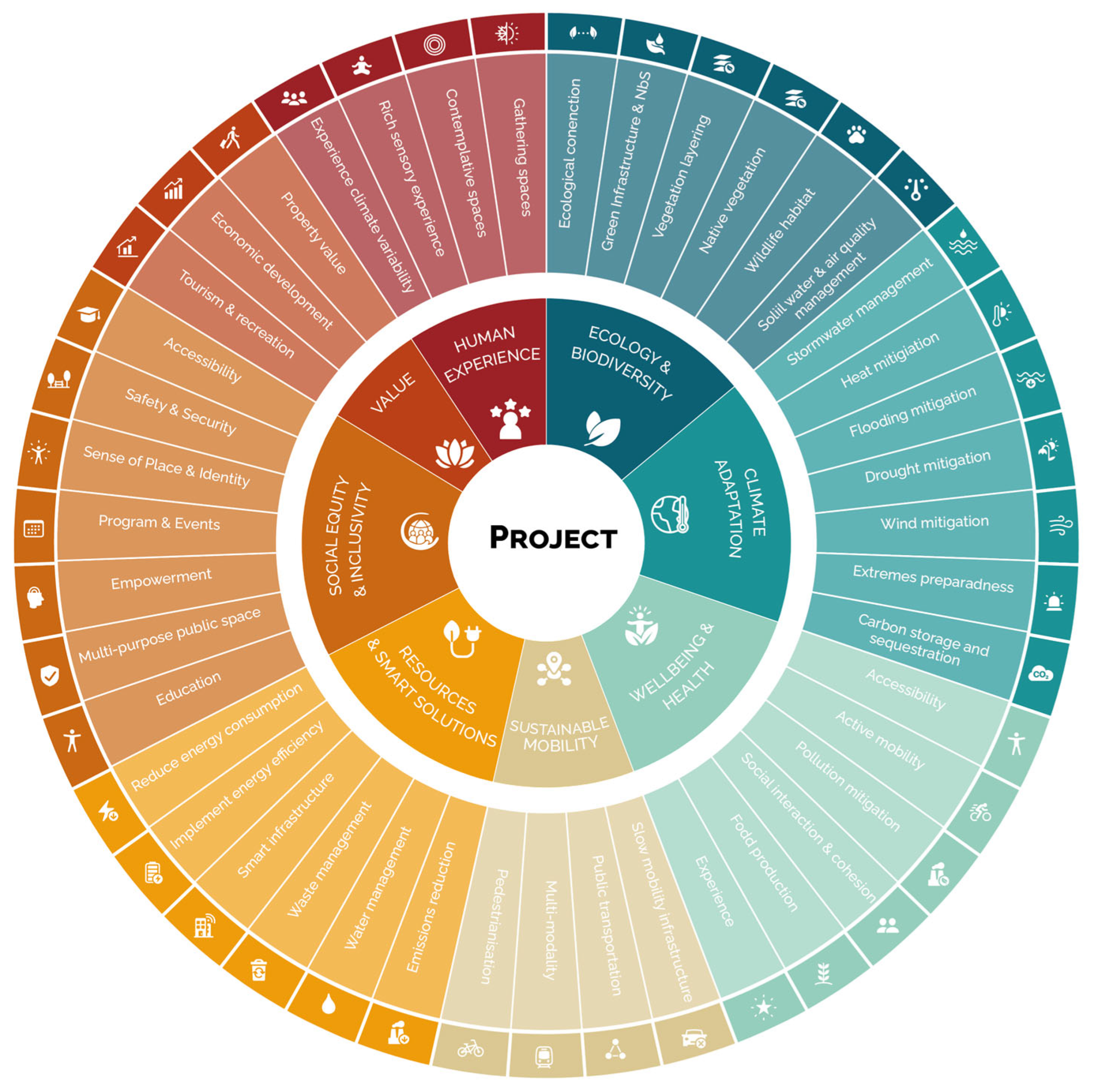
The first stage aims to identify space-relevant themes and characteristics of contemporary climate-adaptive, nature-based streetscapes. Through the review of scientific literature, grey literature, policy documents, design briefs, and project reports, a structured set of recurring themes and associated characteristics is identified (
Figure 1). Rather than remaining descriptive, these themes are reorganized as analytical categories capable of informing spatial interpretation. They are translated into criteria and parameters, later used for both ex-ante and ex-post evaluation of case studies’ regeneration.
5.2. Stage Two: Comparative Case Study De-Composition
In the second stage, relevant case studies are selected, analyzed, and compared (for an in-depth examination and understanding of this phase, see [
38]). The corpus includes both built and unbuilt projects explicitly addressing climate-adaptive regeneration of streetscapes through NBS. The analysis focuses on two complementary dimensions:
(1) The design process itself, identifying principles and features that informed the construction of a preliminary operational methodology, later tested and refined in the Research by Design phase (
Table 1).
(2) The interpretation of spatial transformation. The selected case studies are investigated through a progressive process of spatial decoding aimed at making explicit the architectural dimension of Nature-Based Solutions. This approach deliberately repositions NBS from techno-performative environmental devices to design components actively contributing to the expression of the streetscape composition. In this perspective, NBS are interpreted as spatial elements capable of shaping sections, thresholds, enclosures, sequences, and hierarchical relationships, thereby translating environmental objectives into spatial configurations. This interpretative framework is operationalized through a structured analytical sequence systematically applied to each case study: (a) urban contextualization, assessing climatic conditions, morphological patterns, and planning frameworks; (b) characterization of the pre-intervention streetscape, identifying spatial morphologies, vulnerabilities, and latent opportunities; (c) identification of design strategies guiding regeneration; (d) classification of implemented NBS according to the World Bank and Felixx [
62] taxonomy (for an in-depth examination, see [
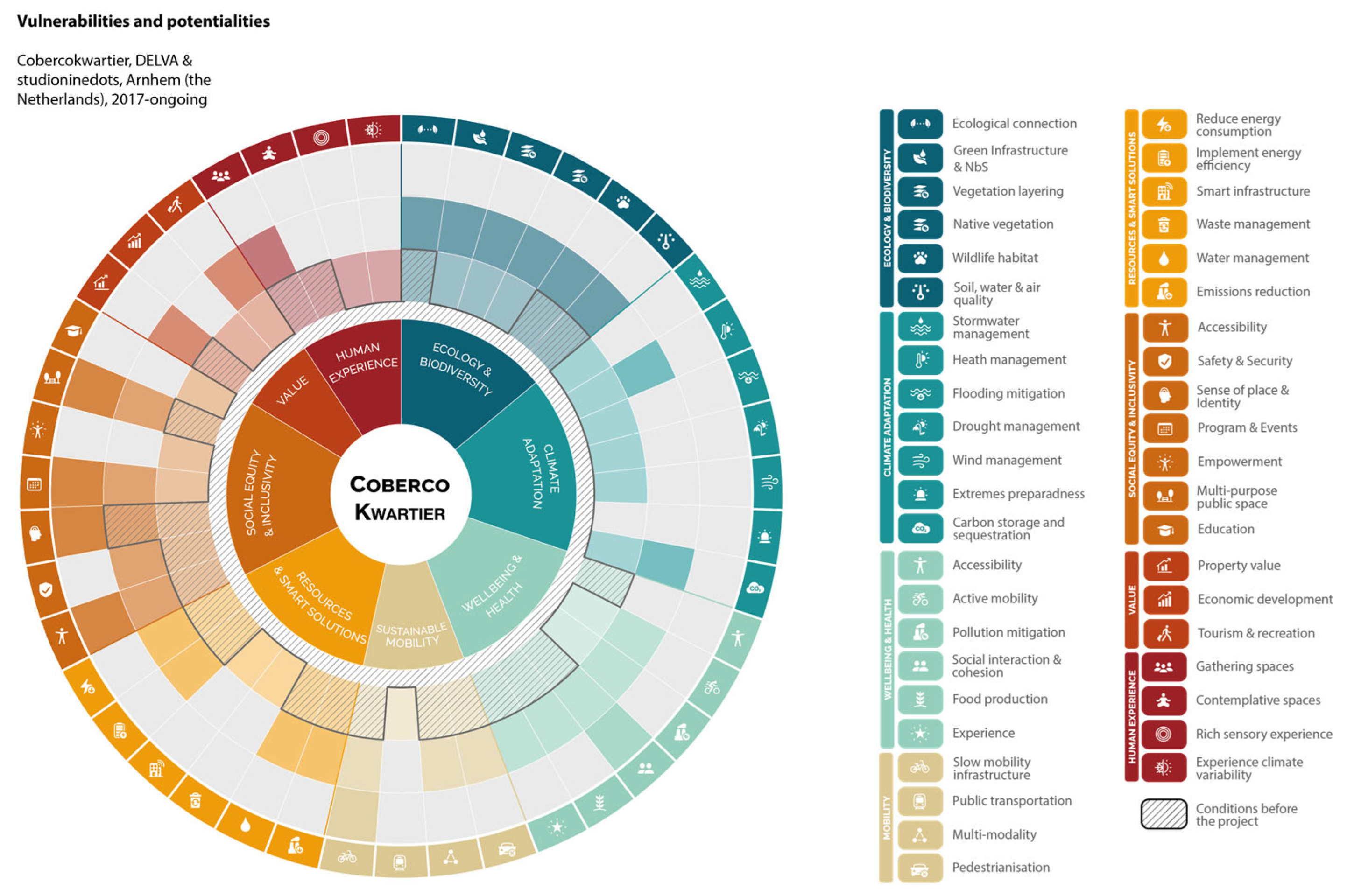
38]); (e) comparative evaluation of pre- and post-intervention conditions through the operationalization of identified themes and spatial-related characteristics into quantitative assessment criteria and indicators (
Figure 2); and (f) identification of how NBS were used as design components, translated into spatial devices and associated transformative actions.
5.3. The Wheel as an Evaluation Framework
The wheel aims to evaluate how streetscape regeneration contributes to climate adaptation. It organizes a set of thematic domains relevant to climate-adaptive, nature-based street design, reflecting key challenges associated with extreme weather events, including heat waves, intense precipitation, and drought conditions.
Within the framework, thematic domains and their associated characteristics are translated into a set of evaluation criteria and indicators, enabling the systematic assessment of how streetscape regeneration can contribute to climate resilience through NBS. To operationalize the evaluation, each indicator represented in the wheel is assessed using a semi-quantitative scoring system ranging from 0 to 5.
The framework is first applied to the selected case studies, through an ex-ante and ex-post assessment, enabling a comparative analysis that highlights improvements generated by the proposed climate-adaptive nature-based strategies. The results of this evaluation inform the translation of nature-based strategies into concrete spatial interventions, which are further systematized in the abacus of spatial devices and actions presented in the following section.
As part of the Operational Methodology, the wheel is subsequently applied to evaluate different design scenarios for test-bed streetscape regeneration, enabling the comparison of alternative spatial configurations and their potential contribution to climate-adaptive transformation through nature-based strategies.
5.4. From Nature-Based Solutions to Spatial Devices and Actions: The Abacus as an Architectural Compositional Translation
This phase is grounded in the authors’ assumption that nature—understood through the implementation of NBS—constitutes a fundamental component of architectural design, contributing both to the form-finding process and to the compositional structure of the project. Within this perspective, NBS are not approached as external technical integrations, but as spatial elements capable of participating in the formal articulation of streetscapes. By translating ecological measures into architectural variables, this operation also seeks to re-enact the consolidated lineage that interprets the street not merely as infrastructure, but as an architectural–urban figure structured through section, thickness, threshold, and relational depth.
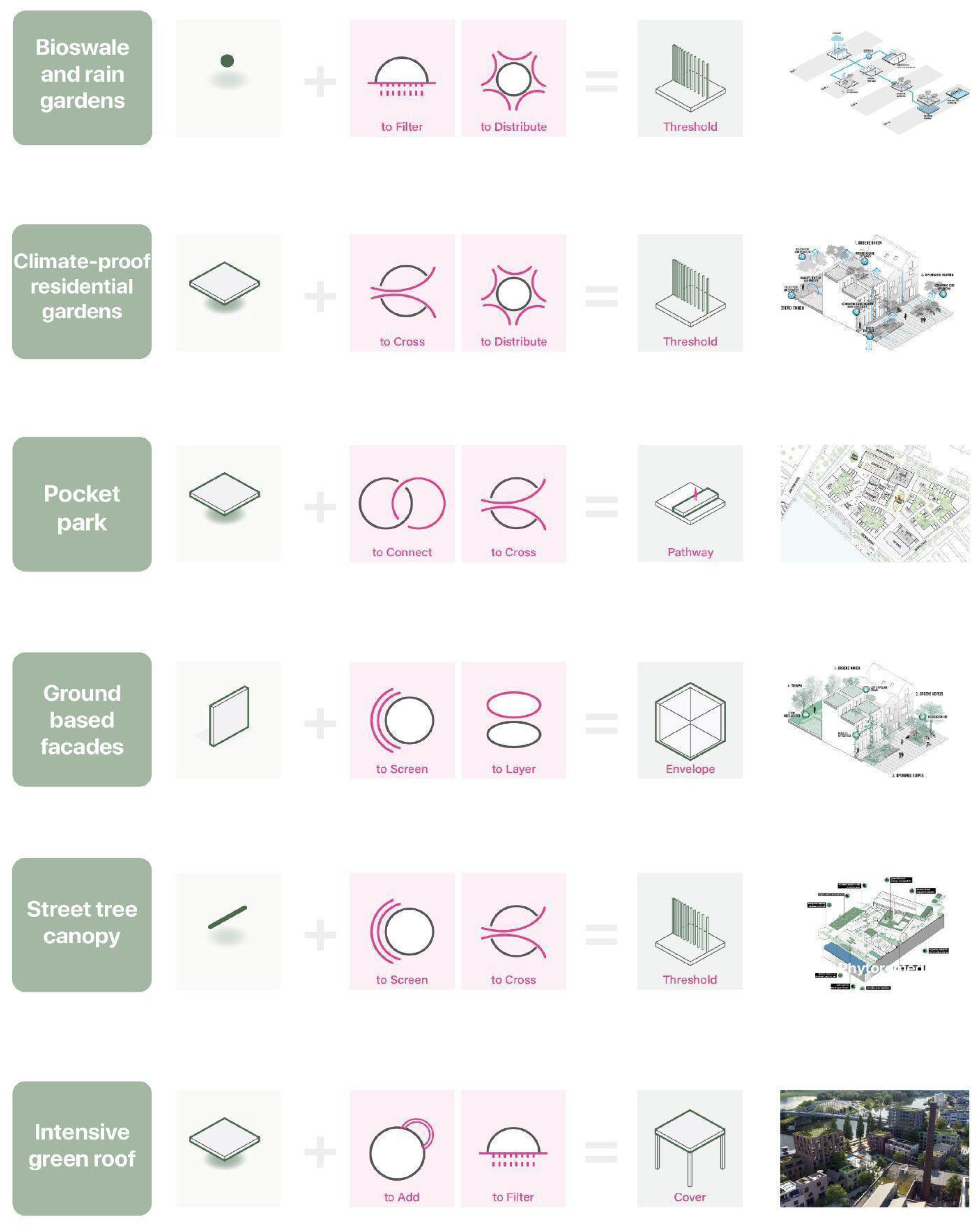
Within the Operational Methodology developed in this research, a structured translation framework, the Abacus, is introduced to mediate between ecological function and architectural configuration. Rather than operating as a catalogue of predefined solutions, the Abacus establishes systematic relationships among problems, strategies, actions, and spatial configurations, enabling a coherent interpretation of how environmental imperatives are spatially materialized.
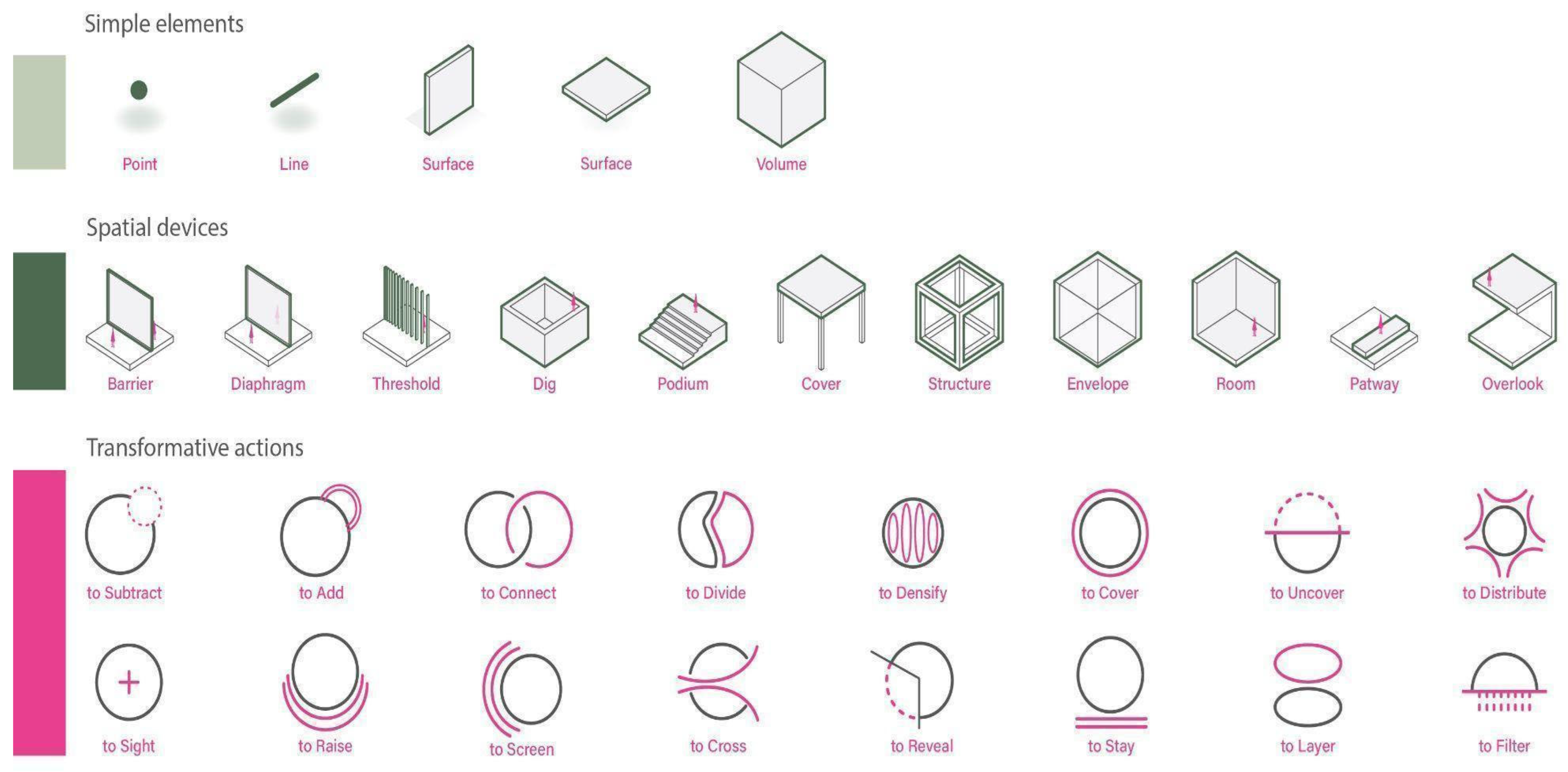
For each case study, NBS identified in the previous analytical steps are therefore de-composed into three interrelated components: (a) a geometric abstraction, (b) a spatial device, and (c) a set of transformative actions. This deductive procedure moves from concrete case studies toward their underlying compositional logic, isolating the formal and operative attributes embedded within each intervention.
The first step consists in abstracting NBS into four basic geometric categories:
Point, when the intervention is localized (e.g., individual trees);
Line, when it develops longitudinally (e.g., tree alignments or green corridors);
Surface, when it extends two-dimensionally (e.g., bioswales, permeable pavements, vegetated façades);
Volume, when it assumes three-dimensional configuration (e.g., topographical modifications or raised landforms).
This geometric classification provides a preliminary level of formal interpretation.
In a second step, each geometric form is associated with a spatial device (
Table 2) that clarifies its configurative role within the streetscape and with a corresponding set of transformative actions that describe how NBS are spatially enacted (
Figure 3). Because each project is embedded within specific morphological and contextual conditions, the relationships among NBS, geometric form, spatial device, and actions are inherently context-dependent.
Through the Abacus structured decomposition, NBS are translated into explicit spatial variables, establishing a coherent framework for interpreting their architectural articulation and reconnecting climatic and environmental strategies with the theoretical lineage that has long considered the street as an architectural field of design inquiry.
5.5. From Analytical to Generative Tool
The interpretation of NBS through geometric abstractions, spatial devices, and transformative actions possesses a double methodological nature. On the one hand, it operates as an analytical framework (
Figure 4), enabling the systematic de-composition and comparison of existing projects. Through layered associations—linking streets’ morphology, vulnerabilities, strategies, geometric forms, spatial devices, and actions—the case studies are transformed into an interrogable spatial dataset. This structured corpus allows recurring patterns, morphological logics, and compositional principles to emerge, supporting designers in identifying transferable solutions and contextual adaptations. On the other hand, and more significantly, this ‘spatial grammar’ functions as a generative design tool. By reframing NBS as design components rather than merely techno-performative features, it reveals their often-unexpressed spatial potentialities and positions them as active components in the architectural configuration of streetscapes. In this sense, the taxonomy linking NBS, spatial devices and actions does not remain descriptive; it becomes operational. It aims to support designers in conceiving new interventions where ecological performance and spatial form are conceived simultaneously, integrating environmental imperatives within context-sensitive compositional strategies. Consequently, the spatial grammar developed through this research, together with design principles and procedures, constitutes a core component of the operational design framework, bridging analysis and projective action.
5.6. Operational Workflow of the Abacus: Inputs, Process, and Outputs
To ensure the reproducibility of the operational methodology, the process is structured as a concise and transparent operational workflow. The inputs include different steps: (i) the definition of the street typologies and their morphological configurations (e.g., section, width, and edge conditions); (ii) the identification of environmental vulnerabilities (such as heat stress, runoff, or lack of shading) for each typology; and (iii) the application of the Abacus framework. This last step provides insights and operational guidance towards the choice and the application of the NBSs which better fit the specific conditions. In fact, as already shown in the previous analytical part, the Abacus process is organized into three sequential steps: the geometrical abstraction, the transformative actions, and the spatial devices. Starting from an analysis of the site’s vulnerabilities and latent potentialities, the initial phase involves defining the spatial extent of the proposed NBS. This is achieved by translating physical features into geometric abstractions—namely points, lines, surfaces, or volumes. Such a taxonomical approach establishes a shared formal language, allowing diverse interventions to be systematically categorized and interpreted based on their spatial properties. Secondly, transformative actions are defined to characterize the NBS’s impact on the site. These actions delineate how the intervention reconfigures the urban fabric, unlocking new potentials for spatial usage, livability, and the overall urban experience. Third, this abstraction is associated with a spatial device, clarifying the NBS’s spatial role within the streetscape (e.g., as a boundary, connector, or filter) and establishing a link between geometric form and architectural meaning. Being tied to a site-specific condition, this process can lead to different combinations of factors linked to the same element of NBS.
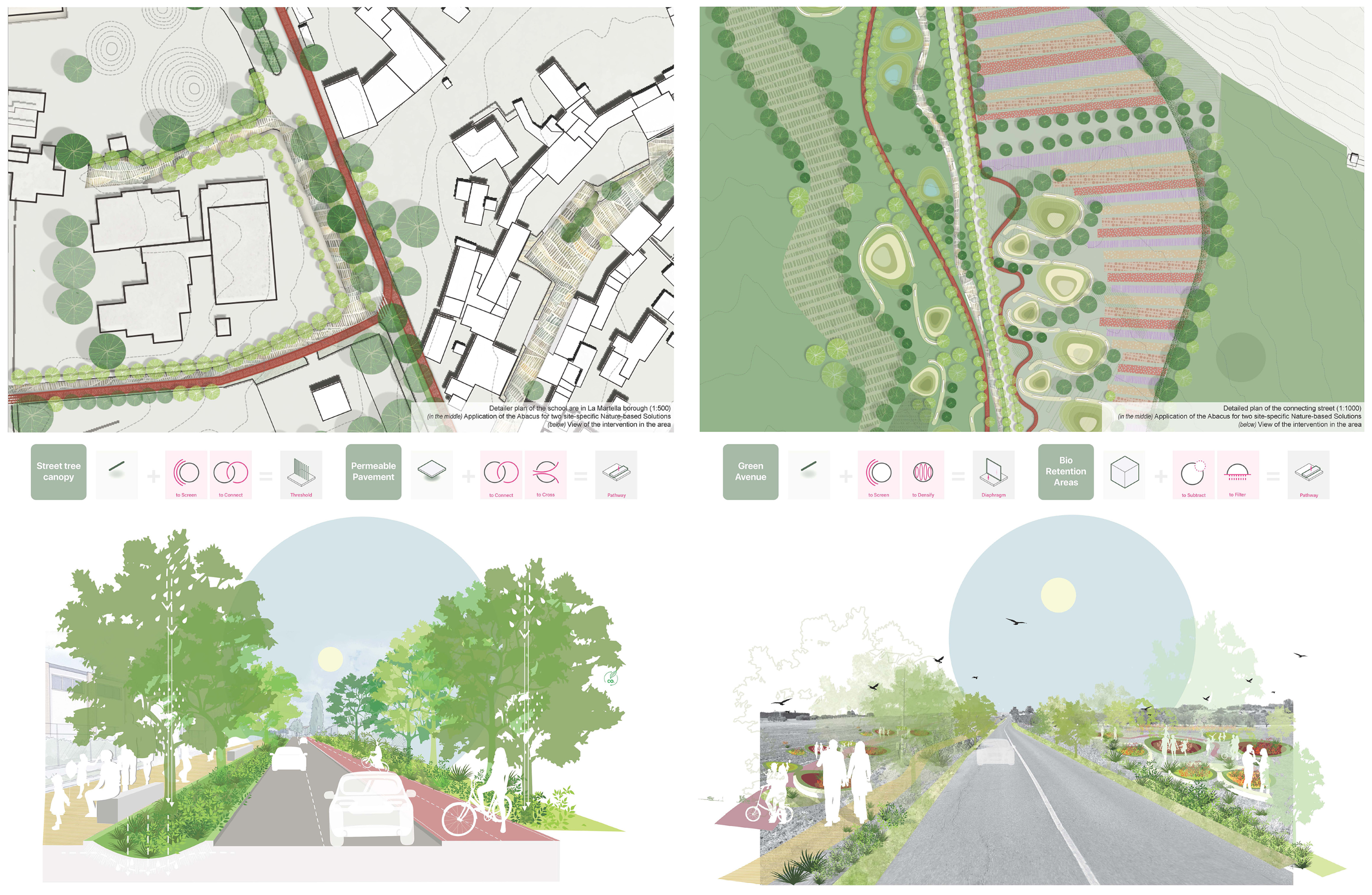
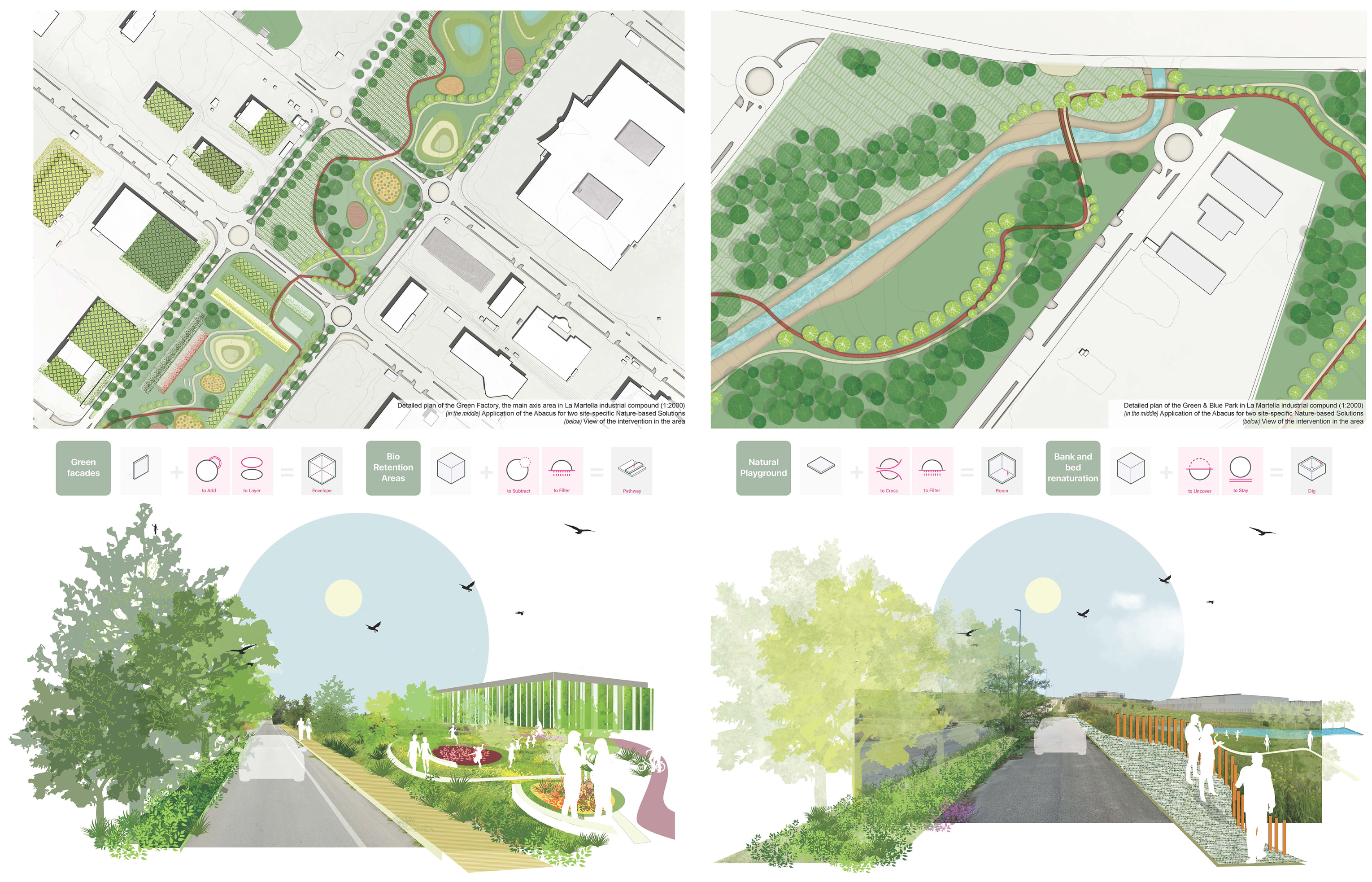
As a simple example, in a streetscape affected by heat stress and low permeability, the introduction of the NBS of ‘street tree canopy’ and ‘permeable paving’ (based on [
62]) can be interpreted respectively as a
line (street tree canopy) and a
surface (permeable pavement). These can correspond to spatial devices such as threshold/barrier/diaphragm (depending on the thickness and permeability of the street tree canopy), and
cover/
pathway (depending on morphology of the pavement), thus activating actions such as connecting, crossing, shading, filtering, and so on. Through this step-by-step procedure, environmental strategies are translated into spatial configurations, enabling the Abacus to function as a reproducible link between analytical knowledge and design application.
The operational workflow yields three primary outputs designed to bridge the gap between climate analysis, environmental performance, and urban/architectural design, prioritizing the spatial implications of Nature-Based Solutions (NBS): (i) Systematic Classification of NBS Interventions: A comprehensive catalog where NBS are categorized not merely by their environmental performance, but by their inherent geometric properties and spatial roles within the urban fabric. (ii) Typology-Specific Spatial Guidance: A set of actionable design guidelines for each identified street typology. This provides practitioners with a clear “spatial manual” for addressing specific environmental vulnerabilities (e.g., heat stress or runoff) through targeted geometries and site-specific configurations. (iii) Matrix of Possible Spatial Configurations: A coherent framework of transformative actions and spatial devices that serves as a reproducible link, enabling the translation of analytical climate/environmental data into tangible, nature-based streetscape regenerations.
5.7. Indicative Performance Metrics for Design Evaluation
To complement the operational workflow of the Abacus and enhance its applicability, a limited set of quantitative performance proxies is introduced. These indicators are not intended to substitute detailed simulations, nor to constitute the primary focus of the research, which remains grounded in a design-driven and morphologically oriented approach. Rather, they provide approximate, literature-based estimates that support early-stage design evaluation and enable a preliminary comparison across different street typologies.
For a representative streetscape condition characterized by heat stress and low soil permeability, the integration of selected Nature-Based Solutions—such as continuous tree canopy and permeable surfaces—can be associated with measurable environmental effects. Increasing the proportion of permeable surfaces to approximately 40–60% of the street section may result in an estimated runoff reduction of 30–50% [
63,
64], depending on substrate characteristics and rainfall intensity, as documented in previous studies. Similarly, the introduction of a tree canopy cover ranging between 30% and 50% can provide significant shading, contributing to microclimatic regulation and leading to an indicative reduction in thermal stress of approximately 2–5 °C during peak summer conditions [
65]. In addition, the continuity of vegetated elements along the street profile can support ecological connectivity, here approximated through the presence of continuous or semi-continuous green corridors capable of sustaining habitat networks.
Although simplified, these indicators illustrate how spatial configurations derived through the Abacus can be associated with measurable environmental performance, without shifting the methodological emphasis toward purely technical optimization. In this perspective, quantitative assessment operates as a complementary layer, supporting—rather than redefining—the primary objective of the research: the development of a coherent framework in which climate-adaptive and nature-based strategies are translated into architectural and spatial design. The integration of such lightweight metrics allows designers to consider the environmental implications of spatial decisions while avoiding reliance on complex simulation tools, thereby maintaining a balance between design operability and scientific robustness (
Table 3).
6. Detailing the Operational Methodology: Scale, Approach, and Transferability
The formulation of a structured operational methodology specifically intended for urban practitioners, such as (but not limited to) architects, urban designers, and policymakers engaged in climate-adaptive and nature-based urban regeneration constitutes a decisive advancement in confronting contemporary challenges related to sustainability, resilience, and environmental integration. Defined from the insights of the CANBUR framework, the Operational Methodology establishes a coherent yet open framework that synthesizes ecological, social, morphological, and climatic knowledge into an articulated design process. Its primary objective is then to provide a transferable, scalable, and replicable approach that enables systematic site analysis, the identification of vulnerabilities and latent potentials, and the formulation of adaptive strategies and regenerative spatial devices aligned with local climatic conditions and socio-spatial dynamics. The process supports then the intersection of research and practice, fostering iterative refinement and ensuring applicability beyond specific cases. In doing so, it bridges theoretical constructs and operational implementation within a broader agenda of climate-adaptive urban regeneration.
A central principle underpinning the methodology is the integration of NBS as a structural component of urban transformation, for their capacity to simultaneously address environmental, social, and economic challenges [
66,
67]. The proposed framework for Climate-Adaptive Nature-based Urban Regeneration (CANBUR) embeds NBS within a multi-scalar design logic, guiding interventions from the streetscape and neighborhood scale to broader urban strategies, while enhancing spatial quality and ecological performance. Rather than conceiving urban space as static infrastructure, the methodology frames it as a dynamic socio-ecological system in which built shapes, natural processes, and everyday practices and dialogues and interact.
For this reason, the operational Methodology can be understood not merely as a sequence of analytical and design steps, but as a trans-scalar operation which can support structuring climate-adaptive urban regeneration across interconnected spatial levels. Within this perspective, the process functions as a mediating framework that links site-specific spatial interventions to broader ecological, infrastructural, and governance systems. It operates simultaneously at the scale of the architectural detail, the streetscape, the neighborhood, and the urban-territorial network, ensuring coherence between localized nature-based devices and systemic climate strategies. Rather than understanding scales as hierarchical or isolated, the methodology articulates them relationally, allowing feedback loops between microclimatic analysis, socio-spatial practices, and policy frameworks. In this sense, scalability is not imagined as a simple replication, but as the capacity of the process to recalibrate its analytical depth, stakeholder engagement, and spatial resolution according to context, while maintaining methodological consistency.
The elements of scalability, transferability, and replicability thus constitute core ambitions of the process. While climate-responsive strategies must respond to site-specific conditions, the methodological structure is designed to be adaptable across diverse urban contexts. This balance is achieved through a flexible yet rigorous sequence of analytical phases, design iterations, and evaluation criteria that can be recalibrated according to local climatic, cultural, and governance frameworks. By giving the possibility of testing the methodology in multiple neighborhoods, the research refines tools, metrics, and spatial devices, contributing to the consolidation of a replicable model capable of informing broader urban policies and regeneration programs [
68].
The Operational Methodology functions then as a collaborative knowledge infrastructure in which multiple forms of expertise converge and are translated into spatial strategies. Its strength lies not only in disciplinary integration, but in the capacity to orchestrate heterogeneous knowledge domains—ranging from social sciences and human geography to landscape ecology, hydrology, and climate research—within a coherent design logic [
69,
70]. In this configuration, participatory practices can constitute mechanisms through which situated knowledge, lived experience, and socio-cultural dynamics inform spatial transformation. Concurrently, geospatial analysis and GIS-based mapping operate as analytical mediators, enabling the correlation of environmental data, microclimatic patterns, and spatial configurations across scales. Through this dual integration of situated and data-driven knowledge, the Operational Methodology establishes a reflexive design environment capable of aligning empirical evidence, collective agency, and spatial innovation.
Through this strongly multi-disciplinary and iterative configuration, a structured yet adaptable process is defined that can evolve in response to emerging knowledge and contextual transformations. By prioritizing user-oriented applicability, cross-scalar coherence, and methodological openness, it offers architects, urban designers, and planners a robust framework for climate-adaptive, nature-based urban regeneration capable of operating across geographic, climatic, and socio-political contexts.
6.1. The Three-Steps of the Operational Methodology
The Operational Methodology is articulated through three sequential yet interrelated steps that structure the transition from analytical understanding to spatial transformation and strategic implementation. The first step develops a critical, multi-layered description of the site, integrating inter-disciplinary and trans-scalar dimensions to identify vulnerabilities and latent potentials. The second step formulates hypotheses of transformation by translating analytical insights into spatial devices, design actions, and architectural characters grounded in climate-adaptive and nature-based principles. The third step advances these hypotheses into design scenarios, either through pilot-site experimentation or scenario-based projections, enabling iterative testing, scalability, and long-term adaptability. Together, these three phases establish a coherent yet flexible process that links critical analysis, spatial imagination, and strategic implementation across scales.
6.1.1. Step One: Critical Description of the Site
The first phase of the design process involves an in-depth exploration of the site through multiple layers, encompassing a multi-scalar, interdisciplinary examination of environmental, social, and morphological dimensions. This phase includes three key steps:
This step serves a dual purpose: on one hand, it aims to deconstruct the project site into multiple layers to identify the various factors at play, and on the other, it seeks to critically recompose these components into a cohesive whole, where the interconnectedness between elements fosters a (re)new(ed) understanding. This enables the development of a critical site description, integrating diverse perspectives through mapping, as for example:
Climate: Site-specific climate data is collected and analyzed, focusing on temperature fluctuations, microclimate characteristics, and predominant wind patterns. These climatic factors inform decisions related to shading, thermal comfort, and passive cooling strategies. To collect this kind of data is often a challenging process, due to the availability of open-access databases, thus creating some limitation in the definition of forecasted scenario. In addition to current climatic conditions, the methodology incorporates an analytical component addressing extreme weather events and their projected evolution under climate change. The analysis considers both recent climatic observations and medium- and long-term projections (e.g., 2050 and 2100) related to heatwaves, intense rainfall, and drought conditions. Integrating these projections within the vulnerability and potentiality assessment allows the methodology to anticipate potential impacts on existing neighborhoods, residential environments, and streetscapes, thereby informing the selection and spatial configuration of Nature-Based Solutions aimed at strengthening long-term urban resilience.
Site Morphology: Mapping structural conditions assesses their suitability for supporting diverse plant species, permeable surfaces, and other green infrastructure. Urban morphology is also considered, examining streets and buildings’ typologies and land use patterns that may influence design decisions.
Hydrology: An analysis of water dynamics, including rainfall patterns, runoff areas, and existing water basins, aids in understanding hydrological flows and informs the placement of water-sensitive interventions.
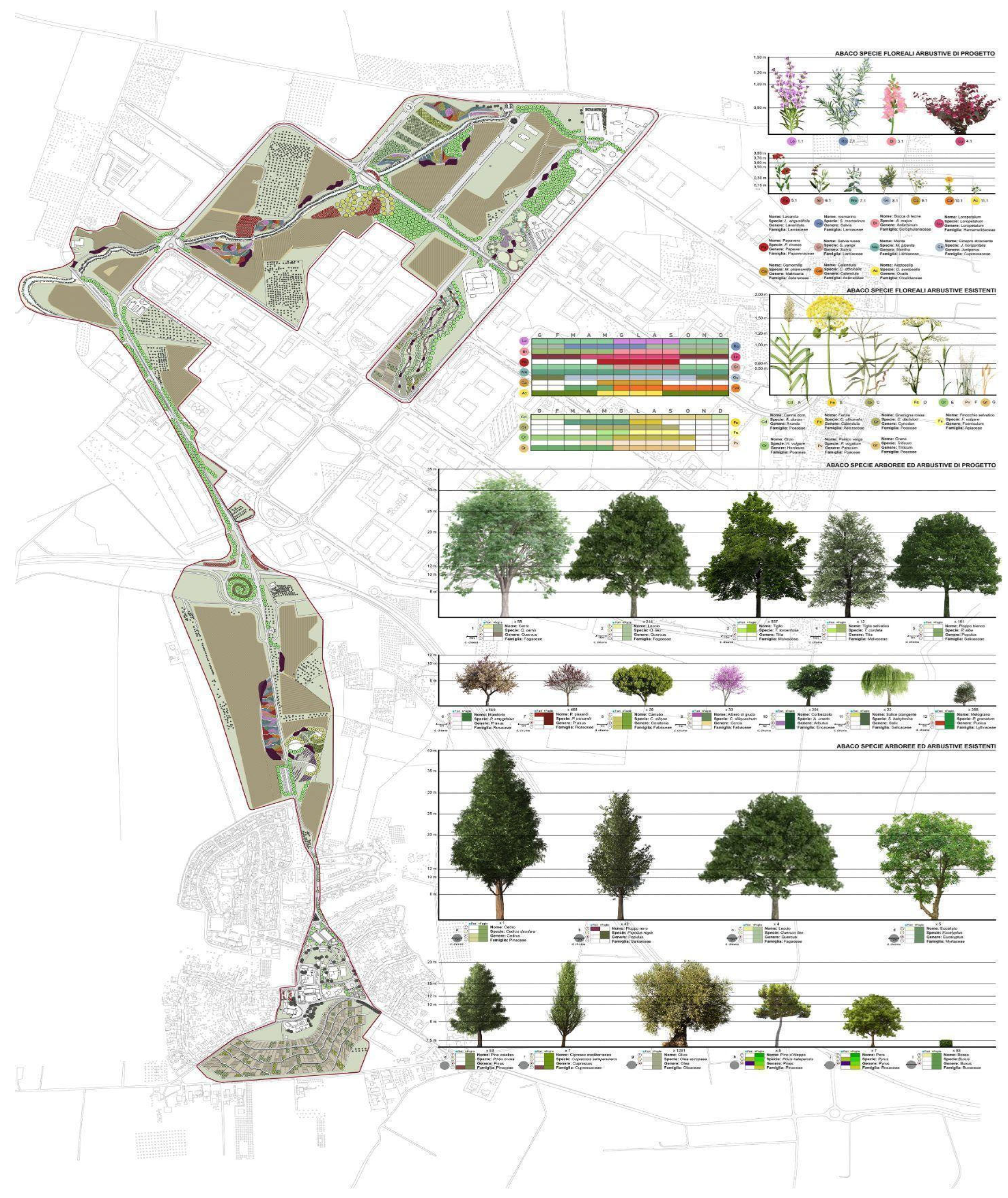
Botany: A botanical survey identifies local tree and shrub species, focusing on those that support urban biodiversity and ecological resilience. Insights into the adaptability of these species to local climatic conditions, stormwater management capabilities, and air quality enhancement are incorporated into future design phases.
Social Dynamics: Identifying social nodes and activity centers helps reveal the functional distribution of public spaces, entry points, and areas of high social centrality. This information can be qualitatively assessed through parameters such as accessibility, safety, and social cohesion [
28].
Spatial Typology: Recognizing spatial typologies at various scales, from infrastructure to buildings, contributes to understanding the spatial realm and the potential for its transformation.
Once the site is critically and comprehensively described, it will be possible to focus on identifying vulnerabilities arising from the interconnections between the initial layers. This phase provides deeper insight into the multi-scalarity and interdisciplinary nature of the systems involved. Vulnerabilities are assessed through the ‘Vulnerability and Potentiality Wheel’ which explores eight themes and their sub-parameters (previously introduced in
Figure 1) using a 0–3 scale where 0 indicates ‘absence’ and 3 ‘strong presence’. Similarly, opportunities for improvement are identified through the vulnerability assessment, enabling the evaluation of potential interventions that could enhance the site’s understanding and support future development and transformation projects. Within this part, the engagement of the local community could support a deeper understanding of site-specific challenges and transformative potentials, through workshops, surveys, and participatory mapping exercises. This participatory approach aims then to foster a shared vision and ensures that potential interventions align with local values, securing community support for future actions.
6.1.2. Step Two: Hypothesis of Transformation
By synthesizing data from the vulnerabilities and potentialities assessments with insights from the community, hypotheses for site transformation can be developed. These hypotheses outline spatial strategies and interventions, focusing on three design elements derived by the CANBUR Methodology explored earlier in this paper:
The scope of this phase is to identify some transformative hypothesis, thus pointing out (a series) of places in need of a regenerative process, which will then be developed in the following step, with site-specific and detailed actions.
For this reason, this step outlines first the necessity to work in a systemic way, thus highlighting a reference system which clarifies the specific design approach and its focus, whether it is related to the streetscapes, the industrial building, the residential or commercial functions, or other. Then, it would be possible to explore in which way the climate-adaptive devices of the NBS can play a role in the design. To do so, at such an initial stage, it is crucial to abstract the process and investigate the potential of NBS and their physical impact on the transformation of the space. For this reason, the spatial devices are understood not merely as physical forms but as interactive objects which can connect space, movement, and action. By triggering a transformation within the space, these devices facilitate new relationships between design, users, and the environment, thereby embodying distinct design characters. Simultaneously, a series of transformative actions have been recognized, reflecting the relationships that the design aims to foster in the physical environment. This approach demonstrates how design can “invoke form, as well as one’s experience or interaction with it” [
71] (p. 8), reinforcing the idea of the design process as dynamic, adaptive, and responsive to temporal and spatial needs. Finally, already in this step it could be possible to establish which architectural characters are crucial for the process and the final project, thus defining the core values and scope of the final outcome, and paving the way to the third and final step (The ClimaScapes research defines four main Architectural Characters of Climate-adaptive and Nature-based regeneration project: trans-disciplinarity, inter-scalarity, multi-temporality, and multi-subject). From this, a range of architectural characters has been identified through the analysis of climate-adaptive, nature-based streetscape projects, which express the values and intrinsic features of the project [
38,
72].
6.1.3. Step Three: Design Scenarios
The final phase of the design process outlined here proposes two possible and alternative approaches for project development:
The first approach involves identifying one or more pilot sites to implement and evaluate the proposed interventions on a smaller, controlled scale. These pilot areas serve as testing grounds for scalable design experimentation, facilitating systematic assessment and refinement of the proposed solutions (
Figure 4). The second approach explores alternative starting points for design development by constructing scenarios that anticipate future urban and environmental conditions [
73]. This approach informs long-term urban regeneration strategies by emphasizing the cumulative effects of incremental interventions. By adopting a scenario-based approach, in fact, the process acknowledges the inherent uncertainties of urban and climatic dynamics, reinforcing the importance of flexible and adaptive planning.
7. Matera as an Emblematic Case Study and a Prototype
The city of Matera in Italy may be interpreted as an emblematic case of the structural and morphological complexity that characterizes many medium-sized Southern European cities. Situated in the Basilicata region of Southern Italy, on the western edge of the Gravina canyon, the city’s development has been profoundly shaped by its topographical, hydrological, and climatic conditions. With a population of approximately 60,000 inhabitants within a municipal territory of about 392 km2, its urban fabric—stratified between the historical district of the Sassi, the post-war expansions, and contemporary neighborhoods—embodies the tensions between climate challenges, landscape, infrastructure, public space, and habitation. Within this multi-layered framework, the network of streetscapes assumes a strategic role: not merely as connective fabric, but as a pervasive and continuous urban figure through which environmental, social, and spatial transformations can be articulated. For this reason, Matera is adopted as both a pilot study and a living laboratory in which to test and further refine the CANBUR operational methodology grounded in architectural and urban composition.
7.1. A Euro-Mediterranean Urban Context Under Climatic Pressure
Matera’s warm-temperate climate, characterized by marked seasonal variability—with wetter winters and dry, hot summers—has historically required adaptive responses in urban planning and water management. Today, escalating climate change impacts, including prolonged heatwaves, increasing drought conditions, and extreme rainfall events, intensify these challenges. The proliferation of impermeable surfaces during the second half of the twentieth century—particularly in contemporary and suburban districts shaped by car-oriented infrastructures—has significantly reduced soil permeability and amplified the urban heat island effect [
74]. Flash floods increasingly affect not only newly developed districts but also historic areas [
75] and modern neighborhoods, where streets can transform into temporary torrents, threatening built heritage and public safety. These dynamics underscore the urgency of reconfiguring the city’s urban fabric through spatially intentional climate-adaptive strategies.
7.2. Historical Layers: From the Sassi to Piccinato’s Modern Vision
The choice of Matera is not accidental. It resonates with two historical paradigms of urban–nature relationships embedded in the city’s fabric. The ancient Sassi demonstrated a long-standing adaptation to environmental constraints, integrating ingenious water management systems which shaped the architecture of the city enabling local communities to flourish within a resource-scarce landscape for centuries. (The Sassi district, designated as a UNESCO World Heritage Site in 1993, is defined by its cave dwellings carved into the calcareous sandstone, forming a distinctive urban morphology that evolved in close synergy with the surrounding landscape. Its early inhabitants developed a sophisticated water management system based on gravitational flow, rainwater harvesting, and the natural dynamics of adjacent watercourses. Water flows were not merely controlled but spatially integrated, shaping the configuration of streets, public spaces, and buildings. An articulated network of cisterns, channels, and reservoirs was embedded within the urban fabric, allowing water to be collected, conveyed, and stored for domestic and agricultural purposes, and enabling terraced gardens and orchards to flourish within an otherwise resource-scarce landscape). Its adaptive relationship between settlement, topography, and water reflects an early form of sponge city [
76], in which Nature-Based Solutions are a constitutive part of the urban morphology.
The post-war redevelopment period transformed Matera into a laboratory of modern urban experimentation. Luigi Piccinato’s visionary master plan (the masterplan, developed in the 1950s, established the spatial framework for the city’s outward expansion, accelerating the progressive depopulation of the historic core and the relocation of its inhabitants to newly planned districts and rural settlements. In Piccinato’s vision, green areas, green belts, and tree-lined streets were not conceived as decorative amenities but as the structural public green infrastructure of the expanding city. Parks, neighborhood gardens, agricultural buffers, and vegetated corridors were intended to operate as a continuous ecological and social system, mediating between built districts and landscape, regulating microclimatic conditions, and providing accessible public space) sought to reconcile expansion with ecological considerations, conceiving neighborhoods as structured systems of green open spaces and tree-lined streets integrated within a broader network of parks and green belts, which seeks to multiplicate public space, enhance environmental performance, improve spatial quality, and foster social cohesion [
77]. Although only partially realized, this vision articulated a spatial framework in which streets and green infrastructures were intended to operate as multifunctional public spaces fostering environmental quality and social cohesion. The incomplete implementation of this green infrastructure—combined with subsequent car-oriented development—generated discontinuities that today exacerbate climatic vulnerabilities.
7.3. Streetscapes as a Strategic Field of Regeneration
Within this context, streetscapes are interpreted as privileged sites for climate-adaptive and nature-based regeneration. They constitute a substantial portion of Matera’s built environment and represent a scalable, multi-scalar opportunity for transformation. Recent research has demonstrated that the city’s green infrastructure can be deconstructed into distinct systems (Matera’s green infrastructure has been decomposed into four distinct categories—linear, molecular, areal, and network systems—drawing inspiration from morphological maps elaborated for the city of Prato [
78]) characterized by specific morphological attributes [
38], among which stands its streetscapes. The reinterpretation of these systems through NBS provides a strategic foundation for enhancing ecological and climate resilience, mitigating disparities in access to green spaces. However, the objective of the present research extends beyond enhancing environmental quality: it seeks to verify whether a spatially driven, design-based approach can reposition the street as an architectural space capable of synthesizing climatic adaptation, nature-based regeneration, and urban form.
7.4. Neighborhood-Scale Testing of the Operational Methodology
The three-phase CANBUR methodology previously outlined—Research about Design, Research by Design, and Research for Design—finds in Matera a coherent field of application. Interventions at the neighborhood scale are deliberately privileged: sufficiently circumscribed to allow methodological verification, yet sufficiently comprehensive to influence broader urban resilience [
79,
80]. The Operational Methodology has been systematically tested in four modern neighborhoods—Lanera [
81], Piccianello [
38], Spine Bianche [
80,
81], and La Martella [
38,
82]—each representing a distinct approach of post-war urban transformation. These neighborhoods exhibit differentiated spatial configurations, infrastructural conditions, and socio-environmental vulnerabilities, enabling a comparative assessment of how climate-adaptive, nature-based strategies can be integrated into diverse modern streetscape morphologies and re-shaped (
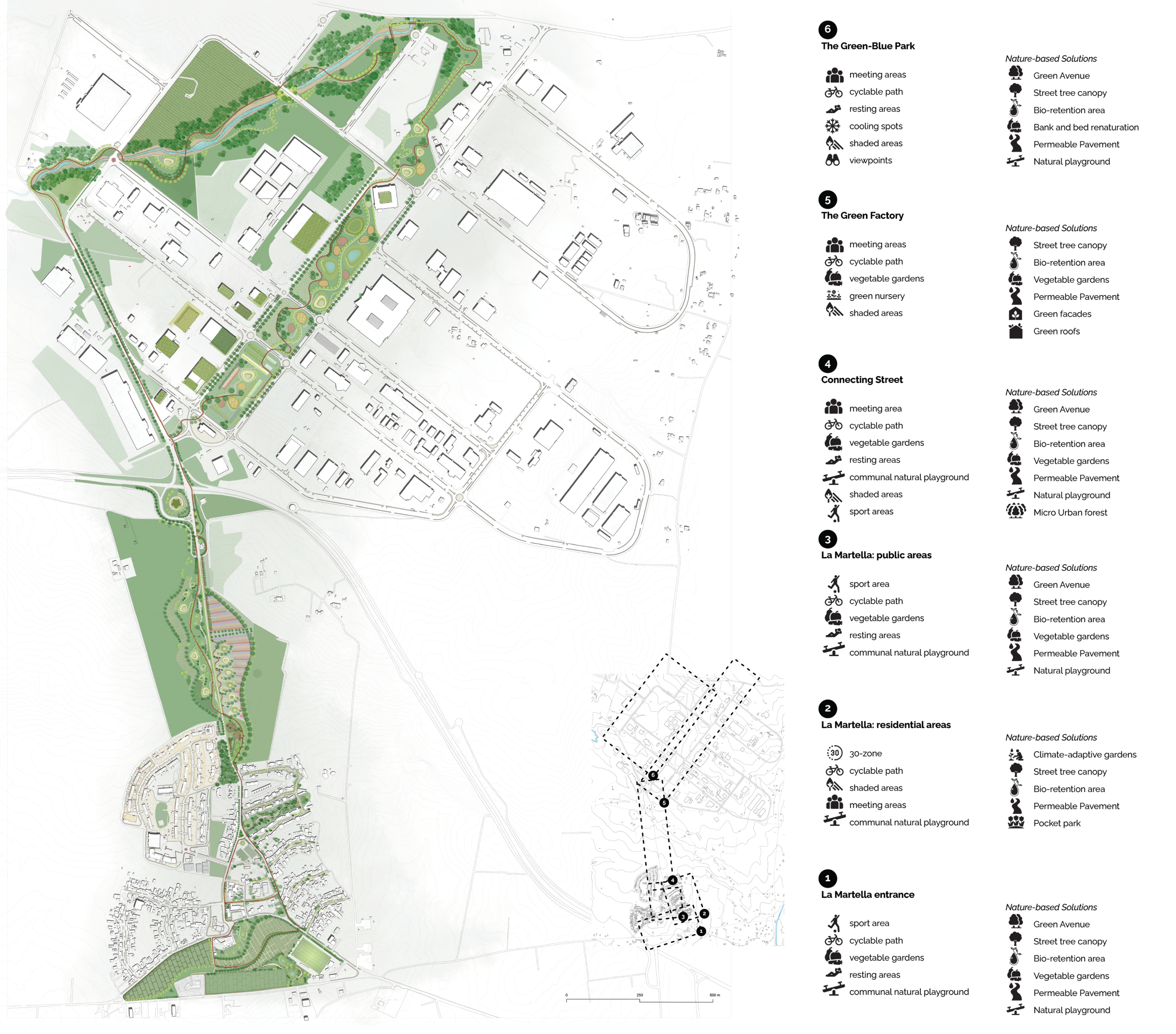
Figure 5).
7.5. Interdisciplinary Integration and Actionability
A crucial dimension of these design experiments is the activation of interdisciplinary collaboration. Architectural and urban composition are placed in dialogue with landscape design, agronomy, climate science, hydraulic engineering, and social sciences. This structure ensures that spatial proposals are scientifically grounded and technically robust, while remaining attentive to architectural coherence, social practices, and ecological processes. Streetscape interventions are thus conceived not as isolated technical upgrades, but as compositional transformations capable of reinforcing systemic urban resilience.
Equally significant is the effort to render the Operational Methodology actionable for architects and urban designers. To bridge the implementation gap, a series of workshops was organized involving architects, planners, public administrators, and policymakers. These workshops served as arenas for collective verification, where theoretical principles were tested against regulatory, economic, and technical constraints and translated into context-sensitive spatial strategies for Matera’s streetscapes. This iterative engagement between research, experimentation, and practice strengthens the transition from analytical insight to operational application.
7.6. Matera as Prototype
Through this iterative process, Matera operates not only as a case study but as a prototype. Its layered urban and streetscape morphology, climatic pressures, social vulnerabilities and its diverse interpretation of urban nature, provide a fertile ground for testing a spatially intentional and morphologically grounded operational methodology. By recalibrating streetscapes as architectural spaces that integrate ecological performance, social life, and urban form, the CANBUR framework aspires to offer a transferable yet context-sensitive model for climate-adaptive, nature-based urban regeneration in comparable Euro-Mediterranean cities [
76]. In the next paragraph the Operational Methodology is illustrated through its testing within the La Martella neighborhood, selected as the latest test-bed for methodological validation and refinement.
8. Testing the Urban Regeneration Process at La Martella, Matera
Located on a small hill, centrally located with respect to nearby employment hubs, the village of La Martella has, since its foundation, represented a significant synthesis of architecture, tradition, and modernity. It was conceived to create a shared rural community for farmers, as envisioned by Adriano Olivetti, promoter of a territorial planning model inspired by American experiences [
83,
84]. (Drawing on his research experience in the United States, Olivetti sought to apply a North American model derived from New Deal initiatives, particularly those developed through the Tennessee Valley Authority in Norris Town [
85]).
The project (the original idea was initiated by architect Ettore Stella and, after his death, further developed by the group led by Ludovico Quaroni together with Federico Gorio, Luigi Agati, P.M. Lugli, and Michele Valori) aimed to explore a closer relationship between the built and natural environments. The settlement followed the site’s topography, reinterpreting, as far as possible, the vernacular concept of dwelling characteristic of the Sassi. Within the village plan, collective services were positioned at the center of the hill, with the dominant church, the civic center, and housing arranged along streets that trace the orography of the terrain, resulting in a richly articulated spatial configuration of the neighborhood.
The original masterplan, never fully completed, has more recently been complemented by two additional residential districts, designed and built separately in the 1990s, named Ecopolis and Europan. Furthermore, connected by a narrow rural road on the northern side of the village, there is today an industrial area of approximately 300 hectares, developed between the 1970s and 1990s, primarily linked to other industrial zones of the city. It is currently managed by the Industrial Development Consortium of the Province of Matera and is undergoing expansion.
The present condition of La Martella reveals a situation markedly different from the original project, in which the private vegetable gardens associated with individual dwellings have largely been replaced by temporary or semi-permanent constructions, and many collective green spaces have progressively been lost. Moreover, the widespread impermeabilization of urban surfaces has contributed to worsening climatic and environmental conditions, intensifying the urban heat island effect and prompting reflection on possible transformation scenarios for the near future.
These vulnerabilities, together with social, economic, and climatic challenges, underscore the need for a comprehensive regeneration strategy for the neighborhood, based on redefining the relationship between residential and industrial areas and exploring the transformative potential of climate-adaptive streets through the implementation of NBS. The adoption of NBS thus emerges as a key design instrument to address local challenges through the physical transformation of space, developing solutions capable of adapting to climate change, improving spatial quality, and reducing inequalities in access to green spaces.
8.1. Step 1: Critical Description of the Site
Today, La Martella is understood as the composite system formed by the suburban residential district and the adjoining industrial area. This ensemble currently exhibits a significant degree of abandonment of common spaces and a gradual demographic decline since 2019. According to the most recent ISTAT census of 2021, the population of La Martella counts 59,748 inhabitants, marking a decrease of 1.1 percent compared to 2019. Until 2019, and consistently since 1951, the local population had steadily increased, rising from 30,390 inhabitants in 1951 to 60,530 in 2019 [
86]. Furthermore, located within the Bradano catchment area and bordered by the Gravina stream, in proximity to the Natural Reserve and Lake San Giuliano, the area is subject to runoff phenomena directed toward the southeast and the Gravina stream during intense but short duration rainfall events.
For this reason, it is possible to recognize the distinct character of its two principal components. The northern sector is defined by the industrial compartment, with an extension of about 3300 km2, while the southern part includes the original borough and its subsequent expansions, summing up scarcely to 0.6 km2. As the outcome of two different development processes, these areas display a wide variety of street patterns and built fabrics, ranging from grid configurations in the industrial zone to more articulated network structures in the residential areas. Following the research by design approach, existing vulnerabilities are mapped, making explicit not only the deficiencies related to the scarcity of public and shared spaces, but also the lack of community services and public and active transport systems.
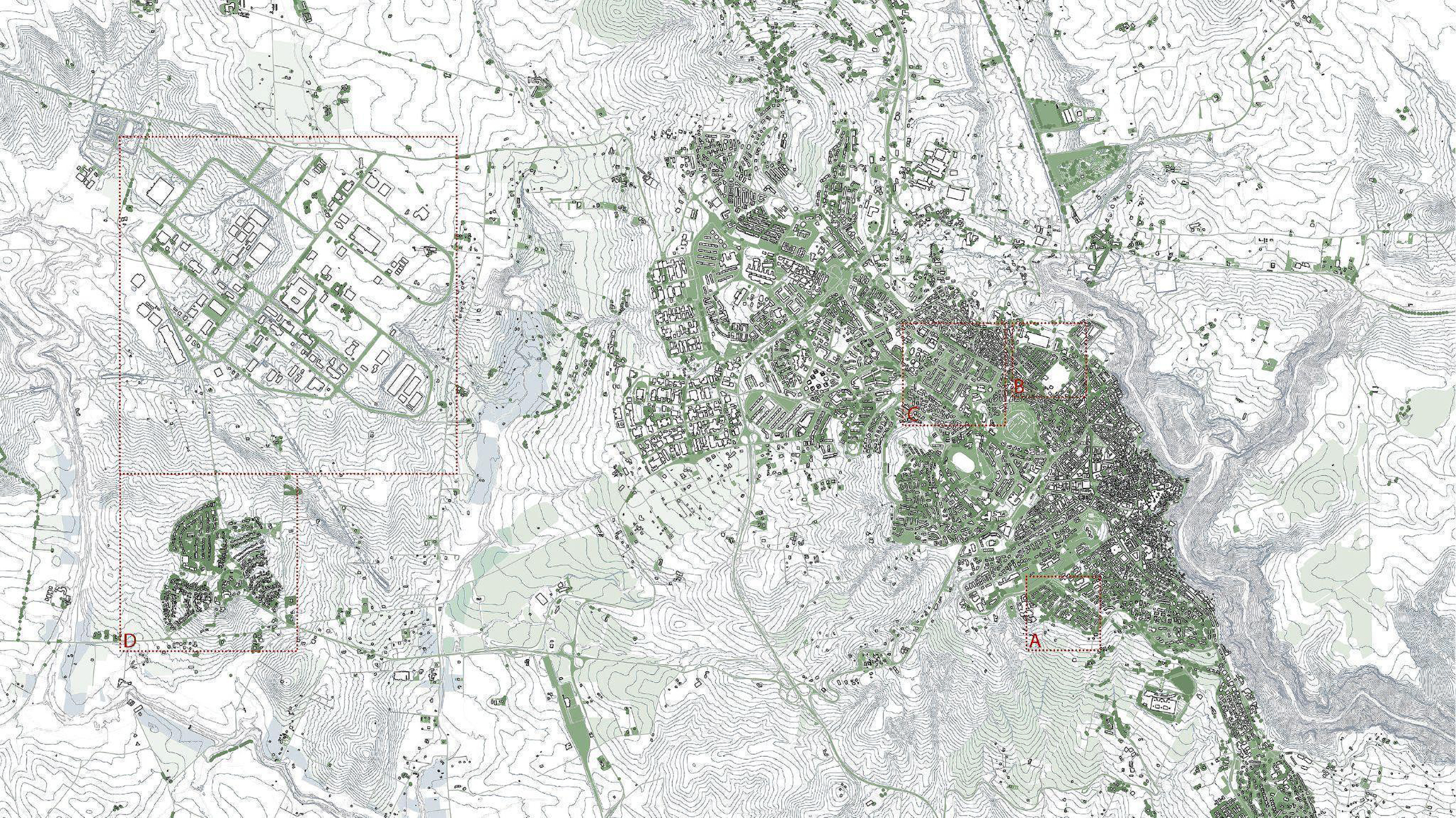
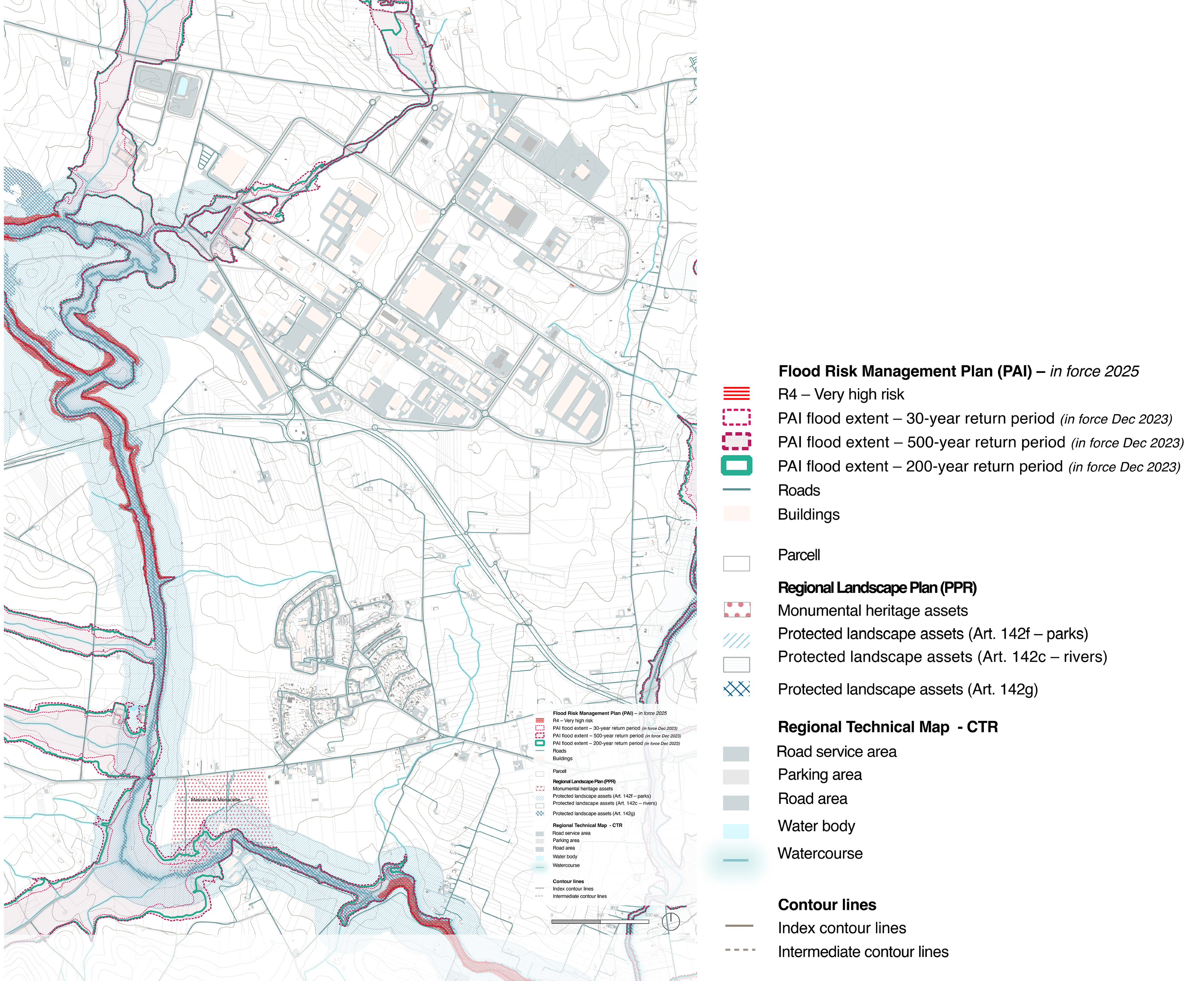
Figure 6 and
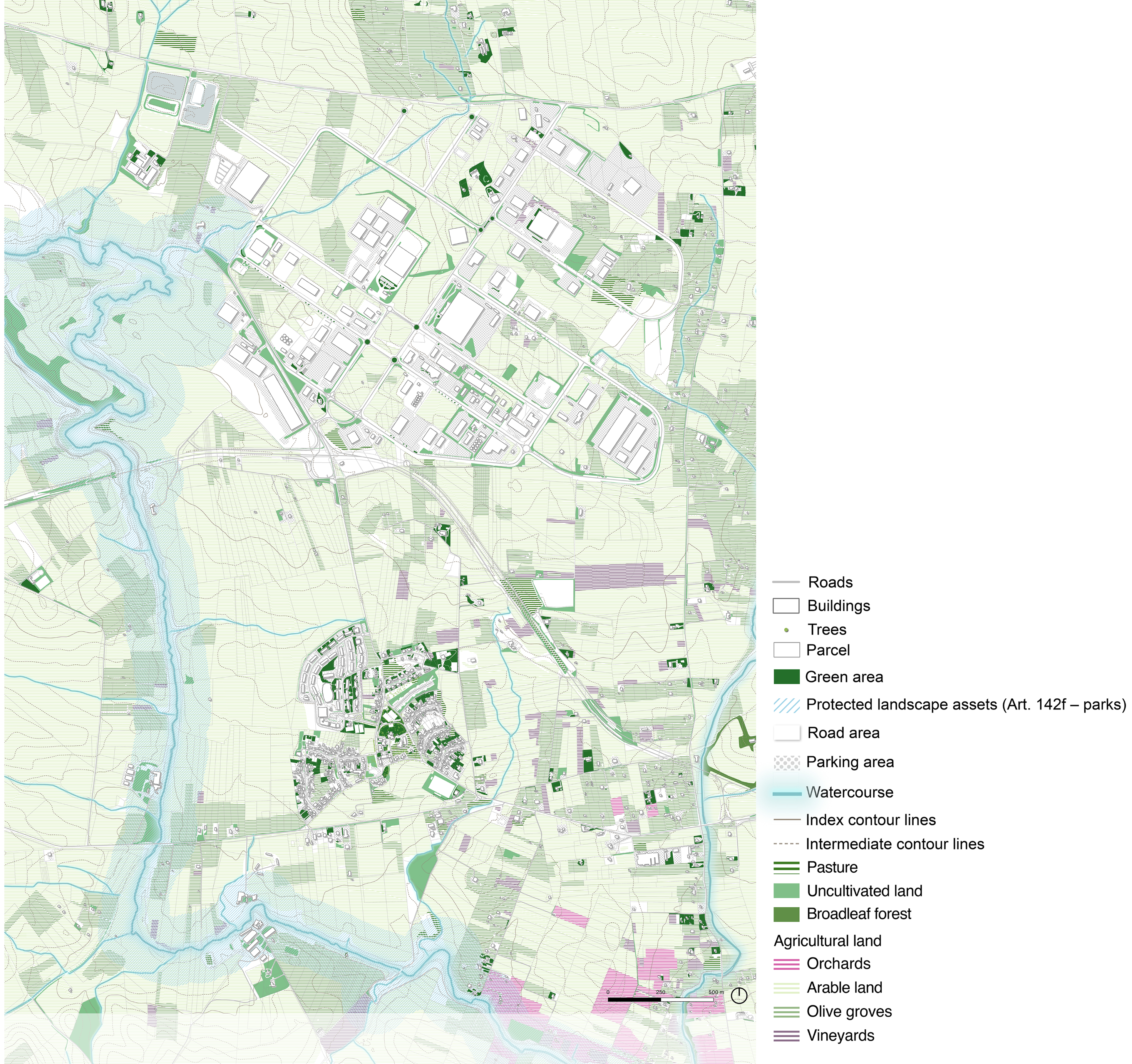
Figure 7 highlight the territorial and environmental framework of the area and
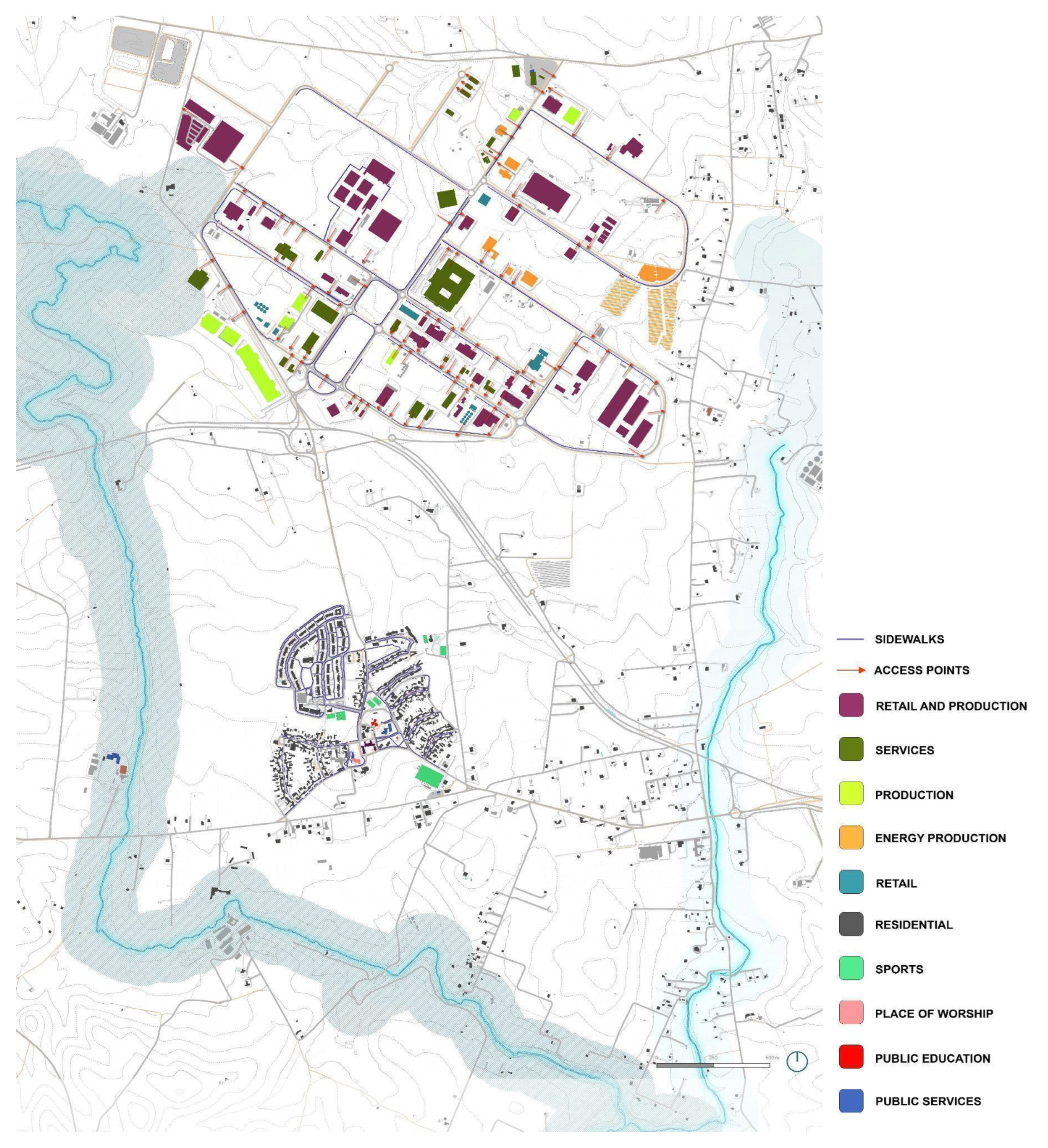
Figure 8 shows the distribution of functions and structure of the urban fabric. The first map highlights the environmental and hydrogeological structure of La Martella within the broader Bradano catchment system. The settlement is bordered to the west by the Gravina stream and its floodplain, characterized by areas subject to hydraulic risk and runoff dynamics. The cartography makes visible the relationship between the built fabric and the natural system, showing flood risk bands, contour lines, and protected landscape areas. The proximity to the Gravina corridor and to the Natural Reserve and Lake San Giuliano situates La Martella within a sensitive ecological framework. The topography reveals a gently sloping terrain, with runoff directed toward the southeast during intense rainfall events, reinforcing the relevance of water management strategies and climate-adaptive interventions.
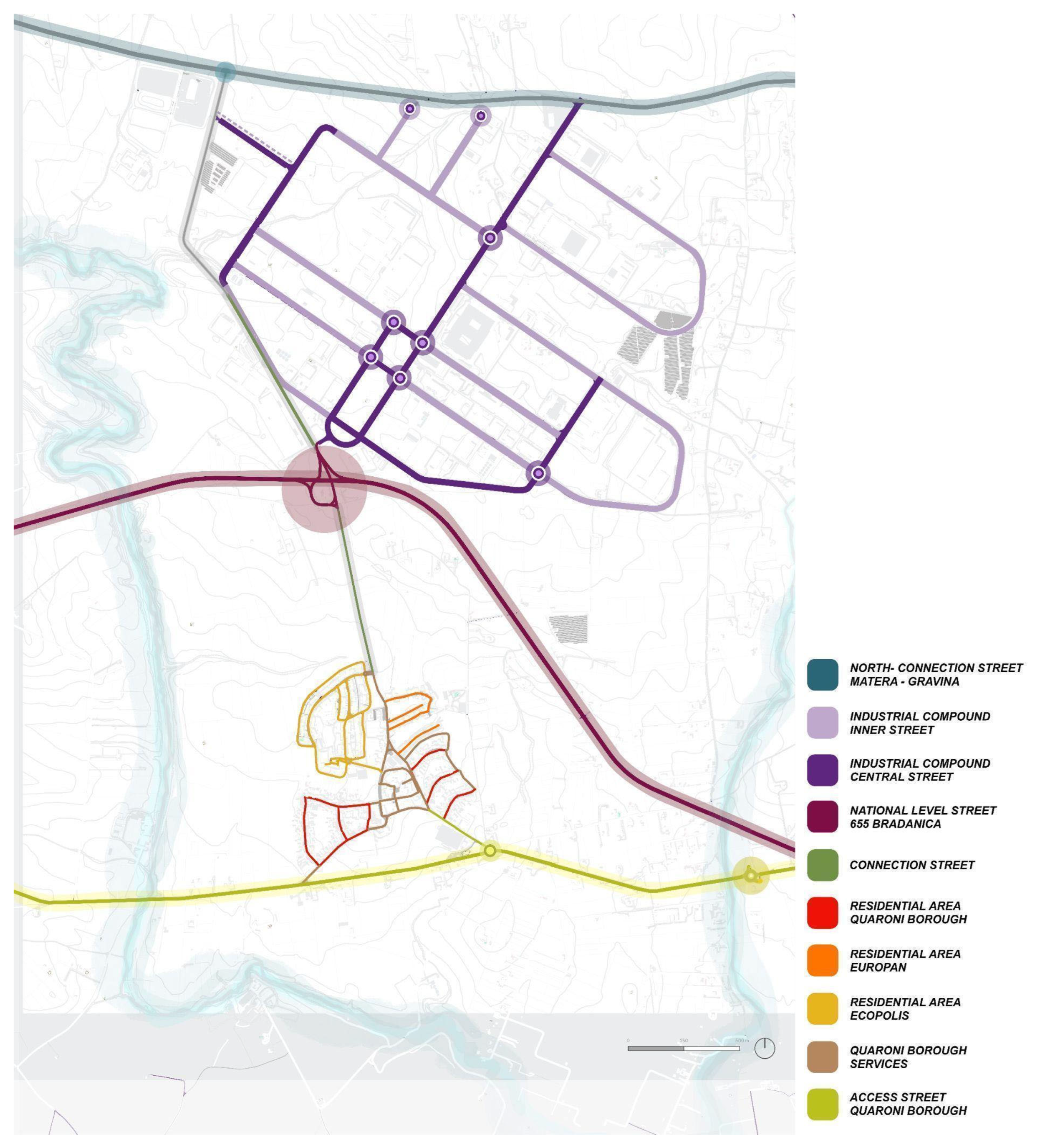
The second map focuses on land use distribution and urban functions. A clear distinction emerges between the northern industrial compartment, characterized by larger plots dedicated to production, logistics, and energy related activities, and the southern residential borough, where housing, public services, education facilities, sports areas, and small-scales retail are concentrated. Access points and sidewalks structure the internal circulation network, while services are unevenly distributed. The residential sector presents a more articulated and organic street network, in contrast with the grid structure of the industrial area. This functional mapping underlines the spatial fragmentation between the two areas and the limited integration between productive and residential functions.
In addition,
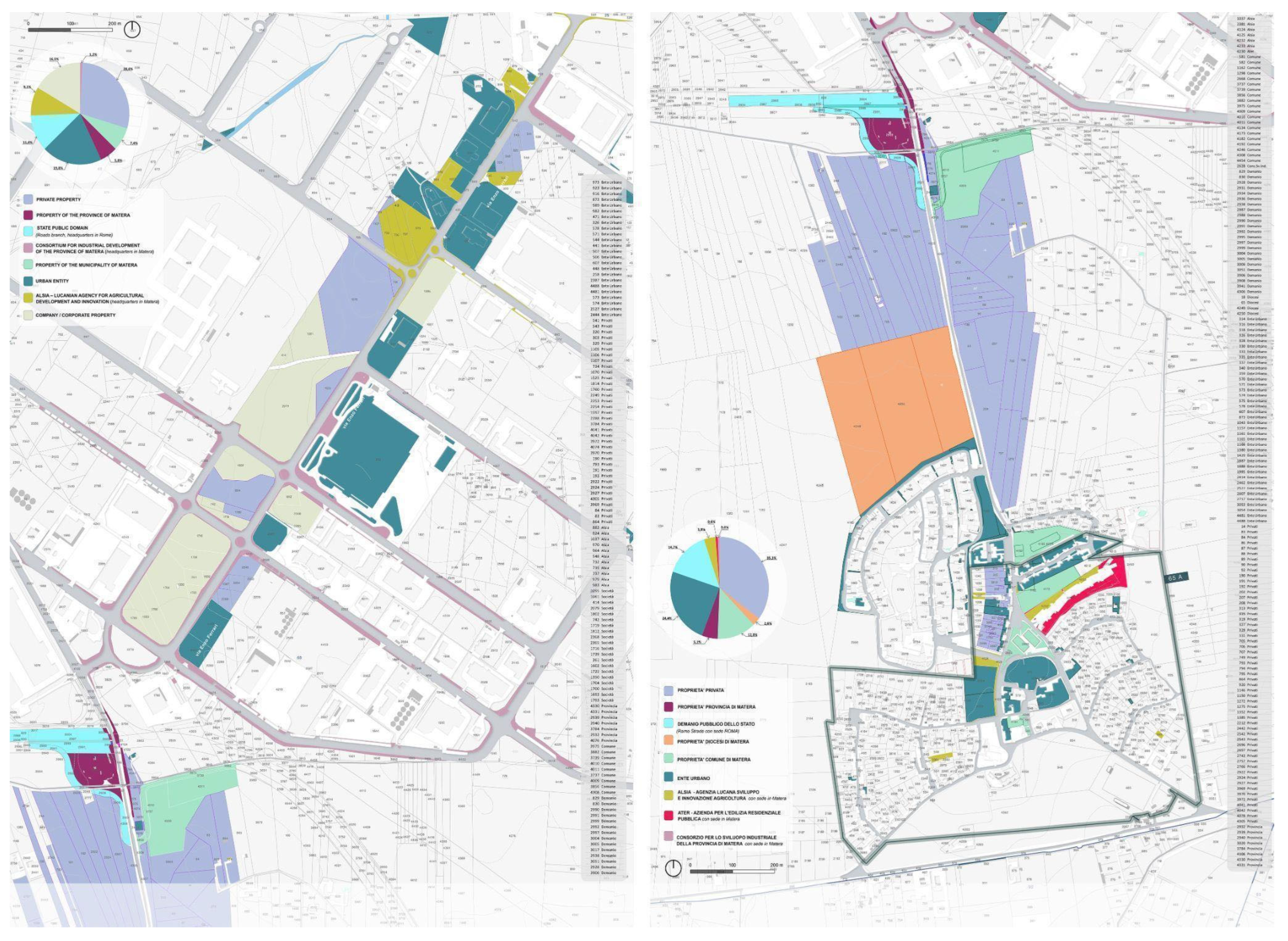
Figure 9 highlights the property structure and governance of the industrial area (on the left) and of the borough (on the right). This set of maps shows a highly fragmented ownership structure, including private property, municipal property, provincial assets, state public domain, ecclesiastical property, ALSIA, ATER, and the Consortium for Industrial Development of the Province of Matera. This complex governance structure has direct implications for regeneration strategies, as interventions must navigate multiple institutional actors and property regimes. Large industrial parcels contrast with the smaller residential plots, reinforcing the morphological duality of the settlement. Public and semi-public ownership is concentrated in specific strategic nodes, which may represent opportunities for pilot interventions and coordinated transformation processes.
Taken together, these maps provide a layered understanding of La Martella, revealing hydrological vulnerabilities and strong ecological assets, as well as spatial discontinuities and service imbalances. This integrated cartographic reading supports the identification of strategic areas for intervention, particularly along the interface between residential and industrial sectors and within the hydraulic corridor. It also reinforces the necessity of a climate-adaptive and nature-based regeneration approach capable of addressing environmental risk, spatial fragmentation, and institutional complexity simultaneously.
8.2. Step 2: Hypothesis of Transformation Through Design Guidelines
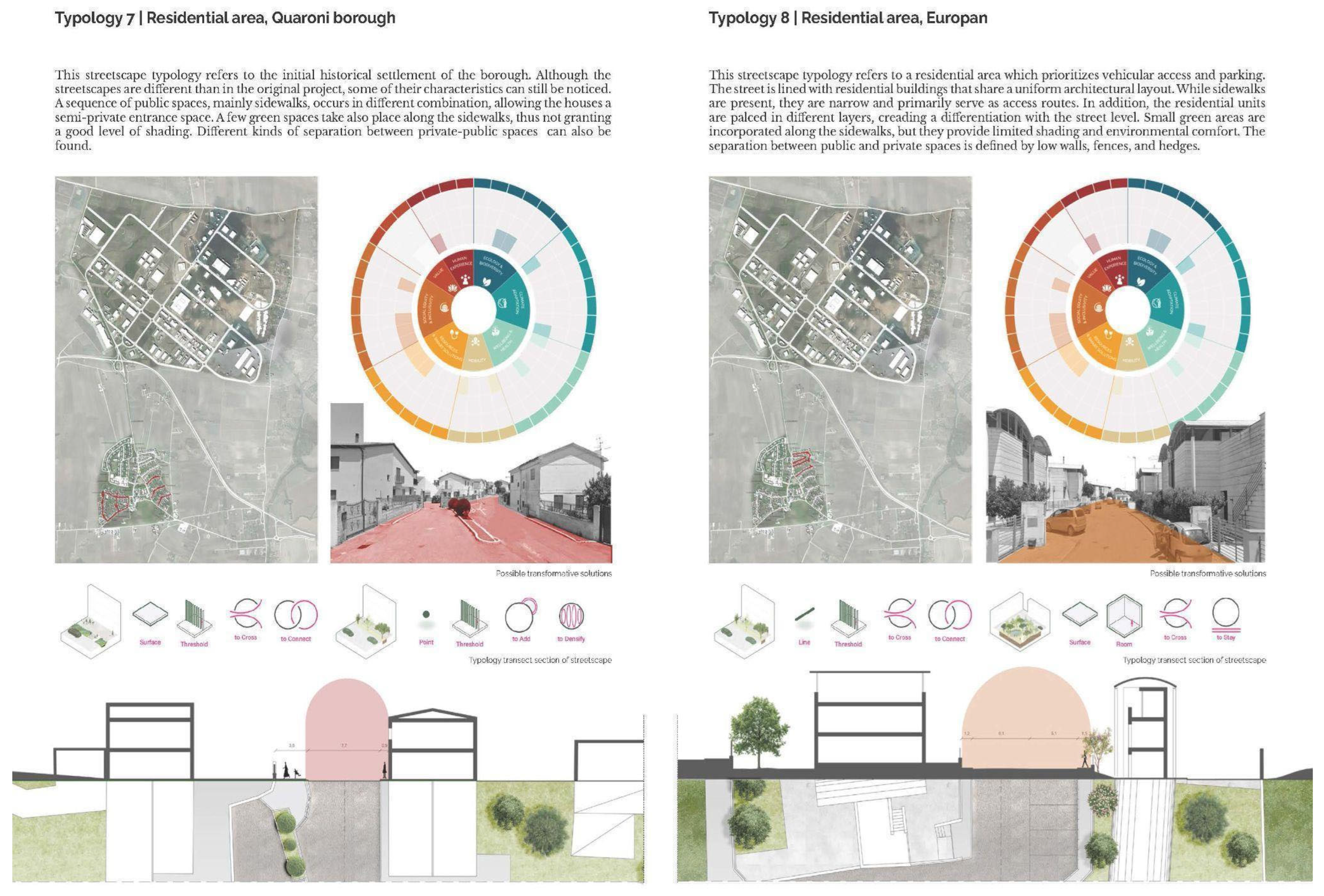
To address the diversity of morphologies and streetscapes across the site, a taxonomy of streetscapes has been developed through the design tool of typology (
Figure 10), intended to support the formulation of initial transformation scenarios, and collected in a Guideline report. This process includes a phase of characterization aimed at establishing design principles capable of informing a comprehensive strategic vision for the entire area. Streetscape types are categorized according to the sequence of elements composing the cross section, such as fences, sidewalks, private access roads, and traffic platforms, as well as according to the dimensions associated with each street condition. On this basis, ten streetscape typologies have been defined and analyzed through their planimetric, sectional, and three dimensional characteristics across the whole area. These ten typologies, identified through their constituent elements and dimensional relationships, function as operative components for climate-adaptive and nature-based regeneration. They incorporate ecological, economic, and social dimensions, contributing to an integrated process of village regeneration. Each typology highlights specific elements, spatial sequences, and material configurations, enabling a detailed understanding of the interaction between horizontal planes, such as streets and pavements, and vertical planes, including thresholds, boundaries, and built fronts.
This step provides then design proposals that reinterpret the principles of the original project in light of contemporary climate-adaptive and nature-based approaches tailored to the specific conditions of the site. By defining streetscape typologies, the research seeks to articulate a transformative strategy responsive to the particular characteristics of each context, while considering the social, environmental, climatic, and economic implications of adopting NBS as a central design tool for urban regeneration.
The definition of streetscape typologies serves as the primary instrument for the development of design guidelines that orient future transformation actions. These typologies demonstrate a replicable methodology of research and design that can be adopted in medium-sized cities seeking to address climate adaptation through streetscape regeneration. The guideline framework also provides specific recommendations for each typology, proposing a sequence of Spatial Devices and Transformative Actions that outline the potential modes of transformation associated with each streetscape type (
Figure 11).
On this basis, three strategic areas have been identified in which a more structured project can be developed, building upon the critical analysis and the transformation potentials previously outlined.
8.3. Step 3: Design Scenarios/Pilots
The last step focuses on the development of transformative scenarios as design possibilities, building up on the typologies developed in the second step. By embodying the previously acquired knowledge, this phase opens to investigating urban possibilities which connect in an integrated system the vulnerabilities and potentialities expressed in specific places, thus developing a complete program of possibilities, either defining a scenario-based approach or identifying one or more significant pilot sites.
The general Masterplan of the project, illustrated in
Figure 12, reinterprets the existing ecological and hydrological dynamics of the site, structuring a linear green system that connects the industrial area in the north to the historic borough in the south. Through terraced landforms, infiltration basins, planted swales, and reforested slopes, the design mitigates runoff phenomena, enhances biodiversity, and creates accessible public spaces integrated within the topography.
Furthermore, in
Figure 13, a general plan of green areas and species further specifies the botanical strategy, defining a calibrated selection of arboreal and shrub species adapted to Mediterranean climatic conditions. The selection of proposed and existing species demonstrates a layered planting system designed to ensure seasonal variation, ecological resilience, and microclimatic improvement. By combining native vegetation, productive species, and ornamental shrubs, the project establishes a diversified vegetal structure capable of enhancing shade, evapotranspiration, and habitat continuity.
The spatial transformations envisioned in the Masterplan explicitly demonstrate the spatial impact and operative role of NBS in the regenerative process. Rather than remaining abstract environmental strategies, NBS are translated into concrete spatial devices such as productive gardens, vegetated corridors, infiltration systems, shaded public paths, and planted crossings. Through these interventions, the project reveals how nature-based design can restructure spatial hierarchies, redefine thresholds, and establish new relationships between residential and industrial zones, between built form and landscape, and between environmental processes and everyday practices. In this way, NBS emerged not only as technical responses to climatic vulnerabilities, but as generative tools capable of shaping new socio-ecological configurations within the territory of La Martella.
Investigating NBSs in the Project’s Focus Areas
Along the whole site area, and between the borough and the industrial compound, four main focus areas are identified and investigated.
The Focus Area 1 “Borough: school-related area” concerns the core area of the borough, in the proximity of the local school and the majority of services. Here the two lane streetscape typology is transformed to return public spaces to the various communities, in accordance with neighborhood agreements. In this context, the introduction of a street tree canopy and permeable pavements contributes to increasing shaded surfaces and soil infiltration capacity, potentially enabling runoff reductions in the range of 30–50% [
63,
64] and localized thermal stress mitigation of approximately 2–5 °C during peak summer conditions [
65], as documented in comparable studies.
Proceeding north towards Focus Area 2 “Connection road”, this area investigates the sole connection road between the two built compartments (industrial/borough) conceived as active public spines, integrating pedestrian and cycling paths with spaces for temporary activities, markets, and collective events, thus strengthening spatial continuity and social interaction. Here, the implementation of a green avenue combined with street tree canopy and bio-retention areas reconfigures the street section as a linear climatic infrastructure, where increased canopy coverage (approximately 30–50%) enhances microclimatic regulation [
65], while distributed infiltration systems contribute to reducing peak runoff [
63,
64] and supporting water retention along the entire corridor.
The third Focus Area “Green-blue park” develops a green-blue infrastructure within the industrial compartment, aiming at rediscovering and restoring the latent natural environment through water-sensitive landscapes, reforestation, and ecological corridors. In this way, the integration of bioretention areas, urban forest patches, and a daylighted stream establishes continuous or semi-continuous ecological corridors, supporting biodiversity and habitat connectivity while simultaneously improving water management performance through increased retention, filtration, and delayed discharge processes [
63,
64].
Lastly, the Focus Area 4 “Green farm factory” relates with the theme of shared food production, through building plug-in solutions (as well as green roof/facades) and shared communal installation integrated in the public spaces, thus improving permeability and accessibility while supporting the integration of community services and shared facilities. In this way, the combination of urban vegetable gardens and building-integrated Nature-Based Solutions such as green roofs and façades contributes to enhancing surface permeability and evapotranspiration processes, supporting localized cooling effects [
65] and reinforcing the productive and social dimension of climate-adaptive infrastructures.
In each one of these focus areas, specific NBS have been selected to resonate with the needs, vulnerabilities, and potentialities of the areas. Following the
Abacus operational process, each NBS is related to (a) a specific geometrical extension (point, line, surface, or volume), (b) two transformative actions, and (c) a spatial device, which explain the NBS’s role and relation within its site (
Figure 14 and
Figure 15).
For example, along the connection street (Focus area 2), two types of NBS can be identified: Green Avenue, running for the whole length of the road and Street tree canopy, located in a specific portion of the pathway, to ensure shaded resting points.
These elements exemplify how the spatial continuity of vegetated systems can simultaneously deliver environmental performance and architectural coherence, translating canopy coverage and infiltration capacity into measurable yet design-driven climatic effects [
63,
64,
65].
9. Discussion: Present Limitations and Future Research Trajectories
This research set out to address four interconnected gaps in climate-adaptive streetscape regeneration: (1) the scientific gap (sectoral environmental focus), (2) the cultural gap (disconnection from morphological theory), (3) the operational gap (absence of structured design tools), and (4) the implementation gap (misalignment between strategy and spatial realization). These gaps have been widely acknowledged in the recent literature on Nature-Based Solutions and urban regeneration, which highlights fragmentation across methods, governance frameworks, and design practices [
87]. The experimental application of the CANBUR operational methodology in Matera—particularly through workshops and iterative testing in La Martella—confirms both the potential and the structural limits of this approach. Importantly, these limitations do not weaken the framework; rather, they validate its necessity. The findings demonstrate that the predominant limitation in current NBS practice is not technological insufficiency, but spatial disarticulation. Ecological measures often remain performance-optimized but morphologically detached. This condition has been observed in several studies addressing the integration of NBS within urban infrastructures, where environmental performance is not always translated into coherent spatial configurations [
88]. The translational system developed in this research—linking geometric abstraction, spatial devices, and transformative actions—proved effective in repositioning NBS within a compositional architectural logic. In this respect, the primary innovation of the research lies in demonstrating that ecological performance and architectural form can be conceived as mutually constitutive rather than sequentially integrated. However, like any experimental design process, some limitations emerged in its practical applications through experimental workshops and activities within the research environment and with practitioners, revealing the complexity behind the interdisciplinary integration and scalability of NBS. This discussion will identify some key limitations of the methodology from the perspective of architects and urban designers, and foresees future research paths to address these challenges.
A first limitation concerns the initial step of the CANBUR Operational Methodology, the Critical Description of the Site, which is grounded in a strongly interdisciplinary approach. While this multi-layered analysis deepens contextual understanding, workshop discussions highlight persistent communication barriers across disciplines. A structural asymmetry emerges between disciplines: designers must interpret technically complex environmental data and convert them into spatial configurations, whereas engineers and environmental scientists produce quantitative performance outputs that are not inherently organized for direct spatial or compositional translation. This interdisciplinary misalignment reflects broader challenges identified in inclusive and integrative urban regeneration frameworks, where the integration of environmental and social knowledge requires shared epistemic structures and tools [
89]. To mitigate this asymmetry, structured interdisciplinary workshops should be embedded within the initial phase of the CANBUR methodology, explicitly designed as translational environments rather than mere coordination meetings. These sessions can be supported by shared visual and analytical interfaces—such as GIS-based spatial overlays, environmental simulation outputs, and parametric modeling tools—that reframe quantitative data into spatially interpretable formats. Such tools function not only as representational devices but as epistemic mediators, enabling the alignment of performance indicators with morphological and compositional variables. In parallel, the development of shared terminologies, cross-disciplinary glossaries, and standardized reporting templates can reduce semantic ambiguities and ensure that environmental metrics are consistently structured in ways that facilitate spatial integration. By formalizing these translational procedures, the methodology strengthens interdisciplinary coherence and enhances the capacity of architectural design to synthesize environmental performance within spatial strategies.
A second limitation concerns the scalability of NBS within the second step of Hypothesis of Transformation. Although small-scale interventions such as tree planting, permeable pavements, and rain gardens prove effective at the streetscape level, their expansion across larger urban systems is often constrained by land use regulations, financial limitations, and institutional inertia. Enhancing scalability therefore requires a modular logic within the methodology, whereby interventions are conceived as adaptable units capable of gradual context-responsive expansion. Pilot projects, particularly within the Design Scenarios phase, can function as experimental tools that test feasibility before broader implementation, thus, involving partnerships with municipal planners and private stakeholders, for the exploration of long-term economic, environmental, and social co-benefits.
Another tension emerges between the theoretical ambition of the framework and real world constraints. The research methodology explores the transformative potential of climate-adaptive urban regeneration; however, budgetary restrictions, regulatory frameworks, existing infrastructures, and compressed timelines can represent a strong limit to implementation. Addressing this challenge requires embedding phased strategies within the design process, privileging incremental and cumulative transformations that align with financial and policy conditions. Early engagement with policymakers and institutional actors is essential to align design intentions with governance instruments and to advocate for adaptive zoning regulations and incentives that support sustainable urban practices.
Furthermore, the design tool of the Abacus, conceived as a reference system for designers, risks remaining abstract if not sufficiently operationalized. Workshop feedback emphasized the need for clearer guidance on adapting interventions to different urban morphologies and street sections. To enhance usability, the Abacus should be further structured according to typological conditions and supported by documented case studies that demonstrate practical applications. Developing it as a dynamic, query-based dataset would allow users to filter interventions according to climatic, social, and morphological parameters, transforming it into an interactive decision support tool capable of guiding context sensitive regenerative strategies. The digital ClimaScapes platform offers, in this sense, a first step into this explorative direction.
Another issue concerns the integration of quantitative metrics on Nature-Based Solutions (NBS) performance within the Operational Methodology. While the CANBUR framework successfully repositions NBS within a compositional and morphological design logic, the current research prioritizes spatial translation and design operability over the systematic quantification of environmental outcomes. As a consequence, architects and urban designers using the methodology may lack immediate tools to numerically assess the environmental impact of specific design choices and to explicitly relate spatial configurations to measurable ecosystem services. Addressing this gap represents an important trajectory for future development of the methodology.
Future research should therefore integrate simplified performance indicators capable of supporting designers during the design process without overburdening it with complex technical modeling. Rather than requiring full environmental simulations, a set of standardized quick-assessment metrics could be embedded into the methodology and linked to the typological conditions defined in the design of Abacus. For example, for typical streetscape configurations, indicative benchmarks could include estimated stormwater runoff reduction associated with permeable surface percentages, canopy coverage and shading ratios linked to thermal comfort indicators, and simple ecological connectivity or biodiversity indicators derived from vegetation continuity or habitat-supporting surfaces. These metrics could be derived from the existing literature and standardized datasets, allowing designers to approximate performance ranges during early design stages.
Embedding such metrics within the operational workflow would strengthen the methodological bridge between spatial design decisions and environmental performance evaluation. In this way, quantitative indicators would not replace the compositional reasoning central to the CANBUR approach, but would complement it by providing a lightweight validation layer that supports evidence-based decision making. Taken together, these reflections confirm that the CANBUR operational methodology should not be interpreted as a fixed procedural model, but as an adaptive and evolving framework capable of learning through application. The limitations identified—interdisciplinary asymmetries, scalability constraints, governance misalignments, and the need for further operational refinement of the translational system—do not undermine the validity of the approach; rather, they clarify the structural conditions within which climate-adaptive, nature-based regeneration must operate. The testing in Matera demonstrates that the core contribution of the research lies in establishing a coherent spatial mediation between ecological performance and architectural composition. By repositioning Nature-Based Solutions as design components embedded within morphological reasoning, the methodology advances beyond a purely techno-performative paradigm and proposes a spatially intentional model of sustainable urban transformation.
10. Conclusions
The design experiments conducted within the CANBUR framework have provided substantive evidence regarding both the strengths and structural challenges of the three-step methodology—Research about Design, Research by Design, and Research for Design. The testing phase confirmed that climate-adaptive, nature-based regeneration of streetscapes cannot be reduced to the technical implementation of environmental devices. Rather, it requires an integrated design process grounded in interdisciplinary collaboration, morphological awareness, scalable intervention logics, and adaptability to real-world constraints.
The results demonstrate that the principal contribution of the CANBUR methodology lies in repositioning Nature-Based Solutions within an architectural and compositional framework. By translating ecological imperatives into spatial devices and transformative actions, the research advances a model in which environmental performance and spatial form are conceived as mutually constitutive. In doing so, it contributes to overcoming the prevailing techno-performative paradigm and reactivates the consolidated lineage that interprets the street as an architectural–urban figure structured through section, thickness, relational depth, and multi-scalar coherence.
At the same time, the experimental application in Matera highlights the importance of iterative refinement. The methodology’s effectiveness depends on its capacity to remain flexible across diverse urban morphologies, governance structures, and climatic conditions. Future developments will therefore focus on systematic cross-contextual testing in additional neighborhoods and cities, enabling comparative evaluation and methodological calibration. Expanding its application across different regulatory frameworks and socio-spatial configurations will further clarify its transferability and robustness.
Beyond its operative dimension, the research contributes to a broader cultural repositioning of the role of Nature in streetscape design. The architectural discipline, when grounded in its morphological and compositional inheritance, can operate as a synthetic field capable of integrating ecological performance, cultural continuity, and spatial quality. In this sense, the CANBUR framework contributes not only a methodological tool, but a renewed interpretative stance: sustainability is not conceived as the optimization of environmental indicators alone, but as the architectural redefinition of the city–nature relationship.
Ultimately, the research affirms that resilient urban transformation depends on the capacity to re-articulate streetscapes as spaces for climate adaptation. By embedding Nature-Based Solutions within a coherent architectural logic, the CANBUR methodology provides a transferable yet context-sensitive framework for medium-sized Mediterranean cities and comparable urban contexts. Through continued iterative testing and interdisciplinary refinement, it aims to support the evolution of climate-responsive nature-based urban regeneration, reinforcing the spatial dimension of sustainability in shaping the cities of the future.