1. Introduction
Climate change has become one of the most pressing global challenges, and greenhouse gas emissions are the principal driver of global warming. The Special Report on Global Warming of 1.5 °C notes that, by 2017, the global temperature had risen by approximately 1 °C above the pre-industrial level and was continuing to increase at a rate of about 0.2 °C per decade [
1]. The adoption of the Paris Agreement marked a new stage in global climate governance characterized by increasingly stringent emission-reduction commitments and a more systematic policy framework [
2]. As one of the world’s largest carbon emitters, China has actively responded by committing to carbon peaking and carbon neutrality [
3]. To achieve these goals, the government has introduced a series of low-carbon policy initiatives—including the Opinions on Fully, Accurately, and Comprehensively Implementing the New Development Philosophy to Achieve Carbon Peaking and Carbon Neutrality, the National Carbon Peaking Pilot Construction Plan, and the Action Plan for Carbon Peaking Before 2030 [
4]—to promote a comprehensive green transformation of economic and social development [
5].
Against this backdrop, firms—as the micro-level executors of policy—face multiple constraints, including improving energy efficiency, reducing pollutant emissions, and increasing investment in green technologies. The implementation of low-carbon policies raises environmental compliance costs [
6], increases the demand for technological upgrading [
7], and strengthens external regulatory oversight [
8], thereby exerting important influences on corporate financial behavior. Existing research suggests that environmental regulation can stimulate green innovation and improve environmental performance [
9,
10], but may also intensify financing pressures and operational uncertainty [
11,
12]. Since earnings are a core indicator used by stakeholders to evaluate firm performance [
13], managers facing policy pressure [
14,
15] and information asymmetry [
16] may adjust reported financial outcomes through earnings management. Consequently, low-carbon policies may alter firms’ earnings management strategies rather than exerting a uniform effect.
Existing research on low-carbon policies mainly focuses on macro- or regional-level outcomes, such as economic transformation [
5], household welfare [
17,
18], regional development [
19], and industrial restructuring [
20]. At the firm level, studies primarily examine pollutant emission reduction [
21], green technological innovation [
22], and corporate performance [
23]. However, whether low-carbon policies influence corporate earnings management remains insufficiently explored. Specifically, (1) existing research lacks firm-level identification strategies based on variations in policy intensity; (2) it does not distinguish the potential substitution effects between accrual-based and real earnings management under policy shocks; and (3) systematic evidence is lacking regarding mediating mechanisms and heterogeneity related to financing constraints, information transparency, external supervision, and firms’ operating conditions.
To address these gaps, this study develops its hypotheses based on a dual-logic framework of “institutional constraints–resource pressure.” On the one hand, low-carbon policies strengthen government regulation, public scrutiny, and information disclosure requirements, thereby increasing external monitoring and constraining managers’ ability to manipulate profits through accrual-based earnings management. On the other hand, rising environmental compliance costs and increasing demand for green investment intensify financing constraints and operational pressure, potentially inducing managers to shift toward more concealed real earnings management. Using panel data of Chinese listed firms from 2007 to 2022, this study constructs a prefecture-level city low-carbon policy intensity index and examines its impact on accrual-based and real earnings management. The results show that low-carbon policies significantly suppress accrual-based earnings management while promoting real earnings management, indicating a substitution effect. Mechanism analyses reveal that financing costs and digital transformation mainly transmit the impact on accrual-based earnings management, whereas financial risk and declining debt-paying ability drive real earnings management. Further heterogeneity analyses show that stronger external monitoring—such as higher analyst coverage and greater media attention—amplifies the inhibitory effect on accrual-based earnings management, while the substitution toward real earnings management is more pronounced among firms with weaker profitability or in regions with lower innovation levels.
This study makes three principal contributions. First, it proposes and empirically verifies the “institutional constraints–resource pressure” dual-channel mechanism linking low-carbon policies and earnings management, providing new insights into firms’ strategic financial adjustments under environmental regulation. Second, by examining transmission channels such as financing costs, digital transformation, financial risk, and debt-paying ability, this study enriches the empirical evidence on the micro-level mechanisms through which low-carbon policies affect firms. Third, it explores heterogeneity in policy effects across firm and regional characteristics, offering implications for more refined and targeted environmental regulatory governance.
The remainder of this paper is organized as follows.
Section 2 reviews the related literature and develops the hypotheses.
Section 3 describes the data, variable construction, and empirical models.
Section 4 presents the baseline results and robustness tests.
Section 5 explores the mechanisms and heterogeneity.
Section 6 discusses the main findings and their implications.
Section 7 concludes and discusses policy implications.
2. Literature Review and Hypothesis Development
2.1. Literature Review
2.1.1. Macro-Level Effects of Low-Carbon Policies
To address the increasingly severe challenges of climate change, governments around the world have introduced various low-carbon policy frameworks aimed at reducing greenhouse gas emissions and promoting sustainable economic development. Low-carbon policies refer to institutional arrangements, regulatory measures, and action plans formulated by governments to decouple economic and social development from carbon emissions. Their core objective is to promote the transformation of economic growth toward a greener and more sustainable model [
24]. In China, representative policy instruments include low-carbon city pilot programs, environmental audits for leading officials upon leaving office, and carbon emissions trading systems [
25,
26,
27,
28,
29,
30]. These policies impose regulatory constraints on cities, industries, and firms from multiple dimensions.
Evidence shows that, under given resource and environmental constraints, low-carbon policies can promote economic structural transformation and improve carbon emission efficiency [
5,
20]. By optimizing the energy structure and strengthening environmental governance, low-carbon policies can also improve residents’ health and welfare and promote broader social sustainability [
17,
31,
32]. In addition, the transition toward a low-carbon economy has reshaped the employment structure between high-carbon and low-carbon industries, generating significant adjustments in the labor market [
28].
Overall, existing research confirms that low-carbon policies exert profound impacts on economic development, environmental quality, and social welfare at the macro level. However, these macro-level outcomes ultimately stem from adjustments in firms’ production and operational decisions, suggesting that firm-level responses constitute an important channel through which low-carbon policies exert their economic and environmental effects.
2.1.2. Firm-Level Responses to Low-Carbon Policies
Low-carbon policies also influence firms’ production decisions and strategic behavior. On the one hand, environmental regulations encourage firms to adopt cleaner production technologies, improve energy efficiency, and reduce pollutant emissions by establishing emission standards and environmental compliance requirements [
21]. In response to regulatory pressure, firms typically adjust their resource allocation and technological strategies in order to maintain competitiveness while meeting environmental requirements.
On the other hand, market-based policy instruments such as green credit and green securities further shape corporate behavior. These financial mechanisms channel capital toward firms with superior environmental performance, thereby altering the allocation of financial resources across industries and encouraging firms to increase investment in green technologies and environmental management systems [
22,
23]. As a result, firms operating under stricter environmental regulations may accelerate technological innovation and enhance production efficiency to adapt to evolving policy environments [
33].
Existing studies have extensively examined how environmental regulations influence firms’ technological innovation, operational efficiency, and investment decisions. However, firms’ responses to environmental policies are not limited to production and investment activities; they may also affect internal managerial decisions and financial behavior. In particular, when facing environmental compliance pressures and operational uncertainty, firms may adjust their financial reporting strategies in response to changes in the external institutional environment.
2.1.3. Determinants of Earnings Management Strategies
Earnings management is generally defined as managerial behavior aimed at achieving specific earnings targets by exercising judgment and selecting accounting policies within the boundaries of accounting standards [
34]. Existing research typically classifies earnings management into two categories: accrual-based earnings management and real earnings management. Accrual-based earnings management primarily relies on adjustments to manipulable accrual items to alter the presentation of accounting profits without changing the firm’s underlying operating activities [
35]. In contrast, real earnings management affects reported profits by modifying actual business operations, such as accelerating sales or reducing expenditures on R&D or advertising, which may have adverse effects on the firm’s long-term performance [
36]. Improper or aggressive earnings management can undermine the quality of financial reporting, distort the decision-making basis of stakeholders, and increase long-term operational risk [
37]. Accordingly, researchers have systematically examined the formation mechanisms and influencing factors of earnings management from both internal and external corporate perspectives.
From an internal perspective, managerial characteristics are important drivers of earnings management. Newly appointed CEOs, in an effort to signal competence and confidence to the market, often use earnings management to quickly improve short-term financial indicators [
38,
39]. Managers with pronounced narcissistic traits are more likely to enhance financial performance through accrual adjustments, and may even suppress current earnings to create “reserve space” for future financial manipulation [
40]. Moreover, CEOs’ social networks can expand their discretion in operational decisions, potentially lowering the marginal cost of engaging in real earnings management [
41].
Corporate governance structures also exert a profound influence on earnings management behaviors. Compared with minority shareholders, controlling shareholders possess more information and power, making it easier to exploit information asymmetries for earnings manipulation [
42]. Firms with concentrated ownership structures may further exacerbate earnings management due to insufficient checks and balances [
43]. In contrast, companies with a higher degree of board diversity tend to exhibit better earnings quality [
44]. In addition, board independence is significantly associated with earnings management behavior [
45]. For example, governance arrangements such as tied appointments of independent directors may induce a shift in earnings management strategies from accrual-based manipulation toward more concealed real earnings management [
46]. Moreover, extended board tenure can weaken the board’s monitoring effectiveness over management, thereby increasing the risk of upward earnings manipulation [
47]. Regarding internal institutional environments, informal internal relationships (e.g., nepotistic networks) may undermine the effectiveness of internal controls, providing space for earnings manipulation [
48]. Conversely, improvements in internal control capabilities can significantly constrain earnings management [
35].
From an external perspective, environmental policies, tax systems, and external supervision constitute important constraints on earnings management. For example, both environmental regulations and the sulfur dioxide emissions trading system have been shown to inhibit corporate earnings manipulation [
49]. Uncertainty in climate policies also exerts a suppressive effect on earnings management, as managers tend to act more cautiously when facing policy change risks [
15]. Moreover, ESG (environmental, social, and governance) factors, as well as ESG-related risk events occurring in peer firms within the same industry, can increase industry-level regulatory intensity, thereby inducing other firms to reduce earnings management in order to avoid potential reputational damage [
50,
51,
52]. The digitalization and independence of tax administration enhance the transparency of financial information and the effectiveness of tax oversight, significantly reducing accrual-based earnings management [
53,
54]. In capital markets, mechanisms such as analyst field visits [
55] and auditing oversight [
56] can strengthen external monitoring, thereby constraining earnings manipulation.
Overall, the existing literature has revealed the drivers of earnings management from multiple dimensions, including managerial incentives, corporate governance structures, internal institutional environments, and policy and market oversight. However, there is still a lack of systematic research on how firms balance and substitute between accrual-based and real earnings management under external policy pressures, particularly regarding the bidirectional response of earnings management in the context of low-carbon policies.
2.1.4. The Intersection of Environmental Policy and Financial Reporting
In recent years, an increasing number of studies have begun to examine the intersection between environmental policy and corporate financial reporting behavior. Environmental regulations not only affect firms’ operational and investment decisions but may also shape managers’ incentives in financial reporting [
57]. When firms face stricter environmental standards and higher compliance requirements, the resulting regulatory pressure and public scrutiny can influence managers’ reporting choices [
58].
Existing research indicates that environmental policies may affect earnings management through multiple channels, such as enhanced regulatory oversight, increased information disclosure, and changes in firms’ operating costs and financing constraints [
59]. These institutional pressures simultaneously alter both the incentives and the opportunities for managerial manipulation of accounting information.
However, prior studies have primarily focused on the overall level of earnings management, paying relatively little attention to how environmental policies influence firms’ choice between different earnings management strategies. In particular, whether firms substitute between accrual-based and real earnings management under environmental regulatory pressure remains insufficiently explored.
2.2. Hypothesis Development
This study explains the impact of low-carbon policies on corporate earnings management from the perspectives of institutional theory and positive accounting theory. Institutional theory suggests that firms adjust their accounting choices in response to regulatory pressures and legitimacy requirements imposed by external institutions [
60]. In the context of low-carbon governance, stricter environmental regulations increase firms’ compliance obligations and the intensity of external supervision, thereby influencing corporate strategic decisions.
From the perspective of positive accounting theory, managers are viewed as rational agents who choose accounting strategies that maximize their own utility within specific contractual and regulatory environments [
61]. When external monitoring intensifies, the risk that accounting manipulation will be detected correspondingly increases. Managers therefore weigh the expected benefits of earnings manipulation against its potential costs and adjust their financial reporting strategies accordingly. Under such circumstances, managers may shift from accrual earnings management—which is more likely to be detected through accounting scrutiny—to real earnings management, which is more concealed and embedded in firms’ operating activities.
2.2.1. Low-Carbon Policy and Earnings Management
With the intensification of global climate governance, low-carbon policies have become an important institutional tool for promoting corporate emission reduction and facilitating a green transformation of the economy [
62]. Existing studies indicate that government and carbon-related policy arrangements not only alter firms’ compliance costs and profit expectations but also influence corporate financial reporting behavior by enhancing external supervision and information transparency [
58]. Specifically, low-carbon policies may exert differential effects on the two types of earnings management, primarily through two channels: “strengthened external supervision” and “increased financing pressure.”
On the one hand, low-carbon policies increase firms’ external visibility through stricter regulation, enhanced disclosure, and social monitoring mechanisms. Analyst attention and media oversight are important external governance forces in capital markets; they can improve the transparency of financial reporting and strengthen stakeholder monitoring of corporate behavior, thereby effectively constraining accrual-based earnings management [
63]. Previous studies suggest that when the market’s ability to extract non-public information about firms improves, opportunistic managerial behavior that hides performance through accrual adjustments is more likely to be detected and corrected [
64,
65]. From the perspective of manipulation costs and detection risk, accrual-based earnings management relies heavily on accounting discretion and therefore becomes more susceptible to regulatory scrutiny when external monitoring intensifies, increasing the expected cost of such manipulation [
66]. Therefore, in the context of low-carbon policies that expose firms to higher levels of public scrutiny, the operational space for accrual-based earnings management is compressed.
On the other hand, low-carbon policies also impose pressures on firms’ operational resources and financing environment, creating incentives for adjustments in real business activities. To meet emission requirements or comply with policy targets, firms often need to increase investments in environmental protection equipment, green innovation, or incur additional operating costs [
67,
68], thereby facing intensified financing constraints and reduced operating cash flows [
69,
70]. Within the cost–benefit trade-off framework of earnings management, when the detection risk and regulatory pressure associated with accrual manipulation increase, managers may shift toward real earnings management implemented through operational decisions [
71,
72]—such as deep-discount sales or cutting R&D and advertising expenditures—which are generally more difficult for external monitors to identify as manipulation. Such actions can temporarily boost current profits and help firms maintain financing relationships or meet performance targets [
73].
Based on this reasoning, the study proposes the following hypothesis:
Hypothesis 1. Low-carbon policies suppress accrual-based earnings management while promoting real earnings management.
2.2.2. The Mediating Role of Financing Cost
The implementation of low-carbon policies can alter firms’ cost structures and risk characteristics, thereby significantly reshaping their financing environment. To comply with environmental regulations, firms are often required to make additional investments in pollution control equipment, green technologies, and environmental management systems. Such expenditures may increase operational uncertainty and crowd out other productive resources, thereby weakening firms’ profitability and increasing perceived credit risk [
74]. Consequently, creditors may adjust lending terms in response to the higher risks faced by environmentally regulated firms. Financial institutions may raise interest rates, shorten loan maturities, or impose stricter collateral requirements, leading to higher financing costs for firms [
75]. Through this channel, low-carbon policies can indirectly increase firms’ debt financing costs.
Higher financing costs further influence firms’ financial reporting behavior. From the perspective of debt contracting theory, creditors rely heavily on accounting information to assess firms’ debt-paying ability and financial stability. Therefore, when financing costs rise, creditors tend to strengthen monitoring through loan covenants, disclosure requirements, and due diligence procedures [
76]. Prior studies indicate that stronger creditor monitoring can significantly constrain accrual-based earnings management, as accrual manipulation may distort financial indicators closely related to debt contracts and repayment ability [
77,
78].
In summary, low-carbon policies may increase firms’ financing costs, which in turn intensify creditor monitoring and reduce managerial discretion in accrual manipulation. Therefore, financing costs constitute an important transmission channel linking environmental policies to firms’ financial reporting behavior.
Based on the above analysis, this study proposes the following hypothesis:
Hypothesis 2a. Low-carbon policies suppress accrual-based earnings management by increasing financing costs.
2.2.3. The Mediating Role of Digital Transformation
Low-carbon policies may also influence firms’ internal strategic adjustments, among which digital transformation represents an important adaptive response. Low-carbon policies increase firms’ compliance costs and operational complexity, particularly through rising labor costs, capital expenditures, and environmental management requirements. To alleviate these pressures and improve operational efficiency, firms may accelerate the adoption of digital technologies such as big data analytics, artificial intelligence, and blockchain [
79].
Digital transformation can substantially improve firms’ information environment and internal control quality. Technologies such as blockchain, artificial intelligence, and big data enhance operational transparency and data traceability [
80], making it considerably more difficult for managers to engage in earnings management through accrual manipulation [
81]. At the same time, digital systems strengthen budget management, cost control, and business process monitoring, significantly reducing the managerial discretion available for earnings manipulation.
Prior studies have shown that firms with higher levels of digitalization exhibit more constrained accrual-based earnings management, as the increased transparency and strengthened supervision reduce the potential benefits of manipulation while increasing detection costs [
70]. Therefore, if low-carbon policies can accelerate firms’ digital transformation, digitalization may serve as a key channel through which low-carbon policies suppress accrual-based earnings management.
Based on the above analysis, this study proposes the following hypothesis:
Hypothesis 2b. Low-carbon policies suppress accrual-based earnings management by enhancing firms’ digitalization.
2.2.4. The Mediating Role of Financial Risk
Low-carbon policies may also affect firms’ financial stability by increasing operational uncertainty and investment demands. To achieve emission reduction targets and meet environmental standards, firms must allocate more resources to environmental protection equipment, green technology upgrades, and compliance-related expenditures. Such investments raise short-term costs and increase uncertainty regarding future cash flows, thereby elevating firms’ financial risk levels [
82,
83].
Higher financial risk can in turn alter managerial incentives and operational decision-making. When firms face financial pressures such as declining profitability, tightening liquidity, or rising leverage, managers may develop stronger incentives to stabilize short-term performance in order to maintain investor confidence and secure external financing [
72]. Under such circumstances, managers may engage in real earnings management by adjusting real operating activities, such as accelerating sales, reducing R&D expenditures, or cutting advertising and employee training expenses. Compared with accrual manipulation, real earnings management is embedded in firms’ operational decisions and is therefore more difficult for auditors and regulators to detect.
Moreover, financial risk can propagate through the supply chain. For example, cost shocks in upstream energy sectors induced by carbon emission trading schemes may be transmitted downstream through price mechanisms, further amplifying financial pressures on downstream firms [
84] and reinforcing incentives for real earnings management. Therefore, financial risk constitutes an important mechanism through which low-carbon policies prompt firms to engage in real earnings management.
Based on the above theoretical logic, this study proposes the following hypothesis:
Hypothesis 2c. Low-carbon policies promote real earnings management by increasing financial risk.
2.2.5. The Mediating Role of Debt-Paying Ability
Low-carbon policies may also influence financial reporting behavior by affecting firms’ debt-paying ability. To comply with environmental regulations, firms are often required to increase capital expenditures on environmental protection facilities, technological upgrades, or the purchase of carbon emission allowances. These additional investments may raise firms’ leverage levels and reduce the cash flows available from operating activities, thereby weakening their ability to meet debt obligations [
85].
A decline in debt-paying ability increases firms’ default risk and refinancing difficulties. To maintain favorable relationships with creditors and investors, managers may have incentives to present stronger short-term financial performance in financial statements [
86]. In this context, managers may adopt real earnings management strategies to increase reported profits. For instance, firms may reduce discretionary expenditures such as R&D, advertising, and employee training, or implement aggressive sales policies to temporarily boost revenues [
87].
Moreover, since real earnings management is more covert and less detectable by auditors, firms with declining debt-paying ability tend to favor such practices to avoid higher default costs and capital market penalties. Therefore, debt-paying ability constitutes an important transmission channel through which low-carbon policies drive firms toward real earnings management.
Based on the above reasoning, this study proposes the following hypothesis:
Hypothesis 2d. Low-carbon policies promote real earnings management by reducing debt-paying ability.
3. Method
3.1. Data
This study focuses on Chinese listed firms and quantifies the impact of low-carbon policies on two types of earnings management. Since the systematic implementation of low-carbon policies in China began with the establishment of the National Leading Group on Climate Change by the State Council in 2007—a milestone marking the transition of low-carbon policy from a fragmented, subsidiary component of general environmental regulation to an independent and systematic policy framework—this study selects 2007–2022 as the research period.
Regarding policy data, this study systematically collected low-carbon–related policy documents issued by 293 prefecture-level cities between 2007 and 2022 from Peking University Law Database (
https://pkulaw.com/ (access on 1 June 2025)). These documents cover multiple dimensions, including carbon emission reduction, energy-saving measures, capacity utilization, and technological innovation. Based on these data, a prefecture-level city low-carbon policy intensity index was constructed. This index captures the overall regulatory stringency of low-carbon policies in each city on an annual basis and provides a comparable quantitative measure of policy intensity across cities.
Corporate financial data and governance variables are obtained from the China Stock Market & Accounting Research (CSMAR) database. To ensure the representativeness and quality of the sample, the following screening criteria were applied:
- (1)
Firms in the financial industry were excluded to avoid bias arising from the unique regulatory and financial structures in this sector;
- (2)
ST and *ST companies were removed to mitigate interference from firms with abnormal operations;
- (3)
Continuous variables were winsorized at the 1% level to reduce the influence of extreme values.
Ultimately, after excluding observations with missing values, this study constructs a panel dataset spanning 16 years and covering 293 prefecture-level cities and 74 industries, with a total of 26,689 firm-year observations. The revised manuscript further reports the distribution of the final sample by year and industry to improve the transparency of the sample structure. This final estimation sample provides a solid empirical basis for examining the heterogeneous effects of low-carbon policies and their underlying transmission mechanisms.
3.2. Variables
3.2.1. Low-Carbon Policy
Low-carbon policies reflect the regulatory intensity and policy orientation of local governments in promoting green economic transformation and optimizing the energy structure, and thus constitute an important institutional variable for examining the economic effects of low-carbon governance. Existing studies have primarily measured policy intensity using carbon emissions trading (ETS) pilots [
88,
89], low-carbon city pilot policies [
90,
91], or text-based indicators extracted from local government work reports [
92]. However, these approaches mainly focus on the national or provincial level and provide limited evidence on policy heterogeneity at the prefecture-level city scale, making it difficult to fully capture the spatial distribution of low-carbon policies in China. To address this issue, this study draws on the approach of Dong et al. [
93] and constructs a low-carbon policy intensity index based on prefecture-level city policy texts, thereby providing a more fine-grained measure of policy implementation and heterogeneity at the city level.
The low-carbon policy intensity index is constructed based on prefecture-level policy texts related to low-carbon development. After collecting relevant policy documents, this study excludes publicity materials, principle-based guidance documents, meeting reports, reposted higher-level policies, and other texts without substantive implementation content, and retains only those policy documents with relatively clear objectives and executable measures. A structured policy database is then established by extracting document titles, section headings, and the corresponding main text. According to the core policy objectives reflected in the policy texts, the screened documents are categorized into four dimensions: carbon reduction (CR), energy conservation (EC), capacity utilization (CU), and technological innovation (T). The specific keywords for each dimension are listed in
Table 1. In the baseline measure, all documents are drawn from the same administrative level, so no additional legal-force weights are assigned. Instead, policy intensity is differentiated by the degree of clarity of policy targets, the specificity of implementation provisions, and the annual cumulative number of valid policy documents. To avoid overstating policy intensity, duplicate releases of the same document are counted only once, and revised texts are treated as new observations only when substantial changes occur in policy objectives, coverage scope, or implementation content.
After the policy classification is completed, each retained policy text is scored according to the clarity and specificity of its policy targets and implementation arrangements, with more concrete and operational policy content receiving higher scores. Among the four categories, carbon reduction, capacity utilization, and technological innovation are evaluated using a three-level scoring system, whereas energy conservation is initially assessed using a four-level scoring system, because some energy-conservation policies simultaneously regulate both total energy consumption and energy intensity. To ensure comparability across policy categories, the scores for energy-conservation policies are normalized into a unified framework, taking the values of 3, 2.25, 1.5, and 0.75. Subsequently, the prefecture-level city policy intensity index is obtained by aggregating the scores of the four policy dimensions within each city-year, that is, by summing the policy intensities of carbon reduction, energy conservation, capacity utilization, and technological innovation for a given city-year. In this way, the final index captures both the multidimensional structure of low-carbon governance and the variation in policy strength across cities and over time.
These four policy objectives collectively constitute a core component of the city-level low-carbon governance framework. Based on this classification, the study constructs the following measurement model:
Specifically, the city-level policy intensity index
is calculated as the sum of the intensities of the four different policy objectives, where
,
,
, and
represent the policy intensities issued by prefecture-level city c in year t targeting carbon reduction (CR), energy conservation (EC), capacity utilization (CU), and technological innovation (T), respectively. This index provides a comprehensive assessment of city-level policy intensity across multiple domains, effectively capturing inter-city policy heterogeneity and offering a reliable institutional measure for subsequent analyses of the mechanisms through which low-carbon policies affect firms.
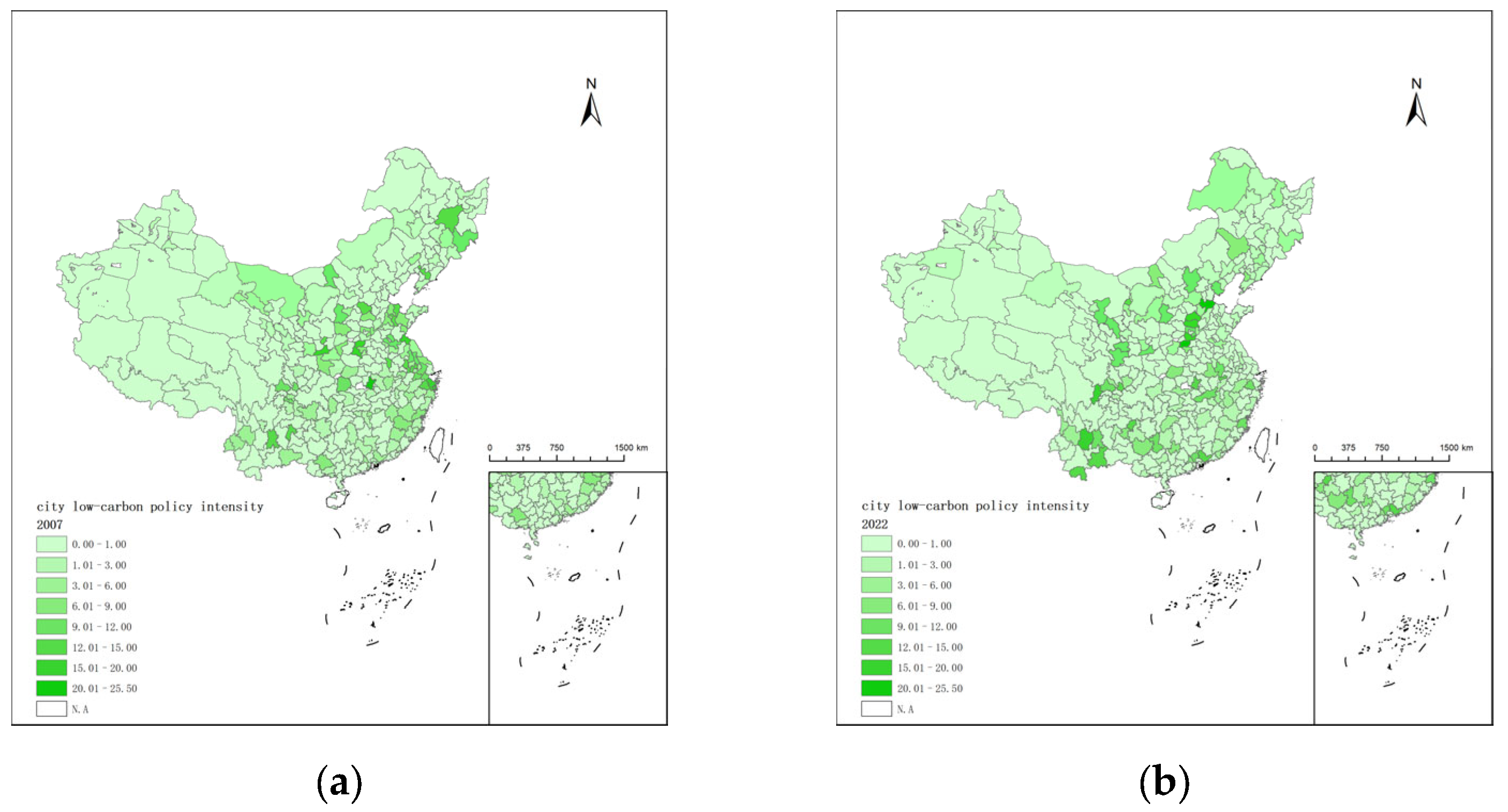
Figure 1a and
Figure 1b presents ArcMap 10.8.1-generated maps illustrating the distribution of low-carbon policy intensity across prefecture-level cities nationwide in 2007 and 2022, respectively.
3.2.2. Earnings Management
This study primarily focuses on two types of earnings management employed by managers to meet or exceed profit targets, namely accrual-based earnings management (DA) and real earnings management (TREM).
Accrual-based earnings management is defined as the adjustment of discretionary components—such as accounting policies, accruals, and accounting methods—within the scope permitted by Generally Accepted Accounting Principles (GAAP). The earliest measures of such practices were proposed by Healy (1985) and DeAngelo (1988) [
94,
95]. Subsequently, Jones developed the classical Jones model, which explains total accruals using changes in revenue and property, plant, and equipment (PPE). DeFond and Jiambalvo (1994) further refined the standard Jones model by addressing its methodological limitations [
96], thereby enhancing measurement accuracy. Existing studies suggest that the modified Jones model provides a more precise measure of accrual-based earnings management in the context of China’s institutional environment [
97]. Accordingly, this study adopts the modified Jones model to measure accrual-based earnings management.
Total accruals (TA) are defined as the difference between net income and net cash flows from operating activities. TA consist of discretionary accruals (DA) and non-discretionary accruals (NDA), and a larger absolute value of discretionary accruals indicates a greater scope for earnings manipulation. denotes the total assets of firm I at the beginning of year t; represents the change in operating revenue; denotes the net value of property, plant, and equipment at the end of year t; denotes the change in accounts receivable; is the lagged total assets; and is the residual term.
The measurement of accrual-based earnings management proceeds in several steps. First, Equation (3) uses the coefficients obtained from the annual cross-sectional regression in Equation (2) to estimate non-discretionary accruals (NDA). Second, the estimated value of NDA is substituted into Equation (4). Finally, discretionary accruals (DA) are obtained as the residual component.
In addition to accrual-based earnings management, firms may also rely on real earnings management as an alternative means of manipulating reported performance. Both approaches serve as indicators of managerial discretion in shaping earnings. Following Roychowdhury (2006) and Srivastava (2019), this study estimates discretionary expenditures, abnormal operating cash flows, and production costs as proxies for real earnings management [
98,
99].
The specific measurement equations for the three types of real earnings manipulation are presented as follows:
In this study, , , and represent the net cash flows from operating activities, production costs, and discretionary expenditures of firm i in year t, respectively. The parameters , , and denote the regression coefficients in Equations (5)–(7). is the operating revenue of firm i in year t; represents the change in operating revenue; denotes the lagged change in operating revenue; and is the total assets at the end of year t − 1. The abnormal components of , , and —namely , , and —are captured by the residual terms , , and in Equations (5)–(7), respectively. , abnormal cash flows from operations, reflect the use of price discounts or lenient credit terms to temporarily boost sales. Although such practices may increase contemporaneous earnings, they tend to reduce operating cash flows. , abnormal production costs, arise when firms expand production to lower fixed costs per unit and thereby report lower cost of goods sold and higher gross margins; however, this may lead to elevated production costs in the subsequent period. , abnormal discretionary expenditures, capture the reduction or postponement of spending on R&D, advertising, and selling, general, and administrative expenses, which inflates current period earnings at the cost of future performance. A higher value of TREM indicates a greater degree of real earnings management. The logic underlying this measure is that income-increasing real manipulation is typically associated with abnormally higher production costs, abnormally lower operating cash flows, and abnormally lower discretionary expenses. By integrating these three abnormal components, the measure provides a more comprehensive assessment of managers’ use of real operating decisions to manipulate reported earnings. Accordingly, the degree of real earnings management, , is calculated as specified in Equation (8).
3.2.3. Control Variables
Building on prior research, this study incorporates the following control variables to account for their potential influence on earnings management: (1) Firm Age (Age), measured as the natural logarithm of the number of years since establishment plus one [
35]; (2) Firm Size (Size), measured as the natural logarithm of total assets plus one [
100]; (3) Return on Equity (ROE), calculated as net profit divided by shareholders’ equity [
101]; (4) Current Ratio (Lr), defined as the ratio of current assets to current liabilities [
102]; (5) Operating Cash Flow (CFO), measured as net cash flow from operating activities scaled by total assets [
103]; (6) Net Profit Growth Rate (NPGR), calculated as the difference between the current period’s net profit and the previous year’s net profit, divided by the previous year’s net profit [
104]; (7) Cash-Asset Ratio (CAR), defined as the ratio of ending cash and cash equivalents to total assets [
105]; (8) Capital Expenditure (CAPEX), measured as capital spending on fixed assets, intangible assets, and other long-term assets scaled by total assets [
106]; (9) Annual Stock Turnover (Turn), calculated as the annual trading volume divided by tradable shares outstanding [
100]; (10) Institutional Ownership (Institution), defined as the proportion of shares held by institutional investors [
107]; (11) Executive Compensation (Pay), measured as the natural logarithm of the total compensation of the top three executives at year-end plus one [
108]; (12) Ownership Type (SOE), equal to 1 if the firm is state-owned and 0 otherwise [
43]; and (13) Audit Opinion (Opinion), equal to 1 if the firm receives a standard unqualified audit opinion and 0 otherwise [
43].
In addition, industry and year fixed effects are controlled for to capture unobserved time-invariant firm characteristics and common temporal shocks. Descriptions of all variables used in the baseline regressions are presented in
Table 2.
Table 3 reports the descriptive statistics. For accrual-based earnings management (DA) and real earnings management (TREM), the mean values are 0.004 and −0.010, with standard deviations of 0.095 and 0.223, respectively, indicating substantial variation in both forms of earnings management over the sample period. Results for other variables are consistent with findings in the existing literature.
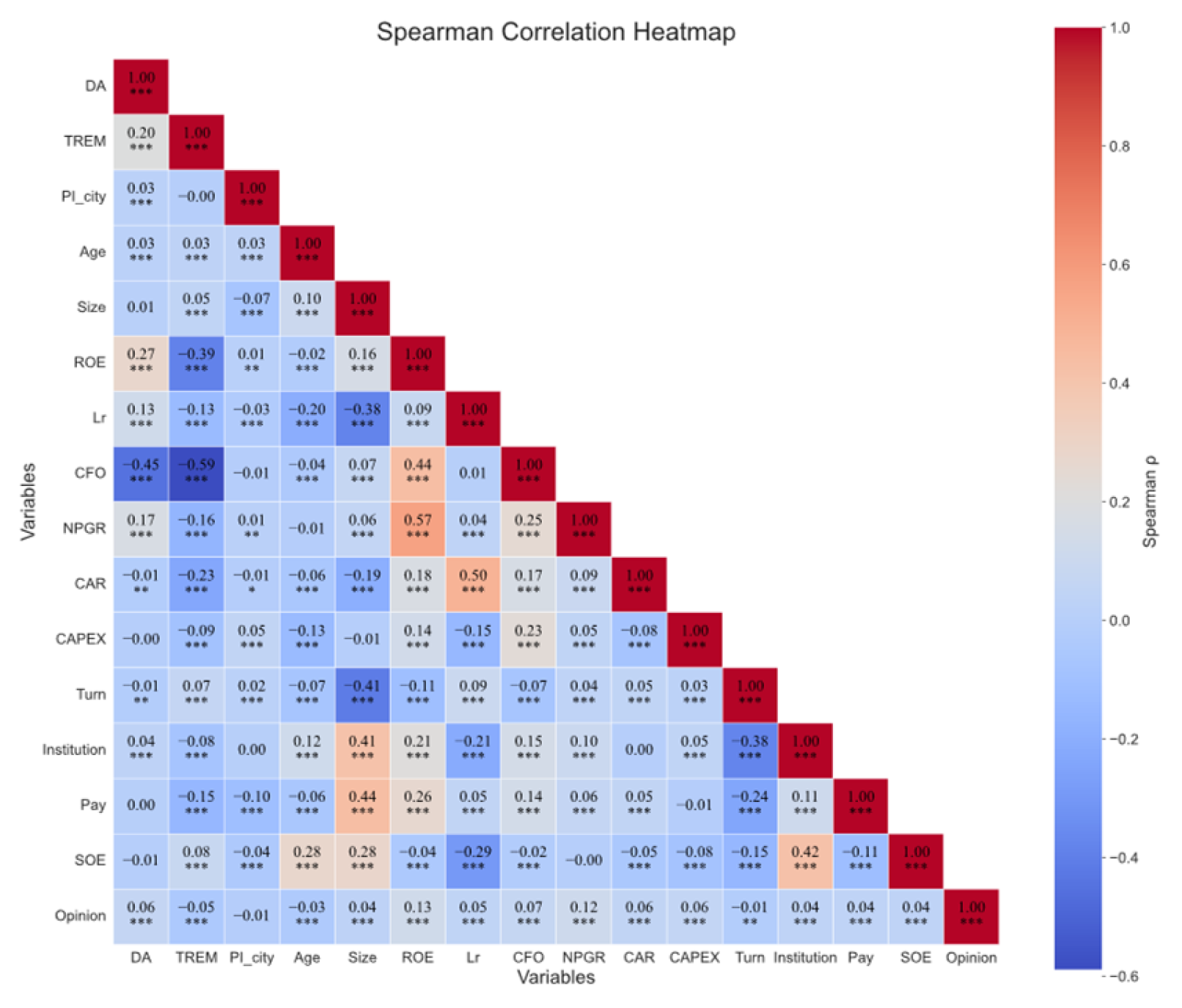
Figure 2 presents the Spearman correlation matrix, showing that all correlation coefficients are below 0.6, suggesting that multicollinearity is not a major concern in this study.
3.3. Model Setting
To examine whether low-carbon policies respectively suppress accrual-based earnings management and promote real earnings management, this study constructs the following empirical model:
DA denotes accrual-based earnings management, and TREM represents real earnings management. captures the intensity of low-carbon policies implemented in a given city-year. Z denotes a set of control variables, including firm age (Age), firm size (Size), return on equity (ROE), current ratio (Lr), operating cash flow (CFO), net profit growth rate (NPGR), cash adequacy ratio (CAR), capital expenditures (CAPEX), annual stock turnover (Turn), institutional ownership (Institution), executive compensation (Pay), state ownership (SOE), and audit opinion (Opinion). In addition, both year fixed effects and industry fixed effects are controlled for in the regressions.
4. Results
4.1. Main Regression Results and Analysis
Table 4 presents the results of the baseline regressions. Column (1) reports the estimated effect of low-carbon policies on accrual-based earnings management after controlling for year and industry fixed effects, while Column (2) reports the corresponding effect on real earnings management under the same controls. The results show that the coefficients of PI_city are statistically significant at the 1% level in both specifications, negative for accrual-based earnings management and positive for real earnings management. Therefore, low-carbon policies are found to suppress accrual-based earnings management while promoting real earnings management, providing support for Hypothesis 1.
In terms of economic magnitude, a one-standard-deviation increase in low-carbon policy intensity (0.005) reduces accrual-based earnings management by approximately 0.0011, which corresponds to about 1.16% of the sample standard deviation of DA. Meanwhile, the same increase in policy intensity raises real earnings management by approximately 0.0026, equivalent to about 1.15% of the sample standard deviation of TREM. These results suggest that low-carbon policies exert a modest but economically meaningful influence on firms’ earnings management strategies.
4.2. Robustness Tests
4.2.1. Addressing Measurement Concerns
A potential concern is that the baseline results may be sensitive to the measurement of key variables. To address this issue, this study adopts the measurement approach for the explanatory variable proposed by Ma and Wang [
109], replacing the original explanatory variable with the ratio of total industrial output to industrial SO
2 emissions (IOIS), and re-estimates the baseline regression. As shown in
Table 5, the results remain robust when the new alternative indicator is used.
Subsequently, this study further examines whether the results depend on the specific measurement of earnings management. Drawing on the approaches of Ji and Pan [
53] and Cohen and Zarowin [
110], alternative proxies are employed for both accrual-based earnings management and real earnings management. Specifically, the DD model and the non-linear accruals model are used to measure accrual-based earnings management as an alternative dependent variable. For real earnings management, two composite indicators, REM1 and REM2, are constructed, where REM1 = −AbCFO − AbDISEXP and REM2 = AbPROD − AbDISEXP; higher values indicate a greater likelihood of engaging in real earnings management through sales manipulation of and reduction in discretionary expenditures.
As shown in
Table 6, Columns (1) and (2) report that, when using the alternative measures of accrual-based earnings management, the suppressive effect of low-carbon policies remains significant. Columns (3) and (4) indicate that, when using the composite indicators for real earnings management, the promoting effect of low-carbon policies also remains statistically significant.
4.2.2. Addressing Sample Selection Concerns
Another potential concern is that the baseline results may be disproportionately influenced by firms located in cities with special administrative status or distinctive resource endowments. In China, municipalities directly under the central government and provincial capitals usually have stronger economic foundations, more advanced industrial structures, and more developed green finance and market institutions. Firms in these cities may therefore face different incentives regarding green transformation, information disclosure, and earnings management, which could lead to biased estimates. To alleviate this concern, following Xu and Wei [
111], this study excludes municipalities and provincial capitals from the sample and re-estimates the regressions.
As shown in
Table 7, Columns (1) and (2) present the regression results after excluding these cities. The suppressive effect of low-carbon policies on accrual-based earnings management and the promoting effect on real earnings management remain significant, indicating the robustness of the study’s findings.
At the same time, stock market cycles often induce fluctuations in accounting earnings, which may reflect managerial accounting choices made in response to market sentiment. To reduce the influence of abnormal disturbances in the early sample period, this study follows Lu and Ruan [
112] and excludes the 2006–2007 sample period, thereby minimizing external interference arising from market cyclicality and allowing for a more accurate identification of the direct effect of low-carbon policies on corporate earnings management. In addition, macroeconomic shocks may also affect managers’ disclosure incentives and thus confound the estimation of the policy effect. Therefore, this study further excludes the 2008 sample to mitigate the impact of the global financial crisis on firms’ earnings management and to enhance the robustness and interpretability of the results. Accordingly, this study conducts the regression analysis using the post-2008 sample, and the results are reported in
Table 8.
As shown in
Table 8, Columns (1) and (2) report the effects of low-carbon policies on corporate earnings management for the selected sample period. The results indicate that the suppressive effect on accrual-based earnings management and the promoting effect on real earnings management remain significant.
4.2.3. Addressing Endogeneity Concerns
To address potential endogeneity concerns, namely to prevent the explanatory variable, low-carbon policy, from being correlated with the error term and thereby confounding its effect on the dependent variable, earnings management, this study employs an instrumental variable approach to examine the pure causal effect of the explanatory variable on the dependent variable.
Following Jiang and Lu [
113], this study first uses the annual average temperature (AAT) of each city as an instrumental variable for low-carbon policy intensity. On one hand, excessive carbon emissions can raise a city’s annual average temperature, and cities with higher average temperatures are more likely to emphasize energy-saving and carbon-reduction policies. The implementation of low-carbon policies can mitigate the rise in average temperature, satisfying the relevance requirement of the instrumental variable. On the other hand, a city’s annual average temperature is primarily determined by its geographic latitude and longitude, and does not directly affect corporate earnings management, thereby satisfying the exogeneity requirement.
As shown in
Table 9, Column (1) reports the first-stage regression results. The results indicate that the probability of higher low-carbon policy intensity increases with rising annual average temperature. In the weak instrument test, the Cragg–Donald (CD) F-statistic far exceeds the 10% critical value of 16.38 according to Stock–Yogo. The underidentification test rejects the null hypothesis of “insufficient instrument relevance” at the 1% significance level, confirming the relevance of the instrument. Columns (2) and (3) present the second-stage estimation results for accrual-based earnings management and real earnings management, respectively. The coefficients of the core explanatory variable are consistent with the baseline regression, indicating that, after further addressing potential endogeneity, the suppressive effect of low-carbon policies on accrual-based earnings management and the promoting effect on real earnings management remain, demonstrating the robustness and reliability of the study’s findings.
To further strengthen the identification strategy, this study follows Zheng et al. [
114] and uses annual precipitation (AP) at the city level as an instrumental variable for low-carbon policy intensity. On one hand, cities with higher annual precipitation generally possess stronger environmental carrying capacity and greater local ecological awareness, leading local governments to be more proactive in formulating environmental or low-carbon policies, which results in higher low-carbon policy intensity, satisfying the relevance requirement of the instrumental variable. On the other hand, a city’s annual precipitation is primarily influenced by topography and atmospheric-oceanic circulation, and does not directly affect corporate earnings management, thereby meeting the exogeneity requirement.
As shown in
Table 10, Column (1) reports the first-stage regression results. The results indicate that the probability of higher low-carbon policy intensity increases with rising annual precipitation. In the weak instrument test, the Cragg–Donald (CD) F-statistic far exceeds the 10% critical value of 16.38 according to Stock–Yogo. The underidentification test rejects the null hypothesis of “insufficient instrument relevance” at the 1% significance level, confirming the relevance of the instrument. Columns (2) and (3) present the second-stage estimation results for accrual-based earnings management and real earnings management, respectively. The coefficients of the core explanatory variable are consistent with the baseline regression, indicating that, after further addressing potential endogeneity, the suppressive effect of low-carbon policies on accrual-based earnings management and the promoting effect on real earnings management remain, demonstrating the robustness and reliability of the study’s findings.
4.2.4. Addressing Specification Concerns
Another issue that deserves attention is that the baseline findings may be sensitive to estimation uncertainty or to a particular sample realization. To mitigate the potential estimation bias arising from uncertainty in the distribution of sample statistics [
115], this study follows Ni [
116] and employs a Bootstrap resampling procedure to examine whether the estimated coefficients are overly dependent on a particular sample realization. Specifically, 500, 1000, and 1500 Bootstrap resamples are conducted, and the policy effect is re-estimated in each case. The results are reported in
Table 11. As shown in the table, after repeated resampling, the suppressive effect of low-carbon policies on accrual-based earnings management and the promoting effect on real earnings management remain statistically significant, indicating that the findings of this study are robust and reliable.
5. Additional Analysis
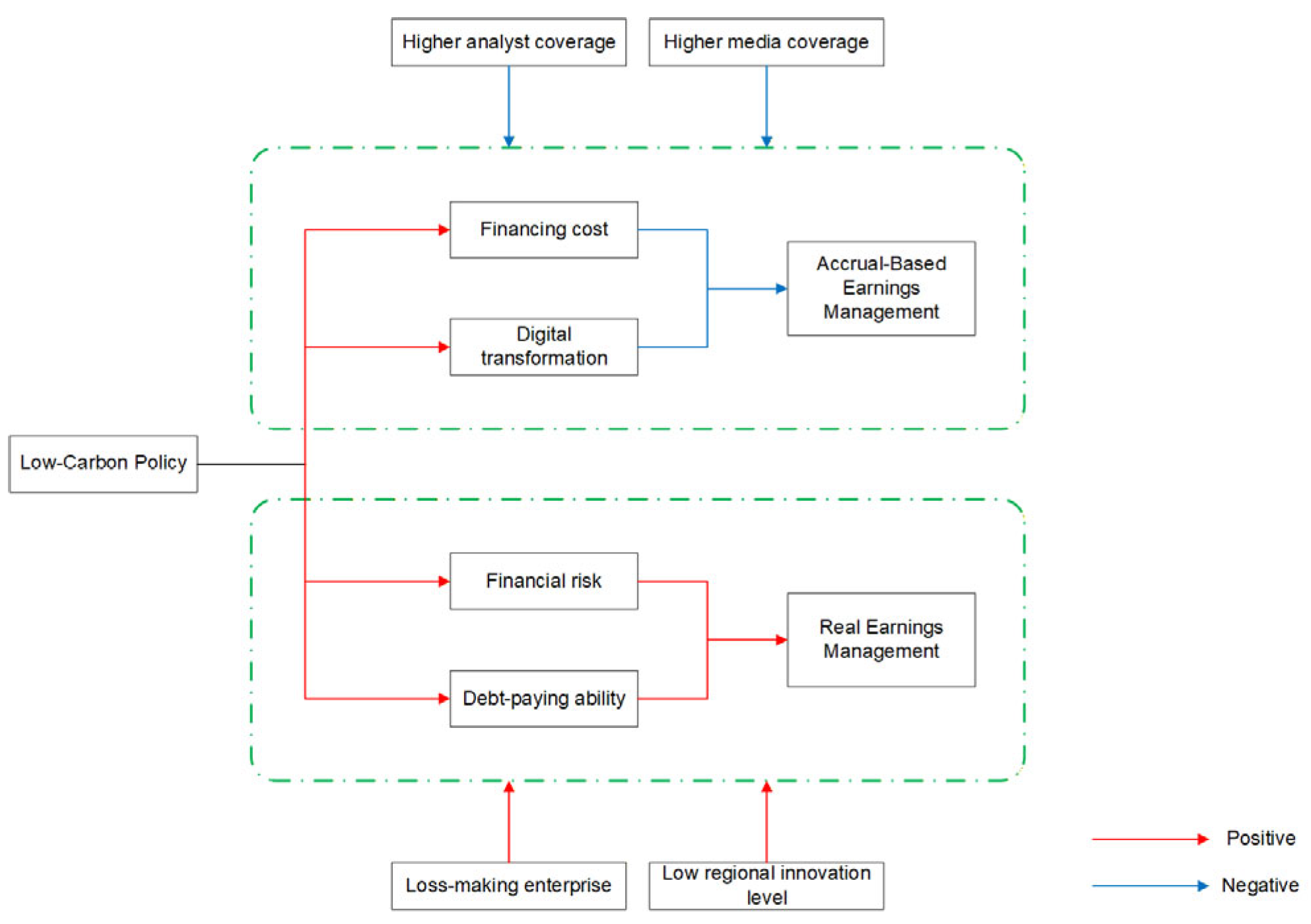
Figure 3 summarizes the overall mechanism through which low-carbon policies affect corporate earnings management in this study. As shown in the figure, low-carbon policies exert differentiated effects on the two types of earnings management. On the one hand, they suppress accrual-based earnings management by increasing financing costs and promoting digital transformation. Higher financing costs strengthen external monitoring, while digital transformation reduces information asymmetry and improves the transparency of corporate operations, thereby constraining managers’ scope for accounting manipulation. On the other hand, low-carbon policies promote real earnings management by increasing financial risk and weakening debt-paying ability. As regulatory pressure and compliance costs rise, firms face greater operating and financing pressure, making managers more inclined to adjust real business activities in order to maintain short-term performance.
Figure 3 also shows that these effects are heterogeneous across firms with different monitoring environments and resource conditions. The restraining effect of low-carbon policies on accrual-based earnings management is more pronounced among firms subject to stronger external oversight, such as those receiving greater analyst attention and media scrutiny. In contrast, the promoting effect of low-carbon policies on real earnings management is more evident among firms facing tighter resource constraints, especially loss-making firms and firms located in regions with lower levels of innovation. Overall, low-carbon policies suppress accrual-based earnings management while, through different transmission channels, inducing firms to shift toward real earnings management.
5.1. Mechanism Analysis
5.1.1. Financing Cost
Low-carbon policies can reduce firms’ expected future profits, thereby increasing their debt financing costs and subjecting them to greater external supervision, which in turn constrains firms’ accrual-based earnings management. Accordingly, this study hypothesizes that low-carbon policies influence firms’ accrual earnings management through their impact on debt financing costs.
Following the approach of Chai et al. [
84], this study uses debt financing cost (COD) as a proxy for financing costs. The results are presented in
Table 12. Column (1) reports the effect of low-carbon policies on firms’ debt financing costs. The coefficient of the low-carbon policy variable is 0.925 and statistically significant at the 5% level, indicating that low-carbon policies significantly increase firms’ debt financing costs. Column (2) reports the second-stage results of the mediation analysis. The coefficient of debt financing cost is negative and significant at the 10% level, suggesting that the increase in debt financing costs induced by low-carbon policies exerts a regulatory effect that suppresses firms’ accrual-based earnings management. Further calculation based on the conventional mediation model shows that the indirect effect through financing cost is −0.0018, with a 95% confidence interval of [−0.0056, 0.0021]. The proportion mediated is 0.80%, with a 95% confidence interval of [−1.05%, 2.66%]. Overall, the signs and magnitudes of the coefficients are consistent with the proposed mechanism, indicating that financing cost serves as a plausible channel through which low-carbon policies affect accrual-based earnings management, thus supporting Hypothesis 2a.
5.1.2. Digital Transformation
Low-carbon policies can increase firms’ labor costs and promote digital transformation, thereby reducing information asymmetry and making earnings manipulation more easily monitored, which in turn constrains firms’ accrual-based earnings management. Accordingly, this study hypothesizes that low-carbon policies influence firms’ accrual earnings management through digital transformation.
Following Wen Chen’s approach [
79], this study constructs a proxy for firms’ digital transformation (DDT) by summing the word frequencies of five dimensions—artificial intelligence, blockchain, cloud computing, big data, and digital technology applications—reported in the China Stock Market & Accounting Research Database (CSMAR) for listed companies, adding 1, and taking the natural logarithm. The results are presented in
Table 13. Column (1) reports the effect of low-carbon policies on firms’ digital transformation. The coefficient of the low-carbon policy variable is 3.563 and statistically significant at the 1% level, indicating that low-carbon policies significantly promote firms’ digital transformation. Column (2) reports the second-stage results of the mediation analysis. The coefficient of digital transformation is negative and significant at the 1% level, suggesting that low-carbon policies facilitate digital transformation, reduce information asymmetry, and enhance external supervision of earnings manipulation, thereby suppressing accrual-based earnings management. Further calculation based on the conventional mediation model shows that the indirect effect through digital transformation is −0.0046, with a 95% confidence interval of [−0.0089, −0.0002]. The proportion mediated is 2.05%, with a 95% confidence interval of [−0.45%, 4.56%]. Overall, the signs and magnitudes of the coefficients are consistent with the proposed mechanism, indicating that digital transformation serves as an important channel through which low-carbon policies restrain accrual-based earnings management, thus supporting Hypothesis 2b.
5.1.3. Financial Risk
Low-carbon policies can increase firms’ financial risk and tighten financing constraints, which may incentivize firms to engage in real earnings management to alleviate financial pressure. Accordingly, this study hypothesizes that low-carbon policies influence firms’ real earnings management through financial risk.
Following Chai et al. [
84], this study uses the level of financial health (Z) as a proxy for financial risk, where a lower Z value indicates a higher level of financial risk. The results are reported in
Table 14. Column (1) presents the effect of low-carbon policies on financial health. The coefficient of the low-carbon policy variable is −2.198 and statistically significant at the 1% level, indicating that low-carbon policies significantly reduce firms’ financial health, i.e., increase their financial risk. Column (2) reports the second-stage results of the mediation analysis. The coefficient of financial health is −0.0271 and significant at the 1% level, suggesting that low-carbon policies elevate firms’ financial risk, which in turn promotes real earnings management. Further calculation based on the conventional mediation model shows that the indirect effect through financial risk is 0.0592, with a 95% confidence interval of [0.0284, 0.0899]. The proportion mediated is 11.55%, with a 95% confidence interval of [−0.46%, 23.55%]. Overall, the signs and magnitudes of the coefficients are consistent with the proposed mechanism, indicating that financial risk serves as an important channel through which low-carbon policies increase real earnings management, thus supporting Hypothesis 2c.
5.1.4. Debt-Paying Ability
Low-carbon policies can increase firms’ compliance costs and reduce their debt-paying ability, thereby compelling firms to use real operational activities to convey positive signals externally. Accordingly, this study hypothesizes that low-carbon policies influence firms’ real earnings management through their impact on debt-paying ability.
Following Nguyet Thi Minh Phi et al. [
117], this study uses financial leverage (Lev), defined as the ratio of total liabilities to total assets, as a proxy for firms’ debt-paying ability, where a higher leverage indicates lower debt-paying ability. The results are reported in
Table 15. Column (1) presents the effect of low-carbon policies on financial leverage. The coefficient of the low-carbon policy variable is 0.688 and statistically significant at the 1% level, indicating that low-carbon policies significantly increase financial leverage, i.e., reduce firms’ debt-paying ability. Column (2) reports the second-stage results of the mediation analysis. The coefficient of financial leverage is −0.0964 and significant at the 1% level, suggesting that low-carbon policies reduce firms’ debt-paying ability, which in turn promotes real earnings management. Further calculation based on the conventional mediation model shows that the indirect effect through debt-paying ability is 0.0660, with a 95% confidence interval of [0.0314, 0.1006]. The proportion mediated is 12.89%, with a 95% confidence interval of [0.01%, 25.76%]. Overall, the signs and magnitudes of the coefficients are consistent with the proposed mechanism, indicating that debt-paying ability serves as an important channel through which low-carbon policies increase real earnings management, thus supporting Hypothesis 2d.
5.2. Heterogeneity Analysis
The relationship between low-carbon policies and both accrual and real earnings management may vary depending on analyst attention, media coverage, firm profitability, and the number of patents.
Analyst attention reflects the extent to which analysts research and monitor a specific stock or firm. Such attention can enhance corporate information transparency, encourage firms to take social responsibility seriously, and increase the likelihood of industry oversight [
118]. This supervisory effect makes it more difficult for firms to engage in accrual earnings management. Conversely, firms with lower analyst attention generally have more leeway to engage in opportunistic accrual earnings management. Therefore, the relationship between low-carbon policies and accrual earnings management may depend on the level of analyst coverage.
Similarly, media attention, as an external monitoring mechanism, can compel firms to improve the quality of earnings reporting and reduce accrual earnings management by exposing negative corporate events and fostering a social responsibility environment [
119]. In contrast, firms with relatively low media attention have stronger incentives to engage in accrual earnings management.
Firm profitability reflects a company’s operational performance and economic efficiency, influencing investors’ future decisions and the firm’s strategic development. It is also an important factor affecting whether a firm engages in real earnings management. Firms with lower profitability typically experience less stable cash flows and reputational capital than more profitable firms. Consequently, low-carbon policies may impose greater financing constraints on less profitable companies [
120], which in turn motivates these firms to engage in real earnings management to signal positive performance externally, thereby securing stable cash flow and reputational benefits. Therefore, the relationship between low-carbon policies and real earnings management may depend on firm profitability.
Regional innovation capacity reflects a region’s overall strength and performance in technological, institutional, and managerial innovation, indicating its ability and potential to overcome challenges while promoting economic and social progress. It also directly affects a region’s competitiveness and economic development potential [
121]. Innovation can advance firm operations and reduce costs, thereby improving economic efficiency. In regions with higher innovation levels, firms are less likely to engage in real earnings management to cultivate a favorable corporate image. Conversely, in regions with lower innovation levels, firms are more likely to use real earnings management to enhance their image and attract additional capital. Therefore, this study examines the role of regional innovation capacity in moderating the relationship between low-carbon policies and real earnings management.
5.2.1. Analyst Coverage
Drawing on prior studies, this research calculates analyst coverage by taking the natural logarithm of each firm’s annual number of research reports plus one [
122]. The sample firms are then divided into two groups: those with research report coverage above the median are classified as having higher analyst coverage (Higher Analyst Coverage), while those with coverage at or below the median are classified as having lower analyst coverage (Lower Analyst Coverage). This results in 17,328 firms in the Higher Analyst Coverage group and 9360 firms in the Lower Analyst Coverage group.
Table 16 reports the heterogeneous effects of analyst coverage on the relationship between low-carbon policies and earnings management. Columns (1) and (2) present the results for firms with higher and lower analyst coverage, respectively. The results indicate that the suppressive effect of low-carbon policies on accrual-based earnings management is significant for firms with higher analyst coverage, but not significant for firms with lower analyst coverage.
5.2.2. Media Attention
This study follows previous research in measuring media attention by taking the natural logarithm of the number of online media reports for each firm per year plus one [
123]. The sample firms are divided into two groups: those with media attention above the median are classified as Higher Media Coverage, while those with media attention at or below the median are classified as Lower Media Coverage, resulting in 13,392 firms in the Higher Media Coverage group and 13,223 firms in the Lower Media Coverage group.
Table 17 reports the heterogeneous effects of media attention on the relationship between low-carbon policies and accrual-based earnings management. Columns (1) and (2) present the results for firms with higher and lower media attention, respectively. The results indicate that the inhibitory effect of low-carbon policies on accrual-based earnings management is significant among firms with higher media coverage, but not significant among firms with lower media coverage.
5.2.3. Corporate Profit and Loss
This study follows previous research [
124] by using profitability or loss to represent a firm’s annual performance, thereby dividing the sample firms into two groups: profitable enterprises in a given year (Profitable Enterprise) and loss-making enterprises in a given year (Loss-making Enterprise), resulting in 2477 profitable enterprises and 24,209 loss-making enterprises.
Table 18 presents the heterogeneous effects of media attention on the relationship between low-carbon policies and real earnings management. Columns (1) and (2) report the results for profitable and loss-making enterprises, respectively. The results indicate that the promoting effect of low-carbon policies on real earnings management is significant for loss-making enterprises, but not significant for profitable enterprises.
5.2.4. Regional Innovation Level
This study follows previous approaches by taking the natural logarithm of the number of newly granted patents in a prefecture-level city in a given year plus one as a measure of regional innovation level [
121]. The sample firms are divided into two groups: those in cities with patent counts above the median are classified as having higher patents obtained, while those in cities with patent counts at or below the median are classified as having lower patents obtained. This results in 12,005 firms in the higher patents obtained group and 11,827 firms in the lower patents obtained group.
Table 19 presents the heterogeneous effects of regional innovation level on the relationship between low-carbon policies and real earnings management. Columns (1) and (2) report the results for firms in cities with higher and lower patent counts, respectively. The results indicate that the promoting effect of low-carbon policies on real earnings management is significant for firms in regions with lower innovation levels, but not significant for firms in regions with higher innovation levels.
6. Discussion
The empirical results of this study provide new evidence on how low-carbon policies influence firms’ earnings management choices. Rather than uniformly reducing earnings manipulation, low-carbon policies generate a substitution effect: they constrain accrual-based earnings management while encouraging firms to engage more in real earnings management. This pattern suggests that managers respond strategically to regulatory pressure. When low-carbon policies strengthen external monitoring and enhance the transparency of accounting information, accrual manipulation becomes more difficult and more costly to sustain. Under such conditions, managers are more likely to shift toward real earnings management, which is embedded in operating decisions, is less directly constrained by accounting standards, and is harder for external monitors to detect. From this perspective, low-carbon policies do not eliminate managerial opportunism, but rather change the form through which it is exercised.
These findings extend positive accounting theory in the context of environmental regulation. Positive accounting theory emphasizes that managers choose reporting methods by weighing the expected benefits and costs of alternative accounting actions. This study finds that low-carbon policies reshape that cost structure. Specifically, environmental regulation increases the probability that accrual manipulation will be detected, as well as its associated reputational costs, by improving transparency and strengthening external oversight. At the same time, real manipulation becomes relatively more attractive as a more concealed response to regulatory and performance pressure. Therefore, the choice between accrual-based and real earnings management is not fixed, but depends on how the institutional environment alters the relative costs of different manipulation methods.
The conclusions of this study are broadly consistent with prior research showing that environmental regulation can discipline corporate disclosure behavior by strengthening oversight and narrowing the scope for opportunistic accounting choices. At the same time, this study differs from the literature that focuses only on an overall decline in earnings manipulation under environmental regulation. Compared with evidence from pollutant-control settings such as sulfur dioxide emissions trading, this study finds that low-carbon policies produce a more differentiated effect: while constraining accrual manipulation, they may also induce firms to shift toward real activity manipulation when compliance pressure, financing pressure, and operational uncertainty intensify. This difference indicates that distinguishing among different earnings management strategies is important when evaluating the microeconomic consequences of environmental policies.
The mechanism analysis further clarifies that information-related channels have a stronger effect on accrual-based earnings management, whereas financial pressure channels play a more important role in real earnings management. Accrual manipulation relies heavily on accounting judgment and is therefore more sensitive to changes in information transparency, creditor monitoring, and digital regulatory capacity. By contrast, real earnings management is implemented through actual business activities and is more likely to be triggered when firms face rising financial risk, tighter cash flow conditions, and weakened debt-paying ability. In other words, information channels mainly affect the detectability and feasibility of accrual manipulation, whereas financial channels more directly influence managers’ incentives to intervene in real operating activities in order to stabilize short-term performance.
Despite these contributions, this study still has several limitations. First, although the policy intensity index captures differences in the content of low-carbon policies across cities, a text-based measurement approach cannot fully reflect differences in actual enforcement strength and implementation intensity. Second, firm location may not be entirely exogenous, as firms may strategically choose to locate across jurisdictions with different regulatory environments, which could affect the estimation of policy exposure. Third, because the analysis focuses on Chinese listed firms, the findings may not be directly generalizable to private firms, small and medium-sized unlisted firms, or firms in other institutional settings. Fourth, although this study employs extensive control variables and robustness checks, some omitted local-level factors, such as differences in enforcement capacity, administrative efficiency, and informal regulatory pressure, may still affect both low-carbon policy intensity and firms’ earnings management choices. Future research could address these issues by incorporating firm-level compliance data, more direct measures of local enforcement, or quasi-natural experiments that further strengthen causal identification.
Overall, this study shows that low-carbon policies affect firms’ strategic financial adjustments not simply by reducing earnings manipulation, but by reshaping the relative incentives and constraints associated with different earnings management methods. This provides a more nuanced perspective for understanding managerial behavior under environmental regulation and offers important implications for building green governance frameworks capable of constraining both visible accounting manipulation and more concealed real activity manipulation.
7. Conclusions and Policy Implications
As an important component of the national governance system, low-carbon policies are closely related not only to sustainable development and environmental protection, but also profoundly influence firms’ financial reporting decisions. Using Chinese listed companies as the research context, this study examines the impact of low-carbon policies on corporate earnings management. The results show that low-carbon policies suppress accrual-based earnings management while promoting real earnings management, revealing a clear substitution effect between the two strategies. Further analyses indicate that the restraining effect of low-carbon policies on accrual-based earnings management is more pronounced among firms with higher analyst coverage and media attention, whereas the promoting effect on real earnings management is stronger among loss-making firms and firms located in regions with lower levels of innovation. Mechanism tests further show that financing costs and digital transformation are the channels through which low-carbon policies affect accrual-based earnings management, while financial risk and debt-paying ability are the channels through which they influence real earnings management. These conclusions remain robust after a series of robustness checks and endogeneity treatments.
The findings of this study carry several practical implications.
First, for regulators responsible for designing and implementing low-carbon policies, monitoring firms’ environmental compliance alone is far from sufficient. They should also pay close attention to firms’ strategic responses in financial reporting, especially the possibility that policy pressure may induce a shift toward real earnings management. Because real activity manipulation often reflects intensified operating and financing pressure, regulators should combine environmental regulation with transition support policies, such as green credit, low-carbon special loans, or targeted transition subsidies, to alleviate the excessive financial pressure firms may face during the low-carbon transition. At the same time, regulators should strengthen disclosure requirements for real business activities that are more prone to opportunistic adjustment, such as production, discretionary expenditures, R&D, and advertising, so as to more effectively identify policy-induced substitution in earnings management.
Second, the findings also offer useful implications for accounting standard-setters and financial regulators. The substitution effect documented in this study suggests that current disclosure rules are more effective in constraining accrual manipulation, while remaining relatively insufficient in identifying and regulating real earnings management. This means that regulatory focus should move beyond the traditional scope of accounting judgment and place greater emphasis on disclosures related to environmental compliance costs and their financial consequences. Improving the transparency of disclosures on how low-carbon compliance affects firms’ costs, operating decisions, and short-term performance would help reduce the scope for concealed manipulation through real activities.
Third, for firms themselves, the findings suggest that relying on opaque real earnings management to cope with low-carbon policy pressure may relieve short-term performance pressure, but it can damage long-term competitiveness and sustainable development capacity. Firms facing rising financial risk under low-carbon policy pressure should prioritize transparent communication with creditors, investors, and other stakeholders, rather than maintaining short-term earnings by distorting operating decisions. In practice, firms should reasonably plan environmental compliance expenditures, optimize their capital structure, accelerate substantive digital transformation, and improve internal governance and disclosure quality, thereby reducing financing pressure and lowering the incentives for opportunistic earnings management.
Fourth, for investors, the findings suggest the need to pay closer attention to firms that are more likely to shift toward real earnings management under low-carbon policy pressure, especially those with weak profitability and those located in regions with lower innovation levels. Investors may improve screening tools and risk assessment systems by incorporating policy exposure, profitability status, regional innovation conditions, and indicators of abnormal real operating behavior into valuation models. This would help identify performance outcomes affected by policy-induced earnings management substitution and improve investment decisions in the context of the low-carbon transition.
From a broader perspective, this study reveals an important policy trade-off: while improving information transparency and constraining accrual-based earnings manipulation, the same low-carbon policies may also unintentionally induce more concealed and potentially more harmful real earnings management. This suggests that low-carbon governance systems should be designed in a more integrated manner, so as to achieve environmental goals while also taking into account firms’ financial reporting incentives and transition adjustment pressures. Overall, this study provides useful empirical evidence for improving regulatory frameworks, advancing low-carbon transition goals, and simultaneously curbing both visible accounting manipulation and hidden real activity manipulation.