3.1. Validation Results of YOLO-Based Plastic Debris Detection Using GPS-Measured Ground Truth
The performance of the YOLO-based deep learning model for plastic debris detection was evaluated using an independent ground-truth dataset collected through field surveys supported by Global Positioning System (GPS) measurements. In total, 2389 plastic debris items were detected from UAV imagery and used for subsequent spatial analyses. For validation, 550 plastic debris items were recorded in the field using handheld GPS devices and served as ground-truth reference points.
Field validation was conducted shortly after UAV data acquisition to ensure spatial consistency between ground observations and image-based detections. Surface-visible plastic debris was located and georeferenced using GPS. The recorded GPS points were spatially matched with YOLO detection outputs using a predefined distance threshold to account for positional uncertainty associated with orthophoto georeferencing and GPS measurement error.
Of the 550 GPS-measured ground-truth plastic debris items, 467 were correctly detected by the YOLO model and classified as true positives. Eighty-three ground-truth items were not detected and were classified as false negatives. In addition, 46 YOLO detections within the validation area did not correspond to GPS-confirmed plastic debris and were classified as false positives. These results form the basis of the confusion matrix presented in
Table 2.
Based on the confusion matrix, standard object detection performance metrics were calculated. The model achieved a precision of 0.910, indicating that 91.0% of YOLO detections within the validation area corresponded to plastic debris confirmed by GPS field measurements. The recall value was 0.849, meaning that 84.9% of the GPS-recorded plastic debris items were successfully detected by the model. These results demonstrate strong agreement between UAV-based detections and independent field observations (
Table 3).
The F1-score of 0.878 indicates a balanced trade-off between detection accuracy and completeness. False negatives suggest that some plastic debris items were missed by the model, likely due to partial burial, surface degradation, vegetation occlusion, or low visual contrast with surrounding substrates. False positives may reflect instances in which natural materials exhibited visual features similar to plastic debris in UAV imagery.
Mean Average Precision (mAP) was also calculated to assess overall detection and localization performance. The mAP at an intersection-over-union threshold of 0.5 (mAP@0.5) reached 0.88, indicating strong detection performance under standard evaluation criteria. When evaluated across a stricter IoU range from 0.5 to 0.95 (mAP@0.5:0.95), the mAP decreased to 0.58. This reduction reflects the greater difficulty of precisely localizing small, irregularly shaped, or partially obscured plastic debris items in high-resolution UAV imagery.
To evaluate the robustness of validation results to the spatial matching rule, a sensitivity analysis was conducted using tolerance radii of 1.0 m, 1.5 m, and 2.0 m. These thresholds represent plausible cumulative positional uncertainties derived from orthophoto georeferencing error (±0.5 m), UAV navigation accuracy (±0.3 m), and handheld GPS measurement error (±1.0 m).
Performance metrics were recalculated under each tolerance scenario. The results indicate that precision, recall, and F1-score vary only marginally across the tested thresholds (
Table 4), demonstrating that detection performance is stable within realistic spatial uncertainty bounds. Although spatial matching introduces unavoidable positional uncertainty, the sensitivity analysis demonstrates that performance estimates remain stable within realistic error bounds, confirming that the reported validation metrics are robust to the selected matching tolerance.
Overall, the GPS-based validation results demonstrate that the YOLO-based object detection model provides reliable and spatially accurate identification of plastic debris in coastal environments. The strong agreement between UAV-derived detections and GPS-measured ground-truth objects supports the robustness of the detection results and justifies their use in subsequent spatial analyses, including density estimation, hotspot identification, and multi-scale clustering assessment.
The integration of UAV-based deep learning detection with GPS-supported field validation enhances the methodological rigor of the study and increases confidence in the sustainability-oriented assessment of coastal plastic debris.
3.2. Spatial Distribution and Clustering of Plastic Debris
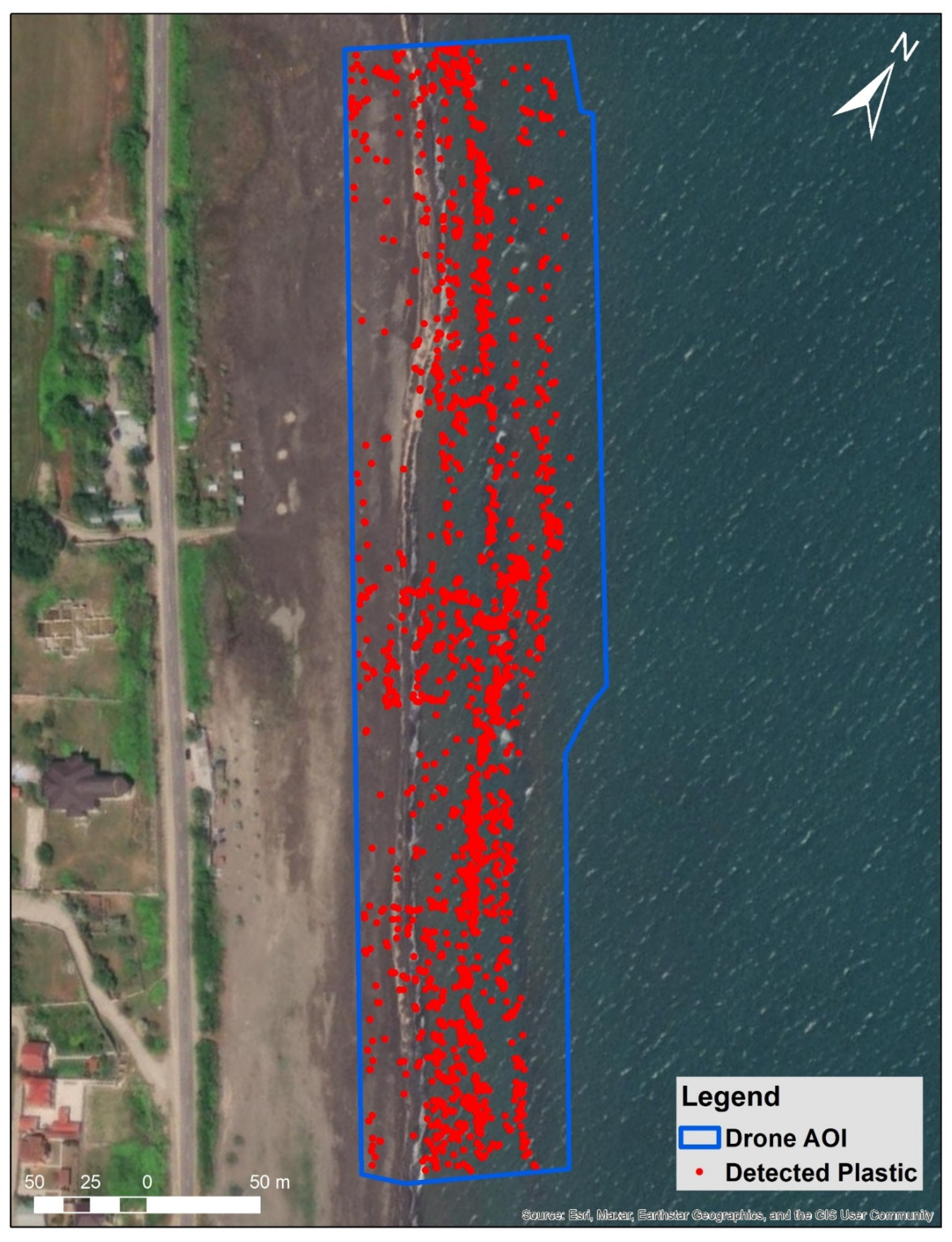
Spatial analysis of UAV-detected plastic debris along the Khachmaz coastline on the western shore of the Caspian Sea reveals a dense and spatially heterogeneous distribution. Plastic debris is concentrated in specific coastal segments rather than uniformly distributed across the study area. Within the UAV survey area, 2389 plastic debris items were identified (
Table 5). The spatial footprint of these detections, defined by the convex hull encompassing all objects, covered 0.0439 km
2, indicating that debris is concentrated within a limited nearshore area. The calculated areal density was 54,382 objects per km
2 (0.054 objects per m
2).
Areal density exhibited pronounced spatial variability. Localized densities exceeded 100,000 objects per km2 (0.10 objects per m2), whereas adjacent areas recorded densities below 5000 objects per km2 (0.005 objects per m2).
The density patterns indicate that plastic debris accumulation along the Khachmaz coastline is highly uneven and concentrated within specific coastal segments. Rather than being uniformly distributed across the survey area, plastic debris exhibits strong spatial contrasts, with high-density zones located adjacent to areas of substantially lower debris abundance. This spatial variability suggests that accumulation is localized and restricted to particular sections of the coastline.
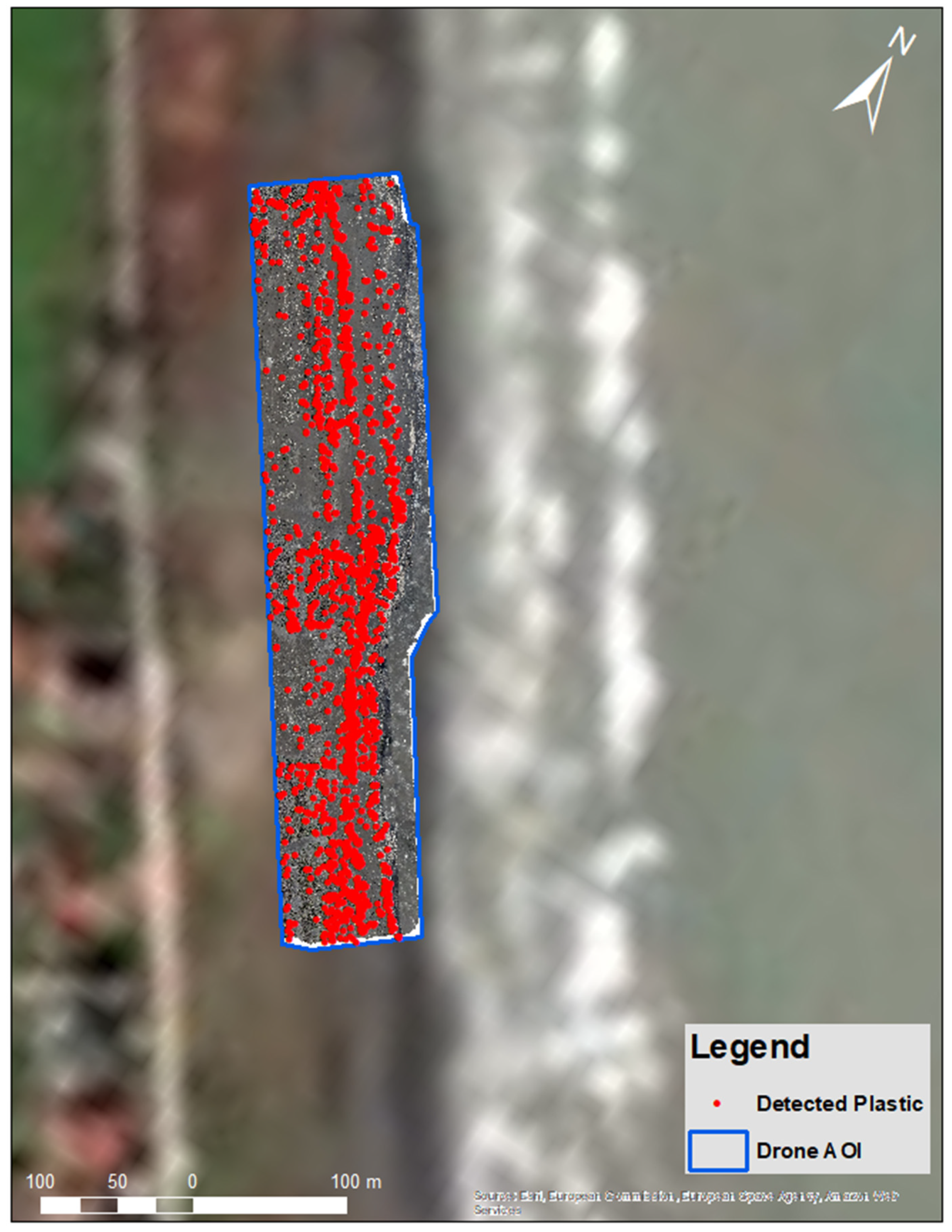
The overall spatial distribution of detected plastic debris is shown in
Figure 3. The results reveal a pronounced coast-parallel pattern, with debris arranged in elongated bands that closely follow the shoreline. These bands form continuous or semi-continuous linear features along the coast, indicating dominant alignment parallel to the shoreline and limited dispersion in the perpendicular direction.
Plastic debris is primarily concentrated within a narrow nearshore zone extending inland from the current shoreline. Within this zone, debris density remains consistently higher than in adjacent inland areas. In contrast, areas beyond the transition from sandy beach to coastal vegetation contain substantially fewer detected plastic debris items. This contrast indicates that debris is largely confined to the nearshore environment and does not extend uniformly across the broader coastal landscape.
Overall, the observed coast-parallel alignment and nearshore concentration demonstrate a structured spatial pattern in which plastic debris distribution varies systematically both along and across the coastline, resulting in distinct accumulation zones and areas of lower debris density within the study region.
Table 6 presents the nearest neighbor statistics for detected plastic debris. Analysis of local-scale spatial relationships confirms pronounced aggregation patterns. The mean nearest neighbor distance was 1.20 m, indicating close proximity among debris items. The distribution of distances is strongly skewed toward shorter values, with a substantial proportion of objects separated by less than 2 m. The calculated Nearest Neighbor Index (NNI) was 0.56, which is significantly lower than the value expected under complete spatial randomness. This result confirms a strongly clustered spatial pattern.
The results show that plastic debris primarily forms compact clusters at the meter scale rather than occurring as isolated items distributed independently along the shoreline. The consistently short distances between individual debris items lead to tightly spaced groupings. This pattern differs from a random spatial distribution and indicates that plastic debris accumulates in discrete clusters rather than being evenly dispersed across the coastal surface.
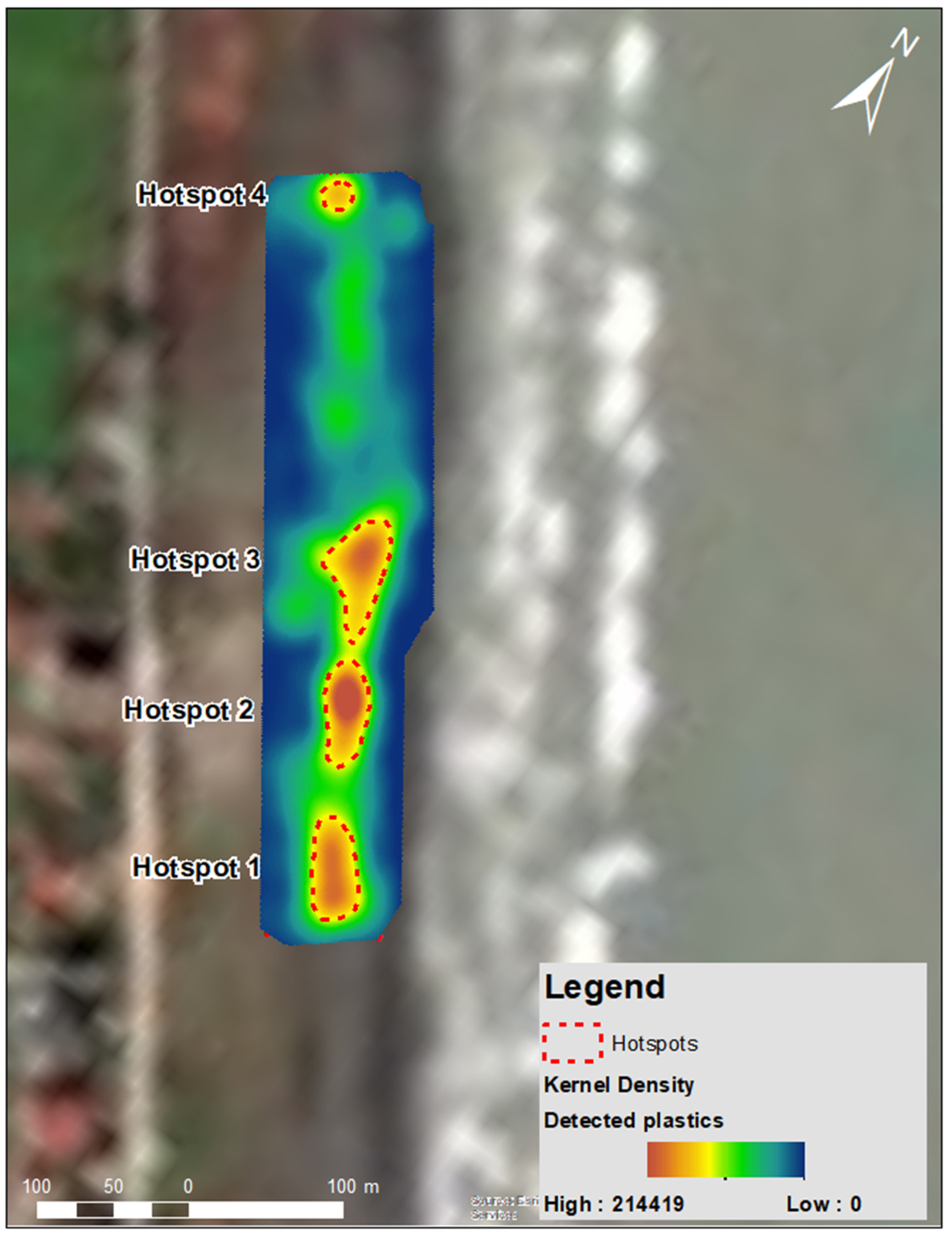
Density-based analysis further confirms the heterogeneous distribution of plastic debris along the study coastline. Kernel density estimation identified four major accumulation hotspots distributed discontinuously along the shoreline (
Figure 4). These hotspots correspond to coastal segments where debris density is substantially higher than in adjacent areas. Within these zones, density increases sharply over short distances, creating distinct contrasts between hotspot areas and surrounding lower-density regions.
The spatial separation of these hotspots indicates that plastic debris accumulation is not continuous along the entire coastline but concentrated in localized zones. Outside these hotspots, debris density declines markedly, reinforcing the uneven spatial distribution across the study area. Overall, the presence of compact meter-scale clusters and discrete density hotspots demonstrates a clearly structured spatial pattern of plastic debris distribution along the Khachmaz coastline.
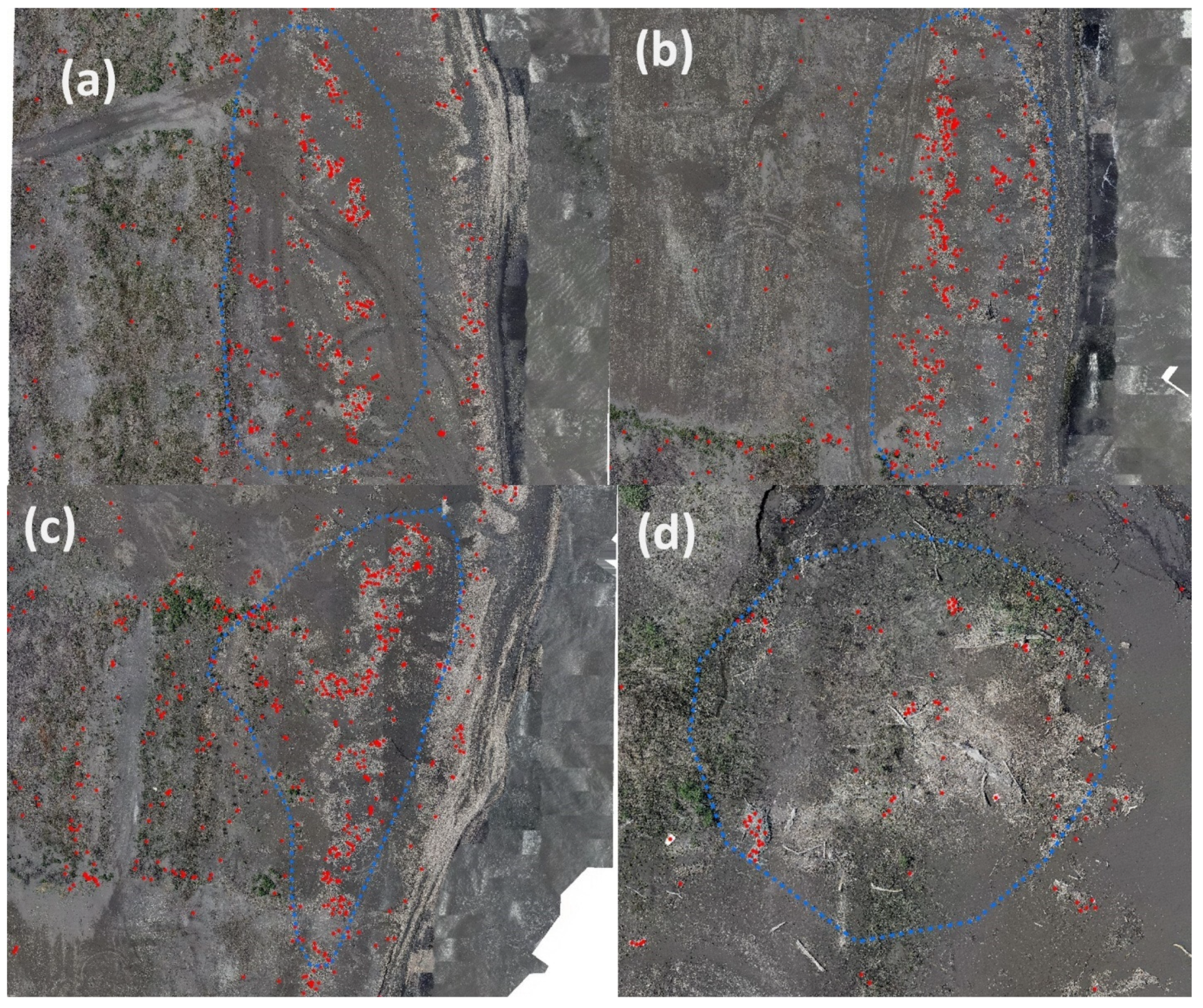
Table 7 summarizes the characteristics of the identified plastic debris accumulation hotspots. Four major hotspots were detected along the surveyed coastline, indicating that debris accumulation is concentrated in a limited number of discrete locations rather than continuously distributed. These hotspots are spatially separated by coastal segments with substantially lower debris densities.
Within hotspot areas, plastic debris density is significantly higher than in surrounding zones, reflecting localized accumulation processes. The short distances between individual debris items indicate tightly packed clusters. Although the hotspots occupy only a small proportion of the surveyed coastline, they contain a substantial share of the total detected plastic debris, highlighting their importance in shaping overall distribution patterns.
The alongshore extent of individual hotspots generally spans several tens of meters, suggesting that accumulation occurs within spatially coherent coastal segments rather than at isolated points. In these zones, debris density increases rapidly and often exceeds 100,000 objects per km
2. Sharp transitions in density are observed at hotspot boundaries.
Figure 5 illustrates the internal spatial structure of these areas, where closely spaced plastic debris indicates minimal distances between neighboring objects.
Multi-scale clustering analysis using Ripley’s L-function indicates that plastic debris aggregates across multiple spatial scales within the study area. Statistically significant clustering was observed at all analyzed distances up to 20 m, demonstrating that the spatial distribution of plastic debris consistently deviates from randomness at both local and broader scales. These results confirm a structured spatial organization along the coastline.
The strongest deviation from spatial randomness occurs at distances below approximately 5 m, where clustering intensity is highest. At this fine scale, plastic debris forms tightly spaced groupings with minimal separation between individual items. This pronounced small-scale aggregation reflects the formation of compact clusters rather than isolated objects distributed across the coastal surface. The persistence of clustering at short distances indicates that debris accumulates within limited spatial neighborhoods.
Clustering remains significant at intermediate distances, indicating that aggregation extends beyond immediate proximity to encompass longer coastal segments. At broader scales, the spatial structure reflects the grouping of multiple local clusters within extended zones of elevated debris concentration. This pattern suggests a nested structure in which fine-scale clusters are embedded within larger accumulation zones. Overall, plastic debris exhibits a multi-scale spatial clustering pattern, with aggregation occurring across multiple spatial scales rather than at a single characteristic distance.
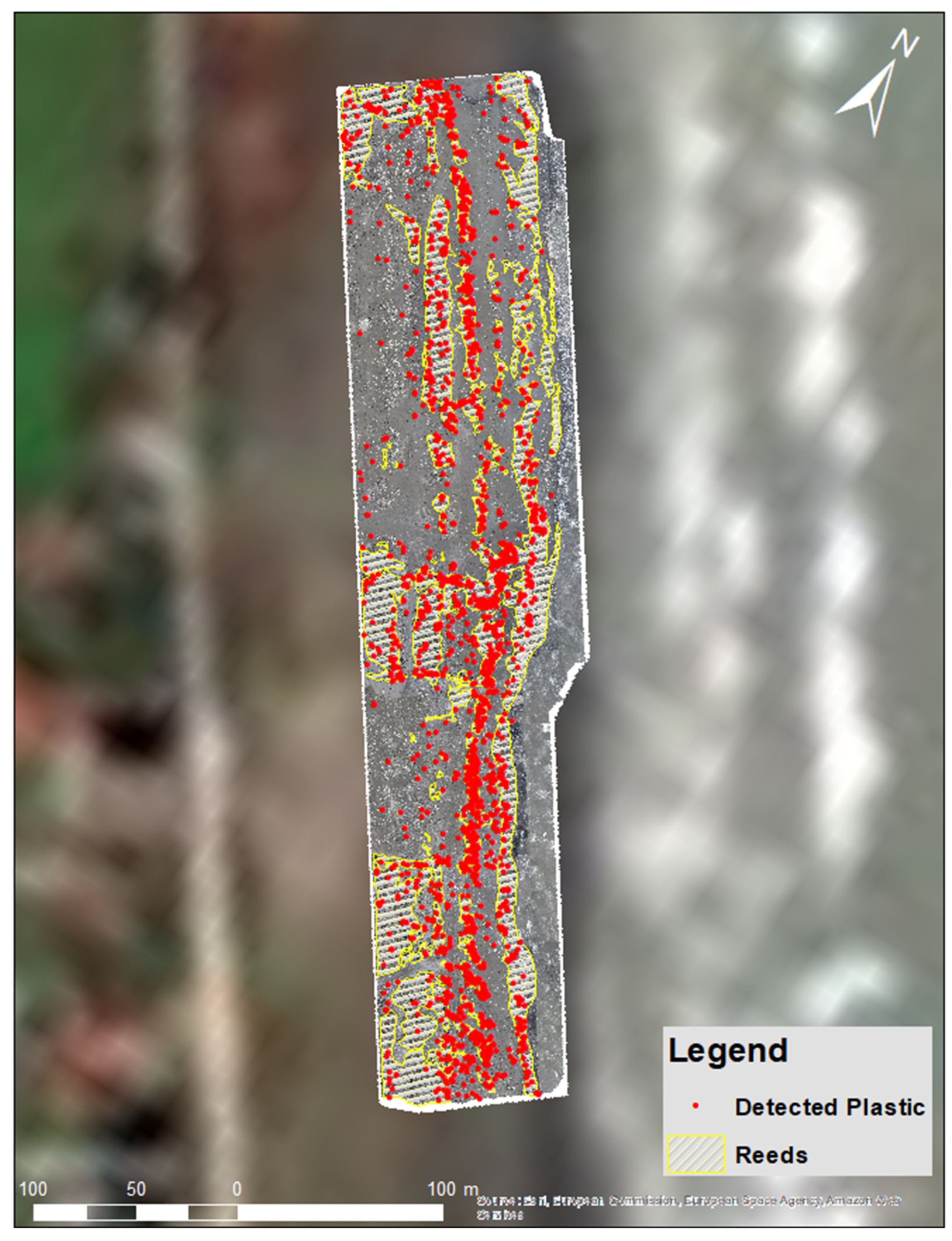
As shown in
Figure 6, a substantial proportion of plastic debris is located within or adjacent to reed-covered areas, particularly along the transition zone between sandy beach surfaces and reed stands. This pattern is consistent throughout the study area and indicates that debris distribution varies systematically across coastal land-cover types.
The spatial relationship between plastic debris and reed-dominated coastal vegetation is summarized in
Table 8. Debris density is notably higher in reed-covered areas, indicating a clear spatial association between vegetation and accumulation. The primary accumulation zone occurs at the interface between sandy beach and reed stands, where plastic debris frequently concentrates.
In the study area, reed vegetation consists predominantly of dry reeds exposed following recent water-level decline. Most detected plastic debris is located within these dry reed zones rather than on open beach surfaces. Debris is commonly observed near vegetation stems and within the interior of reed stands. Consequently, debris density is higher in vegetated areas compared to adjacent unvegetated beach segments.
In contrast, open beach areas exhibit lower debris densities and a more dispersed spatial pattern. Within reed-dominated zones, plastic debris shows reduced spatial dispersion, with objects occurring closer together than in non-vegetated areas. Outside these zones, debris is more widely spaced and less consistently clustered. This contrast contributes to the overall spatial variability of debris distribution along the coastline.
Collectively, the multi-scale clustering results and the strong spatial association with dry reed zones demonstrate that plastic debris distribution is spatially structured and systematically influenced by both scale and coastal vegetation patterns.
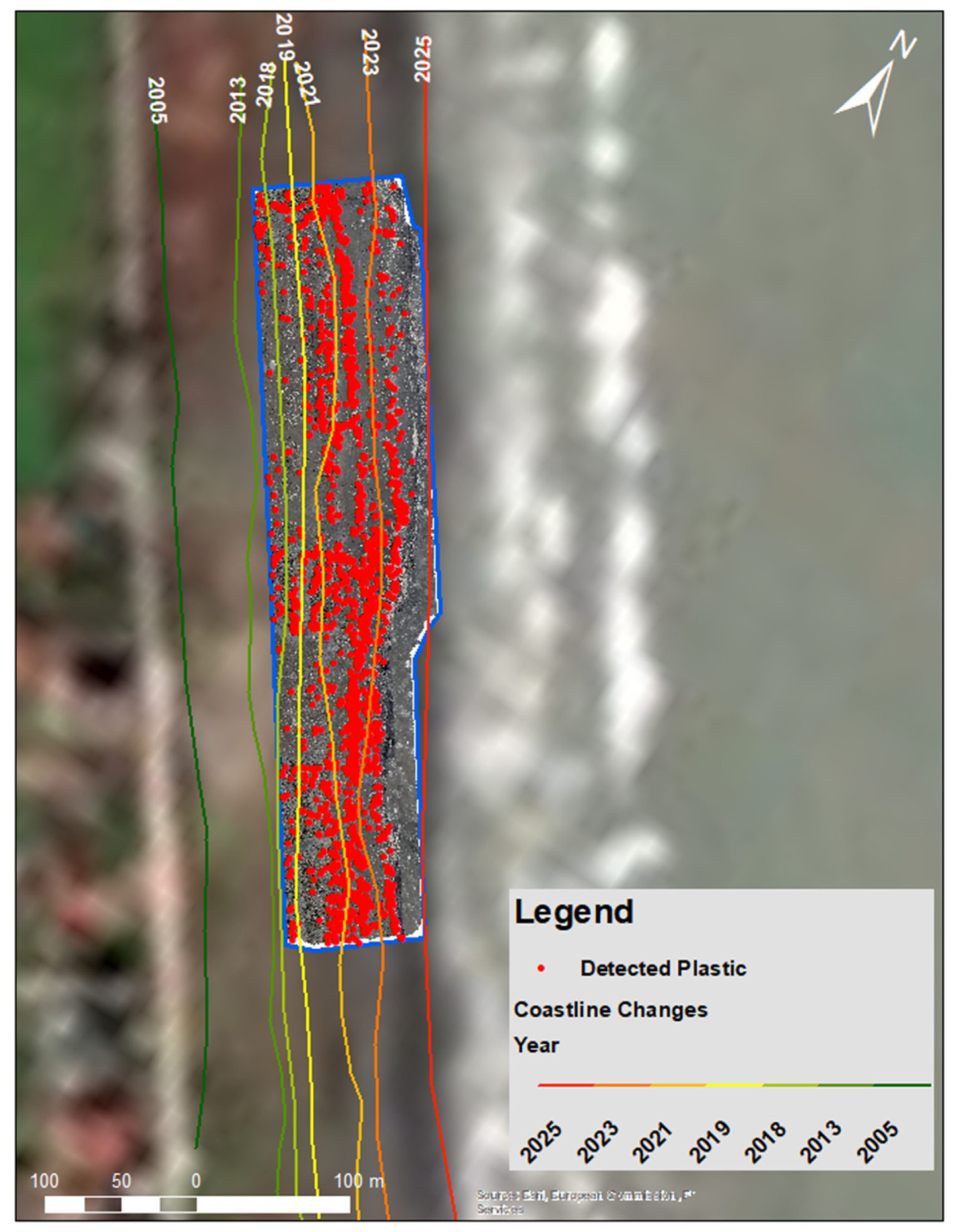
Shoreline dynamics represent an additional factor influencing plastic debris distribution. A comparison of detected plastic debris with historical shoreline positions from 2005 to 2025 reveals a strong spatial correspondence between debris accumulation and zones of shoreline migration (
Figure 7). Areas that experienced repeated shoreline advance and retreat exhibit elevated debris densities, suggesting that coastal morphodynamic processes appear to influence debris redistribution and accumulation.
Analysis of the most recent shoreline configuration indicates that plastic debris is predominantly concentrated near the current shoreline. As shown in
Figure 8, most detected plastic debris items are located close to the 2023 shoreline, highlighting the influence of present-day shoreline position on debris deposition patterns.
The results indicate that plastic debris along the Khachmaz coastline exhibits high densities, pronounced multi-scale clustering, well-defined accumulation hotspots, and strong spatial associations with coastal vegetation and shoreline dynamics. Rather than being randomly or diffusely distributed, plastic debris displays a consistent spatial organization, with aggregation occurring at meter-scale distances and extending along specific coastal segments. The presence of distinct hotspots demonstrates that accumulation is concentrated in particular locations rather than evenly distributed along the shoreline.
The influence of shoreline dynamics becomes especially evident when considered in the context of long-term shoreline change. As shown in
Table 9, areas affected by shoreline migration between 2005 and 2025 exhibit elevated debris densities, with most detected plastic debris located near the 2023 shoreline position. This spatial correspondence indicates that recent shoreline configurations and coastal morphodynamics appear to be key factors influencing current debris distribution. Actively changing shoreline zones function as preferential accumulation areas where debris is repeatedly redistributed and retained.
Together with the strong association between plastic debris and reed-dominated coastal vegetation, these findings show that debris distribution appears to be influenced by the combined effects of hydrodynamic processes, vegetation-mediated retention, and shoreline morphodynamics. This structured and predictable spatial organization provides a solid basis for identifying priority areas for targeted mitigation. Focusing management efforts on accumulation hotspots, vegetated retention zones, and dynamically evolving shoreline segments enables the development of sustainability-oriented coastal management strategies aimed at more effectively reducing plastic debris along the Khachmaz coastline.
The spatial distribution of plastic debris along the Khachmaz coastline is shaped by the combined effects of anthropogenic inputs and natural geomorphological and hydrodynamic controls. Integrating land-use patterns, drainage features, elevation data, and topographic profiles provides a comprehensive framework for understanding why plastic debris accumulates in specific coastal segments rather than being uniformly distributed.
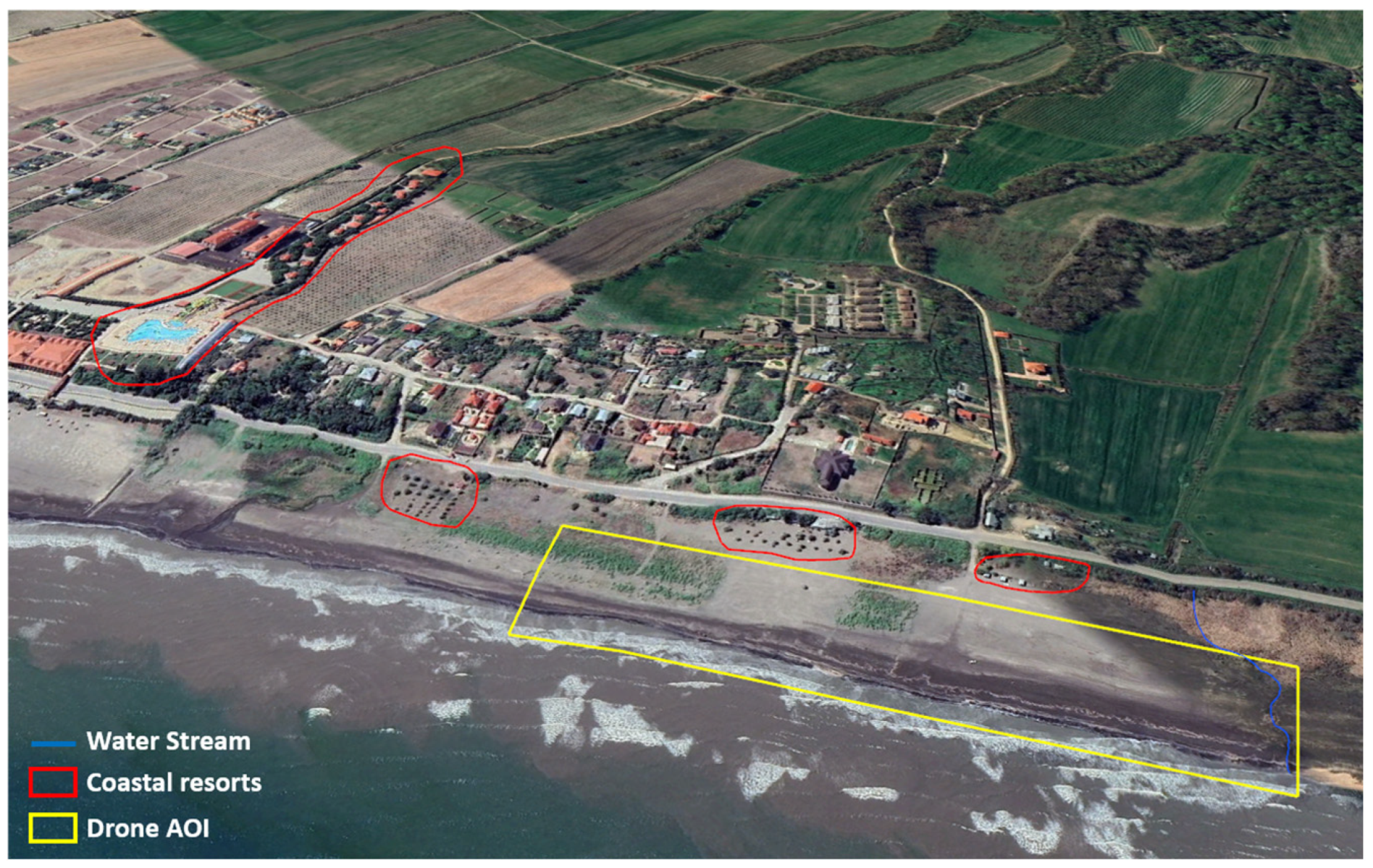
Figure 9 illustrates the spatial relationship between detected plastic debris, coastal resorts, residential areas, and small water streams within and adjacent to the UAV survey area. The concentration of resorts and residential developments along the nearshore zone represents potential local sources of plastic debris associated with tourism, recreation, and everyday residential activities. These built-up areas increase the likelihood of plastic inputs through improper waste disposal, leakage from waste management systems, and incidental loss of materials. The spatial proximity between several accumulation zones and these developed areas suggests that local human activities contribute to plastic inputs into the coastal system.
In addition to direct anthropogenic sources,
Figure 9 highlights small water streams and drainage pathways discharging toward the shoreline. Although these are not major river systems, they may serve as transport corridors for plastic debris originating from inland residential or agricultural areas, particularly during rainfall events and seasonal runoff. Once plastics reach the coast through these pathways, wave action and alongshore currents redistribute them, concentrating debris within specific retention zones along the beach. The spatial coincidence between some accumulation hotspots and drainage outlets suggests that diffuse land-based inputs also contribute to the observed distribution patterns.
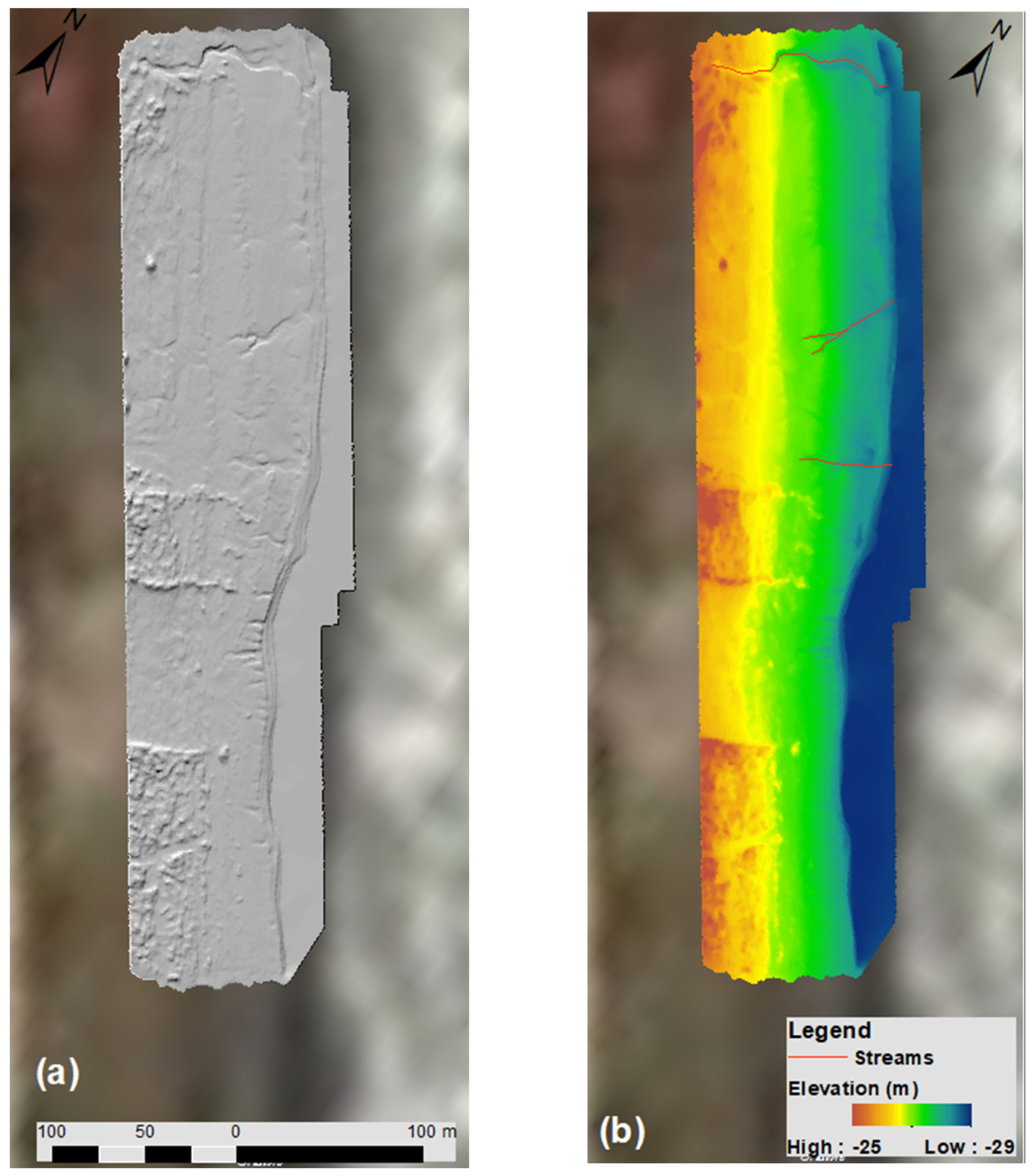
Natural controls on plastic debris accumulation are further illustrated by the elevation and hillshade maps in
Figure 10a,b. The digital elevation model shows clear cross-shore gradients from the back-beach to the active shoreline, while the hillshade map highlights subtle micro-topographic features. Lower-elevation coastal zones correspond closely with areas of high debris density, reflecting increased exposure to wave run-up, storm surges, and episodic inundation. These processes may enhance the deposition and retention of floating or mobile plastic debris, particularly during high-energy events.
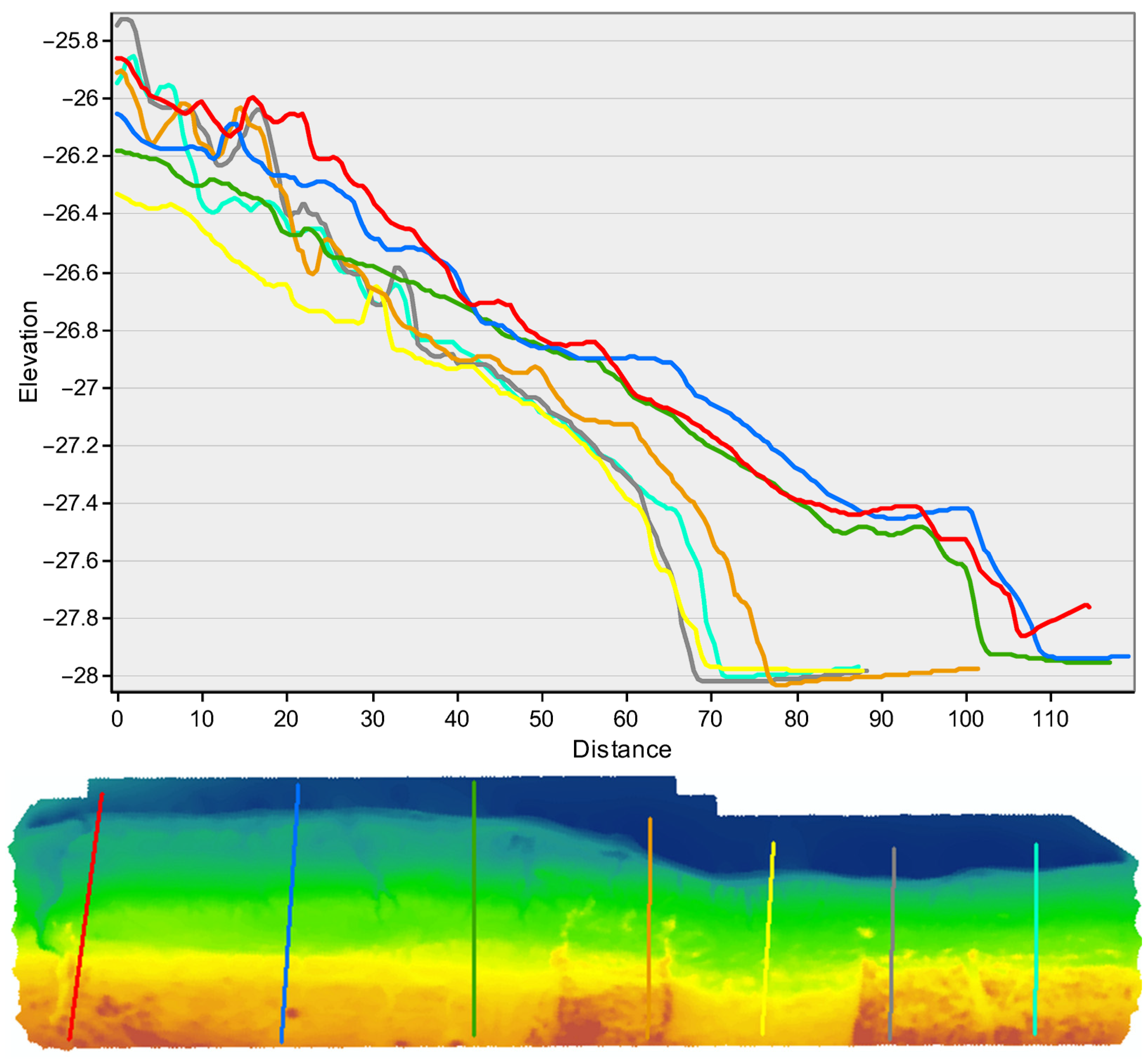
The influence of beach morphology is further demonstrated by the cross-shore elevation profiles in
Figure 11. These profiles show gently sloping upper beach areas transitioning to steeper gradients closer to the shoreline over distances of approximately 100–120 m. Plastic debris is primarily concentrated in the lower sections of these profiles, where repeated hydrodynamic forcing promotes deposition while limiting landward transport. Local variations in slope and micro-topography create small depressions and surface irregularities that act as traps, reducing debris mobility and promoting persistent accumulation.
Taken together,
Figure 9,
Figure 10 and
Figure 11 indicate that plastic debris distribution along the Khachmaz coastline results from the interaction between human-related input mechanisms and natural retention processes. Tourism and residential activities introduce plastics into the nearshore environment, drainage pathways facilitate inland-to-coast transport, and shoreline morphology, elevation gradients, and hydrodynamic forcing determine where debris ultimately accumulates. Vegetation and low-lying coastal zones further enhance retention by limiting redistribution.
This integrated understanding of anthropogenic and natural controls has important implications for sustainable coastal management. Cleanup efforts focused solely on visible accumulation zones may provide short-term improvements but will not address upstream inputs from coastal infrastructure and drainage systems. More effective strategies should combine improved waste management near resorts and residential areas with environmentally sensitive cleanup approaches in low-elevation and vegetation-dominated zones. The integration of land-use, topographic, and debris distribution data therefore provides a strong basis for identifying priority intervention areas and supporting evidence-based, sustainability-oriented plastic debris mitigation along the Khachmaz coastline.
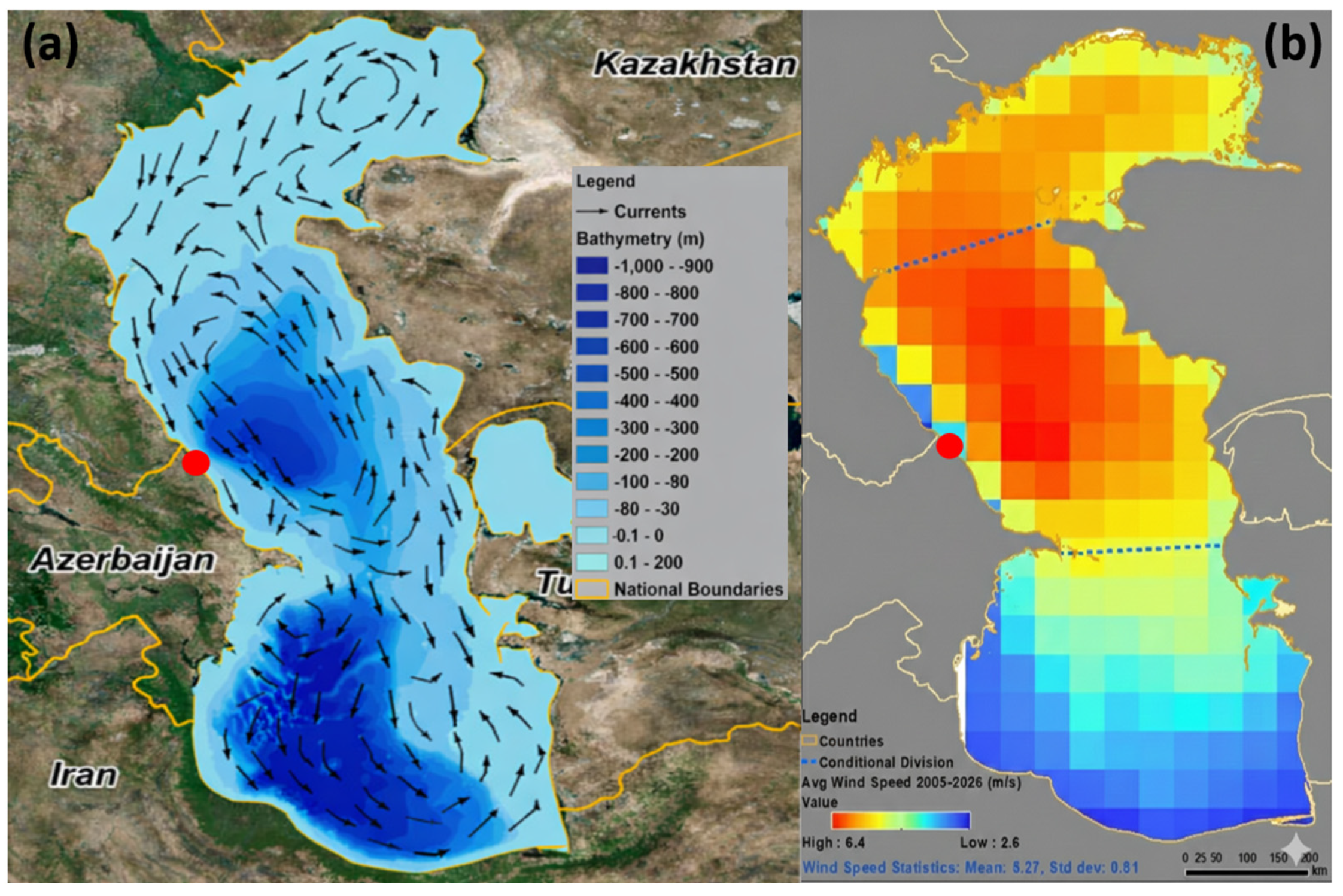
Surface currents and wind speed are key physical drivers of plastic debris transport, redistribution, and accumulation in semi-enclosed basins such as the Caspian Sea. As shown in
Figure 12a, circulation in the Caspian Sea is dominated by large-scale cyclonic gyres and persistent alongshore currents, particularly along the western margin. These currents facilitate the southward transport of floating plastic debris from the northern and central Caspian toward the Middle and Southern basins. The Khachmaz coastline, located along the western Middle Caspian, lies within this advective pathway and is therefore exposed to debris originating from distant sources, including river discharge, coastal urban areas, and maritime activities further north. Similar long-range transport processes have been documented in other enclosed and semi-enclosed seas, where plastics accumulate far from their original sources due to basin-scale circulation patterns [
42,
43].
In addition to horizontal transport, the circulation structure shown in
Figure 12a indicates areas of weakened flow and convergence in the central and southern Caspian. These zones can function as temporary retention areas for buoyant plastic debris. When combined with coastal boundary effects and reduced offshore transport, such conditions increase the likelihood of debris retention and shoreline accumulation along the western coast, including the Khachmaz region. Convergence-driven accumulation has been identified as a key mechanism in the formation of plastic debris hotspots in enclosed basins [
44].
Wind speed further enhances these processes by influencing surface drift and nearshore transport. As illustrated in
Figure 12b, the Middle Caspian experiences relatively high average wind speeds (approximately 5–6.4 m/s), with the Khachmaz region situated within a zone of moderate to strong wind influence. Wind stress promotes Ekman transport and generates wind-driven surface currents that can push floating plastic debris toward the coastline. During periods of prevailing onshore or alongshore winds, debris is more likely to enter nearshore waters and become stranded on beaches, increasing local accumulation. Previous studies have shown that wind-driven transport is particularly effective for low-density plastics, which remain near the surface and respond rapidly to wind forcing [
45,
46].
Together, currents and wind create a coupled transport system that promotes plastic debris accumulation along the western Caspian coast. Basin-scale currents enable long-distance redistribution, while wind controls short-term variability, coastal convergence, and stranding intensity. In the Khachmaz region, this interaction explains the presence of substantial plastic debris even in areas with limited local inputs, indicating that the coastline functions as a secondary sink for regionally transported debris. Understanding this coupling is essential for interpreting field observations and for designing effective monitoring and mitigation strategies in the Caspian Sea.
Prevailing wind direction is a key physical driver influencing the transport, redistribution, and accumulation of plastic debris in coastal environments. In the western Caspian Sea, winds predominantly originate from the north–northwest (NW–N) sector, with seasonal variability controlled by regional atmospheric circulation and pressure gradients [
47,
48]. These wind regimes directly affect surface water movement through wind-driven currents, wave energy distribution, and nearshore transport pathways, thereby shaping the spatial patterns of floating debris.
Wind stress at the water surface induces Ekman transport and accelerates alongshore currents aligned with the coastline, a process widely documented in coastal oceanography [
49,
50]. In the Khachmaz study area, prevailing north–northwesterly winds generate a southward component of surface forcing, increasing the likelihood that floating plastic debris is transported both alongshore and toward the nearshore zone. This mechanism is consistent with conceptual models of wind-driven plastic transport in enclosed seas, where persistent wind forcing promotes the formation of elongated accumulation bands parallel to the shoreline [
9,
10].
The observed correspondence between dominant wind direction and the coast-parallel orientation of debris accumulation suggests that wind forcing amplifies hydrodynamic processes that concentrate plastics within specific coastal segments. During higher-energy events, wind-induced waves and currents enhance cross-shore transport, driving debris onto beaches or into low-lying vegetation where it becomes trapped [
51,
52]. Low-elevation nearshore zones, as shown in
Figure 11, further facilitate retention by reducing the energy threshold required for deposition.
Wind direction also contributes to temporal variability in debris distribution. Stronger northwesterly winds in spring and summer can intensify alongshore transport, whereas calmer conditions in autumn and winter reduce debris mobility and increase residence time within vegetated belts and accumulation hotspots [
19,
53]. These seasonal dynamics highlight the importance of incorporating wind climatology into interpretations of spatial debris patterns and help explain the persistence of hotspots in geomorphically favorable zones.
In summary, prevailing wind direction in the Khachmaz coastal region interacts with shoreline morphology, basin-scale currents, elevation gradients, and vegetation structure to shape the spatial organization of plastic debris. Integrating wind dynamics into coastal plastic assessments improves interpretation of observed patterns and supports more effective, sustainability-oriented monitoring and mitigation strategies.
Following completion of the spatial analyses, four distinct accumulation hotspots were identified along the Khachmaz coastline (
Figure 4). These hotspots are not randomly distributed but coincide with coastal segments where multiple environmental factors overlap. Specifically, hotspot areas correspond to zones characterized by shoreline irregularities, low coastal elevation, and dry reed vegetation exposed after recent water-level decline.
Comparison with historical shoreline positions indicates that hotspots frequently occur in areas affected by repeated shoreline migration. Such segments may function as natural retention zones where debris transported alongshore becomes temporarily trapped. Elevation analysis further shows that hotspots are typically located within low-lying coastal strips more frequently exposed to wave run-up and sediment redistribution, conditions that enhance local debris deposition.
Vegetation patterns are also closely associated with hotspot formation. Many high-density areas overlap with reed-dominated coastal belts, particularly dry reed stands near the beach–vegetation transition. Within these zones, debris items are more closely spaced and local density values are higher, indicating that vegetation limits mobility and promotes localized clustering.
Spatial overlay with coastal infrastructure and drainage pathways suggests that some hotspots are situated near areas of human activity, including resorts and residential zones. Although this study does not quantify source contributions, the proximity of hotspots to developed areas indicates that localized anthropogenic inputs may influence accumulation patterns.
Overall, the presence of four distinct hotspots reflects a structured spatial distribution shaped by the interaction of shoreline configuration, vegetation cover, elevation gradients, hydrodynamic forcing, and potential local inputs. These findings confirm that plastic debris accumulation along the Khachmaz coastline is heterogeneous and concentrated within specific environmental settings rather than evenly distributed along the shore.



_Li.png)

 ,
,