Article

Integrating UAV Deep Learning and Spatial Analysis to Support Sustainable Monitoring of Coastal Plastic Pollution in the Caspian Sea

1
School of Mining and Geosciences, Nazarbayev University, 53 Kabanbay Batyr Avenue, Block 6, Astana 010000, Kazakhstan
2
Institute of Smart Systems and Artificial Intelligence (ISSAI), Nazarbayev University, 53 Kabanbay Batyr Avenue, Block C4, Astana 010000, Kazakhstan
3
Institute of Geography, Public Legal Entity, Ministry of Science and Education of the Republic of Azerbaijan, 115, H. Javid Ave., Baku AZ1070, Azerbaijan
4
French-Azerbaijani University, Azerbaijan State Oil and Industry University, 183 Nizami Str., Baku AZ1000, Azerbaijan
5
Chemical Engineering Department, Baku Engineering University, 120 Hasan Aliyev Str., Khirdalan AZ0101, Azerbaijan
6
School of Agricultural and Food Sciences, ADA University, Ahmadbey Aghaoghlu Str. 61, Baku AZ1008, Azerbaijan
*
Authors to whom correspondence should be addressed.
Sustainability 2026, 18(7), 3405; https://doi.org/10.3390/su18073405
Submission received: 19 January 2026 / Revised: 23 March 2026 / Accepted: 27 March 2026 / Published: 1 April 2026

Abstract

Plastic pollution poses a major environmental threat to coastal ecosystems, particularly in enclosed and semi-enclosed seas where limited water exchange promotes debris accumulation. This study presents a high-resolution spatial analysis of coastal plastic debris along the Khachmaz coastline in the western Caspian Sea. The analysis integrates unmanned aerial vehicle (UAV) imagery, YOLO-based deep learning detection, and spatial statistical methods. High-resolution UAV orthophotos enabled the automated detection of individual plastic debris items, which were converted into spatial point data for further analysis. Spatial patterns were assessed using areal density estimation, nearest neighbor analysis, kernel density estimation, and Ripley’s L-function to examine clustering across multiple spatial scales. A total of 2389 plastic debris items were identified within 0.0439 km2, corresponding to an average density of 54,382 items per km2. The results show that plastic debris is unevenly distributed, forming distinct clusters with four primary accumulation hotspots. Significant clustering occurs at spatial scales up to 20 m, with the strongest aggregation observed at distances below 5 m. Spatial overlay analysis indicates a strong association between plastic debris, reed-dominated coastal vegetation, and proximity to the shoreline, suggesting the potential role of localized retention processes and shoreline dynamics in debris accumulation. The combined use of UAV-based deep learning and spatial statistical analysis provides an integrated application framework for monitoring coastal plastic debris and supports targeted, sustainability-oriented coastal management strategies in the Caspian Sea region.

1. Introduction

Plastic pollution has emerged as one of the most significant environmental pressures affecting coastal and marine ecosystems globally, with significant implications for ecological integrity, human health, and long-term sustainability. Since the mid-twentieth century, global plastic production has increased exponentially, driven by population growth, industrialization, and the widespread use of disposable plastic products [1,2]. Although plastics provide societal benefits due to their durability, versatility, and low cost, these same characteristics contribute to their persistence in natural environments. Once released, plastics fragment rather than biodegrade, leading to long-term accumulation [3,4].
Coastal environments are particularly vulnerable to plastic debris because they function as dynamic interfaces between terrestrial and marine systems. Plastic debris enters these zones from various sources, including urban runoff, river discharge, tourism, fisheries, shipping, and offshore industrial activities [5,6]. Once introduced into marine systems, plastic debris is redistributed by hydrodynamic forces such as wind, wave action, and ocean currents, leading to its deposition in nearshore waters, beaches, coastal vegetation zones, and shallow seabed environments [7,8]. These accumulation processes are spatially heterogeneous and are shaped by hydrodynamic forces, shoreline morphology, and biological structures [9,10].
The ecological impacts of coastal plastic debris are well documented. Marine organisms often ingest plastic debris after mistaking it for food, resulting in internal injury, reduced feeding efficiency, impaired reproduction, and increased mortality [11,12]. Larger debris items can cause entanglement, leading to injury or death among marine fauna [13]. Plastic debris also alters habitat structure, smothers benthic communities, and facilitates the transport of invasive species and pathogens [14,15]. In addition, plastics act as vectors for persistent organic pollutants and heavy metals that adsorb onto their surfaces and enter food webs, posing risks to ecosystems and human health [16,17].
Plastic debris also threatens the sustainability of coastal socio-economic systems. Accumulated debris degrades beach aesthetics, negatively affecting tourism and recreational activities. It damages fishing gear, reduces catch efficiency, and increases operational costs for coastal communities that depend on marine resources for their livelihoods [18,19]. Addressing plastic debris is therefore essential for achieving broader sustainability goals related to environmental protection, economic resilience, and social well-being.
The spatial dimension of plastic debris has received increasing attention, as its distribution is strongly influenced by physical and biological processes operating at multiple scales. Previous studies indicate that plastic debris is rarely distributed uniformly along coastlines and instead tends to concentrate in localized clusters and accumulation hotspots [20,21]. Quantifying these spatial patterns is crucial for understanding debris transport and retention mechanisms and for designing targeted, cost-effective mitigation strategies [19,22].
Enclosed and semi-enclosed seas are particularly vulnerable to debris accumulation due to restricted water exchange and extended pollutant residence times. The Caspian Sea, the world’s largest inland body of water, represents a highly sensitive system in this regard. Water-level fluctuations, complex circulation patterns, and intensive coastal development create favorable conditions for the accumulation and persistence of plastic debris along its coastlines [23,24,25]. Despite its ecological and economic importance, spatially detailed assessments of coastal plastic debris in the Caspian Sea remain limited compared with studies conducted in open-ocean and Mediterranean regions.
Recent advances in environmental and infrastructure monitoring highlight the growing importance of high-precision sensing, uncertainty-aware analytics, and decision-support approaches under variable conditions. For example, uncertainty-aware multi-step forecasting models have been developed to improve the robustness of sensor-based monitoring systems during extreme environmental disturbances that introduce noise, missing data, and non-stationary behavior [26]. Similarly, recent reviews emphasize the expansion of low-cost and scalable sensing technologies, such as RFID-based systems for structural condition assessment, which enable continuous monitoring, early warning, and maintenance decision-making [27]. Although these studies focus on structural health monitoring, they reflect a broader trend relevant to sustainability-oriented environmental monitoring: the integration of high-resolution data acquisition, automated detection, and uncertainty-aware evaluation to enhance reliability and practical applicability. Coastal plastic debris monitoring faces comparable challenges, including heterogeneous backgrounds, variable illumination, vegetation occlusion, and dynamic environmental forcing. These conditions highlight the need for validated and reproducible high-resolution approaches, such as UAV-based deep learning combined with spatial statistical analysis.
Traditional methods for monitoring coastal plastic debris, including beach surveys and manual counts, provide valuable data but are labor-intensive, time-consuming, and spatially limited [28,29]. Satellite remote sensing can detect floating debris at broad spatial scales; however, its effectiveness in nearshore areas is limited by spatial resolution constraints and difficulties in detecting small or partially buried objects [30,31]. In contrast, unmanned aerial vehicles offer high spatial resolution, operational flexibility, and cost-effective data acquisition, making them well-suited for fine-scale coastal monitoring [32,33].
Spatial statistical techniques provide an effective approach for quantifying the distribution patterns and clustering behavior of plastic debris in coastal environments. Techniques such as density estimation, nearest-neighbor analysis, kernel density estimation, and multi-scale clustering statistics enable objective assessment of debris abundance, aggregation, and spatial heterogeneity [34,35]. These approaches support evidence-based coastal management by identifying priority accumulation zones and improving the efficiency of cleanup and prevention efforts.
Within this context, the Khachmaz coastline on the western shore of the Caspian Sea serves as an important case study for examining the spatial characteristics of coastal plastic debris. The area includes sandy beaches, reed-dominated coastal vegetation, and shoreline dynamics influenced by water-level fluctuations. A detailed, spatially explicit assessment of debris distribution in this region enhances understanding of accumulation processes in enclosed sea environments and supports the development of sustainability-oriented coastal management strategies.
The scientific contribution of this study lies not in the development of a new object detection algorithm or spatial statistical method, but in the integration of deep learning-derived object detection into a georeferenced spatial point-process framework that enables rigorous multi-scale clustering analysis of coastal plastic debris. This study should therefore be interpreted as an application-driven integration of established methods within a unified monitoring framework. Specifically, the study presents an integrated and reproducible framework that combines UAV-based deep learning detection with spatial statistical analysis for high-resolution monitoring of coastal plastic pollution. By operationalizing object-level artificial intelligence detections as spatially analyzable units, the study bridges artificial intelligence and spatial process theory, allowing debris accumulation to be interpreted as a structured environmental phenomenon rather than solely as count-based observations.
By linking artificial intelligence-based object detection with spatial point-process statistics, the study enables debris accumulation to be analyzed as a spatial environmental process operating across multiple scales. This methodological integration provides a reproducible framework for translating automated image-based detections into spatial indicators that can support sustainability-oriented coastal monitoring and management.
In addition to its methodological contribution, the study offers regional scientific novelty by focusing on the Caspian Sea, an enclosed basin experiencing rapid water-level decline and shoreline retreat. Enclosed seas are characterized by restricted circulation, prolonged pollutant residence times, and vegetation-mediated retention processes that differ substantially from open-ocean coastlines. The recent exposure of dry, reed-dominated coastal vegetation due to water-level decline has created newly emergent retention zones whose influence on plastic debris distribution has not previously been quantified in this region. By combining high-resolution UAV-based detection with spatial statistical analysis in this dynamic coastal setting, the study provides new insight into how hydrological change, shoreline dynamics, and coastal vegetation interact to shape plastic debris accumulation in semi-enclosed marine systems.
From a sustainability science perspective, the proposed framework suggests how localized physical processes, such as shoreline dynamics and vegetation-mediated retention, interact with anthropogenic inputs to produce predictable spatial accumulation patterns. This integration advances spatially explicit sustainability monitoring by linking technological detection capabilities with process-based environmental interpretation, thereby supporting adaptive and spatially targeted coastal management strategies.

2. Materials and Methods

2.1. Study Area

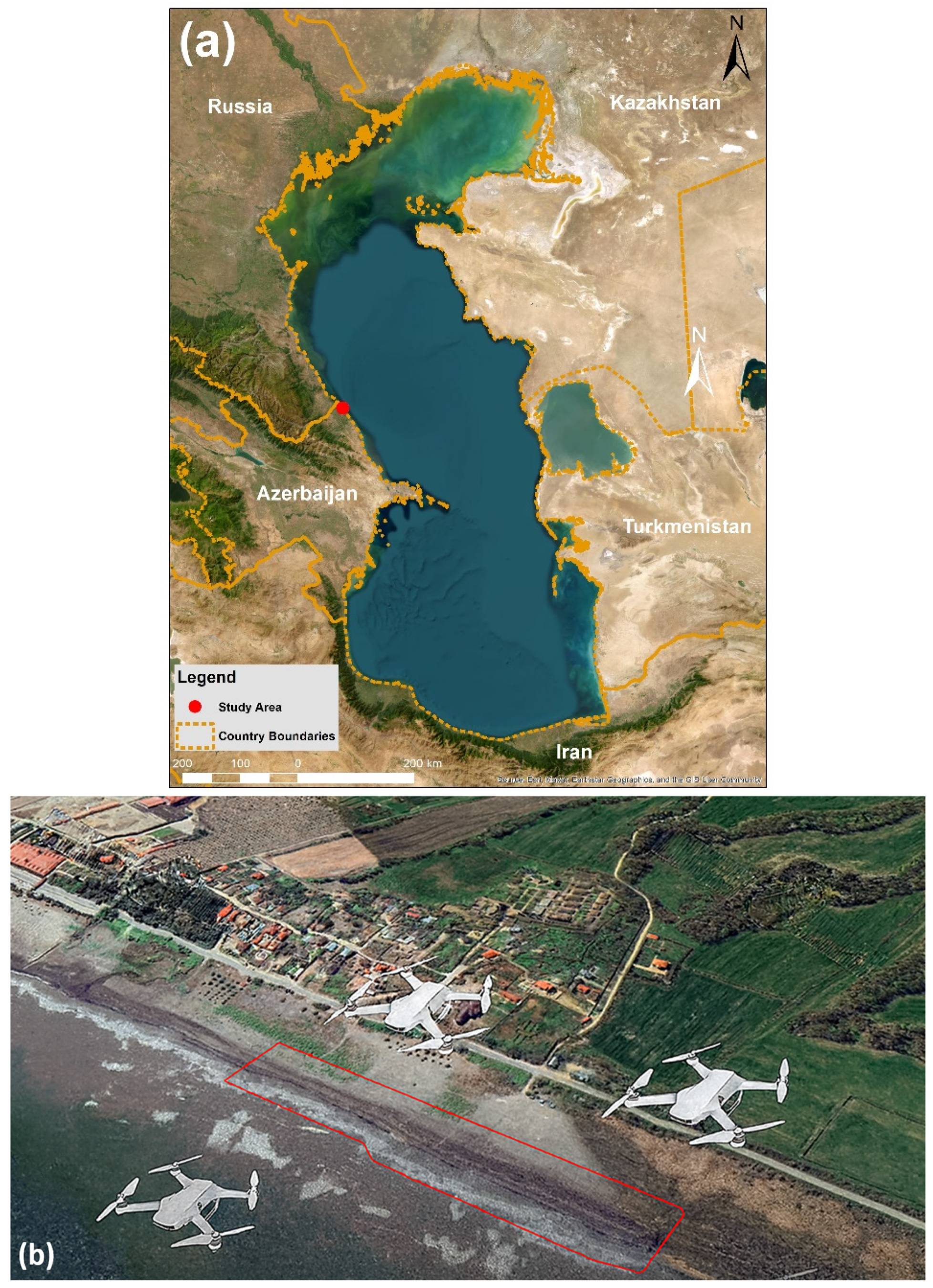
The study was conducted along the Khachmaz coastline on the western shore of the Caspian Sea (Figure 1a,b). This coastal environment is characterized by sandy beaches, shallow nearshore waters, and extensive reed-dominated vegetation. In recent decades, fluctuations in Caspian Sea water levels have led to shoreline retreat and the exposure of previously submerged reed zones. These changes have created dynamic coastal conditions that influence sediment redistribution and the accumulation of plastic debris [24,25,36,37].

2.2. UAV Data Acquisition and YOLO-Based Plastic Debris Detection

High-resolution aerial imagery was collected using an unmanned aerial vehicle (UAV) platform (DJI Matrice 350; DJI, Shenzhen, China) equipped with a Zenmuse P1 RGB camera (DJI, Shenzhen, China) and a Zenmuse H20N multisensor camera (DJI, Shenzhen, China). Data were acquired under optimal weather conditions to minimize motion blur, surface glare, and atmospheric interference. Flights were conducted at a nominal altitude of 70 m above ground level, providing sufficient spatial resolution to detect individual plastic debris items on exposed beaches and within coastal vegetation (Table 1).
Flight planning ensured complete spatial coverage of the study area, with adequate overlap between adjacent images to support accurate photogrammetric reconstruction and georeferencing. The combination of low-altitude acquisition and high-resolution sensors enabled detailed detection of small and heterogeneous plastic debris items in complex coastal environments.
The UAV images were processed using a standard photogrammetric workflow to generate a single high-resolution orthophoto. Processing steps included image alignment, feature matching, bundle block adjustment, dense point cloud generation, digital surface model construction, and orthorectification. Overlapping images were geometrically corrected and mosaicked into a continuous, georeferenced orthophoto that served as the primary dataset for deep learning-based plastic debris detection and subsequent spatial analyses. Processing was conducted using Agisoft Metashape Professional (Version 2.1, Agisoft LLC, St. Petersburg, Russia).
UAV-based monitoring was selected for its very high spatial resolution and flexible deployment in complex coastal environments. Traditional ground surveys are labor-intensive and spatially limited, while satellite remote sensing often lacks sufficient resolution to detect small plastic debris items in nearshore areas [30,32].
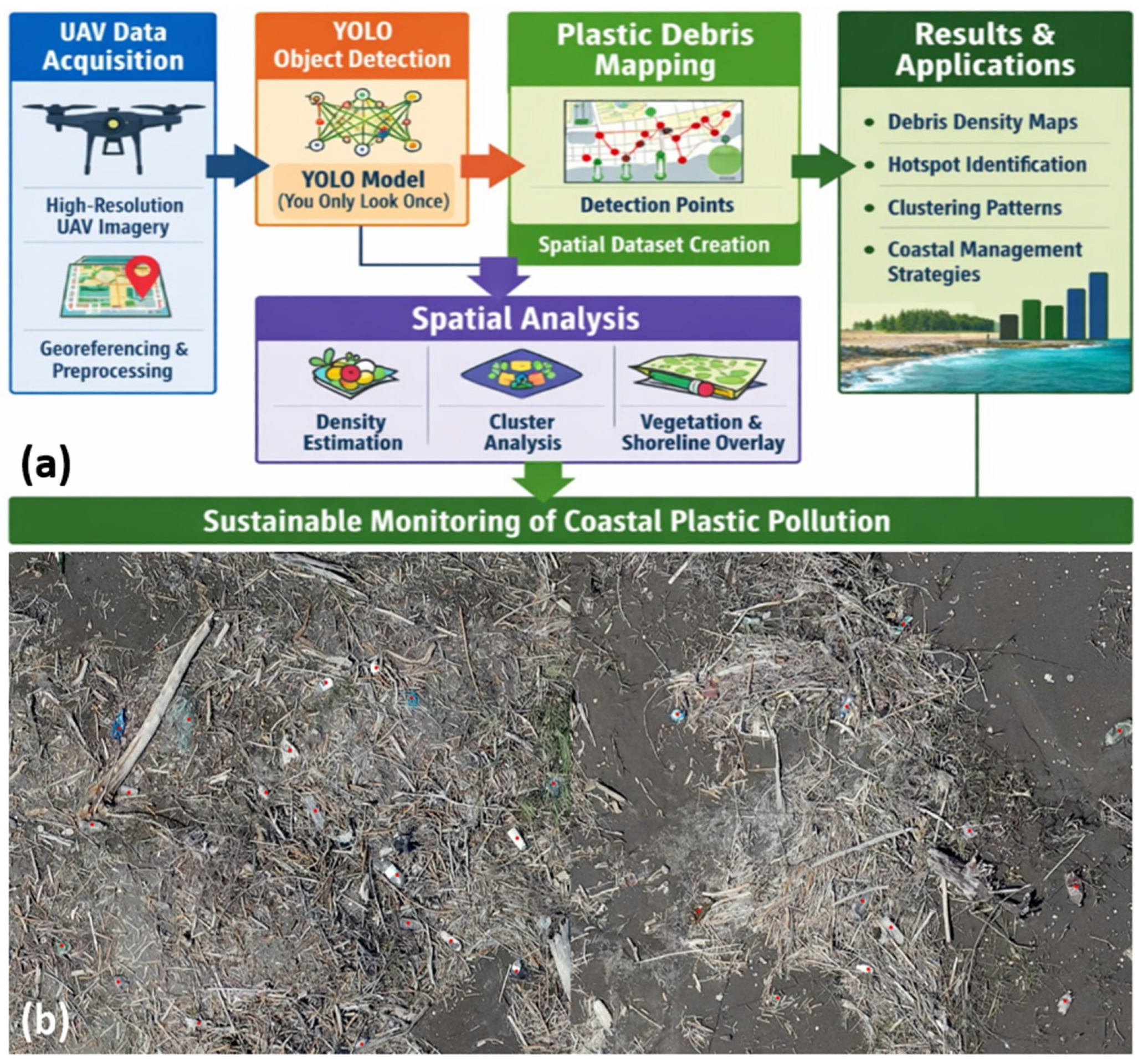
Plastic debris was identified from the orthophoto using the YOLO (You Only Look Once) deep learning object detection framework (Figure 2a,b). The full YOLOv4 architecture (not the lightweight YOLOv4-tiny variant) was adopted due to its balance between detection accuracy and computational efficiency. Although more recent object detection architectures such as YOLOv5, YOLOv7, and YOLOv8 have been introduced, YOLOv4 remains widely used in environmental monitoring applications due to its stable performance and well-documented behavior in detecting small objects within high-resolution imagery. UAV-based coastal environments present heterogeneous backgrounds, vegetation occlusion, and variable illumination conditions, which require a robust detection framework with proven reliability. In this context, YOLOv4 provides a strong balance between accuracy, computational efficiency, and training stability. Because the present study focuses on detecting a single object class (plastic debris) rather than benchmarking object detection architectures, YOLOv4 was considered sufficient to support the spatial analysis objectives of the research.
The model incorporates the CSPDarknet53 backbone along with advanced training strategies, including Mosaic data augmentation and optimized anchor-based detection, which enhance performance for small and irregularly shaped objects in heterogeneous coastal environments. These characteristics make YOLOv4 well-suited for detecting plastic debris in complex nearshore environments.
The model was implemented in Python (Version 3.11) using a PyTorch-based reimplementation (Version 2.3.0) of the original Darknet framework. Network weights were initialized with pretrained parameters from the MS COCO dataset to improve convergence stability and detection robustness. Training and inference were accelerated using CUDA 12.1 on a workstation equipped with an NVIDIA RTX-series GPU, enabling efficient processing of high-resolution orthophotos and stable model optimization. YOLO operates as a single-stage convolutional neural network, integrating object localization and classification within a unified architecture to achieve efficient and accurate detection [38,39].
In this study, the “plastic debris” class included visible surface items such as plastic fragments, bottles, bags, packaging materials, and similar objects identifiable in UAV imagery. Due to variability in size, shape, and degradation state, all items were treated as a single class. This simplification improves detection consistency but limits the ability to distinguish between different plastic types. Manual annotation of plastic debris was performed directly on the orthophoto to generate training data. Only clearly visible surface debris was annotated. Fully buried, heavily degraded, or visually ambiguous objects were excluded to reduce annotation uncertainty. In total, 1480 plastic debris items were manually labeled, representing a wide range of sizes, shapes, and surface conditions. This variability supported robust model learning. During training, the model internally sampled image regions at the required input resolution, eliminating the need for manual image subdivision while preserving spatial consistency with the georeferenced orthophoto.
The annotated dataset was randomly divided into training (70%), validation (20%), and testing (10%) subsets. Splitting was conducted at the image-tile level to minimize spatial autocorrelation and prevent overestimation of model generalization. All bounding boxes were independently reviewed by two annotators to ensure consistency. Ambiguous cases were excluded, and inter-annotator agreement exceeded 90%.
The YOLOv4 model was configured with an input resolution of 640 × 640 pixels, a batch size of 16, and 200 training epochs. Optimization was performed using stochastic gradient descent with an initial learning rate of 0.001, cosine decay scheduling, momentum of 0.937, and weight decay of 0.0005. The confidence threshold (0.25) and non-maximum suppression intersection-over-union (IoU) threshold (0.45) were selected based on validation experiments evaluating the precision–recall trade-off. Thresholds were chosen to maximize the F1-score while minimizing false positives, particularly in vegetated areas where organic material may resemble plastic debris.
After training, the model was applied to the georeferenced orthophoto to automatically detect plastic debris across the study area. Each detected object was converted into a spatial point corresponding to its geographic centroid, enabling integration with subsequent spatial statistical analyses. Only high-confidence detections were retained for density estimation, hotspot identification, and clustering analysis.
Orthophoto positional accuracy was assessed during photogrammetric processing, yielding a horizontal root mean square error (RMSE) below 0.5 m. Although this positional uncertainty propagates to detected object coordinates, spatial clustering analyses were conducted at scales ranging from 1 m to 20 m. Therefore, georeferencing uncertainty remains substantially smaller than the observed clustering distances and does not significantly affect higher-scale spatial interpretation.
Field validation was conducted shortly after UAV data acquisition to minimize temporal discrepancies between image-based detections and in situ observations. Surface-visible plastic debris was located and recorded using handheld GPS devices. Each ground-truth object was georeferenced, generating an independent validation dataset that was not used during model training.
A total of 550 plastic debris items were recorded in the field for validation. GPS-based ground-truth points were spatially matched with YOLO detection outputs derived from the orthophoto. A tolerance radius of 1.5 m was applied to account for cumulative positional uncertainty, including orthophoto georeferencing (±0.5 m), UAV navigation accuracy (±0.3 m), and handheld GPS error (±1.0 m). A detection was classified as a true positive if its centroid fell within this distance of a corresponding GPS-measured plastic object.
Based on spatial matching, detections were classified as true positives (correctly detected plastic debris), false negatives (ground-truth debris not detected), or false positives (detections without corresponding ground-truth confirmation). These categories were used to calculate standard object detection performance metrics.
Performance evaluation was based on spatial matching rather than pixel-level overlap. Precision was defined as the proportion of detections corresponding to confirmed plastic debris, while recall represented the proportion of ground-truth debris successfully detected. The F1-score was calculated as the harmonic mean of precision and recall, providing a balanced measure of detection performance. Mean Average Precision (mAP) was also computed across confidence thresholds following standard object detection evaluation procedures.
The objective of this study is not to evaluate alternative object detection architectures but to integrate automated detection outputs into a spatial statistical framework for environmental analysis. Therefore, a comparative benchmark between multiple deep learning detectors was beyond the scope of the present work. Future research may extend this framework by evaluating newer architectures such as YOLOv7, YOLOv8, or transformer-based detectors to further improve detection accuracy and robustness in complex coastal environments.

2.3. Spatial Extent, Density Estimation, Spatial Pattern and Clustering Analysis

The spatial extent of detected plastic debris was defined using the convex hull of all YOLO-detected object locations. This method provided an objective delineation of the effective survey area. Areal density was calculated by dividing the total number of detected plastic debris items by the convex hull area and was expressed as objects per square kilometer, enabling consistent spatial comparison across the study area [29,35].
Nearest neighbor analysis was conducted to quantify local-scale spatial relationships among detected plastic debris items. The mean nearest neighbor distance and the Nearest Neighbor Index were calculated to evaluate deviations from complete spatial randomness [35,40,41].
Kernel density estimation was applied to identify areas of elevated plastic debris accumulation. This method generated a continuous density surface that highlighted spatial gradients in debris abundance and identified accumulation hotspots [22,40,41]. Multi-scale clustering behavior was further examined using Ripley’s L-function, which assesses spatial dependence across a range of distances and enables detection of clustering patterns at multiple spatial scales [34].
All spatial statistical analyses, including convex hull delineation, nearest neighbor analysis, kernel density estimation, and multi-distance spatial cluster analysis, were performed using ArcGIS Pro (Version 3.3, Esri, Redlands, CA, USA). Ripley’s K-function was computed using the Multi-Distance Spatial Cluster Analysis tool within the Spatial Statistics toolbox, and the corresponding L-function was derived to evaluate clustering intensity across spatial scales.

2.4. Vegetation and Shoreline Overlay Analysis

Spatial relationships between plastic debris and coastal vegetation were examined using overlay analysis with reed distribution data derived from UAV imagery. The analysis focused specifically on dry reed zones exposed by recent water-level declines. Historical shoreline positions were also overlaid with plastic debris locations to assess the influence of shoreline dynamics on debris distribution. This approach enables evaluation of how coastal morphodynamics shape the spatial organization of plastic debris over time [24,25].
All hyperparameters and processing settings are reported in Table 1 to facilitate methodological reproducibility.

3. Results

3.1. Validation Results of YOLO-Based Plastic Debris Detection Using GPS-Measured Ground Truth

The performance of the YOLO-based deep learning model for plastic debris detection was evaluated using an independent ground-truth dataset collected through field surveys supported by Global Positioning System (GPS) measurements. In total, 2389 plastic debris items were detected from UAV imagery and used for subsequent spatial analyses. For validation, 550 plastic debris items were recorded in the field using handheld GPS devices and served as ground-truth reference points.
Field validation was conducted shortly after UAV data acquisition to ensure spatial consistency between ground observations and image-based detections. Surface-visible plastic debris was located and georeferenced using GPS. The recorded GPS points were spatially matched with YOLO detection outputs using a predefined distance threshold to account for positional uncertainty associated with orthophoto georeferencing and GPS measurement error.
Of the 550 GPS-measured ground-truth plastic debris items, 467 were correctly detected by the YOLO model and classified as true positives. Eighty-three ground-truth items were not detected and were classified as false negatives. In addition, 46 YOLO detections within the validation area did not correspond to GPS-confirmed plastic debris and were classified as false positives. These results form the basis of the confusion matrix presented in Table 2.
Based on the confusion matrix, standard object detection performance metrics were calculated. The model achieved a precision of 0.910, indicating that 91.0% of YOLO detections within the validation area corresponded to plastic debris confirmed by GPS field measurements. The recall value was 0.849, meaning that 84.9% of the GPS-recorded plastic debris items were successfully detected by the model. These results demonstrate strong agreement between UAV-based detections and independent field observations (Table 3).
The F1-score of 0.878 indicates a balanced trade-off between detection accuracy and completeness. False negatives suggest that some plastic debris items were missed by the model, likely due to partial burial, surface degradation, vegetation occlusion, or low visual contrast with surrounding substrates. False positives may reflect instances in which natural materials exhibited visual features similar to plastic debris in UAV imagery.
Mean Average Precision (mAP) was also calculated to assess overall detection and localization performance. The mAP at an intersection-over-union threshold of 0.5 (mAP@0.5) reached 0.88, indicating strong detection performance under standard evaluation criteria. When evaluated across a stricter IoU range from 0.5 to 0.95 (mAP@0.5:0.95), the mAP decreased to 0.58. This reduction reflects the greater difficulty of precisely localizing small, irregularly shaped, or partially obscured plastic debris items in high-resolution UAV imagery.
To evaluate the robustness of validation results to the spatial matching rule, a sensitivity analysis was conducted using tolerance radii of 1.0 m, 1.5 m, and 2.0 m. These thresholds represent plausible cumulative positional uncertainties derived from orthophoto georeferencing error (±0.5 m), UAV navigation accuracy (±0.3 m), and handheld GPS measurement error (±1.0 m).
Performance metrics were recalculated under each tolerance scenario. The results indicate that precision, recall, and F1-score vary only marginally across the tested thresholds (Table 4), demonstrating that detection performance is stable within realistic spatial uncertainty bounds. Although spatial matching introduces unavoidable positional uncertainty, the sensitivity analysis demonstrates that performance estimates remain stable within realistic error bounds, confirming that the reported validation metrics are robust to the selected matching tolerance.
Overall, the GPS-based validation results demonstrate that the YOLO-based object detection model provides reliable and spatially accurate identification of plastic debris in coastal environments. The strong agreement between UAV-derived detections and GPS-measured ground-truth objects supports the robustness of the detection results and justifies their use in subsequent spatial analyses, including density estimation, hotspot identification, and multi-scale clustering assessment.
The integration of UAV-based deep learning detection with GPS-supported field validation enhances the methodological rigor of the study and increases confidence in the sustainability-oriented assessment of coastal plastic debris.

3.2. Spatial Distribution and Clustering of Plastic Debris

Spatial analysis of UAV-detected plastic debris along the Khachmaz coastline on the western shore of the Caspian Sea reveals a dense and spatially heterogeneous distribution. Plastic debris is concentrated in specific coastal segments rather than uniformly distributed across the study area. Within the UAV survey area, 2389 plastic debris items were identified (Table 5). The spatial footprint of these detections, defined by the convex hull encompassing all objects, covered 0.0439 km2, indicating that debris is concentrated within a limited nearshore area. The calculated areal density was 54,382 objects per km2 (0.054 objects per m2).
Areal density exhibited pronounced spatial variability. Localized densities exceeded 100,000 objects per km2 (0.10 objects per m2), whereas adjacent areas recorded densities below 5000 objects per km2 (0.005 objects per m2).
The density patterns indicate that plastic debris accumulation along the Khachmaz coastline is highly uneven and concentrated within specific coastal segments. Rather than being uniformly distributed across the survey area, plastic debris exhibits strong spatial contrasts, with high-density zones located adjacent to areas of substantially lower debris abundance. This spatial variability suggests that accumulation is localized and restricted to particular sections of the coastline.
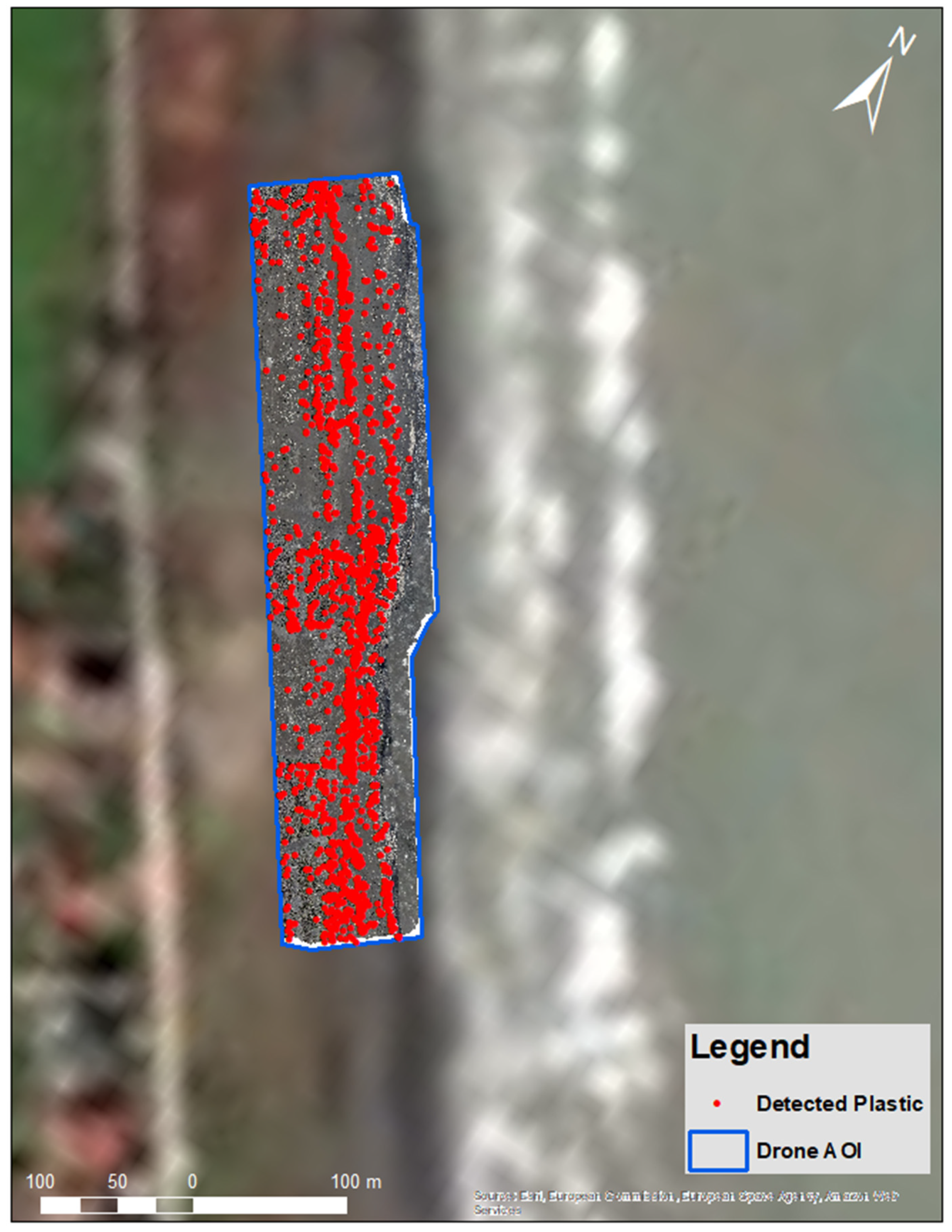
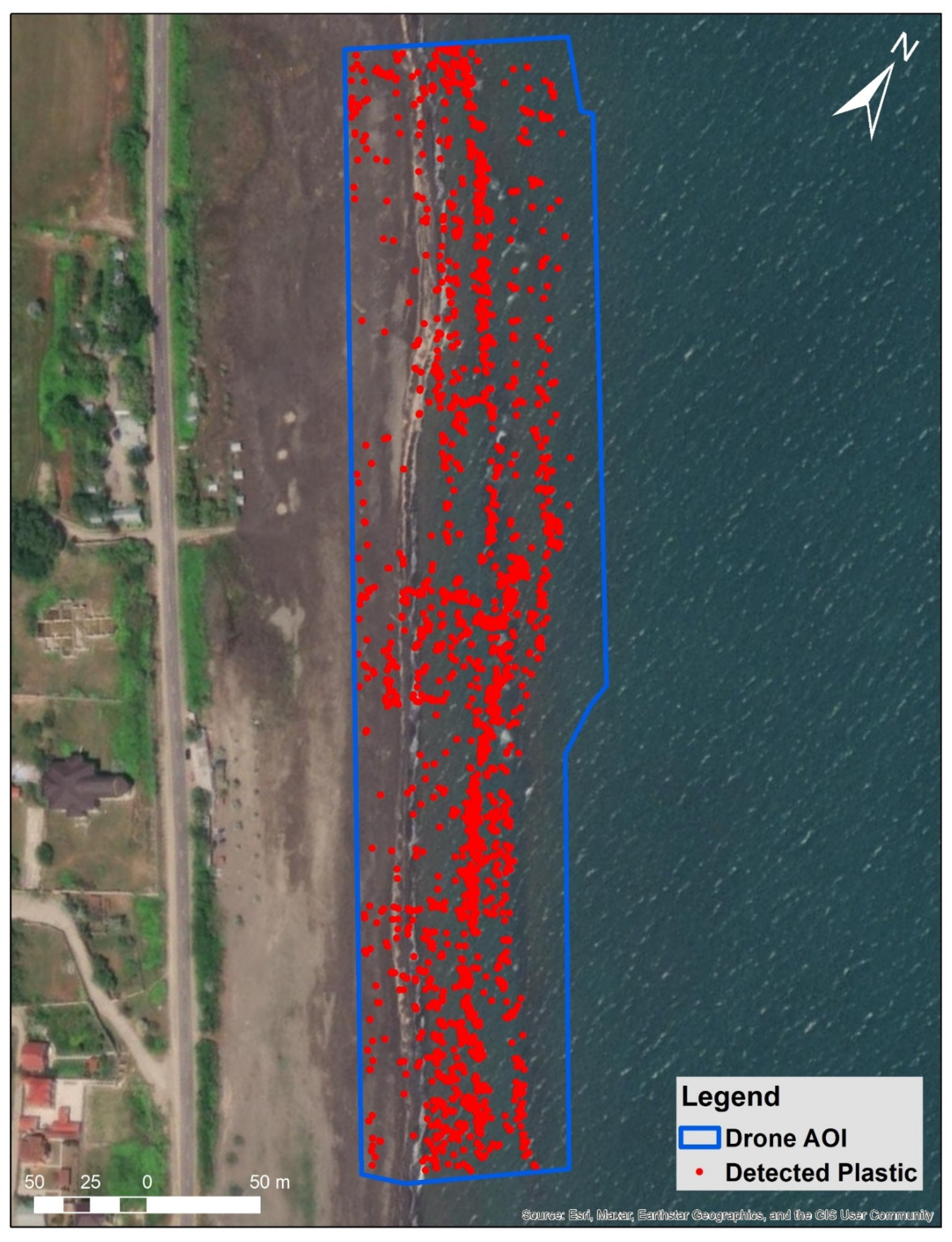
The overall spatial distribution of detected plastic debris is shown in Figure 3. The results reveal a pronounced coast-parallel pattern, with debris arranged in elongated bands that closely follow the shoreline. These bands form continuous or semi-continuous linear features along the coast, indicating dominant alignment parallel to the shoreline and limited dispersion in the perpendicular direction.
Plastic debris is primarily concentrated within a narrow nearshore zone extending inland from the current shoreline. Within this zone, debris density remains consistently higher than in adjacent inland areas. In contrast, areas beyond the transition from sandy beach to coastal vegetation contain substantially fewer detected plastic debris items. This contrast indicates that debris is largely confined to the nearshore environment and does not extend uniformly across the broader coastal landscape.
Overall, the observed coast-parallel alignment and nearshore concentration demonstrate a structured spatial pattern in which plastic debris distribution varies systematically both along and across the coastline, resulting in distinct accumulation zones and areas of lower debris density within the study region.
Table 6 presents the nearest neighbor statistics for detected plastic debris. Analysis of local-scale spatial relationships confirms pronounced aggregation patterns. The mean nearest neighbor distance was 1.20 m, indicating close proximity among debris items. The distribution of distances is strongly skewed toward shorter values, with a substantial proportion of objects separated by less than 2 m. The calculated Nearest Neighbor Index (NNI) was 0.56, which is significantly lower than the value expected under complete spatial randomness. This result confirms a strongly clustered spatial pattern.
The results show that plastic debris primarily forms compact clusters at the meter scale rather than occurring as isolated items distributed independently along the shoreline. The consistently short distances between individual debris items lead to tightly spaced groupings. This pattern differs from a random spatial distribution and indicates that plastic debris accumulates in discrete clusters rather than being evenly dispersed across the coastal surface.
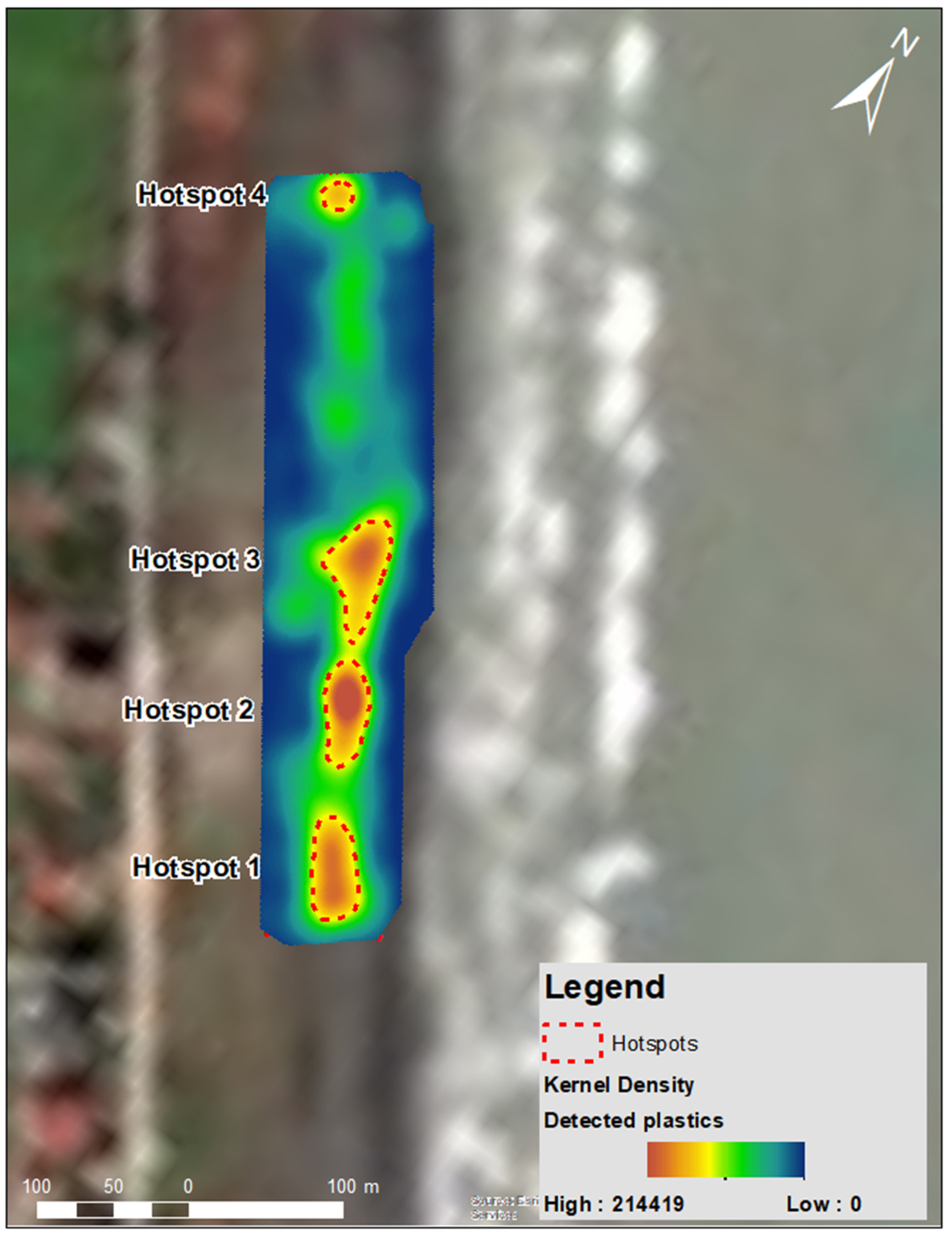
Density-based analysis further confirms the heterogeneous distribution of plastic debris along the study coastline. Kernel density estimation identified four major accumulation hotspots distributed discontinuously along the shoreline (Figure 4). These hotspots correspond to coastal segments where debris density is substantially higher than in adjacent areas. Within these zones, density increases sharply over short distances, creating distinct contrasts between hotspot areas and surrounding lower-density regions.
The spatial separation of these hotspots indicates that plastic debris accumulation is not continuous along the entire coastline but concentrated in localized zones. Outside these hotspots, debris density declines markedly, reinforcing the uneven spatial distribution across the study area. Overall, the presence of compact meter-scale clusters and discrete density hotspots demonstrates a clearly structured spatial pattern of plastic debris distribution along the Khachmaz coastline.
Table 7 summarizes the characteristics of the identified plastic debris accumulation hotspots. Four major hotspots were detected along the surveyed coastline, indicating that debris accumulation is concentrated in a limited number of discrete locations rather than continuously distributed. These hotspots are spatially separated by coastal segments with substantially lower debris densities.
Within hotspot areas, plastic debris density is significantly higher than in surrounding zones, reflecting localized accumulation processes. The short distances between individual debris items indicate tightly packed clusters. Although the hotspots occupy only a small proportion of the surveyed coastline, they contain a substantial share of the total detected plastic debris, highlighting their importance in shaping overall distribution patterns.
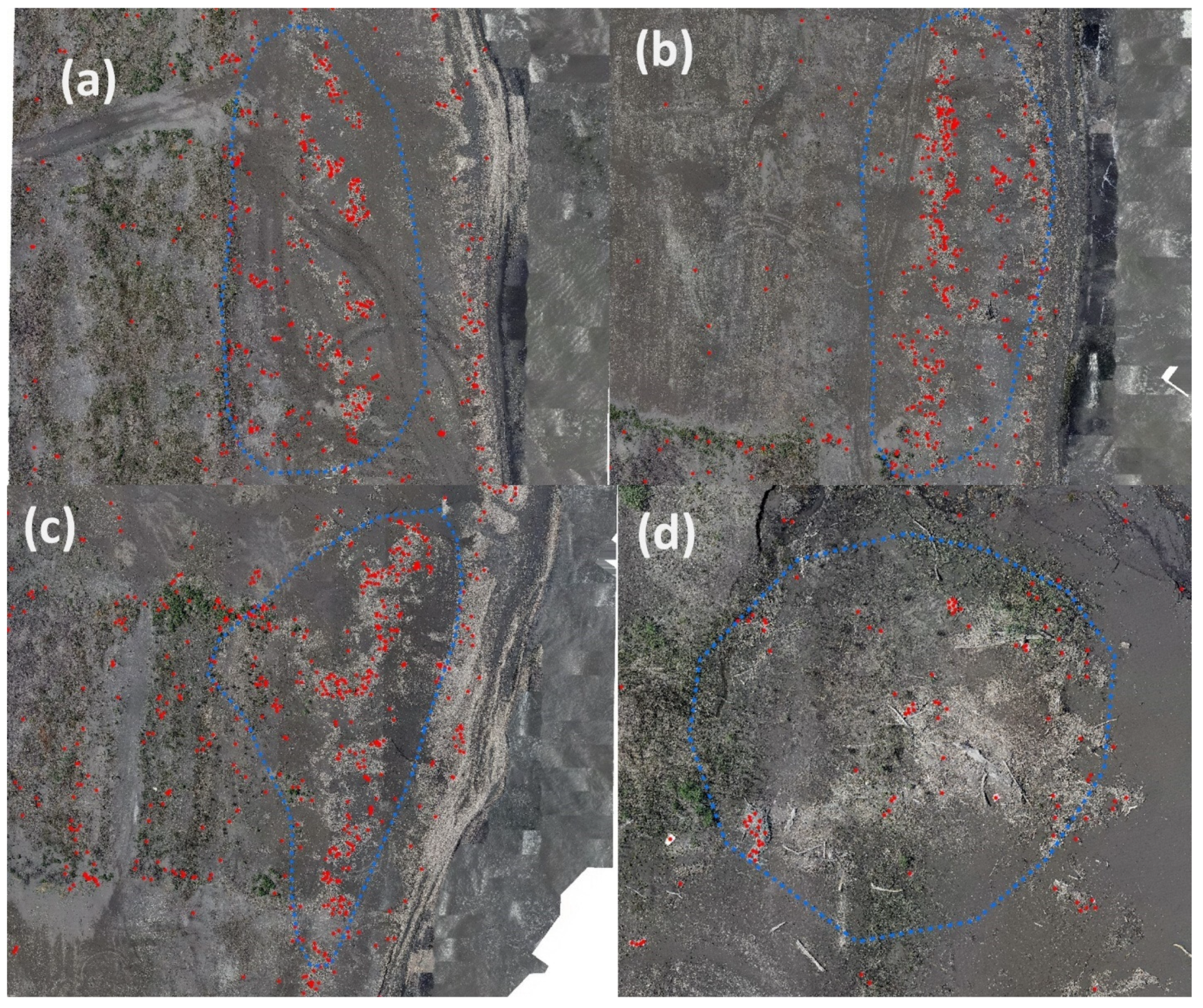
The alongshore extent of individual hotspots generally spans several tens of meters, suggesting that accumulation occurs within spatially coherent coastal segments rather than at isolated points. In these zones, debris density increases rapidly and often exceeds 100,000 objects per km2. Sharp transitions in density are observed at hotspot boundaries. Figure 5 illustrates the internal spatial structure of these areas, where closely spaced plastic debris indicates minimal distances between neighboring objects.
Multi-scale clustering analysis using Ripley’s L-function indicates that plastic debris aggregates across multiple spatial scales within the study area. Statistically significant clustering was observed at all analyzed distances up to 20 m, demonstrating that the spatial distribution of plastic debris consistently deviates from randomness at both local and broader scales. These results confirm a structured spatial organization along the coastline.
The strongest deviation from spatial randomness occurs at distances below approximately 5 m, where clustering intensity is highest. At this fine scale, plastic debris forms tightly spaced groupings with minimal separation between individual items. This pronounced small-scale aggregation reflects the formation of compact clusters rather than isolated objects distributed across the coastal surface. The persistence of clustering at short distances indicates that debris accumulates within limited spatial neighborhoods.
Clustering remains significant at intermediate distances, indicating that aggregation extends beyond immediate proximity to encompass longer coastal segments. At broader scales, the spatial structure reflects the grouping of multiple local clusters within extended zones of elevated debris concentration. This pattern suggests a nested structure in which fine-scale clusters are embedded within larger accumulation zones. Overall, plastic debris exhibits a multi-scale spatial clustering pattern, with aggregation occurring across multiple spatial scales rather than at a single characteristic distance.
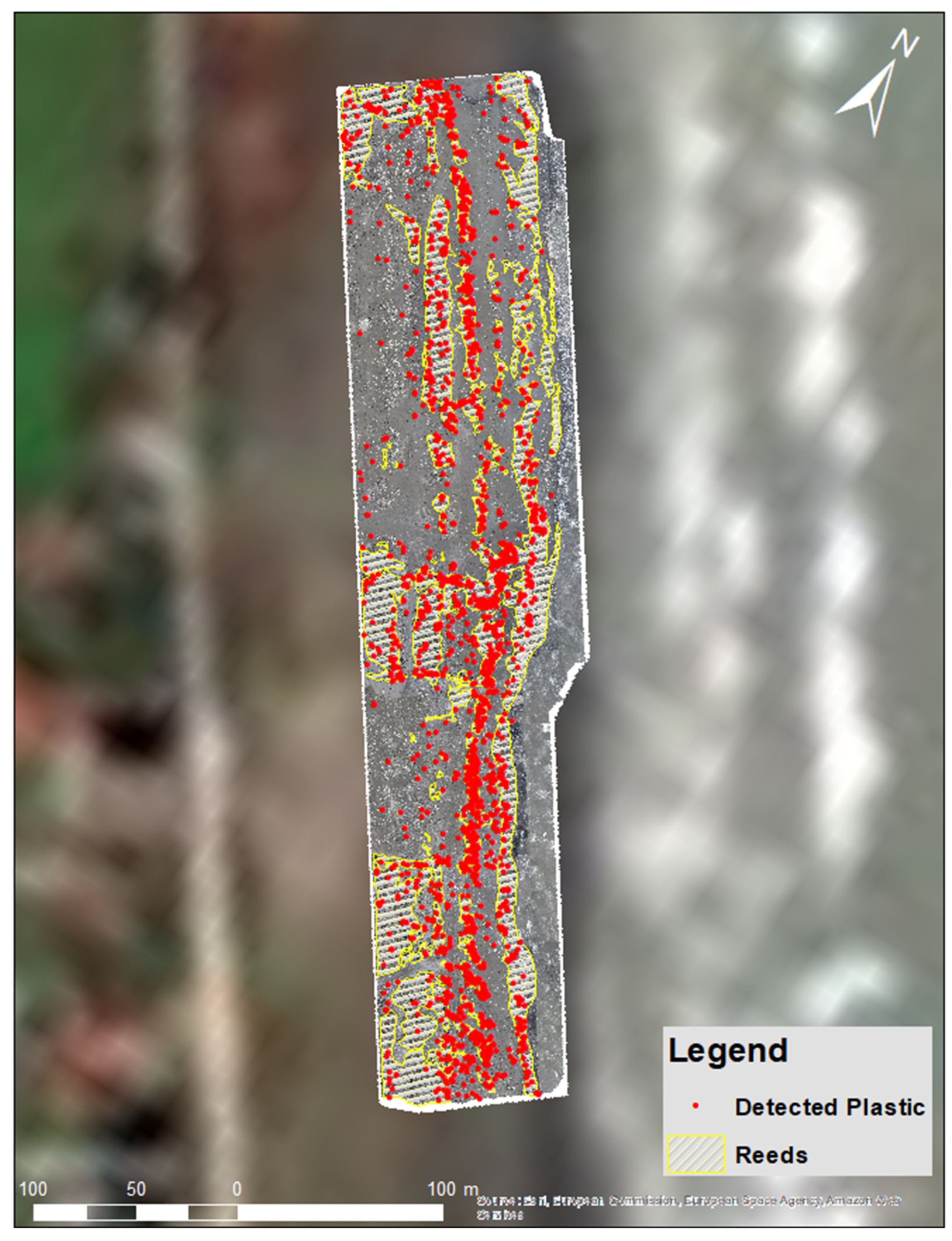
As shown in Figure 6, a substantial proportion of plastic debris is located within or adjacent to reed-covered areas, particularly along the transition zone between sandy beach surfaces and reed stands. This pattern is consistent throughout the study area and indicates that debris distribution varies systematically across coastal land-cover types.
The spatial relationship between plastic debris and reed-dominated coastal vegetation is summarized in Table 8. Debris density is notably higher in reed-covered areas, indicating a clear spatial association between vegetation and accumulation. The primary accumulation zone occurs at the interface between sandy beach and reed stands, where plastic debris frequently concentrates.
In the study area, reed vegetation consists predominantly of dry reeds exposed following recent water-level decline. Most detected plastic debris is located within these dry reed zones rather than on open beach surfaces. Debris is commonly observed near vegetation stems and within the interior of reed stands. Consequently, debris density is higher in vegetated areas compared to adjacent unvegetated beach segments.
In contrast, open beach areas exhibit lower debris densities and a more dispersed spatial pattern. Within reed-dominated zones, plastic debris shows reduced spatial dispersion, with objects occurring closer together than in non-vegetated areas. Outside these zones, debris is more widely spaced and less consistently clustered. This contrast contributes to the overall spatial variability of debris distribution along the coastline.
Collectively, the multi-scale clustering results and the strong spatial association with dry reed zones demonstrate that plastic debris distribution is spatially structured and systematically influenced by both scale and coastal vegetation patterns.
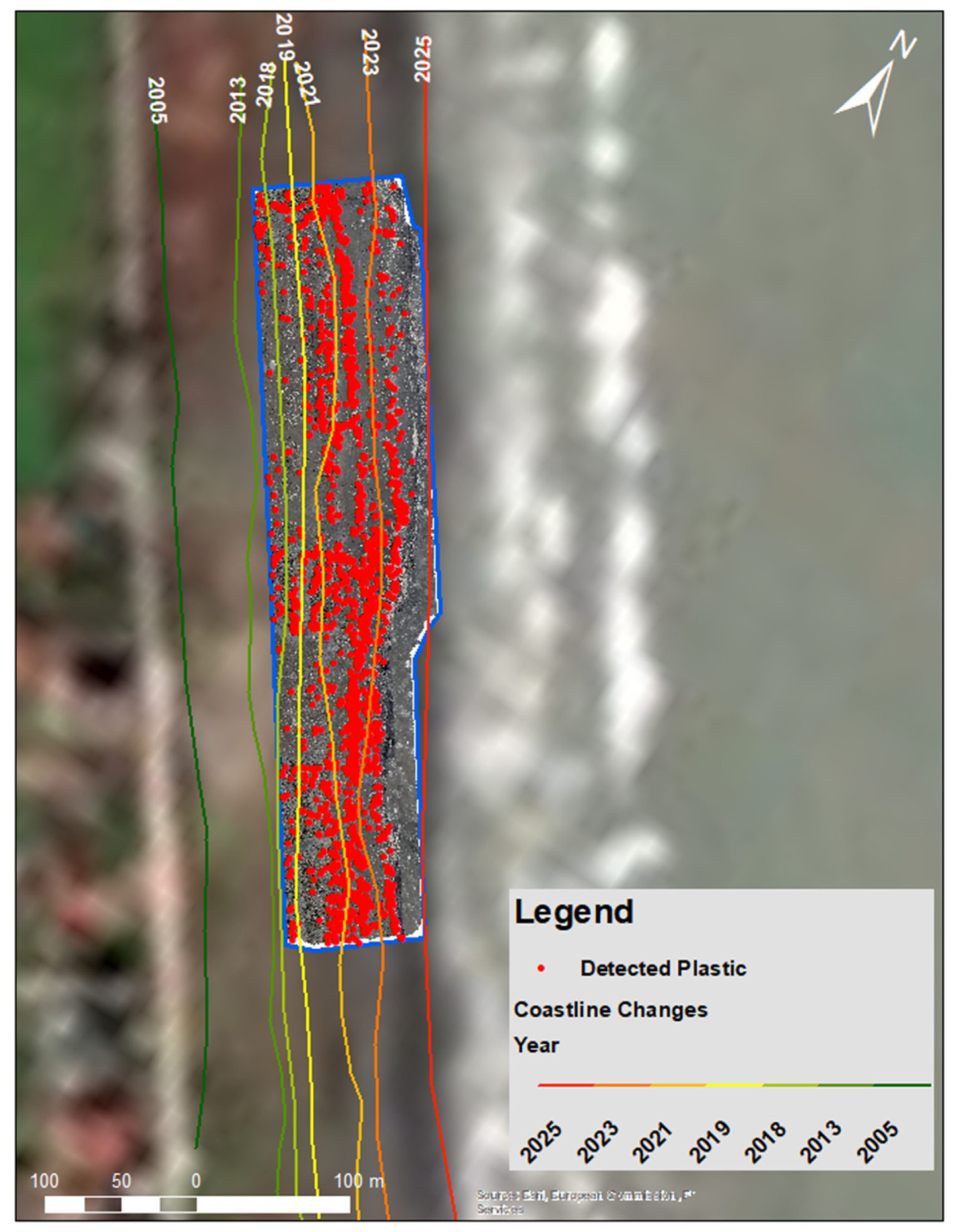
Shoreline dynamics represent an additional factor influencing plastic debris distribution. A comparison of detected plastic debris with historical shoreline positions from 2005 to 2025 reveals a strong spatial correspondence between debris accumulation and zones of shoreline migration (Figure 7). Areas that experienced repeated shoreline advance and retreat exhibit elevated debris densities, suggesting that coastal morphodynamic processes appear to influence debris redistribution and accumulation.
Analysis of the most recent shoreline configuration indicates that plastic debris is predominantly concentrated near the current shoreline. As shown in Figure 8, most detected plastic debris items are located close to the 2023 shoreline, highlighting the influence of present-day shoreline position on debris deposition patterns.
The results indicate that plastic debris along the Khachmaz coastline exhibits high densities, pronounced multi-scale clustering, well-defined accumulation hotspots, and strong spatial associations with coastal vegetation and shoreline dynamics. Rather than being randomly or diffusely distributed, plastic debris displays a consistent spatial organization, with aggregation occurring at meter-scale distances and extending along specific coastal segments. The presence of distinct hotspots demonstrates that accumulation is concentrated in particular locations rather than evenly distributed along the shoreline.
The influence of shoreline dynamics becomes especially evident when considered in the context of long-term shoreline change. As shown in Table 9, areas affected by shoreline migration between 2005 and 2025 exhibit elevated debris densities, with most detected plastic debris located near the 2023 shoreline position. This spatial correspondence indicates that recent shoreline configurations and coastal morphodynamics appear to be key factors influencing current debris distribution. Actively changing shoreline zones function as preferential accumulation areas where debris is repeatedly redistributed and retained.
Together with the strong association between plastic debris and reed-dominated coastal vegetation, these findings show that debris distribution appears to be influenced by the combined effects of hydrodynamic processes, vegetation-mediated retention, and shoreline morphodynamics. This structured and predictable spatial organization provides a solid basis for identifying priority areas for targeted mitigation. Focusing management efforts on accumulation hotspots, vegetated retention zones, and dynamically evolving shoreline segments enables the development of sustainability-oriented coastal management strategies aimed at more effectively reducing plastic debris along the Khachmaz coastline.
The spatial distribution of plastic debris along the Khachmaz coastline is shaped by the combined effects of anthropogenic inputs and natural geomorphological and hydrodynamic controls. Integrating land-use patterns, drainage features, elevation data, and topographic profiles provides a comprehensive framework for understanding why plastic debris accumulates in specific coastal segments rather than being uniformly distributed.
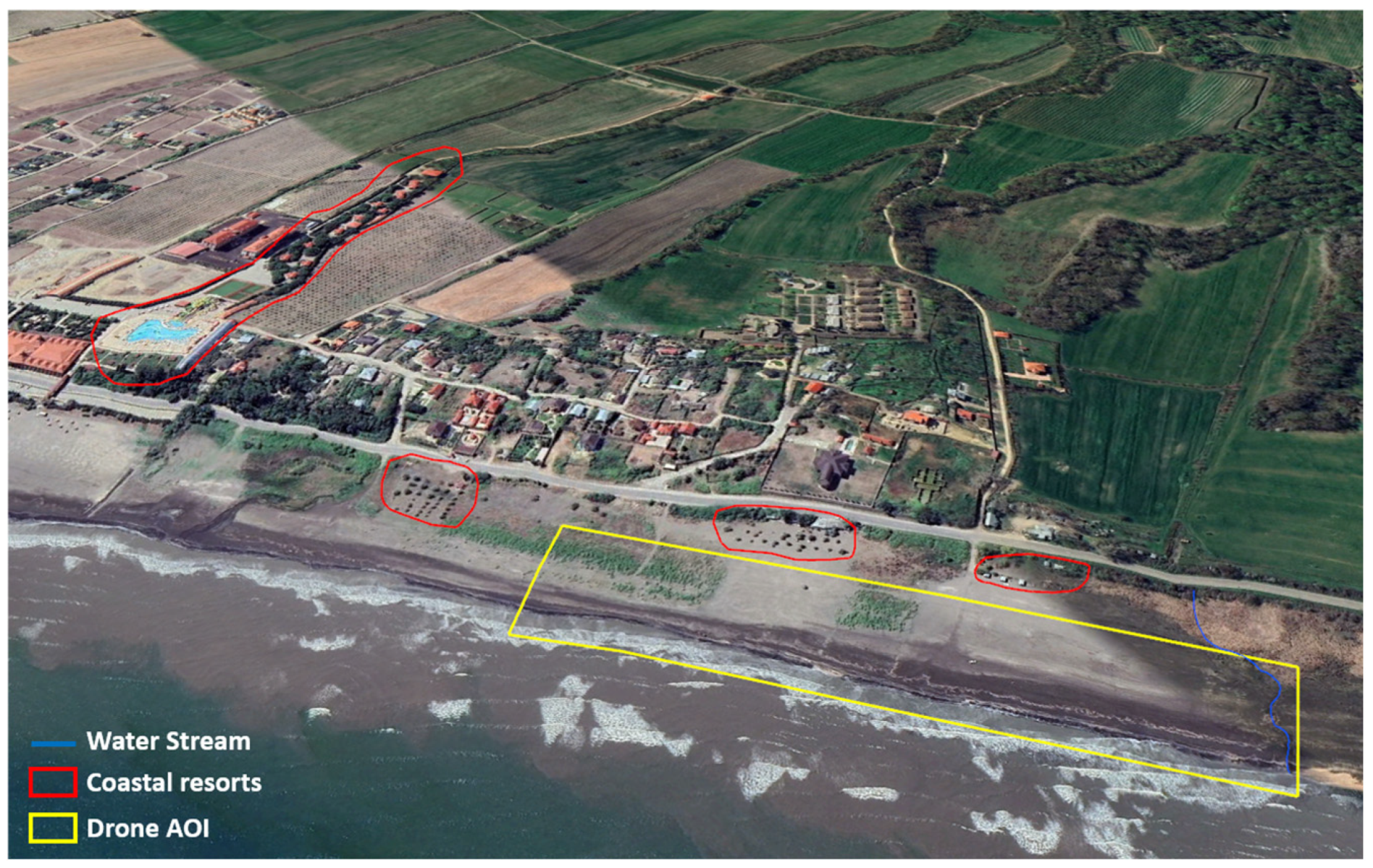
Figure 9 illustrates the spatial relationship between detected plastic debris, coastal resorts, residential areas, and small water streams within and adjacent to the UAV survey area. The concentration of resorts and residential developments along the nearshore zone represents potential local sources of plastic debris associated with tourism, recreation, and everyday residential activities. These built-up areas increase the likelihood of plastic inputs through improper waste disposal, leakage from waste management systems, and incidental loss of materials. The spatial proximity between several accumulation zones and these developed areas suggests that local human activities contribute to plastic inputs into the coastal system.
In addition to direct anthropogenic sources, Figure 9 highlights small water streams and drainage pathways discharging toward the shoreline. Although these are not major river systems, they may serve as transport corridors for plastic debris originating from inland residential or agricultural areas, particularly during rainfall events and seasonal runoff. Once plastics reach the coast through these pathways, wave action and alongshore currents redistribute them, concentrating debris within specific retention zones along the beach. The spatial coincidence between some accumulation hotspots and drainage outlets suggests that diffuse land-based inputs also contribute to the observed distribution patterns.
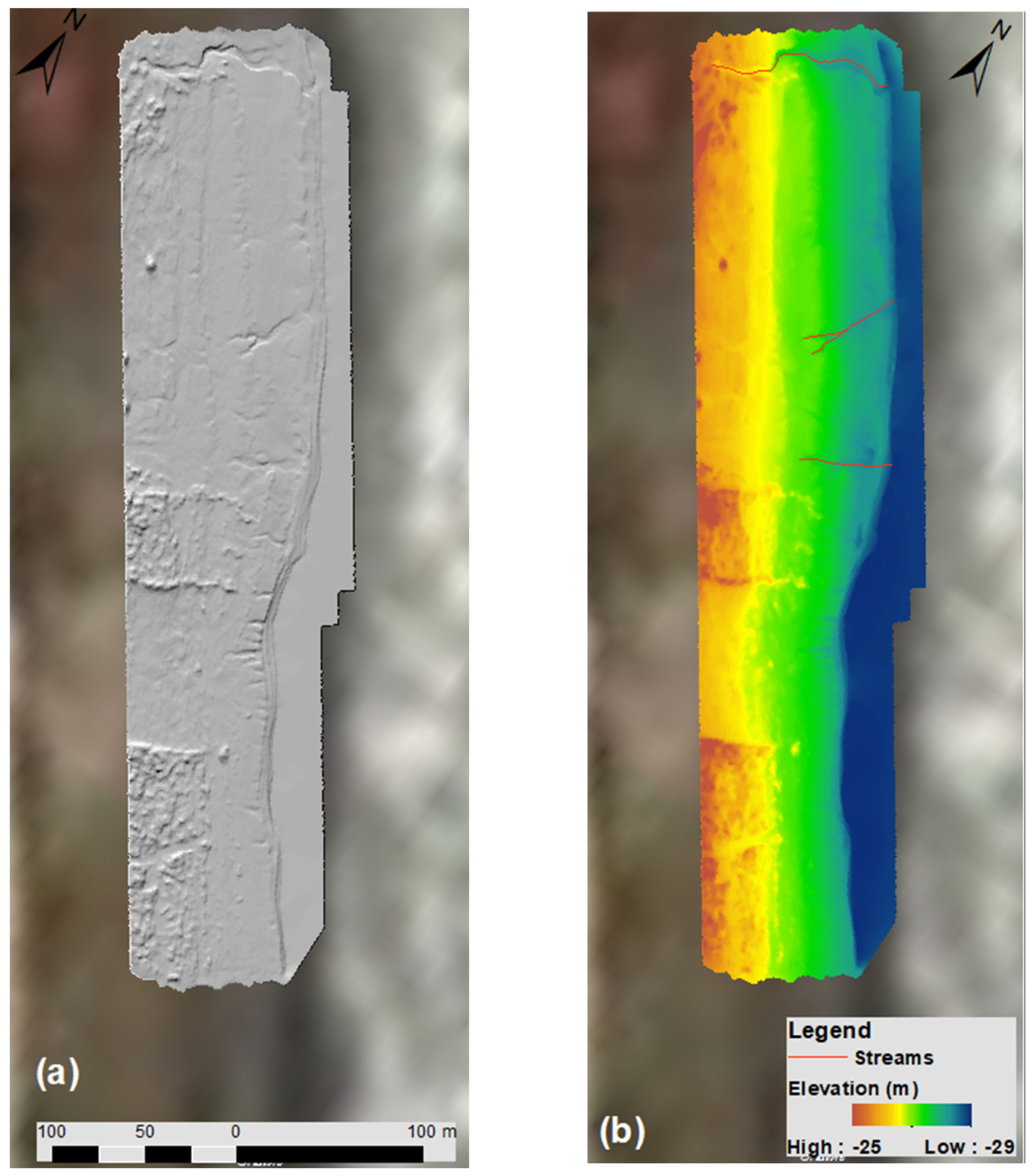
Natural controls on plastic debris accumulation are further illustrated by the elevation and hillshade maps in Figure 10a,b. The digital elevation model shows clear cross-shore gradients from the back-beach to the active shoreline, while the hillshade map highlights subtle micro-topographic features. Lower-elevation coastal zones correspond closely with areas of high debris density, reflecting increased exposure to wave run-up, storm surges, and episodic inundation. These processes may enhance the deposition and retention of floating or mobile plastic debris, particularly during high-energy events.
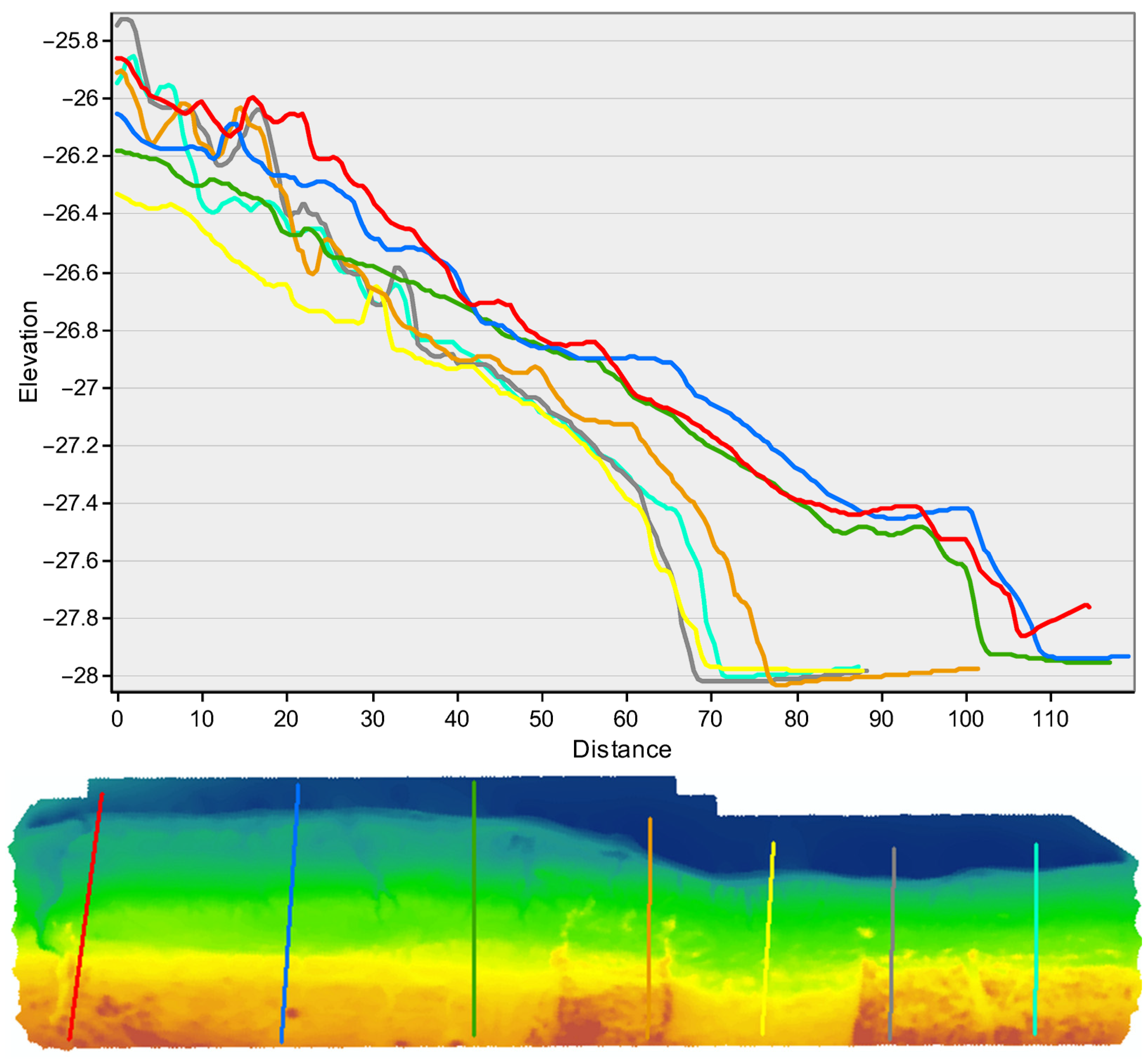
The influence of beach morphology is further demonstrated by the cross-shore elevation profiles in Figure 11. These profiles show gently sloping upper beach areas transitioning to steeper gradients closer to the shoreline over distances of approximately 100–120 m. Plastic debris is primarily concentrated in the lower sections of these profiles, where repeated hydrodynamic forcing promotes deposition while limiting landward transport. Local variations in slope and micro-topography create small depressions and surface irregularities that act as traps, reducing debris mobility and promoting persistent accumulation.
Taken together, Figure 9, Figure 10 and Figure 11 indicate that plastic debris distribution along the Khachmaz coastline results from the interaction between human-related input mechanisms and natural retention processes. Tourism and residential activities introduce plastics into the nearshore environment, drainage pathways facilitate inland-to-coast transport, and shoreline morphology, elevation gradients, and hydrodynamic forcing determine where debris ultimately accumulates. Vegetation and low-lying coastal zones further enhance retention by limiting redistribution.
This integrated understanding of anthropogenic and natural controls has important implications for sustainable coastal management. Cleanup efforts focused solely on visible accumulation zones may provide short-term improvements but will not address upstream inputs from coastal infrastructure and drainage systems. More effective strategies should combine improved waste management near resorts and residential areas with environmentally sensitive cleanup approaches in low-elevation and vegetation-dominated zones. The integration of land-use, topographic, and debris distribution data therefore provides a strong basis for identifying priority intervention areas and supporting evidence-based, sustainability-oriented plastic debris mitigation along the Khachmaz coastline.
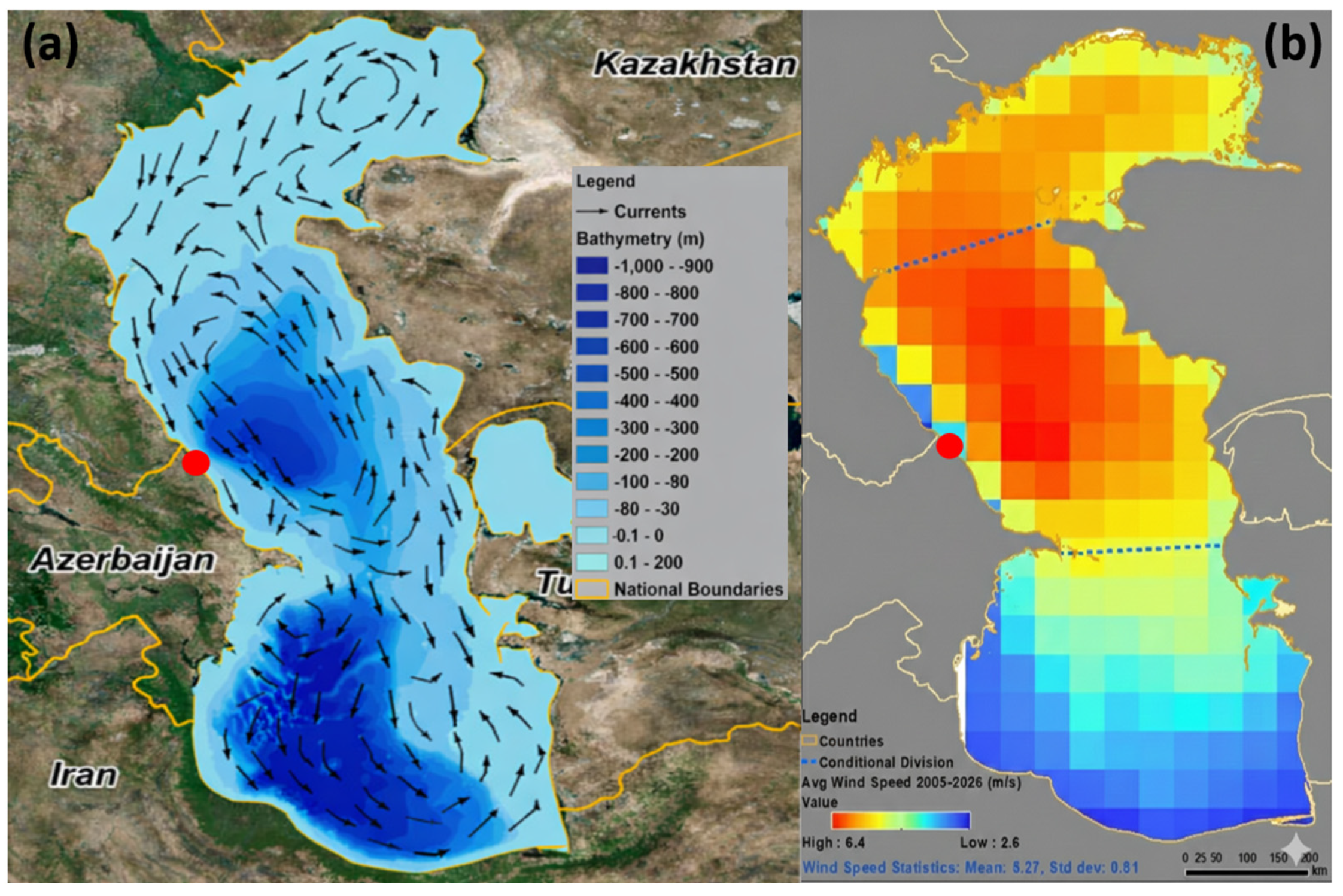
Surface currents and wind speed are key physical drivers of plastic debris transport, redistribution, and accumulation in semi-enclosed basins such as the Caspian Sea. As shown in Figure 12a, circulation in the Caspian Sea is dominated by large-scale cyclonic gyres and persistent alongshore currents, particularly along the western margin. These currents facilitate the southward transport of floating plastic debris from the northern and central Caspian toward the Middle and Southern basins. The Khachmaz coastline, located along the western Middle Caspian, lies within this advective pathway and is therefore exposed to debris originating from distant sources, including river discharge, coastal urban areas, and maritime activities further north. Similar long-range transport processes have been documented in other enclosed and semi-enclosed seas, where plastics accumulate far from their original sources due to basin-scale circulation patterns [42,43].
In addition to horizontal transport, the circulation structure shown in Figure 12a indicates areas of weakened flow and convergence in the central and southern Caspian. These zones can function as temporary retention areas for buoyant plastic debris. When combined with coastal boundary effects and reduced offshore transport, such conditions increase the likelihood of debris retention and shoreline accumulation along the western coast, including the Khachmaz region. Convergence-driven accumulation has been identified as a key mechanism in the formation of plastic debris hotspots in enclosed basins [44].
Wind speed further enhances these processes by influencing surface drift and nearshore transport. As illustrated in Figure 12b, the Middle Caspian experiences relatively high average wind speeds (approximately 5–6.4 m/s), with the Khachmaz region situated within a zone of moderate to strong wind influence. Wind stress promotes Ekman transport and generates wind-driven surface currents that can push floating plastic debris toward the coastline. During periods of prevailing onshore or alongshore winds, debris is more likely to enter nearshore waters and become stranded on beaches, increasing local accumulation. Previous studies have shown that wind-driven transport is particularly effective for low-density plastics, which remain near the surface and respond rapidly to wind forcing [45,46].
Together, currents and wind create a coupled transport system that promotes plastic debris accumulation along the western Caspian coast. Basin-scale currents enable long-distance redistribution, while wind controls short-term variability, coastal convergence, and stranding intensity. In the Khachmaz region, this interaction explains the presence of substantial plastic debris even in areas with limited local inputs, indicating that the coastline functions as a secondary sink for regionally transported debris. Understanding this coupling is essential for interpreting field observations and for designing effective monitoring and mitigation strategies in the Caspian Sea.
Prevailing wind direction is a key physical driver influencing the transport, redistribution, and accumulation of plastic debris in coastal environments. In the western Caspian Sea, winds predominantly originate from the north–northwest (NW–N) sector, with seasonal variability controlled by regional atmospheric circulation and pressure gradients [47,48]. These wind regimes directly affect surface water movement through wind-driven currents, wave energy distribution, and nearshore transport pathways, thereby shaping the spatial patterns of floating debris.
Wind stress at the water surface induces Ekman transport and accelerates alongshore currents aligned with the coastline, a process widely documented in coastal oceanography [49,50]. In the Khachmaz study area, prevailing north–northwesterly winds generate a southward component of surface forcing, increasing the likelihood that floating plastic debris is transported both alongshore and toward the nearshore zone. This mechanism is consistent with conceptual models of wind-driven plastic transport in enclosed seas, where persistent wind forcing promotes the formation of elongated accumulation bands parallel to the shoreline [9,10].
The observed correspondence between dominant wind direction and the coast-parallel orientation of debris accumulation suggests that wind forcing amplifies hydrodynamic processes that concentrate plastics within specific coastal segments. During higher-energy events, wind-induced waves and currents enhance cross-shore transport, driving debris onto beaches or into low-lying vegetation where it becomes trapped [51,52]. Low-elevation nearshore zones, as shown in Figure 11, further facilitate retention by reducing the energy threshold required for deposition.
Wind direction also contributes to temporal variability in debris distribution. Stronger northwesterly winds in spring and summer can intensify alongshore transport, whereas calmer conditions in autumn and winter reduce debris mobility and increase residence time within vegetated belts and accumulation hotspots [19,53]. These seasonal dynamics highlight the importance of incorporating wind climatology into interpretations of spatial debris patterns and help explain the persistence of hotspots in geomorphically favorable zones.
In summary, prevailing wind direction in the Khachmaz coastal region interacts with shoreline morphology, basin-scale currents, elevation gradients, and vegetation structure to shape the spatial organization of plastic debris. Integrating wind dynamics into coastal plastic assessments improves interpretation of observed patterns and supports more effective, sustainability-oriented monitoring and mitigation strategies.
Following completion of the spatial analyses, four distinct accumulation hotspots were identified along the Khachmaz coastline (Figure 4). These hotspots are not randomly distributed but coincide with coastal segments where multiple environmental factors overlap. Specifically, hotspot areas correspond to zones characterized by shoreline irregularities, low coastal elevation, and dry reed vegetation exposed after recent water-level decline.
Comparison with historical shoreline positions indicates that hotspots frequently occur in areas affected by repeated shoreline migration. Such segments may function as natural retention zones where debris transported alongshore becomes temporarily trapped. Elevation analysis further shows that hotspots are typically located within low-lying coastal strips more frequently exposed to wave run-up and sediment redistribution, conditions that enhance local debris deposition.
Vegetation patterns are also closely associated with hotspot formation. Many high-density areas overlap with reed-dominated coastal belts, particularly dry reed stands near the beach–vegetation transition. Within these zones, debris items are more closely spaced and local density values are higher, indicating that vegetation limits mobility and promotes localized clustering.
Spatial overlay with coastal infrastructure and drainage pathways suggests that some hotspots are situated near areas of human activity, including resorts and residential zones. Although this study does not quantify source contributions, the proximity of hotspots to developed areas indicates that localized anthropogenic inputs may influence accumulation patterns.
Overall, the presence of four distinct hotspots reflects a structured spatial distribution shaped by the interaction of shoreline configuration, vegetation cover, elevation gradients, hydrodynamic forcing, and potential local inputs. These findings confirm that plastic debris accumulation along the Khachmaz coastline is heterogeneous and concentrated within specific environmental settings rather than evenly distributed along the shore.


4. Discussions

The spatial distribution of plastic debris observed along the Khachmaz coastline demonstrates a clearly organized and heterogeneous pattern rather than a uniform spread across the coastal landscape. The presence of compact clusters, well-defined hotspots, and strong spatial correspondence with coastal vegetation indicates that plastic debris distribution appears to be influenced by localized retention mechanisms. These patterns align with previous studies showing that coastal plastic debris tends to concentrate in specific environmental settings where hydrodynamic processes, shoreline morphology, and biological structures interact to trap and retain floating materials [19,20,21,54].
The concentration of plastic debris within a narrow nearshore belt underscores the shoreline’s role as a primary accumulation zone. Nearshore environments are continuously reworked by waves and currents, which transport debris alongshore while limiting inland redistribution [7,8,55]. In enclosed and semi-enclosed basins such as the Caspian Sea, restricted water exchange and prolonged residence times further enhance debris retention along coastlines [10,24,42,56]. The observed spatial confinement indicates that shoreline-adjacent hydrodynamic processes are the dominant controls on debris accumulation.
Ripley’s L-function analysis revealed a hierarchical multi-scale clustering structure. Strong clustering at distances of ≤5 m indicates compact group deposition, likely reflecting repeated stranding under similar hydrodynamic conditions [29,35,57]. Clustering at intermediate distances indicates that fine-scale clusters are embedded within broader alongshore accumulation zones. Similar nested spatial structures have been reported in beach surveys and UAV-based studies, where localized deposition operates within larger transport corridors defined by prevailing currents and shoreline geometry [9,21,58].
Kernel density estimation further highlights pronounced spatial variability by identifying four discrete accumulation hotspots. Their discontinuous distribution indicates preferential retention within specific coastal segments rather than continuous shoreline accumulation. Comparable hotspot dynamics are often associated with variations in shoreline morphology, sediment properties, wave exposure, and natural or artificial barriers [19,22,59]. From a sustainability perspective, identifying such hotspots enables targeted mitigation strategies that improve resource efficiency while minimizing ecological disturbance [18,60].
A key finding of this study is the strong spatial overlap between plastic debris and reed-dominated coastal zones, particularly dry reeds exposed following recent water-level decline. A substantial proportion of debris occurs within or immediately adjacent to these vegetated areas, indicating that vegetation likely functions as an effective retention mechanism. By increasing surface roughness, reducing local flow velocity, and physically intercepting debris, vegetation limits redistribution and promotes localized accumulation [14,15,61]. Similar retention effects have been documented in mangroves, salt marshes, and reed beds [62,63,64].
The contrast between vegetated and unvegetated segments further emphasizes the influence of land cover. Open beaches exhibit lower debris densities and more dispersed patterns, whereas reed-dominated zones show higher concentrations and reduced dispersion. Open beach environments are more susceptible to wave-driven redistribution, while vegetated areas act as semi-permanent sinks [59,65]. In the Caspian Sea, periodic water-level fluctuations that alternately expose and inundate vegetation may shift accumulation zones over time, highlighting the importance of long-term monitoring.
Methodologically, the integration of UAV imagery with YOLO-based deep learning detection proved effective for capturing fine-scale spatial patterns. Compared with traditional ground surveys, UAV-based approaches provide higher spatial resolution, broader coverage, and improved operational efficiency, particularly in difficult-to-access terrain [32,33,66,67]. Automated detection reduces observer bias and enhances reproducibility [30,31,68], supporting repeatable and scalable sustainability-oriented monitoring programs.
From a management perspective, the pronounced spatial variability observed in this study suggests that uniform mitigation strategies are unlikely to address localized accumulation effectively. Adaptive approaches focused on identified hotspots, vegetated retention zones, and shoreline-change segments are more likely to achieve meaningful reductions in environmental impact [19,60,69]. Integrating high-resolution spatial data into coastal planning frameworks can therefore support evidence-based decision-making and more efficient allocation of limited management resources.
Several limitations should be acknowledged. First, the deep learning component employs an established YOLO-based detection framework rather than introducing a novel algorithm. The study’s contribution lies in integrating orthophoto-based detection, GPS-supported validation, and multi-scale spatial analysis within a coherent sustainability-oriented monitoring framework.
Second, validation focused exclusively on surface-visible plastic debris detectable in high-resolution imagery. Partially buried, degraded, or heavily obscured items may remain undetected; therefore, results reflect observable surface conditions rather than total plastic volume.
Third, interpretations of environmental drivers—including wind forcing, shoreline dynamics, and proximity to anthropogenic features—are based on spatial correspondence rather than causal modeling. Hydrodynamic simulations and formal source apportionment analyses were beyond the scope of this study. Accordingly, identified relationships should be interpreted as indicative spatial associations rather than definitive cause–effect mechanisms.
Fourth, the analysis is based on a single UAV survey conducted at one point in time within a single coastal study area. Therefore, the results represent a spatial snapshot rather than long-term or regional-scale dynamics. The objective of the study, however, is to demonstrate a high-resolution methodological framework for detecting and analyzing plastic debris distribution rather than to produce a basin-scale inventory. The selected coastal segment provides a representative environment characterized by shoreline dynamics, reed-dominated vegetation, and anthropogenic inputs. Future studies should extend this approach to larger coastal sections and multi-temporal surveys to assess seasonal variability and regional debris transport processes. Seasonal variability, episodic storm events, and ongoing water-level changes may modify debris distribution over time. Multi-temporal surveys and broader regional assessments would strengthen generalizability.
Finally, the detection model classified debris as a single object class without differentiating plastic types. Variability in shape, size, and degradation state limited reliable subclassification. Future research integrating higher-resolution imagery, hyperspectral data, or field-based material characterization could support compositional analysis and source attribution.
Despite these limitations, the combined use of UAV imagery, deep learning detection, field validation, and spatial statistics provides a transparent and reproducible framework for high-resolution coastal plastic debris assessment.
The concentration of plastic debris within discrete hotspots and reed-dominated zones suggests that spatial prioritization could improve management efficiency. Targeted cleanup within identified accumulation areas may optimize resource use while minimizing ecological disturbance.
In vegetated zones—particularly dry reeds exposed by water-level decline—heavy mechanical equipment may damage vegetation and sediment structure. Low-impact removal methods, such as manual collection, may be more appropriate. Although specific technologies were not evaluated, the spatial patterns identified here support differentiated cleanup approaches.
Periodic UAV surveys could support adaptive monitoring by identifying emerging hotspots and tracking temporal changes in debris distribution. Automated detection workflows may reduce field effort, while community participation could enhance local awareness and provide supplementary observational data.
Elevation and shoreline analyses indicate that vegetation structure and low-lying morphology influence debris retention. Nature-based measures, such as maintaining vegetated buffer zones and supporting natural shoreline dynamics, may help reduce debris mobility. However, long-term effectiveness and potential trade-offs require further investigation.
From a policy perspective, integrating spatial debris distribution data with maps of infrastructure and drainage pathways can inform targeted waste management improvements and awareness initiatives. Rather than prescribing specific interventions, this study provides a spatial evidence base to support collaborative, sustainability-oriented coastal planning.

5. Conclusions

This study presents an application-oriented, integrated monitoring framework that combines UAV imagery, YOLO-based object detection, and spatial statistical analysis to characterize the spatial distribution of coastal plastic debris within a unified monitoring framework. The contribution of this study lies in the integration and application of established methods rather than in the development of a new algorithm. A total of 2389 plastic debris items were identified within a confined nearshore zone, revealing high local densities and pronounced spatial variation. Nearest neighbor analysis (NNI = 0.56) and Ripley’s L-function confirmed significant clustering across multiple spatial scales, with the strongest aggregation occurring at distances below 5 m and clustering persisting up to 20 m.
Kernel density analysis identified four discrete accumulation hotspots distributed discontinuously along the coastline. A strong spatial association was observed between plastic debris and reed-dominated coastal vegetation, particularly dry reed zones exposed after recent water-level decline. These vegetated areas function as retention zones that limit debris mobility and promote localized accumulation. Elevated debris densities were also detected near zones of shoreline migration and along the contemporary shoreline, indicating that morphodynamic processes influence accumulation patterns.
Methodologically, the study suggests the value of transforming deep learning-derived object detections into georeferenced spatial point data for multi-scale statistical analysis. The integration of UAV-based monitoring, automated detection, and spatial clustering analysis provides a reproducible framework for quantifying debris density, aggregation intensity, and hotspot formation at fine spatial resolution.
Overall, the results show that plastic debris accumulation along the Khachmaz coastline is likely influenced by the interaction of hydrodynamic processes, shoreline morphology, vegetation-mediated retention, and localized human inputs. The pronounced spatial organization underscores the need for targeted, spatially informed management strategies rather than uniform mitigation approaches. The proposed framework offers a scalable and transferable methodology for sustainable monitoring and management of coastal plastic debris in enclosed and semi-enclosed marine systems.
Because the analysis is based on a single study area and a single temporal snapshot, the findings should be interpreted as a case study rather than a comprehensive regional assessment. Future research could expand this framework by incorporating multi-temporal UAV surveys and evaluating newer deep learning detection architectures to further improve monitoring scalability and detection performance.

Author Contributions

Conceptualization, E.B., E.S., S.S. and S.I.; methodology, E.B., E.S., S.S. and S.I.; software, E.B., E.S., S.S. and S.I.; validation, E.B., E.S., S.S. and S.I.; formal analysis, E.B., E.S., S.S. and S.I.; investigation, E.B., E.S., S.S., S.I., E.G. and S.A.; data curation, E.B., E.S., S.S., S.I., E.G. and S.A.; writing—original draft preparation, E.B., E.S., S.S. and S.I.; writing—review and editing, E.B., E.S., S.S., S.I., E.G. and S.A.; visualization, E.B., E.S., S.S. and S.I.; supervision, E.B., E.S., S.S. and S.I.; project administration, E.B., E.S., S.S. and S.I.; resources, E.B., E.S., S.S., S.I., E.G. and S.A.; funding acquisition, E.B., E.S., S.S. and S.I. All authors have read and agreed to the published version of the manuscript.

Funding

This research was supported by Nazarbayev University through the Collaborative Research Program (CRP) for the period 2025–2027, under the Funder Project Reference: 111024CRP2014, Faculty Development Competitive Research Grants Program (FDCRGP) (AI and Data Science) for the period 2024–2026, under the Funder Project Reference: 201223FD2607.

Institutional Review Board Statement

Not applicable.

Informed Consent Statement

Not applicable.

Data Availability Statement

The data presented in this study are available on request from the corresponding authors.

Acknowledgments

The authors would like to acknowledge Caspian Locus LLC for their organizational support in facilitating project activities, particularly the field trips conducted for data acquisition. All individuals included in this section have provided their consent to be acknowledged.

Conflicts of Interest

The authors declare no conflicts of interest.

References

  1. Thompson, R.C.; Olsen, Y.; Mitchell, R.P.; Davis, A.; Rowland, S.J.; John, A.W.G.; McGonigle, D.; Russell, A.E. Lost at sea: Where is all the plastic? Science 2004, 304, 838. [Google Scholar] [CrossRef]
  2. Geyer, R.; Jambeck, J.R.; Law, K.L. Production, use, and fate of all plastics ever made. Sci. Adv. 2017, 3, e1700782. [Google Scholar] [CrossRef]
  3. Andrady, A.L. Microplastics in the marine environment. Mar. Pollut. Bull. 2011, 62, 1596–1605. [Google Scholar] [CrossRef]
  4. Barnes, D.K.A.; Galgani, F.; Thompson, R.C.; Barlaz, M. Accumulation and fragmentation of plastic debris in global environments. Philos. Trans. R. Soc. B Biol. Sci. 2009, 364, 1985–1998. [Google Scholar] [CrossRef]
  5. Jambeck, J.R.; Geyer, R.; Wilcox, C.; Siegler, T.R.; Perryman, M.; Andrady, A.; Narayan, R.; Law, K.L. Plastic waste inputs from land into the ocean. Science 2015, 347, 768–771. [Google Scholar] [CrossRef]
  6. Browne, M.A.; Galloway, T.; Thompson, R. Microplastic—An emerging contaminant of potential concern? Integr. Environ. Assess. Manag. 2011, 7, 559–561. [Google Scholar]
  7. Law, K.L.; Morét-Ferguson, S.; Maximenko, N.A.; Proskurowski, G.; Peacock, E.E.; Hafner, J.; Reddy, C.M. Plastic accumulation in the North Atlantic subtropical gyre. Science 2010, 329, 1185–1188. [Google Scholar] [CrossRef] [PubMed]
  8. Cózar, A.; Echevarría, F.; González-Gordillo, J.I.; Irigoien, X.; Úbeda, B.; Hernández-León, S.; Palma, Á.T.; Navarro, S.; García-de-Lomas, J.; Ruiz, A.; et al. Plastic debris in the open ocean. Proc. Natl. Acad. Sci. USA 2014, 111, 10239–10244. [Google Scholar] [CrossRef]
  9. Maximenko, N.; Hafner, J.; Niiler, P. Pathways of marine debris derived from trajectories of Lagrangian drifters. Mar. Pollut. Bull. 2012, 65, 51–62. [Google Scholar] [CrossRef] [PubMed]
  10. van Sebille, E.; Wilcox, C.; Lebreton, L.; Maximenko, N.; Hardesty, B.D.; van Franeker, J.A.; Eriksen, M.; Siegel, D.; Galgani, F.; Law, K.L. A global inventory of small floating plastic debris. Environ. Res. Lett. 2015, 10, 124006. [Google Scholar] [CrossRef]
  11. Gall, S.C.; Thompson, R.C. The impact of debris on marine life. Mar. Pollut. Bull. 2015, 92, 170–179. [Google Scholar] [CrossRef] [PubMed]
  12. Rochman, C.M.; Browne, M.A.; Halpern, B.S.; Hentschel, B.T.; Hoh, E.; Karapanagioti, H.K.; Rios-Mendoza, L.M.; Takada, H.; Teh, S.; Thompson, R.C. The ecological impacts of marine debris: Unraveling the demonstrated evidence from what is perceived. Ecology 2016, 97, 302–312. [Google Scholar] [CrossRef]
  13. Laist, D.W. Impacts of marine debris: Entanglement of marine life in marine debris including a comprehensive list of species with entanglement and ingestion records. In Marine Debris; Coe, J.M., Rogers, D.B., Eds.; Springer: New York, NY, USA, 1997; pp. 99–139. [Google Scholar]
  14. Gregory, M.R. Environmental implications of plastic debris in marine settings—Entanglement, ingestion, smothering, hangers-on, hitch-hiking and alien invasions. Philos. Trans. R. Soc. B Biol. Sci. 2009, 364, 2013–2025. [Google Scholar] [CrossRef]
  15. Kiessling, T.; Gutow, L.; Thiel, M. Marine litter as habitat and dispersal vector. In Marine Anthropogenic Litter; Bergmann, M., Gutow, L., Klages, M., Eds.; Springer: Cham, Switzerland, 2015; pp. 141–181. [Google Scholar]
  16. Teuten, E.L.; Saquing, J.M.; Knappe, D.R.U.; Barlaz, M.A.; Jonsson, S.; Björn, A.; Rowland, S.J.; Thompson, R.C.; Galloway, T.S.; Yamashita, R.; et al. Transport and release of chemicals from plastics to the environment and to wildlife. Philos. Trans. R. Soc. B Biol. Sci. 2009, 364, 2027–2045. [Google Scholar] [CrossRef] [PubMed]
  17. Rochman, C.M.; Hoh, E.; Kurobe, T.; Teh, S.J. Ingested plastic transfers hazardous chemicals to fish and induces hepatic stress. Sci. Rep. 2013, 3, 3263. [Google Scholar] [CrossRef]
  18. United Nations Environment Programme (UNEP); Jeftić, L.; Sheavly, S.; Adler, E. Marine Litter: A Global Challenge; UNEP: Nairobi, Kenya, 2009. [Google Scholar]
  19. Hardesty, B.D.; Harari, J.; Isobe, A.; Lebreton, L.; Maximenko, N.; Potemra, J.; van Sebille, E.; Vethaak, A.D.; Wilcox, C. Increasing evidence that the distribution of plastic debris in the marine environment is related to ocean currents and wind forcing. Front. Mar. Sci. 2017, 4, 369. [Google Scholar]
  20. Ryan, P.G. A brief history of marine litter research. In Marine Anthropogenic Litter; Bergmann, M., Gutow, L., Klages, M., Eds.; Springer: Cham, Switzerland, 2015; pp. 1–25. [Google Scholar]
  21. Browne, M.A.; Chapman, M.G.; Thompson, R.C.; Amaral-Zettler, L.A.; Jambeck, J.; Mallos, N.J. Spatial and temporal patterns of stranded intertidal marine debris: Is there a picture of global change? Environ. Sci. Technol. 2015, 49, 7082–7094. [Google Scholar] [CrossRef]
  22. Getis, A.; Ord, J.K. The analysis of spatial association by use of distance statistics. Geogr. Anal. 1992, 24, 189–206. [Google Scholar] [CrossRef]
  23. Hardesty, B.D.; Good, T.P.; Wilcox, C. Novel methods, new results and science-based solutions to tackle marine debris impacts on wildlife. Ocean Coast. Manag. 2015, 115, 4–9. [Google Scholar] [CrossRef]
  24. Nicholls, R.J.; Cazenave, A. Sea-level rise and its impact on coastal zones. Science 2010, 328, 1517–1520. [Google Scholar] [CrossRef] [PubMed]
  25. Luijendijk, A.; Hagenaars, G.; Ranasinghe, R.; Baart, F.; Donchyts, G.; Aarninkhof, S. The state of the world’s beaches. Sci. Rep. 2018, 8, 6641. [Google Scholar] [CrossRef] [PubMed]
  26. Wang, Q.-A.; Huang, X.-Y.; Ni, Y.-Q.; Feng, W.-S.; Luo, Y. Uncertainty-aware, high-precision multi-step prediction of structural health monitoring sensor streams under extreme typhoon events: An enhanced Bayesian dynamic linear model leveraging the kernel regression basis function for severe environmental adaptation. Measurement 2026, 262, 120050. [Google Scholar]
  27. Ran, S.-C.; Wang, Q.-A.; Wang, J.-F.; Ni, Y.-Q.; Guo, Z.-X.; Luo, Y. A concise state-of-the-art review of crack monitoring enabled by RFID technology. Appl. Sci. 2024, 14, 3213. [Google Scholar] [CrossRef]
  28. Cheshire, A.; Adler, E.; Barbière, J.; Cohen, Y.; Evans, S.; Jarayabhand, S.; Jeftic, L.; Jung, R.; Kinsey, S.; Kusui, T.; et al. UNEP/IOC Guidelines on Survey and Monitoring of Marine Litter; UNEP: Nairobi, Kenya, 2009. [Google Scholar]
  29. Ryan, P.G.; Moore, C.J.; van Franeker, J.A.; Moloney, C.L. Monitoring the abundance of plastic debris in the marine environment. Philos. Trans. R. Soc. B Biol. Sci. 2009, 364, 1999–2012. [Google Scholar] [CrossRef]
  30. Topouzelis, K.; Papakonstantinou, A.; Garaba, S.P. Detection of floating plastics from satellite and unmanned aerial systems (Plastic Litter Project 2018). Int. J. Appl. Earth Obs. Geoinf. 2019, 79, 175–183. [Google Scholar] [CrossRef]
  31. Biermann, L.; Clewley, D.; Martinez-Vicente, V.; Topouzelis, K. Finding plastic patches in coastal waters using optical satellite data. Sci. Rep. 2020, 10, 5364. [Google Scholar] [CrossRef]
  32. Bao, S.; Chen, L.; Liu, X.; Zhang, H. Mapping plastic waste accumulation in coastal zones using UAV imagery and object-based image analysis. Mar. Pollut. Bull. 2018, 136, 287–295. [Google Scholar]
  33. Bak, S.H.; Yoon, J.H.; Park, J.H.; Lee, S.; Kim, H.C. Detection and monitoring of marine debris using unmanned aerial vehicles. Mar. Pollut. Bull. 2019, 146, 93–99. [Google Scholar]
  34. Ripley, B.D. The second-order analysis of stationary point processes. J. Appl. Probab. 1976, 13, 255–266. [Google Scholar] [CrossRef]
  35. Diggle, P.J. Statistical Analysis of Spatial Point Patterns; Academic Press: London, UK, 1983. [Google Scholar]
  36. Safarov, E.; Safarov, S.; Bayramov, E. Changes in the hydrological regime of the Volga River and their influence on Caspian Sea level fluctuations. Water 2024, 16, 1744. [Google Scholar] [CrossRef]
  37. Safarov, E.; Bayramov, E.; Safarov, S.; Neafie, J.; Hedjazi, A. Impact of changes in the wind regime on the Caspian Sea level fluctuation and its relationship with SOI and NAO. Sci. Rep. 2025, 15, 36380. [Google Scholar] [CrossRef]
  38. Redmon, J.; Divvala, S.; Girshick, R.; Farhadi, A. You Only Look Once: Unified, Real-Time Object Detection. In Proceedings of the IEEE Conference on Computer Vision and Pattern Recognition (CVPR 2016), Las Vegas, NV, USA, 26 June–1 July 2016. [Google Scholar]
  39. Bochkovskiy, A.; Wang, C.-Y.; Liao, H.-Y.M. YOLOv4: Optimal speed and accuracy of object detection. arXiv 2020, arXiv:2004.10934. [Google Scholar] [CrossRef]
  40. Silverman, B.W. Density Estimation for Statistics and Data Analysis; Chapman and Hall: London, UK, 1986. [Google Scholar]
  41. Clark, P.J.; Evans, F.C. Distance to nearest neighbor as a measure of spatial relationships in populations. Ecology 1954, 35, 445–453. [Google Scholar] [CrossRef]
  42. Lebreton, L.C.M.; van der Zwet, J.; Damsteeg, J.-W.; Slat, B.; Andrady, A.; Reisser, J. Numerical modelling of floating debris in the world’s oceans. Mar. Pollut. Bull. 2012, 64, 653–661. [Google Scholar] [CrossRef]
  43. Liubartseva, S.; Coppini, G.; Lecci, R.; Clementi, E. Tracking plastics in the Mediterranean: 2-D Lagrangian model. Mar. Pollut. Bull. 2018, 129, 151–162. [Google Scholar] [CrossRef] [PubMed]
  44. van Sebille, E.; Aliani, S.; Law, K.L.; Maximenko, N.; Alsina, J.M.; Bagaev, A.; Bergmann, M.; Chapron, B.; Chubarenko, I.; Cózar, A.; et al. The physical oceanography of the transport of floating marine debris. Environ. Res. Lett. 2020, 15, 023003. [Google Scholar] [CrossRef]
  45. Reisser, J.; Slat, B.; Noble, K.; du Plessis, K.; Epp, M.; Proietti, M.; de Sonneville, J.; Becker, T.; Pattiaratchi, C. The vertical distribution of buoyant plastics at sea. Biogeosciences 2015, 12, 1249–1256. [Google Scholar] [CrossRef]
  46. Onink, V.; Wichmann, D.; Delandmeter, P.; van Sebille, E. The role of Ekman currents, geostrophy, and Stokes drift in the accumulation of floating microplastic. J. Geophys. Res. Ocean 2019, 124, 1474–1490. [Google Scholar] [CrossRef] [PubMed]
  47. Milliman, J.D.; Gorchakov, S.; Gutnikov, V.; Kritsky, S.; Trimonis, E. Caspian Sea sedimentology and oceanography: Medical and environmental impacts. Earth-Sci. Rev. 1999, 47, 47–95. [Google Scholar]
  48. Zaker, N.H.; Ghaffari, P.; Chegini, V. Seasonal and interannual wind patterns over the Caspian Sea. J. Mar. Syst. 2012, 96–97, 1–14. [Google Scholar]
  49. Babanin, A.V. Waves and Their Interaction with the Upper Ocean; Cambridge University Press: Cambridge, UK, 2011. [Google Scholar]
  50. Cushman-Roisin, B.; Beckers, J.-M. Introduction to Geophysical Fluid Dynamics: Physical and Numerical Aspects, 2nd ed.; Academic Press: Amsterdam, The Netherlands, 2011. [Google Scholar]
  51. Martinez, E.; Maamaatuaiahutapu, K.; Taillandier, V. Floating marine debris in the Alboran Sea (western Mediterranean): Distribution, composition and spatial trends. Mar. Pollut. Bull. 2009, 58, 1349–1356. [Google Scholar]
  52. Sánchez-Vicente, I.; Arechabala, L.O.; Gago, J.; Viñas, L.; González-Quijano, A. Microplastics in beach sediments: Spatial distribution and relationship with wind and wave energy. Mar. Pollut. Bull. 2019, 146, 427–435. [Google Scholar]
  53. Reisser, J.; Shaw, J.; Hallegraeff, G.; Proietti, M.; Barnes, D.K.A.; Thums, M.; Wilcox, C.; Hardesty, B.D.; Pattiaratchi, C. The fate of marine plastic debris in the ocean: Evidence from the North-West Atlantic. Mar. Environ. Res. 2013, 85, 1–7. [Google Scholar]
  54. Martin, C.; Parkes, S.; Zhang, H.; Zhang, Q.; Zhang, X.; Shi, H.; Galloway, T.S. Coastal vegetation as a sink for plastic debris. Mar. Pollut. Bull. 2020, 160, 111593. [Google Scholar]
  55. Critchell, K.; Lambrechts, J. Modelling accumulation of marine plastics in the coastal zone: What are the dominant physical processes? Mar. Pollut. Bull. 2016, 113, 468–478. [Google Scholar] [CrossRef]
  56. Lebreton, L.; Slat, B.; Ferrari, F.; Sainte-Rose, B.; Aitken, J.; Marthouse, R.; Hajbane, S.; Cunsolo, S.; Schwarz, A.; Levivier, A.; et al. Evidence that the Great Pacific Garbage Patch is rapidly accumulating plastic. Sci. Rep. 2018, 8, 4666. [Google Scholar] [CrossRef]
  57. Schneider, F.; Parsons, S.; Clift, S.; Stolte, A.; McManus, M.C. Collected marine litter—A growing waste challenge. Mar. Pollut. Bull. 2018, 128, 162–174. [Google Scholar] [CrossRef]
  58. Duncan, E.M.; Arrowsmith, J.A.; Bain, C.E.; Bowdery, D.; Brodie, J.E.; Connors, M.; D’Silva, J.; Fryer, M.; Hill, S.; Marshall, N.A.; et al. Citizen science monitoring reveals the need for consistent marine debris classification. Mar. Pollut. Bull. 2020, 150, 110763. [Google Scholar]
  59. Thiel, M.; Penna-Díaz, M.A.; Luna-Jorquera, G.; Salas, S.; Sellanes, J.; Stotz, W. Citizen scientists and marine research: Volunteer participants, their contributions, and projection for the future. Oceanogr. Mar. Biol. Annu. Rev. 2014, 52, 257–314. [Google Scholar]
  60. Williams, A.T.; Rangel-Buitrago, N.; Anfuso, G.; Cervantes, O.; Botero, C.M. Litter impacts on scenic quality of beaches and coastal management implications. Ocean Coast. Manag. 2021, 204, 105523. [Google Scholar]
  61. Martin, C.; Parkes, S.; Zhang, Q.; Zhang, X.; Zhang, H.; Zhou, M.; Li, J.; Shi, H.; Richardson, D.J.; Tilbury, A.; et al. The rise of plastic pollution in rivers and coastal zones: A role for vegetation in retention. Environ. Pollut. 2019, 254, 113029. [Google Scholar]
  62. Ivar do Sul, J.A.; Costa, M.F.; Silva-Cavalcanti, J.S.; Araújo, M.C.B. Plastic debris retention and export in mangroves. Mar. Pollut. Bull. 2014, 80, 107–114. [Google Scholar]
  63. Lamb, J.B.; Willis, B.L.; Fiorenza, E.A.; Couch, C.S.; Howard, R.; Rader, D.N.; True, J.D.; Kelly, L.A.; Ahmad, A.; Jompa, J.; et al. Plastic waste associated with disease on coral reefs. Science 2018, 359, 460–462. [Google Scholar] [CrossRef]
  64. van Emmerik, T.; Tramoy, R.; van Calcar, C.; Alligant, S.; Treilles, R.; Tassin, B.; Gasperi, J. Severe plastic pollution in the world’s rivers. Nat. Commun. 2020, 11, 597. [Google Scholar]
  65. Ryan, P.G.; Cole, G.; Spiby, K.; Nel, R.; Osborne, A.; Perold, V. Impacts of plastic ingestion on seabirds: A review. Mar. Pollut. Bull. 2014, 79, 5–19. [Google Scholar]
  66. Morales-Caselles, C.; Viejo, J.; Martí, E.; González-Fernández, D.; Pragnell-Raasch, H.; González-Gordillo, J.I.; Montero, E.; Arroyo, G.M.; Hanke, G.; Salvo, V.S.; et al. An inshore–offshore sorting system revealed from global classification of marine litter. Nat. Sustain. 2021, 4, 775–783. [Google Scholar] [CrossRef]
  67. Andriolo, U.; Gonçalves, G.; Sobral, P.; Fontán-Bouzas, Á. Beach litter detection from UAV images using deep learning techniques. Remote Sens. 2021, 13, 512. [Google Scholar]
  68. Li, W.C.; Tse, H.F.; Fok, L. Plastic waste in the marine environment: A review of sources, occurrence and effects. Sci. Total Environ. 2016, 566–567, 333–349. [Google Scholar] [CrossRef] [PubMed]
  69. United Nations Environment Programme (UNEP); Maes, T.; McGlade, J.; Fahim, I.S.; Green, D.S.; Landrigan, P. From Pollution to Solution: A Global Assessment of Marine Litter and Plastic Pollution; UNEP: Nairobi, Kenya, 2021. [Google Scholar]
Figure 1. (a) Geographic location of the study area in Khachmaz, Azerbaijan; (b) three-dimensional (3D) representation of the study area.
Sustainability 18 03405 g001
Figure 2. (a) Processing workflow illustrating the integration of UAV data acquisition, YOLO-based deep learning detection, and spatial statistical analyses for coastal plastic debris assessment; (b) collection and preparation of training samples used for deep learning model development.
Sustainability 18 03405 g002
Figure 3. Spatial distribution of UAV-detected plastic objects along the Khachmaz coastline.
Sustainability 18 03405 g003
Figure 4. Kernel density-based hotspots of detected plastic debris along the study coastline.
Sustainability 18 03405 g004
Figure 5. Distribution of detected plastic debris within identified: (a) Hotspot 1, (b) Hotspot 2, (c) Hotspot 3, (d) Hotspot 4.
Sustainability 18 03405 g005
Figure 6. Spatial relationship between detected plastic debris and reed-dominated coastal vegetation, showing the concentration of plastic debris within dry reed zones exposed after water-level decrease.
Sustainability 18 03405 g006
Figure 7. Shoreline change between 2005 and 2025 and spatial distribution of detected plastic debris.
Sustainability 18 03405 g007
Figure 8. The 2023 shoreline position and distribution of detected plastic debris.
Sustainability 18 03405 g008
Figure 9. Map of coastal resorts, residential areas and water streams of plastic polluted area captured by drone.
Sustainability 18 03405 g009
Figure 10. (a) Hillshade of Elevation Model, (b) Elevation Model.
Sustainability 18 03405 g010
Figure 11. Elevation Profiles of coastal zone polluted by plastics.
Sustainability 18 03405 g011
Figure 12. (a) Currents, (b) Wind Speed in the Caspian Sea.
Sustainability 18 03405 g012
Table 1. Integrated UAV data acquisition, photogrammetric processing, deep learning (YOLOv4) configuration, and spatial analysis environment.
ParameterDescriptionValue
UAV Data Acquisition
UAV platformUnmanned aerial vehicleDJI Matrice 350
SensorsRGB and multisensor camerasZenmuse P1, Zenmuse H20N
Flight altitudeAbove ground level70 m
Photogrammetry Processing
Photogrammetry softwareUAV image processing softwareAgisoft Metashape Professional 2.1
Processing workflowOrthomosaic generation stepsImage alignment, dense point cloud generation, DSM construction, orthomosaic generation
Coordinate reference systemSpatial reference systemWGS 84/UTM Zone 39N
Deep Learning Model (YOLOv4)
Detection modelObject detection architectureYOLOv4
Network typeSingle-stage convolutional neural networkCNN-based
Backbone networkFeature extraction networkCSPDarknet53
Input image sizeNetwork input resolution640 × 640 pixels
Number of training samplesManually annotated plastic debris objects1480
Batch sizeSamples per training iteration16
Number of epochsTraining iterations200
OptimizerOptimization algorithmStochastic Gradient Descent (SGD)
Initial learning rateStarting learning rate0.001
Learning rate schedulerLearning rate adjustmentCosine decay
MomentumMomentum coefficient0.937
Weight decayRegularization parameter0.0005
Confidence thresholdMinimum detection confidence0.25
IoU threshold (NMS)Non-maximum suppression threshold0.45
Number of classesDetection categories1 (plastic debris)
Data augmentationApplied during trainingMosaic, rotation, scaling, flipping, brightness adjustment
Loss functionBounding box regression lossComplete IoU (CIoU) loss
Computational Environment
Programming languageDevelopment environmentPython 3.11
Deep learning frameworkModel implementation libraryPyTorch 2.3.0 (PyTorch Foundation)
CUDA versionGPU acceleration toolkitCUDA 12.1
GPU hardwareGraphics processing unitNVIDIA RTX-series GPU
Operating systemSystem environmentUbuntu 22.04 LTS
GIS and Spatial Statistical Analysis
GIS softwareSpatial analysis platformArcGIS Pro 3.3 (Esri, Redlands, CA, USA)
Kernel density toolDensity surface generationKernel Density (Spatial Analyst toolbox)
Nearest neighbor toolSpatial pattern analysisAverage Nearest Neighbor (Spatial Statistics toolbox)
Convex hull toolSurvey area delineationMinimum Bounding Geometry (Convex Hull option)
Ripley’s K-function toolMulti-scale clustering analysisMulti-Distance Spatial Cluster Analysis
L-function derivationClustering intensity interpretationDerived from Ripley’s K-function output
Table 2. Confusion matrix derived from GPS-based ground-truth validation of plastic debris detection.
Classification OutcomeDescriptionNumber of Objects
True positives (TP)GPS-measured plastics correctly detected467
False negatives (FN)GPS-measured plastics not detected83
False positives (FP)YOLO detections without GPS-confirmed plastic46
Total ground-truth samplesGPS-measured plastic objects550
YOLO detections within validation areaAutomated detections evaluated513
Table 3. Quantitative validation metrics based on GPS-measured ground-truth plastic objects.
MetricDefinitionValue
Ground-truth validation methodField survey with GPS-
Validation sample sizeGPS-measured plastic objects550
True positives (TP)Correctly detected plastics467
False positives (FP)Incorrect detections46
False negatives (FN)Missed plastics83
PrecisionTP/(TP + FP)0.910
RecallTP/(TP + FN)0.849
F1-scoreHarmonic mean of precision and recall0.878
mAP@0.5Mean Average Precision at IoU = 0.50.88
mAP@0.5:0.95Mean Average Precision across IoU thresholds0.58
Total detected plasticsFull UAV-derived dataset2389
Table 4. Sensitivity of detection performance to spatial matching tolerance.
Tolerance Radius (m)PrecisionRecallF1-Score
1.00.890.820.85
1.50.910.850.88
2.00.920.870.89
Table 5. Descriptive statistics of detected plastic debris abundance and areal density.
MetricValueMeasurement Uncertainty/Interval
Total detected plastic objects2389±3–5% detection uncertainty
Surveyed area (square kilometers)0.0439±0.0005 km2 (orthophoto georeferencing accuracy)
Mean areal density (objects per square kilometer)54,38252,000–57,000 objects km2
Mean areal density (objects per square meter)0.0540.052–0.057 objects m2
Minimum local areal density (objects per square kilometer)<5000Approximate lower bound
Maximum local areal density (objects per square kilometer)>100,000Approximate upper bound
Table 6. Nearest neighbor statistics of detected plastic objects.
StatisticValueMeasurement Uncertainty/Interpretation
Mean nearest neighbor distance (m)1.20±0.10 m (positional accuracy and detection variability)
Median nearest neighbor distance (m)0.94Robust central tendency indicator
Minimum nearest neighbor distance (m)<0.5Localized compact clustering
Maximum nearest neighbor distance (m)>10Sparse zones or edge effects
Expected random distance (m)~2.14Based on complete spatial randomness assumption
Nearest Neighbor Index (NNI)0.56Values < 1 indicate clustered distribution
Spatial pattern interpretationClustered patternSupported by NNI and distance statistics
Table 7. Quantitative Characteristics of identified plastic accumulation hotspots.
AttributeQuantitative Metric
Number of major hotspots4
Spatial continuityDiscontinuous segments along coastline
Mean internal debris density (objects per square kilometer)82,000–108,000 objects
Mean nearest-neighbor distance0.6–1.3 m
Contribution to total detected debris61–68% of all detected objects
Alongshore hotspot length28–64 m
Table 8. Spatial relationship between plastic debris and reed-dominated coastal vegetation.
IndicatorObservation/Description
Debris concentration near reedsElevated debris density observed in reed-dominated coastal segments
Dominant accumulation zoneTransition area between sandy beach and reed vegetation
Reed conditionDry reed stands exposed following recent water-level decrease
Water-level influenceReduced water level increased exposure of vegetated retention zones
Debris locationMajority of detected objects located within or immediately adjacent to dry reed areas
Table 9. Relationship between shoreline dynamics and plastic debris distribution.
ParameterValue/Observation
Shoreline change period analyzed2005–2025
Debris density within shoreline migration zones>60,000 objects per square kilometer
Proportion of debris located near 2023 shorelineMajority of detections concentrated within nearshore belt
Influence of coastal morphodynamicsIndicated by spatial overlap between migration zones and hotspots
Disclaimer/Publisher’s Note: The statements, opinions and data contained in all publications are solely those of the individual author(s) and contributor(s) and not of MDPI and/or the editor(s). MDPI and/or the editor(s) disclaim responsibility for any injury to people or property resulting from any ideas, methods, instructions or products referred to in the content.