1. Introduction
Micropollutants, such as pharmaceuticals, personal care products, pesticides, and different additives, are frequently used in our daily lives, and their resulting occurrence in the environment leads to increasing concerns [
1]. Micropollutants are present in the environment and wastewater in trace concentrations (µg/L or even ng/L) [
1,
2,
3]. However, they can still affect human health and the quality of the environment due to their high toxicity, persistence, and/or bioaccumulation [
3]. In many cases, the hazard of particular compounds is not fully clear yet, but their input to the environment is already significant enough to call for our attention [
4].
As a result, the reduction of the pollutants released into the environment, as well as their removal from the environment, has become topical in different fields of technological processes, including wastewater treatment. Wastewater treatment plants (WWTPs) are a significant source of micropollutants in the environment, as conventional WWTPs can only remove 30 to 65% of the micropollutants detected [
2]. Additionally, a new European Union Directive (Directive (EU) 2024/3019) requires monitoring and at least 80% removal of certain compounds [
2,
5]. Even though this removal rate applies to the whole wastewater treatment process, due to the lack of information about the micropollutants’ concentration degradation at the tested WWTP and unrealistic concentrations of micropollutants used in this work, this article assesses the general potential of several methods and evaluates, by the EU Directive requirements, only the quaternary stage.
This work examines three compounds from the EU directive list—namely carbamazepine (CBZ), citalopram (CIT), and diclofenac (DCF), all from Category 1 [
5]. The substances were selected based on the availability of the compound standards.
The introduction of the fourth stage of treatment should also enable wider reuse of treated water, which could then be used for crop irrigation without concerns for micropollutants being absorbed from the water into the crops and the food chain [
5]. This kind of water reuse may have a strongly positive impact not only on the regions suffering from water scarcity, but it would also generally lead to water sustainability [
6]. To emphasize the need for it, Regulation 2020/741 of the European Parliament and the Council sets minimum requirements for water reuse based on the wastewater effluent quality for both the crops consumed raw and technical or energy crops [
2].
Possible methods of so-called quaternary treatment are usually readily present; however, they are more commonly used in water treatment processes or for microbial disinfection at WWTPs and not for the wastewater treatment process as such [
7]. Therefore, an appropriate assessment is desired concerning their potential use in micropollutant removal and new arrangements within the treatment processes established. As the efficiency of each method is limited, optimal solutions typically combine several techniques [
8].
Widely proposed methods include adsorption (e.g., on activated carbon or biochar), separation on a membrane, coagulation, oxidation by AOPs, and biodegradation [
3,
4,
8]. The Swiss wastewater treatment practices, for instance, take into account only ozonation, powdered activated carbon, granular activated carbon, or their combination [
9]. As of today, these are the main technologies that seem feasible for large-scale applications [
1].
The application of activated carbon is characterized by lower investment and operating costs, compared with other possibilities, and it can be effectively combined with other processes (absorbing products of prior degradation). However, the regeneration and disposal costs of used carbon and generated sludge are not negligible, and the effluent may still include compounds in their unchanged forms. Also, the implementation of preceding steps to reduce effluent organic matter as much as possible may be necessary to prolong the operating lifetime of carbon [
10,
11].
The advantages of AOPs, typically ozonation, are the destruction of the pollutant (in contrast with the activated carbon, where the micropollutants are concentrated on the media and a hazardous sludge is produced), applicability even in high pollutant concentrations, easy operation, high efficiency, and fast reaction [
3,
10]. Also, in combination with other processes, the efficiency and economic feasibility of AOPs may increase even further. In contrast, the disadvantages consist of the frequent production of toxic compounds, non-selectivity, difficult scalability, and high investment and operational costs [
4,
10].
A number of options are available for the realization of quaternary treatment. However, deep-bed biofilters with granular activated carbon or sand loading are the most common [
10]. When combined with ozonation, powdered activated carbon serves as a catalyst, enhancing the generation of ozone and limiting mineralization while preserving its role as an adsorbent of the pollutants [
4].
Currently, these promising techniques are quite costly and could increase the treatment expenses by several tens of percent [
12,
13,
14]. Also, the requirements for energy and materials tend to be high, which contradicts their sustainability. With respect to that, this article focuses on alternative methods in the context of micropollutant removal, namely oxidation with chlorine dioxide, coagulation, and biofilm degradation.
1.1. Coagulation
By adding a coagulating (and flocculating) agent, flocs containing micropollutants are formed. As these flocs sediment, they enable the reduction of the pollutants in treated water [
2,
15]. Nevertheless, the efficiency of micropollutant removal hardly exceeds 50% [
16]. On the other hand, the presence of coagulable particles can worsen the performance of subsequent methods, and therefore, coagulation and/or flocculation should be considered as an effective means of pretreatment [
16].
1.2. Ozonation
The best-known AOP is ozonation. It is also well-established as a micropollutant-removal step in Switzerland and Germany [
10]. Despite its popularity, ozone formation has a very low conversion rate (up to only 8%), and the majority of energy input (ca. 85%) is wasted in the form of heat [
4]. Applying ozone can also lead to the formation of undesired byproducts of oxidation [
17]. Owing to that, after ozonation, a post-treatment consisting of biodegradation of byproducts (especially those potentially harmful) is usually implemented [
10].
1.3. Chlorine Dioxide
Chlorine dioxide (ClO
2) is commonly used in water treatment instead of Cl
2. Unlike Cl
2, it exhibits the limited production of halogenated disinfection byproducts, and its oxidative capacity is 2.5× greater than Cl
2 on both a molar and weight basis [
3].
ClO
2 is one of the possible oxidants in AOPs, combining broad-spectrum disinfection with effective oxidation of organic pollutants [
18,
19]. When applied to remove micropollutants, it interacts especially with those including functional groups, such as aniline, phenolic, aromatic, or tertiary amine groups, which are all rich in electrons [
3].
The advantages of the utilization of ClO
2 lie in its strong oxidizing effect, the low formation of disinfection byproducts, and fairly easy implementation in treatment processes [
3]. For example, Tampere Water in Finland has operated with ClO
2 oxidation preceded by coagulation and followed by sand and granular activated carbon filtration for more than 20 years [
19].
With respect to its short half-life and incompressibility, ClO
2 must be generated on-site [
20]. Both main ClO
2 generation and application products, chlorite and chlorate, may be dangerous to human health [
18,
20]; therefore, their concentration is limited, for example, in drinking water [
18].
Drawbacks of ClO
2-based processes may be, for instance, the need to deal with chemical residues in treated water and rather significant costs due to the demand for energy or chemicals [
18].
Sulfite is usually used to quench redundant ClO
2 to stop oxidation and disinfection, and limit its possible negative effect on the environment. However, the radicals formed can react with other molecules present in the system, potentially enhancing micropollutant removal [
20].
Cassol et al. [
21] found that the addition of Fe
2+ coagulant after ClO
2 preoxidation in the particular system could effectively reduce ClO
2− and ClO
3− generated during the processes, increase the concentration of radicals, and therefore lead to better micropollutant removal. However, once Fe
2+ and organic matter create a complex, it starts to act anti-oxidatively, and an additional alternative method (e.g., coagulation or adsorption on activated carbon) must be introduced [
18].
ClO
2 is also one of the agents used to control biofilm growth. Nevertheless, certain cultures may be harder to moderate, and co-culture samples seem to be more resistant to oxidation than monocultures [
22].
To the best of our knowledge, this study is the very first to assess the potential of ClO2 in quaternary treatment.
1.4. Biodegradation
Biodegradation is sustainable, environmentally friendly, and, compared to other methods, it is also a low-cost method of micropollutant removal. In conventional wastewater treatment, it is the dominant mechanism of (micro)pollutant elimination [
4]. Large organic molecules are decomposed into less complex organic or even simple inorganic substances, such as CO
2, H
2O, and others that are not harmful to the environment [
4].
Biofiltration, as such, combines filtration and biological degradation. Microorganisms in a biofilm attached to filter media use organic matter as a source of energy or nutrients to multiply. The concentration of substrate, oxygen, and other nutrients affects the prosperity of microorganisms. Compounds occurring in higher concentrations tend to be used as an energy source, while those with minor concentrations are processed in co-metabolic pathways. The most common filter materials are sand, anthracite, and granular activated carbon [
23].
In their study, Paredes et al. [
24] confirm the convenience of the combined method, as the presence of the microbial fraction was found to significantly enhance the micropollutant removal performance in most cases [
24].
The quality of the influent is one of the main factors affecting microbial growth. It must contain C, N, and P (for heterotrophic bacteria, preferably in a molar ratio of 100:10:1), but also certain micronutrients. Since C is usually the limiting nutrient, the addition of easily degradable substrate may be helpful [
23].
1.5. Economic Evaluation
Ianes et al. [
12] reviewed and compared capital (CAPEX) and operational (OPEX) expenses connected with ozonation, PAC, and GAC quaternary processes, as these particular processes seem to be the most promising in terms of their efficiency in micropollutant removal. For ozonation, annual costs per PE ranged from 1.2 to 6 € depending on the applied O
3 concentration (considering 200 L/(day∙PE), it equals 0.016–0.082 €/m
3). For GAC, the annual costs ranged from 3 to 12 €/(PE∙y) depending on the regeneration time (0.032–0.164 €/m
3). In the case of PAC, the dosage and disposal of the substance were the crucial factors influencing the cost—from 7.5 to 13.5 €/(PE∙y) (0.100–0.180 €/m
3). The article mentioned calculated the CAPEX assuming a 20-year process lifetime [
12].
To put this in context, in another study, Moral Pajares et al. [
14] mention the prices for the treatment of wastewater at a conventional WWTP ranging from 0.17 to 0.53 €/m
3. Additionally, it is also important to consider certain cost increases stemming from inflation throughout the years.
As could be seen, the choice of the quaternary treatment would significantly affect the cost of the overall water treatment, and therefore, potentially cheaper alternatives should also be considered.
2. Experimental Part
The experimental part of this work applied the processes of coagulation pretreatment and chlorine dioxide oxidation to a real sample of a municipal WWTP effluent and effluent samples spiked with three micropollutants—CIT, CBZ, and DCF. A small continuous biofilm reactor was operated with media circulation using a biomass mineral carrier (sand). Subsequently, long-term kinetic tests were conducted, focusing on the biodegradation of the micropollutants and the use of adapted biomass. Also, the performance of the biological system was assessed.
All experiments were conducted at laboratory temperature (18–23 °C). The pH in water tested for biodegradation was not adjusted, as it complied with the effluent requirements (pH 6–9). In the coagulation experiments, the pH value decreased to up to 3.7, which was not adjusted in these experiments, as this is a known phenomenon in wastewater treatment practice and is adjusted right before the effluent to comply with the abovementioned requirements. The oxidation and spiked coagulation experiments were performed in triplicate.
2.1. Materials and Chemicals
2.1.1. Wastewater Treatment Plant Effluent
WWTP effluent water was taken from the outflow stream at a municipal WWTP with approximately 70,000 population equivalent (PE). The technological line of the secondary treatment of this plant consists of regeneration, denitrification, and nitrification stages, with the simultaneous precipitation of phosphorus; no tertiary or quaternary stages are present. The effluent fulfills all the requirements given by the Czech legislation. Water from the effluent stream was not obtained periodically but based on the need for a real matrix to run the sand filter model as described in
Section 2.5.1 or to conduct experiments with micropollutants. The average characteristics of the effluent were as follows: COD
Cr 29.79 mg/L, BOD 4.33 mg/L, TSS 3.88 mg/L, TN 13.73 mg/L, TP 1.05 mg/L, and pH 7.3. These values were considered as reference values for subsequent conclusions.
2.1.2. Chlorine Dioxide
Synthesis
To generate a ClO
2 solution with a concentration of 3 g/L in demineralized water, the following reaction was used as described in Equation (1) [
25].
Stoichiometrically, 5 g of crystalline NaClO2 and 7 g of crystalline NaHSO4 (in slight surplus) were first dissolved separately in demineralized water. The NaClO2 solution was quantitatively transferred to a 1 L volumetric flask half-filled with demineralized water. Then, the NaHSO4 solution was slowly (in several rounds) added to the flask, and the flask was filled to 1 L with demineralized water. Finally, the closed flask was placed in a fridge overnight.
Analysis
The concentration of ClO
2 in the stock and diluted working solutions was determined by absorbance at 360 nm and calculated according to Slovak standard STN 75 7151 [
26].
The analysis of ClO
2 concentration in experiments was performed with chlorophenol red (CPR), again as described in Slovak standard STN 75 7151 [
26]. The main difference from the standard was the higher-mentioned preparation of ClO
2. In all cases, the CPR procedure was performed as described in the standard for concentrations of 0–1 mg/L of ClO
2. The concentration of ClO
2 was then calculated from the calibration made in demineralized water and the derived equation, linking the decrease in absorbance at 570 nm and the known concentration of ClO
2.
2.1.3. Selected Micropollutants
The analytes used were as follows:
Citalopram Hydrobromide—CAS 59729-32-7, Sigma-Aldrich (St. Louis, MO, USA), purity ≥ 98% (HPLC), solid;
Carbamazepine—CAS 298-46-4, Sigma Aldrich, purity ≥ 98% (HPLC), powder;
Diclofenac—CAS 15307-86-5, Sigma Aldrich, purity ≥ 98% (HPLC), powder.
The selection was made from the list of micropollutants provided by the EU Directive and the current availability of the chemicals.
Compound Characteristics Influencing Removal Mechanisms
Physicochemical properties of compounds notably affect their removal efficiency.
The sorption is significantly dependent on hydrophobicity, acidity, and the solid–water distribution coefficient (K
d) of a compound. The rule of thumb for estimating the adsorption potential says that the logarithm of the octanol–water partition coefficient (logK
ow) under the value 2.5 indicates low potential, 2.5–4.0 is moderate potential, and values above 4.0 show high potential. If the acid dissociation value (pKa) is lower than the pH, the adsorption may be more difficult due to electrostatic repulsion. The lower the logK
d value falls, the less significant sorption (under 2.48—insignificant sorption) can be noted [
16].
As for biodegradation, substances with long, widely branched chains, saturated bonds, polycyclic structures, and electron-withdrawing functional groups (sulfate, halogen, etc.) are rather persistent. On the other hand, linear compounds with short side chains, unsaturated bonds, and electron-donating functional groups are generally easier to degrade [
16].
The key physicochemical factors of the compounds tested are listed in
Table 1, together with their therapeutic applications.
All three micropollutants were used in their powder/crystalline form and dissolved in effluent water following the needs of the experiment. The initially intended concentration of 4 mg/L was not reached due to poor solubility in water. Eventually, the most convenient dose resulted in being 2 mg/L.
The concentration applied significantly exceeded the concentrations of micropollutants detected in real wastewater samples. This change was made due to a quite high detection limit of the used analytical method (see
Section 2.2.3) and operational limits of the laboratory for spiking the samples.
2.2. Analytical Techniques
2.2.1. Chemical Oxygen Demand
Filtered through a filtration paper (Ahlstrom, Espoo, Finland, grade 388), the COD of the samples was measured in triplicate using the spectrophotometric method for low concentrations (5–100 mg/L) following the Czech ISO standard ČSN ISO 15705.
2.2.2. UV-VIS Spectrometry
UV spectrometry is commonly applied in the water treatment industry to monitor organic matter. Specifically, absorbance at 254 nm is used as a proxy. However, with this parameter, mostly aromatic compounds or unsaturated bonds can be analyzed, which certainly does not cover all organic compounds. That is why the absorbance of the samples was measured (WTW photoLab® 7100 VIS, Xylem Analytics Germany Sales GmbH & Co. KG, WTW, Weilheim, Germany) at 5 wavelengths in the range of the UV-VIS spectrum (210 nm, 245 nm, 254 nm, 330 nm, and 615 nm) to cover a wider spectrum of molecules [
30,
31]. The wavelengths were selected considering that nitrates and nitrites absorb at 200–220 nm, conjugated dienes and unsaturated aldehydes and ketones at 220–250 nm, and generally, organic matter absorbs at 250–380 nm, and turbidity is observable at 380–750 nm [
30]. Also, the wavelengths at which the subjected compounds exhibit their absorption maxima were assessed, specifically 239 nm (CIT), 276 nm (DCF), and 284 nm (CBZ) [
29,
32,
33].
Absorbance was measured in a 10 mm cuvette in the samples filtered through a filtration paper (Ahlstrom, grade 388).
2.2.3. Liquid Chromatography
Ultra-high-performance liquid chromatography (HPLC) was used to detect the concentration of spiked substances (Agilent 1260 Infinity II, Agilent Technologies, Inc., Santa Clara, CA, USA). Combined chromatograms are attached in
Supplementary Materials (Figure S1). The detection limit was 0.1 mg/L.
For purposes of the analysis, the samples were filtered through a 0.45 µm pore size syringe filter. When the experiment contained ClO2, the oxidative reaction was stopped by adding an excess of the Na2S2O3 solution (20 g/50 mL).
2.2.4. Fluorescence in Situ Hybridization
Fluorescence in situ hybridization (FISH) is a well-known molecular technique based on the utilization of fluorescent probes complementary to specific DNA sequences applied, for example, in the identification of the genera of bacteria present in activated sludge. To quantify probe-specific signals, a colorant such as DAPI (4′,6-diamidine-2′-phenylindole dihydrochloride) binds to all DNA present in the given sample [
34].
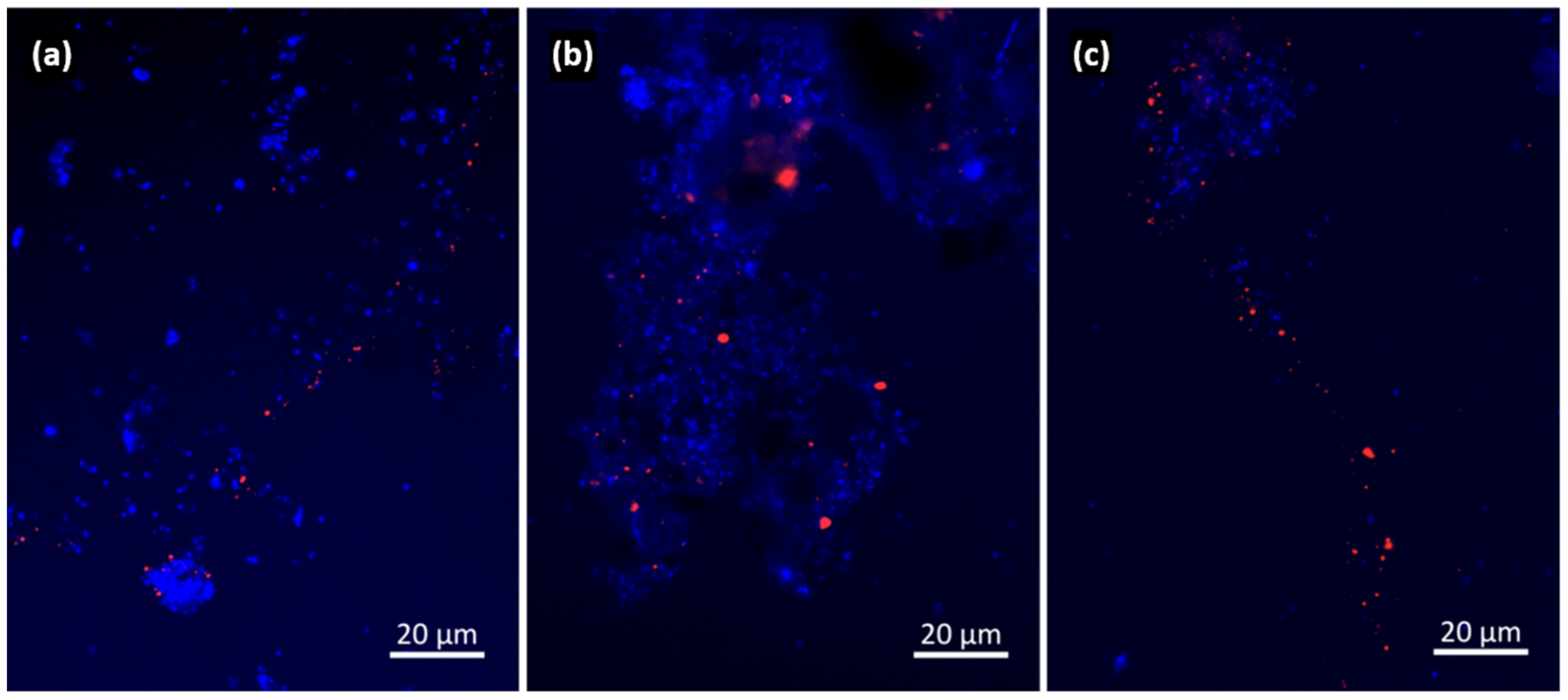
Three analyses were performed (Olympus BX-51, Tokyo, Japan) using the procedure described in the FISH handbook by Nielsen et al. [
35], utilizing the following probes in equimolar mixtures and, when appropriate, their competitors. For ammonia-oxidizing bacteria (AOB), the AOB mix consisted of Nso1225, Nso 190, NEU, NmV, and Cluster 192; for nitrite-oxidizing bacteria (NOB) Ntsp mix—an equimolar mixture of Ntsp662 and Ntsp712 and NIT3—was selected; and for polyphosphate-accumulating organisms (PAO), three probe mixtures were applied—PAO mix (PAO462, PAO651, and PAO846, targeting most of
Candidatus Accumulibacter), PAOb mix (PAO462b and PAO846b, targeting
Rhodocyclus tenuis), and RHC mix (RHC439 and RHC175a, targeting
Rhodocyclus/
Candidatus Accumulibacter and the majority of
Rhodocyclaceae).
2.3. Coagulation Pretreatment
2.3.1. Coagulation Tests of Raw Water
After rough coagulation tests, a series of four tests in 800 mL vessels was conducted. Homogenized samples with four different doses of 4.1 wt.% Fe2(SO4)3 (later, this solution is only mentioned as Fe2(SO4)3) were mixed in a Flocculator Tester JLT4 (VELP Scientifica, Usmate, Italy) rapidly for 1 min (200 rpm), followed by 15 min of slow mixing (10 rpm). Then, the suspensions were allowed to settle. In supernatants, suspended solids (SS) and chemical oxygen demand (COD) were measured.
SS concentration was established by vacuum filtration through an ashless membrane filter (pore size 0.45 µm) of 30 or 50 mL according to Czech standard ČSN EN 872 [
36]. The COD of samples filtered through a filtration paper (Ahlstrom, grade 388) was measured spectrophotometrically following the Czech standard for low concentrations (5–100 mg/L) ČSN ISO 15705 [
37].
This experiment was performed only once, complying with common practice in wastewater treatment.
2.3.2. Coagulation Tests of Spiked Raw Water
Raw water samples (800 mL) were spiked with approx. 2 mg/L of each tested micropollutant separately and, then, with a combination of all three pollutants (approx. 2 mg/L of each). Subsequently, the optimal dose of a coagulant for raw water (0.6 mL of Fe2(SO4)3/100 mL) was introduced, and a coagulation test was conducted, identically as already described above, in the case of raw water.
Samples were taken before and after the coagulation to perform COD and HPLC analyses as explained in previous paragraphs.
To the mixture spiked with all three analytes, different doses of a coagulant (0.5–0.65 mL of Fe2(SO4)3/100 mL) were applied to assess how much the parameter of the micropollutant removal should be considered when determining the optimal coagulant dose.
2.4. Oxidation
2.4.1. Oxidation of Raw Effluent
The oxidation of COD present in raw effluent by ClO2 was evaluated with different doses of ClO2 within 5–10 min (4–20 mg/L) and 1 h after application (2–10 mg/L). Residual ClO2 was measured using the CPR method.
2.4.2. Oxidation of Micropollutants in Effluent
Stand-Alone Oxidation
In 50 mL of effluent samples, 2 mg/L of each micropollutant was oxidized by ClO2 with the initial concentration of 20 mg/L. The amount necessary to oxidize effluent COD was significantly exceeded, and maximum oxidation performance could be achieved.
Similarly, the combination of all three analytes (2 mg/L of each) in the effluent was oxidized by 5 and 10 mg/L of ClO2 to evaluate whether any of the analytes are oxidized primarily.
In both situations, the residual concentration of ClO2 and the initial and final concentrations of the analytes were determined.
Oxidation After Coagulation
After the coagulation described in
Section 2.3.1, 100 mL of a supernatant was oxidized with ClO
2 (0–8 mg/L) to assess the change in the need for the oxidant due to coagulation. Residual ClO
2 was measured after 1 h of reaction.
Similarly, 100 mL of the spiked water supernatants from
Section 2.3.2 was oxidized with an excess of ClO
2 (20 mg/L). After 1 h, residual ClO
2 was measured, and analytes from the samples before and after oxidation were determined.
2.5. Biological Activity on Sand Filter
2.5.1. Experimental Model Set-Up
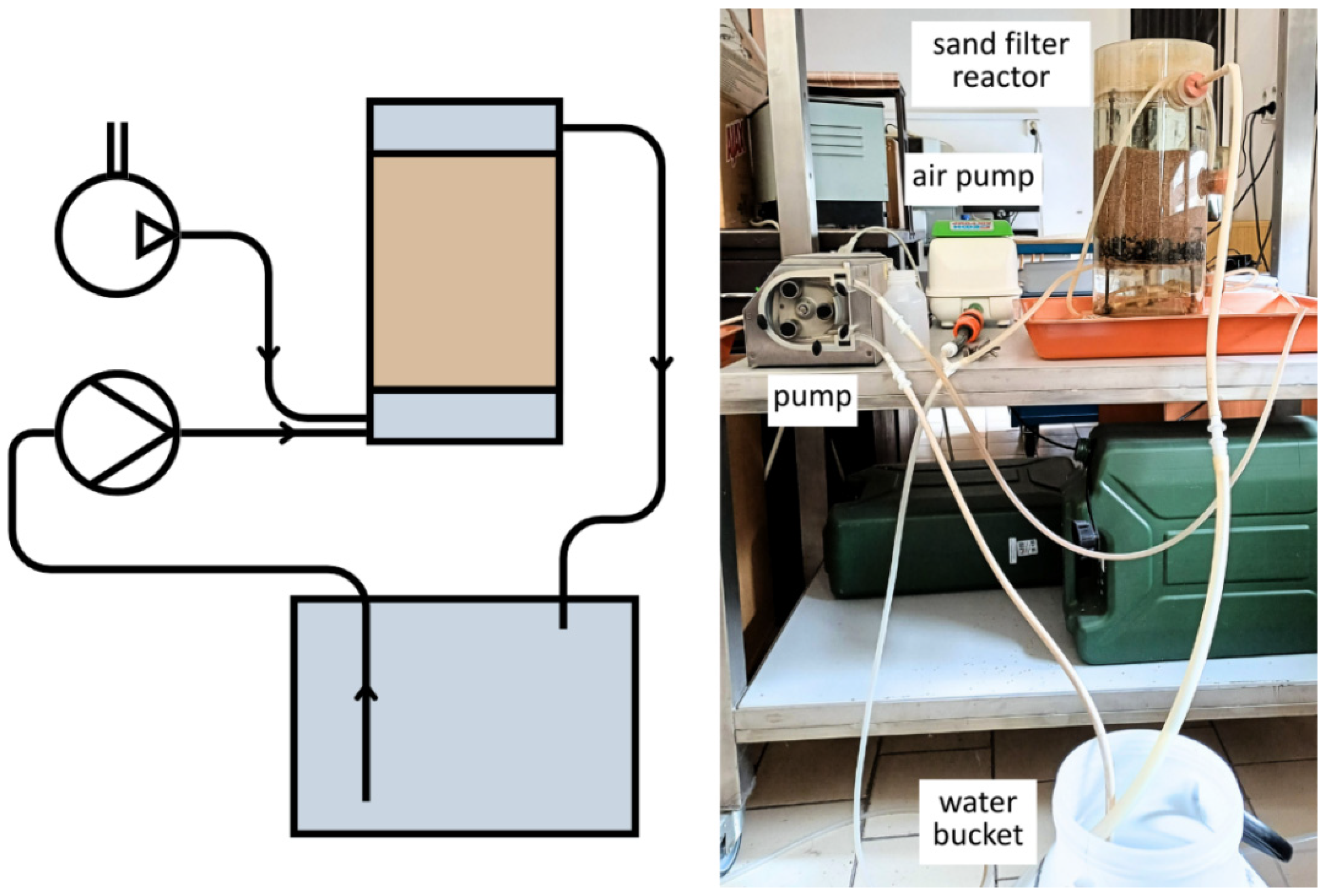
The aim of the model design was to study the maximal ability of a sand biofilter to remove the selected micropollutants. Since it was expected that the stabilized biofilm would take a long time to develop and perform sufficiently, and the laboratory scale did not allow for the use of a flow-through model, the circular design of the model was prepared. A mineral carrier was used there, so that adsorption on the carrier particles did not appear, and biofiltration could be evaluated.
The WWTP effluent sample circulated from a 30 L bucket through a continuously aerated sand filter with an empty bed volume of 5 L. As the filling, waterworks sand was used with a particle size of 1–2 mm and a specific area of 2500–4000 m
2/m
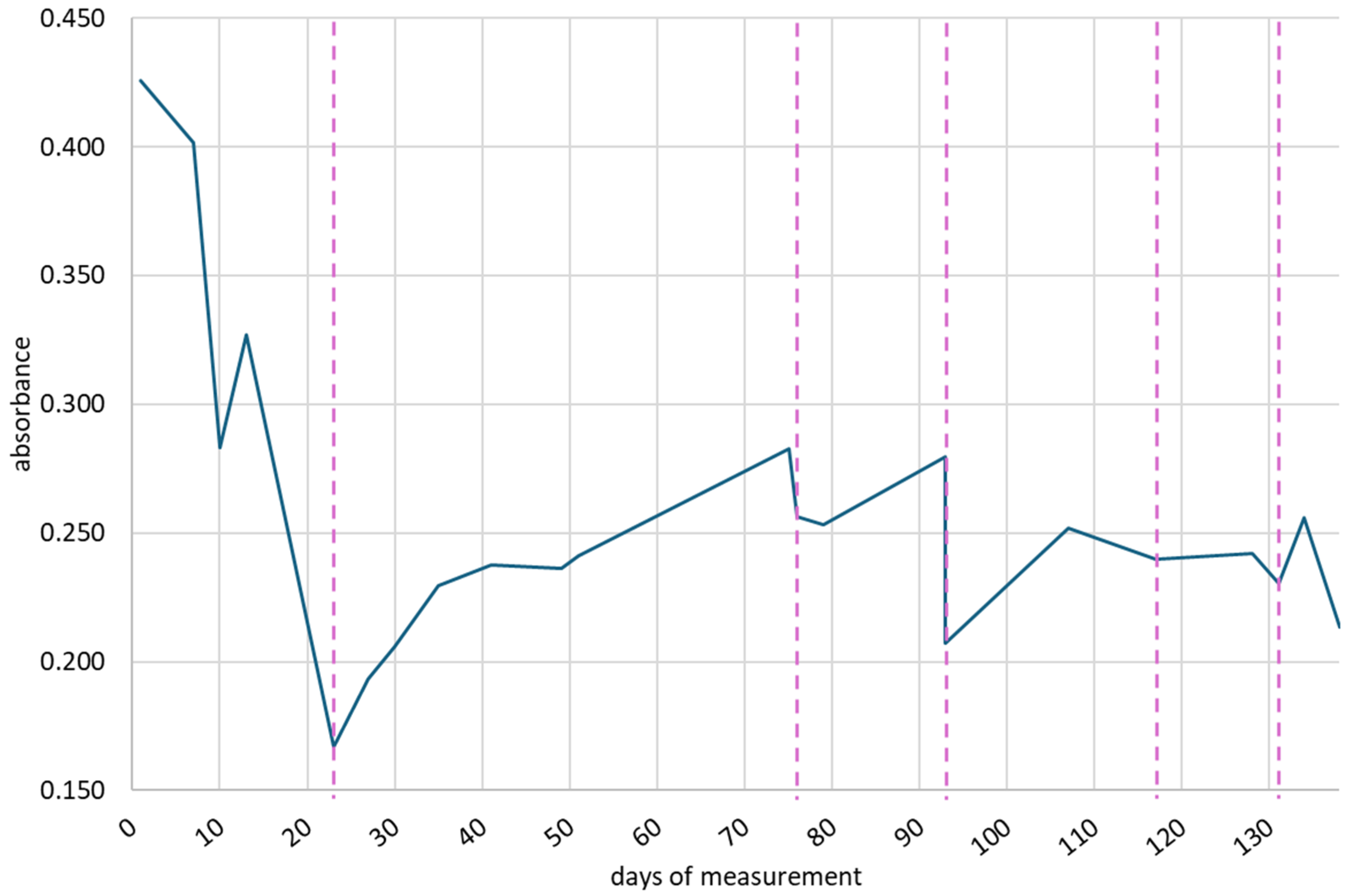
3. The water flow rate through the filter was 4 L/h (HRT 1.3 h). The aeration was provided by a set of cylindrical aeration stones placed at the bottom of the filtration tank. The air pump aeration was reduced, so that sand flotation was prevented. In varying intervals (on average 14 days), fresh effluent samples were introduced to the system and replaced the circulating water. The entire model is depicted in
Figure 1.
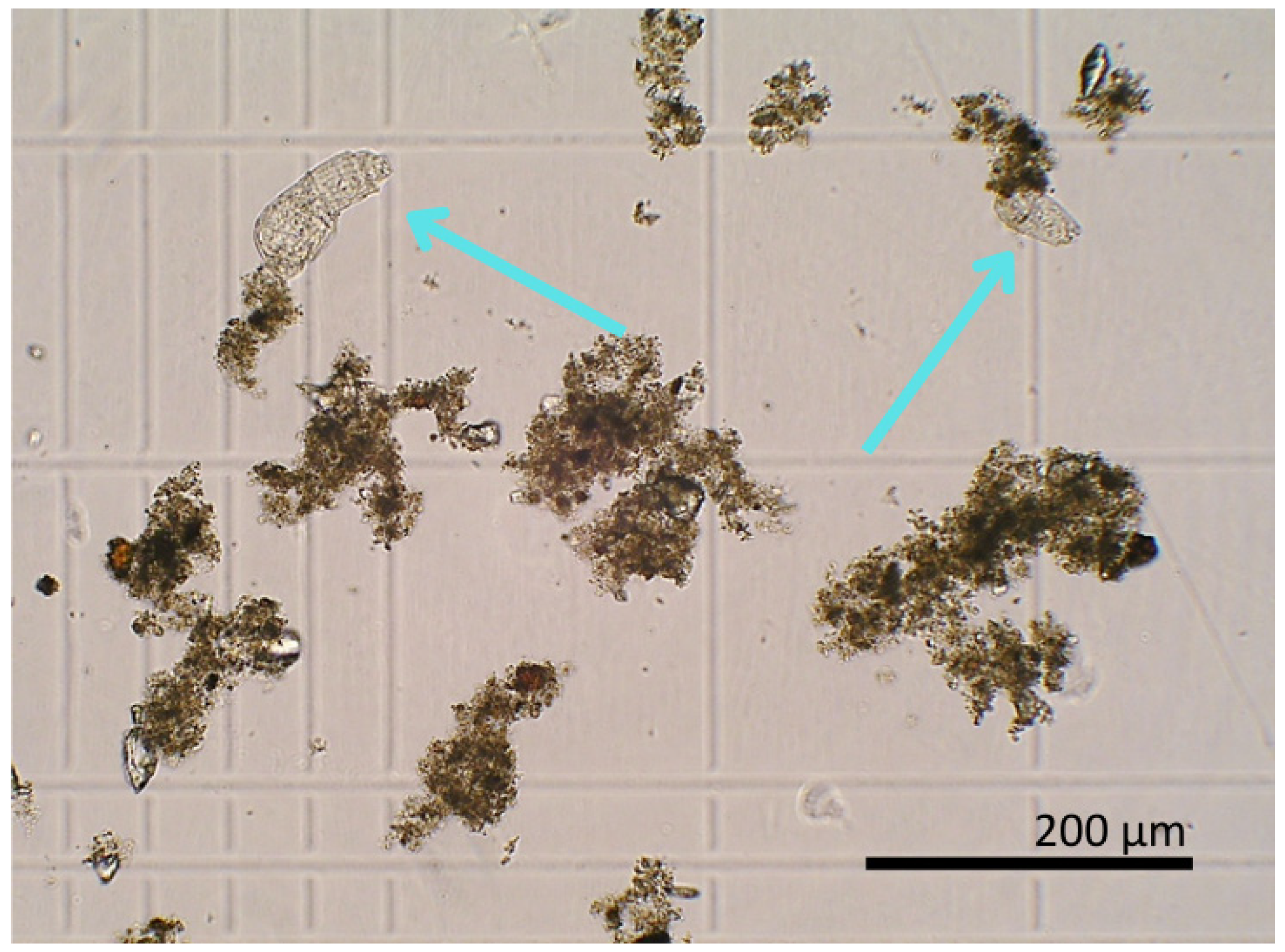
This way, the filter was inoculated, and a microbial culture grew on sand particles, creating a biofilm. The culture was later studied using FISH, as described earlier in the corresponding section (
Section 2.2.4).
2.5.2. Biological Activity in Spiked Water
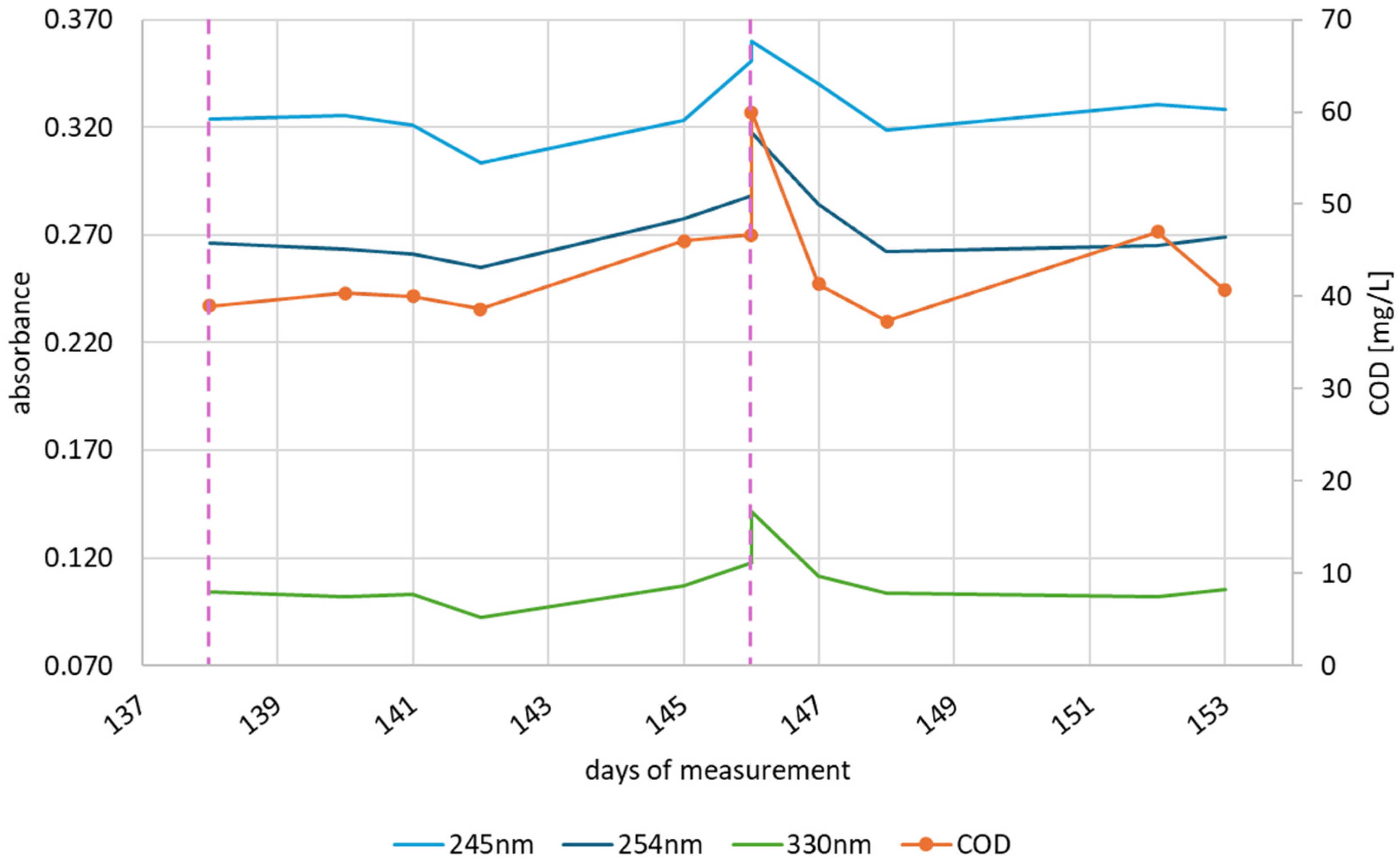
The water circulating through the sand biofilter was spiked with the tested micropollutants (CIT, CBZ, and DCF) dissolved in the effluent to obtain the total concentration in the system, targeting 4 mg/L. The observation of each analyte took at least two weeks before another analyte was added to the system.
2.5.3. Model Analyses
During the acclimatization period with only raw water, the samples were obtained once every 3–14 days into plastic bottles and stored at 4 °C. During the experiments with micropollutants, the samples were taken and stored in the same way with a frequency of 1–3 days.
The samples were filtered through a filtration paper or a syringe filter with subsequent analyses of COD, UV/VIS absorbance, and concentration of micropollutants, as already described in
Section 2.2.
2.5.4. Biofilm Culture Analysis
First, 60 g of the sample from the reactor, consisting of sand, water, and biomass, was extracted from the model using a glass tube. The biomass was roughly separated from the big sand particles. The sample was first observed under a light microscope and then fixed and hybridized following the handbook for FISH analysis by Nielsen et al. [
35].
4. Conclusions
This article assesses coagulation, oxidation by ClO2, and biodegradation as methods to remove three micropollutants, namely citalopram (CIT), carbamazepine (CBZ), and diclofenac (DCF). These substances have been chosen from the list provided by the new EU Directive, and the particular methods have been selected as potentially cheaper, less demanding, and sustainable alternatives to the currently most preferred techniques.
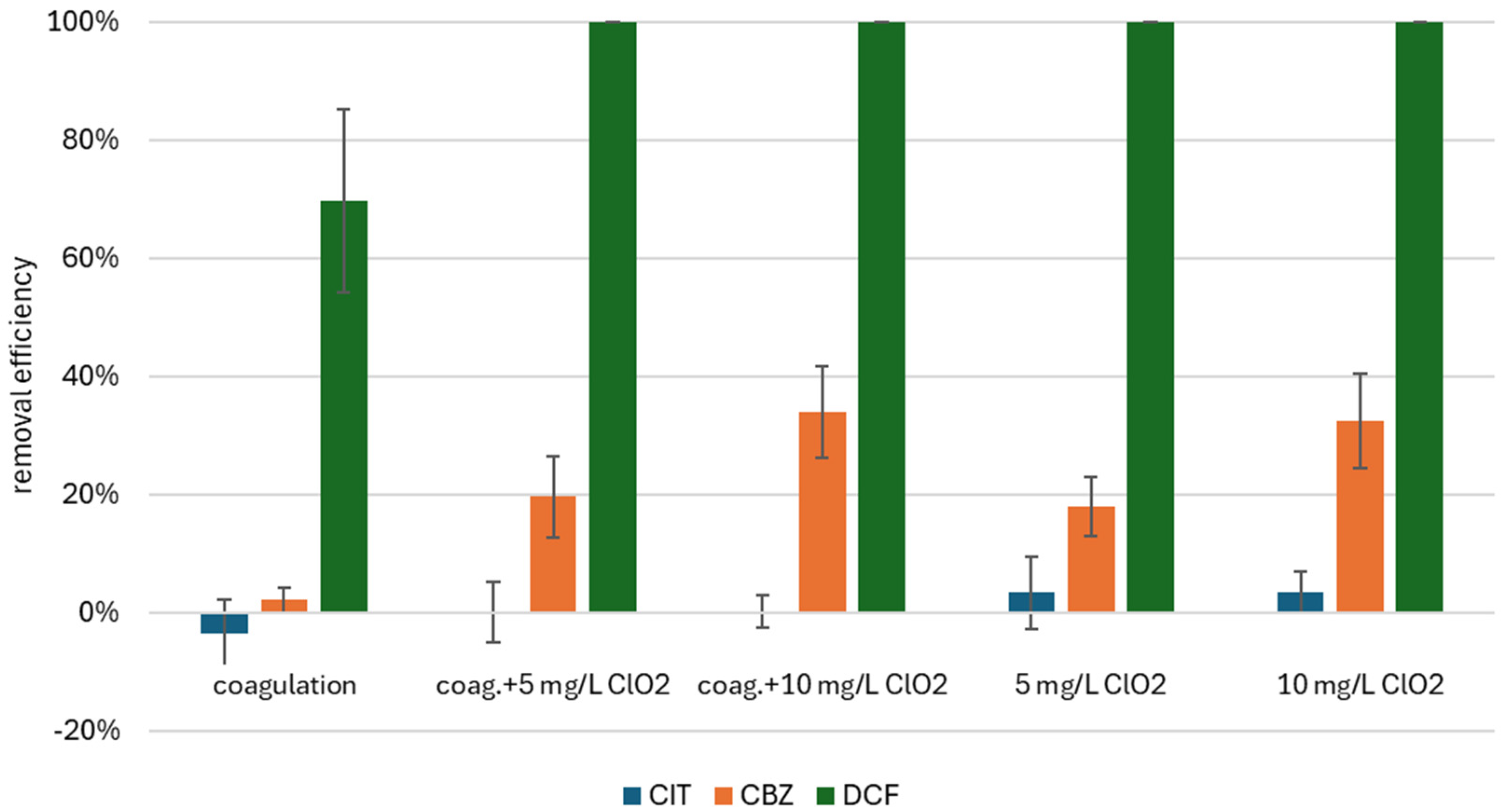
Coagulation alone has been found insufficient for all the compounds tested, not exceeding an efficiency of above 80%. The best results were obtained for DCF (ca. 70%), while for CBZ and CIT, the efficiency was below 10%. Nevertheless, coagulation has been seen to reduce COD, resulting in the smaller consumption of chemicals and lower energy requirements in further steps.
Oxidation by ClO2 performed significantly better, as DCF and CIT were removed with 85% efficiency or higher (100% and 86.2%, respectively). In contrast, the removal of CBZ remained below 10%.
When combined, the efficiency recorded for CBZ and CIT changed dramatically. While the removal of CBZ reached up to 33.9%, depending on the ClO2 dose, no removal was effectively noticed when applied to CIT. This phenomenon could not be explained by any literature available and requires further research. In comparison, DCF removal efficiency remained at 100%.
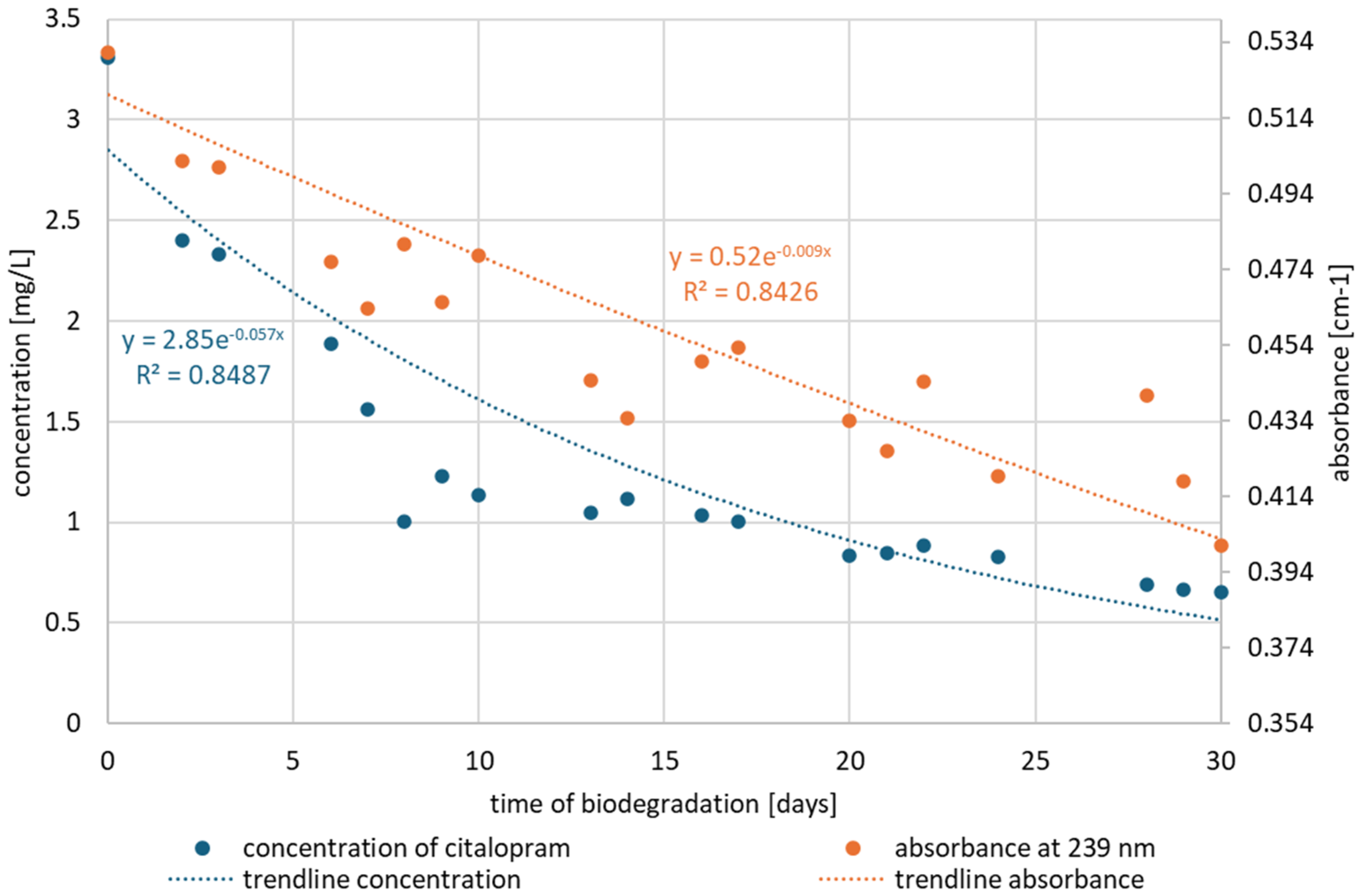
Experiments on the biofilm on the sand bed support have confirmed that only CIT is potentially biodegradable, while the other two micropollutants cannot be removed biologically. However, the rate of degradation of CIT was rather slow. This may have been caused by the low concentration of biomass, as the sand biofilter was not fully stabilized, and the high concentration of CIT present in the spiked water in amounts greater by several orders of magnitude than detected in actual wastewater (units of mg/L vs. tens to hundreds of ng/L).
In sum, only CBZ could not be removed by any of the tested methods or their combination with the efficiency required in the revised EU Directive, although the removal efficiency on the whole WWTP was not assessed. Just the stand-alone oxidation by ClO2 was able to remove over 80% of both remaining micropollutants.
Future research needs to examine lower and, therefore, more realistic concentrations of micropollutants, as their behavior may differ. In this study, higher concentrations were examined due to instrumental and procedural limits, which may have affected the results. Obviously, realistic concentrations should be examined before applying these methods to full-scale conditions. Also, the remaining nine compounds specified in the EU Directive should be evaluated similarly to obtain a complex picture of the suitability of those methods for complying with the required micropollutant removal efficiency. Concerning the economic aspect, this factor still has not been assessed satisfactorily, as the realistic concentrations of micropollutants have not been examined yet.
It should also be noted that the removal of the parent compounds by any transformation processes means the production of metabolites and derivatives, which may be even more harmful than the original compounds, which resemble the problematics of ozonation. Also, in the case of chlorine dioxide oxidation, problematic chlorite and chlorate may be formed. These products must be analyzed and assessed, as they could be discharged to the environment in notable quantities. When dangerous compounds are produced, another step, such as a GAC filter or a membrane, should be implemented for their capture. The results of these analyses may affect the suitability of a method in the full-scale application.
In either case, a significant potential lies in quaternary treatment. Not only could dangerous compounds and their metabolites be prevented from entering the environment, but also, the application of these methods can improve water management, promote water saving and sustainability, while being economically, energetically, and environmentally friendly.