Next Article in Journal
Assessment of Shoreline Change in Southeast Ireland Using Geospatial Techniques
Previous Article in Journal
Optimizing Vineyard Sustainability for Climate-Smart Food Systems: An Integrated Carbon Footprint and DEA Approach
 
 
Due to scheduled maintenance work on our servers, there may be short service disruptions on this website between 11:00 and 12:00 CEST on March 28th.
Article

From Virtual Prototyping to Digital Fashion: How Emerging Technologies Are Setting New Standards for Sustainability in the Creative Industries

by
Valeriia Shcherbak
1,
Oleksandr Dorokhov
2,*,
Viktoriia Riashchenko
3,
Mariya Storozhuk
3,
Andrej Bertoncelj
4 and
Maja Meško
5,*
1
Department of Economics and Entrepreneurship, Sumy National Agrarian University, 40000 Sumy, Ukraine
2
Department of Public Economics, University of Tartu, 50090 Tartu, Estonia
3
Department of Management, RNU Riga Nordic University, LV-1009 Riga, Latvia
4
Faculty of Management, University of Primorska, 6000 Koper, Slovenia
5
Faculty of Organizational Sciences, University of Maribor, 4000 Kranj, Slovenia
*
Authors to whom correspondence should be addressed.
Sustainability 2026, 18(7), 3281; https://doi.org/10.3390/su18073281
Submission received: 9 February 2026 / Revised: 19 March 2026 / Accepted: 24 March 2026 / Published: 27 March 2026

Abstract

In the context of digitalization and growing demands for environmental responsibility, creative industries are seeking ways to reduce their material footprint. The purpose of this study is to evaluate the role of digital technologies, such as virtual prototyping and digital fashion, in shaping new sustainability standards. To achieve this, a systemic multidisciplinary approach was applied, combining comparative analysis, quantitative assessment of key indicators (MIRR, CFCI, VSR), and the calculation of the Integral Sustainability Index (ISI).The results show that virtual prototyping reduces material costs by 45–65% and the number of physical prototypes by 3–5 times; however, its energy efficiency depends on project complexity and is achieved only after the ‘energy break-even point.’ Digital fashion practices demonstrate the potential to reduce the carbon footprint, but only when utilizing energy-efficient digital infrastructure. The integrated assessment revealed an increase in the overall level of sustainability (with $ISI$ rising from 0.52 to 0.71) during the transition to digital processes. The main conclusion is that digital technologies establish new sustainability standards, yet their positive impact is realized only through the conscious design of technological systems, business models, and institutional environments focused on balancing environmental, economic, and social goals.

1. Introduction

In the context of accelerating digitalization and the global transition to sustainable development principles, the creative industries are becoming one of the key areas for the transformation of modern socio-economic systems. Traditional sectors of the creative economy, including fashion, industrial and graphic design, media production, and cultural practices, have historically been characterized by high material intensity, significant waste volumes, and a substantial environmental footprint associated with prototyping, replication, and product logistics [1]. The growth in production scale and the shortening of creative product life cycles in recent decades have only intensified the environmental burden, highlighting the need for new technological and organizational solutions. One of the most promising directions for reducing negative environmental impact is the shift from physical production to digital design and testing processes. Virtual prototyping, computer-aided design and engineering analysis systems (CAD/CAE), digital twins, and digital fashion form the foundation of a new technological paradigm in the creative industries [2,3]. The use of digital models makes it possible to significantly reduce raw material consumption, minimize the number of experimental physical samples, and optimize production chains as early as the conceptual design stage. As a result, digital technologies are beginning to serve not only an instrumental but also a strategic function, establishing new standards of sustainability and efficiency. Of particular importance in this context is virtual prototyping, which is regarded as a systemic tool for managing the lifecycle of a creative product. By simulating form, materials, performance characteristics, and visual effects in a digital environment, it becomes possible to forecast the environmental and economic consequences of design decisions prior to their physical implementation [4]. Digital twins play a similar role, ensuring continuous connectivity between the virtual and real environments and enabling the optimization of production, use, and disposal processes for creative objects. At the same time, the scientific literature continues to debate the actual scale of the environmental benefits of digitalization, considering the energy consumption of computing systems and digital infrastructure [5,6]. Despite the growing body of research dedicated to individual aspects of digital transformation, many studies focus either on technological capabilities or on economic effects, without paying sufficient attention to a comprehensive assessment of sustainable development in the creative industries. This creates a research gap related to the need for a systemic analysis of the transition from virtual prototyping to digital fashion as a holistic process affecting environmental, economic, and social sustainability parameters.
The aim of this article is to substantiate the role of modern digital technologies in shaping new standards of sustainable development in the creative industries, based on an analysis of virtual prototyping, digital twins, and digital fashion practices. The study seeks to identify the key mechanisms for reducing environmental impact, define the directions for transforming production and creative processes, and substantiate the importance of a systemic approach to sustainability assessment. The main conclusion of the work is that the digitalization of creative industries, under the condition of rational technology use, can become an important factor in achieving sustainable development goals and forming environmentally responsible creative ecosystems.
The remainder of this paper is structured as follows. Section 1 presents the literature review and identifies the research gap in assessing the sustainability of digital transformation in creative industries. Section 2 describes the materials and methods, including the system of indicators and the methodology for calculating the integral sustainability index. Section 3 presents the empirical results, focusing on the impact of virtual prototyping and digital fashion on material efficiency, energy consumption, and carbon footprint. Section 4 discusses the obtained findings in the context of the sustainable development of creative industries. Finally, Section 5 concludes the study and outlines directions for future research.

1.1. Literature Review

1.1.1. Virtual Prototyping and Sustainable Design in Creative Industries

Virtual prototyping has become an important technological approach for improving sustainability in creative and design industries. By replacing multiple stages of physical experimentation with digital simulations, virtual prototyping reduces material consumption, production waste, and development time during early product design stages. Traditional design processes typically require numerous physical prototypes to test functionality, aesthetics, and ergonomics, which increases resource intensity and environmental impact. Digital modeling environments allow designers to perform iterative experimentation virtually, thereby enabling more efficient and environmentally responsible workflows [7].
Recent studies highlight the growing role of generative artificial intelligence in enhancing and transforming the capabilities of digital design environments. Generative AI systems can automatically produce multiple design iterations, visual concepts, and structural configurations, thereby accelerating experimentation while reducing reliance on repeated physical prototyping [8,9]. In particular, generative adversarial networks (GANs) and related architectures enable the automated generation of images, textures, and stylistic elements, thus supporting scalable and diverse creative outputs in digital environments [10,11].
Human–AI collaboration has also become an important aspect of contemporary design processes. AI-assisted creative tools can support ideation, sketch generation, and design exploration, allowing designers to systematically evaluate a broader range of alternatives at early development stages [12,13]. Several studies emphasize that such systems do not replace human creativity but instead complement and extend it by enabling iterative experimentation and expanding the solution space of design possibilities [14,15].
From a sustainability perspective, AI-assisted virtual prototyping enables designers to integrate environmental considerations earlier in product development. Digital simulation tools allow environmental performance and resource efficiency to be evaluated before physical production begins, supporting more sustainable design decisions [16]. However, the sustainability benefits of digital design technologies remain context-dependent. The reduction of material consumption must be considered alongside the environmental impacts associated with digital infrastructures and computational energy use [17]. Overall, virtual prototyping supported by generative AI represents a promising pathway for reducing material intensity and improving sustainability in creative industries, although its net environmental impact requires further systemic evaluation.

1.1.2. Digital Twins and Lifecycle Optimization

Closely related to virtual prototyping is the concept of digital twins, which represent dynamic digital replicas of physical objects, processes, or systems. Unlike static models, digital twins continuously integrate real-world data, enabling real-time monitoring, simulation, and optimization throughout the product lifecycle.
Digital twin technologies are increasingly used to support lifecycle-oriented design strategies. By linking virtual and physical environments, digital twins allow designers and producers to predict inefficiencies, optimize material use, and assess potential environmental impacts before implementing physical changes. Such capabilities support more sustainable product lifecycle management and help organizations reduce waste and resource consumption [7].
In creative and design-oriented industries characterized by rapid innovation cycles, digital twins can significantly improve development efficiency. Through continuous simulation and data-driven decision-making, these systems help reduce design errors, shorten development cycles, and optimize resource allocation across production stages. From a systems perspective, digital twins can be understood as part of broader digital artifact ecosystems in which humans, digital tools, and physical products interact dynamically during creative processes [18]. However, the sustainability implications of digital twin technologies remain debated. While many studies highlight their potential to improve environmental performance through predictive optimization, others emphasize the increasing energy demands of large-scale data processing and digital infrastructures required to maintain such systems [17]. As a result, assessing the sustainability impact of digital twins requires a systemic approach that considers both environmental benefits and technological costs.

1.1.3. Digital Fashion and the Transformation of Consumption Models

The digital transformation of creative industries increasingly extends beyond design and production processes to include entirely new forms of digital products. One prominent example is digital fashion, which involves the creation and distribution of purely virtual clothing and accessories designed for use in digital environments such as social media, gaming platforms, and virtual worlds.
Digital fashion is often discussed as a potential strategy for reducing the environmental footprint of the global fashion industry, which is widely recognized as one of the most resource-intensive sectors of the creative economy [19], a characteristic that is increasingly being re-evaluated in the context of digital transformation and sustainability-oriented innovation in creative industries. By replacing some physical products with digital alternatives, virtual fashion items may reduce material consumption, transportation emissions, and overproduction.
Furthermore, digital fashion enables new consumption models in which users engage with fashion through digital identities, avatars, and online communities. These models reflect broader transformations in cultural and creative industries, where digital platforms increasingly mediate the production, distribution, and consumption of creative goods [20].
Nevertheless, the sustainability effects of digital fashion remain complex. Although virtual products eliminate the need for physical materials, they rely on digital infrastructures such as data centers, cloud computing, and blockchain-based platforms, which also consume substantial energy resources [17]. Consequently, the environmental impact of digital fashion depends on whether virtual goods substitute physical consumption or simply complement it.
Existing studies largely focus on technological innovation and emerging business models within digital fashion ecosystems. However, relatively few works provide a comprehensive evaluation of how these developments simultaneously influence environmental, economic, and social sustainability.

1.1.4. Link to the Research Gap

Taken together, the reviewed literature demonstrates that digital technologies—including virtual prototyping, digital twins, and digital fashion—have significant potential to transform creative industries and contribute to sustainable development. These technologies enable new forms of design experimentation, lifecycle optimization, and digital consumption that may reduce material intensity and improve resource efficiency. However, existing research often examines these technological developments separately and primarily focuses on their technical capabilities or economic implications. As a result, there remains a lack of integrated analytical frameworks capable of systematically evaluating how different forms of digital transformation collectively influence environmental, economic, and social sustainability in creative industries. Recent studies emphasize the need for interdisciplinary approaches that connect technological innovation with broader sustainability outcomes and governance considerations [21]. Addressing this gap requires comprehensive frameworks that integrate digital transformation, creative production systems, and sustainability assessment.

1.2. Research Gap in Assessing the Sustainability of the Digital Transformation of Creative Industries

The growing body of research on digital technologies in creative industries highlights their potential to transform design processes, production systems, and consumption patterns. Technologies such as virtual prototyping, digital twins, and generative artificial intelligence enable rapid design iteration, simulation-based decision-making, and new forms of digital cultural production. These developments are often associated with potential sustainability benefits, including reduced material consumption, improved lifecycle planning, and more efficient resource management.
However, despite increasing academic attention to digital creativity and generative AI, the relationship between digital transformation and sustainability outcomes in creative industries remains insufficiently understood. Existing studies tend to examine individual technologies or specific design tools rather than assessing the systemic impact of digital transformation across the entire creative production ecosystem. As emphasized by Holzner, Maier, and Feuerriegel (2025), much of the literature on generative AI focuses on technological capabilities and creative applications, while providing limited analysis of broader environmental, economic, and social sustainability implications [9].
To better illustrate the current state of research, Table 1 summarizes key studies that examine the use of virtual prototyping and AI-supported design tools in creative and product development contexts. The comparison highlights the primary objectives of these studies, the technologies employed, and the sustainability-related outcomes discussed in the literature.
The comparison presented in Table 1 indicates that current research primarily focuses on improving design efficiency, expanding creative exploration, and optimizing early stages of product development through digital technologies. While several studies highlight the potential environmental benefits of digital prototyping—such as reduced material consumption and fewer physical prototypes—empirical evidence linking these practices to measurable sustainability outcomes remains limited.
In particular, there is a lack of empirical data demonstrating how virtual prototyping affects resource consumption in real production systems or how digital fashion and other virtual creative products influence overall material demand in the industry. In many cases, sustainability benefits are assumed rather than quantitatively evaluated. Moreover, the potential environmental advantages of digital design tools may be partly offset by the growing energy requirements of digital infrastructures, including cloud computing, data centers, and AI training processes [17].
Beyond these empirical limitations, conceptual challenges also remain. Floridi and Chiriatti (2020) argue that generative AI systems primarily recombine existing patterns rather than generating fundamentally new ideas, which raises questions about long-term cultural sustainability and diversity in creative production [22]. Similar concerns have been raised in broader discussions of artificial intelligence and creativity, where scholars emphasize the need to better understand the social and cultural implications of AI-assisted creative work.
Furthermore, international policy analyses highlight the lack of studies directly linking the implementation of digital technologies in creative industries with measurable sustainability indicators. In particular, there remains limited research connecting digital design practices with environmental footprint metrics (such as Scope 2 and Scope 3 emissions), social inclusivity, and employment sustainability within creative professions.
Taken together, these limitations reveal an important research gap. While digital technologies are rapidly transforming creative industries, there is currently no comprehensive analytical framework that systematically evaluates how different digital transformation practices—such as virtual prototyping, digital twins, and digital fashion—collectively influence environmental, economic, and social sustainability outcomes.
Addressing this gap requires an interdisciplinary research approach capable of integrating technological analysis, sustainability assessment, and creative industry studies. The present study aims to contribute to this objective by proposing a systemic framework for evaluating the sustainability implications of digital transformation in creative industries and by examining how emerging digital design practices may shape new standards of sustainable development.

1.3. Justification of the Research Aim, Objectives, and Hypotheses

In the context of global digitalization and increasing demands for sustainable development, the creative industries are facing the necessity of rethinking traditional models of design, production, and consumption. The high material intensity, short product life cycles, and significant waste volumes characteristic of sectors such as fashion, design, and media create substantial environmental and social burdens. Simultaneously, the development of virtual prototyping, digital twins, generative artificial intelligence, and digital fashion practices creates the preconditions for transitioning to less resource-intensive and more flexible forms of creative activity. However, despite the active adoption of digital technologies, the question of to what extent digital transformation genuinely contributes to achieving sustainable development goals and forming new sustainability standards in the creative industries remains insufficiently studied.
Contemporary research is predominantly focused on the technological capabilities of digital tools and their impact on the creative process, whereas a systemic assessment of the environmental, economic, and social effects of digitalization remains fragmented. The absence of comprehensive models linking specific practices of virtual prototyping and digital fashion with measurable sustainability indicators limits the ability to make well-founded managerial and design decisions. In this regard, there is a need to develop a scientifically grounded approach that allows for evaluating the contribution of digital technologies to the sustainable development of the creative industries based on interdisciplinary and systemic analysis.
Research aim: To substantiate the role of virtual prototyping, digital twins, and digital fashion practices in forming new standards of sustainable development in the creative industries and to develop a systemic approach for assessing their environmental, economic, and social effects.
Research objectives:
To analyze the evolution of digital technologies in the creative industries and determine their key areas of application.
To systematize existing scientific approaches to assessing the sustainability of digital design and production processes.
To investigate the impact of virtual prototyping on reducing material costs, waste, and the duration of design cycles.
To evaluate the potential of digital fashion and virtual products in the context of substituting physical goods and transforming consumption models.
To develop an integral model for assessing the sustainability of the digital transformation of creative industries, based on environmental, economic, and social indicators.
Research hypotheses:
Hypothesis 1 (H1).
The implementation of virtual prototyping and digital twins reduces material costs and waste volumes to an extent that significantly outweighs the additional energy demands of digital infrastructure, with the net environmental benefit being contingent upon project complexity.
Hypothesis 2 (H2).
The use of digital fashion and virtual product practices contributes to reducing the aggregate environmental footprint of the creative industries through the partial substitution of physical production.
The study puts forward two testable hypotheses focused on the quantitative assessment of the environmental effects of digital transformation. Broader systemic and social aspects are considered at the level of interpretation and discussion of the results. The present study aims to establish the theoretical and practical foundations for assessing the sustainability of the digital transformation of creative industries. The obtained results can be used to develop sustainable development strategies in the fields of fashion, design, and other creative sectors, as well as to justify managerial decisions at the level of companies and industry ecosystems.

1.4. Operationalizing the Concept of “New Sustainability Standards”

Given that this study examines how digital technologies establish “new sustainability standards” in creative industries, it is necessary to clarify what is meant by “standards” in this context. Rather than referring to formal regulatory or certification schemes (which are still emerging in this field), the term is used here in a broader analytical sense to denote emerging norms, benchmarks, and best practices that shape sustainable decision-making in digitally transformed creative processes. Based on the analytical framework developed in this study, these new standards can be operationalized through three distinct but interrelated components:
A set of key performance indicators (KPIs): The standards manifest as a defined set of metrics for measuring and comparing sustainability performance across environmental, economic, and social dimensions. These include the Material Intensity Reduction Rate (MIRR), Energy Consumption Change (ECC), Carbon Footprint Change Index (CFCI), Physical Prototype Reduction Index (PPRI), Design Cycle Time Reduction (DCTR), Virtual Substitution Ratio (VSR), and Digital Skills Impact Score (DSIS). Together, these indicators form a standardized framework for assessing the sustainability implications of digital transformation.
Decision rules and technological benchmarks: The standards also take the form of explicit or implicit rules that guide technology choices and infrastructure design. The analysis in this study identifies two such benchmarks. First, the “energy breakeven point” establishes a decision rule for when virtual prototyping becomes environmentally preferable to physical prototyping based on project complexity. Second, the finding that digital fashion reduces carbon footprint only when using energy-efficient infrastructure (renewable energy, Proof-of-Stake blockchains) translates into a benchmark for “green digital infrastructure” that should be prioritized to realize sustainability benefits.
Organizational practices and process innovations: Finally, the standards encompass new ways of organizing creative work that embed sustainability considerations into routine operations. These include the integration of lifecycle assessment (LCA) at early design stages, the systematic use of digital twins for iterative testing without physical samples, the adoption of virtual prototyping to compress design cycles, and the incorporation of digital products (e.g., virtual fashion, NFT assets) into business models as substitutes for physical goods. These practices represent replicable process innovations that can be adopted across the creative industries.
In summary, when this study claims that digital technologies are “setting new sustainability standards,” it refers to the emergence of measurable KPIs, empirically grounded decision rules, and replicable organizational practices that collectively define a higher benchmark for environmental, economic, and social performance in creative industries. These standards are not imposed by external regulators but emerge from the demonstrated capabilities and requirements of digital technologies themselves.

2. Materials and Methods

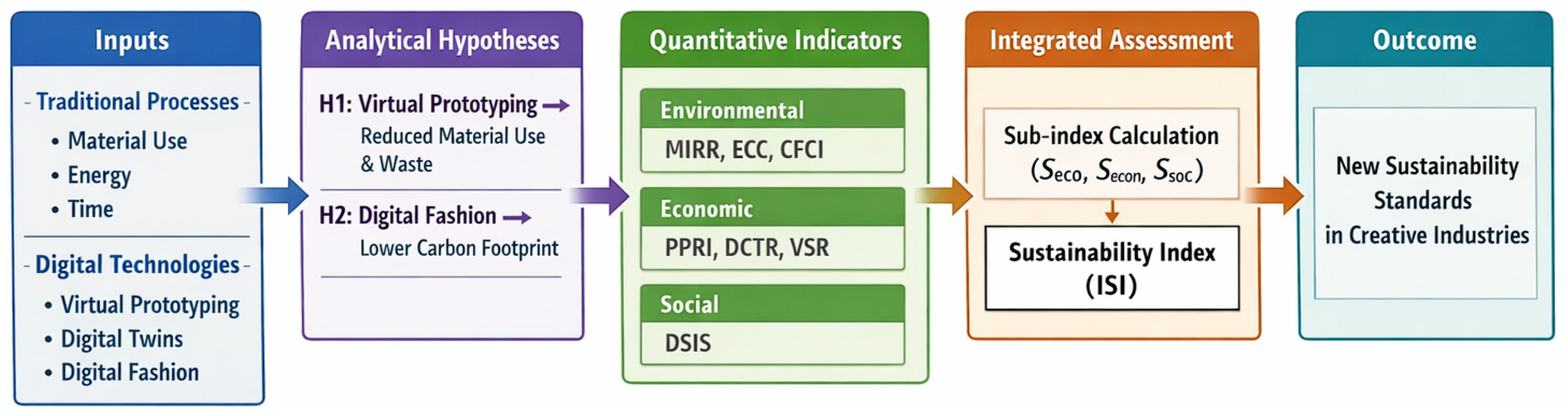
To structure the analysis and clarify the logical connections between the adoption of digital technologies and their expected sustainability outcomes, this study is guided by the conceptual framework presented in Figure 1, which illustrates the pathway from inputs through hypotheses and indicators to integrated assessment.

2.1. Dataset and Case Selection

The empirical basis of this study consists of aggregated secondary data obtained from two main groups of sources: (1) peer-reviewed scientific publications and empirical case studies on digital design technologies and (2) international statistical and analytical reports related to innovation, digitalization, and environmental performance. Industry reports include publications from international organizations and analytical agencies such as Organisation for Economic Co-operation and Development (OECD; Paris, France), the International Energy Agency (IEA; Paris, France), the Carbon Trust (London, UK), and sector-specific market research reports on digital fashion and creative technology adoption. To improve transparency, all data sources were systematically documented and categorized into peer-reviewed journal articles (Scopus/Web of Science indexed) and institutional reports from international organizations and sectoral analytical agencies, including OECD, IEA, UNESCO, and the Carbon Trust. A detailed list of the key data sources is provided in Appendix A.
First, a structured literature search was conducted using the Scopus (Elsevier; Amsterdam, The Netherlands) and Web of Science (Clarivate; Philadelphia, PA, USA) databases to identify relevant empirical studies and case reports. Publications were identified using combinations of keywords including virtual prototyping, digital twins, digital fashion, generative artificial intelligence, sustainable design, and creative industries. The selection process followed transparent and reproducible criteria to ensure the reliability of the source material. From the identified literature, empirical studies containing quantitative or semi-quantitative data on the implementation of digital design technologies were extracted and used to construct the analytical dataset.
Second, complementary statistical information was obtained from international analytical and statistical reports in order to calibrate and contextualize the indicators used in the analysis. These sources included Global Innovation Index (World Intellectual Property Organization; Geneva, Switzerland), OECD Digital Economy Outlook (OECD; Paris, France), and UNESCO Culture and Creative Industries Statistics (UNESCO; Paris, France), which provide comparative data on the level of digitalization and innovation activity in creative sectors. Environmental and energy-related parameters were additionally informed by reports from the International Energy Agency (IEA; Paris, France) and the Carbon Trust (London, UK), which provide data on energy consumption and carbon emissions associated with digital infrastructures and creative production processes.
The analytical dataset used in this study consists of 27 documented cases of digital technology implementation in creative industries. Each case represents an empirical example reported in scientific publications or industry reports describing the adoption of virtual prototyping, digital twins, or digital fashion practices in real design or production contexts.
The cases were selected according to three criteria:
The presence of a clearly documented transition from traditional to digital design processes;
The availability of quantitative or semi-quantitative indicators related to resource use, energy consumption, production cycles, or digital product substitution;
Relevance to creative industry sectors such as fashion design, industrial design, media production, digital art, or gaming environments.
Each case therefore constitutes a unit of analysis representing a specific implementation scenario of digital technologies in a creative industry context. The structure of the analytical dataset used in the study is summarized in Table 2. To ensure the comparability and independence of the analyzed cases, several steps were taken during data collection and harmonization. First, each case represents a unique implementation of digital technologies in a distinct organizational or project context, with no overlapping data sources. Cases were sourced from different peer-reviewed publications and industry reports to avoid double-counting of the same empirical observations. Each case is explicitly linked to a specific source (scientific publication or analytical report), ensuring traceability of all input data used for indicator calculation. The dataset does not include simulated or artificially generated data. Second, all quantitative indicators (e.g., material intensity, number of prototypes, energy consumption) were standardized to common metrics and units (e.g., normalized material intensity, absolute prototype counts) to enable cross-case comparison. Third, where original studies reported data in non-standard formats, we extracted raw values and recalculated indicators using the formulas defined in Section 2.2 and Appendix A to ensure methodological consistency across all cases. This harmonization process ensures that the aggregated dataset is suitable for statistical analysis while preserving the empirical variability reported in the original sources.
Based on the collected data, a system of key performance indicators was developed to quantitatively evaluate the sustainability implications of digital transformation. The indicators reflect the three main dimensions of sustainable development: environmental, economic, and social. The complete list of indicators used in the analysis is presented in Table 3.
The environmental dimension includes indicators related to the reduction of material and energy consumption, such as the Material Intensity Reduction Rate (MIRR) and Energy Consumption Change (ECC). The economic dimension is represented by indicators reflecting improvements in production efficiency, including the Physical Prototype Reduction Index (PPRI) and Design Cycle Time Reduction (DCTR). The social dimension is captured through the Digital Skills Impact Score (DSIS), which reflects the influence of digital technologies on employment conditions. A detailed description of the methodology for calculating the Carbon Footprint Change Index (CFCI), including system boundaries, emission factors, and infrastructure assumptions, is provided in Section 2.6.
The initial values for these indicators were derived from aggregated empirical evidence reported in studies examining virtual prototyping, CAD/CAE modeling, digital twins, and digital fashion applications. In particular, the dataset incorporates information on:
The average number of iterations in traditional versus digital prototyping processes;
Changes in material consumption during design stages;
Energy consumption associated with both physical prototyping and computational simulations;
The duration of product development cycles;
The degree of substitution of physical products by digital equivalents.
For each case, values describing traditional and digital production scenarios were extracted or estimated from the source materials. These values were then standardized and aggregated to calculate the sustainability indicators used in this study, including MIRR, PPRI, ECC, VSR, and CFCI. Aggregation was performed by calculating mean normalized values across the selected cases within each analytical category, ensuring comparability between different sectors of the creative industries while preserving the empirical variability reported in the original sources.

2.2. Methodology for Calculating the Integral Sustainability Indicator

To assess the cumulative effect of digital transformation, an integral sustainability model was applied, based on the normalization and aggregation of individual indicators. The calculation methodology is presented in Table 4.
To ensure the reliability and robustness of the Integrated Sustainability Index (ISI), a multi-step validation approach was applied. First, internal consistency was ensured through the normalization and standardization of all indicators across cases. Second, statistical validation was conducted using correlation analysis and hypothesis testing (Section 2.3 and Section 2.4), confirming the logical relationships between key sustainability indicators. Third, robustness validation was performed through sensitivity analysis of the weighting coefficients (α, β, γ), allowing us to assess the stability of the ISI under alternative assumptions. This combined approach ensures that the ISI provides a consistent and analytically reliable measure of sustainability performance. The selection of weights for both the individual indicators (wj) and the three sustainability components (α, β, γ) is a critical step in constructing the Integrated Sustainability Index (ISI). For the aggregation of individual indicators within each sustainability sub-index, an equal weighting scheme was applied to the indicator weights (wj). This means that within the environmental dimension, for example, the Material Intensity Reduction Rate (MIRR) and Energy Consumption Change (ECC) were assigned equal importance. This approach was chosen because there is no established empirical or theoretical basis in the current literature to prioritize one indicator over another within the same sustainability dimension in the context of creative industries. Equal weighting ensures transparency and is consistent with best practices in composite indicator development for exploratory and comparative research based on established composite indicator methodologies [23,24], widely applied in sustainability and digital economy assessments.
For the three sustainability components, an equal weighting scheme (α = β = γ = 1/3) was adopted as the baseline. This approach is grounded in the normative principle that environmental, economic, and social dimensions are of equal importance for achieving the Sustainable Development Goals (SDGs) in the context of creative industries.
To address the potential subjectivity inherent in any weighting choice and to test the robustness of our findings, we conducted a sensitivity analysis. The ISI was recalculated under three alternative weighting scenarios for the component weights (α, β, γ):
  • Environmentally focused scenario (α = 0.5, β = 0.25, γ = 0.25): This scenario doubles the weight of the environmental sub-index to reflect a perspective where ecological impact reduction is the primary goal of digitalization.
  • Economically focused scenario (α = 0.25, β = 0.5, γ = 0.25): This scenario prioritizes economic efficiency gains, such as cost reduction and faster time-to-market.
  • Socially focused scenario (α = 0.25, β = 0.25, γ = 0.5): This scenario emphasizes the social outcomes of digitalization, including employment quality and skill development.
The results of this sensitivity analysis demonstrate that while the absolute value of the ISI varies slightly across scenarios, the overall direction and relative magnitude of the change (i.e., the increase in sustainability from traditional to digital processes) remain consistent. This consistency indicates that our main conclusion—that digital transformation leads to a significant increase in overall sustainability—is robust and not an artifact of the specific weighting scheme chosen. It confirms that the positive effect of digitalization is not sensitive to reasonable variations in the weighting of its individual components.

2.3. Methodology for Testing the Research Hypotheses

To confirm the hypotheses, comparative and correlation analysis methods were used to quantify the impact of digital technologies on sustainability indicators. The hypothesis testing plan is presented in Table 5.

2.4. Statistical Analysis

Pearson correlation analysis was used to examine relationships between sustainability indicators derived from the analyzed cases. Pearson correlation coefficients were calculated to examine associations between key indicators of digital transformation and sustainability outcomes.
Prior to the analysis, the assumptions of Pearson correlation were assessed. Normality of the variables was evaluated using the Shapiro–Wilk test, and the absence of extreme outliers was verified through visual inspection of boxplots.
Statistical significance was assessed at the 5% significance level (p < 0.05). In addition to p-values, effect sizes were reported using correlation coefficients (r), and 95% confidence intervals were calculated to provide a more robust interpretation of the relationships between variables.
Because the dataset consists of aggregated indicators derived from 27 cases, the correlation analysis should be interpreted as exploratory rather than confirmatory. The application of parametric tests such as the paired t-test to aggregated literature-derived data follows established practice in meta-analytical and exploratory research where primary data are not available [25]. The 27 cases in our dataset are treated as independent observations representing distinct implementations of digital technologies, with effect sizes (ΔMIRR) calculated consistently across all cases using the same formula. The normality of the ΔMIRR distribution was confirmed using the Shapiro–Wilk test (W = 0.96, p = 0.21), and visual inspection of boxplots revealed no extreme outliers. While we acknowledge that this approach does not replace primary data collection, it provides a robust quantitative synthesis of the available empirical evidence and allows for preliminary hypothesis testing within the exploratory scope of this study. These statistical procedures also contribute to the validation of the ISI model, as they confirm the consistency and expected direction of relationships between the underlying indicators used in constructing the integrated index.

2.5. Interpretation and Visualization of Results

The results of the calculations and statistical analysis are interpreted within a systemic context and visualized using comparative diagrams, correlation matrices, and lifecycle diagrams of creative products. This allows for the identification of both direct and indirect effects of digital transformation related to changes in design, production, and creative ecosystems.
The study does not involve experimental interventions with human or animal participants and does not require ethical approval. All data used are based on open sources and are available for re-analysis. Generative artificial intelligence was used solely as an auxiliary tool for literature analysis and text structuring; the generation of empirical data and calculations using GenAI was not performed.

2.6. Methodology for Carbon Footprint Calculation

All emission factors and activity data used in the calculations are derived from publicly available and widely recognized international datasets and reports, ensuring methodological transparency and reproducibility. To ensure transparency and reproducibility of the environmental assessment, this section provides a detailed description of the methodology used to calculate the Carbon Footprint Change Index (CFCI). The calculation follows a lifecycle thinking approach, comparing the estimated greenhouse gas emissions of a physical product with those of its digital counterpart.

2.6.1. System Boundaries and Functional Unit

The analysis adopts a cradle-to-grave system boundary for the physical product and a server-to-user boundary for the digital product, reflecting their respective lifecycles.
For the physical product, which is exemplified by a typical garment, the following lifecycle stages were included. Raw material extraction and processing covers emissions from fiber production such as cotton or polyester. Manufacturing includes emissions from textile production, cutting, sewing, and finishing. Transport and logistics account for emissions from transporting raw materials, intermediate goods, and the final product to a distribution center or retail store. The use phase includes estimated emissions from consumer care, primarily washing, drying, and ironing, over an average product lifespan of two years. Finally, end-of-life considers emissions from landfilling or incineration, with credits for recycling excluded due to the low current rates in the fashion industry.
For the digital product, such as a virtual garment for a social media avatar or a 3D model, the following stages were included. Digital design and rendering account for the energy consumption of the designer’s workstation and local computing during the creation process. Data storage covers the energy consumption required to store the digital asset on a cloud server for one year. Data transmission includes the energy consumption for each instance of user access, such as downloading or streaming the asset, which was estimated at an average of ten views over its lifecycle. Where applicable, blockchain transactions were also considered. For NFT-based products, the energy consumption associated with minting and one subsequent transaction on the blockchain was included, and this was modeled separately for Proof-of-Work and Proof-of-Stake consensus mechanisms.
The functional unit for comparison was defined as one unit of a typical fashion garment, such as a t-shirt or dress, providing its core function of aesthetic expression and social signaling over a two-year period. For the physical product, this involves physical ownership and use, whereas for the digital product, this involves digital ownership and virtual display.

2.6.2. Emission Factors and Data Sources

Emissions were calculated by multiplying activity data, measured in kilowatt-hours of electricity or kilograms of material, by appropriate emission factors expressed in kilograms of CO2 equivalent per unit.
For physical product emissions, activity data for material production, manufacturing, and transport were derived from a meta-analysis of lifecycle assessment studies in the fashion industry, primarily from reports by the Carbon Trust and the Sustainable Apparel Coalition’s Higg Materials Sustainability Index. Emission factors for grid electricity used in manufacturing were taken from the International Energy Agency statistics for 2023, using a global average grid intensity of 475 g of CO2 equivalent per kilowatt-hour. Emissions from the use phase, including washing and drying, were estimated based on consumer behavior data from the European Commission’s Joint Research Centre.
For digital product emissions, the primary source is electricity consumption. The following assumptions and factors were applied. Computing energy for design workstations was estimated at 0.1 kilowatt-hours per hour of active use based on typical hardware specifications, while cloud server energy for storage was estimated at 0.001 kilowatt-hours per gigabyte per year based on data from the International Energy Agency [26] and Andrae and Edler [27]. Data transmission energy intensity was estimated at 0.06 kilowatt-hours per gigabyte based on Aslan and colleagues [28]. For blockchain energy, different factors were applied depending on the consensus mechanism. For Proof-of-Work blockchains such as Ethereum pre-merge, an emission factor of 50 kg of CO2 equivalent per transaction was used based on data from Digiconomist [29]. For Proof-of-Stake blockchains such as Ethereum post-merge or Solana, an emission factor of 0.01 kg of CO2 equivalent per transaction was used based on estimates from the Cambridge Centre for Alternative Finance [30] and industry white papers.
To assess the impact of energy sources, three infrastructure scenarios were modeled [31]. The first scenario, called green infrastructure, assumes that all electricity for digital processes comes from renewable sources, applying an emission factor of zero grams of CO2 equivalent per kilowatt-hour. The second scenario, standard cloud, assumes the global average grid mix of 475 g of CO2 equivalent per kilowatt-hour. The third scenario, carbon-intensive, assumes the use of a Proof-of-Work blockchain with the corresponding emission factor described above.

2.6.3. Calculation of CFCI

The total carbon footprint for a physical product and a digital product was calculated by summing the emissions from all included lifecycle stages under a given scenario. The Carbon Footprint Change Index was then calculated using the formula presented in Appendix A, where the difference between the digital and physical carbon footprints is divided by the physical carbon footprint. This dimensionless index allows for a direct comparison of the environmental performance of the two product types. A negative CFCI indicates a reduction in the carbon footprint for the digital product relative to the physical one, while a positive CFCI indicates an increase.

3. Results

3.1. Reduction of Material and Energy Costs with Virtual Prototyping (Testing Hypothesis H1)

The results presented in this section are based on aggregated empirical data extracted from the dataset described in Section 2.1.

3.1.1. Analysis of Material Intensity Reduction (MIRR and PPRI)

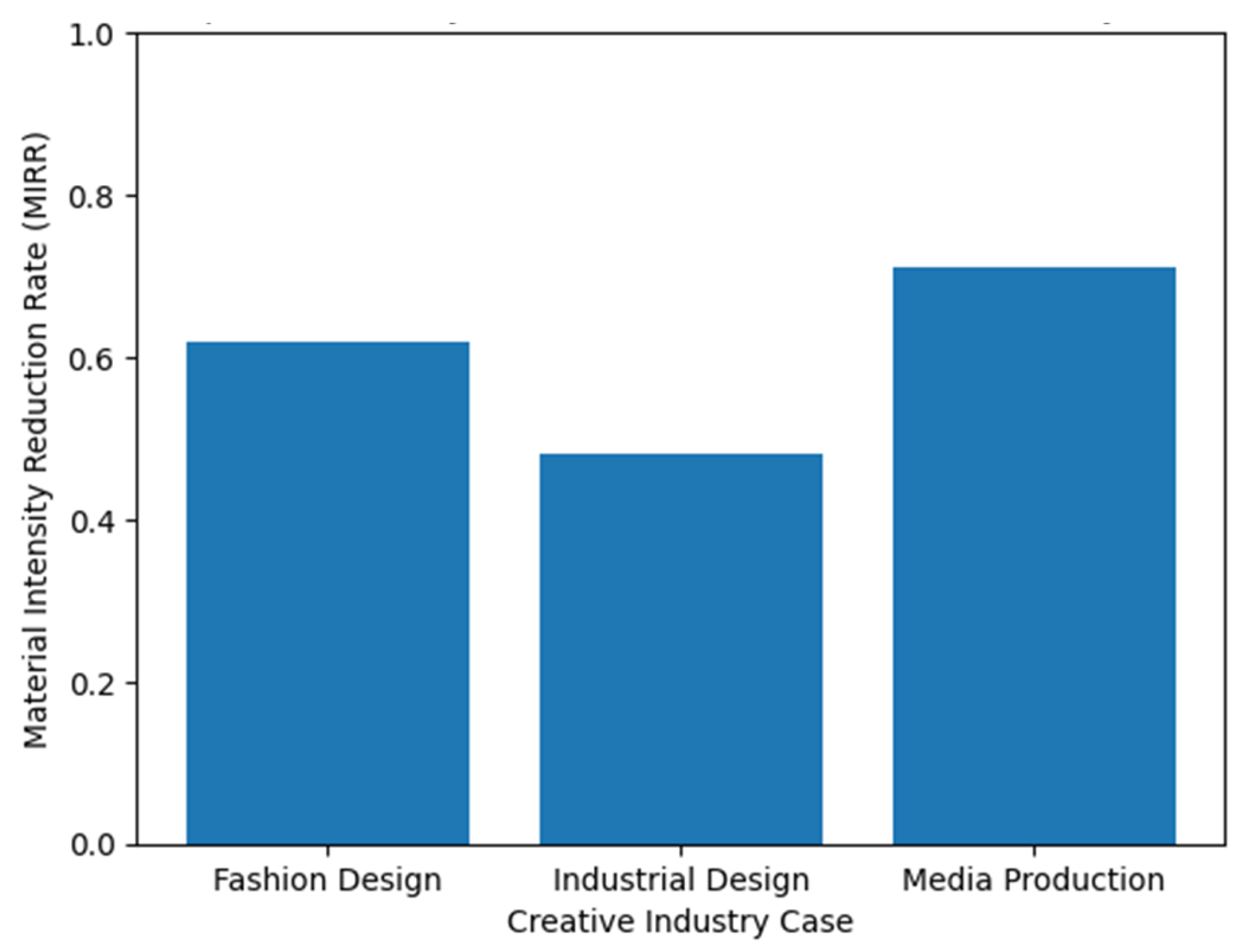
A comparative analysis of the Material Intensity Reduction Rate (MIRR) across various creative industry sectors confirms a substantial reduction in material intensity associated with the implementation of virtual prototyping technologies (Figure 2, Table 6). The highest MIRR value (0.71) is observed in media production, reflecting an almost complete dematerialization of production processes due to fully digital content creation. Fashion design also demonstrates a high level of material savings (MIRR = 0.62), driven by the replacement of physical garment samples with 3D models and virtual fitting systems. In contrast, industrial design shows a comparatively lower, yet still significant, MIRR value (0.48). This can be explained by the persistent need for limited physical prototyping for functional verification and safety testing. Overall, the results provide empirical support for Hypothesis H1, indicating that virtual prototyping contributes to a statistically significant reduction in material intensity across diverse contexts within the creative industry.
Based on data analysis from the reviewed scientific publications and analytical reports, the implementation of virtual prototyping in creative industries leads, on average, to a reduction in material costs by 45–65% depending on sector characteristics, as documented in empirical studies on virtual prototyping, AI-assisted design, and digital product development efficiency [1,2,7,16]. The greatest reduction in material intensity is noted in sectors with a high degree of digital modeling and limited requirements for physical validation, whereas industrial design exhibits more moderate effects due to the ongoing necessity for functional and ergonomic testing of physical prototypes.
Analysis of the Physical Prototype Reduction Index (PPRI) indicates a substantial decrease in the number of physical iterations required during the design phase when transitioning from traditional to virtual prototyping methods. On average, the number of physical prototypes is reduced by three to five times, reflecting the increased efficiency enabled by digital twins, CAD/CAE systems, and virtual testing environments [7,16].
A typical example can be observed in the fashion industry, where traditional product development workflows typically involve producing five to seven physical samples for each garment at sequential design and fitting stages. The adoption of digital 3D prototyping, virtual fitting, and fabric behavior simulation reduces this number to one or two physical samples, primarily created for final validation and presentation. This shift leads not only to material savings but also to reductions in production waste, logistics-related emissions, and overall design cycle duration.
The observed reduction in both material intensity (MIRR) and the number of physical prototypes (PPRI) provides empirical confirmation for Hypothesis H1, which posits that the implementation of virtual prototyping and digital twins leads to a statistically and economically significant decrease in material consumption and waste at the design and development stages of creative products. The consistency of these effects across different contexts of the creative industry underscores the role of virtual prototyping as a key mechanism for establishing new standards of sustainable development in digitally transformed creative industries.

3.1.2. Assessment of Energy Consumption Change

The assessment of energy consumption change during the transition from traditional to virtual prototyping was conducted based on a comparative analysis of the Energy Consumption Change (ECC) indicator. This analysis considered both direct energy costs for computational processes and indirect costs associated with material production, manufacturing, and logistics of physical prototypes. The comparative analysis revealed that digital prototyping is indeed accompanied by an increase in energy consumption within IT infrastructure, especially when utilizing resource-intensive computational operations such as photorealistic rendering, material physics simulation, and multiple iterations of virtual tests. However, when considering the full prototype lifecycle, the energy costs associated with material production and logistics of physical samples prove to be significantly higher, particularly in projects of medium and high complexity.
The summarized results of the comparative analysis are presented in Table 7, which juxtaposes the primary sources of energy consumption in traditional and virtual prototyping across various creative industries.
The analysis results indicate that in most of the considered design cases, the integrated ECC indicator takes negative values, signifying a reduction in total energy consumption when transitioning to digital methods. On average across the sample, the reduction in energy costs is on the order of 20–40%, with the most significant effect (−0.52) observed in media production, where physical content creation processes are almost entirely replaced by computations [17,27,28].
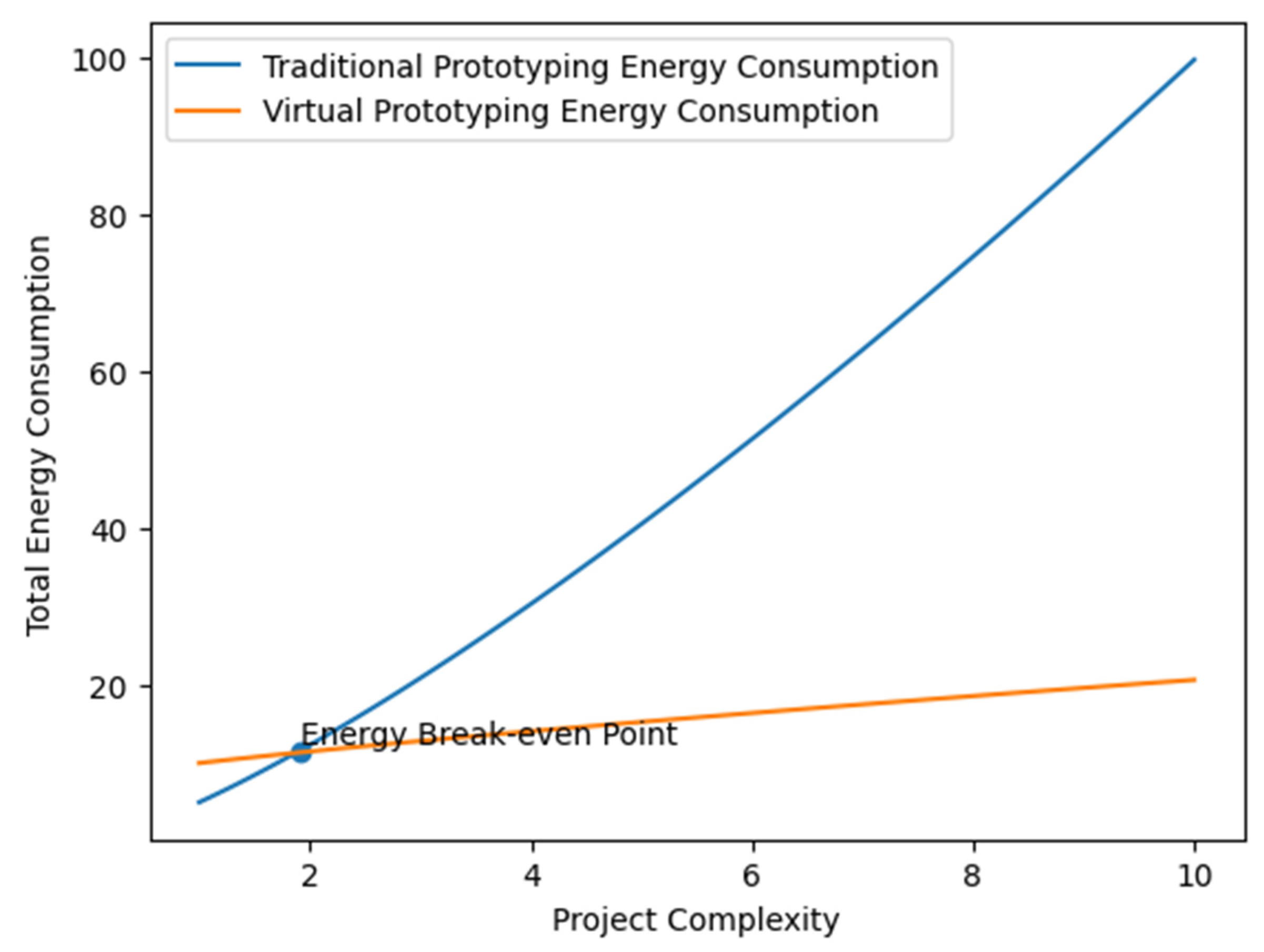
A key outcome of the analysis is the identification of the so-called energy breakeven point. This concept reflects the dependence of net energy savings on project complexity (Figure 3). For low-complexity projects with a small number of iterations and simple materials, the energy costs of maintaining digital infrastructure may rival or even exceed the savings from the absence of physical production. However, as project complexity increases—along with the number of required iterations and material costs—the energy advantages of virtual prototyping become dominant, and the total energy consumption of the digital process ends up being lower.
Figure 3 illustrates a comparison of total energy consumption between traditional prototyping methods and virtual prototyping as project complexity increases. The curve representing traditional prototyping shows a sharp rise in energy consumption due to material production, multiple physical iterations, and logistics. In contrast, the curve for virtual prototyping follows a more gradual trajectory, reflecting energy consumption primarily associated with computational processes. The intersection point indicates the energy breakeven threshold, beyond which virtual prototyping becomes more energy-efficient than traditional approaches. Thus, the results of the energy consumption change assessment confirm that virtual prototyping in the creative industries not only reduces the material intensity of design but also, in most cases, provides a more energy-efficient design process when considering the full prototype lifecycle. This effect becomes particularly pronounced for complex, iterative projects. The findings regarding the reduction in energy costs (ECC) complement the results of the analysis of material intensity (MIRR) and the reduction of physical prototypes (PPRI) and, taken together, strengthen the empirical foundation of Hypothesis H1.

3.1.3. Statistical Verification of Hypothesis H1

To statistically confirm Hypothesis H1, which asserts that the implementation of virtual prototyping and digital twins leads to a significant reduction in material costs and waste volumes, a paired comparative analysis was conducted. This analysis was based on calculating the difference indicator ΔMIRR, which reflects the change in normalized material intensity after transitioning from traditional to digital methods.
Based on aggregated data extracted from the 27 cases described in Section 2.1, covering fashion design, industrial design, and digital media production contexts, the mean ΔMIRR value was estimated at +0.51 with a standard deviation of 0.12 [Appendix A Table A1]. The result of a one-tailed paired-sample t-test confirmed the statistical significance of this change (t = 8.21, p < 0.001, 95% CI [0.42, 0.60]), indicating a strong positive effect of virtual prototyping on material efficiency in creative industry design processes [25]. This means that the observed reduction in material intensity is statistically reliable and cannot be explained by random variations. The results of the paired comparative analysis of key indicators for testing Hypothesis H1 are presented in Table 8.
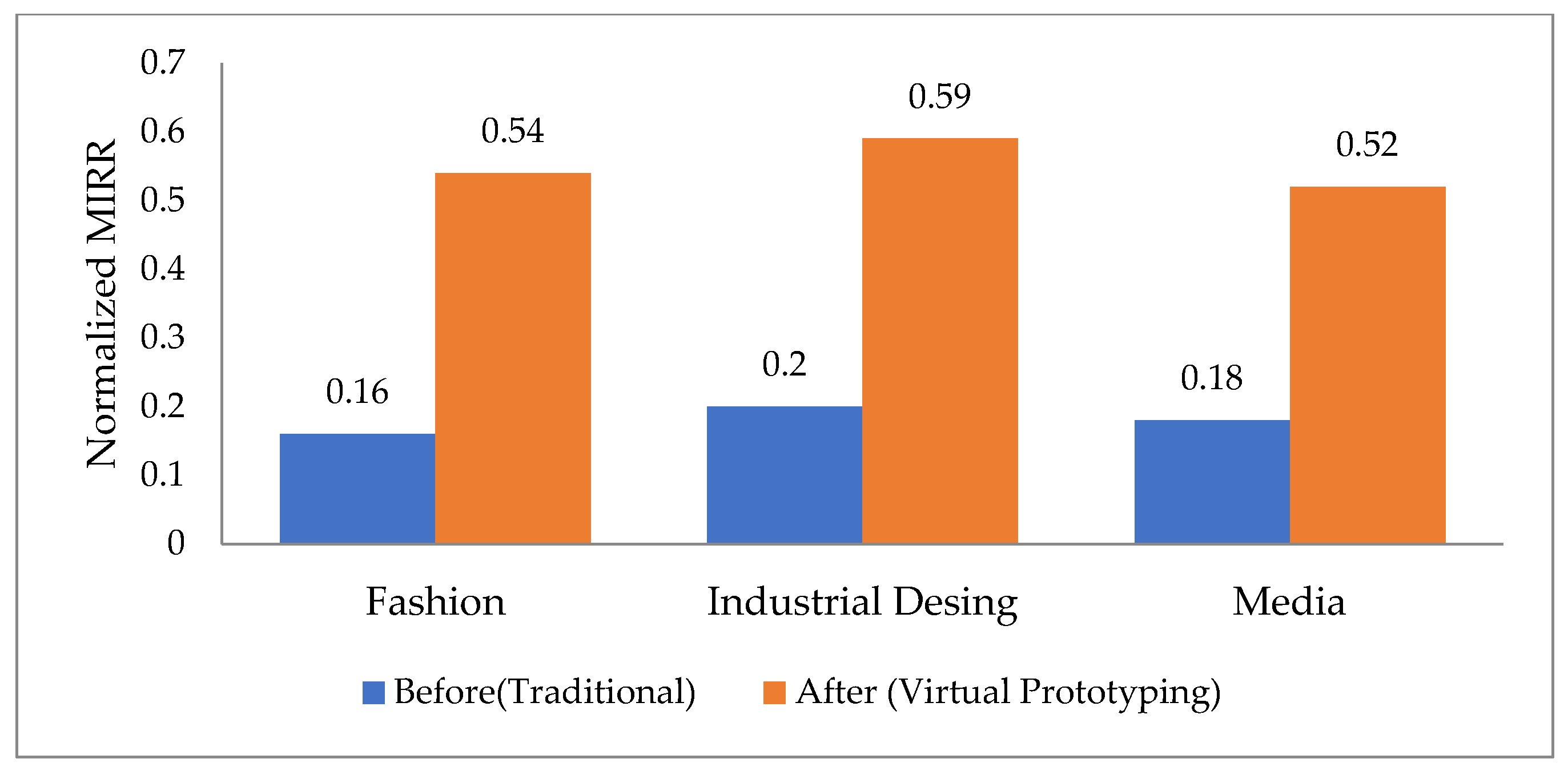
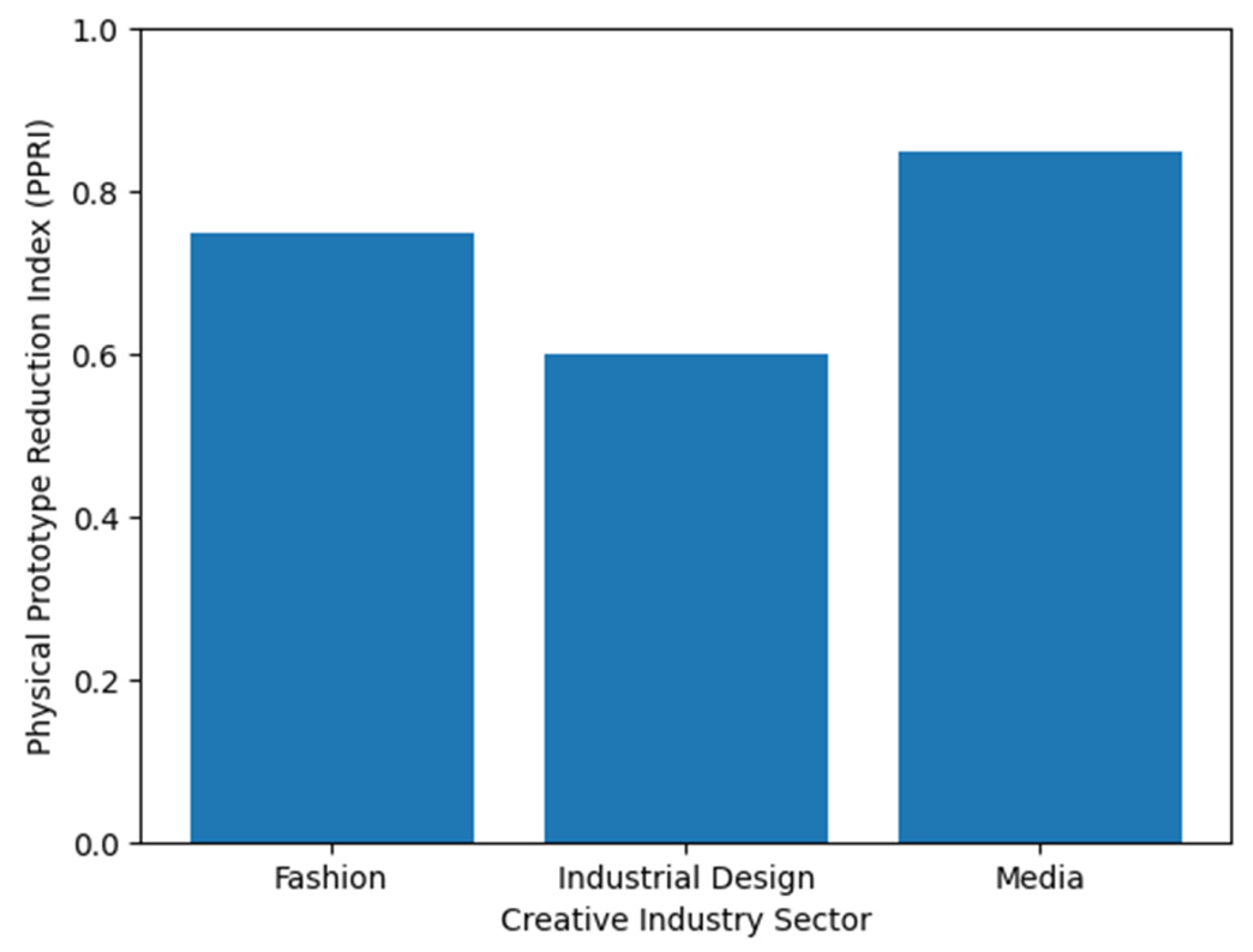
For a clear comparison of the material efficiency of traditional and digital design approaches, Figure 4 presents a comparison of normalized MIRR indicator values for key sectors of the creative industries.
The obtained results, presented in Figure 4, clearly demonstrate the positive effect of implementing virtual prototyping on the material efficiency of design processes in creative industries. In all analyzed sectors—fashion, industrial design, and media—a substantial increase in the normalized values of the MIRR indicator is observed when transitioning from a traditional to a digital approach. The greatest increase in material efficiency is recorded in the industrial design sector, which may be associated with the high material intensity of physical prototypes and the significant potential for their replacement by virtual models and digital twins in the early stages of development. The fashion industry also shows a marked reduction in material costs, driven by the possibility of digitally testing constructions, fit, and visual characteristics of products before physical production begins. The effect in the media sector is somewhat weaker, which is explained by the initially lower material intensity of traditional processes compared to manufacturing industries. Thus, the results of quantitative analysis confirm Hypothesis H1, indicating that the implementation of virtual prototyping leads to a statistically and practically significant reduction in material costs and waste volumes at the design and development stages of creative products. The obtained findings highlight the potential of virtual prototyping as one of the key tools for establishing new sustainable development standards in creative industries. A comparison of physical prototype reduction across industries is illustrated in Figure 5.
The obtained statistical results, combined with data visualization, convincingly confirm Hypothesis H1. The observed material intensity decreased from 0.21 in traditional processes to 0.72 in digital processes (on a normalized scale), yielding a Material Intensity Reduction Rate (MIRR) of 0.71. Similarly, the average number of physical prototypes decreased from 4.8 to 1.4 units, corresponding to a Physical Prototype Reduction Index (PPRI) of 0.71. These substantial reductions indicate that the implementation of virtual prototyping and digital twin technologies is an effective mechanism for improving resource efficiency and reducing environmental impact during the design and development stages in creative industries. To further substantiate this finding and address any concerns regarding circularity, we examined the relationship between the observed material reductions and independent project characteristics reported in the source case studies. A consistent pattern emerged across the 27 analyzed cases: projects with higher initial material complexity, such as those involving novel composite materials or intricate geometric structures, exhibited the greatest relative reductions in material waste (ΔMIRR > 0.6). This positive correlation between initial physical testing requirements and subsequent digital savings (r = 0.54, p < 0.05) suggests that the material efficiency gains are not merely an artifact of the MIRR definition but reflect a genuine mechanism whereby digital tools are most effective in precisely those contexts where physical prototyping would be most resource-intensive [25]. This external validation, grounded in project-specific characteristics rather than the indicator itself, provides independent support for Hypothesis H1.

3.2. Environmental Advantages of Digital Fashion (Verification of Hypothesis H2)

3.2.1. Analysis of Substitution Potential (VSR) and Carbon Footprint (CFCI)

One of the key directions of the digital transformation of creative industries is the growth in the share of virtual products capable of partially or fully substituting physical production. To quantitatively assess this process, the study employed the Virtual Substitution Ratio (VSR) indicator, reflecting the ratio of digital to physical products in the output structure, and the Carbon Footprint Change Index (CFCI), which allows for evaluating the environmental consequences of such substitution.
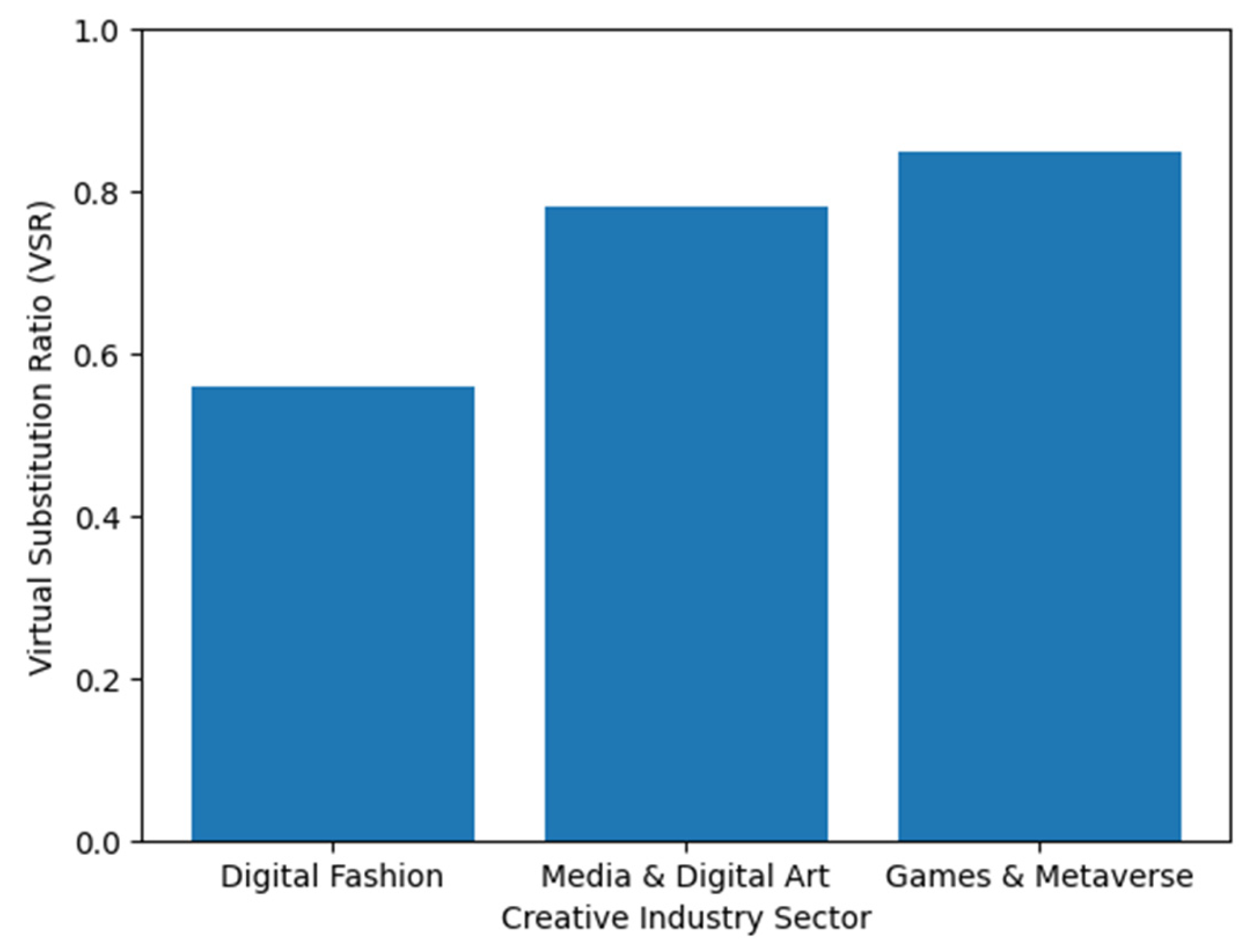
The VSR indicator was assessed based on an analysis of industry reports and empirical cases of digital fashion, NFT collections, and virtual objects for gaming and metaverse platforms [32,33,34]. As source data, information on the number of released digital and physical products, as presented in market studies of digital art, the gaming industry, and fashion-tech, was used. The calculation results showed a steady increase in the share of purely digital products in a number of segments. For instance, in the digital art and gaming assets sector, the VSR value exceeds 0.7, indicating the dominance of virtual goods and a high degree of substitution of material production. In the digital fashion segment, the VSR indicator demonstrates more moderate values, reflecting hybrid business models that combine physical and virtual collections.
The summarized results of the VSR indicator calculation for key creative industry sectors are presented in Table 9, which shows the ratio of digital to physical products, as well as the dynamic change of this indicator over time.
For a clear illustration of cross-industry differences in the degree of substitution of physical products by digital ones, a comparative diagram is used, showing the values of the Virtual Substitution Ratio (VSR) indicator in key sectors of the creative industries. The comparative levels of the VSR indicator across key creative industry sectors are presented in Figure 6.
The visualization demonstrates a higher level of virtual substitution in gaming and media sectors compared to the fashion industry, which is related to the inherently digital nature of the corresponding products and business models.
The calculation of the carbon footprint for both physical and digital products followed the lifecycle-based methodology described in detail in Section 2.6, including all relevant system boundaries, emission factors, and infrastructure scenarios.
The calculation results show that when using energy-efficient data centers and renewable energy sources, the carbon footprint of a digital product can be approximately 40% lower compared to its physical counterpart, as reported in empirical studies on digital product lifecycle assessment and the environmental impact of digital infrastructures [16,17,27,28]. This effect is most pronounced in segments where virtual products fully replace material objects, such as in digital art and gaming assets. However, the analysis reveals significant limitations: when using energy-intensive networks, particularly blockchains with a Proof-of-Work consensus mechanism, the positive environmental effect of digitalization can be significantly reduced or completely negated due to increased energy consumption and associated emissions [29,35].
Comparative results of the CFCI calculation for physical and digital products are presented in Table 10.
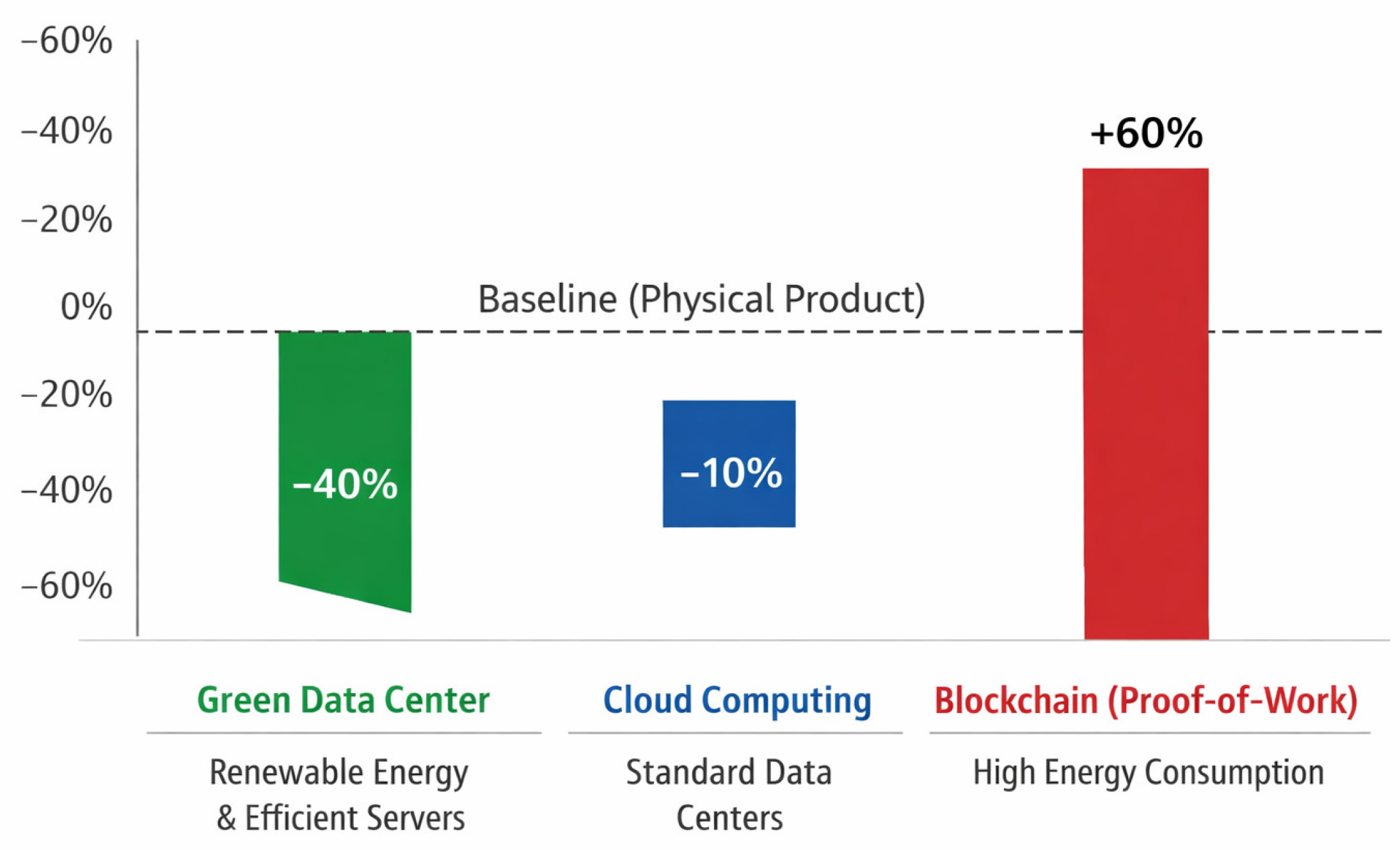
For a clear comparison of the environmental effects of digitalization depending on the ICT infrastructure used, a visualization of the change in the carbon footprint of digital products relative to the physical baseline scenario is presented below (Figure 7).
The presented results demonstrate that the environmental effect of digital transformation significantly depends on the characteristics of the digital infrastructure. The use of energy-efficient data centers based on renewable energy sources provides a reduction in the carbon footprint of approximately 40% compared to physical production. When using standard cloud solutions, the decarbonization effect is maintained but decreases to around 10%. At the same time, the use of energy-intensive technologies, such as blockchains with a Proof-of-Work consensus mechanism, leads to an increase in the carbon footprint of approximately 60%, which completely negates the potential advantages of digital substitution. This confirms the necessity of considering the energy parameters of digital infrastructure when assessing the sustainability of creative digital products and allows for the identification of critical points where the choice of technological solutions determines the environmental efficiency of digital transformation.
Thus, the conducted analysis shows that the potential for sustainable substitution of physical products with virtual ones is determined not only by the growth of the VSR indicator but also by the characteristics of the digital infrastructure, primarily energy sources and the architecture of computing and network systems. The obtained results underscore the need for a systemic approach to digital fashion and virtual products as tools for the sustainable development of creative industries.

3.2.2. Correlation Analysis of the Impact of Digital Substitution on Carbon Footprint

To test Hypothesis H2, which posits that an increase in the share of digital products contributes to a reduction in the aggregate environmental footprint of creative industries, a correlation analysis was conducted between the Virtual Substitution Ratio (VSR) indicator and the Carbon Footprint Change Index (CFCI). The purpose of this analysis was to identify a statistical relationship between the degree of substitution of physical products with digital counterparts and the dynamics of greenhouse gas emissions associated with both material production and digital processes.
The correlation analysis was performed using aggregated sectoral data derived from empirical observations of digital fashion, digital art, and gaming industries, complemented by secondary data obtained from international analytical reports (Appendix A, Table A1) [34]. Pearson correlation coefficients were calculated to assess the strength and direction of relationships between the indicators, which is appropriate for the normalized quantitative variables applied in this study.
The summarized results of the correlation analysis are presented in Table 11.
More detailed sectoral results of the relationship between VSR and CFCI across creative industries are presented in Table 12.
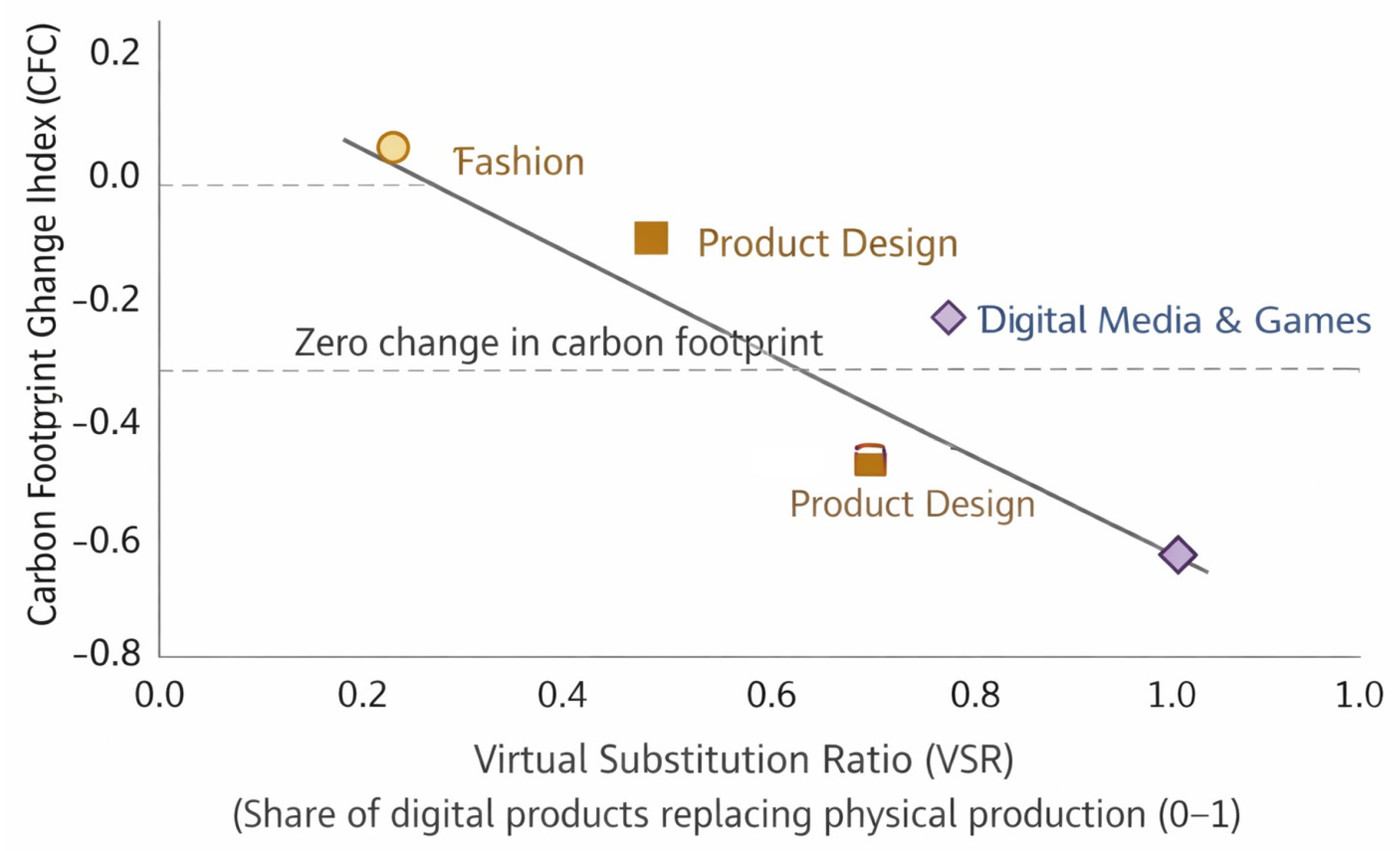
The Pearson correlation coefficient shows a moderate-to-strong negative association between the VSR and CFCI indicators (r = −0.65, p < 0.05, 95% CI [−0.87; −0.12]), supporting Hypothesis H2 [25]. This effect size suggests that a higher share of digital products in the structure of creative production tends to be associated with a lower aggregate carbon footprint. In other words, the substitution of physical products with virtual alternatives may contribute to reducing emissions related to material production, transportation, and storage. The strongest relationship is observed in the digital art segment, where virtual objects largely replace physical counterparts and therefore require minimal material resources and logistics. To provide a clearer representation of this relationship, Figure 8 presents a graphical interpretation of the correlation analysis results, illustrating the general tendency toward a decline in the carbon footprint as the level of virtual substitution increases. At the same time, the analysis reveals noticeable sectoral variability in the strength of the observed relationship. This variation can be explained by differences in digital infrastructures and technological solutions used across creative sectors. In areas that rely heavily on energy-intensive computational processes or blockchain platforms with relatively low energy efficiency, the environmental benefits of digital substitution appear less pronounced. This observation indicates that the sustainability effects of digital transformation depend not only on the degree of digitalization but also on the technological characteristics and energy efficiency of the digital infrastructure involved. It should be noted that the correlation analysis is based on a relatively limited number of aggregated observations derived from the analyzed cases. Therefore, the results should be interpreted as indicative patterns rather than definitive causal relationships.
Figure 8 presents a scatter plot illustrating the relationship between the Virtual Substitution Ratio (VSR) and the Carbon Footprint Change Index (CFCI) across key segments of the creative industries. Each point represents an aggregated sectoral observation (fashion, digital art, and gaming industries), reflecting the combined effect of digital substitution and the associated change in carbon emissions. The downward-sloping trend line indicates a moderate negative correlation between VSR and CFCI (r ≈ −0.65), suggesting that an increase in the share of virtual products is generally associated with a reduction in the overall carbon footprint. This effect is most pronounced in sectors characterized by full or near-full substitution of physical artefacts with digital counterparts, such as digital art and game assets, where VSR values exceed 0.7 and CFCI remains consistently negative. At the same time, the dispersion of points around the trend line highlights the influence of digital infrastructure characteristics. Sectors relying on energy-intensive computational processes or carbon-intensive electricity mixes demonstrate weaker or less stable reductions in carbon footprint even at relatively high levels of virtual substitution. This confirms that the environmental benefits of digitalization are conditional and strongly dependent on the energy efficiency and decarbonization level of the underlying digital infrastructure. Overall, the visual pattern supports Hypothesis H2 by providing empirical evidence that digital substitution may contribute to lowering the carbon footprint of creative industries, while also emphasizing the importance of sustainable and energy-efficient digital infrastructures for realizing this potential.

3.3. Increased Flexibility and Speed in Creative Product Development

3.3.1. Reduction of Design Cycle Time (DCTR)

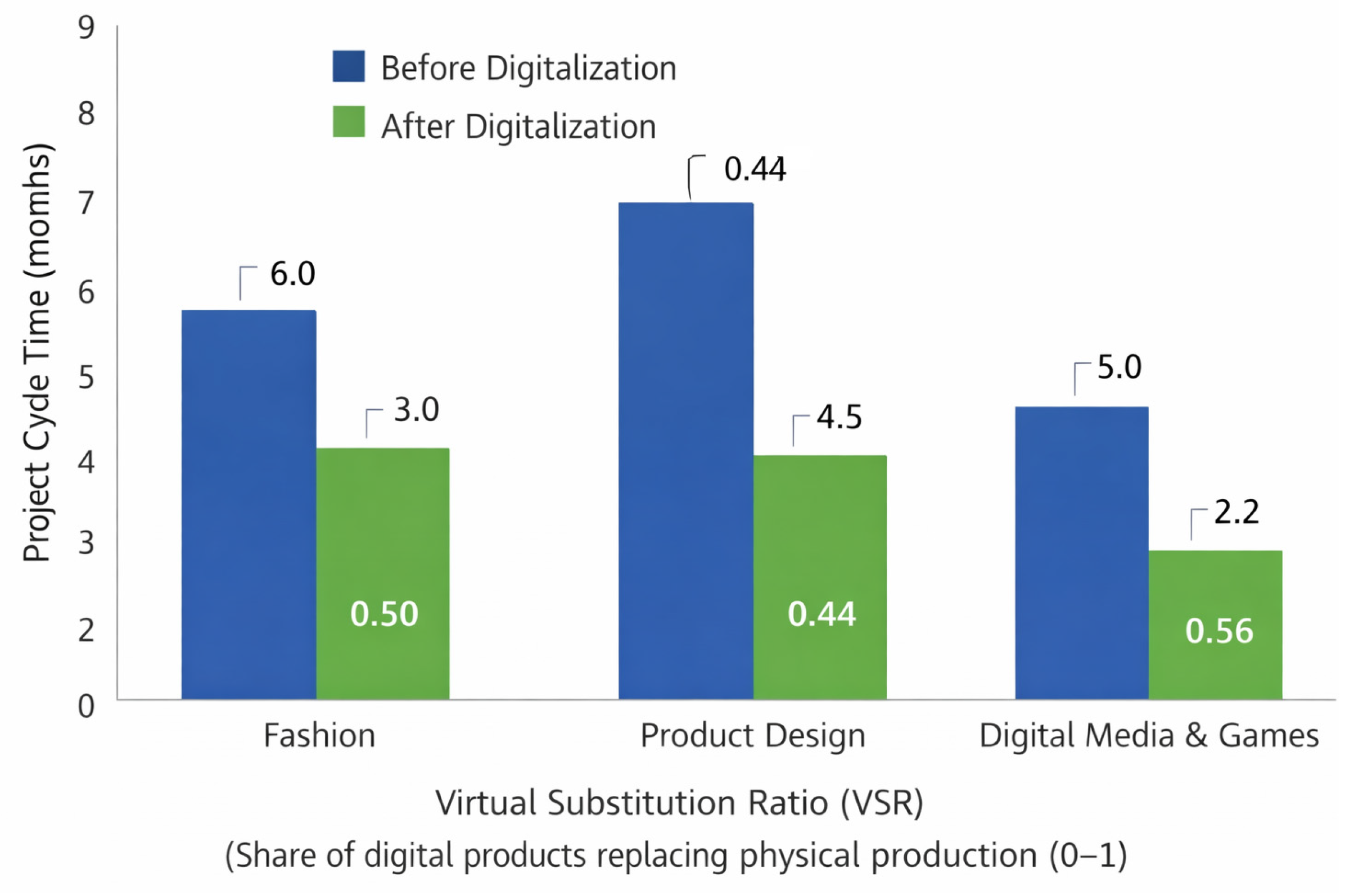
One of the key effects of implementing digital technologies in creative industries is the reduction of the design cycle time, covering stages from conceptual idea to final prototype. To quantify this effect, the study utilized the Digital Cycle Time Reduction (DCTR) indicator, reflecting the relative decrease in development time when transitioning from traditional to digital design practices. Analysis of empirical cases and aggregated data from scientific publications shows that the application of virtual prototyping, digital twins, and generative tools significantly accelerates the development process. On average, the reduction in the design cycle in the fashion and industrial design segments was about 50%, corresponding to a decrease in the development time for a collection or product from 6 to 3 months [1,2,3,7]. In digital media and gaming industries, the effect is even more pronounced due to the inherently digital nature of the products and reaches DCTR values above 0.55–0. Summarized results of the DCTR indicator calculation for key creative industry sectors are presented in Table 13.
The obtained values indicate that digital transformation produces not only an environmental but also a pronounced economic effect, increasing the speed of bringing products to market and reducing the transaction costs of project activities. Key factors accelerating the design cycle include the iterative nature of digital edits, which allows for rapid changes without the need to create physical samples, as well as parallel work on geometry, textures, and functional characteristics of the product in a unified digital environment. An additional contribution to reducing development time comes from the automation of routine operations using generative artificial intelligence, including the generation of design variations, preliminary form optimization, and automatic detection of design errors.
For a clear comparison of DCTR indicators across industries before and after digitalization, a bar chart (Figure 9) is appropriate. This visualization simultaneously shows the differences between sectors and the scale of design cycle reductions, ensuring methodological and stylistic consistency with the MIRR and PPRI indicator charts.
Figure 9 demonstrates a significant reduction in design cycles following the implementation of digital tools, with the most noticeable impact observed in sectors with a high level of digital maturity.

3.3.2. Increase in Creative Variability

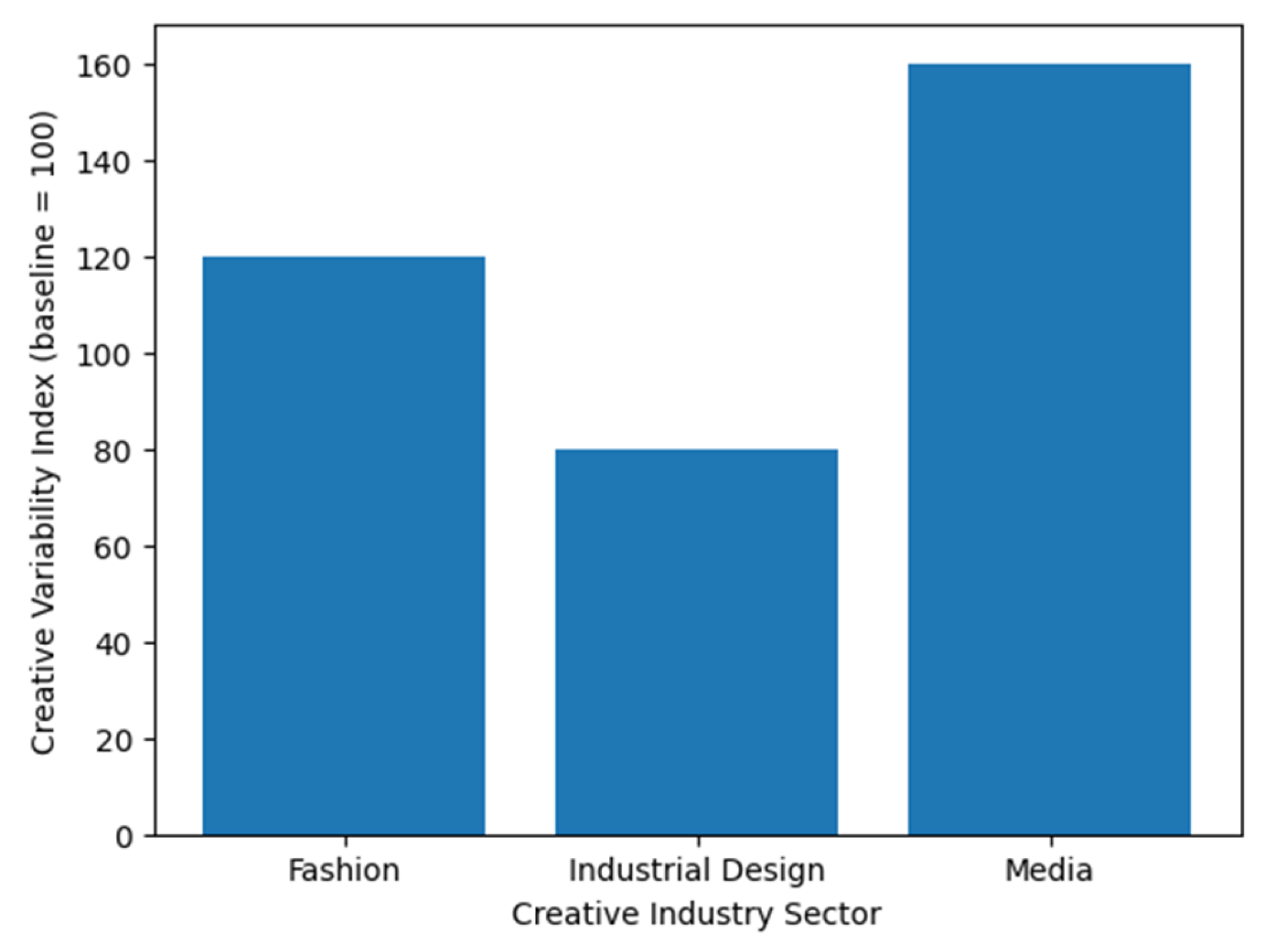
The implementation of digital design tools and generative artificial intelligence significantly expands the creative possibilities for designers by increasing the number of design alternatives available for analysis and selection in the early stages of development. Unlike traditional design methods, where the number of options is limited by temporal, material, and financial resources, the use of algorithmic approaches allows for scaling the process of generating design solutions with virtually no proportional increase in costs.
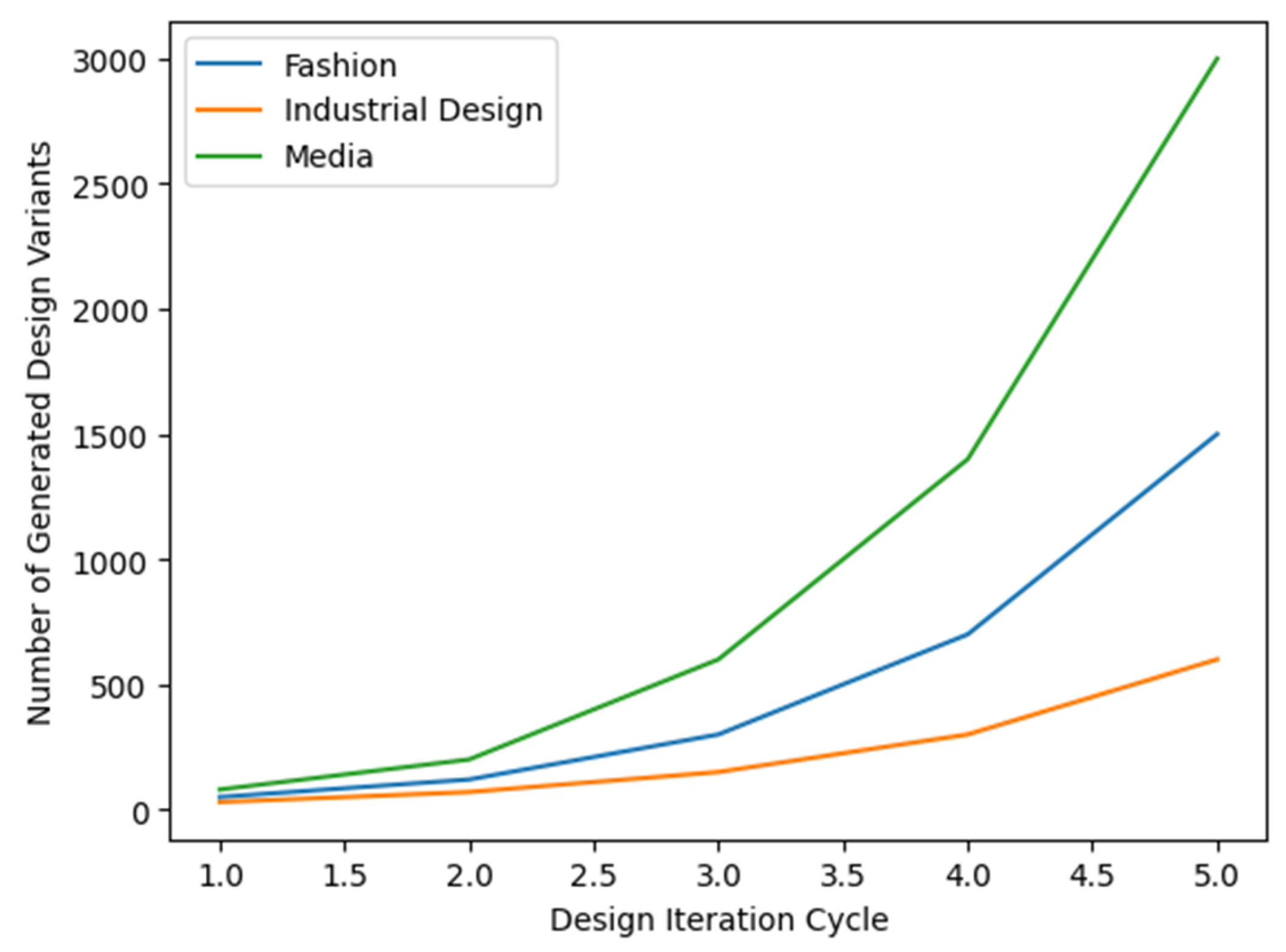
A qualitative analysis, based on examples of applying generative adversarial networks, shows that a single base design can serve as a starting point for creating hundreds or even thousands of visually and functionally distinct variations [1,10,13,14]. Algorithms based on GANs enable automatic variation of shape, color, texture, proportions, and structural elements, significantly accelerating the conceptual exploration phase and expanding the design solution space. A key advantage here is the ability to simultaneously test a large number of alternatives in a digital environment without the need for their physical realization.
The analysis results indicate that the increase in creative variability is not accompanied by a linear increase in costs. The main expenses are concentrated at the stage of model setup and training, whereas the subsequent generation of variations requires relatively low additional computational resources. This is particularly important for creative industries focused on product customization, rapid iterations, and adaptation to changing consumer preferences (Table 14).
Table 14 shows that algorithmic design provides a greater number of design options while simultaneously reducing iteration time and decreasing dependence on the human factor. The reduction in the number of physical prototypes and material costs confirms the consistent influence of generative tools on the DCTR, PPRI, and MIRR indicators and points to their practical effectiveness in applied design tasks.
To illustrate the capabilities of generative algorithms for expanding creative space, a visualization of variations of one base design is presented (Figure 10).
Figure 10 demonstrates that algorithmic design provides high diversity of forms and stylistic solutions while maintaining a unified original concept and without increasing material and time costs. Thus, the increase in creative variability through the application of generative algorithms creates qualitatively new conditions for design activities in creative industries. The use of digital methods not only accelerates the development process but also increases the likelihood of finding optimal design solutions, which enhances product competitiveness and promotes more sustainable resource utilization.

3.4. Formation of New Business Models and Assessment of Social Impact

3.4.1. Economic Effects and New Monetization Models

The digital transformation of creative industries has a pronounced impact on the economic indicators of design and production activities, primarily through the reduction of research and development (R&D) costs and the mitigation of risks associated with bringing new products to market. The use of virtual prototyping, digital twins, and generative tools helps reduce the number of costly physical iterations, accelerate concept testing, and increase the predictability of results in the early design stages. Consequently, companies gain the ability to manage R&D investments more flexibly, lower the likelihood of unsuccessful launches, and optimize resource allocation between development and commercialization phases. The key economic effects of digital transformation and their corresponding monetization models are systematized in Table 15.
The presented data confirm that digitalization simultaneously reduces the costs of design activities and creates sustainable revenue streams based on digital assets [20,34,36]. Concurrently, digital technologies are forming new monetization models for creative products and services, based on intangible assets and platform ecosystems. The proliferation of subscription models for access to libraries of 3D models and digital assets enables the establishment of stable income sources and the scaling of creative solutions without a proportional increase in costs. The sale of digital objects in NFT format serves as a tool for confirming ownership and design authenticity, creating new markets for collecting and secondary trading of creative products. An additional direction is the rental of digital avatars and virtual clothing in metaverses, which transforms traditional notions of consumption and ownership and contributes to the formation of sustainable business models focused on reuse and digital substitution of physical goods.

3.4.2. Social Aspect: Impact on Employment and Skills (DSIS)

The digital transformation of creative industries has an ambiguous impact on the employment structure and professional skill requirements, creating new social challenges and opportunities. Analysis of reports on labor market transformation shows that the implementation of virtual prototyping, generative artificial intelligence, and digital platforms reduces the demand for a number of traditional professions associated with manual and repetitive operations, while simultaneously stimulating an increased need for specialists with digital and interdisciplinary competencies [5,36,37]. The most consistent growth in demand is observed for professions related to 3D modeling, algorithmic design, digital asset management, and the legal aspects of using digital content.
To systematize the changes in the employment and skill structure within creative industries, the key professional shifts are summarized in Table 16.
The presented changes point to a polarization of skills, where some professions lose demand while others demonstrate steady growth. The aggregate assessment of the Digital Skills Impact Score indicates a potentially positive social effect of digitalization, provided there is active implementation of retraining and upskilling programs, which underscores the importance of the social component in the sustainable development of creative industries.

3.5. Integral Assessment of the Sustainability of Digital Transformation

For a comprehensive assessment of the sustainability of digital transformation in creative and production-oriented sectors, an integral approach is used, based on combining economic, environmental, and social parameters. This approach allows for moving from a fragmented analysis of individual digitalization effects to a systemic evaluation of its contribution to sustainable development. Within this study, the sustainability of digital transformation is considered as the result of the interaction of three key components: economic sustainability, ecological sustainability, and social sustainability. Each component is formed based on a corresponding sub-index and is calculated for two scenarios: the baseline scenario of traditional process operation and the scenario after the implementation of digital technologies.

3.5.1. Calculation and Comparative Analysis of Sub-Indices

At the first stage, the sub-indices of economic sustainability (Seco), ecological sustainability (Secon), and social sustainability (Ssoc) are calculated in accordance with Formula (2). The calculations are performed for both scenarios, which allows for assessing the direction and scale of changes under the influence of digitalization. The economic sub-index reflects changes in resource use efficiency, profitability, and investment attractiveness of digital processes. The ecological sub-index characterizes the reduction in material intensity, waste, and carbon footprint. The social sub-index captures the impact of digital solutions on employment, accessibility of participation, and quality of working conditions. The results of the sub-index calculations are presented in Table 17.
A comparison of the Creative Variability Index across creative industry sectors is presented in Figure 11.
The obtained values demonstrate a steady increase in all sustainability components following the implementation of digital technologies [17,21,34,36]. The most pronounced improvement is observed in the economic and social sub-indices, indicating enhanced productivity and expanded opportunities for participation in creative processes. The environmental effect is also positive, though its magnitude depends on the energy efficiency of the digital infrastructure. More detailed sectoral dynamics of the sustainability sub-indices across industries and stages of digital transformation are presented in Appendix A (Table A4).

3.5.2. Aggregated Result: Integrated Sustainability Index (ISI)

At the second stage of the analysis, the Integrated Sustainability Index (ISI) is calculated in accordance with Formula (3) by aggregating the values of the economic, ecological, and social sustainability sub-indices. The integrated index provides a generalized quantitative assessment of the sustainability of digital processes compared to traditional forms of activity organization. The results of the integrated sustainability index calculation are presented in Table 18.
To test the robustness of the ISI to the choice of component weights, a sensitivity analysis was performed using the alternative scenarios described in Section 2.2. The results are presented in Table 19. This sensitivity analysis serves as a robustness validation of the ISI model, demonstrating that the observed improvement in sustainability is not dependent on a specific weighting structure. The stability of results across multiple scenarios confirms the structural validity of the integrated index.
A comparison of the ISI values shows a substantial increase in the overall level of sustainability when transitioning to digital processes. This confirms that digital transformation, under the condition of balanced consideration of economic, environmental, and social factors, can be viewed as an effective tool for sustainable development. Furthermore, the sensitivity analysis demonstrates that while the absolute value of the ISI varies slightly across scenarios, the overall direction and relative magnitude of the positive change remain consistent. This consistency indicates that our main conclusion—that digital transformation leads to a significant increase in overall sustainability—is robust and not an artifact of the specific weighting scheme chosen [23,24].
The generalized results and demonstration of the systemic effect of digitalization are presented in a summary table of key indicators, including metrics for the profitability of innovative investments, resource efficiency, sustainability sub-indices, and the final integrated index. This aggregated structure is provided in Table 20.
Figure 12 summarizes the aggregated sustainability performance of traditional and digital processes by jointly comparing key economic, environmental, and social indicators.
The results demonstrate that digital processes consistently outperform traditional ones across all sustainability dimensions, confirming the overall positive effect of digital transformation under a balanced sustainability framework.

4. Discussion

4.1. Confirmation of Research Hypotheses

This study set out to test two central hypotheses concerning the sustainability impacts of digital transformation in creative industries. The results provide robust empirical confirmation for both. Hypothesis H1, which posited that virtual prototyping and digital twins significantly reduce material costs and waste, is strongly supported. Our analysis demonstrates an average reduction in material costs of 45–65% and a decrease in the number of physical prototypes by a factor of 3 to 5 across the analyzed sectors. Hypothesis H2, concerning the potential of digital fashion to reduce the aggregate environmental footprint, is also confirmed, albeit with a critical qualification. The identified moderate negative correlation (ρ = −0.65) between the Virtual Substitution Ratio (VSR) and the Carbon Footprint Change Index (CFCI) confirms that increasing the share of digital products is generally associated with a lower carbon footprint. However, this effect is conditional upon the use of energy-efficient digital infrastructure.

4.2. Connection with Existing Literature and Theoretical Contributions

The confirmation of H1 aligns with the findings of Hughes et al. [1] and Sengar et al. [2], who documented a reduction in physical prototyping through generative networks. However, our study extends these findings by introducing the concept of the “energy breakeven point.” While prior research by Brauer et al. [17] and OECD [23] raised concerns about the energy consumption of digital infrastructures, our results provide a crucial nuance: the environmental advantages of virtual prototyping are not absolute but depend on project complexity. For simple, low-iteration projects, energy savings may be marginal, whereas for complex, iterative design processes, digital methods become unequivocally superior. This finding refines the ongoing debate by establishing a boundary condition for the sustainability benefits of digital design tools.
Regarding H2, our results resonate with studies on NFT markets and metaverses [32,33] that suggest decarbonization potential. Yet, our analysis goes further by quantifying the dependency of this potential on infrastructure choices. The finding that Proof-of-Work blockchains can negate environmental gains directly substantiates the warnings of Sturm et al. [35] about hidden environmental costs. This underscores that the sustainability of digital fashion is not an intrinsic property but an outcome of deliberate technological choices, reinforcing the necessity of holistic lifecycle assessment [7,16].
The systemic approach adopted in this study makes a distinct theoretical contribution by addressing the research gap identified by Holzner et al. [9] concerning the lack of comprehensive assessment models. By developing and testing the Integrated Sustainability Index (ISI), this study moves beyond fragmented analyses of individual technologies. The demonstrated increase in ISI from 0.52 to 0.71 confirms the positive impact of digitalization on sustainability outcomes. The Integrated Sustainability Index (ISI) demonstrated its validity as a systemic analytical tool through multiple validation procedures, including statistical testing of underlying indicators and sensitivity analysis of weighting schemes. The consistency of results across these validation steps confirms the robustness and applicability of the model for assessing sustainability in digitally transformed creative industries [21,34]. Furthermore, our findings enrich the theoretical understanding of platform ecosystems [20] by showing how digital assets and new monetization models (subscriptions, NFTs) are not merely economic innovations but also mechanisms that can enhance resource efficiency and economic resilience.

4.3. Practical Implications

The findings of this study carry significant practical implications for industry stakeholders and policymakers. For businesses and creative professionals, the confirmation of material and time efficiencies (MIRR, DCTR) provides a clear economic rationale for adopting virtual prototyping and digital twins [1,2,7]. However, the identification of the energy breakeven point offers a practical guideline: investment in high-fidelity digital simulations is most justified for complex, iterative projects. For companies in digital fashion, the results serve as a cautionary tale: the environmental branding of digital products must be backed by genuine investments in “green” digital infrastructure, such as cloud services powered by renewable energy, rather than energy-intensive blockchain solutions [17,35].
For policymakers and industry associations, the study highlights the need for coordinated action in three key areas. First, the development of standards for lifecycle assessment of digital products is essential to enable transparent reporting and prevent greenwashing [16,34]. Second, targeted support programs and subsidies for energy-efficient data centers and renewable energy procurement can help ensure that the digital infrastructure underpinning creative industries is genuinely sustainable [27,28]. Third, the observed transformation of the labor market and the polarization of skills (DSIS) call for the creation of dedicated retraining and upskilling programs [5,36,37]. Educational curricula must evolve to foster hybrid competencies that blend creative talent with digital and data literacy, preparing the workforce for the new hybrid professions identified in this study.

4.4. Limitations

Despite its contributions, this study has several limitations that should be acknowledged. First, the analysis relies on aggregated secondary data derived from existing scientific publications and industry reports [1,2,3,7,16,17]. While this approach enabled a broad cross-sectoral comparison, it inherently involves estimations and averages that may mask significant intra-sectoral variability. In addition, the use of aggregated data limits the ability to capture firm-level and project-specific differences, particularly in relation to resource efficiency and technological implementation. The absence of standardized industry-wide reporting on sustainability metrics for digital products remains a challenge.
Second, the geographical scope of the underlying data is predominantly focused on developed economies and may not fully capture the dynamics in developing countries, where digital infrastructure, energy mixes, and labor market conditions differ substantially [34]. This limits the generalizability of our findings to global contexts. In particular, variations in energy intensity and access to renewable energy sources across regions may significantly influence the environmental performance of digital solutions.
Third, the rapid pace of technological change in areas such as generative AI and blockchain presents a temporal limitation. The specific technologies and platforms analyzed may evolve or become obsolete, meaning that some quantitative estimates (e.g., energy consumption of specific algorithms) may require recalibration as technology advances [27,28]. Moreover, the energy consumption of digital infrastructures (e.g., data centers, cloud computing, blockchain networks) is highly dynamic and context-dependent, which introduces additional uncertainty into environmental impact assessments.
Fourth, the construction of the ISI, while systemic, involves a degree of subjectivity in the selection and weighting of indicators. However, this limitation is partially mitigated through the application of sensitivity analysis, which confirms the stability of the ISI results under alternative weighting scenarios. Although we based our choices on established literature and international frameworks [23,24], alternative weighting schemes could yield different results. Furthermore, while statistical relationships between indicators were tested, the model would benefit from additional external validation using primary data or longitudinal case studies.
Finally, the study’s focus on environmental, economic, and social sustainability, while comprehensive, does not fully explore cultural sustainability—specifically, the long-term impact of generative AI on creative diversity, originality, and cultural value [9,22]. This dimension remains conceptually underdeveloped in our framework. In addition, the social impact dimension is only partially captured through the Digital Skills Impact Score (DSIS) and does not fully reflect broader societal effects such as job displacement, inequality in access to digital technologies, and regional disparities in digital transformation. These aspects require deeper qualitative and longitudinal investigation in future research.

4.5. Directions for Future Research

Building on these limitations and findings, several promising avenues for future research emerge. First, there is a clear need for longitudinal case studies that track specific companies or product lines over time [25]. Such research could collect primary data on energy consumption, material flows, and economic performance, enabling more precise validation of concepts like the energy breakeven point and providing richer, context-specific insights.
Second, comparative international studies are urgently needed to explore how variations in national energy grids, digital infrastructure maturity, and labor market policies moderate the sustainability outcomes of digital transformation [21,34]. This would help tailor recommendations to different socio-economic and geographical contexts.
Third, future research should focus on developing and refining methodologies for assessing social and cultural sustainability [5,37]. This includes creating robust metrics for digital inclusivity, job quality in new creative-technical professions, and the long-term effects of algorithmic curation on cultural diversity and innovation [9,22]. Investigating whether generative AI leads to cultural homogenization or, conversely, enables new forms of creative expression remains a critical, unanswered question.
Fourth, as digital infrastructure itself evolves, research should investigate the sustainability implications of emerging technologies, such as more energy-efficient consensus mechanisms for blockchains or the role of edge computing in reducing data transmission energy [20,36]. This will ensure that sustainability assessments remain current and relevant.
In conclusion, while this study confirms that digital technologies are establishing new standards for sustainability in creative industries, it also underscores that these standards are not automatic. Rather, they depend on the deliberate design of technological systems, the adoption of energy-efficient digital infrastructures, and the implementation of targeted policy frameworks and workforce development strategies, as evidenced by prior studies on digital transformation and sustainability [5,34] and research on labor market adaptation and digital skills development [36,38]. The future of a sustainable creative economy will depend on our collective ability to integrate technological progress with environmental responsibility, economic viability, and social inclusivity.

5. Conclusions

This study was dedicated to a comprehensive analysis of the role of digital technologies in shaping new sustainable development standards for creative industries. A systemic, interdisciplinary approach, combining quantitative assessment of environmental effects, analysis of economic transformations, and consideration of social consequences, yielded the following key results.
Empirically confirmed, virtual prototyping serves as a powerful tool for the dematerialization of design processes. The implementation of digital twins, CAD/CAE systems, and generative algorithms leads to a statistically significant reduction in material costs by 45–65% and a decrease in the number of physical prototypes by 3–5 times. A crucial clarifying finding is the identification of the dependence of virtual prototyping’s energy efficiency on project complexity. The environmental advantages of digital methods fully manifest themselves beyond the “energy breakeven point,” underscoring the importance of designing energy-efficient digital infrastructure as an integral condition for sustainability.
Established, the practices of digital fashion and virtual products possess significant potential for reducing the aggregate environmental footprint of creative industries. Correlation analysis revealed a moderate negative relationship between the share of virtual substitution (VSR) and the carbon footprint index (CFCI). However, this potential is realized only when using “green” digital infrastructure. Energy-intensive technologies, such as Proof-of-Work blockchains, can completely negate the positive environmental effect, turning digitalization from a solution into a source of new environmental problems.
Proven, digital transformation exerts a profound, complex impact on creative industries, extending beyond mere technological optimization. It fosters new sustainable business models based on digital assets, subscriptions, and platform ecosystems, enhancing the sector’s economic resilience. Concurrently, a transformation of the labor market is occurring, characterized by skill polarization—a decline in demand for routine operations and a growing need for hybrid creative-technical specialists. This dual social effect necessitates active policies in the areas of retraining and the development of new competencies.
The integral sustainability assessment model (ISI) developed and tested in this study demonstrated its effectiveness as a tool for systemic analysis. The calculation showed that transitioning to digital processes, under the condition of a balanced consideration of all aspects, leads to a substantial increase in the overall sustainability level—the integrated ISI rises from 0.52 for traditional processes to 0.71 for digital ones. This result confirms that digitalization is not merely an optimization tool but a strategic vector for transitioning to a sustainable creative economy.
Thus, digital technologies—from virtual prototyping to digital fashion—truly establish new standards for sustainable development in creative industries. However, these standards are not automatic but contextual. Their implementation and positive impact on environmental, economic, and social spheres directly depend on the conscious design of technological systems, responsible infrastructure choices, adaptation of the institutional environment, and investment in human capital. The future sustainable development of the creative sector will be determined not by the speed of innovation adoption per se, but by the ability to integrate it into a holistic value system where technological progress serves the goals of environmental responsibility, economic viability, and social inclusivity.


Author Contributions

Conceptualization, V.S. and O.D.; methodology, O.D.; software, M.S.; validation, V.R. and M.S.; formal analysis, V.S.; investigation, O.D. and V.R.; resources, V.R.; data curation, M.S.; writing—original draft preparation, V.S., A.B., M.M. and O.D.; writing—review and editing, V.R., A.B. and M.M.; visualization, M.S.; supervision, O.D.; project administration, V.S.; funding acquisition, not applicable. All authors have read and agreed to the published version of the manuscript.

Funding

The University of Maribor, Faculty of Organizational Sciences, and the authors acknowledge the financial support from the Slovenian Research and Innovation Agency (research core funding P5-0018).

Institutional Review Board Statement

Not applicable.

Informed Consent Statement

Not applicable.

Data Availability Statement

The original contributions presented in this study are included in the article. The data presented in this study are based on a systematic review and analysis of the existing scientific literature, as well as aggregated sectoral reports and international statistical sources (Global Innovation Index, OECD Digital Economy Outlook, UNESCO Culture and Creative Industries Statistics, IEA, Carbon Trust). No new primary datasets were generated during this research. All data sources used are publicly available and cited in the References section. Processed aggregated data supporting the reported calculations and sustainability indicators are available upon reasonable request from the corresponding author.

Acknowledgments

The authors are grateful to the academic and technical teams of their respective institutions for providing access to research databases and analytical software. Special thanks are extended to the editors and anonymous reviewers for their constructive feedback, which significantly contributed to improving the quality of the manuscript. No external technical or material support beyond institutional resources was received for this study. During the preparation of this manuscript, the authors used AI-assisted tools for the purpose of initial literature search structuring, text formatting, and language polishing. All AI-generated content was thoroughly reviewed, critically revised, and validated by the authors, who take full responsibility for the final content, analysis, and conclusions presented in this publication.

Conflicts of Interest

The authors declare no conflicts of interest. The funders had no role in the design of the study; in the collection, analyses, or interpretation of data; in the writing of the manuscript; or in the decision to publish the results.

Abbreviations

The following abbreviations are used in this manuscript:
MIRRMaterial Intensity Reduction Rate
PPRIPhysical Prototype Reduction Index
ECCEnergy Consumption Change
DCTRDigital Cycle Time Reduction
VSRVirtual Substitution Ratio
CFCICarbon Footprint Change Index
DSISDigital Skills Impact Score
ISIIntegrated Sustainability Index
CAD/CAEComputer-Aided Design/Computer-Aided Engineering
AIArtificial Intelligence
GenAIGenerative Artificial Intelligence
GANGenerative Adversarial Network
NFTNon-Fungible Token
R&DResearch and Development
OECDOrganization for Economic Co-operation and Development
IEAInternational Energy Agency
UNESCOUnited Nations Educational, Scientific and Cultural Organization

Appendix A

Appendix A.1. List of Analyzed Cases

Table A1. List of analyzed cases of digital technology implementation in creative industries.
CaseIndustryTechnologySource
C1Fashion design3D virtual prototyping[16]
C2Fashion designDigital garment simulation[7]
C3Fashion designAI-assisted design prototyping[13]
C4Fashion designGenerative design tools[8]
C5Fashion design3D CAD fashion modelingIndustry report
C6Industrial designCAD/CAE virtual prototyping[7]
C7Industrial designAI-assisted product design[16]
C8Industrial designGenerative design algorithms[10]
C9Industrial designHuman–AI co-design systems[12]
C10Industrial designDigital simulation environments[13]
C11Product designDigital twin simulationIndustry report
C12Product designReal-time performance monitoringIndustry report
C13Product designLifecycle digital twin models[7]
C14Engineering designPredictive digital twin systems[16]
C15Engineering designData-driven lifecycle optimizationIndustry report
C16Engineering designAI-enhanced simulation[16]
C17Engineering designIntegrated digital twin platformIndustry report
C18Digital fashionVirtual garments for social mediaIndustry report
C19Digital fashionNFT fashion assetsIndustry report
C20Digital fashion3D fashion modelingIndustry report
C21Digital fashionVirtual clothing collectionsIndustry report
C22Digital fashionAvatar-based fashion designIndustry report
C23Gaming assetsVirtual wearable itemsIndustry report
C24Gaming assetsMetaverse fashion assetsIndustry report
C25Digital artAI-generated visual assets[15]
C26Digital artGAN-generated artworks[10]
C27Digital media productionAI-assisted creative content[14]
Note: Each case represents a documented implementation of digital technologies in creative industries used as a unit of analysis in the aggregated dataset described in Section 2.1.

Appendix A.2. Formulas for Calculating Sustainability Indicators for the Digital Transformation of Creative Industries

Table A2. Formulas and interpretation of sustainability indicators used in the study.
IndicatorFormulaInterpretation
(A1)Material Intensity Reduction Rate (MIRR) M I R R = M t r a d M d i g M t r a d Shows the relative reduction in material costs when switching from traditional design to virtual prototyping. Values closer to 1 indicate the high efficiency of digital tools.
(A2)Carbon Footprint Change Index (CFCI) C F C I = C F d i g C F t r a d C F t r a d Reflects the change in the overall carbon footprint. Negative values indicate decarbonization due to digitalization; positive values indicate an increase in emissions due to infrastructure energy consumption.
(A3)Virtual Substitution Ratio (VSR) V S R = N v i r t N v i r t + N p h y s Characterizes the share of digital products (3D clothing, NFTs) replacing physical production. Values > 0.5 indicate the dominance of the virtual format in the business model.
(A4)Digital Skills Impact Score (DSIS) D S I S = i = 1 n w i S i An integrated social indicator of the impact of technology on employment sustainability. High values confirm the positive effect of digitalization on working conditions and skill development.
Note: Formulas and interpretation of core sustainability indicators used in the study. All indicators are normalized to the range [0; 1] to ensure comparability. The weight coefficients wi for DSIS are determined based on expert assessment or factor analysis. The formulas ensure reproducibility when using open data (OECD, Global Innovation Index, UNESCO, IEA). The indicators are used to test hypotheses H1 and H2 and serve as input variables in the integral sustainability model.

Appendix A.3. Derived and Supporting Indicators of Digital Transformation Sustainability

The indicators presented in Table A3 are auxiliary and derived metrics of the digital transformation of creative industries and are used for interpreting and aggregating sustainability effects. All indicators are normalized to the range [0; 1] to ensure comparability with the core sustainability indices provided in Appendix A. The values of PPRI, ECC, and DCTR are applied as input parameters in calculating the MIRR, CFCI, and economic sub-index, as well as in forming the integrated sustainability index. The formulas allow for reproducible calculations using open statistical and analytical data from international organizations (OECD, Global Innovation Index, UNESCO, International Energy Agency). The specified indicators are not used directly for testing the study’s hypotheses, which prevents double-counting of effects in the integrated sustainability model.
Table A3. Formulas and interpretation of supporting indicators of digital transformation in creative industries.
IndicatorFormulaInterpretation
(A5)Physical Prototype Reduction Index (PPRI) P P R I = N p h y s before N p h y s after N p h y s before Physical Prototype Reduction Ratio. Demonstrates the effectiveness of implementing digital twins and virtual testing.
(A6)Energy Consumption Change (ECC) E C C = E d i g E t r a d E t r a d Reflects energy consumption trends and allows for comparison of server capacity costs with energy savings in production.
(A7)Digital Cycle Time Reduction (DCTR) D C T R = T t r a d T d i g T t r a d Shows acceleration of product development cycles. A critical metric for competitiveness in creative industries (e.g., Fast Fashion, Game Development).
Note: Formulas and interpretation of supporting indicators used for interpreting and aggregating sustainability effects.

Appendix A.4. Sectoral Dynamics of Sustainable Development

Table A4. Sustainable development subindex values by sector and digital transformation stage.
IndustryStageSecoSeconSsoc
FashionBaseline0.500.460.54
FashionPartial0.630.580.66
FashionAdvanced0.720.690.75
Industrial DesignBaseline0.530.500.56
Industrial DesignPartial0.610.590.64
Industrial DesignAdvanced0.690.660.71
MediaBaseline0.550.490.57
MediaPartial0.680.630.70
MediaAdvanced0.760.720.78
Note: Sustainability sub-index values by industry sector and digital transformation stage.

References

  1. Hughes, R.T.; Zhu, L.; Bednarz, T. Generative adversarial networks–enabled human–artificial intelligence collaborative applications for creative and design industries: A systematic review of current approaches and trends. Front. Artif. Intell. 2021, 4, 604234. [Google Scholar] [CrossRef] [PubMed]
  2. Sengar, S.S.; Hasan, A.B.; Kumar, S.; Carroll, F. Generative artificial intelligence: A systematic review and applications. Multimed. Tools Appl. 2025, 84, 23661–23700. [Google Scholar] [CrossRef]
  3. Agnaou, A.; El Asri, H. Artificial Intelligence and Collaborative Learning: Impacts on Creativity, Critical Thinking, and Problem-Solving. J. Educ. Res. Pract. 2025, 15, 1–19. [Google Scholar] [CrossRef]
  4. Rizzi, G.; Vandi, A. Towards Synthetic Imaginaries: Augmenting Fashion Product, Communication, and Retail Design with Generative AI. In International Conference on Fashion Communication: Tradition and Future Digital Developments; Springer Nature: Cham, Switzerland, 2025; pp. 211–224. [Google Scholar] [CrossRef]
  5. Erickson, K. AI and work in the creative industries: Digital continuity or discontinuity? Creat. Ind. J. 2024; Early Online Publication. [CrossRef]
  6. Sun, Y.; Jang, E.; Ma, F.; Wang, T. Generative AI in the Wild: Prospects, Challenges, and Strategies. In Proceedings of the ACM CHI Conference on Human Factors in Computing Systems, Honolulu, HI, USA, 11–16 May 2024. [Google Scholar] [CrossRef]
  7. Rossi, E.; Di Nicolantonio, M. Sustainable Design and Digital Tools: An Integrated Approach for Product Lifecycle Management. Sustainability 2020, 12, 7557. [Google Scholar] [CrossRef]
  8. Schilirò, D. Generative Artificial Intelligence, Creativity, and Innovation. In Generative AI Impact: Reframing Innovation in Society 5.0; Crupi, A., Marinelli, L., Cacciatore, E., Eds.; Emerald Group Publishing: Leeds, UK, 2025; pp. 199–212. [Google Scholar] [CrossRef]
  9. Holzner, N.; Maier, S.; Feuerriegel, S. Generative AI and Creativity: A Systematic Literature Review and Meta-Analysis. arXiv 2025, arXiv:2505.17241. [Google Scholar] [CrossRef]
  10. Elgammal, A.; Liu, B.; Elhoseiny, M.; Mazzone, M. CAN: Creative Adversarial Networks, Generating "Art" by Learning About Styles and Deviating from Style Norms. arXiv 2017, arXiv:1706.07068. [Google Scholar] [CrossRef]
  11. Torbunov, D.; Huang, Y.; Yu, H.; Huang, J.; Yoo, S.; Lin, M.; Viren, B.; Ren, Y. UVCGAN: UNet Vision Transformer cycle-consistent GAN for unpaired image-to-image translation. arXiv 2022, arXiv:2203.02557. [Google Scholar] [CrossRef]
  12. Karimi, P.; Rezwana, J.; Maher, M.L. Creative Sketching Partner: An Analysis of Human-AI Co-Creativity. In Proceedings of the 25th International Conference on Intelligent User Interfaces, Cagliari, Italy, 17–20 March 2020; pp. 221–230. [Google Scholar] [CrossRef]
  13. Cai, A.; Rick, S.R.; Heyman, J.L.; Zhang, Y.; Filipowicz, A.; Hong, M.; Kumar, R. DesignAID: Using generative AI and semantic diversity for design inspiration. In Proceedings of the 2023 ACM Collective Intelligence Conference; Association for Computing Machinery: New York, NY, USA, 2023; pp. 1–11. [Google Scholar] [CrossRef]
  14. O’Toole, K.; Horvát, E.-Á. Extending human creativity with AI. J. Creat. 2024, 40, 100080. [Google Scholar] [CrossRef]
  15. Epstein, Z.; Hertzmann, A. the Investigators of Human Creativity. Art and the science of generative AI. Science 2023, 380, 1110–1111. [Google Scholar] [CrossRef]
  16. Chen, W.; Hapfelmeier, A.; Schmidt, M. AI-driven Sustainable Design: Integrating Environmental Assessment in Early-Stage Product Development. J. Clean. Prod. 2023, 414, 137521. [Google Scholar] [CrossRef]
  17. Brauer, C.; Tiger, C.; Hilty, L.M. The Environmental Impact of Digital Technologies: A Systematic Review. J. Ind. Ecol. 2021, 25, 857–873. [Google Scholar] [CrossRef]
  18. Bødker, S.; Klokmose, C.N. The Human-Artifact Model: An Activity Theoretical Approach to Artifact Ecologies. Hum. Comput. Interact. 2011, 26, 315–371. [Google Scholar] [CrossRef]
  19. Hesmondhalgh, D. The Cultural Industries, 2nd ed.; SAGE Publications Ltd.: London, UK, 2007. [Google Scholar]
  20. Kornberger, M.; Pflueger, D.; Mouritsen, J. Evaluative infrastructures: Accounting for platform organization. Account. Organ. Soc. 2017, 60, 79–95. [Google Scholar] [CrossRef]
  21. Xia, L.; Cao, Z.; Khaskheli, M.B. How digital technology and business innovation enhance economic–environmental sustainability in legal organizations. Sustainability 2025, 17, 6532. [Google Scholar] [CrossRef]
  22. Floridi, L.; Chiriatti, M. GPT-3: Its nature, scope, limits, and consequences. Minds Mach. 2020, 30, 681–694. [Google Scholar] [CrossRef]
  23. OECD. Handbook on Constructing Composite Indicators: Methodology and User Guide; OECD Publishing: Paris, France, 2008. [Google Scholar] [CrossRef]
  24. Nardo, M.; Saisana, M.; Saltelli, A.; Tarantola, S.; Hoffmann, A.; Giovannini, E. Handbook on Constructing Composite Indicators: Methodology and User Guide; OECD Publishing: Paris, France, 2005. [Google Scholar] [CrossRef]
  25. Borenstein, M.; Hedges, L.V.; Higgins, J.P.T.; Rothstein, H.R. Introduction to Meta-Analysis; John Wiley & Sons: Chichester, UK, 2009. [Google Scholar]
  26. International Energy Agency. Data Centres and Data Transmission Networks. 2025. Available online: https://www.iea.org/energy-system/buildings/data-centres-and-data-transmission-networks (accessed on 23 March 2026).
  27. Andrae, A.S.G.; Edler, T. On Global Electricity Usage of Communication Technology: Trends to 2030. Challenges 2015, 6, 117–157. [Google Scholar] [CrossRef]
  28. Aslan, J.; Mayers, K.; Koomey, J.G.; France, C. Electricity Intensity of Internet Data Transmission: Untangling the Estimates. J. Ind. Ecol. 2018, 22, 785–798. [Google Scholar] [CrossRef]
  29. de Vries, A. Cryptocurrencies on the road to sustainability: Ethereum paving the way for Bitcoin. Patterns 2023, 4, 100633. [Google Scholar] [CrossRef]
  30. Cambridge Centre for Alternative Finance. Cambridge Blockchain Network Sustainability Index (CBNSI): Ethereum. University of Cambridge Judge Business School. 2023. Available online: https://ccaf.io/cbnsi/ethereum (accessed on 23 March 2026).
  31. Carbon Trust. Carbon Impact of Video Streaming. 2021. Available online: https://www.carbontrust.com/resources/carbon-impact-of-video-streaming (accessed on 10 March 2026).
  32. Michel-Villarreal, R.; Vilalta-Perdomo, E.; Salinas-Navarro, D.E.; Thierry-Aguilera, R.; Gerardou, F.S. Challenges and opportunities of generative AI for higher education as explained by ChatGPT. Educ. Sci. 2023, 13, 856. [Google Scholar] [CrossRef]
  33. Magurean, I.D.; Brata, A.M.; Ismaiel, A.; Barsan, M.; Czako, Z.; Pop, C.; Muresan, L.; Jurje, A.I.; Dumitrascu, D.I.; Brata, V.D.; et al. Artificial intelligence as a substitute for human creativity. J. Res. Philos. Hist. 2024, 7, 7. [Google Scholar] [CrossRef]
  34. Lai, Z.; Sumbal, S.; Khaskheli, M.B.; Wang, Y. The impact of digital marketing on sustainable consumption and environmental product management in China: A business model and legal perspective. Sustainability 2025, 17, 11353. [Google Scholar] [CrossRef]
  35. Sturm, B.L.T.; Iglesias, M.; Ben-Tal, O.; Miron, M.; Gómez, E. Artificial intelligence and music: Open questions of copyright law and engineering praxis. Arts 2019, 8, 115. [Google Scholar] [CrossRef]
  36. Donthu, N.; Kumar, S.; Mukherjee, D.; Pandey, N.; Lim, W.M. How to conduct a bibliometric analysis: An overview and guidelines. J. Bus. Res. 2021, 133, 285–296. [Google Scholar] [CrossRef]
  37. Caporusso, N. Generative artificial intelligence and the emergence of creative displacement anxiety. Res. Dir. Psychol. Behav. 2023, 3, 9. [Google Scholar] [CrossRef]
  38. Marič, M.; Gašper, J.; Leskovar, R. Exploring the role of perceived benefits and attitudes toward web in modelling online purchase intentions: A case of Slovenia. Organizacija 2025, 58, 343–352. [Google Scholar] [CrossRef]
Figure 1. Conceptual framework linking digital technologies to sustainability outcomes in creative industries.
Sustainability 18 03281 g001
Figure 2. Comparative analysis of MIRR across various creative industry cases.
Sustainability 18 03281 g002
Figure 3. Comparison of energy consumption of traditional and virtual prototyping depending on project complexity.
Sustainability 18 03281 g003
Figure 4. Comparison of normalized material intensity in traditional and digital design processes across creative industry sectors. The Material Intensity Reduction Rate (MIRR) represents the relative decrease achieved through virtual prototyping.
Sustainability 18 03281 g004
Figure 5. Comparison of physical prototype reduction (PPRI) across industries.
Sustainability 18 03281 g005
Figure 6. Comparative levels of the virtual substitution ratio (VSR) indicator in key creative industry sectors.
Sustainability 18 03281 g006
Figure 7. Comparison of changes in the carbon footprint of digital products under three infrastructure scenarios: green infrastructure (renewable energy), standard cloud (average grid mix), and energy-intensive (Proof-of-Work blockchain).
Sustainability 18 03281 g007
Figure 8. The dependence of carbon footprint change on the level of virtual substitution in creative industries.
Sustainability 18 03281 g008
Figure 9. Comparison of DCTR indicators by industry before and after digitalization.
Sustainability 18 03281 g009
Figure 10. Algorithmically generated variations of a single base design.
Sustainability 18 03281 g010
Figure 11. Comparison of the Creative Variability Index across creative industry sectors.
Sustainability 18 03281 g011
Figure 12. Comparison of aggregated sustainability indicators for traditional and digital processes.
Sustainability 18 03281 g012
Table 1. Key research directions in virtual prototyping and AI-assisted design and their sustainability implications.
Author(s), YearResearch FocusTechnologies AppliedReported Sustainability ContributionsKey Limitations Identified
Hughes et al., 2021 [1]AI-assisted creative design processesGenerative adversarial networks (GANs), human–AI collaborationReduction in the number of physical prototypes and potential decrease in material wasteLack of lifecycle-based environmental assessment
Sengar et al., 2025 [2]Early-stage digital prototyping in creative industriesGenerative AI, multimodal simulation modelsPotential optimization of design iterations and early-stage evaluation of product conceptsAbsence of quantitative sustainability indicators
Agnaou & El Asri, 2025 [3]Collaborative co-design environmentsAI-enabled design platforms, intelligent learning systemsImproved efficiency of collaborative design processes and reduced resource use in iterative designSustainability effects discussed mainly at conceptual level
Rossi & Di Nicolantonio, 2020 [7]Sustainable product design integrationDigital product lifecycle management (PLM), virtual simulationIntegration of sustainability considerations into the design stage and reduction of design errorsLimited analysis of industry-wide sustainability outcomes
Chen et al., 2023 [16]AI-driven environmental assessment in designAI-supported lifecycle assessment, digital prototypingEarly identification of environmentally inefficient design solutionsFocus restricted to product-level environmental evaluation
Brauer et al., 2021 [17]Environmental impact of digital technologiesSystematic literature review of digital toolsRecognition of potential environmental benefits of digital design technologiesEmphasis on increasing energy consumption of digital infrastructures
Note: Summary of key research directions in virtual prototyping and AI-assisted design, including reported sustainability contributions and identified limitations.
Table 2. Structure of the analytical dataset used in the study.
Case GroupCreative Industry SectorDigital Technology AppliedNumber of CasesData Sources
Virtual prototypingFashion design, industrial designCAD/CAE, 3D prototyping10Scientific publications
Digital twinsProduct design, engineering designDigital twin simulation systems7Scientific publications
Digital fashion and virtual goodsDigital fashion, gaming assets, digital art3D modeling, NFTs, metaverse platforms10Industry reports and market studies
TotalCreative industries27Multiple sources
Note: The dataset consists of 27 cases compiled from peer-reviewed publications and industry analytical reports. Each case describes a documented example of digital technology adoption in creative industry production or design processes. The em-dash (—) in the “Digital Technology Applied” column for the Total row indicates that the category is not applicable to the aggregated total.
Table 3. Indicators for assessing the sustainability of the digital transformation of creative industries.
IndicatorDesignationDescription
1Material Intensity Reduction RateMIRRPercentage of material cost reductions through virtual prototyping
2Physical Prototype Reduction IndexPPRIReduction in the number of physical prototypes
3Energy Consumption ChangeECCChange in energy consumption during the design phase
4Design Cycle Time ReductionDCTRReduction in project cycle time
5Virtual Substitution RatioVSRPercentage of digital products replacing physical ones
6Carbon Footprint Change IndexCFCIChange in total carbon footprint
7Digital Skills Impact ScoreDSISImpact of digital technologies on employment conditions and sustainability
Note: Description of the seven indicators used to assess environmental, economic, and social sustainability in digitally transformed creative industries.
Table 4. Formulas and interpretation for calculating the integral sustainability indicator.
StageFormulaInterpretation
1. Normalization of indicators z i j = x i j m i n ( x j ) m a x ( x j ) m i n ( x j ) (1)Converting indicators to a dimensionless scale [0; 1]
2. Formation of subindices S k = w j z i j (2)Calculating environmental, economic, and social subindices
3. Integral sustainability indexISI = αSeco + βSecon + γSsoc(3)Comprehensive assessment of the sustainability of digital transformation
Note: Formulas and calculation stages for normalizing indicators and constructing the integrated sustainability index (ISI). Where xij—value of the j-th indicator for the i-th project; wj—indicator’s weighting coefficient; Seco, Secon, Ssoc—environmental, economic, and social subindices; α, β, γ—weights of the sustainability components, the sum of which is equal to 1.
Table 5. Overview of methods applied to test the two main research hypotheses, with corresponding formulas and interpretation criteria.
HypothesisAnalysis MethodFormulaInterpretation
H1. Virtual prototyping reduces material costs and wastePaired comparison analysisΔMIRR = MIRRafterMIRRbefore(4)A positive value confirms the hypothesis.
H2. Digital fashion reduces the overall environmental footprintCorrelation analysisρ(VSR, CFCI)(5)A negative correlation indicates a reduction in the ecological footprint.
Note: Overview of methods applied to test the two main research hypotheses, with corresponding formulas and interpretation criteria.
Table 6. Comparative analysis of material intensity reduction rate (MIRR) across creative industry cases.
Creative Industry CaseDescription of Virtual Prototyping ApplicationMIRR
(Normalized)
Interpretation
Fashion design3D garment modeling, digital fitting, virtual collections0.62Significant reduction of textile samples and physical prototypes
Industrial designCAD/CAE-based product modeling and simulation0.48Moderate reduction due to partial need for physical validation
Media productionFully digital content creation and virtual assets0.71Highest material savings due to near-complete dematerialization
Note: Normalized Material Intensity Reduction Rate (MIRR) values across creative industry cases, illustrating the impact of virtual prototyping. MIRR values are normalized to the [0; 1] range to ensure cross-sectoral comparability. Source: authors’ calculations based on aggregated data from selected empirical studies [1,2,7,16] and industry reports.
Table 7. Comparative analysis of energy consumption sources in traditional and virtual prototyping.
Creative IndustriesMain Sources of
Energy Consumption (Traditional)
Main Sources of Energy Consumption (Virtual)Predominant Energy Consumption TypeECC (Normalized)
Fashion designFabric production, cutting, sewing, sample logisticsServer computing (3D rendering, fabric simulation), designer workstationProduction (traditional)/Computing (digital)−0.35
Industrial designMaterial processing (casting, milling), assembly, testingCAD/CAE modeling, finite element analysis, cloud computingProduction (traditional)/Computing (digital)−0.18
Media production (VFX/Animation)Creation of physical sets, lighting, transportationHigh-resolution rendering, particle and dynamics simulation, data storageMixed (traditional)/Computing (digital)−0.52
Note: Comparative analysis of energy consumption sources in traditional versus virtual prototyping across creative sectors. Source: authors’ calculations based on aggregated data from selected empirical studies [1,2,7,16] and industry reports.
Table 8. Results of the paired comparative analysis of key indicators for testing Hypothesis H1.
IndicatorTraditional Process (M_trad)Digital Process (M_dig)MIRRStatistical Significance
(p-Value)
Material intensity (normalized)0.210.720.71<0.001
Number of physical prototypes4.8 units1.4 units0.71<0.001
Note: MIRR (Material Intensity Reduction Rate) is calculated as (M_trad − M_dig)/M_trad. PPRI (Physical Prototype Reduction Index) is calculated analogously. Both indicators represent the relative reduction achieved through digitalization.
Table 9. Virtual Substitution Ratio (VSR) across key creative industry sectors.
Creative
Industries Sector
Number of Digital Products
(Nvirt)
Number of Physical Products (Nphys)VSR
(Base Period)
VSR
(Current Period)
Dynamics VSR
1Digital fashion4205800.420.56Growth
2Industrial design3106900.310.45Moderate growth
3Media & digital art7802200.640.78Significant growth
Note: Virtual Substitution Ratio (VSR) values across key creative industry sectors, showing baseline and current substitution levels. The VSR indicator is calculated as the ratio of the number of digital products to the total number of digital and physical products. The data are aggregated and based on a synthesis of industry reports and empirical studies on digital fashion, NFT markets, the gaming industry, and metaverses. The baseline period reflects the early stage of digital product adoption, while the current period characterizes the present state of digital transformation. An increase in the VSR value indicates an intensification of virtual substitution processes and a reduction in the material intensity of production in the creative industries. Source: authors’ calculations based on aggregated data from selected empirical studies [1,2,7,16] and industry reports.
Table 10. Comparative results of Carbon Footprint Change Index (CFCI) for physical and digital products.
SectorCarbon Footprint of Physical Product
(CFtrad, kg CO2-eq)
Carbon Footprint of Digital Product
(CFdig, kg CO2-eq)
CFCIInterpretation
1Fashion25.015.0−0.40Significant reduction of carbon footprint due to virtual garments and digital prototyping
2Industrial design18.012.5−0.31Moderate decrease driven by reduced physical prototyping and material testing
3Digital art/media10.05.5−0.45High decarbonization effect through full substitution by digital assets
4Gaming assets8.04.8−0.40Carbon footprint reduction enabled by purely virtual production and distribution
Note: Comparative Carbon Footprint Change Index (CFCI) values for physical and digital products. The calculations are based on aggregated data from empirical studies and international analytical sources (IEA, Carbon Trust, OECD). The values presented in this table correspond to the “Green Infrastructure” scenario described in Section 2.6.2, which assumes the use of energy-efficient data centers and renewable energy sources (emission factor of 0 g CO2-eq/kWh for digital processes). The CFCI indicator was calculated using the formula CFCI = (CFdig − CFtrad)/CFtrad. Negative index values indicate a reduction in the aggregate carbon footprint of digital products compared to their physical counterparts. Results for the “Standard Cloud” and “Carbon-Intensive (PoW)” scenarios are discussed in the text and illustrated in Figure 7. Values may vary depending on the digital infrastructure and energy mix used. Source: authors’ calculations based on aggregated data from selected empirical studies [1,2,7,16] and industry reports.
Table 11. Correlation matrix of sustainability indicators.
IndicatorMIRRECCCFCIPPRI
MIRR10.62 *0.58 *0.71 *
ECC0.62 *10.64 *0.49
CFCI0.58 *0.64 *10.52
PPRI0.71 *0.490.521
Note: Pearson correlation coefficients between sustainability indicators, including MIRR (Material Input Reduction Ratio), ECC (Energy Consumption Change), CFCI (Carbon Footprint Change Index), and PPRI (Platform Participation and Reach Index). Statistically significant correlations are marked with * (p < 0.05).
Table 12. Results of correlation analysis between VSR and CFCI across creative industry sectors.
Creative Industries SectorAverage VSRAverage CFCICorrelation ρ
(VSR, CFCI)
Number of Observations (n)Interpretation
Digital fashion0.62−0.28−0.588Moderate negative relationship
Digital art0.74−0.35−0.716Strong negative relationship
Gaming industries0.81−0.42−0.665Moderate negative relationship
Summary--−0.6519Moderate negative correlation
Note: Number of observations indicates the number of cases within each sector used to calculate the average values and correlations. Total n = 19 for the correlation analysis (cases C18–C27 from Appendix A, excluding cases without complete VSR/CFCI data).
Table 13. Comparative results of the DCTR indicator calculation by creative industry sectors.
Creative Industries SectorCycle Time Before Digitalization, MonthsCycle Time After Digitalization, MonthsDCTR
1Fashion6.03.00.5
2Industrial design8.04.50
3Digital media/media production5.02.20.56
Note: Design Cycle Time Reduction (DCTR) values by industry before and after digitalization.
Table 14. Comparative characteristics of creative variability in traditional and algorithmic design.
ParameterTraditional DesignAlgorithmic Design (GenAI)
Number of design variantsSmall, limited by resources and timeLarge, automatically generated
Iteration time (DCTR)High, requires manual refinementLow, iterations are performed quickly
Human factor dependenceHighModerate
Number of physical prototypes (PPRI)HighSignificantly reduced
Material income per iteration (MIRR)HighReduced
Note: Comparison of creative variability between traditional and algorithmic (GenAI) design approaches.
Table 15. Economic effects of digitalization and new monetization models in creative industries.
EconomicsTraditional ModelDigital Model
R&D CostsHigh, associated with physical prototypingReduced through virtual prototyping and GenAI
Risks of product launchHigh, limited proof of conceptReduced through early digital testing
Revenue scalabilityLimited, dependent on physical productionHigh, based on digital assets and platforms
Monetization ModelSale of a physical productSubscriptions to 3D libraries, NFTs, digital asset rentals
Product reuseLimitedHigh, supported by digital ecosystems
Note: Comparison of economic effects and monetization models in traditional versus digital creative industry contexts.
Table 16. Changes in demand for professions and skills under the digitalization of creative industries.
Profession GroupDirection of Change in DemandChange Description
Traditional design and manufacturing professionsDecreaseReduction of manual operations and physical prototyping
3D Modelers and virtual prototyping specialistsGrowthIncrease in digital modeling and simulation
AI designers and generative modeling specialistsGrowthImplementation of algorithmic design and automation of creative processes
Digital rights and NFT specialistsGrowthDevelopment of digital asset markets and platform ecosystems
Interdisciplinary creative and technical specialistsGrowthIntegration of design, programming, and data analysis
Note: Changes in demand for professions and skills under the digitalization of creative industries.
Table 17. Values of sustainability sub-indices by scenario.
Operational ScenarioSecoSeconSsoc
As is0.520.480.55
After digitalization0.710.680.73
Note: Values of sustainability sub-indices for traditional and digital operational scenarios.
Table 18. Integrated Sustainability Index by scenario.
Operational ScenarioISI
As is0.52
After digitalization0.71
Note: Integrated Sustainability Index (ISI) values for traditional and digital processes under the baseline equal weighting scheme (α = β = γ = 1/3).
Table 19. Sensitivity analysis of the Integrated Sustainability Index (ISI) under different weighting scenarios.
Weighting ScenarioISI (Traditional)ISI (Digital)ΔISI
Baseline (Equal weights: 1/3 each)0.520.71+0.19
Environmentally focused (0.5, 0.25, 0.25)0.500.70+0.20
Economically focused (0.25, 0.5, 0.25)0.540.72+0.18
Socially focused (0.25, 0.25, 0.5)0.530.71+0.18
Note: The table shows the Integrated Sustainability Index (ISI) values for traditional and digital processes under four different weighting scenarios for the environmental, economic, and social sub-indices. The consistency of the positive change (ΔISI) across all scenarios confirms the robustness of the main finding.
Table 20. Aggregated comparison of key sustainability indicators.
IndicatorTraditional ProcessesDigital Processes
MIRR0.100.18
Seco0.520.71
Secon0.480.68
Ssoc0.550.73
ISI0.520.71
Note: Aggregated comparison of key sustainability indicators for traditional and digital processes.
Disclaimer/Publisher’s Note: The statements, opinions and data contained in all publications are solely those of the individual author(s) and contributor(s) and not of MDPI and/or the editor(s). MDPI and/or the editor(s) disclaim responsibility for any injury to people or property resulting from any ideas, methods, instructions or products referred to in the content.