Next Article in Journal
Energy-Aware Time-Dependent Routing of Electric Vehicles for Multi-Depot Pickup and Delivery with Time Windows
Previous Article in Journal
Carbon Footprints in the Production of Animal Products in the Context of the Obligation to Report It
 
 
Due to scheduled maintenance work on our servers, there may be short service disruptions on this website between 11:00 and 12:00 CEST on March 28th.
Article

Strategic Governance of Illegal Wildlife Trade: A Multi-Objective Optimization Framework for Ecosystem Sustainability

1
School of Geosciences, Yangtze University, Wuhan 430100, China
2
School of Petroleum Engineering, Yangtze University, Wuhan 430100, China
3
Hubei Engineering Research Center of Unconventional Petroleum Geology and Engineering, Hubei Key Laboratory of Complex Shale Oil and Gas Geology and Development in Southern China, International Cooperation Center for Mountain Multi-Disasters Prevention and Engineering Safety, Yangtze University, Wuhan 430100, China
*
Author to whom correspondence should be addressed.
Sustainability 2026, 18(7), 3252; https://doi.org/10.3390/su18073252
Submission received: 25 February 2026 / Revised: 18 March 2026 / Accepted: 24 March 2026 / Published: 26 March 2026

Abstract

The illegal wildlife trade (IWT) poses a significant global challenge that threatens biodiversity and ecosystem balance. This study addresses these complexities by proposing the Integrated Ecological Intervention Optimization Model (IEIOM). The model integrates three core metrics—habitat area, crime rate, and quantity of IWT—while incorporating multidimensional analysis and predictive modeling across ecological, social, and economic dimensions. To enhance predictive accuracy, we employed nonlinear regression, grey prediction, and autoregressive models. These predictive insights, combined with empirical data, were integrated into a multi-index intervention optimization framework using a sum-of-sines function. A simulated annealing algorithm was subsequently applied to achieve global optimization. Results indicate that the proposed IEIOM outperforms the traditional entropy weight method by providing a more dynamic, data-driven weight allocation. The optimal weights prioritized crime suppression (50%), habitat protection (28%), and trade regulation (22%), underscoring the critical roles of law enforcement and environmental preservation. Sensitivity analysis further demonstrated that technological innovation, community collaboration, and public awareness are pivotal to successful interventions. Overall, the IEIOM provides a robust decision-support tool for policymakers, enabling effective resource allocation to combat IWT and contributing to long-term sustainable development.

1. Introduction

Illegal wildlife trade (IWT) presents a complex transnational challenge that links source countries to global consumer markets through intricate supply chains [1,2]. Despite the regulatory framework established by the Convention on International Trade in Endangered Species of Wild Fauna and Flora (CITES), which currently covers approximately 30,000 species of plants and animals [3], IWT continues to drive biodiversity loss, disrupt ecological balance, and threaten human well-being [4,5]. The persistent demand for rare species and their derivatives, often rooted in cultural traditions and associated with high economic value, sustains illegal trade networks and provides strong financial incentives for poaching [1,6]. In some cases, stringent trade bans, accompanied by harsher penalties, have inadvertently increased market prices, thereby further stimulating illicit activities. This pattern has been observed in analogous prohibitions on alcohol, narcotics, and other restricted commodities [7,8,9].
Addressing IWT requires an integrated strategy combining legal enforcement, demand reduction, and alternative livelihoods [10,11]. Enhanced international cooperation is critical, exemplified by regional frameworks such as the Lusaka Agreement Task Force, the EU’s Action to Fight Environmental Crime, and the ASEAN Wildlife Enforcement Network [3]. Global partnerships, such as the International Consortium on Combating Wildlife Crime, alongside political commitments including the London Declaration [12] and the Kasane Statement [13], further reinforce these efforts. Although CITES remains the primary regulatory mechanism, it has been criticized for its “one-size-fits-all” approach and limited adaptability [14,15]. Moreover, current initiatives are often critiqued for overemphasizing enforcement while neglecting sustainable livelihoods [16], and the structural reliance on national agencies limits the international framework’s capacity to address the transnational nature of IWT.
While progress has been made in policy formulation, significant gaps remain in implementation due to resource constraints, poor interagency coordination, and limited adaptability to diverse socioeconomic contexts. To address these deficiencies, we propose an optimized policy framework that integrates multiple conservation objectives and assigns context-appropriate weights to different measures, with the aim to bridge the gap between policy design and practice, ultimately increasing the effectiveness of transnational wildlife trade governance.
The contemporary IWT research agenda is broad and varied, driven by multiple interests and informed by diverse disciplinary perspectives, increasingly incorporating interdisciplinary approaches [11]. Decision making is modeled in a wide range of ways [17], including classical microeconomic analyses based on utility and rational choice theories, decision theory [18], and psychology with a particular focus on the theory of planned behavior [19]. Although utility theory provides valuable insights, its assumptions have been questioned by research in behavioral economics [11]. In response to the challenges posed by behavioral economics to traditional utility theory, empirical data analysis methods have been increasingly applied in recent years to uncover the complexities of real-world decision-making.
While approaches such as Pareto analysis enable the identification of behavioral biases [20], they primarily rely on legal trade data, resulting in a significant underestimation of illicit trade volumes. Furthermore, existing disease transmission models often have coarse spatiotemporal resolutions and fail to distinguish between live animals and animal products [21]. Critical economic feedback mechanisms, such as substitution effects from ecotourism, are also frequently overlooked. Moreover, these models are largely based on static historical data and lack real-time optimization algorithms, limiting their adaptability to rapidly changing trade dynamics. Finally, insufficient incorporation of key variables such as habitat conditions and community participation restricts their predictive capabilities, necessitating a multi-objective dynamic optimization analysis using more accurate data.
Prominent multi-objective decision models, such as the Analytic Hierarchy Process (AHP) and the Weighted Sum Method (WSM), provide a theoretical foundation for integrating multiple indicators. AHP is recognized for its ability to handle both quantifiable and intangible criteria [2], while WSM is valued for its computational simplicity [22]. However, both approaches face significant limitations in the context of IWT governance. AHP relies heavily on subjective expert judgment and entails exponential computational complexity as the number of factors increases. Similarly, WSM is constrained by subjective weight selection and the often-invalid assumption that objectives are substitutable. Most critically, neither method effectively accounts for uncertainty or the significant nonlinear interactions inherent in complex ecological systems.
To address these challenges and the limitations inherent in existing research, we propose the Integrated Ecological Intervention Optimization Model (IEIOM), focusing specifically on its multi-indicator intervention optimization model (MIOM) component. This proposed framework offers a data-driven approach to optimizing the allocation of resources. Specifically, this study is driven by two underlying hypotheses. Methodologically, we hypothesize that a dynamic, multi-objective optimization framework (IEIOM) is superior to traditional static weighting methods (such as the Entropy Weight Method) because it accounts for the non-linear, time-dependent interactions within ecological systems. Empirically, we hypothesize that within the IWT supply chain, prioritizing the disruption of operational logistics (Crime Rate) yields the highest marginal return for overall ecosystem sustainability by serving as the critical bottleneck between habitat degradation and market demand. The core advantage of the MIOM is its dynamic data integration capability. Unlike traditional static weighting methods, such as Pareto analysis, the analytic hierarchy process (AHP), the weighted sum model (WSM), and the entropy weight method (EWM), the proposed MIOM establishes an objective data-driven integration system and utilizes the sum of sine function to capture the periodic variations in key indicators over time, namely habitat area (HA), crime rate (CR), and quantity of IWT (QIWT). This proposed method provides a nuanced representation of ecosystem dynamics.

2. Materials and Methods

2.1. Research Data

The selection of Quantity of Illegal Wildlife Trade (QIWT), Crime Rate (CR), and Habitat Area (HA) as the primary indicators for the IEIOM is grounded in a systemic view of the illegal wildlife trade (IWT) ecosystem. IWT is a multi-dimensional phenomenon that involves complex interactions between biological supply, criminal logistics, and market demand. To ensure the model remains both parsimonious and representative, we adopted a “source-process-outcome” framework for indicator selection.
First, Habitat Area (HA) represents the source of the supply chain, serving as a critical environmental determinant. Changes in HA directly influence the availability and vulnerability of targeted species, making it an indispensable proxy for the biological resilience of the ecosystem. Second, Crime Rate (CR) reflects the logistical and behavioral process of IWT. As a reflection of enforcement pressure and syndicate activity, CR captures the social and legal dynamics that facilitate or hinder illicit movement. Finally, Quantity of Illegal Wildlife Trade (QIWT) serves as the terminal outcome indicator. It quantifies the ultimate pressure exerted by market demand and economic incentives on biodiversity.
While other socioeconomic factors—such as demand-side elasticity or local poverty indices—are undoubtedly relevant, they are often indirectly reflected through fluctuations in CR and QIWT. By focusing on these three core indicators, the IEIOM captures the most quantifiable and sensitive feedback loops within the IWT system, allowing for a robust evaluation of multi-objective intervention efficacy.

2.1.1. Quantity of Illegal Wildlife Trade

Data on the Quantity of Illegal Wildlife Trade (QIWT) were primarily sourced from the CITES Trade Database (https://tradeview.cites.org, accessed on 1 June 2025). Given the inherent opacity of illicit trade, direct quantification is precluded, necessitating the use of a financial proxy. According to authoritative intelligence [23], the annual global wildlife trade is valued between $30 billion and $42 billion, with the illegal component accounting for up to $20 billion. Building upon this information, we established a baseline assumption that the volume ratio mirrors this financial ratio, estimating IWT volume at approximately 50% of the total trade. While acknowledging proxy limitations, this systematic scaling factor represents the most methodologically sound approach to construct the continuous indicator required for the IEIOM.

2.1.2. Habitat Area

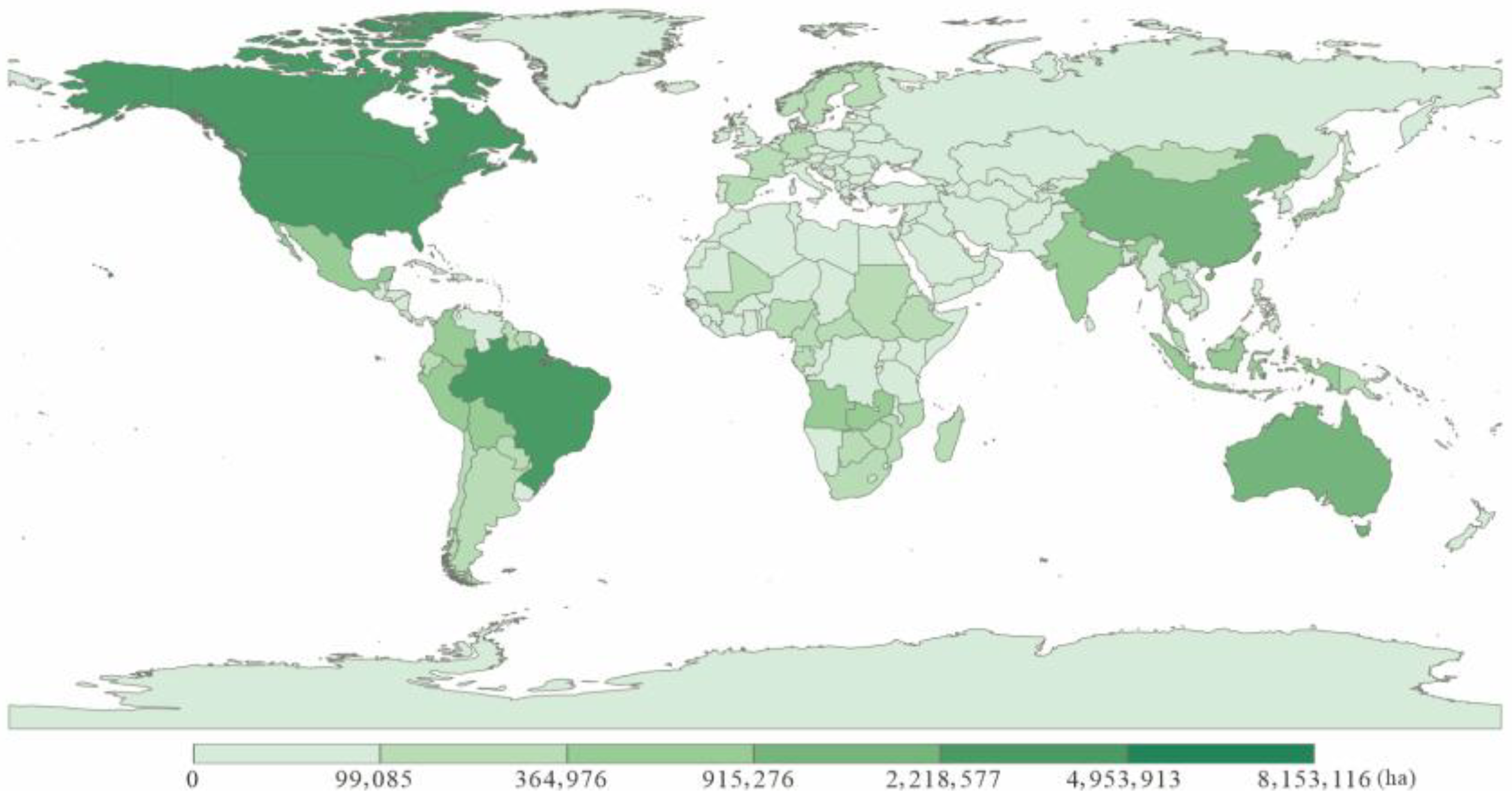
Data for Habitat Area (HA) were sourced from the Global Forest Watch database (https://data.globalforestwatch.org, accessed on 1 June 2025). Although relying exclusively on forest area simplifies the complexity of global habitats, this indicator was selected for three critical reasons. First, forest loss is widely recognized as the primary driver of habitat degradation for species involved in illegal trade. Second, forest ecosystems constitute the dominant habitat for the high-value species central to this analysis. Third, Global Forest Watch offers the standardized, long-term, and consistent time-series data, ensuring the statistical robustness of our predictive models. Thus, this proxy establishes a rigorous framework for assessing global habitat conditions (Figure 1).

2.1.3. Crime Rate

The data on wildlife trade CR were sourced from authoritative reports and databases provided by the United Nations and TRAFFIC for 2021 to 2022. The United Nations, through its various agencies, provides extensive information on global crime trends, including those related to environmental crimes such as wildlife trafficking. This data is essential for understanding the enforcement and compliance aspects of international wildlife trade regulations. TRAFFIC, a leading nongovernmental organization specializing in the monitoring of wildlife trade, complements this data with detailed reports on illegal trade activities. Their insights into the patterns and dynamics of wildlife crime, drawn from on-the-ground intelligence and collaboration with enforcement agencies, provide a valuable perspective on the prevalence and distribution of wildlife trade-related offenses.
By combining the data from these two reliable sources, we ensured a comprehensive and accurate representation of wildlife trade CR, which is essential for the development and assessment of intervention strategies aimed at curbing IWT. With this integration of data, we could capture both global trends and specificities of wildlife crime, facilitating a nuanced analysis that supports the study objectives.

2.2. Data Preprocessing

To ensure comparability across indicators with differing units and magnitudes (HA, CR, and QIWT), we applied min–max normalization to scale all data to the range [0, 1]. This step prevents any single indicator from disproportionately influencing the multi-objective optimization process while preserving the original distribution characteristics. The normalization is defined as:
x = x x min x max x min
where x represents the original value of the indicator, x min and x max are the minimum and maximum values of the indicator within the data set, respectively, and x is the normalized value.

2.3. Models

2.3.1. Complete Model: Integrated Ecological Intervention Optimization Model

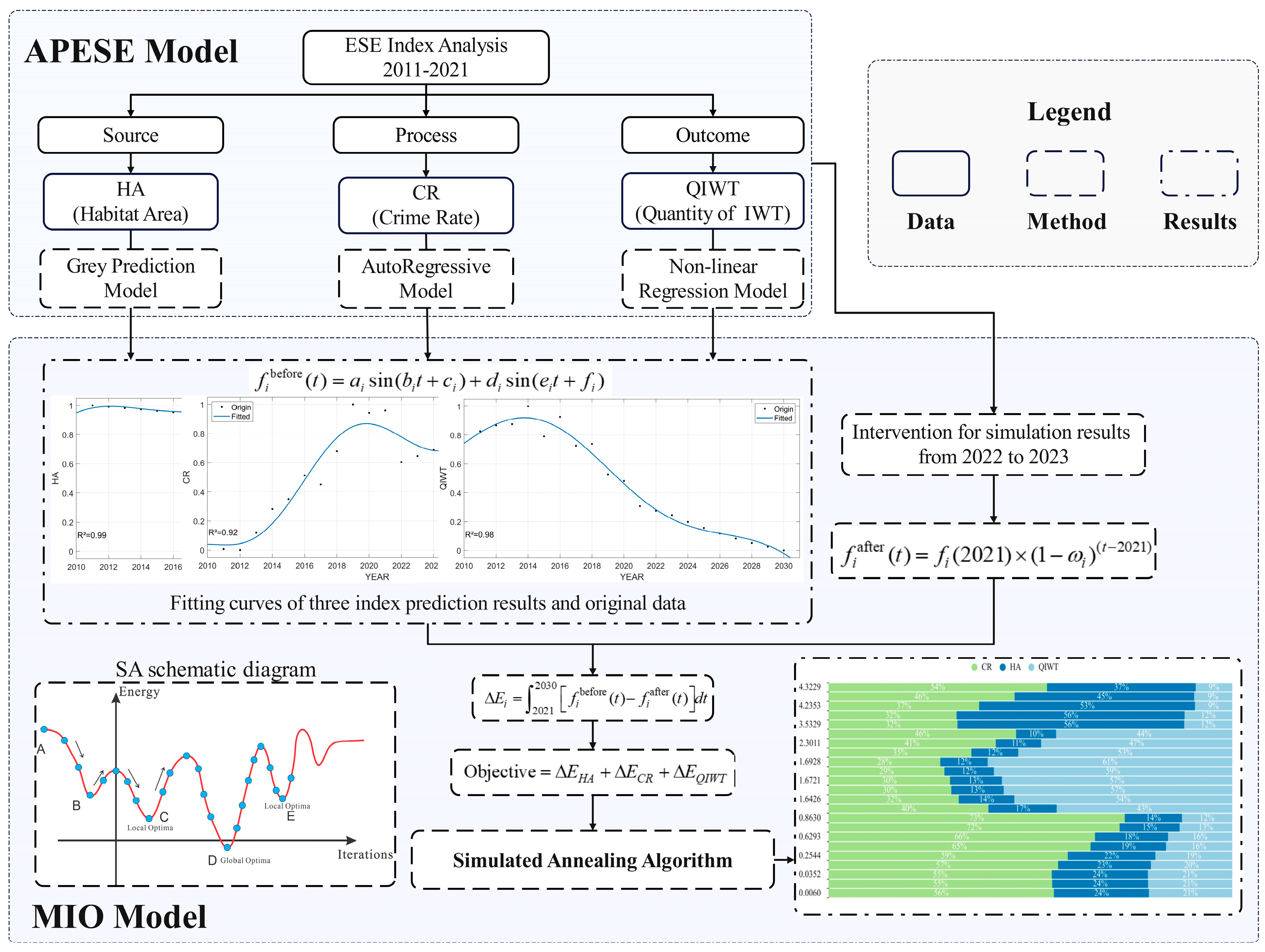
We are proposing an innovative model called the IEIOM, which aims to effectively reduce IWT by optimizing the allocation of multiple intervention measures. The complete flowchart is shown in Figure 2. The proposed IEIOM consists of two main components: the APESEM (analysis and prediction of ecology, society, and economy model) for prediction and the MIOM for intervention optimization. The two components are closely integrated, providing a systematic approach for prediction and intervention allocation using multidimensional indicators, thereby comprehensively addressing IWT.
The design of IEIOM is based on the three key indicators of HA, CR, and QIWT. These indicators cover ecological, social, and economic aspects, providing a solid data foundation for a comprehensive understanding and intervention strategy for wildlife trade.
First, APESEM predicted future trends in HA, CR, and QIWT by using grey forecasting, autoregressive, and nonlinear regression models to analyze data, generating forecasts from 2022 to 2030. By integrating these forecasts with existing data, APESEM supplied the necessary input data for the MIOM component.
The MIOM component focuses on intervention optimization to combat IWT. It integrates both predictive and actual data using the sum of sine function. We used a simulated annealing (SA) algorithm, aiming to maximize the reduction in IWT. The SA, first proposed by Kirkpatrick et al. [24], is known for its robustness in solving complex, nonlinear problems and because it provides a global optimization technique that systematically explores the solution space. As a result, the intervention strategies identified through this process are not merely locally optimal but also globally optimal.
The IEIOM also provides policymakers with a systematic weight analysis tool that enables them to design precise interventions based on scientific evidence. By systematically considering factors such as habitat protection, crime rate control, and trade quantity management, the IEIOM not only increases the targeting of interventions but also increases their effectiveness. The implementation of this model will contribute to combating IWT globally, protecting ecological environments, and promoting sustainable social and economic development.

2.3.2. Analysis and Prediction of Ecology, Society, and Economy Model

We developed the APESEM for the purpose of forecasting. To predict the QIWT, a nonlinear regression model was used. The change in global forest area was used to reflect HA by the Grey model (GM) of first-order, one-variable (1, 1). For crime rate (CR), we built autoregressive models (AR) of order p [AR(p)] for forecasting.
  • Predicting the quantity of illegal wildlife trade
Quantifying trade volume is essential for revealing illegal supply chains and formulating targeted conservation strategies. To forecast future trends, we employed nonlinear regression models. Unlike linear approaches, nonlinear regression is particularly effective when the relationship between response and predictor variables follows a specific functional form [25]. This method offers significant advantages in parsimony and interpretability, requiring fewer parameters to capture complex dynamics. Furthermore, nonlinear models generally yield more robust predictions than polynomial alternatives, especially when extrapolating trends beyond the range of observed data [26]. Consequently, we applied this approach to analyze historical data and project the future trajectory of the quantity of illegal wildlife trade.
  • Predicting the habitat area
Regarding habitat analysis, we selected forest area as the primary indicator. Forests represent crucial wildlife habitats [27] and provide a measurable metric compared with the often-ambiguous definition of “habitat,” ensuring a standardized research framework.
To forecast future trends, we utilized the GM (1, 1) model from Grey Systems Theory. This single-variable, first-order model is recognized for producing high-precision results even with minimal or incomplete data [28]. It is particularly well-suited for time series analysis, employing differential equations based on accumulated data to predict future exponential trends.
  • Predicting the crime rate
IWT operates as a major transnational organized crime, frequently interconnected with activities such as drug and arms trafficking [29]. Consequently, the Crime Rate (CR) serves as a vital indicator, reflecting the involvement of syndicates across collection, processing, and sales stages [30].
To forecast future trends, we employed Time Series Forecasting (TSF) methodologies. TSF is particularly suitable for criminal activities, as CR is a typical time-dependent variable influenced by latent socioeconomic and seasonal factors [31]. By analyzing historical patterns to generate forecasts, this approach provides the IEIOM with a critical proxy for assessing future intervention efficacy and guiding optimal resource allocation.

2.3.3. Integrated Ecological Intervention Optimization Model

Our primary objective in this study was to optimize the allocation of intervention efforts to significantly reduce wildlife trade. To achieve the objective, we developed the IEIOM, which is based on the three key indicators of HA, CR, and QIWT. The following sections outline the detailed approach and methodology of the model, with a particular focus on the integration of intervention effects and the use of the SA algorithm for optimization.
While the SA algorithm is powerful for optimization, it faces scalability challenges when dealing with large-scale data sets or more complex problems. To address these challenges, we explored the potential for parallelization and model simplification. By parallelization of the SA algorithm, we could significantly reduce computation time by distributing the search process across multiple processors. Additionally, we considered simplifying the model structure to decrease the number of parameters, thereby increasing algorithm efficiency without compromising quality of optimization results.
We began by using normalized data for the three indicators from 2011 to 2030 and fitting the data using a sum of sine function with two terms. We chose the sum of sine function because it can effectively capture the periodic variations in data while maintaining model simplicity with lower-order terms. The fitted function for each indicator was expressed as follows:
f i before ( t ) = a i sin ( b i t + c i ) + d i sin ( e i t + f i )  
where   i represents one of the three indicators and t is the time. By integrating the fitted functions over the period from 2021 to 2030, we calculated the pre-intervention and post-intervention effect for each indicator. To assess the effectiveness of the interventions, we calculated the intervention effect for each indicator by comparing the pre- and post-intervention integrals as follows:
Δ E i = 2021 2030 f i before ( t ) f i after ( t ) d t
Given that policy interventions were implemented starting from 2021 and that their effects persist over time, we introduced intervention efforts ω i (corresponding to HA, CR, and QIWT) to adjust the fitted functions, reflecting the post-intervention effects. Specifically, the post-intervention function was expressed as follows:
f i after ( t ) = f i ( 2021 ) × ( 1 ω i ) ( t 2021 )
where f i ( 2021 ) is the normalized value for the year 2021, and ( 1 ω i ) ( t 2021 ) represents the decaying intervention effect over time.
Three intervention effects ( Δ E H A   ,   Δ E C R   ,   Δ E Q I W T ) represent the impact of the interventions on each indicator.
To determine the most effective allocation of intervention efforts across the three indicators, we constructed an optimization objective by summing the intervention effects as follows:
Objective = Δ E H A + Δ E C R + Δ E Q I W T
This objective function depends on the intervention efforts ω 1 ,   ω 2 ,   ω 3 (corresponding to HA, CR, and QIWT, respectively) and is subject to the constraint ω 1 + ω 2 + ω 3 = 1 .
However, because there is a certain connection between the indicators, we also needed to constrain the weights. We set up a system of two equations, with the first representing the combined effects of HA and CR on QIWT. The second equation was further refined, considering that HA is directly affected by CR and then using data from 2011 to 2030 for least squares fitting:
QIWT = a 1 × HA + b 1 × CR + c 1 HA = a 2 × CR + c 2
where values a 1 = 0.7101 ,   b 1 = 0.3798 ,   c 1 = 0.2101 ,   a 2 = 0.6395 ,   c 2 = 1.0714 were obtained.
We utilized the Simulated Annealing (SA) algorithm to solve this optimization problem. As a robust local search technique, SA employs a controlled cooling schedule and the Metropolis criterion to balance exploration and exploitation [32]. Although the standard SA algorithm is typically designed to seek a global minimum, our objective is to maximize intervention effectiveness. To address this, we inverted (negated) our objective function to transform the maximization problem into a mathematically equivalent minimization problem. Consequently, the minimum value obtained by the algorithm corresponds to the optimal allocation strategy for maximizing the suppression of IWT.

3. Results

3.1. Analysis and Prediction of Ecology, Society, and Economy Model

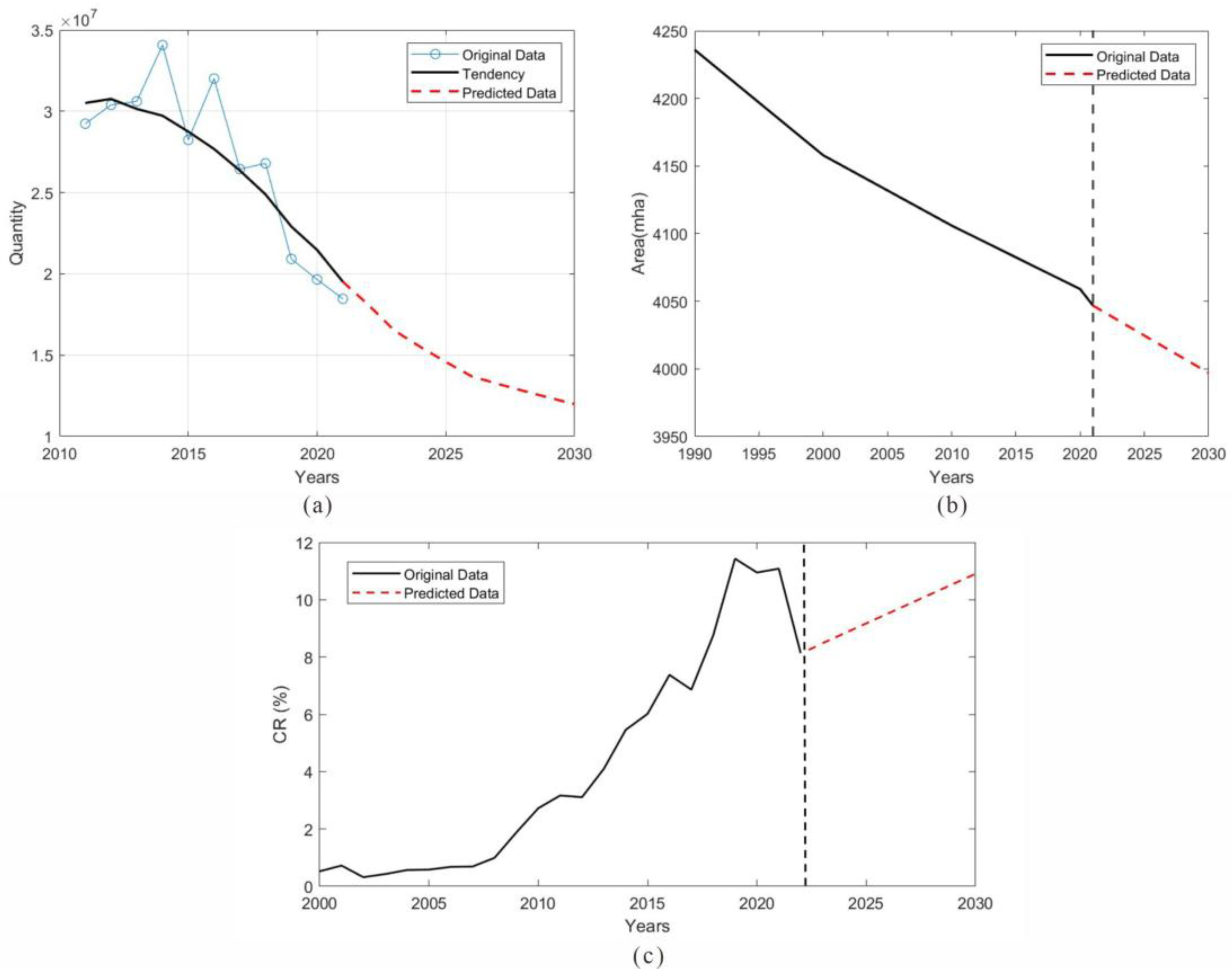
The QIWT exceeded three million in 2011, followed by significant increases in 2014 and 2016 (Figure 3a). However, the overall trend is decline, with projections estimating it will decrease to just over one million by 2030. Despite this decline, this downward rate is expected to slow considerably after 22 years. Despite recent progress in combating IWT globally, its long-term eradication demands stronger international cooperation, stricter enforcement, and broader public engagement. Similarly, global forest areas are declining at an alarming rate (Figure 3b), decreasing from over 4200 million hectares (mha) in 1990, with forecasts suggesting a reduction to approximately 4000 mha by 2030. This loss signifies not only depletion of natural resources but also highlights the profound impact of human activities on global ecosystems.
Figure 3c illustrates the rates of wildlife trade crime from 2000 to 2022, along with projected outcomes. Since 2000, the crime rate has clearly increased, although there is a noticeable decline around 2020, which may be primarily attributed to the temporary disruption of global logistics and supply chains caused by the COVID-19 pandemic. Nevertheless, the overall trend has continued to increase significantly, with estimates suggesting it could reach approximately 11% by 2030.

3.2. Integrated Ecological Intervention Optimization Model

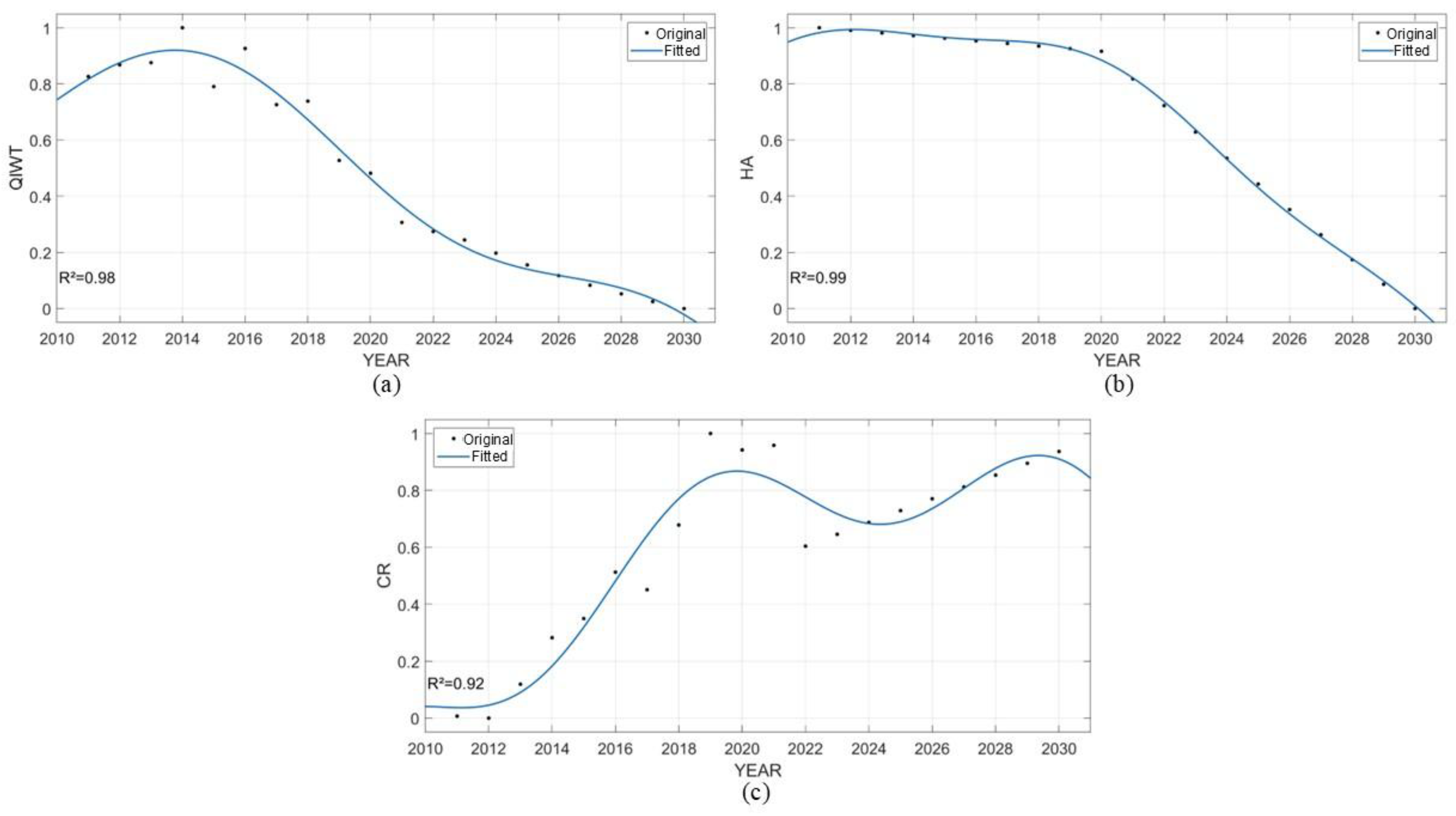
In the IEIOM, we first fit both the original and predicted data for the three indicators (after normalization) using the sum of sine function (Figure 4). The R2 (the coefficient of determination) is a statistical measure that represents the proportion of the variance in the dependent variable that is explained by the independent variables in the regression model, thereby quantifying the model’s goodness of fit to the data. The corresponding R2 values indicate the fits were good, with all values exceeding 0.90. These results demonstrated that the predictor variables could accurately estimate the values of the response variables. Table 1 describes the parameters, R2, and sum of squared errors (SSE) for each indicator.
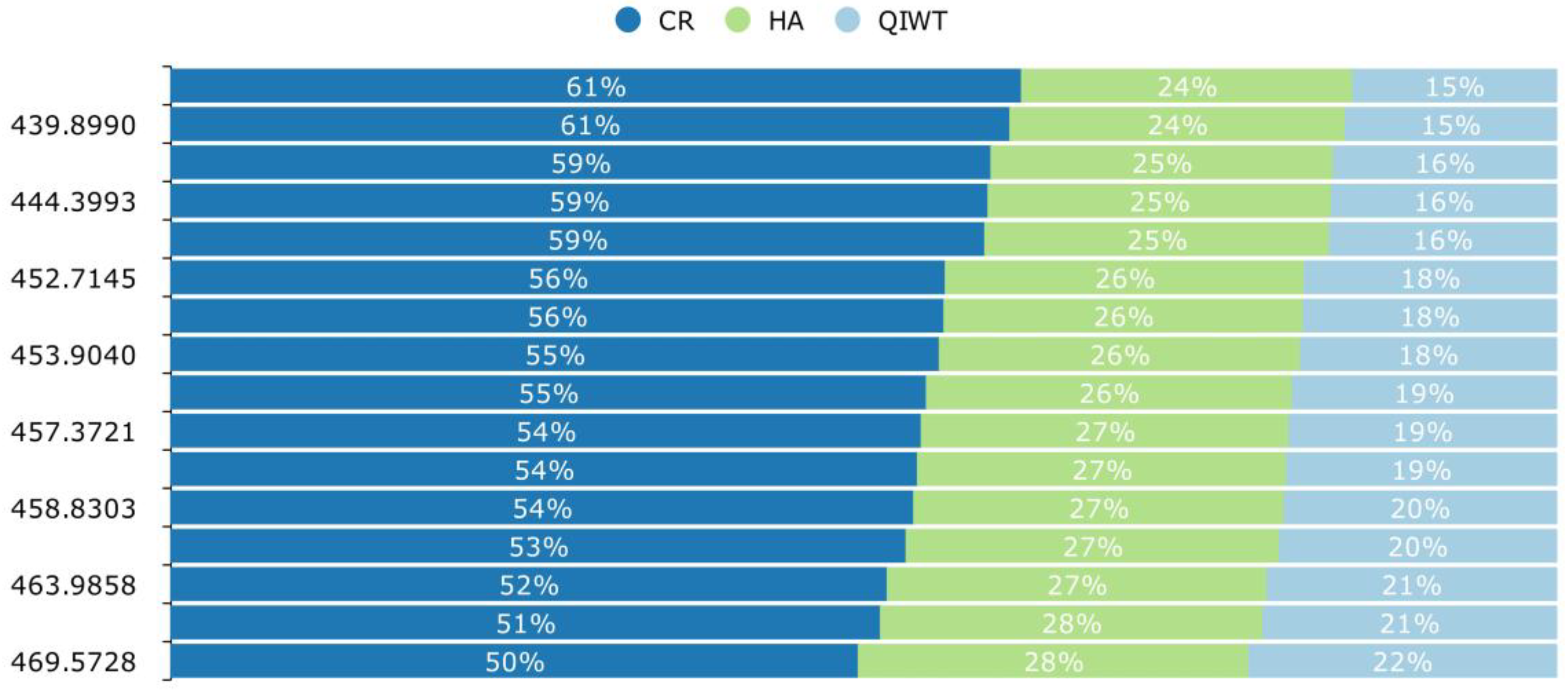
Subsequently, we used the IEIOM to solve for the degree of intervention across the three indicators. To evaluate the computational efficiency of the SA algorithm, we conducted experiments with varying data sizes and parameter settings. The results indicated that while the computation time increases with the size of the data set, the algorithm remains feasible for practical applications. After more than 2000 iterations of SA, the algorithm successfully converged on the global optimum, yielding a final objective function value of 469. This numerical result represents the maximum achievable suppression effectiveness under the optimized resource allocation. The corresponding intervention efforts and indicator weights obtained at this optimal solution were chosen as the required allocation strategy for our model. The finalized results are presented in Figure 5. The optimal solution was approximately 469, with the corresponding weight parameters of 50% for CR, 28% for HA, and 22% for QIWT.
These figures reflect the priority that relevant authorities should assign when addressing the issue of wildlife trade. The highest weight was given to CR, highlighting that combating IWT is of paramount importance for protecting ecosystems and preventing species extinction. Illegal wildlife trade not only directly reduces species populations but also disrupts the stability and integrity of ecosystems. The results indicate that reducing the CR is the primary goal for improving wildlife conservation. This conclusion likely stems from the factor posing the most direct threat to species survival. Therefore, enforcement, surveillance, and legal penalties should be prioritized, with resources and funding primarily allocated to combating illegal trade activities. Habitat protection was assigned a weight of 28%, indicating that while it is important, it is secondary to combating criminal activities. The reduction in HA poses a serious threat to the survival and reproduction of species. Therefore, expanding and protecting habitats is essential for maintaining ecosystem health. This result highlights that authorities need to invest in habitat preservation efforts, such as establishing nature reserves, restoring degraded ecosystems, and reducing human impacts on habitats.
Although the trade volume received the smallest weight, it remains an influential factor. Controlling wildlife trade volume could be aimed at managing legal trade to ensure sustainability and prevent the incentivization of illegal trade. Authorities must strike a balance between economic interests and environmental protection when regulating legal trade, promoting sustainability, and overseeing the market. While this indicator carries less weight, effective management can reduce demand for illegal trade and alleviate market pressures.

4. Discussion

4.1. Model Comparison

To evaluate the robustness of our results, we compared our weight determination method with the Entropy Weight Method (EWM). Unlike subjective approaches such as AHP, EWM derives objective weights based on data volatility, effectively eliminating human bias. Originating from thermodynamics, entropy theory has been successfully applied across diverse fields to ensure consistent evaluation [33,34]. Therefore, EWM was selected to verify the effectiveness of our model. Following the normalization described in Section 2.2, the entropy for each indicator was calculated. The entropy e j was defined by the following equation:
e j = 1 ln ( m ) i = 1 m p i j ln ( p i j )
p i j = x i j i = 1 m x i j w j = 1 - e j k = 1 n ( 1 - e k )
where p i j is the proportion of the normalized value for year i of the j th indicator, and using the entropy values, the weight of each indicator w j was calculated with the formulas. The calculated weights for the three indicators are presented in Table 2.
Table 2 highlights the fundamental divergence between the two methodologies. The EWM, operating as a static, dispersion-based approach, assigns the highest weight to HA (0.414), solely reflecting the data’s historical volatility. In contrast, the IEIOM employs a dynamic, goal-oriented mechanism that prioritizes CR (0.500). This allocation is not driven by fluctuations but by the objective of maximizing IWT suppression effectiveness. Beyond weighting, the IEIOM demonstrates superior utility by utilizing the SA algorithm to dynamically optimize resource allocation and quantify pre- and post-intervention effects—capabilities absent in the static EWM framework. Consequently, the IEIOM transcends descriptive indicator ranking to provide actionable, evidence-based insights for long-term policy formulation.

4.2. Scenario Sensitivity Analysis

To assess the impact of technological innovation (TI), community collaboration (CC), public awareness (PA), and funding levels (FL), we employed scenario analysis, a forecasting technique utilized to predict consequences under continuing trends [35]. We established a baseline project success rate of 80% [36], representing a standard score of 1 in our model. By varying these parameters, results indicated significant fluctuations in success rates, ranging from 0.20 to 1.16. The most favorable combination of conditions is presented in Table 3, highlighting the critical influence of these factors on project implementation.
Our model demonstrates robust versatility across diverse data sets, emphasizing its potential as a versatile tool for addressing multiple problems. The sensitivity analysis conducted on key parameters increases our confidence in model reliability under various settings. Additionally, incorporating perspectives from relevant stakeholders, such as policymakers and implementers, will be pivotal for increasing prediction accuracy and tailoring proposed measures for more targeted and effective implementation on a global scale.

4.3. Factor Analysis

The weight distribution identified by the IEIOM—50% for Crime Rate (CR), 28% for Habitat Area (HA), and 22% for Quantity of Illegal Wildlife Trade (QIWT)—is fundamentally driven by the model’s intrinsic mechanism to maximize the total intervention effectiveness ( Δ E ). Rather than an arbitrary empirical assignment, this distribution reflects the non-linear sensitivity of the system variables as captured by the sum-of-sines objective function. In the optimization process, the Simulated Annealing algorithm identifies CR as the primary “leverage node” because fluctuations in the crime rate exert a disproportionate impact on both the terminal trade volume and the ecological integrity of habitats. From a policy-oriented perspective, this 50% prioritization of CR represents the model’s logic, suggesting that suppressing the operational mechanics of illegal trade yields a higher marginal return on investment for ecosystem sustainability than broader structural or market-based measures alone. Consequently, the resulting weights provide a theoretically grounded roadmap for resource allocation, prioritizing immediate intervention at the most sensitive points of the IWT supply chain to achieve a global optimum in biodiversity protection.
However, enforcement-centric strategies raise ethical concerns, including social inequities and potential human rights violations [3,30]. Militarized approaches, for instance, often fail to address root causes such as poverty or lack of alternative livelihoods [16,37].
To balance this 50% priority on crime repression with the socio-economic realities of local communities, policy implementation must pivot away from purely exclusionary “fences and fines” models. Instead, a significant portion of the resources allocated to CR should be directed toward community-based enforcement initiatives. By officially employing and empowering local community members as wildlife monitors, intelligence gatherers, or eco-guards, authorities can transform crime suppression into a source of alternative livelihood. This paradigm shift aligns enforcement objectives with community economic development, directly reducing state-community conflicts.
To mitigate these risks, the weight distribution (50% CR, 28% HA, 22% QIWT) offers a balanced rationale for budget allocation. The framework supports adjusting priorities in weak-enforcement regions (Table 3) and integrates global data to facilitate transboundary policy harmonization [29]. Crucially, the weights assigned to habitat and trade regulation advocate for stakeholder co-design to ensure equitable benefit-sharing [16]. Interventions must adhere to transparency standards, such as the IUCN’s rights-based approach [15]. Finally, the focus on QIWT highlights the necessity of behavioral campaigns aimed at reducing demand and poaching incentives [7].

4.4. Limitations and Prospects

4.4.1. Limitations of the Integrated Ecological Intervention Optimization Model

The IEIOM relies on historical data to forecast future trends and optimize intervention efforts. If the historical data contains inaccuracies or significant variations, model predictions and optimization results could be less reliable. The performance of the SA algorithm depends on the choice of parameters, such as the cooling schedule and temperature decay rate. Improper tuning of these parameters could lead to suboptimal results or longer computation times, limiting the practical usability of the model.
Secondly, estimating the Quantity of Illegal Wildlife Trade (QIWT) via a financial proxy introduces a “risk premium” bias. Because black-market goods command higher per-unit prices to offset smuggling risks, financial value likely overestimates the actual physical volume trafficked. Consequently, QIWT reflects economic capitalization more than exact ecological extraction, highlighting the need for future hybrid indicators with species-specific risk adjustments.
Furthermore, using forest cover as a proxy for Habitat Area (HA) is an ecological simplification that masks dynamics in non-forest ecosystems (e.g., savannas, wetlands, and marine environments). Since trafficking in these biomes often does not correlate with deforestation, our model may underestimate their specific degradation pressures. Future IEIOM iterations should incorporate multi-biome indices or species-specific geospatial data for a more comprehensive global assessment.

4.4.2. Prospects for the Integrated Ecological Intervention Optimization Model

The prospective development of the IEIOM offers significant avenues for future research. First, the framework can be enriched by integrating additional socioeconomic and environmental indicators, enhancing its adaptability to complex local contexts. Second, owing to its flexible structure, the model is applicable beyond wildlife conservation to sectors such as environmental management, public health, and crime prevention. Furthermore, incorporating advanced machine learning and real-time data processing could transform the IEIOM into a dynamic decision-support system. These advancements position the model as a scalable tool for international organizations to optimize global wildlife protection strategies with greater precision.

5. Conclusions

To address the global challenge of Illegal Wildlife Trade (IWT), we developed the Integrated Ecological Intervention Optimization Model (IEIOM). By integrating methodologies such as nonlinear regression, grey prediction, and autoregressive models with the Simulated Annealing algorithm, the IEIOM outperforms the traditional Entropy Weight Method by offering a dynamic, data-driven allocation of resources. The optimal weight distribution was identified as 50% for Crime Rate, 28% for Habitat Area, and 22% for Quantity of IWT. This prioritization underscores the critical role of law enforcement while emphasizing the necessity of habitat protection and market regulation.
Sensitivity analysis further revealed that technological innovation, community collaboration, public awareness, and funding levels are significant determinants of intervention success, advocating for a multidisciplinary approach. However, the model is limited by its reliance on historical data and computational complexity. Future research should incorporate real-time data streams and machine learning to enhance adaptability. Beyond IWT, the IEIOM framework holds promise for broader applications in environmental management and public health, providing policymakers a robust tool for evidence-based, multi-objective optimization.

Author Contributions

Conceptualization, J.W.; methodology, J.W. and Y.W. (Yiqun Wang); software, J.W. and Y.W. (Yiqun Wang); validation, J.W. and Y.W. (Yiqun Wang); formal analysis, J.W. and M.J.; investigation, M.J.; resources, M.J.; data curation, J.W. and Y.W. (Yiqun Wang); writing—original draft preparation, J.W. and Y.W. (Yiqun Wang); writing—review and editing, M.J., Y.W. (Yankun Wang), N.C. and C.S.; visualization, J.W. and Y.W. (Yiqun Wang); supervision, N.C. and C.S.; funding acquisition, C.S. All authors have read and agreed to the published version of the manuscript.

Funding

This work was supported in part by the Natural Science Foundation of Hubei Province (grant no. 2022CFB689), in part by the Hubei Key Laboratory of Complex Shale Oil and Gas Geology and Development in Southern China (grant no. CGD-202407), in part by the Hubei Key Laboratory of Waterlogging Disaster and Agricultural Use of Wetland (grant no. KFG202408), in part by the Qinghai Province Basic Research Program Project (grant no. 2024-ZJ-904), in part by the Science and Technology Program of Tibet Autonomous Region (grant no. XZ202402ZD0001), and in part by the Yangtze University College Student Innovation and Entrepreneurship Training Program (grant no. Yz2024021).

Institutional Review Board Statement

Not applicable.

Informed Consent Statement

Not applicable.

Data Availability Statement

All data used in this study were obtained from publicly available websites of authoritative organizations. Data and information were accessed from the CITES Trade Database (https://tradeview.cites.org), Global Forest Watch (https://www.globalforestwatch.org), the United Nations (https://www.un.org), and TRAFFIC (https://www.traffic.org), all accessed on 1 June 2025.

Acknowledgments

We extend our thanks to the School of Geosciences, Yangtze University for their assistance and collaboration.

Conflicts of Interest

The authors declare that they have no known competing financial interests or personal relationships that could have appeared to influence the work reported in this paper.

Abbreviations

The following abbreviations are used in this manuscript:
IWTIllegal wildlife trade
IEIOMIntegrated ecological intervention optimization model
MIOMMulti-indicator intervention optimization model
AHPAnalytic hierarchy process
WSMWeighted sum method
EWMEntropy weight method
HAHabitat area
CRCrime rate
QIWTQuantity of illegal wildlife trade

References

  1. Hughes, A.C. Wildlife trade. Curr. Biol. 2021, 31, R1218–R1224. [Google Scholar] [CrossRef] [PubMed]
  2. Vargas, L.G. An overview of the analytic hierarchy process and its applications. Eur. J. Oper. Res. 1990, 48, 2–8. [Google Scholar] [CrossRef]
  3. Duffy, R. The illegal wildlife trade in global perspective. In Handbook of Transnational Environmental Crime; Edward Elgar Publishing: Cheltenham, UK, 2016; pp. 109–128. [Google Scholar]
  4. Hughes, L.J.; Morton, O.; Scheffers, B.R.; Edwards, D.P. The ecological drivers and consequences of wildlife trade. Biol. Rev. 2023, 98, 775–791. [Google Scholar] [CrossRef] [PubMed]
  5. Karesh, W.B.; Cook, R.A.; Bennett, E.L.; Newcomb, J. Wildlife trade and global disease emergence. Emerg. Infect. Dis. 2005, 11, 1000. [Google Scholar] [CrossRef]
  6. Lee, R.J.; Gorog, A.J.; Dwiyahreni, A.; Siwu, S.; Riley, J.; Alexander, H.; Paoli, G.D.; Ramono, W. Wildlife trade and implications for law enforcement in Indonesia: A case study from North Sulawesi. Biol. Conserv. 2005, 123, 477–488. [Google Scholar] [CrossRef]
  7. Biggs, D.; Courchamp, F.; Martin, R.; Possingham, H.P. Legal trade of Africa’s rhino horns. Science 2013, 339, 1038–1039. [Google Scholar] [CrossRef]
  8. Martin, R. A Legal Trade in Rhino Horn: Hobson’s Choice; Rhino Survival Trust: Johannesburg, South Africa, 2012. [Google Scholar]
  9. Rivalan, P.; Delmas, V.; Angulo, E.; Bull, L.S.; Hall, R.J.; Courchamp, F.; Rosser, A.M.; Leader-Williams, N. Can bans stimulate wildlife trade? Nature 2007, 447, 529–530. [Google Scholar] [CrossRef]
  10. Naito, R.; Zhao, J.; Chan, K.M. An integrative framework for transformative social change: A case in global wildlife trade. Sustain. Sci. 2022, 17, 171–189. [Google Scholar] [CrossRef]
  11. M‘t Sas-Rolfes, M.; Challender, D.W.; Hinsley, A.; Veríssimo, D.; Milner-Gulland, E. Illegal wildlife trade: Scale, processes, and governance. Annu. Rev. Environ. Resour. 2019, 44, 201–228. [Google Scholar] [CrossRef]
  12. World Health Organization. London Declaration: Accelerating Access to Essential Medicines in Response to the Antimicrobial Resistance Crisis; World Health Organization: London, UK, 2014. [Google Scholar]
  13. UK Government. Representatives of Governments and Regional Economic Integration Organisations, Kasane Statement on the Illegal Wildlife Trade; UK Government: Kasane, Botswana, 2015.
  14. Duffy, R. Global environmental governance and north—South dynamics: The case of the CITES. Environ. Plan. C Gov. Policy 2013, 31, 222–239. [Google Scholar] [CrossRef]
  15. Harrop, S.R.; Pritchard, D.J. A hard instrument goes soft: The implications of the Convention on Biological Diversity’s current trajectory. Glob. Environ. Change 2011, 21, 474–480. [Google Scholar] [CrossRef]
  16. Roe, D.; Cooney, R.; Dublin, H.; Challender, D.; Biggs, D.; Skinner, D.; Abensperg-Traun, M.; Ahlers, N.; Melisch, R.; Murphree, M. Beyond Enforcement: Engaging Communities in Tackling Wildlife Crime; CABI Databases: Wallingford, UK, 2015. [Google Scholar]
  17. Michie, S.; Johnston, M. Theories and Techniques of Behaviour Change: Developing a Cumulative Science of Behaviour Change; Taylor & Francis: Abingdon, UK, 2012; Volume 6, pp. 1–6. [Google Scholar]
  18. Gintis, H. The Bounds of Reason: Game Theory and the Unification of the Behavioral Sciences-Revised Edition; Princeton University Press: Princeton, NJ, USA, 2014. [Google Scholar]
  19. St John, F.A.; Edwards-Jones, G.; Jones, J.P. Conservation and human behaviour: Lessons from social psychology. Wildl. Res. 2010, 37, 658–667. [Google Scholar] [CrossRef]
  20. Chen, Z.; Chen, Y.; Gao, X.; Zhu, X.; Liu, J. Data Statistics Applications in Regulating the Balance of the Wildlife Trade, 2024 3rd. In International Conference on Artificial Intelligence, Internet and Digital Economy (ICAID 2024); Atlantis Press: Paris, France, 2024; pp. 238–248. [Google Scholar]
  21. Zinsstag, J. Convergence of ecohealth and one health. EcoHealth 2012, 9, 371–373. [Google Scholar] [CrossRef] [PubMed]
  22. Marler, R.T.; Arora, J.S. The weighted sum method for multi-objective optimization: New insights. Struct. Multidiscip. Optim. 2010, 41, 853–862. [Google Scholar] [CrossRef]
  23. World Animal Protection. Global Exotic Pet Trade Report; World Animal Protection: London, UK, 2019. [Google Scholar]
  24. Kirkpatrick, S.; Gelatt, C.D., Jr.; Vecchi, M.P. Optimization by simulated annealing. Science 1983, 220, 671–680. [Google Scholar] [CrossRef]
  25. Gallant. Nonlinear regression. Am. Stat. 1975, 29, 73–81. [Google Scholar] [CrossRef]
  26. Archontoulis, S.V.; Miguez, F.E. Nonlinear regression models and applications in agricultural research. Agron. J. 2015, 107, 786–798. [Google Scholar] [CrossRef]
  27. Rajpar, M.; Ozturk, M.; Altay, V.; Ullah, S.; Ullah, A.; Martin, C.; Gücel, S.; Zakaria, M. Species composition of dry-temperate forest as an important habitat for wildlife fauna species. J. Environ. Biol. 2020, 41, 328–336. [Google Scholar] [CrossRef]
  28. Xie, N.; Liu, S. Discrete grey forecasting model and its optimization. Appl. Math. Model. 2009, 33, 1173–1186. [Google Scholar] [CrossRef]
  29. Anagnostou, M.; Doberstein, B. Illegal wildlife trade and other organised crime: A scoping review. Ambio 2022, 51, 1615–1631. [Google Scholar] [CrossRef]
  30. Moreto, W.D.; Van Uhm, D.P. Nested complex crime: Assessing the convergence of wildlife trafficking, organized crime and loose criminal networks. Br. J. Criminol. 2021, 61, 1334–1353. [Google Scholar] [CrossRef]
  31. Liu, X.; Wang, W. Deep Time Series Forecasting Models: A Comprehensive Survey. Mathematics 2024, 12, 1504. [Google Scholar] [CrossRef]
  32. Aarts, E.; Korst, J.; Michiels, W. Simulated annealing. In Search Methodologies: Introductory Tutorials in Optimization and Decision Support Technique; Springer: Berlin/Heidelberg, Germany, 2005; pp. 187–210. [Google Scholar]
  33. Wang, Q.; Yuan, X.; Zhang, J.; Gao, Y.; Hong, J.; Zuo, J.; Liu, W. Assessment of the sustainable development capacity with the entropy weight coefficient method. Sustainability 2015, 7, 13542–13563. [Google Scholar] [CrossRef]
  34. Johansson, A. Entropy and the cost of complexity in industrial production. Exergy Int. J. 2002, 2, 295–299. [Google Scholar] [CrossRef]
  35. Hassani, B.; Hassani, B.K. Scenario Analysis in Risk Management; Springer: Berlin/Heidelberg, Germany, 2016. [Google Scholar]
  36. Bank, W. Ferghana Valley Rural Enterprise Development Project (P166305); World Bank: Washington, DC, USA, 2019. [Google Scholar]
  37. Bennett, E.L. Legal ivory trade in a corrupt world and its impact on African elephant populations. Conserv. Biol. 2015, 29, 54–60. [Google Scholar] [CrossRef]
Figure 1. Global forest area in 2021.
Sustainability 18 03252 g001
Figure 2. Flowchart of the integrated ecological intervention optimization model.
Sustainability 18 03252 g002
Figure 3. The quantity of illegal wildlife trade (a), global forest area (b), and prediction of crime rate (c).
Sustainability 18 03252 g003
Figure 4. Fitting results of the data of the three indicators of quantity of illegal wildlife trade (QIWT) (a), habitat area (HA) (b) and crime rate (CR) (c).
Sustainability 18 03252 g004
Figure 5. Intervention weight outcome statistics (QIWT: Quantity of illegal wildlife trade; HA: Habitat area; CR: Crime rate).
Sustainability 18 03252 g005
Table 1. Fit parameters for quantity of illegal wildlife trade (QIWT), habitat area (HA), and crime rate (CR).
IndicatorParameter *R2SSE
QIWT a = 0.7774 ,   b = 0.1018 ,   c = 129.6275 ,   d = 0.1526 ,   e = 0.3867 ,   f = 111.3376 0.99880.0027
HA a = 1.0076 ,   b = 0.1022 ,   c = 128.6426 ,   d = 0.0402 ,   e = 0.6129 ,   f = 567.4399 0.98270.0403
CR a = 0.8500 ,   b = 0.1043 ,   c = 123.4035 ,   d = 0.1669 ,   e = 0.5620 ,   f = 467.1355 0.92480.1436
* Parameters for  f i ( t ) = a i sin ( b i t + c i ) + d i sin ( e i t + f i ) .
Table 2. Calculated weights for two methods (QIWT: Quantity of illegal wildlife trade; HA: Habitat area; CR: Crime rate).
MethodsQIWTCRHA
Entropy weight method0.2430.3430.414
IEIOM0.2200.5000.280
Table 3. Combination of conditions in the contextualized sensitivity analysis (TI: Technological innovation; CC: Community collaboration; PA: Public awareness; FL: Funding levels).
TICCPAFL
Best1.11.11.01.2
Worst0.90.50.70.8
Disclaimer/Publisher’s Note: The statements, opinions and data contained in all publications are solely those of the individual author(s) and contributor(s) and not of MDPI and/or the editor(s). MDPI and/or the editor(s) disclaim responsibility for any injury to people or property resulting from any ideas, methods, instructions or products referred to in the content.