Incorporating Sediment Compaction into Reservoir Sedimentation Estimates Using Machine Learning: Case Study of the Xiluodu Reservoir

Abstract
1. Introduction
- Practical Feature Engineering: It is the first to use routinely measured cumulative Sediment Thickness, Annual Sediment Thickness, and Distance to the Dam as core predictors for compaction, directly exploiting standard fixed-section surveys without requiring additional, complex geotechnical tests.
- Direct Integration into Engineering Practice: The output-cross-sectional compaction thickness of the model can be directly inserted into the standard volumetric formula. This bridges the gap between the research on compaction mechanism and operational siltation correction.
- Whole-Reservoir Spatial Quantification: For the first time, continuous, year-by-year compaction amounts were back-analyzed at the whole-reservoir scale (198 km, 221 sections, 2014–2020), quantitatively revealing that compaction intensity decays with increasing distance from the dam and grows with cumulative sediment thickness. This study provides the first spatially explicit picture of reservoir-scale sediment compaction.
2. Materials and Methods
2.1. Study Area and Its Suitability for Compaction Research
2.1.1. High Siltation Intensity and Low Sediment Throughput
2.1.2. Geological and Geomorphological Attributes Conducive to Compaction Studies
- Deep Canyon Morphology with Stable Confinement: The reservoir is impounded within a deep, narrow canyon carved into the highly resistant Emeishan basalts [30,31,32]. The steep, massive valley walls provide rigid lateral confinement, ensuring that compaction was predominantly vertically aligned with the direction of gravitational loading. This simplifies the interpretation of elevation changes and strengthens the physical basis of the one-dimensional compaction thickness formula used in this study (Equation (4)).
- Competent Bedrock with Minimal Deformation: The dam foundation and reservoir banks were composed of dense, low-permeability basalt with excellent mechanical properties [31,32]. Monitoring data confirm that reservoir-induced deformation of the bedrock (e.g., valley rebound or settlement) is negligible compared to the compaction signal [8,32]. This geological stability eliminates a potential confounding factor: changes in bed elevation can be attributed almost entirely to sediment processes rather than to deformation of the reservoir floor itself.
- Long, Narrow Geometry with Dense Monitoring Network: With a mainstream backwater length of approximately 198 km and 221 fixed measurement sections, the reservoir provides an exceptionally dense spatial sampling framework for investigating how compaction varies with distance from the dam [30,32]. The longitudinal gradient in hydraulic conditions—from deep, low-velocity reaches near the dam to shallower, higher-velocity reaches upstream—creates systematic variations in sediment deposition patterns and bed material characteristics, allowing the model to learn the relationship between compaction and spatial position.
2.2. Data Collection and Processing
2.2.1. Data Sources and Institutional Provenance
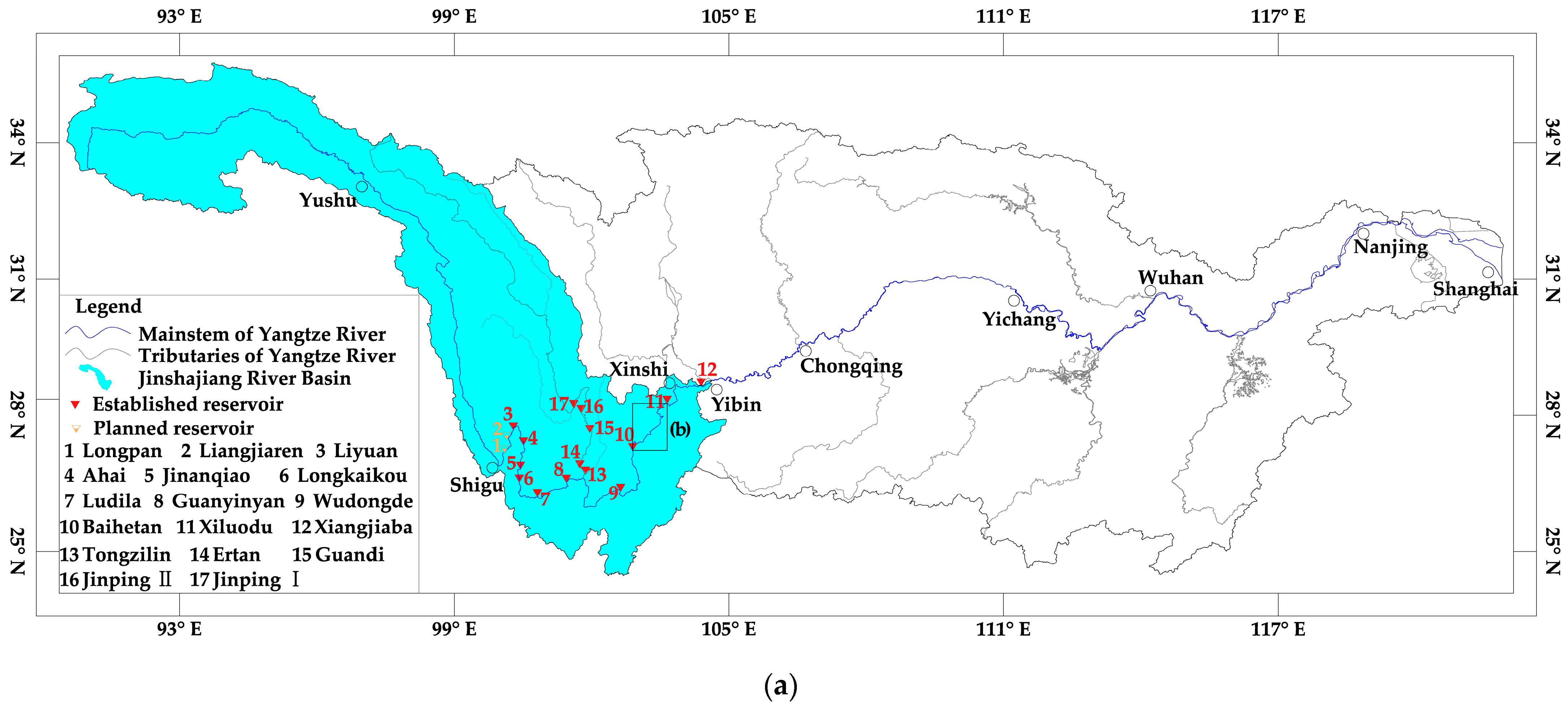
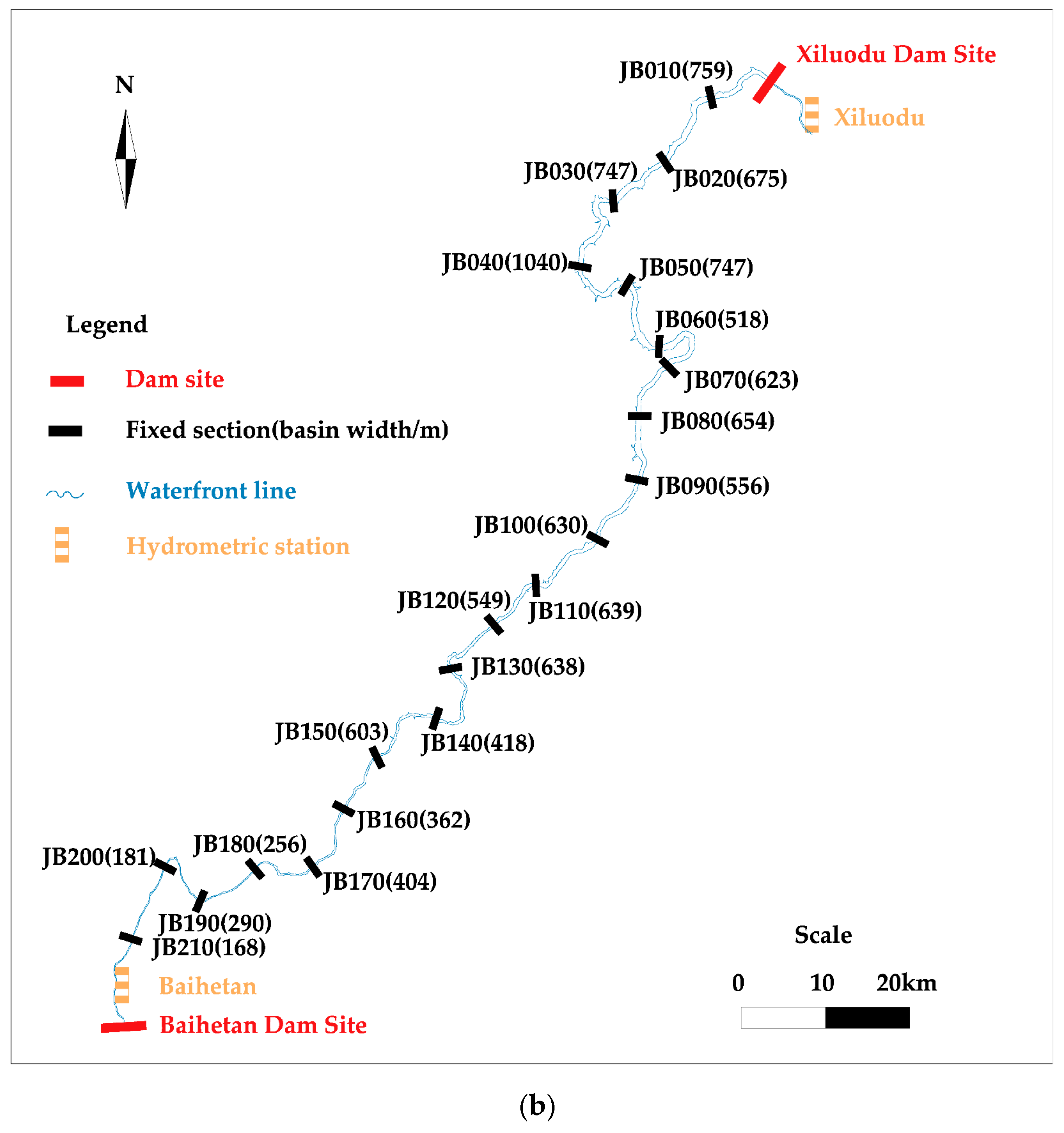
- Fixed cross-section survey data (2014–2020): Collected and provided by the Upper Changjiang River Bureau of Hydrological and Water Resources Survey (a direct subordinate institution of the CWRC Hydrological Bureau), headquartered in Chongqing, China. The surveys were conducted as part of the official reservoir sedimentation monitoring program, following industry standards (SL 257-2017) [33]. The data include pre-flood and post-flood surveys at 221 fixed sections along the 198 km mainstream of the Xiluodu Reservoir (Figure 1b).
- The bed material particle size distribution and dry bulk density data: Collected during post-flood campaigns by the same bureau. Particle size analyses were conducted using standard sieve and hydrometer methods in accordance with GB/T 50159-2015 [34].
- Daily water and sediment series data at Xiluodu Station (2014–2020) [8] were provided by PowerChina Chengdu Engineering Corporation Limited, which operates the Xiluodu Hydrological Station in collaboration with China Three Gorges Corporation. The station serves as the official outflow control station [8,9,10].
2.2.2. Data Availability
2.2.3. Measurement Accuracy and Quality Control
2.3. Reservoir Scour-Siltation Calculation Methods
2.3.1. Sediment Transport Method
2.3.2. Cross-Sectional Volume Method
2.3.3. Conversion Between Mass and Volume
2.4. Identification and Quantification of Sediment Compaction
2.4.1. Identification of the Compaction Phenomenon
2.4.2. Determination of Compaction Spatial Range
2.4.3. Compaction Thickness and Volume Calculation
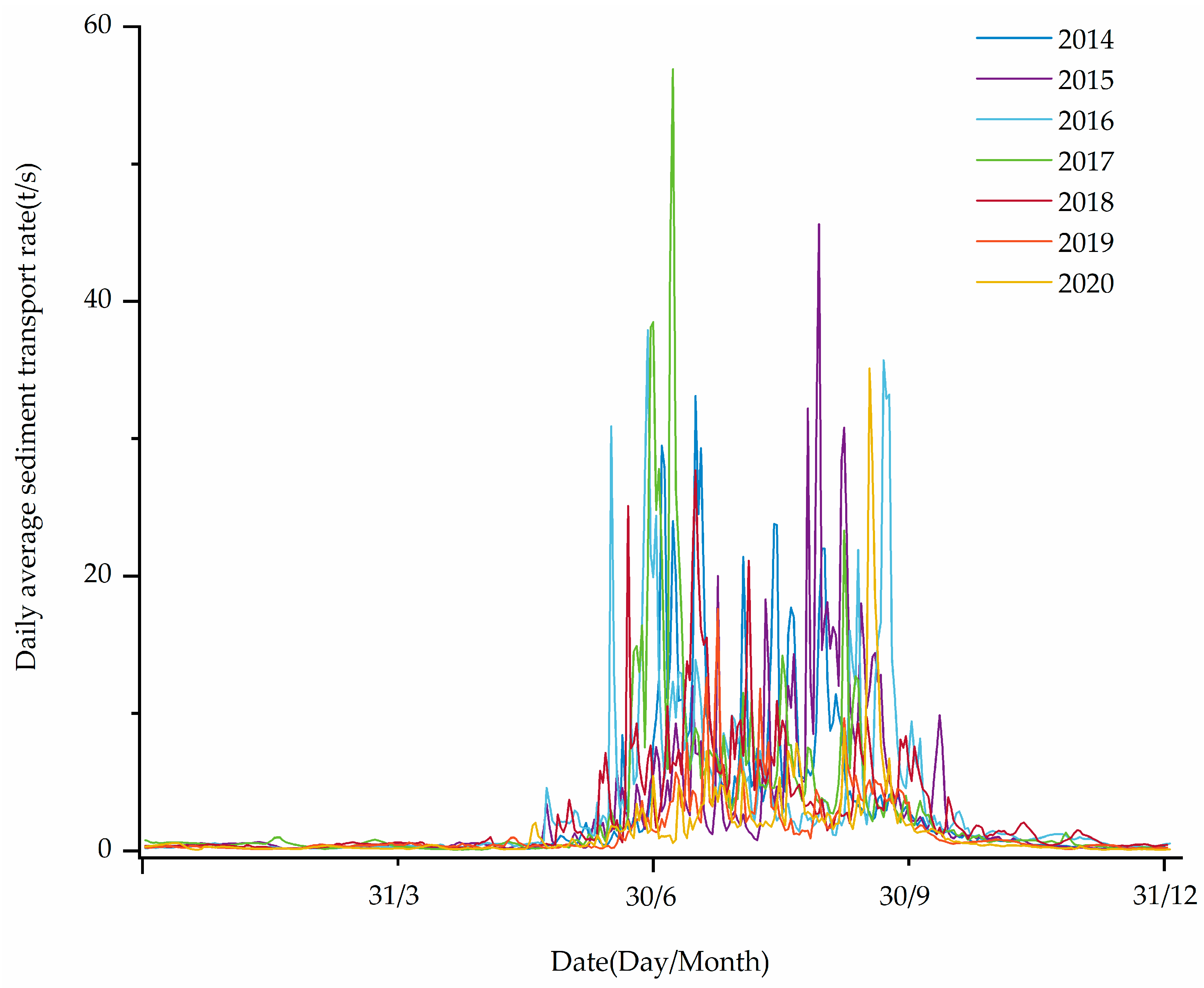
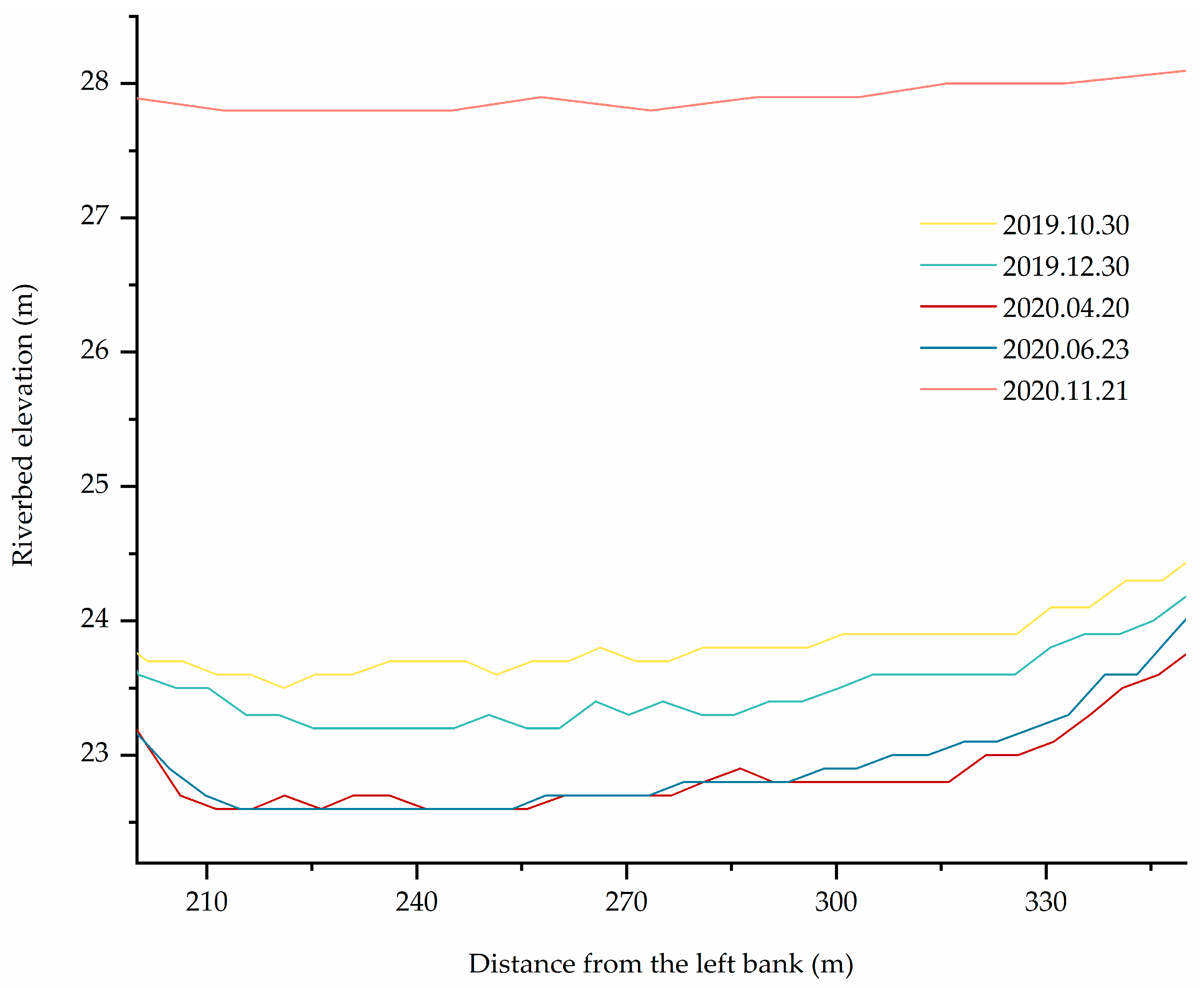
- Hydrological Evidence for Quiescent Post-Flood Conditions: The Xiluodu Reservoir operates under a “storing clear water and releasing turbid flow” regulation scheme [8,9]. During the flood season (June–September), the pool level is lowered to facilitate sediment flushing. Following the flood season, the reservoir refills and maintains a high water level throughout the non-flood season (October–May). As shown in Figure 5, the daily average suspended sediment transport rate at the Baihetan inlet station drops to negligible levels immediately after the flood season (typically <0.1 t/s from October onward). Under these quiescent hydraulic conditions, the flow velocities are well below the threshold for sediment entrainment, rendering scour impossible [28,41].
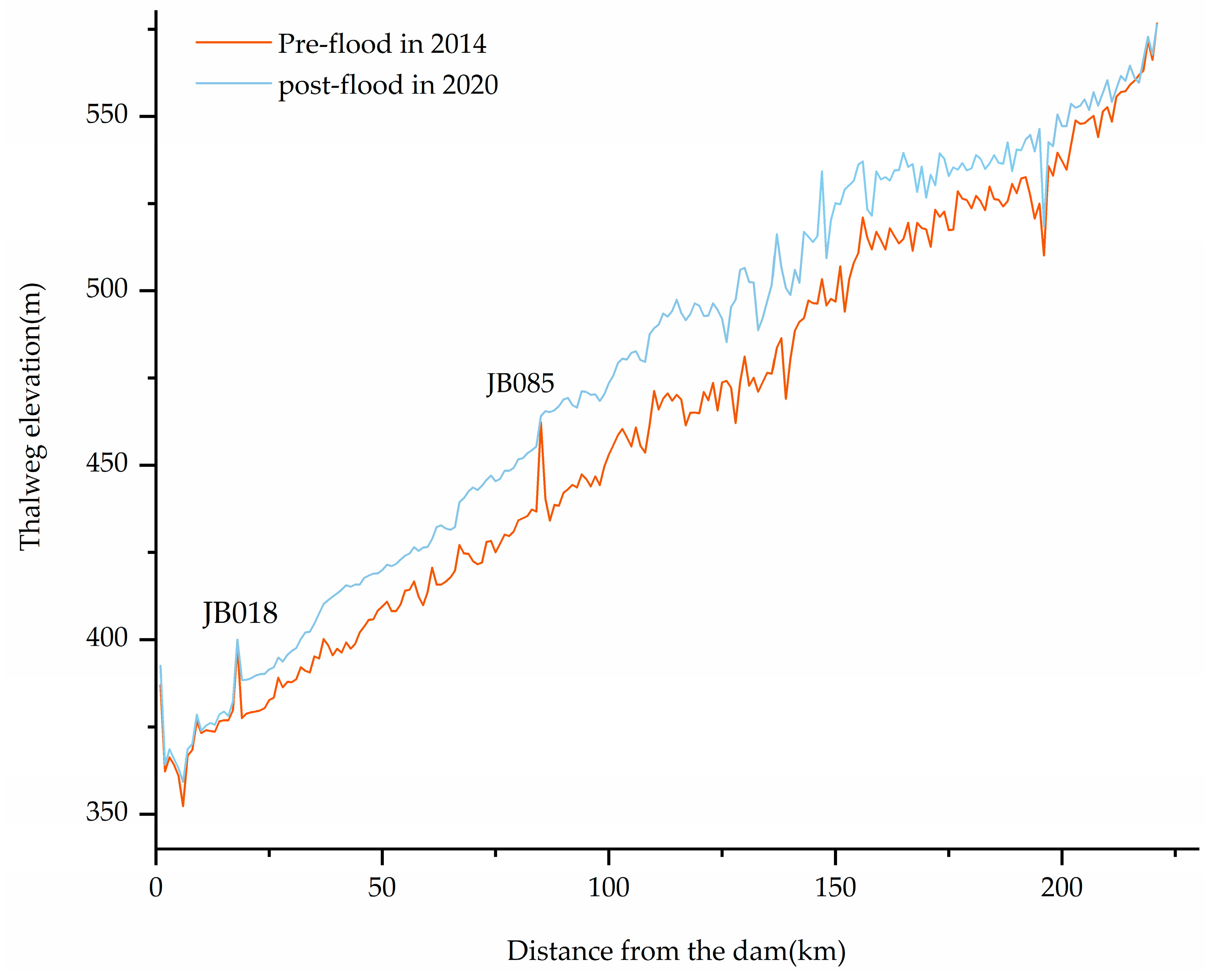
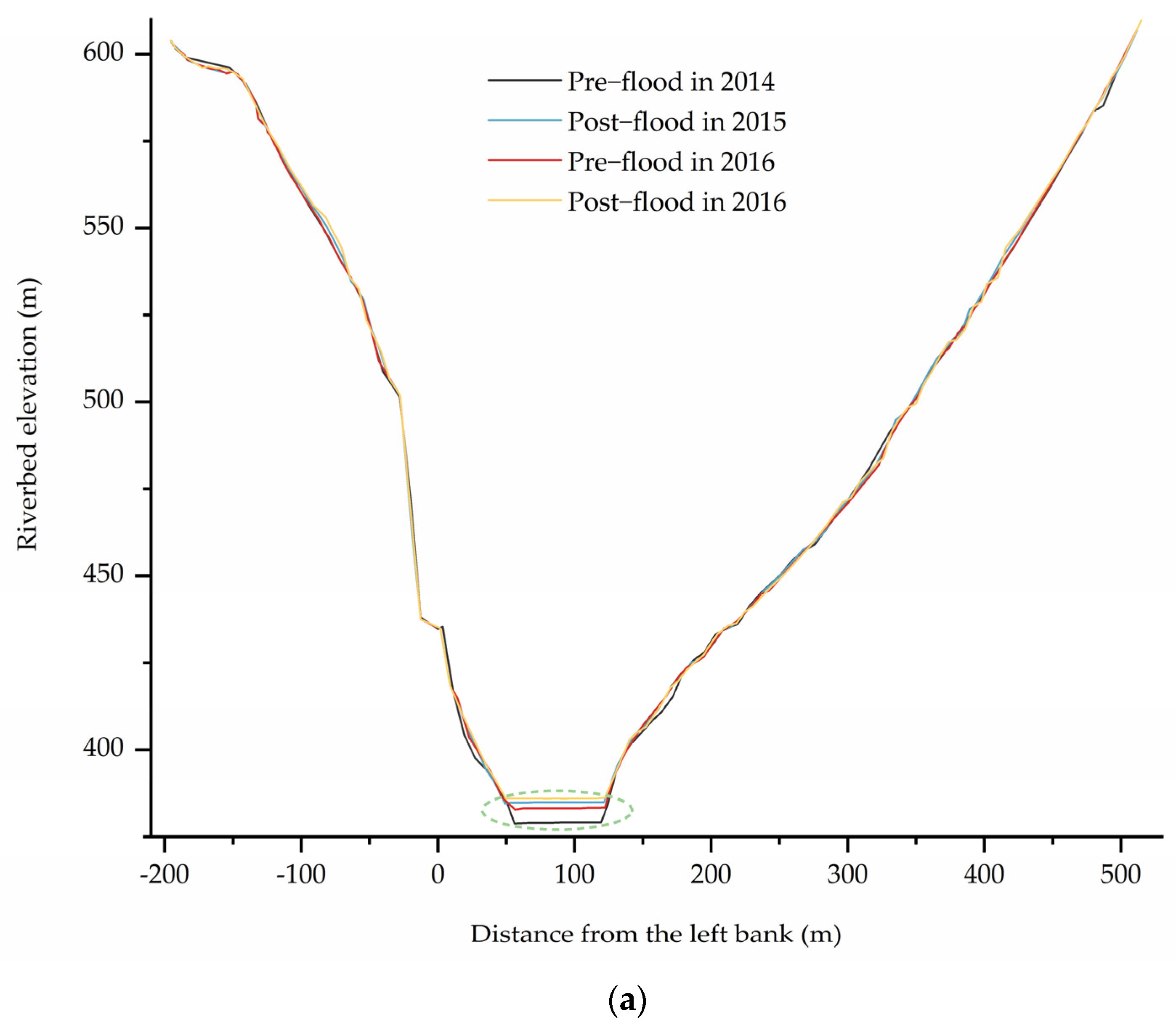
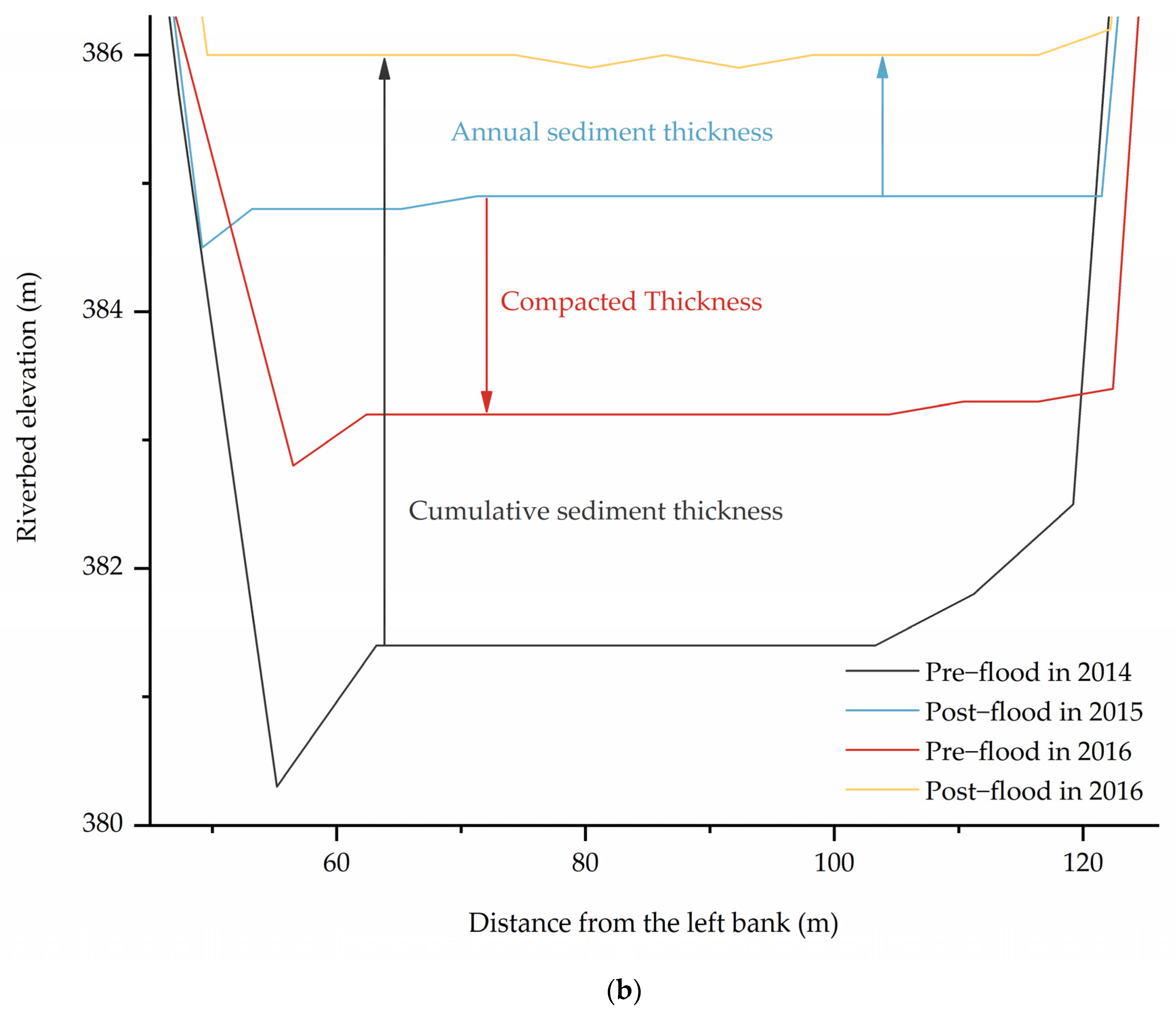
- Cross-Sectional Stability During Post-Flood Periods: We compared pre-flood and post-flood surveys from consecutive years. Analysis of all 221 fixed sections from 2014–2020 revealed that cross-sectional geometry remained essentially unchanged between consecutive post-flood and pre-flood surveys in reaches where no new deposition occurred. The mean absolute difference in bed elevation across all sections was less than 0.05 m, within the vertical measurement uncertainty (±0.15–0.30 m). This stability confirms that the bed is not subject to erosion or large-scale morphological adjustment during the low-flow post-flood period.
- Exclusion of Reservoir Floor Deformation: Reservoir floor deformation caused by tectonic activity or large-scale sediment sliding would manifests as systematic, spatially coherent changes in bed elevation across multiple sections [26]. No such patterns were observed. The elevation changes attributed to compaction are localized to depositional zones and exhibit magnitudes (0.1–1.7 m annually) consistent with geotechnical consolidation theory [28]. Furthermore, the strong correlation between compaction thickness and cumulative sediment thickness (Section 4.1) provides indirect evidence that the observed changes are physically linked to the sediment deposit itself.
2.5. Machine Learning-Based Compaction Model
2.5.1. Overview
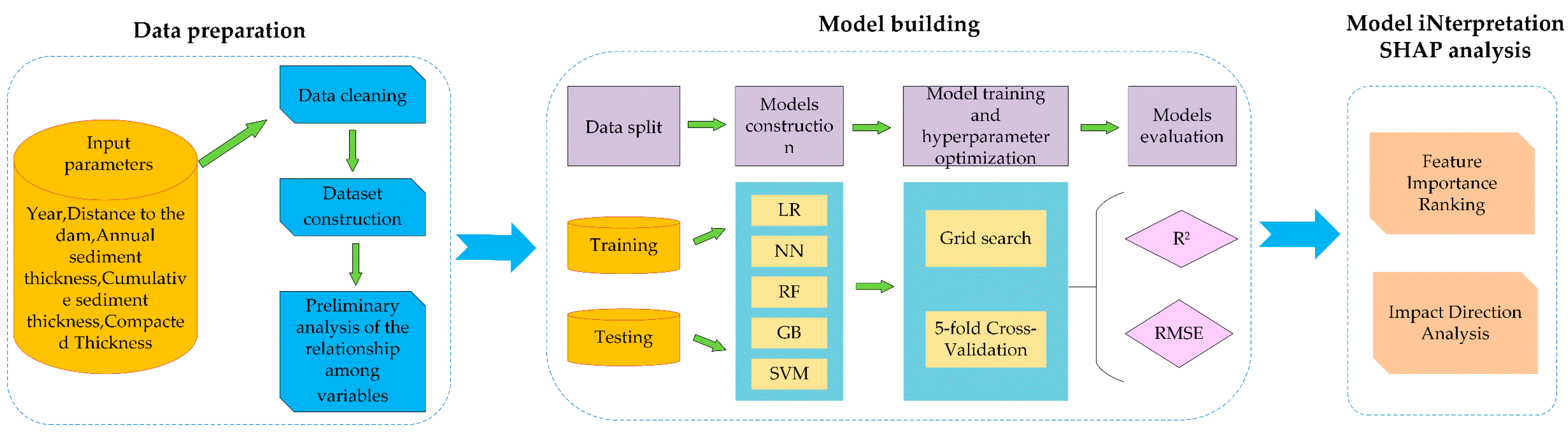
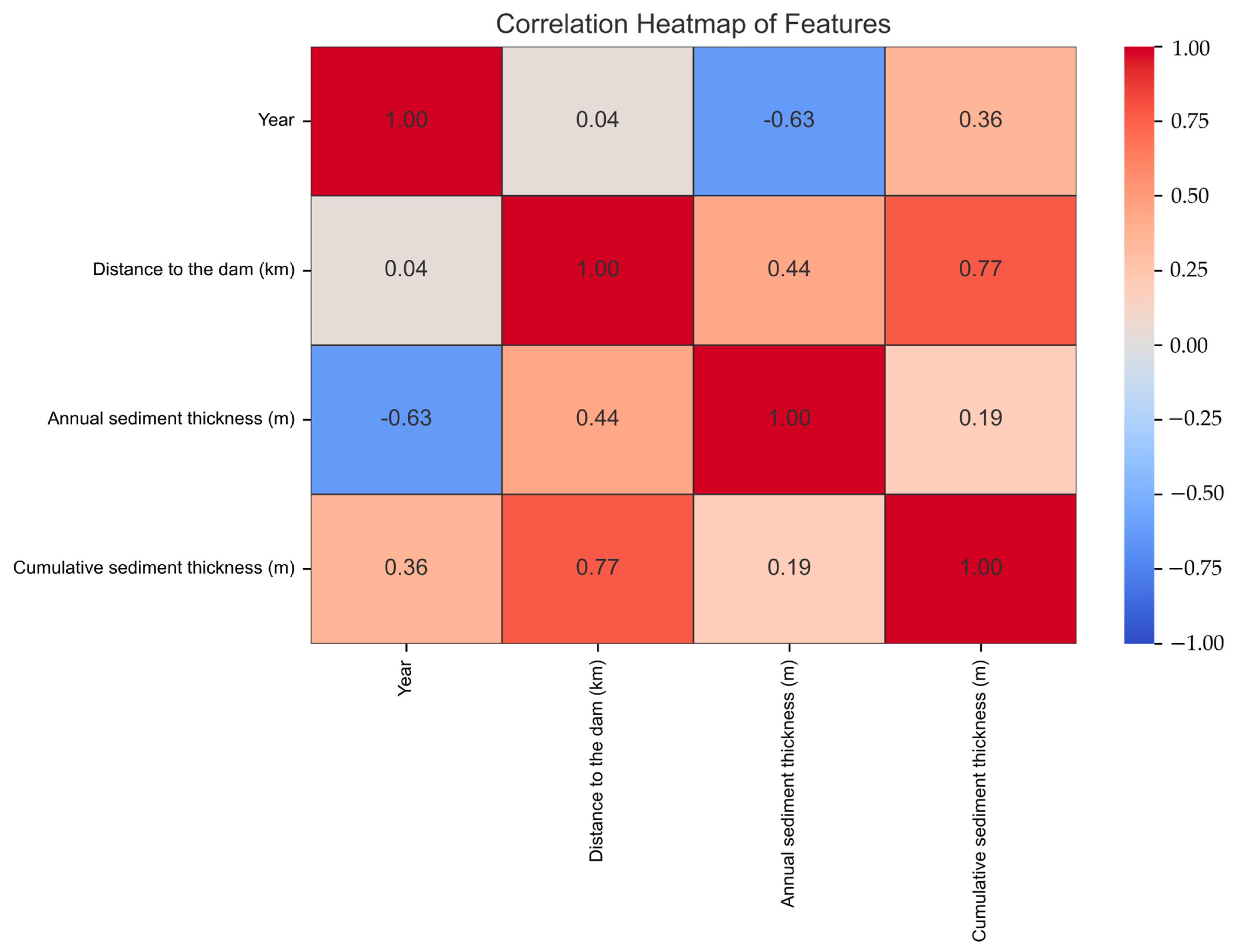
2.5.2. Feature Selection and Data Preparation
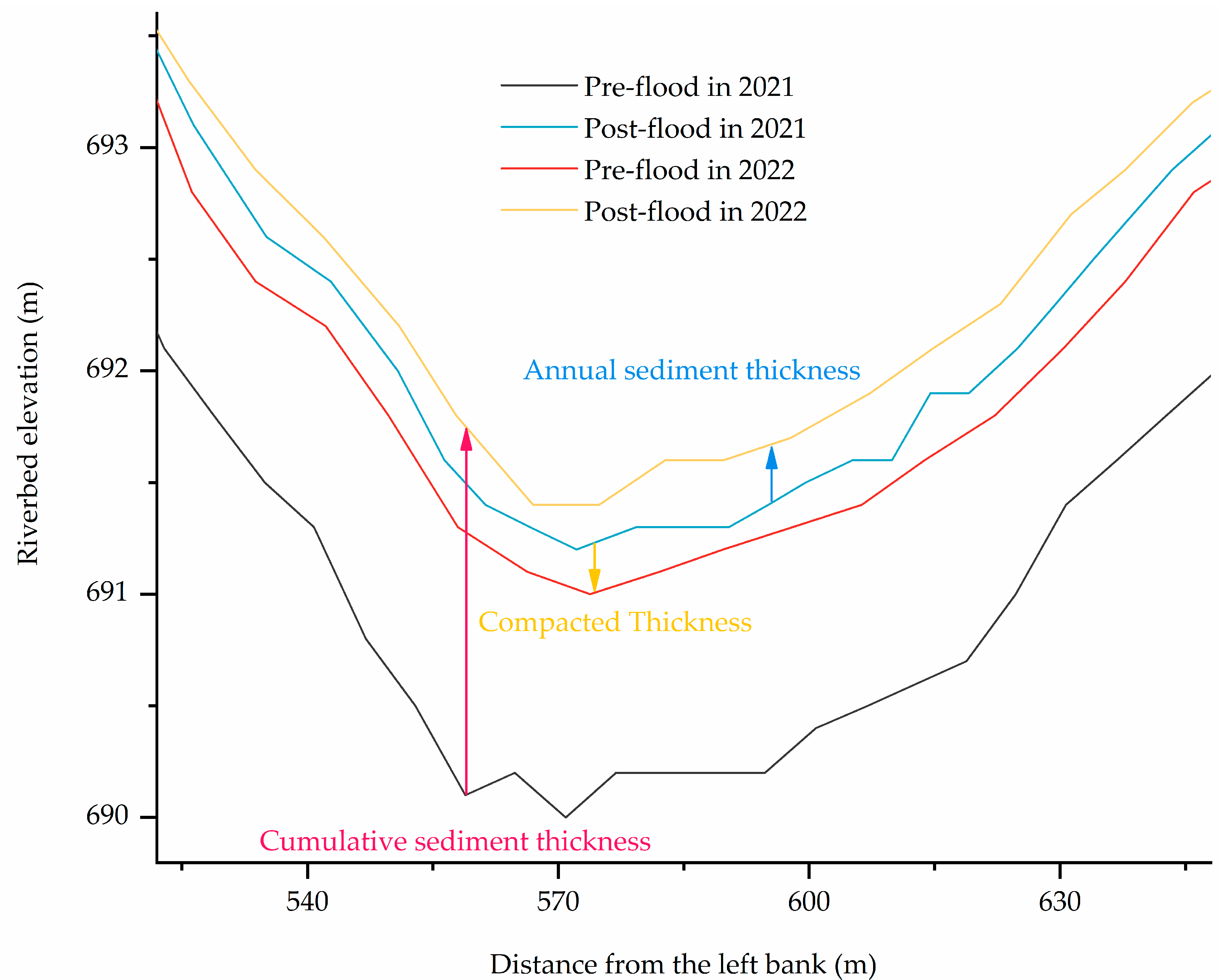
- Year: Serves as a composite proxy for two interconnected physical processes: (1) consolidation time-the duration available for the sediment deposit to undergo self-weight consolidation and secondary compression; and (2) cumulative load history-each successive year adds new sediment on top of existing deposits, increasing overburden stress. These two aspects are inherently coupled in the field setting, and “Year” acts as an integrated temporal-mechanical indicator.
- Cumulative Sediment Thickness (m): Represents the total thickness of sediment accumulated in a given section up to the current year. It is a direct proxy for the overburden stress driving consolidation.
- Annual Sediment Thickness (m): Represents the thickness of sediment deposited in the current year. It captures the incremental load and reflects the magnitude of the flood event.
- Distance to the Dam (km): Represents the longitudinal position along the reservoir. It serves as a proxy for hydrodynamic conditions (flow velocity, sediment transport capacity) and the resultant sediment characteristics (grain size distribution).
2.5.3. Hyperparameter Tuning and Model Evaluation
3. Results
3.1. Model Performance and Selection
3.1.1. Performance Comparison
3.1.2. Neural Network Training Dynamics
3.2. Model Interpretability with SHAP Analysis
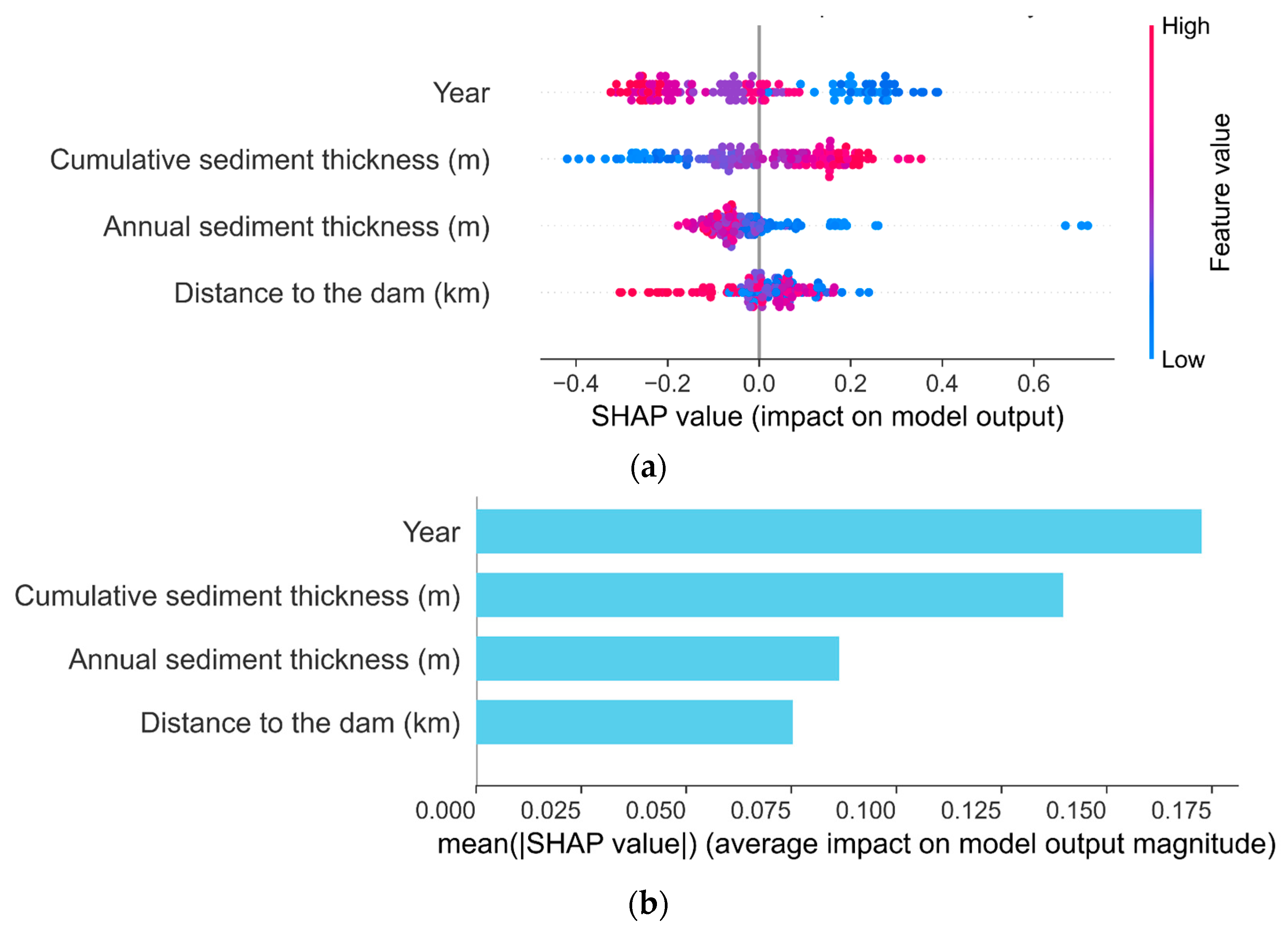
- Year: The dominant influence of Year reflects the fundamental role of consolidation time and cumulative load history. The dependence plot (Figure 11b, first panel) shows a clear pattern: for early years (2014–2015), the SHAP values were positive, indicating that the model predicted higher compaction for sections with sediment from these years. In later years (2018–2020), the SHAP values became negative, indicating lower predicted compaction. This pattern aligns with consolidation theory: longer elapsed time since deposition (early years) allows more complete pore pressure dissipation and creep, leading to greater compaction [28,57]. The positive SHAP for early years, despite coarser sediment during the initial impoundment period [10,11], suggests that the consolidation time effect dominates the sediment source effect-time is so fundamental that even coarser sediments from early years show greater net compaction simply because they had years to consolidate.
- Cumulative Sediment Thickness: The second-ranked importance of cumulative thickness directly represents the vertical stress history at each point. The positive SHAP relationship (greater thickness → higher SHAP values) reflects the progressive increase in effective stress as the sediment column grows, driving consolidation [58,59].
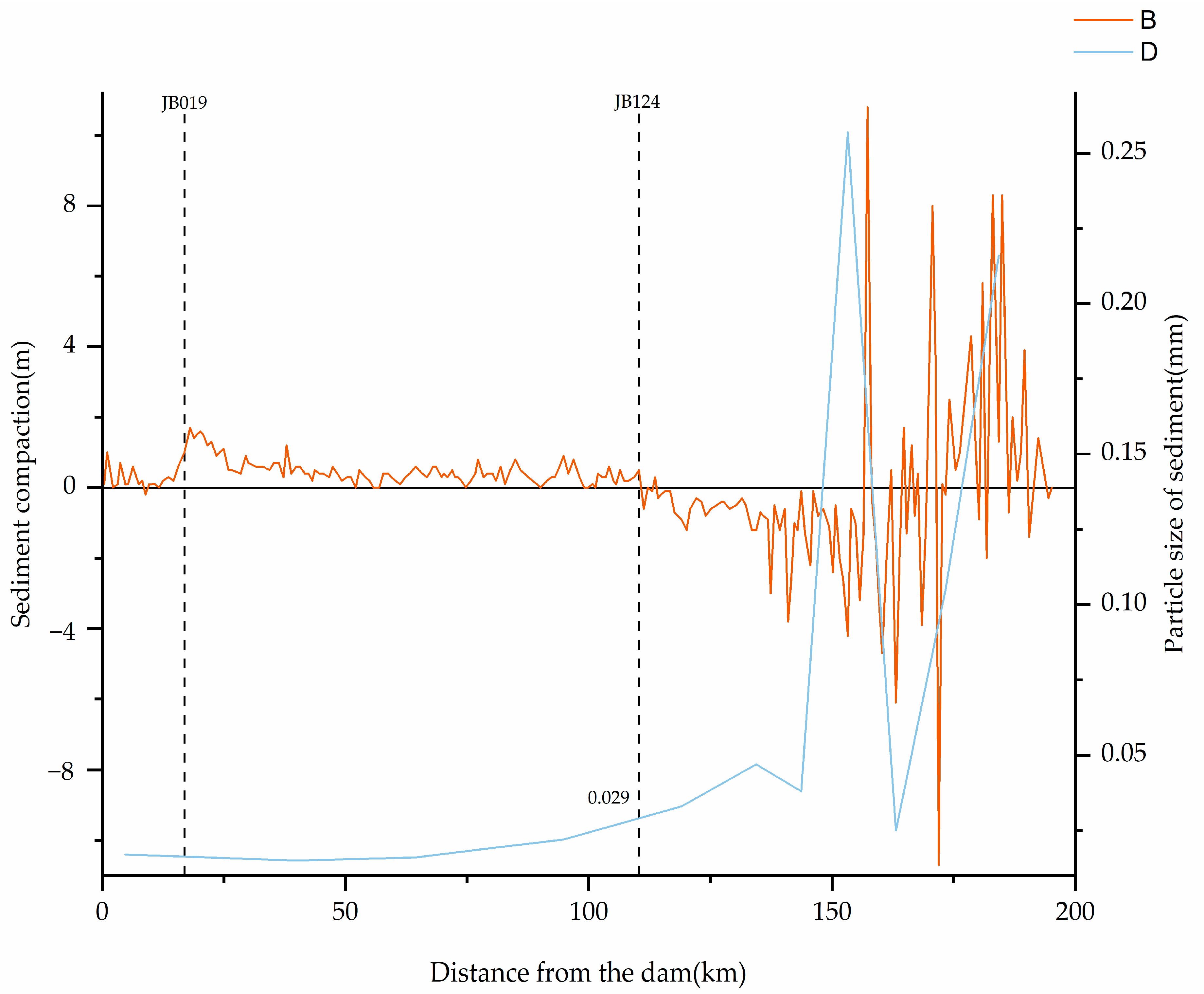
- Distance to the Dam: The negative SHAP relationship (greater distance → more negative SHAP values) is directly interpretable through reservoir hydrodynamics. As distance from the dam increases: (1) flow velocity increases owing to channel narrowing, enhancing the sediment transport capacity and selectively removing fine particles [41,61]; (2) bed material coarsens (Table 2, Figure 4), shifting from fine, compressible silts to coarser, less compressible sands [15,59]; and (3) the deposition rate decreases in the fluctuating backwater zone, reducing the cumulative thickness available for compaction [37,40]. All these factors reduce compaction potential upstream.
3.3. Compaction Volume Calculation
3.4. Correction of Reservoir Siltation Estimates
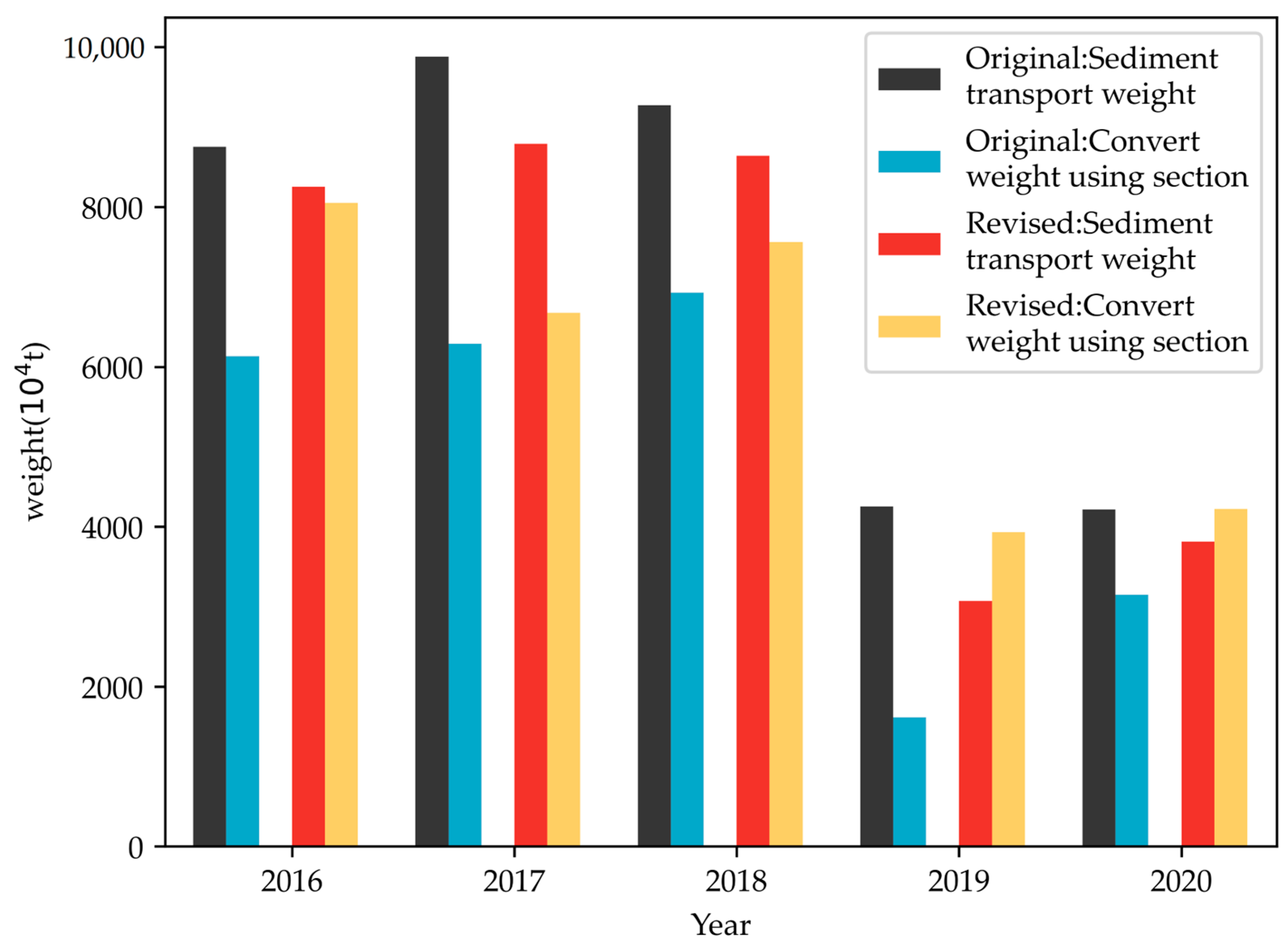
3.4.1. Improvement in Method Consistency
3.4.2. Consideration of Uncontrolled Interval Sediment
3.4.3. Uncertainty Assessment
- Measurement Uncertainty: As detailed in Section 2.2.3, vertical survey errors (±0.15–0.30 m) propagate into volume estimates. The ±0.15 m average prediction error of the NN model (MAE) is comparable to this survey uncertainty.
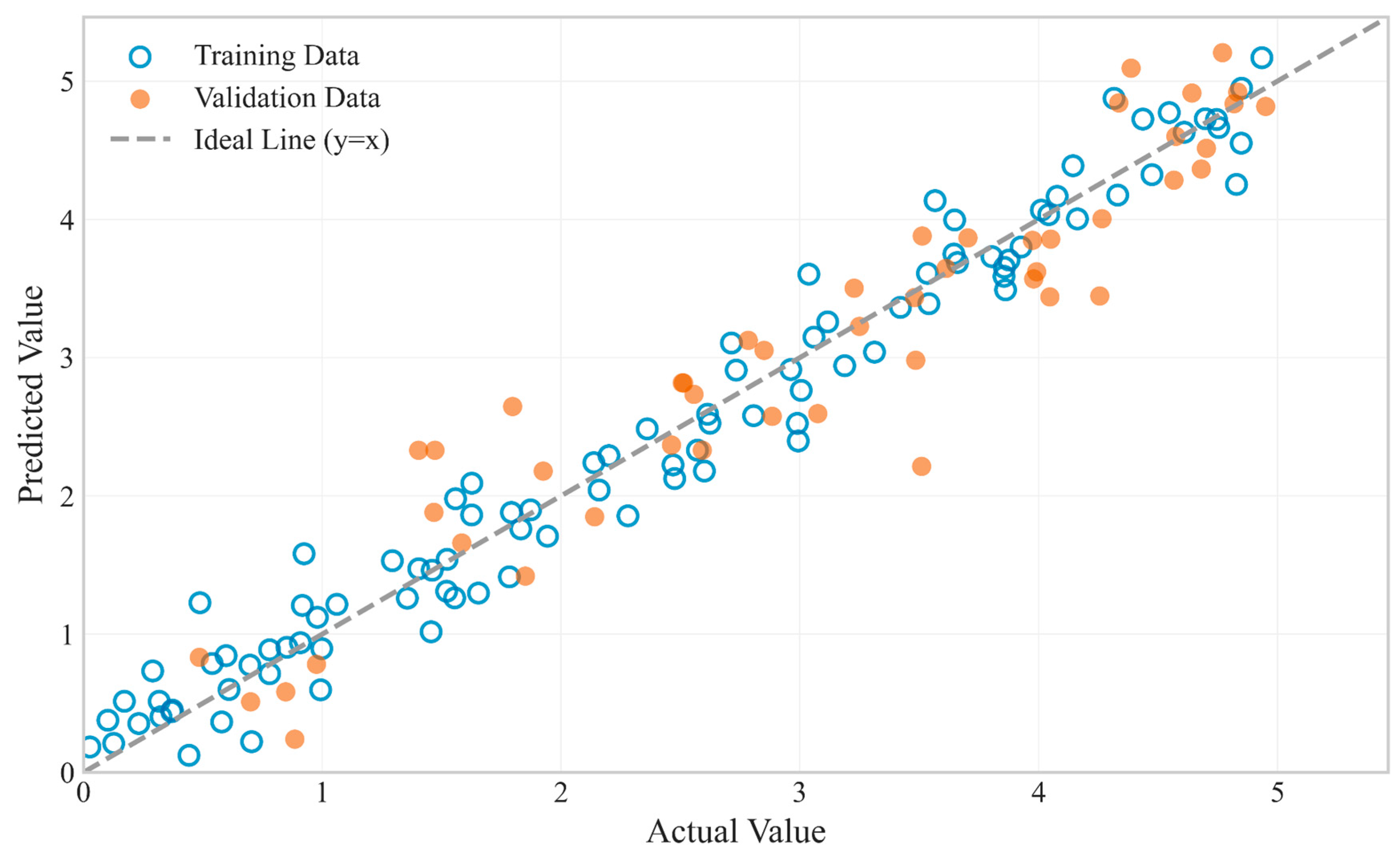
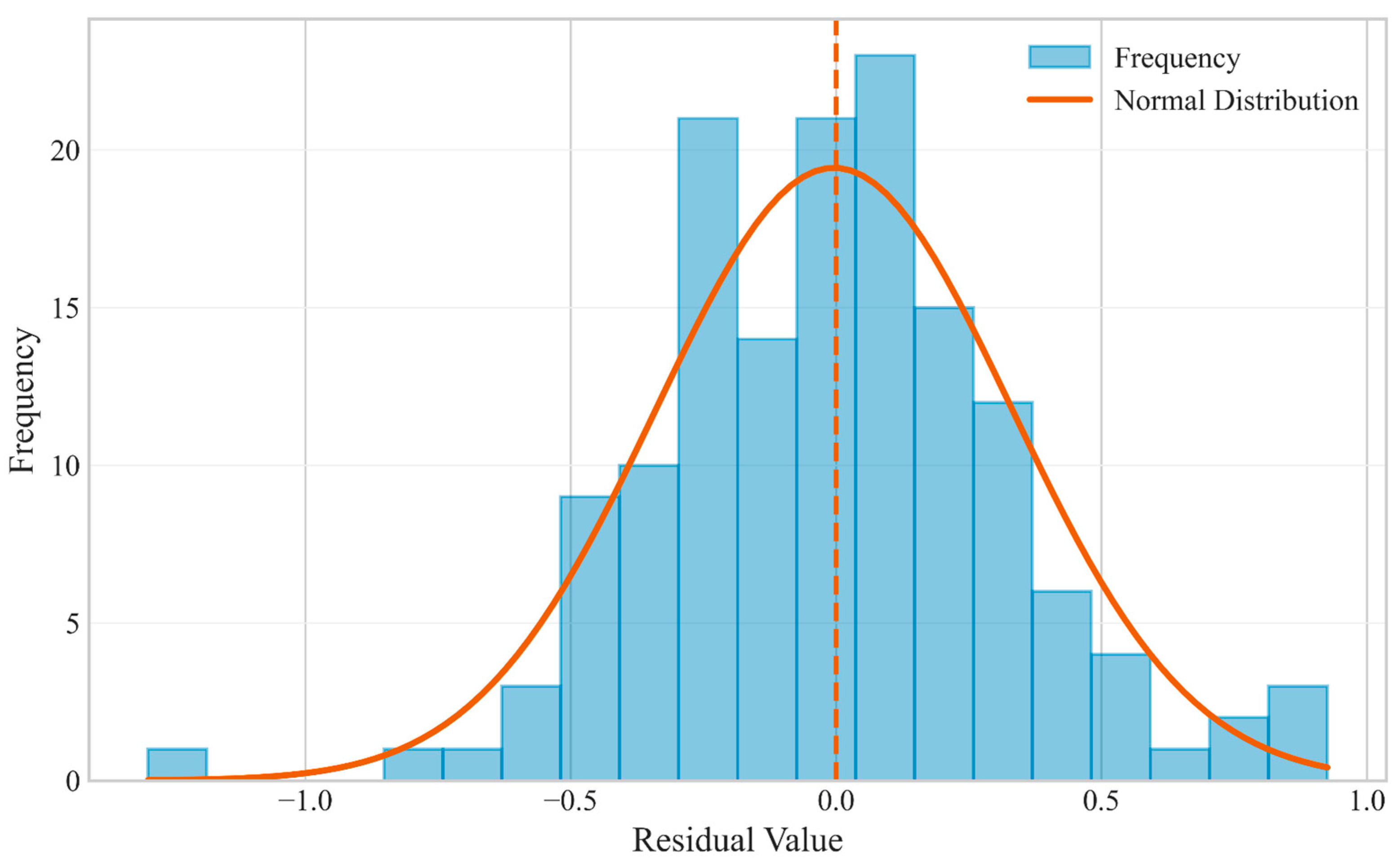
- Model Prediction Uncertainty: The test set RMSE of 0.047 m provides an estimate of the model’s average prediction error for compaction thickness at individual sections. Monte Carlo simulations using bootstrap resampling of model predictions [63] indicate that the 95% confidence interval for the annual compaction volume was approximately ±12–18% of the reported value.
- Combined Uncertainty: Assuming independent errors, the total relative uncertainty in the corrected annual siltation is estimated to be on the order of ±10–15% for years with significant deposition (>50 × 106 m3), increasing to ±30–50% for low-deposition years. The residual differences in Table 6 (e.g., −2.4% to +28.1%) are consistent with this combined uncertainty range.
4. Discussion
4.1. Physical Interpretation of the Machine Learning Model
4.2. Comparison with Existing Compaction Models and Added Value of the ML Approach
- Data Availability: This method relies solely on routinely collected fixed-section survey data and basic reservoir information, eliminating the need for expensive and logistically challenging laboratory tests or in situ sampling of mechanical properties.
- Spatial Coverage: It is the first study to continuously map compaction thickness continuously along a 198 km reservoir, identifying the spatial extent of compaction and its relationship to bed material characteristics (Table 2).
- Temporal Continuity: It quantifies compaction volumes for six consecutive hydrological years, revealing interannual variability and cumulative impact.
- Direct Engineering Integration: Its output-cross-sectional area change-is fully compatible with the standard cross-sectional volume method, enabling direct correction of siltation calculations.
4.3. Site Specificity and Framework Transferability
4.4. Influence of Excluded Physical Properties (Particle Size and Dry Bulk Density)
- Direct Inclusion as Additional Input Features: Particle size indices (e.g., D50) and dry bulk density could be incorporated directly, allowing the model to learn how compaction responds to sediment type and initial packing state.
- Two-Stage Geostatistical-ML Hybrid Framework: Given that direct measurements may remain spatially sparse, a two-stage approach could be developed: (i) spatial interpolation of sparse physical properties using geostatistical methods [70], and (ii) a subsequent compaction model that uses both routinely measured features and interpolated properties.
- Physics-Informed Machine Learning (PIML): The availability of depth-resolved stratigraphic information would enable the development of physics-informed neural networks (PINNs), where the consolidation equation serves as a physical constraint on the loss function [69,71]. This method combines the spatial coverage of data-driven methods with the physical consistency of process-based models.
4.5. Analysis of Remaining Systematic Underestimation After Interval Sediment Inclusion
- Uncertainty in Interval Sediment Estimation: As noted in Section 3.4.3, the sediment yield modulus method carries significant uncertainty (±40%). If the actual interval contribution is larger than estimated (e.g., owing to unmonitored tributary flash floods or mass wasting events [72]), the sediment transport baseline would be too low, making the volume method appear negatively biased.
- Sediment Resuspension and Redistribution: During flood events, previously deposited sediment can be resuspended and transported downstream, reducing net accumulation measured by the volume method while still being counted as “deposited” in the sediment transport balance [41,73]. The “storing clear water and releasing turbid flow” operation at Xiluodu may promote such resuspension in the fluctuating backwater zone [8,9].
- Model Error in Compaction Prediction: The NN model explains 76.6% of the variance in compaction thickness; the remaining 23.4% unexplained variance could contribute to bias, particularly if the errors are not randomly distributed but systematic.
- Sediment Transport Processes: The sediment transport method does not account for bedload transport, which can constitute 5–15% of total sediment load in gravel-bed rivers [41,74]. If this bedload is deposited in the reservoir but not measured at the outlet, the transport method would overestimate the net deposition, contributing to the apparent negative bias of the volume method. Density currents [75] could also transport fine sediments to locations not well captured by the fixed-section network.
4.6. Widespread Evidence of Sediment Compaction in Other Reservoirs
5. Conclusions
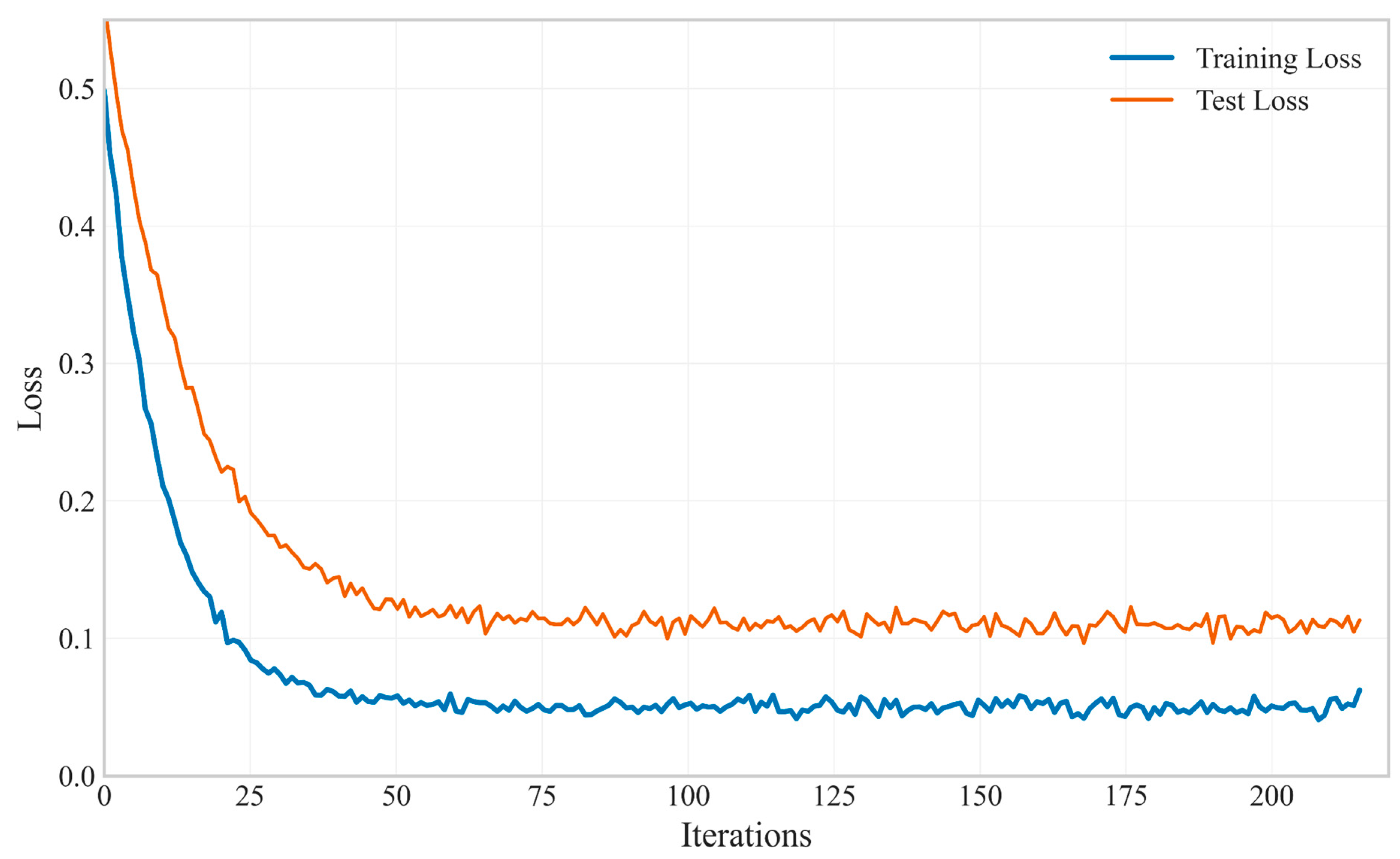
- Machine Learning Efficacy: Among the five algorithms tested, the Neural Network (NN) model demonstrated superior performance in predicting sediment compaction thickness, achieving a test R2 of 0.766 and RMSE of 0.047 m. It effectively captured the complex non-linear relationships between compaction and its controlling factors without significant overfitting.
- Physical Interpretability: SHAP analysis revealed the dominant physical drivers of compaction in the following order of importance: Year (representing consolidation time and cumulative load history), Cumulative Sediment Thickness (overburden stress), Annual Sediment Thickness (incremental loading), and Distance to the Dam (hydrodynamic sorting and sediment availability). This provides a quantitative link between the data-driven model and geotechnical principles.
- Successful Siltation Correction: Applying the NN-predicted compaction to correct the cross-sectional volume method significantly improved its consistency with the independent sediment transport method. The average relative difference over 2016–2020 was reduced from −33.7% to −6.5%, confirming that neglecting sediment compaction is the primary cause of the long-standing methodological discrepancy.
- Quantitative Description of Compaction: This study provides the first continuous, whole-reservoir (198 km, 221 sections, 2014–2020) quantitative assessment of sediment compaction, revealing that compaction intensity decays with distance from the dam and grows with cumulative sediment thickness. This fills a critical gap in reservoir sedimentation research by transforming compaction from an acknowledged phenomenon into a quantifiable correction.
- Transferable Methodological Framework: While the trained model is site-specific to Xiluodu, the overall framework-including feature engineering, machine learning workflow, and compaction correction procedure-is designed to be transferable to other reservoirs where similar routine monitoring data exist. This opens new avenues for improving the accuracy of sedimentation assessments globally, thereby contributing to more sustainable reservoir management.
Author Contributions
Funding
Institutional Review Board Statement
Informed Consent Statement
Data Availability Statement
Acknowledgments
Conflicts of Interest
References
- Zarfl, C.; Lumsdon, A.E.; Berlekamp, J.; Tydecks, L.; Tockner, K. A global boom in hydropower dam construction. Aquat. Sci. 2015, 77, 161–170. [Google Scholar] [CrossRef]
- Gernaat, D.E.H.J.; Bogaart, P.W.; Vuuren, D.P.V.; Biemans, H.; Niessink, R. High-resolution assessment of global technical and economic hydropower potential. Nat. Energy 2017, 2, 821–828. [Google Scholar] [CrossRef]
- Bakken, T.H.; Killingtveit, Å.; Alfredsen, K. The Water Footprint of Hydropower Production-State of the Art and Methodological Challenges. Glob. Chall. 2017, 1, 1600018. [Google Scholar] [CrossRef] [PubMed]
- Yan, X.; Zhang, S.; Chen, Q.; Zhang, J.; Feng, T.; Liu, D.; Qiao, R.; Zhou, X.; Sun, H. Establishing eco-environmental monitoring networks for China hydropower reservoirs. Innovation 2025, 6, 100940. [Google Scholar] [CrossRef]
- Li, J.; Gao, Y.; Cao, L.; Dong, X.; Ma, Y.; Zheng, Y. Sediment deposition within cascade reservoirs: A case study of Baihetan Reservoir in the lower Jinshajiang River, China. Sci. Rep. 2023, 13, 20442. [Google Scholar] [CrossRef] [PubMed]
- Pratama, F.; Wulandari, S.; Rohmat, F.I.W. Modeling sediment accumulation in Pare Reservoir using HEC-RAS 2D: Assessing storage capacity over a 10-year period. Results Eng. 2025, 25, 104333. [Google Scholar] [CrossRef]
- Mouris, K.; Schwindt, S.; Pesci, M.H.; Wieprecht, S.; Haun, S. An interdisciplinary model chain quantifies the footprint of global change on reservoir sedimentation. Sci. Rep. 2023, 13, 18513. [Google Scholar] [CrossRef] [PubMed]
- Du, Z.D.; Dong, X.Y.; Zhang, F.; Qin, L.L. Characteristics of water and sediment and laws of sediment scouring and silting in Xiluodu Reservoir of Jinsha River. J. Sediment. Res. 2022, 47, 22–28. (In Chinese) [Google Scholar] [CrossRef]
- Feng, S.H.; Deng, A.J.; Wang, D.W.; Yin, Y. Analysis of sediment deposition characteristics in Xiluodu Reservoir. J. Sediment. Res. 2021, 46, 16–22+29. (In Chinese) [Google Scholar] [CrossRef]
- Zhu, L.L.; Chen, D.; Yang, C.G.; Chen, K.B.; Li, S.X. Sediment deposition of cascade reservoirs in the lower Jinsha River and scouring of river channel under dam. J. Lake Sci. 2023, 35, 1097–1110. (In Chinese) [Google Scholar] [CrossRef]
- Zerouali, A. Comparison of the MUSLE Model and Two Years of Solid Transport Measurement, in the Bouregreg Basin, and Impact on the Sedimentation in the Sidi Mohamed Ben Abdellah Reservoir, Morocco. Water 2020, 12, 1882. [Google Scholar] [CrossRef]
- Moriasi, D.N.; Steiner, J.L.; Duke, S.E.; Starks, P.J.; Verser, A.J. Reservoir Sedimentation Rates in the Little Washita River Experimental Watershed, Oklahoma: Measurement and Controlling Factors. J. Am. Water Resour. Assoc. 2018, 54, 1011–1023. [Google Scholar] [CrossRef]
- Shiferaw, M.; Abebe, R. Reservoir sedimentation and estimating dam storage capacity using bathymetry survey: A case study of Abrajit Dam, Upper Blue Nile basin, Ethiopia. Appl. Geomat. 2021, 13, 277–286. [Google Scholar] [CrossRef]
- Dąbkowski, S.L.; Bąk, Ł. The quantity of sand fraction sediment in reservoirs as the basis of an assessment of the bedload transport from a reservoir catchment. Int. J. Sediment Res. 2018, 33, 385–394. [Google Scholar] [CrossRef]
- Jinyun, D.; Fang, X.; Chenyu, M.; Chunrui, Y.; Zhanchao, Z.; Hongyan, Y. Analysis of the sediment deposition characteristics in the Three Gorges Reservoir and its influence factors. Environ. Earth Sci. 2024, 83, 476. [Google Scholar] [CrossRef]
- Hu, C.; Chunming, F. Sedimentation and regulation technologies in the Three Gorges Reservoir. River 2022, 1, 123–132. [Google Scholar] [CrossRef]
- Celeri, A.; Castro Alves, C.F.; De Oliveira Carvalho, N. Reassessment of Porto Primavera Reservoir Sedimentation in View of Updated Sediment Measurements. In Sediment Budgets 2; Horowitz, A.J., Walling, D.E., Eds.; IAHS Publication: Wallingford, UK, 2005; Volume 292, pp. 308–314. Available online: https://iahs.info/uploads/dms/13081.44%20308-314%20Foz%20S12-28%20Celeri.pdf (accessed on 8 March 2026).
- Zhang, X.; Xia, J.; Cheng, Y.; Zhou, M.; Wang, Z.; Chen, C. An integrated model of water–sediment-energy simulation and its application in the Xiaolangdi reservoir. J. Hydrol. 2025, 663, 134131. [Google Scholar] [CrossRef]
- Wang, Y.; Niu, Z. Study on the influence of reservoir sediment compaction changes on erosion-deposition calculation and reservoir capacity. J. Sediment. Res. 2020, 45, 46–52. (In Chinese) [Google Scholar] [CrossRef]
- Li, J.; Wang, H. Analysis of prototype tests of Sanmenxia Reservoir from 2003 to 2020. Yellow River 2023, 45, 7–8+39. [Google Scholar]
- Jia, P.; Sun, D.; Shen, J. Discussion on the influence of typical factors on the calculation of erosion and deposition amount in unbalanced sediment transport reaches: A case study of the upstream and downstream channels of the Three Gorges Project. Yangtze River 2018, 49, 30–34. [Google Scholar] [CrossRef]
- Jia, D.; Wang, Y.; Jiang, E.; Shao, X.; Zhang, X. Numerical simulation of sedimentation morphology in Xiaolangdi Reservoir. Adv. Water Sci. 2020, 31, 240–248. (In Chinese) [Google Scholar] [CrossRef]
- Zou, H.M.; Chen, F.; Yang, C.G. Impact of the “low water level during flood season” in 2022 on sediment scouring and silting in the Three Gorges Reservoir area. J. Yangtze River Sci. Res. Inst. 2024, 41, 190–195+202. [Google Scholar]
- Chen, P. Study on Sedimentation Balance Prediction of the Three Gorges Reservoir under New Water and Sediment Conditions. Ph.D. Thesis, Wuhan University, Wuhan, China, 2023. [Google Scholar] [CrossRef]
- Zhang, H.; Wang, R.; Ma, J.J.; Chu, Z.C.; Yu, G.L.; Luo, Y. Experimental study on the relationship between sedimentation process and density change. J. Yangtze River Sci. Res. Inst. 2009, 26, 10–12. [Google Scholar]
- Chen, Y.M.; Tan, G.M. Experimental study on the variation of saturated unit weight of deposited sediment in reservoirs. J. Wuhan Univ. (Eng. Sci.) 2014, 47, 723–728. (In Chinese) [Google Scholar]
- Qin, C.C. Study on the Fine Sediment Transport and Deposition in the Three Gorges Reservoir. Ph.D. Thesis, Tsinghua University, Beijing, China, 2018. (In Chinese) [Google Scholar]
- Toorman, E.A.; Berlamont, J.E. Mathematical modelling of cohesive sediment settling and consolidation. In Nearshore and Estuarine Cohesive Sediment Transport; Mehta, A.J., Ed.; American Geophysical Union: Washington, DC, USA, 2006; pp. 167–184. [Google Scholar]
- Ka, A.W.; Lin, C.Y.; Chung, C.C. In-situ measurement and modelling of sediment compaction in a subtropical reservoir. In Proceedings of the 26th International Congress on Large Dams (ICOLD), Vienna, Austria, 1–7 July 2018; pp. 245–259. [Google Scholar]
- Wang, S. Adjustment of thalweg longitudinal profiles in response to sediment silting in cascade reservoirs: A case study of the lower Jinsha River. J. Geogr. Sci. 2025, 35, 1497–1515. [Google Scholar] [CrossRef]
- Zhou, Z.; Zhou, Z.; Xu, H.; Li, M. Surface water groundwater interactions of Xiluodu reservoir based on the dynamic evolution of seepage, temperature, and hydrochemistry due to impoundment. Hydrol. Processes 2021, 35, e14348. [Google Scholar] [CrossRef]
- Terzaghi, K.; Peck, R.B.; Mesri, G. Soil Mechanics in Engineering Practice, 3rd ed.; John Wiley & Sons: New York, NY, USA, 1996; pp. 123–156. [Google Scholar]
- SL 257 2017; Specifications for Waterway Survey. China Water Power Press: Beijing, China, 2017. (In Chinese)
- GB/T 50159 2015; Code for Measurement of Suspended Sediment in Rivers. China Planning Press: Beijing, China, 2015. (In Chinese)
- Hale, R.; Bain, R.; Goodbred, S.; Best, J. Uncertainty in bathymetric surveys for sediment monitoring in reservoirs. J. Hydraul. Eng. 2020, 146, 04020067. [Google Scholar] [CrossRef]
- Whaling, A.R.; Bolton, W.J. Estimation of Reservoir Storage Capacity and Geomorphic Change Detection Analysis from a Multibeam Bathymetric Survey of Randy Poynter Lake, Rockdale County, Georgia (Ver. 1.1, 2025); U.S. Geological Survey Scientific Investigations Map 2024, 3523, 2 sheets; U.S. Geological Survey: Reston, VA, USA, 2024. [CrossRef]
- Gray, J.R.; Glysson, G.D.; Turcios, L.M.; Schwarz, G.E. Comparability of suspended-sediment concentration and total suspended solids data. In Water-Resources Investigations Report 2000-4191; U.S. Geological Survey: Charleston, WV, USA, 2000. [Google Scholar]
- Bezak, N.; Lebar, K.; Bai, Y.; Rusjan, S. Using Machine Learning to Predict Suspended Sediment Transport under Climate Change. Water Resour. Manag. 2025, 39, 3311–3326. [Google Scholar] [CrossRef]
- Lima, D.M.; Paz, A.R.; Martins, E.S.P.R.; Olivera, F. Improving small reservoir storage capacity estimation using DEM: Inferring underwater volume at DEM data acquisition time. Hydrol. Sci. J. 2025, 70, 1724–1743. [Google Scholar] [CrossRef]
- Garcia, M. (Ed.) Sedimentation Engineering: Processes, Measurements, Modeling, and Practice; ASCE Manuals and Reports on Engineering Practice No. 110; American Society of Civil Engineers: Reston, VA, USA, 2008; pp. 21–112. [Google Scholar]
- van Rijn, L.C. Sediment transport, Part I: Bed load transport. J. Hydraul. Eng. 1984, 110, 1431–1456. [Google Scholar] [CrossRef]
- Wang, Y.-A.; Huang, Q.; Yao, Z.; Zhang, Y. On a class of linear regression methods. J. Complex. 2024, 82, 101826. [Google Scholar] [CrossRef]
- Kumar, V.; Kedam, N.; Sharma, K.V.; Mehta, D.J.; Caloiero, T. Advanced Machine Learning Techniques to Improve Hydrological Prediction: A Comparative Analysis of Streamflow Prediction Models. Water 2023, 15, 2572. [Google Scholar] [CrossRef]
- Foumani, N.M.; Miller, L.; Tan, C.W.; Webb, G.I.; Forestier, G.; Salehi, M. Deep Learning for Time Series Classification and Extrinsic Regression: A Current Survey. ACM Comput. Surv. 2024, 56, 217. [Google Scholar] [CrossRef]
- Sagi, O.; Rokach, L. Approximating XGBoost with an interpretable decision tree. Inf. Sci. 2021, 572, 522–542. [Google Scholar] [CrossRef]
- Gu, B.; Sheng, V.S.; Wang, Z.; Ho, D.; Osman, S.; Li, S. Incremental learning for ν-Support Vector Regression. Neural Netw. 2015, 67, 140–150. [Google Scholar] [CrossRef] [PubMed]
- Chen, Q.; Yu, J.; Zhang, J.; Yu, W.; Shi, W.; Lin, Y.; Hu, L.; Wang, Z. Intelligent Device for Integrated Sampling of Layered Water and Sediment Core of Deep Reservoir. U.S. Patent 10,794,887 B2, 6 October 2020. [Google Scholar]
- Hilgert, S.; Sotiri, K.; Fuchs, S. Review of methods of sediment detection in reservoirs. Int. J. Sediment Res. 2024, 39, 28–43. [Google Scholar] [CrossRef]
- Liu, X.; Wang, Y.; Zhang, L. Low disturbance sampling design of the cutter head in soft sediment of the Yellow River reservoir. In Proceedings of the 2021 IEEE International Conference on Power, Intelligent Computing and Systems (ICPICS), Shenyang, China, 29–31 July 2021; pp. 145–149. [Google Scholar] [CrossRef]
- Hu, C.; Fang, C.; Shi, H. Recent progress in sediment research of the Three Gorges Project. China Water Resour. 2023, 19, 10–16. (In Chinese) [Google Scholar] [CrossRef]
- Morris, G.L.; Fan, J. Reservoir Sedimentation Handbook: Design and Management of Dams, Reservoirs, and Watersheds for Sustainable Use; McGraw-Hill: New York, NY, USA, 1998; pp. 7.1–7.42. [Google Scholar]
- Moriasi, D.N.; Arnold, J.G.; Van Liew, M.W.; Bingner, R.L.; Harmel, R.D.; Veith, T.L. Model evaluation guidelines for systematic quantification of accuracy in watershed simulations. Trans. ASABE 2007, 50, 885–900. [Google Scholar] [CrossRef]
- Jamieson, P.D.; Porter, J.R.; Wilson, D.R. A test of the computer simulation model ARCWHEAT1 on wheat crops grown in New Zealand. Field Crops Res. 1991, 27, 337–350. [Google Scholar] [CrossRef]
- Hawkins, D.M. The problem of overfitting. J. Chem. Inf. Comput. Sci. 2004, 44, 1–12. [Google Scholar] [CrossRef]
- Goodfellow, I.; Bengio, Y.; Courville, A. Deep Learning; MIT Press: Cambridge, MA, USA, 2016; pp. 224–268. [Google Scholar]
- Ponce-Bobadilla, A.V.; Schmitt, V.; Maier, C.S.; Mensing, S.; Stodtmann, S. Practical guide to SHAP analysis: Explaining supervised machine learning model predictions in drug development. Clin. Transl. Sci. 2024, 17, e70056. [Google Scholar] [CrossRef]
- Been, K.; Sills, G.C. Self-weight consolidation of soft soils: An experimental and theoretical study. Géotechnique 1981, 31, 519–535. [Google Scholar] [CrossRef]
- Lambe, T.W.; Whitman, R.V. Soil Mechanics, SI Version; John Wiley & Sons: New York, NY, USA, 1979; pp. 319–344. [Google Scholar]
- Liu, C.; Li, D.; Du, J. Experimental study on the consolidation characteristics of reservoir sediment with different initial dry densities. Water 2021, 13, 2156. [Google Scholar] [CrossRef]
- Ayele, G.T.; Kuriqi, A.; Jemberrie, M.A.; Saia, S.M.; Seka, A.M.; Teshale, E.Z.; Daba, M.H.; Ahmad Bhat, S.; Demissie, S.S.; Jeong, J.; et al. Sediment Yield and Reservoir Sedimentation in Highly Dynamic Watersheds: The Case of Koga Reservoir, Ethiopia. Water 2021, 13, 3374. [Google Scholar] [CrossRef]
- Lu, Z.; Lu, Q.; Deng, A.; Chen, C.; Feng, Z. Characteristics of sediment deposition in Baihetan Reservoir at the early stage of operation, lower reaches of the Jinsha River. J. Lake Sci. 2026, 38, 831–841. (In Chinese) [Google Scholar] [CrossRef]
- Ahn, J.; Yang, C.T.; Boyd, P.M.; Pridal, D.B.; Remus, J.I. Numerical modeling of reservoir sedimentation for sustainable sediment management. Int. J. Sediment Res. 2020, 35, 415–424. [Google Scholar] [CrossRef]
- Mou, C.; Ding, J.; Ying, Z.; Wang, J.; Wan, X. Computational instability of sedimentation-consolidation model based on an interaction coefficient. Mar. Georesour. Geotechnol. 2024, 42, 395–404. [Google Scholar] [CrossRef]
- Imanshoar, F.; Jahangirzadeh, A.; Basser, H.; Akib, S.; Kamali, B.; Tabatabaei, M.R.M.; Kakouei, M. Reservoir Sedimentation Based on Uncertainty Analysis. Abstr. Appl. Anal. 2014, 2014, 186235. [Google Scholar] [CrossRef]
- Julien, P.Y. Erosion and Sedimentation, 2nd ed.; Cambridge University Press: Cambridge, UK, 2010; pp. 178–215. [Google Scholar]
- Zheng, Y.; Liu, P.; Cheng, Q.; Liu, W.; Xu, H.; Lei, H.; Luo, X. Transfer learning for reservoir operation based on regional model and large-scale dataset. In Proceedings of the EGU General Assembly 2024, Vienna, Austria, 14–19 April 2024. [Google Scholar] [CrossRef]
- Bekele, Y.W. Physics informed deep learning for one dimensional consolidation. J. Rock Mech. Geotech. Eng. 2021, 13, 420–430. [Google Scholar] [CrossRef]
- Wang, L.; Zhang, Y.; Liu, Z.; Chen, X. Physics-informed neural networks for fast 3D consolidation prediction: A surrogate modelling application. Arab. J. Sci. Eng. 2025, 50, 1123–1145. [Google Scholar] [CrossRef]
- Do, T.; Ganesh, V.; Garcia-Langley, A.; Lam, J.; Chen, A.; Bennett, A. Design and field testing of a scalable deep-sea sediment sampler system for hadal depths. In Proceedings of the OCEANS 2025 Brest, Brest, France, 16–19 June 2025; pp. 1–7. [Google Scholar] [CrossRef]
- Yuan, B.; Choo, C.S.; Yeo, L.Y.; Wang, Y.; Yang, Z.; Guan, Q.; Suryasentana, S.; Choo, J.; Shen, H.; Megia, M.; et al. Physics-informed machine learning in geotechnical engineering: A direction paper. Geomech. Geoeng. 2025, 20, 1128–1159. [Google Scholar] [CrossRef]
- Phoon, K.-K.; Zhang, W. Future of machine learning in geotechnics. Georisk 2022, 17, 7–22. [Google Scholar] [CrossRef]
- Korup, O.; Clague, J.J. Natural hazards, extreme events, and mountain topography. Quat. Sci. Rev. 2009, 28, 977–990. [Google Scholar] [CrossRef]
- Alavian, V.; Jirka, G.H.; Denton, R.A.; Johnson, M.C.; Stefan, H.G. Density currents entering lakes and reservoirs. J. Hydraul. Eng. 1992, 118, 1464–1489. [Google Scholar] [CrossRef]
- Shields, A. Application of similarity principles and turbulence research to bed-load movement. Mitteilungen der Preußischen Vers. für Wasserbau und Schiffbau 1936, 26, 5–24. (In German) [Google Scholar]
- De Cesare, G.; Schleiss, A.; Hermann, F. Impact of turbidity currents on reservoir sedimentation. J. Hydraul. Eng. 2001, 127, 6–16. [Google Scholar] [CrossRef]
- Appleby, P.G.; Oldfield, F. The calculation of lead-210 dates assuming a constant rate of supply of unsupported 210 Pb to the sediment. CATENA 1978, 5, 1–8. [Google Scholar] [CrossRef]
- Shen, G.Q.; Jiang, N.Q.; Zhang, Y.F.; Shang, H.X. Comparison of scouring and silting calculation results by section method and sediment discharge method in lower Yellow River and revision of sediment transport rate data. J. Sediment. Res. 2006, 1, 32–37. (In Chinese) [Google Scholar] [CrossRef]







| Data Type | Years | Measurement Frequency | Data Source |
|---|---|---|---|
| Fixed cross-section data | 2014–2020 | Pre-flood and post-flood, once each | Bureau of Upper Yangtze River Hydrology and Water Resources Survey, Hydrological Bureau of Yangtze River Water Resources Commission |
| Bed material particle size distribution data | 2014–2020 | Post-flood | |
| Deposit dry bulk density data | 2016–2020 | Post-flood | |
| Baihetan Station water and sediment series data | 2014–2020 | Year-round | |
| Xiluodu Station water and sediment series data | 2014–2020 | Year-round | Power China Chengdu Engineering Corporation Limited |
| Year | 2014 | 2015 | 2016 | 2017 | 2018 | 2019 | 2020 |
|---|---|---|---|---|---|---|---|
| Termination Section | JB120 | JB134 | JB124 | JB124 | JB133 | JB141 | JB141 |
| Particle Size (mm) | 0.041 | 0.013 | 0.041 | 0.029 | 0.034 | 0.090 | 0.035 |
| Model | Parameters |
|---|---|
| LR | Ordinary least squares, no regularization. |
| NN | 3-layer fully connected network (3→16→8→1 neurons), ReLU activation, Adam optimizer, learning rate 0.001, batch size 32, max iterations 1000 (early stopping). |
| RF | n_estimators = 100, max_depth = 10, min_samples_split = 2, min_samples_leaf = 1. |
| GB | n_estimators = 100, learning_rate = 0.1, max_depth = 8, subsample = 0.8. |
| SVM | kernel = RBF, C = 10, gamma = 0.1, epsilon = 0.1. |
| Model | Train MSE | Test MSE | Train R2 | Test R2 | Train MAE | Test MAE | Test NRMSE (%) |
|---|---|---|---|---|---|---|---|
| LR | 0.114 | 0.104 | 0.253 | 0.268 | 0.251 | 0.223 | 14.0 |
| RF | 0.028 | 0.062 | 0.816 | 0.568 | 0.142 | 0.145 | 8.9 |
| NN | 0.015 | 0.047 | 0.904 | 0.766 | 0.108 | 0.149 | 9.2 |
| GB | 0.152 | 0.147 | −0.002 | −0.032 | 0.062 | 0.159 | 9.8 |
| SVM | 0.598 | 0.589 | 0.246 | 0.234 | 0.187 | 0.178 | 11.1 |
| Year | 2016 | 2017 | 2018 | 2019 | 2020 | 2016–2020 |
|---|---|---|---|---|---|---|
| Siltation Volume | 6862 | 7939 | 7290 | 1577 | 3516 | 27,184 |
| Compaction Volume | 2147 | 486 | 662 | 2256 | 1193 | 6744 |
| Year | 2016 | 2017 | 2018 | 2019 | 2020 | 2016–2020 |
|---|---|---|---|---|---|---|
| Before Correction | −29.9% | −36.3% | −25.3% | −62.0% | −25.2% | −33.7% |
| After Correction | −2.4% | −24.1% | −12.5% | +28.1% | +10.7% | −6.5% |
| Year | 2016 | 2017 | 2018 | 2019 | 2020 | 2016–2020 |
|---|---|---|---|---|---|---|
| Before Correction | −44.1% | −48% | −39.7% | −70.7% | −42.5% | −47% |
| After Correction | −23.1% | −39.3% | −30.4% | −9.3% | −16.9% | −27.1% |
Disclaimer/Publisher’s Note: The statements, opinions and data contained in all publications are solely those of the individual author(s) and contributor(s) and not of MDPI and/or the editor(s). MDPI and/or the editor(s) disclaim responsibility for any injury to people or property resulting from any ideas, methods, instructions or products referred to in the content. |
© 2026 by the authors. Licensee MDPI, Basel, Switzerland. This article is an open access article distributed under the terms and conditions of the Creative Commons Attribution (CC BY) license.
Share and Cite
Feng, G.; Dong, X.; Peng, W.; Sun, Z.; Li, J.; Nie, J. Incorporating Sediment Compaction into Reservoir Sedimentation Estimates Using Machine Learning: Case Study of the Xiluodu Reservoir. Sustainability 2026, 18, 3249. https://doi.org/10.3390/su18073249
Feng G, Dong X, Peng W, Sun Z, Li J, Nie J. Incorporating Sediment Compaction into Reservoir Sedimentation Estimates Using Machine Learning: Case Study of the Xiluodu Reservoir. Sustainability. 2026; 18(7):3249. https://doi.org/10.3390/su18073249
Chicago/Turabian StyleFeng, Guozheng, Xiujun Dong, Wanbing Peng, Zhenyong Sun, Jun Li, and Jinhua Nie. 2026. "Incorporating Sediment Compaction into Reservoir Sedimentation Estimates Using Machine Learning: Case Study of the Xiluodu Reservoir" Sustainability 18, no. 7: 3249. https://doi.org/10.3390/su18073249
APA StyleFeng, G., Dong, X., Peng, W., Sun, Z., Li, J., & Nie, J. (2026). Incorporating Sediment Compaction into Reservoir Sedimentation Estimates Using Machine Learning: Case Study of the Xiluodu Reservoir. Sustainability, 18(7), 3249. https://doi.org/10.3390/su18073249