Next Article in Journal
A Two-Level Optimal Water Allocation Model for Canal-Drip Irrigation Systems Based on Decomposition–Coordination Theory
Previous Article in Journal
Sustainable Distance Education for All: A Mixed-Methods Study on User Experience and Universal Design Principles in MOOCs
 
 
Due to scheduled maintenance work on our servers, there may be short service disruptions on this website between 11:00 and 12:00 CEST on March 28th.
Article

A Normalized Shannon Entropy–CV Framework for Diagnosing Short-Term Surface Water Quality Instability from High-Frequency WQI Data in Southwest China

1
College of Resources and Environmental Engineering, Guizhou University, Guiyang 550025, China
2
The Guizhou Provincial Key Laboratory for Prevention and Control of Emerging Contaminants, Guiyang 550025, China
*
Author to whom correspondence should be addressed.
Sustainability 2026, 18(7), 3216; https://doi.org/10.3390/su18073216
Submission received: 13 February 2026 / Revised: 17 March 2026 / Accepted: 18 March 2026 / Published: 25 March 2026
(This article belongs to the Section Environmental Sustainability and Applications)

Abstract

High-frequency water quality monitoring generates large volumes of sub-daily observations, but concise and scalable indicators for diagnosing short-term instability remain limited. Using four-hourly records from 336 national automatic monitoring stations in Southwest China (November 2022–September 2024), we constructed a nine-parameter water quality index (WQI) and developed a normalized Shannon entropy–coefficient of variation (hCV) framework to characterize short-term instability in fixed three-day windows. A composite separation index combining the Kolmogorov–Smirnov distance of pollution-event counts and the effect size of entropy distributions, together with bootstrap resampling, identified CV ≈ 0.10 as an operational threshold for high-fluctuation windows. The joint hCV distribution revealed four typical short-term dynamic patterns and showed good consistency across three-, five-, and seven-day windows. At the station scale, instability hotspots were concentrated in southern Yunnan–Guizhou–Guangxi, the southeastern margins of the Sichuan Basin, and several mid-lower mainstream reaches, whereas alpine headwaters and upstream segments remained relatively stable. Overall, the proposed framework provides an interpretable and generalizable tool for short-term water-quality diagnosis, with practical value for risk zoning, early warning, and monitoring network optimization.

1. Introduction

Surface water quality faces ongoing compounded pressures from rapid urbanization, agricultural intensification, industrial development, and global climate variability. In China, the national surface water monitoring network has expanded over the past decades. Monitoring datasets are widely used to characterize water quality evolution trends, evaluate management outcomes, and assess ecological risks at basin scales [1]. However, traditional monitoring relies on low-frequency sampling at daily-to-monthly scales. It can only resolve seasonal patterns and long-term changes. It struggles to reflect rapid fluctuations at sub-daily scales in time. In contrast, high-frequency monitoring technologies, such as hourly or sub-hourly sensors, have become key tools to reveal rapid hydrological and biogeochemical processes. High-frequency time series data are used to identify storm-event-driven exports, clarify land-use controls on fluxes, and quantify the timing and intensity of short pollution pulses [2]. For example, Rozemeijer et al. [3] and Balen et al. [4] used high-frequency nutrient data to explain nutrient loads and storm responses. With advances in sensor hardware, monitoring workflows and event detection algorithms for high-frequency water quality data have developed rapidly. Cronin et al. [5] proposed an open-source workflow for identifying hydrochemically dynamic water quality events in rivers. It combined continuous monitoring, R-language time series preprocessing, and event detection using the US EPA Canary system. Barcala et al. [2] explored the value and limitations of machine learning in gap-filling, prediction, and transport process interpretation based on high-frequency nutrient time series. Recognizing the complexity of high-frequency datasets, Rozemeijer et al. [6] recently synthesized best practice guidelines. They provided decision workflows for designing, operating, and interpreting high-frequency water quality monitoring projects. These contributions collectively emphasize that high-frequency monitoring is gradually becoming an indispensable component of modern water environment assessment and risk management systems.
Although high-frequency monitoring data have been widely applied in event identification, missing data imputation, and machine learning prediction [7,8], quantitative evaluation methods for short-term water quality dynamics remain limited. In particular, stability indicator systems that are scalable, interpretable, and suitable for large-scale monitoring networks are lacking. Existing studies often use traditional statistics such as standard deviation (SD) and coefficient of variation (CV) in hydrology and water quality fields. They compare variability across sites and parameters [1,4]. For example, Farzana et al. [9] combined trend and wavelet coherence analysis to study rainfall and water quality variability. Tiwari et al. [10] integrated CV-based variability metrics with spatial analysis to assess heterogeneous lake water quality. These indicators can characterize fluctuation amplitude. However, they struggle to distinguish processes with distinct internal structures under similar amplitudes. If two datasets produce similar relative dispersion, CV cannot distinguish windows dominated by a single sharp drop from those with multiple moderate fluctuations. On the other hand, water quality index (WQI) aggregates multiple parameters into a single dimensionless indicator. It plays a key role in water quality grading, comprehensive evaluation, and predictive modeling [11]. Zhang et al. [1] used long-term monitoring data to track China’s surface water quality evolution. Liu et al. [11] proposed a data-driven WQI (DDWQI) and optimized index construction via statistics and machine learning. Wang et al. [12] used comprehensive weighting, including entropy-based weights, and machine learning for water quality prediction. Uddin et al. [13] proposed a framework using multiple machine learning methods to estimate and predict WQI model uncertainties. Shams et al. [14] evaluated a set of WQI-based water quality classification machine learning models. Doan and Du [15] used ensemble methods to assess the robustness of water quality predictions across multiple indicators. Yan et al. [16] and Lokman et al. [17] synthesized machine learning and deep learning in the rapidly developing field of water quality prediction in marine and freshwater systems. These studies mainly focus on state classification and numerical prediction. However, attention to short-term stability and disturbance structure diagnosis in high-frequency WQI sequences needs improvement.
From an information theory perspective, entropy quantifies uncertainty and complexity. It provides supplementary information on dynamic structures of time series. In hydrology, many studies have used Shannon entropy and its extensions to assess the spatiotemporal variability of precipitation and runoff, flow allocation patterns, and ecohydrological risks [18,19]. In the field of water quality, entropy methods primarily manifest as entropy-weighted water quality indices (EWQI) and multi-criteria weighting schemes. They enhance the sensitivity of comprehensive evaluations to parameter variability. For example, Abdus-Salam [20] used EWQI to assess groundwater quality. Zhang et al. [7] integrated principal component analysis, entropy weighting, and CV for dimension reduction and weight optimization.
As an important tool in multi-indicator water environment evaluation, entropy still has three limitations. First, temporal resolution often stays at the annual–seasonal or multi-year scales. It struggles to characterize short-term dynamics at sub-weekly scales. Second, entropy is mostly used for weighting or dimensionality reduction, not for directly characterizing short-term sequence internal structure and stability. Third, inadequate consideration of effective state numbers in discretization and normalization limits cross-site and cross-scale comparisons. Few existing studies have frameworks that explicitly combine entropy-based structural complexity metrics with CV-based amplitude variability metrics. This limits the scalable diagnosis of short-term dynamic stability for large monitoring networks. Therefore, in terms of qualitatively describing the short-term stability of high-frequency WQI sequences, constructing an entropy–CV collaborative analysis framework is a key gap. It combines the structural complexity from entropy with the fluctuation intensity from CV.
Based on the above background and research gaps, this study focuses on the national automatic surface water monitoring network in Southwest China and uses four-hourly data from November 2022 to September 2024 to construct a WQIhCV (entropy–CV) diagnostic framework for short-term water quality stability, where entropy is represented by the structure-normalized Shannon entropy h. Under a unified parameter system, we first build high-frequency WQI sequences by applying logistic sub-index functions and an ecologically informed weighting scheme. We then use fixed non-overlapping three-day windows to compute structure-normalized Shannon entropy (h) and the CV as complementary indicators of structural complexity and fluctuation intensity. In the entropy–CV space, a composite separation index that combines the Kolmogorov–Smirnov distance of pollution-event counts with the effect size of h is used to determine a data-driven CV threshold. On this basis, we identify typical short-term dynamic patterns (e.g., CVlowhhigh gradual changes, CVhighhlow single-event disturbances, and CVhighhhigh multi-stage perturbations) and evaluate the robustness of this classification across three-to-seven-day windows. Finally, window-level metrics are aggregated to the station scale to map spatial patterns of short-term instability in Southwest China and to highlight potential hotspots. Compared with approaches that rely solely on traditional amplitude indicators, the proposed entropy–CV framework jointly describes fluctuation intensity and structural complexity on a unified WQI platform, providing a concise diagnostic tool for event identification, stability stratification and risk management in large high-frequency monitoring networks. Beyond its methodological contribution, this framework is also relevant to the broader goals of sustainable water resource management. Recent studies have emphasized that robust hydrochemical assessment frameworks are essential for identifying reference conditions, supporting adaptive monitoring, and informing sustainable policy decisions in river systems [21]. In this context, the proposed high-frequency entropy–CV approach complements conventional status-oriented assessments by providing an additional diagnostic perspective on short-term instability dynamics. Such information is particularly relevant to Sustainable Development Goal 6 (Clean Water and Sanitation), as it can support the early detection of deterioration, hotspot prioritization, and more targeted monitoring and management in vulnerable river basins.

2. Study Area and Data

2.1. Data Sources and Preprocessing

This study utilizes data from China’s national surface water automatic monitoring platform, employing four-hourly measurements from November 2022 to September 2024. Data screening incorporated monitoring start/end times, seasonal completeness thresholds, and outlier detection for Southwest China stations, excluding those with prolonged interruptions or substantial parameter gaps to ensure sample continuity and representativeness. Ultimately, 336 stations with adequate valid data were selected for high temporal resolution water quality analysis.
Compared to existing national datasets with daily, weekly, or monthly sampling [22], this four-hourly dataset offers superior temporal resolution for capturing short-term fluctuations and disturbance events. It also aligns methodologically with recent high-frequency studies using the same monitoring system [23].
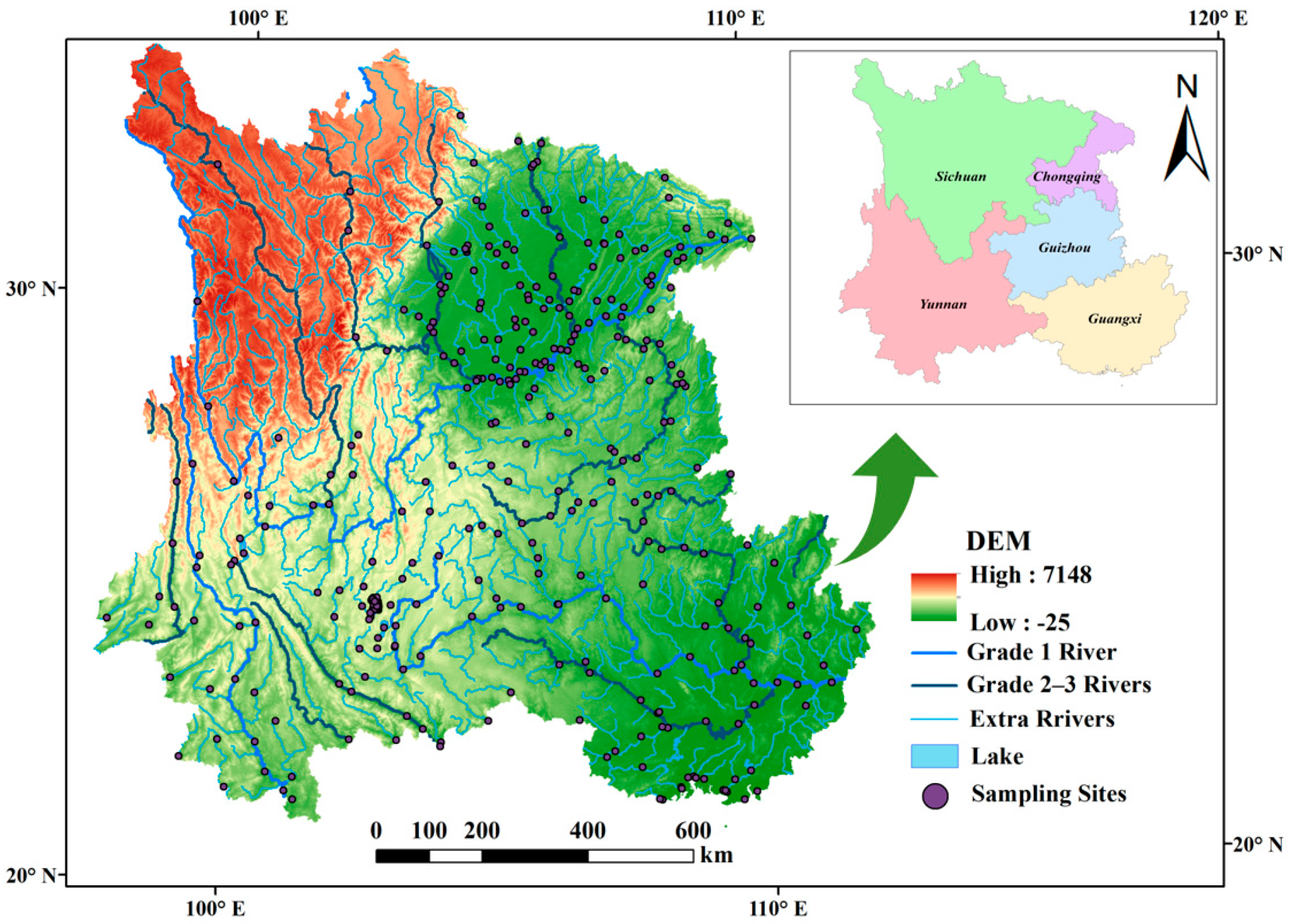
Stations are spatially distributed across major basins, lakes, reservoirs, and key water functional zones in Southwest China, a region characterized by pronounced topographic relief and extensive karst landforms (Figure 1). Population-dense areas are closely coupled with river networks, encompassing high-mountain headwaters with minimal human interference, as well as mid- to lower-reach mainstreams and plain networks featuring intensive regulation projects and substantial industrial/agricultural loads. This setup provides representative scenarios for complex, multi-source disturbance interactions.
At each automatic monitoring station, the system records nine conventional water quality parameters every 4 h: water temperature (WT, °C), pH, dissolved oxygen (DO, mg/L), electrical conductivity (EC, μS/cm), turbidity (Tur, NTU), permanganate index (CODMn, mg/L), ammonia nitrogen (NH3-N, mg/L), total phosphorus (TP, mg/L), and total nitrogen (TN, mg/L).
These parameters constitute core physicochemical indicators in surface water quality assessment frameworks, widely employed in WQI studies for major rivers and lakes. They comprehensively capture water body physical properties, organic pollution, and nutrient status [24].

2.2. Data Preprocessing and WQI Construction

To maintain a consistent analytical framework, this study applies a unified nine-parameter WQI model to all stations and analytical steps. Raw time series undergo strict preprocessing: duplicate timestamps are removed, and missing values are linearly interpolated only when at least two valid observations exist on both sides; otherwise, the affected windows are discarded to avoid bias [25]. The WQI at time t is defined as a weighted linear combination of dimensionless sub-indices qi(t):
WQI   =   100   × i = 1 n w i q i ( t )
where q i ( t ) is the sub-index for parameter i at time t, and wi is the corresponding weights (Table 1) satisfying i = 1 n w i = 1. Multiplication by 100 scales WQI to the interval [0, 100], with larger values indicating better water quality. This weighted linear framework is consistent with common WQI models and facilitates comparison with domestic and international studies [26].
Given the high temporal resolution and frequent short-term fluctuations in automatic monitoring data, traditional grading–penalty functions tend to introduce artificial discontinuities near thresholds and over-amplify minor exceedances. Recent studies have therefore adopted continuous function mappings or data-driven schemes to reduce subjective grading effects and improve the smoothness and robustness of WQI models [27]. Following this line, we employ a penalty-free logistic normalization for all parameters, which provides a smooth mapping from measured concentrations to sub-indices in [0,1].
For pollutant-type parameters (e.g., CODMn, NH3-N, TP, TN), the sub-index qi is defined as:
q i   =   1 1   +   exp [ a i ( x i ( t ) θ i ) ]
where xi(t) is the measured value of parameter i at time t, θi is the central threshold, and ai > 0 controls the steepness of the S-shaped curve. When the pollutant concentration is far below the threshold (xiθi), qi ≈ 1; as the concentration increases well above θi, qi gradually approaches 0 [28]. For benefit-type parameters such as DO, the sign is reversed so that higher concentrations yield larger sub-indices:
q i   =   1 1   +   exp [ a i ( x i ( t ) θ i ) ]
For bilateral parameters such as pH, which have an optimal range, a symmetric logistic function is constructed around the target midpoint so that the sub-index decreases on both sides of the optimum. This logistic mapping is consistent with improved WQI formulations that use continuous sub-index functions, helping to reduce parameter subjectivity and mitigate issues such as indicator “eclipsing” and ambiguous class boundaries [29]. The logistic parameters θi and ai for all nine indicators were explicitly specified based on national regulatory standards, ecological reference ranges, and monitoring-practice-informed background levels. The complete parameterization and its rationale are provided in Table S1 of the Supplementary Materials to ensure full reproducibility of the WQI calculation. Under this formulation, qi ≈ 1 under high-quality conditions and gradually tends to 0 as deterioration intensifies, ensuring that WQI remains both smooth and sufficiently sensitive. To assess parameter robustness, we additionally perturbed θi and ai within plausible ranges (θi ± 10%; ai ± 20%) and found that the resulting WQI series remained highly consistent with the baseline formulation across stations (Table S2).
The importance of each indicator in WQI is expressed through its weight wi. Higher weights are assigned to DO, CODMn and NH3-N, reflecting national surface water management priorities, ecological significance and previous WQI applications, while TP and TN receive secondary weights. WT, EC and Tur are treated as auxiliary descriptors of physical properties and background conditions and thus have relatively low weights [26,30]. The final weighting scheme is summarized in Table 1. As a robustness benchmark, we additionally compared the adopted weighted WQI against an equal-weight formulation and found high rank consistency across stations (Tables S3 and S4), supporting the retention of the weighted WQI in the main analysis.

2.3. Shannon Entropy and Structure Normalization

To jointly characterize the amplitude and internal structural complexity of short-term water-quality fluctuations, this study introduces window-scale Shannon entropy as a complementary descriptor to variance-based metrics such as SD and CV. Entropy describes the occupancy structure of WQI across different state intervals and has been widely used to quantify complexity and uncertainty in hydrological and water-quality time series [31].
For a WQI sequence { x t } at a given station within a window of length n, the window mean μ and standard deviation σ are first computed, and Z-score standardization is applied:
Z t = x t μ σ
yielding the standardized sequence { Z t }. This sequence is then discretized into k equal-width bins in the standardized space. Let pj (j = 1, …, k) denote the empirical probability of the j-th bin, i.e., the proportion of observations falling into that bin within the window. Similar discretization–entropy schemes have been used for hydrological series, precipitation variability and river water-quality dynamics, demonstrating that entropy provides information beyond variance or CV alone and helps identify high-variability regions and key monitoring sites [32]. The Shannon entropy of the window is defined as:
  H   =   j = 1 k p j log 2 p j
with the convention that p j   = 0, p j log 2 p j   = 0. When WQI values are concentrated in a few bins, H is low; when multiple bins are more evenly occupied and WQI exhibits multi-stage, multi-platform or near-chaotic fluctuations, H becomes high.
The possible range of H depends not only on the total number of bins k but also on the actual number of occupied bins kocc. For example, for a window in which WQI falls into k, only two or three bins cannot reach the maximum entropy attainable when all bins are occupied. To ensure comparability across windows with different kocc, this study employs a structural normalization. For a fixed window length n, total bin number k, and occupied-bin count kocc, the theoretical entropy range was derived by searching the feasible discrete allocation space under the occupancy constraint. Specifically, Hmin(kocc) and Hmax(kocc) correspond to the minimum- and maximum-entropy probability allocations achievable when exactly kocc bins are occupied. The raw entropy H is then mapped to a normalized entropy h:
h   = H   H min ( k occ ) H max ( k occ )   H min ( k occ ) , ( 0 h 1 )
where h represents the relative complexity under the current occupancy constraint: values of h ≈ 0 indicate that, within the theoretically allowed range, probability mass is highly concentrated and the sequence is strongly ordered or dominated by a single event; values of h ≈ 1 suggest that the occupied bins are nearly equiprobable and the fluctuation process is structurally complex and hard to compress. This treatment is consistent with recent normalized entropy-based indicators such as “disorder index” and “information entropy weight” [31,33]. Through this structure-constrained normalization, entropy becomes directly comparable across windows with different occupied-bin numbers and can therefore be combined meaningfully with CV in the proposed entropy–CV framework. The theoretical minimum and maximum entropy values used for normalization under different occupied-bin numbers are summarized in Table S5, which was derived from exhaustive enumeration of feasible probability allocations under the occupancy constraint. Unless otherwise stated, the term “entropy” in the following sections refers to this normalized Shannon entropy h, and all joint analyses are performed in the hCV space (hereafter referred to as the entropy–CV framework for brevity).

2.4. Short-Term Dynamic Structure Indicator System

To characterize short-term water-quality stability, three types of indicators are computed within each fixed-length window: (1) amplitude-based fluctuation metrics; (2) disturbance indicators for “pollution events”; and (3) a separation index for determining the CV threshold. For a window of length n with WQI sequence, the standard deviation SD is:
SD = 1 n 1 t = 1 n ( x t x ¯ ) 2
where x ¯ is the window mean. SD reflects absolute fluctuation amplitude but depends on x ¯ . To enable comparison across different mean water-quality levels, the dimensionless coefficient of variation is defined as:
CV = SD x ¯
CV is the core indicator used to distinguish “low-fluctuation” and “high-fluctuation” windows and underpins the subsequent joint analysis in the hCV space and CV–threshold selection.
To represent substantive deterioration with clearer environmental meaning, season-adaptive WQI thresholds were constructed separately for each station. Specifically, four-hourly WQI observations were first grouped by calendar season, and the station-specific seasonal mean WQI was used as the local reference level. For station s in season q, the event threshold was defined as:
T s , q = ( 1 x q ) μ s , q
where μ s , q   is the mean WQI of station s in season q, and x q is the season-specific decrement ratio. In the baseline scheme retained in the main text, x q was set to 0.10 in winter, 0.15 in spring, 0.20 in summer, and 0.15 in autumn. A four-hourly observation was classified as an event when WQI < T s , q . For each fixed non-overlapping three-day window, the number of below-threshold four-hourly WQI observations was counted and recorded as Count. This procedure makes the event definition explicit, season-specific, and testable while avoiding station-specific manual threshold tuning. The full algorithm and its sensitivity under looser and stricter decrement schemes are summarized in Tables S6 and S7.
An objective CV breakpoint between low- and high-volatility windows is then identified via a data-driven threshold search. In the main analysis, CV thresholds t were scanned over a preset candidate range of 0.06–0.12 with a step size of 0.002. This interval was chosen because it covers the transition from low-to-moderate variability to the high-separation plateau observed in the main sample, while avoiding excessively high thresholds that would sharply reduce the number of CVhigh windows without materially improving group separability. For each t, windows are divided into a low-CV group (CVt, CVlow) and a high-CV group (CV > t, CVhigh), and their separation is evaluated from two complementary perspectives. First, disturbance-risk separation is quantified using Count: the empirical Count distributions of the two groups are compared and the Kolmogorov–Smirnov distance Dks(t) is computed to assess whether CVhigh windows are more prone to WQI-threshold exceedances [34]. Second, structural separation is evaluated using normalized entropy h: for each t, an effect size h ( t ) is calculated between the h-distributions of the two groups, indicating whether CVhigh windows tend to exhibit more complex, multi-stage or multi-plateau fluctuation structures than CVlow windows.
These two dimensions are integrated into a composite separation index:
J ( t )   =   α D k s ( t )   +   ( 1 α ) / h ( t ) /
where 0 ≤ α ≤ 1 balances the contributions of disturbance risk and structural separation; here α = 0.5, giving them equal weight. Additional sensitivity analysis across α = 0.2–0.8 showed that the overall threshold-selection structure remained stable, indicating that α = 0.5 is a balanced operational choice rather than a fragile dataset-specific setting (Figure S1). This strategy is consistent with recent environmental risk studies that combine statistical tests, effect sizes and resampling to identify thresholds or classification boundaries. The statistically optimal CV threshold t* is taken as the value of t that maximizes J(t).

2.5. Station-Level Instability Indicators and Typology Definition

To summarize short-term instability at the station scale, two station-level indicators were derived from all valid three-day windows. The high-CV ratio (HCR) was defined as the proportion of windows classified as CVhigh among all valid windows at a station:
HCR = N CV high N valid
where N CV high   is the number of windows satisfying CV > t, and N valid is the total number of valid windows. HCR represents the relative frequency of pronounced short-term fluctuations. In parallel, the mean (11) count (MC) was defined as the average number of below-threshold WQI observations per valid window:
  MC = 1 N valid j = 1 N valid Count j
where Count j denotes the number of four-hourly WQI values below the corresponding station-specific seasonal threshold in window j. MC represents the mean exposure of a station to deterioration events. Exceedance-based summaries are especially meaningful under high-frequency monitoring conditions because short-lived deterioration events can be substantially underestimated at lower sampling frequencies.
To further characterize the internal structure of high-variability behavior, the entropy composition within the CVhigh subset was summarized by two proportions. The adopted cutoffs for HCR and normalized entropy were not prescribed a priori but were supported by threshold-scanning results and sensitivity comparisons, as summarized in Figures S2 and S3 and Table S8. The low-entropy (hlow) share was defined as the proportion of CVhigh windows with h ≤ 0.60, whereas the high-entropy (hhigh) share was defined as the proportion of CVhigh windows with h ≥ 0.80. For map visualization, station-level HCR values were additionally grouped into five classes using the Jenks natural breaks method, and, based on these station-level summaries, each station was assigned to one of five instability types: stable or nearly stable, mildly unstable, event-dominated unstable, complex-disturbance-dominated unstable, and mixed unstable. The complete decision rules for station-level instability classification and the associated cutoff values used in this framework are summarized in Tables S9 and S10.

3. Results

3.1. Sensitivity of Shannon Entropy to Parameters and Characteristics of Binning Structures

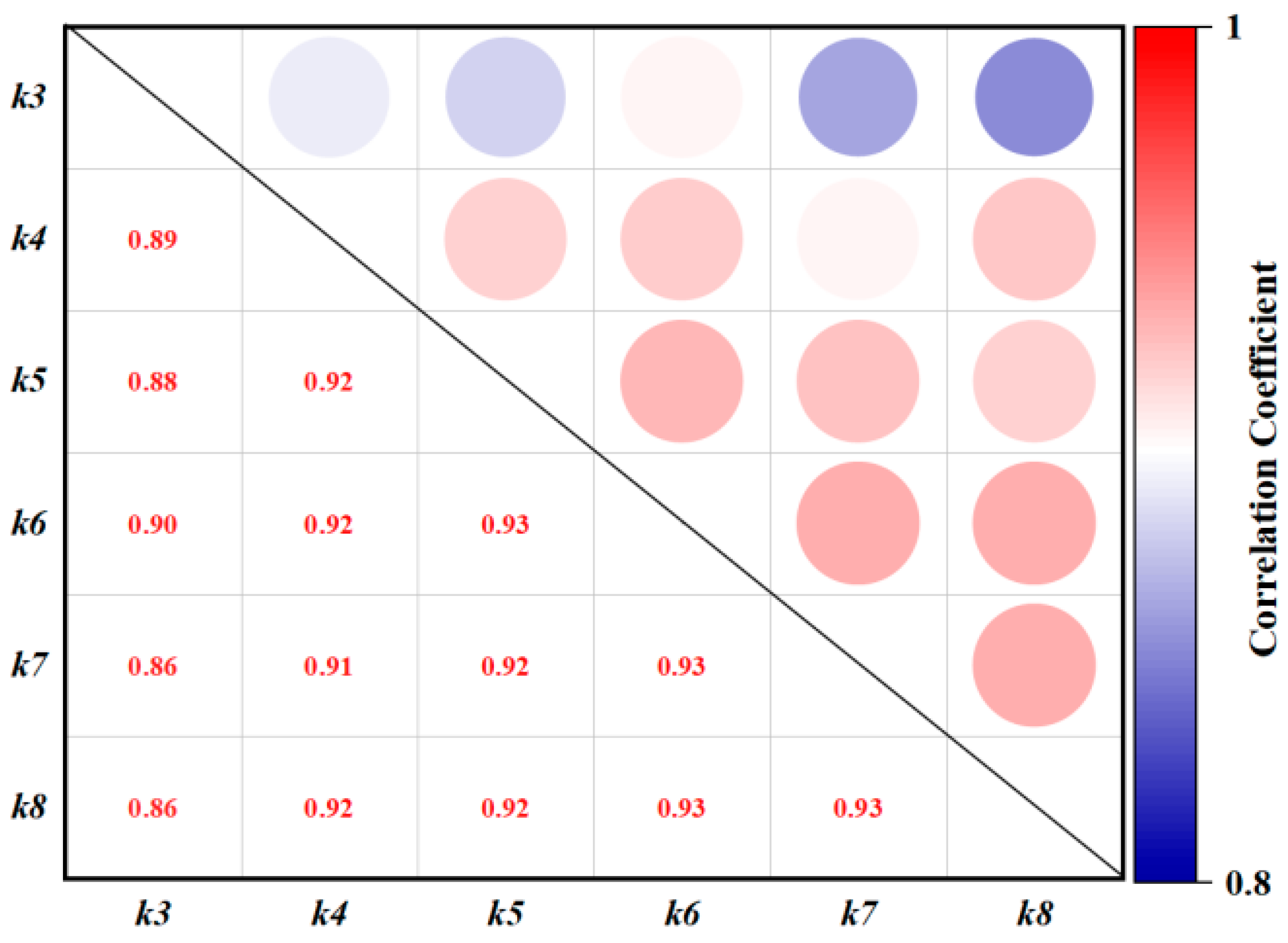
This study assessed the sensitivity of short-term WQI sequences to the number of bins. We used all fixed non-overlapping three-day windows from 336 screened automatic stations in southwest China with sufficient valid data. Under the same histogram construction method, we set three to eight bins and calculated the corresponding window-level Shannon entropy. Next, we calculated pairwise Pearson correlation coefficients among entropy series derived under different bin settings to evaluate the consistency of relative entropy patterns across parameter choices. In the present sensitivity context, coefficients above 0.80 were interpreted as indicating high consistency among bin-setting choices. As shown in Figure 2, correlation coefficients between any two bin numbers were positive and significant, generally no less than 0.85. This indicates that entropy roughly ranks “high-fluctuation windows” and “low-fluctuation windows” consistently regardless of bin number. Related studies also note that too few bins in histogram-based entropy estimation mask tail and multimodal structures. This makes event-type windows hard to distinguish from multi-stage disturbance windows. The presence of too many bins amplifies estimation variance under limited samples and may cause systematic bias [35]. Combining features in Figure 2, for this study’s three-day WQI windows, entropy showed strong parameter dependence when bins increased from 3 to 4. Above five bins, further increases had markedly reduced impact on the relative structure of entropy sequences. A bin number of 6 showed good sensitivity across all bins and better reflected overall data patterns [36]. Thus, this study selected six bins as a compromise for short-term entropy analysis. It provides enough resolution to distinguish fluctuation patterns while remaining statistically robust.
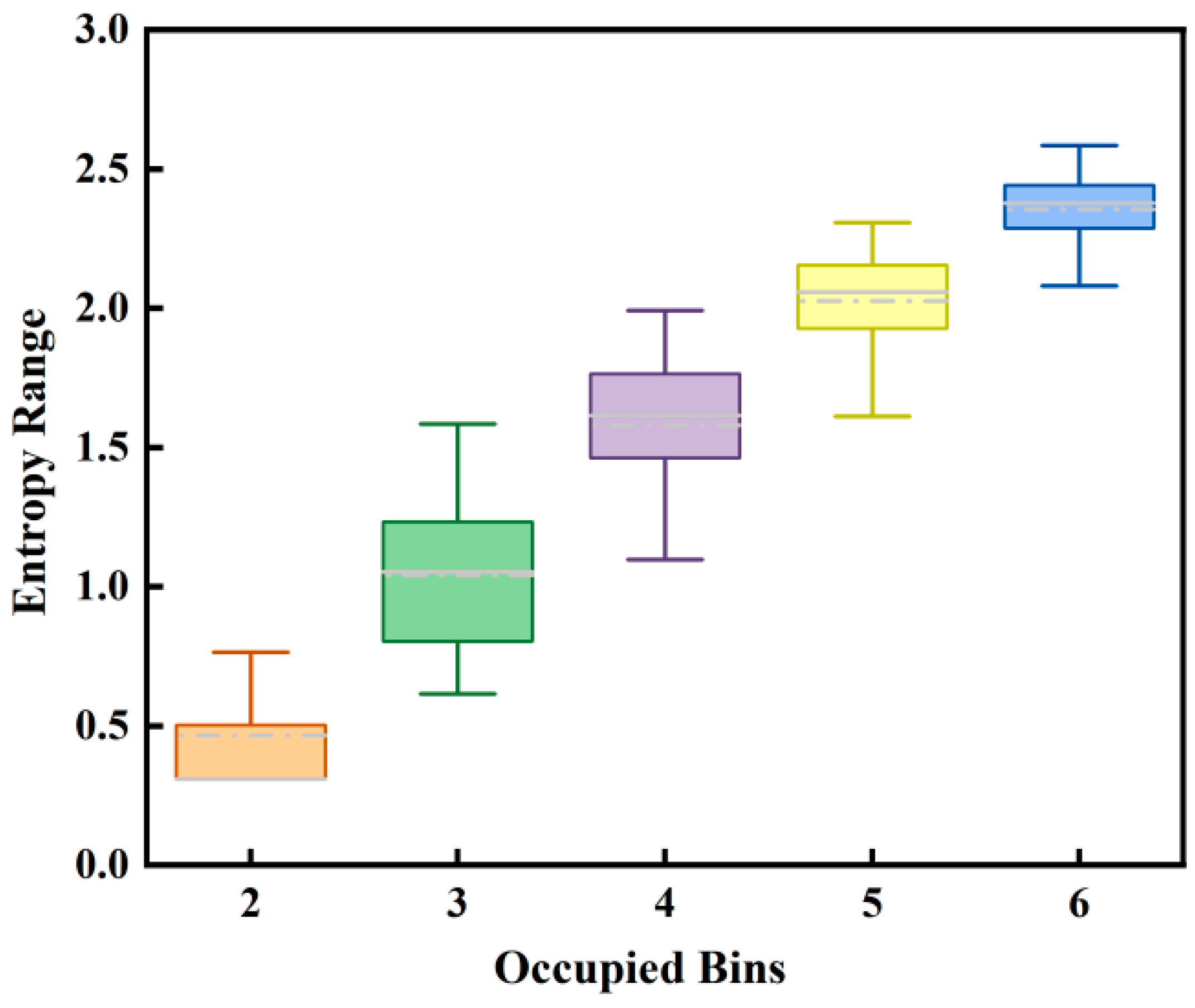
Under fixed bin number of 6, this study counted occupied bins for all three-day windows. It grouped windows by occupied bins from 2 to 6. The corresponding theoretical minimum and maximum Shannon entropy values under different occupied bin numbers are listed in Table S5. For each group, it used theoretical derivation and numerical enumeration to find minimum and maximum entropy values reachable in probability distributions. This yielded “entropy reachable intervals” for each bin structure. Figure 3 used boxplots to show changes in entropy reachable intervals across occupied bin numbers. From two bins, interval height and median rose monotonically with more occupied bins. With only two occupied bins, the reachable range was narrow. This showed that two-state dominant windows had low structural complexity. With three to four occupied bins, intervals widened clearly. They could represent “event-type” windows focused on few states or near-uniform multi-stage fluctuations. With five to six occupied bins, intervals rose further but growth slowed. Entropy then mainly reflected internal distribution details. Extreme “highly ordered” or “completely disordered” cases became rare. This reflected that more occupied bins often matched complex disturbances with multi-plateaus or multi-peaks. Fewer occupied bins better showed sustained good quality, sustained degradation, or single sudden events [37,38,39].
On this basis, this study did not use raw entropy values directly. Instead, it applied linear stretching to each occupied bin structure. It mapped actual entropy values between the corresponding theoretical minimum and maximum. This produced structure-constrained normalized entropy. It removed systematic bias from varying occupied bin numbers without altering the essential ranking [35,37].

3.2. Characteristics of Disturbance Events in Windows, CV Threshold Selection, and the Structure of the Entropy–CV Joint Distribution

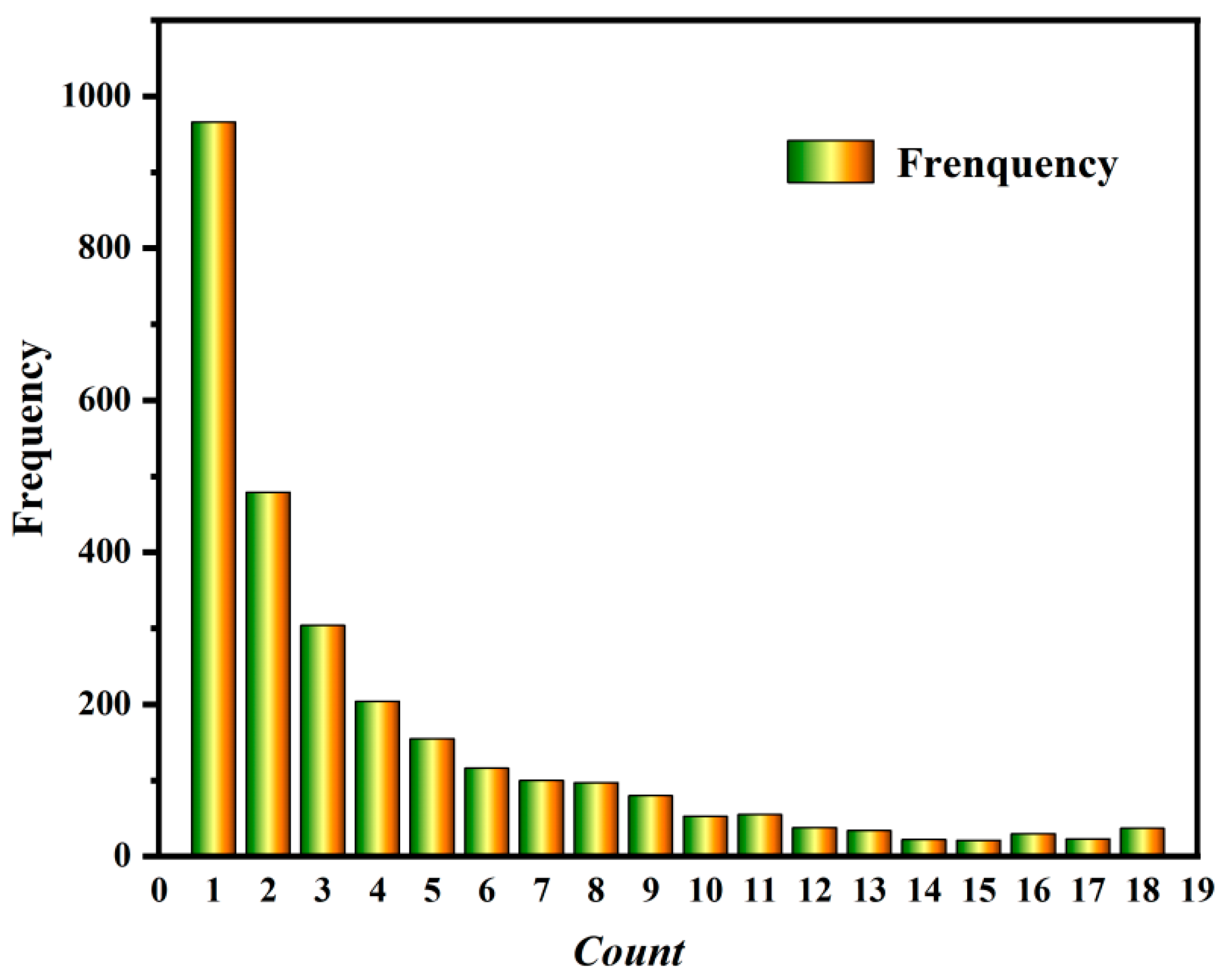
Under high-frequency monitoring, “pollution event windows” at short time scales often account for a minority of all windows. However, they have disproportionate importance for ecological risks and management responses [6]. In this study, the number of times WQI fell below the seasonal threshold within each fixed non-overlapping three-day window was defined as the “pollution event count”. This provided an externally interpretable indicator of short-term disturbance intensity under an explicit season-specific thresholding scheme [40]. Figure 4 showed the frequency distribution of pollution events in three-day windows for southwest China. Most windows had only one to three WQI threshold exceedances. Frequency decayed rapidly with increasing counts. Few windows showed over 10 continuous or repeated exceedances. This distribution had a typical “long-tail” feature. It indicated that surface water quality in southwest China at the three-day scale was mainly “low-frequency events + occasional strong events” rather than uniform mild fluctuations [41].
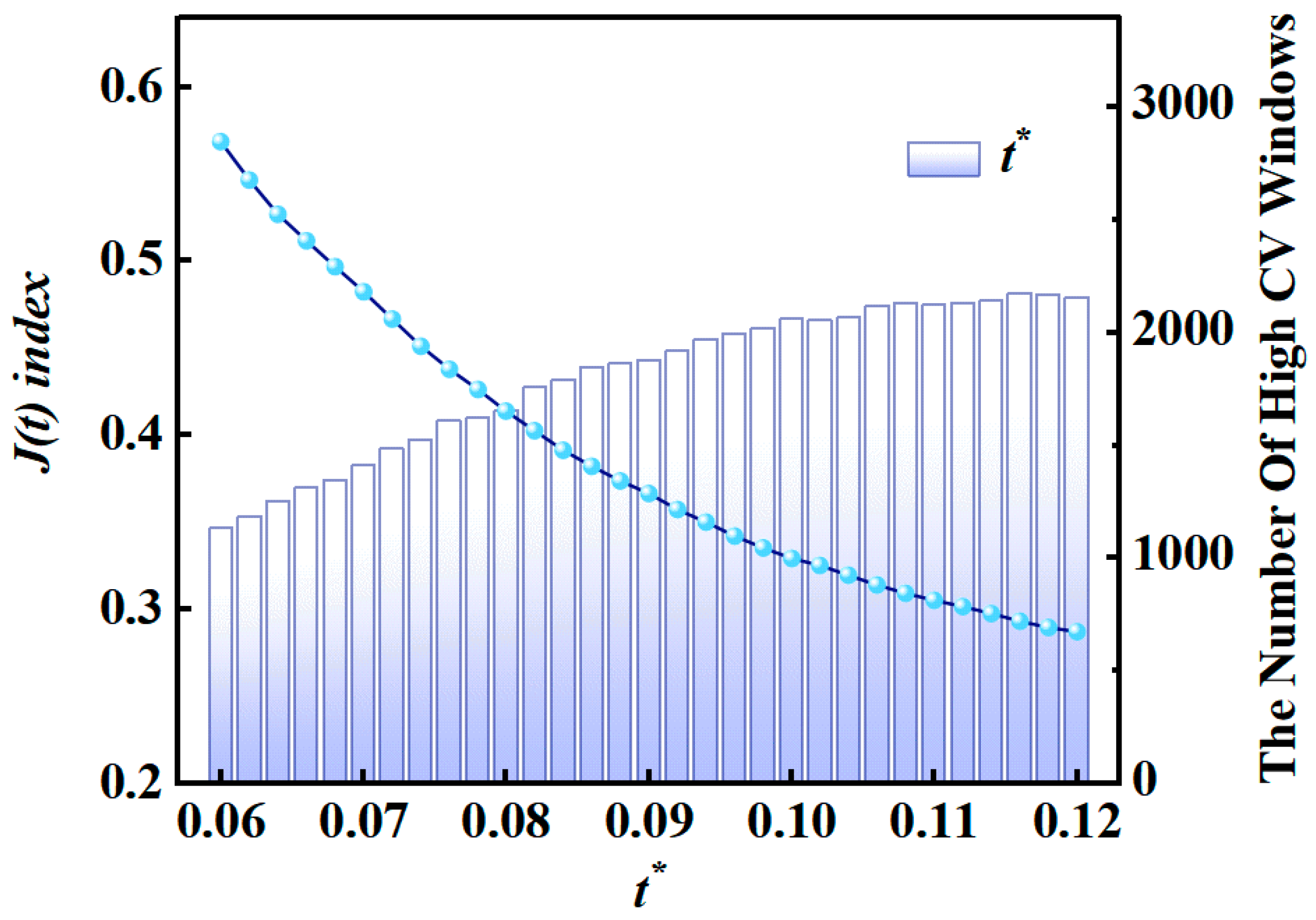
This study used CV as an amplitude indicator. It scanned candidate CV thresholds and compared differences in pollution event counts and normalized entropy between CVhigh and CVlow groups under different thresholds. Figure 5 shows the joint separation index and high-CV window proportion varying with CV thresholds. Bars represent overall separability between CVhigh and CVlow groups in event counts and entropy structure at each threshold. The line shows the number or proportion of windows classified as CVhigh. When CV thresholds rose from 0.06 to about 0.10, the joint separation index increased monotonically. This shows amplified differences between CVhigh and CVlow groups in “pollution event occurrence” and “entropy complexity”. When thresholds increased further to 0.10–0.12, the index entered a flat high-value plateau. This indicated near-saturated distribution differences between groups. Further increases only reduced the proportion of “high-fluctuation” windows quickly [42]. In contrast, CVhigh window proportion declined steadily with rising thresholds. It fell to a small fraction near 0.12. Overall, CV between 0.10 and 0.12 formed a compromise interval balancing separability and sample size.
To test the robustness of the candidate threshold intervals, this study performed bootstrap resampling with replacement at B = 500 and B = 1000. For each resample, it recalculated separation curves for CVhigh/CVlow groups and recorded optimal threshold t* at the maximum value [43]. Table 2 summarizes the bootstrap results. Regardless of whether B = 500 or 1000, the main sample optimal threshold was about 0.116. Bootstrap t* means and medians stayed around 0.116. Corresponding 95% confidence intervals focused on the narrow 0.106–0.120 range. Statistics for B = 500 and B = 1000 were almost identical. This result shows that the statistically optimal CV threshold robustly fell in the 0.10–0.12 interval on this dataset, with a peak near 0.11 [44].
To further assess the practical robustness of this threshold range, we compared the resulting station-level classifications under CV = 0.10, 0.116 and 0.12. Agreement rates remained consistently high for both HCR-based Jenks-5 classes and instability types (Table S8). In particular, HCR-based spatial classes showed agreement rates above 97%, while instability-type agreement remained high overall and was especially strong between 0.116 and 0.12. These results indicate that the main spatial classification and typology are not materially altered by plausible threshold variations within the 0.10–0.12 plateau.
Although bootstrap resampling identified a statistical optimum near CV = 0.116, the composite separation curve exhibited a stable high-value plateau over approximately 0.10–0.12. We therefore distinguish between the statistically optimal point and the operational threshold used for interpretation [45]. CV = 0.10 was retained as the operational cutoff because it lies at the lower bound of this plateau, preserves a larger number of CVhigh windows for stable spatial comparison, remains straightforward to interpret in practice, and does not materially alter station-level HCR classes or instability types relative to 0.116 or 0.12 (Table S8). In addition, several previous studies have adopted similar CV-based boundaries for distinguishing background fluctuations from more pronounced variability in environmental monitoring contexts [46]. Accordingly, all subsequent analyses of CVhigh window proportions, high-fluctuation sites, and entropy–CV structure types were based on CV > 0.10.
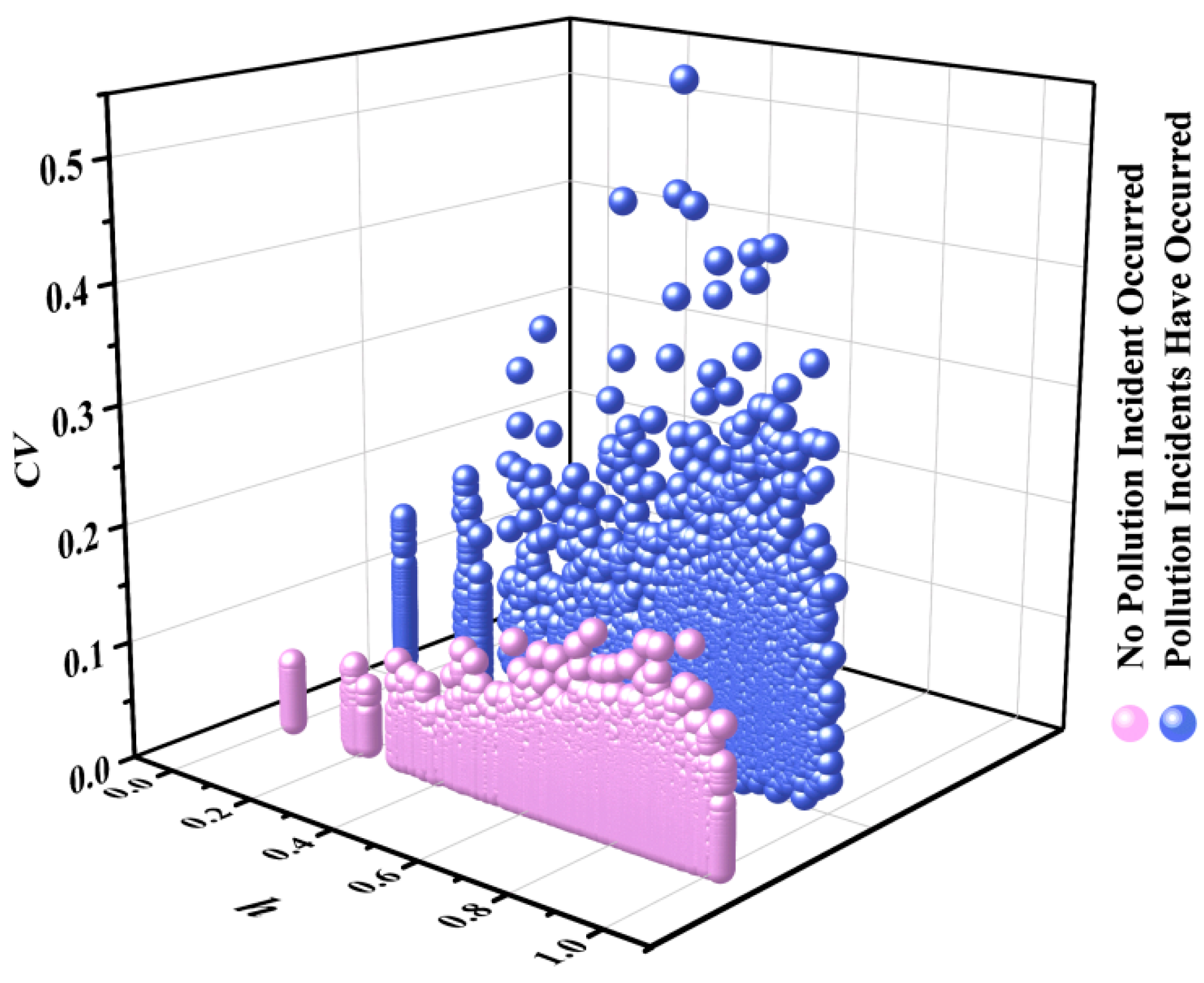
After determining the threshold, the three-dimensional joint distribution of “entropy–CV–pollution events” helps to further understand dynamic features of different window types. Figure 6 plotted normalized entropy, CV, and “whether pollution events occurred” in three-dimensional space. No-event windows and pollution-event windows were marked with different colors. Overall, in the low-fluctuation interval where CV ≤ 0.10, no-event windows dominated. Their normalized entropy mostly concentrated at medium-high levels. This represented gradual fluctuations with small amplitude but relatively uniform structure [47]. In the same interval, some event windows existed. They mostly clustered in lower entropy ranges. This showed structures dominated by single or few events with sharp drops in few levels. When CV exceeded 0.10 into the high-fluctuation zone, event windows increased rapidly and nearly dominated. They included low-entropy “deep-valley” event windows and high-entropy “multi-stage mixed disturbance” windows. This indicated that strong amplitude fluctuations often accompanied overlays of multiple complex processes [41,48].

4. Discussion

4.1. Identifying Differences in Water Quality Dynamic Patterns of Typical Windows: A Comprehensive Analysis Using the Entropy–CV Combined Metric

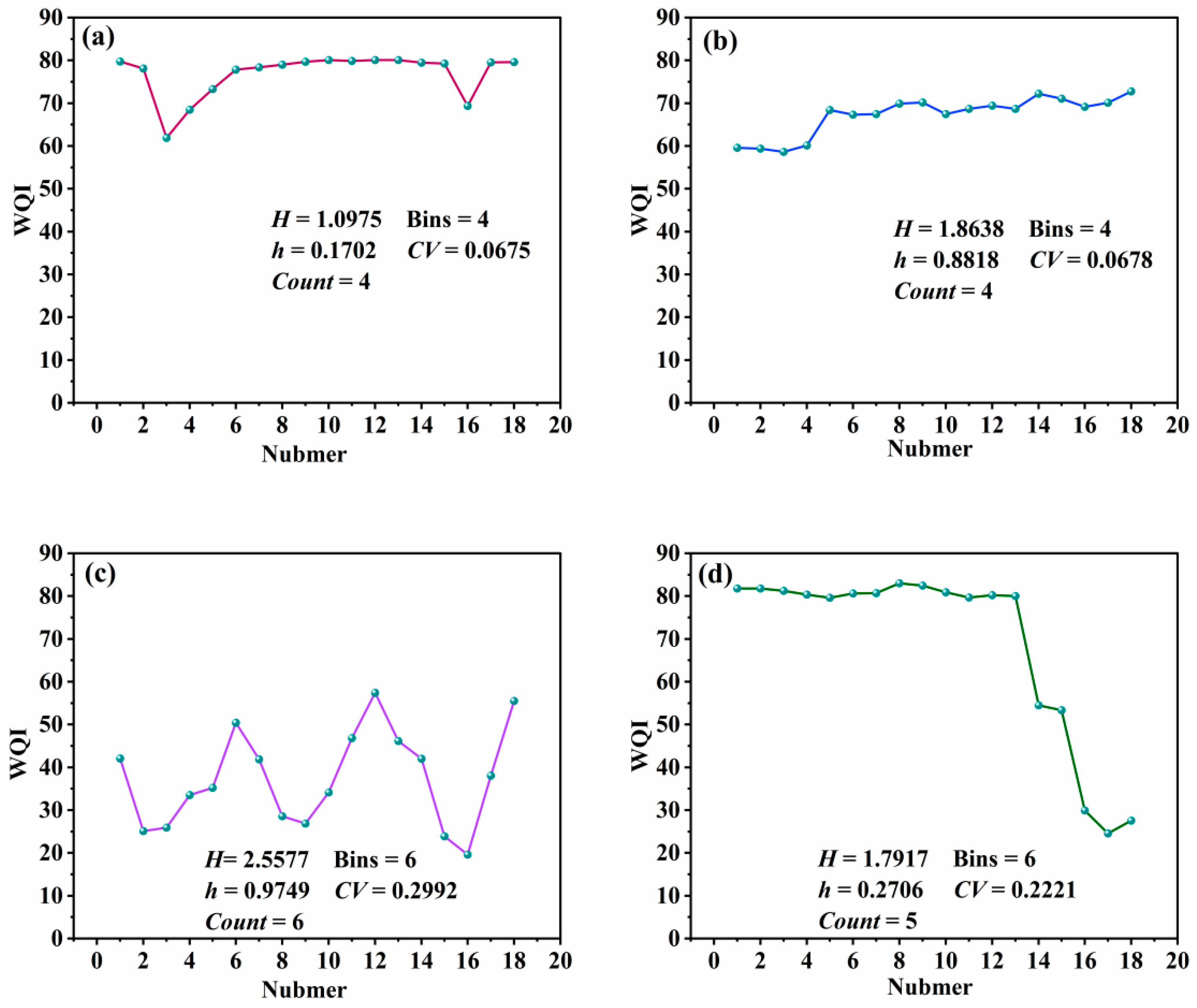
To further reveal the advantages of the entropy–CV joint indicators in characterizing short-term water quality stability, this study screened and constructed four typical three-day windows based on the entropy–CV distribution features of the full sample (Figure 7). These represent different water quality dynamic modes from low fluctuation to strong disturbance, and from simple structure to high complexity. These windows show significantly different Shannon entropy and its normalized values under similar or identical CV values. This indicates that relying only on the traditional coefficient of variation cannot fully depict the internal structure of water quality processes. The entropy indicator plays a unique role in characterizing the organization level of fluctuations, state visit frequency, and complexity of short—term sequences [49]. First, from Figure 7a,b, it can be observed that, although both have CVlow levels, their entropy values differ significantly. This leads to distinct water quality fluctuation modes. Figure 7a shows a typical “single burst type” disturbance structure. Most WQI values in the window distribute stably around high-value intervals. Only in individual periods do obvious sudden drop events occur. This makes the overall fluctuation structure simple and state visits concentrated. Thus, the entropy value is significantly low. In contrast, Figure 7b has limited amplitude but WQI shows continuous slow rise and periodic undulation superposition. Different value segments are continuously visited. The distribution is more uniform. This leads to a substantial increase in entropy. This comparison clearly shows that CV controls only the amplitude. Entropy determines the complexity of the fluctuation structure. Even under the same amplitude, there exist “single event type” and “gradual type”: two completely different dynamic processes.
The second type of window (Figure 7c) reflects the synergistic performance of high CV and high entropy (hhigh) in extreme cases. The WQI values in this window continuously jump and fluctuate frequently in the 20–60 interval. Multiple states switch back and forth. This shows a fluctuation behavior similar to “chaotic disturbance”. Its bin count reaches 6. This indicates that the sequence unfolds in higher dimensions. The h approaches 1. This shows that each state segment is visited nearly uniformly. There is no significant dominant state [50]. This structure reflects highly unstable system water quality behavior. It is common in water bodies subject to continuous external inputs or frequent disturbances. This window demonstrates an important phenomenon. Under high fluctuation intensity, entropy can further distinguish whether the fluctuation is “disordered multi-state jumping” or “continuous unidirectional change” process. The structural complexity far exceeds what amplitude indicators alone can explain.
In contrast, Figure 7d also has a high CV level, but the entropy value does not reach the height of Figure 7c. This means that, although there is large amplitude fluctuation in the window, its fluctuation is mainly driven by a one-time, continuous unidirectional steep drop event. In the early stage, WQI remains in a stable high-value interval. Then, a rapid continuous decline occurs and enters a low-value stage. The fluctuation structure is dominated by a “single sudden drop” rather than the frequent complex jumps as in Figure 7c. Therefore, this window represents a typical “unidirectional collapse type” pollution event. This comparison further illustrates that, under CVhigh, there may be structurally highly complex (Figure 7c) or relatively simple (Figure 7d) situations. Entropy is the key indicator to distinguish these two situations. This approach aligns with recent studies that integrate entropy metrics with variability indices for enhanced water quality characterization.

4.2. Response Characteristics of the Combined Entropy–CV Metric to Water Quality Disturbances Across Multi-Time-Scale Windows

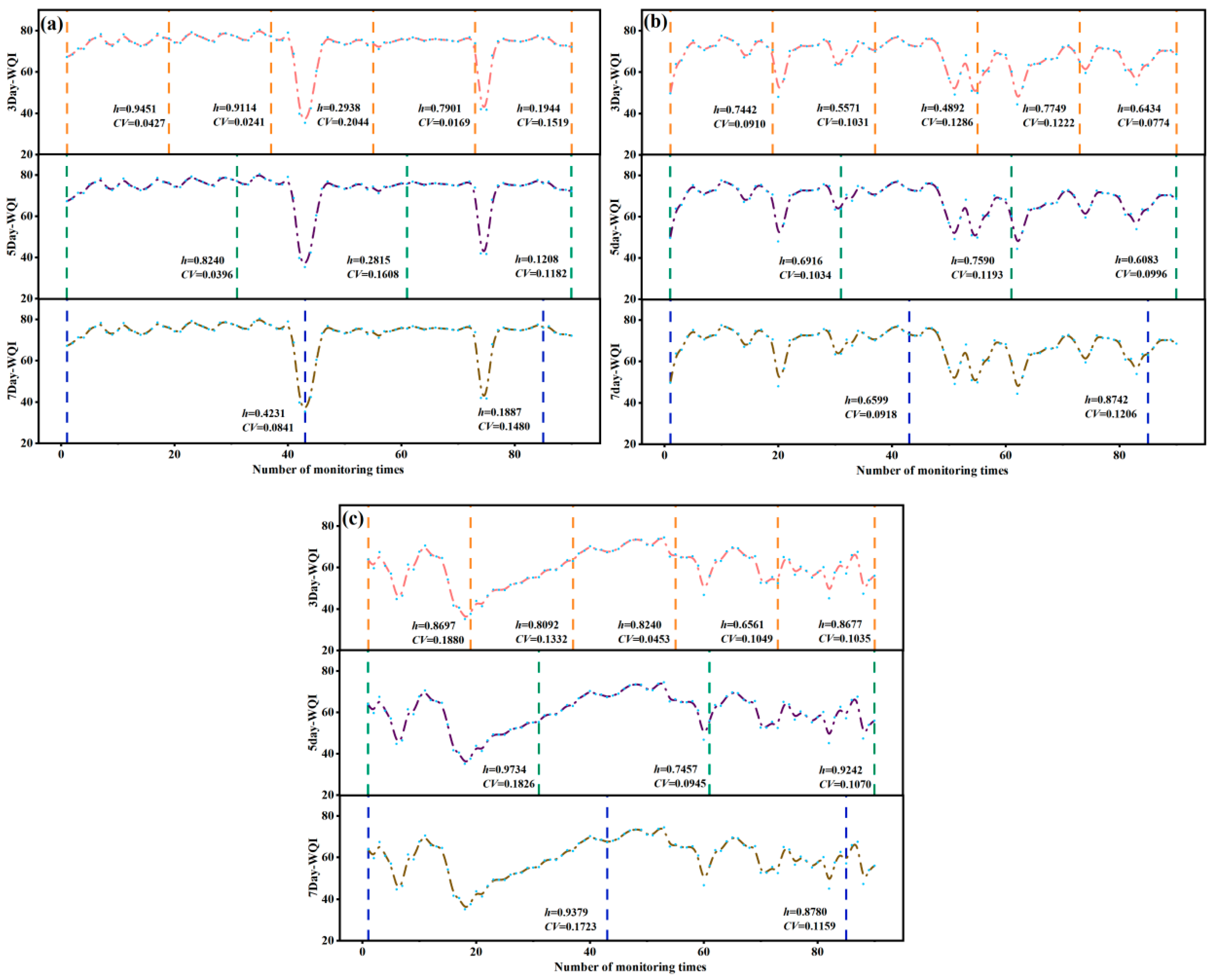
To test whether these conclusions remain valid at coarser temporal resolutions, we further examined three representative WQI sequences over 15 days and computed CV and h under three-, five- and seven-day windows (Figure 8). These sequences, illustrated in panels (a–c) of Figure 8, respectively cover an event-dominated episode, a medium-fluctuation no-event case and a long-duration multi-stage perturbation. For multi-scale comparability, the bin number for entropy calculation was fixed at k = 6 according to the prior sensitivity analysis [51].
For the event-dominated sequence (Figure 8a), the three-day windows clearly separate five stages: a calm pre-event plateau with low CV and relatively high h a build-up phase, the main event peak characterized by high CV and reduced h, an immediate post-event adjustment and a wake period with renewed moderate fluctuations. In the entropy–CV plane, these windows trace a trajectory from “CVlowhhigh” to “CVhighhlow” and then back towards intermediate states as the system recovers. When the same sequence is aggregated to five-day windows, these stages collapse into three broader segments (pre-event, event period, and mixed tail recovery), and under seven-day windows into two weekly segments. Thus, while five- and seven-day windows still distinguish a relatively stable period from a heavily perturbed one, they blur the timing and internal evolution of the disturbance that is clearly visible at the three-day scale.
The medium-fluctuation, no-event sequence (Figure 8b) contains no WQI values below the seasonal threshold over 15 days, but local variability is non-negligible. Under three-day windows, CV remains at intermediate levels and h mostly lies in the mid-to-high range with four to five occupied bins, indicating frequent but small shifts around a quasi-stable state—“medium-amplitude, high-entropy” micro-perturbations without substantive deterioration. As the window length increases to five and seven days, the number of CVhigh windows decreases, whereas h stays in the medium range and no new structural patterns emerge. In other words, longer windows primarily smooth short-term variability rather than revealing additional information on disturbance structure, and they reduce temporal resolution in diagnosing “no-event but moderately fluctuating” conditions [52].
The long-duration, complex perturbation sequence (Figure 8c) represents a multi-stage process in which WQI remains depressed or elevated for an extended period with frequent transitions among value ranges. At the three-day scale, event windows simultaneously exhibit medium-to-high CV and high h, corresponding to “CVhighhhigh” multi-platform perturbations that differ fundamentally from single deep valleys driven by a few extreme drops. When aggregated to five- and seven-day windows, the key windows associated with the perturbation still show medium CV and high h, and the classification of this sequence as a complex, multi-stage disturbance remains consistent across scales. However, only the three-day windows provide sufficiently fine time-stamping of onset, core and decay phases to align water-quality responses with potential drivers such as rainfall, wastewater discharge or reservoir operation records.
Overall, Figure 8 demonstrates three robust features of the entropy–CV framework. First, CV primarily reflects disturbance intensity, whereas entropy separates structure types: “CVhighhlow” windows typically correspond to plateau–deep-valley patterns dominated by a few extreme drops, while “CVhighhhigh” windows indicate multi-stage, complex perturbations with frequent state switching. Second, for a given perturbation type, CV and h exhibit consistent behavior across three-, five- and seven-day windows, indicating scale robustness in the short-term range considered. Third, among these scales, the three-day window offers the best compromise between stability of type classification and temporal resolution, making it the most informative basis for event diagnosis and driver attribution. Windows shorter than three days may produce unstable entropy estimates because the number of observations per window becomes too small for reliable probability allocation across bins, whereas windows substantially longer than seven days tend to smooth short disturbance signals and reduce temporal resolution for event diagnosis. This conclusion is consistent with previous multi-scale entropy studies on hydrological and water-quality series, which emphasize the utility of short-to-intermediate windows in capturing dominant process complexities [53].

4.3. Spatial Differentiation Characteristics of Water Quality Instability in Southwest China Based on Three-Day Windows

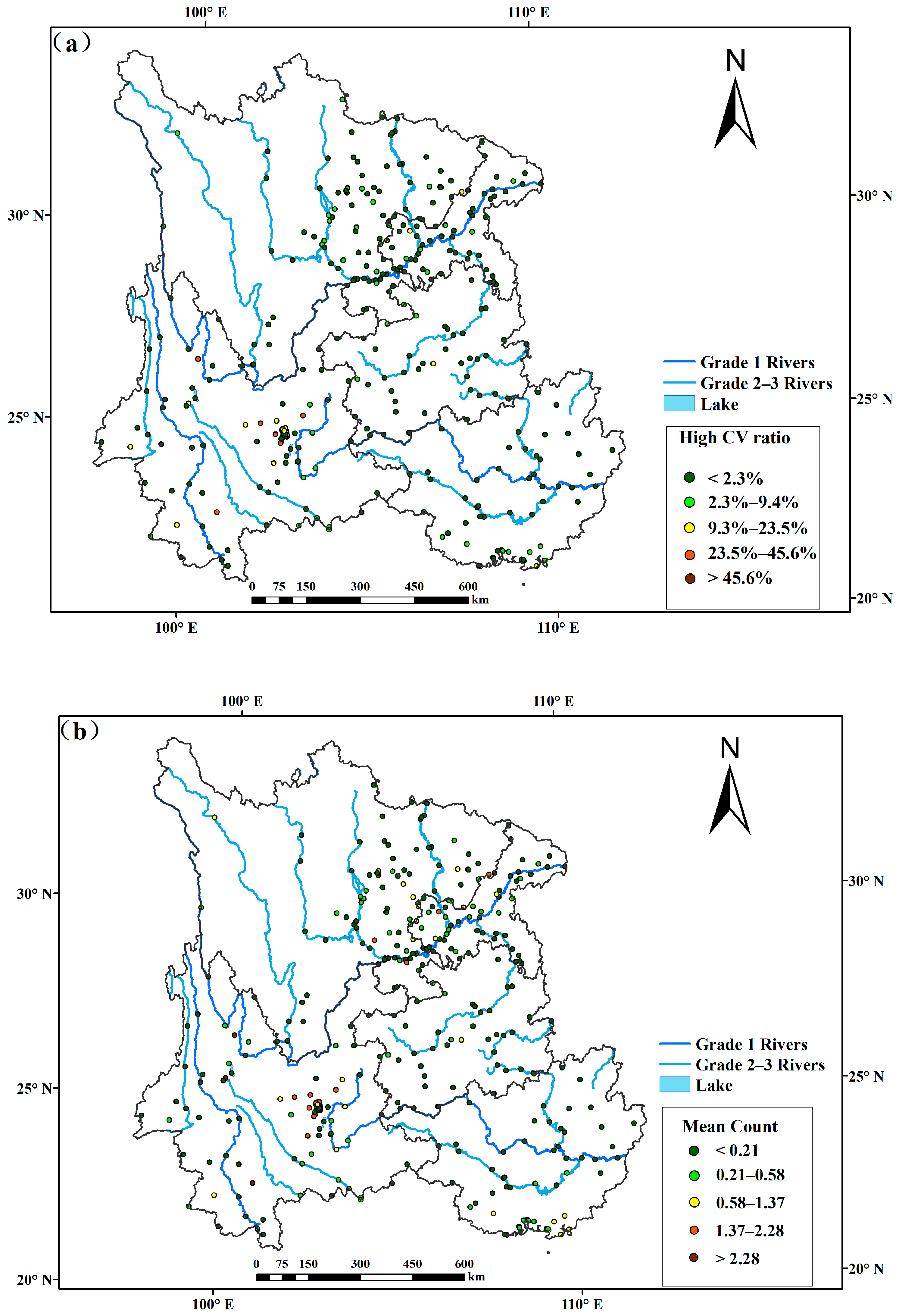
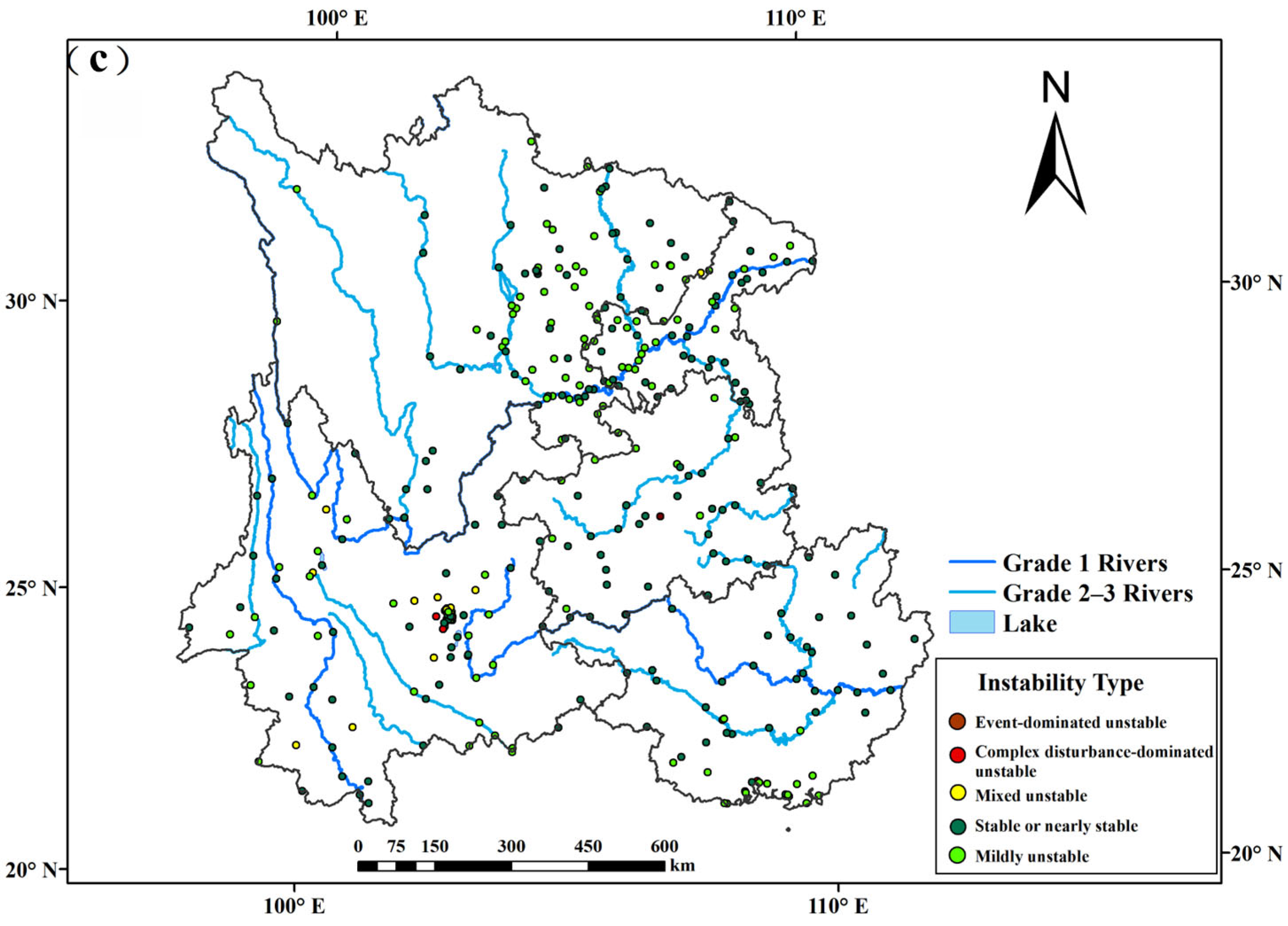
Building on the window-level indicators developed above, we aggregated them to the station scale to characterize spatial patterns of short-term instability in Southwest China. For each station, we calculated the proportion of three-day windows classified as CVhigh and defined it as the High-CV Ratio (HCR), representing the overall intensity of short-term fluctuations. We then counted, for each three-day window, the number of WQI values below the seasonal threshold and averaged this across all windows to obtain the Mean Count of pollution events (MC), which reflects the exposure frequency to substantive deterioration [54]. Finally, within the subset of CVhigh windows, we separated hhigh and hlow windows and combined their proportions with HCR to classify stations into five structure-based instability types. The explicit decision rules and cutoff values used in this classification are summarized in Tables S9 and S10: “stable or nearly stable”, “mildly unstable”, “event-dominated unstable”, “complex-disturbance-dominated unstable”, and “mixed unstable”.
From the spatial distribution of HCR (Figure 9a), Southwest China is dominated by low-to-medium-amplitude fluctuations. Most stations have HCR values below about 9.4%, and only a small number of sites fall into the higher classes above 23.5%, forming scattered points or narrow bands. This indicates that, at the three-day scale, most windows remain in low-fluctuation states. Geographically, stations along the eastern margin of the Qinghai–Tibet Plateau and other high-altitude headwater areas show extremely low HCR, reflecting weak human interference and relatively stable runoff processes in upstream mountain catchments. In contrast, segments in southern Yunnan–Guizhou–Guangxi and along the southern edge of the Sichuan Basin, with medium–low elevations and concentrated urban–agricultural activities, more frequently show medium-to-high HCR classes. CVhigh stations here tend to align along main stems and downstream river networks, forming a typical pattern of enhanced fluctuations in “downstream–plain–human activity aggregation zones”, consistent with previous understanding of greater variability in downstream urban–agricultural complexes [55].
The spatial pattern of MC (Figure 9b) partially resembles that of HCR but is not linearly related. For most stations, MC is below 0.58 events per three-day window, while high values above 1.37 events per window occur mainly near the Yunnan–Guizhou–Guangxi borders and some mid–lower main-stem segments. This implies that, at most sites, short-term WQI fluctuations do not frequently cross seasonal thresholds. Notably, some stations have high HCR but only medium MC, indicating large-amplitude rises and falls in three-day windows where only a fraction of fluctuations translate into water-quality grade deterioration. These are more akin to “high-amplitude but sparse-event” disturbance regimes. Conversely, other stations have relatively high MC but do not necessarily exhibit the highest HCR, suggesting a chronic state in which overall water quality hovers slightly below the threshold and crosses it frequently with small amplitudes. This non-one-to-one correspondence between CV and event frequency confirms that amplitude alone cannot distinguish different risk-exposure modes; pollution event counts and entropy-based structure indicators are indispensable supplements.
The classification of instability types based on entropy–CV combinations (Figure 9c) further reveals structural differences in short-term water quality fluctuations. Statistical tests further confirmed that key station-level metrics differed significantly among the proposed instability typologies (Table S11), with representative pairwise contrasts remaining significant after Holm correction (Table S12). Overall, “stable or nearly stable” and “mildly unstable” types account for the majority of stations. The former features HCR values close to zero, whereas the latter has only a small fraction of CVhigh windows (<0.15). In both types, normalized entropy in CVhigh windows tends to be at medium–high levels, corresponding to gradual or weak disturbance processes [39]. These stations are mainly located in high-altitude mountain areas, upstream tributaries, and some well-protected water source regions, representing the most stable river segments in terms of short-term water quality. In contrast, “event-dominated unstable”, “complex-disturbance-dominated unstable”, and “mixed unstable” stations occur predominantly in southern Yunnan–Guizhou–Guangxi, along the southeastern edge of the Sichuan Basin, and in several cross-province mid–lower main-stem reaches. These sites not only have markedly higher HCR, but hhigh windows dominate or are at least comparable to low-entropy windows within the CVhigh subset. This indicates that WQI exhibits multi-stage, multi-platform, or nearly chaotic disturbances at the three-day scale, consistent with “complex disturbance” or “multi-mechanism superposition” patterns driven by dense emissions, tributary confluences, and intensive flow regulation.
Synthesizing the spatial patterns of HCR, MC, and entropy–CV structure types, we conclude that short-term water quality in Southwest China still has a strong steady-state background at the three-day scale: most stations are characterized by low-amplitude fluctuations and low event frequencies. However, distinct instability “hotspots” exist in some mid–downstream main streams and urban–agricultural complexes, where high HCR and medium–high MC co-occur and entropy structures evolve from “single-event dominated” towards “complex-disturbance dominated” and “mixed unstable” types. These hotspots reflect not only isolated extreme emissions or flow events but also long-term multi-source pressures and multi-process coupling. Station-level spatial diagnosis based on the entropy–CV framework thus provides a process-informed basis for zoned management, differentiated emission reduction, and optimization of high-frequency monitoring and early-warning networks in the study area [45,52,53]. In particular, the instability hotspots identified in the Yunnan–Guizhou–Guangxi region and along the southeastern margins of the Sichuan Basin may benefit from strengthened monitoring frequency, stricter nutrient discharge control, and targeted management strategies adapted to karst-sensitive river systems.
Beyond the specific regional patterns identified in Southwest China, the proposed entropy–CV framework also offers several methodological advantages compared with commonly used water-quality variability indicators. Traditional approaches based solely on dispersion statistics (e.g., SD or CV) primarily describe fluctuation amplitude but cannot distinguish between fundamentally different disturbance structures that may occur under similar variance levels. In contrast, the normalized entropy metric captures the internal structural complexity of WQI sequences, enabling differentiation between single-event disturbances and multi-stage perturbations within the same variability range. This joint representation of amplitude and structural complexity therefore provides a more informative diagnostic space for short-term water-quality dynamics. Compared with entropy-weighted WQI or other entropy-based weighting approaches that focus mainly on indicator aggregation, the present framework applies entropy directly to the temporal structure of high-frequency WQI sequences, allowing instability patterns to be detected without introducing additional indicator-weight parameters.

5. Conclusions

This study proposed a short-term water quality diagnostic framework based on entropy and CV. It used high-frequency monitoring data from national stations in southwest China (November 2022 to September 2024). The framework combined structure-normalized Shannon entropy with amplitude indicators such as CV. It addressed the limitation of traditional methods that focus only on fluctuation amplitude. This achieved synergistic assessment of water quality amplitude and structural complexity in three-to-seven-day windows.
Sensitivity analysis showed that entropy values stabilized when bin number k ≥ 5. Considering resolution and robustness, k = 6 was selected. By accounting for bin occupancy rate, entropy achieved structure normalization. This made values comparable across windows and sites.
A data-driven threshold of CV ≈ 0.10 was determined using joint separation indicators and Bootstrap resampling. It effectively divided low-fluctuation and high-fluctuation windows. The entropy–CV joint distribution further characterized “CVlowhhigh” gradual processes, “CVhighhlow” event-dominant disturbances, and “CVhighhhigh” multi-stage complex disturbances. Multi-scale analysis indicated good consistency of these types across three-, five-, and seven-day windows. The three-day scale provided the best temporal resolution for distinguishing pre-event stability, main disturbance, recovery, and trailing phases.
Spatially, southwest China showed clear stability gradients. Upstream karst source areas and high-altitude river segments generally had low CVhigh proportions (<9.4%) and rare pollution events (<0.58 times per window). They mostly exhibited stable or mildly unstable states; In contrast, downstream urban-agricultural composite zones like Yunnan-Guizhou-Guangxi and Sichuan Basin margins showed higher CVhigh proportions (>9.3%), more frequent events (>1.37 times per window), and instability dominated by complex disturbances. This reflected pressures from overlaid multi-source human activities and hydrological processes.
Overall, the framework integrated information theory with high-resolution monitoring. It provided large monitoring networks with an interpretable and generalizable tool for short-term stability diagnosis. This aids in identifying high-risk river segments for priority intervention. It supports zoned management and risk control in southwest China’s karst regions. However, current limitations include reliance on only nine conventional indicators, difficulty in covering emerging pollutants, and uncertainties in missing data imputation and seasonal threshold setting. In addition, the framework focuses primarily on statistical patterns in WQI dynamics, and further integration with hydrological drivers, land-use patterns, ecological characteristics, and pollution-source information would help strengthen the causal interpretation of the detected instability patterns. Future research can incorporate machine-learning approaches for predictive extensions of the entropy–CV framework, for example by linking instability indicators with climatic, hydrological, or anthropogenic drivers to support early warning and forecasting applications. Integrating additional environmental covariates, such as rainfall variability, land-use structure, and watershed characteristics, would also help clarify the mechanisms underlying different instability regimes.
From a sustainability perspective, the practical value of the framework lies in its ability to translate dense high-frequency monitoring records into interpretable indicators for management and policy use. By identifying stations that are not only highly variable but also structurally dominated by complex or recurrent disturbance patterns, the framework can support differentiated intervention strategies, adaptive monitoring design, and risk-based prioritization of management efforts. This is especially relevant for vulnerable karst-influenced basins, where rapid hydrological connectivity and human pressures can amplify short-term water-quality instability. In this sense, the proposed framework contributes to the broader objective of sustainable water governance by strengthening the evidence base for targeted protection and early-warning actions. More broadly, the framework provides a practical analytical basis for linking high-frequency monitoring with sustainable river-basin management, thereby supporting more responsive, evidence-based decision making under increasing environmental and anthropogenic pressures.

Supplementary Materials

The following supporting information can be downloaded at: https://www.mdpi.com/article/10.3390/su18073216/s1, Figure S1: Sensitivity of the composite separation index J(t) to the weighting parameter α across candidate CV thresholds; Figure S2: Smoothed station-level HCR distribution showing the candidate transition zone around the operational threshold (HCR = 0.15); Figure S3: Distribution of normalized entropy among high-CV windows showing the operational cutoffs for low-entropy (0.60) and high-entropy (0.80) regimes; Table S1: Logistic sub-index parameterization for the nine WQI indicators; Table S2: Robustness of WQI to perturbations in logistic parameters θ i and a i ; Table S3: Quantitative comparison between the weighted WQI used in this study and an equal-weight benchmark across all stations; Table S4: Conceptual rationale for retaining the weighted WQI formulation instead of an equal-weight benchmark; Table S5: Theoretical minimum and maximum Shannon entropy values used for normalization under different numbers of occupied bins; Table S6: Definition of station-specific season-adaptive event thresholds and Count calculation used in this study; Table S7: Sensitivity of event detection and window-level Count to season-specific decrement ratios; Table S8: Agreement of HCR-based spatial classification and instability types under alternative CV thresholds; Table S9: Decision rules used for station-level instability type classification; Table S10: Cutoff values and map-grouping rules used in the instability framework; Table S11: Kruskal–Wallis tests for differences in core station-level metrics among instability typologies; Table S12: Selected pairwise comparisons among station-level instability typologies based on Holm-adjusted p-values; References [56,57,58,59,60,61] are citied in the Supplementary Materials.

Author Contributions

J.K. designed the methodology, performed the data analysis, and drafted the manuscript. Y.Z. contributed to data preprocessing, interpretation of results, and manuscript revision. Q.L. assisted with the methodological design and statistical analysis. J.H. contributed to data curation, spatial analysis, and visualization. S.Z. conceived the research framework and provided project funding support. All authors have read and agreed to the published version of the manuscript.

Funding

This work was financially supported by the State Key Research and Development Project (2022YFC3705003) “Technology and Equipment for Disposal of Petroleum Pollution in Karst Area”, the Science and Technology Plan of Guizhou Province of China ([2023]-115; [2023]-156; [2024]005; [2025]03), Project of Qian Dongnan Science & Technology Programme ([2023]04).

Institutional Review Board Statement

Not applicable.

Informed Consent Statement

Not applicable.

Data Availability Statement

The source data used in this study are publicly available from the national automatic surface water monitoring platform of the China National Environmental Monitoring Centre (CNEMC) at https://szzdjc.cnemc.cn:8070/GJZ/Business/Publish/Main.html (accessed on 15 October 2024). The processed datasets generated and analyzed in this study are available from the corresponding author upon reasonable request.

Acknowledgments

The authors would like to express their sincere gratitude to the College of Resources and Environmental Engineering, Guizhou University, and The Guizhou Provincial Key Laboratory for Prevention and Control of Emerging Contaminants for their academic support, research training, and institutional cultivation throughout this study. The authors also thank all co-authors for their valuable contributions, collaboration, and assistance in the development of this work. In addition, the authors sincerely appreciate the editors and anonymous reviewers for their constructive comments and suggestions, which helped to improve the quality of this manuscript. All co-authors have been informed of and agreed to the content of this section.

Conflicts of Interest

The authors declare no conflicts of interest.

References

  1. Zhang, F.; Lin, L.; Li, W.; Fang, D.; Lv, Z.; Li, M.; Ma, G.; Wang, Y.; Wang, L.; He, L. Long-term study of monitoring history and change trends in surface water quality in China. Water 2022, 14, 2134. [Google Scholar] [CrossRef]
  2. Barcala, V.; Rozemeijer, J.; Ouwerkerk, K.; Gerner, L.; Osté, L. Value and limitations of machine learning in high-frequency nutrient data for gap-filling, forecasting, and transport process interpretation. Environ. Monit. Assess. 2023, 195, 892. [Google Scholar] [CrossRef] [PubMed]
  3. Rozemeijer, J.C.; Visser, A.; Borren, W.; Winegram, M.; van der Velde, Y.; Klein, J.; Broers, H.P. High-frequency monitoring of water fluxes and nutrient loads to assess the effects of controlled drainage on water storage and nutrient transport. Hydrol. Earth Syst. Sci. 2016, 20, 347–358. [Google Scholar] [CrossRef]
  4. Blaen, P.J.; Khamis, K.; Lloyd, C.; Warner, S.C.; Ciocca, F.; Thomas, R.M.; MacKenzie, A.R.; Krause, S. High-frequency monitoring of catchment nutrient exports reveals highly variable storm event responses and dynamic source zone activation. J. Geophys. Res. Biogeosci. 2017, 122, 2265–2281. [Google Scholar] [CrossRef]
  5. Cronin, L.; Taylor, C.M.; Burghina, C.B.; Lucy, F.E.; Regan, F. An open-source workflow for identifying hydrodynamic water quality events in rivers by continuous water quality monitoring and time-series data processing using r and us epa canary. MethodsX 2025, 15, 103538. [Google Scholar] [CrossRef] [PubMed]
  6. Rozemeijer, J.; Jordan, P.; Hooijboer, A.; Kronvang, B.; Glendell, M.; Hensley, R.; Rinke, K.; Stutter, M.; Bieroza, M.; Turner, R.; et al. Best practice in high-frequency water quality monitoring for improved management and assessment; A novel decision workflow. Environ. Monit. Assess. 2025, 197, 353. [Google Scholar] [CrossRef]
  7. Zhang, C.; Nong, X.; Behzadian, K.; Campos, L.C.; Chen, L.; Shao, D. A new framework for water quality forecasting coupling causal inference, time-frequency analysis and uncertainty quantification. J. Environ. Manag. 2024, 350, 119613. [Google Scholar] [CrossRef]
  8. Kordani, M.; Bagheritabar, M.; Ahmadianfar, I.; Samadi-Koucheksaraee, A. Forecasting water quality indices using generalized ridge model, regularized weighted kernel ridge model, and optimized multivariate variational mode decomposition. Sci. Rep. 2025, 15, 16313. [Google Scholar] [CrossRef]
  9. Farzana, S.Z.; Paudyal, D.R.; Chadalavada, S.; Alam, M.J. Spatiotemporal variability analysis of rainfall and water quality: Insights from trend analysis and wavelet coherence approach. Geosciences 2024, 14, 225. [Google Scholar] [CrossRef]
  10. Tiwari, A.; Hsuan, E.; Goswami, S. Spatiotemporal water quality assessment in spatially heterogeneous horseshoe lake, madison county, illinois using satellite remote sensing and statistical analysis (2020–2024). Water 2025, 17, 2997. [Google Scholar] [CrossRef]
  11. Liu, C.; Yuan, X.; Li, H.; Qi, Y.; Shen, X.; Miao, S.; Gao, W. Ddwqi: A novel water quality index based on data-driven approaches. Ecol. Indic. 2025, 178, 113850. [Google Scholar] [CrossRef]
  12. Wang, X.; Li, Y.; Qiao, Q.; Tavares, A.; Liang, Y. Water quality prediction based on machine learning and comprehensive weighting methods. Entropy 2023, 25, 1186. [Google Scholar] [CrossRef] [PubMed]
  13. Uddin, M.G.; Nash, S.; Rahman, A.; Olbert, A.I. A novel approach for estimating and predicting uncertainty in water quality index model using machine learning approaches. Water Res. 2023, 229, 119422. [Google Scholar] [CrossRef] [PubMed]
  14. Shams, M.Y.; Elshewey, A.M.; El-kenawy, E.M.; Ibrahim, A.; Talaat, F.M.; Tarek, Z. Water quality prediction using machine learning models based on grid search method. Multimed. Tools Appl. 2023, 83, 35307–35334. [Google Scholar] [CrossRef]
  15. Doan, C.T.; Du Nguyen, H. Robust water quality prediction across multiple indicator formulations using an explainable ensemble learning model. Water Resour. Ind. 2025, 34, 100329. [Google Scholar] [CrossRef]
  16. Yan, X.; Zhang, T.; Du, W.; Meng, Q.; Xu, X.; Zhao, X. A comprehensive review of machine learning for water quality prediction over the past five years. J. Mar. Sci. Eng. 2024, 12, 159. [Google Scholar] [CrossRef]
  17. Lokman, A.; Ismail, W.Z.W.; Aziz, N.A.A. A review of water quality forecasting and classification using machine learning models and statistical analysis. Water 2025, 17, 2243. [Google Scholar] [CrossRef]
  18. Malehi, E.S.; Ashrafi, S.M.; Ghafouri, H.R. Performance evaluation of using Shannon’s entropy crossing time to monitor drought: A case study of the karkheh. Hydrol. Sci. J. 2022, 67, 1971–1987. [Google Scholar] [CrossRef]
  19. Yang, H.; Guo, W.; Ju, J.; Zhou, H.; Bai, X.; Wang, H. Comprehensive evaluation of watershed ecohydrological risk and ecohydrological satisfaction characteristics from the perspective of hydrological variability. J. Water Clim. Change 2023, 14, 4032–4052. [Google Scholar] [CrossRef]
  20. Abdus-Salam, M.O.; Akinsanya, Y.O.; Salami, I.O.; Adeniji, T.W.; Falana, A.O.; Omotunde, V.B.; Gbadebo, A.; Gbadamosi, M.O. Entropy-weighted water quality index assessment of groundwater in Ibadan metropolis, southwestern Nigeria. Discov. Water 2024, 4, 121. [Google Scholar] [CrossRef]
  21. Biedunkova, O.; Kuznietsov, P.; Tsos, O.; Boiaryn, M.; Karaim, O. Sustainable hydrochemical reference conditions in the headwaters of western Ukraine. Sustainability 2026, 18, 821. [Google Scholar] [CrossRef]
  22. Lin, J.; Wang, P.; Wang, J.; Zhou, Y.; Zhou, X.; Yang, P.; Zhang, H.; Cai, Y.; Yang, Z. An extensive spatiotemporal water quality dataset covering four decades (1980–2022) in China. Earth Syst. Sci. Data 2024, 16, 1137–1149. [Google Scholar] [CrossRef]
  23. Li, Z.; Fang, K.; Wu, H.; Gao, X.; Wu, F. Disentangling multi-scale impacts on surface water quality: A hierarchical modeling approach. Ecol. Indic. 2025, 178, 114061. [Google Scholar] [CrossRef]
  24. Xu, J.; Mo, Y.; Zhu, S.; Wu, J.; Jin, G.; Wang, Y.; Ji, Q.; Li, L. Assessing and predicting water quality index with key water parameters by machine learning models in coastal cities, China. Heliyon 2024, 10, e33695. [Google Scholar] [CrossRef] [PubMed]
  25. Guan, G.; Wang, Y.; Yang, L.; Yue, J.; Li, Q.; Lin, J.; Liu, Q. Water-quality assessment and pollution-risk early-warning system based on web crawler technology and lstm. Int. J. Environ. Res. Public Health 2022, 19, 11818. [Google Scholar] [CrossRef] [PubMed]
  26. Wu, Z.; Wang, X.; Chen, Y.; Cai, Y.; Deng, J. Assessing river water quality using water quality index in lake Taihu basin, China. Sci. Total Environ. 2018, 612, 914–922. [Google Scholar] [CrossRef]
  27. Huang, A.; Liu, X.; Dong, F.; Peng, W.; Yang, X.; Ma, B.; Lei, Y.; Wang, W.; Wang, Z. A holistic assessment of water quality in the lake and rivers of lake Chaohu basin, China. Processes 2025, 13, 3125. [Google Scholar] [CrossRef]
  28. Das, A. Surface water quality assessment and its evaluation of potential pollutionrisks for drinking purposes employing water quality indices and variousmachine learning techniques. Desalin. Water Treat. 2025, 324, 101548. [Google Scholar] [CrossRef]
  29. Uddin, M.G.; Nash, S.; Rahman, A.; Olbert, A.I. A comprehensive method for improvement of water quality index (wqi) models for coastal water quality assessment. Water Res. 2022, 219, 118532. [Google Scholar] [CrossRef]
  30. Nong, X.; Zeng, J.; Chen, L.; Wei, J.; Zhang, Y. A novel water quality risk assessment framework for reservoir water bodies coupling key parameter selection and dynamic warning threshold determination. Sci. Rep. 2025, 15, 14377. [Google Scholar] [CrossRef]
  31. Gu, H.; Yu, Z.; Li, G.; Luo, J.; Ju, Q.; Huang, Y.; Fu, X. Entropy-based research on precipitation variability in the source region of China’s yellow river. Water 2020, 12, 2486. [Google Scholar] [CrossRef]
  32. Barbaros, F.; Baran, T. Evaluation of precipitation variability with an entropy-based approach. J. Flood Risk Manag. 2025, 18, e70075. [Google Scholar] [CrossRef]
  33. Pang, T.; Jiang, J.; Alfonso, L.; Yang, R.; Zheng, Y.; Wang, P.; Zheng, T. Deriving analytical expressions of the spatial information entropy index on riverine water quality dynamics. J. Hydrol. 2025, 623, 129806. [Google Scholar] [CrossRef]
  34. Ding, K.; Qin, B. Global drivers of algal bloom occurrence: The role of climate, hydrology, and morphometry. Water 2024, 16, 3624. [Google Scholar] [CrossRef]
  35. Pechlivanidis, I.G.; Jackson, B.; Mcmillan, H.; Gupta, H.V. Robust informational entropy-based descriptors of flow in catchment hydrology. Hydrol. Sci. J. 2015, 61, 1–18. [Google Scholar] [CrossRef]
  36. Cui, H.; Sivakumar, B.; Singh, V.P. Entropy applications in environmental and water engineering. Entropy 2018, 20, 598. [Google Scholar] [CrossRef]
  37. Findanis, E.; Loukas, A. Quantifcation of the available information of hydrological datasets: Stabilizing the estimator of multivariate mutual information. Water Resour. Manag. 2025, 39, 4015–4032. [Google Scholar] [CrossRef]
  38. Franzen, S.E.; Farahani, M.A.; Goodwell, A.E. Information flows: Characterizing precipitation-streamflow dependencies in the Colorado headwaters with an information theory approach. Water Resour. Res. 2020, 56, e2019WR026133. [Google Scholar] [CrossRef]
  39. Silva, V.D.P.R.; Filho, A.F.B.; Almeida, R.S.R.; Holanda, R.M.D.; Cunha Campos, J.H.B.D. Shannon information entropy for assessing space–time variability of rainfall and streamflow in semiarid region. Sci. Total Environ. 2016, 544, 330–338. [Google Scholar]
  40. McDowell, R.W.; Noble, A.; Kittridge, M.; Ausseil, O.; Doscher, C.; Hamilton, D.P. Monitoring to detect changes in water quality to meet policy objectives. Sci. Rep. 2024, 14, 1914. [Google Scholar] [CrossRef]
  41. Brekenfeld, N.; Cotel, S.; Faucheux, M.; Floury, P.; Fourtet, C.; Gaillardet, J.; Guillon, S.; Hamon, Y.; Henine, H.; Petitjean, P.; et al. Using high-frequeney solute synchronies to determine simple two-end-member mixing in catchments during storm events. Hydrol. Earth Syst. Sci. 2024, 28, 4309–4329. [Google Scholar] [CrossRef]
  42. Khan, I.; Ayaz, M. Sensitivity analysis-driven machine learning approach for groundwater quality prediction: Insights from integrating entropy andcritic methods. Groundw. Sustain. Dev. 2024, 26, 101309. [Google Scholar] [CrossRef]
  43. Sliva, I.; Pascal, M.; Vincent, F.; Natacha, B. Analytical and residual bootstrap methods for parameter uncertainty assessment intidal analysis with temporally correlated noise. J. Atmos. Ocean. Technol. 2020, 39, 1457–1481. [Google Scholar]
  44. Chawishborwornworng, C.; Luanwuthi, S.; Umpuch, C.; Puchongkawarin, C. Bootstrap approach for quantifying the uncertainty in modeling of the water quality index using principal component analysis and artificial intelligence. J. Saudi Soc. Agric. Sci. 2024, 23, 17–33. [Google Scholar] [CrossRef]
  45. Cruz, F.M.; Silva, T.F.D.G. Water quality emergency monitoring networks: A method for identifying non-critical variables based on Shannon’s entropy. J. Hydroinform. 2024, 26, 658–682. [Google Scholar]
  46. Rana, M.M.; Gopalakrishnan, S.; Krishnakumar, A.; Sedaghat, S.; Sarnaik, D.; Zareel, A.; Ruffatti, M.D.; Hagaman, S.; Lehto, J.; Shakouri, A.; et al. Real-time monitoring of fertilizer runoff at the watershed scale using alow-cost solar-powered lego-like electrochemical water quality monitoring system. Comput. Electron. Agric. 2025, 232, 110064. [Google Scholar] [CrossRef]
  47. Meshrama, S.; Ramachandran, S.; Mangal, A.; Shahu, S.M.; Elampulakkadu, A.; Mukhopadhyay, A.; Rao, P.K.; Pillai, S.R.B.; Baghini, M.S.; Bandyopadhyaya, R. Aquasys: An autonomous, wireless real-time water quality monitoring system for ph and temperature measurement. Sens. Actuators A Physical 2025, 396, 117107. [Google Scholar]
  48. Dabrowska, A.; Lewis, G.R.; Atlabachew, M.; Salter, S.J.; Henderson, C.; Ji, C.; Ehlers, A.; Stirlingo, J.; Mower, S.; Allen, L. Expanding access to water quality monitoring with the open-source waterscope testing platform. NPJ Clean Water 2024, 7, 68. [Google Scholar]
  49. Sun, D.; Zhang, H.; Guo, Z. Complexity analysis of precipitation and runoff series based on approximate entropy and extreme-point symmetric mode decomposition. Water 2018, 10, 1388. [Google Scholar] [CrossRef]
  50. Singh, S.; Kumar, A. Understanding the intricacies of rainfall dynamics using entropy measures. J. Water Clim. Change 2024, 15, 4817–4839. [Google Scholar]
  51. Mimouni, E.; Ridal, J.I.; Skufca, J.D.; Twiss, M.R. A multiscale approach to water quality variables in a river ecosystem. Ecosphere 2020, 11, e03014. [Google Scholar] [CrossRef]
  52. Liu, X.; Zhao, H. Hydrological complexity analysis using multiscale entropy: Methodological explorations and insights. Ecol. Inform. 2023, 80, 102424. [Google Scholar] [CrossRef]
  53. Krishna, B.; Achari, V.S. Groundwater chemistry and entropy weighted water quality index of tsunami affected and ecologically sensitive coastal region of India. Heliyon 2023, 9, e20431. [Google Scholar] [CrossRef] [PubMed]
  54. Mihailović, D.T. Permutation entropy and its niche in hydrology: A review. Entropy 2025, 27, 598. [Google Scholar] [CrossRef]
  55. Pizarro, A.; Koutsoyiannis, D.; Montanari, A. Combining uncertainty quantification and entropy-inspired concepts into a single objective function for rainfall-runoff model calibration. Hydrol. Earth Syst. Sci. 2025, 29, 4913–4928. [Google Scholar] [CrossRef]
  56. GB 3838-2002; Environmental Quality Standards for Surface Water. Environmental Science Press: Beijing, China, 2002.
  57. Syeed, M.M.M.; Hossain, M.S.; Karim, M.R.; Uddin, M.F.; Hasan, M.; Khan, R.H. Surface water quality profiling using the water quality index, pollution index and statistical methods: A critical review. Environ. Sustain. Indic. 2023, 18, 100247. [Google Scholar] [CrossRef]
  58. Matos, T.; Martins, M.S.; Henriques, R.; Goncalves, L.M. A review of methods and instruments to monitor turbidity and suspended sediment concentration. J. Water Process. Eng. 2024, 64, 105624. [Google Scholar] [CrossRef]
  59. Uddin, M.G.; Nash, S.; Olbert, A.I. A review of water quality index models and their use for assessing surface water quality. Ecol. Indic. 2021, 122, 107218. [Google Scholar] [CrossRef]
  60. Jiang, J.; Tang, S.; Han, D.; Fu, G.; Solomatine, D.; Zheng, Y. A comprehensive review on the design and optimization of surface water quality monitoring networks. Environ. Model. Softw. 2020, 132, 104792. [Google Scholar] [CrossRef]
  61. Seifi, A.; Dehghani, M.; Singh, V.P. Uncertainty analysis of water quality index (wqi) for groundwater quality evaluation: Application of monte-carlo method for weight allocation. Ecol. Indic. 2020, 117, 106653. [Google Scholar] [CrossRef]
Figure 1. Study area and spatial distribution of 336 national automatic surface water monitoring stations in Southwest China. The dark blue, medium blue, and light blue lines represent Grade 1 rivers, Grade 2–3 rivers, and extra rivers, respectively; light blue polygons represent lakes; and purple dots represent sampling sites.
Sustainability 18 03216 g001
Figure 2. Correlation matrix of window-scale Shannon entropy under different bin numbers (k = 3–8).
Sustainability 18 03216 g002
Figure 3. Theoretical reachable ranges of window-scale Shannon entropy under different bin numbers.
Sustainability 18 03216 g003
Figure 4. Frequency distribution of pollution-event counts in three-day WQI windows across Southwest China.
Sustainability 18 03216 g004
Figure 5. Data-driven selection of the CV threshold based on the composite separation index J(t). The bars represent the composite separation index J(t) under different candidate CV thresholds t*, and the line with points represents the number of windows classified as high-CV under each threshold.
Sustainability 18 03216 g005
Figure 6. Joint distribution of normalized entropy h, coefficient of variation CV and pollution events in three-day WQI windows.
Sustainability 18 03216 g006
Figure 7. Representative short-term WQI dynamic modes in the entropy–CV space: four typical three-day window types. (a) A low-entropy, low-CV window characterized by a short abrupt drop followed by rapid recovery. (b) A high-entropy, low-CV window characterized by gradual fluctuations within a relatively narrow amplitude range. (c) A high-entropy, high-CV window characterized by multi-stage fluctuations with both high structural complexity and large amplitude variability. (d) A low-entropy, high-CV window characterized by a pronounced one-sided deterioration event.
Sustainability 18 03216 g007
Figure 8. Multi-scale co-evolution of h and CV for three typical WQI sequences under three-, five- and seven-day windows. Panels (ac) show three representative 15-day WQI sequences: (a) an event-dominated episode with a distinct pollution event superimposed on an otherwise stable background, (b) medium-amplitude fluctuations without any threshold-crossing events and (c) a long-duration, multi-stage perturbation. For each sequence, the corresponding CV and normalized entropy h under different window lengths are shown. The colored dashed vertical lines indicate the boundaries of the three-day (orange), five-day (green), and seven-day (blue) windows, respectively.
Sustainability 18 03216 g008
Figure 9. Spatial patterns of short-term water-quality instability in Southwest China: (a) high-CV ratio (HCR), (b) mean pollution event count (MC), and (c) entropy–CV-based instability types defined according to the classification rules summarized in Tables S9 and S10.
Sustainability 18 03216 g009aSustainability 18 03216 g009b
Table 1. Parameters and weights of the nine-parameter WQI.
ParameterSymbolUnitTypeWeight wi
Water temperatureWT°Cauxiliary0.05
pHpH-core0.10
Dissolved oxygenDOmg/Lcore (benefit)0.20
Permanganate indexCODMnmg/Lcore (pollutant)0.15
Ammonia nitrogenNH3-Nmg/Lcore (pollutant)0.15
Total phosphorusTPmg/Lnutrient0.12
Total nitrogenTNmg/Lnutrient0.10
Electrical conductivityECμS/cmauxiliary0.06
TurbidityTurNTUauxiliary0.07
Table 2. Bootstrap statistical results for the CV threshold selection in three-day windows.
ParameterB = 500B = 1000
Number of Windows (N)35,40435,404
CV Threshold Search Range0.06–0.120.06–0.12
Step Size0.0020.002
Optimal Threshold of Primary Sample (t*)0.1160.116
Mean of Bootstrap t*0.1160.116
Median of Bootstrap t*0.1160.116
95% Confidence Interval of t*0.106–0.1200.106–0.120
Disclaimer/Publisher’s Note: The statements, opinions and data contained in all publications are solely those of the individual author(s) and contributor(s) and not of MDPI and/or the editor(s). MDPI and/or the editor(s) disclaim responsibility for any injury to people or property resulting from any ideas, methods, instructions or products referred to in the content.