Article

Sustainable Valorization of Soybean Husk via Green Extraction Technologies: Bioactive Compound Recovery and Formulation of Fiber-Enriched Scones

1
Área Tecnología de Alimentos, Departamento de Ciencia y Tecnología de Alimentos, Facultad de Química, Universidad de la República (UdelaR), Av. General Flores 2124, Montevideo 11800, Uruguay
2
Área Química de Alimentos, Departamento de Ciencia y Tecnología de Alimentos, Facultad de Química, Universidad de la República (UdelaR), Av. General Flores 2124, Montevideo 11800, Uruguay
3
Área Grasas y Aceites, Departamento de Ciencia y Tecnología de Alimentos, Facultad de Química, Universidad de la República (UdelaR), Av. General Flores 2124, Montevideo 11800, Uruguay
*
Authors to whom correspondence should be addressed.
Sustainability 2026, 18(6), 3147; https://doi.org/10.3390/su18063147
Submission received: 29 January 2026 / Revised: 4 March 2026 / Accepted: 20 March 2026 / Published: 23 March 2026

Abstract

Soybean husk (SH), a major processing by-product, is a rich source of fiber and antioxidants. This study characterized SH and optimized bioactive compound recovery using green technologies: ultrasound-assisted extraction (UAE) and pressurized liquid extraction (PLE). Raw SH contained high fiber (67.98%) and moderate protein (10.56%). Experimental designs evaluated temperature, power, and solvent composition (EtOH/H2O). In UAE, yield increased with longer time and 50% ethanol. However, PLE significantly outperformed UAE; optimal conditions (140 °C, 50% EtOH) yielded 19.97% extract, with 17.1 mg GAE/g total phenolics and 167.6 µmol TE/g antioxidant capacity. Isoflavone profiling identified daidzin, genistin, and their malonyl/acetyl derivatives as predominant. The optimal extract and raw SH were incorporated into scone formulations to evaluate functional potential. Results showed that scones containing extract (alone or with SH) exhibited significantly higher phenolic content and antioxidant activity (≈36 µmol Trolox/g) than controls. SH addition increased dietary fiber, qualifying the product as a “source of fiber” under current regulations. This research demonstrates that SH valorization through PLE enhances the nutritional and functional quality of bakery products.

1. Introduction

Soybean (Glycine max) is an annual herbaceous plant belonging to the legume family. This oilseed is among the most consumed foods globally, ranking as the fourth most harvested crop—preceded only by wheat, maize, and rice. It has gained significant relevance in the global economy due to its nutritional profile and multiple uses in both human food and animal feed [1].
In addition to the high protein and fiber content present in the bean, it is also rich in nutritional micro-components such as isoflavones: genistein, daidzein, glycitein, and equol (a compound derived from daidzein through the action of intestinal bacteria), which have demonstrated in vitro antioxidant properties. Furthermore, several studies indicate that soybean consumption reduces in vivo lipid peroxidation due to its phytoestrogen content [2].
In 2023, according to the Food and Agriculture Organization of the United Nations (FAO), the annual global soybean production was estimated at 371 million tons [3].
In Uruguay, this crop is the primary agricultural product, with approximately one million hectares sown, accounting for 90% of the total area dedicated to summer crops for dry grain. According to data from the Ministry of Agriculture and Fisheries (MGAP), a yield of 2412 kg per hectare and a production of nearly 3 million tons were reached in 2024 [4].
For human consumption, soybean serves as a raw material for producing oil, tofu, soy milk, soy flour, soy protein, and various other products such as miso and tempeh. Depending on the selected industrial process, different by-products are obtained during grain processing: (1) hulls, (2) flakes, (3) collets or pellets, and (4) okara [5,6].
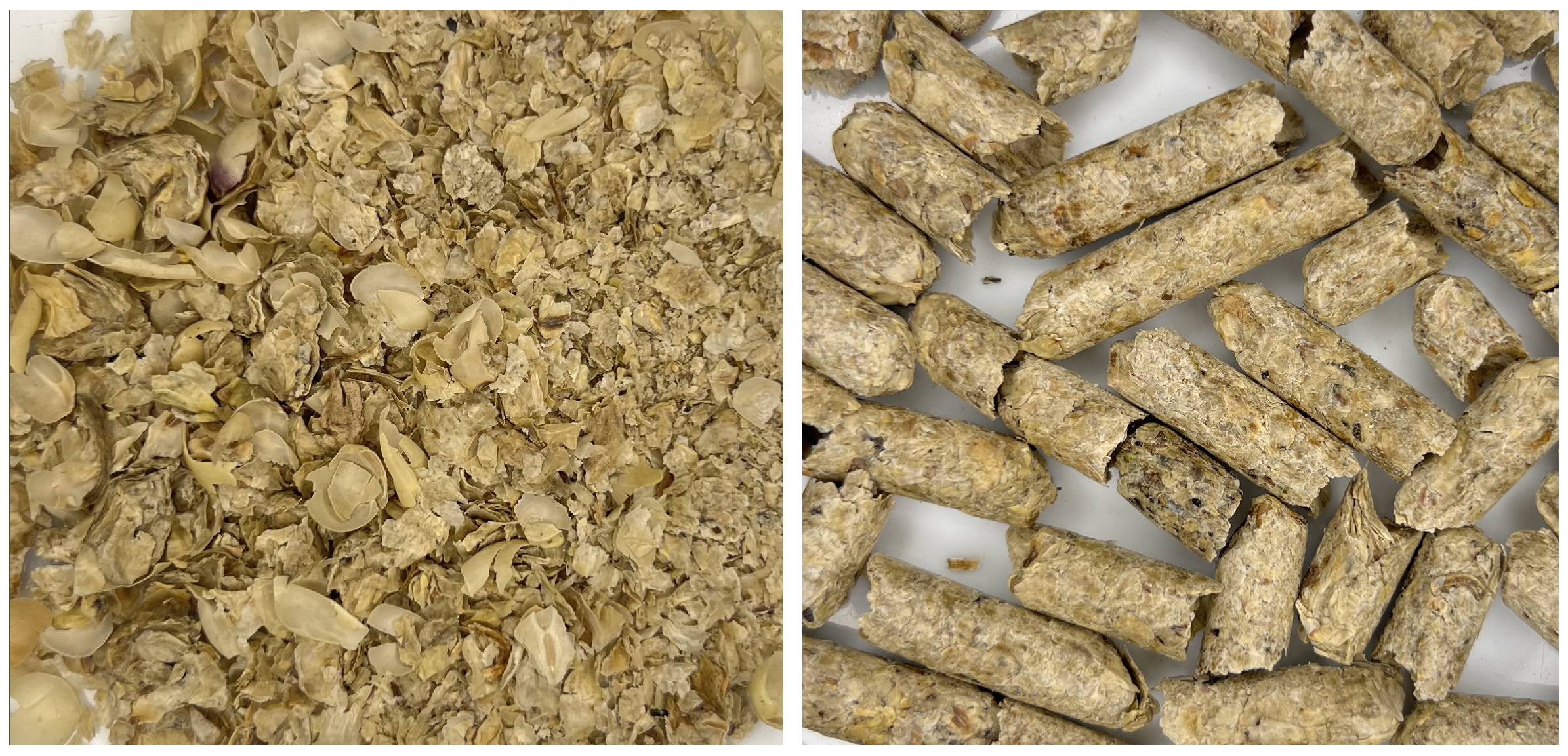
The primary by-product of soybean processing is the husk (Figure 1), which constitutes approximately 8% of the whole grain [7]. With an annual global production exceeding 20 million tons [3], it is essential to develop strategies for its utilization and valorization, thereby contributing to sustainability and the circular economy [8]. Scientific evidence supports the potential of soybean husks both as a source of fiber and for obtaining high-value-added compounds, which could be used in various sectors such as food, animal feed, agriculture, and bioenergy, among others [6,9].
The valorization of food by-products is framed within the sustainable development approach, promoting the comprehensive utilization of resources and the reduction in the food industry’s environmental impact. In general terms, population growth demands increased food production, which in turn leads to a higher generation of waste [10]. Soybean husk is just one example of this phenomenon. One strategy for obtaining bioactive compounds from agro-industrial waste consists of extraction through chemical, physical, biochemical, and thermal processes. The proper selection of the extraction method and conditions allows for the selective recovery of the compounds of interest [11].
Conventional extraction methodologies, such as maceration, employ organic solvents and the application of heat to facilitate the release of bioactive compounds from plant matrices. However, these techniques present significant disadvantages, such as potential residual toxicity of solvents in the final extract, the need for pre-treatments of the plant substrate, high solvent consumption, and the attainment of extracts with low yields or limited purity (low selectivity) [12]. Emerging extraction technologies allow for process intensification without resorting to high temperatures and with a significant reduction in solvent use. These techniques, aligned with the principles of green chemistry, favor the production of bioactive compounds with higher quality and purity. In this sense, ultrasound-assisted extraction and the use of pressurized fluids emerge as interesting alternatives to conventional processes for obtaining compounds with bioactivity [13].
Ultrasound-assisted extraction (UAE) is based on the phenomenon of acoustic cavitation, which intensifies the extraction process by promoting the disruption of cell walls and significantly reducing processing time. Cavitation improves solvent penetration into the plant matrix, thereby increasing extraction efficiency. This is an indirect method, in which ultrasonic waves are transmitted through the vessel containing the sample [14].
Pressurized liquid extraction (PLE) employs solvents at temperatures above their boiling point, maintaining them in the liquid phase through the application of high pressures within the extraction cell. This technique allows for a faster extraction rate and improved yields, using reduced solvent volumes compared to conventional methods [15].
In PLE, water is a frequently used solvent; however, the addition of organic modifiers can improve analyte solubility, increase interaction with the solvent, and optimize recovery rates. In particular, ethanol-water mixtures allow for the extraction of compounds across a wide polarity range, facilitating the solubilization of bioactive metabolites with lower polarity, such as certain phenolic compounds. Ethanol is considered a green solvent because it is renewable (bio-based origin), biodegradable, low-toxicity, and food-grade (GRAS status). The use of ethanol–water mixtures further enhances sustainability by reducing the proportion of organic solvent while maintaining extraction efficiency across a wide polarity range. These latter compounds, in addition to contributing to the organoleptic properties of plants, exhibit recognized antioxidant activity both in vitro and in vivo [15,16].
The extraction of phenolic compounds and other bioactive metabolites using UAE and PLE technologies is supported by extensive background and consolidated scientific evidence, particularly in its application to the valorization of agri-food by-products. These technologies are aligned with the principles of green chemistry, which emphasize: reduced solvent consumption, use of safer and food-grade solvents, lower energy requirements and reduced environmental impact. In this field, it has proven to be an efficient, sustainable, and reproducible alternative for obtaining extracts with high functional value and potential use in the food industry. Regarding UAE, studies can be cited on peanut shells [17], tomato skin and seeds [18], and olive leaves and pomace [19] among others, Some recent background regarding PLE includes work on wine lees [20], broccoli stems [21], coffee bean husk [22], and hazelnut skins [23]. Recent studies further support the sustainable valorization of agro-industrial by-products through green extraction and eco-compatible processing strategies. For example, [24,25] highlight the recovery of bioactive and functional compounds from lignocellulosic residues, emphasizing their potential for high-value applications. Similarly, [26,27] demonstrate the feasibility of converting agricultural wastes into value-added materials through optimized and environmentally friendly approaches. These studies reinforce the relevance of applying sustainable extraction technologies to soybean husk within a circular bioeconomy framework. However, to our knowledge, no prior study has been conducted on soybean hulls using these technologies.
In Uruguay, baked goods and biscuits are the primary contributors to daily caloric intake, making up 22% of a 2000 kcal diet [28]. This has led to increasing interest from both manufacturers and academia in developing innovative bakery products that are fortified with dietary fiber, high levels of protein, and/or beneficial bioactive compounds. The scone is a flour-based bakery product of English origin [29] and widely consumed in Uruguay. It is defined as a soft, flat cake leavened with baking powder. Due to its quick and easy preparation, it represents an ideal food matrix for determining the stability of bioactive compounds after the baking process.
Therefore, the objective of this study was to: (a) identify the optimal conditions for UAE and PLE to maximize extract yield and antioxidant capacity; (b) evaluate qualitative and quantitative differences in extract composition between both extraction methods; and (c) assess the stability of the in vitro antioxidant capacity of the extracts following heat treatment within a complex food matrix (scone), considering their potential incorporation as natural antioxidant sources and the valorization of soybean husk as a fiber-rich ingredient. To the best of our knowledge, this is the first study to apply PLE specifically to SH using a response surface methodology approach to simultaneously optimize extraction yield and antioxidant capacity. In addition, the present work characterizes the isoflavone profile of SH extracts obtained under different PLE conditions and evaluates their practical application by incorporating the optimized extract, together with the original by-product, into a bakery matrix. This integrated approach allows assessment of both extraction efficiency and functional performance after thermal processing, providing a novel contribution to soybean husk valorization.

2. Materials and Methods

2.1. Sample Preparation

Soybean husks were provided by ALUR S.A. (Montevideo, Uruguay) in the form of extruded pellets. The soybean husks were obtained from industrial processing (ALUR S.A., Montevideo, Uruguay), where mixed commercial soybean lots are used for oil production. The specific cultivar was not individually identified, as the raw material corresponds to bulk industrial batches. Therefore, the husks originated from mixed commercial soybean varieties processed at industrial scale.
These were ground using a Peabody Mc9100 domestic spice grinder (Goldmund S.A., Buenos Aires, Argentina) in 100 g batches, operating at a single speed for five 30-s intervals and homogenizing the contents between each interval. The ground husk was then stored in airtight containers and frozen at −18 °C until further use.

2.2. Proximate Composition

Proximate composition analysis of the soybean husk was conducted following standardized methodologies [30].
Moisture content was determined gravimetrically by drying in a convection oven at 105 °C until constant weight was achieved [31]. Protein content was quantified using the Kjeldahl method in accordance with AOAC 970.02 [32], applying a conversion factor of 6.25. Total dietary fiber was evaluated using the Prosky method (AOAC 985.29) [32]. Total lipids were extracted using a hexane/isopropanol solvent mixture (3:2 v/v) according to [33]. Total ash determination was performed following the official AOAC 930.05 method [32]. Finally, digestible carbohydrates were calculated by difference, considering the total mass on a dry basis minus the sum of protein, total dietary fiber, total fat, and total ash. All characterization assays were performed in triplicate.

2.3. Ultrasound Assisted Extractions (UAE)

For UAE, a laboratory-scale equipment (Elmasonic P 60 H, ELMA Schmidbauer GmbH, Singen, Germany) was used. A total of 15 extractions were performed following a three-factor, three-level Box–Behnken experimental design with three replicates at the central point (Table 1). The independent variables were: extraction time (20, 40, and 60 min), power (108, 144, and 180 W), and solvent composition (EtOH/H2O:50/50, 75/25, and 100/0 v/v), using a ratio of 50 mg of husk per mL of solvent. The temperature was kept constant at 40 °C to prevent the degradation of thermolabile compounds, this was controlled using a water-circulation serpentine system, allowing continuous heat dissipation and maintaining the desired temperature throughout the process.
The final extract was obtained via rotary evaporation (40 °C under reduced pressure) and stored in airtight containers at −18 °C until further use. For each run, the yield (%) (g extract/g dry sample × 100), total phenolic content, antioxidant capacity, and total flavonoid content were determined as described in Section 2.5.

2.4. Pressurized Liquid Extractions (PLE)

For PLE, a pilot-scale equipment (Singularity Extraction Technologies, Brazil) was used. A total of 10 extractions were performed following an experimental design based on a central composite factorial design methodology with two factors and three levels, including two replicates at the central point (Table 2). The independent variables were: temperature (80 °C, 120 °C, and 140 °C) and solvent composition (EtOH/H2O: 50/50, 75/25, and 100/0 v/v). The selection of the evaluated range was based on previous studies conducted on different matrices, which report that optimal values for the recovery of phenolic compounds using hydroalcoholic mixtures generally fall within the 50–70% range [34,35].
For each extraction, 9.0 g of sample were loaded into a 25 mL capacity cell. Mixed extractions were performed, consisting of an initial static extraction time (10 min) followed by 30 min of dynamic extraction (solvent flow rate: 2 mL/min). Total solvent volume per extraction (approximately 80 mL per run) has now been reported to support green-chemistry claims and allow process evaluation. The pressure during the extractions was kept constant at 100 bar, as the limited influence of increasing pressure beyond the point necessary to maintain the mixture in a liquid state has been reported [36]. The final extract was obtained via rotary evaporation (40 °C under reduced pressure) and stored in airtight containers at −18 °C until further use. For each run, the yield (%) (g extract/g dry sample × 100), total phenolic content, antioxidant capacity, and total flavonoid content were determined as described in Section 2.5.

2.5. Characterization of UAE and PLE Extracts

Total phenolic content (TPC) was determined using the Folin–Ciocalteu method, following the protocol described by [37] and adapted by [38]. Absorbance was measured at 750 nm after 30 min using a Multiskan™ Go (Thermo Scientific, Waltham, MA, USA). Results were expressed as milligrams of gallic acid equivalents per gram of extract (mg GAE/g). To determine the total flavonoid content (TFC), the method described by [39] was employed. This method is based on the formation of colored complexes with aluminum chloride (AlCl3). Absorbance was measured at 510 nm using a Multiskan™ Go (Thermo Scientific, Waltham, MA, USA). Results were expressed as milligrams of quercetin equivalents per gram of extract (mg QE/g). Antioxidant capacity was determined using the ABTS•+ radical assay according to the procedure detailed by [40], and adapted by [38]. Absorbance was measured at 750 nm, and results were expressed as micromoles of Trolox equivalents per gram of extract (μmol TE/g). For both TPC and antioxidant activity assays, extracts were prepared in methanol/water (80:20 v/v) and appropriately diluted to ensure absorbance values within the calibration curve range. For TFC determination, extracts were diluted directly in water.

2.6. Extraction Parameter Selection

For each of the proposed extraction methodologies (UAE and PLE), four response variables were considered: extraction yield, total phenolic content, antioxidant activity (determined by the ABTS radical method), and total flavonoids, as described in Section 2.5. The data obtained for these variables under different extraction conditions were fitted to multiple linear regression models of the type
y = β 0 + i = 1 k β i x i + i = 1 k β i i x i 2 + i < j β i j x i x j + ε ,
thus obtaining a prediction equation for each variable and, from it, a response surface plot. The objective at this stage was to find the conditions that maximize the recovery of compounds with antioxidant activity, given the equipment constraints, as a function of the independent variables studied in each case. For this purpose, R software (R Core Team, Vienna, Austria) was used, utilizing the ‘rsm’ package [41]. Only significant terms (p < 0.05) were included in the model. To simultaneously integrate all response variables and facilitate the selection of the most suitable extraction condition, the desirability function described by [42] was applied. This methodology converts each response variable ( Y i ) into a dimensionless scale ( D ( Y i ) ) between 0 and 1, where 0 represents a completely undesirable result and 1 represents the optimal value. For responses that require maximization, the following linear transformation between the experimental minimum and maximum observed is employed
d ( Y i ) = 0 if Y i low Y i low high low if low < Y i < high 1 if Y high
Subsequently, the individual desirabilities are combined through a weighted geometric mean, obtaining a global performance index for each run with
D Global = d Yield × d TPC × d TEAC × d TF 4 .
This approach allows for the comparison of experimental conditions by simultaneously considering all responses, despite their differing units and ranges, and enables the selection of an extraction technology that optimizes the results.

2.7. Identification and Quantification of the Main Isoflavones from PLE Extracts

The separation, identification, and quantification of isoflavones were performed according to the non-hydrolytic method protocol described by [43], following the reference of [44]. Analyses were carried out on a high-performance liquid chromatography system (HPLC Shimadzu Model 20A) equipped with a solvent degasser, quaternary gradient pump, autosampler, column oven, and diode array detector (DAD). Separation was achieved using a Macherey-Nagel C18 reverse-phase column (250 × 4.6 mm, 5 μm particle size) maintained at 40 °C. The mobile phase consisted of (A) water with 0.05% phosphoric acid and (B) acetonitrile, at a flow rate of 1.5 mL/min. The gradient program was as follows: 0 min, 10% B; 60 min, 30% B; washing for 4 min at 90% B, followed by 9.5 min of re-equilibration at 10% B. The injection volume was 5 μL, and detection was performed at 260 nm, the wavelength at which isoflavones exhibit maximum absorbance. The following isoflavones were identified and quantified: genistein, genistin, acetylgenistin, malonylgenistin, daidzein, daidzin, acetyldaidzin, malonyldaidzin, glycitein, glycitin, acetylglycitin, and malonylglycitin, by comparing retention times and UV spectra. Isoflavone quantification was conducted using an external calibration curve with an apigenin standard (purity > 95%) supplied by Sigma-Aldrich. The chromatographic conditions employed allowed adequate separation and resolution of the identified isoflavones (Figure S2). Results were expressed as a percentage of the total identified compounds.
Apigenin was selected as an external calibration standard due to its structural similarity to isoflavones (flavonoid backbone), its chemical stability, and its availability with high purity. Quantification was performed at 260 nm, a wavelength at which both apigenin and the target isoflavones exhibit strong UV absorbance. The purpose of this analysis was to provide a comparative quantitative estimation of individual isoflavones across extraction conditions rather than absolute quantification of each compound using authentic standards.
Principal Component Analysis (PCA) was applied to the results, considering all extraction conditions from the PLE experimental design. For this purpose, R software (R Core Team) was used, utilizing the ‘FactoMineR’ package [45].

2.8. Formulation and Elaboration of Byproduct and Its Extracts’ Enriched Scones

Based on a classic scone formulation [46] consisting of flour, milk, unsalted butter, baking powder, and salt in proportions of 100/57/22.3/2/1.3, respectively, four samples were formulated: a control sample (SC), a sample with soybean husk (SSH), a sample with soybean husk extract (SSHE), and finally, a sample with both soybean husk and extract (SSHE + SH), as shown in Table 3. The extract used in the formulation was the one that exhibited the highest antioxidant activity according to Section 2.5. To ensure a uniform distribution, the dried extract was fully dissolved in the liquid phase (milk) prior to dough preparation. Mixing was performed for 7 min under standardized conditions, and two independent batches were prepared for each formulation to confirm reproducibility. The amount of extract was adjusted to reach the biophenol level found in 100 mL of green tea—recognized for its high antioxidant power—which corresponds to 74 mg GAE/ 100 mL of tea according to [47].
The dried extract was weighed and dissolved in a fraction of the milk, and then homogenized with the rest of the liquid phase to ensure homogeneous distribution. Mixing was performed for 7 min under standardized conditions, and two independent batches were prepared for each formulation to ensure reproducibility. Homogeneity was ensured by dissolving the extract completely before incorporation and maintaining consistent mixing time and order of ingredient addition. Scone samples were prepared following the traditional processes described in [46]. First, the ingredients were weighed, mixed, and kneaded for 7 min by hand. The dough was allowed to rest for 10 min at room temperature and then sheeted until 2 cm thick dough was obtained. The dough was then left to rest for another 5 min, and individual pieces were cut out using a cylindrical mold (30 mm diameter). All resting stages were done with the dough/pieces covered in plastic wrap to prevent dehydration. The pieces were baked at 230 °C for 6 min and then cooled to room temperature. Samples were stored in polypropylene bags for 24 h before characterization and analysis. Two batches were prepared for each formulation.

2.9. Evaluation of the Composition, Phenolic and Flavonoid Content, and Antioxidant Capacity of the Different Scones Prepared with Extracts and/or Soybean Husk

Proximate composition analysis was performed on the scones prepared according to the procedure described in Section 2.2. Total phenolic content analysis and in vitro antioxidant capacity evaluation were conducted for both the control formulation and the formulations enriched with soybean husk and/or husk extract. For the extraction of phenolic compounds (TPC), the finished product was ground, followed by an extraction using DMSO/water (20:80 v/v). First, the sample was dissolved in pure DMSO and homogenized using a vortex mixer for 1 min. Subsequently, water was added to obtain a final DMSO/water ratio of 20:80 (v/v), followed by vortex mixing for an additional 1 min. The mixture was then subjected to ultrasonication for 5 min to ensure complete homogenization. The final sample-to-solvent ratio was 100 mg/mL. Finally, the solution was centrifuged at 6000 rpm for 10 min, and the resulting supernatant was collected for TPC and ABTS assays. DMSO was selected due to its strong ability to solubilize phenolic compounds in complex matrices, including lipid-containing products. The proportion used minimizes interference from lipids while maximizing phenolic recovery. We acknowledge that bakery matrices with relatively high fat content may present co-extraction risks. However, the use of dilution and appropriate blank corrections minimizes interference in the Folin–Ciocalteu assay. The determination was carried out as described in Section 2.5.

2.10. Statistics

All assays were performed in triplicate. Results are reported as the mean of the measurements, with the error expressed as the sample standard deviation. Factor comparison was analyzed using analysis of variance (ANOVA) followed by Tukey’s post-hoc test to determine significant differences between treatments ( α = 0.05). For this purpose, R software version 4.5.1 (13 June 2025) was employed.

3. Results and Discussion

3.1. Proximate Composition

The results for the proximate composition of the soybean husk (SH) are presented in Table 4. SH showed a high fiber content (67.98 ± 0.68%) and low fat content (1.78 ± 0.24%), with 9.64 ± 0.09% moisture and 10.56 ± 0.16% protein. These results are in line with those reported by other authors [48,49,50]. The bioactive properties of the sample resulted in 3.42 ± 0.11 mg GAE/g sample for total phenolic content and an antioxidant capacity of 19.27 µmol Trolox/g; these values are within the same range as those reported by various authors [9,51,52].

3.2. UAE and PLE

The results of the RSM analysis for ultrasound-assisted extraction (UAE) can be found in the Supplementary Material. The UAE extracts showed lower values for yield, TPC, and TFC compared to those obtained by PLE, with the exception of antioxidant capacity (TEAC), as shown in Table 5. In the UAE, a higher yield was obtained at lower EtOH percentages; its modeling (Table S1) showed a first-order positive correlation with extraction time and power, and a negative correlation with EtOH%. The response surface plots can be visualized in Figure S1. Table S2 in the Supplementary Material presents the results of the analysis of variance (ANOVA) for each of the variables. In three out of four cases, the regression models were statistically significant (95% confidence). In the case of total flavonoids, no adjustment terms were significant, and the values remained constant across all conditions.
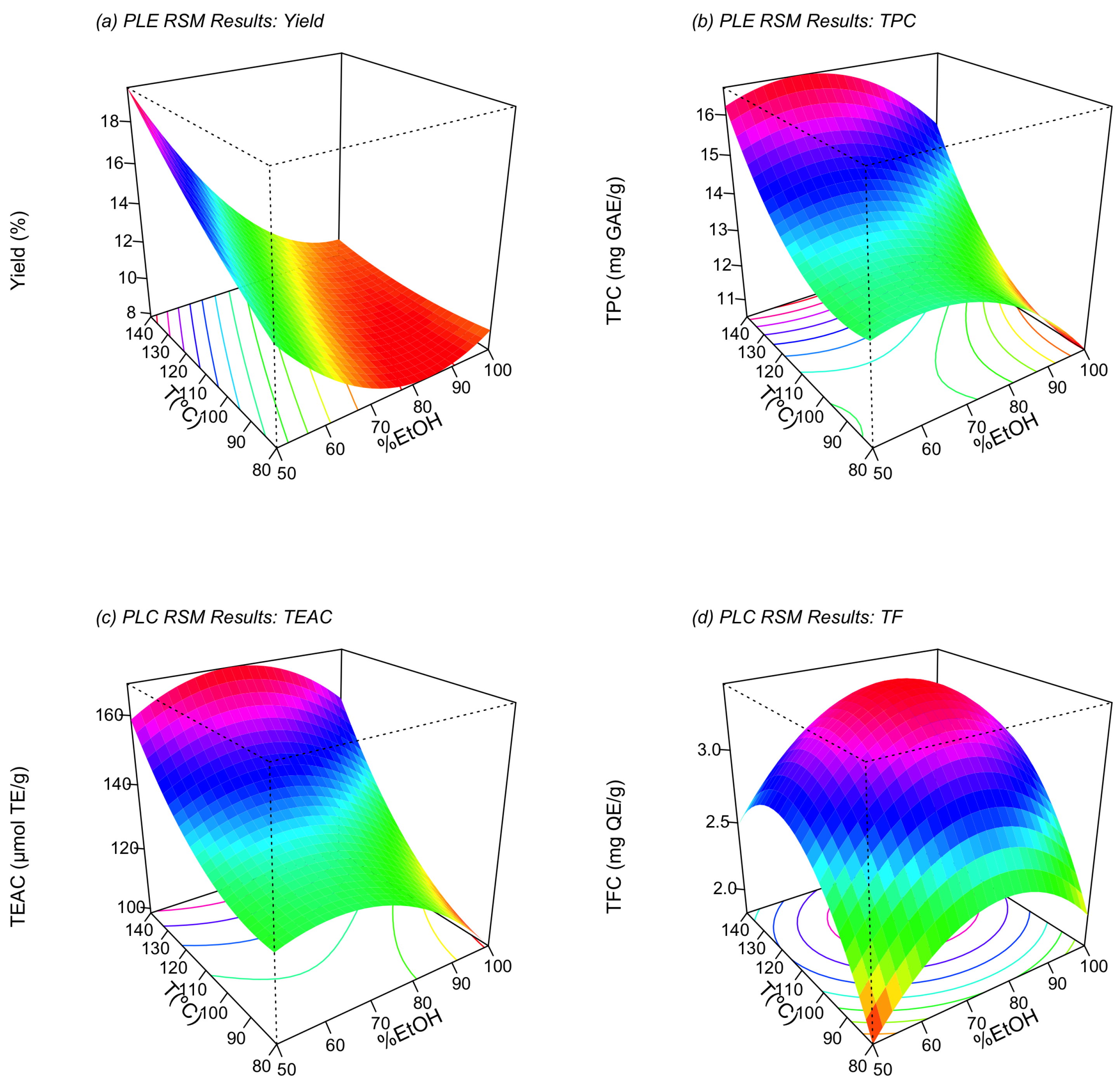
Although UAE extraction yielded slightly higher antioxidant capacity (TEAC) values, the comparative analysis showed substantially lower extraction yields and total phenolic contents compared to PLE. These differences indicate that, even after optimizing conditions through response surface methodology, the UAE method fails to match the overall efficiency of PLE. Furthermore, PLE is a more industrially scalable green technology, requiring less solvent per gram of sample in most applications and providing more energy-efficient extract recovery [53]. For these reasons, this technology was selected to proceed with the study. In the PLE, the highest yields were obtained with 50% EtOH (Table 2), and a positive correlation with temperature and a negative correlation with increasing ethanol percentage were determined. For total phenols and antioxidant activity, a positive correlation was also found with increasing temperature and ethanol percentages between 50% and 75%. Table 6 shows the RSM model coefficients for each variable along with their p-values. Only coefficients with a p-value less than 0.05 are shown.
In general, an increase in all responses—Yield, TPC, and TEAC—was observed as temperature increased linearly within the working range. Elevating the extraction temperatures in PLE enhances mass transfer and solute diffusivity while reducing solvent viscosity and surface tension, thereby improving matrix wetting and disruption of solute–matrix interactions [54]. The decrease in solvent polarity facilitates the recovery of less polar compounds, resulting in these findings. All interaction effects were negligible, except for the interaction between Temperature and Ethanol percentage on the Yield response. Regarding second-order terms, the only significant and positive one was the ethanol content in Yield, exhibiting a behavior opposite to that of the linear term. This reflects a strong influence and an inherent complexity of ethanol content on extract yield, in agreement with findings published by [55,56] among other authors. Figure 2 provides a graphical visualization of these results.
For PLE, it was determined that an absolute max, should it exist, it would lie outside the working conditions due to equipment limitations (Figure 2). However, using the desirability function to obtain global information for all response variables, the results show that Sample 3 (50% ethanol, 140 °C) exhibited the highest global desirability (0.79) This sample stood out for achieving the highest values in yield, TPC, and TEAC, despite having an intermediate TF value. This indicates that, even without maximizing each response individually, this condition achieves an optimal global balance between extraction efficiency and the antioxidant quality of the extract. The next best conditions (Samples 7 and 5) reached considerably lower D values (0.49 and 0.44, respectively), reinforcing the selection of Sample 3 as the most favorable condition for the objectives of this work, given its high yield (19.97%), superior total phenolic content (17.1 mg/g), strong antioxidant activity (167.6 μmol/g), and flavonoid content (2.8 mg QE/g).
A clear positive correlation was observed between TEAC values and total phenolic content (TPC), particularly under the optimal PLE conditions. This finding reinforces the role of phenolic compounds, especially isoflavones identified in the extracts, as major contributors to the measured antioxidant capacity.

3.3. Identification and Quantification of the Main Isoflavones from PLE Extracts

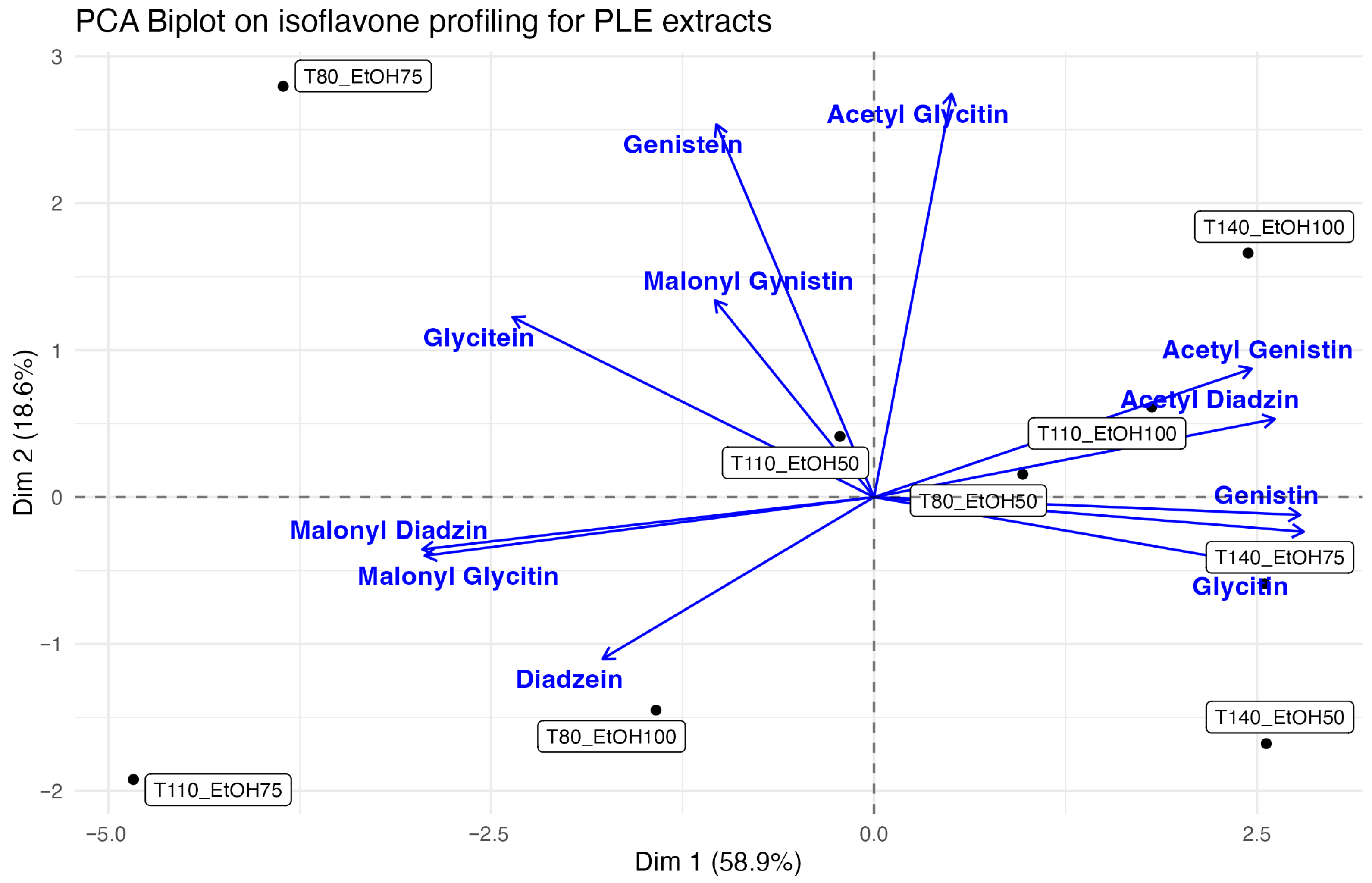
Soybean isoflavones have attracted considerable scientific and nutritional interest due to their broad spectrum of biological activities, including antioxidant, anti-atherosclerotic, antitumor, and estrogen-modulating effects. Their recognized role in promoting cardiovascular health, preventing oxidative stress, and supporting hormonal balance has encouraged the increased consumption of soybeans and soy-based foods as functional dietary ingredients [57]. Figure 3 shows a PCA where the first two dimensions account for 77.5% of the cumulative variance. This multivariate analysis allows for the exploration of global variation patterns, the identification of potential groupings among treatments, and the evaluation of the joint contribution of the determined compounds to the discrimination of the different extraction conditions. The results leading to this discussion can be found in the Supplementary Material (Table S3).
The relative isoflavone profile obtained through PLE evidenced a clear dependence of the composition on the temperature conditions and ethanol proportions used. In all extractions, glycosylated forms—primarily daidzin, genistin, and to a lesser extent glycitin—accounted for the highest proportion of the total identified isoflavones, reflecting their superior thermal stability and natural prevalence within the plant matrix. As the ethanol percentage in the extraction increased from 50% to 100%, a shift in the equilibrium toward malonylated forms (such as malonyl daidzin and malonyl glycitin) was observed, indicating that these conditions favored their release from the matrix or their formation through partial transformation of acetylated forms.
The highest relative total isoflavone content corresponded to the extraction performed at 140 °C with 50% ethanol. This condition optimally combined the solvent capacity of ethanol with the polarity of water and the thermal energy required to break interactions between isoflavones and associated macromolecules. Conversely, extractions performed with higher ethanol percentages (75–100%) showed a decrease in the proportion of polar compounds, indicating lower efficiency in releasing total isoflavones. The variations observed in the percentage profile of isoflavones have direct implications for the bioactivity of the obtained extracts.
In general, aglycone forms (such as genistein and daidzein) exhibit higher biological activity due to their superior antioxidant capacity, affinity for estrogen receptors, and ease of intestinal absorption. However, under the evaluated extraction conditions—particularly at 140 °C and 50% ethanol—glycosylated forms predominated. Although these are less directly active, they are more thermally stable and act as natural precursors to aglycones during digestion or enzymatic processes. This could provide the extract with a prolonged and modulable bioactive effect, which may be advantageous in food or nutraceutical formulations intended for gradual release. In contrast, extractions with high ethanol content favored the presence of less polar compounds (such as acetylated forms), which have lower stability and less efficient metabolic conversion. The results obtained in this study complement findings on the distribution of bioactive compounds in soybean (Glycine max L.) milling fractions, where genistin and glycitein were reported as the predominant isoflavones in the cotyledon and germ fractions, respectively [58].
Despite the fact that a direct statistical correlation analysis was not performed, we discuss that aglycone forms generally exhibit higher antioxidant activity due to increased radical scavenging capacity. However, under optimal PLE conditions, glycosylated forms predominated, suggesting that overall TEAC values are influenced by total phenolic concentration rather than exclusively by aglycone proportion.

3.4. Formulation and Characterization of Functional Scones: Proximate Composition and Antioxidant Capacity

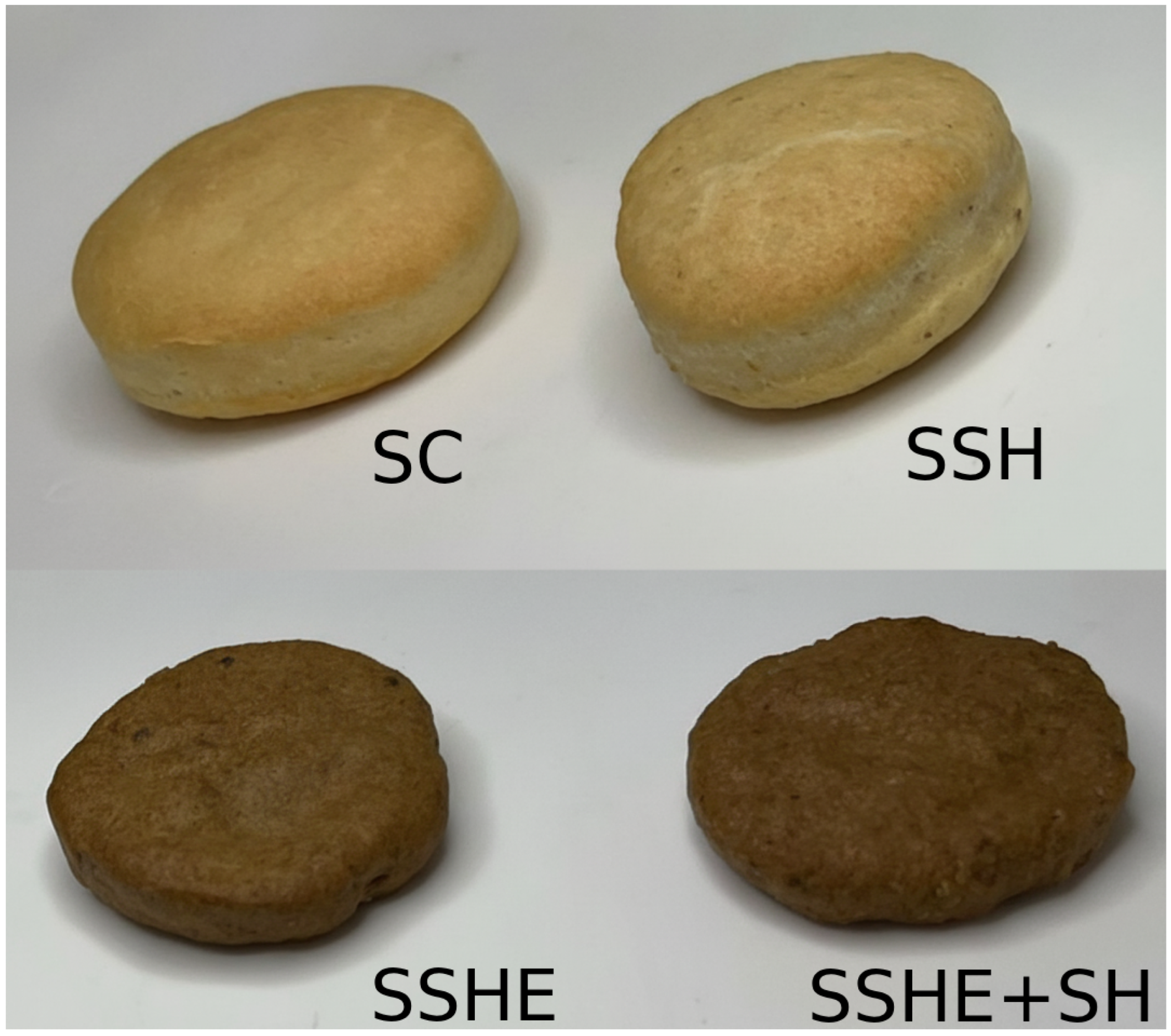
Using the selected optimal extraction condition (Sample 3: 140 °C, 50% EtOH, extracted by PLE), the scone samples were prepared: control scone (SC), scone with soybean husk (SSH), scone with soybean husk extract (SSHE), and scone with both soybean husk and extract (SSHE + SH) (Table 3). Figure 4 shows the resulting scones ready for consumption. The Control Scone had a moisture content of (16.78 ± 0.28)% and, expressed on a dry basis (db), values for protein were (10.72 ± 0.10)% db, total lipids (16.78 ± 0.53)% db, total dietary fiber (4.51 ± 0.70)% db, and ash (2.31 ± 0.23)% db, with a digestible carbohydrate content obtained by difference of 65.69% db (Table 7).
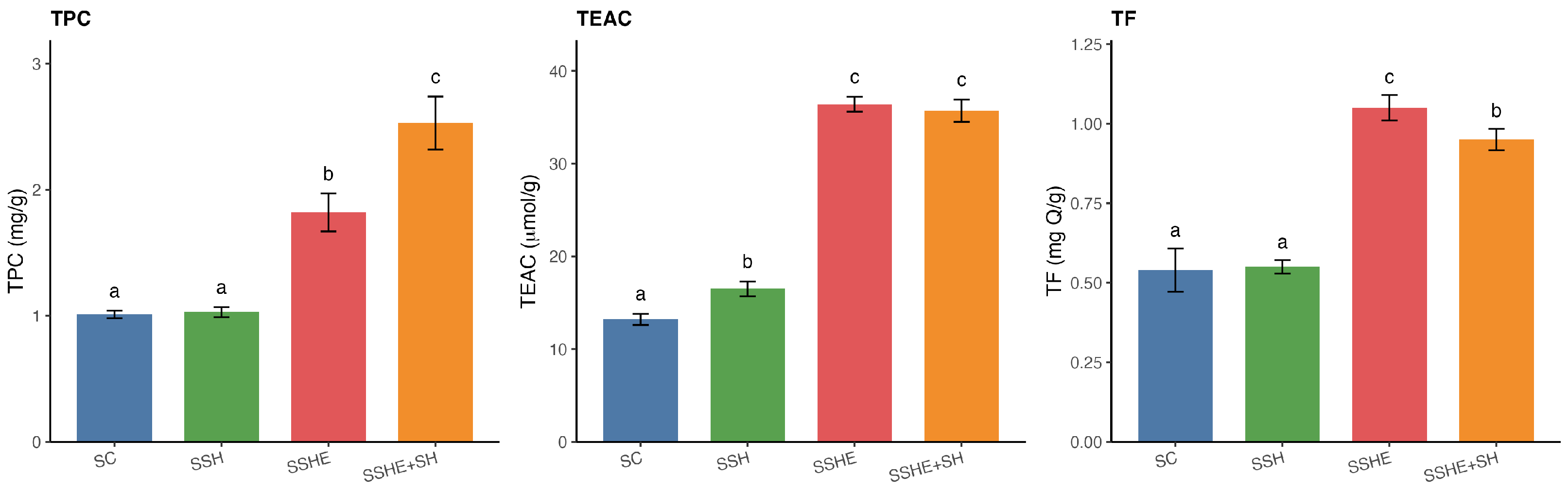
The SSHE + SH scone and the SSHE scone (added extract only) showed no significant differences in their antioxidant capacity (35.9 and 36.4 μmol Trolox/g sample, respectively). However, both significantly increased the phenolic and flavonoid content, as well as the antioxidant capacity, compared to the control and the SSH sample containing only soybean husk. Furthermore, the direct incorporation of soybean husk into the formulation increased the fiber content of the product, resulting in a scone that could be classified as a “source of fiber” according to current regulations [59], thereby fulfilling one of the primary objectives of this study. The SSHE sample showed no significant differences in any macronutrient when compared to the control (p > 0.05); however, the samples with added husk (SSH and SSHE + SH) showed significant differences (p < 0.05) in protein and fiber values, exhibiting increases of 4.5% db and 30.6% db, respectively. These results are in line with the characterization presented in Table 4, confirming that soybean husk is a byproduct high in fiber with moderate protein levels.
The addition of extracts obtained via PLE in the SSHE and SSHE + SH samples significantly increased (p < 0.05) the parameters related to antioxidant activity in the scones, specifically TPC, TEAC, and TFC (Figure 5). An increase of at least 75% was achieved for these parameters in all cases—specifically, an increase between 80.2% and 150.5% for TPC, between 170.5% and 175.8% for TEAC, and between 75.9% and 94.4% for TFC. It is noteworthy that, based on a 45-g average scone, the SSHE sample contains 76.4 mg of TPC, equivalent to 100 mL of green tea [47]. In the case of the SSHE + SH scone, a TPC of 106.3 mg was obtained, which is equivalent to 1.4 times the content found in 100 mL of green tea.

4. Conclusions

This study demonstrated the potential of soybean husk (SH) as a value-added food ingredient through its valorization using green extraction technologies. Under the experimental conditions evaluated, pressurized liquid extraction (PLE) clearly outperformed ultrasound-assisted extraction (UAE), achieving higher extraction yields, total phenolic content, flavonoid content, and antioxidant capacity. The optimal PLE conditions were identified as 140 °C and 50% ethanol, which provided the best overall performance according to the desirability analysis.
Isoflavones—particularly daidzin, genistin, glycitin, and their corresponding malonyl and acetyl derivatives—were identified as the main bioactive compounds, supporting the role of SH as a promising natural source of phenolic antioxidants. A positive correlation between total phenolic content and antioxidant capacity further reinforces the contribution of these compounds to the functional properties of the extracts.
The incorporation of the optimized PLE extract into a model bakery product (scones) demonstrated that phenolic compounds maintained their antioxidant activity after baking. Scones enriched with the extract showed significant increases in total phenolics, flavonoids, and TEAC values compared to the control formulation. Additionally, direct incorporation of soybean husk resulted in increased dietary fiber content, allowing the product to be classified as a “source of fiber” according to current regulations. The combined use of SH and its extract therefore enabled simultaneous antioxidant enhancement and fiber enrichment.
Overall, these findings support the sustainable valorization of soybean husk as both a natural antioxidant source and a fiber-rich functional ingredient. This approach contributes to agro-industrial by-product utilization and aligns with circular bioeconomy strategies by promoting resource efficiency and waste reduction. The integration of green extraction approaches aligns with Sustainable Development Goals (SDGs) 9, 12, and 13, promoting innovation, responsible production, and climate action in the food industry. Future research should further explore sensory acceptability, technological performance, bioaccessibility, and long-term stability to strengthen the application potential of SH-enriched food systems.

5. Study Limitations

Despite the relevant findings obtained, this study presents certain limitations that should be acknowledged. Antioxidant capacity was evaluated using the TEAC assay, a widely accepted and robust method; however, the inclusion of additional assays such as DPPH, FRAP, or ORAC could provide complementary mechanistic information and a broader assessment of antioxidant potential. Furthermore, sensory evaluation, texture profile analysis, storage stability assessment, bioaccessibility studies, and microbiological safety verification were not included in the present work.
Additional compositional characterization—such as mineral content, amino acid profiling, and the fractionation of soluble and insoluble dietary fiber—was also beyond the scope of this study. These aspects represent relevant directions for future research in order to strengthen the technological, nutritional, and functional validation of soybean husk valorization in food systems. The term “functional food” is used here to refer to the enhanced nutritional and bioactive composition of the developed product. No in vitro cellular assays, bioavailability studies, or clinical evaluations were conducted. Therefore, functional claims are limited to compositional and antioxidant characterization. Future studies should include bioaccessibility and bioavailability assessments to further support functional validation. Although this work highlights the potential contribution of soybean husk valorization to sustainability and circular economy strategies, no life cycle assessment (LCA) or quantitative environmental impact analysis was performed. Therefore, sustainability implications are discussed at a conceptual level and were not experimentally validated through environmental metrics.

Supplementary Materials

The following supporting information can be downloaded at: https://www.mdpi.com/article/10.3390/su18063147/s1, Table S1: Significant regression coefficients obtained (p < 0.05) for the response equations of Yield, Total phenol contents, Total flavonoids and Antioxidant capacity of the US assisted extraction on soybean hull extracts (Coded values); Figure S1: Response surface obtained for the US assisted extraction on variables (A) Yield, (B) Total phenol content, (C) Antioxidant activity (TEAC) and (D) Total Flavonoid content; Figure S2: HPLC-PDA chromatogram of soybean hull extract showing the profile of identified isoflavones. Peaks correspond to daidzin, glycitin, genistin, and their malonyl, acetyl, and aglycone (daidzein, genistein) derivatives; Table S2: ANOVA results for the response surface models fitted to the coded variables (x1 = Temperature, x2 = %EtOH), showing the significance of the linear, interaction, and quadratic terms; Table S3: Flavonoids detected by HPLC (mean ± sd) by PLE conditions. ND: Not detected.

Author Contributions

Conceptualization, I.V.; methodology, I.V., C.D., B.I. and M.K.; software, M.K.; validation, I.V., C.D. and MK.; formal analysis, I.V., B.I. and M.K.; investigation, M.K., C.D., M.R., V.O., C.G., A.S., I.F., C.B., A.L., B.I. and I.V.; resources, I.V.; data curation, I.V., M.K. and C.D.; writing—original draft preparation, M.K. and I.V.; writing—review and editing, M.K.; visualization, M.K.; supervision, I.V.; project administration, I.V. and B.I.; funding acquisition, I.V. All authors have read and agreed to the published version of the manuscript.

Funding

This study was funded by Comisión Sectorial de Investigación Científica (CSIC) and PEDECIBA-Química program (Uruguay).

Institutional Review Board Statement

Not applicable.

Informed Consent Statement

Not applicable.

Data Availability Statement

The original contributions presented in this study are included in the article/Supplementary Materials. Further inquiries can be directed to the corresponding author(s).

Acknowledgments

During the preparation of this manuscript, the authors used Gemini (3 Flash variant) to aid in translating the original draft from Spanish to English and to refine the technical terminology. The authors have meticulously reviewed and edited the output and take full responsibility for the content of this publication.

Conflicts of Interest

The authors declare no conflicts of interest.

Abbreviations

The following abbreviations are used in this manuscript:
ABTS   2,2’-Azino-bis(3-ethylbenzothiazoline-6-sulfonic acid)
ANOVA   Analysis of Variance
AOAC   Association of Official Agricultural Chemists
db   Dry base
DMSODimethyl sulfoxide
FAOFood and Agriculture Organization of the United Nations
GAEGallic Acid Equivalents
MGAPMinistry of Agriculture and Fisheries (Uruguay)
PCAPrincipal Component Analysis
PLEPressurized Liquid Extraction
QEQuercetin Equivalents
RSMResponse Surface Methodology
SCControl Sample or Scone Control
SHSoybean Husk
SSHSample with Soybean Husk
SSHESample with Soybean Husk Extract
SSHE + SHSample with both Soybean Husk and Soybean Husk Extract
TETrolox Equivalents
TEACTrolox Equivalent Antioxidant Capacity
TFTotal Flavonoids
TFCTotal Flavonoid Content
TPCTotal Phenolic Content
UAEUltrasound-Assisted Extraction

References

  1. Grassini, P.; Cafaro La Menza, N.; Rattalino Edreira, J.I.; Monzón, J.P.; Tenorio, F.A.; Specht, J.E. Soybean. In Crop Physiology Case Histories for Major Crops; Sadras, V.O., Calderini, D.F., Eds.; Academic Press: San Diego, CA, USA, 2021; pp. 282–319. [Google Scholar] [CrossRef]
  2. Cala Calviño, L.S.; Sánchez Hechavarría, M.E.; García Tejeda, M.D.S. Aspectos Farmacológicos de la Lecitina de Soya y sus Posibles Aplicaciones Médicas. Medisan 2017, 21, 83–95. [Google Scholar]
  3. FAO. FAOSTAT. 2025. Available online: https://www.fao.org/faostat/es/#data/QCL (accessed on 29 January 2026).
  4. MGAP. Anuario 2024 de la Oficina de Planificación y Política Agropecuaria; MGAP: Montevideo, Uruguay, 2024; Available online: https://www.gub.uy/ministerio-ganaderia-agricultura-pesca/anuario-opypa-2024 (accessed on 29 January 2026).
  5. Henkel, J. Soy: Health Claims for Soy Protein, Questions About Other Components; U.S. Food and Drug Administration: Silver Spring, MD, USA, 2000. Available online: https://permanent.access.gpo.gov/lps1609/www.fda.gov/fdac/features/2000/300_soy.html (accessed on 29 January 2026).
  6. Islas-Rubio, A. Soybeans: Post-Harvest Operations; AGSI/FAO: Rome, Italy, 2002; Available online: https://openknowledge.fao.org/server/api/core/bitstreams/417d75bc-5f04-423e-8d15-93d0fdcea168/content (accessed on 29 January 2026).
  7. Ferrer, A.; Salas, C.; Rojas, O.J. Physical, thermal, chemical and rheological characterization of cellulosic microfibrils and microparticles produced from soybean hulls. Ind. Crops Prod. 2016, 84, 337–343. [Google Scholar] [CrossRef]
  8. Gasparri, E.; Arasteh, S.; Kuru, A.; Stracchi, P.; Brambilla, A. Circular economy in construction: A systematic review of knowledge gaps towards a novel research framework. Front. Built Environ. 2023, 9, 1239757. [Google Scholar] [CrossRef]
  9. Ni no-Medina, G.; Muy-Rangel, D.; Urías-Orona, V. Chickpea (Cicer arietinum) and Soybean (Glycine max) Hulls: Byproducts with Potential Use as a Source of High Value-Added Food Products. Waste Biomass Valorization 2017, 8, 1199–1203. [Google Scholar] [CrossRef]
  10. Ansari, S.A.; Kumar, T.; Sawarkar, R.; Gobade, M.; Khan, D.; Singh, L. Valorization of food waste: A comprehensive review of individual technologies for producing bio-based products. J. Environ. Manag. 2024, 364, 121439. [Google Scholar] [CrossRef]
  11. Reshmy, R.; Paulose, T.; Philip, E.; Thomas, D.; Madhavan, A.; Sirohi, R.; Binod, P.; Kumar Awasthi, M.; Pandey, A.; Sindhu, R. Updates on high value products from cellulosic biorefinery. Fuel 2022, 308, 122056. [Google Scholar] [CrossRef]
  12. Galanakis, C.M.; Tsatalas, P.; Galanakis, I.M. Phenols from olive mill wastewater and other natural antioxidants as UV filters in sunscreens. Environ. Technol. Innov. 2018, 9, 160–168. [Google Scholar] [CrossRef]
  13. Cabrera, V.A.; Román, O.B. Recuperación de Compuestos Bioactivos de Subproductos de la Industria Alimentaria Mediante el Empleo de Mezclas Etanol/Agua Presurizadas. Ph.D. Thesis, Universidad de Burgos, Burgos, Spain, 2020. Available online: https://riubu.ubu.es/handle/10259/5611 (accessed on 29 January 2026).
  14. Picot-Allain, C.; Mahomoodally, M.F.; Ak, G.; Zengin, G. Conventional versus green extraction techniques—A comparative perspective. Curr. Opin. Food Sci. 2021, 40, 144–156. [Google Scholar] [CrossRef]
  15. Herrero, M.; Castro-Puyana, M.; Mendiola, J.A.; Iba nez, E. Compressed fluids for the extraction of bioactive compounds. TrAC Trends Anal. Chem. 2013, 43, 67–83. [Google Scholar] [CrossRef]
  16. Faulisi, M.V.; Palmeri, R.; Restuccia, C. Multifunctional application of food grade extracts from fruit processing industry wastes: A sustainable approach to food and health preservation. Food Biosci. 2024, 62, 105204. [Google Scholar] [CrossRef]
  17. Kang, J.; Lee, I. Ultrasound-assisted extraction of peanut shell by-product: Chemical properties, antioxidant, and anti-inflammatory effects. Arch. Biol. Sci. 2024, 76, 335–343. [Google Scholar] [CrossRef]
  18. Kuvendziev, S.; Lisichkov, K.; Marinkovski, M.; Stojchevski, M.; Dimitrovski, D.; Andonovikj, V. Valorization of tomato processing by-products: Predictive modeling and optimization for ultrasound-assisted lycopene extraction. Ultrason. Sonochem. 2024, 110, 107055. [Google Scholar] [CrossRef] [PubMed]
  19. Expósito-Almellón, X.; Munguía-Ubierna, A.; Duque-Soto, C.; Borrás-Linares, I.; Quirantes-Piné, R.; Lozano-Sánchez, J. Optimized Ultrasound-Assisted Extraction for Enhanced Recovery of Valuable Phenolic Compounds from Olive By-Products. Antioxidants 2025, 14, 938. [Google Scholar] [CrossRef] [PubMed]
  20. Bredun, M.A.; Teixeira, R.F.; Cesca, K.; Zielinski, A.A.F.; Burin, V.M. Green extraction of anthocyanin from an undervalued winemaking by-product using pressurized liquid technology as an innovative approach. Microchem. J. 2025, 218, 115592. [Google Scholar] [CrossRef]
  21. Borja-Martínez, M.; Lozano-Sánchez, J.; Quirantes-Piné, R.; Almagro, L.; Pedre no, M.A.; Sabater-Jara, A.B. Glucosinolates from Broccoli By-Products Obtained by Pressurized Liquid Extraction Exert Anti-Inflammatory Activity on Non-Malignant Colonic Myofibroblasts. Plants 2025, 14, 1700. [Google Scholar] [CrossRef]
  22. Costa, A.J.N.; Stevanato, N.; Raspe, D.T.; Cardozo-Filho, L.; Da Silva, C. Valorization of coffee bean husk via pressurized liquid extraction for production of physicochemical extract. J. Chem. Technol. Biotechnol. 2024, 99, 788–796. [Google Scholar] [CrossRef]
  23. Elmas, E.; Sen, F.B.; Kublay, I.Z.; Bas, Y.; Tufekci, F.; Derman, H.; Bekdeser, B.; Asci, Y.S.; Capanoglu, E.; Bener, M.; et al. Green Extraction of Antioxidants from Hazelnut By-products Using Microwave-Assisted Extraction, Ultrasound-Assisted Extraction, and Pressurized Liquid Extraction. Food Bioprocess Technol. 2025, 18, 5388–5406. [Google Scholar] [CrossRef]
  24. Boulika, H.; Nabih, M.H.; Hmada, A.; Dkhireche, N.; Kandri, N.I.; Zerouale, A. Almond Hulls and Shells Extract Characterized as a High-Performance Eco-Friendly Antioxidant and Corrosion Inhibitor. Waste Biomass Valorization 2024, 16, 1745–1761. [Google Scholar] [CrossRef]
  25. Boulika, H.; El Hajam, M.; Nabih, M.H.; Kandri, N.I.; Zerouale, A. Physico-chemical properties and valorization perspectives of almond residues (shells and hulls) in the northern Morocco: A comparative study. Biomass Convers. Biorefinery 2024, 15, 4073–4082. [Google Scholar] [CrossRef]
  26. Nabih, M.H.; Boulika, H.; Elhajam, M.; Kandri, N.I.; Zerouale, A. Synthesis of an Activated Carbon Based on Cardoon Waste and its Comparison to a Commercial Carbon in Terms of Physicochemical Characterization and Organic Dye Adsorption Performance. Key Eng. Mater. 2023, 954, 41–54. [Google Scholar] [CrossRef]
  27. Boulika, H.; El Hajam, M.; Hajji Nabih, M.; Idrissi Kandri, N.; Zerouale, A. Activated carbon from almond shells using an eco-compatible method: Screening, optimization, characterization, and adsorption performance testing. RSC Adv. 2022, 12, 34393–34403. [Google Scholar] [CrossRef] [PubMed]
  28. Líneas de Pobreza e Indigencia—Metodología y Resultados. 2006. Available online: https://www.gub.uy/instituto-nacional-estadistica/comunicacion/publicaciones/lineas-pobreza-indigencia-2006-metodologia-resultados (accessed on 29 January 2026).
  29. Davidson, A.; Jaine, T.; Vannithone, S. The Oxford Companion to Food; Oxford Companions Series; Oxford University Press: Oxford, UK, 2014; Available online: https://books.google.com.uy/books?id=RL6LAwAAQBAJ (accessed on 29 January 2026).
  30. Thangaraj, P. Proximate Composition Analysis. In Pharmacological Assays of Plant-Based Natural Products; Springer International Publishing: Cham, Switzerland, 2015; pp. 21–31. [Google Scholar] [CrossRef]
  31. Gardner, W.H. Water Content. In Methods of Soil Analysis; Soil Science Society of America: Madison, WI, USA; American Society of Agronomy: Madison, WI, USA, 2018; pp. 493–544. [Google Scholar] [CrossRef]
  32. AOAC; Horwitz, W.; Latimer, G. Official Methods of Analysis of AOAC International; Official Methods of Analysis; AOAC International: Gaithersburg, MD, USA, 2012; Volume 1, Available online: https://books.google.com.uy/books?id=kPe4NAEACAAJ (accessed on 29 January 2026).
  33. Hara, A.; Radin, N.S. Lipid extraction of tissues with a low-toxicity solvent. Anal. Biochem. 1978, 90, 420–426. [Google Scholar] [CrossRef] [PubMed]
  34. Allcca-Alca, E.E.; León-Calvo, N.C.; Luque-Vilca, O.M.; Martínez-Cifuentes, M.; Pérez-Correa, J.R.; Mariotti-Celis, M.S.; Huamán-Castilla, N.L. Hot Pressurized Liquid Extraction of Polyphenols from the Skin and Seeds of Vitis vinifera L. cv. Negra Criolla Pomace a Peruvian Native Pisco Industry Waste. Agronomy 2021, 11, 866. [Google Scholar] [CrossRef]
  35. Rosa, A.D.; Junges, A.; Fernandes, I.A.; Cansian, R.L.; Corazza, M.L.; Franceschi, E.; Backes, G.T.; Valduga, E. High pressure extraction of olive leaves (Olea europaea): Bioactive compounds, bioactivity and kinetic modelling. J. Food Sci. Technol. 2019, 56, 3864–3876. [Google Scholar] [CrossRef]
  36. Mustafa, A.; Turner, C. Pressurized liquid extraction as a green approach in food and herbal plants extraction: A review. Anal. Chim. Acta 2011, 703, 8–18. [Google Scholar] [CrossRef]
  37. Slinkard, K.; Singleton, V.L. Total Phenol Analysis: Automation and Comparison with Manual Methods. Am. J. Enol. Vitic. 1977, 28, 49–55. [Google Scholar] [CrossRef]
  38. Dauber, C.; Carreras, T.; González, L.; Gámbaro, A.; Valdés, A.; Ibanez, E.; Vieitez, I. Characterization and incorporation of extracts from olive leaves obtained through maceration and supercritical extraction in Canola oil: Oxidative stability evaluation. LWT 2022, 160, 113274. [Google Scholar] [CrossRef]
  39. Ho, Y.C.; Yu, H.T.; Su, N.W. Re-examination of Chromogenic Quantitative Assays for Determining Flavonoid Content. J. Agric. Food Chem. 2012, 60, 2674–2681. [Google Scholar] [CrossRef]
  40. Re, R.; Pellegrini, N.; Proteggente, A.; Pannala, A.; Yang, M.; Rice-Evans, C. Antioxidant activity applying an improved ABTS radical cation decolorization assay. Free. Radic. Biol. Med. 1999, 26, 1231–1237. [Google Scholar] [CrossRef]
  41. Lenth, R.V. Response-Surface Methods in R, Using rsm. J. Stat. Softw. 2009, 32, 1–17. [Google Scholar] [CrossRef]
  42. Derringer, G.; Suich, R. Simultaneous Optimization of Several Response Variables. J. Qual. Technol. 1980, 12, 214–219. [Google Scholar] [CrossRef]
  43. Rostagno, M.; Villares, A.; Guillamón, E.; García-Lafuente, A.; Martínez, J. Sample preparation for the analysis of isoflavones from soybeans and soy foods. J. Chromatogr. A 2009, 1216, 2–29. [Google Scholar] [CrossRef] [PubMed]
  44. Collison, M.W. Determination of Total Soy Isoflavones in Dietary Supplements, Supplement Ingredients, and Soy Foods by High-Performance Liquid Chromatography with Ultraviolet Detection: Collaborative Study. J. AOAC Int. 2008, 91, 489–500. [Google Scholar] [CrossRef] [PubMed]
  45. Lê, S.; Josse, J.; Husson, F. FactoMineR: An R Package for Multivariate Analysis. J. Stat. Softw. 2008, 25, 1–18. [Google Scholar] [CrossRef]
  46. Tihista, H. En el Nombre del Pan: Técnicas y Recetas del Pan Artesanal en Uruguay; Grupo Magro Editores: Montevideo, Uruguay, 2020; Volume 1. [Google Scholar]
  47. Klepacka, J. Tea Infusions as a Source of Phenolic Compounds in the Human Diet. Appl. Sci. 2022, 12, 4227. [Google Scholar] [CrossRef]
  48. Bittencourt, G.A.; Vandenberghe, L.P.D.S.; Valladares-Diestra, K.K.; Soccol, C.R. Soybean hull valorization for sugar production through the optimization of citric acid pretreatment and enzymatic hydrolysis. Ind. Crops Prod. 2022, 186, 115178. [Google Scholar] [CrossRef]
  49. Long, D.Q.; Trinh, M.T.T.; Nguyen, V.H.; Tran, T.T.T.; Ton, N.M.N.; Le, V.V.M. Use of transglutaminase at different concentrations and incubation times for quality improvement of high-fiber cracker fortified with soybean hulls. Appl. Food Res. 2025, 5, 101298. [Google Scholar] [CrossRef]
  50. Yuan, Z.; Zhu, D.; Xu, X.; Xu, J.; Yang, L.; Song, H.; Wang, S.; Liu, J.; Liu, H. Homogenized soybean hull suspension as an emulsifier for oil/water emulsions: Synergistic effect of the insoluble fiber and soluble polysaccharide. Int. J. Biol. Macromol. 2023, 237, 123950. [Google Scholar] [CrossRef]
  51. Cabezudo, I.; Meini, M.R.; Di Ponte, C.C.; Melnichuk, N.; Boschetti, C.E.; Romanini, D. Soybean (Glycine max) hull valorization through the extraction of polyphenols by green alternative methods. Food Chem. 2021, 338, 128131. [Google Scholar] [CrossRef]
  52. Spréa, R.M.; Finimundy, T.C.; Calhelha, R.C.; Pires, T.C.; Prieto, M.A.; Amaral, J.S.; Barros, L. Comprehensive analysis of soybean (Glycine max L.) by-products: Nutritional value, phenolic composition, and bioactive properties. Food Biosci. 2024, 62, 105382. [Google Scholar] [CrossRef]
  53. Shrivastav, G.; Prava Jyoti, T.; Chandel, S.; Singh, R. Eco-Friendly Extraction: Innovations, Principles, and Comparison with Traditional Methods. Sep. Purif. Rev. 2025, 54, 241–257. [Google Scholar] [CrossRef]
  54. Pagano, I.; Campone, L.; Celano, R.; Piccinelli, A.L.; Rastrelli, L. Green non-conventional techniques for the extraction of polyphenols from agricultural food by-products: A review. J. Chromatogr. A 2021, 1651, 462295. [Google Scholar] [CrossRef]
  55. Garcia-Oliveira, P.; Chamorro, F.; Simal-Gandara, J.; Prieto, M.A.; Cassani, L. Enhancing phenolic compounds recovery from Arnica montana L. flowers through optimized green extraction protocols. J. Appl. Res. Med. Aromat. Plants 2024, 43, 100600. [Google Scholar] [CrossRef]
  56. Rudke, A.R.; Mazzutti, S.; Andrade, K.S.; Vitali, L.; Ferreira, S.R.S. Optimization of green PLE method applied for the recovery of antioxidant compounds from buriti (Mauritia flexuosa L.) shell. Food Chem. 2019, 298, 125061. [Google Scholar] [CrossRef]
  57. Messina, M. Soy and Health Update: Evaluation of the Clinical and Epidemiologic Literature. Nutrients 2016, 8, 754. [Google Scholar] [CrossRef]
  58. Khan, K.Y.; Ali, B.; Li, G.; Iqbal, B.; Siddiqui, N.R.; Jabbar, S.; Ali, I.; Hassan, A.M.; Binjawhar, D.N.; Abdel-Hameed, U.K.; et al. Distribution of nutrients, bioactive compounds, and antioxidant properties of grain-based milling fractions of Glycine max L. CyTA-J. Food 2024, 22, 2290831. [Google Scholar] [CrossRef]
  59. Ministerio de Salud Pública. Decreto N° 402/012. Reglamento Técnico MERCOSUR Sobre Complementos Alimentarios (Resolución GMC N° 09/06); Diario Oficial de la República Oriental del Uruguay: Montevideo, Uruguay, 2012; Available online: https://www.impo.com.uy/bases/decretos-internacional/402-2012/1 (accessed on 29 January 2026).
Figure 1. Soybean husk resulting from the soybean processing industry and its pelletized form (Image captured by the researchers).
Sustainability 18 03147 g001
Figure 2. Response surface obtained for the PLE on variables (a) Yield, (b) Total phenol content, (c) Antioxidant activity (TEAC) and (d) Total Flavonoid content. The color mapping facilitates the visualization of the response surface’s topography, making it easier to distinguish between peaks and valleys across the experimental domain.
Sustainability 18 03147 g002
Figure 3. Biplot of the Principal Component Analysis (PCA) performed on the isoflavone profile obtained through PLE, showing the first two dimensions that jointly explain 77.5% of the total variance.
Sustainability 18 03147 g003
Figure 4. Control scones (SC), scones with soybean husk (SSH), scones with soybean husk extract (SSHE), and scones with both soybean husk and extract (SSHE + SH). This figure serves as a visual representation of product appearance. Additionally, physical characterization parameters (moisture, fiber, protein, etc.) are provided in Table 7 to complement the visual information.
Sustainability 18 03147 g004
Figure 5. Phenolic and flavonoid content and antioxidant capacity in the different prepared scones. Different letters indicate significant differences ( p < 0.05 ) according to Tukey’s HSD test.
Sustainability 18 03147 g005
Table 1. Experimental design of UAE and results obtained for Yield, Total phenol content (TPC), Antioxidant activity (TEAC) and total flavonoids (TF).
Runx1x2x3EtOH
(%)
Power
(W)
Time
(min)
Yield
(wt%)
TPC
(mg/g)
TEAC
(μmol/g)
TF
(mg Q/g)
1−1−1050108406.119.86175.152.88
2−10−150144207.119.90163.573.07
3−10150144607.517.56167.133.05
4−11050180408.199.87171.023.25
50−1−175108204.6411.19184.673.62
60−1175108605.2011.16198.723.30
700075144405.9910.94187.843.59
800075144405.8910.29183.233.38
900075144405.869.72189.103.39
1001−175180206.1410.39169.933.23
1101175180607.199.03144.733.44
121−10100108403.596.1549.502.75
1310−1100144204.466.3961.082.79
14101100144605.077.2746.072.94
15110100180405.614.8443.812.02
x1 corresponds to ethanol percentage (% v/v), x2 corresponds to ultrasonic power (W), and x3 corresponds to extraction time (min).
Table 2. Experimental design of PLE and results obtained for Yield, Total phenol content (TPC), Antioxidant activity (TEAC) and total flavonoids (TF).
Runx1x2EtOH
(%)
T
(°C)
Yield
(wt%)
TPC
(mg/g)
TEAC
(µmol/g)
TF
(mg Q/g)
1−1−1508012.7013.26123.392.15
2−105011015.1712.43123.152.09
3−115014019.9717.05167.622.82
40−175808.5613.30130.972.01
500751109.6114.03139.824.07
600751109.1013.45136.753.46
7017514011.3415.61156.702.69
81−1100808.389.8991.872.11
9101001109.0911.92119.072.88
10111001408.6614.71156.002.83
x1 corresponds to ethanol percentage (% v/v) and x2 corresponds to extraction temperature (°C).
Table 3. Formulation of the different scone samples, expressed as absolute mass percentage.
IngredientSCSSHSSHESSHE + SH
Flour54.7452.7647.1544.98
Baking powder1.091.060.940.90
Salt0.730.730.730.73
Unsalted butter12.2312.2312.2312.23
SH Extract0.000.007.687.68
Soybean Hull0.002.010.002.19
Milk31.2031.2231.2731.29
Total100.00100.00100.00100.00
SC: control sample; SSH: sample with soybean husk; SSHE: sample with soybean husk extract; and SSHE + SH: sample with soybean husk and extract.
Table 4. Proximate composition of soybean husk (wet basis).
AssayMean ± sd (%)
Moisture9.64 ± 0.04
Ash4.41 ± 0.04
Fiber67.98 ± 0.34
Lipids1.78 ± 0.12
Protein10.56 ± 0.08
Digestible carbohydrates *5.63
* Digestible carbohydrates were determined by the difference between the means of the macronutrients and do not have replicates.
Table 5. Comparison between UAE and PLE technologies regarding the responses of the obtained extracts.
VariableMax Value PLEMax Value UAEDifference (%) *
Yield (wt %)19.978.19+144%
TPC (mg GAE/g)17.0511.19+52%
TEAC (µmol/g)167.62198.72−16%
TF (mg Q/g)4.073.62+12%
* Difference (%) = ( PLE UAE ) UAE × 100 .
Table 6. Significant regression coefficients obtained (p < 0.05) for the response equations of Yield, Total phenol contents, Total flavonoids and Antioxidant capacity of the PLE soybean hull extracts (Coded values).
InterceptFirst OrderInteractionsSecond Order
EtTEt:TEt2T2
Yield9.44−3.621.72−1.752.61-
p-value<0.00010.00010.00240.00470.0029-
Total Phenol13.5-1.82---
p-value<0.0001-0.0099---
Total Flavonoids3.37-----
p-value<0.0001-----
TEAC135.98-22.35---
p-value<0.0001-0.0057---
Total phenolic content and total flavonoid content were determined using spectrophotometric methods (Folin–Ciocalteu and AlCl3 colorimetric assay, respectively), which provide global quantitative estimations rather than individual compound profiles. These methods therefore reflect total reactive content and should not be interpreted as specific compound identification.
Table 7. Proximate composition, phenolic and flavonoid content, and antioxidant capacity of the different prepared scones.
AssaySCSSHSSHESSHE + SH
Moisture (wt %)16.78 ± 0.28 a17.29 ± 0.43 a16.85 ± 0.33 a16.98 ± 0.25 a
Ashes (wt %)2.31 ± 0.23 a2.46 ± 0.12 a2.48 ± 0.21 a2.53 ± 0.23 a
Fiber (wt %)4.51 ± 0.70 a5.88 ± 0.32 b4.61 ± 0.23 a5.91 ± 0.27 b
Lipid (wt %)16.78 ± 0.53 a17.04 ± 0.70 a16.85 ± 0.62 a16.92 ± 0.57 a
Protein (wt %)10.72 ± 0.10 a11.20 ± 0.08 b10.85 ± 0.12 a11.30 ± 0.11 b
TPC (mg GAE/g)1.01 ± 0.03 a1.03 ± 0.04 a1.82 ± 0.15 b2.53 ± 0.21 c
TF (mg Q/g)0.54 ± 0.07 a0.55 ± 0.02 a1.05 ± 0.04 c0.95 ± 0.03 b
TEAC (µmol TE/g)13.2 ± 0.6 a16.5 ± 0.8 b36.4 ± 0.8 c35.9 ± 0.9 c
SC: control sample; SSH: scone with soybean husk; SSHE: scone with soybean husk extract; and SSHE + SH: scone with soybean husk and extract. Different superscript letters in the same row indicate statistically significant differences between groups ( p < 0.05 ) according to Tukey’s Test.
Disclaimer/Publisher’s Note: The statements, opinions and data contained in all publications are solely those of the individual author(s) and contributor(s) and not of MDPI and/or the editor(s). MDPI and/or the editor(s) disclaim responsibility for any injury to people or property resulting from any ideas, methods, instructions or products referred to in the content.