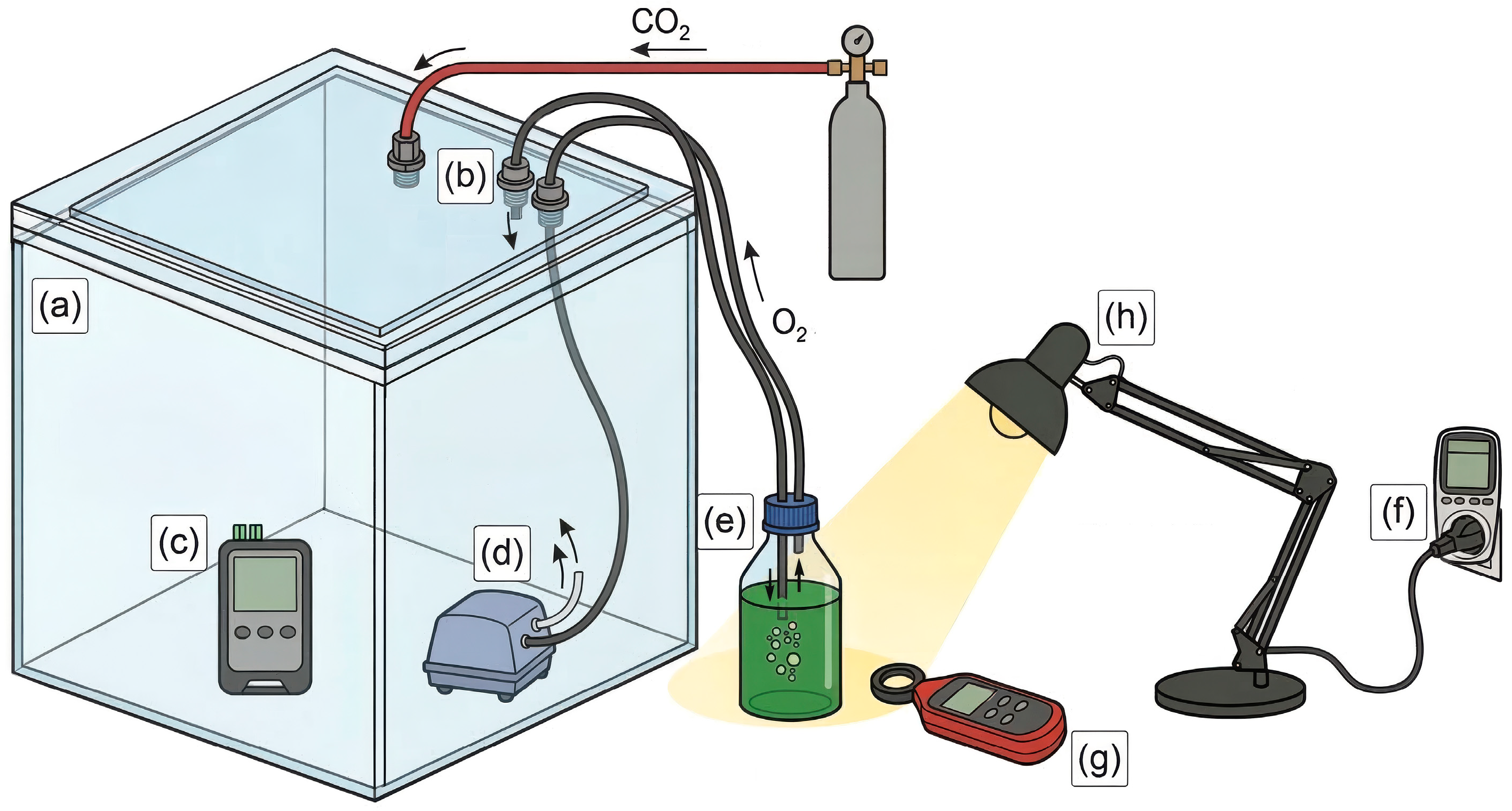
Carbon Dioxide Sequestration Performance of Nostoc linckia Cultivated in a Modular Photobioreactor at the Interior-Landscape Interface


Abstract
1. Introduction
2. Theoretical Framework
2.1. Environmental Buffering and CO2 Accumulation in Interior-Landscape Interface
2.2. Biophilic Design Integration: Biotechnological Systems as Living Components
2.3. Photobioreactor (PBR) Performance and Carbon Sequestration Efficiency
2.4. Nostoc linckia as a Model Organism for Circular Design
3. Materials and Methods
3.1. Experimental Setup and Environmental Control
3.2. Preparation of Biological Material
3.3. Experimental Design and Procedure
4. Experimental Results and Findings
5. System Validation: From Experimental Data to Architectural Application
5.1. Scaling Methodology
5.2. CO2 Sequestration Kinetics and Biomass Productivity
5.3. Architectural Application Scenarios
5.4. Circular Integration: From Metabolic Output to Landscape Input
6. Discussion
7. Conclusions
Author Contributions
Funding
Institutional Review Board Statement
Informed Consent Statement
Data Availability Statement
Acknowledgments
Conflicts of Interest
Abbreviations
| BAP | Bilimsel Araştırma Projeleri (Scientific Research Projects) |
| BG11 | Blue-Green Medium 11 |
| BIM | Building Information Modeling |
| CO2 | Carbon Dioxide |
| DW | Dry Weight |
| HVAC | Heating, Ventilation, and Air Conditioning |
| IAQ | Indoor Air Quality |
| LED | Light Emitting Diode |
| OD | Optical Density |
| PAR | Photosynthetically Active Radiation |
| PBR | Photobioreactor |
| PPFD | Photosynthetic Photon Flux Density |
| ppm | Parts per Million |
| RH | Relative Humidity |
| SDG | Sustainable Development Goal |
| UN | United Nations |
References
- Miškovičová, V.; Masojídek, J. Transdisciplinary collaboration in architecture: Integrating microalgae biotechnologies for human and non-human perspectives. Arch. Pap. Fac. Archit. Des. 2023, 28, 10–20. [Google Scholar] [CrossRef]
- Elrayies, G.M. Microalgae: Prospects for greener future buildings. Renew. Sustain. Energy Rev. 2018, 81, 1175–1191. [Google Scholar] [CrossRef]
- Kellert, S.R. Nature by Design: The Practice of Biophilic Design; Yale University Press: New Haven, CT, USA, 2018. [Google Scholar]
- Browning, W.D.; Ryan, C.O.; Clancy, J.O. 14 Patterns of Biophilic Design; Terrapin Bright Green LLC.: New York, NY, USA, 2014; pp. 3–4, 7–11, 21–52. [Google Scholar]
- Rahman, M.R.; Noori, M.T.; Hellgardt, K. Photonic-chemostat engineering for efficient continuous cultivation of cyanobacteria. RSC Adv. 2026, 16, 11036–11048. [Google Scholar] [CrossRef]
- Paul, S.; Bera, S.; Dasgupta, R.; Mondal, S.; Roy, S. Review on the recent structural advances in open and closed systems for carbon capture through algae. Energy Nexus 2021, 4, 100032. [Google Scholar] [CrossRef]
- Bernard, O. Hurdles and challenges for modelling and control of microalgae for CO2 mitigation and biofuel production. J. Process Control 2011, 21, 1378–1389. [Google Scholar] [CrossRef]
- Kim, K.H.; Parrow, M.W.; Kheirkhah Sangdeh, P. Microalgae-integrated building enclosures: A nature-based solution for carbon sequestration. Front. Built Environ. 2025, 11, 1574582. [Google Scholar] [CrossRef]
- Ammar, E.E.; Aioub, A.A.; Elesawy, A.E.; Karkour, A.M.; Mouhamed, M.S.; Amer, A.A.; El-Shershaby, N.A. Algae as Bio-fertilizers: Between current situation and future prospective. Saudi J. Biol. Sci. 2022, 29, 3083–3096. [Google Scholar] [CrossRef] [PubMed]
- Martinelli, P.M. Inside/outside: The interior façade as the stage of the architectural and urban in-between. Interiors 2022, 12, 330–355. [Google Scholar] [CrossRef]
- Pallasmaa, J. The Eyes of the Skin: Architecture and the Senses; Wiley: Chichester, UK, 2005. [Google Scholar]
- Kellert, S.R. Dimensions, elements, and attributes of biophilic design. In Biophilic Design: The Theory, Science, and Practice of Bringing Buildings to Life; Kellert, S.R., Heerwagen, J.H., Mador, M.L., Eds.; John Wiley & Sons: Hoboken, NJ, USA, 2008; pp. 3–19. [Google Scholar]
- Holl, S.; Pallasmaa, J.; Pérez-Gómez, A. Questions of Perception: Phenomenology of Architecture, 2nd ed.; William Stout Publishers: San Francisco, CA, USA, 2007. [Google Scholar]
- Abdulqader, O.Q.; Ahmed, J.A. Relationships between interior and exterior spaces as a factor of efficient university buildings. Int. J. Des. Nat. Ecodyn. 2020, 15, 757–762. [Google Scholar] [CrossRef]
- Liang, Z.; Huang, L.; Tu, S.; Wang, K. Global Warming and Carbon Dioxide Concentration. Adv. Eng. Technol. Res. 2023, 4, 470. [Google Scholar] [CrossRef]
- Varnosfaderani, M.P.; Heydarian, A.; Jazizadeh, F. A longitudinal study of IAQ metrics and the efficacy of default HVAC ventilation. Build. Environ. 2024, 254, 111353. [Google Scholar] [CrossRef]
- Ramya, A.; Nivetha, A.; Dhevagi, P. Overview of indoor air pollution: A human health perspective. In Spatial Modeling and Assessment of Environmental Contaminants: Risk Assessment and Remediation; Springer International Publishing: Cham, Switzerland, 2021; pp. 495–514. [Google Scholar]
- Krstić, H.; Trentin, A.; Jovanović, G. Interior-exterior connection in architectural design based on the incorporation of spatial in between layers. Study of four architectural projects. Spatium 2016, 36, 84–91. [Google Scholar] [CrossRef]
- Kellert, S.R. Kinship to Mastery: Biophilia in Human Evolution and Development; Island Press: Washington, DC, USA, 1997. [Google Scholar]
- Kellert, S.R.; Wilson, E.O. The Biophilia Hypothesis; Island Press: Washington, DC, USA, 1993. [Google Scholar]
- Wilson, E.O. Biophilia: The Human Bond with Other Species; Harvard University Press: Cambridge, MA, USA, 1984. [Google Scholar]
- Gaur, V.; Scassellati, B. Which motion features induce the perception of animacy. In Proceedings of the 2006 IEEE International Conference for Development and Learning, Bloomington, IN, USA, 31 May–3 June 2006; pp. 973–980. [Google Scholar]
- Kahn, P.H., Jr. Technological Nature: Adaptation and the Future of Human Life; MIT Press: Cambridge, MA, USA, 2011. [Google Scholar]
- Kellert, S.R.; Calabrese, E. The Practice of Biophilic Design; Terrapin Bright LLC.: London, UK, 2015. [Google Scholar]
- Vitaliano, S.; Cascone, S.; D’Urso, P.R. Mitigating built environment air pollution by green systems: An in-depth review. Appl. Sci. 2024, 14, 6487. [Google Scholar] [CrossRef]
- Han, M.; Park, J.; Kim, I.; Yi, H. A microalgae photobioreactor system for indoor air remediation: Empirical examination of the CO2 absorption performance of Spirulina maxima in a NaHCO3-reduced medium. Appl. Sci. 2023, 13, 12991. [Google Scholar] [CrossRef]
- Alami, A.H.; Alasad, S.; Ali, M.; Alshamsi, M. Investigating algae for CO2 capture and accumulation and simultaneous production of biomass for biodiesel production. Sci. Total Environ. 2021, 759, 143529. [Google Scholar] [CrossRef] [PubMed]
- Whitton, B.A.; Potts, M. Introduction to the cyanobacteria. In Ecology of Cyanobacteria II: Their Diversity in Space and Time; Whitton, B.A., Ed.; Springer Netherlands: Dordrecht, The Netherlands, 2012; pp. 1–13. [Google Scholar] [CrossRef]
- Touloupakis, E.; Zittelli, G.C.; Benavides, A.M.S.; Torzillo, G. Growth and photosynthetic performance of Nostoc linckia (formerly N. calcicola) cells grown in BG11 and BG110 media. Photochem. Photobiol. Sci. 2023, 22, 795–807. [Google Scholar] [CrossRef]
- Teikari, J.E.; Russo, D.A.; Heuser, M.; Baumann, O.; Zedler, J.A.; Liaimer, A.; Dittmann, E. Competition and interdependence define interactions of Nostoc sp. and Agrobacterium sp. under inorganic carbon limitation. npj Biofilms Microbiomes 2025, 11, 42. [Google Scholar] [CrossRef] [PubMed]
- Lucato, V. Capturing CO2 and N2 from the Atmosphere: Nitrogen-Fixing Cyanobacteria for Sustainable Industrial Production of Proteins. Ph.D. Thesis, University of Padova, Padova, Italy, 2025. [Google Scholar]
- Yadav, P.; Singh, R.P.; Gupta, R.K. Role of cyanobacteria in germination and growth of paddy seedlings. Int. J. Phytol. Res. 2022, 2, 11–18. [Google Scholar]
- Mai, V.C.; Nguyen, B.H.; Nguyen, D.D.; Nguyen, L.A.V. Nostoc calcicola extract improved the antioxidative response of soybean to cowpea aphid. Bot. Stud. 2017, 58, 55. [Google Scholar] [CrossRef]
- Alobwede, E.; Leake, J.R.; Pandhal, J. Circular economy fertilization: Testing micro and macro algal species as soil improvers and nutrient sources for crop production in greenhouse and field conditions. Geoderma 2019, 334, 113–123. [Google Scholar] [CrossRef]
- Whitmire, A.; Leveton, L.; Broughton, H.; Basner, M.; Kearney, A. Minimum Acceptable Net Habitable Volume for Long-Duration Exploration Missions: Subject Matter Expert Consensus Session Report; Report No. JSC-CN-32284; National Aeronautics and Space Administration, Johnson Space Center: Houston, TX, USA, 2014. Available online: https://ntrs.nasa.gov/api/citations/20140016951/downloads/20140016951.pdf (accessed on 6 February 2026).
- Kahraman, M.F. Türkiye’de Antropometrik Verilere Göre Ofiste Ergonomik İşyeri Tasarımı [Ergonomic Workplace Design in Offices According to Anthropometric Data in Turkey]. Specialization Thesis, Ministry of Labour and Social Security, Directorate General of Occupational Health and Safety, Ankara, Turkey, 2013. [Google Scholar]
- BAuA (Bundesanstalt für Arbeitsschutz und Arbeitsmedizin). ASR A1.2 Raumabmessungen und Bewegungsflächen [Technical Rules for Workplaces: Room Dimensions and Movement Areas]; GMBl 2013, S. 910; BAuA: Dortmund, Germany, 2013; Available online: https://www.baua.de/DE/Angebote/Regelwerk/ASR/ASR-A1-2 (accessed on 6 February 2026).
- Razzak, S.A.; Bahar, K.; Islam, K.M.O.; Haniffa, A.K.; Faruque, M.O.; Hossain, S.M.Z.; Hossain, M.M. Microalgae cultivation in photobioreactors: Sustainable solutions for a greener future. Green Chem. Eng. 2024, 5, 418–439. [Google Scholar] [CrossRef]
- Rippka, R.; Deruelles, J.; Waterbury, J.B.; Herdman, M.; Stanier, R.Y. Generic assignments, strain histories and properties of pure cultures of cyanobacteria. Microbiology 1979, 111, 1–61. [Google Scholar] [CrossRef]
- Tkachenko, Y.L.; Morozov, S.D.; Sherbakova, I.S.; Rovnyagina, A.S. Why we need to purify the air from carbon dioxide. IOP Conf. Ser. Earth Environ. Sci. 2021, 815, 012006. [Google Scholar] [CrossRef]
- Health Canada. Residential Indoor Air Quality Guidelines for Carbon Dioxide: For Public Consultation. Water and Air Quality Bureau. 2020. Available online: https://www.canada.ca/content/dam/hc-sc/documents/programs/consultation-residential-indoor-air-quality-guidelines-carbon-dioxide/consultation-residential-indoor-air-quality-guidelines-carbon-dioxide.pdf (accessed on 2 March 2026).
- López, L.R.; Dessì, P.; Cabrera-Codony, A.; Rocha-Melogno, L.; Kraakman, B.; Naddeo, V.; Puig, S. CO2 in indoor environments: From environmental and health risk to potential renewable carbon source. Sci. Total Environ. 2023, 856, 159088. [Google Scholar] [CrossRef] [PubMed]
- Shapiro, S.S.; Wilk, M.B. An analysis of variance test for normality (complete samples). Biometrika 1965, 52, 591–611. [Google Scholar] [CrossRef]
- Kruskal, W.H.; Wallis, W.A. Use of ranks in one-criterion variance analysis. J. Am. Stat. Assoc. 1952, 47, 583–621. [Google Scholar] [CrossRef]
- Fritz, C.O.; Morris, P.E.; Richler, J.J. Effect size estimates: Current use, calculations, and interpretation. J. Exp. Psychol. Gen. 2012, 141, 2–18. [Google Scholar] [CrossRef]
- Persily, A.; de Jonge, L. Carbon dioxide generation rates for building occupants. Indoor Air 2017, 27, 868–879. [Google Scholar] [CrossRef]
- Persily, A. Development and application of an indoor carbon dioxide metric. Indoor Air 2022, 32, e13059. [Google Scholar] [CrossRef]
- ASHRAE 62.1-2022; Ventilation for Acceptable Indoor Air Quality. ASHRAE: Atlanta, GA, USA, 2022.
- Monod, J. The growth of bacterial cultures. Annu. Rev. Microbiol. 1949, 3, 371–394. [Google Scholar] [CrossRef]
- Kim, D.S.; Moreno-Cabezuelo, J.Á.; Schulz, E.N.; Lea-Smith, D.J.; Sagaram, U.S. Recent advances in engineering fast-growing cyanobacterial species for enhanced CO2 fixation. Front. Clim. 2024, 6, 1412232. [Google Scholar] [CrossRef]
- Demirkaya, C.; Vadlamani, A.; Tervahauta, T.; Strous, M.; De la Hoz Siegler, H. Autofermentation of alkaline cyanobacterial biomass to enable biorefinery approach. Biotechnol. Biofuels Bioprod. 2023, 16, 62. [Google Scholar] [CrossRef] [PubMed]
- Satish, U.; Mendell, M.J.; Shekhar, K.; Hotchi, T.; Sullivan, D.; Streufert, S.; Fisk, W.J. Is CO2 an indoor pollutant? Direct effects of low-to-moderate CO2 concentrations on human decision-making performance. Environ. Health Perspect. 2012, 120, 1671–1677. [Google Scholar] [CrossRef] [PubMed]
- Persily, A.; Gorfain, J. Analysis of Ventilation Data from the U.S. Environmental Protection Agency Building Assessment Survey and Evaluation (BASE) Study; NIST Technical Note 1562; National Institute of Standards and Technology: Gaithersburg, MD, USA, 2008.
- Du, B.; Tandoc, M.C.; Mack, M.L.; Siegel, J.A. Indoor CO2 concentrations and cognitive function: A critical review. Indoor Air 2020, 30, 1067–1082. [Google Scholar] [CrossRef] [PubMed]
- Fisk, W.J.; Sullivan, D.P.; Mendell, M.J. CO2 Monitoring for Demand Controlled Ventilation in Commercial Buildings; LBNL Report No. 3279E; Lawrence Berkeley National Laboratory: Berkeley, CA, USA, 2010.
- Batterman, S. Review and extension of CO2-based methods to determine ventilation rates with application to school classrooms. Int. J. Environ. Res. Public Health 2017, 14, 145. [Google Scholar] [CrossRef]
- Awbi, H.B. Ventilation of Buildings; Routledge: London, UK, 2002. [Google Scholar]
- Béchet, Q.; Shilton, A.; Guieysse, B. Modeling the effects of light and temperature on algae growth: State of the art and critical assessment for productivity prediction during outdoor cultivation. Biotechnol. Adv. 2013, 31, 1648–1663. [Google Scholar] [CrossRef]
- Malakar, E.; Kalita, M.C. A perspective towards development and commercialization of potential BGA biofertilizers of Assam, North East India and carrier materials for BGA mass production and inoculum development. Ann. Biol. Res. 2012, 3, 814–828. [Google Scholar]
- Singh, J.S.; Kumar, A.; Rai, A.N.; Singh, D.P. Cyanobacteria: A precious bio-resource in agriculture, ecosystem, and environmental sustainability. Front. Microbiol. 2016, 7, 529. [Google Scholar] [CrossRef]
- Sakamoto, M.; Li, M.; Kuga, K.; Ito, K.; Bekö, G.; Williams, J.; Wargocki, P. CO2 emission rates from sedentary subjects under controlled laboratory conditions. Build. Environ. 2022, 211, 108735. [Google Scholar] [CrossRef]
- Cervera, R.; Villalba, M.R.; Sánchez, J. The Artificial Tree: Integrating Microalgae into Sustainable Architecture for CO2 Capture and Urban Efficiency—A Comprehensive Analysis. Buildings 2024, 14, 4045. [Google Scholar] [CrossRef]
- Pierobon, S.C.; Ooms, M.D.; Sinton, D. Evanescent cultivation of photosynthetic bacteria on thin waveguides. J. Micromech. Microeng. 2014, 24, 045017. [Google Scholar] [CrossRef]
- Gubb, C.; Blanusa, T.; Griffiths, A.; Pfrang, C. Can houseplants improve indoor air quality by removing CO2 and increasing relative humidity? Air Qual. Atmos. Health 2018, 11, 1191–1201. [Google Scholar] [CrossRef]



| Experimental Regime | Concentration (ppm) | Associated Health and Comfort Effects |
|---|---|---|
| Level 1 (Low Load) | 400–1000 | Typical indoor air quality, generally considered acceptable for comfort [40,41]. |
| Level 2 (Medium Load) | 1000–2000 | Onset of lethargy, complaints related to lack of fresh air, and potential decrease in cognitive performance [40]. |
| Level 3 (High Load) | 2000–5000 | Significant physiological symptoms: headache, fatigue, loss of focus, increased heart rate, and nausea [42]. |
| Experimental Regime | Duration (h) | Initial Chamber Conditions (CO2; T; RH) | Final Chamber Conditions (CO2; T; RH) | Initial OD (Abs: Value) | Final OD (Abs: Value) | Dry Biomass (mg/mL) |
|---|---|---|---|---|---|---|
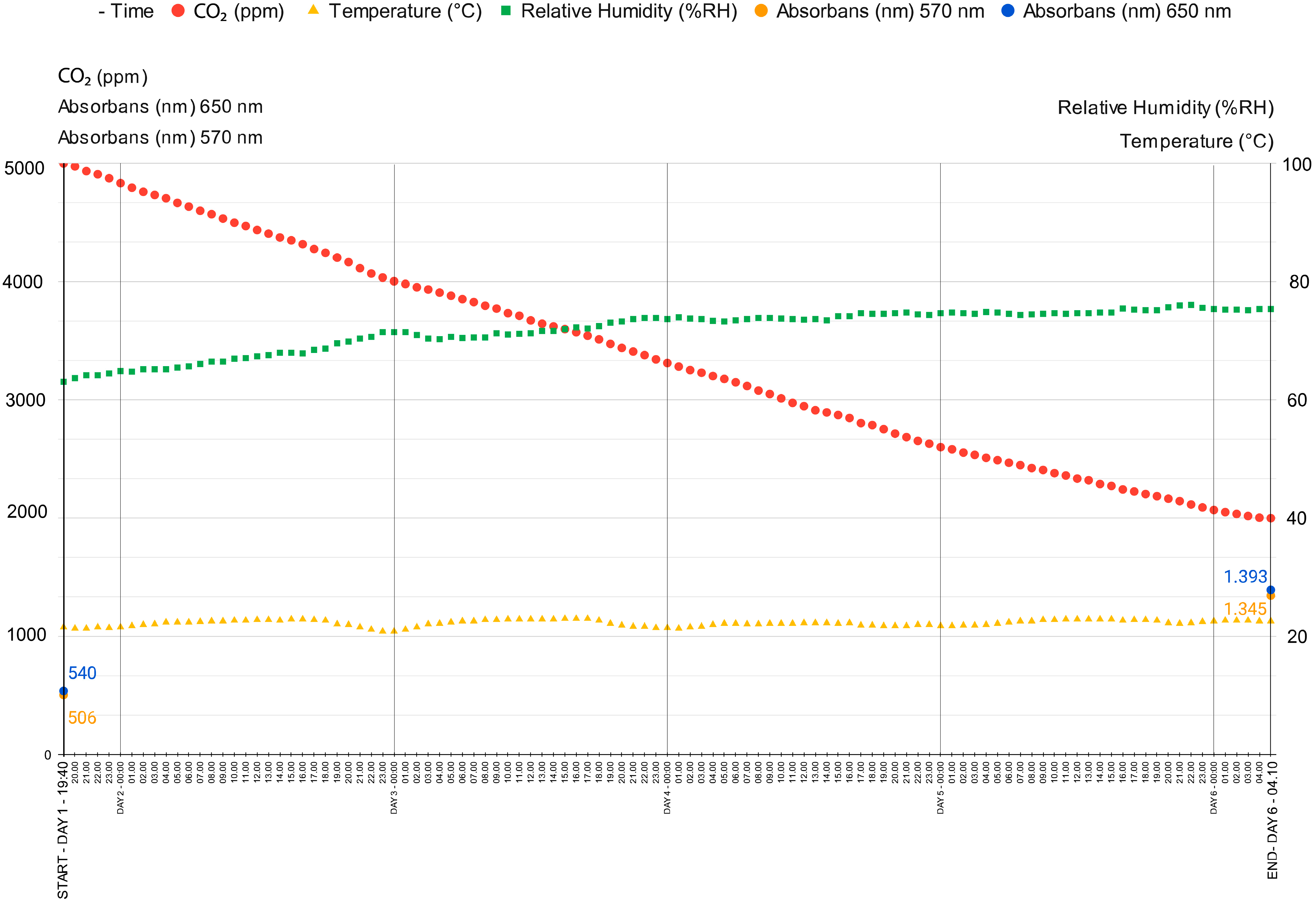
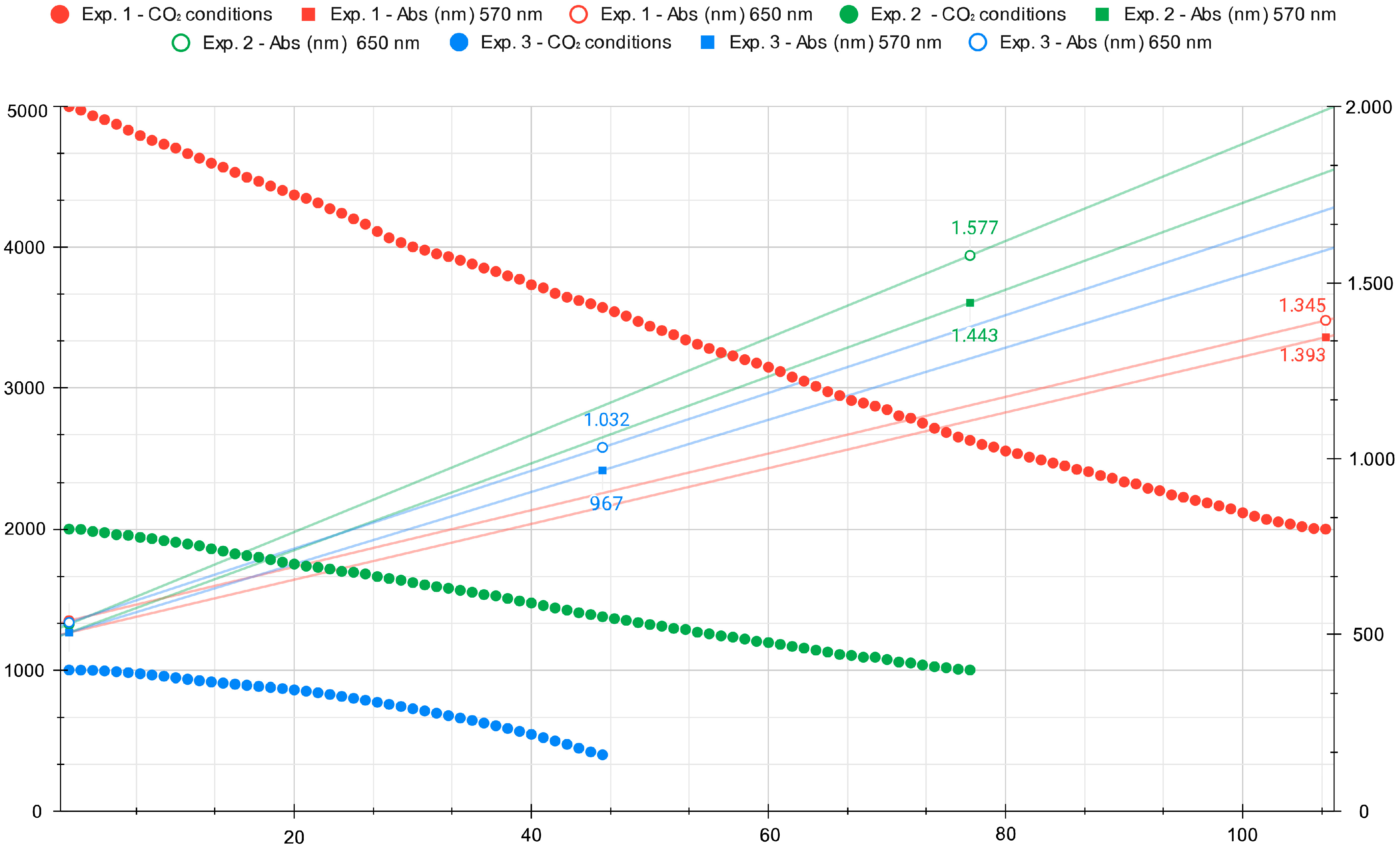
| High Load (5000–2000 ppm) | 5000 ppm | 2000 ppm | 570 nm: 0.506 | 570 nm: 1.345 | Initial: 0.12 | |
| 104.5 | 21.6 °C | 22.6 °C | 650nm: 0.540 | 650 nm: 1.393 | Final: 0.53 | |
| 63.1% | 75.4% | |||||
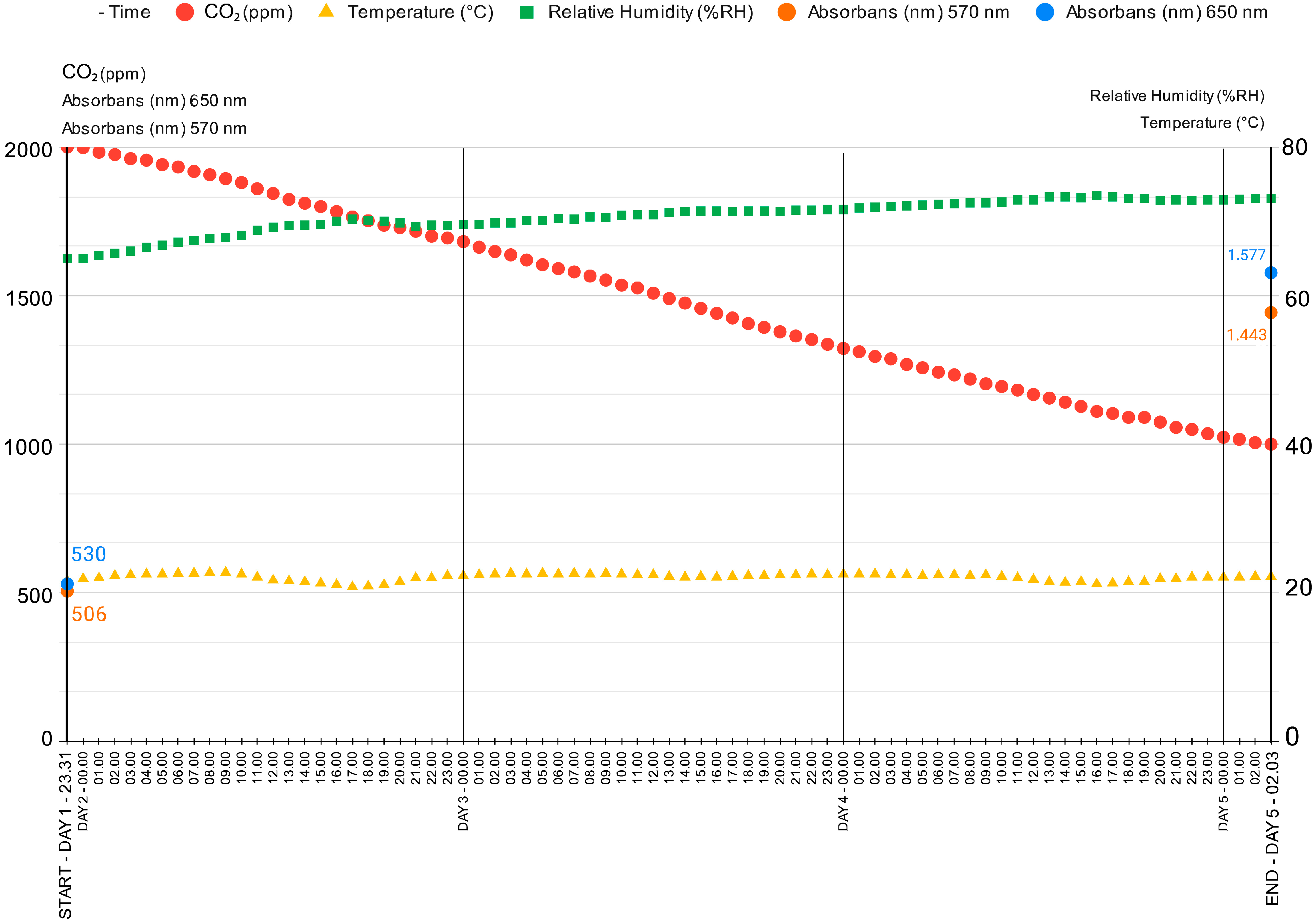
| Medium Load (2000–1000 ppm) | 2000 ppm | 1000 ppm | 570 nm: 0.506 | 570 nm: 1.443 | Initial: 0.12 | |
| 75.0 | 21.6 °C | 22.2 °C | 650 nm: 0.530 | 650 nm: 1.577 | Final: 0.54 | |
| 65.0% | 73.1% | |||||
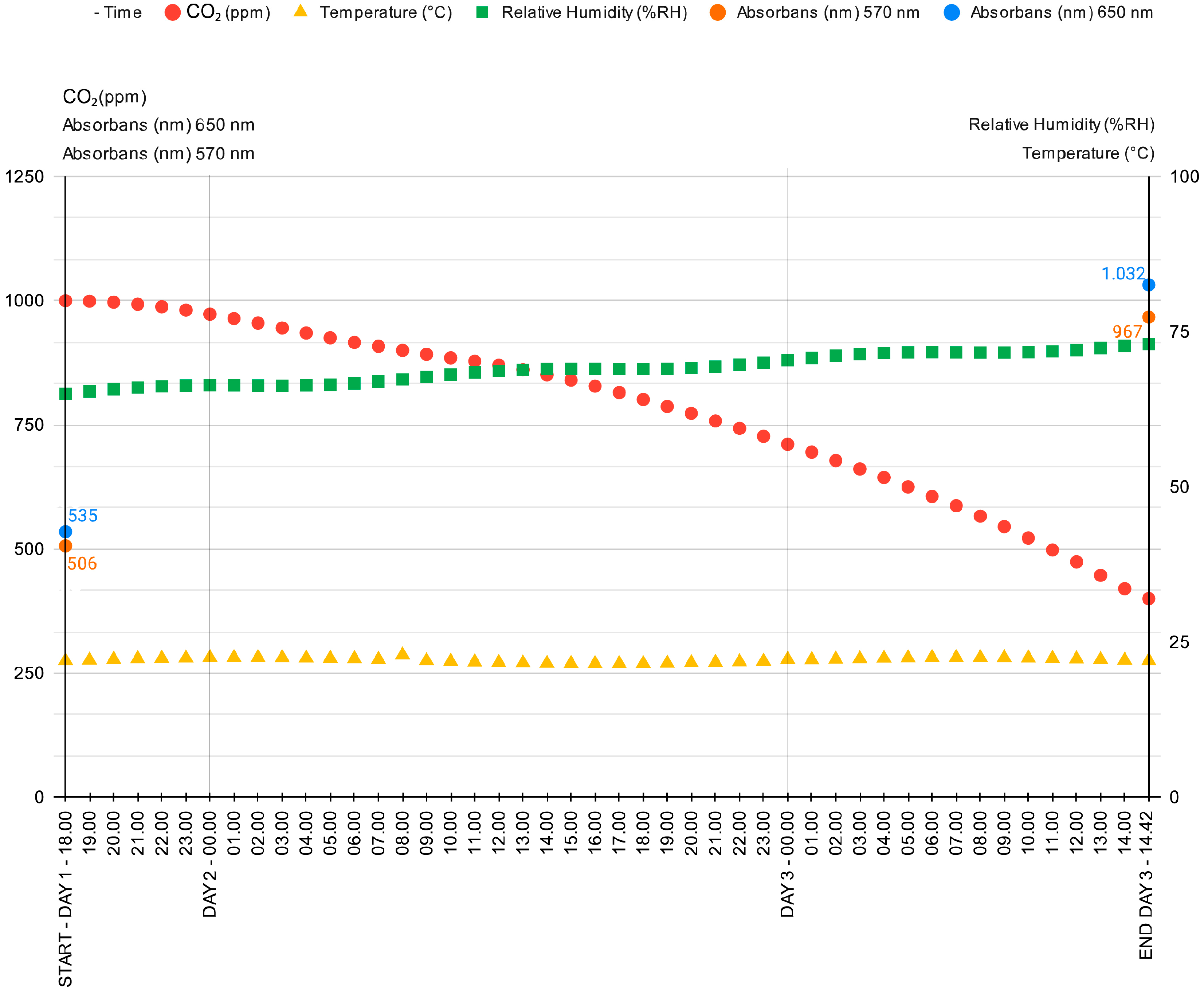
| Low Load (1000–400 ppm) | 1000 ppm | 400 ppm | 570 nm: 0.506 | 570 nm: 0.967 | Initial: 0.12 | |
| 44.1 | 22.0 °C | 22.0 °C | 650 nm: 0.535 | 650 nm: 1.032 | Final: 0.31 | |
| 65.0% | 73.0% |
| Experimental Regime | Duration (h) | Removal Rate (ppm/h) | Sequestration Rate (mL/h) * | Biomass Production (mg/d) * |
|---|---|---|---|---|
| High Load (5000–2000 ppm) | 104.5 | 28.71 | 7.18 | 94.2 |
| Medium Load (2000–1000 ppm) | 75.0 | 13.33 | 3.33 | 134.4 |
| Low Load (1000–400 ppm) | 44.1 | 13.61 | 3.40 | 103.4 |
| Scenario | Volume (m3) | Occupants | Modules (n) | Typical CO2 Range (ppm) |
|---|---|---|---|---|
| A: Single-Person Office | 25 | 1 | 30 | 800–1500 [52,53] |
| B: Shared Office | 50 | 3–4 | 60 | 1000–2000 [53,54] |
| C: Meeting Room | 75 | 8–12 | 100 | 1500–3000 * [55] |
| D: Open-Plan Office | 150 | 10–15 | 200 | 1000–1800 [53] |
| E: Atrium/Interface | 300 | 15–25 | 300 | 600–1200 [56] |
| Scenario | Volume (m3) | Modules (n) | Instantaneous Reduction (ppm/h) | Daily CO2 Fixation (g/day) | Annual CO2 Fixation (kg/year) | Annual Biomass Production (kg/year) |
|---|---|---|---|---|---|---|
| A: Single-Person Office | 25 | 30 | 4.0 | 5.2–7.4 | 1.9–2.7 | 1.0–1.5 |
| B: Shared Office | 50 | 60 | 4.0 | 10.3–14.8 | 3.8–5.4 | 2.0–3.0 |
| C: Meeting Room | 75 | 100 | 4.5 | 17.2–24.7 | 6.3–9.0 | 3.4–4.9 |
| D: Open-Plan Office | 150 | 200 | 4.5 | 34.4–49.4 | 12.6–18.0 | 6.9–9.9 |
| E: Atrium/Interface | 300 | 300 | 3.3 | 51.6–74.1 | 18.8–27.0 | 10.3–14.8 |
Disclaimer/Publisher’s Note: The statements, opinions and data contained in all publications are solely those of the individual author(s) and contributor(s) and not of MDPI and/or the editor(s). MDPI and/or the editor(s) disclaim responsibility for any injury to people or property resulting from any ideas, methods, instructions or products referred to in the content. |
© 2026 by the authors. Licensee MDPI, Basel, Switzerland. This article is an open access article distributed under the terms and conditions of the Creative Commons Attribution (CC BY) license.
Share and Cite
Dalay Algan, L.; Aytaç, G. Carbon Dioxide Sequestration Performance of Nostoc linckia Cultivated in a Modular Photobioreactor at the Interior-Landscape Interface. Sustainability 2026, 18, 3112. https://doi.org/10.3390/su18063112
Dalay Algan L, Aytaç G. Carbon Dioxide Sequestration Performance of Nostoc linckia Cultivated in a Modular Photobioreactor at the Interior-Landscape Interface. Sustainability. 2026; 18(6):3112. https://doi.org/10.3390/su18063112
Chicago/Turabian StyleDalay Algan, Lâl, and Gülşen Aytaç. 2026. "Carbon Dioxide Sequestration Performance of Nostoc linckia Cultivated in a Modular Photobioreactor at the Interior-Landscape Interface" Sustainability 18, no. 6: 3112. https://doi.org/10.3390/su18063112
APA StyleDalay Algan, L., & Aytaç, G. (2026). Carbon Dioxide Sequestration Performance of Nostoc linckia Cultivated in a Modular Photobioreactor at the Interior-Landscape Interface. Sustainability, 18(6), 3112. https://doi.org/10.3390/su18063112