Article

Efficiency, Safety Perception, and Technology Acceptance of Mixed Reality for Sustainable Construction Inspection


by
Saddam Hussain Khurram
1,*,
Shengjun Miao
1,
Khurram Iqbal Ahmad Khan
2,
Aboubakar Siddique
1,
Naheed Akhtar
3 and
Xiangfan Shang
4
1
School of Resources and Safety Engineering, University of Science and Technology Beijing, Beijing 100083, China
2
School of Civil and Environmental Engineering, National University of Science and Technology, Islamabad 44000, Pakistan
3
Department of Civil Engineering, Polo-II, University of Coimbra, 3030-790 Coimbra, Portugal
4
China Academy of Safety Science and Technology, Beijing 100012, China
*
Author to whom correspondence should be addressed.
Sustainability 2026, 18(6), 3111; https://doi.org/10.3390/su18063111
Submission received: 24 January 2026 / Revised: 13 February 2026 / Accepted: 16 March 2026 / Published: 22 March 2026
(This article belongs to the Section Sustainable Management)

Abstract

Digital inspection technologies are increasingly being adopted in the construction industry to improve efficiency, decision quality, and sustainability performance. Mixed reality (MR) systems can reduce rework, minimise human error, and support resource-efficient inspection processes. However, empirical evidence on how perceptions of efficiency and safety influence professional acceptance of MR technologies remains limited. This study investigates the adoption of MR for construction inspection using an extended technology acceptance model (TAM) that incorporates task efficiency and safety perception as domain-specific human factors. A within-subjects scenario-based experimental design was applied, in which 103 construction professionals evaluated four inspection modalities: HoloLens MR, smart glasses, tablet-based systems, and traditional paper-based methods. Data was analysed using linear mixed-effects models, structural equation modelling, mediation analysis, and dominance analysis. The results show that HoloLens MR achieved the highest perceived efficiency and safety perception, while imposing the lowest cognitive demand. Perceived efficiency was a strong predictor of device preference and significantly predicted perceived usefulness (β = 0.322, p < 0.001), which fully mediated its effect on behavioural intention. Safety perception accounted for a substantial proportion of the variance in user evaluations (η2 = 0.237). These findings indicate that sustainable adoption of MR in construction inspection depends on combined perceptions of efficiency gains, usability, and safety support.

1. Introduction

The use of innovative technologies in the construction industry is becoming increasingly important to improve efficiency, accuracy, and safety [1]. Among these technologies, mixed reality (MR)—a combination of augmented reality (AR) and virtual reality (VR) that overlays digital information onto the physical environment—holds significant promise for immersive and interactive construction applications [2,3]. MR technologies have been shown to minimise human error, improve task performance, and support real-time decision-making [4,5]. More broadly, data-driven BIM and IoT-enabled monitoring frameworks are increasingly being used to enhance predictive maintenance and lifecycle management in construction projects [6]. In this context, digital inspection technologies are increasingly viewed as enablers of sustainable construction practices by reducing rework, improving inspection accuracy, and supporting resource-efficient decision-making. Recent research integrating digital twins, reality capture, and extended reality technologies for progress monitoring further demonstrates the potential of immersive systems to enhance sustainability-oriented construction monitoring and management [7].
Construction inspection plays a critical role in ensuring structural integrity, compliance, and worker safety. However, inspection processes often involve manual verification, high cognitive demand, and susceptibility to error. The adoption of immersive technologies, such as MR, may enhance inspection workflows; however, their overall impact on human factors and technology acceptance remains insufficiently understood.
Despite the increasing interest in immersive technologies for construction inspection, prior studies have primarily examined single-device implementations or generalised acceptance factors without systematically comparing immersive, semi-immersive, and traditional inspection modalities within a unified experimental framework. Moreover, limited empirical evidence exists regarding how task efficiency and safety perception jointly influence technology adoption decisions in sustainability-oriented construction contexts. The present study conceptualises sustainability in construction inspection primarily in terms of process efficiency, error reduction, and resource optimization, rather than through direct measurement of energy consumption or emission reduction. Inspection-related rework and decision errors contribute significantly to material waste and project delays; therefore, technologies that enhance inspection efficiency can indirectly support sustainability objectives.
This study addresses these gaps by conducting a controlled within-subjects comparison across four inspection modalities HoloLens MR, smart glasses, tablet-based systems, and paper-based methods, and by extending the technology acceptance model (TAM) to incorporate performance-based and safety-related constructs.
The objectives of this research are:
  • To compare anticipated task performance, cognitive demand, and safety perception across different MR systems and paper-based methods.
  • To identify which MR system yields the highest perceived technology acceptance and safety.
  • To determine the key human-factor predictors of device preference among construction professionals.
The following research questions guide the investigation:
  • How do task performance, cognitive ergonomics, and user acceptance influence sustainable construction inspection practices?
  • How does HoloLens MR compare to smart glasses, tablet (2D), and paper-based methods?
  • How does human behaviour influence preference and adoption intentions for MR in construction?
  • Based on these objectives and prior theoretical foundations, the following hypotheses are proposed:
H1: 
HoloLens MR will receive significantly more favourable ratings for task performance and lower cognitive load than other modalities, whereas paper-based methods will receive lower efficiency ratings and higher physical fatigue ratings.
H2: 
In predicting device preference, perceived usefulness and physical fatigue will demonstrate stronger explanatory power than performance-related indicators such as error detection and safety perception.
This study makes four contributions to research on sustainable construction technology. First, it provides a within-subjects comparative evaluation of immersive (HoloLens MR), semi-immersive (smart glasses), non-immersive (tablet-based), and traditional paper-based inspection methods from a human-factors perspective. Second, it extends TAM for safety-sensitive, sustainability-oriented construction tasks by treating task efficiency as a performance-based antecedent of perceived usefulness and by incorporating safety perception as a domain-specific evaluative dimension. Third, it demonstrates that perceived usefulness mediates the relationship between efficiency and behavioural intention. Fourth, it integrates mixed-effects modelling, structural equation modelling, dominance analysis, mediation analysis, and user segmentation to provide a comprehensive evaluation framework for digital inspection technologies in construction.

2. Literature Review

2.1. Mixed Reality in Construction Inspection

Recent studies have demonstrated that immersive technologies support performance improvement and decision-making in construction training and inspection contexts [8,9]. MR systems provide real-time digital support that can reduce errors and improve efficiency during inspection and decision-making processes [10]. For example, HoloLens MR has been reported to enhance productivity by reducing the time required for site inspections [11]. However, although MR has shown performance benefits, its broader effects on cognitive load, situational awareness, and user experience remain underexplored [12].
MR systems can be applied to construction activities such as rebar inspection to improve decision quality through interactive interfaces and contextual visualisation [13]. Nevertheless, different MR devices may impose varying levels of cognitive demand and ergonomic strain, which could influence task performance and perceived safety [14]. Therefore, examining how different MR modalities affect cognitive load and human performance is necessary for understanding their practical implementation in real-world construction environments [15].
Situational awareness (SA), the ability to perceive, interpret, and project environmental changes, is essential in construction, particularly in high-risk settings [16]. By superimposing digital data in real time, MR systems may enhance workers’ situational awareness by improving hazard recognition and error detection [17]. However, the impact of MR on situational awareness within construction inspection has not been thoroughly investigated.

2.2. Human Factors and Technology Acceptance

Although efficiency metrics such as time and accuracy are commonly reported in MR research, human-factor variables—including cognitive load, situational awareness, physical fatigue, and safety perception—have received comparatively limited empirical attention in immersive construction platforms [18,19]. MR technologies may enhance situational awareness through real-time hazard notifications [20,21], yet they may also increase cognitive burden or introduce ergonomic challenges that counterbalance performance gains [22,23]. The relationship between these human factors and technology adoption preferences remains underexplored, particularly from an industry-wide perspective [24]. Beyond usability and cognitive considerations, adoption decisions in safety-critical domains are often shaped by socio-technical and cost–benefit evaluations of immersive technologies, especially in training and operational environments [25].
Previous studies have examined construction workers’ acceptance of wearable and safety-oriented technologies, highlighting the importance of perceived usefulness and contextual safety considerations in adoption decisions [26]. The technology acceptance model (TAM) is widely used to explain technology adoption behaviour in construction and the built environment, including BIM and immersive technology applications [27,28,29,30]. However, limited empirical research has examined its applicability to immersive, safety-critical technologies, such as those used in construction inspection. The existing studies rarely investigate the role of core performance outcomes such as task efficiency in shaping acceptance pathways, nor do they formally incorporate safety perception as a central evaluative construct. Addressing these limitations requires extending TAM to account for performance-based antecedents and safety-sensitive evaluation dimensions in high-risk, sustainability-oriented construction contexts.

3. Methodology

3.1. Research Design and Participant Recruitment

The study employed a within-subjects (repeated-measures) experimental design, in which all participants rated all four technological modalities under standardised conditions. The technologies that were evaluated were (1) a tablet (2D) (e.g., Samsung Galaxy Tab, Samsung Electronics Co., Ltd., Suwon, Republic of Korea), (2) Microsoft HoloLens MR (simulated) (Microsoft Corp., Redmond, WA, USA), (3) Vuzix M400 smart glasses (simulated) (Vuzix Corp., Rochester, NY, USA), and (4) traditional paper-based methods. This design was chosen to enhance statistical power, minimise between-subject variability, and enable direct within-person comparisons across technologies.
One hundred and three (103) qualified construction professionals were hired through targeted outreach via LinkedIn and professional email campaigns. The inclusion criteria required that participants have at least 3 years of professional experience in construction, engineering, or related fields to provide informed opinions. Recruitment and validation were done in three phases: (1) pilot testing on 15 professionals (not analysed finally), in which the Cronbach alpha of all constructs was above 0.80, (2) the addition of attention-check questions to ensure quality and engagement, and (3) filtering by IP addresses to avoid repeat submission. This within-subject design is methodologically suitable for comparative technology assessment because it enhances statistical power by minimising error variance due to individual differences. The design involved four observations per participant (one of each technology), yielding a total of 103 participants × 4 technologies = 412 observations to be analysed. Inferential tests were all conducted at this level of observation (n = 412) and were statistically adjusted (using random-effects mixed models) to account for the non-independence of observations within each participant.
To mitigate potential order and carryover effects inherent in within-subjects experimental designs, the presentation order of the four inspection modalities was randomised for each participant. This counterbalancing strategy reduces systematic bias related to learning, fatigue, or familiarity and is commonly adopted in scenario-based evaluations of emerging construction technologies. While scenario-based evaluations cannot fully replicate the complexity, environmental interference, and spatial constraints of real construction sites, this approach enables controlled comparison of technological modalities under standardised conditions. Such controlled environments reduce confounding and are commonly used in early-stage evaluations of emerging construction technologies. The results, therefore, reflect comparative differences in perceptual and cognitive performance across modalities rather than absolute field performance outcomes.

3.2. Rationale for Scenario-Based Evaluation

Participants assessed the technologies using a detailed scenario rather than their actual use. This is a methodological decision made for three important reasons, in accordance with the study’s aims. To begin with, it provided a controlled and standardised comparison across a geographically dispersed international sample, removing confounding factors arising from differences in device configuration, software, or environmental conditions. Second, consideration of use expectations, assessed through professional experience, is a proven method in pre-implementation technology acceptance research [28] and can be applied to pinpoint the perceptual forces shaping preferences before costly physical implementation. Third, it allowed one to test four different modalities simultaneously, which would have been logistically challenging in a field environment. This would be the best method for a baseline comparative study that seeks to model major predictors and create a hierarchy of technologies to inform future-focused field trials. This scenario-based evaluation approach is suitable for sustainability-oriented decision-making, as it allows stakeholders to assess efficiency and safety implications of emerging technologies before large-scale resource investment and on-site deployment.

3.3. Survey Stimuli and Scenario-Based Evaluation

There were no videos and live demonstrations of the technologies. They were instead supplied with a detailed, standardised text and visual scenario of a hypothetical investigation of a reinforced concrete column, in which three prevalent defects needed to be identified: cracking, spalling, and rebar misalignment. Before the evaluation tasks, participants received standardised images, device specifications, and functional descriptions of each technology to ensure baseline familiarity with system capabilities. Although hands-on training was not conducted, the study focused on comparative perception and evaluation rather than operational skill proficiency. This design aligns with technology acceptance research, in which perceived usefulness and ease of use are evaluated during early stages of exposure. The rationale for this scenario-based approach was to provide a controlled and fair presentation across a geographically dispersed sample and to align with research on the evaluation of anticipatory technologies. The standardised inspection scenario included a textual vignette, high-resolution photographs of the device, technical specifications, and task-specific interaction examples, which were provided to the individuals. They were asked to rate each technology (HoloLens MR, tablet (2D), smart glasses, and paper-based methods) based on their professional knowledge and expected applications, a proven approach for comparing technologies prior to physical implementation [28,29,30].

3.4. Measures and Instruments

The questionnaire was divided into sections, and the first section covered demographic and professional background. Four technology modalities were subsequently introduced to participants in a counterbalanced manner via randomisation to reduce the possibility of order effects [31]. Participants completed a validated set of psychometric scales that were identical across cases. Task performance (TP), evaluating confidence, time efficiency, error detection, and task completion efficiency, was assessed using items adapted from [32] on a 5-point Likert scale. Cognitive load (CL) was measured using an adapted NASA-TLX scale [33]. A shortened version of the Situational Awareness Rating Technique (SART) [34] was used to assess situational awareness, consistent with situational awareness–oriented design concepts [35]. Anticipated physical fatigue (F) was measured using adapted items from wearable technology scales [36]. The core constructs of the technology acceptance model (TAM), namely perceived usefulness (PU) and perceived ease of use (PEOU), were adapted from Davis [28] and subsequent extensions of the TAM [30]. Perceived ease of use was coded such that higher scores indicate greater ease. The dependent variable (DV) was measured using a one-item seven-point Likert scale. All multi-item constructs demonstrated high internal consistency (Cronbach’s α > 0.80).

3.5. Ethical Considerations

Ethical approval for the study was obtained from the institutional review board, and electronic informed consent was obtained from all participants prior to participation. The questionnaires were anonymous, and the data were collected via scenario-based surveys distributed via professional networks on LinkedIn and construction-industry email lists. No personally identifiable information was collected; therefore, participants’ responses remained confidential during data collection and analysis. The study followed the standard ethical principles for conducting research using surveys and involving human participants. All research procedures were conducted in accordance with the principles stated in the Declaration of Helsinki.

3.6. Data Analysis

All statistical analyses were conducted using RStudio (version 4.3.1, RStudio PBC, Boston, MA, USA). We used linear mixed-effects models (LMMs) with the lme4 package [37] to conduct all comparative analyses because the data structure is hierarchical, with 412 observations across 103 participants. The advantages of LMMs over traditional repeated-measures ANOVA in this type of design are that they can account for non-independence (via participant-specific random intercepts), yield robust estimates with unbalanced data, and use all available data points. To infer the model, Type III ANOVA with the Satterthwaite approximation for degrees of freedom was used to test the significance of the fixed effects using the lmer Test package [38]. This approach correctly calculates the degrees of freedom for error given the number of participants and the model structure. Although inferential statistics are reported using ANOVA-style F-statistics (e.g., F (3, 408)), all hypothesis tests were derived from linear mixed-effects models with participant-level random intercepts. This modelling approach explicitly accounts for within-participant dependence arising from the repeated-measures design. The denominator degrees of freedom reflect the total number of observations adjusted using the Satterthwaite approximation, rather than an assumption of independent observations.

3.6.1. Descriptive and Reliability Analyses

Preliminary analyses included calculations of means, SDs, and reliability coefficients (Cronbach’s α) for all multi-item scales. The assumptions of normality and sphericity were tested using the Shapiro–Wilk and Mauchly’s test, respectively.

3.6.2. Comparison of Device Ratings

Linear mixed-effects models (LMMs) were used to compare participants’ ratings across the four technologies for each dependent variable, with a random intercept for participant ID to account for within-subject dependencies. A model was then defined for each construct (e.g., perceived usefulness, mental demand) with technology as a fixed effect and participant as a random effect. Type III ANOVA with the Satterthwaite degrees-of-freedom approximation was used to assess the significance of the fixed effect using the lmerTest package. Estimated marginal means with the HSD adjustment of Tukey were used to conduct post hoc pair-wise comparisons.

3.6.3. Predicting Device Preference

To identify predictors of device preference (choice among four modalities), we estimated a multinomial logistic regression model with HoloLens MR as the reference category. Predictors included efficiency, error detection, mental demand, physical fatigue, situational awareness, perceived usefulness, perceived ease of use, MR usage frequency, and experience. Conditional R2 (proportion of variance that is being explained by both the fixed and random effects) and Akaike Information Criterion (AIC) were used to evaluate the model fit. To compare predictor strength, standardised coefficients (β) were obtained. Efficiency scores were standardised within each technology condition, and HoloLens MR was used as the reference category in the multinomial logistic regression, allowing odds ratios to be interpreted relative to the preference for immersive MR.

3.6.4. Supplemental Analysis

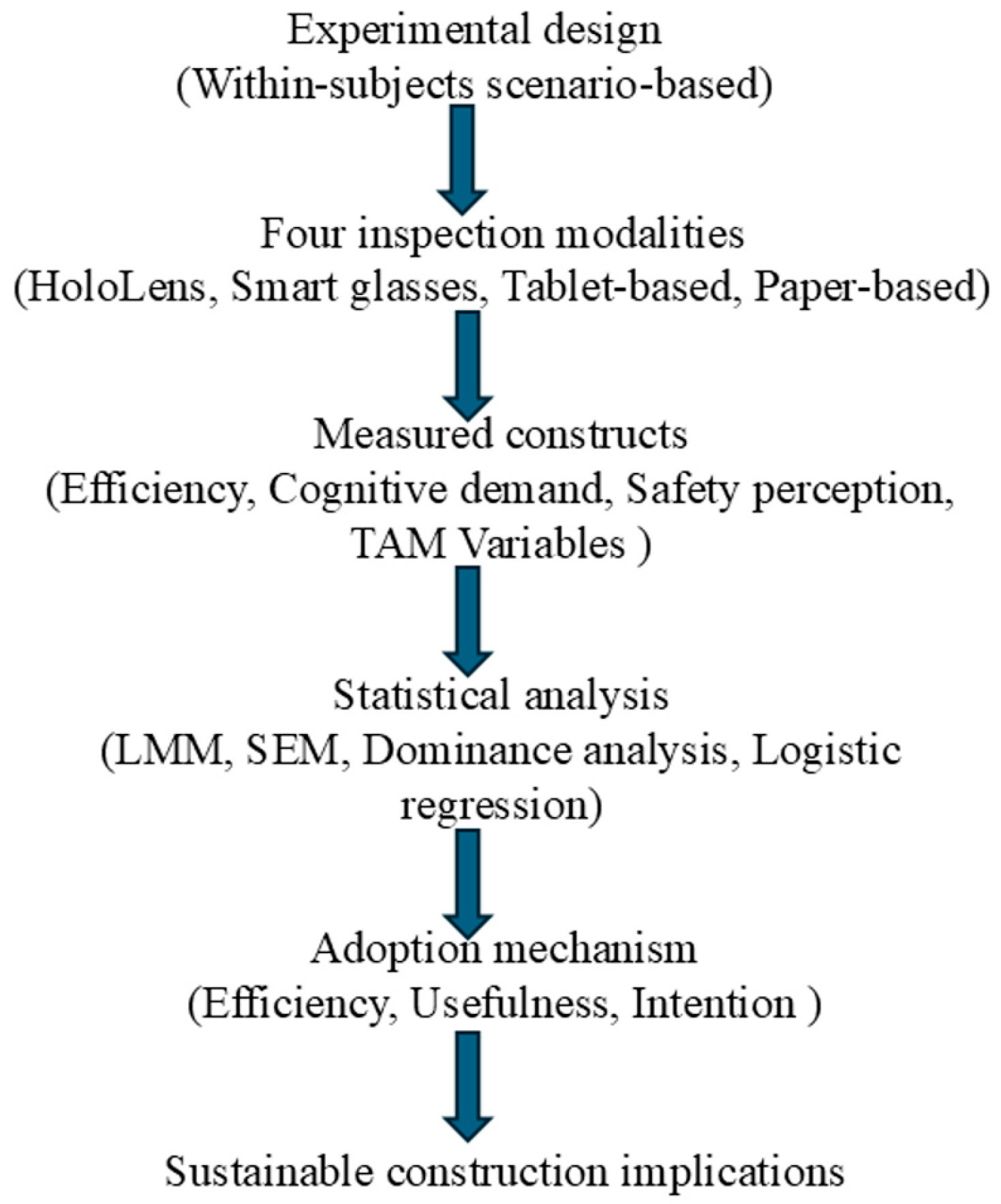
Further predictive and exploratory analysis was conducted to clarify the data. The relative significance of each predictor in explaining variance in device preference was assessed using dominance analysis, performed with the dominance analysis package. The model was a multinomial logistic regression performed with the nnet package, with the HoloLens MR technology choice as the reference group. To identify the specific user groups, k-means clustering was applied to profiles of efficiency, confidence, safety, usefulness, and experience, and the number of clusters was determined using silhouette analysis and the elbow method. All statistical tests were two-tailed with α = 0.05. The effect size is reported as η2 for ANOVA-type models and as an odds ratio (OR) with a 95% confidence interval for logistic regression-type models. Figure 1 summarizes the overall research framework, the measured constructs, and the analytical workflow used to test adoption mechanisms and sustainability-oriented implications.

4. Results

4.1. Performance, Cognitive Demand, and Safety Comparisons

All reported F-tests correspond to fixed-effects estimates from linear mixed-effects models rather than traditional repeated-measures ANOVA, thereby ensuring appropriate treatment of the within-subjects experimental structure. Linear mixed-effects models with Satterthwaite degrees of freedom showed that technology had significant main effects on all measures considered. As shown in Table 1, HoloLens MR had better performance features, with the highest efficiency (M = 4.35, SD = 0.54) and the lowest mental demand (M = 2.69, SD = 0.58) and paper-based methods had the lowest efficiency (M = 2.86, SD = 0.63) and the highest mental demand (M = 4.33, SD = 0.49).
One-way ANOVA tests indicated statistically significant between-technology differences in efficiency [F (3, 408) = 119.70, p < 0.001, η2 = 0.468], mental demand [F (3, 408) = 174.60, p < 0.001, η2 = 0.562], time efficiency [F (3, 408) = 258.10, p < 0.001, η2 = 0.655], and confidence [F (3, 408) = 21.12, p < 0.001, η2 = 0.134]. These results indicate that technology type accounted for substantial variance in user responses, particularly for efficiency (46.8%), mental demand (56.2%), and time efficiency (65.5%).
Detailed pairwise comparisons with Cohen’s d effect sizes were performed using post hoc Tukey HSD tests (Table 2). HoloLens MR was far better than any other in terms of efficiency (vs. tablet (2D): t = 7.68, p < 0.001, d = 1.14 vs. smart glasses: t = 10.98, p < 0.001, d = 1.67 vs. paper-based: t = 18.66, p < 0.001, d = 2.78). On the same note, in the case of mental demand, the lower the score, the less the cognitive load; HoloLens MR had much lower demands than the tablet (2D) (t = −16.58, p < 0.001, d = −2.47), smart glasses (t = −4.96, p < 0.001, d = −0.74), and paper-based methods (t = −23.90, p < 0.001, d = −3.56).
In the case of confidence ratings, post hoc analysis revealed more subtle trends. Although HoloLens MR (M = 3.78, SD = 0.77) showed a much higher level of confidence than tablet (2D) (t = 6.28, p < 0.001, d = 0.94) and paper-based approaches (t = 6.57, p < 0.001, d = 0.98), it was not found to be significantly different to smart glasses (t = 1.93, p = 0.216, d = 0.29). Tablet (2D) and paper-based methods were similar in confidence (t = 0.29, p = 0.992, d = 0.04), whereas smart glasses surpassed both (vs. tablet (2D): t = 4.36, p < 0.001, d = 0.65; vs. paper-based: t = 4.65, p < 0.001, d = 0.69).
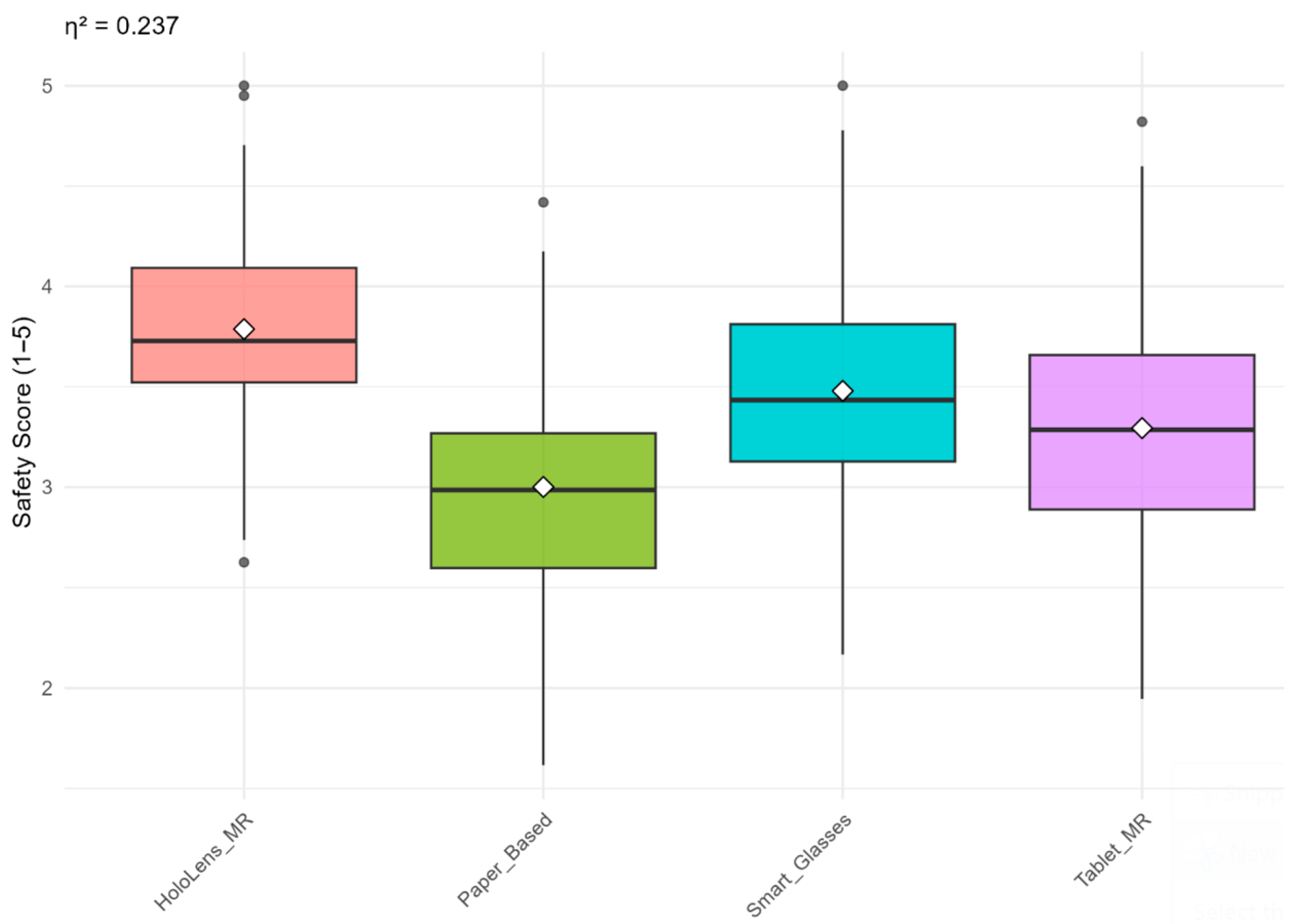
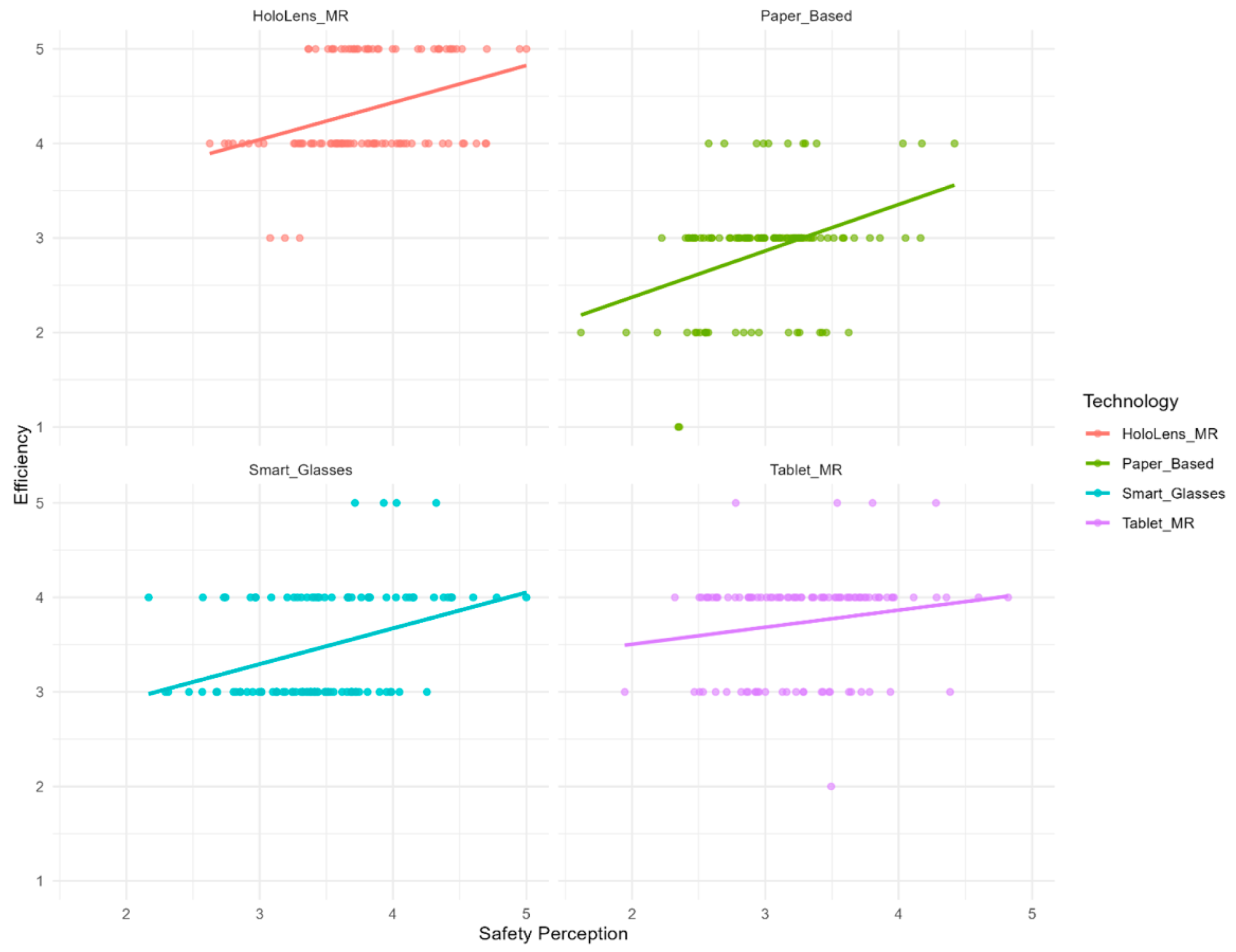
The same pattern was observed in safety perception analysis (Figure 2), where HoloLens MR scored the highest (M = 3.78, SD = 0.77), much higher than paper-based (t = 10.94, p < 0.001, d = 1.63), tablet (2D) (t = 6.86, p < 0.001, d = 1.02), and smart glasses (t = 4.29, p < 0.001, d = 0.64). Complete safety comparisons are provided in Table 2. The high positive correlation between efficiency and safety perception (r = 0.509, p < 0.001) in Figure 3 indicates that technologies that improve task performance are also perceived as safer.
It is worth noting that, although the paper-based methods received the lowest time-efficiency rating (M = 2.01, SD = 0.68), indicating a slower perceived completion time, this could be associated with a speed–quality trade-off that could negatively impact the effectiveness of the methods in construction activities where precision or safety factors are important.

4.2. Technology Acceptance Model Analysis

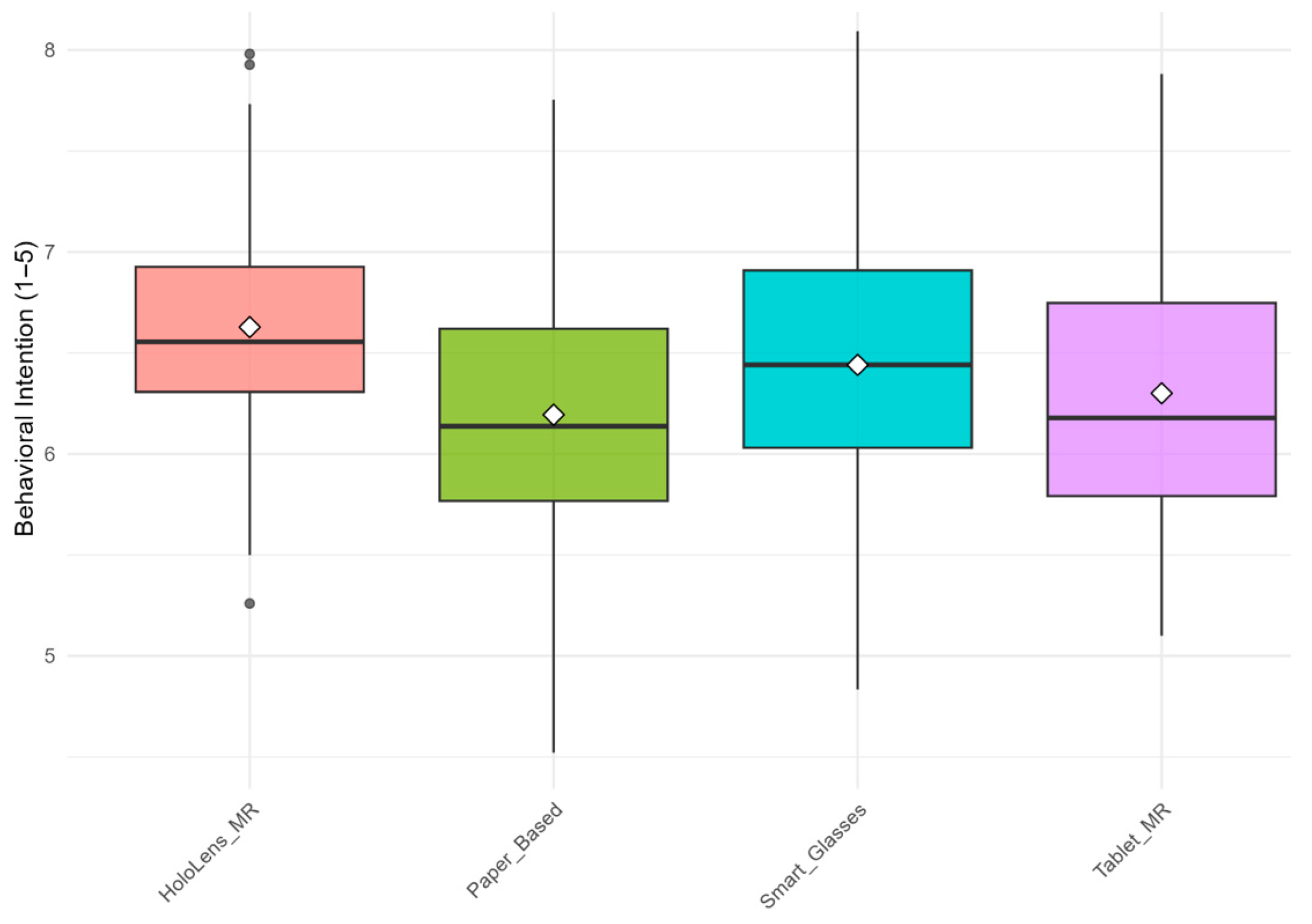
The technology acceptance model (TAM) analysis showed significant differences among technologies across all three core constructs. Table 3 shows that HoloLens MR scored highest in perceived usefulness (M = 5.54, SD = 0.66), perceived ease of use (M = 2.98, SD = 0.67), and behavioural intention (M = 6.63, SD = 0.54). ANOVAs were one-way, and statistically significant between-technology differences were found in perceived usefulness [F (3, 408) = 24.48, p < 0.001, η2 = 0.153], perceived ease of use [F (3, 408) = 20.71, p < 0.001, η2 = 0.132), and behavioural intention [F (3, 408) = 9.25, p < 0.001, η2 = 0.064].
Post hoc Tukey HSD tests showed that the perceived usefulness of HoloLens MR was significantly higher than any of the alternatives (vs. tablet (2D): t = 6.34, p < 0.001, d = 0.94 vs. smart glasses: t = 4.13, p < 0.001, d = 0.62 vs. paper-based: t = 9.71, p < 0.001, d = 1.45). Equally, its perceived ease of use was much higher as compared to tablet (2D) (t = 5.54, p < 0.001, d = 0.83), smart glasses (t = 2.03, p = 0.041, d = 0.30), and paper-based methods (t = 7.83, p < 0.001, d = 1.17). In the case of behavioural intention, HoloLens MR showed a significant difference with paper-based (t = 5.43, p < 0.001, d = 0.81) and tablet (2D) (t = 3.83, p = 0.005, d = 0.57) methods, and no significant difference with smart glasses (t = 2.26, p = 0.106, d = 0.34).
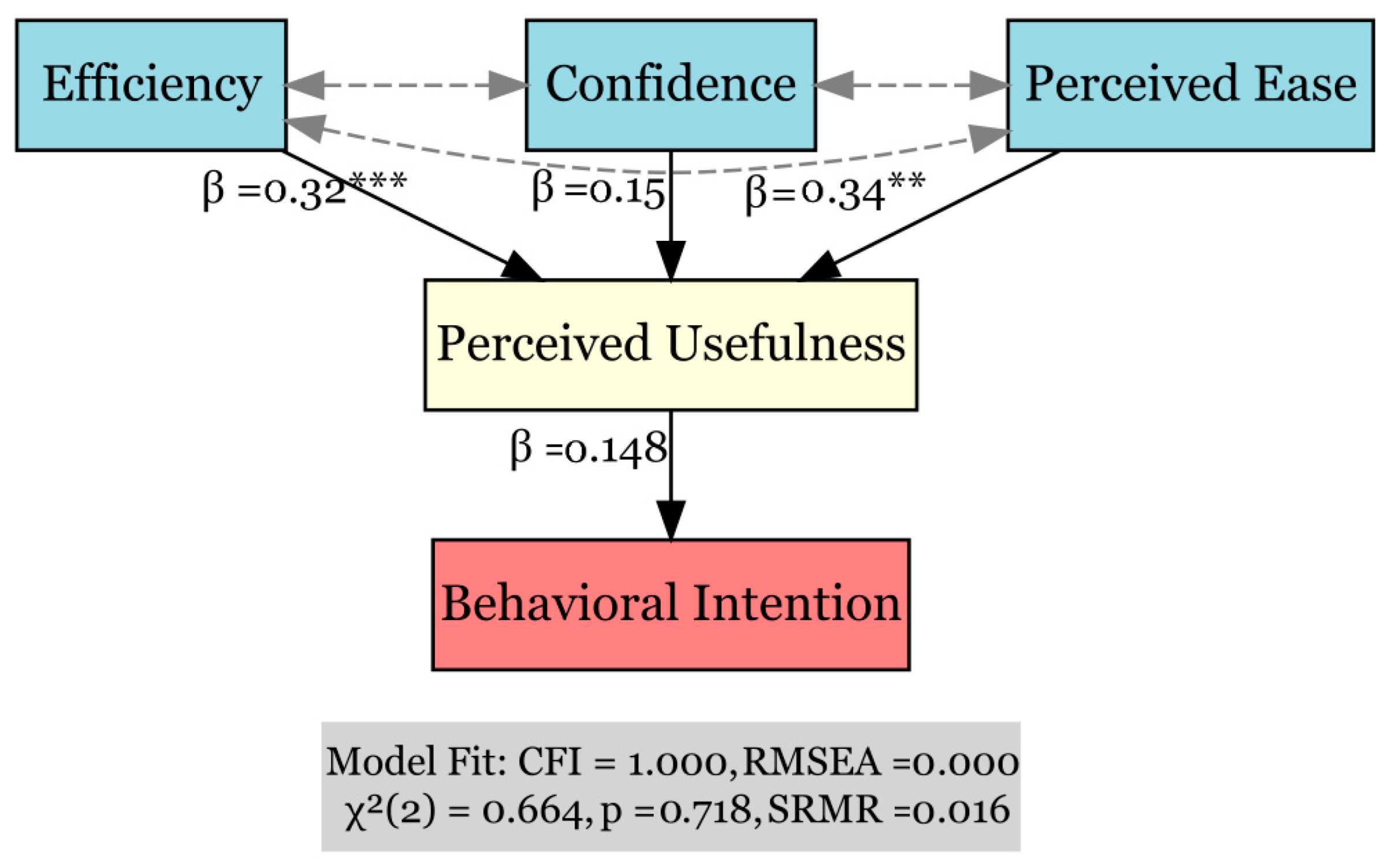
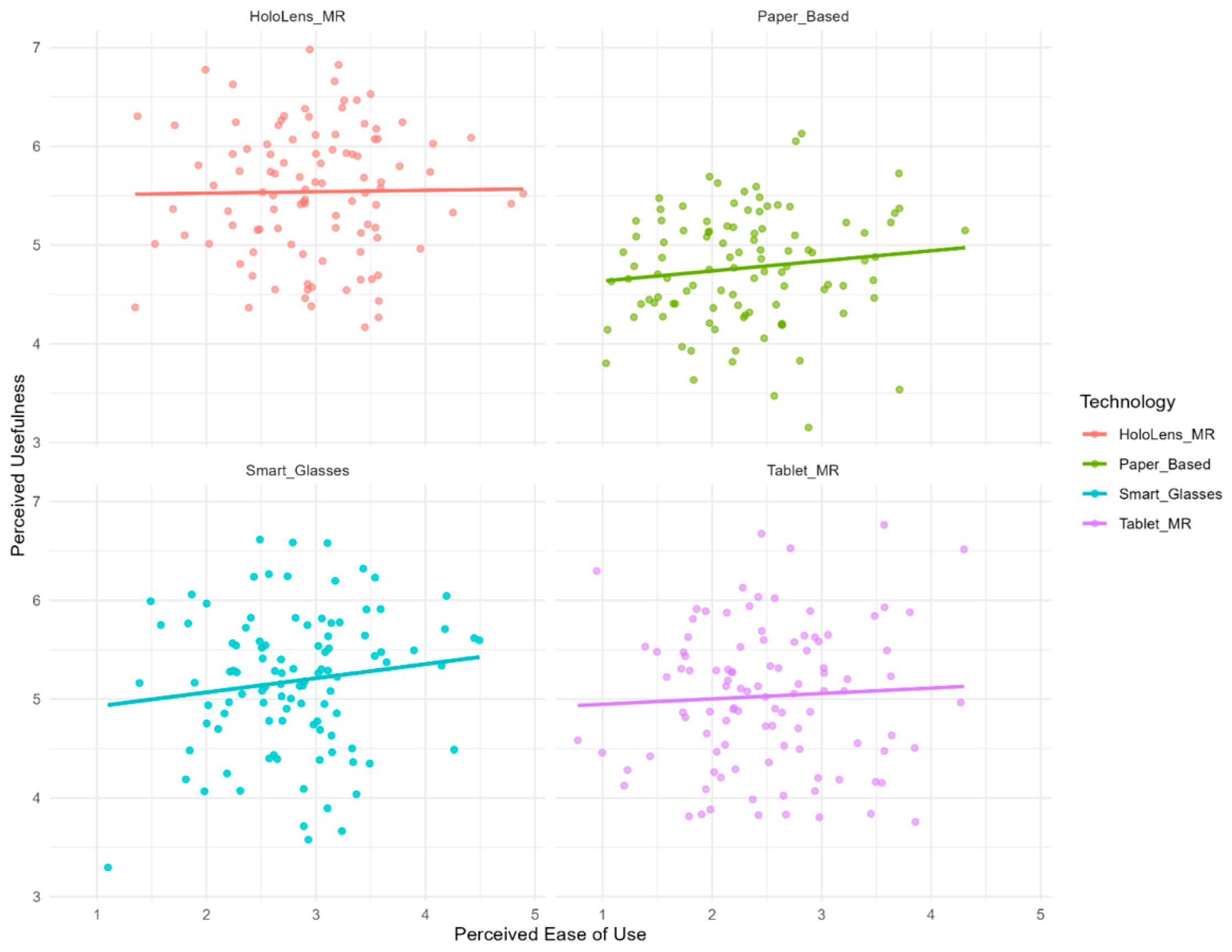
The TAM framework was also validated in the construction of the MR by structural equation modelling (SEM) (Figure 4). Standardised path coefficients indicated that both perceived usefulness (β = 0.43, p < 0.001) and perceived ease of use (β = 0.34, p < 0.001) significantly predicted behavioural intention to use the technology, which together accounted for 36.4% of the variance in adoption intentions (R2 = 0.364). It is worth noting that task efficiency was a strong predictor of perceived usefulness (β = 0.32, p < 0.001). Figure 5 illustrates the behavioural intention patterns across technologies, supporting the superior acceptability of HoloLens MR. The structural equation model is just identified (degrees of freedom = 0) and therefore yields perfect global fit indices (CFI = 1.000; RMSEA = 0.000). In such models, fit statistics are mathematical consequences of model identification rather than indicators of empirical superiority. Accordingly, interpretation focuses on standardised path coefficients rather than absolute fit indices, indicating that performance experiences directly influence perceived usefulness in assessing construction technology scenarios (Figure 6).

4.3. Device Preference and Predictor Analysis

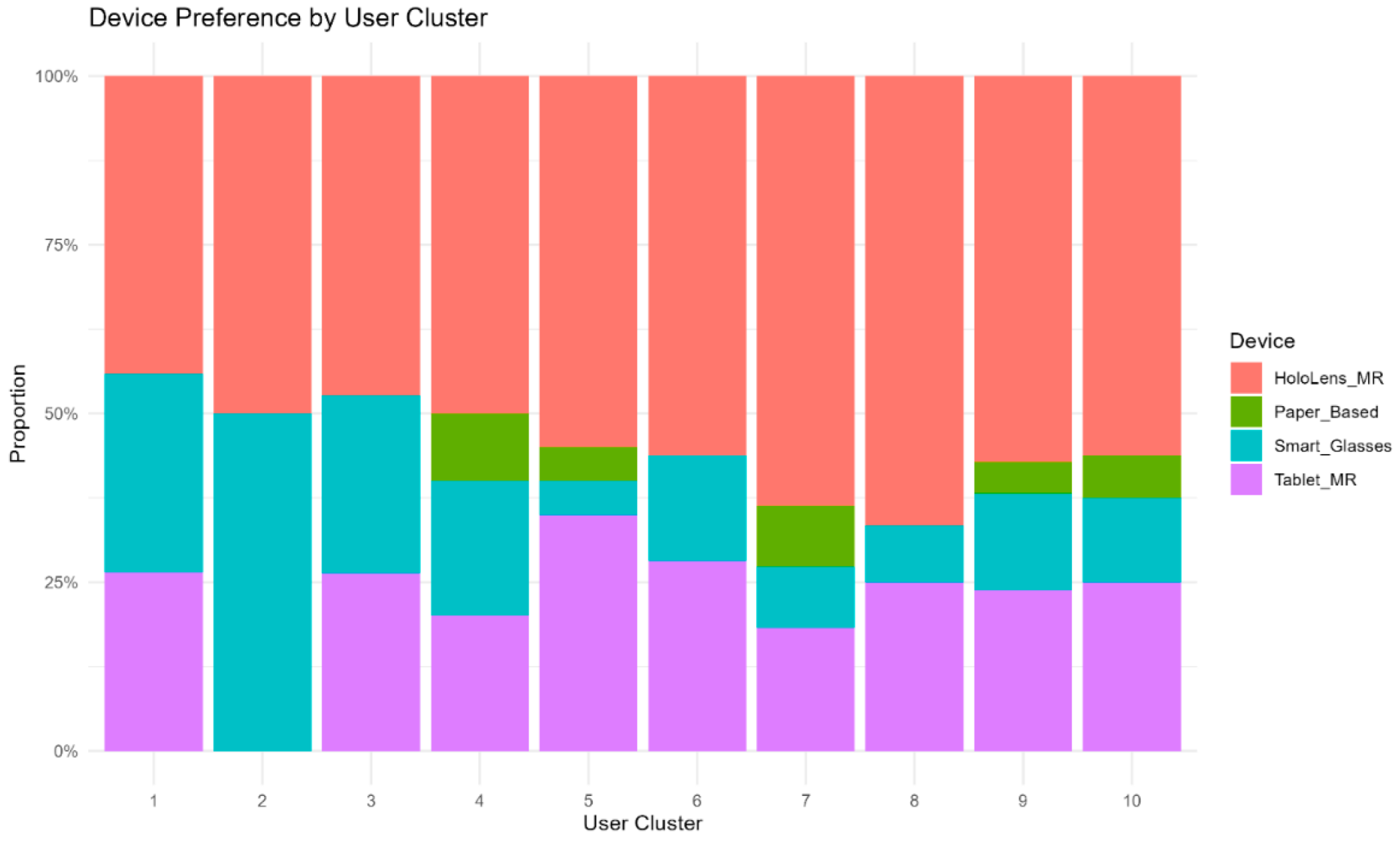
The analysis of device preference showed a significant hierarchy among construction professionals (n = 103). HoloLens MR was the most desired technology, chosen by 53.7% of participants, followed by tablet (2D) (26.0%), smart glasses (17.5%), and paper-based methods (2.8%) (Figure 7). This preference distribution differed markedly from the expected distribution under chance [χ2 (3) = 103.2, p < 0.001], indicating a strong collective preference for immersive MR solutions over traditional or less immersive alternatives.
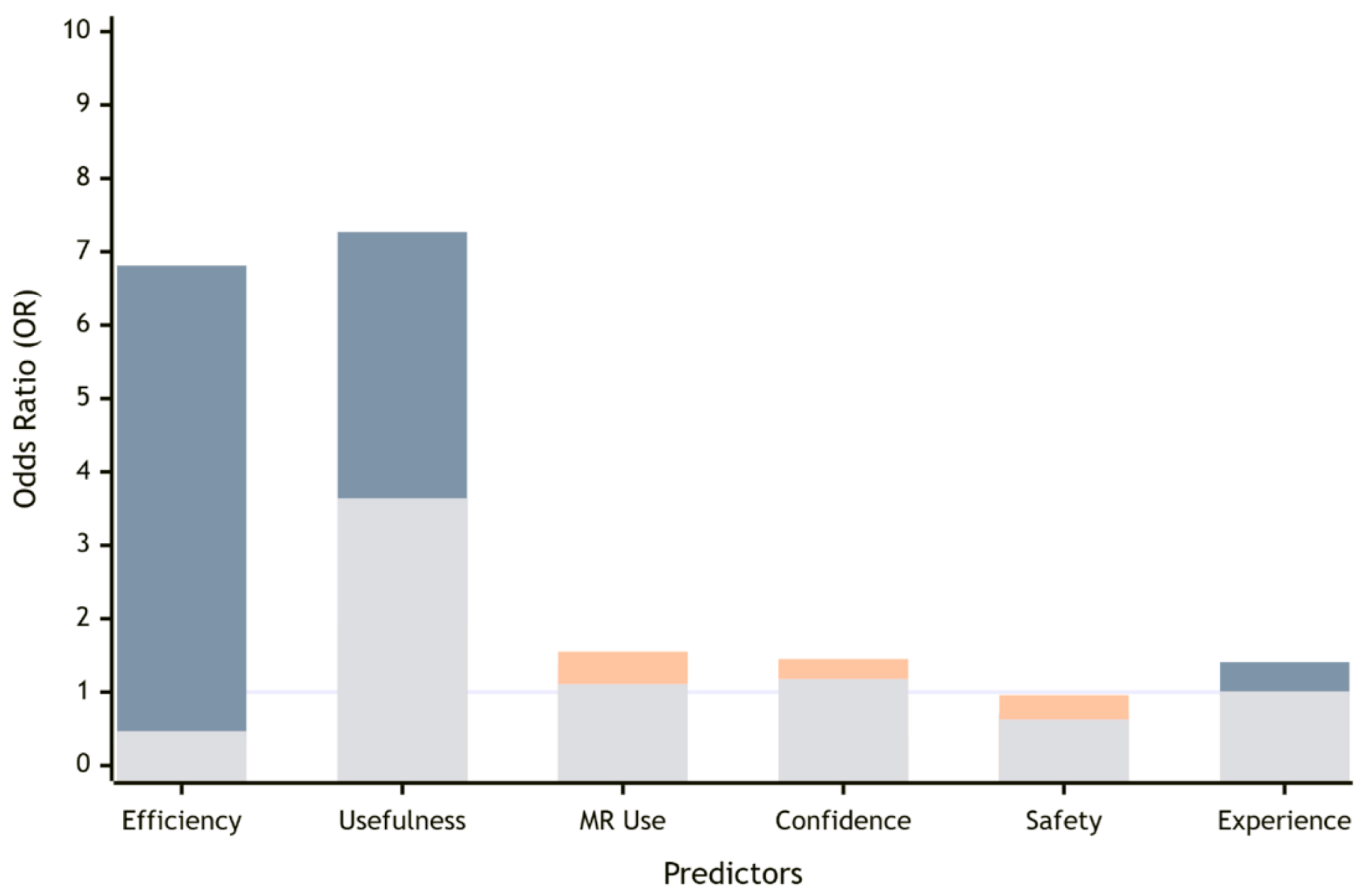
Efficiency was the best predictor of device preference, as determined by multinomial logistic regression. The model fit well [AIC = 412.37, χ2 (18) = 60.20, p < 0.001], as shown in Table 4. Figure 8 illustrates the odds ratios associated with the key predictors of device preference. In contrast to the counterintuitive expectation, paper-based preference was associated with 6.81-fold higher odds of efficiency compared with HoloLens MR (95% CI [1.85, 25.0], p = 0.004). This counterintuitive result could be an indication that traditional methods are seen by those who like them as sufficiently efficient to be used in familiar tasks, or this result may be due to a ceiling effect in that paper-based methods are objectively less efficient but are seen by those who are used to using them as efficient enough. The odds of a preference for smart glasses were lower (OR = 0.37, 95% CI [0.07, 1.95]), whereas tablet (2D) preference did not differ significantly by efficiency (OR = 0.47, 95% CI [0.08, 2.70]). The positive odds ratio associated with efficiency in the paper-based category should be interpreted conditionally. Among participants who preferred traditional methods, higher perceived efficiency was sufficient to maintain preference despite objectively lower task performance. This pattern reflects familiarity-based satisficing behaviour rather than superior system performance. Predicted probabilities indicate that increases in perceived efficiency shift overall preference most strongly toward immersive MR technologies.
In addition to efficiency, paper-based preference was strongly predicted by perceived usefulness (OR = 7.27, 95% CI [1.82, 29.0], p = 0.005), whereas MR usage frequency predicted preference for smart glasses (OR = 1.55, 95% CI [1.02, 2.34], p = 0.039). No preference category was statistically significant in terms of confidence, perception of safety, and experience years, and perceived usefulness was statistically significant in terms of tablet (2D) preference (OR = 3.64, 95% CI [0.92, 14.4], p = 0.065).
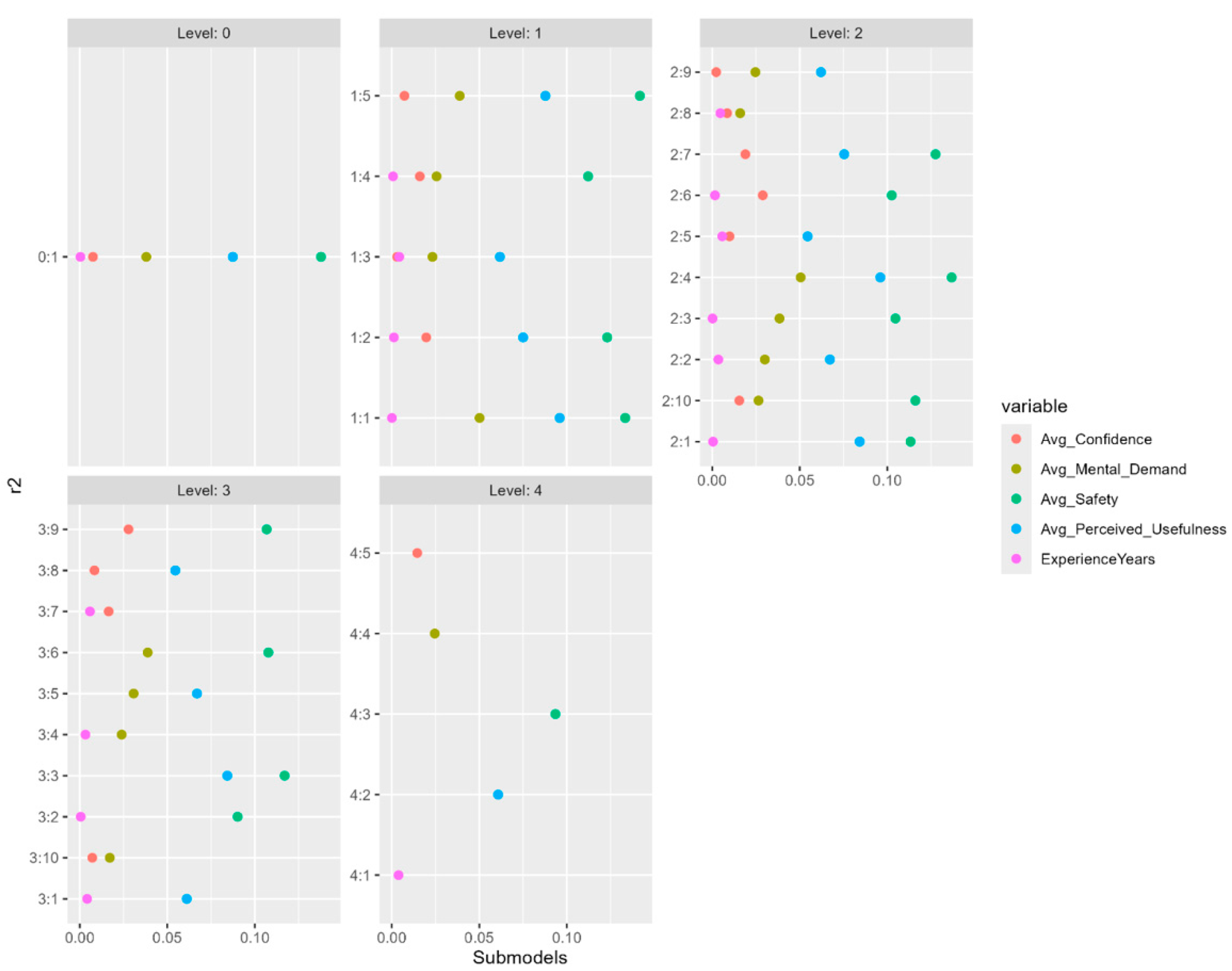
Dominance analysis also confirmed the dominance of efficiency, which accounted for the highest percentages of preference (average contribution = 0.116), safety perception (0.074), and perceived usefulness (0.074) (Figure 9). This trend indicates that construction practitioners will focus on technologies that improve task execution, and safety and perceived utility will become the second and third factors in decisions to adopt these technologies. Although the dominance analysis indicates that safety perception and perceived usefulness contribute comparably (0.074), perceived usefulness shows more consistent dominance across model subsets. Therefore, H2 is partially supported, as differences in explanatory strength are context-dependent rather than absolute.

4.4. User Segmentation Through Cluster Analysis

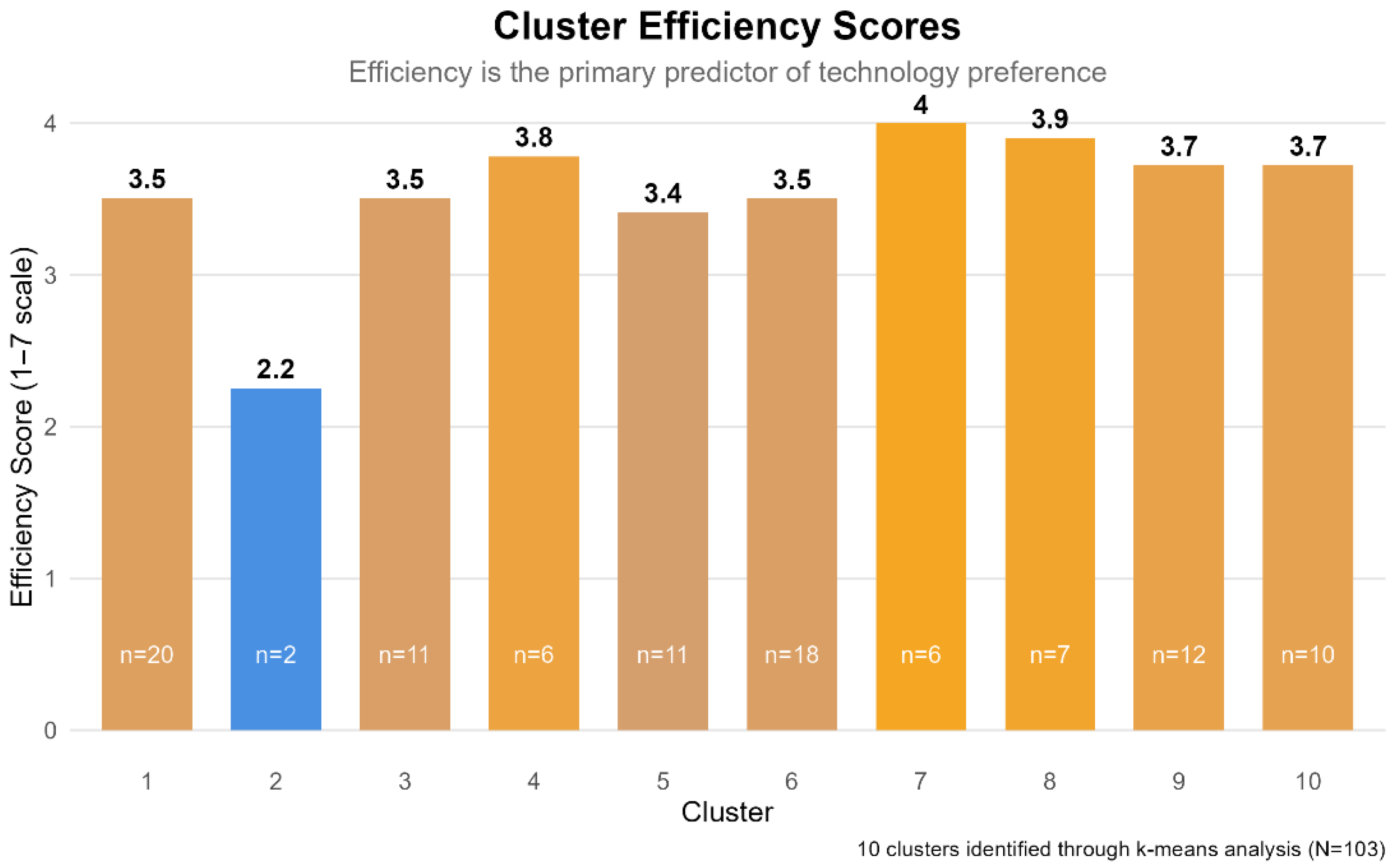
The ten user segments identified using K-means clustering were categorised according to efficiency, confidence, mental demand, safety perception, and perceived usefulness (n = 103). This solution was favoured by the best determination of the number of clusters using silhouette analysis (maximum = 10, average = 0.32) and validation of the elbow method. Fisher’s exact test showed no statistically significant difference in device preference between clusters (p = 0.885). Nevertheless, a descriptive analysis demonstrated practical differences, and the most successful clusters (e.g., Cluster 7) were more inclined towards HoloLens MR (81.8) than other segments.
Cluster profiles were meaningfully heterogeneous in their user responses (Table 5). Cluster 1 (19.42% of respondents) was the most significant, comprising moderate performers with average efficiency (M = 3.53), confidence (M = 3.64), and safety perception (M = 3.56). It is worth noting that Cluster 7 (6.8% of respondents) performed highly with above-average efficiency (M = 3.95), safety perception (M = 3.67), and perceived usefulness (M = 5.34). Cluster 2 (1.94% of respondents), by contrast, was a low performer across all dimensions. Cluster profiles according to performance metrics and evaluations are presented in Figure 10.
The qualitative analysis of preference patterns across clusters showed that HoloLens MR remained dominant, with preference rates ranging from 52.6% to 81.8%. Such consistency, together with the non-significant cluster-preference correlation, indicates that the attractiveness of HoloLens MR is not limited to specific user profiles, which is why it can be a solid option for a wide range of construction professionals.
The identification of 10 distinct segments demonstrates significant heterogeneity in how construction professionals evaluate MR technologies. Although no significant differences in preference were found among clusters using statistical tests, there was a practical difference among high-performing clusters (e.g., Cluster 7), which had the highest alignment with HoloLens MR (81.8% preference), indicating that the best performers are those who value its applications most. This segmentation offers valuable insights into specific implementation plans and suggests that, although HoloLens MR can be used as a universal solution, additional training or support may be provided depending on the user profile.

4.5. Mediation Analysis: Efficiency → Usefulness → Intention

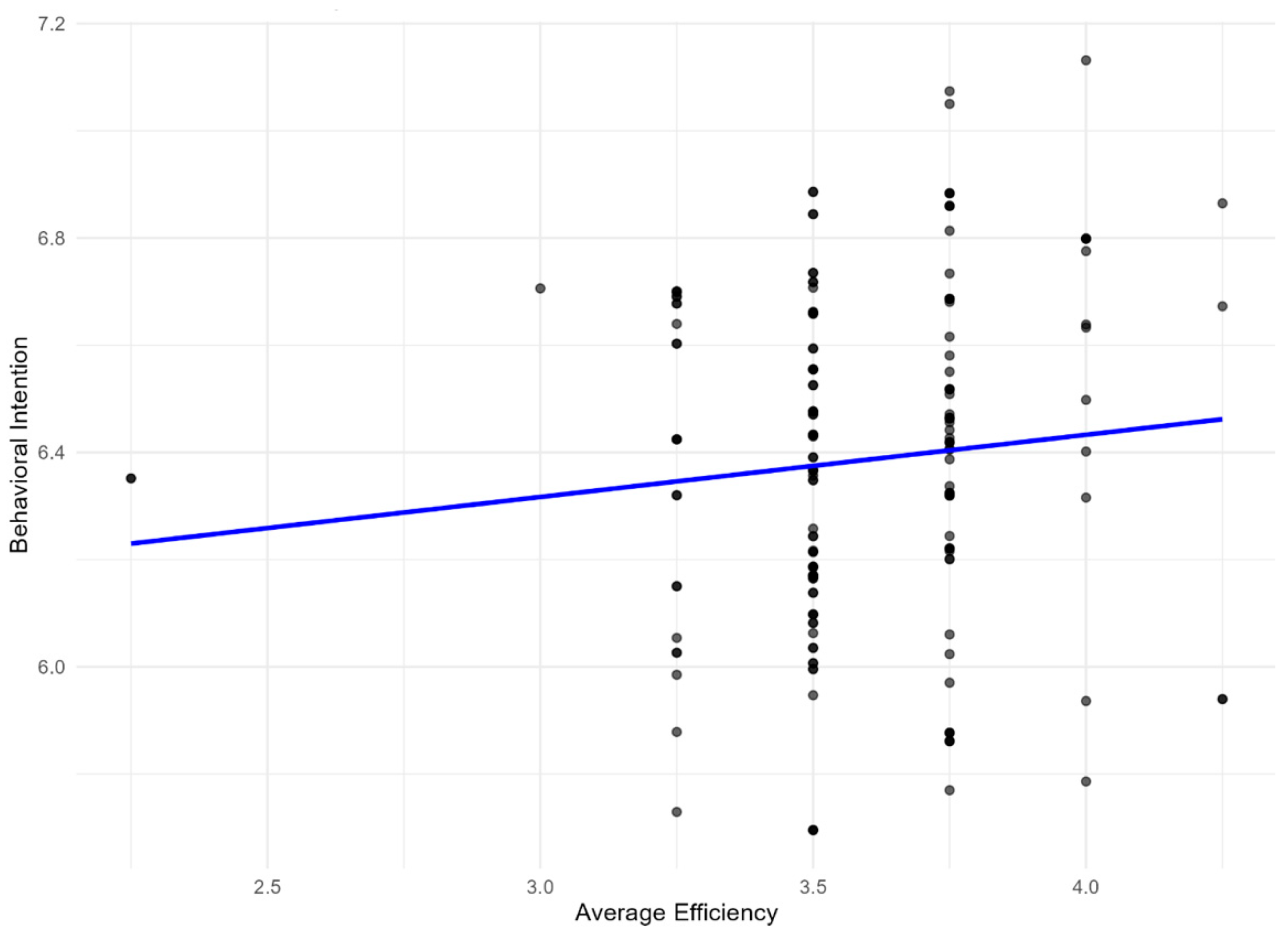
The relationship between efficiency and behavioural intention was entirely mediated by a bootstrapped mediation analysis (10,000 resamples), indicating that perceived usefulness mediated this relationship. The indirect effect was found to be significant (β = 0.160, 95% CI [0.082, 0.250], p < 0.001), but the total effect of efficiency on intention was not significant (β = 0.116, p = 0.234). Once usefulness was taken into consideration, the direct influence of efficiency on intention was also not significant (β = −0.044, p = 0.586). The proportion mediated (indirect/total = 1.382) exceeds 100, indicating inconsistent mediation, in which the direct and indirect effects are opposing [39]. This trend indicates that efficiency can only raise intention to the level of increasing perceived usefulness; when usefulness is maintained consistently, efficiency does not have an independent impact on intention, as indicated by the mediation model in Figure 11.

5. Discussion

5.1. Theoretical Implications

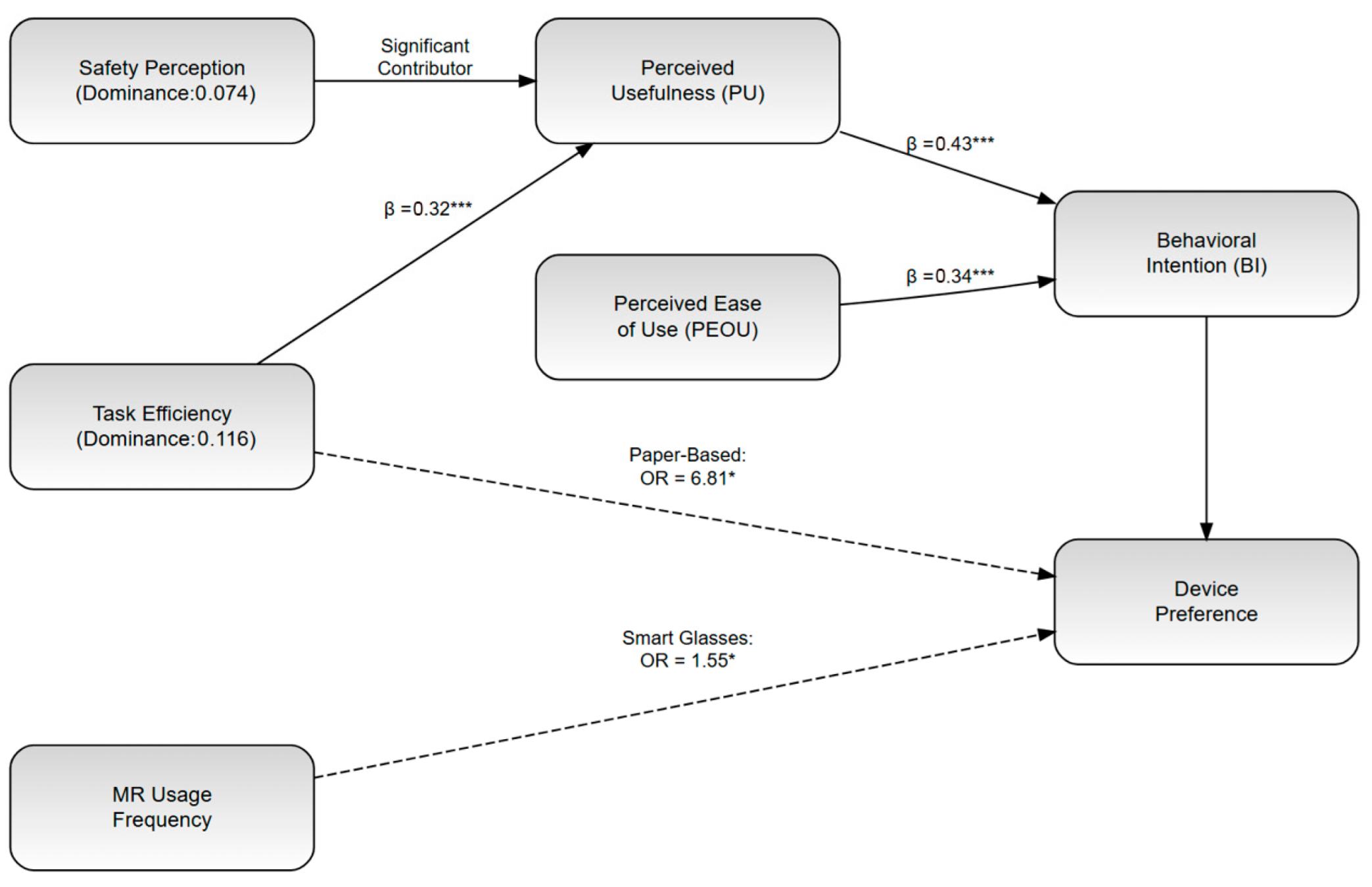
This study contributes to the theoretical development of immersive construction technologies by extending technology acceptance theory to safety-sensitive and sustainability-oriented construction inspection contexts. First, the results confirm the applicability of the core technology acceptance model (TAM) in immersive construction environments, demonstrating that perceived usefulness and perceived ease of use remain significant predictors of behavioural intention. The high model fit indicators (CFI = 1.000, RMSEA = 0.000) and strong path coefficients (perceived usefulness → intention: β = 0.434, p < 0.001; perceived ease of use → intention: β = 0.335, p < 0.001) reinforce the relevance of TAM beyond traditional office-based information systems and into performance-driven construction applications. These findings are consistent with previous research on the acceptance of immersive technology in construction and related domains [19,20,21,22,23,24,25,26,27,28,29,30,31,32,33,34,35,36,37,38,39,40].
Second, this study advances TAM by empirically demonstrating that task efficiency functions as a performance-based antecedent of perceived usefulness (β = 0.322, p < 0.001). This finding indicates that utility appraisals in construction inspection are closely linked to perceived improvements in task execution and performance outcomes. In sustainability-oriented construction contexts, such efficiency gains are particularly relevant, as they are associated with reduced rework, improved inspection accuracy, and more resource-efficient decision-making processes.
Third, the results support including safety perception as a domain-specific evaluative construct in technology acceptance models for high-risk technologies. Safety perception accounted for a substantial proportion of variance (η2 = 0.237), indicating a large effect size according to established guidelines [41]. Rather than acting as a direct determinant of adoption intention, safety perception serves as an important contextual factor shaping professional evaluations of emerging technologies in safety-sensitive construction environments. Compared with prior studies on immersive technology acceptance in construction and safety-sensitive domains [40,41,42], the effect sizes observed for efficiency and perceived usefulness are relatively strong. This may be attributed to the within-subject experimental design, the use of practising construction professionals, and the task-specific inspection scenarios employed in this study, which collectively enhance sensitivity to performance differences across technologies. Finally, the dominance and mediation analyses provide a mechanistic explanation of adoption pathways. The mediation results show that perceived usefulness fully mediates the relationship between efficiency and behavioural intention (indirect effect: β = 0.160, 95% CI [0.082, 0.250]), while the direct effect of efficiency on intention is not significant. The proportion mediated exceeding 100% (1.382) indicates inconsistent mediation, in which the direct and indirect effects operate in opposite directions [43]. This suggests that efficiency influences adoption primarily through cognitive evaluations of usefulness rather than through an independent motivational effect. Together, these findings respond to recent calls for context-sensitive extensions of TAM in specialised and high-risk application domains [44], as illustrated in Figure 12.

5.2. Practical Implications for the Construction Industry

The findings of this study provide important practical implications for the sustainable implementation of digital inspection technologies in the construction industry. The strong association between task efficiency, perceived usefulness (β = 0.322), and device preference (OR = 6.81) suggests that implementation and training strategies should prioritize demonstrable efficiency gains. Rather than focusing solely on technical capabilities, practitioners and organizations should communicate how mixed reality (MR) technologies enhance task performance, reduce inspection time, and improve error detection, thereby supporting more efficient and sustainable inspection workflows.
The substantial contribution of safety perception (η2 = 0.237) highlights the importance of explicitly addressing safety-related considerations during implementation. In safety-sensitive construction contexts, professionals evaluate inspection technologies not only based on productivity outcomes, but also on their ability to support safety-aware decision-making. Therefore, implementation strategies should integrate safety-related information with performance demonstrations, emphasizing how MR technologies help users maintain situational awareness and ensure inspection reliability during complex tasks.
From a sustainability perspective, immersive MR technologies such as HoloLens can contribute to resource-efficient construction practices by reducing rework, minimizing inspection-related errors, and supporting consistent documentation and decision processes. Although such technologies may involve higher initial costs, their combined benefits in efficiency, usability, and safety support suggest the potential for lower long-term operational and environmental burdens. Consequently, organizations should design adoption and training strategies that align MR deployment with sustainability-oriented performance objectives and industry safety priorities.

5.3. Methodological Contributions

The paper demonstrates the importance of high-level analysis techniques in the study of construction technology. The structural equation modelling (SEM) theory test, multinomial logistic regression preference prediction, cluster analysis user segmentation, and bootstrapped mediation analysis are integrated to provide a holistic methodology that goes beyond descriptive comparisons and tests the underlying mechanisms and heterogeneity.
Cluster analysis revealed substantial heterogeneity among construction professionals, and 10 distinct user segments were identified based on their efficiency, confidence, mental demand, safety perception, and usefulness profiles. Although the overall segmentation indicates that HoloLens MR was preferred across most segments (52.6–81.8%), it also reveals patterns in the evaluation that may inform specific implementation strategies. The within-subjects design, in which 103 construction professionals were exposed to four technologies, is a rigorous approach that controls individual differences and provides the statistical power needed to conduct complex analyses. Such a design, along with the multi-method analytical framework, provides a rigorous methodology for future research evaluating construction technology acceptance. The measurement scales used demonstrated sufficient reliability (Cronbach’s α > 0.70) and validity, substantiating the psychometric rigor of this multi-method approach.

5.4. Limitations and Future Research

This study has several limitations that should be acknowledged. First, although the laboratory-based scenario design enabled controlled comparison across inspection modalities, it may not fully capture the environmental complexity, spatial constraints, and operational variability of real construction sites. While an on-site pilot implementation would provide stronger ecological validation, the present study intentionally employed a standardized experimental setting to ensure comparability across technologies. Future research should incorporate longitudinal field pilots to evaluate real-world operational constraints, environmental interference, and long-term adoption dynamics.
Second, although the within-subjects design increases statistical power and controls for inter-individual variability, it may still be susceptible to residual carryover effects despite randomization and counterbalancing. Third, MR devices were evaluated under simulated inspection conditions rather than full operational deployment. Consequently, ergonomic factors such as long-term wearing comfort, technical malfunctions, or environmental disturbances could not be fully assessed. The findings, therefore, reflect perceived performance and usability under controlled conditions rather than comprehensive field robustness.
Fourth, the sample (n = 103 professionals) is statistically adequate for the applied analyses but may not represent all construction subfields, geographic regions, or professional roles. Generalization should therefore be approached cautiously, particularly in highly specialized or region-specific contexts.
Fifth, although the structural equation model demonstrated perfect fit indices (CFI = 1.000; RMSEA = 0.000), this reflects model identification characteristics rather than definitive evidence of optimal explanatory power. Fit indices should therefore be interpreted with caution.
Sixth, the mediation analysis is based on cross-sectional data and does not establish temporal causality. The identified pathway (efficiency → perceived usefulness → behavioural intention) represents statistical mediation within the proposed theoretical framework rather than confirmed causal sequencing. Longitudinal or experimental research designs are required for causal validation.
Finally, the present evaluation focuses primarily on perceptual, cognitive, and acceptance-related determinants of technology adoption. Broader decision-making dimensions—including procurement costs, lifecycle maintenance expenses, technological compatibility with existing BIM systems, and organisational maturity—were beyond the scope of this study. Future research should integrate economic, organisational, and contextual variables to develop a more comprehensive evaluation framework. Additional investigations may also examine safety perception as a moderating construct and explore cost–benefit trade-offs through discrete choice experiments to better understand adoption barriers.

6. Conclusions

The work confirms that acceptance of mixed reality in construction is achieved through an integrated assessment mechanism in which objective performance indicators, conventional usability aspects, and domain-related safety issues co-determine adoption decisions. We show that although the technology acceptance model remains explanatory about immersive technologies (perceived usefulness: β = 0.434; ease of use: β = 0.335), it requires contextualization in safety-critical areas. Task efficiency is also a central performance-based antecedent of perceived usefulness (β = 0.322), with safety perception providing a potential fundamental evaluative dimension (η2 = 0.237) that could serve as a boundary condition for conventional acceptance models.
Mechanistically, perceived usefulness completely mediates the correlation between efficiency and adoption intention (indirect effect: β = 0.160), indicating that efficiency affects adoption only indirectly via perceived usefulness, not directly. The non-homogeneous trend of mediation (proportion mediated = 1.382) also indicates that the residual direct effect is in the opposite direction to the positive indirect effect via usefulness.
In practice, the findings indicate that MR implementation strategies must focus on both quantifiable efficiency gains (OR = 6.81 for preference) and safety improvements, as construction professionals perceive technologies through this dichotomy. Although more complex and expensive, safety-enhancing MR systems may face lower adoption barriers because they align with industry priorities.
At the methodological level, this study demonstrates the usefulness of a multi-methodological approach that integrates experimental testing, psychometric evaluation, and sophisticated statistical modelling to reveal the multifaceted mechanisms underlying technology acceptance in practical applications. Further studies on the topic are advised to generalise the results by conducting longitudinal field research and investigating how organisational and contextual factors in high-risk industries mediate these relationships. By supporting efficient, safety-aware, and digitally enabled inspection processes, mixed reality technologies can contribute to sustainable construction practices by reducing rework, improving decision quality, and optimising resource use. Overall, the findings demonstrate that immersive MR technologies support sustainable construction inspection primarily by enhancing perceived efficiency and safety, which influence adoption through usefulness-based cognitive evaluation rather than direct performance expectations.

Author Contributions

Conceptualization, S.H.K., S.M., K.I.A.K., A.S., N.A. and X.S.; Methodology, S.H.K., S.M., K.I.A.K., A.S., N.A. and X.S.; Software, S.H.K., A.S., N.A. and X.S.; Validation, S.M. and X.S.; Formal analysis, S.H.K. and X.S.; Investigation, S.H.K., A.S. and N.A.; Resources, S.H.K., S.M. and X.S.; Data curation, S.H.K. and N.A.; Writing—original draft, S.H.K. and N.A.; Writing—review & editing, K.I.A.K. and X.S.; Visualization, S.M.; Supervision, S.M. and K.I.A.K.; Project administration, K.I.A.K. and A.S.; Funding acquisition, S.H.K. and A.S. All authors have read and agreed to the published version of the manuscript.

Funding

There was no specific grant from a public, private, or not-for-profit funding agency provided for this research.

Institutional Review Board Statement

Ethical review and approval were waived for this study by the Ethics Committee of the University of Science and Technology Beijing, in accordance with its ethical review guidelines, as the study involves no medical interventions, no collection of sensitive personal data, and poses minimal risk to participants.

Informed Consent Statement

Informed consent was obtained from all subjects involved in the study.

Data Availability Statement

This study generated and analyzed data that can be accessed through the Zenodo repository, https://doi.org/10.5281/zenodo.17838131.

Conflicts of Interest

The authors declare no conflicts of interest.

References

  1. Yue, H.; Ye, G.; Liu, Q.; Yang, X.; Xiang, Q.; Luo, Y. Impact of cognitive fatigue on attention and the implications for construction safety: A neuroscientific perspective. J. Constr. Eng. Manag. 2024, 150, 04024102. [Google Scholar] [CrossRef]
  2. Buchner, J.; Buntins, K.; Kerres, M. The impact of augmented reality on cognitive load and performance: A systematic review. J. Comput. Assist. Learn. 2022, 38, 285–303. [Google Scholar] [CrossRef]
  3. Delgado, J.M.D.; Oyedele, L.; Demian, P.; Beach, T. A research agenda for augmented and virtual reality in architecture, engineering and construction. Adv. Eng. Inform. 2020, 45, 101122. [Google Scholar] [CrossRef]
  4. Sacks, R.; Girolami, M.; Brilakis, I. Building information modelling, artificial intelligence and construction tech. Dev. Built Environ. 2020, 4, 100011. [Google Scholar] [CrossRef]
  5. Xu, Z.; Feng, Z.; Jelodar, M.B.; Guo, B.H. Augmented reality applications in construction productivity: A systematic literature review. Adv. Eng. Inform. 2024, 62, 102798. [Google Scholar] [CrossRef]
  6. Cheng, J.C.; Chen, W.; Chen, K.; Wang, Q. Data-driven predictive maintenance planning framework for MEP components based on BIM and IoT using machine learning algorithms. Autom. Constr. 2020, 112, 103087. [Google Scholar] [CrossRef]
  7. Alizadehsalehi, S.; Yitmen, I. Digital twin-based progress monitoring management model through reality capture to extended reality technologies (DRX). Smart Sustain. Built Environ. 2023, 12, 200–236. [Google Scholar] [CrossRef]
  8. Anwar, R.M.I.; Azhar, S. Mixed Reality in Building Construction Inspection and Monitoring: A Systematic Review. Virtual Worlds 2024, 3, 319–332. [Google Scholar] [CrossRef]
  9. Gutierrez-Bucheli, L.; Goh, J.T.; Rashidi, A.; Maxwell, D.; Digby, R.; Fang, Y.; Pook, H.; Arashpour, M. Adopting immersive technologies in construction training: Determining educational decision-making criteria through a Delphi technique. Smart Sustain. Built Environ. 2024, 14, 1434–1458. [Google Scholar] [CrossRef]
  10. Coito, T.; Firme, B.; Martins, M.S.E.; Vieira, S.M.; Figueiredo, J.; Sousa, J.M. Intelligent sensors for real-Time decision-making. Automation 2021, 2, 62–82. [Google Scholar] [CrossRef]
  11. Miranda, A.; Vallejo, A.M.; Ayala, P.; Garcia, M.V.; Naranjo, J.E. Enhancing Industrial Processes Through Augmented Reality: A Scoping Review. Futur. Internet 2025, 17, 358. [Google Scholar] [CrossRef]
  12. Eltahan, A.; Lee, G.; Hamzeh, F. A human-centered framework for assessing task complexity in construction: A cognitive load perspective. Eng. Constr. Arch. Manag. 2025, 33, 963–984. [Google Scholar] [CrossRef]
  13. Chi, H.-L.; Kim, M.-K.; Liu, K.-Z.; Thedja, J.P.P.; Seo, J.; Lee, D.-E. Rebar inspection integrating augmented reality and laser scanning. Autom. Constr. 2022, 136, 104183. [Google Scholar] [CrossRef]
  14. Ogunseiju, O.; Akanmu, A.; Bairaktarova, D.; Bowman, D.; Jazizadeh, F. Cognitive Load within Mixed Reality Learning Environment in Construction Education. In Proceedings of the Construction Research Congress, Des Moines, Iowa, 20–23 March 2024; ASCE: Reston, VA, USA, 2024; pp. 466–475. [Google Scholar]
  15. Tomori, M.; Ogunseiju, O. Investigating the Relationship Between Situational Awareness and Cognitive Load in a Mixed Reality Learning Environment for Construction Education. J. Inf. Technol. Constr. 2025, 30, 1459–1477. [Google Scholar] [CrossRef]
  16. Luo, Y.; Abbas, A.; Seo, J.; Ahn, S.; Cha, S.H. Understanding hazard recognition behaviors through situational awareness assessment in virtual construction environments. J. Manag. Eng. 2025, 41, 04025017. [Google Scholar] [CrossRef]
  17. Pereira, F.; González García, M.D.L.N.; Poças Martins, J. BIM for Safety: Applying Real-Time Monitoring Technologies to Prevent Falls from Height in Construction. Appl. Sci. 2025, 15, 2218. [Google Scholar] [CrossRef]
  18. Chen, X.; Chang-Richards, A.; Ling, F.Y.Y.; Yiu, T.W.; Pelosi, A.; Yang, N. Digital technologies in the AEC sector: A comparative study of digital competence among industry practitioners. Int. J. Constr. Manag. 2025, 25, 63–76. [Google Scholar] [CrossRef]
  19. Tomori, M.; Ogunseiju, O. Assessment of Situational Awareness in the Implementation of Sensing Technologies on a Virtual Construction Site within a Mixed Reality Environment. In Proceedings of the International Conference of Sustainable Development and Smart Built Environments, Jakarta, Indonesia, 7–9 November 2024; Springer Nature: Singapore, 2024; pp. 349–358. [Google Scholar]
  20. Hajirasouli, A.; Banihashemi, S.; Drogemuller, R.; Fazeli, A.; Mohandes, S.R. Augmented reality in design and construction: Thematic analysis and conceptual frameworks. Constr. Innov. 2022, 22, 412–443. [Google Scholar] [CrossRef]
  21. Liu, J.; Yan, X.; Gao, W. A Dualistic Perspective of Opportunity and Risk: The Impact of Head-Mounted Augmented Reality on Construction Onsite Hazard Identification of Workers. J. Constr. Eng. Manag. 2024, 150, 04024160. [Google Scholar] [CrossRef]
  22. Im, J.-B.; Joo, M.; Lee, K.-T.; Kim, J.-H. A mixed reality approach to identify cognitive performance and mental states in preferred vs. non-preferred individual and collaborative work environments. Build. Environ. 2025, 274, 112806. [Google Scholar] [CrossRef]
  23. Liu, L.; Huang, Y. A review of ar applications in construction management: 2018–2022. In Proceedings of the 60th Annual Associated Schools of Construction International Conference, Auburn, Alabama, 3–5 April 2024; EasyChair: Stockport, UK, 2024; pp. 495–504. [Google Scholar]
  24. Nassereddine, H.; Hanna, A.S.; Veeramani, D.; Lotfallah, W. Augmented reality in the construction industry: Use-cases, benefits, obstacles, and future trends. Front. Built Environ. 2022, 8, 730094. [Google Scholar] [CrossRef]
  25. Pedram, S.; Ogie, R.; Palmisano, S.; Farrelly, M.; Perez, P. Cost–benefit analysis of virtual reality-based training for emergency rescue workers: A socio-technical systems approach. Virtual Real. 2021, 25, 1071–1086. [Google Scholar] [CrossRef]
  26. Choi, B.; Hwang, S.; Lee, S. What drives construction workers’ acceptance of wearable technologies in the workplace?: Indoor localization and wearable health devices for occupational safety and health. Autom. Constr. 2017, 84, 31–41. [Google Scholar] [CrossRef]
  27. Ahankoob, A.; Abbasnejad, B.; Aranda-Mena, G. Building Information Modelling (BIM) Acceptance and Learning Experiences in Undergraduate Construction Education: A Technology Acceptance Model (TAM) Perspective—An Australian Case Study. Buildings 2025, 15, 1804. [Google Scholar] [CrossRef]
  28. Davis, F.D. Perceived usefulness, perceived ease of use, and user acceptance of information technology. MIS Q. 1989, 13, 319–340. [Google Scholar] [CrossRef]
  29. Elshafey, A.; Saar, C.C.; Aminudin, E.B.; Gheisari, M.; Usmani, A. Technology acceptance model for Augmented Reality and Building Information Modeling integration in the construction industry. J. Inf. Technol. Constr. 2020, 25, 161–172. [Google Scholar] [CrossRef]
  30. Venkatesh, V.; Davis, F.D. A Theoretical extension of the technology acceptance model: Four longitudinal field studies. Manag. Sci. 2000, 46, 186–204. [Google Scholar] [CrossRef]
  31. Podsakoff, P.M.; MacKenzie, S.B.; Podsakoff, N.P. Sources of method bias in social science research and recommendations on how to control it. Annu. Rev. Psychol. 2012, 63, 539–569. [Google Scholar] [CrossRef]
  32. Abbas, A.; Seo, J.; Kim, M. Impact of mobile augmented reality system on cognitive behavior and performance during rebar inspection tasks. J. Comput. Civ. Eng. 2020, 34, 04020050. [Google Scholar] [CrossRef]
  33. Hart, S.G.; Staveland, L.E. Development of NASA-TLX (Task Load Index): Results of empirical and theoretical research. Adv. Psychol. 1988, 52, 139–183. [Google Scholar]
  34. Selcon, S.J.; Taylor, R.M. Evaluation of the Situational Awareness Rating Technique (SART) as a tool for aircrew systems design. In Situational Awareness in Aerospace Operations; AGARD-CP-478; AGARD: Neuilly-sur-Seine, France, 1990; pp. 8/1–8/17. [Google Scholar]
  35. Endsley, M.R.; Jones, D.G. Situation awareness oriented design: Review and future directions. Int. J. Hum.–Comput. Interact. 2024, 40, 1487–1504. [Google Scholar] [CrossRef]
  36. Seong, S.; Park, S.; Ahn, Y.H.; Kim, H. Development of an integrated fatigue measurement system for construction workers: A feasibility study. BMC Public Health 2022, 22, 1593. [Google Scholar] [CrossRef] [PubMed]
  37. Bates, D.; Mächler, M.; Bolker, B.; Walker, S. Fitting linear mixed-effects models using lme4. J. Stat. Softw. 2015, 67, 1–48. [Google Scholar] [CrossRef]
  38. Kuznetsova, A.; Brockhoff, P.B.; Christensen, R.H.B. lmerTest package: Tests in linear mixed effects models. J. Stat. Softw. 2017, 82, 1–26. [Google Scholar] [CrossRef]
  39. MacKinnon, D.P.; Krull, J.L.; Lockwood, C.M. Equivalence of the mediation, confounding and suppression effect. Prev. Sci. 2000, 1, 173–181. [Google Scholar] [CrossRef]
  40. Jiang, Q.; Chen, J.; Wu, Y.; Gu, C.; Sun, J. A study of factors influencing the continuance intention to the usage of augmented reality in museums. Systems 2022, 10, 73. [Google Scholar] [CrossRef]
  41. Cohen, J. Set correlation and contingency tables. Appl. Psychol. Meas. 1988, 12, 425–434. [Google Scholar] [CrossRef]
  42. Sepasgozar, S.M.E.; Khan, A.A.; Smith, K.; Romero, J.G.; Shen, X.; Shirowzhan, S.; Li, H.; Tahmasebinia, F. BIM and digital twin for developing convergence technologies as future of digital construction. Buildings 2023, 13, 441. [Google Scholar] [CrossRef]
  43. MacKinnon, D.P.; Fairchild, A.J.; Fritz, M.S. Mediation analysis. Annu. Rev. Psychol. 2007, 58, 593–614. [Google Scholar] [CrossRef]
  44. Taherdoost, H. Development of an adoption model to assess user acceptance of e-service technology: E-Service Tech-nology Acceptance Model. Behav. Inf. Technol. 2018, 37, 173–197. [Google Scholar] [CrossRef]
Figure 1. Overall research framework illustrating the experimental design, analytical procedures, and sustainability-oriented adoption pathway examined in this study.
Sustainability 18 03111 g001
Figure 2. Safety perception by technology.
Sustainability 18 03111 g002
Figure 3. Scatter plot: efficiency vs. safety perception.
Sustainability 18 03111 g003
Figure 4. Structural equation model of technology acceptance in construction MR. *** p < 0.01, ** p < 0.001.
Sustainability 18 03111 g004
Figure 5. Behavioural intention by technology boxplot. Boxes show IQR, the line shows the median, the diamond indicates the mean, and dots represent outliers.
Sustainability 18 03111 g005
Figure 6. Ease of use–usefulness relationship: technology comparison.
Sustainability 18 03111 g006
Figure 7. Bar chart of preference percentages.
Sustainability 18 03111 g007
Figure 8. Odds ratios predicting technology preference.
Sustainability 18 03111 g008
Figure 9. Dominance analysis.
Sustainability 18 03111 g009
Figure 10. Cluster profiles based on performance and evaluation metrics. Note: M = mean; n = 103 total respondents. Clusters based on k-means analysis of standardised scores.
Sustainability 18 03111 g010
Figure 11. Mediation analysis between efficiency, usefulness, and behavioral intention. The blue line represents the fitted regression line based on the observed data.
Sustainability 18 03111 g011
Figure 12. Integrated conceptual model for MR technology acceptance in construction. Note: * p < 0.05; *** p < 0.001.
Sustainability 18 03111 g012
Table 1. Technology descriptive statistics with means, SDs.
TechnologyConfidence M (SD)Efficiency M (SD)Mental Demand M (SD)Safety M (SD)Time M (SD)
HoloLens3.78 (0.77)4.35 (0.54)2.69 (0.58)3.78 (0.77)4.22 (0.58)
Paper-Based3.12 (0.73)2.86 (0.63)4.33 (0.49)2.99 (0.73)2.01 (0.68)
Smart Glasses3.58 (0.65)3.48 (0.57)3.03 (0.57)3.47 (0.72)3.56 (0.59)
Tablet3.15 (0.73)3.74 (0.54)3.90 (0.68)3.29 (0.78)3.47 (0.50)
ANOVA F (3, 408)21.12 119.70 174.60 42.14 258.10
η20.1340.4680.5620.2370.655
Table 2. Post hoc comparison of technology effects (Tukey HSD).
ComparisonConfi.Eff.MentalSafetyTime
HoloLens vs. Tablet6.28 *** (0.94)7.68 *** (1.14)−16.58 *** (−2.47)6.86 *** (1.02)10.51 *** (1.57)
HoloLens vs. Smart Glasses1.93 (0.29)10.98 *** (1.67)−4.96 *** (−0.74)4.29 *** (0.64)8.07 *** (1.20)
HoloLens vs. Paper-Based6.57 *** (0.98)18.66 *** (2.78)−23.90 *** (−3.56)10.94 *** (1.63)27.71 *** (4.13)
Tablet vs. Smart Glasses−4.36 *** (−0.65)3.29 ** (0.49)11.62 *** (1.73)−2.58 † (−0.38)−1.19 (−0.18)
Tablet vs. Paper-Based0.29 (0.04)10.98 *** (1.64)−7.32 *** (−1.09)4.08 *** (0.61)17.20 *** (2.56)
Smart Glasses vs. Paper-Based4.65 *** (0.69)7.68 *** (1.15)−18.94 *** (−2.82)6.66 *** (0.99)18.39 *** (2.74)
Note: Values represent t-statistics with Cohen’s d in parentheses. *** p < 0.001, ** p < 0.01, † p = 0.050.
Table 3. Means (SD) and ANOVA results for TAM constructs by technology.
ConstructHoloLens M (SD)Paper-Based M (SD)Smart Glasses M (SD)Tablet M (SD)F (3, 408)pη2
Perceived Usefulness5.54 (0.66)4.77 (0.57)5.18 (0.70)5.03 (0.72)24.48<0.0010.153
Perceived Ease of Use2.98 (0.67)2.29 (0.70)2.81 (0.65)2.50 (0.72)20.71<0.0010.132
Behavioural Intention6.63 (0.54)6.19 (0.61)6.44 (0.71)6.30 (0.64)9.25<0.0010.064
Table 4. Multinomial logistic regression results predicting technology preference (HoloLens MR as reference).
PredictorPaper-Based OR [95% CI]Smart Glasses OR [95% CI]Tablet (2D) OR [95% CI]
Efficiency6.81 [1.85, 25.0] *0.37 [0.07, 1.95]0.47 [0.08, 2.70]
Perceived Usefulness7.27 [1.82, 29.0] **1.92 [0.60, 6.16]3.64 † [0.92, 14.4]
MR Usage Frequency1.36 [0.90, 2.06]1.55 [1.02, 2.34] *1.11 [0.71, 1.72]
Confidence0.39 [0.10, 1.54]1.45 [0.53, 3.99]1.18 [0.45, 3.12]
Safety0.71 [0.35, 1.45]0.96 [0.54, 1.72]0.63 [0.35, 1.13]
Experience Years1.41 [0.97, 2.05]0.95 [0.66, 1.35]1.01 [0.69, 1.47]
Note: n = 103. OR = odds ratio, CI = confidence interval. ** p < 0.01, * p < 0.05, † p < 0.10.
Table 5. Cluster profiles with characteristics and sizes.
Clustern%Efficiency MConfidence MMental Demand MSafety MUsefulness MExperience M
12019.423.533.643.363.565.133.09
221.942.253.004.002.994.692.00
31110.683.473.423.583.215.153.11
465.833.783.603.103.275.713.50
51110.683.414.013.843.165.133.05
61817.473.493.233.673.174.884.28
765.833.953.662.913.675.344.00
876.83.903.083.423.485.123.08
91211.643.712.953.623.415.403.43
10109.713.663.063.383.624.923.50
Disclaimer/Publisher’s Note: The statements, opinions and data contained in all publications are solely those of the individual author(s) and contributor(s) and not of MDPI and/or the editor(s). MDPI and/or the editor(s) disclaim responsibility for any injury to people or property resulting from any ideas, methods, instructions or products referred to in the content.