1. Introduction
Energy scarcity and environmental degradation are increasingly challenging the pursuit of sustainable development [
1]. In line with its “dual-carbon” agenda, China aims to peak its CO
2 emissions by 2030 and realize carbon neutrality by 2060. The China Sustainable Development Indicator System (2024) reports that the national sustainability index has risen for eight consecutive years, totaling a 47.8% increase [
2]. However, while the outlook appears positive, China is still a developing country, and advancement is still uneven in many areas and industries. For example, innovation inputs are concentrated in a small number of provinces. In 2024, China’s total R&D funding reached RMB 3632 billion, with Guangdong, Jiangsu, Beijing, Zhejiang, Shandong, and Shanghai alone contributing 57.3% of the total [
3]. With only four years remaining until the 2030 Agenda for Sustainable Development, these goals and policy priorities are reshaping expectations and influencing how firms operate and govern themselves. This creates real pressure for Chinese enterprises, which are expected to deliver economic growth while also showing credible commitment to environmental protection and social responsibility [
4].
As digital technologies continue to advance, artificial intelligence (AI) has emerged as a central topic in both research and practice. Rather than a single technique, AI represents a collection of computational approaches that emulate aspects of human cognition and enable intelligent support for complex decision processes [
5]. There has been a steady increase in scholarly attention to AI applications in the workplace. Studies increasingly examine whether AI can take on certain job functions and reshape organizational processes [
6,
7]. What remains unclear is how far this trend will push firms toward sustainability goals, rather than simply improving productivity.
Existing research points to two competing possibilities. On the one hand, AI can strengthen organizational resilience, improve asset allocation, and enhance operational efficiency, ultimately raising productivity [
8,
9,
10,
11]. On the other hand, performance gains from digital and AI advances are not always realized, and evidence on the broader economic benefits remains mixed [
12]. Concurrently, enterprises may incur significant costs during adoption, including ongoing expenditures for system upgrades and the environmental footprint associated with expanding digital infrastructure [
13]. To navigate these concerns, China established the National Artificial Intelligence Innovation and Development Pilot Zone policy (AI Pilot Zone policy) in 2019. This policy advances government-led demonstration applications and pilot projects to explore replicable and scalable pathways for the deployment of intelligent systems in sustainability-related sectors. A small number of authorized cities are the focus of policy support and demonstration projects in order to produce scalable models and repeatable implementation experience. If the policy delivers measurable sustainability improvements at the firm level, it will provide empirical support for pilot-based governance as a pathway for broader diffusion beyond Pilot Zones.
This study treats the staggered establishment of the AI Pilot Zone policy as a quasi-natural experiment and employs a multi-period DID approach, using panel data from Chinese listed companies from 2014 to 2024, to evaluate the impact of this policy on corporate sustainable development performance (SDP). The core objectives of this paper are as follows: first, to assess whether the AI Pilot Zone policy significantly improves corporate SDP, thereby providing micro-level empirical evidence for understanding the sustainability value of AI-oriented public policy; second, grounded in dynamic capability theory, we examine how the policy improves corporate SDP by strengthening innovation, adaptation, and absorptive capabilities; third, integrating the TOE framework, it examines the heterogeneous effects of the policy on corporate SDP across the technology, organization, and environment dimensions, thereby enriching the understanding of differential policy effects in the literature. Overall, this study offers valuable insights for policymakers and corporate managers on how AI policies can be used to enhance firms’ sustainable development strategies.
This manuscript is structured as follows.
Section 2 sets out the theoretical arguments and hypotheses;
Section 3 introduces the dataset and identification strategy;
Section 4 presents the empirical evidence and discussion;
Section 5 summarizes the main conclusions and policy implications.
2. Theoretical Analysis and Research Hypotheses
2.1. Literature Review
The concept of artificial intelligence was first introduced at the 1956 Dartmouth conference and gradually became a hot topic in the late twentieth century [
14]. In the management field, AI is increasingly viewed as an organizational technology that reshapes processes and managerial decision-making. Firms are more likely to capture value from AI when they build complementary assets and adapt routines around it [
15,
16]. Prior studies suggest that artificial intelligence can generate a range of positive organizational outcomes, including improvements in productivity, operational efficiency, innovation capability, financial performance, and ESG governance [
17,
18,
19,
20,
21,
22]. Evidence also points to adjustment costs. AI investment does not always translate into immediate productivity gains [
23], and AI use can increase technostress even when productivity improves [
24]. Zhang et al. [
25] use 151 renewable energy companies as samples and find a U-shaped link between robot installation and financial performance, while the effect of robot stock is positive but diminishing. The mixed findings indicate that the outcomes depend on how these technologies are embedded and governed inside firms. However, existing studies mainly focus on the economic consequences of AI adoption, while relatively little attention has been paid to whether policy-driven AI diffusion can generate measurable improvements in corporate sustainable development performance. In particular, empirical evidence that exploits AI pilot policies as an identification strategy remains scarce.
Corporate sustainable development performance has become a major research outcome, but the literature still wrestles with clarity and identification. A common framing is the triple bottom line, where economic, environmental, and social dimensions may respond differently to the same governance arrangements [
26]. Related studies indicate that regulatory and reporting demands can encourage highly visible decarbonization actions, while leaving underlying emissions outcomes largely unchanged [
27]. In China, oversight pertaining to disclosure may also lead to strategic reactions. Liao et al. [
28] show that Chinese listed companies increased greenwashing in their ESG disclosures in response to questions about financial reports. In firm-level studies, innovation is repeatedly identified as an important route through which organizational conditions translate into stronger sustainability performance. Digital strategy and capability, service innovation capability, stakeholder pressure, and green management are often linked to SDP through their influence on green innovation [
29,
30,
31,
32]. Policy pilots are also used to steer corporate behavior toward sustainable development, but the effects can be context-dependent and shaped by attention allocation [
33]. For example, Li et al. [
34] find that the carbon emissions trading policy only produced positive effects in the short term after implementation. Moreover, the effectiveness of environmental policies such as carbon trading pilot programs and new energy demonstration programs often varies significantly across different regions [
35,
36]. Despite growing policy attention, there is still little empirical evidence on whether policy-driven AI diffusion, such as government AI pilot programs, improves corporate SDP.
Although AI has attracted growing scholarly interest, research addressing its role in SDP remains limited. The current literature primarily investigates the economic benefits of AI adoption, with far less attention devoted to its implications for corporate sustainability, particularly in policy-driven diffusion environments. Moreover, even when policies improve local AI development conditions, the link between these external changes and firms’ SDP remains unclear, and the underlying transmission mechanisms are still underexplored. Building on these research gaps, this study examines the staggered implementation of China’s AI Pilot Zone policy as a quasi-natural experiment and applies a multi-period difference-in-differences approach to evaluate how the policy influences firms’ SDP. In addition, mechanism analyses and heterogeneity tests are conducted to identify the channels through which the policy operates and to explore how its effects vary across firms and institutional contexts.
2.2. AI Innovation and Development Pilot Zone Policy and Sustainable Development Performance
In 2019, China’s Ministry of Science and Technology launched the National Artificial Intelligence Innovation and Development Pilot Zone policy. The selection process emphasized balanced regional distribution and multi-level coverage, including both highly developed AI cities and less advanced ones. The selection of pilot cities was mainly based on objective conditions such as industrial development, digital infrastructure, and innovation capacity, while also considering the overall layout of national regional development strategies. By the end of 2021, 18 cities and regions had been approved. The policy aims to accelerate nationwide AI adoption by supporting demonstration projects, policy experimentation, and institutional innovations, ultimately creating scalable models that can be replicated across the country.
The resource-based theory posits that due to the heterogeneity of resources and capabilities, enterprises can often develop relative advantages and, to a certain extent, achieve sustainable competitive advantages [
37]. From an institutional perspective, firms often adapt their strategic behavior to the institutional environment shaped by government policies, particularly in emerging markets where institutional conditions play an important role in shaping organizational decisions [
38]. Government-led AI pilot policies function as institutional mechanisms that promote the diffusion of AI technologies by providing regulatory support, demonstration projects, and innovation platforms. In this context, the AI Pilot Zone policy can be viewed as a scarce institutional resource that strengthens local AI ecosystems and facilitates the adoption and integration of AI technologies, thereby creating favorable conditions for firms to improve their sustainable development performance.
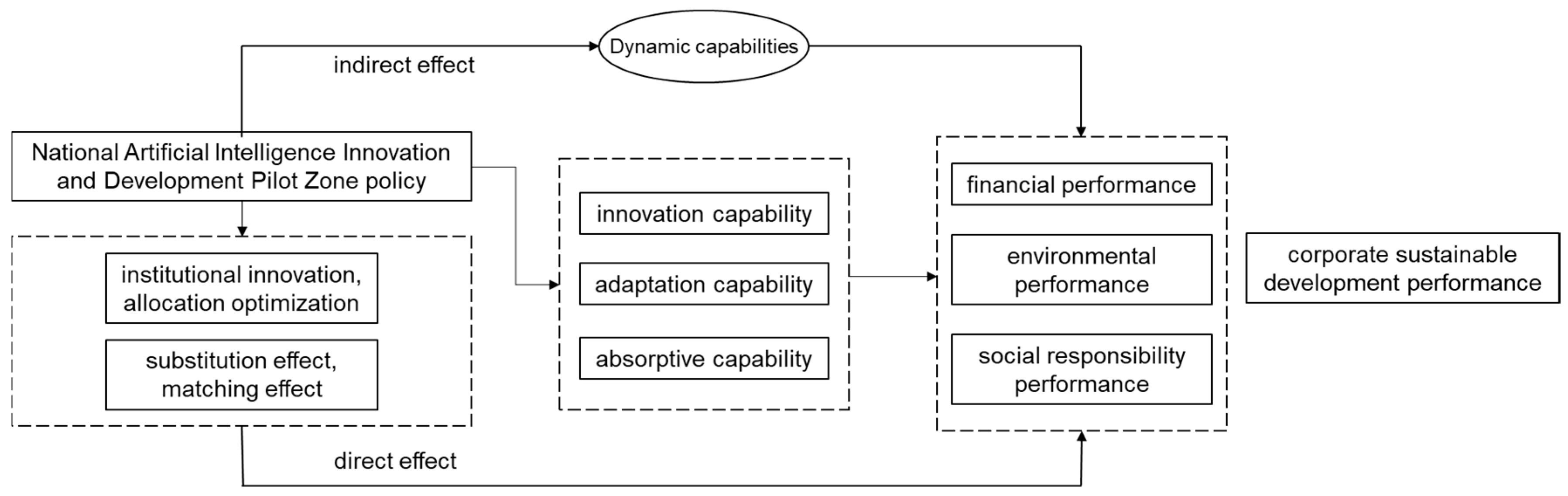
AI Pilot Zone policy may improve firm SDP by strengthening the local conditions for AI adoption and integration. As an institutional innovation, the policy encourages businesses to integrate AI into operations and governance by lowering uncertainty through complementary support and demonstration projects. These changes optimize resource allocation by improving monitoring and forecasting, strengthening risk and compliance management, and tightening control over workflows and resource allocation. In practice, AI replaces low-efficiency routines with data-driven automation, generating a substitute effect that reduces energy and material waste and improves emissions and pollution management. AI also has a matching effect, improving coordination and decision quality to make sustainability improvements more credible and easier to verify through stronger transparency and governance. Consistent with this reasoning, prior studies found that AI-related policies are associated with improved pollution control and lower carbon emissions [
39,
40]. AI capabilities can support sustainability improvements by strengthening innovation activity and building resilience in how firms manage resources and risks [
41]. In supply-chain and operations contexts, generative AI can improve forecasting and coordination, supporting process optimization [
42].
The AI Pilot Zone policy provides a supportive institutional framework for firms by advancing demonstration applications and reinforcing them with complementary policy instruments, which helps align economic activities with sustainability targets. Based on this rationale, we propose the following hypothesis:
H1: The establishment of the AI Pilot Zone policy will enhance corporate sustainable development performance.
2.3. The Mediating Effect of Dynamic Capabilities
Dynamic capability refers to the core capacity of an enterprise to rapidly respond to changes by integrating and adjusting internal and external resources in an uncertain market environment, thereby sustaining its competitive advantage [
43]. Following Wang and Ahmed [
44], this paper divides dynamic capability into three dimensions: innovation capability, adaptation capability, and absorptive capability. In our research context, the significance of AI Pilot Zone policy lies in its ability to accelerate the diffusion of artificial intelligence through demonstration applications and support and gradually covers more approved areas in batches. For the policy to be truly effective, it depends on whether enterprises can integrate new digital opportunities into their organizational practices, and this transformation essentially depends on the capabilities of the enterprises themselves [
45].
Innovation capability emphasizes management and products developed by enterprises based on market demand. By establishing the AI Pilot Zone policy, resources have been centralized to further enhance the development of new infrastructure and build an institutional framework conducive to innovation in AI technology. On the one hand, enterprises can more easily access the AI applications and related resources that can be implemented, thereby reducing the threshold for trial and error [
19]. On the other hand, in highly competitive environments, enterprises actively recruit professionals with strong technical backgrounds or enhance existing employees’ digital skills through universal training programs. This enables AI technologies to deliver higher value across various operational segments. Stronger innovation capability allows firms to develop green technologies, engage in eco-innovation activities, and improve resource utilization efficiency, which in turn enhances environmental performance and supports sustainable development [
46,
47,
48].
Adaptation capability is the ability of enterprises to seize opportunities and resolve potential risks by swiftly adjusting their structure and processes, in response to dynamic changes in their internal and external environments [
44]. AI enhances enterprises’ ability to rapidly detect and predict risks, improves resource coordination efficiency, and helps businesses respond to regulatory requirements and stakeholder pressures [
49], which strengthens their adaptation capability. Stronger adaptation capability can enhance organizational flexibility [
50], enabling firms to respond more effectively to environmental regulations and sustainability pressures and align operational decisions with long-term sustainability goals, thereby improving sustainable development performance [
51,
52].
Absorptive capability describes the extent to which an organization can acquire, internalize, and leverage knowledge from outside sources. It is instrumental in spotting market opportunities and converting new knowledge into innovation [
53]. The AI Pilot Zone policy can leverage policy advantages to help enterprises broaden access channels for AI-related resources and deepen cross-institutional collaboration, such as industry–academia–research partnerships and corporate synergies. However, access does not guarantee effective use. Enterprises need to develop the absorptive capacity to analyze, interpret, and contextualize the information acquired externally [
54], thereby avoiding the waste of knowledge resources [
55]. Firms can identify application scenarios that align with their sustainability goals and quickly develop replicable solutions that can be scaled up for wider rollout. With stronger absorptive capability, firms are better positioned to identify application scenarios aligned with sustainability goals and quickly develop replicable solutions that can be scaled up for broader rollout.
Building on the above analysis, we propose the following hypothesis:
H2: The effect of the AI Pilot Zone policy on corporate sustainable development performance is mediated by innovation capability.
H3: The effect of the AI Pilot Zone policy on corporate sustainable development performance is mediated by adaptation capability.
H4: The effect of the AI Pilot Zone policy on corporate sustainable development performance is mediated by absorptive capability.
Figure 1 illustrates the theoretical framework of this article and serves as a guide for the subsequent empirical analysis.
4. Empirical Results
4.1. Descriptive Statistics
Table 2 summarizes the descriptive statistics for all variables. The dependent variable, corporate sustainable development performance (SDP), ranges from 0 to 0.831, with a standard deviation of 0.204. The key explanatory variable has a mean of 0.214, suggesting that 21.4% of the firm-year observations are in the treated post-policy period.
4.2. Benchmark Regression Analysis
Table 3 presents the baseline results. The coefficient on the DID term is consistently positive and significant at the 1% level, suggesting that the AI Pilot Zone policy enhances corporate SDP, in line with H1. In the most stringent specification, the coefficient equals 0.0196 (
p < 0.01), corresponding to an average increase of about 1.96 percentage points in SDP after a city is designated as a Pilot Zone. With a sample mean of 0.438 for SDP, the estimated effect corresponds to roughly a 4.5% increase relative to the mean, highlighting the economic relevance of the policy impact.
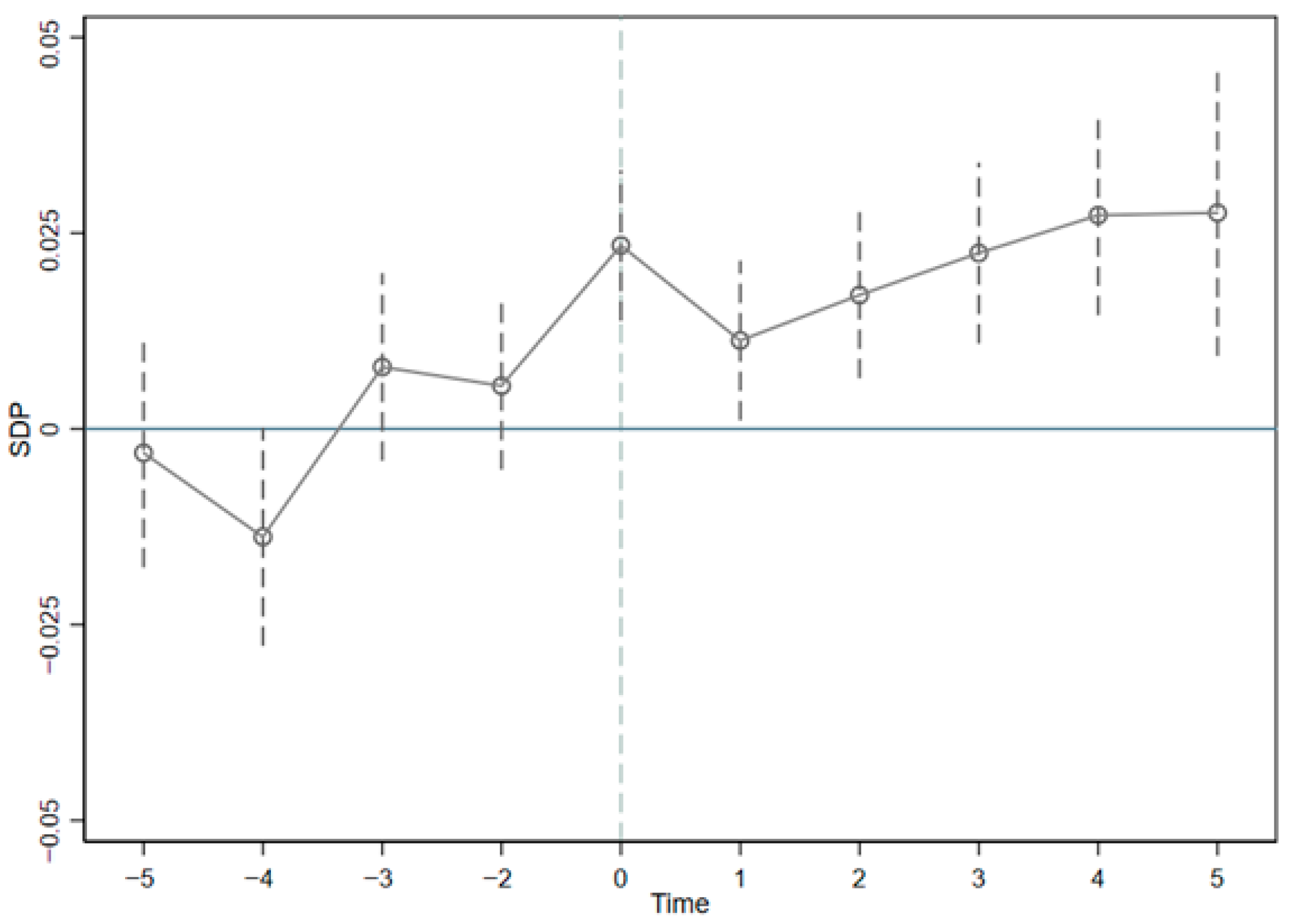
Among the controls, Size, Cashflow, Growth, Indep, and FirmAge are positively associated with SDP, while Lev and Dual show negative coefficients; Board is not statistically significant, and Top1 is positive in Column (3). The results indicate that the financial capacity and governance structures are associated with corporate SDP. The pre-policy coefficients in the event-study analysis are insignificant, suggesting similar trends between the treated and control groups before the policy.
4.3. Parallel Trend Test
Figure 2 reports the event-study results. The pre-policy coefficients are statistically insignificant, indicating similar trends between treated and control firms before the policy. In contrast, the post-policy coefficients become significantly positive, suggesting that the AI Pilot Zone policy leads to a widening SDP gap between the two groups.
4.4. Robustness Analysis
4.4.1. Placebo Tests
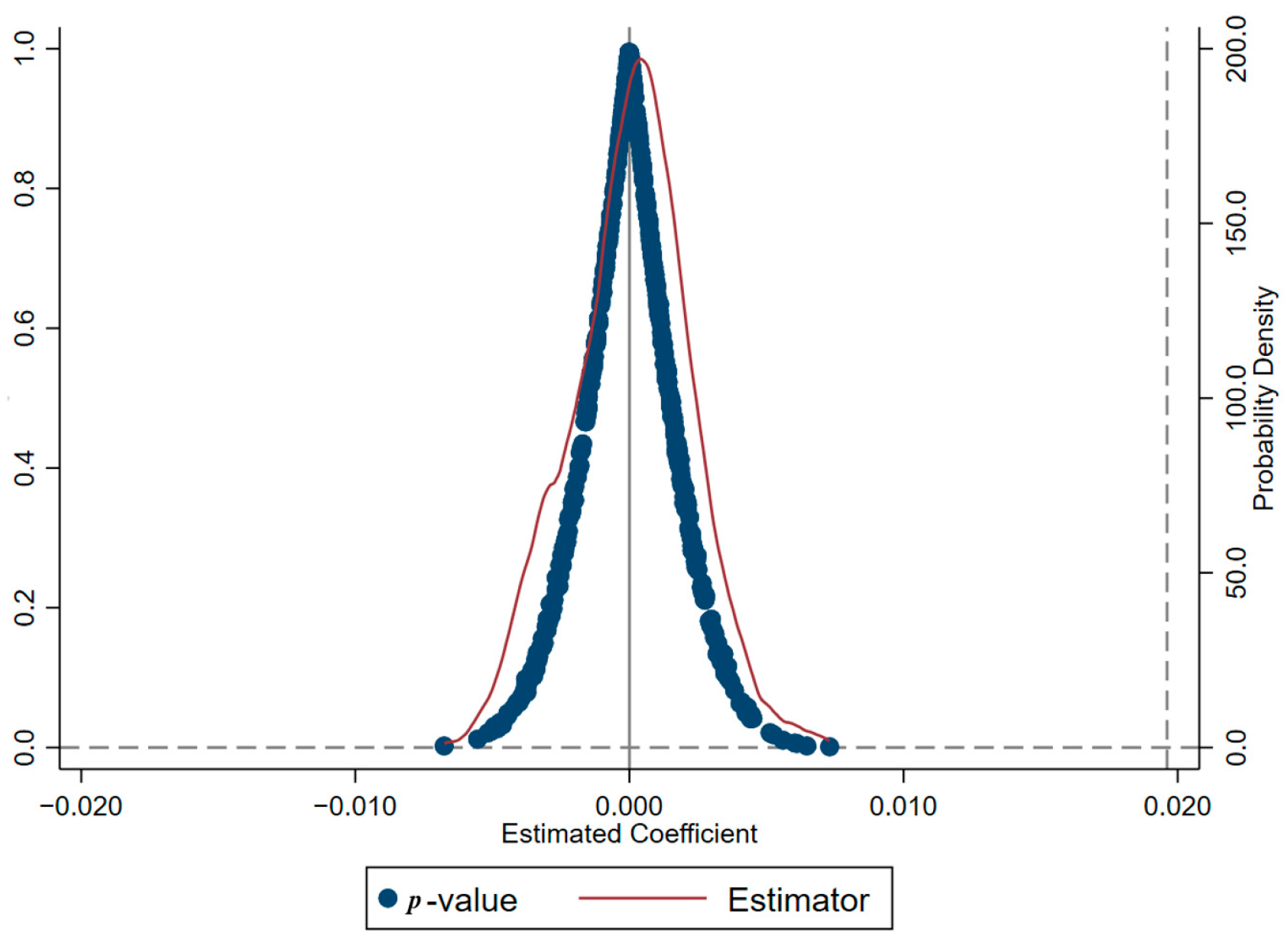
Figure 3 reports the placebo test based on 1000 random assignments of the treatment status. The simulated coefficients cluster around zero, and most
p-values are above 0.1. None of the placebo estimates exceed the benchmark coefficient of 0.0196, indicating that the baseline effect is unlikely to be driven by random noise.
4.4.2. PSM-DID Test
To mitigate potential sample self-selection bias, this study further employs propensity score matching (PSM) for causal inference. The procedure proceeds as follows. First, a set of
covariates is selected. To satisfy the conditional independence assumption, these covariates are chosen to include as many factors as possible that may affect corporate sustainable development. Second, we use nearest-neighbor matching to match treated and control firms, as specified in Equation (4).
Among them, denotes a set of explanatory variables that may affect corporate sustainable development performance. is a linear function. Using a Logit model, we estimate the probability that observation i is assigned to the treatment group, that is, being selected into the AI Pilot Zone; this predicted probability is the propensity score .
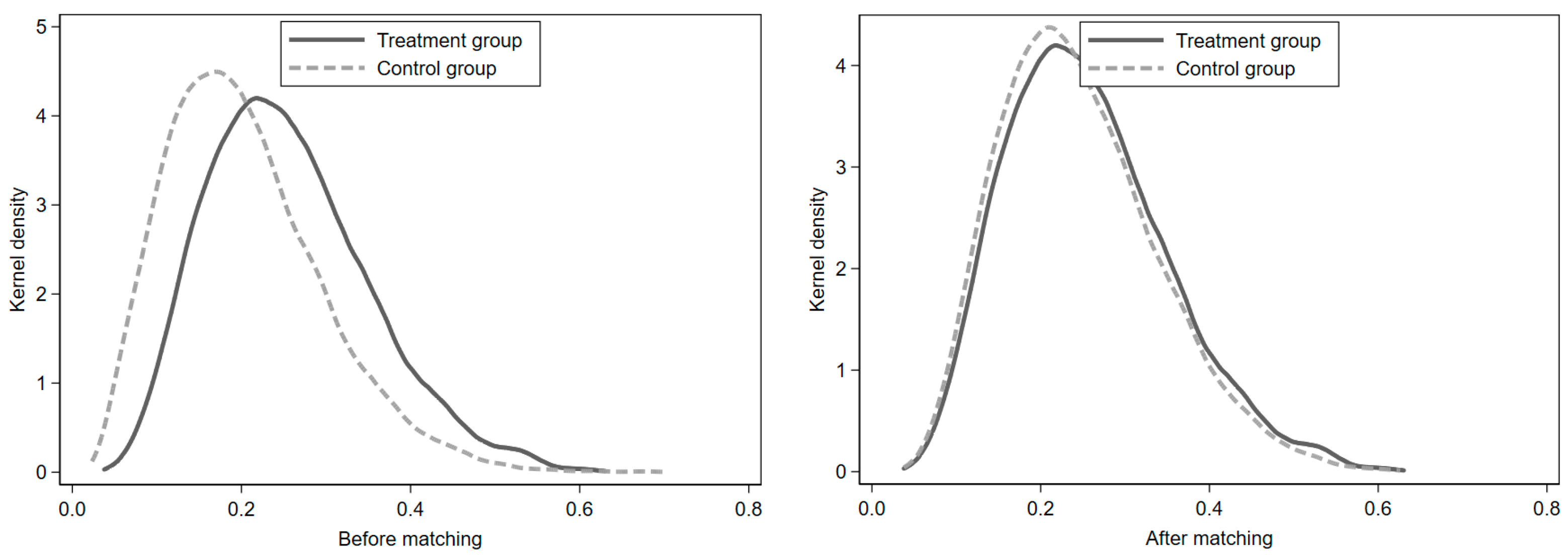
To assess the matching quality of PSM, this study first plots the density distribution of propensity scores (
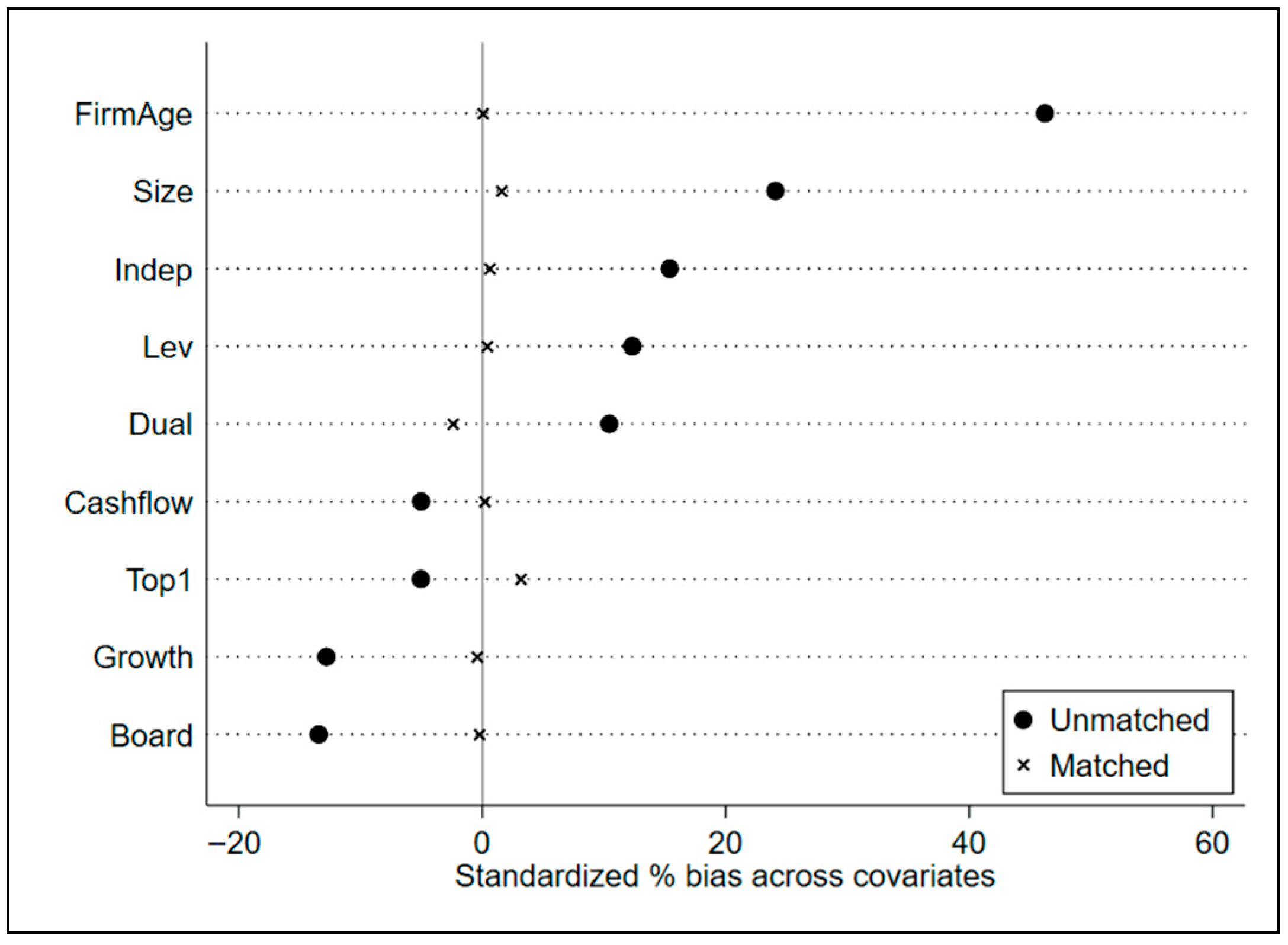
Figure 4). The results show that, after matching, the overlap in propensity score distributions between the treated and control groups increases markedly, indicating improved common support and stronger comparability. We further conduct covariate balance tests (
Figure 5 and
Table 4). After matching, the standardized biases of covariates decline substantially and are generally below the commonly used 20% threshold; the pseudo R
2 and LR test statistic also drop markedly, suggesting improved covariate balance between the treated and control groups. Overall, the matched sample appears well balanced, lending further support to the baseline results.
Using the 1:1 nearest-neighbor matched sample, we reran the main DID specification (
Table 5). The estimated effect of the AI Pilot Zone policy remained positive and statistically significant, reinforcing the credibility of our core findings.
4.4.3. Heterogeneous Treatment Effects
Goodman–Bacon Decomposition
(In the baseline estimation using a multi-period DID model, potential heterogeneity in treatment effects warrants careful attention, as it affects the credibility of policy evaluation and causal inference. Because the AI Pilot Zone policy was rolled out in different cities at different times, pilot cities vary in baseline industrial structure, factor endowments, and market development, and they face different macro conditions at implementation. These differences imply that the policy impact on corporate SDP may vary across cohorts and over time. Treating the effect as homogeneous may mask meaningful cross-city and intertemporal heterogeneity.
According to Goodman-Bacon [
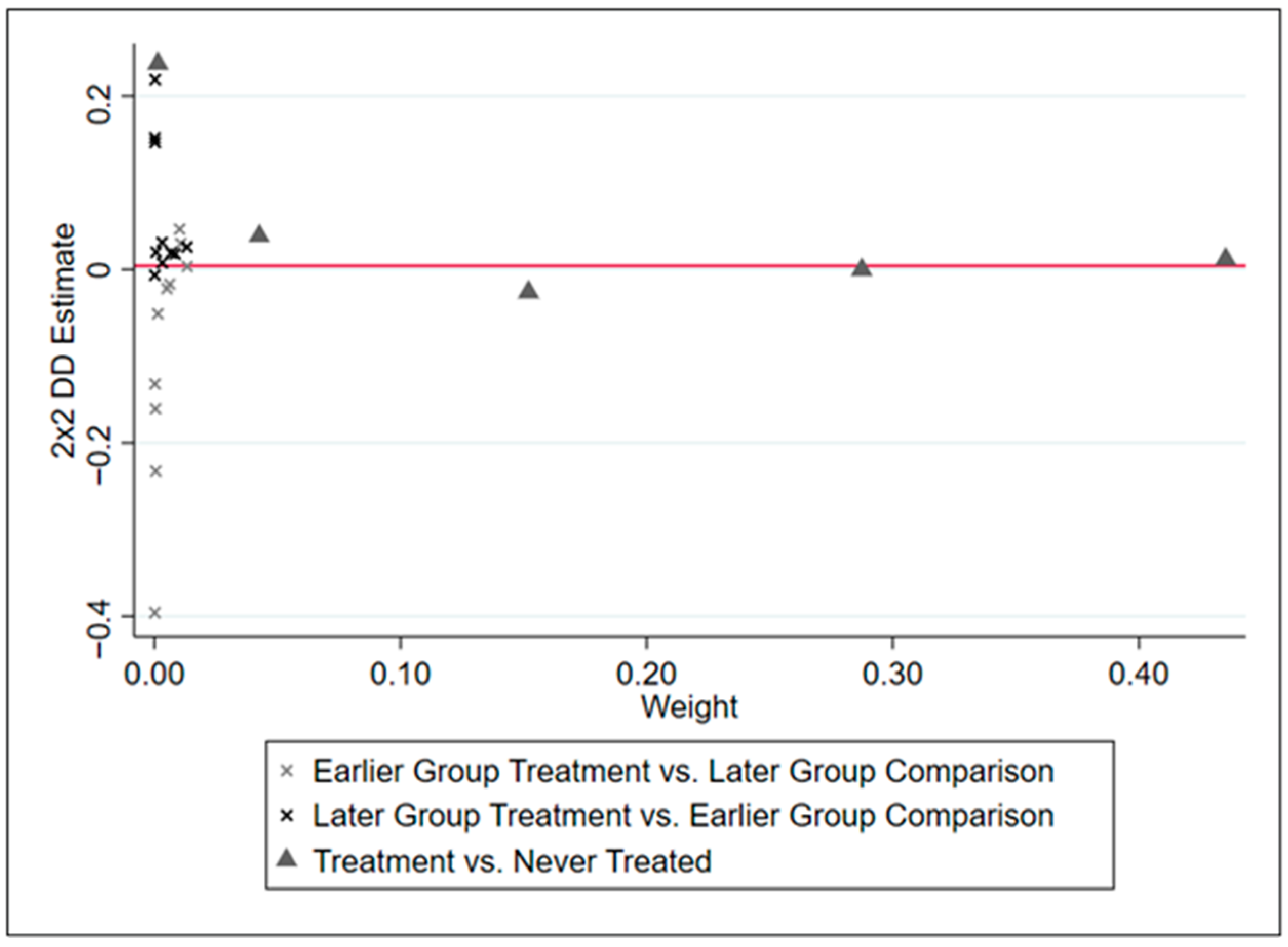
62], in staggered-adoption DID settings the TWFE estimator can be decomposed into a weighted average of underlying 2 × 2 DID comparisons and may therefore be sensitive to treatment-effect heterogeneity (including cases with negative weights). We conduct a Goodman-Bacon decomposition to assess the influence of the potentially problematic later-treated versus earlier-treated comparison.
Figure 6 shows that this component receives little weight, indicating that it is unlikely to materially drive our baseline estimate.
Additional decomposition statistics are summarized in
Table 6. The TWFE estimate is dominated by comparisons that contrast treated units with the never-treated group, which contribute 91.9% of the total weight. Only 3.5% of the total weight comes from comparisons that treat earlier-treated units as controls, indicating that their influence on the overall estimate is minimal. Overall, these results provide reassurance that the multi-period DID estimates in this study are not driven by problematic comparisons.
Borusyak et al. [
63] propose an imputation-based counterfactual approach (DID-imputation) to address potential bias in TWFE estimation under staggered treatment adoption. This method estimates the outcome process using untreated observations and then imputes counterfactual outcomes for treated units, thereby identifying the average treatment effect. As reported in
Table 7, the imputation-based estimate remains significantly positive at the 1% level (ATT = 0.0157), consistent with the baseline results.
Doubly Robust DID
To address potential biases of the traditional TWFE estimator in staggered DID settings, we adopt the doubly robust difference-in-differences (CSDID) estimator proposed by Callaway and Sant’Anna [
64].
Table 8 shows that the estimated average treatment effects remain significantly positive, consistent with the baseline results and indicating the robustness of the findings.
4.4.4. Additional Robustness Checks
To assess the robustness of our findings, we conduct six additional tests. The results reported below consistently show that the positive effect of AI development on corporate SDP remains robust.
Subsidiaries of listed firms. Some listed firms have parent companies and subsidiaries located in different cities. Even if the parent company is not registered in a pilot city, its subsidiaries may operate in pilot cities. This may lead to mismatches between firms’ actual policy exposure and their registered locations and may violate the SUTVA assumption in the DID framework. To address this concern, we identify firms whose subsidiaries are located in pilot cities while their parent firms are not and remove these observations from the sample. The results are reported in
Table 9 Column (1).
Alternative definition of the treatment variable. In the baseline specification, cities approved after September are treated as entering the policy in the following year to allow for potential policy lags. We redefine the treatment variable using the actual approval year of each city. The results are presented in
Table 9, Column (2).
Anticipation effect test. If firms anticipate the policy in advance, they may adjust their behavior before its implementation. Following Song et al. [
65], we include an interaction term between the Pilot Zone dummy and a one-year lead indicator. The results in
Table 9 Column (3) show that the lead term is insignificant, suggesting that firms did not respond to the policy before it was implemented.
Controlling concurrent policies. Other policies implemented during the sample period may also affect corporate sustainable development. We therefore exclude firms affected by two related policies, the Smart City Pilot Policy and the National Big Data Comprehensive Pilot Zone Policy. The results are reported in
Table 9 Column (4).
Lagged control variables. To mitigate potential endogeneity concerns, we lag all control variables by one year and re-estimate the model. The results are reported in
Table 9 Column (5).
Alternative clustering level. In the baseline regressions, standard errors are clustered at the firm level. Since the policy is implemented at the city level, we also cluster the standard errors at the city level. The results in
Table 9 Column (6) show that the main findings remain unchanged.
4.5. Heterogeneity Analysis
4.5.1. Technological Heterogeneity
Based on the average share of R&D personnel, firms are classified into high R&D and low R&D groups. Columns (1) and (2) of
Table 10 show that the AI Pilot Zone policy has a significantly positive effect on SDP for high R&D firms (0.0244,
p < 0.01), while the coefficient for low R&D firms is not statistically significant. This pattern suggests that the policy’s impact depends critically on firms’ ability to absorb and translate AI-related technologies. Firms with stronger R&D human capital are better able to identify and assimilate frontier AI technologies, integrate local innovation resources provided by the Pilot Zones, and convert policy-induced opportunities into sustainable development momentum through product upgrading and efficiency improvements. In contrast, firms with weaker R&D capacity face constraints such as limited technical talent and a thin R&D base, making it difficult to overcome the adoption barriers of AI applications and to benefit from the technology spillovers generated by the Pilot Zones.
4.5.2. Organizational Heterogeneity
This study splits the full sample into high and low internal-control groups based on the sample mean of the DIB internal control index. The estimates in
Table 10 (Columns 3–4) indicate that the AI Pilot Zone policy raises the corporate SDP in both subsamples, with a larger effect among firms with stronger internal controls. A Chow test rejects the equality of the coefficients across groups, confirming that the difference is statistically significant. Overall, the results imply that robust internal control systems help firms better convert Pilot Zone policy support into sustainability performance. Firms with stronger internal control, supported by more standardized decision-making procedures and more effective resource allocation systems, are better able to align with Pilot Zone innovation resources, manage the uncertainty associated with AI adoption, and use the policy more efficiently, thereby amplifying the improvement in corporate SDP. From a governance perspective, stronger internal control systems can enhance monitoring and discipline managerial decision-making. Prior research suggests that governance and monitoring mechanisms can influence corporate behavior and encourage firms to adopt decisions that better serve long-term organizational interests [
66]. In this context, firms with stronger internal control may be better positioned to translate policy support into improvements in sustainable development performance.
4.5.3. Environmental Heterogeneity
To explore regional heterogeneity, the sample is divided according to the sample mean of the Peking University Digital Inclusive Finance Index. Columns (5) and (6) of
Table 10 show that the AI Pilot Zone policy significantly increases the corporate SDP in regions with higher digital inclusive finance (0.0233,
p < 0.01), while the effect is insignificant in regions with lower levels. This finding highlights the role of digital inclusive finance in facilitating firms’ access to AI-related innovation resources. In regions with stronger digital inclusive finance, more developed financial service networks and more efficient capital allocation help ensure funding for firms’ participation in Pilot Zone innovation activities and AI R&D and application, thereby easing financing constraints during technology upgrading and allowing the policy effect to be fully realized. In contrast, regions with weaker digital inclusive finance tend to face insufficient financial service provision, which limits firms’ ability to finance AI-enabled upgrading and prevents them from fully leveraging the policy and technological resources offered by the Pilot Zones.
4.6. Mechanism Analysis
Our mechanism analysis suggests that the AI Pilot Zone policy strengthens dynamic capabilities along three dimensions (
Table 11). Specifically, the DID coefficient is 0.0475 for innovation capability (DCIN), significant at the 1% level, indicating that the policy is associated with a meaningful improvement in corporate innovation capability, thus supporting H2. The DID coefficient for adaptation capability (DCAD) is 0.0173 (
p < 0.01), which lends support to H3, suggesting that firms become more responsive and better able to adjust to changing environments after their regions enter the pilot program. The effect on absorptive capability (DCAB) is also significantly positive, with a coefficient of 0.0056 at the 1% level, which is consistent with H4; this result suggests that the policy is associated with stronger absorptive capability. We examine multicollinearity among the mechanism variables using VIF tests. All VIF values remain low, suggesting that multicollinearity does not affect the regression results.
Based on the above empirical evidence, this study further elaborates on the underlying mechanisms to discuss potential pathways through which the Pilot Zone policy promotes corporate sustainable development performance. As an institutional policy designed to promote the development and diffusion of artificial intelligence, the AI Pilot Zone policy provides demonstration projects, innovation platforms, and supportive policy instruments. These arrangements improve the regional innovation environment and expand firms’ access to technological resources and collaborative networks. In this context, firms located in Pilot Zones may have more opportunities to develop capabilities related to innovation, adaptation, and knowledge absorption.
Innovation capability: The AI Pilot Zone policy may enhance corporate innovation capability through two channels. First, agglomeration effects and demonstration support reduce trial-and-error costs in adopting AI for innovation. Second, talent attraction and training strengthen firms’ technical workforce and digital skills. Specifically, Pilot Zones help firms access upstream and downstream partners’ technologies and innovation experience, facilitating learning and follow-up innovation while lowering the costs of searching for and acquiring innovative knowledge. Stronger skills and technical personnel also improve firms’ ability to absorb and translate these resources into innovative outcomes, thereby supporting improvements in corporate SDP.
Adaptation capability: By accelerating the adoption and embedding of AI within firms’ routines, the AI Pilot Zone policy may strengthen firms’ adaptive capability in turbulent settings. Pilot Zone designation also improves regional data connectivity by linking internal datasets with external information sources, which helps firms detect environmental changes more promptly and reconfigure resources and collaborative arrangements to reduce setbacks from market volatility or shifts in partnerships. In addition, the advancement of AI technologies strengthens the corporate ability to identify and exploit emerging market opportunities, reduces information frictions and trust barriers among regional actors, and supports the effective integration and optimization of internal and external resources, ultimately improving corporate SDP.
Absorptive capability: The knowledge spillovers generated by the AI Pilot Zone policy may strengthen corporate absorptive capability further by improving the processing and conversion of external information into usable inputs. AI-enabled data processing helps corporations to screen and integrate large amounts of external information more efficiently, reducing the inefficiencies involved in identifying relevant knowledge. AI applications also facilitate coordination between partners and reduce transaction costs associated with information asymmetry, enabling the conversion of externally sourced knowledge into internal innovation outcomes. By improving the conversion of external knowledge into actionable solutions, corporations can build up strategic resources that support long-term improvements in corporate SDP.
5. Conclusions and Policy Recommendations
5.1. Conclusions
This study treats the staggered rollout of the National Artificial Intelligence Innovation and Development Pilot Zone policy as a quasi-natural experiment. Using Chinese A-share listed companies from 2014 to 2024, we apply a multi-period DID model to examine the policy effect on corporate sustainable development performance and further assess the robustness, heterogeneity, and mechanisms. The main findings are as follows:
First, the AI Pilot Zone policy significantly improves corporate SDP. The estimated coefficient is 0.0196 (p < 0.01), corresponding to an increase of about 1.96% in SDP after the policy implementation. This finding supports H1.
Second, robustness checks yield consistent results, including placebo tests, PSM-DID estimations, and tests for heterogeneous treatment effects. Together, these analyses reinforce the robustness of the baseline findings.
Third, the policy effects are heterogeneous across the TOE dimensions. The impact is primarily concentrated among firms with stronger R&D capabilities, which suggests their superior absorptive capacity is critical for adopting AI technologies. Organizationally, although firms with both high and low internal control quality benefit, the effect is significantly stronger for those with robust internal governance. This underscores the role of internal governance as an amplifier for policy outcomes. Environmentally, the policy only yields significant effects in cities with more advanced digital inclusive finance, implying that a mature digital financial ecosystem serves as essential infrastructure and a resource base for enabling AI transformation.
Finally, the mechanism analysis shows that the AI Pilot Zone policy improves the corporate SDP by strengthening dynamic capabilities. The policy significantly increases corporate innovation capability, with a coefficient of 0.0475 and also enhances adaptation capability and absorptive capability, with coefficients of 0.0173 and 0.0056, respectively. These findings indicate that the policy promotes corporate SDP by improving firms’ ability to innovate, adapt, and absorb external knowledge.
Taken together, these findings contribute to the literature on AI and corporate sustainability. First, the findings lend empirical support to the resource-based view by showing that policy-driven AI resources enhance firms’ capabilities and contribute to improved sustainability performance. Second, the evidence indicates that institutional support plays an important role in facilitating the diffusion of emerging technologies and shaping corporate sustainability outcomes. Third, the heterogeneous effects suggest that the impact of AI policies varies across firms with different technological capabilities, organizational conditions, and external environments. Finally, the mechanism results are consistent with the dynamic capability perspective and suggest that policy driven AI diffusion helps firms respond more effectively to technological change and sustainability challenges.
5.2. Policy Recommendations
Based on the empirical results, the AI Pilot Zone policy improves corporate sustainable development performance, though the effect varies across firms with different technological capability, internal governance, and financial environments. Policymakers should therefore adopt more targeted policy design to improve the effectiveness of AI Pilot Zones. In regions with stronger digital conditions, governments can set up special funds for corporate sustainable development projects and build project pipelines to expand applications that improve corporate SDP. In regions with weaker digital foundations, policy attention should focus on digital and data infrastructure and on better access to digital inclusive finance. Governments can support fintech platforms, expand digital credit services, and create financing programs that support firms adopting AI technologies. These measures can ease financing constraints when firms upgrade production and adopt AI applications. Firms with stronger internal control benefit more from the policy; so, governments can use incentive policies to encourage firms to include sustainability goals in internal control and risk management systems. For example, governments can provide subsidies, tax incentives, or special support programs to encourage firms to place more weight on sustainable development performance in management decisions and performance evaluation.
At the corporate level, the evidence suggests that policy benefits materialize primarily through capability building. Corporations can strengthen innovation capability by investing in R&D personnel and AI-related skills training, strengthen adaptation capability by integrating AI tools into risk monitoring, forecasting, and resource coordination, and strengthen absorptive capability by creating routines that translate external knowledge into internal practices. Firms are also encouraged to make full use of Pilot Zone platforms, such as industry–university collaboration and inter-firm cooperation networks, to access relevant resources and convert them into scalable solutions that help move the firm toward a sustainable future. In addition, the heterogeneity results suggest that firms may adopt different strategies according to their technological capabilities and organizational conditions. Firms with stronger R&D capabilities can increase investment in AI technologies, while firms with weaker technological capabilities can rely more on cooperation with universities and technology partners to obtain relevant knowledge and support. Firms with stronger internal governance can further apply AI tools in risk monitoring, resource allocation, and managerial decision making.
5.3. Limitations
The results of this study suggest that the AI Pilot Zone policy improves corporate sustainable development performance. However, several measurement considerations may affect the interpretation of the results. Some dynamic capabilities are measured using proxy variables derived from firm-level financial data. For example, the absorptive capability is proxied by R&D intensity, which may not fully capture firms’ ability to absorb external knowledge. In addition, the CSR ratings used in this study are obtained from the Hexun database, which relies partly on firms’ disclosed information. Although this dataset is widely used in studies of Chinese listed companies, it may still involve potential reporting bias. Future research could employ more detailed firm-level data or alternative indicators to better measure policy exposure and dynamic capabilities.
The dynamic capability perspective provides one possible explanation for the policy effect. However, the policy may also influence corporate sustainability through other channels. For example, AI Pilot Zones may improve regional innovation conditions, generate knowledge spillovers, or expand firms’ access to digital infrastructure and financial resources. These alternative channels deserve further attention in future research.