1. Introduction
Logistics play a significant role in the functioning of today’s economy, affecting a country’s competitive position and social and environmental conditions [
1,
2]. The Logistics Performance Index (LPI) was first created by the World Bank in 2007 to provide a global, comparable measure for assessing the performance of a country’s logistics system across six criteria, including: Customs Efficiency, Infrastructure Quality, International Shipments, Competence of Logistics Companies, Tracking and Tracing, and Timeliness [
3]. Because of its comprehensive and systematic approach, it has been used in academic studies and policy analyses to compare logistics performance among countries and to identify the structural barriers that exist.
Recent revisions to the LPI, specifically those included in the 2023 version, have increased the LPI’s analytical scope through the inclusion of both operational and data-driven aspects of logistics performance that were not previously measured through the perceptions of third-party organizations [
4,
5]. The integration of large-scale shipment tracking data and more detailed operational measures represents a methodological improvement over previous surveys based on benchmarks to a hybrid evaluation process that combines perceptions, performance and predictive elements [
3,
4]. This transition changes the nature of sustainability assessments as the LPI now captures real-time operational efficiencies, network reliability, and traceability patterns—all of which are related to a country’s economic resiliency, service delivery, and environmental impact [
5,
6]. Therefore, the 2023 LPI provides a more dynamic empirical base for examining the structural relationships between a country’s logistics systems and broader developmental trends.
Despite these improvements, many sustainability-focused applications of the LPI continue to rely upon aggregate scores and linear specifications. Existing studies have documented associations between logistics performance and various forms of economic or social development, but have generally assumed homogeneous effects among countries and provided little insight into differences, non-linearities and contextual dependencies, particularly in terms of environmental outcomes [
7,
8]. There has been no systematic examination of the improved data architecture of the 2023 LPI from a multidimensional sustainability perspective.
Several existing studies view the LPI as an independent variable influenced by macroeconomic conditions, institutional quality, and technological characteristics [
4,
9]. Therefore, there has been relatively little focus on using the LPI as an analytical tool to investigate structural associations with sustainability-related outcomes. Research that includes environmental or social dimensions generally relies upon the overall LPI score, which masks the differential contributions of each of the component parts. A body of literature on infrastructure, institutional quality and human capital also suggests significant regional differences in these areas and thus indicates a need for more granular and structurally oriented analytical approaches [
10,
11,
12,
13].
In this context, this paper recasts the LPI as a multi-dimensional analytical framework for investigating structural associations between logistics performance and sustainability-related outcomes [
12]. Breaking down the LPI into its six constituent parts allows for an investigation of how different logistics components relate to economic, social and environmental indicators such as gross domestic product per capita, the Human Development Index (HDI) and total CO
2 emissions. The empirical strategy employs supervised machine learning models, multivariate statistical methods and SHAP-based explainability to test the robustness of these relationships against a variety of functional forms, enhancing the structural interpretations beyond what is possible with a single model specification.
This paper employs a clear, non-causal, cross-sectional methodology. The findings will be viewed as a series of contemporaneous structural relationships that reflect the broader contexts of economic, productive and energy activity. By providing evidence of the differential and context-dependent roles of logistics performance in relation to sustainability dimensions—especially within the expanded analytical framework of the 2023 LPI—this paper supports a more circumspect and methodologically rigorous application of the LPI in sustainability-focused logistics research.
Contribution
This study contributes to the body of knowledge on sustainability-oriented logistics by redefining the Logistics Performance Index (LPI) as a multidimensional analytical tool rather than a descriptive benchmarking tool. Utilizing the expanded dataset provided in the 2023 edition, this study investigates how the disaggregated logistics dimensions (i.e., cost, efficiency, infrastructure quality, tracking and tracing, timeliness, customs efficiency, and business environment) contribute to various aspects of economic, social, and environmental systems. In doing so, it provides the basis for viewing the LPI as an interpretative framework for assessing sustainability.
The disaggregation of the LPI into six individual dimensions provides evidence of both the differing levels of association between the disaggregated logistics dimensions and sustainability outcomes and that these differing associations exist in a context-specific manner. For example, the dimensions of infrastructure quality, tracking and tracing, and timeliness are more closely aligned with economic and social indicators than with environmental outcomes. These differing relationships are masked when using aggregated LPI scores; therefore, conducting analysis at the level of individual dimensions is essential in cross-country sustainability research.
In terms of methodology, this study expands upon the existing literature through the combination of both interpretable predictive modeling and SHAP-based explainability to assess the consistency and strength of structural associations across various functional forms. Unlike other studies where predictive accuracy was emphasized, the analytical approach employed in this study uses cross-model convergence as a measure of the structural stability of the results, thus increasing the confidence in the interpretations while avoiding any causality claims.
Finally, the cluster analysis conducted in the study shows that there are heterogeneous logistics–environmental configurations across countries, i.e., countries with similar logistics capabilities have followed distinct paths towards sustainability based on their specific energy systems, production structures and institutional frameworks. Thus, the study’s findings further illustrate the limitations of interpreting logistics performance as the singular factor driving sustainability. They also highlight the necessity of designing policies that account for differences among countries and their broader development pathways.
The study addressed the following research questions:
RQ1: How are the disaggregated dimensions of the Logistics Performance Index (LPI) structurally associated with environmental outcomes (i.e., CO2 emissions), and how do these associations differ between countries?
RQ2: What are the associations between the dimensions of the LPI and social development outcomes (i.e., Human Development Index (HDI)), and what dimensions of the LPI have the strongest and most consistent associations with HDI?
RQ3: How consistently are the associations between the individual dimensions of the LPI and economic outcomes (i.e., GDP per capita) found to be in this study, regardless of the model or method used?
2. Literature Review
2.1. Background
The Logistics Performance Index (LPI) is a standardized methodology that was created by the World Bank for the purpose of comparing the logistical capability of countries around the world through six measurable factors: customs clearance, infrastructure, international freight shipping, the ability to perform logistics operations, the ability to track and trace goods, and the speed at which logistics operations can be performed [
13,
14]. In addition to being used as a global benchmarking system for logistics, the LPI also serves as an empirical model to analyze how logistical systems are embedded in larger-scale economic and institutional development systems.
A significant amount of research has shown that there is a direct correlation between the level of logistics performance and economic results such as GDP per capita, trade competitiveness, and integration into global value chains [
15]. An efficient logistics system reduces the costs of transactions, improves connectivity, and increases the dependability of the supply chain, ultimately leading to increased levels of productivity and income.
In terms of social benefits, logistics capabilities are linked to increased access to goods and services, greater territorial integration, and reduced downtime in the delivery of essential goods and services, all of which are directly related to multi-dimensional metrics such as the Human Development Index (HDI) [
16].
These findings suggest that logistics infrastructure and logistics reliability are integral parts of development systems and not simply individualized technical functions.
While logistics efficiency may help reduce traffic congestion, optimize routes, and reduce the wasted energy associated with transportation [
9], the primary drivers of national CO
2 emissions are structural in nature and include energy mix, industrial structure, trade specialization, and regulatory environment [
17,
18].
Therefore, the impact of logistics performance on reducing carbon emissions will depend on the broader economic context in which it operates. In some cases, it will lead to increased efficiencies, and in other cases, it will promote the use of carbon-intensive production and trading methods.
Recent literature has addressed the link between logistics performance and larger sustainable systems, such as environmental, social, and governance (ESG) indicators. Recent studies have shown how different logistics competencies are associated with different types of sustainability factors and largely depend on heterogeneous national conditions [
19].
In addition to structural determinants, recent green logistics studies show that policies and regulations play an important role in determining the environmental impact of logistics systems. Several systematic reviews have identified factors influencing the adoption of green logistics and the transition to low-carbon transportation, such as environmental regulations, carbon pricing, sustainability standards, and institutional pressure [
20,
21]. Empirical evidence also suggests that public support mechanisms for green logistics practices, ESG-oriented frameworks, and digital monitoring policies significantly impact the effective implementation of green logistics practices, improving operational sustainability and reducing emissions [
22,
23].
Collectively, the results support the idea that environmental performance related to logistics competencies is not simply an outcome of improved logistics efficiency. Instead, its level is significantly impacted by the quality of government, the form of regulation, and the coherence of policy. Thus, the relationship between logistics performance and CO2 emissions must be examined within a broader institutional and policy context, rather than as an immediate or automatic effect.
Recent research has expanded logistics analysis to include resilience, vulnerability assessment, and adaptive capacity in response to systemic disruptions, including climate-related risks and institutional shocks [
22,
23,
24,
25]. This approach supports the idea that logistics performance is impacted by both institutional quality and technology in an environment that is governed by multiple stakeholders, and in turn impacts its sustainability implications.
The literature shows that logistics performance is highly correlated with overall social and economic development, and the interaction with environmental outcomes occurs under conditional circumstances. These relationships occur in different country contexts and include structurally complex interactions among production systems, institutions, and infrastructure; therefore, require analytical approaches capable of distinguishing various sustainability alignments from logistics performance without collapsing logistics performance to a singular aggregated metric or assuming uniformly similar effects across countries.
2.2. Methods Applied to the Logistics Performance Index
Various methodologies have been used to study the relationship between the Logistics Performance Index (LPI) and sustainability outcomes. Environmental researchers have primarily used fixed effects, dynamic panels, and data envelopment analysis (DEA) to examine the relationship between logistics performance and carbon emissions [
20,
26]. While these methods provide insight into efficiencies and average relationships, they usually rely on aggregating LPI scores and focus on estimating mean effects rather than examining the differential role of each LPI dimension [
21].
Studies investigating social sustainability have found a positive correlation between logistics performance and HDI measures, particularly regarding infrastructure reliability and service continuity [
16]. However, most studies are correlational and assume a homogeneous effect across countries, which limits their ability to measure structural heterogeneity or nonlinear interactions [
21].
Economic studies have also employed multicriteria decision-making models, hierarchical evaluation methods, and data envelopment analysis (DEA)-based techniques to investigate competitiveness and trade facilitation [
13,
23,
24]. However, logistics performance is often treated as either the dependent variable or a proxy for development instead of a multidimensional explanatory construct linked to economic, social, and environmental outcomes simultaneously.
Recent studies have applied clustering and multivariate techniques to identify structural differences in logistics performance across countries. Techniques such as K-means clustering, Gaussian mixture models, and Bayesian networks identified infrastructure, logistics competence, and tracking and tracing as critical dimensions differentiating national logistics systems [
4,
25,
26]. However, these studies were usually conducted individually and interpreted descriptively, without determining whether the relative contribution of the individual LPI dimensions remained constant across alternative analytical frameworks [
27]. Collectively, previous research has established meaningful connections between logistics performance and sustainability metrics. However, three methodological challenges remain. First, using aggregate LPI scores obscures dimension-specific heterogeneity [
4,
21].
Second, using a single methodology makes it difficult to assess the robustness of observed relations across alternative modeling frameworks. Lastly, few studies have combined predictive modeling, interpretability analysis, and structural grouping within a unified framework that explicitly recognizes the constraints of causal inference in cross-sectional settings.
Therefore, an integrated analytical framework, as described in this study, is necessary to address these challenges. Unlike previous studies that employed regression, machine learning, and/or clustering techniques independently, this study combines latent profile index (LPI) dimensionality, interpretable machine learning, and unsupervised clustering within a comprehensive structural framework. Recent studies have demonstrated the increasing use of data-driven analytics, big data, and optimization to improve logistics sustainability and reduce emissions through more effective operational planning [
28].
Disaggregating the LPI to analyze its six dimensions allows us to define and identify different structural correlations among logistics elements and environmental sustainability results. This approach avoids the masking effect that occurs when aggregating the score of all dimensions [
4,
21].
Interpretable machine learning performed using SHAP-based analysis extends this approach by determining whether the contribution ratio of each logistics dimension remains consistent regardless of the model specification (i.e., linear or nonlinear) used to estimate the sustainability outcome. The goal is to increase the model’s predictive accuracy, as well as to assess its structural consistency and robustness across different functional forms.
Clustering analysis can complement this framework by identifying logistics–environmental configurations that vary by country and are therefore not apparent at the average level of association [
25,
27]. While predictive models can identify overall correlation patterns of co-movements among logistics capabilities, clustering can identify specific, context-dependent groupings in which similar logistics capabilities lead to different environmental sustainability trajectories.
Thus, by combining analyses of disaggregated LPI dimensions, interpretable machine learning, and clustering, this study presents an analytical framework that characterizes logistics–sustainability relationships based on structure, going beyond merely identifying patterns. Additionally, this framework simultaneously evaluates differences specific to each dimension, predictive stability, and cross-country heterogeneity in the relationship between logistics performance and sustainability outcomes. Therefore, it provides a deeper understanding of how logistics performance interacts with environmental sustainability outcomes under different structural conditions.
2.3. Conceptual Framework: Logistics Performance and Sustainability Channels
The study uses an analytical framework to organize the research questions and interpret the empirical results in terms of three sustainability channels (economic, social, and environmental), rather than developing or testing new causal relationships. Given the limitations of the data, the analytical framework provides a structural model that can be used to study similarities in the association of each logistics performance dimension with each sustainability outcome measure across countries. Recent studies have emphasized the importance of developing sector-specific sustainability indicators to evaluate logistics performance and its contribution to sustainable development objectives [
29].
Logistics performance is viewed as an overall, system-level attribute that captures the quality of physical infrastructure, operational capabilities, and information flows within national supply networks. The quality of infrastructure and the ability to track and trace products are key elements of a logistics system that can influence development outcomes. However, the relative importance of each dimension depends on the type of sustainable development pursued and the characteristics of each country [
30,
31].
From an economic perspective, higher logistics performance correlates with lower transport and transaction costs, greater supply network reliability, and a higher degree of domestic economic internationalization. These are all positively correlated with higher productivity and income, as well as with gross domestic product (GDP) per capita. However, logistics performance does not directly or independently affect economic growth [
32].
From a social perspective, logistics performance improves the accessibility, continuity, and reliability of essential goods and services. Therefore, improvements in infrastructure and traceability enhance territorial connectivity and service delivery, which positively impact social development outcomes, as expressed through indicators such as the Human Development Index (HDI). These associations are mediated by institutional capacity and good governance, representing structural relations rather than causality [
6].
The environmental perspective has a cautious and contextual interpretation of the framework. Indeed, logistics infrastructure and digital technologies can improve operational efficiency through better coordination, route optimization, and reduced traffic. Consequently, logistics performance may contribute to reducing transportation activity emissions [
6,
9]. However, CO
2 emissions from transportation at the national level are likely influenced primarily by structural factors related to energy system structure, industrial composition, trade specialization, and regulatory frameworks. Thus, logistics performance interacts with these factors, amplifying existing production and consumption patterns rather than influencing environmental outcomes independently [
28,
33].
Overall, the reviewed literature provides substantial evidence of a strong relationship between logistics performance and economic competitiveness and social development. However, the relationship between logistics performance and environmental outcomes is more complex and context-dependent. Previous studies have identified infrastructure quality, logistics competence, and the ability to track products or shipments as key elements in enabling trade integration, increased productivity, and greater service availability. However, environmental impacts tend to be influenced by broader structural characteristics, such as energy systems, industrial composition, and regulatory frameworks. Much of the current literature employs aggregate LPI indicators and singular analytical methods, which may mask differing degrees of heterogeneity among dimensions and differences across countries. These findings emphasize the need for analytical frameworks that allow researchers to examine multiple logistics–sustainability relationships at the country level using disaggregated indicators and/or integrated analytical methodologies. To address this research need, this study employs predictive models, explainable AI methodologies, and clustering techniques to identify structural sustainability patterns across countries using a multidimensional approach to the LPI.
3. Methods and Models
In contrast to most prior research, this paper does not attempt to establish causal relationships among LPI sub-dimensions or maximize prediction accuracy; it instead utilizes a non-causal, cross-sectional approach for identifying consistent, interpretable patterns across nations [
6]. The framework also differs from many previous studies by combining LPI sub-dimension data with supervised machine learning and explainable AI in order to better capture both heterogeneity in LPI sub-dimension impacts and non-linear associations.
The data utilized in this analysis are all from internationally recognized, publicly available data sources: the 2023 LPI from the World Bank; the national CO2 emissions data from the UNFCCC and the International Energy Agency; the HDI data from the United Nations Development Programme; and the GDP/capita data from the World Bank. The six sub-dimensions of the LPI (Customs, Infrastructure, International Shipments, Logistics Competence, Tracking and Tracing, and Timeliness) serve as the explanatory variables, and the four sustainability-related outcome measures include: Total CO2 Emissions; CO2 Emissions/Capita; HDI; and GDP/Capita. In order to mitigate issues with skewed distributions and differences in scales, the data are transformed into logarithms and standardized. Countries with missing values are eliminated to ensure internal consistency of the results.
The analytical framework incorporates multiple types of learning (linear, non-linear and ensemble) to test whether the observed associations hold under various functional forms [
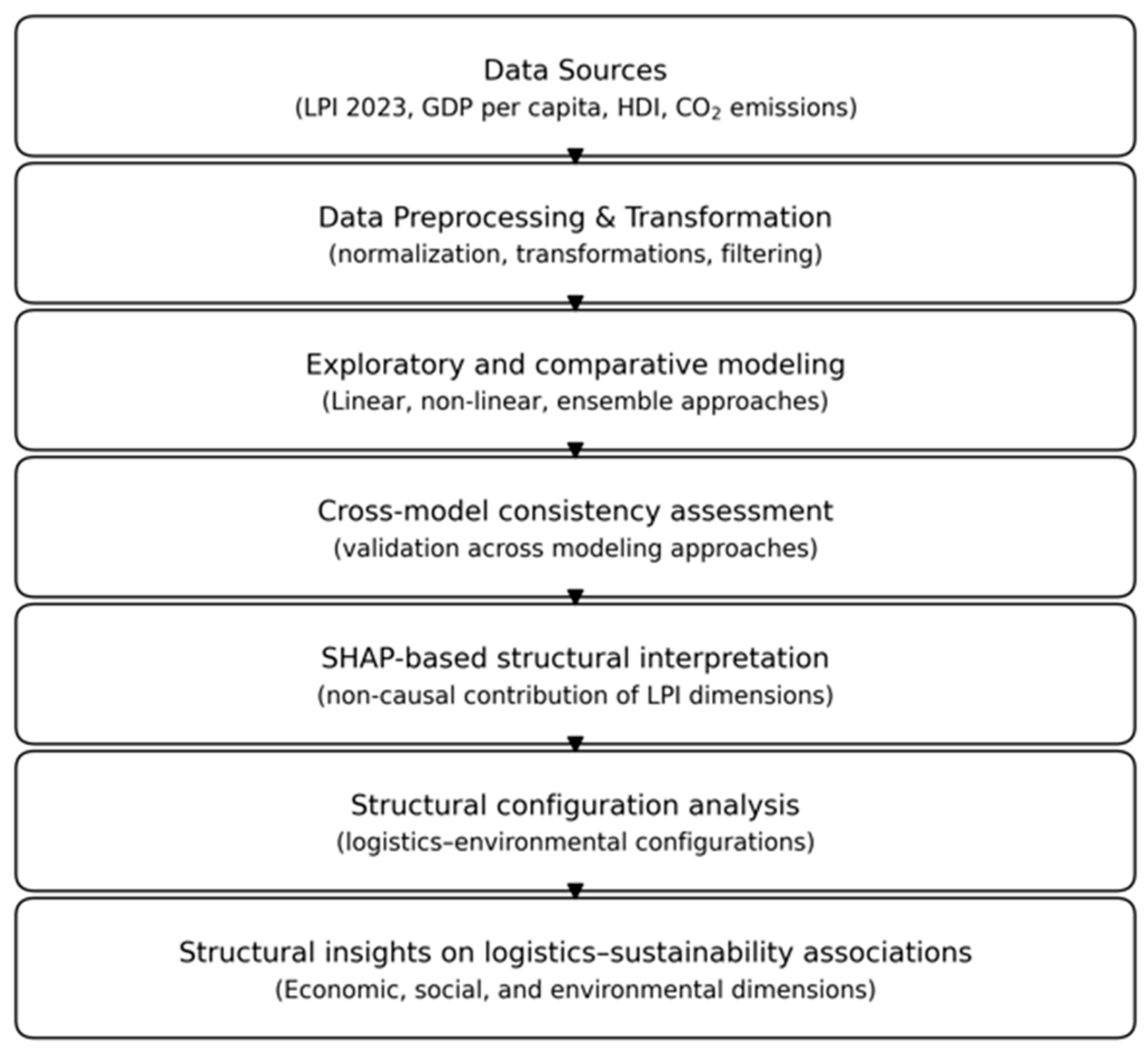
34]. Cross-validation using 10 folds is used to evaluate the performance of the models and supplementary metrics are used to ensure transparency and comparability, but not model ranking as an analytical objective. SHAP-based explanation is used to provide additional insights regarding the contributions of each of the sub-dimensions of the LPI to the overall predictive model, without implying causation. An unsupervised clustering using K-means is also performed to identify different combinations of country-level logistics–environmental configurations.
Figure 1 illustrates the sequence of steps and how they are combined in a single, sustainability-focused analytical framework.
3.1. Data
The empirical research is based on the 2023 edition of the World Bank’s Logistics Performance Index (LPI), which provides logistics performance ratings for approximately 120 countries [
3]. In addition to the LPI ratings, the data includes country-specific gross domestic product (GDP) per capita, Human Development Index (HDI), and carbon dioxide (CO
2) emissions from globally recognized statistical databases, such as the World Bank, the United Nations Development Programme (UNDP), the International Energy Agency, and the United Nations Framework Convention on Climate Change (UNFCCC) [
8,
9]. The use of internationally standardized data allows for cross-country comparisons for the reference year.
Since the LPI is presented as a cross-sectional index and the related sustainability indicators are available annually, the derived dataset provides a cross-country snapshot for 2023. To ensure consistent data within econometric models, countries missing one or more core variable values are removed from the analysis. The final sample therefore consists of economies across all World Bank income groups (i.e., high, upper-middle, lower-middle, and low) and represents various geographic areas, including Latin America, Sub-Saharan Africa, Asia, and the Middle East.
Countries with well-established logistics systems and statistical reporting capabilities have better access to data and are thus overrepresented, while many low-income and least developed countries have limited access to data and are consequently underrepresented. This limitation makes it difficult to generalize the study’s results to low-income and least developed countries with minimal logistics infrastructure and institutional capacity. Thus, the study primarily captures global structural relationships generated by countries with moderately to highly developed logistics capabilities, as well as meaningful differences in developing economies experiencing logistics modernization.
The original dataset included data from approximately 120 countries in 2023. Some environmental databases report multiple values for one country (e.g., different methods used to calculate CO2 emissions). To maintain analytical consistency, all predictive estimates are made at the country level. In the clustering analysis, multiple values for countries are averaged to create one value per country. Creating a single value per country allows us to analyze all countries as single units, which aligns with our non-causal analytical focus.
3.2. Variables
The Logistics Performance Index (LPI) is divided into six standardized dimensions: (1) Customs Efficiency; (2) Infrastructure Quality; (3) International Shipments; (4) Logistics Competence; (5) Tracking and Tracing; (6) Timeliness [
3]. These scores are defined on a scale of 1 to 5 and will be used as predictor variables in each model. Together, they represent the institutional, physical and operating features of national logistics systems [
14,
15].
There are three categories of sustainability indicators that are assessed as target variables:
- (a)
Environmental outcomes include total CO
2 emissions, CO
2 emissions per capita, and CO
2 emissions per
$1000 USD of exports. These measures represent total environmental pressure and environmental pressure per unit of production or exports [
8,
19].
- (b)
Social outcomes are captured through the Human Development Index (HDI) that represents a composite index of health, education and living standards and has been widely used in logistics–development research.
- (c)
Economic outcomes are measured using GDP per capita, which captures average income levels and has been linked to trade facilitation, participation in Global Value Chains (GVCs), and logistics quality [
16,
35].
Variables are adjusted as needed before estimating the model. Variables with highly skewed distributions are log-transformed to prevent outliers from unduly affecting the results and to enhance numerical stability. Additionally, some environmental variables, such as CO
2 emissions per capita and per unit of economic output, are often used to measure countries’ relative efficiency in terms of environmental performance. In this study, however, total CO
2 emissions are the primary variable used to measure environmental performance. Total emissions represent the total environmental pressure created by productive and logistical activities in each country. Thus, total CO
2 emissions represent the total environmental pressure associated with the scale of productive and logistical activities. Additionally, since total CO
2 emissions are relevant to national-level climate change mitigation strategies and international-level sustainability agreements, they were selected as the primary variable in this study [
8,
31].
Intensity-based indicators were selected to support the robustness and interpretation of the findings, as these indicators are heavily influenced by a country’s size, income levels, and structural characteristics. Therefore, these indicators largely represent countries’ relative efficiency in reducing their environmental footprint rather than actual reductions in environmental footprints [
22,
28]. Since the analysis focuses on structural and sustainability aspects, total CO
2 emissions were chosen as the basis for identifying environmental logistics patterns and configurations among countries.
3.3. Modeling Strategy
The modeling approach employs a two-stage methodology that focuses on interpreting the structure of relationships rather than testing for causality or optimizing model specifications. First, baseline linear models are used to establish a benchmark and relate the disaggregated LPI dimensions to sustainability-related outcomes. Second, supervised machine learning models are used to investigate whether these associations remain stable when alternative non-linear specifications are used, and possible interactions between the predictors are examined.
This comparative method assesses the persistence of the identified patterns across different modeling approaches. It also positions machine learning methods as complementary to linear methods for exploration and interpretation in a cross-sectional, noncausal context.
The utilization of linear and machine learning models is diagnostic and interpretive within the analytical framework. When linear and nonlinear models identify similar associations at the dimension level, these associations are likely consistent with structural alignment rather than being an artifact of a specific functional form. Conversely, differences between models can indicate potential nonlinearity, interaction effects, or sensitivity to context that could not be fully captured by the additive specification of a linear model. Therefore, machine learning models are not intended to replace linear benchmark models. Instead, they are intended to test the robustness and stability of structural associations under different modeling assumptions. Conducting cross-validation among models increases interpretive confidence and enables conclusions to extend beyond model-specific patterns.
3.3.1. Baseline Linear Models
Baseline relationships are estimated using the following linear specification:
where
denotes the score of country
i in LPI dimension
j and
represents one of the target variables: total CO
2, CO
2 per capita, CO
2 per USD 1000 exported, GDP per capita, or HDI. The error term
is assumed to have zero mean and constant variance. These models provide interpretable benchmarks for elasticity-like effects of each dimension on the outcome variables [
14].
3.3.2. Machine Learning Models
The utilization of linear and machine learning models plays a diagnostic and interpretive role in the analytical framework. When linear and nonlinear models identify similar associations at the dimension level, these associations are likely consistent with structural alignment rather than being an artifact of a specific functional form. Conversely, differences between models can indicate potential nonlinearity, interaction effects, or sensitivity to context that could not be fully captured by the additive specification of a linear model. Therefore, machine learning models are not intended to replace linear benchmark models. Instead, they are intended to test the robustness and stability of structural associations under different modeling assumptions. Conducting cross-validation among models increases interpretive confidence and enables conclusions to extend beyond model-specific patterns.
Table 1 presents a summary of the model families and their main properties.
3.4. Model Validation and Evaluation
3.4.1. Performance Metrics
Model evaluation is conducted using three complementary metrics: Spearman’s rank correlation coefficient (ρ), mean absolute error (MAE), and root mean square error (RMSE) [
37]. Spearman’s ρ evaluates how well the models maintain the relative order of the observed and predicted values. This metric is suitable for cross-country comparisons and nonlinear relationships. MAE and RMSE capture the magnitude of prediction errors in the original units of each outcome variable. RMSE assigns greater weight to larger deviations.
These metrics ensure transparency and comparability across models and outcomes, as well as consistency of associations, rather than identifying superior predictive performance.
3.4.2. Explainability and Structural Analysis
The model’s comprehensibility is achieved by employing SHAP (Shapley Additive Explanations), which uses cooperative game theory to determine the contribution of each model feature to its prediction [
30]. SHAP values show which LPI dimensions are most directly related to changes in CO
2 emissions, HDI, and GDP per capita within the predictive framework. SHAP contributions can provide evidence to help us understand structural alignment and relative contribution. However, we should not assume that they indicate causality.
To investigate cross-country differences in logistics and emissions, a K-means clustering algorithm was used on the standardized logistics and emissions data. The K-means clustering procedure was employed to find structural configurations for different logistics–environmental relationships in different countries.
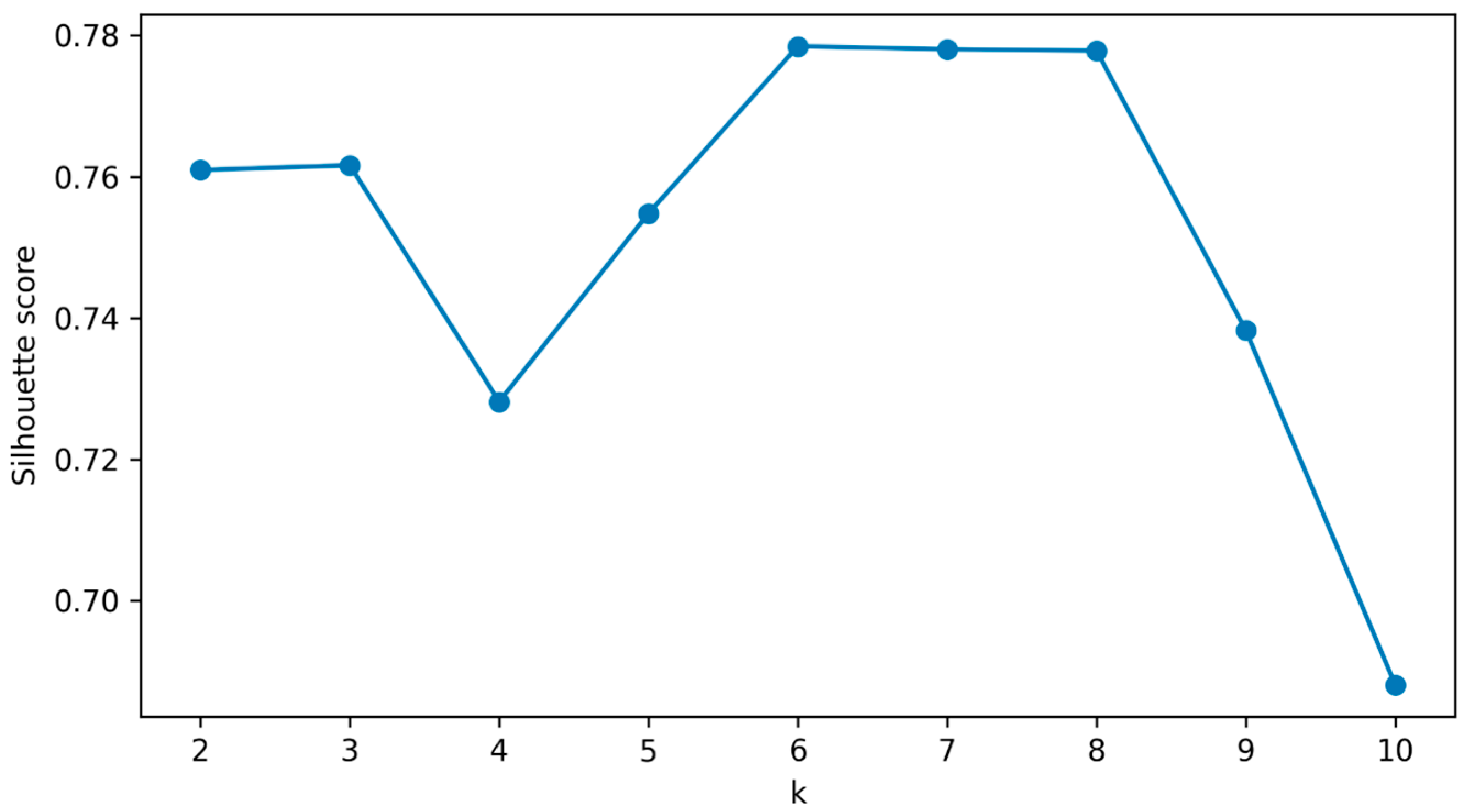
The number of clusters (k) was determined to be three based on conceptual and statistical considerations. Conceptually, three clusters enable identification of logistics–environmental configurations related to low, medium, and high total emissions levels. This level of aggregation allows us to understand heterogeneous sustainable development paths through various logistics capacities across different countries.
Silhouette coefficients were calculated for other possible values of k to determine the optimal configuration. Silhouette coefficients represent the level of cohesion among elements within a cluster and the degree of separation between clusters. Larger values represent a better-defined cluster structure. The results show that all configurations examined had very good silhouette scores. For example, k = 3 had a score of about 0.76. Therefore, this configuration would produce well-defined, internally consistent clusters while maintaining analytic simplicity.
Figure 2 illustrates the silhouette analysis for other values of k, and the results clearly indicate that the three-cluster configuration provides a sufficient and interpretable basis for analyzing logistics–environmental patterns across countries.
The clustering analysis is based on a set of variables that are conceptually relevant to logistics and empirically consistent. These variables include infrastructure and customs, which are key components of the physical and institutional elements of national logistics systems. Total CO2 emissions represent the total environmental impact of logistics and productive activity. For analytical parsimony and to avoid redundancy, other LPI dimensions and per capita emissions were excluded since intensity-type indicators only reflect relative efficiencies (or comparative environmental impacts) and do not necessarily indicate total environmental impact.
Since the data used in the analysis is cross-sectional, this study cannot identify causal relationships between logistics performance and sustainability outcomes. Therefore, all findings of this study are considered contemporaneous structural associations rather than evidence of policy impacts or direct effects.
4. Results
4.1. Correlations and Performance Metrics
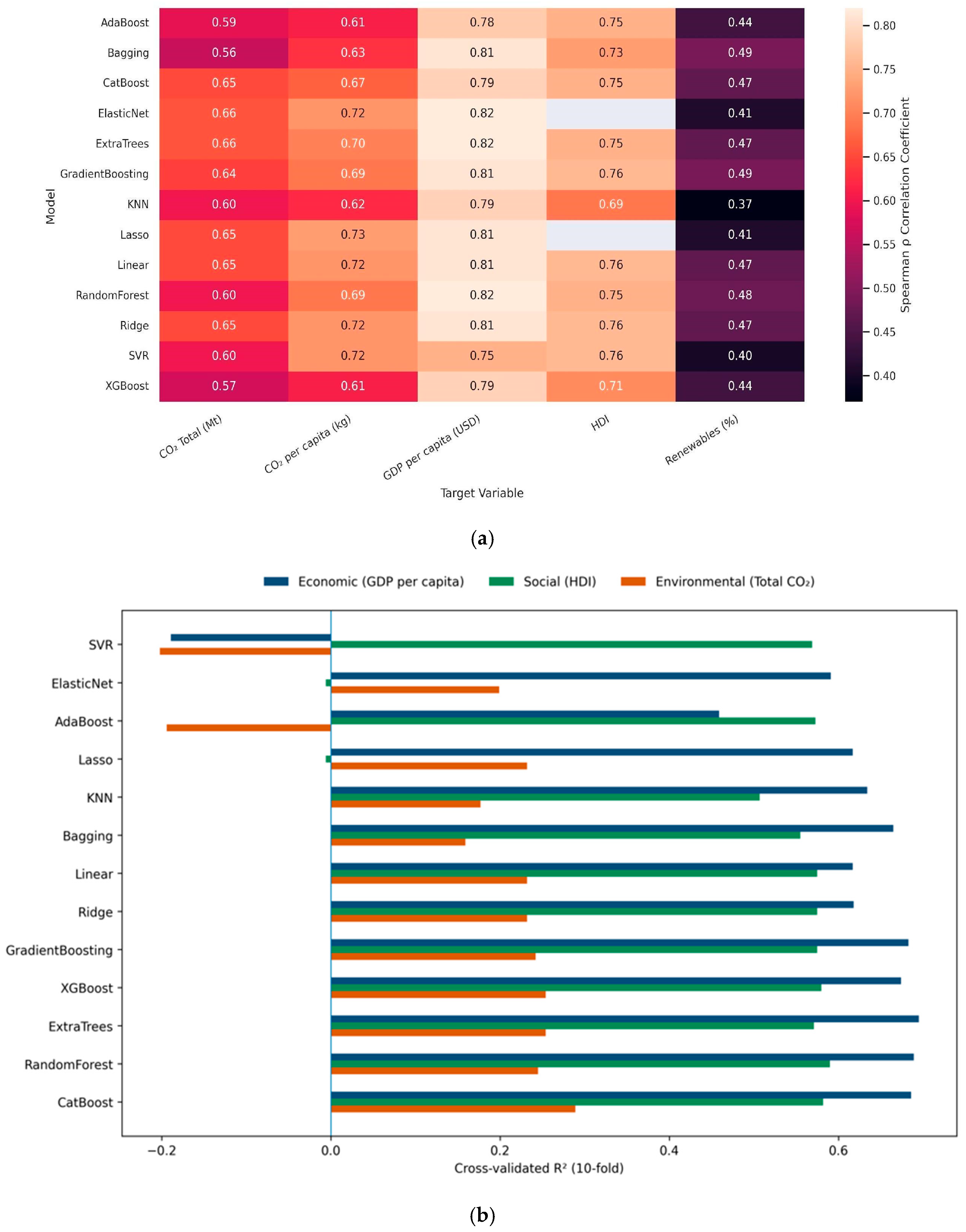
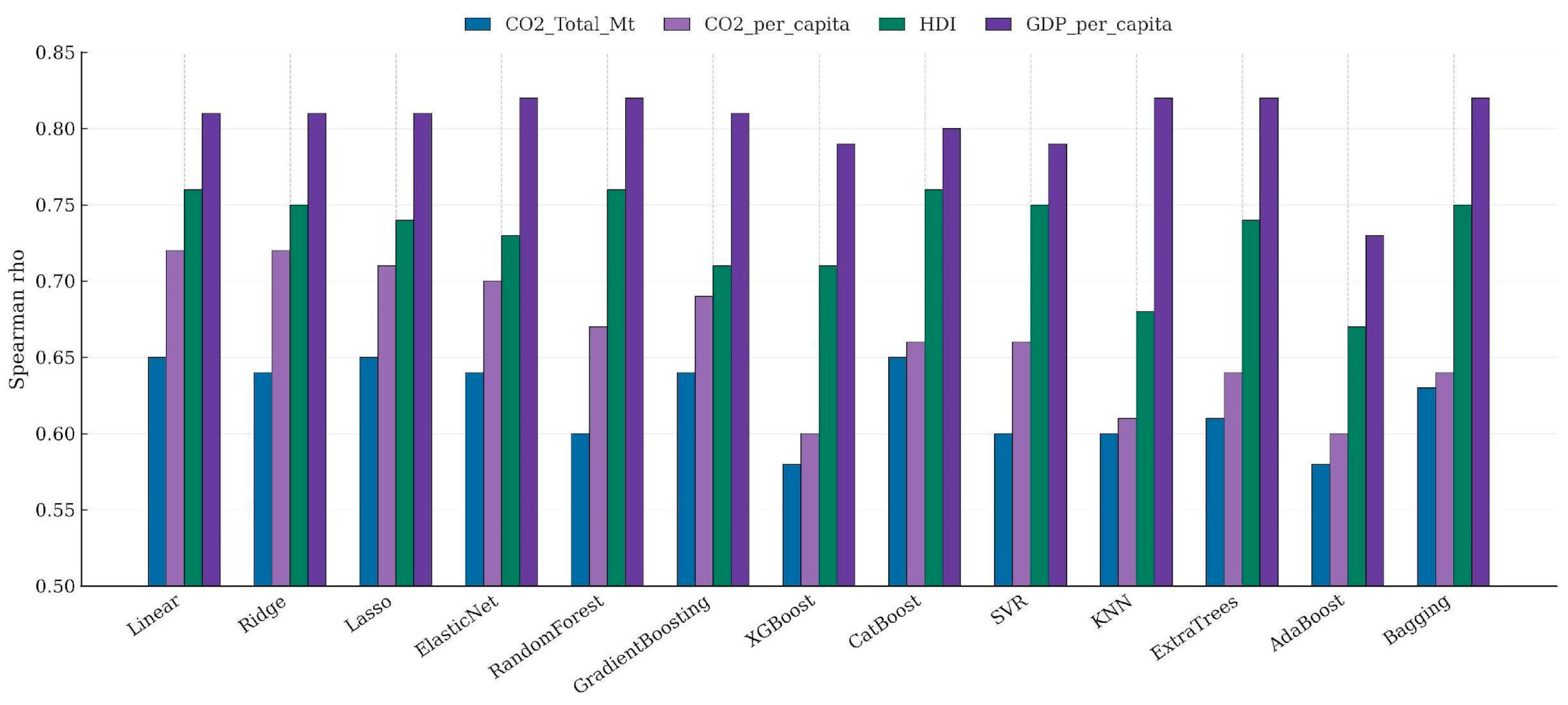
A comparison shows significant differences in the predictive alignment of logistics performance with the analyzed sustainability dimensions. The strongest positive correlation was found between GDP per capita and the LPI dimensions (ρ = 0.82). The HDI had the second-highest positive correlation, at ρ = 0.76. Lower, yet still moderate, correlations were found for total CO
2 emissions. These lower correlations primarily reflect structural influences, such as national energy structures and productive compositions, which can only be indirectly quantified using logistics metrics [
8,
37].
The results of comparing the predictive performance of the models are summarized in
Figure 3. Panel (a) shows the Spearman rank correlation (ρ) between the measured and predicted values for each model-target combination. Panel (b) presents the cross-validation coefficient of determination (R
2_(CV), 10-fold) for the three sustainability dimensions: economic (GDP per capita), social (HDI), and environmental (total CO
2 emissions, Mt).
Thirteen different types of algorithms were fitted to each of the five target variables, resulting in fifteen unique model-outcome pairs.
Figure 2 is a heatmap of the Spearman correlation coefficients calculated between the actual and predicted values, summarizing these findings. Rather than highlighting marginal differences in performance among the algorithms, this figure highlights a generalized trend. That is, ensemble methods are more likely to capture nonlinear relationships, but linear models can serve as an interpretable benchmark for identifying first-order relationships.
This trend of ensemble methods outperforming linear models in terms of capturing nonlinear relationships is consistent with previous studies examining the application of machine learning techniques to complex socioeconomic systems [
35,
36].
The similarity in association patterns across various linear and ensemble specifications suggests that the results are structurally interpreted and less likely due to model-specific functional forms (see
Appendix A Table A2).
Additionally, the best-performing specification(s) varied significantly by target category within the three dimensions of sustainability. Specifically, for the economic dimension (GDP per capita), the ExtraTrees model produced the highest cross-validated R-squared value (0.695). For the social dimension (HDI), Random Forest produced the highest cross-validated R-squared value (0.590). For the environmental dimension (total CO2 emissions), CatBoost produced the highest cross-validated R-squared value (0.289). Overall, the results indicate that model applicability varies by sustainability domain; however, the performance levels are consistent with a non-causal, structural analytical framework.
Table 2 presents data for GDP per capita. The three models (Extra Trees, Gradient Boosting, and CatBoost) demonstrated good predictability and stability performance. However, the results presented here do not establish causal mechanisms or demonstrate cause-and-effect relationships. Rather, they suggest contemporary movements between logistical and macroeconomic indicators.
The strong positive relationship observed in the predictive modeling of economic and social data supports the idea that logistics, human development, and income levels are components of interdependent development systems, as discussed in logistics and development literature. Additionally, the weaker positive relationship observed in the predictive modeling of environmental data indicates that carbon dioxide emissions are primarily associated with other systemic aspects of an economy, such as its energy systems, degree of industrial specialization, and regulatory regimes, which cannot be inferred from the Logistics Performance Index (LPI).
Thus, the differences among the sustainability categories reinforce the view of predictive metrics as demonstrations of structural associations, as opposed to confirmations of the direct influence of logistics performance on sustainability outcomes [
8,
37].
4.2. Predictor Importance and Structural Associations
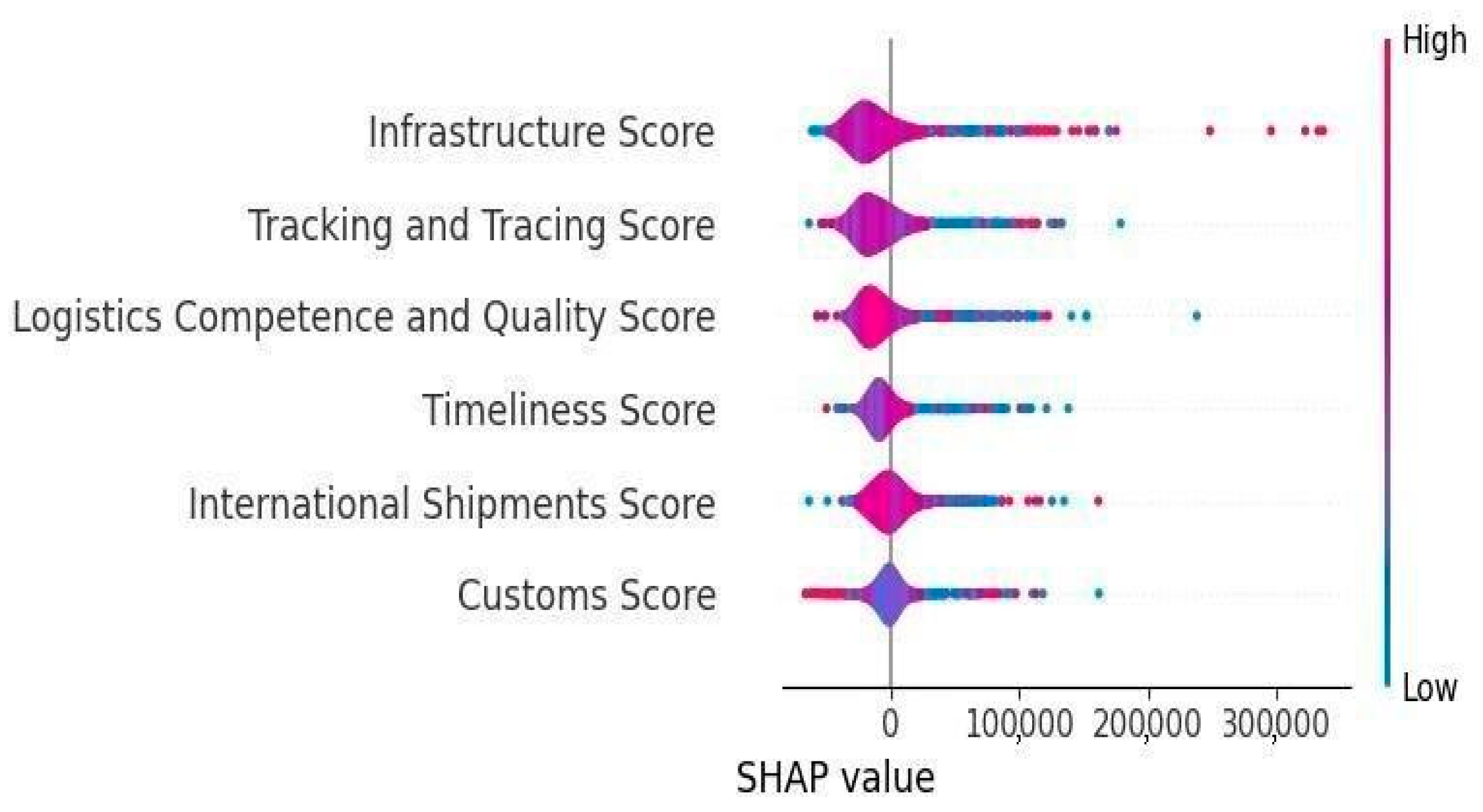
The SHAP scores were computed using the Extra Trees model to estimate the logistic dimensions that best explain environment-related outcomes within the framework. The Extra Trees model is known to provide stable and good performance for all output variables against which it has been tested [
38]. Therefore, this method provides a structural explanation of how the different elements of the logistics system contribute to the model’s overall estimates.
Figure 4 shows that infrastructure quality and tracking and tracing are the two most important factors in predicting total CO
2 emissions, while timeliness and logistics competence are the third and fourth most important factors, respectively. Customs efficiency and international shipping have relatively little influence on the model. This pattern is consistent with prior research identifying physical and digital infrastructure aspects as key factors in determining the extent to which the transportation and energy intensity of logistics systems are shaped [
8].
Additionally, it is important to understand that SHAP values do not establish causal relationships between variables. They simply demonstrate the contribution of each variable to a multivariate prediction model [
38]. Strong correlations between infrastructure and traceability, large-scale production, and/or high transport intensity and/or deep trade integration indicate that these factors align well with the larger economic picture rather than being independent determinants of national emissions.
From a sustainability perspective, this implies caution when interpreting the role of logistics performance in the environmental domain. Logistics performance and digital technology have the potential to affect how transport flows are organized, subsequently affecting the amount of energy used. However, national emissions trends are generally driven by factors beyond logistics systems, such as a country’s energy source mix, industry structure, and environmental regulations. Therefore, it would be best to use a predictor importance analysis to identify structural alignments between logistics performance and sustainability outcomes rather than as a basis for developing direct environmental policies [
8,
37].
4.3. Cluster Analysis: Structural Logistics–Environmental Configurations
A K-means clustering analysis was used to examine heterogeneity across countries regarding the relationship between logistics performance and environmental pressure. The analysis used standardized values for customs efficiency, logistics infrastructure, and total CO
2 emissions. The analysis was performed at the country level so that each country had only one record per variable, with each record representing an aggregation of the respective country’s environmental data. This approach has previously been applied to identify structural heterogeneity in logistics performance across countries using clustering techniques [
4].
Clustering analysis identifies structural configurations in which logistics performance and environmental pressures coexist within different productive, energetic, and institutional environments. Thus, the clusters represent simultaneous patterns and differentiated sustainability trajectories, rather than direct evidence of the effect of logistics performance on CO2 emissions.
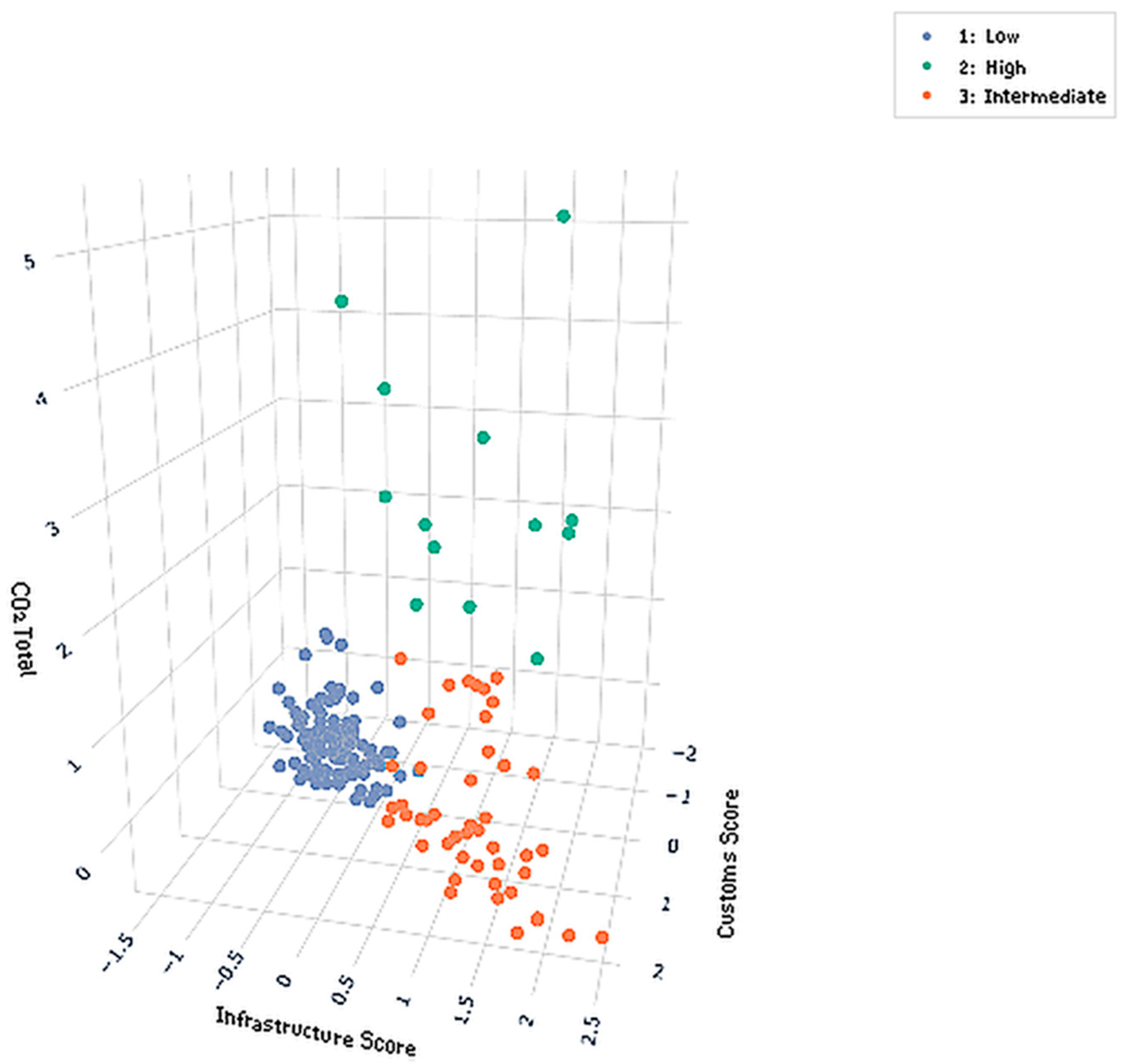
Based on a conceptual criterion for distinguishing contrasting logistics–environment interactions rather than overall performance levels, we determined that there are three clusters. As
Figure 5 shows, there are three clearly identifiable configurations of countries according to the selected variables.
Configuration A (Cluster 1: Low Emissions) includes countries with relatively poor logistics capability and low average CO2 emissions. These countries have limited logistics infrastructure and lower customs efficiency than other countries, as well as lower emissions. They have small-scale production, are less integrated into international trade networks, and do not possess intrinsically sustainable logistics systems. Currently, this group is in the initial phase of logistics development, and avoiding future carbon-intensive development trajectories will be necessary to keep emissions under control.
Configuration B (Cluster 3: Intermediate Emissions, see
Appendix A Table A3) includes countries with intermediate-to-high logistics performance and intermediate-to-high emissions. This configuration presents considerable internal heterogeneity and encompasses countries with logistics modernization and environmental protection measures, as well as countries with fossil fuel-intensive production structures. Thus, the environmental consequences of logistics performance in this configuration depend heavily on energy systems, industrial structures, and regulatory frameworks.
Configuration C (Cluster 2: High Emissions) represents countries with advanced logistics systems and high absolute emissions. High levels of infrastructure and connectivity facilitate large volumes of production, trade, and transportation through logistics performance. However, when integrated into fossil fuel-based energy systems or energy-intensive industries, it generates high aggregate environmental pressure. This shows that advanced logistics performance does not guarantee environmental sustainability without parallel decarbonization processes.
Table 3 reports descriptive statistics for the identified configurations and confirms substantial differences in emission levels and logistics performance across clusters. These differences are driven by absolute emission magnitudes and the interaction between logistics capabilities, economic scale, and broader structural conditions.
Overall, the clustering results support shifting away from a single, homogeneous view of the relationship between logistics and the environment. The results demonstrate the various ways in which logistics and the environment interact and advocate for the use of different analytical methods that consider the context. Additionally, the configurations provide a clearer picture of the strengths and weaknesses of using the Logistics Performance Index (LPI) to measure environmental sustainability at the country level.
The correlation metrics, variance explained, and the remainder of the analysis of each target across all ensemble modeling approaches are shown in
Table A1 and
Figure A1 (
Appendix A). These results confirm the statements made in previous sections regarding the relationship between logistics performance and economic/social versus environmental indicators. The ensemble models were most closely aligned with GDP per capita and the Human Development Index (HDI). The models showed a similar amount of predictive alignment for total CO
2 emissions (Mt) and CO
2 per capita (t/person).
This suggests that environmental outcomes are largely influenced by structural characteristics unrelated to logistics performance, such as energy systems and production structures.
Residual diagnostics in
Appendix A show no evidence of systematic prediction error across models. As expected, larger residuals are found in countries with atypical relationships between their logistics and energy systems. Therefore, these countries would be expected to be outliers in global comparisons. Rather than changing the overall interpretation of the results, these countries would likely highlight the structural nature of the findings.
In summary, the additional information adds transparency and robustness to the analysis without introducing new claims based on the analytical approach. Therefore, this additional information is presented in
Appendix A. The main body of the text focuses on developing the analytical framework, results, and implications rather than providing an exhaustive evaluation of the performance of various modeling approaches.
5. Discussion
The study found a link between logistics performance and economic and social sustainable development. However, the research revealed a stronger correlation between logistics performance and sustainable economic development, such as productivity and competitiveness, than with environmental sustainability, such as reducing carbon dioxide (CO
2) emissions. Therefore, the researchers concluded that, while logistics systems generally enhance productivity and make products and services more accessible and competitive, they are also dependent on broader structural elements, such as energy systems and industrial structure. Ultimately, these elements affect how “green” or environmentally friendly transportation methods become [
8,
16,
36].
Additionally, the researchers concluded that the results of their study were consistent with prior research supporting the notion that a country’s economic development and competitiveness are based on the overall performance of its logistics system [
37]. They also noted that previous studies have shown that logistics performance is connected to several structural elements, such as trade integration, industrial capability, and institutional quality. Together, these elements shape a country’s development trajectory [
39]. Furthermore, the researchers emphasized that logistics performance has multidimensional, context-dependent impacts on sustainability. For example, improving logistics performance could result in more environmentally friendly transportation practices. However, the outcome depends on various structural factors, such as energy systems, technological innovations, and regulatory structures [
33].
Therefore, the researchers concluded that logistics performance is an integral part of a country’s larger development systems. It contributes to economic productivity and social accessibility while interacting with environmental outcomes in a complex, context-dependent manner.
Regarding the lack of alignment between the findings and CO
2-related indicators, the researchers emphasized an important analytical boundary. Specifically, although logistics performance can contribute to lower transportation-related emissions, national emissions are primarily driven by macro-structural determinants. Thus, the authors conclude that the LPI should be viewed as a complementary diagnostic tool in integrated sustainability assessments rather than as a stand-alone environmental indicator [
8,
28,
40].
Collectively, the results support a structural understanding of the relationship between logistics and sustainability, namely, that logistics performance is a structural element of a broader set of development systems but does not independently determine environmental outcomes. Understanding this distinction is critical to avoiding overly simplistic interpretations of predictive associations in cross-national analyses and to contextualizing logistics performance within broader institutional, technological, and energy-based contexts that shape sustainability trajectories.
5.1. Reverse Causality and Methodological Scope
Although the LPI is conceptualized as an explanatory variable in this study, the possibility of reverse causality cannot be eliminated. Higher income levels, improvements in human development, and changes in emission trajectories could enable investment in logistics infrastructure, digitalization, and institutional capacity. Investments in these areas could affect the LPI score. The bidirectional relationship associated with this cross-sectional study based on a single year is one of its main limitations. Therefore, this study does not attempt to identify cause-and-effect relationships. Rather, it demonstrates the predictive value and structural interrelationships of disaggregated LPI variables and sustainability indicators. Consequently, the results should be viewed as empirical evidence of statistical dependence and simultaneous co-alignment, rather than as causal linkages. Exploring dynamic feedback mechanisms requires longitudinal data and a causal inference design, representing important research opportunities for future studies.
5.2. Sustainability Interpretation Under the Triple Bottom Line Framework
The Triple Bottom Line (TBL) is a conceptual framework that helps us understand the impact of logistics performance across three main areas: the environment, society, and the economy [
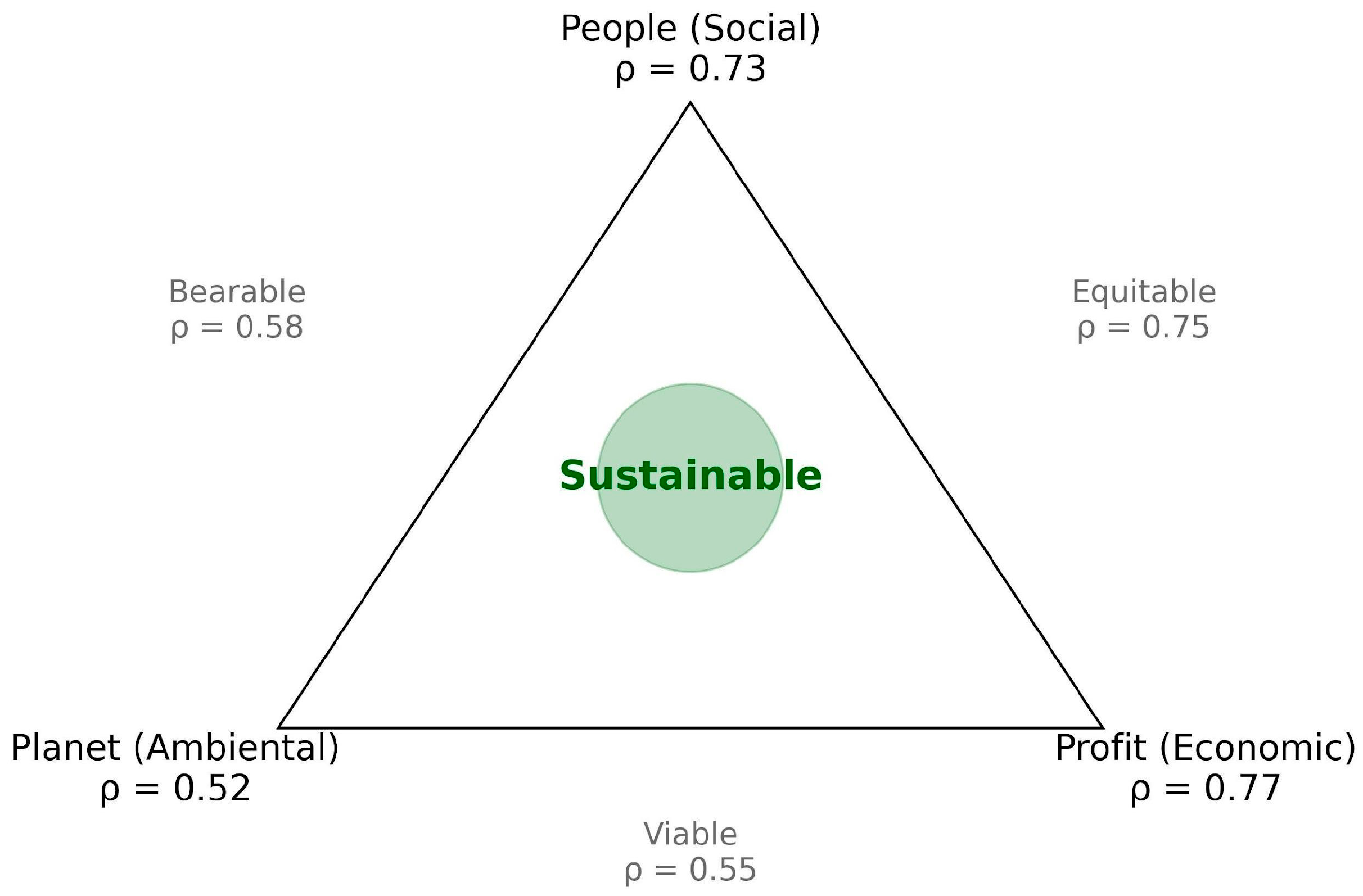
9]. Rather than analyzing these areas individually, the TBL approach shows the opportunities and trade-offs that occur when logistics systems interact with larger development structures. As illustrated in
Figure 6, the LPI is positioned at the intersection of these three pillars. It serves as an integrated, system-level indicator along a nation’s path toward sustainable development, rather than as an individual performance measure.
The Logistics Performance Index (LPI) is examined within the framework of the LPI, and, in particular, the importance of logistics performance in the social-economic nexus is emphasized. The strong structural similarity between the development indicator categories (presented in
Table 4) and the different logistics dimensions (e.g., infrastructure quality, reliability, and traceability) suggests that improvements in these areas would increase competitiveness and access to goods and services. These dual benefits promote inclusive development dynamics, provided there is a suitable institutional and governance environment.
Additionally, the multidimensional aspects of sustainable logistics being studied within the context of the triple bottom line approach confirm this interpretation at the system-wide level. Studies indicate that the environmental performance of logistics systems depends on operational efficiency, as well as the quality of governance, regulatory frameworks, and innovative technologies. These factors provide logistics providers with the opportunity to develop green logistics practices and use low-carbon transportation modes [
22]. Empirical studies have demonstrated that policies, green logistics strategies, and institutional support mechanisms significantly impact companies’ ability to implement and execute green logistics initiatives successfully [
24]. More recently, studies have shown the relationship between logistics capabilities and sustainability assessments using Environmental, Social, and Governance (ESG) indicators. These studies demonstrate that logistics performance interacts simultaneously with environmental, social, and governance dimensions in diverse national settings [
27]. These contributions reinforce the interpretation of logistics systems as integrative components of sustainable development structures rather than isolated operational functions.
Thus, these findings provide additional support for the view that logistics systems are integrated elements of sustainable development structures rather than isolated operational functions. Conversely, the environmental aspect reveals structural tensions, as indicated by the lower degree of alignment: modernizing logistics does not automatically lead to environmental sustainability. In other words, the environmental consequences of logistics depend on the energy systems, production systems, and regulatory frameworks in which logistics networks operate [
8]. Therefore, in transitioning to a low-carbon economy, logistics efficiency could facilitate the transition strategy. However, in high-carbon systems, logistics efficiency could increase production scale and potentially contribute to increased greenhouse gas emissions.
Overall, the TBL approach positions the LPI as an integrative analytical lens for understanding the trade-offs between economic growth, social inclusion, and environmental outcomes. The LPI’s main analytical benefit is identifying synergies or trade-offs between economic growth and social inclusion and illustrating the conditionality and context dependence of environmental outcomes.
This pattern is consistent with the empirical results reported in
Table 4: we observe a higher predictive fit between logistics performance and economic and social indicators than with environmental indicators.
5.3. Cluster Analysis and Logistics–Sustainability Relationship
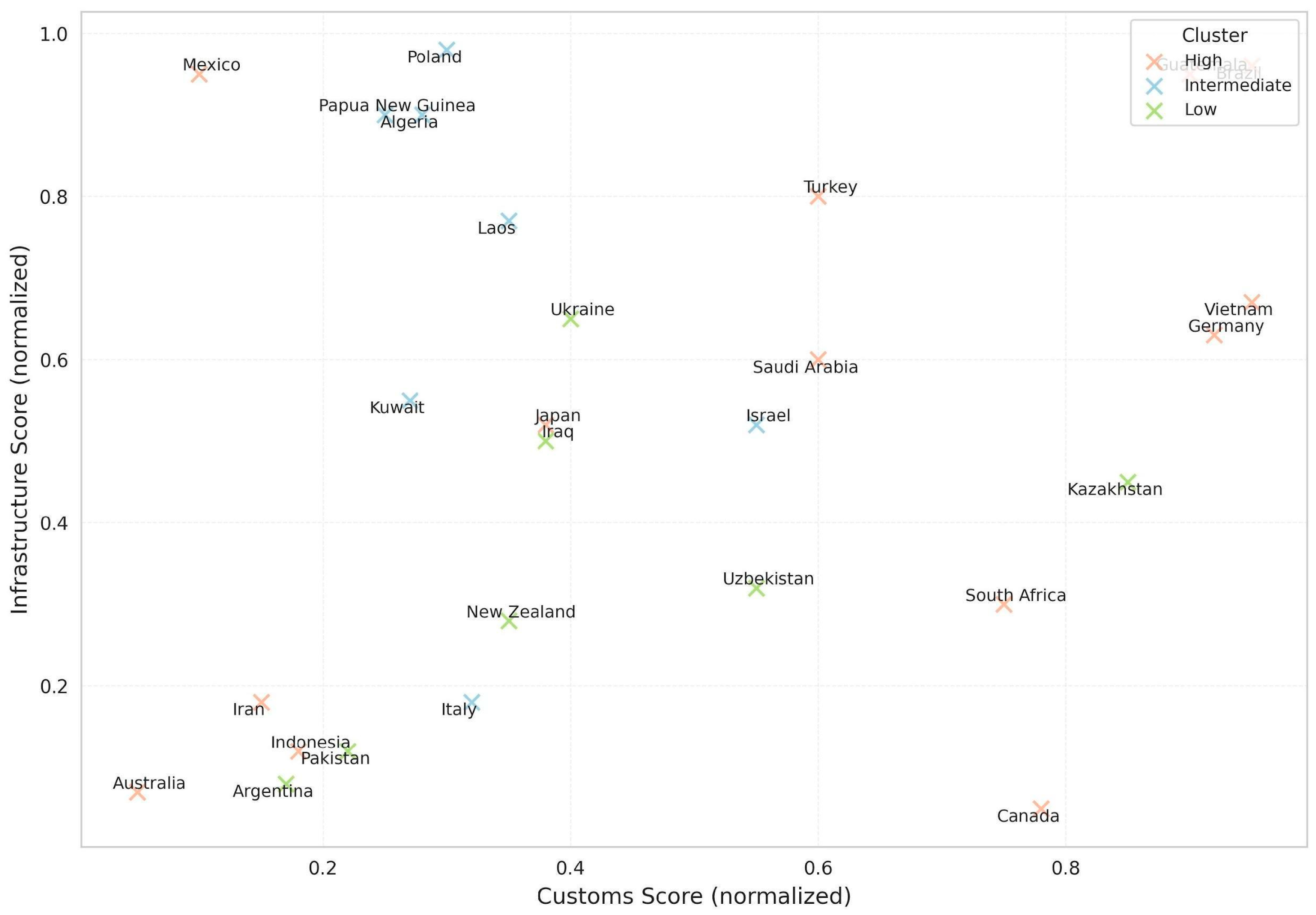
The clustering results reinforce the study’s central structural insight that logistics performance does not exhibit a uniform relationship with environmental sustainability. As
Figure 7 shows and
Table 5 summarizes, similar levels of logistics capability can coexist with markedly different emission trajectories depending on economic scale, energy systems, and institutional conditions [
26,
28]. This heterogeneity challenges the notion that equating logistics modernization with environmental improvement is simple.
These findings align with recent empirical research applying clustering and multivariate techniques to analyze heterogeneity in logistics performance and environmental outcomes. Studies using K-means clustering and mixture models have shown that countries with similar logistics capabilities may have substantially different emission profiles due to variations in economic scale, energy structure, and policy frameworks [
28]. Similarly, recent analyses of global logistics governance reveal that national logistics systems exhibit differentiated structural configurations influenced by institutional capacity, infrastructure quality, and developmental trajectories rather than uniform sustainability patterns [
30]. In this context, the clustering approach adopted in this study helps identify heterogeneous logistics–environment configurations and allows for a more nuanced interpretation of how logistics capabilities interact with sustainability outcomes across countries.
From a structural perspective, logistics systems reinforce existing production and energy practices. In carbon-intensive contexts, advanced logistics infrastructure can enable increased production and trade, thereby raising aggregate emissions. Conversely, in smaller economies, weak logistics capabilities may coincide with low emission levels, reflecting limited productive activity rather than environmentally efficient logistics systems. Thus, the environmental implications of logistics performance depend on broader structural conditions rather than being intrinsic to logistics development itself.
From a policy standpoint, these differentiated configurations highlight the need for context-sensitive strategies. High-capability logistics systems require parallel decarbonization policies to prevent dependence on fossil fuels from increasing. Transitional contexts provide opportunities to align logistics modernization with low-carbon development pathways before carbon lock-in occurs. Meanwhile, lower-capability systems should incorporate sustainability standards early in infrastructure expansion processes. Clustering analysis complements dimension analysis based on SHAP by showing that infrastructure quality, tracking and tracing, and timeliness operate within distinct national sustainability trajectories rather than generating homogeneous environmental outcomes. This finding underscores the importance of aligning logistics policy with broader development pathways and the Sustainable Development Goals (SDGs), particularly SDGs 8, 9, 11, and 13.
Specifically, configurations characterized by high logistics performance combined with high emission levels highlight the urgency of aligning logistics modernization with energy transition strategies. In these contexts, advanced logistics infrastructure and high connectivity facilitate large volumes of production, trade, and transport activity. However, in fossil-fuel-intensive economies, this structural capacity can exacerbate carbon-intensive supply chains.
Consequently, countries belonging to this configuration require targeted decarbonization strategies within the logistics sector. These strategies should include electrifying freight transport, integrating renewable energy into logistics infrastructure, and expanding low-carbon multimodal transport systems. These measures align with the objectives of SDGs 8 (sustainable economic growth), 9 (resilient infrastructure), 11 (sustainable cities and communities), and 13 (climate action). Recent research on logistics decarbonization emphasizes the importance of combining technological innovation with coordinated policy frameworks and supply chain collaboration to effectively reduce freight-related emissions and prevent unintended socioenvironmental consequences [
35].
In this context, logistics policy should extend beyond improving operational efficiency or connectivity and incorporate energy transition mechanisms that ensure logistics modernization contributes to climate mitigation rather than reinforcing carbon-intensive development pathways. This interpretation highlights the importance of integrating logistics modernization with broader energy transition strategies to ensure improvements in logistics capability positively impact sustainable development.
5.4. Strategic Applications of the Logistics Performance Index
This subsection situates the Logistics Performance Index (LPI) within the Planet–People–Profit (PPP) framework, translating the structural insights of the analysis into policy-relevant considerations. As summarized in
Table 6 and illustrated in
Figure 6, the LPI can be interpreted as a system-level diagnostic tool that identifies structural constraints and strategic leverage points across sustainability dimensions, rather than merely a benchmarking instrument for trade competitiveness [
3,
5].
From an environmental perspective, challenges related to logistics, such as emission intensity, dependence on fossil energy, infrastructure gaps, and network vulnerability, define the structural conditions under which sustainability policies must operate. Action variables in
Table 6, such as multimodal transport shifts, green electrification, digital monitoring systems, and energy efficiency standards, show that logistics policies contribute to decarbonization when incorporated into broader energy and industrial transition strategies. Thus, logistics modernization plays a complementary role in environmental sustainability rather than functioning as an autonomous driver of emission reduction [
19,
31,
38].
From a social standpoint, logistics systems influence territorial cohesion, human capital formation, and institutional coordination through mechanisms of reliability, accessibility, and professionalization [
17,
32,
39]. The proposed strategic actions, such as sustainable technical training, inclusive governance frameworks, and university–industry collaboration, emphasize that logistics development can strengthen social inclusion when aligned with institutional capacity-building processes.
Economically, logistics performance remains closely linked to competitiveness, digitalization, and integration into global value chains [
16,
24]. Addressing infrastructure investment gaps, technological lag, and unsustainable trade patterns requires modernization strategies that incorporate sustainability criteria into logistics planning and trade policy. Measures such as green trade incentives, circular business models, and composite indicator integration demonstrate how economic performance and sustainability objectives can be pursued jointly within coordinated development strategies.
Table 6 organizes these elements into structural challenge variables and their corresponding strategic responses. This framework does not imply direct causal prescriptions derived from predictive models. Rather, it translates structural associations into differentiated policy orientations consistent with existing evidence [
3,
5,
13]. Interpreted in this manner, the LPI supports logistics strategies sensitive to context that align with the Sustainable Development Goals (SDGs), especially SDGs 8, 9, 11, 13, and 17.
5.5. Future Research Directions
This study redefines the Logistics Performance Index (LPI) as a multidimensional analytical framework for examining sustainability rather than as a descriptive benchmarking tool. This new perspective opens avenues for theoretical and empirical research on how logistics systems interact with economic, social, and environmental structures under different development conditions. Linking disaggregated LPI dimensions to sustainability indicators will enable future studies to provide context-sensitive interpretations of logistics–sustainability dynamics.
Integrating predictive analytics, explainable artificial intelligence, and structural clustering into the methodology lays the groundwork for expanding LPI-based research. As summarized in
Table 7, future work may benefit from hybrid analytical frameworks that combine predictive modeling with spatial, multivariate, and optimization-based approaches. These frameworks would enable scenario simulation, policy evaluation, and exploration of nonlinear trade-offs across the Planet–People–Profit (PPP) dimensions.
Another important direction is to extend the analysis to dynamic settings. Longitudinal datasets, panel estimations, and time-series approaches would enable examination of temporal stability, adaptive responses to policy interventions, and structural adjustments related to technological transitions and decarbonization strategies. Dynamic modeling could also improve our understanding of feedback mechanisms within national development systems.
Future research should expand the environmental scope of logistics sustainability analysis to include variables related to energy structure, industrial composition, trade specialization, and green innovation. This expansion would allow for clearer differentiation between efficiency-driven improvements and structural emission effects associated with production regimes.
Finally, developing composite sustainability metrics that integrate the Logistics Performance Index (LPI) with CO
2 emissions, Human Development Index (HDI), and gross domestic product (GDP) per capita is a promising way to operationalize concepts such as green efficiency, logistics equity, and resilient growth. As outlined in
Table 7, such multidimensional indicators could support monitoring policies aligned with the Sustainable Development Goals by providing coherent, interpretable measures of sustainable logistics performance in diverse contexts.
6. Conclusions
This study shows that the Logistics Performance Index (LPI) can serve as a benchmarking tool and a multidimensional analytical framework to examine sustainability-oriented development trajectories. Disaggregating the index’s core dimensions reveals that logistics capabilities are structurally embedded in economic and social systems, while their environmental implications depend on broader energy and production regimes. This perspective reframes the LPI as an interpretive, system-level lens for understanding heterogeneous sustainability pathways across countries rather than as a purely descriptive indicator.
The integrated analytical design strengthens the robustness of these findings. The convergence observed across linear and nonlinear specifications supports the interpretation that the identified relationships reflect stable structural alignments rather than artifacts specific to the model. Combining interpretable machine learning and clustering identifies dimension-specific relevance and cross-country heterogeneity, reinforcing the study’s structural, not causal, interpretation.
From a policy standpoint, the results underscore the strong link between logistics modernization—particularly in terms of infrastructure quality, digital traceability, and operational reliability—and inclusive economic growth and social development. However, environmental sustainability depends on complementary structural transformations in energy systems and industrial composition. Therefore, logistics policy should be incorporated into integrated sustainability strategies rather than being treated as an independent instrument for reducing emissions. This framework supports differentiated, evidence-based interventions aligned with the Sustainable Development Goals (SDGs), particularly SDGs 8, 9, 11, 13, and 17.
Several limitations should be acknowledged. First, the cross-sectional design limits dynamic analysis and precludes causal inference. Additionally, environmental outcomes are influenced by contextual factors beyond logistics performance. Future research could expand upon this framework by conducting longitudinal analyses, developing hybrid prediction–optimization models, and creating composite sustainability indicators that integrate the LPI with CO2 emissions, HDI, and GDP. These extensions would improve the analytical depth and policy applicability of logistics–sustainability research.