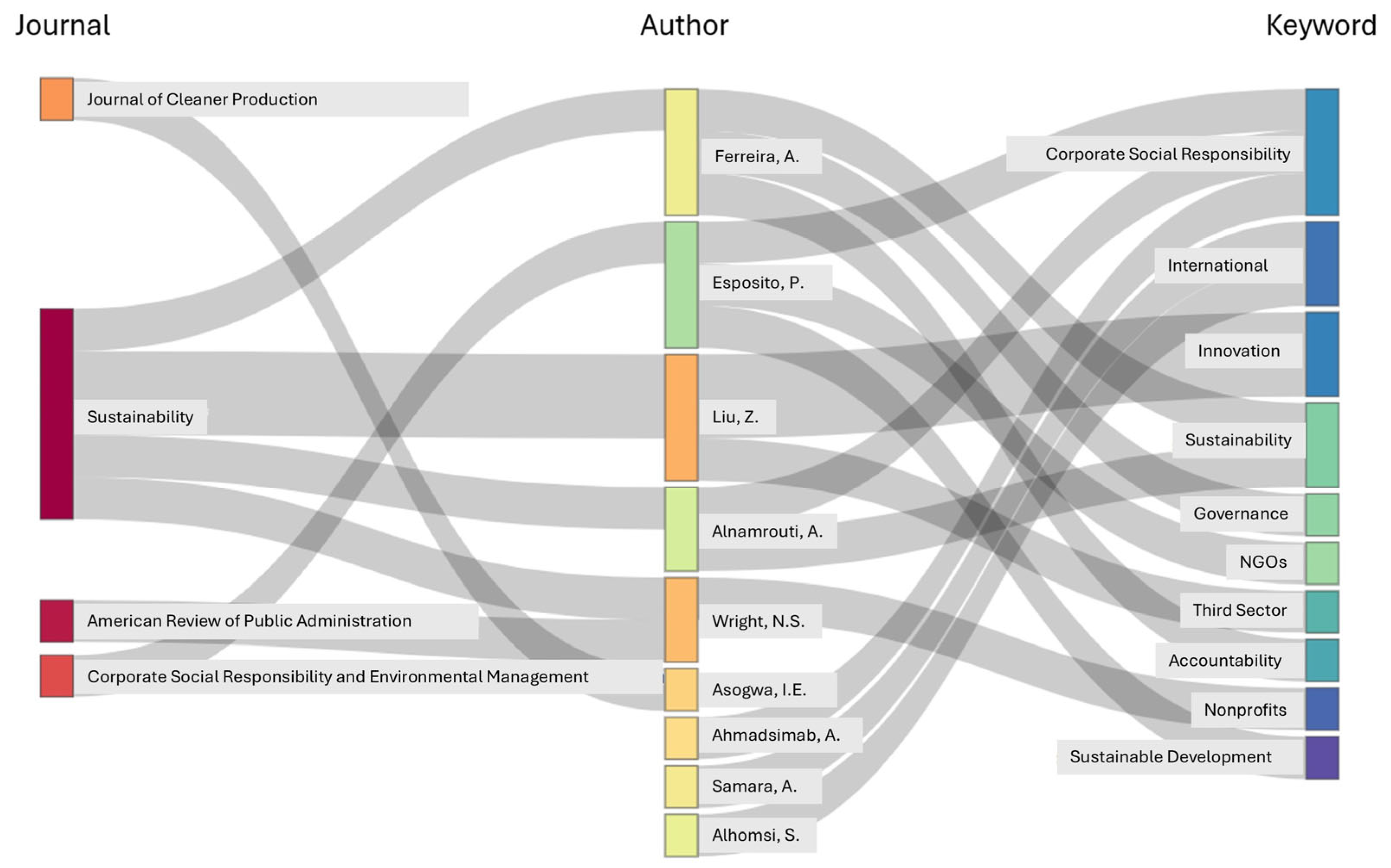
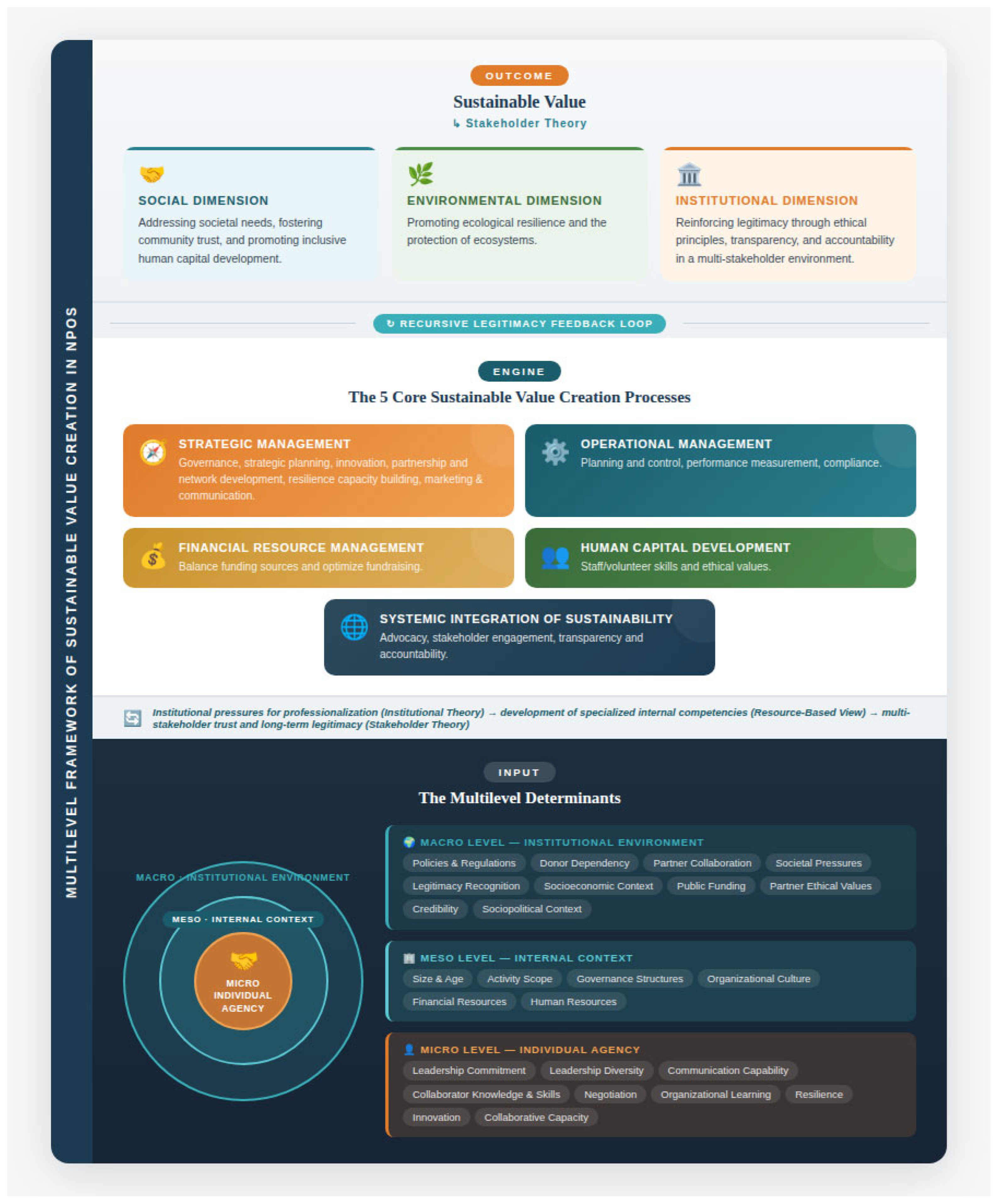
Sustainable Value Creation in Nonprofit Organizations: Processes, Determinants, and Strategic Dimensions

 ,
,  ,
,  , , and
Abstract
1. Introduction
- -
- Environmental principles prioritize ecological resilience and the protection of ecosystems;
- -
- Social principles focus on addressing societal needs, fostering community trust, and promoting inclusive human capital development;
- -
- Governance principles ensure ethical oversight, transparency, and accountability to a wide network of stakeholders.
- RQ1: Which research topics are emphasized in the recent literature on sustainability management in NPOs?
- RQ2: What are the main sustainable value creation processes in NPOs?
- RQ3: Which determinants influence sustainable value creation in NPOs?
- RQ4: Which future research pathways can be identified in the field of sustainability management in NPOs?
2. Methodology
2.1. Systematic Literature Review
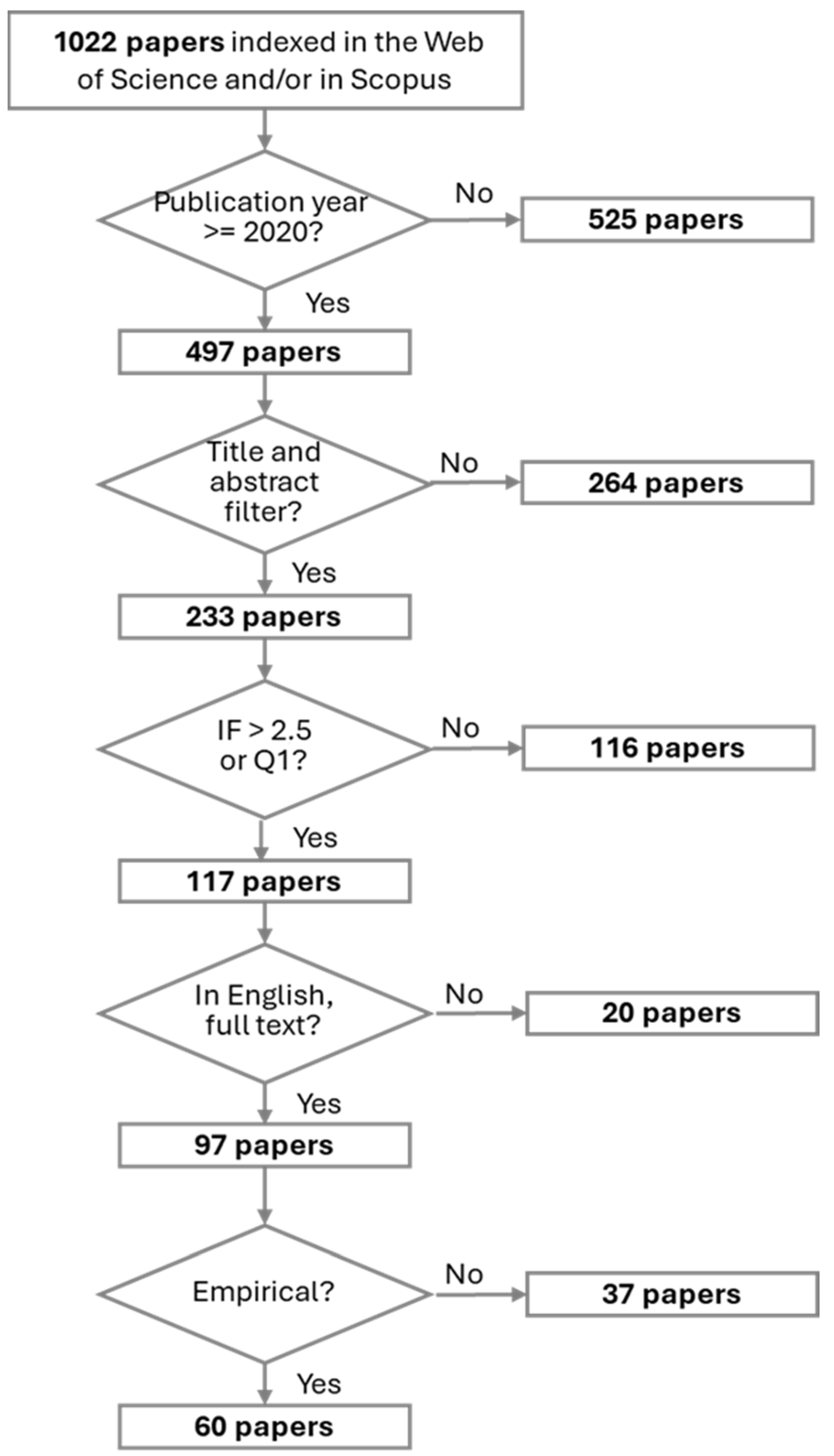
2.2. Interviews with Representatives of the NPO Sector
3. Results
3.1. Thematic Areas of Research Focusing on Sustainability Management in NPOs
3.2. Literature Review Focusing on Sustainable Value Creation in NPOs
3.2.1. Strategic Management
3.2.2. Operational Management
3.2.3. Financial Resources Management
3.2.4. Human Capital Development
3.2.5. Systemic Integration of Sustainability
3.2.6. Determinants for Sustainable Value Creation in NPOs
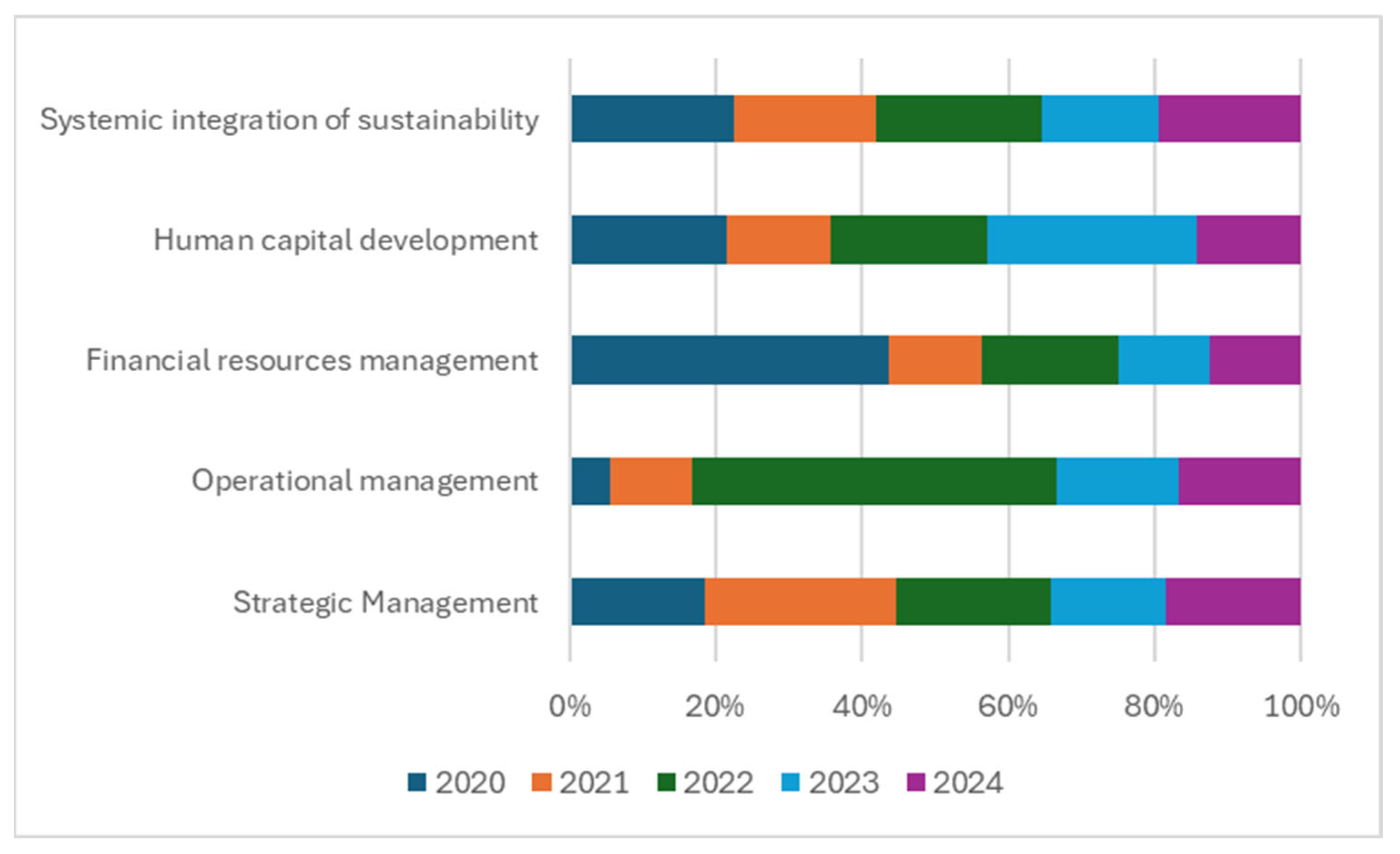
3.3. Temporal Analysis of the Research Focusing on Sustainable Value Creation Processes in NPOs
3.4. Interviews with NPOs’ Representatives
- Marketing and communication as a sub-process of strategic management: “Fundraising processes require investment in marketing and public relations.” (NPO1); “Marketing and communication processes should be considered in the scope of fundraising, not only regarding financial funds, but also for the engagement with communities, partners, volunteers, and other relevant stakeholders for the NPO to have resources.” (NPO4).
- Fundraising as a sub-process of financial resources management: “Fundraising is a process that is fundamental for NPOs, without it we do not live.” (NPO4); “We have adequate processes for financial resources management, the problem is the reduced budget.” (NPO7); “The problem is not on financial management, we manage our resources effectively, the problem is access to sufficient funds.” (NPO8).
- Credibility as a determinant associated with the stakeholder society: “Credibility is currently a challenge for NPOs, since society is tending to have negative perceptions on the importance of the work being developed, and on the ways that resources are being spent. We are facing a crisis in the availability of volunteers.” (NPO4).
- Sociopolitical context as a determinant is also associated with the stakeholder society: “Political forces and politized social groups impact humanitarian action and ESG-related activities.” (NPO8).
- Ethical values as a determinant associated with the stakeholder partners: “Ethics can be challenging because of corruption and embezzlement in partnerships” (NPO5).
- Public funding as a determinant associated with the stakeholder Government: “Many NPOs are considerably dependent on public funding, so this is an important determinant of success” (NPO4).
- Sub-process performance measurement, included in operational management: “NPO’s products or services should be assessed considering the production process, monitoring the input and output of resources and energy” (NPO2); “NPOs should make the global balance of their environmental and social impacts, assuring that environmental costs are overcome by positive social impacts” (NPO3).
- Process human capital development: “NPOs should consider how they are improving the capacity of people to act more sustainably” (NPO3).
- Sub-process planning and control, included in operational management: “When planning community interventions, it is very important to promote the community ownership of the project, thus ensuring its continuity after the NPO’s intervention” (NPO6).
4. Discussion
5. A Research Agenda Focusing on Sustainability Management in NPOs
6. Conclusions
Supplementary Materials
Author Contributions
Funding
Institutional Review Board Statement
Informed Consent Statement
Data Availability Statement
Acknowledgments
Conflicts of Interest
References
- Barbosa, A.d.S.; Crispim, M.C.; da Silva, L.B.; da Silva, J.M.N.; Barbosa, A.M.; Morioka, S.N. How can organizations measure the integration of environmental, social, and governance (ESG) criteria? Validation of an instrument using item response theory to capture workers’ perception. Bus. Strateg. Environ. 2024, 33, 3607–3634. [Google Scholar] [CrossRef] [Scilit]
- Li, T.-T.; Wang, K.; Sueyoshi, T.; Wang, D.D. ESG: Research Progress and Future Prospects. Sustainability 2021, 13, 11663. [Google Scholar] [CrossRef] [Scilit]
- Pratici, L.; Salvatore, F.P.; Fanelli, S.; Zangrandi, A.; Milone, M. Using ESG paradigm as a basis for social reporting in nonprofit organizations: Evidence from cases in healthcare. Manag. Decis. 2024, 63, 586–609. [Google Scholar] [CrossRef] [Scilit]
- Plaisance, G. Social and environmental commitments in the voluntary sector: A study of organizational social responsibility in French nonprofit organizations. Soc. Bus. Rev. 2025, 21, 94–108. [Google Scholar] [CrossRef] [Scilit]
- Albert, M.; Bauche, X.; Closmann, L.; Eichholz, T.; Preis, K. Sustainability management in non-governmental organisations: Development of a maturity model. Int. J. Innov. Sustain. Dev. 2022, 16, 425–460. [Google Scholar] [CrossRef]
- Alnamrouti, A.; Rjoub, H.; Ozgit, H. Do Strategic Human Resources and Artificial Intelligence Help to Make Organisations More Sustainable? Evidence from Non-Governmental Organisations. Sustainability 2022, 14, 7327. [Google Scholar] [CrossRef] [Scilit]
- Freeman, R. Strategic Management: A Stakeholder Approach; Pitman: Boston, UK, 1984. [Google Scholar]
- Friedman, A.L.; Miles, S. Stakeolders: Theory and Practice; Oxford University Press: Oxford, UK, 2006. [Google Scholar]
- Barney, J. Firm resources and sustained competitive advantage. J. Manag. 1991, 17, 99–120. [Google Scholar] [CrossRef] [Scilit]
- Freeman, R.E.; Dmytriyev, S.D.; Phillips, R.A. Stakeholder Theory and the Resource-Based View of the Firm. J. Manag. 2021, 47, 1757–1770. [Google Scholar] [CrossRef] [Scilit]
- DiMaggio, P.J.; Powell, W.W. The iron cage revisited: Institutional isomorphis and collective rationality in organizational fields. Am. Sociol. Rev. 1983, 48, 147–160. [Google Scholar]
- Singh, N.; Mthuli, S.A. The Big Picture of Non-Profit Organisational Sustainability: A Qualitative System Dynamics Approach. Syst. Pract. Action Res. 2021, 34, 229–249. [Google Scholar] [CrossRef] [Scilit]
- Clifton, N.; Kyaw, K.S.; Liu, Z.; Walpole, G. An Empirical Study on Public Sector versus Third Sector Circular Economy-Oriented Innovations. Sustainability 2024, 16, 1650. [Google Scholar] [CrossRef] [Scilit]
- Iwu, C.G.; Kapondoro, L.; Twum-Darko, M.; Tengeh, R. Determinants of sustainability and organisational effectiveness in non-profit organisations. Sustainability 2015, 7, 9560–9573. [Google Scholar] [CrossRef] [Scilit]
- Landoni, P.; Trabucchi, D. Non-profit and hybrid organizations as multi-sided platforms: Insights from the analysis of sustainability models. Eur. J. Innov. Manag. 2024, 27, 384–407. [Google Scholar] [CrossRef] [Scilit]
- Rahman, M.; Islam, F.; Hossain, E.; Rehman, M.Z.; Siddik, A.B. Environmental, social, and governance-driven sustainable tourism management in small and medium enterprises. Int. J. Sustain. Dev. World Ecol. 2025, 32, 988–1008. [Google Scholar] [CrossRef] [Scilit]
- Richardson, S.; Kelly, S.J.; Gillespie, N. How can nonprofit boards innovate for growth? An integrative-systematic review. Nonprofit Manag. Leadersh. 2023, 34, 35–58. [Google Scholar] [CrossRef] [Scilit]
- Buonomo, I.; Benevene, P.; Barbieri, B.; Cortini, M. Intangible Assets and Performance in Nonprofit Organizations:A Systematic Literature Review. Front. Psychol. 2020, 11, 729. [Google Scholar] [CrossRef] [Scilit]
- Nordin, N.; Khatibi, A.; Azam, S.M.F. Nonprofit capacity and social performance: Mapping the field and future directions. Manag. Rev. Q. 2024, 74, 171–225. [Google Scholar] [CrossRef] [Scilit]
- Moher, D.; Liberati, A.; Tetzlaff, J.; Altman, D.G.; Antes, G.; Atkins, D.; Barbour, V.; Barrowman, N.; Berlin, J.A.; Clark, J.; et al. Preferred reporting items for systematic reviews and meta-analyses: The PRISMA statement. PLoS Med. 2009, 6, e1000097. [Google Scholar] [CrossRef] [Scilit]
- Tranfield, D.; Denyer, D.; Smart, P. Towards a Methodology for Developing Evidence-Informed Management Knowledge by Means of Systematic Review. Br. J. Manag. 2003, 14, 207–222. [Google Scholar] [CrossRef] [Scilit]
- Hiebl, M.R.W. Sample Selection in Systematic Literature Reviews of Management Research. Organ. Res. Methods 2021, 26, 229–261. [Google Scholar] [CrossRef] [Scilit]
- Aria, M.; Cuccurullo, C. bibliometrix: An R-tool for comprehensive science mapping analysis. J. Informetr. 2017, 11, 959–975. [Google Scholar] [CrossRef] [Scilit]
- Elo, S.; Kyngäs, H. The qualitative content analysis process. J. Adv. Nurs. 2008, 62, 107–115. [Google Scholar] [CrossRef] [Scilit]
- Thomas, J.; Harden, A. Methods for the thematic synthesis of qualitative research in systematic reviews. BMC Med. Res. Methodol. 2008, 8, 45. [Google Scholar] [CrossRef] [Scilit] [PubMed]
- Patton, M.Q. Enhancing the quality and credibility of qualitative analysis. Health Serv. Res. 1999, 34, 1189–1208. [Google Scholar] [PubMed]
- Page, M.J.; McKenzie, J.E.; Bossuyt, P.M.; Boutron, I.; Hoffmann, T.C.; Mulrow, C.D.; Shamseer, L.; Tetzlaff, J.M.; Akl, E.A.; Brennan, S.E.; et al. The PRISMA 2020 statement: An updated guideline for reporting systematic reviews. Int. J. Surg. 2021, 88, 105906. [Google Scholar] [CrossRef]
- Moser, A.; Korstjens, I. Series: Practical guidance to qualitative research. Part 3: Sampling, data collection and analysis. Eur. J. Gen. Pract. 2018, 24, 9–18. [Google Scholar] [CrossRef] [Scilit]
- Khan, N.U.; Wei, H.; Yue, G.; Nazir, N.; Zainol, N.R. Exploring Themes of Sustainable Practices in Manufacturing Industry: Using Thematic Networks Approach. Sustainability 2021, 13, 10288. [Google Scholar] [CrossRef] [Scilit]
- Guest, G.; Bunce, A.; Johnson, L. How Many Interviews Are Enough?: An Experiment with Data Saturation and Variability. Field Methods 2006, 18, 59–82. [Google Scholar] [CrossRef] [Scilit]
- Snowden, A.; Martin, C.R. Concurrent analysis: Towards generalisable qualitative research. J. Clin. Nurs. 2011, 20, 2868–2877. [Google Scholar] [CrossRef] [Scilit]
- Kassem, H.S.; Aljuaid, M.; Alotaibi, B.A.; Ghozy, R. Mapping and Analysis of Sustainability-Oriented Partnerships in Non-Profit Organizations: The Case of Saudi Arabia. Sustainability 2020, 12, 7178. [Google Scholar] [CrossRef] [Scilit]
- Shin, E.J.; Kang, H.G.; Bae, K. A study on the sustainable development of NPOs with blockchain technology. Sustainability 2020, 12, 6158. [Google Scholar] [CrossRef] [Scilit]
- Diaz, D.A.; Rees, C.J. Checks and balances? Leadership configurations and governance practices of NGOs in Chile. Empl. Relat. 2020, 42, 1159–1177. [Google Scholar] [CrossRef] [Scilit]
- Wright, N.S.; Reames, T.G. Unraveling the links between organizational factors and perceptions of community sustainability performance: An empirical investigation of community-based nongovernmental organizations. Sustainability 2020, 12, 4986. [Google Scholar] [CrossRef] [Scilit]
- Valero-Amaro, V.; Galera-Casquet, C.; Barroso-Méndez, M.J. Innovation Orientation in the Non-profit Sector: Analysis of Its Impact on the Performance of Spanish Non-governmental Development Organizations. Front. Psychol. 2021, 12, 797621. [Google Scholar] [CrossRef] [Scilit] [PubMed]
- Díaz-Perdomo, Y.; Álvarez-González, L.I.; Sanzo-Pérez, M.J. A Way to Boost the Impact of Business on 2030 United Nations Sustainable Development Goals: Co-creation With Non-profits for Social Innovation. Front. Psychol. 2021, 12, 719907. [Google Scholar] [CrossRef] [Scilit]
- Park, Y.J.; Matkin, D.S.T. The Demise of the Overhead Myth: Administrative Capacity and Financial Sustainability in Nonprofit Nursing Homes. Public Adm. Rev. 2021, 81, 543–557. [Google Scholar] [CrossRef] [Scilit]
- Saraite-Sariene, L.; Galán-Valdivieso, F.; Alonso-Cañadas, J.; García-Tabuyo, M. The role of women’s leadership in environmental NGOs’ online accountability. Online Inf. Rev. 2022, 46, 660–677. [Google Scholar] [CrossRef] [Scilit]
- Slomski, V.G.; de Britto, A.A.; Slomski, V.; de Vasconcelos, A.L.F.; Lugoboni, L.F.; Imoniana, J.O. Compliance of Management Practices Instituted in the Third Sector Based on Governance Guidelines Established by Brazilian Organizations. Sustainability 2022, 14, 5366. [Google Scholar] [CrossRef] [Scilit]
- Vigoroso, L.; Sorrenti, R.; Cavallo, E.; Caffaro, F. Non-Profit Organizations as Facilitators of the Sustainable Social Innovation of Firms: An Italian Case Study. Sustainability 2023, 15, 8058. [Google Scholar] [CrossRef] [Scilit]
- Pesqueira, L.; Glasbergen, P.; Leroy, P. Framing contests in global NGO networks: How controversies enable and challenge collaboration and action. Nonprofit Manag. Leadersh. 2020, 30, 423–444. [Google Scholar] [CrossRef] [Scilit]
- Dellmuth, L.M.; Petersson, M.T.; Dunn, D.C.; Boustany, A.; Halpin, P.N. Empowering NGOs? Long-term effects of ecological and institutional change on regional fisheries management organizations. Glob. Environ. Change 2020, 65, 102197. [Google Scholar] [CrossRef] [Scilit]
- Kassem, H.S.; Bagadeem, S.; Alotaibi, B.A.; Aljuaid, M. Are partnerships in nonprofit organizations being governed for sustainability? A partnering life cycle assessment. PLoS ONE 2021, 16, e0249228. [Google Scholar] [CrossRef] [Scilit] [PubMed]
- Yin, J. How multinational corporations and nonprofits collaborate for sustainability: Assessing social partnerships from China. Sustain. Account. Manag. Policy J. 2021, 12, 1289–1311. [Google Scholar] [CrossRef] [Scilit]
- Ahmadsimab, A.; Chowdhury, I. Managing Tensions and Divergent Institutional Logics in Firm–NPO Partnerships. J. Bus. Ethics 2021, 168, 651–670. [Google Scholar] [CrossRef] [Scilit]
- Wolf, P.; Harboe, J.; Sudbrack Rothbarth, C.; Gaudenz, U.; Arsan, L.; Obrist, C.; van Leeuwen, M. Non-governmental organisations and universities as transition intermediaries in sustainability transformations building on grassroots initiatives. Creat. Innov. Manag. 2021, 30, 596–618. [Google Scholar] [CrossRef] [Scilit]
- Al-Tabbaa, O.; Lopez, C.; Konara, P.; Leach, D. Nonprofit organizations and social-alliance portfolio size: Evidence from website content analysis. Ind. Mark. Manag. 2021, 93, 147–160. [Google Scholar] [CrossRef] [Scilit]
- Fontana, E.; Pisalyaput, N. Understanding the importance of farmer–NGO collaboration for sustainability and business strategy: Evidence from the coffee supply chain. Bus. Strateg. Environ. 2023, 32, 2715–2735. [Google Scholar] [CrossRef] [Scilit]
- Moldavanova, A.V.; Wright, N.S. How Nonprofit Arts Organizations Sustain Communities: Examining the Relationship Between Organizational Strategy and Engagement in Community Sustainability. Am. Rev. Public Adm. 2020, 50, 244–259. [Google Scholar] [CrossRef] [Scilit]
- Deng, Y.; O’Brien, K.J. Value clashes, power competition and community trust: Why an NGO’s earthquake recovery program faltered in rural China. J. Peasant Stud. 2021, 48, 1187–1206. [Google Scholar] [CrossRef] [Scilit]
- Ma, Z.; Li, C.; Xue, Y.; Nduneseokwu, C.K.; Wang, X.; Harder, M.K. From pioneer to promotion: How can residential waste diversion non-profit organizations (NPOs) best co-evolve in modern China? Environ. Chall. 2021, 3, 100055. [Google Scholar] [CrossRef] [Scilit]
- Zikargae, M.H.; Woldearegay, A.G.; Skjerdal, T. Assessing the roles of stakeholders in community projects on environmental security and livelihood of impoverished rural society: A nongovernmental organization implementation strategy in focus. Heliyon 2022, 8, e10987. [Google Scholar] [CrossRef] [Scilit] [PubMed]
- Cuckston, T. Accounts of NGO performance as calculative spaces: Wild Animals, wildlife restoration and strategic agency. Crit. Perspect. Account. 2022, 84, 102374. [Google Scholar] [CrossRef] [Scilit]
- Cabrera-Luján, S.L.; Sánchez-Lima, D.J.; Guevara-Flores, S.A.; Millones-Liza, D.Y.; García-Salirrosas, E.E.; Villar-Guevara, M. Impact of Corporate Social Responsibility, Business Ethics and Corporate Reputation on the Retention of Users of Third-Sector Institutions. Sustainability 2023, 15, 1781. [Google Scholar] [CrossRef] [Scilit]
- Zikargae, M.H.; Woldaregay, A.G.; Skjerdal, T.S. A critical analysis of a local non-governmental organization community-based environment and forest development programs and its implication for sustainable development: Evidences of participatory environmental communication in Ethiopia. Afr. Identities 2023, 21, 726–742. [Google Scholar] [CrossRef] [Scilit]
- Brimhall, K.C. Are We Innovative? Increasing Perceptions of Nonprofit Innovation Through Leadership, Inclusion, and Commitment. Rev. Public Pers. Adm. 2021, 41, 3–24. [Google Scholar] [CrossRef] [Scilit]
- Yoon, C. Factors Affecting the Adoption of Digital Marketing in Non-Profit Organizations: An Empirical Study. Adm. Sci. 2024, 14, 10. [Google Scholar] [CrossRef] [Scilit]
- Shoshany-Tavory, S.; Trop, T.; Shiftan, Y. A Cross-Cultural Study of Nonprofit Self-Organized Ridesharing; Springer: New York, NY, USA, 2024; Volume 51. [Google Scholar]
- Chaves-Avila, R.; Gallego-Bono, J.R. Transformative Policies for the Social and Solidarity Economy: The New Generation of Public Policies Fostering the Social Economy in Order to Achieve Sustainable Development Goals. The European and Spanish Cases. Sustainability 2020, 12, 4059. [Google Scholar] [CrossRef] [Scilit]
- Khan, N.A.; Choudhury, J.K.; Rashid, A.Z.M.M.; Siddique, M.R.H.; Sinha, K. Co-Management Practices by Non-Government Organizations (NGOs) in Selected Coastal Forest Zones of Bangladesh: A Focus on Sustainability. Sustainability 2022, 14, 14885. [Google Scholar] [CrossRef] [Scilit]
- Liu, Z.; Jia, H. What Drives the Development and Sustainable Growth of Cultural Nonprofits—Chinese Province-Level Evidence. Sustainability 2022, 14, 5139. [Google Scholar] [CrossRef] [Scilit]
- Buijs, A.E.; de Koning, S.; Mattijssen, T.J.M.; Smeding, I.W.; Smits, M.J.; Steins, N.A. Civil society for sustainable change: Strategies of NGOs and active citizens to contribute to sustainability transitions. J. Environ. Plan. Manag. 2024, 67, 2863–2884. [Google Scholar] [CrossRef] [Scilit]
- Ferreira, A.; Santos, C.; Inácio, H.; Costa, A.J.; Bandeira, A.M.; Tomé, B.; Joaquim, C.; Góis, C.; Curi, D.; Meira, D.; et al. Accountability in the Social Economy: The Case of Private Social Solidarity Institutions. Sustainability 2022, 14, 1147. [Google Scholar] [CrossRef] [Scilit]
- Esposito, P.; Antonucci, G. NGOs, corporate social responsibility and sustainable development trajectories in a new reformative spectrum: ‘New wine in old bottles or old wine in new bottles? Corp. Soc. Responsib. Environ. Manag. 2022, 29, 609–619. [Google Scholar] [CrossRef] [Scilit]
- Asogwa, I.E. Uptake of sustainability reporting adoption by non-governmental organisations: An agenda for policy and practice. J. Clean. Prod. 2023, 388, 135842. [Google Scholar] [CrossRef] [Scilit]
- Bauer, P.; Greiling, D. Greening Austrian social service and healthcare non-profits. Heliyon 2024, 10, e23767. [Google Scholar] [CrossRef] [Scilit]
- Samara, A.; Sweis, R.J.; Tarawneh, B.; Albalkhy, W.; Sweis, G.; Alhomsi, S. Sustainability management of international development projects by International Non-Governmental Organizations: The case of INGOs working with refugees in Jordan. Int. J. Constr. Manag. 2022, 22, 1657–1666. [Google Scholar] [CrossRef] [Scilit]
- Lebec, L.; Dudau, A. From the inside looking out: Towards an ecosystem paradigm of third sector organizational performance measurement. Public Manag. Rev. 2024, 26, 1988–2013. [Google Scholar] [CrossRef] [Scilit]
- Shahzad, S.K.; Masudin, I.; Zulfikarijah, F.; Nasyiah, T.; Restuputri, D.P. The effect of supply chain integration, management commitment, and sustainable supply chain practices on non-profit organizations performance using SEM-FsQCA: Evidence from Afghanistan. Sustain. Futur. 2024, 8, 100282. [Google Scholar] [CrossRef] [Scilit]
- Rincon-Roldan, F.; Lopez-Cabrales, A. Ethical values in social economy for sustainable development. Ann. Public Coop. Econ. 2021, 92, 705–729. [Google Scholar] [CrossRef] [Scilit]
- Geradine, K.; McWha-Hermann, I. In search of decent work: Human resource managers as custodians of fair reward in international NGOs. Ger. J. Hum. Resour. Manag. Fur Pers. 2024, 38, 202–230. [Google Scholar] [CrossRef] [Scilit]
- Leardini, C.; Rossi, G.; Landi, S. Organizational factors affecting charitable giving in the environmental nonprofit context. Sustainability 2020, 12, 8947. [Google Scholar] [CrossRef] [Scilit]
- Ye, S.; Gong, X. Funding the present and the future: Drivers of NPO’s financial sustainability. Nonprofit Manag. Leadersh. 2021, 32, 197–218. [Google Scholar] [CrossRef] [Scilit]
- Kumi, E. Domestic resource mobilisation strategies of national non-governmental organisations in Ghana. Public Adm. Dev. 2022, 42, 109–127. [Google Scholar] [CrossRef] [Scilit]
- Ely, T.L.; Katz, J.; Calabrese, T.D. Endowment building and use by nonprofits: An integration of theory and practice. Nonprofit Manag. Leadersh. 2023, 34, 317–343. [Google Scholar] [CrossRef] [Scilit]
- Chandrasekhar, D.; García, I.; Khajehei, S. Recovery Capacity of Small Nonprofits in Post-2017 Hurricane Puerto Rico. J. Am. Plan. Assoc. 2022, 88, 206–219. [Google Scholar] [CrossRef] [Scilit]
- Choi, D.; Lee, K.H.; Park, J. What Makes NPOs Sustainable in an Emergency? Examining the Effect of Person-Organization Fit and Generation on Volunteer Activities During the COVID-19 Pandemic. Risk Manag. Healthc. Policy 2023, 16, 779–791. [Google Scholar] [CrossRef] [Scilit] [PubMed]
- Triyanti, A.; Dieperink, C.; Hegger, D.; Vu, T.T.; Luu, T.T.; Nguyen, D.C.; Nguyen, H.Q. Enhancing the role of International NGOs in promoting the implementation of ecosystem-based adaptation policies: Insights from an International Union for Conservation and Foundation of Netherlands Volunteers led project in the Vietnamese Mekong Delta. Ecol. Soc. 2024, 29, 31. [Google Scholar] [CrossRef] [Scilit]
- Fagbemi, T.; Dosumu, O.; Adigun, R.; Nakpodia, F.; Sakariyahu, R. Resilience and adaptation of third sector organizations (TSOs) during crisis situations: Insights from a West African economy. Financ. Account. Manag. 2024, 41, 89–115. [Google Scholar] [CrossRef] [Scilit]
- Forkuor, D.; Korah, A. NGOs and sustainable rural development: Experience from Upper West Region of Ghana. Environ. Dev. Sustainability 2023, 25, 351–374. [Google Scholar] [CrossRef] [Scilit]
- Anwar, M.; Khattak, M.S.; Popp, J.; Meyer, D.F.; Máté, D. The Nexus of Government Incentives and Sustainable Development Goals: Is the Management of Resources the Solution to Non-Profit Organisations? Technol. Econ. Dev. Econ. 2020, 26, 1284–1310. [Google Scholar] [CrossRef] [Scilit]
- Lafont-Torio, J.; Calderon-Monge, E.; Ribeiro-Soriano, D. Implementation of the SDGs by social economy enterprises in the agrifood sector. Br. Food J. 2023, 125, 3853–3870. [Google Scholar] [CrossRef] [Scilit]
- Aboramadan, M.; Kundi, Y.M.; Becker, A. Green human resource management in nonprofit organizations: Effects on employee green behavior and the role of perceived green organizational support. Pers. Rev. 2022, 51, 1788–1806. [Google Scholar] [CrossRef] [Scilit]
- Al-dmour, H.; Hadad, H.; Al-dmour, R. The impact of the adoption of green marketing on corporate performance of non-profitable organizations: Empirical study. Soc. Responsib. J. 2023, 19, 1–19. [Google Scholar] [CrossRef] [Scilit]
- Kim, H.H.; Han, E. The application of the theory of planned behavior to identify determinants of donation intention: Towards the comparative examination of positive and negative reputations of nonprofit organizations CEO. Sustainability 2020, 12, 9134. [Google Scholar] [CrossRef] [Scilit]
- Arnold, N. Pointing fingers and holding hands: Effects of collaborative and confrontational NPO approaches on households’ consumption and donation decisions. Int. J. Consum. Stud. 2022, 46, 2254–2269. [Google Scholar] [CrossRef] [Scilit]
- Duchek, S. Organizational resilience: A capability-based conceptualization. Bus. Res. 2020, 13, 215–246. [Google Scholar] [CrossRef] [Scilit]
- Ceptureanu, S.I.; Ceptureanu, E.G.; Orzan, M.C.; Marin, I. Toward a Romanian NPOs sustainability model: Determinants of sustainability. Sustainability 2017, 9, 966. [Google Scholar] [CrossRef] [Scilit]
- Marren, I.V.; Davis, A.; Williamson, C.M. Strategizing for survival–enablers of South African not-for-profit organization sustainability. Cogent Bus. Manag. 2024, 11, 2323775. [Google Scholar] [CrossRef] [Scilit]
- Mathras, D.; Grinstein, A.; Young, G.J.; Thai, N.H.; Young, S.B. The Value of Core and Noncore Activity Fit for Corporate Social Responsibility: An Expectation-Based Study of Nonprofit Hospitals. J. Public Policy Mark. 2023, 42, 152–168. [Google Scholar] [CrossRef] [Scilit]
- Jerónimo Silvestre, W.; Antunes, P.; Filho, W.L. Hybrid Bottom Line: Another perspective on the sustainability of organizations. Int. J. Sustain. Dev. World Ecol. 2014, 21, 456–464. [Google Scholar] [CrossRef] [Scilit]
- Fonseca, A.; Abreu, I.; Silvestre, W.J. Investigating context factors in the strategic management of corporate sustainability integration. J. Clean. Prod. 2021, 314, 128002. [Google Scholar] [CrossRef] [Scilit]
- Crace, L.; Gehman, J. What Really Explains ESG Performance? Disentangling the Asymmetrical Drivers of the Triple Bottom Line. Organ. Environ. 2023, 36, 150–178. [Google Scholar] [CrossRef] [Scilit]
- Unter, K.M.M.; Park, S.; Rivera, J. Business Response Strategies to Climate Change: An Integrative and Research Frontiers Outlook. Organ. Environ. 2024, 37, 325–357. [Google Scholar] [CrossRef] [Scilit]



| Activity Scope | Founded in | Collaborators/ Volunteers | Geographical Area | ||
|---|---|---|---|---|---|
| Based in | Acts in | ||||
| NPO1 | Environmental awareness | 2016 | 7/270 | Africa | Africa |
| NPO2 | Societal progress | 2013 | 85/50 | Europe | Europe and Africa |
| NPO3 | Social inclusion | 1993 | 30/50 | Europe | Europe |
| NPO4 | Safety and well-being of vulnerable people | 2010 | 10/35 | Europe | Europe |
| NPO5 | Education and development of vulnerable communities | 2018 | 0/18 | Africa | Africa |
| NPO6 | Women-centered social business solutions | 2015 | 12/8 | Europe and Asia | Asia |
| NPO7 | Prevention of gender-based violence | 2012 | 20/15 | Asia and North America | Asia and North America |
| NPO8 | Prevention of violence against children and youth | 2010 | 8/18 | South America | South America |
| Thematic Area (Number of Studies) | Scope | References (Per Publication Year) |
|---|---|---|
| Governance Models (N = 11; 18%) | Governance mechanisms, managerial characteristics, board dynamics, founder influence, administrative costs | 2020: [32,33,34,35] 2021: [36,37,38] 2022: [39,40] 2023: [41] 2024: [15] |
| Partnerships, Networks, and Collaborative Governance (N = 10; 17%) | Multi-stakeholder initiatives, firm–NPO partnerships, partnerships’ evolution, intermediaries in sustainability transitions, social partnerships | 2020: [32,42,43] 2021: [37,44,45,46,47,48] 2022– 2023: [49] 2024– |
| Community Engagement and Communication Strategies (N = 9; 15%) | NPO-community trust, communication infrastructures, reputation management, media strategies for social change | 2020: [35,43,50] 2021: [51,52] 2022: [53,54] 2023: [55,56] 2024– |
| Innovation and Digital Transformation (N = 8; 13%) | Organizational innovation culture, organizational learning, open innovation, middleware systems, blockchain, digital marketing, Artificial Intelligence, ESG reporting systems, ICT-based tools, platform thinking | 2020: [33] 2021: [36,57] 2022: [6] 2023: [41] 2024: [13,58,59] |
| Sustainability Transitions, Civil Society, and Advocacy (N = 8; 13%) | Scaling social economy entities, civil society actors’ influence in sustainability transitions, co-management practices. | 2020: [60] 2021: [47] 2022: [61,62] 2023: [49] 2024: [13,59,63] |
| Accountability and Transparency (N = 5; 8.3%) | Accountability frameworks, downward accountability, sustainability reporting practices, mandatory vs. voluntary disclosure | 2020– 2021– 2022: [64,65] 2023: [66] 2024: [3,67] |
| Project Management (N = 5; 8.3%) | Project management tools, performance measurement, ESG adoption, ecosystem performance models | 2020: [50] 2021– 2022: [53,68] 2023– 2024: [69,70] |
| Human Resources Management and Leadership in NPOs (N = 5; 8.3%) | Strategic HR roles, inclusion and innovation, HR influence on ethical and sustainability performance | 2020– 2021: [57,71] 2022: [6,39] 2023– 2024: [72] |
| Financial Sustainability (N = 4; 7.7%) | Funding diversification, endowment building, financial resilience, philanthropic ecosystems | 2020: [73] 2021: [74] 2022: [75] 2023: [76] 2024– |
| Resilience, Crisis Management, and Disaster Recovery (N = 4; 7.7%) | Resilience strategies, emergency preparedness, boundary work, nonprofit management in crisis settings. | 2020– 2021– 2022: [77] 2023: [78] 2024: [79,80] |
| Cultural, Social, and Political Context in NPO Operations (N = 4; 7.7%) | Context-specific studies on NPO operations in authoritarian, post-dictatorship, and fragile or rural areas, considering micropolitics and power asymmetries. | 2020: [42] 2021: [51] 2022 – 2023: [81] 2024: [79] |
| Sustainable Development Goals (SDGs) and Policy Alignment (N = 4; 7.7%) | NPO strategies contributing to SDGs, large-scale policies, and sectoral SDG impact measurements across different legal and organizational structures. | 2020: [50,60,82] 2021– 2022– 2023: [83] 2024– |
| Green Management and Environmental Performance (N = 3; 5.0%) | Environmental integration in NPOs, green HR management, green marketing, environmental compliance strategies | 2020– 2021– 2022: [84] 2023: [85] 2024: [67] |
| Social and Environmental Impact Assessment (N = 3; 5.0%) | CSR practices, impact assessment models | 2020– 2021– 2022: [64,65] 2023– 2024: [3] |
| Donors’ Perceptions and Behaviors (N = 3; 5.0%) | Influence of NPO campaigns on consumer and donor behaviors, legitimacy perceptions and company responses. | 2020: [73,86] 2021– 2022: [87] 2023– 2024– |
| Processes | Determinants | |||||
|---|---|---|---|---|---|---|
| High- Performing | Low-Performing | Additional Suggestions | Supporting | Limiting/Hindering | Additional Suggestions | |
| NPO1 | Strategic management | Financial resources management | Marketing and communication | Leadership | Donor dependency Policies and regulations | ----- |
| NPO2 | Human capital development | Financial resources management | ----- | Volunteers | Policies and regulations | ----- |
| NPO3 | Operational management | Systemic integration of sustainability | ----- | Collaborators | Socio-economic context | ----- |
| NPO4 | Systemic integration of sustainability | Financial resources management | Marketing and communication Fundraising | Leadership Collaborators | Donor dependency | Public funding Credibility |
| NPO5 | Human capital development | Financial resources management | ----- | Leadership | Policies and regulations | Ethical values in partnerships |
| NPO6 | Systemic integration of sustainability | Strategic management | ----- | Collaborators Innovation capacity Collaboration capacity | Internal context Financial resources Range of activities | ----- |
| NPO7 | Human capital development | Financial resources management | ----- | Leadership Partners | Donor dependency Policies and regulations | ----- |
| NPO8 | Systemic integration of sustainability | Financial resources management | Fundraising | Collaborators | Donor dependency | Sociopolitical context |
| Thematic Area | Future Research Suggestion | References |
|---|---|---|
| Partnerships, Networks and Collaborative Governance | Conduct comprehensive empirical research on partnership governance, cross-sector network building, and conflict management | [32,35,43,44,45,47,48,49] |
| Social and Environmental Impact Assessment | Develop impact assessment tools that focus sustainability as an objectively measurable outcome; studies focusing on determinants of positive social and environmental impacts | [50,63,68,69,84] |
| Donors’ Perceptions and Behaviors | Explore donors’ perceptions and attitudes toward sustainability issues; study the effects of sustainability campaigns and compliance assurance efforts | [40,73,85,86,87] |
| Accountability and Transparency | Define sustainability reporting practices and guidelines directed to NPOs; build transparency platforms and explore their relevance as management control tools and drivers for organizational change | [3,64,65,66] |
| Innovation and Digital Transformation | Explore innovation enablers and study their impacts on sustainability performance and risk mitigation | [6,13,41] |
| Financial Sustainability | Clarify the main determinants for financial sustainability; explore strategies and decisions that ensure long-term viability | [38,74,75] |
Disclaimer/Publisher’s Note: The statements, opinions and data contained in all publications are solely those of the individual author(s) and contributor(s) and not of MDPI and/or the editor(s). MDPI and/or the editor(s) disclaim responsibility for any injury to people or property resulting from any ideas, methods, instructions or products referred to in the content. |
© 2026 by the authors. Licensee MDPI, Basel, Switzerland. This article is an open access article distributed under the terms and conditions of the Creative Commons Attribution (CC BY) license.
Share and Cite
Fonseca, A.; Morioka, S.; Casqueira Cardoso, J.; Barbosa, A.d.S.; Rocha, J.; Silvestre, W.J. Sustainable Value Creation in Nonprofit Organizations: Processes, Determinants, and Strategic Dimensions. Sustainability 2026, 18, 3056. https://doi.org/10.3390/su18063056
Fonseca A, Morioka S, Casqueira Cardoso J, Barbosa AdS, Rocha J, Silvestre WJ. Sustainable Value Creation in Nonprofit Organizations: Processes, Determinants, and Strategic Dimensions. Sustainability. 2026; 18(6):3056. https://doi.org/10.3390/su18063056
Chicago/Turabian StyleFonseca, Ana, Sandra Morioka, João Casqueira Cardoso, Anrafel de Souza Barbosa, Joana Rocha, and Winston Jerónimo Silvestre. 2026. "Sustainable Value Creation in Nonprofit Organizations: Processes, Determinants, and Strategic Dimensions" Sustainability 18, no. 6: 3056. https://doi.org/10.3390/su18063056
APA StyleFonseca, A., Morioka, S., Casqueira Cardoso, J., Barbosa, A. d. S., Rocha, J., & Silvestre, W. J. (2026). Sustainable Value Creation in Nonprofit Organizations: Processes, Determinants, and Strategic Dimensions. Sustainability, 18(6), 3056. https://doi.org/10.3390/su18063056