Telework in the Brazilian Context: Social and Economic Factors Under a Machine Learning Approach



Abstract
1. Introduction
2. Materials and Methods
- Demographic characteristics (sex, age, federative unit);
- Educational attainment;
- Employment status and type of employment relationship;
- Industry sector;
- Income;
- Place of work.
3. Survey Data Analysis
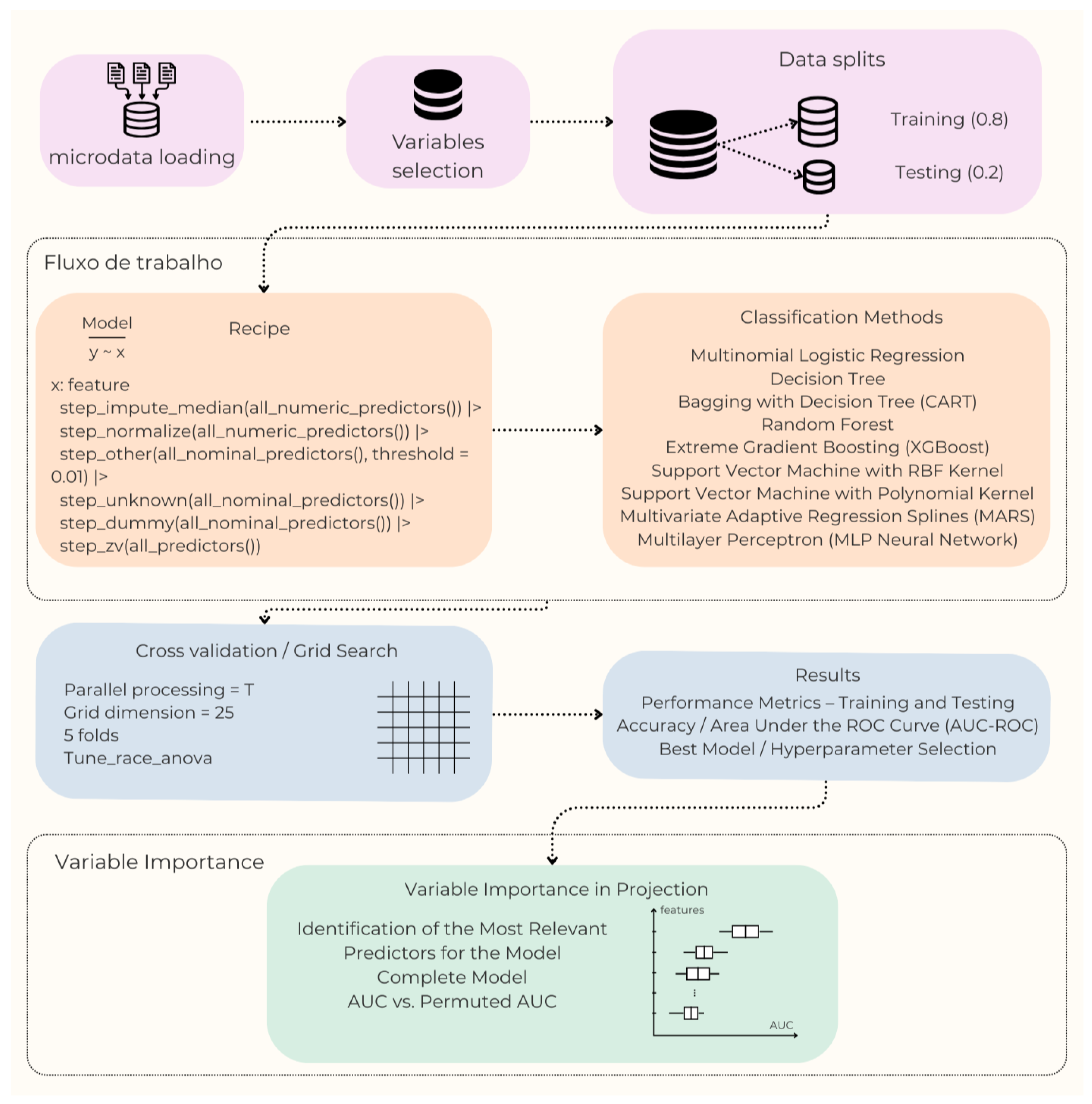
- 80% for training;
- 20% for testing,
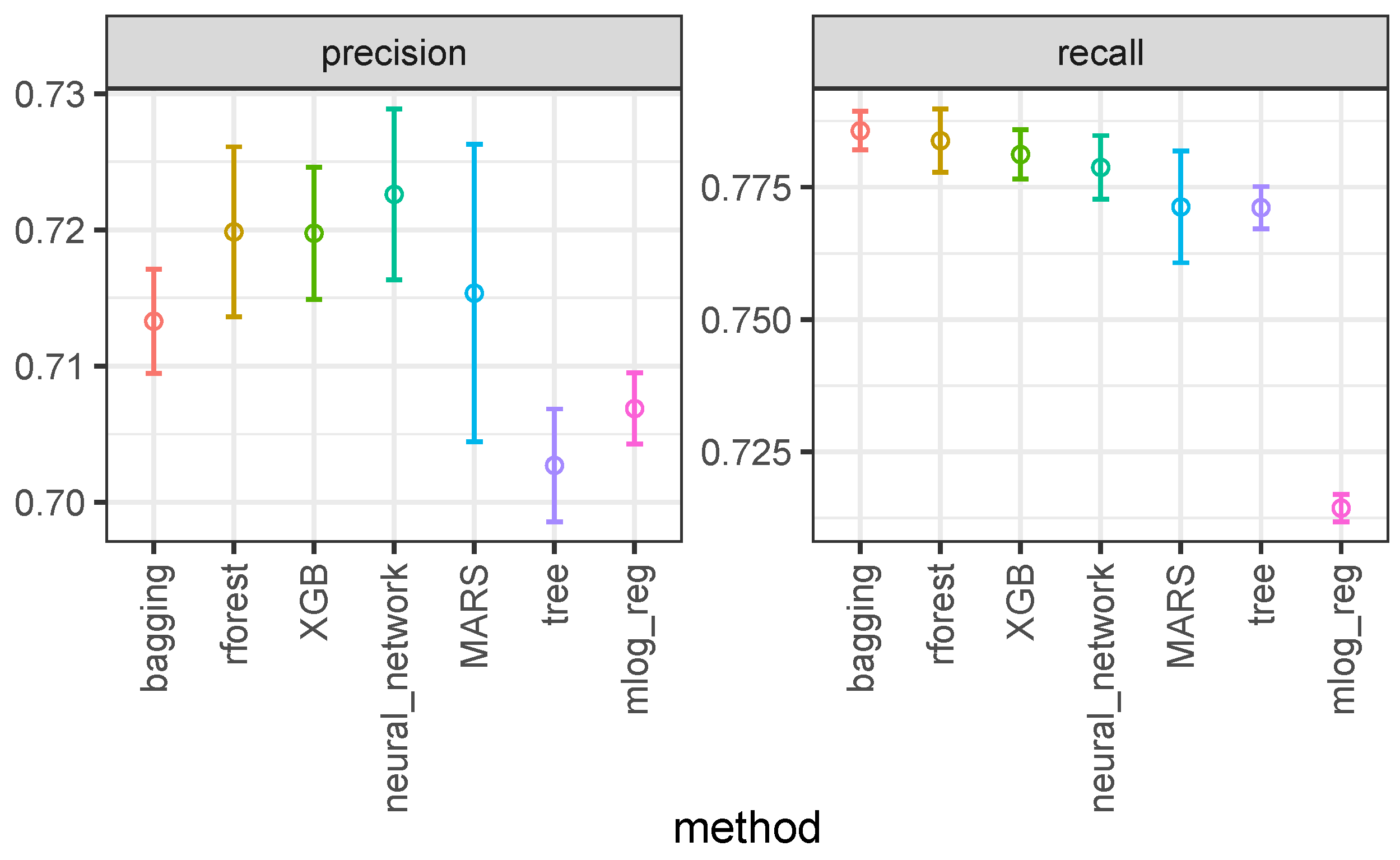
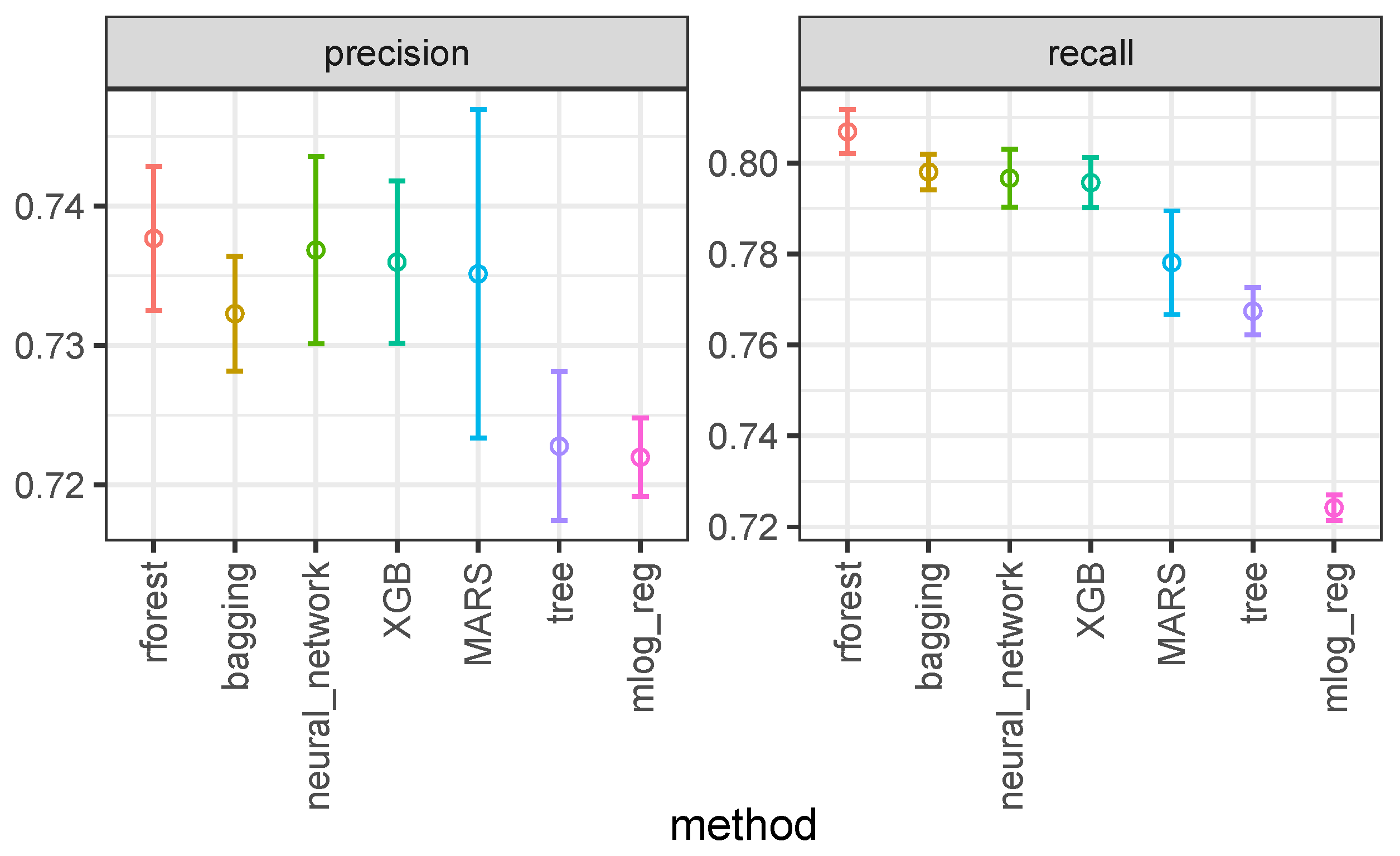
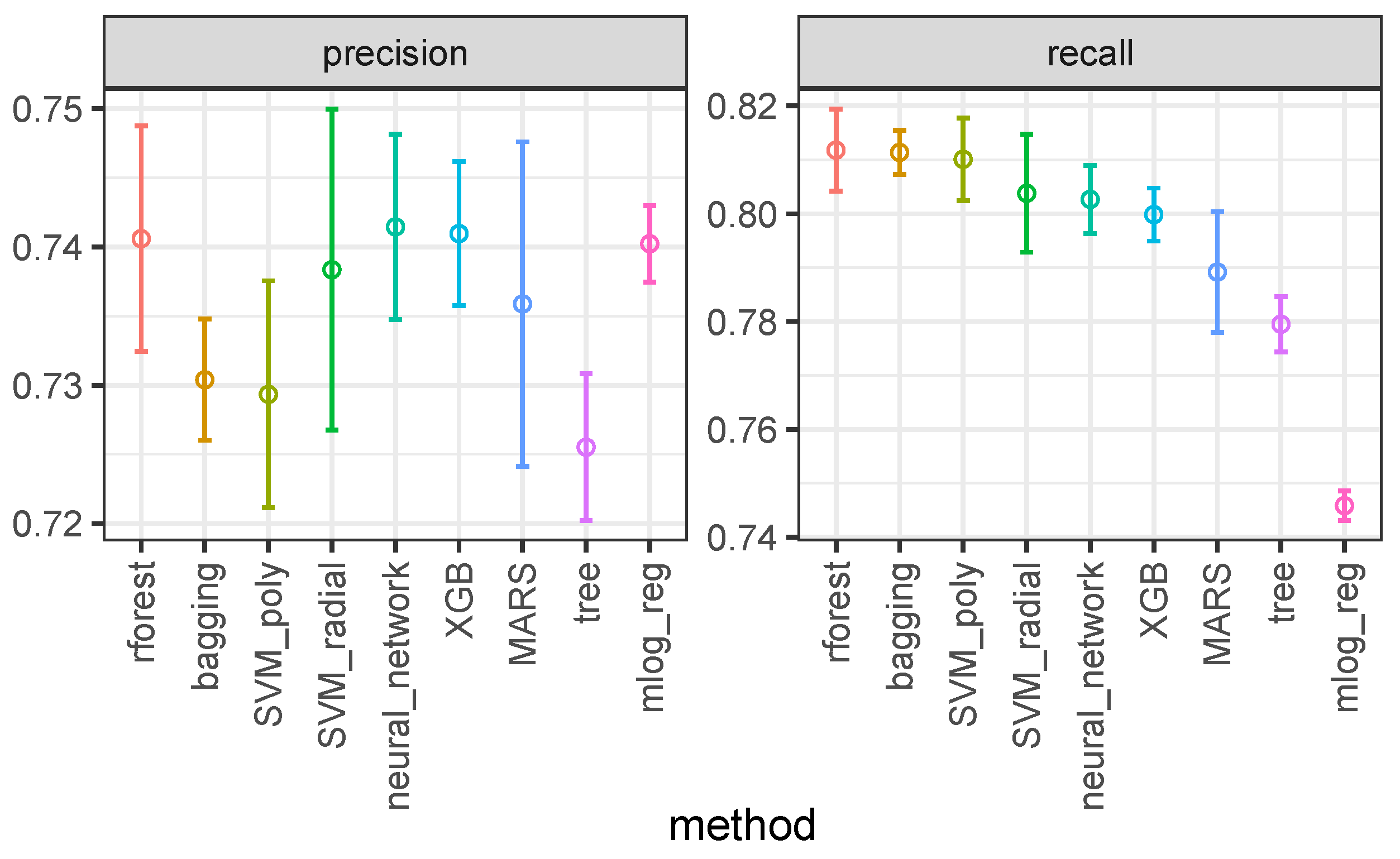
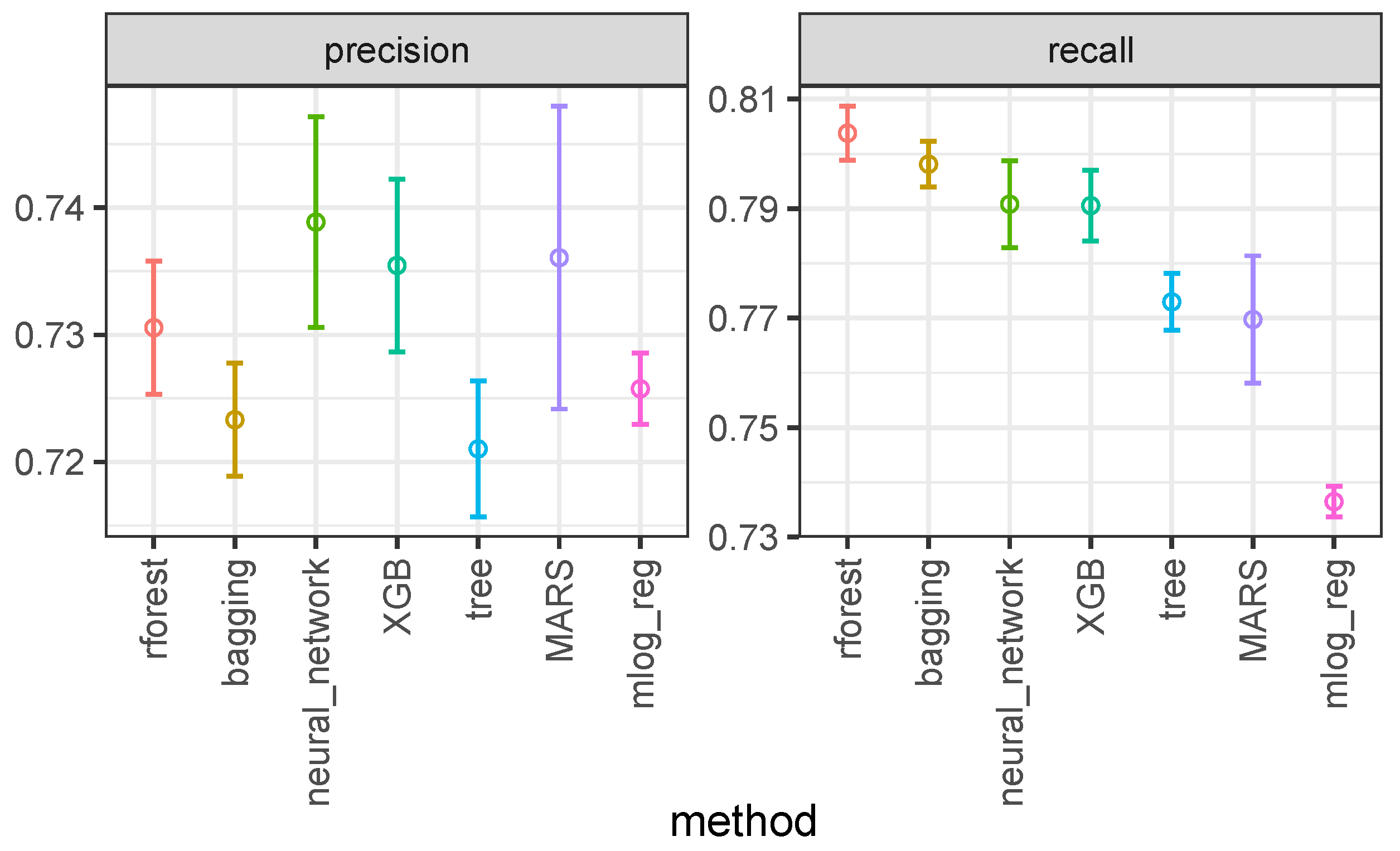
Results and Discussion
4. Conclusions
Author Contributions
Funding
Institutional Review Board Statement
Informed Consent Statement
Data Availability Statement
Acknowledgments
Conflicts of Interest
References
- Hopkins, J.L.; McKay, J. Investigating ‘anywhere working’ as a mechanism for alleviating traffic congestion in smart cities. Technol. Forecast. Soc. Change 2019, 142, 258–272. [Google Scholar] [CrossRef]
- Rasche, B.; Dreber, N.; Zehl, F.; Knie, A. Forschung für die Mobilitätswende: COVID-19-Pandemie als Treiber? GAIA–Ecol. Perspect. Sci. Soc. 2021, 30, 276–277. [Google Scholar] [CrossRef]
- Martens, M.; Korver, W. Forecasting and assessing the mobility effects of teleservices: Scenario approach. Transp. Res. Rec. 2000, 1706, 118–125. [Google Scholar] [CrossRef]
- Van Lier, T.; De Witte, A.; Macharis, C. How worthwhile is teleworking from a sustainable mobility per-spective? The case of Brussels Capital region. Eur. J. Transp. Infrastruct. Res. 2014, 14, 244–267. [Google Scholar]
- de Vos, D.; Meijers, E.; van Ham, M. Working from home and the willingness to accept a longer commute. Ann. Reg. Sci. 2018, 61, 375–398. [Google Scholar] [CrossRef]
- Mouratidis, K.; Peters, S. COVID-19 impact on teleactivities: Role of built environment and implications for mobility. Transp. Res. Part A Policy Pract. 2022, 158, 251–270. [Google Scholar] [CrossRef]
- De Abreu e Silva, J.; Melo, P.C. Home telework, travel behavior, and land-use patterns. J. Transp. Land Use 2018, 11, 419–441. [Google Scholar] [CrossRef]
- Ravalet, E.; Rérat, P. Teleworking: Decreasing mobility or increasing tolerance of commuting distances? Built Environ. 2019, 45, 582–602. [Google Scholar] [CrossRef]
- López Soler, J.R.; Christidis, P.; Vassallo, J.M. Teleworking and online shopping: Socio-economic factors affecting their impact on transport demand. Sustainability 2021, 13, 7211. [Google Scholar] [CrossRef]
- Nguyen, M.H. Factors influencing home-based telework in Hanoi (Vietnam) during and after the COVID-19 era. Transportation 2021, 48, 3207–3238. [Google Scholar] [CrossRef] [PubMed]
- Fatmi, M.R.; Orvin, M.M.; Thirkell, C.E. The future of telecommuting post COVID-19 pandemic. Transp. Res. Interdiscip. Perspect. 2022, 16, 100685. [Google Scholar] [CrossRef] [PubMed]
- Hensher, D.A.; Balbontin, C.; Beck, M.J.; Wei, E. The impact of working from home on modal commuting choice response during COVID-19: Implications for two metropolitan areas in Australia. Transp. Res. Part A Policy Pract. 2022, 155, 179–201. [Google Scholar] [CrossRef]
- Salon, D.; Mirtich, L.; Bhagat-Conway, M.W.; Costello, A.; Rahimi, E.; Mohammadian, A.K.; Chauhan, R.S.; Derrible, S.; da Silva Baker, D.; Pendyala, R.M. The COVID-19 pandemic and the future of telecommuting in the United States. Transp. Res. Part D Transp. Environ. 2022, 112, 103473. [Google Scholar]
- Sweet, M.; Scott, D.M. Insights into the future of telework in Canada: Modeling the trajectory of telework across a pandemic. Sustain. Cities Soc. 2022, 87, 104175. [Google Scholar] [CrossRef]
- Nayak, S.; Pandit, D. Potential of telecommuting for different employees in the Indian context beyond COVID-19 lockdown. Transp. Policy 2021, 111, 98–110. [Google Scholar] [CrossRef]
- Zhang, S.; Moeckel, R.; Moreno, A.T.; Shuai, B.; Gao, J. A work-life conflict perspective on telework. Transp. Res. Part A Policy Pract. 2020, 141, 51–68. [Google Scholar] [CrossRef]
- Kumara, B.; Herath, G.; Wijeratne, P.; Banujan, K. Work From Home After Covid-19: Machine Learn-ing-Based Approach to Predict Employee’s Choice. In Proceedings of the 2022 International Con-ference on Decision Aid Sciences and Applications (DASA), Chiangrai, Thailand, 23–25 March 2022; pp. 147–150. [Google Scholar]
- Abesiri, S.; Rupasingha, R. Predicting Employee Preference of Teleworking Using Machine Learning Tech-niques in the Post COVID-19 Period in Sri Lanka. In Proceedings of the 2022 International Research Conference on Smart Computing and Systems Engineering (SCSE), Colombo, Sri Lanka, 1 September 2022; Volume 5, pp. 22–27. [Google Scholar]
- Chen, H.H.; Lu, H.H.S.; Weng, W.H.; Lin, Y.H. Developing a Machine Learning Algorithm to Predict the Probability of Medical Staff Work Mode Using Human-Smartphone Interaction Patterns: Algorithm Devel-opment and Validation Study. J. Med. Internet Res. 2023, 25, e48834. [Google Scholar] [CrossRef] [PubMed]
- Rehan, F.A.; Bukhari, F.; Iqbal, W. Impact of COVID-19 on Productivity of Software Engineers: A Com-parative Analysis of Work from Home (WFH) and Work from Office (WFO) Environment using Machine Learning. In Proceedings of the 2023 2nd International Conference on Emerging Trends in Electrical, Control, and Telecommunication Engineering (ETECTE), Lahore, Pakistan, 27–29 November 2023; pp. 1–8. [Google Scholar] [CrossRef]
- Setiawan, J.; Alamsari, R.G. Prediction of Work From Home Post COVID-19 using Classification Model. In Proceedings of the 2022 Seventh International Conference on Informatics and Computing (ICIC), Bali, Indonesia, 8–9 December 2022; pp. 1–6. [Google Scholar] [CrossRef]
- Elldér, E. Does telework weaken urban structure–travel relationships? J. Transp. Land Use 2017, 10, 187–210. [Google Scholar] [CrossRef]
- Oliveira, M.L.D.; Mairinque, L.D.A.; Santos, J.B.D.; Lima, J.P. Multivariate analysis of public transport quality: A case study in a medium-sized Brazilian city. Production 2022, 32, e20210117. [Google Scholar] [CrossRef]
- Barros dos Santos, J.; Lima, J.P. Health Determinants, Applications, and Methods: A Systematic Literature Review on the Relationships Between the Urban Transport of People and Health. Transp. Res. Rec. 2024, 2678, 245–271. [Google Scholar] [CrossRef]
- Gareth, J.; Witten, D.; Hastie, T.; Tibshirani, R. An Introduction to Statistical Learning: With Applications in R; Springer: New York, NY, USA, 2013. [Google Scholar]
- Instituto Brasileiro de Geografia e Estatística (IBGE). Pesquisa Nacional por Amostra de Domicílios Contínua: Quadro Sintético 1º Trimestre de 2025 (Jan–Fev–Mar); Coordenação de Trabalho e Rendimento: Rio de Janeiro, Brazil, 2025. [Google Scholar]
- Instituto Brasileiro de Geografia e Estatística (IBGE). Dicionário de Variáveis da PNAD Contínua–Microdados 2022, Visita 1; IBGE: Rio de Janeiro, Brazil, 2023. Available online: https://ftp.ibge.gov.br/Trabalho_e_Rendimento/Pesquisa_Nacional_por_Amostra_de_Domicilios_continua/Anual/Microdados/Visita/Visita_1/Documentacao/dicionario_PNADC_microdados_2022_visita1_20231129.xls (accessed on 23 January 2026).
- Lundberg, S.M.; Lee, S.I. A unified approach to interpreting model predictions. Adv. Neural Inf. Process. Syst. 2017, 30. [Google Scholar] [CrossRef]
- R Core Team. R: A Language and Environment for Statistical Computing; R Foundation for Statistical Computing: Vienna, Austria, 2025; Available online: https://www.R-project.org/ (accessed on 23 January 2026).
- Kuhn, M.; Silge, J. Tidy Modeling with R: A Framework for Modeling in the Tidyverse; O’Reilly Media, Inc.: Sebastopol, CA, USA, 2022. [Google Scholar]
- Kuhn, M.; Wickham, H. Tidymodels: A Collection of Packages for Modeling and Machine Learning Using Tidyverse Principles. Available online: https://www.tidymodels.org (accessed on 23 January 2026).
- Kuhn, M. finetune: Additional Functions for Model Tuning, R Package Version 1.2.1; Available online: https://CRAN.R-project.org/package=finetune (accessed on 23 January 2026).
- Maksymiuk, S.; Gosiewska, A.; Biecek, P. Landscape of R packages for eXplainable Artificial Intelligence. arXiv 2020, arXiv:2009.13248. [Google Scholar]
- Fawcett, T. An introduction to ROC analysis. Pattern Recognit. Lett. 2006, 27, 861–874. [Google Scholar] [CrossRef]
- Hosmer, D.W.; Lemeshow, S.; Sturdivant, R.X. Applied Logistic Regression, 3rd ed.; Wiley: Hoboken, NJ, USA, 2013. [Google Scholar]
- Mairinque, L.A.; Pereira, R.B.D.; Lima, J.P. Telework and Sustainable Urban Mobility: Conceptual Modeling From the Systematic Literature Review. Bus. Soc. Rev. 2026, 131, e70043. [Google Scholar] [CrossRef]
- Asgari, H.; Jin, X.; Mohseni, A. Choice, frequency, and engagement: Framework for telecommuting behavior analysis and modeling. Transp. Res. Rec. 2014, 2413, 101–109. [Google Scholar] [CrossRef]
- Xiang, B. Remote work, social inequality and the redistribution of mobility. Int. Migr. 2022, 60, 280–282. [Google Scholar] [CrossRef]
- Instituto Brasileiro de Geografia e Estatística (IBGE). Pesquisa Nacional por Amostra de Domicílios Contínua–Indicadores Trimestrais: 3º Trimestre de 2025 (Jul–Set); IBGE: Rio de Janeiro, Brazil, 2025. Available online: https://biblioteca.ibge.gov.br/visualizacao/periodicos/2421/pnact_2025_3tri.pdf (accessed on 23 January 2026).
- Vilhelmson, B.; Thulin, E. Who and where are the flexible workers? Exploring the current diffusion of tele-work in Sweden. New Technol. Work. Employ. 2016, 31, 77–96. [Google Scholar] [CrossRef]
- Ogungbire, A.; Mitra, S.K. Unlocking telecommuting patterns before, during, and after the COVID-19 pandemic: An explainable AI-driven study. Transp. Res. Interdiscip. Perspect. 2024, 28, 101244. [Google Scholar] [CrossRef]
- Reuschke, D.; Ekinsmyth, C. New spatialities of work in the city. Urban Stud. 2021, 58, 2177–2187. [Google Scholar] [CrossRef]
- Adobati, F.; Debernardi, A. The breath of the Metropolis: Smart working and new urban geographies. Sustainability 2022, 14, 1028. [Google Scholar] [CrossRef]
- Krasilnikova, N.; Levin-Keitel, M. Telework as a Game-Changer for Sustainability? Transitions in Work, Workplace and Socio-Spatial Arrangements. Sustainability 2022, 14, 6765. [Google Scholar] [CrossRef]
- Magnus, M.; Glackin, S.; Hopkins, J.L. The Working-from-Home Natural Experiment in Sydney, Australia: A Theory of Planned Behaviour Perspective. Sustainability 2022, 14, 13997. [Google Scholar]
- Kolotouchkina, O.; Ripoll González, L.; Belabas, W. Smart Cities, Digital Inequalities, and the Challenge of Inclusion. Smart Cities 2024, 7, 3355–3370. [Google Scholar] [CrossRef]








| Year | N# | N* |
|---|---|---|
| 2025 | 45,798 | 15,194 |
| 2024 | 45,210 | 12,754 |
| 2023 | 46,255 | 12,666 |
| 2022 | 45,307 | 12,574 |
| Model | Tuned Hyperparameters |
|---|---|
| Multinomial Logistic Regression | penalty, mixture |
| Decision Tree | tree_depth, min_n, cost_complexity |
| Bagging with Decision Tree (CART) | tree_depth, min_n, cost_complexity |
| Random Forest | mtry, min_n, trees |
| Extreme Gradient Boosting (XGBoost) | tree_depth, learn_rate, loss_reduction, min_n, sample_size, trees |
| Support Vector Machine (RBF Kernel) | cost, rbf_sigma |
| Support Vector Machine (Polynomial Kernel) | cost, degree |
| Multivariate Adaptive Regression Splines (MARS) | prod_degree |
| Multilayer Perceptron (MLP) | hidden_units, penalty, epochs |
| Year | Model | ROC AUC |
|---|---|---|
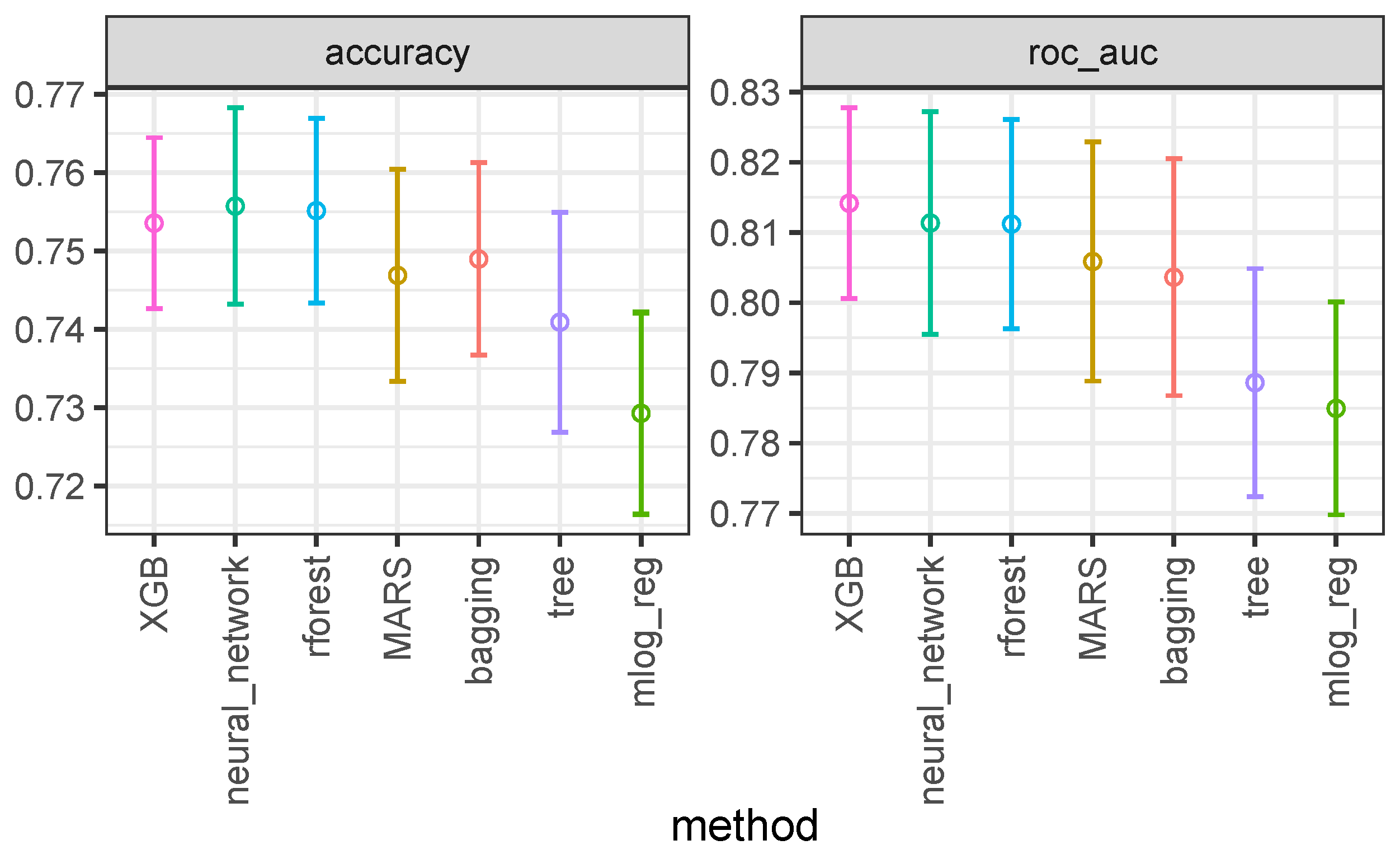
| 2025 | XGBoost | 0.8142 |
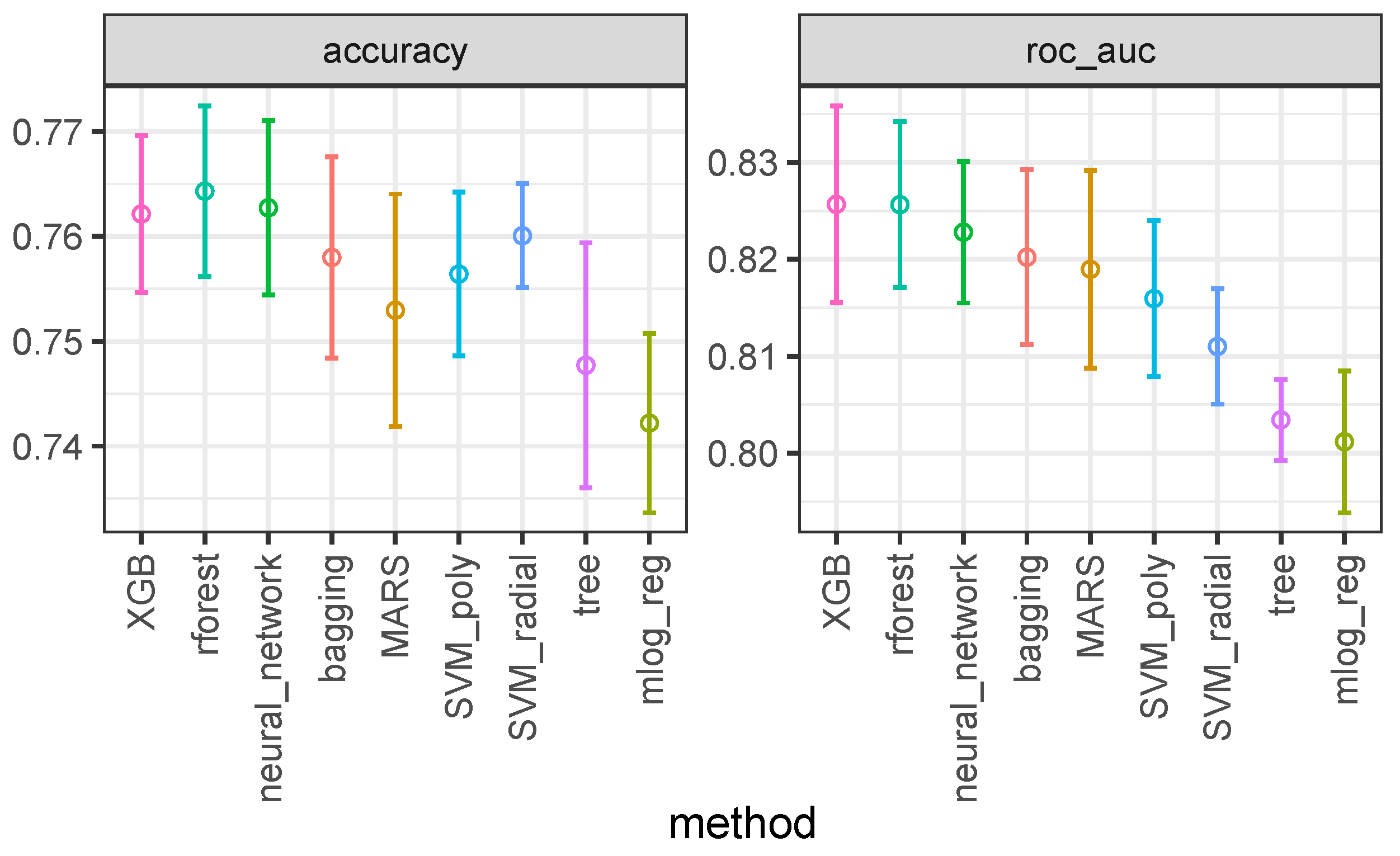
| 2024 | XGBoost | 0.8257 |
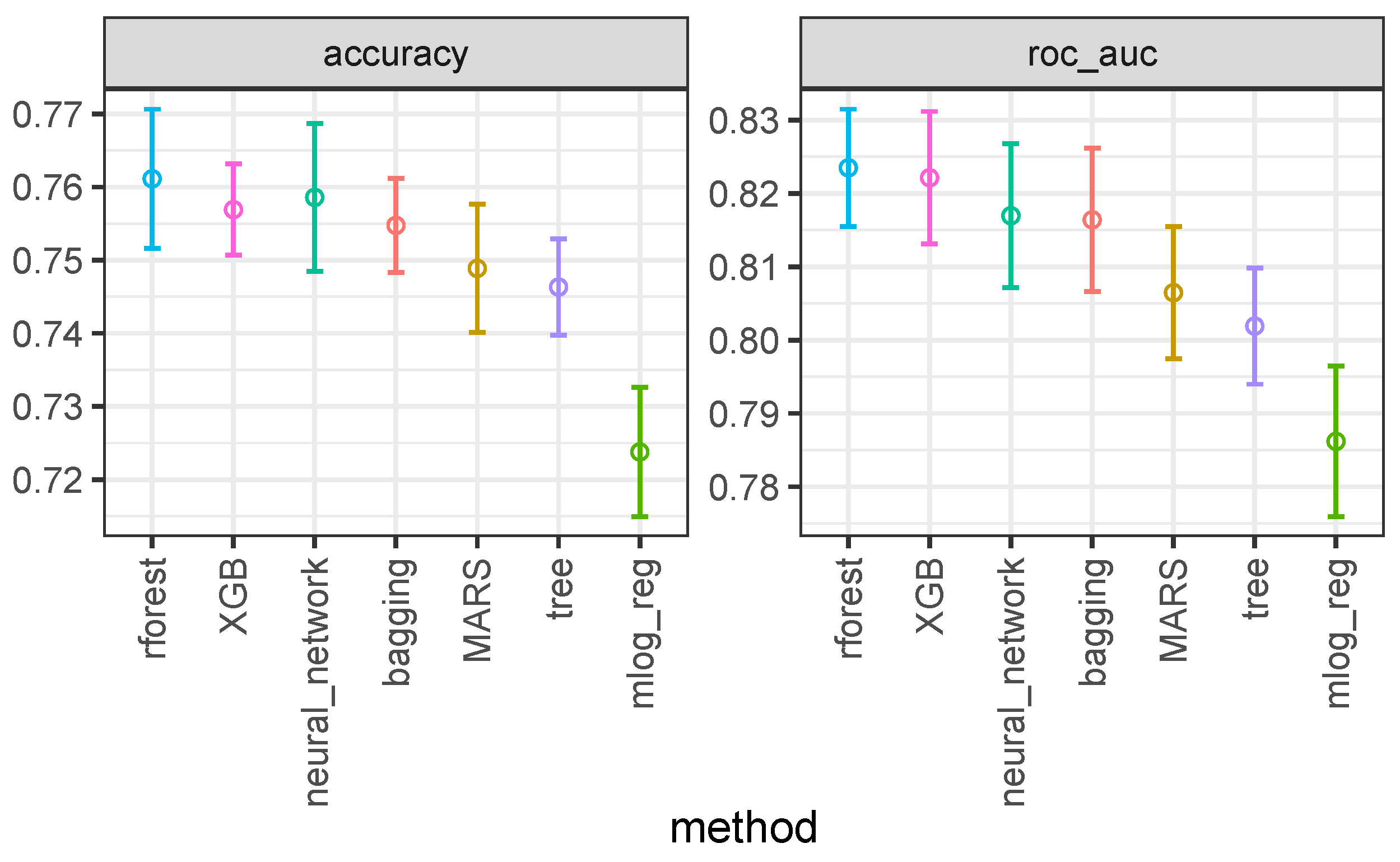
| 2023 | Random Forest | 0.8235 |
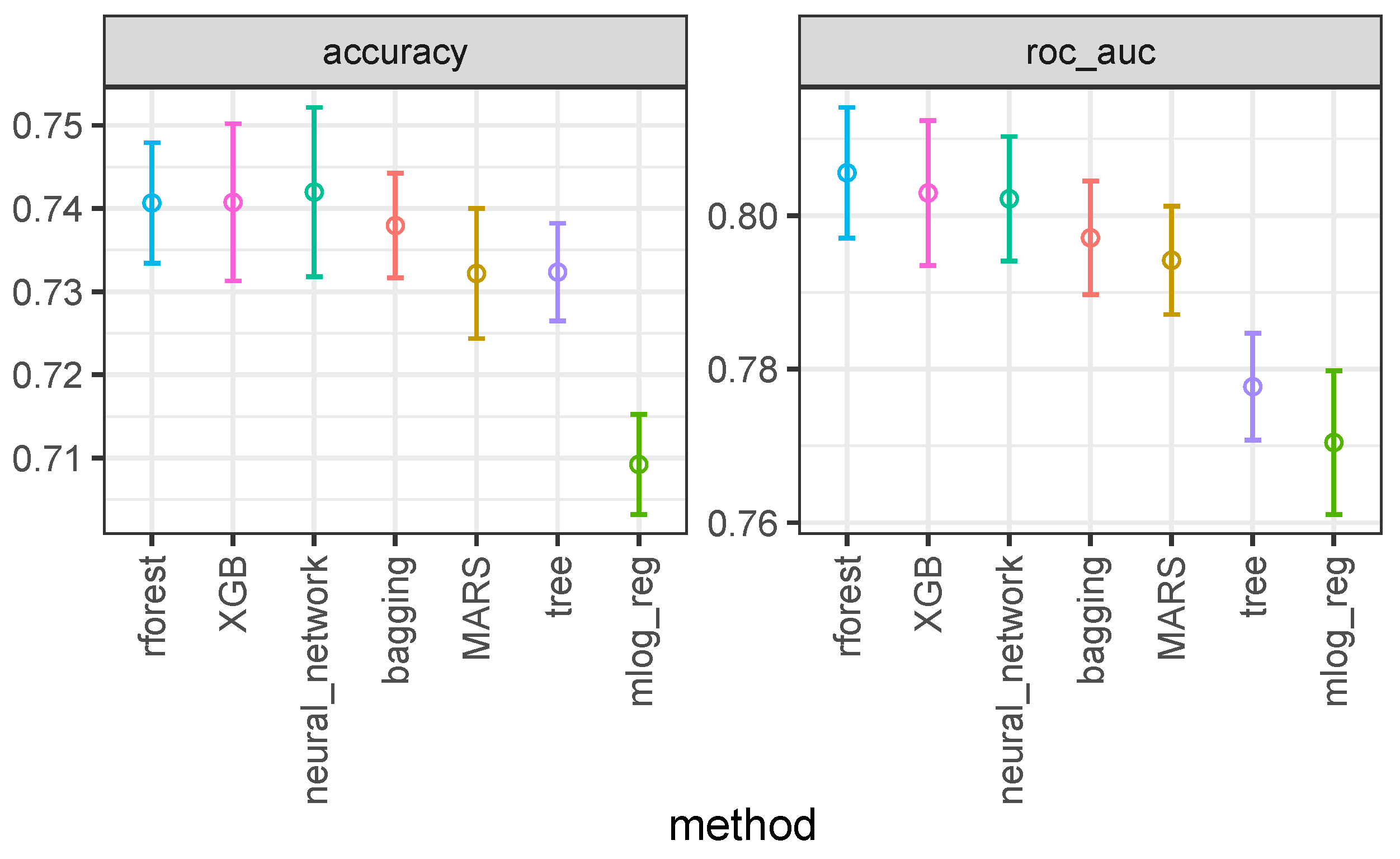
| 2022 | Random Forest | 0.8056 |
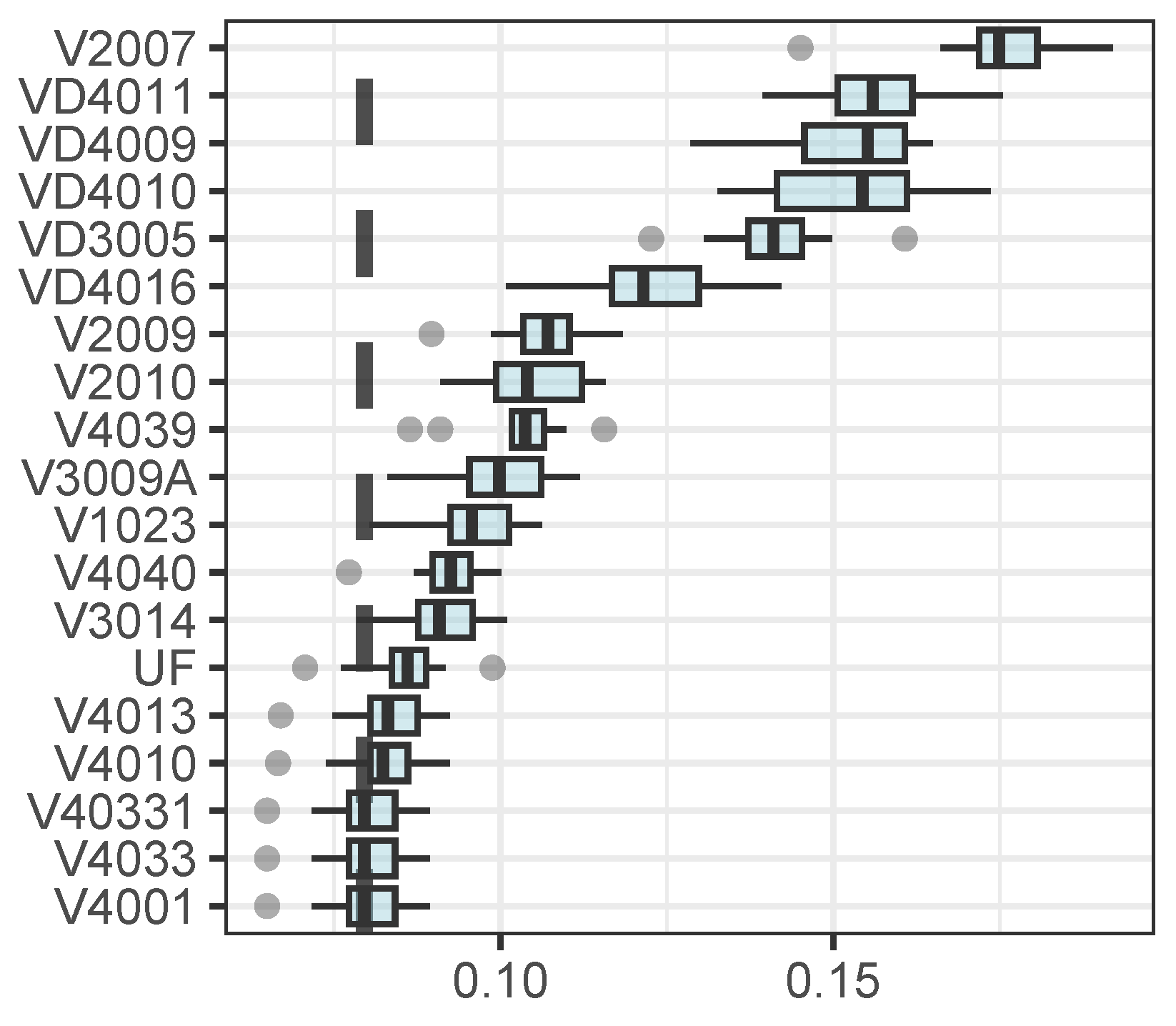
| Code | Variable Description |
|---|---|
| UF | Federative Unit (state) |
| V1023 | Type of area of residence |
| V2007 | Gender |
| V2009 | Age of the resident |
| V2010 | Race or color |
| V3009A | Highest level of education previously attended |
| V3014 | Completion status of the highest level of education previously attended |
| V4001 | Participation in paid work during the reference week |
| V4013 | Main economic activity of the enterprise |
| V4033 | Receipt of monetary earnings or withdrawals from the main job |
| V4039 | Usual weekly hours worked in the main job |
| V4040 | Job tenure in the current job |
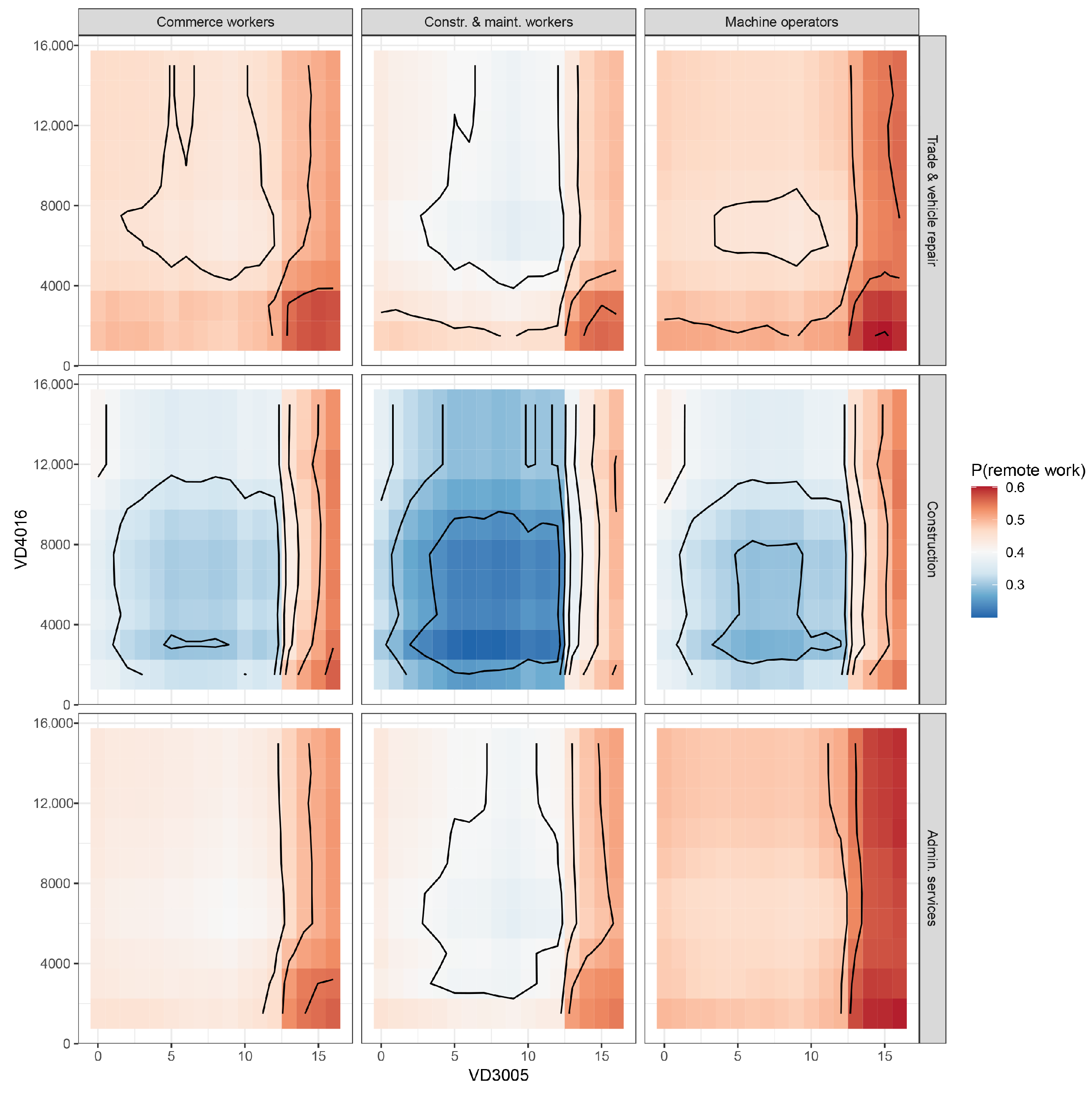
| VD3005 | Years of schooling standardized to the 9-year elementary education system |
| VD4009 | Employment status and employment category of the main job |
| VD4010 | Main activity grouping of the enterprise in the main job |
| VD4011 | Occupational grouping of the main job |
| VD4016 | Usual monthly income from the main job |
Disclaimer/Publisher’s Note: The statements, opinions and data contained in all publications are solely those of the individual author(s) and contributor(s) and not of MDPI and/or the editor(s). MDPI and/or the editor(s) disclaim responsibility for any injury to people or property resulting from any ideas, methods, instructions or products referred to in the content. |
© 2026 by the authors. Licensee MDPI, Basel, Switzerland. This article is an open access article distributed under the terms and conditions of the Creative Commons Attribution (CC BY) license.
Share and Cite
Mairinque, L.d.A.; Pereira, R.B.D.; Lima, J.P. Telework in the Brazilian Context: Social and Economic Factors Under a Machine Learning Approach. Sustainability 2026, 18, 3043. https://doi.org/10.3390/su18063043
Mairinque LdA, Pereira RBD, Lima JP. Telework in the Brazilian Context: Social and Economic Factors Under a Machine Learning Approach. Sustainability. 2026; 18(6):3043. https://doi.org/10.3390/su18063043
Chicago/Turabian StyleMairinque, Laryssa de Andrade, Robson Bruno Dutra Pereira, and Josiane Palma Lima. 2026. "Telework in the Brazilian Context: Social and Economic Factors Under a Machine Learning Approach" Sustainability 18, no. 6: 3043. https://doi.org/10.3390/su18063043
APA StyleMairinque, L. d. A., Pereira, R. B. D., & Lima, J. P. (2026). Telework in the Brazilian Context: Social and Economic Factors Under a Machine Learning Approach. Sustainability, 18(6), 3043. https://doi.org/10.3390/su18063043