


Abstract
Longwall paste backfilling mining is a core sustainable green mining technology for coal resources under buildings, railways and water bodies (BRW), yet its large-scale application is severely restricted by the sequential mining–isolation–backfilling–curing operation mode that causes low production efficiency and poor economic feasibility, which hinders the sustainable exploitation of BRW coal reserves and the ecological protection of mining areas. Taking the E1302-B paste backfilling face of Gaohe Coal Mine as the engineering background, this study systematically identified the key efficiency-restricting factors considering the face’s complex geological conditions (maximum roof–floor undulation 300 mm, 72.6% of roof–floor dip angle >1° and irregular cross-section), including low isolation efficiency, cumbersome backfilling process, prolonged paste curing time and insufficient system operation controllability. Technological innovations were carried out from four core dimensions: high-efficiency isolation, high-efficiency backfilling, accelerated curing and intelligent safety control, and a high-efficiency integrated technology system for longwall paste backfilling mining was thus formed, which realizes the synergistic improvement of mining efficiency, economic benefits and sustainability performance. Industrial test validation demonstrated that the technical system significantly boosts the efficiency of isolation, backfilling and solidification in the backfill mining cycle, cutting the time of a single backfill mining operation cycle by 57%. The annual production capacity of the E1302-B face was increased to 0.81 Mt, with a comprehensive backfilling mining cost of 466.63 CNY/t, an annual economic benefit of 108.03 million CNY and a static investment return rate of 48.96%. The E1306 face achieved an even higher annual production capacity of 1.12 Mt with a static investment return rate of 74.94%. This technology system effectively breaks the efficiency and economic bottlenecks of traditional longwall paste backfilling mining, realizes the dual improvement of backfilling mining efficiency and economic benefits, and further releases the ecological, resource and economic sustainability value of paste backfilling mining. It provides technical support and practical approaches for the large-scale application of longwall paste backfilling mining, and lays a solid foundation for the sustainable development of the coal industry under the dual-carbon goal, especially for the balanced development of coal resource exploitation and mining area ecological protection.
1. Introduction
As a critical component of the global energy mix, coal plays an irreplaceable role in ensuring energy security and driving economic development [1,2]. With the increasing depletion of shallow coal resources, mining operations are progressively extending to greater depths [3]. Concurrently, the volume of coal reserves situated under buildings, railways, and water bodies continues to rise across major coal-producing countries including China [4], Poland [5], Russia [6] and Germany [7], leading to increasingly prominent environmental and safety issues such as surface subsidence, ecological damage and abnormal gas emission from mining-induced fractures [8,9,10]. Longwall paste backfilling technology addresses these challenges by preparing solid wastes such as coal gangue and fly ash into a high-concentration paste [11,12,13], which is then injected into the goaf to provide effective support to the roof [14,15,16]. This approach significantly mitigates surface subsidence, enhances resource recovery rates, and facilitates the resource utilization of solid waste [17]. As such, it represents a green mining pathway that effectively balances resource extraction with ecological protection [18,19].
Despite its recognized ecological and resource benefits, the large-scale implementation of longwall paste backfilling mining is severely limited [20]. The primary constraint is its sequential “mining–isolation–backfilling–curing” cycle, leading to low productivity and poor economic viability [21]. Typical annual output for conventional paste backfilling faces is only 0.3–0.5 million tons [20,21], far below that of standard fully mechanized faces. Combined with high integrated costs, this hinders its economic competitiveness against traditional mining methods [22].
To address these challenges, researchers worldwide have conducted extensive studies on improving the efficiency of longwall paste backfilling. In terms of isolation technology, efforts include the development of hydraulically driven automatic isolation mechanisms to reduce manual intervention, as well as the design of composite isolation systems combining flexible and rigid elements to optimize sealing effectiveness [23]. However, widespread issues persist, such as poor reusability of sealing materials, insufficient reliability under complex geological conditions, and high dependence on manual operations, preventing fundamental improvements in isolation efficiency [24,25,26]. In the field of backfilling technology, progress has been made in optimizing high-capacity backfilling systems and constructing models for backfill volume calculation. Some studies have enhanced pumping capacity through methods like dual-pump parallel operation [27,28,29,30], while others have reduced ineffective backfilling volumes based on probability integral methods [31]. Nonetheless, shortcomings remain in areas such as the coordinated support between the backfill body and the roof, as well as optimization of supporting isolation processes, often leading to issues like inadequate roof contact and backfill fragmentation [32]. Regarding curing technology, the development of composite accelerators and intelligent dosing devices has somewhat shortened the initial setting time of paste [33,34]. However, key challenges—including control over the uniformity of accelerator-paste mixing, and dynamic coordination between dosage and pumping parameters—remain unresolved [35]. This often results in uneven strength distribution within the backfill and curing cycles that still fall short of meeting high-efficiency operational demands. In terms of integrated system support, existing research has established monitoring systems for isolated components such as backfilling pumps, pipeline pressure, and support resistance, enabling partial fault warning [36]. Yet, there is a lack of an intelligent monitoring system covering the entire “equipment–pipeline–support” workflow. The limited level of data processing and intelligent fault diagnosis hinders the ability to predict risks in advance and respond effectively [37,38]. In summary, while advances have been made in individual components, a holistic high-efficiency system integrating the complete “mining–isolation–backfilling–curing” chain is still lacking. Most existing studies only focus on single-technology optimization without considering the organic coupling of multiple technologies, and there is a lack of industrial validation for integrated systems under complex roof–floor undulation conditions. Without synergistic optimization under complex geological conditions, core challenges—including inefficient isolation, insufficient backfilling capacity, long curing times, and inadequate system controllability—persist.
In response to the aforementioned research gaps, this study takes the E1302 backfilling face (E1302-B face) at Gaohe Coal Mine as the engineering context and implements technological innovations across four key aspects: high-efficiency isolation, high-efficiency backfilling, accelerated curing, and intelligent monitoring. This includes the development of mechanized isolation devices, optimization of backfilling processes, improvement of accelerator dosing techniques, and the establishment of a full-process intelligent monitoring system. Ultimately, an integrated high-efficiency technology system is developed and validated through industrial trials, providing both technical support and a practical pathway for the large-scale adoption of longwall paste backfilling mining.
2. Geological Conditions of the E1302-B Face
Gaohe Coal Mine is located in Changzhi City, Shanxi Province, China. The surface above the mining area is distributed with numerous villages, high-voltage transmission lines, railways, industrial parks, and other critical infrastructure. Due to the overlying presence of these surface structures, a significant volume of coal resources underground cannot be safely extracted, with the total accumulated affected reserves reaching 372 million tons. In order to achieve safe and efficient mining of coal resources while effectively protecting the stability of surface villages and various facilities, the mine plans to adopt the longwall paste backfilling mining method.
The E1302 paste backfilling face is the first mining panel under villages within the Gaohe Coal Mine field. It targets the No. 3 coal seam, which has an average thickness of 6.38 m, an average burial depth of 408 m, and an average dip angle of 8°. A split-level backfilling mining method is employed, sequentially extracting the upper layer (mining height 3.5 m) and the lower layer (mining height 2.88 m). This study focuses primarily on the mining of the upper layer of the E1302 face.
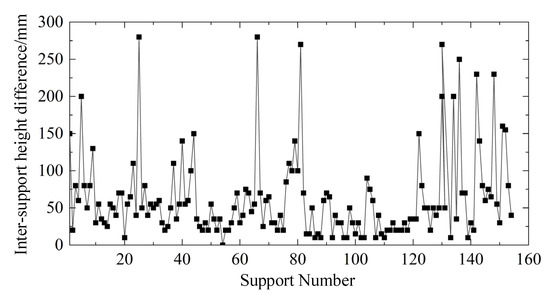
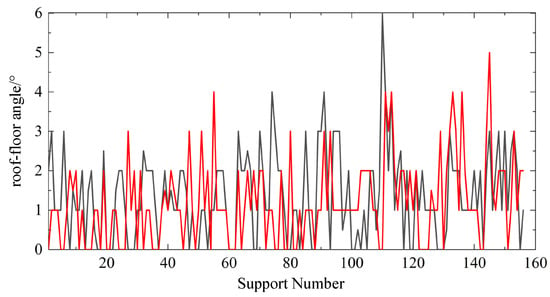
The geological conditions at the E1302-B face are complex, characterized primarily by severe undulations and a highly irregular cross-section of the roof and floor. To quantify this irregularity, the relative height difference between the canopy beams of adjacent supports was used to characterize roof undulation. Measurement results (Figure 1) show that the maximum roof height difference between adjacent supports reached 300 mm. Of these, relative height differences exceeding 200 mm accounted for 7%, while those greater than 100 mm accounted for as high as 16%. Areas with significant height anomalies were concentrated in the tailgate section of the working face, resulting in an extremely irregular cross-sectional profile of the coal seam roof. Meanwhile, measured data on the roof–floor dip angle during two measurements at different positions of the working face (Figure 2) indicate a maximum value of 5°, with angles greater than 1° accounting for 72.6%. These geological conditions severely constrain the efficiency of backfilling operations, with a particularly pronounced negative impact on the effectiveness of the isolation process.
Figure 1.
Relative height difference of canopy beams between adjacent supports (characterizing roof undulation) at E1302-B face.
Figure 2.
Relative dip angle between roof and floor at different positions of E1302-B face. The black line represents the results of the first measurement, and the red line represents the results of the second measurement.
3. Efficiency Constraints in Longwall Paste Backfilling
3.1. Mining–Backfilling Coordination
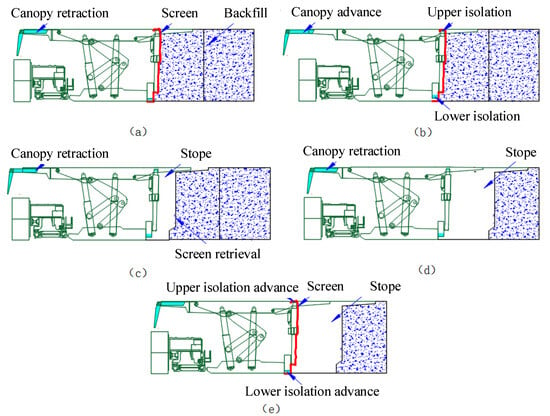
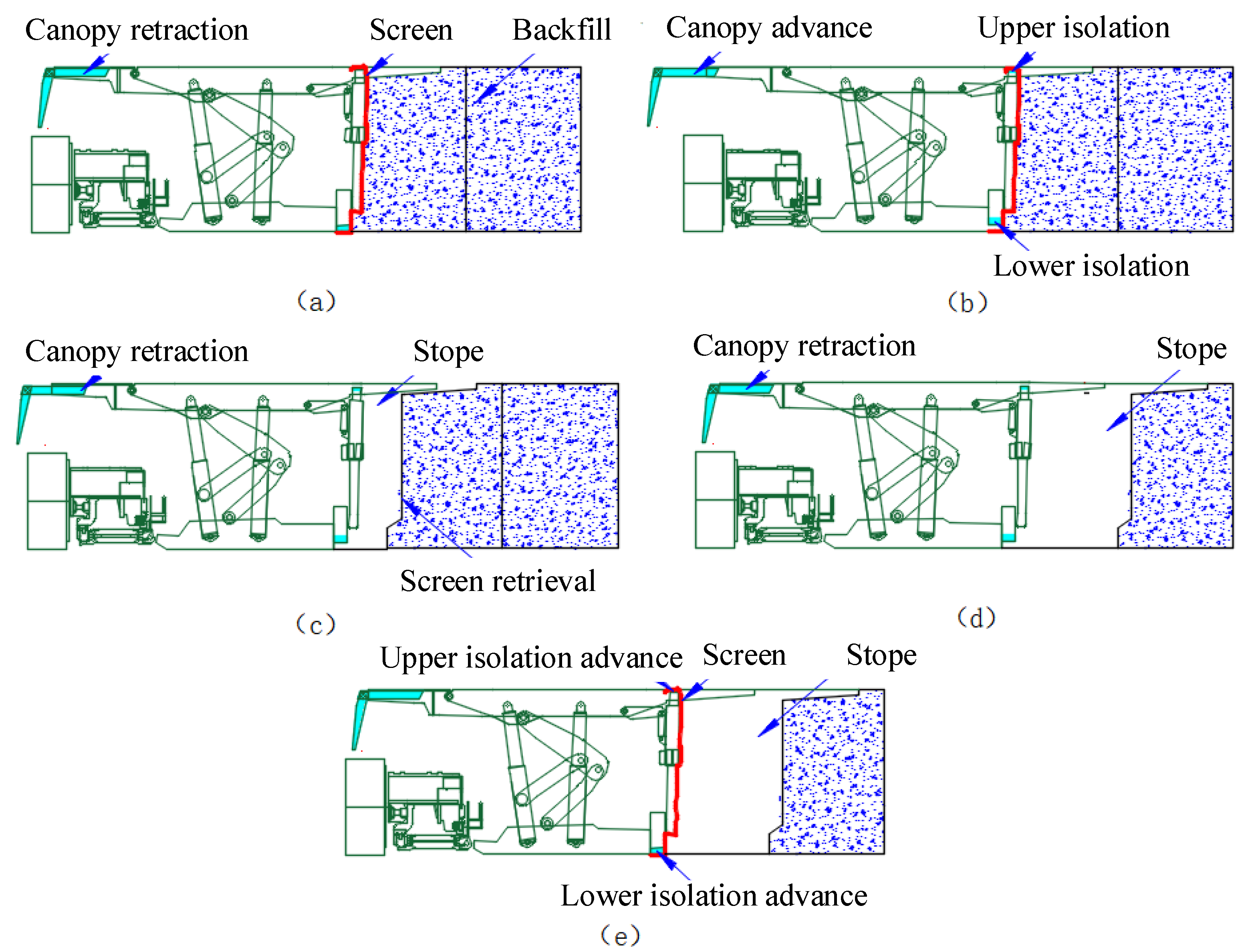
In longwall paste backfilling, the coordination of mining and backfilling is fundamentally characterized by the sequential alternation and precise synchronization of operational space over time. Based on the working status of the supports and the isolation plate, this dynamic process can be delineated into the following key stages, as shown in Figure 3.
Figure 3.
Mining–backfilling operation mode of a longwall paste face. (a) Initial Stage of Coal Cutting; (b) coal cutting and support preparation; (c) first support advance; (d) formation of the backfilling space; (e) isolation ready state. (The blue area represents the backfill body. The red color represents the screen, which has already been labeled in the figure. We believe the green parts are common equipment in mining working faces and are generally understandable).
- (1)
- Initial Stage of Coal Cutting
Prior to the commencement of coal cutting, the face supports are in their initial position, as shown in Figure 3a. At this stage, the isolation plate remains in the sealed position. The backfill behind it has fully cured and reached the required demolding strength, thereby establishing the prerequisite for support advance and subsequent coal cutting operations.
- (2)
- Coal Cutting and Support Preparation
After the first pass of the shearer, the support’s forward canopy is extended immediately to support the newly exposed roof (Figure 3b). Simultaneously, the isolation plate is fully retracted to disengage from the roof and floor.
- (3)
- First Support Advance
Following the first support advance, the face configuration is as shown in Figure 3c. A goaf space with a width equal to the web depth is now formed behind the supports. The rear canopy (tail beam) provides roof support in this area, allowing preparatory tasks such as removing isolation membranes to be performed.
- (4)
- Formation of the Backfilling Space
Once the designed cutting distance is achieved and all supports have advanced into position, the backfilling space is fully formed (Figure 3d). At this stage, final pre-backfilling preparations are completed, including hanging new isolation membranes, inspecting and repairing their integrity, and sealing the bottom gap.
- (5)
- Isolation Ready State
At the end of the cutting cycle, all face supports have advanced to their designated positions, isolation membranes are fully installed, and bottom sealing is complete. The entire system is now in a state ready for backfilling, as shown in Figure 3e.
Backfilling can only begin after isolation is fully completed. During this phase, all mining equipment remains idle. The next mining–backfilling cycle can proceed only after the backfill has set and attained early strength within the enclosed goaf.
3.2. Key Constraints on Efficiency in Longwall Backfilling
Longwall paste backfilling mining typically follows a sequential “mining–isolation–backfilling–curing” operational model, which results in low production efficiency. The key factors constraining its efficiency mainly include the following aspects:
- (1)
- Low Isolation Efficiency. The isolation mechanisms of backfilling supports have poor adaptability to site conditions, and isolation/leak prevention still relies heavily on manual operations (typically requiring 5–6 workers to complete the isolation of a single working face section). The isolation process is complex, labor-intensive, and takes three shifts to complete for one mining–backfilling cycle, with low efficiency. Furthermore, the use of non-reusable straw mats for sealing further reduces efficiency.
- (2)
- Inefficient Backfilling Process. Achieving a complete fill in the designated backfill area of a longwall paste face requires a long time. Additionally, the process of retracting the canopy beam can easily damage the freshly placed backfill, leading to material waste and significantly lowering backfilling efficiency.
- (3)
- Prolonged Paste Curing Time. After the paste slurry is pumped through pipelines to the backfill area, it normally requires over 8 h to cure sufficiently before demolding and support advance can occur. The paste cannot rapidly gain early strength to become self-supporting.
- (4)
- Impacts on Safe and Efficient System Operation. This includes the operational integrity of key equipment such as crushers, mixers, and backfilling pumps; the smoothness of pipeline transport, free from blockages; and whether the underground supports provide sufficient resistance and effective isolation.
4. High-Efficiency Paste Backfilling Mining Technology
4.1. High-Efficiency Isolation Technology
Isolation constitutes the pivotal link between coal cutting and backfilling in longwall paste mining. Its core function is to establish a reliable physical barrier, preventing paste leakage and ensuring operational safety. Achieving high efficiency in this process requires coordinated innovation in the isolation mechanism.
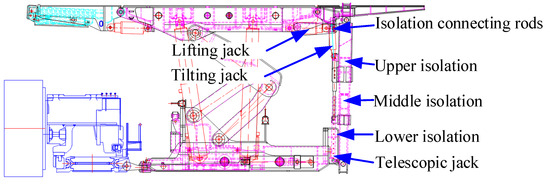
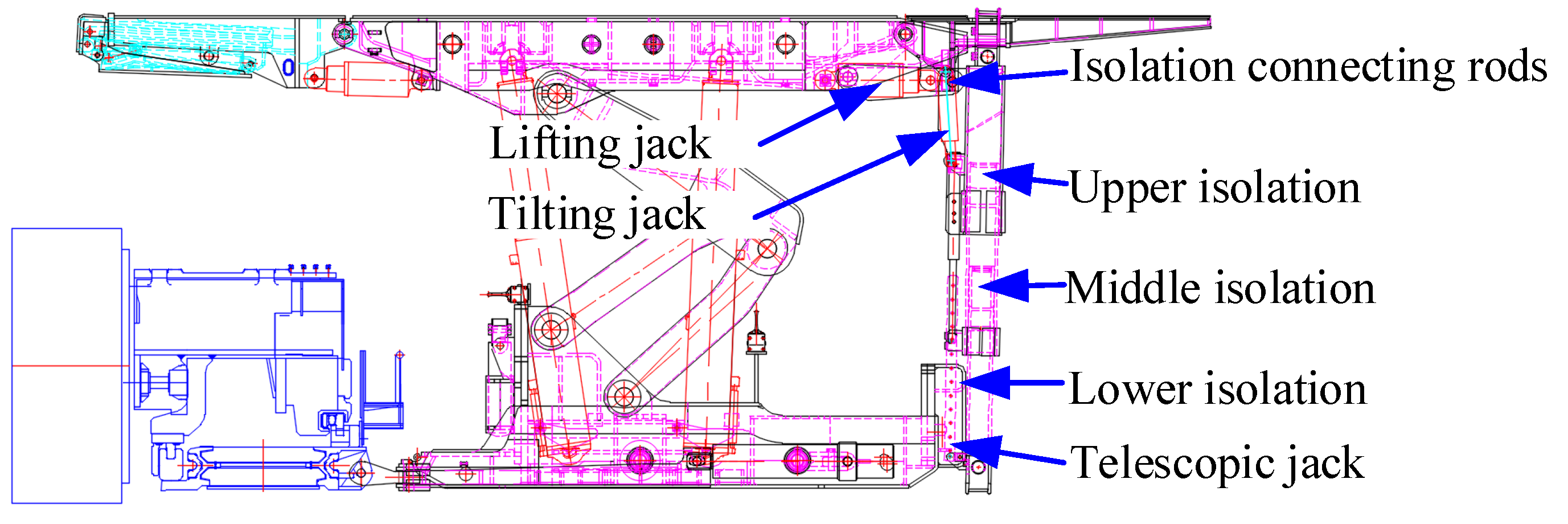
Based on the core functional requirements for high-efficiency isolation and sealing, an innovative high-efficiency isolation mechanism was designed, comprising an upper isolation, a middle isolation, a lower isolation, isolation connecting rods, a lifting jack, a tilting jack, and telescopic jacks (Figure 4). Its integrated advantages are as follows:
Figure 4.
Filling support and high-efficiency isolation mechanism.
Highly Adaptive Adjustment: The upper isolation plate is hinged to the support canopy, allowing it to lift or lower synchronously with the mining height. A dedicated lifting jack ensures tight contact with the roof, while the built-in telescopic middle isolation section further extends the adjustment range.
Comprehensive Dynamic Sealing: The upper and lower isolation plates compress flexible sealing materials to seal the gaps against the roof/floor and the support structure, respectively. Laterally equipped with a telescopic function, they can also seal the gaps between adjacent supports, achieving three-dimensional leakage prevention.
High-Strength Box Structure: The isolation plates adopt a box-type design, providing sufficient rigidity and strength to effectively withstand the lateral pressure of the backfill paste.
Safety and Operational Convenience: The upper isolation plate is equipped with a tilting jack, allowing it to swing upward to form a safe pedestrian passageway, facilitating worker access to the backfilling area.
Integrated Backfilling Interface: A dedicated backfilling port is installed on the upper isolation plate, enabling rapid and precise connection to the backfilling pipeline and ensuring continuous and efficient backfilling operations.
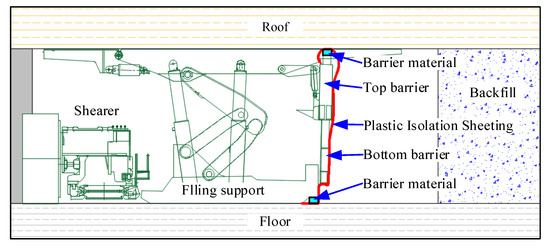
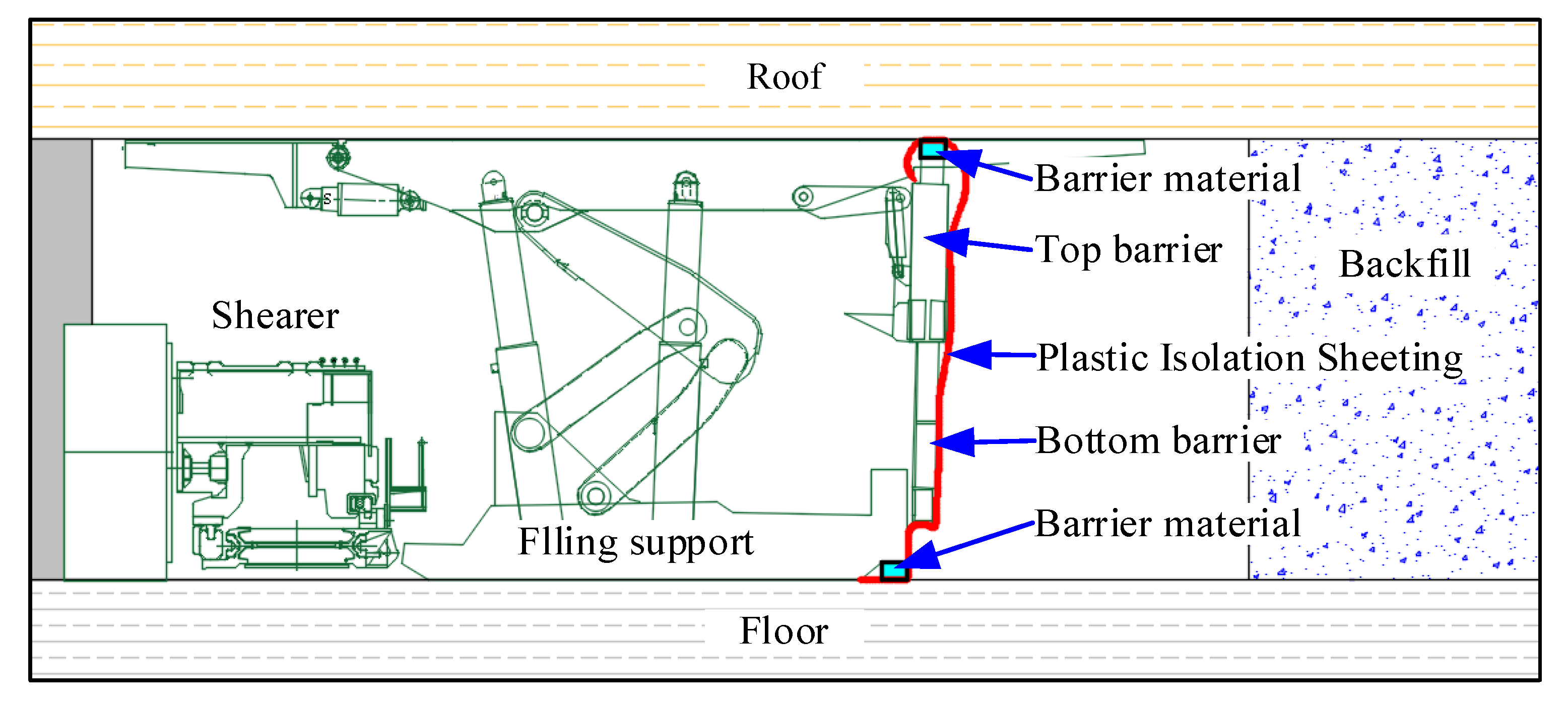
Based on the high-efficiency isolation mechanism, a compression sealing method utilizing plastic sheeting and flexible materials was proposed (Figure 5).
Figure 5.
High-efficiency isolation process for longwall paste backfilling. (The green parts represent the shearer and hydraulic support, and the modified parts of the hydraulic support have been clearly marked. The blue part represents the backfill body, and explanations have been added in the figure.
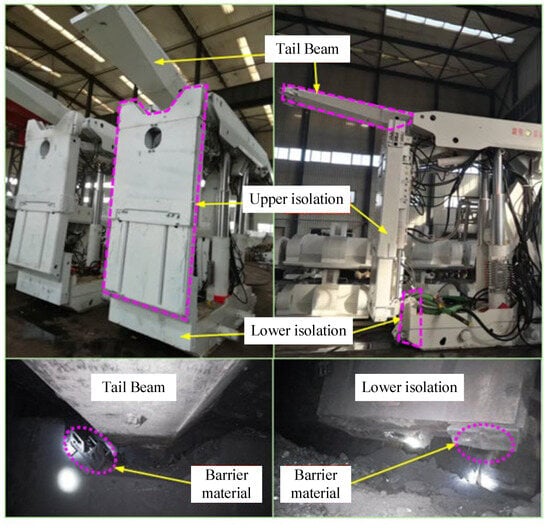
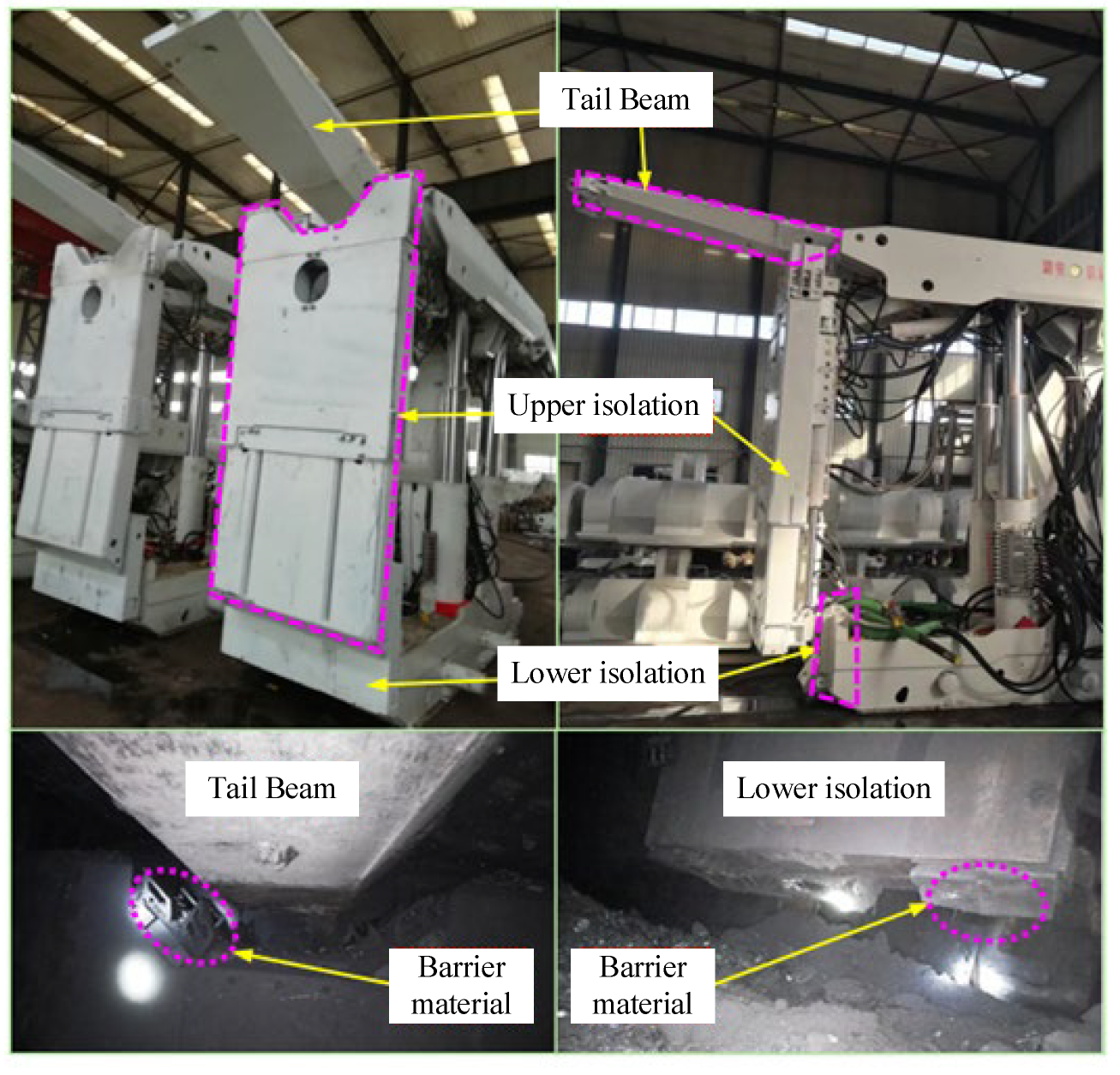
The on-site application of the high-efficiency isolation technology at the E1302 face is shown in Figure 6. With this technology, the isolation operation time was reduced from three shifts (8 h per shift) to one shift (8 h per shift), representing a 67% reduction in process duration.)
Figure 6.
Field application of the high-efficiency isolation mechanism and sealing materials.
4.2. High-Efficiency Backfilling Technology
Backfill mining operates on the principle of replacing extracted coal with a backfill mass to control roof movement and, consequently, surface subsidence. However, the sequential mining–isolation–backfilling–curing operational model in longwall paste backfilling has inherent limitations. Following coal extraction and support advance, the newly created goaf requires hours of isolation before backfilling can begin. Crucially, the backfill cannot provide effective support until it gains sufficient initial strength, resulting in inevitable roof deformation before the backfill mass becomes load-bearing.
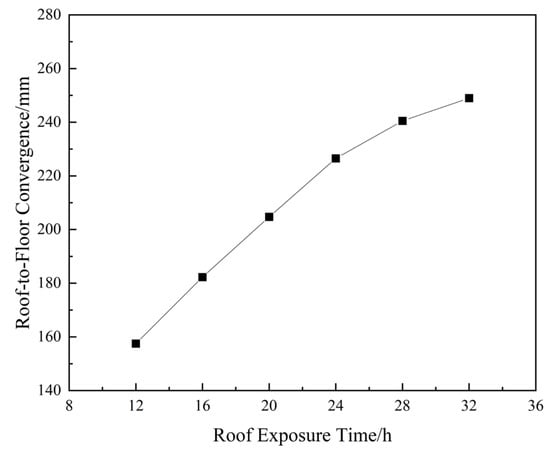
After the E1302 working face advanced a single mining–backfilling step of 2.4 m, three measurement points were deployed at the mid-section along the strike of the goaf (1.2 m from the tail beam of the hydraulic supports), with an interval of 2 m between adjacent points. Laser displacement sensors were used to measure the roof-to-floor distance at each point; the average value of the roof-to-floor distance data from the three points was calculated as the valid measurement result. The roof-to-floor convergence in the goaf under different roof exposure times was then derived from the measured distance data. The relationship between subsidence and exposure time is shown in Figure 7. When the roof hanging time was 12 h, 16 h, 20 h, 24 h, 28 h, and 32 h, the corresponding average roof subsidence was 157.5 mm, 182.25 mm, 204.75 mm, 226.5 mm, 240.5 mm, and 249 mm, respectively, indicating a significant increase in subsidence with longer hanging time.
Figure 7.
Influence of exposure time on roof subsidence in unfilled areas.
Therefore, the key to improving the backfill process lies in advancing the timing of effective roof support by the backfill mass. This can be achieved by simplifying the isolation procedure or optimizing the backfill volume to shorten the cycle time, while maintaining control over roof movement within design limits. Specific proposals are as follows:
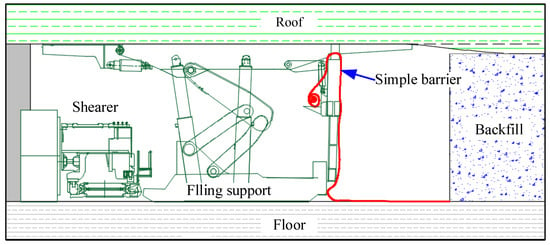
The technology enables rapid backfill initiation by implementing a simplified isolation scheme across the entire working face or in selected zones. This is achieved primarily by eliminating the time-consuming top isolation step using plastic sheeting, which accounts for over 50% of the total isolation duration. A schematic of the technical principle is shown in Figure 8. Grounded in the requirement for precise surface-deformation control, the approach employs the probability integral method and the equivalent mining height principle to quantify the minimum required backfill volume. The resulting improvement in isolation efficiency strictly limits roof exposure time, effectively restraining roof subsidence. As a result, surface subsidence control remains comparable to conventional methods, while overall backfilling efficiency is significantly enhanced.
Figure 8.
Simple isolation-based high-efficiency backfilling process.
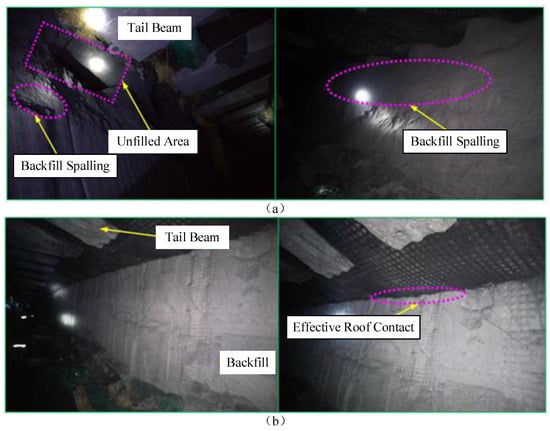
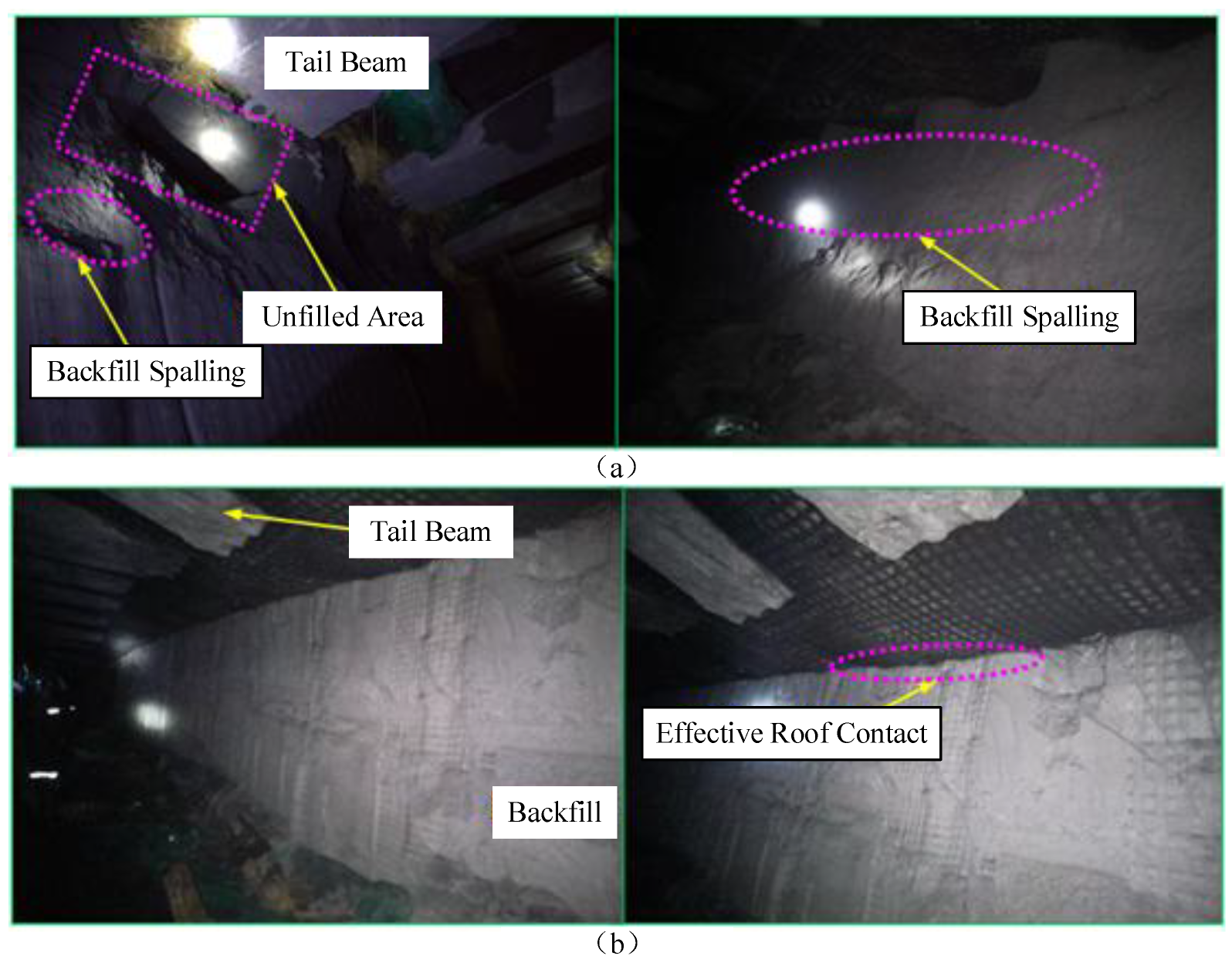
A comparative field trial at the E1302 face demonstrated clear performance differences between conventional and efficient backfill methods. In the conventional process, embedding of the support tail beam into the backfill mass often created voids and induced fracturing and spalling of the material. The efficient backfill technology eliminated such mechanical damage during beam recovery and ensured reliable roof contact through precise volume control (Figure 9).
Figure 9.
Comparison of backfill roof contact and fragmentation state: (a) traditional dense backfilling process; (b) high-efficiency backfilling process.
Monitoring data indicated that the efficient method maintained the same backfill volume per cycle and a stable backfill ratio as conventional practice. Moreover, both backfill height and roof subsidence matched the results obtained with conventional dense backfilling, confirming that surface subsidence control remained unaffected. Overall, the efficient technology increased face-wide backfilling efficiency by approximately 30%, achieving both higher productivity and uncompromised control performance.
4.3. High-Efficiency Curing Technology
In longwall paste backfilling, the curing phase represents a major time component of the backfill cycle. Reducing its duration—specifically, the time needed to reach formwork-removal strength—relies mainly on incorporating accelerators into the paste mix, calling for coordinated material and process development. While accelerator formulations have been widely studied [39,40,41], this section focuses specifically on the high-efficiency curing process for the backfill mass.
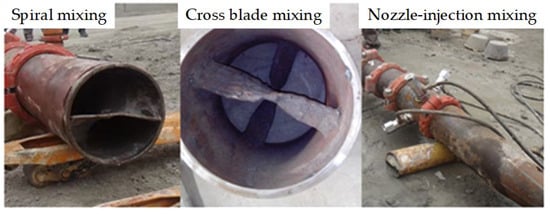
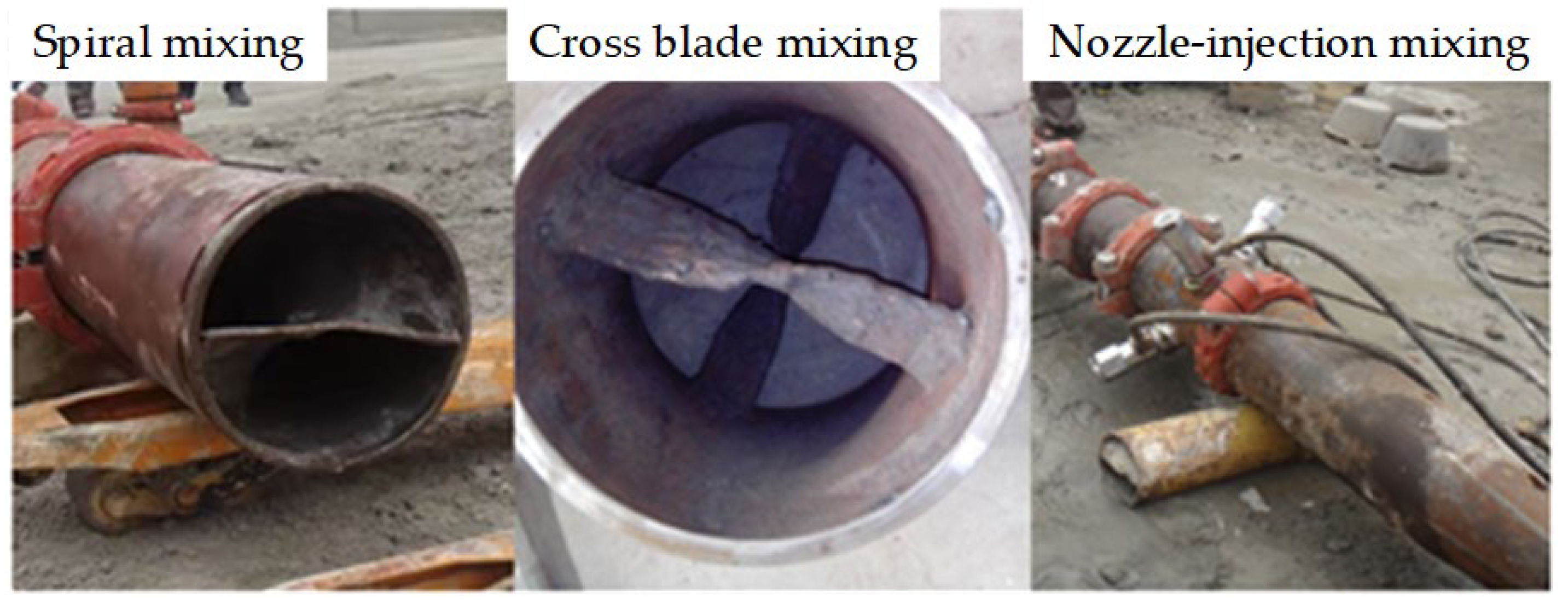
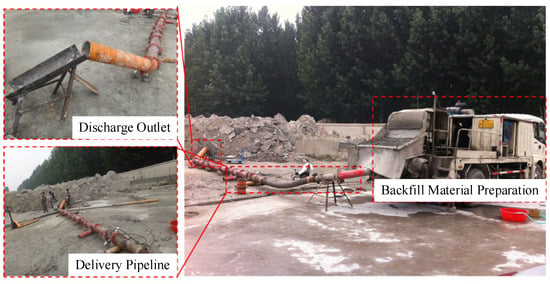
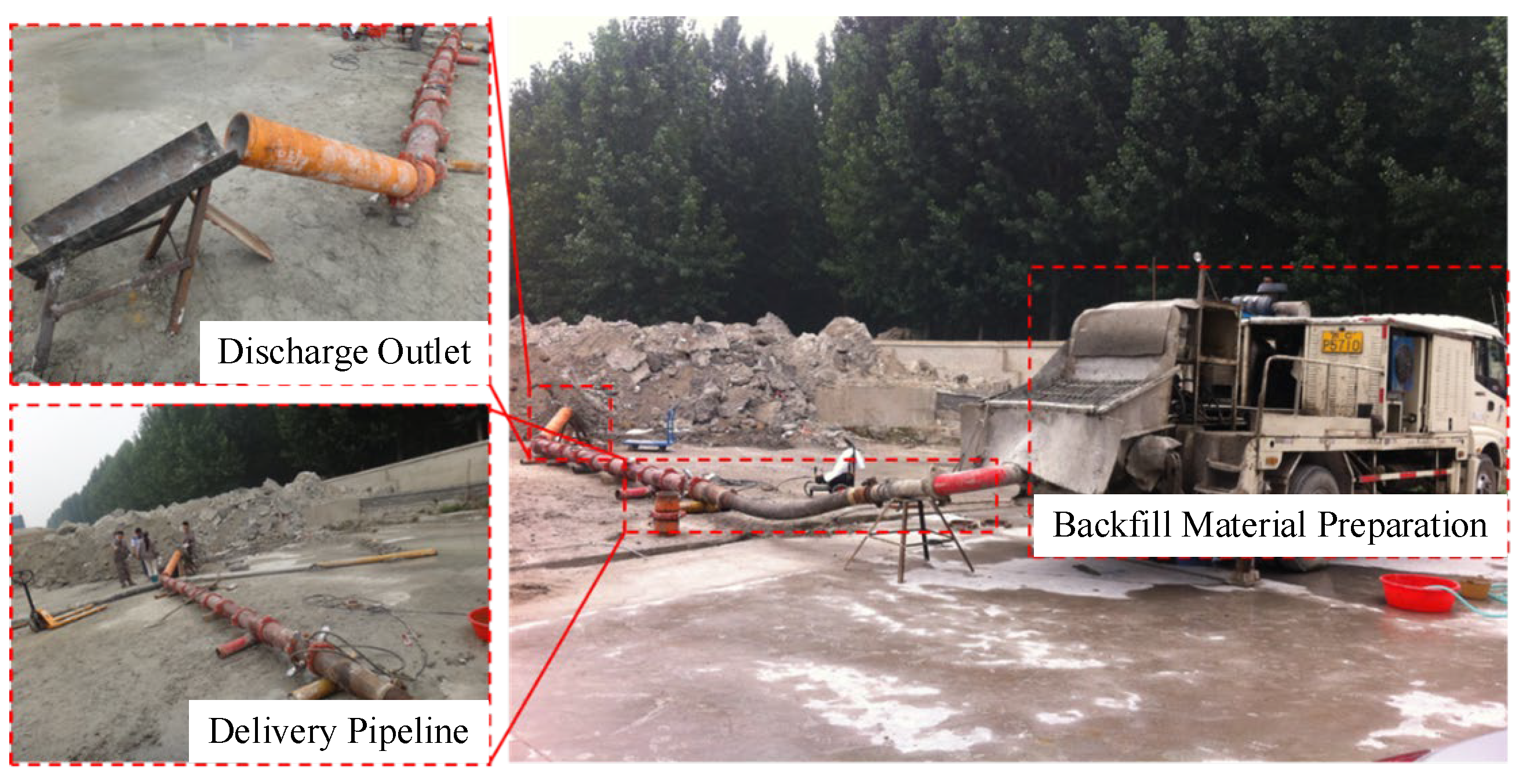
In the curing process, thorough and uniform mixing of the accelerator with the paste material is essential for achieving rapid formwork-removal strength. To determine the optimal addition method, this study established a simulated test system based on actual backfill practice. A truck-mounted concrete pump simulated the backfill station pump, delivering uniformly mixed paste through a pipeline to the discharge point. At the pipeline outlet, five distinct accelerator addition methods (Table 1) were implemented and compared to evaluate their effects on paste setting acceleration. The experimental setup is illustrated in Figure 10 and Figure 11.
Table 1.
Mixing Methods of Backfill Slurry.
Figure 10.
Structure of the simulated mixer.
Figure 11.
Simulated test equipment for paste backfill materials.
Accelerator addition tests under different mixing methods were carried out, and the mixed slurry was sampled for slump tests to evaluate its fluidity. The results indicate that without the accelerator, the initial slump of the paste was 240 mm, and the initial flow state was essentially consistent across different addition methods. One hour after adding the accelerator, the slump decreased significantly in all test groups, with no notable difference in the extent of reduction, whereas the control group (without accelerator) showed no obvious change in slump. This demonstrates that the accelerator can markedly accelerate the early loss of paste fluidity, but the addition method has no significant influence on this process.
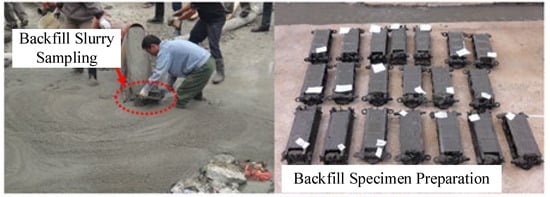
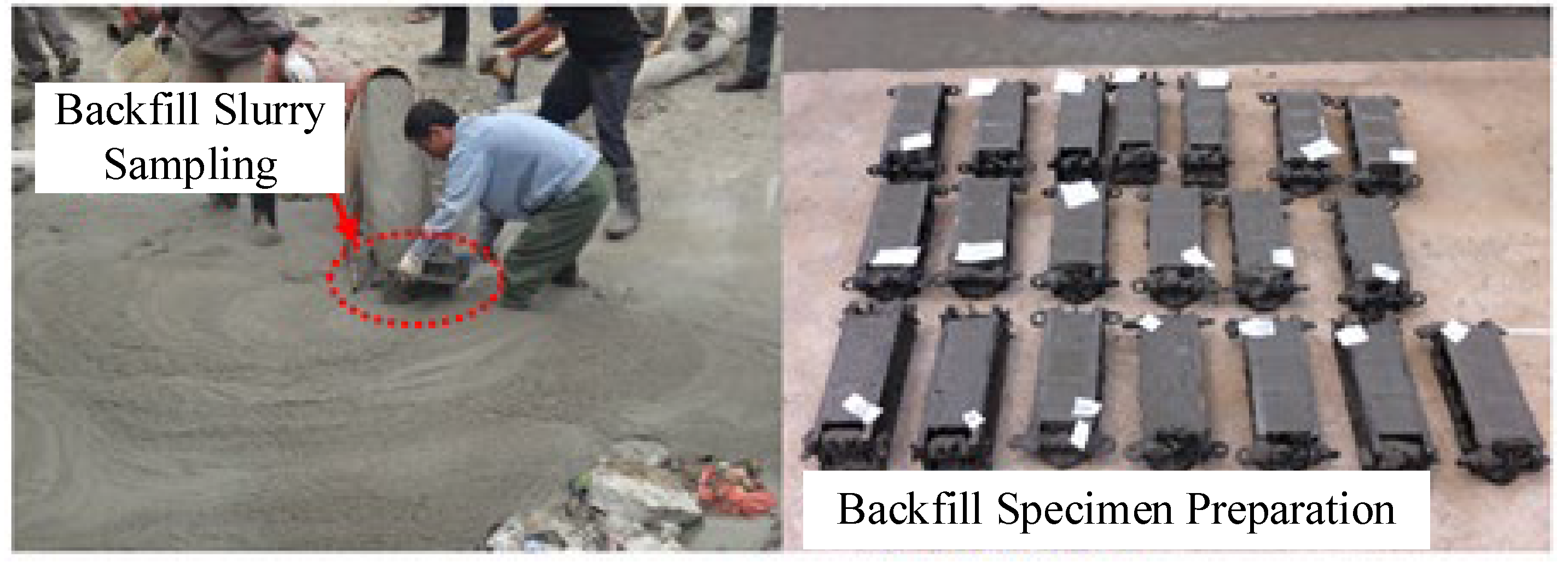
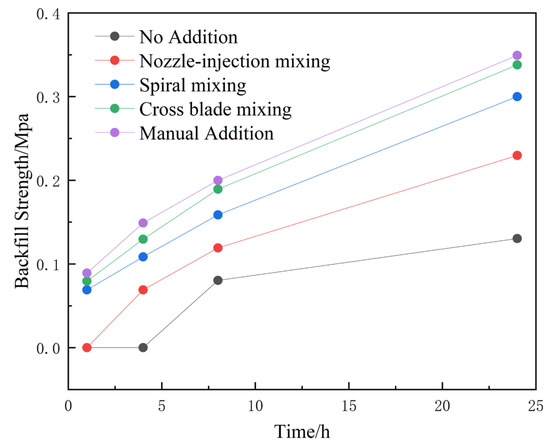
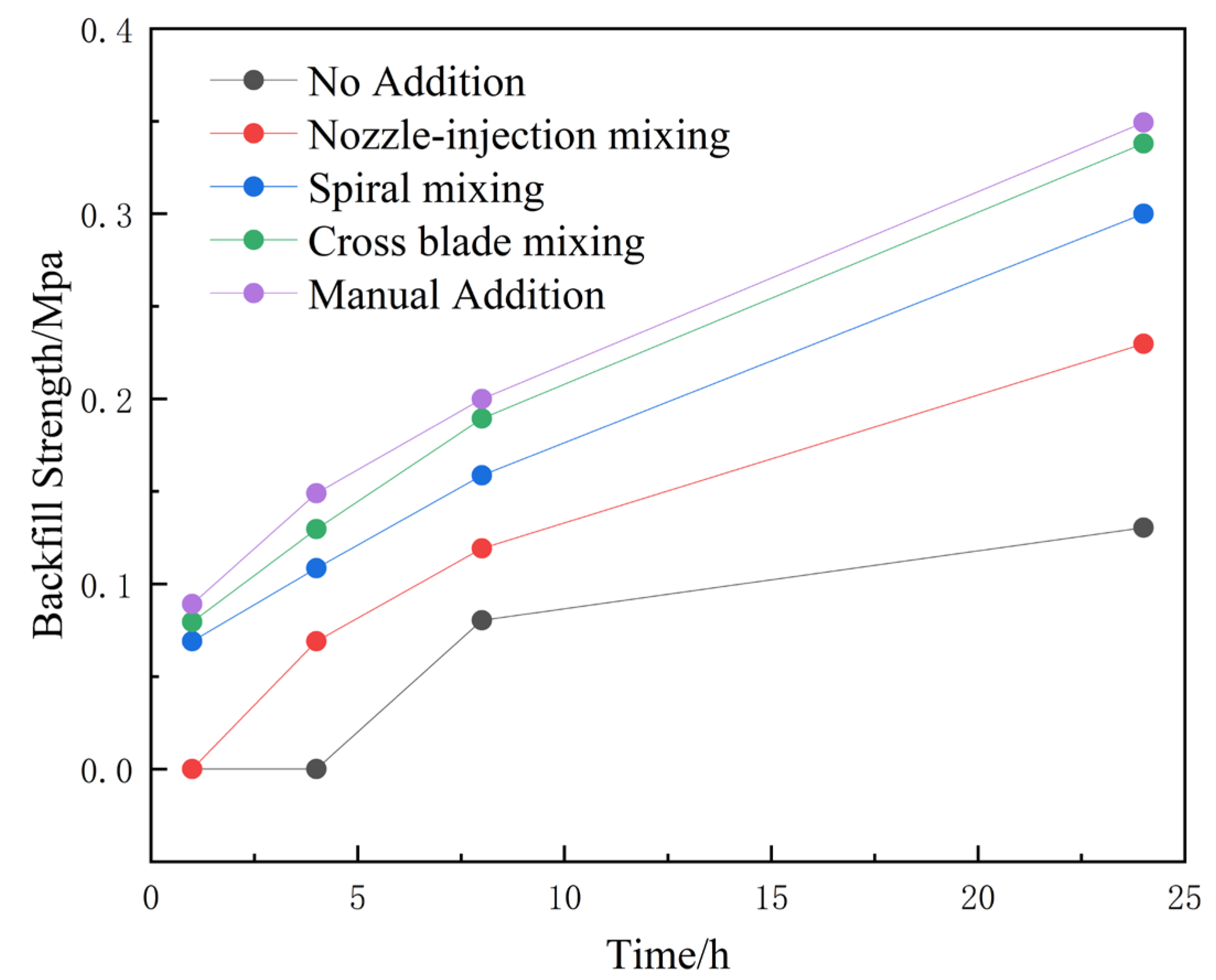
All curing tests were conducted with four parallel replicates for each accelerator addition method (Schemes 1–4) and the control group (Scheme 5), as shown in Figure 12. For each replicate, three standard cubic specimens (100 mm × 100 mm × 100 mm) were prepared from the mixed slurry, and the samples were cured under standard conditions (20 ± 1 °C, humidity > 90%) to determine the early age strength (2 h, 4 h, 8 h, 24 h) of the backfill material. The average value of test results was taken as the final data to ensure reliability. As shown in Figure 13, the addition of the accelerator significantly improved early strength. Among the tested methods, cross-blade mixing and spiral mixing provided better acceleration, with results comparable to manual mixing. Both methods met the 2 h formwork-removal strength requirement. Due to its superior slurry homogeneity, the cross-blade mixing method was identified as the optimal process for adding the accelerator to paste backfill material.
Figure 12.
Preparation of paste backfill material specimens.
Figure 13.
Strength evolution law of backfill under different mixing methods of backfill slurry.
Field tests at the E1302-B face demonstrate that after adopting the cross-blade mixer, the paste achieved a self-supporting strength exceeding 0.1 MPa within 2 h to 4 h, fully meeting the strength requirement for coal cutting and support shifting. Compared with the 8 h to 12 h curing period of the conventional process, this technology reduces the paste curing time by over 50%—effectively doubling curing efficiency and significantly shortening the waiting time in the mining–backfilling cycle.
4.4. Intelligent Monitoring Technology
4.4.1. Equipment Operation Monitoring and Intelligent Control
Longwall paste backfill mining follows a sequential mining–isolation–backfilling–curing operational model. In this model, any inefficiency or failure of equipment in a given stage directly affects the overall production efficiency of the working face. Therefore, ensuring the safe and stable operation of key equipment in each phase is essential to support high-efficiency mining in a longwall paste backfill face. By continuously monitoring critical operating parameters such as current and pressure, the working state of equipment can be effectively evaluated, providing a reliable basis for operational decision-making.
- (1)
- Monitoring and Analysis of Backfill Pump Operation Status
The paste backfill pump delivers surface-mixed slurry through a high-pressure pipeline to the underground stope. If the pump shuts down abnormally due to mechanical failure, power loss, or material issues, slurry flow stops abruptly. Under gravity and pipe resistance, the stagnant paste—owing to its viscosity and setting nature—adheres to the pipe wall and hardens, reducing the cross-section and potentially causing complete blockage, which requires system-wide shutdown and cleaning.
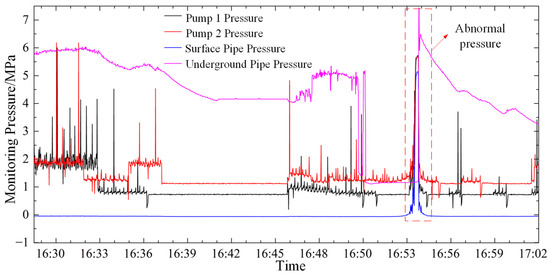
The outlet pressure of the backfill pump directly indicates slurry-transport resistance and operational load. Its fluctuation pattern correlates with equipment health, slurry properties, and pipeline condition: stable fluctuations reflect normal operation; abrupt spikes or drops suggest mechanical wear or valve failure; a sustained gradual rise signals abnormal slurry concentration or incipient pipeline blockage. These characteristics enable early warning of equipment and pipeline issues. Real-time pressure analysis allows rapid cause identification, distinguishing internal faults from external transport problems, thereby providing precise data for diagnostics.
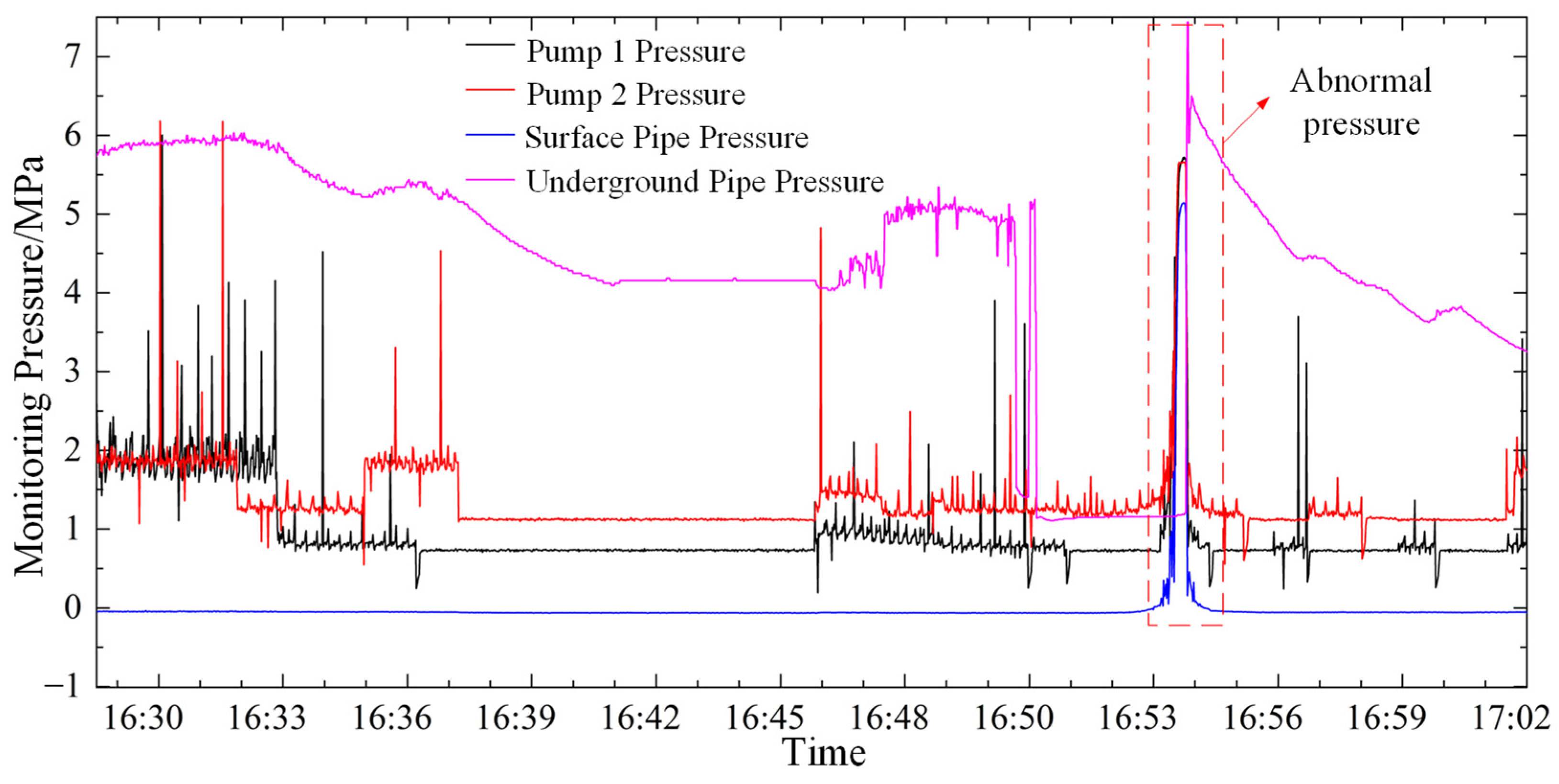
Figure 14 displays the real-time outlet pressure curve of the backfill pump. Before 16:37, pressure remained stable within the normal range with minor fluctuations, indicating smooth slurry transport and stable pump operation. Pump suspension at 16:37 resulted in a stepwise pressure decline due to loss of propulsion. After restart at 16:46, pressure promptly recovered and stabilized. However, around 16:53, a sharp pressure surge exceeded the safety threshold, signaling a rapid increase in flow resistance likely caused by abnormal slurry concentration, localized pipeline buildup, or valve sticking. Timely control measures stabilized the pressure, preventing a complete pipeline blockage.
Figure 14.
Pressure monitoring data for the backfill pump and main pipeline.
- (2)
- Monitoring and Analysis of Crushing Equipment Operation Status
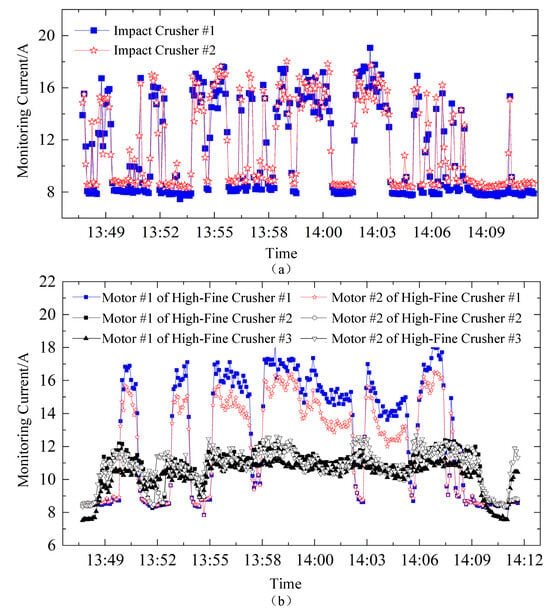
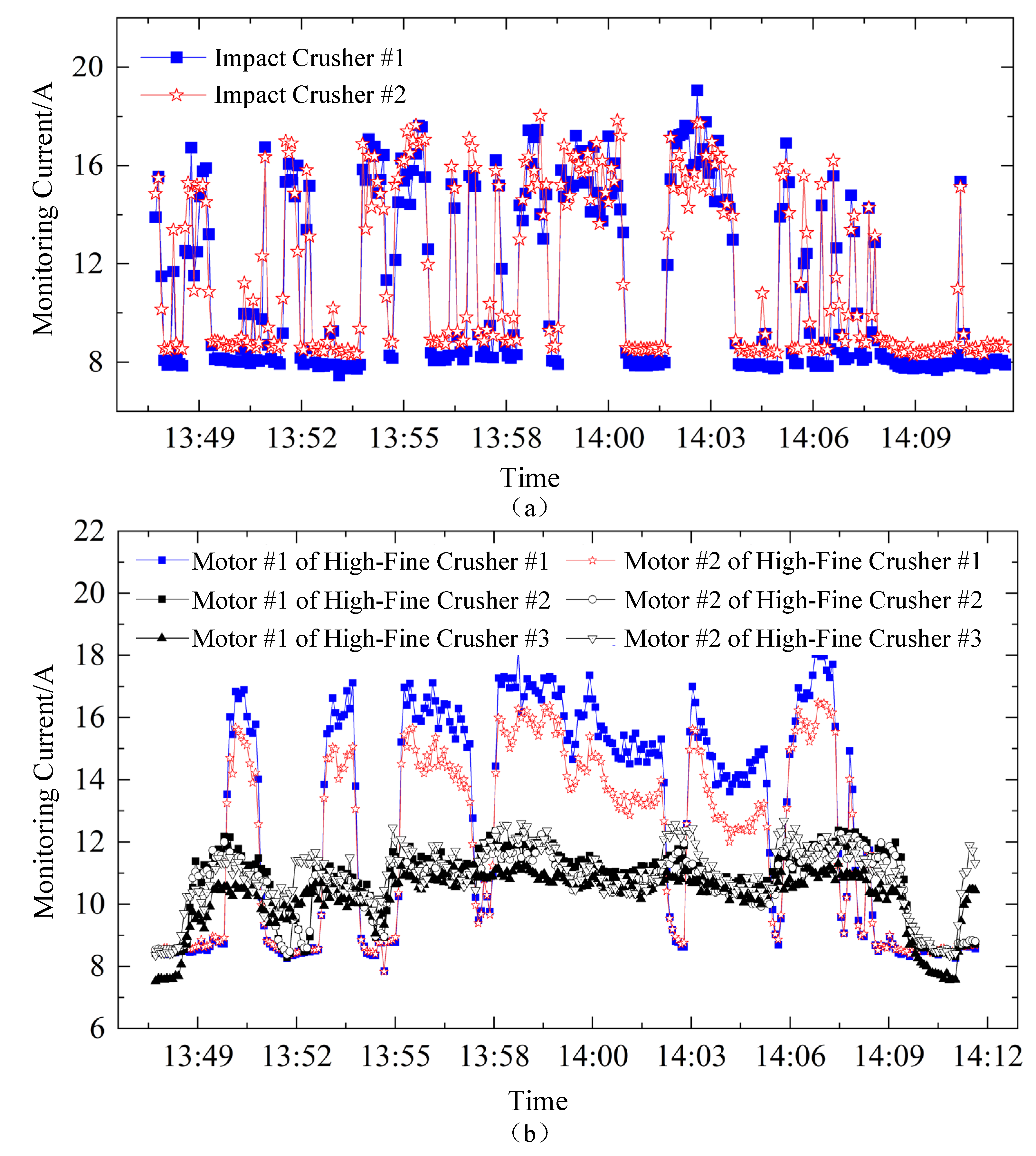
The operational stability of the crushing system directly determines the particle size compliance of the backfill material and the overall efficiency of the subsequent backfill process. Current signals serve as a key parameter reflecting equipment load, providing real-time insight into crushing intensity, operational load, and feed uniformity—thereby helping to prevent equipment failures and energy waste caused by uneven feeding. Over-feeding can lead to motor overload and stalling, requiring system shutdown, while under-feeding results in low-load idling, increasing parasitic power consumption and wear; both scenarios significantly reduce backfilling efficiency.
Figure 15 displays real-time current curves for two parallel impact crushers. Their highly synchronized fluctuations within the rated range indicate uniform feed distribution and optimal operation. In contrast, Figure 2 shows three high-fineness crushers with a marked load imbalance: Crusher #1 operates near 16 A, while #2 and #3 remain at 10–12 A—a 4–6 A deviation signaling abnormal operation. The imbalance likely stems from either biased feed distribution, overloading #1 and underfeeding #2/3, or equipment issues such as differential hammer wear or bearing blockage. Restoring balance requires optimizing the working state of the feeding system or servicing affected units to ensure stable material supply for efficient backfilling.
Figure 15.
Crusher current monitoring data. (a) Impact crusher; (b) high-fine crusher.
- (3)
- Monitoring and Analysis of Mixing Equipment Operation Status
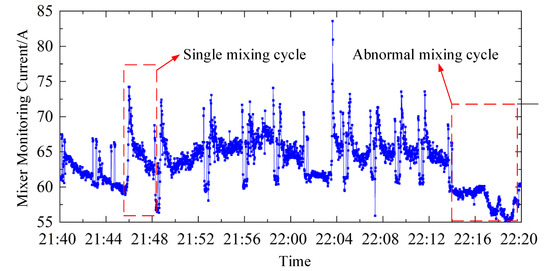
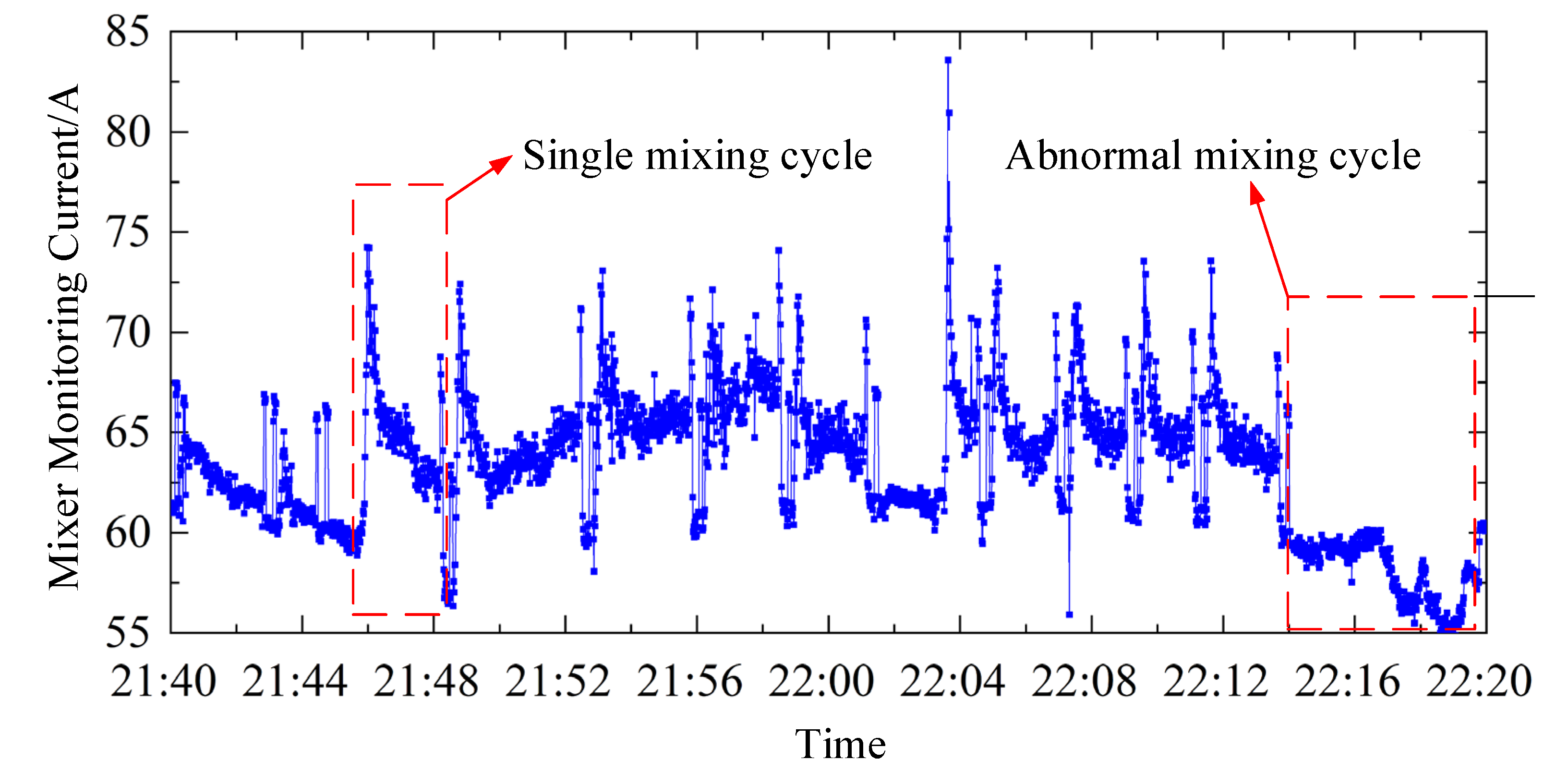
The mixer governs paste proportioning quality, and its current signal provides real-time insight into equipment load and slurry consistency. Given batch volumes of 4–5 m3 and pipeline lengths of 100–200 m, slurry deviations can readily cause pipeline blockage, while corrections after discharge are difficult. Monitoring the current allows early detection of consistency changes: a current below the normal range signals reduced density, whereas a reading above indicates excessive density. Based on current-signal feedback, operational parameters can be promptly adjusted by adding supplementary powder or adjusting water input, ensuring the backfill slurry remains within specified quality limits.
Figure 16 presents the current monitoring data of the mixer. During the initial material loading phase, the current remained above 70 A, reflecting the normal high-load condition of early-stage mixing. As mixing progressed, it quickly stabilized around 65 A, indicating uniform slurry blending and acceptable consistency. At 22:14, a sustained current drop below 60 A signaled low slurry density. Powder was immediately supplemented via the control system, allowing the current to gradually recover to the normal range and thereby preventing potential pipeline conveyance issues caused by low-density slurry.
Figure 16.
Mixer current monitoring data.
4.4.2. Backfill Pipeline Pressure Monitoring and Intelligent Control
Pipeline pressure monitoring is crucial for efficient paste transport and operational continuity. Real-time data from drain valves along the pipeline track slurry-flow variations, enabling early detection of blockages and consistency anomalies. Adjusting pumping parameters or material ratios mitigates these risks, preventing blockages and downtime while dynamically optimizing backfilling efficiency.
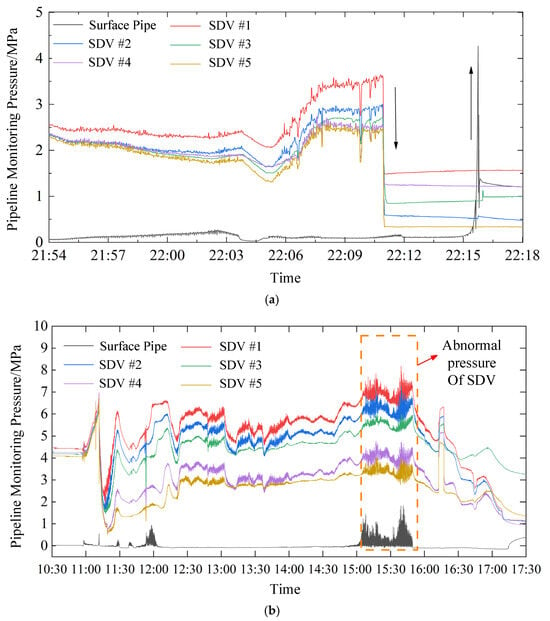
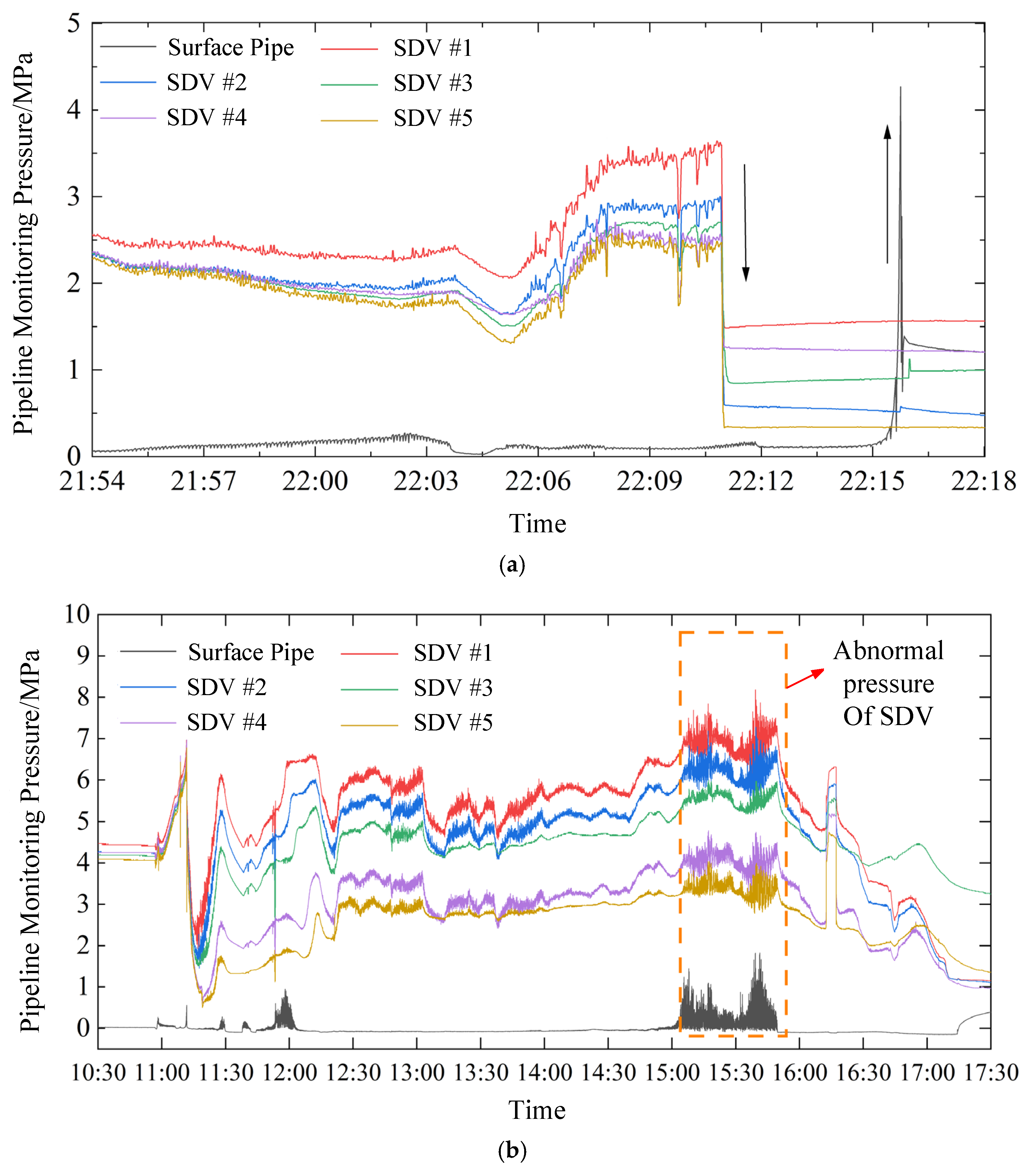
The case shown in Figure 17a exemplifies the critical role of pressure monitoring in blockage localization and early warning. Before 22:08, stable pressure across all pipelines indicated normal backfilling. From 22:08 to 22:11, sharp fluctuations were recorded at underground points 1–5#, followed by a line-wide pressure drop after 22:11, indicating flow interruption and suggesting a potential blockage near the shaft base. At 22:15, a surge and sustained high pressure in the surface pipeline confirmed rapid slurry accumulation without flow, diagnosing a blockage at the shaft base. This real-time data provided precise timing and location evidence, enabling proactive intervention that shortened clearance time and minimized disruption to the backfilling cycle.
Figure 17.
Main pipeline pressure monitoring data: (a) locating pipeline blockage incidents through data analysis; (b) optimizing the slurry transport process based on monitoring data.
The case shown in Figure 17b illustrates how pressure monitoring supports mix ratio optimization and backfilling-capacity improvement. Around 11:50, abnormal pressure fluctuations—attributed to excessive slurry density—prompted immediate mix adjustment, averting blockage. During 15:00–15:50, consistently high pressure indicated full-pipe flow. Raising the pumping rate from 400 to 450 m3/h at 15:35 further increased pressure, limiting efficiency. Based on real-time data, reducing slurry density maintained efficient and safe pumping, thereby enhancing overall backfilling performance.
4.4.3. Backfilling Support Pressure Monitoring and Support Quality Evaluation
The support pressure of backfilling supports critically governs roof control in the backfill face. Pressure monitoring enables analysis of roof-pressure evolution and assessment of the actual load-bearing capacity of supports, providing a basis for comprehensive evaluation and real-time supervision of support-group performance and operational health.
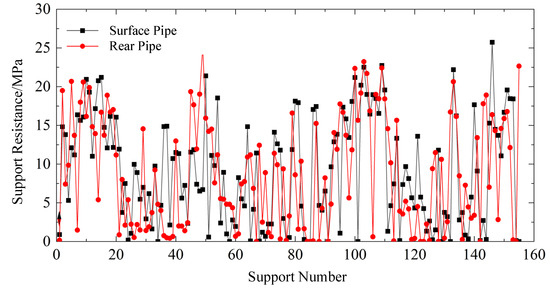
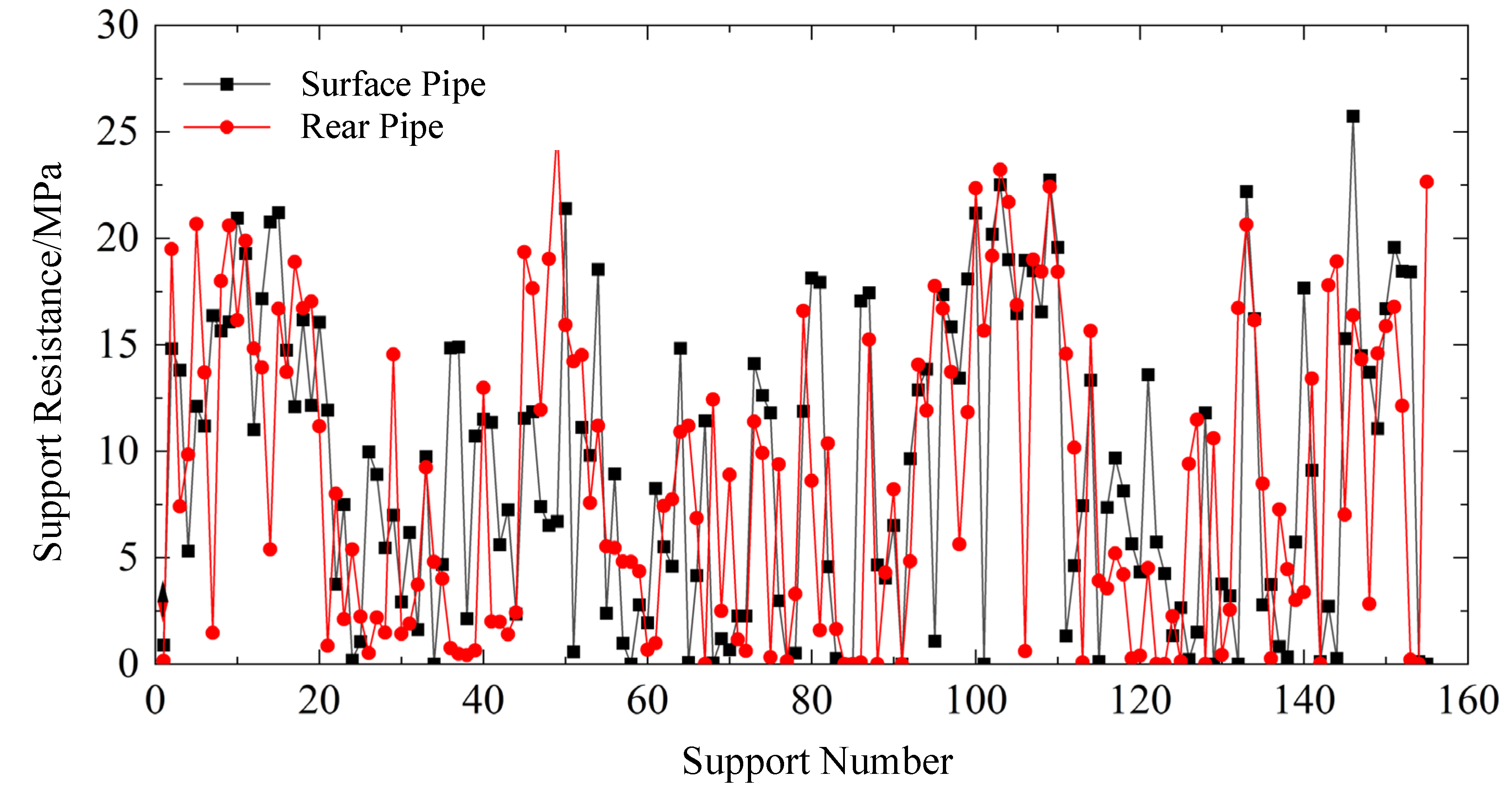
As shown in Figure 18, the automatic monitoring data of face support resistance reveal the following: the average working resistance of the front legs was 8.90 MPa, with a maximum of 25.72 MPa and a compliance rate of only 61.01%; the average working resistance of the rear legs was 8.57 MPa, with a maximum of 25.16 MPa and a compliance rate of 56.60%. The overall compliance rate for the entire face was merely 58.81%. The working resistance was critically low, failing to adequately meet roof stability requirements. Prompt measures—such as pressure adjustment and support maintenance—are required to increase support resistance, optimize roof maintenance, and ensure that roof subsidence before backfilling remains strictly within the designed allowable range.
Figure 18.
Support resistance monitoring data.
5. Performance Evaluation of High-Performance Backfill Mining
5.1. Efficiency Analysis of High-Efficiency Backfill Mining
In conventional longwall paste backfill mining, the sequential mining–isolation–backfilling–curing process allocates 1, 3, 2, and 1 shift(s) to each stage, respectively. By implementing innovations in high-efficiency isolation, backfilling, curing, and Intelligent Monitoring, the high-efficiency process significantly shortens each stage. The overall mining–backfilling cycle is reduced by 57%, successfully achieving the target of one complete mining–backfilling cycle per day (Figure 19).
Figure 19.
Efficiency improvement of high-efficiency backfilling mining technology. (The different colors represent the time proportion of each stage in the mining-backfilling cycle: Gray: mining; Light green: isolation; Blue: backfilling; Dark green: curing; The red line indicates the time reduction before and after applying the high-efficiency backfilling mining technology. All information above has been clearly illustrated in the figure.).
Taking the E1302-B face as an example, with a mining height of 3.5 m, face length of 230 m, and backfill step distance of 2.4 m, the high-efficiency process achieves one mining–backfilling cycle per day. Based on 25 working cycles per month, the annual production capacity of this face increases to 0.81 Mt. In the subsequent E1306-B face, where the length extends to 317 m, the annual capacity rises further to 1.12 Mt under the same monthly cycle frequency. The application of high-efficiency backfill mining technology enables a single face to exceed 1 Mt annually, more than doubling the productivity compared with the conventional output range of 0.3–0.5 Mt/a in current industry longwall backfill operations, thereby significantly enhancing the potential for large-scale implementation of longwall paste backfilling.
5.2. Economic Analysis of High-Efficiency Backfill Mining
The economic assessment of paste backfill mining is based on a comprehensive calculation of its cost structure and savings. The method involves starting with the original fully mechanized mining cost, adding all additional expenses from the backfill system, and then subtracting policy incentives and operational savings attributable to the backfill process. The evaluation covers three main components: (1) the direct cost of backfill mining, referenced against the original full mining cost; (2) incremental costs for materials, labor, power, equipment depreciation, and auxiliary isolation; and (3) cost savings from resource-tax reductions, lower land-subsidence compensation, and decreased gangue-disposal expenses.
An economic analysis was performed for three production scenarios: conventional backfilling (0.40 Mt/a), the efficiency-improved E1302 face (0.81 Mt/a), and the further-optimized E1306 face (1.12 Mt/a).
- (1)
- Determination of Cost Baseline Parameters for Backfill Mining
The total investment in the Gaohe Mine backfill project is 220.66 million yuan, covering civil works, equipment purchase, installation, and other expenses. Calculated results show that the comprehensive mining cost for backfill operation in this mine is approximately 463 CNY/t.
The backfill cost was calculated using local raw-material prices, with the following key parameters: binder at 400 CNY/t, additive at 4.0 CNY/kg, fly ash at 50 CNY/t, mine water and waste gangue treated as zero-cost inputs, and electricity priced at 0.7 CNY/(kW·h). Annual salaries for surface and underground backfill personnel were set at 72,000 CNY and 150,000 CNY, respectively, with corresponding staffing quotas of 60 and 50 workers. The bulk density of coal was taken as 1.4 t/m3 and the backfill ratio as 94.3%.
- (2)
- Cost Composition and Calculation of Backfill
The cost of paste backfill primarily comprises material expenses, fixed-asset depreciation, water and electricity charges, labor costs, and other auxiliary expenditures.
(1) Material cost. The mix proportion of the gangue-based backfill material is as follows: binder 125 kg/m3, fly ash 200 kg/m3, additive 8 kg/m3, water 350 kg/m3, and gangue 1450 kg/m3. Accordingly, the material cost per tonne of coal is calculated as:
(2) Fixed-asset depreciation assumes a 7-year lifespan and a 5% residual value rate for the total investment. The depreciation cost per tonne of coal is then expressed as a function of annual production capacity A:
(3) Electricity cost. The backfill station has an installed capacity of 10,570 kW and a demand factor of 0.8, with an average backfill capacity of 400 m3/h. The electricity cost per tonne of coal is derived as:
(4) Labor cost converted to a per-tonne basis is expressed as:
(5) Other expenses, including backfill mesh, isolation materials, wear-parts, system accessories, and maintenance, are assigned based on field measurements:
The total backfill cost per tonne of coal is obtained as:
- (3)
- Economic Savings from Backfill Mining
Paste backfill reduces overall mining costs through the following avenues:
(1) Savings on gangue-disposal fees. The cost of transporting and disposing of waste gangue at Gaohe Mine is approximately 50 CNY/t. Since each cubic meter of backfill slurry consumes 1.45 t of gangue, the saving per tonne of coal is calculated as: .
(2) Reduction in resource tax. Based on a coal price of 600 CNY/t and a resource-tax rate of 10%, with the backfill-mining policy allowing a 50% tax reduction, the tax saving per tonne of coal is given by: .
(3) Revenue from production-capacity substitution. The coal production capacity released through backfill mining can be converted into substitution quotas at a 30% conversion rate. Assuming a profit of 200 CNY per tonne of quota, the additional revenue per tonne of coal is expressed as: .
(4) Exemption from land-subsidence fees. The mine’s subsidence compensation fee is 13.07 CNY per tonne of coal.
- (4)
- Comprehensive Economic Benefit Analysis
Applying the annual production levels of 0.4, 0.81, and 1.12 Mt/a to the developed formulas yields the cost–benefit indicators for paste backfill mining (Table 2). The results show that high-efficiency paste backfill technology significantly reduces the incremental backfill cost. Under the geological conditions of the E1302 panel, the comprehensive cost is 466.63 CNY/t, generating a per-tonne benefit of 133.37 CNY/t, an annual economic benefit of 108.03 million CNY, and a static investment return rate of 48.96%. For the E1306 panel, the cost is further reduced to 452.36 CNY/t, with a corresponding per-tonne benefit of 147.64 CNY/t, an annual benefit of 165.35 million CNY, and a return rate of 74.94%. The technology thus achieves pronounced technical and economic effectiveness.
Table 2.
Cost–benefit analysis of paste backfill coal mining.
The economic analysis was based on four reasonable assumptions: (1) annual effective working days of 300 with stable production; (2) fixed raw material and electricity prices during the analysis period; (3) straight-line depreciation for fixed assets (5% residual value rate); (4) unchanged national and local coal mining policy incentives (resource tax reduction, subsidence fee exemption).
6. Discussion and Conclusions
6.1. Discussion
6.1.1. Applicability Under More Complex Geological Conditions
The high-efficiency integrated paste backfilling mining technology developed in this study has been verified to be effective under the geological conditions of moderate roof–floor undulation and small dip angle at Gaohe Coal Mine. Its applicability can be extended to more complex geological conditions through targeted technical optimization, with the following adaptive strategies proposed for typical complex geological scenarios:
Complex hydrogeological conditions (abundant groundwater, confined aquifers): On the basis of the existing high-efficiency isolation mechanism, the anti-seepage performance of the isolation system is enhanced. A composite anti-seepage layer (flexible waterproof membrane and elastic rubber sealing material) is added to the bottom and top of the isolation plate, and grouting reinforcement technology is adopted to seal water-conducting fractures in the surrounding rock. This prevents the interaction between groundwater and paste backfill from impairing the curing strength and isolation effect.
Soft rock conditions: The simplified isolation process is adjusted to improve the backfill ratio, and the content of cementitious materials in the paste is moderately increased to accelerate the early strength development rate of the backfill. This enables the backfill mass to rapidly bear the overburden load and restrain the deformation of the soft rock roof.
Roof with well-developed faults: The fault zone is pre-grouted to improve the integrity of the rock mass. In addition, the box-type isolation plate structure is reinforced to enhance its compressive and shear performance.
In general, the core technologies of the proposed system feature excellent modularity and adjustability. By conducting targeted optimization of individual modules for different complex geological conditions, the system can be adapted to most coal mining scenarios under BRW.
6.1.2. Performance Advantages and Derived Social–Economic Benefits
The high-efficiency integrated paste backfilling mining technology developed in this study delivers remarkable production and economic performance improvements compared with conventional technologies, and further generates substantial social and ecological benefits, with all positive outcomes rooted in the fundamental upgrade of backfilling mining efficiency and economic returns. In terms of production efficiency, the annual capacity of the E1302-B face reaches 0.81 Mt/a (62–207% higher than the conventional 0.3–0.5 Mt/a) [20,21], and the mining–backfilling cycle is shortened by 57%—a significant improvement over the 20–30% reduction in single-technology optimization [23,33]. Economically, the E1302-B face achieves a static investment return rate of 48.96%, which is 234% higher than the conventional backfilling mode and 115% higher than the industry average of 22.7% [23]; the optimized E1306 face further elevates the annual production capacity to 1.12 Mt/a with a return rate of 74.94%. This drastic efficiency and economic upgrade fundamentally addresses the core pain points of low productivity and poor economic feasibility plaguing traditional paste backfilling mining, greatly enhancing the technology’s acceptability among coal mining enterprises and laying a solid foundation for its large-scale industrial application. The prominent economic performance of this technology further brings far-reaching social benefits: it retains the core ecological advantages of paste backfilling, effectively controlling surface subsidence, protecting critical surface infrastructure, and avoiding social conflicts caused by mining-induced relocation and infrastructure damage; it also realizes large-scale resource utilization of solid wastes such as coal gangue and fly ash, reducing environmental pollution and saving land resources, thus achieving a win–win of economic development and ecological protection. Globally, this high-efficiency and market-acceptable technology provides a replicable engineering solution for coal-producing countries facing BRW coal mining dilemmas, and is expected to bring long-term social and economic benefits to more mining areas worldwide.
6.2. Conclusions
This work addresses the low productivity and economic inefficiency inherent in the conventional sequential mining–isolation–backfilling–curing process of longwall paste backfill mining. Based on the E1302 paste backfill face at Gaohe Coal Mine, the study identifies the key constraints to efficient operation, systematically develops and industrially validates enhanced technologies, and presents the following main conclusions:
- (1)
- The developed mechanized isolation system achieves adaptive sealing under complex geological conditions, doubling field-measured isolation efficiency and overcoming the high labor intensity and poor sealing reliability of conventional manual methods.
- (2)
- The time-dependent subsidence behavior of the exposed roof in the stope to be backfilled was revealed. Based on this, a high-efficiency backfilling technology incorporating a simplified isolation process was developed. While maintaining surface subsidence control performance equivalent to that of conventional methods, this technology increases the overall mining–backfilling efficiency by 30%, effectively preventing backfill fragmentation and insufficient roof contact.
- (3)
- The optimal accelerator-addition process was established. Comparative tests verified that a cross-blade mixer ensures uniform blending, reducing the paste curing period from within 8–12 h to within 2–4 h (a reduction of >50%), meeting the demand for rapid formwork removal and support shifting.
- (4)
- An integrated intelligent monitoring system covering equipment, pipelines, and supports was established. This system enables real-time monitoring and fault diagnosis of key equipment (backfill pumps, crushers, mixers), implements intelligent pipeline-condition regulation, and provides online support-pressure surveillance, thereby significantly enhancing operational safety and controllability.
- (5)
- A complete set of high-efficiency integrated paste backfilling mining technology system is formed, which realizes the synergistic optimization of isolation–backfilling–curing–monitoring technologies. The industrial application verifies that the system can significantly improve the production capacity and economic benefits of paste backfilling faces, and provides a practical and replicable engineering solution for the large-scale application of longwall paste backfilling mining in coal mines under buildings/railways/water bodies worldwide.
Author Contributions
G.S. and Y.Z. (Yu Zhang) contributed equally to this work as co-first authors. Conceptualization, G.S. and Y.Z. (Yu Zhang); Methodology, G.S. and Y.Z. (Yu Zhang); Software, Z.L.; Validation, G.S., Y.Z. (Yu Zhang) and Y.Z. (Yidong Zhang); Formal analysis, G.S.; Investigation, W.Y.; Resources, Y.Z. (Yu Zhang); Data curation, Z.L.; Writing—original draft preparation, G.S.; Writing—review and editing, Y.Z. (Yu Zhang) and S.S.; Visualization, W.Y.; Supervision, Y.Z. (Yu Zhang); Project administration, Y.Z. (Yidong Zhang); Funding acquisition, Y.Z. (Yidong Zhang). All authors have read and agreed to the published version of the manuscript.
Funding
This study was funded by Shanxi Provincial Key Science and Technology Project for Coal-Based Development (grant number MJ2014-12) and Postgraduate Research & Practice Innovation Program of Jiangsu Province (grant number KYCX25_2920).
Data Availability Statement
The data that support the findings of this study are available from the corresponding author upon reasonable request.
Conflicts of Interest
Author Guangyuan Song was employed by the company Shanxi Cumt Backfill Technology Ltd. The remaining authors declare that the research was conducted in the absence of any commercial or financial relationships that could be construed as a potential conflict of interest.
Abbreviations
The following abbreviations are used in this manuscript:
| E1302-B face | E1302 Paste Backfilling Face |
| SDV | Slurry Discharge Valve |
References
- Clark, A.; Zhang, W. Estimating the Employment and Fiscal Consequences of Thermal Coal Phase-Out in China. Energies 2022, 15, 800. [Google Scholar] [CrossRef] [Scilit]
- Wu, A.; Ma, D.; Sun, L.; Su, C.; Ma, X.; Wang, X. Coordinated Development of China’s Coal Industrial Chain and Supply Chain Resilience Evaluation and Industrial Efficiency under the Dual Carbon Goals. Sustain. Energy Technol. Assess. 2025, 81, 104434. [Google Scholar] [CrossRef] [Scilit]
- Adhikary, D.P.; Guo, H. Modelling of Longwall Mining-Induced Strata Permeability Change. Rock Mech. Rock Eng. 2015, 48, 345–359. [Google Scholar] [CrossRef] [Scilit]
- Wen, P.; Guo, W.; Tan, Y.; Bai, E.; Ma, Z.; Wu, D.; Yang, W. Paste Backfilling Longwall Mining Technology for Thick Coal Seam Extraction under Buildings and above Confined Aquifers: A Case Study. Minerals 2022, 12, 470. [Google Scholar] [CrossRef] [Scilit]
- Sokoa-Szewioa, V.; Mierzejowska, A.; Poniewiera, M. Deformations of the mining area surface as a result of exploitation with sealing of caving gobs. In Minefill 2020–2021; CRC Press: Boca Raton, FL, USA, 2021. [Google Scholar] [CrossRef] [Scilit]
- Prokopov, A.; Prokopova, M.; Stel, S.; Chernil, A. Plugging slurry (backfill) and surface cavity closure technology. E3S Web Conf. 2020, 157, 01014. [Google Scholar] [CrossRef] [Scilit]
- Witthaus, H.; Gutberlet, K.; Junker, M. Stowing on longwall faces on the basis of experience acquired in the German coal mining industry. Min. Rep. 2013, 149, 17–28. [Google Scholar] [CrossRef] [Scilit]
- Guo, H.; Yuan, L.; Shen, B.; Qu, Q.; Xue, J. Mining-induced strata stress changes, fractures and gas flow dynamics in multi-seam longwall mining. Int. J. Rock Mech. Min. Sci. 2012, 54, 129–139. [Google Scholar] [CrossRef] [Scilit]
- Krenžel, V.; Mierva, P.; Vostřez, J.; Křístek, P.; Gogol, D.; Siroká, A.; Semančík, D. Mine Gas Emission Monitoring Following the Cessation of Mining Activities in a Hard Coal Region. Eng. Proc. 2025, 116, 45. [Google Scholar] [CrossRef] [Scilit]
- Mu, D.; Ma, Q.; Zhang, K.; Zhao, J. A gas-mechanical-damage coupling model based on the TLF-SPH method and its application to gas seepage in fractured coal. Comput. Geotech. 2024, 171, 106352. [Google Scholar] [CrossRef] [Scilit]
- Fall, M.; Célestin, J.; Pokharel, M.; Touré, M. A Contribution to Understanding the Effects of Curing Temperature on the Mechanical Properties of Mine Cemented Tailings Backfill. Eng. Geol. 2010, 114, 397–413. [Google Scholar] [CrossRef] [Scilit]
- Xie, H.; Zhang, J.; Gao, F.; Li, B.; Li, C.; Xie, Y.; Zhou, N. Theory and technical conception of carbon-negative and high-efficient backfill mining in coal mines. J. China Coal Soc. 2024, 49, 36–46. [Google Scholar] [CrossRef]
- Petlovanyi, M.; Sai, K. Research into Cemented Paste Backfill Properties and Options for Its Application: Case Study from a Kryvyi Rih Iron-Ore Basin, Ukraine. Min. Miner. Depos. 2024, 18, 162–179. [Google Scholar] [CrossRef] [Scilit]
- Chen, S.; Jin, A.; Zhao, Y.; Li, H.; Wang, J. Mechanical Properties and Deformation Mechanism of Stratified Cemented Tailings Backfill under Unconfined Compression. Constr. Build. Mater. 2022, 335, 127205. [Google Scholar] [CrossRef] [Scilit]
- Chepiga, D.; Podkopaiev, S.; Gogo, V.; Shashenko, O.; Skobenko, O.; Demchenko, O.; Podkopayev, Y. Dualistic effect of the deformation of protective structures made of broken rock in mine workings under static load. Min. Miner. Depos. 2024, 18, 122–131. [Google Scholar] [CrossRef] [Scilit]
- Smoliński, M. Influence of leaving waste rocks in the mined-out space on the geomechanical state of the rock mass around a longwall face. Energies 2023, 15, 9522. [Google Scholar] [CrossRef] [Scilit]
- Zhang, J.; Yang, K.; He, X.; Zhao, X.; Wei, Z.; He, S. Research Status of Comprehensive Utilization of Coal-Based Solid Waste (CSW) and Key Technologies of Filling Mining in China: A Review. Sci. Total Environ. 2024, 926, 171855. [Google Scholar] [CrossRef] [Scilit]
- Chen, X.; Wang, X.; Qian, C.; Qin, D.; Chang, Z.; Feng, Z.; Niu, Z. Influence of Filling Rate and Support Beam Optimization on Surface Subsidence in Sustainable Ultra-High-Water Backfill Mining: A Case Study. Sustainability 2026, 18, 854. [Google Scholar] [CrossRef] [Scilit]
- Baogui, Y.; Chengjin, G.U.; Zhan, S.H.I.; Faguang, Y.; Longfei, W.; Hongjiao, L.I. Control factors and influencing patterns of surface subsidence indeep high-concentration cemented backfill mining. J. Green Mine 2025, 2, 234–245. [Google Scholar] [CrossRef]
- Zhang, J.; Zhang, Q.; Zhou, N.; Li, M.; Huang, P.; Li, B. Research progress and prospect of coal based solid waste backfilling mining technology. J. China Coal Soc. 2022, 47, 4167–4181. [Google Scholar] [CrossRef]
- Hu, B.N. Backfill Mining Technology and Development Tendency in China Coal Mine. Coal Sci. Technol. 2012, 40, 18. [Google Scholar] [CrossRef]
- Li, Z.; Zheng, X.; Zhou, J.; Gao, W.; Liu, W.; Li, Q.; Zhang, P.; Wang, Z.; Wu, C. Distribution of hydraulic support load and support surrounding rock relationship in deep lower slice paste backfilling longwall panel. Coal Sci. Technol. 2025, 53, 202–214. [Google Scholar] [CrossRef]
- Jiang, T.; Chen, Q.; Chen, Q.; Niu, W.; Zhao, F. Study on the Range of Physico-mechanical Parameters for Flexible Isolation Layers in Simultaneous Backfilling. Min. Res. Decelopment 2018, 38, 10–15. [Google Scholar] [CrossRef]
- Wang, Y. Structural Design of an Isolation Device for Headgate Paste Backfilling Supports. Mine 2021, 30, 29–31. [Google Scholar] [CrossRef]
- Liu, W.; Zhang, B. Research and Application of Geotextile in Coal Mine Paste Filling Isolation. Xinjiang Iron Steel 2024, 4, 131–133. [Google Scholar] [CrossRef]
- Dong, J.; Lv, Q.; Yin, N. Research on Adaptability of Magni Sealing Ring Behind Segment Wall of Shield Tunnel in Coal Mine Inclined Shaft. Coal Technol. 2021, 40, 60–63. [Google Scholar] [CrossRef]
- Liu, J.; Wei, Z. Optimization Design of Uncertainty Fluid Topology in the Parallel Connection of Double Pump. World J. Eng. 2014, 11, 311–316. [Google Scholar] [CrossRef] [Scilit]
- Song, W.; Lin, J.; Lu, Y.; Zhao, Y.; Wang, Z. Study of Inlet Vortex Behavior in Dual-Pump Systems and Its Influence on Pump Operational Instability. Water 2025, 17, 1784. [Google Scholar] [CrossRef] [Scilit]
- Li, S.; Shen, C.; Sun, T.; Cheng, L.; Lei, S.; Xia, C.; Zhang, C. Numerical Simulation Analysis on Hydraulic Optimization of the Integrated Pump Gate. Energies 2022, 15, 4664. [Google Scholar] [CrossRef] [Scilit]
- Ji, P. Analysis of Steering Dynamic Characteristics and Energy Consumption in Dual-Pump Merging Hydraulic Systems. Mach. Des. Manuf. 2021, 7, 217–220. [Google Scholar] [CrossRef]
- Guo, J.; Yang, W.; Zhao, Y.; Zhang, W. Stability Analysis of a Mine Wall Based on Different Roof-Contact Filling Rates. Minerals 2024, 14, 673. [Google Scholar] [CrossRef] [Scilit]
- Zhao, K.; Wang, X.; Xu, Z.; Liao, L.; Gong, C.; Yang, X. Numerical Investigation of the Stability of Roofing with Cemented Tailings Backfill and Its Application. In Proceedings of the International Conference on Deep and High Stress Mining; Jiangxi University of Science and Technology: Ganzhou, China, 2010; pp. 413–422. [Google Scholar] [CrossRef] [Scilit]
- Zhang, S. Quicklime and Calcium Sulfoaluminate Cement Used as Mineral Accelerators to Improve the Properties of Cemented Paste Backfill with a High Volume of Fly Ash. Materials 2020, 13, 4018. [Google Scholar] [CrossRef] [Scilit]
- Liu, Y.; Li, H.; Wang, K.; Wu, H.; Cui, B. Effects of Accelerator–Water Reducer Admixture on Performance of Cemented Paste Backfill. Constr. Build. Mater. 2020, 242, 118187. [Google Scholar] [CrossRef] [Scilit]
- Chiloane, N.M.; Sengani, F.; Mulenga, F. An Experimental and Numerical Study of the Strength Development of Layered Cemented Tailings Backfill. Sci. Rep. 2024, 14, 734. [Google Scholar] [CrossRef] [Scilit]
- Qi, C.; Chen, Q.; Sonny Kim, S. Integrated and Intelligent Design Framework for Cemented Paste Backfill: A Combination of Robust Machine Learning Modelling and Multi-Objective Optimization. Miner. Eng. 2020, 155, 106422. [Google Scholar] [CrossRef] [Scilit]
- Cheng, J.; Wan, Z.; Peng, S.; Zhang, H.; Xing, K.; Yan, W.; Liu, S. Technology of intelligent sensing of longwall shield supports status and roof strata based on massive shield pressure monitoring data. J. China Coal Soc. 2020, 45, 2090–2103. [Google Scholar] [CrossRef]
- Gamboa, U.; Janzon, A. Use of Intensive Remote Monitoring and Artificial Intelligence to Optimise Paste Pump Availability on Paste Fill; Fourie, A.B., Copeland, A., Daigle, V., MacRobert, C., Eds.; Australian Centre for Geomechanics: Crawley, WA, Australia, 2025; pp. 303–314. [Google Scholar] [CrossRef] [Scilit]
- Du, P.; Yang, J.; Chu, H.; Lu, X.; Cheng, X. Influence of Additional Components on Mechanical and Shrinkage Properties of High Performance Cementitious Grouting Materials. Case Stud. Constr. Mater. 2024, 21, e03425. [Google Scholar] [CrossRef] [Scilit]
- Cavusoglu, I. Slag Substitution Effect on Features of Alkali-Free Accelerator-Reinforced Cemented Paste Backfill. Minerals 2025, 15, 135. [Google Scholar] [CrossRef] [Scilit]
- Lian, S.; Meng, T.; Wang, M.; Yu, H. Effect of Nano-SiO2 on the Mechanical Properties, Microstructure, and Hydration Process of Cementitious Materials Incorporating Hydrophobic Admixture. J. Mater. Civ. Eng. 2020, 32, 3084. [Google Scholar] [CrossRef] [Scilit]

Disclaimer/Publisher’s Note: The statements, opinions and data contained in all publications are solely those of the individual author(s) and contributor(s) and not of MDPI and/or the editor(s). MDPI and/or the editor(s) disclaim responsibility for any injury to people or property resulting from any ideas, methods, instructions or products referred to in the content. |
© 2026 by the authors. Licensee MDPI, Basel, Switzerland. This article is an open access article distributed under the terms and conditions of the Creative Commons Attribution (CC BY) license.