1. Introduction
The consumption of energy from local photovoltaic (PV) generation, known as PV self-consumption, is an important activity within global energy transition strategies aimed at addressing the energy crisis. Driven by the European Union’s (EU) Clean Energy Package [
1], passive consumers have become active participants, being able to produce, manage, and store their own electricity, thereby contributing to changes in consumption and production patterns. From the consumer’s perspective, these systems reduce dependence on the grid and offer energy security and protection against electricity price fluctuations. They can also lead to savings, since self-generated PV electricity usually costs less than grid electricity. Between 2020 and 2024, the European market incorporated 57.4 GW of PV power in residential self-consumption systems [
2], and it is estimated that capacity additions will continue to increase in the coming years, ranging from 23 to 28 gigawatts per year between 2025 and 2028 [
3], reflecting this growing interest.
The rapid expansion of the solar market in Europe has led to a high demand for installation services, resulting in the establishment of a large number of companies in this sector [
4]. While this expansion supports EU objectives and contributes to raising awareness of sustainability, end users frequently confront a large volume of competing offers that differ in price, system size, and the addition of a storage unit (ST). Price dispersion reflects heterogeneous costs and business strategies; however, significant discrepancies in system size should not occur when proposals rely on the same inputs, i.e., the same roof tilt angle and orientation, and the same solar irradiation and energy consumption profile.
To support users to understand and compare the performance of different system configurations, technical indicators such as self-consumption (
SC) and self-sufficiency (
SS) are particularly useful. Luthander et al. [
5] define
as the share of PV energy consumed on site, and
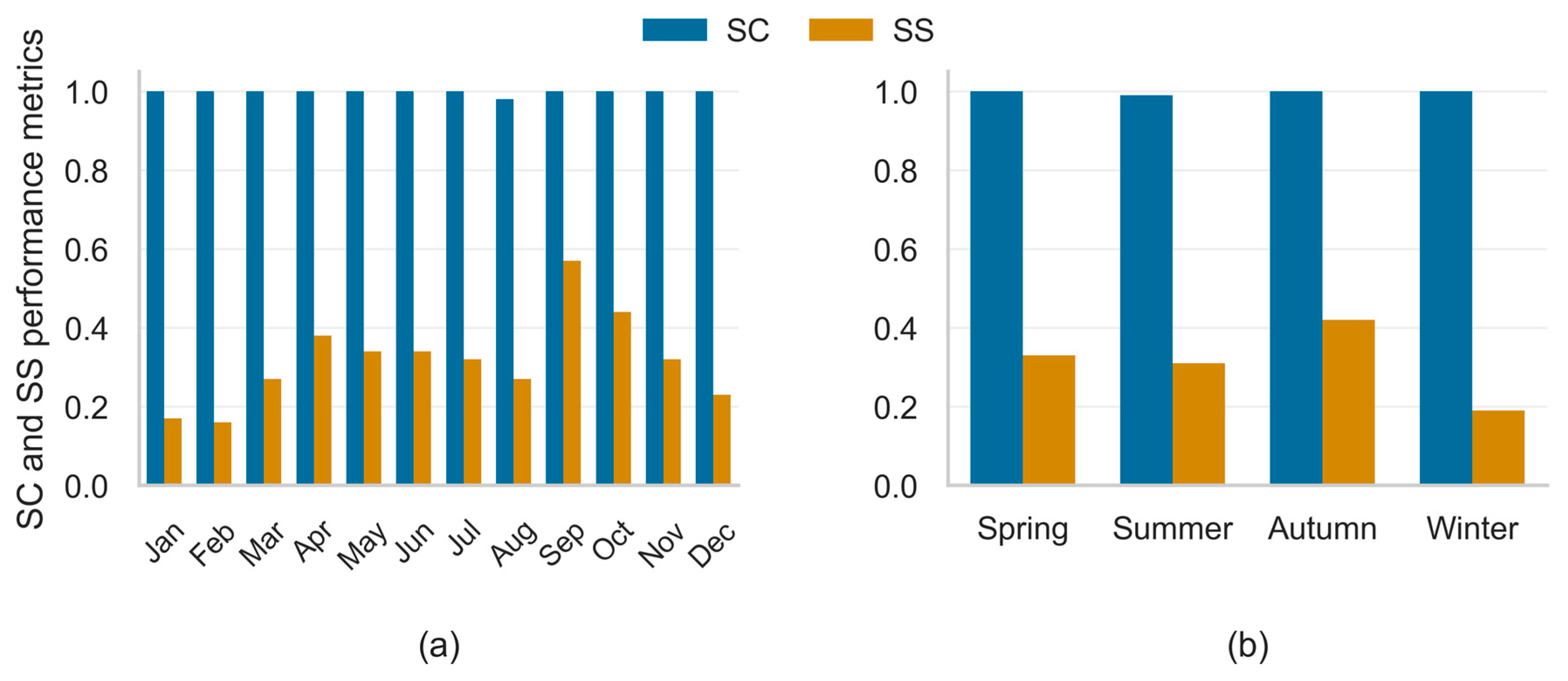
SS as the proportion of the user’s total energy demand covered by the PV system. For end users, these indicators clarify how the system contributes to reducing energy costs and increasing independence from the grid.
SC is commonly associated with savings by reducing purchases from the grid [
6], while
SS reflects autonomy from the grid. Increasing both indicators increases benefits for the users [
7]. Since these indicators depend mainly on solar irradiation and the user’s energy consumption profile, which tend to follow consistent and predictable patterns over time, they may offer a consistent basis for evaluating performance and a degree of protection against market uncertainties.
Existing tools for sizing PV self-consumption are commonly based on maximizing one or both indicators. For example, in [
8], the authors evaluated ST alternatives to improve
SC and
SS in renewable energy applications. In [
9] a sizing approach for PV-ST systems has been introduced evaluating how each component influences these metrics. Reference [
10] presents a PV size methodology to maximize
SC comparing two different systems configurations and how the results affect economic evaluation metrics. Similarly, reference [
11] reviews methods to increase
SC in residential seettings, highlighting energy storage and load management. In [
12], the authors developed a net-zero factory design approach and used
SC as a main indicator to assess the effect of PV–ST integration and operational flexibility on local PV utilization. In [
13], an integrated PV–ST system with electric vehicles has been evaluated using
SC and
SS indicators to quantify the contribution of ST and energy management strategies to on-site renewable use.
Technically, although SC and SS evaluate system performance, they provide only an indirect assessment of the adequacy of the system relative to user demand because both metrics summarize the amount of overlap energy between PV generation and load overtime, without explicitly characterizing how that overlap is distributed along the time series. Therefore, a metric that directly measures the alignment between energy consumption and PV production provides complementary information. This is relevant because configurations with better temporal correspondence between generation and demand may reduce surplus generation and improve interaction with the grid.
This paper introduces a new metric: the Mismatch Index (
MI), derived from the Gini Coefficient (
GC) and Lorenz Curve [
14,
15], widely used in the statistical analysis of social income inequality. Previous energy studies have adopted GC in conceptually related ways, consistent with the argument of [
16] that Lorenz-based measures are not specific to income and can be applied to any non-negative size distribution to quantify inequality (or unevenness) across a set of observations. For instance, ref. [
17] used “energy Lorenz curves” and Gini coefficients to describe distribution and equity in electricity consumption across populations, rather than temporal PV–load coincidence. In the PV domain, ref. [
18] proposed a Lorenz-based approach to quantify variability/concentration of PV power output itself, without requiring a load time series. More directly related to PV–load matching, ref. [
19] quantified mismatch between PV generation and typical load patterns, where GC is applied after a data-driven extraction of representative demand profiles, and the results are interpreted at the level of load-pattern classes. In contrast, the
MI proposed here is formulated to assess the degree of temporal alignment between PV generation and electricity demand at the system (or user) level, and it can be computed directly from the PV–load balance time series used in self-consumption assessment.
Here, the approach has been adapted to assess the mismatch between energy output from the PV systems (including storage discharge when present) and electricity demand in the context of self-consumption. In related PV–load applications, GC is commonly defined on PV generation and demand time series (or on PV output variability), whereas here storage discharge is explicitly included in the supply term when available. Given the common mismatch between PV generation and demand, MI complements SC and SS by providing a more complete characterization by jointly describing (i) the magnitude of PV–load overlap (SC and SS) and (ii) the degree of temporal alignment between both distributions over the year. This combination supports a more granular comparison of self-consumption system configurations, particularly when distinguishing between technically similar solutions with different levels of demand-oriented matching.
Although
SC,
SS and
MI support technical assessment, end user decisions are usually based on cost and profitability. Therefore, economic feasibility analysis often complements the technical evaluation to support investment optimization [
20], compare design options under consistent economic criteria [
21], and avoid economically disadvantageous systems configurations [
22]. Common metrics include the Payback Period (
PBP) and the Internal Rate of Return (
IRR) [
23], with Levelized Cost of Energy (
LCOE) frequently applied [
24]. The
PBP indicates the time required to users recover their initial investment,
IRR signals whether expected returns justify the investment, and
LCOE benchmarks the energy unit cost (€/kWh) from the PV system against grid electricity tariffs, offering a fixed and transparent cost in contrast to uncertain and fluctuating grid prices. In addition, this work includes the Levelized Profit of Energy (
LPOE), which measures the net revenue per kWh of electricity from solar PV generation, introduced by [
25] as an analogue and supplement to
LCOE.
Numerous sizing tools have emerged over time to address the rapidly growing market for PV self-consumption. Kazem et al. (2022) presents a systematic review spanning eight decades, cataloguing 36 tools that may focus on system sizing, performance, and cost evaluation [
26]. Representative examples of widely used tools and frameworks for PV and PV–ST assessment include PVsyst [
27], HOMER Pro [
28], and NREL SAM [
29].
Appendix A summarizes these tools and highlights their data resolution, accessibility, and whether an explicit temporal matching criterion is used in the sizing logic. Most tools perform parametric analysis, comparing the results from different systems configurations, while a smaller group performs system optimization that usually minimizes costs under technical constraints. Their methodology relies mostly on monthly or annual aggregated data of weather and load profile. As design criteria, choices balance cost goals with technical needs, returning energy production, self-consumption rate, and cost metrics as common outputs. Other approaches suggest models based on minimizing life cycle cost to identify the most cost-effective technological design in energy communities, using energy demand simulations [
22]. In contrast to conventional techno-economic sizing tools, which typically return a single solution for a predefined objective (e.g., cost minimization), this work provides a flexible framework to assess PV–ST configurations through hourly simulation. The tool enables the analysis of how different configurations affect technical, temporal-alignment, and economic indicators, as well as the identification of configurations that satisfy user-defined performance criteria. In addition, it incorporates a rule-based sizing procedure that evaluates multiple criteria to recommend a single configuration when needed, without relying on mathematical optimization; however, this is only one of its possible functionalities and does not define the framework as a single-solution optimization approach.
Yet, three gaps remain weakly addressed. (i) Many tools, including established commercial software, perform planned energy and load-balance simulations and report overlap-based indicators such as SC and SS, together with grid interaction metrics. However, an explicit temporal mismatch characterization criterion is less commonly used as a primary sizing objective for grid-connected PV self-consumption systems. In particular, sizing workflows typically optimize energy or cost metrics, while the structure of mismatch across time steps is either assessed qualitatively or treated indirectly. (ii) Design tools often rely on monthly or yearly aggregated demand instead of annual hourly data; as a result, the energy balance becomes imprecise, which can bias self-consumption estimates and lead to incorrect sizing of the PV–ST system. (iii) Few tools qualify as commercial solutions with free access, which limits practical use and independent comparison. In addition, even among freely accessible and reproducible solutions, temporal matching is rarely integrated as an explicit, metric-driven sizing criterion.
Based on these gaps, this study addresses the following research questions:
- RQ1:
How can temporal mismatch between PV generation and demand be quantified and incorporated into sizing decisions?
- RQ2:
How technical, temporal, and economic indicators can be integrated within a single decision-support framework?
- RQ3:
How does the proposed tool performs when applied to residential and energy-community case studies?
To fill these gaps, address these research questions, and address user needs and support informed decisions, this paper presents an open-source tool for sizing PV self-consumption systems and evaluating their technical and economic performance. Using real historical hourly energy consumption profiles and meteorological data, the tool, developed in Python 3.12.1 [
30], simulates energy flows and performs both technical and economic analyses with the previously presented indicators. The tool generates graphical outputs that map performance over different PV and ST sizes, including configurations with and without ST. In this way, users can better understand how different system sizes affect technical performance and economic outcomes. To illustrate its functionality, the tool has been applied in two different contexts: (i) an individual residential consumer, to show how the tool assesses PV-ST configurations in terms of mismatch reduction, stabilization of technical performance indicators (
SC and
SS) without oversizing, and economic viability criteria, while sizing a PV-ST system that meets these criteria; and (ii) an energy community operating in a village in a rural area in northern Spain [
31], with ten prosumers, to compare individual and centralized system solutions based on technical and economic indicators.
Although the case studies rely on residential data, the workflow extends to any context with a defined load profile and demand, such as industrial and commercial consumers.
Finally, the document raises questions about the representativeness of the initial data when using it to size PV systems for self-consumption. Although tools such as PVGIS [
32] can generate hourly solar radiation and ambient temperature data for a given geographical location from data series spanning 16 years or more, the availability of electricity consumption data is often limited. In most cases, only monthly consumption bills are available, which makes it impossible to perform an hourly analysis. Electricity distribution companies retain historical consumption data, but only the holder of the consumption point can access it. Permission from the holder is required to consult the data. The authors have had access to two full years (2023–2024) of hourly consumption data from 118 supply points in the Calatayud region in northern Spain, where the aforementioned energy community operates. The data were retrieved from the distribution-company metering system through the open access platform Datadis [
33], with explicit authorization granted by the supply-point owners. The sample includes residential and small commercial consumers, predominantly in single-family rural houses. A statistical analysis is presented to compare consumption profiles between the two years of data, quantify interannual variability and establish whether a single year of hourly electricity consumption data could be representative for sizing a PV system for self-consumption.
Therefore, the scientific contributions of this work are threefold. First, it introduces the MI to quantify the degree of temporal alignment between PV system energy output and electricity demand in self-consumption applications. Second, it proposes a sizing and assessment framework that combines MI, SC and SS with techno-economic metrics to enable consistent comparison of PV–ST configurations under hourly energy balance. This framework contributes to sustainability-oriented system design by supporting configurations that are more closely aligned with demand, reducing unnecessary surplus, and promoting more efficient interaction with the grid. Third, it provides an empirical analysis of interannual variability in hourly consumption data and its implications for the representativeness of one-year datasets in sizing studies.
The remainder of this paper is organized as follows: the Introduction proceeds with a literature-based overview of PV self-consumption systems and the common technical and economic performance metrics.
Section 2 presents the tool description and methodology of each tool’s application.
Section 3 applies the tool in a case study showing all its functionalities.
Section 4 reports comparative results for the energy community analysis.
Section 5 presents a statistical comparative analysis of the hourly electricity consumption of 118 residential consumers over two consecutive years. Finally,
Section 6 outlines the key conclusions.
1.1. PV Self-Consumption System Overview
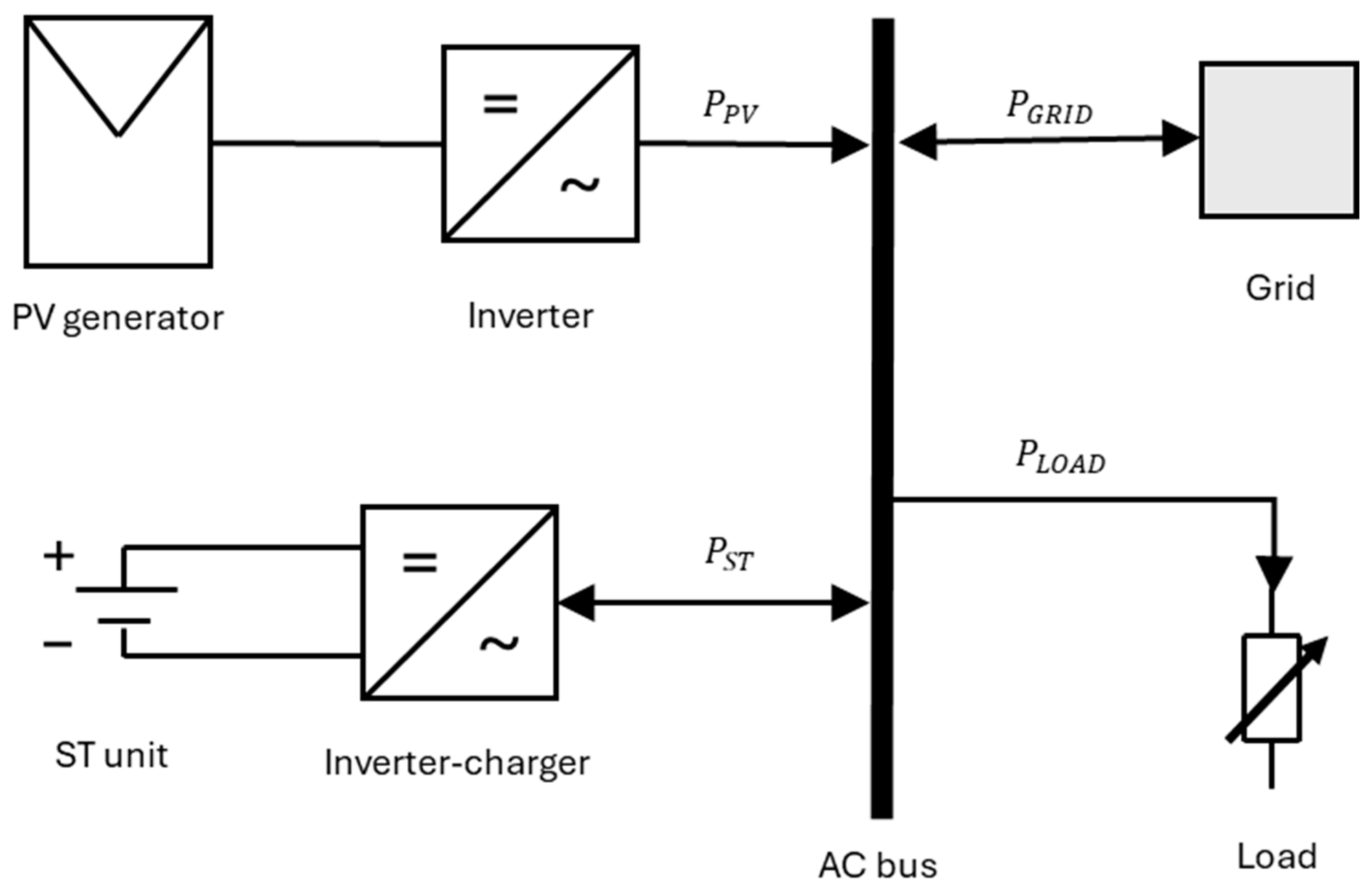
In a PV self-consumption system with ST, AC coupling often becomes the preferred option because it offers greater flexibility in system configuration and retrofit integration [
8], as illustrated in
Figure 1.
The main components of the system include the PV generator, the battery (ST), the load demand, and the distribution grid. Equation (1) describes the system’s power balance, where the instantaneous power generated by the PV (
) equals the sum of the power demanded by the load (
), the power exchanged with the grid (
), and the power exchanged with the ST (
). Here,
and
are considered negative when they supply power to the load, and positive when they absorb surplus power from the PV generator.
PV production can be estimated based on cell temperature (
), Nominal Operating Cell Temperature (
NOCT), effective plane-of-array irradiance (
G), and ambient temperature (
), as expressed by Equations (2) and (3) [
9].
where
refers to the PV nominal power,
refers to the reference solar irradiance,
γ is the temperature coefficient of power, and
represents the overall balance-of-system efficiency (including angular, spectral, soiling, mismatch and shading losses as well as inverter and wiring losses).
In self-consumption systems, ST, typically electrochemical battery, contributes to improve SC and SS by absorbing surplus power from the PV generator. This charging process redirects available power to the ST instead of exporting it to the grid, enabling later power supply to the load during periods of low solar generation or increased demand. By doing so, the system increases the use of locally generated power and reduces dependence on the grid. The state of charge (SOC) determines the ST’s ability to absorb or deliver power at any given time, directly influencing how the system manages power flows.
1.2. Self-Consumption and Self-Sufficiency Indicators
Under PV self-consumption system configuration, Luthander et al. [
5] describe the instantaneous self-consumption power (
M(
t)) as the minimum between the load demand and the total power available from the PV generator and the ST, as expressed in Equation (4). The equation shows that the self-consumption power is limited by whichever of the load and generation profiles is smaller at any given time.
Note that when charging the battery and when discharging.
The
SC and
SS metrics can be expressed by Equations (5) and (6), respectively, as described in [
10]. In these equations, integrals represent the calculations based on the instantaneous power balance over time, while the second part relates to the energy balance of the system. Since
represents the energy flow from origin
X to destination
Y,
and
refer to the energy supplied to the load by the PV generator and the ST, respectively.
is the total amount of PV energy generated over a one-year period, while
is the total load demand over the same one-year period.
Other relevant metrics for on-grid systems are related to grid interaction [
5] and are based on the energy imported from (
IE) and exported to (
EE) the grid, as described in Equations (7) and (8), respectively.
is defined as the portion of energy demand that must be supplied by the grid (
) when the self-consumption system cannot fully cover consumption, while
refers to the surplus energy that exceeds on-site consumption and ST capacity, resulting in its export to the grid (
).
1.3. Economic Evaluation Metrics
From an economic perspective, power flows determine the system revenues (savings from self-consumption and income from surplus electricity sales), directly influencing the economic viability indicators. The
represents the time required for the accumulated revenues to match the initial investment (
). In its simplest form, it can be expressed in Equation (9) [
11].
where
REV corresponds to the annual revenue and
C expresses the annual operating cost.
The
represents the annualized rate of return generated by the investment. Its definition builds on the Net Present Value (
NPV), which measures the difference between the present value of future profits and the initial investment, considering the time value of money over the system lifetime (
LT), as expressed in Equation (10). The
corresponds to the discount rate (
) that results in a zero
, as defined in Equation (11) [
34].
The
LCOE estimates the average cost per kilowatt-hour (kWh) of electricity produced over the system’s lifetime, considering the annual PV degradation rate (
), calculated as the ratio of total discounted costs to total generated energy [
34], as expressed in Equation (12).
While
LCOE condenses the unit cost of produced energy,
LPOE [
25] also considers the
REV, thereby complementing
LCOE. It measures the net profit per kWh, as defined by Equation (13). When used jointly,
LCOE guides cost efficiency, and
LPOE frames market-facing feasibility and grid-parity appraisal for self-consumption systems.
2. Tool Description and Methodology
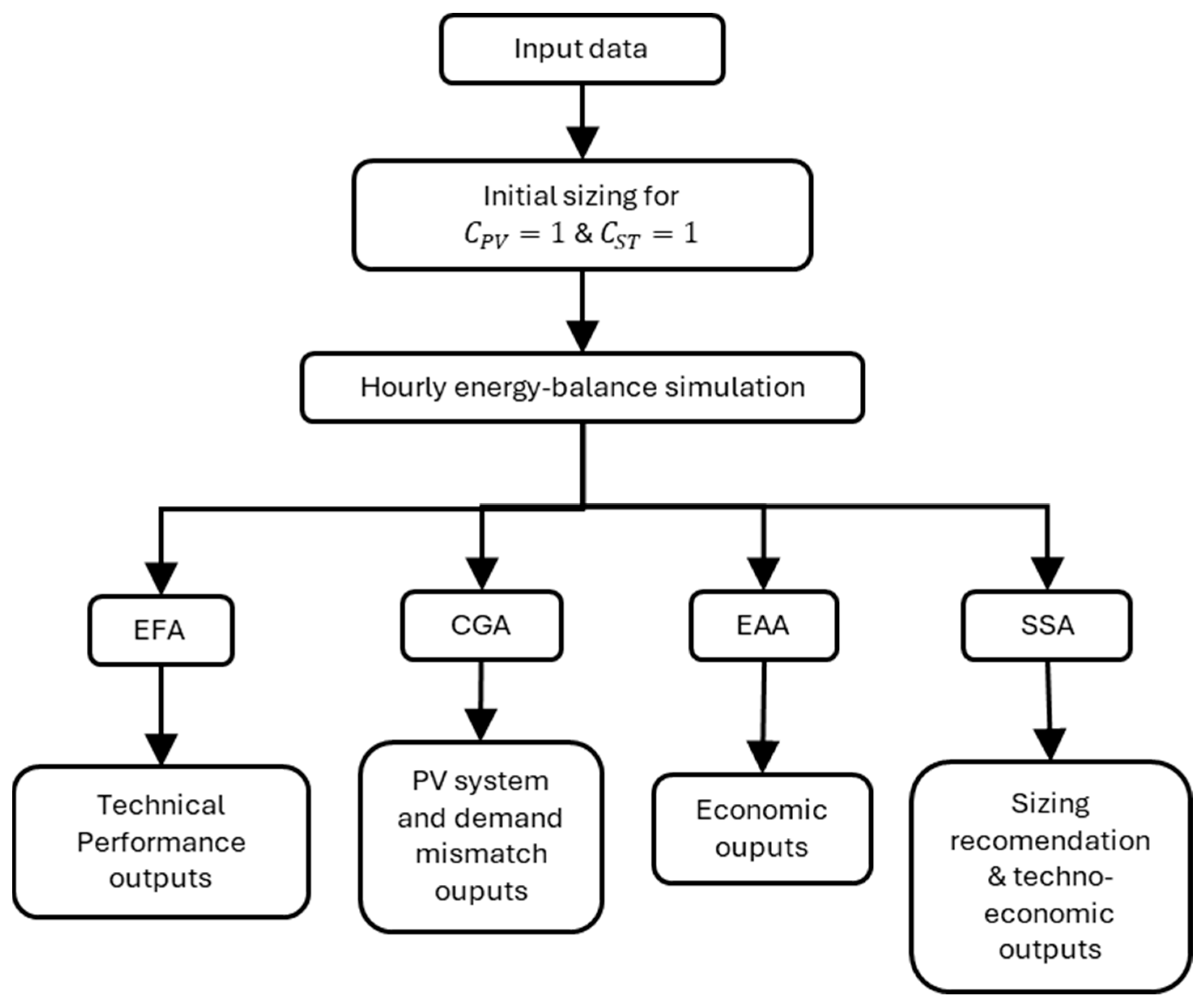
Four individual applications compose the tool: (i) Energy Flow Application (EFA); (ii) Consumption–Generation Alignment Application (CGA); (iii) Economic Assessment Application (EAA); and (iv) System Sizing Application (SSA).
Figure 2 summarizes the overall workflow of the tool.
As common ground, all applications have been developed based on an hourly energy-balance simulation. To run it, the tool requires as input one year of actual hourly data on energy consumption, irradiance, and ambient temperature. This common modelling basis also supports the identification of configurations that better use locally generated electricity under actual consumption conditions.
To compare system configurations consistently, the analysis applies two normalized sizing parameters: PV Capacity (
) and ST Capacity (
). The first refers to the annual ratio between total PV generation (
) and demand (
) over a year, as defined in Equation (14). The second represents the ratio of the ST capacity (
) to average daily consumption, calculated by dividing the annual load by the number of days in a year (
), as expressed in Equation (15). Although they are expressed as “capacities” for brevity, both parameters are energy-based normalizations and can be translated into practical sizes (kWp and kWh) using the PV nominal power (kWp) and ST energy capacity (kWh).
As a practical example, if a kWp is needed to meet the annual demand () in the reference case (), then corresponds to kWp and under the same conditions. Likewise, if the average daily consumption is 10 kWh/day, then corresponds to a ST capacity kWh.
For methodological delimitation, the parameter interval has been defined as and , both with a step size of . The following subsections present the methodological criteria for each application.
As an initial sizing step, a reference configuration is defined at and , which corresponds to (i) annual PV generation matching annual demand and (ii) storage energy capacity matching average daily consumption. This reference case is used to scale the PV generation profile and storage capacity for any (, ) pair. The hourly energy-balance simulation is then executed for each configuration in the sizing space, generating annual energy-flow outputs that serve as the common basis for EFA, CGA, EAA, and SSA.
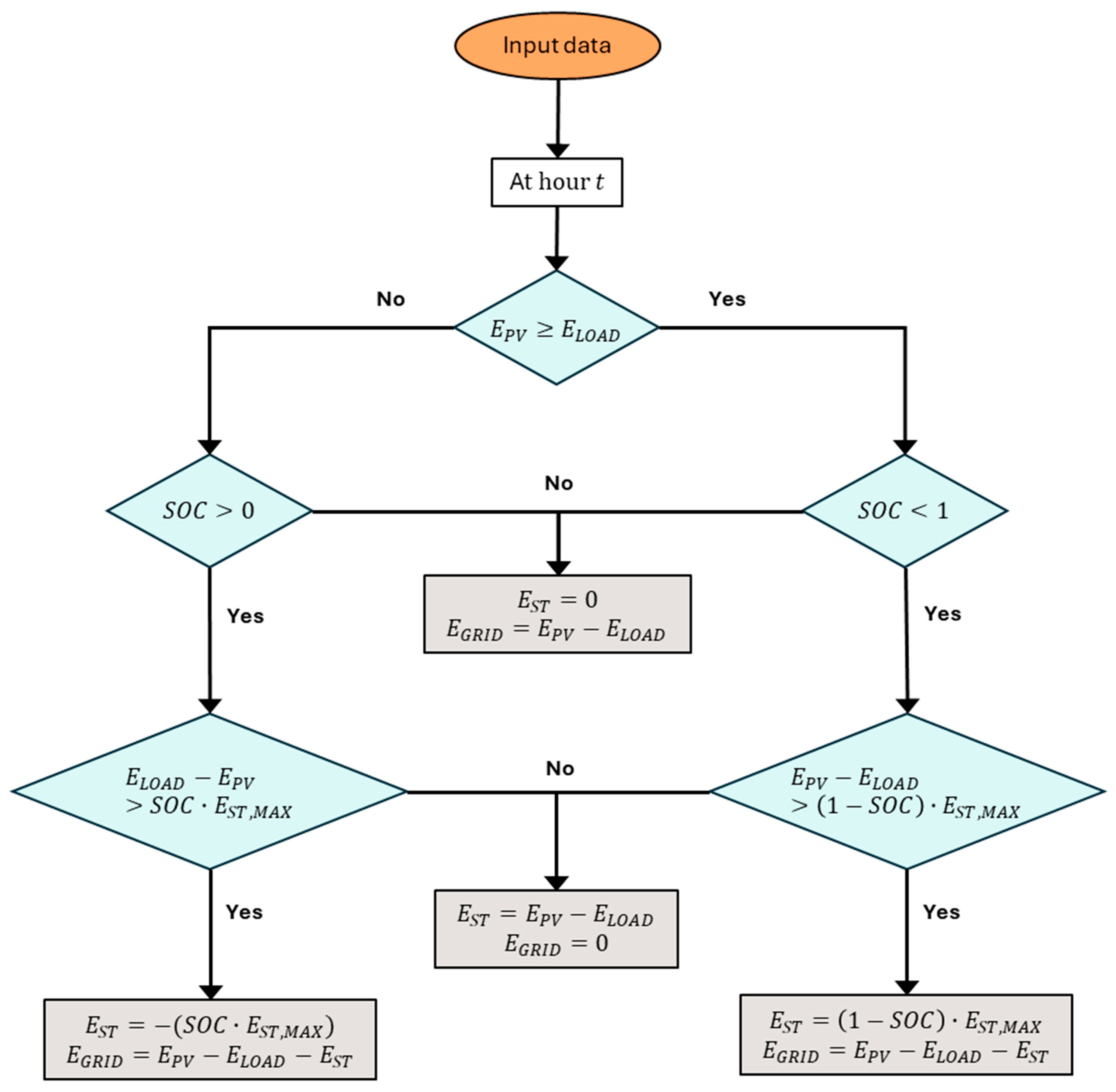
Building on the PV self-consumption architecture in
Section 1.1,
Figure 3 summarizes the operating logic sequence of the energy-balance simulation tool:
At each hour (t) PV energy first supplies the load.
If PV exceeds the load:
Any surplus goes to charge the ST subject to state of charge (SOC) bounds.
With SOC at 1, any remaining surplus exports to the grid.
If PV does not cover the load:
Discharge the ST.
If SOC is zero and the load remains unmet, import the remainder from the grid.
Note that, in this proposed energy flow scheme, the grid cannot charge the ST.
2.1. Energy Flow Application (EFA)
The EFA examines how system size influences technical performance, in terms of
,
SS,
IE, and
EE, focusing on energy interactions. For each PV–ST configuration over the above-defined parameter interval, the tool computes the hourly energy balance and then derives the indicators from flows between PV, the ST, the load, and the grid, computed hour by hour and then summed over a full year [
35].
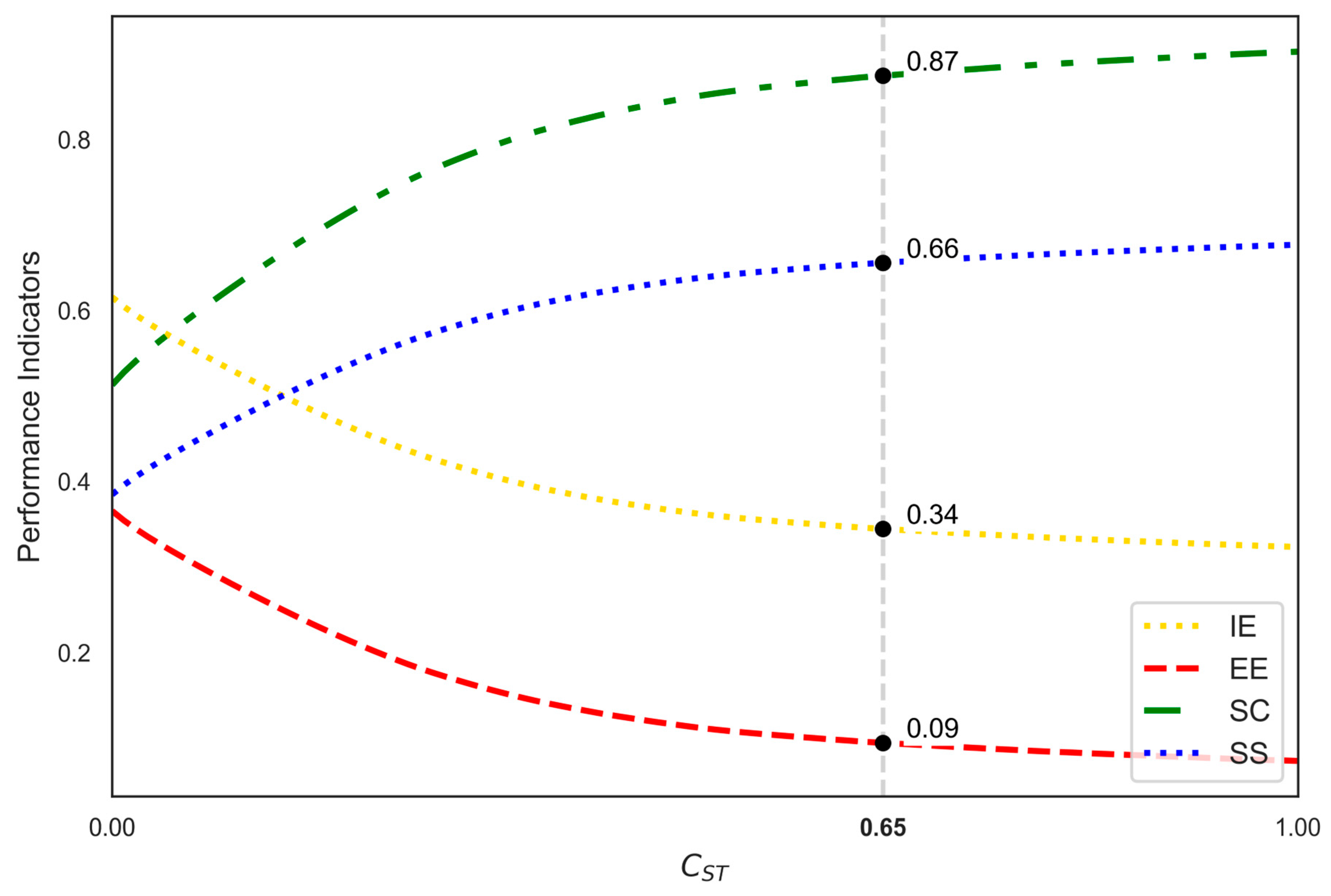
To avoid oversizing, EFA applies a stabilization criterion. As the algorithm scans the parameter interval, each step updates the indicators; once changes in SC and SS indicators stay within a tolerance (), the configuration counts as stabilized. For example, when increasing the battery size leads to an increase in of less than 1%, the stabilization point is considered reached. This point defines the chosen battery size ().
As an outcome, EFA provides three complementary views:
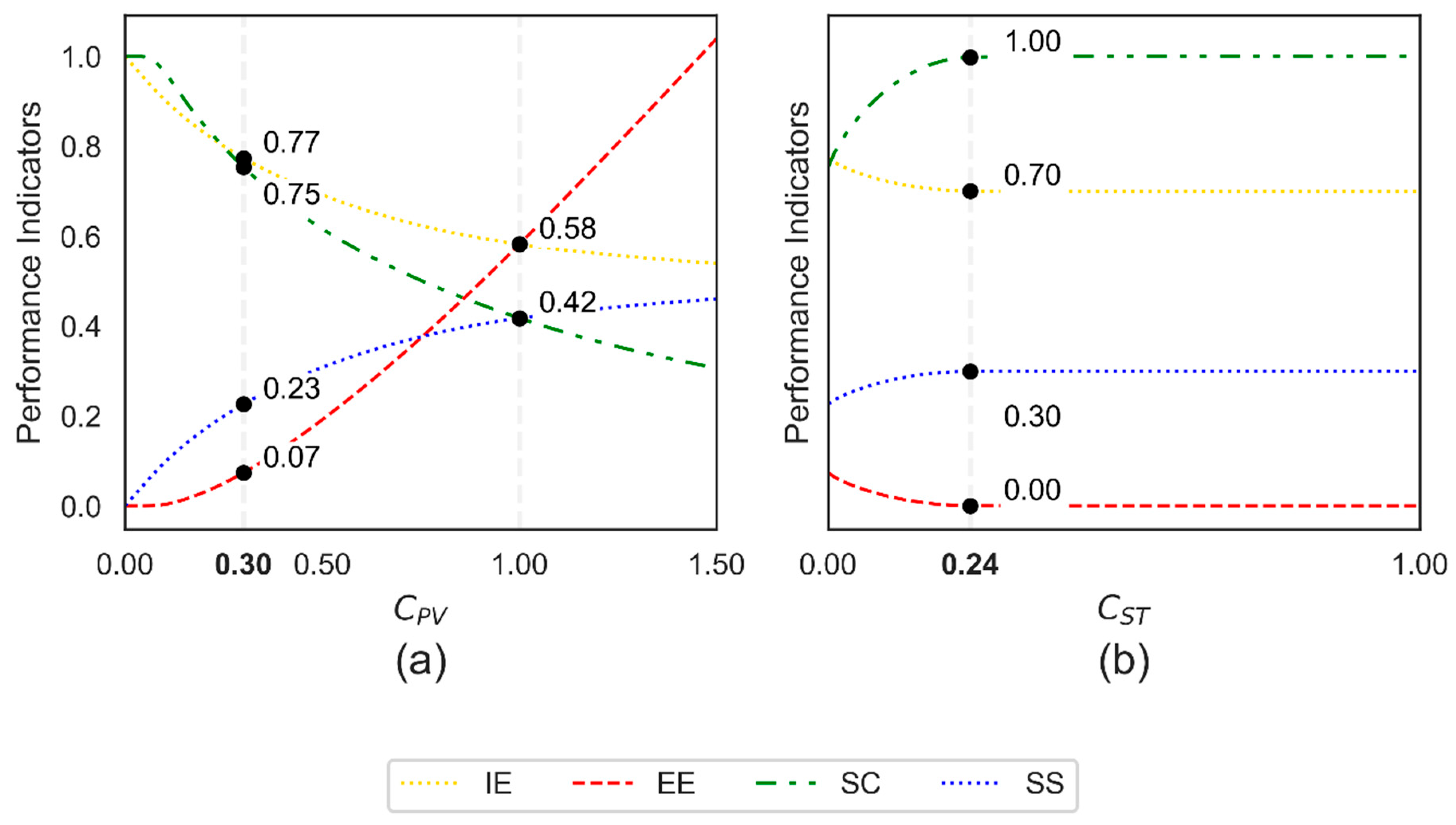
Energy-flow plots that sweep one sizing parameter while holding the other fixed, displaying SC, SS, IE, and EE on the same axes for direct comparison.
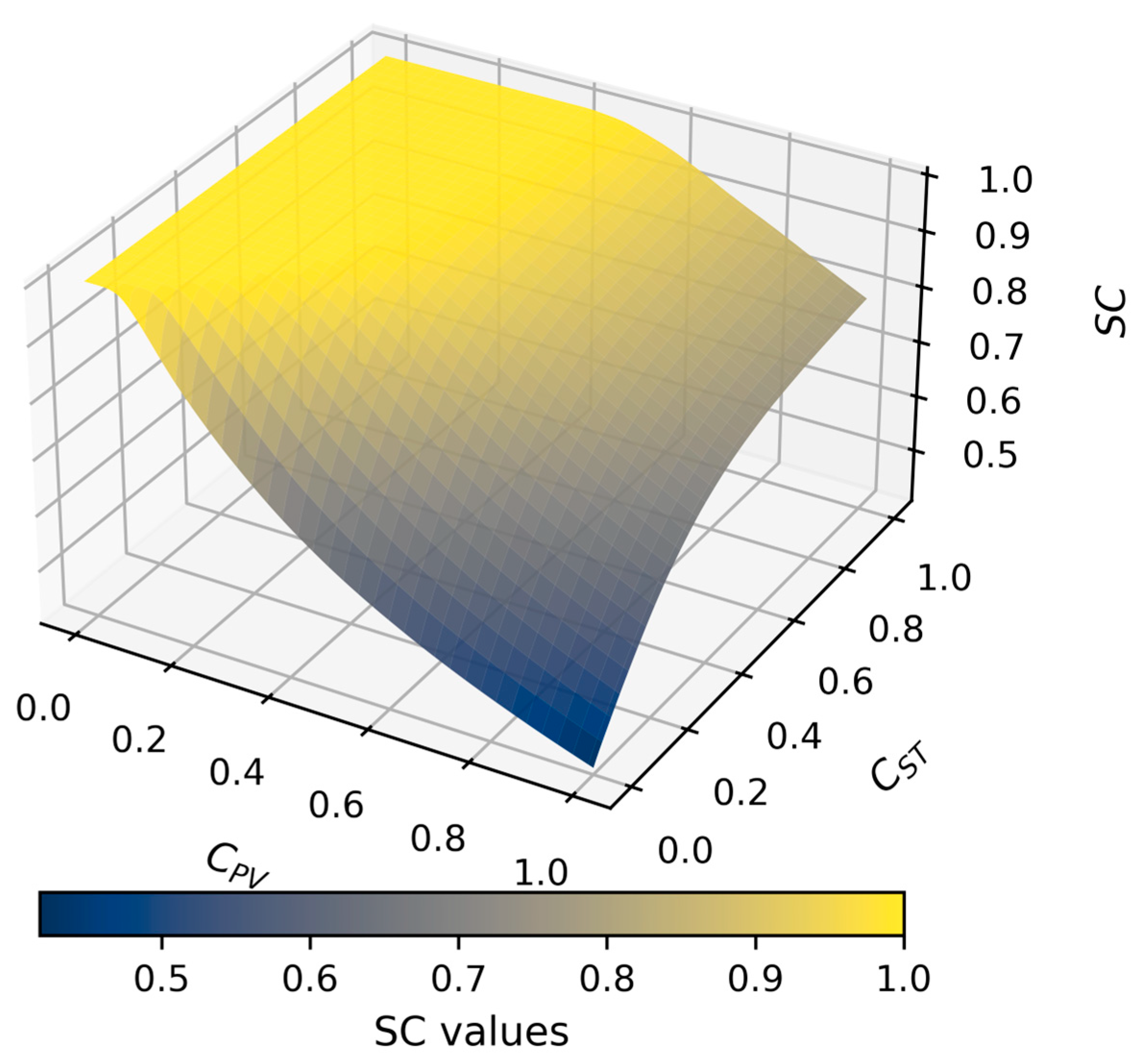
3D surfaces that map each indicator over the (CPV, CST) space to reveal global trends.
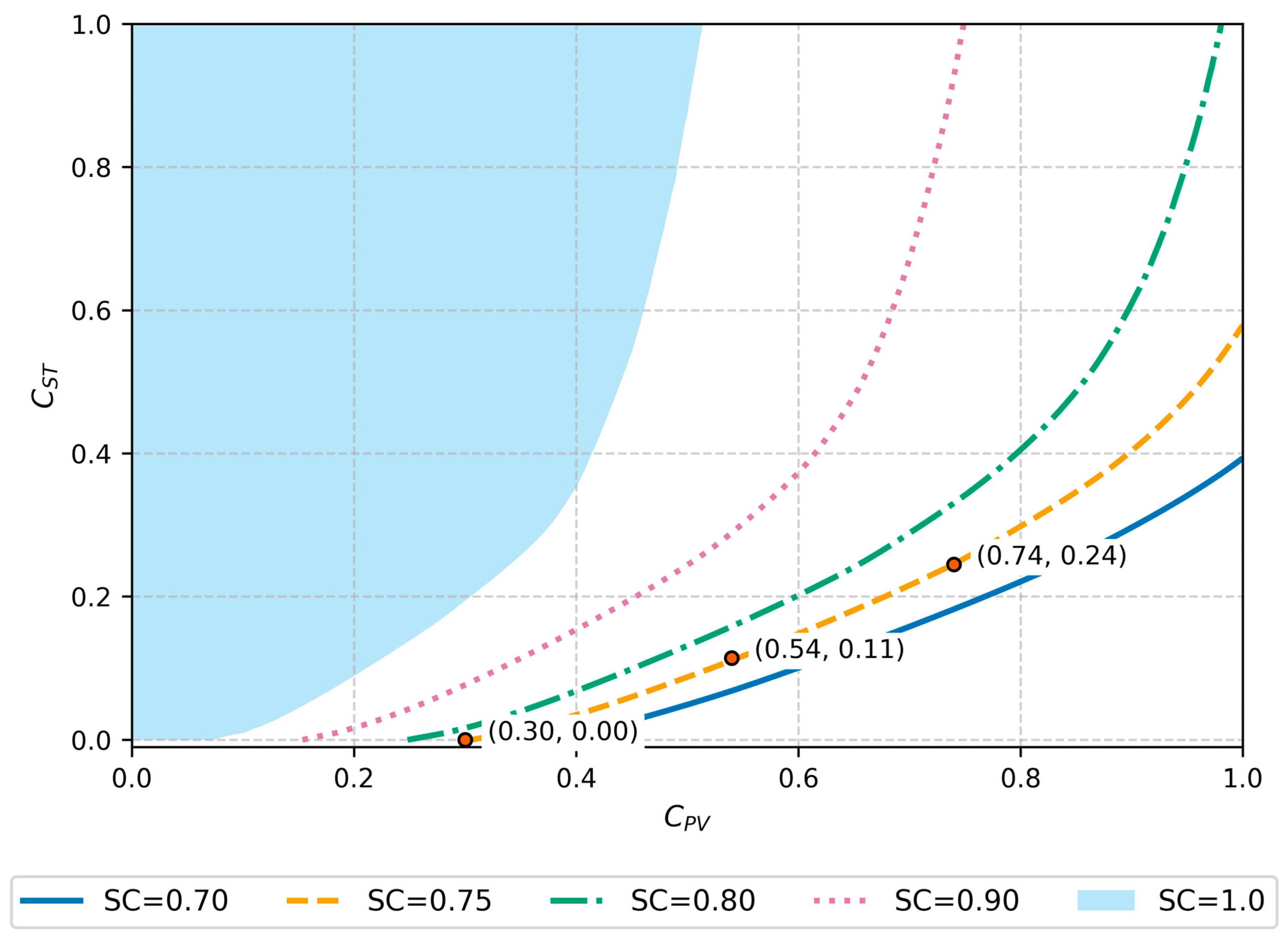
Iso-curves that identify (CPV, CST) combinations delivering the same indicator value, useful for target-driven sizing.
2.2. Consumption–Generation Alignment Application (CGA)
2.2.1. MI Definition and Implementation in CGA
The CGA quantitatively evaluates the alignment between system energy output (SEO) and energy consumption distributions over time using the Mismatch Index (MI), using the full 8760 hourly values from the annual energy balance. The MI calculation procedure is detailed below.
For a given
configuration, CGA computes
SEO from the one-year hourly energy balance, as in Equation (16).
SEO represents the total energy delivered by the PV system, including ST discharge.
where
refers to the PV energy used directly by the load,
refers to PV energy exported to the grid, and
refers to the energy supplied to the load from the ST.
As a result, for each hour , a pair of values () is obtained. Once all hourly pairs for the year are available, these pairs are ordered according to the ascending magnitude of , and the electricity consumption values are ordered accordingly. In this way, although the original time order is not retained, the temporal correspondence between SEO and electricity consumption at each hour is maintained. Under this ordering, MI captures the degree of temporal alignment between SEO and electricity consumption across the hours of the year.
The reordered pairs of SEO and consumption values are then used to construct two cumulative series, obtained by adding each value to the sum of all previous ones in its respective series. At this stage, the cumulative representation no longer allows identifying the specific time instant at which a given mismatch or temporal misalignment occurred when the Lorenz curve is analyzed on its own. Each cumulative series is subsequently normalized by its own annual total, resulting in values ranging from 0 to 1. Thus, the normalized cumulative SEO is obtained with respect to total annual SEO, and the normalized cumulative consumption with respect to total annual consumption.
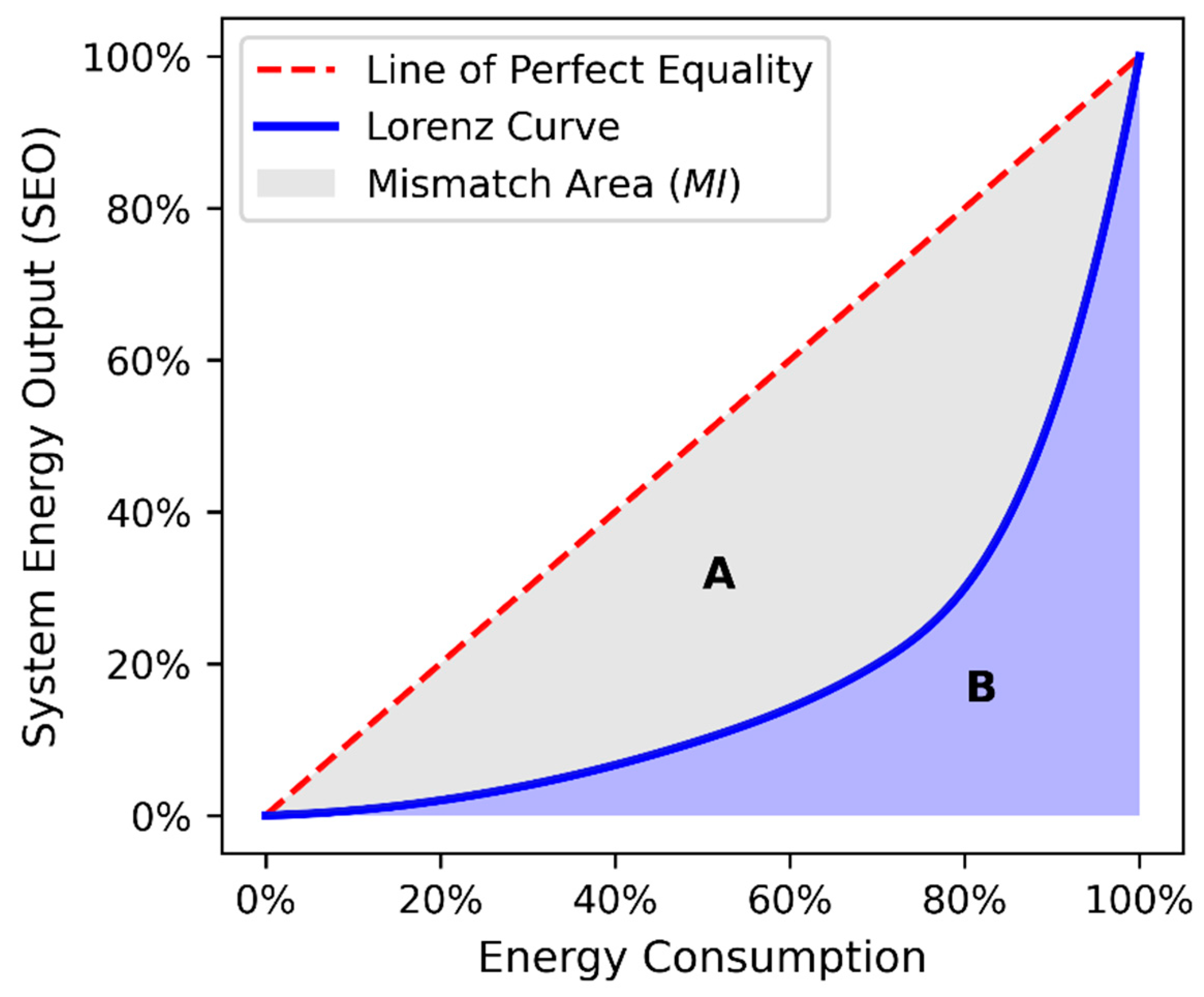
These normalized cumulative values, derived from the reordered hourly pairs, define the Lorenz representation used to calculate MI, following [
16]. The X-axis corresponds to normalized cumulative electricity consumption, and the Y-axis to normalized cumulative
. Plotting both cumulative distributions produces the Lorenz curve that represents the temporal relationship between
SEO and demand. As shown in
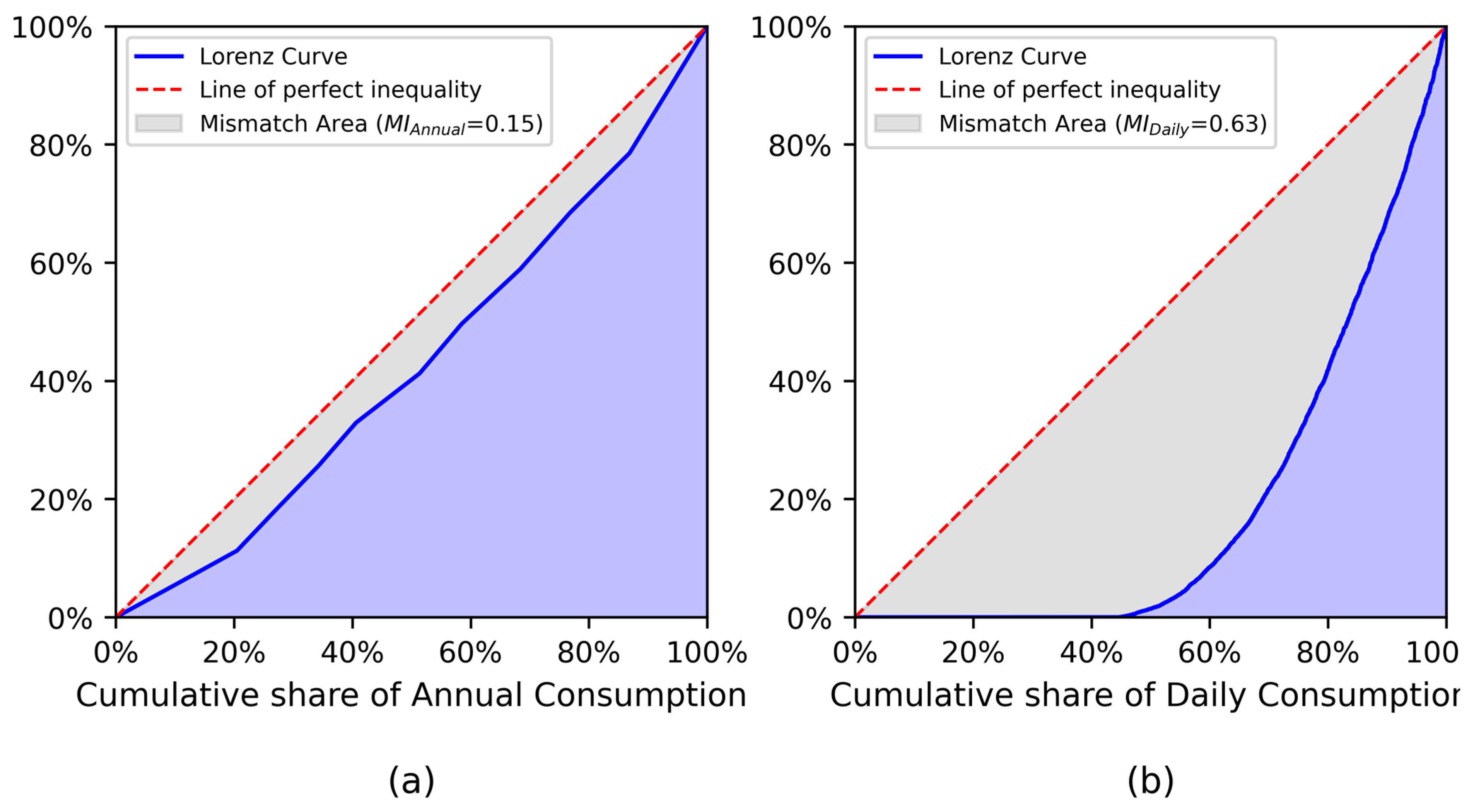
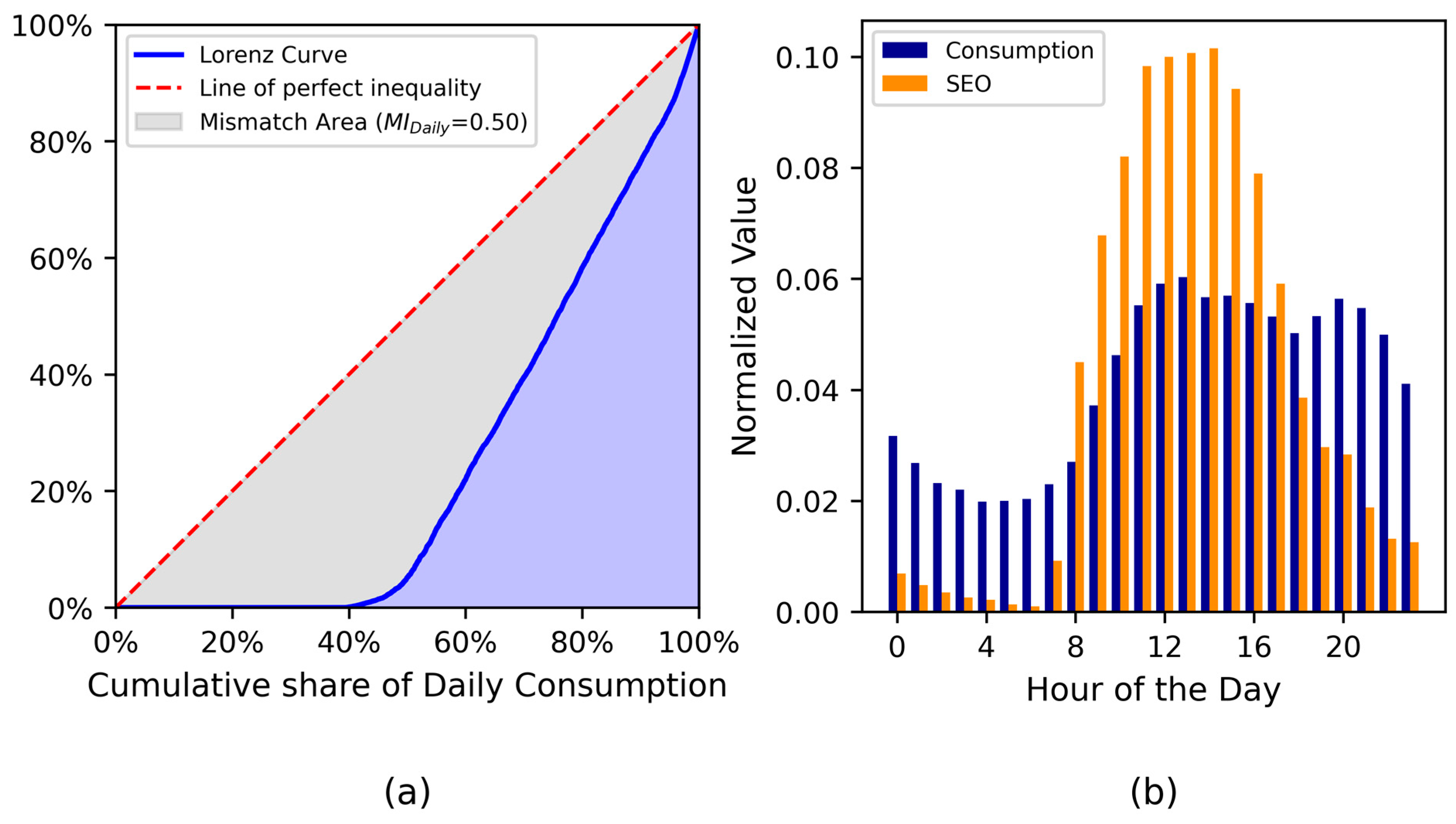
Figure 4, the Lorenz graph is composed of a 45° line representing perfect temporal alignment and the Lorenz curve showing the actual distribution; the area between them reflects the degree of temporal misalignment between the profiles.
MI is then defined as the area between the diagonal of perfect equality and the resulting Lorenz curve, following the same principle as the Gini coefficient [
16]. It can be calculated as the ratio of the mismatch area (
A) to the total area under the line of equality (
A +
B), as expressed in Equation (17)
MI ranges from (perfect alignment of the ordered cumulative shares) to 1 (maximum misalignment). Lower MI indicates that SEO and consumption have similar temporal distributions over the analyzed period, reflecting a high degree of energy synchronization. In contrast, high MI values indicate lower temporal alignment between generation and consumption, meaning that generation tends to be distributed in periods that do not correspond well to the periods of higher consumption.
MI, therefore, reflects the similarity between the temporal distributions of generation and demand. Since the cumulative Lorenz representation is based on ordered values, the indicator does not allow identifying the specific time instant at which the mismatch occurred when the curve is analyzed on its own and is therefore insensitive to pure time-shift effects. Thus, two profiles may present similar MI values even if their peaks occur at different times, provided that their ordered distributions show a similar degree of temporal alignment.
Although the procedure has been described here using the full hourly series obtained from the annual energy balance, the same approach can also be applied after aggregation to other temporal scales, such as monthly averages or hour-of-day averages. In this way, MI can provide complementary views of temporal alignment at different timescales, while making explicit that each level of aggregation highlights some patterns and smooths others. Note that aggregation over months suppresses intra-month and intraday structure, while hour-of-day aggregation suppresses day-to-day and seasonal noise but exposes systematic diurnal misalignment. Used together, these views prevent misleading conclusions from single-scale averaging.
This makes mismatch analysis relevant not only for system performance assessment but also for system design, since it provides information beyond the amount of overlap between generation and demand by showing how both distributions relate over time. In addition, MI is a powerful and versatile tool, as it allows the temporal alignment of different variables to be compared with each other. Although this work focuses on comparing the distribution of electricity consumption with that of energy production from the PV system (SEO), other alternatives with variables such as solar radiation or electricity tariffs could be employed in mismatch studies.
2.2.2. Positioning of Among Temporal Matching Indicators
Different temporal matching metrics quantify different aspects of the relationship between PV generation and demand. Overlap metrics, such as
SC and
SS, provide intuitive summaries of PV use and grid independence [
5], but they primarily quantify annual energy shares and may hide how mismatch is distributed over time [
36]. Coincidence-based indicators (e.g., the Load Match Index—LMI, and the Load Cover Factor—LCF) add information on simultaneity within the chosen timestep, while residual-load approaches highlight when deficits and surpluses occur [
37]. However, these indicators may not capture how PV generation and demand are relatively distributed over the analyzed period as a whole.
Additionally, in standalone systems, reliability indicators such as loss-of-load probability (LLP) and loss-of-power-supply probability (LPSP) supply analytical methods to determine system reliability—specifically the probability that energy generation cannot meet the load [
38,
39]; notably, the loss of load probability sizing framework is a well-established research line developed at IES-UPM (the authors’ research group), including the foundational contribution by Egido and Lorenzo [
40].
In this context, MI is introduced as a complementary indicator of SC and SS to provide distributional information on temporal mismatch that is not explicit in overlap or coincidence metrics. MI characterizes how similar the temporal distributions of PV generation and electricity consumption are and therefore acts as an indicator of their structural coincidence, since it is based on normalized cumulative distributions rather than on absolute energy magnitudes, supporting sizing decisions when many configurations exhibit similar SC and SS.
An illustrative implication is that two PV self-consumption configurations may achieve similar annual SC and SS, yet differ operationally: one may concentrate surplus PV into a limited number of high-output hours (surplus-driven behavior), while another distributes smaller surpluses across more hours or exhibits a temporal distribution more consistent with demand. While SC and SS can be similar, MI distinguishes these cases by capturing differences in temporal alignment, thereby improving discrimination within flat regions of sizing maps where many solutions appear equivalent under overlap metrics.
2.3. Economic Assessment Application
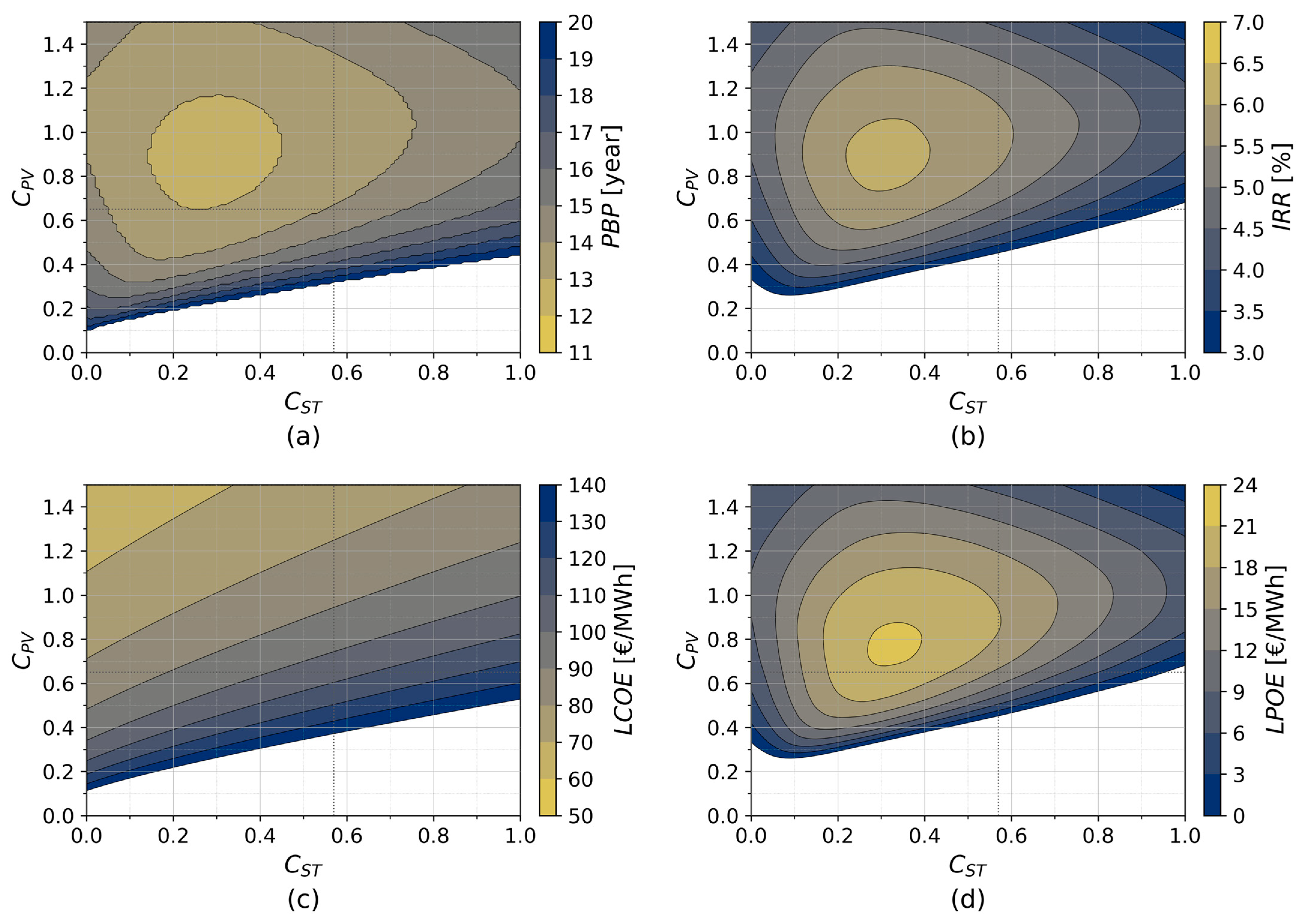
The Economic Assessment Application (EAA) evaluates the impact of system size on the overall economic performance of the PV system. Using the hourly energy balance results, EAA quantifies costs and revenues over the system lifetime and maps their effect on four financial indicators: Payback Period (PBP), Internal Rate of Return (IRR), Levelized Cost of Energy (LCOE), and Levelized Profit of Energy (LPOE).
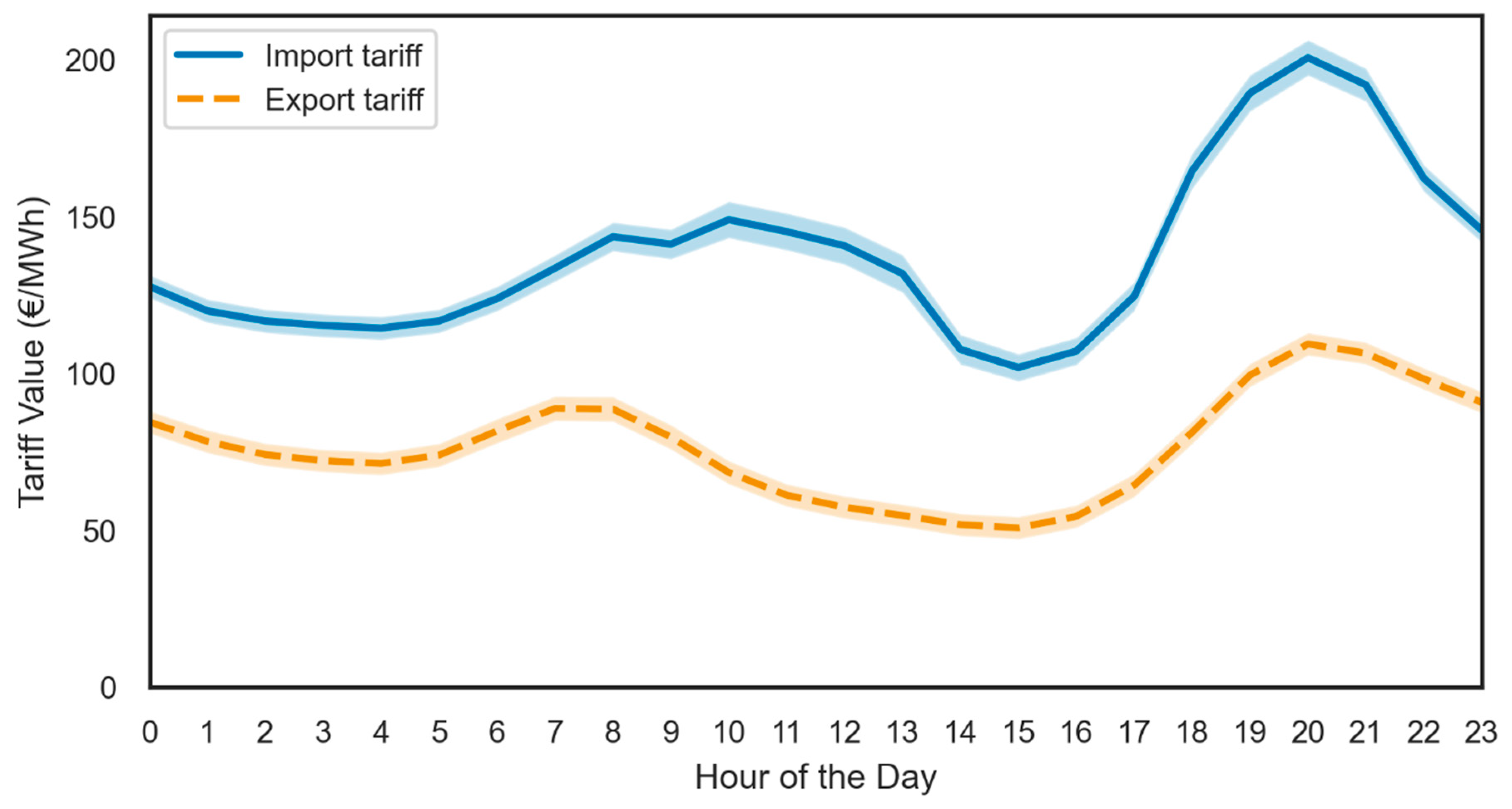
As additional input, EAA requires electricity tariffs for importing and exporting energy.
The tool performs a complete parametric mapping across all possible configurations on the parameter interval, considering a set of economic parameters that define the project’s financial environment. For each (
) configuration, EAA performs an hourly energy balance over the system’s operational lifetime, accounting for the annual PV degradation rate (
) and ST degradation rate (
). Based on these results, it estimates energy production and quantifies self-consumption (
) and exported (
) energy over the system lifetime, according to Equations (18) and (19), respectively.
From this, the tool computes: (i) total costs, which include capital expenditure (CAPEX) and operational expenditure (OPEX), and (ii) revenues, comprising savings from self-consumption (avoided grid purchases) and the income from energy exports.
2.3.1. Total Costs
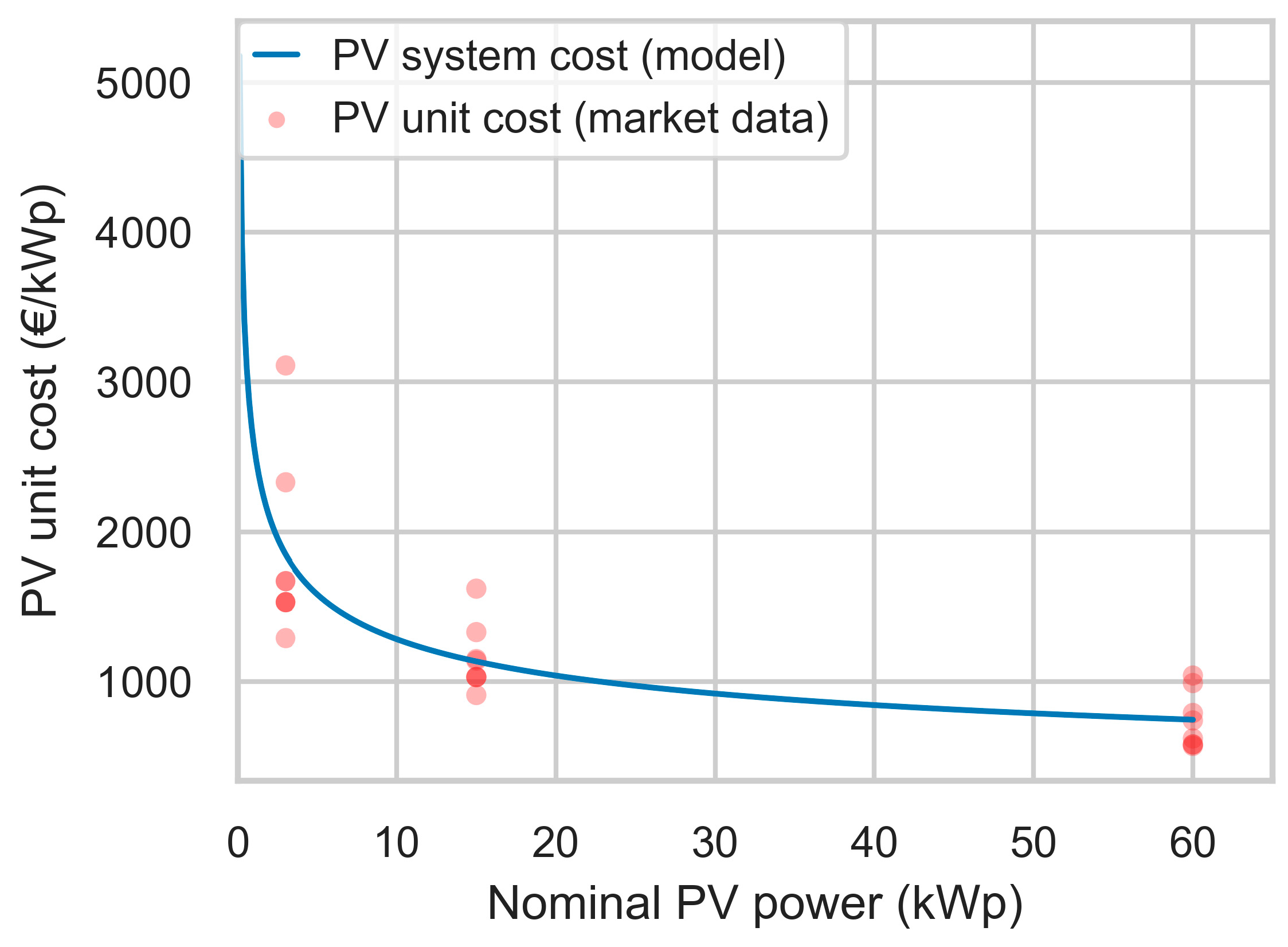
For CAPEX, a market survey has been conducted to estimate the unit-cost as a function of system size.
Figure 5 shows the PV model unit-cost curves (blue line) with market data (red dots), based on 30 quotations for PV installations obtained from PV installers between 2024 and 2025. PV quotations include PV panels, inverters, mounting structures, and installation labor. In the analyzed quotations, inverter cost represents approximately 17% of total PV CAPEX. A PV unit-cost model has been obtained by nonlinear regression applied to the market quotations.
While PV quotations exhibited a consistent size–cost trend, battery quotations show a substantial dispersion and heterogeneous scope, preventing the identification of a unit-cost regression. Therefore, instead of fitting a size-dependent curve for storage, the analysis adopts a representative battery pack cost of approximately €100/kWh, in line with pack-level cost values reported in the literature, which compile market-based evidence and indicate ongoing cost reductions driven by manufacturing scale and learning effects [
41,
42].
Therefore, the initial investment (
) results from the sum of PV and ST CAPEX costs. The annual OPEX cost (denoted as
C) covers recurring costs such as preventive and corrective maintenance, monitoring, insurance, and minor replacements. Based on a first-year fixed value (
), the OPEX cost increases annually at a rate (
) over the system lifetime (
LT), according to Equation (20).
2.3.2. Revenues
The system revenues derive from the hourly simulation of energy flows combined with the applicable electricity tariffs and projected over the system’s operational lifetime.
Revenues from self-consumption savings are based on import tariffs (
), considering annual growth rate (
), as expressed by Equation (21).
Revenue from exported surplus energy considers the export tariff (
), as shown in Equation (22).
Together, these cost and revenue components define the energy-economic basis of the system and serve as the foundation for evaluating its financial performance with the calculation of PBP, IRR, LCOE and LPOE.
For each economic metric, EAA provides as output a contour map plot according to the viability and competitivity constraints. This output supports target-driven selection and quantitative comparison across configurations.
2.4. System Sizing Application
The System Sizing Application (SSA) aims to size self-consumption PV systems by prioritizing
MI minimization and then identifying the ST size at which
SC and
SS stabilize, subject to economic viability constraints. SSA is implemented as a rule-based, iterative decision procedure over the discretized (
,
) sizing space, rather than as a continuous mathematical optimization solver. The procedure applies a sequence of priority and threshold decision rules while iteratively adjusting
and, if needed,
. This approach is not intended to guarantee Pareto-optimality; instead, it prioritizes mismatch reduction (as captured by
MI) and then identifies technically and economically feasible solutions.
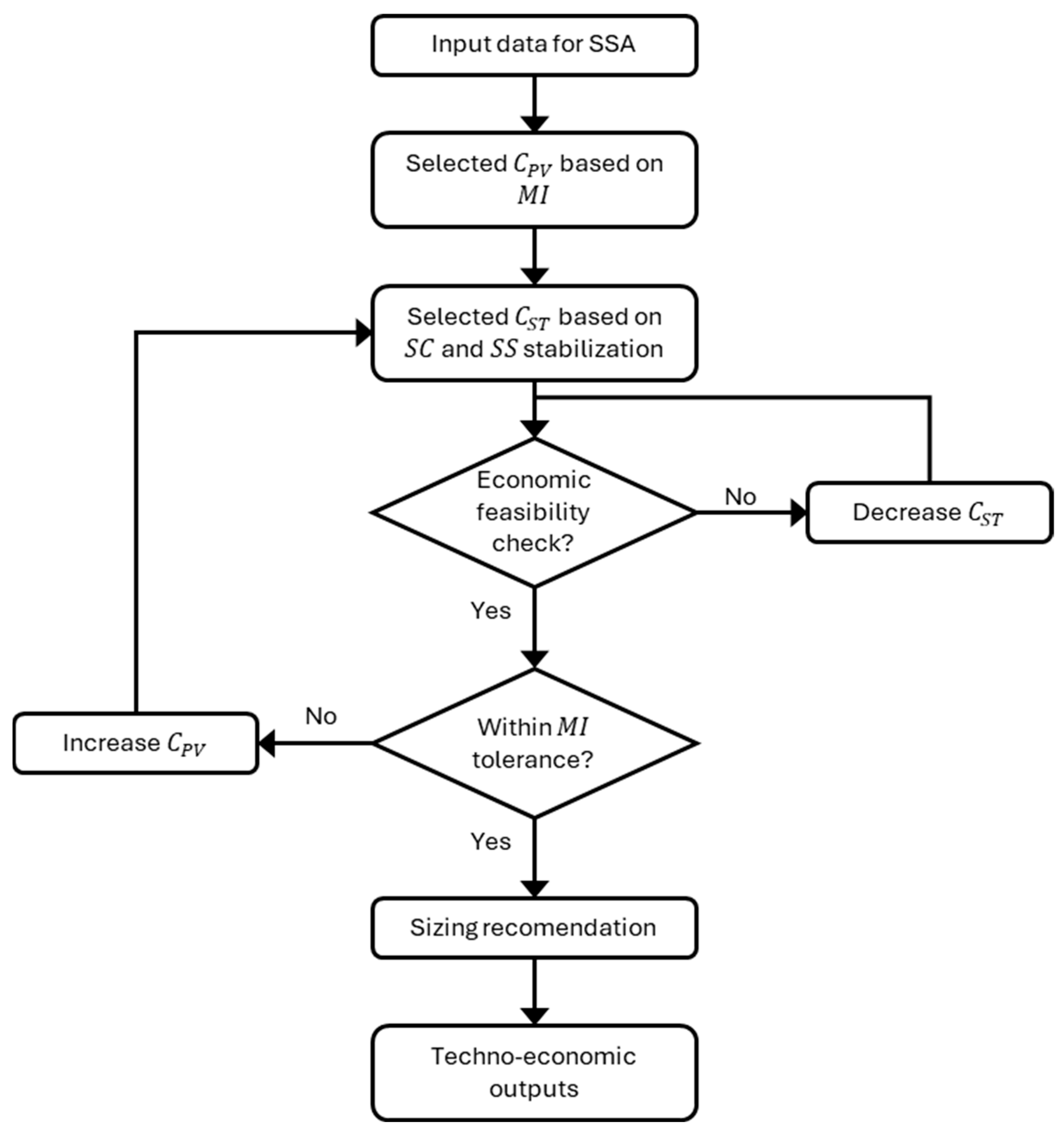
Figure 6 summarizes the SSA workflow. As this method also performs economic analysis, it requires as additional inputs the electricity import and export tariffs.
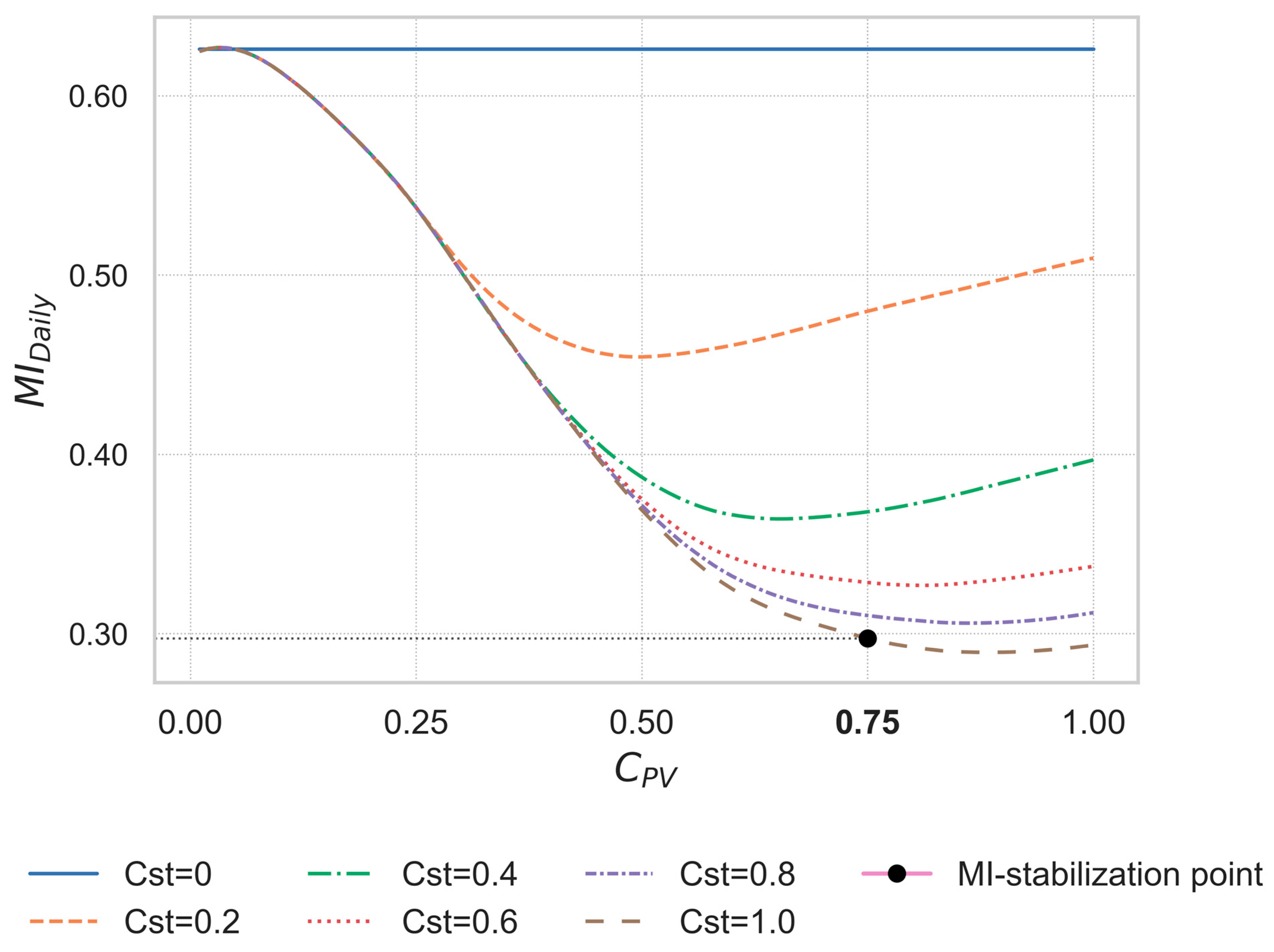
First, SSA computes MI over the entire parameter interval. Since ST size has a direct impact on intraday alignment, SSA focuses on daily MI. The method then identifies the minimum stabilization point of MI and selects the corresponding value. At this point, a MI-tolerance of p (default p = 0.10) is defined to absorb model uncertainty, prevent overfitting to marginal MI improvements, and preserve near-equivalent solutions. Within this MI-tolerance, remains the free variable for subsequent sizing procedure.
In the second stage, SSA performs an hourly energy-balance simulation while holding fixed at the MI-based sizing point. This step determines the value that satisfies the system’s stabilization criterion between SC and SS, completing the technical sizing. The objective is to identify the point from which further increases in ST capacity produce only marginal improvements in SC and SS. In this way, the stabilization criterion is used as a sufficiency threshold for technical sizing, avoiding oversizing driven by diminishing technical gains. This supports more sustainable sizing by favoring adequate matching between generation and demand instead of unnecessary capacity increases.
In the third stage, SSA applies the economic assessment to evaluate the feasibility of the technically sized configuration. A configuration is considered viable if it meets two conditions:
If the configuration meets these conditions, the method proceeds to the fourth stage; otherwise SSA performs an economic adjustment by decreasing while maintaining the selected until finding the first that meets the two aforementioned conditions. If no configuration achieves feasibility, the method increases in increments and repeats the second stage until a feasible solution emerges or confirms that no feasible configuration exists within the parameter interval. This iterative process ensures that the configuration remains as close as possible to the SC and SS stabilization point while preserving system viability.
Finally, in the fourth stage SSA verifies that the selected configuration remains within the accepted MI-tolerance. If the condition is not met, the tool increases by 0.01 and restarts the procedure loop. This iterative process converges toward a balanced configuration that combines mismatch reduction, stabilization of the main technical indicators, and economic viability.
As output, SSA returns a PV–ST configuration report containing all the relevant metrics for this configuration, including technical indicators (SC, SS, IE, EE), mismatch indicators (, ), and economic indicators (PBP, IRR, LCOE, LPOE).
4. SSA Application to an Energy Community Case Study
The tool offers additional capabilities when used for designing PV systems integrated into renewable energy communities (RECs), considering dynamic energy sharing, where PV electricity is allocated at each timestep based on participants’ demand [
12]. For instance, when RECs operate in rural areas, it is often more efficient to group self-consumption systems into a single collective PV system than to install several individual systems for each prosumer. While grouping is often associated with reduced investment and operating costs, the performance of an aggregated PV system compared with several individual PV systems must be studied.
The authors have had access to energy consumption data from REC [
31], established in Calatayud County, northern Spain. Ten prosumers from one of the villages in which the REC operates in the Calatayud County, Miedes de Aragón, have been selected.
A comparative assessment between two implementation scenarios for the Miedes de Aragon case is presented: (i) individual systems, where each participant installs an independent PV generator and ST, and (ii) a collective configuration with a centralized PV-ST system. The SSA has been applied to both configurations.
4.1. Miedes de Aragon Case Study
An energy consumption analysis of the ten consumers from the Miedes de Aragón case is presented in
Table 4 at individual and aggregated levels, based on the annual consumption between March 2023 to March 2024 obtained from [
33]. Annual aggregated consumption totals 30,827 kWh, while average consumption per consumer reaches
kWh (
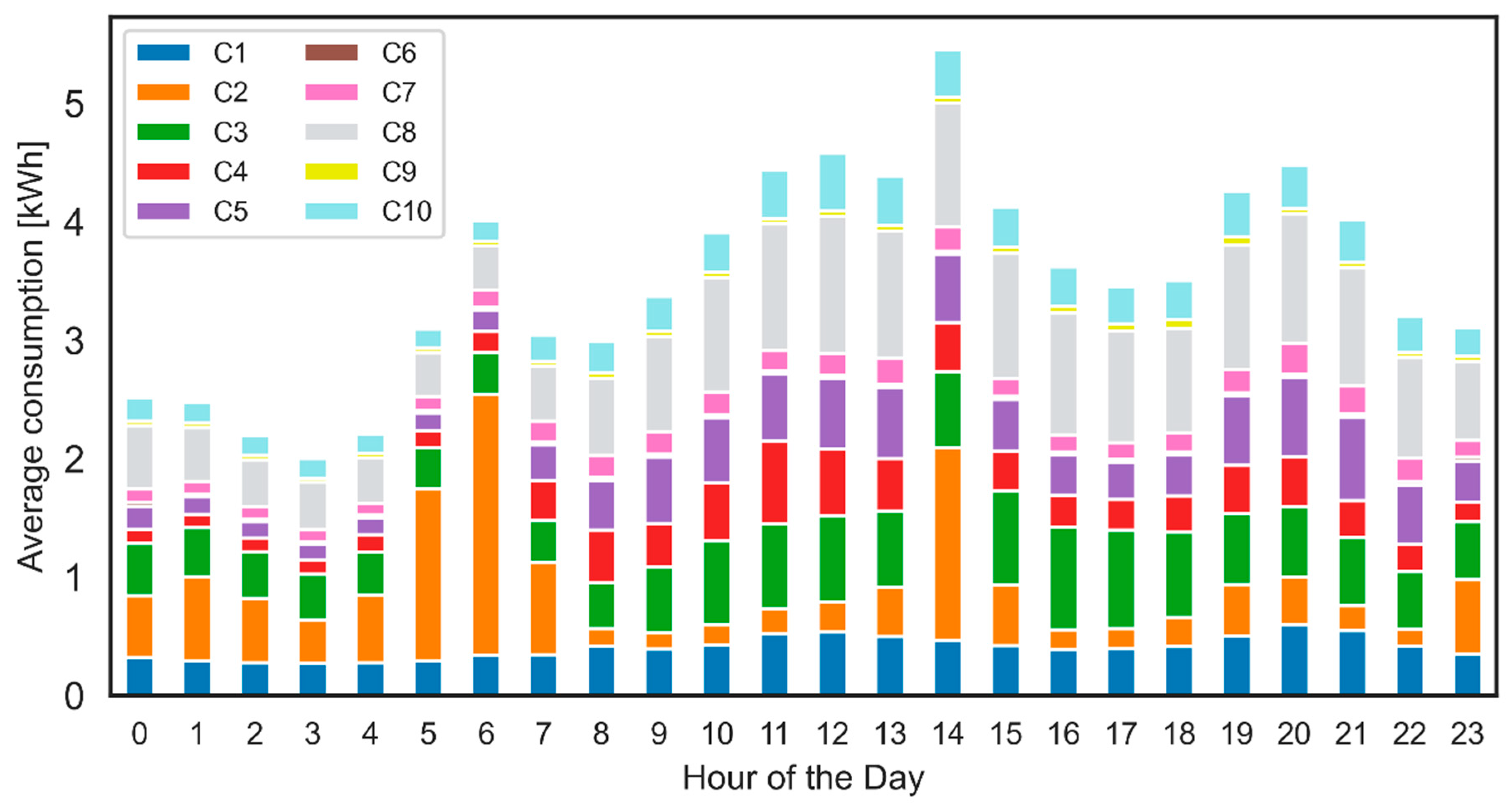
kWh/day and 3.51 kWh/h). Individual consumption shows high variability ranging 237–6837 kWh and resulting in a coefficient of variation (CV) of 60.6%. The largest consumer (C8) represents 22.2% of the total demand, while the smallest (C6) accounts for only 0.8%. The aggregated daily profile in
Figure 19 shows the average hourly consumption as a stacked bar chart: each bar gives the total average hourly demand, and the colored segments indicate each consumer’s relative contribution. For reference, the consumer from the previous study case corresponds to C8.
In the community scenario, energy sharing takes place at village level along the low-voltage feeder, without crossing the MV/LV transformer, in line with the Spanish self-consumption framework [
55]; therefore, internal distribution losses are not considered. Additionally, since this scenario represents an energy-community, O&M costs include a community management fee of
c€2.20/kWh of PV energy produced, based on the actual management cost of the energy community analyzed in this study.
4.2. SSA Results
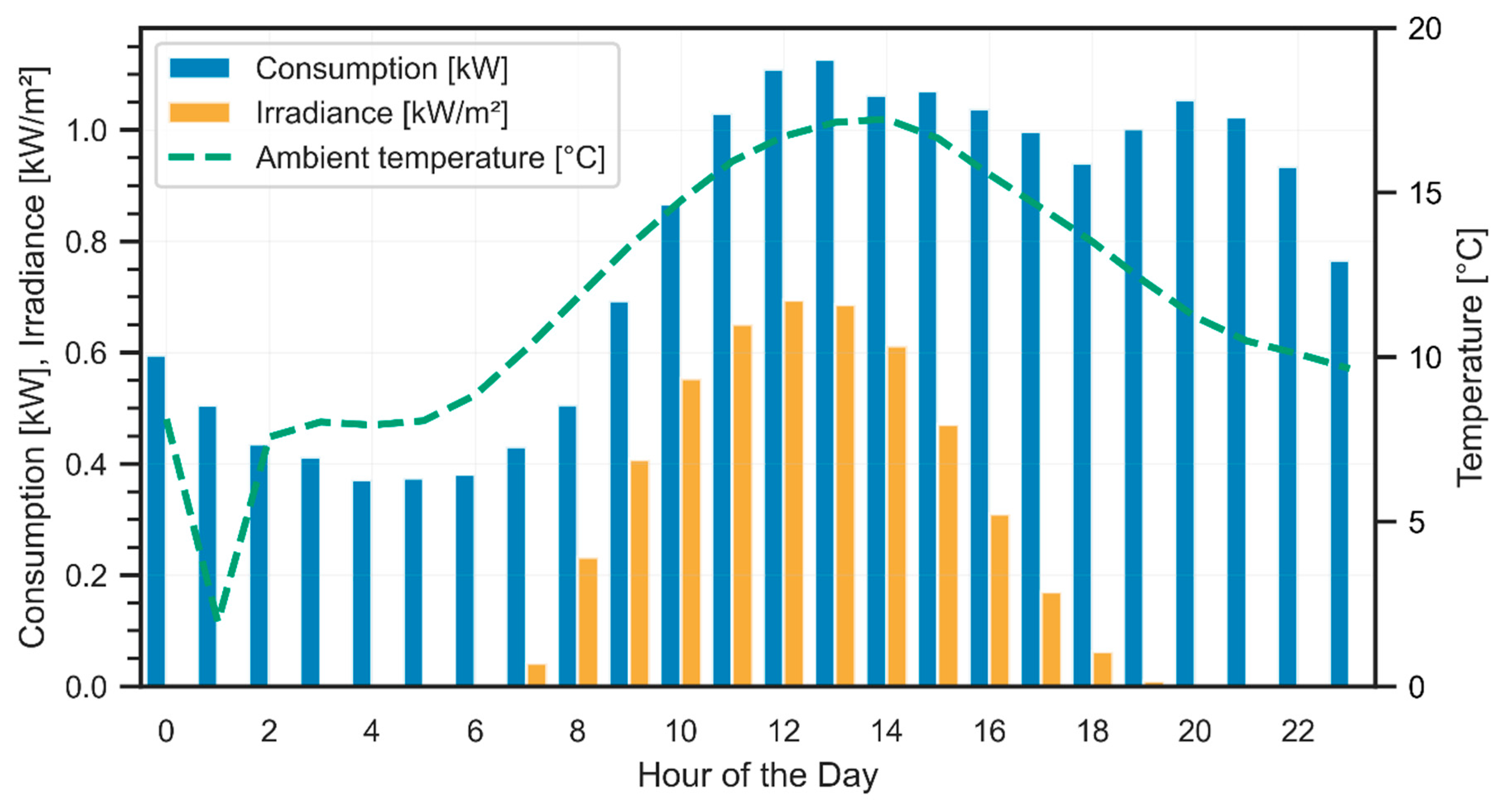
To compare system sizes and economic viability between scenarios, SSA has been applied based on environmental data from Miedes de Aragón nearest meteorological station and the tariffs input from the same consumption period (described in
Section 3).
Table 5 consolidates SSA outputs for both the individual and collective configurations.
However, in the individual scenarios, four consumers result in non-viable systems, reaching a maximum of years and a minimum of ; on the other hand, the collective scenario resulted viable, with a of 8 years and a of 10.84%. Subsequent sections provide detailed analysis of these outcomes.
4.3. Performance Assessment
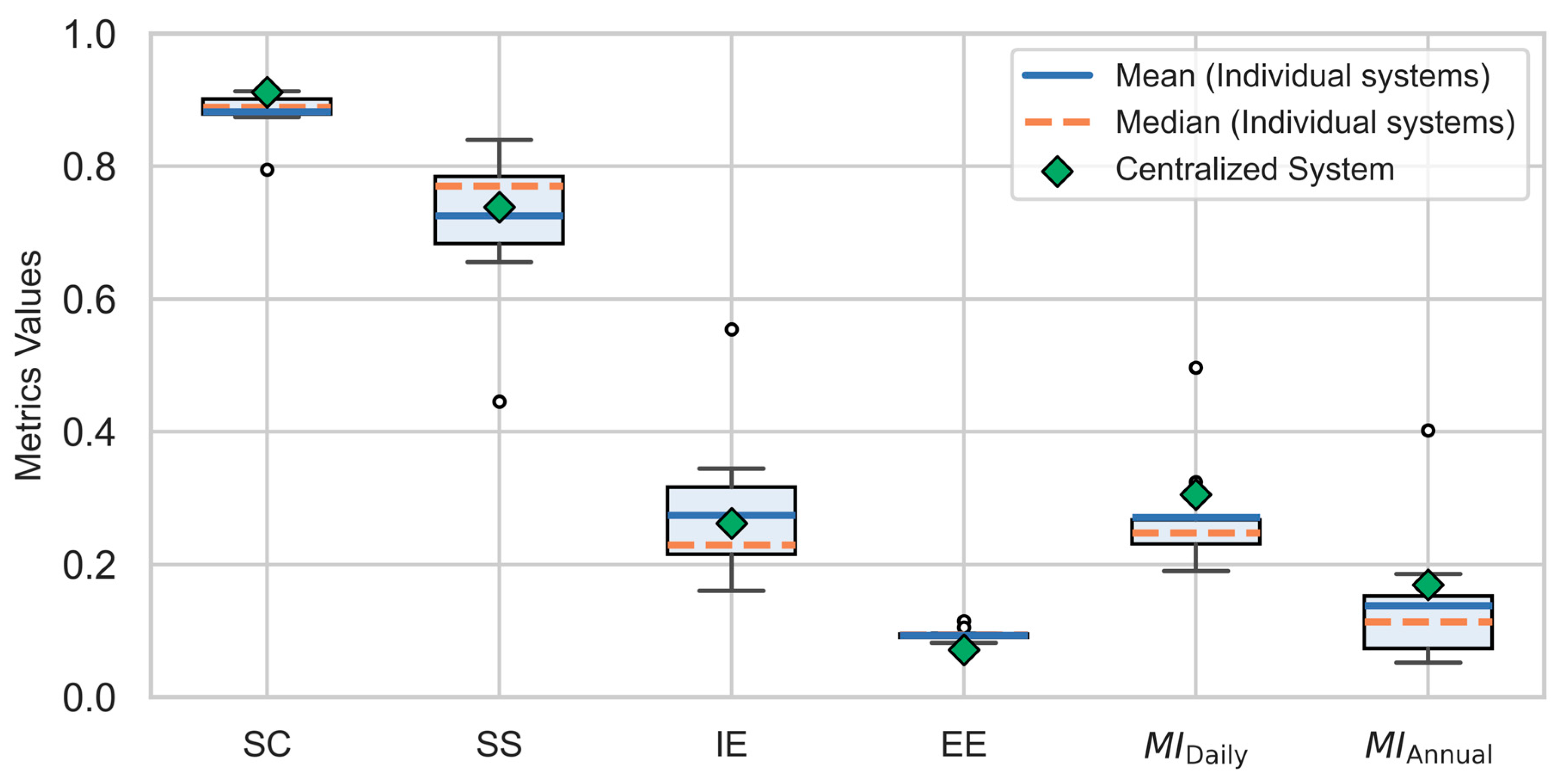
Figure 20 compares indicators across consumers using boxplots, with a green diamond marking the centralized case. At individual level,
clusters around 0.89 with low dispersion (Relative Standard Deviation—RSD of 3.3%), signaling consistent local use of PV across consumers and, consequently, limited surplus. Accordingly,
remains low, with a mean of 0.09;
spans 0.44–0.84 and centers near 0.73, indicating lower reliance on the grid.
When aggregating consumption, the centralized configuration shifts the indicators slightly in its favor: increases by 14.6%; reaches 0.74, increasing 39.7%; grid dependence declines, with decreasing by 112.0% and by 65.8%. However, for most consumers, mismatch weakens under aggregation. On the annual analysis, rises from 0.14 (individual mean) to 0.17 (centralized), maintaining a good monthly alignment. On the daily analysis, increased 13.7% in comparison to the individual mean (0.27), achieving 0.31.
4.4. Economic Assessment
On the economic analysis, load aggregation reduced CAPEX by 42.1% and OPEX by 1.4% compared to the sum of individual systems. The OPEX reduction remains limited, as the community management fee scales with the shared system’s energy output. Furthermore, due to the SSA approach based on the stabilization of , revenues rely mainly on self-consumption savings in both scenarios (about 95%); however, the centralized system generates 29.1% more revenues. In general, the centralized system significantly increases profits over a 20-year period: the NPV rises from €1.37k for individual systems to €20.06k for the centralized system, an increase of almost 15 times.
The investment performance analysis includes viability constraints based on a project
of 20 years and
r = 3%.
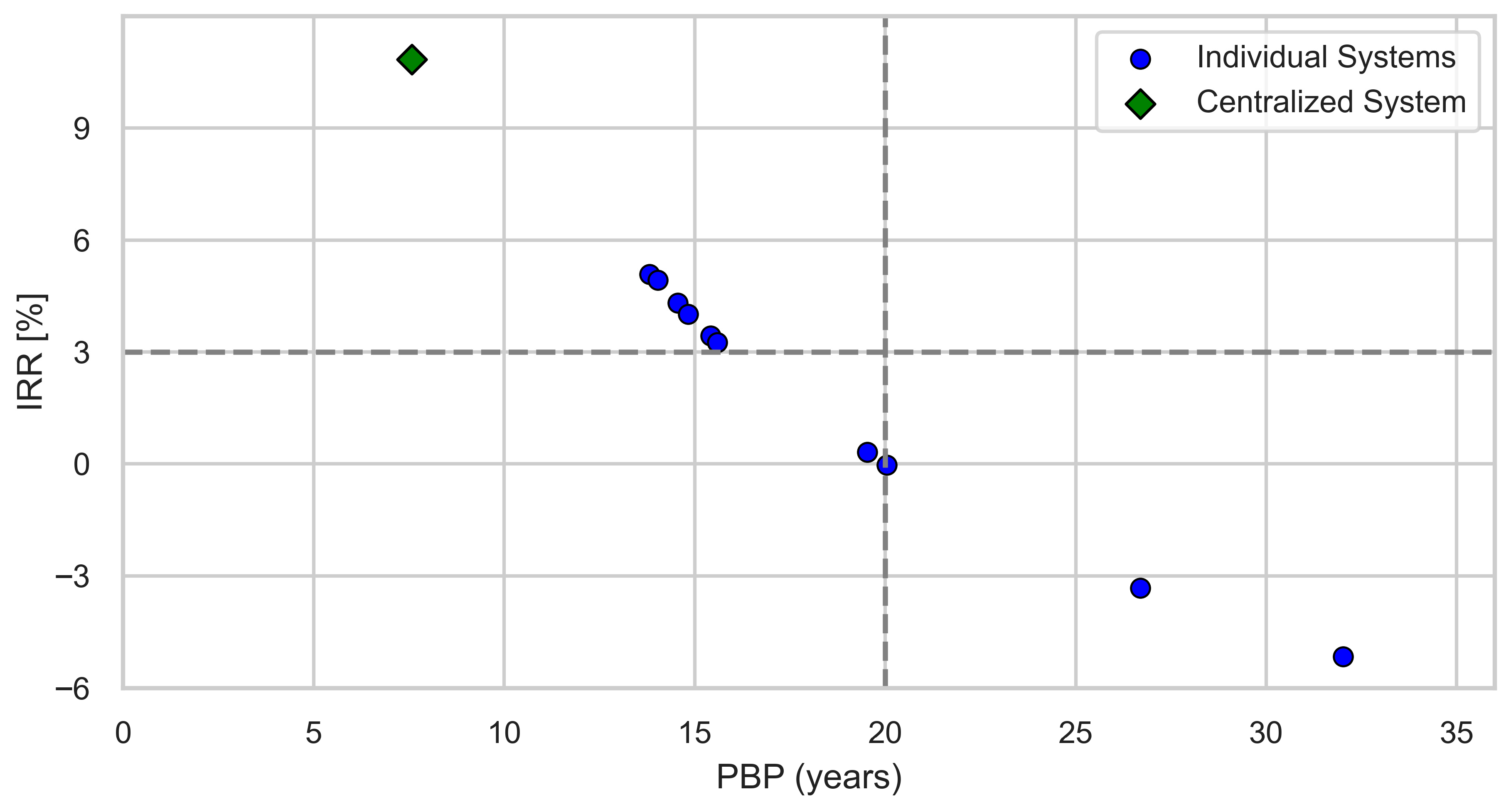
Figure 21 plots
against
(quadrants delimited by
and
). At the individual level (circle markers), the two systems did not achieve any of the viability constraints, resulting in negative
and
higher than
years. Two additional systems reach
values close to the lifetime limit, while
remains close to zero. The remaining individual systems achieve similar performance:
around 15 years and a positive
up to 5%. In the comparison scenario, the centralized system (diamond marker) is highlighted with an
of 10.8%, 3.6 times higher than
, and a
close to 11 years, almost half of the considered
.
Aggregation also led to a 24.1% reduction in energy-unit cost, reaching a competitive of €77.98/MWh, compared to an average of €138.08/MWh for individual systems. On the profit side, individual systems show LPOE values ranging from −€110.44/MWh to €16.35/MWh, with an average of −€18.52/MWh, while the centralized configuration reaches an energy-unit profit of €43.92 /MWh.
In summary, centralization does not necessarily improve energy indicators in the Miedes de Aragón case compared to individual solutions. However, it delivers stronger economics. While four individual systems resulted non-viable, collective sizing reduced costs by 42%, resulting in a viable system with competitive . An individual finance assessment shows that aggregation benefits primarily low-demand consumers, improving profitability and lowering energy cost.
5. Discussion on the Initial Data Used to Size Self-Consumption PV Systems
When sizing a self-consumption system, a degree of uncertainty must be assumed in the results, which will depend, among other factors, on the reliability of the initial data. If real hourly data is used, it is assumed that meteorological (solar radiation and ambient temperature) and actual electricity consumption data are available and sufficiently representative of the specific case under study. Meteorological data can be obtained from nearby weather stations or from databases compiled over a significant number of years (16 years or more, as is the case with PVGIS). However, access to hourly electricity consumption data is more limited; it is considered personal data, which makes it difficult to access. Furthermore, electricity distribution companies do not provide access to historical consumption data covering many years. For example, in Spain, the Datadis platform only has historical consumption data for two years.
The sizing model proposed in this article is based on hourly consumption data from a single year. This raises the question of whether a dataset from only one year can be considered representative, and what level of uncertainty should be assumed in the results.
A statistical study comparing hourly electricity consumption data from two consecutive years has been conducted, using a sample of 118 consumption points as a representative sample. The authors have had access to the electricity consumption data of consumers located in the Calatayud region in northern Spain between 2023 and 2024, where the aforementioned REC operates. Aggregating these 118 electricity consumption figures provides useful information about seasonal consumption patterns.
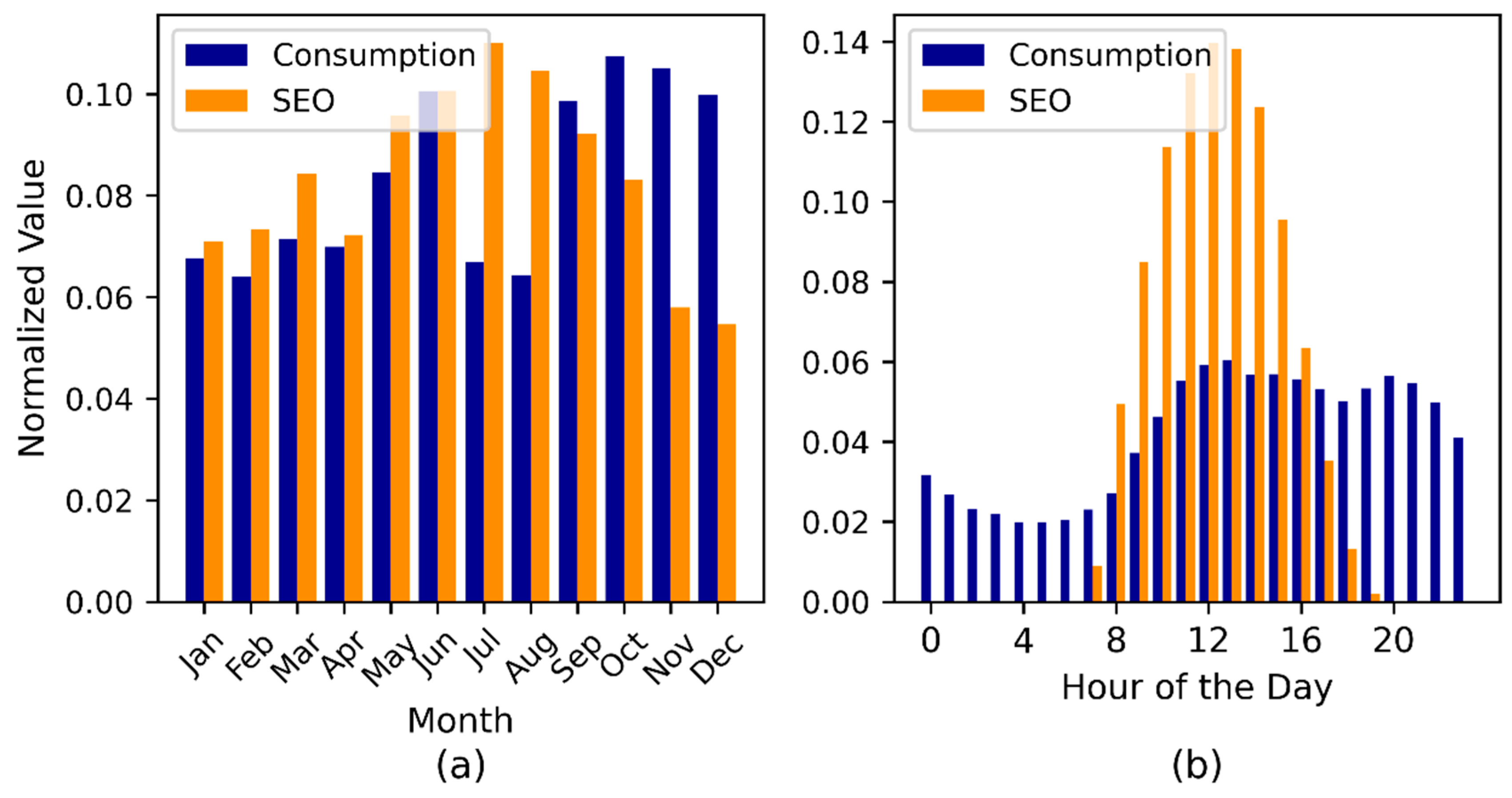
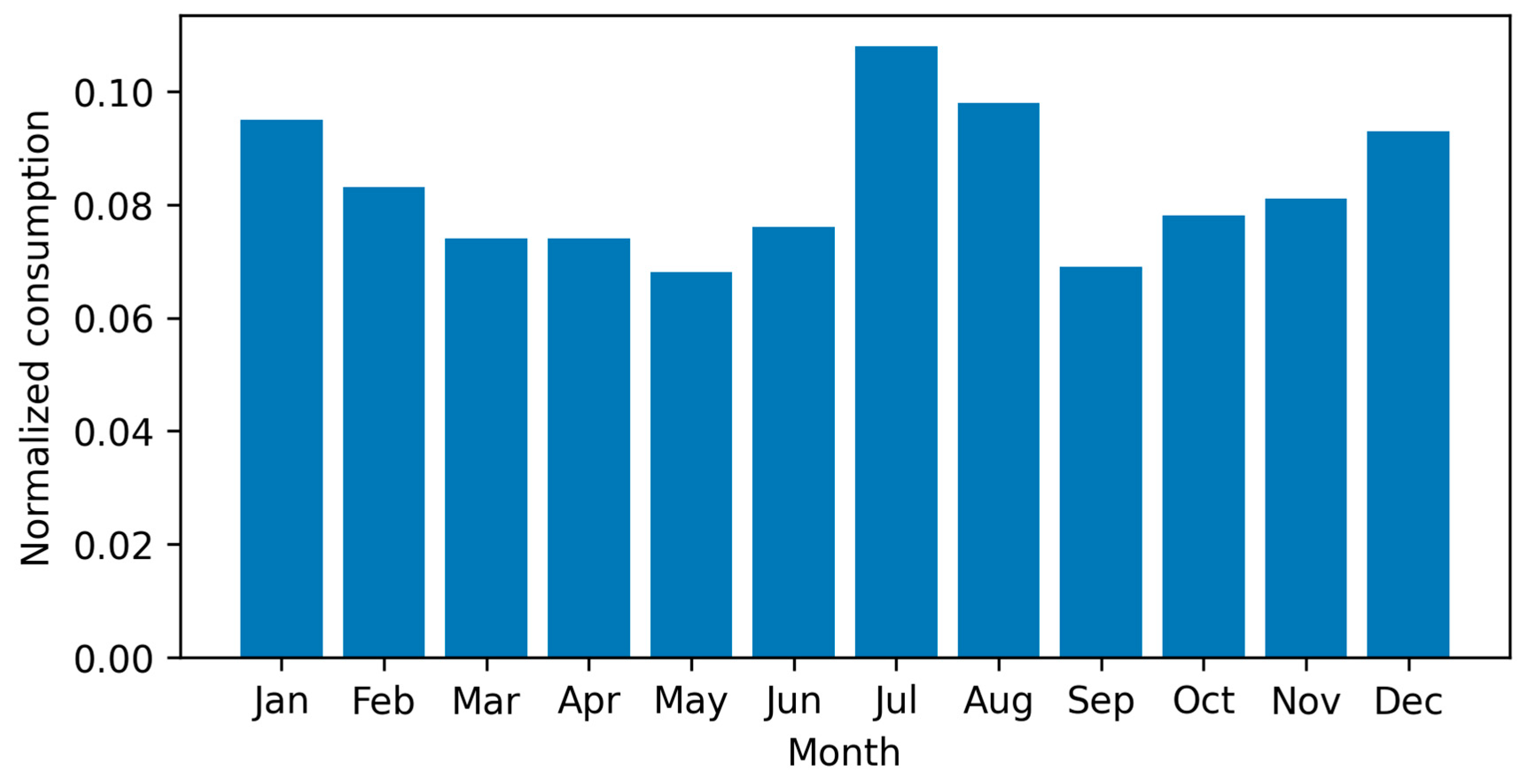
Figure 22 shows the normalized monthly distribution of aggregate electricity consumption. Although the distribution appears fairly uniform, two peaks in consumption can be seen, one in the summer and one in the winter.
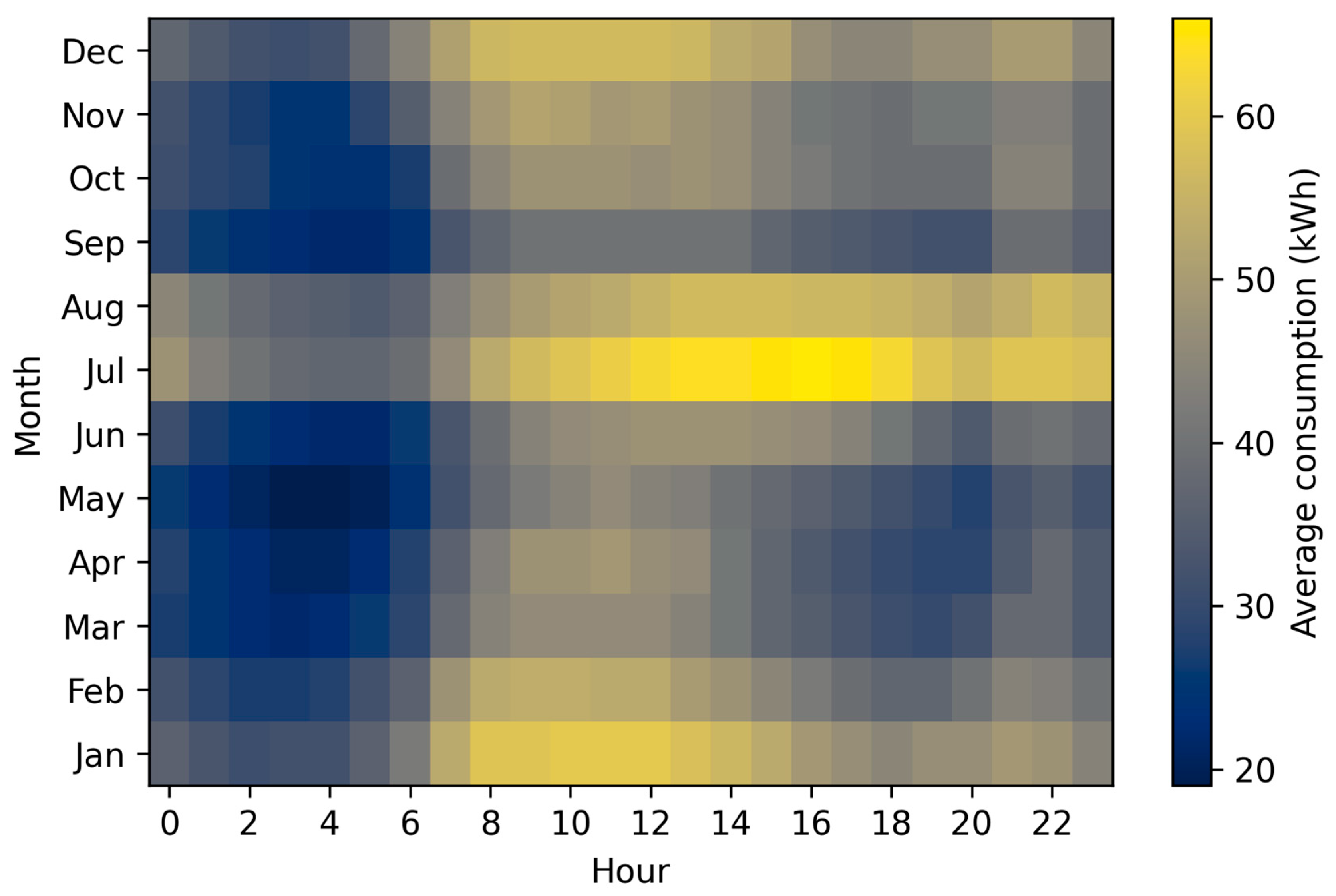
Figure 23 is a heat map showing that these peaks occur between 1 p.m. and 6 p.m. in July and August, and between 9 a.m. and 12 p.m. in December and January. This pattern is particularly relevant from a self-consumption perspective, as a substantial share of demand is concentrated during daylight hours, especially in summer, when solar availability is higher. In this sense, the aggregated consumption profile suggests favorable conditions for the temporal coincidence between electricity demand and PV generation.
The statistical study has been carried out obtaining the following indicators:
Linear regression for each electricity consumption point, comparing the cumulative hourly electricity consumption for 2023 (x-axis) with that for 2024 (y-axis). For each regression, the equation of the line, its slope (m) and the coefficient of determination R2 are obtained. Values of m and R2 close to 1 indicate a high degree of equality between the two energy consumption distributions.
Statistical analysis comparing average annual electricity consumption and its dispersion using the coefficient of variation (CV).
Statistical analysis comparing hourly means distributions between 2023 and 2024, obtaining the following indicators (expressed in Equations (23) and (24)):
Pearson correlation coefficient (r): measures the strength and direction of the linear relationship between both variables. Close to 1|r|-values means there is a strong, positive linear relationship.
Mean absolute percentage error (MAPE): measures a forecasting model’s accuracy by calculating the average percentage difference between 2023 and 2024 energy values and 2023 values, expressed as a percentage.
where
represents temporal unit (
n = 24 h);
and
are energy values in 2023 and 2024, respectively; and
and
indicate covariance and standard deviation.
These statistical results can be used to establish criteria for interpreting the degree of similarity between electricity consumption distributions. We propose the following thresholds:
r > 0.95 and MAPE < 10% means that distributions are very similar and any one can be used as a representative time pattern.
r > 0.90 and MAPE < 15% means that distributions have an acceptable similarity, but some uncertainty exists.
r < 0.90 or MAPE > 15% indicates that the distributions are not similar enough to be considered acceptable.
In addition, MAPE can be used to estimate future prediction uncertainty.
Note that the interest in comparing the distributions of average hourly electricity consumption between different years stems from the fact that average hourly profiles are useful for characterizing consumers’ electricity consumption.
The results of the statistical study are shown below:
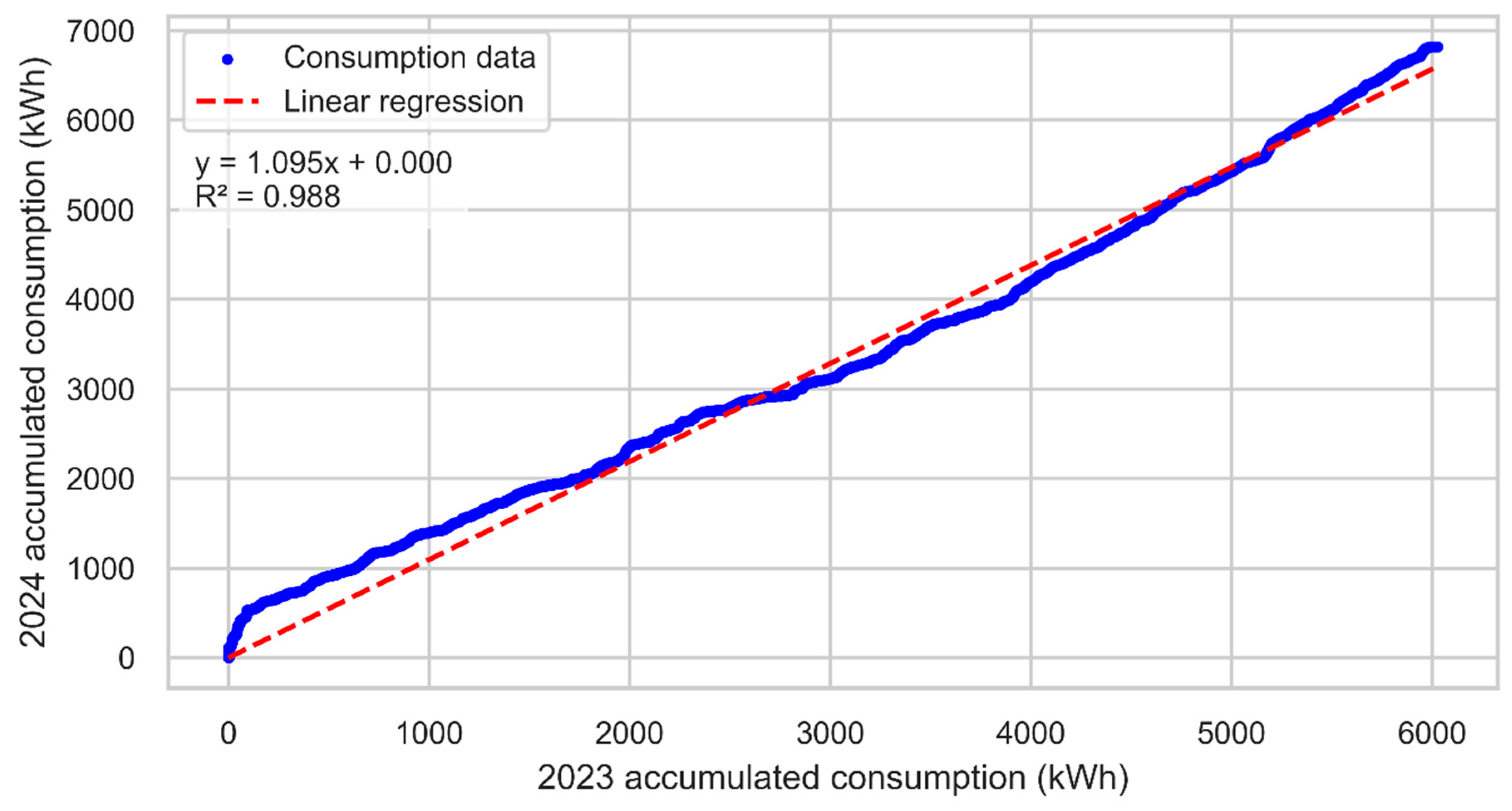
A linear regression has been performed between cumulative consumption in 2023 (x-axis) and cumulative consumption in 2024 (y-axis), both ordered chronologically, for each of the consumption points.
Figure 24 illustrates a representative regression line for one of the 118 consumers. For this representative case, the fitted line exhibits a slope of
m = 1.095 and
, indicating a high degree of similarity between the two electricity consumption distributions.
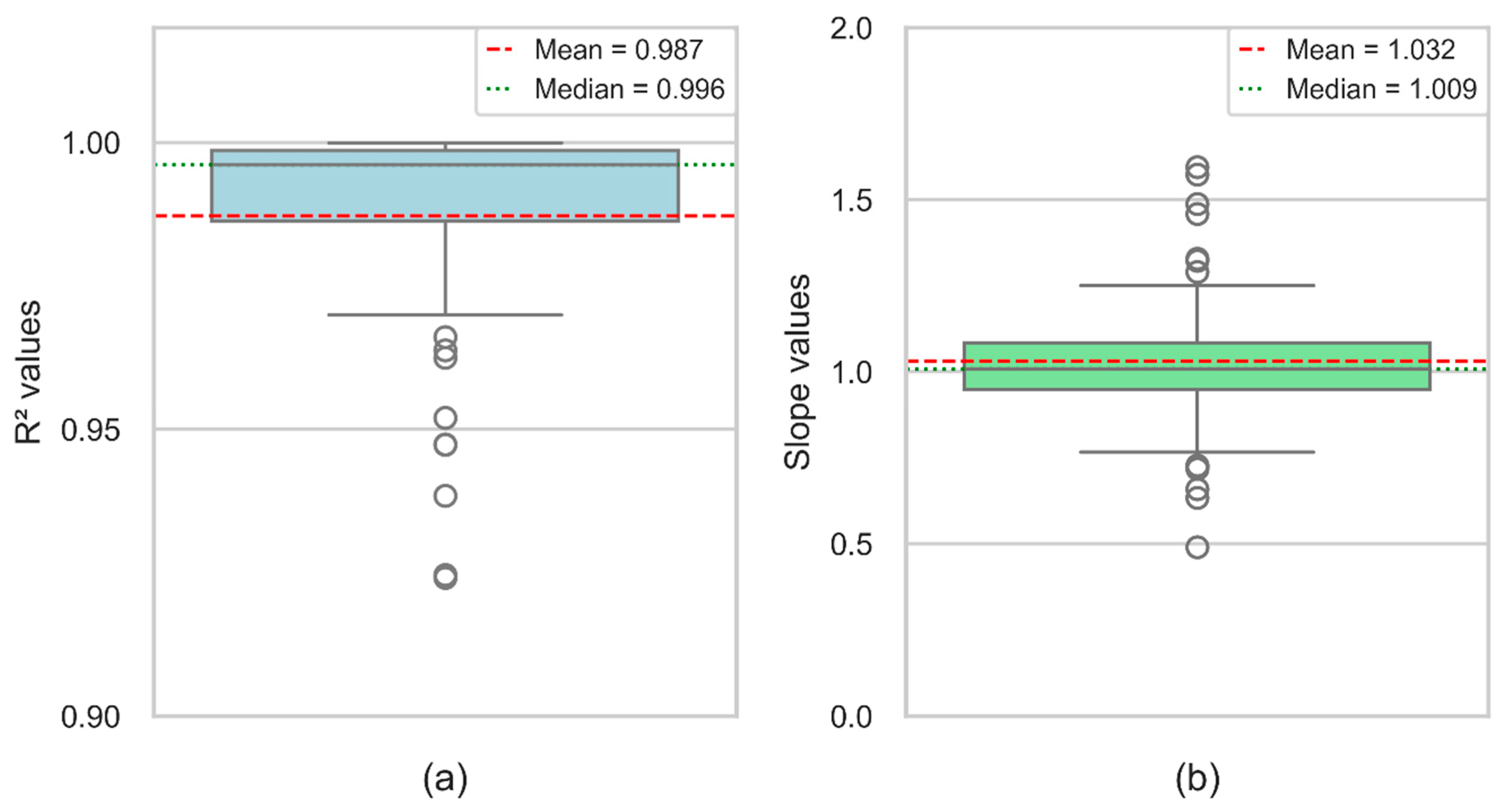
Figure 25 illustrates the outcomes of applying regression analysis to 118 consumption points. The box-plots illustrate the distribution of regression line slope coefficients (
m) and
R2-values. The
-values are concentrated very close to 1, suggesting stable behavior from one year to the next. An average slope (
m) of 0.999 indicates almost identical average consumption distributions between the two years, and an average
R2-value of 0.997 confirms strong linear correlations across the entire sample.
Table 6 summarizes the main annual consumption statistics for 2023 and 2024. The average annual consumption per consumer increased slightly from 5526 kWh in 2023 to 5626 kWh in 2024 (+1.8%). The annual coefficient of variation (
CV) of energy consumption decreased from 334% to 294%, indicating a reduction in consumption dispersion of 12%. However, the mean hourly
CV remained stable with a variation of 2% between 2023 and 2024. (~110%), confirming the consistency of intraday variability of demand across both years.
The statistical analysis comparing hourly means electricity consumption distributions between 2023 and 2024 is performed since hourly profiles are useful to characterize the electricity consumption of a consumer.
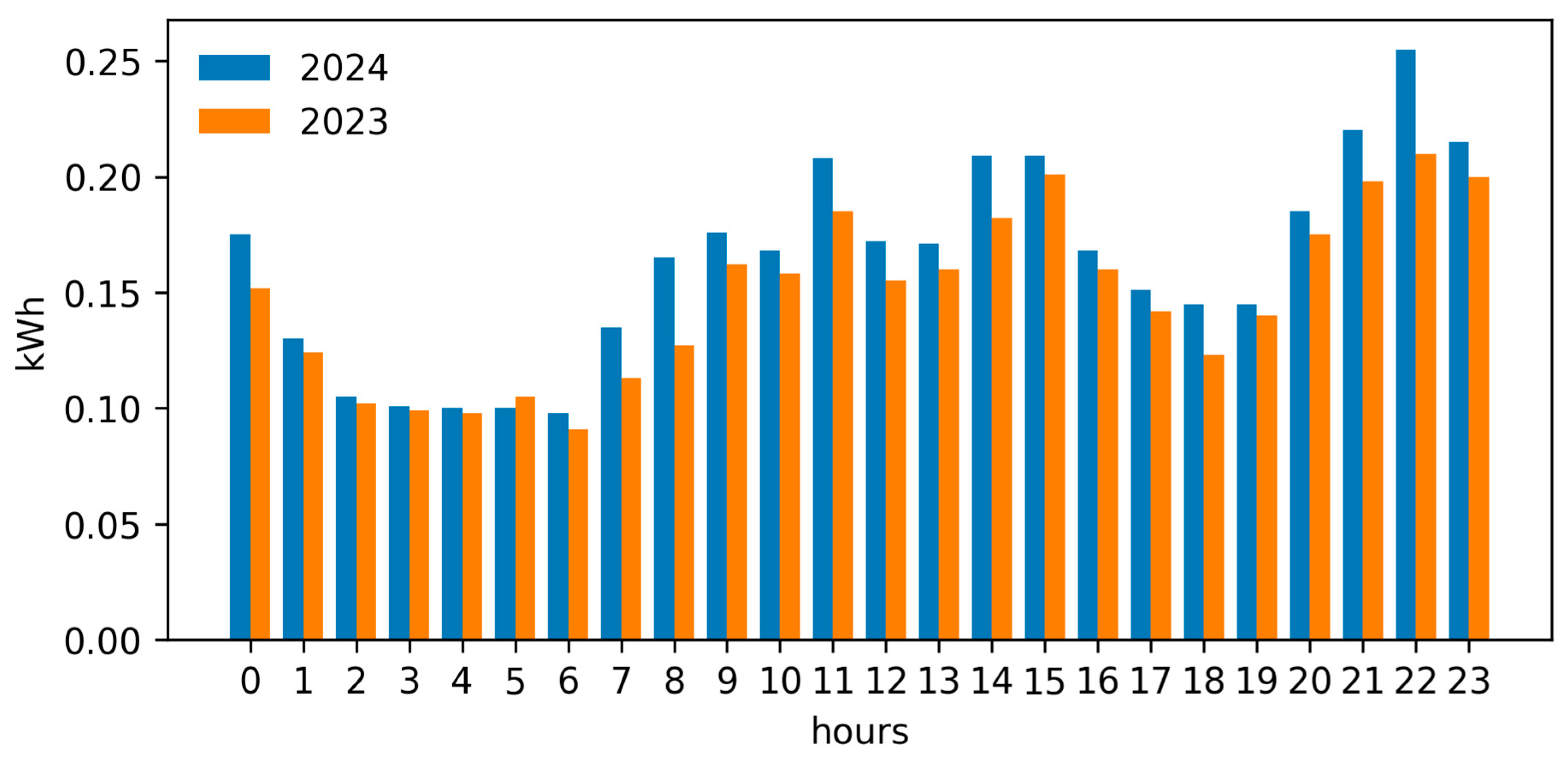
Figure 26 shows the hourly means distributions for 2023 and 2024 for the aforementioned consumer, whose statistical parameter results are as follows:
Both the statistical results and the electricity consumption distributions shown in
Figure 26 indicate a high degree of similarity between 2023 and 2024 energy consumption distributions.
r > 0.95 and
MAPE < 0.15 suggest that either of the two distributions can be used as representative data in this case study.
When applying this statistical analysis to the 118 electricity consumption points, results are expressed in
Table 7:
The analysis shows that 75% of the samples have r-values up to 0.921 (given by the first quartile Q1) and 75% have MAPE-values lower than 20% (third quartile Q3). The mean (μ) values of r and also confirm the high degree of similarity between the distributions. The low standard deviation (σ) values express their low dispersion. Furthermore, 46% of the samples have r > 0.95 and MAPE < 15%, indicating a high degree of similarity. Conversely, 71% of samples have r > 0.90 and MAPE < 25%, representing relatively similar hourly consumption profiles with some uncertainty.
This comparative analysis of the hourly electricity consumption of 118 residential consumers in 2023 and 2024 concludes that, in this case study, a single year of data can be considered representative when used as input for sizing PV systems for self-consumption. The analysis indicates an uncertainty of between 10% and 15% in the average hourly electricity consumption values. This conclusion is reinforced by the linear regression results for the consumption distributions in 2023 and 2024, as well as the low differences between the statistical metrics for both years.
It should be noted that the two chosen periods coincide with typical years in which there have been no exceptional climatic, economic or social events, unlike previous years affected by the likes of the 2020 pandemic or the start of the war in Ukraine, which impacted energy consumption habits and costs.
However, it should be noted that these results cannot be generalized, as they relate to electricity consumption in a specific geographical region over a period of only two years. Therefore, it is recommended that the available hourly consumption data be studied over the longest possible period whenever possible.
6. Conclusions
This article presents a newly developed open-source tool to assess and size photovoltaic (PV) self-consumption systems with or without storage (ST) through the evaluation of technical, temporal mismatch, and economic performance parameters. The tool relies on hourly consumption, meteorological, and electricity tariff data over one year, allowing the analysis to approach real operating conditions. The methodology is based on hourly energy-balance simulations considering different system configurations to evaluate how system size interferes with performance.
The work introduces the Mismatch Index (MI), derived from the Gini Coefficient, which offers a new perspective on evaluating the alignment between energy consumption patterns and PV system energy output (SEO). By comparing the relative temporal distribution of SEO and demand, the indicator provides a visual and quantitative understanding of how temporally aligned both distributions are over the analyzed period. When combined with traditional metrics like self-consumption (SC) and self-sufficiency (SS), it offers a multidimensional perspective that supports the design and assessment of energy systems under different temporal, demand, production, and economic conditions.
A unified tool was presented to support the analysis and sizing of PV self-consumption systems with storage through an integrated technical, temporal, and economic assessment framework. Rather than operating as a mathematical optimization model, the tool is conceived as a transparent decision-support framework based on the sequential evaluation of candidate configurations under self-consumption conditions. Four individual applications compose the tool:
The Energy Flow (EFA) application evaluates SC and SS levels under varying PV-ST configurations. It shows system configurations that maximize local PV-ST energy use and grid independence without oversizing or incurring unnecessary cost. When applied to a target, the tool points to different combinations that obtain similar operational performance, allowing the user to select the one that meets their needs and restraints.
The Consumption–Generation Alignment (CGA) application calculates the Mismatch Index (MI), which indicates the degree of temporal alignment between a consumer’s energy consumption and the energy produced by the PV-ST system. The closer the MI is to zero, the lower the temporal mismatch and the greater the similarity between the relative distributions of demand and system energy output over the analyzed period.
The Economic Assessment Application (EAA) evaluates the economic performance for different PV-ST configurations based on four main metrics: payback period (PBP), internal rate of return (IRR), energy-unit cost (LCOE) and profitability (LPOE). Its visual output illustrates how system size affects long-term economic performance based on real consumption and electricity market prices, allowing the user to identify advantageous configurations that meet their needs and ensure economic viability and profitability.
The System Sizing Application (SSA) evaluates PV-ST systems through an iterative process and selects one configuration that minimizes temporal mismatch between energy consumption and SEO, identifies a technically sufficient configuration based on the stabilization of SC and SS, and ensures economic viability based on PBP and IRR constraints, operating as a rule-based decision procedure rather than as a mathematical optimization model.
Together, these applications support consistent evaluation of energy autonomy, temporal alignment between energy consumption and production, and economic performance, offering a structured path for users to understand how system size influences overall behavior and viability, while avoiding unnecessary oversizing once gains become marginal.
When applied to a case study of a residential consumer in Spain, the tool shows how energy consumption and electricity tariffs can guide decision-making toward balanced and viable PV configurations, providing technically robust and economically consistent outcomes.
This case study, based on actual hourly consumption data and meteorological series from a Typical Meteorological Year (TMY) over a full year, resulted in a PV-ST configuration that minimized temporal mismatch ( of 0.30), improved performance through SC and SS (0.87 and 0.66, respectively), and ensured long-term economic viability (PBP of 14 years, lower than the 20-year lifetime, and IRR of 4.92%, higher than the 3% discount rate considered), while obtaining a competitive LCOE of €102.78/MWh in comparison to the average electricity market tariff in the consumption period (€138/MWh). These results show that the proposed tool meets its intended purpose by identifying a PV–ST configuration that does not rely on a single performance dimension, but instead balances temporal alignment, energy autonomy, and long-term economic viability. In other words, the selected configuration did not simply reduce grid purchases; it also identified a PV–ST sizing point at which SC and SS had already stabilized while maintaining stronger temporal alignment with household demand, which reinforces the practical value of the proposed sizing approach and supports more efficient local use of PV generation.
When applied to an energy community comprising ten individual consumers in Miedes de Aragon (Spain), the tool enables not only the comparison of alternative system configurations, but also the assessment of the technical and economic implications of adopting ten individual systems for each prosumer or a single centralized system. In this case study, the tool indicates that the technical results for the centralized system are moderately superior to those for the individual systems. For instance, the centralized system achieves SC and SS rates of 0.91 and 0.74, respectively, whereas the individual systems achieve average rates of SC = 0.88 and SS = 0.73.
However, the economic results show significant differences between the individual and centralized systems. Aggregation reduces CAPEX by 42% (from €39k to €22k). Consequently, the payback period (PBP) decreases from a maximum of 32 years for individual systems to 11 years for the centralized system; the net present value (NPV) increases from €1.37k to €20.06k; the internal rate of return (IRR) increases from a minimum of 5.16% to a positive value of 10.84%; the levelized cost of electricity (LCOE) decreases from €102.78/MWh to €77.98/MWh; and the levelized price of electricity (LPOE) increases from −€110.44/MWh to €43.92/MWh.
These results show that the tool can be used not only to support sizing decisions, but also to evaluate how aggregation and system centralization affect the overall technical performance and, above all, the economic viability of collective self-consumption schemes. From the users’ perspective, these differences translate into more affordable investment requirements, shorter payback times, lower lifetime electricity costs, and positive economic returns that would not be achieved under the individual-system approach. In this sense, the tool makes the benefits of aggregation directly readable for decision-makers and community members by showing that the main advantage of centralization in this case is not only a moderate improvement in and , but a much stronger enhancement in the financial attractiveness and feasibility of the project.
Overall, the proposed methodology and tool provide a basis for decision-making in PV self-consumption system size, bridging technical consistency, temporal alignment, and economic viability. The approach addresses a gap in PV–ST sizing tools by integrating temporal alignment into the sizing process, moving beyond conventional approaches based only on annual balances or economic optimization. The two application contexts (residential and energy community) illustrate its adaptability to individual and aggregated scenarios, as well as robustness across different consumption patterns and scales, and a transparent framework to interpret the relationship between technical performance, temporal behavior, and economic outcomes. In this way, the methodology supports not only the identification of feasible system configurations, but also a more comprehensive understanding of how these different performance dimensions interact under self-consumption conditions while helping avoid unnecessary surplus and oversizing.
Finally, a comparative statistical analysis of hourly electricity consumption has been conducted for 118 residential consumers for two different years, using actual data. The aim of this analysis is to determine the degree of uncertainty when using one-year hourly consumption data as input for PV self-consumption sizing. The study concludes that a single year of data can be considered representative for this purpose. The analysis indicates an uncertainty of between 10% and 15% in the average hourly electricity consumption values. This conclusion is reinforced by a linear regression assessment of the electricity consumption distribution in 2023 and 2024. Linear regressions show slopes (m) and coefficients of determination R2 close to 1, suggesting a high degree of similarity between the two distributions.
Despite these contributions, this study has some limitations that should be acknowledged. First, the residential case study is based on one year of hourly consumption data, and the representativeness analysis compares only two consecutive years and a geographically restricted sample from the Calatayud region; therefore, the conclusion that one year of data is sufficiently representative should be interpreted cautiously and mainly within the studied context. Second, the economic analysis depends on simplified long-term assumptions, including fixed discount and tariff-growth rates, average PV and storage degradation values, and replacement assumptions, which may not fully capture market volatility or the real aging behavior of batteries and inverters. Finally, the proposed Mismatch Index complements SC and SS by characterizing the degree of temporal alignment between SEO and electricity demand, but the method does not allow identifying the specific time instant at which the misalignment occurred when the curve is analyzed on its own, and therefore does not fully capture pure time-lag effects between demand and PV supply.
Future work should involve extending the analysis to longer periods of hourly consumption data and to other geographical contexts, as well as investigating possible changes in electricity consumption habits associated with the availability of low-cost electricity at certain times of the day. Future work should also involve incorporating an analysis of systems applied to collective self-consumption, assessing different actors, participation schemes, and benefit-sharing mechanisms to explore how aggregation strategies can enhance equity, efficiency, and overall system performance.



 ,
,