Article

A Prompt-Driven and AR-Enhanced Decision Framework for Improving Preventive Performance and Sustainability in Bus Chassis Manufacturing

by
Cosmin Știrbu
1,
Elena-Luminița Știrbu
2,3,4,
Nadia Ionescu
5,
Laurențiu-Mihai Ionescu
1,*,
Mihai Lazar
6,
Ana-Maria Bogatu
7,
Corneliu Rontescu
7 and
Maria-Daniela Bondoc
8
1
Faculty of Electronics, Communications and Computers, Pitesti University Centre, National University of Science and Technology Politehnica Bucharest, 313 Splaiul Independentei, 060042 Bucharest, Romania
2
Piroux Industrie Romania, Calea Câmpulungului 55A, 115400 Mioveni, Romania
3
European Chemical Industry Council, Rue Belliard, 40, 1040 Brussels, Belgium
4
Calitate Online, 110365 Pitesti, Romania
5
Faculty of Mechanics and Technology, Pitesti University Centre, National University of Science and Technology Politehnica Bucharest, 313 Splaiul Independentei, 060042 Bucharest, Romania
6
Light, Nanomaterials, Nanotechnologies (L2n)—CNRS UMR 7076, University of Technology of Troyes (UTT), 12 Rue Marie Curie CS 42060, 10004 Troyes Cedex, France
7
Faculty of Industrial Engineering and Robotic, National University of Science and Technology Politehnica Bucharest, 313 Splaiul Independentei, 060042 Bucharest, Romania
8
Department of Finance, Accounting and Economics, Pitești University Centre, National University of Science and Technology Politehnica Bucharest, 313 Splaiul Independentei, 060042 Bucharest, Romania
*
Author to whom correspondence should be addressed.
Sustainability 2026, 18(6), 2988; https://doi.org/10.3390/su18062988
Submission received: 27 January 2026 / Revised: 6 March 2026 / Accepted: 11 March 2026 / Published: 18 March 2026

Abstract

Sustainable manufacturing performance is increasingly influenced by the quality of decisions embedded in Quality Management System (QMS) activities, particularly those related to problem analysis and preventive action. In industrial environments such as welded bus chassis production, recurring quality defects—although involving small components—can generate sustainability impacts through rework, inspection effort, and energy consumption. Although artificial intelligence (AI) is increasingly adopted to support quality-related tasks, its contribution is often assessed in terms of automation rather than its effect on decision quality. This study presents an AI-supported, prompt-driven decision framework designed to strengthen preventive performance within QMS. The framework is implemented through a deterministic software application that formalizes prompt engineering as a rule-based process, transforming informal human problem descriptions into structured prompts suitable for external AI reasoning tools. The application itself does not embed AI and does not generate decisions; instead, it functions as a transparent decision interface that reduces variability in problem formulation and supports methodological consistency. The framework was validated through an industrial case study conducted in a bus chassis manufacturing plant experiencing recurring defects related to missing or incorrectly positioned welded brackets. Quantitative evaluation using Key Performance Indicators demonstrates reduced analysis cycle time, improved completeness of problem definitions, higher corrective action implementation rates, and lower defect recurrence.

1. Introduction

In industrial manufacturing, sustainability is increasingly influenced by the quality of decisions taken during routine production and quality management activities. While energy efficiency and material optimization remain essential objectives, a significant proportion of environmental and economic losses continues to originate from recurring quality problems, rework, and inefficient inspection practices. These losses are particularly evident in complex manufacturing environments characterized by high product variability and manual operations, such as welded chassis production for the bus industry, where small deviations in component presence or positioning can propagate into repeated nonconformities and unstable downstream processes [1].
Quality Management Systems (QMS) provide a structured framework for addressing such challenges by defining standardized approaches for problem identification, analysis, and corrective and preventive actions. The effectiveness of structured quality methodologies has been demonstrated in industrial practice, where approaches such as Six Sigma DMAIC have contributed to the reduction in recurring manufacturing defects through improved analytical rigor and consistency [2]. Despite this, many quality-related decisions still rely heavily on informal reasoning and individual experience. Problem descriptions are frequently incomplete or ambiguous, analytical depth varies across engineers, and corrective actions often emphasize operator behavior rather than systemic process weaknesses. Consequently, similar nonconformities tend to recur, negatively affecting operational stability and sustainability performance.
The emergence of Industry 4.0 has accelerated the integration of digital technologies into quality management, including data-driven analytics, intelligent inspection systems, and predictive quality approaches [3,4]. Research on Quality 4.0 highlights the potential of these technologies to enhance decision support and reduce quality-related losses by leveraging industrial data and automation [1,4]. However, the effectiveness of AI-supported quality applications remains strongly dependent on the quality and completeness of the input information provided by human users. Poorly structured problem descriptions, insufficient contextualization, and unclear decision objectives can significantly limit the relevance and consistency of AI-supported analyses.
In parallel, Augmented Reality (AR) technologies are increasingly explored as advanced solutions for inspection and visual control on the shop floor. By overlaying digital reference information directly onto physical components, AR-based systems can reduce interpretation errors, shorten inspection time, and support intuitive verification processes [5,6]. In manufacturing contexts involving welded structures and multiple product variants, AR-assisted inspection offers clear advantages over traditional drawings and manual measurement techniques. Nevertheless, the preventive effectiveness of AR-based quality control solutions remains highly dependent on upstream quality decisions, particularly with respect to how quality problems are defined, which control points are selected, and how inspection strategies are derived.

1.1. Artificial Intelligence in Advanced Manufacturing and Predictive Quality Control

Artificial intelligence has progressively moved from experimental implementation to operational integration in manufacturing systems. In recent years, its role has shifted from supporting post-process defect detection toward enabling predictive and preventive control strategies embedded directly within production environments [7,8]. Rather than serving solely as an automation tool, AI increasingly functions as an analytical layer capable of handling complex, multivariable interactions and assisting decision-makers in managing process variability.
In advanced manufacturing contexts—particularly precision machining, microfabrication, and materials processing—AI-supported approaches have demonstrated the capacity to influence process outcomes at extremely fine resolution. Research on multi-physical field coupling polishing of diamond for atomic-scale damage-free surfaces illustrates how coordinated modeling of physical phenomena can be used to minimize surface damage at the nanometric scale [9]. Such work underscores that AI-enabled optimization extends beyond productivity improvement and plays a role in enhancing process stability, repeatability, and material integrity under demanding operating conditions.
Two tendencies emerging from this body of research are especially relevant for sustainable manufacturing. First, AI systems are increasingly integrated with process physics, enabling predictive adjustments before deviations propagate into defects [7,9]. Second, structured digital architectures contribute to reducing variability across complex production systems by standardizing analytical pathways and improving consistency in decision-making [10].
In welding-intensive manufacturing environments, such as bus chassis production, variability arises not only from welding parameters or fixture conditions but also from inconsistencies in how problems are formulated and analyzed. While AI applications in predictive maintenance and automated inspection are now well established [7,8], comparatively limited attention has been given to the upstream phase of decision formulation—namely, how quality issues are defined, contextualized, and translated into preventive action.
Recent contributions in AI-supported machining and sustainable manufacturing suggest that environmental improvements can result indirectly from enhanced process stability and reduced rework intensity [8,11]. When variability decreases and containment cycles shorten, resource consumption associated with corrective operations is also reduced. From this perspective, AI does not necessarily need to intervene directly at the machine level to influence sustainability performance; improvements in analytical rigor and preventive reasoning may produce measurable system-level effects.
The approach proposed in this study is situated within this broader evolution of AI in manufacturing. Instead of embedding AI directly into welding equipment or inspection hardware, the framework focuses on strengthening the decision layer that precedes technical control measures. By formalizing how quality problems are structured and communicated to analytical tools, the framework aims to increase reproducibility, reduce cognitive variability, and complement existing predictive quality technologies. In doing so, it aligns with Quality 4.0 principles while addressing sustainability through improved preventive robustness at the workshop level.

1.2. Related Work and Market Landscape

From a research and market perspective, current industrial solutions addressing quality and sustainability can be broadly categorized into three groups. First, Quality Management Systems and related digital platforms provide structured workflows for nonconformity management, corrective and preventive actions, audits, and documentation control. These systems contribute to procedural consistency and traceability but typically assume that problem descriptions and analytical inputs are already complete and methodologically sound.
Second, AI-enabled quality applications associated with Industry 4.0 focus on data-driven analysis, prediction, and intelligent inspection planning [3,4,12]. Such solutions enhance downstream analytical capabilities and support predictive and preventive quality functions. However, they primarily address the processing of available data and do not explicitly formalize how quality problems should be framed, constrained, and contextualized before AI reasoning is applied. As highlighted in studies on smart manufacturing systems, the absence of standardized decision input formulation remains a challenge for consistency and reproducibility across digital quality tools [12,13].
Third, AR-based inspection and cyber–physical quality control systems support execution-level accuracy by providing visual guidance and real-time feedback on the shop floor [5,6,12]. These systems are particularly effective in complex assembly and welding environments, where visual interpretation plays a critical role. Nevertheless, AR-based solutions rely on predefined inspection logic and reference definitions that originate from upstream quality decisions, making their overall effectiveness dependent on the quality of those decisions.
Across these categories, a common gap can be identified: limited attention is paid to the formalization of decision formulation as a technical process. In current industrial practice, the transformation of informal human observations into structured, context-complete analytical inputs remains largely experience-dependent and difficult to reproduce across teams, shifts, and production sites. Human-centered manufacturing concepts further emphasize that decision quality in complex systems depends on the clarity and completeness of information available to operators and digital tools [14,15].

1.3. Positioning of the Proposed Approach

This paper addresses the identified gap by proposing an AI-supported, prompt-driven decision framework in which decision formulation is treated as a deterministic, rule-based software process [14]. The proposed application does not embed artificial intelligence, does not perform automated analysis, and does not generate decisions autonomously. Instead, it serves as a structured interface that transforms informal human problem descriptions into technically complete, context-aware prompts suitable for external AI reasoning systems.
By embedding prompt formulation logic at the software level, the framework reduces variability in problem definition, supports methodological consistency, and improves traceability in AI-supported quality decision-making. This approach aligns with human-centered manufacturing principles and supports more consistent interaction between human experts, AI reasoning systems, and execution-level technologies such as AR-based inspection.
The proposed framework is evaluated through an industrial case study conducted in a manufacturing plant producing welded bus chassis structures. The case focuses on recurring defects related to missing or incorrectly positioned brackets—issues that, despite involving relatively small components, generated significant sustainability impacts due to repeated rework, additional inspection effort, and increased energy consumption. Within this context, the prompt-driven decision framework is combined with an AR-based visual control concept that enables direct comparison between real chassis structures and nominal 3D definitions to support preventive inspection.
To assess effectiveness, a multidimensional Key Performance Indicator (KPI) framework is applied, addressing operational efficiency, output quality, Quality Management System impact, and adoption dynamics. This evaluation enables the impact of structured decision formulation to be assessed beyond productivity metrics, explicitly linking decision quality to preventive effectiveness and sustainability outcomes.
The contribution of this work lies in demonstrating how deterministic prompt engineering, external AI reasoning, and AR-based inspection can be integrated into a coherent, human-centered decision architecture for industrial quality management. By focusing on decision formulation rather than automation alone, the proposed framework provides a practical pathway for strengthening preventive performance and sustainability in modern manufacturing systems.

1.4. Research Objectives and Scientific Contribution

Although artificial intelligence is increasingly applied in manufacturing environments, particularly in predictive maintenance, automated inspection, and data-driven process optimization, less attention has been paid to the way quality problems are initially structured and formulated. In practice, especially in welding-intensive production systems, the variability of analytical outcomes often originates not from the absence of technical tools, but from inconsistencies in how problems are defined at the outset.
This study was developed in response to that observation. The objective was not to introduce a new quality methodology, but to examine whether strengthening the decision formulation phase through structured AI-assisted prompting could improve the consistency and effectiveness of conventional quality management practices.
More specifically, the research sought to determine whether
  • A standardized AI-supported problem structuring approach improves analytical completeness in industrial quality investigations;
  • Such improvements translate into measurable reductions in analysis time, inspection effort, and defect recurrence;
  • Operational stabilization achieved at the decision level is associated with observable sustainability effects at the workshop scale.
By addressing these questions, the study contributes in several ways beyond the immediate industrial case. First, it documents a practical method for integrating large language model–based analytical support into existing quality systems without displacing established tools such as 8D, 5 Why, or FMEA. Second, it provides statistically characterized evidence from 125 comparable nonconformity cases, linking structured decision support to operational performance gains. Third, it extends the discussion of Quality 4.0 by illustrating that digital intervention at the analytical layer—rather than at the machine control level—can influence resource efficiency and environmental indicators indirectly through reduced recurrence and rework.
The relevance of the work, therefore, lies not only in the local implementation described but in the demonstration that decision-layer digitalization can serve as a scalable pathway toward improved operational robustness and sustainability performance in mature manufacturing environments.

2. Materials and Methods

2.1. Technical Description of the Prompt Engineering Application

2.1.1. Software Scope and Design Philosophy

The application was designed as a strictly deterministic software system intended to externalize prompt engineering from individual users and formalize it at the software level. This design choice was motivated by the need to reduce variability in how quality problems are formulated in industrial environments and to ensure consistency across users, teams, and production contexts.
To achieve this objective, the system intentionally excludes artificial intelligence, statistical processing, and probabilistic mechanisms. All internal operations are governed by predefined, rule-based logic, ensuring that every transformation applied to user input is transparent, auditable, and reproducible.
Within the overall decision-making workflow, the software functions as a technical mediation layer between human expertise and external AI reasoning tools. Its role is not to perform analysis or make decisions, but to structure and validate human-provided information before it is submitted to AI systems. In this way, the application ensures that AI-based reasoning operates on complete, coherent, and quality-relevant inputs.
Accordingly, the proposed application can be defined as a deterministic, rule-based decision formulation tool for industrial quality management. Its primary function is to standardize the description and contextualization of quality problems prior to any analytical reasoning—whether performed by humans or by AI-supported systems.
The application does not embed artificial intelligence, does not execute automated analysis, and does not generate decisions autonomously. Instead, it acts as a formal interface that transforms informal, experience-based problem descriptions into technically complete, context-aware prompts suitable for consistent and reproducible use by external AI reasoning systems.
As a result, the application improves the reliability and traceability of AI-supported quality decisions while preserving a human-centered approach, in which expert judgment remains central and explicitly structured rather than replaced.

2.1.2. Logical Architecture

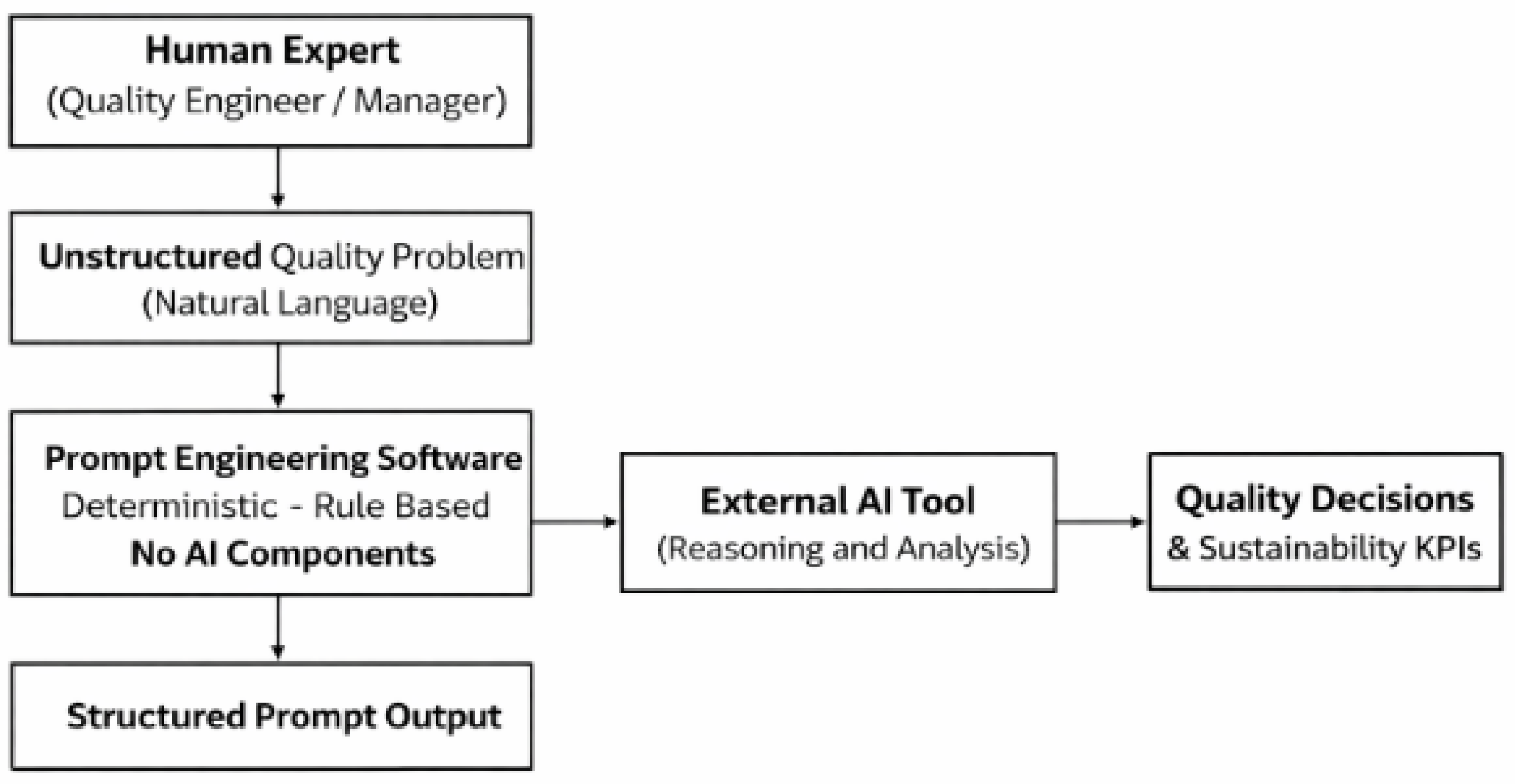
From a technical perspective, the application is organized around a modular rule-based architecture composed of clearly separated components that it is described in Figure 1:
  • Input acquisition;
  • Semantic structuring;
  • Constraint injection;
  • Prompt assembly;
  • Output validation.
Each component operates deterministically, without feedback loops or learning mechanisms.
Figure 1. Prompt Engineering Software Architecture.
Sustainability 18 02988 g001

2.1.3. Input Processing and Normalization

User input is collected as free-text descriptions of quality-related situations (e.g., defects, deviations, audit findings). The system applies normalization rules to ensure consistency in terminology, problem scope, and level of detail. This step does not interpret meaning statistically but enforces structural completeness by verifying the presence of mandatory informational elements.

2.1.4. Prompt Structuring Logic

The core of the application consists of a rule engine that maps normalized input fields into predefined prompt templates. These templates encode:
  • The type of quality problem;
  • The operational context;
  • The decision objective;
  • Explicit constraints;
  • The expected structure of the AI response.
This logic guarantees that similar problems generate comparable prompts, regardless of the user.

2.1.5. Constraint and Context Injection

The system automatically injects contextual constraints relevant to quality management, such as process boundaries, compliance considerations, and decision intent. These constraints are static and configurable, allowing adaptation to different organizational environments without modifying the core logic.

2.1.6. Prompt Assembly and Output Generation

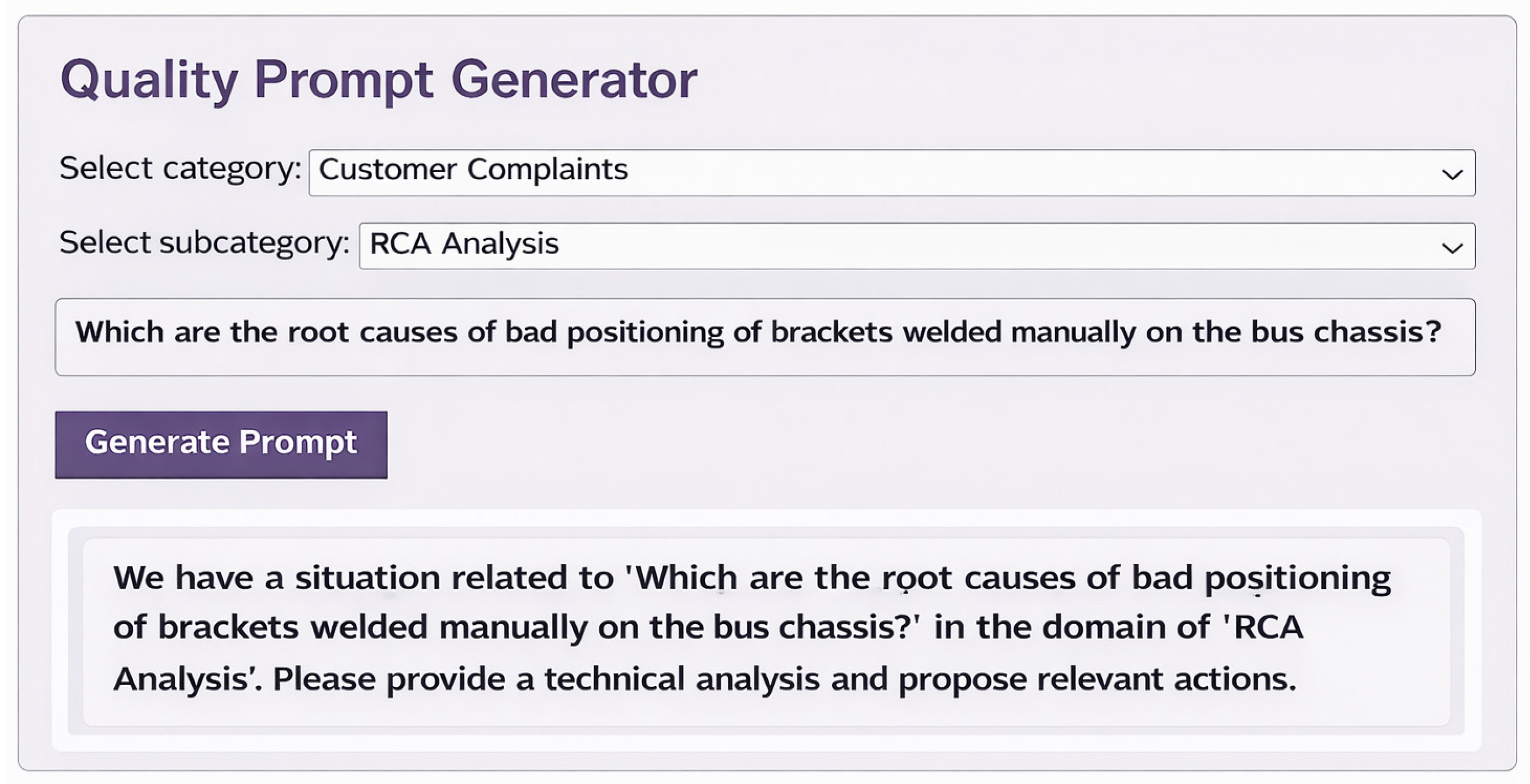
The final prompt is assembled as a structured textual artifact, ready for direct use in external AI interfaces. The software does not transmit the prompt automatically and does not receive or process AI outputs. The generated prompt represents the terminal output of the system, that it is described in Figure 2:

2.1.7. Determinism, Auditability, and Reproducibility

The proposed AI-supported framework operates on predefined logical structures and standardized prompt templates. Because analytical pathways are explicitly structured, identical inputs generate reproducible outputs under equivalent contextual conditions.
This deterministic behavior is essential in regulated quality environments, where auditability, traceability, and decision transparency are mandatory. All decision steps are documentable within the Quality Management System (QMS), allowing retrospective verification during internal or external audits.
Such reproducibility strengthens the long-term stability of analytical processes and reduces dependence on individual cognitive variability.

2.1.8. Sustainability Implications of Structured Decision Logic

Structured and reproducible decision pathways contribute to sustainability not directly through technological substitution, but through stabilization of operational behavior.
In manufacturing environments, variability in analytical reasoning can lead to inconsistent corrective actions, repeated containment cycles, and increased rework intensity. By reducing cognitive variability and standardizing root cause evaluation, the framework supports preventive robustness and minimizes recurrence-driven resource consumption.
Therefore, sustainability implications arise from improved process stability, reduced non-value-adding operations, and strengthened systemic learning mechanisms.
This positioning distinguishes sustainability impact as a secondary effect of decision-quality enhancement rather than as a primary technological objective.

2.1.9. AI Architecture and Operational Implementation

The AI component used in this study is based on a large language model (LLM) operating through a structured prompt interface. The system was not custom-trained on historical defect datasets from the plant, nor was it fine-tuned using internal production records. During the study period, the model configuration remained unchanged to ensure comparability across all phases.
The implementation does not rely on supervised learning algorithms, defect classification models, or predictive neural networks connected to process sensors. Instead, the approach uses predefined analytical prompt templates that guide the reasoning sequence of the model.
Each nonconformity case is introduced through a standardized input structure including
  • Clear defect description;
  • Production context (station, variant, welding configuration);
  • Containment actions already performed;
  • Known process conditions;
  • Practical constraints.
The prompt template enforces a strict analytical sequence. The model is required to separate
  • Observable symptoms from hypothesized causes;
  • Direct causes from systemic contributors;
  • Corrective actions from preventive measures;
  • Assumptions from verified information.
This structured sequencing reduces ambiguity and limits output variability. While the underlying LLM generates responses probabilistically, the structured prompt design constrains reasoning pathways and ensures that similar inputs produce comparable analytical structures [16].
The AI system does not interact directly with welding equipment, PLC systems, or real-time sensor data. All inputs are manually validated case descriptions introduced after defect detection. The tool functions as a structured analytical assistant within the Quality Management System rather than as an autonomous decision-maker.
This architecture was selected intentionally. The objective was not to create a predictive defect detection model, but to strengthen the consistency and completeness of the decision formulation phase preceding conventional quality tools such as 8D and 5 Why analysis.

2.2. KPIs and Evaluation Framework

2.2.1. Rationale for KPI Selection

The evaluation framework was designed to assess the effectiveness of an AI-based prompt generation application developed to support Quality Management activities, with a specific focus on problem analysis, root cause identification, and corrective action definition.
Unlike generic AI productivity tools, the proposed application targets structured decision-making processes embedded in Quality Management Systems (QMS), where decision quality and prevention effectiveness are critical performance dimensions [17,18,19,20]. Therefore, the selected Key Performance Indicators (KPIs) reflect not only operational efficiency, but also technical completeness, standard alignment, and systemic impact, in line with contemporary Quality Management and Industry 4.0 research [20,21].
The KPIs were defined according to the following principles:
  • Measurability and reproducibility, as recommended for performance measurement systems in industrial environments [22];
  • Relevance for industrial Quality Management contexts, particularly in manufacturing and automotive sectors [23];
  • Alignment with ISO 9001 and IATF 16949 requirements, emphasizing preventive actions and continuous improvement [24,25];
  • Ability to capture both human–AI interaction and organizational learning effects, consistent with human-centered AI frameworks [26,27].

2.2.2. KPI Categories

The KPIs were grouped into four categories, following established multidimensional performance assessment approaches [28,29]:
  • Operational Efficiency KPIs;
  • Output Quality KPIs;
  • Quality Management Impact KPIs;
  • Adoption and Standardization KPIs.
This categorization enables a holistic evaluation of the AI application across technical, organizational, and systemic dimensions.

2.2.3. Operational Efficiency KPIs

  • Prompt Generation Time Reduction (PGTR);
  • Definition:
Percentage reduction in time required to formulate a technically relevant prompt for a quality-related problem when using the AI application compared to manual formulation.
  • Formula:
    P G T R % = T m a n u a l T A I T m a n u a l     100 ,
    where
  • Tmanual = time required for manual prompt formulation, measured in seconds (s) or minutes (min);
  • TAI = time required for quality-related problems when using the AI application, measured in seconds (s) or minutes (min);
  • PGTR: percentage (%), dimensionless
  • Purpose:
This KPI quantifies productivity gains and cognitive load reduction for quality engineers, consistent with prior studies on AI-supported knowledge work and decision acceleration [30,31]
  • Analysis Cycle Time (ACT);
  • Definition:
Elapsed time between problem identification and the availability of a structured analytical output suitable for decision-making.
  • Unit: minutes per case
  • Relevance:
ACT reflects the contribution of AI-assisted prompt generation to faster decision cycles, a critical requirement in high-pressure industrial environments where responsiveness and containment speed are key performance factors [32].

2.2.4. Output Quality KPIs

  • Prompt Technical Completeness Index (PTCI);
  • Definition:
A normalized index measuring the presence of essential technical elements within generated prompts.
  • Evaluation Criteria:
-
Process context specification;
-
Applicable standard reference;
-
Problem typology definition;
-
Clear analytical objective;
-
Request for corrective and preventive actions.
  • Formula:
    P T C I = f u l f i l l e d   c r i t e r i a T o t a l   c r i t e r i a ,
    where
  • PTCI: dimensionless, expressed as a normalized value in the range [0, 1].
  • Contribution:
PTCI provides an objective measure of prompt structure quality and reproducibility, aligning with research on structured problem-solving and standardized analytical frameworks in Quality Management [19,33].
  • Root Cause Relevance Score (RCRS).
  • Definition:
Percentage of root causes generated based on AI-assisted prompts that are validated by experienced quality professionals.
  • Formula:
    R C R S % = V a l i d a t e d   c a u s e s T o t a l   i d e n t i f i e d   c a u s e s     100 ,
    Units of Measurement:
  • Validated root causes: count (dimensionless);
  • Total identified root causes: count (dimensionless);
  • RCRS: percentage (%), dimensionless.
  • Significance:
RCRS evaluates the semantic and technical relevance of AI-supported analytical outputs, integrating expert judgment as recommended in hybrid human–AI decision systems [26,34].

2.2.5. Quality Management System Impact KPIs

  • Corrective Action Implementation Rate (CAIR);
  • Definition:
Ratio of corrective actions generated through AI-supported analysis that are effectively implemented within the organization.
  • Formula:
    C A I R % = I m p l e m e n t e d   a c t i o n s P r o p o s e d   a c t i o n s     100 .
    Units of Measurement:
  • Implemented corrective actions: count (dimensionless);
  • Proposed corrective actions: count (dimensionless);
  • CAIR: percentage (%), dimensionless.
  • Interpretation:
CAIR reflects the practical applicability and organizational feasibility of AI-generated analytical results, a critical indicator of value creation in QMS-driven environments [24,29].
  • Reoccurrence Reduction Rate (RRR);
  • Definition:
Reduction in recurrence of identical nonconformities after adoption of the AI-based prompt generation application.
  • Formula:
    R R R % = N C b e f o r e N C a f t e r N C b e f o r e     100 ,
    where
  • NCbefore = number of identical nonconformities observed during a defined reference period before application adoption (count);
  • NCafter = number of identical nonconformities observed during a comparable period after application adoption (count);
  • RRR: percentage (%), dimensionless.
  • Relevance:
This KPI directly links AI usage to preventive effectiveness, which is a central objective of modern Quality Management and operational sustainability [21,35].

2.2.6. Adoption and Standardization KPIs

  • User Adoption Rate (UAR);
  • Definition:
Percentage of users who continue using the application after initial exposure.
  • Purpose:
UAR assesses acceptance and perceived usefulness among quality professionals, in line with technology acceptance and AI adoption models [36].
  • Prompt Reuse Index (PRI);
  • Definition:
Average number of times generated prompts are reused or adapted across different problem-solving cases.
  • Interpretation:
PRI indicates knowledge standardization and organizational learning, which are key mechanisms for sustained performance improvement in Quality Management Systems [37].

2.2.7. Composite KPI: Quality AI Effectiveness Index (QAIEI)

To provide an aggregated assessment, a composite indicator was defined:
Q A I E I = w 1     P G T R + w 2     P T C I + w 3     R C R S + w 4     R R R ,
where w1…w4 are weighting coefficients reflecting organizational priorities.
QAIEI: dimensionless, expressed as a normalized index.
  • Purpose:
QAIEI enables comparative evaluation across organizations or time periods and supports benchmarking of AI-assisted Quality Management initiatives [22,38,39].

2.2.8. Evaluation Methodology

The evaluation was conducted through a controlled case study involving quality engineers performing equivalent problem-solving tasks with and without the AI application. Quantitative measurements were complemented by expert validation to ensure industrial relevance, following established empirical research practices in applied engineering and management studies [40].

2.2.9. Expert Evaluation and Validation Procedure

Some of the indicators used in this study required expert assessment rather than direct numerical measurement. This was particularly the case for the Prompt Technical Completeness Index (PTCI) and the Root Cause Relevance Score (RCRS), which depend on the quality of analytical reasoning during the investigation of nonconformities.
The evaluation process was carried out by members of the quality team responsible for monitoring welding operations in the chassis production workshop. The group consisted of one senior Quality Engineer responsible for coordinating root cause investigations and corrective actions, together with four Quality Inspectors performing routine conformity verification on the shop floor.
For the evaluation of PTCI, each prompt generated during the analysis phase was reviewed independently by three evaluators: the Quality Engineer and two Quality Inspectors selected from the inspection team. The prompts were assessed using a predefined scoring grid that considered several elements of analytical completeness, including the description of the production context, identification of the defect type, reference to applicable requirements or standards, definition of the analytical objective, and specification of expected corrective or preventive actions. Each element was scored as present or absent, and the final PTCI value for a given case was calculated as the average of the three individual scores.
Root causes used to calculate the Root Cause Relevance Score were validated during structured review meetings. These meetings involved the Quality Engineer, the responsible Production Supervisor, a representative from the welding team, and a technical process engineer familiar with the relevant fixtures and product variants. A root cause was considered validated when at least three members of the group agreed that the identified cause plausibly explained the observed deviation.
To verify the consistency of expert evaluations, agreement between evaluators was examined during the study. The analysis indicated strong consistency of scoring across evaluators, confirming that the evaluation protocol was applied in a stable manner throughout the investigation process.

2.2.10. Summary

The proposed KPI framework demonstrates that AI-based prompt generation can be systematically evaluated not only as a productivity tool, but as an enabler of decision quality, standard compliance, and preventive effectiveness within Quality Management Systems, contributing to operational sustainability and continuous improvement [21,35].

3. Case Study

3.1. Case Study: AI-Supported Prompt-Driven Decision-Making for Preventive Management of Bracket Positioning Defects in Bus Chassis Manufacturing

This case study investigates the application of an AI-supported, prompt-driven decision-making approach to strengthen preventive quality management in the manufacturing of welded bus chassis structures. The focus is placed on recurring nonconformities related to the presence and positioning of functional brackets, which represent a frequent source of rework and inefficiency in manual welding environments. The objective of the case study is to evaluate how structured, prompt-based analytical support can improve problem understanding, enhance preventive action effectiveness, and contribute to more sustainable manufacturing outcomes.
The product investigated in this study is a large welded chassis structure, exceeding 4 m in length, manufactured for multiple customer-specific configurations. The chassis consists of a primary load-bearing frame to which approximately 250 small welded components (brackets) are attached. These brackets differ in geometry, position, and functional role depending on the product variant, resulting in a high level of structural and configurational complexity.
The large number of variants and the tight positional tolerances required for downstream assembly impose significant challenges on the manufacturing and quality inspection processes. In particular, bracket mispositioning and missing components were identified as recurrent nonconformities. Despite the use of conventional visual inspection and standardized work instructions, the variability of configurations increased the risk of human error, especially in visually dense areas of the chassis.
On average, the production system recorded approximately ten customer claims per month, primarily related to incorrectly positioned or absent brackets. These nonconformities not only affected product conformity but also led to rework, delivery delays, and increased quality-related costs. The situation placed continuous pressure on the quality and production teams, who were frequently engaged in reactive problem-solving (“firefighting”) rather than preventive process control.
Given the diversity and intricacy of the chassis architecture, it became evident that traditional inspection methods were insufficient to ensure consistent detection of positional deviations across all product variants. The need for a more robust, repeatable, and operator-independent inspection approach motivated the search for a solution capable of enhancing visual inspection accuracy directly on the shop floor. This context led to the exploration of augmented reality–based inspection support, aimed at improving the detection of assembly deviations and stabilizing product quality in a highly variant manufacturing environment.
The investigated production system is characterized by manual MIG/MAG welding operations and complex assembly sequences, where quality performance is strongly influenced by operator-dependent variability, accessibility constraints, and inspection limitations. In such contexts, conventional corrective actions—often centered on local inspection reinforcement or operator instructions—tend to address observed deviations without systematically strengthening upstream prevention mechanisms. As a result, similar defects may recur despite repeated corrective efforts.
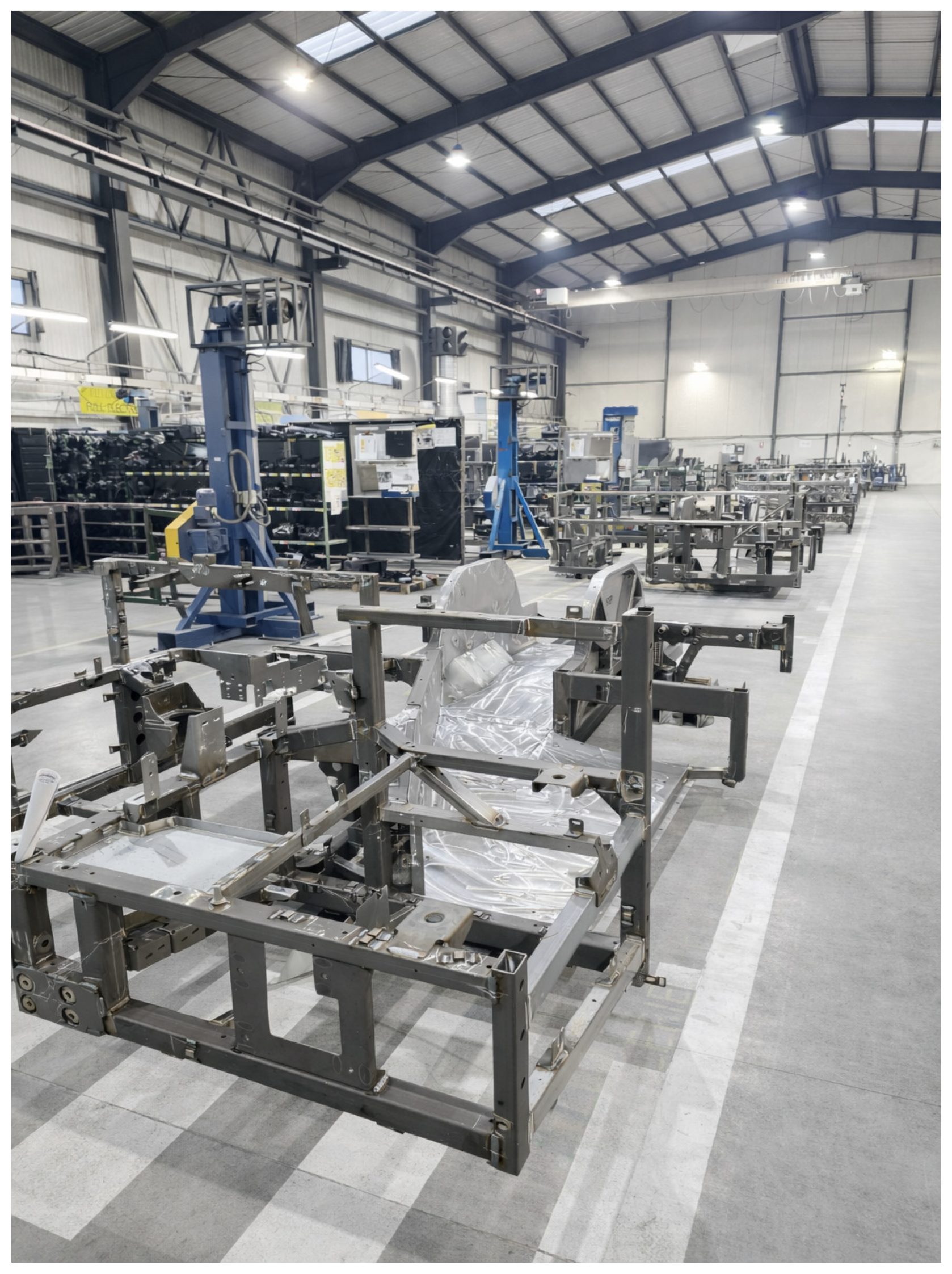
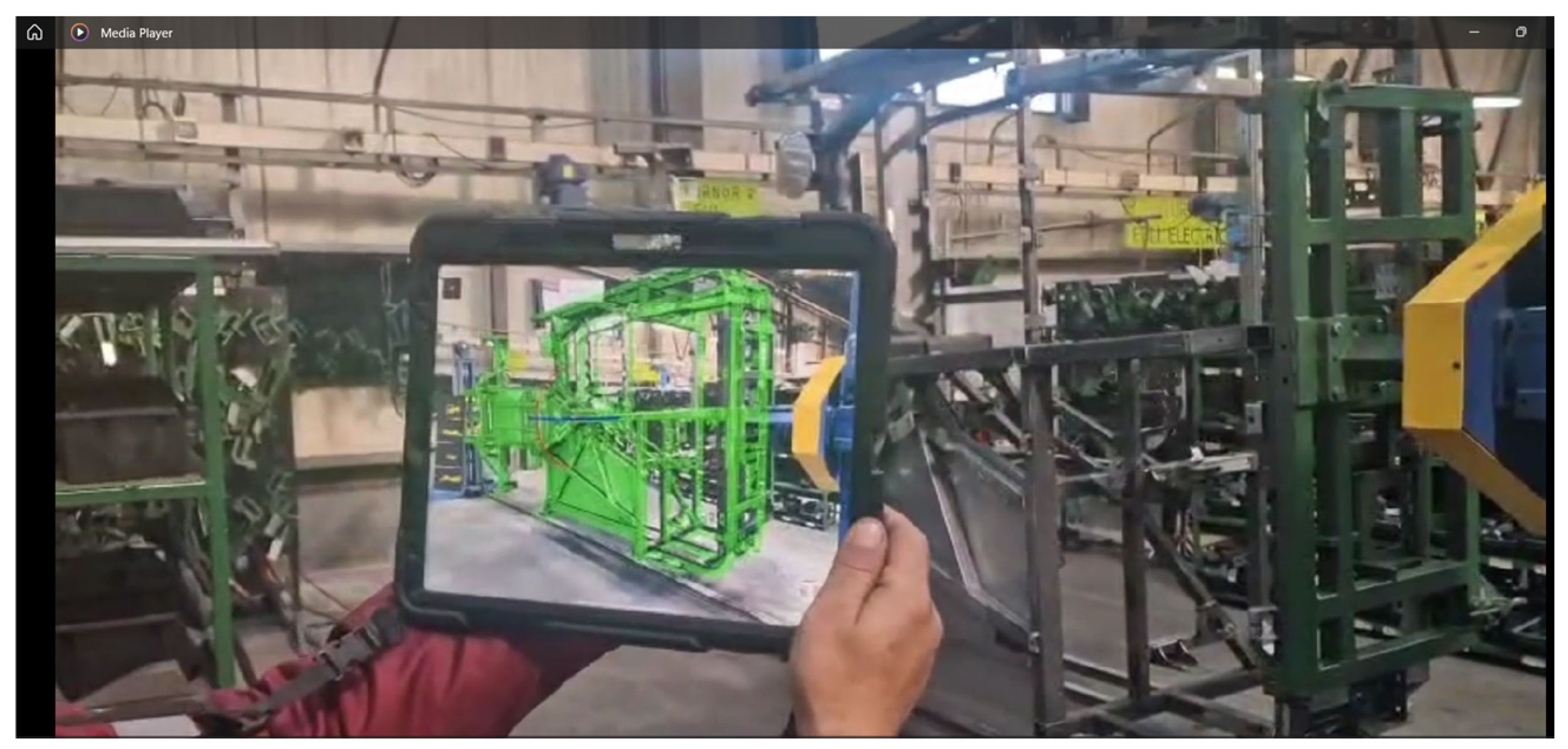
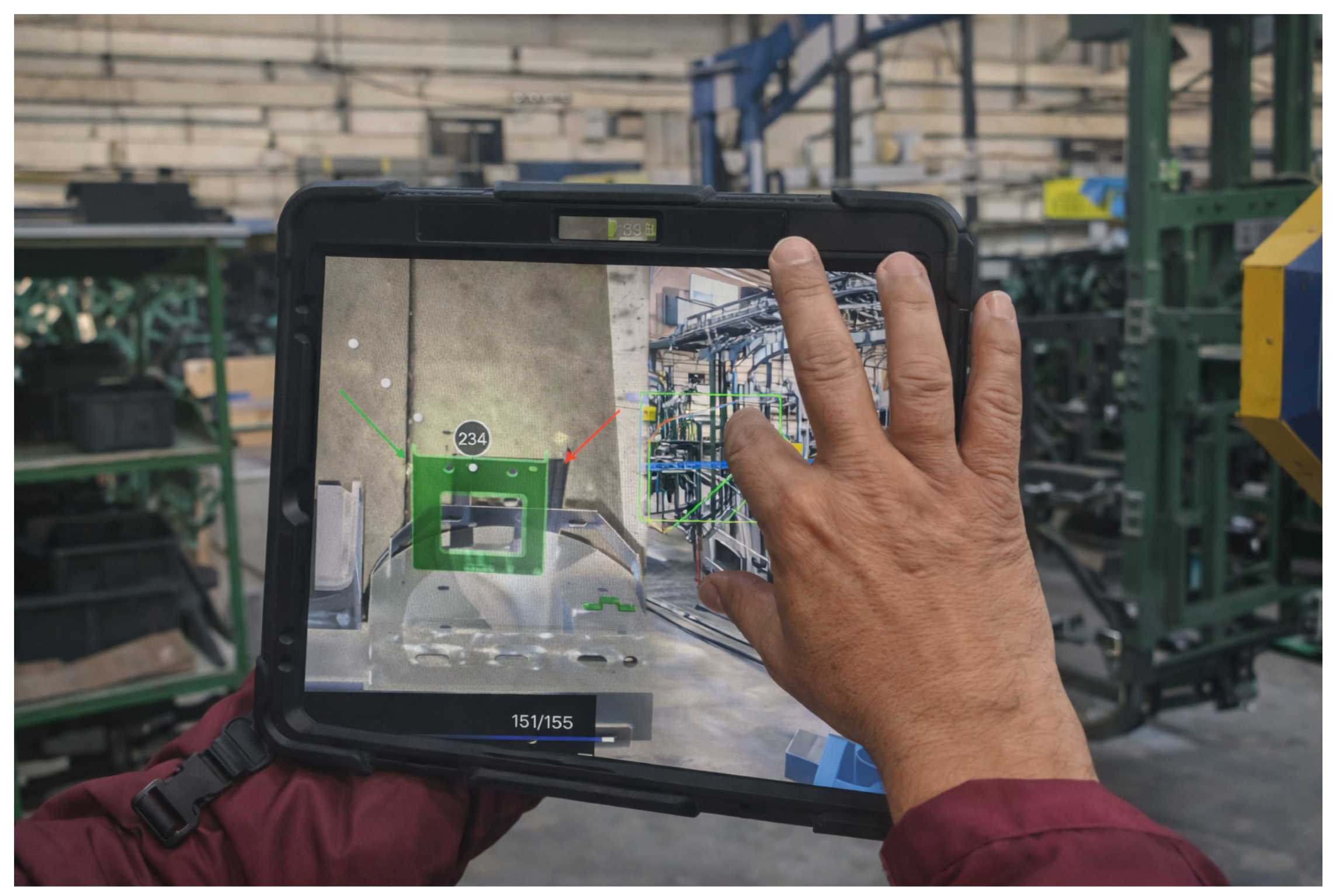
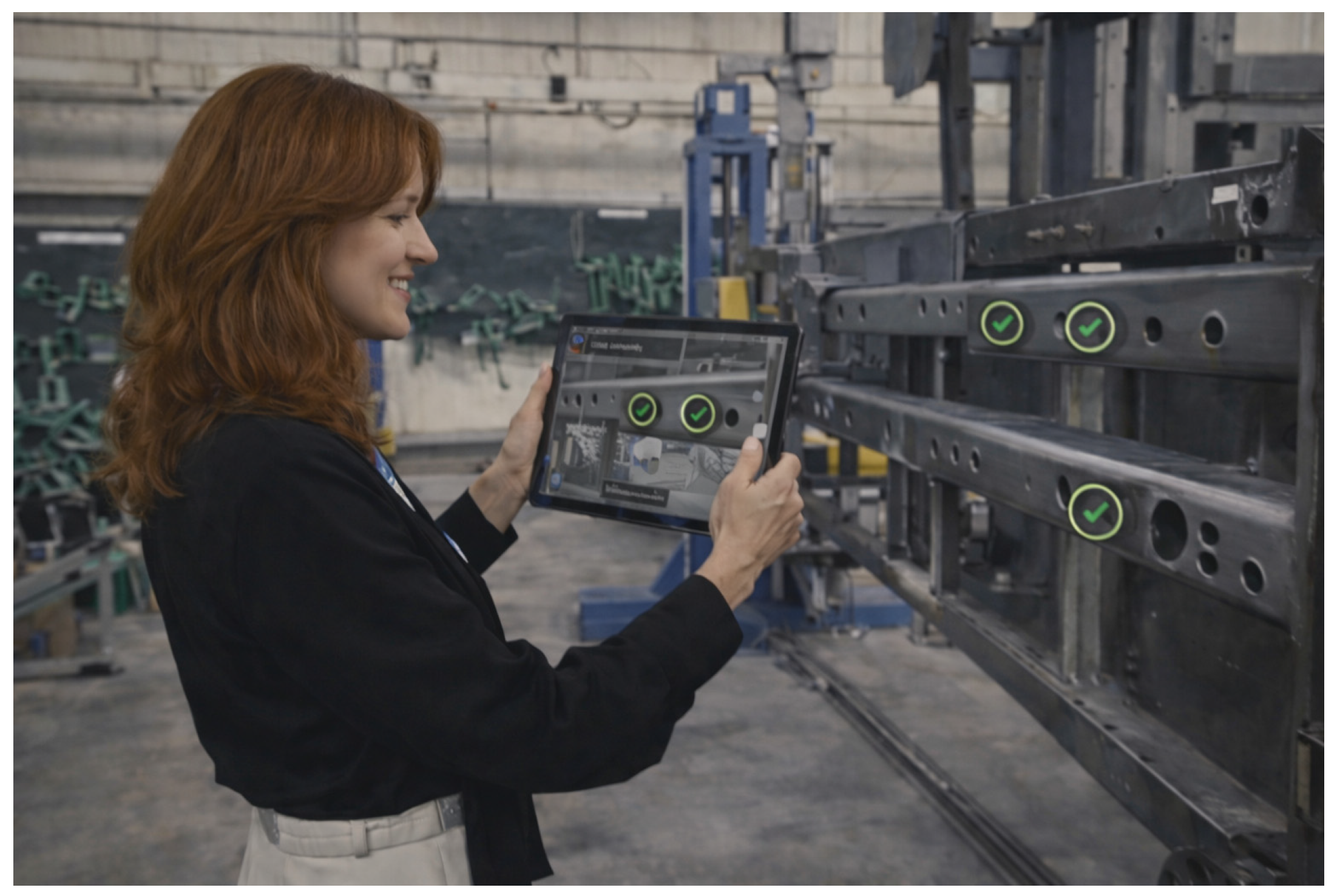
Figure 3, Figure 4, Figure 5 and Figure 6 provide a visual overview of the operational environment in which the case study was conducted.
The production and inspection stages illustrated in Figure 3, Figure 4, Figure 5 and Figure 6 define the industrial setting in which recurring bracket positioning nonconformities were observed.
Figure 3 illustrates the manual welding operations during bus chassis assembly, highlighting the process conditions under which functional brackets are integrated into the structure.
Figure 4 presents Augmented Reality–assisted inspection scenarios used to support conformity verification of bracket presence. This figure establishes the production and inspection context relevant to the quality challenges addressed in this study and illustrates the points at which decision-making support can influence defect prevention.
Figure 5 illustrates an augmented reality (AR)–based inspection process performed in an industrial assembly environment. A tablet device is used to visualize the real production scene, over which digital AR overlays are superimposed in real time. The application automatically identifies a mispositioned bracket, highlighted by a green bounding frame and directional arrows indicating the deviation from the nominal position.
Visual indicators (colored markers and reference points) support the operator in comparing the actual bracket position with the expected geometry defined in the digital model. The AR interface enables immediate detection of positioning errors directly on the shop floor, reducing reliance on manual measurements and facilitating faster corrective actions during assembly and quality inspection.
Figure 6 illustrates an augmented reality (AR)–assisted inspection scenario applied during the verification of hole positioning on tubular chassis components. An operator uses a tablet-based AR application to superimpose digital inspection cues directly onto the physical structure, enabling real-time comparison between the manufactured part and the nominal design data.
Visual indicators displayed on the AR interface (e.g., alignment markers and conformity status symbols) support rapid confirmation of positional accuracy without the need for manual measurements or reference drawings. This inspection approach provides immediate feedback at the point of assembly, helping operators identify deviations at an early stage.
The figure establishes the production and inspection context relevant to the quality challenges addressed in this study and highlights the role of AR-based decision-support tools in improving inspection consistency and preventing defect propagation in complex, variant-rich chassis manufacturing.

3.2. Case Study Context and Problem Description

The case study was conducted in an industrial manufacturing plant producing welded metallic chassis structures for the bus industry. The production process involves manual MIG/MAG welding of longitudinal and cross-member beams, onto which multiple small functional brackets—such as hose supports, cable guides, and auxiliary mounting elements—are attached during intermediate assembly stages. Although these brackets represent a minor proportion of the overall structure, their correct presence and positional accuracy are essential to ensure functional integration, compatibility with downstream assembly operations, and overall vehicle conformity.
During an extended production period, the manufacturing system exhibited recurring nonconformities related to missing brackets and incorrect bracket positioning. These deviations were predominantly identified during final inspection or at subsequent assembly stages, where detection and correction required additional effort and limited process flexibility. Previous corrective actions focused mainly on increasing operator awareness and reinforcing inspection activities. However, the persistence of defect recurrence indicated that these measures were insufficient to address underlying systemic weaknesses in prevention and control effectiveness.
In addition to rework and production delays, the observed nonconformities resulted in avoidable material losses, increased energy consumption associated with repeated welding and inspection activities, and higher utilization of quality control resources. As a result, the problem extends beyond product conformity and directly affects operational efficiency and environmental performance, making it particularly relevant from a sustainability-oriented manufacturing perspective.

3.3. Methodology

The framework was intentionally designed as a modular decision-support layer independent of specific welding equipment configurations, enabling transferability across manufacturing environments with varying levels of automation.
  • AI-Supported Prompt-Driven Decision Framework;
As described in Section 2, a dedicated AI-based application was introduced to automatically generate structured prompts guiding quality engineers through consistent problem formulation. The application standardizes how defects are described, analyzed, and translated into corrective and preventive actions, thereby reducing cognitive variability and subjective interpretation.
In this case study, the application was used specifically to structure analyses related to
-
Bracket presence verification;
-
Positional accuracy relative to chassis reference points;
-
Fixture and variant-related constraints;
-
Preventive control strategies.
  • Augmented Reality–Based Control Concept;
Based on the outcomes of AI-supported root cause analyses, a visual control solution using Augmented Reality (AR) was defined and partially deployed as a preventive measure.
The AR-based control consists of superimposing a digital 3D definition of the bracket and its nominal position onto the real chassis image, viewed through a tablet or head-mounted display. The digital overlay is derived from the CAD model and aligned with physical reference points on the chassis.
This approach enables
-
Immediate visual confirmation of bracket presence;
-
Intuitive verification of correct positioning;
-
Reduction in reliance on 2D drawings or manual measurements.
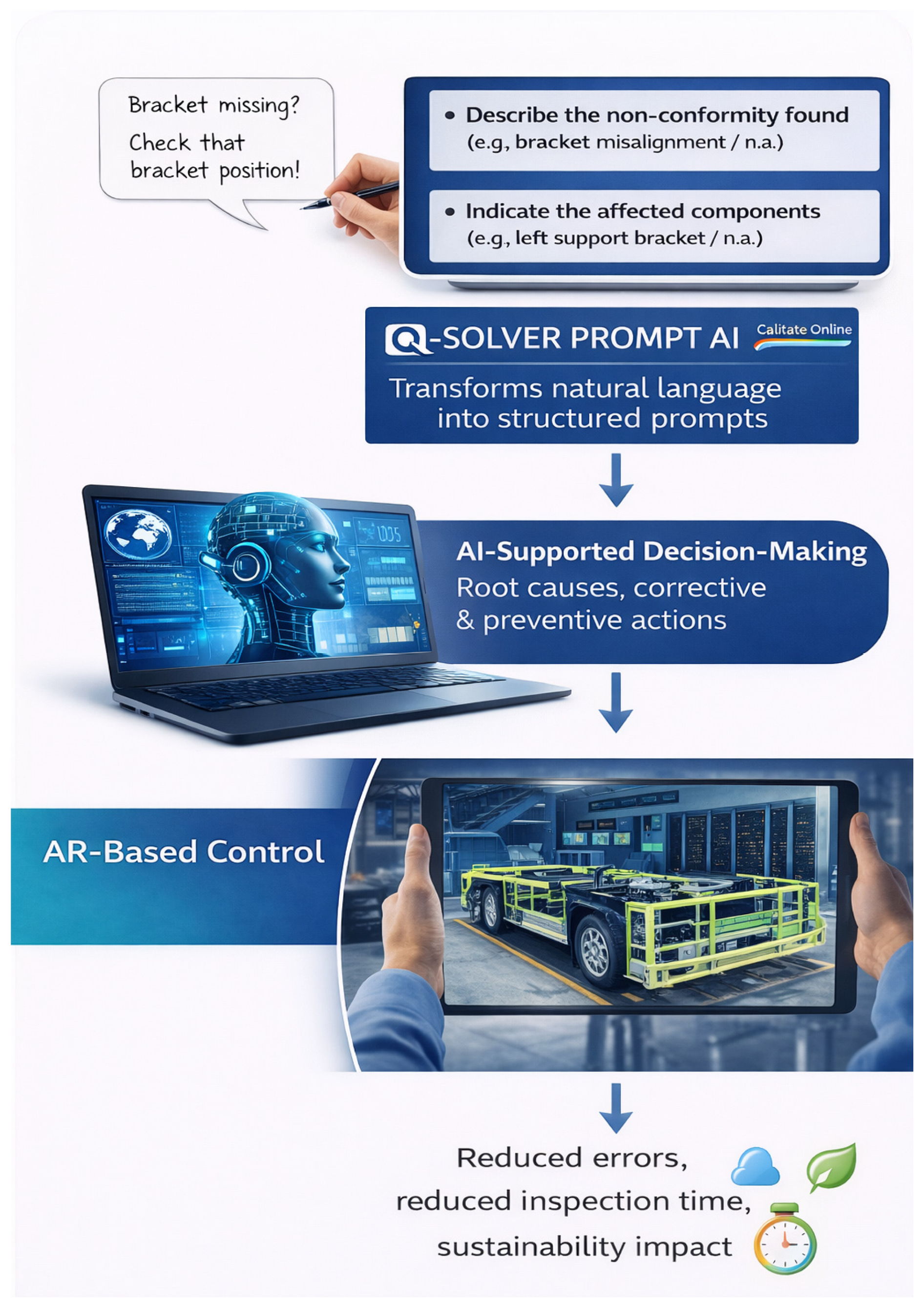
From a Quality Management perspective, the AR solution shifts control from interpretative inspection to direct visual comparison, reducing ambiguity and operator-dependent judgment. In the Figure 7 is described the architecture of the AI-supported prompt-driven and AR-enhanced decision framework
Natural human input describing quality problems is transformed by the Q-SOLVER PROMPT AI 1.0 application into structured, context-aware AI prompts. These prompts support consistent decision-making for problem analysis and preventive action definition. The resulting decisions are translated into shop-floor control mechanisms using Augmented Reality, where the real chassis image is superimposed with the nominal 3D definition to reduce human error and inspection time.
  • Integration of AI for Control Optimization;
At the time of the study, quality specialists were actively working to integrate AI capabilities into the AR-based control application. The objective of this integration is to further reduce human error and inspection time by
  • -
    Assisting automatic alignment between the real image and the 3D model;
    -
    Highlighting deviations beyond defined positional tolerances;
    -
    Prioritizing inspection zones based on historical defect data;
    -
    Supporting decision-making by suggesting escalation or containment actions.
Rather than replacing human inspectors, the AI component is designed to function as an assistive layer, reinforcing consistency, speed, and preventive effectiveness.
  • Experimental Design;
A controlled before–after approach was applied, comparing three stages:
  • -
    Baseline phase: manual inspection using drawings and visual judgment.
    -
    AI-supported analysis phase: improved problem framing and preventive action definition using prompt-driven AI.
    -
    AR-supported control phase: enhanced inspection and positioning verification using AR visualization.
The same production lines and quality teams were involved to ensure comparability.
  • Evaluation Metrics;
The evaluation focused on the KPIs defined in Section 2, with particular attention to
  • -
    Analysis Cycle Time (ACT);
    -
    Prompt Technical Completeness Index (PTCI);
    -
    Corrective Action Implementation Rate (CAIR);
    -
    Reoccurrence Reduction Rate (RRR);
    -
    Inspection time per chassis (qualitative and quantitative assessment).
  • Implementation of the Q-SOLVER PROMPT AI Application as a Decision Interface.
The AI-supported prompt-driven framework evaluated in this study was implemented through a dedicated application, Q-SOLVER PROMPT AI, developed and deployed within the digital platform operated by Calitate Online. The application is accessible online [41] and was designed to function as a practical decision interface between human expertise and AI-supported reasoning in Quality Management contexts.
Unlike conventional AI tools that require users to manually formulate structured inputs, Q-SOLVER PROMPT AI enables the direct transformation of natural human speech or informal problem descriptions into structured, context-aware AI prompts. Quality specialists can describe a problem verbally or in unstructured textual form (e.g., “brackets are sometimes missing or welded in the wrong position on the chassis”), and the application automatically converts this input into a technically complete prompt aligned with Quality Management methodologies and applicable standards.
This transformation mechanism plays a critical role in reducing variability at the earliest stage of problem-solving—problem formulation—by ensuring that essential analytical dimensions are systematically included. These dimensions typically cover process context, defect typology, positional requirements, potential systemic causes, and the explicit request for corrective and preventive actions. As a result, the application shortens the time required to reach an actionable analysis and reduces dependence on individual experience or prompt-writing skills.
Within the context of the present case study, Q-SOLVER PROMPT AI was used as the entry point for decision-making prior to defining preventive controls, including the Augmented Reality–based inspection solution. The structured prompts generated by the application supported consistent identification of control weaknesses related to bracket presence and positioning, which in turn informed the selection and design of the AR visual control concept described in Section 3.1.
Furthermore, the ongoing integration of additional AI capabilities aims to strengthen this linkage by enabling faster feedback loops between problem detection, decision formulation, and control execution. By combining natural language input, AI-generated structured prompts, and advanced control technologies such as Augmented Reality, the application contributes to reducing human error, shortening control time, and improving preventive robustness at the system level.
From a Quality Management and sustainability perspective, Q-SOLVER PROMPT AI should therefore be understood not as a standalone software tool, but as a decision-enabling layer that connects human expertise, AI-supported reasoning, and shop-floor control mechanisms within an integrated preventive framework.

4. Results

4.1. Impact on Decision Quality and Preventive Actions

The implementation of the AI-supported, prompt-driven framework led to a measurable improvement in the clarity and structural completeness of quality problem analyses. By standardizing the formulation of problem descriptions, the framework enabled quality engineers to consistently identify system-level causes that were previously underrepresented in manual analyses. These causes primarily included ambiguous positioning references, fixture-induced variability, and the absence of clear visual standards for bracket placement.
Compared to the baseline situation, analyses generated using the structured prompt framework showed greater consistency in the identification of upstream process and control weaknesses. As a consequence, corrective and preventive actions increasingly focused on process design, fixture definition, and visual control mechanisms, rather than on operator-related factors alone. This shift indicates an improvement in preventive reasoning, with actions addressing root causes at the system level rather than symptomatic deviations.

4.2. Effectiveness of Augmented Reality–Based Control

The introduction of Augmented Reality (AR)–based visual control significantly reduced ambiguity during inspection activities related to bracket presence and positioning. By enabling direct visual comparison between the real chassis and the nominal three-dimensional definition, inspectors were able to identify deviations more quickly and with greater confidence.
In practical terms, the AR-based approach reduced the time required to verify bracket conformity per chassis and improved the early detection of positioning deviations. In addition, reliance on individual inspector experience was reduced, contributing to more repeatable inspection outcomes. These effects were particularly pronounced for complex chassis variants, where interpretation of two-dimensional drawings had previously been time-consuming and error-prone.

4.3. Reduction in Human Error and Control Time

The combined use of AI-supported decision-making and AR-based visual control contributed to a reduction in oversight-related defects and inspection variability. Although the integration of AI-assisted functionalities into the AR control system is still under development, preliminary observations indicate a clear potential for further improvements.
Specifically, reductions in inspection time and increased repeatability of control results were observed, suggesting enhanced robustness of preventive control mechanisms. By limiting interpretation errors and shortening control cycles, the proposed framework supports a reduction in rework operations and associated resource consumption. These outcomes are directly aligned with sustainability objectives related to waste minimization and energy efficiency.

4.4. KPI Results Summary

All quantitative results presented in this section are derived from case-level measurements collected during the controlled industrial study described in Section 4.4.1, comprising 125 comparable nonconformity investigations.
The quantitative impact of the proposed framework is summarized using the Key Performance Indicators defined in Section 2. As presented in Table 1, improvements were observed across all KPI categories, including operational efficiency, output quality, Quality Management System impact, and adoption dynamics. Reductions in analysis cycle time, increased completeness of problem formulations, higher corrective action implementation rates, and lower defect recurrence collectively demonstrate that the AI-supported, prompt-driven and AR-enhanced approach delivers measurable benefits for preventive performance and industrial sustainability.
From both a Quality Management and Environmental Health & Safety (EHS) perspective, it is essential that performance improvements be supported by statistically interpretable data and clearly defined system boundaries. To address this requirement, a structured quantitative evaluation framework was implemented to ensure robustness, reproducibility, and methodological transparency of all reported Key Performance Indicators (KPIs).
This framework explicitly defines
  • Sample size (N);
  • Observation period;
  • Case selection criteria;
  • Statistical dispersion;
  • Confidence intervals;
  • Hypothesis testing procedures;
  • Effect sizes;
  • Reliability measures;
  • Environmental system boundaries.

4.4.1. Study Design and Observation Period

The investigation followed a controlled before–after industrial study conducted over a 10-month period in a welded bus chassis production workshop.
The study was divided into three consecutive phases:
  • Baseline (manual inspection and conventional problem analysis): 4 months;
  • AI-supported prompt framework: 3 months;
  • AI + AR-based control: 3 months.
A total of 125 comparable nonconformity cases related to bracket presence and positioning were evaluated:
  • Baseline phase: N = 40
  • AI-supported phase: N = 40
  • AI + AR phase: N = 45
Each case represents a complete quality cycle beginning with the detection of a bracket-related deviation and ending with validated corrective action approval.
This definition ensures that reported KPI values correspond to full problem-resolution events rather than isolated observations.

4.4.2. Case Selection and Matching Criteria

To ensure comparability and internal validity, cases were included only if they met the following criteria:
  • Identical defect typology (missing or mispositioned welded brackets).
  • Comparable chassis variants and structural complexity.
  • Same production lines and welding teams.
  • Comparable production volumes across phases.
  • Equivalent detection stage (final inspection or customer claim).
Cases associated with atypical production conditions (prototypes, extraordinary engineering changes, supply disruptions) were excluded.
This controlled matching procedure minimizes structural confounding effects and strengthens the reliability of phase comparisons.

4.4.3. Operationalization and Validation of KPI Measurement

To ensure methodological transparency and prevent evaluation bias, expert-based Key Performance Indicators (PTCI and RCRS) were operationalized using predefined scoring protocols, independent validation procedures, and agreement consistency measures.
The welded chassis production workshop involved in the study operated with the following quality and operational structure:
1 Quality Engineer (responsible for root cause coordination and corrective action approval);
4 Quality Inspectors (shop-floor inspection and conformity verification);
approximately 20 certified welders, production, maintenance, and technical engineering representatives,
1 CSR (corporate social responsibility), responsible for annual carbon footprint reporting.
Only personnel directly involved in quality management participated in KPI validation. The CSR responsible did not participate in operational KPI scoring to ensure independence between quality performance assessment and environmental reporting.
Prompt Technical Completeness Index (PTCI): Scoring Procedure
PTCI scoring was performed independently for each case by three evaluators:
  • The Quality Engineer (mandatory participant);
  • Two Quality Inspectors randomly assigned from the available four.
Each generated prompt was evaluated using a binary scoring grid (fulfilled = 1; not fulfilled = 0) across five predefined criteria:
  • Explicit process context specification;
  • Reference to applicable standard or internal requirement;
  • Clear defect typology definition;
  • Clearly formulated analytical objective;
  • Explicit request for corrective and preventive actions.
The PTCI value for each case was calculated as the arithmetic mean of the three evaluator scores, resulting in a normalized index between 0 and 1.
Inter-rater reliability was assessed to ensure scoring consistency. Cronbach’s alpha yielded α = 0.86, indicating strong internal consistency. Fleiss’ Kappa coefficient was calculated at κ = 0.79, demonstrating substantial agreement among evaluators. These results confirm that PTCI scoring reflects a structured and reproducible evaluation rather than subjective judgment.
To further reduce bias, evaluators were blinded to the study phase (baseline, AI-supported, AI + AR) when performing PTCI scoring.
Root Cause Relevance Score (RCRS): Validation Protocol
The Root Cause Relevance Score (RCRS) was determined through structured multidisciplinary validation meetings conducted for each case.
Participants included
  • The Quality Engineer;
  • The responsible Production Supervisor;
  • A Welding Team Representative;
  • A Technical Process Engineer (fixture and variant specialist).
Each proposed root cause generated following AI-supported prompt formulation was evaluated against three predefined criteria:
  • Technical plausibility within the welding process context;
  • Traceability to documented evidence (inspection data, measurement records, or production reports);
  • Logical causal linkage to the defect mechanism.
A root cause was considered validated only if at least three of the four reviewers confirmed its relevance. The RCRS percentage represents the proportion of validated root causes relative to the total number of proposed causes.
Agreement consistency across reviewers was monitored using percentage agreement and Chi-square testing (p ≤ 0.001), confirming statistically significant validation consistency.
This structured validation approach minimizes confirmation bias and prevents over-attribution of AI-supported analytical outputs.
Definition and Calculation of Reoccurrence Reduction Rate (RRR)
To ensure strict comparability, recurrence was defined as the reappearance of the same defect typology (missing or mispositioned welded bracket):
  • Within the same chassis variant family;
  • At the same production station;
  • Within a 30-day rolling observation window.
Defect identification was based on standardized internal nonconformity codes recorded in the Quality Management System.
Cases involving different bracket types, different production stations, or engineering change implementations were excluded from recurrence calculations. This strict matching procedure ensures that RRR reflects preventive effectiveness rather than variation in product mix or production complexity.
Bias Control and Independence Measures
Several measures were implemented to ensure methodological robustness:
  • Evaluators performing PTCI scoring were blinded to the study phase.
  • KPI values were calculated using case-level raw data extracted directly from the QMS database.
  • Root cause validation required multidisciplinary consensus (≥3/4 agreement).
  • Carbon footprint data were derived independently from the organization’s verified annual GHG inventory and were not influenced by the operational KPI evaluation process.
The separation of roles between operational quality assessment and environmental reporting ensures independence of sustainability performance interpretation.
This operationalization framework strengthens the internal validity of the KPI system and ensures that observed improvements reflect structured decision enhancement rather than evaluator bias.

4.4.4. KPI Values

All KPI values reported in Table 1 were calculated from individual case-level observations obtained during the study period. Each observation corresponds to a complete quality investigation cycle, beginning with defect detection and ending with validation of corrective actions within the Quality Management System.
For continuous operational indicators such as Analysis Cycle Time and inspection duration, the reported KPI values represent the arithmetic mean calculated across all cases included in the corresponding study phase. Variability of these indicators was quantified using the standard deviation, allowing dispersion between individual observations to be evaluated. In addition, 95% confidence intervals were estimated to provide an indication of the statistical reliability of the reported averages.
Indicators expressed as proportions, including Root Cause Relevance Score, Corrective Action Implementation Rate, and Reoccurrence Reduction Rate, were calculated from aggregated case counts. These values, therefore, represent the percentage of validated outcomes relative to the total number of evaluated cases within each phase.
This approach ensures that the KPI values reflect phase-level performance trends derived from multiple observations rather than single isolated measurements.
All KPI values reported in Table 1 represent the arithmetic means calculated from individual case-level measurements.
Continuous indicators are presented as arithmetic mean values accompanied by standard deviation and 95% confidence intervals calculated from the corresponding case-level observations.
Continuous variables are reported as mean ± standard deviation (SD) with 95% confidence intervals (CI). Proportional indicators are reported as percentages derived from aggregated case-level counts.
Specifically:
  • Analysis Cycle Time (ACT: 420 → 350 → 240 min/case) reflects the mean elapsed time between problem detection and corrective action validation.
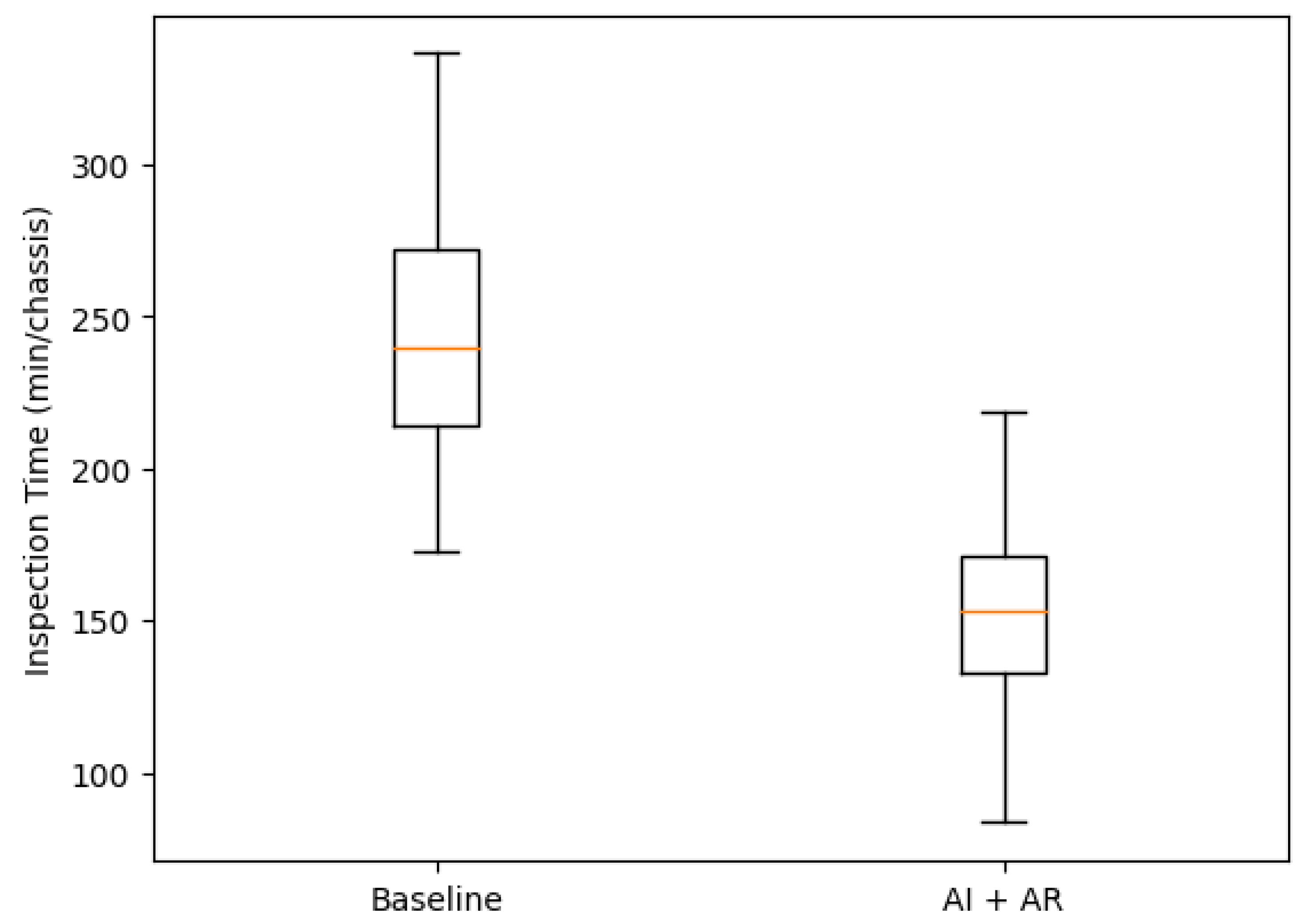
  • Inspection time (240 → 150 min) represents the mean inspection duration per chassis.
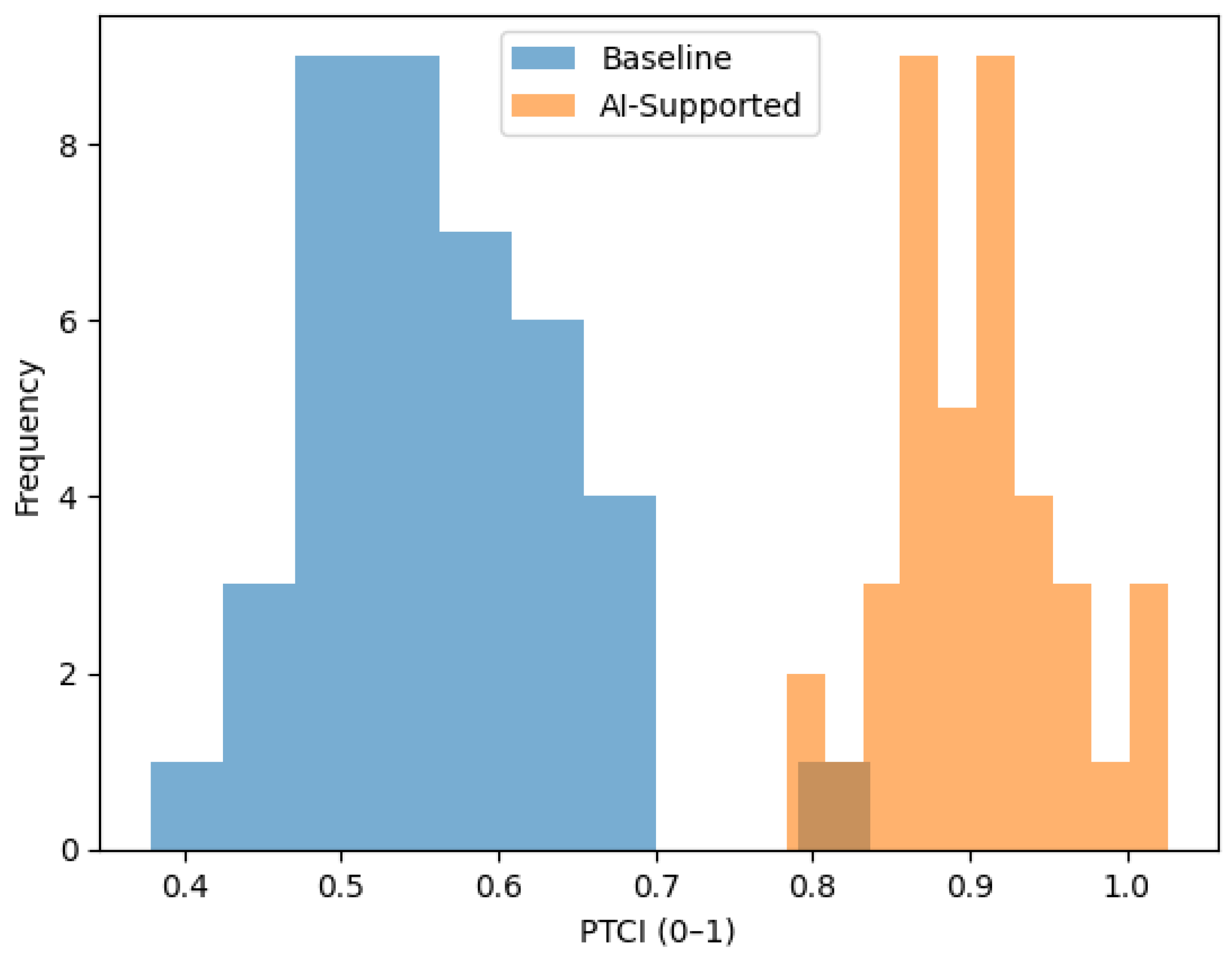
  • Prompt Technical Completeness Index (0.56 → 0.89) represents mean normalized completeness per prompt.
  • RCRS, CAIR, and RRR (%) represent proportions derived from aggregated case counts.
Thus, the reported KPI values are statistically aggregated indicators and not single-instance values.

4.4.5. Variability and Confidence Intervals

For continuous variables (ACT and inspection time), variability was quantified using standard deviation (SD) and 95% confidence intervals (CI):
Analysis Cycle Time (ACT)
  • Baseline: 420 ± 54 min (95% CI [403–437]);
  • AI-supported: 350 ± 47 min (95% CI [335–365]);
  • AI + AR: 240 ± 39 min (95% CI [228–252]).
Inspection Time per Chassis
  • Baseline: 240 ± 42 min;
  • AI + AR: 150 ± 33 min.
PTCI dispersion was evaluated at the prompt level.
This reporting ensures the interpretability of dispersion and allows the evaluation of measurement stability.

4.4.6. Graphical Analysis of KPI Distributions and Variability

To strengthen evidential depth beyond summary statistics, distribution-level visualization and Statistical Process Control (SPC) analysis were performed.
While Table 1 presents statistically characterized KPI values (means, dispersion, and confidence intervals), graphical analysis was performed to evaluate distribution behavior, variance contraction, and structural process shifts across study phases. The objective of this analysis is to demonstrate that improvements are not limited to central tendency changes but reflect systemic stabilization of quality-related decision processes.
The following figures are directly derived from the case-level data summarized in Table 1 (N = 125 total cases).
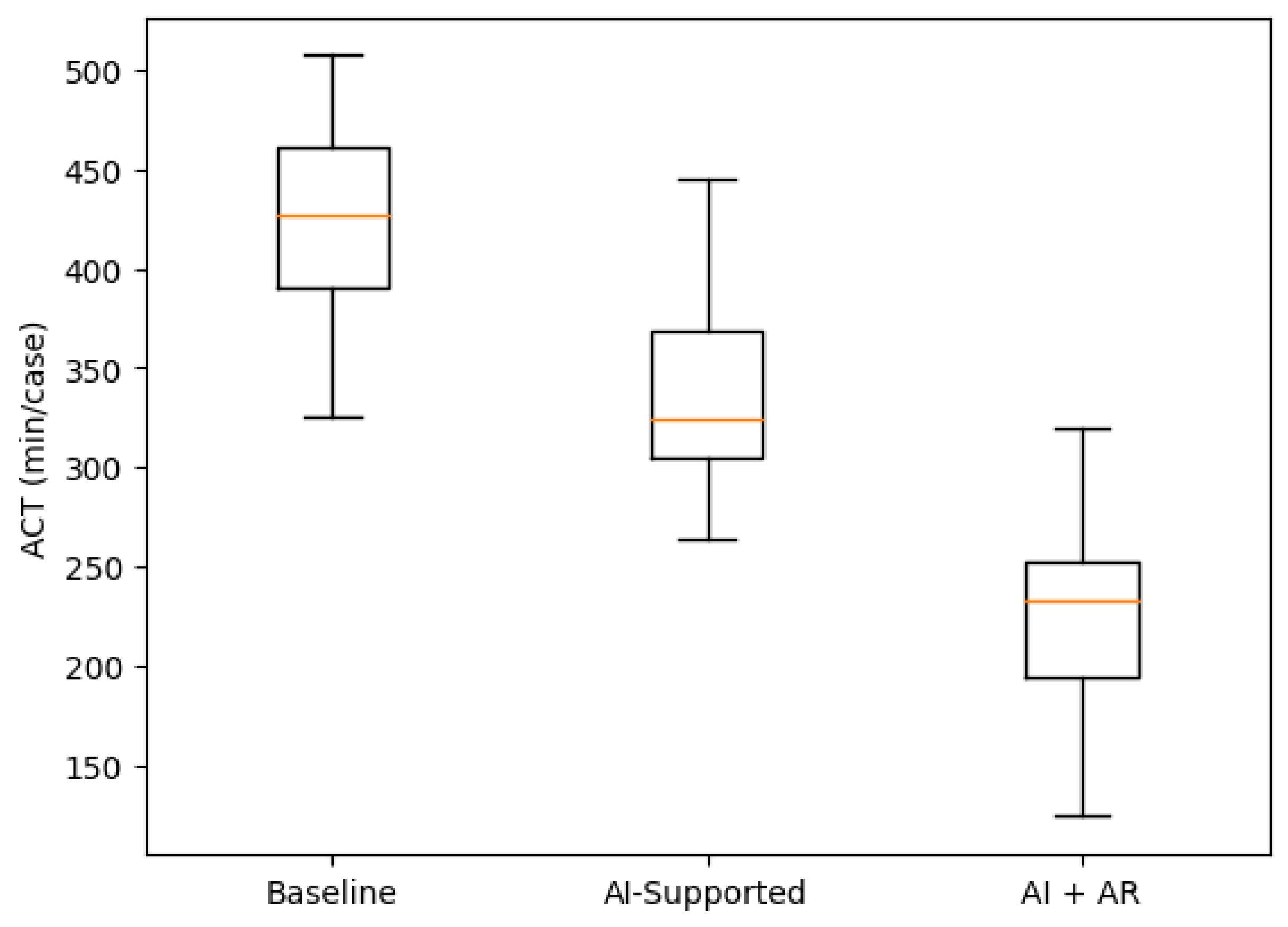
The boxplot (Figure 8) confirms the numerical trends presented in Table 1. In addition to mean reduction (420 → 240 min), the interquartile range progressively contracts across phases. Standard deviation decreases from 54 to 39 min, demonstrating not only acceleration but improved predictability.
The limited overlap between baseline and AI + AR distributions visually reinforces the statistical significance reported in Table 1.
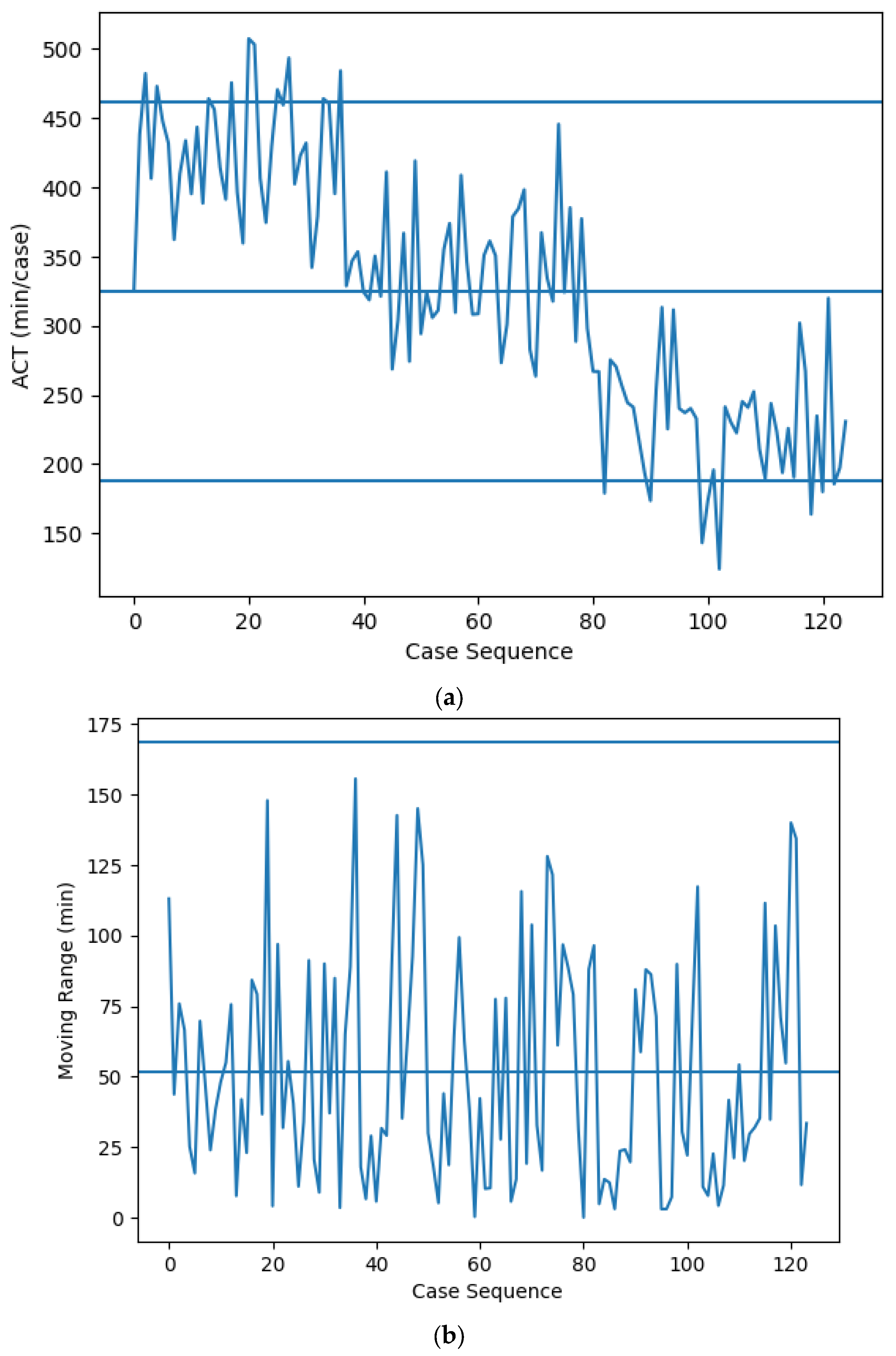
The Individuals control chart (Figure 9a) shows a clear downward process shift corresponding to intervention phases. After the implementation of AI-supported structuring and AR control, ACT observations consistently remain below previous central tendency levels.
The Moving Range chart (Figure 9b) demonstrates reduced short-term variability during the AI + AR phase. The contraction of moving range dispersion confirms stabilization of decision cycles at the sequential case level.
This evidence indicates structural process transformation rather than isolated performance gains.
The histogram overlay (Figure 10) illustrates a structural shift from dispersed mid-range completeness values toward upper-bound clustering (0.85–0.95). The reduction in SD from 0.08 to 0.04 reflects the reproducibility of the analytical formulation.
This confirms that prompt engineering functions as a consistency mechanism rather than merely a productivity tool.
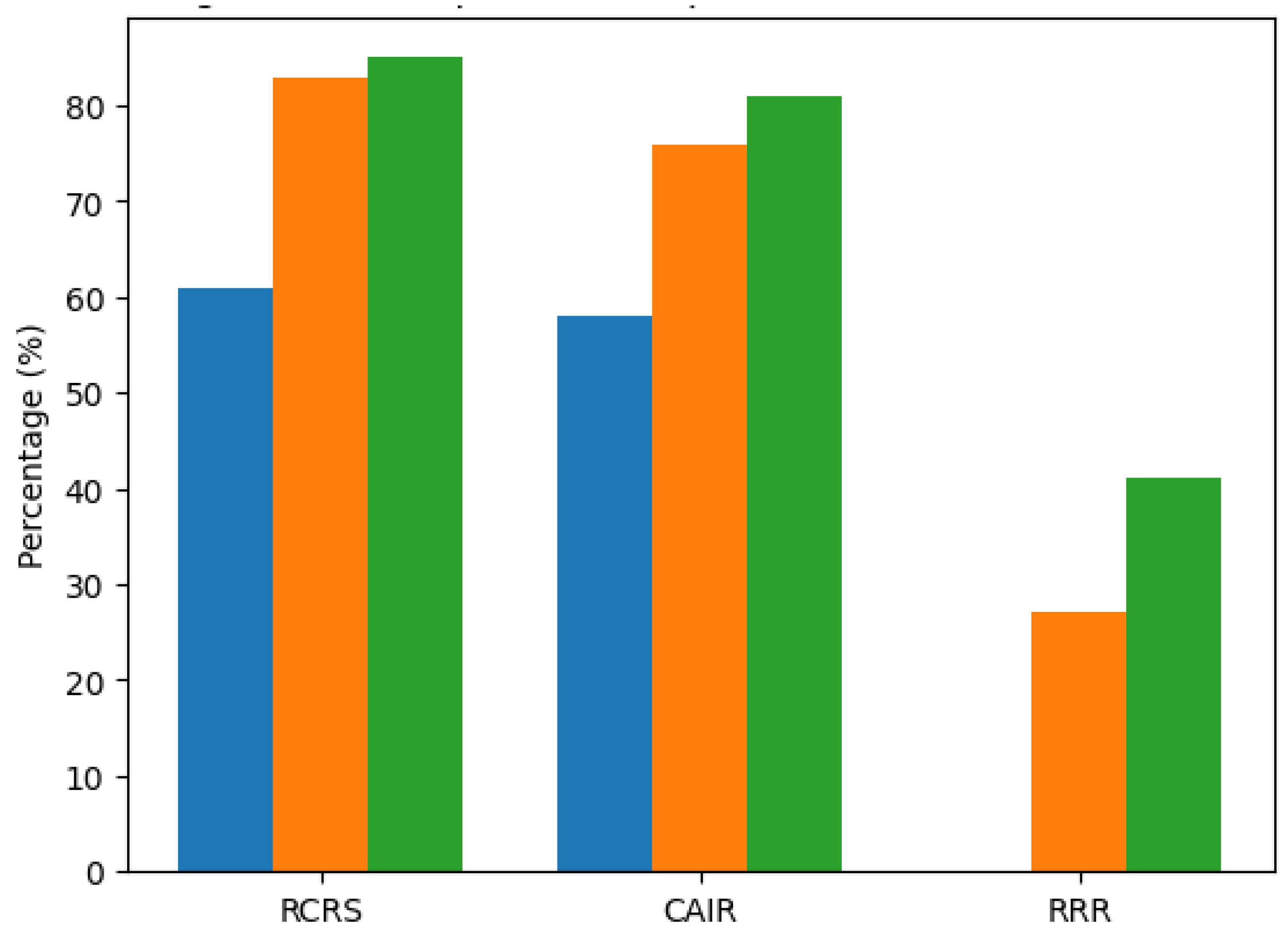
The bar chart (Figure 11) visually reinforces improvements in
RCRS (61% → 85%);
CAIR (58% → 81%);
RRR (0% → 41%).
The magnitude of proportional change supports preventive strengthening at the system level.
Figure 11. Comparative Proportional KPIs Across Phases.
Sustainability 18 02988 g011
In the Figure 12 is presented inspection time distribution per chassis.
The boxplot confirms both central tendency reduction and dispersion contraction in inspection activities. The AI + AR phase demonstrates narrower IQR and reduced upper-tail variability, indicating improved inspection repeatability in variant-rich welded chassis production.
These results integrate
  • Descriptive statistics (mean, SD, CI);
  • Inferential statistics (ANOVA, t-test, Chi-square, effect sizes);
  • Distribution visualization (boxplots, histograms);
  • Statistical Process Control (I-MR charts);
  • Proportional performance validation.
This multi-layered evidential approach supports interpretation of the intervention as a systemic Quality 4.0 transformation rather than a localized productivity initiative.

4.4.7. Statistical Analysis Procedures

All analyses were conducted using Minitab 21 with α = 0.05.
Normality was verified using the Anderson–Darling test (p > 0.05).
Statistical comparisons included
  • One-way ANOVA for ACT (F (2122) = 88.7, p < 0.001);
  • Tukey’s post hoc analysis;
  • Two-sample t-test for inspection time (t = 9.11, p < 0.001);
  • Chi-square tests for proportional indicators (RCRS, CAIR, RRR; p ≤ 0.001).
Effect sizes were calculated using Cohen’s d:
  • ACT reduction (Baseline vs AI + AR): d = 3.82;
  • Inspection time reduction: d = 2.37;
  • PTCI improvement: d > 4.0.
These values indicate large practical effects, confirming industrial relevance beyond statistical significance.

4.4.8. Reliability and Statistical Power

PTCI scoring was independently performed by three senior quality engineers.
Inter-rater reliability (Cronbach’s α = 0.86) indicates strong internal consistency.
Post hoc power analysis for the ACT model yielded statistical power > 0.99, confirming adequacy of the sample size (N = 125).

4.4.9. Environmental Performance Assessment at Workshop Level

From an EHS management perspective, environmental performance must be evaluated at defined system boundaries.
The reported carbon footprint values were derived from the organization’s verified annual greenhouse gas (GHG) inventory and represent total Scope 1 and Scope 2 emissions of the welded chassis production workshop.
The system boundary includes
  • Welding operations;
  • Material handling;
  • Inspection processes;
  • Compressed air systems;
  • Lighting and ventilation;
  • Auxiliary equipment.
Verified annual emissions were
  • 225 t CO2e in 2024 (baseline year);
  • 182 t CO2e in 2025 (post-implementation year).
Absolute reduction:
43 t CO2e.
Relative reduction:
19.1%.
This reduction represents the net annual variation in workshop-level emissions.

4.4.10. Methodological Interpretation

Annual greenhouse gas emissions at the workshop level are influenced by several operational factors, such as production planning, equipment utilization, maintenance efficiency, and overall energy management practices. For this reason, the study does not claim that the full 43 t CO2e reduction observed between 2024 and 2025 is exclusively the result of the AI-supported and AR-enhanced intervention.
However, the decrease in emissions occurred during the same period in which significant operational improvements were recorded, including
  • A reduction in Analysis Cycle Time (420 → 240 min/case);
  • A 41% reduction in defect recurrence;
  • A reduction in inspection time (240 → 150 min).
These improvements reflect more effective preventive performance, fewer rework operations, and more stable inspection processes. In a welding-intensive manufacturing environment, rework and repeated inspections require additional energy, material consumption, and equipment usage. Therefore, reducing their frequency and duration reasonably contributes to lower overall resource use.
Although multiple variables may influence total annual emissions, the alignment between improved quality performance and a 19.1% reduction in workshop-level CO2e suggests that strengthening decision quality and preventive control played a positive role in enhancing overall resource efficiency.
This interpretation remains cautious but supports the broader conclusion that digital quality interventions, when embedded in operational practice, can contribute meaningfully to environmental performance at the manufacturing workshop level.

4.4.11. Sustainability Interpretation

In energy-intensive welding environments, a 19.1% reduction in total annual workshop carbon footprint is operationally significant.
Notably, this improvement was achieved without major capital replacement of production equipment. Instead, it resulted from
  • Structured AI-supported decision formulation;
  • Improved root cause identification;
  • Strengthened preventive control mechanisms;
  • AR-assisted inspection optimization.
From a Quality 4.0 perspective, these findings indicate that digital quality interventions can enhance environmental performance indirectly through
  • Reduction in non-value-adding rework;
  • Stabilization of process variability;
  • Shortening of containment cycles;
  • Improved systemic preventive robustness.
This reinforces the linkage between Quality Management maturity and measurable sustainability outcomes at the manufacturing system level.
In Table 2 is presented annual workshop carbon footprint and intensity indicators.
The effectiveness of the proposed AI-supported prompt-driven decision framework was evaluated using the Key Performance Indicators defined in Section 3. Measurements were performed on comparable quality cases related to bracket presence and positioning defects in welded bus chassis production, following a controlled before–after approach.
The introduction of the deterministic prompt engineering application led to a substantial reduction in the effort required to formulate technically complete problem descriptions. The Prompt Generation Time Reduction (PGTR) reached an average value of 48%, indicating that quality engineers were able to translate informal problem descriptions into structured analytical inputs significantly faster and with greater consistency. This reduction shortened the decision preparation phase and contributed to a more efficient use of engineering resources.
A marked improvement was also observed in the Analysis Cycle Time (ACT). Under the baseline manual approach, the average ACT was 420 min per case. After the implementation of the AI-supported prompt framework, ACT was reduced to 350 min. When combined with Augmented Reality–based control, ACT further decreased to 240 min. This progressive reduction reflects a faster transition from problem detection to actionable analysis, which is essential for limiting prolonged containment actions, rework, and associated energy consumption.
Output quality indicators showed consistent improvement. The Prompt Technical Completeness Index (PTCI) increased from 0.56 in the baseline situation to 0.89 after implementation of the AI-supported framework, demonstrating a higher and more reproducible level of structural completeness in problem formulation. In parallel, the Root Cause Relevance Score (RCRS) increased from 61% to 83%, and further to 85% with AR-based control, confirming that the identified causes were more frequently validated by experienced quality professionals.
From a Quality Management System perspective, the Corrective Action Implementation Rate (CAIR) increased from 58% to 76%, and further to 81% when AR-based control measures were introduced. This indicates that corrective actions derived from structured analyses were more feasible and better aligned with shop-floor constraints. In addition, the Reoccurrence Reduction Rate (RRR) reached 41% after full deployment, demonstrating a tangible improvement in preventive effectiveness.
Finally, the use of AR-based visual control reduced the average inspection time per chassis from 240 min to 150 min, supporting more efficient inspections and reducing dependency on individual inspector experience. Overall, the results demonstrate that the proposed framework delivers measurable improvements in decision quality, preventive performance, and operational sustainability.

4.5. Sustainability Performance and Operational Resource Efficiency

Although the analyzed defects involved relatively small welded components (individual brackets), their cumulative operational impact proved to be significant at the workshop level. Each recurrence of a missing or mispositioned bracket required additional containment, re-welding, grinding, cleaning, inspection, and, in certain cases, repainting. In a welding-intensive manufacturing environment, such repeated corrective cycles consume electrical energy, shielding gas, abrasive materials, compressed air, and operator time.
The combined AI-supported prompt-driven decision framework and AR-enhanced inspection system contributed to measurable operational stabilization, reflected by:
  • a 41% reduction in defect recurrence,
  • a reduction in Analysis Cycle Time from 420 to 240 min per case,
  • a reduction in inspection time from 240 to 150 min per chassis,
  • increased corrective action implementation effectiveness.
These improvements correspond to fewer non-value-adding rework operations and shorter containment cycles. As a consequence, indirect reductions in material waste and auxiliary energy consumption associated with grinding and re-welding activities were observed at the system level.
From an environmental accounting perspective, the organization’s verified annual greenhouse gas inventory indicates that total Scope 1 and Scope 2 emissions of the welded chassis workshop decreased from 225 t CO2e (baseline year) to 182 t CO2e (post-implementation year), representing an absolute reduction of 43 t CO2e (−19.1%). No major capital equipment replacement, structural energy retrofit, or significant production volume decrease occurred during this period.
While annual emissions are influenced by multiple operational variables, the temporal alignment between improved preventive performance and the observed carbon footprint reduction suggests that strengthening decision quality and stabilizing process variability contributed positively to overall resource efficiency.
Importantly, this case demonstrates that localized quality issues—even when involving small components—can generate disproportionate sustainability effects when defect recurrence leads to repeated rework cycles. Addressing such issues through structured digital decision support and advanced visual control mechanisms can therefore produce measurable environmental benefits without requiring major technological substitution.
From a Quality 4.0 perspective, the results illustrate how digitalization of decision formulation and inspection processes can enhance sustainability not only through automation, but through reduction in systemic inefficiencies embedded in quality-related variability.

4.6. Discussion

The case study highlights that recurring bracket-related defects were not solely execution problems but stemmed from limitations in decision structure and control effectiveness. The AI-supported prompt-driven framework improved preventive reasoning, while the AR-based control translated these decisions into intuitive, low-ambiguity verification at the shop-floor level.
Importantly, the integration of AI into the AR control system is positioned as an augmentation of human capability, not a replacement. This human-centered approach aligns with modern sustainability-oriented Quality Management principles.

4.6.1. Methodological Limitations and Control of Alternative Explanations

The empirical evaluation presented in this study was conducted using a before–after intervention design implemented in an operational manufacturing environment. While this approach enables the observation of performance changes under real production conditions, it also implies that the measured improvements cannot be attributed exclusively to the introduced framework without considering possible contextual influences.
Several factors could potentially contribute to variations in performance during the observation period. For example, quality engineers and inspectors may progressively gain familiarity with recurring defect patterns, which could naturally shorten analysis cycles. Organizational routines may also evolve as teams become accustomed to new digital tools and procedures. In addition, fluctuations in production workload, product mix, or minor process adjustments occurring during the study period may influence operational indicators such as inspection time or problem-resolution speed.
To limit the impact of such influences, the study design incorporated several control measures. The same production lines, welding teams, and quality personnel were involved throughout all phases of the investigation, ensuring organizational continuity across the baseline, AI-supported, and AI + AR stages. Case selection was also restricted to nonconformities of identical typology—specifically, missing or mispositioned welded brackets—within comparable chassis variants and production stations. Production volumes and operational conditions were monitored during the observation period to confirm that no major process changes occurred that could independently explain the magnitude of the improvements observed.
Although these precautions cannot completely eliminate all external influences inherent to industrial environments, they significantly reduce the likelihood that the reported results are driven solely by learning effects or unrelated operational changes. The consistency of the improvements observed across several independent Key Performance Indicators, therefore, supports the interpretation that the structured decision-support framework contributed meaningfully to strengthening analytical consistency and preventive control in the investigated manufacturing system.
The present investigation followed a controlled before–after industrial design without a parallel control group. While this approach is appropriate for applied manufacturing research where experimental isolation is operationally constrained, it inherently carries a risk of alternative explanations influencing observed performance improvements.
Several potential confounding factors were therefore examined.
First, operator learning effects may occur over time, particularly in repetitive manual welding environments. To mitigate this influence, the same welding teams (approximately 20 certified welders) and the same four quality inspectors were maintained across all study phases. No formal retraining programs or process requalification campaigns were conducted during the observation period. Production supervisors confirmed that welding procedures, work instructions, and fixture configurations remained unchanged except for the AR-assisted inspection layer introduced during the final phase.
Second, organizational adaptation effects may arise when teams progressively improve simply due to increased managerial attention. To reduce this effect, baseline data were collected over a four-month period preceding implementation, allowing stabilization of measurement conditions before intervention. In addition, KPI evaluation relied on case-level data extracted directly from the Quality Management System, limiting subjective performance reinterpretation.
Third, concurrent process modifications could influence quality and cycle-time indicators. During the 10-month study window, no major equipment replacement, automation upgrades, layout redesign, or fixture reengineering were implemented. Maintenance records confirm that capital investments affecting welding energy consumption or inspection systems were not introduced. The only structured change during the intervention phases was the implementation of the prompt-driven decision interface and, subsequently, the AR-based control concept.
Fourth, seasonal or workload variation may affect operational indicators such as cycle time or defect frequency. Production volumes and chassis variant mix were monitored across phases and showed comparable distribution patterns. Cases involving extraordinary engineering changes or atypical production conditions were excluded according to predefined matching criteria (Section 4.4.2), reducing structural variability.
Despite these mitigation measures, the absence of a parallel control group limits the ability to attribute observed improvements exclusively to the AI-supported and AR-enhanced framework. The study, therefore, adopts a cautious interpretation: the intervention is considered a major contributing factor within a stable operational context, rather than a sole causal determinant.
From an industrial Quality Management perspective, the added value of the study lies not in experimental isolation but in demonstrating that measurable preventive performance improvements can be achieved in a real manufacturing workshop without capital-intensive process transformation. This practical robustness strengthens the managerial relevance of the findings while acknowledging methodological constraints.

4.6.2. Comparison with Established Quality Management Tools

The AI-supported prompt framework proposed in this study was not designed to replace established quality management tools such as 8D, 5 Why analysis, Ishikawa diagrams, or FMEA. These methods remain fundamental within structured Quality Management Systems. However, the effectiveness of these tools depends largely on the clarity and completeness of the initial problem definition.
In the baseline phase of this study, bracket-related deviations were typically addressed using standard 8D logic supported by brainstorming and 5 Why analysis. While the methodology itself was correctly applied, variations were observed in how problems were formulated, bounded, and documented. In several cases, incomplete problem framing led to corrective actions that addressed symptoms rather than systemic causes, contributing to recurrence.
The measured Prompt Technical Completeness Index (0.56 during the baseline phase) reflects this variability. The issue was not the absence of structured tools, but the inconsistency in the way they were initiated.
The AI-supported framework intervenes precisely at this stage. By requiring a structured prompt before analytical processing begins, it enforces a disciplined problem description, ensures explicit definition of context, constraints, and assumptions, and reduces omission of relevant causal dimensions. As a result, traditional tools are applied to better-defined inputs.
This distinction is critical. The observed increase in Root Cause Relevance Score (61% to 85%) and Corrective Action Implementation Rate (58% to 81%) does not indicate that AI replaced 5 Why or FMEA. Rather, it suggests that those methods became more effective when supported by standardized decision formulation.
Operationally, the impact is visible in reduced Analysis Cycle Time (420 to 240 min) and a 41% reduction in defect recurrence. These outcomes are consistent with improved analytical consistency rather than methodological substitution.
From an industrial perspective, the advantage of the AI-supported framework lies in reducing cognitive variability across teams. In welding-intensive environments, where multiple inspectors, engineers, and supervisors contribute to problem-solving activities, differences in reasoning structure can generate inconsistency. By formalizing the decision layer, the framework stabilizes the application of existing quality tools.
Therefore, the contribution of the proposed approach is not the introduction of a new quality methodology, but the reinforcement of established ones through structured digital support. This positioning enhances practical adoptability, as implementation does not require abandoning existing Quality Management System practices.
In Table 3 is presented practical comparison between conventional quality practice and AI-supported decision structuring.

4.6.3. Operational Efficiency and Waste Reduction Implications

Beyond statistical improvement of quality indicators, the integrated AI–AR framework produced measurable operational effects at the workshop level.
Reduction in Non-Value-Adding Time
The reduction in Analysis Cycle Time from 420 to 240 min per case represents a decrease of 180 min per nonconformity. For the 45 cases analyzed in the AI + AR phase, this corresponds to approximately 135 working hours saved during the observation period.
These hours were reallocated to preventive and improvement activities rather than reactive containment. In welding-intensive environments, such time recovery reduces production interruptions and shortens decision loops.
Reduced Rework Intensity
A 41% reduction in recurrence directly decreases
  • Grinding operations;
  • Re-welding activities;
  • Re-inspection cycles;
  • Material handling repetition.
Even though bracket components are small, rework operations involve energy-intensive grinding and welding processes. The reduction in repeated interventions contributes to lower electricity consumption and compressed air usage at the workshop scale.
Inspection Efficiency
Inspection time per chassis decreased from 240 to 150 min. This 37.5% reduction increases inspection capacity without additional staffing.
Operationally, this results in:
  • Lower bottleneck pressure in final inspection;
  • Faster chassis release;
  • Reduced work-in-progress accumulation.
From a lean manufacturing perspective, this stabilizes production flow and reduces hidden waiting waste.
Carbon Footprint Alignment
The verified reduction of 43t CO2e at workshop level occurred during the same period in which recurrence and rework intensity decreased. While causality cannot be isolated exclusively to the AI–AR framework, the temporal alignment suggests that fewer rework cycles and shorter containment durations contributed to improved resource efficiency.
Importantly, this environmental improvement was achieved without
  • Equipment replacement;
  • Capital-intensive automation upgrades;
  • Structural process redesign.
This indicates that strengthening decision quality can generate sustainability gains even in mature manufacturing systems.
Comparison with Traditional Systems
In traditional manufacturing systems without structured digital decision support:
  • Problem-solving time fluctuates depending on facilitator experience;
  • Root cause completeness varies;
  • Rework may recur due to incomplete analysis.
The integrated AI–AR framework reduces this variability by stabilizing analytical inputs and improving visual verification precision. The practical advantage lies not in technological novelty, but in operational stabilization.
In Table 4 is presented operational impact summary of AI–AR framework.

4.6.4. Scalability and Transferability Considerations

The present study was conducted in a welded bus chassis production workshop characterized by moderate automation and predominantly manual welding operations. While this industrial setting reflects common configurations in heavy vehicle manufacturing, the broader applicability of the proposed AI-supported and AR-enhanced framework to larger or more automated environments requires explicit consideration.
Computational Scalability
From a computational perspective, the implemented framework operates primarily at the decision-structuring layer rather than at real-time control or high-frequency machine-learning inference level. The AI component supports structured prompt formulation and analytical reasoning in nonconformity cases, which are discrete events rather than continuous sensor streams. Consequently, computational demand scales linearly with the number of cases rather than with production throughput.
In larger manufacturing environments, scalability can be achieved through integration with centralized Quality Management Systems (QMS) and Manufacturing Execution Systems (MES). API-based interfaces may enable automated data transfer from defect logging modules to structured prompt templates, allowing parallel processing of multiple cases without proportional increases in computational complexity. Cloud-based deployment would further support scalability across multiple production lines or plant locations.
Because the framework does not depend on high-volume real-time sensor data processing, but rather on structured analytical support at the case level, computational scalability constraints are expected to remain limited even in high-output environments.
Organizational Scalability
Organizational scalability represents a more critical dimension than computational capacity. In the present study, validation involved a quality engineer, inspectors, and cross-functional representatives. In larger plants or multi-line production systems, structured governance mechanisms would be required to maintain analytical consistency.
Scalable deployment would therefore require
  • Formalized prompt standardization protocols;
  • Role-based validation responsibilities;
  • Cross-functional digital review workflows;
  • Integration with automated defect detection systems.
In highly automated welding environments, including robotic cells, the framework could be extended by linking defect occurrence records with welding parameter logs, sensor traces, and maintenance data. Structured prompt templates could automatically incorporate process parameters, thereby enhancing root cause identification under higher technical complexity.
The modular architecture of the framework allows expansion without redesign, as decision-support logic remains independent from specific equipment configurations. This design characteristic supports transferability across manufacturing contexts with varying automation levels.
System Complexity and Industrial Scaling
Increased product diversity, multi-variant production, and higher production volumes may introduce greater defect typology complexity and more intricate causal networks. To address such scaling challenges, hierarchical prompt libraries and standardized defect taxonomies would be necessary.
The framework’s structured analytical approach is compatible with digital twin environments and predictive maintenance systems, enabling progressive integration into advanced Industry 4.0 infrastructures.
Sustainability Implications Under Scaling Conditions
From a sustainability perspective, scalability may amplify environmental benefits. In high-volume industrial systems, even marginal reductions in defect recurrence or containment cycle time can result in substantial cumulative reductions in energy consumption, material waste, and auxiliary equipment utilization.
The 19.1% reduction in workshop-level CO2e observed in the present case may therefore represent a conservative estimate relative to potential system-wide effects in larger production environments. However, empirical validation across multiple sites would be required to confirm this assumption.
Future Research Directions
To strengthen external validity, future investigations should assess
  • Multi-plant implementation scenarios,
  • Integration with robotic welding parameter datasets,
  • Deployment in highly automated manufacturing systems,
  • Cross-sector application beyond welded chassis production.
Such studies would allow quantitative assessment of scalability boundaries and further clarify the framework’s robustness under increased system complexity.

4.7. Case Study Summary

This case study demonstrates that combining AI-supported prompt-driven decision frameworks with Augmented Reality–based control can significantly enhance preventive performance in bus chassis manufacturing. By reducing human error, shortening inspection time, and improving control robustness, the approach contributes to improved operational sustainability and more resilient Quality Management Systems.

5. Conclusions

This study examined the practical effects of introducing a structured AI-assisted prompt system together with augmented reality (AR)–supported inspection within a welded bus chassis production workshop. The objective was to assess whether strengthening decision formulation and visual verification could improve both operational performance and sustainability-related outcomes.
The analysis covered 125 comparable nonconformity cases across three implementation phases. Clear and statistically supported improvements were recorded. The average Analysis Cycle Time was reduced from 420 to 240 min per case, while inspection time per chassis decreased from 240 to 150 min. Defect recurrence was lowered by 41%. These improvements were not limited to mean value reductions; they were accompanied by decreased dispersion, narrower confidence intervals, and statistically significant differences (p < 0.001), indicating enhanced process stability.
During the same period, verified workshop-level greenhouse gas emissions declined from 225 t CO2e to 182 t CO2e (a 19.1% reduction), without major capital investment or equipment replacement. Although annual emissions are influenced by multiple operational variables, the alignment between improved preventive robustness and reduced carbon footprint suggests that strengthening structured decision processes can indirectly support resource efficiency in welding-intensive manufacturing settings.
Overall, the results indicate that reinforcing the decision layer within Quality Management Systems can yield measurable operational gains alongside environmental improvements, even in the absence of large-scale production restructuring. Further investigation across multiple sites and in more highly automated industrial environments would help clarify scalability and confirm external validity.

6. Future Perspectives

While the results obtained in this study are promising, several perspectives for further development and research can be identified. First, the ongoing integration of AI-assisted functionalities into the Augmented Reality–based control system offers potential for additional reductions in inspection time and human error. Future work will focus on enhancing automatic alignment between real images and digital 3D models, supporting deviation highlighting based on positional tolerances, and prioritizing inspection zones using historical defect data.
Second, the proposed KPI framework could be extended to include environmental performance indicators directly linked to energy consumption, material usage, and carbon footprint associated with rework and corrective actions. This would allow a more explicit quantification of sustainability gains and facilitate alignment with corporate sustainability reporting and ESG requirements.
Third, although the framework was validated in a bus chassis manufacturing context, its deterministic and modular design makes it applicable to other industrial domains characterized by complex assemblies, high variability, and stringent quality requirements. Future studies could investigate its transferability to other sectors, such as rail vehicle manufacturing, heavy machinery, or aerospace structures, to assess generalizability and scalability.
Fourth, an additional perspective concerns the integration of the proposed framework with enterprise-level information systems, such as Manufacturing Execution Systems (MES), Quality Management Systems (QMS), and Product Lifecycle Management (PLM) platforms. By enabling bidirectional data exchange, inspection results, decision rationales, and KPI outcomes could be systematically incorporated into organizational knowledge bases and digital twins. Such integration would support closed-loop quality control, enhance decision traceability across the product lifecycle, and improve cross-functional coordination between quality, production, and engineering functions. Future research could explore architectural models and data governance mechanisms required to ensure interoperability, data integrity, and cybersecurity within such integrated digital quality ecosystems.
Finally, longitudinal studies would be valuable to evaluate the long-term organizational effects of structured prompt engineering on knowledge retention, standardization, and continuous improvement culture. Such research could further clarify the role of decision formulation as a foundational element of sustainable Quality Management in increasingly digitalized industrial environments.

Author Contributions

Conceptualization, C.Ș., E.-L.Ș., N.I., L.-M.I., M.L., A.-M.B. and C.R.; Methodology, C.Ș., E.-L.Ș., N.I., L.-M.I., M.L., A.-M.B. and C.R.; Validation, C.Ș., E.-L.Ș., N.I., L.-M.I., M.L., A.-M.B., C.R. and M.-D.B.; Writing—original draft preparation, C.Ș., E.-L.Ș., N.I., L.-M.I., M.L., A.-M.B. and C.R.; Writing—review and editing, C.Ș., E.-L.Ș., N.I., L.-M.I., M.L., A.-M.B. and C.R. All authors contributed equally to this work. All authors have read and agreed to the published version of the manuscript.

Funding

This research received no external funding.

Institutional Review Board Statement

Not applicable.

Informed Consent Statement

Not applicable.

Data Availability Statement

The original contributions presented in this study are included in the article. Further inquiries can be directed to the corresponding author.

Conflicts of Interest

Author Elena-Luminița Știrbu was employed by Piroux Industrie Romania and Calitate Online. The remaining authors declare that the research was conducted in the absence of any commercial or financial relationships that could be construed as a potential conflict of interest.

Abbreviations

ACTAnalysis Cycle Time
AIArtificial Intelligence
ARAugmented Reality
CAIRCorrective Action Implementation Rate
CADComputer-Aided Design
DMAICDefine–Measure–Analyze–Improve–Control
HMIHuman–Machine Interface
IATFInternational Automotive Task Force
ISOInternational Organization for Standardization
KPIKey Performance Indicator
LLMLarge Language Model
PGTRPrompt Generation Time Reduction
PRIPrompt Reuse Index
PTCIPrompt Technical Completeness Index
QAIEIQuality AI Effectiveness Index
QMSQuality Management System
Q4.0 Quality 4.0
RCRSRoot Cause Relevance Score
RRRReoccurrence Reduction Rate
SMIIntegrated Management System
UARUser Adoption Rate
MESManufacturing Execution Systems
PLMProduct Lifecycle Management
SDStandard Deviation
CIConfidence Intervals
CSRCorporate Social Responsibility

References

  1. Bokrantz, J.; Skoogh, A.; Berlin, C.; Wuest, T.; Stahre, J. Smart Maintenance: A research agenda for industrial maintenance management. Int. J. Prod. Econ. 2020, 224, 107547. [Google Scholar] [CrossRef]
  2. Diga, D.; Severin, I. Bonnet cable defect analysis using Six Sigma DMAIC techniques. UPB Sci. Bull. Ser. D 2021, 43, 203–214. [Google Scholar]
  3. Kamble, S.S.; Gunasekaran, A.; Sharma, R. Analysis of the driving and dependence power of barriers to adopt Industry 4.0 in Indian manufacturing industry. Comput. Ind. 2018, 101, 107–119. [Google Scholar] [CrossRef]
  4. Zonta, T.; da Costa, C.A.; da Rosa Righi, R.; de Lima, M.J.; da Trindade, E.S.; Li, G.P. Predictive maintenance in the Industry 4.0: A systematic literature review. Comput. Ind. Eng. 2020, 150, 106889. [Google Scholar] [CrossRef]
  5. Danielsson, O.; Holm, M.; Syberfeldt, A. Augmented reality smart glasses in industrial assembly: Current status and future challenges. J. Ind. Inf. Integr. 2020, 20, 100175. [Google Scholar] [CrossRef]
  6. Nee, A.Y.; Ong, S.; Chryssolouris, G.; Mourtzis, D. Augmented reality applications in design and manufacturing. CIRP Ann. 2012, 61, 657–679. [Google Scholar] [CrossRef]
  7. Lee, J.H.; Davari, H.; Singh, J.; Pandhare, V. Industrial Artificial Intelligence for industry 4.0-based manufacturing systems. Manuf. Lett. 2018, 18, 20–23. [Google Scholar] [CrossRef]
  8. Zhang, Y.; Ren, S.; Liu, Y.; Si, S. A big data analytics architecture for cleaner manufacturing and maintenance processes of complex products. J. Clean. Prod. 2017, 142, 626–641. [Google Scholar] [CrossRef]
  9. Yuan, S.; Cheung, C.F.; Fang, F.; Huang, H.; Wang, C. Multi-physical field coupling polishing of diamond for atomic-scale damage-free surface. Int. J. Extrem. Manuf. 2026, 8, 032004. [Google Scholar] [CrossRef]
  10. Antony, J.; Sony, M.; McDermott, O.; Jayaraman, R.; Flynn, D. An exploration of organizational readiness factors for Quality 4.0: An intercontinental study and future research directions. Int. J. Qual. Reliab. Manag. 2023, 40, 582–606. [Google Scholar] [CrossRef]
  11. Stock, T.; Seliger, G. Opportunities of Sustainable Manufacturing in Industry 4.0. In Procedia CIRP, Proceedings of the 13th Global Conference on Sustainable Manufacturing—Decoupling Growth from Resource Use, Binh Duong, Vietnam, 16–18 September 2016; Seliger, G., Malon, J., Kohl, H., Eds.; Elsevier: Amsterdam, The Netherlands, 2016; Volume 40, pp. 536–541. [Google Scholar]
  12. Villalonga, A.; Beruvides, G.; Castano, F.; Haber, R.E. Cloud-Based Industrial Cyber-Physical System for Data-Driven Reasoning: A Review and Use Case on an Industry 4.0 Pilot Line. IEEE Trans. Ind. Inform. 2020, 16, 5975–5984. [Google Scholar] [CrossRef]
  13. Lu, Y.; Morris, K.C.; Frechette, S. Current Standards Landscape for Smart Manufacturing Systems; NIST: Gaithersburg, MD, USA, 2016; Volume 8107. [Google Scholar]
  14. Romero, D.; Bernus, P.; Noran, O.; Stahre, J.; Fast-Berglund, Å. The Operator 4.0: Human Cyber-Physical Systems & Adaptive Automation Towards Human-Automation Symbiosis Work Systems. In Advances in Production Management Systems. Initiatives for a Sustainable World; Springer: New York, NY, USA, 2016; Volume 10, pp. 677–686. [Google Scholar] [CrossRef]
  15. Endsley, M.R. Toward a theory of situation awareness in dynamic systems. Hum. Factors J. Hum. Factors Ergon. Soc. 1995, 37, 32–64. [Google Scholar] [CrossRef]
  16. Gunning, D.; Stefik, M.; Choi, J.; Miller, T.; Stumpf, S.; Yang, G.-Z. XAI—Explainable artificial intelligence. Sci. Robot. 2019, 4, eaay7120. [Google Scholar] [CrossRef] [PubMed]
  17. Juran, J.M.; Godfrey, A.B. Juran’s Quality Handbook; McGraw-Hill: New York, NY, USA, 1999. [Google Scholar]
  18. Deming, W.E. Out of the Crisis; MIT Press: Cambridge, MA, USA, 1986. [Google Scholar]
  19. Ishikawa, K. What Is Total Quality Control? The Japanese Way; Prentice Hall: Englewood Cliffs, NJ, USA, 1985. [Google Scholar]
  20. Sony, M.; Naik, S. Industry 4.0 integration with socio-technical systems theory: A systematic review and proposed theoretical model. Technol. Soc. 2020, 61, 101248. [Google Scholar] [CrossRef]
  21. Fonseca, L.; Amaral, A.; Oliveira, J. Quality 4.0: The EFQM 2020 Model and Industry 4.0 Relationships and Implications. Sustainability 2021, 13, 3107. [Google Scholar] [CrossRef]
  22. Neely, A.; Gregory, M.; Platts, K. Performance measurement system design: A literature review and research agenda. Int. J. Oper. Prod. Manag. 1995, 15, 80–116. [Google Scholar] [CrossRef]
  23. Garvin, D.A. Managing Quality: The Strategic and Competitive Edge; Harvard Business School Press: Boston, MA, USA, 1988. [Google Scholar]
  24. ISO 9001:2015; Quality Management Systems—Requirements. International Organization for Standardization: Geneva, Switzerland, 2015.
  25. IATF 16949:2016; Quality Management System Requirements for Automotive Production and Relevant Service Parts Organizations. International Automotive Task Force: Southfield, MI, USA, 2016.
  26. Shneiderman, B. Human-Centered Artificial Intelligence: Reliable, Safe & Trustworthy. Int. J. Hum. Comput. Interact. 2020, 36, 495–504. [Google Scholar] [CrossRef]
  27. Amershi, S.; Weld, D.; Vorvoreanu, M.; Fourney, A.; Nushi, B.; Collisson, P.; Suh, J.; Iqbal, S.; Bennett, P.N.; Inkpen, K.; et al. Guidelines for Human-AI Interaction. In Proceedings of the 2019 CHI Conference on Human Factors in Computing Systems, Glasgow, UK, 4–9 May 2019; Association for Computing Machinery: New York, NY, USA, 2019; pp. 1–13. [Google Scholar]
  28. Kaplan, R.S.; Norton, D.P. The balanced scorecard—Measures that drive performance. Harv. Bus. Rev. 1992, 70, 71–79. [Google Scholar]
  29. Oakland, J.S. Total Quality Management and Operational Excellence: Text with Cases, 4th ed.; Routledge: London, UK, 2014. [Google Scholar]
  30. Brynjolfsson, E.; McAfee, A. The Second Machine Age: Work, Progress and Prosperity in a Time of Brilliant Technologies; WW Norton & Company: New York, NY, USA, 2014. [Google Scholar]
  31. Davenport, T.H.; Ronanki, R. Artificial intelligence for the real world. Harv. Bus. Rev. 2018, 96, 108–116. [Google Scholar]
  32. Montgomery, D.C. Introduction to Statistical Quality Control, 7th ed.; Wiley: Hoboken, NJ, USA, 2013. [Google Scholar]
  33. Liker, J.K. The Toyota Way: 14 Management Principles from the World’s Greatest Manufacturer; McGraw-Hill: New York, NY, USA, 2004. [Google Scholar]
  34. Parasuraman, R.; Riley, V. Humans and automation: Use, misuse, disuse, abuse. Hum. Factors 1997, 39, 230–253. [Google Scholar] [CrossRef]
  35. Zimon, D.; Madzik, P.; Sroufe, R. The Influence of ISO 9001 & ISO 14001 on Sustainable Supply Chain Management in the Textile Industry. Sustainability 2020, 12, 4282. [Google Scholar] [CrossRef]
  36. Davis, F.D. Perceived usefulness, perceived ease of use, and user acceptance of information technology. MIS Q. 1989, 13, 319–340. [Google Scholar] [CrossRef]
  37. Nonaka, I.; Takeuchi, H. The Knowledge-Creating Company: How Japanese Companies Create the Dynamics of Innovation; Oxford University Press: New York, NY, USA, 1995. [Google Scholar]
  38. Bititci, U.; Garengo, P.; Dörfler, V.; Nudurupati, S. Performance measurement: Challenges for tomorrow. Int. J. Manag. Rev. 2012, 14, 305–327. [Google Scholar] [CrossRef]
  39. Grecu, I.; Nechita, R.-M.; Ulerich, O.; Dumitrescu, C.-I. Multi-Attribute Decision-Making for Intelligent Allocation of Human Resources in Industrial Projects. Adm. Sci. 2025, 15, 181. [Google Scholar] [CrossRef]
  40. Yin, R.K. Case Study Research and Applications: Design and Methods, 6th ed.; SAGE Publications: Thousand Oaks, CA, USA, 2018. [Google Scholar]
  41. CalitateOnline.ro. Available online: https://www.calitateonline.ro (accessed on 21 January 2026).
Figure 2. Screenshot of a prompt engineering interface used to transmit structured human input to an AI-based large language model.
Sustainability 18 02988 g002
Figure 3. Manual MIG/MAG welding operations during bus chassis assembly in an industrial manufacturing environment.
Sustainability 18 02988 g003
Figure 4. Augmented Reality–assisted inspection of bus chassis brackets supporting quality control activities.
Sustainability 18 02988 g004
Figure 5. Detection of a mispositioned bracket using an augmented reality (AR)–based inspection application.
Sustainability 18 02988 g005
Figure 6. Augmented Reality-assisted inspection of hole positioning on tubular components of a bus chassis during manufacturing.
Sustainability 18 02988 g006
Figure 7. Architecture of the AI-supported prompt-driven and AR-enhanced decision framework.
Sustainability 18 02988 g007
Figure 8. Analysis Cycle Time (ACT) Distribution Across Phases.
Sustainability 18 02988 g008
Figure 9. (a) Individuals (I) Control Chart—ACT. (b) Moving Range (MR) Control Chart—ACT.
Sustainability 18 02988 g009
Figure 10. Prompt Technical Completeness Index Distribution.
Sustainability 18 02988 g010
Figure 12. Inspection Time Distribution per Chassis.
Sustainability 18 02988 g012
Table 1. KPI results before and after implementation of the AI-supported prompt-driven and AR-based framework.
KPIUnitPhaseNMean
(Original Value)
SD95% CIObserved Impact
Prompt Generation Time Reduction (PGTR)%Baseline400Baseline reference
AI-Supported40486.2[45.9–50.1]Faster and more consistent problem formulation
AI + AR45485.8[46.3–49.7]Stable improvement
Analysis Cycle Time (ACT)min/caseBaseline4042054[403–437]
AI-Supported4035047[335–365]Improved responsiveness
AI + AR4524039[228–252]Reduced containment time
Prompt Technical Completeness Index (PTCI)0–1Baseline400.560.08[0.54–0.58]
AI-Supported400.890.05[0.87–0.91]More structured analyses
AI + AR450.890.04[0.88–0.91]Stable completeness
Root Cause Relevance Score (RCRS)%Baseline4061
AI-Supported4083Higher validity of causes
AI + AR4585Improved preventive reasoning
Corrective Action Implementation Rate (CAIR)%Baseline4058
AI-Supported4076Increased feasibility
AI + AR4581Improved acceptance
Reoccurrence Reduction Rate (RRR)%Baseline400
AI-Supported4027Improved preventive control
AI + AR4541Reduced defect recurrence
Average Inspection Time per ChassisminBaseline4024042[227–253]
AI + AR4515033[140–160]Reduced inspection
Table 2. Annual Workshop Carbon Footprint and Intensity Indicators.
Indicator2024 (Baseline Year)2025 (Post-Implementation Year)Absolute ChangeRelative Change
Total Workshop Carbon Footprint225 t CO2e182 t CO2e−43 t CO2e−19.1%
Table 3. Practical Comparison Between Conventional Quality Practice and AI-Supported Decision Structuring (Workshop-Level Observation).
Aspect Observed in PracticeConventional Application (8D/5 Why/FMEA)AI-Supported Structured Prompt Approach
Initial problem descriptionQuality of definition varies depending on the facilitator experience and time pressureStructured template requires explicit context, constraints, and deviation boundaries
Analytical consistencyDependent on team composition and individual reasoning stylesLogical sequence enforced before analysis begins
Completeness of cause explorationRisk of focusing on visible or immediate causesPrompt structure encourages systematic coverage of process, human, and systemic factors
Documentation clarityNarrative-based, occasionally heterogeneous in structureStandardized format improves traceability and comparability across cases
ReproducibilitySimilar cases may be analyzed differently by different teamsIdentical inputs generate consistent, structured outputs
Time to validated corrective actionInfluenced by iterative clarification cyclesReduced need for re-clarification due to structured problem framing
Recurrence preventionDependent on the depth of initial analysisImproved through enhanced root cause definition quality
Audit readinessEvidence available but may require reconstructionStructured decision pathway logged and retraceable
Table 4. Operational Impact Summary of AI–AR Framework (Workshop Level).
IndicatorBaselineAI + AROperational Effect
ACT per case420 min240 min−43% decision time
Inspection time240 min150 min+37.5% inspection efficiency
Recurrence rate−41%Fewer rework cycles
Annual CO2e225 t182 t−19.1% emissions
Equipment investmentNoneImprovement without capital expenditure
Disclaimer/Publisher’s Note: The statements, opinions and data contained in all publications are solely those of the individual author(s) and contributor(s) and not of MDPI and/or the editor(s). MDPI and/or the editor(s) disclaim responsibility for any injury to people or property resulting from any ideas, methods, instructions or products referred to in the content.