Mitigating Post-Recycling Plastic Waste Pollution Through Co-Hydrothermal Liquefaction with Freshwater Algal Biomass: Pathways to Biofuel and High-Value Products as Resource Recovery: Chi River, Thailand
 , , , , , ,
Abstract
1. Introduction
2. Materials and Methods
2.1. Raw Materials
2.2. Hydrothermal Liquefaction of Co-HTL of Microalgae and Post-Recycling Plastic Waste
2.3. Products Separation
2.4. Yield of Product
2.5. Characterization of HTL Products
2.5.1. Characterization by FTIR Spectroscopy
2.5.2. Elemental Analysis and Carbon/Energy Recovery
3. Results and Discussions
3.1. Characteristics of Materials Used for Co-Hydrothermal Liquefaction Process
3.2. Effect of Post-Recycling Plastic Waste Content on HTL Product Yields
- 1.
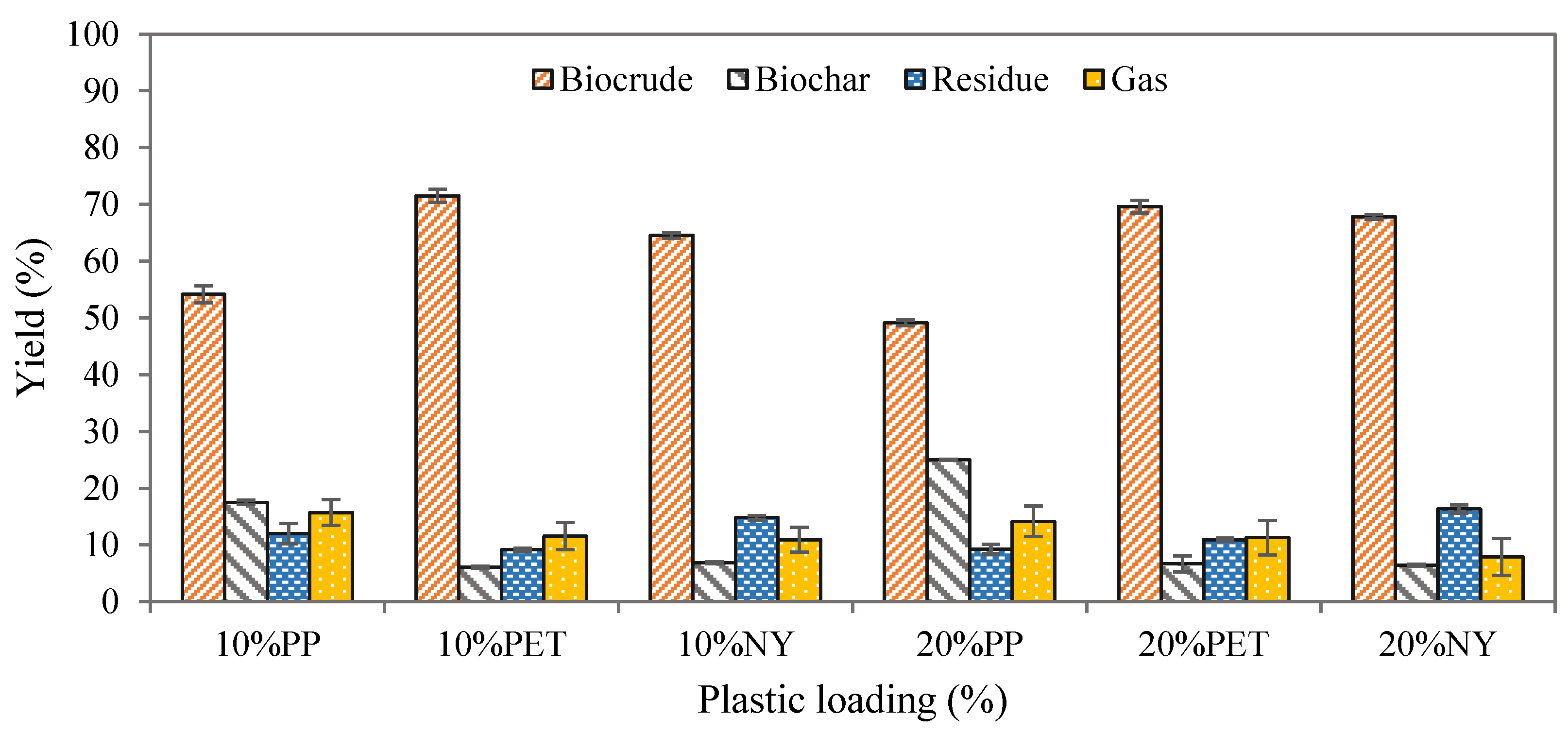
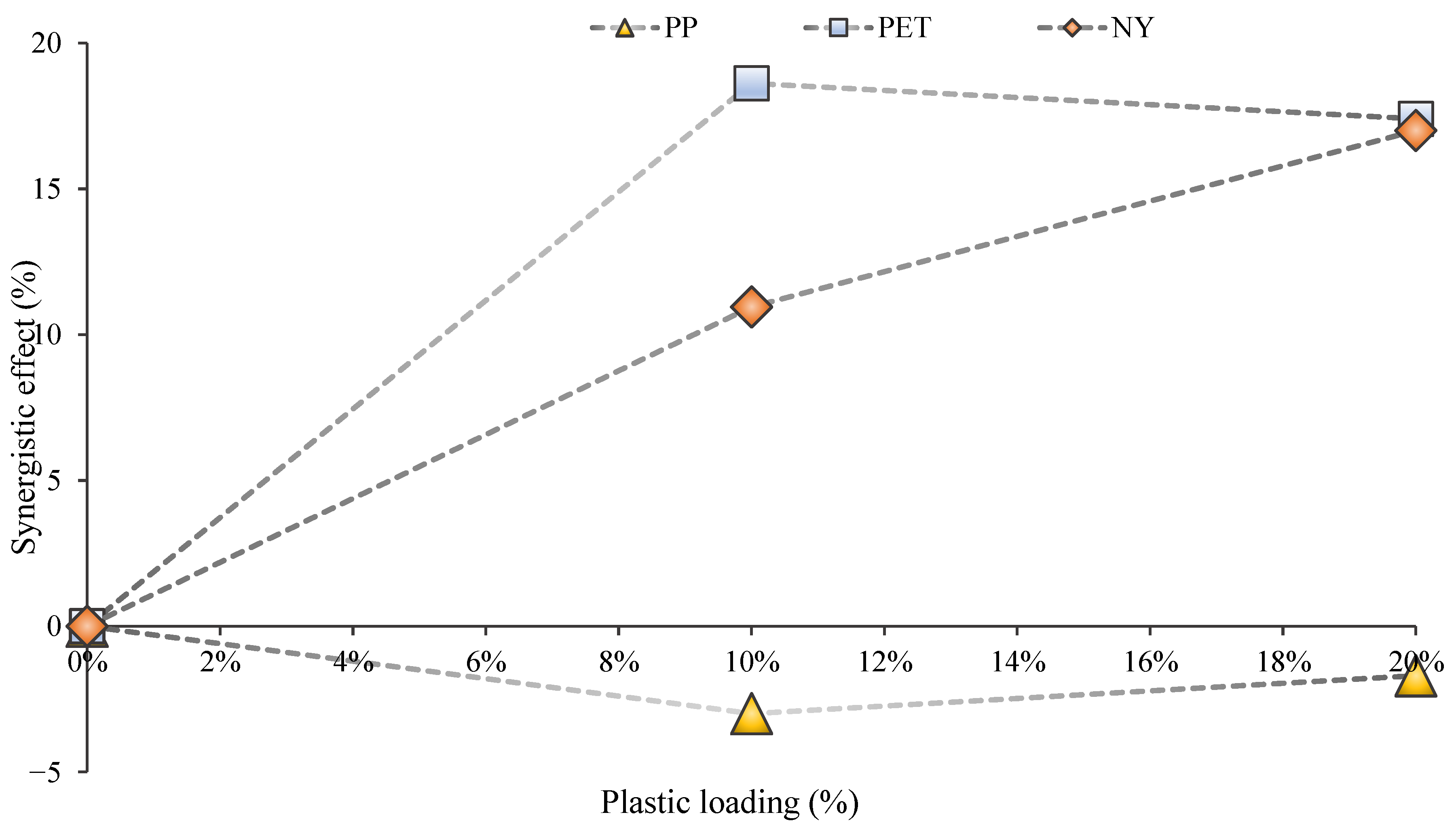
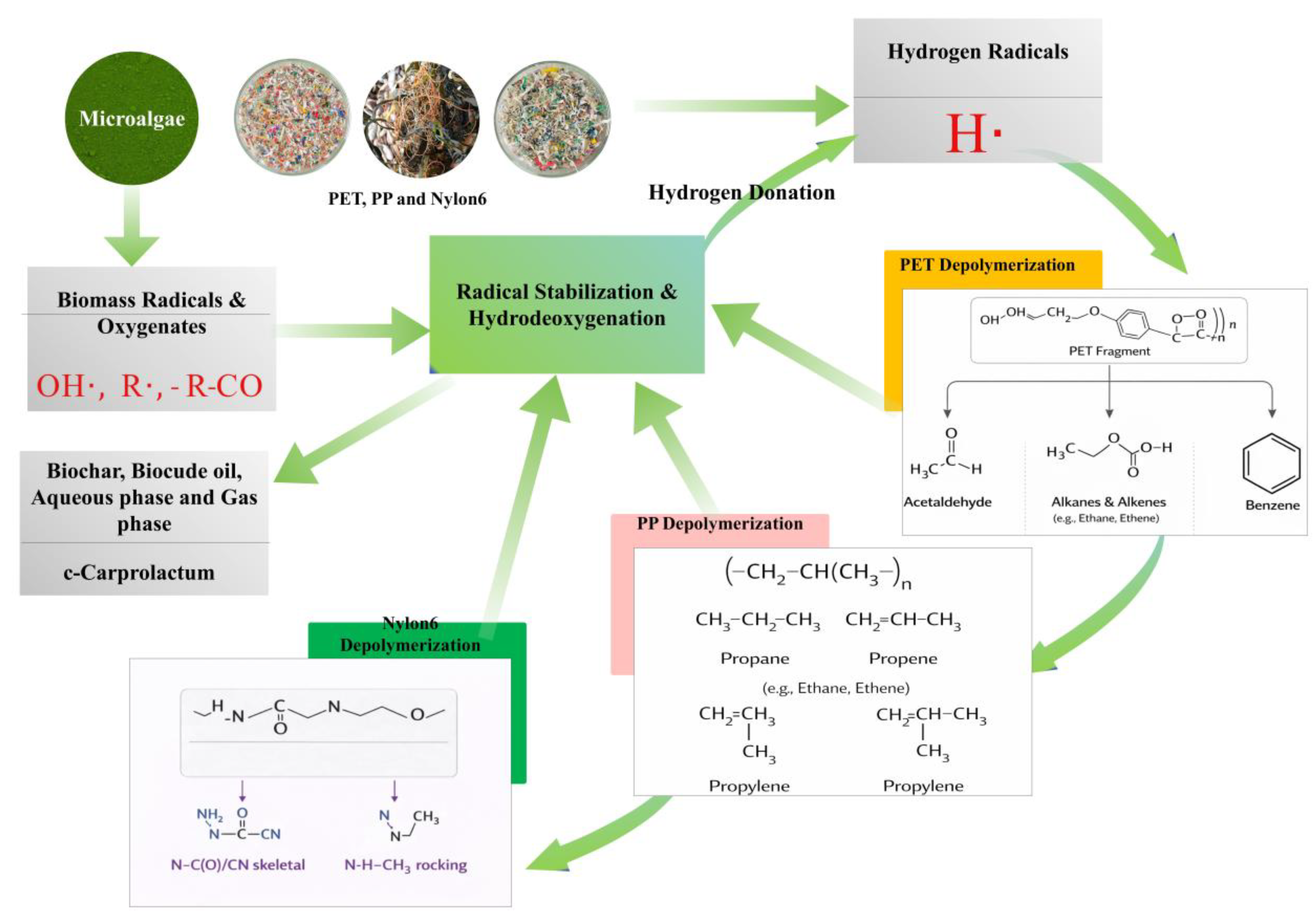
- The “Hydrogen Donor” Effect: Algae are rich in proteins and carbohydrates but relatively hydrogen-poor. Plastics like PET (when they begin to decompose) can act as hydrogen donors.
- During the reaction, PET monomers (like ethylene glycol) release hydrogen-rich fragments.
- These fragments stabilize the “free radicals” produced from the breaking down of algae.
- Without these stabilizers, the algae fragments would recombine into solid char; with them, they stay as liquid oil (biocrude).
- 2.
- Interaction between monomers and algal components in the subcritical water environment: The hydrolysis of PET releases Terephthalic Acid (TPA) and Ethylene Glycol (EG).
- Acidity: TPA creates a slightly acidic environment that acts as an in situ catalyst, speeding up the breakdown of algae’s sturdy cell walls and proteins.
- Solubility: The presence of EG and other plastic-derived intermediates acts like a co-solvent, helping to dissolve algal lipids and proteins that would otherwise stay in the water phase, pulling them into the oil phase instead.
- 3.
- Reduction in solid residue: Studies consistently show that the total solid residue from a PET–Algae mixture is lower than the sum of their individual residues.
- The algal components “help” the PET monomers stay liquid or move into the oil phase, while the PET intermediates prevent the algae from turning into char.
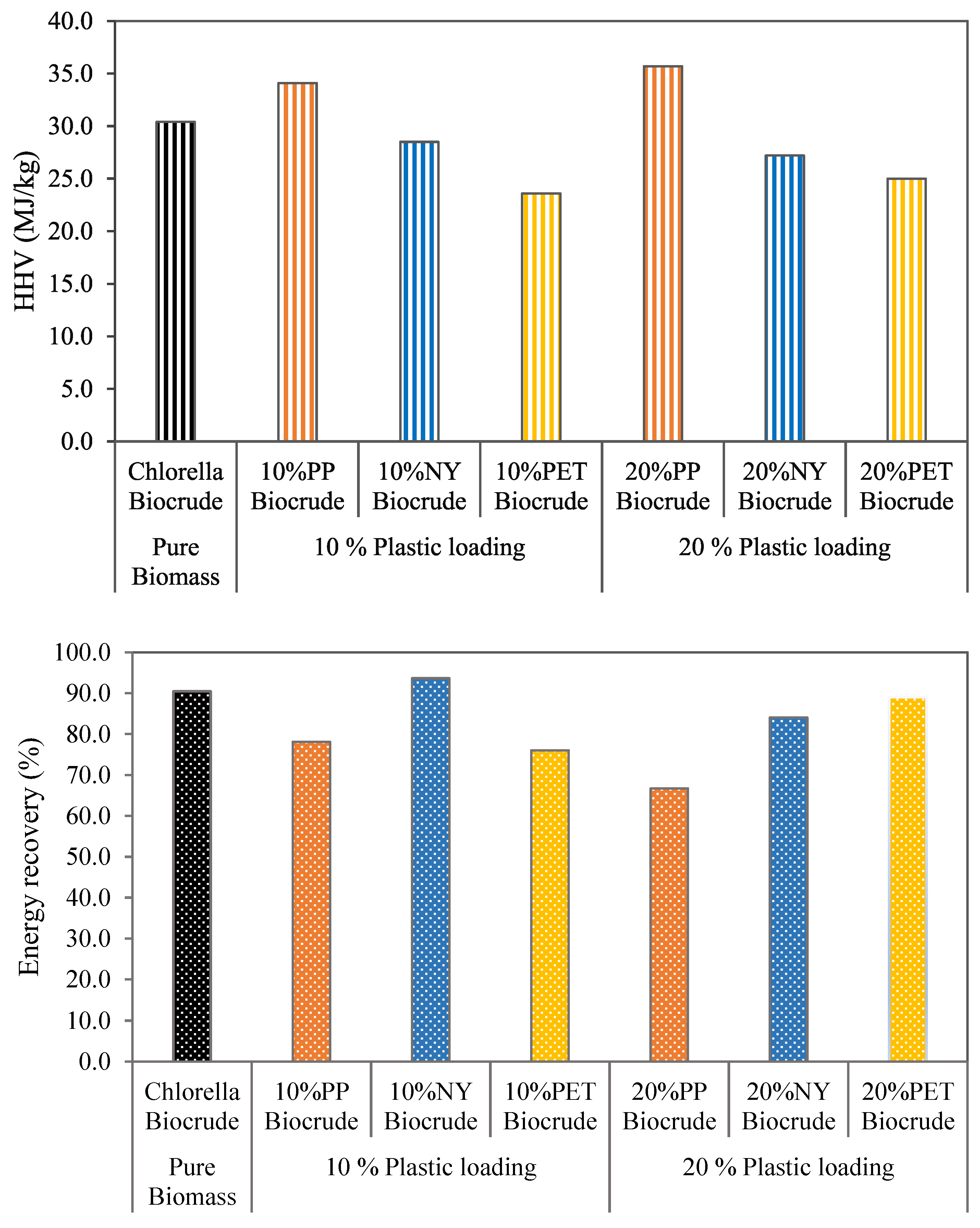
- This cross-interaction maximizes carbon recovery essentially making sure the carbon atoms from both sources end up in biocrude rather than the wastewater or the solid char.
3.3. Synergistic Effect
3.4. Effect of Heating Rate
3.5. Chemical Composition of Biocrude Obtained
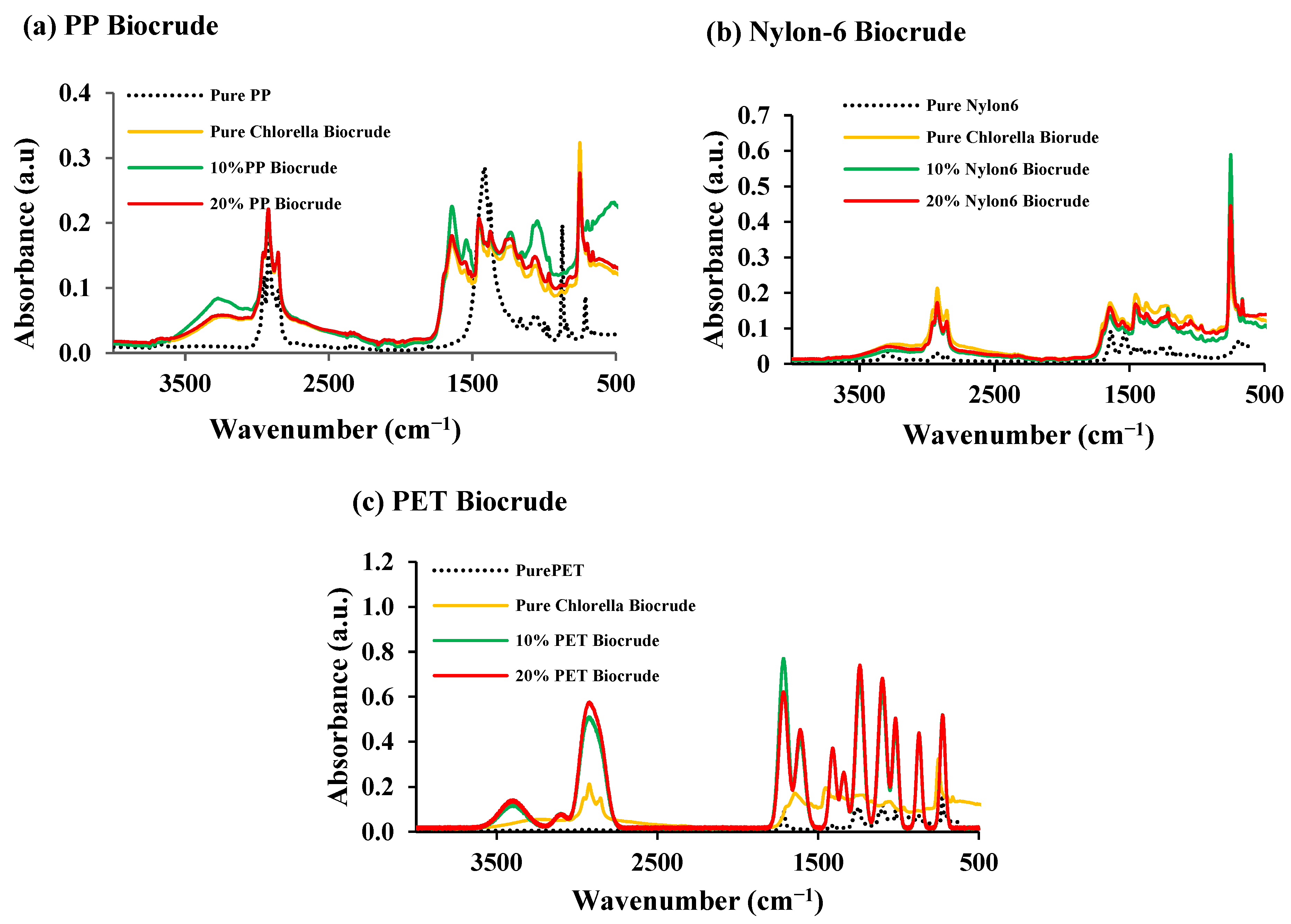
3.6. FTIR-Based Identification of Functional Groups in Biocrude
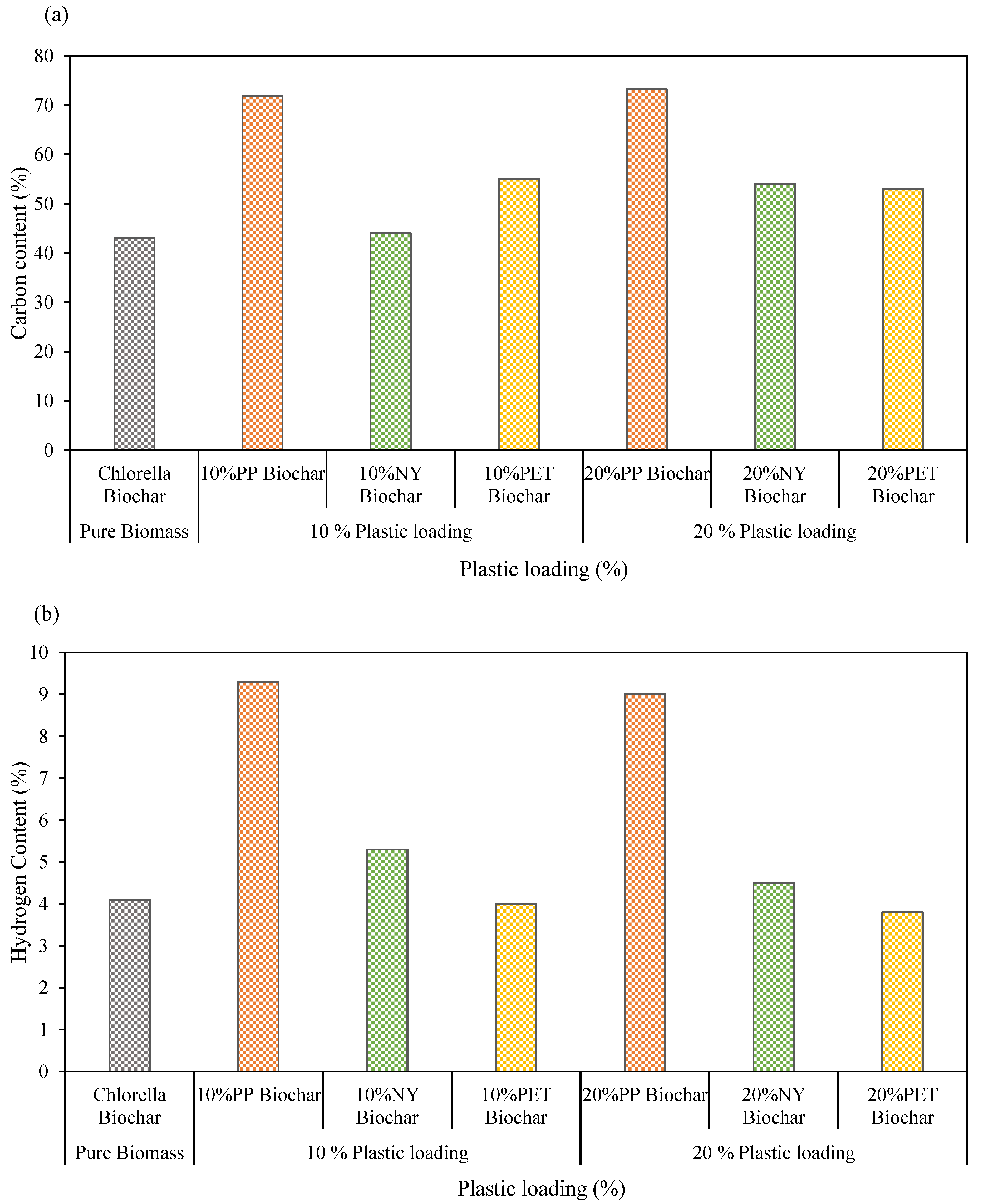
3.7. Chemical Composition of Biochar Obtained
3.8. FTIR-Based Identification of Functional Groups in Biochar
3.9. Reaction Pathways and Synergistic Conversion Mechanisms
- (A).
- Lumped HTL conversion: A common way to express HTL is to treat the microalgae as a lumped empirical formula (obtained from ultimate analysis) and distribute carbon into oil/char/gas/aq. This aligns with carbon/energy recovery framework and the statement that Co-HTL is governed by radical stabilization and deoxygenation (decarboxylation + dehydration + depolymerization).
- (B).
- Key elementary/representative reactions that explain synergy:
- (C).
- Polymer-specific stoichiometries (your three plastics)
- (D).
- Deoxygenation stoichiometries (link to improved HHV/lower O/C)
3.10. Significance of the Research
4. Conclusions
Author Contributions
Funding
Institutional Review Board Statement
Informed Consent Statement
Data Availability Statement
Acknowledgments
Conflicts of Interest
References
- Thacharodi, A.; Hassan, S.; Meenatchi, R.; Bhat, M.A.; Hussain, N.; Arockiaraj, J.; Ngo, H.H.; Sharma, A.; Nguyen, H.T.; Pugazhendhi, A. Mitigating microplastic pollution: A critical review on the effects, remediation, and utilization strategies of microplastics. J. Environ. Manag. 2024, 351, 119988. [Google Scholar] [CrossRef] [PubMed]
- Suyamud, B.; Pan, X.; Yu, Y.; Yuan, W.; Liu, Y.; Yang, Y. First-of-Its-Kind: Nationwide meta-analysis of microplastic pollution and risk assessment in Thailand. Chemosphere 2024, 364, 143041. [Google Scholar] [CrossRef] [PubMed]
- World Bank. Plastic Waste Material Flow Analysis for Thailand: Summary Report; World Bank: Washington, DC, USA, 2022. [Google Scholar]
- Teampanpong, J.; Phanchaum, J.; Rayaphak, A.; Duengkae, P. Microplastic accumulation in water from protected areas in Western Forest Complex of Thailand. Heliyon 2024, 10, e36130. [Google Scholar] [CrossRef] [PubMed]
- Li, W.C.; Tse, H.F.; Fok, L. Plastic waste in the marine environment: A review of sources, occurrence and effects. Sci. Total Environ. 2016, 566–567, 333–349. [Google Scholar] [CrossRef]
- Jung, K.A.; Lim, S.-R.; Kim, Y.; Park, J.M. Potentials of macroalgae as feedstocks for biorefinery. Bioresour. Technol. 2013, 135, 182–190. [Google Scholar] [CrossRef]
- Raikova, S.; Le, C.D.; Beacham, T.A.; Jenkins, R.W.; Allen, M.J.; Chuck, C.J. Towards a marine biorefinery through the hydrothermal liquefaction of macroalgae native to the United Kingdom. Biomass Bioenergy 2017, 107, 244–253. [Google Scholar] [CrossRef]
- Liu, S.; Jin, R.; Zhang, J.; Zhao, Y.; Shen, M.; Wang, Y. Are algae a promising ecofriendly approach to micro/nanoplastic remediation? Sci. Total Environ. 2023, 904, 166779. [Google Scholar] [CrossRef]
- Nolasco, J.; Avila, J.J.; Martínez, K.; Hernández, I.; Zavariz, Á. Pyrolytic Liquid Fuel—An Alternative for Producing Electrical Energy in Mexico. J. Ecol. Eng. 2022, 23, 227–232. [Google Scholar] [CrossRef]
- Neveux, N.; Magnusson, M.; Maschmeyer, T.; de Nys, R.; Paul, N.A. Comparing the potential production and value of high-energy liquid fuels and protein from marine and freshwater macroalgae. GCB Bioenergy 2015, 7, 673–689. [Google Scholar] [CrossRef]
- Ross, A.B.; Jones, J.M.; Kubacki, M.L.; Bridgeman, T. Classification of macroalgae as fuel and its thermochemical behaviour. Bioresour. Technol. 2008, 99, 6494–6504. [Google Scholar] [CrossRef]
- Yanik, J.; Stahl, R.; Troeger, N.; Sinag, A. Pyrolysis of algal biomass. J. Anal. Appl. Pyrolysis 2013, 103, 134–141. [Google Scholar] [CrossRef]
- Jin, Q.; Wang, X.; Li, S.; Mikulčić, H.; Bešenić, T.; Deng, S.; Vujanović, M.; Tan, H.; Kumfer, B.M. Synergistic effects during co-pyrolysis of biomass and plastic: Gas, tar, soot, char products and thermogravimetric study. J. Energy Inst. 2019, 92, 108–117. [Google Scholar] [CrossRef]
- Aungthitipan, P.; Janthakhot, A.; Tansomrot, P.; Wongcharee, S.; Hongthong, S.; Kreetachat, T.; Imman, S.; Dechapanya, W. Mesoporous Biochar Composite Derived from Hardwood and Post-Recycled Plastic Waste in Thailand: A Case Study of Nickel Removal in Acidic Solution. S. Afr. J. Chem. Eng. 2025, 53, 242–255. [Google Scholar] [CrossRef]
- Chanthakhot, A.; Aungthitipan, P.; Tansomros, P.; Maskhunthod, P.; Janthakot, A.; Hongthong, S.; Kreethachat, T.; Imman, S.; Wongcharee, S. Characterization of Biochar Produced from Sawdust and Polypropylene Plastic Waste Composite via Slow Pyrolysis. In Proceedings of the 2024 Geoinformatics for Spatial-Infrastructure Development in Earth and Allied Sciences (GIS-IDEAS); Springer: Berlin/Heidelberg, Germany, 2024; pp. 1–6. [Google Scholar]
- Hongthong, S.; Sangsida, W.; Wongcharee, S.; Chanthakhot, A.; Aungthitipan, P.; Suwannahong, K.; Kreetachat, T.; Rioyo, J. Enhanced Biochar Production via Co-Pyrolysis of Biomass Residual with Plastic Waste after Recycling Process. Int. J. Chem. Eng. 2024, 2024, 1176275. [Google Scholar] [CrossRef]
- Wang, Z.; Burra, K.G.; Lei, T.; Gupta, A.K. Co-pyrolysis of waste plastic and solid biomass for synergistic production of biofuels and chemicals-A review. Prog. Energy Combust. Sci. 2021, 84, 100899. [Google Scholar] [CrossRef]
- Ong, M.Y.; Nomanbhay, S.; Jassinnee, M.; Tan, Y.H.; Chai, M.K. Hydrothermal Liquefaction of Algae with Plastic Waste for Bio-Oil Production: A Mini Review. In Proceedings of the IOP Conference Series: Earth and Environmental Science; IOP Publishing: Bristol, UK, 2025; p. 012008. [Google Scholar]
- Vlaskin, M.; Chernova, N.; Kiseleva, S.; Popel’, O.; Zhuk, A. Hydrothermal liquefaction of microalgae to produce biofuels: State of the art and future prospects. Therm. Eng. 2017, 64, 627–636. [Google Scholar] [CrossRef]
- Shamsuddoha, M.; Kashem, M.A. Zero Plastic Drive: A Comprehensive review on unveiling innovative sustainable solutions for a circular plastics economy. Sustainability 2024, 16, 10329. [Google Scholar] [CrossRef]
- Hongthong, S.; Leese, H.S.; Chuck, C.J. Valorizing plastic-contaminated waste streams through the catalytic hydrothermal processing of polypropylene with lignocellulose. ACS Omega 2020, 5, 20586–20598. [Google Scholar] [CrossRef]
- Hongthong, S.; Leese, H.S.; Allen, M.J.; Chuck, C.J. Assessing the Conversion of Various Nylon Polymers in the Hydrothermal Liquefaction of Macroalgae. Environments 2021, 8, 34. [Google Scholar] [CrossRef]
- Raikova, S.; Knowles, T.D.J.; Allen, M.J.; Chuck, C.J. Co-liquefaction of Macroalgae with Common Marine Plastic Pollutants. ACS Sustain. Chem. Eng. 2019, 7, 6769–6781. [Google Scholar] [CrossRef]
- Farobie, O.; Amrullah, A.; Fatriasari, W.; Nandiyanto, A.B.D.; Ernawati, L.; Karnjanakom, S.; Lee, S.H.; Selvasembian, R.; Azelee, N.I.W.; Aziz, M. Co-pyrolysis of plastic waste and macroalgae Ulva lactuca, a sustainable valorization approach towards the production of bio-oil and biochar. Results Eng. 2024, 24, 103098. [Google Scholar] [CrossRef]
- Guo, B.; Yang, B.; Su, Y.; Zhang, S.; Hornung, U.; Dahmen, N. Screening and Optimization of Microalgae Biomass and Plastic Material Coprocessing by Hydrothermal Liquefaction. ACS ES&T Eng. 2022, 2, 65–77. [Google Scholar] [CrossRef]
- Wu, X.; Liang, J.; Wu, Y.; Hu, H.; Huang, S.; Wu, K. Co-liquefaction of microalgae and polypropylene in sub-/super-critical water. RSC Adv. 2017, 7, 13768–13776. [Google Scholar] [CrossRef]
- Kreetachat, T.; Imman, S.; Suriyachai, N.; Kreetachat, N.; Hongthong, S.; Suwannahong, K.; Phadee, P.; Janthakhot, A.; Wongcharee, S. Multi-index evaluation of surface water quality at the transboundary section of the Mekong River: A case study of Nakhon Phanom Province, Thailand. Environ. Chall. 2026, 22, 101414. [Google Scholar] [CrossRef]
- Chen, Y.; Xu, H.; Luo, Y.; Ding, Y.; Huang, J.; Wu, H.; Han, J.; Du, L.; Kang, A.; Jia, M. Plastic bottles for chilled carbonated beverages as a source of microplastics and nanoplastics. Water Res. 2023, 242, 120243. [Google Scholar] [CrossRef] [PubMed]
- Zhang, P.; Feng, L.; Su, B.; Li, X. Microalgae cultivated in wastewater catalytic hydrothermal liquefaction: Effects of process parameter on products and energy balance. J. Clean. Prod. 2022, 341, 130895. [Google Scholar] [CrossRef]
- Watson, J.; Swoboda, M.; Aierzhati, A.; Wang, T.; Si, B.; Zhang, Y. Biocrude oil from algal bloom microalgae: A novel integration of biological and thermochemical techniques. Environ. Sci. Technol. 2021, 55, 1973–1983. [Google Scholar] [CrossRef]
- Raikova, S.; Smith-Baedorf, H.; Bransgrove, R.; Barlow, O.; Santomauro, F.; Wagner, J.L.; Allen, M.J.; Bryan, C.G.; Sapsford, D.; Chuck, C.J. Assessing hydrothermal liquefaction for the production of bio-oil and enhanced metal recovery from microalgae cultivated on acid mine drainage. Fuel Process. Technol. 2016, 142, 219–227. [Google Scholar] [CrossRef]
- Miao, C.; Chakraborty, M.; Chen, S. Impact of reaction conditions on the simultaneous production of polysaccharides and bio-oil from heterotrophically grown Chlorella sorokiniana by a unique sequential hydrothermal liquefaction process. Bioresour. Technol. 2012, 110, 617–627. [Google Scholar] [CrossRef]
- Singh, B.; Sharma, N. Mechanistic implications of plastic degradation. Polym. Degrad. Stab. 2008, 93, 561–584. [Google Scholar] [CrossRef]
- Duan, P.; Savage, P.E. Upgrading of crude algal bio-oil in supercritical water. Bioresour. Technol. 2011, 102, 1899–1906. [Google Scholar] [CrossRef]
- Addy, M.M.; Kabir, F.; Zhang, R.; Lu, Q.; Deng, X.; Current, D.; Griffith, R.; Ma, Y.; Zhou, W.; Chen, P. Co-cultivation of microalgae in aquaponic systems. Bioresour. Technol. 2017, 245, 27–34. [Google Scholar] [CrossRef] [PubMed]
- Yuan, X.; Cao, H.; Li, H.; Zeng, G.; Tong, J.; Wang, L. Quantitative and qualitative analysis of products formed during co-liquefaction of biomass and synthetic polymer mixtures in sub- and supercritical water. Fuel Process. Technol. 2009, 90, 428–434. [Google Scholar] [CrossRef]
- Ross, A.; Biller, P.; Kubacki, M.; Li, H.; Lea-Langton, A.; Jones, J. Hydrothermal processing of microalgae using alkali and organic acids. Fuel 2010, 89, 2234–2243. [Google Scholar] [CrossRef]
- Valdez, P.J.; Nelson, M.C.; Wang, H.Y.; Lin, X.N.; Savage, P.E. Hydrothermal liquefaction of Nannochloropsis sp.: Systematic study of process variables and analysis of the product fractions. Biomass Bioenergy 2012, 46, 317–331. [Google Scholar] [CrossRef]
- Tito, E.; Marcolongo, C.A.; Pipitone, G.; Monteverde, A.H.A.; Bensaid, S.; Pirone, R. Understanding the effect of heating rate on hydrothermal liquefaction: A comprehensive investigation from model compounds to a real food waste. Bioresour. Technol. 2024, 396, 130446. [Google Scholar] [CrossRef]
- Shahbeik, H.; Kazemi Shariat Panahi, H.; Dehhaghi, M.; Guillemin, G.J.; Fallahi, A.; Hosseinzadeh-Bandbafha, H.; Amiri, H.; Rehan, M.; Raikwar, D.; Latine, H.; et al. Biomass to biofuels using hydrothermal liquefaction: A comprehensive review. Renew. Sustain. Energy Rev. 2024, 189, 113976. [Google Scholar] [CrossRef]
- Lievens, C.; Mourant, D.; He, M.; Gunawan, R.; Li, X.; Li, C.-Z. An FT-IR spectroscopic study of carbonyl functionalities in bio-oils. Fuel 2011, 90, 3417–3423. [Google Scholar] [CrossRef]
- Smith, B.C. Fundamentals of Fourier Transform Infrared Spectroscopy; CRC Press: Boca Raton, FL, USA, 2011. [Google Scholar]
- Socrates, G. Infrared and Raman Characteristic Group Frequencies: Tables and Charts; John Wiley & Sons: Hoboken, NJ, USA, 2004. [Google Scholar]
- Kumar, A.; Gupta, R.K. Fundamentals of Polymer Engineering; CRC Press: Boca Raton, FL, USA, 2018. [Google Scholar]
- Xia, Y.; Tan, X.; Zhu, M.; Huang, J.; Wang, X.; Guo, Z. A mechanistic investigation of the directional entrapping modification on the semicrystalline polypropylene surface. J. Appl. Polym. Sci. 2020, 137, 49153. [Google Scholar] [CrossRef]
- Sifuentes-Nieves, I.; Yáñez-Macías, R.; Flores-Silva, P.C.; Gonzalez-Morones, P.; Gallardo-Vega, C.A.; Ramírez-Vargas, E.; Hernández-Hernández, E. Ultrasound/plasma-modified agave fibers as alternative eco-sustainable raw material to reinforce starch-based Films. J. Polym. Environ. 2023, 31, 595–607. [Google Scholar] [CrossRef]
- Fan, C.; Huang, Y.-Z.; Lin, J.-N.; Li, J. Microplastic constituent identification from admixtures by Fourier-transform infrared (FTIR) spectroscopy: The use of polyethylene terephthalate (PET), polyethylene (PE), polypropylene (PP), polyvinyl chloride (PVC) and nylon (NY) as the model constituents. Environ. Technol. Innov. 2021, 23, 101798. [Google Scholar] [CrossRef]
- Hu, Z.; Tang, L.; Gao, P.; Wang, B.; Zhang, C.; Sheng, Y.; Pan, W.; Ding, L.; Chen, X.; Wang, F. Elucidating synergistic effects during co-pyrolysis of plastics and paper in municipal solid waste: Thermal behavior and product characteristics. Bioresour. Technol. 2025, 416, 131831. [Google Scholar] [CrossRef] [PubMed]
- Abdelwahab, M.A.; Chang, B.P.; Mohanty, A.K.; Misra, M. Waste valorization in sustainable engineering materials: Reactive processing of recycled carpets waste with polyamide 6. Polym. Test. 2022, 114, 107681. [Google Scholar] [CrossRef]
- Chen, W.-T.; Wu, Z.; Si, B.; Zhang, Y. Renewable diesel blendstocks and bioprivileged chemicals distilled from algal biocrude oil converted via hydrothermal liquefaction. Sustain. Energy Fuels 2020, 4, 5165–5178. [Google Scholar] [CrossRef]
- Amrullah, A.; Farobie, O.; Septarini, S.; Satrio, J.A. Synergetic biofuel production from co-pyrolysis of food and plastic waste: Reaction kinetics and product behavior. Heliyon 2022, 8, e10278. [Google Scholar] [CrossRef] [PubMed]
- Farobie, O.; Santosa, N.F.; Fatriasari, W.; Karimah, A.; Amrullah, A.; Suseno, S.H.; Nandiyanto, A.B.D.; Hartulistiyoso, E. Harnessing macroalgae Sargassum plagiophyllum-derived heterogeneous catalyst for biodiesel production. Bioresour. Technol. Rep. 2024, 25, 101768. [Google Scholar] [CrossRef]
- Van Krevelen, D.W. Graphical-statistical method for the study of structure and reaction processes of coal. Fuel 1950, 29, 269–284. [Google Scholar]
- Alauddin, Z.A.B.Z.; Lahijani, P.; Mohammadi, M.; Mohamed, A.R. Gasification of lignocellulosic biomass in fluidized beds for renewable energy development: A review. Renew. Sustain. Energy Rev. 2010, 14, 2852–2862. [Google Scholar] [CrossRef]
- Wang, X.; Zhou, W.; Liang, G.; Song, D.; Zhang, X. Characteristics of maize biochar with different pyrolysis temperatures and its effects on organic carbon, nitrogen and enzymatic activities after addition to fluvo-aquic soil. Sci. Total Environ. 2015, 538, 137–144. [Google Scholar] [CrossRef]
- Tan, X.; Liu, Y.; Zeng, G.; Wang, X.; Hu, X.; Gu, Y.; Yang, Z. Application of biochar for the removal of pollutants from aqueous solutions. Chemosphere 2015, 125, 70–85. [Google Scholar] [CrossRef]
- Kookana, R.; Sarmah, A.K.; Van Zwieten, L.; Van Krull, E.; Singh, B. Biochar Application to Soil: Agronomic and Environmental Benefits and Unintended Consequences. Adv. Agron. 2011, 112, 103–143. [Google Scholar] [CrossRef]
- Keiluweit, M.; Nico, P.S.; Johnson, M.G.; Kleber, M. Dynamic molecular structure of plant biomass-derived black carbon (biochar). Environ. Sci. Technol. 2010, 44, 1247–1253. [Google Scholar] [CrossRef] [PubMed]
- Haarlemmer, G.; Matricon, L.; Roubaud, A. Comprehensive review of hydrothermal liquefaction data for use in machine-learning models. Biofuels Bioprod. Biorefin 2024, 18, 1782–1798. [Google Scholar] [CrossRef]
- Kumar, A.; Watkins, J.D.; Cronin, D.; Schmidt, A.J.; Santosa, D.M.; Yang, Z.; Heyne, J.; Valdez, P.J. Hydrothermal liquefaction of wastewater-grown algae to produce synthetic aviation fuel: A combined experimental study and techno-economic assessment. Energy Convers. Manag. X 2025, 27, 101096. [Google Scholar] [CrossRef]
- Pascoalino, L.A.; Reis, F.S.; Prieto, M.A.; Barreira, J.C.; Ferreira, I.C.; Barros, L. Valorization of bio-residues from the processing of main portuguese fruit crops: From discarded waste to health promoting compounds. Molecules 2021, 26, 2624. [Google Scholar] [CrossRef]
- Wang, X.; Guo, F.; Li, Y.; Yang, X. Effect of pretreatment on microalgae pyrolysis: Kinetics, biocrude yield and quality, and life cycle assessment. Energy Convers. Manag. 2017, 132, 161–171. [Google Scholar] [CrossRef]
- Ghadge, A.; Bourlakis, M.; Kamble, S.; Seuring, S. Blockchain implementation in pharmaceutical supply chains: A review and conceptual framework. Int. J. Prod. Res. 2023, 61, 6633–6651. [Google Scholar] [CrossRef]
- Wei, G.; de Leeuw, E.; Pazgier, M.; Yuan, W.; Zou, G.; Wang, J.; Ericksen, B.; Lu, W.-Y.; Lehrer, R.I.; Lu, W. Through the looking glass, mechanistic insights from enantiomeric human defensins. J. Biol. Chem. 2009, 284, 29180–29192. [Google Scholar] [CrossRef]
- Baisch, J.S.; Djadjo, C.L.; Alves Nunes, É.J.; de Oliveira Carneiro, L.; Tres, M.V.; Zabot, G.L. Promising products based on hydrothermal liquefaction of agricultural biomass: An overview. Discov. Appl. Sci. 2025, 7, 430. [Google Scholar] [CrossRef]
- Chand, R.; Kohansal, K.; Toor, S.; Pedersen, T.H.; Vollertsen, J. Microplastics degradation through hydrothermal liquefaction of wastewater treatment sludge. J. Clean. Prod. 2022, 335, 130383. [Google Scholar] [CrossRef]



| Subfigure | Description | Discussion | Image |
|---|---|---|---|
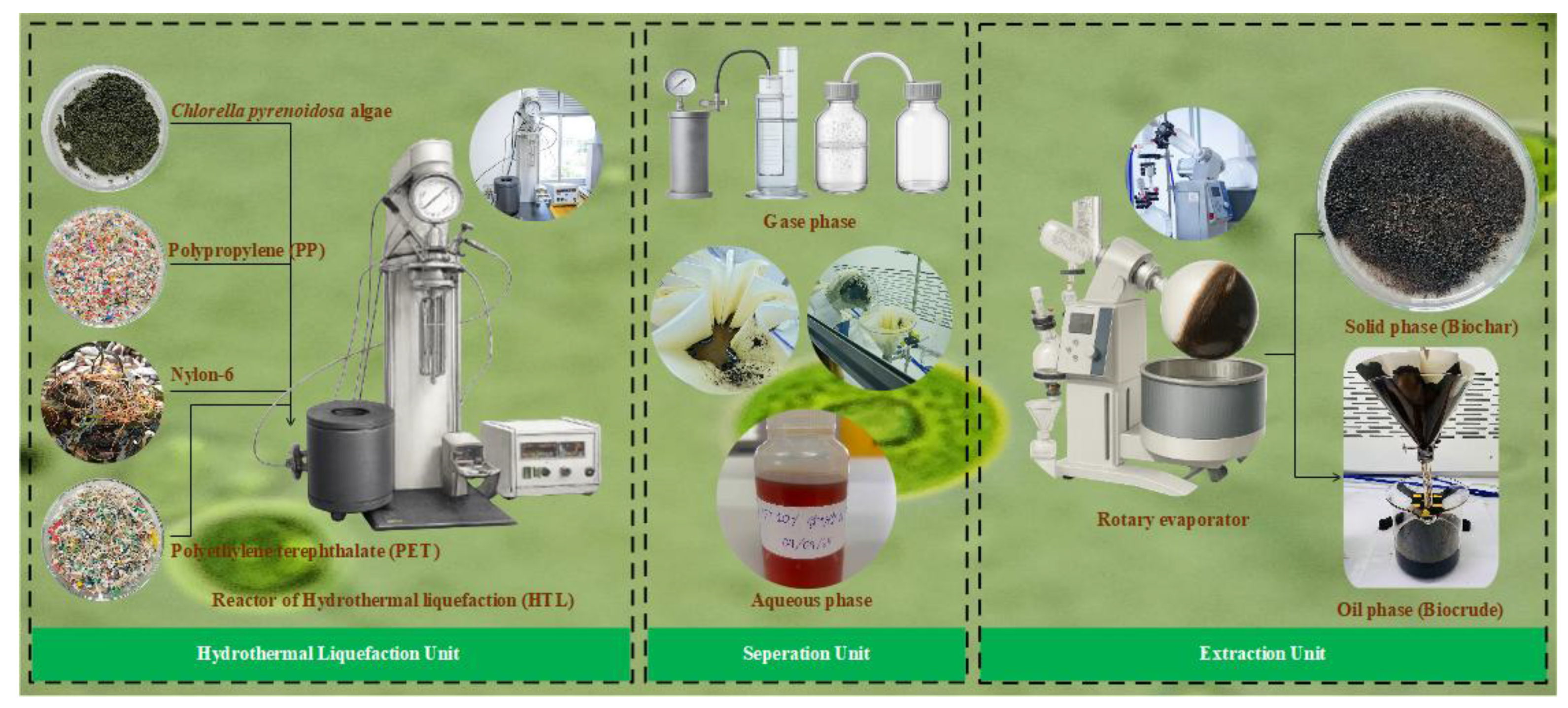
| (a) | Dried Chlorella pyrenoidosa | This freshwater microalga, common in algal blooms, was freeze-dried and used as a biomass source due to its high protein and lipid content, making it a promising candidate for biofuel production via HTL. |  |
| (b) | Electron microscopy image | Highlights the cell morphology of Chlorella, which is crucial for understanding cell wall resistance during thermal breakdown. Efficient disintegration under HTL conditions leads to higher yields of biocrude and biochar. |  |
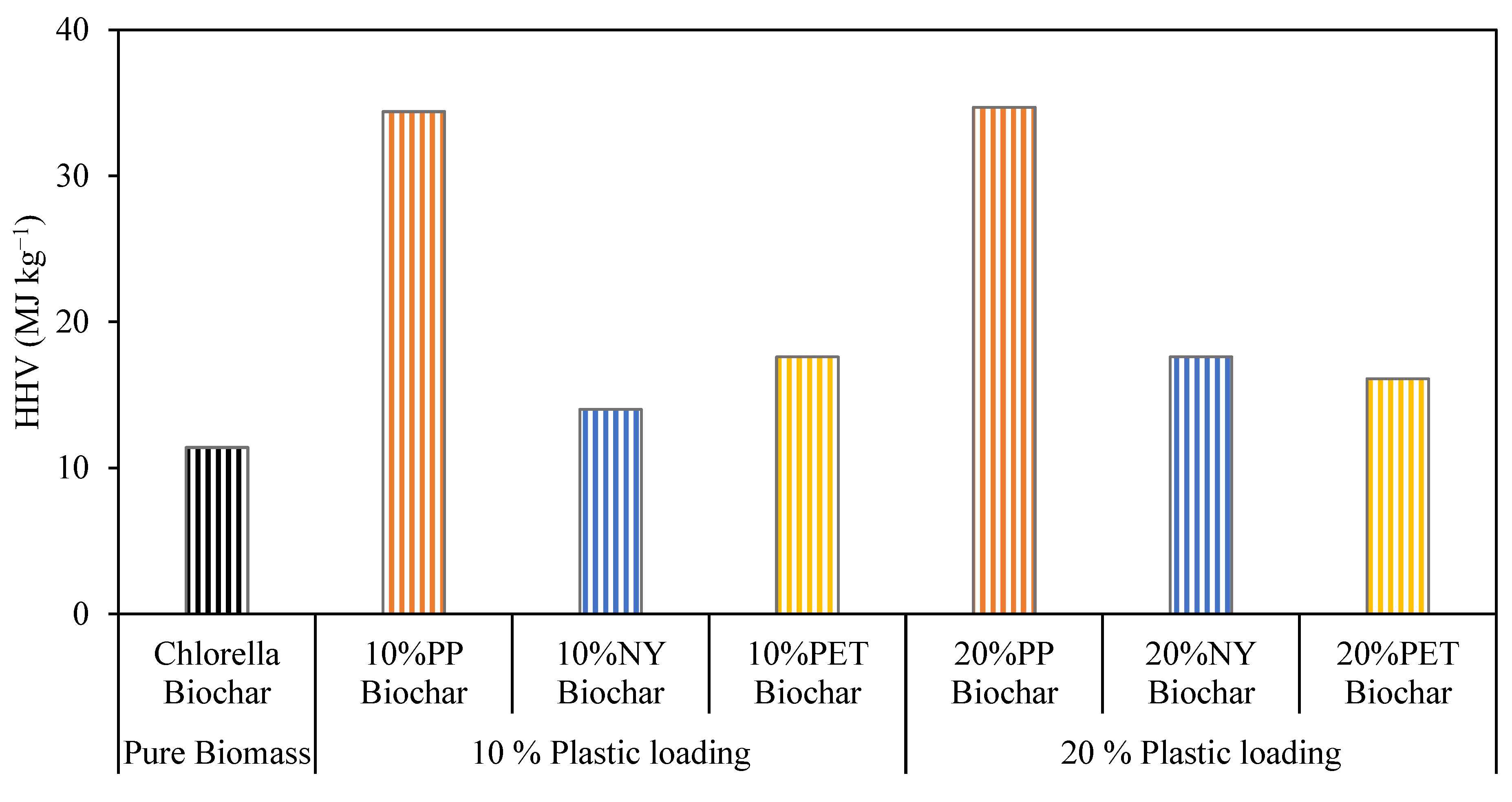
| (c) | Polypropylene (PP) | One of the most thermally stable plastics. Under HTL conditions (350 °C), PP showed limited depolymerization, leading to high solid residue and char formation but significantly increasing the higher heating value (HHV) of the biochar. |  |
| (d) | Polyethylene terephthalate (PET) | PET underwent more complete depolymerization, contributing to biocrude production. It enhanced hydrodeoxygenation reactions and served as a hydrogen donor, thus improving the H/C ratio of biocrude products. |  |
| (e) | Nylon-6 | Showed high reactivity in the HTL system, breaking down into soluble monomers (e.g., ε-caprolactam) found predominantly in the aqueous phase, reducing biochar yield and enhancing biocrude quality. |  |
| (f) | Gas phase | Comprised primarily of CO2, released via a needle valve. The gas yield was calculated via the ideal gas law and was minimal compared to other phases. |  |
| (g) | Biocrude oil | The primary target product, obtained by chloroform extraction and rotary evaporation. Plastic blending, especially with PET and Nylon-6, increased biocrude yield up to 78.5% in some blends, suggesting synergistic enhancement of HTL reactions. |  |
| (h) | Aqueous phase | Contained water-soluble organics and inorganics. The aqueous phase yield decreased significantly with the addition of plastics, indicating a shift in carbon distribution toward the biocrude and solid phases. |  |
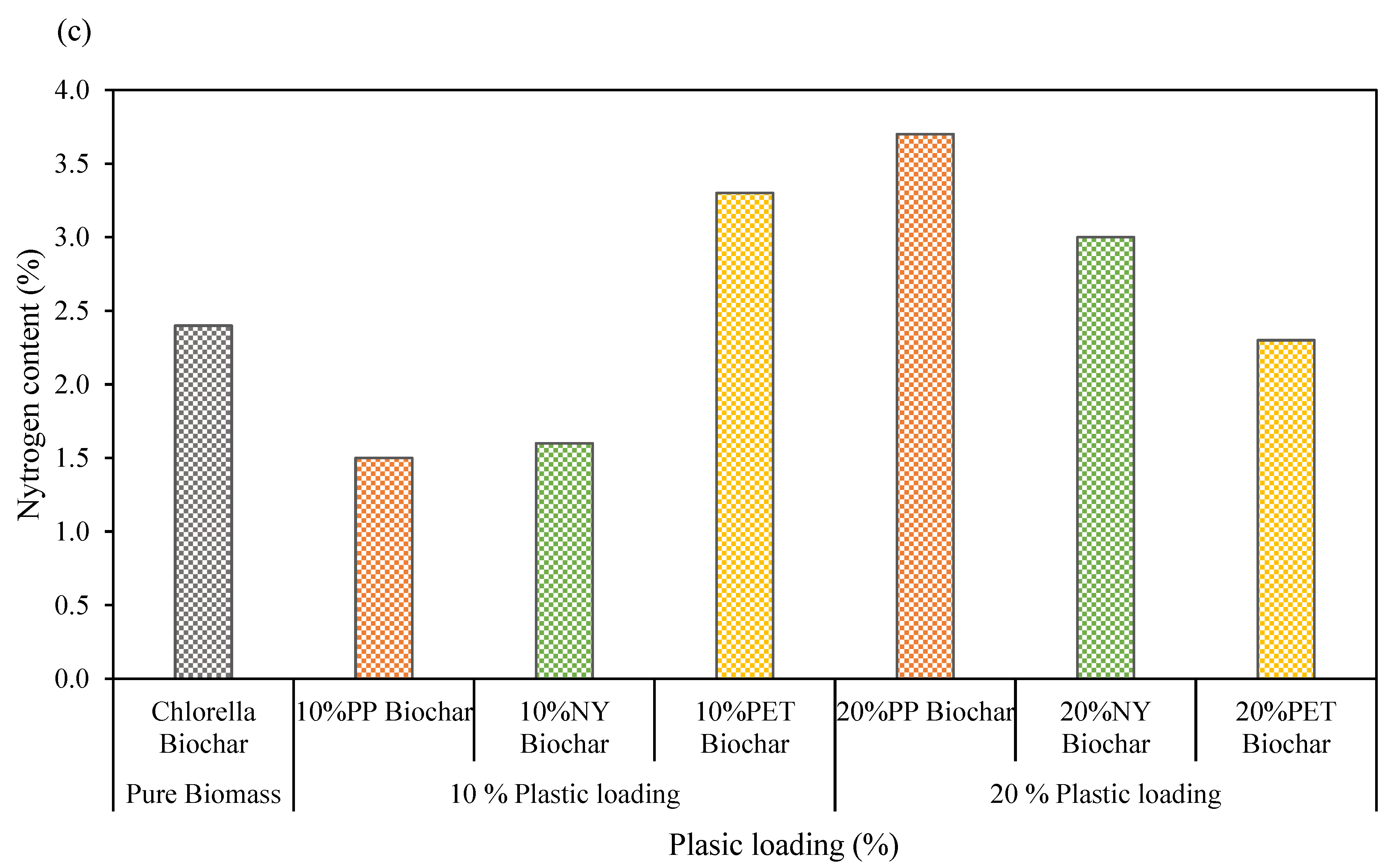
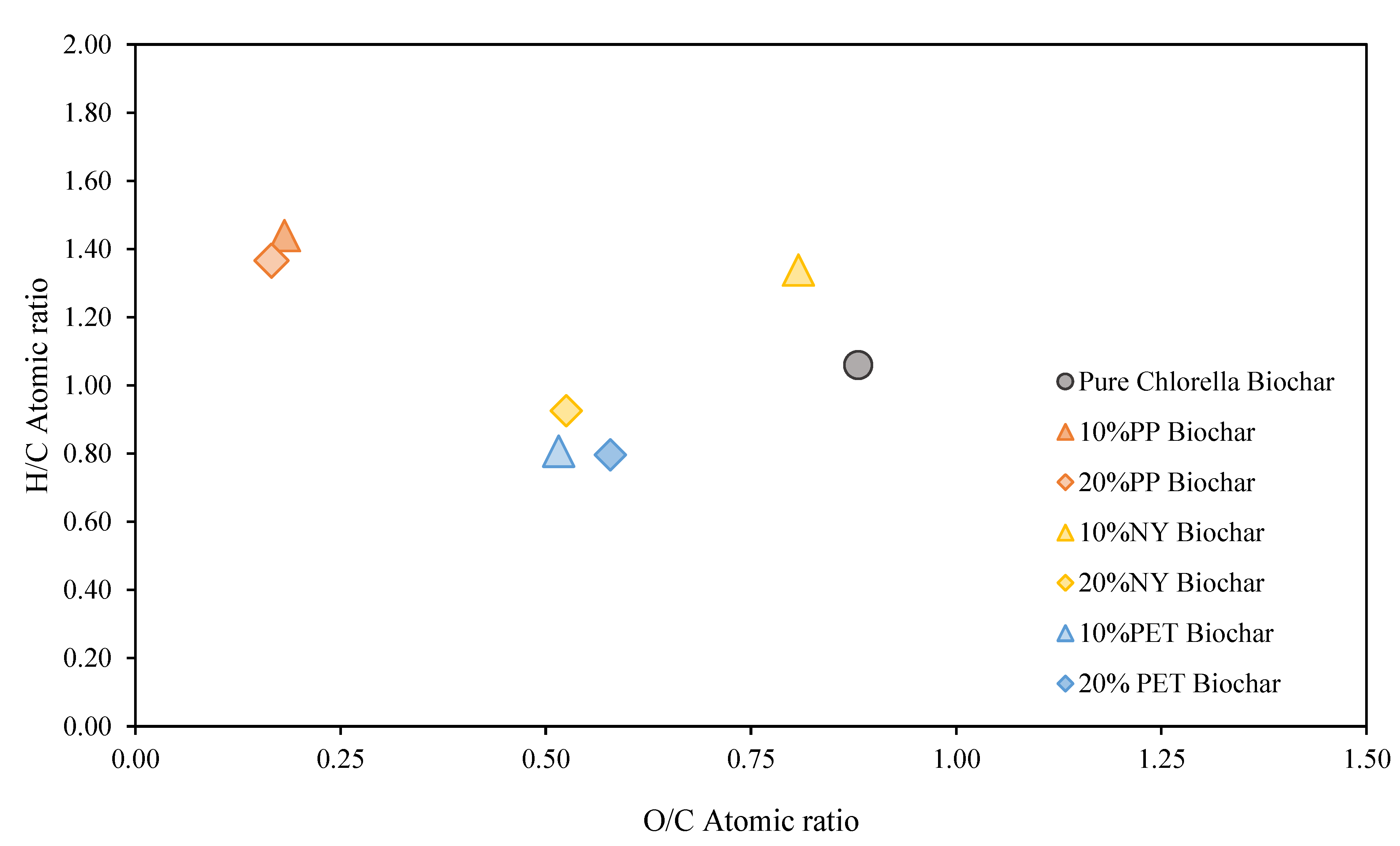
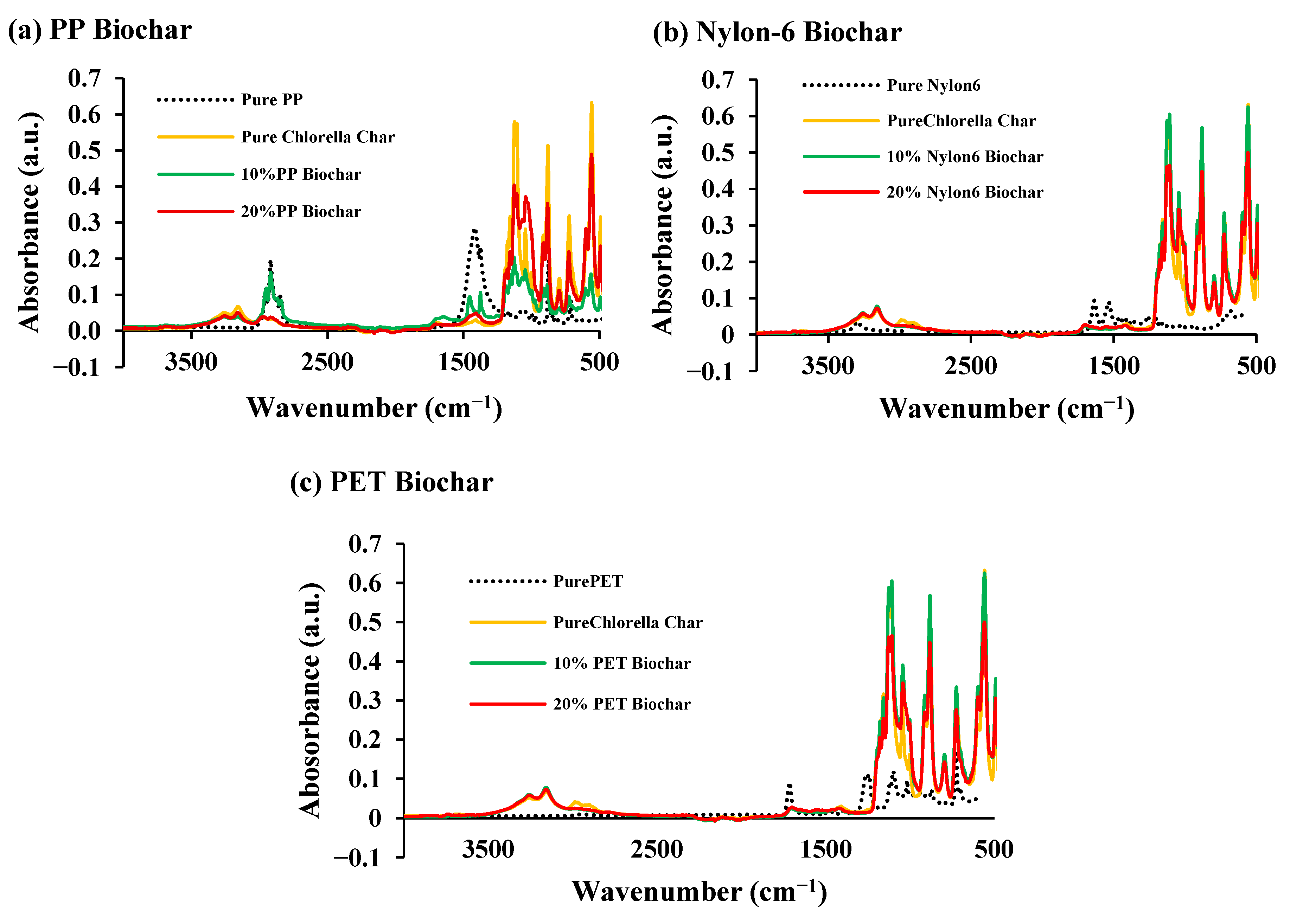
| (i) | Biochar | Solid carbonaceous residue, rich in functional groups (OH, COOH, aromatic rings). Characterized by high surface area, energy density, and aromaticity, especially when co-processed with PP. FTIR and Van Krevelen analysis confirmed enhanced structural stability and sorption capacity. |  |
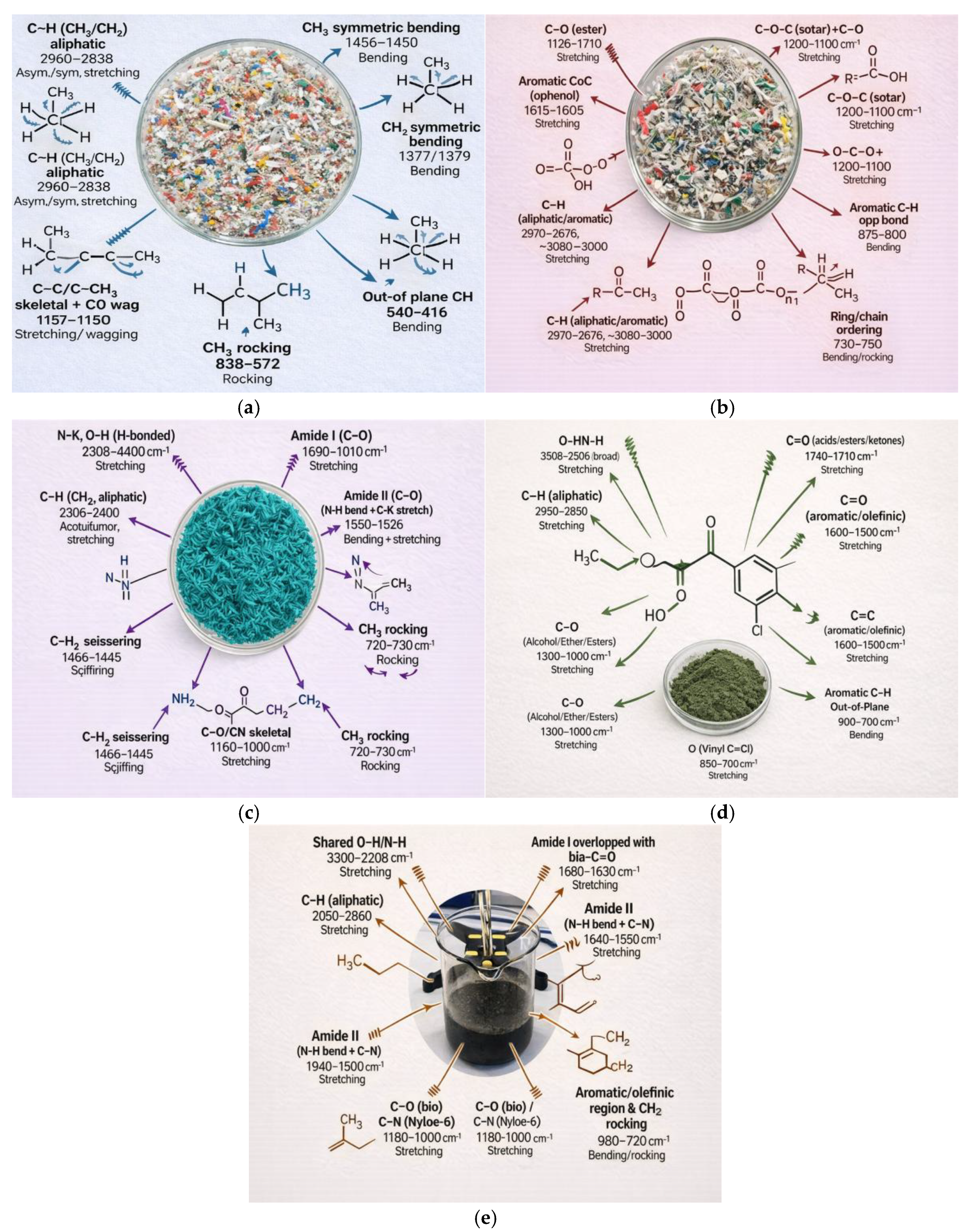
| Raw Material | Functional Group | Absorption Peak (cm−1) | Vibration Type | Applications/Treatments/Compatibility | Reference |
|---|---|---|---|---|---|
| PP | C–H (CH3/CH2) aliphatic | 2960–2838 | Asym./sym. stretching | Hydrophobic backbone; blends with PE/PP matrices; compatibilize with polar phases using MAH-g-PP, silanes or isocyanates. | [42,43] |
| CH3 asymmetric bending | 1456–1450 | Bending | Indicator of PP content in blends; intensity ratio vs. 1375 used for crystallinity/phase analysis; annealing to tune properties. | [44] | |
| CH3 symmetric bending | 1377–1370 | Bending | Crystallinity/crystal form marker; nucleating agents (e.g., sorbitol) improve clarity/mechanical strength. | [45] | |
| C–C/C–CH3 skeletal + CH wag | 1167–1150 | Stretching/wagging | Fingerprint region for PP; surface oxidation/plasma adds –OH/–COOH to improve adhesion with fibers/fillers. | [46] | |
| CH3 rocking (isotactic PP bands) | 998–973 | Rocking | Crystallinity/isotacticity markers; used for quality control and heat-treatment optimization. | [43] | |
| Out-of-plane CH (r-tacticity/crystallinity) | 840–810 | Bending | Phase identification; compatibilizer selection for PP-rich composites (glass fiber, talc). | [42] | |
| PET | C=O (ester) | 1725–1710 | Stretching | Strong carbonyl; transesterification and glycolysis for chemical recycling; reactive blending with epoxies/chain extenders (e.g., epoxy-functional styrene copolymers). | [43,47] |
| Aromatic C=C (phenyl) | 1615–1575 | Stretching | π–π interactions with graphene/CNTs; improves UV/thermal stability; hydrogenation reduces yellowing during recycling. | [43,48] | |
| C–O–C (ester) + C–O | 1260–1100 | Stretching | Backbone ester linkages; alcoholysis/aminolysis for depolymerization; coupling with diols/diacids to rebuild Mw. | ||
| C–H (aliphatic/aromatic) | 2970–2870 & ~3080–3020 | Stretching | Hydrocarbon/aromatic content; compatibilization with polyolefins via MAH-g-plastomers or reactive compatibilizers. | [48] | |
| Aromatic C–H oop bend (p-substituted ring) | 875–860 | Bending (out-of-plane) | Ring-substitution indicator; useful for confirming PET in blends and monitoring degradation products. | [43] | |
| Ring/chain ordering (crystallinity band) | 730–720 | Bending/rocking | Crystallinity marker; controlled annealing or nucleation (e.g., talc) to tune barrier and mechanical properties. | [45] | |
| Nylon-6 | N–H (amide A), O–H (H-bonded) | 3300–3450 | Stretching | Hydrogen bonding to fillers (silica, alumina, cellulose) improves adhesion; surface acetylation/plasma to tune hydrophilicity. | [43,49] |
| C–H (CH2/CH3 aliphatic) | 2950–2850 | Asym./sym. stretching | Backbone hydrocarbons; blending with PP/PE via MAH-g compatibilizers; hydrotreating for fuel upgrading (for liquefied products). | [47] | |
| Amide I (C=O) | 1650–1630 | Stretching | Reactive in hydrogenation/HDO; crosslinks with epoxies/anhydrides; coordinates to metals (adsorption/catalysis). | [42] | |
| Amide II (N–H bend + C–N stretch) | 1540–1530 | Bending + stretching | Acid dyeing site; protonation/chelation for metal-ion adsorption; amidation/alkylation for surface modification. | [44] | |
| Amide III/C–N | 1300–1230 | Stretching | Anchoring for silane/isocyanate coupling agents; boosts adhesion to glass/mineral fillers. | [43] | |
| CH2 scissoring | 1465–1445 | Bending | Indicator of chain order; annealing/nucleating agents to increase crystallinity and strength. | [49] | |
| C–O/C–N skeletal | 1160–1020 | Stretching | Sites for grafting (e.g., epoxies, isocyanates); increases polarity and interfacial bonding. | [47] | |
| CH2 rocking (crystalline order) | 730–720 | Rocking | Crystallinity marker; thermal treatment controls barrier and mechanical properties. | [42] | |
| Chlorella | O–H/N–H (alcohols/phenols/amines) | 3500–3200 (broad) | Stretching (H-bonded) | Esterification/etherification to reduce oxygen for fuels; H-bonding with cellulose/clays for bio-adhesives and sorbents. | [50] |
| C–H (aliphatic) | 2950–2850 | Stretching | Energy-rich hydrocarbons; hydrocracking/hydrotreating to diesel/jet range; compatibilization with polyolefins when deoxygenated. | [51] | |
| C=O (acids/esters/ketones) | 1740–1710 | Stretching | Transesterification to biodiesel; hydrogenation to alcohols; hydrodeoxygenation to paraffins. | [52] | |
| C=C (aromatic/olefinic) | 1600–1500 | Stretching | π–π interactions with graphene/carbon black; hydrogenation to saturates; electrophilic substitution for functional resins. | [51] | |
| C–O (alcohols/ethers/esters) | 1260–1050 | Stretching | Deoxygenation/etherification; grafting onto polymers; enhances polarity for adsorption of metals/dyes. | [50] | |
| 0 | 980–910 | Bending | Radical crosslinking or epoxidation to produce coatings/resins. | [48] | |
| Aromatic C–H out-of-plane | 900–700 | Bending | Indicates aromatic substitution; tuning of UV-absorbing additives and phenolic resins. | [42] | |
| Biocrude | Shared O–H/N–H (amide + bio-OH) | 3300–3200 | Stretching | Intermolecular H-bonding improves interfacial adhesion in composites; facilitates compatibilization with natural fibers. | [50] |
| C–H (aliphatic) | 2950–2850 | Stretching | Hydrocarbon backbone aids fuel co-processing and blending with PE/PP matrices. | [51] | |
| Amide I (C=O) overlapped with bio-C=O | 1650–1630 | Stretching | Potential crosslinking/H-bond network; useful for reinforced bioplastic blends and reactive upgrading. | [49] | |
| Amide II (N–H bend + C–N) | 1540–1530 | Bending + stretching | Chelation/acid–base sites for dye/metal adsorption; reactive handle for surface functionalization. | [50] | |
| C–O (bio)/C–N (Nylon-6) | 1250–1050 | Stretching | Raises polarity and adhesion; enables grafting with epoxies/diols; beneficial for sorption materials. | [47] | |
| Aromatic/olefinic region & CH2 rocking | 900–720 | Bending/rocking | Affects crystallinity/UV-resistance; can be tuned via thermal/chemical treatment. | [48] |
| Raw Material | Functional Group | Absorption Peak (cm−1) | Vibration Type | Applications/Treatments/Compatibility | Reference |
|---|---|---|---|---|---|
| Pure Chlorella Biochar | O–H/N–H (alcohols, phenols, amines) | 3330–3200 | Stretching | Surface –OH/–NH groups provide hydrophilicity and active sites for hydrogen bonding; relevant for adsorption of polar contaminants and activation chemistry. | [42,50] |
| C–O (esters, fatty acids) | 1125–1120 | Stretching | Indicative of residual fatty acid esters; can undergo hydrolysis, esterification; useful for catalytic modification or surface functionalization. | [43,44] | |
| Aromatic ring structures | 880 | Out-of-plane bending | Aromatization marker; contributes to char stability, π–π interactions with organics, UV adsorption and sorption of hydrophobic pollutants. | [52,58] | |
| Biochar (PP blend) | C–H (CH2/CH3 aliphatic) | 2920, 1460, 1370 | Stretching & bending | Evidence of unreacted hydrocarbon moieties; enhances energy density and hydrophobic character; applicable as solid fuel or hydrocarbon-rich adsorbent. | [47,52] |
| Biochar (Nylon-6/PET blends) | Aromatic C–H stretching | 3260–3160 | Stretching | Derived from aromatic structures, indicates higher thermal stability; contributes to sorption and stability in soil amendment. | [48,49] |
| C–O–C symmetric stretch | 1107 | Stretching | From aliphatic esters; reactive handle for further chemical functionalization (e.g., coupling with silanes, grafting). | [43,44] | |
| Aromatic ring structures | 880 | Out-of-plane bending | Persistent aromaticity; boosts stability, carbon sequestration potential, and π–π interaction capacity for adsorption. | [43,44] |
| Aspect | This Study | Key Innovations | Comparative Literature | Added Significance |
|---|---|---|---|---|
| Feedstock | Freshwater Chlorella pyrenoidosa + PP, PET, Nylon-6 | Combines algal bloom biomass with common post-recycling plastic wastes from Thai freshwater systems | Most studies (e.g., Raikova et al., and Farobic et al., [23,52]) used marine biomass or synthetic plastic blends | First to use in situ freshwater microalgae + post-recycling plastic wastes from real contaminated environments |
| Conversion Process | Hydrothermal Co-HTL (HTL) at 350 °C for 30 min | Direct processing of wet biomass; 1000 mL reactor; practical heating profile (5–10 °C/min) | Haarlemmer et al., and Wartkins et al., [59,60] report on scale-up needs, but most use < 200 mL scale | Demonstrates scalable, energy-efficient setup for real-world application |
| Biocrude Yield | Up to 78.5% with PET; increased yields with Nylon-6 | Enhanced yield and H/C ratio; reduced oxygen content; improved HHV (up to 35.7 MJ kg−1) | Pascoalino et al. (2021) [61] and Wang et al. (2017) [62] observed improved yield with PET/Nylon-6, but not this high | Among the highest biocrude yields under HTL without catalyst or high temp (>400 °C) |
| Biochar Characteristics | HHV up to 41.4 MJ kg−1 with PP; high aromaticity and carbon content | Biochar suitable for energy recovery or as adsorbent; increased stability from PET/PP | Ghadge et al. (2023) [63] reported char energy potential, but limited plastic interaction data | Provides complete analysis (FTIR, Van Krevelen, H/C-O/C) to define quality and application |
| Mechanistic Insight | Identified hydrogen transfer, radical stabilization, depolymerization | Detailed chemical pathways validated via FTIR and elemental analysis | Wei et al. (2009) [64], Singh & Sharma (2008) [33] suggested mechanisms; few studies confirm with co-feedstocks | Confirms synergistic degradation reactions unique to mixed plastic algae HTL |
| Environmental Relevance | Uses algae and plastic waste from Thai ecosystems | Realistic feedstock source from algal bloom and post-recycling plastic waste-prone areas | Most studies use lab-grade materials (Raikova et al., 2023; Baisch, 2025) [23,65] | High ecological realism for Southeast Asia; supports local waste valorization |
| Circular Bioeconomy Contribution | Converts dual waste streams into fuel + adsorbents | Simultaneously reduces plastic load and biomass excess | Chand et al. (2022) [66] reported plastic removal from sludge; few studies integrate energy recovery | Strong alignment with SDG 6, 7, 12—sustainable energy, water, and waste management |
| Technology Readiness | Bench-scale demonstration (1000 mL reactor); replicable | Realistic reactor design, usable temperature, and plastic-to-biomass ratios | Haarlemmer et al. (2024) [59] emphasized need for medium-scale validation | Establishes foundation for pilot trials and TEA/LCA modeling |
Disclaimer/Publisher’s Note: The statements, opinions and data contained in all publications are solely those of the individual author(s) and contributor(s) and not of MDPI and/or the editor(s). MDPI and/or the editor(s) disclaim responsibility for any injury to people or property resulting from any ideas, methods, instructions or products referred to in the content. |
© 2026 by the authors. Licensee MDPI, Basel, Switzerland. This article is an open access article distributed under the terms and conditions of the Creative Commons Attribution (CC BY) license.
Share and Cite
Hongthong, S.; Kankhwao, P.; Kohaeoklang, S.; Suwannahong, K.; Kreetachat, T.; Imman, S.; Suriyachai, N.; Dechapanya, W.; Dechapanya, W.; Phadee, P.; et al. Mitigating Post-Recycling Plastic Waste Pollution Through Co-Hydrothermal Liquefaction with Freshwater Algal Biomass: Pathways to Biofuel and High-Value Products as Resource Recovery: Chi River, Thailand. Sustainability 2026, 18, 2962. https://doi.org/10.3390/su18062962
Hongthong S, Kankhwao P, Kohaeoklang S, Suwannahong K, Kreetachat T, Imman S, Suriyachai N, Dechapanya W, Dechapanya W, Phadee P, et al. Mitigating Post-Recycling Plastic Waste Pollution Through Co-Hydrothermal Liquefaction with Freshwater Algal Biomass: Pathways to Biofuel and High-Value Products as Resource Recovery: Chi River, Thailand. Sustainability. 2026; 18(6):2962. https://doi.org/10.3390/su18062962
Chicago/Turabian StyleHongthong, Sukanya, Piyanan Kankhwao, Saranyu Kohaeoklang, Kowit Suwannahong, Torpong Kreetachat, Saksit Imman, Nopparat Suriyachai, Wipada Dechapanya, Wipawee Dechapanya, Panarat Phadee, and et al. 2026. "Mitigating Post-Recycling Plastic Waste Pollution Through Co-Hydrothermal Liquefaction with Freshwater Algal Biomass: Pathways to Biofuel and High-Value Products as Resource Recovery: Chi River, Thailand" Sustainability 18, no. 6: 2962. https://doi.org/10.3390/su18062962
APA StyleHongthong, S., Kankhwao, P., Kohaeoklang, S., Suwannahong, K., Kreetachat, T., Imman, S., Suriyachai, N., Dechapanya, W., Dechapanya, W., Phadee, P., & Wongcharee, S. (2026). Mitigating Post-Recycling Plastic Waste Pollution Through Co-Hydrothermal Liquefaction with Freshwater Algal Biomass: Pathways to Biofuel and High-Value Products as Resource Recovery: Chi River, Thailand. Sustainability, 18(6), 2962. https://doi.org/10.3390/su18062962