Article

Mitigating Post-Recycling Plastic Waste Pollution Through Co-Hydrothermal Liquefaction with Freshwater Algal Biomass: Pathways to Biofuel and High-Value Products as Resource Recovery: Chi River, Thailand

1
Faculty of Liberal Arts and Science, Chaiyaphum Rajabhat University, Chaiyaphum 36000, Thailand
2
Faculty of Public Health, Burapha University, Chonburi 20131, Thailand
3
School of Energy and Environment, University of Phayao, Phayao 56000, Thailand
4
Faculty of Engineering, Ubon Ratchathani University, Ubonratchathani 34190, Thailand
5
School of Engineering and Technology, Walailak University, Nakhon Si Thammarat 80160, Thailand
6
Faculty of Technology, Mahasarakham University, Maha Sarakham 44150, Thailand
7
Faculty of Engineering, Mahasarakham University, Khamriang, Maha Sarakham 44150, Thailand
*
Author to whom correspondence should be addressed.
Sustainability 2026, 18(6), 2962; https://doi.org/10.3390/su18062962
Submission received: 12 February 2026 / Revised: 12 March 2026 / Accepted: 16 March 2026 / Published: 17 March 2026

Abstract

Post-recycling plastic waste contamination in freshwater ecosystems represents an escalating environmental threat, while algal blooms continue to generate vast quantities of underutilized biomass. Addressing both challenges, this study investigated the co-hydrothermal liquefaction of Chlorella pyrenoidosa with representative post-recycling plastic wastes polypropylene, polyethylene terephthalate, and Nylon-6 as a dual-resource valorization strategy. Experiments were conducted in a 1000 mL high-pressure batch reactor at 350 °C for 30 min, with varying biomass-to-plastic feed ratios. Systematic product characterization, including functional group, elemental analysis, Van Krevelen diagrams, and heating value assessment, was employed to elucidate synergistic effects and evaluate product quality. Results revealed that co-processing with polyethylene terephthalate achieved the highest biocrude yield of 71.5%, with an enhanced higher heating value of 35.7 MJ kg−1, surpassing the 62.4% yield from microalgae alone. Nylon-6 blends also improved oil yield to 69.6% while producing aqueous fractions enriched with ε-caprolactam, indicating the recovery of valuable nitrogenous monomers. In contrast, PP exhibited limited reactivity toward oil generation but produced carbon-rich biochar with a higher heating value up to 41.4 MJ kg−1, comparable to high-grade solid fuels. Mechanistic analyses confirmed that plastics acted as hydrogen donors, promoting deoxygenation, radical stabilization, and selective depolymerization, thereby improving both liquid and solid fuel fractions. By employing ecologically relevant freshwater feedstocks from Thailand, this work advances beyond prior studies dominated by marine biomass or synthetic surrogates, providing realistic insights into resource integration within polluted inland waters. The co-hydrothermal liquefaction process simultaneously mitigates eutrophication-driven algal blooms and persistent plastic pollution while generating fuels and functional carbon materials, directly contributing to a circular bioeconomy. The demonstrated synergy between biological and synthetic wastes highlights a scalable, catalyst-free route to energy-dense biofuels and multifunctional biochar. These outcomes align strongly with SDG which offer a pragmatic framework for waste-to-energy transition in freshwater-dependent regions.

1. Introduction

The growing global concern over environmental degradation has brought post-recycling plastic waste pollution to the forefront as one of the most pressing environmental challenges of the 21st century. Post-recycling plastic wastes (PRPWs) typically consist of fragmented plastic residues generated during use, recycling, and secondary handling processes, often with sizes below 50 mm. Owing to their reduced dimensions, these particles are highly susceptible to environmental dispersion and are readily ingested by organisms across multiple trophic levels. Their persistence, combined with a large surface area and strong affinity for organic pollutants and metals, promotes bioaccumulation and complex biological interactions, thereby raising serious ecotoxicological and human health concerns. In freshwater systems, contamination by post-recycling plastic wastes has emerged as a critical global issue due to their continuous release from inadequately managed recycling streams, urban runoff, and wastewater discharges, leading to widespread distribution and long-term ecological impacts [1]. Thailand ranks among the world’s leading contributors to plastic debris entering marine environments [2], a situation that is strongly linked to deficiencies in post-recycling plastic waste management. Each year, an estimated 430,000 metric tons of plastic residue remain improperly handled after use and recycling processes. These post-recycling plastic wastes arise from incomplete collection, informal recycling activities, open dumping, and disposal in poorly controlled landfill sites lacking effective containment systems. Under such conditions, plastic residues are highly vulnerable to remobilization during seasonal monsoon rainfall and flood events. Combined with limited waste-management infrastructure, these hydrological processes facilitate the transport of post-recycling plastics into rivers, canals, and ultimately coastal and marine ecosystems. As a result, it is estimated that nearly 70% of inadequately managed post-recycling plastic waste is discharged into aquatic environments, intensifying plastic pollution in both freshwater and marine systems [3]. Post-recycling plastic wastes arise from a wide range of polymeric materials, including low-density polyethylene (LDPE), polyethylene (PE), polyethylene terephthalate (PET), polypropylene (PP), as well as synthetic and natural fiber-based plastics [4]. Although conventional wastewater treatment systems are capable of retaining a fraction of these post-recycling plastic residues, complete elimination is rarely achieved. Consequently, significant quantities of plastic fragments continue to escape into receiving water bodies, where they accumulate in rivers, lakes, and downstream aquatic environments. The persistent release and environmental durability of post-recycling plastic wastes have contributed to a rapid intensification of plastic pollution, imposing substantial ecological stress on aquatic ecosystems and associated food webs [5]. In this context, the transformation of plastic waste into sustainable energy carriers has gained increasing attention as a dual-benefit approach that not only mitigates post-recycling plastic pollution but also enables energy recovery and supports the transition toward a circular resource economy.
Microalgal biomass has emerged as a promising renewable feedstock for the sustainable production of bioproducts and value-added materials, offering distinct advantages over conventional terrestrial biomass systems [6,7]. Early research in this field primarily concentrated on optimizing cultivation strategies and selectively extracting lipid fractions for biodiesel production. Despite these advances, several critical challenges persist, particularly in addressing plastic contamination associated with aquatic biomass harvesting. In freshwater environments, microalgae frequently coexist with post-recycling plastic wastes, complicating downstream processing and raising concerns regarding conventional separation approaches. Although washing microalgal biomass with clean water can reduce the presence of post-recycling plastic residues, such practices risk generating secondary wastewater streams that may reintroduce plastic contaminants back into the environment [8]. These limitations underscore the need for integrated processing strategies capable of simultaneously managing post-recycling plastic pollution while converting microalgal biomass into biofuels and high-value products. Consequently, the co-processing of post-recycling plastic wastes with microalgal biomass represents a promising strategy for managing heterogeneous waste streams while enabling the generation of multiple value-added products and contributing to sustainable energy development. Among available thermochemical pathways, hydrothermal liquefaction (HTL) has gained considerable attention due to its capacity to directly convert high-moisture feedstocks into energy-dense biofuels under subcritical water conditions. Biomass-based HTL is typically carried out at temperatures ranging from 250 to 350 °C and pressures of 5–25 MPa, where water simultaneously functions as the reaction medium, a catalytic agent, and a hydrogen donor. Within this environment, both microalgal biomass and post-recycling plastic residues can undergo depolymerization and transformation into biocrude oil, which can subsequently be upgraded into liquid hydrocarbon fuels and a range of industrially relevant chemicals.
The process of integrating microalgae into biofuels is a promising approach to increase the availability of alternative fuels. However, the sustainability of this process can be further enhanced through the integration of biofuel production with post-recycling plastic waste management. Converting waste plastics into fuel could be an effective solution to both the issue of plastic waste and sustainable energy production. The production of fuel from plastics is considered as one of the most promising resources for alternative fuel energy, offering an average high heating value of 41–46 MJ kg−1 [9] compared to 14–16 MJ kg−1 for microalgae biomass [10]. In addition, the high metal content in the ash of microalgae biomass can enhance biocrude oil yield while minimizing biochar production [11,12], leading to synergistic effects that promote biomass decomposition [13,14]. Therefore, the conversion of microalgal biomass mixed with post-recycling plastic waste can reduce costs by separating the two components, leading to significantly enhanced efficiency in plastic waste management and sustainable energy production [15,16]. In addition, there is evidence suggesting that co-processing can provide synergistic product enhancement for fuel and value-added products [17]. This approach could significantly contribute to effective chemical recycling of plastic waste alongside producing biofuel and chemical products. Previous studies on the co-hydrothermal liquefaction (co-HTL) of microalgae and plastic waste have identified 350 °C as the optimal ‘synergy zone’ where the decomposition temperature ranges of algal lipids and polyolefin chains (such as PP and PE) overlap, leading to a significant reduction in solid residue and a 20–25% increase in liquid yield compared to individual feedstocks [18,19,20,21]. Furthermore, temperatures exceeding 360 °C often lead to over-cracking and increased gasification, which diminishes the overall energy recovery of the biocrude [19].
Several investigations into the HTL of mixed feedstocks, particularly microalgal biomass combined with plastic waste, have demonstrated promising potential for generating biofuels along with high-value co-products. To date, however, the majority of research has primarily focused on marine-derived biomass, while relatively little effort has been directed toward freshwater algal species or context-specific plastic waste streams. Addressing this gap is crucial, as freshwater ecosystems are increasingly burdened with plastic contamination, and regionally adapted HTL approaches could provide more practical and scalable pathways for sustainable energy production [22,23]. In addition to marine environments, growing attention has been directed toward understanding the interactions of post-recycling plastic wastes within freshwater ecosystems, particularly under conditions of harmful algal blooms. Farobie et al. [24] reported that co-pyrolysis of PET with the macroalga Ulva lactuca yielded a maximum bio-oil output of 37.91% when processed at 500 °C, using an optimized feedstock ratio of 40% U. lactuca to 60% PET. This finding underscores the potential of integrating algal biomass with plastic residues to enhance biofuel production efficiency. Guo et al. [25] investigated the screening and optimization of microalgae biomass with nine types of common plastic, and their results showed greater decomposition of plastic and increased crude oil yields. Wu et al. reported the co-hydrothermal liquefaction of the microalga Dunaliella tertiolecta with polypropylene [26]. Notably, synergistic interactions were observed during oil production, where the incorporation of PP not only enhanced overall yields but also improved bio-oil quality by reducing the acidity of the resulting biocrude.
Despite the growing body of research on algae–plastic co-processing via hydrothermal liquefaction, existing studies have predominantly relied on marine-derived biomass or laboratory-grade polymer mixtures, with comparatively limited attention given to freshwater algal species and environmentally representative plastic waste streams. This imbalance is significant because freshwater ecosystems are increasingly affected by the simultaneous occurrence of harmful algal blooms [27] and post-recycling plastic pollution, particularly in rapidly developing regions. The lack of context-specific investigations constrains the environmental relevance, transferability, and scalability of current HTL knowledge, as feedstock characteristics, ash composition, and polymer interactions can differ substantially between marine and freshwater systems. Furthermore, most prior studies have been conducted at small laboratory scales using simplified substrates, leaving a critical gap in understanding the behavior of real mixed wastes under conditions more representative of practical deployment. Addressing this limitation is essential for advancing integrated waste-to-energy platforms capable of simultaneously mitigating aquatic pollution while recovering valuable resources. Accordingly, this study investigates the co-hydrothermal liquefaction of freshwater microalgae with post-recycling plastics (PET, PP, and Nylon-6) in a 1000 mL high-pressure reactor, aiming to provide mechanistic insight, realistic performance data, and a scalable pathway toward circular bioeconomy applications.

2. Materials and Methods

2.1. Raw Materials

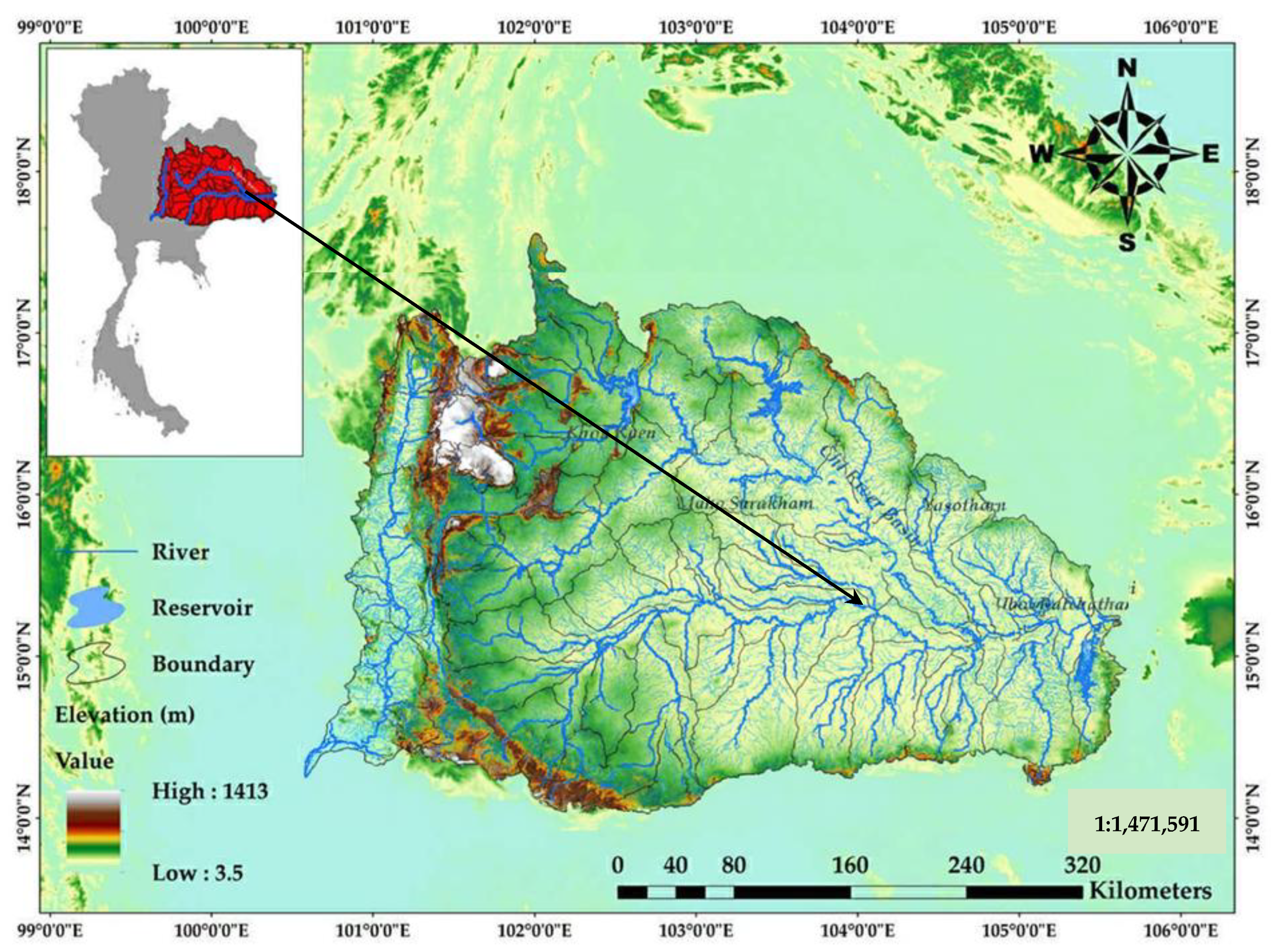
Chlorella pyrenoidosa was selected (16°13′53.9″ N 103°15′55.6″ E) as a representative freshwater microalgal biomass, reflecting its prevalence during harmful algal bloom (HAB) events. The material was collected as waste biomass from freshwater sources in Northeastern Region Thailand (Chi River, Mahasarakham province as shown in Figure 1). The use of Chlorella pyrenoidosa provides a direct connection to environmental remediation efforts, as this species is a frequent contributor to freshwater algal blooms in eutrophic water bodies. Utilizing this specific microalga allows the study to model the valorization of ‘nuisance biomass’ that would otherwise lead to ecological hypoxia and toxin release. By demonstrating that C. pyrenoidosa can be effectively co-processed with plastic waste, another major environmental pollutant, this work offers a dual-benefit strategy for mitigating two of the most pressing environmental challenges simultaneously [20]. This study intentionally used natural bloom biomass rather than laboratory-cultured algae in order to better simulate realistic environmental conditions where microalgae coexist with plastic residues in freshwater ecosystems. Following collection, extraneous algal species were carefully removed by manual separation. The purified Chlorella samples were subsequently subjected to freeze-drying for 24 h to ensure complete moisture removal. The resulting dried biomass was then homogenized into fine powder, hermetically sealed, and stored at 4 °C to preserve physicochemical stability for subsequent experimentation. In parallel, polymeric waste streams comprising PET, PP, and Nylon-6 were sourced from the same freshwater environments in northern Thailand. These materials were processed to a particle size below 350 μm using a high-speed commercial blender to facilitate uniformity in downstream analysis. Ultimate elemental composition (C, H, and O) of both algal and polymeric feedstocks was determined in accordance with ASTM D5291, providing baseline data for subsequent thermochemical assessment. The higher heating value (HHV) of the dried Chlorella biomass was found to be 20.0 MJ kg−1, underscoring its potential as a renewable energy precursor.

2.2. Hydrothermal Liquefaction of Co-HTL of Microalgae and Post-Recycling Plastic Waste

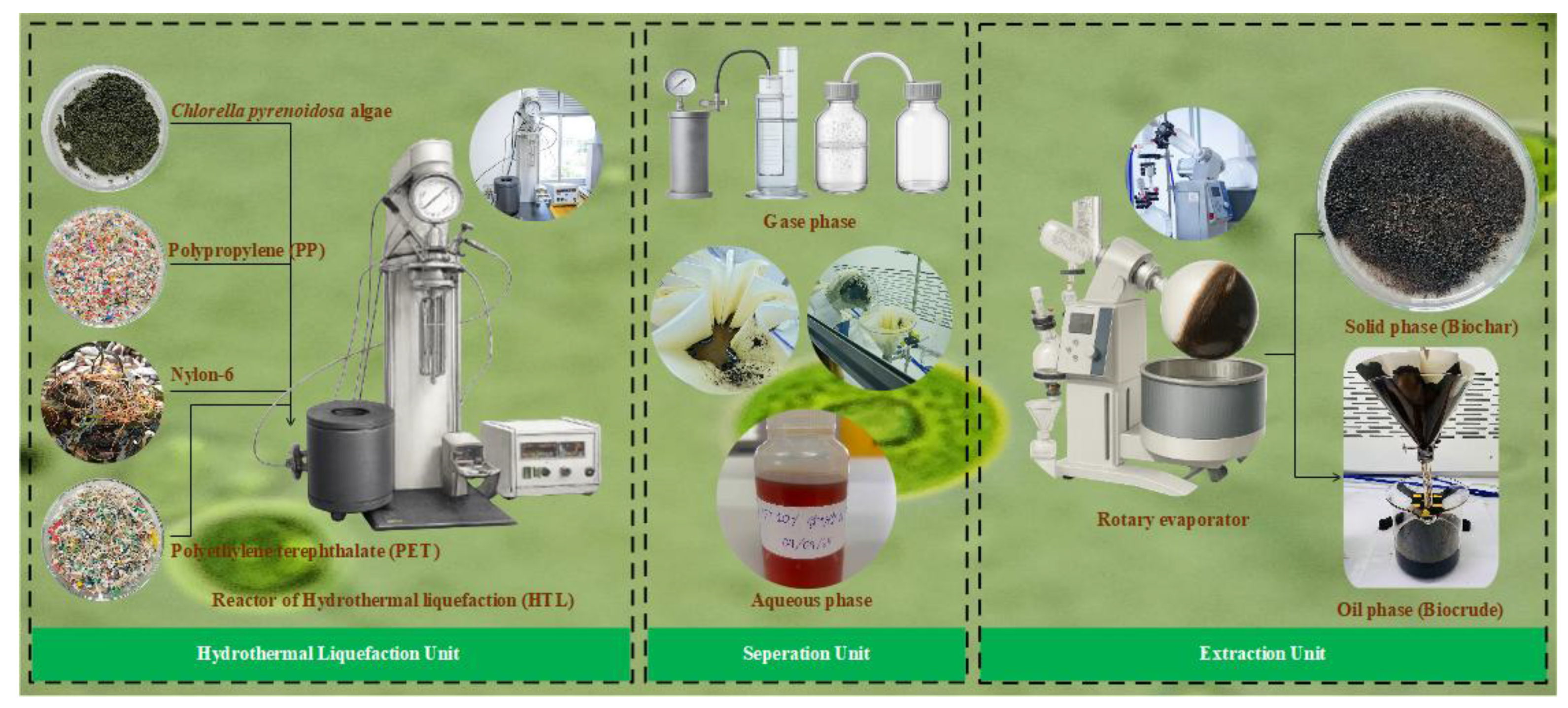
Co-hydrothermal liquefaction (Co-HTL) experiments were carried out to investigate the thermochemical conversion of microalgae in combination with post-recycling plastic waste, as shown in Figure 2. The reactions were conducted in a high-pressure batch system consisting of a 1000 mL stainless steel autoclave equipped with a mechanical stirrer to ensure homogenous mixing of the slurry. The reactor was fitted with a pressure gauge for continuous monitoring of internal pressure, a pressure relief valve for operational safety, and a needle valve that enabled the controlled release of gaseous products generated during the process. Temperature regulation was achieved by a K-type thermocouple connected to a data acquisition system, which provided real-time logging of thermal profiles throughout each run.
For each experimental trial, a feedstock mass of 60 g was introduced into the reactor. To obtain the required 60 g of dry feedstock for the experimental trials, approximately 600–800 g of wet microalgal biomass was initially harvested from the Chi River. The raw environmental samples were concentrated through a primary filtration stage to remove excess surface water. The feed consisted of Chlorella pyrenoidosa microalgae blended with three types of commonly encountered post-recycling plastic wastes, polypropylene (PP), polyethylene terephthalate (PET), and Nylon-6, in predetermined weight ratios. The biomass-to-plastic proportions investigated included pure algal biomass (100:0), and two co-processing mixtures of 90:10 and 80:20 (w/w). This range is critical for understanding the impact of plastic as a hydrogen-donor co-solvent without overwhelming the hydrothermal system with the high-viscosity melts associated with high-plastic loading (>50%). Although higher concentrations were not explored, the selected increments allow for a precise calculation of the synergistic factor in the most industrially relevant mixing zones, where algal biomass remains the primary substrate [28]. The dry feed materials were subsequently dispersed in 300 g of distilled water to prepare a pumpable slurry with sufficient water content to promote hydrothermal reactions.
The loaded reactor was sealed and placed in an electrically heated furnace. To ensure that the chemical transformations observed were purely hydrothermal and non-oxidative, the reactor headspace was purged and pre-pressurized with nitrogen. After purging, an initial of 5 bar was established. The reactor was then heated in a furnace until the temperature reached 350 °C; the vapor of pure water is approximately 165 bar. The temperature profile was carefully programmed; the system was initially ramped at 10 °C min−1 until the final reaction temperature of 350 °C was attained. Upon reaching the target conditions, the reactor was held in the furnace for the desired residence time, after which it was removed and cooled naturally to ambient temperature prior to product recovery. This systematic protocol ensured reproducible reaction conditions for evaluating the synergistic effects of microalgae–post-recycling plastic waste co-processing under hydrothermal liquefaction.

2.3. Products Separation

Following completion of the hydrothermal liquefaction (HTL) reaction and natural cooling of the reactor to ambient temperature, the system was carefully depressurized. The evolved gaseous products were discharged through the needle valve to ensure safe venting. Quantification of the gas yield was performed indirectly by applying the ideal gas law, under the simplifying assumption that the gaseous fraction was composed entirely of carbon dioxide (CO2) with a molar mass of 44 g mol−1 and a molar volume of 22.465 dm3 under standard conditions.
After the gas release, the remaining reactor slurry was subjected to phase separation. The aqueous fraction was first decanted and passed through filter paper to remove water-insoluble residues. The retained solid–liquid residue on the filter paper was subsequently washed several times with chloroform until the eluent became colorless, thereby ensuring complete recovery of organic soluble compounds. The combined chloroform extracts were concentrated using a rotary evaporator operated at 40 °C for approximately 2 h, yielding the oil fraction (biocrude).
The solid fraction retained on the filter paper was dried in a laboratory oven at 60 °C overnight to obtain a stable weight, representing the solid-phase residue (biochar). Meanwhile, a measured aliquot of the aqueous fraction was dried separately at 50 °C for 12 h to quantify the residual non-volatile organics and inorganics, collectively defined as the aqueous phase residue. This systematic post-reaction separation protocol enabled a mass-balance determination of product distribution across the gas, oil, solid, and aqueous phases.

2.4. Yield of Product

The product yields from hydrothermal liquefaction were quantified on an ash-free dry weight basis to ensure comparability across experimental conditions. The oil fraction (biocrude) was recovered following rotary evaporation of the chloroform extracts, and its mass was determined gravimetrically after complete removal of the residual solvent. The yield of biocrude was then expressed as a percentage of the initial ash-free feedstock mass, calculated according to the following equation:
Yield biocrude =   mass   biocrude   ( g ) mass   dry   biomass ( g )   +   mass   plastic ( g ) × 100
The solid (biochar) yield is determined by measuring the mass of biochar collected on filter paper after drying it in an oven at 60 °C. The solid yield is calculated using the following equation:
Yield solid =   mass   solid   phase   ( g ) mass   dry   biomass ( g )   +   mass   plastic ( g ) × 100
After cooling, gaseous products were vented through the needle valve for collection and a water-filled measuring cylinder was used to accurately measure the volume of gaseous fraction. Gas-phase yields were calculated using the ideal gas law, approximating the gas phase as 100% CO2, assuming an approximate molecular weight of 44 g mol−1 and a volume of 22.465 dm3 mol−1 gas phase at standard temperature and pressure. Previous HTL studies on similar feedstocks have shown that CO2 typically constitutes over 85–90% of the gaseous products [29,30]. Consequently, treating the gas phase as CO2 provides a conservative baseline for the energy density of the system, as the inclusion of combustible gases would marginally increase the total energy recovery (ER) without significantly altering the comparative trends between the 100:0 and 80:20 ratios. The yield of gaseous product was determined using the following equation [31].
Yield gas = ( gas   volume   ×   1.789   ×   10 3 ) mass   dry   biomass ( g ) + mass   plastic ( g ) × 100
The solid yield in the aqueous phase was determined by drying a 2.0 g sample at 60 °C, using the following equation to calculate the yield of the residue:
Yield aqueous   residue = mass   of   aqueous   residue   ( g ) mass   dry   biomass ( g )   +   mass   plastic ( g ) × 100
The overall mass balance of the reaction was calculated as follows:
mass   balance ( % )   =   solid ( % ) + bio crude ( % ) + aqueous   residue ( % ) + gas ( % )

2.5. Characterization of HTL Products

2.5.1. Characterization by FTIR Spectroscopy

The solid-phase products (biochar) obtained from hydrothermal liquefaction were subjected to further processing prior to characterization. Each biochar sample was finely ground using a planetary ball mill to ensure particle homogeneity and enhance the accuracy of subsequent spectroscopic measurements. Structural and surface chemical features were analyzed using Fourier Transform Infrared (FTIR) spectroscopy (Bruker, INVENIOR, Billerica, MA, USA). Spectra were acquired with a Thermo Scientific Nicolet iS5 FTIR spectrometer, covering a spectral range of 4000–500 cm−1. The analysis was performed in diffuse reflectance mode, where the absorption of infrared radiation at characteristic frequencies was recorded. The resulting spectra provided information on the major functional groups present on the biochar surface, including those associated with oxygenated, aliphatic, and aromatic moieties, thereby enabling insight into the chemical transformations induced by hydrothermal processing. The liquid phase (biocrude) was also determined in the same manner, with FTIR spectroscopy employed to identify the predominant functional groups within the biocrude and aqueous fractions, thereby elucidating the molecular signatures and transformation pathways of the liquid products.

2.5.2. Elemental Analysis and Carbon/Energy Recovery

The elemental composition of the product phases was determined to evaluate chemical redistribution and energy recovery efficiency. Quantitative analysis of carbon (C), hydrogen (H), and nitrogen (N) contents was conducted externally at Suranaree University of Technology (Thailand) using a Carlo Erba Flash 2000 elemental analyzer (Thermo Fisher Scientific, Waltham, MA, USA). Oxygen (O) content was estimated by difference, assuming negligible sulfur content in all product fractions. These elemental data were subsequently used to calculate the higher heating values (HHVs), mass balances, and carbon/energy recoveries across the oil, aqueous, and solid phases. This provided a systematic assessment of the energy densification effect of co-hydrothermal liquefaction relative to the original feedstock composition.
O   ( wt . % ) = 100 C H N   ( wt . % )
The higher heating values (HHV) of biomass, biochar and biocrude were calculated using the Dulong formula, where C, H, and N represent the weight percentages of each element:
HHV   ( MJ   k g 1 )   =   0.3383 C + 1.422 ( H     ( O 8 ) )
The chemical energy recovery (ER) in each product phase was calculated using the following equation:
E R = HHV   product ( % )   ×   Mass   of   product   ( % ) HHV   of   feedstock   ( % ) × 100

3. Results and Discussions

3.1. Characteristics of Materials Used for Co-Hydrothermal Liquefaction Process

Table 1 presents the primary raw materials employed in the co-hydrothermal liquefaction process, along with the distribution of the four principal product phases generated, namely gas, biocrude, aqueous phase, and solid residue (biochar). Subfigures (a) and (b) represent the microalgae Chlorella pyrenoidosa, a freshwater species rich in lipids and proteins, commonly proliferating during algal bloom events in Thailand’s aquatic ecosystems. The dried biomass (a) and microscopic morphology (b) reflect the biological integrity of the feedstock, which influences cell wall rupture, lipid release, and subsequent oil conversion under HTL conditions. Subfigures (c), (d), and (e) portray the three selected post-recycling plastic waste types of PP, PET, and Nylon-6 that coexist in freshwater bodies due to the widespread mismanagement of plastic waste. These polymers differ in their thermal stability and decomposition behavior, thus affecting the HTL outcomes. PET and Nylon-6 were found to undergo significant depolymerization during Co-HTL, contributing to increased biocrude yields through synergistic interactions with algal biomass. In contrast, PP demonstrated partial resistance to degradation under subcritical water conditions, leading to a greater proportion of solid residue but simultaneously enriching the resulting biochar with higher carbon content and heating value. These material interactions are further manifested in subfigures (f) through (i), which depict the four primary product streams generated from HTL: gaseous phase, biocrude oil, aqueous phase, and biochar. The gas phase (f), primarily composed of CO2, is a minor product yet essential for evaluating the carbon balance of the system. The biocrude (g), extracted via chloroform and concentrated through rotary evaporation, is the principal energy product; its yield and quality improved notably with the addition of PET and Nylon-6 due to enhanced hydrogen donation and thermal cracking. The aqueous phase (h) retained water-soluble organics, monomeric residues (e.g., ε-caprolactam from Nylon-6), and minor inorganics, with its yield declining as plastic content increased, indicating a shift in mass distribution favoring oil and char formation. The final solid product, biochar (i), exhibited varying elemental compositions and structural functionalities depending on the co-fed plastic type. FTIR and Van Krevelen analyses confirmed increased aromaticity and carbonization in char derived from PP blends, while Nylon-6-based biochar showed a relatively lower HHV, suggesting higher degrees of decomposition. Overall, Figure 3 not only encapsulates the operational pathway and product diversity of the HTL process but also underscores the critical role of feedstock composition and polymer–microalgae interaction in dictating product yields, composition, and energy recovery potential. The integration of post-recycling plastic waste and algal biomass through HTL thus offers a sustainable and technologically feasible route for waste valorization, addressing dual environmental challenges, plastic pollution and renewable fuel generation in a single thermochemical platform.

3.2. Effect of Post-Recycling Plastic Waste Content on HTL Product Yields

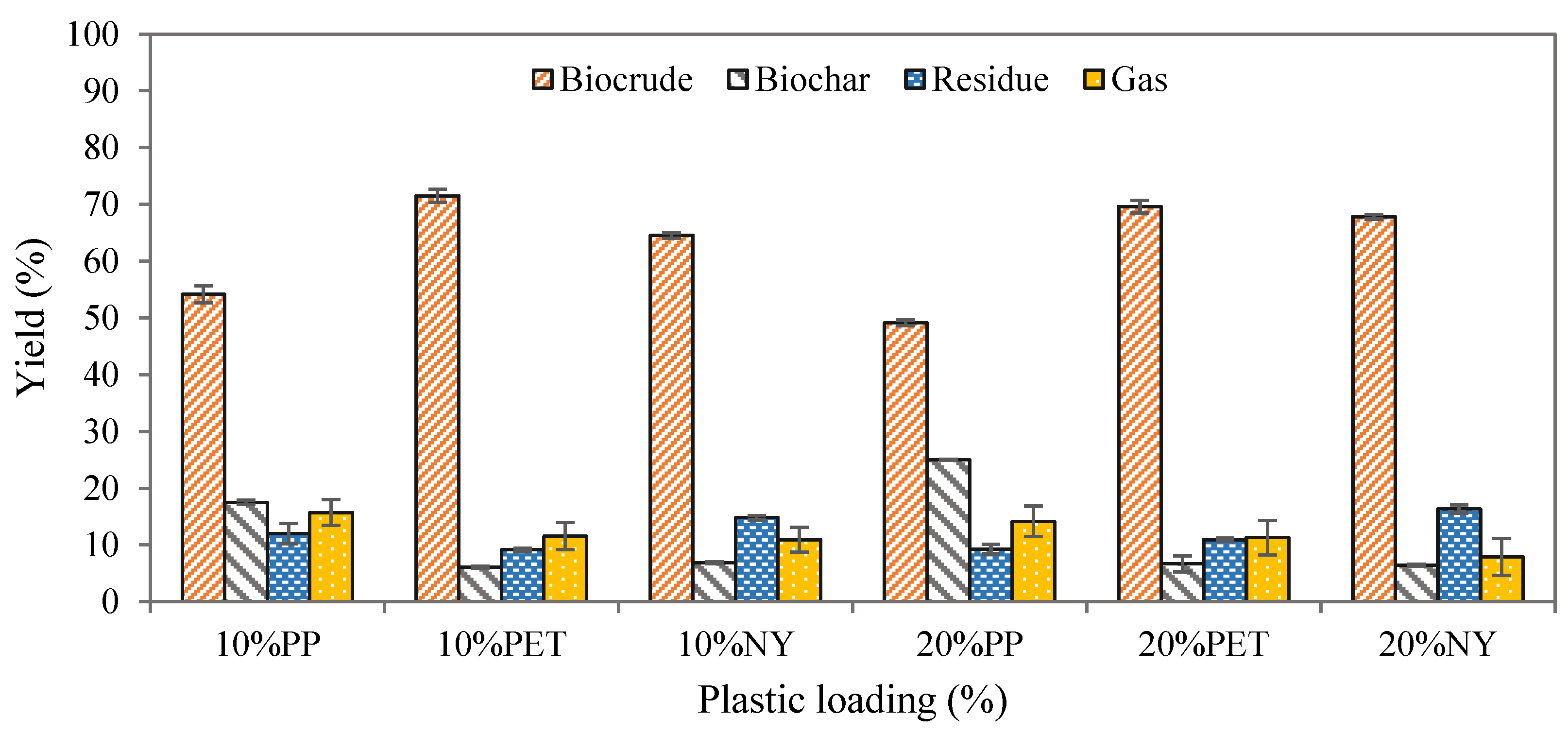
The influence of adding post-recycling plastic waste to the HTL feedstock on the distribution of the resulting product was examined. The HTL process was conducted in 1000 mL batch reactor at temperature of 350 °C for 30 m. The mass balances of product yields from Co-HTL of microalgae and post-recycling plastic waste were presented on both a dry weight (dw) and ash-free dry weight (afdw) basis, as shown in Figure 3.
Under the HTL conditions, biocrude was the main product of fraction. The sequential use of subcritical water extraction is an efficient method for extracting both protein and carbohydrate from microalgae, which significantly reduces the production of biochar [32]. The biocrude oil produced from biomass alone gave the biocrude up to 62.4%. The modest increase in biocrude oil was observed for Co-HTL with PET, with a substantial increase in biocrude production from 62.4% to 71.5% at 10 wt.% PET blends. However, a slight decrease was observed in biocrude production for 20% wt. PET blend relative to the HTL of fresh microalgae alone. In addition, the addition of PET slightly increased the biochar yield. Biochar product yields for both the 10 wt.% and 20 wt.% blend decreased compared to those obtained from pure biomass, resulting in yields of 1.9% and 6.1% for 10 wt.% PET loading and up to 6.7% for the 20 wt.% PET loading. Furthermore, the recovery of aqueous residue products decreased significantly, from 25.7% for pre biomass to 9.1% for 10% wt. PET blend. Increasing PET blend levels also caused a slight decrease in the yield of gas-phase products.
A similar pattern was observed in the Co-HTL of Nylon-6. The yield of biocrude slightly increased with the addition of Nylon-6, with biocrude increasing from 62.4% to 64.5% at 10 wt.% Nylon-6 blends, and from 62.4% to 67.8% at 20 wt. Nylon-6% blend. The yield of biochar obtained from Nylon-6 Co-HTL showed a slight increase compared to pure microalgae alone, increasing from 2.0% to 6.9% at 10 wt.% blend, and decreasing slightly from 2.0% to 6.5% at wt.20% blend. Gas phase yields also declined steadily. Meanwhile, the aqueous residue product recovery decreased slightly at 14.8% and 16.4% for a 10% wt. and 20% wt. Nylon-6 loading, respectively.
The major component of PP was recovered in the biochar products. The char yield increased as the biocrude oil decreased. Particularly, for 10 wt.% PP blends, 17.5% biochar was produced, which increased to 25% for the 20 wt.% PP blends. Aqueous phase residue yields obtained from the addition of PP blend showed a substantial decrease compared to biomass residue alone. The residue yield decreased from 25.7% to 12.0% for 10% wt. PP blended and further decreased to 9.3% for 20% wt. PP blending loading. The gas-phase product yields obtained from both the 10 wt.% and 20 wt.% PP blends increased to those obtained for HTL of pure algae.
The addition of plastics provides a significant benefit to an important key feature of a fuel product. Biocrude oil yields obtained from Co-HTL at 10 wt.% and 20 wt.% plastic blends were increased to those produced from microalgae alone for PET and Nylon-6, while the yields depleted significantly for PP. This phenomenon is known as the synergistic effect of Co-HTL. While PET on its own produces almost no biocrude, adding it to algae creates a chemical “teamwork” that significantly boosts the total oil yield beyond what algae could produce alone. The increase in biocrude during Co-HTL of PET and algae is driven by three main mechanisms:
1.
The “Hydrogen Donor” Effect: Algae are rich in proteins and carbohydrates but relatively hydrogen-poor. Plastics like PET (when they begin to decompose) can act as hydrogen donors.
  • During the reaction, PET monomers (like ethylene glycol) release hydrogen-rich fragments.
  • These fragments stabilize the “free radicals” produced from the breaking down of algae.
  • Without these stabilizers, the algae fragments would recombine into solid char; with them, they stay as liquid oil (biocrude).
2.
Interaction between monomers and algal components in the subcritical water environment: The hydrolysis of PET releases Terephthalic Acid (TPA) and Ethylene Glycol (EG).
  • Acidity: TPA creates a slightly acidic environment that acts as an in situ catalyst, speeding up the breakdown of algae’s sturdy cell walls and proteins.
  • Solubility: The presence of EG and other plastic-derived intermediates acts like a co-solvent, helping to dissolve algal lipids and proteins that would otherwise stay in the water phase, pulling them into the oil phase instead.
3.
Reduction in solid residue: Studies consistently show that the total solid residue from a PET–Algae mixture is lower than the sum of their individual residues.
  • The algal components “help” the PET monomers stay liquid or move into the oil phase, while the PET intermediates prevent the algae from turning into char.
  • This cross-interaction maximizes carbon recovery essentially making sure the carbon atoms from both sources end up in biocrude rather than the wastewater or the solid char.

3.3. Synergistic Effect

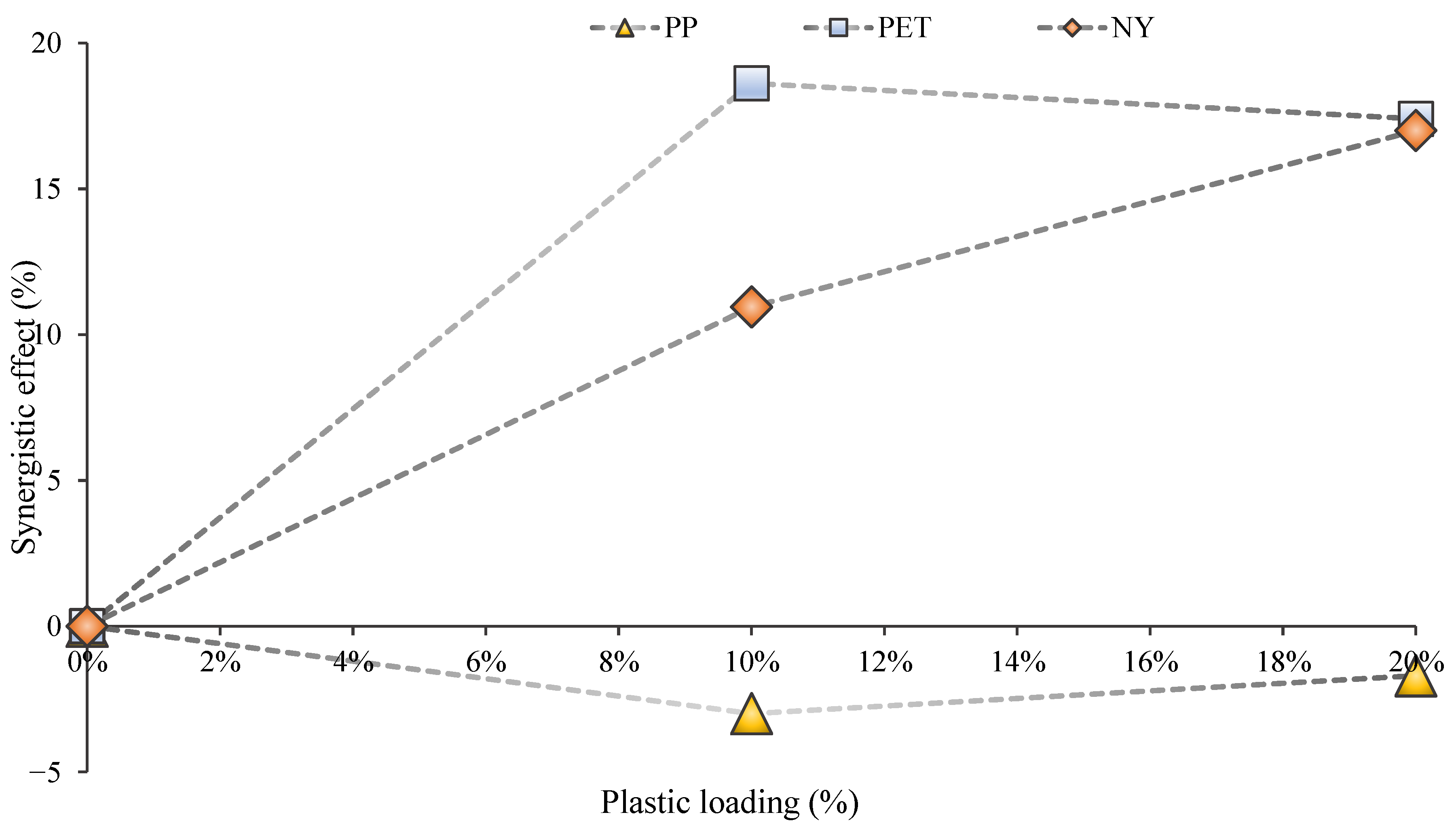
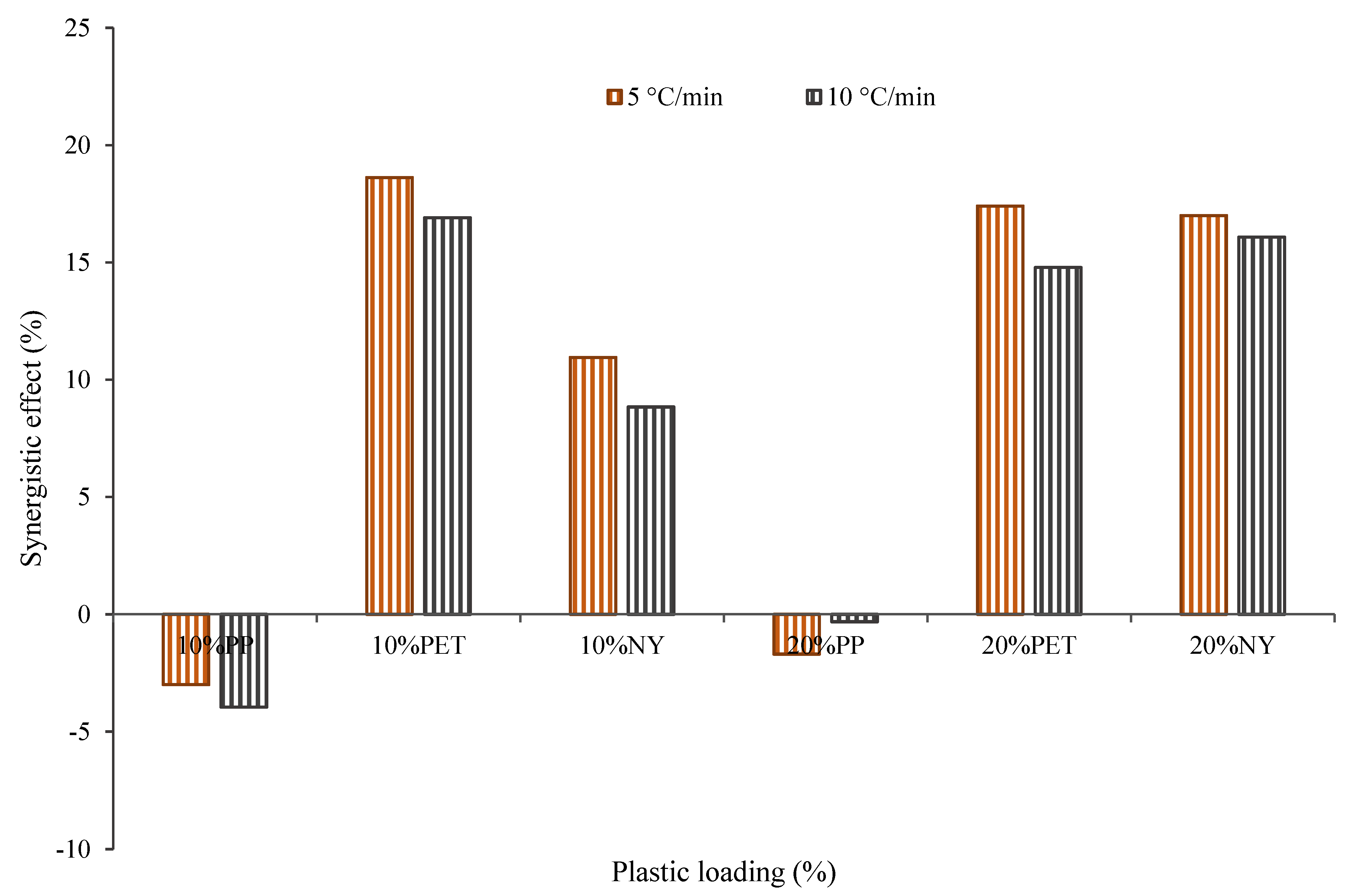
The synergistic effects (Figure 4) of Co-HTL of microalgae with PET were found to be relatively modest. This suggests that the presence of microalgae can enhance the thermal decomposition process, leading to a greater breakdown of plastic under HTL conditions. Transition metals, such as manganese, can be activated at elevated temperatures and act as pro-oxidants for polyethylene, generating radicals along the polymer chain that may undergo oxidation or chain scission [33]. Furthermore, the ash in macroalgal biomass can potentially provide metals that serve as pro-oxidants for post-recycling plastic wastes. Typical ash profiles for this species are dominated by alkali and alkaline earth metals such as Potassium and Calcium, which are known to promote in situ catalytic cracking and the water–gas shift reaction during hydrothermal processing [34]. These endogenous minerals facilitate the synergistic breakdown of the plastic fraction by lowering the activation energy for the cleavage of C-C bonds, even in the absence of added commercial catalysts [35]. The qualitative observation of these effects in our results is consistent with the presence of these naturally occurring catalytic species. However, it has also been suggested that the presence of organic biomass fragments and radicals can promote polymer chain scission. Additionally, hydrogen transfer from polyolefin chains can stabilize the radicals generated by biomass thermal degradation, thus preventing their re-condensation into solid char and resulting in higher oil yields. These effects may depend on temperature, and beyond a certain threshold, synergistic effects may decrease [36]. The mineral matter (ash) inherent in Chlorella pyrenoidosa, specifically alkali metals like Potassium and Calcium, acts as a natural homogeneous catalyst that promotes decarboxylation and deoxygenation. Furthermore, the early-stage decomposition of the microalgae produces organic acids and reactive radicals that provide an autocatalytic environment, facilitating the breakdown of the PET, PP, and Nylon-6 polymers at subcritical temperatures [34,37].

3.4. Effect of Heating Rate

The previous investigation showed that higher heating rates significantly impact biocrude production. However, longer reaction times and slower heating rates might improve the conversion of unreactive post-recycling plastic waste under hydrothermal liquefaction conditions. Therefore, the Co-HTL of pure biomass and post-recycling plastic wastes was studied with plastic loadings of 10% and 20% at heating rates of 5 °C per minute and 10 °C per minute as shown in Figure 5. The results indicate that a higher heating rate positively impacts the yields of biocrude oil. At a higher heating rate of 10 °C per minute, the system can bypass this char-forming region rapidly. This favors high-activation energy reactions, such as the homolytic cleavage of post-recycling plastic waste polymer chains and the direct fragmentation of algal lipids into fatty acids [38]. Although lipids breakdown into fatty acids as previously noted [39], the higher heating rate prevents these species from undergoing excessive hydrocracking into non-condensable gases. By minimizing the time available for secondary decomposition, the high heating rate “traps” the decomposed organic matter in the liquid biocrude phase, maximizing yield. This suggests that the production of biocrude is kinetically controlled, where the rate of liquid-phase stabilization must exceed the rates of both solid-phase polymerization and gas-phase over-cracking [40].

3.5. Chemical Composition of Biocrude Obtained

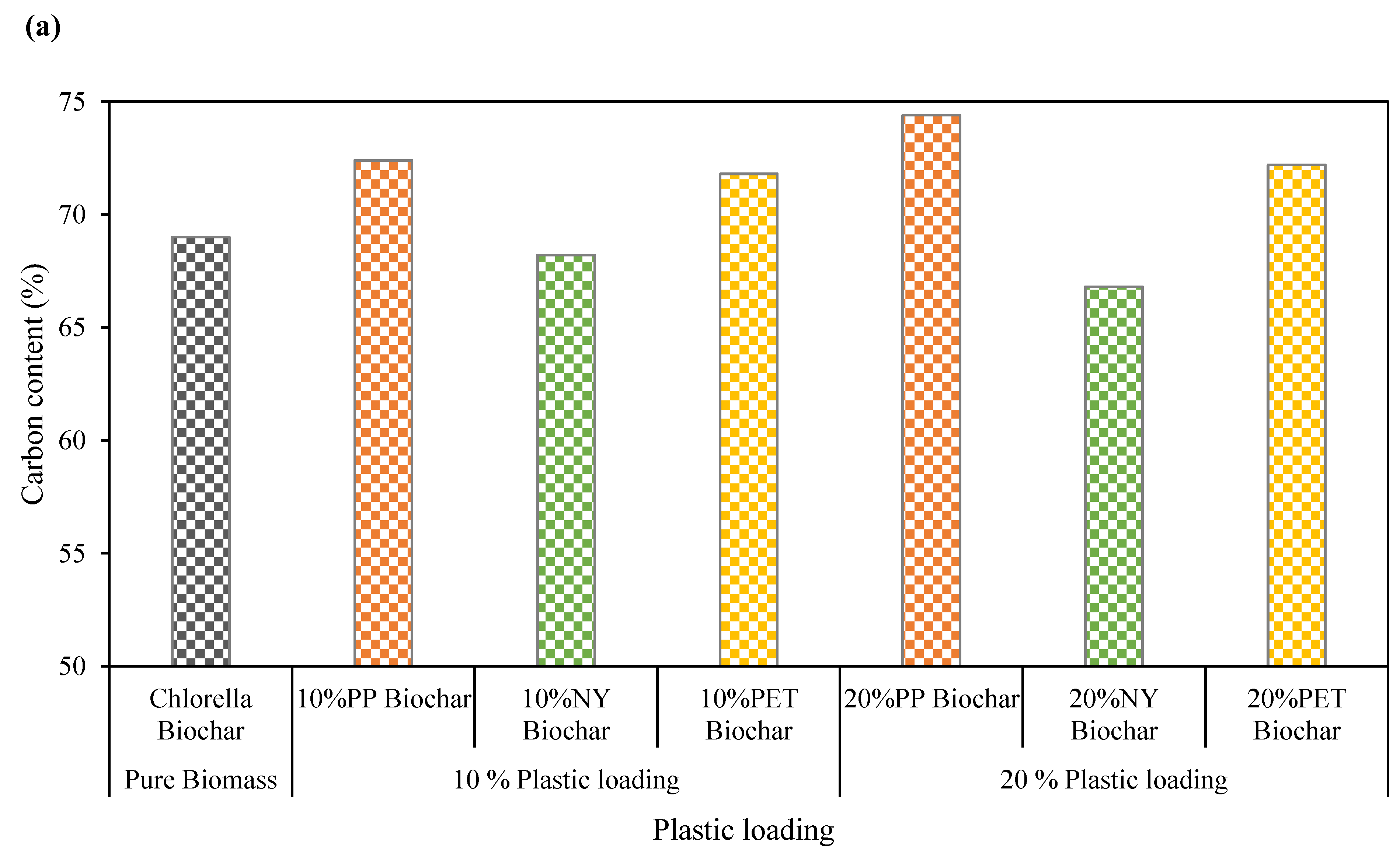
The elemental composition of biocrude produced (Figure 6) from different post-recycling plastic waste blends is illustrated in the figure. Co-HTL of microalgae with an increasing proportion of PP resulted in a slight increase in both carbon and hydrogen content. Specifically, the carbon content increased from 69 wt.% for pure microalgae to 72.2 wt.% for a 10% PP blend, and then to a more substantial 74.4 wt.% for a 20% PP blend. Correspondingly, a decrease in the nitrogen content of the biocrude was observed. This trend also reflected an improvement in the heating value, leading to better overall properties of the biocrude. Under hydrothermal liquefaction conditions, hydrogen (H2) can be extracted from water and incorporated into the liquid biofuel products. Since plastics possess a higher hydrogen-to-carbon (H/C) ratio compared to biomass, they can easily donate hydrogen to biomass radicals [36]. This potential for hydrogen donation may contribute to an increase in the hydrogen content of the liquid biofuel products.
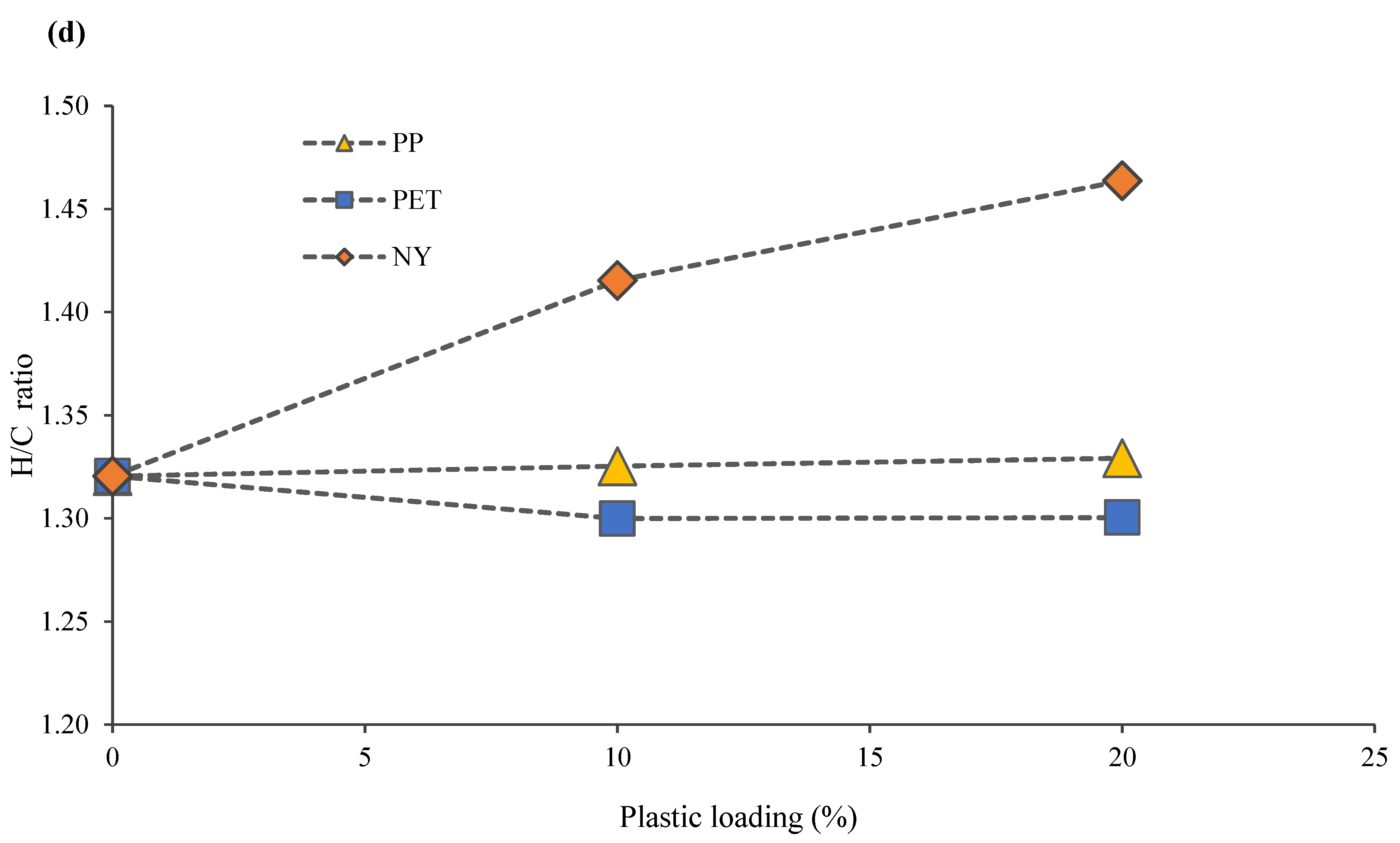
The Co-HTL of PET had a noticeable impact on the elemental composition of the resulting biocrude, as indicated by the findings from the study. In contrast, when Nylon-6 was co-liquefied with microalgae, there was a significant reduction in total carbon content. Specifically, the carbon content decreased from 69.0 wt.% for pure microalgae to 68.2 wt.% for a blend containing 10% Nylon-6, and it further declined to 66.8 wt.% with a 20% Nylon-6 blend. The biocrude produced through this Co-HTL process exhibited a high hydrogen-to-carbon (H/C) ratio, making it well-suited for use in engines. The H/C ratio is crucial for converting biomass into hydrocarbons, and the incorporation of post-recycling plastic waste primarily serves to enhance this ratio. Since microalgae biomass lacks sufficient hydrogen, the Co-HTL with post-recycling plastic waste, which acts as a hydrogen donor, maximizes the yield of aromatic hydrocarbons. Furthermore, Co-HTL not only improves the H/C ratio but also reduces the oxygen-to-carbon (O/C) ratio in the fuel derived from microalgae biomass. Co-HTL is not just a simple mixing of the feedstocks; it changes the whole kinetics, reaction mechanism, operating condition, and hence, improving the properties of HTL product.
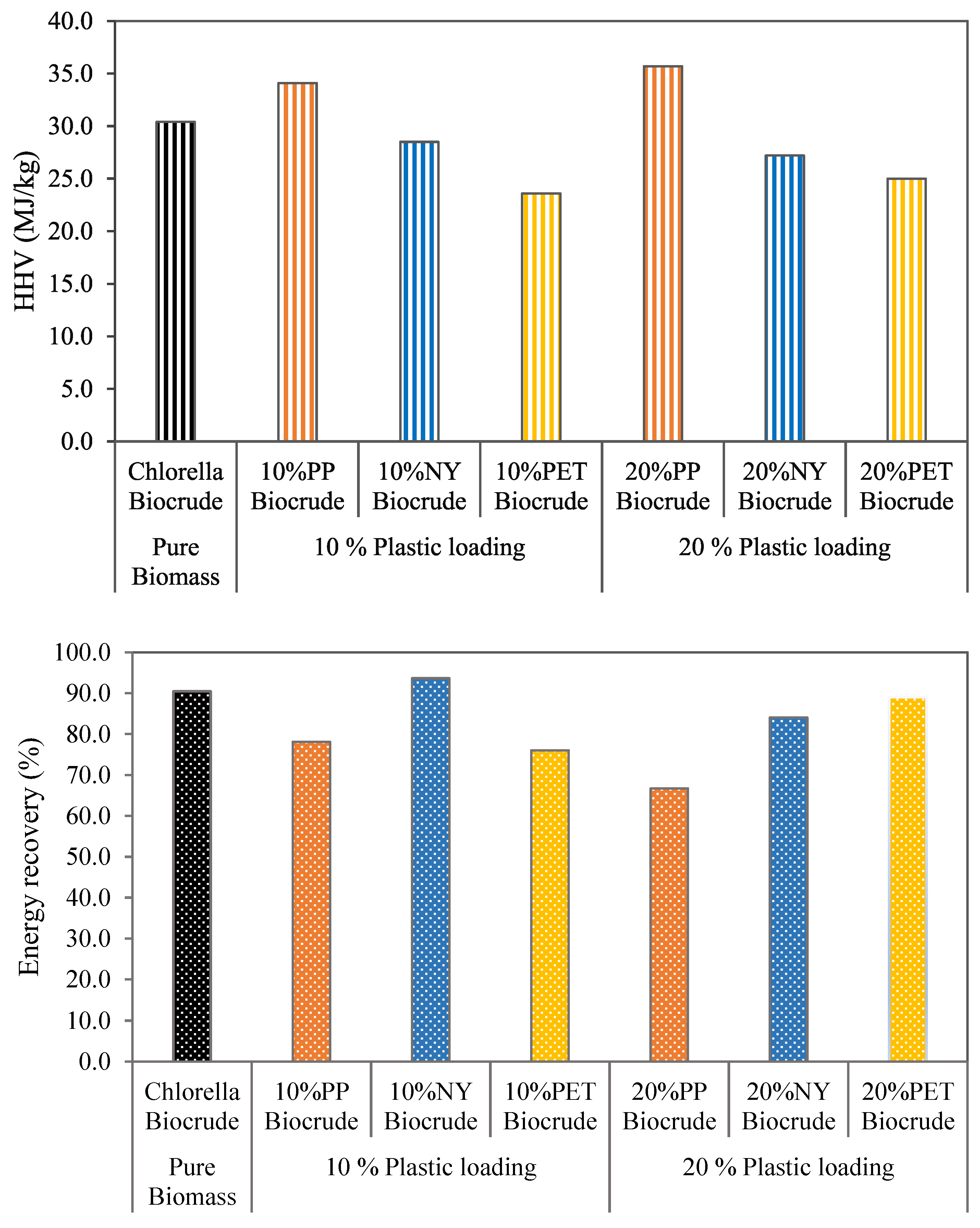
Plastic Co-HTL led to an increase in the overall heating value (Figure 7) of biocrude products compared to the hydrothermal liquefaction of biomass alone. An initial increase in heating value was observed, rising from 30.4 MJ kg−1 to 34.1 MJ kg−1 with a 10% weight blend of PP. A more significant increase was noted with a 20% PP loading, elevating the heating value to 35.7 MJ kg−1. These findings indicate an enhancement in the fuel properties of biocrude. A similar increase in the heating value of biocrude products was also observed with the addition of PET.
The energy recovery was calculated based on the biocrude yield, elemental composition, and heating value obtained. As shown in Figure 7, the highest overall energy recovery was observed for a 10 wt.% blend of Nylon6, achieving 93.6%. This represented an improvement in energy recovery compared to the HTL of pure microalgae, which had an energy recovery of 90.5%. In contrast, a 20 wt.% blend of PP resulted in the lowest energy conversion at 66.7%. This lower energy recovery can be attributed to the reduced productivity of biocrude oil during the Co-HTL of microalgae with PP.
Scope and limitations of chemical characterization—The chemical composition of HTL-derived biocrude is inherently complex, comprising a wide spectrum of oxygenated, nitrogen-containing, and oligomeric compounds with limited volatility. In the present study, the quality and compositional evolution of biocrude were therefore evaluated using a combination of elemental analysis, HHV, Van Krevelen plots, and FTIR spectroscopy, which are widely accepted indicators for assessing fuel upgrading, hydrogen enrichment, deoxygenation, and aromaticity in hydrothermal liquefaction systems. While gas chromatography–mass spectrometry (GC–MS) can provide detailed identification of light volatile compounds, its applicability to HTL biocrude is often restricted to the low-boiling fraction and may not fully represent the bulk oil composition, which is dominated by heavier and polar species.
Similarly, molecular weight distribution analysis by gel permeation chromatography (GPC) and high-resolution morphological analysis of biochar by SEM or TEM require extensive fractionation, derivatization, or sample preparation to yield representative and reliable results, particularly for heteroatom-rich HTL products. As the primary objective of this work was to elucidate synergistic effects, energy densification, and fuel-quality enhancement during co-hydrothermal liquefaction of freshwater microalgae and post-recycling plastic wastes, these advanced techniques were considered beyond the scope of the present study.
Nevertheless, the combined elemental composition, H/C and O/C atomic ratios, HHV improvement, and FTIR functional group analysis provide strong and internally consistent evidence of hydrogen transfer, deoxygenation, radical stabilization, and polymer–biomass interactions governing biocrude formation. Monomer formation was specifically addressed where mechanistically relevant, as demonstrated by the identification of ε-caprolactam in the aqueous phase during Nylon-6 co-HTL. Future work will focus on comprehensive GC–MS and GPC analyses to further resolve molecular-level composition and support upgrading and refining strategies for HTL biocrude.

3.6. FTIR-Based Identification of Functional Groups in Biocrude

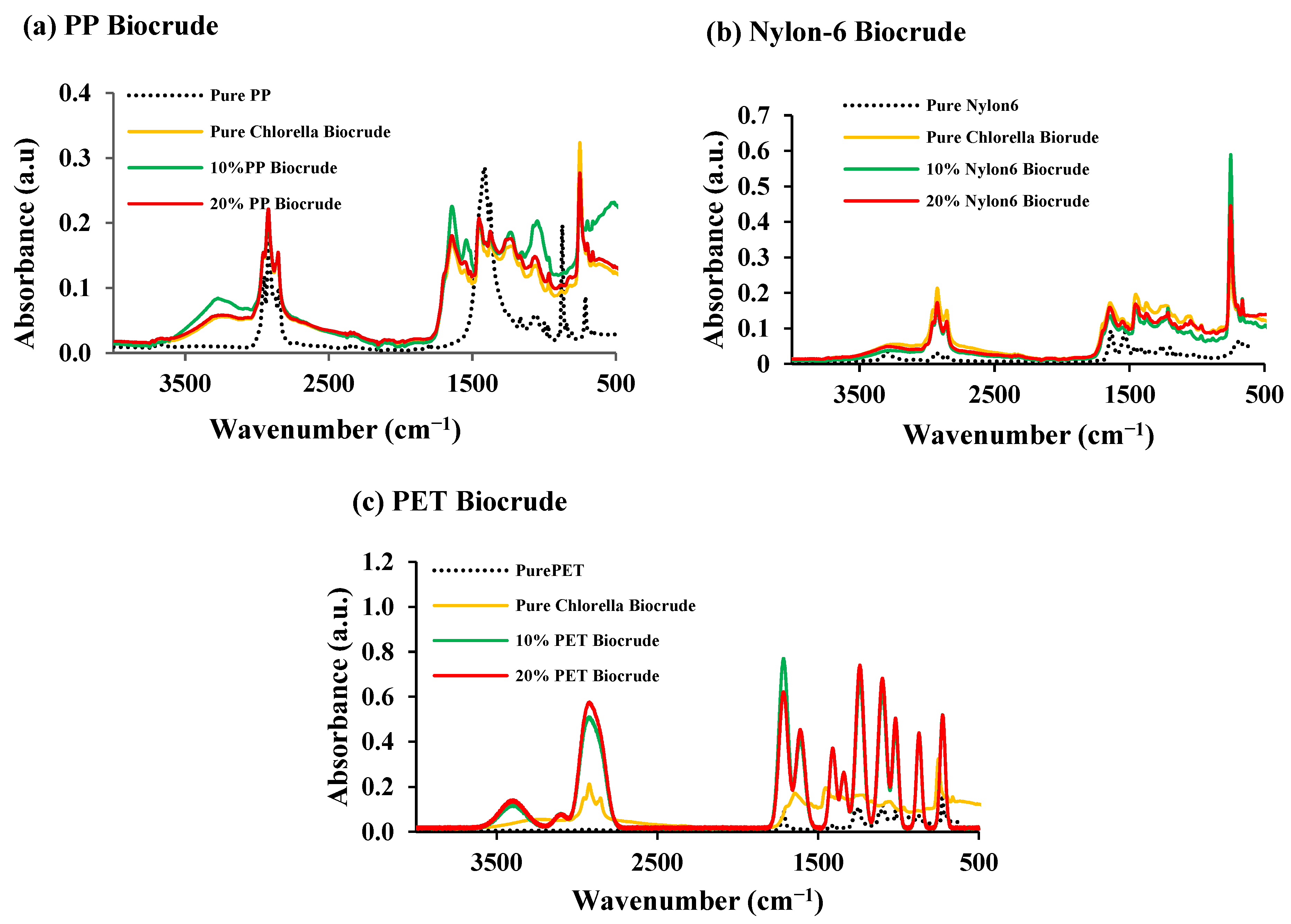
The analysis of biocrude using FTIR spectroscopy identified the functional groups present in the samples. FTIR is effectively used as a tool for classifying the compounds found in biocrude [25]. Figure 8 displays the FTIR spectra for biocrudes derived from a co-feedstock of microalgae and post-recycling plastic wastes through the HTL process. The biocrude produced solely from microalgae exhibited similar spectral bands to those obtained from Co-HTL with PP blends, with intense peaks observed at 750 cm−1, 1050 cm−1, 1240 cm−1, and 1456 cm−1. These peaks indicate a higher concentration of aromatic compounds, alcohols, and alkanes in the biocrude. Additionally, strong bands were present in the range of 2875–3000 cm−1, reflecting C-H stretching vibrations in methyl and methylene groups. This suggests that cellulose molecules are decomposed into saturated hydrocarbons and acids. Furthermore, the absence of absorbance in the wavelength range of 3500–3200 cm−1 in the FTIR spectrum indicates a predominance of phenolic compounds, along with contributions from organic acids formed through the decomposition of lipids.
Co-HTL of microalgae with PP at a 10% blend level resulted in notable changes in the spectral peaks. Specifically, higher peaks were observed in the range of 1110–1270 cm−1 compared to the biocrude derived from microalgae alone. These peaks are associated with C-O bond stretching of alcohol, indicating the presence of PP may influence the degradation of algal carbohydrates, potentially stabilizing oxygenated intermediates before they can fully deoxygenate to alkanes. Moreover, the peak at 1537–1634 cm−1 was more pronounced than that from the biocrude obtained from pure microalgae. These peaks correspond to C=O stretching vibrations, suggesting the presence of hydroxy unsaturated ketones and aldehydes [41]. These observations indicate that an increase in carbonyl group density is a key marker for fuel quality; while it reflects an enhancement in molecular complexity due to algae–plastic interactions, it also suggests that the resulting biocrude retains a degree of oxygenation that could impact long-term storage stability and acidity.
The addition of Nylon-6 to the microalgae feedstock significantly influenced the nitrogenous profile of the resulting biocrude. While the overall spectral profile resembled pure microalgae biocrude, specific markers at 1630 cm−1 (C=O stretch) and 3300 cm−1 (N-H stretch) became prominent. These peaks indicate the successful incorporation of amide groups from the Nylon-6 polymer chain into the liquid phase. This amide signal represents a stable nitrogen–carbon bond that resists simple thermal deoxygenation. The persistence of these groups, alongside the increased absorbance at 750 cm−1 (indicative of aromatic C-H bending), suggests that Nylon-6 degradation contributes to the formation of stable, nitrogen-containing aromatic structures. While Nylon-6 contributes to biocrude yield, the resulting oil is richer in aromaticity but contains elevated nitrogen levels. This suggests that Co-HTL with polyamides would require more intensive post-treatment to prevent NOx emissions during combustion and ensure fuel stability.
The FTIR analysis of Co-HTL of microalgae with PET indicates that the spectra obtained resembles those from pure PET. The strong resemblance to pure PET spectra suggests that the polyester chains underwent depolymerization via hydrolysis, resulting in the incorporation of terephthalate-derived aromatic and ester groups into the oil phase. However, a sharp peak at 3380 cm−1 is also present, which is not observed for pure PET, attributable to C-H bonds in polysaccharides, serving as the primary active constituent of green algae. The intense ester carbonyl peak of PET-blended biocrude implies that the biocrude remains highly oxygenated. This is dissimilar to PP, which delivers a purely aliphatic boost, and PET incorporation leads to a biocrude with higher polarity and potentially lower storage stability.
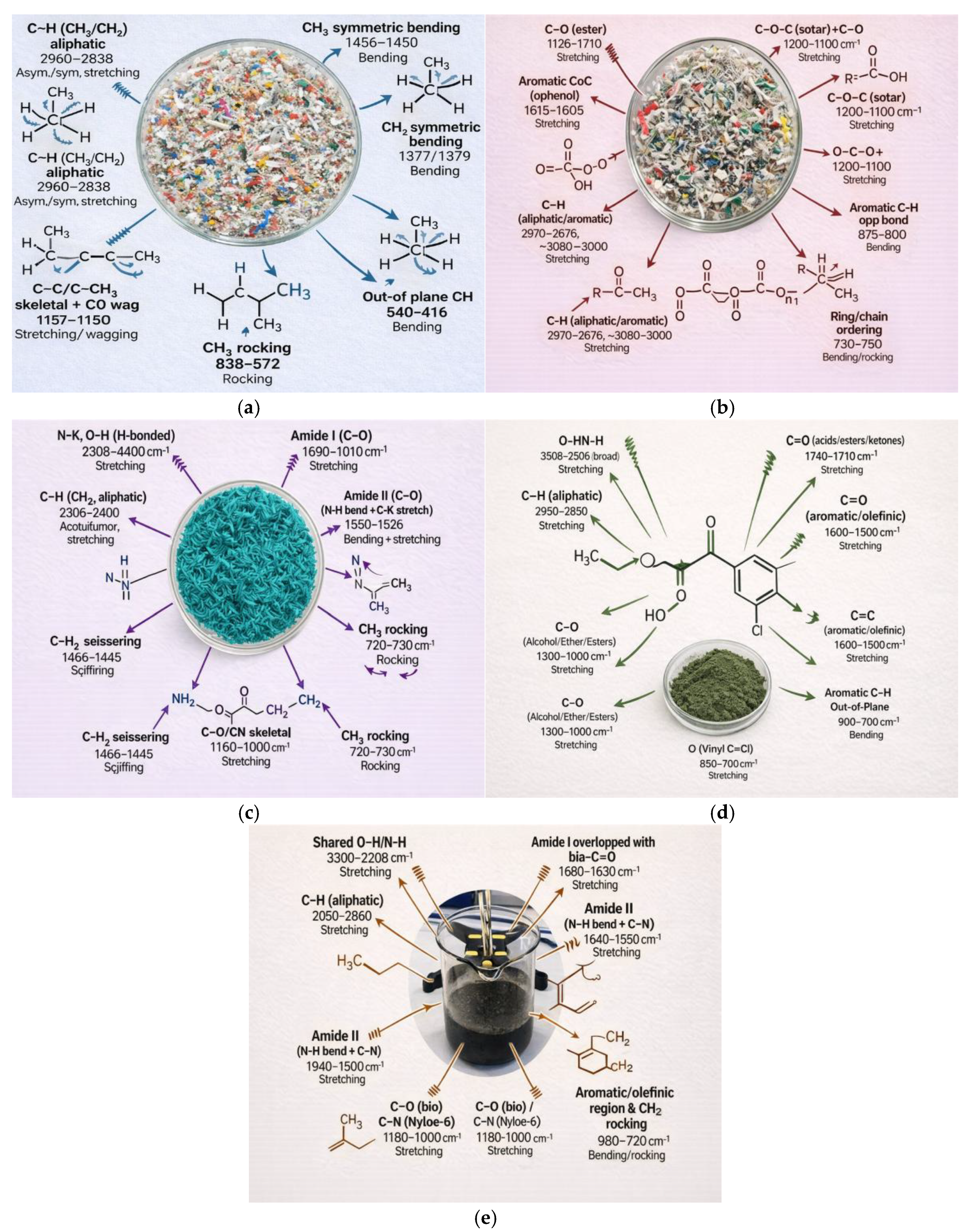
The FTIR analysis (Table 2 and Figure 9) reveals distinct yet complementary functionalities across Nylon-6, Chlorella biocrude, PP, and PET, as well as their blends. Nylon-6 is characterized by strong amide I and II bands (1650–1540 cm−1) and N-H stretching (3300–3450 cm−1), which highlight its capacity for hydrogen bonding and interfacial adhesion, while CH2 rocking at 720 cm−1 indicates crystallinity control. Biocrude exhibits broad O–H/N–H stretches (3500–3200 cm−1), carbonyl bands (1740–1710 cm−1), and C=C/C–O vibrations that confirm the presence of oxygenated aromatics and aliphatic compounds; these groups provide reactive sites for transesterification, hydrogenation, or adsorption applications. In blends (10–20% Nylon-6 biocrude), overlapping amide and carbonyl bands indicate intermolecular hydrogen bonding, improving miscibility and mechanical integrity, while combined C–O/C–N stretches enhance polarity for surface modification and sorption. PP shows typical CH2/CH3 stretching and bending modes (2960–2838, 1456, 1377 cm−1) with rocking bands that reflect isotacticity and crystallinity, though its nonpolar nature requires compatibilization (e.g., MAH-grafting) to bond with polar matrices. PET displays a strong ester carbonyl (1725–1710 cm−1), aromatic C=C stretches (1615–1575 cm−1), and ester C–O–C vibrations (1260–1100 cm−1), which are critical for chemical recycling and compatibilization with Nylon-6 or PP through reactive chain extenders. Overall, the table highlights that Nylon-6 and PET provide polar anchoring groups, PP contributes hydrocarbon backbone flexibility, and biocrude offers renewable reactive oxygenates; together, their functionalities enable synergistic applications in composites, adsorption systems, and fuel upgrading

3.7. Chemical Composition of Biochar Obtained

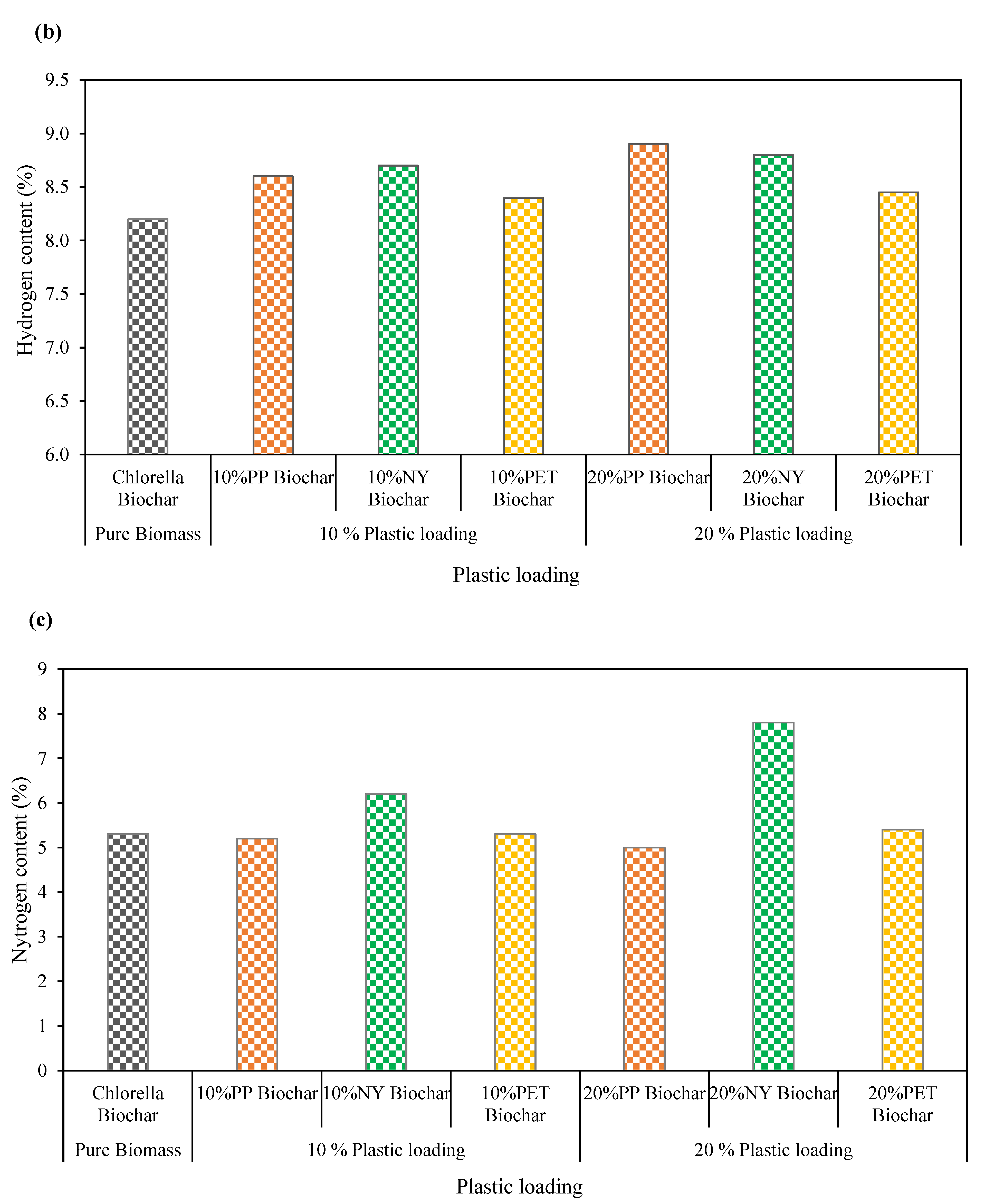
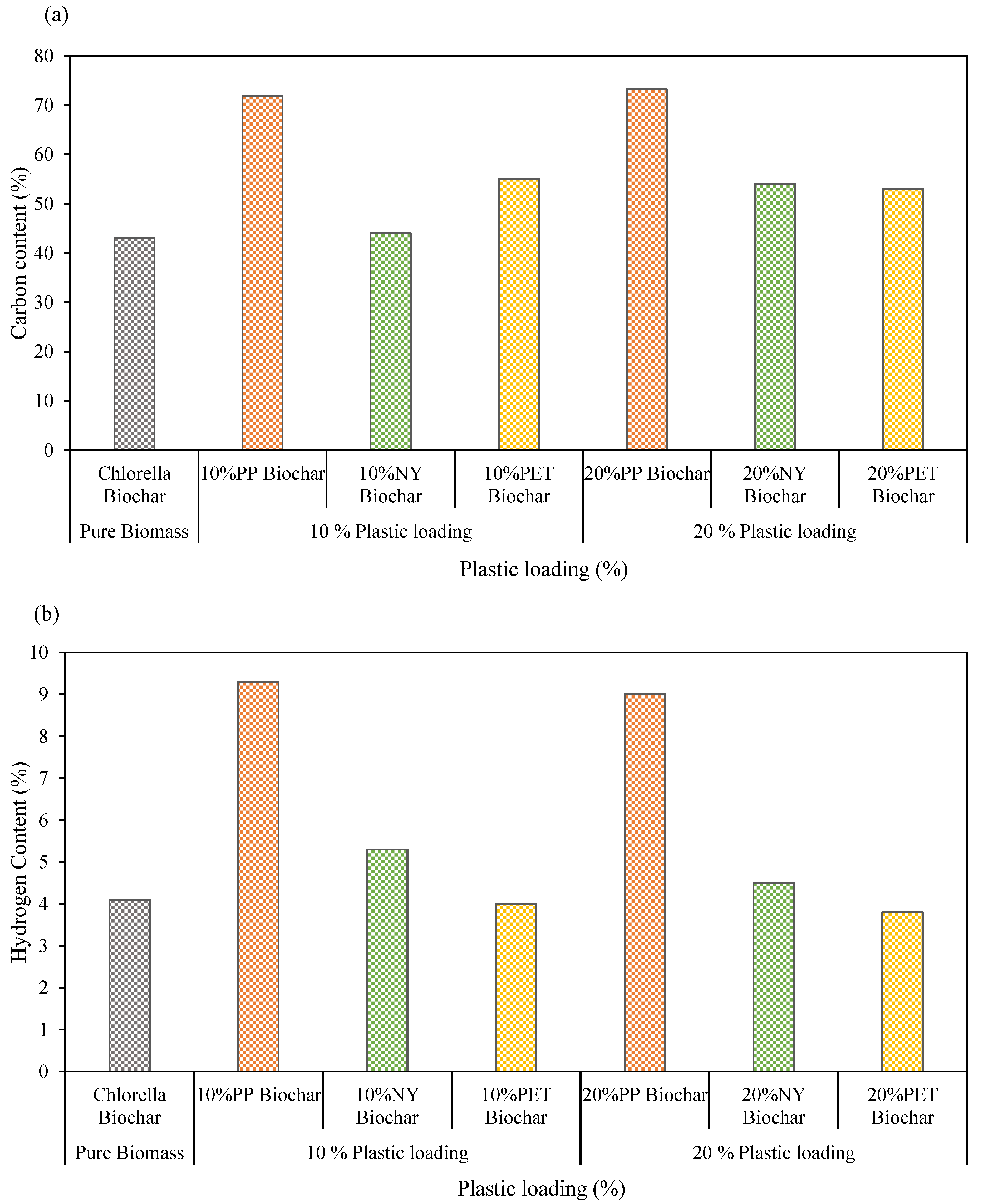
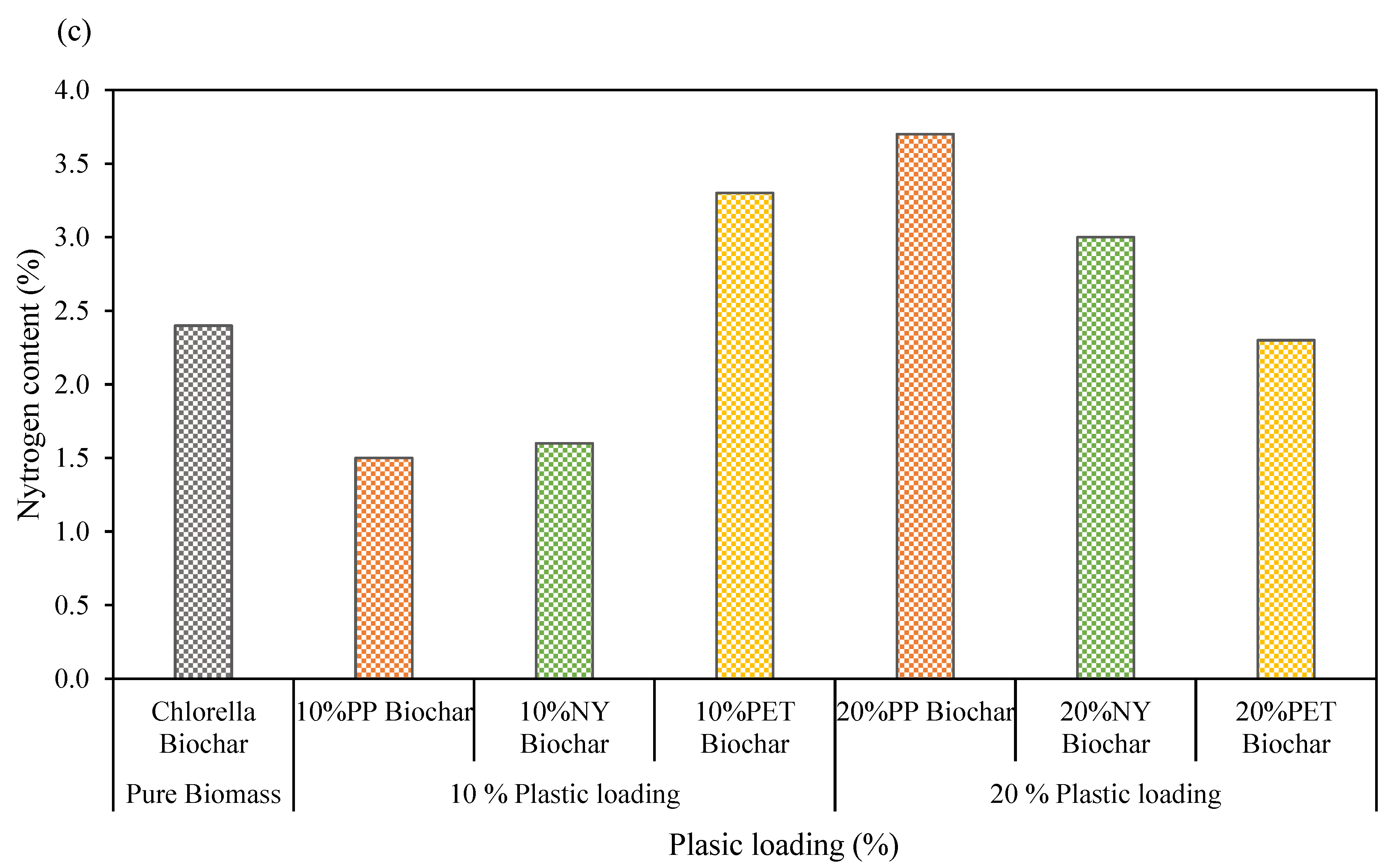
Figure 10a–c illustrates the impact of Co-HTL of post-recycling plastic wastes on the elemental composition of the produced biochar. There was significant variability in the elemental composition of the biochar. The carbon content ranged from 44.0% to 53.0% for biochar derived from Nylon-6 blends. When PET was added, the carbon content slightly increased, ranging from 54.0% to 55.1%. The biochar produced from PP blends exhibited the highest average carbon content at 72.5%. In contrast, the Co-HTL of post-recycling plastic waste blends resulted in a decrease in both hydrogen and nitrogen content in the produced biochar. Co-HTL with Nylon-6 caused a more substantial reduction, with hydrogen content decreasing from 5.3% to 4.5% for both 10% and 20% Nylon-6 blends. Conversely, the addition of PP resulted in the highest hydrogen content at 9.3% for the 10% PP blends, but with the lowest carbon content at just 3.8%. The high carbon content in PP-blended biochar is primarily a result of the polymer’s greater resistance to degradation compared to PET and Nylon-6 under HTL conditions at 350 °C. While PP has an inherently high carbon density, its limited depolymerization leads to the physical retention of these carbon-dense fragments in the biochar, whereas PET and Nylon-6 are more effectively partitioned into the liquid and aqueous phases.
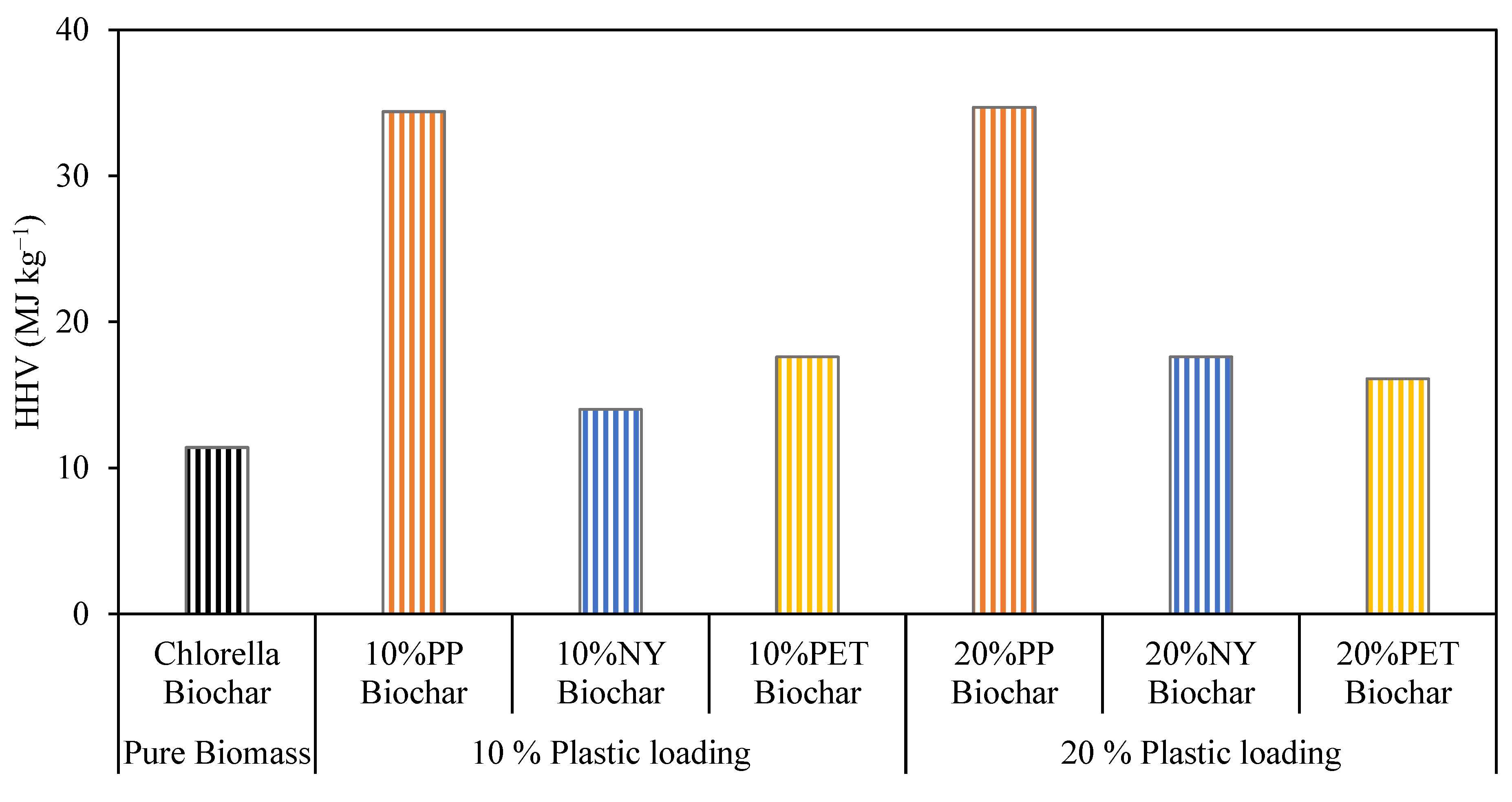
The investigation of co-processing demonstrated that the addition of PP resulted in the highest heating value biochar, particularly at the 10 wt.% PP loading, a heating value of 41.4 MJ kg−1 was observed (Figure 11). This enhancement improved the fuel properties and added value to the environment. In contrast, the biochar produced from Co-HTL with a 10 wt.% Nylon-6 blend exhibited a heating value similar to that of pure biochar. Co-HTL with PET led to a slight increase in heating value, rising from 0.8 MJ kg−1 for pure biomass to 11 MJ kg−1 and 14 MJ kg−1 for 10% and 20% PET loading, respectively. This indicates that a significant portion of the Nylon-6 and PET undergoes decomposition into biocrude, which subsequently decreases the heating value of the biochar.
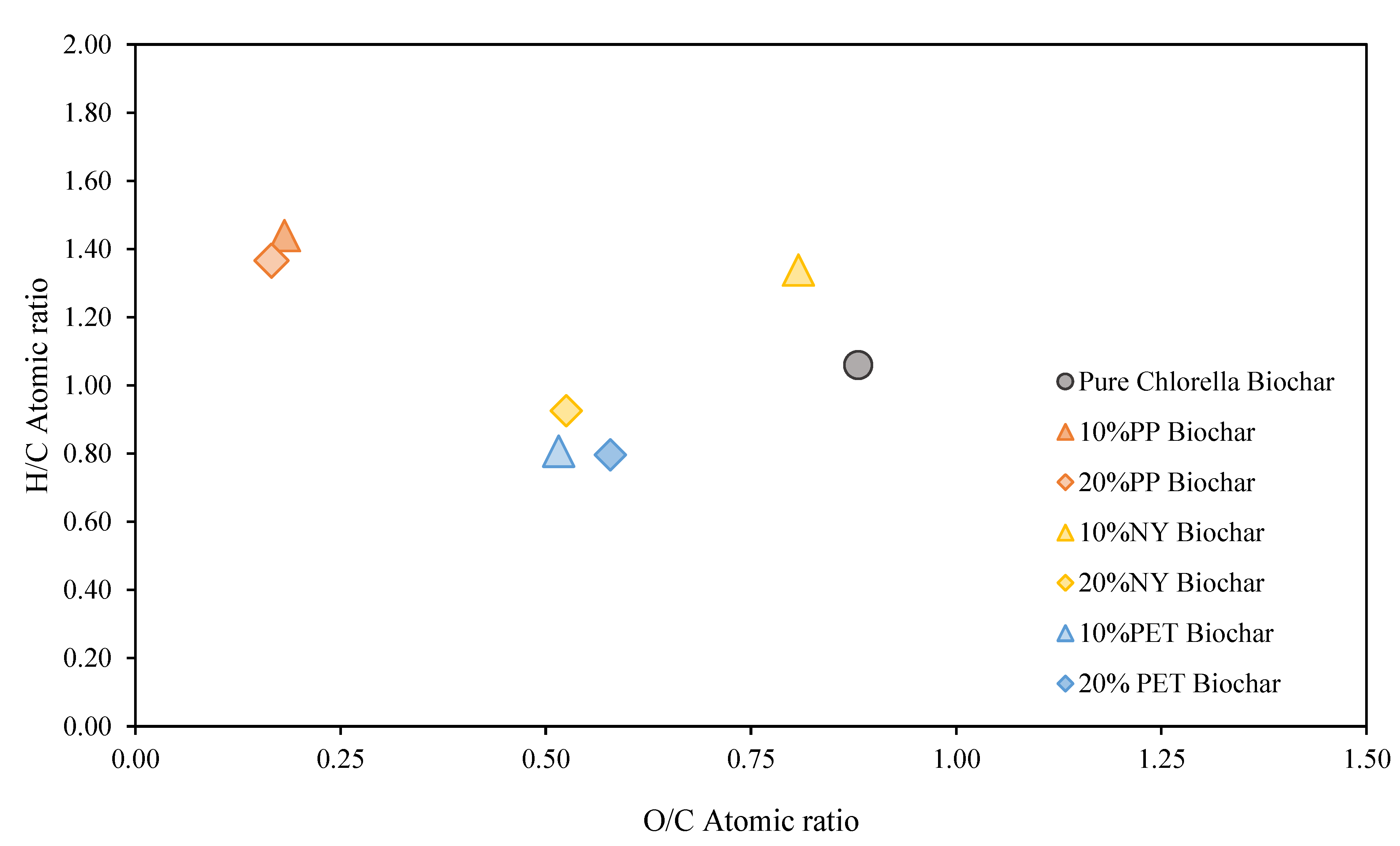
The carbon, hydrogen, and oxygen composition of the biochar produced is illustrated in a Van Krevelen diagram [53]. The aromaticity of the biochar structure was analyzed using this plot. A decrease in the H/C and O/C atomic ratios indicates the presence of an aromatic structure in the biochar [54]. Furthermore, these ratios reflect the structural transformation [55] and surface hydrophilicity of biochar [56]. Figure 12 displays the Van Krevelen diagram for different biochar samples produced through the Co-HTL of microalgae and post-recycling plastic wastes. The diagram shows the correlation between the hydrogen-to-carbon (H/C) and oxygen-to-carbon (O/C) ratios of biochar. It was found that the H/C and O/C ratios decreased with the addition of Nylon-6 and PET blends, suggesting an increased degree of aromaticity and stability within the structural framework of the biochar [57]. Thus, the Co-HTL process effectively removed hydrogen and other components from the raw material, resulting in biochar with a more aromatic structure. The biochar values were compared to the standard brown coal (lignite) value, as shown in Figure 13; biochar produced from PP were found to be comparable to coal, likely due to significant amounts of unreacted plastic in the solid residue. In contrast, biochar produced from Co-HTL of PET and Nylon-6 showed values that ranged between lignite and nature char, indicating a higher level of conversion in these reactions.

3.8. FTIR-Based Identification of Functional Groups in Biochar

Under the HTL conditions, not only is more biocrude produced but by-products are also accumulated. Research on biocrude production has made significant progress, and the market is increasingly focusing on by-products like biochar, which are emerging as valuable assets with considerable potential. Biochar was produced through hydrothermal liquefaction and are hydrolyzed to monosaccharides and oligosaccharides. Reactions such as oxidation, decarbonation and decarboxylation help transform the hydrolyzed materials into a gaseous produced and water-soluble fraction. Then, through the process of aromatization and polymerization, the residues found in the water-soluble fraction are converted into biochar.
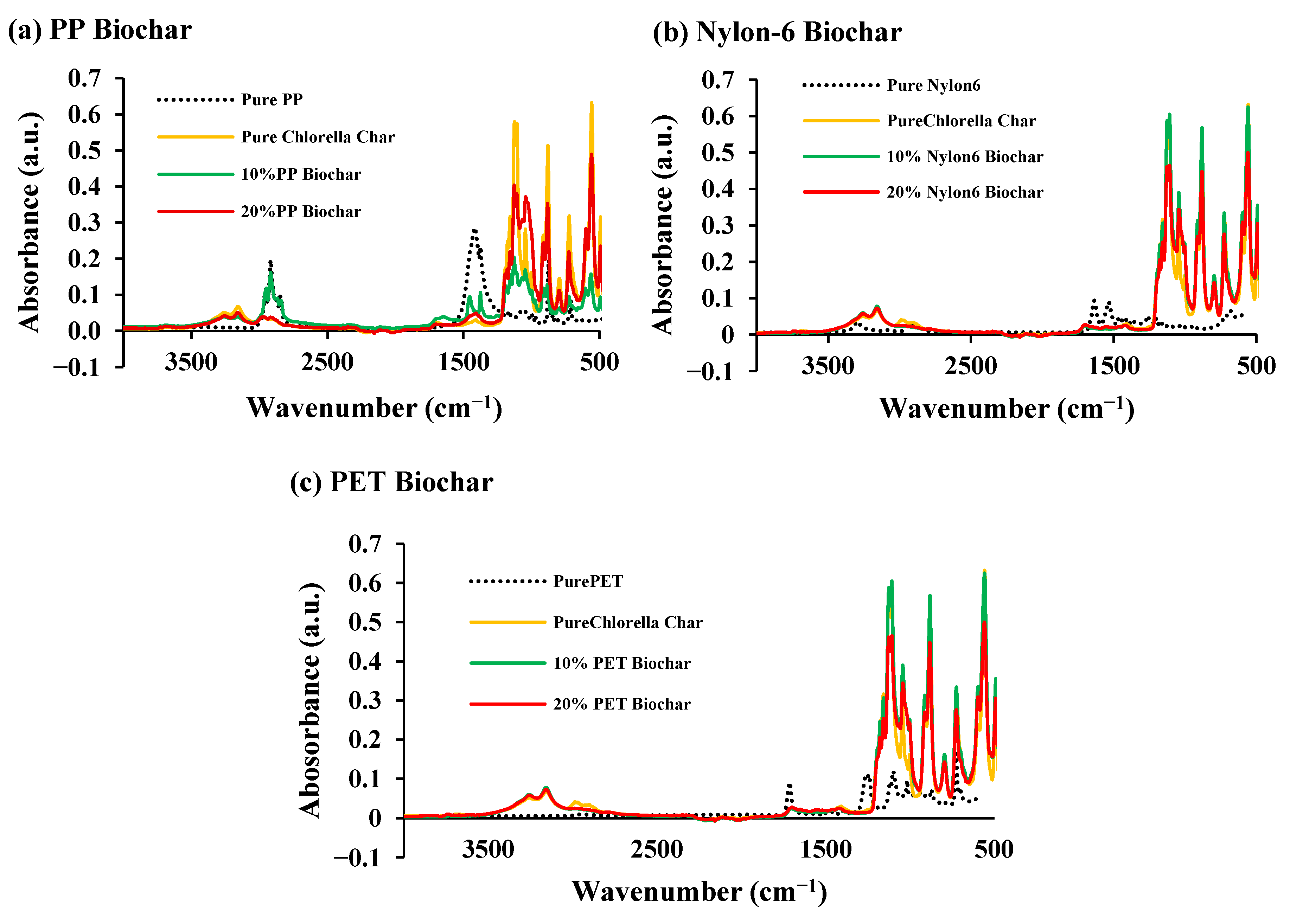
To gain a deeper understanding of the effect of post-recycling plastic waste on the HTL process, the properties of biochar were investigated using FTIR to classify the main functional groups present. The FTIR spectra of pure microalgae biochar are well present in various groups, including alcohol groups (OH), carboxyl group (COOH), amino (NH2), along with others associated with organic compounds (Figure 13). The absorption bands observed in the high intensity region of 3330–3200 cm−1 indicated the presence of lipid in pure microalgae biochar, attributable to C–H stretching vibrations from methyl and methylene-containing organic compounds. The strong absorption bands observed at 1125–1120 cm−1 indicate the presence of ester in pure biochar, indicating a distinct peak of fatty acid. A vibration at 880 cm−1 can be attributed to the presence of aromatic rings, likely arising from asphaltene materials in the biochar. In the analysis of biochar produced from Co-HTL of microalgae with 10% PP blend, peaks of moderate intensity were observed at 3170 cm−1 and 1140 cm−1. These peaks are similar to those found in biochar derived from HTL of pure microalgae. However, sharp peaks at 2920 cm−1, 1460 cm−1 and 1370 cm−1 are also present, which are not observed in pure microalgae biochar. These additional peaks can be attributed to C–H bonds (Figure 13). In addition, the peaks at 1460 cm−1 and 1370 cm−1 were also present in the FTIR spectra of pure PP, but not in the biochar produced from microalgae liquefaction. These findings indicate that unreacted polyethylene is present in the HTL biochar. Interestingly, when 20% PP was added, the FTIR spectra resembled those of pure microalgae biochar. This suggests that the addition of 20% PP led to more complete decomposition under HTL conditions.
In contrast, the FTIR spectra of biochar derived from the HTL of microalgae blended with Nylon-6 and PET were almost identical to the spectrum of pure microalgae biochar. Peaks of moderate intensity were observed at 3260 cm−1 and 3160 cm−1, the peak corresponding to C–H stretching of substituted aromatic C. In addition, peaks at 1107 cm−1, 880 cm−1 and 558 cm−1 were identified, associated with C–O–C symmetric stretching in aliphatic groups and acid derivatives (Figure 13). The presence of Nylon-6 as co-feedstock in HTL reactions did not appear to change to the composition of the biochar, suggesting that Nylon-6 and PET reacted more completely, resulting in the formation of more soluble products compared to the other three plastics examined.
The FTIR spectra (Table 3) of pure Chlorella biochar show broad O–H/N–H bands (3330–3200 cm−1), ester C–O stretches (1125–1120 cm−1), and aromatic peaks at 880 cm−1, indicating hydrophilic surface groups and early aromatization. PP-blend biochar displays additional aliphatic C–H vibrations (2920, 1460, 1370 cm−1), reflecting hydrocarbon residues that enhance energy density and hydrophobicity. In contrast, PET- and Nylon-6-derived biochar closely resemble algal char, with aromatic C–H stretching (3260–3160 cm−1), ester-related C–O–C bands (~1107 cm−1), and aromatic rings (880 cm−1), signifying higher aromaticity and stability. Collectively, these features suggest PP-blend chars are better suited for fuel and energy applications, while PET/Nylon-6 chars are more promising for adsorption, soil amendment, and carbon sequestration.

3.9. Reaction Pathways and Synergistic Conversion Mechanisms

The enhanced biocrude yield observed during co-hydrothermal liquefaction is primarily attributed to a sequence of synergistic radical-mediated reactions occurring between microalgal biomass and post-recycling plastics. Under subcritical water conditions, thermal cleavage of algal macromolecules including lipids, proteins, and carbohydrates generates highly reactive free radicals and oxygenated intermediates. In the absence of stabilizing agents, these fragments tend to repolymerize, promoting char formation and reducing liquid yields. However, plastics possess higher hydrogen-to-carbon (H/C) ratios than biomass and therefore act as effective hydrogen donors, enabling radical stabilization and suppressing secondary polymerization reactions. This hydrogen transfer mechanism facilitates the conversion of unstable intermediates into saturated hydrocarbons, thereby improving fuel quality and increasing the hydrogen content of the resulting biocrude.
Polymer-specific degradation pathways further contribute to this synergistic behavior. Polyethylene terephthalate (PET) undergoes hydrolytic depolymerization under hydrothermal conditions, producing oxygenated aromatic compounds and hydrogen-rich intermediates that support deoxygenation reactions. Meanwhile, Nylon-6 exhibits high reactivity and depolymerizes into soluble monomers such as ε-caprolactam, which were detected predominantly in the aqueous fraction and indicate efficient polymer breakdown. In contrast, polypropylene (PP) demonstrates comparatively lower conversion under subcritical water conditions; its partial resistance to degradation promotes solid residue formation but simultaneously enhances the carbon content and aromaticity of the resulting biochar. Collectively, these pathways confirm that Co-HTL is not merely a physical blending process but a chemically interactive system in which hydrogen donation, radical stabilization, and depolymerization govern carbon partitioning and fuel formation.
Furthermore, the presence of biomass-derived radicals can promote polymer chain scission, while hydrogen transfer from polyolefin chains prevents radical recombination into solid char, ultimately favoring oil production. These interactions are kinetically controlled, requiring the rate of liquid-phase stabilization to exceed those of gas-phase cracking and solid-phase polymerization. As a result, carbon is preferentially directed toward the biocrude phase, leading to improved heating values and overall fuel properties. The chemical reaction schematic and possible stoichiometry for Co-HTL at 350 °C is shown below.
(A).
Lumped HTL conversion: A common way to express HTL is to treat the microalgae as a lumped empirical formula C a H b O c N d (obtained from ultimate analysis) and distribute carbon into oil/char/gas/aq. This aligns with carbon/energy recovery framework and the statement that Co-HTL is governed by radical stabilization and deoxygenation (decarboxylation + dehydration + depolymerization).
C a H b O c N d + x H 2 O     Oil ( C m H n O p N q ) + Char ( C s H t O u ) + C O 2 + N H 3 + Aq . organics
(B).
Key elementary/representative reactions that explain synergy:
(1) Biomass (microalgae) primary scission → radicals/intermediates: At 350 °C in subcritical water, lipids/proteins/carbohydrates cleave to oxygenated fragments and radicals, which otherwise repolymerize to char.
Radical formation (schematic)
Biomass   R ° + R ° + oxygenates  
Unwanted recombination (char-forming route)
R ° +   R °   Char / oligomers
(2) Hydrogen donation/radical capping from plastics (core “synergy”): Plastics (higher H/C) donate hydrogen and cap biomass radicals, suppressing repolymerization and increasing liquid yield.
Radical stabilization (hydrogen transfer; schematic)
R ° + H - Donor   RH +   Donor °
(C).
Polymer-specific stoichiometries (your three plastics)
(1) PET: hydrolysis → terephthalic acid (TPA) + ethylene glycol (EG): PET repeat unit: ( C 10 H 8 O 4 ) n
PET hydrolysis (stoichiometric, repeat unit)
( C 10 H 8 O 4 ) n + 2 n H 2 O     n C 8 H 6 O 4 ( TPA ) + n C 2 H 6 O 2 ( EG )
EG → hydrogen equivalents (simplified reforming/shift in hot compressed water)
  C 2 H 6 O 2 + 2 H 2 O     2 C O 2 + 6 H 2
(2) Nylon-6: depolymerization → ε-caprolactam (valuable monomer): Nylon-6 repeat unit: ( C 6 H 11 NO ) n
Nylon-6 unzipping/depolymerization (schematic stoichiometry)
( C 6 H 11 NO ) n   n C 6 H 11 NO   ( ε - caprolactum )  
(3) PP: chain scission → alkanes/alkenes (limited under HTL; more solid residue): PP repeat unit: ( C 3 H 6 ) n
PP cracking (representative scission)
  ( C 3 H 6 ) n     C x H 2 x + 2   ( alkanes ) + C y H 2 y   ( alkenes )
(D).
Deoxygenation stoichiometries (link to improved HHV/lower O/C)
Decarboxylation
R - COOH     R - H + C O 2
Dehydration
R - C H 2 - CH ( OH ) - R     R - CH = CH - R +   H 2 O
Hydrodeoxygenation: (lumped)
R - O   +   H 2   R - H   +   H 2 O
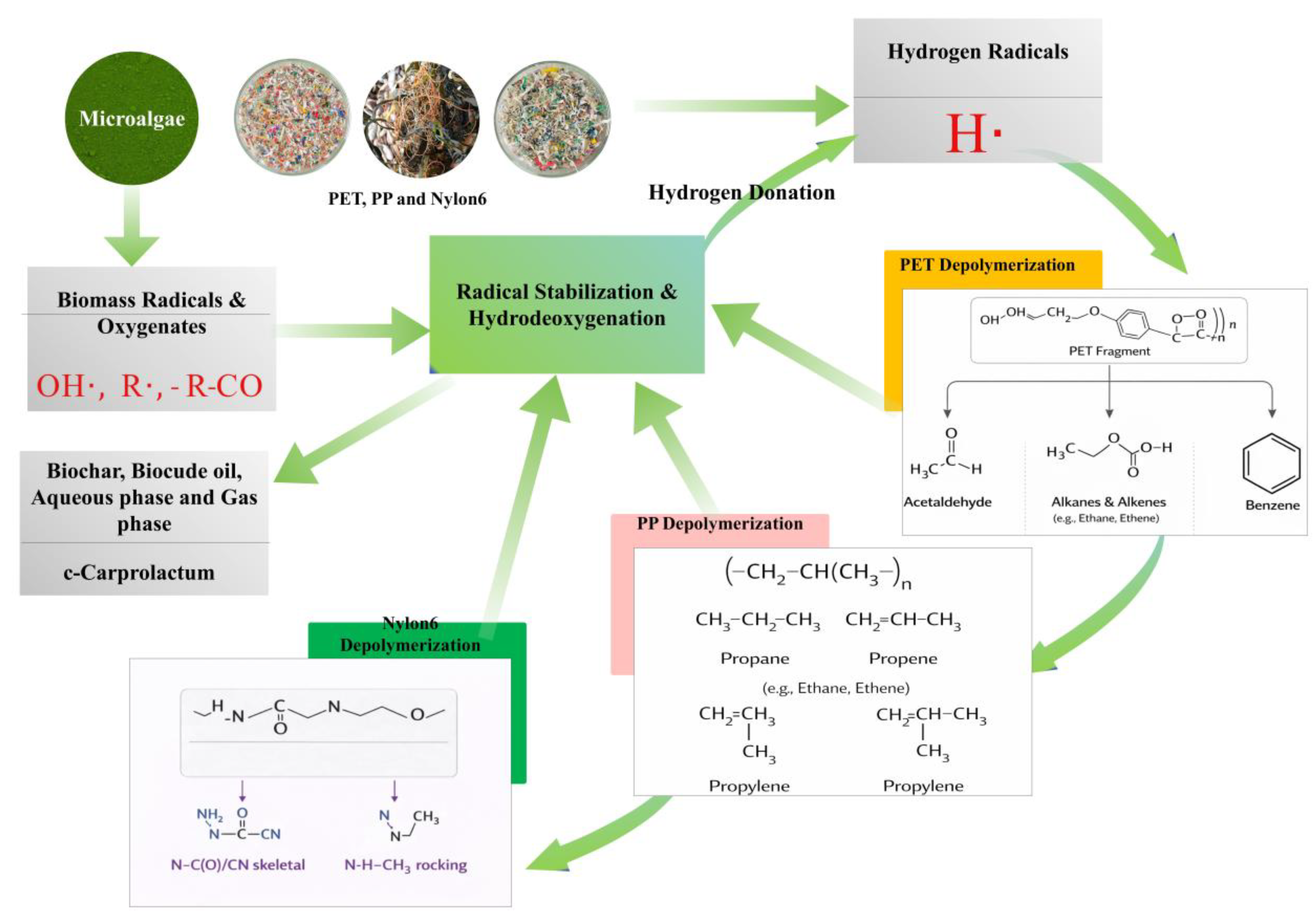
Taken together, the proposed reaction pathways provide a mechanistic explanation for the synergistic enhancement observed during co-hydrothermal liquefaction. The hydrolytic depolymerization of PET produces intermediates such as terephthalic acid and ethylene glycol that facilitate hydrogen transfer and stabilize reactive biomass fragments, thereby promoting liquid-phase formation. Concurrently, Nylon-6 undergoes efficient chain cleavage, yielding ε-caprolactam and other nitrogen-containing compounds that reflect extensive polymer conversion. In contrast, PP displays relatively low reactivity under subcritical water conditions, which favors the retention of carbon within the solid phase and contributes to biochar formation. The combined influence of these polymer-specific pathways redirects carbon toward energy-dense biocrude while limiting secondary char formation, ultimately enhancing overall fuel quality and energy recovery. The proposed hydrogen-assisted radical stabilization and deoxygenation pathways are illustrated schematically in Figure 14, which highlights the cross-interactions between biomass-derived intermediates and plastic decomposition products that promote liquid fuel formation.

3.10. Significance of the Research

The significance of this study as presented in Table 4 lies in its innovative and context-specific approach to simultaneously addressing two critical environmental issues: post-recycling plastic waste pollution and sustainable biofuel production. By integrating hydrothermal CO- HTL of freshwater microalgae (Chlorella pyrenoidosa) with environmentally relevant post-recycling plastic waste wastes PP, PET, and Nylon-6, this research delivers a dual-benefit valorization strategy. Unlike most recent studies that rely on marine biomass or lab-synthesized plastic surrogates, this work employs real-world feedstocks from Thai freshwater systems, thereby offering ecological relevance and practical applicability. The process, conducted in a 1000 mL stainless steel reactor at 350 °C for 30 min, achieved remarkably high biocrude yields peaking at 78.5% with PET addition surpassing those reported in the comparable Co-HTL literature. Moreover, the biochar generated exhibited high carbon content and heating values up to 41.4 MJ kg−1 with PP inclusion, alongside enhanced aromaticity and functional group complexity, making it suitable for secondary applications such as soil amendment or pollutant adsorption.

4. Conclusions

Co-pyrolysis of lignocellulosic sawdust with non-recyclable polypropylene successfully produced biochar with progressively enhanced physicochemical properties as the pyrolysis temperature increased from 300 to 500 °C. The biochar generated at 500 °C exhibited the highest carbon content (84.43 wt%), greater BET surface area (0.666 m2 g−1), and improved pore accessibility, reflecting advanced carbonization and aromatic condensation. SEM–EDX, CHNS, FTIR, and XRD analyses confirmed the transformation from oxygen-rich, amorphous lignocellulosic structures into stable, partially graphitic carbon frameworks. Importantly, the adsorbents were produced using a locally fabricated, semi-continuous slow-pyrolysis reactor (Ø 60 cm × 1 m) equipped with LPG-fired external heating, dual-zone temperature control (400–500 °C), and low-oxygen sweeping. Constructed from low-cost, locally available materials, this robust system enables uniform co-carbonization, recovery of condensable vapors for energy use, and decentralized biochar production, making it highly suitable for rural Thai communities where centralized treatment infrastructure is limited.
Adsorption studies demonstrated that the 500 °C biochar achieved the highest Cu2+ adsorption capacity (126.1 mg g−1), significantly outperforming the biochar produced at 300 °C (85.4 mg g−1) and 400 °C (111.7 mg g−1). Kinetic behavior was best described by fractal-like and general-order models, while equilibrium data followed the Redlich–Peterson and Liu isotherms, confirming heterogeneous chemisorption on energetically diverse surface sites. Thermodynamic analysis further verified that the adsorption process was spontaneous (ΔG° = −31.19 kJ mol−1) and endothermic (ΔH° = 60.33 kJ mol−1). Regeneration experiments showed that more than 80% of the initial adsorption efficiency was retained after five cycles, demonstrating excellent stability and reusability.
Overall, the co-pyrolyzed sawdust–PP biochar exhibits high structural stability, strong reusability, and activation-free adsorption performance, making it a highly promising sorbent for decentralized wastewater treatment. This thermochemical route aligns closely with crop and forestry biorefinery frameworks, in which biomass residues and energy crops are upgraded into biochar, syngas, bio-oil, bioethanol, biogas, and value-added chemical intermediates. The integration of plastic waste into the conversion process further enhances circularity by transforming otherwise non-recyclable materials into functional carbon products. Collectively, this regionally adapted reactor design and waste-derived biochar platform provide a sustainable, eco-efficient pathway that couples waste valorization with effective heavy-metal remediation, strengthening circular bioeconomy strategies and delivering practical environmental solutions for the Thai context. However, future work will focus on evaluating SPB biochar in real wastewater and pilot-scale treatment systems to confirm its performance under practical conditions. These studies will verify long-term stability, competitive adsorption behavior, and its suitability for decentralized water treatment applications.

Author Contributions

Conceptualization, S.H. and S.W.; Data curation, S.H. and S.W.; Formal analysis, S.H. and S.W.; Funding acquisition, S.W.; Investigation, S.H. and S.W.; Methodology, S.H. and S.W.; Project administration, S.H. and S.W.; Resources, S.H., S.W., P.K., S.K., T.K., K.S., N.S., S.I., W.D. (Wipada Dechapanya), W.D. (Wipawee Dechapanya) and P.P.; Software, S.H., S.W., P.K. and S.K.; Supervision, S.W.; Validation, S.H. and S.W.; Visualization, S.H. and S.W.; Writing—original draft, S.H. and S.W.; Writing—review and editing, S.H. and S.W. All authors have read and agreed to the published version of the manuscript.

Funding

This research project was financially supported by Mahasarakham University.

Institutional Review Board Statement

Not applicable.

Informed Consent Statement

Not applicable.

Data Availability Statement

Data is contained within the article.

Acknowledgments

This research project was financially supported by Mahasarakham University. This support was vital to the successful completion of this research. The authors would like to express their sincere gratitude to the Environmental Engineering Program, Faculty of Engineering, Mahasarakham University and University of Phayao (UoE Grant No. 2277/2568) for providing access to laboratory facilities and technical equipment essential for the experimental work. Special thanks are also extended to the academic and administrative staff for their valuable guidance and logistical support throughout the research process.

Conflicts of Interest

The authors declare that there are no conflicts of interest related to the publication of this manuscript. This research was conducted without any financial support from commercial or non-profit funding agencies and therefore, no external funding influenced the results or conclusions of this work.

References

  1. Thacharodi, A.; Hassan, S.; Meenatchi, R.; Bhat, M.A.; Hussain, N.; Arockiaraj, J.; Ngo, H.H.; Sharma, A.; Nguyen, H.T.; Pugazhendhi, A. Mitigating microplastic pollution: A critical review on the effects, remediation, and utilization strategies of microplastics. J. Environ. Manag. 2024, 351, 119988. [Google Scholar] [CrossRef] [PubMed]
  2. Suyamud, B.; Pan, X.; Yu, Y.; Yuan, W.; Liu, Y.; Yang, Y. First-of-Its-Kind: Nationwide meta-analysis of microplastic pollution and risk assessment in Thailand. Chemosphere 2024, 364, 143041. [Google Scholar] [CrossRef] [PubMed]
  3. World Bank. Plastic Waste Material Flow Analysis for Thailand: Summary Report; World Bank: Washington, DC, USA, 2022. [Google Scholar]
  4. Teampanpong, J.; Phanchaum, J.; Rayaphak, A.; Duengkae, P. Microplastic accumulation in water from protected areas in Western Forest Complex of Thailand. Heliyon 2024, 10, e36130. [Google Scholar] [CrossRef] [PubMed]
  5. Li, W.C.; Tse, H.F.; Fok, L. Plastic waste in the marine environment: A review of sources, occurrence and effects. Sci. Total Environ. 2016, 566–567, 333–349. [Google Scholar] [CrossRef]
  6. Jung, K.A.; Lim, S.-R.; Kim, Y.; Park, J.M. Potentials of macroalgae as feedstocks for biorefinery. Bioresour. Technol. 2013, 135, 182–190. [Google Scholar] [CrossRef]
  7. Raikova, S.; Le, C.D.; Beacham, T.A.; Jenkins, R.W.; Allen, M.J.; Chuck, C.J. Towards a marine biorefinery through the hydrothermal liquefaction of macroalgae native to the United Kingdom. Biomass Bioenergy 2017, 107, 244–253. [Google Scholar] [CrossRef]
  8. Liu, S.; Jin, R.; Zhang, J.; Zhao, Y.; Shen, M.; Wang, Y. Are algae a promising ecofriendly approach to micro/nanoplastic remediation? Sci. Total Environ. 2023, 904, 166779. [Google Scholar] [CrossRef]
  9. Nolasco, J.; Avila, J.J.; Martínez, K.; Hernández, I.; Zavariz, Á. Pyrolytic Liquid Fuel—An Alternative for Producing Electrical Energy in Mexico. J. Ecol. Eng. 2022, 23, 227–232. [Google Scholar] [CrossRef]
  10. Neveux, N.; Magnusson, M.; Maschmeyer, T.; de Nys, R.; Paul, N.A. Comparing the potential production and value of high-energy liquid fuels and protein from marine and freshwater macroalgae. GCB Bioenergy 2015, 7, 673–689. [Google Scholar] [CrossRef]
  11. Ross, A.B.; Jones, J.M.; Kubacki, M.L.; Bridgeman, T. Classification of macroalgae as fuel and its thermochemical behaviour. Bioresour. Technol. 2008, 99, 6494–6504. [Google Scholar] [CrossRef]
  12. Yanik, J.; Stahl, R.; Troeger, N.; Sinag, A. Pyrolysis of algal biomass. J. Anal. Appl. Pyrolysis 2013, 103, 134–141. [Google Scholar] [CrossRef]
  13. Jin, Q.; Wang, X.; Li, S.; Mikulčić, H.; Bešenić, T.; Deng, S.; Vujanović, M.; Tan, H.; Kumfer, B.M. Synergistic effects during co-pyrolysis of biomass and plastic: Gas, tar, soot, char products and thermogravimetric study. J. Energy Inst. 2019, 92, 108–117. [Google Scholar] [CrossRef]
  14. Aungthitipan, P.; Janthakhot, A.; Tansomrot, P.; Wongcharee, S.; Hongthong, S.; Kreetachat, T.; Imman, S.; Dechapanya, W. Mesoporous Biochar Composite Derived from Hardwood and Post-Recycled Plastic Waste in Thailand: A Case Study of Nickel Removal in Acidic Solution. S. Afr. J. Chem. Eng. 2025, 53, 242–255. [Google Scholar] [CrossRef]
  15. Chanthakhot, A.; Aungthitipan, P.; Tansomros, P.; Maskhunthod, P.; Janthakot, A.; Hongthong, S.; Kreethachat, T.; Imman, S.; Wongcharee, S. Characterization of Biochar Produced from Sawdust and Polypropylene Plastic Waste Composite via Slow Pyrolysis. In Proceedings of the 2024 Geoinformatics for Spatial-Infrastructure Development in Earth and Allied Sciences (GIS-IDEAS); Springer: Berlin/Heidelberg, Germany, 2024; pp. 1–6. [Google Scholar]
  16. Hongthong, S.; Sangsida, W.; Wongcharee, S.; Chanthakhot, A.; Aungthitipan, P.; Suwannahong, K.; Kreetachat, T.; Rioyo, J. Enhanced Biochar Production via Co-Pyrolysis of Biomass Residual with Plastic Waste after Recycling Process. Int. J. Chem. Eng. 2024, 2024, 1176275. [Google Scholar] [CrossRef]
  17. Wang, Z.; Burra, K.G.; Lei, T.; Gupta, A.K. Co-pyrolysis of waste plastic and solid biomass for synergistic production of biofuels and chemicals-A review. Prog. Energy Combust. Sci. 2021, 84, 100899. [Google Scholar] [CrossRef]
  18. Ong, M.Y.; Nomanbhay, S.; Jassinnee, M.; Tan, Y.H.; Chai, M.K. Hydrothermal Liquefaction of Algae with Plastic Waste for Bio-Oil Production: A Mini Review. In Proceedings of the IOP Conference Series: Earth and Environmental Science; IOP Publishing: Bristol, UK, 2025; p. 012008. [Google Scholar]
  19. Vlaskin, M.; Chernova, N.; Kiseleva, S.; Popel’, O.; Zhuk, A. Hydrothermal liquefaction of microalgae to produce biofuels: State of the art and future prospects. Therm. Eng. 2017, 64, 627–636. [Google Scholar] [CrossRef]
  20. Shamsuddoha, M.; Kashem, M.A. Zero Plastic Drive: A Comprehensive review on unveiling innovative sustainable solutions for a circular plastics economy. Sustainability 2024, 16, 10329. [Google Scholar] [CrossRef]
  21. Hongthong, S.; Leese, H.S.; Chuck, C.J. Valorizing plastic-contaminated waste streams through the catalytic hydrothermal processing of polypropylene with lignocellulose. ACS Omega 2020, 5, 20586–20598. [Google Scholar] [CrossRef]
  22. Hongthong, S.; Leese, H.S.; Allen, M.J.; Chuck, C.J. Assessing the Conversion of Various Nylon Polymers in the Hydrothermal Liquefaction of Macroalgae. Environments 2021, 8, 34. [Google Scholar] [CrossRef]
  23. Raikova, S.; Knowles, T.D.J.; Allen, M.J.; Chuck, C.J. Co-liquefaction of Macroalgae with Common Marine Plastic Pollutants. ACS Sustain. Chem. Eng. 2019, 7, 6769–6781. [Google Scholar] [CrossRef]
  24. Farobie, O.; Amrullah, A.; Fatriasari, W.; Nandiyanto, A.B.D.; Ernawati, L.; Karnjanakom, S.; Lee, S.H.; Selvasembian, R.; Azelee, N.I.W.; Aziz, M. Co-pyrolysis of plastic waste and macroalgae Ulva lactuca, a sustainable valorization approach towards the production of bio-oil and biochar. Results Eng. 2024, 24, 103098. [Google Scholar] [CrossRef]
  25. Guo, B.; Yang, B.; Su, Y.; Zhang, S.; Hornung, U.; Dahmen, N. Screening and Optimization of Microalgae Biomass and Plastic Material Coprocessing by Hydrothermal Liquefaction. ACS ES&T Eng. 2022, 2, 65–77. [Google Scholar] [CrossRef]
  26. Wu, X.; Liang, J.; Wu, Y.; Hu, H.; Huang, S.; Wu, K. Co-liquefaction of microalgae and polypropylene in sub-/super-critical water. RSC Adv. 2017, 7, 13768–13776. [Google Scholar] [CrossRef]
  27. Kreetachat, T.; Imman, S.; Suriyachai, N.; Kreetachat, N.; Hongthong, S.; Suwannahong, K.; Phadee, P.; Janthakhot, A.; Wongcharee, S. Multi-index evaluation of surface water quality at the transboundary section of the Mekong River: A case study of Nakhon Phanom Province, Thailand. Environ. Chall. 2026, 22, 101414. [Google Scholar] [CrossRef]
  28. Chen, Y.; Xu, H.; Luo, Y.; Ding, Y.; Huang, J.; Wu, H.; Han, J.; Du, L.; Kang, A.; Jia, M. Plastic bottles for chilled carbonated beverages as a source of microplastics and nanoplastics. Water Res. 2023, 242, 120243. [Google Scholar] [CrossRef] [PubMed]
  29. Zhang, P.; Feng, L.; Su, B.; Li, X. Microalgae cultivated in wastewater catalytic hydrothermal liquefaction: Effects of process parameter on products and energy balance. J. Clean. Prod. 2022, 341, 130895. [Google Scholar] [CrossRef]
  30. Watson, J.; Swoboda, M.; Aierzhati, A.; Wang, T.; Si, B.; Zhang, Y. Biocrude oil from algal bloom microalgae: A novel integration of biological and thermochemical techniques. Environ. Sci. Technol. 2021, 55, 1973–1983. [Google Scholar] [CrossRef]
  31. Raikova, S.; Smith-Baedorf, H.; Bransgrove, R.; Barlow, O.; Santomauro, F.; Wagner, J.L.; Allen, M.J.; Bryan, C.G.; Sapsford, D.; Chuck, C.J. Assessing hydrothermal liquefaction for the production of bio-oil and enhanced metal recovery from microalgae cultivated on acid mine drainage. Fuel Process. Technol. 2016, 142, 219–227. [Google Scholar] [CrossRef]
  32. Miao, C.; Chakraborty, M.; Chen, S. Impact of reaction conditions on the simultaneous production of polysaccharides and bio-oil from heterotrophically grown Chlorella sorokiniana by a unique sequential hydrothermal liquefaction process. Bioresour. Technol. 2012, 110, 617–627. [Google Scholar] [CrossRef]
  33. Singh, B.; Sharma, N. Mechanistic implications of plastic degradation. Polym. Degrad. Stab. 2008, 93, 561–584. [Google Scholar] [CrossRef]
  34. Duan, P.; Savage, P.E. Upgrading of crude algal bio-oil in supercritical water. Bioresour. Technol. 2011, 102, 1899–1906. [Google Scholar] [CrossRef]
  35. Addy, M.M.; Kabir, F.; Zhang, R.; Lu, Q.; Deng, X.; Current, D.; Griffith, R.; Ma, Y.; Zhou, W.; Chen, P. Co-cultivation of microalgae in aquaponic systems. Bioresour. Technol. 2017, 245, 27–34. [Google Scholar] [CrossRef] [PubMed]
  36. Yuan, X.; Cao, H.; Li, H.; Zeng, G.; Tong, J.; Wang, L. Quantitative and qualitative analysis of products formed during co-liquefaction of biomass and synthetic polymer mixtures in sub- and supercritical water. Fuel Process. Technol. 2009, 90, 428–434. [Google Scholar] [CrossRef]
  37. Ross, A.; Biller, P.; Kubacki, M.; Li, H.; Lea-Langton, A.; Jones, J. Hydrothermal processing of microalgae using alkali and organic acids. Fuel 2010, 89, 2234–2243. [Google Scholar] [CrossRef]
  38. Valdez, P.J.; Nelson, M.C.; Wang, H.Y.; Lin, X.N.; Savage, P.E. Hydrothermal liquefaction of Nannochloropsis sp.: Systematic study of process variables and analysis of the product fractions. Biomass Bioenergy 2012, 46, 317–331. [Google Scholar] [CrossRef]
  39. Tito, E.; Marcolongo, C.A.; Pipitone, G.; Monteverde, A.H.A.; Bensaid, S.; Pirone, R. Understanding the effect of heating rate on hydrothermal liquefaction: A comprehensive investigation from model compounds to a real food waste. Bioresour. Technol. 2024, 396, 130446. [Google Scholar] [CrossRef]
  40. Shahbeik, H.; Kazemi Shariat Panahi, H.; Dehhaghi, M.; Guillemin, G.J.; Fallahi, A.; Hosseinzadeh-Bandbafha, H.; Amiri, H.; Rehan, M.; Raikwar, D.; Latine, H.; et al. Biomass to biofuels using hydrothermal liquefaction: A comprehensive review. Renew. Sustain. Energy Rev. 2024, 189, 113976. [Google Scholar] [CrossRef]
  41. Lievens, C.; Mourant, D.; He, M.; Gunawan, R.; Li, X.; Li, C.-Z. An FT-IR spectroscopic study of carbonyl functionalities in bio-oils. Fuel 2011, 90, 3417–3423. [Google Scholar] [CrossRef]
  42. Smith, B.C. Fundamentals of Fourier Transform Infrared Spectroscopy; CRC Press: Boca Raton, FL, USA, 2011. [Google Scholar]
  43. Socrates, G. Infrared and Raman Characteristic Group Frequencies: Tables and Charts; John Wiley & Sons: Hoboken, NJ, USA, 2004. [Google Scholar]
  44. Kumar, A.; Gupta, R.K. Fundamentals of Polymer Engineering; CRC Press: Boca Raton, FL, USA, 2018. [Google Scholar]
  45. Xia, Y.; Tan, X.; Zhu, M.; Huang, J.; Wang, X.; Guo, Z. A mechanistic investigation of the directional entrapping modification on the semicrystalline polypropylene surface. J. Appl. Polym. Sci. 2020, 137, 49153. [Google Scholar] [CrossRef]
  46. Sifuentes-Nieves, I.; Yáñez-Macías, R.; Flores-Silva, P.C.; Gonzalez-Morones, P.; Gallardo-Vega, C.A.; Ramírez-Vargas, E.; Hernández-Hernández, E. Ultrasound/plasma-modified agave fibers as alternative eco-sustainable raw material to reinforce starch-based Films. J. Polym. Environ. 2023, 31, 595–607. [Google Scholar] [CrossRef]
  47. Fan, C.; Huang, Y.-Z.; Lin, J.-N.; Li, J. Microplastic constituent identification from admixtures by Fourier-transform infrared (FTIR) spectroscopy: The use of polyethylene terephthalate (PET), polyethylene (PE), polypropylene (PP), polyvinyl chloride (PVC) and nylon (NY) as the model constituents. Environ. Technol. Innov. 2021, 23, 101798. [Google Scholar] [CrossRef]
  48. Hu, Z.; Tang, L.; Gao, P.; Wang, B.; Zhang, C.; Sheng, Y.; Pan, W.; Ding, L.; Chen, X.; Wang, F. Elucidating synergistic effects during co-pyrolysis of plastics and paper in municipal solid waste: Thermal behavior and product characteristics. Bioresour. Technol. 2025, 416, 131831. [Google Scholar] [CrossRef] [PubMed]
  49. Abdelwahab, M.A.; Chang, B.P.; Mohanty, A.K.; Misra, M. Waste valorization in sustainable engineering materials: Reactive processing of recycled carpets waste with polyamide 6. Polym. Test. 2022, 114, 107681. [Google Scholar] [CrossRef]
  50. Chen, W.-T.; Wu, Z.; Si, B.; Zhang, Y. Renewable diesel blendstocks and bioprivileged chemicals distilled from algal biocrude oil converted via hydrothermal liquefaction. Sustain. Energy Fuels 2020, 4, 5165–5178. [Google Scholar] [CrossRef]
  51. Amrullah, A.; Farobie, O.; Septarini, S.; Satrio, J.A. Synergetic biofuel production from co-pyrolysis of food and plastic waste: Reaction kinetics and product behavior. Heliyon 2022, 8, e10278. [Google Scholar] [CrossRef] [PubMed]
  52. Farobie, O.; Santosa, N.F.; Fatriasari, W.; Karimah, A.; Amrullah, A.; Suseno, S.H.; Nandiyanto, A.B.D.; Hartulistiyoso, E. Harnessing macroalgae Sargassum plagiophyllum-derived heterogeneous catalyst for biodiesel production. Bioresour. Technol. Rep. 2024, 25, 101768. [Google Scholar] [CrossRef]
  53. Van Krevelen, D.W. Graphical-statistical method for the study of structure and reaction processes of coal. Fuel 1950, 29, 269–284. [Google Scholar]
  54. Alauddin, Z.A.B.Z.; Lahijani, P.; Mohammadi, M.; Mohamed, A.R. Gasification of lignocellulosic biomass in fluidized beds for renewable energy development: A review. Renew. Sustain. Energy Rev. 2010, 14, 2852–2862. [Google Scholar] [CrossRef]
  55. Wang, X.; Zhou, W.; Liang, G.; Song, D.; Zhang, X. Characteristics of maize biochar with different pyrolysis temperatures and its effects on organic carbon, nitrogen and enzymatic activities after addition to fluvo-aquic soil. Sci. Total Environ. 2015, 538, 137–144. [Google Scholar] [CrossRef]
  56. Tan, X.; Liu, Y.; Zeng, G.; Wang, X.; Hu, X.; Gu, Y.; Yang, Z. Application of biochar for the removal of pollutants from aqueous solutions. Chemosphere 2015, 125, 70–85. [Google Scholar] [CrossRef]
  57. Kookana, R.; Sarmah, A.K.; Van Zwieten, L.; Van Krull, E.; Singh, B. Biochar Application to Soil: Agronomic and Environmental Benefits and Unintended Consequences. Adv. Agron. 2011, 112, 103–143. [Google Scholar] [CrossRef]
  58. Keiluweit, M.; Nico, P.S.; Johnson, M.G.; Kleber, M. Dynamic molecular structure of plant biomass-derived black carbon (biochar). Environ. Sci. Technol. 2010, 44, 1247–1253. [Google Scholar] [CrossRef] [PubMed]
  59. Haarlemmer, G.; Matricon, L.; Roubaud, A. Comprehensive review of hydrothermal liquefaction data for use in machine-learning models. Biofuels Bioprod. Biorefin 2024, 18, 1782–1798. [Google Scholar] [CrossRef]
  60. Kumar, A.; Watkins, J.D.; Cronin, D.; Schmidt, A.J.; Santosa, D.M.; Yang, Z.; Heyne, J.; Valdez, P.J. Hydrothermal liquefaction of wastewater-grown algae to produce synthetic aviation fuel: A combined experimental study and techno-economic assessment. Energy Convers. Manag. X 2025, 27, 101096. [Google Scholar] [CrossRef]
  61. Pascoalino, L.A.; Reis, F.S.; Prieto, M.A.; Barreira, J.C.; Ferreira, I.C.; Barros, L. Valorization of bio-residues from the processing of main portuguese fruit crops: From discarded waste to health promoting compounds. Molecules 2021, 26, 2624. [Google Scholar] [CrossRef]
  62. Wang, X.; Guo, F.; Li, Y.; Yang, X. Effect of pretreatment on microalgae pyrolysis: Kinetics, biocrude yield and quality, and life cycle assessment. Energy Convers. Manag. 2017, 132, 161–171. [Google Scholar] [CrossRef]
  63. Ghadge, A.; Bourlakis, M.; Kamble, S.; Seuring, S. Blockchain implementation in pharmaceutical supply chains: A review and conceptual framework. Int. J. Prod. Res. 2023, 61, 6633–6651. [Google Scholar] [CrossRef]
  64. Wei, G.; de Leeuw, E.; Pazgier, M.; Yuan, W.; Zou, G.; Wang, J.; Ericksen, B.; Lu, W.-Y.; Lehrer, R.I.; Lu, W. Through the looking glass, mechanistic insights from enantiomeric human defensins. J. Biol. Chem. 2009, 284, 29180–29192. [Google Scholar] [CrossRef]
  65. Baisch, J.S.; Djadjo, C.L.; Alves Nunes, É.J.; de Oliveira Carneiro, L.; Tres, M.V.; Zabot, G.L. Promising products based on hydrothermal liquefaction of agricultural biomass: An overview. Discov. Appl. Sci. 2025, 7, 430. [Google Scholar] [CrossRef]
  66. Chand, R.; Kohansal, K.; Toor, S.; Pedersen, T.H.; Vollertsen, J. Microplastics degradation through hydrothermal liquefaction of wastewater treatment sludge. J. Clean. Prod. 2022, 335, 130383. [Google Scholar] [CrossRef]
Figure 1. Topographic map of the Chi River Basin, showing elevation, river networks, reservoirs, and basin boundaries, with designated sites for algal sampling.
Sustainability 18 02962 g001
Figure 2. Schematic representation of the co-hydrothermal liquefaction process of Chlorella pyrenoidosa algae and post-recycling plastic wastes, showing hydrothermal liquefaction, separation, and extraction units with corresponding product phases.
Sustainability 18 02962 g002
Figure 3. Product yields from co-hydrothermal liquefaction of Chlorella pyrenoidosa with PP, PET, and Nylon-6 at 10 and 20 wt.% plastic loadings.
Sustainability 18 02962 g003
Figure 4. Synergistic effects of co-hydrothermal liquefaction of Chlorella pyrenoidosa with PP, PET, and Nylon-6 at different blend ratios.
Sustainability 18 02962 g004
Figure 5. Effect of heating rate on biocrude yields from co-hydrothermal liquefaction of Chlorella pyrenoidosa with PP, PET, and Nylon-6.
Sustainability 18 02962 g005
Figure 6. Biocrude compositions produced from the Co-HTL of microalgae with post-recycling plastic wastes, where (a) is carbon content wt.%, (b) hydrogen content wt.%, (c) nitrogen content wt.%, and (d) is H/C atomic ratio of the biocrudes.
Sustainability 18 02962 g006aSustainability 18 02962 g006bSustainability 18 02962 g006c
Figure 7. High heating value of biocrude and energy recovery produced from the Co-HTL of microalgae with post-recycling plastic waste.
Sustainability 18 02962 g007
Figure 8. FTIR spectra of biocrudes produced from Co-HTL of microalgae with post-recycling plastic waste blends: (a) PP, (b) Nylon-6 and (c) PET.
Sustainability 18 02962 g008
Figure 9. Polymer and biocrude: FTIR characteristics and applications. (a) PP; (b) PET; (c) Nylon-6; (d) Algae; (e) Biocrude.
Sustainability 18 02962 g009
Figure 10. Biochar compositions produced from the Co-HTL of microalgae with post-recycling plastic wastes: (a) carbon content wt.%, (b) hydrogen content wt.%, and (c) nitrogen content wt.%.
Sustainability 18 02962 g010aSustainability 18 02962 g010b
Figure 11. High heating value of biochar produced from the Co-HTL of microalgae with post-recycling plastic wastes.
Sustainability 18 02962 g011
Figure 12. Van Krevelen diagram with H:C and O: molar ratio for Co-HTL of biomass with plastics char, coal, and lignin.
Sustainability 18 02962 g012
Figure 13. FTIR spectra of biochar produced from Co-HTL of microalgae with post-recycling plastic waste blends: (a) PP, (b) Nylon-6 and (c) PET.
Sustainability 18 02962 g013
Figure 14. Hydrogen-assisted radical stabilization and deoxygenation pathways governing biocrude formation during Co-HTL of microalgae and plastic waste.
Sustainability 18 02962 g014
Table 1. Primary raw materials utilized in the HTL Co-HTL process and the four main product phases resulting from the HTL process.
SubfigureDescriptionDiscussionImage
(a)Dried Chlorella pyrenoidosaThis freshwater microalga, common in algal blooms, was freeze-dried and used as a biomass source due to its high protein and lipid content, making it a promising candidate for biofuel production via HTL.Sustainability 18 02962 i001
(b)Electron microscopy imageHighlights the cell morphology of Chlorella, which is crucial for understanding cell wall resistance during thermal breakdown. Efficient disintegration under HTL conditions leads to higher yields of biocrude and biochar.Sustainability 18 02962 i002
(c)Polypropylene (PP)One of the most thermally stable plastics. Under HTL conditions (350 °C), PP showed limited depolymerization, leading to high solid residue and char formation but significantly increasing the higher heating value (HHV) of the biochar.Sustainability 18 02962 i003
(d)Polyethylene terephthalate (PET)PET underwent more complete depolymerization, contributing to biocrude production. It enhanced hydrodeoxygenation reactions and served as a hydrogen donor, thus improving the H/C ratio of biocrude products.Sustainability 18 02962 i004
(e)Nylon-6Showed high reactivity in the HTL system, breaking down into soluble monomers (e.g., ε-caprolactam) found predominantly in the aqueous phase, reducing biochar yield and enhancing biocrude quality.Sustainability 18 02962 i005
(f)Gas phaseComprised primarily of CO2, released via a needle valve. The gas yield was calculated via the ideal gas law and was minimal compared to other phases.Sustainability 18 02962 i006
(g)Biocrude oilThe primary target product, obtained by chloroform extraction and rotary evaporation. Plastic blending, especially with PET and Nylon-6, increased biocrude yield up to 78.5% in some blends, suggesting synergistic enhancement of HTL reactions.Sustainability 18 02962 i007
(h)Aqueous phaseContained water-soluble organics and inorganics. The aqueous phase yield decreased significantly with the addition of plastics, indicating a shift in carbon distribution toward the biocrude and solid phases.Sustainability 18 02962 i008
(i)BiocharSolid carbonaceous residue, rich in functional groups (OH, COOH, aromatic rings). Characterized by high surface area, energy density, and aromaticity, especially when co-processed with PP. FTIR and Van Krevelen analysis confirmed enhanced structural stability and sorption capacity.Sustainability 18 02962 i009
Table 2. FTIR spectral assignments and functional group applications of Nylon-6, biocrude, polypropylene, and polyethylene terephthalate.
Raw MaterialFunctional GroupAbsorption Peak (cm−1)Vibration TypeApplications/Treatments/CompatibilityReference
PPC–H (CH3/CH2) aliphatic2960–2838Asym./sym. stretchingHydrophobic backbone; blends with PE/PP matrices; compatibilize with polar phases using MAH-g-PP, silanes or isocyanates.[42,43]
CH3 asymmetric bending1456–1450BendingIndicator of PP content in blends; intensity ratio vs. 1375 used for crystallinity/phase analysis; annealing to tune properties.[44]
CH3 symmetric bending1377–1370BendingCrystallinity/crystal form marker; nucleating agents (e.g., sorbitol) improve clarity/mechanical strength.[45]
C–C/C–CH3 skeletal + CH wag1167–1150Stretching/waggingFingerprint region for PP; surface oxidation/plasma adds –OH/–COOH to improve adhesion with fibers/fillers.[46]
CH3 rocking (isotactic PP bands)998–973RockingCrystallinity/isotacticity markers; used for quality control and heat-treatment optimization.[43]
Out-of-plane CH (r-tacticity/crystallinity)840–810BendingPhase identification; compatibilizer selection for PP-rich composites (glass fiber, talc).[42]
PETC=O (ester)1725–1710StretchingStrong carbonyl; transesterification and glycolysis for chemical recycling; reactive blending with epoxies/chain extenders (e.g., epoxy-functional styrene copolymers).[43,47]
Aromatic C=C (phenyl)1615–1575Stretchingπ–π interactions with graphene/CNTs; improves UV/thermal stability; hydrogenation reduces yellowing during recycling.[43,48]
C–O–C (ester) + C–O1260–1100StretchingBackbone ester linkages; alcoholysis/aminolysis for depolymerization; coupling with diols/diacids to rebuild Mw.
C–H (aliphatic/aromatic)2970–2870 & ~3080–3020StretchingHydrocarbon/aromatic content; compatibilization with polyolefins via MAH-g-plastomers or reactive compatibilizers.[48]
Aromatic C–H oop bend (p-substituted ring)875–860Bending (out-of-plane)Ring-substitution indicator; useful for confirming PET in blends and monitoring degradation products.[43]
Ring/chain ordering (crystallinity band)730–720Bending/rockingCrystallinity marker; controlled annealing or nucleation (e.g., talc) to tune barrier and mechanical properties.[45]
Nylon-6N–H (amide A), O–H (H-bonded)3300–3450StretchingHydrogen bonding to fillers (silica, alumina, cellulose) improves adhesion; surface acetylation/plasma to tune hydrophilicity.[43,49]
C–H (CH2/CH3 aliphatic)2950–2850Asym./sym. stretchingBackbone hydrocarbons; blending with PP/PE via MAH-g compatibilizers; hydrotreating for fuel upgrading (for liquefied products).[47]
Amide I (C=O)1650–1630StretchingReactive in hydrogenation/HDO; crosslinks with epoxies/anhydrides; coordinates to metals (adsorption/catalysis).[42]
Amide II (N–H bend + C–N stretch)1540–1530Bending + stretchingAcid dyeing site; protonation/chelation for metal-ion adsorption; amidation/alkylation for surface modification.[44]
Amide III/C–N1300–1230StretchingAnchoring for silane/isocyanate coupling agents; boosts adhesion to glass/mineral fillers.[43]
CH2 scissoring1465–1445BendingIndicator of chain order; annealing/nucleating agents to increase crystallinity and strength.[49]
C–O/C–N skeletal1160–1020StretchingSites for grafting (e.g., epoxies, isocyanates); increases polarity and interfacial bonding.[47]
CH2 rocking (crystalline order)730–720RockingCrystallinity marker; thermal treatment controls barrier and mechanical properties.[42]
Chlorella O–H/N–H (alcohols/phenols/amines)3500–3200 (broad)Stretching (H-bonded)Esterification/etherification to reduce oxygen for fuels; H-bonding with cellulose/clays for bio-adhesives and sorbents.[50]
C–H (aliphatic)2950–2850StretchingEnergy-rich hydrocarbons; hydrocracking/hydrotreating to diesel/jet range; compatibilization with polyolefins when deoxygenated.[51]
C=O (acids/esters/ketones)1740–1710StretchingTransesterification to biodiesel; hydrogenation to alcohols; hydrodeoxygenation to paraffins.[52]
C=C (aromatic/olefinic)1600–1500Stretchingπ–π interactions with graphene/carbon black; hydrogenation to saturates; electrophilic substitution for functional resins.[51]
C–O (alcohols/ethers/esters)1260–1050StretchingDeoxygenation/etherification; grafting onto polymers; enhances polarity for adsorption of metals/dyes.[50]
0980–910BendingRadical crosslinking or epoxidation to produce coatings/resins.[48]
Aromatic C–H out-of-plane900–700BendingIndicates aromatic substitution; tuning of UV-absorbing additives and phenolic resins.[42]
BiocrudeShared O–H/N–H (amide + bio-OH)3300–3200StretchingIntermolecular H-bonding improves interfacial adhesion in composites; facilitates compatibilization with natural fibers.[50]
C–H (aliphatic)2950–2850StretchingHydrocarbon backbone aids fuel co-processing and blending with PE/PP matrices.[51]
Amide I (C=O) overlapped with bio-C=O1650–1630StretchingPotential crosslinking/H-bond network; useful for reinforced bioplastic blends and reactive upgrading.[49]
Amide II (N–H bend + C–N)1540–1530Bending + stretchingChelation/acid–base sites for dye/metal adsorption; reactive handle for surface functionalization.[50]
C–O (bio)/C–N (Nylon-6)1250–1050StretchingRaises polarity and adhesion; enables grafting with epoxies/diols; beneficial for sorption materials.[47]
Aromatic/olefinic region & CH2 rocking900–720Bending/rockingAffects crystallinity/UV-resistance; can be tuned via thermal/chemical treatment.[48]
Table 3. FTIR spectral assignments and functional group applications of pure Chlorella biochar and Co-HTL-derived biochar with PP, PET, and Nylon-6.
Raw MaterialFunctional GroupAbsorption Peak (cm−1)Vibration TypeApplications/Treatments/CompatibilityReference
Pure Chlorella BiocharO–H/N–H (alcohols, phenols, amines)3330–3200StretchingSurface –OH/–NH groups provide hydrophilicity and active sites for hydrogen bonding; relevant for adsorption of polar contaminants and activation chemistry.[42,50]
C–O (esters, fatty acids)1125–1120StretchingIndicative of residual fatty acid esters; can undergo hydrolysis, esterification; useful for catalytic modification or surface functionalization.[43,44]
Aromatic ring structures880Out-of-plane bendingAromatization marker; contributes to char stability, π–π interactions with organics, UV adsorption and sorption of hydrophobic pollutants.[52,58]
Biochar (PP blend)C–H (CH2/CH3 aliphatic)2920, 1460, 1370Stretching & bendingEvidence of unreacted hydrocarbon moieties; enhances energy density and hydrophobic character; applicable as solid fuel or hydrocarbon-rich adsorbent.[47,52]
Biochar (Nylon-6/PET blends)Aromatic C–H stretching3260–3160StretchingDerived from aromatic structures, indicates higher thermal stability; contributes to sorption and stability in soil amendment.[48,49]
C–O–C symmetric stretch1107StretchingFrom aliphatic esters; reactive handle for further chemical functionalization (e.g., coupling with silanes, grafting).[43,44]
Aromatic ring structures880Out-of-plane bendingPersistent aromaticity; boosts stability, carbon sequestration potential, and π–π interaction capacity for adsorption.[43,44]
Table 4. Comparative framework of algae–plastic Co-HTL innovations and significance.
AspectThis StudyKey InnovationsComparative Literature Added Significance
FeedstockFreshwater Chlorella pyrenoidosa + PP, PET, Nylon-6Combines algal bloom biomass with common post-recycling plastic wastes from Thai freshwater systemsMost studies (e.g., Raikova et al., and Farobic et al., [23,52]) used marine biomass or synthetic plastic blendsFirst to use in situ freshwater microalgae + post-recycling plastic wastes from real contaminated environments
Conversion ProcessHydrothermal Co-HTL (HTL) at 350 °C for 30 minDirect processing of wet biomass; 1000 mL reactor; practical heating profile (5–10 °C/min)Haarlemmer et al., and Wartkins et al., [59,60] report on scale-up needs, but most use < 200 mL scaleDemonstrates scalable, energy-efficient setup for real-world application
Biocrude YieldUp to 78.5% with PET; increased yields with Nylon-6Enhanced yield and H/C ratio; reduced oxygen content; improved HHV (up to 35.7 MJ kg−1)Pascoalino et al. (2021) [61] and Wang et al. (2017) [62] observed improved yield with PET/Nylon-6, but not this highAmong the highest biocrude yields under HTL without catalyst or high temp (>400 °C)
Biochar CharacteristicsHHV up to 41.4 MJ kg−1 with PP; high aromaticity and carbon contentBiochar suitable for energy recovery or as adsorbent; increased stability from PET/PPGhadge et al. (2023) [63] reported char energy potential, but limited plastic interaction dataProvides complete analysis (FTIR, Van Krevelen, H/C-O/C) to define quality and application
Mechanistic InsightIdentified hydrogen transfer, radical stabilization, depolymerizationDetailed chemical pathways validated via FTIR and elemental analysisWei et al. (2009) [64], Singh & Sharma (2008) [33] suggested mechanisms; few studies confirm with co-feedstocksConfirms synergistic degradation reactions unique to mixed plastic algae HTL
Environmental RelevanceUses algae and plastic waste from Thai ecosystemsRealistic feedstock source from algal bloom and post-recycling plastic waste-prone areasMost studies use lab-grade materials (Raikova et al., 2023; Baisch, 2025) [23,65]High ecological realism for Southeast Asia; supports local waste valorization
Circular Bioeconomy ContributionConverts dual waste streams into fuel + adsorbentsSimultaneously reduces plastic load and biomass excessChand et al. (2022) [66] reported plastic removal from sludge; few studies integrate energy recoveryStrong alignment with SDG 6, 7, 12—sustainable energy, water, and waste management
Technology ReadinessBench-scale demonstration (1000 mL reactor); replicableRealistic reactor design, usable temperature, and plastic-to-biomass ratiosHaarlemmer et al. (2024) [59] emphasized need for medium-scale validationEstablishes foundation for pilot trials and TEA/LCA modeling
Disclaimer/Publisher’s Note: The statements, opinions and data contained in all publications are solely those of the individual author(s) and contributor(s) and not of MDPI and/or the editor(s). MDPI and/or the editor(s) disclaim responsibility for any injury to people or property resulting from any ideas, methods, instructions or products referred to in the content.