4.1. Descriptive Statistical Analysis
Table 3 reports the descriptive statistical results of the variables involved in the regression analysis. According to the information in
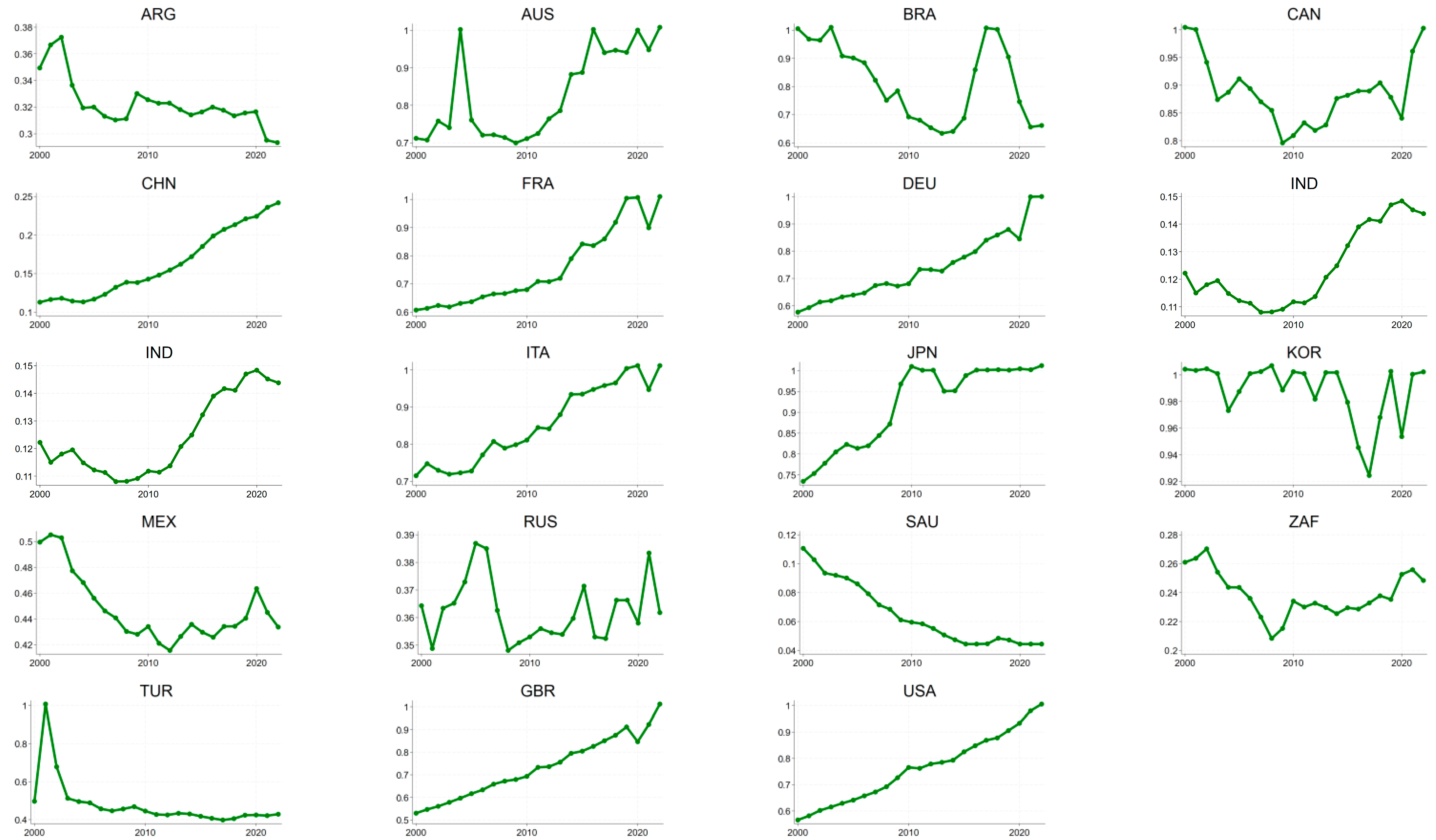
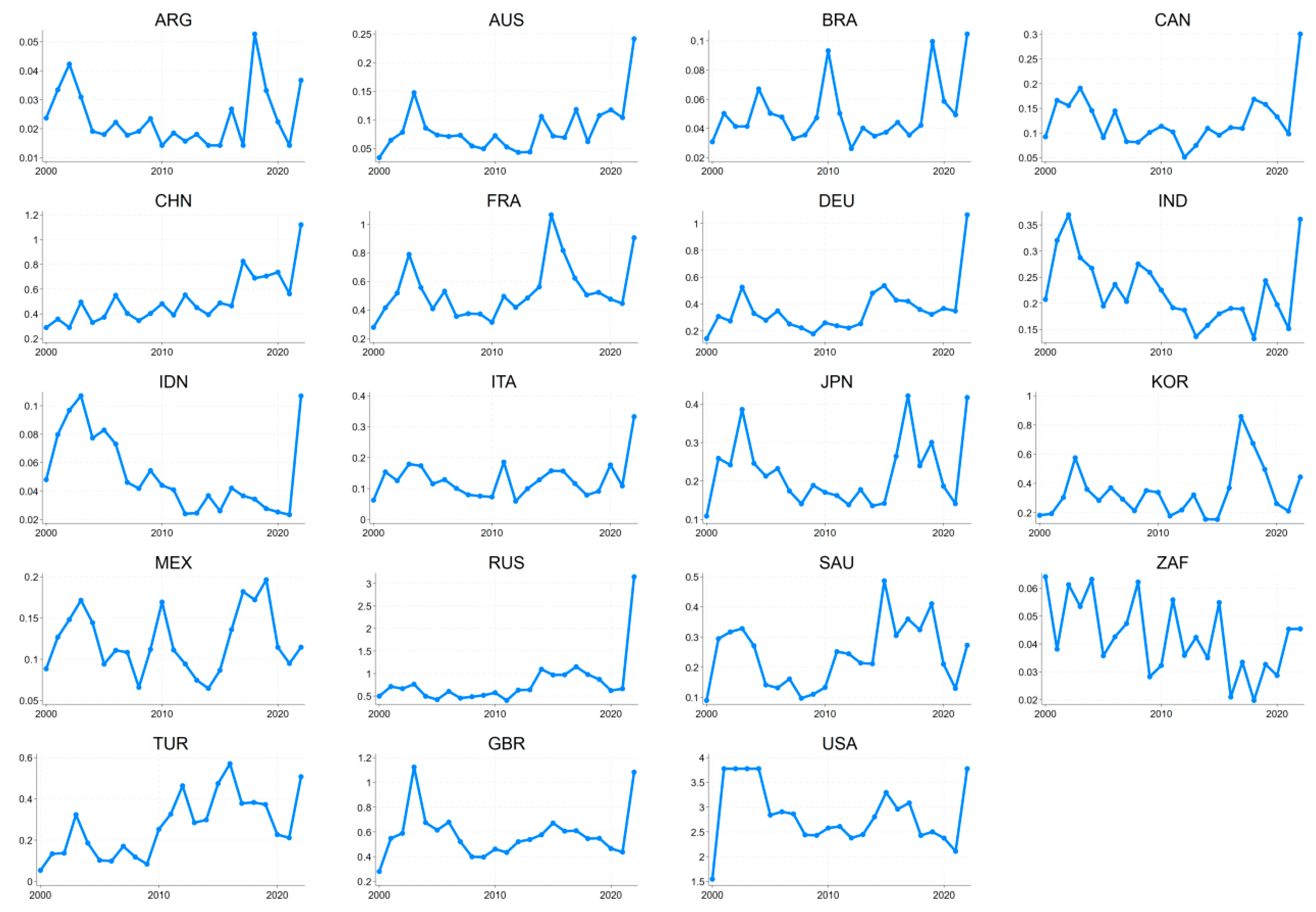
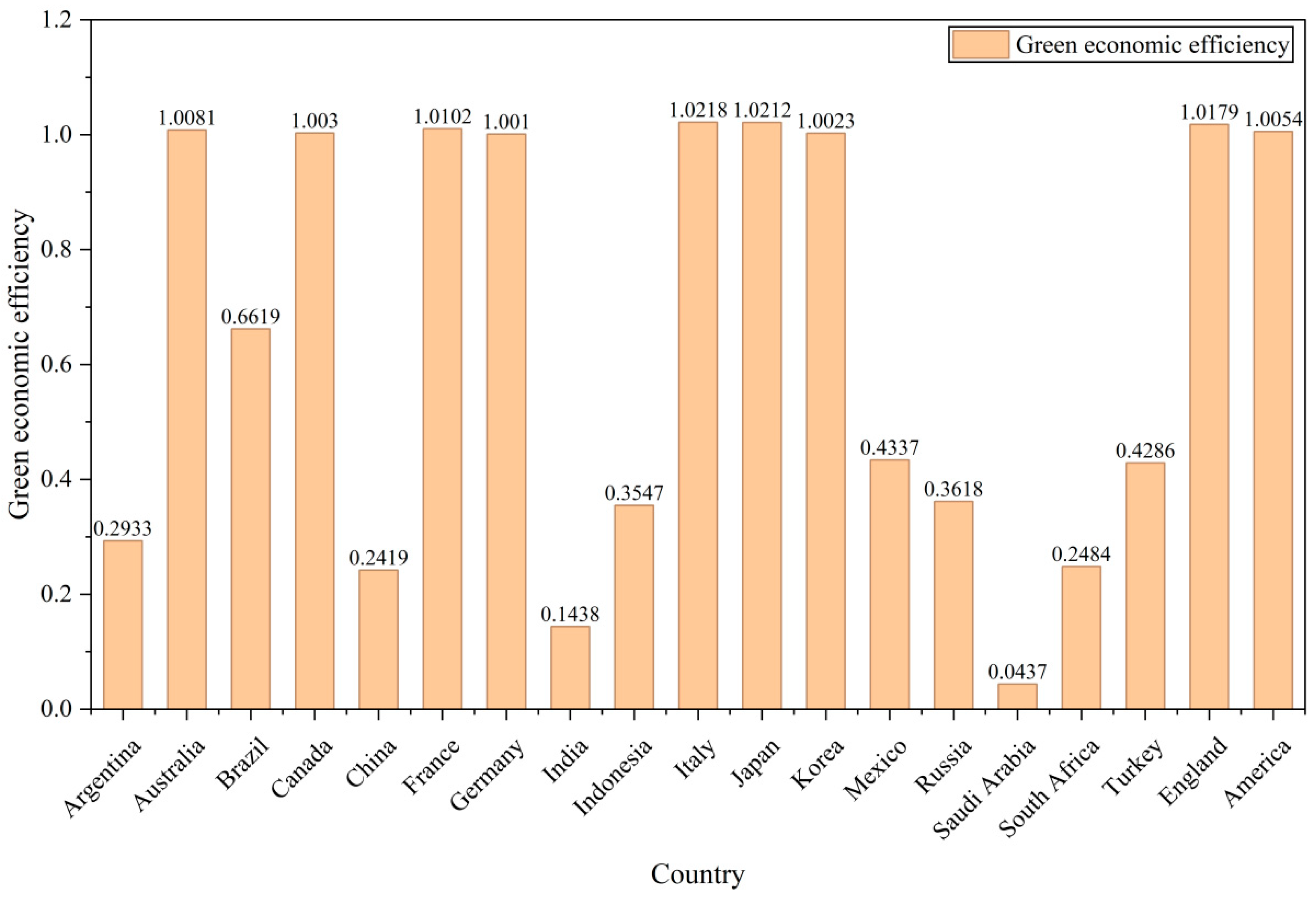
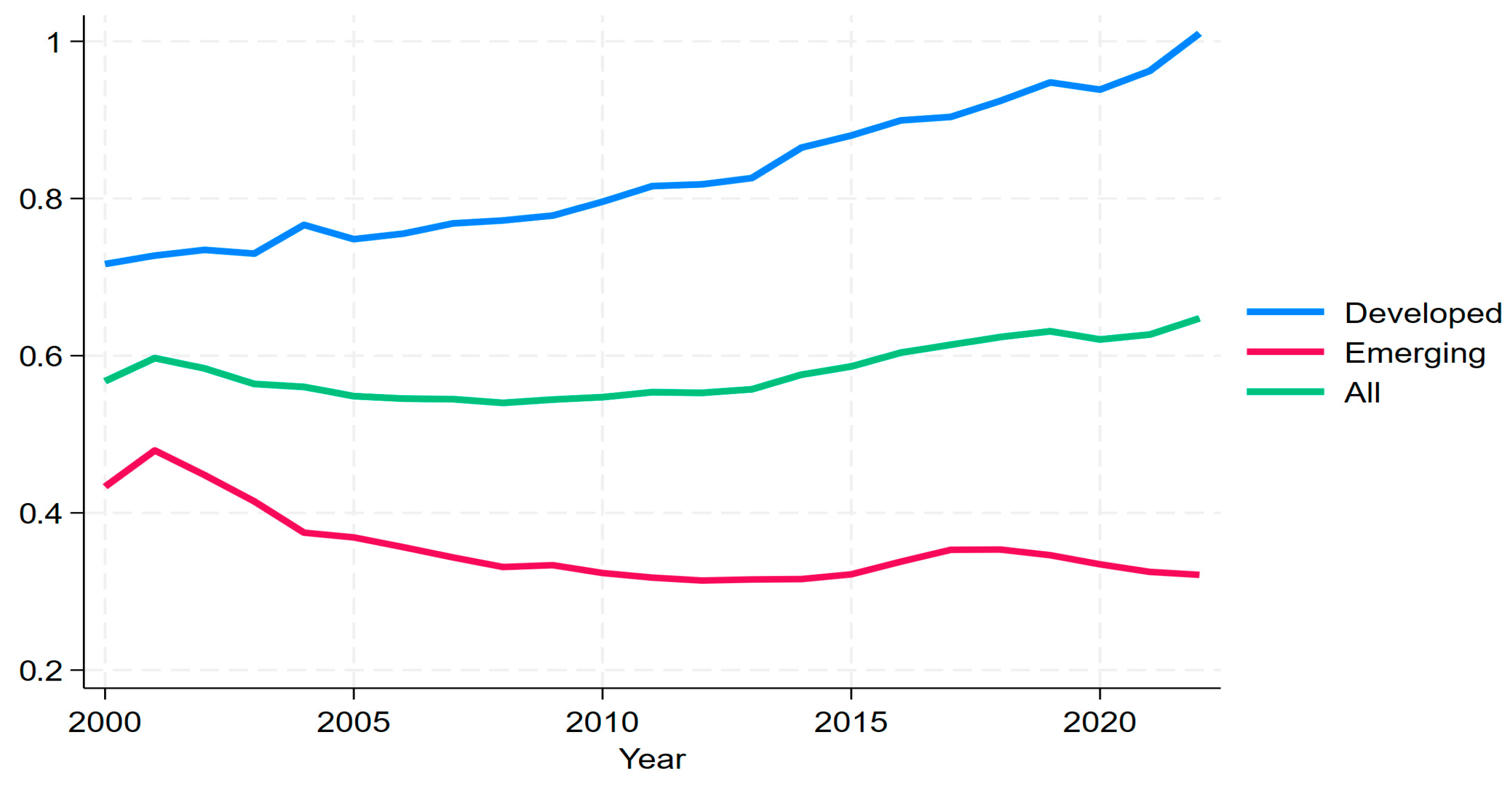
Table 3, the average value of green economic efficiency (GEE) is about 0.58, this means that overall, there is still significant room for improvement in the green production processes of various countries, with the average efficiency level reaching only 58% of the potential optimal level. This figure reflects that most countries have not yet achieved effective coordination of resource utilization, energy structure, and environmental governance, and the green transition is still at a moderate level. In addition, there is a significant gap between the maximum and minimum values of the GEE, indicating that the green development capabilities of different countries are highly unbalanced, showing clear transnational disparities. Geopolitical risk (GPRH) averages about 0.40. Its relatively large standard deviation and wide range indicate substantial cross-country variation over the sample period, in line with the rise in regional conflicts and terrorist incidents worldwide in recent years. Higher geopolitical risk often leads to declines in investment and employment and increases the risk of economic downturn. This suggests that geopolitical turmoil may weaken investment confidence and related channels, thereby hindering green investment and efficiency improvement.
As for the control variables, the minimum value of GDP per capita (AGDP) is 0.0089, and the maximum value is 0.598, indicating substantial differences in the level of economic development across the sample. AGDP reflects a country’s level of economic development, which in turn may affect its technological capacity, energy structure, and industrial structure. The mean and interquartile range of PD (population density) indicate substantial cross-country differences in population density. As a key demographic factor, population density is closely related to resource consumption. Population size and density can affect a country’s energy demand and pollution emissions. The range of inflation (INF) varies from mild deflation (minimum = −0.023) to high inflation (maximum = 0.494), indicating significant differences in macroeconomic stability across different countries and periods, which may affect the conditions for green investment. The standard deviation of trade openness (TRA) is 0.017, indicating relatively limited variation across countries. The minimum value of the urbanization rate (UP) is 0.289, and the maximum value is 0.919, indicating significant differences in the level of urbanization between different countries, which may impact the energy structure of these countries. The labour force participation rate (TLFP) is relatively concentrated (mean = 0.603, standard deviation = 0.058), indicating that the dispersion of labour supply is smaller than that of other macro factors. Overall, the descriptive statistics show sufficient variation across variables, providing a reliable basis for the subsequent regression analysis.
4.2. Main Regression
To test the impact of geopolitical risk on green economic efficiency, this paper first conducts a benchmark regression analysis.
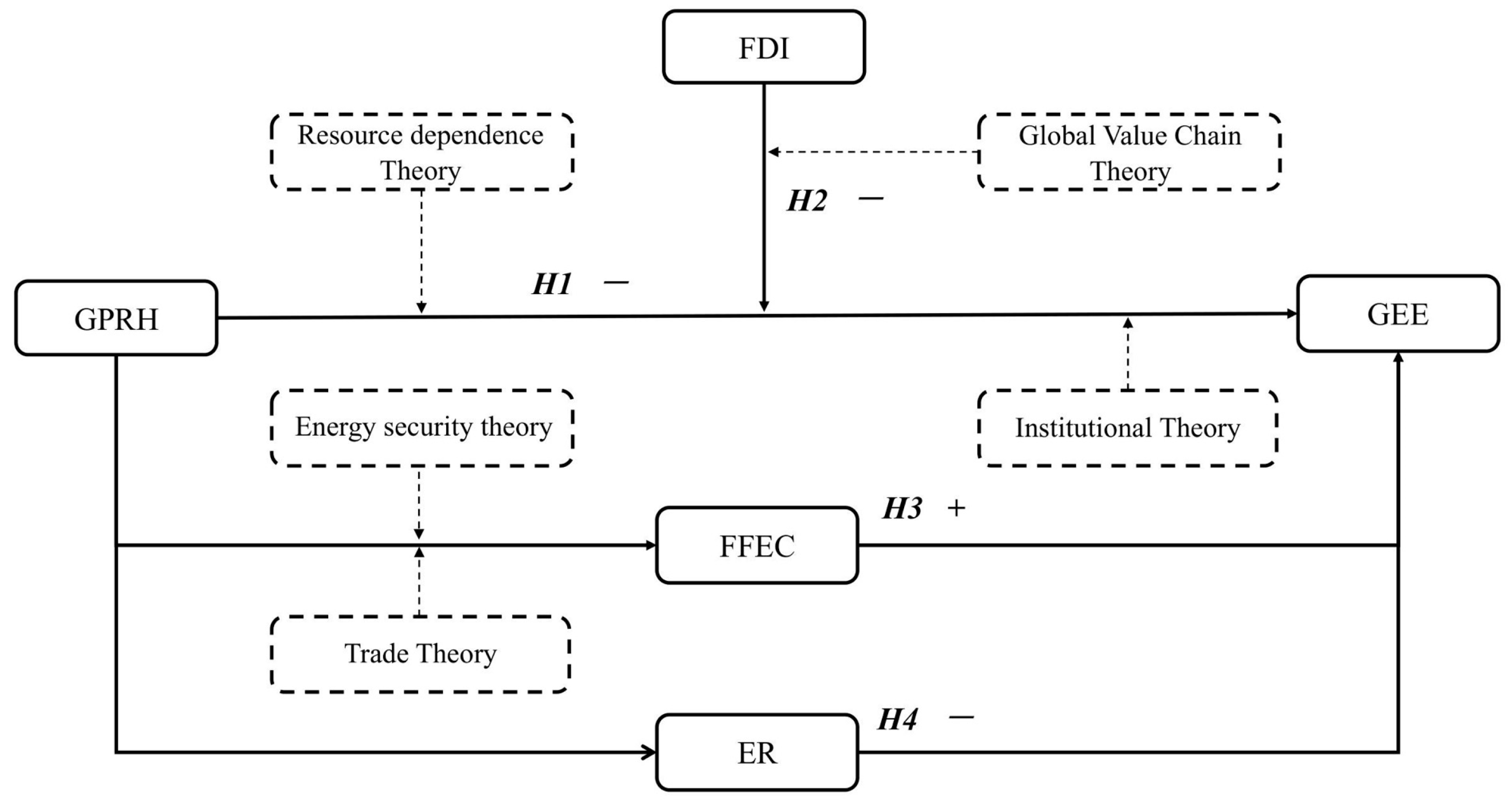
Table 4 reports the main regression results of the impact of geopolitical risk on green economic efficiency. Column (1) is the regression result containing only the core explanatory variable GPRH and the double fixed effect, and column (2) adds all the control variables to form a complete model. According to the regression results, the coefficient of GPRH is negative and significant at the 1% level, regardless of whether control variables are included. The coefficients are −0.0885 and −0.1001, respectively, based on the descriptive statistics, the standard deviation of GPRH is 0.651, and the mean of GEE is 0.580. Holding other factors constant, a one-standard-deviation increase in geopolitical risk is associated with an average decrease of approximately 0.065 units in green economic efficiency. This corresponds to an 11.2% decline relative to the sample mean. Therefore, hypothesis H1 is confirmed. These results indicate that rising geopolitical uncertainty constitutes an obstacle to the green transformation of the world’s major economies.
Further examination of the estimated coefficients of the control variables in
Table 4 reveals that the impact direction of most variables is consistent with expectations. In column (2), the AGDP coefficient is positive and significant, meaning that the higher the level of economic development, the higher the green economic efficiency of the country. The PD coefficient is positive and significant, indicating that the green economic efficiency of countries with higher population density is relatively higher. The INF coefficient is negative and significant, indicating that the decline in macroeconomic stability (i.e., the rise in inflation) is not conducive to green economic efficiency, which may be because high inflation weakens the ability to invest in environmental protection. The coefficient of TRA is not significant, indicating that the impact of trade on green efficiency varies from country to country. The coefficient of UP is positive and significant, indicating that the increase in urbanization can bring about economies of scale and more complete environmental protection infrastructure, thereby helping to improve green economic efficiency. The TLFP (total labour force participation rate) coefficient is negative and significant, which may mean that economies with high labour force participation are more dependent on traditional labour-intensive industries, which to some extent weakens the potential for improving green economic efficiency.
4.4. Heterogeneity Analysis
Although the benchmark regression analysis indicates that the rise in geopolitical risk significantly reduces the green economic efficiency of G20 countries, this relationship may vary due to core characteristics such as the level of economic development, energy endowment characteristics, and degree of trade openness in different countries. Therefore, we referenced relevant data from the International Monetary Fund (IMF) and the World Bank (WDI) to conduct grouped regressions based on three dimensions: economic development level, energy endowment, and trade openness.
Table 6 presents the research results.
The results in column (1), for the sample of developed countries, show that geopolitical risk has a significant negative impact on green economic efficiency, with a coefficient of −0.0307 that is significant at the 1% level. This result is consistent with the baseline regression. The intensification of geopolitical risks increases regional uncertainty, which hinders policy advancement to some extent. The commitments made by developed countries to environmental protection and climate action may be weakened under heightened uncertainty.
In contrast, in the sample of emerging economies shown in column (2), the coefficient of GPRH is negative but not significant. This indicates that in emerging market countries, the direct impact of geopolitical risk on green economic efficiency is not significant, reflecting a notable heterogeneity between developed and emerging economies. This difference may stem from the varying stages of development, industrial structures, institutional completeness, and environmental governance capabilities between the two types of economies. Therefore, the transmission channels and intensity through which geopolitical risks affect green economic efficiency differ across countries with different national characteristics. Therefore, policy-making should take this heterogeneity into account: developed economies need to focus on maintaining geopolitical stability to ensure the fulfilment of their environmental commitments, while emerging economies should strive to improve institutional development and enhance their resilience to external shocks.
Resource endowment is the core factor determining a country’s energy structure, transformation dynamics, and sensitivity to geopolitical risks. Based on the resource dependence theory, the economy and finances of energy-dependent economies are highly tied to their domestic fossil energy industries, while the energy supply of energy-independent economies is highly reliant on international markets. The impact of geopolitical risks on the green economic efficiency of these two types of economies differs. Columns (3) and (4) show the grouping of samples from energy-exporting and energy-importing countries. We dynamically grouped the samples over time based on the net energy imports data from the World Bank Database (WDI). The results indicate that, in the resource-rich group, the coefficient of GPRH on GEE is −0.1203 and significant at the 5% level, whereas in the resource-poor group, the effect of GPRH on GEE is not significant.
For energy-importing countries, their energy supply is highly dependent on the international market. Geopolitical risks leading to global energy price fluctuations and disruptions in cross-border energy transportation can directly impact the stability of their energy supply. To ensure energy security, these economies may have to increase fossil energy consumption in the short term. At the same time, higher levels of geopolitical risk can raise the import costs of green technologies and clean energy equipment, significantly negatively impacting the efficiency of the green economy.
For energy-exporting economies, their domestic fossil energy supply is sufficient, and the direct impact of geopolitical risks on their energy supply is relatively weak. At the same time, during periods of rising geopolitical risks, the increase in global energy prices boosts their fossil energy export revenues, which in turn weakens the short-term motivation for green transition, ultimately resulting in the negative impact of geopolitical risks not being statistically significant.
Finally, considering that trade openness may alter the impact of geopolitical shocks on technological development and green economic efficiency, we referred to the study by Suleman et al. (2025) and divided the sample into high-trade-openness and low-trade-openness groups [
67]. Columns (5) and (6) report the estimation results: in the high-trade-openness group, the GPRH coefficient is −0.1240 and significant at the 10% level; in the low-openness group, the coefficient is −0.1919, significant at the 1% level (t = −4.4600), and the absolute value is larger.
This indicates that geopolitical risks have a more pronounced impact on the green economic efficiency of low-openness economies. Low-openness economies typically face higher barriers to technology acquisition and weaker external financing channels. Geopolitical risks can lead to capital flight, increased import costs, and restricted access to critical green equipment, which can directly impact insufficient green investment and declining efficiency. In contrast, although high-openness economies are more exposed to external shocks, their trade partners and supply chain networks are more diversified, allowing them to mitigate risks and buffer the negative effects of geopolitical risks to some extent. As a result, they show a suppressed but weaker impact.
4.6. Endogeneity Test
If there is an endogeneity problem between geopolitical risk (GPRH) and green economic efficiency (GEE), the empirical results of this study may be biassed. To address potential endogeneity in the model, this paper employs the instrumental variable method.
This paper selects two instrumental variables. The first is military expenditure (as a percentage of GDP, MS), which is significantly related to geopolitical risk. The greater the geopolitical security pressure and the higher the geopolitical risk a country faces, the more likely it is to increase defence investment and military expenditure. Military expenditure is a direct reflection of geopolitical risk at the national fiscal level. At the same time, the scale of military expenditure is determined by a country’s long-term defence policy and the surrounding geopolitical situation and is not directly related to the country’s green economic efficiency. Second, the number of refugees accepted by each country in a given year (REF) directly reflects the level of regional geopolitical conflict and political instability. The higher the geopolitical risk in a region, the larger the refugee flows and, consequently, the more refugees host countries tend to accept. This variable is highly correlated with the core explanatory variable, geopolitical risk. The scale of refugee acceptance is mainly determined by the geopolitical conflict situation in the source country, which is exogenous to the host country’s green economic efficiency and has no direct correlation with the country’s energy transition process.
The first-stage regression results in columns (3) and (5) of
Table 8 show that both instrumental variables are significantly related to geopolitical risk (GPRH), meeting the relevance requirement for instrumental variables. The second-stage regression results in columns (4) and (5) show that, when the share of military expenditure and the number of accepted refugees are used as instrumental variables, the coefficients of geopolitical risk (GPRH) on green economic efficiency (GEE) are both significantly negative, at −0.1412 and −0.1106, respectively, and both are significant at the 1% level. This is consistent with the core conclusions of the baseline regression.
The results of the instrumental variable tests indicate that both instrumental variables are appropriate. The Kleibergen–Paap rk LM statistics for the underidentification test are 78.789 and 13.258, respectively, rejecting the null hypothesis of “instrumental variable underidentification,” indicating no underidentification problem. The Cragg–Donald Wald F statistics are 262.052 and 51.910, respectively, passing the weak instrument test, and the Kleibergen–Paap rk Wald F statistics are 115.435 and 27.950, indicating no weak instrument problem. Furthermore, a Hansen J overidentification test was conducted, with a test statistic of 0.263 and a p-value of 0.6078, confirming that both instrumental variables satisfy the exclusion restriction, indicating that the choice of instrumental variables is appropriate.
In summary, after using the instrumental variable method to address potential endogeneity issues, the core conclusion of this paper remains valid, namely, that the rise in geopolitical risk has a significant inhibitory effect on a country’s green economic efficiency, and the research results are robust.