Review

An Approach to Hygienic Surgical Gown Production Using Recycled Textile Waste and Natural Ingredients

1
Department of Clothing, School of Engineering and Technology, National Textile University, Faisalabad 37610, Pakistan
2
Institute of Soil and Environmental Sciences, University of Agriculture, Faisalabad 38300, Pakistan
3
Department of Materials, The University of Manchester, Manchester M13 9PL, UK
*
Authors to whom correspondence should be addressed.
Sustainability 2026, 18(6), 2881; https://doi.org/10.3390/su18062881
Submission received: 16 December 2025 / Revised: 4 February 2026 / Accepted: 11 February 2026 / Published: 15 March 2026

Abstract

The rapid rise in textile waste poses serious environmental concerns, while healthcare continues to rely on hygienic protective apparel such as surgical gowns. This has led to growing interest in sustainable alternatives that can address waste reduction while maintaining performance standards in medical use. This review explores the potential of utilizing textile waste, with particular attention to the incorporation of natural ingredients to enhance eco-friendly and hygienic properties. The addition of natural ingredients is highlighted for enhancing the eco-friendly and hygienic properties of nonwoven fabric. The reviewed studies evaluate key parameters for biocompatibility, including mechanical strength, fluid repellency, and color fastness, to ensure medical suitability. This review highlights the benefits of waste reduction and improved product performance, though issues of scalability and long-term durability remain. Overall, this review underscores the importance of sustainable innovation in healthcare textiles and offers valuable insights for further research and product development.

1. Introduction

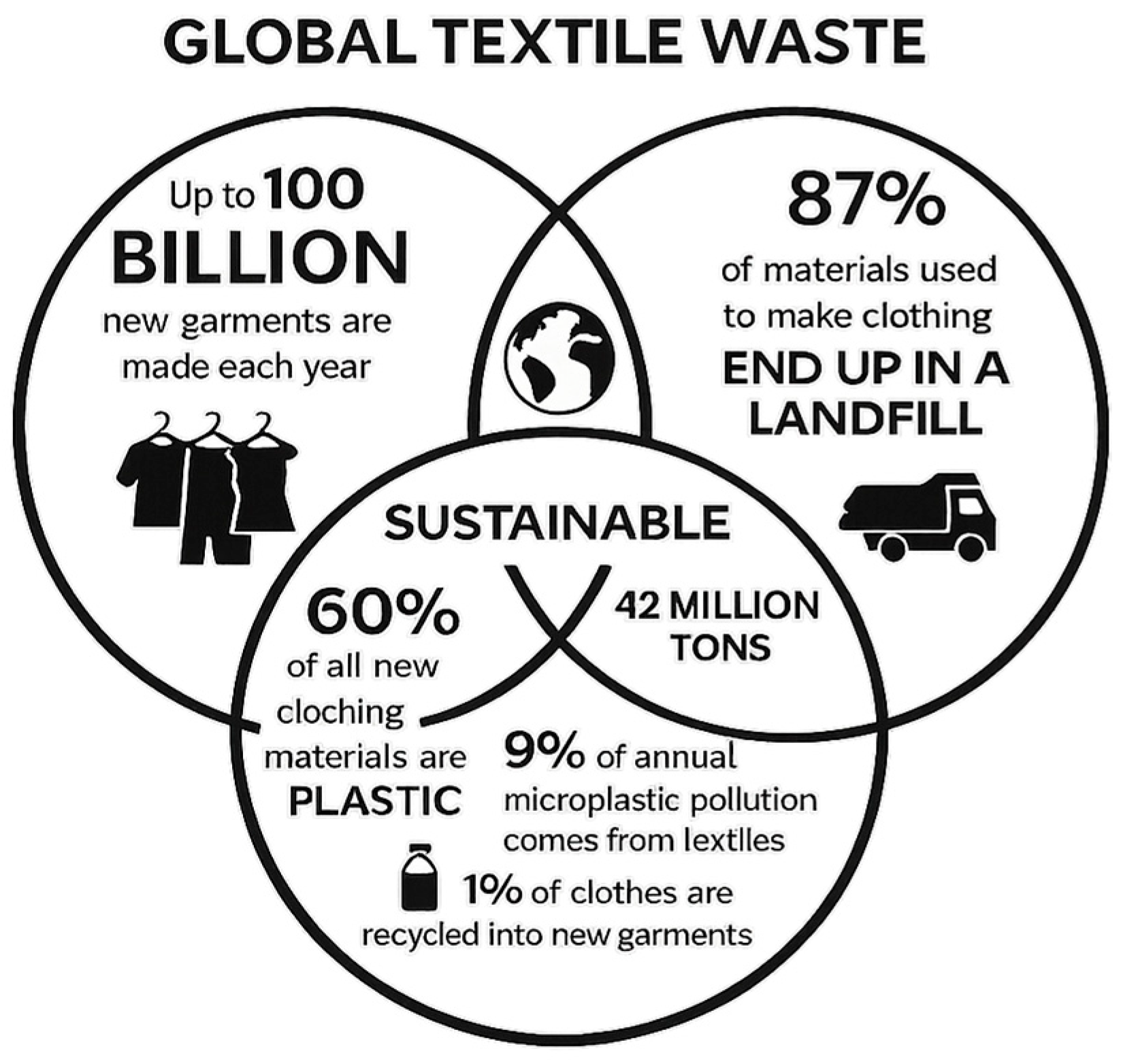
The textile sector is one of the largest contributors to environmental pollution due to the heavy reliance on chemical dyes and synthetic fibers, both of which have a significant negative impact. Synthetic dyes are not biodegradable because they are derived from petrochemicals and frequently produce hazardous by-products when they are disposed of that threaten human and animal health while damaging ecosystems. In healthcare, the widespread use of disposable protective garments, particularly surgical gowns, has intensified this problem. Conventional gowns are typically produced from petroleum-based materials that provide adequate protection but persist in the environment for extended periods after disposal, thereby adding to the growing medical textile waste burden [1]. The scale of the problem is reflected in global production patterns. Each year, the textile industry generates approximately 92 million tons of waste, with nearly 87% destined for landfills or incineration. Plastic-based fibers, which account for over half of textile products, further contribute to microplastic pollution, with the sector estimated to release more than 42 million tons of plastic waste annually. Unfortunately, just one percent of clothing is recycled into new items, as shown in Figure 1. This shows how urgently we need better, more sustainable ways to produce and manage clothing [2].
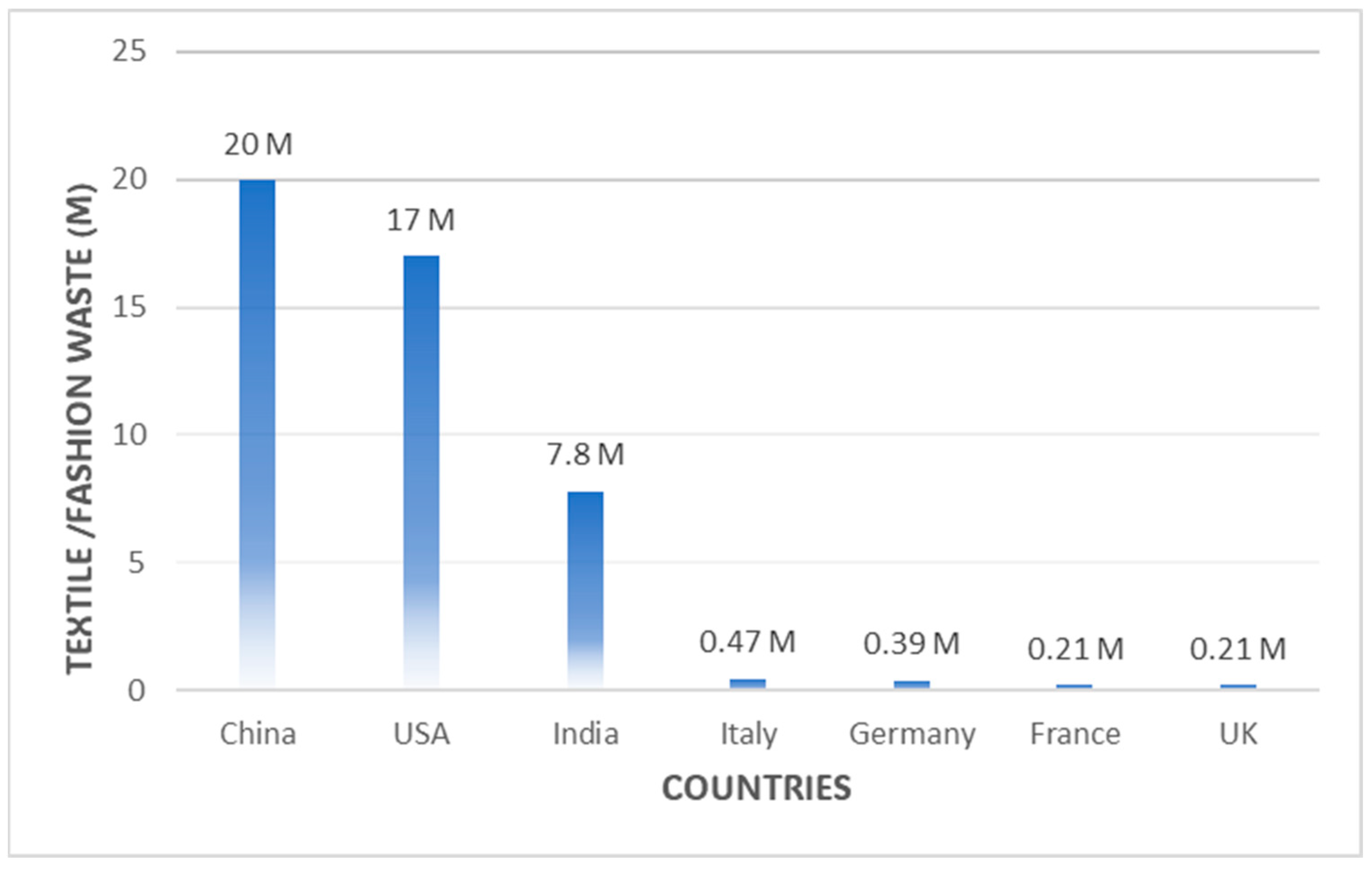
In healthcare, the urgency of textile waste is compounded by the rising demand for disposable gowns during public health emergencies such as the COVID-19 pandemic. While these garments are essential for infection control, their environmental impact highlights the need for more sustainable alternatives. In the United States, over 17 million tons of textile MSW (municipal solid waste) is generated, averaging 112 pounds per person. Roughly 66% of discarded clothing and textiles end up in landfills, of which up to 15% is recycled, and the remaining 19% is burned. The top countries producing textile fashion waste are shown in Figure 2.
Natural dyes generally decompose through biological processes, which means that they do not remain in waste streams for long. Many synthetic dyes, especially from the azo and disperse classes, are far more resistant to microbial attack and can linger in wastewater and textile residues. The cotton footprint is largely tied to farming-stage burdens such as fertilizers, irrigation, and land management, whereas polyester impact arises mainly from petroleum-derived raw materials and energy-heavy polymer production. Cotton’s environmental impacts are dominated by agricultural inputs, while polyester’s stem mainly from fossil-based feedstocks and energy-intensive manufacturing. Cotton fabric loses significant mass and deteriorates visibly within months, indicating active biodegradation, while polyester fabrics show minimal early change and remain essentially intact even under compost conditions. Because synthetic dyes are structurally complex and it is difficult for microbes to metabolize their residues, they are typically more persistent in waste as effluents. Table 1 illustrates the biodegradation timeline and CO2 footprint comparison of natural and synthetic fabrics [4,5,6].
While biodegradability may be a useful source that can help to lessen the environmental hazards of fiber waste, this advantage primarily applies to natural fibers. Natural fibers decompose quickly: cotton may take three months to decompose, linen decomposes within a few weeks, and silk takes one to two years. In contrast most synthetic fibers decompose slowly: polyester takes 20–200 years, nylon takes 30–40 years, and rubber takes 50–80 years. Garments made from synthetic fiber such as polyester and acrylic account for 60% of global purchases. In Pakistan, where solid waste totals 48.5 million tons and grows by over 2% annually, reducing, reusing, and recycling remain key priorities. Several approaches have been explored to address this challenge, including the use of biodegradable fibers, recycled textiles, and natural bio-based finishes. Studies indicate that recycled fibers may provide a safer and more environmentally responsible alternative [3].
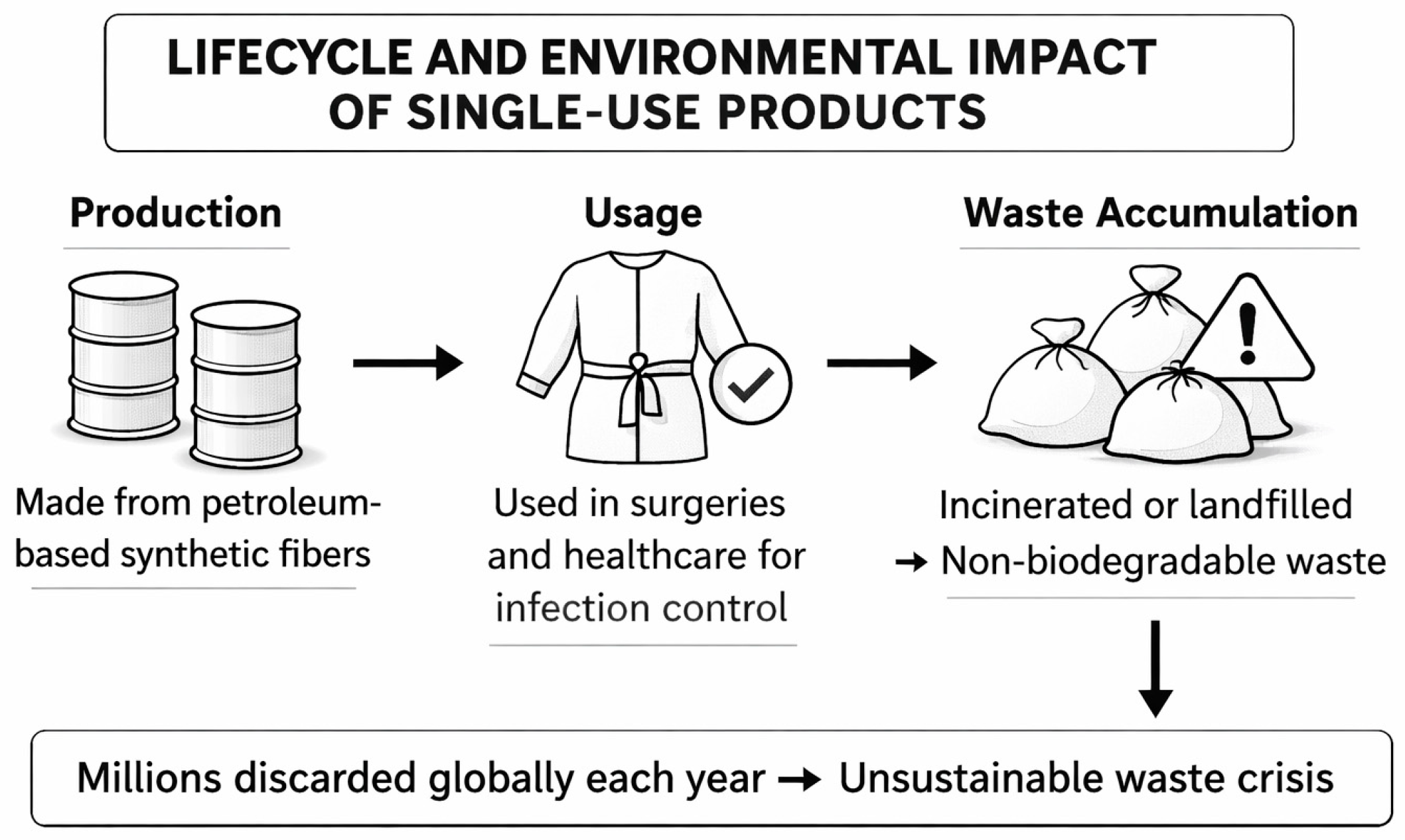
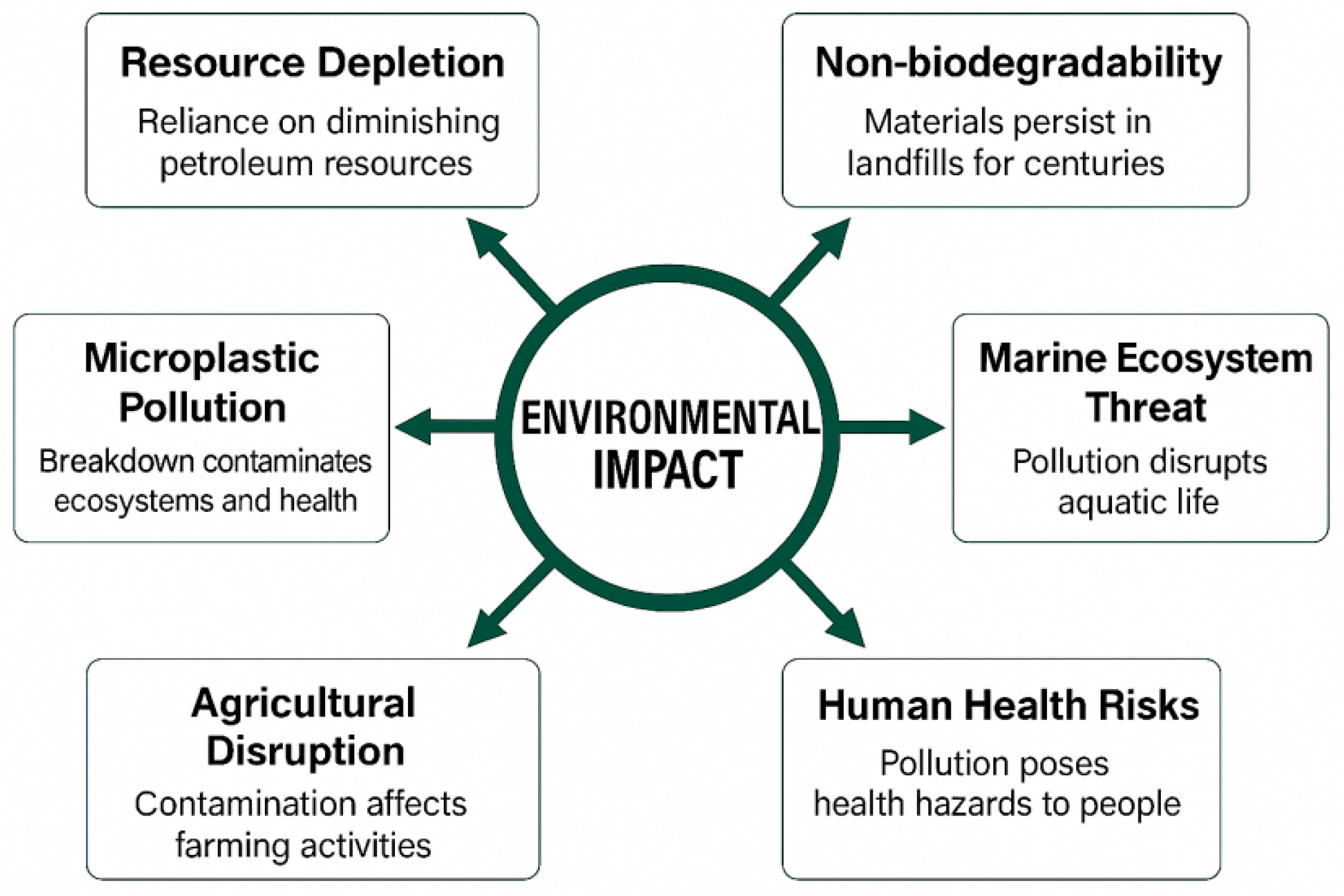
Millions of disposable surgical gowns are being used and discarded worldwide each year, reflecting the high demand for protective garments in the healthcare industry, driven by the need for effective infection control during operation and other treatments. Surgical gowns are an essential component of safety clothing, helping to prevent fluid and germ exposure, thereby protecting both patients and medical personnel. To function properly, protective garments must meet criteria such as fluid resistance, comfort, cleanability, breathability, flexibility, and thermal balance, particularly during extended use. Synthetic materials are extensively used due to their longevity and barrier strength. However, the extensive use of petroleum-based disposable gowns raises environmental concerns, as most are incinerated or sent to landfills, contributing to non-degradable medical waste. Gupta and Verma in their research emphasize that the growing number of discarded gowns is a global environmental concern and underscores the urgent need for sustainable alternatives that do not compromise medical safety or performance [7]. Figure 3 highlights the environmental effects of disposal.
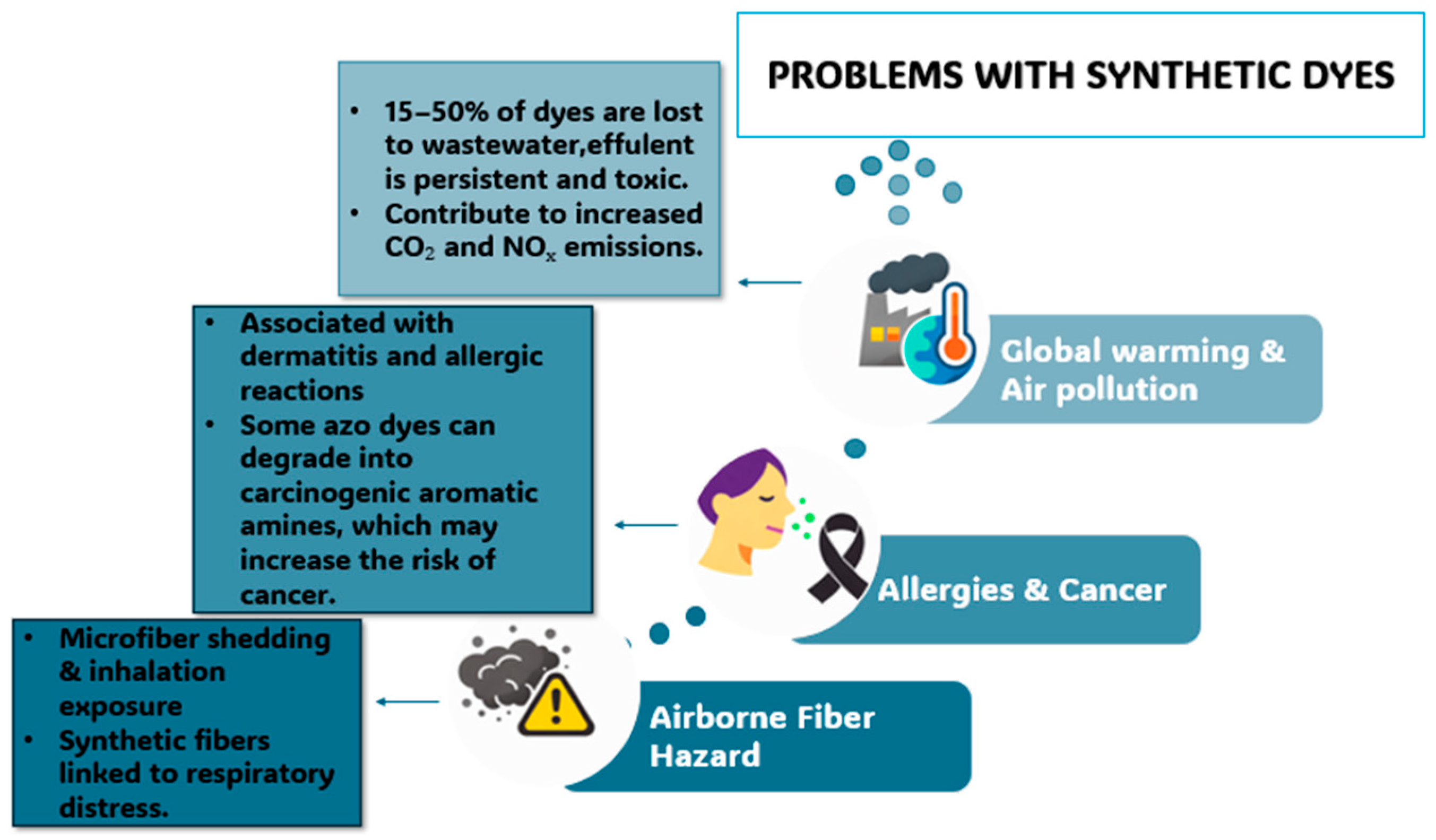
The use of petroleum-derived synthetic dyes in textiles introduces severe environmental and health risks. The global textile industry generates 20% of industrial water pollution due to the synthetic dyeing processes. Synthetic dyes are non-biodegradable, petroleum-based and release toxic effluents containing persistent compounds and prominent levels of heavy metals. Additionally, the combustion or breakdown of synthetic fabrics emits hazardous chemicals into the atmosphere, contributing to global warming and respiratory concerns. Textiles treated with synthetic dyes can cause allergies and cancer. Promoting a circular economy involves recycling textile waste through a combination of cellulosic fibers and renewable polymers, alongside the use of plant-based dyes in sustainable garment fabrication. Replacing hazardous synthetic dyes with natural ones benefits human health and the environment [8]. Some synthetic dyes can leech out of fabric onto the skin, especially with sweat or rubbing, which can cause irritation and adverse reactions. Certain azo-based dyes may also break down into toxic aromatic amines, and the long-term exposure to these chemicals over time is considered a serious health concern [9]. Airborne fiber hazards mean tiny microfibers released from synthetic, dyed clothes, which mix into the air during wearing, washing, or drying, especially in tumble dryers. People can inhale these microfibers, and, since they often carry dyes and chemical finishes, they contribute to air pollution and increase the risk of respiratory irritation over long-term exposure [10]. Figure 4 illustrates the environmental and health risks due to the pollution generated by dyes.
Synthetic dyes are a big part of textile waste toxicity, but it is not correct to label every synthetic dye as carcinogenic (cancer causing). The main health concern comes from azo dyes, especially azo dyes used on synthetic fabrics. In 2024, a Chemosphere study described two key mechanisms. First, some azo dyes or their impurities can be sources of aromatic amines, and these amines may cause cancer or sensitizing effects. Second, human skin bacteria can reduce the azo bond in dyes, releasing carcinogenic aromatic amines during real-wear exposure. International policies do not ban all synthetic dyes. They only stop specific azo dyes that can break into harmful cancer-causing chemicals. In the European union (EU), azo dyes that may decompose into any of twenty-two carcinogenic aromatic amines above 30 mg/kg are restricted, indicating that only amine-releasing azo dyes are legally allowed [9]. Natural dyes are valued for textile use because they are derived from renewable biological or mineral sources and are biodegradable, decomposing into harmless products in the environment. At the same time, a persistent limitation emphasized in the recent literature is their comparatively weaker color fastness relative to synthetic dyes. Previous studies highlight that their color durability is often inferior, with a lower resistance to washing, light exposure and rubbing. This reduced durability is attributed to issues such as non-uniform dye absorption, variability in natural dye composition, and weaker dye–fiber interactions. Current developments address this drawback while showing that ecosite mordanting, especially bio-mordants, together with better fabric pre-treatments and optimized dyeing conditions, can significantly improve fixation and fastness. Thus, natural dyes combine strong environmental benefits with a performance gap that ongoing technological advances are steadily narrowing [11].
The textile industry generates a variety of solid waste beyond just fibers, including metals, plastics, and paper. In Faisalabad, this sector produces about 794,209 kg of solid waste daily, amounting to 289,886,285 kg annually, valued at roughly US $125,027 per day. The study focused specifically on pre-consumer waste, none of which went to landfills. Waste was sorted manually and resold for reuse: cotton waste is supplied to brick kilns as fuel, fabric cuttings are used for rope-making, stuffing, and rags, iron scrap is sent to the junk market, paper is recycled, and chemical drums are returned to industries for refilling, thereby reducing packaging costs [3]. However, natural alternatives lack the durability and protective performance required in clinical environments, while large-scale recycling technologies remain underdeveloped. In addition, cost–benefit analyses and standardized performance assessments are limited, leaving critical knowledge gaps. One of the biggest challenges in tackling this issue is the complex composition of textile materials that are expensive and difficult to separate. As a result, recycled textiles are usually turned into lower value products such as rags, insultation, and mattress filling rather than restored to high-grade fabrics. Mechanical recycling weakens fibers and diminishes their quality, limiting their reuse in clothing. These inefficiencies lead to an estimated annual loss of $500 billion. Addressing this issue requires urgent investment in advanced technologies and circular economy practices that can manage waste at large scales [12].
The production process itself contributes to the carbon footprint each year. The global textile industry emits over 1.2 billion tons of CO2 emissions annually. Moreover, synthetic fibers, which dominate the market, contribute to long decomposition times and release microplastics into marine ecosystems. The production of synthetic fibers such as polyester and polypropylene requires enormous amounts of energy and depends heavily on fossil fuel resources. Manufacturing polyester releases a lot of carbon dioxide emissions and consumes substantial water and energy. Polypropylene is made from non-renewable sources, though it offers useful properties such as a strong resistance to fluids. Despite their effectiveness in medical applications, these fibers pose environmental challenges both during production and after disposal [13]. In previous research, Patel et al. argue that the continued use of virgin synthetic materials in medical textiles is environmentally unsustainable. There is a growing consensus that the industry must shift toward recycled synthetic fibers, which reduces carbon emissions, conserves resources and supports circular economic models without sacrificing the required protective properties [14]. Figure 5 demonstrates the environmental impact of synthetic materials.
One of the most promising approaches to sustainable development is the utilization of textile waste, particularly pre-consumer synthetic textile waste. This includes fabric off-cuts, production leftovers, and defective rolls that are usually discarded during the manufacturing process. These materials are often clean and uniform, making them ideal for recycling into new functional fabrics. According to Bhuiyan et al., pre-consumer textile waste can be recycled to make high-performance textiles with minimal environmental impact. Reusing this type of waste can help divert significant volumes of synthetic material from landfills and incineration facilities. This approach also aligns with the broader goal of reducing waste generation and promoting sustainable production in the textile industry [15]. Unlike prior textile circularity reviews, the present review treats hygiene and barrier performance as a primary decision criterion for adopting circular pathways in medical textiles. Specifically, it synthesizes evidence on antimicrobial effectiveness and fluid/blood penetration resistance to determine whether circularity remains compatible with healthcare safety requirements.
Sharma et al. discuss various circular economy practices in the textile sector, categorizing them into broad categories such as policy design, waste recovery, business models, technology collaboration, and assessment, with a strong focus on recycling approaches like increasing recycled fiber content and improving sorting systems. However, their review remains at the sectoral strategy level; it fails to answer a critical question for the health industry: whether medical textiles/PPE derived from recycled content can consistently meet the required hygiene and protection performance. In contrast, the present review concentrates specifically on medical applications examining whether circular methods, especially recycling, maintain essential safety requirements such as antimicrobial performance and resistance. This provides new insights beyond the general textile circularity literature by connecting circular solutions with clinical suitability and patient safety [16].
Remirez-Escamilla et al. summarize circular economy strategies within the textile industry primarily from a sustainability and waste management point of view. Their findings indicate that the current literature is dominated by recycling, reuse, repair, and reduction and is typically evaluated based on environmental, social, and economic impacts. While this framework explains how circularity is promoted at a broader system level, it does not answer an important healthcare question: Do recycling-based methods maintain the hygiene and protective functions needed for medical products? In contrast, the present review differs by shifting the focus from general circularity outcomes to medical end-use validation, specifically examining whether recycled-content medical textiles/PPE can still meet required protection metrics, most importantly antimicrobial effectiveness and fluid/blood barrier resistance. By connecting circular strategies with actual safety and performance evaluation, this review offers new insights that go beyond general circular textile research and directly support safe use in clinical environments [17].
Saha et al. review circular economy research within the textile and clothing sector, focusing primarily on the system and industry level and mapping themes such as circular business models, consumer behavior, recycling/upcycling, institutional drivers, and assessment tools (e.g., LCA). Notably, their discussion of hygiene concerns is limited to consumer trust issues regarding secondhand use, rather than technical safety specifications or performance requirements. In contrast, the present review contributes a distinct and clinically relevant perspective by focusing on recycled medical textiles/PPE content and evaluating whether circularity pathways preserve medical-grade hygienic performance, specifically antimicrobial effectiveness and fluid/blood barrier resistance. By linking circular strategies with safety tests and end-use performance, this review fills an important gap in textile circularity research and treats hygiene and barrier protection as key decision factors for adopting circular methods in medical textiles [18].
Plakantonaki et al. reviewed recent progress in converting agricultural waste into functional cellulose fibers for textiles and nonwovens, which outlines two main routes: firstly, the direct extraction/purification of natural cellulose fibers from agro waste; and second, the production of purified cellulose pulp followed by regeneration into man-made cellulosic fibers. They explain that natural fibers can be strong but rougher and less white, while regenerated fibers are smoother but may need more chemicals and energy unless closed-loop systems are utilized. Importantly, they note that industrial-scale sustainability claims require standardized processing as well as robust life cycle and technoeconomic assessment [19]. An earlier study followed a pulp-based valorization route for pineapple leaf fiber (PALF), comparing alkaline (NaOH) and bio-based (soap nut) pulping to produce a highly absorbent pulp suitable for eco-friendly sanitary pads. The selected pulp was then used for prototype development and benchmarked against commercial pads for key hygiene performance and safety tests [20].
The shift toward reusable or biodegradable protective garments in healthcare is gaining momentum; however, progress remains limited. Eco-friendly fabrics, such as bamboo and polylactic acid (PLA), lack the durability and fluid resistance required for medical use. Reusable gowns risk losing sterility after repeated washes, and biodegradable alternatives may degrade prematurely or unevenly. Tang notes that sustainable options often fail to meet clinical standards, leaving single-use synthetic PPE as the most reliable choice in current healthcare settings [12] The COVID-19 pandemic led to an unpresented rise in the use of personal protective equipment, such as surgical masks and gowns, which resulted in a significant increase in medical textile waste. The widespread disposal of these materials has also raised concerns regarding their biological effects, including the risk of disease transmission and microplastic pollution. These issues have increased the health risks associated with inadequate waste management during the pandemic [21].
Beyond assessing the scale of medical protective clothing waste, this review expands the discussion toward PPE-specific end-of-life solutions. Because these items are often contaminated and comprise mixed polymers/additives, conventional mechanical recycling is challenging. A clearer, solution-oriented framing positions chemical recycling as a practical route for such waste streams. In particular, pyrolysis (thermal cracking in the absence of oxygen) can treat disinfected, unsorted PPE, which is usually rich in polypropylene. This process converts the waste into oil and gas fractions that can serve as fuels, refinery feedstocks, or chemical precursors. In addition, it produces a solid material that may be useful for carbon-based materials or as an absorbent. For PPE parts made from suitable polymers such as PET, solvolysis can selectively break the plastic back down into monomers or other valuable intermediates using appropriate solvents and catalysts. To make the review more relevant for real-world applications, it briefly summarizes the key factors needed to implement these technologies: reactor types, operating temperature ranges, catalyst choices, tolerance to contaminants, and requirements for downstream product purification. It also incorporates life cycle assessment (LCA) evidence to show under what conditions these routes reduce greenhouse gas emissions and fossil resource use compared with incineration or landfilling. Finally, the review benefits from a holistic solutions framework for combining chemical recycling with upstream measures such as design-for-recycling PPE (mono-material designs, fewer additives), improved collection and pre-treatment, and safe reuse/sterilization options, following a hierarchy of reduce, reuse, recycle for the circular management of medical protective clothing [22,23,24]. In addition to chemical recycling, the review briefly outlines complementary strategies such as reuse-capable PPE systems, the mechanical recycling of clean mono-material fractions, gasification or co-processing for highly contaminated residues, and emerging solvent-based purification or bio-based PPE materials, together with appropriate collection and policy instruments, to present a more comprehensive toolbox for circular PPE management [25,26].
Although natural substances like turmeric, aloe vera neem, and pomegranate peel have well-known antimicrobial and antioxidant properties, their use in hygienic textiles is still minimal. This limited adoption stems from practical challenges, such as low durability, degradation under light and moisture, and reduced effectiveness after washing. Manufacturing constraints and the need for chemical binders to fix these agents further complicate their integration. According to Tang, natural ingredients are not widely used in hygienic textiles despite their benefits, primarily due to ongoing concerns regarding cost, performance consistency, and industrial compatibility. Nevertheless, driven by rising interest in biodegradable and safer materials, research continues to explore sustainable alternatives to synthetic chemical treatments [12].
This review examines the development of sustainable surgical gowns as hygienic products by converting textile waste into nonwoven fabric using the spun bond method, thereby laying a foundation for environmentally responsible protective apparel. Its main purpose is to evaluate how waste-derived fabrics and natural-dyed treatments can meet clinical performance requirements while reducing the reliance on conventional synthetic materials and chemical finishes. The review addresses three core questions: Firstly, how can textile waste be effectively transformed into nonwoven structures suitable for surgical gowns? Secondly, in what ways do natural dyes/ingredients contribute to antimicrobial activity and hygiene in surgical textiles? Thirdly, how do critical performance parameters, i.e., the mechanical strength, fluid repellency and color fastness of this hygienic gown, compare with those of traditional products? To address these questions, the review first examines global textile waste production and management, alongside the associated environmental and health impacts of textile waste. It considers the role of natural ingredients in hygienic surgical textiles and introduces key strategies for achieving both functional performance and material sustainability. The subsequent sections describe functional performance and material sustainability, the collection of textile waste and its conversion into a spun bond nonwoven substrate, and the application of a functional natural finish. The review then evaluates performance outcomes, specifically mechanical strength, fluid repellency and color fastness, and concludes with a discussion of the sustainability and lifecycle considerations of surgical gowns produced from textile waste and natural finishes.
Table 2 provides a gap analysis of textile waste in relation to hygienic properties and products.

2. Global Textile Production and Waste Management

Yalcin-Enis, M. Kucukali-Ozturk, and H. Sezgin examined the growing issue of textile waste and divided it into three categories, which are production waste, pre-consumer waste and post-consumer waste. They stated that around 35% of initial textile material is wasted during the production and pre-consumer phases, with the remaining 65% making it to the consumer market. When it comes to post-consumer trash, the study discovered that approximately 45% may be used as secondhand clothing, 30% can be transformed into industrial rags, 20% can biodegrade in landfills, and only 5% is absolutely non-recyclable. The study emphasized that textiles are virtually 100% recyclable, but a considerable amount still ends up in landfills. The study highlighted the possibilities for waste reduction and environmental protection by focusing on upcycling, such as employing textile waste in insulating materials or composite goods [61]. Table 3 provides a breakdown of textile diversion.
In 2021, Kenny and Priyadarshini investigated the management of healthcare waste (HCW) and its associated environmental and health issues. Their study identified a research gap in the development of scalable and sustainable waste management solutions, noting that the current approaches result in toxic emissions, groundwater contamination, and the spread of infectious waste. The study divided HCW into two categories: pre-consumer waste, which occurs during the manufacturing process, and post-consumer waste, which results from clinical use. Notably, 85% of HCW is estimated as nontoxic, with 15% categorized as hazardous. Globally, waste generation rates vary significantly, with estimates ranging from 0.5 to 8.4 kg per hospital bed per day. The finding emphasis a lack of comprehensive worldwide legislation, insufficient funding, and slow adoption of sustainable waste management strategies required to address the growing hazards posed by HCW to public health and the environment [62].

3. Environmental and Health Impact of Waste

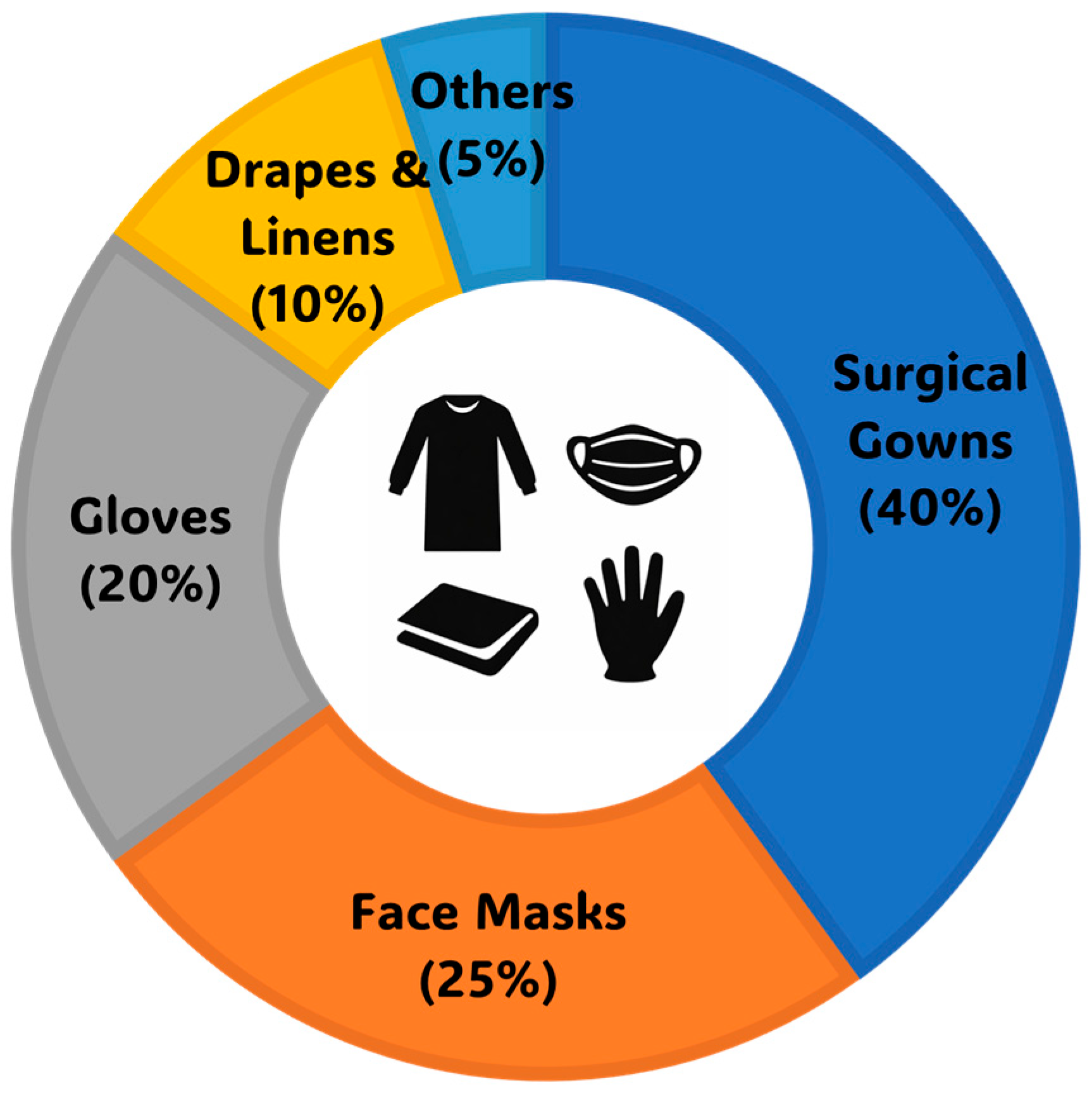
In 2024, GAO examined textile waste management in the US, analyzing recycling challenges and the environmental impacts of textile waste, medical textiles and inadequate recycling infrastructure. The study found a 50% rise in textile waste from 2000 to 2018, with 66% landfilled, 19% incinerated, and only 15% recycled, highlighting significant inefficiencies in waste recovery. Pre-consumer trash (30–40%), such as fabric off-cuts, manufacturing scraps, and unsold stock, is simpler to recycle, whereas post-consumer waste (60–70%), such as abandoned clothing, hospital linens, PPE, and surgical gowns, is more challenging, owing to contamination. Medical textile waste has gradually increased since 2007, driven by the rising demand for disposable medical items, as shown in Figure 6 [63].
In 2010, Wang investigated fiber and textile waste management, focusing on the increasing worldwide fiber consumption and its environmental consequences. The study divided textile waste into two categories: pre-consumer (manufacturing by-products) and post-consumer (discarded textiles). In 2007, the United States created 11.9 million tons of textile trash, accounting for 4.7% of municipal solid waste, with just 15.9% recycled or reused. The remaining 84.1% was either landfilled (54%) or burnt (13%), with 33% recovered for composting or recycling. In the United States, carpet waste alone accounts for 2–3 million tons each year, with most of it made up of nylon (60%), polyolefin (29%), and polyester (10%). A significant gap exists in improved recycling methods, as most of the textile waste is still disposed of in landfills or incinerators, depleting resources and harming the environment. The study explores fiber recycling technologies, emphasizing closed-loop recycling as a promising solution for producing high-quality materials [64].
The improper management of clothing waste causes severe global health risks. The textile industry releases effluents containing carcinogenic substances such as naphthalene and benzidine, which are linked to skin, respiratory, and blood-related disorders. Synthetic fabrics such as polyester shed over 700,000 microfibers per wash, polluting air, water and food chains, and posing risks to vulnerable food populations. Furthermore, residuals chemicals in textiles including heavy metals and azo dyes are associated with cancer, endocrine disruption and neurological damage [65]. The decomposition of textile waste contaminates soil, water, and air, while waste pickers are directly exposed to hazardous toxins and fumes from burning. In Ghana and Chile, imported clothing waste pollutes waterways and releases harmful emissions, disproportionately impacting marginalized communities. The persistence of microplastics further raises concerns about long-term health impacts, including inflammation, oxidative stress and immune system disruption. These issues highlight the urgent need for sustainable textile practices and strict waste management policies [66].
Eric Vozzola and his colleagues investigated the environmental effect of a disposable and reusable isolation gown using a life cycle assessment (LCA). They examined 1000 typical uses encompassing all phases, from production to disposal, in terms of energy use, greenhouse gas emissions, waste use and solid waste output. The study showed that reusable gowns performed significantly better than disposable gowns, reducing energy use by 28%, greenhouse gas emissions by 30%, water use by 41% and solid water by 93–99%. Because of their durability and numerous uses, reusable gowns had a significantly smaller overall environmental impact, even if they required more energy and water to launder. The main problem was the high environmental footprint of disposable gowns, which is often overlooked in healthcare [25].

4. Importance of Natural Ingredients

Natural ingredients have played a crucial role in human civilization for thousands of years and were primarily used in clothing art and cultural practices. Archeological findings have shown that natural colorants were used as early as 2600 BC in the Indus Valley civilization. In Ancient Egypt, indigo and safflower were used to dye linen, while, in China and Japan, plant-based dyes were applied to silk. Similarly, cochineal insects and shellfish were sources of brilliant red and purple dyes for luxury garments in Europe and South America. These dyes carried cultural, spiritual and social meaning beyond aesthetics. Before the invention of synthetic dyes in 1856, natural dyes were the only source of textile coloration worldwide. Their long-standing effectiveness and sustainability highlight their value as an eco-friendly alternative, making them especially relevant today in addressing textile waste and in the development of hygienic products that prioritize environmental responsibility [67].
Natural ingredients are increasingly important in the textile industry, as they help to reduce environmental impact, support better compatibility with human health as a hygienic factor, and also play a vital role in encouraging a transition to circular, bio-based production models. Wet processing stages such as dyeing and finishing are recognized as major sources of pollution because they consume large amounts of water, energy and synthetic chemicals. A recent study indicates that replacing petrochemical dyes with natural dyes derived from plants, insects or minerals can decrease toxicity and improve biodegradability while still providing acceptable color performance when optimized extraction and mordanting methods are used [5]. Beyond colorant, a major area where natural ingredients are transforming textiles is the use of microbial enzymes as biocatalysts instead of harsh chemicals in pre-treatment, i.e., bleaching, scouring and finishing. Several reviews on enzyme-based textile processing report that cellulases and related enzymes can be used for desizing, bio-scouring, bio-polishing, and denim (stone washing) under gentler conditions. These processes help to cut down energy water and salt consumption, while preserving and in many cases enhancing the fabric’s handle and strength [68]. These enzyme-based treatments are now commercially used as eco-friendly solutions for modern textile finishing, for example, in bio-polished cotton knitwear and enzyme-washed denim. They are often promoted as eco-finished products because they rely on fewer harsh chemicals and generate less polluted effluent [69].
Natural ingredients are also widely used as functional finishing agents to give textiles added properties such as antimicrobial effects, including skin-care benefits and UV protection. Experimental work showed that neem (Azadirachta indica) extracts applied to cotton have a significant antibacterial activity and durable reduction in bacterial counts. And it demonstrated the feasibility of herbal antimicrobial finishes for apparel, medical and hygiene textiles [70]. A review of natural antimicrobial agents identified neem, aloe vera, chitosan, basil, turmeric, clove oil, and pomegranate as promising bio-based alternatives to conventional synthetic antimicrobial agents. They offer key benefits such as better biodegradability and lower toxicity [71]. In a previous review, aloe vera has been studied for use in comfort and medical textiles on account of its soothing, moisturizing and generally low-irritation profile when finished onto cotton and blended fabrics [72].
At the fiber and polymer level, bio-based materials such as poly (lactic acid) represent another class of natural ingredient-based textile product. PLA fibers are produced from renewable sources such as corn starch or sugarcane and are compostable under controlled conditions, making them effective as an alternative to conventional petrochemical polyester in apparel, nonwoven, and technical textile [73].
Natural dyes are increasingly important in the sustainable fashion and textile movement and the circular economy. They support eco-conscious fashion by replacing synthetic dyes with alternatives that reduce waste, pollution and resource depletion. Since natural dyes are biodegradable and can be sourced from agricultural and food waste (such as onion peels and pomegranate rinds), they contribute to resource recycling and waste reduction in fashion supply chains. Furthermore, their use promotes slow fashion principles by emphasizing long-lasting, high-quality garments. By combining environmental benefits with social and cultural values, natural dyes strengthen the circular fashion model where resources are reused, recycled and regenerated; thus, their adoption by clothing industries reflects a strong commitment to both ecological and social sustainability. Using dyes such as turmeric, henna, and indigo reduces chemical waste and aligns with global goals of sustainable and green production. Moreover, natural dyeing processes often require less energy compared to industrial-scale synthetic dyeing. Therefore, their integration into clothing industries supports eco-friendly production practices, water conservation, and reduced chemical dependency [74].

5. Functional Performance and Sustainable Material Strategies

Studies evaluating surgical gown performance highlight both functional shortcomings and opportunities for sustainable innovation. Kishwar and Ali examined gowns from 15 hospitals for liquid penetration resistance before and after 5, 10, 15, and 20 wash cycles, finding that, while resistance improved slightly after initial washes, repeated laundering degraded water-repellent finishes, weakened fabrics, and increased tearing or discoloration, especially in hydrophilic cotton gowns whose moisture-retentive surfaces facilitated liquid penetration. None met international fluid-resistance standards, posing infection risks to healthcare personnel and patients [75]. Aslan, Kaplan, and Çetin compared disposable, reusable polyester microfiber and polyester/cotton woven gowns, reporting superior comfort and microbial protection in reusable polyester microfiber gowns, whereas disposable gowns were less comfortable due to stiffness, and polyester/cotton gowns failed to block bacterial penetration without laundering. These results indicate that incorporating recycled polyester fibers for durability, biodegradable materials to reduce waste, and natural dyes or plant-based water-repellent finishes could enhance comfort, microbial resistance, and liquid protection while advancing sustainability goals in surgical gown production [76].
In 2021, Babu et al. developed eco-friendly medical textiles like diapers, sanitary pads, and wound dressings by coating natural ingredients, including natural fibers such as organic cotton, sterilized cotton and bamboo, with silk fibroin protein. This protein was extracted from raw silk through processes like degumming, dissolving and dialysis. They enhanced these fibers with natural antimicrobial oils like neem and clove that help to prevent infections. The study tested water retention, absorption, thickness, antibacterial effectiveness, and silk fibroin’s structure, confirming the textiles’ superior performance. Tests showed that these new products absorbed more water, had better antibacterial properties, and were thinner than commercial alternatives. Neem oil had the strongest antimicrobial effect, and silk fibroin itself showed unique antibacterial benefits due to its porous structure, which helped in cell growth and healing [77].
Although nonwoven fabrics are generally regarded as having limited mechanical strength, recent studies demonstrate that their performance can be substantially enhanced through optimized composite design. EI-Ghoubary et al. reported that SMS nonwoven fabrics laminated with microporous polyethylene or monolithic thermoplastic polyurethane (TPU) films exhibited an outstanding liquid barrier performance, including a high resistance to hydrostatic pressure and complete prevention of bacterial penetration by Staphylococcus aureus. These laminated composites satisfied the standard requirements, confirming their suitability for high-risk surgical applications. Furthermore, the study highlighted that the lamination method, film morphology, and plasma surface treatment play crucial roles in improving functional durability while maintaining breathability [78].
Midha et al. systematically evaluated polypropylene spun bond, SMS, and spunlace nonwoven fabrics for surgical gown applications, focusing on liquid barrier performance, antibacterial resistance, air permeability and stiffness. Their findings indicated that SMSS fabrics with basis weights of 35 and 50 g/m2 exhibited superior liquid barrier characteristics, achieving standard requirement protection in their untreated form and reaching the next-level application of fluorochemical (4–7%) and antibacterial (≥1.5%) finishes. However, the enhanced barrier performance led to an increased stiffness and reduced air permeability, highlighting a tradeoff between protection and wearer comfort. Overall, the study confirmed that appropriately engineered nonwoven structures and surface modifications can enhance surgical gown performance provided that durability, protection and comfort are optimally balanced for clinical application [79].
McQuerry et al. compared disposable and reusable medical gowns to access protection, durability and service life according to AAMI PB70 standards. The study revealed that several disposable gowns, particularly those classified as Level 1 and Level 2, failed impact penetration and mechanical strength assessments, indicating limited durability. By contrast, reusable gowns consistently satisfied liquid barrier criteria and maintained a high breaking, tear, and seam strength even after up to 75 industrial laundering cycles, without any deterioration in barrier performance. However, reusable gowns showed lower air permeability, highlighting a trade-off between protection and comfort. Overall, the results demonstrate that the reliable evaluation of gown performance requires durability testing over the full use cycle and confirm that well-engineered textile systems can overcome perceived material limitations [80].
Emerging strategies have focused on replacing virgin petrochemical polymers with recycled or bio-based inputs and integrating these into nonwoven products without compromising clinical performance. Studies on nonwovens produced from mechanically recycled fibers have shown that, with appropriate fiber selection and process optimization, recycled blends can reach tensile and tear strength levels suitable for medical applications and standard disinfection or cleaning processes [81]. At the same time, reviews of sustainable personal protective clothing emphasize the combined use of optimized multilayer nonwoven constructions and safer functional finishes (including bio-based or low-toxicity chemistries) as a way to maintain barrier efficacy while reducing the environmental and health impacts associated with conventional fluorinated repellents and biocides [82]. Life cycle assessments comparing reusable and disposable perioperative textiles showed that high-performance reusable gown systems were typically based on durable nonwovens or tightly woven synthetics. They can offer equivalent or superior protection with substantially lower resource use and emissions over multiple use launder cycles, reinforcing the case for integrating functional performance targets with long-term sustainability metrics in gown design [83].

6. Collection of Textile Waste

The foundation of developing a sustainable surgical gown begins with the careful collection and recycling of textile waste. The collection of textile waste is a critical first step in any strategy that aims to convert discarded fabrics into new, high-value products such as medical nonwovens and surgical gowns. Recent reviews on textile waste management emphasize that effective collection systems must distinguish between pre-consumer waste (e.g., spinning, weaving and garment cutting scraps) and post-consumer waste (discarded garments and household textiles) because these streams are different in fiber composition, contamination level and suitability for high-performance recycling [84]. Pre-consumer waste is generally cleaner, more homogeneous and often already sorted by fiber type, making it particularly attractive for applications that demand consistent quality, such as nonwoven substrates for protective apparel [12]. In contrast, post-consumer textiles require more complex systems for source-separated collection, sorting and pre-cleaning, including manual sorting, automated fiber identification, and the removal of non-textile components, before they can be channeled into textile-to-textile recycling [85]. In modern healthcare, millions of surgical gowns, drapes, and protective coverings are used once and discarded, creating a significant strain on the environment. Instead of allowing these materials to end up in incineration plants or landfills, recycling provides a transformative alternative. The process starts with the separation of biomedical waste from recyclable textiles, ensuring strict compliance with health standards and patient safety. After sterilization, discarded fabric is shredded and processed into fibers that are reused as a base from nonwoven fabrics. This circular method reduces the dependence on virgin materials, lowers carbon emissions, and promotes cost savings, all while maintaining the high protective standards required for medical textiles. By making recycling the foundation of development, this stage transforms waste into value and drives eco-conscious healthcare practices [13].

7. Preparation of Spun Bond Nonwoven Substrate

The making of this product centers on producing a spun bond nonwoven fabric, which forms the gown’s structural base. This material is valued for its resistance to liquid penetration, bacterial filtration and durability, making it highly suitable for surgical use. Additional protective finishes such as natural dye or anti-static coating can be applied to enhance performance, while careful design ensures comfort and breathability during extended wear. Recent innovations combine natural and synthetic fibers to improve biodegradability, aligning with sustainable healthcare practices. Overall, this step ensures that the gown meets rigorous clinical standards while advancing environmental responsibility [13]. In spun bond technology, the nonwoven substrate for surgical gowns is produced in a fully integrated sequence where polymers are melted and extruded into continuous filaments, laid into a web, and bonded to create a textile that is both strong and lightweight. The process typically begins with polymer preparation and extrusion through a spinneret to form continuous filaments, which are immediately quenched and drawn to achieve the required filament fineness and strength [86]. These oriented filaments are then laid down onto a moving conveyor to create a random or semi-oriented web, followed by thermal bonding, commonly through heated calender rolls that fuse filament crossover points and impart dimensional stability, barrier performance and mechanical integrity [87].
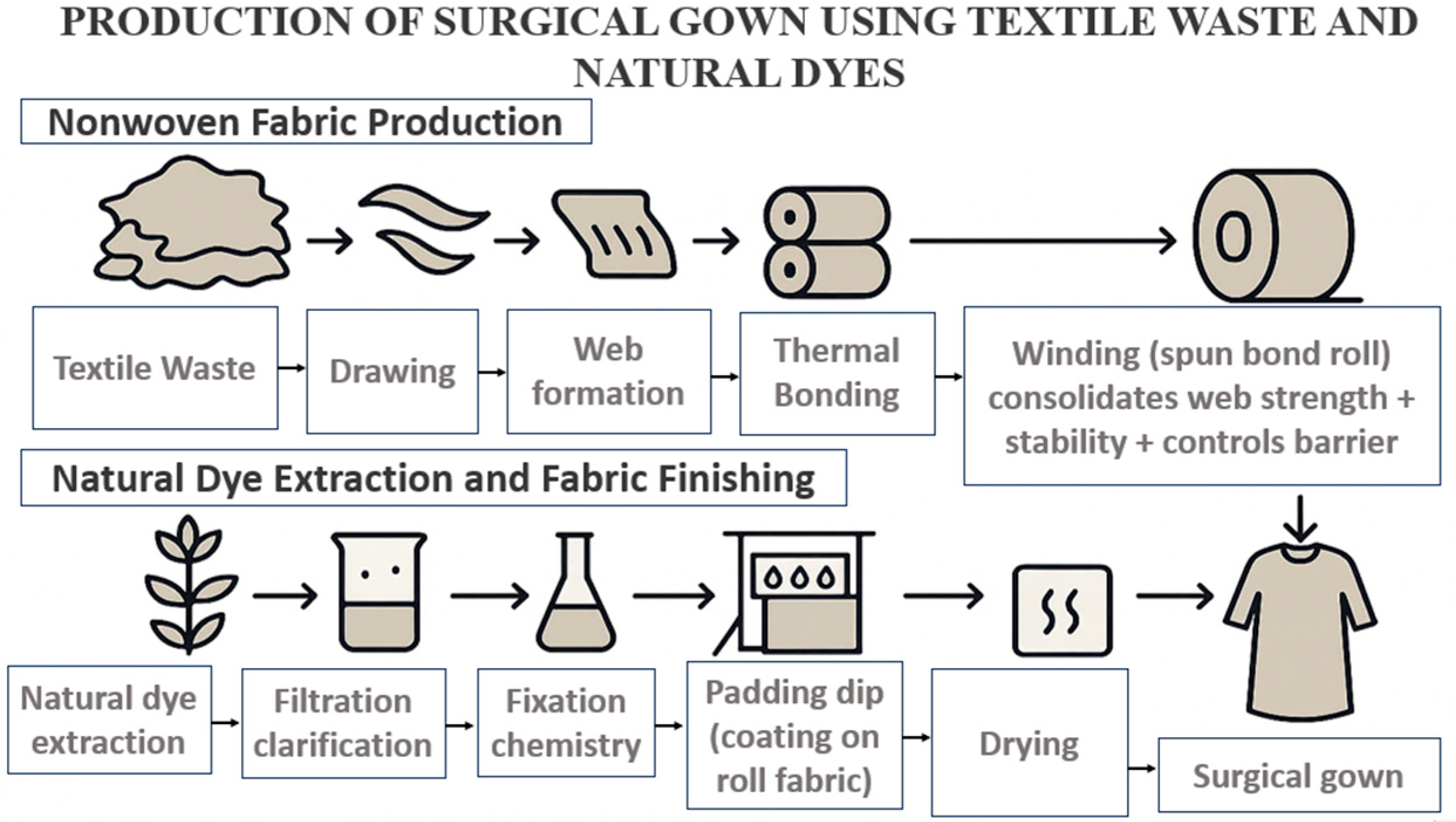
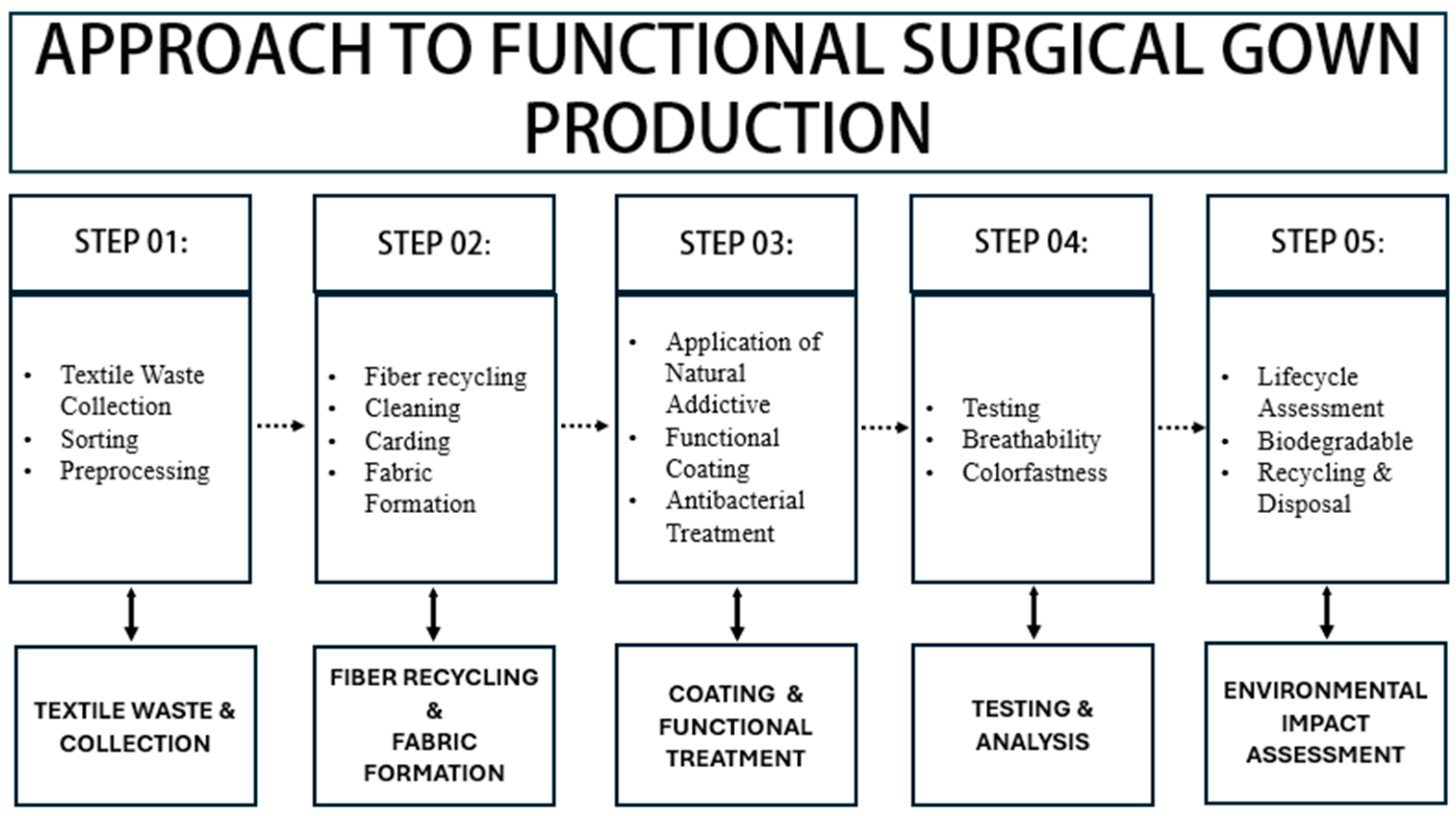
The circular strategies described by Pranta et al. focus on converting post-consumer textile waste into healthcare products by using processes with a reduced environmental burden. Building on these principles, the production of nonwoven gowns using recycled polyester and polypropylene blends can incorporate natural dyeing as a sustainable coloration step. In this process, bio-derived colorants are extracted and purified to obtain a consistent dye solution, which is then adjusted with an appropriate fixing agent so that it can adhere effectively to the nonwoven formation. The nonwoven web is passed through the dye liquor, allowing controlled dye uptake while maintaining the barrier performance required for medical use. Subsequent drying and curing secure the bond between the dye and fiber, giving a stable natural color that aligns with the cleaner coloration practices highlighted in the literature. Combing waste-derived substrates with bio-based dyes therefore provides a practical example of the circular, low-toxicity coloration route promoted in studies on sustainable textile waste management and lifecycle impact reduction [88]. Figure 7 illustrates the process of surgical gown production.

8. Application of a Functional Finish

Functional finishing in textiles adds value at the surface level, often through a thin coating or a grafted treatment, to improve performance properties like antimicrobial activity, UV protection, odor control, skin friendly effects or multifunctional performance without altering the fabric core structure. In one reported study, a finish prepared from neem (Azadirachta indica) leaf extract was applied to woven cotton and showed clear antibacterial effectiveness against common pathogenic bacteria. The findings indicate that neem-based finishes can provide a practical, low-cost, plant-derived option for hygiene-based textiles that is of particular relevance for medical and healthcare applications [89]. Similarly, aloe vera gel has been finished onto cotton through a standard pad-dry–cure method using a suitable crosslinking agent to improve fixation on the fiber surface. Material characterization confirmed that aloe vera-based components were successfully anchored to the fabric rather than loosely deposited. Performance testing showed that the treated cotton exhibited antibacterial activity, indicating that the bio extract remained functionally active after application. Overall, this illustrates that plant-derived finishes can support a soft, skin-friendly positioning with measurable functionality [90].
Natural dyes and bio-based finishes replace conventional synthetic chemicals to improve both sustainability and performance. Plant- and mineral-derived extracts such as turmeric (antimicrobial), indigo (durability), pomegranate peel (antibacterial and colorfastness), neem leaves (anti-fungal), and aloe vera (soothing, hypoallergenic) provide functional benefits while maintaining biocompatibility. These are applied through eco-friendly processes like enzymatic or low-water methods, reducing the environmental impact. Additional finishes, including chitosan coating for antimicrobial protection and nitrocellulose layers for fluid-repellent behavior further strengthen the gown’s durability and protective qualities. Together, these treatments align with green chemistry, reduce toxic residues and extend the gown life cycle, bridging performance with environmental responsibility.
To make durable, bio-based, antimicrobial-performance cotton, researchers used a chitosan-based finish that bonds strongly to cellulose. In one study, carboxymethyl chitosan was bonded to cotton, and then cationic groups were used to boost antibacterial power. The fabric showed strong antibacterial results and kept working with many washes, which is important for clothing and hospital linens [91]. Some textile finishes are multifunctional, giving both antimicrobial and UV protection effects through greener methods. Studies have reported cotton fabrics functionalized with green synthesized silver nanoparticles using plant waste extracts as natural reducing agents. The finished fabric showed reduced microbial growth and better UV blocking, proving that this eco-friendlier approach can deliver a dual performance [92].
Antimicrobial finishing in textiles shows that the choice of finish and application method is critical for combining hygiene, durability and environmental safety. Both synthetic and bio-based antimicrobial products are often applied using methods like pad-dry–cure, microencapsulation, and related techniques. This emphasizes that the finish formulation strongly influences the washing durability and long-term antimicrobial performance. Another study focusing on antimicrobial textile finishing agents derived from natural sources (i.e., plants, animals) explains that methods such as exhaustion, padding and micro-encapsulation can help to attach these natural substances to fiber. The aim is to keep good wash fastness, while also lowering toxicity compared to many conventional chemicals [48]. One practical example comes from our research on bioactive, biodegradable cotton, where the fabric is coated with chitosan mixed with plant extracts and essential oils. The author shows that this multi-component coating not only modifies color and odor but also produces a strong antibacterial activity and biodegradability, which suggests a clear potential for single-use medical textiles. A recent review on the sustainable functionalization of biodegradable antimicrobial materials explains how these bio-based antimicrobial systems and greener processing methods can be adapted for healthcare fabrics. The focus is on soft breathable substrates and a reduced environmental impact over the product lifecycle [93]. More recent studies have also shown that UV protection can be achieved using plant-based finishes, such as Vitis vinifera (grapevine) leaf extract applied to cotton. In this work the processing conditions were carefully optimized to improve UV-blocking performance while still maintaining the key comfort features of the fabric, such as softness and breathability. This shows a clear shift toward finishes that balance high performance with better sustainability [94].

9. Performance Evaluation

Before clinical use, surgical gowns undergo strict performance testing to meet international safety and quality standards. Laboratory evaluations measure fluid resistance, microbial barrier effectiveness, tensile strength, seam durability, and comfort factors such as breathability and thermal balance. Re-usability is evaluated through simulated sterilization and washing cycles, while biodegradability and respectability are increasingly considered to align with sustainability goals. Equally important feedback from healthcare practitioners is incorporated to confirm that the gowns’ protective features align with real-world needs. Performance evaluation acts as a critical checkpoint combining scientific validation, user-centered design and environmental responsibility [95]. In research on disposable gowns, mechanical performance is commonly evaluated using standardized tensile, tear and seam strength methods. Similar, newly designed surgical gown studies report testing tensile and tear strength plus barrier-related properties like resistance to water penetration to determine the material’s suitability for medical protective apparel [96]. To support the goal of enhancing sustainability with natural ingredients, you can justify using bio-based functional finishing by applying bio-based coatings to nonwoven fabric. After finishing, the material should be re-evaluated using the same performance test, including key metrics, to confirm that the sustainable treatment maintains or improves protective suitability. The finish changes the strength and barrier behavior relative to the unfinished recycled control [97]. The literature also highlights that color fastness assessment on nonwoven, polypropylene coloration can be influenced by surface treatments and finishing chemistry. Researchers often check color durability using washing fastness and rubbing fastness tests. Adding these assessments helps to confirm that the shade stays consistent and reduces the chance of fading, staining or color transfer during wear, handling or laundering [98].

10. Sustainability and Life Cycle Considerations

Sustainability and life cycle management ensure that the functional surgical gowns deliver ecological and economic benefits across their entire existence. A life cycle assessment (LCA) framework is applied to trace the path of gowns, from raw material extraction to end-of-life disposal. This involves examining the impact of resource sourcing and energy use during production, transportation and waste handling. Incorporating recycled fibers or biodegradable polymers reduces the reliance on petroleum-based inputs and helps limit environmental damage. Using recycled fibers or biodegradable polymers reduces the dependence on petroleum-based resources and limits environmental degradation. Certain gowns are designed for multiple sterilization cycles, extending their lifespan and decreasing the rate of disposal. Circular economy models also encourage hospital take-back programs, where used gowns are recycled into new products. This comprehensive approach also considers carbon footprint reduction, fair labor conditions and transparent supply chains, extending responsibility beyond materials alone. By embedding sustainability as a guiding principle, it also ensures that gowns are not just protective garments but also catalysts for greener healthcare systems worldwide [83]. From a sustainability and lifecycle perspective, developing nonwoven fabric from pre-consumer (post-industrial) polypropylene waste via the spun bond process can reduce virgin polymer demand, but it must be optimized so that performance is not compromised. The literature indicates that nonwovens can be reprocessed into granules and blended with virgin PP (typically in the 0–20% range); as the recycled content increases, fabric uniformity tends to worsen, and processing defects become more noticeable. At this stage, tensile properties also decline. The findings suggest a practical balance at around 10% recycled granule addition, while recycled content led to a clear reduction in strength and overall quality [99]. Life cycle assessments repeatedly show that the overall environmental impact of grown use can vary widely depending on whether hospitals rely on single use or reuseable products. Several LCAs comparing the two options show that reusable gown systems can deliver notable reductions in energy demand, greenhouse gas emissions, water use and waste generation compared with disposable systems. Findings show that reusable alternatives are associated with lower energy and emissions, lower water use, and particularly large reduction in solid waste [83]. To enhance sustainability by using natural ingredients and bio-based finishes, recent studies have explored bio-based functional finishes, which are increasingly studied as lower toxicity alternatives to conventional chemical finishes. Research has shown that bio extracts including neem-derived extracts can be applied to textiles to provide antimicrobial activity, which supports the wider approach of using natural ingredient functionalization for hygiene and protective textile applications [100]. Figure 8 illustrates the steps of the sustainable approach to surgical gown production.

11. Conclusions

Many surgical gowns currently in use are disposable options made from non-degradable synthetics, which pose challenges related to both protective reliability and environmental sustainability. The literature reports that fluid resistance and microbial protection are not always achieved at the required level, and these properties can weaken after repeated laundering and handling. Cotton gowns, while breathable and comfortable, tend to absorb liquids quickly, and therefore lose protective barrier function, whereas polyester cotton blends often depend on added antimicrobial finishes to perform satisfactorily. At the same time, the large-scale consumption of single-use gowns accelerates healthcare textile waste and is supported by manufacturing processes that demand significant resources and may involve chemically intensive processing. Against this background, the review examines pathways for producing surgical gowns from textile waste into surgical gown materials by using recycled fibers as the primary feedback. It considers natural dyes and other bio-derived agents as functional alternatives that may provide microbial activity, while still meeting practical protection needs. Particular attention is given to spun bound nonwoven production routes and on how adjustments in formulation such as dye and the use of suitable fixation aids including coating fixers can influence critical performance outcomes, notably tensile strength, liquid repellency, and color fastness.
This approach integrates waste reduction with the functional demands of medical protective apparel. Further improvements should emphasize the broader use of recycled fibers, the application of long-lasting natural antimicrobial finishes, and the development of gowns that retain protective performance, even after multiple washes. Attention to wearer comfort, breathability and proper fit is also essential. Procurement policies that integrate both sustainability and performance requirements, along with systems for collection and reuse, could extend product life cycles and reduce environmental impact. Future development can move beyond the gowns to other medical textiles such as drapes, masks and patient garments.
Life cycle assessments will be essential to accurately measure environmental benefits. Research into bio-based coatings that provide both antimicrobial action and liquid repellence and the integration of smart technologies for monitoring garment integrity could further enhance performance. Incorporating natural ingredients into hygienic products serves as both a solution to minimize textile waste but also a step toward ensuring human and environmental health. Although issues such as production costs and limited consumer awareness remain, ongoing research and innovation offer a strong potential to transform the industry, paving the way for hygienic products that are both eco-friendly and highly effective.
The significance of sustainable approaches demonstrates that we can meet medical-grade performance requirements without relying heavily on synthetic chemicals. By integrating recycled fibers with natural dye, this work highlights a scalable pathway for eco-friendly gown production. The relevance also extends beyond gowns, with a clear potential for other healthcare textiles such as drapes, masks and patient garments. Life cycle assessments will be crucial for quantifying environmental benefits, while innovations like bio-based, antimicrobial, liquid-repellent coatings and smart textile monitoring could further enhance the performance. Sustainable alternatives look promising, but hurdles remain, including limited large-scale clinical validation, unclear durability after repeated laundering/sterilization, and colorfastness issues. Other barriers include cost instability and the inconsistent availability/quality of textile waste feedstock.
The use of a spun bond structure and optimized dye–fixer combinations resulted in improved strength, fluid repellency, and colorfastness, indicating that recycled fibers can meet essential performance requirements for medical protective apparel. The findings confirm that environmentally responsible materials can achieve barriers and durability properties comparable to conventional gowns while reducing the dependence on synthetic chemicals and minimizing textile waste. Overall, the results highlight a feasible pathway for producing effective, lower-impact surgical gowns that addresses both the functional and environmental shortcomings of current products. Future research should focus on the use of standard tests for fair comparison, prove safety and performance through strong trials, and build reliable, affordable supply chains that meet procurement and regulatory rules.

Author Contributions

Conceptualization, M.U. and M.Q.K.; Methodology, N.A., H.H.N. and M.Q.K.; Software, N.A. and M.U.; Validation, M.U. and M.Q.K.; Formal Analysis, N.A., N.N. and M.U.; Investigation, N.A., H.H.N. and M.Q.K.; Resources, M.U. and M.Q.K.; Data Curation, N.A., N.N. and H.H.N.; Writing – Original Draft Preparation, N.A. and N.N.; Writing—Review & Editing, M.U. and H.H.N.; Visualization, M.U., H.H.N. and M.Q.K.; Supervision, M.U. and M.Q.K.; Project Administration, M.U. and M.Q.K. All authors have read and agreed to the published version of the manuscript.

Funding

This research work was supported by UK Research Innovation and the Henry Royce Institute for Advanced Materials, funded through EPSRC grants EP/R00661X/1, EP/P025021/1, and EP/P025498/1.

Institutional Review Board Statement

Not applicable.

Informed Consent Statement

Not applicable.

Data Availability Statement

No new data was created or analyzed in this study.

Conflicts of Interest

The authors declare no conflicts of interest.

References

  1. Madhav, S.; Ahamad, A.; Singh, P.; Mishra, P.K. A review of textile industry: Wet processing, environmental impacts, and effluent treatment methods. Environ. Qual. Manag. 2018, 27, 31–41. [Google Scholar] [CrossRef]
  2. Chen, X.; Memon, H.A.; Wang, Y.; Marriam, I.; Tebyetekerwa, M. Circular Economy and Sustainability of the Clothing and Textile Industry. Mater. Circ. Econ. 2021, 3, 12. [Google Scholar] [CrossRef]
  3. Uddin, P.D.F. Environmental and developing concerns in reuse of the textile fiber waste. Authorea Prepr. 2025, 3, 26. [Google Scholar] [CrossRef]
  4. Repon, R.; Dev, B.; Rahman, A.; Jurkonienė, S.; Haji, A.; Alim, A.; Kumpikaitė, E. Textile dyeing using natural mordants and dyes: A review. Environ. Chem. Lett. 2024, 22, 1473–1520. [Google Scholar] [CrossRef]
  5. Pizzicato, B.; Pacifico, S.; Cayuela, D.; Mijas, G.; Riba-Moliner, M. Advancements in Sustainable Natural Dyes for Textile Applications: A Review. Molecules 2023, 28, 5954. [Google Scholar] [CrossRef]
  6. Li, L.; Frey, M.; Browning, K.J. Biodegradability Study on Cotton and Polyester Fabrics. Sage J. 2010, 5, 42–53. Available online: http://www.jeffjournal.org (accessed on 12 December 2025). [CrossRef]
  7. Kumar, G.V.N.; Kumar, A.; Sharma, M.; Tripathi, A.; Singh, S.; Verma, D.; Gupta, P.; Prajapati, S. Self-Protection of Medical Workers in Traditional Hospitals and Clinics Against SARS-CoV-2 Infection. Coronaviruses 2021, 2, 182–186. [Google Scholar] [CrossRef]
  8. Srisuk, T.; Charoenlarp, K.; Kampeerapappun, P. Utilization of Waste Natural Fibers Mixed with Polylactic Acid (PLA) Bicomponent Fiber: Incorporating Kapok and Cattail Fibers for Nonwoven Medical Textile Applications. Polymers 2024, 16, 76. [Google Scholar] [CrossRef]
  9. Carlsson, J.; Dostberg, A.; Åström, T.; Matyjasiak, J.; Kallin, A.; Juric, S.; Nilsson, U. Health risks from exposure to chemicals in clothing—Non-regulated halogenated aromatic compounds. Chemosphere 2024, 363, 142930. [Google Scholar] [CrossRef]
  10. Tao, D.; Zhang, K.; Xu, S.; Lin, H.; Liu, Y.; Kang, J.; Yim, T.; Giesy, J.P.; Leung, K.M.Y. Microfibers Released into the Air from a Household Tumble Dryer. Environ. Sci. Technol. Lett. 2022, 9, 120–126. [Google Scholar] [CrossRef]
  11. Pranta, A.D.; Rahaman, M.T. Extraction of eco-friendly natural dyes and biomordants for textile coloration: A critical review. Nano-Struct. Nano-Objects 2024, 39, 101243. [Google Scholar] [CrossRef]
  12. Tang, K.H.D. State of the Art in Textile Waste Management: A Review. Textiles 2023, 3, 454–467. [Google Scholar] [CrossRef]
  13. Das, S.K.; Chinnappan, A.; Jayathilaka, W.A.D.M.; Gosh, R.; Baskar, C.; Ramakrishna, S. Challenges and Potential Solutions for 100% Recycling of Medical Textiles. Mater. Circ. Econ. 2021, 3, 13. [Google Scholar] [CrossRef]
  14. Baker, N.; Bromley-Dulfano, R.; Chan, J.; Gupta, A.; Herman, L.; Jain, N.; Taylor, A.L.; Lu, J.; Pannu, J.; Patel, L.; et al. COVID-19 Solutions Are Climate Solutions: Lessons From Reusable Gowns. Front. Public Health 2020, 8, 590275. [Google Scholar] [CrossRef] [PubMed]
  15. Bhuiyan, M.A.R.; Ali, A.; Mohebbullah, M.; Hossain, M.F.; Khan, A.N.; Wang, L. Recycling of cotton apparel waste and its utilization as a thermal insulation layer in high performance clothing. Fash. Text. 2023, 10, 22. [Google Scholar] [CrossRef]
  16. Sharma, R.; Yadav, V.; Gaur, T.S.; Dixit, P. A systematic review on circular economy practices in the textile industries. Discov. Appl. Sci. 2025, 7, 1153. [Google Scholar] [CrossRef]
  17. Ramírez-Escamilla, H.G.; Martínez-Rodríguez, M.C.; Padilla-Rivera, A.; Domínguez-Solís, D.; Campos-Villegas, L.E. Advancing Toward Sustainability: A Systematic Review of Circular Economy Strategies in the Textile Industry. Recycling 2024, 9, 95. [Google Scholar] [CrossRef]
  18. Saha, K.; Dey, P.K.; Kumar, V. A comprehensive review of circular economy research in the textile and clothing industry. J. Clean. Prod. 2024, 444, 141252. [Google Scholar] [CrossRef]
  19. Plakantonaki, S.; Kiskira, K.; Zacharopoulos, N.; Belessi, V.; Sfyroera, E.; Priniotakis, G.; Athanasekou, C. Investigating the Routes to Produce Cellulose Fibers from Agro-Waste: An Upcycling Process. Chemengineering 2024, 8, 112. [Google Scholar] [CrossRef]
  20. Anbalagan, S.; Mani, M. Design and characterization of eco-friendly feminine hygiene sanitary napkins from Pineapple Leaf fiber (PALF) for a sustainable environment. Ind. Crops Prod. 2024, 219, 119031. [Google Scholar] [CrossRef]
  21. McCauley, P.; Mathur, K.; Henriques-Thompson, K.; Miab, R.K. The Impacts of Medical Textile Waste After COVID-19: Reviewing Challenges and Potential Solutions. Mater. Circ. Econ. 2023, 5, 11. [Google Scholar] [CrossRef]
  22. Martínez-Narro, G.; Hassan, S.; Phan, A.N. Chemical recycling of plastic waste for sustainable polymer manufacturing—A critical review. J. Environ. Chem. Eng. 2024, 12, 112323. [Google Scholar] [CrossRef]
  23. Jiang, J.; Shi, K.; Zhang, X.; Yu, K.; Zhang, H.; He, J.; Ju, Y.; Liu, J. From plastic waste to wealth using chemical recycling: A review. J. Environ. Chem. Eng. 2022, 10, 106867. [Google Scholar] [CrossRef]
  24. Harussani, M.M.; Sapuan, S.M.; Rashid, U.; Khalina, A.; Ilyas, R.A. Pyrolysis of polypropylene plastic waste into carbonaceous char: Priority of plastic waste management amidst COVID-19 pandemic. Sci. Total Environ. 2021, 803, 149911. [Google Scholar] [CrossRef] [PubMed]
  25. Vozzola, E.; Overcash, M.; Griffing, E. Environmental considerations in the selection of isolation gowns: A life cycle assessment of reusable and disposable alternatives. Am. J. Infect. Control 2018, 46, 881–886. [Google Scholar] [CrossRef]
  26. Silva de Souza Lima Cano, N.; Marino, M.; Brooks, A.L.; Eckelman, M.J.; Bilec, M.M. Advancing the circular economy of healthcare plastics: A systematic literature review. Resour. Conserv. Recycl. 2025, 219, 108317. [Google Scholar] [CrossRef]
  27. Sabry, M.; Baioumy, G.; Taha, A.M. A Comparative Study of Care Processes Effect on the Abrasion Resistance of some some Virgin and Recycled Polyester Fabrics. Int. Des. J. 2020, 10, 251–256. [Google Scholar] [CrossRef]
  28. Addis, S.; Ejegu, H.; Dubale, M.; Mamuye, W. Development of Sustainable and Functional Fabrics from Recycled and Nanocomposite Polyester Fibers. Adv. Mater. Sci. Eng. 2021, 2021, 7087152. [Google Scholar] [CrossRef]
  29. Darie-Niță, R.N.; Râpă, M.; Frąckowiak, S. Special Features of Polyester-Based Materials for Medical Applications. Polymers 2022, 14, 951. [Google Scholar] [CrossRef]
  30. Liu, N.; Zhou, J.; Wang, R.; Yang, Z.; Tian, F.; Hu, Y.; Zhang, J.; Wu, Z. Green and Efficient Degradation of Polyester/Cotton Blended Fabrics by Ethanolamine and Recycled Cotton and Bheta. 2024. Available online: https://papers.ssrn.com/abstract=4918870 (accessed on 17 August 2025).
  31. Azanaw, A.; Birlie, B.; Teshome, B.; Jemberie, M. Textile effluent treatment methods and eco-friendly resolution of textile wastewater. Case Stud. Chem. Environ. Eng. 2022, 6, 100230. [Google Scholar] [CrossRef]
  32. Rabbi, B.U.; Al Montasir, S.; Emon, E.H.; Rahim, A.; Ridoy, F.A.; Khan, N.H.; Sani, A.A.; Tania, I.S.; Islam, R.; Islam, S.; et al. Enhancing the Antimicrobial and UV Resistance Properties of PC Blend and Recycled Cotton Fabric through Ag/TiO2 Nanocomposite. ACS Omega 2025, 10, 7697. [Google Scholar] [CrossRef]
  33. Hayeemasae, N.; Masa, A.; Ahmad, H.S.; Shuib, R.K.; Ismail, H.; Surya, I. Sustainable Recycling of Waste from Nitrile Gloves: Prolonging the Life Span by Designing Proper Curing Systems. Polymers 2022, 14, 4896. [Google Scholar] [CrossRef]
  34. Palacios-Mateo, C.; van der Meer, Y.; Seide, G. Analysis of the polyester clothing value chain to identify key intervention points for sustainability. Environ. Sci. Eur. 2021, 33, 2. [Google Scholar] [CrossRef] [PubMed]
  35. Khan, J.; E, N.; Mariatti, M.; Vilay, V.; Todo, M. A comprehensive review on facemask manufacturing, testing, and its environmental impacts. J. Ind. Text. 2022, 52, 15280837221111175. [Google Scholar] [CrossRef]
  36. Abd-El-baset, Y.A.; Heikal, A.; Saleh, S.M. Dyeing of Cotton Fabric with Natural Dye Extracted from Egyptian Cotton Leaves. Int. J. Adv. Sci. Eng. 2021, 8, 2069–2074. [Google Scholar] [CrossRef]
  37. Ado, A.; Yahaya, H.; Kwalli, A.A.; Abdulkadir, R.S. Dyeing of Textiles with Eco-Friendly Natural Dyes: A Review. Int. J. Environ. Monit. Prot. 2014, 1, 76–81. [Google Scholar]
  38. Akca, C. The Waste Problem of Antimicrobial Finishing. In Waste in Textile and Leather Sectors; IntechOpen: London, UK, 2020. [Google Scholar]
  39. Alan, G.; Tercan, M. An Investigation on Abrasion Resistance and Bending Rigidity of Recycled Nonwovens Including Blanket Trimmings. Tekstil ve Konfeksiyon 2023, 33, 176–184. [Google Scholar] [CrossRef]
  40. Singh, S.K.; Khawale, R.P.; Chen, H.; Zhang, H.; Rai, R. Personal protective equipments (PPEs) for COVID-19: A product lifecycle perspective. Int. J. Prod. Res. 2022, 60, 3282–3303. [Google Scholar] [CrossRef]
  41. Kong, C.; Wang, X.; Li, H.; Zhou, H.; Yang, L. Advanced antibacterial materials for the prevention of nosocomial infections. Interdiscip. Nurs. Res. 2024, 3, 97–108. [Google Scholar] [CrossRef]
  42. Molla, S.; Abedin, M.; Siddique, I.M. Corresponding author: Selim Molla Exploring the versatility of medical textiles: Applications in implantable and non-implantable medical textiles. World J. Adv. Res. Rev. 2024, 2024, 603–615. [Google Scholar] [CrossRef]
  43. Al-Amin, M.; Hossain, M.T.; Tahir, M.; Wyman, D.; Kabir, S.M.F. A Critical Review on Reusable Face Coverings: Mechanism, Development, Factors, and Challenges. Textiles 2023, 3, 142–162. [Google Scholar] [CrossRef]
  44. Gao, Q.; Huang, Y.; Hu, J.; Gan, J.; Yu, W. Green synthesis of multifunctional bamboo-based nonwoven fabrics for medical treatment. Int. J. Biol. Macromol. 2024, 279, 135473. [Google Scholar] [CrossRef] [PubMed]
  45. Bae, J.-H.; Kwon, G. Design of Antimicrobial Doctor Gown with Indigo-dyed Andongpo Hemp Cloth. Korean J. Hum. Ecol. 2020, 29, 355–370. [Google Scholar] [CrossRef]
  46. Zamora-Mendoza, L.; Guamba, E.; Miño, K.; Romero, M.P.; Levoyer, A.; Alvarez-Barreto, J.F.; Machado, A.; Alexis, F. Antimicrobial Properties of Plant Fibers. Molecules 2022, 27, 7999. [Google Scholar] [CrossRef]
  47. El-Hady, M.M.A.; Farouk, A.; Saeed, S.E.S.; Zaghloul, S. Antibacterial and UV Protection Properties of Modified Cotton Fabric Using a Curcumin/TiO2 Nanocomposite for Medical Textile Applications. Polymers 2021, 13, 4027. [Google Scholar] [CrossRef]
  48. Bibi, A.; Afza, G.; Afzal, Z.; Farid, M.; Sumrra, S.H.; Hanif, M.A.; Jinadasa, B.K.K.K.; Zubair, M. Synthetic vs. natural antimicrobial agents for safer textiles: A comparative review. RSC Adv. 2024, 14, 30688–30706. [Google Scholar] [CrossRef]
  49. Zhang, S.; Fu, L.; Yang, Z.; Jing, M.; Zhang, Z.; Xiang, S.; Wang, R. Response Surface Methodology for Optimizing the Preparation Process of Cellulose Acetate/Polylactic Acid Nonwoven Surgical Gown Material. Fibers Polym. 2021, 22, 928–935. [Google Scholar] [CrossRef]
  50. Beşen, B.S. Production of Disposable Antibacterial Textiles Via Application of Tea Tree Oil Encapsulated into Different Wall Materials. Fibers Polym. 2019, 20, 2587–2593. [Google Scholar] [CrossRef]
  51. Kakonke, G.; Tesfaye, T.; Sithole, B.; Ntunka, M. Review on the Manufacturing and Properties of Nonwoven Superabsorbent Core Fabrics used in Disposable Diapers. Int. J. Chem. Sci. 2019, 17, 302. [Google Scholar] [CrossRef]
  52. Alshqaqeeq, F.; Griffing, E.; Twomey, J.; Overcash, M. Comparing reusable to disposable products: Life cycle analysis metrics. J. Adv. Manuf. Process. 2020, 2, e10065. [Google Scholar] [CrossRef]
  53. Ramachandralu, K. Development of Surgical Clothing from Bamboo Fibres. In Medical and Healthcare Textiles; Woodhead Publishing: Cambridge, UK, 2010; pp. 171–180. [Google Scholar] [CrossRef]
  54. Usta, C.; Seyhan, A.; Gürarslan, A. Utilization of poplar fibers in needle punched nonwovens. Cellulose 2024, 31, 8351–8367. [Google Scholar] [CrossRef]
  55. Overcash, M. A comparison of reusable and disposable perioperative textiles: Sustainability state-of-the-art 2012. Anesth. Analg. 2012, 114, 1055–1066. [Google Scholar] [CrossRef]
  56. Mulungo, V.; Gumede, T.P. Feasibility and Implications of Biodegradable Diaper Alternatives. Sustainability 2025, 17, 10072. [Google Scholar] [CrossRef]
  57. Sathishkumar, G.; Aarthi, M.; Senthilkumar, R.; Nithiya, P.; Selvakumar, R.; Bhattacharyya, A. Biodegradable Cellulosic Sanitary Napkins from Waste Cotton and Natural Extract Based Anti-bacterial Nanocolorants. J. Indian Inst. Sci. 2019, 99, 519–528. [Google Scholar] [CrossRef]
  58. Dhiman, R.; Chattopadhyay, R. A Study on Simulated Urine Absorption Behaviour of Kapok-Cotton Blended Nonwoven Web. J. Nat. Fibers 2023, 20. [Google Scholar] [CrossRef]
  59. Santos, A.S.; Ferreira, P.J.T.; Maloney, T. Bio-based materials for nonwovens. Cellulose 2021, 28, 8939–8969. [Google Scholar] [CrossRef]
  60. Hossain, M.; Islam, T.; Jalil, M.A.; Rakibuzzaman, S.M.; Surid, S.M.; Zabed, R.I.; Talukder, A.; Hossain, S. Advancements of eco-friendly natural antimicrobial agents and their transformative role in sustainable textiles. SPE Polym. 2024, 5, 241–276. [Google Scholar] [CrossRef]
  61. Yalcin-Enis, I.; Kucukali-Ozturk, M.; Sezgin, H. Risks and Management of Textile Waste. In Nanoscience and Biotechnology for Environmental Applications; Springer: Cham, Switzerland, 2019; pp. 29–53. [Google Scholar] [CrossRef]
  62. Kenny, C.; Priyadarshini, A. Review of current healthcare waste management methods and their effect on global health. Healthcare 2021, 9, 284. [Google Scholar] [CrossRef] [PubMed]
  63. Alfredo, G.J. Textile Waste Federal Entities Should Collaborate on Reduction and Recycling Efforts Report to Congressional Requesters; United States Government Accountability Office: Washington, DC, USA, 2024. [Google Scholar]
  64. Wang, Y. Fiber and textile waste Utilization. Waste Biomass Valorization 2010, 1, 135–143. [Google Scholar] [CrossRef]
  65. Ziraba, A.K.; Haregu, T.N.; Mberu, B. A review and framework for understanding the potential impact of poor solid waste management on health in developing countries. Arch. Public Health 2016, 74, 1–11. [Google Scholar] [CrossRef]
  66. Graham, L.D. The right to clothing and personal protective equipment in the context of COVID-19. Int. J. Hum. Rights 2022, 26, 30–49. [Google Scholar] [CrossRef]
  67. Roca, M.; Philip, J.; Angelini, L.G. Colorant Production and Properties. In Handbook of Natural Colorants; John Wiley & Sons: Hoboken, NJ, USA, 2023; pp. 183–200. Available online: https://books.google.com/books/about/Handbook_of_Natural_Colorants.html?hl=pt-PT&id=wqq1EAAAQBAJ (accessed on 26 August 2025).
  68. Tochetto, G.A.; Aragão, A.M.I.; de Oliveira, D.; Immich, A.P.S. Can enzymatic processes transform textile processes? A critical analysis of the industrial application. Process Biochem. 2022, 123, 27–35. [Google Scholar] [CrossRef]
  69. Kondala, M.; Rukhaya, S.; Rose, N.M.; Yadav, S.; Student, M.S. Enzymes at Work: Eco-Friendly Solutions for Modern Textile Finishing. Int. J. Appl. Home Sci. (Int. Double Blind. Peer Rev./Ref. Res. J. Home Sci.) 2025, 12, 284–290. Available online: https://doi-ds.org/doilink/07.2025-99731445/IJASS/12.5&6/284-290 (accessed on 12 December 2025).
  70. Hooda, S. Application of textile finishing using neem extract: A move towards sustainability. Int. J. Home Sci. 2023, 9, 264–267. Available online: https://www.homesciencejournal.com (accessed on 12 December 2025).
  71. Prajapati, P.; Patel, B. Sustainable plant-based antimicrobial agents for textiles application: A Review. Res. J. Chem. Sci. 2025, 15, 39–49. Available online: www.isca.me (accessed on 12 December 2025).
  72. Mondal, M.I.H.; Saha, J.; Rahman, M.A. Functional Applications of Aloe vera on Textiles: A Review. J. Polym. Environ. 2020, 29, 993–1009. [Google Scholar] [CrossRef]
  73. Rajeshkumar, G.; Seshadri, S.A.; Devnani, G.; Sanjay, M.; Siengchin, S.; Maran, J.P.; Al-Dhabi, N.A.; Karuppiah, P.; Mariadhas, V.A.; Sivarajasekar, N.; et al. Environment friendly, renewable and sustainable poly lactic acid (PLA) based natural fiber reinforced composites—A comprehensive review. J. Clean. Prod. 2021, 310, 127483. [Google Scholar] [CrossRef]
  74. Yusuf, M.; Shabbir, M.; Mohammad, F. Natural Colorants: Historical, Processing and Sustainable Prospects. Nat. Prod. Bioprospect. 2017, 7, 123–145. [Google Scholar] [CrossRef] [PubMed]
  75. Kishwar, F.; Ali, F. Surgical gown fabric; determination of resistance to surface wetting of existing surgical gown fabric. Prof. Med. J. 2017, 24, 966–971. [Google Scholar] [CrossRef]
  76. Aslan, S.; Kaplan, S.; Çetin, C. An investigation about comfort and protection performances of disposable and reusable surgical gowns by objective and subjective measurements. J. Text. Inst. 2013, 104, 870–882. [Google Scholar] [CrossRef]
  77. Babu, K.M.; Sahana, N.; Anitha, D.V.; Kavya, B.S. Silk fibroin coated antimicrobial textile medical products. J. Text. Inst. 2021, 112, 1199–1207. [Google Scholar] [CrossRef]
  78. El-Ghoubary, W.A.; El-Sayad, G.M.; El Gamal, F.A.; Abouzaid, H.A.K. Development of breathable and liquid/wet bacterial penetration barrier composite laminated fabrics for surgical gown applications. J. Ind. Text. 2023, 53. [Google Scholar] [CrossRef]
  79. Midha, V.K.; Dakuri, A.; Midha, V.; Ambedkar, B.R. Studies on the properties of nonwoven surgical gowns. J. Ind. Text. 2013, 43, 174–190. [Google Scholar] [CrossRef]
  80. McQuerry, M.; Easter, E.; Cao, A. Disposable versus reusable medical gowns: A performance comparison. Am. J. Infect. Control 2021, 49, 563–570. [Google Scholar] [CrossRef]
  81. Pirjo, H.; Marjo, M.; Petri, J.; Taina, K.; Sara, P. Nonwovens from Mechanically Recycled Fibres for Medical Applications. 2020. Available online: https://cris.vtt.fi/ws/portalfiles/portal/42412286/VTT_R_00923_20.pdf (accessed on 14 December 2025).
  82. Karim, N.; Afroj, S.; Lloyd, K.; Oaten, L.C.; Andreeva, D.V.; Carr, C.; Farmery, A.D.; Kim, I.-D.; Novoselov, K.S. Sustainable personal protective clothing for healthcare applications: A review. ACS Nano 2020, 14, 12313–12340. [Google Scholar] [CrossRef] [PubMed]
  83. Vozzola, E.; Overcash, M.; Griffing, E. An Environmental Analysis of Reusable and Disposable Surgical Gowns. AORN J. 2020, 111, 315–325. [Google Scholar] [CrossRef]
  84. Shahid, A.; Hossain, T.; Habib, A.; Islam, S.; Sharna, K.; Hossain, I.; Limon, G.M. Prospects and challenges of recycling and reusing post-consumer garments: A review. Clean. Eng. Technol. 2024, 19, 100744. [Google Scholar] [CrossRef]
  85. Abbas-Abadi, M.S.; Tomme, B.; Goshayeshi, B.; Mynko, O.; Wang, Y.; Roy, S.; Kumar, R.; Baruah, B.; De Clerck, K.; De Meester, S.; et al. Advancing Textile Waste Recycling: Challenges and Opportunities Across Polymer and Non-Polymer Fiber Types. Polymers 2025, 17, 628. [Google Scholar] [CrossRef]
  86. Lim, H. A Review of Spun Bond Process. 2010. Available online: https://www.researchgate.net/publication/292925325_A_review_of_spun_bond_process (accessed on 14 December 2025).
  87. Malkan, S.R. An overview of spunbonding and meltblowing technologies. Tappi J. 1995, 78, 185–190. Available online: https://imisrise.tappi.org/download.aspx?key=95JUN185 (accessed on 14 December 2025).
  88. Pranta, A.D.; Rahaman, M.T.; Repon, M.R. Sustainable Waste Management of Textiles and Apparel in a Circular Economy: Recent Advances and Future Prospects of Life Cycle Assessment. Mater. Circ. Econ. 2025, 7, 28. [Google Scholar] [CrossRef]
  89. Harlapur, S.; Harlapur, S.; Harlapur, S.F. Enhancement of antibacterial properties of cotton fabric by using neem leaves extract as dye. Mater. Today Proc. 2021, 44, 523–526. [Google Scholar] [CrossRef]
  90. Ali, S.W.; Purwar, R.; Joshi, M.; Rajendran, S. Antibacterial properties of Aloe vera gel-finished cotton fabric. Cellulose 2014, 21, 2063–2072. [Google Scholar] [CrossRef]
  91. Wang, L.; Wen, X.; Zhang, X.; Yuan, S.; Xu, Q.; Fu, F.; Diao, H.; Liu, X. Durable antimicrobial cotton fabric fabricated by carboxymethyl chitosan and quaternary ammonium salts. Cellulose 2021, 28, 5867–5879. [Google Scholar] [CrossRef]
  92. Čuk, N.; Šala, M.; Gorjanc, M. Development of antibacterial and UV protective cotton fabrics using plant food waste and alien invasive plant extracts as reducing agents for the in-situ synthesis of silver nanoparticles. Cellulose 2021, 28, 3215–3233. [Google Scholar] [CrossRef]
  93. Szadkowski, B.; Śliwka-Kaszyńska, M.; Marzec, A. Bioactive and biodegradable cotton fabrics produced via synergic effect of plant extracts and essential oils in chitosan coating system. Sci. Rep. 2024, 14, 8530. [Google Scholar] [CrossRef] [PubMed]
  94. Pargai, D.; Jahan, S. Optimized UV protection of cotton fabric using microwave-assisted Vitis vinifera leaf extract: A sustainable approach. Res. J. Text. Appar. 2025, 9, 22. [Google Scholar] [CrossRef]
  95. Midha, V.K.; Vashisht, R.; Midha, V. Durability of fluoropolymer and antibacterial finishes on woven surgical gown fabrics. Fash. Text. 2014, 1, 12. [Google Scholar] [CrossRef]
  96. Eryuruk, S.H.; Kayaoglu, B.K.; Altay, P. Performance evaluation of newly designed disposable surgical gowns. Tekstil ve Konfeksiyon 2023, 33, 56–67. [Google Scholar] [CrossRef]
  97. Aparna, S.; Parameswaranpillai, J.; George, J.S.; Thomas, S.; Midhun Dominic, C.D.; Sreedevi, T.; Poornima Vijayan, P. Bioderived Antibacterial Coating for Polypropylene Non-woven Fabric to Prevent Secondary Infection. Mater. Circ. Econ. 2024, 6, 33. [Google Scholar] [CrossRef]
  98. Basyigit, Z.O. Enhancing the coloration of polypropylene surfaces through low-frequency plasma modification with disperse dyes. Int. J. Adhes. Adhes. 2024, 135, 103837. [Google Scholar] [CrossRef]
  99. Değirmenci, Z. Selecting the optimum amount of recycled polypropylene nonwoven waste in spunbond production for sustainability. Eskişehir Tech. Univ. J. Sci. Technol. A—Appl. Sci. Eng. 2024, 25, 519–529. [Google Scholar] [CrossRef]
  100. Sadaf, S.; Hassan, K.; Saeed, A.; Ahmad, Z. Antimicrobial Finish for Cotton/polyester from Natural Bio-extracts. Proc. Pak. Acad. Sci. Part B 2024, 61, 371–378. [Google Scholar] [CrossRef]
Figure 1. Exploring the global textile waste crisis [2].
Sustainability 18 02881 g001
Figure 2. Top countries producing textile fashion waste [3].
Sustainability 18 02881 g002
Figure 3. Environmental effects of disposal.
Sustainability 18 02881 g003
Figure 4. Environmental and health risks of dye pollution [8,9,10].
Sustainability 18 02881 g004
Figure 5. Environmental impact of synthetic materials [13].
Sustainability 18 02881 g005
Figure 6. Breakdown of medical apparel waste [63].
Sustainability 18 02881 g006
Figure 7. Illustration of surgical gown production.
Sustainability 18 02881 g007
Figure 8. Sustainable production pathway for functional surgical gowns derived from textile waste.
Sustainability 18 02881 g008
Table 1. Biodegradation timeline and CO2 footprint comparison.
MaterialBiodegradation Timeline (Compost/Soil)Carbon Footprint (CO2-eq per kg Fiber/Fabric)
CottonFast and major breakdown within 3 months.~8.3 kg CO2-eq/kg
(estimate; varies by farming/region)
PolyesterVery slow, persists for years/decades.~5.5–6.4 kg CO2-eq/kg (fossil fuel-intensive production and range depends on energy mix)
Linen (Flax)Very fast; can decompose in 2 weeks (if untreated, in good compost).4.5 kg CO2-eq/kg fabric (WRAP-based), other LCAs often show low fiber-stage emissions ~2.1–2.5 kg/kg fiber
HempFast; biodegrades in weeks in compost/soil (untreated).~0.56 kg CO2-eq/kg at farm level, fully processed fiber is higher but still generally low vs. synthetics
WoolBiodegradable and typically 1–5 years depending on conditions and treatments.~13.9 kg CO2-eq/kg (high due to methane and farm stage)
SilkBiodegradable but slower than cotton/linen, often 1–5 years, sometimes longer if heavily finished.~7.6 kg CO2-eq/kg
Nylon (Polyamide)Very slow, 30–40+ years, not truly compostable.~7.3 kg CO2-eq/kg
Viscose/RayonBiodegradable if untreated, roughly within months to 1 year, but finishes/dyes can slow biodegradation a lot.1.5–2.5 kg CO2-eq/kg fiber (varies by chemical recovery/energy)
Lyocell/TencelBiodegradable; similar to other cellulosic materials, usually months to ~1 year in compost/soil.Approx. 1.0–1.8 kg CO2-eq/kg fiber (inferred as 20–40% lower than viscose in many LCAs), closed-loop solvent system helps
Elastane/SpandexVery slow; decades to 200 years; not compostable.Often 9–12+ kg CO2-eq/kg (petrochemical, energy-intensive, varies by plant)
AcrylicExtremely slow; can persist 200 years and shed microplastics.11.5 kg CO2-eq/kg (among the highest)
Table 2. Gap analysis of textile waste in relation to hygienic properties and products.
Sr
No.
Author (Year)DescriptionMethodologyKey FindingsLimitationsReferences
1Prof. Mohammad Sabry; Prof. Ghada Baioumy; Amr Magdy Taha (2020)Investigates polyester recycling for medical textiles, sheets, bottles, etc.Polyester fibers were mechanically recycled and tested for strength and biodegradability.Recycled polyester showed comparable strength to virgin fibers and better biodegradability than expected, and recycled polyester fiber was 35% lower compared to virgin.Limited commercial-scale application testing.[27]
2Solomon Addis; Hermela Ejegu; Messay Dubale; Wondwossen Mamuye (2021)Develops sustainable antimicrobial woven and knitted fabrics from recycled PET and silver nanocomposite polyester fibers, evaluating physical, mechanical, and antibacterial performance.Experimental study where recycled PET and silver nanocomposite yarn blends were spun and knitted/woven fabrics were tested for mechanical properties, comfort, fiber structure, and antibacterial activity against E. coli and S. aureus.Higher silver nanocomposite content increased antibacterial performance (>90%) but reduced yarn strength and softness. All fabrics showed strong antimicrobial activity for functional textiles.Higher nanocomposite ratios reduce mechanical strength and fabric softness. Study focuses mainly on lab testing; long-term durability and industrial scalability are not fully addressed.[28]
3Raluca Nicoleta Darie-Nita, Maria Rapa (2022)Focus on recycled polyester for medical textile applications.Polyester was extracted from textile waste and evaluated for strength and antimicrobial performance. Recycled polyester fabrics exhibited comparable antimicrobial activity and comfort to virgin polyester.Lack of long-term antimicrobial tests and commercial scalability.[29]
4Liu N., Zhou J., Wang R., Yang Z., Tian F
(2024)
Explores recycled cotton/polyester blend for use in non-critical medical applications.Recycled cotton and polyester blends were tested for comfort, strength and biodegradability.Blends of recycled cotton and polyester showed satisfactory performance for comfort and durability.
It assessed recovered cotton from poly/cotton waste for medical fabrics, with PET upcycled to BHETA.
Limited real-world testing and long-term comfort evaluation.[30]
5Azanaw et al. (2022)Review of textile effluent pollution and treatments relevant to hygienic textile supply chain.Narrative review of primary/secondary/tertiary treatments, tracking key water-quality parameters (BOD, COD, pH).Effective combos can reach ~99% pollutant removal. A natural coagulant (plant-based) pulls out color and dirt better than usual methods. It also recovers useful substances from water, such assalt and dyes.Limited focus on high cost and energy needs, and effluent is hard to clean; lots of sludge to manage.[31]
6Bhuiyan et al. (2023)Investigates fabric-to-fabric recycling of cotton apparel cutting waste to develop thermal liner fabrics for heat-protective clothing.Fabrics were tested for structure (SEM), comfort, thermal resistance, moisture management, and air permeability, with results analyzed using ANOVADeveloped fabrics had better thermal resistance than commercial fabric. Higher cotton content improved softness and moisture comfort.Limited to lab-scale testing of thermal/comfort properties.[15]
7Rabbi et al. (2025)Focuses on recycled cotton and PC blends for antibacterial and biodegradable fabrics through Ag/TiO2 nanocomposite coating used in medical textiles and sportswear.Recycled cotton fibers and PC blends were recycled and treated with natural antimicrobial agents.Recycled cotton fabrics and PC blends exhibited good antibacterial activity and biodegradability, making them suitable for surgical gowns.Limited testing on fluid resistance and commercial scalability.[32]
8Nabil Hayeemasae Abdulhakim MasaInvestigates recycled textile waste for bio-based medical textiles applications, i.e., gloves.Textile waste was processed into bio-based fibers and biodegradability was assessed.Recycled bio-based fibers showed good biodegradable product strength for medical textiles.Limited scalability and real-world performance.[33]
9Cristina Palacios-Mateo (2021)Studies environmental impacts of the textile value chain including production, use phase, microfiber release, recycling, and end-of-life management.Systematic review analyzing energy use, water pollution, microfiber shedding, detergent impact, and recycling technologies (mechanical, thermal, chemical).Production phase causes major environmental burden due to fossil fuel use and chemicals. Polyester garments release significant microfibers during washing. Recycling faces sorting and infrastructure challenges.Limited long-term clinical trials.[34]
10Junaid Khan, Netnapa E, M Mariatti (2022)Investigates manufacturing with polyester and cotton blend of nonwoven fabric for bioactive medical textiles, i.e., face mask.Recycled polyester and cotton were blended and bio-activity was assessed.The blends demonstrated good antibacterial activity and biodegradability suitable for hospital use.Limited testing on comfort and fluid resistance.[35]
11Abd-El-Baset et al.
(2021)
Study on dyeing cotton fabrics with natural dye extracted from Egyptian cotton leaves.Dye extraction from cotton leaves, mordant treatments (alum, copper sulfate, ferrous sulfate), exhaustion dyeing process, fastness tests.Cotton leaves provide natural dyes with high color strength, good fastness properties, and eco-friendly characteristics. Best light fastness was achieved with ferrous sulfate.Limited to the effectiveness of natural mordants, potential inconsistencies with industrial scaling. [36]
12Ado et al.
(2014)
Investigates dyeing textiles with eco-friendly natural dyes, focusing on methods, mordants, and fastness properties.Discusses different types of natural dyes, mordants, techniques, and equipment required for home and small-scale dyeing.The study highlights the environmental benefits of natural dyes, their biodegradability, and their suitability for various fibers. Eco-friendly methods, like ultrasound, can enhance dye uptake.Some natural dyeing methods are still being tested and are not yet ready for large-scale use.[37]
13Candan Akca (2020)Investigates waste problem-based antimicrobial finishes for medical textiles.Recycled textiles were treated with natural antimicrobial agents and tested for fluid resistance and comfort.Recycled fabrics treated with turmeric extract showed improved antimicrobial and biodegradability properties.Limited long-term antimicrobial effectiveness in hospital use.[38]
14 Alan & Tercan (2023)Investigates abrasion resistance and bending rigidity of multilayer needle-punched nonwovens containing recycled blanket trimmings as inner layers.Experimental production and testing of abrasion and bending properties.PP showed best performance; higher needle density improved results; 20% recycled layer maintained good strength.Higher recycled content reduced performance.[39]
15Shubhendu Kumar Singh, Raj Pradip Khawale (2022)Examines COVID-19 PPE from design to disposal using a lifecycle approach.Perspective-based literature review applying Product Lifecycle Management framework to analyze PPE stages from conception and design to manufacturing, distribution, use, and disposal.PPE shortages, supply chain problems, and disposal issues created major challenges during the pandemic.Limited real-world testing for comfort and sterility of the seams.[40]
16Kong Chin, Wang, Xuetong (2024)Analyzes advanced antibacterial materials for preventing nosocomial infections, covering design strategies and applications in clinical departments and hospital public environments.Reviews different ways to make antibacterial materials and how they are used in hospitals, such as in dressings, stitches, implants, catheters, and hospital surfaces.New antibacterial methods work better, last longer, and are safer than traditional antibiotics. They are used in wound dressings, stitches, implants, bone cement, catheters, and even hospital plastics, tiles, and fabrics.Gap between laboratory research and clinical concerns about long-term safety, toxicity, large-scale production, and regulatory approval challenges.[41]
17Sellim Mola (2024)Reviews the wide applications of medical textiles in implantable products and non-implantable products. It highlights the importance of suitable raw materials, fabric structures, and functional properties for healthcare use.Literature on medical textile materials, applications, fiber types, and manufacturing techniques, including implantable and non-implantable product classifications.Implantable textiles require biocompatibility. Non-implantable textiles require durability, breathability, antimicrobial properties, and moisture management. Textile structures are widely used in sutures, vascular grafts, artificial ligaments, and wound care.Provides limited coverage of clinical trial evidence and lacks detailed quantitative evaluation of performance outcomes.[42]
18Al-Amin et al. (2023)Critically reviews reusable fabric face coverings (woven and knitted) focusing on filtration mechanisms of material.Conducted a critical literature review of reusable woven and knitted fabric face coverings.Filtration occurs through impact, diffusion, and electrostatic attraction. Key performance factors include porosity, layers, electrostatic charge, fabric structure, moisture management, and breathability. Woven fabrics generally provide higher filtration, while knitted fabrics are more breathable. Multilayer designs improve efficiency but increase breathing resistance.Lack of standardized testing methods, incomplete fabric parameter reporting in studies, performance drop after washing, challenges balancing filtration with comfort, and concerns over antimicrobial finishes and chemical safety.[43]
19Gao, Q., Huang, Y., Hu, J., Gan, J., and Yu, W. (2024) Explores bamboo fiber for medical nonwovens showing high antimicrobial properties.Natural fiber extraction, antimicrobial testing, hybridization with synthetic materials.Bamboo-based fabric showed 99% bacterial reduction against S. aureus and E. coil, with high breathability and super hydrophobicity.Limited testing in real-world conditions, scalability challenges.[44]
20Bae, J.-H., and Kwon, G. (2020)Focuses on Andongpo hemp dyed with natural indigo for antimicrobial gowns.Hemp fabrics dyed with indigo; antimicrobial testing.Andongpo hemp gown exhibited enhanced antimicrobial properties due to natural indigo dye.Limited fabric durability and performance testing in long-term use.[45]
21Zamora-Mendoza, L., Guamba, E., Miño, K., Romero, M. P., Levoyer (2022)Review of natural fibers like hemp and bamboo fibers for medical textiles.Literature review on natural fibers’ antimicrobial activity and biodegradability.Natural fibers like hemp show antibacterial properties and biodegradability, making them suitable for medical products.Lack of empirical data on real-world performance of these fibers.[46]
22Abd El-Hady, M. M., Farouk, A., El-Sayed Saeed, S., and Zaghloul, S. (2021)Examines curcumin-form turmeric and TiO nanocomposites finishing cotton fabrics for medical textiles.Cotton fabrics are treated with curcumin TiO nanocomposite; antimicrobial testing.Treated fabrics showed 99% antimicrobial activity against S. aureus and E. coli and maintained properties after 20 laundry cycles.Durability issues with frequent laundering.[47]
23Bibi, A., Afza, G., Afzal, Z., Farid, M., Sumrra, S. H., Hanif, M. A (2024)Compares natural vs. synthetic antimicrobial effects, focusing on turmeric and pomegranate peel.Reviews of natural antimicrobial finishes in textiles.Turmeric and pomegranate peel provide effective antimicrobial properties without toxic chemicals.Limited data on real-world stability and clinical performance.[48]
24Srisuk, T., Charoenlarp, K., and Kampeerapappun, P. (2024)Develops biodegradable composite nonwoven fabrics from PLA and natural fibers.Just fabric finished with natural antimicrobial extracts; antimicrobial testing.PLA cattail blend showed excellent tensile strength and biodegradability in 55 days.Limited studies on fluid resistances and commercial viability.[8]
25Zhang, S., Fu, L., Yang, Z., Jing, M., Zhang, Z. (2021)Optimizes the preparation of cellulose acetate PLA nonwoven surgical gown material.Lyocell nonwovens tested tensile strength, fluid resistance, and biodegradability.Lyocell fabrics exhibited high tensile strength and full biodegradation within 55 days.Limited data on comfort and real-world application.[49]
26Burcu Sancar Besen. (2019)Focuses on the application of tea tree oil capsules applied on viscose fabric in disposable medical or cosmetic textiles for antibacterial finishes.Tea tree oil capsules were micro-encapsulated and applied to fabrics using padding method. Antimicrobial tests were conducted against S. aureus and E coli using SEM and FTIR test.Tea tree oil showed strong antibacterial properties. Finally, they tested the fabrics against two common bacteria, E. coli and S. aureus. The treated fabrics became antibacterial, but the effectiveness varied depending on which wall material was used.Limited testing on comfort and real-world application.[50]
27Grace Kakonke (2019)Focuses on biodegradable diaper development using recycled textile waste, including hemp and cotton.Diapers were tested for degradation (60-90 days) and comfort, focusing on absorbent core materials.Biodegradable diapers perform well in absorbency and degradation, with reduced impact on the skin.Limited scalability and comfort for long-term use.[51]
28Fadhel Alshqaqeeq, Evan Griffing, Janet Twomey (2020)Life cycle assessment comparing reusable and disposable surgical gowns.LCA assessing disposable vs. reusable gowns across production use, and disposal.Reusable gowns reduced 28% in energy consumption, 30% in GHG emissions and 93% in water compared to disposable gowns.Limited focus on comfort and infection control.[52]
29Ramachandralu, K. (2010)Development of surgical clothing from bamboo fibers.Bamboo fibers processed into yarns woven and tested for antibacterial properties and comfort.Bamboo fabric exhibited strong antibacterial activity and comfort for healthcare workers.Limited long-term testing and durability concerns under repeated use.[53]
30Canan Usta, Aybeniz Seyhan, and Alper Gürarslan (2024)Thermal resistance and bursting strength of bamboo polyester needle-punched nonwovens.Bamboo and polyester fibers blended into nonwoven fabrics tested for bursting strength and thermal resistance.Bamboo/polyester fabrics showed improved strength and antimicrobial properties with high thermal resistance suitable for surgical use.Limited real-world clinical testing and cost concerns for bamboo/polyester hybrid materials.[54]
31Overcash (2012)Compares reusable vs. disposable surgical gowns using LCA.Life cycle assessment (LCA) to evaluate environmental metrics of reusable and disposable gowns.Reusable gowns reduce carbon footprint, water use and solid waste by 200–300%.Comfort issues with disposable gowns and high resource consumption.[55]
32Mulungo et al. (2025)Examines biodegradable diaper materials, including PLA, PBAT, bamboo, and organic cotton, as sustainable alternatives to petroleum-based diapers, while also evaluating biodegradable superabsorbent polymers (SAPs), cost, performance, and waste management challenges.Literature review of material properties, biodegradation behavior, eco-impact, and performance criteria.Natural biodegradable alternatives (e.g., organic cotton, bamboo, PLA) can reduce environmental persistence, but challenges remain in cost and performance.Limited durability and comfort in long term use. No experimental testing with recycled cotton/hemp.[56]
33Sathishkumar et al. (2019)Investigates recycled textile waste biodegrades of hygiene products like diapers and sanitary pads.Recycled cotton natural extract antibacterial nano-colorants were combined to create absorbent pads and diapers; tested for strength and comfort.Recycled cotton in combination achieved acceptable absorbency, good fluid resistance and skin comfort.Limited consumer testing and product comfort.[57]
34Rupali Dhiman and Ravisankar Chattopadhyay (2023)Explores kapok–cotton blended nonwoven web-derived absorbent fabrics for consumer hygiene products, i.e., diapers.Fibers were processed to create absorbent layers in diapers and sanitary products; tested for moisture retention and comfort.Recycled fabrics showed improved absorbency and biodegradability, making them ideal for hygiene products.Limited large-scale testing and long-term durability.[58]
35Santos et al. (2021)Focuses on the development of biodegradable diapers using recycled textile waste.Recycled cotton and hemp fibers were used in the absorbent core of biodegradable diapers, tested for degradation and comfort.Biodegradability diapers perform well in absorbency and degraded in 60–90 days without impacting skin. Limited scalability and comfort for prolonged use.[59]
36Hossain et al., 2023 Explores eco-friendly natural antimicrobial agents for textiles. Reviewed natural sources like plant extracts, essential oils, and microbial compounds with antimicrobial properties. Highlights the use of sustainable natural agents to improve fabric functionality, reduce allergic reactions, and enhance durability.The effectiveness of antimicrobial agents may vary across different fabric types and treatments.[60]
Table 3. Breakdown of textile diversion.
Pre-
Consumer Products
Post-
Consumer Products
Insulation
Materials
10–20%Secondhand
Clothing
40%
Automative
Seat Filters
5–10%Industrial
Rags
30%
Upcycled
Products
30–50%Biodegrades20%
Recycled
Fabrics
10–20%Unusable (Landfills)5%
Disclaimer/Publisher’s Note: The statements, opinions and data contained in all publications are solely those of the individual author(s) and contributor(s) and not of MDPI and/or the editor(s). MDPI and/or the editor(s) disclaim responsibility for any injury to people or property resulting from any ideas, methods, instructions or products referred to in the content.