1. Introduction
The global energy landscape is undergoing profound transformations driven by the need to mitigate the impacts of climate change. As countries assume decarbonisation commitments under the Paris Agreement, the role of major emitting sectors—particularly fossil fuel extraction and processing—has come under increased scrutiny [
1]. In this context, national oil companies (NOCs) control a substantial share of global hydrocarbon resources and the associated greenhouse gas (GHG) emissions, making their strategic adaptation a critical factor in the global energy transition [
2,
3].
This study focuses on two countries where NOCs play an especially pivotal role: China and Russia. Together, they account for over 35% of global CO
2 emissions (China ~31–32%, Russia ~4.5–4.8% [
4,
5]), yet their approaches to decarbonising state-owned hydrocarbon giants are fundamentally different. China pursues a centralised, directive model, integrating climate goals into its five-year plans and sectoral roadmaps [
6]. In contrast, Russia exhibits a more fragmented, corporate-led approach, emphasising the technological modernisation of existing assets and the role of natural gas as a “transition fuel” [
7,
8,
9]. This institutional divergence, set against their shared structural characteristics of large reserves and state involvement, makes them a compelling comparative case for understanding how different governance models shape corporate climate strategies.
However, the existing academic literature has largely focused on international oil companies, while the trajectories of NOCs—particularly in a comparative cross-country context—remain insufficiently explored [
10,
11,
12,
13,
14,
15,
16,
17,
18]. Furthermore, where NOCs are examined, most studies adopt either quantitative ESG indicators or qualitative corporate disclosures in isolation, and rarely link these to broader institutional and political contexts [
19]. Research on institutional factors, in turn, seldom connects them to measurable project outcomes or emissions data.
This gap is particularly evident in the case of Russia and China: their national oil and gas companies are rarely directly compared and are scarcely assessed within a unified framework of their contribution to SDG 7 (“Affordable and Clean Energy”) and SDG 13 (“Climate Action”), despite their central role in shaping energy affordability and sectoral carbon intensity [
20].
This study addresses these gaps by providing a comparative analysis of Russian and Chinese national oil companies over 2020–2024, integrating quantitative indicators (Scope 1–2 emissions, energy efficiency, investment patterns) with a qualitative content analysis of corporate reports and strategic documents. In doing so, it highlights how differences in institutional context, state coordination, and investment priorities shape corporate decarbonisation pathways, revealing patterns and divergences not observable in single-country studies.
To move beyond descriptive comparison, this study adopts an analytical framework linking institutional context, corporate strategic choices and observable performance indicators. Institutional conditions—such as state ownership structures, regulatory stringency, financing constraints and exposure to transition risks—shape the selection of decarbonisation instruments and investment priorities. These strategic choices are reflected in measurable outcomes disclosed in corporate ESG reporting, including emissions dynamics, emissions intensity, renewable energy deployment and capital allocation.
Empirical research identifies SDG 7 (“Affordable and Clean Energy”) and SDG 13 (“Climate Action”) as the core climate–energy dimensions through which the contribution of oil and gas companies can be consistently assessed [
21,
22]. Accordingly, emissions intensity, energy efficiency and renewable energy deployment serve as analytically robust and comparable indicators of corporate decarbonisation performance.
Against this backdrop, the aim of the present study is to conduct a comparative analysis of the sustainable development and decarbonisation strategies of leading national oil and gas companies in China and Russia and to assess their adaptation to the conditions of the global energy transition. Of particular practical interest for both Russia and China is the mutual exchange of experience in integrating climate objectives into the corporate governance systems of oil and gas companies, scaling up renewable energy and hydrogen technologies, advancing the industrial deployment of CCUS projects, and institutionally aligning corporate strategies with national climate policy. The adoption and adaptation of these approaches in both national contexts may enhance the effectiveness of decarbonisation strategies, reduce long-term transition risks, and accelerate the transformation of oil and gas companies in line with the requirements of the global energy transition.
Within this framework, the following research questions are formulated:
RQ1. How do national oil and gas companies in China and Russia integrate sustainable development goals and climate commitments into their corporate strategies?
RQ2. Which key decarbonisation pathways (renewable energy, hydrogen, CCUS, methane emissions reduction, and energy efficiency improvements) are prioritised by Chinese and Russian companies, and what factors explain the differences in these priorities?
RQ3. How do institutional conditions and state policy in China and Russia influence the choice of adaptation instruments employed by oil and gas companies in response to the energy transition?
RQ4. To what extent do the strategies implemented by Chinese and Russian NOCs potentially contribute to achieving SDG 7 and SDG 13 and to reducing the carbon intensity of the energy sector?
The study is positioned as a comparative exploratory empirical analysis rather than a formal hypothesis-testing exercise. Its objective is not to test predefined causal relationships, but to identify and interpret patterns of corporate adaptation within different institutional environments. Within this framework, distinct “adaptation models” are inferred from observable combinations of strategic positioning, governance integration of climate targets, prioritised decarbonisation pathways (renewables, hydrogen, CCUS, methane reduction, energy efficiency), and quantitative performance indicators such as emissions intensity, renewable energy share and green capital expenditure. Differences in these patterns are interpreted as evidence of institutionally embedded adaptation logics, operationalised through qualitative analysis of corporate disclosures and harmonised quantitative indicators for 2020–2024.
Overall, the article seeks to expand the empirical basis of comparative research on corporate sustainability, identify national specificities in the transformation of the oil and gas sector, and formulate practical recommendations aimed at enhancing the contribution of national oil and gas companies to the development of sustainable energy systems in the context of accelerating the decarbonisation of the global economy.
2. Literature Review
2.1. Global Emissions and the Energy Sector
According to preliminary data from the Global Carbon Project, global anthropogenic CO
2 emissions from fossil fuel use and cement production reached approximately 37.4 billion tonnes in 2024, increasing by 1.5–2% compared with 2023 and once again setting a historical record [
4]. Estimates by the International Energy Agency (IEA) indicate that the energy sector continued to account for around 73–75% of total global greenhouse gas emissions in 2024, despite the accelerated deployment of renewable energy capacity and growing investment in low-carbon technologies [
23,
24,
25,
26,
27].
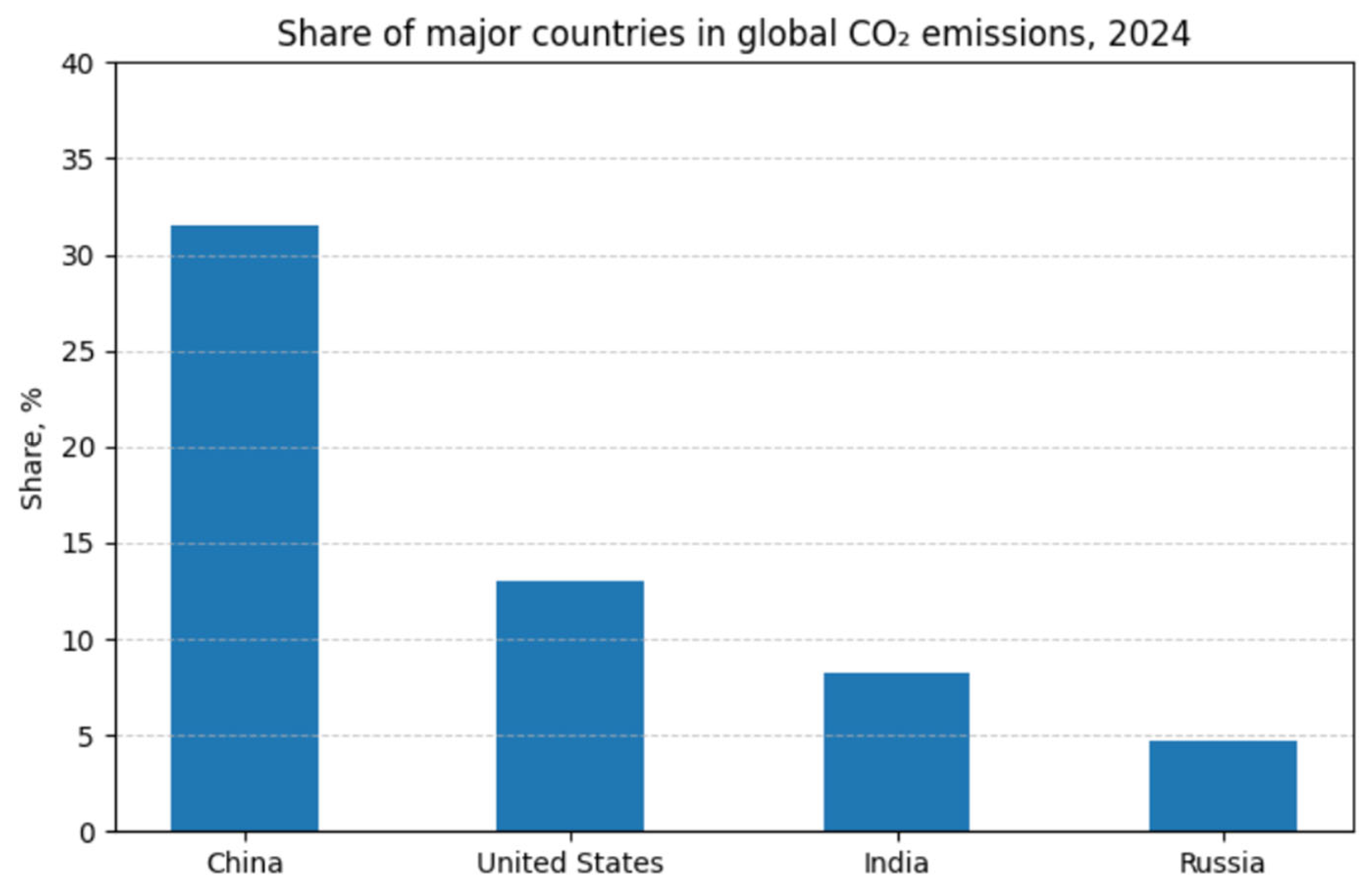
China remains the largest emitter of CO
2, accounting for approximately 31–32% of global emissions (around 12.0–12.2 billion tonnes), followed by the United States (approximately 4.9–5.0 billion tonnes) and India (around 3.1–3.3 billion tonnes). Russia maintains fourth place, contributing approximately 4.5–4.8% of global emissions, equivalent to about 1.7–1.8 billion tonnes of CO
2 (
Figure 1) [
4,
5]. Consequently, the development trajectories of the energy systems of China and Russia continue to exert a disproportionately strong influence on the achievement of global climate objectives and the implementation of pathways aimed at limiting the increase in average global temperature to within 1.5–2 °C, as articulated in the Paris Agreement and assessed by the Intergovernmental Panel on Climate Change (IPCC).
The figure illustrates the relative contribution of China, the United States, India, Russia and other regions to total global emissions. China accounts for the largest share of global CO2 emissions, followed by the United States and India, while Russia occupies the fourth position. The distribution highlights the systemic relevance of the Chinese and Russian energy sectors in the context of global decarbonisation efforts.
Under these conditions, energy companies are compelled to reconsider their business models and strategic priorities in order to reduce climate-related risks and enhance their contribution to the achievement of the United Nations Sustainable Development Goals (SDGs). Decarbonisation has become a central pillar of corporate strategies within the sustainable development framework and entails the deployment of low-carbon technologies, improvements in energy efficiency, reductions in methane emissions, the expansion of renewable energy sources (RES), hydrogen solutions, and carbon capture, utilisation and storage (CCUS) technologies [
5,
28,
29,
30].
In a broader sense, the energy transition implies a gradual shift away from traditional energy sources—oil, natural gas and coal—towards alternative and carbon-free energy sources, including solar and wind power, next-generation nuclear energy, and hydrogen [
31,
32,
33,
34,
35].
Despite the accelerated development of renewable energy sources, the oil and gas industry continued to account for more than half of global primary energy consumption in 2023–2024 (approximately 53–54%) [
36]. This underscores its system-forming role in the global energy system while simultaneously positioning it as one of the primary targets of climate regulation. In response to the intensifying climate agenda, major oil and gas companies have engaged in international initiatives such as the Oil and Gas Climate Initiative (OGCI), declared their commitment to the objectives of the Paris Agreement, and announced intentions to achieve carbon neutrality in the second half of the twenty-first century [
37]. At the same time, the use of non-financial and ESG reporting has expanded, primarily in the form of sustainability reports prepared in accordance with Global Reporting Initiative (GRI) standards, including the sector-specific GRI 11 standard developed specifically for the oil and gas industry [
38].
2.2. Russia and China in the Climate Policy Context
Russia, as one of the world’s leading producers of oil and natural gas and a key exporter of energy resources, is simultaneously among the largest emitters of greenhouse gases. According to data from the National GHG Inventory and submissions to the United Nations Framework Convention on Climate Change (UNFCCC), Russia’s total anthropogenic emissions excluding the land use, land use change and forestry (LULUCF) sector amounted to approximately 2.1–2.2 billion tonnes of CO
2 equivalent in 2022 and around 2.2–2.3 billion tonnes of CO
2 equivalent in 2023. Taking into account preliminary estimates for 2024, cumulative emissions over the period 2022–2024 are estimated at 6.6–6.9 billion tonnes of CO
2 equivalent [
39]. The Russian government has formally integrated the Sustainable Development Goals (SDGs) into the national system of strategic planning and adopted the Low-Emission Socio-Economic Development Strategy to 2050, alongside mechanisms for mandatory carbon reporting for major emitters [
40,
41]. Given the fundamental role of the oil and gas sector in shaping the federal budget, balance of payments and technological base of the country, the trajectory of adaptation of Russian national oil companies (NOCs) to the energy transition acquires not only corporate but also macroeconomic significance [
42,
43,
44].
China, as the world’s largest producer and consumer of energy and a major consumer of hydrocarbons, is also the largest global emitter of CO
2, accounting for approximately 31–32% of global emissions—equivalent to about 12.0 billion tonnes of CO
2 in 2023 and around 12.1–12.3 billion tonnes in 2024. At the same time, the country occupies a leading position in terms of investment volumes in renewable energy. In 2020, President Xi Jinping announced the strategic “30–60” targets: achieving peak CO
2 emissions no later than 2030 and carbon neutrality by 2060 [
45]. These commitments marked a turning point in China’s industrial policy and had a direct impact on the strategies of the three largest state-owned oil and gas corporations—China National Petroleum Corporation (CNPC), Sinopec Group, and China National Offshore Oil Corporation (CNOOC) [
46,
47]. Their publicly listed subsidiaries (PetroChina, Sinopec Corp., among others) incorporated targets in their corporate strategies during 2021–2024 to reach peak emissions in the mid-2020s and carbon neutrality within the 2050–2060 timeframe, alongside a substantial expansion of investments in hydrogen technologies, renewable energy sources, and carbon capture, utilisation and storage (CCUS) projects [
48,
49,
50,
51,
52,
53,
54].
Russian oil and gas companies—Gazprom, Rosneft, Lukoil, Novatek and Tatneft—underwent several stages of adaptation to the climate agenda between 2021 and 2024, ranging from declarative commitments to reducing carbon footprints to the implementation of concrete projects in methane emissions monitoring, low-carbon hydrogen production, the local deployment of renewable energy sources, and pilot CCUS initiatives [
55,
56,
57]. After 2022, sanctions-related constraints and the reorientation of export flows towards Asian markets further strengthened the emphasis on technological sovereignty and the pragmatic optimisation of the traditional hydrocarbon business [
58]. By 2023–2024, a distinct Russian model of adaptation to the energy transition had taken shape, combining formal compliance with climate requirements with the gradual modernisation of existing production chains and limited diversification of the energy portfolio.
At present, the primary sources of empirical information on oil and gas companies’ activities in the field of sustainable development and decarbonisation are corporate ESG reports and sustainability reports prepared in accordance with GRI guidelines and sector-specific oil and gas standards [
38,
59].
At the same time, empirical studies demonstrate that priorities in the selection of SDGs and the depth of their integration into corporate strategies vary significantly across regions. The Asian model, including the Chinese case, is characterised by high strategic flexibility and a close alignment with state objectives, alongside a relatively weak standardisation of disclosure practices. The Russian model also exhibits a strong linkage to national regulation and state priorities, but places greater emphasis on formal compliance with operational requirements and demonstrates a lower degree of standardisation and transparency compared with global reporting standards [
18].
2.3. National Oil Companies in Energy Transition
The response of national oil and gas companies to climate pressure is shaped by a complex set of factors, including government policy, investor requirements, technology availability, and corporate governance structures [
60]. Where NOCs have been examined, scholarly attention has primarily focused on Chinese companies such as CNPC, Sinopec and CNOOC [
10,
11,
12,
13,
14,
15]. However, the literature presents contrasting views: some studies highlight institutional inertia and lower flexibility of NOCs [
16], while others emphasise their potential as drivers of large-scale low-carbon investments due to state support and vertical integration [
17]. Despite these contributions, the trajectories of NOCs—particularly in a comparative cross-country context—remain insufficiently explored. Most existing research examines NOCs in isolation, rarely combining quantitative ESG indicators with qualitative analysis of corporate disclosures or linking corporate strategies to broader institutional contexts and measurable emissions outcomes [
18].
In this respect, greater attention to the mechanisms connecting institutional environments with corporate investment behaviour would strengthen the analytical coherence of the field. While existing studies identify governance structures and regulatory constraints, they seldom clarify how these factors translate into concrete strategic choices and capital allocation decisions in the low-carbon domain. A mechanism-oriented perspective is therefore required to link institutional pressures with observable corporate responses.
In the recent empirical literature, transition risk has been identified as an important channel influencing corporate investment behaviour and industry performance [
61]. This perspective helps explain how regulatory uncertainty, carbon market development and green innovation incentives affect the perceived rationality of low-carbon investments. Integrating this mechanism-based approach strengthens the analytical interpretation of differences observed between Chinese and Russian NOCs.
Building on this theoretical perspective, the present study employs a comparative research design to systematically examine the strategic responses of Chinese and Russian NOCs within their respective institutional environments. The following section outlines the data sources, methodological approach and analytical procedures used to operationalise this framework.
3. Materials and Methods
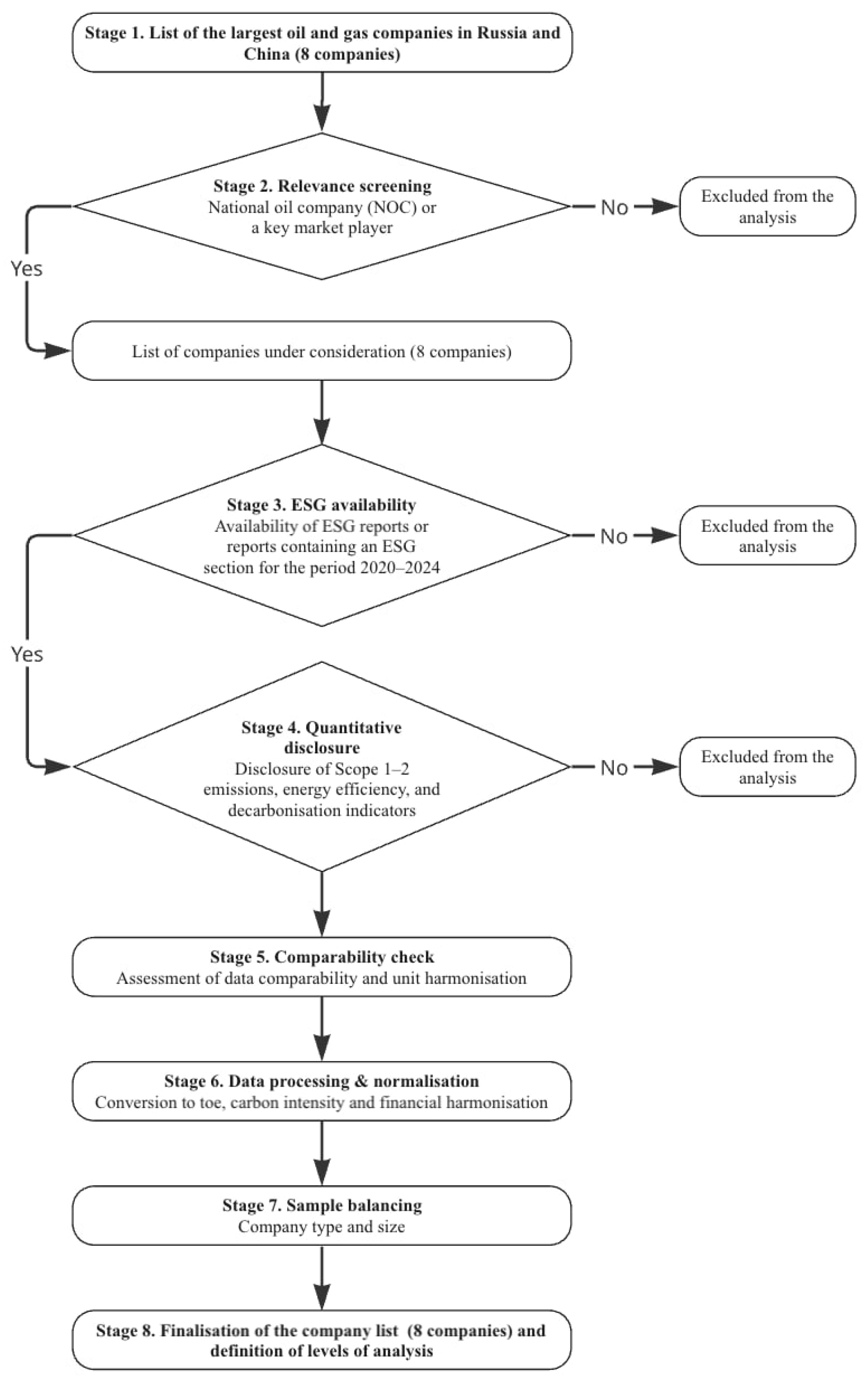
The formation of the company sample was conducted through a multi-stage procedure based on the principles of relevance, reproducibility, and data comparability.
At the first stage, a systematic review of academic publications and industry analytical reports addressing the decarbonisation of the oil and gas sector and corporate sustainable development strategies was carried out. The results of this stage were used to formalise the research questions and to design the research algorithm presented in
Figure 2.
At the second stage, the general population of research objects was formed, comprising the largest oil and gas companies in China and Russia. The baseline selection criteria included the status of a national oil and gas company or a systemically important industry player, a significant share in national volumes of hydrocarbon extraction and processing, as well as a substantial contribution to total greenhouse gas emissions.
The study is based on a purposive sample of systemically important national oil and gas companies that account for a dominant share of hydrocarbon production and sectoral emissions in their respective countries. The objective is not statistical representativeness, but analytical generalisation. By focusing on structurally significant actors operating within distinct institutional environments, the analysis aims to identify adaptation patterns and governance logics that may be indicative of broader institutional dynamics. Accordingly, the findings should be interpreted as analytically transferable rather than statistically generalisable across the entire oil and gas sector.
For the companies included in the sample,
Table 1 presents data on production volumes, revenue, and net profit for 2024 for oil and gas companies in China and Russia, based on their official financial statements. These indicators are used to confirm the companies’ status as major industry players and to ensure the comparability of the scale of their operations within the framework of the comparative analysis of decarbonisation strategies.
The estimation was based on CNOOC’s production structure in previous years (2021–2023), according to which approximately 60% of total output was attributable to oil and around 40% to natural gas. It is assumed that this proportion did not change significantly in 2024.
To ensure robustness, this assumption was tested using alternative scenarios within a ±5 percentage point range. The resulting variation did not materially affect the comparative emissions intensity results.
To ensure comparability of the financial indicators, all monetary values were converted into a common currency (RUB). Data originally disclosed in CNY were converted using the official annual average exchange rate for the corresponding reporting year. All values are presented in nominal terms, consistent with corporate disclosures, and no inflation adjustment was applied.
The comparison of financial indicators is intended primarily for order-of-magnitude benchmarking rather than strict econometric comparison, given differences in accounting standards and reporting practices across countries.
Given the heterogeneity in corporate definitions of “green investments”, this indicator was harmonised by including only those capital expenditures explicitly attributed in corporate reports to renewable energy, hydrogen projects, CCUS, methane reduction technologies, and other clearly identifiable low-carbon initiatives. Where broader sustainability classifications were applied, only the transparently attributable low-carbon components were included. Due to residual differences in reporting practices, this indicator should be interpreted as indicative rather than fully standardised.
At the third and the fourth stages, companies were filtered based on the availability of empirical data. Only companies that published non-financial and/or ESG reports for at least two consecutive years within the 2020–2024 period, containing quantitative indicators on greenhouse gas emissions (Scope 1–2), energy consumption, and implemented measures to reduce carbon intensity, were included in the sample.
Exclusion criteria were formally defined at the screening stage; however, all eight selected companies met the established inclusion thresholds and provided sufficient data for both qualitative and quantitative analysis.
The fifth and the sixth stages focused on assessing the comparability of disclosed indicators. The analysis examined the calculation methodologies employed (including compliance with the GHG Protocol, GRI standards, and sector-specific guidelines), reporting consolidation boundaries, units of measurement, and the completeness of data disclosure [
62,
63]. Companies for which these parameters did not allow for reliable cross-country comparability were excluded from the quantitative analysis and considered solely within the qualitative assessment of decarbonisation strategy directions. Where structural inconsistencies in reporting boundaries or accounting methodologies prevented reliable harmonisation, the respective indicators were excluded from the quantitative dataset.
At the seventh stage, the final sample was balanced across countries, scales of operation, and business model types (vertically integrated companies, predominantly upstream producers, and gas-focused companies). This approach minimised structural distortions and enhanced the statistical comparability of the results of the comparative analysis.
Corporate non-financial reporting was analysed using a structured qualitative content analysis with a predominantly deductive coding approach. The coding framework was developed from the research questions and the institutional–strategic framework adopted in the study. The codebook included the following categories: (1) strategic positioning in relation to decarbonisation; (2) formal climate targets and their integration into corporate governance; (3) prioritised decarbonisation pathways (renewables, hydrogen, CCUS, methane reduction, and energy efficiency); and (4) disclosed quantitative environmental and investment indicators.
The unit of analysis consisted of thematic sections of ESG and sustainability reports, including strategy statements, climate-related disclosures, and environmental performance sections. Coding was conducted manually by a single researcher using consistent classification criteria applied across all companies and reporting years. To enhance transparency and consistency, coding decisions and data extraction procedures were systematically documented throughout the analysis. Extracted indicators were cross-checked across relevant sections of each report to ensure internal coherence.
Where ESG reports for different years repeated previously disclosed data to present performance dynamics, such figures were carefully compared and recorded only once per corresponding reporting year in the dataset. These repetitions were treated as part of standard multi-year reporting practice, and consistency across reports was used to verify data stability over time.
Each ESG report was treated as a single document and, for the purposes of the study, was structured into three interrelated analytical sections: strategic, target-oriented, and quantitative–operational.
The strategic section covers the formulation of corporate mission statements and long-term priorities, statements by senior management, and descriptions of corporate governance systems for sustainable development and climate policy. The analysis of this section was used to determine whether decarbonisation and the energy transition are considered key directions of corporate development (RQ1).
The target-oriented section includes information on formalised climate targets, emissions reduction programmes, and plans for transforming the energy portfolio. At this stage, companies’ strategic orientations were identified and compared with international climate policy trajectories and clean energy transition objectives, including those reflected in SDG 7 and SDG 13 (RQ2).
The quantitative–operational section contains systems of actual performance indicators and descriptions of implemented measures in the fields of environmental management, energy, and investment. At this stage, data were extracted from the reports on CO
2 emissions, water use intensity, production volumes, energy efficiency indicators, development investments, the share of “green” investments, and the deployment of renewable energy. Based on these data, a unified database of quantitative indicators for the 2020–2024 period was compiled (
Table 2), which was subsequently used to construct comparative charts and to assess companies’ actual progress in implementing decarbonisation strategies (RQ3–RQ4).
To make the analysis more accurate, the quantitative results are presented by separating scale indicators from efficiency indicators. Scale indicators include absolute Scope 1 + 2 emissions and total operational energy consumption. Efficiency indicators include Scope 1 + 2 emissions intensity per unit of energy produced, water intensity, and the share of electricity generated from renewable sources. If a company does not disclose a given indicator, it is treated as missing (rather than zero) and is not used in the calculation of relative indicators for the respective year.
The study applies the greenhouse gas emissions classification framework of the GHG Protocol, which distinguishes three emission scopes [
64]. Scope 1 emissions comprise direct emissions from sources controlled by the company, including extraction, processing, flaring, and technological processes. Scope 2 includes indirect emissions associated with the generation of purchased electricity and heat. Scope 3 covers other indirect emissions along the entire value chain, including transportation, product use, and contractors’ activities. In this study, the primary focus is placed on Scope 1 and Scope 2 indicators, as these are the most comprehensively and comparably disclosed by Russian and Chinese companies in non-financial reporting for the 2020–2024 period.
The analysis revealed differences in reporting structures and the depth of disclosure across companies and countries. In several cases, indicators were not directly aligned with international standards or were disclosed using heterogeneous units of measurement, necessitating additional classification and normalisation.
For the quantitative comparative analysis, only those indicators that could be converted into a comparable format and were consistent with international recommendations on emissions accounting and energy efficiency were used.
To ensure cross-company comparability, uniform extraction and normalisation procedures were applied. Data were extracted directly from annual ESG and financial reports for 2020–2024 using consistent criteria across firms.
In this study, “energy produced” refers to the total volume of hydrocarbon output generated within the company’s operational boundary, including extraction, processing, and associated transportation activities, converted into a common energy-equivalent metric. Where companies reported figures separately or in different physical units, volumes were harmonised into tonnes of oil equivalent (toe) using standard energy conversion coefficients (1 tonne of oil = 1 toe; 1000 m3 of natural gas ≈ 0.9 toe; 1 boe ≈ 0.136 toe). This approach ensures comparability across firms with different product mixes and degrees of vertical integration.
Emissions intensity per unit of energy produced was calculated as total Scope 1 + Scope 2 greenhouse gas emissions (in CO2-equivalent) divided by total standardised production (in toe). Scope 3 emissions were excluded due to limited and heterogeneous disclosure practices, which prevent robust cross-company comparability.
To enhance triangulation, selected production and emissions indicators were cross-checked against international statistical sources (including IEA databases and national greenhouse gas inventories, where applicable) to verify consistency in order of magnitude and trend direction. This verification was indicative in nature, given differences in reporting boundaries. It is also acknowledged that part of the observed cross-country differences may reflect disclosure practices.
Given the 2020–2024 observation window, the findings reflect short- to medium-term transition dynamics and do not allow validation of long-term decarbonisation trends.
4. Results
4.1. Strategic Priorities and Decarbonisation Targets of Oil and Gas Companies in Russia and China
Based on an analysis of corporate sustainability reports for the 2020–2024 period, key decarbonisation priorities and the associated Sustainable Development Goals declared by the largest oil and gas companies in Russia and China were identified. The systematised results are presented in
Table 2, which outlines the strategic objectives companies define as core priorities and the SDGs they employ as a framework for positioning their sustainable development and climate agendas. The extended version of
Table 2, including detailed target descriptions, is provided in
Appendix A (
Table A1).
Companies in both countries demonstrate similarities in the core logic of their declared strategies. In the majority of cases, strategic priorities are linked to SDG 7.1 (energy supply reliability) and SDG 7.3 (energy efficiency improvement). Most companies emphasise measures related to operational modernisation, reduction in specific energy consumption, methane mitigation, and associated petroleum gas (APG) utilisation.
At the same time, differences are observed in the thematic emphasis of declared priorities. Chinese companies more frequently articulate long-term carbon neutrality objectives and explicitly reference renewable energy expansion, hydrogen development, and CCUS deployment as strategic directions. Russian companies place comparatively greater emphasis on operational efficiency improvements, methane reduction, APG utilisation, and the development of natural gas and LNG projects.
Thus, although the SDG framework is formally applied by companies in both countries, the configuration of declared decarbonisation priorities differs in terms of emphasis on technological diversification versus optimisation of existing hydrocarbon assets. These observed differences in declared strategies form the basis for further analysis of their practical implementation.
At the next stage of the study, the analysis shifts from declared strategic priorities to an assessment of their practical implementation. Corporate decarbonisation targets are therefore compared with the actual dynamics of key quantitative indicators reflecting companies’ environmental and energy performance.
4.2. Implementation of Climate Strategies: A Comparative Analysis of Emissions and Energy Efficiency
Table 3 presents comparable quantitative indicators for assessing the implementation of corporate decarbonisation strategies over 2020–2024, including Scope 1 + 2 emissions, emissions intensity, operational energy consumption, water intensity, and renewable electricity share. The data are derived from corporate sustainability and ESG reports of Sinopec, PetroChina (CNPC), CNOOC, and major Russian oil and gas companies for 2020–2024 [
49,
65,
66,
67,
68,
69,
70,
71,
72,
73,
74,
75,
76,
77,
78].
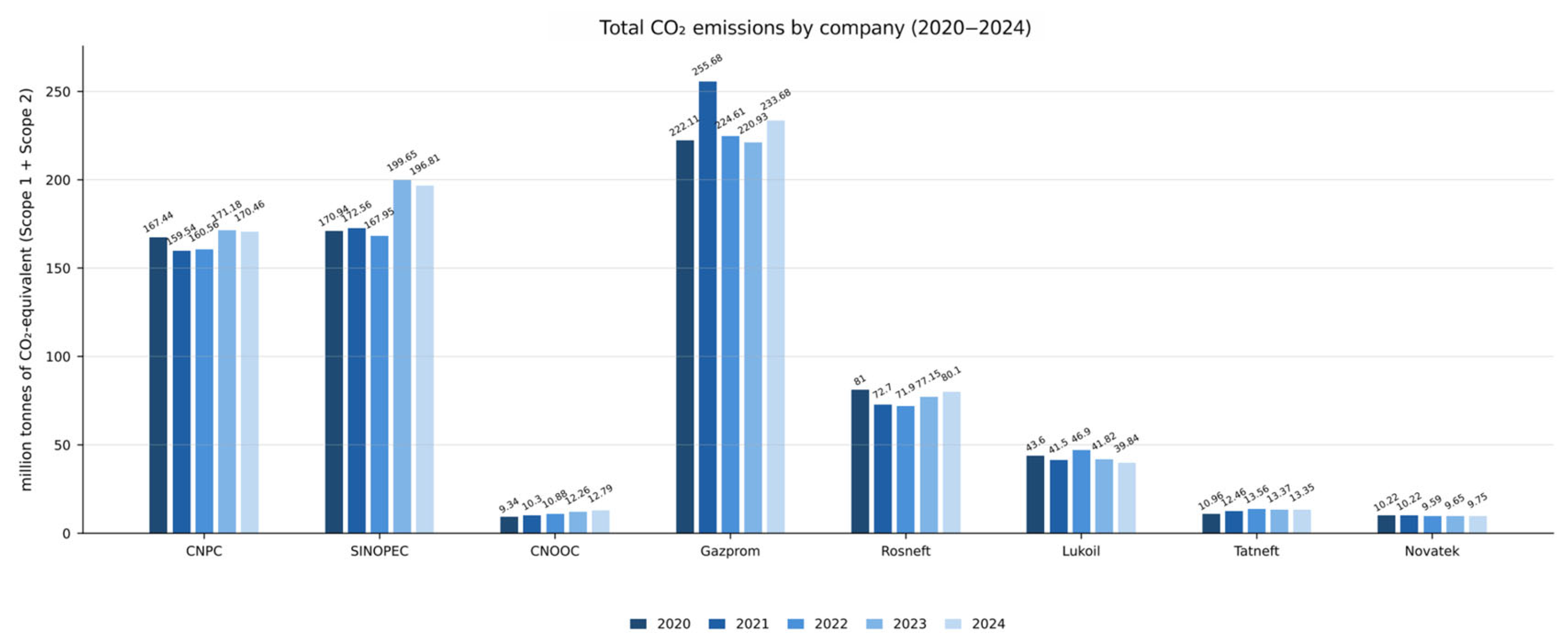
Figure 3 presents the dynamics of total greenhouse gas emissions (Scope 1 + Scope 2) of the largest national oil and gas companies in China (CNPC, Sinopec, and CNOOC) and Russia (PJSC Gazprom, PJSC Rosneft Oil Company, PJSC Lukoil, PJSC Novatek, and PJSC Tatneft) over the 2020–2024 period.
In addition to year-to-year variation, the analysis reports the net percentage change in total Scope 1 + 2 emissions over 2020–2024 (2024 relative to 2020). To further distinguish structural trends from short-term volatility, a simple average annual change (linear trend approximation over the four-year interval) is also calculated.
Over the observation period, total emissions increased by 1.8% for CNPC (+0.45% per year), 15.1% for Sinopec (+3.78% per year), 36.9% for CNOOC (+9.23% per year), and 5.2% for Gazprom (+1.30% per year); they declined by 1.1% for Rosneft (−0.28% per year), 8.6% for Lukoil (−2.15% per year), and 4.6% for Novatek (−1.15% per year), while Tatneft recorded an increase of 21.8% (+5.45% per year). The combined use of pre/post comparison and slope-based metrics enables a more precise characterisation of observed dynamics as expansionary, contractionary, or largely inertial, thereby strengthening cross-company comparability irrespective of differences in scale.
Over 2020–2024, aggregate emissions across the sample did not demonstrate a sustained downward trajectory. CNPC, Sinopec and Gazprom account for the highest absolute emission levels. Within the Chinese group, CNPC and Sinopec show increases relative to 2020, while CNOOC remains at lower absolute levels but exhibits upward dynamics. Among Russian companies, Gazprom’s 2024 emissions exceed the 2020 baseline, Rosneft remains relatively stable, Lukoil demonstrates a declining trend, and Novatek and Tatneft show gradual increases. Substantial heterogeneity is observed across companies and national groups.
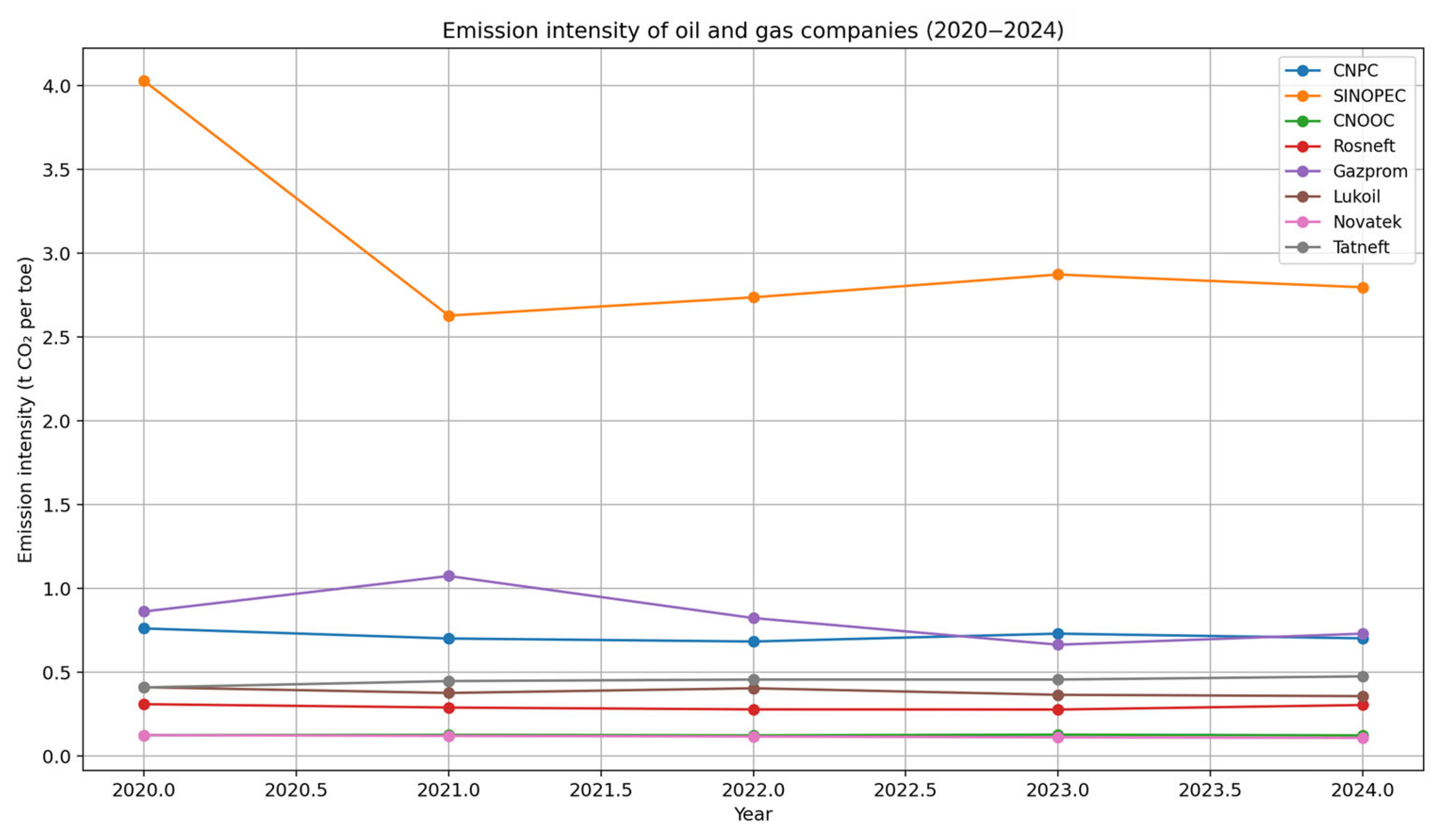
The analysis of the dynamics of greenhouse gas emissions intensity (Scope 1 + Scope 2) per unit of energy produced over the 2020–2024 period reveals substantial differentiation across companies and between Chinese and Russian oil and gas corporations (
Figure 4).
Sinopec exhibits the highest emissions intensity throughout the period, with a moderate reduction relative to the 2020 baseline. CNPC demonstrates relatively stable emissions intensity, with a gradual downward tendency, while CNOOC maintains the lowest values among Chinese companies.
Within the Russian segment, Gazprom records the highest emissions intensity, with a decline observed after peak values in 2021. Lukoil demonstrates a sustained downward trend, Rosneft remains relatively stable, Novatek maintains comparatively low intensity levels, and Tatneft exhibits a gradual increase.
Overall, heterogeneous dynamics of emissions intensity are observed across companies and between national groups during 2020–2024.
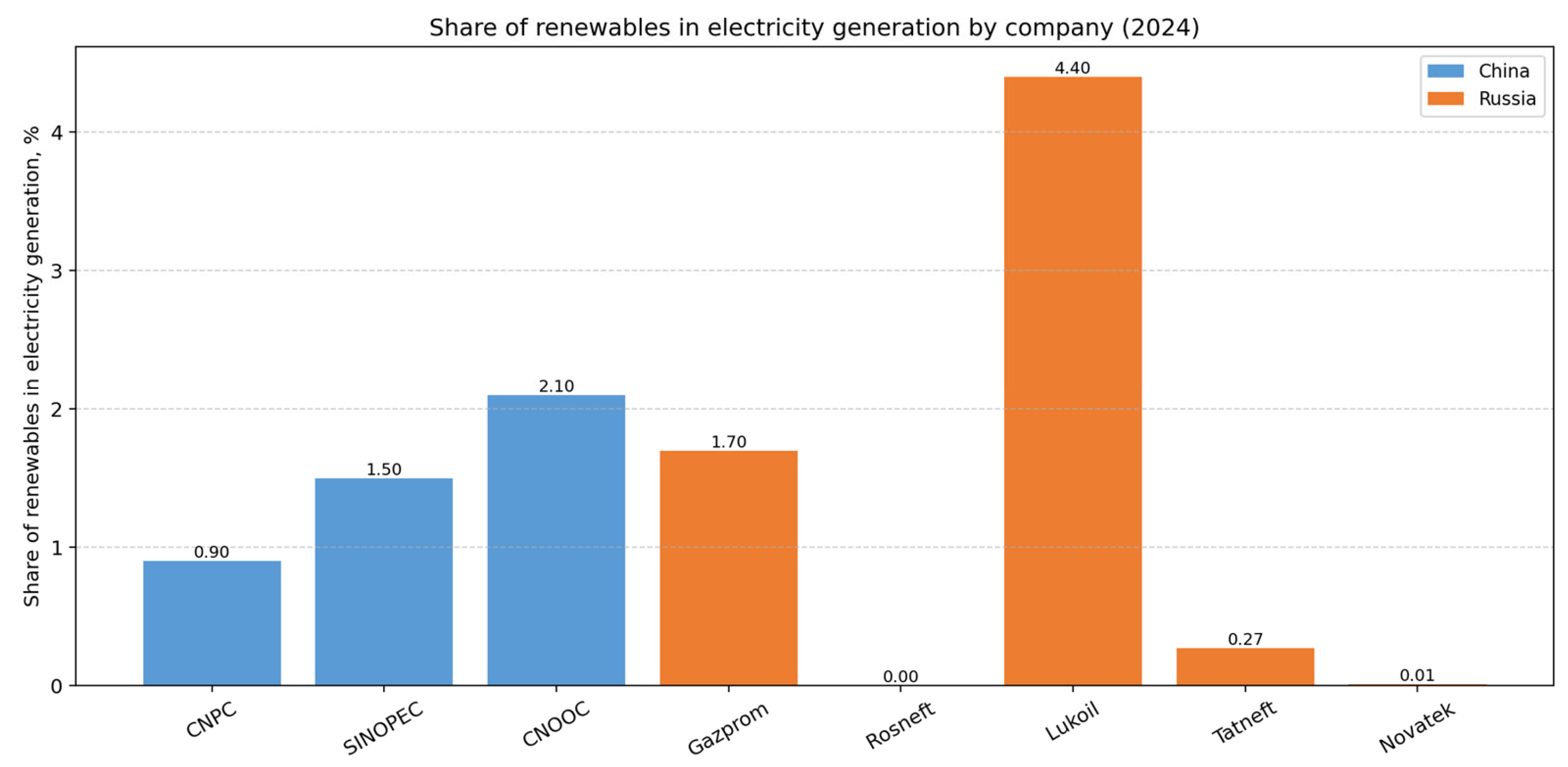
As shown in
Figure 5 and the data presented in
Table 3, the share of electricity generated from renewable energy sources in the corporate energy mix remains low and, in 2024, does not exceed a few percentage points. Within the Chinese group, the indicator in 2024 amounts to 0.9% for CNPC, 1.5% for Sinopec, and 2.1% for CNOOC.
In the Russian segment, values also remain low over the 2020–2024 period: approximately 1.7% for PJSC Gazprom in 2024, 4.4% for PJSC Lukoil, 0.27% for PJSC Tatneft, and 0.01% for PJSC Novatek, while PJSC Rosneft Oil Company does not disclose comparable data on renewable energy use.
Over the observation period, changes in renewable electricity shares are limited in magnitude. In most cases, the increase does not exceed 0.1–0.3 percentage points over five years.
Water use intensity exhibits pronounced cross-company variation within both national groups. Higher values are observed for Sinopec and Rosneft in selected years, while CNOOC and Novatek maintain consistently low levels. No uniform cross-country pattern is identified over 2020–2024. The data do not demonstrate a systematic increase in water intensity during the period under review.
Operational energy consumption trends do not uniformly correspond to emissions dynamics. During 2020–2024, several companies (including Sinopec and Gazprom) demonstrate growth in total energy consumption alongside emissions fluctuations, whereas CNPC records a decline in energy consumption relative to 2020 despite interannual variability.
Table 4 presents oil and gas production volumes of the selected companies over 2020–2024.
Chinese companies demonstrate generally stable or steadily increasing output in both oil and gas segments, with particularly pronounced growth in gas production.
Russian companies exhibit more heterogeneous production dynamics. Gazprom’s gas output fluctuates markedly over the period. Oil production among vertically integrated Russian firms shows mixed trajectories, including gradual declines (Rosneft), moderate fluctuations (Lukoil and Tatneft), and modest growth in gas-focused companies such as Novatek.
Table 5 presents reported capital expenditures and green investments over 2020–2024. Green investment volumes vary substantially across companies and years. Particularly high values are recorded for CNPC in 2021 and Sinopec in 2024. Among Russian companies, Rosneft demonstrates a steady increase in reported green investments during 2021–2024, while other firms display more moderate or sporadic allocations.
At the same time, disclosure practices differ across companies and years, and data are incomplete in several cases, which constrains direct cross-company comparability of green investment volumes.
4.3. National Specificities in the Implementation of Decarbonisation Strategies: Institutional and Investment Context
The transition from the analysis of declared strategic priorities (
Section 4.1) to the assessment of companies’ actual performance indicators (
Table 3,
Table 4 and
Table 5) makes it possible to identify not only differences in emission levels, energy efficiency and investment activity, but also deeper national specificities in the models through which the oil and gas sector adapts to the energy transition.
As demonstrated by data on CO
2-equivalent emissions and the energy intensity of production (
Table 3), Russian and Chinese companies follow different trajectories in reducing carbon intensity. In Russia, the primary contribution is achieved through improvements in energy efficiency, equipment modernisation and an increasing share of natural gas in the production structure, whereas in China reductions in carbon intensity are increasingly driven by large-scale investments in new energy domains—renewables, hydrogen and CCUS.
Investment data (
Table 5) confirm the systemic nature of these differences. Chinese companies are characterised by a higher share of green investments within total capital expenditure and by the sustained growth of such investments over the 2020–2024 period, while Russian companies allocate the bulk of their resources to the environmental modernisation of existing assets and to local renewable energy projects.
A key factor underlying these differences is the institutional nature of Chinese oil and gas corporations. CNPC (PetroChina), Sinopec and CNOOC are national oil and gas companies with controlling state ownership, and their parent entities are included among the key enterprises supervised by the State-owned Assets Supervision and Administration Commission (SASAC) under the State Council of the People’s Republic of China. Senior management is appointed by the Communist Party of China, which directly links corporate strategies to state priorities in the fields of climate and energy policy [
51,
60].
As a result, for Chinese NOCs, decarbonisation functions not only as an element of the corporate ESG agenda, but also as an instrument for implementing the national “30–60” goals (peak emissions by 2030 and carbon neutrality by 2060). This is reflected in the concentration of resources on large-scale infrastructure projects of national importance, including hydrogen clusters, offshore wind farms, regional CCUS hubs and the integration of renewable energy into industrial supply chains. These developments are partially captured by the rising share of renewable electricity generation and declining energy intensity of new facilities (
Table 3).
By contrast, the Russian model is shaped by a higher degree of corporate autonomy and less stringent climate regulation. Even in the presence of national climate targets, companies independently determine the pace and depth of transformation, resulting in more cautious investment strategies and a focus on economically justified measures—methane leak reduction, higher associated petroleum gas utilisation rates, the optimisation of energy consumption, and the development of LNG projects.
These differences are further reinforced by the structure of production (
Table 4). Chinese companies are primarily oriented towards meeting domestic demand and integration within the national industrial system, whereas Russian companies retain a strong export orientation and operate under conditions of significant geographical dispersion of fields, which increases the capital intensity of decarbonisation projects.
Additional evidence of divergence is provided by the distribution of investments in renewable energy: in China, renewables are treated as a strategic driver of long-term growth, whereas in Russia they are viewed as a supplementary element of environmental policy. This helps explain why, despite comparable production volumes, the dynamics of energy efficiency indicators and the share of renewables differ substantially between the two countries (
Table 3 and
Table 5).
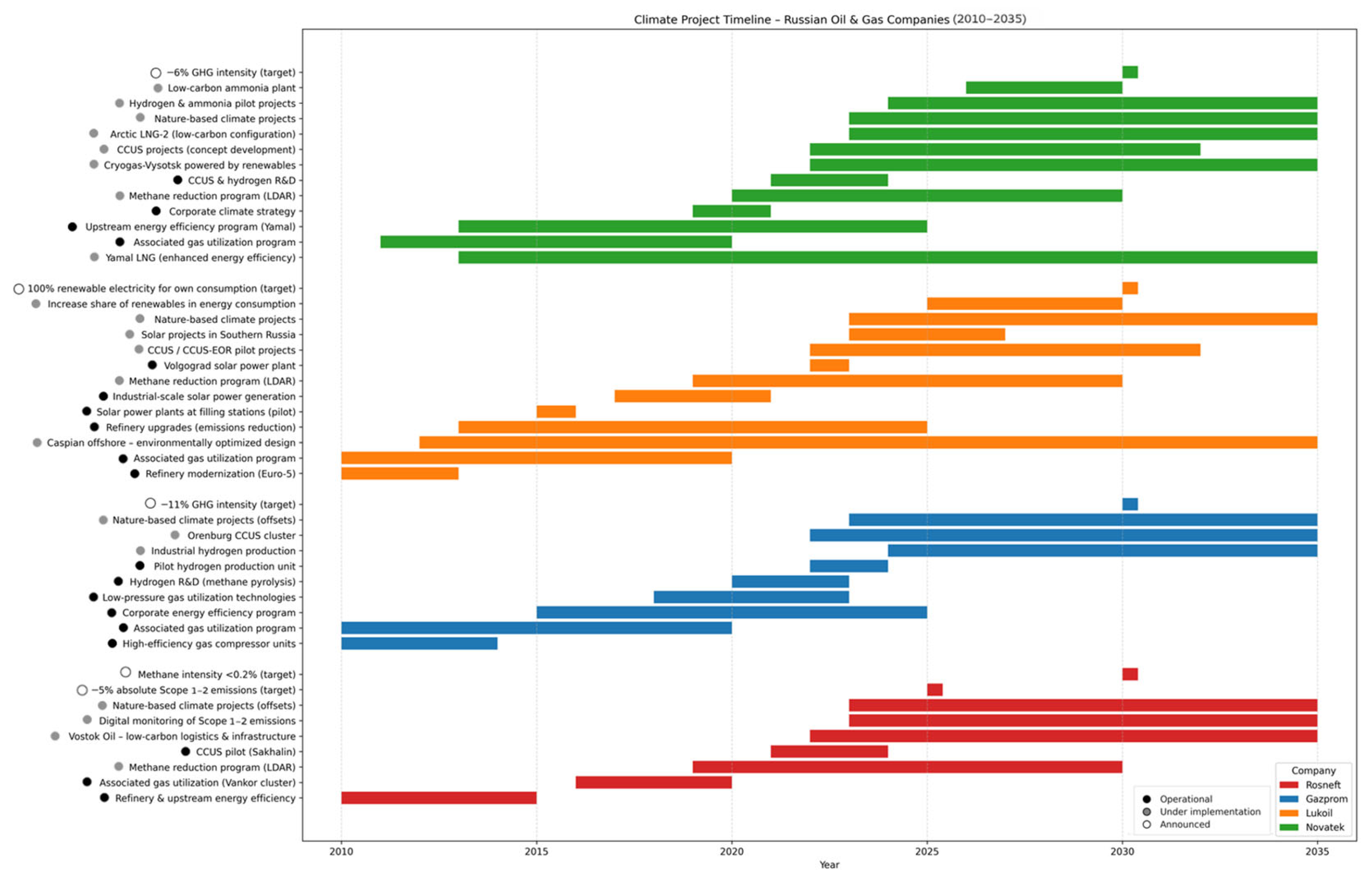
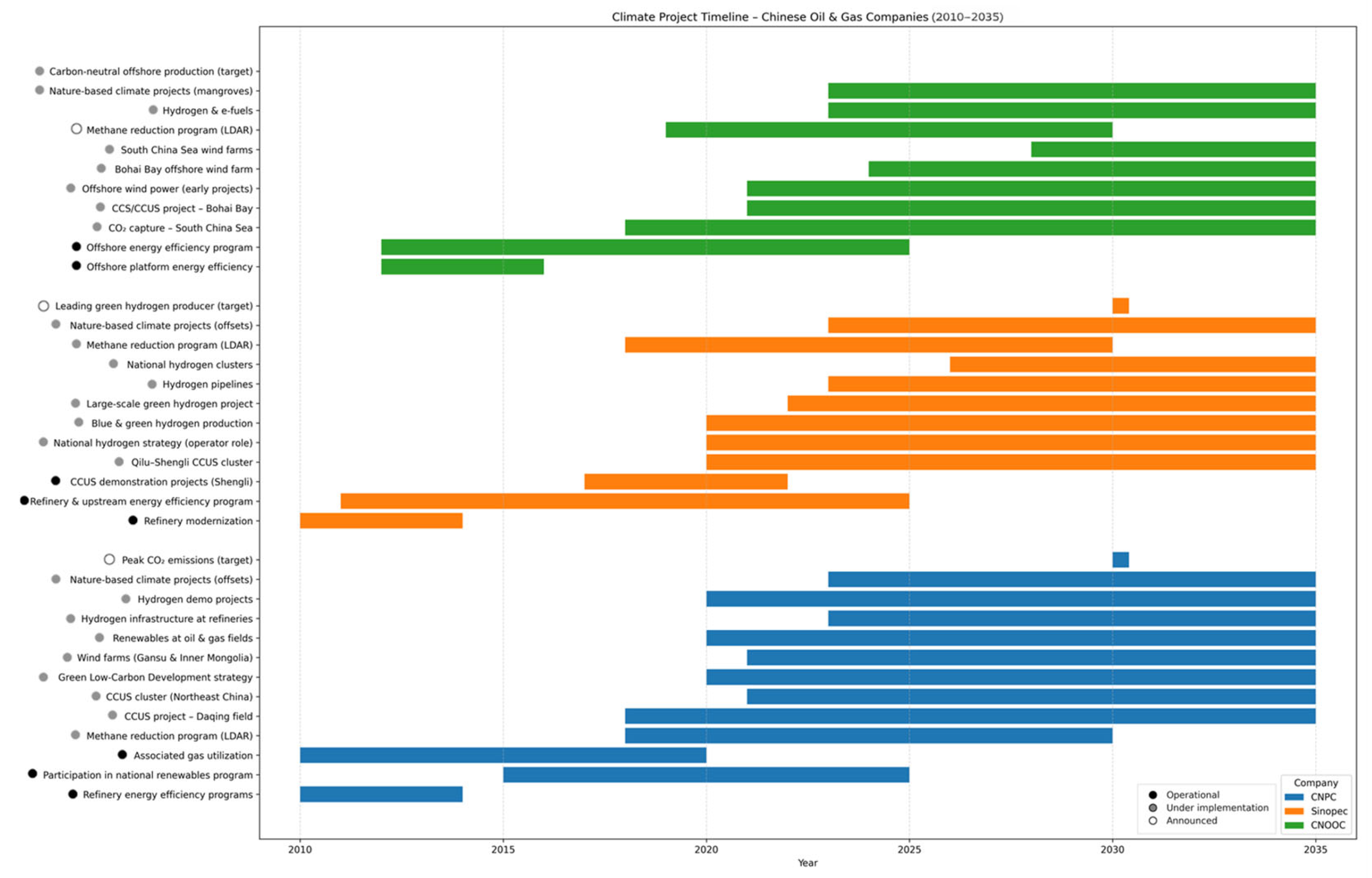
To systematise the temporal logic of the transition from declarations to practical action, the study additionally employs a visual timeline of key projects in renewable energy, hydrogen, CCUS and environmental modernisation implemented by Russian and Chinese companies over the 2010–2035 period. This approach allows for a comparison not only of indicator levels, but also of the speed of institutional and technological responses to the climate agenda in the two countries.
Overall, the results demonstrate that differences between Russian and Chinese oil and gas companies cannot be reduced to individual managerial decisions or financial capacities, but instead reflect deeper national characteristics: a model of state capitalism and strategic planning in China, and a more market-oriented, adaptive model in Russia.
Accordingly, for Chinese companies decarbonisation represents an element of a centrally coordinated transformation of the energy system implemented through state-owned corporations, whereas for Russian companies it serves as a tool for the gradual modernisation of traditional oil and gas business models and for reducing regulatory and market risks under conditions of the global energy transition.
It is precisely this institutional divergence that largely explains the differences observed in emissions, energy efficiency and investment structures (
Table 3,
Table 4 and
Table 5) and should be taken into account when interpreting comparable quantitative data and formulating conclusions regarding prospects for bilateral cooperation in low-carbon development.
Figure 6 and
Figure 7 present timelines of key oil and gas projects in Russia and China.
The timelines presented in
Figure 6 and
Figure 7 were compiled based exclusively on official corporate sources, including annual reports, ESG/sustainability reports, strategic programmes, and formal press releases. Only projects related to renewable energy, hydrogen, CCUS, methane reduction, and energy efficiency were included. Projects were classified into three categories: (1) operational/commissioned; (2) under implementation (with approved investment decisions); and (3) announced/strategic targets without confirmed capital allocation. The classification was based on the presence of reported CAPEX, implementation timelines, or FID approval status.
The analysis of the temporal trajectories of climate-related project implementation by oil and gas companies reveals substantial differences in the nature and scale of their climate activity. In the case of Russian companies, a pronounced heterogeneity of project portfolios and a selective approach to the adoption of climate initiatives can be observed. Project implementation is fragmented and varies in terms of timing, thematic focus and technological complexity, reflecting companies’ orientation towards achieving their own corporate climate objectives shaped by economic constraints, investment priorities and broader strategic development goals. Climate projects are generally embedded within existing production and investment logics rather than constituting an independent pathway of long-term transformation.
By contrast, the timelines of Chinese oil and gas companies display a relatively more coordinated pattern of climate-related activity within the observed period. Projects span a wide range of areas—from hydrogen energy and carbon capture to large-scale programmes aimed at improving energy efficiency and expanding renewable energy generation—and are implemented over extended time horizons. This may reflect differences in the level of institutional coordination, significantly larger investment volumes and a strategic orientation towards long-term decarbonisation aligned with national climate priorities.
Overall, the comparison of timelines suggests that, while Russian oil and gas companies do participate in the implementation of climate-related projects, they tend to do so selectively and within the confines of their individual corporate strategies. Chinese companies, in contrast, are characterised by a broader portfolio of climate-related initiatives across multiple technology areas. At the same time, the observed differences relate primarily to investment structures and policy alignment, while sustained reductions in absolute emissions are not yet evident over the analysed period.
5. Discussion
The comparative analysis of climate strategies and project activities of Russian and Chinese oil and gas companies is aimed at identifying alternative models of sectoral adaptation to the low-carbon transition and to different scenarios of the global climate agenda. Its objective is not only to document differences in institutional approaches and the scale of implemented projects, but also to formulate practical reference points for corporate and governmental strategic planning under conditions of heightened uncertainty in international climate and energy policy.
The findings allow an assessment of how declared decarbonisation commitments are translated into measurable changes in emissions, energy efficiency, renewable energy deployment, and investment structures. Although companies in both countries formally align their strategies with the UN Sustainable Development Goals, the empirical evidence demonstrates substantial differences in implementation patterns and institutional coordination mechanisms.
The analysis of
Table 3,
Table 4 and
Table 5 operationalises these dimensions by focusing on absolute CO
2-equivalent emissions, carbon intensity and energy efficiency indicators, corresponding to the priorities reflected in SDG 7 and SDG 13, as well as on patterns of capital allocation. The dynamics of these variables demonstrate uneven progress both across and within national groups of companies. While variations in absolute emissions are frequently associated with changes in production volumes and market conditions, more sustained improvements are observed in intensity-based indicators, suggesting that efficiency gains rather than structural output contraction constitute the primary measurable channel of adjustment.
The observed differences in declared strategic priorities indicate distinct institutional adaptation models. Chinese companies align decarbonisation with nationally defined long-term transformation objectives, framing renewables, hydrogen and CCUS as elements of structural energy system change. Russian companies, by contrast, emphasise operational efficiency, methane mitigation and LNG development, reflecting a focus on the optimisation of existing hydrocarbon assets. Thus, while both countries formally reference the SDG framework, the depth and structural orientation of decarbonisation differ.
Russian oil and gas companies are primarily oriented towards the technological upgrading of existing assets, reductions in energy losses, the higher utilisation of associated petroleum gas and the expansion of LNG as a comparatively lower-carbon fuel within the hydrocarbon portfolio. This orientation is reflected in moderate improvements in energy efficiency indicators. At the same time, renewable energy projects remain supplementary to core hydrocarbon operations and have not substantially reshaped the structural configuration of corporate energy balances (
Table 3). Capital expenditure directed towards renewables and related technologies, as shown in
Table 5, is largely selective and pilot-based in nature.
Chinese oil and gas companies, by contrast, demonstrate a more pronounced diversification of their energy portfolios, including large-scale development of hydrogen initiatives, offshore wind power and CCUS programmes. This diversification is associated with growth in installed renewable capacity and more rapid reductions in the energy intensity of new production facilities. An important enabling factor is the status of these companies as state-owned corporations operating within a framework of centralised strategic planning and medium-term development programmes, which facilitates the integration of low-carbon projects into broader transformation objectives [
38].
At the same time, the persistence of high absolute emissions among major companies suggests that strategic diversification into low-carbon segments has not yet resulted in aggregate emission decline. Emission trajectories remain strongly influenced by company scale and portfolio composition.
Analysis of emissions intensity further highlights structural differentiation. Sinopec records comparatively high intensity levels, while CNOOC maintains lower values; CNPC demonstrates relative stability with gradual improvement. Among Russian companies, intensity dynamics are more heterogeneous, with some firms showing reductions and others remaining stable or increasing. These patterns correspond to differences in asset structure, technological configuration, and strategic prioritisation across companies and national systems.
Beyond emissions and intensity dynamics, the structure of corporate energy consumption provides an additional perspective on the depth of the transition. The quantitative evidence indicates that, despite observable increases in renewable electricity shares, their overall contribution to corporate energy consumption remains limited in structural terms. Although incremental growth is recorded over 2020–2024, the scale of change does not amount to a substantive reconfiguration of energy use within the oil and gas sector. Taken together, the aggregate data suggest that conventional energy sources continue to dominate corporate energy balances in both China and Russia, implying that the transition observed during the period under review remains gradual rather than transformative.
Differences in investment patterns further reinforce the contrast between national adaptation models. Chinese companies report substantially larger volumes of green investment, including particularly high expenditures by Sinopec in 2024, indicating a greater capacity to mobilise capital in low-carbon segments. By contrast, Russian firms allocate comparatively smaller shares of capital expenditure to renewable and low-carbon technologies, which remain secondary to investments in traditional hydrocarbon assets and environmental modernisation.
Although cross-company comparison is constrained by variations in disclosure practices and classification of “green” expenditures, the overall pattern suggests that the depth of structural transformation is closely linked to institutional coordination mechanisms and capital allocation priorities.
These differences in capital allocation are closely linked to the distribution of regulatory and financial risks. In China, long-term policy targets, state-backed financing mechanisms and institutionalised coordination between government and corporate actors reduce uncertainty and lower the cost of capital for large-scale renewable, hydrogen and CCUS projects. In Russia, investment decisions in the decarbonisation sphere are made under higher levels of external economic and regulatory uncertainty, increasing required rates of return and constraining the expansion of projects that do not generate short-term financial results. Thus, variations in green investment volumes reflect not only strategic preferences but also differences in the institutional allocation of risk between the state and business.
In addition to carbon-related metrics, water use intensity was incorporated as a complementary indicator of environmental sustainability, linked to SDG 6 (Clean Water and Sanitation) and SDG 12 (Responsible Consumption and Production). This dimension allows an assessment of whether progress in reducing carbon intensity is accompanied by increased pressure on water resources as new technologies and processes are introduced.
The absence of a systematic increase in water intensity during 2020–2024 suggests that, at the aggregate level, decarbonisation efforts have not been associated with observable trade-offs in water use. At the same time, the pronounced heterogeneity across companies indicates that environmental performance remains differentiated and dependent on specific technological configurations and asset structures rather than reflecting a uniform sectoral pattern.
Similarly, no consistent proportional relationship is observed between operational energy consumption and emissions. This indicates that decarbonisation outcomes are shaped not only by the scale of activity but also by changes in energy mix and efficiency. The result further reinforces the importance of distinguishing between scale effects and efficiency effects when assessing corporate transition trajectories.
The combined evidence across emissions intensity, renewable energy deployment, and water use underscores the differentiated and uneven character of corporate decarbonisation pathways. Despite observable adjustments, the persistence of high absolute emissions and the limited structural role of renewables indicate that sectoral transformation remains gradual. At the same time, the absence of systematic cross-resource trade-offs suggests that carbon reduction efforts have not been accompanied by aggregate increases in water pressure. These patterns highlight the importance of company scale, asset configuration, and institutional context in shaping the pace and depth of transition.
The observed emission and investment dynamics should also be interpreted in light of sectoral demand conditions and external market constraints during the 2020–2024 period. In the Russian case, export reorientation toward Asian markets, infrastructure adjustments, and sanctions-related technological and financial restrictions influenced production volumes and capital allocation priorities. In the Chinese context, sustained domestic energy demand growth and state-coordinated industrial policy frameworks shaped investment expansion in low-carbon segments alongside continued hydrocarbon output. These demand-side and market-specific factors do not determine corporate strategies in isolation, but they provide an important contextual layer for understanding the scale and direction of the reported performance indicators.
The comparative design allows us to identify institutional embedding, state–business coordination and risk allocation as key factors shaping divergent corporate transition pathways—insights that would be less visible in a single-country analysis.
The results indicate that institutional context plays a decisive role in shaping corporate decarbonisation trajectories. In China, stronger state coordination and long-term planning frameworks facilitate portfolio diversification and large-scale investment in emerging energy segments. In Russia, adaptation is more frequently embedded within the incremental modernisation of existing assets and risk management within the traditional hydrocarbon model.
These findings are particularly relevant for the Russian context. The Chinese model may serve as a potential benchmark in scenarios of increased institutionalisation of climate policy and stronger integration into external low-carbon markets. Conversely, the Russian approach—characterised by selective and pragmatic integration of climate initiatives—may offer lessons under conditions of regulatory uncertainty or shifting global priorities.
The temporal logic of decarbonisation project implementation further reinforces these structural differences. Chinese companies tend to prioritise the early launch of capital-intensive low-carbon initiatives, whereas Russian projects are more frequently incremental and cautious in scope. This divergence shapes not only current performance indicators but also medium-term sectoral development trajectories.
In theoretical terms, the results contribute to the literature on state capitalism and the governance of national oil companies (NOCs). Existing studies argue that state-owned enterprises in resource sectors often operate not merely as commercial entities but as instruments of national strategic policy. The comparative evidence presented in this study supports this view: Chinese NOCs demonstrate a high degree of alignment with centrally defined climate objectives, consistent with a model of coordinated state capitalism.
At the same time, the findings also highlight the structural constraints of resource-dependent economies. Even under conditions of strong institutional coordination, reductions in carbon intensity do not automatically translate into sustained absolute emission declines. This observation resonates with the literature on carbon lock-in and the path dependence of hydrocarbon-based development models.
In the Russian case, the comparatively greater autonomy of corporate actors and the emphasis on operational efficiency improvements reflect a more market-oriented adaptation logic, consistent with hybrid forms of state capitalism described in the political economy literature.
These theoretical considerations help to explain the empirical patterns observed in
Table 3,
Table 4 and
Table 5, particularly the divergence in investment allocation and the persistence of scale-driven emission dynamics. Beyond their theoretical implications, these findings also carry practical relevance for corporate and policy decision-making.
From a practical perspective, these differentiated trajectories create potential for mutual learning and the transfer of managerial and technological solutions. For Russian oil and gas companies, the Chinese experience of integrating climate objectives into corporate governance structures, utilising state-supported financing mechanisms and reducing long-term investment risks may facilitate the scaling-up of renewable energy, hydrogen technologies and CCUS beyond pilot initiatives. Conversely, Chinese companies may benefit from the Russian experience in operating under challenging climatic conditions, developing extensive gas transmission infrastructure and integrating natural gas and LNG as transition fuels, as well as from more detailed environmental disclosure practices and the incorporation of climate-related KPIs into management incentive systems.
These implications can be synthesised into three interrelated domains: the institutional integration of climate objectives into corporate governance, the harmonisation and strengthening of environmental disclosure standards, and the development of financing mechanisms that mitigate long-term regulatory and capital cost uncertainty.
Overall, the findings suggest that the effectiveness of corporate decarbonisation in the oil and gas sector depends not only on the articulation of strategic commitments, but on the degree of their institutional embedding, the availability of stable investment support and the allocation of regulatory and financial risks. While the UN Sustainable Development Goals provide a common reference framework, national policy models and forms of state involvement ultimately shape the depth, pace and structural orientation of corporate transition pathways.
Beyond these comparative advantages, each model also faces structural barriers that may constrain long-term decarbonisation success. In the Chinese case, large-scale state-coordinated investment may generate path dependencies if low-carbon expansion remains embedded within continued hydrocarbon growth. High capital intensity and reliance on administrative coordination may also create risks of misallocation or delayed market feedback. In the Russian case, the incremental and efficiency-oriented approach may limit the speed of structural diversification, particularly under conditions of restricted access to international capital and technology. These constraints suggest that neither model guarantees sustained absolute emission reductions without deeper structural transformation of production portfolios.
The present study has several limitations and boundary conditions. The analysis relies on corporate reporting data, which implies differences in calculation methodologies, levels of disclosure and degrees of verification. It focuses on the largest oil and gas companies during the period 2020–2024 and is based primarily on disclosed Scope 1–2 emissions and related operational indicators. While these metrics capture observable corporate-level transition dynamics, they do not fully reflect life-cycle climate impacts. In particular, Scope 3 (use-phase) emissions—the most consequential component of climate impact in the oil and gas sector—could not be systematically compared due to differences in disclosure practices. Accordingly, the findings should not be interpreted as comprehensive measures of sector-wide decarbonisation.
The differences identified between the Russian and Chinese decarbonisation models are consistent with findings in the literature on the sustainable development of resource-based companies, which emphasise the decisive role of the institutional environment and environmental regulation [
79,
80].
6. Conclusions
The findings of this study contribute to a more differentiated understanding of how institutional environments shape corporate decarbonisation pathways in resource-intensive economies. By comparing Chinese and Russian national oil companies within a unified analytical framework, the research demonstrates that decarbonisation outcomes are not determined solely by technological capacity or declared commitments, but by the degree of institutional embedding, state–business coordination, risk allocation mechanisms and access to long-term capital.
The comparative evidence highlights two distinct adaptation logics. In the Chinese case, centralised coordination and the integration of climate objectives into national planning frameworks enable large-scale investment mobilisation and accelerated portfolio diversification. In the Russian case, adaptation is more frequently embedded within the incremental modernisation of existing hydrocarbon assets and efficiency-oriented optimisation strategies. These models reflect different configurations of ownership structures, regulatory design and exposure to external market constraints.
The study’s unique contribution lies in linking harmonised quantitative indicators (emissions intensity, energy efficiency, renewable energy deployment and green capital expenditure) with a qualitative analysis of corporate governance integration and institutional context. This mechanism-oriented approach allows the identification of scale effects, efficiency effects and investment allocation patterns in a way that single-country or purely descriptive analyses do not capture. The findings thus offer analytically transferable insights into how state capitalism structures corporate responses to the energy transition.
At the same time, the results indicate that neither model currently guarantees sustained reductions in absolute emissions. The persistence of scale-driven dynamics underscores the structural constraints associated with hydrocarbon-dependent development models and highlights the importance of aligning investment incentives with long-term decarbonisation trajectories.
From a policy and corporate governance perspective, the findings suggest three operational priorities: (1) deeper institutional integration of climate objectives into corporate decision-making structures, (2) greater harmonisation and transparency of environmental disclosure practices, and (3) the development of stable financing mechanisms capable of reducing regulatory and capital-cost uncertainty. These implications are relevant not only for Russia and China, but also for other resource-based economies seeking to reconcile energy security, competitiveness and climate commitments.
The study is subject to several boundary conditions. It focuses on the largest national oil and gas companies and covers the period 2020–2024, which captures short- to medium-term transition dynamics rather than long-run structural transformation. The analysis relies primarily on disclosed Scope 1–2 emissions and operational indicators; Scope 3 emissions could not be systematically compared due to heterogeneous reporting practices. As a result, the conclusions should be interpreted as indicative of corporate-level adaptation patterns rather than comprehensive measures of full life-cycle climate impact. These limitations suggest that future research should prioritise improved cross-country harmonisation of emissions accounting and longer-term longitudinal analysis.
Further research may extend the temporal horizon to assess whether observed intensity improvements translate into sustained absolute emission reductions. Comparative expansion to additional resource-based economies would help test the transferability of the identified adaptation models. A particularly promising direction is the quantitative modelling of how regulatory certainty, carbon pricing instruments and capital cost dynamics influence corporate investment allocation in low-carbon technologies. Such research would deepen the understanding of the financial and institutional conditions required for accelerating structural decarbonisation in the oil and gas sector.