Article

Generative AI for Sustainable Food Consumption: A Pilot Study on Reducing Household Waste

Department Software Engineering, Peruvian University of Applied Sciences, Lima 15023, Peru
*
Author to whom correspondence should be addressed.
Sustainability 2026, 18(6), 2814; https://doi.org/10.3390/su18062814
Submission received: 27 December 2025 / Revised: 2 February 2026 / Accepted: 5 February 2026 / Published: 13 March 2026
(This article belongs to the Section Sustainable Food)

Abstract

Food waste in urban households is a critical barrier to sustainable development, often driven by inefficient inventory management and consumer forgetfulness. While institutional interventions exist, effective tools for the domestic pre-consumption stage remain scarce. This paper presents the design, development, and pilot validation of “ZeroWasteAI,” a novel mobile application developed by the authors that integrates Generative AI (Gemini 1.5 Flash) to automate food tracking and expiration monitoring. To evaluate its technical feasibility and impact on household waste, a four-week longitudinal pilot study was conducted with a sample of 11 households in Lima, Peru, employing a quasi-experimental pre-post design. The methodology combined quantitative waste tracking (kg) with qualitative assessments using the uMARS scale. Results validated the primary hypothesis (H1), achieving a 26.5% reduction in household food waste (from 31.3% to 23.0% waste rate). Furthermore, the study revealed a significant behavioral gap between purchasing and consumption, highlighting “overbuying” as a key target for future AI interventions. High usability scores confirm that integrating GenAI reduces the cognitive load of manual tracking, offering a scalable, software-based solution for sustainable consumption in developing economies.

1. Introduction

Food waste is widely acknowledged as a “global tragedy” that undermines the stability of food systems and intensifies the climate crisis. According to the Food Waste Index Report 2024 by the United Nations Environment Programme (UNEP), an estimated 1.05 billion tonnes of food were wasted globally in 2022, accounting for 19% of all food available to consumers (PNUMA, 2024) [1]. This inefficiency contributes between 8% and 10% of global greenhouse gas emissions—nearly five times that of the aviation sector—and results in an economic loss of approximately USD 1 trillion (PNUMA, 2024) [1]. Significantly, the 2024 report refutes the misconception that food waste is exclusively a high-income nation issue: observed household waste levels vary by a mere 7 kg per capita across high-, upper-middle-, and lower-middle-income countries (PNUMA, 2024) [1].
Within this context, the household sector constitutes the primary point of intervention, accounting for 60% (631 million tonnes) of total waste—a figure that far exceeds that of food services (28%) and retail (12%) (PNUMA, 2024) [1]. In Latin America, and specifically in Peru, household food waste is estimated at 88 kg per capita annually (PNUMA, 2024) [1]. This data underscores the urgent need for localized interventions in urban centers like Lima, where rapid urbanization and shifting consumption habits often outpace the adoption of efficient food management practices.
While the COVID-19 pandemic temporarily increased home cooking and food literacy (Renard et al., 2026) [2], these habits have not necessarily translated into long-term waste reduction in the absence of technological support. Current solutions often fail to address root causes of household waste, particularly inventory-related “forgetfulness.” Hardware-based interventions, such as camera-equipped “Smart Fridges,” remain economically inaccessible for the average Latin American household (Cappelletti et al., 2022) [3]. Conversely, purely educational campaigns or manual tracking applications frequently suffer from low user retention due to the high cognitive effort required for data logging (Mastorakis et al., 2024) [4].
To bridge this gap, the integration of Generative Artificial Intelligence (GenAI) presents a significant opportunity to automate inventory management and deliver proactive, context-aware interventions at the pre-consumption stage. Consequently, this study reports on the design, development, and pilot validation of “ZeroWasteAI,” a mobile application developed by the authors that leverages Gemini AI libraries to automate ingredient recognition and expiration tracking. In contrast to previous theoretical models or institutional interventions (Fatemi et al., 2024) [5], this research details a functional implementation deployed in a real-world pilot environment.
The primary objective of this study is to assess the technical feasibility of the proposed intervention and its efficacy in mitigating food waste and optimizing consumption habits within the socio-economic context of urban Lima. Through a longitudinal quasi-experimental pilot, this research seeks to provide empirical evidence regarding the capacity of accessible AI-driven tools to bridge the intention–behavior gap, thereby empowering consumers to align sustainable aspirations with daily actions.

2. Related Work

The imperative to mitigate food waste has catalyzed a diverse body of research spanning technological, behavioral, and institutional domains. To contextualize the novelty of this study, a comprehensive review of the state-of-the-art was conducted, classifying existing interventions into four primary streams: (A) AI and Computer Vision models, (B) Mobile Applications and Platforms, (C) Methodological and Hardware-based probes, and (D) Institutional and Policy-level studies. This analysis transcends a mere enumeration of existing solutions, instead critically evaluating their efficacy within the specific context of household behavior change. Table 1 synthesizes these key studies, delineating the technological approach of each and underscoring the persistent functional gaps regarding proactive prevention at the pre-consumption stage.
As synthesized in Table 1, despite substantial progress in the field, a critical research gap persists regarding the pre-consumption stage of household food management. Existing institutional interventions (Category D) have demonstrated efficacy in controlled environments such as university dining halls (Du et al., 2024; Fatemi et al. 2024) [5,17]; however, these approaches often fail to permeate the complex, private dynamics of domestic consumption. Concurrently, while hardware-centric solutions (Category C) like “smart fridges” provide automation, their prohibitive costs impose significant economic barriers, thereby restricting widespread adoption in developing regions like Latin America (Cappelletti et al., 2022) [3].
Furthermore, existing mobile applications (Category B) predominantly rely on manual data entry or reactive surplus redistribution (Gómez Ceballos & Antonopoulou, 2024) [11], mechanisms that impose a high cognitive burden and frequently result in user attrition. Conversely, while AI models for recipe generation have been explored (Category A), they currently lack the integrated generative and multimodal capabilities necessary to autonomously manage dynamic household inventories in real-time.
Consequently, there is a compelling need for an accessible, software-centric intervention capable of automating the cognitive overhead associated with inventory tracking. ZeroWasteAI addresses this specific research gap by leveraging Generative AI (Gemini) to deliver proactive, frictionless inventory management. By precipitating a shift from reactive disposal to proactive planning, this study posits that accessible AI technologies can effectively bridge the intention–behavior gap in sustainable household consumption.
Drawing upon these identified research gaps, this study posits the following hypotheses:
H1. 
The longitudinal use of the ZeroWasteAI mobile application over a four-week period yields a minimum 25% reduction in household food waste at the pre-consumption stage relative to baseline measurements.
H2. 
The adoption of ZeroWasteAI catalyzes measurable improvements in household food management behaviors, validated by high usability scores (uMARS) and enhanced self-reported planning efficacy.

3. Materials and Methods

This section delineates the methodological framework employed to evaluate the efficacy of the “ZeroWasteAI” mobile application in mitigating food waste at the pre-consumption stage within urban households. To ensure reproducibility and methodological rigor, the following subsections provide a systematic description of the study design, participant demographics, data acquisition instruments, quantification protocols, and experimental procedures.

3.1. Software Architecture: ZeroWasteAI System

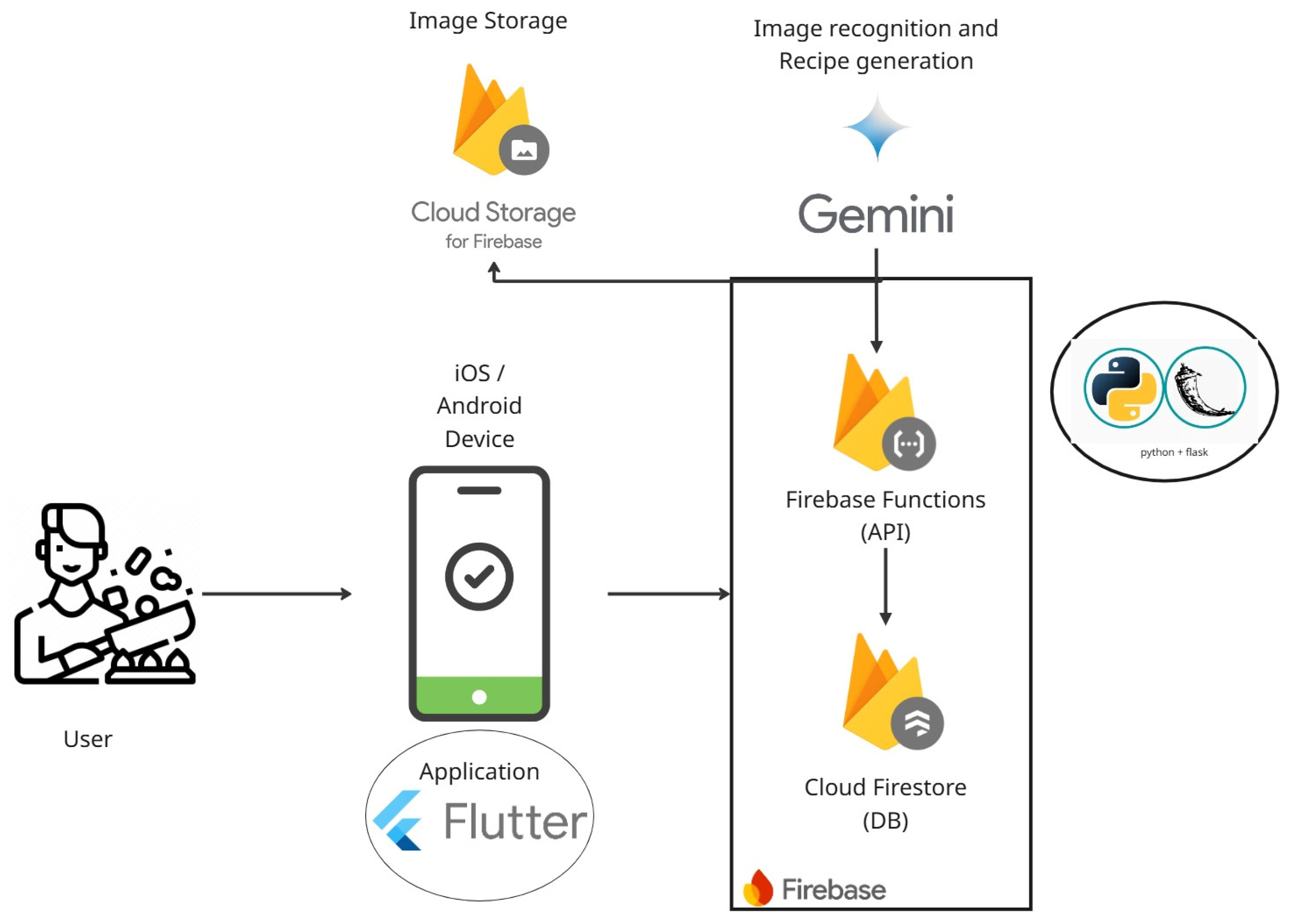
The primary intervention instrument, “ZeroWasteAI,” is a cross-platform mobile application engineered using the Flutter framework (v. 3.24.0, Google LLC, Mountain View, CA, USA) and the Dart programming language (v. 3.5.0) to ensure seamless compatibility and native performance across Android and iOS environments. The system backend leverages a serverless architecture based on Firebase Cloud Functions using Python (v. 3.12) and the Flask framework (v. 3.0.3), integrated with Cloud Firestore (NoSQL, SDK v. 11.0.0) to facilitate scalable, real-time data persistence.

3.1.1. AI Integration and Prompt Engineering Strategy

The central technological innovation of the system is the integration of the Google Gemini API (Generative AI) to enable advanced multimodal recognition. In contrast to traditional computer vision models (e.g., YOLO) that necessitate extensive training on labeled custom datasets, this framework employs a “Zero-Shot” learning paradigm leveraging Large Multimodal Models (LMMs). To guarantee structured and high-fidelity data extraction, a rigorous Prompt Engineering strategy was implemented. The system transmits the input image to the API, augmented with a refined “System Instruction” designed to constrain the model’s output:
“Act as an expert chef in food conservation. Analyze the image to identify raw ingredients (ignoring cooked dishes). For each item, return a JSON object with: ‘name’, ‘estimated_quantity’, ‘unit’, and ‘expiry_prediction’ based on standard shelf life.”
To uphold data integrity, the architecture incorporates a “Human-in-the-loop” (HITL) validation mechanism. Following the inference phase, the parsed JSON output—comprising ingredient identification and estimated quantities—is rendered for user verification. Users retain full agency to modify quantities or rectify misclassifications prior to database commitment. This step is critical for mitigating AI hallucinations and ensuring the accuracy of quantitative inputs.

3.1.2. Key Functional Modules

The application’s core functionalities were strategically engineered to counteract specific behavioral barriers identified in the literature review:
  • Smart Inventory: Implements a visual prioritization interface utilizing a “traffic light” color-coding scheme to categorize items by expiration urgency (Red: <2 days; Yellow: <5 days; Green: >5 days). This design facilitates rapid status assessment and decision-making.
  • Expiration Alerts: Deploys local push notifications daily at 08:00 and 18:00 to prompt users regarding imminent expiry. This mechanism directly targets the “forgetfulness” factor, identified by Mastorakis et al. (2024) [4] as a primary driver of household waste. Furthermore, the implementation of timed, contextual triggers leverages behavioral change strategies validated by López et al. (2018) [14].
  • Context-Aware Recipe Generator: Leverages the Gemini model to dynamically generate recipes that prioritize the utilization of “at-risk” ingredients, thereby closing the loop between inventory tracking and actual consumption.
  • User Interface (UI) Design: The interface architecture strictly prioritizes “perceived ease of use.” As established by Fraccascia & Nastasi (2023) [8], this factor is the critical determinant for the mass adoption of food waste management apps (FWMAs). Consequently, the design philosophy aims to minimize the cognitive load typically associated with manual data entry methods.

3.1.3. Technical Specifications and System Requirements

The deployment and validation of the application were conducted under the following technical constraints and specifications:
  • Client-Side Requirements: The system mandates a smartphone operating on Android 10+ or iOS 14+. To ensure optimal accuracy in the ingredient recognition module, a rear-facing camera with a resolution of >8 MP is recommended. Additionally, a reliable network connection (4G/LTE or Wi-Fi) is required to facilitate data exchange with the cloud API.
  • Cloud Infrastructure and Performance: The architecture handles heavy computational loads server-side. Image processing latency averages 20–40 s per request; to mitigate the impact on user experience, the system employs asynchronous execution threads, ensuring that the user interface (UI) remains responsive during data retrieval. All data transmission is secured via HTTPS (TLS/SSL) encryption protocols to guarantee user privacy.

3.1.4. Licensing and Ethical Compliance

The “ZeroWasteAI” application is developed as proprietary research software, with intellectual property rights retained by the authors. The integration of the Google Gemini API is implemented in strict compliance with Google’s AI Principles and commercial Terms of Service. Additionally, the User Mobile Application Rating Scale (uMARS) was utilized in accordance with its standard academic non-commercial license. Notably, the study avoids copyright concerns associated with model training; the system operates exclusively on inference from pre-trained generative models (Zero-Shot) via API, thereby precluding the need for third-party datasets.

3.2. Study Design and Participants

The research employed a longitudinal quasi-experimental design utilizing a single-group pre-test/post-test framework. This methodological approach was selected to quantify the efficacy of the technological intervention on behavioral change over a four-week duration, comparing baseline metrics (Week 1) against endline results (Week 4) to isolate the impact attributable to the application usage.
The study cohort comprised n = 11 households situated in the urban metropolitan area of Lima, Peru. Recruitment was conducted via non-probabilistic convenience sampling, targeting participants who demonstrated accessibility and adherence to the study protocols. The specific inclusion criteria established were: (a) adults aged 18 years or older; (b) current residents of urban Lima; (c) individuals identifying as the “primary food managers” (responsible for household procurement and preparation); and (d) owners of a smartphone (iOS or Android) compatible with the application and possessing reliable internet connectivity.

3.3. Data Collection Instruments

Three main artifacts were used for primary data collection: the “ZeroWsteAI” mobile application, the uMARS survey in Spanish.

3.3.1. “ZeroWasteAI” Mobile Application

The application served as the central apparatus for both the intervention and the automated logging of behavioral data. It systematically recorded user interactions, specifically the ingress of ingredients into the digital inventory (inputs) and their subsequent utilization (consumptions), alongside tracking associated expiration timelines. Crucially, the system automates the quantification of food mass through the integration of the Gemini Flash 2.5 model. Upon image capture, the recognition module generates an immediate gravimetric estimate (e.g., in kilograms) of the identified ingredients. To ensure data fidelity, these AI-generated estimates remain subject to a mandatory user verification protocol (Human-in-the-loop), allowing participants to refine quantities (e.g., correcting “2 Mandarins” to “0.2 kg”) prior to database entry.

3.3.2. uMARS Quality Survey (Spanish Adaptation)

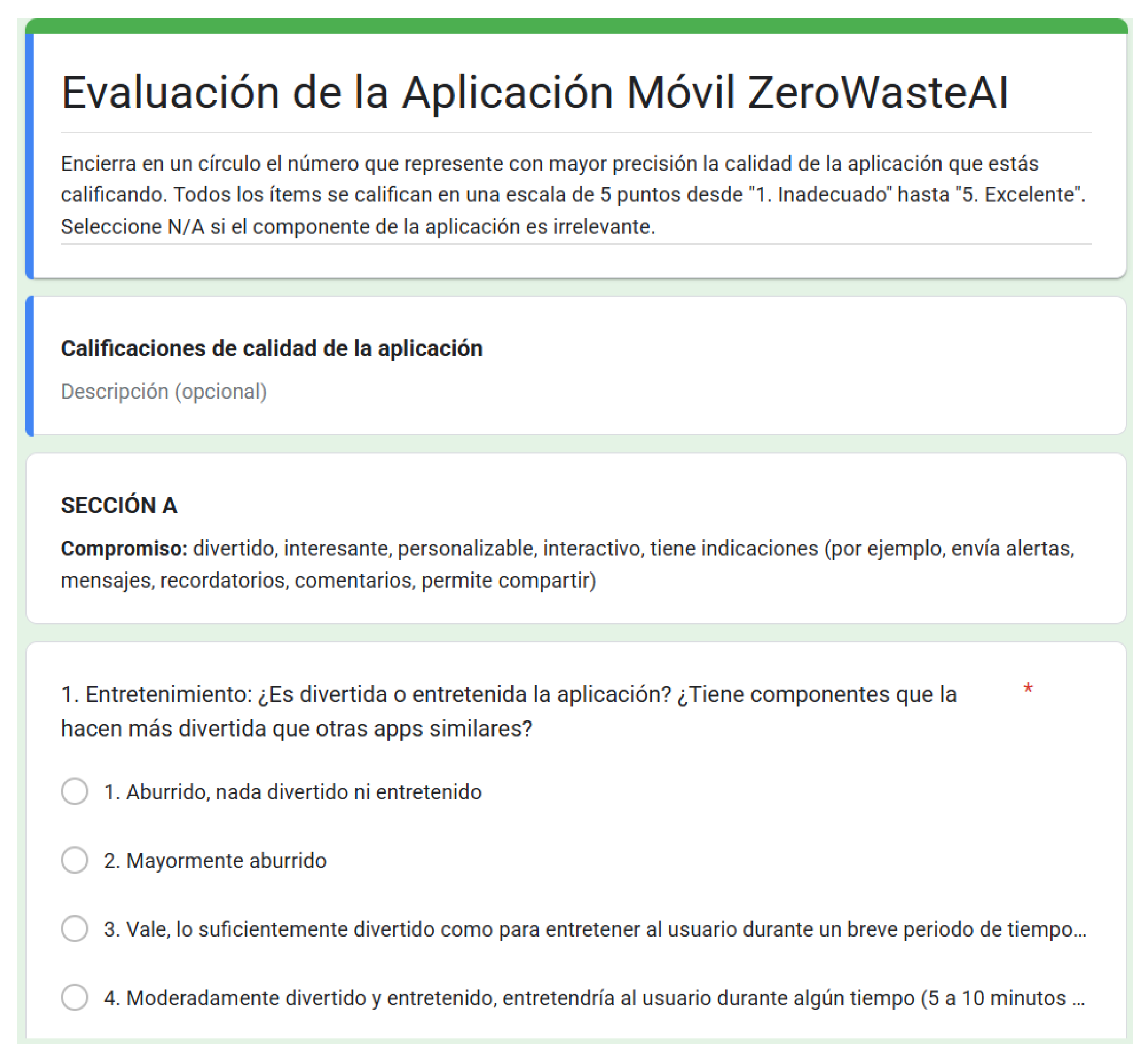
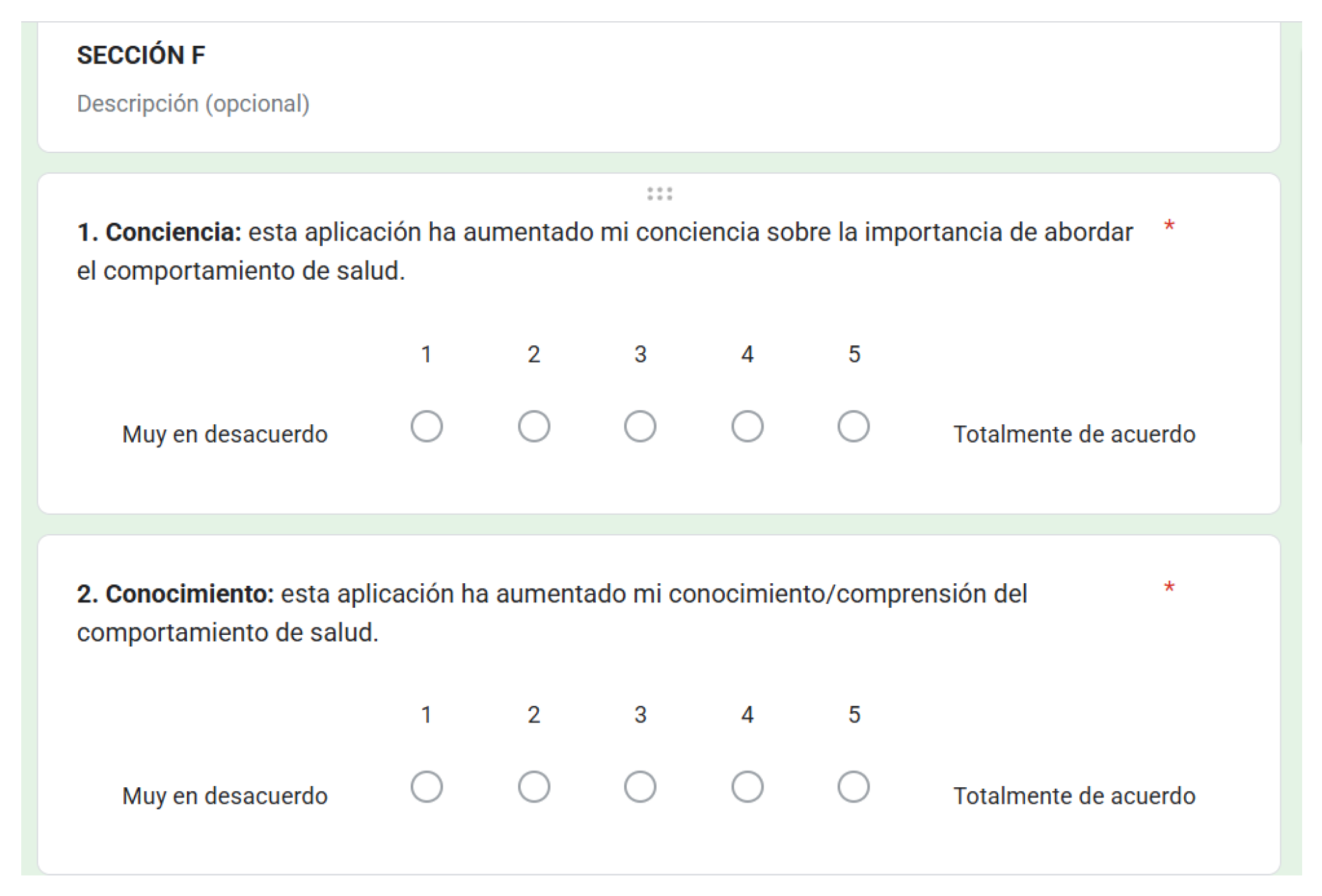
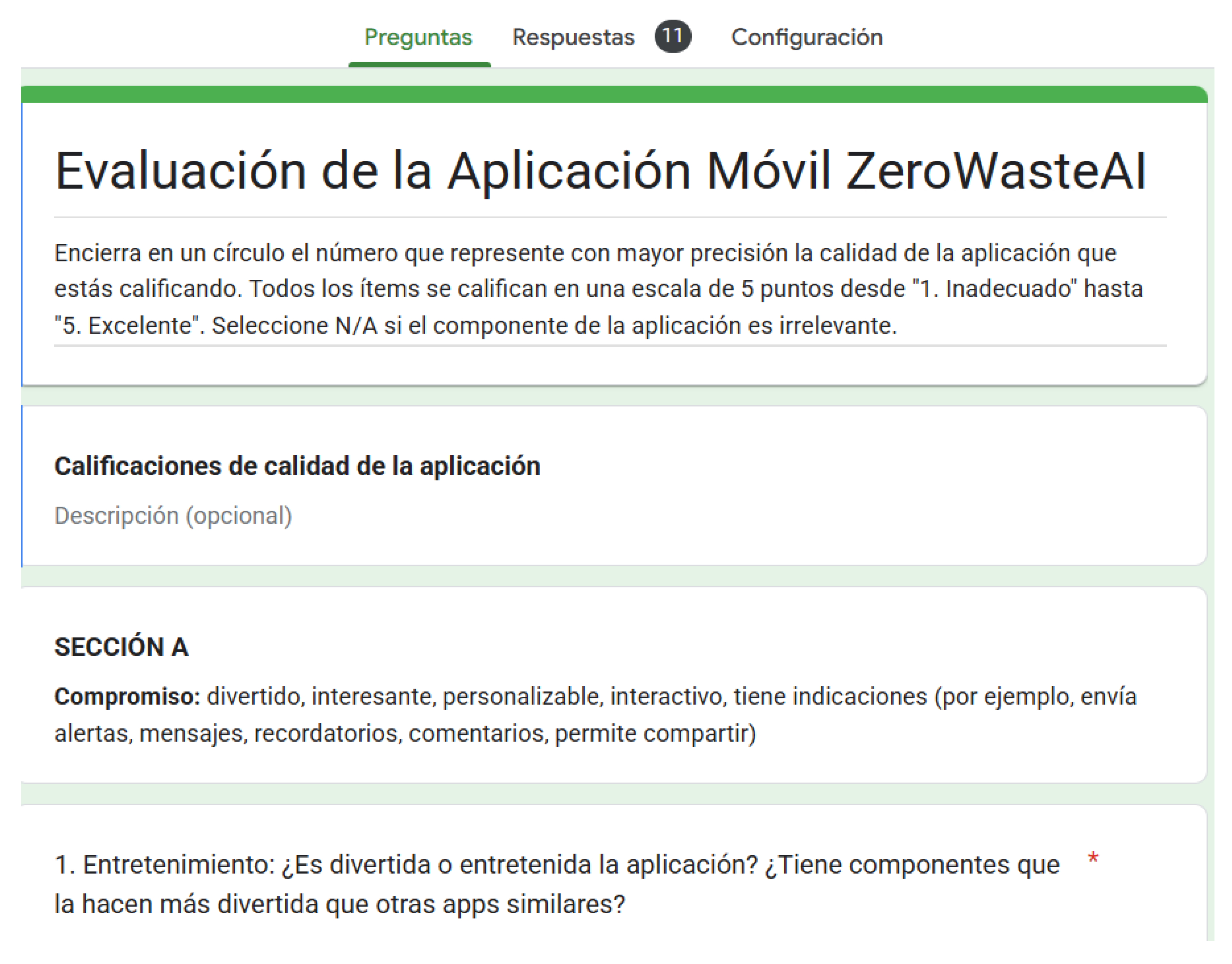
To assess qualitative metrics and user perception, the study employed the User Version of the Mobile Application Rating Scale (uMARS), utilizing the validated Spanish adaptation by Martin-Payo et al. (2021) [25] (Figure 1 and Figure 2). While uMARS is traditionally widely used in Mobile Health (mHealth), its application in this study is justified by the theoretical alignment between “health behaviors” and “sustainable consumption behaviors”; both domains rely on the modification of entrenched personal habits through self-monitoring and cognitive intervention.
The instrument was administered as follows:
  • Sections A–E: Evaluated objective and subjective quality dimensions, including App Quality, Functionality, Aesthetics, and Information quality.
  • Section F (Perceived Impact): Specifically utilized to quantify the intervention’s influence on the user’s awareness, knowledge acquisition, and attitudinal shifts regarding sustainable food management.
Figure 1. Interface of the uMARS survey administered to participants. Note: The Spanish version validated by Martin-Payo et al. (2021) [25] was used. The visible questions correspond to the standard uMARS section: App Quality.
Sustainability 18 02814 g001
Figure 2. Screenshot of the Form used for the uMARS survey of this Experiment (Section F). Note: The Spanish version validated by Martin-Payo et al. (2021) [25] was used. The visible questions correspond to the standard uMARS section: Perceived impact.
Sustainability 18 02814 g002

3.3.3. Perception of Habits Questionnaire (Ad Hoc)

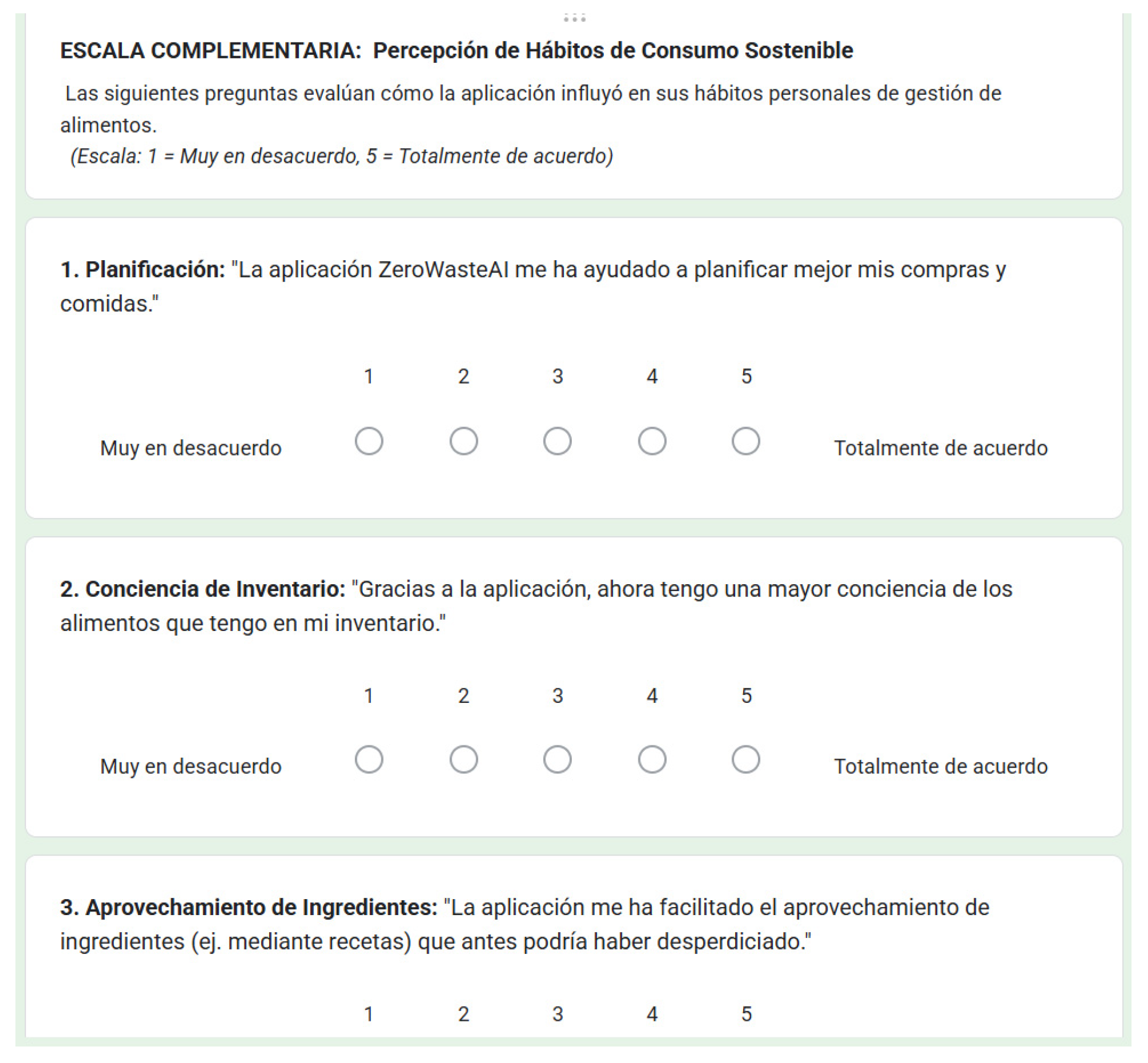
To capture specific behavioral constructs postulated in Hypothesis H2—namely planning efficacy, inventory awareness, and resource utilization—which fall outside the scope of the standard uMARS scale, a targeted ad hoc questionnaire comprising four items was developed (see Figure 3 and Appendix A).
This instrument was administered concurrently with the uMARS survey, utilizing an identical 5-point Likert scale (1 = Strongly Disagree to 5 = Strongly Agree) to ensure psychometric consistency across the evaluation measures. The items were specifically operationalized to quantify the user’s self-perceived evolution regarding:
  • Improvement in meal planning capabilities;
  • Heightened awareness of existing household inventory;
  • Efficiency in the utilization of available ingredients;
Figure 3. Ad hoc “Perception of Sustainable Consumption Habits” scale, developed to quantify specific behavioral constructs (planning, awareness, and utilization) associated with Hypothesis H2 (Refer to Table 2 for item translations).
Sustainability 18 02814 g003
Table 2. Items of the Ad Hoc Perception Scale (English Translation for Review).
Construct/VariableOriginal Item (Spanish)English Translation (for Review)
Planning“La aplicación ZeroWasteAI me ha ayudado a planificar mejor mis compras y comidas.”“The ZeroWasteAI application has enhanced my ability to plan my purchases and meals.”
Inventory Awareness“Gracias a la aplicación, ahora tengo una mayor conciencia de los alimentos que tengo en mi inventario.”“Through the application, I have gained a greater awareness of the food items currently in my inventory.”
Ingredient Utilization“La aplicación me ha facilitado el aprovechamiento de ingredientes (ej. mediante recetas) que antes podría haber desperdiciado.”“The application has facilitated the utilization of ingredients (e.g., via recipes) that I might otherwise have wasted.”
Perceived Impact (H2)“Siento que el uso de la aplicación ha contribuido directamente a reducir mi desperdicio de alimentos en el hogar.”“I perceive that using the application has directly contributed to reducing food waste in my household.”

3.3.4. Onboarding and Standardization Platform

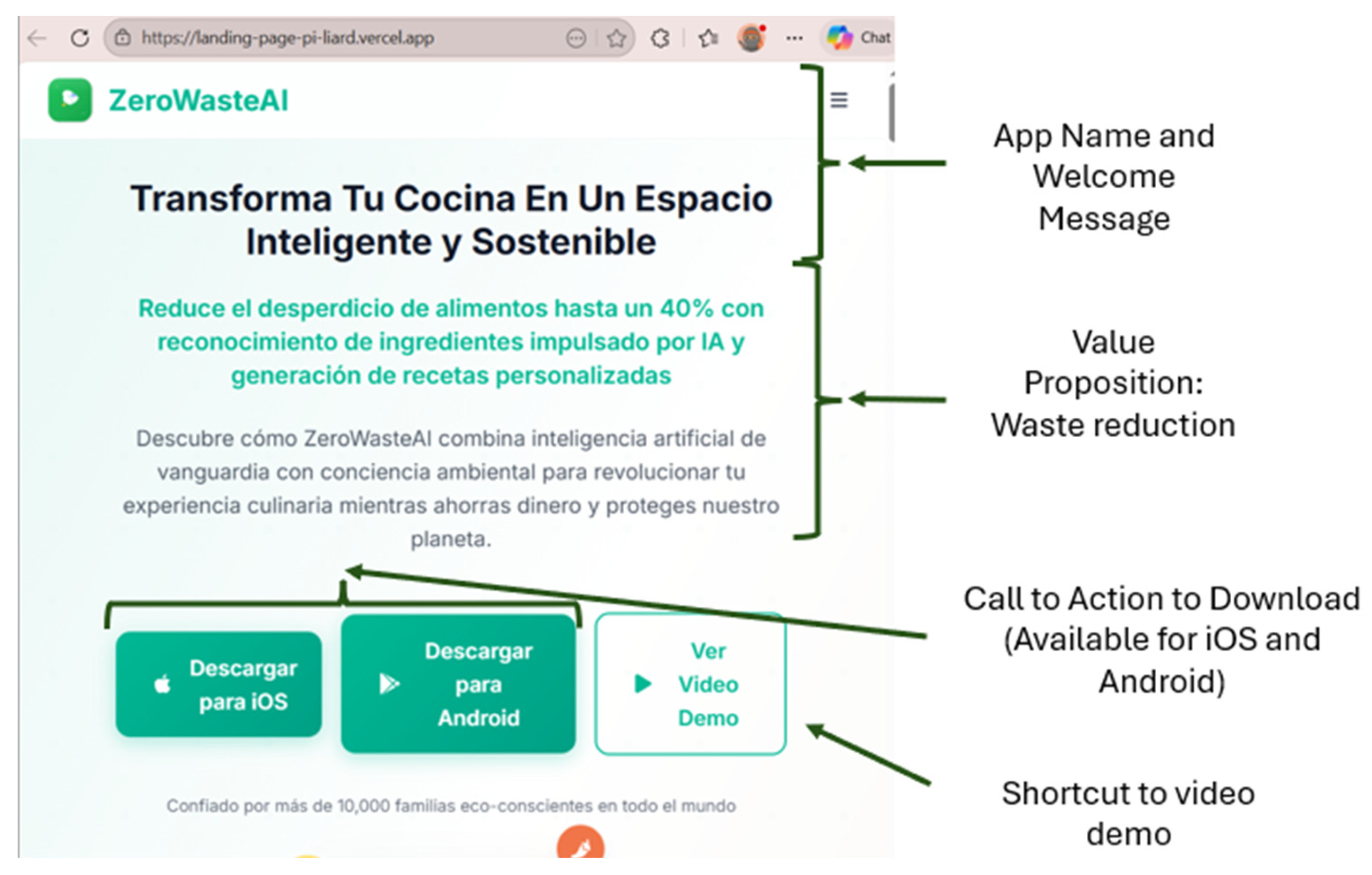
To ensure methodological consistency and mitigate learning curve variables, a dedicated web-based landing page was deployed as the primary onboarding hub for all participants (see Figure 4 and Appendix B). While not utilized for direct data collection, this interface served as a critical standardization instrument.
The platform centralized two key functions:
  • Software Distribution: Facilitated the secure acquisition of the application package (APK/IPA);
  • Standardized Training: Hosted a comprehensive instructional video module detailing the complete user flow and functional modules.
The implementation of this artifact was essential to ensure that the entire cohort commenced the experimental phase with a homogeneous level of technical proficiency and information, thereby reducing the risk of data loss due to usability errors;
Figure 4. Landing page screenshot.
Sustainability 18 02814 g004

3.4. Variables and Operationalization

To empirically evaluate the proposed hypotheses, two primary dependent variables were defined and operationalized:

3.4.1. Weekly Waste Rate ( W r )

Serving as the primary quantitative dependent variable, this metric is defined as the proportion of food mass (in kilograms) classified as “waste” relative to the total food mass recorded by the user within a seven-day interval. It was operationalized using the following equation:
W r = ( i = 1 n M w a s t e j = 1 m M i n p u t ) × 100
where
  • W r : Weekly Waste Rate (%);
  • M w a s t e : Total mass (kg) of items marked as “Discarded/Expired” during the week;
  • M i n p u t : Total mass (kg) of all items entered into the inventory during the same period;

3.4.2. Adoption of Sustainable Habits (Qualitative Variable)

Serving as the qualitative dependent variable, this construct encompasses the user’s subjective assessment of the application’s quality and its perceived efficacy in catalyzing behavioral modification. This variable was quantified using the uMARS scale (Sections A–F) and the Ad Hoc Perception Questionnaire.

3.5. Data Processing and Quantification

To transform the raw behavioral logs captured by the application into rigorous quantitative metrics, a systematic data processing pipeline was implemented. This workflow encompasses the entire data lifecycle, spanning from initial capture and storage to the synthesis of the final analytical dataset.

3.5.1. Data Infrastructure and Log Generation

The system’s data infrastructure leverages the Google Firebase ecosystem to ensure scalability and real-time synchronization. Cloud Firestore, a NoSQL document-oriented database, serves as the primary repository for maintaining user inventory states and transactional activity logs. Concurrently, Firebase Cloud Storage is utilized for the secure retention of high-resolution ingredient images captured during the recognition phase. The schematic representation of this data architecture is presented in Figure 5.
Inventory data generation is initiated via user interaction within the mobile application (Flutter). Upon the ingestion of a new ingredient image, the system triggers a serverless function (deployed via Firebase Cloud Functions) that queries the Gemini AI API for multimodal analysis.
Subsequently, the system renders the inferred metadata to the user for a mandatory Human-in-the-Loop (HITL) validation phase. During this critical stage, the user:
  • Rectifies potential AI misclassifications regarding ingredient identity;
  • Calibrates the quantity (standardized to kilograms);
  • Validates or overrides the expiration_date suggested by the model;
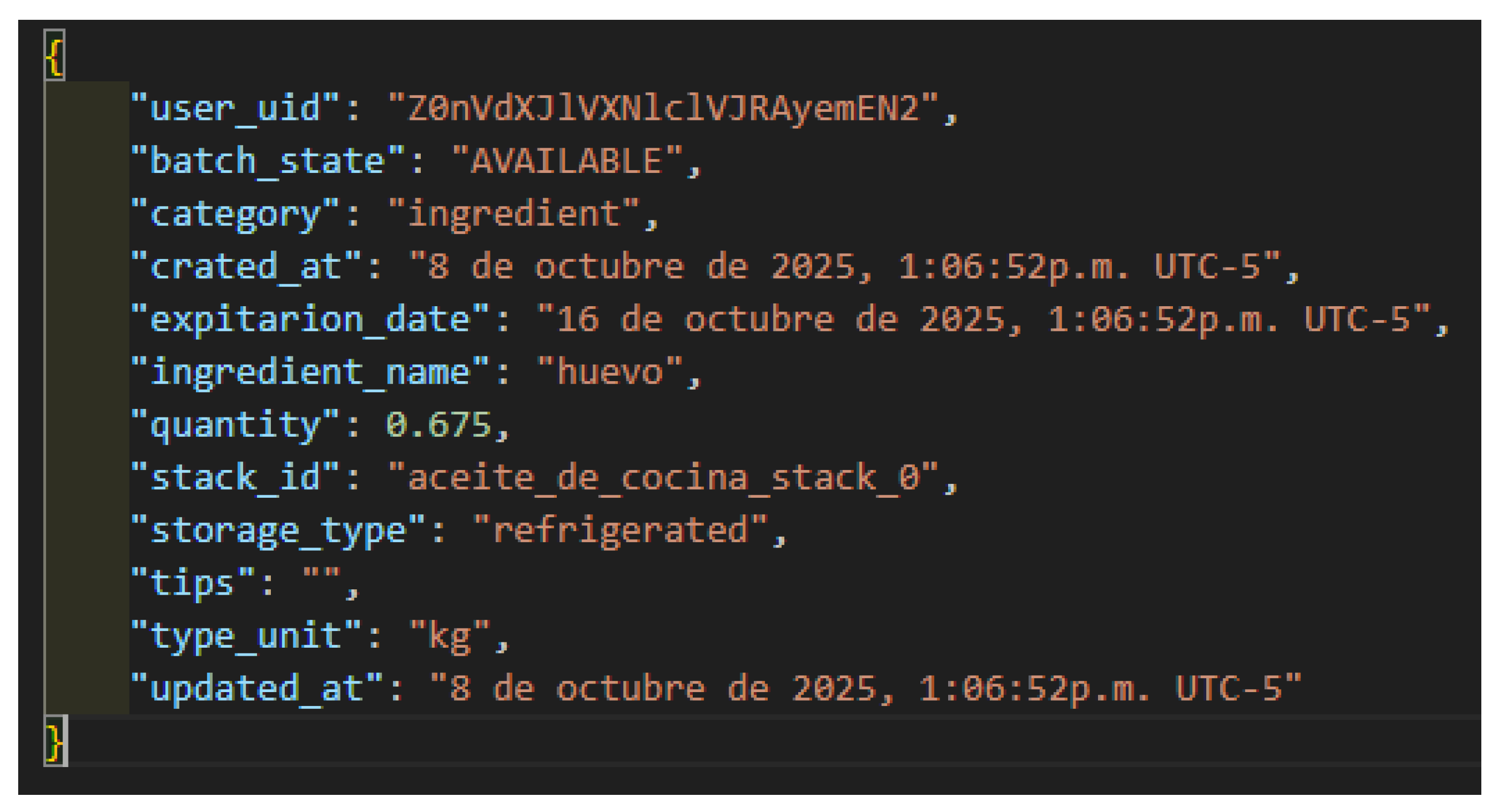
This validated expiration date serves as the deterministic criterion for all subsequent waste inferences. Following user confirmation, the record is committed as a structured document within a batches subcollection nested under the user’s unique inventory document in Cloud Firestore (Figure 6).
  • user_uid (String): Unique cryptographic identifier linking the record to a specific participant;
  • ingredient_name (String): The standardized designation of the identified food item;
  • quantity (Number/Float): The numeric value representing the mass or count of the item;
  • type_unit (String): The unit of measurement associated with the quantity (e.g., “kg”, “units”);
  • created_at (Timestamp): Precision timestamp marking the exact moment of inventory ingestion;
  • expiration_date (Timestamp): The definitive expiration deadline, originally estimated by AI and validated by the user;
  • batch_state (String): The current lifecycle status of the specific batch (e.g., “AVAILABLE”, “CONSUMED”);
Figure 5. System architecture diagram of the ZeroWasteAI solution, illustrating the unidirectional data flow from the client-side interface to the Firebase backend infrastructure.
Sustainability 18 02814 g005
Figure 6. Data structure representing a single ingredient document within Cloud Firestore.
Sustainability 18 02814 g006
Operational Definition of Waste Within the database logic, an ingredient record is algorithmically classified as “Waste” if it satisfies the following condition: its batch_state persists as “AVAILABLE” subsequent to the registered expiration_date.

3.5.2. Data Extraction Protocol

A custom extraction script was executed to retrieve raw activity logs (inventory inputs and consumption events) from the Firebase backend. Rigorous filtering was applied to isolate the dataset, retaining only records linked to valid user_uid identifiers from the study cohort and strictly bounded within the intervention period commencing on 4 October 2025.

3.5.3. Data Normalization and Standardization

To enable aggregate quantitative analysis, a transformation function was implemented to normalize all heterogeneous measurement inputs into a single standard metric: kilograms (kg).
For entries recorded in non-gravimetric units (e.g., discrete counts such as “units”, “pieces”, or “servings”) where exact weight was unavailable, a conservative standardization heuristic was applied. This rule established a baseline equivalence where
1   d i s c r e t e   u n i t   0.1   k g
This heuristic ensures consistency across the dataset while maintaining a conservative estimate to avoid over-reporting waste mass.

3.5.4. Waste Inference

The key variable, Weekly Food Waste (kg), is inferred computationally. The script analyzes the ingredients that remain in users’ inventory and compares their recorded expiration date to the current date. If the expiry date has been exceeded, the system automatically generates a “Waste” record with the corresponding standardised weight.

3.5.5. Data Aggregation and Export

In the final stage of the ETL (Extract, Transform, Load) pipeline, the script consolidates all processed records—comprising validated inputs, consumption events, and inferred waste instances—into a unified JSON analytical dataset. This structured artifact serves as the definitive source for all downstream statistical analyses and data visualization procedures.

3.6. Experimental Protocol

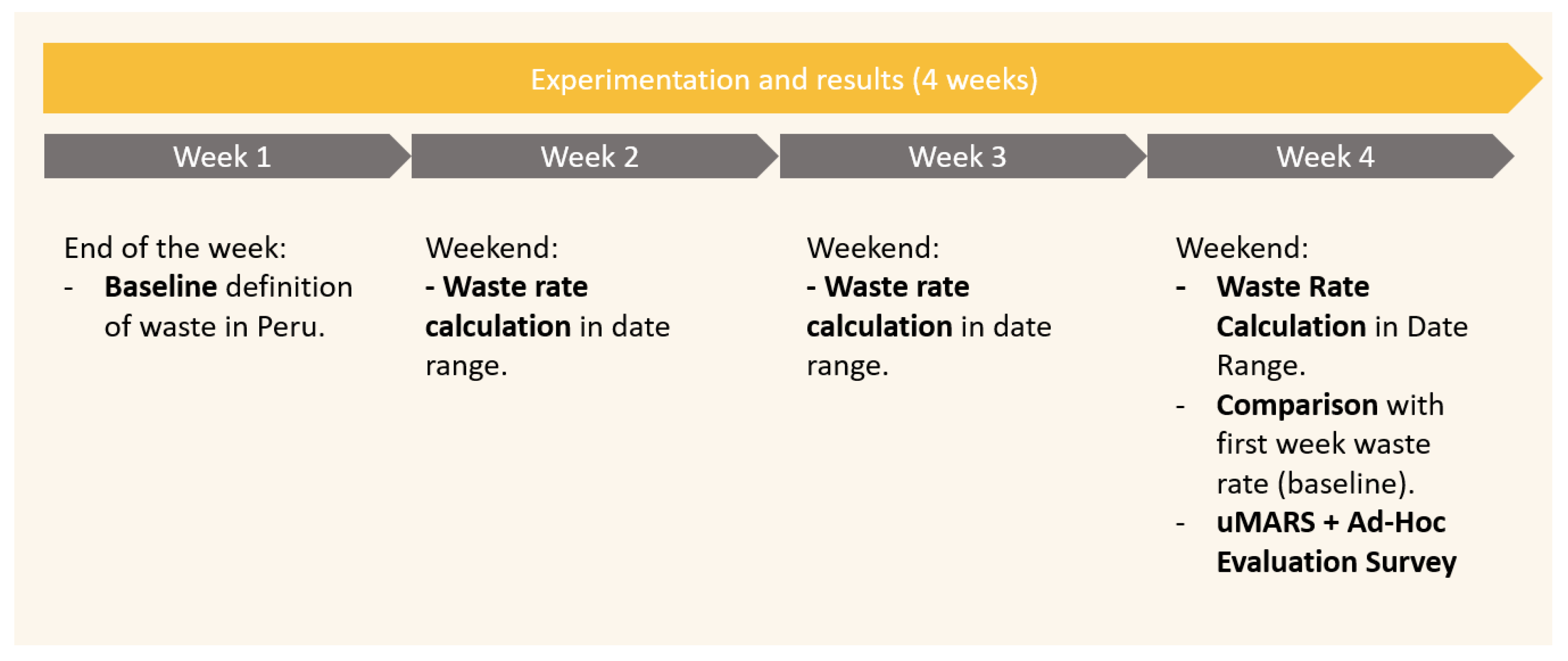
The study followed a strict longitudinal timeline structured into five consecutive phases spanning a four-week duration, as ilustrated in Figure 7. The specific procedural milestones were defined as follows:
  • Phase 1: Standardized Onboarding ( T 1 ) : Following recruitment, participants were directed to the project’s web platform to complete the instructional video module and install the application, ensuring uniform technical proficiency across the cohort;
  • Phase 2: Baseline Assessment (Week 1): Participants were instructed to digitally log their household food inventory and consumption without specific intervention targets. This period established the initial waste rate ( W i n i t i a l ) representing the user’s standard behavior;
  • Phase 3: Active Intervention (Weeks 2–3): Participants engaged fully with the application’s proactive features, including the “Traffic Light” inventory alerts, AI recipe generation, and expiry notifications;
  • Phase 4: Endline Assessment (Week 4): Measurement of the post-intervention waste generation rate ( W f i n a l ) was conducted to quantify behavioral shifts relative to the baseline.
  • Phase 5: Psychometric Evaluation (Post-Study): Upon conclusion of Week 4, participants administered the uMARS quality scale and the Ad Hoc Perception Questionnaire to evaluate usability and self-reported habit changes.
Figure 7. Temporal schematic of the four-week experimental design, delineating the specific measurement intervals ( W i n i t i a l   v s .   W f i n a l ) and intervention phases.
Sustainability 18 02814 g007

4. Results

4.1. Quantitative Hypothesis Testing (H1): Longitudinal Waste Reduction

To empirically validate Hypothesis H1, which postulated a minimum 25% reduction in the household waste rate between Week 1 (Baseline) and Week 4 (Endline), the aggregate waste metrics were monitored longitudinally across the full study cohort (n = 11). The waste rate ( W r ) was calculated as the ratio of wasted mass to total input mass   ( k g w a s t e k g i n p u t × 100 ) .
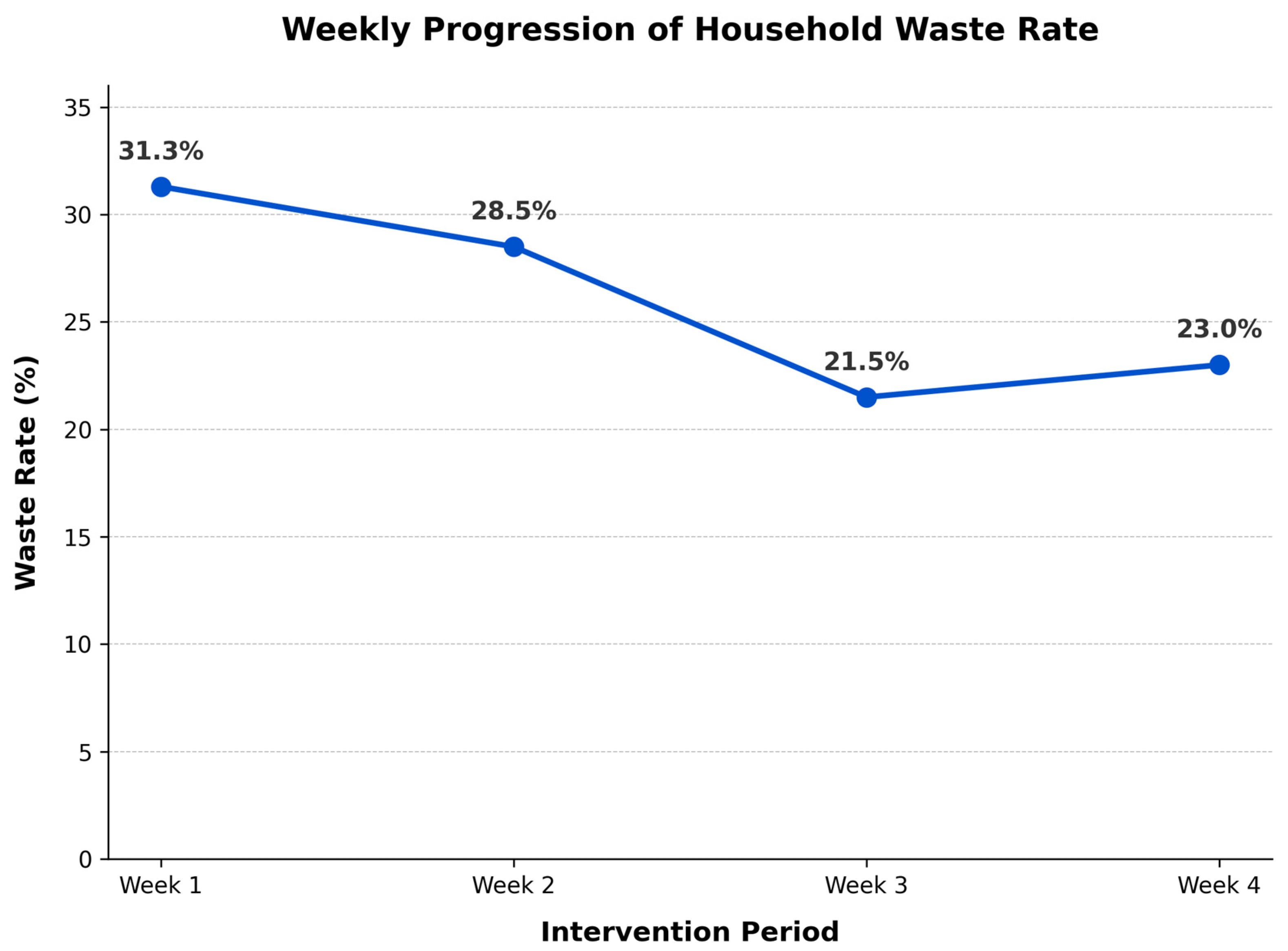
The complete evolution of waste generation over the four-week period is detailed in Table 3 and visualized in Figure 8.
Data derived from the full four-week intervention demonstrate a confirmed 26.5% reduction in the waste generation rate, contrasting the Week 1 baseline (31.3%) against the Week 4 endline (23.0%). Consequently, Hypothesis H1 is accepted, as the reduction exceeds the projected 25% threshold.
The longitudinal data reveals a distinct learning curve and behavioral adaptation trajectory:
  • Week 2 (Initial Adjustment): A moderate reduction (−9.0%) indicating the early stages of system adoption;
  • Week 3 (Peak Efficiency): A sharp decline in waste (−31.3%), coinciding with the lowest volume of inventory inputs (9.18 kg);
  • Week 4 (Habit Consolidation): The system demonstrates robustness by maintaining a significant reduction (−26.5%) even while managing a higher volume of inventory inputs (12.27 kg). This suggests that the sustainable habits persisted even when the household faced a higher “management load.”

4.2. Qualitative Hypothesis Testing (H2): Usability and Perception

To evaluate Hypothesis H2, which posits a positive shift in habits mediated by high application usability, a dual-instrument assessment (uMARS + Ad Hoc Scale) was administered to the full cohort (n = 11) at the conclusion of Week 4.

4.2.1. Analysis of Application Quality (uMARS)

The aggregate results from the Mobile Application Rating Scale (uMARS) indicate a highly favorable reception of the intervention tool. As detailed in Table 4, the application achieved an Overall Objective Quality mean score of 4.38/5.0, significantly exceeding the neutral threshold (3.0).
Notably, the dimensions of Aesthetics (4.52) and Functionality (4.45) received the highest ratings. This finding supports the premise that the “Zero-Shot” AI integration provided a frictionless and visually appealing user experience, thereby minimizing the cognitive load associated with manual tracking.
Table 4. Aggregate uMARS Quality Scores (n = 11).
Quality DimensionStandard uMARS SectionAverage Rating (5.0)
Objective Quality Mean(Sections A–D)4.38
EngagementSection A4.24
FunctionalitySection B4.45
AestheticsSection C4.52
InformationSection D4.32
Subjective Quality Mean(Section E)4.20

4.2.2. Validation of Behavioral Impact (Section F & Ad Hoc Scale)

The validation of Hypothesis H2 is further substantiated by the results from uMARS Section F (Perceived Impact) and the Ad Hoc Perception Scale. As presented in Table 5, the intervention achieved exceptionally high ratings across behavioral dimensions.
The Perceived Impact section yielded an aggregate mean of 4.45/5.0. Critically, the highest scores were observed in the sub-scales for “Intention to Change” (μ = 4.55) and “Behavior Change” (μ = 4.45), suggesting that the application successfully transitioned users from passive observation to active sustainable management.
Most significantly, the Ad Hoc Scale, specifically operationalized to measure the constructs of H2, achieved the highest aggregate mean of the study (4.52/5.0). The item assessing “Direct Impact”—which explicitly asked if the app contributed to waste reduction—received the highest individual rating (μ = 4.73). This indicates a strong correlation between the quantitative waste reduction observed in Section 4.1 and the users’ subjective perception of efficacy.
Table 5. Assessment of Perceived Impact and Behavioral Change (n = 11).
Assessment DimensionSpecific Item/Sub-ScaleAverage Rating (μ/5.0)
uMARS Section F (Perceived Impact)Aggregate Mean4.45
1. Awareness4.45
4. Intention to change4.55
6. Behavior Change4.45
Ad Hoc Perception ScaleAggregate Mean4.52
1. Planning4.36
2. Impact Awareness4.64
3. Ingredient Utilization4.36
4. Perceived Waste Reduction (Direct Impact)4.73
Qualitative Validation Quantitative metrics were corroborated by qualitative feedback collected post-intervention. Participant P01 synthesized the validity of H2, stating: “Excellent app, [it] helps me organize food in my home.” Similarly, Participant P10 characterized the interface as “Very User Friendly,” reinforcing the link between usability and adoption.
Conclusion on H2: Given the high scores in behavioral modification metrics and the strong subjective perception of waste reduction, Hypothesis H2 is accepted.

5. Discussion

5.1. Interpretation of Findings

The empirical findings of this study provide robust validation for Hypothesis H1. The documented 26.5% net reduction in the waste generation rate (declining from a baseline of 31.3% to an endline of 23.0%) not only meets but exceeds the projected 25% threshold. The longitudinal trajectory (S1: 31.3% -> S2: 28.5% -> S3: 21.5% -> S4: 23.0%) suggests a distinct technological learning curve. The initial adjustment phase (Week 2) transitioned into peak efficiency (Week 3), culminating in a stabilization phase (Week 4). Crucially, the system demonstrated resilience in the final week, maintaining significant waste reduction even as the household managed a higher volume of inventory inputs, suggesting the successful consolidation of sustainable habits.
Regarding Hypothesis H2, the psychometric data offers strong corroboration. The high aggregate score on the Ad Hoc Perception Scale (4.52/5.0), and specifically the dominant score in the “Direct Impact” item (4.73/5.0), indicates a high degree of causal attribution; users consciously recognize the application as the primary driver of their improved efficiency. Furthermore, the elevated scores in “Inventory Awareness” (4.64) and “Planning” (4.36) confirm that the intervention successfully targeted and enhanced the specific cognitive mechanisms—memory and organization—identified as barriers in the literature.

5.2. Comparison with Literature and Adoption Barriers

The quantitative reduction of 26.5% achieved in this study aligns with, and in specific contexts exceeds, benchmarks established in the recent literature. For instance, our results are consistent with Alattar & Morse (2021) [22], who reported a comparable reduction (~28%) utilizing primarily educational interventions. However, the active AI-driven mechanism deployed in ZeroWasteAI demonstrated superior efficacy compared to passive interventions, such as those analyzed by Fatemi et al. (2024) [5] in institutional settings, which yielded a non-significant reduction of only 16.35%. This discrepancy suggests that technological automation may be more effective than purely informational campaigns in sustaining behavioral change.
Regarding behavioral adoption, the high usability scores observed corroborate the findings of Fraccascia & Nastasi (2023) [8], who identify “perceived ease of use” as the paramount determinant for the mass adoption of Food Waste Management Apps (FWMAs). Furthermore, while Hong et al. (2024) [21] posit economic incentives as the primary driver in commercial contexts, the present study suggests a divergence in the domestic sphere: for individual households, the automation of cognitive load via AI appears to be a motivator of equal, if not greater, significance than economic savings.

5.3. Bridging the Gap: From Intention to Action (Applied Impact)

A seminal contribution of this research lies in demonstrating the capacity of Generative AI to effectively bridge the “intention–behavior gap” in sustainable consumption. While participants exhibited a high baseline willingness to reduce waste (validated in H2), the literature consistently identifies “forgetfulness” as the primary cognitive friction that undermines these sustainable intentions. By automating the tracking process, ZeroWasteAI effectively externalizes the cognitive burden from the user’s biological memory to the algorithmic backend, precipitating a structural shift in waste management from a reactive chore to a proactive habit.
Furthermore, this study highlights a critical advantage regarding accessibility in the Global South. Unlike hardware-centric solutions, such as the “Smart Fridges” analyzed by Cappelletti et al. (2022) [3], which impose prohibitive economic barriers in developing economies like Peru, this software-centric approach demonstrates that high-fidelity monitoring is achievable using ubiquitous mobile hardware. This finding carries significant implications for public policy and environmental management: it suggests that the deployment of accessible, AI-assisted software tools represents a far more scalable and cost-effective strategy for mass adoption than capital-intensive infrastructure investments.

6. Conclusions and Future Work

The four-week longitudinal deployment of the “ZeroWasteAI” system has yielded three primary conclusions regarding the role of AI in sustainable household management:
  • Validation of Efficacy (H1): The quantitative evidence substantiates the effectiveness of the intervention. The documented 26.5% reduction in the waste generation rate confirms that proactive, AI-driven alerts significantly enhance “pantry awareness,” successfully mitigating the “out of sight, out of mind” phenomenon;
  • Validation of Adoption and Impact (H2): Qualitative data strongly validates the user-centric hypothesis. The high psychometric evaluations for Objective Quality (uMARS: 4.38/5.0) and Perceived Impact (4.73/5.0) confirm that participants attribute their behavioral improvement directly to the technological tool, rather than external factors;
  • Identification of “Input-Consumption Asymmetry”: Analysis of the aggregate mass flow revealed a significant disparity between total inventory inputs (48.10 kg) and recorded consumptions (10.61 kg). While the application effectively solved the “forgetfulness” problem regarding expiration, this gap exposes a secondary behavioral issue: “systematic overbuying” (or potential reporting fatigue). This finding points to a critical need for future modules focused on upstream shopping planning, not just downstream inventory management;

6.1. Study Limitations

These findings must be interpreted within the constraints of a pilot “Technology Probe.”
  • Sample Size and Design: The restricted cohort size (n = 11) and the single-group quasi-experimental design limit the statistical generalizability of the results to the broader demographic population;
  • Temporal Validity: The four-week duration, while sufficient to observe initial adoption, does not guarantee the long-term retention of these habits once the “novelty effect” of the application dissipates;
  • Technical Maturity: The reliance on a “Human-in-the-Loop” validation protocol highlights that current Vision AI models, while powerful, still require user supervision to correct occasional gravimetric estimation errors;

6.2. Future Directions

To address these limitations and advance the state of the art, future research trajectories will focus on:
  • Rigorous Experimental Validation: Conducting a Randomized Controlled Trial (RCT) with a larger, representative sample and a control group to isolate the specific causal effect of the AI intervention from external variables;
  • Gamification and Retention: To mitigate abandonment rates and extend the user lifecycle, future iterations will integrate gamification mechanics (e.g., eco-points, leaderboards, and achievement badges). As posited by Santos et al. (2025) [12], the incorporation of game-based elements is critical for sustaining intrinsic motivation in behavioral change interventions over extended periods.

Author Contributions

Conceptualization, J.J. and R.P.; methodology, J.J. and R.P.; software, R.P. and J.J.; validation, J.J., R.P. and M.L.; formal analysis, J.J.; investigation, J.J. and R.P.; resources, J.J. and R.P.; data curation, J.J.; writing—original draft preparation, J.J.; writing—review and editing, M.L. and J.J.; visualization, J.J. and R.P.; supervision, M.L.; project administration, M.L. and J.J.; funding acquisition, M.L. All authors have read and agreed to the published version of the manuscript.

Funding

This research received no external funding. The APC was funded by the Universidad Peruana de Ciencias Aplicadas (UPC).

Institutional Review Board Statement

Ethical review and approval were waived for this study by the Universidad Peruana de Ciencias Aplicadas (UPC) due to internal regulations for non-medical engineering thesis projects. The study is considered minimal risk as it is non-invasive, focuses on software usability (Human–Computer Interaction), and implements “human-in-the-loop” verification mechanisms for AI-generated content.

Informed Consent Statement

Informed consent was obtained from all subjects involved in the study. Participants were informed of the study purpose, data anonymity, and terms of service regarding AI usage through the application’s onboarding process.

Data Availability Statement

The data presented in this study are available on request from the corresponding author. The data are not publicly available due to privacy restrictions regarding the participants’ household habits.

Conflicts of Interest

The authors declare no conflict of interest.

Abbreviations

The following abbreviations are used in this manuscript:
AIArtificial Intelligence
uMARSUser Version of the Mobile Application Rating Scale
CNNConvolutional Neural Network
FWMAsFood Waste Mobile Applications
mHealthMobile Health
APIApplication Programming Interface
NoSQLNot Only Structured Query Language

Appendix A. Data Collection Instruments

This appendix presents the structure of the qualitative evaluation instruments used in the study: the uMARS scale (Spanish adaptation) and the complementary ad hoc questionnaire.
Table A1. Structure of the uMARS Questionnaire and Complementary Scale.
SectionDimensionItems Evaluated (5-Point Likert Scale)
uMARS Sec. AEngagement1. Entertainment, 2. Interest, 3. Customization, 4. Interactivity, 5. Target Group.
uMARS Sec. BFunctionality6. Performance, 7. Ease of use, 8. Navigation, 9. Gestural design.
uMARS Sec. CAesthetics10. Layout, 11. Graphics, 12. Visual appeal.
uMARS Sec. DInformation13. Quality, 14. Quantity, 15. Visual information, 16. Credibility.
uMARS Sec. ESubjective Quality17. Recommend, 18. Future frequency of use, 19. Willingness to pay, 20. Overall rating (Star rating).
uMARS Sec. FPerceived Impact21. Awareness, 22. Knowledge, 23. Attitudes, 24. Intention to change, 25. Help seeking, 26. Behavior change.
Ad HocSustainable Habits27. Planning (“Helped plan purchases”), 28. Inventory Awareness (“Greater awareness of food”), 29. Utilization (“Facilitated use of ingredients”), 30. Direct Impact (“Contributed to reducing waste”).
Figure A1. Screenshot of the digital form used for data collection. Note: The Spanish version validated by Martin-Payo et al. (2021) [25] was used to ensure native language comprehension.
Sustainability 18 02814 g0a1

Appendix B. Onboarding Tools (Landing Page)

To ensure a homogeneous level of initial training across all participants, a landing page was developed to centralize access to the application and instructional materials.
  • Access URL: https://landing-page-pi-liard.vercel.app/ (accessed on 10 December 2025).
  • Content: The page includes direct download links (iOS/Android) and a video tutorial (“Watch Demo Video”) explaining the image recognition and inventory management flow.

References

  1. PNUMA. Informe Sobre el Índice de Desperdicio de Alimentos 2024. Available online: https://www.unep.org/resources/publication/food-waste-index-report-2024 (accessed on 10 December 2025).
  2. Renard, M.; Bell, Z.; Jamshidvand, M.; Mai, Z.; McCloat, A.; Mooney, E.; Hollywood, L.; Lavelle, F. Domestic cooking and food behaviours during the COVID-19 pandemic and the cost-of-living crisis: A scoping review. Appetite 2026, 216, 108311. [Google Scholar] [CrossRef]
  3. Cappelletti, F.; Papetti, A.; Rossi, M.; Germani, M. Smart strategies for household food waste management. Procedia Comput. Sci. 2022, 200, 887–895. [Google Scholar] [CrossRef]
  4. Mastorakis, G.; Kopanakis, I.; Makridis, J.; Chroni, C.; Synani, K.; Lasaridi, K.; Abeliotis, K.; Louloudakis, I.; Daliakopoulos, I.N.; Manios, T. Managing Household Food Waste with the FoodSaveShare Mobile Application. Sustainability 2024, 16, 2800. [Google Scholar] [CrossRef]
  5. Fatemi, S.F.; Eini-Zinab, H.; Anari, F.M.; Amirolad, M.; Babaei, Z.; Sobhani, S.R. Food waste reduction and its environmental consequences: A quasi-experimental study in a campus canteen. Agric. Food Secur. 2024, 13, 37. [Google Scholar] [CrossRef]
  6. Kamatchi, S.; Reddy, A.B.; Hayavadan, S.T.P.; Raksha, B.S. Comparative Analysis of GPT-2 and LSTM Models for Indian Recipe Generation: A Machine Learning Approach. In Proceedings of the 2024 Sixteenth International Conference on Contemporary Computing, Noida, India, 8–10 August 2024; pp. 390–397. [Google Scholar] [CrossRef]
  7. Louro, J.; Fidalgo, F.; Oliveira, Â. Recognition of Food Ingredients—Dataset Analysis. Appl. Sci. 2024, 14, 5448. [Google Scholar] [CrossRef]
  8. Fraccascia, L.; Nastasi, A. Mobile apps against food waste: Are consumers willing to use them? A survey research on Italian consumers. Resour. Conserv. Recycl. Adv. 2023, 18, 200150. [Google Scholar] [CrossRef]
  9. Haas, R.; Aşan, H.; Doğan, O.; Michalek, C.R.; Karaca Akkan, Ö.; Bulut, Z.A. Designing and Implementing the MySusCof App—A Mobile App to Support Food Waste Reduction. Foods 2022, 11, 2222. [Google Scholar] [CrossRef]
  10. Tuah, N.M.; Ghani, S.K.A.; Darham, S.; Sura, S. A Food Waste Mobile Gamified Application Design Model using UX Agile Approach in Malaysia. Int. J. Adv. Comput. Sci. Appl. 2022, 13, 208–217. [Google Scholar] [CrossRef]
  11. Gómez Ceballos, A.M.; Antonopoulou, V. Exploring barriers and facilitators to increase the engagement with a digital app (OLIO) for food/non-food sustainable consumption in citizens from Bogotá, Colombia. Curr. Psychol. 2024, 43, 26726–26735. [Google Scholar] [CrossRef]
  12. Santos, E.; Sevivas, C.; Carvalho, V. Managing Food Waste Through Gamification and Serious Games: A Systematic Literature Review. Information 2025, 16, 246. [Google Scholar] [CrossRef]
  13. Castro, C.; Chitikova, E.; Magnani, G.; Merkle, J.; Heitmayer, M. Less Is More: Preventing Household Food Waste through an Integrated Mobile Application. Sustainability 2023, 15, 10597. [Google Scholar] [CrossRef]
  14. López, G.; González, I.; Jimenez-Garcia, E.; Fontecha, J.; Brenes, J.; Guerrero, L.; Bravo, J. Smart Device-Based Notifications to Promote Healthy Behavior Related to Childhood Obesity and Overweight. Sensors 2018, 18, 271. [Google Scholar] [CrossRef] [PubMed]
  15. Jones-Garcia, E.; Bakalis, S.; Flintham, M. Consumer Behaviour and Food Waste: Understanding and Mitigating Waste with a Technology Probe. Foods 2022, 11, 2048. [Google Scholar] [CrossRef] [PubMed]
  16. Pechlivanis, C. Implementing IoT Technology in Practice: Monitoring the Supply Chain for Sustainable Operation. WSEAS Trans. Syst. 2023, 22, 349–359. [Google Scholar] [CrossRef]
  17. Du, W.; Xue, L.; Xu, D.; Zhang, H.; Liu, G.; Duan, H.; Dong, J.; Chen, J.; Zhang, H. The effects of an online food waste reduction platform in university canteens in Wuhan, China. J. Clean. Prod. 2024, 468, 142991. [Google Scholar] [CrossRef]
  18. Darwis, K.; Salam, M.; Munizu, M.; Diansari, P. A review of global research trends on the impact of the COVID-19 pandemic on food security. Agric. Food Secur. 2024, 13, 43. [Google Scholar] [CrossRef]
  19. Tutar, H.; Streimikiene, D.; Mutlu, H.T.; Kloudova, J.; Bilan, Y. Global food waste as an anti-sustainability trend: Analysis of economic and environmental impacts across countries. Br. Food J. 2025, 127, 674–692. [Google Scholar] [CrossRef]
  20. Bergen, C.; Rudnicka, A.; Raźniewska, M.; Wronka, A.; Genovese, A. Did COVID-19 influence food waste habits? A comparison of Polish and British households. J. Mater. Cycles Waste Manag. 2025, 27, 3984–4000. [Google Scholar] [CrossRef]
  21. Hong, J.; Kafa, N.; Jaegler, A. Exploring barriers and motivations in the adoption of food waste mobile applications. Int. Trans. Oper. Res. 2024, 33, 2441–2465. [Google Scholar] [CrossRef]
  22. Alattar, M.A.; Morse, J.L. Poised for Change: University Students Are Positively Disposed toward Food Waste Diversion and Decrease Individual Food Waste after Programming. Foods 2021, 10, 510. [Google Scholar] [CrossRef]
  23. Pinto, P.; Figueiredo, M.; Ferrão, I.; Narciso, R.; Ruivo, P. Pre-Consumption Food Choice Priorities, Food Waste Concerns, and Incentive Strategies for Change—A Portuguese Case Study. Sustainability 2025, 17, 9176. [Google Scholar] [CrossRef]
  24. Yamada, T.; Asari, M.; Miura, T.; Niijima, T.; Yano, J.; Sakai, S. Municipal solid waste composition and food loss reduction in Kyoto City. J. Mater. Cycles Waste Manag. 2017, 19, 1351–1360. [Google Scholar] [CrossRef]
  25. Martin-Payo, R.; Carrasco-Santos, S.; Cuesta, M.; Stoyan, S.; Gonzalez-Mendez, X.; Fernandez-Alvarez, M.d.M. Spanish adaptation and validation of the User Version of the Mobile Application Rating Scale (uMARS). J. Am. Med. Inform. Assoc. 2021, 28, 2681–2686. [Google Scholar] [CrossRef]
Figure 8. Temporal evolution of the Weekly Waste Rate ( W r ) throughout the four-week intervention period.
Sustainability 18 02814 g008
Table 1. Comparative analysis of state-of-the-art technological interventions and research gaps in food waste management.
CategoryStudyApproach/TechnologyKey FindingsLimitation
AI & Computer VisionKamatchi S et al. (2024) [6]Comparative analysis of Language Models (GPT-2 vs. LSTM) for recipe generation.GPT-2 exhibited superior consistency and creativity in recipe formulation compared to LSTM.Restricted to text-based generation (recipes). The system lacks functionality for inventory management, expiration monitoring, or computer vision integration for domestic settings.
Louro et al. (2024) [7]CNN (ResNet-50) trained on web-scraped data for ingredient recognition and recipe recommendation.Achieved 90% accuracy in ingredient classification using a custom dataset of 30 classes.Restricted to image-based recipe suggestions. Omits comprehensive inventory management, expiration monitoring, and quantitative waste tracking.
rMobile Applications & PlatformsFraccascia & Nastasi (2023) [8]Survey-based analysis using the Technology Acceptance Model (TAM) to evaluate willingness to adopt anti-waste apps.Identified “perceived usefulness” and “ease of use” as the critical determinants for widespread adoption.Confined to the assessment of theoretical behavioral intention rather than actual efficacy. Lacks the empirical implementation of a functional prototype to measure tangible waste reduction.
Haas et al. (2022) [9]Evaluation of the “MySusCof” application, utilizing an educational and gamified framework.Validated usability via the uMARS scale, demonstrating that educational content enhances the intention to reduce waste.Functionally limited to reactive educational tools (quizzes, tips). Lacks real-time inventory tracking or automated mechanisms to prevent spoilage due to oversight.
Tuah et al. (2022) [10]Agile UX design model for a gamified waste collection application.Identified critical gamification mechanics (e.g., points, levels) effectively driving user engagement in disposal activities.Targeted exclusively at the post-consumption stage (collection/composting). Neglects pre-consumption prevention strategies and in-home inventory management.
Gómez Ceballos & Antonopoulou (2024) [11]Analysis of the “OLIO” food exchange application utilizing the COM-B behavior model and mixed methods.Identified “perceived difficulty” and “time constraints” as critical barriers; established that economic incentives are key drivers for usage.Focuses on redistribution (reactive exchange of existing surplus) rather than internal household prevention. Relies on third-party coordination, introducing transactional friction, and lacks automated tools for individual inventory control.
Santos et al. (2025) [12]Systematic Review of Literature on Gamification and Serious Games for waste management.Confirmed that gamification elements (points, leaderboards) significantly enhance user engagement and awareness.Theoretical limitation: While validating gamification, the review notes that most solutions are purely educational or disconnected from the daily workflows of actual household inventory management.
Mastorakis et al. (2024) [4]Development of “FoodSaveShare,” integrating barcode scanning and supermarket loyalty data.Validated functionalities for shopping lists and expiration alerts; demonstrated successful integration with retail data streams.Relies on manual barcode scanning (high user friction) and static databases. Lacks generative AI capabilities to recognize fresh (non-packaged) ingredients or dynamically adapt recipes to the user’s immediate context.
Castro et al. (2023) [13]Conceptual model based on Installation Theory and the Multilayered Installation Design (MID) approach.Proposed an idealized functional suite covering acquisition, storage, and redistribution phases for waste reduction.Remains a theoretical framework. Does not present a functional technological implementation or empirical validation with real users, leaving the technical feasibility of the proposed model unverified.
López et al. (2018) [14]Contextual notifications on smart devices to promote healthy behaviors (specifically childhood obesity).Demonstrated that timely, contextual notifications are effective in modifying habits and fostering healthy decision-making.Restricted to the health domain. While validating the notification mechanism, the study does not address food inventory management or waste prevention, highlighting a gap in applying these techniques to sustainability contexts.
Methodology and HardwareJones-Garcia et al. (2022) [15]“Technology Probe” utilizing smart bins equipped with cameras and scales.Revealed a significant discrepancy between user-reported waste estimates and actual objectively measured waste.Limited to disposal-stage monitoring. While effective for diagnosis, the intervention is reactive rather than proactive, offering no mechanisms to assist users in preventing waste prior to spoilage.
Pechlivanis (2023) [16]Development of an IoT-based sensor system (NodeMCU, ultrasound, temperature) for supply chain monitoring.Demonstrated successful real-time monitoring of environmental conditions and fill levels within the viticulture (wine) industry.Restricted to industrial logistics. The complex, hardware-dependent nature of the solution makes it economically impractical for domestic consumers. Lacks a user interface designed for household inventory management.
Cappelletti et al. (2022) [3]Proposal of an integrated ecosystem combining Smart Fridges, a web application, and an expiration traceability service.Validated usability with potential adopters and confirmed economic and environmental viability through theoretical analysis.High barrier to adoption due to dependency on specialized hardware (Smart Fridge). The associated costs render it inaccessible for widespread use in developing economies compared to hardware-agnostic software solutions.
Institutional and Policy StudiesDu et al. (2024) [17]Implementation of an online platform in university canteens (Wuhan), featuring “Clean your plate” and “Overbuy reminder” modules.Demonstrated significant waste reduction and positive environmental impact within a controlled institutional environment.Restricted to institutional food services. The intervention targets immediate consumption behavior (“ordering”) rather than household inventory management or the spoilage of raw ingredients prior to cooking.
Darwis et al. (2024) [18]Systematic Review (PRISMA) analyzing post-COVID-19 food security trends.Highlighted a predominance of quantitative methodologies and underscored the critical need for resilience in food systems.Theoretical macro-analysis. While identifying global trends, the study does not propose or validate a specific technological tool for direct intervention at the consumer level.
Fatemi et al. (2024) [5]Dual-level intervention (educational campaign + portion adjustment) conducted in a university cafeteria.Achieved a 16.35% reduction in waste (not statistically significant), identifying large portions and low food quality as primary drivers.Limited to institutional settings and post-consumption “plate waste.” The intervention was manual and educational, lacking automated technological tools for personalized, pre-consumption inventory management.
Tutar et al. (2025) [19]Macroeconomic analysis utilizing panel data (4997 observations) to examine global waste patterns.Established correlations between economic development and waste generation, noting that waste increases with GDP in the absence of effective management.Restricted to macro-level analysis (national/global) using aggregated data. Does not provide tools for behavioral change or inventory management at the micro-level (individual household).
Bergen et al. (2025) [20]Comparative survey-based study analyzing shopping and waste habits in Poland and the UK during the COVID-19 pandemic.Found that lockdowns did not significantly alter management habits; noted a disparity in e-commerce adoption (increased in the UK, static in Poland).Observational and diagnostic. While identifying purchasing behaviors, the study lacks a technological intervention to actively assist users in optimizing these planning habits.
Renard et al. (2026) [2]Scoping Review encompassing 98 studies on domestic cooking and eating behaviors (2020–2024).Identified a widespread increase in home cooking and food literacy, though impacts on dietary health yielded mixed results.Theoretical synthesis of behavioral trends. Identifies patterns but does not propose or validate a technological tool to efficiently manage the surge in domestic culinary activity.
Hong et al. (2024) [21]PESTLE analysis and Delphi method examining the adoption of Food Waste Management Apps (FWMAs).Identified economic factors as the primary driver for suppliers, while a lack of managerial support constitutes a significant barrier.Supplier-centric focus. Exclusively addresses the perspective of businesses and surplus redistribution. Neglects the specific barriers and inventory management requirements of the household consumer at the pre-consumption stage.
Alattar & Morse (2021) [22]“No Scrap Left Behind” educational program implemented in a university cafeteria (signage, information tables).Achieved a reduction in individual waste by 26–28% following the educational intervention.Restricted to institutional settings and reliant on transient awareness. The intervention lacks domestic tools or technological automation necessary to sustain the habit over the long term in a household context.
Pinto et al. (2025) [23]Cross-sectional survey analysis on Food Choice Priorities and Waste Concerns in Portugal.Identified price and expiration dates as primary decision drivers; highlighted strong consumer demand for economic incentives to motivate behavioral change.Observational and descriptive. While correctly identifying “expiration anxiety” as a key concern, the study does not propose automated technological solutions to assist users in managing these dates efficiently.
Yamada et al. (2017) [24]Longitudinal analysis (35-year dataset) of municipal solid waste composition and reduction policies in Kyoto.Determined that 40% of municipal waste consists of food loss, a significant portion being intact food discarded prior to consumption.Macro-level retrospective analysis. Relying on physical waste audits, the approach is diagnostic (post-mortem) and lacks preventive, real-time mechanisms for the individual household level.
Table 3. Longitudinal Progression of Weekly Waste Rate ( W r ) .
Study WeekObservation
Period
Total Input Mass (kg)Total Waste Mass (kg)Waste Rate ( W r ) (%)Reduction vs.
Baseline (∆)
14 October–10 October 9.412.9431.3%(Baseline)
211 October–17 October12.253.4928.5%9.0%
318 October–24 October9.181.9821.5%31.3%
425 October–31 October12.273.9823.0%26.5%
Note: Reduction percentages are calculated relative to the Week 1 baseline rate of 31.3%.
Disclaimer/Publisher’s Note: The statements, opinions and data contained in all publications are solely those of the individual author(s) and contributor(s) and not of MDPI and/or the editor(s). MDPI and/or the editor(s) disclaim responsibility for any injury to people or property resulting from any ideas, methods, instructions or products referred to in the content.