1. Introduction
In recent years, digitization has become a key phenomenon in various areas of the economy and business. Digitization also plays an important role in human resource management, as it brings new technologies and innovations that enable the more efficient management and administration of human resources. Considering the mounting significance of digitization in the realm of human resource management and the expanding utilization of digital HR instruments in routine operations, it becomes imperative to comprehend the manner in which employees perceive these transformations and the way they affect their work experience. Digitization transforms the execution of fundamental HR processes, encompassing domains such as attendance, payroll, training, and communication with the HR department. These changes can have both a positive and negative impact on work efficiency, satisfaction, and the overall user experience of employees. Therefore, the objective of the present study is to specify and analyze the factors that influence the quality of the business environment regarding digitization processes as the primary innovation tool to reinforce sustainable development in corporations.
The present research paper examines the novel phenomenon of digitization’s substantial impact on processes within the domain of human resource management. This paper presents a framework for a novel and yet unexplored issue, namely, the question of how the implementation of digitization within the personnel management process would affect the corporation’s sustainable development. This paper aims to address this research gap by assessing the impact of digitization processes in human resource management on innovative business entrepreneurship, as well as the competitiveness of corporations in terms of enhancing their business as a significant pillar of global social and economic sustainable development. The authors have endeavored to address this research gap by investigating the relationship between implemented digitization processes in human resource management and corporate success. The uniqueness of the paper lies in its exploration of the fallout of implementation processes in the human resource management sphere on the business quality environment to reinforce the sustainable development of corporations. Considering the aforementioned elements, the central objective of the present study is to ascertain the impact of the implementation of digitization within the context of human resource management processes on employee satisfaction. The present study will concentrate on the evaluation of employee satisfaction with digital HR tools, the identification of their benefits and barriers, and the assessment of the impact of the use of digitization in the management of innovative HR processes from the perspective of sustainable business development. The primary limitation of the research is arguably the size and composition of the research sample, which restricts the generalizability of the results. Moreover, the composition of the sample exhibited a slight imbalance. This imbalance could have influenced the overall outcomes. Another constraining factor was the subjective nature of the self-assessment responses. This phenomenon can be attributed to the inherent nature of the data, which is characterized by its self-description, a common characteristic of questionnaire surveys. The respondents’ responses may have been subject to influence by their current working conditions or personal preferences, which could have led to an objectivity issue in the data obtained.
The opinions of authors regarding the utilization of innovation and digitization tools in human resource management (HRM) processes exhibit significant variation. As Manuti and De Palma (2018) [
1] have asserted, cognitive technologies are affecting profound changes in both the way people engage in their professional activities and the very conception of these activities. The transition to digital applications and the integration of SMAC technologies (social, mobile, analytical, and cloud technologies) have been shown to facilitate real-time work, increase productivity, and enhance user satisfaction. Gnanakkan (2022) [
2] posits that contemporary human resources departments are undergoing a digital transformation, employing a range of methodologies to streamline resources through the utilization of big data analytics, artificial intelligence, and cloud computing. The utilization of artificial intelligence and digital technologies in the domain of human resources is prevalent among organizations. These technologies encompass a range of applications, including chatbots, machine learning algorithms, and the automation of administrative processes within human resource management. These technologies provide support to various functions, such as recruitment, selection, onboarding, and interview processes. Ruiz (2024) [
3] posits that a digital HR strategy can elucidate discrepancies in company performance by fostering synergies between HR and IT, enhancing employee experience, curtailing operating costs, fortifying employer branding, and facilitating data-driven decision-making. A study by Parry (2011) [
4] posits that electronic human resource management (e-HRM) is more effective in performing human resource management tasks because technology enables faster and more accurate work. Concurrently, it assists the human resources department in enhancing its processes, including the organization of online meetings, the management of employees working from home, and the execution of other conventional human resources activities such as training, recruitment, employee selection, and performance evaluation. Al-Alawi et al. (2023) [
5] conducted a study on the adaptation of digital technologies in human resources (HR) during the pandemic caused by the novel severe acute respiratory syndrome (SARS-CoV-2). Their research found that the implementation of electronic human resource management (e-HRM) has a positive impact on organizational processes. During the prevailing turbulence caused by the pandemic, the integration of digital technologies into organizational processes has been observed to enhance operational efficiency and facilitate enhanced employee experience. In parallel, organizational management can oversee the performance of its personnel, and established policies can undergo modifications in accordance with the needs of both the employees and the organization itself (Gavurova et al., 2023; Belas et al., 2021 [
6,
7]).
When undertaking a comprehensive examination of contemporary digitization instruments employed within the ambit of HRM processes, the initial instruments to be analyzed are those utilized in the realm of recruitment and selection. Historically, the only source of information available to employers regarding potential applicants was the résumé. Conventional wisdom held that face-to-face interviews were the most effective method for selecting qualified candidates. However, the extant literature suggests that there is no clear correlation between job performance and interview results. Advances in artificial intelligence have led to the integration of several AI methods into the hiring process. A significant number of companies are expeditiously developing AI-assisted decision-making systems for resume selection, a process that presents technical, managerial, ethical, and legal challenges (Madanchian, 2024; Barile et al., 2023 [
8,
9]). ATS, or Applicant Tracking System, is a software [m6.1] application designed to automate various parts of the recruitment process. These components of the recruitment process include the management of job advertisements and offers, the collection and storage of résumés, the monitoring of the status of each applicant, the preliminary selection of potential applicants, the generation of information for hiring managers, and the dissemination of this information to other human resource information systems (HRIS) (Jeske, 2024; Buzkan, 2016 [
10,
11]). The advantages of ATS software [m6.1] are manifold. These include the ability to allocate more time to contacting candidates and strategic decision-making, better alignment of candidates’ qualifications with job requirements, thereby reducing turnover, promoting transparency, increasing candidate satisfaction, and strengthening the employer brand (Javed, Brishti, et al., 2020; Sathiyaseelan, et al., 2022 [
12,
13]). Presently, the most sought-after ATS software in Slovakia includes Mark, Sloneek, Nalgoo ATS, SmartRecruiters, and RecruitAI. In addition to ATS software, we also include video conferencing platforms such as Zoom, Microsoft Teams, and Google Meet, which are used for online interviews. Furthermore, we utilize AI tools designed for pre-selecting candidates, such as Harver and HireVue. These tools use AI to analyze applicants’ resumes and evaluate their personalities and skills based on their written resumes, video interviews, and behavioral and other tests (Mura, Stehlíková, 2025b; Holúbek et al., 2025 [
14,
15]).
The structure of this study is outlined as follows. Following the introductory section in
Section 2, a comprehensive theoretical foundation is delineated, encompassing an analytical literature review. This foundation is predicated on the description of the implementation of digitalization tools and processes in human resource management, as elucidated in extant literature. In
Section 3, the research methodology is expounded in greater detail. In
Section 4, the results of the empirical analysis are reviewed. In
Section 5, discussions are presented on the contributions, advantages, and recommendations of the proposed findings. Significant insights are brought to light, such as the revealed benefits from digitization and innovation processes, human resource management, and determining the positive impact on corporation sustainable development. In conclusion, the paper’s findings are synthesized in the final section, which addresses the study’s pertinence, the constraints imposed by the research process, and the directions for future studies.
2. Literature Review
With respect to the subject of employee management tools, a number of definitions have been proposed for human resource information systems (HRIS). According to Kovac and Cathcart (1999) [
16], HRIS can be defined as a systematic process that focuses on the collection, storage, management, retrieval, and verification of information relevant to an organization’s human resources, personnel activities, organizational unit characteristics. In another study, Tannenbaum (1990) [
17] defines HRIS as a technological system used to collect, store, process, analyze, retrieve, and distribute important information about an organization’s human resources. In addition, HRIS links HRM with IT. A human resources system encompasses not only technical applications such as hardware and software, but also the people, policies, procedures, and data necessary to effectively manage human resources functions (Hendrickson, 2003; Di Prima, Ferraris, 2024 [
18,
19]). These systems serve not only as instruments for the management of human resources, but also as mechanisms for the attainment of organizational objectives. In contemporary business contexts, HRIS has emerged as a pivotal tool for a range of personnel management activities. These activities include, but are not limited to, the following: the maintenance of records pertaining to employee attendance, the compilation of employee personal data, the documentation of employee job classifications, and the planning and documentation of employee training activities. The most prominent HRIS software solutions in Slovakia include SOFTIP HR Plus, Onix, SAP SuccessFactors, Human, and Seyfor (Rozsa et al., 2022; Lincenyi et al., 2023; Dong, Bilan, 2024 [
20,
21,
22]).
In the context of the digitization of employee training and development tools within the human resources domain, organizations are presented with the prospect of leveraging a range of e-learning applications. These applications offer online courses for employees and LMS. LMS is a software application that is used to manage, document, track, report, automate, and deliver educational courses, training programs, materials, or education and development programs (Ellis, 2009 [
23]). The notion of a learning management system emerged concomitantly with the advent of e-learning. According to research by Davis et al. (2009) [
24], the most widely used LMS include Moodle, Cornerstone OnDemand, Docebo, and SAP Litmos.
Payroll processing tools encompass a range of automated functions, including the calculation of payroll, the deduction of taxes, and the compliance with relevant regulations. These tools are designed to minimize errors while significantly reducing the time required for processing. The increased availability of payroll information and the implementation of self-service features have been shown to positively impact employee engagement and satisfaction, while concurrently reducing the administrative burden on human resources departments. This dual improvement in organizational efficiency and HR process effectiveness illustrates the transformative potential of web-based systems (Chugunova & Danilov, 2023; Marler & Boudreau, 2017 [
25,
26]). Among the most widely used is KROS-OMEGA, which offers a comprehensive solution for payroll administration. This system enables automatic calculation of wages, contributions, and taxes, as well as integration with other modules such as human resources and attendance. The Money S3 system offers analogous functionality, with a primary focus on efficient payroll processing and comprehensive employee management, encompassing working time and benefits management. Human is a payroll and HR solution that enables flexible payroll processing, employment management, attendance tracking, and integration with other systems, ensuring the smooth running of HR processes. SAP SuccessFactors is a comprehensive and flexible system that offers a comprehensive solution for payroll and HR management at the enterprise level. This system is particularly well-suited for larger organizations that require an integrated tool for managing payroll processes, calculations, and compliance with legal regulations. These software solutions in Slovakia enable companies to effectively manage payroll processes, ensure compliance with legislation, and reduce administrative costs, thereby contributing to improving the overall efficiency of the organization (Rózsa et al., 2023; Mishchuk et al., 2023; Fojtiková, Vavrek, Dolezelová, 2023 [
27,
28,
29]).
The tools employed in the domain of HR analytics and data reporting encompass a range of software and platforms that empower organizations to systematically collect, assess, and utilize employee data to enhance decision-making processes and optimize performance. Among the most prominent tools is Tableau, which facilitates the visualization of substantial data sets and the identification of trends pertaining to employee performance, turnover, or satisfaction. Workday is a comprehensive human resource management system that provides real-time analytics and enables workforce optimization. SAP SuccessFactors furnishes organizations with analytical tools that facilitate the optimization of recruitment and development. These tools provide insights into talent, performance, and employee development, thereby assisting organizations in making informed decisions that contribute to their strategic goals. Visier is an advanced analytics tool that uses predictive models to analyze employee performance and identify engagement issues. CultureAmp’s primary focus lies in the realm of employee surveys, engagement analysis, and the enhancement of organizational culture. Conversely, Gallup Access specializes in the provision of tools designed to assess employee engagement and to facilitate the development of team performance. These tools empower organizations to gain deeper insight into employee needs, predict trends, and make informed decisions that improve organizational performance and support long-term effectiveness (Mori et al., 2024; Havierniková et al., 2025; Mura & Stehlíková, 2025a [
30,
31,
32]).
Concerning the challenging issues, numerous authors are examining the advantages and disadvantages. Marler and Parry (2016) [
33] have indicated the potential disadvantages and threats associated with the implementation of digitization in the domain of human resource management. They assert that the issue of data security has emerged as a significant concern in the integration of web-based HR solutions, exerting an influence on both the organization’s risk management and the level of employee trust. The centralization of sensitive employee information on digital platforms engenders significant vulnerabilities to cyber threats and unauthorized access. The financial and logistical demands of maintaining adequate security measures can be considerable, requiring constant vigilance to protect against potential threats. This security challenge directly impacts employee engagement, as concerns about privacy and data protection can erode trust in organizational systems and processes. Among the ethical challenges of digitizing HR processes, Stankevičiūtė (2024) [
34] includes the potential for dehumanization of HR processes through excessive automation. While automation has the potential to enhance efficiency, it also poses a risk of eliminating crucial human elements from HR interactions that have historically fostered trust and understanding between employees and their employers. The decline of personal interactions and relationships may result in a more transactional approach to HRM, which could potentially compromise organizational culture and employee engagement. Moreover, the digital divide among employees with varying degrees of technological proficiency gives rise to ethical concerns regarding issues of equality and access for employees. Employees with limited digital skills or access to technology may encounter barriers to fully utilizing HR systems, thereby creating inequalities in access to benefits, career opportunities, and organizational resources (Svazas, Bilan, Navickas, 2024; Ovchynnykova, Martinkiene, Navickas, 2024 [
35,
36]).
In consideration of the impending evolution of digitization in human resource management (HRM) processes, human resource management faces mounting demands to adapt to these rapid changes, particularly in the context of exponentially growing organizations. It is imperative for human resource managers to acknowledge the pivotal role of digital transformation, both in principle and in application. As Zhang (2024) [
37] has demonstrated, the effective utilization of digital technologies by human resources departments can result in a significant reduction in time spent on repetitive tasks, the enhancement of competencies, and an augmentation of the effectiveness of digital transformation initiatives. The study’s findings underscore the necessity for human resources departments to prioritize competencies related to the roles of strategic partner and change management, as these dimensions are pivotal to successful digital transformation. The future of digitalization in human resources is marked by a pronounced emphasis on the maximization of artificial intelligence, a strategy that has the potential to markedly enhance talent management, predictive analytics, and the personalization of work experiences. The advent of artificial intelligence (AI) has the potential to empower organizations to more effectively anticipate workforce needs and address talent shortages. Furthermore, AI can support employee upskills and adaptability in a rapidly changing work environment. The digitization of human resources departments necessitates that human resources managers acquire competencies in strategic partnership and change management. They must also effectively use technology to streamline administrative tasks and increase process efficiency. Furthermore, the development and oversight of digital systems that facilitate the effective transformation of the organization is paramount. However, in addition to technological innovations, it will be necessary to pay close attention to ethical and legal issues, especially in the area of data protection. Organizations that prioritize the integration of technological innovation and ethical responsibility will be well-positioned to capitalize on the full potential of artificial intelligence (AI) and data analysis to enhance employee performance and engagement. This strategic approach will ensure that organizations can optimize the benefits of AI and data analysis, contributing to the overall success and well-being of their workforce. This, in turn, will ensure their competitiveness in the market (Belas et al., 2025; Sposato et al., 2025; Chandratreya, 2024 [
38,
39,
40]).
3. Materials and Methods
The objective of this paper is to assess the impact of digitization on the satisfaction of employees with innovative digital human resource tools, identify perceived benefits and barriers, and assess the impact of digitization on the functioning of HR processes. In addition, the study will determine the extent to which innovative digitization tools would affect the sustainable development of the corporation. The fundamental research method employed was a questionnaire survey conducted within the framework of the VEGA project output. The survey focused on the analysis of questions related to the implementation of digitization tools in human resource management processes. The results of this survey will be interpreted and analyzed by means of graphs and Chi-square tests, along with hypothesis verification, to formulate recommendations for the more effective use of digitization in the human resource management of the company under review as an innovative tool within the framework of sustainable development of the corporation.
In accordance with the objective of the study, the subsequent research inquiries have been formulated to facilitate a more thorough examination of the subject matter. The primary objective of the research study was to address the following research questions: How satisfied are employees in different teams with the digitization of HR processes? Is there a difference in the frequency of use of digital HR tools between individual teams? Which digital HR tools are perceived as the most useful and reliable. What problems do employees encounter when using HR systems, and do these problems differ between teams. How do employees rate the user-friendliness of individual HR tools (WorkDay, Human, eHuman). What is the need for further training in the use of digital HR tools, and does this vary according to job classification? Does the need for further training in the use of digital HR tools depend on the user-friendliness of the tool in question? What are the most common suggestions from employees for improving digitized HR processes?
In accordance with the primary objectives of the work and research questions, the following hypotheses have been formulated:
H0. There is no statistically significant relationship between employee satisfaction with the digitization of HR processes and the use of digital tools for HR processes; i.e., employee satisfaction with the digitization of HR processes does not depend on the use of digital tools for HR processes.
H1. There is a statistically significant relationship between employee satisfaction with the digitization of HR processes and the use of digital tools for HR processes; i.e., employee satisfaction with the digitization of HR processes depends on the use of digital tools for HR processes.
To verify the hypothesis, a chi-square independence test was employed to ascertain whether there is a statistically significant relationship between the utilization of digital tools for human resources (HR) processes and satisfaction with the digitization of HR processes within the company. The primary research method employed was a quantitative approach, specifically a questionnaire survey. The questionnaire was designed to obtain feedback from company employees on the topic of the digitization of HR processes and their impact on satisfaction and everyday functioning in the work environment. This methodological approach enabled the verification of the established hypothesis through the utilization of pertinent statistical tools, chiefly the chi-square test of independence, in conjunction with descriptive and correlation analysis. The questionnaire functioned as a practical instrument for acquiring the data necessary for analyzing the impact of the digitization of HR processes. Concurrently, it facilitated the collection of authentic feedback from users of digital tools within the organization. The distribution of the questionnaire was conducted electronically via the Microsoft Forms platform. The objective of the study was to obtain relevant and quantifiable data from employees working in various departments of the company. The primary section of the questionnaire centered on the respondents’ experiences with digital HR systems, encompassing tools such as WorkDay, Human (attendance and organizational development modules), eHuman, and electronic pay slips. The respondents provided commentary on the tools they utilize and their assessments of the tools’ user-friendliness, reliability, and overall usefulness.
The questionnaire contained a combination of closed questions with multiple choice options, questions with rating scales (most often a five-point Likert scale), and several optional open questions for additional comments. Regarding the research sample, a total of 251 respondents participated in the questionnaire survey. The designated timeframe for data collection was eight months, commencing on 1 March 2025, and concluding on 30 October 2025. The data collection period commenced on 17 February 2025, and concluded on 7 September 2025. The survey instrument was disseminated in electronic format to employees of selected companies, encompassing a range of job categories across various departments. As illustrated in
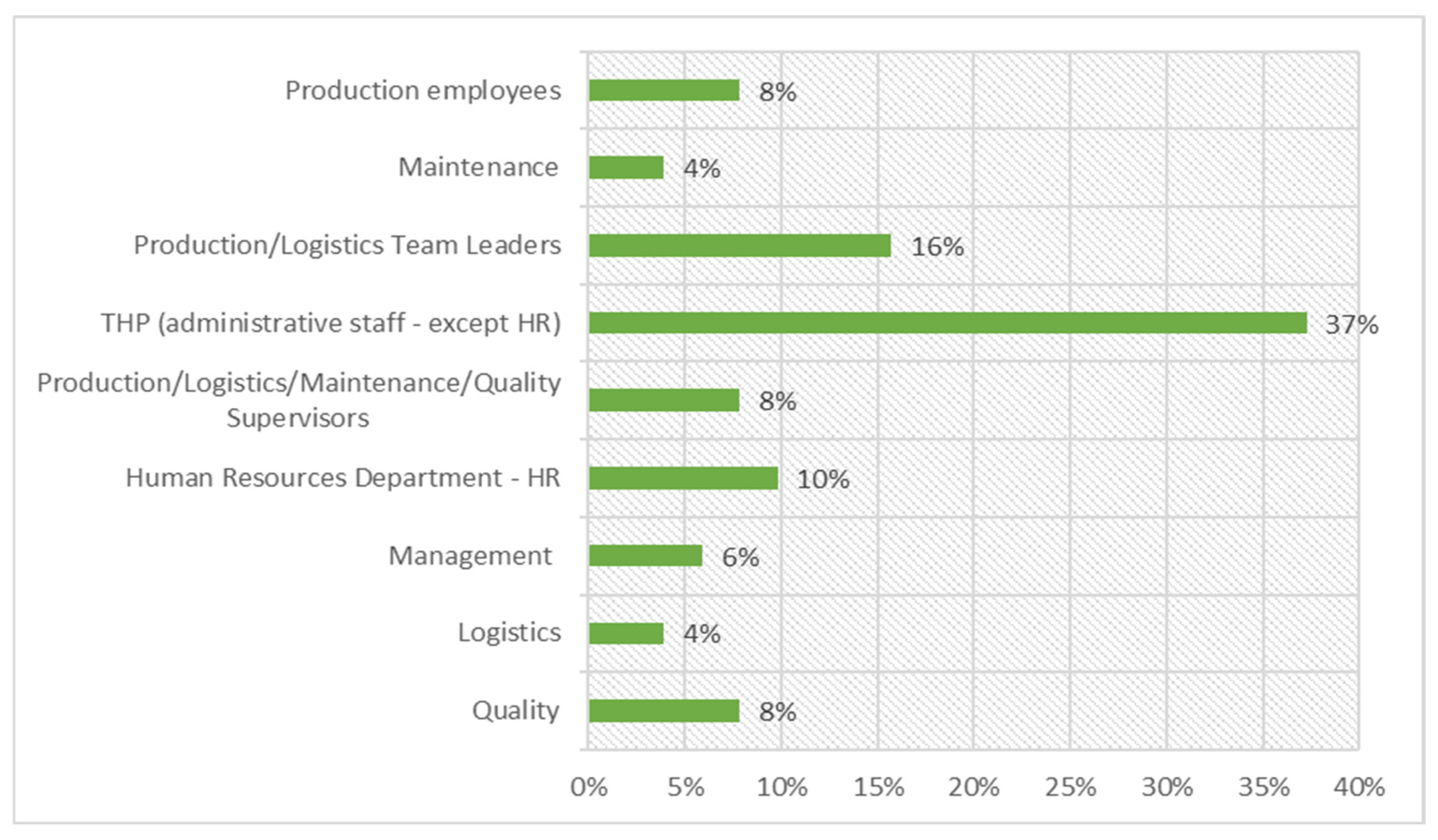
Figure 1, within the respondent structure, the largest representation was employees from the category of administrative staff outside the HR department (THP), who constituted 37.3% of the research sample. The second largest group was production/logistics team leaders (15.7%), followed by employees from the human resources department (9.8%). The proportion of production employees in the sample was comparatively low (7.8%), a finding that may be associated with the method of questionnaire administration. It is well documented that production employees frequently exhibit lower digital literacy skills in comparison to employees in other roles.
4. Results
The following observations will be reported as part of the findings from the aforementioned questionnaire survey. Initially, the primary hypothesis—which posited a relationship between the frequency of digital HR tool utilization and employee satisfaction with the digitization of HR processes—was verified using the chi-square test of independence. This test is appropriate for assessing statistical dependence between a pair of categorized variables, in this case ordinal scales of satisfaction and frequency of tool use.
As illustrated in
Table 1, the statistical analysis yielded test results (Pearson chi-square = 17.54; df = 12;
p = 0.130), indicating that the rejection of the null hypothesis of independence between variables was not feasible, as the
p-value exceeded the established significance level of 0.05. In summary, the present study did not identify a statistically significant relationship between the frequency of HR tool utilization and employee satisfaction with the digitization of HR processes. To verify the reliability of the result, a Monte Carlo variant of the chi-square test was also performed in Statistica. This test yielded a result that did not show statistical significance, thus supporting the conclusion of the classical test. Given the limited sample size and the presence of ordinal data, it was decided to supplement the chi-square test with Spearman’s correlation test, a non-parametric alternative suitable for smaller numbers of observations and for which the assumption of data distribution is not required. The subsequent analysis employed Spearman’s correlation coefficient, rho, which yielded a value of −0.045 (
p = 0.755). This finding confirmed the initial conclusion, as the correlation value was found to be minimal and statistically insignificant. The findings from both analyses consistently indicate the absence of a statistically significant relationship between the variables under investigation. This suggests that we can accept the null hypothesis, which states that “employee satisfaction with the digitization of HR processes does not depend on the use of digital tools for HR processes”, and reject the alternative hypothesis.
As part of the evaluation of research questions based on statistical analysis, an analysis of the distribution of selected quantitative variables was performed using the Kolmogorov–Smirnov normality test with Lilliefors correction prior to the statistical analysis. The objective of this study was to ascertain the viability of employing parametric or non-parametric statistical methodologies. The normality test was applied to variables assessing satisfaction with the digitization of HR processes, frequency of use of digital HR tools, user-friendliness, reliability, and overall usefulness of individual HR systems (WorkDay, Human, eHuman), as well as to variables related to the need for further training. In all cases, the test results demonstrated a statistically significant deviation from a normal distribution (K-S test: p < 0.05; in many cases, p < 0.01). This finding was further substantiated by the Lilliefors correction, which yielded a p-value less than 0.01 in all cases. In light of the findings, it can be posited that the data do not conform to a normal distribution. Consequently, a non-parametric statistical analysis was selected for the analytical component of the study, as it is well-suited for assessing relationships and disparities between variables in scenarios where the assumption of normality is not met.
To identify differences in employee satisfaction with the digitization of HR processes between individual work teams, the Kruskal–Wallis test was used. This non-parametric alternative to analysis of variance is particularly suitable for ordinal data and unequal group sizes. The statistical analysis of the test results revealed no statistically significant differences between the groups at a significance level of 0.05, as indicated by the calculated H statistic (H = 13.10; df = 8; p = 0.1085).
Consequently, the causal relationship between team affiliation and employee satisfaction with the digitization of HR processes remains unconfirmed.
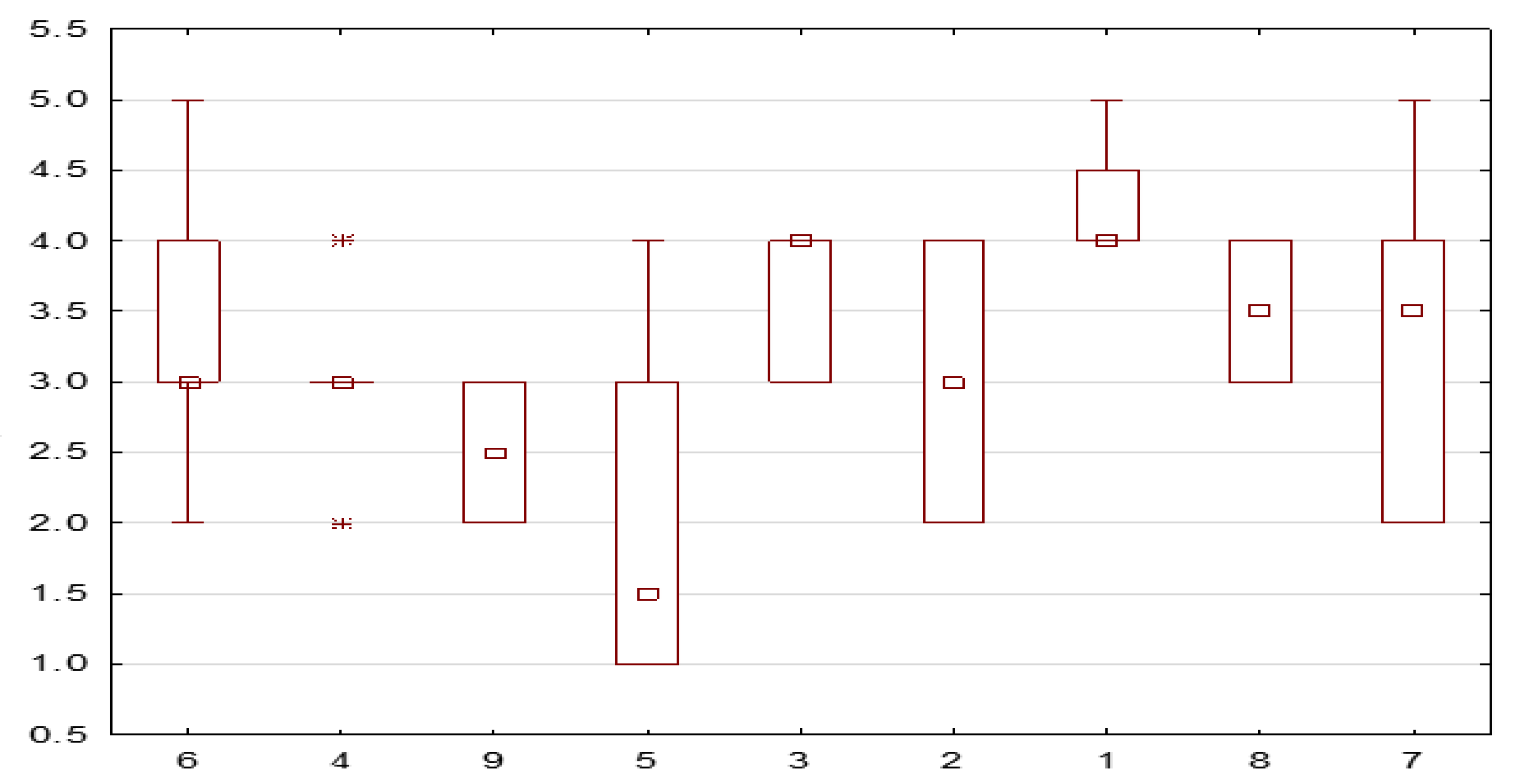
A more detailed visualization of the results, as illustrated in
Figure 2, reveals that while there are certain variations in satisfaction levels among the individual teams, these variations are not statistically significant. The individual departments are designated with numerical labels on the graph for reference. The hierarchical structure of the company is as follows: first, quality; second, logistics; third, management; fourth, human resources; fifth, production/logistics/maintenance/quality supervisors; sixth, THP (administrative staff, with the exception of HR); seventh, production/logistics team leaders; eighth, maintenance; ninth, production staff. The highest median satisfaction was achieved by employees of the “Quality” team, whose responses were concentrated at the upper end of the scale. Conversely, a comparatively elevated degree of satisfaction was articulated by employees of the “Maintenance” and “Production/Logistics Team Leaders” teams. Conversely, lower median satisfaction was reported by employees of the “Production Employees”, “Production/Logistics/Maintenance/Quality Supervisors”, and “Human Resources Department” teams. The most significant variation in responses was observed among the “THP (administrative employees—except HR)” team, suggesting the presence of diverse experiences within this group. Despite the observable disparities, the findings of the study did not substantiate their statistical significance, thus suggesting that they may be attributable to inherent natural variability among individuals.
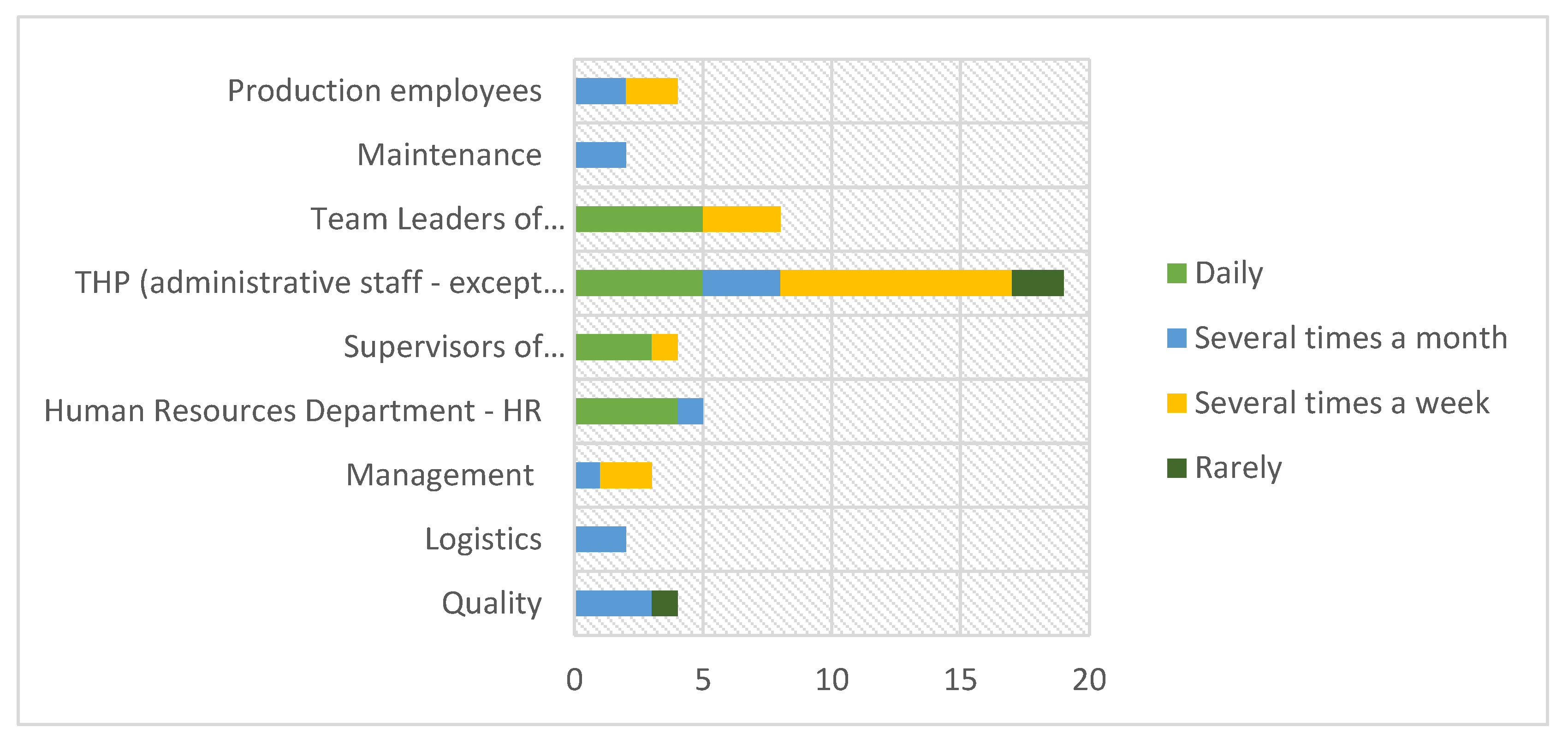
Figure 3 illustrates the distribution of employees’ responses to the question regarding the frequency with which they utilize digital HR tools, categorized according to their affiliation with specific work teams. The color-coded columns represent varying levels of frequency of use, ranging from “rarely” to “daily”. The visualization clearly demonstrates that the highest frequency of use of digital HR tools was reported by employees in the “HR Department”, “Production/Logistics/Maintenance/Quality Supervisors”, and “Production/Logistics Team Leaders”. The majority of responses in these groups were “daily” or “several times a week”, which can be attributed to the nature of the job positions in these teams. In contrast, teams such as “Logistics”, “Management”, “Maintenance”, and “Quality” more frequently responded “several times a month” or “rarely”, indicating a lower intensity of their contact with these tools. These disparities in frequency were subsequently subjected to statistical analysis using the Kruskal–Wallis test, which revealed a statistically significant difference between the teams (
p = 0.0032).
A descriptive analysis of their ratings was performed to determine which digital HR tools are perceived by employees as the most useful and reliable. The respondents evaluated each tool independently based on two criteria: overall usefulness and reliability. They employed a scale ranging from “Often does not work properly/I do not consider it useful” (lowest rating, designated as 1 for descriptive statistics) to “Always works reliably/Very useful, it is indispensable for me” (highest rating, assigned a value of 4). In terms of reliability, the eHuman tool received the highest average rating (2.00), followed by the WorkDay and Human-Attendance modules (both 1.20). The respondents attributed the lowest level of reliability to the Human–Organizational and Development Modules (0.57). In terms of overall usefulness, eHuman once again demonstrated its superiority, with an average rating of 2.82, a significant margin ahead of the other tools. The second highest level of usefulness was attributed to Human–Attendance Modules (2.00), while the lowest level of usefulness was again attributed to the Human–Organizational and Development Modules (1.00). These results were then supplemented by a frequency analysis of the responses, which revealed a high proportion of responses with a value of 0. In the context of the questionnaire, a value of 0 represents a neutral attitude or the inability to evaluate the tool in question. A significant proportion of respondents allocated a value of 0 to the reliability of the Human–Organizational and Development Modules, with a similar proportion assigning a value of 0 to its usefulness. These findings suggest a low level of utilization of the aforementioned tool. A relatively high proportion of neutral responses was also observed for the WorkDay (43–45%) and Human-Attendance modules (35–41%). In contrast, the eHuman tool exhibited the lowest occurrence of the value 0—with a mere 8% for reliability and 13% for usefulness. This finding suggests that respondents possess a high degree of familiarity with the eHuman tool, actively utilize it, and are capable of providing a nuanced evaluation of its functionality.
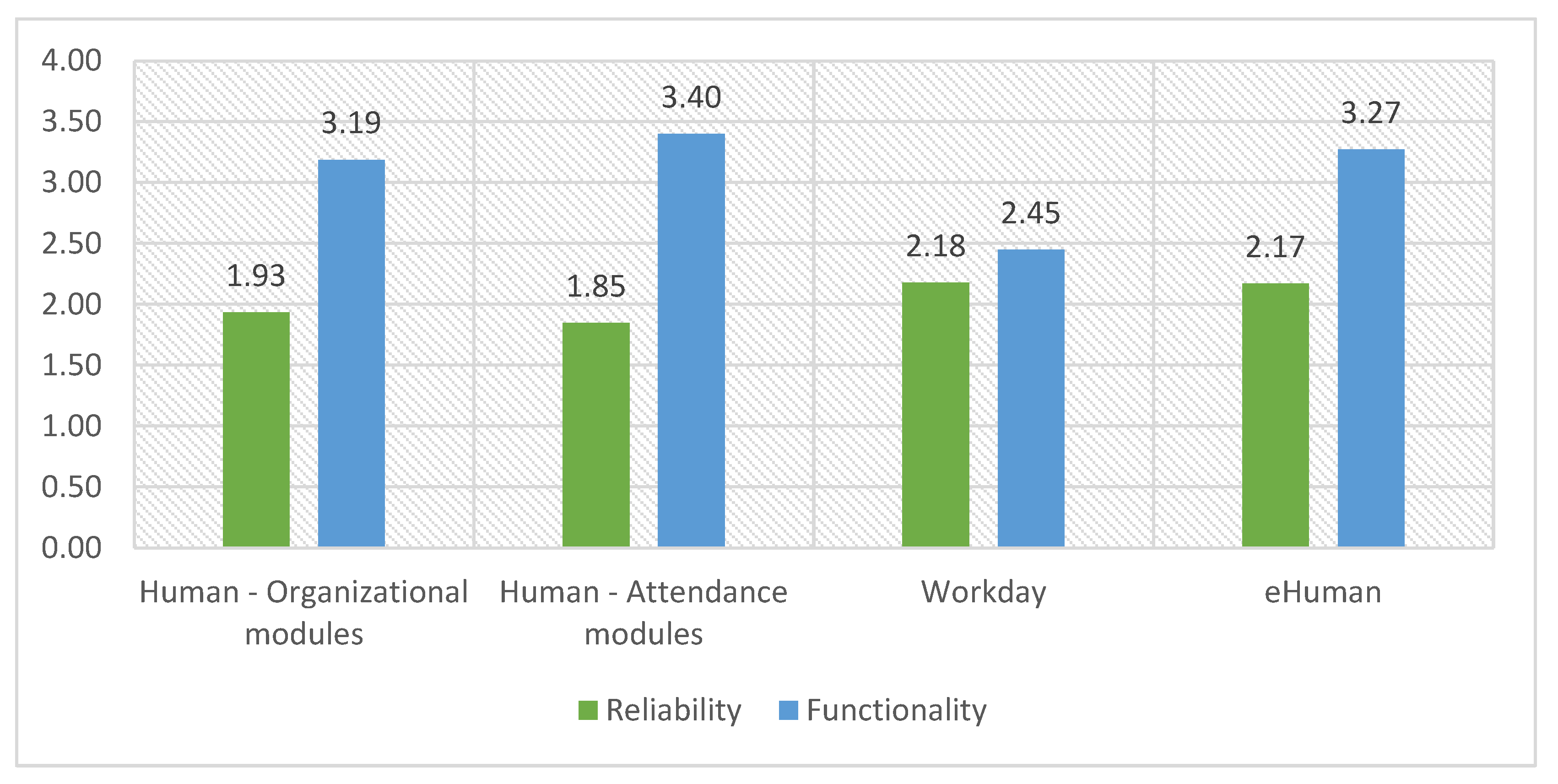
In consideration of these discrepancies, a supplemental analysis of so-called net averages was conducted, encompassing exclusively responses from respondents who had evaluated the tool (values 1 to 4). As illustrated in
Figure 4, the mean ratings for several tools exhibited a substantial increase. For instance, the Human-Attendance Modules attained a net average rating of 3.40, while the Human-Organizational and Development Modules achieved 3.19. The eHuman module maintained its high rating with a net average of 3.27. In terms of reliability, WorkDay received the highest rating (2.18), closely followed by eHuman (2.17). Consequently, net averages offer a more precise depiction of the ratings of tools among actual users and substantiate the significance of supplementing descriptive statistics with filtered sample analysis.
To identify the issues encountered by employees when using digital Human Resources (HR) tools and whether these issues differ between teams, the responses to the inquiry “Which of the following problems do you perceive most when using digital HR tools?” were analyzed. The responses were classified into five primary categories: technical problems (e.g., system outages or slow response times), complex/non-intuitive interface, inadequate training, poor integration between systems, and no problems. The most frequently cited problem was technical issues (32 occurrences), followed by poor integration between systems (22 occurrences), lack of training (17 occurrences), and complex interface (12 occurrences). Nine respondents indicated that they did not perceive digital HR tools to be problematic. In the subsequent phase, a contingency table was devised to illustrate the distribution of individual problem types by team affiliation. For instance, the THP team (comprising administrative staff, with the exception of the Human Resources department) predominantly reported technical issues (13 instances) and inadequate integration (11 instances). Conversely, the Human Resources department primarily noted technical challenges (5 instances) and a deficiency in training (2 instances). A number of teams, including Quality and Logistics, have reported an absence or paucity of problems. To verify the statistical significance of the observed differences, a chi-square test of independence was used to analyze the relationship between team affiliation and the type of problem reported. The findings of the study indicated that the observed disparities between teams were statistically significant (p-value < 0.05), suggesting that the prevalence of specific challenges encountered during the utilization of HR tools is influenced by the team affiliation of employees. These findings underscore the necessity for a diversified approach to addressing user issues, such as the provision of targeted training or technical assistance to specific employee groups.
A descriptive analysis of their ratings was conducted to assess how employees perceive the user-friendliness of individual digital HR tools. Given that the scale also included the option “Neutral/Don’t know”, which represented a value of 0 in the responses, it was decided to work directly with the so-called net average. This analysis exclusively considers responses from respondents who utilize the tool regularly and possess the capacity to provide meaningful evaluations (values 1–4).
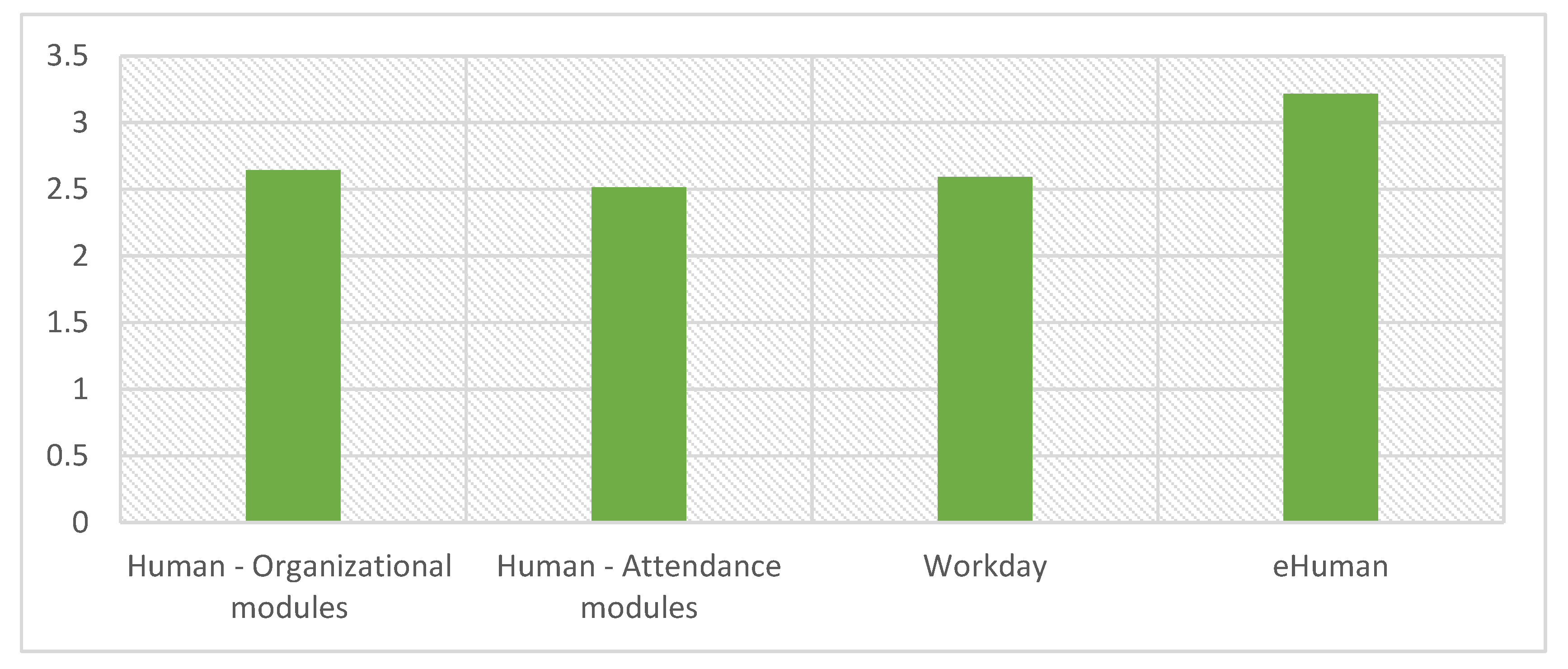
The results presented in
Figure 5 demonstrate that employees attribute the highest level of user-friendliness to the eHuman system, which achieved an average rating of 3.22. Subsequently, modules such as Human–Organizational and Development Modules (2.64), WorkDay (2.59), and Human–Attendance Modules (2.52) are presented. The findings indicate that the overall perception of the user-friendliness of HR tools is favorable, with no significant negative ratings. However, respondents perceive eHuman as the most intuitive to use, which may be related to its highest known and common level of use within the organization.
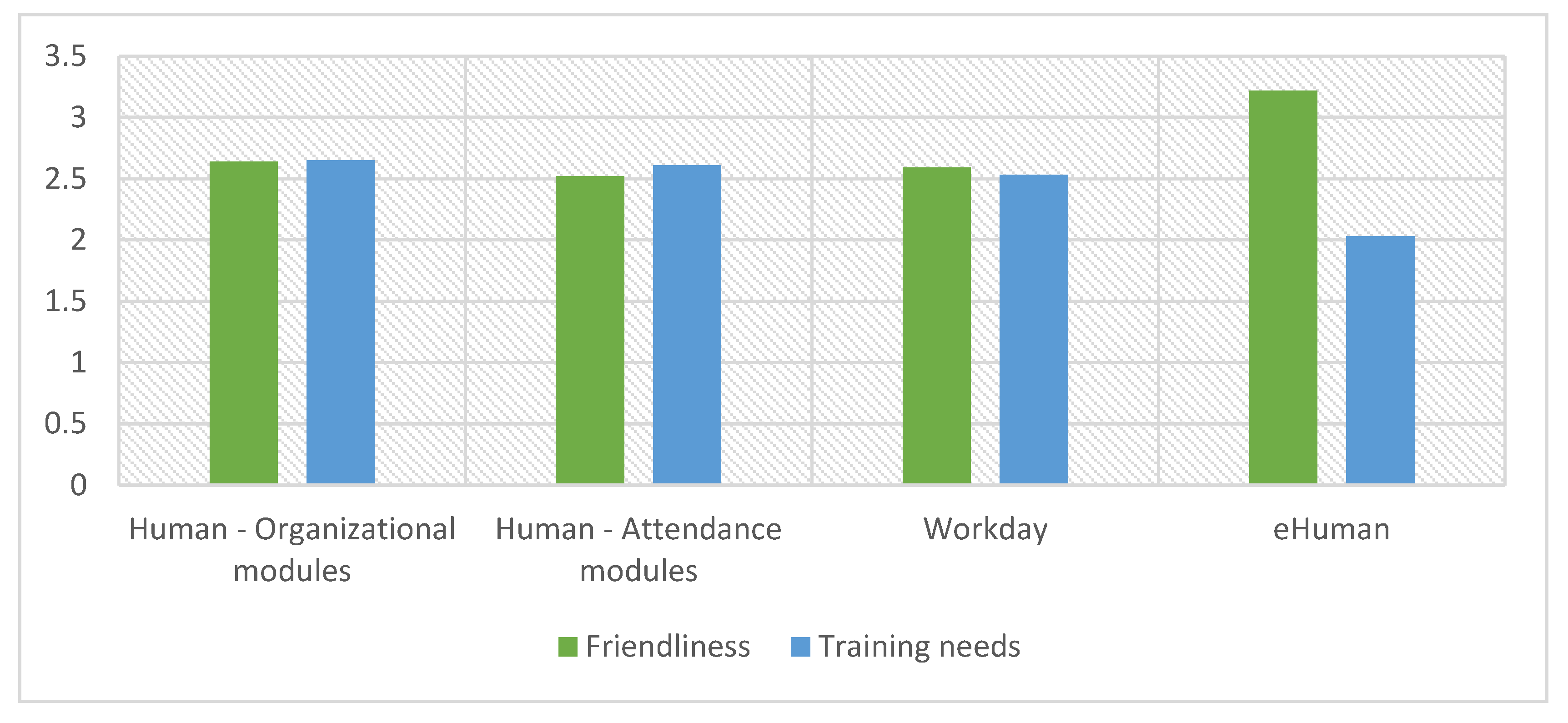
A descriptive analysis of the responses was conducted to ascertain the perceived requirement for additional training in the utilization of digital HR tools. The respondents were asked to rate the necessity of training on a scale ranging from “Not at all” (1) to “Very much” (4). In the present study, the net average was once again utilized in the calculations, which exclusively consider responses in which respondents were able to assess the training. This approach excludes responses that are left blank or are marked as “uncertain”. The results indicate that the respondents perceive the greatest need for further training in the Human–Organizational and Development modules (2.65) and Human–Attendance modules (2.61), followed by the WorkDay system (2.53). In contrast, eHuman requires the least amount of training, with a net average of only 2.03. These values suggest that certain systems are more intuitive or well-understood, while others necessitate more extensive employee training. To ascertain whether the necessity for training varies according to job classification, the Kruskal–Wallis test of independence was employed to compare ratings between teams. The statistical analysis of the test results revealed no statistically significant differences for any of the analyzed tools (all p-values > 0.05). This finding indicates that the necessity for further training is relatively balanced across teams and is not significantly influenced by team affiliation.
Subsequently, in
Figure 6, the results of the user-friendliness assessment were compared with the assessment of the need for further training for individual HR tools. It was hypothesized that tools perceived by employees as less intuitive would also be associated with a greater need for training. The results generally verified the hypothesis. eHuman, which attained the highest average user-friendliness score (3.22), was also the instrument with the lowest necessity for training (2.03). In contrast, the Human modules (attendance and organizational) exhibited a comparatively lower level of user-friendliness (2.52–2.64) and the highest training needs (2.61–2.65). The WorkDay system occupies a median position between these two scales, thereby substantiating the prevailing trend. This comparison suggests that the increased training requirement may be partly due to the lower user-friendliness of the system. This finding may prove instrumental in the planning of training or the selection of new HR tools, where emphasis should be placed on interface simplicity and user experience.
In addition to closed questions, the questionnaire also included the option to comment on improvements in the digitization of HR processes in the form of open-ended answers. The objective of this investigation was to acquire a profound comprehension of the specific suggestions that employees have proposed for the enhancement of HR tools. A thorough examination of the responses to the inquiries “What improvements would be most beneficial when working with HR tools?” and “Which HR tool would you like to improve and how?” yielded the identification of several prevailing themes. The predominant recommendation in the responses was to streamline and illuminate the user interface, particularly with regard to the Human and WorkDay systems. The respondents indicated that the system’s navigation was characterized by a lack of clarity and coherence, which hindered the identification of specific functions and outputs. This observation is corroborated by the quantitative outcomes of the user-friendliness assessment. Another frequently mentioned improvement was the speed and reliability of the systems, especially in the case of Human, where several employees reported problems with slow loading or instability at work. Furthermore, respondents articulated a need for enhanced connectivity between disparate systems, such as between the attendance and payroll modules or between Human and WorkDay. A recurrent recommendation was the implementation of a mobile application that would facilitate more convenient and adaptable access to HR tools outside the traditional workplace environment. Finally, the necessity for more frequent training and access to practical guides was frequently mentioned, which corresponds with previous findings regarding the need for further training.
5. Discussion
This research paper has examined the complex situation regarding the implementation of digitization processes and their impact on business quality and the environment, with the objective of reinforcing sustainable development in corporations. The analytical section yielded several key findings. The respondents expressed the highest levels of satisfaction with the eHuman system, which achieved the best ratings in terms of user-friendliness, reliability, and overall usefulness. Conversely, the Human system modules designed for organizational and development processes received the lowest ratings. These modules have been characterized as unintuitive, technically unstable, and underutilized. The high incidence of neutral responses in the evaluation of these tools also points to their low level of adoption among employees. The research yielded several key findings regarding the challenges associated with digitizing HR processes within the company. These challenges primarily encompass the technical unreliability of systems, inadequate integration between individual tools, insufficient training, and the lack of user-friendliness in certain tools. These issues were particularly evident among specific teams, underscoring the necessity for a customized approach to assisting users of digital tools. The research also demonstrated that employee satisfaction with the digitization of HR processes does not exhibit a statistically significant dependency on the frequency of their utilization. This finding was validated through the implementation of a chi-square test and a subsequent analysis employing Spearman correlation. Conversely, a correlation was identified between low user-friendliness and a greater need for training, suggesting that enhancing the user experience can directly contribute to increased user independence and satisfaction. In summary, it can be stated that the set objective of the work has been fulfilled, and the knowledge gained represents a valuable starting point for the further development of the digitization of HR processes in the corporations studied.
In accordance with the stated objective of determining the extent to which implemented digitization processes would affect employees’ attitudes regarding perceived benefits and barriers in assessing the impact of digitization on the functioning of HR processes, it can be argued that the results of the questionnaire survey confirm several findings mentioned in the theoretical part of the study. As noted by Gnanakkan (2022) [
2] and Madanchian (2024) [
8], respondents within the selected company perceive the digitization of HR processes as a tool for increasing work efficiency and simplifying access to information. Tools such as eHuman or Human—attendance modules were evaluated positively precisely because of their practical usefulness and intuitive use, which corresponds to the professional literature that emphasizes the importance of user experience in the adoption of HR technologies (Chandratreya, 2024; Parry, 2011 [
4,
40]). Conversely, as Sposato et al. (2025) [
39] have noted, the results obtained in the analyzed company also indicate the presence of significant barriers in the domains of user-friendliness and training. The poor evaluation of the Human-Organizational and Development modules, as well as the high proportion of respondents who have not even encountered this tool, point to a lack of information, training, and integration of new solutions. This finding is consistent with the literature pointing to the importance of change management in the implementation of digitization (Zhang, 2024 [
37]). The research also demonstrated that user satisfaction is not directly proportional to the frequency of tool usage. This suggests that the efficacy of digital solutions is not guaranteed, and that users may not experience an enhanced experience if the tools are not reliable, comprehensible, and interconnected. This assertion is corroborated by scholars such as Stankevičiūtė (2024) [
34], who underscore the distinction between the implementation of a tool and its practical application. From the perspective of trends in the digitization of human resource management, it can be concluded that although the company under review uses a number of modern tools (e.g., WorkDay, eHuman), their use is not consistent across departments or among employees themselves. The absence of a mobile application, the lack of clarity in interface design, and the technical problems reported by employees indicate that the company has not achieved the full level of digital maturity described in the extant literature, including the work of Yeung, et al. (1995) [
41].
When it comes to the findings of the analytical portion of the thesis and the evaluation of the present state of digitization in human resource processes within the examined company, it can be concluded that the prevailing Human and eHuman information systems no longer satisfy the criteria for contemporary, effective, and user-friendly human resources software. Considering the identified employee needs and the HR department’s requirements, it is recommended to systematically phase out the existing system and transition to a centralized cloud-based solution. The most suitable solution appears to be the introduction of modern HR softwares, such as Sloneek or PinyaHR, which offer the following: a wide range of functionalities within a single system, a clear user interface and access from any device, artificial intelligence support for the automation of administrative tasks, and an intuitive user interface. The implementation of these solutions would also facilitate employee access to a unified digital space via a mobile application, thereby enabling them to access attendance records, pay slips, confirmations, and other personnel documents. The implementation of the proposed measures is expected to yield the following benefits: increased transparency and accessibility of personnel data for employees, reduced administrative burden and streamlined HR processes, better adaptation of new employees to internal processes, and complete elimination of outdated systems and associated shortcomings. The most significant barriers to the implementation of digitization in selected corporations include the technical unreliability of some systems (slow response, outages), poor integration between tools (e.g., Human and WorkDay), low level of training and methodological support, varying levels of digital literacy among employees, and lack of intuitive design in some HR tools. The efficacy of the implemented solutions will be assessed through the following metrics: the regular collection of employee feedback, the monitoring of the use of individual system functions, the evaluation of time savings in HR processes, and the analysis of the level of employee engagement in onboarding.
6. Conclusions
The primary objective of this study is to ascertain the impact of the implementation of digitization in human resource management processes on employee satisfaction. In this paper, it has been shown that the eHuman system received the highest ratings in terms of reliability, usefulness, and user-friendliness. Conversely, the Human modules, which focused on organizational and development management, were identified as the least intuitive and as technically problematic. We have arrived at the conclusion that there is a low level of integration of individual personnel systems, as well as different levels of use among individual work teams. While the analysis did not substantiate a statistically significant correlation between the frequency of HR tool utilization and satisfaction levels, a correlation was identified between the user-friendliness of the system and the perceived necessity for additional training. The survey results underscore the importance of user interface and technical reliability in increasing the effectiveness of digitized HR management processes. In summation, the findings of the research did not substantiate a substantial correlation between the frequency of HR tool utilization and employee satisfaction levels. However, the results did elucidate salient practical implications. The eHuman tool was the recipient of the highest rating, as it was perceived by respondents as the most reliable and user-friendly. Conversely, the Human-Organizational and Development Modules received the lowest rating, which points to their limited use, lower awareness among employees, and the need for more intensive support or training. A salient finding of the study was the correlation between the user-friendliness of the tools and the perceived need for training. Specifically, tools that were rated as less intuitive were also associated with a greater need for training. In terms of recommendations for enhancement, employees most frequently cited the necessity for a more straightforward user interface, enhanced system reliability, improved integration between individual HR tools, and the provision of mobile applications. The authors consider this finding to be both novel and innovative. It represents a practical contribution to the crucial significance of implementing digitization processes in the human resource management sphere. Such processes are instrumental in enhancing innovation in business and in corporate sustainable development.
In consideration of the research findings and subsequent discourse, the following recommendation policy is hereby proposed: The termination of utilization concerning both Human and eHuman programs to be initiated. The modern HR software based on cloud technologies is to be implemented. The provision of a mobile application is necessary for the purpose of recording attendance and accessing pay slips. The digitization of key human resources (HR) processes, including onboarding, performance evaluation, and training and education management, is imperative in the contemporary business landscape. The implementation of the proposed measures should be divided into several phases, each of which should be logical. Firstly, an analysis of the current state must be conducted, which will entail the identification of the functionalities that are currently employed in both the Human and eHuman systems. The selection of a suitable software solution is contingent upon pilot testing in a selected department. The preparation of comprehensive user documentation entails the creation of manuals that are specific to individual job positions and designed to function in conjunction with the system. The initial employee training is to be implemented in the following manner: multiple training sessions are to be provided at the time of system launch. A program of regular refresher training is to be initiated with the objective of perpetually enhancing digital competencies. The inclusion of training in the onboarding process is imperative for the successful integration of new employees into the organization. Every new employee must undergo introductory training on the personnel system to ensure a comprehensive understanding of its functions and applications. The utilization of the system is subject to monitoring, a process that will facilitate the identification of the necessity for additional support and development. Finally, the transition and migration process must be finalized, which includes the discontinuation of the original systems following the verification of the functionality of the new solution.
However, when evaluating the overall results, it is imperative to consider research limitations. The primary limitations of the study pertain to the size of the research sample, which comprised 251 respondents, thereby constraining the potential for generalizing the findings. Moreover, the composition of the sample exhibited a slight imbalance, with administrative staff and team leaders being the most represented, while production employees were significantly underrepresented. This discrepancy may have influenced the overall outcomes, particularly in the domain of user experience with digital tools, which may be utilized less frequently or in a divergent manner in the manufacturing sector. A further limitation pertains to the self-descriptive nature of the data, a characteristic that is customary in the context of questionnaire surveys. The respondents were permitted to respond in a subjective manner, potentially influenced by their current working conditions or personal preferences. This potential influence could have introduced bias into the objectivity of the data obtained. Furthermore, a considerable number of inquiries solicited input regarding particular instruments that not all employees utilize. This was evidenced by the preponderance of neutral or omitted responses for certain systems. In pursuit of greater depth in the exploration of this issue, further research initiatives will be dedicated to investigating topics such as the integration of artificial intelligence in human resource management, along with the challenges associated with its innovative application in business enhancement and its implications for corporate sustainable development.